Eleonora’s falcon trophic interactions with insects within its breeding range: A systematic review
-
 ,
,

Abstract
Eleonora’s falcon (Falco eleonorae) has a unique ecology that makes it ideal for studying predator–prey dynamics. Its diet shifts seasonally, with insects dominating the non-breeding and pre-laying periods, and birds becoming the main prey during chick-rearing. This systematic review explores the falcon’s foraging behavior during the pre-breeding and breeding phases within its global breeding range, emphasizing insect prey. Following PRISMA guidelines, the review includes studies from ten Mediterranean countries and the Canary Islands. Literature was sourced from Web of Science, Google Scholar, PubMed, and Scopus, covering both peer-reviewed and grey literature up to 2024. From 18 scientific publications and personal observations, 120 insect species and morphospecies from 47 families were recorded as prey. Coleoptera, Hymenoptera, and Hemiptera were the most frequent insect orders. Migratory species such as Acherontia atropos, Anax parthenope, and Anax ephippiger were also documented. This review contributes valuable knowledge for future studies on the dietary ecology of Eleonora’s falcon and similar raptors.
1 Introduction
Eleonora’s falcon (Falco eleonorae Géné, 1839) is included in Annex I of the European Directive 2009/147/EC. It is protected by local, regional, national, and European frameworks [1], and it constitutes a priority species for conservation [2,3,4,5]. It is a highly specialized bird of prey [6], with unique phenology in its trans-equatorial year-round movements, its foraging behavior, and the timing of reproduction [7,8]. It breeds in colonies on the sea cliffs of islands and on rocky islets of the Mediterranean Sea and North-western African coast, and coastal waters of the Atlantic [9,10,11]. During winter, it primarily migrates to Madagascar, with some individuals reaching East and Southeast Africa, covering up to 18,000 km annually between breeding and wintering grounds [1,3,10,12,13]. As the latest raptor breeder in the Northern Hemisphere [8,14,15], Eleonora’s falcon presents a unique adaptation. More specifically, it starts nesting in late summer (August–September), a period coinciding with the autumn migration of passerines, which constitute the primary prey for both adults and nestlings during the rearing period [2,4,8,16,17,18,19,20]. This adaptation is shared only with two closely related falcon species: the Sooty falcon (Falco concolor) [21,22,23] and the Eurasian hobby (Falco subbuteo) [22]. However, Eleonora’s falcon is unique in its primary diet, as it mainly preys on insectivorous bird species [24,25]. Unlike the Sooty falcon, which has a more varied diet including small birds and insects, and the Eurasian hobby, which also hunts small birds and large insects, Eleonora’s falcon is highly specialized as an aerial predator of large, winged insects (>10 mm in length) throughout the year [26]. This insectivorous diet is maintained during all stages of its life cycle, including wintering grounds, migration, and breeding sites, up until the egg-laying period [15,20,27]. Notably, as the breeding season progresses, Eleonora’s falcon reduces its insect consumption and shifts increasingly toward hunting insectivorous birds, which form the majority of its diet during this period [28].
The prevalence of insects in the diet of Eleonora’s falcon is evident in the pre-breeding season, throughout its distribution across southern Europe [29]. During this time, birds can travel distances of up to 600 km from their breeding colonies in search of prey [29,30]. They visit a variety of habitats, including forests, phrygana (garigue), and arable lands, in search of insect prey [31]. In contrast, during the autumn period, their foraging behavior shifts. Falcons tend to stay closer to their breeding colonies, typically clustering around island and cliff sites [31]. At this time, they hunt in groups, primarily during the morning and evening hours [32], with an average foraging range of just 17 km from their nesting sites [29].
The diet of Eleonora’s falcon varies considerably in prey composition across its global range [13]. Many studies on feeding strategies in Eleonora’s falcon have investigated its hunting activity on migratory birds during the breeding season [13,28,33,34], neglecting the crucial contribution of insects, especially in certain habitats or during specific periods like the pre-breeding season. On the contrary, few studies have focused on insect hunting during the pre-breeding and breeding periods [15]. In the context of global environmental changes potentially driving rapid declines in insect abundance [35], this review presents the diet of Eleonora’s falcon during the pre-breeding and breeding periods within its global breeding range. Prey analysis might aid in detecting mismatches between the Eleonora’s falcon breeding activity and prey availability [15]. This study has three main objectives. First, it aims to compile and summarize current knowledge on the interactions between Eleonora’s falcon and insect prey within its global breeding range, using both systematic studies and scattered data from the literature. Second, it seeks to create a detailed list of insect species consumed by the falcon, which will serve as a reference point for future comparisons of diet composition across breeding sites worldwide. Third, the study addresses a key gap in the literature: despite extensive research on the falcon’s bird predation during the breeding season, little attention has been given to its foraging behavior during the pre-breeding and breeding periods, particularly with respect to insect consumption at nesting sites.
This review of the literature on Eleonora’s falcon–insect interactions is crucial, as insects can represent a significant part of the falcon’s diet. Understanding these interactions offers valuable insights into broader ecological dynamics, including how the species responds to changes in prey availability and environmental conditions. In light of ongoing habitat loss and environmental change, such a review can highlight potential risks to falcon populations, particularly those dependent on insects during the breeding season [36,37]. Ultimately, this work contributes to a deeper understanding of Eleonora’s falcon’s trophic relationships and supports the development of informed conservation strategies to protect both the species and its habitats.
2 Methods
2.1 Literature search
This systematic review followed the Preferred Reporting Items for Systematic Reviews and Meta-Analyses (PRISMA) 2020 guidelines (Supplementary file 1) [38] and was conducted on February 6, 2024, using data available up to that year. Geographically, it covered the global breeding range of the target species, namely the Mediterranean Sea and the Canary Islands, including the countries of Algeria, Croatia, Cyprus, Greece, Italy, Morocco, Portugal, Spain, Tunisia, and Turkey. Records of foraging activity of Eleonora’s falcon during the pre-breeding and breeding period were incorporated, using a combination of search words to find both published articles and grey literature material (MSc/PhD theses, reports, etc.) in four international bibliographic databases (Web of Science, Google Scholar, PubMed, and Scopus). We placed no restrictions on the year of the publication. The following search words in quotation marks were used: (“Eleonora’s falcon” OR “Falco eleonorae”) AND (insect OR insectivorous OR invertebrate OR forag* OR “nocturnal hunting” OR hunting OR prey OR pre-breeding OR “pre breeding” OR breeding) AND (Mediterranean OR Greece OR Cyprus OR Spain OR “Atlantic coast” OR Morocco OR “Canary Islands” OR “Northern Africa” OR Aegean OR Italy OR Canaries OR Algeria OR “Balearic Islands” OR Croatia OR Tunisia OR Sicily OR Sardinia OR “Aegean islands” OR Crete OR Turkey OR Azores) (Supplementary file 2).
Our objective was to identify countries with available data on Eleonora’s falcon’s foraging behavior during the pre-breeding and breeding period, highlight regions lacking such data, determine key insect taxa contributing to its diet across different areas, and evaluate gaps in understanding the species’ dietary ecology during this period.
2.2 Data extraction and selection criteria
Retrieved records were first screened to exclude duplicates. Subsequently, titles and abstracts of all unique records were screened for their relevance to the scope of the review by the first and last author. This was achieved based on the following list of exclusion criteria (Figure 1; Supplementary file 2): (i) studies concerning a different species than Eleonora’s falcon; (ii) studies reporting data beyond the study area, such as wintering areas; (iii) studies reporting results outside of the scope of the review question (i.e. not on foraging activity of Eleonora’s falcon and invertebrate hunting); and (iv) languages other than those spoken in countries where Eleonora’s falcon breeds. When a document’s relevance could not be determined from the abstract and/or title, the full text was screened. Full texts, including relevant citations therein, were then retrieved where possible and evaluated according to the same criteria listed above by the first and last author. All data extracted were listed in Table 2 and Supplementary file 3.
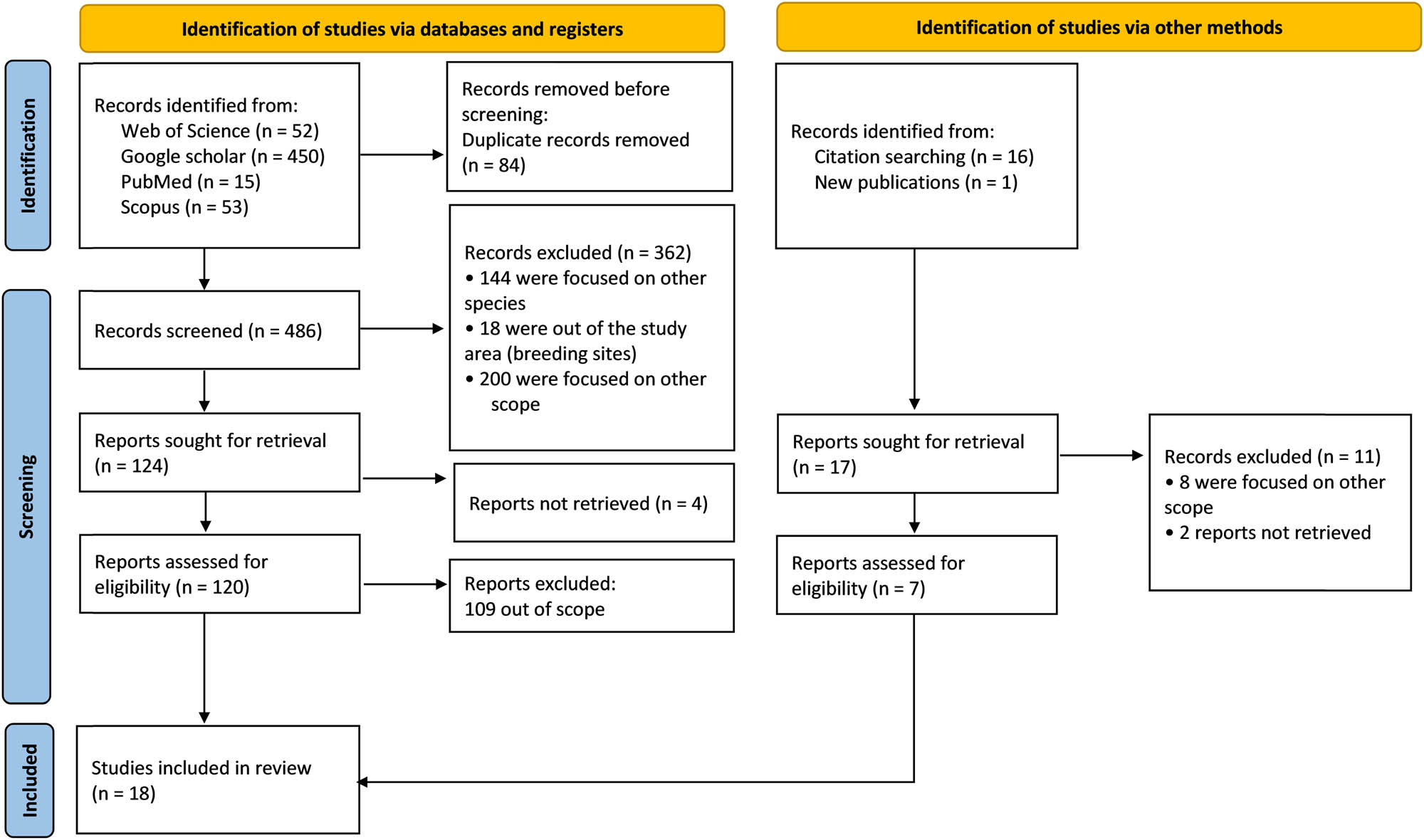
Simplified illustration of the record selection flow diagram following the PRISMA systematic search.
2.3 Study area map and graphical visualisation
Spatial data delineating the breeding sites of the species were obtained upon request from BirdLife International and the Handbook of the Birds of the World [39] (Figure 2). The data that were provided in polygon format were imported into QGIS version 3.30.1 [40] for mapping. According to this dataset, the total breeding range covers approximately 121952.482 km².

Number of observations of insect orders as Eleonora’s falcon prey by country.
Details about the insectivorous diet of Eleonora’s falcon during the pre-breeding (late May to early July) and breeding (mid–July to October) seasons in Algeria and Greece were gathered from existing literature sources [15,28]. Additionally, QGIS was used to map the study area, encompassing all countries where the species is known to breed. Shapefiles of administrative boundaries for Algeria, Cyprus, Croatia, Greece, Italy, Morocco, Portugal, Spain, Turkey, and Tunisia were downloaded from the OpenDataSoft platform [41] (Figure 2).
All plots were generated in RStudio (version 1.1.4) using the ggplot2 package [42].
3 Results
3.1 General results
A literature search across four databases, Web of Science (n = 52), Google Scholar (n = 450), PubMed (n = 15), and Scopus (n = 53), returned a total of 570 results for countries in the Mediterranean Basin and the Atlantic Ocean. Among these, 84 were duplicates and subsequently removed (Figure 1). After screening titles and abstracts based on our selection criteria, the number of relevant records was reduced to 124. However, for four of these records, we were unable to retrieve the full text. Data on the dietary ecology of Eleonora’s falcon, specifically its consumption of insects during the pre-breeding and breeding periods, remain limited and fragmentary. Only 18 studies on this topic were identified, published between January 1938 and 2 September 2024. Country-specific examples include works by
Two scientific articles, by Vaughan [51] and Mellone et al. [4], refer to earlier historical works by Munn (1925; 1931–32), Moltoni (1937), v. Wettstein [52], Stresemann [53], Uttendorfer (1948), Palau-Camps (1956–57), Cano (2001), and Belenguer et al. (2004). Of these, only v. Wettstein [52], who noted Eleonora’s falcon feeding on dung beetles, and Stresemann [53], who described birds preying on wasps (both in Aegean Greece), were available online. Additionally, Corso [45] and Corso et al. [44] cited the work of Walter [2], Spina (1992), Lo Cascio (1999), and Ristow [46], all highlighting dragonfly predation by Eleonora’s falcon in Italy. However, the original works by Spina (1992) and Lo Cascio (1999) could not be retrieved.
Ristow and Wink [33] identified aerial invertebrates as the falcon’s primary prey, including a wide range of insect orders such as Coleoptera, Hymenoptera, Diptera, Orthoptera, Hemiptera, Odonata, and Lepidoptera. Urios et al. [49] highlighted the consumption of Polyphylla fullo and cited Cano (2001) and Belenguer et al. (2004), who reported Melolontha melolontha as part of the diet. Mayol et al. [50], building on the work of Adrover and Mas [54] and others, documented additional taxa such as Cerambyx cerdo, Pentodon algirus, Cicada orni, Acherontia atropos, and species from the genus Messor. These records, including seven identified in September 2024 through supplementary sources [2,33,45,46,52,53,54], significantly enhance the existing knowledge on the diversity and ecological relevance of invertebrate prey consumed by Eleonora’s falcon (Table 1).
Invertebrate prey of Eleonora’s falcon identified in selected studies
| Insect order | Example species/genera | Source(s) |
|---|---|---|
| Coleoptera | Buprestidae, Polyphylla fullo, Melolontha melolontha, Cerambyx cerdo, Pentodon algirus | Ristow and Wink [33], Urios et al. [49], Mayol et al. [50], Adrover and Mas [54] |
| Hymenoptera | Camponotus, Pheidole, Tetramorium, Messor | Ristow and Wink [33], Mayol et al. [50], Adrover and Mas [54] |
| Diptera | Not specified | Ristow and Wink [33] |
| Orthoptera | Not specified | Ristow and Wink [33] |
| Hemiptera | Cicada orni | Ristow and Wink [33], Mayol et al. [50], Adrover and Mas [54] |
| Odonata | Anisoptera, Zygoptera | Ristow and Wink [33], Mayol et al. [50], Adrover and Mas [54] |
| Lepidoptera | Acherontia atropos | Ristow and Wink [33], Mayol et al. [50], Adrover and Mas [54] |
We review these findings here per country. In Italy, Massa [43] studied Eleonora’s falcon foraging behavior through direct observations and pellet collection on Lampedusa, the Pelagian Islands, and the Sicilian Channel and Aeolian Islands during October 1975 and 1976, while Corso et al. [44] (cited in Corso [45]) made direct observations from Lampedusa to Lampione in July 2009. In Greece, V.Wettstein [52] and Stresemann [53] analyzed stomach contents from samples collected in May 1935 and October 1942, respectively. Ristow [46] conducted a pellet study and a general prey study at nests in a large Eleonora’s Falcon colony on an islet off Crete in 1997 and from August to October 1988. In the same study, Ristow [46] analyzed stomach contents from eight deceased falcons collected between 1999 and 2001, as an additional supplement to the primary study. Pellets were also analyzed for intact insects by Xirouchakis et al. [15], in their study across 16 Eleonora’s falcon colony islets located in the northern, central, and southern Aegean from late May to mid-October in 2004, 2005, and 2006. Ristow and Wink [33] studied the diet of Eleonora’s Falcon from 1965 to 2001, focusing on passerine birds, on a rocky islet north of Crete, using direct observations and nest item examination. Insects were also collected but were not included in their analysis and results. In Algeria, Bakour and Moulaï [28] collected pellets from adult Eleonora’s falcons at three nesting colonies (Plane Island, Ronde Island, and Rachgoun Island) during the 2016 breeding season. Similarly, Samraoui et al. [13] gathered dietary samples from Kef Amor between 2010 and 2012. In Spain, De León et al. [47] examined Eleonora’s Falcon diet with a focus on bird prey through nest examinations during the 2000 and 2001 breeding seasons in the Canary Islands. However, a few insect species were also collected in their study and are included in this review. Owens and Riddiford [48], in their study on the bees and wasps of the Balearic Islands, noted the large numbers of Eleonora’s Falcons foraging on insects in the area from late May to early June (year not referred), as observed by birdwatchers (Table 2).
Insect-based diet of Eleonora’s falcon at the breeding grounds, based on the literature search
| Country | References and time framework of the studies | Direct observations | Pellet analysis | Nest-item examination | Stomach-content examination |
|---|---|---|---|---|---|
| Italy | Massa [43]: June 1975 and first half of May 1976; Corso [45] and Corso et al. [44]: July 2009 | Odonata (3 species) | Hymenoptera (1 morphospecies) | Orthoptera (1 species) | |
| Orthoptera (1 species) | |||||
| Greece | Ristow [46]: 1997, August–October 1998 and on stomach samples collected in 1999–2001; Xirouchakis et al. [15]: Late May to mid-October 2004, 2005, 2006 | Coleoptera (6 morphospecies) | Coleoptera (9 species and 18 morphospecies) | Coleoptera (3 morphospecies) | Coleoptera (6 morphospecies) |
| Hemiptera (1 morphospecies) | Diptera (3 morphospecies) | Hemiptera (1 morphospecies) | Hemiptera (2 morphospecies) | ||
| Hymenoptera (2 species and 2 morphospecies) | Hemiptera (2 morphospecies) | Hymenoptera (1 morphospecies) | Hymenoptera (2 species and 2 morphospecies) | ||
| Lepidoptera (3 morphospecies) | Hymenoptera (3 morphospecies) | Lepidoptera (2 morphospecies) | Odonata (3 morphospecies) | ||
| Odonata (2 morphospecies) | Lepidoptera (6 morphospecies) | Odonata (2 species) | Orthoptera (1 morphospecies) | ||
| Orthoptera (1 morphospecies) | Odonata (3 morphospecies) | Orthoptera (1 species) | |||
| Orthoptera (3 morphospecies) | |||||
| Spain | De León et al. [47]: Breeding seasons of 2000, 2001; Owens and Riddiford [48] – this is a study on the Bees and Wasps of the Balearic Islands that referred to birdwatchers’ observations | Coleoptera (2 species) | |||
| Odonata (1 morphospecies) | |||||
| Lepidoptera (1 species) | |||||
| Algeria | Bakour and Moulaï [28]: August, September and October 2016; Samraoui et al. [13]: September–October 2010, September–October 2011 and July–October 2012 | Coleoptera (45 species and morphospecies) | Coleoptera (1 species) | ||
| Dermaptera (1 species) | Lepidoptera (1 species) | ||||
| Diptera (1 morphospecies) | Odonata (1 species) | ||||
| Hemiptera (1 species and 10 morphospecies) | |||||
| Hymenoptera (13 species and 11 morphospecies) | |||||
| Mantodea (2 morphospecies) | |||||
| Odonata (1 species) | |||||
| Orthoptera (5 species and 2 morphospecies) | |||||
| Cyprus | Vaughan [51] Referred to Walker (pers. corn.); personal observations [55] during pre-breeding period of 2023, 2024 | Hymenoptera (1 morphospecies) | |||
| Hemiptera (Cicadas, 2 species) | |||||
| Coleoptera (1 species) |
3.2 Trophic interactions of Eleonora’s falcon with insects
A total of nine insect orders were recorded: Coleoptera with 16 families and more than 59 species and morphospecies; Dermaptera with one species; Diptera with two families and at least two species and morphospecies; Hemiptera with seven families and at least 13 species and morphospecies; Hymenoptera with five families and more than 28 species and morphospecies; Lepidoptera with five families and at least five species and morphospecies; one family and two species of Mantodea; Odonata with three families and at least four species and morphospecies; and Orthoptera with four families and at least ten species and morphospecies (Sub-table). The most frequently recorded insect orders were Coleoptera, Hymenoptera, and Hemiptera; Mantodea and Dermaptera were recorded only in Algeria (Figure 2). There is one record from Cyprus indicating that Eleonora’s falcon feeds on Hymenoptera (such as flying ants). However, personal observations [55] on the Akrotiri Peninsula in Cyprus reveal that the species also feeds on Lyristes gemellus and Cicada orni (family Cicadidae) and Anoxia sp. (family Scarabaeidae).
The most frequently recorded insect families were Scarabaeidae (with 26 records; 13.9%), Formicidae (with 22 records; 11.76%), Carabidae (with 11 records; 5.88%), Curculionidae, and Buprestidae (with eight records each; 4.28% each). At a national level, the most frequently recorded insect families in Algeria were Formicidae (with 14 records), Scarabaeidae (with 11 records), Apidae, Carabidae, and Curculionidae (with six records each). In Greece, the most frequently recorded insect families were Scarabaeidae (with nine records), Buprestidae (with seven records), Formicidae (with six records), and Carabidae (with five records). Only a few families were recorded in Italy, i.e. Aeshnidae with two records, and Formicidae, Libellulidae, and Pamphagidae with one record each. In Spain, the most frequently recorded insect families were Scarabaeidae (with five records), Cicadidae, Sphingidae (with two records each), Cerambycidae, Formicidae, and Tenebrionidae were recorded once (Figure 3). Finally, in Cyprus, Cicadidae with two records, Scarabaeidae and Hymenoptera (family is not recorded) with one record.

Insect families recorded from Algeria, Cyprus, Greece, Italy, and Spain. Columns “Other” represent general records, including categories like wasps, ants, or entries recorded only at the Order level.
Regarding the frequency of the occurrence of insect prey at a national level, the study of Bakour and Moulaï [28] in Algeria/Western Mediterranean showed that Gryllus sp. occurred most frequently with 16.4%, followed by Camponotus gestroi with a frequency of 12.9%, Tetramorium biskrensis with 7.9% and Pheidole pallidula with 7.2%. The remainder of the insect prey taxa that made up the diet of Eleonora’s falcon occurred at lower frequencies, from 0.3 to 5.7%. In addition, the same study found that Hymenoptera were the most frequently represented insect order, followed by Coleoptera [28] (Figure 4). In contrast, Xirouchakis et al. [15] highlighted that Hemiptera (Cicadidae), with 45.1%, was the most frequent diet group in Greece/Eastern Mediterranean, followed by Hymenoptera, and specifically the Formicidae family, with 34.8% (Figure 4).
![Figure 4
Map of Eleonora’s falcon feeding records during breeding season by district retrieved from previous studies; the breeding sites of the species are shown in orange are based on BirdLife International and Handbook of the Birds of the World [39]. Pies show the frequency of occurrence of insect prey in Greece (34.8% Hymenoptera, 15.8% Coleoptera, 45.1% Hemiptera, and 4.3% Other insects) and in Algeria (65.6% Hymenoptera, 19.1% Coleoptera, 6.6% Hemiptera, 6% Orthoptera, and 2.7% Other insects) based on the studies of Xirouchakis et al. [15] and Bakour and Moulaï [28], respectively. The table shows the number of diet studies per country, the year of sampling, and the time framework of the studies.](/document/doi/10.1515/biol-2025-1187/asset/graphic/j_biol-2025-1187_fig_004.jpg)
Map of Eleonora’s falcon feeding records during breeding season by district retrieved from previous studies; the breeding sites of the species are shown in orange are based on BirdLife International and Handbook of the Birds of the World [39]. Pies show the frequency of occurrence of insect prey in Greece (34.8% Hymenoptera, 15.8% Coleoptera, 45.1% Hemiptera, and 4.3% Other insects) and in Algeria (65.6% Hymenoptera, 19.1% Coleoptera, 6.6% Hemiptera, 6% Orthoptera, and 2.7% Other insects) based on the studies of Xirouchakis et al. [15] and Bakour and Moulaï [28], respectively. The table shows the number of diet studies per country, the year of sampling, and the time framework of the studies.
Furthermore, Ristow [46] found that Eleonora’s falcon in Crete/Greece feeds on Coleoptera, such as the Carabus sp. and Calosoma sycophanta (Carabidae), Agabus sp. (Dytiscidae), Elater ferrugineus (Elateridae), Chalcophora spp. (Buprestidae), as well as on some species of the subfamily Cetoniinae (e.g. Potosia sp.), Melolonthinae (Scarabaeidae), and Geotrupinae (Geotrupidae), and the families Silphidae, Staphylinidae, Alleculidae, Tenebrionidae, Buprestidae, and Curculionidae. Hymenoptera such as Formica sp., Camponotus sp., and Messor sp. (Formicidae), Hemiptera (Cicadidae), Lepidoptera, and more specifically the families Zygaenidae, Papilionidae, Nymphalidae, and Sphingidae, Odonata, and Orthoptera (Saltatoria) were also part of the species’ diet. In accordance with the previous findings, Xirouchakis et al. [15] reported that the species, across Aegean colonies, hunts on Hemiptera (Cicadidae), Hymenoptera (Formicidae), Coleoptera (Scarabaeidae, Carabidae, Buprestidae, Alleculidae, etc.), Odonata (Aeshnidae), Orthoptera (Acrididae), Diptera (Tipulidae, Tabanidae, etc.), and Lepidoptera (Nymphalidae, Noctuidae, Sphingidae).
In Italy and the Central Mediterranean, Massa [43] observed that the diet of the species comprised Orthoptera Pamphagus ortolani and Hymenoptera (Formicidae), while Corso [45] and Corso et al. [44] found it mainly consisted of the Odonata Anax parthenope, Anax ephippiger (Aeshnidae), and Sympetrum fonscolombii (Libellulidae). In Spain, and the Western Mediterranean, De León et al. [47] observed that the diet consisted primarily of Acherontia atropos (Sphingidae, Lepidoptera) and Hegeter sp. (Tenebrionidae, Coleoptera), while Mellone et al. [4] and Owens and Riddiford [48] reported that Eleonora’s falcon hunts Coleoptera Melolontha melolontha and Polyphylla fullo, and Anisoptera (Odonata). In addition, Urios et al. [49] reported that Eleonora’s falcon preys on Coleoptera, specifically Polyphylla fullo and Melolontha melolontha, while Mayol et al. [50] and Adrover and Mas [54] documented a broader insect diet. This includes representatives from Coleoptera (e.g., Cerambyx cerdo, Polyphylla fullo, Pentodon algirus), Hemiptera (e.g., Cicada orni), Lepidoptera (e.g., Acherontia atropos), Hymenoptera (notably the genus Messor), and Odonata (both Anisoptera and Zygoptera).
In Algeria, Bakour and Moulaï [28] reported that during the breeding season, Eleonora’s falcon feeds on a variety of invertebrates. These include Odonata (Platycnemis sp.) and Orthoptera species such as Gryllus sp., Aiolopus strepens, Calliptamus barbarus, Decticus albifrons, Ochrilidia filicornis and three species belonging to the Tettigoniidae family. Additionally, Dermaptera (Forficula auricularia), Mantodea (Mantidae sp. and Mantis religiosa), Hemiptera (Coreidae with two species, Sehirus sp., Lygaeidae with two species, Miridae sp., Pentatomidae with three species, Reduviidae with two species), and Diptera from the Suborder Brachycera were documented. The diet also comprised Coleoptera (Anthaxia sp., Carabidae with three species, Licinus sp. with two species, Poecilus sp., Chrysomelidae with three species, Apion sp., Baris sp., Curculionidae with three species, Lixus sp., Otiorhynchus sp., Elateridae with one species, Hister sp., Amphimallon sp., Rhizotrogus sp., Aphodius sp., Euoniticellus sp., Geotrupes sp. with three species, Onthophagus sp., Polyphylla fullo, Potosia opaca, Protaetia sp., Phyllognathus silenus, Silpha granulata, Silpha sp., Atheta sp., Ocypus olens, Stenosis sp., and Tenebrionidae with three species, but also insects from the Subfamilies Harpalinae, Pterostichinae with three species, Cetoniinae, Staphylininae, and Xantholinae). Regarding the Hymenoptera included in the species’ diet, they consisted of three species from the Apidae family and three from the Apoidea group, as well as one species from the Chalcididae family and two from Chrysididae. Other identified species were Aphaenogaster testaceopilosa, Aphaenogaster sardoa, Aphaenogaster sp., C. gestroi, Camponotus sp., Camponotus truncatus, and Crematogaster scutellaris. Additionally, one more species from the Formicidae family was documented, along with Messor barbarus, Messor sp., Monomorium salomonis, Monomorium sp., Pheidole pallidula, Tetramorium biskrensis, and one species from the Vespidae family. Moreover, Samraoui et al. [13] found in Algeria that the species also consumes Acherontia atropos (Lepidoptera), Anax sp. (Odonata), and Oryctes nasicornis (Coleoptera). In Cyprus, Vaughan [51] found that Eleonora’s falcon feeds on flying ants. Further observations in Cyprus have found the species feeding on cicadas (i.e. Lyristes gemellus and Cicada orni) and Anoxia sp. (family Scarabaeidae) (personal observations [55]; Sub-table). Vaughan [51], also drawing from literature, reported that Eleonora’s falcon preys on various invertebrates, including Odonata (Anisoptera), Orthoptera (e.g., Dociostaurus maroccanus and Poecilimon cretensis), Coleoptera (e.g., Carabidae, Buprestidae, Curculionidae, Tenebrionidae, and Scarabaeidae), Hymenoptera (wasps and ants), Hemiptera (cicadas), and Lepidoptera.
In summary, the most frequently recorded insect genera were Camponotus and Messor, both recorded in Algeria and Greece. Acherontia atropos and Polyphylla fullo were the individual species documented twice, in Algeria and Spain. All other insect species were recorded only once. Moreover, some of the identified prey insects are well-known for their migratory behavior, such as moths from the genus Acherontia (e.g., Acherontia atropos), which are resident in North Africa and regular summer migrants to Europe, as well as dragonflies from the genus Anax (e.g., Anax parthenope and Anax ephippiger) (Sub-table).
4 Discussion
Most raptor species across the globe leave their breeding grounds, often traveling in large flocks at predictable times and along consistent routes, to reach distant regions, sometimes on entirely different continents within the Nearctic and Palearctic realms. This includes two distantly related groups of diurnal raptors in the Orders Falconiformes and Accipitriformes, which are convergent in their morphology and general ecology [56]. Both Falconiformes and Accipitriformes include species that often coexist across various environments, while morphologically and ecologically similar species from these orders are likely to compete for shared resources in overlapping habitats [56,57]. As a result, sympatric species with similar ecological demands must find ways to reduce competition. One way this is accomplished is through dietary niche partitioning; understanding this overlap can discern how species allocate resources [58]. According to Gryz eand Krauze-Gryz [59] predators (including raptors) may present alternative feeding strategies, i.e. being either food specialists or opportunists, while at the same time, their diets change to reflect the prey availability and to avoid competition for food resources. Raptors preying on the same food category can avoid competition by hunting in different habitats [59]. For example, Eleonora’s falcon and Sooty falcon are two closely related species which primarily hunt aerial prey (birds and insects). Both species display delayed breeding phenology until late summer [6,22,29]. They feed their nestlings with migrating passerines during the peak of autumn migration, usually nest in dense aggregations on islands, and spend their non-breeding season primarily in Madagascar [6,21,22,23,60]. However, their distributions during the winter are largely non-overlapping, with Eleonora’s falcon found more commonly in humid regions [17,61,62], and Sooty falcon in drier habitat [22]. In the wintering grounds, Eleonora’s falcon is commonly found foraging in forests, feeding on termites, ants, and beetles, and near watercourses that attract insects such as dragonflies [61]. In addition, it is quite active at night, most often during moon illumination, while the use of artificial light sources aids hunting [57]. By contrast, Sooty Falcon is recorded hunting at night around flashlights in the capital of Madagascar where true bugs (Heteroptera–Hemiptera), beetles, and moths (Noctuidae, Pyralidae, and Sphingidae) were identified as prey items [57]. Similarly, various diurnal raptors have been observed to also forage at night, including other members of the genus Falco, increasing exploitative competition by sharing prey [57]. In addition to Eleonora’s falcon, which takes advantage of nocturnally migrating birds, Peregrine falcon appears to be successful during nocturnal hunting focused on disoriented birds [63].
Knowledge of the diet of raptors is important for understanding their biology, while diet studies are important both for management and conservation, with some management strategies now focusing on prey as a key element for maintaining populations of predator species of conservation concern [58,64]. Dietary assessment methods for raptors often include direct observation [58,65], camera placement at nest sites [12,58], examination of stomach contents [58], digestive tract flushing, forced vomiting, examination of fatty acid and isotope signatures, fecal analysis [51,65], and morphological investigation of pellets [58,65,66]. Nevertheless, most of the raptor diet studies focus on the breeding season as bird activity is concentrated around and at the nest, where prey remains are relatively easy to collect [64].
Focusing on Eleonora’s falcon, its survivorship is intimately linked to that of its prey [13]. However, most research on the species’ feeding strategies emphasizes its foraging and hunting behaviors during the breeding season, and particularly its reliance on migratory birds, such as passerines [28]. In contrast, relatively few studies have explored Eleonora’s falcon’s insect hunting during the pre-breeding and breeding periods [15]. As a result, knowledge of its insect-based diet at the breeding grounds remains limited (Table 2 and Sub-table).
Furthermore, the analyzed studies on insect–prey availability across countries did not all cover the same time period. Most studies did not fully capture the entire breeding cycle of Eleonora’s falcon; studies that did not specify the study period were not referenced here. Specifically, in Italy, studies covered early summer (June 1975) and mid-spring (May 1976) [43] and a single summer period (July 2009) [44,45]. Studies in Greece spanned late spring to fall (May–October), though with gaps in coverage between 2001 and 2004 [15,46]. In Spain, research targeted breeding seasons (2000–2001 [46]) with some reliance on observational data [47]. In Algeria, studies concentrated on late summer to fall (August–October) [13,28], while Cyprus was the only location where the pre-breeding period was explicitly observed (2023–2024; Angelidou (unpublished data) [55]).
The current literature identifies four main methods for dietary assessment in Eleonora’s falcon: direct observations, pellet analysis, nest-item examination, and stomach content analysis. While direct observations are often considered the most accurate for determining diet, they are time-consuming, often impractical, and limited by the falcon’s aerial hunting behavior and the small size of insect prey, which make identification at finer taxonomic levels difficult (Angelidou, unpublished data [55]; Oro and Tella [67]). In contrast, collecting prey remains and analyzing pellets offers a more practical and widely used alternative, although this method is not without its biases. Nest-item examination captures only a subset of the diet (specifically, prey delivered to chicks) and may not reflect the adult’s full dietary range. Stomach content analysis, as noted by Siqueira et al. [68], can yield detailed insights into the quantity and quality of ingested taxa but is invasive and ethically challenging. Indirect methods in general are inherently biased, with their accuracy affected by factors such as prey size and taxon, the predator’s feeding behavior, and methodological inconsistencies in data collection (e.g., frequency of sampling or pellet recovery) [69,70,71]. For instance, Falconiformes often tear prey apart, consuming fewer diagnostic remains, particularly of soft-bodied or small prey, which may lead to underrepresentation in pellet analysis [70]. Our findings align with earlier research, confirming notable differences between methods. Pellets not only captured the broadest variety of insect prey but were also the sole method that detected Mantodea and Dermaptera, and the only one applied across all studied countries. These results underline the importance of prioritizing pellet analysis and direct observations in future studies to ensure more accurate and comprehensive dietary assessments.
Geographically, Greece and especially the islands of the Aegean archipelago (north Sporades, Cyclades-Dodecanese, and Crete) are the most well-studied breeding grounds of Eleonora’s falcon in terms of their insect–prey diet, with results based on all four methods of dietary analyses (direct observations, pellet analysis, nest-item examination, and stomach-content examination). Algeria and especially Kef Amor, Oran, Plane Island, Ronde Island, and Rachgoun Island are the second most well-studied breeding grounds of the species in terms of insect–prey diet, with results based on pellet analysis and nest-item examination. Italy, including Lampedusa, the Pelagian Islands, the Sicilian Channel, Pantelleria, Linosa, Lampione, and the Aeolian Islands, is a less studied area regarding the insect–prey diet of Eleonora’s falcon. Research in this region is based on direct observations, pellet analysis, and nest-item examination. Similarly, Spain, encompassing Son Bosc and the Canary Islands (Alegranza, Montaña Clara, Roque del Oeste, Graciosa, and Roque del Este), is also under-researched in this context. Findings from this area rely primarily on direct observations and pellet analysis. Cyprus has limited data on Eleonora’s falcons’ insect feeding habits, with only one study by Vaughan [51] and subsequent unpublished data [55] contributing to the existing knowledge. No published data on the insect-prey diet of Eleonora’s falcon were found for Morocco, Tunisia, Turkey, Croatia, or Portugal; thus, further studies are necessary.
The studies from Italy, Greece, Spain, and Algeria indicate that the diet of Eleonora’s falcon is diverse and emphasize that this variation is influenced by its breeding status [28]. The present dietary study reveals the dominance of the insect orders Coleoptera, Hymenoptera, and Hemiptera. Scarabaeidae, Buprestidae, Carabidae, Chrysomelidae, Brentidae, Curculionidae, Elateridae, Silphidae, Staphylinidae, and Tenebrionidae are some of the Coleoptera’ families that Eleonora’s falcon consumes. In addition, Hymenoptera were represented essentially by the Formicidae family, such as Camponotus spp., Messor spp., Monomorium spp., Pheidole spp., and Tetramorium spp., but also species of the order Apidae and Vespidae, with Spina (1992) highlighting that the species hunts ants as a food supplement when larger prey are scarce. Hemiptera was represented primarily by Cicadidae, and to a lesser extent by Coreidae, Cydnidae, Lygaeidae, Miridae, Pentatomidae, and Reduviidae. Odonata, Orthoptera, Lepidoptera, Diptera, Mantodea, and Dermaptera are also prey for Eleonora’s falcon. It is also noteworthy that some of the insect prey we identified are well known for their migratory habits, for example, the moth species of the genus Acherontia (i.e. Acherontia atropos), a resident species in North Africa and regular summer migrant to Europe, and dragonflies of the genus Anax (i.e. A. parthenope and A. ephippiger) and Sympetrum (i.e. Sympetrum fonscolombii).
Conducting prey analysis at a regional and international scale is important for detecting dietary patterns and identifying potential mismatches between Eleonora’s falcon’s breeding activities and food supply [15]. However, to gain a more accurate understanding of dietary patterns, further studies are necessary, as the current data may not fully capture the ecological trends. While analyzing diets based on habitat types could provide valuable insights into the relationship between prey availability and habitat-specific foraging, the current literature lacks sufficient data to support a comprehensive analysis in this area. This gap underscores the need for additional studies, particularly given the species’ high mobility. Eleonora’s falcon is known to forage across diverse environments, often traveling hundreds of kilometers from the breeding colony to locate food. Consequently, insect prey identified in diet samples may originate from a range of distant habitats, complicating efforts to infer habitat use without direct observations of foraging behavior.
It is also important to recognize that the methodologies commonly used to study the falcon’s diet, such as analysis of prey remains, pellets, or stomach contents, do not allow for the precise determination of the habitat in which prey was captured. Moreover, trophic diversity may be influenced by land-use changes that alter prey abundance and availability, potentially affecting the species’ population dynamics [72]. Unfortunately, such information remains largely absent from the current literature.
The current systematic review also emphasized that research on the feeding capacity and dietary habits of Eleonora’s falcon is lacking in certain Mediterranean countries (e.g., Croatia, Tunisia, Turkey), or relevant data are not publicly available, or were not captured by our search strategy and could thus not be incorporated. This gap in knowledge is not necessarily due to a lack of ecological importance or interest in the species but is probably attributed to the absence of dedicated experts and/or specialized research teams working in these regions. As a result, the available data may present an incomplete or skewed picture of the falcon’s trophic interactions across its breeding range, potentially limiting the generalizability of findings and the ability to draw comprehensive conclusions. This geographic bias highlights the need for broader research coverage and collaboration in underrepresented areas to ensure a more balanced and holistic understanding of the falcon’s dietary ecology and its role in Mediterranean ecosystems. Addressing this bias could enhance conservation strategies and provide more robust data for future comparative studies.
Moreover, creating a detailed inventory of the falcon’s insect prey throughout the breeding season and assessing dietary variations between colonies at different latitudes across the Mediterranean Sea and the North Atlantic Ocean is essential. Furthermore, additional research is needed to assess the biomass of insects as well as Eleonora’s falcon diet dependency on these insect species. Such studies can help clarify the falcon’s ecological role and its dependence on specific insect species. Moreover, variations in diet across latitudes or over time can serve as indicators of broader ecological changes, including habitat degradation and the effects of climate change on insect populations [13]. Identifying key prey species and their availability, as well as the key priority areas, can inform habitat management strategies, such as preserving or restoring habitats that support critical insect populations, particularly in breeding areas where prey availability directly influences reproductive success [36,37].
Since the 1950s, migrating birds of prey have served as important indicators of the ecological health of both natural and human-impacted landscapes, making them valuable tools for assessing environmental change [73]. Eleonora’s falcon could function as a biological indicator to assess environmental change, as long-term monitoring of the species at several watch-sites has provided valuable data and could significantly enhance our understanding of the impact of large-scale human activities on ecosystems worldwide.
As recommended by Ristow [46], a first step would be to carry out experiments on insect diet preferences as a pellet study in a falcon rehabilitation center. Furthermore, focused efforts to analyze insect–prey at breeding grounds are necessary, as this would be invaluable for identifying dietary patterns and detecting any mismatches between Eleonora’s falcon’s breeding activity and food availability [15]; however, the availability of prey pellets could be a key limitation. For example, in areas like Cyprus, where the availability of prey pellets is limited, research can be hindered.
Alternatively, insect populations, which are key components of the falcon’s diet as highlighted in the current literature, could be investigated through field surveys at known feeding hotspots. A combination of methods is recommended, including direct observations, the use of malaise traps (suitable for monitoring flying insects such as Diptera, Hymenoptera, Hemiptera, and Lepidoptera), line transects, and pellet analysis. In addition, a combined logger and diet method could be applied [74]. More specifically, that could be achieved by monitoring the foraging altitudes of Eleonora’s falcon, by equipping nesting falcons with altitude loggers, and gathering the prey they bring to their nestlings. This will also enable us to determine the flight altitudes of the insects. Combinatorically, the dietary composition of breeding Eleonora’s falcons could be recorded by the use of camera-traps [12]. The population density of Eleonora’s falcons also impacts study feasibility, with higher population densities offering more data collection opportunities. Thus, future studies should always estimate the studied population to account for these challenges.
Conservation of migratory species is challenging because it entails understanding the ecological requirements of individuals living in two geographically separated regions [62]. Migratory raptors are sensitive to climate change [73], so are the Mediterranean ecosystems [75]; therefore, it is essential to prioritize conservation actions of the Mediterranean colonies of the Eleonora’s falcon. Changes in abiotic conditions influence the life histories of organisms across all trophic levels, disrupting biotic interactions, community stability, and ecosystem functioning [76]. Consequently, alterations in the seasonal activity of one species can impact other interacting species, both within and across trophic levels [76]. Raptors, including Eleonora’s falcon, experience the effects of climate change in numerous ways. These include shifts in their distribution ranges, changes in disease and parasite dynamics, alterations in breeding schedules and migration patterns, and fluctuations in population sizes [77]. Additionally, they encompass modifications to community structures and adaptations in their physical traits, physiological processes, and behaviors [77]. Insects, as poikilothermic organisms, are also particularly sensitive to climate change. Their documented responses to climate change include shifts in distribution ranges, local adaptations in thermal tolerance, changes in body size, and altered phenology [76]. Thus, these changes likely impact Eleonora’s falcon, especially since species across different trophic levels can have different response rates to climate change. However, it is important to keep in mind that these drivers of change may not necessarily pose a significant threat to the species, as migratory birds are remarkable examples of adaptability, with many species migrating to temperate regions during the winter months in search of more favorable environments with abundant food resources [78].
5 Conclusions
In this review, records of foraging behavior of Eleonora’s falcon (F. eleonorae) during the pre-breeding and breeding periods were systematically searched following the PRISMA 2020 guidelines in four online databases. There were 18 studies available on this subject, published between January 1938 and September 2024; however, not all of these studies specifically concentrated on Eleonora’s falcon’s insect-based diet. Nevertheless, 47 insect families and 120 insect species were recorded, and information about the area–location–country and the period of the study were provided. We found that Coleoptera, Hymenoptera, and Hemiptera were the most recorded insect orders and highlighted patterns of similarity in insect family and species composition across Mediterranean regions and countries. Selected records in this review varied in methodology, sample size, and diagnostic methods. Most studies were carried out through observations, pellet and stomach-content analysis. The pellet analysis was the method that revealed the greatest variety of insect prey. Greece was the most extensively studied breeding ground of Eleonora’s falcon in terms of the insect-based diet of the species, encompassing all four dietary analysis methods. This review can serve as a compendium for future dietary ecology studies on Eleonora’s falcon during the pre-breeding and breeding periods of the species. It also highlights the importance of aerial predators as indicators for the monitoring of possible changes in insect diversity across its breeding range.
-
Funding information: This research was in part funded by a Darwin Plus fellowship (People and Skills) grant to IA (DPLUS172) and the Joint Services Health Unit (JSHU) British Forces Cyprus.
-
Author contributions: All authors conceived and designed the project jointly. IA developed the methodology and collected the data. IA also formatted and analyzed the data and drafted the manuscript. All authors revised the manuscript and approved the version submitted.
-
Conflict of interest: Authors state no conflict of interest.
-
Data availability statement: Data sharing is not applicable to this article as no datasets were generated or analyzed during the current study.
References
[1] Bakaloudis DE, Kotsonas EG, Saxoni SP. Population status and colony characteristics of eleonora’s falcon (Falco eleonorae) in the national marine park of alonissos—northern sporades, Greece. Birds. 2024;5(1):90–101.10.3390/birds5010006Search in Google Scholar
[2] Walter H. Eleonora’s falcon: adaptations to prey and habitat in a social raptor. Chicago: University of Chicago Press; 1979.Search in Google Scholar
[3] Mellone U, López-López P, Limiñana R, Urios V. Weather conditions promote route flexibility during open ocean crossing in a long-distance migratory raptor. Int J Biometeorol. 2011;55:463–8.10.1007/s00484-010-0368-3Search in Google Scholar PubMed
[4] Mellone U, López-López P, Limiñana R, Urios V. Summer pre-breeding movements of Eleonora’s Falcon Falco eleonorae revealed by satellite telemetry: implications for conservation. Bird Conserv Int. 2013;23(4):487–94.10.1017/S0959270913000051Search in Google Scholar
[5] BirdLife International. Species factsheet: Falco eleonorae. 2024. http://datazone.birdlife.org/species/factsheet/eleonoras-falcon-falco-eleonorae on 06/01/2024.Search in Google Scholar
[6] Gschweng M, Kalko EK, Querner U, Fiedler W, Berthold P. All across Africa: highly individual migration routes of Eleonora’s falcon. Proc Biol Sci. 2008;275(1653):2887–96.10.1098/rspb.2008.0575Search in Google Scholar PubMed PubMed Central
[7] Spina F, Focardi S, Magagnoli P, Scappi A. Autumn migration through the Mediterranean and the hunting activity of Eleonora’s Falcon Falco eleonorae (Gene) (Aves Falconidae): a comparison between two methods of data collection. Monit Zool Ital J Zool. 1988;22(3):307–13.Search in Google Scholar
[8] Gangoso L, López-López P, Grande JM, Mellone U, Limiñana R, Urios V, et al. Ecological specialization to fluctuating resources prevents long-distance migratory raptors from becoming sedentary on islands. PLoS One. 2013;8(4):e61615. 10.1371/journal.pone.0061615.Search in Google Scholar PubMed PubMed Central
[9] Kassara C, Fric J, Gschweng M, Sfenthourakis S. Complementing the puzzle of Eleonora’s Falcon (Falco eleonorae) migration: new evidence from an eastern colony in the Aegean Sea. J Ornithol. 2012;153:839–48. 10.1007/s10336-012-0833-3.Search in Google Scholar
[10] Keller V, Herrando S, Voříšek P, Franch M, Kipson M, Milanesi P, et al. European breeding bird atlas 2: distribution, abundance and change. Barcelona, Spain: The European Bird Census Council & Lynx Edicions; 2020.Search in Google Scholar
[11] Ben Jemaa H, Nefla A, Bouragaoui Z, Nouira S. Breeding biology of the Eleonora’s falcon, Falco eleonorae within the Galite archipelago. Biologia. 2021;76:1491–9.10.2478/s11756-020-00654-0Search in Google Scholar
[12] Steen R, Torjussen CS, Jones DW, Tsimpidis T, Miliou A. Plastic mistaken for prey by a colony-breeding Eleonora’s falcon (Falco eleonorae) in the Mediterranean Sea, revealed by camera-trap. Mar Pollut Bull. 2016;106(1–2):200–1.10.1016/j.marpolbul.2016.02.069Search in Google Scholar PubMed
[13] Samraoui B, Kayser Y, Touati L, Samraoui F, Boucheker A, El-Serehy HA, et al. Diet of breeding Eleonora’s falcon Falco eleonorae in Algeria: Insights for the autumn trans‐Mediterranean avian migration. Ecol Evol. 2022;12(7):e9065. 10.1002/ece3.9065.Search in Google Scholar PubMed PubMed Central
[14] Dimalexis A, Xirouchakis S, Portolou D, Latsoudis P, Karris G, Fric J, et al. The status of Eleonora’s Falcon (Falco eleonorae) in Greece. J Ornithol. 2008;149:23–30.10.1007/s10336-007-0207-4Search in Google Scholar
[15] Xirouchakis SM, Alivizatos H, Georgopoulou E, Dimalexis A, Latsoudis P, Portolou D, et al. The diet of the Eleonora’s falcon (Falco eleonorae) in the Aegean archipelago (Greece). J Nat Hist. 2019;53(29–30):1767–85.10.1080/00222933.2019.1668978Search in Google Scholar
[16] Kasparek M, Ristow D. On the occurrence of Eleonora’s falcon, Falco eleonorae, in Turkey. Zool Middle East. 1986;1(1):60–9.10.1080/09397140.1986.11770914Search in Google Scholar
[17] Mellone U, Urios V, Rguibi-Idrisi H, Limiñana R, Benhoussa A, López-López P. Ranging behaviour of Eleonora’s falcons Falco eleonorae during chick-rearing. Acta Ornithol. 2012;47(2):192–5.10.3161/000164512X662313Search in Google Scholar
[18] Kassara C, Bairaktaridou K, Kakalis E, Tsiopelas N, Giokas S, Barboutis C. Activity patterns of Eleonora’s falcons during the pre-breeding period: the role of habitat composition on the island of Antikythira. Avocetta. 2019;43(1):5–11.10.30456/avo.2019102Search in Google Scholar
[19] Hadjikyriakou TG, Kassara C, De Roland LAR, Giokas S, Tsiopelas N, Evangelidis A, et al. Phenology, variation in habitat use, and daily activity patterns of Eleonora’s falcon overwintering in Madagascar. Landscape Ecol. 2020;35:159–72.10.1007/s10980-019-00940-6Search in Google Scholar
[20] Hadjikyriakou TG, Nwankwo EC, Virani MZ, Kirschel AN. Habitat availability influences migration speed, refueling patterns and seasonal flyways of a fly-and-forage migrant. Mov Ecol. 2020;8(1):1–14.10.1186/s40462-020-0190-4Search in Google Scholar PubMed PubMed Central
[21] Hedenström A, Rosén M, Åkesson S, Spina F. Flight performance during hunting excursions in Eleonora’s falcon Falco eleonorae. J Exp Biol. 1999;202(15):2029–39.10.1242/jeb.202.15.2029Search in Google Scholar PubMed
[22] McGrady MJ, Al‐Fazari WA, Al‐Jahdhami MH, Nicoll MA, Oli MK. Sooty Falcon Falco concolor reproduction and population dynamics on the islands in the Sea of Oman. Ibis. 2017;159(4):828–40.10.1111/ibi.12502Search in Google Scholar
[23] AlJahdhami MH, Karelus DL, AlFazari WA, de Roland LAR, Razafimanjato G, McGrady MJ, et al. Movement patterns of Sooty Falcons Falco concolor tracked via satellite across their annual cycle. Bird Study. 2020;67(4):505–20.10.1080/00063657.2021.1950123Search in Google Scholar
[24] Delaugerre M, Grita F, Cascio PL, Ouni R. Lizards and Eleonora’s Falcon (Falco eleonorae Gené, 1839), a Mediterranean micro-insular commensalism. Biodivers J. 2012;3(1):3–12.Search in Google Scholar
[25] Karaardic H. New breeding site of Eleonora’s Falcon (Falco eleonorae) and Peregrine Falcon (Falco peregrinus) in southern Turkey. Adıyaman Univ J Sci. 2020;10(1):22–8.10.37094/adyujsci.684417Search in Google Scholar
[26] Hadjikyriakou TG, Kassinis N, Skarlatos D, Charilaou P, Kirschel AN. Breeding success of Eleonora’s Falcon in Cyprus revisited using survey techniques for cliff-nesting species. Condor. 2020;122(4). 10.1093/condor/duaa045.Search in Google Scholar
[27] Schoenjahn J, Pavey CR, Walter GH. Has the australian endemic grey falcon the most extreme dietary specialization among all falco species? Animals. 2022;12(12):1582. 10.3390/ani12121582.Search in Google Scholar PubMed PubMed Central
[28] Bakour S, Moulaï R. Dietary analysis across breeding seasons of Eleonora’s Falcon Falco eleonorae on the western coast of Algeria. Ostrich. 2019;90(1):63–72.10.2989/00306525.2018.1546774Search in Google Scholar
[29] Kassara C, Evangelidis A, Tsiopelas N, Barboutis C, Giokas S. Seasonal and daily activity patterns by Eleonora’s Falcon Falco eleonorae based on GPS telemetry: a contribution to the species’ movement ecology at its breeding grounds. Bird Conserv Int. 2022;32(1):154–71.10.1017/S0959270920000714Search in Google Scholar
[30] Kassara C, Fric J, Sfenthourakis S. Factors influencing the occurrence of Eleonora’s falcon Falco eleonorae breeding colonies on Greek islands. Wildl Biol. 2013;19(2):202–9.10.2981/12-040Search in Google Scholar
[31] Cheke AS, Tsiakiris R, Christopoulos A, Ashcroft RE. The breeding birds of a small Aegean island (Amorgos, Cyclades, Greece) with details of changes over 25 years. Parnassiana. Arch. 2020;8(Suppl 2):5–47.Search in Google Scholar
[32] Leonardi G. Exploitation of resources. In: Behavioural ecology of Western Palearctic falcons. Switzerland: Springer; 2020. p. 111–39.10.1007/978-3-030-60541-4_4Search in Google Scholar
[33] Ristow D, Wink M. The diet of Eleonora’s Falcons (Falco eleonorae) during the autumn migration of passerine birds across the Aegean Sea. Diversity. 2024;16(9):538. 10.3390/d16090538.Search in Google Scholar
[34] Wink DR. Seasonal variation in sex ratio of nestling Eleonora’s Falcons. J Raptor Res. 2004;38:320–5.Search in Google Scholar
[35] van der Sluijs JP. Insect decline, an emerging global environmental risk. Curr Opin Environ Sustainable. 2020;46:39–42.10.1016/j.cosust.2020.08.012Search in Google Scholar
[36] Gauthier P, Debussche M, Thompson JD. Regional priority setting for rare species based on a method combining three criteria. Biol Conserv. 2010;143(6):1501–9.10.1016/j.biocon.2010.03.032Search in Google Scholar
[37] Saqib S, Liu Y, Ye J, Omollo WO, Lu L, Hu H, et al. Identifying conservation priority areas using spatial phylogenetic approaches in west Himalaya. Pak J Bot. 2024;56(3):1029–39.10.30848/PJB2024-3(42)Search in Google Scholar
[38] Page MJ, McKenzie JE, Bossuyt PM, Boutron I, Hoffmann TC, Mulrow CD, et al. The PRISMA 2020 statement: an updated guideline for reporting systematic reviews. BMJ. 2021;372:n71. 10.1136/bmj.n71.Search in Google Scholar PubMed PubMed Central
[39] BirdLife International. Handbook of the birds of the world. Bird species distribution maps of the world. Version 2021.1 [Internet]. BirdLife International; 2021. http://datazone.birdlife.org/species/requestdis.Search in Google Scholar
[40] QGIS Development Team. QGIS Geographic Information System (Version 3.30.1). Open Source Geospatial Foundation Project; 2023. https://qgis.org/en/site/.Search in Google Scholar
[41] OpenDataSoft. OpenDataSoft website. https://public.opendatasoft.com/explore/? sort = modified.Search in Google Scholar
[42] Wickham H, Chang W, Wickham MH. Package ‘ggplot2’. Create elegant data visualisations using the grammar of graphics. Version. 2016;2(1):1–189.10.1007/978-3-319-24277-4_9Search in Google Scholar
[43] Massa B. Observations on Eleonora’s Falcon Falco eleonorae in Sicily and surrounding islets. Ibis. 1978;120(4):531–4.10.1111/j.1474-919X.1978.tb06821.xSearch in Google Scholar
[44] Corso A, Janni O, Pavesi M, Sammut M, Sciberras A, Viganò M. Annotated checklist of the dragonflies (Insecta Odonata) of the islands of the Sicilian Channel, including the first records of Sympetrum sinaiticum Dumont, 1977 and Pantala flavescens (Fabricius, 1798) for Italy. Biodivers J. 2012;3(4):459–78.Search in Google Scholar
[45] Corso A. Migrating dragonflies as a food source for breeding Eleonora’s Falcons and migrating raptors. Br Birds. 2011;104(11):670.Search in Google Scholar
[46] Ristow D. On the insect diet of Eleonora’s falcon (Falco eleonorae) and its importance for coloniality. In: Raptors Worldwide: Proceedings of the VI World Conference on Birds of Prey and Owls. Berlin, Germany: WWGBP/MME; 2004. p. 705–12.Search in Google Scholar
[47] De León L, Rodríguez B, Martín A, Nogales M, Alonso J, Izquierdo C. Status, distribution, and diet of Eleonora’s Falcon (Falco eleonorae) in the Canary Islands. J Raptor Res. 2007;41(4):331–6.10.3356/0892-1016(2007)41[331:SDADOE]2.0.CO;2Search in Google Scholar
[48] Owens NW, Riddiford NJ. The bees and wasps (Hymenoptera Aculeata) of the Balearic Islands, their contribution to environmental and economic well-being and to scientific research. Boll Soc Hist Nat Balear. 2022;65:259–89.Search in Google Scholar
[49] Urios V, Vidal-Mateo J, Bermejo A, De la Puente J, Mellone U. Migración y ecología espacial de las poblaciones españolas del halcón de Eleonora. Monografía n.° 6 del programa Migra. Madrid: SEO/BirdLife; 2020. 10.31170/0080.Search in Google Scholar
[50] Mayol J, Bibiloni G, Pons GX, Ballesteros E, Díaz Viñolas D. Descripció general de les petites illes i els illots de les Balears. Palma de Mallorca: Centro Oceanográfico de Baleares; 2020.Search in Google Scholar
[51] Vaughan R. Falco eleonorae. Ibis. 1961;103A(1):114–28. 10.1111/j.1474-919x.1961.tb02424.x.Search in Google Scholar
[52] v. Wettstein O. Die Vogelwelt der Ägäis. J Ornithol. 1938;86(Suppl 1):9–53.10.1007/BF01982593Search in Google Scholar
[53] Stresemann E. Ueberblick über die Vögel Kretas und den Vogelzug in der Aegaeis. J Ornithol. 1943;91(4):448–514.10.1007/BF02013136Search in Google Scholar
[54] Adrover J, Mas R. Distribució territorial dels registres de falcó marí Falco eleonorae a Mallorca. Anuari Ornitològic de les Balear. 2012;27:1–13.Search in Google Scholar
[55] Angelidou I. Personal observations. 2023–2024.Search in Google Scholar
[56] Negro JJ, Rodríguez-Rodríguez EJ, Rodríguez A, Bildstein K. Generation of raptor diversity in Europe: linking speciation with climate changes and the ability to migrate. PeerJ. 2022;10:e14505. 10.7717/peerj.14505.Search in Google Scholar
[57] Buij R, Gschweng M. Nocturnal hunting by Eleonora’s Falcons Falco eleonorae on their breeding and non-breeding grounds. Acta Ornithol. 2017;52(1):35–49. 10.3161/000164517X692390.Search in Google Scholar
[58] Hacker CE, Hoenig BD, Wu L, Cong W, Yu J, Dai Y, et al. Use of DNA metabarcoding of bird pellets in understanding raptor diet on the Qinghai-Tibetan Plateau of China. Avian Res. 2021;12(1):42. 10.1186/s40657-021-00311-z.Search in Google Scholar
[59] Gryz J, Krauze-Gryz D. Food niche overlap of avian predators (Falconiformes, Strigiformes) in a field and forest mosaic in Central Poland. Animals. 2021;11(2):479. 10.3390/ani11020479.Search in Google Scholar PubMed PubMed Central
[60] McGrady MJ, Al Fazari WA, Al Jahdhami MH, Hines JE, Oli MK. Survival of Sooty Falcons (Falco concolor) breeding in Oman. J Ornithol. 2016;157:427–37. 10.1007/s10336-016-1347-1.Search in Google Scholar
[61] Kassara C, Fric J, Sfenthourakis S. Distribution modelling of Eleonora’s Falcon (Falco eleonorae Géné, 1839) occurrence in its wintering grounds: a niche-based approach with satellite telemetry data. Bird Conserv Int. 2014;24(1):100–13. 10.1017/S0959270913000290.Search in Google Scholar
[62] Kassara C, Gangoso L, Mellone U, Piasevoli G, Hadjikyriakou TG, Tsiopelas N, et al. Current and future suitability of wintering grounds for a long-distance migratory raptor. Sci Rep. 2017;7:8798. 10.1038/s41598-017-09455-z.10.Search in Google Scholar
[63] Almpanidou V, Tsapalou V, Tsavdaridou AI, Mazaris AD. The dark side of raptors’ distribution ranges under climate change. Landscape Ecol. 2020;35:1435–43. 10.1007/s10980-020-01067-4.Search in Google Scholar
[64] Lewis SB, Fuller MR, Titus K. A comparison of 3 methods for assessing raptor diet during the breeding season. Wildl Soc Bull. 2004;32(2):373–85. 10.2193/0091-7648(2004)32[373]2.0.CO.Search in Google Scholar
[65] Redpath SM, Clarke R, Madders M, Thirgood SJ. Assessing raptor diet: comparing pellets, prey remains, and observational data at hen harrier nests. Condor. 2001;103(1):184–8.10.1093/condor/103.1.184Search in Google Scholar
[66] Salim MA, Abed SA. The first observation of the vulnerable Sooty Falcon Falco concolor in Iraq. IOP Conf Ser Earth Environ Sci. 2021;735(1):012021.10.1088/1755-1315/735/1/012021Search in Google Scholar
[67] Oro D, Tella JL. A comparison of two methods for studying the diet of the Peregrine Falcon. J Raptor Res. 1995;29(3):207–10.Search in Google Scholar
[68] Siqueira PR, Vasconcelos MF, Gonçalves RM, Leite LO. Assessment of stomach contents of some Amazonian birds. Ornitol Neotrop. 2015;26(1):79–88.10.58843/ornneo.v26i1.14Search in Google Scholar
[69] Robinson BW. Quantifying diet. In: Anderson DL, McClure CJW, Franke A, editors. Applied raptor ecology: Essentials from Gyrfalcon research. Boise, ID, USA: The Peregrine Fund; 2017. p. 91–112. 10.4080/are.2017/005 Search in Google Scholar
[70] Lewis SB, Fuller MR, Titus K. A comparison of 3 methods for assessing raptor diet during the breeding season. Wildl Soc Bull. 2004;32(2):373–85.10.2193/0091-7648(2004)32[373:ACOMFA]2.0.CO;2Search in Google Scholar
[71] Huang KY, Lin YS, Severinghaus LL. Comparison of three common methods for studying the diet of nestlings in two Accipiter species. Zool Stud. 2006;45(2):234–43.Search in Google Scholar
[72] Terraube J, Arroyo B. Factors influencing diet variation in a generalist predator across its range distribution. Biodiversity Conserv. 2011;20(10):2111–31.10.1007/s10531-011-0077-1Search in Google Scholar
[73] Bildstein KL. Why migratory birds of prey make great biological indicators. In: Hawkwatching in the Americas. North Wales, PA, USA: Hawk Migration Association of North America; 2001. p. 169–79.Search in Google Scholar
[74] Helms JA, Godfrey AP, Ames T, Bridge ES. Predator foraging altitudes reveal the structure of aerial insect communities. Sci Rep. 2016;6(1):28670. 10.1038/srep28670.Search in Google Scholar
[75] Vogiatzakis IN, Mannion AM, Sarris D. Mediterranean island biodiversity and climate change: the last 10,000 years and the future. Biodiversity Conserv. 2016;25:2597–627. 10.1007/s10531-016-1204-8.Search in Google Scholar
[76] Damien M, Tougeron K. Prey–predator phenological mismatch under climate change. Curr Opin Insect Sci. 2019;35:60–8. 10.1016/j.cois.2019.07.002.Search in Google Scholar
[77] Martínez-Ruiz M, Dykstra CR, Booms TL, Henderson MT. Conservation Letter: Effects of global climate change on raptors. J Raptor Res. 2023;57(1):92–105.10.3356/JRR-22-75Search in Google Scholar
[78] Álvarez M, León-Ortega M, Martínez JE, Calvo JF, Jiménez-Franco MV. Wintering raptor species distribution in a semiarid Mediterranean region: the relevance of lowlands and open habitats as stopover sites. Eur J Wild Res. 2024;70(2):1–12. 10.1007/s10344-024-01652-9.Search in Google Scholar
© 2025 the author(s), published by De Gruyter
This work is licensed under the Creative Commons Attribution 4.0 International License.
Articles in the same Issue
- Safety assessment and modulation of hepatic CYP3A4 and UGT enzymes by Glycyrrhiza glabra aqueous extract in female Sprague–Dawley rats
- Adult-onset Still’s disease with hemophagocytic lymphohistiocytosis and minimal change disease
- Role of DZ2002 in reducing corneal graft rejection in rats by influencing Th17 activation via inhibition of the PI3K/AKT pathway and downregulation of TRAF1
- Biomedical Sciences
- Mechanism of triptolide regulating proliferation and apoptosis of hepatoma cells by inhibiting JAK/STAT pathway
- Maslinic acid improves mitochondrial function and inhibits oxidative stress and autophagy in human gastric smooth muscle cells
- Comparative analysis of inflammatory biomarkers for the diagnosis of neonatal sepsis: IL-6, IL-8, SAA, CRP, and PCT
- Post-pandemic insights on COVID-19 and premature ovarian insufficiency
- Proteome differences of dental stem cells between permanent and deciduous teeth by data-independent acquisition proteomics
- Optimizing a modified cetyltrimethylammonium bromide protocol for fungal DNA extraction: Insights from multilocus gene amplification
- Preliminary analysis of the role of small hepatitis B surface proteins mutations in the pathogenesis of occult hepatitis B infection via the endoplasmic reticulum stress-induced UPR-ERAD pathway
- Efficacy of alginate-coated gold nanoparticles against antibiotics-resistant Staphylococcus and Streptococcus pathogens of acne origins
- Battling COVID-19 leveraging nanobiotechnology: Gold and silver nanoparticle–B-escin conjugates as SARS-CoV-2 inhibitors
- Neurodegenerative diseases and neuroinflammation-induced apoptosis
- Impact of fracture fixation surgery on cognitive function and the gut microbiota in mice with a history of stroke
- COLEC10: A potential tumor suppressor and prognostic biomarker in hepatocellular carcinoma through modulation of EMT and PI3K-AKT pathways
- High-temperature requirement serine protease A2 inhibitor UCF-101 ameliorates damaged neurons in traumatic brain-injured rats by the AMPK/NF-κB pathway
- SIK1 inhibits IL-1β-stimulated cartilage apoptosis and inflammation in vitro through the CRTC2/CREB1 signaling
- Rutin–chitooligosaccharide complex: Comprehensive evaluation of its anti-inflammatory and analgesic properties in vitro and in vivo
- Knockdown of Aurora kinase B alleviates high glucose-triggered trophoblast cells damage and inflammation during gestational diabetes
- Calcium-sensing receptors promoted Homer1 expression and osteogenic differentiation in bone marrow mesenchymal stem cells
- ABI3BP can inhibit the proliferation, invasion, and epithelial–mesenchymal transition of non-small-cell lung cancer cells
- Changes in blood glucose and metabolism in hyperuricemia mice
- Rapid detection of the GJB2 c.235delC mutation based on CRISPR-Cas13a combined with lateral flow dipstick
- IL-11 promotes Ang II-induced autophagy inhibition and mitochondrial dysfunction in atrial fibroblasts
- Short-chain fatty acid attenuates intestinal inflammation by regulation of gut microbial composition in antibiotic-associated diarrhea
- Application of metagenomic next-generation sequencing in the diagnosis of pathogens in patients with diabetes complicated by community-acquired pneumonia
- NAT10 promotes radiotherapy resistance in non-small cell lung cancer by regulating KPNB1-mediated PD-L1 nuclear translocation
- Phytol-mixed micelles alleviate dexamethasone-induced osteoporosis in zebrafish: Activation of the MMP3–OPN–MAPK pathway-mediating bone remodeling
- Association between TGF-β1 and β-catenin expression in the vaginal wall of patients with pelvic organ prolapse
- Primary pleomorphic liposarcoma involving bilateral ovaries: Case report and literature review
- Effects of de novo donor-specific Class I and II antibodies on graft outcomes after liver transplantation: A pilot cohort study
- Sleep architecture in Alzheimer’s disease continuum: The deep sleep question
- Ephedra fragilis plant extract: A groundbreaking corrosion inhibitor for mild steel in acidic environments – electrochemical, EDX, DFT, and Monte Carlo studies
- Langerhans cell histiocytosis in an adult patient with upper jaw and pulmonary involvement: A case report
- Inhibition of mast cell activation by Jaranol-targeted Pirin ameliorates allergic responses in mouse allergic rhinitis
- Aeromonas veronii-induced septic arthritis of the hip in a child with acute lymphoblastic leukemia
- Clusterin activates the heat shock response via the PI3K/Akt pathway to protect cardiomyocytes from high-temperature-induced apoptosis
- Research progress on fecal microbiota transplantation in tumor prevention and treatment
- Low-pressure exposure influences the development of HAPE
- Stigmasterol alleviates endplate chondrocyte degeneration through inducing mitophagy by enhancing PINK1 mRNA acetylation via the ESR1/NAT10 axis
- AKAP12, mediated by transcription factor 21, inhibits cell proliferation, metastasis, and glycolysis in lung squamous cell carcinoma
- Association between PAX9 or MSX1 gene polymorphism and tooth agenesis risk: A meta-analysis
- A case of bloodstream infection caused by Neisseria gonorrhoeae
- Case of nasopharyngeal tuberculosis complicated with cervical lymph node and pulmonary tuberculosis
- p-Cymene inhibits pro-fibrotic and inflammatory mediators to prevent hepatic dysfunction
- GFPT2 promotes paclitaxel resistance in epithelial ovarian cancer cells via activating NF-κB signaling pathway
- Transfer RNA-derived fragment tRF-36 modulates varicose vein progression via human vascular smooth muscle cell Notch signaling
- RTA-408 attenuates the hepatic ischemia reperfusion injury in mice possibly by activating the Nrf2/HO-1 signaling pathway
- Decreased serum TIMP4 levels in patients with rheumatoid arthritis
- Sirt1 protects lupus nephritis by inhibiting the NLRP3 signaling pathway in human glomerular mesangial cells
- Sodium butyrate aids brain injury repair in neonatal rats
- Interaction of MTHFR polymorphism with PAX1 methylation in cervical cancer
- Convallatoxin inhibits proliferation and angiogenesis of glioma cells via regulating JAK/STAT3 pathway
- The effect of the PKR inhibitor, 2-aminopurine, on the replication of influenza A virus, and segment 8 mRNA splicing
- Effects of Ire1 gene on virulence and pathogenicity of Candida albicans
- Small cell lung cancer with small intestinal metastasis: Case report and literature review
- GRB14: A prognostic biomarker driving tumor progression in gastric cancer through the PI3K/AKT signaling pathway by interacting with COBLL1
- 15-Lipoxygenase-2 deficiency induces foam cell formation that can be restored by salidroside through the inhibition of arachidonic acid effects
- FTO alleviated the diabetic nephropathy progression by regulating the N6-methyladenosine levels of DACT1
- Clinical relevance of inflammatory markers in the evaluation of severity of ulcerative colitis: A retrospective study
- Zinc valproic acid complex promotes osteoblast differentiation and exhibits anti-osteoporotic potential
- Primary pulmonary synovial sarcoma in the bronchial cavity: A case report
- Metagenomic next-generation sequencing of alveolar lavage fluid improves the detection of pulmonary infection
- Uterine tumor resembling ovarian sex cord tumor with extensive rhabdoid differentiation: A case report
- Genomic analysis of a novel ST11(PR34365) Clostridioides difficile strain isolated from the human fecal of a CDI patient in Guizhou, China
- Effects of tiered cardiac rehabilitation on CRP, TNF-α, and physical endurance in older adults with coronary heart disease
- Changes in T-lymphocyte subpopulations in patients with colorectal cancer before and after acupoint catgut embedding acupuncture observation
- Modulating the tumor microenvironment: The role of traditional Chinese medicine in improving lung cancer treatment
- Alterations of metabolites related to microbiota–gut–brain axis in plasma of colon cancer, esophageal cancer, stomach cancer, and lung cancer patients
- Research on individualized drug sensitivity detection technology based on bio-3D printing technology for precision treatment of gastrointestinal stromal tumors
- CEBPB promotes ulcerative colitis-associated colorectal cancer by stimulating tumor growth and activating the NF-κB/STAT3 signaling pathway
- Oncolytic bacteria: A revolutionary approach to cancer therapy
- A de novo meningioma with rapid growth: A possible malignancy imposter?
- Diagnosis of secondary tuberculosis infection in an asymptomatic elderly with cancer using next-generation sequencing: Case report
- Hesperidin and its zinc(ii) complex enhance osteoblast differentiation and bone formation: In vitro and in vivo evaluations
- Research progress on the regulation of autophagy in cardiovascular diseases by chemokines
- Anti-arthritic, immunomodulatory, and inflammatory regulation by the benzimidazole derivative BMZ-AD: Insights from an FCA-induced rat model
- Immunoassay for pyruvate kinase M1/2 as an Alzheimer’s biomarker in CSF
- The role of HDAC11 in age-related hearing loss: Mechanisms and therapeutic implications
- Evaluation and application analysis of animal models of PIPNP based on data mining
- Therapeutic approaches for liver fibrosis/cirrhosis by targeting pyroptosis
- Fabrication of zinc oxide nanoparticles using Ruellia tuberosa leaf extract induces apoptosis through P53 and STAT3 signalling pathways in prostate cancer cells
- Haplo-hematopoietic stem cell transplantation and immunoradiotherapy for severe aplastic anemia complicated with nasopharyngeal carcinoma: A case report
- Modulation of the KEAP1-NRF2 pathway by Erianin: A novel approach to reduce psoriasiform inflammation and inflammatory signaling
- The expression of epidermal growth factor receptor 2 and its relationship with tumor-infiltrating lymphocytes and clinical pathological features in breast cancer patients
- Innovations in MALDI-TOF Mass Spectrometry: Bridging modern diagnostics and historical insights
- BAP1 complexes with YY1 and RBBP7 and its downstream targets in ccRCC cells
- Hypereosinophilic syndrome with elevated IgG4 and T-cell clonality: A report of two cases
- Electroacupuncture alleviates sciatic nerve injury in sciatica rats by regulating BDNF and NGF levels, myelin sheath degradation, and autophagy
- Polydatin prevents cholesterol gallstone formation by regulating cholesterol metabolism via PPAR-γ signaling
- RNF144A and RNF144B: Important molecules for health
- Analysis of the detection rate and related factors of thyroid nodules in the healthy population
- Artesunate inhibits hepatocellular carcinoma cell migration and invasion through OGA-mediated O-GlcNAcylation of ZEB1
- Endovascular management of post-pancreatectomy hemorrhage caused by a hepatic artery pseudoaneurysm: Case report and review of the literature
- Efficacy and safety of anti-PD-1/PD-L1 antibodies in patients with relapsed refractory diffuse large B-cell lymphoma: A meta-analysis
- SATB2 promotes humeral fracture healing in rats by activating the PI3K/AKT pathway
- Overexpression of the ferroptosis-related gene, NFS1, corresponds to gastric cancer growth and tumor immune infiltration
- Understanding risk factors and prognosis in diabetic foot ulcers
- Atractylenolide I alleviates the experimental allergic response in mice by suppressing TLR4/NF-kB/NLRP3 signalling
- FBXO31 inhibits the stemness characteristics of CD147 (+) melanoma stem cells
- Immune molecule diagnostics in colorectal cancer: CCL2 and CXCL11
- Inhibiting CXCR6 promotes senescence of activated hepatic stellate cells with limited proinflammatory SASP to attenuate hepatic fibrosis
- Cadmium toxicity, health risk and its remediation using low-cost biochar adsorbents
- Pulmonary cryptococcosis with headache as the first presentation: A case report
- Solitary pulmonary metastasis with cystic airspaces in colon cancer: A rare case report
- RUNX1 promotes denervation-induced muscle atrophy by activating the JUNB/NF-κB pathway and driving M1 macrophage polarization
- Morphometric analysis and immunobiological investigation of Indigofera oblongifolia on the infected lung with Plasmodium chabaudi
- The NuA4/TIP60 histone-modifying complex and Hr78 modulate the Lobe2 mutant eye phenotype
- Experimental study on salmon demineralized bone matrix loaded with recombinant human bone morphogenetic protein-2: In vitro and in vivo study
- A case of IgA nephropathy treated with a combination of telitacicept and half-dose glucocorticoids
- Analgesic and toxicological evaluation of cannabidiol-rich Moroccan Cannabis sativa L. (Khardala variety) extract: Evidence from an in vivo and in silico study
- Wound healing and signaling pathways
- Combination of immunotherapy and whole-brain radiotherapy on prognosis of patients with multiple brain metastases: A retrospective cohort study
- To explore the relationship between endometrial hyperemia and polycystic ovary syndrome
- Research progress on the impact of curcumin on immune responses in breast cancer
- Biogenic Cu/Ni nanotherapeutics from Descurainia sophia (L.) Webb ex Prantl seeds for the treatment of lung cancer
- Dapagliflozin attenuates atrial fibrosis via the HMGB1/RAGE pathway in atrial fibrillation rats
- Glycitein alleviates inflammation and apoptosis in keratinocytes via ROS-associated PI3K–Akt signalling pathway
- ADH5 inhibits proliferation but promotes EMT in non-small cell lung cancer cell through activating Smad2/Smad3
- Apoptotic efficacies of AgNPs formulated by Syzygium aromaticum leaf extract on 32D-FLT3-ITD human leukemia cell line with PI3K/AKT/mTOR signaling pathway
- Novel cuproptosis-related genes C1QBP and PFKP identified as prognostic and therapeutic targets in lung adenocarcinoma
- Bee venom promotes exosome secretion and alters miRNA cargo in T cells
- Treatment of pure red cell aplasia in a chronic kidney disease patient with roxadustat: A case report
- Comparative bioinformatics analysis of the Wnt pathway in breast cancer: Selection of novel biomarker panels associated with ER status
- Kynurenine facilitates renal cell carcinoma progression by suppressing M2 macrophage pyroptosis through inhibition of CASP1 cleavage
- RFX5 promotes the growth, motility, and inhibits apoptosis of gastric adenocarcinoma cells through the SIRT1/AMPK axis
- ALKBH5 exacerbates early cardiac damage after radiotherapy for breast cancer via m6A demethylation of TLR4
- Phytochemicals of Roman chamomile: Antioxidant, anti-aging, and whitening activities of distillation residues
- Circadian gene Cry1 inhibits the tumorigenicity of hepatocellular carcinoma by the BAX/BCL2-mediated apoptosis pathway
- The TNFR-RIPK1/RIPK3 signalling pathway mediates the effect of lanthanum on necroptosis of nerve cells
- Longitudinal monitoring of autoantibody dynamics in patients with early-stage non-small-cell lung cancer undergoing surgery
- The potential role of rutin, a flavonoid, in the management of cancer through modulation of cell signaling pathways
- Construction of pectinase gene engineering microbe and its application in tobacco sheets
- Construction of a microbial abundance prognostic scoring model based on intratumoral microbial data for predicting the prognosis of lung squamous cell carcinoma
- Sepsis complicated by haemophagocytic lymphohistiocytosis triggered by methicillin-resistant Staphylococcus aureus and human herpesvirus 8 in an immunocompromised elderly patient: A case report
- Sarcopenia in liver transplantation: A comprehensive bibliometric study of current research trends and future directions
- Advances in cancer immunotherapy and future directions in personalized medicine
- Can coronavirus disease 2019 affect male fertility or cause spontaneous abortion? A two-sample Mendelian randomization analysis
- Heat stroke associated with novel leukaemia inhibitory factor receptor gene variant in a Chinese infant
- PSME2 exacerbates ulcerative colitis by disrupting intestinal barrier function and promoting autophagy-dependent inflammation
- Hyperosmolar hyperglycemic state with severe hypernatremia coexisting with central diabetes insipidus: A case report and literature review
- Efficacy and mechanism of escin in improving the tissue microenvironment of blood vessel walls via anti-inflammatory and anticoagulant effects: Implications for clinical practice
- Merkel cell carcinoma: Clinicopathological analysis of three patients and literature review
- Genetic variants in VWF exon 26 and their implications for type 1 Von Willebrand disease in a Saudi Arabian population
- Lipoxin A4 improves myocardial ischemia/reperfusion injury through the Notch1-Nrf2 signaling pathway
- High levels of EPHB2 expression predict a poor prognosis and promote tumor progression in endometrial cancer
- Knockdown of SHP-2 delays renal tubular epithelial cell injury in diabetic nephropathy by inhibiting NLRP3 inflammasome-mediated pyroptosis
- Exploring the toxicity mechanisms and detoxification methods of Rhizoma Paridis
- Concomitant gastric carcinoma and primary hepatic angiosarcoma in a patient: A case report
- YAP1 inhibition protects retinal vascular endothelial cells under high glucose by inhibiting autophagy
- Identification of secretory protein related biomarkers for primary biliary cholangitis based on machine learning and experimental validation
- Integrated genomic and clinical modeling for prognostic assessment of radiotherapy response in rectal neoplasms
- Stem cell-based approaches for glaucoma treatment: a mini review
- Bacteriophage titering by optical density means: KOTE assays
- Neutrophil-related signature characterizes immune landscape and predicts prognosis of esophageal squamous cell carcinoma
- Integrated bioinformatic analysis and machine learning strategies to identify new potential immune biomarkers for Alzheimer’s disease and their targeting prediction with geniposide
- TRIM21 accelerates ferroptosis in intervertebral disc degeneration by promoting SLC7A11 ubiquitination and degradation
- TRIM21 accelerates ferroptosis in intervertebral disc degeneration by promoting SLC7A11 ubiquitination and degradation
- Histone modification and non-coding RNAs in skin aging: emerging therapeutic avenues
- A multiplicative behavioral model of DNA replication initiation in cells
- Biogenic gold nanoparticles synthesized from Pergularia daemia leaves: a novel approach for nasopharyngeal carcinoma therapy
- Creutzfeldt-Jakob disease mimicking Hashimoto’s encephalopathy: steroid response followed by decline
- Impact of semaphorin, Sema3F, on the gene transcription and protein expression of CREB and its binding protein CREBBP in primary hippocampal neurons of rats
- Iron overloaded M0 macrophages regulate hematopoietic stem cell proliferation and senescence via the Nrf2/Keap1/HO-1 pathway
- Revisiting the link between NADPH oxidase p22phox C242T polymorphism and ischemic stroke risk: an updated meta-analysis
- Exercise training preferentially modulates α1D-adrenergic receptor expression in peripheral arteries of hypertensive rats
- Overexpression of HE4/WFDC2 gene in mice leads to keratitis and corneal opacity
- Tumoral calcinosis complicating CKD-MBD in hemodialysis: a case report
- Mechanism of KLF4 Inhibition of epithelial-mesenchymal transition in gastric cancer cells
- Dissecting the molecular mechanisms of T cell infiltration in psoriatic lesions via cell-cell communication and regulatory network analysis
- Circadian rhythm-based prognostic features predict immune infiltration and tumor microenvironment in molecular subtypes of hepatocellular carcinoma
- Ecology and Environmental Science
- Optimization and comparative study of Bacillus consortia for cellulolytic potential and cellulase enzyme activity
- The complete mitochondrial genome analysis of Haemaphysalis hystricis Supino, 1897 (Ixodida: Ixodidae) and its phylogenetic implications
- Epidemiological characteristics and risk factors analysis of multidrug-resistant tuberculosis among tuberculosis population in Huzhou City, Eastern China
- Indices of human impacts on landscapes: How do they reflect the proportions of natural habitats?
- Genetic analysis of the Siberian flying squirrel population in the northern Changbai Mountains, Northeast China: Insights into population status and conservation
- Diversity and environmental drivers of Suillus communities in Pinus sylvestris var. mongolica forests of Inner Mongolia
- Global assessment of the fate of nitrogen deposition in forest ecosystems: Insights from 15N tracer studies
- Fungal and bacterial pathogenic co-infections mainly lead to the assembly of microbial community in tobacco stems
- Influencing of coal industry related airborne particulate matter on ocular surface tear film injury and inflammatory factor expression in Sprague-Dawley rats
- Temperature-dependent development, predation, and life table of Sphaerophoria macrogaster (Thomson) (Diptera: Syrphidae) feeding on Myzus persicae (Sulzer) (Homoptera: Aphididae)
- Eleonora’s falcon trophic interactions with insects within its breeding range: A systematic review
- Agriculture
- Integrated analysis of transcriptome, sRNAome, and degradome involved in the drought-response of maize Zhengdan958
- Variation in flower frost tolerance among seven apple cultivars and transcriptome response patterns in two contrastingly frost-tolerant selected cultivars
- Heritability of durable resistance to stripe rust in bread wheat (Triticum aestivum L.)
- Molecular mechanism of follicular development in laying hens based on the regulation of water metabolism
- Molecular identification and control studies on Coridius sp. (Hemiptera: Dinidoridae) in Al-Khamra, south of Jeddah, Saudi Arabia
- 10.1515/biol-2025-1218
- Animal Science
- Effect of sex ratio on the life history traits of an important invasive species, Spodoptera frugiperda
- Plant Sciences
- Hairpin in a haystack: In silico identification and characterization of plant-conserved microRNA in Rafflesiaceae
- Widely targeted metabolomics of different tissues in Rubus corchorifolius
- The complete chloroplast genome of Gerbera piloselloides (L.) Cass., 1820 (Carduoideae, Asteraceae) and its phylogenetic analysis
- Field trial to correlate mineral solubilization activity of Pseudomonas aeruginosa and biochemical content of groundnut plants
- Correlation analysis between semen routine parameters and sperm DNA fragmentation index in patients with semen non-liquefaction: A retrospective study
- Plasticity of the anatomical traits of Rhododendron L. (Ericaceae) leaves and its implications in adaptation to the plateau environment
- Effects of Piriformospora indica and arbuscular mycorrhizal fungus on growth and physiology of Moringa oleifera under low-temperature stress
- Effects of different sources of potassium fertiliser on yield, fruit quality and nutrient absorption in “Harward” kiwifruit (Actinidia deliciosa)
- Comparative efficiency and residue levels of spraying programs against powdery mildew in grape varieties
- The DREB7 transcription factor enhances salt tolerance in soybean plants under salt stress
- Using plant electrical signals of water hyacinth (Eichhornia crassipes) for water pollution monitoring
- Response of hybrid grapes (Vitis spp.) to two biotic stress factors and their seedlessness status
- Metabolomic profiling reveals systemic metabolic reprogramming in Alternaria alternata under salt stress
- Effects of mixed salinity and alkali stress on photosynthetic characteristics and PEPC gene expression of vegetable soybean seedlings
- Food Science
- Phytochemical analysis of Stachys iva: Discovering the optimal extract conditions and its bioactive compounds
- Review on role of honey in disease prevention and treatment through modulation of biological activities
- Computational analysis of polymorphic residues in maltose and maltotriose transporters of a wild Saccharomyces cerevisiae strain
- Optimization of phenolic compound extraction from Tunisian squash by-products: A sustainable approach for antioxidant and antibacterial applications
- Liupao tea aqueous extract alleviates dextran sulfate sodium-induced ulcerative colitis in rats by modulating the gut microbiota
- Toxicological qualities and detoxification trends of fruit by-products for valorization: A review
- Polyphenolic spectrum of cornelian cherry fruits and their health-promoting effect
- Optimizing the encapsulation of the refined extract of squash peels for functional food applications: A sustainable approach to reduce food waste
- Advancements in curcuminoid formulations: An update on bioavailability enhancement strategies curcuminoid bioavailability and formulations
- Impact of saline sprouting on antioxidant properties and bioactive compounds in chia seeds
- The dilemma of food genetics and improvement
- Causal effects of trace elements on congenital foot deformities and their subtypes: a Mendelian randomization study with gut microbiota mediation
- Honey meets acidity: a novel biopreservative approach against foodborne pathogens
- Bioengineering and Biotechnology
- Impact of hyaluronic acid-modified hafnium metalorganic frameworks containing rhynchophylline on Alzheimer’s disease
- Emerging patterns in nanoparticle-based therapeutic approaches for rheumatoid arthritis: A comprehensive bibliometric and visual analysis spanning two decades
- Application of CRISPR/Cas gene editing for infectious disease control in poultry
- Preparation of hafnium nitride-coated titanium implants by magnetron sputtering technology and evaluation of their antibacterial properties and biocompatibility
- Preparation and characterization of lemongrass oil nanoemulsion: Antimicrobial, antibiofilm, antioxidant, and anticancer activities
- Fluorescent detection of sialic acid–binding lectins using functionalized quantum dots in ELISA format
- Smart tectorigenin-loaded ZnO hydrogel nanocomposites for targeted wound healing: synthesis, characterization, and biological evaluation
- Corrigendum
- Corrigendum to “Utilization of convolutional neural networks to analyze microscopic images for high-throughput screening of mesenchymal stem cells”
- Corrigendum to “Effects of Ire1 gene on virulence and pathogenicity of Candida albicans”
- Retraction
- Retraction of “Down-regulation of miR-539 indicates poor prognosis in patients with pancreatic cancer”
Articles in the same Issue
- Safety assessment and modulation of hepatic CYP3A4 and UGT enzymes by Glycyrrhiza glabra aqueous extract in female Sprague–Dawley rats
- Adult-onset Still’s disease with hemophagocytic lymphohistiocytosis and minimal change disease
- Role of DZ2002 in reducing corneal graft rejection in rats by influencing Th17 activation via inhibition of the PI3K/AKT pathway and downregulation of TRAF1
- Biomedical Sciences
- Mechanism of triptolide regulating proliferation and apoptosis of hepatoma cells by inhibiting JAK/STAT pathway
- Maslinic acid improves mitochondrial function and inhibits oxidative stress and autophagy in human gastric smooth muscle cells
- Comparative analysis of inflammatory biomarkers for the diagnosis of neonatal sepsis: IL-6, IL-8, SAA, CRP, and PCT
- Post-pandemic insights on COVID-19 and premature ovarian insufficiency
- Proteome differences of dental stem cells between permanent and deciduous teeth by data-independent acquisition proteomics
- Optimizing a modified cetyltrimethylammonium bromide protocol for fungal DNA extraction: Insights from multilocus gene amplification
- Preliminary analysis of the role of small hepatitis B surface proteins mutations in the pathogenesis of occult hepatitis B infection via the endoplasmic reticulum stress-induced UPR-ERAD pathway
- Efficacy of alginate-coated gold nanoparticles against antibiotics-resistant Staphylococcus and Streptococcus pathogens of acne origins
- Battling COVID-19 leveraging nanobiotechnology: Gold and silver nanoparticle–B-escin conjugates as SARS-CoV-2 inhibitors
- Neurodegenerative diseases and neuroinflammation-induced apoptosis
- Impact of fracture fixation surgery on cognitive function and the gut microbiota in mice with a history of stroke
- COLEC10: A potential tumor suppressor and prognostic biomarker in hepatocellular carcinoma through modulation of EMT and PI3K-AKT pathways
- High-temperature requirement serine protease A2 inhibitor UCF-101 ameliorates damaged neurons in traumatic brain-injured rats by the AMPK/NF-κB pathway
- SIK1 inhibits IL-1β-stimulated cartilage apoptosis and inflammation in vitro through the CRTC2/CREB1 signaling
- Rutin–chitooligosaccharide complex: Comprehensive evaluation of its anti-inflammatory and analgesic properties in vitro and in vivo
- Knockdown of Aurora kinase B alleviates high glucose-triggered trophoblast cells damage and inflammation during gestational diabetes
- Calcium-sensing receptors promoted Homer1 expression and osteogenic differentiation in bone marrow mesenchymal stem cells
- ABI3BP can inhibit the proliferation, invasion, and epithelial–mesenchymal transition of non-small-cell lung cancer cells
- Changes in blood glucose and metabolism in hyperuricemia mice
- Rapid detection of the GJB2 c.235delC mutation based on CRISPR-Cas13a combined with lateral flow dipstick
- IL-11 promotes Ang II-induced autophagy inhibition and mitochondrial dysfunction in atrial fibroblasts
- Short-chain fatty acid attenuates intestinal inflammation by regulation of gut microbial composition in antibiotic-associated diarrhea
- Application of metagenomic next-generation sequencing in the diagnosis of pathogens in patients with diabetes complicated by community-acquired pneumonia
- NAT10 promotes radiotherapy resistance in non-small cell lung cancer by regulating KPNB1-mediated PD-L1 nuclear translocation
- Phytol-mixed micelles alleviate dexamethasone-induced osteoporosis in zebrafish: Activation of the MMP3–OPN–MAPK pathway-mediating bone remodeling
- Association between TGF-β1 and β-catenin expression in the vaginal wall of patients with pelvic organ prolapse
- Primary pleomorphic liposarcoma involving bilateral ovaries: Case report and literature review
- Effects of de novo donor-specific Class I and II antibodies on graft outcomes after liver transplantation: A pilot cohort study
- Sleep architecture in Alzheimer’s disease continuum: The deep sleep question
- Ephedra fragilis plant extract: A groundbreaking corrosion inhibitor for mild steel in acidic environments – electrochemical, EDX, DFT, and Monte Carlo studies
- Langerhans cell histiocytosis in an adult patient with upper jaw and pulmonary involvement: A case report
- Inhibition of mast cell activation by Jaranol-targeted Pirin ameliorates allergic responses in mouse allergic rhinitis
- Aeromonas veronii-induced septic arthritis of the hip in a child with acute lymphoblastic leukemia
- Clusterin activates the heat shock response via the PI3K/Akt pathway to protect cardiomyocytes from high-temperature-induced apoptosis
- Research progress on fecal microbiota transplantation in tumor prevention and treatment
- Low-pressure exposure influences the development of HAPE
- Stigmasterol alleviates endplate chondrocyte degeneration through inducing mitophagy by enhancing PINK1 mRNA acetylation via the ESR1/NAT10 axis
- AKAP12, mediated by transcription factor 21, inhibits cell proliferation, metastasis, and glycolysis in lung squamous cell carcinoma
- Association between PAX9 or MSX1 gene polymorphism and tooth agenesis risk: A meta-analysis
- A case of bloodstream infection caused by Neisseria gonorrhoeae
- Case of nasopharyngeal tuberculosis complicated with cervical lymph node and pulmonary tuberculosis
- p-Cymene inhibits pro-fibrotic and inflammatory mediators to prevent hepatic dysfunction
- GFPT2 promotes paclitaxel resistance in epithelial ovarian cancer cells via activating NF-κB signaling pathway
- Transfer RNA-derived fragment tRF-36 modulates varicose vein progression via human vascular smooth muscle cell Notch signaling
- RTA-408 attenuates the hepatic ischemia reperfusion injury in mice possibly by activating the Nrf2/HO-1 signaling pathway
- Decreased serum TIMP4 levels in patients with rheumatoid arthritis
- Sirt1 protects lupus nephritis by inhibiting the NLRP3 signaling pathway in human glomerular mesangial cells
- Sodium butyrate aids brain injury repair in neonatal rats
- Interaction of MTHFR polymorphism with PAX1 methylation in cervical cancer
- Convallatoxin inhibits proliferation and angiogenesis of glioma cells via regulating JAK/STAT3 pathway
- The effect of the PKR inhibitor, 2-aminopurine, on the replication of influenza A virus, and segment 8 mRNA splicing
- Effects of Ire1 gene on virulence and pathogenicity of Candida albicans
- Small cell lung cancer with small intestinal metastasis: Case report and literature review
- GRB14: A prognostic biomarker driving tumor progression in gastric cancer through the PI3K/AKT signaling pathway by interacting with COBLL1
- 15-Lipoxygenase-2 deficiency induces foam cell formation that can be restored by salidroside through the inhibition of arachidonic acid effects
- FTO alleviated the diabetic nephropathy progression by regulating the N6-methyladenosine levels of DACT1
- Clinical relevance of inflammatory markers in the evaluation of severity of ulcerative colitis: A retrospective study
- Zinc valproic acid complex promotes osteoblast differentiation and exhibits anti-osteoporotic potential
- Primary pulmonary synovial sarcoma in the bronchial cavity: A case report
- Metagenomic next-generation sequencing of alveolar lavage fluid improves the detection of pulmonary infection
- Uterine tumor resembling ovarian sex cord tumor with extensive rhabdoid differentiation: A case report
- Genomic analysis of a novel ST11(PR34365) Clostridioides difficile strain isolated from the human fecal of a CDI patient in Guizhou, China
- Effects of tiered cardiac rehabilitation on CRP, TNF-α, and physical endurance in older adults with coronary heart disease
- Changes in T-lymphocyte subpopulations in patients with colorectal cancer before and after acupoint catgut embedding acupuncture observation
- Modulating the tumor microenvironment: The role of traditional Chinese medicine in improving lung cancer treatment
- Alterations of metabolites related to microbiota–gut–brain axis in plasma of colon cancer, esophageal cancer, stomach cancer, and lung cancer patients
- Research on individualized drug sensitivity detection technology based on bio-3D printing technology for precision treatment of gastrointestinal stromal tumors
- CEBPB promotes ulcerative colitis-associated colorectal cancer by stimulating tumor growth and activating the NF-κB/STAT3 signaling pathway
- Oncolytic bacteria: A revolutionary approach to cancer therapy
- A de novo meningioma with rapid growth: A possible malignancy imposter?
- Diagnosis of secondary tuberculosis infection in an asymptomatic elderly with cancer using next-generation sequencing: Case report
- Hesperidin and its zinc(ii) complex enhance osteoblast differentiation and bone formation: In vitro and in vivo evaluations
- Research progress on the regulation of autophagy in cardiovascular diseases by chemokines
- Anti-arthritic, immunomodulatory, and inflammatory regulation by the benzimidazole derivative BMZ-AD: Insights from an FCA-induced rat model
- Immunoassay for pyruvate kinase M1/2 as an Alzheimer’s biomarker in CSF
- The role of HDAC11 in age-related hearing loss: Mechanisms and therapeutic implications
- Evaluation and application analysis of animal models of PIPNP based on data mining
- Therapeutic approaches for liver fibrosis/cirrhosis by targeting pyroptosis
- Fabrication of zinc oxide nanoparticles using Ruellia tuberosa leaf extract induces apoptosis through P53 and STAT3 signalling pathways in prostate cancer cells
- Haplo-hematopoietic stem cell transplantation and immunoradiotherapy for severe aplastic anemia complicated with nasopharyngeal carcinoma: A case report
- Modulation of the KEAP1-NRF2 pathway by Erianin: A novel approach to reduce psoriasiform inflammation and inflammatory signaling
- The expression of epidermal growth factor receptor 2 and its relationship with tumor-infiltrating lymphocytes and clinical pathological features in breast cancer patients
- Innovations in MALDI-TOF Mass Spectrometry: Bridging modern diagnostics and historical insights
- BAP1 complexes with YY1 and RBBP7 and its downstream targets in ccRCC cells
- Hypereosinophilic syndrome with elevated IgG4 and T-cell clonality: A report of two cases
- Electroacupuncture alleviates sciatic nerve injury in sciatica rats by regulating BDNF and NGF levels, myelin sheath degradation, and autophagy
- Polydatin prevents cholesterol gallstone formation by regulating cholesterol metabolism via PPAR-γ signaling
- RNF144A and RNF144B: Important molecules for health
- Analysis of the detection rate and related factors of thyroid nodules in the healthy population
- Artesunate inhibits hepatocellular carcinoma cell migration and invasion through OGA-mediated O-GlcNAcylation of ZEB1
- Endovascular management of post-pancreatectomy hemorrhage caused by a hepatic artery pseudoaneurysm: Case report and review of the literature
- Efficacy and safety of anti-PD-1/PD-L1 antibodies in patients with relapsed refractory diffuse large B-cell lymphoma: A meta-analysis
- SATB2 promotes humeral fracture healing in rats by activating the PI3K/AKT pathway
- Overexpression of the ferroptosis-related gene, NFS1, corresponds to gastric cancer growth and tumor immune infiltration
- Understanding risk factors and prognosis in diabetic foot ulcers
- Atractylenolide I alleviates the experimental allergic response in mice by suppressing TLR4/NF-kB/NLRP3 signalling
- FBXO31 inhibits the stemness characteristics of CD147 (+) melanoma stem cells
- Immune molecule diagnostics in colorectal cancer: CCL2 and CXCL11
- Inhibiting CXCR6 promotes senescence of activated hepatic stellate cells with limited proinflammatory SASP to attenuate hepatic fibrosis
- Cadmium toxicity, health risk and its remediation using low-cost biochar adsorbents
- Pulmonary cryptococcosis with headache as the first presentation: A case report
- Solitary pulmonary metastasis with cystic airspaces in colon cancer: A rare case report
- RUNX1 promotes denervation-induced muscle atrophy by activating the JUNB/NF-κB pathway and driving M1 macrophage polarization
- Morphometric analysis and immunobiological investigation of Indigofera oblongifolia on the infected lung with Plasmodium chabaudi
- The NuA4/TIP60 histone-modifying complex and Hr78 modulate the Lobe2 mutant eye phenotype
- Experimental study on salmon demineralized bone matrix loaded with recombinant human bone morphogenetic protein-2: In vitro and in vivo study
- A case of IgA nephropathy treated with a combination of telitacicept and half-dose glucocorticoids
- Analgesic and toxicological evaluation of cannabidiol-rich Moroccan Cannabis sativa L. (Khardala variety) extract: Evidence from an in vivo and in silico study
- Wound healing and signaling pathways
- Combination of immunotherapy and whole-brain radiotherapy on prognosis of patients with multiple brain metastases: A retrospective cohort study
- To explore the relationship between endometrial hyperemia and polycystic ovary syndrome
- Research progress on the impact of curcumin on immune responses in breast cancer
- Biogenic Cu/Ni nanotherapeutics from Descurainia sophia (L.) Webb ex Prantl seeds for the treatment of lung cancer
- Dapagliflozin attenuates atrial fibrosis via the HMGB1/RAGE pathway in atrial fibrillation rats
- Glycitein alleviates inflammation and apoptosis in keratinocytes via ROS-associated PI3K–Akt signalling pathway
- ADH5 inhibits proliferation but promotes EMT in non-small cell lung cancer cell through activating Smad2/Smad3
- Apoptotic efficacies of AgNPs formulated by Syzygium aromaticum leaf extract on 32D-FLT3-ITD human leukemia cell line with PI3K/AKT/mTOR signaling pathway
- Novel cuproptosis-related genes C1QBP and PFKP identified as prognostic and therapeutic targets in lung adenocarcinoma
- Bee venom promotes exosome secretion and alters miRNA cargo in T cells
- Treatment of pure red cell aplasia in a chronic kidney disease patient with roxadustat: A case report
- Comparative bioinformatics analysis of the Wnt pathway in breast cancer: Selection of novel biomarker panels associated with ER status
- Kynurenine facilitates renal cell carcinoma progression by suppressing M2 macrophage pyroptosis through inhibition of CASP1 cleavage
- RFX5 promotes the growth, motility, and inhibits apoptosis of gastric adenocarcinoma cells through the SIRT1/AMPK axis
- ALKBH5 exacerbates early cardiac damage after radiotherapy for breast cancer via m6A demethylation of TLR4
- Phytochemicals of Roman chamomile: Antioxidant, anti-aging, and whitening activities of distillation residues
- Circadian gene Cry1 inhibits the tumorigenicity of hepatocellular carcinoma by the BAX/BCL2-mediated apoptosis pathway
- The TNFR-RIPK1/RIPK3 signalling pathway mediates the effect of lanthanum on necroptosis of nerve cells
- Longitudinal monitoring of autoantibody dynamics in patients with early-stage non-small-cell lung cancer undergoing surgery
- The potential role of rutin, a flavonoid, in the management of cancer through modulation of cell signaling pathways
- Construction of pectinase gene engineering microbe and its application in tobacco sheets
- Construction of a microbial abundance prognostic scoring model based on intratumoral microbial data for predicting the prognosis of lung squamous cell carcinoma
- Sepsis complicated by haemophagocytic lymphohistiocytosis triggered by methicillin-resistant Staphylococcus aureus and human herpesvirus 8 in an immunocompromised elderly patient: A case report
- Sarcopenia in liver transplantation: A comprehensive bibliometric study of current research trends and future directions
- Advances in cancer immunotherapy and future directions in personalized medicine
- Can coronavirus disease 2019 affect male fertility or cause spontaneous abortion? A two-sample Mendelian randomization analysis
- Heat stroke associated with novel leukaemia inhibitory factor receptor gene variant in a Chinese infant
- PSME2 exacerbates ulcerative colitis by disrupting intestinal barrier function and promoting autophagy-dependent inflammation
- Hyperosmolar hyperglycemic state with severe hypernatremia coexisting with central diabetes insipidus: A case report and literature review
- Efficacy and mechanism of escin in improving the tissue microenvironment of blood vessel walls via anti-inflammatory and anticoagulant effects: Implications for clinical practice
- Merkel cell carcinoma: Clinicopathological analysis of three patients and literature review
- Genetic variants in VWF exon 26 and their implications for type 1 Von Willebrand disease in a Saudi Arabian population
- Lipoxin A4 improves myocardial ischemia/reperfusion injury through the Notch1-Nrf2 signaling pathway
- High levels of EPHB2 expression predict a poor prognosis and promote tumor progression in endometrial cancer
- Knockdown of SHP-2 delays renal tubular epithelial cell injury in diabetic nephropathy by inhibiting NLRP3 inflammasome-mediated pyroptosis
- Exploring the toxicity mechanisms and detoxification methods of Rhizoma Paridis
- Concomitant gastric carcinoma and primary hepatic angiosarcoma in a patient: A case report
- YAP1 inhibition protects retinal vascular endothelial cells under high glucose by inhibiting autophagy
- Identification of secretory protein related biomarkers for primary biliary cholangitis based on machine learning and experimental validation
- Integrated genomic and clinical modeling for prognostic assessment of radiotherapy response in rectal neoplasms
- Stem cell-based approaches for glaucoma treatment: a mini review
- Bacteriophage titering by optical density means: KOTE assays
- Neutrophil-related signature characterizes immune landscape and predicts prognosis of esophageal squamous cell carcinoma
- Integrated bioinformatic analysis and machine learning strategies to identify new potential immune biomarkers for Alzheimer’s disease and their targeting prediction with geniposide
- TRIM21 accelerates ferroptosis in intervertebral disc degeneration by promoting SLC7A11 ubiquitination and degradation
- TRIM21 accelerates ferroptosis in intervertebral disc degeneration by promoting SLC7A11 ubiquitination and degradation
- Histone modification and non-coding RNAs in skin aging: emerging therapeutic avenues
- A multiplicative behavioral model of DNA replication initiation in cells
- Biogenic gold nanoparticles synthesized from Pergularia daemia leaves: a novel approach for nasopharyngeal carcinoma therapy
- Creutzfeldt-Jakob disease mimicking Hashimoto’s encephalopathy: steroid response followed by decline
- Impact of semaphorin, Sema3F, on the gene transcription and protein expression of CREB and its binding protein CREBBP in primary hippocampal neurons of rats
- Iron overloaded M0 macrophages regulate hematopoietic stem cell proliferation and senescence via the Nrf2/Keap1/HO-1 pathway
- Revisiting the link between NADPH oxidase p22phox C242T polymorphism and ischemic stroke risk: an updated meta-analysis
- Exercise training preferentially modulates α1D-adrenergic receptor expression in peripheral arteries of hypertensive rats
- Overexpression of HE4/WFDC2 gene in mice leads to keratitis and corneal opacity
- Tumoral calcinosis complicating CKD-MBD in hemodialysis: a case report
- Mechanism of KLF4 Inhibition of epithelial-mesenchymal transition in gastric cancer cells
- Dissecting the molecular mechanisms of T cell infiltration in psoriatic lesions via cell-cell communication and regulatory network analysis
- Circadian rhythm-based prognostic features predict immune infiltration and tumor microenvironment in molecular subtypes of hepatocellular carcinoma
- Ecology and Environmental Science
- Optimization and comparative study of Bacillus consortia for cellulolytic potential and cellulase enzyme activity
- The complete mitochondrial genome analysis of Haemaphysalis hystricis Supino, 1897 (Ixodida: Ixodidae) and its phylogenetic implications
- Epidemiological characteristics and risk factors analysis of multidrug-resistant tuberculosis among tuberculosis population in Huzhou City, Eastern China
- Indices of human impacts on landscapes: How do they reflect the proportions of natural habitats?
- Genetic analysis of the Siberian flying squirrel population in the northern Changbai Mountains, Northeast China: Insights into population status and conservation
- Diversity and environmental drivers of Suillus communities in Pinus sylvestris var. mongolica forests of Inner Mongolia
- Global assessment of the fate of nitrogen deposition in forest ecosystems: Insights from 15N tracer studies
- Fungal and bacterial pathogenic co-infections mainly lead to the assembly of microbial community in tobacco stems
- Influencing of coal industry related airborne particulate matter on ocular surface tear film injury and inflammatory factor expression in Sprague-Dawley rats
- Temperature-dependent development, predation, and life table of Sphaerophoria macrogaster (Thomson) (Diptera: Syrphidae) feeding on Myzus persicae (Sulzer) (Homoptera: Aphididae)
- Eleonora’s falcon trophic interactions with insects within its breeding range: A systematic review
- Agriculture
- Integrated analysis of transcriptome, sRNAome, and degradome involved in the drought-response of maize Zhengdan958
- Variation in flower frost tolerance among seven apple cultivars and transcriptome response patterns in two contrastingly frost-tolerant selected cultivars
- Heritability of durable resistance to stripe rust in bread wheat (Triticum aestivum L.)
- Molecular mechanism of follicular development in laying hens based on the regulation of water metabolism
- Molecular identification and control studies on Coridius sp. (Hemiptera: Dinidoridae) in Al-Khamra, south of Jeddah, Saudi Arabia
- 10.1515/biol-2025-1218
- Animal Science
- Effect of sex ratio on the life history traits of an important invasive species, Spodoptera frugiperda
- Plant Sciences
- Hairpin in a haystack: In silico identification and characterization of plant-conserved microRNA in Rafflesiaceae
- Widely targeted metabolomics of different tissues in Rubus corchorifolius
- The complete chloroplast genome of Gerbera piloselloides (L.) Cass., 1820 (Carduoideae, Asteraceae) and its phylogenetic analysis
- Field trial to correlate mineral solubilization activity of Pseudomonas aeruginosa and biochemical content of groundnut plants
- Correlation analysis between semen routine parameters and sperm DNA fragmentation index in patients with semen non-liquefaction: A retrospective study
- Plasticity of the anatomical traits of Rhododendron L. (Ericaceae) leaves and its implications in adaptation to the plateau environment
- Effects of Piriformospora indica and arbuscular mycorrhizal fungus on growth and physiology of Moringa oleifera under low-temperature stress
- Effects of different sources of potassium fertiliser on yield, fruit quality and nutrient absorption in “Harward” kiwifruit (Actinidia deliciosa)
- Comparative efficiency and residue levels of spraying programs against powdery mildew in grape varieties
- The DREB7 transcription factor enhances salt tolerance in soybean plants under salt stress
- Using plant electrical signals of water hyacinth (Eichhornia crassipes) for water pollution monitoring
- Response of hybrid grapes (Vitis spp.) to two biotic stress factors and their seedlessness status
- Metabolomic profiling reveals systemic metabolic reprogramming in Alternaria alternata under salt stress
- Effects of mixed salinity and alkali stress on photosynthetic characteristics and PEPC gene expression of vegetable soybean seedlings
- Food Science
- Phytochemical analysis of Stachys iva: Discovering the optimal extract conditions and its bioactive compounds
- Review on role of honey in disease prevention and treatment through modulation of biological activities
- Computational analysis of polymorphic residues in maltose and maltotriose transporters of a wild Saccharomyces cerevisiae strain
- Optimization of phenolic compound extraction from Tunisian squash by-products: A sustainable approach for antioxidant and antibacterial applications
- Liupao tea aqueous extract alleviates dextran sulfate sodium-induced ulcerative colitis in rats by modulating the gut microbiota
- Toxicological qualities and detoxification trends of fruit by-products for valorization: A review
- Polyphenolic spectrum of cornelian cherry fruits and their health-promoting effect
- Optimizing the encapsulation of the refined extract of squash peels for functional food applications: A sustainable approach to reduce food waste
- Advancements in curcuminoid formulations: An update on bioavailability enhancement strategies curcuminoid bioavailability and formulations
- Impact of saline sprouting on antioxidant properties and bioactive compounds in chia seeds
- The dilemma of food genetics and improvement
- Causal effects of trace elements on congenital foot deformities and their subtypes: a Mendelian randomization study with gut microbiota mediation
- Honey meets acidity: a novel biopreservative approach against foodborne pathogens
- Bioengineering and Biotechnology
- Impact of hyaluronic acid-modified hafnium metalorganic frameworks containing rhynchophylline on Alzheimer’s disease
- Emerging patterns in nanoparticle-based therapeutic approaches for rheumatoid arthritis: A comprehensive bibliometric and visual analysis spanning two decades
- Application of CRISPR/Cas gene editing for infectious disease control in poultry
- Preparation of hafnium nitride-coated titanium implants by magnetron sputtering technology and evaluation of their antibacterial properties and biocompatibility
- Preparation and characterization of lemongrass oil nanoemulsion: Antimicrobial, antibiofilm, antioxidant, and anticancer activities
- Fluorescent detection of sialic acid–binding lectins using functionalized quantum dots in ELISA format
- Smart tectorigenin-loaded ZnO hydrogel nanocomposites for targeted wound healing: synthesis, characterization, and biological evaluation
- Corrigendum
- Corrigendum to “Utilization of convolutional neural networks to analyze microscopic images for high-throughput screening of mesenchymal stem cells”
- Corrigendum to “Effects of Ire1 gene on virulence and pathogenicity of Candida albicans”
- Retraction
- Retraction of “Down-regulation of miR-539 indicates poor prognosis in patients with pancreatic cancer”
