ALKBH5 exacerbates early cardiac damage after radiotherapy for breast cancer via m6A demethylation of TLR4
-
Xiaokeya Yasen


Abstract
Radiotherapy is an important cancer treatment for breast cancer patients, improving overall survival; however, it can lead to a common complication, radiation-induced heart disease (RIHD). N6-methyladenosine (m6A) RNA modification plays a critical role in the regulation of myocardial function. The aim of this study is to investigate the effect of m6A modification on cardiac injury following radiotherapy for breast cancer. Cardiac dysfunction was assessed by echocardiography and hematoxylin and eosin staining. The expression of ALKBH5 was analyzed by quantitative real-time PCR, western blot, and immunohistochemistry. The underlying mechanism was investigated using methylated RNA immunoprecipitation (MeRIP), RIP, and dual-luciferase reporter assays. The results showed that in RIHD, ALKBH5 expression was upregulated in breast cancer patients after radiotherapy and in RIHD mouse models. ALKBH5 downregulated the m6A modification level of Toll-like receptor 4 (TLR4). Overexpression of TLR4 abolished the inhibitory effect of ALKBH5 silencing on RIHD in mice. In summary, this study revealed a novel regulatory mechanism of ALKBH5-mediated m6A demethylation in RIHD, which could provide a promising therapeutic strategy for cardiac dysfunction following radiotherapy in breast cancer patients.
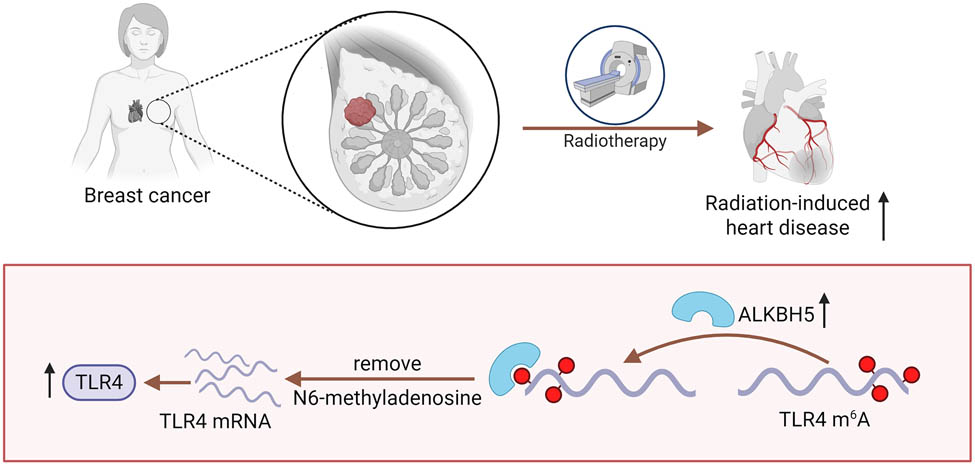
Graphical abstract
1 Introduction
Breast cancer is one of the most common cancers among women worldwide, and its incidence continues to rise [1]. Globally, approximately 2.3 million new cases occur annually, accounting for 11.7% of all cancer cases and resulting in over 685,000 deaths per year [2]. Radiation therapy (radiotherapy, RT) is a critical component of treatment and can significantly improve patient survival rates [3]. However, RT to the left breast or chest wall can lead to radiation-induced heart disease (RIHD), a significant long-term complication characterized by myocardial injury and increased cardiovascular morbidity [4]. Despite advances in RT techniques, the molecular mechanisms underlying RIHD remain poorly understood, hindering the development of targeted therapeutic strategies.
N6-methyladenosine (m6A) RNA modification, the most prevalent internal mRNA modification in eukaryotic cells, regulates gene expression through effects on RNA stability, splicing, and translation [5]. ALKBH5, an m6A demethylase [6], plays a central role in modulating m6A dynamics across diverse biological processes, including cell differentiation, development, stress response, and carcinogenesis, via its demethylation activity [7]. However, its involvement in RIHD remains unexplored. ALKBH5 functions as both an oncogene and a tumor suppressor gene in a context-dependent manner [6,8]. In breast cancer, ALKBH5 is not only implicated in the regulation of cancer stem cells, tumor microenvironment, and drug resistance but also holds potential as a novel therapeutic target and biomarker [9,10]. Nevertheless, its contribution to cardiac pathology following RT remains elusive.
This study unveils a novel regulatory axis linking ALKBH5-mediated m6A demethylation to RIHD in breast cancer patients. We demonstrate that ALKBH5 exacerbates radiation-induced myocardial injury by reducing m6A modification of Toll-like receptor 4 (TLR4), thereby enhancing TLR4 mRNA stability and activating downstream inflammatory signaling pathways. These findings reveal a previously unrecognized mechanism by which epitranscriptomic regulation of RNA metabolism contributes to RT-associated cardiac toxicity, offering a promising therapeutic strategy to mitigate this critical side effect in breast cancer survivors.
2 Methods
2.1 Clinical sample collection
The study included 30 healthy individuals, 30 breast cancer patients prior to RT, 30 breast cancer patients who had undergone one session of RT, 30 breast cancer patients 1 month post-RT, 30 breast cancer patients 6 months post-RT, and 30 breast cancer patients 12 months post-RT. All participants had left-sided breast tumors, had not received any other treatment modalities, and provided written informed consent. Whole blood samples from all subjects were collected, processed into serum, and stored at −80°C for subsequent experimental analysis.
-
Informed consent: Informed consent has been obtained from all individuals included in this study.
-
Ethical approval: The research related to human use has been complied with all the relevant national regulations, institutional policies, and in accordance with the tenets of the Helsinki Declaration, and has been approved by the Ethics Committee of Cancer Hospital Affiliated to Xinjiang Medical University.
2.2 Animal experiment
Female C57BL/6 mice (4–6 weeks old, 20 ± 2 g) were obtained from Nanjing GemPharmatech and housed under controlled environmental conditions (20–26°C temperature, 40–60% humidity, 12 h light/dark cycle). Mice were randomly assigned to nine groups: control, radiation (RT), 1-week post-RT (RT-1W), 2-week post-RT (RT-2W), 4-week post-RT (RT-4W), RT-2W+shNC, RT-2W+shALKBH5, RT-2W+shALKBH5+LV-NC, and RT-2W+shALKBH5+LV-TLR4 (n = 6 per group). The RT group received a single dose of 15 Gy X-ray radiation targeted specifically to the heart [11]. Mice were anesthetized using 2% isoflurane and positioned in a custom-made jig designed for cardiac irradiation. Lead shielding was applied to minimize exposure to non-target organs. Radiation was delivered using a Varian Clinac IX linear accelerator (Varian Medical Systems, Palo Alto, CA, USA) operating at 6 MV with a dose rate of 3 Gy/min. After irradiation, mice were monitored until full recovery from anesthesia. At the end of the study period, mice were euthanized, and hearts were harvested for further analysis.
To investigate the role of ALKBH5 and TLR4 in vivo, short hairpin RNA (sh) targeting ALKBH5 (sh-ALKBH5) and a negative control (sh-NC), along with lentivirus-mediated TLR4 overexpression plasmids (LV-TLR4) and a corresponding negative control (LV-NC), were synthesized by GenePharma (Shanghai, China). The sh-ALKBH5 and sh-NC constructs were packaged into lentiviral vectors. Lentivirus (10 μL, 109 PFU/mL) was administered via intravenous injection for 3 consecutive days, followed by cardiac irradiation with X-rays for 2 weeks.
-
Ethical approval: The research related to animal use has been complied with all the relevant national regulations and institutional policies for the care and use of animals, and has been approved by the Ethics Committee of Cancer Hospital Affiliated to Xinjiang Medical University.
2.3 Cardiac function assessment
Cardiac function was assessed via echocardiography prior to euthanasia. Echocardiograms were performed using a Vevo 2100 Imaging System (VisualSonics, Toronto, ON, Canada) equipped with a high-resolution 30-MHz probe. Parameters including left ventricular ejection fraction (LVEF), left ventricular posterior wall thickness at end-diastole (LVPWd), and left ventricular posterior wall thickness at end-systole (LVPWs) were measured to evaluate cardiac performance.
2.4 Serum cardiac troponin T (cTnT) and B-type natriuretic peptide (BNP) analysis
Serum levels of cTnT and BNP were quantified using commercial ELISA kits in accordance with the manufacturers’ protocols. Human cTnT was measured using the Human cTnT ELISA Kit (ab223860, Abcam, Cambridge, UK), while mouse cTnT was detected using the Mouse cTnT ELISA Kit (MBS2104865, MyBioSource, San Diego, CA, USA). For BNP measurements, human samples were analyzed using the BNP ELISA Kit (ab193694, Abcam), while mouse samples were analyzed using the Mouse BNP ELISA Kit (MBS2510603, MyBioSource). All assays were carried out in duplicate, with absorbance measured at 450 nm using a SpectraMax microplate reader (Molecular Devices, San Jose, CA, USA).
2.5 Hematoxylin and eosin (HE) analysis
HE staining was performed using an HE staining kit (G1120, Solarbio, Beijing, China). Briefly, heart tissues were dehydrated through a graded ethanol series, embedded in paraffin, and sectioned into 4 μm-thick slices. After standard dewaxing and washing with distilled water, sections were stained with hematoxylin followed by eosin. Subsequently, the sections were dehydrated, dried, and mounted with neutral resin. Finally, histological images were captured using an optical microscope (Olympus, Tokyo, Japan).
2.6 Immunohistochemistry (IHC) analysis
The tumor tissue was collected, fixed, embedded in paraffin wax, and cut into 5 µM sections. After the sections were dewaxed and blocked, they were incubated with the primary antibody against ALKBH5 (ab195377, Abcam) and the secondary antibody. The images were observed under a light microscope (Olympus).
2.7 Cell culture and treatment
The rat cardiomyocyte cell line H9C2 (American Type Culture Collection, ATCC) was cultured in high-glucose DMEM (Solarbio) supplemented with 10% FBS (Solarbio), 100 U/mL penicillin, and 100 µg/mL streptomycin at 37°C in a humidified atmosphere with 5% CO₂. For gene manipulation, sh-ALKBH5 or sh-NC plasmids were transfected into H9C2 cells using Lipofectamine 3000 transfection reagent (Invitrogen, Carlsbad, CA, USA).
2.8 Quantitative real-time PCR (qPCR)
Total RNA was extracted from designated cell lines or tissue samples using TRIzol reagent (Invitrogen). Subsequently, 1 µg of total RNA was reverse-transcribed into cDNA using a PrimeScript RT Reagent Kit with gDNA Eraser (Takara Bio USA, Inc., Mountain View, CA, USA). Target gene-specific primers were synthesized by Shanghai Sangon Biotech Co., Ltd (Shanghai, China). The mRNA expression levels of target genes were quantified using a QuantStudio5 Real-Time PCR System (Applied Biosystems, Foster City, CA, USA) with SYBR Green-based qPCR. Relative mRNA expression was analyzed using the comparative 2−∆∆CT method, normalized to the housekeeping gene GAPDH.
2.9 Methylated RNA immunoprecipitation (MeRIP)
The m6A level of the TLR4 gene was quantified using a GenSeq® m6A MeRIP Kit (CloudSeq, Shanghai, China). Total RNA was extracted from 2 × 10⁷ H9C2 cells and fragmented to an average size of ∼200 nucleotides using RNase III. Magnetic beads were pre-incubated with 2 µL of anti-m6A antibody or isotype control IgG antibody for 1 h on a rotator at 4°C, followed by washing with IP buffer provided in the kit. Subsequently, 200 µL of nuclease-free water containing fragmented RNA was added to the bead-antibody complexes and incubated for 1 h on a rotator at 4°C. After washing with IP buffer, the m6A-enriched RNA was purified, and the enrichment of TLR4 RNA was quantified by qPCR using gene-specific primers.
2.10 RNA immunoprecipitation (RIP)
H9C2 cells were washed, centrifuged, and lysed in RIP lysis buffer on ice. After, the cell lysates were incubated with magnetic beads conjugated with anti-ALKBH5 or anti-IgG (ab133470) antibodies at 4℃ overnight. After purification, RNA was extracted from the mixture and analyzed by qPCR.
2.11 Dual-luciferase reporter assay
TLR4 promoter sequences (wt) and mutant sequences were separately inserted into the pmiR-GLO vector (Promega, Madison, WI, USA). H9C2 cells were co-transfected with the wt or mutant reporter plasmids along with sh-ALKBH5 or sh-NC plasmids using Lipofectamine 3000 (Invitrogen). The luciferase activities of the aforementioned reporter plasmids were measured according to the protocols provided in the Dual-Luciferase Reporter Assay Kit (Promega).
2.12 Western blot
Total proteins from different treatment tissues were extracted using RIPA lysis buffer (Beyotime). After quantification of protein concentration, proteins were separated via 10% SDS-PAGE and transferred to a PVDF membrane. Following transfer, the PVDF membrane was blocked with fast protein-blocking solution (Beyotime) at 37°C for 2 h, incubated overnight at 4°C with primary antibodies at a 1:1,000 dilution, and subsequently incubated with the secondary antibody for 2 h. Band signals were detected using an enhanced chemiluminescence system (Bio-Rad, Hercules, CA, USA). Primary antibodies included: anti-METTL3 (ab195352), anti-METTL14 (ab309096), anti-WTAP, (ab195380), anti-ALKBH5 (ab195377), anti-FTO (ab126605), anti-TLR4 (sc-293072; Santa Cruz, Dallas, TX, USA), anti-p-P38MAPK (4511; Cell Signaling Technology, Danvers, MA, USA), anti-p-ERK1/2 (4370; CST), anti-p-JNK (4668; CST), anti-p-NF-κB (3033; CST), anti-P38MAPK (8690; CST), anti-ERK1/2 (4695; CST), anti-JNK (9252; CST), anti-NF-κB (8242; CST), and anti-β-actin (ab8227).
2.13 Bioinformatic analysis
The potential m6A modification sites of TLR4 mRNA were predicted using the online SRAMP database (http://www.cuilab.cn/sramp).
2.14 Detection of RNA stability
TLR4 mRNA stability was assessed by qPCR following treatment of H9C2 cells with 5 μg/mL actinomycin D (Act-D; Abmole, Houston, TX, USA) for 1, 2, 4, and 8 h.
2.15 Statistical analysis
All experiments were performed in triplicate, with results expressed as the mean value ± standard deviation. Data analysis was conducted using GraphPad Prism software (version 8.3). A Student’s t-test was applied to compare differences between two groups, whereas one-way ANOVA was used to assess variations among multiple groups. Normality of all datasets was validated via Shapiro-Wilk testing. The Benjamini-Hochberg FDR method (q < 0.05) was employed to correct for multiple comparisons. Correlations between ALKBH5/TLR4 and cTnT expression were analyzed using Pearson’s correlation coefficient. Statistical significance was defined as p < 0.05.
3 Results
3.1 ALKBH5 levels were highly expressed after RT for breast cancer
To investigate the role of m6A modification in RIHD, we first analyzed the expression levels of methyltransferases (METTL3, METTL14, and WTAP) and demethylases (ALKBH5 and FTO) in serum samples. We observed that METTL3 and METTL14 levels in breast cancer patients were significantly reduced compared to healthy controls, whereas WTAP, ALKBH5, and FTO levels were markedly increased. Notably, no significant differences were observed in METTL3, METTL14, WTAP, or FTO levels between breast cancer patients who received RT and those without treatment. Additionally, ALKBH5 levels remained unchanged in patients undergoing a single session of RT. However, ALKBH5 levels increased progressively at 1, 6, and 12 months post-radiation, with the most pronounced elevation detected at the 6-month timepoint (Figure 1a–e). Western blot analysis further corroborated this finding (Figure 1f). Supplementary analyses revealed a significant increase in cardiac biomarkers, including troponin cTnT and BNP, in breast cancer patients at 1, 6, and 12 months following RT, with the most prominent rise observed at the 6-month timepoint (Figure S1a and b). Importantly, ALKBH5 expression levels exhibited a positive correlation with cTnT expression (Figure S1c). Furthermore, TLR4 expression was significantly upregulated at 1, 6, and 12 months post-radiation, peaking at 6 months (Figure S1d), and demonstrated a positive correlation with cTnT levels (Figure S1e). These findings suggest that ALKBH5 levels are elevated following RT for breast cancer.

ALKBH5 levels were highly expressed after radiotherapy for breast cancer. (a)–(e) METTL3, METTL14, WTAP, ALKBH5, and FTO levels were detected in healthy subjects, patients with breast cancer before radiotherapy (CA), radiotherapy for once (CA + RT), 1 month after radiotherapy (CA + RT-1M), 6 months after radiotherapy (CA + RT-6M), and 12 months after radiotherapy (CA + RT-12M) using qPCR (n = 30 independent biological replicates/group in clinical trials). (f) METTL3, METTL14, WTAP, ALKBH5, and FTO protein levels in the serum of each group were measured using western blotting. All data are expressed as the mean values ± SD. NS: no significance.
3.2 RIHD and upregulated ALKBH5 expression in RIHD mice
To validate these clinical findings, we established a murine model of RIHD by irradiating C57BL/6 mice with 15 Gy targeted to the heart. We observed no significant differences in LVEF, LVPW-d, or LVPW-s between mice receiving a single session of RT and the control group. However, LVEF decreased markedly after 1, 2, and 4 weeks of radiation therapy, while LVPW-d and LVPW-s increased significantly after 1, 2, and 4 weeks of radiation, with the most pronounced changes observed at 2 weeks post-radiation (Figure 2a–c). Concurrently, cardiac biomarkers (troponin cTnT and BNP) in mouse serum showed significant increases after 1, 2, and 4 weeks of radiation, with the most prominent elevation at 2 weeks (Figure 2d and e). Histopathological analysis via HE staining revealed inflammatory cell infiltration, disorganized myocardial cells, and disrupted myocardial fibers after 2 and 4 weeks of RT, indicating severe myocardial injury (Figure 2f). Furthermore, qPCR, IHC, and western blot analyses demonstrated that ALKBH5 levels increased progressively from 1 to 4 weeks post-radiation, peaking at 2 weeks (Figure 2g–i). These results confirm that radiation-induced cardiac damage is associated with elevated ALKBH5 expression.

RIHD and upregulated ALKBH5 expression in RIHD mice. (a)–(c) The cardiac function including LVEF, LVPW-d, and LVPW-s was analyzed using the ultrasound imaging system. (d) and (e) The levels of cTnT and BNP (B-type natriuretic peptide) in the serum were detected using an ELISA kit. (f) Myocardial damage was visualized using the HE staining. (g)–(i) The levels of ALKBH5 were examined using qPCR, IHC assays, and western blot in the heart tissues of mice, respectively. All data are expressed as the mean values ± SD. NS: no significance. n = 6 independent biological replicates/group in animal experiments.
3.3 Downregulation of ALKBH5 reversed the myocardium damage induced by radiation in mice
To determine whether ALKBH5 contributes to RIHD, we silenced its expression in mice using shRNA (Figure 3a). We observed that 2 weeks of RT induced a significant decrease in LVEF and a marked increase in LVPW-d and LVPW-s, which were mitigated by ALKBH5 knockdown (Figure 3b–d). Similarly, the elevated cardiac biomarkers (troponin cTnT and BNP) in mouse serum following 2 weeks of RT were significantly reduced after ALKBH5 downregulation (Figure 3e and f). Histopathological analysis via HE staining revealed that myocardial damage caused by 2 weeks of RT was alleviated in mice with ALKBH5 knockdown, as evidenced by reduced inflammatory cell infiltration, diminished myocardial fiber breakage, and restored orderly arrangement of cardiomyocytes (Figure 3g). These findings indicate that ALKBH5 silencing attenuates radiation-induced myocardial injury in mice.

Downregulation of ALKBH5 reversed the myocardium damage induced by radiation in mice. (a) Transfection efficiency was measured by qPCR. (b)–(d) The cardiac function including LVEF, LVPW-d, and LVPW-s was analyzed using the ultrasound imaging system. (e) and (f) The levels of cTnT and BNP (B-type natriuretic peptide) in the serum were detected using an ELISA kit. (g) Myocardial damage was visualized using the HE staining. All data are expressed as the mean values ± SD. n = 6 independent biological replicates/group in animal experiments.
3.4 TLR4 was the direct target of ALKBH5-mediated m6A demethylation modification
Given the central role of TLR4 in inflammatory signaling, we hypothesized that ALKBH5 regulates TLR4 expression through m6A modification. qPCR revealed that TLR4 mRNA levels were significantly reduced following ALKBH5 knockdown (Figure 4a). ALKBH5 silencing increased m6A levels on TLR4 mRNA (Figure 4b). RIP confirmed the physical interaction between ALKBH5 and TLR4 mRNA (Figure 4c). Bioinformatics analysis using the SRAMP database predicted potential m6A modification sites on TLR4 mRNA (Figure 4d). Specifically, two high-affinity sites (adenine residues at positions 167 and 1,514) were selected for mutagenesis (Figure 4e). Luciferase reporter assays demonstrated that ALKBH5 knockdown significantly reduced luciferase activity in cells transfected with TLR4-wt at the 1514th adenine residue, whereas no significant change was observed in cells expressing the TLR4-mut (Figure 4f). Furthermore, ALKBH5 silencing decreased the stability of TLR4 mRNA (Figure 4g). These data demonstrate that ALKBH5 enhances TLR4 expression by reducing m6A modification levels on its transcript.

TLR4 was the direct target of ALKBH5-mediated m6A demethylation modification. (a) The mRNA levels of TLR4 were measured using qPCR. (b) The m6A modification level of TLR4 was measured by MeRIP assay. (c) The interaction between TLR4 and ALKBH5 in H9C2 cells was measured by RIP. (d) The potential m6A modification site of TLR4 mRNA was predicted using the online SRAMP database. (e) Selection of mutation sites. (f) Luciferase assay was conducted to examine the binding relationship between TLR4 and ALKBH5. (g) The stability of TLR4 mRNA was measured by qPCR after H9C2 cells were treated with actinomycin D at 1, 2, 4, and 8 h. All data are expressed as the mean values ± SD. NS: no significance. n = 3 independent biological replicates/group.
3.5 Overexpression of TLR4 abolished the inhibitory effect of silenced ALKBH5 on myocardium damage induced by radiation in mice
To confirm TLR4 as a functional mediator of ALKBH5 activity, we overexpressed TLR4 in ALKBH5-knockdown mice (Figure 5a). ALKBH5 silencing significantly elevated LVEF and reduced LVPW-d and LVPW-s after 2 weeks of RT, which was counteracted by TLR4 overexpression (Figure 5b–d). Similarly, the suppression of cardiac biomarkers (cTnT, BNP) in mice following 2 weeks of RT induced by ALKBH5 knockdown was reversed by TLR4 upregulation (Figure 5e and f). Consistently, histopathological analysis via HE staining revealed that ALKBH5 silencing alleviated radiation-induced myocardial injury, whereas TLR4 overexpression abolished the protective effect of ALKBH5 knockdown, as evidenced by restored inflammatory cell infiltration and disrupted myocardial architecture (Figure 5g). To investigate the TLR4-dependent activation of the MAPK/NF-κB signaling pathway, we performed Western blot analysis. Our results demonstrated that TLR4 overexpression reversed the suppression of phosphorylated forms of p-P38MAPK, p-JNK, p-ERK1/2, and p-NF-κB induced by ALKBH5 knockdown (Figure S2), underscoring the role of pro-inflammatory MAPK/NF-κB signaling as a downstream mechanism.

Overexpression of TLR4 abolished the inhibitory effect of silenced ALKBH5 on myocardium damage by radiation in mice induced. (a) Transfection efficiency was measured by qPCR. (b)–(d) The cardiac function including LVEF, LVPW-d, and LVPW-s was analyzed using the ultrasound imaging system. (e) and (f) The levels of cTnT and BNP (B-type natriuretic peptide) in the serum were detected using an ELISA kit. (g) Myocardial damage was visualized using the HE staining. All data are expressed as the mean values ± SD. n = 6 independent biological replicates/group in animal experiments.
4 Discussion
In recent years, RT for breast cancer has become a critical intervention for improving survival rates; however, it is also associated with potential adverse effects, particularly on the heart, including RIHD and long-term cardiovascular risks [12]. To mitigate the cardiotoxic effects of RT, further investigation into the molecular mechanisms of RIHD is essential to identify potential therapeutic targets and strategies. Aberrant regulation of m6A modifications has been strongly linked to various cancers, including breast cancer [13,14]. Moreover, the role of m6A modification in cardiac injury has garnered significant attention [15]. m6A modification influences cardiac injury progression by modulating cardiomyocyte survival, apoptosis, autophagy, and inflammatory responses [16]. Given the critical roles of m6A modification in both oncogenesis and myocardial damage, therapeutic strategies targeting m6A-related proteins are increasingly being explored. Our findings revealed altered expression patterns of m6A methyltransferases (METTL3, METTL14, and WTAP) and demethylases (ALKBH5 and FTO) in the serum of healthy individuals vs breast cancer patients. Notably, among these enzymes, only ALKBH5 levels were significantly elevated in breast cancer patients undergoing RT for 1–12 months; other m6A-modification-associated enzymes remained unaffected by radiation exposure. Previous studies have demonstrated that high-dose radiation (>5 Gy) can induce heart disease in patients receiving RT [17]. Collectively, these findings provide a strong rationale for our investigation into the role of ALKBH5 in radiation-induced myocardial injury.
Radiation exposure impacts multiple aspects of cardiac physiology, including the coronary arteries, myocardium, pericardium, and valves [18,19]. Studies have shown that high-dose radiation exposure in mice typically leads to reduced LVEF and elevated expression of biomarkers indicative of myocardial injury [20,21]. Similarly, Xu et al. found that high-dose ionizing radiation induces cardiac dysfunction and structural remodeling in mice, characterized by decreased LVEF and LVPW-s, along with increased LVID-s [22]. In our study, we established a RIHD model and observed that LVEF decreased while LVPW-d, LVPW-s, cTnT, and BNP increased in mice after 1 week of radiation exposure, with the most pronounced changes at 2 weeks post-irradiation. Pathological analysis further confirmed severe myocardial injury in mice at this timepoint. Notably, ALKBH5 RNA levels and protein expression were significantly elevated in mice following 2 weeks of radiation. However, ALKBH5 knockdown reversed the radiation-induced myocardial damage. These findings suggest that ALKBH5 plays a regulatory role in radiation-induced cardiac injury.
Subsequently, we conducted in vitro experiments to investigate the mechanism by which ALKBH5 regulates myocardial function. We found that ALKBH5, as an m6A demethylase, reduces the m6A modification level of TLR4, thereby increasing TLR4 expression. TLR4, a member of the TLR family, is well-established as the primary receptor for bacterial lipopolysaccharide [23]. Beyond its critical role in infectious diseases, TLR4 profoundly influences cancer initiation, progression, metastasis, and therapeutic response [24], particularly in breast cancer [25]. In breast cancer cells, TLR4 is significantly overexpressed, and this overexpression is closely associated with tumor aggressiveness, disease progression, and poor patient prognosis [26]. Notably, TLR4 undergoes post-transcriptional regulation via m6A modification, which alters its functional activity, modulates downstream signaling pathways, and thereby impacts immune response [27] and oncogenesis [28]. Additionally, TLR4 plays a pivotal role in radiation-induced cardiac injury [29], mediating processes such as inflammatory responses, oxidative stress, cardiac remodeling, and immune modulation [30]. In our study, we observed that TLR4 upregulation counteracted the protective effect of ALKBH5 knockdown on radiation-induced myocardial injury in mice, confirming that ALKBH5 contributes to radiation-induced cardiac damage through TLR4 overexpression. Furthermore, we investigated the role of TLR-mediated signaling pathways in cardiac injury. A study has demonstrated that excessive activation of the TLR4/MAPKs/NF-κB pathway serves as a critical molecular mechanism exacerbating cardiac toxicity [31]. Here we provide evidence that TLR4 overexpression effectively reverses the suppression of MAPKs/NF-κB pathway activation induced by ALKBH5 knockdown. These results demonstrate that TLR4 hyperactivation contributes to cardiac dysfunction and suggest ALKBH5 as a potential regulatory factor in this pathway.
Several limitations should be acknowledged in this study. The use of H9C2 cells and mouse models may not fully replicate human cardiac responses due to species-specific differences. Future work should validate findings in human primary cardiomyocytes and explore additional pathways beyond MAPK/NF-κB. While the mouse model successfully mimicked radiation-induced cardiac injury, interspecies differences in cardiac pathophysiology may limit the direct translation of these results to humans. Moreover, broader clinical studies are needed to assess generalizability across diverse populations and support personalized therapies.
In conclusion, our study demonstrates that ALKBH5 plays a critical role in radiation-induced cardiac injury. ALKBH5 enhances the stability of TLR4 mRNA by reducing its m6A methylation levels, thereby promoting the progression of radiation-induced myocardial damage. These findings not only identify ALKBH5 as a potential therapeutic target for mitigating cardiac injury in breast cancer patients undergoing RT but also provide a comprehensive framework for exploring the role of m6A modifications in the adverse effects of cancer RT.
-
Funding information: This study was supported by Kashgar Region Applied Technology Research and Development Plan Project (Project No. KS2022032).
-
Author contributions: All authors participated in the design, interpretation of the studies and analysis of the data and review of the manuscript. Xiaokeya Yasen drafted the work and revised it critically for important intellectual content; Yilinuer Maihesumu, Dilixiati Wusiman, Abudula Aihemaiti, and Xirmaimaiti Aishan were responsible for the acquisition, analysis, and interpretation of data for the work; Munire Mushajiang made substantial contributions to the conception or design of the work. All authors read and approved the final manuscript.
-
Conflict of interest: Authors state no conflict of interest.
-
Data availability statement: The datasets generated during and/or analyzed during the current study are available from the corresponding author on reasonable request.
References
[1] Harbeck N, Gnant M. Breast cancer. Lancet. 2017;389(10074):1134–50.10.1016/S0140-6736(16)31891-8Search in Google Scholar PubMed
[2] Giaquinto AN, Sung H, Newman LA, Freedman RA, Smith RA, Star J, et al. Breast cancer statistics 2024. CA Cancer J Clin. 2024;74(6):477–95.10.3322/caac.21863Search in Google Scholar PubMed
[3] Shah C, Al-Hilli Z, Vicini F. Advances in breast cancer radiotherapy: Implications for current and future practice. JCO Oncol Pract. 2021;17(12):697–706.10.1200/OP.21.00635Search in Google Scholar PubMed
[4] Peix A, Perez A, Barreda AM. Cancer and postradiotherapy cardiotoxicity: How to face damage in women’s hearts? Eur Cardiol. 2023;18:e8.10.15420/ecr.2022.36Search in Google Scholar PubMed PubMed Central
[5] An Y, Duan H. The role of m6A RNA methylation in cancer metabolism. Mol Cancer. 2022;21(1):14.10.1186/s12943-022-01500-4Search in Google Scholar PubMed PubMed Central
[6] Qu J, Yan H, Hou Y, Cao W, Liu Y, Zhang E, et al. RNA demethylase ALKBH5 in cancer: From mechanisms to therapeutic potential. J Hematol Oncol. 2022;15(1):8.10.1186/s13045-022-01224-4Search in Google Scholar PubMed PubMed Central
[7] Fang M, Ye L, Zhu Y, Huang L, Xu S. M6A demethylase ALKBH5 in human diseases: From structure to mechanisms. Biomolecules. 2025;15(2):157.10.3390/biom15020157Search in Google Scholar PubMed PubMed Central
[8] Wei C, Wang B, Peng D, Zhang X, Li Z, Luo L, et al. Pan-Cancer analysis shows that ALKBH5 is a potential prognostic and immunotherapeutic biomarker for multiple cancer types including gliomas. Front Immunol. 2022;13:849592.10.3389/fimmu.2022.849592Search in Google Scholar PubMed PubMed Central
[9] Liu X, Li P, Huang Y, Li H, Liu X, Du Y, et al. M(6)A demethylase ALKBH5 regulates FOXO1 mRNA stability and chemoresistance in triple-negative breast cancer. Redox Biol. 2024;69:102993.10.1016/j.redox.2023.102993Search in Google Scholar PubMed PubMed Central
[10] Woodcock CL, Alsaleem M, Toss MS, Lothion-Roy J, Harris AE, Jeyapalan JN, et al. The role of the ALKBH5 RNA demethylase in invasive breast cancer. Discov Oncol. 2024;15(1):343.10.1007/s12672-024-01205-8Search in Google Scholar PubMed PubMed Central
[11] Bai J, Wu B, Zhao S, Wang G, Su S, Lu B, et al. The effect of PD-1 inhibitor combined with irradiation on HMGB1-Associated inflammatory cytokines and myocardial injury. J Inflamm Res. 2022;15:6357–71.10.2147/JIR.S384279Search in Google Scholar PubMed PubMed Central
[12] Koutroumpakis E, Deswal A, Yusuf SW, Abe J, Nead KT, Potter AS, et al. Radiation-Induced cardiovascular disease: Mechanisms, prevention, and treatment. Curr Oncol Rep. 2022;24(5):543–53.10.1007/s11912-022-01238-8Search in Google Scholar PubMed
[13] Petri BJ, Klinge CM. M6A readers, writers, erasers, and the m6A epitranscriptome in breast cancer. J Mol Endocrinol. 2023;70(2):e220110.10.1530/JME-22-0110Search in Google Scholar PubMed PubMed Central
[14] Wang Y, Wang Y, Patel H, Chen J, Wang J, Chen Z, et al. Epigenetic modification of m(6)A regulator proteins in cancer. Mol Cancer. 2023;22(1):102.10.1186/s12943-023-01810-1Search in Google Scholar PubMed PubMed Central
[15] Wang K, Li Y, Qiang T, Chen J, Wang X. Role of epigenetic regulation in myocardial ischemia/reperfusion injury. Pharmacol Res. 2021;170:105743.10.1016/j.phrs.2021.105743Search in Google Scholar PubMed
[16] Liu Y, Wu H, Zhou G, Zhang D, Yang Q, Li Y, et al. Role of m6a methylation in myocardial Ischemia-Reperfusion injury and Doxorubicin-induced cardiotoxicity. Cardiovasc Toxicol. 2024;24(9):918–28.10.1007/s12012-024-09898-7Search in Google Scholar PubMed
[17] Wang K, Ye C, Yang X, Ma P, Yan C, Luo L. New insights into the understanding of mechanisms of radiation-induced heart disease. Curr Treat Options Oncol. 2023;24(1):12–29.10.1007/s11864-022-01041-4Search in Google Scholar PubMed
[18] Ghnim ZS, Adhab AH, Mahdi MS, Kyada A, Roopashree R, Thakur V, et al. Radiation-induced cardiac remodeling: Mechanisms and therapeutic approaches. Cardiovasc Toxicol. 2025;25(7):1022–41.10.1007/s12012-025-10006-6Search in Google Scholar PubMed
[19] Zaghlol R, Pedersen L, Qamer S, Yoo SGK, Ladin DA, Parvathaneni A, et al. Cardiac complications of radiation therapy. Cardiol Clin. 2025;43(1):129–49.10.1016/j.ccl.2024.09.007Search in Google Scholar PubMed
[20] Dreyfuss AD, Goia D, Shoniyozov K, Shewale SV, Velalopoulou A, Mazzoni S, et al. A novel mouse model of Radiation-Induced cardiac injury reveals biological and radiological biomarkers of cardiac dysfunction with potential clinical relevance. Clin Cancer Res. 2021;27(8):2266–76.10.1158/1078-0432.CCR-20-3882Search in Google Scholar PubMed PubMed Central
[21] Zhang R, Xie K, Lian Y, Hong S, Zhu Y. Dexmedetomidine ameliorates x-ray-induced myocardial injury via alleviating cardiomyocyte apoptosis and autophagy. BMC Cardiovasc Disord. 2024;24(1):323.10.1186/s12872-024-03988-8Search in Google Scholar PubMed PubMed Central
[22] Xu P, Yi Y, Luo Y, Liu Z, Xu Y, Cai J, et al. Radiation‑induced dysfunction of energy metabolism in the heart results in the fibrosis of cardiac tissues. Mol Med Rep. 2021;24(6):842.10.3892/mmr.2021.12482Search in Google Scholar PubMed PubMed Central
[23] Kim H, Kim H, Lee J, Hwangbo C. Toll-like receptor 4 (TLR4): New insight immune and aging. Immun Ageing. 2023;20(1):67.10.1186/s12979-023-00383-3Search in Google Scholar PubMed PubMed Central
[24] Alshahrani MY, Oghenemaro EF, Rizaev J, Kyada A, Roopashree R, Kumar S, et al. Exploring the modulation of TLR4 and its associated ncRNAs in cancer immunopathogenesis, with an emphasis on the therapeutic implications and mechanisms underlying drug resistance. Hum Immunol. 2025;86(1):111188.10.1016/j.humimm.2024.111188Search in Google Scholar PubMed
[25] Afroz R, Tanvir EM, Tania M, Fu J, Kamal MA, Khan MA. LPS/TLR4 pathways in breast cancer: insights into cell signalling. Curr Med Chem. 2022;29(13):2274–89.10.2174/0929867328666210811145043Search in Google Scholar PubMed
[26] Wen J, Zhang J, Wu X, Yan X, Qin X, Wang Y. Prognostic and clinicopathological significance of TLR4 expression in patients with breast cancer: A meta-analysis. Front Oncol. 2024;14:1344130.10.3389/fonc.2024.1344130Search in Google Scholar PubMed PubMed Central
[27] Xu J, Liu L, Zhi F, Song Y, Zhang Z, Li B, et al. DDX5 inhibits inflammation by modulating m6A levels of TLR2/4 transcripts during bacterial infection. EMBO Rep. 2024;25(2):770–95.10.1038/s44319-023-00047-9Search in Google Scholar PubMed PubMed Central
[28] Jia C, Guo Y, Chen Y, Wang X, Xu Q, Zhang Y, et al. HNRNPA2B1-mediated m6A modification of TLR4 mRNA promotes progression of multiple myeloma. J Transl Med. 2022;20(1):537.10.1186/s12967-022-03750-8Search in Google Scholar PubMed PubMed Central
[29] Gawali B, Sridharan V, Krager KJ, Boerma M, Pawar SA. TLR4-A pertinent player in radiation-induced heart disease? Genes (Basel). 2023;14(5):1002.10.3390/genes14051002Search in Google Scholar PubMed PubMed Central
[30] Vaez H, Soraya H, Garjani A, Gholikhani T. Toll-like receptor 4 (TLR4) and AMPK relevance in cardiovascular disease. Adv Pharm Bull. 2023;13(1):36–47.Search in Google Scholar
[31] Li J, Yang Y, Wang H, Ma D, Wang H, Chu L, et al. Baicalein ameliorates myocardial ischemia through reduction of oxidative stress, inflammation and apoptosis via TLR4/MyD88/MAPK(S)/NF-kappaB pathway and regulation of Ca(2+) homeostasis by L-type Ca(2+) channels. Front Pharmacol. 2022;13:842723.10.3389/fphar.2022.842723Search in Google Scholar PubMed PubMed Central
© 2025 the author(s), published by De Gruyter
This work is licensed under the Creative Commons Attribution 4.0 International License.
Articles in the same Issue
- Biomedical Sciences
- Mechanism of triptolide regulating proliferation and apoptosis of hepatoma cells by inhibiting JAK/STAT pathway
- Maslinic acid improves mitochondrial function and inhibits oxidative stress and autophagy in human gastric smooth muscle cells
- Comparative analysis of inflammatory biomarkers for the diagnosis of neonatal sepsis: IL-6, IL-8, SAA, CRP, and PCT
- Post-pandemic insights on COVID-19 and premature ovarian insufficiency
- Proteome differences of dental stem cells between permanent and deciduous teeth by data-independent acquisition proteomics
- Optimizing a modified cetyltrimethylammonium bromide protocol for fungal DNA extraction: Insights from multilocus gene amplification
- Preliminary analysis of the role of small hepatitis B surface proteins mutations in the pathogenesis of occult hepatitis B infection via the endoplasmic reticulum stress-induced UPR-ERAD pathway
- Efficacy of alginate-coated gold nanoparticles against antibiotics-resistant Staphylococcus and Streptococcus pathogens of acne origins
- Battling COVID-19 leveraging nanobiotechnology: Gold and silver nanoparticle–B-escin conjugates as SARS-CoV-2 inhibitors
- Neurodegenerative diseases and neuroinflammation-induced apoptosis
- Impact of fracture fixation surgery on cognitive function and the gut microbiota in mice with a history of stroke
- COLEC10: A potential tumor suppressor and prognostic biomarker in hepatocellular carcinoma through modulation of EMT and PI3K-AKT pathways
- High-temperature requirement serine protease A2 inhibitor UCF-101 ameliorates damaged neurons in traumatic brain-injured rats by the AMPK/NF-κB pathway
- SIK1 inhibits IL-1β-stimulated cartilage apoptosis and inflammation in vitro through the CRTC2/CREB1 signaling
- Rutin–chitooligosaccharide complex: Comprehensive evaluation of its anti-inflammatory and analgesic properties in vitro and in vivo
- Knockdown of Aurora kinase B alleviates high glucose-triggered trophoblast cells damage and inflammation during gestational diabetes
- Calcium-sensing receptors promoted Homer1 expression and osteogenic differentiation in bone marrow mesenchymal stem cells
- ABI3BP can inhibit the proliferation, invasion, and epithelial–mesenchymal transition of non-small-cell lung cancer cells
- Changes in blood glucose and metabolism in hyperuricemia mice
- Rapid detection of the GJB2 c.235delC mutation based on CRISPR-Cas13a combined with lateral flow dipstick
- IL-11 promotes Ang II-induced autophagy inhibition and mitochondrial dysfunction in atrial fibroblasts
- Short-chain fatty acid attenuates intestinal inflammation by regulation of gut microbial composition in antibiotic-associated diarrhea
- Application of metagenomic next-generation sequencing in the diagnosis of pathogens in patients with diabetes complicated by community-acquired pneumonia
- NAT10 promotes radiotherapy resistance in non-small cell lung cancer by regulating KPNB1-mediated PD-L1 nuclear translocation
- Phytol-mixed micelles alleviate dexamethasone-induced osteoporosis in zebrafish: Activation of the MMP3–OPN–MAPK pathway-mediating bone remodeling
- Association between TGF-β1 and β-catenin expression in the vaginal wall of patients with pelvic organ prolapse
- Primary pleomorphic liposarcoma involving bilateral ovaries: Case report and literature review
- Effects of de novo donor-specific Class I and II antibodies on graft outcomes after liver transplantation: A pilot cohort study
- Sleep architecture in Alzheimer’s disease continuum: The deep sleep question
- Ephedra fragilis plant extract: A groundbreaking corrosion inhibitor for mild steel in acidic environments – electrochemical, EDX, DFT, and Monte Carlo studies
- Langerhans cell histiocytosis in an adult patient with upper jaw and pulmonary involvement: A case report
- Inhibition of mast cell activation by Jaranol-targeted Pirin ameliorates allergic responses in mouse allergic rhinitis
- Aeromonas veronii-induced septic arthritis of the hip in a child with acute lymphoblastic leukemia
- Clusterin activates the heat shock response via the PI3K/Akt pathway to protect cardiomyocytes from high-temperature-induced apoptosis
- Research progress on fecal microbiota transplantation in tumor prevention and treatment
- Low-pressure exposure influences the development of HAPE
- Stigmasterol alleviates endplate chondrocyte degeneration through inducing mitophagy by enhancing PINK1 mRNA acetylation via the ESR1/NAT10 axis
- AKAP12, mediated by transcription factor 21, inhibits cell proliferation, metastasis, and glycolysis in lung squamous cell carcinoma
- Association between PAX9 or MSX1 gene polymorphism and tooth agenesis risk: A meta-analysis
- A case of bloodstream infection caused by Neisseria gonorrhoeae
- Case of nasopharyngeal tuberculosis complicated with cervical lymph node and pulmonary tuberculosis
- p-Cymene inhibits pro-fibrotic and inflammatory mediators to prevent hepatic dysfunction
- GFPT2 promotes paclitaxel resistance in epithelial ovarian cancer cells via activating NF-κB signaling pathway
- Transfer RNA-derived fragment tRF-36 modulates varicose vein progression via human vascular smooth muscle cell Notch signaling
- RTA-408 attenuates the hepatic ischemia reperfusion injury in mice possibly by activating the Nrf2/HO-1 signaling pathway
- Decreased serum TIMP4 levels in patients with rheumatoid arthritis
- Sirt1 protects lupus nephritis by inhibiting the NLRP3 signaling pathway in human glomerular mesangial cells
- Sodium butyrate aids brain injury repair in neonatal rats
- Interaction of MTHFR polymorphism with PAX1 methylation in cervical cancer
- Convallatoxin inhibits proliferation and angiogenesis of glioma cells via regulating JAK/STAT3 pathway
- The effect of the PKR inhibitor, 2-aminopurine, on the replication of influenza A virus, and segment 8 mRNA splicing
- Effects of Ire1 gene on virulence and pathogenicity of Candida albicans
- Small cell lung cancer with small intestinal metastasis: Case report and literature review
- GRB14: A prognostic biomarker driving tumor progression in gastric cancer through the PI3K/AKT signaling pathway by interacting with COBLL1
- 15-Lipoxygenase-2 deficiency induces foam cell formation that can be restored by salidroside through the inhibition of arachidonic acid effects
- FTO alleviated the diabetic nephropathy progression by regulating the N6-methyladenosine levels of DACT1
- Clinical relevance of inflammatory markers in the evaluation of severity of ulcerative colitis: A retrospective study
- Zinc valproic acid complex promotes osteoblast differentiation and exhibits anti-osteoporotic potential
- Primary pulmonary synovial sarcoma in the bronchial cavity: A case report
- Metagenomic next-generation sequencing of alveolar lavage fluid improves the detection of pulmonary infection
- Uterine tumor resembling ovarian sex cord tumor with extensive rhabdoid differentiation: A case report
- Genomic analysis of a novel ST11(PR34365) Clostridioides difficile strain isolated from the human fecal of a CDI patient in Guizhou, China
- Effects of tiered cardiac rehabilitation on CRP, TNF-α, and physical endurance in older adults with coronary heart disease
- Changes in T-lymphocyte subpopulations in patients with colorectal cancer before and after acupoint catgut embedding acupuncture observation
- Modulating the tumor microenvironment: The role of traditional Chinese medicine in improving lung cancer treatment
- Alterations of metabolites related to microbiota–gut–brain axis in plasma of colon cancer, esophageal cancer, stomach cancer, and lung cancer patients
- Research on individualized drug sensitivity detection technology based on bio-3D printing technology for precision treatment of gastrointestinal stromal tumors
- CEBPB promotes ulcerative colitis-associated colorectal cancer by stimulating tumor growth and activating the NF-κB/STAT3 signaling pathway
- Oncolytic bacteria: A revolutionary approach to cancer therapy
- A de novo meningioma with rapid growth: A possible malignancy imposter?
- Diagnosis of secondary tuberculosis infection in an asymptomatic elderly with cancer using next-generation sequencing: Case report
- Hesperidin and its zinc(ii) complex enhance osteoblast differentiation and bone formation: In vitro and in vivo evaluations
- Research progress on the regulation of autophagy in cardiovascular diseases by chemokines
- Anti-arthritic, immunomodulatory, and inflammatory regulation by the benzimidazole derivative BMZ-AD: Insights from an FCA-induced rat model
- Immunoassay for pyruvate kinase M1/2 as an Alzheimer’s biomarker in CSF
- The role of HDAC11 in age-related hearing loss: Mechanisms and therapeutic implications
- Evaluation and application analysis of animal models of PIPNP based on data mining
- Therapeutic approaches for liver fibrosis/cirrhosis by targeting pyroptosis
- Fabrication of zinc oxide nanoparticles using Ruellia tuberosa leaf extract induces apoptosis through P53 and STAT3 signalling pathways in prostate cancer cells
- Haplo-hematopoietic stem cell transplantation and immunoradiotherapy for severe aplastic anemia complicated with nasopharyngeal carcinoma: A case report
- Modulation of the KEAP1-NRF2 pathway by Erianin: A novel approach to reduce psoriasiform inflammation and inflammatory signaling
- The expression of epidermal growth factor receptor 2 and its relationship with tumor-infiltrating lymphocytes and clinical pathological features in breast cancer patients
- Innovations in MALDI-TOF Mass Spectrometry: Bridging modern diagnostics and historical insights
- BAP1 complexes with YY1 and RBBP7 and its downstream targets in ccRCC cells
- Hypereosinophilic syndrome with elevated IgG4 and T-cell clonality: A report of two cases
- Electroacupuncture alleviates sciatic nerve injury in sciatica rats by regulating BDNF and NGF levels, myelin sheath degradation, and autophagy
- Polydatin prevents cholesterol gallstone formation by regulating cholesterol metabolism via PPAR-γ signaling
- RNF144A and RNF144B: Important molecules for health
- Analysis of the detection rate and related factors of thyroid nodules in the healthy population
- Artesunate inhibits hepatocellular carcinoma cell migration and invasion through OGA-mediated O-GlcNAcylation of ZEB1
- Endovascular management of post-pancreatectomy hemorrhage caused by a hepatic artery pseudoaneurysm: Case report and review of the literature
- Efficacy and safety of anti-PD-1/PD-L1 antibodies in patients with relapsed refractory diffuse large B-cell lymphoma: A meta-analysis
- SATB2 promotes humeral fracture healing in rats by activating the PI3K/AKT pathway
- Overexpression of the ferroptosis-related gene, NFS1, corresponds to gastric cancer growth and tumor immune infiltration
- Understanding risk factors and prognosis in diabetic foot ulcers
- Atractylenolide I alleviates the experimental allergic response in mice by suppressing TLR4/NF-kB/NLRP3 signalling
- FBXO31 inhibits the stemness characteristics of CD147 (+) melanoma stem cells
- Immune molecule diagnostics in colorectal cancer: CCL2 and CXCL11
- Inhibiting CXCR6 promotes senescence of activated hepatic stellate cells with limited proinflammatory SASP to attenuate hepatic fibrosis
- Cadmium toxicity, health risk and its remediation using low-cost biochar adsorbents
- Pulmonary cryptococcosis with headache as the first presentation: A case report
- Solitary pulmonary metastasis with cystic airspaces in colon cancer: A rare case report
- RUNX1 promotes denervation-induced muscle atrophy by activating the JUNB/NF-κB pathway and driving M1 macrophage polarization
- Morphometric analysis and immunobiological investigation of Indigofera oblongifolia on the infected lung with Plasmodium chabaudi
- The NuA4/TIP60 histone-modifying complex and Hr78 modulate the Lobe2 mutant eye phenotype
- Experimental study on salmon demineralized bone matrix loaded with recombinant human bone morphogenetic protein-2: In vitro and in vivo study
- A case of IgA nephropathy treated with a combination of telitacicept and half-dose glucocorticoids
- Analgesic and toxicological evaluation of cannabidiol-rich Moroccan Cannabis sativa L. (Khardala variety) extract: Evidence from an in vivo and in silico study
- Wound healing and signaling pathways
- Combination of immunotherapy and whole-brain radiotherapy on prognosis of patients with multiple brain metastases: A retrospective cohort study
- To explore the relationship between endometrial hyperemia and polycystic ovary syndrome
- Research progress on the impact of curcumin on immune responses in breast cancer
- Biogenic Cu/Ni nanotherapeutics from Descurainia sophia (L.) Webb ex Prantl seeds for the treatment of lung cancer
- Dapagliflozin attenuates atrial fibrosis via the HMGB1/RAGE pathway in atrial fibrillation rats
- Glycitein alleviates inflammation and apoptosis in keratinocytes via ROS-associated PI3K–Akt signalling pathway
- ADH5 inhibits proliferation but promotes EMT in non-small cell lung cancer cell through activating Smad2/Smad3
- Apoptotic efficacies of AgNPs formulated by Syzygium aromaticum leaf extract on 32D-FLT3-ITD human leukemia cell line with PI3K/AKT/mTOR signaling pathway
- Novel cuproptosis-related genes C1QBP and PFKP identified as prognostic and therapeutic targets in lung adenocarcinoma
- Bee venom promotes exosome secretion and alters miRNA cargo in T cells
- Treatment of pure red cell aplasia in a chronic kidney disease patient with roxadustat: A case report
- Comparative bioinformatics analysis of the Wnt pathway in breast cancer: Selection of novel biomarker panels associated with ER status
- Kynurenine facilitates renal cell carcinoma progression by suppressing M2 macrophage pyroptosis through inhibition of CASP1 cleavage
- RFX5 promotes the growth, motility, and inhibits apoptosis of gastric adenocarcinoma cells through the SIRT1/AMPK axis
- ALKBH5 exacerbates early cardiac damage after radiotherapy for breast cancer via m6A demethylation of TLR4
- Phytochemicals of Roman chamomile: Antioxidant, anti-aging, and whitening activities of distillation residues
- Circadian gene Cry1 inhibits the tumorigenicity of hepatocellular carcinoma by the BAX/BCL2-mediated apoptosis pathway
- The TNFR-RIPK1/RIPK3 signalling pathway mediates the effect of lanthanum on necroptosis of nerve cells
- Longitudinal monitoring of autoantibody dynamics in patients with early-stage non-small-cell lung cancer undergoing surgery
- The potential role of rutin, a flavonoid, in the management of cancer through modulation of cell signaling pathways
- Construction of pectinase gene engineering microbe and its application in tobacco sheets
- Construction of a microbial abundance prognostic scoring model based on intratumoral microbial data for predicting the prognosis of lung squamous cell carcinoma
- Sepsis complicated by haemophagocytic lymphohistiocytosis triggered by methicillin-resistant Staphylococcus aureus and human herpesvirus 8 in an immunocompromised elderly patient: A case report
- Sarcopenia in liver transplantation: A comprehensive bibliometric study of current research trends and future directions
- Advances in cancer immunotherapy and future directions in personalized medicine
- Can coronavirus disease 2019 affect male fertility or cause spontaneous abortion? A two-sample Mendelian randomization analysis
- Heat stroke associated with novel leukaemia inhibitory factor receptor gene variant in a Chinese infant
- PSME2 exacerbates ulcerative colitis by disrupting intestinal barrier function and promoting autophagy-dependent inflammation
- Hyperosmolar hyperglycemic state with severe hypernatremia coexisting with central diabetes insipidus: A case report and literature review
- Efficacy and mechanism of escin in improving the tissue microenvironment of blood vessel walls via anti-inflammatory and anticoagulant effects: Implications for clinical practice
- Merkel cell carcinoma: Clinicopathological analysis of three patients and literature review
- Genetic variants in VWF exon 26 and their implications for type 1 Von Willebrand disease in a Saudi Arabian population
- Lipoxin A4 improves myocardial ischemia/reperfusion injury through the Notch1-Nrf2 signaling pathway
- High levels of EPHB2 expression predict a poor prognosis and promote tumor progression in endometrial cancer
- Knockdown of SHP-2 delays renal tubular epithelial cell injury in diabetic nephropathy by inhibiting NLRP3 inflammasome-mediated pyroptosis
- Exploring the toxicity mechanisms and detoxification methods of Rhizoma Paridis
- Concomitant gastric carcinoma and primary hepatic angiosarcoma in a patient: A case report
- Ecology and Environmental Science
- Optimization and comparative study of Bacillus consortia for cellulolytic potential and cellulase enzyme activity
- The complete mitochondrial genome analysis of Haemaphysalis hystricis Supino, 1897 (Ixodida: Ixodidae) and its phylogenetic implications
- Epidemiological characteristics and risk factors analysis of multidrug-resistant tuberculosis among tuberculosis population in Huzhou City, Eastern China
- Indices of human impacts on landscapes: How do they reflect the proportions of natural habitats?
- Genetic analysis of the Siberian flying squirrel population in the northern Changbai Mountains, Northeast China: Insights into population status and conservation
- Diversity and environmental drivers of Suillus communities in Pinus sylvestris var. mongolica forests of Inner Mongolia
- Global assessment of the fate of nitrogen deposition in forest ecosystems: Insights from 15N tracer studies
- Fungal and bacterial pathogenic co-infections mainly lead to the assembly of microbial community in tobacco stems
- Influencing of coal industry related airborne particulate matter on ocular surface tear film injury and inflammatory factor expression in Sprague-Dawley rats
- Temperature-dependent development, predation, and life table of Sphaerophoria macrogaster (Thomson) (Diptera: Syrphidae) feeding on Myzus persicae (Sulzer) (Homoptera: Aphididae)
- Eleonora’s falcon trophic interactions with insects within its breeding range: A systematic review
- Agriculture
- Integrated analysis of transcriptome, sRNAome, and degradome involved in the drought-response of maize Zhengdan958
- Variation in flower frost tolerance among seven apple cultivars and transcriptome response patterns in two contrastingly frost-tolerant selected cultivars
- Heritability of durable resistance to stripe rust in bread wheat (Triticum aestivum L.)
- Molecular mechanism of follicular development in laying hens based on the regulation of water metabolism
- Animal Science
- Effect of sex ratio on the life history traits of an important invasive species, Spodoptera frugiperda
- Plant Sciences
- Hairpin in a haystack: In silico identification and characterization of plant-conserved microRNA in Rafflesiaceae
- Widely targeted metabolomics of different tissues in Rubus corchorifolius
- The complete chloroplast genome of Gerbera piloselloides (L.) Cass., 1820 (Carduoideae, Asteraceae) and its phylogenetic analysis
- Field trial to correlate mineral solubilization activity of Pseudomonas aeruginosa and biochemical content of groundnut plants
- Correlation analysis between semen routine parameters and sperm DNA fragmentation index in patients with semen non-liquefaction: A retrospective study
- Plasticity of the anatomical traits of Rhododendron L. (Ericaceae) leaves and its implications in adaptation to the plateau environment
- Effects of Piriformospora indica and arbuscular mycorrhizal fungus on growth and physiology of Moringa oleifera under low-temperature stress
- Effects of different sources of potassium fertiliser on yield, fruit quality and nutrient absorption in “Harward” kiwifruit (Actinidia deliciosa)
- Comparative efficiency and residue levels of spraying programs against powdery mildew in grape varieties
- The DREB7 transcription factor enhances salt tolerance in soybean plants under salt stress
- Using plant electrical signals of water hyacinth (Eichhornia crassipes) for water pollution monitoring
- Food Science
- Phytochemical analysis of Stachys iva: Discovering the optimal extract conditions and its bioactive compounds
- Review on role of honey in disease prevention and treatment through modulation of biological activities
- Computational analysis of polymorphic residues in maltose and maltotriose transporters of a wild Saccharomyces cerevisiae strain
- Optimization of phenolic compound extraction from Tunisian squash by-products: A sustainable approach for antioxidant and antibacterial applications
- Liupao tea aqueous extract alleviates dextran sulfate sodium-induced ulcerative colitis in rats by modulating the gut microbiota
- Toxicological qualities and detoxification trends of fruit by-products for valorization: A review
- Polyphenolic spectrum of cornelian cherry fruits and their health-promoting effect
- Optimizing the encapsulation of the refined extract of squash peels for functional food applications: A sustainable approach to reduce food waste
- Advancements in curcuminoid formulations: An update on bioavailability enhancement strategies curcuminoid bioavailability and formulations
- Impact of saline sprouting on antioxidant properties and bioactive compounds in chia seeds
- The dilemma of food genetics and improvement
- Bioengineering and Biotechnology
- Impact of hyaluronic acid-modified hafnium metalorganic frameworks containing rhynchophylline on Alzheimer’s disease
- Emerging patterns in nanoparticle-based therapeutic approaches for rheumatoid arthritis: A comprehensive bibliometric and visual analysis spanning two decades
- Application of CRISPR/Cas gene editing for infectious disease control in poultry
- Preparation of hafnium nitride-coated titanium implants by magnetron sputtering technology and evaluation of their antibacterial properties and biocompatibility
- Preparation and characterization of lemongrass oil nanoemulsion: Antimicrobial, antibiofilm, antioxidant, and anticancer activities
- Corrigendum
- Corrigendum to “Utilization of convolutional neural networks to analyze microscopic images for high-throughput screening of mesenchymal stem cells”
- Corrigendum to “Effects of Ire1 gene on virulence and pathogenicity of Candida albicans”
- Retraction
- Retraction of “Down-regulation of miR-539 indicates poor prognosis in patients with pancreatic cancer”
Articles in the same Issue
- Biomedical Sciences
- Mechanism of triptolide regulating proliferation and apoptosis of hepatoma cells by inhibiting JAK/STAT pathway
- Maslinic acid improves mitochondrial function and inhibits oxidative stress and autophagy in human gastric smooth muscle cells
- Comparative analysis of inflammatory biomarkers for the diagnosis of neonatal sepsis: IL-6, IL-8, SAA, CRP, and PCT
- Post-pandemic insights on COVID-19 and premature ovarian insufficiency
- Proteome differences of dental stem cells between permanent and deciduous teeth by data-independent acquisition proteomics
- Optimizing a modified cetyltrimethylammonium bromide protocol for fungal DNA extraction: Insights from multilocus gene amplification
- Preliminary analysis of the role of small hepatitis B surface proteins mutations in the pathogenesis of occult hepatitis B infection via the endoplasmic reticulum stress-induced UPR-ERAD pathway
- Efficacy of alginate-coated gold nanoparticles against antibiotics-resistant Staphylococcus and Streptococcus pathogens of acne origins
- Battling COVID-19 leveraging nanobiotechnology: Gold and silver nanoparticle–B-escin conjugates as SARS-CoV-2 inhibitors
- Neurodegenerative diseases and neuroinflammation-induced apoptosis
- Impact of fracture fixation surgery on cognitive function and the gut microbiota in mice with a history of stroke
- COLEC10: A potential tumor suppressor and prognostic biomarker in hepatocellular carcinoma through modulation of EMT and PI3K-AKT pathways
- High-temperature requirement serine protease A2 inhibitor UCF-101 ameliorates damaged neurons in traumatic brain-injured rats by the AMPK/NF-κB pathway
- SIK1 inhibits IL-1β-stimulated cartilage apoptosis and inflammation in vitro through the CRTC2/CREB1 signaling
- Rutin–chitooligosaccharide complex: Comprehensive evaluation of its anti-inflammatory and analgesic properties in vitro and in vivo
- Knockdown of Aurora kinase B alleviates high glucose-triggered trophoblast cells damage and inflammation during gestational diabetes
- Calcium-sensing receptors promoted Homer1 expression and osteogenic differentiation in bone marrow mesenchymal stem cells
- ABI3BP can inhibit the proliferation, invasion, and epithelial–mesenchymal transition of non-small-cell lung cancer cells
- Changes in blood glucose and metabolism in hyperuricemia mice
- Rapid detection of the GJB2 c.235delC mutation based on CRISPR-Cas13a combined with lateral flow dipstick
- IL-11 promotes Ang II-induced autophagy inhibition and mitochondrial dysfunction in atrial fibroblasts
- Short-chain fatty acid attenuates intestinal inflammation by regulation of gut microbial composition in antibiotic-associated diarrhea
- Application of metagenomic next-generation sequencing in the diagnosis of pathogens in patients with diabetes complicated by community-acquired pneumonia
- NAT10 promotes radiotherapy resistance in non-small cell lung cancer by regulating KPNB1-mediated PD-L1 nuclear translocation
- Phytol-mixed micelles alleviate dexamethasone-induced osteoporosis in zebrafish: Activation of the MMP3–OPN–MAPK pathway-mediating bone remodeling
- Association between TGF-β1 and β-catenin expression in the vaginal wall of patients with pelvic organ prolapse
- Primary pleomorphic liposarcoma involving bilateral ovaries: Case report and literature review
- Effects of de novo donor-specific Class I and II antibodies on graft outcomes after liver transplantation: A pilot cohort study
- Sleep architecture in Alzheimer’s disease continuum: The deep sleep question
- Ephedra fragilis plant extract: A groundbreaking corrosion inhibitor for mild steel in acidic environments – electrochemical, EDX, DFT, and Monte Carlo studies
- Langerhans cell histiocytosis in an adult patient with upper jaw and pulmonary involvement: A case report
- Inhibition of mast cell activation by Jaranol-targeted Pirin ameliorates allergic responses in mouse allergic rhinitis
- Aeromonas veronii-induced septic arthritis of the hip in a child with acute lymphoblastic leukemia
- Clusterin activates the heat shock response via the PI3K/Akt pathway to protect cardiomyocytes from high-temperature-induced apoptosis
- Research progress on fecal microbiota transplantation in tumor prevention and treatment
- Low-pressure exposure influences the development of HAPE
- Stigmasterol alleviates endplate chondrocyte degeneration through inducing mitophagy by enhancing PINK1 mRNA acetylation via the ESR1/NAT10 axis
- AKAP12, mediated by transcription factor 21, inhibits cell proliferation, metastasis, and glycolysis in lung squamous cell carcinoma
- Association between PAX9 or MSX1 gene polymorphism and tooth agenesis risk: A meta-analysis
- A case of bloodstream infection caused by Neisseria gonorrhoeae
- Case of nasopharyngeal tuberculosis complicated with cervical lymph node and pulmonary tuberculosis
- p-Cymene inhibits pro-fibrotic and inflammatory mediators to prevent hepatic dysfunction
- GFPT2 promotes paclitaxel resistance in epithelial ovarian cancer cells via activating NF-κB signaling pathway
- Transfer RNA-derived fragment tRF-36 modulates varicose vein progression via human vascular smooth muscle cell Notch signaling
- RTA-408 attenuates the hepatic ischemia reperfusion injury in mice possibly by activating the Nrf2/HO-1 signaling pathway
- Decreased serum TIMP4 levels in patients with rheumatoid arthritis
- Sirt1 protects lupus nephritis by inhibiting the NLRP3 signaling pathway in human glomerular mesangial cells
- Sodium butyrate aids brain injury repair in neonatal rats
- Interaction of MTHFR polymorphism with PAX1 methylation in cervical cancer
- Convallatoxin inhibits proliferation and angiogenesis of glioma cells via regulating JAK/STAT3 pathway
- The effect of the PKR inhibitor, 2-aminopurine, on the replication of influenza A virus, and segment 8 mRNA splicing
- Effects of Ire1 gene on virulence and pathogenicity of Candida albicans
- Small cell lung cancer with small intestinal metastasis: Case report and literature review
- GRB14: A prognostic biomarker driving tumor progression in gastric cancer through the PI3K/AKT signaling pathway by interacting with COBLL1
- 15-Lipoxygenase-2 deficiency induces foam cell formation that can be restored by salidroside through the inhibition of arachidonic acid effects
- FTO alleviated the diabetic nephropathy progression by regulating the N6-methyladenosine levels of DACT1
- Clinical relevance of inflammatory markers in the evaluation of severity of ulcerative colitis: A retrospective study
- Zinc valproic acid complex promotes osteoblast differentiation and exhibits anti-osteoporotic potential
- Primary pulmonary synovial sarcoma in the bronchial cavity: A case report
- Metagenomic next-generation sequencing of alveolar lavage fluid improves the detection of pulmonary infection
- Uterine tumor resembling ovarian sex cord tumor with extensive rhabdoid differentiation: A case report
- Genomic analysis of a novel ST11(PR34365) Clostridioides difficile strain isolated from the human fecal of a CDI patient in Guizhou, China
- Effects of tiered cardiac rehabilitation on CRP, TNF-α, and physical endurance in older adults with coronary heart disease
- Changes in T-lymphocyte subpopulations in patients with colorectal cancer before and after acupoint catgut embedding acupuncture observation
- Modulating the tumor microenvironment: The role of traditional Chinese medicine in improving lung cancer treatment
- Alterations of metabolites related to microbiota–gut–brain axis in plasma of colon cancer, esophageal cancer, stomach cancer, and lung cancer patients
- Research on individualized drug sensitivity detection technology based on bio-3D printing technology for precision treatment of gastrointestinal stromal tumors
- CEBPB promotes ulcerative colitis-associated colorectal cancer by stimulating tumor growth and activating the NF-κB/STAT3 signaling pathway
- Oncolytic bacteria: A revolutionary approach to cancer therapy
- A de novo meningioma with rapid growth: A possible malignancy imposter?
- Diagnosis of secondary tuberculosis infection in an asymptomatic elderly with cancer using next-generation sequencing: Case report
- Hesperidin and its zinc(ii) complex enhance osteoblast differentiation and bone formation: In vitro and in vivo evaluations
- Research progress on the regulation of autophagy in cardiovascular diseases by chemokines
- Anti-arthritic, immunomodulatory, and inflammatory regulation by the benzimidazole derivative BMZ-AD: Insights from an FCA-induced rat model
- Immunoassay for pyruvate kinase M1/2 as an Alzheimer’s biomarker in CSF
- The role of HDAC11 in age-related hearing loss: Mechanisms and therapeutic implications
- Evaluation and application analysis of animal models of PIPNP based on data mining
- Therapeutic approaches for liver fibrosis/cirrhosis by targeting pyroptosis
- Fabrication of zinc oxide nanoparticles using Ruellia tuberosa leaf extract induces apoptosis through P53 and STAT3 signalling pathways in prostate cancer cells
- Haplo-hematopoietic stem cell transplantation and immunoradiotherapy for severe aplastic anemia complicated with nasopharyngeal carcinoma: A case report
- Modulation of the KEAP1-NRF2 pathway by Erianin: A novel approach to reduce psoriasiform inflammation and inflammatory signaling
- The expression of epidermal growth factor receptor 2 and its relationship with tumor-infiltrating lymphocytes and clinical pathological features in breast cancer patients
- Innovations in MALDI-TOF Mass Spectrometry: Bridging modern diagnostics and historical insights
- BAP1 complexes with YY1 and RBBP7 and its downstream targets in ccRCC cells
- Hypereosinophilic syndrome with elevated IgG4 and T-cell clonality: A report of two cases
- Electroacupuncture alleviates sciatic nerve injury in sciatica rats by regulating BDNF and NGF levels, myelin sheath degradation, and autophagy
- Polydatin prevents cholesterol gallstone formation by regulating cholesterol metabolism via PPAR-γ signaling
- RNF144A and RNF144B: Important molecules for health
- Analysis of the detection rate and related factors of thyroid nodules in the healthy population
- Artesunate inhibits hepatocellular carcinoma cell migration and invasion through OGA-mediated O-GlcNAcylation of ZEB1
- Endovascular management of post-pancreatectomy hemorrhage caused by a hepatic artery pseudoaneurysm: Case report and review of the literature
- Efficacy and safety of anti-PD-1/PD-L1 antibodies in patients with relapsed refractory diffuse large B-cell lymphoma: A meta-analysis
- SATB2 promotes humeral fracture healing in rats by activating the PI3K/AKT pathway
- Overexpression of the ferroptosis-related gene, NFS1, corresponds to gastric cancer growth and tumor immune infiltration
- Understanding risk factors and prognosis in diabetic foot ulcers
- Atractylenolide I alleviates the experimental allergic response in mice by suppressing TLR4/NF-kB/NLRP3 signalling
- FBXO31 inhibits the stemness characteristics of CD147 (+) melanoma stem cells
- Immune molecule diagnostics in colorectal cancer: CCL2 and CXCL11
- Inhibiting CXCR6 promotes senescence of activated hepatic stellate cells with limited proinflammatory SASP to attenuate hepatic fibrosis
- Cadmium toxicity, health risk and its remediation using low-cost biochar adsorbents
- Pulmonary cryptococcosis with headache as the first presentation: A case report
- Solitary pulmonary metastasis with cystic airspaces in colon cancer: A rare case report
- RUNX1 promotes denervation-induced muscle atrophy by activating the JUNB/NF-κB pathway and driving M1 macrophage polarization
- Morphometric analysis and immunobiological investigation of Indigofera oblongifolia on the infected lung with Plasmodium chabaudi
- The NuA4/TIP60 histone-modifying complex and Hr78 modulate the Lobe2 mutant eye phenotype
- Experimental study on salmon demineralized bone matrix loaded with recombinant human bone morphogenetic protein-2: In vitro and in vivo study
- A case of IgA nephropathy treated with a combination of telitacicept and half-dose glucocorticoids
- Analgesic and toxicological evaluation of cannabidiol-rich Moroccan Cannabis sativa L. (Khardala variety) extract: Evidence from an in vivo and in silico study
- Wound healing and signaling pathways
- Combination of immunotherapy and whole-brain radiotherapy on prognosis of patients with multiple brain metastases: A retrospective cohort study
- To explore the relationship between endometrial hyperemia and polycystic ovary syndrome
- Research progress on the impact of curcumin on immune responses in breast cancer
- Biogenic Cu/Ni nanotherapeutics from Descurainia sophia (L.) Webb ex Prantl seeds for the treatment of lung cancer
- Dapagliflozin attenuates atrial fibrosis via the HMGB1/RAGE pathway in atrial fibrillation rats
- Glycitein alleviates inflammation and apoptosis in keratinocytes via ROS-associated PI3K–Akt signalling pathway
- ADH5 inhibits proliferation but promotes EMT in non-small cell lung cancer cell through activating Smad2/Smad3
- Apoptotic efficacies of AgNPs formulated by Syzygium aromaticum leaf extract on 32D-FLT3-ITD human leukemia cell line with PI3K/AKT/mTOR signaling pathway
- Novel cuproptosis-related genes C1QBP and PFKP identified as prognostic and therapeutic targets in lung adenocarcinoma
- Bee venom promotes exosome secretion and alters miRNA cargo in T cells
- Treatment of pure red cell aplasia in a chronic kidney disease patient with roxadustat: A case report
- Comparative bioinformatics analysis of the Wnt pathway in breast cancer: Selection of novel biomarker panels associated with ER status
- Kynurenine facilitates renal cell carcinoma progression by suppressing M2 macrophage pyroptosis through inhibition of CASP1 cleavage
- RFX5 promotes the growth, motility, and inhibits apoptosis of gastric adenocarcinoma cells through the SIRT1/AMPK axis
- ALKBH5 exacerbates early cardiac damage after radiotherapy for breast cancer via m6A demethylation of TLR4
- Phytochemicals of Roman chamomile: Antioxidant, anti-aging, and whitening activities of distillation residues
- Circadian gene Cry1 inhibits the tumorigenicity of hepatocellular carcinoma by the BAX/BCL2-mediated apoptosis pathway
- The TNFR-RIPK1/RIPK3 signalling pathway mediates the effect of lanthanum on necroptosis of nerve cells
- Longitudinal monitoring of autoantibody dynamics in patients with early-stage non-small-cell lung cancer undergoing surgery
- The potential role of rutin, a flavonoid, in the management of cancer through modulation of cell signaling pathways
- Construction of pectinase gene engineering microbe and its application in tobacco sheets
- Construction of a microbial abundance prognostic scoring model based on intratumoral microbial data for predicting the prognosis of lung squamous cell carcinoma
- Sepsis complicated by haemophagocytic lymphohistiocytosis triggered by methicillin-resistant Staphylococcus aureus and human herpesvirus 8 in an immunocompromised elderly patient: A case report
- Sarcopenia in liver transplantation: A comprehensive bibliometric study of current research trends and future directions
- Advances in cancer immunotherapy and future directions in personalized medicine
- Can coronavirus disease 2019 affect male fertility or cause spontaneous abortion? A two-sample Mendelian randomization analysis
- Heat stroke associated with novel leukaemia inhibitory factor receptor gene variant in a Chinese infant
- PSME2 exacerbates ulcerative colitis by disrupting intestinal barrier function and promoting autophagy-dependent inflammation
- Hyperosmolar hyperglycemic state with severe hypernatremia coexisting with central diabetes insipidus: A case report and literature review
- Efficacy and mechanism of escin in improving the tissue microenvironment of blood vessel walls via anti-inflammatory and anticoagulant effects: Implications for clinical practice
- Merkel cell carcinoma: Clinicopathological analysis of three patients and literature review
- Genetic variants in VWF exon 26 and their implications for type 1 Von Willebrand disease in a Saudi Arabian population
- Lipoxin A4 improves myocardial ischemia/reperfusion injury through the Notch1-Nrf2 signaling pathway
- High levels of EPHB2 expression predict a poor prognosis and promote tumor progression in endometrial cancer
- Knockdown of SHP-2 delays renal tubular epithelial cell injury in diabetic nephropathy by inhibiting NLRP3 inflammasome-mediated pyroptosis
- Exploring the toxicity mechanisms and detoxification methods of Rhizoma Paridis
- Concomitant gastric carcinoma and primary hepatic angiosarcoma in a patient: A case report
- Ecology and Environmental Science
- Optimization and comparative study of Bacillus consortia for cellulolytic potential and cellulase enzyme activity
- The complete mitochondrial genome analysis of Haemaphysalis hystricis Supino, 1897 (Ixodida: Ixodidae) and its phylogenetic implications
- Epidemiological characteristics and risk factors analysis of multidrug-resistant tuberculosis among tuberculosis population in Huzhou City, Eastern China
- Indices of human impacts on landscapes: How do they reflect the proportions of natural habitats?
- Genetic analysis of the Siberian flying squirrel population in the northern Changbai Mountains, Northeast China: Insights into population status and conservation
- Diversity and environmental drivers of Suillus communities in Pinus sylvestris var. mongolica forests of Inner Mongolia
- Global assessment of the fate of nitrogen deposition in forest ecosystems: Insights from 15N tracer studies
- Fungal and bacterial pathogenic co-infections mainly lead to the assembly of microbial community in tobacco stems
- Influencing of coal industry related airborne particulate matter on ocular surface tear film injury and inflammatory factor expression in Sprague-Dawley rats
- Temperature-dependent development, predation, and life table of Sphaerophoria macrogaster (Thomson) (Diptera: Syrphidae) feeding on Myzus persicae (Sulzer) (Homoptera: Aphididae)
- Eleonora’s falcon trophic interactions with insects within its breeding range: A systematic review
- Agriculture
- Integrated analysis of transcriptome, sRNAome, and degradome involved in the drought-response of maize Zhengdan958
- Variation in flower frost tolerance among seven apple cultivars and transcriptome response patterns in two contrastingly frost-tolerant selected cultivars
- Heritability of durable resistance to stripe rust in bread wheat (Triticum aestivum L.)
- Molecular mechanism of follicular development in laying hens based on the regulation of water metabolism
- Animal Science
- Effect of sex ratio on the life history traits of an important invasive species, Spodoptera frugiperda
- Plant Sciences
- Hairpin in a haystack: In silico identification and characterization of plant-conserved microRNA in Rafflesiaceae
- Widely targeted metabolomics of different tissues in Rubus corchorifolius
- The complete chloroplast genome of Gerbera piloselloides (L.) Cass., 1820 (Carduoideae, Asteraceae) and its phylogenetic analysis
- Field trial to correlate mineral solubilization activity of Pseudomonas aeruginosa and biochemical content of groundnut plants
- Correlation analysis between semen routine parameters and sperm DNA fragmentation index in patients with semen non-liquefaction: A retrospective study
- Plasticity of the anatomical traits of Rhododendron L. (Ericaceae) leaves and its implications in adaptation to the plateau environment
- Effects of Piriformospora indica and arbuscular mycorrhizal fungus on growth and physiology of Moringa oleifera under low-temperature stress
- Effects of different sources of potassium fertiliser on yield, fruit quality and nutrient absorption in “Harward” kiwifruit (Actinidia deliciosa)
- Comparative efficiency and residue levels of spraying programs against powdery mildew in grape varieties
- The DREB7 transcription factor enhances salt tolerance in soybean plants under salt stress
- Using plant electrical signals of water hyacinth (Eichhornia crassipes) for water pollution monitoring
- Food Science
- Phytochemical analysis of Stachys iva: Discovering the optimal extract conditions and its bioactive compounds
- Review on role of honey in disease prevention and treatment through modulation of biological activities
- Computational analysis of polymorphic residues in maltose and maltotriose transporters of a wild Saccharomyces cerevisiae strain
- Optimization of phenolic compound extraction from Tunisian squash by-products: A sustainable approach for antioxidant and antibacterial applications
- Liupao tea aqueous extract alleviates dextran sulfate sodium-induced ulcerative colitis in rats by modulating the gut microbiota
- Toxicological qualities and detoxification trends of fruit by-products for valorization: A review
- Polyphenolic spectrum of cornelian cherry fruits and their health-promoting effect
- Optimizing the encapsulation of the refined extract of squash peels for functional food applications: A sustainable approach to reduce food waste
- Advancements in curcuminoid formulations: An update on bioavailability enhancement strategies curcuminoid bioavailability and formulations
- Impact of saline sprouting on antioxidant properties and bioactive compounds in chia seeds
- The dilemma of food genetics and improvement
- Bioengineering and Biotechnology
- Impact of hyaluronic acid-modified hafnium metalorganic frameworks containing rhynchophylline on Alzheimer’s disease
- Emerging patterns in nanoparticle-based therapeutic approaches for rheumatoid arthritis: A comprehensive bibliometric and visual analysis spanning two decades
- Application of CRISPR/Cas gene editing for infectious disease control in poultry
- Preparation of hafnium nitride-coated titanium implants by magnetron sputtering technology and evaluation of their antibacterial properties and biocompatibility
- Preparation and characterization of lemongrass oil nanoemulsion: Antimicrobial, antibiofilm, antioxidant, and anticancer activities
- Corrigendum
- Corrigendum to “Utilization of convolutional neural networks to analyze microscopic images for high-throughput screening of mesenchymal stem cells”
- Corrigendum to “Effects of Ire1 gene on virulence and pathogenicity of Candida albicans”
- Retraction
- Retraction of “Down-regulation of miR-539 indicates poor prognosis in patients with pancreatic cancer”
