CD4+ T cell count in HIV/TB co-infection and co-occurrence with HL: Case report and literature review
-
Pingping Xiao
 ,
Xuyan Chen
,
Xuyan Chen

Abstract
In the human immunodeficiency virus (HIV)-infected population, especially HIV with concomitant tuberculosis (TB) or Hodgkin’s lymphoma (HL), numerous risk factors have been reported in recent years. Among them, the decreased CD4+ T cell count was recognized as the common risk factor. We report a case of a patient with HIV and TB and HL co-occurrence, in which patient’s CD4+ T cell count was inconsistent with disease. A 58-year-old male presented with fever and shortness of breath that persisted for 2 months. The patient had a 4-year history of HIV infection and underwent antiretroviral therapy (ART) effectively. After blood test, computed tomography, bone biopsy, and lymphoma biopsy, the patient was diagnosed with skeletal TB and HL, underwent TB treatment and received ART, and underwent four cycles of chemotherapy. CD4+ T cell count was not decreased before diagnosed with TB/HL and increased in this case after the fourth cycle of chemotherapy. We collected and analyzed CD4+ T cell counts in our case and reviewed relevant literature. It is suggested that CD4+ T cell count may be insufficient to predict the risk of HIV-related disease, especially lymphoproliferative disorders.
1 Background
Human immunodeficiency virus (HIV) infection results in imbalanced T cell subset proportion, typically accompanied by decreased CD4+ T cell numbers and increased CD8+ T cell numbers [1]. Tuberculosis (TB) infection also affects T lymphocyte subsets [2]. Hodgkin’s lymphoma (HL) accounts for approximately 0.5% of all cancers in patients infected with HIV [3]. HL is one of the most prominent non-acquired immunodeficiency syndrome (AIDS)-defining malignancies [4]. TB infection can also increase lymphoma risk. Among these three pathologies, CD4+ T cells are the most commonly involved. Current HIV treatment is standardized antiviral therapy; however, many patients still develop HL, in addition to TB, suggesting that effective HIV treatment may not provide enough protection to avoid TB infection [5]. As HL tissue is characterized by an abundance of reactive cells, such as T lymphocytes, it has been speculated that immune reconstitution during antiretroviral therapy (ART) may provide an appropriate tumor microenvironment for the development of HIV-associated HL (HIV-HL). Changes in CD4+ T cell count during diagnosis and treatment have been reviewed to explore the correlation between treatment and prognosis. We report a case of HIV/TB co-infection and co-occurrence with HL, in which we observed changes in CD4+ T cell counts. We concluded that CD4+ T cell count may be insufficient to predict the risk of HIV-related disease, especially lymphoproliferative disorders.
2 Case presentation
A 58-year-old male presented with fever and shortness of breath that persisted for 2 months. On physical examination, his blood pressure was 123/76 mmHg, oxyhemoglobin saturation was 93%, heart rate was 88 beats/min, and respiratory rate was 22 breaths/min. He exhibited decreased breath sounds bilaterally and cervical lymphadenopathy, with the absence of splenomegaly and hepatomegaly. The patient had a 4-year history of HIV infection. Treatment with oral anti-HIV drugs (efavirenz 200 mg/day, tenofovir 300 mg/day, and lamivudine 100 mg/day) resulted in undetectable HIV-RNA levels. His family history was unremarkable. The patient had no history of smoking or alcohol consumption.
Routine laboratory examinations showed a hemoglobin level of 11.3 g/dL, total leukocyte count of 6.74 × 10⁹/L, and platelet count of 202 × 109/L. The erythrocyte sedimentation rate was 69 mm/h (normal range, 0–15 mm/h). Further laboratory testing showed increased C-reactive protein (55.81 mg/L) (normal range, 0–10 mg/L) and procalcitonin levels (0.091 ng/mL) (normal range, 0–0.5 ng/mL), normal BNP level of 18.2 pg/mL (normal range, 0–100 pg/mL), and increased serum lactate dehydrogenase (LDH) level of 281 IU/L (normal range, 100–240 IU/L). Antinuclear antibody, anti-double-stranded deoxyribonucleic acid antibody, and anti-neutrophil cytoplasmic antibody tests were negative. T cell subsets in peripheral blood were analyzed using flow cytometry (Table 1). Electrocardiography showed normal sinus rhythm. Chest computed tomography (CT) revealed bilateral pulmonary infiltrates pneumonia, pericardial effusion, atelectasis, pleural effusion, and multiple enlarged right cervical lymph nodes. Pleural fluid was collected by thoracentesis and analyzed. The fluid had a brownish yellow color, and laboratory tests revealed a red blood cell count of 700 × 106/L, white blood cell count of 6,020 × 106/L with 85% mononuclear and 15% multinuclear cells, total protein level of 39.40 g/L, glucose concentration of 6.85 mmol/L, LDH concentration of 151.57 IU/L, and adenosine deaminase concentration of 8.90 U/L. Furthermore, fluid was positive for the Rivalta test. Cytopathologic analysis of the pleural fluid revealed a small number of mesothelial cells, lymphocyte-dominant infiltration, and absence of tumor cells. Positron emission tomography–CT images revealed foci of hypermetabolism in the right cervical lymph nodes and left iliac bone. Immunohistochemical analysis of the right cervical lymph nodes showed lymphoid tissue hyperplasia (CD3-individual positive, CD20-individual positive, Bcl-2-positive, Bcl-6-positive, CD30-negative, CD4-positive, CD8-negative, CD5-positive, CD7-positive, CD56-negative, Epstein–Barr virus-negative, and acid-fast stain-negative). A left iliac bone marrow biopsy showed epithelioid granulomas. Molecular pathology indicated that TB was positive using polymerase chain reaction (PCR). The patient was then diagnosed with skeletal TB secondary bone marrow fibrosis (Figure 1a) and began anti-TB medication for 3 months (rifapentine 0.45 g twice a week, ethambutol 0.75 g/day, isoniazid 0.3 g/day). His body temperature returned to normal. Repeated thoracic/abdominal CT examination showed an upper right mediastinal mass; bilateral pulmonary infiltrates; and enlarged cervical, pleural, hilar, and retroperitoneal lymph nodes.
CD4+ T cell counts of the patient at different time points
| Time | At diagnosis of TB | At diagnosis of HL | After first cycle | After second cycle | After third cycle | After fourth cycle |
|---|---|---|---|---|---|---|
| CD4+ T cell count/µL | 355 | 403 | 785 | 471 | 404 | 838 |
| CD8+ T cell count/µL | NA | 195 | 192 | 112 | 126 | 331 |
| CD4+ T cell proportion (24.93–45.57) | NA | 55.20 | 70.09 | 69.67 | 61.16 | 55.54 |
| CD8+ T cell proportion (16.4–33.76) | NA | 26.69 | 17.15 | 16.63 | 19.08 | 21.91 |
| CD4+ T/CD8+ T cell ratio (0.89–2.01) | NA | 2.07 | 4.09 | 4.19 | 3.21 | 2.53 |
| CD4+ and CD8+ T cell proportion (0–1.42) | NA | 0.14 | 0.36 | 0.06 | 0.04 | 0.15 |
NA: not applicable.
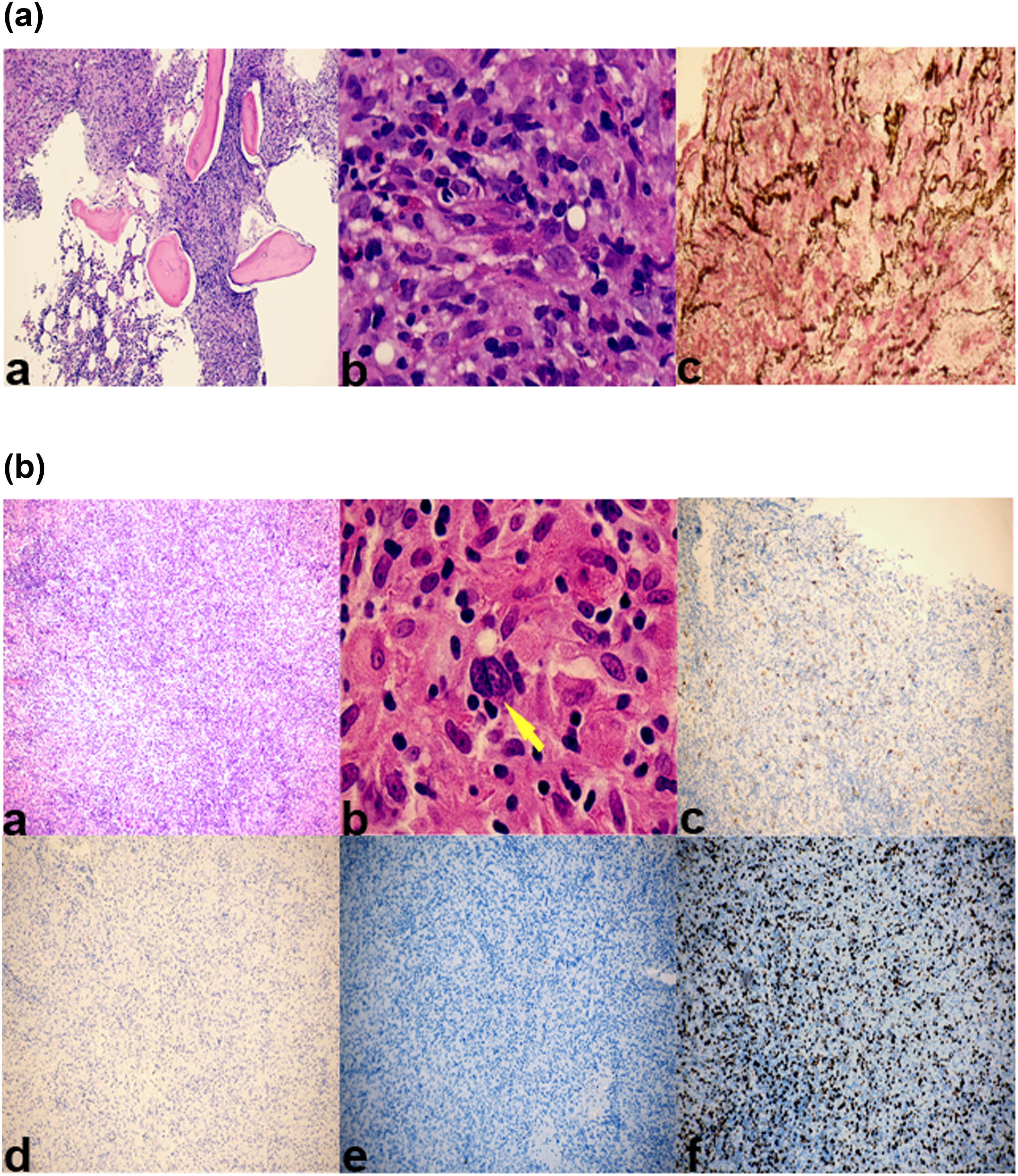
(a) Bone marrow biopsy (a. Bone marrow hematoxylin and eosin staining ×100; b. bone marrow hematoxylin and eosin staining ×1,000, epithelioid granulomas. c. positive reticular fiber staining (fibrosis grade 3)). (b) Lymph node biopsy (a. Hematoxylin and eosin staining ×100. b. Reed–Sternberg cells, ×1,000, yellow arrow. c. CD30-positive ×100. d. Epstein–Barr-negative ×100. e. CD20-negative ×100 f. Ki-67-positive ×100).
A second right cervical lymph node biopsy was performed and revealed disrupted architecture, epithelial-like cells distributed in clusters, necrosis, and scattered individual Reed–Sternberg cells. Immunohistological analysis revealed the following: PAX-5 (weakly positive), CD45 (+/–), CD30-positive, CD21-negative, CD35-negative, S-100 (scattered positive), ALK-negative, CD68 (histiocyte positive), SMA-negative, Desmin-negative, CD1a-negative, CD15-negative, CD3-positive, CD4-positive, CD20-negative, CD56-negative, CD8-positive, CXCL-13-negative, TIA-1-positive, P53 (wild-type), perforin-negative, PAS-negative, EBV-negative and Ki-67 (+25%) (Figure 1b). Consequently, the patient was diagnosed with classic HL at stage III, skeletal TB, and acquired immunodeficiency syndrome (AIDS).
While still under TB treatment and receiving ART, the patient underwent four cycles of adriamycin–bleomycin–vinblastine–dacarbazine (ABVD) chemotherapy (doxorubicin 38 mg, bleomycin 15 mg, vinblastine 9.0 mg, dacarbazine 500 mg). Pleural effusions gradually resolved, enlarged lymph nodes spontaneously regressed, and upper right mediastinal mass size significantly decreased (Figure 2). Plasma HIV-RNA remained undetectable using quantitative real-time PCR every 6 months during the treatment. The patient is now able to engage in physical activity and receives regular chemotherapy.

Chest CT before (a)–(c) and after (d)–(f) chemotherapy. (a) and (d) coronal, (b) and (e): sagittal, (c) and (f): axial; yellow arrow, upper right mediastinal mass.
-
Informed consent: Informed consent has been obtained from all individuals included in this study.
-
Ethical approval: The research related to human use has been complied with all the relevant national regulations, institutional policies, and in accordance with the tenets of the Helsinki Declaration, and has been approved by the authors’ institutional review board or equivalent committee.
3 Discussion
HIV infection and its related illnesses pose one of the greatest current public health challenges [6]. HIV infection increased the risk of developing TB that might be associated with severely decreased CD4+ T cell counts [7,8]. Patients with AIDS and CD4+ T cell counts <200/μL are highly susceptible to TB and opportunistic infections [9]. Moreover, HIV-infected individuals with CD4+ T cell counts <200/μL and/or CD8+ T cell counts <300/μL represent a high-risk group with increased susceptibility to TB co-infection [10,11]. The clinical progression of TB is mainly dependent on activation signals from CD4+ and CD8+ T cells [12]. In this case, a CD4+ T cell count >200/μL was observed before TB diagnosis (Table 1). We reviewed the relevant literature, summarizing it in Tables 2 and 3. As shown in Table 2, there were varying levels of CD4+ T cells in patients with HIV and TB co-infection; therefore, a CD4+ T cell count <200/μL may not be a reliable indicator of TB risk in patients with HIV. Similarly, other studies showed that although on long-term ART, HIV-infected individuals are still at higher risk of developing TB than healthy individuals. Regarding HIV and TB co-infection, the absence of a CD4+ T cell decline suggests that the risk of developing TB may be associated with other factors, such as TB-specific T-cell impairment and/or altered innate immunity [29]. Some studies concluded that a change in metabolomics occurs, resulting in mitochondrial dysfunction and increased oxidative stress, constant immune activation, and inflammation [30]. Researchers verified that prior to anti-TB treatment, highly increased serum levels of perforin, granzyme B, and granulysin, and decreased IFN-γ levels, were observed in TB-infected and HIV/TB co-infected patients [31].
CD4+ T cell counts upon diagnosis of HIV and TB co-infection in the relevant literature
| Author | Year | n/N | CD4+ Count/µL |
|---|---|---|---|
| Oboho et al. [13] | 2023 | 14,853 | 101–917 |
| Mchunu et al. [14] | 2022 | 429/642 | 150 (77–254)† |
| 213/642 | 140.0 (69–247)†† | ||
| Gannepalli et al. [15] | 2020 | 17/200 | <200 |
| 122/200 | 201–500 | ||
| 61/200 | >500 | ||
| Tiewsoh et al. [16] | 2020 | 19/27 | <250 |
| 8/27 | >250 | ||
| Shao et al. [11] | 2016 | 45/164 | <200 |
| 79/164 | 200–500 | ||
| 40/164 | >500 | ||
| Mutembo et al. [17] | 2016 | 257/337 | 468 (397–611)* |
| 80/337 | 465 (391–580)** | ||
| Kaplan et al. [18] | 2014 | 6,290/37,163 | 0–49 |
| 5,961/37,163 | 50–99 | ||
| 9,713/37,163 | 100–199 | ||
| 8,528/37,163 | 200–349 | ||
| 4,005/37,163 | 350–499 | ||
| 2,666/37,163 | ≥500 | ||
| Benjamin et al. [19] | 2013 | 29/53 | ≤200 |
| 24/53 | >200 |
†Patients with antiretroviral treatment at initial time.
††Patients with antiretroviral treatment at sequential time.
*Patients with antiretroviral treatment.
**Patients without antiretroviral treatment.
CD4+ T cell counts of patients with HL and HIV co-infection
| Author | Year | N, median age (range) | Stage | CD4+ count/µL, median (range) | Chemotherapy regimens |
|---|---|---|---|---|---|
| Moahi et al. [20] | 2022 | 47, 40.7 (35.0–47.1) | I–IV | 413 (253–691) | ABVD (60%), other regimens (40%) |
| Vaughan et al. [21] | 2020 | NA | NA | 242.5 (92.8–355)** | NA |
| 85.5 (34.8–223.3)*** | |||||
| Swart et al. [22] | 2019 | 64, 33 (21–51) | NA | 149 (6–1,074) | ABVD (69%) with/without radiotherapy |
| Naidoo et al. [23] | 2018 | 77, 34.4 (10.5)* | NA | 225 (173)* | NA |
| Hoffmann et al. [24] | 2016 | 50, 48 (28–75) | I-IV | 213 (0–462) | NA |
| Besson et al. [25] | 2015 | 68, 44 (38–48) | I–IV | 387 (151–540) | ABVD (96%) |
| Hentrich et al. [26] | 2012 | 108, 44 (27–70) | III–IV | 240 (7–967) | BEACOPP |
| Baseline or ABVD | |||||
| Stage-adapted | |||||
| Tanaka et al. [27] | 2007 | 31, 43 (27–57) | I–IV | 183 (7–522) | AVBD, MOPP-ABV, radiation therapy |
| Xicoy et al. [28] | 2007 | 51, 37 (24–61) | II–IV | 129 (5–1,029) | ABVD |
*Mean (standard deviation), **diagnosis in 2007, ***diagnosis in 2017.
ABVD: adriamycin–bleomycin–vinblastine–dacarbazine, BEACOPP: bleomycin–etoposide–doxorubicin (adriamycin)–cyclophosphamide–vincristine (oncovin)–procarbazine–prednisone, MOPP-ABV: nitrogenmustard-vincristine-procarbazine-prednisone-doxorubicin-bleomycin-vinblastine, NA: not available.
Etiopathogenesis of HIV co-occurrence with HL remains unknown. HIV-infected individuals have a high risk of developing HL during the first 6 months of ART. Data from one HIV cohort study suggested that a major decline in CD4+ T cell count is related to cardiovascular disease, cancer, and death, especially in HL [32]. In contrast to the general HL population, CD4+ T cell would lead to a worse condition regarding HL development in severely immunosuppressed HIV patients. Upon HL diagnosis, HIV-infected patients usually present with a moderate decrease in CD4+ T cells (150–260 cells/μL) [33]. Peripheral blood CD4+ T cell counts were previously reported (Table 3). Before the HL diagnosis, CD4+ T cell counts were also >200/μL in this case, consistent with some studies reporting that one-third of HL cases show no decline in CD4+ T cell counts [24]. Table 3 summarizes the findings of nine studies on CD4+ T cells in patients with concurrent HIV and HL. The median CD4+ T cell count ranged from 85 to 413 cells/μL HL diagnosis. Most studies reported CD4+ T cell counts >200/μL. HIV entry was possible, but it could not efficiently infect resting CD4+ T cells. Monel et al. showed resting CD4+ T cell elimination, with CD8+ T cells establishing immunological synapses, contacting the resting CD4+ T cells, and then releasing IFN-γ and macrophage inflammatory protein 1β [34]. However, despite immune reconstitution and recovery of CD4+ T cell counts after effective ART, and considering the co-infection of HIV in patients with TB and HL, we believe that the CD4+ T cell count is not enough to indicate the risk of co-infection with TB, especially in HL. On the contrary, the CD8+ T cell count and CD4+ T/CD8+ T ratio recently received attention [35]. Of HIV-HL patients, 82% show a decline in CD8+ T cells of >100 cells/µL per year, and CD8+ T cells drop by 115 cells/µL at the early phase and by 352 cells/µL at the late phase [24]. CD8+ T cells are associated with HIV infection with active TB, and low CD8+ T cell counts in HIV-1 infection correlate with increased frequency of TB [11]. The CD4+ T/CD8+ T ratio has been correlated with clinical events, including bacterial infections, cancer, myocardial infarction, frailty, and non-AIDS mortality [36]. The ratio of CD4+ to CD8+ T cells also simultaneously increased in our case. Some experts have already proposed that the CD4+ T/CD8+ T cell ratio can better reflect the risk of cancer [37]. Increasing evidence has shown that compared with CD4+ T cell counts, a lower CD4+ T/CD8+ T cell ratio can better reflect immune activation and dysfunction in HIV and related diseases [38].
Of particular concern would be the CD4+ T cell counts increased after chemotherapy, especially after the fourth cycle in this case. It was suggested that HL treatment increased CD4+ T cell count in association with the Hodgkin Reed–Sternberg (HRS) cells. HRS cells in HIV-HL induce an influx of activated CD4+ T cells through the release of many chemokines and cytokines. A possible explanation for this is that a certain number of CD4+ T cells are needed to facilitate micro-environment development and HRS cell proliferation [39]. The significantly increased CD4+ T cell counts in this case after the fourth cycle of chemotherapy might have suppressed HRS cell proliferation.
In conclusion, we monitored the CD4+ T cell counts during the diagnosis and treatment process in a case of HIV/TB co-infection with concurrent HL. The CD4+ T cell count was insufficient to predict the risk of HIV-related disease, especially lymphoproliferative disorders. Given that the present study reports a single case, large-scale retrospective studies are needed to verify our results.
Acknowledgements
We would like to acknowledge the hard and dedicated work of all the staff. We also appreciate the selfless dedication of our patient.
-
Funding information: This work was supported by the Xiamen Medical and Health Guidance Project (No. 3502Z20199137), Fujian Medical and Health Training Project for Young and Middle-aged Backbone Talents (No. 2020GGB068), and National Natural Science Foundation of China for Youth Project (Grant Number 81901669).
-
Author contributions: P.P.X. performed and drafted the manuscript. X.Y.C. and Y.Q.C. supervised the patient. Y.Z. and Z.G.D. followed up the case. W.F. and J.M.H. collected data. All authors contributed to the article and approved the submitted version.
-
Conflict of interest: Authors state no conflict of interest.
-
Data availability statement: The datasets generated during and/or analyzed during this study are available from the corresponding author on a reasonable request.
References
[1] Freeman ML, Shive CL, Nguyen TP, Younes SA, Panigrahi S, Lederman MM. Cytokines and T-cell homeostasis in HIV infection. J Infect Dis. 2016;214(Suppl 2):S51–7.10.1093/infdis/jiw287Search in Google Scholar PubMed PubMed Central
[2] Sakai S, Mayer-Barber KD, Barber DL. Defining features of protective CD4 T cell responses to Mycobacterium tuberculosis. Curr Opin Immuno. 2014;29:137–42.10.1016/j.coi.2014.06.003Search in Google Scholar PubMed PubMed Central
[3] Berhan A, Bayleyegn B, Getaneh Z. HIV/AIDS associated lymphoma: Review. Blood Lymphat Cancer. 2022;12:31–45.10.2147/BLCTT.S361320Search in Google Scholar PubMed PubMed Central
[4] Brugnaro P, Morelli E, Cattelan F, Petrucci A, Panese S, Eseme F, et al. Non-AIDS definings malignancies among human immunodeficiency virus-positive subjects: Epidemiology and outcome after two decades of HAART era. World J Virol. 2015;4(3):209–18.10.5501/wjv.v4.i3.209Search in Google Scholar PubMed PubMed Central
[5] Vasiliu A, Abelman R, Kherabi Y, Iswari Saktiawati A, Kay A. Landscape of TB infection and prevention among people living with HIV. Pathog (Basel, Switz). 2022;11(12):1552–65.10.3390/pathogens11121552Search in Google Scholar PubMed PubMed Central
[6] Williams KM, Miller N, Tutegyereize L, Olisa AL, Chakare T, Jeckonia P, et al. Defining principles for a choice-based approach to HIV prevention. Lancet HIV. 2023;10(4):e269–72.10.1016/S2352-3018(23)00026-7Search in Google Scholar PubMed
[7] Granich R, Akolo C, Gunneberg C, Getahun H, Williams P, Williams B. Prevention of tuberculosis in people living with HIV. Clin Infect Dis. 2010;50(Suppl 3):S215–22.10.1086/651494Search in Google Scholar PubMed
[8] Leite D, de Castro Bazan Moura S, da Conceição Avelino Dias M, Costa C, Machado G, Pimentel L, et al. A Review of the development of multitarget molecules against HIV-TB coinfection pathogens. Molecules (Basel, Switz). 2023;28(8):3342–68.10.3390/molecules28083342Search in Google Scholar PubMed PubMed Central
[9] Kwan CK, Ernst JD. HIV and tuberculosis: A deadly human syndemic. Clin Microbiol Rev. 2011;24(2):351–76.10.1128/CMR.00042-10Search in Google Scholar PubMed PubMed Central
[10] Perez-Molina JA, Crespillo-Andujar C, Zamora J, Fernandez-Felix BM, Gaetano-Gil A, Lopez-Bernaldo de Quiros JC, et al. Contribution of low CD4 cell counts and high human immunodeficiency virus (HIV) viral load to the efficacy of preferred first-line antiretroviral regimens for treating HIV infection: A systematic review and meta-analysis. Clin Infect Dis. 2023;76(11):2027–37.10.1093/cid/ciad177Search in Google Scholar PubMed
[11] Shao L, Zhang X, Gao Y, Xu Y, Zhang S, Yu S, et al. Hierarchy low CD4+/CD8+ T-cell counts and IFN-gamma responses in HIV-1 + individuals correlate with active TB and/or M.tb co-infection. PLoS One. 2016;11(3):e0150941.10.1371/journal.pone.0150941Search in Google Scholar PubMed PubMed Central
[12] O’Garra A, Redford PS, McNab FW, Bloom CI, Wilkinson RJ, Berry MP. The immune response in tuberculosis. Annu Rev Immunol. 2013;31:475–527.10.1146/annurev-immunol-032712-095939Search in Google Scholar PubMed
[13] Oboho I, Paulin H, Corcoran C, Hamilton M, Jordan A, Kirking H, et al. Modelling the impact of CD4 testing on mortality from TB and cryptococcal meningitis among patients with advanced HIV disease in nine countries. J Int AIDS Soc. 2023;26(3):e26070.10.1002/jia2.26070Search in Google Scholar PubMed PubMed Central
[14] Mchunu N, Mwambi H, Rizopoulos D, Reddy T, Yende-Zuma N. Using joint models to study the association between CD4 count and the risk of death in TB/HIV data. BMC Med Res Methodol. 2022;22(1):295.10.1186/s12874-022-01775-7Search in Google Scholar PubMed PubMed Central
[15] Gannepalli A, Krishna AB, Baghirath PV, Vinay BH, Khaled S, Anjum B. Oral manifestations in HIV-TB co- infected patients and their correlation with CD4 count in Telangana State, India. J Int Soc Prev Community Dent. 2020;10(1):21–35.10.4103/jispcd.JISPCD_448_18Search in Google Scholar PubMed PubMed Central
[16] Tiewsoh JBA, Antony B, Boloor R. HIV-TB co-infection with clinical presentation, diagnosis, treatment, outcome and its relation to CD4 count, a cross-sectional study in a tertiary care hospital in coastal Karnataka. J Family Med Prim Care. 2020;9(2):1160–5.10.4103/jfmpc.jfmpc_950_19Search in Google Scholar PubMed PubMed Central
[17] Mutembo S, Mutanga JN, Musokotwane K, Alisheke L, Whalen CC. Antiretroviral therapy improves survival among TB-HIV co-infected patients who have CD4+ T-cell count above 350cells/mm(3). BMC Infect Dis. 2016;6(1):572.10.1186/s12879-016-1916-1Search in Google Scholar PubMed PubMed Central
[18] Kaplan R, Caldwell J, Middelkoop K, Bekker LG, Wood R. Impact of ART on TB case fatality stratified by CD4 count for HIV-positive TB patients in Cape Town, South Africa (2009–2011). J Acquir Immune Defic Syndr. 2014;66(5):487–94.10.1097/QAI.0000000000000201Search in Google Scholar PubMed PubMed Central
[19] Benjamin R, Banerjee A, Sunder SR, Gaddam S, Valluri VL, Banerjee S. Discordance in CD4+ T-cell levels and viral loads with co-occurrence of elevated peripheral TNF-alpha and IL-4 in newly diagnosed HIV-TB co-infected cases. PLoS One. 2013;8(8):e70250.10.1371/journal.pone.0070250Search in Google Scholar PubMed PubMed Central
[20] Moahi K, Ralefala T, Nkele I, Triedman S, Sohani A, Musimar Z, et al. HIV and Hodgkin lymphoma survival: A prospective study in Botswana. JCO Glob Oncol. 2022;8:e2100163.10.1200/GO.21.00163Search in Google Scholar PubMed PubMed Central
[21] Vaughan J, Perner Y, McAlpine E, Wiggill T. Brief report: HIV-Associated Hodgkin lymphoma involving the bone marrow identifies a very high-risk subpopulation in the era of widescale antiretroviral therapy use in Johannesburg, South Africa. J Acquir Immune Defic Syndr. 2020;83(4):345–9.10.1097/QAI.0000000000002276Search in Google Scholar PubMed
[22] Swart L, Novitzky N, Mohamed Z, Opie J. Hodgkin lymphoma at Groote Schuur Hospital, South Africa: the effect of HIV and bone marrow infiltration. Ann Hematol. 2019;98(2):381–9.10.1007/s00277-018-3533-0Search in Google Scholar PubMed
[23] Naidoo N, Abayomi A, Locketz C, Musaigwa F, Grewal R. Incidence of Hodgkin lymphoma in HIV-positive and HIV-negative patients at a tertiary hospital in South Africa (2005 - 2016) and comparison with other African countries. S Afr Med J. 2018;108(7):653–567.10.7196/SAMJ.2018.v108i7.12844Search in Google Scholar PubMed
[24] Hoffmann C, Schommers P, Wolf E, Muller M, Schultze A, Krznaric I, et al. CD4+ and CD8+ T-cell kinetics in aviremic HIV-infected patients developing Hodgkin or non-Hodgkin lymphoma. AIDS. 2016;30(5):753–60.10.1097/QAD.0000000000000980Search in Google Scholar PubMed
[25] Besson C, Lancar R, Prevot S, Brice P, Meyohas MC, Marchou B, et al. High risk features contrast with favorable outcomes in HIV-associated Hodgkin lymphoma in the modern cART Era, ANRS CO16 LYMPHOVIR Cohort. Clin Infect Dis. 2015;61(9):1469–75.10.1093/cid/civ627Search in Google Scholar PubMed
[26] Hentrich M, Berger M, Wyen C, Siehl J, Rockstroh JK, Muller M, et al. Stage-adapted treatment of HIV-associated Hodgkin lymphoma: Results of a prospective multicenter study. J Clin Oncol. 2012;30(33):4117–23.10.1200/JCO.2012.41.8137Search in Google Scholar PubMed
[27] Tanaka PY, Pessoa VP Jr, Pracchia LF, Buccheri V, Chamone DA, Calore EE. Hodgkin lymphoma among patients infected with HIV in post-HAART era. Clin Lymphoma Myeloma. 2007;7(5):364–8.10.3816/CLM.2007.n.014Search in Google Scholar PubMed
[28] Xicoy B, Ribera JM, Miralles P, Berenguer J, Rubio R, Mahillo B, et al. Results of treatment with doxorubicin, bleomycin, vinblastine and dacarbazine and highly active antiretroviral therapy in advanced stage, human immunodeficiency virus-related Hodgkin’s lymphoma. Haematologica. 2007;92(2):191–8.10.3324/haematol.10479Search in Google Scholar PubMed
[29] Amelio P, Portevin D, Hella J, Reither K, Kamwela L, Lweno O, et al. HIV infection functionally impairs mycobacterium tuberculosis-specific CD4 and CD8 T-cell responses. J Virol. 2019;93(5):e01728–18.10.1128/JVI.01728-18Search in Google Scholar PubMed PubMed Central
[30] Liebenberg C, Luies L, Williams AA. Metabolomics as a tool to investigate HIV/TB co-infection. Front Mol Biosci. 2021;8:692823.10.3389/fmolb.2021.692823Search in Google Scholar PubMed PubMed Central
[31] Pitabut N, Dhepakson P, Sakurada S, Keicho N, Khusmith S. Coordinated in vitro release of granulysin, perforin and IFN-gamma in TB and HIV/TB co-infection associated with clinical outcomes before and after anti-TB treatment. Pathogens. 2020;9(8):655–66.10.3390/pathogens9080655Search in Google Scholar PubMed PubMed Central
[32] Helleberg M, Kronborg G, Larsen CS, Pedersen G, Pedersen C, Obel N, et al. CD4 decline is associated with increased risk of cardiovascular disease, cancer, and death in virally suppressed patients with HIV. Clin Infect Dis. 2013;57(2):314–21.10.1093/cid/cit232Search in Google Scholar PubMed
[33] Re A, Cattaneo C, Rossi G. Hiv and Lymphoma: From epidemiology to clinical management. Mediterr J Hematol Infect Dis. 2019;11(1):e2019004.10.4084/mjhid.2019.004Search in Google Scholar PubMed PubMed Central
[34] Monel B, McKeon A, Lamothe-Molina P, Jani P, Boucau J, Pacheco Y, et al. HIV controllers exhibit effective CD8(+) T cell recognition of HIV-1-infected non-activated CD4(+) T cells. Cell Rep. 2019;27(1):142–53 e4.10.1016/j.celrep.2019.03.016Search in Google Scholar PubMed PubMed Central
[35] Mutascio S, Mota T, Franchitti L, Sharma AA, Willemse A, Bergstresser SN, et al. CD8(+) T cells promote HIV latency by remodeling CD4(+) T cell metabolism to enhance their survival, quiescence, and stemness. Immunity. 2023;56(5):1132–47 e6.10.1016/j.immuni.2023.03.010Search in Google Scholar PubMed
[36] Sigel K, Wisnivesky J, Crothers K, Gordon K, Brown ST, Rimland D, et al. Immunological and infectious risk factors for lung cancer in US veterans with HIV: A longitudinal Cohort Study. Lancet HIV. 2017;4(2):e67–73.10.1016/S2352-3018(16)30215-6Search in Google Scholar PubMed PubMed Central
[37] Castilho JL, Bian A, Jenkins CA, Shepherd BE, Sigel K, Gill MJ, et al. CD4/CD8 ratio and cancer risk among adults with HIV. J Natl Cancer Inst. 2022;114(6):854–62.10.1093/jnci/djac053Search in Google Scholar PubMed PubMed Central
[38] Li B, Zhang L, Liu Y, Xiao J, Li C, Fan L, et al. A novel prediction model to evaluate the probability of CD4+/CD8+ cell ratio restoration in HIV-infected individuals. AIDS. 2022;36(6):795–804.10.1097/QAD.0000000000003167Search in Google Scholar PubMed
[39] Navarro JT, Molto J, Tapia G, Ribera JM. Hodgkin lymphoma in people living with HIV. Cancers (Basel). 2021;13(17):4366–80.10.3390/cancers13174366Search in Google Scholar PubMed PubMed Central
© 2023 the author(s), published by De Gruyter
This work is licensed under the Creative Commons Attribution 4.0 International License.
Articles in the same Issue
- Biomedical Sciences
- Systemic investigation of inetetamab in combination with small molecules to treat HER2-overexpressing breast and gastric cancers
- Immunosuppressive treatment for idiopathic membranous nephropathy: An updated network meta-analysis
- Identifying two pathogenic variants in a patient with pigmented paravenous retinochoroidal atrophy
- Effects of phytoestrogens combined with cold stress on sperm parameters and testicular proteomics in rats
- A case of pulmonary embolism with bad warfarin anticoagulant effects caused by E. coli infection
- Neutrophilia with subclinical Cushing’s disease: A case report and literature review
- Isoimperatorin alleviates lipopolysaccharide-induced periodontitis by downregulating ERK1/2 and NF-κB pathways
- Immunoregulation of synovial macrophages for the treatment of osteoarthritis
- Novel CPLANE1 c.8948dupT (p.P2984Tfs*7) variant in a child patient with Joubert syndrome
- Antiphospholipid antibodies and the risk of thrombosis in myeloproliferative neoplasms
- Immunological responses of septic rats to combination therapy with thymosin α1 and vitamin C
- High glucose and high lipid induced mitochondrial dysfunction in JEG-3 cells through oxidative stress
- Pharmacological inhibition of the ubiquitin-specific protease 8 effectively suppresses glioblastoma cell growth
- Levocarnitine regulates the growth of angiotensin II-induced myocardial fibrosis cells via TIMP-1
- Age-related changes in peripheral T-cell subpopulations in elderly individuals: An observational study
- Single-cell transcription analysis reveals the tumor origin and heterogeneity of human bilateral renal clear cell carcinoma
- Identification of iron metabolism-related genes as diagnostic signatures in sepsis by blood transcriptomic analysis
- Long noncoding RNA ACART knockdown decreases 3T3-L1 preadipocyte proliferation and differentiation
- Surgery, adjuvant immunotherapy plus chemotherapy and radiotherapy for primary malignant melanoma of the parotid gland (PGMM): A case report
- Dosimetry comparison with helical tomotherapy, volumetric modulated arc therapy, and intensity-modulated radiotherapy for grade II gliomas: A single‑institution case series
- Soy isoflavone reduces LPS-induced acute lung injury via increasing aquaporin 1 and aquaporin 5 in rats
- Refractory hypokalemia with sexual dysplasia and infertility caused by 17α-hydroxylase deficiency and triple X syndrome: A case report
- Meta-analysis of cancer risk among end stage renal disease undergoing maintenance dialysis
- 6-Phosphogluconate dehydrogenase inhibition arrests growth and induces apoptosis in gastric cancer via AMPK activation and oxidative stress
- Experimental study on the optimization of ANM33 release in foam cells
- Primary retroperitoneal angiosarcoma: A case report
- Metabolomic analysis-identified 2-hydroxybutyric acid might be a key metabolite of severe preeclampsia
- Malignant pleural effusion diagnosis and therapy
- Effect of spaceflight on the phenotype and proteome of Escherichia coli
- Comparison of immunotherapy combined with stereotactic radiotherapy and targeted therapy for patients with brain metastases: A systemic review and meta-analysis
- Activation of hypermethylated P2RY1 mitigates gastric cancer by promoting apoptosis and inhibiting proliferation
- Association between the VEGFR-2 -604T/C polymorphism (rs2071559) and type 2 diabetic retinopathy
- The role of IL-31 and IL-34 in the diagnosis and treatment of chronic periodontitis
- Triple-negative mouse breast cancer initiating cells show high expression of beta1 integrin and increased malignant features
- mNGS facilitates the accurate diagnosis and antibiotic treatment of suspicious critical CNS infection in real practice: A retrospective study
- The apatinib and pemetrexed combination has antitumor and antiangiogenic effects against NSCLC
- Radiotherapy for primary thyroid adenoid cystic carcinoma
- Design and functional preliminary investigation of recombinant antigen EgG1Y162–EgG1Y162 against Echinococcus granulosus
- Effects of losartan in patients with NAFLD: A meta-analysis of randomized controlled trial
- Bibliometric analysis of METTL3: Current perspectives, highlights, and trending topics
- Performance comparison of three scaling algorithms in NMR-based metabolomics analysis
- PI3K/AKT/mTOR pathway and its related molecules participate in PROK1 silence-induced anti-tumor effects on pancreatic cancer
- The altered expression of cytoskeletal and synaptic remodeling proteins during epilepsy
- Effects of pegylated recombinant human granulocyte colony-stimulating factor on lymphocytes and white blood cells of patients with malignant tumor
- Prostatitis as initial manifestation of Chlamydia psittaci pneumonia diagnosed by metagenome next-generation sequencing: A case report
- NUDT21 relieves sevoflurane-induced neurological damage in rats by down-regulating LIMK2
- Association of interleukin-10 rs1800896, rs1800872, and interleukin-6 rs1800795 polymorphisms with squamous cell carcinoma risk: A meta-analysis
- Exosomal HBV-DNA for diagnosis and treatment monitoring of chronic hepatitis B
- Shear stress leads to the dysfunction of endothelial cells through the Cav-1-mediated KLF2/eNOS/ERK signaling pathway under physiological conditions
- Interaction between the PI3K/AKT pathway and mitochondrial autophagy in macrophages and the leukocyte count in rats with LPS-induced pulmonary infection
- Meta-analysis of the rs231775 locus polymorphism in the CTLA-4 gene and the susceptibility to Graves’ disease in children
- Cloning, subcellular localization and expression of phosphate transporter gene HvPT6 of hulless barley
- Coptisine mitigates diabetic nephropathy via repressing the NRLP3 inflammasome
- Significant elevated CXCL14 and decreased IL-39 levels in patients with tuberculosis
- Whole-exome sequencing applications in prenatal diagnosis of fetal bowel dilatation
- Gemella morbillorum infective endocarditis: A case report and literature review
- An unusual ectopic thymoma clonal evolution analysis: A case report
- Severe cumulative skin toxicity during toripalimab combined with vemurafenib following toripalimab alone
- Detection of V. vulnificus septic shock with ARDS using mNGS
- Novel rare genetic variants of familial and sporadic pulmonary atresia identified by whole-exome sequencing
- The influence and mechanistic action of sperm DNA fragmentation index on the outcomes of assisted reproduction technology
- Novel compound heterozygous mutations in TELO2 in an infant with You-Hoover-Fong syndrome: A case report and literature review
- ctDNA as a prognostic biomarker in resectable CLM: Systematic review and meta-analysis
- Diagnosis of primary amoebic meningoencephalitis by metagenomic next-generation sequencing: A case report
- Phylogenetic analysis of promoter regions of human Dolichol kinase (DOLK) and orthologous genes using bioinformatics tools
- Collagen changes in rabbit conjunctiva after conjunctival crosslinking
- Effects of NM23 transfection of human gastric carcinoma cells in mice
- Oral nifedipine and phytosterol, intravenous nicardipine, and oral nifedipine only: Three-arm, retrospective, cohort study for management of severe preeclampsia
- Case report of hepatic retiform hemangioendothelioma: A rare tumor treated with ultrasound-guided microwave ablation
- Curcumin induces apoptosis in human hepatocellular carcinoma cells by decreasing the expression of STAT3/VEGF/HIF-1α signaling
- Rare presentation of double-clonal Waldenström macroglobulinemia with pulmonary embolism: A case report
- Giant duplication of the transverse colon in an adult: A case report and literature review
- Ectopic thyroid tissue in the breast: A case report
- SDR16C5 promotes proliferation and migration and inhibits apoptosis in pancreatic cancer
- Vaginal metastasis from breast cancer: A case report
- Screening of the best time window for MSC transplantation to treat acute myocardial infarction with SDF-1α antibody-loaded targeted ultrasonic microbubbles: An in vivo study in miniswine
- Inhibition of TAZ impairs the migration ability of melanoma cells
- Molecular complexity analysis of the diagnosis of Gitelman syndrome in China
- Effects of maternal calcium and protein intake on the development and bone metabolism of offspring mice
- Identification of winter wheat pests and diseases based on improved convolutional neural network
- Ultra-multiplex PCR technique to guide treatment of Aspergillus-infected aortic valve prostheses
- Virtual high-throughput screening: Potential inhibitors targeting aminopeptidase N (CD13) and PIKfyve for SARS-CoV-2
- Immune checkpoint inhibitors in cancer patients with COVID-19
- Utility of methylene blue mixed with autologous blood in preoperative localization of pulmonary nodules and masses
- Integrated analysis of the microbiome and transcriptome in stomach adenocarcinoma
- Berberine suppressed sarcopenia insulin resistance through SIRT1-mediated mitophagy
- DUSP2 inhibits the progression of lupus nephritis in mice by regulating the STAT3 pathway
- Lung abscess by Fusobacterium nucleatum and Streptococcus spp. co-infection by mNGS: A case series
- Genetic alterations of KRAS and TP53 in intrahepatic cholangiocarcinoma associated with poor prognosis
- Granulomatous polyangiitis involving the fourth ventricle: Report of a rare case and a literature review
- Studying infant mortality: A demographic analysis based on data mining models
- Metaplastic breast carcinoma with osseous differentiation: A report of a rare case and literature review
- Protein Z modulates the metastasis of lung adenocarcinoma cells
- Inhibition of pyroptosis and apoptosis by capsaicin protects against LPS-induced acute kidney injury through TRPV1/UCP2 axis in vitro
- TAK-242, a toll-like receptor 4 antagonist, against brain injury by alleviates autophagy and inflammation in rats
- Primary mediastinum Ewing’s sarcoma with pleural effusion: A case report and literature review
- Association of ADRB2 gene polymorphisms and intestinal microbiota in Chinese Han adolescents
- Tanshinone IIA alleviates chondrocyte apoptosis and extracellular matrix degeneration by inhibiting ferroptosis
- Study on the cytokines related to SARS-Cov-2 in testicular cells and the interaction network between cells based on scRNA-seq data
- Effect of periostin on bone metabolic and autophagy factors during tooth eruption in mice
- HP1 induces ferroptosis of renal tubular epithelial cells through NRF2 pathway in diabetic nephropathy
- Intravaginal estrogen management in postmenopausal patients with vaginal squamous intraepithelial lesions along with CO2 laser ablation: A retrospective study
- Hepatocellular carcinoma cell differentiation trajectory predicts immunotherapy, potential therapeutic drugs, and prognosis of patients
- Effects of physical exercise on biomarkers of oxidative stress in healthy subjects: A meta-analysis of randomized controlled trials
- Identification of lysosome-related genes in connection with prognosis and immune cell infiltration for drug candidates in head and neck cancer
- Development of an instrument-free and low-cost ELISA dot-blot test to detect antibodies against SARS-CoV-2
- Research progress on gas signal molecular therapy for Parkinson’s disease
- Adiponectin inhibits TGF-β1-induced skin fibroblast proliferation and phenotype transformation via the p38 MAPK signaling pathway
- The G protein-coupled receptor-related gene signatures for predicting prognosis and immunotherapy response in bladder urothelial carcinoma
- α-Fetoprotein contributes to the malignant biological properties of AFP-producing gastric cancer
- CXCL12/CXCR4/CXCR7 axis in placenta tissues of patients with placenta previa
- Association between thyroid stimulating hormone levels and papillary thyroid cancer risk: A meta-analysis
- Significance of sTREM-1 and sST2 combined diagnosis for sepsis detection and prognosis prediction
- Diagnostic value of serum neuroactive substances in the acute exacerbation of chronic obstructive pulmonary disease complicated with depression
- Research progress of AMP-activated protein kinase and cardiac aging
- TRIM29 knockdown prevented the colon cancer progression through decreasing the ubiquitination levels of KRT5
- Cross-talk between gut microbiota and liver steatosis: Complications and therapeutic target
- Metastasis from small cell lung cancer to ovary: A case report
- The early diagnosis and pathogenic mechanisms of sepsis-related acute kidney injury
- The effect of NK cell therapy on sepsis secondary to lung cancer: A case report
- Erianin alleviates collagen-induced arthritis in mice by inhibiting Th17 cell differentiation
- Loss of ACOX1 in clear cell renal cell carcinoma and its correlation with clinical features
- Signalling pathways in the osteogenic differentiation of periodontal ligament stem cells
- Crosstalk between lactic acid and immune regulation and its value in the diagnosis and treatment of liver failure
- Clinicopathological features and differential diagnosis of gastric pleomorphic giant cell carcinoma
- Traumatic brain injury and rTMS-ERPs: Case report and literature review
- Extracellular fibrin promotes non-small cell lung cancer progression through integrin β1/PTEN/AKT signaling
- Knockdown of DLK4 inhibits non-small cell lung cancer tumor growth by downregulating CKS2
- The co-expression pattern of VEGFR-2 with indicators related to proliferation, apoptosis, and differentiation of anagen hair follicles
- Inflammation-related signaling pathways in tendinopathy
- CD4+ T cell count in HIV/TB co-infection and co-occurrence with HL: Case report and literature review
- Clinical analysis of severe Chlamydia psittaci pneumonia: Case series study
- Bioinformatics analysis to identify potential biomarkers for the pulmonary artery hypertension associated with the basement membrane
- Influence of MTHFR polymorphism, alone or in combination with smoking and alcohol consumption, on cancer susceptibility
- Catharanthus roseus (L.) G. Don counteracts the ampicillin resistance in multiple antibiotic-resistant Staphylococcus aureus by downregulation of PBP2a synthesis
- Combination of a bronchogenic cyst in the thoracic spinal canal with chronic myelocytic leukemia
- Bacterial lipoprotein plays an important role in the macrophage autophagy and apoptosis induced by Salmonella typhimurium and Staphylococcus aureus
- TCL1A+ B cells predict prognosis in triple-negative breast cancer through integrative analysis of single-cell and bulk transcriptomic data
- Ezrin promotes esophageal squamous cell carcinoma progression via the Hippo signaling pathway
- Ferroptosis: A potential target of macrophages in plaque vulnerability
- Predicting pediatric Crohn's disease based on six mRNA-constructed risk signature using comprehensive bioinformatic approaches
- Applications of genetic code expansion and photosensitive UAAs in studying membrane proteins
- HK2 contributes to the proliferation, migration, and invasion of diffuse large B-cell lymphoma cells by enhancing the ERK1/2 signaling pathway
- IL-17 in osteoarthritis: A narrative review
- Circadian cycle and neuroinflammation
- Probiotic management and inflammatory factors as a novel treatment in cirrhosis: A systematic review and meta-analysis
- Hemorrhagic meningioma with pulmonary metastasis: Case report and literature review
- SPOP regulates the expression profiles and alternative splicing events in human hepatocytes
- Knockdown of SETD5 inhibited glycolysis and tumor growth in gastric cancer cells by down-regulating Akt signaling pathway
- PTX3 promotes IVIG resistance-induced endothelial injury in Kawasaki disease by regulating the NF-κB pathway
- Pancreatic ectopic thyroid tissue: A case report and analysis of literature
- The prognostic impact of body mass index on female breast cancer patients in underdeveloped regions of northern China differs by menopause status and tumor molecular subtype
- Report on a case of liver-originating malignant melanoma of unknown primary
- Case report: Herbal treatment of neutropenic enterocolitis after chemotherapy for breast cancer
- The fibroblast growth factor–Klotho axis at molecular level
- Characterization of amiodarone action on currents in hERG-T618 gain-of-function mutations
- A case report of diagnosis and dynamic monitoring of Listeria monocytogenes meningitis with NGS
- Effect of autologous platelet-rich plasma on new bone formation and viability of a Marburg bone graft
- Small breast epithelial mucin as a useful prognostic marker for breast cancer patients
- Continuous non-adherent culture promotes transdifferentiation of human adipose-derived stem cells into retinal lineage
- Nrf3 alleviates oxidative stress and promotes the survival of colon cancer cells by activating AKT/BCL-2 signal pathway
- Favorable response to surufatinib in a patient with necrolytic migratory erythema: A case report
- Case report of atypical undernutrition of hypoproteinemia type
- Down-regulation of COL1A1 inhibits tumor-associated fibroblast activation and mediates matrix remodeling in the tumor microenvironment of breast cancer
- Sarcoma protein kinase inhibition alleviates liver fibrosis by promoting hepatic stellate cells ferroptosis
- Research progress of serum eosinophil in chronic obstructive pulmonary disease and asthma
- Clinicopathological characteristics of co-existing or mixed colorectal cancer and neuroendocrine tumor: Report of five cases
- Role of menopausal hormone therapy in the prevention of postmenopausal osteoporosis
- Precisional detection of lymph node metastasis using tFCM in colorectal cancer
- Advances in diagnosis and treatment of perimenopausal syndrome
- A study of forensic genetics: ITO index distribution and kinship judgment between two individuals
- Acute lupus pneumonitis resembling miliary tuberculosis: A case-based review
- Plasma levels of CD36 and glutathione as biomarkers for ruptured intracranial aneurysm
- Fractalkine modulates pulmonary angiogenesis and tube formation by modulating CX3CR1 and growth factors in PVECs
- Novel risk prediction models for deep vein thrombosis after thoracotomy and thoracoscopic lung cancer resections, involving coagulation and immune function
- Exploring the diagnostic markers of essential tremor: A study based on machine learning algorithms
- Evaluation of effects of small-incision approach treatment on proximal tibia fracture by deep learning algorithm-based magnetic resonance imaging
- An online diagnosis method for cancer lesions based on intelligent imaging analysis
- Medical imaging in rheumatoid arthritis: A review on deep learning approach
- Predictive analytics in smart healthcare for child mortality prediction using a machine learning approach
- Utility of neutrophil–lymphocyte ratio and platelet–lymphocyte ratio in predicting acute-on-chronic liver failure survival
- A biomedical decision support system for meta-analysis of bilateral upper-limb training in stroke patients with hemiplegia
- TNF-α and IL-8 levels are positively correlated with hypobaric hypoxic pulmonary hypertension and pulmonary vascular remodeling in rats
- Stochastic gradient descent optimisation for convolutional neural network for medical image segmentation
- Comparison of the prognostic value of four different critical illness scores in patients with sepsis-induced coagulopathy
- Application and teaching of computer molecular simulation embedded technology and artificial intelligence in drug research and development
- Hepatobiliary surgery based on intelligent image segmentation technology
- Value of brain injury-related indicators based on neural network in the diagnosis of neonatal hypoxic-ischemic encephalopathy
- Analysis of early diagnosis methods for asymmetric dementia in brain MR images based on genetic medical technology
- Early diagnosis for the onset of peri-implantitis based on artificial neural network
- Clinical significance of the detection of serum IgG4 and IgG4/IgG ratio in patients with thyroid-associated ophthalmopathy
- Forecast of pain degree of lumbar disc herniation based on back propagation neural network
- SPA-UNet: A liver tumor segmentation network based on fused multi-scale features
- Systematic evaluation of clinical efficacy of CYP1B1 gene polymorphism in EGFR mutant non-small cell lung cancer observed by medical image
- Rehabilitation effect of intelligent rehabilitation training system on hemiplegic limb spasms after stroke
- A novel approach for minimising anti-aliasing effects in EEG data acquisition
- ErbB4 promotes M2 activation of macrophages in idiopathic pulmonary fibrosis
- Clinical role of CYP1B1 gene polymorphism in prediction of postoperative chemotherapy efficacy in NSCLC based on individualized health model
- Lung nodule segmentation via semi-residual multi-resolution neural networks
- Evaluation of brain nerve function in ICU patients with Delirium by deep learning algorithm-based resting state MRI
- A data mining technique for detecting malignant mesothelioma cancer using multiple regression analysis
- Markov model combined with MR diffusion tensor imaging for predicting the onset of Alzheimer’s disease
- Effectiveness of the treatment of depression associated with cancer and neuroimaging changes in depression-related brain regions in patients treated with the mediator-deuterium acupuncture method
- Molecular mechanism of colorectal cancer and screening of molecular markers based on bioinformatics analysis
- Monitoring and evaluation of anesthesia depth status data based on neuroscience
- Exploring the conformational dynamics and thermodynamics of EGFR S768I and G719X + S768I mutations in non-small cell lung cancer: An in silico approaches
- Optimised feature selection-driven convolutional neural network using gray level co-occurrence matrix for detection of cervical cancer
- Incidence of different pressure patterns of spinal cerebellar ataxia and analysis of imaging and genetic diagnosis
- Pathogenic bacteria and treatment resistance in older cardiovascular disease patients with lung infection and risk prediction model
- Adoption value of support vector machine algorithm-based computed tomography imaging in the diagnosis of secondary pulmonary fungal infections in patients with malignant hematological disorders
- From slides to insights: Harnessing deep learning for prognostic survival prediction in human colorectal cancer histology
- Ecology and Environmental Science
- Monitoring of hourly carbon dioxide concentration under different land use types in arid ecosystem
- Comparing the differences of prokaryotic microbial community between pit walls and bottom from Chinese liquor revealed by 16S rRNA gene sequencing
- Effects of cadmium stress on fruits germination and growth of two herbage species
- Bamboo charcoal affects soil properties and bacterial community in tea plantations
- Optimization of biogas potential using kinetic models, response surface methodology, and instrumental evidence for biodegradation of tannery fleshings during anaerobic digestion
- Understory vegetation diversity patterns of Platycladus orientalis and Pinus elliottii communities in Central and Southern China
- Studies on macrofungi diversity and discovery of new species of Abortiporus from Baotianman World Biosphere Reserve
- Food Science
- Effect of berrycactus fruit (Myrtillocactus geometrizans) on glutamate, glutamine, and GABA levels in the frontal cortex of rats fed with a high-fat diet
- Guesstimate of thymoquinone diversity in Nigella sativa L. genotypes and elite varieties collected from Indian states using HPTLC technique
- Analysis of bacterial community structure of Fuzhuan tea with different processing techniques
- Untargeted metabolomics reveals sour jujube kernel benefiting the nutritional value and flavor of Morchella esculenta
- Mycobiota in Slovak wine grapes: A case study from the small Carpathians wine region
- Elemental analysis of Fadogia ancylantha leaves used as a nutraceutical in Mashonaland West Province, Zimbabwe
- Microbiological transglutaminase: Biotechnological application in the food industry
- Influence of solvent-free extraction of fish oil from catfish (Clarias magur) heads using a Taguchi orthogonal array design: A qualitative and quantitative approach
- Chromatographic analysis of the chemical composition and anticancer activities of Curcuma longa extract cultivated in Palestine
- The potential for the use of leghemoglobin and plant ferritin as sources of iron
- Investigating the association between dietary patterns and glycemic control among children and adolescents with T1DM
- Bioengineering and Biotechnology
- Biocompatibility and osteointegration capability of β-TCP manufactured by stereolithography 3D printing: In vitro study
- Clinical characteristics and the prognosis of diabetic foot in Tibet: A single center, retrospective study
- Agriculture
- Biofertilizer and NPSB fertilizer application effects on nodulation and productivity of common bean (Phaseolus vulgaris L.) at Sodo Zuria, Southern Ethiopia
- On correlation between canopy vegetation and growth indexes of maize varieties with different nitrogen efficiencies
- Exopolysaccharides from Pseudomonas tolaasii inhibit the growth of Pleurotus ostreatus mycelia
- A transcriptomic evaluation of the mechanism of programmed cell death of the replaceable bud in Chinese chestnut
- Melatonin enhances salt tolerance in sorghum by modulating photosynthetic performance, osmoregulation, antioxidant defense, and ion homeostasis
- Effects of plant density on alfalfa (Medicago sativa L.) seed yield in western Heilongjiang areas
- Identification of rice leaf diseases and deficiency disorders using a novel DeepBatch technique
- Artificial intelligence and internet of things oriented sustainable precision farming: Towards modern agriculture
- Animal Sciences
- Effect of ketogenic diet on exercise tolerance and transcriptome of gastrocnemius in mice
- Combined analysis of mRNA–miRNA from testis tissue in Tibetan sheep with different FecB genotypes
- Isolation, identification, and drug resistance of a partially isolated bacterium from the gill of Siniperca chuatsi
- Tracking behavioral changes of confined sows from the first mating to the third parity
- The sequencing of the key genes and end products in the TLR4 signaling pathway from the kidney of Rana dybowskii exposed to Aeromonas hydrophila
- Development of a new candidate vaccine against piglet diarrhea caused by Escherichia coli
- Plant Sciences
- Crown and diameter structure of pure Pinus massoniana Lamb. forest in Hunan province, China
- Genetic evaluation and germplasm identification analysis on ITS2, trnL-F, and psbA-trnH of alfalfa varieties germplasm resources
- Tissue culture and rapid propagation technology for Gentiana rhodantha
- Effects of cadmium on the synthesis of active ingredients in Salvia miltiorrhiza
- Cloning and expression analysis of VrNAC13 gene in mung bean
- Chlorate-induced molecular floral transition revealed by transcriptomes
- Effects of warming and drought on growth and development of soybean in Hailun region
- Effects of different light conditions on transient expression and biomass in Nicotiana benthamiana leaves
- Comparative analysis of the rhizosphere microbiome and medicinally active ingredients of Atractylodes lancea from different geographical origins
- Distinguish Dianthus species or varieties based on chloroplast genomes
- Comparative transcriptomes reveal molecular mechanisms of apple blossoms of different tolerance genotypes to chilling injury
- Study on fresh processing key technology and quality influence of Cut Ophiopogonis Radix based on multi-index evaluation
- An advanced approach for fig leaf disease detection and classification: Leveraging image processing and enhanced support vector machine methodology
- Erratum
- Erratum to “Protein Z modulates the metastasis of lung adenocarcinoma cells”
- Erratum to “BRCA1 subcellular localization regulated by PI3K signaling pathway in triple-negative breast cancer MDA-MB-231 cells and hormone-sensitive T47D cells”
- Retraction
- Retraction to “Protocatechuic acid attenuates cerebral aneurysm formation and progression by inhibiting TNF-alpha/Nrf-2/NF-kB-mediated inflammatory mechanisms in experimental rats”
Articles in the same Issue
- Biomedical Sciences
- Systemic investigation of inetetamab in combination with small molecules to treat HER2-overexpressing breast and gastric cancers
- Immunosuppressive treatment for idiopathic membranous nephropathy: An updated network meta-analysis
- Identifying two pathogenic variants in a patient with pigmented paravenous retinochoroidal atrophy
- Effects of phytoestrogens combined with cold stress on sperm parameters and testicular proteomics in rats
- A case of pulmonary embolism with bad warfarin anticoagulant effects caused by E. coli infection
- Neutrophilia with subclinical Cushing’s disease: A case report and literature review
- Isoimperatorin alleviates lipopolysaccharide-induced periodontitis by downregulating ERK1/2 and NF-κB pathways
- Immunoregulation of synovial macrophages for the treatment of osteoarthritis
- Novel CPLANE1 c.8948dupT (p.P2984Tfs*7) variant in a child patient with Joubert syndrome
- Antiphospholipid antibodies and the risk of thrombosis in myeloproliferative neoplasms
- Immunological responses of septic rats to combination therapy with thymosin α1 and vitamin C
- High glucose and high lipid induced mitochondrial dysfunction in JEG-3 cells through oxidative stress
- Pharmacological inhibition of the ubiquitin-specific protease 8 effectively suppresses glioblastoma cell growth
- Levocarnitine regulates the growth of angiotensin II-induced myocardial fibrosis cells via TIMP-1
- Age-related changes in peripheral T-cell subpopulations in elderly individuals: An observational study
- Single-cell transcription analysis reveals the tumor origin and heterogeneity of human bilateral renal clear cell carcinoma
- Identification of iron metabolism-related genes as diagnostic signatures in sepsis by blood transcriptomic analysis
- Long noncoding RNA ACART knockdown decreases 3T3-L1 preadipocyte proliferation and differentiation
- Surgery, adjuvant immunotherapy plus chemotherapy and radiotherapy for primary malignant melanoma of the parotid gland (PGMM): A case report
- Dosimetry comparison with helical tomotherapy, volumetric modulated arc therapy, and intensity-modulated radiotherapy for grade II gliomas: A single‑institution case series
- Soy isoflavone reduces LPS-induced acute lung injury via increasing aquaporin 1 and aquaporin 5 in rats
- Refractory hypokalemia with sexual dysplasia and infertility caused by 17α-hydroxylase deficiency and triple X syndrome: A case report
- Meta-analysis of cancer risk among end stage renal disease undergoing maintenance dialysis
- 6-Phosphogluconate dehydrogenase inhibition arrests growth and induces apoptosis in gastric cancer via AMPK activation and oxidative stress
- Experimental study on the optimization of ANM33 release in foam cells
- Primary retroperitoneal angiosarcoma: A case report
- Metabolomic analysis-identified 2-hydroxybutyric acid might be a key metabolite of severe preeclampsia
- Malignant pleural effusion diagnosis and therapy
- Effect of spaceflight on the phenotype and proteome of Escherichia coli
- Comparison of immunotherapy combined with stereotactic radiotherapy and targeted therapy for patients with brain metastases: A systemic review and meta-analysis
- Activation of hypermethylated P2RY1 mitigates gastric cancer by promoting apoptosis and inhibiting proliferation
- Association between the VEGFR-2 -604T/C polymorphism (rs2071559) and type 2 diabetic retinopathy
- The role of IL-31 and IL-34 in the diagnosis and treatment of chronic periodontitis
- Triple-negative mouse breast cancer initiating cells show high expression of beta1 integrin and increased malignant features
- mNGS facilitates the accurate diagnosis and antibiotic treatment of suspicious critical CNS infection in real practice: A retrospective study
- The apatinib and pemetrexed combination has antitumor and antiangiogenic effects against NSCLC
- Radiotherapy for primary thyroid adenoid cystic carcinoma
- Design and functional preliminary investigation of recombinant antigen EgG1Y162–EgG1Y162 against Echinococcus granulosus
- Effects of losartan in patients with NAFLD: A meta-analysis of randomized controlled trial
- Bibliometric analysis of METTL3: Current perspectives, highlights, and trending topics
- Performance comparison of three scaling algorithms in NMR-based metabolomics analysis
- PI3K/AKT/mTOR pathway and its related molecules participate in PROK1 silence-induced anti-tumor effects on pancreatic cancer
- The altered expression of cytoskeletal and synaptic remodeling proteins during epilepsy
- Effects of pegylated recombinant human granulocyte colony-stimulating factor on lymphocytes and white blood cells of patients with malignant tumor
- Prostatitis as initial manifestation of Chlamydia psittaci pneumonia diagnosed by metagenome next-generation sequencing: A case report
- NUDT21 relieves sevoflurane-induced neurological damage in rats by down-regulating LIMK2
- Association of interleukin-10 rs1800896, rs1800872, and interleukin-6 rs1800795 polymorphisms with squamous cell carcinoma risk: A meta-analysis
- Exosomal HBV-DNA for diagnosis and treatment monitoring of chronic hepatitis B
- Shear stress leads to the dysfunction of endothelial cells through the Cav-1-mediated KLF2/eNOS/ERK signaling pathway under physiological conditions
- Interaction between the PI3K/AKT pathway and mitochondrial autophagy in macrophages and the leukocyte count in rats with LPS-induced pulmonary infection
- Meta-analysis of the rs231775 locus polymorphism in the CTLA-4 gene and the susceptibility to Graves’ disease in children
- Cloning, subcellular localization and expression of phosphate transporter gene HvPT6 of hulless barley
- Coptisine mitigates diabetic nephropathy via repressing the NRLP3 inflammasome
- Significant elevated CXCL14 and decreased IL-39 levels in patients with tuberculosis
- Whole-exome sequencing applications in prenatal diagnosis of fetal bowel dilatation
- Gemella morbillorum infective endocarditis: A case report and literature review
- An unusual ectopic thymoma clonal evolution analysis: A case report
- Severe cumulative skin toxicity during toripalimab combined with vemurafenib following toripalimab alone
- Detection of V. vulnificus septic shock with ARDS using mNGS
- Novel rare genetic variants of familial and sporadic pulmonary atresia identified by whole-exome sequencing
- The influence and mechanistic action of sperm DNA fragmentation index on the outcomes of assisted reproduction technology
- Novel compound heterozygous mutations in TELO2 in an infant with You-Hoover-Fong syndrome: A case report and literature review
- ctDNA as a prognostic biomarker in resectable CLM: Systematic review and meta-analysis
- Diagnosis of primary amoebic meningoencephalitis by metagenomic next-generation sequencing: A case report
- Phylogenetic analysis of promoter regions of human Dolichol kinase (DOLK) and orthologous genes using bioinformatics tools
- Collagen changes in rabbit conjunctiva after conjunctival crosslinking
- Effects of NM23 transfection of human gastric carcinoma cells in mice
- Oral nifedipine and phytosterol, intravenous nicardipine, and oral nifedipine only: Three-arm, retrospective, cohort study for management of severe preeclampsia
- Case report of hepatic retiform hemangioendothelioma: A rare tumor treated with ultrasound-guided microwave ablation
- Curcumin induces apoptosis in human hepatocellular carcinoma cells by decreasing the expression of STAT3/VEGF/HIF-1α signaling
- Rare presentation of double-clonal Waldenström macroglobulinemia with pulmonary embolism: A case report
- Giant duplication of the transverse colon in an adult: A case report and literature review
- Ectopic thyroid tissue in the breast: A case report
- SDR16C5 promotes proliferation and migration and inhibits apoptosis in pancreatic cancer
- Vaginal metastasis from breast cancer: A case report
- Screening of the best time window for MSC transplantation to treat acute myocardial infarction with SDF-1α antibody-loaded targeted ultrasonic microbubbles: An in vivo study in miniswine
- Inhibition of TAZ impairs the migration ability of melanoma cells
- Molecular complexity analysis of the diagnosis of Gitelman syndrome in China
- Effects of maternal calcium and protein intake on the development and bone metabolism of offspring mice
- Identification of winter wheat pests and diseases based on improved convolutional neural network
- Ultra-multiplex PCR technique to guide treatment of Aspergillus-infected aortic valve prostheses
- Virtual high-throughput screening: Potential inhibitors targeting aminopeptidase N (CD13) and PIKfyve for SARS-CoV-2
- Immune checkpoint inhibitors in cancer patients with COVID-19
- Utility of methylene blue mixed with autologous blood in preoperative localization of pulmonary nodules and masses
- Integrated analysis of the microbiome and transcriptome in stomach adenocarcinoma
- Berberine suppressed sarcopenia insulin resistance through SIRT1-mediated mitophagy
- DUSP2 inhibits the progression of lupus nephritis in mice by regulating the STAT3 pathway
- Lung abscess by Fusobacterium nucleatum and Streptococcus spp. co-infection by mNGS: A case series
- Genetic alterations of KRAS and TP53 in intrahepatic cholangiocarcinoma associated with poor prognosis
- Granulomatous polyangiitis involving the fourth ventricle: Report of a rare case and a literature review
- Studying infant mortality: A demographic analysis based on data mining models
- Metaplastic breast carcinoma with osseous differentiation: A report of a rare case and literature review
- Protein Z modulates the metastasis of lung adenocarcinoma cells
- Inhibition of pyroptosis and apoptosis by capsaicin protects against LPS-induced acute kidney injury through TRPV1/UCP2 axis in vitro
- TAK-242, a toll-like receptor 4 antagonist, against brain injury by alleviates autophagy and inflammation in rats
- Primary mediastinum Ewing’s sarcoma with pleural effusion: A case report and literature review
- Association of ADRB2 gene polymorphisms and intestinal microbiota in Chinese Han adolescents
- Tanshinone IIA alleviates chondrocyte apoptosis and extracellular matrix degeneration by inhibiting ferroptosis
- Study on the cytokines related to SARS-Cov-2 in testicular cells and the interaction network between cells based on scRNA-seq data
- Effect of periostin on bone metabolic and autophagy factors during tooth eruption in mice
- HP1 induces ferroptosis of renal tubular epithelial cells through NRF2 pathway in diabetic nephropathy
- Intravaginal estrogen management in postmenopausal patients with vaginal squamous intraepithelial lesions along with CO2 laser ablation: A retrospective study
- Hepatocellular carcinoma cell differentiation trajectory predicts immunotherapy, potential therapeutic drugs, and prognosis of patients
- Effects of physical exercise on biomarkers of oxidative stress in healthy subjects: A meta-analysis of randomized controlled trials
- Identification of lysosome-related genes in connection with prognosis and immune cell infiltration for drug candidates in head and neck cancer
- Development of an instrument-free and low-cost ELISA dot-blot test to detect antibodies against SARS-CoV-2
- Research progress on gas signal molecular therapy for Parkinson’s disease
- Adiponectin inhibits TGF-β1-induced skin fibroblast proliferation and phenotype transformation via the p38 MAPK signaling pathway
- The G protein-coupled receptor-related gene signatures for predicting prognosis and immunotherapy response in bladder urothelial carcinoma
- α-Fetoprotein contributes to the malignant biological properties of AFP-producing gastric cancer
- CXCL12/CXCR4/CXCR7 axis in placenta tissues of patients with placenta previa
- Association between thyroid stimulating hormone levels and papillary thyroid cancer risk: A meta-analysis
- Significance of sTREM-1 and sST2 combined diagnosis for sepsis detection and prognosis prediction
- Diagnostic value of serum neuroactive substances in the acute exacerbation of chronic obstructive pulmonary disease complicated with depression
- Research progress of AMP-activated protein kinase and cardiac aging
- TRIM29 knockdown prevented the colon cancer progression through decreasing the ubiquitination levels of KRT5
- Cross-talk between gut microbiota and liver steatosis: Complications and therapeutic target
- Metastasis from small cell lung cancer to ovary: A case report
- The early diagnosis and pathogenic mechanisms of sepsis-related acute kidney injury
- The effect of NK cell therapy on sepsis secondary to lung cancer: A case report
- Erianin alleviates collagen-induced arthritis in mice by inhibiting Th17 cell differentiation
- Loss of ACOX1 in clear cell renal cell carcinoma and its correlation with clinical features
- Signalling pathways in the osteogenic differentiation of periodontal ligament stem cells
- Crosstalk between lactic acid and immune regulation and its value in the diagnosis and treatment of liver failure
- Clinicopathological features and differential diagnosis of gastric pleomorphic giant cell carcinoma
- Traumatic brain injury and rTMS-ERPs: Case report and literature review
- Extracellular fibrin promotes non-small cell lung cancer progression through integrin β1/PTEN/AKT signaling
- Knockdown of DLK4 inhibits non-small cell lung cancer tumor growth by downregulating CKS2
- The co-expression pattern of VEGFR-2 with indicators related to proliferation, apoptosis, and differentiation of anagen hair follicles
- Inflammation-related signaling pathways in tendinopathy
- CD4+ T cell count in HIV/TB co-infection and co-occurrence with HL: Case report and literature review
- Clinical analysis of severe Chlamydia psittaci pneumonia: Case series study
- Bioinformatics analysis to identify potential biomarkers for the pulmonary artery hypertension associated with the basement membrane
- Influence of MTHFR polymorphism, alone or in combination with smoking and alcohol consumption, on cancer susceptibility
- Catharanthus roseus (L.) G. Don counteracts the ampicillin resistance in multiple antibiotic-resistant Staphylococcus aureus by downregulation of PBP2a synthesis
- Combination of a bronchogenic cyst in the thoracic spinal canal with chronic myelocytic leukemia
- Bacterial lipoprotein plays an important role in the macrophage autophagy and apoptosis induced by Salmonella typhimurium and Staphylococcus aureus
- TCL1A+ B cells predict prognosis in triple-negative breast cancer through integrative analysis of single-cell and bulk transcriptomic data
- Ezrin promotes esophageal squamous cell carcinoma progression via the Hippo signaling pathway
- Ferroptosis: A potential target of macrophages in plaque vulnerability
- Predicting pediatric Crohn's disease based on six mRNA-constructed risk signature using comprehensive bioinformatic approaches
- Applications of genetic code expansion and photosensitive UAAs in studying membrane proteins
- HK2 contributes to the proliferation, migration, and invasion of diffuse large B-cell lymphoma cells by enhancing the ERK1/2 signaling pathway
- IL-17 in osteoarthritis: A narrative review
- Circadian cycle and neuroinflammation
- Probiotic management and inflammatory factors as a novel treatment in cirrhosis: A systematic review and meta-analysis
- Hemorrhagic meningioma with pulmonary metastasis: Case report and literature review
- SPOP regulates the expression profiles and alternative splicing events in human hepatocytes
- Knockdown of SETD5 inhibited glycolysis and tumor growth in gastric cancer cells by down-regulating Akt signaling pathway
- PTX3 promotes IVIG resistance-induced endothelial injury in Kawasaki disease by regulating the NF-κB pathway
- Pancreatic ectopic thyroid tissue: A case report and analysis of literature
- The prognostic impact of body mass index on female breast cancer patients in underdeveloped regions of northern China differs by menopause status and tumor molecular subtype
- Report on a case of liver-originating malignant melanoma of unknown primary
- Case report: Herbal treatment of neutropenic enterocolitis after chemotherapy for breast cancer
- The fibroblast growth factor–Klotho axis at molecular level
- Characterization of amiodarone action on currents in hERG-T618 gain-of-function mutations
- A case report of diagnosis and dynamic monitoring of Listeria monocytogenes meningitis with NGS
- Effect of autologous platelet-rich plasma on new bone formation and viability of a Marburg bone graft
- Small breast epithelial mucin as a useful prognostic marker for breast cancer patients
- Continuous non-adherent culture promotes transdifferentiation of human adipose-derived stem cells into retinal lineage
- Nrf3 alleviates oxidative stress and promotes the survival of colon cancer cells by activating AKT/BCL-2 signal pathway
- Favorable response to surufatinib in a patient with necrolytic migratory erythema: A case report
- Case report of atypical undernutrition of hypoproteinemia type
- Down-regulation of COL1A1 inhibits tumor-associated fibroblast activation and mediates matrix remodeling in the tumor microenvironment of breast cancer
- Sarcoma protein kinase inhibition alleviates liver fibrosis by promoting hepatic stellate cells ferroptosis
- Research progress of serum eosinophil in chronic obstructive pulmonary disease and asthma
- Clinicopathological characteristics of co-existing or mixed colorectal cancer and neuroendocrine tumor: Report of five cases
- Role of menopausal hormone therapy in the prevention of postmenopausal osteoporosis
- Precisional detection of lymph node metastasis using tFCM in colorectal cancer
- Advances in diagnosis and treatment of perimenopausal syndrome
- A study of forensic genetics: ITO index distribution and kinship judgment between two individuals
- Acute lupus pneumonitis resembling miliary tuberculosis: A case-based review
- Plasma levels of CD36 and glutathione as biomarkers for ruptured intracranial aneurysm
- Fractalkine modulates pulmonary angiogenesis and tube formation by modulating CX3CR1 and growth factors in PVECs
- Novel risk prediction models for deep vein thrombosis after thoracotomy and thoracoscopic lung cancer resections, involving coagulation and immune function
- Exploring the diagnostic markers of essential tremor: A study based on machine learning algorithms
- Evaluation of effects of small-incision approach treatment on proximal tibia fracture by deep learning algorithm-based magnetic resonance imaging
- An online diagnosis method for cancer lesions based on intelligent imaging analysis
- Medical imaging in rheumatoid arthritis: A review on deep learning approach
- Predictive analytics in smart healthcare for child mortality prediction using a machine learning approach
- Utility of neutrophil–lymphocyte ratio and platelet–lymphocyte ratio in predicting acute-on-chronic liver failure survival
- A biomedical decision support system for meta-analysis of bilateral upper-limb training in stroke patients with hemiplegia
- TNF-α and IL-8 levels are positively correlated with hypobaric hypoxic pulmonary hypertension and pulmonary vascular remodeling in rats
- Stochastic gradient descent optimisation for convolutional neural network for medical image segmentation
- Comparison of the prognostic value of four different critical illness scores in patients with sepsis-induced coagulopathy
- Application and teaching of computer molecular simulation embedded technology and artificial intelligence in drug research and development
- Hepatobiliary surgery based on intelligent image segmentation technology
- Value of brain injury-related indicators based on neural network in the diagnosis of neonatal hypoxic-ischemic encephalopathy
- Analysis of early diagnosis methods for asymmetric dementia in brain MR images based on genetic medical technology
- Early diagnosis for the onset of peri-implantitis based on artificial neural network
- Clinical significance of the detection of serum IgG4 and IgG4/IgG ratio in patients with thyroid-associated ophthalmopathy
- Forecast of pain degree of lumbar disc herniation based on back propagation neural network
- SPA-UNet: A liver tumor segmentation network based on fused multi-scale features
- Systematic evaluation of clinical efficacy of CYP1B1 gene polymorphism in EGFR mutant non-small cell lung cancer observed by medical image
- Rehabilitation effect of intelligent rehabilitation training system on hemiplegic limb spasms after stroke
- A novel approach for minimising anti-aliasing effects in EEG data acquisition
- ErbB4 promotes M2 activation of macrophages in idiopathic pulmonary fibrosis
- Clinical role of CYP1B1 gene polymorphism in prediction of postoperative chemotherapy efficacy in NSCLC based on individualized health model
- Lung nodule segmentation via semi-residual multi-resolution neural networks
- Evaluation of brain nerve function in ICU patients with Delirium by deep learning algorithm-based resting state MRI
- A data mining technique for detecting malignant mesothelioma cancer using multiple regression analysis
- Markov model combined with MR diffusion tensor imaging for predicting the onset of Alzheimer’s disease
- Effectiveness of the treatment of depression associated with cancer and neuroimaging changes in depression-related brain regions in patients treated with the mediator-deuterium acupuncture method
- Molecular mechanism of colorectal cancer and screening of molecular markers based on bioinformatics analysis
- Monitoring and evaluation of anesthesia depth status data based on neuroscience
- Exploring the conformational dynamics and thermodynamics of EGFR S768I and G719X + S768I mutations in non-small cell lung cancer: An in silico approaches
- Optimised feature selection-driven convolutional neural network using gray level co-occurrence matrix for detection of cervical cancer
- Incidence of different pressure patterns of spinal cerebellar ataxia and analysis of imaging and genetic diagnosis
- Pathogenic bacteria and treatment resistance in older cardiovascular disease patients with lung infection and risk prediction model
- Adoption value of support vector machine algorithm-based computed tomography imaging in the diagnosis of secondary pulmonary fungal infections in patients with malignant hematological disorders
- From slides to insights: Harnessing deep learning for prognostic survival prediction in human colorectal cancer histology
- Ecology and Environmental Science
- Monitoring of hourly carbon dioxide concentration under different land use types in arid ecosystem
- Comparing the differences of prokaryotic microbial community between pit walls and bottom from Chinese liquor revealed by 16S rRNA gene sequencing
- Effects of cadmium stress on fruits germination and growth of two herbage species
- Bamboo charcoal affects soil properties and bacterial community in tea plantations
- Optimization of biogas potential using kinetic models, response surface methodology, and instrumental evidence for biodegradation of tannery fleshings during anaerobic digestion
- Understory vegetation diversity patterns of Platycladus orientalis and Pinus elliottii communities in Central and Southern China
- Studies on macrofungi diversity and discovery of new species of Abortiporus from Baotianman World Biosphere Reserve
- Food Science
- Effect of berrycactus fruit (Myrtillocactus geometrizans) on glutamate, glutamine, and GABA levels in the frontal cortex of rats fed with a high-fat diet
- Guesstimate of thymoquinone diversity in Nigella sativa L. genotypes and elite varieties collected from Indian states using HPTLC technique
- Analysis of bacterial community structure of Fuzhuan tea with different processing techniques
- Untargeted metabolomics reveals sour jujube kernel benefiting the nutritional value and flavor of Morchella esculenta
- Mycobiota in Slovak wine grapes: A case study from the small Carpathians wine region
- Elemental analysis of Fadogia ancylantha leaves used as a nutraceutical in Mashonaland West Province, Zimbabwe
- Microbiological transglutaminase: Biotechnological application in the food industry
- Influence of solvent-free extraction of fish oil from catfish (Clarias magur) heads using a Taguchi orthogonal array design: A qualitative and quantitative approach
- Chromatographic analysis of the chemical composition and anticancer activities of Curcuma longa extract cultivated in Palestine
- The potential for the use of leghemoglobin and plant ferritin as sources of iron
- Investigating the association between dietary patterns and glycemic control among children and adolescents with T1DM
- Bioengineering and Biotechnology
- Biocompatibility and osteointegration capability of β-TCP manufactured by stereolithography 3D printing: In vitro study
- Clinical characteristics and the prognosis of diabetic foot in Tibet: A single center, retrospective study
- Agriculture
- Biofertilizer and NPSB fertilizer application effects on nodulation and productivity of common bean (Phaseolus vulgaris L.) at Sodo Zuria, Southern Ethiopia
- On correlation between canopy vegetation and growth indexes of maize varieties with different nitrogen efficiencies
- Exopolysaccharides from Pseudomonas tolaasii inhibit the growth of Pleurotus ostreatus mycelia
- A transcriptomic evaluation of the mechanism of programmed cell death of the replaceable bud in Chinese chestnut
- Melatonin enhances salt tolerance in sorghum by modulating photosynthetic performance, osmoregulation, antioxidant defense, and ion homeostasis
- Effects of plant density on alfalfa (Medicago sativa L.) seed yield in western Heilongjiang areas
- Identification of rice leaf diseases and deficiency disorders using a novel DeepBatch technique
- Artificial intelligence and internet of things oriented sustainable precision farming: Towards modern agriculture
- Animal Sciences
- Effect of ketogenic diet on exercise tolerance and transcriptome of gastrocnemius in mice
- Combined analysis of mRNA–miRNA from testis tissue in Tibetan sheep with different FecB genotypes
- Isolation, identification, and drug resistance of a partially isolated bacterium from the gill of Siniperca chuatsi
- Tracking behavioral changes of confined sows from the first mating to the third parity
- The sequencing of the key genes and end products in the TLR4 signaling pathway from the kidney of Rana dybowskii exposed to Aeromonas hydrophila
- Development of a new candidate vaccine against piglet diarrhea caused by Escherichia coli
- Plant Sciences
- Crown and diameter structure of pure Pinus massoniana Lamb. forest in Hunan province, China
- Genetic evaluation and germplasm identification analysis on ITS2, trnL-F, and psbA-trnH of alfalfa varieties germplasm resources
- Tissue culture and rapid propagation technology for Gentiana rhodantha
- Effects of cadmium on the synthesis of active ingredients in Salvia miltiorrhiza
- Cloning and expression analysis of VrNAC13 gene in mung bean
- Chlorate-induced molecular floral transition revealed by transcriptomes
- Effects of warming and drought on growth and development of soybean in Hailun region
- Effects of different light conditions on transient expression and biomass in Nicotiana benthamiana leaves
- Comparative analysis of the rhizosphere microbiome and medicinally active ingredients of Atractylodes lancea from different geographical origins
- Distinguish Dianthus species or varieties based on chloroplast genomes
- Comparative transcriptomes reveal molecular mechanisms of apple blossoms of different tolerance genotypes to chilling injury
- Study on fresh processing key technology and quality influence of Cut Ophiopogonis Radix based on multi-index evaluation
- An advanced approach for fig leaf disease detection and classification: Leveraging image processing and enhanced support vector machine methodology
- Erratum
- Erratum to “Protein Z modulates the metastasis of lung adenocarcinoma cells”
- Erratum to “BRCA1 subcellular localization regulated by PI3K signaling pathway in triple-negative breast cancer MDA-MB-231 cells and hormone-sensitive T47D cells”
- Retraction
- Retraction to “Protocatechuic acid attenuates cerebral aneurysm formation and progression by inhibiting TNF-alpha/Nrf-2/NF-kB-mediated inflammatory mechanisms in experimental rats”
