Inflammation-related signaling pathways in tendinopathy
-
Li Jiang


Abstract
Tendon is a connective tissue that produces movement by transmitting the force produced by muscle contraction to the bones. Most tendinopathy is caused by prolonged overloading of the tendon, leading to degenerative disease of the tendon. When overloaded, the oxygen demand of tenocytes increases, and the tendon structure is special and lacks blood supply, which makes it easier to form an oxygen-deficient environment in tenocytes. The production of reactive oxygen species due to hypoxia causes elevation of inflammatory markers in the tendon, including PGE2, IL-1β, and TNF-α. In the process of tendon healing, inflammation is also a necessary stage. The inflammatory environment formed by cytokines and various immune cells play an important role in the clearance of necrotic material, the proliferation of tenocytes, and the production of collagen fibers. However, excessive inflammation can lead to tendon adhesions and hinder tendon healing. Some important and diverse biological functions of the body originate from intercellular signal transduction, among which cytokine mediation is an important way of signal transduction. In particular, NF-κB, NLRP3, p38/MAPK, and signal transducer and activator of transcription 3, four common signaling pathways in tendinopathy inflammatory response, play a crucial role in the regulation and transcription of inflammatory factors. Therefore, summarizing the specific mechanisms of inflammatory signaling pathways in tendinopathy is of great significance for an in-depth understanding of the inflammatory response process and exploring how to inhibit the harmful part of the inflammatory response and promote the beneficial part to improve the healing effect of the tendon.
1 Introduction
The composition of the tendon is more complex, and it is a dense hoof tissue mainly composed of collagen type I [1]. Therefore, it can withstand larger loads and has strong tensile strength. The forces generated by the muscles are transmitted through the tendons to the bones, which result in various movements [2]. However, tendons are prone to pathological changes due to some intrinsic factors such as age, metabolic diseases, or when the tendons are subjected to repetitive mechanical loads [3,4]. The pathology of tendinopathy is manifested in many ways. The extracellular matrix (ECM) becomes disorganized, and the type III collagen content is increased, resulting in a decrease in the tendon’s ability to resist stretch. There is also a large accumulation of proteoglycans and glycosaminoglycans, as well as a proliferation of cells and the formation of neovascularization [5]. Tendon repair, on the other hand, is a lengthy process that typically involves three overlapping stages: inflammation, proliferation, and remodeling [6]. The role of inflammation in tendinopathy has been highly debated. Initially, researchers believed that inflammation was the primary pathological change following a tendon injury and that inflammation could lead to pain and functional impairment. During this period, the term “tendonitis” was generally accepted [7]. Subsequent studies showed that no infiltration of inflammatory cells such as macrophages was found at the site of tendon injury, so the concept of “tendinitis” was abandoned [8]. In recent years, with the advancement of pathology and immunology, studies have demonstrated the presence of macrophages, T cells, and B cells in chronic tendinopathy using monoclonal antibodies [9]. At the same time, more and more studies have also shown that inflammation plays an important role in the development of tendinopathy [10].
The inflammatory response is a critical step in wound healing because only by removing necrotic tissue and waste products through the inflammatory response [11], and then activating tissue-resident cells and stimulating their conversion into myofibroblasts, can the proliferative phase begin and tendon repair can proceed smoothly [12]. Nuclear factor kappa beta (NF-κB) is an important transcription factor that regulates inflammation. After a tendon injury, NF-κB usually acts as a heterodimer formed by the combination of p50 and p60 [13] and promotes inflammatory mediators and chemokines such as Interleukin-1β (IL-1β) and Interleukin-6 (IL-6), tumor necrosis factor (TNF-α), chemokines CCL2, CXCL10, and other releases [14]. At the same time, some other important inflammatory signaling pathways such as NLRP3, p38/Mitogen-activated protein kinases (MAPK) and signal transducer and activator of transcription 3 (STAT3) are also activated during the inflammatory stage. The factors that activate these signaling pathways and the inflammatory responses generated through the signaling pathways are described in Table 1. The inflammatory cascade generated by the above-mentioned signaling pathways drives the expression of pro-inflammatory genes and further promotes the remodeling of damaged tissues to restore homeostasis [15,16,17]. However, a persistent inflammatory response activates the fibroblast population and promotes excessive deposition of matrix, ultimately leading to the formation of scar tissue [18]. Therefore, a controlled inflammatory response is critical to the overall process of tendon healing.
Factors that activate inflammatory signaling pathways and the resulting inflammatory response
| Signaling pathway | Inducing factors | Inflammatory responses |
|---|---|---|
| NF-κB | IL-1β, TNF-α | These inducers promote the growth and development of B cells and the co-stimulatory effect of T cells. They also upregulate the expression of inflammatory factors, including IL-8, IL-1β, TNF-α, COX-2, IL-6 and MIP-2 |
| LTβR, BAFFR, CD40, RANK | ||
| Hypoxia, HIF-1 | ||
| NLRP3 | HMGB1,ROS | Promoting the secretion of IL-1β, IL-18, TNF-α, and IL-6 |
| Reduction of COL1:COL3 ratio | ||
| Adipose tissue infiltration | ||
| Change in ion concentration | ||
| (K+, Ca2+, Cl−) | ||
| p38/MAPK | Inflammatory factors, growth factors, or environmental stress (e.g., oxidative stress, DNA damage, mechanical loading) | Promoting the production of inflammatory factors such as TNF-α, IL-6, and IL-8 by monocytes and macrophages |
| STAT3 | Interferons, interleukins, growth factors | Increasing the expression of IL-6 and IL-10 |
Therefore, the purpose of this review is to elucidate the mechanisms of the major inflammatory signaling pathways during tendon healing and to further explore how to cut off the harmful part of the inflammatory response and preserve the beneficial part. It is also hoped that the inflammatory response can be promoted in a manageable direction, reducing the formation of scar tissue and offering new hope for the treatment of tendinopathies.
Search strategy. (i) Search site: articles are from PubMed, a database of articles on biomedical science. (ii) Database: MEDLINE. (iii) Keywords: inflammation, signaling pathway, tendinopathy, and tendon repair. (iv) Boolean algorithm: (“inflammation” OR “signaling pathway”) AND (“tendinopathy” OR “tendon healing” OR “tendon repair”). (v) Retrieval timeframe: We searched the selected journals from 2000 to 2023. (vi) Inclusion and exclusion criteria: articles were included if their topic was related to inflammation and tendinopathy, and if the article type was a review or an experimental article. The search process was performed as presented in Figure 1.
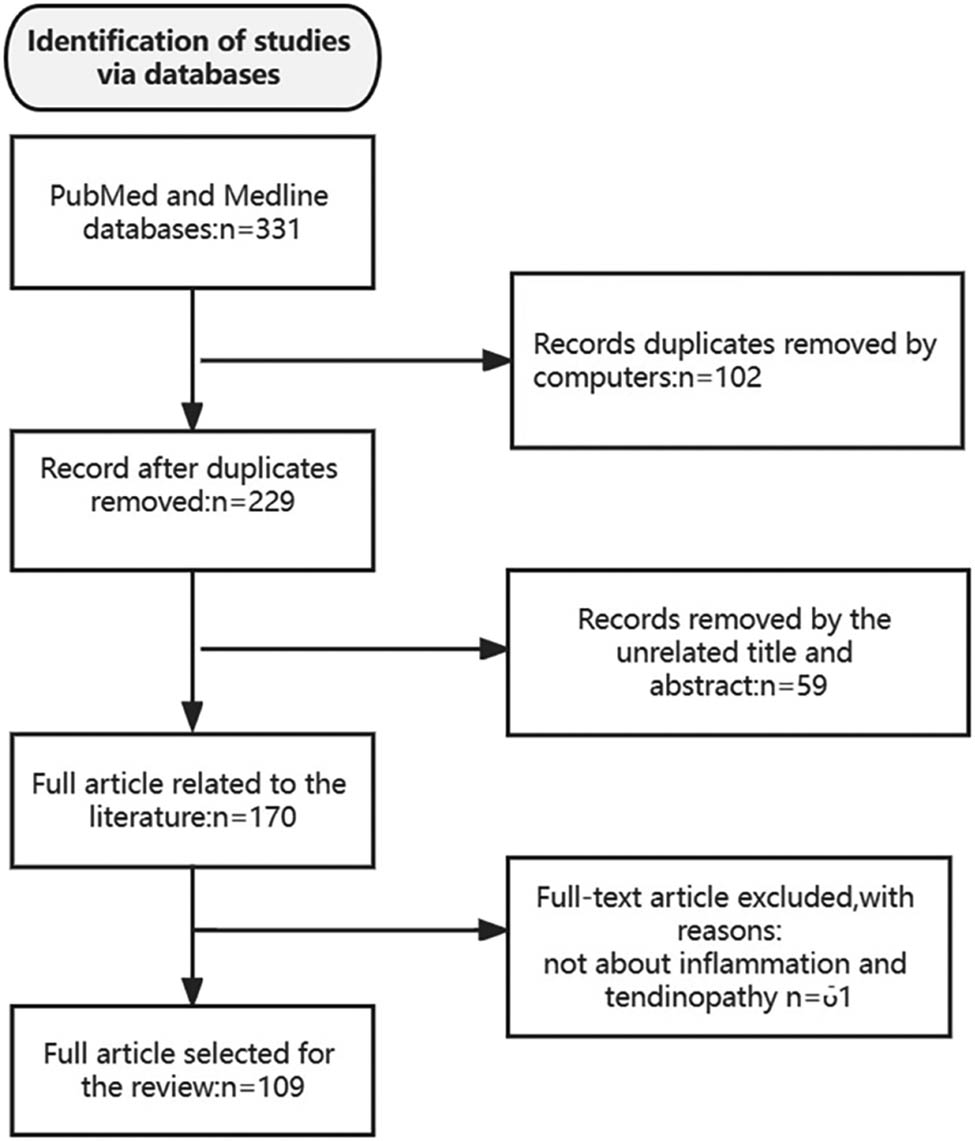
Article retrieval flow chart with inclusion and exclusion processes.
2 Inflammatory response is the beginning of tendinopathy
After a tendon injury, the injury site may show signs of pain, exudation, redness, and dysfunction [19]. Although earlier studies have shown that tendon injury is a degenerative disease caused by excessive use of tendons and no inflammatory cells were found, as the research has progressed, there is mounting evidence that inflammatory factors play an important role following tendon injury [10]. After a tendon injury, its reparative healing goes through three phases: the inflammatory phase, the proliferative phase, and the remodeling phase [6]. The inflammatory phase first removes necrotic cells and creates a temporary extracellular matrix to promote cellular replenishment. Next, the immune system begins to recruit immune cells and secretes cytokines that stimulate cell proliferation and tissue remodeling. These inflammatory responses are directed by distinct type I (pro-inflammatory) and type II (anti-inflammatory) immune regimens (Figure 2) [20]. In the type I immune response, S100A8 and S100A9 act as alarm elements that are released into the extracellular environment by necrotic cells or activated immune cells [21]. This then leads to enhanced recruitment of immune cells (Th1 T cells, neutrophils, and M1-type macrophages) and promotes the release of pro-inflammatory factors such as TNF-α, IFN-γ, IL1-β, and iNOS from tendon cells [22]. Subsequently, downstream inflammatory signaling pathways such as NF-κB and NLRP3 are activated, regulating inflammatory genes as well as transcription [23,24]. Furthermore, the presence of pro-inflammatory factors breaks down the ECM and promotes new ECM deposition [25]. In order to prevent the excessive pro-inflammatory response of the type I immune response, the body activates the type II immune response for anti-inflammation by secreting IL-4 or IL-33 from damaged cells [26]. The release of IL-33 triggers downstream responses from macrophages, Tregs, and other intrinsic immune cells [27]. In particular, Tregs can produce IL-10, which acts as an important anti-inflammatory factor to resolve inflammation in the type I immune response. IL-4 can also promote the conversion of naive CD4 T cells and macrophages to Th2 T cells and M2-type macrophages, thus exerting anti-inflammatory effects [28].

Two immune response processes in the inflammatory phase of tendinopathy.
IL-1 is an important inflammatory cytokine in the inflammatory response [29]. It plays an important role in degrading the extracellular matrix, inhibiting tendon cell markers, and inducing pain. After a tendon injury, inflammatory factors such as IL-1 and TNF-α are released by inflammatory cells such as neutrophils and macrophages during the exogenous healing phase [30]. IL-1β downregulates the gene expression of early growth response gene 1 (Egr1), Col1, and Col3, while upregulating the expression of matrix metalloproteinases 1, 3, 8, and 13 (MMP1, 3, 8, and 13) [31]. MMPs mediate the catabolism of collagen, leading to sustained tissue degradation [32]. In addition, IL-1β downregulates the expression of the tendon cell markers SCX and TNMD, which leads to a decrease in the ultimate tensile strength and elastic modulus of the repaired tendon [33]. In damaged tissues, PGE2 acts to promote vasodilation and elicit a pain hypersensitivity response. It was shown that IL-1β accelerates the conversion from PGH2 to PGE2 and causes an increase in perceived pain by enhancing the expression of prostaglandin E synthase (mPGES) [34]. All of this evidence suggests that IL-1 plays an important role in the development of the inflammatory response. After IL-1 and TNF-α are released, they bind to TLR4 on the cell membrane [35]. The polymerization of TLR4 enables signal transduction into cells; there is a TIR region (Toll/IL-1 Receptor region) in the cell membrane of TLR4 that binds to the carboxy terminus of MyD88 [36]. At the same time, the amino-terminal death domain of MyD88 binds to the amino-terminal death domain of IL-1 receptor-associated kinase (IRAK). This process promotes the phosphorylation of IRAK and the acquisition of free IRAK1, IRAK2, and IRAK4, which in turn activates TNF-α receptor-associated factor 6 (TRAF-6). Next, TRAF-6 binds to NF-κB kinase and phosphorylates the beta subunit of NF-κB kinase (IKKβ), thereby activating the IκB kinase (IKK) complex [37]. IKK induces IκB phosphorylation at residues Ser32 and Ser36 of IκBα and residues Ser19 and Ser23 of IκBβ through the 26 S proteasome [38]. IκB is subsequently degraded, which results in the release of NF-κB activity and the entry of p50-p65 into the nucleus to initiate the expression of downstream genes regulated by NF-KB [39,40]. NF-κB acts as a powerful pro-inflammatory signaling pathway that drives the production of many pro-inflammatory cytokines, including IL-1, IL-6, CCL2, and TNF-α. In turn, these inflammatory can reactivate NF-κB activity, so there is often a persistent inflammatory response during tendon healing [41]. The persistent inflammatory environment has a negative impact on tendon healing and also leads to the formation of tissue adhesions during the collagen remodeling phase [13].
The inflammatory phase after tendon injury is completed by type I and type II immune responses. Type I immune responses activate downstream inflammatory signaling pathways primarily through the release of pro-inflammatory factors from necrotic cells and immune cells. Type II immune response is mainly through the secretion of anti-inflammatory factors by damaged cells, which continue to activate other immune cells and promote the secretion of anti-inflammatory factors.
3 Role of NF-κB signaling pathway
After tenocyte injury, the blood forms a clot at the injury site, and platelets subsequently release large amounts of growth factors and cytokines. At the same time, platelets play a chemotactic role, attracting leukocytes, macrophages, and neutrophils to aggregate at the injury site and phagocytose to remove necrotic material [1]. Extrinsic healing and early inflammatory responses are initiated at this point. During the inflammatory response stage, some signaling pathways are activated in coordination, and the expression of pro-inflammatory and anti-inflammatory mediators is regulated, thereby promoting the homeostasis of the ECM [42]. NF-κB is present at all stages of tendon healing, involving processes such as inflammation, cell proliferation, angiogenesis, and formation of tissue adhesions [43]. In the inflammatory stage, NF-κB is a strong pro-inflammatory signaling pathway, and NF-κB mainly plays a role in the expression of pro-inflammatory genes including cytokines, chemokines, and adhesion molecules [44]. The phase of the inflammatory response driven by the NF-κB signaling cascade greatly affects the balance of the inflammatory response and the outcome of tissue healing [45]. Tendon repair is carried out in two ways, including endogenous healing and exogenous healing. Endogenous healing mainly consists of tenocytes proliferating, migrating, and completing collagen synthesis under the action of cytokines. Exogenous healing is an important part of tendon healing, which is mainly completed by fibroblasts and inflammatory cells [46]. Inflammatory factors such as IL-1β and TNF-α are released by inflammatory cells such as neutrophils and macrophages after tendon injury [30]. Under the stimulation of these inflammatory factors, IκB is phosphorylated through a variety of signal transduction pathways and then degraded under the action of proteolytic enzymes, thereby activating NF-κB signaling and exerting its regulatory effect on the inflammatory response. The above-mentioned process is the activation pathway of canonical NF-κB [23]. In addition, NF-κB can also be activated through a non-classical pathway induced by CD40 and the hypoxic environment that results from tendon injury [47,48]. The process of NF-κB involved in the inflammatory response is described in detail in Figure 3.

NF-κB-Mediated inflammatory response process.
NF-κB, as a classical inflammatory response signaling pathway, has been studied in depth. Meanwhile, studies on the inhibition of NF-κB pathway activity are also more extensive. IKKβ serves as a key subunit that promotes NF-κB activation, and selective inhibition of its activity may be an important way to attenuate the inflammatory response [45]. In a study on tendon repair in dogs, it was shown that after oral administration of the IKKβ inhibitor ACHP, a reduction in the extent of phosphorylated p65 (p-p65) was demonstrated on day 14, along with suppression of the expression of inflammation-related genes. In addition, cell proliferation was significantly enhanced and neovascularization increased, suggesting that targeted inhibition of NF-κB activity can reduce inflammation in the early stages of tendon repair while accelerating the tendon repair process[49]. Similarly, the application of ACHP in a rat rotator cuff injury model showed favorable therapeutic effects. It was administered orally once a day for 7 days after rotator cuff surgery in rats. The results showed a significant reduction in the expression of inflammation-related genes in the NF-κB pathway, and enhanced extracellular matrix production was observed at the injury site. The results observed after stimulation of rat tendon fibroblasts using ACHP were also the same as those in the in vivo experiments, showing satisfactory results[50]. In addition to the application of ACHP to inhibit the activity of NF-κB, there are several other targeted inhibitors of NF-κB that have also shown good results in experiments. For example, the addition of two different p65-specific inhibitors, Helenalin and JSH23, respectively, to cultured fibroblasts showed that the protein expression of p-p65, Type I collagen (COL I), Type Ⅲ collagen (COL III), α-SMA, and COX-2 could be significantly reduced. Transfections of NIH3T3 fibroblasts and fibroblast with p65-siRNA, which selectively inhibits p65, showed a significant reduction in the expression of p65, as well as a decrease in the expression of other inflammatory factors. Although the effects of the three inhibitors were similar, there were some differences in their mechanisms of inhibition. For example, p65-siRNA inhibits p65 gene expression by specifically degrading p65 mRNA and thus inhibiting p65. Whereas Helenalin selectively alkylated the p65 subunit, JSH23 prevented the translocation of NF-κB into the nucleus[51]. Despite the different approaches, all of them could reduce the inflammatory response by inhibiting NF-κB activity. In addition to specific inhibitors of NF-κB, Calebin A (CA), a natural drug, was found to have similar effects to BMS-345541 (specific IKK inhibitor)[52]. It can have the effect of inhibiting the activity of NF-κB by inhibiting the phosphorylation and degradation of IκBα. This has been demonstrated in in vitro experiments on tenocytes [53].
NF-κB can be involved in the inflammatory response through canonical and non-canonical pathways as well as induced by hypoxia.
3.1 The canonical NF-κB activation pathway
NF-κB is an inducible transcription factor family consisting of five structurally related members, including NF-κB1 (also known as p50), NF-κB2 (also known as p52), RelA (also known as p65), RelB and c-Rel, mediate the transcription of target genes in the form of various heterodimers or homodimers by binding to specific DNA sites [54,55]. NF-κB is a typical heterodimer, and the most common structure is a complex composed of the proteins p50 and p65. In the inactive state, the activity of NF-κB is inhibited by the protein inhibitor IκB and retained in the cytoplasm, preventing the activated NF-κB from moving into the nucleus and regulating downstream gene transcription [48]. NF-κB has long been recognized as a canonical inflammatory signaling pathway that mainly responds to stimulation by proinflammatory cytokines such as IL-1 and TNF-α. And after NF-κB is activated, it induces the expression of other pro-inflammatory genes including cytokines, chemokines, and adhesion molecules. This process is thought to be critical for initiating cell proliferation during tendon healing [23,51]. After a tendon injury, inflammatory cells such as neutrophils and macrophages release a variety of inflammatory cytokines including IL-1 and TNF-α, which subsequently bind to TLR4 on the cell membrane [35]. The polymerization of TLR4 enables signal transduction into cells, and there is a TIR region (Toll/IL-1 Receptor region) in the cell membrane of TLR4, which binds to the carboxy terminus of MyD88 [36]. At the same time, the amino-terminal death domain of MyD88 binds to the amino-terminal death domain of IRAK. This process promotes the phosphorylation of IRAK and the acquisition of free IRAK1, IRAK2, and IRAK4, which in turn activates TRAF-6. Next, TRAF-6 binds to NF-κB kinase and phosphorylates the beta subunit of NF-κB kinase (IKKβ), thereby activating the IκB kinase (IKK) complex [37]. IKK induces IκB phosphorylation at residues Ser32 and Ser36 of IκBα and residues Ser19 and Ser23 of IκBβ through the 26 S proteasome [38]. IκB is subsequently degraded, which results in the release of NF-κB activity and the entry of p50-p65 into the nucleus to initiate the expression of downstream genes regulated by NF-κB [39,40].
During tendon healing, NF-κB-mediated inflammatory responses often persist and overdrive the production of pro-inflammatory cytokines, including IL-1, IL-6, CCL2, and TNF-α. Fibroblasts are stimulated by these cytokines to proliferate and synthesize collagen fibers, the major component of the extracellular matrix [41]. At the same time, fibroblasts are also stimulated to transform into myofibroblasts. Myofibroblasts produce αSMA + myofibroblasts and F4/80 + macrophages that produce adhesion G protein-coupled receptors, both of which drive scar tissue formation [13]. In addition, studies have shown that the expression of p65, an important subunit of the NF-κB complex, is elevated in adhesion tissues, suggesting that the inflammatory response regulated by the NF-κB signaling pathway is closely related to the formation of fibrotic adhesions in tendon repair [51]. In the current research, some methods have been found to effectively inhibit the formation of adhesions, such as injection of IL-10 or hyaluronic acid, but the specific molecular mechanism and how to better apply them to clinical treatment still need to be explored [56].
3.2 Non-canonical NF-κB activation pathway
The non-canonical NF-κB pathway selectively responds to a specific set of stimuli, including ligands for subsets of TNFR superfamily members, such as LTβR, BAFFR, CD40, and RANK [57]. In the process of pathway activation, IKKα is first activated by NF-κB-inducing kinase (NIK) and then activated IKKα induces phosphorylation of P100. Processing of p100 promotes the production of p52, while the heterodimer RelB/p52 is also activated [58]. The non-canonical NF-κB complex p52/RelB translocates into the nucleus and binds to specific sites on DNA to play a regulatory role. The canonical NF-κB activation pathway is involved in almost all aspects of the immune response, while the non-canonical NF-κB pathway complements the canonical NF-κB pathway, which mainly acts on immune cells [59], such as promoting the growth and development of B lymphocytes and regulating T-cell differentiation and effector functions, thereby synergistically regulate specific functions of the adaptive immune system [55,60,61].
3.3 Hypoxia-induced NF-κB activation pathway
The third activation pathway is often referred to as “ non-canonical” and involves the phosphorylation of IκB by kinases such as casein kinase II or tyrosine kinase due to stress such as UV light, hypoxia, or reactive oxygen species (ROS) [47]. Hypoxia is one of the most fundamental environmental stresses experienced by cells which plays an important role in the early stages of tendinopathy. The cellular hypoxic environment that develops after a tendon injury is thought to be a potential mechanism for the incidence of degenerative tendinopathy [62]. Following tendon injury, reduced tissue perfusion and increased energy demands lead to a lack of oxygen and nutrients in the local tissue, which in turn creates a hypoxic environment [63]. In tenocytes, hypoxia can induce the expression of key cytokines and pro-inflammatory molecules, including platelet-derived growth factor, IL-6, IL-8, and platelet-activating factor, which may ultimately disrupt the balance of ECM repair [64]. Increased mechanical loading leads to apoptosis of tenocytes, whereas degradation of HIF-1α subunits is inhibited under hypoxia, thus inducing increased expression of HIF-1α during the periodic strain of tenocytes and subsequent translocation into the nucleus to regulate multiple transcription of genes [65].
HIF-1 is a heterodimer composed of two subunits, HIF-1α and HIF-1β. HIF-1α is ubiquitous in many cells and plays an important role in the intracellular hypoxia response [66]. During hypoxia, the activity of hydroxylase (PHD/FIH) is inhibited, which in turn activates the NF-κB signaling pathway [67]. At the same time, the activated NF-κB pathway also leads to the up-regulation of HIF mRNA levels, which further promotes the activation of the signal. While HIF-1 can induce the expression of NF-κB target genes, including cyclooxygenase-2 (COX-2), TNF-α, IL-6, and macrophage Phagophageal inflammatory protein-2 (MIP-2), which ultimately leads to the continued development of inflammation [67]. In another study, tyrosine phosphorylation of IKBα was shown to be an important step before its degradation from NF-κB. In contrast, HIF-1α can induce tyrosine phosphorylation of IκB by Ras/Raf kinase downstream of Src, a process similar to the typical pathway in NF-κB gene transcription [68]. In addition, mitochondria-mediated ROS generation during hypoxia may also be responsible for the activation of NF-κB [69]. In conclusion, although NF-κB is a hypoxia-responsive transcription factor, multiple specific activation mechanisms may exist.
4 Role of NLRP3 signaling pathway
The inflammasome is a multi-protein signaling complex that recognizes pathogenic-associated molecular patterns (PAMPs) and damage-associated molecular patterns (DAMPs), and thus is widely involved in the pathogenesis of various diseases [70]. Among the various inflammatory vesicle complexes, the NLRP3 inflammatory vesicle complex is the most common one in the inflammatory phase of tendinopathies. It consists of the sensor NLRP3, the adapter ASC, and pro-caspase-1 [71]. NLRP3 can respond to various exogenous or endogenous danger signals, including various microbial products, endogenous molecules, and changes in intracellular ions, which can activate NLRP3. This promotes the release of a range of cytokines that contribute to the development of an inflammatory response [72]. Therefore, NLRP3 plays an important regulatory role in the inflammatory mechanism of tendinopathy. After a tendon injury, HMGB1 released by necrotic cells becomes the main pathway of NLRP3 activation. HMGB1 can ultimately trigger the assembly and activation of the NLRP3 inflammasome by activating multiple receptors, including TREM-1, TLR4, Toll-like receptor 2 (TLR2), and RAGE [24]. Following activation of NLRP3 promotes the release of cytokines and induces ECM disturbances and increased inflammatory responses, ultimately hindering the process of tendon healing. In addition, changes in various cellular signals can also lead to NLRP3 inflammasome activation, such as K+ efflux, Ca2+ signaling, and mitochondrial dysfunction. However, the specific mechanisms of action between them remain to be studied [73]. The process by which NLRP3 induces an inflammatory response is depicted in Figure 4.

Process of NLRP3-induced inflammatory response.
HMGB1 binds to a series of receptors on the cell membrane surface, including RAGE, TLR2, TLR4, and TREM-1. Upon binding, NLRP3 is activated. NLRP3 promotes the aggregation of apoptosis-associated speckle-like protein (ASC), subsequently recruits caspase-1, and facilitates its processing. After conversion, active caspase-1 is formed, which finally converts cytokines pro-IL-1β and pro-IL-18 into mature and biologically active IL-1β and IL-18. The increase in Ca2 + enabled FliI to inhibit the F-actin function. F-actin was unable to interact with FliI and leucine-rich repeat FliI-interacting protein 2 (LRRFIP2), so the inhibition of NLRP3 was relieved. The subsequent enhanced activity of NLRP3 is involved in promoting the maturation and release of IL-1β.
4.1 Molecular mechanism of HMGB1-stimulated NLRP3 inflammasome activation
In the early stages of tendinopathy, cell necrosis or stimulation by stressful conditions (hypoxia, mechanical) leads to the release of endogenous danger signals or alarmins, resulting in the activation of an immune response. This process is called damage-associated molecular patterning (DAMP) [74]. Alarmin, a member of DAMPs, is also a key point in triggering the onset and ongoing development of the inflammatory response in tendinopathy. Various alarmins have been reported in tendinopathy, including HMGB1, IL-1α, and IL-33. Studies have shown that HMGB1 is closely related to the activation of NLRP3 [75].
HMGB1 is widely expressed in organisms and is a highly conserved nuclear protein that can be passively released from necrotic cells or actively secreted from immune cells activated by inflammatory factors [76]. After HMGB1 in the nucleus is secreted to the outside of the cell, it binds to a series of receptors on the cell membrane surface, including the receptor for advanced glycation end products (RAGE), TLR2, TLR4, and TREM-1 [77]. After binding, it is involved in downstream signaling molecules in transcriptional regulation and triggers the activity of NLRP3. NLRP3 promotes the aggregation of ASC, subsequently recruits caspase-1 and facilitates its processing. After conversion, active caspase-1 is formed, which finally converts cytokines pro-IL-1β and pro-IL-18 into mature and biologically active IL-1β and IL-18 [78].
The RAGE is one of the ligands of HMGB1. The binding of HMGB1 to RAGE in inflammatory cells promotes cell migration and angiogenesis, ultimately leading to the recruitment of more inflammatory cells and the release of mediators [79]. At the same time, as a ligand of TLR2 and TLR4, HMGB1 can also have a synergistic effect on NLRP3-mediated inflammation [70]. In tendinopathy tissue, elevated levels of HIF-1α indicate a hypoxic and ischemic environment at the injury site [66]. In this environment, HMGB1 is released into the extracellular space in a full thiol state and acts on the Ig superfamily receptor RAGE, which binds to advanced glycation end products to activate downstream signaling and generates ROS to activate NLRP3, eventually triggering a series of inflammatory responses [80,81]. However, Cys-106 of HMGB1 remains in the –SH (thiol) state to activate TLR4, while Cys-23 and Cys-45 of HMGB1 form a disulfide bond, which interacts with TLR4 [82]. In addition, HMGB1 can also activate TLR2 signaling. Subsequent ligand binding of TLR4 and TLR2 induces the secretion of IL-1β and finally promotes the assembly of NLRP3 [83]. Tenocytes are able to secrete TREM-1 together with neutrophils and macrophages [24]. Like TLRs and RAGEs, TREM-1 is a receptor for HMGB1 .In hypoxia, activation of immunoglobulin receptor superfamily member myeloid cell 1 (TREM-1) through upregulation of DAP12 and NF-κB activity can also activate NLRP3 activity [84]. Activation of TREM-1 stimulates intracellular Ca2+ efflux, which subsequently leads to mitochondrial Ca2+ overload and ROS generation [85]. Studies have shown that ROS is another effective activator of the NLRP3 inflammasome, so TREM-1 is closely related to the activation of the NLRP3 inflammasome. However, since the role of TREM-1 in inflammation is an emerging field, the underlying mechanism of action remains to be further investigated.
4.2 Other non-canonical pathways activate NLRP3 activity
In addition to the above-mentioned common NLRP3 activation pathways, there are some non-canonical activation pathways. One study found a decrease in tendon COLⅠ:COLⅢ ratio consistent with an increase in NLRP3 expression during the ECM remodeling phase after rotator cuff injury [15]. And it has been reported that in bone tissue, the degradation of the bone matrix can activate NLRP3 [86]. Therefore, we speculate that the disorder of ECM is closely related to the expression of NLRP3 in tendon tissue. However, the specific mechanism of action is still unclear.
In addition, studies have shown that persistent adipose tissue infiltration in tenocytes hinders tendon healing by prolonging the inflammatory response [87]. However, the synergy between TLR2, TLR4, TREM-1, and RAGE was found in hepatocytes to induce upregulation of HMGB1 and promote adipose tissue infiltration [88]. Inhibition of NLRP3 activity prevented adipose tissue accumulation in hepatocytes, suggesting a potential role of NLRP3 in promoting adipose tissue infiltration in tissues [89]. Although no relevant reports have been found in tenocytes, we can still speculate that the infiltration of adipose tissue in tenocytes is related to the activation of NLRP3.
Intracellular flux of multiple ions, including K+, Ca2+, and Cl−, has been reported to promote NLRP3 inflammasome activation [90]. F-Actin can interact with a calcium-dependent actin remodeling protein, Flightless-I (FliI), and an NLRP3-related protein, LRRFIP2. And this effect can inhibit NLRP3 inflammasome activation [91]. However, cyclic stretching induces an increase of Ca2+ in tenocytes, which in turn leads to F-actin depolymerization, while the increase in Ca2+ allows FliI to inhibit F-actin function. F-actin was unable to interact with FliI and LRRFIP2, so the inhibition of NLRP3 was relieved [92]. The subsequent enhanced activity of NLRP3 is involved in promoting the maturation and release of IL-1β, which aggravates inflammation outside the tenocytes.
Changes in K+ concentration are also considered to be an important factor in the activation of NLRP3. One study showed that the use of high concentrations of K+ extracellularly can directly block the activity of NLRP3 [93]. At the same time, high concentrations of extracellular K+ can also play a role in the upstream signaling pathway activated by NLRP3, inhibiting the activation of NLRP3 inflammasome by various stimuli [73]. However, the specific link between K+ concentration and NLRP3 activity still needs to be further explored.
5 Role of p38/MAPK signaling pathway
MAPKs are a class of protein kinases specific for serine, threonine, and tyrosine, and they are important signaling pathways in living organisms [94]. They are first activated by a series of extracellular stimulatory signals and change the phosphorylation state, then interact with upstream kinases, downstream substrates ,and phosphatases, and finally transmit signals from the cell membrane to the nucleus [95]. In tendinopathy tissues, they regulate many physiological and biochemical activities, including secretion of inflammatory factors, synthesis and degradation of ECM, and apoptosis [96]. The MAPK family has four members, including extracellular signal-regulated protein kinases (ERKs), p38/MAPK, c-Jun amino-terminal kinase/emergency-activated protein kinase (JNK/SAPKs), and ERK5/megafilament lysin-activated protein kinase (BMK1) [97].
p38/MAPK is one of the important members of MAPKs; it has four subtypes, including p38α, p38β, p38γ, and p38δ. p38/MAPK is activated when the body is under stress or mechanical stimulation, and it plays an important role in physiological activities such as inflammation, cell growth and development, and apoptosis [98]. Especially, the role in inflammation is the most prominent aspect [99]. Signaling of the p38/MAPK pathway is typically activated through interactions between upstream components of the activation cascade and adaptor proteins. This process usually takes three to five kinase phosphorylations to transmit the signal smoothly. Three core kinases are required in this process, including MAPK kinase kinase (MAPKKK), MAPK kinase (MAPKK), and MAPK [100]. Small-molecule GTPases are often activated after stimuli by inflammatory factors, growth factors, or environmental stress (e.g., oxidative stress, DNA damage, and mechanical loading). MAPKKK usually completes its activation by interacting with small-molecule GTPases. Subsequently, activated MAPKKK directly phosphorylates and activates MAPKK [101]. There are mainly two types of MAPKK in the p38 signaling pathway, MKK3 and MKK6. Next, MKK3 and MKK6 doubly phosphorylate Thr180 and Tyr182 and activate MAPK [102]. Once activated, MAPK acts on downstream targets, thereby promoting the production of inflammatory factors such as TNF-α, IL-6, and IL-8 by monocytes and macrophages and finally regulating the inflammatory response [94]. The inflammatory response process involved in p38/MAPK is shown in Figure 5.
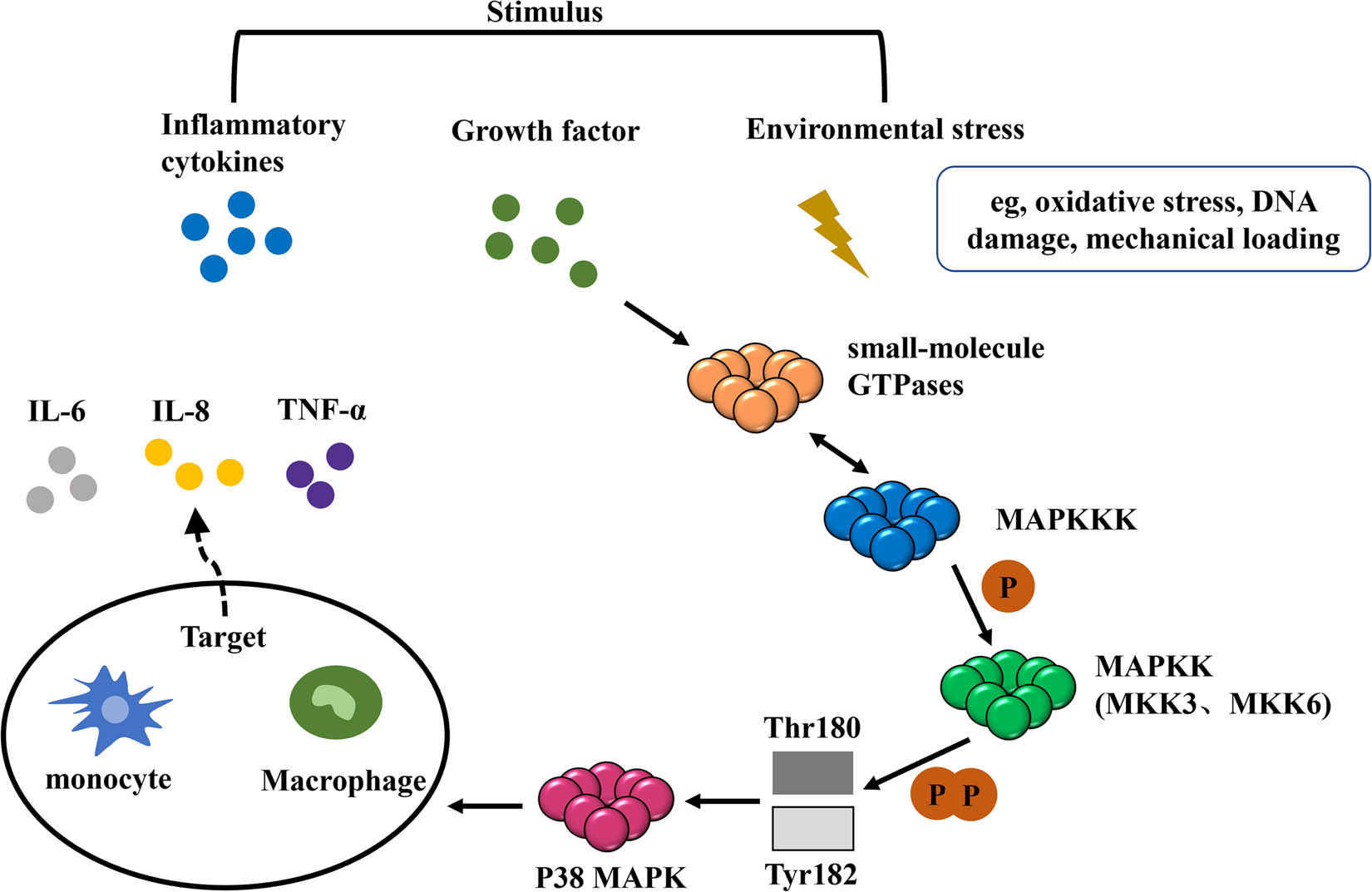
Inflammatory response process involved in p38MAP.
It has also been found that the pro-inflammatory state generated by the enhanced activity of NF-κB and p38/MAPK is one of the bases for the development of heterotopic ossification (HO)[103]. And it was observed in in vitro experiments that the addition of (p38) MAPK inhibitor SB203580, (ERK) MAPK inhibitor PD98059, and (JNK) MAPK inhibitor SP600125 to the cells resulted in a decrease in the degree of phosphorylation of ERK, JNK, p38, NF-κB, and IKKβ, as well as a significant reduction in the degree of HO[104]. These results suggest that the inflammatory response can be significantly attenuated by inhibiting the activity of MAPK and have a therapeutic effect on HO. However, there is no sufficient data about in vivo experiments in humans, so in the future, we need to conduct more relevant experiments in depth to explore how MAPK inhibitors can be more safely and effectively applied to attenuate the inflammatory response in human tendinopathy.
The cytokine first activates the small molecule GTPase, and subsequently, MAPKKK is activated by interacting with the small molecule GTPase. Subsequently, the activated MAPKKK directly phosphorylates and activates MAPKK. Next, MKK3 and MKK6 doubly phosphorylate Thr180 and Tyr182 and activate MAPK. When MAPK is activated, it acts on downstream targets and promotes the production of inflammatory factors by monocytes and macrophages.
6 Role of STAT3 signaling pathway
STAT is the main signaling pathway in the body, which consists of STAT and its receptors. The STAT protein family is a group of related proteins that can be activated by different cytokine receptors [105]. Among them, STAT3 is an important member of the STAT family, which plays an important role in the body’s immune response, cell proliferation and differentiation, angiogenesis, apoptosis, as well as tumorigenesis [106]. Interferons, interleukins, growth factors, and other chemical signals bind to cell surface receptors and activate associated kinases. The activated kinase subsequently phosphorylates itself and the receptor, while also phosphorylating tyrosine residues of the downstream target protein. After the earlier process, the transcription factor STAT3 is recruited and phosphorylated, and then, it enters the nucleus in the form of a dimer to bind to target genes and regulate the transcription of downstream genes [107].
In the inflammatory response of tendinopathy, STAT3 has a dual regulatory role, but the specific mechanism of action is still unclear. On the one hand, studies have shown that after reducing the use of JNK/STAT3 signaling inhibitors, the expression of the proinflammatory factor IL-6 is significantly increased, and the IL-6-induced inflammatory response can promote wound healing through fibrosis and scarring [108]. However, persistent inflammation often leads to excessive proliferation of myofibroblasts and promotes excessive deposition of ECM components at the site of injury, leading to scar tissue formation [109]. In addition, studies in recent years have shown that the JAK/STAT signaling pathway is a novel mechanism leading to tendon stem/progenitor cells (TSPC) senescence. Chronic sterile inflammation is a hallmark of aging, and the JAK/STAT signaling pathway mediates the expression of many pro-inflammatory cytokines, matrix metalloproteinases, and chemokines, and leads to persistent chronic inflammation. Therefore, inhibition of the JAK/STAT signaling pathway may be an ideal target to alleviate the inflammatory response after tendon injury as well as tendon senescence [110]. On the other hand, the STAT signaling pathway is necessary for IL-10 to exert anti-inflammatory effects as well as to promote IL-10 production [108]. For example, IL-10 regulates the TLR4/NF-κB signaling axis in dermal fibroblasts via the IL-10R/STAT3 signaling pathway, thereby reducing the inflammatory response and ultimately preventing scar formation [56]. Specifically, IL-10 forms homo- or heterodimers by binding to the homologous receptor IL-10R (IL-10R is a tetramer containing two IL-10R1 polypeptide chains and two IL-10R2 chains), which then activates the receptor-linked tyrosine protein kinase 1 (janus kinas 1, JAK1) [111]. JAK1 subsequently phosphorylates tyrosine residues (Y446 and Y496) specific to the intracellular structural domain located in IL-10R1. Once phosphorylated, these tyrosine residues provide a temporary anchor site for the potential transcription factor STAT3. STAT3 binds to these sites via its SH2 structural domain, and activated STAT3 then leaves the receptor and forms homo- or heterodimers in the cytoplasm. The dimer then rapidly moves into the nucleus, binds to its specific DNA sequence, and initiates intranuclear DNA transcription. In the following process, an anti-inflammatory cascade begins, including inhibition of NF-κB activity and inhibition of its ability to bind DNA [112]. The specific mechanism by which IL-10 exerts its anti-inflammatory effects through the STAT3 signaling pathway is shown in Figure 6. It has also been shown that after stimulation of tendon stem cells (TSCs) with connective tissue growth factor, the production of the anti-inflammatory cytokine IL-10 was induced through the JNK/STAT3 signaling pathway, which effectively reduced the inflammatory response, ECM secretion, and scar tissue [17]. Similarly, it was shown that JNK/STAT3 signaling pathway plays a key role in aspirin-induced IL-10 and TIMP-3 expression in TSCs. Aspirin upregulates the expression of the anti-inflammatory factor IL-10 through the JNK/STAT3 signaling axis, thereby impeding IL-1β-induced migration and proliferation of TSCs. In turn, the decrease in TSCs number may reduce the deposition of ECM in the injured tendon, thereby reducing scar formation. Thus, aspirin may indirectly improve tendon healing by regulating inflammation through the JNK/STAT3 signaling pathway [108]. In addition to pharmacological interventions, some valuable research results have been obtained in recent years in the direction of using mechanical stimulation to modulate the inflammatory response. For example, mechanical stimulation of tendons by running on a treadmill has been shown to increase the expression of IL-4 at the tendon-bone junction, and the binding of IL-4 to its receptor activates JAK1 and JAK3, which in turn leads to the activation of STAT and its translocation to the nucleus. Ultimately, activation of the JAK/STAT signaling pathway shifts macrophages from a pro-inflammatory to an anti-inflammatory phenotype, resulting in the production of a series of anti-inflammatory cytokines that regulate the local inflammatory microenvironment to promote tissue healing [113]. However, more in-depth studies, such as sequencing analysis, are needed in the future to explain the specific mechanisms and targets of the overall inflammatory regulatory process. Therefore, STAT3 plays a crucial role in regulating the balance of inflammation and ECM during the healing of injured tendon.
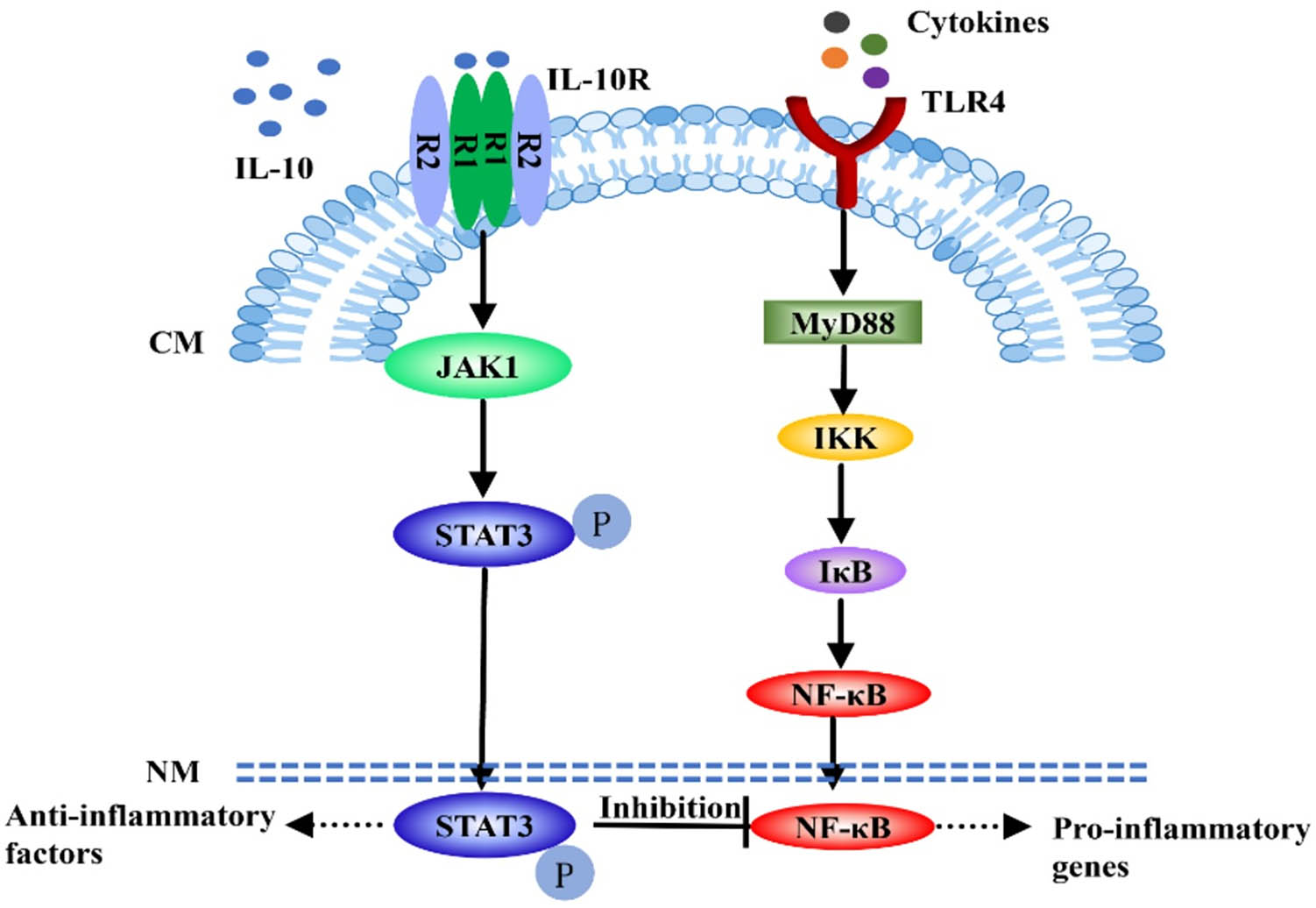
IL-10 Exerts anti-inflammatory effects through STAT3 signaling pathway.
Although there is a growing interest in using the STAT3 signaling pathway to reduce inflammatory responses in tendinopathies, there are still many issues that need to be further investigated, such as the lack of an accepted standard for the dose or duration of drug intervention in many trials, which is therefore still a long way from being applied in clinical trials. In addition, more in-depth studies are needed to clarify the mechanism of action and specific targets for some of the newly explored pathways.
IL-10 participates in anti-inflammatory responses through the IL-10R/STAT3 signaling pathway, including inhibition of NF-κB activity and inhibition of its ability to bind DNA.
7 Conclusion and perspectives
This review summarizes several major pathways by which the inflammatory response occurs by discussing the mechanisms of action of several major signaling pathways associated with inflammation in tendinopathies and provides new ideas for inhibiting the ongoing inflammatory response and treating tendinopathy.
Although there has been a lot of important research on tendon repair, the research in the inflammatory stage still needs to be further explored. In particular, the signaling pathways closely related to the inflammatory response maintain the homeostasis of tissues during the inflammatory response by regulating the transcription of inflammatory factors. The inflammatory response is critical for effective tendon repair. Only by initiating an inflammatory response to promote the release of cytokines and growth factors can necrotic material and ECM debris be removed and the proliferative and remodeling phases of the healing process proceed smoothly [12]. However, a persistent inflammatory response can also have negative effects. If the inflammatory response in the early stage of tendon repair continues unabated, it will lead to excessive recruitment of pro-inflammatory mediators; especially, the transcription of pro-inflammatory mediators induced by the NF-κB signaling pathway is considered to be a key regulator of the inflammatory response [44]. A persistent inflammatory environment induces increased myofibroblast migration and production, promotes excessive collagen synthesis, and leads to excessive deposition of ECM, resulting in an excessive “fibrotic repair response” [114]. A dense layer of connective tissue called penitential fibrotic adhesion eventually forms between the tendon and surrounding tissue, and this fibrotic change is also thought to be an important factor in the subsequent development of chronic degenerative tendinopathy [115,116]. Fortunately, many studies have now shown that by applying specific inhibitors of the inflammatory pathway, the activity of the inflammatory pathway can be significantly inhibited, thus reducing the inflammatory response. However, there are still many limitations in the current application. For example, the number of human case samples currently used in clinical trials is small, and there are no clear standards for the dosage of pathway-specific inhibitors to be administered and the duration of treatment, which need to be determined by further experiments[51]. In addition, many small molecule inhibitors are delivered systemically, which may not be an ideal approach for the treatment of localized inflammation. Therefore, we need further exploration of the mode of drug delivery[50]. For some natural drugs that have the same effects as inhibitors, although phase I clinical trials have shown no adverse effects in human subjects at high doses, the effects of these natural drugs on humans need to be studied at the cellular and molecular levels to ensure the safety and efficacy of the application of these drugs [117]. Several recent studies have delved into some new inflammatory pathways in tendinopathies, which have great potential for targeted treatment of inflammation. In the studies of mast cells, it was found that mast cells can express glutamate receptors after tendon injury, and glutamate receptors are the main substances that mediate neuronal inflammation in tendinopathies [118]. Therefore, in future studies, targeted inhibition of mast cells and interference with the activation of glutamate receptors are new strategies to attenuate the inflammatory response. In addition, it was found that the receptor agonist of adenosine A2A, polydeoxyribonucleotide (PDRN), could activate the cAMP–PKA–CREB pathway and reduce the percentage of caspase-3-positive cells and caspase-9-positive cells in rat Achilles tendon injury, thereby inhibiting the secretion of pro-inflammatory cytokines. Therefore, PDRN injection has a satisfactory effect in anti-inflammation and inhibition of apoptosis [119]. Therefore, a comprehensive and in-depth understanding of the signaling pathways of the inflammatory response is crucial to remove the harmful part of the inflammatory cascade at the right time. At the same time, it is of great significance for the development of new anti-inflammatory drugs. Although there are many anti-inflammatory drugs previously used in clinical treatment, such as non-steroidal anti-inflammatory drugs and corticosteroids, the effect is not satisfactory. Although these anti-inflammatory drugs show beneficial effects in the short term, long-term use may impair the structural integrity of the tendon and increase the risk of tendon rupture in many studies [120,121].
In recent years, a number of new biomaterial-based therapeutic approaches have attracted attention and shown satisfactory results in the anti-inflammatory treatment of tendinopathies. For example, synthetic polymer scaffolds have better mechanical stability and can mimic the arrangement structure of collagen fibers in tendons, which can help cells at the site of injury transition from the inflammatory microenvironment to the regenerative microenvironment [122]. However, since some materials of stents have a high degradation rate, such as polylactic acid (PLA) and polyglycolic acid (PGA), which can lead to an enhanced inflammatory response, they are more suitable for the repair of microscopic injuries [123]. However, scaffolds prepared from natural biomaterials are usually well suited to promote cell adhesion and thus play an important role in facilitating tendon repair. For example, scaffolds made of biomaterials such as hyaluronic acid or chitosan have the effect of preventing inflammatory cells from adhering to fibronectin, thereby reducing the inflammatory response [124]. However, the immunomodulatory effects they mediate usually show dependence on molecular weight and applied dose. Therefore, their effect on immune cell activity and the variation of these factors in tendon repair needs to be studied in more depth in the future [125]. There is also an emerging treatment method that is also attracting attention, and that is hydrogel. It has been shown to provide mechanical support to injured tendon tissue and to treat tendon injuries by means of sustained drug release. This approach is useful for regulating the secretion of inflammatory factors and promoting the polarization of macrophages toward the anti-inflammatory phenotype. This method also has some disadvantages, such as lack of toughness and burst release of the drug [126]. Therefore, more in-depth research is needed in the future to correct these shortcomings.
In recent years, an increasing number of findings have shown the critical role of the inflammatory response in tendinopathies. New ideas are also being introduced in the study of tendinopathy inflammation, such as the use of single-cell sequencing as well as spatial transcriptomics to identify key cellular phenotypes driving pathogenesis and thus target these pathogenic cytokines and signaling pathways [127]. Therefore, an in-depth understanding of the mechanism of action of inflammatory signaling pathways is crucial for the development of safe and easily controlled treatments to improve tendon healing.
-
Funding information: This research was funded by the 2022 Sichuan Provincial Science and Technology Plan Project (22ZDYF3799), the Luzhou Science and Technology Program Project (2020-SYF-31), and the Luzhou Municipal Government-Southwest Medical University Joint Project(2021LZXNYD-J10). Support from the following two projects is also gratefully acknowledged: Sichuan Science and Technology Program Project (2022NSFSC0688) and Southwest Medical University Applied Basic Fundamental Research Project (2021ZKMS050).
-
Author contributions: All authors contributed to the study conception and design. Li Jiang, Tianzhu Liu, and Yixuan Chen designed the present manuscript. Kexin Lyu, Jingwei Lu, Longhai Long drew the manuscript. Xiaoqiang Wang performed a literature search and selected the studies to be analyzed. Li Jiang and Sen Li completed the revisions, including the manuscript. All authors contributed to the article and approved the submitted version.
-
Conflict of interest: Authors state no conflict of interest.
-
Data availability statement: Data sharing is not applicable to this article as no datasets were generated or analyzed during the current study.
References
[1] Müller SA, Todorov A, Heisterbach PE, Martin I, Majewski M. Tendon healing: an overview of physiology, biology, and pathology of tendon healing and systematic review of state of the art in tendon bioengineering. Knee Surg Sports Traumatol Arthrosc. 2015;23(7):2097–105.10.1007/s00167-013-2680-zSearch in Google Scholar PubMed
[2] Andarawis-Puri N, Flatow EL, Soslowsky LJ. Tendon basic science: Development, repair, regeneration, and healing. J Orthop Res. 2015;33(6):780–4.10.1002/jor.22869Search in Google Scholar PubMed PubMed Central
[3] Schwartz A, Watson JN, Hutchinson MR. Patellar tendinopathy. Sports Health. 2015;7(5):415–20.10.1177/1941738114568775Search in Google Scholar PubMed PubMed Central
[4] Thomopoulos S, Parks WC, Rifkin DB, Derwin KA. Mechanisms of tendon injury and repair. J Orthop Res. 2015;33(6):832–9.10.1002/jor.22806Search in Google Scholar PubMed PubMed Central
[5] Cook JL, Purdam C. Is compressive load a factor in the development of tendinopathy? Br J Sports Med. 2012;46(3):163–8.10.1136/bjsports-2011-090414Search in Google Scholar PubMed
[6] Yang G, Rothrauff BB, Tuan RS. Tendon and ligament regeneration and repair: clinical relevance and developmental paradigm. Birth Defects Res C Embryo Today. 2013;99(3):203–22.10.1002/bdrc.21041Search in Google Scholar PubMed PubMed Central
[7] Rees JD, Maffulli N, Cook J. Management of tendinopathy. Am J Sports Med. 2009;37(9):1855–67.10.1177/0363546508324283Search in Google Scholar PubMed
[8] Khan KM, Cook JL, Kannus P, Maffulli N, Bonar SF. Time to abandon the “tendinitis” myth. Bmj. 2002;324(7338):626–7.10.1136/bmj.324.7338.626Search in Google Scholar PubMed PubMed Central
[9] Schubert TE, Weidler C, Lerch K, Hofstädter F, Straub RH. Achilles tendinosis is associated with sprouting of substance P positive nerve fibres. Ann Rheum Dis. 2005;64(7):1083–6.10.1136/ard.2004.029876Search in Google Scholar PubMed PubMed Central
[10] Millar NL, Murrell GA, McInnes IB. Inflammatory mechanisms in tendinopathy - towards translation. Nat Rev Rheumatol. 2017;13(2):110–22.10.1038/nrrheum.2016.213Search in Google Scholar PubMed
[11] Andia I, Sanchez M, Maffulli N. Tendon healing and platelet-rich plasma therapies. Expert Opin Biol Ther. 2010;10(10):1415–26.10.1517/14712598.2010.514603Search in Google Scholar PubMed
[12] Klingberg F, Hinz B, White ES. The myofibroblast matrix: implications for tissue repair and fibrosis. J Pathol. 2013;229(2):298–309.10.1002/path.4104Search in Google Scholar PubMed PubMed Central
[13] Best KT, Nichols AEC, Knapp E, Hammert WC, Ketonis C, Jonason JH, et al. NF-κB activation persists into the remodeling phase of tendon healing and promotes myofibroblast survival. Sci Signal. 2020;13(658):eabb7209.10.1126/scisignal.abb7209Search in Google Scholar PubMed PubMed Central
[14] Best KT, Lee FK, Knapp E, Awad HA, Loiselle AE. Deletion of NFKB1 enhances canonical NF-κB signaling and increases macrophage and myofibroblast content during tendon healing. Sci Rep. 2019;9(1):10926.10.1038/s41598-019-47461-5Search in Google Scholar PubMed PubMed Central
[15] Thankam FG, Roesch ZK, Dilisio MF, Radwan MM, Kovilam A, Gross RM, et al. Association of inflammatory responses and ECM disorganization with HMGB1 upregulation and NLRP3 inflammasome activation in the injured rotator cuff tendon. Sci Rep. 2018;8(1):8918.10.1038/s41598-018-27250-2Search in Google Scholar PubMed PubMed Central
[16] Cipollaro L, Sahemey R, Oliva F, Maffulli N. Immunohistochemical features of rotator cuff tendinopathy. Br Med Bull. 2019;130(1):105–23.10.1093/bmb/ldz016Search in Google Scholar PubMed
[17] Tarafder S, Chen E, Jun Y, Kao K, Sim KH, Back J, et al. Tendon stem/progenitor cells regulate inflammation in tendon healing via JNK and STAT3 signaling. Faseb j. 2017;31(9):3991–8.10.1096/fj.201700071RSearch in Google Scholar PubMed PubMed Central
[18] Vinhas A, Rodrigues MT, Gomes ME. Exploring Stem Cells and Inflammation in Tendon Repair and Regeneration. Adv Exp Med Biol. 2018;1089:37–46.10.1007/5584_2018_258Search in Google Scholar PubMed
[19] Longo UG, Garau G, Denaro V, Maffulli N. Surgical management of tendinopathy of biceps femoris tendon in athletes. Disabil Rehabil. 2008;30(20-22):1602–7.10.1080/09638280701786120Search in Google Scholar PubMed
[20] Arvind V, Huang AH. Reparative and Maladaptive Inflammation in Tendon Healing. Front Bioeng Biotechnol. 2021;9:719047.10.3389/fbioe.2021.719047Search in Google Scholar PubMed PubMed Central
[21] Crowe LAN, McLean M, Garcia-Melchor E, Patommel K, Kitson SM, Reilly JH, et al. S100A8 & S100A9: Alarmin mediated inflammation in tendinopathy. Arthritis Rheumatol. 2018;70.10.1038/s41598-018-37684-3Search in Google Scholar PubMed PubMed Central
[22] Marsolais D, Côté CH, Frenette J. Neutrophils and macrophages accumulate sequentially following Achilles tendon injury. J Orthop Res. 2001;19(6):1203–9.10.1016/S0736-0266(01)00031-6Search in Google Scholar PubMed
[23] Abraham AC, Shah SA, Golman M, Song L, Li X, Kurtaliaj I, et al. Targeting the NF-κB signaling pathway in chronic tendon disease. Sci Transl Med. 2019;11:481.10.1126/scitranslmed.aav4319Search in Google Scholar PubMed PubMed Central
[24] Thankam FG, Dilisio MF, Dietz NE, Agrawal DK. TREM-1, HMGB1 and RAGE in the Shoulder Tendon: Dual Mechanisms for Inflammation Based on the Coincidence of Glenohumeral Arthritis. PLoS One. 2016;11(10):e0165492.10.1371/journal.pone.0165492Search in Google Scholar PubMed PubMed Central
[25] Voloshin I, Gelinas J, Maloney MD, O’Keefe RJ, Bigliani LU, Blaine TA. Proinflammatory cytokines and metalloproteases are expressed in the subacromial bursa in patients with rotator cuff disease. Arthroscopy. 2005;21(9):1076.e1071–9.10.1016/j.arthro.2005.05.017Search in Google Scholar PubMed
[26] Eming SA, Wynn TA, Martin P. Inflammation and metabolism in tissue repair and regeneration. Science. 2017;356(6342):1026–30.10.1126/science.aam7928Search in Google Scholar PubMed
[27] Jin R, Xu J, Gao Q, Mao X, Yin J, Lu K, et al. IL-33-induced neutrophil extracellular traps degrade fibronectin in a murine model of bronchopulmonary dysplasia. Cell Death Discov. 2020;6:33.10.1038/s41420-020-0267-2Search in Google Scholar PubMed PubMed Central
[28] Gause WC, Wynn TA, Allen JE. Type 2 immunity and wound healing: evolutionary refinement of adaptive immunity by helminths. Nat Rev Immunol. 2013;13(8):607–14.10.1038/nri3476Search in Google Scholar PubMed PubMed Central
[29] Huang Y, He B, Wang L, Yuan B, Shu H, Zhang F, et al. Bone marrow mesenchymal stem cell-derived exosomes promote rotator cuff tendon-bone healing by promoting angiogenesis and regulating M1 macrophages in rats. Stem Cell Res Ther. 2020;11(1):496.10.1186/s13287-020-02005-xSearch in Google Scholar PubMed PubMed Central
[30] Challoumas D, Biddle M, Millar NL. Recent advances in tendinopathy. Fac Rev. 2020;9:16.10.12703/b/9-16Search in Google Scholar PubMed PubMed Central
[31] Zhang K, Asai S, Yu B, Enomoto-Iwamoto M. IL-1β irreversibly inhibits tenogenic differentiation and alters metabolism in injured tendon-derived progenitor cells in vitro. Biochem Biophys Res Commun. 2015;463(4):667–72.10.1016/j.bbrc.2015.05.122Search in Google Scholar PubMed PubMed Central
[32] Tohyama H, Yasuda K, Uchida H, Nishihira J. The responses of extrinsic fibroblasts infiltrating the devitalised patellar tendon to IL-1beta are different from those of normal tendon fibroblasts. J Bone Joint Surg Br. 2007;89(9):1261–7.10.1302/0301-620X.89B9.18053Search in Google Scholar PubMed
[33] Guerquin MJ, Charvet B, Nourissat G, Havis E, Ronsin O, Bonnin MA, et al. Transcription factor EGR1 directs tendon differentiation and promotes tendon repair. J Clin Invest. 2013;123(8):3564–76.10.1172/JCI67521Search in Google Scholar PubMed PubMed Central
[34] Yang G, Im HJ, Wang JH. Repetitive mechanical stretching modulates IL-1beta induced COX-2, MMP-1 expression, and PGE2 production in human patellar tendon fibroblasts. Gene. 2005;363:166–72.10.1016/j.gene.2005.08.006Search in Google Scholar PubMed PubMed Central
[35] Lawrence T. The nuclear factor NF-kappaB pathway in inflammation. Cold Spring Harb Perspect Biol. 2009;1(6):a001651.10.1101/cshperspect.a001651Search in Google Scholar PubMed PubMed Central
[36] Gohda J, Matsumura T, Inoue J. Cutting edge: TNFR-associated factor (TRAF) 6 is essential for MyD88-dependent pathway but not toll/IL-1 receptor domain-containing adaptor-inducing IFN-beta (TRIF)-dependent pathway in TLR signaling. J Immunol. 2004;173(5):2913–7.10.4049/jimmunol.173.5.2913Search in Google Scholar PubMed
[37] Striz I, Brabcova E, Kolesar L, Sekerkova A. Cytokine networking of innate immunity cells: a potential target of therapy. Clin Sci (Lond). 2014;126(9):593–612.10.1042/CS20130497Search in Google Scholar PubMed
[38] Schottelius AJ, Mayo MW, Sartor RB, Baldwin AS. Interleukin-10 signaling blocks inhibitor of kappaB kinase activity and nuclear factor kappaB DNA binding. J Biol Chem. 1999;274(45):31868–74.10.1074/jbc.274.45.31868Search in Google Scholar PubMed
[39] Karin M, Delhase M. The I kappa B kinase (IKK) and NF-kappa B: key elements of proinflammatory signalling. Semin Immunol. 2000;12(1):85–98.10.1006/smim.2000.0210Search in Google Scholar PubMed
[40] Oeckinghaus A, Ghosh S. The NF-kappaB family of transcription factors and its regulation. Cold Spring Harb Perspect Biol. 2009;1(4):a000034.10.1101/cshperspect.a000034Search in Google Scholar PubMed PubMed Central
[41] Xie F, Teng L, Xu J, Lu J, Zhang C, Yang L, et al. Interleukin-10 modified bone marrow mesenchymal stem cells prevent hypertrophic scar formation by inhibiting inflammation. Pharmazie. 2020;75(11):571–5.Search in Google Scholar
[42] Cartwright T, Perkins ND, Wilson CL. NFKB1: a suppressor of inflammation, ageing and cancer. Febs j. 2016;283(10):1812–22.10.1111/febs.13627Search in Google Scholar PubMed
[43] Hayden MS, Ghosh S. NF-κB, the first quarter-century: remarkable progress and outstanding questions. Genes Dev. 2012;26(3):203–34.10.1101/gad.183434.111Search in Google Scholar PubMed PubMed Central
[44] Pasparakis M. Regulation of tissue homeostasis by NF-kappaB signalling: implications for inflammatory diseases. Nat Rev Immunol. 2009;9(11):778–88.10.1038/nri2655Search in Google Scholar PubMed
[45] Liu T, Zhang L, Joo D, Sun SC. NF-κB signaling in inflammation. Signal Transduct Target Ther. 2017;2:17023.10.1038/sigtrans.2017.23Search in Google Scholar PubMed PubMed Central
[46] James R, Kesturu G, Balian G, Chhabra AB. Tendon: biology, biomechanics, repair, growth factors, and evolving treatment options. J Hand Surg Am. 2008;33(1):102–12.10.1016/j.jhsa.2007.09.007Search in Google Scholar PubMed
[47] Oeckinghaus A, Hayden MS, Ghosh S. Crosstalk in NF-κB signaling pathways. Nat Immunol. 2011;12(8):695–708.10.1038/ni.2065Search in Google Scholar PubMed
[48] Perkins ND. Integrating cell-signalling pathways with NF-kappaB and IKK function. Nat Rev Mol Cell Biol. 2007;8(1):49–62.10.1038/nrm2083Search in Google Scholar PubMed
[49] Lane RA, Migotsky N, Havlioglu N, Iannucci LE, Shen H, Lake S, et al. The effects of NF-κB suppression on the early healing response following intrasynovial tendon repair in a canine model. J Orthop Res. 2023;1–10.10.1002/jor.25576Search in Google Scholar PubMed
[50] Golman M, Li X, Skouteris D, Abraham AA, Song L, Abu-Amer Y, et al. Enhanced tendon-to-bone healing via IKKβ inhibition in a rat rotator cuff model. Am J Sports Med. 2021;49(3):780–9.10.1177/0363546520985203Search in Google Scholar PubMed PubMed Central
[51] Chen S, Jiang S, Zheng W, Tu B, Liu S, Ruan H, et al. RelA/p65 inhibition prevents tendon adhesion by modulating inflammation, cell proliferation, and apoptosis. Cell Death Dis. 2017;8(3):e2710.10.1038/cddis.2017.135Search in Google Scholar PubMed PubMed Central
[52] Mueller AL, Brockmueller A, Kunnumakkara AB, Shakibaei M. Calebin A, a Compound of Turmeric, Down-Regulates Inflammation in Tenocytes by NF-κB/Scleraxis Signaling. Int J Mol Sci. 2022;23(3):1695.10.3390/ijms23031695Search in Google Scholar PubMed PubMed Central
[53] Buhrmann C, Mobasheri A, Busch F, Aldinger C, Stahlmann R, Montaseri A, et al. Curcumin modulates nuclear factor kappaB (NF-kappaB)-mediated inflammation in human tenocytes in vitro: role of the phosphatidylinositol 3-kinase/Akt pathway. J Biol Chem. 2011;286(32):28556–66.10.1074/jbc.M111.256180Search in Google Scholar PubMed PubMed Central
[54] Gumina S, Natalizi S, Melaragni F, Leopizzi M, Carbone S, Postacchini F, et al. The possible role of the transcription factor nuclear factor-κB on evolution of rotator cuff tear and on mechanisms of cuff tendon healing. J Shoulder Elbow Surg. 2013;22(5):673–80.10.1016/j.jse.2012.06.005Search in Google Scholar PubMed
[55] Bonizzi G, Karin M. The two NF-kappaB activation pathways and their role in innate and adaptive immunity. Trends Immunol. 2004;25(6):280–8.10.1016/j.it.2004.03.008Search in Google Scholar PubMed
[56] Shi J, Shi S, Xie W, Zhao M, Li Y, Zhang J, et al. IL-10 alleviates lipopolysaccharide-induced skin scarring via IL-10R/STAT3 axis regulating TLR4/NF-κB pathway in dermal fibroblasts. J Cell Mol Med. 2021;25(3):1554–67.10.1111/jcmm.16250Search in Google Scholar PubMed PubMed Central
[57] Sun SC. The noncanonical NF-κB pathway. Immunol Rev. 2012;246(1):125–40.10.1111/j.1600-065X.2011.01088.xSearch in Google Scholar PubMed PubMed Central
[58] Senftleben U, Cao Y, Xiao G, Greten FR, Krähn G, Bonizzi G, et al. Activation by IKKalpha of a second, evolutionary conserved, NF-kappa B signaling pathway. Science. 2001;293(5534):1495–9.10.1126/science.1062677Search in Google Scholar PubMed
[59] Sun SC, Liu ZG. A special issue on NF-κB signaling and function. Cell Res. 2011;21(1):1–2.10.1038/cr.2011.1Search in Google Scholar PubMed PubMed Central
[60] Zhu J, Yamane H, Paul WE. Differentiation of effector CD4 T cell populations (*). Annu Rev Immunol. 2010;28:445–89.10.1146/annurev-immunol-030409-101212Search in Google Scholar PubMed PubMed Central
[61] Lawrence T, Bebien M. IKKalpha in the regulation of inflammation and adaptive immunity. Biochem Soc Trans. 2007;35(Pt 2):270–2.10.1042/BST0350270Search in Google Scholar PubMed
[62] Kannus P. Etiology and pathophysiology of chronic tendon disorders in sports. Scand J Med Sci Sports. 1997;7(2):78–85.10.1111/j.1600-0838.1997.tb00123.xSearch in Google Scholar PubMed
[63] Taylor CT. Interdependent roles for hypoxia inducible factor and nuclear factor-kappaB in hypoxic inflammation. J Physiol. 2008;586(17):4055–9.10.1113/jphysiol.2008.157669Search in Google Scholar PubMed PubMed Central
[64] Berse B, Hunt JA, Diegel RJ, Morganelli P, Yeo K, Brown F, et al. Hypoxia augments cytokine (transforming growth factor-beta (TGF-beta) and IL-1)-induced vascular endothelial growth factor secretion by human synovial fibroblasts. Clin Exp Immunol. 1999;115(1):176–82.10.1046/j.1365-2249.1999.00775.xSearch in Google Scholar PubMed PubMed Central
[65] Scott A, Khan KM, Heer J, Cook JL, Lian O, Duronio V. High strain mechanical loading rapidly induces tendon apoptosis: an ex vivo rat tibialis anterior model. Br J Sports Med. 2005;39(5):e25.10.1136/bjsm.2004.015164Search in Google Scholar PubMed PubMed Central
[66] Semenza GL. Hydroxylation of HIF-1: oxygen sensing at the molecular level. Physiology (Bethesda). 2004;19:176–82.10.1152/physiol.00001.2004Search in Google Scholar PubMed
[67] Cummins EP, Taylor CT. Hypoxia-responsive transcription factors. Pflugers Arch. 2005;450(6):363–71.10.1007/s00424-005-1413-7Search in Google Scholar PubMed
[68] Koong AC, Chen EY, Giaccia AJ. Hypoxia causes the activation of nuclear factor kappa B through the phosphorylation of I kappa B alpha on tyrosine residues. Cancer Res. 1994;54(6):1425–30.Search in Google Scholar
[69] Chandel NS, Trzyna WC, McClintock DS, Schumacker PT. Role of oxidants in NF-kappa B activation and TNF-alpha gene transcription induced by hypoxia and endotoxin. J Immunol. 2000;165(2):1013–21.10.4049/jimmunol.165.2.1013Search in Google Scholar PubMed
[70] Jo EK, Kim JK, Shin DM, Sasakawa C. Molecular mechanisms regulating NLRP3 inflammasome activation. Cell Mol Immunol. 2016;13(2):148–59.10.1038/cmi.2015.95Search in Google Scholar PubMed PubMed Central
[71] de Zoete MR, Palm NW, Zhu S, Flavell RA. Inflammasomes. Cold Spring Harb Perspect Biol. 2014;6(12):a016287.10.1101/cshperspect.a016287Search in Google Scholar PubMed PubMed Central
[72] Jiang H, He H, Chen Y, Huang W, Cheng J, Ye J, et al. Identification of a selective and direct NLRP3 inhibitor to treat inflammatory disorders. J Exp Med. 2017;214(11):3219–38.10.1084/jem.20171419Search in Google Scholar PubMed PubMed Central
[73] He Y, Hara H, Núñez G. Mechanism and regulation of NLRP3 inflammasome activation. Trends Biochem Sci. 2016;41(12):1012–21.10.1016/j.tibs.2016.09.002Search in Google Scholar PubMed PubMed Central
[74] Harris HE, Andersson U, Pisetsky DS. HMGB1: A multifunctional alarmin driving autoimmune and inflammatory disease. Nat Rev Rheumatol. 2012;8(4):195–202.10.1038/nrrheum.2011.222Search in Google Scholar PubMed
[75] Zhang C, Gu X, Zhao G, Wang W, Shao J, Zhu J, et al. Extracellular HMGB-1 activates inflammatory signaling in tendon cells and tissues. Ther Adv Chronic Dis. 2020;11:2040622320956429.10.1177/2040622320956429Search in Google Scholar PubMed PubMed Central
[76] Wang H, Yang H, Tracey KJ. Extracellular role of HMGB1 in inflammation and sepsis. J Intern Med. 2004;255(3):320–31.10.1111/j.1365-2796.2003.01302.xSearch in Google Scholar PubMed
[77] Cheng Y, Wang D, Wang B, Li H, Xiong J, Xu S, et al. HMGB1 translocation and release mediate cigarette smoke-induced pulmonary inflammation in mice through a TLR4/MyD88-dependent signaling pathway. Mol Biol Cell. 2017;28(1):201–9.10.1091/mbc.e16-02-0126Search in Google Scholar PubMed PubMed Central
[78] Martinon F, Mayor A, Tschopp J. The inflammasomes: Guardians of the body. Annu Rev Immunol. 2009;27:229–65.10.1146/annurev.immunol.021908.132715Search in Google Scholar PubMed
[79] Hwang KR, Murrell GA, Millar NL, Bonar F, Lam P, Walton JR. Advanced glycation end products in idiopathic frozen shoulders. J Shoulder Elbow Surg. 2016;25(6):981–8.10.1016/j.jse.2015.10.015Search in Google Scholar PubMed PubMed Central
[80] Weber DJ, Allette YM, Wilkes DS, White FA. The HMGB1-RAGE inflammatory pathway: Implications for brain injury-induced pulmonary dysfunction. Antioxid Redox Signal. 2015;23(17):1316–28.10.1089/ars.2015.6299Search in Google Scholar PubMed PubMed Central
[81] Piras S, Furfaro AL, Domenicotti C, Traverso N, Marinari UM, Pronzato MA, et al. RAGE Expression and ROS Generation in Neurons: Differentiation versus Damage. Oxid Med Cell Longev. 2016;2016:9348651.10.1155/2016/9348651Search in Google Scholar PubMed PubMed Central
[82] Kim S, Kim SY, Pribis JP, Lotze M, Mollen KP, Shapiro R, et al. Signaling of high mobility group box 1 (HMGB1) through toll-like receptor 4 in macrophages requires. Mol Med. 2013;19(1):CD1488–98.10.2119/molmed.2012.00306Search in Google Scholar PubMed PubMed Central
[83] Lippai D, Bala S, Petrasek J, Csak T, Levin I, Kurt-Jones EA, et al. Alcohol-induced IL-1β in the brain is mediated by NLRP3/ASC inflammasome activation that amplifies neuroinflammation. J Leukoc Biol. 2013;94(1):171–82.10.1189/jlb.1212659Search in Google Scholar PubMed PubMed Central
[84] Thankam FG, Dilisio MF, Dougherty KA, Dietz NE, Agrawal DK. Triggering receptor expressed on myeloid cells and 5’adenosine monophosphate-activated protein kinase in the inflammatory response: A potential therapeutic target. Expert Rev Clin Immunol. 2016;12(11):1239–49.10.1080/1744666X.2016.1196138Search in Google Scholar PubMed PubMed Central
[85] Horng T. Calcium signaling and mitochondrial destabilization in the triggering of the NLRP3 inflammasome. Trends Immunol. 2014;35(6):253–61.10.1016/j.it.2014.02.007Search in Google Scholar PubMed PubMed Central
[86] Alippe Y, Wang C, Ricci B, Xiao J, Qu C, Zou W, et al. Bone matrix components activate the NLRP3 inflammasome and promote osteoclast differentiation. Sci Rep. 2017;7(1):6630.10.1038/s41598-017-07014-0Search in Google Scholar PubMed PubMed Central
[87] Thankam FG, Dilisio MF, Agrawal DK. Immunobiological factors aggravating the fatty infiltration on tendons and muscles in rotator cuff lesions. Mol Cell Biochem. 2016;417(1-2):17–33.10.1007/s11010-016-2710-5Search in Google Scholar PubMed
[88] Zysset D, Weber B, Rihs S, Brasseit J, Freigang S, Riether C, et al. TREM-1 links dyslipidemia to inflammation and lipid deposition in atherosclerosis. Nat Commun. 2016;7:13151.10.1038/ncomms13151Search in Google Scholar PubMed PubMed Central
[89] Yang G, Lee HE, Lee JY. A pharmacological inhibitor of NLRP3 inflammasome prevents non-alcoholic fatty liver disease in a mouse model induced by high fat diet. Sci Rep. 2016;6:24399.10.1038/srep24399Search in Google Scholar PubMed PubMed Central
[90] Gong T, Yang Y, Jin T, Jiang W, Zhou R. Orchestration of NLRP3 inflammasome activation by ion fluxes. Trends Immunol. 2018;39(5):393–406.10.1016/j.it.2018.01.009Search in Google Scholar PubMed
[91] Burger D, Fickentscher C, de Moerloose P, Brandt KJ. F-actin dampens NLRP3 inflammasome activity via Flightless-I and LRRFIP2. Sci Rep. 2016;6:29834.10.1038/srep29834Search in Google Scholar PubMed PubMed Central
[92] Chen W, Deng Y, Zhang J, Tang K. Uniaxial repetitive mechanical overloading induces influx of extracellular calcium and cytoskeleton disruption in human tenocytes. Cell Tissue Res. 2015;359(2):577–87.10.1007/s00441-014-2018-2Search in Google Scholar PubMed
[93] Muñoz-Planillo R, Kuffa P, Martínez-Colón G, Smith BL, Rajendiran TM, Núñez G. K⁺ efflux is the common trigger of NLRP3 inflammasome activation by bacterial toxins and particulate matter. Immunity. 2013;38(6):1142–53.10.1016/j.immuni.2013.05.016Search in Google Scholar PubMed PubMed Central
[94] Yang Y, Kim SC, Yu T, Yi YS, Rhee MH, Sung GH, et al. Functional roles of p38 mitogen-activated protein kinase in macrophage-mediated inflammatory responses. Mediators Inflamm. 2014;2014:352371.10.1155/2014/352371Search in Google Scholar PubMed PubMed Central
[95] Keshet Y, Seger R. The MAP kinase signaling cascades: a system of hundreds of components regulates a diverse array of physiological functions. Methods Mol Biol. 2010;661:3–38.10.1007/978-1-60761-795-2_1Search in Google Scholar PubMed
[96] Raman M, Chen W, Cobb MH. Differential regulation and properties of MAPKs. Oncogene. 2007;26(22):3100–12.10.1038/sj.onc.1210392Search in Google Scholar PubMed
[97] Dodeller F, Schulze-Koops H. The p38 mitogen-activated protein kinase signaling cascade in CD4 T cells. Arthritis Res Ther. 2006;8(2):205.10.1186/ar1905Search in Google Scholar PubMed PubMed Central
[98] Cuadrado A, Nebreda AR. Mechanisms and functions of p38 MAPK signalling. Biochem J. 2010;429(3):403–17.10.1042/BJ20100323Search in Google Scholar PubMed
[99] Cuenda A, Rousseau S. p38 MAP-kinases pathway regulation, function and role in human diseases. Biochim Biophys Acta. 2007;1773(8):1358–75.10.1016/j.bbamcr.2007.03.010Search in Google Scholar PubMed
[100] Widmann C, Gibson S, Jarpe MB, Johnson GL. Mitogen-activated protein kinase: conservation of a three-kinase module from yeast to human. Physiol Rev. 1999;79(1):143–80.10.1152/physrev.1999.79.1.143Search in Google Scholar PubMed
[101] Cuevas BD, Abell AN, Johnson GL. Role of mitogen-activated protein kinase kinase kinases in signal integration. Oncogene. 2007;26(22):3159–71.10.1038/sj.onc.1210409Search in Google Scholar PubMed
[102] Kyriakis JM, Avruch J. Mammalian mitogen-activated protein kinase signal transduction pathways activated by stress and inflammation. Physiol Rev. 2001;81(2):807–69.10.1152/physrev.2001.81.2.807Search in Google Scholar PubMed
[103] Barruet E, Morales BM, Cain CJ, Ton AN, Wentworth KL, Chan TV, et al. NF-κB/MAPK activation underlies ACVR1-mediated inflammation in human heterotopic ossification. JCI Insight. 2018;3(22):e122958.10.1172/jci.insight.122958Search in Google Scholar PubMed PubMed Central
[104] Wang Q, Yang Q, Zhang A, Kang Z, Wang Y, Zhang Z. Silencing of SPARC represses heterotopic ossification via inhibition of the MAPK signaling pathway. Biosci Rep. 2019;39:11.10.1042/BSR20191805Search in Google Scholar PubMed PubMed Central
[105] Zhong Z, Wen Z, Darnell JE. Stat3: a STAT family member activated by tyrosine phosphorylation in response to epidermal growth factor and interleukin-6. Science. 1994;264(5155):95–8.10.1126/science.8140422Search in Google Scholar PubMed
[106] Hillmer EJ, Zhang H, Li HS, Watowich SS. STAT3 signaling in immunity. Cytokine Growth Factor Rev. 2016;31:1–15.10.1016/j.cytogfr.2016.05.001Search in Google Scholar PubMed PubMed Central
[107] Shen Y, Schlessinger K, Zhu X, Meffre E, Quimby F, Levy DE, et al. Essential role of STAT3 in postnatal survival and growth revealed by mice lacking STAT3 serine 727 phosphorylation. Mol Cell Biol. 2004;24(1):407–19.10.1128/MCB.24.1.407-419.2004Search in Google Scholar PubMed PubMed Central
[108] Wang Y, He G, Tang H, Shi Y, Kang X, Lyu J, et al. Aspirin inhibits inflammation and scar formation in the injury tendon healing through regulating JNK/STAT-3 signalling pathway. Cell Prolif. 2019;52(4):e12650.10.1111/cpr.12650Search in Google Scholar PubMed PubMed Central
[109] Titan AL, Foster DS, Chang J, Longaker MT. Flexor tendon: Development, healing, adhesion formation, and contributing growth factors. Plast Reconstr Surg. 2019;144(4):639e–47e.10.1097/PRS.0000000000006048Search in Google Scholar PubMed PubMed Central
[110] Chen M, Xiao L, Dai G, Lu P, Zhang Y, Li Y, et al. Inhibition of JAK-STAT Signaling Pathway Alleviates Age-Related Phenotypes in Tendon Stem/Progenitor Cells. Front Cell Dev Biol. 2021;9:650250.10.3389/fcell.2021.650250Search in Google Scholar PubMed PubMed Central
[111] Yoon SI, Logsdon NJ, Sheikh F, Donnelly RP, Walter MR. Conformational changes mediate interleukin-10 receptor 2 (IL-10R2) binding to IL-10 and assembly of the signaling complex. J Biol Chem. 2006;281(46):35088–96.10.1074/jbc.M606791200Search in Google Scholar PubMed
[112] Murray PJ. The primary mechanism of the IL-10-regulated antiinflammatory response is to selectively inhibit transcription. Proc Natl Acad Sci U S A. 2005;102(24):8686–91.10.1073/pnas.0500419102Search in Google Scholar PubMed PubMed Central
[113] Liu Y, Wang L, Li S, Zhang T, Chen C, Hu J, et al. Mechanical stimulation improves rotator cuff tendon-bone healing via activating IL-4/JAK/STAT signaling pathway mediated macrophage M2 polarization. J Orthop Translat. 2022;37:78–88.10.1016/j.jot.2022.08.008Search in Google Scholar PubMed PubMed Central
[114] Pakshir P, Hinz B. The big five in fibrosis: Macrophages, myofibroblasts, matrix, mechanics, and miscommunication. Matrix Biol. 2018;68-69:81–93.10.1016/j.matbio.2018.01.019Search in Google Scholar PubMed
[115] Jiang S, Zhao X, Chen S, Pan G, Song J, He N, et al. Down-regulating ERK1/2 and SMAD2/3 phosphorylation by physical barrier of celecoxib-loaded electrospun fibrous membranes prevents tendon adhesions. Biomaterials. 2014;35(37):9920–9.10.1016/j.biomaterials.2014.08.028Search in Google Scholar PubMed
[116] Abate M, Silbernagel KG, Siljeholm C, Di Iorio A, De Amicis D, Salini V, et al. Pathogenesis of tendinopathies: Inflammation or degeneration? Arthritis Res Ther. 2009;11(3):235.10.1186/ar2723Search in Google Scholar PubMed PubMed Central
[117] Cheng AL, Hsu CH, Lin JK, Hsu MM, Ho YF, Shen TS, et al. Phase I clinical trial of curcumin, a chemopreventive agent, in patients with high-risk or pre-malignant lesions. Anticancer Res. 2001;21(4b):2895–900.Search in Google Scholar
[118] Alim MA, Peterson M, Pejler G. Do Mast Cells Have a Role in Tendon Healing and Inflammation? Cells. 2020;9(5).10.3390/cells9051134Search in Google Scholar PubMed PubMed Central
[119] Rho JH, Ko IG, Jin JJ, Hwang L, Kim SH, Chung JY, et al. Polydeoxyribonucleotide Ameliorates Inflammation and Apoptosis in Achilles Tendon-Injury Rats. Int Neurourol J. 2020;24(Suppl 2):79–87.10.5213/inj.2040428.214Search in Google Scholar PubMed PubMed Central
[120] Chan KM, Fu SC. Anti-inflammatory management for tendon injuries - friends or foes? Sports Med Arthrosc Rehabil Ther Technol. 2009;1(1):23.10.1186/1758-2555-1-23Search in Google Scholar PubMed PubMed Central
[121] Jones JG. Achilles tendon rupture following steroid injection. J Bone Joint Surg Am. 1985;67(1):170.10.2106/00004623-198567010-00025Search in Google Scholar
[122] Rashid M, Dudhia J, Dakin SG, Snelling SJB, De Godoy R, Mouthuy PA, et al. Histopathological and immunohistochemical evaluation of cellular response to a woven and electrospun polydioxanone (PDO) and polycaprolactone (PCL) patch for tendon repair. Sci Rep. 2020;10(1):4754.10.1038/s41598-020-61725-5Search in Google Scholar PubMed PubMed Central
[123] Araque-Monrós MC, García-Cruz DM, Escobar-Ivirico JL, Gil-Santos L, Monleón-Pradas M, Más-Estellés J. Regenerative and Resorbable PLA/HA Hybrid Construct for Tendon/Ligament Tissue Engineering. Ann Biomed Eng. 2020;48(2):757–67.10.1007/s10439-019-02403-0Search in Google Scholar PubMed
[124] Learn GD, McClellan PE, Knapik DM, Cumsky JL, Webster-Wood V, Anderson JM, et al. Woven collagen biotextiles enable mechanically functional rotator cuff tendon regeneration during repair of segmental tendon defects in vivo. J Biomed Mater Res B Appl Biomater. 2019;107(6):1864–76.10.1002/jbm.b.34279Search in Google Scholar PubMed PubMed Central
[125] Hou J, Yang R, Vuong I, Li F, Kong J, Mao HQ. Biomaterials strategies to balance inflammation and tenogenesis for tendon repair. Acta Biomater. 2021;130:1–16.10.1016/j.actbio.2021.05.043Search in Google Scholar PubMed
[126] Freedman BR, Kuttler A, Beckmann N, Nam S, Kent D, Schuleit M, et al. Enhanced tendon healing by a tough hydrogel with an adhesive side and high drug-loading capacity. Nat Biomed Eng. 2022;6(10):1167–79.10.1038/s41551-021-00810-0Search in Google Scholar PubMed PubMed Central
[127] Akbar M, MacDonald L, Crowe LAN, Carlberg K, Kurowska-Stolarska M, Ståhl PL, et al. Single cell and spatial transcriptomics in human tendon disease indicate dysregulated immune homeostasis. Ann Rheum Dis. 2021;80(11):1494–7.10.1136/annrheumdis-2021-220256Search in Google Scholar PubMed PubMed Central
© 2023 the author(s), published by De Gruyter
This work is licensed under the Creative Commons Attribution 4.0 International License.
Articles in the same Issue
- Biomedical Sciences
- Systemic investigation of inetetamab in combination with small molecules to treat HER2-overexpressing breast and gastric cancers
- Immunosuppressive treatment for idiopathic membranous nephropathy: An updated network meta-analysis
- Identifying two pathogenic variants in a patient with pigmented paravenous retinochoroidal atrophy
- Effects of phytoestrogens combined with cold stress on sperm parameters and testicular proteomics in rats
- A case of pulmonary embolism with bad warfarin anticoagulant effects caused by E. coli infection
- Neutrophilia with subclinical Cushing’s disease: A case report and literature review
- Isoimperatorin alleviates lipopolysaccharide-induced periodontitis by downregulating ERK1/2 and NF-κB pathways
- Immunoregulation of synovial macrophages for the treatment of osteoarthritis
- Novel CPLANE1 c.8948dupT (p.P2984Tfs*7) variant in a child patient with Joubert syndrome
- Antiphospholipid antibodies and the risk of thrombosis in myeloproliferative neoplasms
- Immunological responses of septic rats to combination therapy with thymosin α1 and vitamin C
- High glucose and high lipid induced mitochondrial dysfunction in JEG-3 cells through oxidative stress
- Pharmacological inhibition of the ubiquitin-specific protease 8 effectively suppresses glioblastoma cell growth
- Levocarnitine regulates the growth of angiotensin II-induced myocardial fibrosis cells via TIMP-1
- Age-related changes in peripheral T-cell subpopulations in elderly individuals: An observational study
- Single-cell transcription analysis reveals the tumor origin and heterogeneity of human bilateral renal clear cell carcinoma
- Identification of iron metabolism-related genes as diagnostic signatures in sepsis by blood transcriptomic analysis
- Long noncoding RNA ACART knockdown decreases 3T3-L1 preadipocyte proliferation and differentiation
- Surgery, adjuvant immunotherapy plus chemotherapy and radiotherapy for primary malignant melanoma of the parotid gland (PGMM): A case report
- Dosimetry comparison with helical tomotherapy, volumetric modulated arc therapy, and intensity-modulated radiotherapy for grade II gliomas: A single‑institution case series
- Soy isoflavone reduces LPS-induced acute lung injury via increasing aquaporin 1 and aquaporin 5 in rats
- Refractory hypokalemia with sexual dysplasia and infertility caused by 17α-hydroxylase deficiency and triple X syndrome: A case report
- Meta-analysis of cancer risk among end stage renal disease undergoing maintenance dialysis
- 6-Phosphogluconate dehydrogenase inhibition arrests growth and induces apoptosis in gastric cancer via AMPK activation and oxidative stress
- Experimental study on the optimization of ANM33 release in foam cells
- Primary retroperitoneal angiosarcoma: A case report
- Metabolomic analysis-identified 2-hydroxybutyric acid might be a key metabolite of severe preeclampsia
- Malignant pleural effusion diagnosis and therapy
- Effect of spaceflight on the phenotype and proteome of Escherichia coli
- Comparison of immunotherapy combined with stereotactic radiotherapy and targeted therapy for patients with brain metastases: A systemic review and meta-analysis
- Activation of hypermethylated P2RY1 mitigates gastric cancer by promoting apoptosis and inhibiting proliferation
- Association between the VEGFR-2 -604T/C polymorphism (rs2071559) and type 2 diabetic retinopathy
- The role of IL-31 and IL-34 in the diagnosis and treatment of chronic periodontitis
- Triple-negative mouse breast cancer initiating cells show high expression of beta1 integrin and increased malignant features
- mNGS facilitates the accurate diagnosis and antibiotic treatment of suspicious critical CNS infection in real practice: A retrospective study
- The apatinib and pemetrexed combination has antitumor and antiangiogenic effects against NSCLC
- Radiotherapy for primary thyroid adenoid cystic carcinoma
- Design and functional preliminary investigation of recombinant antigen EgG1Y162–EgG1Y162 against Echinococcus granulosus
- Effects of losartan in patients with NAFLD: A meta-analysis of randomized controlled trial
- Bibliometric analysis of METTL3: Current perspectives, highlights, and trending topics
- Performance comparison of three scaling algorithms in NMR-based metabolomics analysis
- PI3K/AKT/mTOR pathway and its related molecules participate in PROK1 silence-induced anti-tumor effects on pancreatic cancer
- The altered expression of cytoskeletal and synaptic remodeling proteins during epilepsy
- Effects of pegylated recombinant human granulocyte colony-stimulating factor on lymphocytes and white blood cells of patients with malignant tumor
- Prostatitis as initial manifestation of Chlamydia psittaci pneumonia diagnosed by metagenome next-generation sequencing: A case report
- NUDT21 relieves sevoflurane-induced neurological damage in rats by down-regulating LIMK2
- Association of interleukin-10 rs1800896, rs1800872, and interleukin-6 rs1800795 polymorphisms with squamous cell carcinoma risk: A meta-analysis
- Exosomal HBV-DNA for diagnosis and treatment monitoring of chronic hepatitis B
- Shear stress leads to the dysfunction of endothelial cells through the Cav-1-mediated KLF2/eNOS/ERK signaling pathway under physiological conditions
- Interaction between the PI3K/AKT pathway and mitochondrial autophagy in macrophages and the leukocyte count in rats with LPS-induced pulmonary infection
- Meta-analysis of the rs231775 locus polymorphism in the CTLA-4 gene and the susceptibility to Graves’ disease in children
- Cloning, subcellular localization and expression of phosphate transporter gene HvPT6 of hulless barley
- Coptisine mitigates diabetic nephropathy via repressing the NRLP3 inflammasome
- Significant elevated CXCL14 and decreased IL-39 levels in patients with tuberculosis
- Whole-exome sequencing applications in prenatal diagnosis of fetal bowel dilatation
- Gemella morbillorum infective endocarditis: A case report and literature review
- An unusual ectopic thymoma clonal evolution analysis: A case report
- Severe cumulative skin toxicity during toripalimab combined with vemurafenib following toripalimab alone
- Detection of V. vulnificus septic shock with ARDS using mNGS
- Novel rare genetic variants of familial and sporadic pulmonary atresia identified by whole-exome sequencing
- The influence and mechanistic action of sperm DNA fragmentation index on the outcomes of assisted reproduction technology
- Novel compound heterozygous mutations in TELO2 in an infant with You-Hoover-Fong syndrome: A case report and literature review
- ctDNA as a prognostic biomarker in resectable CLM: Systematic review and meta-analysis
- Diagnosis of primary amoebic meningoencephalitis by metagenomic next-generation sequencing: A case report
- Phylogenetic analysis of promoter regions of human Dolichol kinase (DOLK) and orthologous genes using bioinformatics tools
- Collagen changes in rabbit conjunctiva after conjunctival crosslinking
- Effects of NM23 transfection of human gastric carcinoma cells in mice
- Oral nifedipine and phytosterol, intravenous nicardipine, and oral nifedipine only: Three-arm, retrospective, cohort study for management of severe preeclampsia
- Case report of hepatic retiform hemangioendothelioma: A rare tumor treated with ultrasound-guided microwave ablation
- Curcumin induces apoptosis in human hepatocellular carcinoma cells by decreasing the expression of STAT3/VEGF/HIF-1α signaling
- Rare presentation of double-clonal Waldenström macroglobulinemia with pulmonary embolism: A case report
- Giant duplication of the transverse colon in an adult: A case report and literature review
- Ectopic thyroid tissue in the breast: A case report
- SDR16C5 promotes proliferation and migration and inhibits apoptosis in pancreatic cancer
- Vaginal metastasis from breast cancer: A case report
- Screening of the best time window for MSC transplantation to treat acute myocardial infarction with SDF-1α antibody-loaded targeted ultrasonic microbubbles: An in vivo study in miniswine
- Inhibition of TAZ impairs the migration ability of melanoma cells
- Molecular complexity analysis of the diagnosis of Gitelman syndrome in China
- Effects of maternal calcium and protein intake on the development and bone metabolism of offspring mice
- Identification of winter wheat pests and diseases based on improved convolutional neural network
- Ultra-multiplex PCR technique to guide treatment of Aspergillus-infected aortic valve prostheses
- Virtual high-throughput screening: Potential inhibitors targeting aminopeptidase N (CD13) and PIKfyve for SARS-CoV-2
- Immune checkpoint inhibitors in cancer patients with COVID-19
- Utility of methylene blue mixed with autologous blood in preoperative localization of pulmonary nodules and masses
- Integrated analysis of the microbiome and transcriptome in stomach adenocarcinoma
- Berberine suppressed sarcopenia insulin resistance through SIRT1-mediated mitophagy
- DUSP2 inhibits the progression of lupus nephritis in mice by regulating the STAT3 pathway
- Lung abscess by Fusobacterium nucleatum and Streptococcus spp. co-infection by mNGS: A case series
- Genetic alterations of KRAS and TP53 in intrahepatic cholangiocarcinoma associated with poor prognosis
- Granulomatous polyangiitis involving the fourth ventricle: Report of a rare case and a literature review
- Studying infant mortality: A demographic analysis based on data mining models
- Metaplastic breast carcinoma with osseous differentiation: A report of a rare case and literature review
- Protein Z modulates the metastasis of lung adenocarcinoma cells
- Inhibition of pyroptosis and apoptosis by capsaicin protects against LPS-induced acute kidney injury through TRPV1/UCP2 axis in vitro
- TAK-242, a toll-like receptor 4 antagonist, against brain injury by alleviates autophagy and inflammation in rats
- Primary mediastinum Ewing’s sarcoma with pleural effusion: A case report and literature review
- Association of ADRB2 gene polymorphisms and intestinal microbiota in Chinese Han adolescents
- Tanshinone IIA alleviates chondrocyte apoptosis and extracellular matrix degeneration by inhibiting ferroptosis
- Study on the cytokines related to SARS-Cov-2 in testicular cells and the interaction network between cells based on scRNA-seq data
- Effect of periostin on bone metabolic and autophagy factors during tooth eruption in mice
- HP1 induces ferroptosis of renal tubular epithelial cells through NRF2 pathway in diabetic nephropathy
- Intravaginal estrogen management in postmenopausal patients with vaginal squamous intraepithelial lesions along with CO2 laser ablation: A retrospective study
- Hepatocellular carcinoma cell differentiation trajectory predicts immunotherapy, potential therapeutic drugs, and prognosis of patients
- Effects of physical exercise on biomarkers of oxidative stress in healthy subjects: A meta-analysis of randomized controlled trials
- Identification of lysosome-related genes in connection with prognosis and immune cell infiltration for drug candidates in head and neck cancer
- Development of an instrument-free and low-cost ELISA dot-blot test to detect antibodies against SARS-CoV-2
- Research progress on gas signal molecular therapy for Parkinson’s disease
- Adiponectin inhibits TGF-β1-induced skin fibroblast proliferation and phenotype transformation via the p38 MAPK signaling pathway
- The G protein-coupled receptor-related gene signatures for predicting prognosis and immunotherapy response in bladder urothelial carcinoma
- α-Fetoprotein contributes to the malignant biological properties of AFP-producing gastric cancer
- CXCL12/CXCR4/CXCR7 axis in placenta tissues of patients with placenta previa
- Association between thyroid stimulating hormone levels and papillary thyroid cancer risk: A meta-analysis
- Significance of sTREM-1 and sST2 combined diagnosis for sepsis detection and prognosis prediction
- Diagnostic value of serum neuroactive substances in the acute exacerbation of chronic obstructive pulmonary disease complicated with depression
- Research progress of AMP-activated protein kinase and cardiac aging
- TRIM29 knockdown prevented the colon cancer progression through decreasing the ubiquitination levels of KRT5
- Cross-talk between gut microbiota and liver steatosis: Complications and therapeutic target
- Metastasis from small cell lung cancer to ovary: A case report
- The early diagnosis and pathogenic mechanisms of sepsis-related acute kidney injury
- The effect of NK cell therapy on sepsis secondary to lung cancer: A case report
- Erianin alleviates collagen-induced arthritis in mice by inhibiting Th17 cell differentiation
- Loss of ACOX1 in clear cell renal cell carcinoma and its correlation with clinical features
- Signalling pathways in the osteogenic differentiation of periodontal ligament stem cells
- Crosstalk between lactic acid and immune regulation and its value in the diagnosis and treatment of liver failure
- Clinicopathological features and differential diagnosis of gastric pleomorphic giant cell carcinoma
- Traumatic brain injury and rTMS-ERPs: Case report and literature review
- Extracellular fibrin promotes non-small cell lung cancer progression through integrin β1/PTEN/AKT signaling
- Knockdown of DLK4 inhibits non-small cell lung cancer tumor growth by downregulating CKS2
- The co-expression pattern of VEGFR-2 with indicators related to proliferation, apoptosis, and differentiation of anagen hair follicles
- Inflammation-related signaling pathways in tendinopathy
- CD4+ T cell count in HIV/TB co-infection and co-occurrence with HL: Case report and literature review
- Clinical analysis of severe Chlamydia psittaci pneumonia: Case series study
- Bioinformatics analysis to identify potential biomarkers for the pulmonary artery hypertension associated with the basement membrane
- Influence of MTHFR polymorphism, alone or in combination with smoking and alcohol consumption, on cancer susceptibility
- Catharanthus roseus (L.) G. Don counteracts the ampicillin resistance in multiple antibiotic-resistant Staphylococcus aureus by downregulation of PBP2a synthesis
- Combination of a bronchogenic cyst in the thoracic spinal canal with chronic myelocytic leukemia
- Bacterial lipoprotein plays an important role in the macrophage autophagy and apoptosis induced by Salmonella typhimurium and Staphylococcus aureus
- TCL1A+ B cells predict prognosis in triple-negative breast cancer through integrative analysis of single-cell and bulk transcriptomic data
- Ezrin promotes esophageal squamous cell carcinoma progression via the Hippo signaling pathway
- Ferroptosis: A potential target of macrophages in plaque vulnerability
- Predicting pediatric Crohn's disease based on six mRNA-constructed risk signature using comprehensive bioinformatic approaches
- Applications of genetic code expansion and photosensitive UAAs in studying membrane proteins
- HK2 contributes to the proliferation, migration, and invasion of diffuse large B-cell lymphoma cells by enhancing the ERK1/2 signaling pathway
- IL-17 in osteoarthritis: A narrative review
- Circadian cycle and neuroinflammation
- Probiotic management and inflammatory factors as a novel treatment in cirrhosis: A systematic review and meta-analysis
- Hemorrhagic meningioma with pulmonary metastasis: Case report and literature review
- SPOP regulates the expression profiles and alternative splicing events in human hepatocytes
- Knockdown of SETD5 inhibited glycolysis and tumor growth in gastric cancer cells by down-regulating Akt signaling pathway
- PTX3 promotes IVIG resistance-induced endothelial injury in Kawasaki disease by regulating the NF-κB pathway
- Pancreatic ectopic thyroid tissue: A case report and analysis of literature
- The prognostic impact of body mass index on female breast cancer patients in underdeveloped regions of northern China differs by menopause status and tumor molecular subtype
- Report on a case of liver-originating malignant melanoma of unknown primary
- Case report: Herbal treatment of neutropenic enterocolitis after chemotherapy for breast cancer
- The fibroblast growth factor–Klotho axis at molecular level
- Characterization of amiodarone action on currents in hERG-T618 gain-of-function mutations
- A case report of diagnosis and dynamic monitoring of Listeria monocytogenes meningitis with NGS
- Effect of autologous platelet-rich plasma on new bone formation and viability of a Marburg bone graft
- Small breast epithelial mucin as a useful prognostic marker for breast cancer patients
- Continuous non-adherent culture promotes transdifferentiation of human adipose-derived stem cells into retinal lineage
- Nrf3 alleviates oxidative stress and promotes the survival of colon cancer cells by activating AKT/BCL-2 signal pathway
- Favorable response to surufatinib in a patient with necrolytic migratory erythema: A case report
- Case report of atypical undernutrition of hypoproteinemia type
- Down-regulation of COL1A1 inhibits tumor-associated fibroblast activation and mediates matrix remodeling in the tumor microenvironment of breast cancer
- Sarcoma protein kinase inhibition alleviates liver fibrosis by promoting hepatic stellate cells ferroptosis
- Research progress of serum eosinophil in chronic obstructive pulmonary disease and asthma
- Clinicopathological characteristics of co-existing or mixed colorectal cancer and neuroendocrine tumor: Report of five cases
- Role of menopausal hormone therapy in the prevention of postmenopausal osteoporosis
- Precisional detection of lymph node metastasis using tFCM in colorectal cancer
- Advances in diagnosis and treatment of perimenopausal syndrome
- A study of forensic genetics: ITO index distribution and kinship judgment between two individuals
- Acute lupus pneumonitis resembling miliary tuberculosis: A case-based review
- Plasma levels of CD36 and glutathione as biomarkers for ruptured intracranial aneurysm
- Fractalkine modulates pulmonary angiogenesis and tube formation by modulating CX3CR1 and growth factors in PVECs
- Novel risk prediction models for deep vein thrombosis after thoracotomy and thoracoscopic lung cancer resections, involving coagulation and immune function
- Exploring the diagnostic markers of essential tremor: A study based on machine learning algorithms
- Evaluation of effects of small-incision approach treatment on proximal tibia fracture by deep learning algorithm-based magnetic resonance imaging
- An online diagnosis method for cancer lesions based on intelligent imaging analysis
- Medical imaging in rheumatoid arthritis: A review on deep learning approach
- Predictive analytics in smart healthcare for child mortality prediction using a machine learning approach
- Utility of neutrophil–lymphocyte ratio and platelet–lymphocyte ratio in predicting acute-on-chronic liver failure survival
- A biomedical decision support system for meta-analysis of bilateral upper-limb training in stroke patients with hemiplegia
- TNF-α and IL-8 levels are positively correlated with hypobaric hypoxic pulmonary hypertension and pulmonary vascular remodeling in rats
- Stochastic gradient descent optimisation for convolutional neural network for medical image segmentation
- Comparison of the prognostic value of four different critical illness scores in patients with sepsis-induced coagulopathy
- Application and teaching of computer molecular simulation embedded technology and artificial intelligence in drug research and development
- Hepatobiliary surgery based on intelligent image segmentation technology
- Value of brain injury-related indicators based on neural network in the diagnosis of neonatal hypoxic-ischemic encephalopathy
- Analysis of early diagnosis methods for asymmetric dementia in brain MR images based on genetic medical technology
- Early diagnosis for the onset of peri-implantitis based on artificial neural network
- Clinical significance of the detection of serum IgG4 and IgG4/IgG ratio in patients with thyroid-associated ophthalmopathy
- Forecast of pain degree of lumbar disc herniation based on back propagation neural network
- SPA-UNet: A liver tumor segmentation network based on fused multi-scale features
- Systematic evaluation of clinical efficacy of CYP1B1 gene polymorphism in EGFR mutant non-small cell lung cancer observed by medical image
- Rehabilitation effect of intelligent rehabilitation training system on hemiplegic limb spasms after stroke
- A novel approach for minimising anti-aliasing effects in EEG data acquisition
- ErbB4 promotes M2 activation of macrophages in idiopathic pulmonary fibrosis
- Clinical role of CYP1B1 gene polymorphism in prediction of postoperative chemotherapy efficacy in NSCLC based on individualized health model
- Lung nodule segmentation via semi-residual multi-resolution neural networks
- Evaluation of brain nerve function in ICU patients with Delirium by deep learning algorithm-based resting state MRI
- A data mining technique for detecting malignant mesothelioma cancer using multiple regression analysis
- Markov model combined with MR diffusion tensor imaging for predicting the onset of Alzheimer’s disease
- Effectiveness of the treatment of depression associated with cancer and neuroimaging changes in depression-related brain regions in patients treated with the mediator-deuterium acupuncture method
- Molecular mechanism of colorectal cancer and screening of molecular markers based on bioinformatics analysis
- Monitoring and evaluation of anesthesia depth status data based on neuroscience
- Exploring the conformational dynamics and thermodynamics of EGFR S768I and G719X + S768I mutations in non-small cell lung cancer: An in silico approaches
- Optimised feature selection-driven convolutional neural network using gray level co-occurrence matrix for detection of cervical cancer
- Incidence of different pressure patterns of spinal cerebellar ataxia and analysis of imaging and genetic diagnosis
- Pathogenic bacteria and treatment resistance in older cardiovascular disease patients with lung infection and risk prediction model
- Adoption value of support vector machine algorithm-based computed tomography imaging in the diagnosis of secondary pulmonary fungal infections in patients with malignant hematological disorders
- From slides to insights: Harnessing deep learning for prognostic survival prediction in human colorectal cancer histology
- Ecology and Environmental Science
- Monitoring of hourly carbon dioxide concentration under different land use types in arid ecosystem
- Comparing the differences of prokaryotic microbial community between pit walls and bottom from Chinese liquor revealed by 16S rRNA gene sequencing
- Effects of cadmium stress on fruits germination and growth of two herbage species
- Bamboo charcoal affects soil properties and bacterial community in tea plantations
- Optimization of biogas potential using kinetic models, response surface methodology, and instrumental evidence for biodegradation of tannery fleshings during anaerobic digestion
- Understory vegetation diversity patterns of Platycladus orientalis and Pinus elliottii communities in Central and Southern China
- Studies on macrofungi diversity and discovery of new species of Abortiporus from Baotianman World Biosphere Reserve
- Food Science
- Effect of berrycactus fruit (Myrtillocactus geometrizans) on glutamate, glutamine, and GABA levels in the frontal cortex of rats fed with a high-fat diet
- Guesstimate of thymoquinone diversity in Nigella sativa L. genotypes and elite varieties collected from Indian states using HPTLC technique
- Analysis of bacterial community structure of Fuzhuan tea with different processing techniques
- Untargeted metabolomics reveals sour jujube kernel benefiting the nutritional value and flavor of Morchella esculenta
- Mycobiota in Slovak wine grapes: A case study from the small Carpathians wine region
- Elemental analysis of Fadogia ancylantha leaves used as a nutraceutical in Mashonaland West Province, Zimbabwe
- Microbiological transglutaminase: Biotechnological application in the food industry
- Influence of solvent-free extraction of fish oil from catfish (Clarias magur) heads using a Taguchi orthogonal array design: A qualitative and quantitative approach
- Chromatographic analysis of the chemical composition and anticancer activities of Curcuma longa extract cultivated in Palestine
- The potential for the use of leghemoglobin and plant ferritin as sources of iron
- Investigating the association between dietary patterns and glycemic control among children and adolescents with T1DM
- Bioengineering and Biotechnology
- Biocompatibility and osteointegration capability of β-TCP manufactured by stereolithography 3D printing: In vitro study
- Clinical characteristics and the prognosis of diabetic foot in Tibet: A single center, retrospective study
- Agriculture
- Biofertilizer and NPSB fertilizer application effects on nodulation and productivity of common bean (Phaseolus vulgaris L.) at Sodo Zuria, Southern Ethiopia
- On correlation between canopy vegetation and growth indexes of maize varieties with different nitrogen efficiencies
- Exopolysaccharides from Pseudomonas tolaasii inhibit the growth of Pleurotus ostreatus mycelia
- A transcriptomic evaluation of the mechanism of programmed cell death of the replaceable bud in Chinese chestnut
- Melatonin enhances salt tolerance in sorghum by modulating photosynthetic performance, osmoregulation, antioxidant defense, and ion homeostasis
- Effects of plant density on alfalfa (Medicago sativa L.) seed yield in western Heilongjiang areas
- Identification of rice leaf diseases and deficiency disorders using a novel DeepBatch technique
- Artificial intelligence and internet of things oriented sustainable precision farming: Towards modern agriculture
- Animal Sciences
- Effect of ketogenic diet on exercise tolerance and transcriptome of gastrocnemius in mice
- Combined analysis of mRNA–miRNA from testis tissue in Tibetan sheep with different FecB genotypes
- Isolation, identification, and drug resistance of a partially isolated bacterium from the gill of Siniperca chuatsi
- Tracking behavioral changes of confined sows from the first mating to the third parity
- The sequencing of the key genes and end products in the TLR4 signaling pathway from the kidney of Rana dybowskii exposed to Aeromonas hydrophila
- Development of a new candidate vaccine against piglet diarrhea caused by Escherichia coli
- Plant Sciences
- Crown and diameter structure of pure Pinus massoniana Lamb. forest in Hunan province, China
- Genetic evaluation and germplasm identification analysis on ITS2, trnL-F, and psbA-trnH of alfalfa varieties germplasm resources
- Tissue culture and rapid propagation technology for Gentiana rhodantha
- Effects of cadmium on the synthesis of active ingredients in Salvia miltiorrhiza
- Cloning and expression analysis of VrNAC13 gene in mung bean
- Chlorate-induced molecular floral transition revealed by transcriptomes
- Effects of warming and drought on growth and development of soybean in Hailun region
- Effects of different light conditions on transient expression and biomass in Nicotiana benthamiana leaves
- Comparative analysis of the rhizosphere microbiome and medicinally active ingredients of Atractylodes lancea from different geographical origins
- Distinguish Dianthus species or varieties based on chloroplast genomes
- Comparative transcriptomes reveal molecular mechanisms of apple blossoms of different tolerance genotypes to chilling injury
- Study on fresh processing key technology and quality influence of Cut Ophiopogonis Radix based on multi-index evaluation
- An advanced approach for fig leaf disease detection and classification: Leveraging image processing and enhanced support vector machine methodology
- Erratum
- Erratum to “Protein Z modulates the metastasis of lung adenocarcinoma cells”
- Erratum to “BRCA1 subcellular localization regulated by PI3K signaling pathway in triple-negative breast cancer MDA-MB-231 cells and hormone-sensitive T47D cells”
- Retraction
- Retraction to “Protocatechuic acid attenuates cerebral aneurysm formation and progression by inhibiting TNF-alpha/Nrf-2/NF-kB-mediated inflammatory mechanisms in experimental rats”
Articles in the same Issue
- Biomedical Sciences
- Systemic investigation of inetetamab in combination with small molecules to treat HER2-overexpressing breast and gastric cancers
- Immunosuppressive treatment for idiopathic membranous nephropathy: An updated network meta-analysis
- Identifying two pathogenic variants in a patient with pigmented paravenous retinochoroidal atrophy
- Effects of phytoestrogens combined with cold stress on sperm parameters and testicular proteomics in rats
- A case of pulmonary embolism with bad warfarin anticoagulant effects caused by E. coli infection
- Neutrophilia with subclinical Cushing’s disease: A case report and literature review
- Isoimperatorin alleviates lipopolysaccharide-induced periodontitis by downregulating ERK1/2 and NF-κB pathways
- Immunoregulation of synovial macrophages for the treatment of osteoarthritis
- Novel CPLANE1 c.8948dupT (p.P2984Tfs*7) variant in a child patient with Joubert syndrome
- Antiphospholipid antibodies and the risk of thrombosis in myeloproliferative neoplasms
- Immunological responses of septic rats to combination therapy with thymosin α1 and vitamin C
- High glucose and high lipid induced mitochondrial dysfunction in JEG-3 cells through oxidative stress
- Pharmacological inhibition of the ubiquitin-specific protease 8 effectively suppresses glioblastoma cell growth
- Levocarnitine regulates the growth of angiotensin II-induced myocardial fibrosis cells via TIMP-1
- Age-related changes in peripheral T-cell subpopulations in elderly individuals: An observational study
- Single-cell transcription analysis reveals the tumor origin and heterogeneity of human bilateral renal clear cell carcinoma
- Identification of iron metabolism-related genes as diagnostic signatures in sepsis by blood transcriptomic analysis
- Long noncoding RNA ACART knockdown decreases 3T3-L1 preadipocyte proliferation and differentiation
- Surgery, adjuvant immunotherapy plus chemotherapy and radiotherapy for primary malignant melanoma of the parotid gland (PGMM): A case report
- Dosimetry comparison with helical tomotherapy, volumetric modulated arc therapy, and intensity-modulated radiotherapy for grade II gliomas: A single‑institution case series
- Soy isoflavone reduces LPS-induced acute lung injury via increasing aquaporin 1 and aquaporin 5 in rats
- Refractory hypokalemia with sexual dysplasia and infertility caused by 17α-hydroxylase deficiency and triple X syndrome: A case report
- Meta-analysis of cancer risk among end stage renal disease undergoing maintenance dialysis
- 6-Phosphogluconate dehydrogenase inhibition arrests growth and induces apoptosis in gastric cancer via AMPK activation and oxidative stress
- Experimental study on the optimization of ANM33 release in foam cells
- Primary retroperitoneal angiosarcoma: A case report
- Metabolomic analysis-identified 2-hydroxybutyric acid might be a key metabolite of severe preeclampsia
- Malignant pleural effusion diagnosis and therapy
- Effect of spaceflight on the phenotype and proteome of Escherichia coli
- Comparison of immunotherapy combined with stereotactic radiotherapy and targeted therapy for patients with brain metastases: A systemic review and meta-analysis
- Activation of hypermethylated P2RY1 mitigates gastric cancer by promoting apoptosis and inhibiting proliferation
- Association between the VEGFR-2 -604T/C polymorphism (rs2071559) and type 2 diabetic retinopathy
- The role of IL-31 and IL-34 in the diagnosis and treatment of chronic periodontitis
- Triple-negative mouse breast cancer initiating cells show high expression of beta1 integrin and increased malignant features
- mNGS facilitates the accurate diagnosis and antibiotic treatment of suspicious critical CNS infection in real practice: A retrospective study
- The apatinib and pemetrexed combination has antitumor and antiangiogenic effects against NSCLC
- Radiotherapy for primary thyroid adenoid cystic carcinoma
- Design and functional preliminary investigation of recombinant antigen EgG1Y162–EgG1Y162 against Echinococcus granulosus
- Effects of losartan in patients with NAFLD: A meta-analysis of randomized controlled trial
- Bibliometric analysis of METTL3: Current perspectives, highlights, and trending topics
- Performance comparison of three scaling algorithms in NMR-based metabolomics analysis
- PI3K/AKT/mTOR pathway and its related molecules participate in PROK1 silence-induced anti-tumor effects on pancreatic cancer
- The altered expression of cytoskeletal and synaptic remodeling proteins during epilepsy
- Effects of pegylated recombinant human granulocyte colony-stimulating factor on lymphocytes and white blood cells of patients with malignant tumor
- Prostatitis as initial manifestation of Chlamydia psittaci pneumonia diagnosed by metagenome next-generation sequencing: A case report
- NUDT21 relieves sevoflurane-induced neurological damage in rats by down-regulating LIMK2
- Association of interleukin-10 rs1800896, rs1800872, and interleukin-6 rs1800795 polymorphisms with squamous cell carcinoma risk: A meta-analysis
- Exosomal HBV-DNA for diagnosis and treatment monitoring of chronic hepatitis B
- Shear stress leads to the dysfunction of endothelial cells through the Cav-1-mediated KLF2/eNOS/ERK signaling pathway under physiological conditions
- Interaction between the PI3K/AKT pathway and mitochondrial autophagy in macrophages and the leukocyte count in rats with LPS-induced pulmonary infection
- Meta-analysis of the rs231775 locus polymorphism in the CTLA-4 gene and the susceptibility to Graves’ disease in children
- Cloning, subcellular localization and expression of phosphate transporter gene HvPT6 of hulless barley
- Coptisine mitigates diabetic nephropathy via repressing the NRLP3 inflammasome
- Significant elevated CXCL14 and decreased IL-39 levels in patients with tuberculosis
- Whole-exome sequencing applications in prenatal diagnosis of fetal bowel dilatation
- Gemella morbillorum infective endocarditis: A case report and literature review
- An unusual ectopic thymoma clonal evolution analysis: A case report
- Severe cumulative skin toxicity during toripalimab combined with vemurafenib following toripalimab alone
- Detection of V. vulnificus septic shock with ARDS using mNGS
- Novel rare genetic variants of familial and sporadic pulmonary atresia identified by whole-exome sequencing
- The influence and mechanistic action of sperm DNA fragmentation index on the outcomes of assisted reproduction technology
- Novel compound heterozygous mutations in TELO2 in an infant with You-Hoover-Fong syndrome: A case report and literature review
- ctDNA as a prognostic biomarker in resectable CLM: Systematic review and meta-analysis
- Diagnosis of primary amoebic meningoencephalitis by metagenomic next-generation sequencing: A case report
- Phylogenetic analysis of promoter regions of human Dolichol kinase (DOLK) and orthologous genes using bioinformatics tools
- Collagen changes in rabbit conjunctiva after conjunctival crosslinking
- Effects of NM23 transfection of human gastric carcinoma cells in mice
- Oral nifedipine and phytosterol, intravenous nicardipine, and oral nifedipine only: Three-arm, retrospective, cohort study for management of severe preeclampsia
- Case report of hepatic retiform hemangioendothelioma: A rare tumor treated with ultrasound-guided microwave ablation
- Curcumin induces apoptosis in human hepatocellular carcinoma cells by decreasing the expression of STAT3/VEGF/HIF-1α signaling
- Rare presentation of double-clonal Waldenström macroglobulinemia with pulmonary embolism: A case report
- Giant duplication of the transverse colon in an adult: A case report and literature review
- Ectopic thyroid tissue in the breast: A case report
- SDR16C5 promotes proliferation and migration and inhibits apoptosis in pancreatic cancer
- Vaginal metastasis from breast cancer: A case report
- Screening of the best time window for MSC transplantation to treat acute myocardial infarction with SDF-1α antibody-loaded targeted ultrasonic microbubbles: An in vivo study in miniswine
- Inhibition of TAZ impairs the migration ability of melanoma cells
- Molecular complexity analysis of the diagnosis of Gitelman syndrome in China
- Effects of maternal calcium and protein intake on the development and bone metabolism of offspring mice
- Identification of winter wheat pests and diseases based on improved convolutional neural network
- Ultra-multiplex PCR technique to guide treatment of Aspergillus-infected aortic valve prostheses
- Virtual high-throughput screening: Potential inhibitors targeting aminopeptidase N (CD13) and PIKfyve for SARS-CoV-2
- Immune checkpoint inhibitors in cancer patients with COVID-19
- Utility of methylene blue mixed with autologous blood in preoperative localization of pulmonary nodules and masses
- Integrated analysis of the microbiome and transcriptome in stomach adenocarcinoma
- Berberine suppressed sarcopenia insulin resistance through SIRT1-mediated mitophagy
- DUSP2 inhibits the progression of lupus nephritis in mice by regulating the STAT3 pathway
- Lung abscess by Fusobacterium nucleatum and Streptococcus spp. co-infection by mNGS: A case series
- Genetic alterations of KRAS and TP53 in intrahepatic cholangiocarcinoma associated with poor prognosis
- Granulomatous polyangiitis involving the fourth ventricle: Report of a rare case and a literature review
- Studying infant mortality: A demographic analysis based on data mining models
- Metaplastic breast carcinoma with osseous differentiation: A report of a rare case and literature review
- Protein Z modulates the metastasis of lung adenocarcinoma cells
- Inhibition of pyroptosis and apoptosis by capsaicin protects against LPS-induced acute kidney injury through TRPV1/UCP2 axis in vitro
- TAK-242, a toll-like receptor 4 antagonist, against brain injury by alleviates autophagy and inflammation in rats
- Primary mediastinum Ewing’s sarcoma with pleural effusion: A case report and literature review
- Association of ADRB2 gene polymorphisms and intestinal microbiota in Chinese Han adolescents
- Tanshinone IIA alleviates chondrocyte apoptosis and extracellular matrix degeneration by inhibiting ferroptosis
- Study on the cytokines related to SARS-Cov-2 in testicular cells and the interaction network between cells based on scRNA-seq data
- Effect of periostin on bone metabolic and autophagy factors during tooth eruption in mice
- HP1 induces ferroptosis of renal tubular epithelial cells through NRF2 pathway in diabetic nephropathy
- Intravaginal estrogen management in postmenopausal patients with vaginal squamous intraepithelial lesions along with CO2 laser ablation: A retrospective study
- Hepatocellular carcinoma cell differentiation trajectory predicts immunotherapy, potential therapeutic drugs, and prognosis of patients
- Effects of physical exercise on biomarkers of oxidative stress in healthy subjects: A meta-analysis of randomized controlled trials
- Identification of lysosome-related genes in connection with prognosis and immune cell infiltration for drug candidates in head and neck cancer
- Development of an instrument-free and low-cost ELISA dot-blot test to detect antibodies against SARS-CoV-2
- Research progress on gas signal molecular therapy for Parkinson’s disease
- Adiponectin inhibits TGF-β1-induced skin fibroblast proliferation and phenotype transformation via the p38 MAPK signaling pathway
- The G protein-coupled receptor-related gene signatures for predicting prognosis and immunotherapy response in bladder urothelial carcinoma
- α-Fetoprotein contributes to the malignant biological properties of AFP-producing gastric cancer
- CXCL12/CXCR4/CXCR7 axis in placenta tissues of patients with placenta previa
- Association between thyroid stimulating hormone levels and papillary thyroid cancer risk: A meta-analysis
- Significance of sTREM-1 and sST2 combined diagnosis for sepsis detection and prognosis prediction
- Diagnostic value of serum neuroactive substances in the acute exacerbation of chronic obstructive pulmonary disease complicated with depression
- Research progress of AMP-activated protein kinase and cardiac aging
- TRIM29 knockdown prevented the colon cancer progression through decreasing the ubiquitination levels of KRT5
- Cross-talk between gut microbiota and liver steatosis: Complications and therapeutic target
- Metastasis from small cell lung cancer to ovary: A case report
- The early diagnosis and pathogenic mechanisms of sepsis-related acute kidney injury
- The effect of NK cell therapy on sepsis secondary to lung cancer: A case report
- Erianin alleviates collagen-induced arthritis in mice by inhibiting Th17 cell differentiation
- Loss of ACOX1 in clear cell renal cell carcinoma and its correlation with clinical features
- Signalling pathways in the osteogenic differentiation of periodontal ligament stem cells
- Crosstalk between lactic acid and immune regulation and its value in the diagnosis and treatment of liver failure
- Clinicopathological features and differential diagnosis of gastric pleomorphic giant cell carcinoma
- Traumatic brain injury and rTMS-ERPs: Case report and literature review
- Extracellular fibrin promotes non-small cell lung cancer progression through integrin β1/PTEN/AKT signaling
- Knockdown of DLK4 inhibits non-small cell lung cancer tumor growth by downregulating CKS2
- The co-expression pattern of VEGFR-2 with indicators related to proliferation, apoptosis, and differentiation of anagen hair follicles
- Inflammation-related signaling pathways in tendinopathy
- CD4+ T cell count in HIV/TB co-infection and co-occurrence with HL: Case report and literature review
- Clinical analysis of severe Chlamydia psittaci pneumonia: Case series study
- Bioinformatics analysis to identify potential biomarkers for the pulmonary artery hypertension associated with the basement membrane
- Influence of MTHFR polymorphism, alone or in combination with smoking and alcohol consumption, on cancer susceptibility
- Catharanthus roseus (L.) G. Don counteracts the ampicillin resistance in multiple antibiotic-resistant Staphylococcus aureus by downregulation of PBP2a synthesis
- Combination of a bronchogenic cyst in the thoracic spinal canal with chronic myelocytic leukemia
- Bacterial lipoprotein plays an important role in the macrophage autophagy and apoptosis induced by Salmonella typhimurium and Staphylococcus aureus
- TCL1A+ B cells predict prognosis in triple-negative breast cancer through integrative analysis of single-cell and bulk transcriptomic data
- Ezrin promotes esophageal squamous cell carcinoma progression via the Hippo signaling pathway
- Ferroptosis: A potential target of macrophages in plaque vulnerability
- Predicting pediatric Crohn's disease based on six mRNA-constructed risk signature using comprehensive bioinformatic approaches
- Applications of genetic code expansion and photosensitive UAAs in studying membrane proteins
- HK2 contributes to the proliferation, migration, and invasion of diffuse large B-cell lymphoma cells by enhancing the ERK1/2 signaling pathway
- IL-17 in osteoarthritis: A narrative review
- Circadian cycle and neuroinflammation
- Probiotic management and inflammatory factors as a novel treatment in cirrhosis: A systematic review and meta-analysis
- Hemorrhagic meningioma with pulmonary metastasis: Case report and literature review
- SPOP regulates the expression profiles and alternative splicing events in human hepatocytes
- Knockdown of SETD5 inhibited glycolysis and tumor growth in gastric cancer cells by down-regulating Akt signaling pathway
- PTX3 promotes IVIG resistance-induced endothelial injury in Kawasaki disease by regulating the NF-κB pathway
- Pancreatic ectopic thyroid tissue: A case report and analysis of literature
- The prognostic impact of body mass index on female breast cancer patients in underdeveloped regions of northern China differs by menopause status and tumor molecular subtype
- Report on a case of liver-originating malignant melanoma of unknown primary
- Case report: Herbal treatment of neutropenic enterocolitis after chemotherapy for breast cancer
- The fibroblast growth factor–Klotho axis at molecular level
- Characterization of amiodarone action on currents in hERG-T618 gain-of-function mutations
- A case report of diagnosis and dynamic monitoring of Listeria monocytogenes meningitis with NGS
- Effect of autologous platelet-rich plasma on new bone formation and viability of a Marburg bone graft
- Small breast epithelial mucin as a useful prognostic marker for breast cancer patients
- Continuous non-adherent culture promotes transdifferentiation of human adipose-derived stem cells into retinal lineage
- Nrf3 alleviates oxidative stress and promotes the survival of colon cancer cells by activating AKT/BCL-2 signal pathway
- Favorable response to surufatinib in a patient with necrolytic migratory erythema: A case report
- Case report of atypical undernutrition of hypoproteinemia type
- Down-regulation of COL1A1 inhibits tumor-associated fibroblast activation and mediates matrix remodeling in the tumor microenvironment of breast cancer
- Sarcoma protein kinase inhibition alleviates liver fibrosis by promoting hepatic stellate cells ferroptosis
- Research progress of serum eosinophil in chronic obstructive pulmonary disease and asthma
- Clinicopathological characteristics of co-existing or mixed colorectal cancer and neuroendocrine tumor: Report of five cases
- Role of menopausal hormone therapy in the prevention of postmenopausal osteoporosis
- Precisional detection of lymph node metastasis using tFCM in colorectal cancer
- Advances in diagnosis and treatment of perimenopausal syndrome
- A study of forensic genetics: ITO index distribution and kinship judgment between two individuals
- Acute lupus pneumonitis resembling miliary tuberculosis: A case-based review
- Plasma levels of CD36 and glutathione as biomarkers for ruptured intracranial aneurysm
- Fractalkine modulates pulmonary angiogenesis and tube formation by modulating CX3CR1 and growth factors in PVECs
- Novel risk prediction models for deep vein thrombosis after thoracotomy and thoracoscopic lung cancer resections, involving coagulation and immune function
- Exploring the diagnostic markers of essential tremor: A study based on machine learning algorithms
- Evaluation of effects of small-incision approach treatment on proximal tibia fracture by deep learning algorithm-based magnetic resonance imaging
- An online diagnosis method for cancer lesions based on intelligent imaging analysis
- Medical imaging in rheumatoid arthritis: A review on deep learning approach
- Predictive analytics in smart healthcare for child mortality prediction using a machine learning approach
- Utility of neutrophil–lymphocyte ratio and platelet–lymphocyte ratio in predicting acute-on-chronic liver failure survival
- A biomedical decision support system for meta-analysis of bilateral upper-limb training in stroke patients with hemiplegia
- TNF-α and IL-8 levels are positively correlated with hypobaric hypoxic pulmonary hypertension and pulmonary vascular remodeling in rats
- Stochastic gradient descent optimisation for convolutional neural network for medical image segmentation
- Comparison of the prognostic value of four different critical illness scores in patients with sepsis-induced coagulopathy
- Application and teaching of computer molecular simulation embedded technology and artificial intelligence in drug research and development
- Hepatobiliary surgery based on intelligent image segmentation technology
- Value of brain injury-related indicators based on neural network in the diagnosis of neonatal hypoxic-ischemic encephalopathy
- Analysis of early diagnosis methods for asymmetric dementia in brain MR images based on genetic medical technology
- Early diagnosis for the onset of peri-implantitis based on artificial neural network
- Clinical significance of the detection of serum IgG4 and IgG4/IgG ratio in patients with thyroid-associated ophthalmopathy
- Forecast of pain degree of lumbar disc herniation based on back propagation neural network
- SPA-UNet: A liver tumor segmentation network based on fused multi-scale features
- Systematic evaluation of clinical efficacy of CYP1B1 gene polymorphism in EGFR mutant non-small cell lung cancer observed by medical image
- Rehabilitation effect of intelligent rehabilitation training system on hemiplegic limb spasms after stroke
- A novel approach for minimising anti-aliasing effects in EEG data acquisition
- ErbB4 promotes M2 activation of macrophages in idiopathic pulmonary fibrosis
- Clinical role of CYP1B1 gene polymorphism in prediction of postoperative chemotherapy efficacy in NSCLC based on individualized health model
- Lung nodule segmentation via semi-residual multi-resolution neural networks
- Evaluation of brain nerve function in ICU patients with Delirium by deep learning algorithm-based resting state MRI
- A data mining technique for detecting malignant mesothelioma cancer using multiple regression analysis
- Markov model combined with MR diffusion tensor imaging for predicting the onset of Alzheimer’s disease
- Effectiveness of the treatment of depression associated with cancer and neuroimaging changes in depression-related brain regions in patients treated with the mediator-deuterium acupuncture method
- Molecular mechanism of colorectal cancer and screening of molecular markers based on bioinformatics analysis
- Monitoring and evaluation of anesthesia depth status data based on neuroscience
- Exploring the conformational dynamics and thermodynamics of EGFR S768I and G719X + S768I mutations in non-small cell lung cancer: An in silico approaches
- Optimised feature selection-driven convolutional neural network using gray level co-occurrence matrix for detection of cervical cancer
- Incidence of different pressure patterns of spinal cerebellar ataxia and analysis of imaging and genetic diagnosis
- Pathogenic bacteria and treatment resistance in older cardiovascular disease patients with lung infection and risk prediction model
- Adoption value of support vector machine algorithm-based computed tomography imaging in the diagnosis of secondary pulmonary fungal infections in patients with malignant hematological disorders
- From slides to insights: Harnessing deep learning for prognostic survival prediction in human colorectal cancer histology
- Ecology and Environmental Science
- Monitoring of hourly carbon dioxide concentration under different land use types in arid ecosystem
- Comparing the differences of prokaryotic microbial community between pit walls and bottom from Chinese liquor revealed by 16S rRNA gene sequencing
- Effects of cadmium stress on fruits germination and growth of two herbage species
- Bamboo charcoal affects soil properties and bacterial community in tea plantations
- Optimization of biogas potential using kinetic models, response surface methodology, and instrumental evidence for biodegradation of tannery fleshings during anaerobic digestion
- Understory vegetation diversity patterns of Platycladus orientalis and Pinus elliottii communities in Central and Southern China
- Studies on macrofungi diversity and discovery of new species of Abortiporus from Baotianman World Biosphere Reserve
- Food Science
- Effect of berrycactus fruit (Myrtillocactus geometrizans) on glutamate, glutamine, and GABA levels in the frontal cortex of rats fed with a high-fat diet
- Guesstimate of thymoquinone diversity in Nigella sativa L. genotypes and elite varieties collected from Indian states using HPTLC technique
- Analysis of bacterial community structure of Fuzhuan tea with different processing techniques
- Untargeted metabolomics reveals sour jujube kernel benefiting the nutritional value and flavor of Morchella esculenta
- Mycobiota in Slovak wine grapes: A case study from the small Carpathians wine region
- Elemental analysis of Fadogia ancylantha leaves used as a nutraceutical in Mashonaland West Province, Zimbabwe
- Microbiological transglutaminase: Biotechnological application in the food industry
- Influence of solvent-free extraction of fish oil from catfish (Clarias magur) heads using a Taguchi orthogonal array design: A qualitative and quantitative approach
- Chromatographic analysis of the chemical composition and anticancer activities of Curcuma longa extract cultivated in Palestine
- The potential for the use of leghemoglobin and plant ferritin as sources of iron
- Investigating the association between dietary patterns and glycemic control among children and adolescents with T1DM
- Bioengineering and Biotechnology
- Biocompatibility and osteointegration capability of β-TCP manufactured by stereolithography 3D printing: In vitro study
- Clinical characteristics and the prognosis of diabetic foot in Tibet: A single center, retrospective study
- Agriculture
- Biofertilizer and NPSB fertilizer application effects on nodulation and productivity of common bean (Phaseolus vulgaris L.) at Sodo Zuria, Southern Ethiopia
- On correlation between canopy vegetation and growth indexes of maize varieties with different nitrogen efficiencies
- Exopolysaccharides from Pseudomonas tolaasii inhibit the growth of Pleurotus ostreatus mycelia
- A transcriptomic evaluation of the mechanism of programmed cell death of the replaceable bud in Chinese chestnut
- Melatonin enhances salt tolerance in sorghum by modulating photosynthetic performance, osmoregulation, antioxidant defense, and ion homeostasis
- Effects of plant density on alfalfa (Medicago sativa L.) seed yield in western Heilongjiang areas
- Identification of rice leaf diseases and deficiency disorders using a novel DeepBatch technique
- Artificial intelligence and internet of things oriented sustainable precision farming: Towards modern agriculture
- Animal Sciences
- Effect of ketogenic diet on exercise tolerance and transcriptome of gastrocnemius in mice
- Combined analysis of mRNA–miRNA from testis tissue in Tibetan sheep with different FecB genotypes
- Isolation, identification, and drug resistance of a partially isolated bacterium from the gill of Siniperca chuatsi
- Tracking behavioral changes of confined sows from the first mating to the third parity
- The sequencing of the key genes and end products in the TLR4 signaling pathway from the kidney of Rana dybowskii exposed to Aeromonas hydrophila
- Development of a new candidate vaccine against piglet diarrhea caused by Escherichia coli
- Plant Sciences
- Crown and diameter structure of pure Pinus massoniana Lamb. forest in Hunan province, China
- Genetic evaluation and germplasm identification analysis on ITS2, trnL-F, and psbA-trnH of alfalfa varieties germplasm resources
- Tissue culture and rapid propagation technology for Gentiana rhodantha
- Effects of cadmium on the synthesis of active ingredients in Salvia miltiorrhiza
- Cloning and expression analysis of VrNAC13 gene in mung bean
- Chlorate-induced molecular floral transition revealed by transcriptomes
- Effects of warming and drought on growth and development of soybean in Hailun region
- Effects of different light conditions on transient expression and biomass in Nicotiana benthamiana leaves
- Comparative analysis of the rhizosphere microbiome and medicinally active ingredients of Atractylodes lancea from different geographical origins
- Distinguish Dianthus species or varieties based on chloroplast genomes
- Comparative transcriptomes reveal molecular mechanisms of apple blossoms of different tolerance genotypes to chilling injury
- Study on fresh processing key technology and quality influence of Cut Ophiopogonis Radix based on multi-index evaluation
- An advanced approach for fig leaf disease detection and classification: Leveraging image processing and enhanced support vector machine methodology
- Erratum
- Erratum to “Protein Z modulates the metastasis of lung adenocarcinoma cells”
- Erratum to “BRCA1 subcellular localization regulated by PI3K signaling pathway in triple-negative breast cancer MDA-MB-231 cells and hormone-sensitive T47D cells”
- Retraction
- Retraction to “Protocatechuic acid attenuates cerebral aneurysm formation and progression by inhibiting TNF-alpha/Nrf-2/NF-kB-mediated inflammatory mechanisms in experimental rats”
