An online diagnosis method for cancer lesions based on intelligent imaging analysis
-
Guangliang Gu


Abstract
With the popularization and application of artificial intelligence and medical image big data in the field of medical image, the universality of modes and the rapid development of deep learning have endowed multi-mode fusion technology with great development potential. Technologies of 5G and artificial intelligence have rapidly promoted the innovation of online hospitals. To assist doctors in the remote diagnosis of cancer lesions, this article proposes a cancer localization and recognition model based on magnetic resonance images. We combine a convolution neural network with Transformer to achieve local features and global context information, which can suppress the interference of noise and background regions in magnetic resonance imaging. We design a module combining convolutional neural networks and Transformer architecture, which interactively fuses the extracted features to increase the cancer localization accuracy of magnetic resonance imaging (MRI) images. We extract tumor regions and perform feature fusion to further improve the interactive ability of features and achieve cancer recognition. Our model can achieve an accuracy of 88.65%, which means our model can locate cancer regions in MRI images and effectively identify them. Furthermore, our model can be embedded into the online hospital system by 5G technology to provide technical support for the construction of network hospitals.
1 Introduction
To promote people’s living conditions, strengthen health awareness, and aggravate population aging, people’s medical needs are growing. The number of patients going to a hospital for treatment is on the rise, while the space of hospitals is limited, and the outpatient volume at the time of design of many hospitals has been unable to meet the needs of hospital development [1,2]. To address this situation, many hospitals have operated in online mode to provide patients with online consultation and a series of online supporting services [3], bringing convenience to patients at the same time, reducing the offline outpatient volume, and solving the dilemma of insufficient hospital area [4].
Due to the imbalance of the medical system, it is difficult to make an accurate and perfect diagnosis of some complicated diseases in remote areas. Among them, cancer is the leading cause of death today. Early detection and early treatment are the most effective ways to deal with cancer. The wide application of computer technology has provided the necessary conditions for telemedicine for other diseases. Yuchan and Yong used sensors and applications as carriers to conduct real-time monitoring and intelligent management of chronic obstructive pulmonary disease (COPD) patients, supplemented by virtual reality equipment for respiratory rehabilitation exercise and respiratory training [5]. Huijie et al. designed a randomized controlled trial to compare the clinical efficacy and health-economic benefits of the new telemedicine mode and the traditional medical mode. It is expected to lay a foundation for the efficient utilization of medical resources and further promotion of remote diagnosis and treatment of chronic diseases [6]. In addition, Jingjie et al. believe that online hospitals should support a variety of digital transmission methods, multimedia technologies, and medical software systems, which can establish connections between different medical units [7].
Given that the diagnostic approach to cancer is biased toward meticulous screening using magnetic resonance imaging (MRI) images, there have been some specific applications. For example, Qing use MRI for the diagnosis of brain diseases and verified the superiority of MRI in the display of brain stem, basal ganglia, midline structures, skull base and cisterna, tumors in the foramen of occipital, lacunar cerebral infarction, cystic space-occupying lesions in cisterna, chronic subdural hematoma, etc. [8]. Ke et al. use MRI technology and the Voxel-Based Morphometry–Diffeomorphic Anatomical Registration Through Exponentiated Lie Algebra (VBM-DARTEL) method to conduct experiments on patients with different symptoms, and they prove the effectiveness of the DARTEL method [9]. Jiachao proposed the use of correlation analysis and the Bayesian network model to study the brain structural network of Alzheimer’s disease (AD) patients and normal people based on brain MRI data [10]. Canisius used a random forest algorithm to analyze MRI image data to achieve the diagnosis of AD. The random forest can study low-dimensional features from MRI data [11]. Wang et al. proposed an injectable amphoteric lubricant for the complete prevention of cardiac adhesion [12]. Yuan et al. proposed the phased array guided wave, which has great application prospects in plate structure monitoring and can effectively determine the location and size of damage [13]. Lu et al. have new insights into natural products that target the gut microbiome and their impact on the prevention and treatment of colon cancer [14]. Xu et al. use Atractylenolide I to enhance responsiveness to immune checkpoint blockade therapy by activating tumor antigen presentation [15]. Jing et al. proposed a related complex to improve CDK4/6 inhibition in cancer immunotherapy [16]. Chu et al. propose an emerging landscape of nanosystems based on the pre-cancer treatment microenvironment [17].
The purpose of this article is to accelerate the construction progress of online hospitals. Through the location and identification of cancer in MRI images, the patient’s condition and lesions can be quickly and accurately analyzed, to assist doctors in online complete case diagnosis. Therefore, this article proposes a cancer localization and recognition model based on MRI images to support online consultation and provide technical support for online hospital systems. The main contributions of our article are as follows:
We propose the feature coupling unit (FCU), which can fuse features to enhance the saliency of cancer regions.
We design an architecture of a parallel transformer to fuse the image Information and lightweight the model.
Compared with the competitive methods, our method can achieve the 88.65% in terms of dice similarity coefficient (DSC) for localization and over 97% of accuracy.
2 Related work
2.1 Medical image segmentation
Convolutional neural networks (CNNs) have powerful segmentation capabilities in the field of medical imaging. For example, U-Net (U-shaped Network) (2015) has continuously become the most popular framework in medical image segmentation tasks since it is proposed, and people have made endless improvements to it [18]. Oktay et al. add the Attention Gate mechanism to the U-Net structure so that the target organs can obtain higher weights during training and can focus more on the segmentation of the target organs [19]. Jinfeng et al. combine two U-nets to propose a W-Net that automatically learns all the features of hepatic vessels according to the differences in the 3D structure of hepatic veins and hepatic portal veins [20]. At the same time, since most medical images are 3D data, researchers’ research on U-Net has also expanded to the 3D field. U2-Net proposed by Huang et al. used separable convolution to obtain cross-channel correlation [21]. Although the performance of the 3D network is better than that of the 2D network, it does not consider the thickness of the slice, which is also an important factor affecting the segmentation results in practical situations.
To solve the adverse effect on global modeling caused by the small receptive field of convolution operation, Chen et al. proposed a new network, TransUNet, to become a novel state-of-the-art method [22]. The TransUNet establishes the self-attention mechanism from a prediction perspective. However, Transformer also has the problem of feature resolution loss. Thus, TransUNet adopts the idea of combining CNN and transformer and adopts the U-shaped design. CNN is used for feature extraction, and then, the labeled image blocks in the extracted feature map are encoded as input sequences for extracting the global context. The encoded features are then up-sampled and combined with the previous high-resolution CNN features. Luo et al. apply the cross-teaching to semi-supervised medical images when applying CNN and Transformer [23]. Cao et al. propose Swin-Unet to feed medical images into Unet-like Transformer, which improves the segmentation of multi-organ and cardiac [24]. Heidari et al. propose HiFormer to bridge a CNN and a Transformer for medical image segmentation, which contains two multi-scale features [25]. Ban et al. proposed a 2D/3D multi-mode medical image alignment based on spatial histograms [26], and so on [27,28,29]. Qin et al. proposed an improved image fusion method based on sparse decomposition [30]. Zhao et al. introduce the latest development of pulse-coupled neural network and its application in image processing [31]. Zhang et al. proposed an improved stereo matching algorithm based on joint similarity measure and adaptive weight, which promoted the development of related techniques [32] and so on [33,34,35].
2.2 Medical image recognition
In the detection of AD, Sarraf and Tofighi used MRI images of diseased and normal brains for training the CNN, and the accuracy of AD detection by this model is as high as 96.5% [36]. Wang et al. use an improved CNN to examine AD disease, designed an eight-layer network, and improved the accuracy of the experiment to 97.65%, but the training time complexity of this method was high [37]. Weiming et al. used a CNN to identify the atrophy of the hippocampal region caused by AD. This method used the MRI images of normal people and patients in the ADNI database for training and use the method of stochastic gradient descent (SCG) to modify the parameters, through which the recognition accuracy is increased to 88% [38]. Hongmeng et al. use the improved AlexNet network to detect AD and used the data from the ADNI database and brain MRI images of patients in Beijing Tiantan Hospital, Capital Medical University for training. In the experiment, it takes less than 30 min to train the whole AlexNet network. The whole training process fully realizes the self-learning of the AlexNet network and obtains a good accuracy rate [39]. In the detection of stroke, Poole et al. use the 3D-CNN method to train and test 122 brain CT images. The experiment shows that the ROC value of this method is 99.6%, and the Recall value is 56.3%, which is a great improvement [40]. Zhang et al. focus on the intra-class variation and inter-class similarity and propose a deep learning model, which can achieve state-of-the-art performance on several datasets [41]. Cheng et al. consider the attention mechanism and design a modular group attention block to model the dependent feature between different dimensions [42]. Peng et al. analyze the two problems in medical images and propose a novel SSL model. It can apply the unlabeled data to improve recognition performance because of the adaptive threshold pseudo-labeling [43] and so on [44,45].
3 Cancer localization model based on feature coupling and fusion
3.1 Revisit
CNN [46] extracts local features by operating with surrounding pixels, which have translation invariance. However, the size of the convolution kernel and computing resources limit the performance, which results in its insufficient ability to model global information. The transformer structure benefits from the powerful global information extraction ability of its multi-head self-attention mechanism, which can build long-range dependencies between pixels. The tissues and various organs contained in MRI are clustered close together, and the boundaries of various types are similar. Effective processing of global information can bring great help to the improvement of segmentation accuracy [47,48]. Recently, the method based on the transformer structure has surpassed the method based on CNN in many visual task lists, and the Swin-transformer [49] performs particularly well. Its core module (STM) is shown in Figure 1;
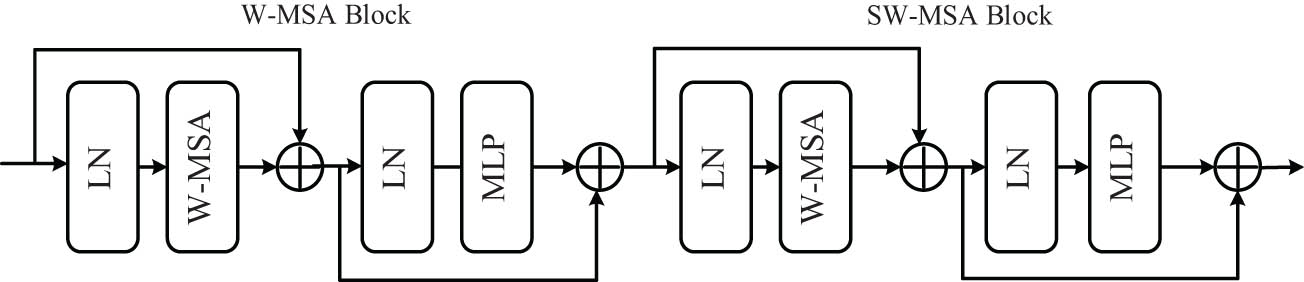
The block diagram of the Swin-transformer.
Each STM contains two consecutive multi-head self-attention modules. Each module consists of layer normalization (LN), multi-head self-attention layer (MHSA), residual connection, and multi-layer perceptron (MLP). The first module applies the W-MSA mechanism, and the second module adds shift-window operation (SW-MSA) based on W-MSA. The overall calculation equations (1)–(4) is as follows:
When calculating the MHSA mechanism, each head is calculated equation (5) as follows:
where
The window-based self-attention mechanism in the Swin-transformer reduces the computational complexity of the original self-attention mechanism. The overall framework is divided into multiple stages to obtain features of different scales by referring to the hierarchical structure of the CNN base network. However, the size of medical image data sets is small, there is no common pre-training weight, and there are fewer target categories than natural images. So, the segmentation accuracy is higher, and larger models will lead to overfitting. Therefore, differing from the original Swin Transformer, the core module of our proposed cancer localization method, the FCU, interacts with features in the way of CNN and transformer fusion. The transformer structure in FCU does not need pre-training weights, and the network structure can be flexible to adjust. The transformer structure in FCU combines with CNN to supplement local location information without location coding.
3.2 FCU for cancer location model
To enhance the awareness of network context information and retain rich detail information, this article proposes a double-branch segmentation network framework by fusing the CNN and Transformer according to the characteristics of MRI data. Its overall structure is based on the form of encoder-decoder, as shown in Figure 2.

The structure of the encoder and FCU.
In the encoder, it is mainly divided into four stages, namely Enc1 to Enc4 in Figure 2. First, the image of size
3.3 Information fusion module in cancer location model
After the encoder extracts the deep features, the dimensions and sequence features are reduced and the original input size is recovered by a decoder, which is divided into four stages, namely Dec1 to Dec4 (Figure 3). In the Dec1 stage, the CNN branch increases the resolution size of feature maps from

The structure of the proposed method.

The structure of the Information fusion module.
4 MRI cancer recognition based on parallel transformer
4.1 Parallel transformer
CNN can split the input feature map according to the channel and conduct parallel computing for each group to learn features. Transformer model calculation is complex, and continuous stacking calculation can further expand the receptive field, but it lacks information at different depths. For this purpose, this article designs the parallel Transformer architecture, which is shown in Figure 5. On the one hand, the feature maps can be evenly divided into four groups via channels, and Transformer calculation is performed after grouping, which can decrease the parameters and calculation amount. On the other hand, the last set of output features is fused and input to the next layer for processing. Feature maps of different depths are spliced together, and a variety of features can be learned at the same time by increasing the receptive field, further enhancing the fusion of global information and local information.

The block diagram of the hierarchical transformer.
The
In Transformer, different global information is joined to learn global and local features at the same time, to improve the recognition ability of cancer lesions. Transformer calculation is performed after grouping according to channels, which reduces the computational complexity. Three domain Transformers are used to form a parallel Transformer unit. By grouping the input feature maps into channels, different global features are extracted, respectively, which reduces the calculation amount and the parameters of the Transformer and maintains the light weight of the model.
4.2 Information fusion and lightweight
The feature map output in the parallel Transformer is directly spliced, which leads to the inability of information interaction between features of different groups. Therefore, the input features of parallel transformer units are uniformly mixed and washed according to channels by using information fusion, and the feature maps between different groups are transmitted and interacted with each other. The specific process of information fusion is shown in Figure 6. Information fusion is completed by channel grouping, transformation, transposition, and flattening of the input feature map. The advantages of this method are as follows: (1) no extra parameters and calculation amount are generated, (2) the output feature map containing global information and local information is reorganized and interacted with each other, and (3) fuse global and local information of lesions in interactive MRI images to improve model recognition ability.

Information fusion process.
To further achieve lightweight, this article designs an aggregation operation to compress the channels of output from the parallel Transformer to 1/2, and at the end, the unit aggregates all features. The aggregation operation transmits the global context information of the shallow layer to the deep layer to strengthen the shallow global lesion information transmission. The global and local lesion information of the deep and shallow layers is applied to lightweight while keeping the performance, reducing the parameters, and improving the performance of the model.
5 Design online hospital with our models
The cancer localization and recognition model based on magnetic resonance images proposed in this article can accurately and quickly locate the cancer area in MRI and identify the type of cancer [32,33,34], to assist telemedicine. Therefore, we can embed our model in existing network hospitals to shorten the time for doctors to make online diagnoses and improve the medical level in remote areas. As shown in Figure 7, the system consists of the patient side, network hospital platform, and doctor side. After the online consultation service starts, the system will collect the information in real time. Then, the MRI images provided by the patients are processed and recognized by the algorithm, and the recognition results are obtained. Finally, the information is transmitted to the doctor through the network to assist the doctor to get the type and location of cancer and make the correct diagnosis.

Deployment of our model for the online hospital.
The advantages of our system can be concluded into three points: it can be away from offline contact, avoid cross infection affected by the epidemic, increase the difficulty of patients to go to the hospital, especially for chronic diseases, and decrease the cost and difficulty of patients to seek medical treatment. The internet provides people with services, for example, epidemic prevention and popular science, remote consultation, chronic disease return consultation, and drug distribution, which undertakes and diverts the people’s medical and health needs and reduces the risk of offline population clustering of infection. To break through the geographical restrictions and expand the areas where the resources of medical are in need, more doctors prefer to open up the second stage on the Internet. In addition, the benefits of online health care are that patients can order medication in time and can also get in touch with a doctor without having to visit a hospital. For diseases that are not complicated or have more detailed examination results, online consultation can save the time of going to and from the hospital and queuing for registration, which has greater advantages.
In addition, for doctors, this system can help them write the patient’s medical records, track the patient’s lesion changes, and fully grasp the patient’s condition. The development of online hospitals can increase the number of cases seen by doctors and broaden their knowledge of the disease. It can also reduce unnecessary cases in face-to-face consultations and save valuable time. Because multiple medical experts can be consulted at the same time for the same case, it can also increase the opportunities for doctors to learn and communicate with each other. Finally, it can also slightly increase the income of doctors to some extent.
Soon, with the continuous advancement of the Internet and 5G, online medical consultation, online prescription, and drug delivery to home services will become the mainstream medical service.
6 Experimental and analysis
6.1 Dataset and analysis details
We use a prostate cancer MRI image data set (http://i2cvb.github.io/) to evaluate our model. In the data set, the MRI space size, and the number of slices for each patient are various. The height of the overall MRI ranges from 154 to 428 pixels, and the average height is 219.72 pixels. The width ranges from 154 to 512 pixels, the average width is 243.15 pixels. The number of slices ranges from 6 to 21, and the average number of slices is 10.
Experiments are carried out on the device with i7-12700 Cpu and Rtx 3090 Gpu. The operating system is Unbuntu, and we conduct our model with the Pytorch framework. The total number of rounds of the experiment is set to 1,000. Besides, we set the batch size to 16 and the initial learning rate to 0.1. After warm_up is used to warm up for one round, we adopt the decay strategy for the learning rate and the decay rate is 0.8. SGD is used as the optimizer of the model with a momentum of 0.9 and the weight decay term set to
To evaluate the model performance, we employ the DSC as the metric. The Dice coefficient measures how similar the segmentation labels and the predicted results are, with values ranging from 0 to 1 where 0 indicates minimum similarity and 1 indicates maximum similarity. DSC calculation equation (6) is as follows:
where TP refers to the predicted pixels that are correctly classified as the target category, FP represents the predicted pixels that are misclassified, and FN represents the predicted pixels that are misclassified as non-target categories.
6.2 Results and discussion
Experiments are conducted on the prostate cancer MRI image data set and compared with six previous advanced technologies: U-Net, Swin-UNet and DARR. The results are shown in Figure 8. Our model achieves the best segmentation performance with an accuracy of 88.65% (DSC). Compared with SwinUNet, DSC is improved by about 1.33%. As shown in Figure 9, compared with other networks introducing attention mechanisms, such as Swin-UNet and DARR. Our model has a smaller number of parameters, faster inference time, lower computational complexity, and is more lightweight. The method based on pure CNN is not sensitive enough to the boundary information and is prone to the problem of over-segmentation. Although the method based on pure Transformer is sensitive to boundary information, it is prone to the problem of insufficient segmentation due to the loss of some features. For example, the Swin-UNet prediction of cancer appears missing, while our model predicts correctly and retains good boundary information. Experimental results show that compared with Swin-UNet and other pure CNN-based frameworks, our model pays more attention to core information and can achieve better edge prediction. For the pure Transformer approach, our model ensures both sensitivity to boundary information and prevents the loss of features.

Performance comparison with other methods.

The results of parameters, cost time and GFLOPs of the methods.
In addition, for the classification results of cancer regions, ResNet, Deit, Conformer, and Vit are selected for comparative experiments with our model.
As shown in Figure 10, the experimental results show that parallel Transformer enhances the learning ability of global attention on local feature correlation, extracts multi-level feature information, improves feature interaction ability by information fusion, aggregates all global features for deep and shallow feature deep fusion, and finally improves the accuracy of the model to identify cancer.

Results of parameters and accuracy of the recognition methods.
6.3 Visualization results
To better illustrate the effectiveness of the cancer localization method in this article, we use some cancer samples from non-above data sets to perform cancer region segmentation with the proposed method.
As shown in Figure 11, the segmentation results of our model can clearly show the three partitions of the tumor tissue, and most of the internal partition boundaries are correctly covered. The overall segmentation results of the tumor are relatively like the real label. As can be seen from Example 1, the cancer tumor shown in the MRI image is approximately circular, and its real label shows that its internal stratification is relatively clear with only a few discontinuities in the core area. The renderer generated by our model can reflect these discontinuities very accurately, but the coverage of the core area (red part) is slightly different from that of GT. In addition, the method for the outermost partition is too smooth to reflect the irregularity of the cancer edge. From Example 2, we can find the same conclusion as Example 1, our method can clearly distinguish the three partitions of the cancer tissue, but the core partition is smoother than GT, and the outermost partition fails to completely cover the tissue boundary of the cancer tumor. From Example 3, we can find that the area obtained by our method is almost the same as that obtained by GT, which is the best fit for the real situation among the three cases.

Segmentation results of brain cancer.
In conclusion, our cancer segmentation model can accurately segment the three partitions of tumor tissue, but it cannot achieve complete coverage in the processing of tissue edges, which may be caused by the lack of edge information caused by the deep depth of the model. However, considering that the model itself is used to assist doctors in remote diagnosis in the online hospital platform, and the lost edge information will not affect the subsequent cancer type identification; the cancer localization model proposed in this article can be used in online hospitals.
7 Conclusion
To provide medical resources for remote areas, we propose a cancer localization and recognition model based on magnetic resonance images with 5G technology and artificial intelligence. First, we propose the FCU to fuse the local and global features and to enhance the saliency of the cancer regions. Then, we apply the detected cancer regions to design the parallel Transformer, which can integrate the features of superficial and deep layers. Finally, we light weight our methods and apply them to the online hospital. Experiments can demonstrate that our model can accurately segment cancer regions in MRI images and identify cancer types with 88.65% of DSC and over 97% of accuracy. Meanwhile, the application of our method for the online hospital can support telemedicine. In the future, we will explore more accurate cancer detection and recognition methods, to provide more excellent data for online hospitals.
-
Funding information: Authors state no funding involved.
-
Conflict of interest: Authors state no conflict of interest.
-
Data availability statement: The datasets generated during and/or analyzed during the current study are available from the corresponding author on reasonable request.
References
[1] Wanlu W, Xiaosai H. Research on the development of outpatient and emergency building of Beijing Municipal Hospital. CHA&E. 2017;18(12):92–6. (in Chinese)Search in Google Scholar
[2] Zhiguo Q, Zhexi Z, Min Z. A quantum blockchain-enabled framework for secure private electronic medical records in internet of medical things. Inf Sci. 2022;612:942–58.10.1016/j.ins.2022.09.028Search in Google Scholar
[3] Sun L, Wu J. A scalable and transferable federated learning system for classifying healthcare sensor data. IEEE J Biomed Health Inform. 2022;27:866–77.10.1109/JBHI.2022.3171402Search in Google Scholar PubMed
[4] Ruohan H. Computer aided detection of brain tumors. Chengdu: University of Electronic Science and Technology of China; 2016.Search in Google Scholar
[5] Yuchan W, Yong H. Application of telemedicine in respiratory rehabilitation management of patients with chronic obstructive pulmonary disease. Chongqing Medical Science. 2023;52(2):283–7. (in Chinese)Search in Google Scholar
[6] Huijie Y, Xinyi L, Mengyuan P, Liyue X, Chi Z, Xiaosong D, et al. Establishment of a new model for diagnosis and treatment of obstructive sleep apnea based on telemedicine: A non inferiority randomized controlled trial. CGP. 2023;26(3):380–5. (in Chinese)Search in Google Scholar
[7] Jingjie Y, Xikun M, Ning J, Wenguang S, Yangxin F. Current situation and prospect of online hospitals. CAS. 2013;30(11):227–230 + 246. (in Chinese)Search in Google Scholar
[8] Qing P. Application of MRI in the diagnosis of brain diseases. Senior Med Forum. 2015;19(11):1499–1500. (in Chinese)Search in Google Scholar
[9] Ke Z, Jie C, Gangqiang X. VBM-DARTEL method in Alzheimer Application of MRI image analysis in the diagnosis. CAS. 2014;31(3):187–90. (in Chinese)Search in Google Scholar
[10] Jiachao L. Research on Brain Structure Network Based on Bayesian Network and Its Application in Al Application of Zheimer’s disease. Beijing: Beijing Normal University; 2011. (in Chinese)Search in Google Scholar
[11] Canisius G. Computer aided diagnosis of Alzheimer’s disease based on random forests Research on break algorithm. Xiamen, Fujian: Xiamen University; 2016. (in Chinese)Search in Google Scholar
[12] Wang Y, Zhai W, Yang L, Cheng S, Cui W, Li J. Establishments and Evaluations of post-operative adhesion animal models. Adv Ther. 2023;6:2200297.10.1002/adtp.202200297Search in Google Scholar
[13] Yuan Q, Kato B, Fan K, Wang Y. Phased array guided wave propagation in curved plates. Mech Syst Signal Process. 2023;185:109821.10.1016/j.ymssp.2022.109821Search in Google Scholar
[14] Lu L, Dong J, Liu Y, Qian Y, Zhang G, Zhou W, et al. New insights into natural products that target the gut microbiota: Effects on the prevention and treatment of colorectal cancer. Front Pharmacol. 2022;13:964793.10.3389/fphar.2022.964793Search in Google Scholar PubMed PubMed Central
[15] Xu H, Van der Jeught K, Zhou Z, Zhang L, Yu T, Sun Y, et al. Atractylenolide I enhances responsiveness to immune checkpoint blockade therapy by activating tumor antigen presentation. J Clin Invest. 2021;131(10):e146832.10.1172/JCI146832Search in Google Scholar PubMed PubMed Central
[16] Jing G, Zhang H, Zhou F, Hou B, Chen M, Xie Z, et al. Acid-activatible micelleplex delivering siRNA-PD-L1 for improved cancer immunotherapy of CDK4/6 inhibition. Chinese Chem Lett. 2021;32(6):1929–36.10.1016/j.cclet.2020.12.009Search in Google Scholar
[17] Chu Y, Sun T, Jiang C. Emerging landscapes of nanosystems based on premetastatic microenvironment for cancer theranostics. Chin Chem Lett. 2022;33(9):4157–68.10.1016/j.cclet.2022.02.051Search in Google Scholar
[18] Ronneberger O, Fischer P, Brox T. U-Net: Convolutional networks for biomedical image segmentation. Cham: Springer; 2015.10.1007/978-3-319-24574-4_28Search in Google Scholar
[19] Oktay O, Schlemper J, Folgoc LL, Lee M, Heinrich M, Misawa K, et al. Attention U-Net: Learning where to look for the pancreas; 2018. arXiv preprint arXiv:1804.03999.Search in Google Scholar
[20] Jinfeng S, Hui D, Guangzhi W. Full automatic segmentation of hepatic vein and portal vein based on W-Net. Chin J Biomed Eng. 2019;38(5):513–21. (in Chinese)Search in Google Scholar
[21] Huang C, Han H, Yao Q, Zhu S, Zhou SK. 3D U2-Net: A 3D universal U-Net for multi-domain medical image segmentation. Cham: Springer; 2019.10.1007/978-3-030-32245-8_33Search in Google Scholar
[22] Chen J, Lu Y, Yu Q, Luo X, Adeli E, Wang Y, et al. Transunet: Transformers make strong encoders for medical image segmentation; 2021. arXiv:2102.04306.Search in Google Scholar
[23] Luo X, Hu M, Song T, Wang G, Zhang S. Semi-supervised medical image segmentation via cross teaching between cnn and transformer. International Conference on Medical Imaging with Deep Learning. PMLR; 2022. p. 820–33.Search in Google Scholar
[24] Cao H, Wang Y, Chen J, Jiang D, Zhang X, Tian Q, et al. Swin-unet: Unet-like pure transformer for medical image segmentation. Computer Vision–ECCV 2022 Workshops; 2023. p. 205–18.10.1007/978-3-031-25066-8_9Search in Google Scholar
[25] Heidari M, Kazerouni A, Soltany M, Azad R, Aghdam EK, Cohen-Adad J, et al. Hiformer: Hierarchical multi-scale representations using transformers for medical image segmentation. Proceedings of the IEEE/CVF Winter Conference on Applications of Computer Vision; 2023. p. 6202–12.10.1109/WACV56688.2023.00614Search in Google Scholar
[26] Ban Y, Wang Y, Liu S, Yang B, Liu M, Yin L, et al. 2D/3D multimode medical image alignment based on spatial histograms. Appl Sci-Basel. 2022;12(16):8261.10.3390/app12168261Search in Google Scholar
[27] Lu S, Yang B, Xiao Y, Liu S, Liu M, Yin L, et al. Iterative reconstruction of low-dose CT based on differential sparse. Biomed Signal Proces. 2023;79:104204.10.1016/j.bspc.2022.104204Search in Google Scholar
[28] Wang Y, Zhai W, Zhang H, Cheng S, Li J. Injectable polyzwitterionic lubricant for complete prevention of cardiac adhesion. Macromol Biosci. 2023;23:2200554.10.1002/mabi.202200554Search in Google Scholar PubMed
[29] Cheng Z, Zhang T, Wang W, Shen Q, Hong Y, Shao J, et al. D-A-D structured selenadiazolesbenzothiadiazole-based near-infrared dye for enhanced photoacoustic imaging and photothermal cancer therapy. Chinese Chem Lett. 2021;32(4):1580–5.10.1016/j.cclet.2021.02.017Search in Google Scholar
[30] Qin X, Ban Y, Wu P, Yang B, Liu S, Yin L, et al. Improved image fusion method based on sparse decomposition. Electronics Switz. 2022;11(15):2321.10.3390/electronics11152321Search in Google Scholar
[31] Zhao H, Ming T, Tang S, Ren S, Yang H, Liu M, et al. Wnt signaling in colorectal cancer: Pathogenic role and therapeutic target. Mol Cancer. 2022;21(1):144.10.1186/s12943-022-01616-7Search in Google Scholar PubMed PubMed Central
[32] Zhang K, Yang Y, Ge H, Wang J, Lei X, Chen X, et al. Neurogenesis and proliferation of neural stem/progenitor cells conferred by artesunate via FOXO3a/p27Kip1 axis in mouse stroke model. Mol Neurobiol. 2022;59:4718–29.10.1007/s12035-021-02710-5Search in Google Scholar PubMed
[33] Hui S, Liang W, Yufei L, Qingqing W, Yingying L. TMED5 promotes the progression of gastric cancer through activation of the HIF-1α/Wnt/β-catenin pathway. J Biol Reg Homeos Ag. 2022;36(3):523–33.Search in Google Scholar
[34] Liu H, Liu M, Li D, Zheng W, Yin L, Wang R. Recent advances in PulseCoupled neural networks with applications in image processing. Electronics Switz. 2022;11(20):3264.10.3390/electronics11203264Search in Google Scholar
[35] Lai X, Yang B, Ma B, Liu M, Yin Z, Yin L, et al. An Improved stereo matching algorithm based on joint similarity measure and adaptive weights. Appl Sci Basel. 2023;13(1):514.10.3390/app13010514Search in Google Scholar
[36] Sarraf S, Tofighi G. Classification of Alzheimer’s Disease using fMRI Data and Deep Learning Convolutional Neural Networks. CoRR; 2016.Search in Google Scholar
[37] Wang SH, Phillips P, Sui Y, Liu B, Yang M, Cheng H. Classification of Alzheimer’s disease based on eight-layer convolutional neural network with leaky rectified linear unit and max pooling. J Med Syst. 2018;42(5):1–11.10.1007/s10916-018-0932-7Search in Google Scholar PubMed
[38] Weiming L, Qinquan G, Min D. The method of convolutional neural network in diagnosing Alzheimer’s disease. Comput Appl. 2017;37(12):3504–8. (in Chinese)Search in Google Scholar
[39] Hongmeng L, Di Z, Xuebin C. Early diagnosis of Alzheimer’s disease based on enhancing AlexNet’s deep learning. Comput Sci. 2017;44(Z6):50–60. (in Chinese)Search in Google Scholar
[40] Poole I, Muir K, Beveridge E, Lisowska A. Thrombus detection in CT brain scans using a convolutional neural network. International Conference on Bioimagin. Vol. 1; 2017. p. 24–33.10.5220/0006114600240033Search in Google Scholar
[41] Zhang J, Xie Y, Wu Q, Xia Y. Medical image classification using synergic deep learning. Med Image Anal. 2019;54:10–9.10.1016/j.media.2019.02.010Search in Google Scholar PubMed
[42] Cheng J, Tian S, Yu L, Gao C, Kang X, Ma X, et al. ResGANet: Residual group attention network for medical image classification and segmentation. Med Image Anal. 2022;76:102313.10.1016/j.media.2021.102313Search in Google Scholar PubMed
[43] Peng Z, Tian S, Yu L, Zhang D, Wu W, Zhou S. Semi-supervised medical image classification with adaptive threshold pseudo-labeling and unreliable sample contrastive loss. Biomed Signal Process. 2023;79:104142.10.1016/j.bspc.2022.104142Search in Google Scholar
[44] Li C, Lin L, Zhang L, Xu R, Chen X, Ji J, et al. Long noncoding RNA p21 enhances autophagy to alleviate endothelial progenitor cells damage and promote endothelial repair in hypertension through SESN2/AMPK/TSC2 pathway. Pharmacol Res. 2021;173:105920.10.1016/j.phrs.2021.105920Search in Google Scholar PubMed
[45] Li H, Peng R, Wang Z. On a diffusive susceptible-infected-susceptible epidemic model with mass action mechanism and birth-death effect: Analysis, simulations, and comparison with other mechanisms. Siam J Appl Math. 2018;78(4):2129–53.10.1137/18M1167863Search in Google Scholar
[46] Ren S, He K, Girshick R, Sun J. Faster R-CNN: Towards real-time object detection with region proposal networks. IEEE T Pattern Anal. 2017;39(6):1137–49.10.1109/TPAMI.2016.2577031Search in Google Scholar PubMed
[47] Zhiguo Q, Xinzhu L, Min Z. Temporal-Spatial quantum graph convolutional neural network based on Schrödinger approach for traffic congestion prediction. IEEE Transactions on Intelligent Transportation Systems; 2022.Search in Google Scholar
[48] Yu Q, Sun L. LPClass: Lightweight personalized sensor data classification in computational social systems. IEEE Transactions on Computational Social Systems; 2022.10.1109/TCSS.2022.3156792Search in Google Scholar
[49] Liu Z, Lin Y, Cao Y, Hu H, Wei Y, Zhang Z et al. Swin transformer: Hierarchical vision transformer using shifted windows. 2021 IEEE/CVF International Conference on Computer Vision (ICCV); 2021. p. 9992–10002.10.1109/ICCV48922.2021.00986Search in Google Scholar
© 2023 the author(s), published by De Gruyter
This work is licensed under the Creative Commons Attribution 4.0 International License.
Articles in the same Issue
- Biomedical Sciences
- Systemic investigation of inetetamab in combination with small molecules to treat HER2-overexpressing breast and gastric cancers
- Immunosuppressive treatment for idiopathic membranous nephropathy: An updated network meta-analysis
- Identifying two pathogenic variants in a patient with pigmented paravenous retinochoroidal atrophy
- Effects of phytoestrogens combined with cold stress on sperm parameters and testicular proteomics in rats
- A case of pulmonary embolism with bad warfarin anticoagulant effects caused by E. coli infection
- Neutrophilia with subclinical Cushing’s disease: A case report and literature review
- Isoimperatorin alleviates lipopolysaccharide-induced periodontitis by downregulating ERK1/2 and NF-κB pathways
- Immunoregulation of synovial macrophages for the treatment of osteoarthritis
- Novel CPLANE1 c.8948dupT (p.P2984Tfs*7) variant in a child patient with Joubert syndrome
- Antiphospholipid antibodies and the risk of thrombosis in myeloproliferative neoplasms
- Immunological responses of septic rats to combination therapy with thymosin α1 and vitamin C
- High glucose and high lipid induced mitochondrial dysfunction in JEG-3 cells through oxidative stress
- Pharmacological inhibition of the ubiquitin-specific protease 8 effectively suppresses glioblastoma cell growth
- Levocarnitine regulates the growth of angiotensin II-induced myocardial fibrosis cells via TIMP-1
- Age-related changes in peripheral T-cell subpopulations in elderly individuals: An observational study
- Single-cell transcription analysis reveals the tumor origin and heterogeneity of human bilateral renal clear cell carcinoma
- Identification of iron metabolism-related genes as diagnostic signatures in sepsis by blood transcriptomic analysis
- Long noncoding RNA ACART knockdown decreases 3T3-L1 preadipocyte proliferation and differentiation
- Surgery, adjuvant immunotherapy plus chemotherapy and radiotherapy for primary malignant melanoma of the parotid gland (PGMM): A case report
- Dosimetry comparison with helical tomotherapy, volumetric modulated arc therapy, and intensity-modulated radiotherapy for grade II gliomas: A single‑institution case series
- Soy isoflavone reduces LPS-induced acute lung injury via increasing aquaporin 1 and aquaporin 5 in rats
- Refractory hypokalemia with sexual dysplasia and infertility caused by 17α-hydroxylase deficiency and triple X syndrome: A case report
- Meta-analysis of cancer risk among end stage renal disease undergoing maintenance dialysis
- 6-Phosphogluconate dehydrogenase inhibition arrests growth and induces apoptosis in gastric cancer via AMPK activation and oxidative stress
- Experimental study on the optimization of ANM33 release in foam cells
- Primary retroperitoneal angiosarcoma: A case report
- Metabolomic analysis-identified 2-hydroxybutyric acid might be a key metabolite of severe preeclampsia
- Malignant pleural effusion diagnosis and therapy
- Effect of spaceflight on the phenotype and proteome of Escherichia coli
- Comparison of immunotherapy combined with stereotactic radiotherapy and targeted therapy for patients with brain metastases: A systemic review and meta-analysis
- Activation of hypermethylated P2RY1 mitigates gastric cancer by promoting apoptosis and inhibiting proliferation
- Association between the VEGFR-2 -604T/C polymorphism (rs2071559) and type 2 diabetic retinopathy
- The role of IL-31 and IL-34 in the diagnosis and treatment of chronic periodontitis
- Triple-negative mouse breast cancer initiating cells show high expression of beta1 integrin and increased malignant features
- mNGS facilitates the accurate diagnosis and antibiotic treatment of suspicious critical CNS infection in real practice: A retrospective study
- The apatinib and pemetrexed combination has antitumor and antiangiogenic effects against NSCLC
- Radiotherapy for primary thyroid adenoid cystic carcinoma
- Design and functional preliminary investigation of recombinant antigen EgG1Y162–EgG1Y162 against Echinococcus granulosus
- Effects of losartan in patients with NAFLD: A meta-analysis of randomized controlled trial
- Bibliometric analysis of METTL3: Current perspectives, highlights, and trending topics
- Performance comparison of three scaling algorithms in NMR-based metabolomics analysis
- PI3K/AKT/mTOR pathway and its related molecules participate in PROK1 silence-induced anti-tumor effects on pancreatic cancer
- The altered expression of cytoskeletal and synaptic remodeling proteins during epilepsy
- Effects of pegylated recombinant human granulocyte colony-stimulating factor on lymphocytes and white blood cells of patients with malignant tumor
- Prostatitis as initial manifestation of Chlamydia psittaci pneumonia diagnosed by metagenome next-generation sequencing: A case report
- NUDT21 relieves sevoflurane-induced neurological damage in rats by down-regulating LIMK2
- Association of interleukin-10 rs1800896, rs1800872, and interleukin-6 rs1800795 polymorphisms with squamous cell carcinoma risk: A meta-analysis
- Exosomal HBV-DNA for diagnosis and treatment monitoring of chronic hepatitis B
- Shear stress leads to the dysfunction of endothelial cells through the Cav-1-mediated KLF2/eNOS/ERK signaling pathway under physiological conditions
- Interaction between the PI3K/AKT pathway and mitochondrial autophagy in macrophages and the leukocyte count in rats with LPS-induced pulmonary infection
- Meta-analysis of the rs231775 locus polymorphism in the CTLA-4 gene and the susceptibility to Graves’ disease in children
- Cloning, subcellular localization and expression of phosphate transporter gene HvPT6 of hulless barley
- Coptisine mitigates diabetic nephropathy via repressing the NRLP3 inflammasome
- Significant elevated CXCL14 and decreased IL-39 levels in patients with tuberculosis
- Whole-exome sequencing applications in prenatal diagnosis of fetal bowel dilatation
- Gemella morbillorum infective endocarditis: A case report and literature review
- An unusual ectopic thymoma clonal evolution analysis: A case report
- Severe cumulative skin toxicity during toripalimab combined with vemurafenib following toripalimab alone
- Detection of V. vulnificus septic shock with ARDS using mNGS
- Novel rare genetic variants of familial and sporadic pulmonary atresia identified by whole-exome sequencing
- The influence and mechanistic action of sperm DNA fragmentation index on the outcomes of assisted reproduction technology
- Novel compound heterozygous mutations in TELO2 in an infant with You-Hoover-Fong syndrome: A case report and literature review
- ctDNA as a prognostic biomarker in resectable CLM: Systematic review and meta-analysis
- Diagnosis of primary amoebic meningoencephalitis by metagenomic next-generation sequencing: A case report
- Phylogenetic analysis of promoter regions of human Dolichol kinase (DOLK) and orthologous genes using bioinformatics tools
- Collagen changes in rabbit conjunctiva after conjunctival crosslinking
- Effects of NM23 transfection of human gastric carcinoma cells in mice
- Oral nifedipine and phytosterol, intravenous nicardipine, and oral nifedipine only: Three-arm, retrospective, cohort study for management of severe preeclampsia
- Case report of hepatic retiform hemangioendothelioma: A rare tumor treated with ultrasound-guided microwave ablation
- Curcumin induces apoptosis in human hepatocellular carcinoma cells by decreasing the expression of STAT3/VEGF/HIF-1α signaling
- Rare presentation of double-clonal Waldenström macroglobulinemia with pulmonary embolism: A case report
- Giant duplication of the transverse colon in an adult: A case report and literature review
- Ectopic thyroid tissue in the breast: A case report
- SDR16C5 promotes proliferation and migration and inhibits apoptosis in pancreatic cancer
- Vaginal metastasis from breast cancer: A case report
- Screening of the best time window for MSC transplantation to treat acute myocardial infarction with SDF-1α antibody-loaded targeted ultrasonic microbubbles: An in vivo study in miniswine
- Inhibition of TAZ impairs the migration ability of melanoma cells
- Molecular complexity analysis of the diagnosis of Gitelman syndrome in China
- Effects of maternal calcium and protein intake on the development and bone metabolism of offspring mice
- Identification of winter wheat pests and diseases based on improved convolutional neural network
- Ultra-multiplex PCR technique to guide treatment of Aspergillus-infected aortic valve prostheses
- Virtual high-throughput screening: Potential inhibitors targeting aminopeptidase N (CD13) and PIKfyve for SARS-CoV-2
- Immune checkpoint inhibitors in cancer patients with COVID-19
- Utility of methylene blue mixed with autologous blood in preoperative localization of pulmonary nodules and masses
- Integrated analysis of the microbiome and transcriptome in stomach adenocarcinoma
- Berberine suppressed sarcopenia insulin resistance through SIRT1-mediated mitophagy
- DUSP2 inhibits the progression of lupus nephritis in mice by regulating the STAT3 pathway
- Lung abscess by Fusobacterium nucleatum and Streptococcus spp. co-infection by mNGS: A case series
- Genetic alterations of KRAS and TP53 in intrahepatic cholangiocarcinoma associated with poor prognosis
- Granulomatous polyangiitis involving the fourth ventricle: Report of a rare case and a literature review
- Studying infant mortality: A demographic analysis based on data mining models
- Metaplastic breast carcinoma with osseous differentiation: A report of a rare case and literature review
- Protein Z modulates the metastasis of lung adenocarcinoma cells
- Inhibition of pyroptosis and apoptosis by capsaicin protects against LPS-induced acute kidney injury through TRPV1/UCP2 axis in vitro
- TAK-242, a toll-like receptor 4 antagonist, against brain injury by alleviates autophagy and inflammation in rats
- Primary mediastinum Ewing’s sarcoma with pleural effusion: A case report and literature review
- Association of ADRB2 gene polymorphisms and intestinal microbiota in Chinese Han adolescents
- Tanshinone IIA alleviates chondrocyte apoptosis and extracellular matrix degeneration by inhibiting ferroptosis
- Study on the cytokines related to SARS-Cov-2 in testicular cells and the interaction network between cells based on scRNA-seq data
- Effect of periostin on bone metabolic and autophagy factors during tooth eruption in mice
- HP1 induces ferroptosis of renal tubular epithelial cells through NRF2 pathway in diabetic nephropathy
- Intravaginal estrogen management in postmenopausal patients with vaginal squamous intraepithelial lesions along with CO2 laser ablation: A retrospective study
- Hepatocellular carcinoma cell differentiation trajectory predicts immunotherapy, potential therapeutic drugs, and prognosis of patients
- Effects of physical exercise on biomarkers of oxidative stress in healthy subjects: A meta-analysis of randomized controlled trials
- Identification of lysosome-related genes in connection with prognosis and immune cell infiltration for drug candidates in head and neck cancer
- Development of an instrument-free and low-cost ELISA dot-blot test to detect antibodies against SARS-CoV-2
- Research progress on gas signal molecular therapy for Parkinson’s disease
- Adiponectin inhibits TGF-β1-induced skin fibroblast proliferation and phenotype transformation via the p38 MAPK signaling pathway
- The G protein-coupled receptor-related gene signatures for predicting prognosis and immunotherapy response in bladder urothelial carcinoma
- α-Fetoprotein contributes to the malignant biological properties of AFP-producing gastric cancer
- CXCL12/CXCR4/CXCR7 axis in placenta tissues of patients with placenta previa
- Association between thyroid stimulating hormone levels and papillary thyroid cancer risk: A meta-analysis
- Significance of sTREM-1 and sST2 combined diagnosis for sepsis detection and prognosis prediction
- Diagnostic value of serum neuroactive substances in the acute exacerbation of chronic obstructive pulmonary disease complicated with depression
- Research progress of AMP-activated protein kinase and cardiac aging
- TRIM29 knockdown prevented the colon cancer progression through decreasing the ubiquitination levels of KRT5
- Cross-talk between gut microbiota and liver steatosis: Complications and therapeutic target
- Metastasis from small cell lung cancer to ovary: A case report
- The early diagnosis and pathogenic mechanisms of sepsis-related acute kidney injury
- The effect of NK cell therapy on sepsis secondary to lung cancer: A case report
- Erianin alleviates collagen-induced arthritis in mice by inhibiting Th17 cell differentiation
- Loss of ACOX1 in clear cell renal cell carcinoma and its correlation with clinical features
- Signalling pathways in the osteogenic differentiation of periodontal ligament stem cells
- Crosstalk between lactic acid and immune regulation and its value in the diagnosis and treatment of liver failure
- Clinicopathological features and differential diagnosis of gastric pleomorphic giant cell carcinoma
- Traumatic brain injury and rTMS-ERPs: Case report and literature review
- Extracellular fibrin promotes non-small cell lung cancer progression through integrin β1/PTEN/AKT signaling
- Knockdown of DLK4 inhibits non-small cell lung cancer tumor growth by downregulating CKS2
- The co-expression pattern of VEGFR-2 with indicators related to proliferation, apoptosis, and differentiation of anagen hair follicles
- Inflammation-related signaling pathways in tendinopathy
- CD4+ T cell count in HIV/TB co-infection and co-occurrence with HL: Case report and literature review
- Clinical analysis of severe Chlamydia psittaci pneumonia: Case series study
- Bioinformatics analysis to identify potential biomarkers for the pulmonary artery hypertension associated with the basement membrane
- Influence of MTHFR polymorphism, alone or in combination with smoking and alcohol consumption, on cancer susceptibility
- Catharanthus roseus (L.) G. Don counteracts the ampicillin resistance in multiple antibiotic-resistant Staphylococcus aureus by downregulation of PBP2a synthesis
- Combination of a bronchogenic cyst in the thoracic spinal canal with chronic myelocytic leukemia
- Bacterial lipoprotein plays an important role in the macrophage autophagy and apoptosis induced by Salmonella typhimurium and Staphylococcus aureus
- TCL1A+ B cells predict prognosis in triple-negative breast cancer through integrative analysis of single-cell and bulk transcriptomic data
- Ezrin promotes esophageal squamous cell carcinoma progression via the Hippo signaling pathway
- Ferroptosis: A potential target of macrophages in plaque vulnerability
- Predicting pediatric Crohn's disease based on six mRNA-constructed risk signature using comprehensive bioinformatic approaches
- Applications of genetic code expansion and photosensitive UAAs in studying membrane proteins
- HK2 contributes to the proliferation, migration, and invasion of diffuse large B-cell lymphoma cells by enhancing the ERK1/2 signaling pathway
- IL-17 in osteoarthritis: A narrative review
- Circadian cycle and neuroinflammation
- Probiotic management and inflammatory factors as a novel treatment in cirrhosis: A systematic review and meta-analysis
- Hemorrhagic meningioma with pulmonary metastasis: Case report and literature review
- SPOP regulates the expression profiles and alternative splicing events in human hepatocytes
- Knockdown of SETD5 inhibited glycolysis and tumor growth in gastric cancer cells by down-regulating Akt signaling pathway
- PTX3 promotes IVIG resistance-induced endothelial injury in Kawasaki disease by regulating the NF-κB pathway
- Pancreatic ectopic thyroid tissue: A case report and analysis of literature
- The prognostic impact of body mass index on female breast cancer patients in underdeveloped regions of northern China differs by menopause status and tumor molecular subtype
- Report on a case of liver-originating malignant melanoma of unknown primary
- Case report: Herbal treatment of neutropenic enterocolitis after chemotherapy for breast cancer
- The fibroblast growth factor–Klotho axis at molecular level
- Characterization of amiodarone action on currents in hERG-T618 gain-of-function mutations
- A case report of diagnosis and dynamic monitoring of Listeria monocytogenes meningitis with NGS
- Effect of autologous platelet-rich plasma on new bone formation and viability of a Marburg bone graft
- Small breast epithelial mucin as a useful prognostic marker for breast cancer patients
- Continuous non-adherent culture promotes transdifferentiation of human adipose-derived stem cells into retinal lineage
- Nrf3 alleviates oxidative stress and promotes the survival of colon cancer cells by activating AKT/BCL-2 signal pathway
- Favorable response to surufatinib in a patient with necrolytic migratory erythema: A case report
- Case report of atypical undernutrition of hypoproteinemia type
- Down-regulation of COL1A1 inhibits tumor-associated fibroblast activation and mediates matrix remodeling in the tumor microenvironment of breast cancer
- Sarcoma protein kinase inhibition alleviates liver fibrosis by promoting hepatic stellate cells ferroptosis
- Research progress of serum eosinophil in chronic obstructive pulmonary disease and asthma
- Clinicopathological characteristics of co-existing or mixed colorectal cancer and neuroendocrine tumor: Report of five cases
- Role of menopausal hormone therapy in the prevention of postmenopausal osteoporosis
- Precisional detection of lymph node metastasis using tFCM in colorectal cancer
- Advances in diagnosis and treatment of perimenopausal syndrome
- A study of forensic genetics: ITO index distribution and kinship judgment between two individuals
- Acute lupus pneumonitis resembling miliary tuberculosis: A case-based review
- Plasma levels of CD36 and glutathione as biomarkers for ruptured intracranial aneurysm
- Fractalkine modulates pulmonary angiogenesis and tube formation by modulating CX3CR1 and growth factors in PVECs
- Novel risk prediction models for deep vein thrombosis after thoracotomy and thoracoscopic lung cancer resections, involving coagulation and immune function
- Exploring the diagnostic markers of essential tremor: A study based on machine learning algorithms
- Evaluation of effects of small-incision approach treatment on proximal tibia fracture by deep learning algorithm-based magnetic resonance imaging
- An online diagnosis method for cancer lesions based on intelligent imaging analysis
- Medical imaging in rheumatoid arthritis: A review on deep learning approach
- Predictive analytics in smart healthcare for child mortality prediction using a machine learning approach
- Utility of neutrophil–lymphocyte ratio and platelet–lymphocyte ratio in predicting acute-on-chronic liver failure survival
- A biomedical decision support system for meta-analysis of bilateral upper-limb training in stroke patients with hemiplegia
- TNF-α and IL-8 levels are positively correlated with hypobaric hypoxic pulmonary hypertension and pulmonary vascular remodeling in rats
- Stochastic gradient descent optimisation for convolutional neural network for medical image segmentation
- Comparison of the prognostic value of four different critical illness scores in patients with sepsis-induced coagulopathy
- Application and teaching of computer molecular simulation embedded technology and artificial intelligence in drug research and development
- Hepatobiliary surgery based on intelligent image segmentation technology
- Value of brain injury-related indicators based on neural network in the diagnosis of neonatal hypoxic-ischemic encephalopathy
- Analysis of early diagnosis methods for asymmetric dementia in brain MR images based on genetic medical technology
- Early diagnosis for the onset of peri-implantitis based on artificial neural network
- Clinical significance of the detection of serum IgG4 and IgG4/IgG ratio in patients with thyroid-associated ophthalmopathy
- Forecast of pain degree of lumbar disc herniation based on back propagation neural network
- SPA-UNet: A liver tumor segmentation network based on fused multi-scale features
- Systematic evaluation of clinical efficacy of CYP1B1 gene polymorphism in EGFR mutant non-small cell lung cancer observed by medical image
- Rehabilitation effect of intelligent rehabilitation training system on hemiplegic limb spasms after stroke
- A novel approach for minimising anti-aliasing effects in EEG data acquisition
- ErbB4 promotes M2 activation of macrophages in idiopathic pulmonary fibrosis
- Clinical role of CYP1B1 gene polymorphism in prediction of postoperative chemotherapy efficacy in NSCLC based on individualized health model
- Lung nodule segmentation via semi-residual multi-resolution neural networks
- Evaluation of brain nerve function in ICU patients with Delirium by deep learning algorithm-based resting state MRI
- A data mining technique for detecting malignant mesothelioma cancer using multiple regression analysis
- Markov model combined with MR diffusion tensor imaging for predicting the onset of Alzheimer’s disease
- Effectiveness of the treatment of depression associated with cancer and neuroimaging changes in depression-related brain regions in patients treated with the mediator-deuterium acupuncture method
- Molecular mechanism of colorectal cancer and screening of molecular markers based on bioinformatics analysis
- Monitoring and evaluation of anesthesia depth status data based on neuroscience
- Exploring the conformational dynamics and thermodynamics of EGFR S768I and G719X + S768I mutations in non-small cell lung cancer: An in silico approaches
- Optimised feature selection-driven convolutional neural network using gray level co-occurrence matrix for detection of cervical cancer
- Incidence of different pressure patterns of spinal cerebellar ataxia and analysis of imaging and genetic diagnosis
- Pathogenic bacteria and treatment resistance in older cardiovascular disease patients with lung infection and risk prediction model
- Adoption value of support vector machine algorithm-based computed tomography imaging in the diagnosis of secondary pulmonary fungal infections in patients with malignant hematological disorders
- From slides to insights: Harnessing deep learning for prognostic survival prediction in human colorectal cancer histology
- Ecology and Environmental Science
- Monitoring of hourly carbon dioxide concentration under different land use types in arid ecosystem
- Comparing the differences of prokaryotic microbial community between pit walls and bottom from Chinese liquor revealed by 16S rRNA gene sequencing
- Effects of cadmium stress on fruits germination and growth of two herbage species
- Bamboo charcoal affects soil properties and bacterial community in tea plantations
- Optimization of biogas potential using kinetic models, response surface methodology, and instrumental evidence for biodegradation of tannery fleshings during anaerobic digestion
- Understory vegetation diversity patterns of Platycladus orientalis and Pinus elliottii communities in Central and Southern China
- Studies on macrofungi diversity and discovery of new species of Abortiporus from Baotianman World Biosphere Reserve
- Food Science
- Effect of berrycactus fruit (Myrtillocactus geometrizans) on glutamate, glutamine, and GABA levels in the frontal cortex of rats fed with a high-fat diet
- Guesstimate of thymoquinone diversity in Nigella sativa L. genotypes and elite varieties collected from Indian states using HPTLC technique
- Analysis of bacterial community structure of Fuzhuan tea with different processing techniques
- Untargeted metabolomics reveals sour jujube kernel benefiting the nutritional value and flavor of Morchella esculenta
- Mycobiota in Slovak wine grapes: A case study from the small Carpathians wine region
- Elemental analysis of Fadogia ancylantha leaves used as a nutraceutical in Mashonaland West Province, Zimbabwe
- Microbiological transglutaminase: Biotechnological application in the food industry
- Influence of solvent-free extraction of fish oil from catfish (Clarias magur) heads using a Taguchi orthogonal array design: A qualitative and quantitative approach
- Chromatographic analysis of the chemical composition and anticancer activities of Curcuma longa extract cultivated in Palestine
- The potential for the use of leghemoglobin and plant ferritin as sources of iron
- Investigating the association between dietary patterns and glycemic control among children and adolescents with T1DM
- Bioengineering and Biotechnology
- Biocompatibility and osteointegration capability of β-TCP manufactured by stereolithography 3D printing: In vitro study
- Clinical characteristics and the prognosis of diabetic foot in Tibet: A single center, retrospective study
- Agriculture
- Biofertilizer and NPSB fertilizer application effects on nodulation and productivity of common bean (Phaseolus vulgaris L.) at Sodo Zuria, Southern Ethiopia
- On correlation between canopy vegetation and growth indexes of maize varieties with different nitrogen efficiencies
- Exopolysaccharides from Pseudomonas tolaasii inhibit the growth of Pleurotus ostreatus mycelia
- A transcriptomic evaluation of the mechanism of programmed cell death of the replaceable bud in Chinese chestnut
- Melatonin enhances salt tolerance in sorghum by modulating photosynthetic performance, osmoregulation, antioxidant defense, and ion homeostasis
- Effects of plant density on alfalfa (Medicago sativa L.) seed yield in western Heilongjiang areas
- Identification of rice leaf diseases and deficiency disorders using a novel DeepBatch technique
- Artificial intelligence and internet of things oriented sustainable precision farming: Towards modern agriculture
- Animal Sciences
- Effect of ketogenic diet on exercise tolerance and transcriptome of gastrocnemius in mice
- Combined analysis of mRNA–miRNA from testis tissue in Tibetan sheep with different FecB genotypes
- Isolation, identification, and drug resistance of a partially isolated bacterium from the gill of Siniperca chuatsi
- Tracking behavioral changes of confined sows from the first mating to the third parity
- The sequencing of the key genes and end products in the TLR4 signaling pathway from the kidney of Rana dybowskii exposed to Aeromonas hydrophila
- Development of a new candidate vaccine against piglet diarrhea caused by Escherichia coli
- Plant Sciences
- Crown and diameter structure of pure Pinus massoniana Lamb. forest in Hunan province, China
- Genetic evaluation and germplasm identification analysis on ITS2, trnL-F, and psbA-trnH of alfalfa varieties germplasm resources
- Tissue culture and rapid propagation technology for Gentiana rhodantha
- Effects of cadmium on the synthesis of active ingredients in Salvia miltiorrhiza
- Cloning and expression analysis of VrNAC13 gene in mung bean
- Chlorate-induced molecular floral transition revealed by transcriptomes
- Effects of warming and drought on growth and development of soybean in Hailun region
- Effects of different light conditions on transient expression and biomass in Nicotiana benthamiana leaves
- Comparative analysis of the rhizosphere microbiome and medicinally active ingredients of Atractylodes lancea from different geographical origins
- Distinguish Dianthus species or varieties based on chloroplast genomes
- Comparative transcriptomes reveal molecular mechanisms of apple blossoms of different tolerance genotypes to chilling injury
- Study on fresh processing key technology and quality influence of Cut Ophiopogonis Radix based on multi-index evaluation
- An advanced approach for fig leaf disease detection and classification: Leveraging image processing and enhanced support vector machine methodology
- Erratum
- Erratum to “Protein Z modulates the metastasis of lung adenocarcinoma cells”
- Erratum to “BRCA1 subcellular localization regulated by PI3K signaling pathway in triple-negative breast cancer MDA-MB-231 cells and hormone-sensitive T47D cells”
- Retraction
- Retraction to “Protocatechuic acid attenuates cerebral aneurysm formation and progression by inhibiting TNF-alpha/Nrf-2/NF-kB-mediated inflammatory mechanisms in experimental rats”
Articles in the same Issue
- Biomedical Sciences
- Systemic investigation of inetetamab in combination with small molecules to treat HER2-overexpressing breast and gastric cancers
- Immunosuppressive treatment for idiopathic membranous nephropathy: An updated network meta-analysis
- Identifying two pathogenic variants in a patient with pigmented paravenous retinochoroidal atrophy
- Effects of phytoestrogens combined with cold stress on sperm parameters and testicular proteomics in rats
- A case of pulmonary embolism with bad warfarin anticoagulant effects caused by E. coli infection
- Neutrophilia with subclinical Cushing’s disease: A case report and literature review
- Isoimperatorin alleviates lipopolysaccharide-induced periodontitis by downregulating ERK1/2 and NF-κB pathways
- Immunoregulation of synovial macrophages for the treatment of osteoarthritis
- Novel CPLANE1 c.8948dupT (p.P2984Tfs*7) variant in a child patient with Joubert syndrome
- Antiphospholipid antibodies and the risk of thrombosis in myeloproliferative neoplasms
- Immunological responses of septic rats to combination therapy with thymosin α1 and vitamin C
- High glucose and high lipid induced mitochondrial dysfunction in JEG-3 cells through oxidative stress
- Pharmacological inhibition of the ubiquitin-specific protease 8 effectively suppresses glioblastoma cell growth
- Levocarnitine regulates the growth of angiotensin II-induced myocardial fibrosis cells via TIMP-1
- Age-related changes in peripheral T-cell subpopulations in elderly individuals: An observational study
- Single-cell transcription analysis reveals the tumor origin and heterogeneity of human bilateral renal clear cell carcinoma
- Identification of iron metabolism-related genes as diagnostic signatures in sepsis by blood transcriptomic analysis
- Long noncoding RNA ACART knockdown decreases 3T3-L1 preadipocyte proliferation and differentiation
- Surgery, adjuvant immunotherapy plus chemotherapy and radiotherapy for primary malignant melanoma of the parotid gland (PGMM): A case report
- Dosimetry comparison with helical tomotherapy, volumetric modulated arc therapy, and intensity-modulated radiotherapy for grade II gliomas: A single‑institution case series
- Soy isoflavone reduces LPS-induced acute lung injury via increasing aquaporin 1 and aquaporin 5 in rats
- Refractory hypokalemia with sexual dysplasia and infertility caused by 17α-hydroxylase deficiency and triple X syndrome: A case report
- Meta-analysis of cancer risk among end stage renal disease undergoing maintenance dialysis
- 6-Phosphogluconate dehydrogenase inhibition arrests growth and induces apoptosis in gastric cancer via AMPK activation and oxidative stress
- Experimental study on the optimization of ANM33 release in foam cells
- Primary retroperitoneal angiosarcoma: A case report
- Metabolomic analysis-identified 2-hydroxybutyric acid might be a key metabolite of severe preeclampsia
- Malignant pleural effusion diagnosis and therapy
- Effect of spaceflight on the phenotype and proteome of Escherichia coli
- Comparison of immunotherapy combined with stereotactic radiotherapy and targeted therapy for patients with brain metastases: A systemic review and meta-analysis
- Activation of hypermethylated P2RY1 mitigates gastric cancer by promoting apoptosis and inhibiting proliferation
- Association between the VEGFR-2 -604T/C polymorphism (rs2071559) and type 2 diabetic retinopathy
- The role of IL-31 and IL-34 in the diagnosis and treatment of chronic periodontitis
- Triple-negative mouse breast cancer initiating cells show high expression of beta1 integrin and increased malignant features
- mNGS facilitates the accurate diagnosis and antibiotic treatment of suspicious critical CNS infection in real practice: A retrospective study
- The apatinib and pemetrexed combination has antitumor and antiangiogenic effects against NSCLC
- Radiotherapy for primary thyroid adenoid cystic carcinoma
- Design and functional preliminary investigation of recombinant antigen EgG1Y162–EgG1Y162 against Echinococcus granulosus
- Effects of losartan in patients with NAFLD: A meta-analysis of randomized controlled trial
- Bibliometric analysis of METTL3: Current perspectives, highlights, and trending topics
- Performance comparison of three scaling algorithms in NMR-based metabolomics analysis
- PI3K/AKT/mTOR pathway and its related molecules participate in PROK1 silence-induced anti-tumor effects on pancreatic cancer
- The altered expression of cytoskeletal and synaptic remodeling proteins during epilepsy
- Effects of pegylated recombinant human granulocyte colony-stimulating factor on lymphocytes and white blood cells of patients with malignant tumor
- Prostatitis as initial manifestation of Chlamydia psittaci pneumonia diagnosed by metagenome next-generation sequencing: A case report
- NUDT21 relieves sevoflurane-induced neurological damage in rats by down-regulating LIMK2
- Association of interleukin-10 rs1800896, rs1800872, and interleukin-6 rs1800795 polymorphisms with squamous cell carcinoma risk: A meta-analysis
- Exosomal HBV-DNA for diagnosis and treatment monitoring of chronic hepatitis B
- Shear stress leads to the dysfunction of endothelial cells through the Cav-1-mediated KLF2/eNOS/ERK signaling pathway under physiological conditions
- Interaction between the PI3K/AKT pathway and mitochondrial autophagy in macrophages and the leukocyte count in rats with LPS-induced pulmonary infection
- Meta-analysis of the rs231775 locus polymorphism in the CTLA-4 gene and the susceptibility to Graves’ disease in children
- Cloning, subcellular localization and expression of phosphate transporter gene HvPT6 of hulless barley
- Coptisine mitigates diabetic nephropathy via repressing the NRLP3 inflammasome
- Significant elevated CXCL14 and decreased IL-39 levels in patients with tuberculosis
- Whole-exome sequencing applications in prenatal diagnosis of fetal bowel dilatation
- Gemella morbillorum infective endocarditis: A case report and literature review
- An unusual ectopic thymoma clonal evolution analysis: A case report
- Severe cumulative skin toxicity during toripalimab combined with vemurafenib following toripalimab alone
- Detection of V. vulnificus septic shock with ARDS using mNGS
- Novel rare genetic variants of familial and sporadic pulmonary atresia identified by whole-exome sequencing
- The influence and mechanistic action of sperm DNA fragmentation index on the outcomes of assisted reproduction technology
- Novel compound heterozygous mutations in TELO2 in an infant with You-Hoover-Fong syndrome: A case report and literature review
- ctDNA as a prognostic biomarker in resectable CLM: Systematic review and meta-analysis
- Diagnosis of primary amoebic meningoencephalitis by metagenomic next-generation sequencing: A case report
- Phylogenetic analysis of promoter regions of human Dolichol kinase (DOLK) and orthologous genes using bioinformatics tools
- Collagen changes in rabbit conjunctiva after conjunctival crosslinking
- Effects of NM23 transfection of human gastric carcinoma cells in mice
- Oral nifedipine and phytosterol, intravenous nicardipine, and oral nifedipine only: Three-arm, retrospective, cohort study for management of severe preeclampsia
- Case report of hepatic retiform hemangioendothelioma: A rare tumor treated with ultrasound-guided microwave ablation
- Curcumin induces apoptosis in human hepatocellular carcinoma cells by decreasing the expression of STAT3/VEGF/HIF-1α signaling
- Rare presentation of double-clonal Waldenström macroglobulinemia with pulmonary embolism: A case report
- Giant duplication of the transverse colon in an adult: A case report and literature review
- Ectopic thyroid tissue in the breast: A case report
- SDR16C5 promotes proliferation and migration and inhibits apoptosis in pancreatic cancer
- Vaginal metastasis from breast cancer: A case report
- Screening of the best time window for MSC transplantation to treat acute myocardial infarction with SDF-1α antibody-loaded targeted ultrasonic microbubbles: An in vivo study in miniswine
- Inhibition of TAZ impairs the migration ability of melanoma cells
- Molecular complexity analysis of the diagnosis of Gitelman syndrome in China
- Effects of maternal calcium and protein intake on the development and bone metabolism of offspring mice
- Identification of winter wheat pests and diseases based on improved convolutional neural network
- Ultra-multiplex PCR technique to guide treatment of Aspergillus-infected aortic valve prostheses
- Virtual high-throughput screening: Potential inhibitors targeting aminopeptidase N (CD13) and PIKfyve for SARS-CoV-2
- Immune checkpoint inhibitors in cancer patients with COVID-19
- Utility of methylene blue mixed with autologous blood in preoperative localization of pulmonary nodules and masses
- Integrated analysis of the microbiome and transcriptome in stomach adenocarcinoma
- Berberine suppressed sarcopenia insulin resistance through SIRT1-mediated mitophagy
- DUSP2 inhibits the progression of lupus nephritis in mice by regulating the STAT3 pathway
- Lung abscess by Fusobacterium nucleatum and Streptococcus spp. co-infection by mNGS: A case series
- Genetic alterations of KRAS and TP53 in intrahepatic cholangiocarcinoma associated with poor prognosis
- Granulomatous polyangiitis involving the fourth ventricle: Report of a rare case and a literature review
- Studying infant mortality: A demographic analysis based on data mining models
- Metaplastic breast carcinoma with osseous differentiation: A report of a rare case and literature review
- Protein Z modulates the metastasis of lung adenocarcinoma cells
- Inhibition of pyroptosis and apoptosis by capsaicin protects against LPS-induced acute kidney injury through TRPV1/UCP2 axis in vitro
- TAK-242, a toll-like receptor 4 antagonist, against brain injury by alleviates autophagy and inflammation in rats
- Primary mediastinum Ewing’s sarcoma with pleural effusion: A case report and literature review
- Association of ADRB2 gene polymorphisms and intestinal microbiota in Chinese Han adolescents
- Tanshinone IIA alleviates chondrocyte apoptosis and extracellular matrix degeneration by inhibiting ferroptosis
- Study on the cytokines related to SARS-Cov-2 in testicular cells and the interaction network between cells based on scRNA-seq data
- Effect of periostin on bone metabolic and autophagy factors during tooth eruption in mice
- HP1 induces ferroptosis of renal tubular epithelial cells through NRF2 pathway in diabetic nephropathy
- Intravaginal estrogen management in postmenopausal patients with vaginal squamous intraepithelial lesions along with CO2 laser ablation: A retrospective study
- Hepatocellular carcinoma cell differentiation trajectory predicts immunotherapy, potential therapeutic drugs, and prognosis of patients
- Effects of physical exercise on biomarkers of oxidative stress in healthy subjects: A meta-analysis of randomized controlled trials
- Identification of lysosome-related genes in connection with prognosis and immune cell infiltration for drug candidates in head and neck cancer
- Development of an instrument-free and low-cost ELISA dot-blot test to detect antibodies against SARS-CoV-2
- Research progress on gas signal molecular therapy for Parkinson’s disease
- Adiponectin inhibits TGF-β1-induced skin fibroblast proliferation and phenotype transformation via the p38 MAPK signaling pathway
- The G protein-coupled receptor-related gene signatures for predicting prognosis and immunotherapy response in bladder urothelial carcinoma
- α-Fetoprotein contributes to the malignant biological properties of AFP-producing gastric cancer
- CXCL12/CXCR4/CXCR7 axis in placenta tissues of patients with placenta previa
- Association between thyroid stimulating hormone levels and papillary thyroid cancer risk: A meta-analysis
- Significance of sTREM-1 and sST2 combined diagnosis for sepsis detection and prognosis prediction
- Diagnostic value of serum neuroactive substances in the acute exacerbation of chronic obstructive pulmonary disease complicated with depression
- Research progress of AMP-activated protein kinase and cardiac aging
- TRIM29 knockdown prevented the colon cancer progression through decreasing the ubiquitination levels of KRT5
- Cross-talk between gut microbiota and liver steatosis: Complications and therapeutic target
- Metastasis from small cell lung cancer to ovary: A case report
- The early diagnosis and pathogenic mechanisms of sepsis-related acute kidney injury
- The effect of NK cell therapy on sepsis secondary to lung cancer: A case report
- Erianin alleviates collagen-induced arthritis in mice by inhibiting Th17 cell differentiation
- Loss of ACOX1 in clear cell renal cell carcinoma and its correlation with clinical features
- Signalling pathways in the osteogenic differentiation of periodontal ligament stem cells
- Crosstalk between lactic acid and immune regulation and its value in the diagnosis and treatment of liver failure
- Clinicopathological features and differential diagnosis of gastric pleomorphic giant cell carcinoma
- Traumatic brain injury and rTMS-ERPs: Case report and literature review
- Extracellular fibrin promotes non-small cell lung cancer progression through integrin β1/PTEN/AKT signaling
- Knockdown of DLK4 inhibits non-small cell lung cancer tumor growth by downregulating CKS2
- The co-expression pattern of VEGFR-2 with indicators related to proliferation, apoptosis, and differentiation of anagen hair follicles
- Inflammation-related signaling pathways in tendinopathy
- CD4+ T cell count in HIV/TB co-infection and co-occurrence with HL: Case report and literature review
- Clinical analysis of severe Chlamydia psittaci pneumonia: Case series study
- Bioinformatics analysis to identify potential biomarkers for the pulmonary artery hypertension associated with the basement membrane
- Influence of MTHFR polymorphism, alone or in combination with smoking and alcohol consumption, on cancer susceptibility
- Catharanthus roseus (L.) G. Don counteracts the ampicillin resistance in multiple antibiotic-resistant Staphylococcus aureus by downregulation of PBP2a synthesis
- Combination of a bronchogenic cyst in the thoracic spinal canal with chronic myelocytic leukemia
- Bacterial lipoprotein plays an important role in the macrophage autophagy and apoptosis induced by Salmonella typhimurium and Staphylococcus aureus
- TCL1A+ B cells predict prognosis in triple-negative breast cancer through integrative analysis of single-cell and bulk transcriptomic data
- Ezrin promotes esophageal squamous cell carcinoma progression via the Hippo signaling pathway
- Ferroptosis: A potential target of macrophages in plaque vulnerability
- Predicting pediatric Crohn's disease based on six mRNA-constructed risk signature using comprehensive bioinformatic approaches
- Applications of genetic code expansion and photosensitive UAAs in studying membrane proteins
- HK2 contributes to the proliferation, migration, and invasion of diffuse large B-cell lymphoma cells by enhancing the ERK1/2 signaling pathway
- IL-17 in osteoarthritis: A narrative review
- Circadian cycle and neuroinflammation
- Probiotic management and inflammatory factors as a novel treatment in cirrhosis: A systematic review and meta-analysis
- Hemorrhagic meningioma with pulmonary metastasis: Case report and literature review
- SPOP regulates the expression profiles and alternative splicing events in human hepatocytes
- Knockdown of SETD5 inhibited glycolysis and tumor growth in gastric cancer cells by down-regulating Akt signaling pathway
- PTX3 promotes IVIG resistance-induced endothelial injury in Kawasaki disease by regulating the NF-κB pathway
- Pancreatic ectopic thyroid tissue: A case report and analysis of literature
- The prognostic impact of body mass index on female breast cancer patients in underdeveloped regions of northern China differs by menopause status and tumor molecular subtype
- Report on a case of liver-originating malignant melanoma of unknown primary
- Case report: Herbal treatment of neutropenic enterocolitis after chemotherapy for breast cancer
- The fibroblast growth factor–Klotho axis at molecular level
- Characterization of amiodarone action on currents in hERG-T618 gain-of-function mutations
- A case report of diagnosis and dynamic monitoring of Listeria monocytogenes meningitis with NGS
- Effect of autologous platelet-rich plasma on new bone formation and viability of a Marburg bone graft
- Small breast epithelial mucin as a useful prognostic marker for breast cancer patients
- Continuous non-adherent culture promotes transdifferentiation of human adipose-derived stem cells into retinal lineage
- Nrf3 alleviates oxidative stress and promotes the survival of colon cancer cells by activating AKT/BCL-2 signal pathway
- Favorable response to surufatinib in a patient with necrolytic migratory erythema: A case report
- Case report of atypical undernutrition of hypoproteinemia type
- Down-regulation of COL1A1 inhibits tumor-associated fibroblast activation and mediates matrix remodeling in the tumor microenvironment of breast cancer
- Sarcoma protein kinase inhibition alleviates liver fibrosis by promoting hepatic stellate cells ferroptosis
- Research progress of serum eosinophil in chronic obstructive pulmonary disease and asthma
- Clinicopathological characteristics of co-existing or mixed colorectal cancer and neuroendocrine tumor: Report of five cases
- Role of menopausal hormone therapy in the prevention of postmenopausal osteoporosis
- Precisional detection of lymph node metastasis using tFCM in colorectal cancer
- Advances in diagnosis and treatment of perimenopausal syndrome
- A study of forensic genetics: ITO index distribution and kinship judgment between two individuals
- Acute lupus pneumonitis resembling miliary tuberculosis: A case-based review
- Plasma levels of CD36 and glutathione as biomarkers for ruptured intracranial aneurysm
- Fractalkine modulates pulmonary angiogenesis and tube formation by modulating CX3CR1 and growth factors in PVECs
- Novel risk prediction models for deep vein thrombosis after thoracotomy and thoracoscopic lung cancer resections, involving coagulation and immune function
- Exploring the diagnostic markers of essential tremor: A study based on machine learning algorithms
- Evaluation of effects of small-incision approach treatment on proximal tibia fracture by deep learning algorithm-based magnetic resonance imaging
- An online diagnosis method for cancer lesions based on intelligent imaging analysis
- Medical imaging in rheumatoid arthritis: A review on deep learning approach
- Predictive analytics in smart healthcare for child mortality prediction using a machine learning approach
- Utility of neutrophil–lymphocyte ratio and platelet–lymphocyte ratio in predicting acute-on-chronic liver failure survival
- A biomedical decision support system for meta-analysis of bilateral upper-limb training in stroke patients with hemiplegia
- TNF-α and IL-8 levels are positively correlated with hypobaric hypoxic pulmonary hypertension and pulmonary vascular remodeling in rats
- Stochastic gradient descent optimisation for convolutional neural network for medical image segmentation
- Comparison of the prognostic value of four different critical illness scores in patients with sepsis-induced coagulopathy
- Application and teaching of computer molecular simulation embedded technology and artificial intelligence in drug research and development
- Hepatobiliary surgery based on intelligent image segmentation technology
- Value of brain injury-related indicators based on neural network in the diagnosis of neonatal hypoxic-ischemic encephalopathy
- Analysis of early diagnosis methods for asymmetric dementia in brain MR images based on genetic medical technology
- Early diagnosis for the onset of peri-implantitis based on artificial neural network
- Clinical significance of the detection of serum IgG4 and IgG4/IgG ratio in patients with thyroid-associated ophthalmopathy
- Forecast of pain degree of lumbar disc herniation based on back propagation neural network
- SPA-UNet: A liver tumor segmentation network based on fused multi-scale features
- Systematic evaluation of clinical efficacy of CYP1B1 gene polymorphism in EGFR mutant non-small cell lung cancer observed by medical image
- Rehabilitation effect of intelligent rehabilitation training system on hemiplegic limb spasms after stroke
- A novel approach for minimising anti-aliasing effects in EEG data acquisition
- ErbB4 promotes M2 activation of macrophages in idiopathic pulmonary fibrosis
- Clinical role of CYP1B1 gene polymorphism in prediction of postoperative chemotherapy efficacy in NSCLC based on individualized health model
- Lung nodule segmentation via semi-residual multi-resolution neural networks
- Evaluation of brain nerve function in ICU patients with Delirium by deep learning algorithm-based resting state MRI
- A data mining technique for detecting malignant mesothelioma cancer using multiple regression analysis
- Markov model combined with MR diffusion tensor imaging for predicting the onset of Alzheimer’s disease
- Effectiveness of the treatment of depression associated with cancer and neuroimaging changes in depression-related brain regions in patients treated with the mediator-deuterium acupuncture method
- Molecular mechanism of colorectal cancer and screening of molecular markers based on bioinformatics analysis
- Monitoring and evaluation of anesthesia depth status data based on neuroscience
- Exploring the conformational dynamics and thermodynamics of EGFR S768I and G719X + S768I mutations in non-small cell lung cancer: An in silico approaches
- Optimised feature selection-driven convolutional neural network using gray level co-occurrence matrix for detection of cervical cancer
- Incidence of different pressure patterns of spinal cerebellar ataxia and analysis of imaging and genetic diagnosis
- Pathogenic bacteria and treatment resistance in older cardiovascular disease patients with lung infection and risk prediction model
- Adoption value of support vector machine algorithm-based computed tomography imaging in the diagnosis of secondary pulmonary fungal infections in patients with malignant hematological disorders
- From slides to insights: Harnessing deep learning for prognostic survival prediction in human colorectal cancer histology
- Ecology and Environmental Science
- Monitoring of hourly carbon dioxide concentration under different land use types in arid ecosystem
- Comparing the differences of prokaryotic microbial community between pit walls and bottom from Chinese liquor revealed by 16S rRNA gene sequencing
- Effects of cadmium stress on fruits germination and growth of two herbage species
- Bamboo charcoal affects soil properties and bacterial community in tea plantations
- Optimization of biogas potential using kinetic models, response surface methodology, and instrumental evidence for biodegradation of tannery fleshings during anaerobic digestion
- Understory vegetation diversity patterns of Platycladus orientalis and Pinus elliottii communities in Central and Southern China
- Studies on macrofungi diversity and discovery of new species of Abortiporus from Baotianman World Biosphere Reserve
- Food Science
- Effect of berrycactus fruit (Myrtillocactus geometrizans) on glutamate, glutamine, and GABA levels in the frontal cortex of rats fed with a high-fat diet
- Guesstimate of thymoquinone diversity in Nigella sativa L. genotypes and elite varieties collected from Indian states using HPTLC technique
- Analysis of bacterial community structure of Fuzhuan tea with different processing techniques
- Untargeted metabolomics reveals sour jujube kernel benefiting the nutritional value and flavor of Morchella esculenta
- Mycobiota in Slovak wine grapes: A case study from the small Carpathians wine region
- Elemental analysis of Fadogia ancylantha leaves used as a nutraceutical in Mashonaland West Province, Zimbabwe
- Microbiological transglutaminase: Biotechnological application in the food industry
- Influence of solvent-free extraction of fish oil from catfish (Clarias magur) heads using a Taguchi orthogonal array design: A qualitative and quantitative approach
- Chromatographic analysis of the chemical composition and anticancer activities of Curcuma longa extract cultivated in Palestine
- The potential for the use of leghemoglobin and plant ferritin as sources of iron
- Investigating the association between dietary patterns and glycemic control among children and adolescents with T1DM
- Bioengineering and Biotechnology
- Biocompatibility and osteointegration capability of β-TCP manufactured by stereolithography 3D printing: In vitro study
- Clinical characteristics and the prognosis of diabetic foot in Tibet: A single center, retrospective study
- Agriculture
- Biofertilizer and NPSB fertilizer application effects on nodulation and productivity of common bean (Phaseolus vulgaris L.) at Sodo Zuria, Southern Ethiopia
- On correlation between canopy vegetation and growth indexes of maize varieties with different nitrogen efficiencies
- Exopolysaccharides from Pseudomonas tolaasii inhibit the growth of Pleurotus ostreatus mycelia
- A transcriptomic evaluation of the mechanism of programmed cell death of the replaceable bud in Chinese chestnut
- Melatonin enhances salt tolerance in sorghum by modulating photosynthetic performance, osmoregulation, antioxidant defense, and ion homeostasis
- Effects of plant density on alfalfa (Medicago sativa L.) seed yield in western Heilongjiang areas
- Identification of rice leaf diseases and deficiency disorders using a novel DeepBatch technique
- Artificial intelligence and internet of things oriented sustainable precision farming: Towards modern agriculture
- Animal Sciences
- Effect of ketogenic diet on exercise tolerance and transcriptome of gastrocnemius in mice
- Combined analysis of mRNA–miRNA from testis tissue in Tibetan sheep with different FecB genotypes
- Isolation, identification, and drug resistance of a partially isolated bacterium from the gill of Siniperca chuatsi
- Tracking behavioral changes of confined sows from the first mating to the third parity
- The sequencing of the key genes and end products in the TLR4 signaling pathway from the kidney of Rana dybowskii exposed to Aeromonas hydrophila
- Development of a new candidate vaccine against piglet diarrhea caused by Escherichia coli
- Plant Sciences
- Crown and diameter structure of pure Pinus massoniana Lamb. forest in Hunan province, China
- Genetic evaluation and germplasm identification analysis on ITS2, trnL-F, and psbA-trnH of alfalfa varieties germplasm resources
- Tissue culture and rapid propagation technology for Gentiana rhodantha
- Effects of cadmium on the synthesis of active ingredients in Salvia miltiorrhiza
- Cloning and expression analysis of VrNAC13 gene in mung bean
- Chlorate-induced molecular floral transition revealed by transcriptomes
- Effects of warming and drought on growth and development of soybean in Hailun region
- Effects of different light conditions on transient expression and biomass in Nicotiana benthamiana leaves
- Comparative analysis of the rhizosphere microbiome and medicinally active ingredients of Atractylodes lancea from different geographical origins
- Distinguish Dianthus species or varieties based on chloroplast genomes
- Comparative transcriptomes reveal molecular mechanisms of apple blossoms of different tolerance genotypes to chilling injury
- Study on fresh processing key technology and quality influence of Cut Ophiopogonis Radix based on multi-index evaluation
- An advanced approach for fig leaf disease detection and classification: Leveraging image processing and enhanced support vector machine methodology
- Erratum
- Erratum to “Protein Z modulates the metastasis of lung adenocarcinoma cells”
- Erratum to “BRCA1 subcellular localization regulated by PI3K signaling pathway in triple-negative breast cancer MDA-MB-231 cells and hormone-sensitive T47D cells”
- Retraction
- Retraction to “Protocatechuic acid attenuates cerebral aneurysm formation and progression by inhibiting TNF-alpha/Nrf-2/NF-kB-mediated inflammatory mechanisms in experimental rats”
