Research on façade design for cold-region buildings based on artificial neural networks and parametric modeling techniques
-
Youxiang Huan


Abstract
This work aims to use deep learning techniques to model the thermal performance of walls in buildings located in cold regions. Upon completion of the data processing and collection steps, we theoretically train the prediction model using a neural network. In the first phases of residential building design in cold regions, decision-makers may execute performance forecasts across diverse parameter combinations. The creation of an expedited predictive model for the energy efficiency of residences in frigid areas makes this feasible. This facilitates the exclusion of building types characterized by elevated energy usage and expenses. The strategy may lower decision-making expenses and enhance decision-making efficiency during the first design phases by filtering out high-energy-consuming building kinds. This research concludes that the machine learning model enhances the building’s performance. The optimum design variable values identified in this research may serve as a reference for architects and designers aiming to meet their economic and environmental objectives in passive structures. The construction cost, thermal index, and load intensity of the building may be calculated with more accuracy by following the right procedures.
1 Introduction
To decrease yearly energy consumption, a critical area of study is the thermal performance of the walls that constitute building facades [1]. This is a critical domain for scholars to focus on. Hygrothermal conditions are influenced by heat transfer and air infiltration occurring inside the interior environment [2,3]. The energy demand of HVAC systems to attain and sustain user-desired comfort levels, as regulated, is influenced by these parameters as well [4,5]. In a steady state of internal air temperatures and external temperature conditions, the Fourier law is applicable to parallel layers of materials with unlimited surface area. The Fourier rule governs the calculation of the temperature gradient acquired by a multi-layer façade when there is a temperature differential between the external air and the inside air. This rule requires absolutely optimal circumstances for its application [6]. Walls may either permit air permeability or facilitate condensation inside their interstices, contingent upon architectural constraints. Additionally, thermal bridges, differences in wall thickness attributable to wood and glass, and somewhat restricted overall dimensions are additional consequences of design limitations [7].
Finding the optimal insulation thickness may be performed with a high degree of precision by applying numerous ways. Certain authors used an analytical method grounded on the complex finite Fourier transform [8], while others adopted a numerical approach reliant on the implicit finite volume process under stable periodic conditions [9]. In most cases, the results and conclusions derived from this study are heavily dependent on the context and are pertinent only to the local climate. Walls exhibit discontinuities and possess limited dimensions due to the incorporation of metals, building materials, and glass. Thermal bridges may arise from several sources, including architectural requirements and discontinuities [10]. To execute a complex and time-intensive approach requiring substantial processing power, resources, and time, it is essential to examine the temporal relationship between a structure’s internal temperature and its energy consumption [11]. Utilizing the approach we have introduced enables the generation of a more precise prediction of this facade’s behavior. Researchers use neural networks to study heat transfer coefficients, moist porous materials, and the thermal transmittance of windows. The only focus of these investigations on identifying coefficient results in a complete neglect of the temporal sequences under investigation. To complete this investigation, we need a set of temperature values similar to those presented in [12,13,14,15,16]. Such measures are essential. This scientific inquiry primarily focuses on developing a machine learning system to forecast load intensity (LI), thermal behavior, and facade cost. Deep learning approaches provide significant promise for model extraction from large datasets, evidenced by their extensive applications in recent years, such as image analysis, voice analysis system development, and time series prediction. This is due to the effective use of deep learning across several situations.
This article starts with a depiction of the sculpted facade that will be shown. The last step involves delivering a thorough presentation of the theoretical Fourier model, during which its functionality will be examined in relation to the real data.
The last step involves developing a comprehensive connectionist model to comprehend the characteristics of the facade. This article will begin with an examination of the operational mechanics of the provided model, subsequently concluding with a discussion on how the supplied deep model should work in respect to the Fourier theoretical model.
1.1 Characteristics of rural residential buildings that affect their performance
Heating is the predominant portion of overall building heat use. Numerous scholarly proposals for change have addressed building design and construction, enclosure structures, renewable energy source use, and occupant behavior studies.
1.2 Motivation and contribution of this work
Individuals living in colder climates want more personal space, whether in a designated room or an outside patio, terrace, or similar place. This is due to the ample construction space available per capita in these places. Repairing residential buildings in cold regions requires meticulous planning that accounts for the residents’ habits and routines.
Occasionally, when it becomes need to increase the air conditioning inside for comfort, individuals may choose to stay outdoors due to the more pleasant weather. Consequently, decreasing energy consumption in rural residential buildings is intrinsically connected to enhancing the comfort level of courtyards. The study seeks to elucidate the current condition of residential edifices in cold regions, to facilitate the scientific design and renovation of these structures and to enhance their performance regarding loan intensity, thermal index (TI), and construction costs. Ultimately, it aims to enhance the environmental impact of the structures.
This study models cold-region building wall thermal performance using deep learning. After data processing and collecting, we train the prediction model using a neural network. Decision-makers in cold locations may use performance projections across several parameters in early residential building design. This is possible with an accelerated prediction model for cold-weather home energy efficiency. Buildings with high energy use and costs may be excluded. By screening out high-energy-consuming building types, the technique may reduce decision-making costs and improve efficiency during early design. This study shows that machine learning improves building performance. This research’s optimal design variable values may help architects and designers fulfill economic and environmental goals in passive buildings. Following the appropriate processes may improve building construction cost, TI, and LI calculations.
2 Research and modeling
To determine the distributions of the design variables and the objective functions, we first defined them. To generate a database that detailed the link between the design variables and objective functions, parametric simulations were then conducted; this was done in order to construct the database. With the help of the neural network models, we were able to accomplish the simulation of the complex link. In conclusion, we used multi-objective optimization in order to figure out which design possibilities were the most effective. During the winter months, the temperature outside dips to very low levels, often falling between −20 and 0°C. Beginning in the middle of October and continuing until the middle of April of the following year, the time period during which centralized district heating systems in this region are active is nearly half a year. These systems are deployed to a significant degree across the area. The period of time from the beginning of June to the end of August is considered to be the cooling operation season, and the temperature outdoors is typically chilly throughout the summer. Insulation and airtightness criteria are quite strict, and residences in the extremely cold region are required to comply with these standards accordingly. Table 1 contains the information that is accessible when it comes to the building envelope. To determine the parameters of the building envelope, the figures that are shown in Table 1 were used.
Variable setting and range of values
| Building parameters | Range of values | Unit |
|---|---|---|
| BW | 10–20 | M |
| BD | 3–12 | m |
| WEW | 3–8 | m |
| WED | 3–10 | m |
| RS | 0, 15, 30, 45 | m |
| HMW | 1.5 to 3 | m |
| BH | 3.0 to 4.5 | m |
| BO | −15 to 15 | degree |
| OT | Type A/type B/type C | — |
(Definition of abbreviations: BW = Building width; BD = Building depth; WEW = western east width; WED = western east depth; RS = roof slope; HMW = height of the main wall; BH = building height; BO = building orientation; OT = opening type (A/B/C); and IMT = insulation material type (EPS/XPS).
2.1 Description of the structure
This structure, seen in Figure 1, is now the subject of investigation. RS denotes roof slope, HMW stands for height of the main wall, BH for building height, BO for building orientation, OT for opening type (A/B/C), and IMT for insulation material type (EPS/XPS). BW and BD stand for building width and depth, respectively. WEW and WED stand for western east width and depth, respectively. The range of values and variable settings are shown in Table 1. Types A, B, and C were used to categorize the enclosure according to the data shown in Table 2. The parameter variables used in the random example are listed in Table 3. By tracking the enclosure’s temperature changes throughout the year, we were able to learn how the enclosure’s thermal inertia and the amount of solar radiation it was exposed to affected its behavior. After the building is up and running, the monitoring equipment may be installed. A pyrometer situated one meter away from this facade can measure the amount of solar radiation, surface temperatures of the different layers of the facade, air velocities inside and outside the chamber, relative humidity and temperature of the air inside and outside the chamber, and so on. The layers were sealed using materials that were similar to the ones that were utilized originally. But, because of the challenges encountered during construction, there are some material gaps.
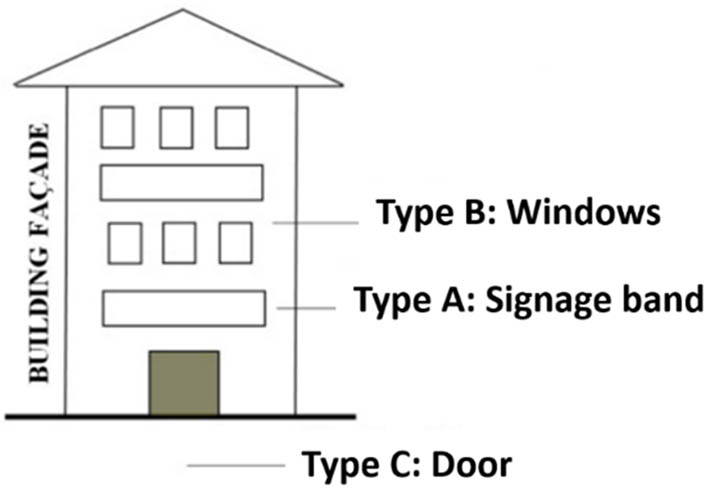
Building façade.
Types of opening (type A/B/C)
| Type | Details | Load intensity | Thermal index (K) | Cost (USD/m −2) |
|---|---|---|---|---|
| A | Signage band | 0.752 | 250–300 | 192 |
| B | Window | 0.725 | 250–300 | 241 |
| C | Doors | 0.421 | 250–300 | 290 |
Random case parameter variables
| Opening type | BW (m) | BD (m) | WEW (m) | WED (m) | RS (m) | HMW (m) | BH (m) | BO (°) |
|---|---|---|---|---|---|---|---|---|
| B | 17 | 4 | 6 | 4 | 10 | 3.1 | 0.1 | −11 |
| B | 14 | 8 | 8 | 3 | 7 | 1.6 | 0.11 | −9 |
| A | 14 | 3 | 5 | 7 | 6 | 3 | 0.1 | −4 |
| A | 18 | 8 | 6 | 4 | 6 | 3.5 | 0.1 | −7 |
| C | 14 | 5 | 3 | 7 | 6 | 3 | 0.21 | −5 |
| C | 19 | 5 | 7 | 4 | 3.8 | 2 | 0.22 | −3 |
| A | 19 | 5 | 3 | 7 | 6 | 3 | 0.1 | −5 |
| C | 18 | 5 | 7 | 4 | 8 | 3 | 0.2 | −3 |
| B | 15 | 5 | 7 | 4 | 6 | 3.5 | 0.5 | −5 |
2.2 The methodology
Reducing the building’s energy consumption, increasing the complex’s thermal comfort, and lowering the building envelope cost are the key objectives of this research. In this research, the actual performance of the building was examined using the performance assessment metrics of LI, cost of structure (CoS), and TI. The effectiveness of the building may be assessed with the use of these metrics.
Using the LI methodology – a very advantageous approach – it is feasible to ascertain a building’s yearly energy efficiency [17,18,19]. The total floor area of the building divided by the annual energy usage is the formula for this statistic. The calculation is derived from this. Concurrent with the association between reduced LI and improved energy efficiency is the correlation between reduced carbon emissions. This statistic is used in the first stages of building design to assess a project’s energy efficiency or to contrast and compare several buildings prior to completion. The recommendations it makes are crucial for architects.
While developing residential buildings in rural locations, it is vital to consider the economic considerations of building design to guarantee the structures on the ground are feasible. The goal is to ensure that the structures are practically viable, which is why this is done. Plus, we have to think about how well the buildings cut down on carbon emissions and how efficient they are with energy. So far, only the costs of insulation for the envelope structures (external walls and roofs) and various types of windows have been included in the current market cost estimates (in USD). This is due to the fact that understanding how the geometric characteristics of rural home designs impact the objectives is the main focus of this study.
The following is the formula that is used specifically for the computation of the CoS:
The definitions of the concepts that are described in Eq. (1).
In this equation,
Earthquakes, wind, and snow may increase facade LI. Facade stability requires LI. These pressures may collapse facades. The CoS includes facade materials, labor, and installation. Facade design must balance beauty with energy efficiency and thermal comfort.
The TI measures a façade’s U- or R-value. Thermal insulation diminishes with increased insulation and heat transfer. Energy efficiency and suitable indoor temperatures in cold areas need thermal insulation. High thermal insulation facades increase heating costs and diminish comfort.
CoS may increase with higher LI values owing to more robust and thicker façade materials. Enhance CoS by augmenting TI (e.g., insulating thickness). The optimal balance of LI, CoS, and TI depends on spatial characteristics, building requirements, and financial constraints.
2.3 The neural network model
Model architecture
Input layer: 14–20 features (dependent on building parameters) BW, BD, WEW, WED, RS, HMW, BH, BO, and OT.
Hidden layers: 2–3 layers with 10–20 neurons, using ReLU or Leaky ReLU activation.
Output layer: 3–5 outputs (dependent on optimization goals) based on LI, CoS, and TI.
Model training
Dataset: Gather climatic, structural, and performance façade design data from cold-region buildings.
Data preprocessing: Normalize/scale input data and handle missing values.
Training algorithm: Backpropagation using stochastic gradient descent (SGD).
Evaluation metrics: LI, CoS, and TI.
Figure 2 presents the neural network model architecture. Table 4 presents the list of hyperparameters used.
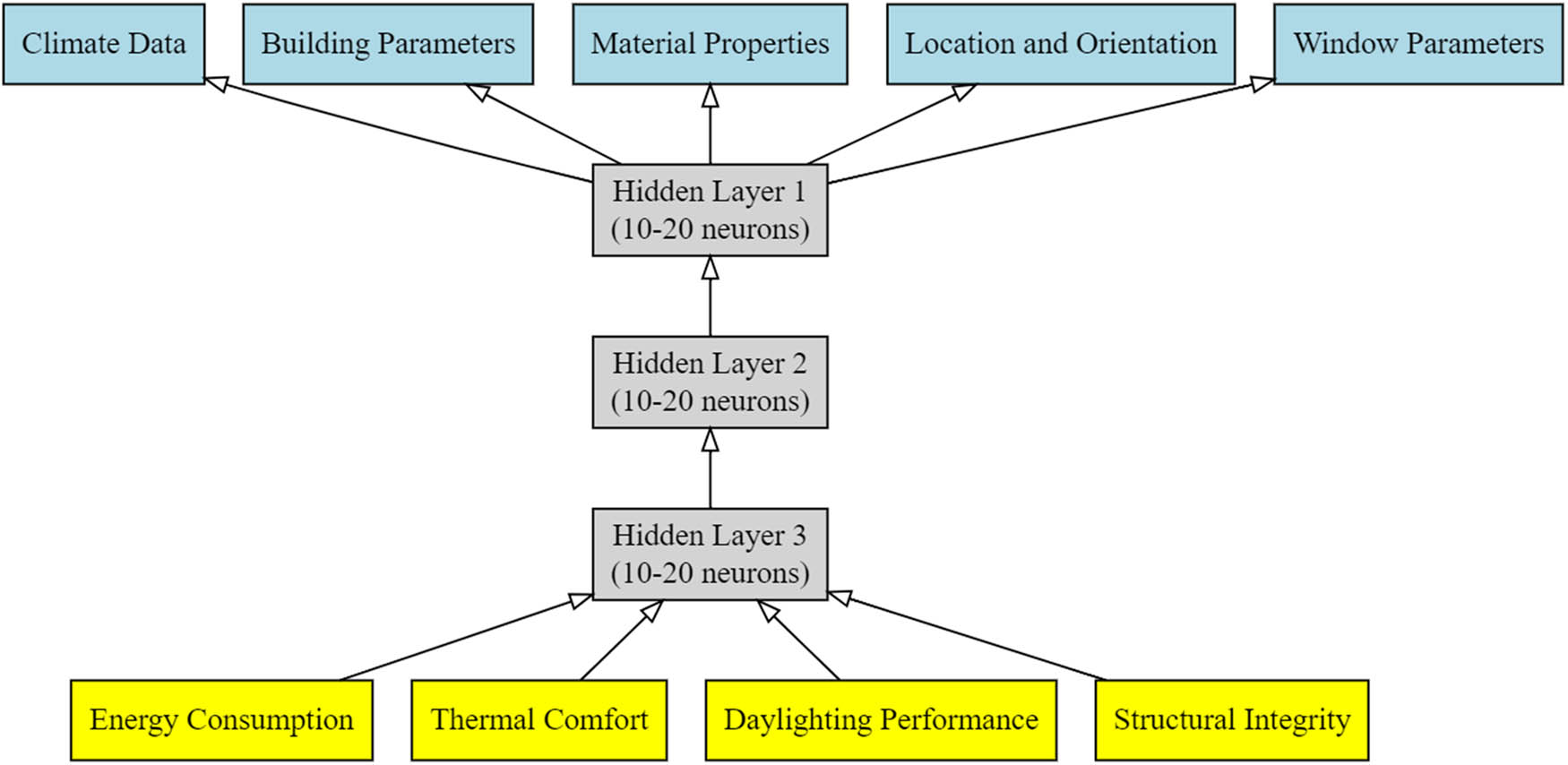
The neural network model architecture.
List of hyper parameters used
| Hyper parameters | All possible values |
|---|---|
| Regularization | 0.0001. 0.001, 0.01, 0.1, 1 |
| Coefficient | 1,000, 100, 10, 1, 0.1 |
| Kernel | Linear |
| Activation function | ReLU |
| Solver | SGD |
| Hidden layers | (100, 100, 10), (10, 10, 10), (100, 100), (100, 10), (10, 10), (10) |
2.4 Parameterization
Simulating the building’s performance using a parametric model. The following parameters for the energy simulation were determined after selecting four buildings for the study: a simulation time of one year, a facade heat transfer coefficient of 0.959 W m−2 K−1, and a roof heat transfer coefficient of 1.167 W m−2 K−1. Both federal and state regulations have been followed in assigning powers to lights, electrical equipment, and human presence rates. Improving the machine learning model’s accuracy and applicability is achieved by increasing the quantity of data connected to design solutions in this manner. The participants of the examination are selected from types A, B, and C according to the findings of the previous research.
3 Analysis of correlation
We talk about the architectural parameter variables, and then, we simulate the main house’s and the compartments’ important parameter variables. We used Pearson’s correlation analysis to go through the data. A correlation between the two variables is defined as high enough to warrant statistical significance if the p-value is less than 0.05. A significant positive link between the variables is shown when the correlation coefficient is near to 1. Conversely, a strong negative correlation between the variables is shown when the value is very close to −1. It is essential to keep in mind that the responsibility of regulating a single variable for simulation lies with each individual parameter research work. Box plots for type A, type B, and type C structures are shown in Figure 3(a)–(c), with each type’s cost of construction, LI, and TI being expressed in numerical form.
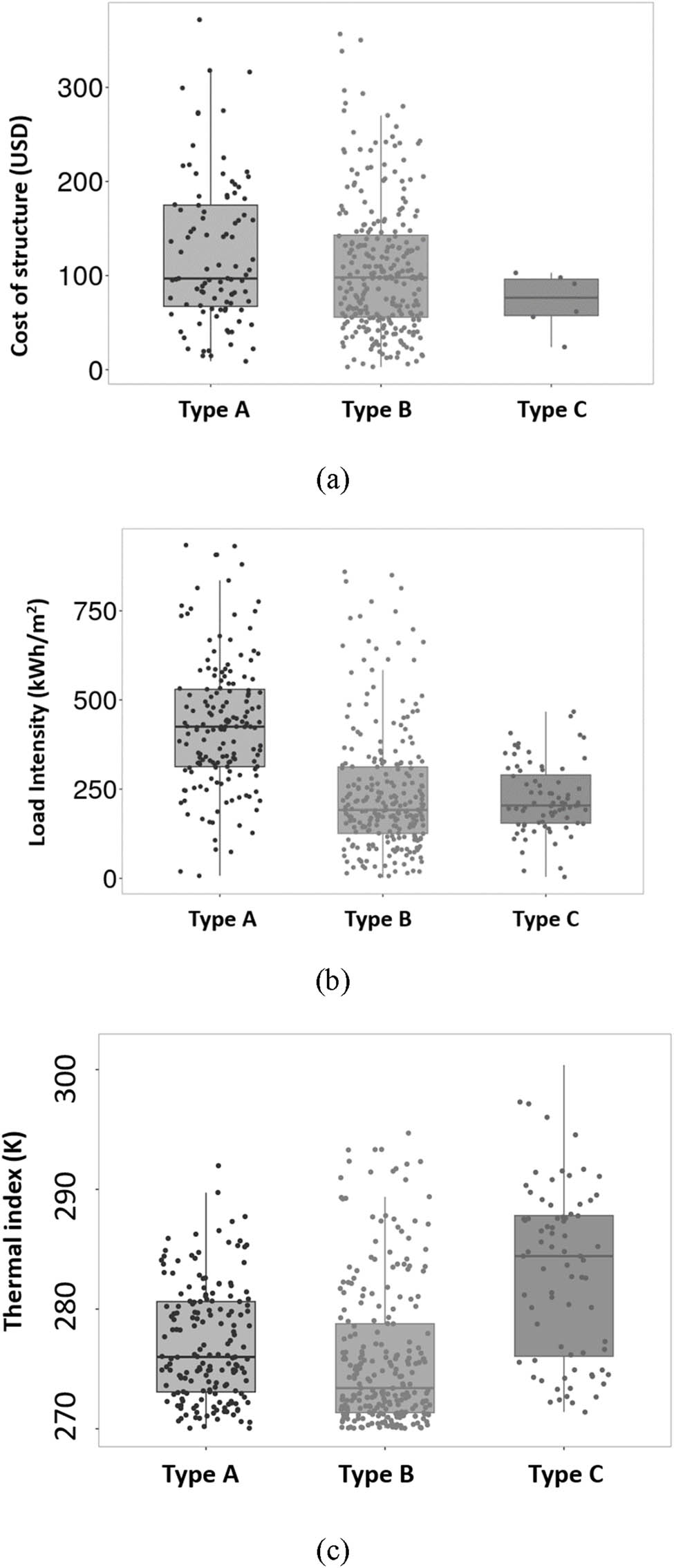
Box plots for type A, type B, and type C structure: (a) for CoS, (b) for LI, and (c) for TI.
In accordance with the factor correlation, it was discovered that the features of the building had the most significant impact on LI. This means that any changes that are made to the design values of the architectural features have the potential to have an instantaneous influence on the LI of the structure. Particularly noteworthy is the fact that the correlation between the qualities of the building and the cost of the construction is also a factor that is of considerable significance. It is necessary for individuals to take into mind design, LI, and CoS when they are conducting the construction process. If the building requirements are either too large or too little, the quantity of energy that the building uses will rise. This is because the building will have to use more energy.
Due to the fact that the proportions of the courtyard are not a component of the structure, they do not have a significant influence on either the LI or the CoS. On the other hand, they bring about a significant influence on the TI. Nevertheless, it is important to point out that the BO does not have a substantial impact on the LI; nevertheless, it does have an impact on the LI to a certain degree because of the fact that it changes its direction, which in turn affects the amount of light and heat that is gained from the windows of the building. The LI and the CoS are both directly impacted by each of the envelope parameters in their own personal way. In most cases, the LI decreases as the thickness of the insulation layer of the envelope grows inside the envelope. On the other hand, its propensity to decrease is becoming more sluggish, which means that increasing the thickness of the insulation layer does not have the same influence, despite the fact that the cost of the insulation is continuously rising. During the process of selecting envelope parameters, there are three aspects that must be taken into consideration: LI, TI, and CoS. In the event that this does not take place, there will be a decline in performance.
4 Machine learning for predictive analysis
For the goal of this study, the feedforward neural network technique, which is a methodology that is used rather often, is utilized. When it comes to the building of models, the use of machine learning libraries is an absolute need [21,22,23,24,25].
The usage of neural networks, which are modeled after biological brain systems, is one of the numerous applications of machine learning that involves regression prediction. Neural networks are patterned after biological brain systems. There is a wide variety of machine learning applications that can take use of neural networks.
A neural network for regression prediction is one method that can be used when it comes to producing predictions. This is one of the approaches that can be applied. This technique includes training a neural network with the use of a dataset that has been provided to the participants. It is possible to arrange the nodes in a neural network in a hierarchical manner. This is something that can be done. The intermediate layer is in charge of processing the data, whereas the input layer is in charge of receiving the data in its raw form, where it has not yet been processed. On the other hand, in contrast to the output layer, which is accountable for the generation of predictions, this layer is in charge of receiving input and extracting certain properties. It is possible to teach and change the values that are associated with each node via the process of backpropagation. All nodes have a weight and bias associated with them. Additionally, each node is given its own weight that is allotted to it. Approaches that are intended to reduce the degree of disparity that exists between the outcomes that were expected and those that actually transpired are referred to as difference reduction methods. It is common practice to divide the process of fiddling into two distinct components, which are training and testing. The method in question is rather common. The instruction is presented in this manner. Over the course of the phase, the dataset is divided into two unique sets: the verification set and the training set. Both sets are kept separate from one another. Following this, the training set is used for the purpose of training the neural network in order to ascertain the weights and biases that are the most appropriate to minimize the amount of error that happens during the process of prediction. Although stochastic gradient descent and other optimization methods are used during the training process, it is feasible that these approaches will be of aid in obtaining the optimal state of the neural network’s weights and biases. This is because the neural network is designed to employ these techniques to achieve optimal performance.
During the process of data preparation, defects of various kinds, including typos, inaccuracies, and other types of flaws, are discovered, fixed, or removed from a distributed dataset. The removal of information that is not relevant to the dataset is another step that is included in this procedure. It is the objective of this approach to transform the raw data into a format that is acceptable for training in order to guarantee that the model is able to operate correctly. This is done to guarantee that the updated data is in good alignment with the needs and prerequisites for the model. It is not possible for the goal function to acquire knowledge from the data that it has gathered in an efficient manner. This is done to reduce the disparities in the data range that exist between the variables and to prevent the scenario that emerges as a consequence of the existence of substantial discrepancies.
5 Simulation results
The purpose of this research was to use the widely used approach of feedforward neural networks. Model construction cannot be done without machine learning libraries [21,22,23,24,25].
There are several uses for machine learning in regression prediction, and one of them is the implementation of neural networks, which are inspired by the way the brain functions. The architecture of neural networks mimics that of the human brain. Use of neural networks is possible in many different machine learning contexts.
Among the many available options for making forecasts, a neural network trained for regression prediction stands out. Among the possible methods, this is one to consider. A neural network is trained using a dataset that has been made available to the participants as part of this approach. In a neural network, the connections may be structured hierarchically. Certainly, this is doable. Data processing is the responsibility of the intermediate layer, whereas raw, unprocessed data is received by the input layer. This layer, in contrast to the output layer, is responsible for taking in data and extracting certain attributes; the latter is responsible for making predictions. Through backpropagation, one may instruct and modify the values linked to every node. There is a bias and a weight for every node. Furthermore, a weight is assigned to each node individually. Techniques that aim to lessen the gap between anticipated and actual results are called difference reduction approaches. Training and testing are two separate parts of the fiddling process that are often separated. The technique in issue is widely used. The presentation of the instruction is as follows. During this step, the dataset is split into two distinct sets: one for verification and the other for training. Both sets are maintained in their own designated areas. Subsequently, the training set is used to teach the neural network the optimal weights and biases to reduce prediction error. It is possible that optimization techniques like stochastic gradient descent may help get the neural network’s weights and biases to their ideal state during training. These are the methods that the neural network was specifically programmed to utilize for peak performance. Figure 4(a)–(d) presents the regression plots for train data, test data, validation data, and all data, respectively.
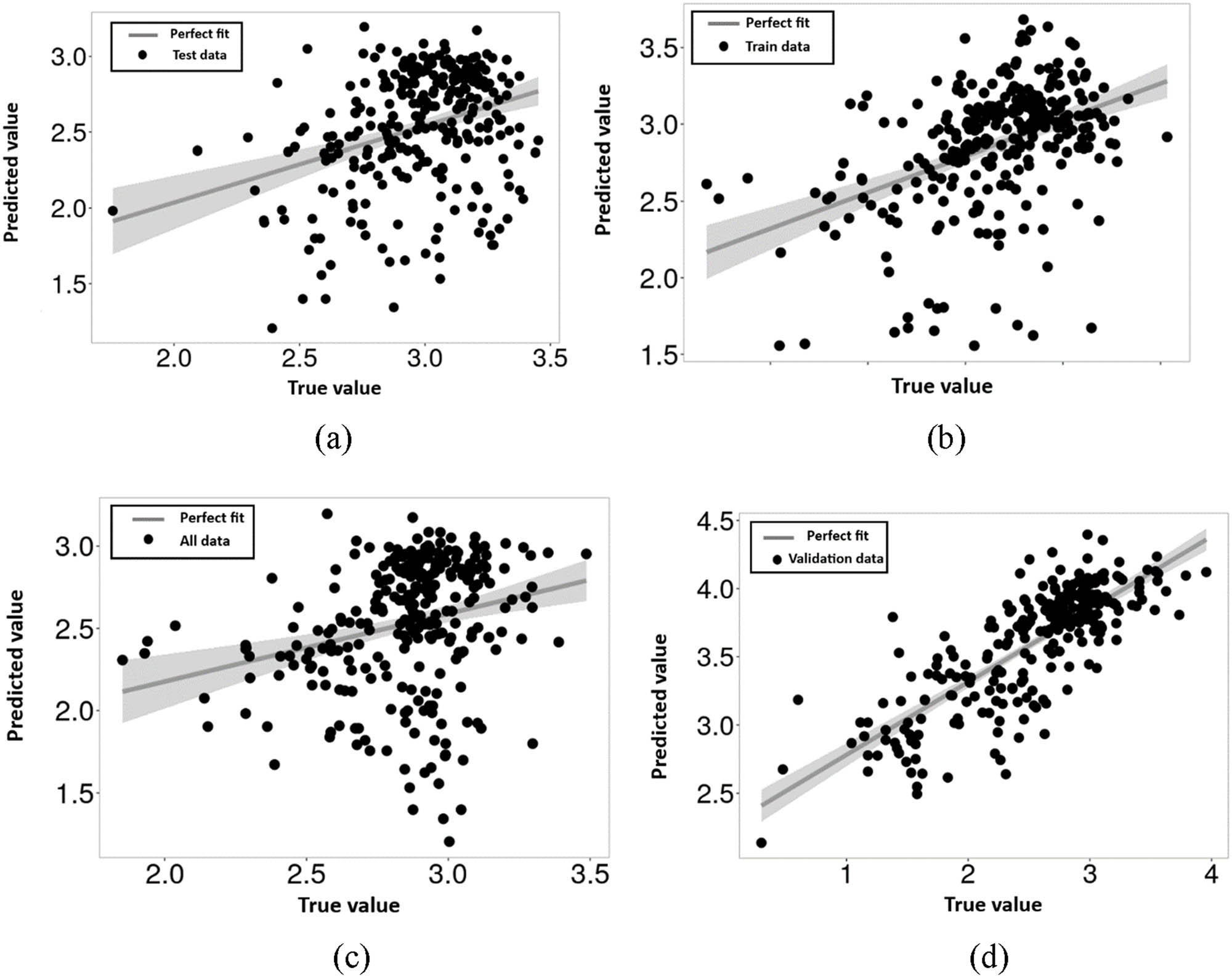
Regression graphs for machine learning model: (a) train data, (b) test data, (c) validation data, and (d) all data.
A distributed dataset is checked for, corrected, or cleaned up of errors of all kinds – typos, inaccuracies, and more – during data preparation. An additional stage in this process is the elimination of data that is irrelevant to the dataset. Guaranteeing the model’s proper operation is the goal of this strategy, which aims to convert the raw data into a training-acceptable format. We present a comparison of the proposed work with the existing state-of-the-art methods [26,27] in Table 5. Doing so ensures that the most recent data are well-suited to the model’s requirements and specifications. Using the information it has collected, the goal function cannot efficiently learn anything new. The goal is to lessen the difference in the data ranges of the variables and avoid the situation that arises when there are large differences. Without taking this step, none of these things could have happened.
Comparison with existing state-of-the-art methods
| Feature | State-of-the-art | Proposed work |
|---|---|---|
| Neural network architecture | CNNs, RNNs, LSTM [26] | Hybrid architecture |
| Parametric modeling | Grasshopper, Dynamo [27] | Proprietary parametric modeling framework integrated with the neural network |
| Dataset | Publicly available datasets, building energy data | Large, curated dataset of façade designs and corresponding performance metrics in cold regions |
| Evaluation metrics | Energy consumption, thermal comfort, aesthetic appeal | Energy consumption, thermal comfort, daylighting, and economic analysis |
| Novelty | Focus on energy efficiency and thermal comfort | Integration of parametric modeling and deep learning for holistic façade design |
| Limitations | Limited consideration of aesthetic factors, reliance on static data | Potential challenges in handling complex interactions and dynamic factors |
6 Conclusion
This project aimed to develop a neural network model capable of precisely forecasting the economic and energy efficiency of residences in rural areas often exposed to cold climates. Attaining this objective required a focus on three primary aspects: construction costs, thermal efficiency, and load capacity. The model may be used to a diverse array of analogous building types due to its foundation in machine learning technology. The offered approaches in the study may enhance both the revival of older buildings and the development of rural regions. During the first phases of evaluating and enhancing structures, the used machine learning model may assist architects and designers in swiftly analyzing the buildings’ performance. The rationale for this is that rural development is inconsistent. A neural network model was developed to evaluate and predict the effects of modifications to the building’s characteristics on thermal comfort, LI, and expenses. We anticipated the occurrence of both movements. The model validation findings indicate that the model’s predictive skills effectively forecast the target variables of the design solution. Additionally, to enhance usability for designers, the code was encapsulated behind an interface presentation. This process improves assessment effectiveness while reducing the time required for simulation, unlike the conventional approach that use software to replicate a building’s performance. Furthermore, other indicators and variables may be included into the assessment system as required throughout the latter phases of the study project. Additionally, it is anticipated that this would function as a resource for forthcoming restorations of many residences in rural regions. A thorough technique for prediction and assessment will be used to attain this objective.
The proposed prediction model generates and assesses potential façade designs in a short amount of time. Design iteration and research are accelerated. By generating predictions about energy economy, thermal comfort, and aesthetic value based on design choices. This allows for more informed decision-making. The model may diminish risks associated with suboptimal building performance by identifying potential design flaws or areas of concern. The model may enhance design for specific objectives, such as energy efficiency or cost reduction. Decision-makers may assess the influence of design choices on anticipated results by altering input parameters (e.g., materials, dimensions).
-
Funding information: The author states no funding is involved.
-
Author contributions: The author has accepted responsibility for the entire content of this manuscript and approved its submission.
-
Conflict of interest: The author states no conflict of interest.
-
Data availability statement: The datasets generated during and/or analyzed during the current study are available from the corresponding author on reasonable request.
References
[1] Merlet Y, Rouchier S, Jay A, Cellier N, Woloszyn M. Integration of phasing on multi-objective optimization of building stock energy retrofit. Energy Build. 2022;257:111776.10.1016/j.enbuild.2021.111776Search in Google Scholar
[2] American Society of Heating Refrigerating and Air-Conditioning Engineers AC. ASHRAE handbook: refrigeration. Atlanta, USA: American Society of Heating, Refrigerating, and Air-Conditioning Engineers; 2010; 2010. https://es.scribd.com/document/339234258/ASHRAE-2010-Refrigeration-SI-pdf.Search in Google Scholar
[3] Fanger OP. Thermal comfort. Analysis and applications in environmental engineering. Copenhagen, Denmark: McGraw-Hill; 1970. https://searchworks.stanford.edu/view/617135.Search in Google Scholar
[4] Halawa E, van Hoof J. The adaptive approach to thermal comfort: A critical overview. Energy Build. 2012;51:101–10. 10.1016/j.enbuild.2012.04.011.Search in Google Scholar
[5] de Dear RJ, Akimoto T, Arens EA, Brager G, Candido C, Cheong KWD, et al. Progress in thermal comfort research over the last twenty years. Indoor Air. 2013;23(6):442–61. 10.1111/ina.12046. PMID: 23590514.Search in Google Scholar PubMed
[6] Mateus NM, Pinto A, da Graça GC. Validation of EnergyPlus thermal simulation of a double skin naturally and mechanically ventilated test cell. Energy Build. 2014;75:511–22. 10.1016/j.enbuild.2014.02.043.Search in Google Scholar
[7] Dong Mn, Zhong M, Tian-zhu M, Jiang-Ying Y, Yan-feng L, Li-li Y. Quantitative analysis on the effect of thermal bridges on energy consumption of residential buildings in hot summer and cold winter region. J Civ Archit Environ Eng. 2007;2008:5–8.Search in Google Scholar
[8] Taylor RA, Miner M. A metric for characterizing the effectiveness of thermal mass in building materials. Appl Energy. 2014;128:156–63. 10.1016/j.apenergy.2014.04.061.Search in Google Scholar
[9] Axaopoulos I, Axaopoulos P, Gelegenis J. Optimum insulation thickness for external walls on different orientations considering the speed and direction of the wind. Appl Energy. 2014;117:167–75. 10.1016/j.apenergy.2013.12.008.Search in Google Scholar
[10] Echarri V, Espinosa A, Rizo C. Thermal transmission through existing building enclosures: Destructive monitoring in intermediate layers versus non-destructive monitoring with sensors on surfaces. Sensors. 2017;17(12):2848. 10.3390/s17122848.Search in Google Scholar PubMed PubMed Central
[11] Quinten J, Feldheim V. Dynamic modelling of multidimensional thermal bridges in building envelopes: Review of existing methods, application and new mixed method. Energy Build. 2016;110:284–93. 10.1016/j.enbuild.2015.11.003.Search in Google Scholar
[12] Khan Z, Jawad M, Bonyah E, Khan N, Jan R. Magnetohydrodynamic thin film flow through a porous stretching sheet with the impact of thermal radiation and viscous dissipation. Math Probl Eng. 2022;2022:1–10. 10.1155/2022/1086847.Search in Google Scholar
[13] Arnous AH, Hashemi MS, Nisar KS, Shakeel M, Ahmad J, Ahmad I, et al. Investigating solitary wave solutions with enhanced algebraic method for new extended Sakovich equations in fluid dynamics. Results Phys. 2024;57:1–13.10.1016/j.rinp.2024.107369Search in Google Scholar
[14] Srivastava HM, Khan Z, Mohammed PO, Al-Sarairah E, Jawad M, Jan R. Heat transfer of buoyancy and radiation on the free convection boundary layer MHD flow across a stretchable porous sheet. Energies. 2023;16(1):58. 10.3390/en16010058.Search in Google Scholar
[15] Zubair M, Jawad M, Bonyah E, Jan R. MHD analysis of couple stress hybrid nanofluid free stream over a spinning Darcy-Forchheimer porous disc under the effect of thermal radiation. J Appl Math. 2021;2021:1–18.10.1155/2021/2522155Search in Google Scholar
[16] Rehman A, Alhefthi RK, Inc M, Jan R. Analytical investigation of MgO-CuO\H₂O hybrid nanofluid MHD stagnation point flow with the influence of viscous dissipation for enhancement of heat transfer ratio. Mod Phys Lett B. 2024;38(15):2450108.10.1142/S0217984924501082Search in Google Scholar
[17] Taleghani M. Outdoor thermal comfort by different heat mitigation strategies – A review. Renew Sustain Energy Rev. 2018;81:2011–8.10.1016/j.rser.2017.06.010Search in Google Scholar
[18] Mkalaf KA, Al Hadeethi RH, Al Bazi A. Industrial occupational risks: Application study in renewable energy companies. Adv Ind Eng Manag. 2022;11(1):20–8.Search in Google Scholar
[19] Lagios K, Niemasz J, Reinhart CF. Animated building performance simulation (ABPS)–linking Rhinoceros/Grasshopper with Radiance/Daysim. Proc SimBuild. 2010;4:321–7.Search in Google Scholar
[20] Zekić-Sušac M, Has A, Knežević M. Predicting energy cost of public buildings by artificial neural networks, CART, and random forest. Neurocomputing. 2021;439:223–33.10.1016/j.neucom.2020.01.124Search in Google Scholar
[21] Huang W, Yan C, Wang J, Wang W. A time-delay neural network for solving time-dependent shortest path problem. Neural Netw. 2017;90:21–8. 10.1016/j.neunet.2017.03.002.Search in Google Scholar PubMed
[22] Molina D, Liang J, Harley R, Venayagamoorthy GK. Comparison of TDNN and RNN performances for neuro-identification on small to medium-sized power systems. In 2011 IEEE Symposium on Computational Intelligence Applications in Smart Grid (CIASG). IEEE; 2011. p. 1–8.10.1109/CIASG.2011.5953344Search in Google Scholar
[23] Sulaiman J, Wahab SH. Heavy rainfall forecasting model using artificial neural network for flood prone area. In: IT convergence and security 2017. Singapore: Springer; 2018. p. 68–76.10.1007/978-981-10-6451-7_9Search in Google Scholar
[24] Tyasnurita R, Özcan E, John R. Learning heuristic selection using a time delay neural network for open vehicle routing. In 2017 IEEE Congress on Evolutionary Computation (CEC). IEEE; 2017. p. 1474–81.10.1109/CEC.2017.7969477Search in Google Scholar
[25] Bergstra J, Bengio Y. Random search for hyper-parameter optimization. J Mach Learn Res. 2012;13(Feb):281–305.Search in Google Scholar
[26] Al-selwi SM, Hassan MF, Abdulkadir SJ, Muneer A, Sumiea EH, Alqushaibi A, et al. RNN-LSTM: From applications to modeling techniques and beyond – Systematic review. J King Saud Univ - Comput Inf Sci. 2024;36(5):102068. 10.1016/j.jksuci.2024.102068.Search in Google Scholar
[27] Kizilorenli E, Tokuç A. Parametric optimization of a responsive façade system for daylight performance. J Archit Sci Appl 2022;MBUD 7(1):72–81.10.30785/mbud.1038768Search in Google Scholar
© 2025 the author(s), published by De Gruyter
This work is licensed under the Creative Commons Attribution 4.0 International License.
Articles in the same Issue
- Research Articles
- Generalized (ψ,φ)-contraction to investigate Volterra integral inclusions and fractal fractional PDEs in super-metric space with numerical experiments
- Solitons in ultrasound imaging: Exploring applications and enhancements via the Westervelt equation
- Stochastic improved Simpson for solving nonlinear fractional-order systems using product integration rules
- Exploring dynamical features like bifurcation assessment, sensitivity visualization, and solitary wave solutions of the integrable Akbota equation
- Research on surface defect detection method and optimization of paper-plastic composite bag based on improved combined segmentation algorithm
- Impact the sulphur content in Iraqi crude oil on the mechanical properties and corrosion behaviour of carbon steel in various types of API 5L pipelines and ASTM 106 grade B
- Unravelling quiescent optical solitons: An exploration of the complex Ginzburg–Landau equation with nonlinear chromatic dispersion and self-phase modulation
- Perturbation-iteration approach for fractional-order logistic differential equations
- Variational formulations for the Euler and Navier–Stokes systems in fluid mechanics and related models
- Rotor response to unbalanced load and system performance considering variable bearing profile
- DeepFowl: Disease prediction from chicken excreta images using deep learning
- Channel flow of Ellis fluid due to cilia motion
- A case study of fractional-order varicella virus model to nonlinear dynamics strategy for control and prevalence
- Multi-point estimation weldment recognition and estimation of pose with data-driven robotics design
- Analysis of Hall current and nonuniform heating effects on magneto-convection between vertically aligned plates under the influence of electric and magnetic fields
- A comparative study on residual power series method and differential transform method through the time-fractional telegraph equation
- Insights from the nonlinear Schrödinger–Hirota equation with chromatic dispersion: Dynamics in fiber–optic communication
- Mathematical analysis of Jeffrey ferrofluid on stretching surface with the Darcy–Forchheimer model
- Exploring the interaction between lump, stripe and double-stripe, and periodic wave solutions of the Konopelchenko–Dubrovsky–Kaup–Kupershmidt system
- Computational investigation of tuberculosis and HIV/AIDS co-infection in fuzzy environment
- Signature verification by geometry and image processing
- Theoretical and numerical approach for quantifying sensitivity to system parameters of nonlinear systems
- Chaotic behaviors, stability, and solitary wave propagations of M-fractional LWE equation in magneto-electro-elastic circular rod
- Dynamic analysis and optimization of syphilis spread: Simulations, integrating treatment and public health interventions
- Visco-thermoelastic rectangular plate under uniform loading: A study of deflection
- Threshold dynamics and optimal control of an epidemiological smoking model
- Numerical computational model for an unsteady hybrid nanofluid flow in a porous medium past an MHD rotating sheet
- Regression prediction model of fabric brightness based on light and shadow reconstruction of layered images
- Dynamics and prevention of gemini virus infection in red chili crops studied with generalized fractional operator: Analysis and modeling
- Qualitative analysis on existence and stability of nonlinear fractional dynamic equations on time scales
- Fractional-order super-twisting sliding mode active disturbance rejection control for electro-hydraulic position servo systems
- Analytical exploration and parametric insights into optical solitons in magneto-optic waveguides: Advances in nonlinear dynamics for applied sciences
- Bifurcation dynamics and optical soliton structures in the nonlinear Schrödinger–Bopp–Podolsky system
- User profiling in university libraries by combining multi-perspective clustering algorithm and reader behavior analysis
- Exploring bifurcation and chaos control in a discrete-time Lotka–Volterra model framework for COVID-19 modeling
- Review Article
- Haar wavelet collocation method for existence and numerical solutions of fourth-order integro-differential equations with bounded coefficients
- Special Issue: Nonlinear Analysis and Design of Communication Networks for IoT Applications - Part II
- Silicon-based all-optical wavelength converter for on-chip optical interconnection
- Research on a path-tracking control system of unmanned rollers based on an optimization algorithm and real-time feedback
- Analysis of the sports action recognition model based on the LSTM recurrent neural network
- Industrial robot trajectory error compensation based on enhanced transfer convolutional neural networks
- Research on IoT network performance prediction model of power grid warehouse based on nonlinear GA-BP neural network
- Interactive recommendation of social network communication between cities based on GNN and user preferences
- Application of improved P-BEM in time varying channel prediction in 5G high-speed mobile communication system
- Construction of a BIM smart building collaborative design model combining the Internet of Things
- Optimizing malicious website prediction: An advanced XGBoost-based machine learning model
- Economic operation analysis of the power grid combining communication network and distributed optimization algorithm
- Sports video temporal action detection technology based on an improved MSST algorithm
- Internet of things data security and privacy protection based on improved federated learning
- Enterprise power emission reduction technology based on the LSTM–SVM model
- Construction of multi-style face models based on artistic image generation algorithms
- Research and application of interactive digital twin monitoring system for photovoltaic power station based on global perception
- Special Issue: Decision and Control in Nonlinear Systems - Part II
- Animation video frame prediction based on ConvGRU fine-grained synthesis flow
- Application of GGNN inference propagation model for martial art intensity evaluation
- Benefit evaluation of building energy-saving renovation projects based on BWM weighting method
- Deep neural network application in real-time economic dispatch and frequency control of microgrids
- Real-time force/position control of soft growing robots: A data-driven model predictive approach
- Mechanical product design and manufacturing system based on CNN and server optimization algorithm
- Application of finite element analysis in the formal analysis of ancient architectural plaque section
- Research on territorial spatial planning based on data mining and geographic information visualization
- Fault diagnosis of agricultural sprinkler irrigation machinery equipment based on machine vision
- Closure technology of large span steel truss arch bridge with temporarily fixed edge supports
- Intelligent accounting question-answering robot based on a large language model and knowledge graph
- Analysis of manufacturing and retailer blockchain decision based on resource recyclability
- Flexible manufacturing workshop mechanical processing and product scheduling algorithm based on MES
- Exploration of indoor environment perception and design model based on virtual reality technology
- Tennis automatic ball-picking robot based on image object detection and positioning technology
- A new CNN deep learning model for computer-intelligent color matching
- Design of AR-based general computer technology experiment demonstration platform
- Indoor environment monitoring method based on the fusion of audio recognition and video patrol features
- Health condition prediction method of the computer numerical control machine tool parts by ensembling digital twins and improved LSTM networks
- Establishment of a green degree evaluation model for wall materials based on lifecycle
- Quantitative evaluation of college music teaching pronunciation based on nonlinear feature extraction
- Multi-index nonlinear robust virtual synchronous generator control method for microgrid inverters
- Manufacturing engineering production line scheduling management technology integrating availability constraints and heuristic rules
- Analysis of digital intelligent financial audit system based on improved BiLSTM neural network
- Attention community discovery model applied to complex network information analysis
- A neural collaborative filtering recommendation algorithm based on attention mechanism and contrastive learning
- Rehabilitation training method for motor dysfunction based on video stream matching
- Research on façade design for cold-region buildings based on artificial neural networks and parametric modeling techniques
- Intelligent implementation of muscle strain identification algorithm in Mi health exercise induced waist muscle strain
- Optimization design of urban rainwater and flood drainage system based on SWMM
- Improved GA for construction progress and cost management in construction projects
- Evaluation and prediction of SVM parameters in engineering cost based on random forest hybrid optimization
- Museum intelligent warning system based on wireless data module
- Optimization design and research of mechatronics based on torque motor control algorithm
- Special Issue: Nonlinear Engineering’s significance in Materials Science
- Experimental research on the degradation of chemical industrial wastewater by combined hydrodynamic cavitation based on nonlinear dynamic model
- Study on low-cycle fatigue life of nickel-based superalloy GH4586 at various temperatures
- Some results of solutions to neutral stochastic functional operator-differential equations
- Ultrasonic cavitation did not occur in high-pressure CO2 liquid
- Research on the performance of a novel type of cemented filler material for coal mine opening and filling
- Testing of recycled fine aggregate concrete’s mechanical properties using recycled fine aggregate concrete and research on technology for highway construction
- A modified fuzzy TOPSIS approach for the condition assessment of existing bridges
- Nonlinear structural and vibration analysis of straddle monorail pantograph under random excitations
- Achieving high efficiency and stability in blue OLEDs: Role of wide-gap hosts and emitter interactions
- Construction of teaching quality evaluation model of online dance teaching course based on improved PSO-BPNN
- Enhanced electrical conductivity and electromagnetic shielding properties of multi-component polymer/graphite nanocomposites prepared by solid-state shear milling
- Optimization of thermal characteristics of buried composite phase-change energy storage walls based on nonlinear engineering methods
- A higher-performance big data-based movie recommendation system
- Nonlinear impact of minimum wage on labor employment in China
- Nonlinear comprehensive evaluation method based on information entropy and discrimination optimization
- Application of numerical calculation methods in stability analysis of pile foundation under complex foundation conditions
- Research on the contribution of shale gas development and utilization in Sichuan Province to carbon peak based on the PSA process
- Characteristics of tight oil reservoirs and their impact on seepage flow from a nonlinear engineering perspective
- Nonlinear deformation decomposition and mode identification of plane structures via orthogonal theory
- Numerical simulation of damage mechanism in rock with cracks impacted by self-excited pulsed jet based on SPH-FEM coupling method: The perspective of nonlinear engineering and materials science
- Cross-scale modeling and collaborative optimization of ethanol-catalyzed coupling to produce C4 olefins: Nonlinear modeling and collaborative optimization strategies
- Unequal width T-node stress concentration factor analysis of stiffened rectangular steel pipe concrete
- Special Issue: Advances in Nonlinear Dynamics and Control
- Development of a cognitive blood glucose–insulin control strategy design for a nonlinear diabetic patient model
- Big data-based optimized model of building design in the context of rural revitalization
- Multi-UAV assisted air-to-ground data collection for ground sensors with unknown positions
- Design of urban and rural elderly care public areas integrating person-environment fit theory
- Application of lossless signal transmission technology in piano timbre recognition
- Application of improved GA in optimizing rural tourism routes
- Architectural animation generation system based on AL-GAN algorithm
- Advanced sentiment analysis in online shopping: Implementing LSTM models analyzing E-commerce user sentiments
- Intelligent recommendation algorithm for piano tracks based on the CNN model
- Visualization of large-scale user association feature data based on a nonlinear dimensionality reduction method
- Low-carbon economic optimization of microgrid clusters based on an energy interaction operation strategy
- Optimization effect of video data extraction and search based on Faster-RCNN hybrid model on intelligent information systems
- Construction of image segmentation system combining TC and swarm intelligence algorithm
- Particle swarm optimization and fuzzy C-means clustering algorithm for the adhesive layer defect detection
- Optimization of student learning status by instructional intervention decision-making techniques incorporating reinforcement learning
- Fuzzy model-based stabilization control and state estimation of nonlinear systems
- Optimization of distribution network scheduling based on BA and photovoltaic uncertainty
- Tai Chi movement segmentation and recognition on the grounds of multi-sensor data fusion and the DBSCAN algorithm
- Special Issue: Dynamic Engineering and Control Methods for the Nonlinear Systems - Part III
- Generalized numerical RKM method for solving sixth-order fractional partial differential equations
Articles in the same Issue
- Research Articles
- Generalized (ψ,φ)-contraction to investigate Volterra integral inclusions and fractal fractional PDEs in super-metric space with numerical experiments
- Solitons in ultrasound imaging: Exploring applications and enhancements via the Westervelt equation
- Stochastic improved Simpson for solving nonlinear fractional-order systems using product integration rules
- Exploring dynamical features like bifurcation assessment, sensitivity visualization, and solitary wave solutions of the integrable Akbota equation
- Research on surface defect detection method and optimization of paper-plastic composite bag based on improved combined segmentation algorithm
- Impact the sulphur content in Iraqi crude oil on the mechanical properties and corrosion behaviour of carbon steel in various types of API 5L pipelines and ASTM 106 grade B
- Unravelling quiescent optical solitons: An exploration of the complex Ginzburg–Landau equation with nonlinear chromatic dispersion and self-phase modulation
- Perturbation-iteration approach for fractional-order logistic differential equations
- Variational formulations for the Euler and Navier–Stokes systems in fluid mechanics and related models
- Rotor response to unbalanced load and system performance considering variable bearing profile
- DeepFowl: Disease prediction from chicken excreta images using deep learning
- Channel flow of Ellis fluid due to cilia motion
- A case study of fractional-order varicella virus model to nonlinear dynamics strategy for control and prevalence
- Multi-point estimation weldment recognition and estimation of pose with data-driven robotics design
- Analysis of Hall current and nonuniform heating effects on magneto-convection between vertically aligned plates under the influence of electric and magnetic fields
- A comparative study on residual power series method and differential transform method through the time-fractional telegraph equation
- Insights from the nonlinear Schrödinger–Hirota equation with chromatic dispersion: Dynamics in fiber–optic communication
- Mathematical analysis of Jeffrey ferrofluid on stretching surface with the Darcy–Forchheimer model
- Exploring the interaction between lump, stripe and double-stripe, and periodic wave solutions of the Konopelchenko–Dubrovsky–Kaup–Kupershmidt system
- Computational investigation of tuberculosis and HIV/AIDS co-infection in fuzzy environment
- Signature verification by geometry and image processing
- Theoretical and numerical approach for quantifying sensitivity to system parameters of nonlinear systems
- Chaotic behaviors, stability, and solitary wave propagations of M-fractional LWE equation in magneto-electro-elastic circular rod
- Dynamic analysis and optimization of syphilis spread: Simulations, integrating treatment and public health interventions
- Visco-thermoelastic rectangular plate under uniform loading: A study of deflection
- Threshold dynamics and optimal control of an epidemiological smoking model
- Numerical computational model for an unsteady hybrid nanofluid flow in a porous medium past an MHD rotating sheet
- Regression prediction model of fabric brightness based on light and shadow reconstruction of layered images
- Dynamics and prevention of gemini virus infection in red chili crops studied with generalized fractional operator: Analysis and modeling
- Qualitative analysis on existence and stability of nonlinear fractional dynamic equations on time scales
- Fractional-order super-twisting sliding mode active disturbance rejection control for electro-hydraulic position servo systems
- Analytical exploration and parametric insights into optical solitons in magneto-optic waveguides: Advances in nonlinear dynamics for applied sciences
- Bifurcation dynamics and optical soliton structures in the nonlinear Schrödinger–Bopp–Podolsky system
- User profiling in university libraries by combining multi-perspective clustering algorithm and reader behavior analysis
- Exploring bifurcation and chaos control in a discrete-time Lotka–Volterra model framework for COVID-19 modeling
- Review Article
- Haar wavelet collocation method for existence and numerical solutions of fourth-order integro-differential equations with bounded coefficients
- Special Issue: Nonlinear Analysis and Design of Communication Networks for IoT Applications - Part II
- Silicon-based all-optical wavelength converter for on-chip optical interconnection
- Research on a path-tracking control system of unmanned rollers based on an optimization algorithm and real-time feedback
- Analysis of the sports action recognition model based on the LSTM recurrent neural network
- Industrial robot trajectory error compensation based on enhanced transfer convolutional neural networks
- Research on IoT network performance prediction model of power grid warehouse based on nonlinear GA-BP neural network
- Interactive recommendation of social network communication between cities based on GNN and user preferences
- Application of improved P-BEM in time varying channel prediction in 5G high-speed mobile communication system
- Construction of a BIM smart building collaborative design model combining the Internet of Things
- Optimizing malicious website prediction: An advanced XGBoost-based machine learning model
- Economic operation analysis of the power grid combining communication network and distributed optimization algorithm
- Sports video temporal action detection technology based on an improved MSST algorithm
- Internet of things data security and privacy protection based on improved federated learning
- Enterprise power emission reduction technology based on the LSTM–SVM model
- Construction of multi-style face models based on artistic image generation algorithms
- Research and application of interactive digital twin monitoring system for photovoltaic power station based on global perception
- Special Issue: Decision and Control in Nonlinear Systems - Part II
- Animation video frame prediction based on ConvGRU fine-grained synthesis flow
- Application of GGNN inference propagation model for martial art intensity evaluation
- Benefit evaluation of building energy-saving renovation projects based on BWM weighting method
- Deep neural network application in real-time economic dispatch and frequency control of microgrids
- Real-time force/position control of soft growing robots: A data-driven model predictive approach
- Mechanical product design and manufacturing system based on CNN and server optimization algorithm
- Application of finite element analysis in the formal analysis of ancient architectural plaque section
- Research on territorial spatial planning based on data mining and geographic information visualization
- Fault diagnosis of agricultural sprinkler irrigation machinery equipment based on machine vision
- Closure technology of large span steel truss arch bridge with temporarily fixed edge supports
- Intelligent accounting question-answering robot based on a large language model and knowledge graph
- Analysis of manufacturing and retailer blockchain decision based on resource recyclability
- Flexible manufacturing workshop mechanical processing and product scheduling algorithm based on MES
- Exploration of indoor environment perception and design model based on virtual reality technology
- Tennis automatic ball-picking robot based on image object detection and positioning technology
- A new CNN deep learning model for computer-intelligent color matching
- Design of AR-based general computer technology experiment demonstration platform
- Indoor environment monitoring method based on the fusion of audio recognition and video patrol features
- Health condition prediction method of the computer numerical control machine tool parts by ensembling digital twins and improved LSTM networks
- Establishment of a green degree evaluation model for wall materials based on lifecycle
- Quantitative evaluation of college music teaching pronunciation based on nonlinear feature extraction
- Multi-index nonlinear robust virtual synchronous generator control method for microgrid inverters
- Manufacturing engineering production line scheduling management technology integrating availability constraints and heuristic rules
- Analysis of digital intelligent financial audit system based on improved BiLSTM neural network
- Attention community discovery model applied to complex network information analysis
- A neural collaborative filtering recommendation algorithm based on attention mechanism and contrastive learning
- Rehabilitation training method for motor dysfunction based on video stream matching
- Research on façade design for cold-region buildings based on artificial neural networks and parametric modeling techniques
- Intelligent implementation of muscle strain identification algorithm in Mi health exercise induced waist muscle strain
- Optimization design of urban rainwater and flood drainage system based on SWMM
- Improved GA for construction progress and cost management in construction projects
- Evaluation and prediction of SVM parameters in engineering cost based on random forest hybrid optimization
- Museum intelligent warning system based on wireless data module
- Optimization design and research of mechatronics based on torque motor control algorithm
- Special Issue: Nonlinear Engineering’s significance in Materials Science
- Experimental research on the degradation of chemical industrial wastewater by combined hydrodynamic cavitation based on nonlinear dynamic model
- Study on low-cycle fatigue life of nickel-based superalloy GH4586 at various temperatures
- Some results of solutions to neutral stochastic functional operator-differential equations
- Ultrasonic cavitation did not occur in high-pressure CO2 liquid
- Research on the performance of a novel type of cemented filler material for coal mine opening and filling
- Testing of recycled fine aggregate concrete’s mechanical properties using recycled fine aggregate concrete and research on technology for highway construction
- A modified fuzzy TOPSIS approach for the condition assessment of existing bridges
- Nonlinear structural and vibration analysis of straddle monorail pantograph under random excitations
- Achieving high efficiency and stability in blue OLEDs: Role of wide-gap hosts and emitter interactions
- Construction of teaching quality evaluation model of online dance teaching course based on improved PSO-BPNN
- Enhanced electrical conductivity and electromagnetic shielding properties of multi-component polymer/graphite nanocomposites prepared by solid-state shear milling
- Optimization of thermal characteristics of buried composite phase-change energy storage walls based on nonlinear engineering methods
- A higher-performance big data-based movie recommendation system
- Nonlinear impact of minimum wage on labor employment in China
- Nonlinear comprehensive evaluation method based on information entropy and discrimination optimization
- Application of numerical calculation methods in stability analysis of pile foundation under complex foundation conditions
- Research on the contribution of shale gas development and utilization in Sichuan Province to carbon peak based on the PSA process
- Characteristics of tight oil reservoirs and their impact on seepage flow from a nonlinear engineering perspective
- Nonlinear deformation decomposition and mode identification of plane structures via orthogonal theory
- Numerical simulation of damage mechanism in rock with cracks impacted by self-excited pulsed jet based on SPH-FEM coupling method: The perspective of nonlinear engineering and materials science
- Cross-scale modeling and collaborative optimization of ethanol-catalyzed coupling to produce C4 olefins: Nonlinear modeling and collaborative optimization strategies
- Unequal width T-node stress concentration factor analysis of stiffened rectangular steel pipe concrete
- Special Issue: Advances in Nonlinear Dynamics and Control
- Development of a cognitive blood glucose–insulin control strategy design for a nonlinear diabetic patient model
- Big data-based optimized model of building design in the context of rural revitalization
- Multi-UAV assisted air-to-ground data collection for ground sensors with unknown positions
- Design of urban and rural elderly care public areas integrating person-environment fit theory
- Application of lossless signal transmission technology in piano timbre recognition
- Application of improved GA in optimizing rural tourism routes
- Architectural animation generation system based on AL-GAN algorithm
- Advanced sentiment analysis in online shopping: Implementing LSTM models analyzing E-commerce user sentiments
- Intelligent recommendation algorithm for piano tracks based on the CNN model
- Visualization of large-scale user association feature data based on a nonlinear dimensionality reduction method
- Low-carbon economic optimization of microgrid clusters based on an energy interaction operation strategy
- Optimization effect of video data extraction and search based on Faster-RCNN hybrid model on intelligent information systems
- Construction of image segmentation system combining TC and swarm intelligence algorithm
- Particle swarm optimization and fuzzy C-means clustering algorithm for the adhesive layer defect detection
- Optimization of student learning status by instructional intervention decision-making techniques incorporating reinforcement learning
- Fuzzy model-based stabilization control and state estimation of nonlinear systems
- Optimization of distribution network scheduling based on BA and photovoltaic uncertainty
- Tai Chi movement segmentation and recognition on the grounds of multi-sensor data fusion and the DBSCAN algorithm
- Special Issue: Dynamic Engineering and Control Methods for the Nonlinear Systems - Part III
- Generalized numerical RKM method for solving sixth-order fractional partial differential equations
