Influence of nanoscale-modified apatite-type calcium phosphates on the biofilm formation by pathogenic microorganisms
-
Iryna I. Grynyuk
 ,
Oksana V. Livitska
,
Oksana V. Livitska

Abstract
Nanoparticles (25–50 nm) of chemically modified calcium phosphates Ca10−x−y
M
ii
x
Na
y
(PO4)6−z
(CO3)
z
(OH)2 (M
ii
– Cu2+, Zn2+) were synthesized via a wet precipitation method at room temperature. The Fourier-transform infrared spectroscopy data confirmed the partial substitution of
1 Introduction
At present, apatite-type calcium phosphate (Ca10(PO4)6(OH)2), hydroxyapatite [HAP]) and its chemically modified analogues owing to its biocompatibility, bioactivity and similarity with bone tissue are widely used in medicine, in particular, orthopedics and dentistry for bone restoration and coating of orthopedic and dental implants, for oral care, for remineralization of carious lesions of enamel and protection of teeth from caries [1,2,3,4]. The surface of these materials due to their physicochemical properties modulates enhanced adhesion of osteoblasts, increases the strength of adhesion of implants to bone tissue, but, unfortunately, this feature can also promote bacterial adhesion. Bacterial infections associated with implants and medical devices are a serious clinical problem. Such infections are difficult to treat with antibacterial agents because the bacteria that cause the infection can form biofilms on the surface of the implant [5,6,7,8].
Bacterial biofilms are complex structures of microbial cells, which are embedded in an extracellular matrix and attached to biotic or abiotic surfaces. The biofilm matrix consists of exopolysaccharides, proteins, teichoic acids, lipids and DNAs [9,10]. Biofilms can protect planktonic bacteria from the immune system of the host by disrupting the activation of complement system and phagocytes, and increasing pathogenic bacteria resistance to antibiotics around 1,000-fold [11,12,13,14].
Three-quarters of all biofilm-related infections on medical devices are formed by Staphylococcus aureus, Staphylococcus epidermidis or Pseudomonas aeruginosa [15]. It should be noted that different factors influence the formation of biofilms such as the type and surface on characteristics of biomaterial as well as the type of bacteria and their concentration, temperature, pH and nutrients. Hence, creation of materials with special characteristics, which reduce bacterial adhesion and inhibit the formation of bacterial biofilms, is very important. Investigation of the influence of chemical and morphological modifications of apatite-related calcium phosphate on the biofilm formation by the most common strains is important for the design of effective biomaterials. This will further avoid the development of pathological processes while using materials based on apatite.
A lot of literature data are devoted to the study of the antimicrobial properties of HAPs doped with different cations [16,17,18,19,20,21,22,23,24,25,26]. It was shown that Ag-HAP exhibits strong antibacterial activity [17,18]. The silver ions are slowly released from the interior of the HAP, which discloses its bactericidal activity throughout the material surrounding it [19]. HAPs doped with Cu2+ have inhibitory effect on the growth of Escherichia coli [20]. The antibacterial behavior of Zn2+-doped HAP has also been studied [21,22], while its nanorods are reported to have improved performance against oral cavity bacteria [23]. A significant decrease in the number of viable Staphylococcus aureus bacteria was found after in contact with Zn-doped HAP [24]. The incorporation of Mg2+, Ni2+ and SiO4 ions into the HAP structure also showed in vitro antibacterial activity against Escherichia coli and Pseudomonas aeruginosa [25,26]. Predoi et al. showed that Ce-HAP suspensions had a biocide effect against Escherichia coli and Candida albicans microbial strains [27]. Thus, one of the approaches to enhance the antimicrobial properties of apatite-based materials is modification of initial matrix by cations with antibacterial properties, in particular silver (Ag+), zinc (Zn2+) or copper (Cu2+). Another promising approach is the fabrication of HAP composite with antibacterial properties such as nano HAP-ZnO composites [28] and HAP-Ag [29].
The main goal of the present work was to investigate the influence of chemically modified apatite-related calcium phosphate on the biofilm formation of Staphylococcus aureus and Pseudomonas aeruginosa strains. These cultures are the most important pathogens causing bone and joint infections. The apatite-related calcium phosphates which contained different dopants (Na+, CO3
2 or Na+, Zn2+,
2 Materials and methods
2.1 Preparation of chemically modified calcium phosphates
Chemically modified apatite-related calcium phosphates (Na+,
2.2 Characterization of prepared calcium phosphates
The phase composition of prepared samples was determined by powder X-ray diffraction (XRD) method. Diffractograms were recorded using Shimadzu XRD-6000 diffractometer with Cu-Kα radiation (λ = 1.54178 Å, 2θ = 5–90°, step size = 0.01°).
The presence of different anion types in the synthesized phase was detected by Fourier-transform infrared spectroscopy (FTIR). PerkinElmer Spectrum BX spectrometer was used in the frequency range of 400–4,000 cm−1 at 1 cm−1 resolution for samples pressed in KBr pellets.
Surface characteristics (shape, size and elemental composition) of samples were investigated by scanning electron microscopy (SEM; FEI Quanta 400 ESEM instrument) with EDX analizator (Genesis 4000 instrument).
The amount of calcium, sodium, zinc, copper and phosphorus was additionally defined by atomic absorption spectroscopy (Thermo Electron M-Series instrument) after dissolution of the particles in hydrochloric acid, while the amount of carbon was measured using CHN elemental analysis (Elementar Analysensysteme).
2.3 Antibacterial activity
The effect of synthesized modified calcium phosphates on the biofilm formation by pathogenic microorganisms was investigated according to the study by Rode et al. [30] with some modifications. All prepared samples were sterilized before use by autoclaving for 30 min at 112°C (0.75 atm). The reference cultures Staphylococcus aureus ATCC 25923 and Pseudomonas aeruginosa ATCC 9027 were used for the investigation of antibiofilm effect of the synthesized samples. These cultures are medically relevant bacterial strains and the most important pathogens causing bone and joint infections. S. aureus is a gram-positive facultative anaerobic cocci and P. aeruginosa is a gram-negative facultative anaerobic rod. S. aureus and P. aeruginosa are highly virulent multidrug-resistant strains that establish dangerous infections and in many instances are very difficult to be treated with the existing medicines [31,32,33]. Almost 70% biofilm-related infections on medical devices are formed by S. aureus or P. aeruginosa [15,34].
Suspensions of 24 h bacterial culture such as S. aureus and P. aeruginosa strains were grown on tryptone soy broth at 37°C. Opportunistic strains were grown at 37°C for 18 h on liquid culture medium – tryptone soy broth (HiMedia).
Different amounts (5, 10 and 20 mM) of the synthesized samples were added to 96-well plates with sterile nutrient medium. Then the inoculum (107 CFU/mL) was added. All systems were incubated at 37°C for 24 h.
The optical density was measured as absorbance at λ = 630 nm using Reader Multiskan FC (Thermo Fisher Scientific, USA). The culture fluid was poured off, and the wells were washed three times with sterile phosphate-buffered saline (PBS) buffer. The plates were air dried for 30 min and then stained with 0.1% solution of crystalline violet (Sigma, USA). The dye was poured off after 20 min of exposure at room temperature and washed five times with PBS buffer. The plates were air dried for 30 min at room temperature and 0.1 mL of 95% ethanol was added to the wells. After 30 min, the optical density was measured as absorbance at 492 nm.
The morphologic characterization of the synthesized samples (10 mM suspension) with opportunistic pathogens 24 h culture was analyzed using a transmission electron microscope JEM-1400 (JEOL, Japan). Investigated suspension of samples with some microorganisms was applied on the surface of a carbon mesh and dried at room temperature.
The statistical analysis of data was performed using the program ≪STATISTICA 7.0≫ (StatSoft, Inc. USA). The post-hoc-test using the criterion of LSD was used for assessing the reliability of quantitative indicators of differences in different strains. The difference was considered significant at P ≤ 0.05.
-
Ethical approval: The conducted research is not related to either human or animal use.
3 Results and discussion
According to the XRD data, synthesized samples are poorly crystalline apatite-related calcium phosphates (Figure 1a). Their powder diffractograms contained two wide reflexes in the ranges 2θ = 23–26° and 31–35°, which are characteristic for apatite-related calcium phosphates [35,36]. Samples did not contain the crystalline impurities. Elemental analysis results showed that the prepared calcium phosphates contained Na+ – 0.2–0.3 wt%, C – 1.16–1.33 wt%, Cu2+ – 1.0 wt% or Zn2+ – 1.9 wt% (Table 1). FTIR spectra of all synthesized phosphates are similar with respect to intensity and position of vibration bands, and a general view of these spectra is typical for apatite-type calcium phosphates (Figure 1b). Intensive characteristic modes of symmetric and asymmetric stretching vibrations (ν4, ν1 and ν3) of phosphate tetrahedron are observed in the regions of 560–600 cm−1 and 1,000–1,100 cm−1. The broad band in the range of 3,200–3,600 cm−1 is caused by vibrations of sorbed water and OH group in apatite-type framework. Characteristic modes of
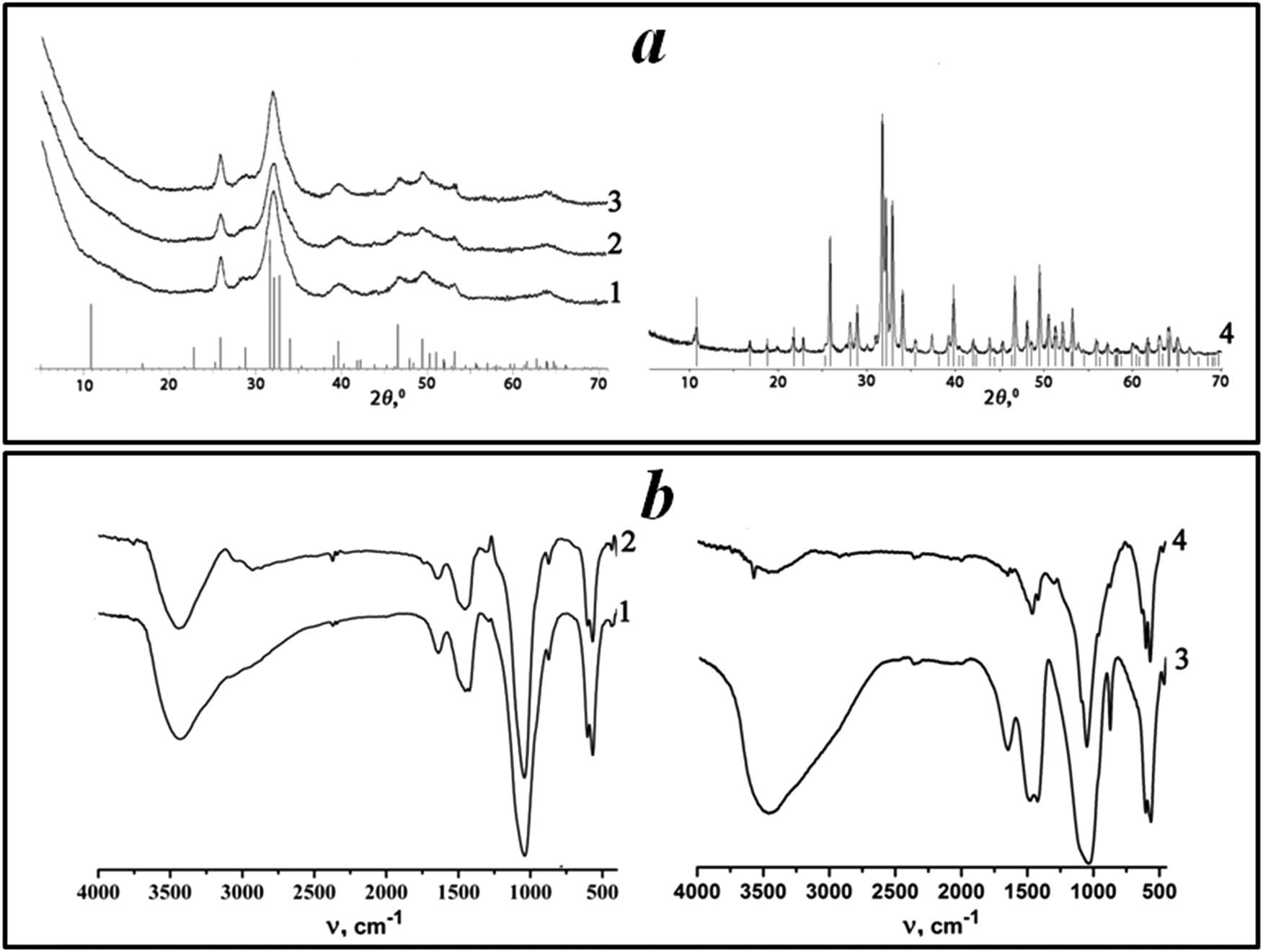
XRD patterns (a) and FTIR spectra (b) of the prepared samples: Na+, Zn2+,
Elemental analysis results for synthesized calcium phosphates
| Sample | Weight percent (%) | |||||
|---|---|---|---|---|---|---|
| Ca | Na | Cu | Zn | P | C | |
| Na+,
|
37.6 | 0.3 | — | — | 18.0 | 1.33 |
| Na+, Cu2+,
|
35.9 | 0.2 | 1.0 | — | 17.2 | 1.23 |
| Na+, Zn2+,
|
32.0 | 0.2 | — | 1.9 | 15.9 | 1.16 |
SEM data demonstrated that all synthesized samples contained spherical particles with sizes of 25–50 nm, which did not depend on their chemical composition (Figure 2a, c and d).
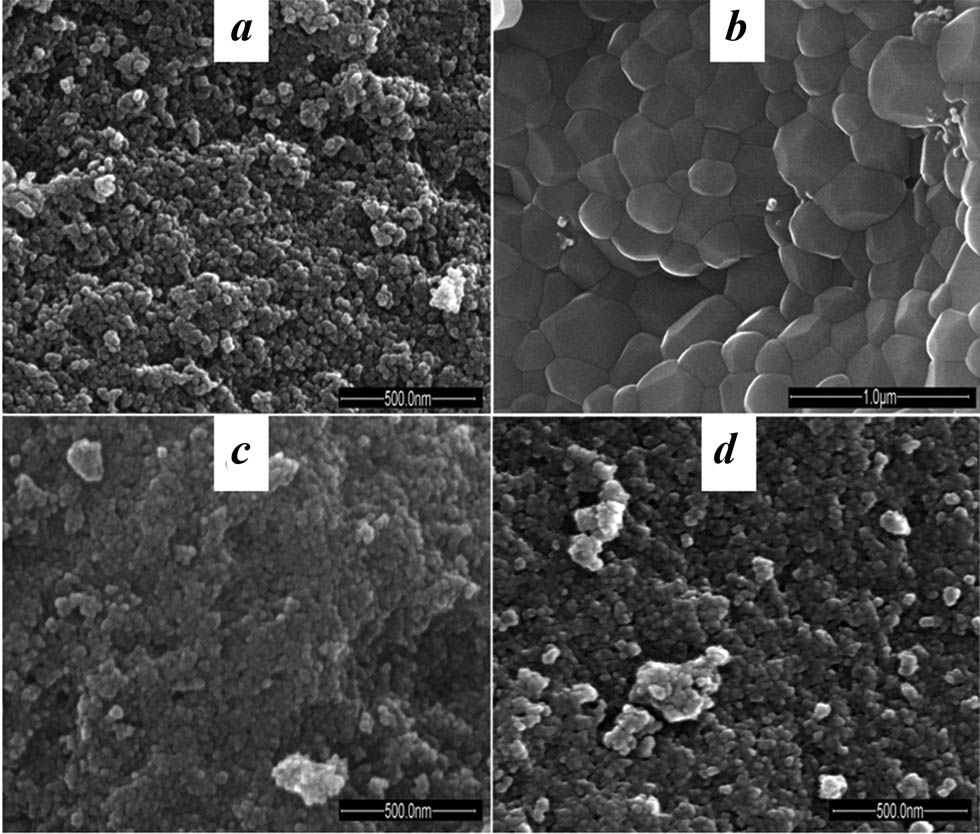
SEM images of the synthesized calcium phosphates: Na+,
Taking into account that biofilm formation depends not only on chemical composition of materials but also their surface characteristics, the influence of particle size of apatite-related phase on its biological properties has also been investigated. On this way, sodium-containing phosphate Ca10−x Na x (PO4)6−z (CO3) z (OH)2 was annealed at 700°C. As shown in ref. [36], such heating resulted in the particle aggregation and crystallite growth (300–500 nm) without changes in phase composition.
Thus, samples of chemically modified calcium phosphates with general composition Ca10−x−y
M
ii
x
Na
y
(PO4)6−z
(CO3)
z
(OH)2 (M
ii
–Cu2+, Zn2+) and labeled as Na+,
Infections associated with the formation of bacterial biofilms on implants are mainly caused by staphylococci. The biofilm of these bacteria on the surface of the implant protects microorganisms from the immune system of the host and also increases their resistance against antibiotics [6,15,37]. Bacterial biofilm formation is a complex multi-stage biological process that involves the adhesion of planktonic bacteria to the surface, proliferation, subsequent accumulation of cell biomass in the form of a multilayer structure containing a polymeric extracellular matrix, maturation and propagation of biofilm fragments [6,7,9,10].
Biofilm formation can be assessed by various methods. One of the standard methods of research on the presence of biofilm is crystal violet analysis due to the quantitative determination of the dye bound to bacterial cells on polystyrene. Therefore, the study of the influence of the synthesized samples: Na+,
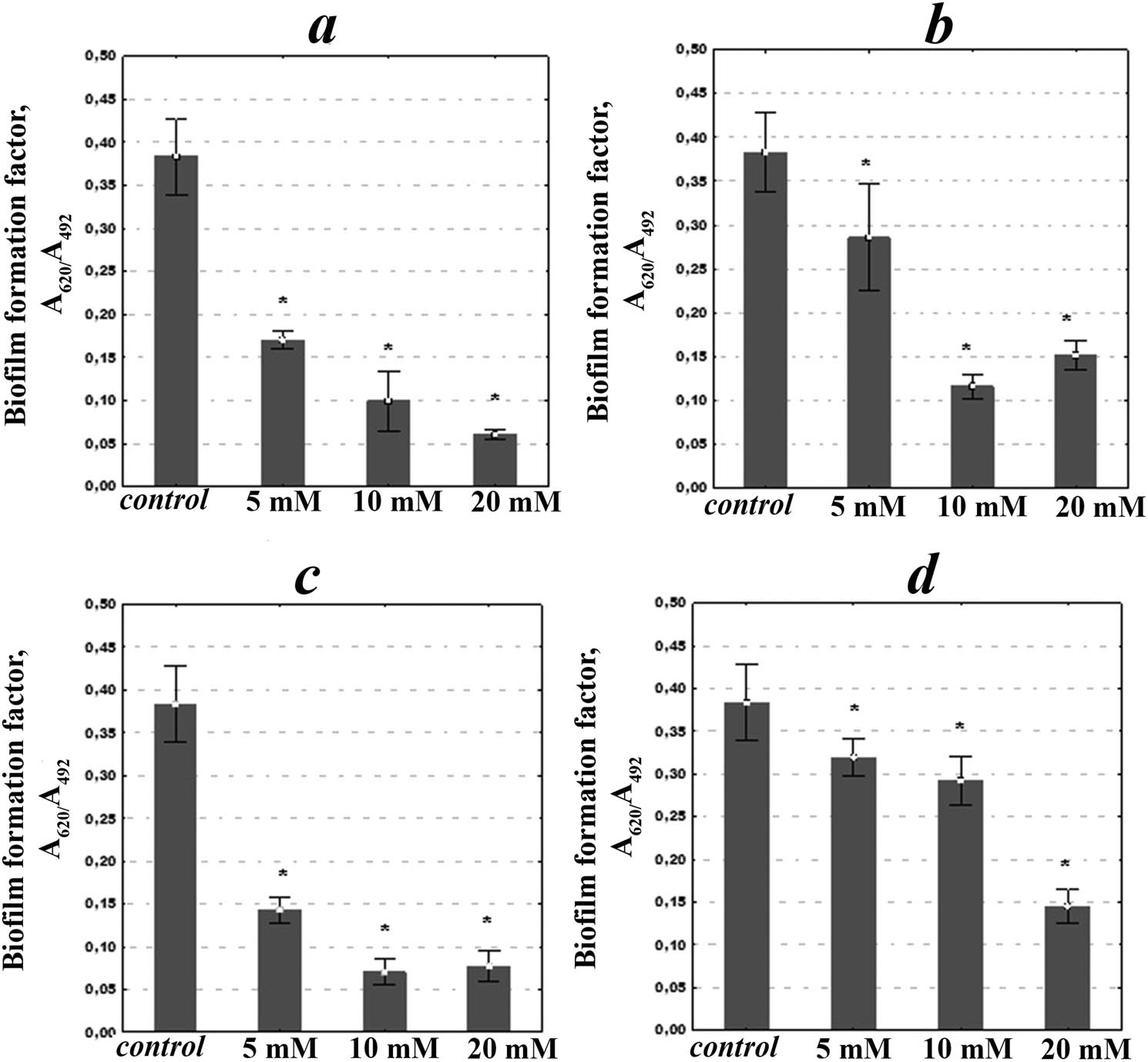
Effect of synthesized apatite-related calcium phosphates on biofilm formation of S. aureus strain (M ± m, n = 4); *p < 0.05 in comparison with control: Na+,
It should be noted that antibiofilm-forming activity of Zn-containing apatite to the resistant strains of Staphylococcus aureus was previously demonstrated in refs [38,39]. Inhibition of biofilm formation by Zn-doped apatites can be caused by general Zn2+ toxicity to bacteria above physiological concentrations but also other biofilm-specific mechanisms of action could be involved. For example, it has been proposed that sublethal Zn2+ or Ag+ concentrations could affect biofilm formation by interfering with quorum sensing [40] or modulate amyloid fibril formation [41]. Other samples Na+, Cu2+,
Analysis of influence of the synthesized samples on the biofilm formation by the P. aeruginosa strain showed the lower activity and only for samples that did not contain Cu2+ and Zn2+ ions (Figure 4). Thus, in the presence of the sample Na+,
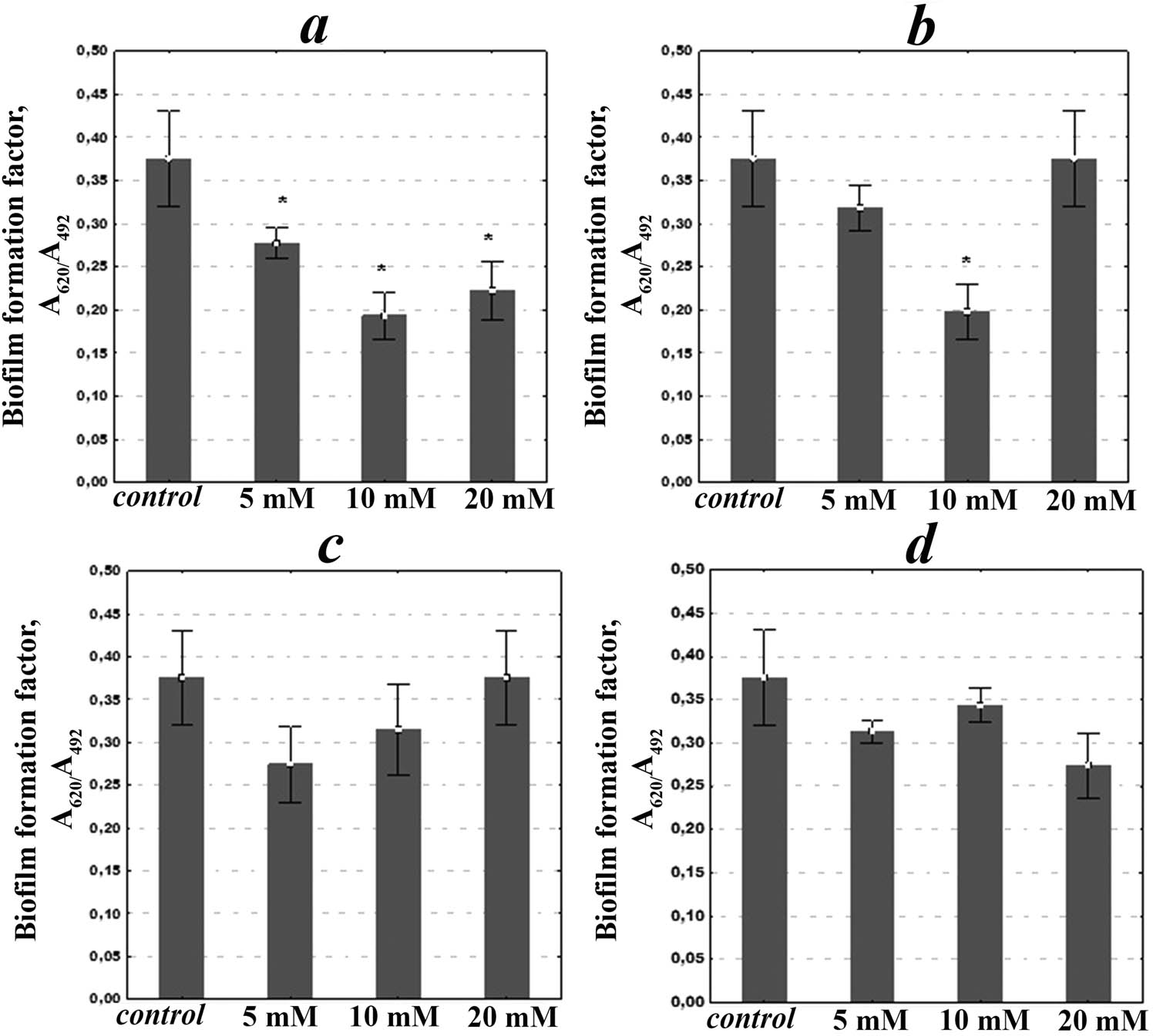
Effect of synthesized calcium phosphates on biofilm formation of P. aeruginosa strain (M ± m, n = 4); *p < 0.05 in comparison with control: Na+,
Inhibition of biofilm formation on 50% compared to the control was found for both samples Na+,
Thus, the obtained results indicate that the activity of the synthesized chemically modified calcium phosphates to the inhibition of biofilm formation by test cultures S. aureus and P. aeruginosa depends on the size of their nanoparticles and nature of dopants.
The similar results of significant antimicrobial action of modified apatite-type calcium phosphates against gram-positive microorganisms (S. aureus) in comparison with gram-negative (P. aeruginosa) were previously reported in ref. [43]. Therefore, the decrease in biofilm formation of opportunistic pathogens under the action of synthesized chemically modified calcium phosphates may be associated with a decrease in the number of viable bacteria due to mechanical destruction of bacterial cells on the surface of nanoscale structures. In addition, similar antibacterial effect was also recorded in other nanostructured oxide materials [44,45].
The interaction of synthesized modified calcium phosphates with opportunistic pathogens was investigated by the transmission electron microscopy (TEM) method (Figures 5 and 6).
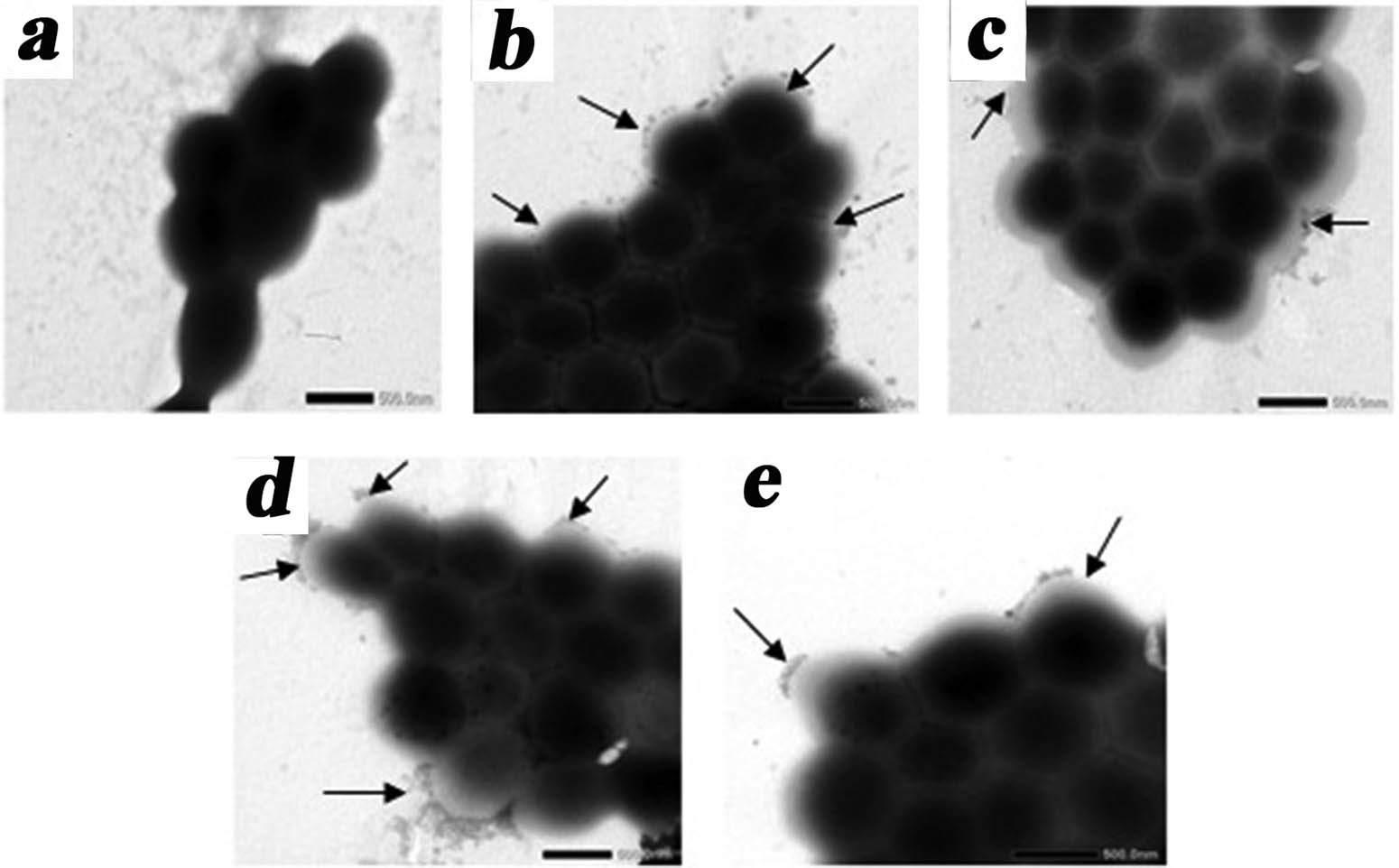
TEM images of S. aureus strain in the presence of synthesized phosphates: control S. aureus (a), S. aureus + Na+,
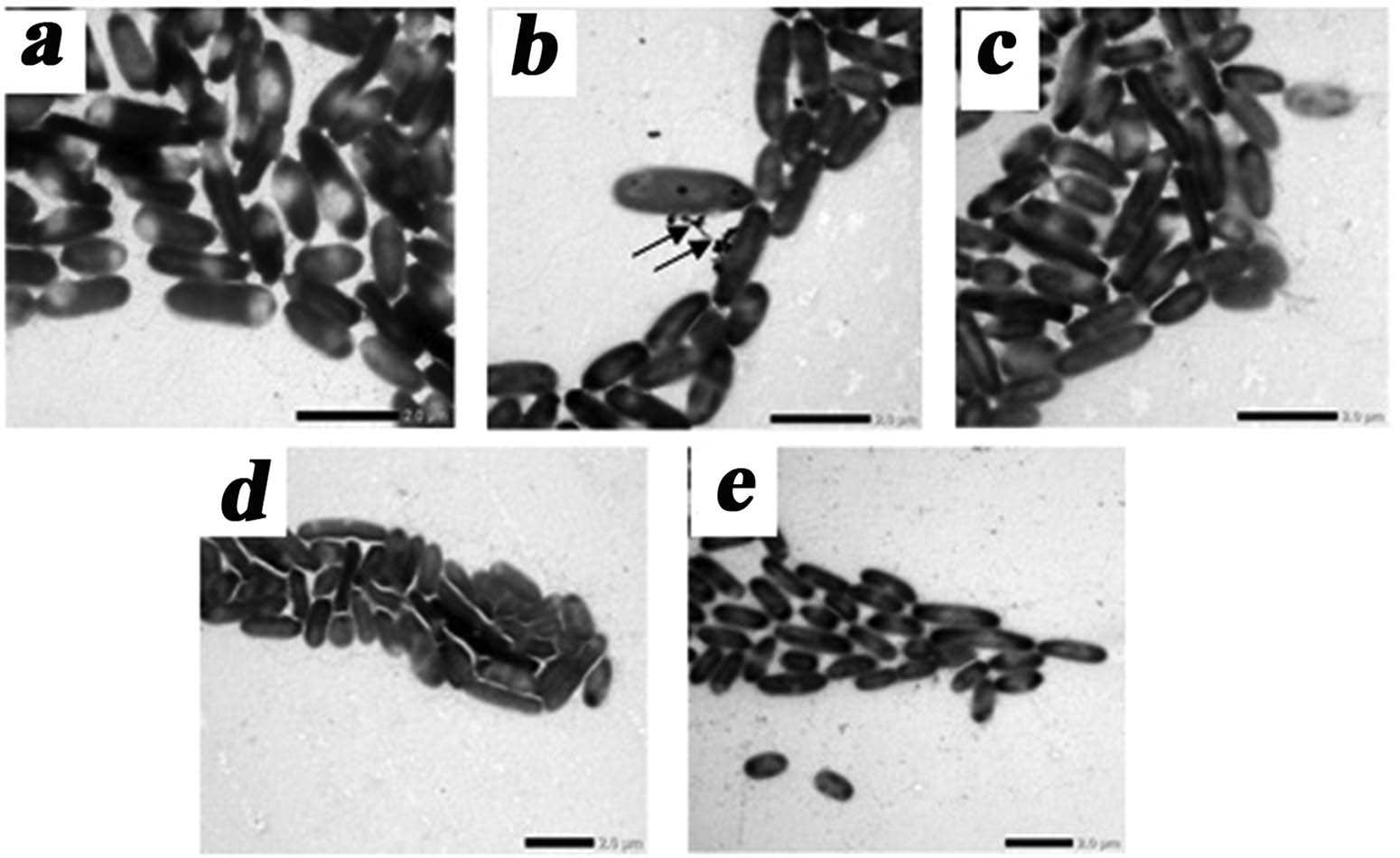
TEM images of P. aeruginosa strain in the presence of synthesized phosphates: control P. aeruginosa (a), P. aeruginosa + Na+,
It was found that the influence of the synthesized samples on biofilm formation by microorganisms correlates with their ability to attach to the surface of bacterial cells. The high adhesion of Na+,
4 Conclusions
The nanoscale (25–50 nm) particles of chemically modified calcium phosphates for the potential orthopedic application were synthesized by the precipitation method and their influence on biofilm formation by pathogenic microorganisms was investigated. The prepared apatite-related calcium phosphates Ca10−x−y
M
ii
x
Na
y
(PO4)6−z
(CO3)
z
(OH)2 (M
ii
– Cu2+, Zn2+) contained 0.2–0.3 wt% – Na+, 1.16–1.33 wt% – C and 1.0 wt% – Cu2+ or 1.9 wt% – Zn2+. According to FTIR data, the partial substitution of phosphate by carbonate groups occurred in apatite-type structure. Differences in the ability of synthesized modified calcium phosphates to inhibit biofilm formation by gram-positive (S. aureus) and gram-negative (P. aeruginosa) bacteria were found. Our results indicated that all investigated samples had an inhibitory effect on the biofilm formation of S. aureus, the highest effect was found for samples Na+,
-
Funding: This study was supported by the MES of Ukraine (RN 0119U100316).
-
Author contributions: I. G. – formal analysis; O. V. – investigation; S. P. – validation; N. S. – writing – review and editing; O. L. – investigation; and N. S. – conceptualization.
-
Conflict of interest: The authors declare no conflict of interest.
-
Data availability statement: All data generated or analyzed during this study are included in this published article.
References
[1] Balasubramanian S, Gurumurthy B, Balasubramanian A. Biomedical applications of ceramic nanomaterials: a review. Int J Pharm Sci Res. 2017;8(12):4950–9. 10.13040/IJPSR.0975-8232.8(12).4950-59.Suche in Google Scholar
[2] Pepla E, Besharat LK, Palaia G, Tenore G, Migliau G. Nano-hydroxyapatite and its applications in preventive, restorative and regenerative dentistry: a review of literature. Ann Stomatol. 2014;5(3):108–14. 10.11138/ads/2014.5.3.108.Suche in Google Scholar
[3] Turon P, del Valle LJ, Alemán C, Puiggalí J. Biodegradable and biocompatible systems based on hydroxyapatite nanoparticles. Appl Sci. 2017;7(1):60. 10.3390/app7010060.Suche in Google Scholar
[4] Nobre CMG, Pütz N, Hannig M. Adhesion of hydroxyapatite nanoparticles to dental materials under oral conditions. Scanning. 2020;2020:6065739. 10.1155/2020/6065739.Suche in Google Scholar PubMed PubMed Central
[5] Rimondini L, Fini M, Giardino R. The microbial infection of biomaterials: a challenge for clinicians and researchers. A short review. J Appl Biomater Biomech. 2005;3(1):1–10. 10.1177/228080000500300101.Suche in Google Scholar
[6] Arciola CR, Campoccia D, Ehrlich GD, Montanaro L. Biofilm-based implant infections in orthopaedics. Adv Exp Med Biol. 2015;83:29–46. 10.1007/978-3-319-11038-7_2.Suche in Google Scholar PubMed
[7] Davidson DJ, Spratt, D, Liddle, AD. Implant materials and prosthetic joint infection: the battle with the biofilm. EFORT Open Rev. 2019;4:633–9. 10.1302/2058-5241.4.180095.Suche in Google Scholar PubMed PubMed Central
[8] Hiltunen AK, Savijoki K, Nyman TA, Miettinen I, Ihalainen P, Peltonen J, et al. Structural and functional dynamics of staphylococcus aureus biofilms and biofilm matrix proteins on different clinical materials. Microorganisms. 2019;7:584. 10.3390/microorganisms7120584.Suche in Google Scholar PubMed PubMed Central
[9] Jamal M, Ahmad W, Andleeb S, Jalil F, Imran M, Nawaz MA, et al. Bacterial biofilm and associated infections. J Chin Medical Assoc. 2018;81(1):7–11. 10.1016/j.jcma.2017.07.012.Suche in Google Scholar PubMed
[10] Muhammad MH, Idris AL, Fan X, Guo Y, Yu Y, Jin X, et al. Beyond risk: bacterial biofilms and their regulating approaches. Front Microbiol. 2020;11:928. 10.3389/fmicb.2020.00928.Suche in Google Scholar PubMed PubMed Central
[11] Penesyan A, Gillings M, Paulsen IT. Antibiotic discovery: combatting bacterial resistance in cells and in biofilm communities. Molecules. 2015;20:5286–98. 10.3390/molecules20045286.Suche in Google Scholar PubMed PubMed Central
[12] Roy R, Tiwaria M, Donellib G, Tiwaria V. Strategies for combating bacterial biofilms: A focus on anti-biofilm agents and their mechanisms of action. Virulence. 2018;9(1):522–54. 10.1080/21505594.2017.1313372.Suche in Google Scholar PubMed PubMed Central
[13] Arciola CR, Campoccia D, Montanaro L. Implant infections: adhesion, biofilm formation and immune evasion. Nature Rev Microb. 2018;16(7):397–409. 10.1038/s41579-018-0019-y.Suche in Google Scholar PubMed
[14] Kumar A, Alam A, Rani M, Ehtesham NZ, Hasnain SE. Biofilms: survival and defense strategy for pathogens. Int J Med Microbiol. 2017;307(8):481–9. 10.1016/j.ijmm.2017.09.016.Suche in Google Scholar PubMed
[15] McConoughey SJ, Howlin R, Granger JF. Biofilms in periprosthetic orthopedic infections. Future Microbiol. 2014;9:987–1007. 10.2217/fmb.14.64.Suche in Google Scholar PubMed PubMed Central
[16] Kolmas J, Groszyk E, Kwiatkowska-Różycka D. Substituted hydroxyapatites with antibacterial properties. Biomed Res Int. 2014;2014(2):178123. 10.1155/2014/178123.Suche in Google Scholar PubMed PubMed Central
[17] Lim PN, Chang L, Thian ES. Development of nanosized silver-substituted apatite for biomedical applications: a review. Nanomedicine. 2015;11(6):1331–44. 10.1016/j.nano.2015.03.016.Suche in Google Scholar PubMed
[18] Ciobanu CS, Iconaru SL, Chifiriuc MC, Costescu A, Coustumer PL, Predoi D. Synthesis and antimicrobial activity of silver-doped hydroxyapatite nanoparticles. Biomed Res Int. 2013;2013:916218. 10.1155/2013/916218.Suche in Google Scholar PubMed PubMed Central
[19] Samani S, Hossainalipour SM, Tamizifar M, Rezaie HR. In-vitro antibacterial evaluation of sol-gel-derived Zn−, Ag−, and (Zn + Ag)-doped hydroxyapatite coatings against methicillin-resistant S. aureus. J Biomed Mater Res A. 2013;101(1):222–30. 10.1002/jbm.a.34322.Suche in Google Scholar PubMed
[20] Shanmugam S, Gopal B. Copper substituted hydroxyapatite and fluorapatite: synthesis, characterization and antimicrobial properties. Ceram Int. 2014;40(10):15655–62. 10.1016/j.ceramint.2014.07.086.Suche in Google Scholar
[21] Wang X, Ito A, Sogo Y, Li X, Oyane A. Zinc-containing apatite layers on external fixation rods promoting cell activity. Acta Biomater. 2010;6(3):962–8. 10.1016/j.actbio.2009.08.038.Suche in Google Scholar PubMed
[22] Ofudje EA, Adeogun AI, Idowu MA, Kareem SO. Synthesis and characterization of Zn-doped hydroxyapatite: scaffold application, antibacterial and bioactivity studies. Heliyon. 2019;5(5):e01716. 10.1016/j.heliyon.2019.e01716.Suche in Google Scholar PubMed PubMed Central
[23] Stanić V, Dimitrijević S, Antić-Stanković J, Mitrić M, Jokić B, Plećaš IB, et al. Synthesis, characterization and antimicrobial activity of copper and zinc-doped hydroxyapatite nanopowders. Appl Surf Sci. 2010;256(20):6083–9. 10.1016/j.apsusc.2010.03.124.Suche in Google Scholar
[24] Thian ES, Konishi T, Kawanobe Y, Lim PN, Choong C, Ho B, et al. Zinc-substituted hydroxyapatite: a biomaterial with enhanced bioactivity and antibacterial properties. J Mat Sci Mater in Med. 2013;24(2):437–45. 10.1007/s10856-012-4817-x.Suche in Google Scholar PubMed
[25] Udhayakumar G, Muthukumarasamy N, Velauthapillai D, Santhosh SB, Asokan V. Magnesium incorporated hydroxyapatite nanoparticles: preparation, characterization, antibacterial and larvicidal activity. Arab J Chem. 2016;11(5):645–54. 10.1016/j.arabjc.2016.05.010.Suche in Google Scholar
[26] Alshemary AZ, Akram M, Goh YF, Tariq U, Butt FK, Abdolahid A. Synthesis, characterization, in vitro bioactivity and antimicrobial activity of magnesium and nickel doped silicate hydroxyapatite. Ceram Int. 2015;41:11886–98. 10.1016/j.ceramint.2015.06.003.Suche in Google Scholar
[27] Predoi D, Iconaru SL, Predoi MV, Groza A, Gaiaschi S, Rokosz K, et al. Development of cerium-doped hydroxyapatite coatings with antimicrobial properties for biomedical applications. Coatings. 2020;10:516. 10.3390/coatings10060516.Suche in Google Scholar
[28] Grenho L, Monteiro FJ, Ferraz MP. In vitro analysis of the antibacterial effect of nanohydroxyapatite–ZnO composites. J Biomed Mater Res Part A. 2014;102(10):3726–33. 10.1002/jbm.a.35042.Suche in Google Scholar PubMed
[29] Silva-Holguín PN, Reyes-López SY. Synthesis of hydroxyapatite-Ag composite as antimicrobial agent. Dose-Response. 2020;2020(1):1–14. 10.1177/1559325820951342.Suche in Google Scholar PubMed PubMed Central
[30] Rode TM, Rode TM, Langsrud S, Holck A, Moretro T. Different patterns of biofilm formation in Staphylococcus aureus under food-related stress conditions. Int J Food Microbiol. 2007;116(3):372–83. 10.1016/j.ijfoodmicro.2007.02.017.Suche in Google Scholar PubMed
[31] Hiramatsu K, Katayama Y, Matsuo M, Sasaki T, Morimoto Y, Sekiguchi A, et al. Multi-drug-resistant Staphylococcus aureus and future chemotherapy. J Infect Chemother. 2014;20(10):593–601. 10.1016/j.jiac.2014.08.001.Suche in Google Scholar PubMed
[32] Tolker-Nielsen T. Pseudomonas aeruginosa biofilm infections: from molecular biofilm biology to new treatment possibilities. APMIS. 2014;122:1–51. 10.1111/apm.12335.Suche in Google Scholar PubMed
[33] Mas-Moruno C, Su B, Dalby MJ. Multifunctional coatings and nanotopographies: toward cell instructive and antibacterial implants. Adv Healthc Mater. 2019;8:1801103. 10.1002/adhm.201801103.Suche in Google Scholar PubMed
[34] Parikh MS, Antony S. A comprehensive review of the diagnosis and management of prosthetic joint infections in the absence of positive cultures. J Infect Public Heal. 2016;9(5):545–56. 10.1016/j.jiph.2015.12.001.Suche in Google Scholar PubMed
[35] Livitska O, Strutynska N, Zatovsky I, Nikolenko I, Slobodyanik N, Prylutskyy Y, et al. Copper(II), zinc(II) and copper(II)/zinc(II)-containing carbonate-substituted hydroxyapatite: synthesis, characterization and thermal behaviour. Mat-wiss u Werkstofftech. 2016;47:85–91. 10.1002/mawe.201600460.Suche in Google Scholar
[36] Strutynska N, Zatovsky I, Slobodyanik N, Malyshenko A, Prylutskyy Yu, Prymak O, et al. Preparation, characterization, and thermal transformation of poorly crystalline sodium- and carbonate-substituted calcium phosphate. Eur J Inorg Chem. 2015;4:622–9. 10.1002/ejic.201402761.Suche in Google Scholar
[37] Benito N, Franco M, Ribera A, Soriano A, Rodriguez-Pardo D, Sorlí L, et al. Time trends in the aetiology of prosthetic joint infections: a multicentre cohort study. Clin Microbiol Infect. 2016;22:e1–8. 10.1016/j.cmi.2016.05.004.Suche in Google Scholar PubMed
[38] Javier A, Enrique E-G, Díaz B. Antimicrobial and antibiofilm activity of biopolymer-Ni, Zn nanoparticle biocomposites synthesized using R. Mucilaginosa UANL-001Lexopolysaccharide as a capping agent. Int J Nanomed. 2019;14:2557–71. 10.2147/IJN.S196470.Suche in Google Scholar PubMed PubMed Central
[39] Seil JT, Webster TJ. Reduced Staphylococcus aureus proliferation and biofilm formation on zinc oxide nanoparticle PVC composite surfaces. Acta Biomater. 2011;7(6):2579–84. 10.1016/j.actbio.2011.03.018.Suche in Google Scholar PubMed
[40] Gómez-Gómez B, Arregui L, Serrano S, Santos A, Pérez-Corona T, Madrid Y. Unravelling mechanisms of bacterial quorum sensing disruption by metal-based nanoparticles. Sci Total Environ. 2019;696:133869. 10.1016/j.scitotenv.2019.133869.Suche in Google Scholar PubMed
[41] Yarawsky AE, Johns SL, Schuck P, Herr AB. The biofilm adhesion protein Aap from Staphylococcus epidermidis forms zinc-dependent amyloid fibers. J Biol Chem. 2020;295(14):4411–27. 10.1074/jbc.RA119.010874.Suche in Google Scholar PubMed PubMed Central
[42] Soutourina O, Dubrac S, Poupel O, Msadek T, Martin-Verstraete I. The pleiotropic CymR regulator of staphylococcus aureus plays an important role in virulence and stress response. PLoS Pathog. 2010;6(5):e1000894. 10.1371/journal.ppat.1000894.Suche in Google Scholar PubMed PubMed Central
[43] Livitska OV, Strutynska NYu, Vasyliuk OM, Grynyuk II, Prylutska SV, Slobodyanik NS. Synthesis, characterization and antimicrobial properties of chemically modified apatite-related calcium phosphates. Funct Mater. 2020;27(1):184–91. 10.15407/fm27.01.184.Suche in Google Scholar
[44] Wang W, Li TL, Wong HM, Chu PK, Kao RYT, Wu S, et al. Development of novel implants with self-antibacterial performance through in-situ growth of 1D ZnO nanowire. Colloid Surf B Biointerfaces. 2016;141:623–33. 10.1016/j.colsurfb.2016.02.036.Suche in Google Scholar PubMed
[45] Shimada T, Yasui T, Yonese A, Yanagida T, Kaji N, Kanai M, et al. Mechanical rupture-based antibacterial and cell-compatible ZnO/SiO2 nanowire structures formed by bottom-up approaches. Micromachines. 2020;11:610. 10.3390/mi11060610.Suche in Google Scholar PubMed PubMed Central
© 2021 Iryna I. Grynyuk et al., published by De Gruyter
This work is licensed under the Creative Commons Attribution 4.0 International License.
Artikel in diesem Heft
- Regular Articles
- Qualitative and semi-quantitative assessment of anthocyanins in Tibetan hulless barley from different geographical locations by UPLC-QTOF-MS and their antioxidant capacities
- Effect of sodium chloride on the expression of genes involved in the salt tolerance of Bacillus sp. strain “SX4” isolated from salinized greenhouse soil
- GC-MS analysis of mango stem bark extracts (Mangifera indica L.), Haden variety. Possible contribution of volatile compounds to its health effects
- Influence of nanoscale-modified apatite-type calcium phosphates on the biofilm formation by pathogenic microorganisms
- Removal of paracetamol from aqueous solution by containment composites
- Investigating a human pesticide intoxication incident: The importance of robust analytical approaches
- Induction of apoptosis and cell cycle arrest by chloroform fraction of Juniperus phoenicea and chemical constituents analysis
- Recovery of γ-Fe2O3 from copper ore tailings by magnetization roasting and magnetic separation
- Effects of different extraction methods on antioxidant properties of blueberry anthocyanins
- Modeling the removal of methylene blue dye using a graphene oxide/TiO2/SiO2 nanocomposite under sunlight irradiation by intelligent system
- Antimicrobial and antioxidant activities of Cinnamomum cassia essential oil and its application in food preservation
- Full spectrum and genetic algorithm-selected spectrum-based chemometric methods for simultaneous determination of azilsartan medoxomil, chlorthalidone, and azilsartan: Development, validation, and application on commercial dosage form
- Evaluation of the performance of immunoblot and immunodot techniques used to identify autoantibodies in patients with autoimmune diseases
- Computational studies by molecular docking of some antiviral drugs with COVID-19 receptors are an approach to medication for COVID-19
- Synthesis of amides and esters containing furan rings under microwave-assisted conditions
- Simultaneous removal efficiency of H2S and CO2 by high-gravity rotating packed bed: Experiments and simulation
- Design, synthesis, and biological activities of novel thiophene, pyrimidine, pyrazole, pyridine, coumarin and isoxazole: Dydrogesterone derivatives as antitumor agents
- Content and composition analysis of polysaccharides from Blaps rynchopetera and its macrophage phagocytic activity
- A new series of 2,4-thiazolidinediones endowed with potent aldose reductase inhibitory activity
- Assessing encapsulation of curcumin in cocoliposome: In vitro study
- Rare norisodinosterol derivatives from Xenia umbellata: Isolation and anti-proliferative activity
- Comparative study of antioxidant and anticancer activities and HPTLC quantification of rutin in white radish (Raphanus sativus L.) leaves and root extracts grown in Saudi Arabia
- Comparison of adsorption properties of commercial silica and rice husk ash (RHA) silica: A study by NIR spectroscopy
- Sodium borohydride (NaBH4) as a high-capacity material for next-generation sodium-ion capacitors
- Aroma components of tobacco powder from different producing areas based on gas chromatography ion mobility spectrometry
- The effects of salinity on changes in characteristics of soils collected in a saline region of the Mekong Delta, Vietnam
- Synthesis, properties, and activity of MoVTeNbO catalysts modified by zirconia-pillared clays in oxidative dehydrogenation of ethane
- Synthesis and crystal structure of N,N′-bis(4-chlorophenyl)thiourea N,N-dimethylformamide
- Quantitative analysis of volatile compounds of four Chinese traditional liquors by SPME-GC-MS and determination of total phenolic contents and antioxidant activities
- A novel separation method of the valuable components for activated clay production wastewater
- On ve-degree- and ev-degree-based topological properties of crystallographic structure of cuprite Cu2O
- Antihyperglycemic effect and phytochemical investigation of Rubia cordifolia (Indian Madder) leaves extract
- Microsphere molecularly imprinted solid-phase extraction for diazepam analysis using itaconic acid as a monomer in propanol
- A nitric oxide-releasing prodrug promotes apoptosis in human renal carcinoma cells: Involvement of reactive oxygen species
- Machine vision-based driving and feedback scheme for digital microfluidics system
- Study on the application of a steam-foam drive profile modification technology for heavy oil reservoir development
- Ni–Ru-containing mixed oxide-based composites as precursors for ethanol steam reforming catalysts: Effect of the synthesis methods on the structural and catalytic properties
- Preparation of composite soybean straw-based materials by LDHs modifying as a solid sorbent for removal of Pb(ii) from water samples
- Synthesis and spectral characterizations of vanadyl(ii) and chromium(iii) mixed ligand complexes containing metformin drug and glycine amino acid
- In vitro evaluation of lactic acid bacteria with probiotic activity isolated from local pickled leaf mustard from Wuwei in Anhui as substitutes for chemical synthetic additives
- Utilization and simulation of innovative new binuclear Co(ii), Ni(ii), Cu(ii), and Zn(ii) diimine Schiff base complexes in sterilization and coronavirus resistance (Covid-19)
- Phosphorylation of Pit-1 by cyclin-dependent kinase 5 at serine 126 is associated with cell proliferation and poor prognosis in prolactinomas
- Molecularly imprinted membrane for transport of urea, creatinine, and vitamin B12 as a hemodialysis candidate membrane
- Optimization of Murrayafoline A ethanol extraction process from the roots of Glycosmis stenocarpa, and evaluation of its Tumorigenesis inhibition activity on Hep-G2 cells
- Highly sensitive determination of α-lipoic acid in pharmaceuticals on a boron-doped diamond electrode
- Synthesis, chemo-informatics, and anticancer evaluation of fluorophenyl-isoxazole derivatives
- In vitro and in vivo investigation of polypharmacology of propolis extract as anticancer, antibacterial, anti-inflammatory, and chemical properties
- Topological indices of bipolar fuzzy incidence graph
- Preparation of Fe3O4@SiO2–ZnO catalyst and its catalytic synthesis of rosin glycol ester
- Construction of a new luminescent Cd(ii) compound for the detection of Fe3+ and treatment of Hepatitis B
- Investigation of bovine serum albumin aggregation upon exposure to silver(i) and copper(ii) metal ions using Zetasizer
- Discoloration of methylene blue at neutral pH by heterogeneous photo-Fenton-like reactions using crystalline and amorphous iron oxides
- Optimized extraction of polyphenols from leaves of Rosemary (Rosmarinus officinalis L.) grown in Lam Dong province, Vietnam, and evaluation of their antioxidant capacity
- Synthesis of novel thiourea-/urea-benzimidazole derivatives as anticancer agents
- Potency and selectivity indices of Myristica fragrans Houtt. mace chloroform extract against non-clinical and clinical human pathogens
- Simple modifications of nicotinic, isonicotinic, and 2,6-dichloroisonicotinic acids toward new weapons against plant diseases
- Synthesis, optical and structural characterisation of ZnS nanoparticles derived from Zn(ii) dithiocarbamate complexes
- Presence of short and cyclic peptides in Acacia and Ziziphus honeys may potentiate their medicinal values
- The role of vitamin D deficiency and elevated inflammatory biomarkers as risk factors for the progression of diabetic nephropathy in patients with type 2 diabetes mellitus
- Quantitative structure–activity relationship study on prolonged anticonvulsant activity of terpene derivatives in pentylenetetrazole test
- GADD45B induced the enhancing of cell viability and proliferation in radiotherapy and increased the radioresistance of HONE1 cells
- Cannabis sativa L. chemical compositions as potential plasmodium falciparum dihydrofolate reductase-thymidinesynthase enzyme inhibitors: An in silico study for drug development
- Dynamics of λ-cyhalothrin disappearance and expression of selected P450 genes in bees depending on the ambient temperature
- Identification of synthetic cannabinoid methyl 2-{[1-(cyclohexylmethyl)-1H-indol-3-yl] formamido}-3-methylbutanoate using modern mass spectrometry and nuclear magnetic resonance techniques
- Study on the speciation of arsenic in the genuine medicinal material honeysuckle
- Two Cu(ii)-based coordination polymers: Crystal structures and treatment activity on periodontitis
- Conversion of furfuryl alcohol to ethyl levulinate in the presence of mesoporous aluminosilicate catalyst
- Review Articles
- Hsien Wu and his major contributions to the chemical era of immunology
- Overview of the major classes of new psychoactive substances, psychoactive effects, analytical determination and conformational analysis of selected illegal drugs
- An overview of persistent organic pollutants along the coastal environment of Kuwait
- Mechanism underlying sevoflurane-induced protection in cerebral ischemia–reperfusion injury
- COVID-19 and SARS-CoV-2: Everything we know so far – A comprehensive review
- Challenge of diabetes mellitus and researchers’ contributions to its control
- Advances in the design and application of transition metal oxide-based supercapacitors
- Color and composition of beauty products formulated with lemongrass essential oil: Cosmetics formulation with lemongrass essential oil
- The structural chemistry of zinc(ii) and nickel(ii) dithiocarbamate complexes
- Bioprospecting for antituberculosis natural products – A review
- Recent progress in direct urea fuel cell
- Rapid Communications
- A comparative morphological study of titanium dioxide surface layer dental implants
- Changes in the antioxidative properties of honeys during their fermentation
- Erratum
- Erratum to “Corrosion study of copper in aqueous sulfuric acid solution in the presence of (2E,5E)-2,5-dibenzylidenecyclopentanone and (2E,5E)-bis[(4-dimethylamino)benzylidene]cyclopentanone: Experimental and theoretical study”
- Erratum to “Modified TDAE petroleum plasticiser”
- Corrigendum
- Corrigendum to “A nitric oxide-releasing prodrug promotes apoptosis in human renal carcinoma cells: Involvement of reactive oxygen species”
- Special Issue on 3rd IC3PE 2020
- Visible light-responsive photocatalyst of SnO2/rGO prepared using Pometia pinnata leaf extract
- Antihyperglycemic activity of Centella asiatica (L.) Urb. leaf ethanol extract SNEDDS in zebrafish (Danio rerio)
- Selection of oil extraction process from Chlorella species of microalgae by using multi-criteria decision analysis technique for biodiesel production
- Special Issue on the 14th Joint Conference of Chemistry (14JCC)
- Synthesis and in vitro cytotoxicity evaluation of isatin-pyrrole derivatives against HepG2 cell line
- CO2 gas separation using mixed matrix membranes based on polyethersulfone/MIL-100(Al)
- Effect of synthesis and activation methods on the character of CoMo/ultrastable Y-zeolite catalysts
- Special Issue on Electrochemical Amplified Sensors
- Enhancement of graphene oxide through β-cyclodextrin composite to sensitive analysis of an antidepressant: Sulpiride
- Investigation of the spectroelectrochemical behavior of quercetin isolated from Zanthoxylum bungeanum
- An electrochemical sensor for high sensitive determination of lysozyme based on the aptamer competition approach
- An improved non-enzymatic electrochemical sensor amplified with CuO nanostructures for sensitive determination of uric acid
- Special Issue on Applied Biochemistry and Biotechnology 2020
- Fast discrimination of avocado oil for different extracted methods using headspace-gas chromatography-ion mobility spectroscopy with PCA based on volatile organic compounds
- Effect of alkali bases on the synthesis of ZnO quantum dots
- Quality evaluation of Cabernet Sauvignon wines in different vintages by 1H nuclear magnetic resonance-based metabolomics
- Special Issue on the Joint Science Congress of Materials and Polymers (ISCMP 2019)
- Diatomaceous Earth: Characterization, thermal modification, and application
- Electrochemical determination of atenolol and propranolol using a carbon paste sensor modified with natural ilmenite
- Special Issue on the Conference of Energy, Fuels, Environment 2020
- Assessment of the mercury contamination of landfilled and recovered foundry waste – a case study
- Primary energy consumption in selected EU Countries compared to global trends
- Modified TDAE petroleum plasticiser
- Use of glycerol waste in lactic acid bacteria metabolism for the production of lactic acid: State of the art in Poland
- Topical Issue on Applications of Mathematics in Chemistry
- Theoretical study of energy, inertia and nullity of phenylene and anthracene
- Banhatti, revan and hyper-indices of silicon carbide Si2C3-III[n,m]
- Topical Issue on Agriculture
- Occurrence of mycotoxins in selected agricultural and commercial products available in eastern Poland
- Special Issue on Ethnobotanical, Phytochemical and Biological Investigation of Medicinal Plants
- Acute and repeated dose 60-day oral toxicity assessment of chemically characterized Berberis hispanica Boiss. and Reut in Wistar rats
- Phytochemical profile, in vitro antioxidant, and anti-protein denaturation activities of Curcuma longa L. rhizome and leaves
- Antiplasmodial potential of Eucalyptus obliqua leaf methanolic extract against Plasmodium vivax: An in vitro study
- Prunus padus L. bark as a functional promoting component in functional herbal infusions – cyclooxygenase-2 inhibitory, antioxidant, and antimicrobial effects
- Molecular and docking studies of tetramethoxy hydroxyflavone compound from Artemisia absinthium against carcinogens found in cigarette smoke
- Special Issue on the Joint Science Congress of Materials and Polymers (ISCMP 2020)
- Preparation of cypress (Cupressus sempervirens L.) essential oil loaded poly(lactic acid) nanofibers
- Influence of mica mineral on flame retardancy and mechanical properties of intumescent flame retardant polypropylene composites
- Production and characterization of thermoplastic elastomer foams based on the styrene–ethylene–butylene–styrene (SEBS) rubber and thermoplastic material
- Special Issue on Applied Chemistry in Agriculture and Food Science
- Impact of essential oils on the development of pathogens of the Fusarium genus and germination parameters of selected crops
- Yield, volume, quality, and reduction of biotic stress influenced by titanium application in oilseed rape, winter wheat, and maize cultivations
- Influence of potato variety on polyphenol profile composition and glycoalcaloid contents of potato juice
- Carryover effect of direct-fed microbial supplementation and early weaning on the growth performance and carcass characteristics of growing Najdi lambs
- Special Issue on Applied Biochemistry and Biotechnology (ABB 2021)
- The electrochemical redox mechanism and antioxidant activity of polyphenolic compounds based on inlaid multi-walled carbon nanotubes-modified graphite electrode
- Study of an adsorption method for trace mercury based on Bacillus subtilis
- Special Issue on The 1st Malaysia International Conference on Nanotechnology & Catalysis (MICNC2021)
- Mitigating membrane biofouling in biofuel cell system – A review
- Mechanical properties of polymeric biomaterials: Modified ePTFE using gamma irradiation
Artikel in diesem Heft
- Regular Articles
- Qualitative and semi-quantitative assessment of anthocyanins in Tibetan hulless barley from different geographical locations by UPLC-QTOF-MS and their antioxidant capacities
- Effect of sodium chloride on the expression of genes involved in the salt tolerance of Bacillus sp. strain “SX4” isolated from salinized greenhouse soil
- GC-MS analysis of mango stem bark extracts (Mangifera indica L.), Haden variety. Possible contribution of volatile compounds to its health effects
- Influence of nanoscale-modified apatite-type calcium phosphates on the biofilm formation by pathogenic microorganisms
- Removal of paracetamol from aqueous solution by containment composites
- Investigating a human pesticide intoxication incident: The importance of robust analytical approaches
- Induction of apoptosis and cell cycle arrest by chloroform fraction of Juniperus phoenicea and chemical constituents analysis
- Recovery of γ-Fe2O3 from copper ore tailings by magnetization roasting and magnetic separation
- Effects of different extraction methods on antioxidant properties of blueberry anthocyanins
- Modeling the removal of methylene blue dye using a graphene oxide/TiO2/SiO2 nanocomposite under sunlight irradiation by intelligent system
- Antimicrobial and antioxidant activities of Cinnamomum cassia essential oil and its application in food preservation
- Full spectrum and genetic algorithm-selected spectrum-based chemometric methods for simultaneous determination of azilsartan medoxomil, chlorthalidone, and azilsartan: Development, validation, and application on commercial dosage form
- Evaluation of the performance of immunoblot and immunodot techniques used to identify autoantibodies in patients with autoimmune diseases
- Computational studies by molecular docking of some antiviral drugs with COVID-19 receptors are an approach to medication for COVID-19
- Synthesis of amides and esters containing furan rings under microwave-assisted conditions
- Simultaneous removal efficiency of H2S and CO2 by high-gravity rotating packed bed: Experiments and simulation
- Design, synthesis, and biological activities of novel thiophene, pyrimidine, pyrazole, pyridine, coumarin and isoxazole: Dydrogesterone derivatives as antitumor agents
- Content and composition analysis of polysaccharides from Blaps rynchopetera and its macrophage phagocytic activity
- A new series of 2,4-thiazolidinediones endowed with potent aldose reductase inhibitory activity
- Assessing encapsulation of curcumin in cocoliposome: In vitro study
- Rare norisodinosterol derivatives from Xenia umbellata: Isolation and anti-proliferative activity
- Comparative study of antioxidant and anticancer activities and HPTLC quantification of rutin in white radish (Raphanus sativus L.) leaves and root extracts grown in Saudi Arabia
- Comparison of adsorption properties of commercial silica and rice husk ash (RHA) silica: A study by NIR spectroscopy
- Sodium borohydride (NaBH4) as a high-capacity material for next-generation sodium-ion capacitors
- Aroma components of tobacco powder from different producing areas based on gas chromatography ion mobility spectrometry
- The effects of salinity on changes in characteristics of soils collected in a saline region of the Mekong Delta, Vietnam
- Synthesis, properties, and activity of MoVTeNbO catalysts modified by zirconia-pillared clays in oxidative dehydrogenation of ethane
- Synthesis and crystal structure of N,N′-bis(4-chlorophenyl)thiourea N,N-dimethylformamide
- Quantitative analysis of volatile compounds of four Chinese traditional liquors by SPME-GC-MS and determination of total phenolic contents and antioxidant activities
- A novel separation method of the valuable components for activated clay production wastewater
- On ve-degree- and ev-degree-based topological properties of crystallographic structure of cuprite Cu2O
- Antihyperglycemic effect and phytochemical investigation of Rubia cordifolia (Indian Madder) leaves extract
- Microsphere molecularly imprinted solid-phase extraction for diazepam analysis using itaconic acid as a monomer in propanol
- A nitric oxide-releasing prodrug promotes apoptosis in human renal carcinoma cells: Involvement of reactive oxygen species
- Machine vision-based driving and feedback scheme for digital microfluidics system
- Study on the application of a steam-foam drive profile modification technology for heavy oil reservoir development
- Ni–Ru-containing mixed oxide-based composites as precursors for ethanol steam reforming catalysts: Effect of the synthesis methods on the structural and catalytic properties
- Preparation of composite soybean straw-based materials by LDHs modifying as a solid sorbent for removal of Pb(ii) from water samples
- Synthesis and spectral characterizations of vanadyl(ii) and chromium(iii) mixed ligand complexes containing metformin drug and glycine amino acid
- In vitro evaluation of lactic acid bacteria with probiotic activity isolated from local pickled leaf mustard from Wuwei in Anhui as substitutes for chemical synthetic additives
- Utilization and simulation of innovative new binuclear Co(ii), Ni(ii), Cu(ii), and Zn(ii) diimine Schiff base complexes in sterilization and coronavirus resistance (Covid-19)
- Phosphorylation of Pit-1 by cyclin-dependent kinase 5 at serine 126 is associated with cell proliferation and poor prognosis in prolactinomas
- Molecularly imprinted membrane for transport of urea, creatinine, and vitamin B12 as a hemodialysis candidate membrane
- Optimization of Murrayafoline A ethanol extraction process from the roots of Glycosmis stenocarpa, and evaluation of its Tumorigenesis inhibition activity on Hep-G2 cells
- Highly sensitive determination of α-lipoic acid in pharmaceuticals on a boron-doped diamond electrode
- Synthesis, chemo-informatics, and anticancer evaluation of fluorophenyl-isoxazole derivatives
- In vitro and in vivo investigation of polypharmacology of propolis extract as anticancer, antibacterial, anti-inflammatory, and chemical properties
- Topological indices of bipolar fuzzy incidence graph
- Preparation of Fe3O4@SiO2–ZnO catalyst and its catalytic synthesis of rosin glycol ester
- Construction of a new luminescent Cd(ii) compound for the detection of Fe3+ and treatment of Hepatitis B
- Investigation of bovine serum albumin aggregation upon exposure to silver(i) and copper(ii) metal ions using Zetasizer
- Discoloration of methylene blue at neutral pH by heterogeneous photo-Fenton-like reactions using crystalline and amorphous iron oxides
- Optimized extraction of polyphenols from leaves of Rosemary (Rosmarinus officinalis L.) grown in Lam Dong province, Vietnam, and evaluation of their antioxidant capacity
- Synthesis of novel thiourea-/urea-benzimidazole derivatives as anticancer agents
- Potency and selectivity indices of Myristica fragrans Houtt. mace chloroform extract against non-clinical and clinical human pathogens
- Simple modifications of nicotinic, isonicotinic, and 2,6-dichloroisonicotinic acids toward new weapons against plant diseases
- Synthesis, optical and structural characterisation of ZnS nanoparticles derived from Zn(ii) dithiocarbamate complexes
- Presence of short and cyclic peptides in Acacia and Ziziphus honeys may potentiate their medicinal values
- The role of vitamin D deficiency and elevated inflammatory biomarkers as risk factors for the progression of diabetic nephropathy in patients with type 2 diabetes mellitus
- Quantitative structure–activity relationship study on prolonged anticonvulsant activity of terpene derivatives in pentylenetetrazole test
- GADD45B induced the enhancing of cell viability and proliferation in radiotherapy and increased the radioresistance of HONE1 cells
- Cannabis sativa L. chemical compositions as potential plasmodium falciparum dihydrofolate reductase-thymidinesynthase enzyme inhibitors: An in silico study for drug development
- Dynamics of λ-cyhalothrin disappearance and expression of selected P450 genes in bees depending on the ambient temperature
- Identification of synthetic cannabinoid methyl 2-{[1-(cyclohexylmethyl)-1H-indol-3-yl] formamido}-3-methylbutanoate using modern mass spectrometry and nuclear magnetic resonance techniques
- Study on the speciation of arsenic in the genuine medicinal material honeysuckle
- Two Cu(ii)-based coordination polymers: Crystal structures and treatment activity on periodontitis
- Conversion of furfuryl alcohol to ethyl levulinate in the presence of mesoporous aluminosilicate catalyst
- Review Articles
- Hsien Wu and his major contributions to the chemical era of immunology
- Overview of the major classes of new psychoactive substances, psychoactive effects, analytical determination and conformational analysis of selected illegal drugs
- An overview of persistent organic pollutants along the coastal environment of Kuwait
- Mechanism underlying sevoflurane-induced protection in cerebral ischemia–reperfusion injury
- COVID-19 and SARS-CoV-2: Everything we know so far – A comprehensive review
- Challenge of diabetes mellitus and researchers’ contributions to its control
- Advances in the design and application of transition metal oxide-based supercapacitors
- Color and composition of beauty products formulated with lemongrass essential oil: Cosmetics formulation with lemongrass essential oil
- The structural chemistry of zinc(ii) and nickel(ii) dithiocarbamate complexes
- Bioprospecting for antituberculosis natural products – A review
- Recent progress in direct urea fuel cell
- Rapid Communications
- A comparative morphological study of titanium dioxide surface layer dental implants
- Changes in the antioxidative properties of honeys during their fermentation
- Erratum
- Erratum to “Corrosion study of copper in aqueous sulfuric acid solution in the presence of (2E,5E)-2,5-dibenzylidenecyclopentanone and (2E,5E)-bis[(4-dimethylamino)benzylidene]cyclopentanone: Experimental and theoretical study”
- Erratum to “Modified TDAE petroleum plasticiser”
- Corrigendum
- Corrigendum to “A nitric oxide-releasing prodrug promotes apoptosis in human renal carcinoma cells: Involvement of reactive oxygen species”
- Special Issue on 3rd IC3PE 2020
- Visible light-responsive photocatalyst of SnO2/rGO prepared using Pometia pinnata leaf extract
- Antihyperglycemic activity of Centella asiatica (L.) Urb. leaf ethanol extract SNEDDS in zebrafish (Danio rerio)
- Selection of oil extraction process from Chlorella species of microalgae by using multi-criteria decision analysis technique for biodiesel production
- Special Issue on the 14th Joint Conference of Chemistry (14JCC)
- Synthesis and in vitro cytotoxicity evaluation of isatin-pyrrole derivatives against HepG2 cell line
- CO2 gas separation using mixed matrix membranes based on polyethersulfone/MIL-100(Al)
- Effect of synthesis and activation methods on the character of CoMo/ultrastable Y-zeolite catalysts
- Special Issue on Electrochemical Amplified Sensors
- Enhancement of graphene oxide through β-cyclodextrin composite to sensitive analysis of an antidepressant: Sulpiride
- Investigation of the spectroelectrochemical behavior of quercetin isolated from Zanthoxylum bungeanum
- An electrochemical sensor for high sensitive determination of lysozyme based on the aptamer competition approach
- An improved non-enzymatic electrochemical sensor amplified with CuO nanostructures for sensitive determination of uric acid
- Special Issue on Applied Biochemistry and Biotechnology 2020
- Fast discrimination of avocado oil for different extracted methods using headspace-gas chromatography-ion mobility spectroscopy with PCA based on volatile organic compounds
- Effect of alkali bases on the synthesis of ZnO quantum dots
- Quality evaluation of Cabernet Sauvignon wines in different vintages by 1H nuclear magnetic resonance-based metabolomics
- Special Issue on the Joint Science Congress of Materials and Polymers (ISCMP 2019)
- Diatomaceous Earth: Characterization, thermal modification, and application
- Electrochemical determination of atenolol and propranolol using a carbon paste sensor modified with natural ilmenite
- Special Issue on the Conference of Energy, Fuels, Environment 2020
- Assessment of the mercury contamination of landfilled and recovered foundry waste – a case study
- Primary energy consumption in selected EU Countries compared to global trends
- Modified TDAE petroleum plasticiser
- Use of glycerol waste in lactic acid bacteria metabolism for the production of lactic acid: State of the art in Poland
- Topical Issue on Applications of Mathematics in Chemistry
- Theoretical study of energy, inertia and nullity of phenylene and anthracene
- Banhatti, revan and hyper-indices of silicon carbide Si2C3-III[n,m]
- Topical Issue on Agriculture
- Occurrence of mycotoxins in selected agricultural and commercial products available in eastern Poland
- Special Issue on Ethnobotanical, Phytochemical and Biological Investigation of Medicinal Plants
- Acute and repeated dose 60-day oral toxicity assessment of chemically characterized Berberis hispanica Boiss. and Reut in Wistar rats
- Phytochemical profile, in vitro antioxidant, and anti-protein denaturation activities of Curcuma longa L. rhizome and leaves
- Antiplasmodial potential of Eucalyptus obliqua leaf methanolic extract against Plasmodium vivax: An in vitro study
- Prunus padus L. bark as a functional promoting component in functional herbal infusions – cyclooxygenase-2 inhibitory, antioxidant, and antimicrobial effects
- Molecular and docking studies of tetramethoxy hydroxyflavone compound from Artemisia absinthium against carcinogens found in cigarette smoke
- Special Issue on the Joint Science Congress of Materials and Polymers (ISCMP 2020)
- Preparation of cypress (Cupressus sempervirens L.) essential oil loaded poly(lactic acid) nanofibers
- Influence of mica mineral on flame retardancy and mechanical properties of intumescent flame retardant polypropylene composites
- Production and characterization of thermoplastic elastomer foams based on the styrene–ethylene–butylene–styrene (SEBS) rubber and thermoplastic material
- Special Issue on Applied Chemistry in Agriculture and Food Science
- Impact of essential oils on the development of pathogens of the Fusarium genus and germination parameters of selected crops
- Yield, volume, quality, and reduction of biotic stress influenced by titanium application in oilseed rape, winter wheat, and maize cultivations
- Influence of potato variety on polyphenol profile composition and glycoalcaloid contents of potato juice
- Carryover effect of direct-fed microbial supplementation and early weaning on the growth performance and carcass characteristics of growing Najdi lambs
- Special Issue on Applied Biochemistry and Biotechnology (ABB 2021)
- The electrochemical redox mechanism and antioxidant activity of polyphenolic compounds based on inlaid multi-walled carbon nanotubes-modified graphite electrode
- Study of an adsorption method for trace mercury based on Bacillus subtilis
- Special Issue on The 1st Malaysia International Conference on Nanotechnology & Catalysis (MICNC2021)
- Mitigating membrane biofouling in biofuel cell system – A review
- Mechanical properties of polymeric biomaterials: Modified ePTFE using gamma irradiation
