GADD45B induced the enhancing of cell viability and proliferation in radiotherapy and increased the radioresistance of HONE1 cells
-
Yanning Ma
 and
Shufen Zhao
and
Shufen Zhao

Abstract
This study aimed to investigate the key role and mechanism of GADD45B in the radiation resistance of nasopharyngeal carcinoma (NPC) cell lines. Radiotherapy-resistant HONE1 (HONE1-R) cells with stable genetic radioresistance were cultured under continuous radiation stimulation. CCK-8 and clone formation assays were used to verify the radioresistance of the cell line. Transcriptome sequencing was used to identify the most important differential signaling pathway in the cell line. Quantitative reverse transcription polymerase chain reaction (qRT-PCR) and Western blot analysis were used to verify the sequencing results. GADD45B-siRNA was used to knock down the key gene so as to verify the downstream gene expression and analyze its mechanism. The transcriptome analysis showed that 702 genes were upregulated and 772 genes were downregulated in the HONE1-R cell lines. The core differential signaling pathway was mitogen-activated protein kinase (MAPK) signaling pathway, and the core differential gene was GADD45B. After GADD45B was knocked down, the cell viability and proliferation ability of HONE1-R cell lines significantly decreased under radiation, and the expression of cyclin B1 and p-CDK1 decreased significantly. MAPK is the core signaling pathway in radioresistance of NPC. GADD45B plays an important role by affecting cell viability and proliferation in NPC radioresistance. GADD45B is a potential target of radioresistance in NPC.
1 Introduction
Nasopharyngeal carcinoma (NPC) is a malignant tumor of the head and neck originating from the epithelial cells of the nasopharynx. Squamous cell carcinoma is the main pathological type of NPC. Comprehensive treatment based on radiotherapy is preferred for patients with NPC due to the complexity of anatomical location and high sensitivity to radiation [1]. Early-stage NPC can be cured by radiotherapy, and the 5 year survival is up to 90% [2]. Nevertheless, more than 70% of patients with NPC are in the middle- or advanced-stage disease at initial diagnosis. The 5 year survival of patients with Stages III and IV NPC is only 53–81.8 and 28–66.39%, respectively [3,4]. Local recurrence and distant metastases of NPC caused by radiotherapy resistance are the major obstacles in the clinical treatment, despite some progress in the current therapeutic strategies [5,6]. Secondary radiotherapy protects against radiotherapy resistance or recurrence of NPC, but easily leads to severe complications and yields limited benefits [7]. Therefore, clarifying the molecular mechanism underlying radiotherapy resistance of NPC and enhancing radiotherapy sensitivity are important for improving the clinical outcomes.
The transcriptome is a set of all RNA transcripts. Transcriptome analysis of a specific tissue or cell at a specific stage or in a functional state from an overall perspective can clarify the molecular mechanism of diseases [8]. This analysis has been applied to the research on NPC, achieving a certain outcome. Zhou et al. [9] identified 420 differentially expressed long noncoding RNAs and 31 circular RNAs in the transcriptome information of NPC and predicted their targets. Chang et al. [10] analyzed the transcriptome data of NPC tissues. They found that SSX2IP was significantly upregulated in NPC tissues, which was closely linked to the invasive ability of NPC cells and predicted a poor prognosis. However, the transcriptome analysis of radiotherapy-resistant NPC cells has been rarely reported.
In this study, a stable NPC cell line, radiotherapy-resistant HONE1 (HONE1-R), was first established by comparing the transcriptome sequencing data of HONE1-R and sensitive cell lines. Then, the study focused on the key gene GADD45B related to NPC and its related signaling pathway. The mechanism of the radioresistance of GADD45B to HONE1-R cell line was further explored by knocking down the expression of GADD45B.
2 Methods
2.1 Cell culture
The NPC cell line HONE1 was purchased from the Query Network for Microbial Species of China (http://www.biobw.org/; catalog number: bio-105809). The cells were cultivated in the dulbecco’s modified eagle medium (DMEM) containing 10% fetal bovine serum (FBS) and 1% penicillin and streptomycin in a humidified atmosphere of 5% CO2 at 37°C. Adherent cells with more than 80% confluence were passaged using trypsin.
2.2 Generation of the HONE1-R cell line
HONE1 cells in the logarithmic growth phase were digested into a single-cell suspension and implanted in a six-well plate (4 × 10⁴ cells per well). After adherence, the cells were induced with 8 Gy irradiation. Surviving subclonal cells were reinduced with 6 Gy irradiation, cultured, and passaged for live cells for a total of three periods. Finally, the surviving cells were induced with 8 Gy irradiation, and the live cells were stable HONE1-R cells. The HONE1-R cells were subcultured to more than five generations and stably inherited.
2.3 CCK-8 assay
HONE1 and HONE1-R cells in the logarithmic growth phase were used to prepare a cell suspension (2 × 10³ cells/100 µL), which was implanted in a 96-well plate. After cell adherence, 6 Gy irradiation was used. In each well, 10 µL of CCK-8 solution (Apexbio, USA) was added at the indicated time points. After 1 h, the optical density at 450 nm was measured using a microplate reader to calculate the proliferation rate.
2.4 Colony formation assay
The HONE1 and HONE1-R cells were implanted in a six-well plate (300 cells per well). Until cell adherence, the cells were irradiated with 6 Gy X-ray radiation and cultured until the formation of visible colonies. They were fixed in methanol for 15 min, washed with phosphate-buffered saline, and stained with 1% crystal violet for 20 min. Visible colonies containing more than 50 cells were captured and counted.
2.5 Construction of a specific cDNA library and high-throughput sequencing
Cellular RNAs were isolated using TRIzol and subjected to agarose gel electrophoresis and purification. The mRNA was enriched using oligomeric dT nucleotide-coated resins and separated into short reads by adding the fragmentation buffer. Using the mRNA as a primer, the first strand of cDNA was synthesized through Random Primer 6; the second strand of cDNA was then synthesized by the induction of the loading buffer, deoxyribonucleotide triphosphate, DNA polymerase I, and RNaseH. Double-stranded cDNA was purified using AMPure XP beads, followed by the generation of a poly-A tail and the connection of DNA ligase. Subsequently, optimal-sized segments were selected using AMPure XP beads. The second-strand cDNA containing U was degraded by the USER enzyme to ensure that all sequencing information was from the first-strand cDNA. Finally, cDNA was subjected to polymerase chain reaction (PCR), and purified PCR products were used to generate a cDNA library.
The cDNA library was primarily quantified using Qubit 3.0. The insert size of the cDNA library was detected using Qsep100. The qualified library was subjected to sequencing using Illumina HiSeqTM2000/Miseq, and the obtained clean reads were compared with the ribosome database to clear the ribosome sequences.
2.6 Analysis of differentially expressed genes
The posterior distributions (Z) of reads per million mapped reads calculated by the Bayesian method were analyzed using generalized fold change (GFOLD), and GFOLD (Z) was calculated. A differentially expressed gene was determined when its GFOLD (Z) was >0 or <0. The fold change was also calculated. A gene showing a log2 FC ≥1 or ≤−1 was considered as a differentially expressed gene, and a gene showing a false discovery rate of ≤0.05 was considered as a significantly differentially expressed gene. The functional annotation chart was produced using DAVID (https://david.ncifcrf.gov/).
2.7 Bioinformatics analysis
The gene ontology (GO) terms classified gene functions into molecular functions (MF), biological processes (BP), and cellular components (CC). GO annotations were obtained using the database. A P value of <0.05 was considered as a cut-off value, and statistically significant annotations were analyzed using the cluster profiler package.
Target genes in different pathways were analyzed using Kyoto Encyclopedia of Genes and Genomes (KEGG) with the cut-off value at P < 0.05, and they were later assessed using the cluster profiler package.
The signaling pathway networks were depicted using Cytoscape 3.4.0 software (Institute for Systems Biology). Each pathway network was depicted based on the pathway terms, and the networks with P < 0.05 were analyzed using KEGG.
2.8 qRT-PCR
Ten differentially expressed genes were subjected to qRT-PCR. The primer sequences are listed in Table 1. Reverse transcription was conducted using the PrimeScript RT Reagent Kit with gDNA Eraser (Takara Biotechnology Co., Ltd); the conditions were as follows: at 42°C for 2 min with gDNA eraser and buffer 1 and then at 37°C for 15 min and 85°C for 5 s with enzyme mix, RT primer, and buffer 2. qPCR (Takara Biotechnology Co., Ltd) was performed at 95°C for 10 min, and then at 95°C for 15 s, 60°C for 30 s, and 72°C for 40 s for 40 cycles, with a final step at 72°C for 5 min. The reactions were set up in 96-well Microseal PCR plates (Bio-Rad Laboratories, Inc.) in triplicate.
Sequences of primers used in the experiment
| Genes | Sequences |
|---|---|
| CXCL10-F | 5′-GACTCTGAGTGGAACTCAAGGAAT-3′ |
| CXCL10-R | 5′-GTGGCAATGATCTCAACACG-3′ |
| IKBKG-F | 5′-GAGCTCCGAGATGCCATC-3′ |
| IKBKG-R | 5′- CTCAGCCATCTGCTGCTG-3′ |
| MAP4K2-F | 5′-GAGGCCGCCAAGAAGGAGAA-3′ |
| MAP4K2-R | 5′-GTAGTCGAAGAGCATCTCA-3′ |
| MAPKAPK3-F | 5′-CTACACTCCCTATTATGT-3′ |
| MAPKAPK3-R | 5′-TGACCACTCAGGATTAGG-3′ |
| Akt3-F | 5′-ACTCTGACAGCTCCCAAACG-3′ |
| Akt3-R | 5′-ACACTTCCAGCGTCAAGAGG-3′ |
| GADD45B-F | 5′-TGACAACGACATCAACATC-3′ |
| GADD45B-R | 5′-GTGACCAGAGACAATGCAG-3′ |
| JUN-F | 5′-AAGTCATGAACCACGTTAACAG-3′ |
| JUN-R | 5′-AAATGTTTGCAACTGCTGC-3′ |
| FOS-F | 5′-AGCAGCAGCTAAATGCAGGA-3′ |
| FOS-R | 5′-GACGTTCCTTCTCCTTTTGGA-3′ |
| MMP9-F | 5′-TACCACCTCGAACTTTGACA-3′ |
| MMP9-R | 5′-AGGGCGAGGACCATAGAG-3′ |
| TNFSF10-F | 5′-GTGGCACCTCTTCCTGTTCTG-3′ |
| TNFSF10-R | 5′-GAGGCTCTGCTGATGAGACAAC-3′ |
| β-Actin-F | 5′-ATTGCCGACAGGATGCAGAA-3′ |
| β-Actin-R | 5′-CAAGATCATTGCTCCTCCTGAGCGCA-3′ |
2.9 Western blot analysis
Total proteins collected from the HONE1 and HONE1-R cells were subjected to concentration determination by the bicinchoninic acid method. All the antibodies were purchased from Abclonal (Wuhan, China) or Abcam (Cambridge, UK); the catalog numbers were as listed: CXCL10 (A1457, Abclonal), IKBKG (A12536, Abclonal), MAP4K2 (A17524, Abclonal), MAPKAPK3 (A18095, Abclonal), AKT3 (A12909, Abclonal), GADD45B (ab205252, Abcam), JUN (A16905, Abclonal), FOS (A17351, Abclonal), MMP9 (A2095, Abclonal), TNFSF10 (A2138, Abclonal), β-actin (AC038, Abclonal), and the secondary antibody (AS014, Abclonal). Nonspecific antigens were blocked in skimmed milk for 1 h. The membranes were immunoblotted with primary antibodies (1:1,000) at 4°C overnight and secondary antibodies (1:1,000) at room temperature for 1 h. Band exposure was achieved using the enhanced chemiluminescence method, and ImageJ software was used for the semiquantitative analysis of proteins.
2.10 TCGA database analysis
The GADD45B expression level in cancer and paracancer tissues was searched from TCGA (the Cancer Genome Atlas) database. The tumor type was squamous cell carcinoma of head and neck. After downloading all the relevant data, 43 pairs of paired tumor tissue and adjacent tissue data were obtained. With the same method, 43 pairs of paired data were obtained. log2(count + 1) was used to analyze the gene expression in these samples.
2.11 Cell transfection
The si-GADD45B and the negative control (si-NC) oligonucleotide sequences in this study were synthesized by biological engineering. The sequences were as follows: si-GADD45B-1: sense: r(CGUUCUGCUGCGACAAUGA)dTdT; antisense: r(UCAUUGUCGCAGCAGAACG)dAdT; si-GADD45B-2: sense: CGACAACGCGGUUCAGAAGUU; antisense: 5′-CUUCUGAACCGCGUUGUCGUU-3′. The cells were grown to more than 80% confluence and then switched to a serum-free medium for 4 h. The transfection plasmid gently mixed with polyethyleneimine was then applied and incubated at room temperature for 40 min. Subsequently, the I reduced serum medium (Opti-MEM) was replaced for 24 h of cell culture, followed by conventional culture in the DMEM containing 10% FBS and 1% penicillin and streptomycin.
2.12 Statistical analysis
Statistical analyses were performed using GraphPad Prism 8. Data were expressed as mean ± standard deviation (mean ± SD). All data conformed to normal distribution. Comparisons among multiple groups were analyzed using one-way analysis of variance, followed by Tukey's or Bonferroni’s post hoc test. A P value of <0.05 indicated a statistically significant difference. All experiments were performed in triplicate.
3 Results
3.1 Verification of the ability of radiotherapy resistance of HONE1-R cell lines
The results showed that the cell viability of HONE1 cell lines decreased by 82.64%, whereas the cell viability of HONE1-R cell lines decreased by 28.09% (Figure 1a). The colony formation number of HONE1 cell lines decreased by 79.9%, and the colony formation number of HONE1-R cell lines decreased by 32.1% (Figure 1b). The results showed that the 50% inhibition dose for HONE1 and HONE1-R cell viability was 1.70 and 6.80 Gy, respectively (Figure 2a), and the 50% inhibition dose for colony formation was 2.09 and 7.61 Gy, respectively (Figure 2b). The findings suggested that the HONE1-R cell line had strong radioresistance and stable heredity.
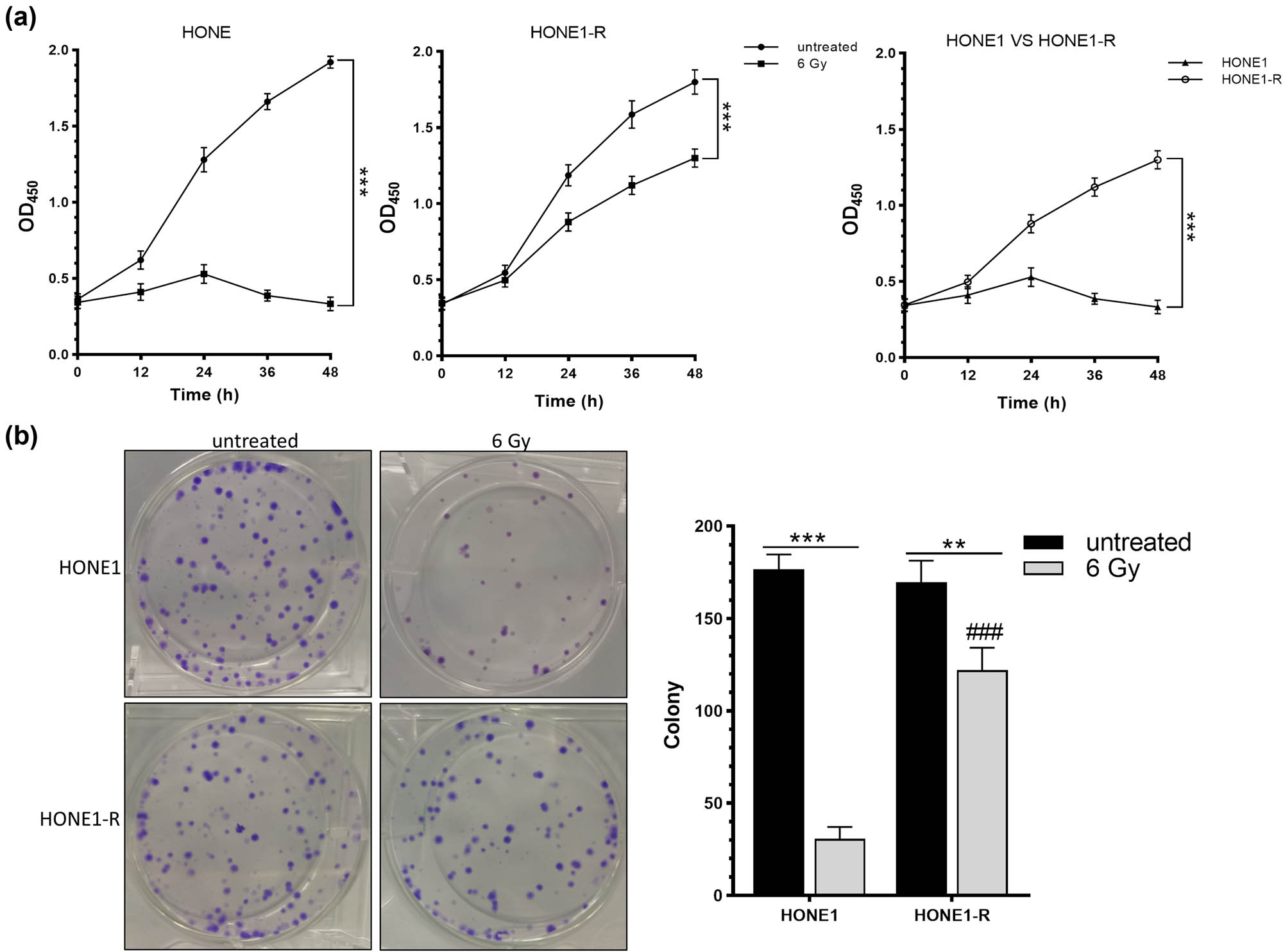
Verification of the ability of radiotherapy resistance of HONE1-R cell lines: (a) cell viability of HONE1 and HONE1-R cell lines treated with 6 Gy and (b) cell proliferation of HONE1 and HONE1-R cell lines treated with 6 Gy.
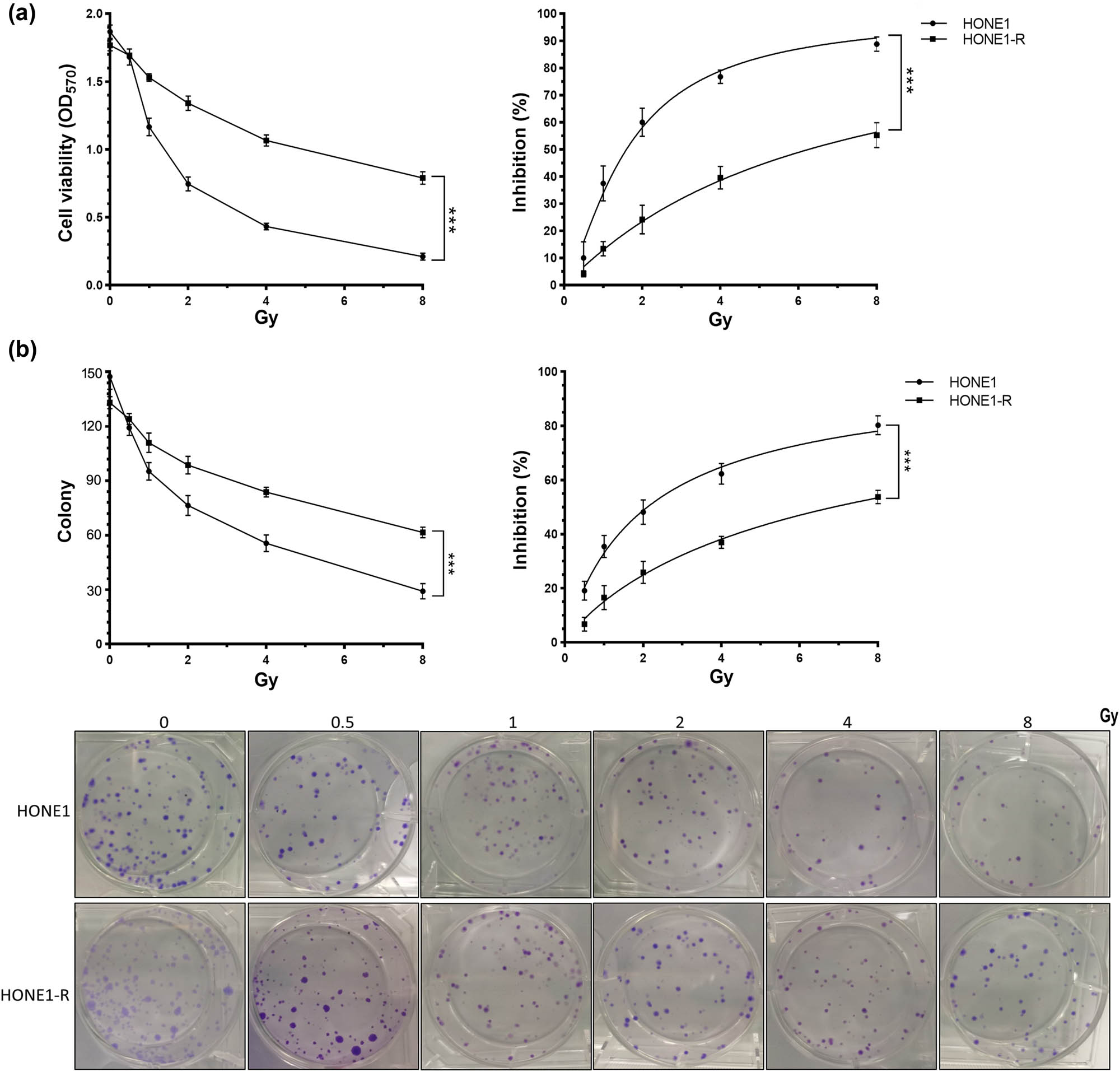
Determination of IC50 on cell viability and proliferation of HONE1 and HONE1-R cells: (a) IC50 of radiation suppression on cell viability and (b) IC50 of radiation suppression on cell proliferation.
3.2 Mitogen-activated protein kinase (MAPK) was the most important signaling pathway in HONE1-R radiotherapy resistance
Transcriptome sequencing of HONE1 and HONE1-R cell lines showed that 702 genes were upregulated and 772 genes were downregulated in the HONE1-R cell lines (Figure 3a). GO analysis showed that the function of differentially expressed genes mainly concentrated in protein heterodifferentiation activity (MF), cell–cell junction (CC), protein extracted matrix (CC), and regulation of myoid cell differentiation (BP) (Figure 3b). KEGG analysis showed 18 differential signaling pathways; the most significant differential pathways included systemic lupus erythematosus, astronomy, interleukin 17 signaling pathway, apoptosis, tumor necrosis factor (TNF) signaling pathway, and MAPK signaling pathway (Figure 3c). The analysis results of differential signaling pathway interaction network are shown in Figure 3d. The most central network was the MAPK signaling pathway; in addition, the apoptosis pathway and TNF signaling pathway were also important.
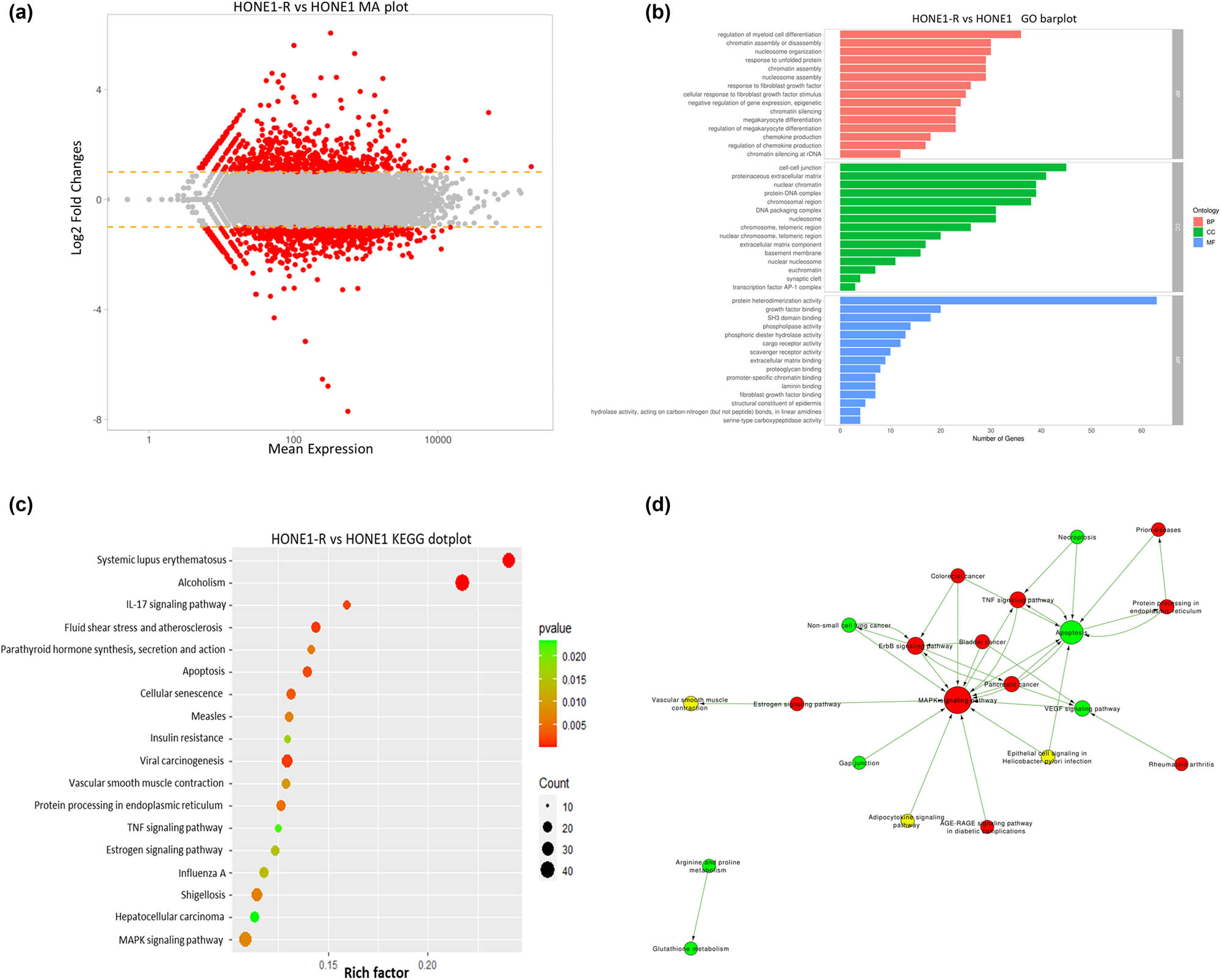
Data analysis of transcriptome sequencing: (a) MA plot of HONE1 and HONE1-R cell lines; (b) GO analysis of differently expressed genes; (c) KEGG signaling pathway analysis of differently expressed genes; and (d) network of differently expressed pathways.
3.3 GADD45B might be a key gene in the HONE1-R radiotherapy resistance
Ten differentially expressed genes between HONE1-R and HONE1 cells were selected from MAPK, apoptosis, and TNF pathways to verify the results of sequencing; further validation was performed using qRT-PCR and Western blot analysis. Among these 10 genes, IKBKG, JUN, and AKT3 were significantly changed in MAPK, apoptosis, and TNF signaling pathways; the other 6 genes were key genes in these three pathways. The results were compared with the sequencing results and were consistent with the sequencing data. The protein levels also showed the same trend as sequencing (Figure 4a and b). GADD45B mRNA and protein expression levels were significantly upregulated, suggesting that GADD45B might be the key gene of HONE1-R radiation resistance.
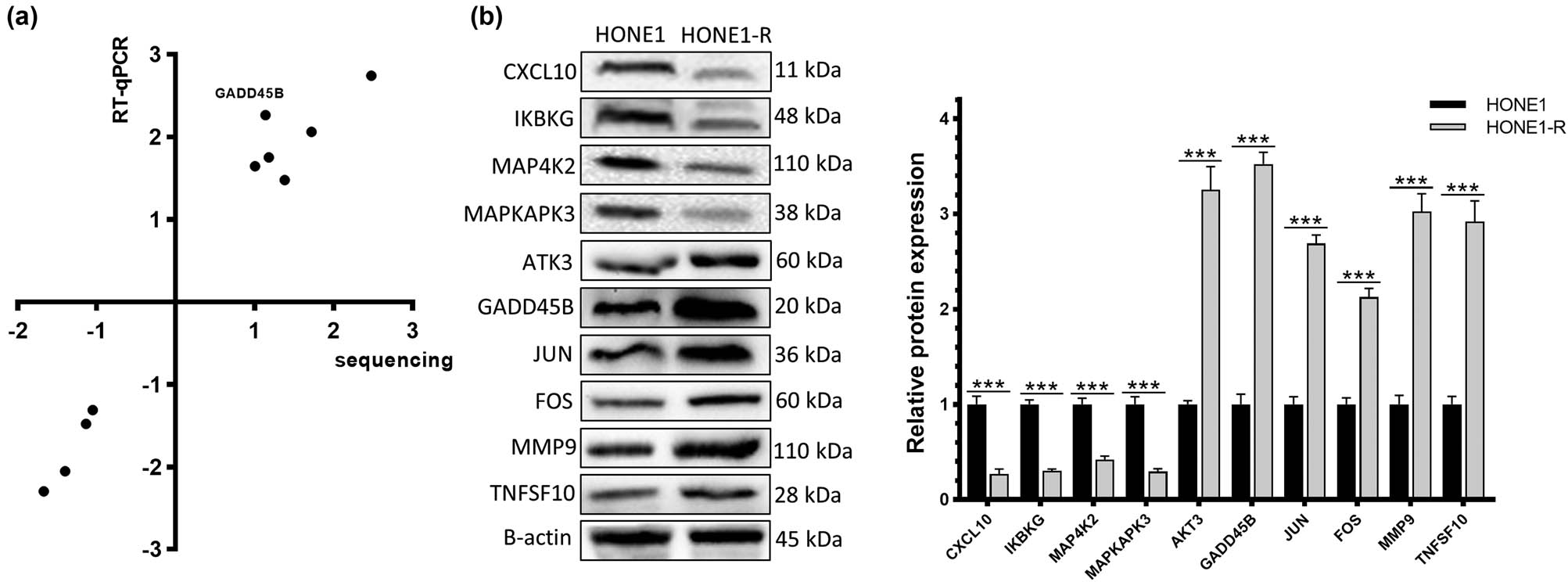
GADD45B is a key gene in radiation resistance of HONE1-R cell line: (a) verification of gene differential expression by RT-qPCR and (b) differential protein expression determined by Western blot.
3.4 GADD45B effectively improved the activity and proliferation of HONE1-R cells under radiation
The GADD45B expression level was significantly downregulated in squamous cell carcinoma of head and neck (Figure 5a). After transfection of GADD45B-siRNA1 and GADD45B-siRNA2, the expression level of GADD45B in HONE1-R cells was significantly downregulated, showing good transfection efficiency and effectiveness (Figure 5b). Subsequently, HONE1-R cells transfected with si-NC and GADD45B-siRNA1 were exposed to 6 Gy radiation, and the cell viability was detected. The results showed that the cell viability of HONE1-R cells was significantly inhibited after the inhibition of GADD45B (Figure 5c). The clone formation results showed that the HONE1-R cell line transfected with GADD45B-siRNA1 also had weaker proliferation ability and radioresistance (Figure 5d). Subsequently, the downstream gene of GADD45B was detected. The results showed that after exposure to 6 Gy irradiation, the levels of cyclinB1 and p-CDK-1 in HONE-1 cells transfected with GADD45B-siRNA1 decreased abnormally compared with that transfected si-NC (Figure 6a and b). These results suggested that GADD45B could effectively improve the cell viability and proliferation ability of HONE1-R cells under radiation, thus significantly improving the radiation resistance ability of the HONE1-R cell line.
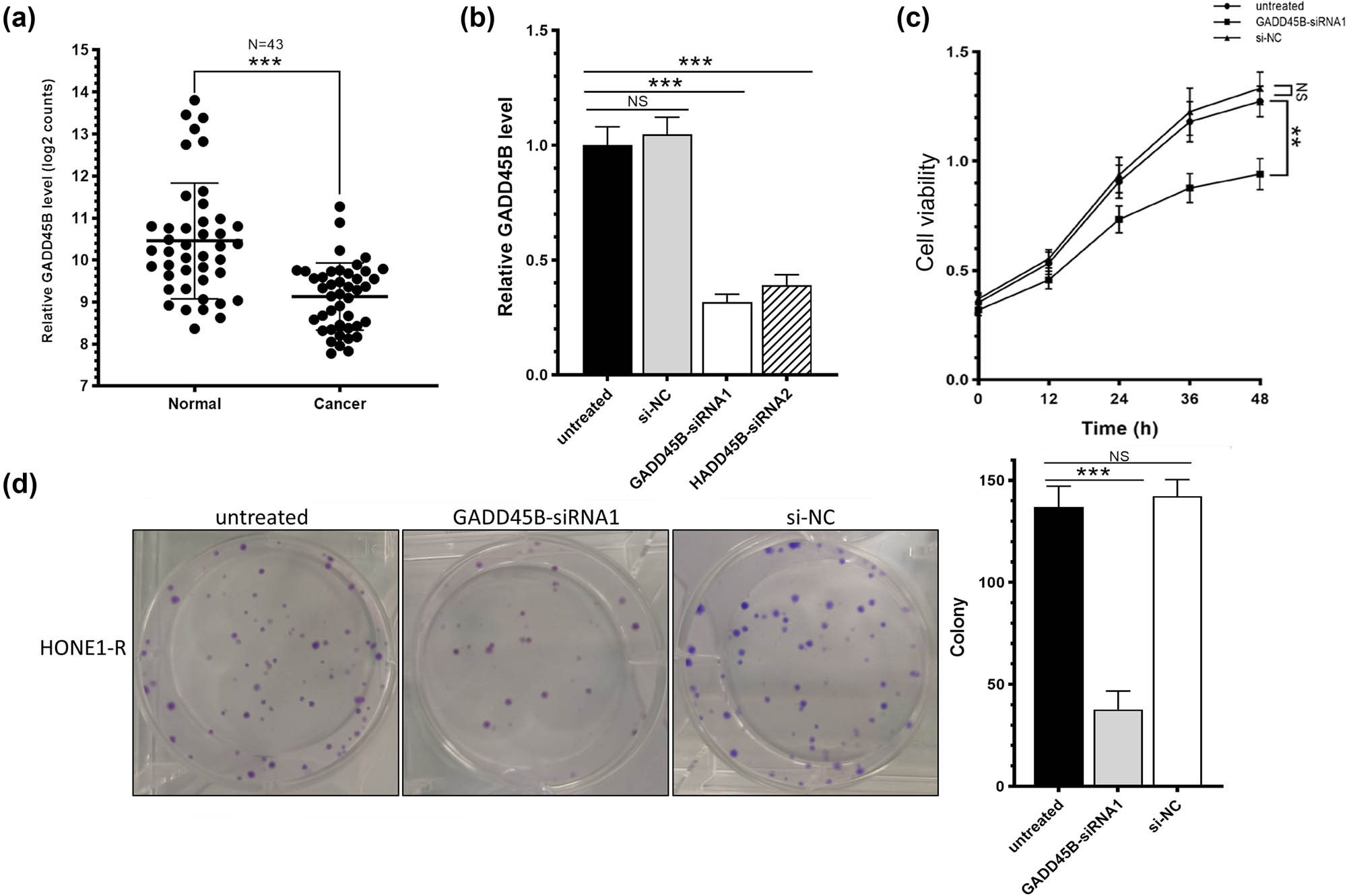
GADD45B effectively improved the activity and proliferation of HONE1-R cells under radiation: (a) TCGA database analysis of GADD45B in squamous cell carcinoma of head and neck; (b) effectiveness and transfection efficiency analysis; (c) cell viability of HONE1-R cell line treated by 6 Gy; and (d) cell proliferation of HONE1-R cell line treated by 6 Gy.
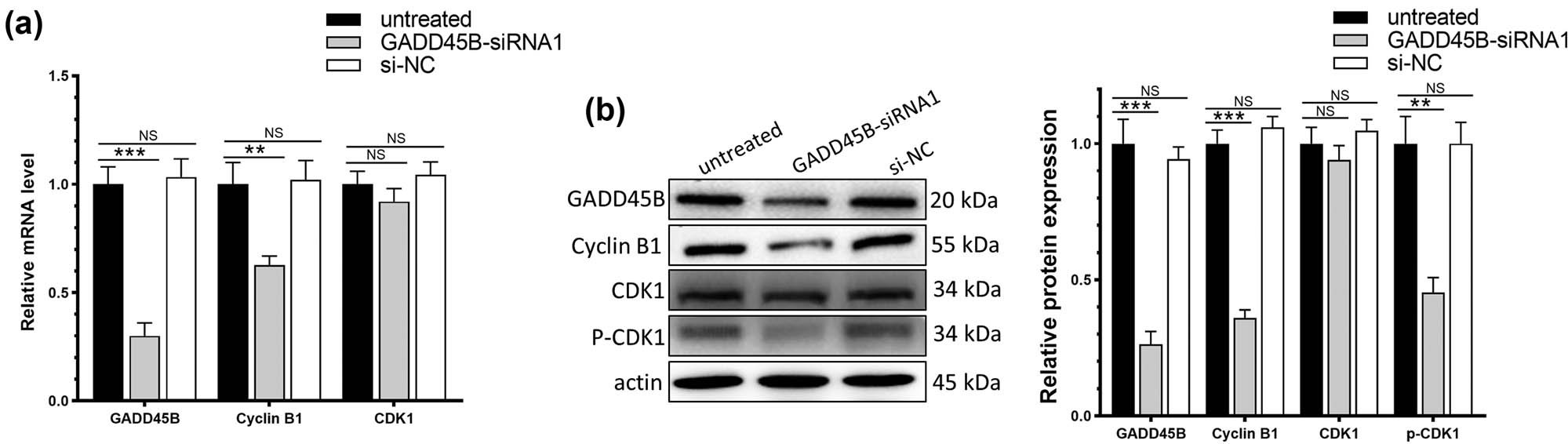
Regulation of gene expression by knockdown of GADD45B and radiation treatment: (a) RT-qPCR of downstream pathway genes and (b) western blot analysis of downstream pathway genes.
4 Discussion
Currently, a comprehensive strategy based on chemotherapy is the most common option for patients with NPC [1]. Unfortunately, the development of radiotherapy resistance leads to treatment failure and poor prognosis owing to local recurrence or distant metastases [6]. Hence, the relevant genes and signaling pathways involved in radiotherapy resistance of NPC were analyzed in this study to improve the therapeutic efficacy and prognosis. By generating the HONE1-R cell line and analyzing the sequencing data in HONE1-R and HONE1 cells, the radiotherapy-resistant genes in HONE1-R cells were found to be mainly enriched in MAPK, apoptosis, and TNF signaling pathways, MAPK is the most significantly different signaling pathway between HONE1-R and HONE1 cell lines; GADD45B might be an important gene in HONE1-R radiotherapy resistance.
MAPKs are serine/threonine protein kinases widely present in cells. An abnormally activated MAPK signaling pathway causes the loss of differentiation and apoptosis capacities, uncontrolled proliferation, and development of drug resistance in cancer cells [11]. Williams et al. [12] demonstrated that the application of the MAPK inhibitor PD0325901 significantly enhanced the radiotherapy sensitivity of pancreatic cancer cells, and combined inhibition of MAPK and Protein kinase B further enhanced the sensitivity. Sun et al. [13] suggested that the overexpression of TOB1 elevated the radiotherapy sensitivity of breast cancer cells and cervical cancer cells by activating the MAPK/extracellular regulated protein kinases signaling pathway and regulating p53 phosphorylation. He et al. [14] generated ATM-deficient bladder cancer cells highly sensitive to irradiation, and the MAPK and nuclear factor kappa-B (NF-κB) signaling pathways were significantly inactivated in these cells. Yu et al. [15] conducted high-throughput sequencing in irradiated HeLa and control cells. MAPK signaling, endocytosis, axon guidance, neurotrophic signaling, and soluble N-ethylmaleimide sensitive-factor attachment receptor interactions in vesicle trafficking were found to be significantly different between these cells. Cook et al. [16] proved that Cox-2-derived PGE2 induces Id1 via EP4-dependent activation of MAPK signaling and the Egr1 transcription factor in glioblastoma cells. PGE2-mediated induction of Id1 was required for optimal tumor cell self-renewal and radiation resistance, and finally mediated radiation resistance in patients with glioblastoma. These previous findings suggested that the MAPK signaling pathway might play an important role in tumor radiation tolerance. The KEGG and signaling pathway network analysis showed that the MAPK signaling pathway was the most significant and the most core signaling pathway between HONE1-R and HONE1 cell lines. The MAPK signaling pathway was abnormally activated in the HONE1-R cell line: 18 genes were upregulated and 14 genes were downregulated. Sequencing, RT-qPCR, and Western blot analysis confirmed that GADD45B, AKT3, JUN, and FOS were significantly upregulated and IKBKG, MAP4K2, and MAPKAPK3 were significantly downregulated in the MAPK signaling pathway, indicating their important role in radiation resistance of the HONE1 cell line.
The GADD45 family includes GADD45 α, GADD45 β, and GADD45 γ, which are related to stress signal and regulate cell cycle, proliferation, differentiation, survival, senescence, and apoptosis [17,18]. GADD45B is widely distributed in various mammalian tissues. The expression level of GADD45B is low in the normal physiological state, but it increases significantly under the influence of environmental stress or injury stimulation [19]; GADD45B has different expression and regulation mechanisms in different cell states, and plays different or even opposite roles [20]. Previous studies confirmed that the regulatory effect of GADD45B on cell cycle mainly depended on the MAPK signaling pathway. GADD45B can directly bind to MEKK4 and MEKK7 in the MAPK signaling pathway and inhibit the JNK/p38 signaling pathway [21]. For example, Cho et al. [22] proved that the expression of GADD45B increased under the hypertonic condition and mediated G2/M-phase arrest of the cell cycle, which promoted DNA repair and cell proliferation. Yu et al. [23] confirmed that the activation of NF-κB also increased the expression of GADD45B, inhibited the function of GADD45 α, increased the degradation of p53, and thus inhibited apoptosis, suggesting that the balance of GADD45 α/GADD45B might determine the survival or apoptosis of cells. Recent studies have shown that GADD45B is crucial in tumor radiotherapy. Barros-Filho et al. [24] found that the increased expression of GADD45B was an important marker of shortened disease-free survival in patients with papillary thyroid cancer after total thyroidectomy and radioiodine therapy. Vairapandi et al. [25] studied lung cancer cell lines. The results showed that GADD45B caused G2/M cell cycle arrest by acting on CDK1/cyclin B1. However, GADD45B could activate the G2/M checkpoint in cooperation with GADD45 α and GADD45 γ after the cells were exposed to ultraviolet radiation. Inowa et al. [26] studied the stem cell-enriched side population (SP) cells in tumors. The inhibition of GADD45 significantly reduced the viability and invasiveness of nec8 SP cells, suggesting that the high expression of GADD45B promoted the proliferation and migration of SP cells, which might determine their stem cell-like phenotype and have an important impact on their drug resistance. In addition, Cheng et al. [27] reported that GADD45B could induce the downregulation of cyclin B1 and the disassociation of CDC2/cyclin-B1, thus inhibited cell proliferation and induced mitosis delay in cancer cells. GADD45B inhibited the activity and proliferation of HONE1-R cells in the normal physiological state [28]; our present study showed that the overexpressed GADD45B could effectively increase the activity and proliferation of HONE1-R cells and enhanced their resistance to radiation therapy after radiation exposure.
5 Conclusion
In conclusion, a stable and genetically resistant HONE1-R cell line was constructed. The transcriptome sequencing analysis showed that the MAPK signaling pathway was the most important signaling pathway of radiation resistance in HONE1-R cells. More attention should be paid to the key gene GADD45B. This gene can inhibit the viability and proliferation of HONE1-R cells under normal physiological conditions, but it can effectively enhance the viability and proliferation of HONE1-R cells under radiation stimulation and increase the radioresistance of HONE1-R cells. Therefore, GADD45B may become a new target for radiotherapy.
-
Funding information: This study was funded by the Natural Science Foundation of Guangdong Province (2018A030310678); the Scientific Research Foundation of Shunde Hospital, Southern Medical University (SRSP2018003); and the Scientific Research Foundation of Southern Medical University (PY2018N112).
-
Author contributions: Y.M.: methodology, investigation, project administration, writing – original draft; D.H.: methodology, data curation, investigation; X.L.: formal analysis, investigation; W.C.: data curation, visualization, formal analysis; X.H.: data curation, visualization; H.F.: validation, investigation; F.Z.: resources, investigation; X.Z.: conceptualization, supervision, writing – review and editing; S.Z.: conceptualization, writing – review and editing, funding acquisition.
-
Conflict of interest: The authors declare no conflicts of interest related to this study.
-
Ethical approval: The conducted research is not related to either human or animal use.
-
Data availability statement: The authors declared that data and material in the manuscript are available.
References
[1] Ou D, Blanchard P, El Khoury C, De Felice F, Even C, Levy A, et al. Induction chemotherapy with docetaxel, cisplatin and fluorouracil followed by concurrent chemoradiotherapy or chemoradiotherapy alone in locally advanced non-endemic nasopharyngeal carcinoma. Oral Oncol. 2016 Nov;62:114–21.10.1016/j.oraloncology.2016.10.011Search in Google Scholar
[2] Lee AWM, Sze WM, Au JSK, Leung SF, Leung TW, Chua DTT, et al. Treatment results for nasopharyngeal carcinoma in the modern era: the Hong Kong experience. Int J Radiat Oncol Biol Phys. 2005 Mar;61(4):1107–16.10.1016/j.ijrobp.2004.07.702Search in Google Scholar
[3] Blanchard P, Lee A, Marguet S, Leclercq J, Ng WT, Ma J, et al. MAC-NPC collaborative group. chemotherapy and radiotherapy in nasopharyngeal carcinoma: an update of the MAC-NPC meta-analysis. Lancet Oncol. 2015 Jun;16(6):645–55.10.1016/S1470-2045(15)70126-9Search in Google Scholar
[4] Xie R, Xia B, Zhang X, Hu W, Zhao R, Xie C, et al. T4/N2 classification nasopharyngeal carcinoma benefit from concurrent chemotherapy in the era of intensity-modulated radiotherapy. Oncotarget. 2016 Dec;7(49):81918–25.10.18632/oncotarget.11981Search in Google Scholar PubMed PubMed Central
[5] Caponigro F, Longo F, Ionna F, Perri F. Treatment approaches to nasopharyngeal carcinoma: a review. Anticancer Drugs. 2010 Jun;21(5):471–7.10.1097/CAD.0b013e328337160eSearch in Google Scholar PubMed
[6] Pai T, Nair N, Pantvaidya G, Deodhar K, Shet T. Metastatic nasopharyngeal carcinoma presenting as an isolated breast mass: A diagnostic pitfall and a review of literature. Indian J Pathol Microbiol. 2017 Jan-Mar;60(1):119–21.10.4103/0377-4929.200058Search in Google Scholar
[7] Tian YM, Huang WZ, Yuan X, Bai L, Zhao C, Han F. The challenge in treating locally recurrent T3-4 nasopharyngeal carcinoma: the survival benefit and severe late toxicities of re-irradiation with intensity-modulated radiotherapy. Oncotarget. 2017 Jun;8(26):43450–7.10.18632/oncotarget.15896Search in Google Scholar PubMed PubMed Central
[8] Reynolds JP, Zhou Y, Jakubowski MA, Wang Z, Brainard JA, Klein RD, et al. Next-generation sequencing of liquid-based cytology non-small cell lung cancer samples. Cancer Cytopathol. 2017 Mar;125(3):178–87.10.1002/cncy.21812Search in Google Scholar PubMed
[9] Zhou DN, Ye CS, Yang QQ, Deng YF. Integrated analysis of transcriptome profiling predicts potential lncRNA and circRNA targets in human nasopharyngeal carcinoma. Oncol Lett. 2020 Apr;19(4):3123–36.10.3892/ol.2020.11412Search in Google Scholar PubMed PubMed Central
[10] Chang SL, Lee SW, Yang SF, Chien CC, Chan TC, Chen TJ, et al. Expression and prognostic utility of SSX2IP in patients with nasopharyngeal carcinoma. APMIS. 2020 Apr;128(4):287–97.10.1111/apm.13023Search in Google Scholar PubMed
[11] Nix P, Hisamoto N, Matsumoto K, Bastiani M. Axon regeneration requires coordinate activation of p38 and JNK MAPK pathways. Proc Natl Acad Sci USA. 2011 Jun;108(26):10738–43.10.1073/pnas.1104830108Search in Google Scholar PubMed PubMed Central
[12] Williams TM, Flecha AR, Keller P, Ram A, Karnak D, Galbán S, et al. Cotargeting MAPK and PI3K signaling with concurrent radiotherapy as a strategy for the treatment of pancreatic cancer. Mol Cancer Ther. 2012 May;11(5):1193–202.10.1158/1535-7163.MCT-12-0098Search in Google Scholar PubMed PubMed Central
[13] Sun KK, Zhong N, Yang Y, Zhao L, Jiao Y. Enhanced radiosensitivity of NSCLC cells by transducer of erbB2.1 (TOB1) through modulation of the MAPK/ERK pathway. Oncol Rep. 2013 Jun;29(6):2385–91.10.3892/or.2013.2403Search in Google Scholar PubMed
[14] He H, Chang R, Zhang T, Yang C, Kong Z. ATM mediates DAB2IP-deficient bladder cancer cell resistance to ionizing radiation through the p38MAPK and NF-κB signaling pathway. Mol Med Rep. 2017 Aug;16(2):1216–22.10.3892/mmr.2017.6689Search in Google Scholar PubMed PubMed Central
[15] Yu D, Li Y, Ming Z, Wang H, Dong Z, Qiu L, et al. Comprehensive circular RNA expression profile in radiation-treated HeLa cells and analysis of radioresistance-related circRNAs. PeerJ. 2018 Jun;6:e5011.10.7717/peerj.5011Search in Google Scholar PubMed PubMed Central
[16] Cook PJ, Thomas R, Kingsley PJ, Shimizu F, Montrose DC, Marnett LJ, et al. Cox-2-derived PGE2 induces Id1-dependent radiation resistance and self-renewal in experimental glioblastoma. Neuro-oncol. 2016 Oct;18(10):1379–89.10.1093/neuonc/now049Search in Google Scholar PubMed PubMed Central
[17] Kaufmann LT, Gierl MS, Niehrs C. Gadd45a, Gadd45b and Gadd45g expression during mouse embryonic development. Gene Expr Patterns. 2011 Dec;11(8):465–70.10.1016/j.gep.2011.07.005Search in Google Scholar PubMed
[18] Iida M, Anna CH, Gaskin ND, Walker NJ, Devereux TR. The putative tumor suppressor Tsc-22 is downregulated early in chemically induced hepatocarcinogenesis and may be a suppressor of Gadd45b. Toxicol Sci. 2007 Sep;99(1):43–50.10.1093/toxsci/kfm138Search in Google Scholar PubMed
[19] Wang J, Wang H, Chen J, Wang X, Sun K, Wang Y, et al. GADD45B inhibits MKK7-induced cardiac hypertrophy and the polymorphisms of GADD45B is associated with inter-ventricular septum hypertrophy. Biochem Biophys Res Commun. 2008 Aug;372(4):623–8.10.1016/j.bbrc.2008.05.122Search in Google Scholar PubMed
[20] Gupta M, Gupta SK, Balliet AG, Hollander MC, Fornace Jr AJ, Hoffman B, et al. Hematopoietic cells from Gadd45a- and Gadd45b-deficient mice are sensitized to genotoxic-stress-induced apoptosis. Oncogene. 2005 Nov;24(48):7170–9.10.1038/sj.onc.1208847Search in Google Scholar PubMed
[21] Tornatore L, Marasco D, Dathan N, Vitale RM, Benedetti E, Papa S, et al. Gadd45 beta forms a homodimeric complex that binds tightly to MKK7. J Mol Biol. 2008 Apr;378(1):97–111.10.1016/j.jmb.2008.01.074Search in Google Scholar PubMed
[22] Cho HJ, Park SM, Hwang EM, Baek KE, Kim IK, Nam IK, et al. Gadd45b mediates Fas-induced apoptosis by enhancing the interaction between p38 and retinoblastoma tumor suppressor. J Biol Chem. 2010 Aug;285(33):25500–5.10.1074/jbc.M109.091413Search in Google Scholar PubMed PubMed Central
[23] Yu Y, Huang H, Li J, Zhang J, Gao J, Lu B, et al. GADD45β mediates p53 protein degradation via Src/PP2A/MDM2 pathway upon arsenite treatment. Cell Death Dis. 2013 May;4(5):e637.10.1038/cddis.2013.162Search in Google Scholar PubMed PubMed Central
[24] Barros-Filho MC, de Mello J, Marchi FA, Pinto C, da Silva IC, Damasceno P, et al. GADD45B transcript is a prognostic marker in papillary thyroid carcinoma patients treated with total thyroidectomy and radioiodine therapy. Front Endocrinol (Lausanne). 2020 Apr;11:269.10.3389/fendo.2020.00269Search in Google Scholar PubMed PubMed Central
[25] Vairapandi M, Balliet AG, Hoffman B, Liebermann DA. GADD45b and GADD45g are cdc2/cyclinB1 kinase inhibitors with a role in S and G2/M cell cycle checkpoints induced by genotoxic stress. J Cell Physiol. 2002 Sep;192(3):327–38.10.1002/jcp.10140Search in Google Scholar PubMed
[26] Inowa T, Hishikawa K, Matsuzaki Y, Isagawa T, Takeuchi T, Aburatani H, et al. GADD45β determines chemoresistance and invasive growth of side population cells of human embryonic carcinoma. Stem Cells Int. 2010 Mar;2010:782967.10.4061/2010/782967Search in Google Scholar PubMed PubMed Central
[27] Cheng AC, Hsu YC, Tsai CC. The effects of cucurbitacin E on GADD45β-trigger G2/M arrest and JNK-independent pathway in brain cancer cells. J Cell Mol Med. 2019 May;23(5):3512–9.10.1111/jcmm.14250Search in Google Scholar PubMed PubMed Central
[28] Huang H, Wang Q, Du T, Lin C, Lai Y, Zhu D, et al. Matrine inhibits the progression of prostate cancer by promoting expression of GADD45B. Prostate. 2018 Apr;78(5):327–35.10.1002/pros.23469Search in Google Scholar PubMed
© 2021 Yanning Ma et al., published by De Gruyter
This work is licensed under the Creative Commons Attribution 4.0 International License.
Articles in the same Issue
- Regular Articles
- Qualitative and semi-quantitative assessment of anthocyanins in Tibetan hulless barley from different geographical locations by UPLC-QTOF-MS and their antioxidant capacities
- Effect of sodium chloride on the expression of genes involved in the salt tolerance of Bacillus sp. strain “SX4” isolated from salinized greenhouse soil
- GC-MS analysis of mango stem bark extracts (Mangifera indica L.), Haden variety. Possible contribution of volatile compounds to its health effects
- Influence of nanoscale-modified apatite-type calcium phosphates on the biofilm formation by pathogenic microorganisms
- Removal of paracetamol from aqueous solution by containment composites
- Investigating a human pesticide intoxication incident: The importance of robust analytical approaches
- Induction of apoptosis and cell cycle arrest by chloroform fraction of Juniperus phoenicea and chemical constituents analysis
- Recovery of γ-Fe2O3 from copper ore tailings by magnetization roasting and magnetic separation
- Effects of different extraction methods on antioxidant properties of blueberry anthocyanins
- Modeling the removal of methylene blue dye using a graphene oxide/TiO2/SiO2 nanocomposite under sunlight irradiation by intelligent system
- Antimicrobial and antioxidant activities of Cinnamomum cassia essential oil and its application in food preservation
- Full spectrum and genetic algorithm-selected spectrum-based chemometric methods for simultaneous determination of azilsartan medoxomil, chlorthalidone, and azilsartan: Development, validation, and application on commercial dosage form
- Evaluation of the performance of immunoblot and immunodot techniques used to identify autoantibodies in patients with autoimmune diseases
- Computational studies by molecular docking of some antiviral drugs with COVID-19 receptors are an approach to medication for COVID-19
- Synthesis of amides and esters containing furan rings under microwave-assisted conditions
- Simultaneous removal efficiency of H2S and CO2 by high-gravity rotating packed bed: Experiments and simulation
- Design, synthesis, and biological activities of novel thiophene, pyrimidine, pyrazole, pyridine, coumarin and isoxazole: Dydrogesterone derivatives as antitumor agents
- Content and composition analysis of polysaccharides from Blaps rynchopetera and its macrophage phagocytic activity
- A new series of 2,4-thiazolidinediones endowed with potent aldose reductase inhibitory activity
- Assessing encapsulation of curcumin in cocoliposome: In vitro study
- Rare norisodinosterol derivatives from Xenia umbellata: Isolation and anti-proliferative activity
- Comparative study of antioxidant and anticancer activities and HPTLC quantification of rutin in white radish (Raphanus sativus L.) leaves and root extracts grown in Saudi Arabia
- Comparison of adsorption properties of commercial silica and rice husk ash (RHA) silica: A study by NIR spectroscopy
- Sodium borohydride (NaBH4) as a high-capacity material for next-generation sodium-ion capacitors
- Aroma components of tobacco powder from different producing areas based on gas chromatography ion mobility spectrometry
- The effects of salinity on changes in characteristics of soils collected in a saline region of the Mekong Delta, Vietnam
- Synthesis, properties, and activity of MoVTeNbO catalysts modified by zirconia-pillared clays in oxidative dehydrogenation of ethane
- Synthesis and crystal structure of N,N′-bis(4-chlorophenyl)thiourea N,N-dimethylformamide
- Quantitative analysis of volatile compounds of four Chinese traditional liquors by SPME-GC-MS and determination of total phenolic contents and antioxidant activities
- A novel separation method of the valuable components for activated clay production wastewater
- On ve-degree- and ev-degree-based topological properties of crystallographic structure of cuprite Cu2O
- Antihyperglycemic effect and phytochemical investigation of Rubia cordifolia (Indian Madder) leaves extract
- Microsphere molecularly imprinted solid-phase extraction for diazepam analysis using itaconic acid as a monomer in propanol
- A nitric oxide-releasing prodrug promotes apoptosis in human renal carcinoma cells: Involvement of reactive oxygen species
- Machine vision-based driving and feedback scheme for digital microfluidics system
- Study on the application of a steam-foam drive profile modification technology for heavy oil reservoir development
- Ni–Ru-containing mixed oxide-based composites as precursors for ethanol steam reforming catalysts: Effect of the synthesis methods on the structural and catalytic properties
- Preparation of composite soybean straw-based materials by LDHs modifying as a solid sorbent for removal of Pb(ii) from water samples
- Synthesis and spectral characterizations of vanadyl(ii) and chromium(iii) mixed ligand complexes containing metformin drug and glycine amino acid
- In vitro evaluation of lactic acid bacteria with probiotic activity isolated from local pickled leaf mustard from Wuwei in Anhui as substitutes for chemical synthetic additives
- Utilization and simulation of innovative new binuclear Co(ii), Ni(ii), Cu(ii), and Zn(ii) diimine Schiff base complexes in sterilization and coronavirus resistance (Covid-19)
- Phosphorylation of Pit-1 by cyclin-dependent kinase 5 at serine 126 is associated with cell proliferation and poor prognosis in prolactinomas
- Molecularly imprinted membrane for transport of urea, creatinine, and vitamin B12 as a hemodialysis candidate membrane
- Optimization of Murrayafoline A ethanol extraction process from the roots of Glycosmis stenocarpa, and evaluation of its Tumorigenesis inhibition activity on Hep-G2 cells
- Highly sensitive determination of α-lipoic acid in pharmaceuticals on a boron-doped diamond electrode
- Synthesis, chemo-informatics, and anticancer evaluation of fluorophenyl-isoxazole derivatives
- In vitro and in vivo investigation of polypharmacology of propolis extract as anticancer, antibacterial, anti-inflammatory, and chemical properties
- Topological indices of bipolar fuzzy incidence graph
- Preparation of Fe3O4@SiO2–ZnO catalyst and its catalytic synthesis of rosin glycol ester
- Construction of a new luminescent Cd(ii) compound for the detection of Fe3+ and treatment of Hepatitis B
- Investigation of bovine serum albumin aggregation upon exposure to silver(i) and copper(ii) metal ions using Zetasizer
- Discoloration of methylene blue at neutral pH by heterogeneous photo-Fenton-like reactions using crystalline and amorphous iron oxides
- Optimized extraction of polyphenols from leaves of Rosemary (Rosmarinus officinalis L.) grown in Lam Dong province, Vietnam, and evaluation of their antioxidant capacity
- Synthesis of novel thiourea-/urea-benzimidazole derivatives as anticancer agents
- Potency and selectivity indices of Myristica fragrans Houtt. mace chloroform extract against non-clinical and clinical human pathogens
- Simple modifications of nicotinic, isonicotinic, and 2,6-dichloroisonicotinic acids toward new weapons against plant diseases
- Synthesis, optical and structural characterisation of ZnS nanoparticles derived from Zn(ii) dithiocarbamate complexes
- Presence of short and cyclic peptides in Acacia and Ziziphus honeys may potentiate their medicinal values
- The role of vitamin D deficiency and elevated inflammatory biomarkers as risk factors for the progression of diabetic nephropathy in patients with type 2 diabetes mellitus
- Quantitative structure–activity relationship study on prolonged anticonvulsant activity of terpene derivatives in pentylenetetrazole test
- GADD45B induced the enhancing of cell viability and proliferation in radiotherapy and increased the radioresistance of HONE1 cells
- Cannabis sativa L. chemical compositions as potential plasmodium falciparum dihydrofolate reductase-thymidinesynthase enzyme inhibitors: An in silico study for drug development
- Dynamics of λ-cyhalothrin disappearance and expression of selected P450 genes in bees depending on the ambient temperature
- Identification of synthetic cannabinoid methyl 2-{[1-(cyclohexylmethyl)-1H-indol-3-yl] formamido}-3-methylbutanoate using modern mass spectrometry and nuclear magnetic resonance techniques
- Study on the speciation of arsenic in the genuine medicinal material honeysuckle
- Two Cu(ii)-based coordination polymers: Crystal structures and treatment activity on periodontitis
- Conversion of furfuryl alcohol to ethyl levulinate in the presence of mesoporous aluminosilicate catalyst
- Review Articles
- Hsien Wu and his major contributions to the chemical era of immunology
- Overview of the major classes of new psychoactive substances, psychoactive effects, analytical determination and conformational analysis of selected illegal drugs
- An overview of persistent organic pollutants along the coastal environment of Kuwait
- Mechanism underlying sevoflurane-induced protection in cerebral ischemia–reperfusion injury
- COVID-19 and SARS-CoV-2: Everything we know so far – A comprehensive review
- Challenge of diabetes mellitus and researchers’ contributions to its control
- Advances in the design and application of transition metal oxide-based supercapacitors
- Color and composition of beauty products formulated with lemongrass essential oil: Cosmetics formulation with lemongrass essential oil
- The structural chemistry of zinc(ii) and nickel(ii) dithiocarbamate complexes
- Bioprospecting for antituberculosis natural products – A review
- Recent progress in direct urea fuel cell
- Rapid Communications
- A comparative morphological study of titanium dioxide surface layer dental implants
- Changes in the antioxidative properties of honeys during their fermentation
- Erratum
- Erratum to “Corrosion study of copper in aqueous sulfuric acid solution in the presence of (2E,5E)-2,5-dibenzylidenecyclopentanone and (2E,5E)-bis[(4-dimethylamino)benzylidene]cyclopentanone: Experimental and theoretical study”
- Erratum to “Modified TDAE petroleum plasticiser”
- Corrigendum
- Corrigendum to “A nitric oxide-releasing prodrug promotes apoptosis in human renal carcinoma cells: Involvement of reactive oxygen species”
- Special Issue on 3rd IC3PE 2020
- Visible light-responsive photocatalyst of SnO2/rGO prepared using Pometia pinnata leaf extract
- Antihyperglycemic activity of Centella asiatica (L.) Urb. leaf ethanol extract SNEDDS in zebrafish (Danio rerio)
- Selection of oil extraction process from Chlorella species of microalgae by using multi-criteria decision analysis technique for biodiesel production
- Special Issue on the 14th Joint Conference of Chemistry (14JCC)
- Synthesis and in vitro cytotoxicity evaluation of isatin-pyrrole derivatives against HepG2 cell line
- CO2 gas separation using mixed matrix membranes based on polyethersulfone/MIL-100(Al)
- Effect of synthesis and activation methods on the character of CoMo/ultrastable Y-zeolite catalysts
- Special Issue on Electrochemical Amplified Sensors
- Enhancement of graphene oxide through β-cyclodextrin composite to sensitive analysis of an antidepressant: Sulpiride
- Investigation of the spectroelectrochemical behavior of quercetin isolated from Zanthoxylum bungeanum
- An electrochemical sensor for high sensitive determination of lysozyme based on the aptamer competition approach
- An improved non-enzymatic electrochemical sensor amplified with CuO nanostructures for sensitive determination of uric acid
- Special Issue on Applied Biochemistry and Biotechnology 2020
- Fast discrimination of avocado oil for different extracted methods using headspace-gas chromatography-ion mobility spectroscopy with PCA based on volatile organic compounds
- Effect of alkali bases on the synthesis of ZnO quantum dots
- Quality evaluation of Cabernet Sauvignon wines in different vintages by 1H nuclear magnetic resonance-based metabolomics
- Special Issue on the Joint Science Congress of Materials and Polymers (ISCMP 2019)
- Diatomaceous Earth: Characterization, thermal modification, and application
- Electrochemical determination of atenolol and propranolol using a carbon paste sensor modified with natural ilmenite
- Special Issue on the Conference of Energy, Fuels, Environment 2020
- Assessment of the mercury contamination of landfilled and recovered foundry waste – a case study
- Primary energy consumption in selected EU Countries compared to global trends
- Modified TDAE petroleum plasticiser
- Use of glycerol waste in lactic acid bacteria metabolism for the production of lactic acid: State of the art in Poland
- Topical Issue on Applications of Mathematics in Chemistry
- Theoretical study of energy, inertia and nullity of phenylene and anthracene
- Banhatti, revan and hyper-indices of silicon carbide Si2C3-III[n,m]
- Topical Issue on Agriculture
- Occurrence of mycotoxins in selected agricultural and commercial products available in eastern Poland
- Special Issue on Ethnobotanical, Phytochemical and Biological Investigation of Medicinal Plants
- Acute and repeated dose 60-day oral toxicity assessment of chemically characterized Berberis hispanica Boiss. and Reut in Wistar rats
- Phytochemical profile, in vitro antioxidant, and anti-protein denaturation activities of Curcuma longa L. rhizome and leaves
- Antiplasmodial potential of Eucalyptus obliqua leaf methanolic extract against Plasmodium vivax: An in vitro study
- Prunus padus L. bark as a functional promoting component in functional herbal infusions – cyclooxygenase-2 inhibitory, antioxidant, and antimicrobial effects
- Molecular and docking studies of tetramethoxy hydroxyflavone compound from Artemisia absinthium against carcinogens found in cigarette smoke
- Special Issue on the Joint Science Congress of Materials and Polymers (ISCMP 2020)
- Preparation of cypress (Cupressus sempervirens L.) essential oil loaded poly(lactic acid) nanofibers
- Influence of mica mineral on flame retardancy and mechanical properties of intumescent flame retardant polypropylene composites
- Production and characterization of thermoplastic elastomer foams based on the styrene–ethylene–butylene–styrene (SEBS) rubber and thermoplastic material
- Special Issue on Applied Chemistry in Agriculture and Food Science
- Impact of essential oils on the development of pathogens of the Fusarium genus and germination parameters of selected crops
- Yield, volume, quality, and reduction of biotic stress influenced by titanium application in oilseed rape, winter wheat, and maize cultivations
- Influence of potato variety on polyphenol profile composition and glycoalcaloid contents of potato juice
- Carryover effect of direct-fed microbial supplementation and early weaning on the growth performance and carcass characteristics of growing Najdi lambs
- Special Issue on Applied Biochemistry and Biotechnology (ABB 2021)
- The electrochemical redox mechanism and antioxidant activity of polyphenolic compounds based on inlaid multi-walled carbon nanotubes-modified graphite electrode
- Study of an adsorption method for trace mercury based on Bacillus subtilis
- Special Issue on The 1st Malaysia International Conference on Nanotechnology & Catalysis (MICNC2021)
- Mitigating membrane biofouling in biofuel cell system – A review
- Mechanical properties of polymeric biomaterials: Modified ePTFE using gamma irradiation
Articles in the same Issue
- Regular Articles
- Qualitative and semi-quantitative assessment of anthocyanins in Tibetan hulless barley from different geographical locations by UPLC-QTOF-MS and their antioxidant capacities
- Effect of sodium chloride on the expression of genes involved in the salt tolerance of Bacillus sp. strain “SX4” isolated from salinized greenhouse soil
- GC-MS analysis of mango stem bark extracts (Mangifera indica L.), Haden variety. Possible contribution of volatile compounds to its health effects
- Influence of nanoscale-modified apatite-type calcium phosphates on the biofilm formation by pathogenic microorganisms
- Removal of paracetamol from aqueous solution by containment composites
- Investigating a human pesticide intoxication incident: The importance of robust analytical approaches
- Induction of apoptosis and cell cycle arrest by chloroform fraction of Juniperus phoenicea and chemical constituents analysis
- Recovery of γ-Fe2O3 from copper ore tailings by magnetization roasting and magnetic separation
- Effects of different extraction methods on antioxidant properties of blueberry anthocyanins
- Modeling the removal of methylene blue dye using a graphene oxide/TiO2/SiO2 nanocomposite under sunlight irradiation by intelligent system
- Antimicrobial and antioxidant activities of Cinnamomum cassia essential oil and its application in food preservation
- Full spectrum and genetic algorithm-selected spectrum-based chemometric methods for simultaneous determination of azilsartan medoxomil, chlorthalidone, and azilsartan: Development, validation, and application on commercial dosage form
- Evaluation of the performance of immunoblot and immunodot techniques used to identify autoantibodies in patients with autoimmune diseases
- Computational studies by molecular docking of some antiviral drugs with COVID-19 receptors are an approach to medication for COVID-19
- Synthesis of amides and esters containing furan rings under microwave-assisted conditions
- Simultaneous removal efficiency of H2S and CO2 by high-gravity rotating packed bed: Experiments and simulation
- Design, synthesis, and biological activities of novel thiophene, pyrimidine, pyrazole, pyridine, coumarin and isoxazole: Dydrogesterone derivatives as antitumor agents
- Content and composition analysis of polysaccharides from Blaps rynchopetera and its macrophage phagocytic activity
- A new series of 2,4-thiazolidinediones endowed with potent aldose reductase inhibitory activity
- Assessing encapsulation of curcumin in cocoliposome: In vitro study
- Rare norisodinosterol derivatives from Xenia umbellata: Isolation and anti-proliferative activity
- Comparative study of antioxidant and anticancer activities and HPTLC quantification of rutin in white radish (Raphanus sativus L.) leaves and root extracts grown in Saudi Arabia
- Comparison of adsorption properties of commercial silica and rice husk ash (RHA) silica: A study by NIR spectroscopy
- Sodium borohydride (NaBH4) as a high-capacity material for next-generation sodium-ion capacitors
- Aroma components of tobacco powder from different producing areas based on gas chromatography ion mobility spectrometry
- The effects of salinity on changes in characteristics of soils collected in a saline region of the Mekong Delta, Vietnam
- Synthesis, properties, and activity of MoVTeNbO catalysts modified by zirconia-pillared clays in oxidative dehydrogenation of ethane
- Synthesis and crystal structure of N,N′-bis(4-chlorophenyl)thiourea N,N-dimethylformamide
- Quantitative analysis of volatile compounds of four Chinese traditional liquors by SPME-GC-MS and determination of total phenolic contents and antioxidant activities
- A novel separation method of the valuable components for activated clay production wastewater
- On ve-degree- and ev-degree-based topological properties of crystallographic structure of cuprite Cu2O
- Antihyperglycemic effect and phytochemical investigation of Rubia cordifolia (Indian Madder) leaves extract
- Microsphere molecularly imprinted solid-phase extraction for diazepam analysis using itaconic acid as a monomer in propanol
- A nitric oxide-releasing prodrug promotes apoptosis in human renal carcinoma cells: Involvement of reactive oxygen species
- Machine vision-based driving and feedback scheme for digital microfluidics system
- Study on the application of a steam-foam drive profile modification technology for heavy oil reservoir development
- Ni–Ru-containing mixed oxide-based composites as precursors for ethanol steam reforming catalysts: Effect of the synthesis methods on the structural and catalytic properties
- Preparation of composite soybean straw-based materials by LDHs modifying as a solid sorbent for removal of Pb(ii) from water samples
- Synthesis and spectral characterizations of vanadyl(ii) and chromium(iii) mixed ligand complexes containing metformin drug and glycine amino acid
- In vitro evaluation of lactic acid bacteria with probiotic activity isolated from local pickled leaf mustard from Wuwei in Anhui as substitutes for chemical synthetic additives
- Utilization and simulation of innovative new binuclear Co(ii), Ni(ii), Cu(ii), and Zn(ii) diimine Schiff base complexes in sterilization and coronavirus resistance (Covid-19)
- Phosphorylation of Pit-1 by cyclin-dependent kinase 5 at serine 126 is associated with cell proliferation and poor prognosis in prolactinomas
- Molecularly imprinted membrane for transport of urea, creatinine, and vitamin B12 as a hemodialysis candidate membrane
- Optimization of Murrayafoline A ethanol extraction process from the roots of Glycosmis stenocarpa, and evaluation of its Tumorigenesis inhibition activity on Hep-G2 cells
- Highly sensitive determination of α-lipoic acid in pharmaceuticals on a boron-doped diamond electrode
- Synthesis, chemo-informatics, and anticancer evaluation of fluorophenyl-isoxazole derivatives
- In vitro and in vivo investigation of polypharmacology of propolis extract as anticancer, antibacterial, anti-inflammatory, and chemical properties
- Topological indices of bipolar fuzzy incidence graph
- Preparation of Fe3O4@SiO2–ZnO catalyst and its catalytic synthesis of rosin glycol ester
- Construction of a new luminescent Cd(ii) compound for the detection of Fe3+ and treatment of Hepatitis B
- Investigation of bovine serum albumin aggregation upon exposure to silver(i) and copper(ii) metal ions using Zetasizer
- Discoloration of methylene blue at neutral pH by heterogeneous photo-Fenton-like reactions using crystalline and amorphous iron oxides
- Optimized extraction of polyphenols from leaves of Rosemary (Rosmarinus officinalis L.) grown in Lam Dong province, Vietnam, and evaluation of their antioxidant capacity
- Synthesis of novel thiourea-/urea-benzimidazole derivatives as anticancer agents
- Potency and selectivity indices of Myristica fragrans Houtt. mace chloroform extract against non-clinical and clinical human pathogens
- Simple modifications of nicotinic, isonicotinic, and 2,6-dichloroisonicotinic acids toward new weapons against plant diseases
- Synthesis, optical and structural characterisation of ZnS nanoparticles derived from Zn(ii) dithiocarbamate complexes
- Presence of short and cyclic peptides in Acacia and Ziziphus honeys may potentiate their medicinal values
- The role of vitamin D deficiency and elevated inflammatory biomarkers as risk factors for the progression of diabetic nephropathy in patients with type 2 diabetes mellitus
- Quantitative structure–activity relationship study on prolonged anticonvulsant activity of terpene derivatives in pentylenetetrazole test
- GADD45B induced the enhancing of cell viability and proliferation in radiotherapy and increased the radioresistance of HONE1 cells
- Cannabis sativa L. chemical compositions as potential plasmodium falciparum dihydrofolate reductase-thymidinesynthase enzyme inhibitors: An in silico study for drug development
- Dynamics of λ-cyhalothrin disappearance and expression of selected P450 genes in bees depending on the ambient temperature
- Identification of synthetic cannabinoid methyl 2-{[1-(cyclohexylmethyl)-1H-indol-3-yl] formamido}-3-methylbutanoate using modern mass spectrometry and nuclear magnetic resonance techniques
- Study on the speciation of arsenic in the genuine medicinal material honeysuckle
- Two Cu(ii)-based coordination polymers: Crystal structures and treatment activity on periodontitis
- Conversion of furfuryl alcohol to ethyl levulinate in the presence of mesoporous aluminosilicate catalyst
- Review Articles
- Hsien Wu and his major contributions to the chemical era of immunology
- Overview of the major classes of new psychoactive substances, psychoactive effects, analytical determination and conformational analysis of selected illegal drugs
- An overview of persistent organic pollutants along the coastal environment of Kuwait
- Mechanism underlying sevoflurane-induced protection in cerebral ischemia–reperfusion injury
- COVID-19 and SARS-CoV-2: Everything we know so far – A comprehensive review
- Challenge of diabetes mellitus and researchers’ contributions to its control
- Advances in the design and application of transition metal oxide-based supercapacitors
- Color and composition of beauty products formulated with lemongrass essential oil: Cosmetics formulation with lemongrass essential oil
- The structural chemistry of zinc(ii) and nickel(ii) dithiocarbamate complexes
- Bioprospecting for antituberculosis natural products – A review
- Recent progress in direct urea fuel cell
- Rapid Communications
- A comparative morphological study of titanium dioxide surface layer dental implants
- Changes in the antioxidative properties of honeys during their fermentation
- Erratum
- Erratum to “Corrosion study of copper in aqueous sulfuric acid solution in the presence of (2E,5E)-2,5-dibenzylidenecyclopentanone and (2E,5E)-bis[(4-dimethylamino)benzylidene]cyclopentanone: Experimental and theoretical study”
- Erratum to “Modified TDAE petroleum plasticiser”
- Corrigendum
- Corrigendum to “A nitric oxide-releasing prodrug promotes apoptosis in human renal carcinoma cells: Involvement of reactive oxygen species”
- Special Issue on 3rd IC3PE 2020
- Visible light-responsive photocatalyst of SnO2/rGO prepared using Pometia pinnata leaf extract
- Antihyperglycemic activity of Centella asiatica (L.) Urb. leaf ethanol extract SNEDDS in zebrafish (Danio rerio)
- Selection of oil extraction process from Chlorella species of microalgae by using multi-criteria decision analysis technique for biodiesel production
- Special Issue on the 14th Joint Conference of Chemistry (14JCC)
- Synthesis and in vitro cytotoxicity evaluation of isatin-pyrrole derivatives against HepG2 cell line
- CO2 gas separation using mixed matrix membranes based on polyethersulfone/MIL-100(Al)
- Effect of synthesis and activation methods on the character of CoMo/ultrastable Y-zeolite catalysts
- Special Issue on Electrochemical Amplified Sensors
- Enhancement of graphene oxide through β-cyclodextrin composite to sensitive analysis of an antidepressant: Sulpiride
- Investigation of the spectroelectrochemical behavior of quercetin isolated from Zanthoxylum bungeanum
- An electrochemical sensor for high sensitive determination of lysozyme based on the aptamer competition approach
- An improved non-enzymatic electrochemical sensor amplified with CuO nanostructures for sensitive determination of uric acid
- Special Issue on Applied Biochemistry and Biotechnology 2020
- Fast discrimination of avocado oil for different extracted methods using headspace-gas chromatography-ion mobility spectroscopy with PCA based on volatile organic compounds
- Effect of alkali bases on the synthesis of ZnO quantum dots
- Quality evaluation of Cabernet Sauvignon wines in different vintages by 1H nuclear magnetic resonance-based metabolomics
- Special Issue on the Joint Science Congress of Materials and Polymers (ISCMP 2019)
- Diatomaceous Earth: Characterization, thermal modification, and application
- Electrochemical determination of atenolol and propranolol using a carbon paste sensor modified with natural ilmenite
- Special Issue on the Conference of Energy, Fuels, Environment 2020
- Assessment of the mercury contamination of landfilled and recovered foundry waste – a case study
- Primary energy consumption in selected EU Countries compared to global trends
- Modified TDAE petroleum plasticiser
- Use of glycerol waste in lactic acid bacteria metabolism for the production of lactic acid: State of the art in Poland
- Topical Issue on Applications of Mathematics in Chemistry
- Theoretical study of energy, inertia and nullity of phenylene and anthracene
- Banhatti, revan and hyper-indices of silicon carbide Si2C3-III[n,m]
- Topical Issue on Agriculture
- Occurrence of mycotoxins in selected agricultural and commercial products available in eastern Poland
- Special Issue on Ethnobotanical, Phytochemical and Biological Investigation of Medicinal Plants
- Acute and repeated dose 60-day oral toxicity assessment of chemically characterized Berberis hispanica Boiss. and Reut in Wistar rats
- Phytochemical profile, in vitro antioxidant, and anti-protein denaturation activities of Curcuma longa L. rhizome and leaves
- Antiplasmodial potential of Eucalyptus obliqua leaf methanolic extract against Plasmodium vivax: An in vitro study
- Prunus padus L. bark as a functional promoting component in functional herbal infusions – cyclooxygenase-2 inhibitory, antioxidant, and antimicrobial effects
- Molecular and docking studies of tetramethoxy hydroxyflavone compound from Artemisia absinthium against carcinogens found in cigarette smoke
- Special Issue on the Joint Science Congress of Materials and Polymers (ISCMP 2020)
- Preparation of cypress (Cupressus sempervirens L.) essential oil loaded poly(lactic acid) nanofibers
- Influence of mica mineral on flame retardancy and mechanical properties of intumescent flame retardant polypropylene composites
- Production and characterization of thermoplastic elastomer foams based on the styrene–ethylene–butylene–styrene (SEBS) rubber and thermoplastic material
- Special Issue on Applied Chemistry in Agriculture and Food Science
- Impact of essential oils on the development of pathogens of the Fusarium genus and germination parameters of selected crops
- Yield, volume, quality, and reduction of biotic stress influenced by titanium application in oilseed rape, winter wheat, and maize cultivations
- Influence of potato variety on polyphenol profile composition and glycoalcaloid contents of potato juice
- Carryover effect of direct-fed microbial supplementation and early weaning on the growth performance and carcass characteristics of growing Najdi lambs
- Special Issue on Applied Biochemistry and Biotechnology (ABB 2021)
- The electrochemical redox mechanism and antioxidant activity of polyphenolic compounds based on inlaid multi-walled carbon nanotubes-modified graphite electrode
- Study of an adsorption method for trace mercury based on Bacillus subtilis
- Special Issue on The 1st Malaysia International Conference on Nanotechnology & Catalysis (MICNC2021)
- Mitigating membrane biofouling in biofuel cell system – A review
- Mechanical properties of polymeric biomaterials: Modified ePTFE using gamma irradiation
