Molecular and docking studies of tetramethoxy hydroxyflavone compound from Artemisia absinthium against carcinogens found in cigarette smoke
-
Fahad M. Aldakheel


Abstract
Artemisia absinthium (AA) is an indigenous medicine used for treatment of inflammation of the liver and chronic fever, and is studied as an antimalarial and anticancer agent. The focus of the current investigation was to determine the action and effect of AA on microRNAs (miRNAs) from breast cancer cell lines. Molecular docking is a structure-based drug design process that studies the interaction of small molecule ligands with receptor biomacromolecules to predict binding mechanism and affinity. MiRNA expression profiling was done using microarray technology. Validation of transcripts with regulated expression pattern was done by SYBR-based quantitative real time PCR (qRT-PCR). AutoDock 4.2 programming allots polar hydrogens, bound together total Kollman charges, solvation borders, and fragmental volumes to the protein using auto dock devices in docking research (ADT). As confirmed by SYBR-based RT-PCR, our investigation discovered an upregulation of the miRNA-22 articulation and a downregulation of miRNA-199a*. These findings support and demonstrate the role of AA as a miRNA articulation-influencing factor in human breast cancer progression. AA’s tetramethoxy hydroxyflavone (p7F) molecule was found to be effective in the treatment of cancer. Changes in miRNA expression patterns could be a key pathogenic component in AA’s physiological action on cancer cells.
1 Introduction
Artemisia absinthium (AA) is an indigenous medicine locally known as “Tethwen” from the Kashmir Valley, India. Chemical analysis of the extracts of AA has detected it to be rich in antihelmintic oil known as thujone [1]. The active compounds include artemisinin and artemisinic acid and both are mainly used as antimalarial agents. Artemisinic acid has also been shown to exhibit antipyretic, anti-tumor, antibacterial as well as anti-adipogenesis effect [2]. The whole extract studies on AA and breast cancer cell lines have detected the active constituents including the oil alpha-thujone and also the artemisinin and artemisinic acid from different parts to harbor the least IC50 values [3]. Increasing the number of research is being focused toward detecting biomedicine and plant-derived active ingredients to be used for cancer treatment to overcome the side effects of chemotherapy. In this regard, AA has been widely studied for its anti-proliferative properties possibly through modification of the BCl-2 family and MEK/ERK signaling pathway [4]. Artemisia has been used in Korean herbal medicine for centuries to clear damp heat and treat uteritis and jaundice. Flavonoids extracted from Artemisia have anti-inflammatory properties. AA extracts have anticancer efficacy, as they inhibit the proliferation of hepatocellular carcinoma cells [5]. A previous research study extracted tetramethoxy hydroxyflavone (p7F) from AA, and the study revealed that the molecule p7F could be clinically helpful in the treatment of inflammatory disorders since it has antioxidant and anti-inflammatory properties [6].
Environmental, genetic, and epigenetic factors make cancer a complex disease and genomic instability has been documented to be a classic hallmark of this condition [7]. The major risk factors studied for cancer including breast cancer is a defective DNA repair mechanism, which includes roughly 5 different pathways and 200 repair genes [8]. Epigenetic analysis has proven efficient in identifying underlying disease mechanisms and microRNAs (miRNAs) have been extensively studied in this regard. MiRNAs are pleiotropic agents and their modified expression pattern in peripheral blood has been connected with various cancer types [7]. MiRNAs are known to be endogenous small RNAs and they regulate gene expression and thus have certain roles in modification of cellular and signaling pathways leading to inducing cancer as well as have role in cancer therapeutics [9]. Though the regulatory mechanism of miRNAs is complicated, computational studies have identified these to control over one-third of total human protein-coding genes [10]. Since their discovery in the year 1993, an approximate of 706 miRNAs has known to be recognized in humans and the miRNA database has a collection of over 5,000 miRNAs from various organisms [11].
Chemically, miRNAs are short non-coding RNAs between 19 and 24 nucleotides in long verily known for their role in cancer and other diseases. Through their interaction with the 3′-untranslated region (3′-UTRs) of protein coding transcripts, they control expression of genes during the post transcriptional level [12]. A single human miRNA is documented to have several hundred targets and over 60% of the protein-coding genetic regions have been predicted to harbor miRNA-interaction sites within their 3′-UTR [13]. Many publications have identified different roles of miRNAs including that in cancer initiation and metastasis, tumor suppression, and oncogenesis, especially the miR-17-92 family that has a key role in progression of carcinogenesis [14]. In breast cancer, the miRNAs have been classified as oncomirs, oncosupressors, and metastamiRs. The oncomirs have been documented to disturb the expression of oncosupressors, while the metastamiRs have a role in apoptosis, angiogenesis, and epithelial-mesenchymal transition [4]. Today, miRNA expression profiling can be done by over 30 methods including microarray, bead-based flow cytometry, quantitative real-time PCR (qRT-PCR), and the next-generation sequencing [15]. Of all the technologies, the qRT-PCR has been documented to harbor high sensitivity, specificity as well as throughput, and their utility can also be extended to validate data from assays run on other detection platforms [16]. In case of studies in breast cancer, the miRNAs including miR145, miR125b, and miR10b have been found to be downregulated, while miR21 and miR155 have been detected to be consistently upregulated [17,18].
The goal of this study was to see if methanolic extracts of AA could modulate the expression of miRNAs in human breast cancer cell lines, as well as to perform computational analysis of the p7F compound from AA against carcinogens found in cigarette smoke.
2 Materials and methods
2.1 Preparation of methanolic extract of AA
Ethnopharmacology was considered as a basis to select the plant material and half a kilogram of the same was sourced regionally. The aerial parts were subjected to air-drying in shade, powdered in a milling machine, and subjected to extraction using methanol by a previously described protocol [19]. In brief, the process involved soaking the raw plant material in methanol, the volume of which was ten times the weight of the plant material. This was followed by extraction, which was done for a total of three times, and each extraction phase lasting for a period of 24 h. In order to obtain the final powder/paste, the resultant methanolic filtrate of AA was evaporated under reduced pressure which was further dried in a rotary evaporator. This extraction process yielded 29.15 g residue from approximately 500 g raw plant material. The final residue was dissolved in dimethyl sulfoxide (DMSO) for further assay.
2.2 Preparation of the extract
The final concentration of 1 mg/mL stock of the methanolic AA extract was prepared in DMSO and further sterilized using autoclaving for a period of 15 min. Further dilution of stock material for test compounds was done using Dulbecco’s modified Eagle’s medium (DMEM).
2.3 Maintenance of cell lines
MCF-7 and MDA-MB-231 breast cancer cell lines were obtained from the National Centre for Cell Science. After receiving the cell line, it was maintained in DMEM (90%) supplemented with 10% fetal bovine serum and 1% penicillin/streptomycin. Further culturing of the cells from the cell line was done till an adherent monolayer of confluence around 70–80% was generated. Incubator at 5% CO2 and a temperature of 37°C were used for maintenance of the cell culture. The harvesting process involved use of trypsin and all the chemicals used for the procedure were of research grade.
2.4 Extraction of miRNA
Total RNA, which contained miRNA, was isolated from both human breast cancer cell lines using a commercial RNA extraction kit (Qiagen, Germany) according to the manufacturer’s guidelines in order to collect miRNA for this investigation. Quantification of the extracted total RNA involved spectrophotometer using NanoDrop ND-1000 (Thermo Scientifics, USA). The full spectrum of detection of the spectrophotometer involves range between 220 and 750 nm and has a large dynamic range of concentration measurement. Electrophoresis involving 2% agarose gel was utilized to assess quality of the extracted RNA.
2.5 Microarray analysis
Agilent Human miRNA microarray v.2 platform (Agilent Technologies, USA) was used to study the expression profiling of the extracted miRNAs. This particular microarray was found to be best suited for our study as it included features from the Sanger miRBASE database (Release 14.1). Technically, the microarray included in situ synthesized 60-mer DNA probes with 15,000 features, which represent 923 human miRNAs. Further labeling and hybridization of RNA were done as per manufacturer instructions. The raw microarray data was generated using the Agilent Feature Extraction software (Agilent Technologies, USA).
2.6 cDNA synthesis and quantification of miRNA
The protocol for quantification of the extraction of miRNA using the YBR-based qRT-PCR system wherein a total of 1 µg of the extracted and quality checked. cDNA was synthesized using miScript Reverse Transcription kit (Qiagen, Germany). ABI PRISM 7500 Fast RT-PCR system (ABI, USA) with the miScript SYBR Green PCR kit (Qiagen, Germany) was used. The final reaction volume of 20 µL included 0.5 mM of each primer, 2 µL of the cDNA, and 1× QuantiTect SYBR Green PCR Master Mix (Qiagen, Germany). The PCR protocol involved denaturing at 95°C for 15 min, followed by 40 amplification cycles of 94°C for 15 s, 55°C for 30 s, and 70°C for 30 s. The melt curve analysis was done and validation was done using a 2% agarose gel. The miRNA expression levels were normalized to RNU1A (internal control).
2.7 Docking studies using AutoDock 4.2
The structure of p7F compound has been obtained from website (https://pubchem.ncbi.nlm.nih.gov/compound) with PubChem CID13942543 and used for docking against three carcinogens found in cigarette smoke of tobacco (Hecht, S.S., 2003) such as tobacco specific nitrosamines as 4-(methylnitrosamino)-1-(3-pyridyl)-1-butanone (NNK) (PubChem CID 47289), N′-nitrosonornicotine (NNN) (PubChem CID 12613538), and Nicotine (PubChem CID 8959) as shown in Figures 1–3. For predicting the binding affinities of a variety of ligands, molecular docking techniques are commonly utilized. AutoDock 4.2 software assigns polar hydrogens, unified atom Kollman charges, solvation parameters, and fragmental volumes to the protein using auto dock tools. AutoDock stored the prepared file in PDBQT format. A grid map was created using AutoGrid and a grid box. The grid center was set to −1.095, −1.554, and 3.894 in x, y, z dimensions, with a grid size of 60 60 60 xyz points and a grid spacing of 0.375 A. A scoring grid is built utilizing the ligand structure to reduce the calculation time (Figure 4).
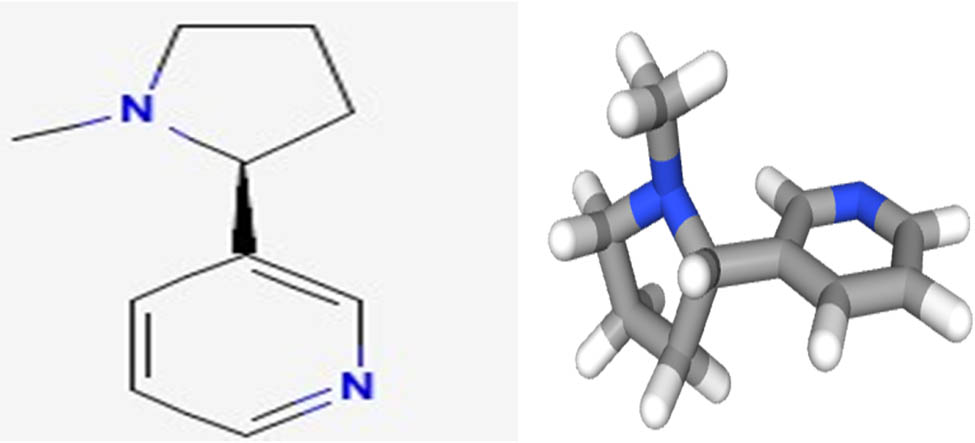
Shows the 2D and 3D structures of Nicotine.
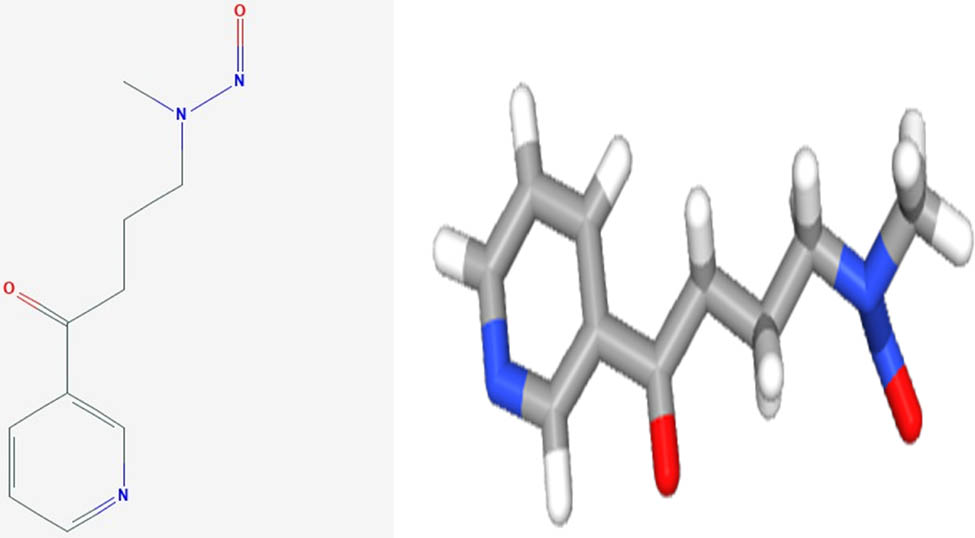
Shows the 2D and 3D structures of (NNK).
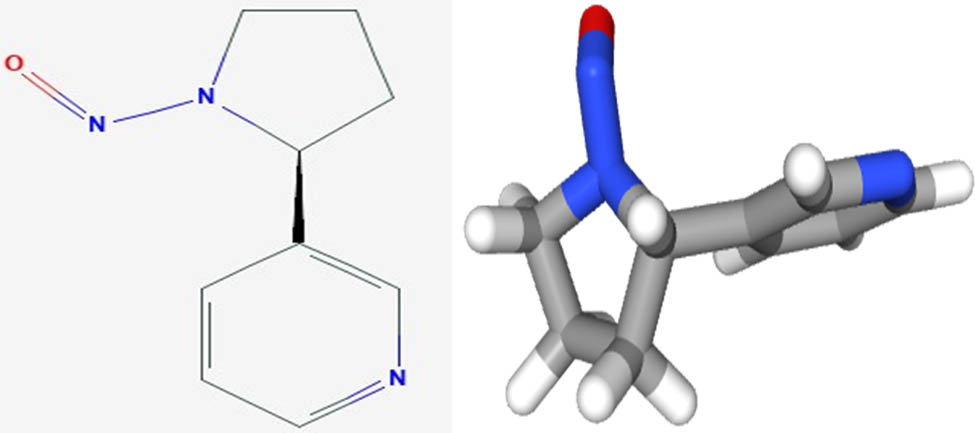
Shows the 2D and 3D structures of NNN.
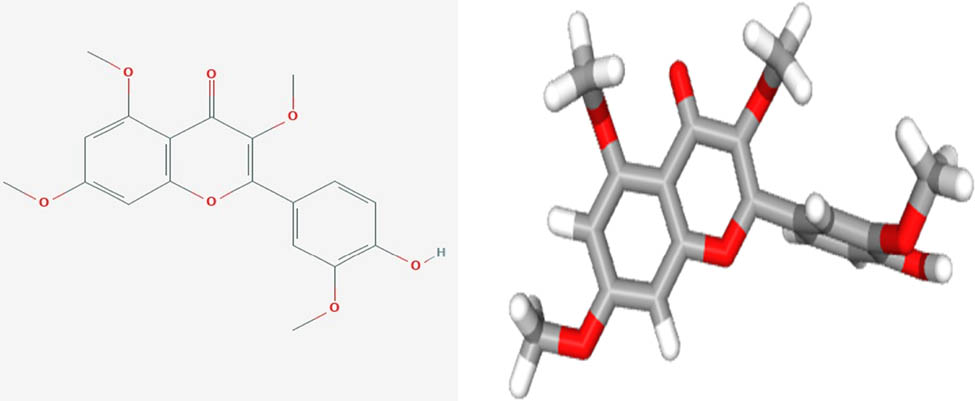
Shows the 2D and 3D structures of tetramethoxy hydroxyflavone.
2.8 Statistical analysis
The GeneSpring GX 11 software (Agilent Technologies, USA) was used for miRNA microarray data analysis. Data normalization was applied to the entire set followed by quantile normalization and followed by log 2 transformation. To ensure retention of only relevant miRNAs which were expressed in a minimum of one sample, gene expression filters were used and ANOVA statistical test was applied. Cluster analysis of differentially expressed genes was performed by the Manhattan correlation as a measure of similarity. Determination of the cycle threshold (Ct) value for the genes was done by the SDS software v1.2 (Applied Biosystems, USA) and the expression level of miRNA was normalized by calculating the ΔCt value. The relative gene expression was calculated as 2−ΔCt. Student’s t-test was used to measure statistical significance, and P < 0.05 was considered significant.
3 Results
3.1 MiRNA expression profile post AA treatment
The microarray analysis of miRNA expression post treatment with methanolic extract from AA was done with extracted total RNAs containing the enriched-miRNA from both the human cancer cell lines exposed with respective IC50 concentrations of AA. Effect of AA on miRNA expression of cell lines MCF-7 and MDA-MB-231 has been highlighted in Figures 5 and 6. Post incubation for 48 h, a total of 11 miRNAs were found to be upregulated and a total of 18 were detected to be downregulated in MCF-7 cell line as highlighted in Figure 5. MiRNA-22 was found to be 65.5% upregulated, while miRNA199a* was found to be 54.2% downregulated. The expression of 5 miRNAs was found to be highly upregulated in the MDA-MB-231 cell line, while the expression of ten miRNAs was found to be significantly downregulated, as shown in Figure 6. MiRNA-22 was found to be 68% upregulated, while miRNA-199a* was found to be 71% downregulated. In both the cell lines, the number of miRNA expressions downregulated was higher than the number of upregulated miRNA expressions.
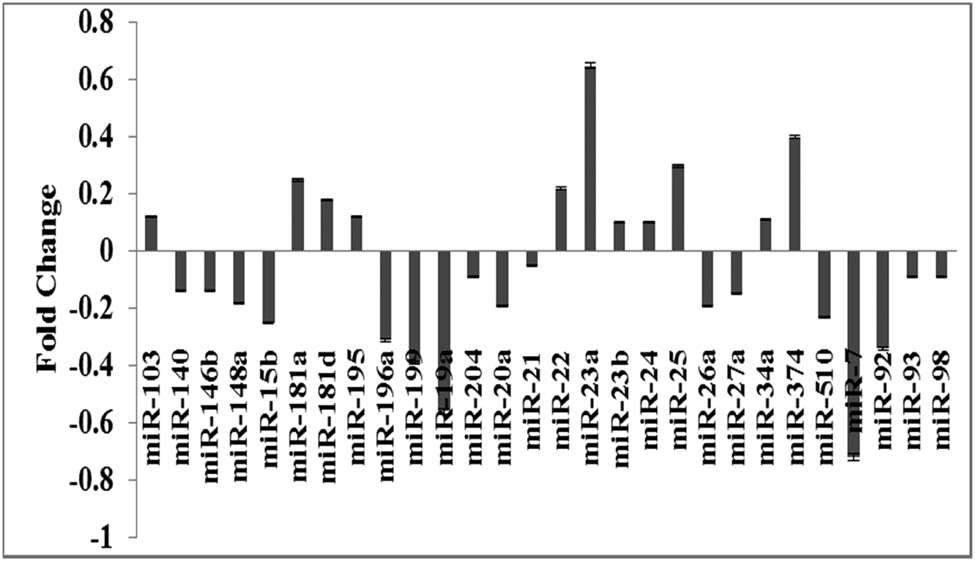
Effects of AA treatment on miRNA expression in MCF-7 cell lines. Microarray profile of miRNA expression in MCF-7 cells treated with AA for 48 h. The relative increase or decrease in the 29 miRNAs that showed a significant change in levels of expression after AA treatment compared with untreated cells.

Effects of AA treatments on miRNA expression in MDA-MB-231 cell line. Microarray profile of miRNA expression in MDA-MB-231 cells treated with AA for 48 h. The relative increase or decrease in the 15 miRNAs that showed a significant change in levels of expression after AA treatment compared with untreated cells.
3.2 RT-PCR analysis of differential expression
The upregulated miRNA-22 and the downregulated miRNA-199a* from both the studied cell lines were subjected to the qRT-PCR assay and highlighted in Figure 7a. The miRNA-enriched total RNA from the preparation used for microarray analysis was subjected to reverse transcription and amplification for SYBR detection. As highlighted in Figure 7b, miRNA-22 was upregulated with AA treatment by 60.3 and 68.6% in both cell lines, MCF-7 and MDA-MB-231, respectively. As highlighted in Figure 7c, the miRNA-199a* was downregulated post AA treatment in both the cell lines, MCF-7 and MDA-MB-231, by 25.1 and 36.4%, respectively. The qRT-PCR results were comparable and confirmed by the microarray data.
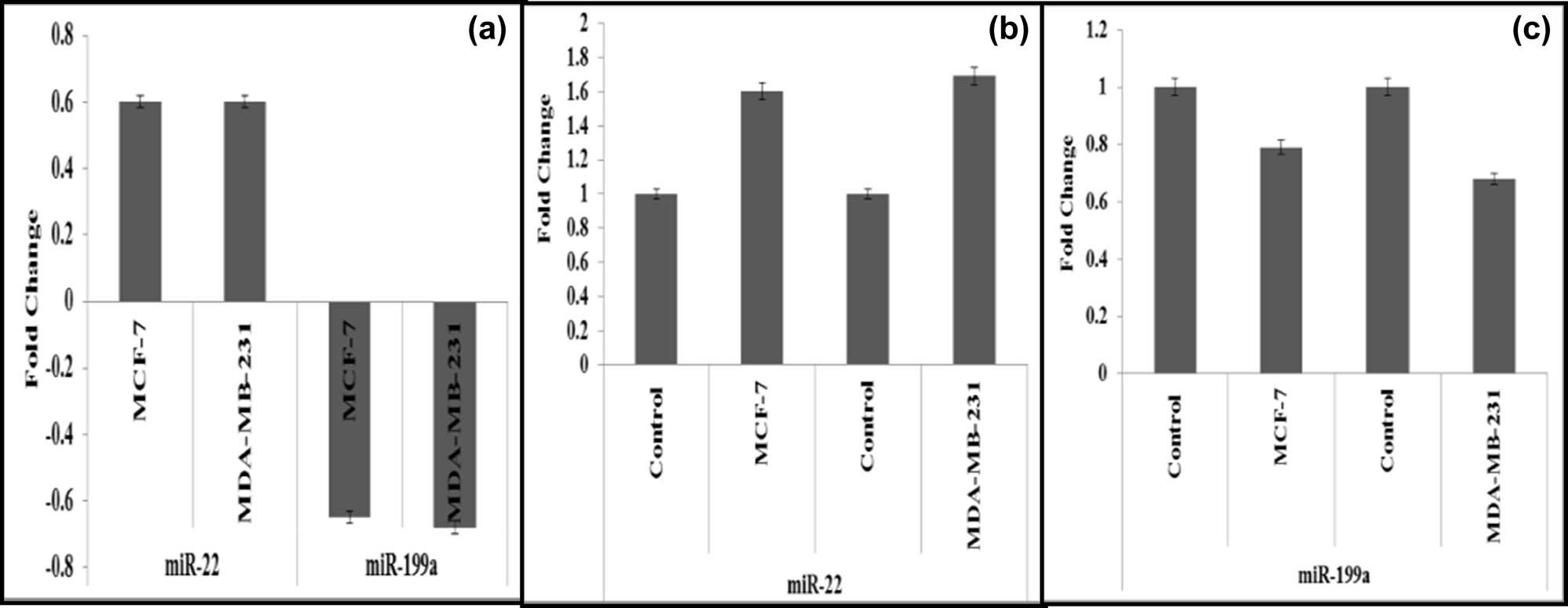
Comparison of microarray analysis with RT-PCR on the expressions of miRNA-22 and miRNA-199a*. MCF-7 and MDA-MB-231 cells were exposed to AA for 48 h. (a) Microarray analysis; the fold changes of AA-regulated miRNA-22 and miRNA-199a* compared with untreated controls. (b) RT-PCR confirmation of miRNA-22 expression compared with normal control values (mean fold change ± SE (n = 3), P < 0.05). (c) RT-PCR confirmation of miRNA-199a* expression compared with normal control values (mean fold change ± SE (n = 3), P < 0.05).
3.3 Docking studies
In our present work, we have determined the docking or binding-free energy, RMSD, and inhibition constant as represented in Table 1 and Figure 8, in which the binding energy of p7F with NNN was found to be highest at −2.01 kcal/mol, whereas p7F with nicotine docking results showed binding energy −1.52 kcal/mol with inhibition constant 76.50 mM, and the least binding energy was found with NNK which was +5.02 kcal/mol.
Docking results of tetramethoxy hydroxyflavone with three carcinogens from cigarette smoke
| S. No | Ligand | Receptor | RMSDb (A) | Binding energy (kcal/mol) | Inhibition constant (K i) (mM) |
|---|---|---|---|---|---|
| 1. | Tetramethoxy hydroxyflavone | Nicotine | 4.391 | −1.52 | 76.50 |
| NNK | 2.148 | +5.02 | NA | ||
| NNA | 4.634 | −2.01 | 33.89 |
Nicotine – l-nicotine, NNK – 4-(methylnitrosamino)-1-(3-pyridyl)-1-butanone, NNN – N′-nitrosonornicotine.
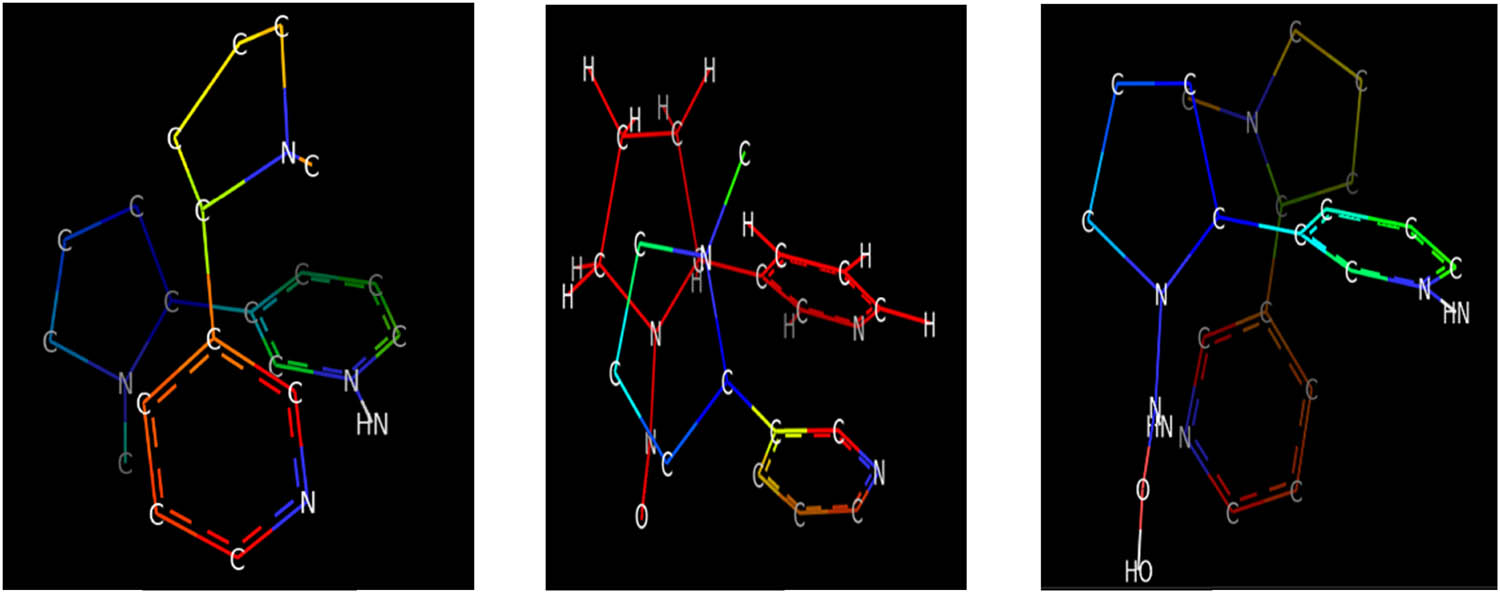
Docking results of three compounds (Nicotine, NNK, and NNA) with the ligand showing RMSD and binding affinity.
4 Discussion
For thousands of years, natural plants have been utilized to prevent and treat numerous diseases. In recent days, when numerous diseases are looking for therapy, different herbs are viewed as good sources of bioactive components with health-promoting properties [20]. Tobacco leaves and the smoke produced when they are smoked contain around 4,000 compounds, the most well-known of which is nicotine, which was isolated from tobacco leaves for the first time in 1828 by Posselt and Reimann [21]. Nicotine is the chemical that causes smokers to get addicted to tobacco, and it is lethal even in small doses. Nicotine is rapidly absorbed by each organ of the body when tobacco smoke is inhaled. Nicotine raises blood pressure and heart rate, possibly contributing to the high occurrence of apoplexy and atheroma in smokers. Nicotine substitution therapy is frequently used to help people quit smoking because it protects them from the numerous other harmful substances found in tobacco smoke, such as cancer-causing polycyclic sweet-smelling hydrocarbons and N-nitroso compounds; aggravating substances such as acrolein, benzene, formaldehyde, alkali, (CH3)2CO, acidic corrosive, etc. One of the studies has reported that ethanolic extract of leaves from AA on human cerebral cortical cells proved to displace (N)-nicotine and (n)-scopolamine from nicotinergic and muscarinic receptors [22]. Reports from many studies have presented work on the cytotoxicity of various parts of AA on breast cancer cell lines and have detected the whole extract to exhibit good cytotoxic activity against breast cancer [2,23]. In addition, to the role of miRNA in breast-cancer, studies have detected these to be involved in disease propagation. Same as in another comparison analysis involving 76 breast cancer samples and 10 normal samples, the study detected significant deregulated miRNAs to be miR-21, miR-145, miR-125b, and miR-155 [24]. The study, we believe, is a pilot attempt wherein we report the global expression profile of miRNAs in human MDA-MB-231 and MCF-7 breast cancer cells, and the effect of AA extract on the miRNA expression profile after 48 h of treatment with the same.
Our microarray analysis with the 923 known human miRNAs, a total of 29 and 15 miRNAs were detected to exhibit differential expression post AA treatment in breast cancer cell lines of MCF-7 and MDA-MB-231. The miRNAs detected to be deregulated in our study have not been reported in any previous reports though the fundamental of differentially expressed miRNAs to exhibit altered response to chemical treatment in human and animal cell line models have been shown. The microarray assay in our study revealed that extract of AA upregulated the expression of miRNA-22, while downregulated the expression of miRNA-199a*. These results were confirmed by RT-PCR-based expression patterns of miRNA-22 and miRNA-199a*.
The organic compound p7F is considered as ligand and Nicotine, NNN, and NNK as receptor molecules and docking has been performed using AutoDock 4.2 version [25,26]. p7F, isolated from AA, has been found to be effective in the treatment of inflammatory illnesses and has antioxidant and anti-inflammatory properties. Based on our docking results, it is possible to predict that p7F has anticancer activity against carcinogenic compounds found in cigarette smoke.
Our findings, along with those of other similar studies, imply that the range of miRNAs that respond to pharmacological therapy varies by pharmaceutical class. Investigating the molecular regulatory mechanisms of common and drug-specific miRNAs will help us better understand the therapeutic efficacy of various medications and, as a result, bring fresh insight into drug screening for cancer treatment.
Acknowledgment
The authors extend their appreciation to the Deanship of Scientific Research at King Saud University for funding this work through research group no. RG-1441-465.
-
Funding information: This project was supported by the Research Groups Program (Research Group number RG-1441-465), Deanship of Scientific Research, King Saud University, Riyadh, Saudi Arabia.
-
Author contributions: F.A. and S.A. were responsible for conceptualization of the project and manuscript development also helped in molecular studies. R.A. and A.A. were responsible in method development including extraction, molecular, computation, and stastical analysis. They along with others were involved in manuscript preparation. M.A.A. helped in analyzing the plant extracting data and interpretation of results.
-
Conflict of interest: Authors declare no conflict of interest.
-
Ethical approval: The conducted research is not related to either human or animal use.
-
Data availability statement: Data set are available and will be shared on request to the corresponding email.
References
[1] Shafi G, Hasan TN, Syed NA, Al-Hazzani AA, Alshatwi AA, Jyothi A, et al. Artemisia absinthium (AA): a novel potential complementary and alternative medicine for breast cancer. Mol Biol Rep. 2012 Jul;39(7):7373–9.10.1007/s11033-012-1569-0Search in Google Scholar PubMed
[2] Septembre-Malaterre A, Lalarizo Rakoto M, Marodon C, Bedoui Y, Nakab J, Simon E, et al. Artemisia annua, a traditional plant brought to light. Int J Mol Sci. 2020 Jan;21(14):4986.10.3390/ijms21144986Search in Google Scholar PubMed PubMed Central
[3] Mughees M, Samim M, Ahmad S, Wajid S. Comparative analysis of the cytotoxic activity of extracts from different parts of A. absinthium L. on breast cancer cell lines and correlation with active compounds concentration. Plant Biosyst Int J Dealing All Asp Plant Biol. 2019 Jul 4;153(4):569–79.10.1080/11263504.2018.1527792Search in Google Scholar
[4] Shafi G, Hasan TN, Syed NA, Paine A, Tegner J, Munshi A. Breast cancer microRNAs: clinical biomarkers for the diagnosis and treatment strategies. In Omics approaches in breast cancer. New Delhi: Springer; 2014. p. 171–82.10.1007/978-81-322-0843-3_8Search in Google Scholar
[5] Wei X, Xia L, Ziyayiding D, Chen Q, Liu R, Xu X, et al. The extracts of Artemisia absinthium L. suppress the growth of hepatocellular carcinoma cells through induction of apoptosis via endoplasmic reticulum stress and mitochondrial-dependent pathway. Molecules. 2019 Jan;24(5):913.10.3390/molecules24050913Search in Google Scholar PubMed PubMed Central
[6] Lee HG, Kim H, Oh WK, Yu KA, Choe YK, Ahn JS, et al. Tetramethoxy hydroxyflavone p7F downregulates inflammatory mediators via the inhibition of nuclear factor κB. Ann N Y Acad Sci. 2004 Dec;1030(1):555–68.10.1196/annals.1329.065Search in Google Scholar PubMed
[7] Hamam R, Hamam D, Alsaleh KA, Kassem M, Zaher W, Alfayez M, et al. Circulating microRNAs in breast cancer: novel diagnostic and prognostic biomarkers. Cell Death Dis. 2017 Sep;8(9):e3045.10.1038/cddis.2017.440Search in Google Scholar PubMed PubMed Central
[8] Ramos JM, Ruiz A, Colen R, Lopez ID, Grossman L, Matta JL. DNA repair and breast carcinoma susceptibility in women. Cancer: Interdiscip Int J Am Cancer Soc. 2004;100(7):1352–7.10.1002/cncr.20135Search in Google Scholar PubMed
[9] Singh R, Mo YY. Role of microRNAs in breast cancer. Cancer Biol Ther. 2013;14(3):201–12.10.4161/cbt.23296Search in Google Scholar PubMed PubMed Central
[10] Fu SW, Chen L, Man YG. miRNA biomarkers in breast cancer detection and management. J Cancer. 2011;2:116.10.7150/jca.2.116Search in Google Scholar PubMed PubMed Central
[11] Lu TX, Rothenberg ME. MicroRNA. J Allergy Clin Immunol. 2018 Apr 1;141(4):1202–7.10.1016/j.jaci.2017.08.034Search in Google Scholar
[12] Bartel DP. MicroRNAs: kwayoyin halitta, kwayoyin halitta, inji, da kuma aikin. Cell. 2004;116:281–97. 10.1016.S0092-8674(04)00045-5.Search in Google Scholar
[13] Bueno MJ, de Castro IP, Malumbres M. Control of cell proliferation pathways by microRNAs. Cell Cycle. 2008 Oct 15;7(20):3143–8.10.4161/cc.7.20.6833Search in Google Scholar
[14] Gurses HE, Hatipoglu OF, Gunduz M, Gunduz E. MicroRNAs as therapeutic targets in human breast cancer. Concise Rev Mol Pathol Breast Cancer. 2015 Mar 25;121–37.10.5772/59681Search in Google Scholar
[15] van Schooneveld E, Wildiers H, Vergote I, Vermeulen PB, Dirix LY, Van Laere SJ. Dysregulation of microRNAs in breast cancer and their potential role as prognostic and predictive biomarkers in patient management. Breast Cancer Res. 2015 Dec;17(1):1–5.10.1186/s13058-015-0526-ySearch in Google Scholar
[16] Balcells I, Cirera S, Busk PK. Specific and sensitive quantitative RT-PCR of miRNAs with DNA primers. BMC Biotechnol. 2011 Dec;11(1):1.10.1186/1472-6750-11-70Search in Google Scholar
[17] Cosconati S, Forli S, Perryman AL, Harris R, Goodsell DS, Olson AJ. Virtual screening with AutoDock: theory and practice. Expert Opin Drug Discov. 2010 Jun 1;5(6):597–607.10.1517/17460441.2010.484460Search in Google Scholar
[18] Yu RM, Cheah YK. The roles of miRNAs in human breast cancer and canine mammary tumor. Appl Cancer Res. 2017 Dec;37(1):1.10.1186/s41241-017-0043-7Search in Google Scholar
[19] Shafi G, Munshi A, Hasan TN, Alshatwi AA, Jyothy A, Lei DK. Induction of apoptosis in HeLa cells by chloroform fraction of seed extracts of Nigella sativa. Cancer Cell Int. 2009;9(1):1–8.10.1186/1475-2867-9-29Search in Google Scholar
[20] Winston D. Adaptogens: herbs for strength, stamina, and stress relief. America/China: Simon and Schuster; 2019 Sep 17.Search in Google Scholar
[21] Posselt W, Reimann L. Chemische untersuchungen des tabaks und darstellung des eigenhumlichen wirksamen principes dieser pflanze. Geigers Mag der Pharmazie. 1828;24:138–61.Search in Google Scholar
[22] Wake G, Court J, Pickering A, Lewis R, Wilkins R, Perry E. CNS acetylcholine receptor activity in European medicinal plants traditionally used to improve failing memory. J Ethnopharmacol. 2000 Feb 1;69(2):105–14.10.1016/S0378-8741(99)00113-0Search in Google Scholar
[23] Wang H, Oo Khor T, Shu L, Su ZY, Fuentes F, Lee JH, et al. Plants vs. cancer: a review on natural phytochemicals in preventing and treating cancers and their druggability. Anti-Cancer Agents Medicinal Chem. 2012 Dec 1;12(10):1281–305.10.2174/187152012803833026Search in Google Scholar PubMed PubMed Central
[24] Iorio MV, Ferracin M, Liu CG, Veronese A, Spizzo R, Sabbioni S, et al. MicroRNA gene expression deregulation in human breast cancer. Cancer Res. 2005 Aug 15;65(16):7065–70.10.1158/0008-5472.CAN-05-1783Search in Google Scholar PubMed
[25] Morris GM, Huey R, Lindstrom W, Sanner MF, Belew RK, Goodsell DS, et al. AutoDock4 and AutoDockTools4: automated docking with selective receptor flexibility. J Comput Chem. 2009 Dec;30(16):2785–91.10.1002/jcc.21256Search in Google Scholar PubMed PubMed Central
[26] Forli S, Olson AJ. A force field with discrete displaceable waters and desolvation entropy for hydrated ligand docking. J Med Chem. 2012 Jan 26;55(2):623–38.10.1021/jm2005145Search in Google Scholar PubMed PubMed Central
© 2021 Fahad M. Aldakheel et al., published by De Gruyter
This work is licensed under the Creative Commons Attribution 4.0 International License.
Articles in the same Issue
- Regular Articles
- Qualitative and semi-quantitative assessment of anthocyanins in Tibetan hulless barley from different geographical locations by UPLC-QTOF-MS and their antioxidant capacities
- Effect of sodium chloride on the expression of genes involved in the salt tolerance of Bacillus sp. strain “SX4” isolated from salinized greenhouse soil
- GC-MS analysis of mango stem bark extracts (Mangifera indica L.), Haden variety. Possible contribution of volatile compounds to its health effects
- Influence of nanoscale-modified apatite-type calcium phosphates on the biofilm formation by pathogenic microorganisms
- Removal of paracetamol from aqueous solution by containment composites
- Investigating a human pesticide intoxication incident: The importance of robust analytical approaches
- Induction of apoptosis and cell cycle arrest by chloroform fraction of Juniperus phoenicea and chemical constituents analysis
- Recovery of γ-Fe2O3 from copper ore tailings by magnetization roasting and magnetic separation
- Effects of different extraction methods on antioxidant properties of blueberry anthocyanins
- Modeling the removal of methylene blue dye using a graphene oxide/TiO2/SiO2 nanocomposite under sunlight irradiation by intelligent system
- Antimicrobial and antioxidant activities of Cinnamomum cassia essential oil and its application in food preservation
- Full spectrum and genetic algorithm-selected spectrum-based chemometric methods for simultaneous determination of azilsartan medoxomil, chlorthalidone, and azilsartan: Development, validation, and application on commercial dosage form
- Evaluation of the performance of immunoblot and immunodot techniques used to identify autoantibodies in patients with autoimmune diseases
- Computational studies by molecular docking of some antiviral drugs with COVID-19 receptors are an approach to medication for COVID-19
- Synthesis of amides and esters containing furan rings under microwave-assisted conditions
- Simultaneous removal efficiency of H2S and CO2 by high-gravity rotating packed bed: Experiments and simulation
- Design, synthesis, and biological activities of novel thiophene, pyrimidine, pyrazole, pyridine, coumarin and isoxazole: Dydrogesterone derivatives as antitumor agents
- Content and composition analysis of polysaccharides from Blaps rynchopetera and its macrophage phagocytic activity
- A new series of 2,4-thiazolidinediones endowed with potent aldose reductase inhibitory activity
- Assessing encapsulation of curcumin in cocoliposome: In vitro study
- Rare norisodinosterol derivatives from Xenia umbellata: Isolation and anti-proliferative activity
- Comparative study of antioxidant and anticancer activities and HPTLC quantification of rutin in white radish (Raphanus sativus L.) leaves and root extracts grown in Saudi Arabia
- Comparison of adsorption properties of commercial silica and rice husk ash (RHA) silica: A study by NIR spectroscopy
- Sodium borohydride (NaBH4) as a high-capacity material for next-generation sodium-ion capacitors
- Aroma components of tobacco powder from different producing areas based on gas chromatography ion mobility spectrometry
- The effects of salinity on changes in characteristics of soils collected in a saline region of the Mekong Delta, Vietnam
- Synthesis, properties, and activity of MoVTeNbO catalysts modified by zirconia-pillared clays in oxidative dehydrogenation of ethane
- Synthesis and crystal structure of N,N′-bis(4-chlorophenyl)thiourea N,N-dimethylformamide
- Quantitative analysis of volatile compounds of four Chinese traditional liquors by SPME-GC-MS and determination of total phenolic contents and antioxidant activities
- A novel separation method of the valuable components for activated clay production wastewater
- On ve-degree- and ev-degree-based topological properties of crystallographic structure of cuprite Cu2O
- Antihyperglycemic effect and phytochemical investigation of Rubia cordifolia (Indian Madder) leaves extract
- Microsphere molecularly imprinted solid-phase extraction for diazepam analysis using itaconic acid as a monomer in propanol
- A nitric oxide-releasing prodrug promotes apoptosis in human renal carcinoma cells: Involvement of reactive oxygen species
- Machine vision-based driving and feedback scheme for digital microfluidics system
- Study on the application of a steam-foam drive profile modification technology for heavy oil reservoir development
- Ni–Ru-containing mixed oxide-based composites as precursors for ethanol steam reforming catalysts: Effect of the synthesis methods on the structural and catalytic properties
- Preparation of composite soybean straw-based materials by LDHs modifying as a solid sorbent for removal of Pb(ii) from water samples
- Synthesis and spectral characterizations of vanadyl(ii) and chromium(iii) mixed ligand complexes containing metformin drug and glycine amino acid
- In vitro evaluation of lactic acid bacteria with probiotic activity isolated from local pickled leaf mustard from Wuwei in Anhui as substitutes for chemical synthetic additives
- Utilization and simulation of innovative new binuclear Co(ii), Ni(ii), Cu(ii), and Zn(ii) diimine Schiff base complexes in sterilization and coronavirus resistance (Covid-19)
- Phosphorylation of Pit-1 by cyclin-dependent kinase 5 at serine 126 is associated with cell proliferation and poor prognosis in prolactinomas
- Molecularly imprinted membrane for transport of urea, creatinine, and vitamin B12 as a hemodialysis candidate membrane
- Optimization of Murrayafoline A ethanol extraction process from the roots of Glycosmis stenocarpa, and evaluation of its Tumorigenesis inhibition activity on Hep-G2 cells
- Highly sensitive determination of α-lipoic acid in pharmaceuticals on a boron-doped diamond electrode
- Synthesis, chemo-informatics, and anticancer evaluation of fluorophenyl-isoxazole derivatives
- In vitro and in vivo investigation of polypharmacology of propolis extract as anticancer, antibacterial, anti-inflammatory, and chemical properties
- Topological indices of bipolar fuzzy incidence graph
- Preparation of Fe3O4@SiO2–ZnO catalyst and its catalytic synthesis of rosin glycol ester
- Construction of a new luminescent Cd(ii) compound for the detection of Fe3+ and treatment of Hepatitis B
- Investigation of bovine serum albumin aggregation upon exposure to silver(i) and copper(ii) metal ions using Zetasizer
- Discoloration of methylene blue at neutral pH by heterogeneous photo-Fenton-like reactions using crystalline and amorphous iron oxides
- Optimized extraction of polyphenols from leaves of Rosemary (Rosmarinus officinalis L.) grown in Lam Dong province, Vietnam, and evaluation of their antioxidant capacity
- Synthesis of novel thiourea-/urea-benzimidazole derivatives as anticancer agents
- Potency and selectivity indices of Myristica fragrans Houtt. mace chloroform extract against non-clinical and clinical human pathogens
- Simple modifications of nicotinic, isonicotinic, and 2,6-dichloroisonicotinic acids toward new weapons against plant diseases
- Synthesis, optical and structural characterisation of ZnS nanoparticles derived from Zn(ii) dithiocarbamate complexes
- Presence of short and cyclic peptides in Acacia and Ziziphus honeys may potentiate their medicinal values
- The role of vitamin D deficiency and elevated inflammatory biomarkers as risk factors for the progression of diabetic nephropathy in patients with type 2 diabetes mellitus
- Quantitative structure–activity relationship study on prolonged anticonvulsant activity of terpene derivatives in pentylenetetrazole test
- GADD45B induced the enhancing of cell viability and proliferation in radiotherapy and increased the radioresistance of HONE1 cells
- Cannabis sativa L. chemical compositions as potential plasmodium falciparum dihydrofolate reductase-thymidinesynthase enzyme inhibitors: An in silico study for drug development
- Dynamics of λ-cyhalothrin disappearance and expression of selected P450 genes in bees depending on the ambient temperature
- Identification of synthetic cannabinoid methyl 2-{[1-(cyclohexylmethyl)-1H-indol-3-yl] formamido}-3-methylbutanoate using modern mass spectrometry and nuclear magnetic resonance techniques
- Study on the speciation of arsenic in the genuine medicinal material honeysuckle
- Two Cu(ii)-based coordination polymers: Crystal structures and treatment activity on periodontitis
- Conversion of furfuryl alcohol to ethyl levulinate in the presence of mesoporous aluminosilicate catalyst
- Review Articles
- Hsien Wu and his major contributions to the chemical era of immunology
- Overview of the major classes of new psychoactive substances, psychoactive effects, analytical determination and conformational analysis of selected illegal drugs
- An overview of persistent organic pollutants along the coastal environment of Kuwait
- Mechanism underlying sevoflurane-induced protection in cerebral ischemia–reperfusion injury
- COVID-19 and SARS-CoV-2: Everything we know so far – A comprehensive review
- Challenge of diabetes mellitus and researchers’ contributions to its control
- Advances in the design and application of transition metal oxide-based supercapacitors
- Color and composition of beauty products formulated with lemongrass essential oil: Cosmetics formulation with lemongrass essential oil
- The structural chemistry of zinc(ii) and nickel(ii) dithiocarbamate complexes
- Bioprospecting for antituberculosis natural products – A review
- Recent progress in direct urea fuel cell
- Rapid Communications
- A comparative morphological study of titanium dioxide surface layer dental implants
- Changes in the antioxidative properties of honeys during their fermentation
- Erratum
- Erratum to “Corrosion study of copper in aqueous sulfuric acid solution in the presence of (2E,5E)-2,5-dibenzylidenecyclopentanone and (2E,5E)-bis[(4-dimethylamino)benzylidene]cyclopentanone: Experimental and theoretical study”
- Erratum to “Modified TDAE petroleum plasticiser”
- Corrigendum
- Corrigendum to “A nitric oxide-releasing prodrug promotes apoptosis in human renal carcinoma cells: Involvement of reactive oxygen species”
- Special Issue on 3rd IC3PE 2020
- Visible light-responsive photocatalyst of SnO2/rGO prepared using Pometia pinnata leaf extract
- Antihyperglycemic activity of Centella asiatica (L.) Urb. leaf ethanol extract SNEDDS in zebrafish (Danio rerio)
- Selection of oil extraction process from Chlorella species of microalgae by using multi-criteria decision analysis technique for biodiesel production
- Special Issue on the 14th Joint Conference of Chemistry (14JCC)
- Synthesis and in vitro cytotoxicity evaluation of isatin-pyrrole derivatives against HepG2 cell line
- CO2 gas separation using mixed matrix membranes based on polyethersulfone/MIL-100(Al)
- Effect of synthesis and activation methods on the character of CoMo/ultrastable Y-zeolite catalysts
- Special Issue on Electrochemical Amplified Sensors
- Enhancement of graphene oxide through β-cyclodextrin composite to sensitive analysis of an antidepressant: Sulpiride
- Investigation of the spectroelectrochemical behavior of quercetin isolated from Zanthoxylum bungeanum
- An electrochemical sensor for high sensitive determination of lysozyme based on the aptamer competition approach
- An improved non-enzymatic electrochemical sensor amplified with CuO nanostructures for sensitive determination of uric acid
- Special Issue on Applied Biochemistry and Biotechnology 2020
- Fast discrimination of avocado oil for different extracted methods using headspace-gas chromatography-ion mobility spectroscopy with PCA based on volatile organic compounds
- Effect of alkali bases on the synthesis of ZnO quantum dots
- Quality evaluation of Cabernet Sauvignon wines in different vintages by 1H nuclear magnetic resonance-based metabolomics
- Special Issue on the Joint Science Congress of Materials and Polymers (ISCMP 2019)
- Diatomaceous Earth: Characterization, thermal modification, and application
- Electrochemical determination of atenolol and propranolol using a carbon paste sensor modified with natural ilmenite
- Special Issue on the Conference of Energy, Fuels, Environment 2020
- Assessment of the mercury contamination of landfilled and recovered foundry waste – a case study
- Primary energy consumption in selected EU Countries compared to global trends
- Modified TDAE petroleum plasticiser
- Use of glycerol waste in lactic acid bacteria metabolism for the production of lactic acid: State of the art in Poland
- Topical Issue on Applications of Mathematics in Chemistry
- Theoretical study of energy, inertia and nullity of phenylene and anthracene
- Banhatti, revan and hyper-indices of silicon carbide Si2C3-III[n,m]
- Topical Issue on Agriculture
- Occurrence of mycotoxins in selected agricultural and commercial products available in eastern Poland
- Special Issue on Ethnobotanical, Phytochemical and Biological Investigation of Medicinal Plants
- Acute and repeated dose 60-day oral toxicity assessment of chemically characterized Berberis hispanica Boiss. and Reut in Wistar rats
- Phytochemical profile, in vitro antioxidant, and anti-protein denaturation activities of Curcuma longa L. rhizome and leaves
- Antiplasmodial potential of Eucalyptus obliqua leaf methanolic extract against Plasmodium vivax: An in vitro study
- Prunus padus L. bark as a functional promoting component in functional herbal infusions – cyclooxygenase-2 inhibitory, antioxidant, and antimicrobial effects
- Molecular and docking studies of tetramethoxy hydroxyflavone compound from Artemisia absinthium against carcinogens found in cigarette smoke
- Special Issue on the Joint Science Congress of Materials and Polymers (ISCMP 2020)
- Preparation of cypress (Cupressus sempervirens L.) essential oil loaded poly(lactic acid) nanofibers
- Influence of mica mineral on flame retardancy and mechanical properties of intumescent flame retardant polypropylene composites
- Production and characterization of thermoplastic elastomer foams based on the styrene–ethylene–butylene–styrene (SEBS) rubber and thermoplastic material
- Special Issue on Applied Chemistry in Agriculture and Food Science
- Impact of essential oils on the development of pathogens of the Fusarium genus and germination parameters of selected crops
- Yield, volume, quality, and reduction of biotic stress influenced by titanium application in oilseed rape, winter wheat, and maize cultivations
- Influence of potato variety on polyphenol profile composition and glycoalcaloid contents of potato juice
- Carryover effect of direct-fed microbial supplementation and early weaning on the growth performance and carcass characteristics of growing Najdi lambs
- Special Issue on Applied Biochemistry and Biotechnology (ABB 2021)
- The electrochemical redox mechanism and antioxidant activity of polyphenolic compounds based on inlaid multi-walled carbon nanotubes-modified graphite electrode
- Study of an adsorption method for trace mercury based on Bacillus subtilis
- Special Issue on The 1st Malaysia International Conference on Nanotechnology & Catalysis (MICNC2021)
- Mitigating membrane biofouling in biofuel cell system – A review
- Mechanical properties of polymeric biomaterials: Modified ePTFE using gamma irradiation
Articles in the same Issue
- Regular Articles
- Qualitative and semi-quantitative assessment of anthocyanins in Tibetan hulless barley from different geographical locations by UPLC-QTOF-MS and their antioxidant capacities
- Effect of sodium chloride on the expression of genes involved in the salt tolerance of Bacillus sp. strain “SX4” isolated from salinized greenhouse soil
- GC-MS analysis of mango stem bark extracts (Mangifera indica L.), Haden variety. Possible contribution of volatile compounds to its health effects
- Influence of nanoscale-modified apatite-type calcium phosphates on the biofilm formation by pathogenic microorganisms
- Removal of paracetamol from aqueous solution by containment composites
- Investigating a human pesticide intoxication incident: The importance of robust analytical approaches
- Induction of apoptosis and cell cycle arrest by chloroform fraction of Juniperus phoenicea and chemical constituents analysis
- Recovery of γ-Fe2O3 from copper ore tailings by magnetization roasting and magnetic separation
- Effects of different extraction methods on antioxidant properties of blueberry anthocyanins
- Modeling the removal of methylene blue dye using a graphene oxide/TiO2/SiO2 nanocomposite under sunlight irradiation by intelligent system
- Antimicrobial and antioxidant activities of Cinnamomum cassia essential oil and its application in food preservation
- Full spectrum and genetic algorithm-selected spectrum-based chemometric methods for simultaneous determination of azilsartan medoxomil, chlorthalidone, and azilsartan: Development, validation, and application on commercial dosage form
- Evaluation of the performance of immunoblot and immunodot techniques used to identify autoantibodies in patients with autoimmune diseases
- Computational studies by molecular docking of some antiviral drugs with COVID-19 receptors are an approach to medication for COVID-19
- Synthesis of amides and esters containing furan rings under microwave-assisted conditions
- Simultaneous removal efficiency of H2S and CO2 by high-gravity rotating packed bed: Experiments and simulation
- Design, synthesis, and biological activities of novel thiophene, pyrimidine, pyrazole, pyridine, coumarin and isoxazole: Dydrogesterone derivatives as antitumor agents
- Content and composition analysis of polysaccharides from Blaps rynchopetera and its macrophage phagocytic activity
- A new series of 2,4-thiazolidinediones endowed with potent aldose reductase inhibitory activity
- Assessing encapsulation of curcumin in cocoliposome: In vitro study
- Rare norisodinosterol derivatives from Xenia umbellata: Isolation and anti-proliferative activity
- Comparative study of antioxidant and anticancer activities and HPTLC quantification of rutin in white radish (Raphanus sativus L.) leaves and root extracts grown in Saudi Arabia
- Comparison of adsorption properties of commercial silica and rice husk ash (RHA) silica: A study by NIR spectroscopy
- Sodium borohydride (NaBH4) as a high-capacity material for next-generation sodium-ion capacitors
- Aroma components of tobacco powder from different producing areas based on gas chromatography ion mobility spectrometry
- The effects of salinity on changes in characteristics of soils collected in a saline region of the Mekong Delta, Vietnam
- Synthesis, properties, and activity of MoVTeNbO catalysts modified by zirconia-pillared clays in oxidative dehydrogenation of ethane
- Synthesis and crystal structure of N,N′-bis(4-chlorophenyl)thiourea N,N-dimethylformamide
- Quantitative analysis of volatile compounds of four Chinese traditional liquors by SPME-GC-MS and determination of total phenolic contents and antioxidant activities
- A novel separation method of the valuable components for activated clay production wastewater
- On ve-degree- and ev-degree-based topological properties of crystallographic structure of cuprite Cu2O
- Antihyperglycemic effect and phytochemical investigation of Rubia cordifolia (Indian Madder) leaves extract
- Microsphere molecularly imprinted solid-phase extraction for diazepam analysis using itaconic acid as a monomer in propanol
- A nitric oxide-releasing prodrug promotes apoptosis in human renal carcinoma cells: Involvement of reactive oxygen species
- Machine vision-based driving and feedback scheme for digital microfluidics system
- Study on the application of a steam-foam drive profile modification technology for heavy oil reservoir development
- Ni–Ru-containing mixed oxide-based composites as precursors for ethanol steam reforming catalysts: Effect of the synthesis methods on the structural and catalytic properties
- Preparation of composite soybean straw-based materials by LDHs modifying as a solid sorbent for removal of Pb(ii) from water samples
- Synthesis and spectral characterizations of vanadyl(ii) and chromium(iii) mixed ligand complexes containing metformin drug and glycine amino acid
- In vitro evaluation of lactic acid bacteria with probiotic activity isolated from local pickled leaf mustard from Wuwei in Anhui as substitutes for chemical synthetic additives
- Utilization and simulation of innovative new binuclear Co(ii), Ni(ii), Cu(ii), and Zn(ii) diimine Schiff base complexes in sterilization and coronavirus resistance (Covid-19)
- Phosphorylation of Pit-1 by cyclin-dependent kinase 5 at serine 126 is associated with cell proliferation and poor prognosis in prolactinomas
- Molecularly imprinted membrane for transport of urea, creatinine, and vitamin B12 as a hemodialysis candidate membrane
- Optimization of Murrayafoline A ethanol extraction process from the roots of Glycosmis stenocarpa, and evaluation of its Tumorigenesis inhibition activity on Hep-G2 cells
- Highly sensitive determination of α-lipoic acid in pharmaceuticals on a boron-doped diamond electrode
- Synthesis, chemo-informatics, and anticancer evaluation of fluorophenyl-isoxazole derivatives
- In vitro and in vivo investigation of polypharmacology of propolis extract as anticancer, antibacterial, anti-inflammatory, and chemical properties
- Topological indices of bipolar fuzzy incidence graph
- Preparation of Fe3O4@SiO2–ZnO catalyst and its catalytic synthesis of rosin glycol ester
- Construction of a new luminescent Cd(ii) compound for the detection of Fe3+ and treatment of Hepatitis B
- Investigation of bovine serum albumin aggregation upon exposure to silver(i) and copper(ii) metal ions using Zetasizer
- Discoloration of methylene blue at neutral pH by heterogeneous photo-Fenton-like reactions using crystalline and amorphous iron oxides
- Optimized extraction of polyphenols from leaves of Rosemary (Rosmarinus officinalis L.) grown in Lam Dong province, Vietnam, and evaluation of their antioxidant capacity
- Synthesis of novel thiourea-/urea-benzimidazole derivatives as anticancer agents
- Potency and selectivity indices of Myristica fragrans Houtt. mace chloroform extract against non-clinical and clinical human pathogens
- Simple modifications of nicotinic, isonicotinic, and 2,6-dichloroisonicotinic acids toward new weapons against plant diseases
- Synthesis, optical and structural characterisation of ZnS nanoparticles derived from Zn(ii) dithiocarbamate complexes
- Presence of short and cyclic peptides in Acacia and Ziziphus honeys may potentiate their medicinal values
- The role of vitamin D deficiency and elevated inflammatory biomarkers as risk factors for the progression of diabetic nephropathy in patients with type 2 diabetes mellitus
- Quantitative structure–activity relationship study on prolonged anticonvulsant activity of terpene derivatives in pentylenetetrazole test
- GADD45B induced the enhancing of cell viability and proliferation in radiotherapy and increased the radioresistance of HONE1 cells
- Cannabis sativa L. chemical compositions as potential plasmodium falciparum dihydrofolate reductase-thymidinesynthase enzyme inhibitors: An in silico study for drug development
- Dynamics of λ-cyhalothrin disappearance and expression of selected P450 genes in bees depending on the ambient temperature
- Identification of synthetic cannabinoid methyl 2-{[1-(cyclohexylmethyl)-1H-indol-3-yl] formamido}-3-methylbutanoate using modern mass spectrometry and nuclear magnetic resonance techniques
- Study on the speciation of arsenic in the genuine medicinal material honeysuckle
- Two Cu(ii)-based coordination polymers: Crystal structures and treatment activity on periodontitis
- Conversion of furfuryl alcohol to ethyl levulinate in the presence of mesoporous aluminosilicate catalyst
- Review Articles
- Hsien Wu and his major contributions to the chemical era of immunology
- Overview of the major classes of new psychoactive substances, psychoactive effects, analytical determination and conformational analysis of selected illegal drugs
- An overview of persistent organic pollutants along the coastal environment of Kuwait
- Mechanism underlying sevoflurane-induced protection in cerebral ischemia–reperfusion injury
- COVID-19 and SARS-CoV-2: Everything we know so far – A comprehensive review
- Challenge of diabetes mellitus and researchers’ contributions to its control
- Advances in the design and application of transition metal oxide-based supercapacitors
- Color and composition of beauty products formulated with lemongrass essential oil: Cosmetics formulation with lemongrass essential oil
- The structural chemistry of zinc(ii) and nickel(ii) dithiocarbamate complexes
- Bioprospecting for antituberculosis natural products – A review
- Recent progress in direct urea fuel cell
- Rapid Communications
- A comparative morphological study of titanium dioxide surface layer dental implants
- Changes in the antioxidative properties of honeys during their fermentation
- Erratum
- Erratum to “Corrosion study of copper in aqueous sulfuric acid solution in the presence of (2E,5E)-2,5-dibenzylidenecyclopentanone and (2E,5E)-bis[(4-dimethylamino)benzylidene]cyclopentanone: Experimental and theoretical study”
- Erratum to “Modified TDAE petroleum plasticiser”
- Corrigendum
- Corrigendum to “A nitric oxide-releasing prodrug promotes apoptosis in human renal carcinoma cells: Involvement of reactive oxygen species”
- Special Issue on 3rd IC3PE 2020
- Visible light-responsive photocatalyst of SnO2/rGO prepared using Pometia pinnata leaf extract
- Antihyperglycemic activity of Centella asiatica (L.) Urb. leaf ethanol extract SNEDDS in zebrafish (Danio rerio)
- Selection of oil extraction process from Chlorella species of microalgae by using multi-criteria decision analysis technique for biodiesel production
- Special Issue on the 14th Joint Conference of Chemistry (14JCC)
- Synthesis and in vitro cytotoxicity evaluation of isatin-pyrrole derivatives against HepG2 cell line
- CO2 gas separation using mixed matrix membranes based on polyethersulfone/MIL-100(Al)
- Effect of synthesis and activation methods on the character of CoMo/ultrastable Y-zeolite catalysts
- Special Issue on Electrochemical Amplified Sensors
- Enhancement of graphene oxide through β-cyclodextrin composite to sensitive analysis of an antidepressant: Sulpiride
- Investigation of the spectroelectrochemical behavior of quercetin isolated from Zanthoxylum bungeanum
- An electrochemical sensor for high sensitive determination of lysozyme based on the aptamer competition approach
- An improved non-enzymatic electrochemical sensor amplified with CuO nanostructures for sensitive determination of uric acid
- Special Issue on Applied Biochemistry and Biotechnology 2020
- Fast discrimination of avocado oil for different extracted methods using headspace-gas chromatography-ion mobility spectroscopy with PCA based on volatile organic compounds
- Effect of alkali bases on the synthesis of ZnO quantum dots
- Quality evaluation of Cabernet Sauvignon wines in different vintages by 1H nuclear magnetic resonance-based metabolomics
- Special Issue on the Joint Science Congress of Materials and Polymers (ISCMP 2019)
- Diatomaceous Earth: Characterization, thermal modification, and application
- Electrochemical determination of atenolol and propranolol using a carbon paste sensor modified with natural ilmenite
- Special Issue on the Conference of Energy, Fuels, Environment 2020
- Assessment of the mercury contamination of landfilled and recovered foundry waste – a case study
- Primary energy consumption in selected EU Countries compared to global trends
- Modified TDAE petroleum plasticiser
- Use of glycerol waste in lactic acid bacteria metabolism for the production of lactic acid: State of the art in Poland
- Topical Issue on Applications of Mathematics in Chemistry
- Theoretical study of energy, inertia and nullity of phenylene and anthracene
- Banhatti, revan and hyper-indices of silicon carbide Si2C3-III[n,m]
- Topical Issue on Agriculture
- Occurrence of mycotoxins in selected agricultural and commercial products available in eastern Poland
- Special Issue on Ethnobotanical, Phytochemical and Biological Investigation of Medicinal Plants
- Acute and repeated dose 60-day oral toxicity assessment of chemically characterized Berberis hispanica Boiss. and Reut in Wistar rats
- Phytochemical profile, in vitro antioxidant, and anti-protein denaturation activities of Curcuma longa L. rhizome and leaves
- Antiplasmodial potential of Eucalyptus obliqua leaf methanolic extract against Plasmodium vivax: An in vitro study
- Prunus padus L. bark as a functional promoting component in functional herbal infusions – cyclooxygenase-2 inhibitory, antioxidant, and antimicrobial effects
- Molecular and docking studies of tetramethoxy hydroxyflavone compound from Artemisia absinthium against carcinogens found in cigarette smoke
- Special Issue on the Joint Science Congress of Materials and Polymers (ISCMP 2020)
- Preparation of cypress (Cupressus sempervirens L.) essential oil loaded poly(lactic acid) nanofibers
- Influence of mica mineral on flame retardancy and mechanical properties of intumescent flame retardant polypropylene composites
- Production and characterization of thermoplastic elastomer foams based on the styrene–ethylene–butylene–styrene (SEBS) rubber and thermoplastic material
- Special Issue on Applied Chemistry in Agriculture and Food Science
- Impact of essential oils on the development of pathogens of the Fusarium genus and germination parameters of selected crops
- Yield, volume, quality, and reduction of biotic stress influenced by titanium application in oilseed rape, winter wheat, and maize cultivations
- Influence of potato variety on polyphenol profile composition and glycoalcaloid contents of potato juice
- Carryover effect of direct-fed microbial supplementation and early weaning on the growth performance and carcass characteristics of growing Najdi lambs
- Special Issue on Applied Biochemistry and Biotechnology (ABB 2021)
- The electrochemical redox mechanism and antioxidant activity of polyphenolic compounds based on inlaid multi-walled carbon nanotubes-modified graphite electrode
- Study of an adsorption method for trace mercury based on Bacillus subtilis
- Special Issue on The 1st Malaysia International Conference on Nanotechnology & Catalysis (MICNC2021)
- Mitigating membrane biofouling in biofuel cell system – A review
- Mechanical properties of polymeric biomaterials: Modified ePTFE using gamma irradiation
