Fast discrimination of avocado oil for different extracted methods using headspace-gas chromatography-ion mobility spectroscopy with PCA based on volatile organic compounds
-
Yi-Jun Liu
 ,
Wei Jing
,
Wei Jing

Abstract
To establish a method for fast discrimination of avocado oil for different extracted methods, the headspace-gas chromatography-ion mobility spectroscopy (HS-GC-IMS) combined with principal component analysis (PCA) was used to analyze non-target volatile organic compounds (VOCs). The results showed that 40 VOCs were identified, and the VOCs of the extraction method had a significant difference and had been well distinguished in PCA. The species and content of avocado oil obtained by squeeze method were more than the aqueous methods and supercritical carbon dioxide extraction methods (SC CO2). In addition, the different avocado oil had their characteristic compounds: the 2-acetylthiazole and ethyl propionate were the unique compounds in the avocado oil obtained by SC CO2. A rapid method for the determination of avocado oil obtained by different extraction methods based on HS-GC-IMS had been established, and the method was fast and simple and had a good application prospect in the prediction of avocado oil processing methods.
1 Introduction
Avocado (Persea americana Mill.) is mainly distributed in tropical and subtropical areas within north-south latitude of 30° or less. It is not only a fruit but also a kind of woody oil [1]. At present, the main varieties are “Gwen,” “Hass,” “Maluma,” “Choquette,” “Lula,” etc., and “Hass” is the most important variety, which accounts for 80% of the world’s total acreage, and Mexico has an annual output of 5.6 million tons, accounting for 34% of the world’s total production. Other countries such as Indonesia, Peru, Dominican Republic, and Colombia are also the main producing countries, which are accounting for 30% of the world’s total production [2]. China’s avocado is now mainly distributed in Guangdong province, Hainan province, and Guangxi province. Among them, Guangxi Province is the best trials in China, and the planting area exceeds 5,000 hectares [3].
Avocado is rich in nutrients and has high fatty acid content in the pulp. They are mainly composed of various monounsaturated fatty acids and polyunsaturated fatty acids, such as oleic acid, palmitic acid, and linoleic acid [4]. Because of its excellent physiological and medicinal functions, avocado oil is widely used in the cosmetics and food industries. For example, avocado oil could be digested and absorbed efficiently by human body. In addition, it could prevent arteriosclerosis caused by cholesterol accumulation and cerebral mitochondrial dysfunction caused by diabetes [5], and it is also used for skin diseases, such as eczema [6,7]. However, there are certain differences in the oil content of avocados in different verities, origins, and maturities, and there are also certain differences in the avocado oil obtained by different extraction methods [8,9]. According to the investigation, there is still no effective method to identify the processing method of the commercially available avocado oil. Different processing methods have a greater impact on the quality of avocado oil, and the price also varies greatly. Therefore, it was necessary to establish a method to quickly discriminate avocado oil.
Ion mobility spectrometry (IMS) is an analytical instrument used for identifying chemical ionic species, which is based on the different migration speeds of different gas-phase ions in the gas phase. It is a fast, convenient, and low-cost analytical method. The gas molecules are converted into charged ions in the ionized region and then enter the drift tube for differential analysis according to the different migration speeds of the gas phase ions in the electric field. Ion mobility spectroscopy has been used in the rapid detection of sesame oil adulteration in the food industry [10], egg freshness detection [11], olive oil shelf life prediction [12], etc. The high sensitivity and selectivity of IMS make it an analytical method that is suitable. High-selection gas chromatography (GC) combined with high-sensitivity ion mobility spectroscopy can combine the advantages of the two analytical methods and qualitatively analyze the compound through two-dimensional retention time. It is a powerful analytical tool with low detection limit (down to ppb level), such as short analysis time (just a few minutes), easy to use, low maintenance cost, and low cost, and 2D spectrum can show the testing result more clearly than the traditional analysis methods [13]. Jinming et al. used GC-MS technology to separate and identify 26 volatile organic compounds (VOCs) from avocado oil [14]. So far, there is no comparative study on the VOCs of avocado obtained by different methods and no research on the application of GC-IMS technology to the separation and identification of VOCs in avocado oil.
In this study, the VOCs of avocado oil were characterized by headspace GC-IMS. The fingerprints of the VOCs of avocado oil were obtained by three different methods, such as the pressing method, the supercritical extraction method, and the aqueous method, and cluster analysis for the main components. In addition, the HS-GC-IMS with principal component analysis (PCA) was performed to establish a method for fast discrimination of avocado oil for different extracted methods.
2 Experimental section
2.1 Materials
Avocados were purchased from Changdachang Super Shopping Mall in Zhanjiang city, fresh and mildew-free. When the outer skin changes from dark green to dark brown, it was taken out and used immediately for oil extraction experiments and performed three independent extractions for each method.
2.2 Squeezing extracted
Squeezing extraction was performed according to the Santana et al. [15] with some modification of the parameters. The avocado was peeled and pitted to obtain avocado pulp, and then the pulp was cut into pudding with a thickness of 1 cm, a length of 1 cm, and a width of 1 cm. The avocado pulp pudding was dried in a vacuum freeze dryer (Millrock ST85B3, Millrock Technology, Kingston, NY) for 72 h, the drying temperature was −40°C, and the vacuum was 0.009 MPa. After drying, it was pulverized and squeezed by the sing screw expeller (OP101, Shenzhen Yimeikang E-Commerce Co., Ltd., China) with hot-pressed modes. Then, the avocado oils were collected and centrifuged at 10,000 rpm for 10 min in a low-temperature high-speed centrifuge (GR22gIII, Hitachi, Japan) to remove other impurities. Then, it was stored in a refrigerator at 4°C for detection and analysis.
2.3 Supercritical carbon dioxide extracted
Supercritical carbon dioxide extraction was performed according to the Corzzini et al. [16] with some modification about the parameters. Briefly, the avocado was peeled and pitted to obtain avocado pulp, and then, the pulp was cut into pudding with a thickness of 1 cm, a length of 1 cm, and a width of 1 cm. The avocado pulp pudding was dried in a vacuum freeze dryer (Millrock ST85B3, Millrock Technology, Kingston, NY) for 72 h, the drying temperature was −40°C, and the vacuum was 0.009 MPa. The dried avocado was coarsely powdered, passed through 40 meshes, and then extracted in a supercritical carbon dioxide extractor (HSFE-5 + 1, Jiangsu Gaoke Pharmaceutical Equipment Co., Ltd.). The extraction temperature and pressure of grade I were 45°C and 5 MPa, the extraction temperature and pressure of grade II were 55°C and 21 MPa, the separation temperature and pressure of grade I were 50°C and 6 MPa, and the separation temperature and pressure of grade II were 30°C and 6 MPa, respectively. Then, the avocado oils could stand for 1 h to discharge carbon dioxide in the oil and be collected and centrifuged at 10,000 rpm for 10 min in a low-temperature high-speed centrifuge (GR22gIII, Hitachi, Japan) to remove other impurities. Then, it was stored in a refrigerator at 4°C for detection and analysis.
2.4 Aqueous extracted
Aqueous extraction was performed according to the Werman et al. [4,17] with some modification of the process parameters and technical processes. Weigh 1000 g of avocado pulp after peeling and coring, the ratio of material to water is 1:2, then milled in a colloid miller (ZVF300-G5R5/P7R5T4MD, Shanghai Cheoke Machinery Co., Ltd., China) for 1 min, and add 1:2 water to the cleaning machine, mix the slurry with the cleaning liquid and stir evenly, the pH of the slurry was adjusted to 8.0 with a 1.00 mol/L sodium hydroxide solution. After the slurry was stirred for 1.5 h in 75°C water bath, the slurry was centrifuged at 10,000 rpm for 10 min (GR22gIII, Hitachi, Japan). The upper layer of oil (containing the emulsified layer) was taken and stored at 4°C for 24 h, and then the oil was centrifuged at 10,000 rpm for 10 min. The upper layer of the oil was collected and stored at 4°C for detection and analysis.
2.5 Headspace GC ion mobility spectroscopy analysis
Headspace gas chromatography ion mobility spectroscopy (1F1-00110, G.A.S. Gesellschaft für analytische Sensorsysteme mbH) was described by Delgado et al. [18] with some modification about the parameters. Briefly, 0.2 g sample was placed in a 20 mL headspace bottle and heated in an incubator at an oscillation rate of 500 rpm, 40°C or 80°C for 20 min. Then, the samples were injected into a quartz capillary column (FS-SE-54-CB-1, 15 × 0.53 mm, 0.5 µm) by nitrogen at a programmed flow as follows: 2 mL/min for 2 min, 10 mL/min for 8 min, 100 mL/min for 10 min, and 150 mL/min for 15 min, and the syringe temperature was 85°C and injection volume was 500 µL. The compound to be analyzed was broken up into a positive ion mode by a 3H ionization source in the ionization chamber, and each spectrum was scanned 12 times on average. Then, the positive ions generated were separated in the drift tube for a second time, the length of the drift tube was 98 mm, the drift tube was operated at a constant temperature of 45°C, and a voltage of 500 v/cm. The drift gas (nitrogen) was set to 150 mL/min. All analyses were repeated three times.
2.6 Statistical analysis
All experimental data were analyzed and plotted using the Laboratory Analytical Viewer, Gallery Plot plug-ins, Dynamic PCA plug-ins, and NIST database and IMS database provided with the equipment to analyze the avocado oil volatile compounds.
-
Ethical approval: The conducted research is not related to either human or animal use.
3 Results and discussion
3.1 HS-GC-IMS 3D topographic visualization spectra of avocado oil from different extraction methods
The 3D topographical visualization spectra of VOCs produced by different extraction methods of avocado oil are shown in Figure 1, where the X-axis represented the ion migration time used for identification, the Y-axis represented the retention time of the gas chromatograph, and the Z-axis represented the peak height used for quantification. The color indicated the concentration of the compound, white indicated the low concentration, and red indicated a high concentration [19]. Figure 1 shows that there were obvious differences in the VOCs produced by avocado oil obtained by different extraction methods. The squeezing extraction method had the largest number of peaks and the highest intensity.
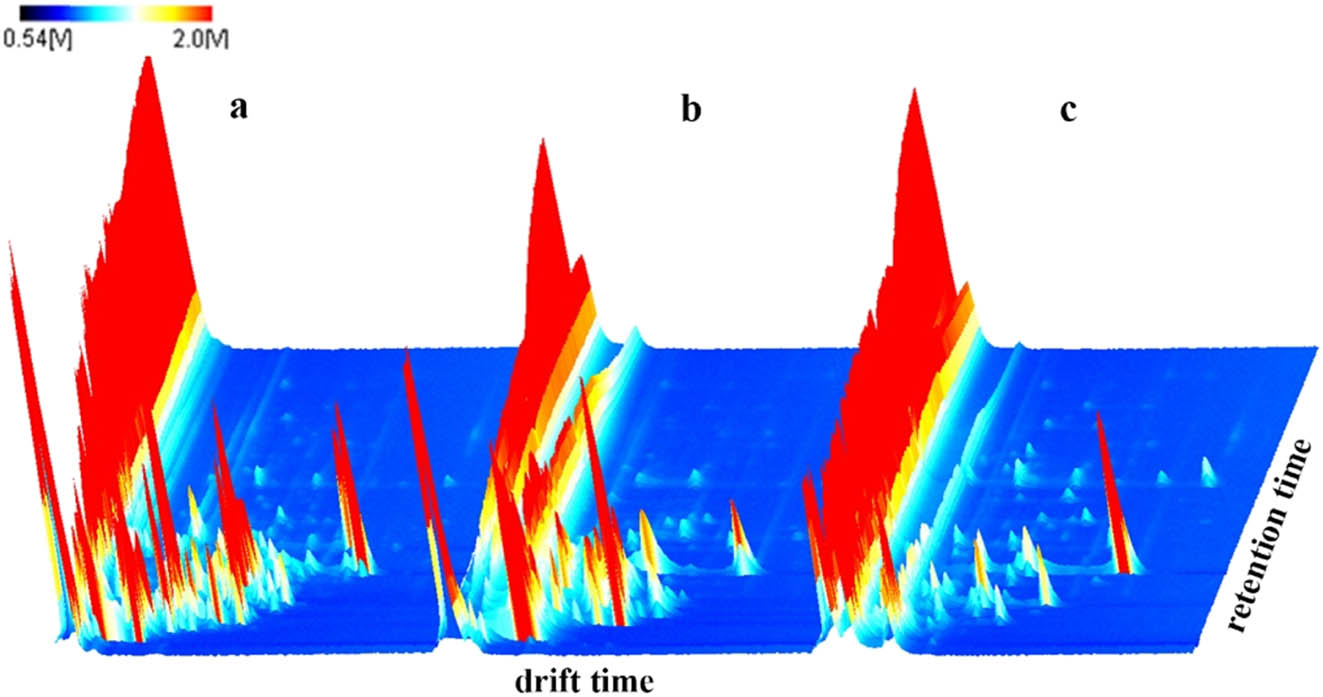
3D topographical visualization view of different extraction methods: (a) squeezing extracted; (b) supercritical carbon dioxide extracted; (c) aqueous extracted.
The difference comparison model was used to compare the differences in avocado oil samples, as shown in Figure 2. The figure was according to the topographic plot of avocado oil obtained from squeeze extraction method as a reference, and the 3D topographical visualization spectra of other samples was drawn. If the content and the compound concentration of VOCs were identical, the background would be white. If the compound concentration was higher than the reference value, it was indicated in red. If the compound concentration was lower than the reference value, it was indicated in blue. It could be seen that the retention time of VOCs in avocado oil obtained from different extraction methods was concentrated in the range of 100–400 s, and each sample had several high signal intensity peaks. This may be because the different extraction methods may lead to changes in fatty acids composition and the species and content of VOCs of avocado oil samples [20,21,22]. Avocado oil obtained from squeeze method had the most kinds of VOCs and the highest signal intensity than other methods, and compared with the other two methods, the aqueous extraction method had a fewer number and lower intensity of peaks.
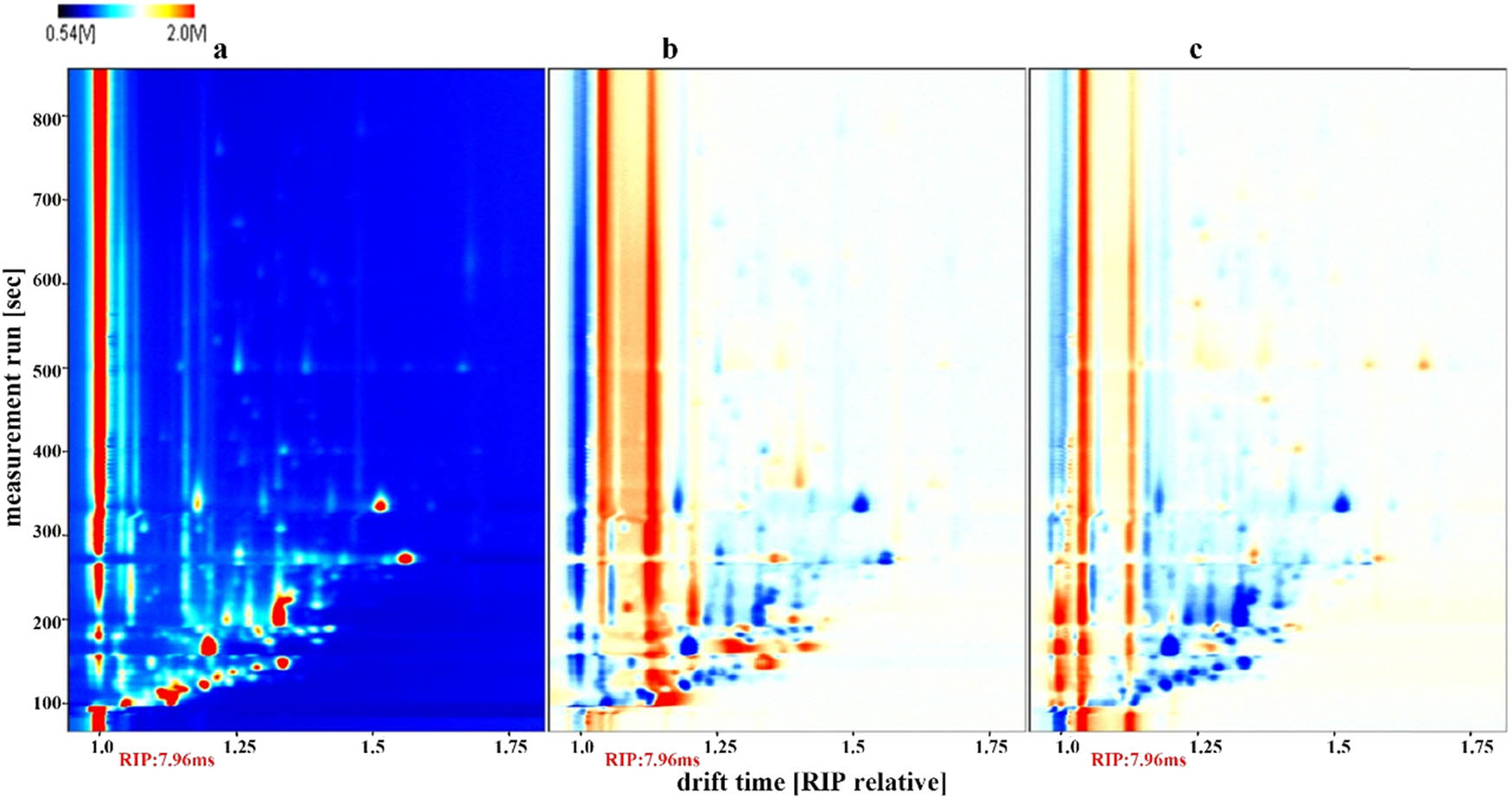
3D-topographic (top view) of different extraction methods: (a) squeezing extracted; (b) supercritical carbon dioxide extracted; (c) aqueous extracted.
The GC-IMS integration parameters of VOCs are shown in Table 1. Forty VOCs were detected, including 14 kinds of aldehydes, 13 kinds of alcohols, five kinds of ketones, three kinds of acids, three kinds of esters, and two kinds of heterocycles. Table 1 and Figure 3 show that the VOCs of avocado oil were mainly composed of aldehydes and alcohols, and the squeezed method had the largest proportion of alcohol compounds, the supercritical extraction method had the largest proportion of ester compounds, and the aqueous method had the largest proportion of aldehyde compounds. Fernanda et al. [23] research showed that vacuum drying at 60°C had better quality than solvent extraction, which further proved that the extraction method had a greater impact on the quality of avocado oil. It could be preliminarily inferred that heat treatment promoted the increase in the content of alcohol compounds in avocado oil. The aqueous method had less damage to the oil flavor and retained the original aldehyde flavor compounds in the avocado oil to a greater extent. The supercritical carbon dioxide extraction method had the most esters compound content.
GC-IMS integration parameters of VOCs
| Count | Compound | CAS | Formula | Mr | RIa | RTb (s) | DTc | Identification approach | Classification |
|---|---|---|---|---|---|---|---|---|---|
| 1 | 1-Propanol | C71238 | C3H8O | 60.1 | 525.9 | 112.915 | 1.1127 | RI, DT | Alcohols |
| 2 | Butanal | C123728 | C4H8O | 72.1 | 576 | 132.207 | 1.2794 | RI, DT | Aldehydes |
| 3 | 2-Butanone | C78933 | C4H8O | 72.1 | 588.8 | 137.727 | 1.2449 | RI, DT | Ketones |
| 4 | Ethyl acetate | C141786 | C4H8O2 | 88.1 | 610.1 | 147.524 | 1.3376 | RI, DT | Esters |
| 5 | 2,3-Butanedione | C431038 | C4H6O2 | 86.1 | 627.8 | 156.264 | 1.1666 | RI, DT | Ketones |
| 6 | Propanoic acid | C79094 | C3H6O2 | 74.1 | 672.8 | 181.222 | 1.1051 | RI, DT | Acids |
| 7 | Pentanal | C110623 | C5H10O | 86.1 | 687.5 | 190.336 | 1.4251 | RI, DT | Aldehydes |
| 8 | Ethyl propionate | C105373 | C5H10O2 | 102.1 | 701.5 | 199.471 | 1.4544 | RI, DT | Esters |
| 9 | 2-Methyl butanol | C137326 | C5H12O | 88.1 | 703.3 | 200.684 | 1.2338 | RI, DT | Alcohols |
| 10 | 3-Hydroxy-2-butanone | C513860 | C4H8O2 | 88.1 | 706 | 202.494 | 1.3294 | RI, DT | Ketones |
| 11 | 1-Pentanol M | C71410 | C5H12O | 88.1 | 766.1 | 248.277 | 1.2513 | RI, DT | Alcohols |
| 12 | 1-Pentanol D | C71410 | C5H12O | 88.1 | 763.8 | 246.345 | 1.5114 | RI, DT | Alcohols |
| 13 | 2-Hexanone | C591786 | C6H12O | 100.2 | 784.5 | 264.432 | 1.4995 | RI, DT | Ketones |
| 14 | n-Hexanal | C66251 | C6H12O | 100.2 | 793.5 | 272.758 | 1.5618 | RI, DT | Aldehydes |
| 15 | 2-Furfural | C98011 | C5H4O2 | 96.1 | 829.8 | 309.24 | 1.3298 | RI, DT | Aldehydes |
| 16 | 3-Methyl-1-pentanol | C589355 | C6H14O | 102.2 | 852.4 | 334.489 | 1.6069 | RI, DT | Alcohols |
| 17 | E 2-Hexen-1-ol | C928950 | C6H12O | 100.2 | 854 | 336.422 | 1.5161 | RI, DT | Alcohols |
| 18 | 2-Hexen-1-ol | C2305217 | C6H12O | 100.2 | 855.4 | 338.055 | 1.18 | RI, DT | Alcohols |
| 19 | 1-Hexanol | C111273 | C6H14O | 102.2 | 874.3 | 361.204 | 1.6458 | RI, DT | Alcohols |
| 20 | 2-Methylbutanoic acid | C116530 | C5H10O2 | 102.1 | 876.9 | 364.418 | 1.4714 | RI, DT | Acids |
| 21 | 2-Heptanone | C110430 | C7H14O | 114.2 | 893.9 | 386.811 | 1.6263 | RI, DT | Ketones |
| 22 | Methional | C3268493 | C4H8OS | 104.2 | 904.5 | 401.544 | 1.4009 | RI, DT | Aldehydes |
| 23 | Heptanal M | C111717 | C7H14O | 114.2 | 905 | 402.206 | 1.3371 | RI, DT | Aldehydes |
| 24 | Heptanal D | C111717 | C7H14O | 114.2 | 905.3 | 402.729 | 1.6945 | RI, DT | Aldehydes |
| 25 | Methyl hexanoate | C106707 | C7H14O2 | 130.2 | 932.6 | 443.447 | 1.2872 | RI, DT | Esters |
| 26 | 3-Methyl valeric acid M | C105431 | C6H12O2 | 116.2 | 944.9 | 463.152 | 1.2686 | RI, DT | Acids |
| 27 | 5-Methylfurfuryl alcohol | C3857258 | C6H8O2 | 112.1 | 967.7 | 502.194 | 1.5676 | RI, DT | Alcohols |
| 28 | E 2-Heptenal | C18829555 | C7H12O | 112.2 | 968.1 | 502.843 | 1.6661 | RI, DT | Aldehydes |
| 29 | Benzaldehyde | C100527 | C7H6O | 106.1 | 968.9 | 504.255 | 1.4691 | RI, DT | Aldehydes |
| 30 | 1-Octene-3-ol | C3391864 | C8H16O | 128.2 | 997.1 | 557.494 | 1.1554 | RI, DT | Alcohols |
| 31 | 2-Pentylfuran | C3777693 | C9H14O | 138.2 | 1006.2 | 575.812 | 1.2517 | RI, DT | Heterocyclics |
| 32 | Octanal | C124130 | C8H16O | 128.2 | 1020.8 | 606.668 | 1.4106 | RI, DT | Aldehydes |
| 33 | 1,8-Cineole M | C470826 | C10H18O | 154.3 | 1024.5 | 614.878 | 1.2941 | RI, DT | Alcohols |
| 34 | 2-Acetylthiazole | C24295032 | C5H5NOS | 127.2 | 1033.6 | 635.014 | 1.4859 | RI, DT | Heterocyclics |
| 35 | Benzyl alcohol | C100516 | C7H8O | 108.1 | 1033.6 | 635.196 | 1.3273 | RI, DT | Alcohols |
| 36 | E,E 2,4-Heptadienal | C4313035 | C7H10O | 110.2 | 1033.8 | 635.53 | 1.1937 | RI, DT | Aldehydes |
| 37 | 2-Phenylacetaldehyde M | C122781 | C8H8O | 120.2 | 1049.6 | 672.675 | 1.2549 | RI, DT | Aldehydes |
| 38 | E 2-Octenal M | C2548870 | C8H14O | 126.2 | 1063.8 | 707.662 | 1.3326 | RI, DT | Aldehydes |
| 39 | Linalool | C78706 | C10H18O | 154.3 | 1083.9 | 760.854 | 1.2189 | RI, DT | Alcohols |
| 40 | n-Nonanal | C124196 | C9H18O | 142.2 | 1093.8 | 788.316 | 1.4808 | RI, DT | Aldehydes |
- a
The retention index calculated using n-ketones C4–C9 as external standard on FS-SE-54-CB-1 column.
- b
The retention time in the capillary GC column.
- c
The drift time in the drift tube.
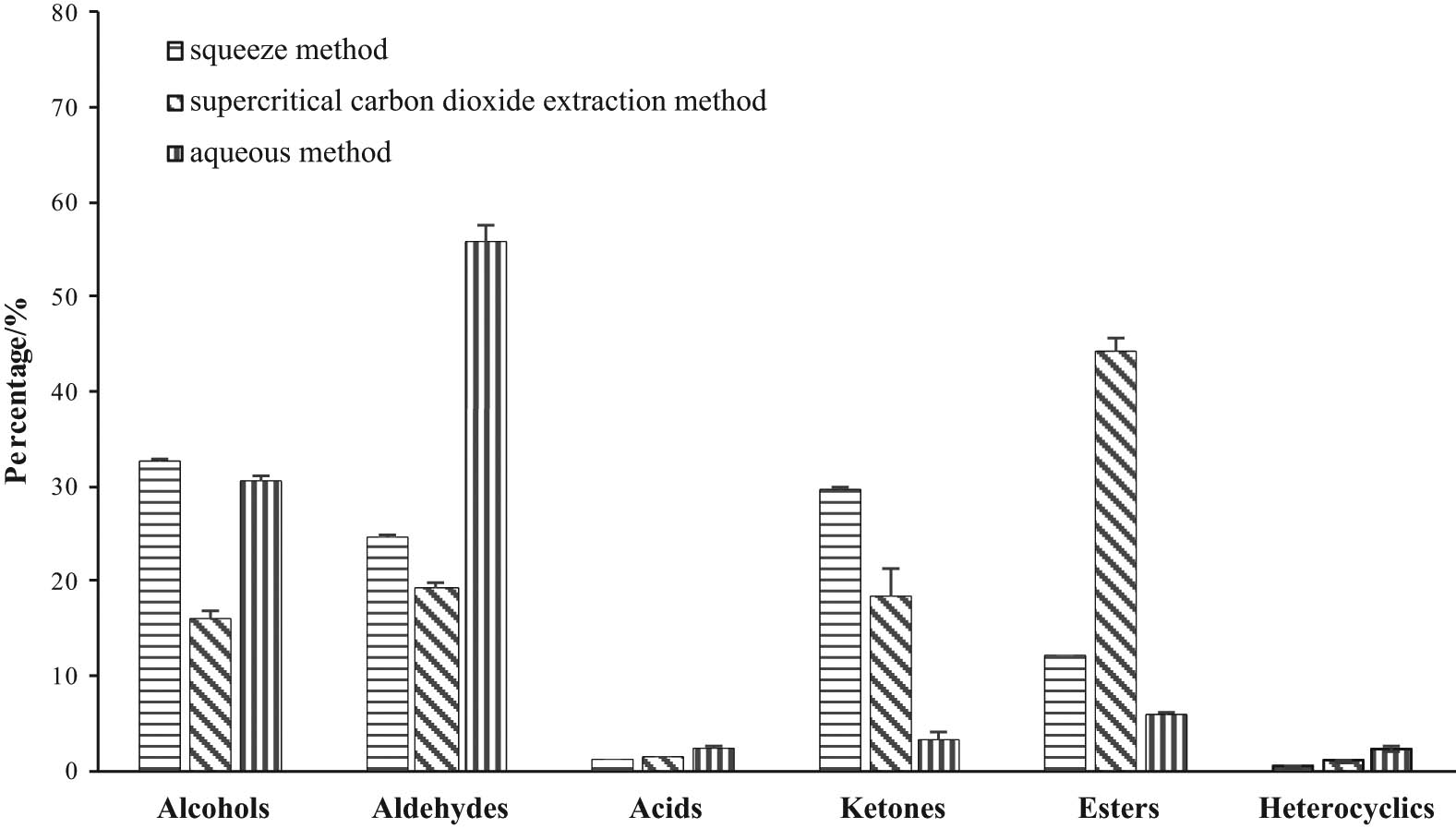
Analysis of proportion of VOCs in avocado oil obtained from different extraction methods.
3.2 Differences in VOCs of avocado oil from different extraction methods
To quickly identify the avocado oil samples by equipment analysis, fingerprint information technology was used to qualitatively analyze all information contained in the different samples. These compounds were confirmed by comparing the IMS drift time and retention index with those of the reported and authentic reference compounds.
Because of the difference in the concentration of VOCs, it could be observed that these compounds could produce multiple signals or spots, and 40 typical target compounds were identified (Figure 4 and Table 1). They were represented by Arabic numerals in Figure 4. Jinming [14] investigated the VOCs of avocado oil and its enzymatic hydrolysates using HS-SPME-GC/MS and 26 VOCs were identified. Only heptaldehyde, furfural, nonanal, and propionic acid were detected together, and the other components had a large difference. The reason for the difference between the two was that the samples used by Jinming were directly bought in the market and might be prepared. However, all the samples used in this study were obtained through direct extraction and did not undergo refining and other processes. Pedreschi [24] showed that avocado maturity had a large effect on the fatty acid composition of avocado oil, and the reason for the difference might also be derived from the maturity of the extracted oil raw materials. Giuffrè et al. [25] showed that heating temperature and time had significant effects on the content of VOCs in olive oil.
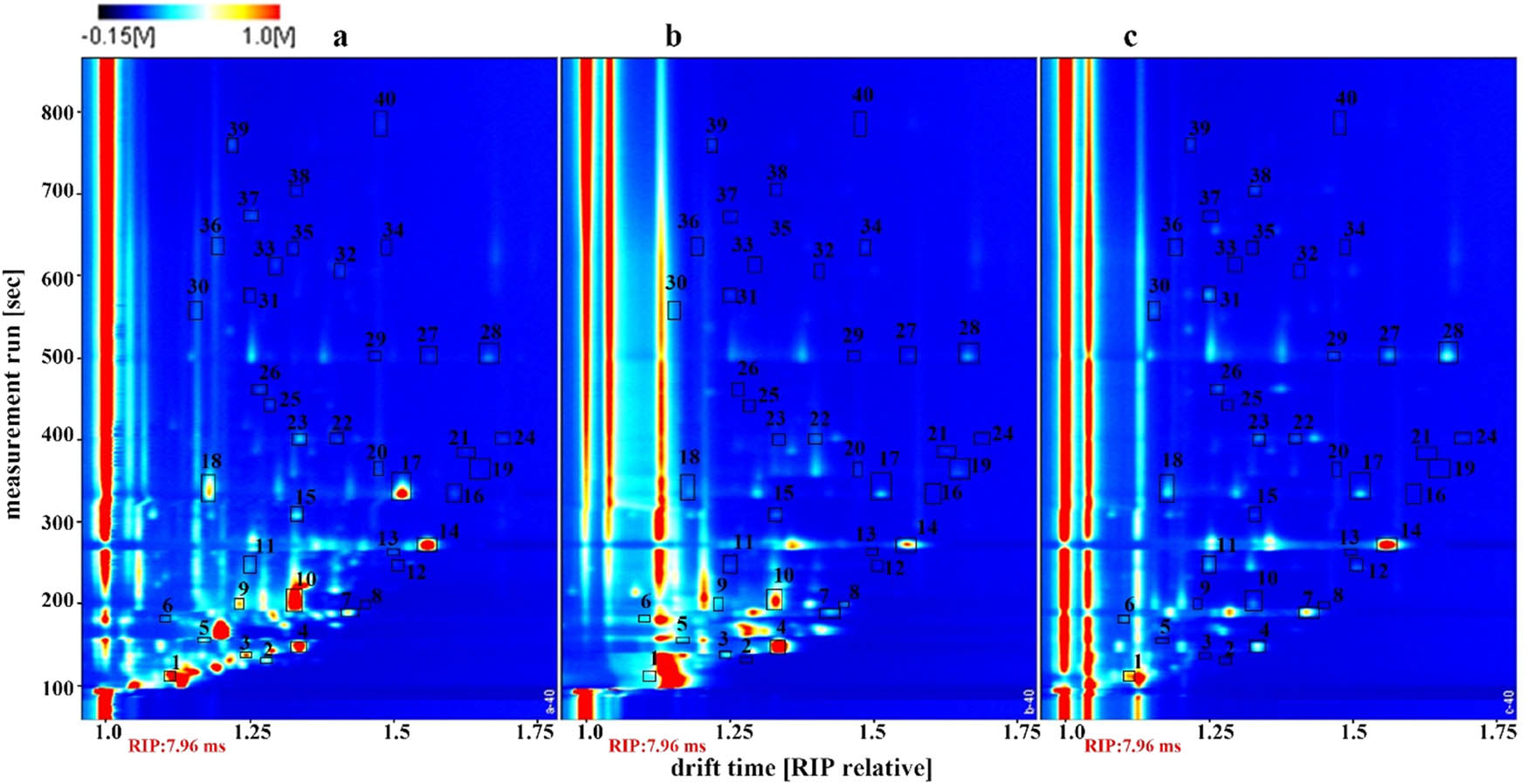
GC–IMS plot with the extended markers obtained from different extraction methods: (a) squeezing extracted; (b) supercritical carbon dioxide extracted; (c) aqueous extracted. The Arabic numerals from “1” to “40” correspond to the identified signals. Signal “1” represents 1-propanol, “2” butanal, “3” 2-butanone, “4” ethyl acetate, “5” 2,3-butanedione, “6” propanoic acid, “7” pentanal, “8” ethyl propionate, “9” 2-methyl butanol, “10” 3-hydroxy-2-butanone, “11” 1-pentanol M, “12” 1-pentanol D, “13” 2-hexanone, “14” n-hexanal, “15” 2-furfural, “16” 3-methyl-1-pentanol, “17” E 2-hexen-1-ol, “18” 2-hexen-1-ol, “19” 1-hexanol, “20” 2-methylbutanoic acid, “21” 2-heptanone, “22” methional, “23” heptanal M, “24” heptanal D, “25” methyl hexanoate, “26” 3-methyl valeric acid M, “27” 5-methylfurfuryl alcohol, “28” E 2-heptenal, “29” benzaldehyde, “30” 1-octene-3-ol, “31” 2-pentylfuran, “32” octanal, “33” 1,8-cineole M, “34” 2-acetylthiazole, “35” benzyl alcohol, “36” E,E 2,4-heptadienal, “37” 2-phenylacetaldehyde M, “38” E 2-octenal M, “39” linalool, “40” n-nonanal.
Fingerprint spectra were often used to visually observe the differences between different samples. The difference in avocado oil obtained by three different extraction methods could be observed through Figure 5. Each row represented all the signals peaks of one sample, and each column represented the signal peaks of the same VOCs in different samples. The color is represented the signal intensity of the substance; the darker the color was, the greater the intensity was.
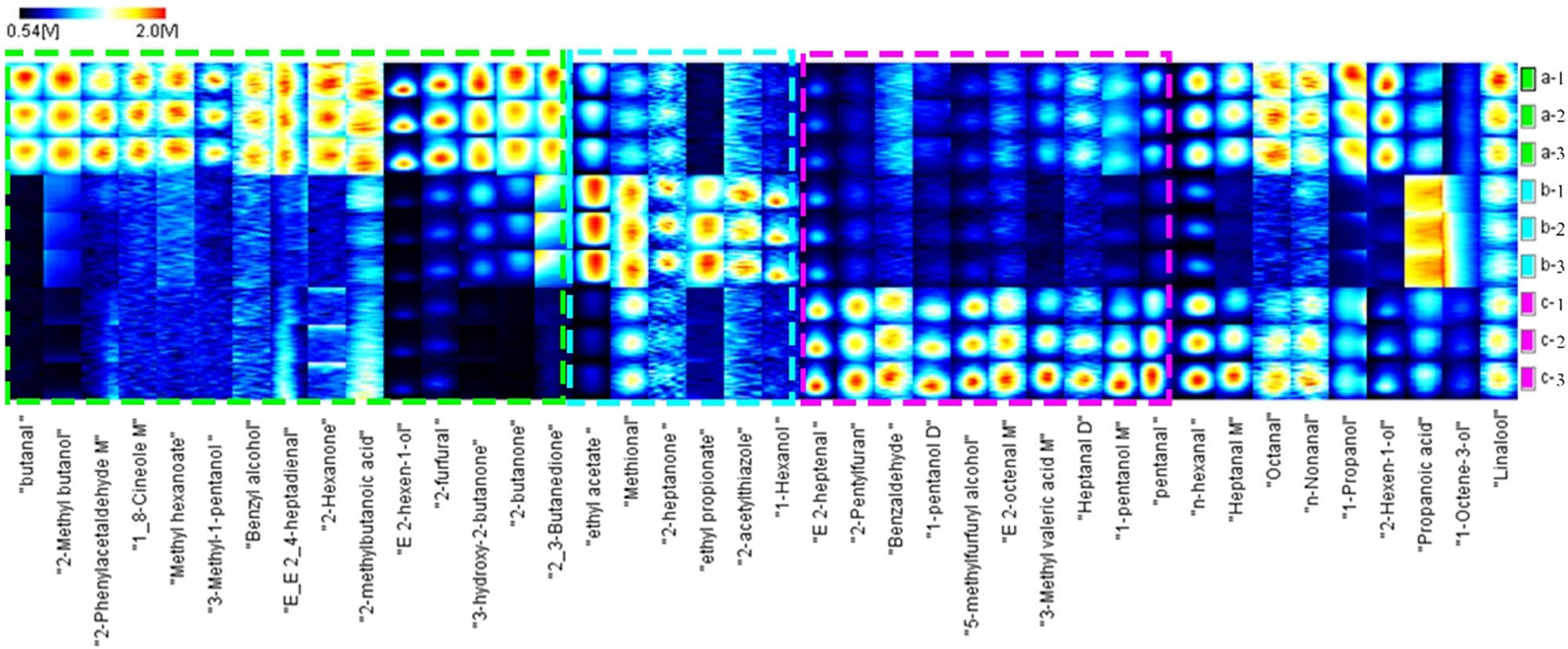
Fingerprint spectra of VOCs of avocado oil in different extraction methods: (a) squeezing extracted; (b) supercritical carbon dioxide extracted; (c) aqueous extracted. The color indicated the concentration of the compound, white indicated the concentration, and red indicated the higher concentration.
As could be seen from Figure 5, in the green dotted box, the signal intensity of butanal, 2-methyl butanol, 2-phenylacetaldehyde, 1,8-cineole, methyl hexanoate, benzyl alcohol, 3-methyl-1-pentanol, E 2-hexen-1-ol, 2-methylbutanoic acid, E,E 2,4-heptadienal, 2-furfural, 2-hexanone, 2-butanone, 3-hydroxy-2-butanone, and 2,3-butanedione were the highest in avocado oil obtained by squeeze method. Although the highest signal could be indeed observed in the squeezing extract, they were also other VOCs observed in the other extraction methods, such as 3-hydroxy-2-butanone or 2-butanone in Figure 5. In the light blue-dotted box, the signal intensities of 2-acetylthiazole, ethyl propionate, ethyl acetate, 2-heptanone, and 1-hexanol were the highest in avocado oil obtained by supercritical carbon dioxide extraction method, and only 2-acetylthiazole and ethyl propionate were unique. In the purple box, the signal intensities of 2-heptenal, 2-pentylfuran, benzaldehyde, 1-pentanol, 5-methylfurfuryl alcohol, 2-octenal, 3-methyl valeric acid, heptanal, and pentanal were the stronger in avocado oil obtained by the aqueous method. Gerhardt et al. [26] had effectively distinguished the types of olive oil with the difference in VOCs produced from different samples. Therefore, it could be used to distinguish which extraction method was used to produce avocado oil by HS-GC-IMS fingerprints.
3.3 Cluster analysis of VOCs in avocado oil obtained by different extraction methods
PCA is a statistical analysis method. By orthogonal transforming, many interrelated original variables are converted into a few orthogonal principal component variables, and then the difference between the samples could be distinguished based on the contribution rate of principal component variables [27]. PCA was found using the signal intensities of different compounds and highlighted the differences in compounds.
This method had been successfully applied in vegetable processing [28], fruit identification and classification analysis [29], fruit and vegetable storage [30], and other aspects. The PCA of VOCs in the avocado oil obtained from different extraction methods is presented in Figure 6. It could be seen from Figure 6 that the first and second main component variance contribution rates were 52 and 44%, respectively, and the cumulative contribution rate was greater than 90%, and there were obvious differences between the three different samples.
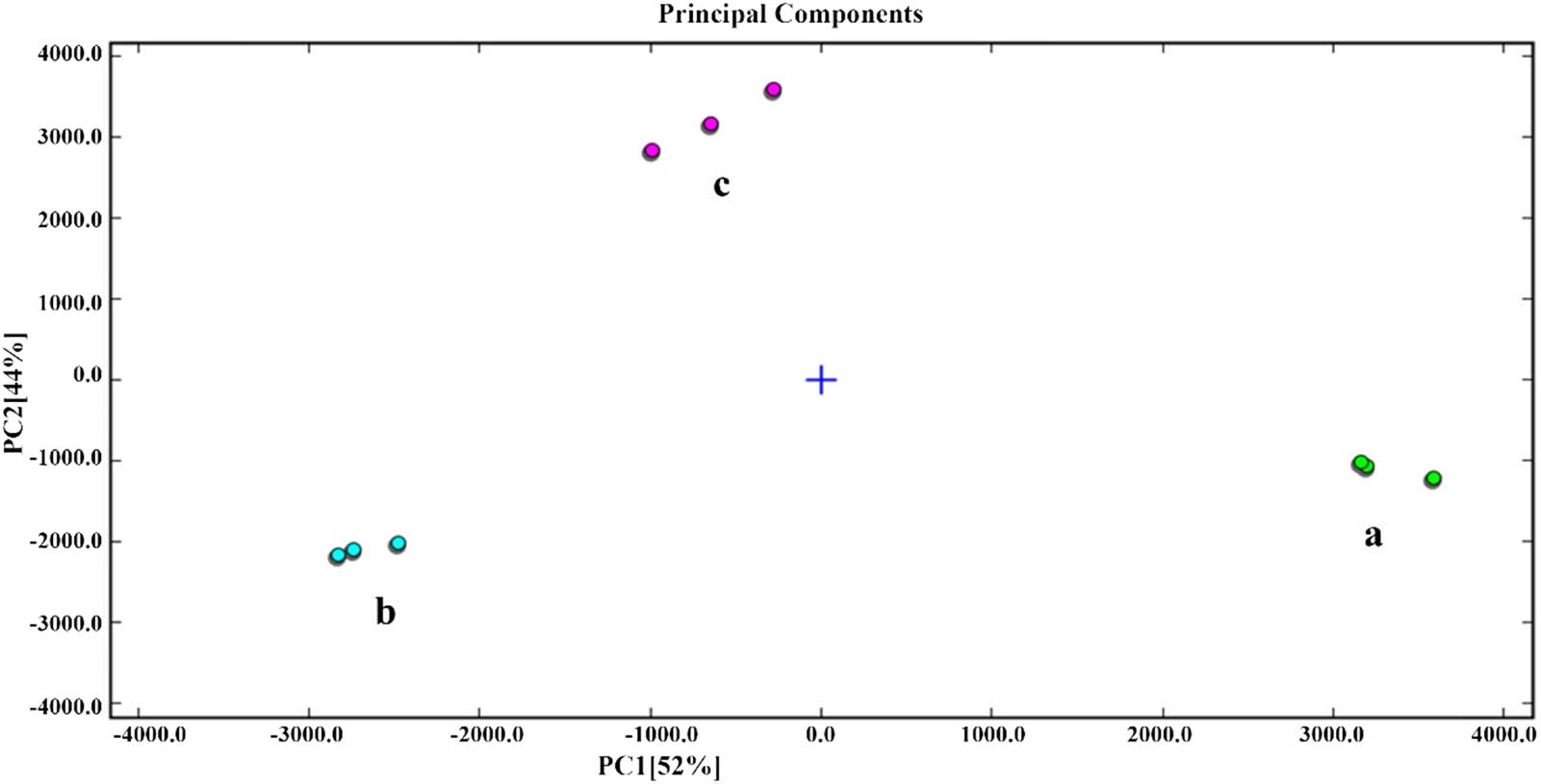
PCA plot of VOCs in avocado oil obtained with the different extraction methods: (a) squeezing extracted; (b) supercritical carbon dioxide extracted; (c) aqueous extracted.
To prove whether the data and sample from three replicates in parallel were valid, the similarity analysis was performed on the sampled data. As shown in Table 2, the analysis results showed that the sample obtained in this experimental sampling had a high degree of similarity and the data sampling was reasonable.
Sample similarity table
| Matching/% | a-1 | a-2 | a-3 | b-1 | b-2 | b-3 | c-1 | c-2 | c-3 |
|---|---|---|---|---|---|---|---|---|---|
| a-1 | 100 | ||||||||
| a-2 | 96 | 100 | |||||||
| a-3 | 95 | 98 | 100 | ||||||
| b-1 | 79 | 80 | 81 | 100 | |||||
| b-2 | 79 | 79 | 80 | 98 | 100 | ||||
| b-3 | 78 | 79 | 80 | 97 | 99 | 100 | |||
| c-1 | 78 | 80 | 79 | 85 | 85 | 85 | 100 | ||
| c-2 | 78 | 80 | 80 | 83 | 84 | 83 | 97 | 100 | |
| c-3 | 78 | 79 | 79 | 81 | 81 | 81 | 94 | 96 | 100 |
The PCA results showed that the avocado oil samples obtained from different extraction methods would be well distinguished in Figure 6. When the value of PC1 was greater than 2,000, it could be judged as avocado oil obtained by squeeze method. When the value of PC1 was less than −2,000, it could be judged as avocado oil obtained by supercritical carbon dioxide extraction method. When the value of PC1 was greater than −2,000 and less than 1,000, or the value of PC2 was greater than 2,000, it could be judged as avocado oil obtained by aqueous method.
Figure 6 shows that the avocado oil obtained by different extraction methods could be clearly distinguished. Moreover, the VOCs fingerprints of samples from different extraction methods were successfully set up through HS-GC-IMS. The various compound data obtained by GC-IMS analysis contained a lot of useful information, and the useful information obtained after these screenings could be used as a useful tool to distinguish avocado oil samples obtained from different extraction methods.
4 Conclusion
In this study, 40 VOCs were identified by GC-IMS in avocado oil obtained from different extraction methods. The VOCs produced from avocado oil obtained by different extraction methods had a very significant difference, and each sample had unique compounds. In addition, the PCA and similarity analysis results showed that the avocado oil samples were independent from each other and could be easily distinguished. The repeated sampling analysis within the sample had good similarity and reliability. A simple, efficient, and specific method for identifying the characteristics of VOC in avocado oil based on HS-GC-IMS coupled with PCA was established. At the same time, this method could be used for the identification and classification of avocado oil samples.
Acknowledgments
We thank Dr Shu (Yihui Biotechnology (Shanghai) Co., Ltd.) for providing many suggestions on grammar modification, data processing, etc.
-
Funding: This work was supported by Hainan Provincial Natural Science Foundation of China (No. 320QN326 and 320QN327), the Central Public-interest Scientific Institution Basal Research Fund for Chinese Academy of Tropical Agricultural Sciences (No. 1630122017014), and the Innovation Team of Modern Agricultural Industry Technology System in Guangdong Province of China (No. 2019KJ116).
-
Author contributions: Yi-Jun Liu: conceptualization, data curation, formal analysis, writing – original draft and review and editing; Xiao Gong: investigation and project administration; Wei Jing: formal analysis; Li-Jing Lin: formal analysis and funding acquisition; Wei Zhou: conceptualization; Jin-Na He: data curation; Ji-Hua Li: project administration.
-
Conflict of interest: The authors state no conflict of interest.
-
Data availability statement: The datasets generated during and/or analyzed during the current study are available from the corresponding author on reasonable request.
References
[1] Tan CX. Virgin avocado oil: an emerging source of functional fruit oil. J Funct Foods. 2019;54:381–92.10.1016/j.jff.2018.12.031Search in Google Scholar
[2] RamírezbGil JG, Morales JG, Peterson AT. Potential geography and productivity of “Hass” avocado crops in Colombia estimated by ecological niche modeling. Sci Hortic (Amst). 2018;237:287–95.10.1016/j.scienta.2018.04.021Search in Google Scholar
[3] Guoxiang H, Haihong C. Overview of world avocado production and marketing and prospects for china’s avocado. China Trop Agric. 2008;2:31–3.Search in Google Scholar
[4] Werman MJ, Neeman I. Avocado oil production and chemical characteristics. J Am Oil Chem Soc. 1987;64(2):229–32.10.1007/BF02542007Search in Google Scholar
[5] Ortiz-Avila O, Esquivel-Martinez M, Olmos-Orizaba BE, Saavedra-Molina A, Rodriguez-Orozco AR, Cortes-Rojo C. Avocado oil improves mitochondrial function and decreases oxidative stress in brain of diabetic rats. J Diabetes Res. 2015;2015:485759.10.1155/2015/485759Search in Google Scholar PubMed PubMed Central
[6] Nayak S, Suraparaju SR, Rao C. Wound healing activity of Persea americana (avocado) fruit: a preclinical study on rats. J Wound Care. 2008;17:123–6.10.12968/jowc.2008.17.3.28670Search in Google Scholar PubMed
[7] Stücker M, Memmel U, Hoffmann M, Hartung J, Altmeyer P. Vitamin B(12) cream containing avocado oil in the therapy of plaque psoriasis. Dermatology. 2001;203(2):141–7.10.1159/000051729Search in Google Scholar PubMed
[8] Jiaya W, Yan S, Dan Z, Ou F. Comparison of qualities of avocado and its oil from different origins and maturities. China Oils Fats. 2018;43(2):94–7.Search in Google Scholar
[9] Tan CX, Chong GH, Hamzah H, Ghazali HM. Comparison of subcritical CO2 and ultrasound-assisted aqueous methods with the conventional solvent method in the extraction of avocado oil. J Supercrit Fluid. 2018;135:45–51.10.1016/j.supflu.2017.12.036Search in Google Scholar
[10] Zhang L, Shuai Q, Li P, Zhang Q, Ma F, Zhang W, et al. Ion mobility spectrometry fingerprints: a rapid detection technology for adulteration of sesame oil. Food Chem. 2016;192:60–6.10.1016/j.foodchem.2015.06.096Search in Google Scholar PubMed
[11] Cavanna D, Zanardi S, Dall’Asta C, Suman M. Ion Mobility Spectrometry coupled to Gas Chromatography: a rapid tool to assess eggs freshness. Food Chem. 2018;271:691–6.10.1016/j.foodchem.2018.07.204Search in Google Scholar PubMed
[12] Rocío GD, Mar M, Lourdes DP, Joaquín A, Cumplido A, Miguel JL, et al. mobility spectrometry versus classical physico-chemical analysis for assessing the shelf life of extra virgin olive oil according to container type and storage conditions. J Agric Food Chem. 2015;63(8):2179–88.10.1021/jf505415fSearch in Google Scholar PubMed
[13] Witkiewicz Z, Perycz U, Maziejuk M, Puton J. Coupling gas chromatography with ion mobility spectrometry; 2016. https://www.researchagate.net/publication/304953524Search in Google Scholar
[14] Jinming C. A comparative study of aroma components of avocado oil and its enzymatic hydrolysates by headspace solid phase micro-extraction coupled with gas chromatography-mass spectrometry. Xiandaishipin. 2018;8:105–9.Search in Google Scholar
[15] Santana I, Castelo-Branco VN, Guimarães BM, Silva LdO, Peixoto VODS, Cabral LMC et al. Hass. avocado (Persea americana Mill.) oil enriched in phenolic compounds and tocopherols by expeller-pressing the unpeeled microwave dried fruit. Food Chem. 2019;286:354–61.10.1016/j.foodchem.2019.02.014Search in Google Scholar PubMed
[16] Corzzini SCS, Barros HDFQ, Grimaldi R, Cabral FA. Extraction of edible avocado oil using supercritical CO2 and a CO2/ethanol mixture as solvents. J Food Eng. 2017;194:40–5.10.1016/j.jfoodeng.2016.09.004Search in Google Scholar
[17] Li Y, Liu Y, Deng D, Liang J, Chen W, Chen X, et al. Study on extracting avocado oil from avocado pulp by aqueous extraction. IOP Conf. Ser.: Earth Environ. Sci. 2019;330(4):042027.10.1088/1755-1315/330/4/042027Search in Google Scholar
[18] Garrido-Delgado R, Mercader-Trejo F, Sielemann S, de Bruyn W, Arce L, Valcarcel M. Direct classification of olive oils by using two types of ion mobility spectrometers. Anal Chim Acta. 2011;696(1–2):108–15.10.1016/j.aca.2011.03.007Search in Google Scholar PubMed
[19] Li M, Yang R, Zhang H, Wang S, Chen D, Lin S. Development of a flavor fingerprint by HS-GC-IMS with PCA for volatile compounds of Tricholoma matsutake Singer. Food Chem. 2019;290:32–9.10.1016/j.foodchem.2019.03.124Search in Google Scholar PubMed
[20] Haoyue L, Meng L, Qingzhen Z, Haitao C, Baoguo S, Ning Z, et al. Three extraction methods to determine the characteristic flavor of fried garlic oil. Food Sci. 2020;41(12):180–87.Search in Google Scholar
[21] Hui Y, Zhao-gai W, Xiao-min W, Guan-ying S, Le Z, Wan-ping L. Comparison of volatiles extracted by different approaches from Toonasinensis dried by microwave − vacuum. Sci Tech Food Ind. 2016;37(17):272–80.Search in Google Scholar
[22] Bo Z, Xiao-lan L, Shi-jie H, Zhi-yan C, Shan-song H, Zhi-hua L, et al. Effect of different extraction methods on the datect of aroma components in Nanguo Pear. Chem Reag. 2018;40(8):784–8.Search in Google Scholar
[23] Fernanda DK, Caroline DB, Carla RBM, Cristina J, Rui CZ. Bioactive compounds and quality parameters of avocado oil obtained by different processes. Food Chem. 2018;257:376–81.10.1016/j.foodchem.2018.03.048Search in Google Scholar PubMed
[24] Pedreschi R, Hollak S, Harkema H, Otma E, Robledo P, Westra E, et al. Impact of postharvest ripening strategies on ‘Hass’ avocado fatty acid profiles. S Afr J Bot. 2016;103:32–5.10.1016/j.sajb.2015.09.012Search in Google Scholar
[25] Giuffrè AM, Capocasale M, Macrì R, Caracciolo M, Zappia C, Poiana M. Volatile profiles of extra virgin olive oil, olive pomace oil, soybean oil and palm oil in different heating conditions. LWT-Food Sci Technol. 2020;117:108631.10.1016/j.lwt.2019.108631Search in Google Scholar
[26] Gerhardt N, Schwolow S, Rohn S, Pérez-Cacho PR, Galán-Soldevilla H, Arce L, et al. Quality assessment of olive oils based on temperature-ramped HS-GC-IMS and sensory evaluation: comparison of different processing approaches by LDA, kNN, and SVM. Food Chem. 2019;278:720–8.10.1016/j.foodchem.2018.11.095Search in Google Scholar PubMed
[27] Shimomura K, Horie H, Sugiyama M, Kawazu Y, Yoshioka Y. Quantitative evaluation of cucumber fruit texture and shape traits reveals extensive diversity and differentiation. Sci Hortic. 2016;199:133–41.10.1016/j.scienta.2015.12.033Search in Google Scholar
[28] Yang K-M, Chiang P-Y. Effects of smoking process on the aroma characteristics and sensory qualities of dried longan. Food Chem. 2019;287:133–8.10.1016/j.foodchem.2019.02.017Search in Google Scholar PubMed
[29] Radi, Ciptohadijoyo S, Litananda WS, Rivai M, Purnomo MH. Electronic nose based on partition column integrated with gas sensor for fruit identification and classification. Comput Electron Agric. 2016;121:429–35.10.1016/j.compag.2015.11.013Search in Google Scholar
[30] Cheng H, Chen J, Li X, Pan J, Xue SJ, Liu D, et al. Differentiation of the volatile profiles of Chinese bayberry cultivars during storage by HS-SPME–GC/MS combined with principal component analysis. Postharvest Biol Tec. 2015;100:59–72.10.1016/j.postharvbio.2014.09.003Search in Google Scholar
© 2021 Yi-Jun Liu et al., published by De Gruyter
This work is licensed under the Creative Commons Attribution 4.0 International License.
Articles in the same Issue
- Regular Articles
- Qualitative and semi-quantitative assessment of anthocyanins in Tibetan hulless barley from different geographical locations by UPLC-QTOF-MS and their antioxidant capacities
- Effect of sodium chloride on the expression of genes involved in the salt tolerance of Bacillus sp. strain “SX4” isolated from salinized greenhouse soil
- GC-MS analysis of mango stem bark extracts (Mangifera indica L.), Haden variety. Possible contribution of volatile compounds to its health effects
- Influence of nanoscale-modified apatite-type calcium phosphates on the biofilm formation by pathogenic microorganisms
- Removal of paracetamol from aqueous solution by containment composites
- Investigating a human pesticide intoxication incident: The importance of robust analytical approaches
- Induction of apoptosis and cell cycle arrest by chloroform fraction of Juniperus phoenicea and chemical constituents analysis
- Recovery of γ-Fe2O3 from copper ore tailings by magnetization roasting and magnetic separation
- Effects of different extraction methods on antioxidant properties of blueberry anthocyanins
- Modeling the removal of methylene blue dye using a graphene oxide/TiO2/SiO2 nanocomposite under sunlight irradiation by intelligent system
- Antimicrobial and antioxidant activities of Cinnamomum cassia essential oil and its application in food preservation
- Full spectrum and genetic algorithm-selected spectrum-based chemometric methods for simultaneous determination of azilsartan medoxomil, chlorthalidone, and azilsartan: Development, validation, and application on commercial dosage form
- Evaluation of the performance of immunoblot and immunodot techniques used to identify autoantibodies in patients with autoimmune diseases
- Computational studies by molecular docking of some antiviral drugs with COVID-19 receptors are an approach to medication for COVID-19
- Synthesis of amides and esters containing furan rings under microwave-assisted conditions
- Simultaneous removal efficiency of H2S and CO2 by high-gravity rotating packed bed: Experiments and simulation
- Design, synthesis, and biological activities of novel thiophene, pyrimidine, pyrazole, pyridine, coumarin and isoxazole: Dydrogesterone derivatives as antitumor agents
- Content and composition analysis of polysaccharides from Blaps rynchopetera and its macrophage phagocytic activity
- A new series of 2,4-thiazolidinediones endowed with potent aldose reductase inhibitory activity
- Assessing encapsulation of curcumin in cocoliposome: In vitro study
- Rare norisodinosterol derivatives from Xenia umbellata: Isolation and anti-proliferative activity
- Comparative study of antioxidant and anticancer activities and HPTLC quantification of rutin in white radish (Raphanus sativus L.) leaves and root extracts grown in Saudi Arabia
- Comparison of adsorption properties of commercial silica and rice husk ash (RHA) silica: A study by NIR spectroscopy
- Sodium borohydride (NaBH4) as a high-capacity material for next-generation sodium-ion capacitors
- Aroma components of tobacco powder from different producing areas based on gas chromatography ion mobility spectrometry
- The effects of salinity on changes in characteristics of soils collected in a saline region of the Mekong Delta, Vietnam
- Synthesis, properties, and activity of MoVTeNbO catalysts modified by zirconia-pillared clays in oxidative dehydrogenation of ethane
- Synthesis and crystal structure of N,N′-bis(4-chlorophenyl)thiourea N,N-dimethylformamide
- Quantitative analysis of volatile compounds of four Chinese traditional liquors by SPME-GC-MS and determination of total phenolic contents and antioxidant activities
- A novel separation method of the valuable components for activated clay production wastewater
- On ve-degree- and ev-degree-based topological properties of crystallographic structure of cuprite Cu2O
- Antihyperglycemic effect and phytochemical investigation of Rubia cordifolia (Indian Madder) leaves extract
- Microsphere molecularly imprinted solid-phase extraction for diazepam analysis using itaconic acid as a monomer in propanol
- A nitric oxide-releasing prodrug promotes apoptosis in human renal carcinoma cells: Involvement of reactive oxygen species
- Machine vision-based driving and feedback scheme for digital microfluidics system
- Study on the application of a steam-foam drive profile modification technology for heavy oil reservoir development
- Ni–Ru-containing mixed oxide-based composites as precursors for ethanol steam reforming catalysts: Effect of the synthesis methods on the structural and catalytic properties
- Preparation of composite soybean straw-based materials by LDHs modifying as a solid sorbent for removal of Pb(ii) from water samples
- Synthesis and spectral characterizations of vanadyl(ii) and chromium(iii) mixed ligand complexes containing metformin drug and glycine amino acid
- In vitro evaluation of lactic acid bacteria with probiotic activity isolated from local pickled leaf mustard from Wuwei in Anhui as substitutes for chemical synthetic additives
- Utilization and simulation of innovative new binuclear Co(ii), Ni(ii), Cu(ii), and Zn(ii) diimine Schiff base complexes in sterilization and coronavirus resistance (Covid-19)
- Phosphorylation of Pit-1 by cyclin-dependent kinase 5 at serine 126 is associated with cell proliferation and poor prognosis in prolactinomas
- Molecularly imprinted membrane for transport of urea, creatinine, and vitamin B12 as a hemodialysis candidate membrane
- Optimization of Murrayafoline A ethanol extraction process from the roots of Glycosmis stenocarpa, and evaluation of its Tumorigenesis inhibition activity on Hep-G2 cells
- Highly sensitive determination of α-lipoic acid in pharmaceuticals on a boron-doped diamond electrode
- Synthesis, chemo-informatics, and anticancer evaluation of fluorophenyl-isoxazole derivatives
- In vitro and in vivo investigation of polypharmacology of propolis extract as anticancer, antibacterial, anti-inflammatory, and chemical properties
- Topological indices of bipolar fuzzy incidence graph
- Preparation of Fe3O4@SiO2–ZnO catalyst and its catalytic synthesis of rosin glycol ester
- Construction of a new luminescent Cd(ii) compound for the detection of Fe3+ and treatment of Hepatitis B
- Investigation of bovine serum albumin aggregation upon exposure to silver(i) and copper(ii) metal ions using Zetasizer
- Discoloration of methylene blue at neutral pH by heterogeneous photo-Fenton-like reactions using crystalline and amorphous iron oxides
- Optimized extraction of polyphenols from leaves of Rosemary (Rosmarinus officinalis L.) grown in Lam Dong province, Vietnam, and evaluation of their antioxidant capacity
- Synthesis of novel thiourea-/urea-benzimidazole derivatives as anticancer agents
- Potency and selectivity indices of Myristica fragrans Houtt. mace chloroform extract against non-clinical and clinical human pathogens
- Simple modifications of nicotinic, isonicotinic, and 2,6-dichloroisonicotinic acids toward new weapons against plant diseases
- Synthesis, optical and structural characterisation of ZnS nanoparticles derived from Zn(ii) dithiocarbamate complexes
- Presence of short and cyclic peptides in Acacia and Ziziphus honeys may potentiate their medicinal values
- The role of vitamin D deficiency and elevated inflammatory biomarkers as risk factors for the progression of diabetic nephropathy in patients with type 2 diabetes mellitus
- Quantitative structure–activity relationship study on prolonged anticonvulsant activity of terpene derivatives in pentylenetetrazole test
- GADD45B induced the enhancing of cell viability and proliferation in radiotherapy and increased the radioresistance of HONE1 cells
- Cannabis sativa L. chemical compositions as potential plasmodium falciparum dihydrofolate reductase-thymidinesynthase enzyme inhibitors: An in silico study for drug development
- Dynamics of λ-cyhalothrin disappearance and expression of selected P450 genes in bees depending on the ambient temperature
- Identification of synthetic cannabinoid methyl 2-{[1-(cyclohexylmethyl)-1H-indol-3-yl] formamido}-3-methylbutanoate using modern mass spectrometry and nuclear magnetic resonance techniques
- Study on the speciation of arsenic in the genuine medicinal material honeysuckle
- Two Cu(ii)-based coordination polymers: Crystal structures and treatment activity on periodontitis
- Conversion of furfuryl alcohol to ethyl levulinate in the presence of mesoporous aluminosilicate catalyst
- Review Articles
- Hsien Wu and his major contributions to the chemical era of immunology
- Overview of the major classes of new psychoactive substances, psychoactive effects, analytical determination and conformational analysis of selected illegal drugs
- An overview of persistent organic pollutants along the coastal environment of Kuwait
- Mechanism underlying sevoflurane-induced protection in cerebral ischemia–reperfusion injury
- COVID-19 and SARS-CoV-2: Everything we know so far – A comprehensive review
- Challenge of diabetes mellitus and researchers’ contributions to its control
- Advances in the design and application of transition metal oxide-based supercapacitors
- Color and composition of beauty products formulated with lemongrass essential oil: Cosmetics formulation with lemongrass essential oil
- The structural chemistry of zinc(ii) and nickel(ii) dithiocarbamate complexes
- Bioprospecting for antituberculosis natural products – A review
- Recent progress in direct urea fuel cell
- Rapid Communications
- A comparative morphological study of titanium dioxide surface layer dental implants
- Changes in the antioxidative properties of honeys during their fermentation
- Erratum
- Erratum to “Corrosion study of copper in aqueous sulfuric acid solution in the presence of (2E,5E)-2,5-dibenzylidenecyclopentanone and (2E,5E)-bis[(4-dimethylamino)benzylidene]cyclopentanone: Experimental and theoretical study”
- Erratum to “Modified TDAE petroleum plasticiser”
- Corrigendum
- Corrigendum to “A nitric oxide-releasing prodrug promotes apoptosis in human renal carcinoma cells: Involvement of reactive oxygen species”
- Special Issue on 3rd IC3PE 2020
- Visible light-responsive photocatalyst of SnO2/rGO prepared using Pometia pinnata leaf extract
- Antihyperglycemic activity of Centella asiatica (L.) Urb. leaf ethanol extract SNEDDS in zebrafish (Danio rerio)
- Selection of oil extraction process from Chlorella species of microalgae by using multi-criteria decision analysis technique for biodiesel production
- Special Issue on the 14th Joint Conference of Chemistry (14JCC)
- Synthesis and in vitro cytotoxicity evaluation of isatin-pyrrole derivatives against HepG2 cell line
- CO2 gas separation using mixed matrix membranes based on polyethersulfone/MIL-100(Al)
- Effect of synthesis and activation methods on the character of CoMo/ultrastable Y-zeolite catalysts
- Special Issue on Electrochemical Amplified Sensors
- Enhancement of graphene oxide through β-cyclodextrin composite to sensitive analysis of an antidepressant: Sulpiride
- Investigation of the spectroelectrochemical behavior of quercetin isolated from Zanthoxylum bungeanum
- An electrochemical sensor for high sensitive determination of lysozyme based on the aptamer competition approach
- An improved non-enzymatic electrochemical sensor amplified with CuO nanostructures for sensitive determination of uric acid
- Special Issue on Applied Biochemistry and Biotechnology 2020
- Fast discrimination of avocado oil for different extracted methods using headspace-gas chromatography-ion mobility spectroscopy with PCA based on volatile organic compounds
- Effect of alkali bases on the synthesis of ZnO quantum dots
- Quality evaluation of Cabernet Sauvignon wines in different vintages by 1H nuclear magnetic resonance-based metabolomics
- Special Issue on the Joint Science Congress of Materials and Polymers (ISCMP 2019)
- Diatomaceous Earth: Characterization, thermal modification, and application
- Electrochemical determination of atenolol and propranolol using a carbon paste sensor modified with natural ilmenite
- Special Issue on the Conference of Energy, Fuels, Environment 2020
- Assessment of the mercury contamination of landfilled and recovered foundry waste – a case study
- Primary energy consumption in selected EU Countries compared to global trends
- Modified TDAE petroleum plasticiser
- Use of glycerol waste in lactic acid bacteria metabolism for the production of lactic acid: State of the art in Poland
- Topical Issue on Applications of Mathematics in Chemistry
- Theoretical study of energy, inertia and nullity of phenylene and anthracene
- Banhatti, revan and hyper-indices of silicon carbide Si2C3-III[n,m]
- Topical Issue on Agriculture
- Occurrence of mycotoxins in selected agricultural and commercial products available in eastern Poland
- Special Issue on Ethnobotanical, Phytochemical and Biological Investigation of Medicinal Plants
- Acute and repeated dose 60-day oral toxicity assessment of chemically characterized Berberis hispanica Boiss. and Reut in Wistar rats
- Phytochemical profile, in vitro antioxidant, and anti-protein denaturation activities of Curcuma longa L. rhizome and leaves
- Antiplasmodial potential of Eucalyptus obliqua leaf methanolic extract against Plasmodium vivax: An in vitro study
- Prunus padus L. bark as a functional promoting component in functional herbal infusions – cyclooxygenase-2 inhibitory, antioxidant, and antimicrobial effects
- Molecular and docking studies of tetramethoxy hydroxyflavone compound from Artemisia absinthium against carcinogens found in cigarette smoke
- Special Issue on the Joint Science Congress of Materials and Polymers (ISCMP 2020)
- Preparation of cypress (Cupressus sempervirens L.) essential oil loaded poly(lactic acid) nanofibers
- Influence of mica mineral on flame retardancy and mechanical properties of intumescent flame retardant polypropylene composites
- Production and characterization of thermoplastic elastomer foams based on the styrene–ethylene–butylene–styrene (SEBS) rubber and thermoplastic material
- Special Issue on Applied Chemistry in Agriculture and Food Science
- Impact of essential oils on the development of pathogens of the Fusarium genus and germination parameters of selected crops
- Yield, volume, quality, and reduction of biotic stress influenced by titanium application in oilseed rape, winter wheat, and maize cultivations
- Influence of potato variety on polyphenol profile composition and glycoalcaloid contents of potato juice
- Carryover effect of direct-fed microbial supplementation and early weaning on the growth performance and carcass characteristics of growing Najdi lambs
- Special Issue on Applied Biochemistry and Biotechnology (ABB 2021)
- The electrochemical redox mechanism and antioxidant activity of polyphenolic compounds based on inlaid multi-walled carbon nanotubes-modified graphite electrode
- Study of an adsorption method for trace mercury based on Bacillus subtilis
- Special Issue on The 1st Malaysia International Conference on Nanotechnology & Catalysis (MICNC2021)
- Mitigating membrane biofouling in biofuel cell system – A review
- Mechanical properties of polymeric biomaterials: Modified ePTFE using gamma irradiation
Articles in the same Issue
- Regular Articles
- Qualitative and semi-quantitative assessment of anthocyanins in Tibetan hulless barley from different geographical locations by UPLC-QTOF-MS and their antioxidant capacities
- Effect of sodium chloride on the expression of genes involved in the salt tolerance of Bacillus sp. strain “SX4” isolated from salinized greenhouse soil
- GC-MS analysis of mango stem bark extracts (Mangifera indica L.), Haden variety. Possible contribution of volatile compounds to its health effects
- Influence of nanoscale-modified apatite-type calcium phosphates on the biofilm formation by pathogenic microorganisms
- Removal of paracetamol from aqueous solution by containment composites
- Investigating a human pesticide intoxication incident: The importance of robust analytical approaches
- Induction of apoptosis and cell cycle arrest by chloroform fraction of Juniperus phoenicea and chemical constituents analysis
- Recovery of γ-Fe2O3 from copper ore tailings by magnetization roasting and magnetic separation
- Effects of different extraction methods on antioxidant properties of blueberry anthocyanins
- Modeling the removal of methylene blue dye using a graphene oxide/TiO2/SiO2 nanocomposite under sunlight irradiation by intelligent system
- Antimicrobial and antioxidant activities of Cinnamomum cassia essential oil and its application in food preservation
- Full spectrum and genetic algorithm-selected spectrum-based chemometric methods for simultaneous determination of azilsartan medoxomil, chlorthalidone, and azilsartan: Development, validation, and application on commercial dosage form
- Evaluation of the performance of immunoblot and immunodot techniques used to identify autoantibodies in patients with autoimmune diseases
- Computational studies by molecular docking of some antiviral drugs with COVID-19 receptors are an approach to medication for COVID-19
- Synthesis of amides and esters containing furan rings under microwave-assisted conditions
- Simultaneous removal efficiency of H2S and CO2 by high-gravity rotating packed bed: Experiments and simulation
- Design, synthesis, and biological activities of novel thiophene, pyrimidine, pyrazole, pyridine, coumarin and isoxazole: Dydrogesterone derivatives as antitumor agents
- Content and composition analysis of polysaccharides from Blaps rynchopetera and its macrophage phagocytic activity
- A new series of 2,4-thiazolidinediones endowed with potent aldose reductase inhibitory activity
- Assessing encapsulation of curcumin in cocoliposome: In vitro study
- Rare norisodinosterol derivatives from Xenia umbellata: Isolation and anti-proliferative activity
- Comparative study of antioxidant and anticancer activities and HPTLC quantification of rutin in white radish (Raphanus sativus L.) leaves and root extracts grown in Saudi Arabia
- Comparison of adsorption properties of commercial silica and rice husk ash (RHA) silica: A study by NIR spectroscopy
- Sodium borohydride (NaBH4) as a high-capacity material for next-generation sodium-ion capacitors
- Aroma components of tobacco powder from different producing areas based on gas chromatography ion mobility spectrometry
- The effects of salinity on changes in characteristics of soils collected in a saline region of the Mekong Delta, Vietnam
- Synthesis, properties, and activity of MoVTeNbO catalysts modified by zirconia-pillared clays in oxidative dehydrogenation of ethane
- Synthesis and crystal structure of N,N′-bis(4-chlorophenyl)thiourea N,N-dimethylformamide
- Quantitative analysis of volatile compounds of four Chinese traditional liquors by SPME-GC-MS and determination of total phenolic contents and antioxidant activities
- A novel separation method of the valuable components for activated clay production wastewater
- On ve-degree- and ev-degree-based topological properties of crystallographic structure of cuprite Cu2O
- Antihyperglycemic effect and phytochemical investigation of Rubia cordifolia (Indian Madder) leaves extract
- Microsphere molecularly imprinted solid-phase extraction for diazepam analysis using itaconic acid as a monomer in propanol
- A nitric oxide-releasing prodrug promotes apoptosis in human renal carcinoma cells: Involvement of reactive oxygen species
- Machine vision-based driving and feedback scheme for digital microfluidics system
- Study on the application of a steam-foam drive profile modification technology for heavy oil reservoir development
- Ni–Ru-containing mixed oxide-based composites as precursors for ethanol steam reforming catalysts: Effect of the synthesis methods on the structural and catalytic properties
- Preparation of composite soybean straw-based materials by LDHs modifying as a solid sorbent for removal of Pb(ii) from water samples
- Synthesis and spectral characterizations of vanadyl(ii) and chromium(iii) mixed ligand complexes containing metformin drug and glycine amino acid
- In vitro evaluation of lactic acid bacteria with probiotic activity isolated from local pickled leaf mustard from Wuwei in Anhui as substitutes for chemical synthetic additives
- Utilization and simulation of innovative new binuclear Co(ii), Ni(ii), Cu(ii), and Zn(ii) diimine Schiff base complexes in sterilization and coronavirus resistance (Covid-19)
- Phosphorylation of Pit-1 by cyclin-dependent kinase 5 at serine 126 is associated with cell proliferation and poor prognosis in prolactinomas
- Molecularly imprinted membrane for transport of urea, creatinine, and vitamin B12 as a hemodialysis candidate membrane
- Optimization of Murrayafoline A ethanol extraction process from the roots of Glycosmis stenocarpa, and evaluation of its Tumorigenesis inhibition activity on Hep-G2 cells
- Highly sensitive determination of α-lipoic acid in pharmaceuticals on a boron-doped diamond electrode
- Synthesis, chemo-informatics, and anticancer evaluation of fluorophenyl-isoxazole derivatives
- In vitro and in vivo investigation of polypharmacology of propolis extract as anticancer, antibacterial, anti-inflammatory, and chemical properties
- Topological indices of bipolar fuzzy incidence graph
- Preparation of Fe3O4@SiO2–ZnO catalyst and its catalytic synthesis of rosin glycol ester
- Construction of a new luminescent Cd(ii) compound for the detection of Fe3+ and treatment of Hepatitis B
- Investigation of bovine serum albumin aggregation upon exposure to silver(i) and copper(ii) metal ions using Zetasizer
- Discoloration of methylene blue at neutral pH by heterogeneous photo-Fenton-like reactions using crystalline and amorphous iron oxides
- Optimized extraction of polyphenols from leaves of Rosemary (Rosmarinus officinalis L.) grown in Lam Dong province, Vietnam, and evaluation of their antioxidant capacity
- Synthesis of novel thiourea-/urea-benzimidazole derivatives as anticancer agents
- Potency and selectivity indices of Myristica fragrans Houtt. mace chloroform extract against non-clinical and clinical human pathogens
- Simple modifications of nicotinic, isonicotinic, and 2,6-dichloroisonicotinic acids toward new weapons against plant diseases
- Synthesis, optical and structural characterisation of ZnS nanoparticles derived from Zn(ii) dithiocarbamate complexes
- Presence of short and cyclic peptides in Acacia and Ziziphus honeys may potentiate their medicinal values
- The role of vitamin D deficiency and elevated inflammatory biomarkers as risk factors for the progression of diabetic nephropathy in patients with type 2 diabetes mellitus
- Quantitative structure–activity relationship study on prolonged anticonvulsant activity of terpene derivatives in pentylenetetrazole test
- GADD45B induced the enhancing of cell viability and proliferation in radiotherapy and increased the radioresistance of HONE1 cells
- Cannabis sativa L. chemical compositions as potential plasmodium falciparum dihydrofolate reductase-thymidinesynthase enzyme inhibitors: An in silico study for drug development
- Dynamics of λ-cyhalothrin disappearance and expression of selected P450 genes in bees depending on the ambient temperature
- Identification of synthetic cannabinoid methyl 2-{[1-(cyclohexylmethyl)-1H-indol-3-yl] formamido}-3-methylbutanoate using modern mass spectrometry and nuclear magnetic resonance techniques
- Study on the speciation of arsenic in the genuine medicinal material honeysuckle
- Two Cu(ii)-based coordination polymers: Crystal structures and treatment activity on periodontitis
- Conversion of furfuryl alcohol to ethyl levulinate in the presence of mesoporous aluminosilicate catalyst
- Review Articles
- Hsien Wu and his major contributions to the chemical era of immunology
- Overview of the major classes of new psychoactive substances, psychoactive effects, analytical determination and conformational analysis of selected illegal drugs
- An overview of persistent organic pollutants along the coastal environment of Kuwait
- Mechanism underlying sevoflurane-induced protection in cerebral ischemia–reperfusion injury
- COVID-19 and SARS-CoV-2: Everything we know so far – A comprehensive review
- Challenge of diabetes mellitus and researchers’ contributions to its control
- Advances in the design and application of transition metal oxide-based supercapacitors
- Color and composition of beauty products formulated with lemongrass essential oil: Cosmetics formulation with lemongrass essential oil
- The structural chemistry of zinc(ii) and nickel(ii) dithiocarbamate complexes
- Bioprospecting for antituberculosis natural products – A review
- Recent progress in direct urea fuel cell
- Rapid Communications
- A comparative morphological study of titanium dioxide surface layer dental implants
- Changes in the antioxidative properties of honeys during their fermentation
- Erratum
- Erratum to “Corrosion study of copper in aqueous sulfuric acid solution in the presence of (2E,5E)-2,5-dibenzylidenecyclopentanone and (2E,5E)-bis[(4-dimethylamino)benzylidene]cyclopentanone: Experimental and theoretical study”
- Erratum to “Modified TDAE petroleum plasticiser”
- Corrigendum
- Corrigendum to “A nitric oxide-releasing prodrug promotes apoptosis in human renal carcinoma cells: Involvement of reactive oxygen species”
- Special Issue on 3rd IC3PE 2020
- Visible light-responsive photocatalyst of SnO2/rGO prepared using Pometia pinnata leaf extract
- Antihyperglycemic activity of Centella asiatica (L.) Urb. leaf ethanol extract SNEDDS in zebrafish (Danio rerio)
- Selection of oil extraction process from Chlorella species of microalgae by using multi-criteria decision analysis technique for biodiesel production
- Special Issue on the 14th Joint Conference of Chemistry (14JCC)
- Synthesis and in vitro cytotoxicity evaluation of isatin-pyrrole derivatives against HepG2 cell line
- CO2 gas separation using mixed matrix membranes based on polyethersulfone/MIL-100(Al)
- Effect of synthesis and activation methods on the character of CoMo/ultrastable Y-zeolite catalysts
- Special Issue on Electrochemical Amplified Sensors
- Enhancement of graphene oxide through β-cyclodextrin composite to sensitive analysis of an antidepressant: Sulpiride
- Investigation of the spectroelectrochemical behavior of quercetin isolated from Zanthoxylum bungeanum
- An electrochemical sensor for high sensitive determination of lysozyme based on the aptamer competition approach
- An improved non-enzymatic electrochemical sensor amplified with CuO nanostructures for sensitive determination of uric acid
- Special Issue on Applied Biochemistry and Biotechnology 2020
- Fast discrimination of avocado oil for different extracted methods using headspace-gas chromatography-ion mobility spectroscopy with PCA based on volatile organic compounds
- Effect of alkali bases on the synthesis of ZnO quantum dots
- Quality evaluation of Cabernet Sauvignon wines in different vintages by 1H nuclear magnetic resonance-based metabolomics
- Special Issue on the Joint Science Congress of Materials and Polymers (ISCMP 2019)
- Diatomaceous Earth: Characterization, thermal modification, and application
- Electrochemical determination of atenolol and propranolol using a carbon paste sensor modified with natural ilmenite
- Special Issue on the Conference of Energy, Fuels, Environment 2020
- Assessment of the mercury contamination of landfilled and recovered foundry waste – a case study
- Primary energy consumption in selected EU Countries compared to global trends
- Modified TDAE petroleum plasticiser
- Use of glycerol waste in lactic acid bacteria metabolism for the production of lactic acid: State of the art in Poland
- Topical Issue on Applications of Mathematics in Chemistry
- Theoretical study of energy, inertia and nullity of phenylene and anthracene
- Banhatti, revan and hyper-indices of silicon carbide Si2C3-III[n,m]
- Topical Issue on Agriculture
- Occurrence of mycotoxins in selected agricultural and commercial products available in eastern Poland
- Special Issue on Ethnobotanical, Phytochemical and Biological Investigation of Medicinal Plants
- Acute and repeated dose 60-day oral toxicity assessment of chemically characterized Berberis hispanica Boiss. and Reut in Wistar rats
- Phytochemical profile, in vitro antioxidant, and anti-protein denaturation activities of Curcuma longa L. rhizome and leaves
- Antiplasmodial potential of Eucalyptus obliqua leaf methanolic extract against Plasmodium vivax: An in vitro study
- Prunus padus L. bark as a functional promoting component in functional herbal infusions – cyclooxygenase-2 inhibitory, antioxidant, and antimicrobial effects
- Molecular and docking studies of tetramethoxy hydroxyflavone compound from Artemisia absinthium against carcinogens found in cigarette smoke
- Special Issue on the Joint Science Congress of Materials and Polymers (ISCMP 2020)
- Preparation of cypress (Cupressus sempervirens L.) essential oil loaded poly(lactic acid) nanofibers
- Influence of mica mineral on flame retardancy and mechanical properties of intumescent flame retardant polypropylene composites
- Production and characterization of thermoplastic elastomer foams based on the styrene–ethylene–butylene–styrene (SEBS) rubber and thermoplastic material
- Special Issue on Applied Chemistry in Agriculture and Food Science
- Impact of essential oils on the development of pathogens of the Fusarium genus and germination parameters of selected crops
- Yield, volume, quality, and reduction of biotic stress influenced by titanium application in oilseed rape, winter wheat, and maize cultivations
- Influence of potato variety on polyphenol profile composition and glycoalcaloid contents of potato juice
- Carryover effect of direct-fed microbial supplementation and early weaning on the growth performance and carcass characteristics of growing Najdi lambs
- Special Issue on Applied Biochemistry and Biotechnology (ABB 2021)
- The electrochemical redox mechanism and antioxidant activity of polyphenolic compounds based on inlaid multi-walled carbon nanotubes-modified graphite electrode
- Study of an adsorption method for trace mercury based on Bacillus subtilis
- Special Issue on The 1st Malaysia International Conference on Nanotechnology & Catalysis (MICNC2021)
- Mitigating membrane biofouling in biofuel cell system – A review
- Mechanical properties of polymeric biomaterials: Modified ePTFE using gamma irradiation
