Prunus padus L. bark as a functional promoting component in functional herbal infusions – cyclooxygenase-2 inhibitory, antioxidant, and antimicrobial effects
-
Aleksandra Telichowska
 ,
Joanna Kobus-Cisowska
,
Joanna Kobus-Cisowska

Abstract
The study assessed the health-promoting properties and the content of minerals in the bark of bird cherry (Prunus padus L.), which was then used as an ingredient in functional teas. The infusions were made with the use of Matricaria chamomilla L., Tilia cordata Mill., and Calendula officinalis L., and then combined with the bark in various proportions. The prepared infusions were tested for antioxidant activity, ability to reduce copper ions and iron ions, as well as the ability to scavenge hydroxyl radicals. In the next stage, the antimicrobial activity and the ability to inhibit the enzyme cycloxygenase-2 were assessed. Bird cherry bark contains a high potassium content of 19.457 ± 762 mg/kg d.m. In all the tests evaluating the antioxidant activity, infusions from the bark of bird cherry alone and with its 30% addition had the strongest properties. The analyzed infusions also have the ability to reduce Cu(ii) ions; they are active to reduce Fe(iii) ions and scavenge hydroxyl radical. The highest antimicrobial activity was found for teas with 20 and 30% bark, especially against Listeria monocytogenes (25.0–27.0 mm) (±3.0). The bark infusion was also found to have the highest inhibitory activity against cyclooxygenase-2 (COX-2) – 77.0%.
1 Introduction
The bird cherry (Prunus padus L.) is a tree or large shrub commonly found in Europe. Due to numerous health and healing properties, individual anatomical parts of bird cherry are often used as herbal raw materials [1]. Literature data indicate that the flowers can be chewed and the young leaves are eaten after cooking [2]. In Korea, the leaves are used as a cooked vegetable. On the other hand, ripening black cherry fruits, along with chemical changes in their composition, are enriched with substances with antioxidant properties [3]. The bark of the bird cherry has not been used in food technology so far, even though it contains many bioactive ingredients [4]. Additionally, literature data suggest that bird cherry bark contains many compounds which are of functional importance for human health. The literature of the subject includes studies indicating the significant antioxidant potential of P. padus – this applies to its fruit, leaves, bark, and flowers [5,6,7,8]. Its beneficial effects on the human body are due to such substances as malic acid, citric acid, and cinnamic acid derivatives, as well as phenolic compounds such as anthocyanins, flavanols, and quercetin and kaempferol derivatives [9].
It is well-known that oxidative stress is associated with the pathology of many human diseases. These include diabetes, cancer, atherosclerosis, and neurodegenerative diseases. Antioxidants, on the other hand, are compounds found mainly in food that can counteract the negative effects of oxidative stress. The presence of polyphenols in the diet, especially in people who consume large amounts of tea, dark chocolate, coffee, or red wine, can be up to several hundred milligrams per day [10]. Teas and herbal infusions are especially rich in bioactive compounds. They can also support prophylaxis in the treatment of many diseases and can be used together with synthetic drugs as adjunctive therapies.
Herbal medicines are often consumed in the form of tea – an infusion of dried plant parts steeped in boiling water. Herbal teas have been gaining increasing popularity in recent years [11]. Therefore, to meet consumer expectations regarding new functional products, teas containing bird cherry (P. padus) bark were developed as part of this study. This study aimed to evaluate bird cherry bark’s antioxidant properties, its ability to reduce iron and copper ions, and the degree of COX 2 inhibition, as well as its antimicrobial potential.
2 Materials and methods
2.1 Materials
The test sample was bird cherry (P. padus) bark from an orchard in Ozierany Małe in Podlasie region, Poland (53°13′ 14.865′′ N 23°51′ 9.327′′ E). The mean rainfall during the growing season was 317 nm per square meter, with an average temperature of 14.4°C and the macronutrient content in the orchard soil was at a moderate level.
The bark was stored frozen (temperature = −28°C) until the freeze-drying and extract preparation process. The freeze-drying was performed using a CHRIST 1–4 LSC freeze dryer (Martin Christ Gefriertrocknungsanlagen GmbH, Osterode am Harz, Germany) under constant conditions. The condensation temperature inside the freeze dryer was maintained at −28°C, whereas the shelf temperature was 20°C, and the product’s temperature was −4°C. The entire process was conducted under reduced pressure for 24 h.
2.2 Infusion ingredients – plants
The bird cherry bark was ground for 15 s, at 500 rpm/min, and at 21°C to obtain a particle size of 0.5–0.9 mm, in a Grindomix GM 200 made by Retsch (Haan, Germany). Other ingredients, such as chamomile flowers, linden flowers, and marigold flower heads, were purchased from retail producers and included dried chamomile flowers (Matricaria chamomilla L.), dried linden flowers (Tilia cordata Mill.), and dried marigold flower heads (Calendula officinalis L.) (Figure 1).
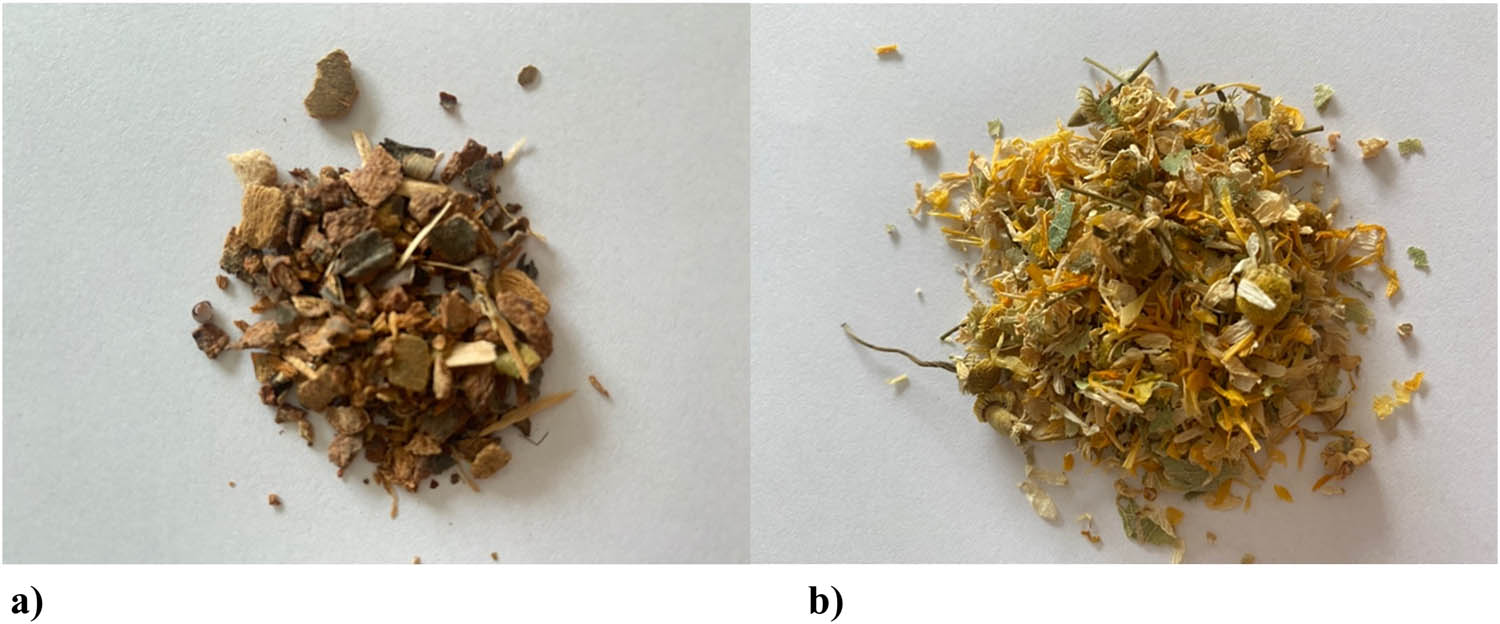
(a) bird cherry bark (b) base mix (Matricaria chamomilla L. + Tilia cordata Mill. + Calendula officinalis L.
2.3 Preparing teas and making tea infusions
A single extraction method was used to obtain the infusion. The teas were prepared by weighing out 2 g of each fraction according to the proportions. A total of 11 samples were prepared with 4 samples consisting of the single components (100% Calendula officinalis L. (flower) (C), 100% Matricaria chamomilla L. (flower) (Ch), 100% Tilia cordata Mill. (Flower) (T), and 100% Prunus padus L. (bark) (P)). Base (B) was a mixture of three herbs mixed in equal proportions (Calendula officinalis L. (flower) 33.3% + Matricaria chamomilla L. (flower) 33.3% + Tilia cordata Mill. (Flower) 33.3%) and seven samples consisting of the base mixture (B) combined with the corresponding concentration of the P. padus bark (P) (Table 1). The samples were prepared as follows: BP5 (5% P + 31.66% C + 31.66% Ch + 31.66% T), BP10 (10% P + 30% C + 30% Ch + 30% T), BP15 (15% P + 28.33% C + 28.33% Ch + 28.33% T), BP20 (20% P + 26.66% C + 26.66% Ch + 26.66% T), BP25 (25% P + 25% C + 25% Ch + 25% T), and BP30 (30% P + 23.33% C + 23.33% Ch + 23.33% T).
Infusion sample descriptions and designations
| Raw material content (%) | ||||
|---|---|---|---|---|
| Sample code | Prunus padus L. (bark) % | Matricaria chamomilla L. (flower) % | Calendula officinalis L. (flower) % | Tilia cordata Mill. (flower) % |
| B | 0 | 33.33 | 33.33 | 33.33 |
| C | 0 | 0 | 100 | 0 |
| Ch | 0 | 100 | 0 | 0 |
| P | 100 | 0 | 0 | 0 |
| T | 0 | 0 | 0 | 100 |
| BP 5 | 5 | 31.66 | 31.66 | 31.66 |
| BP 10 | 10 | 30 | 30 | 30 |
| BP 15 | 15 | 28.33 | 28.33 | 28.33 |
| BP 20 | 20 | 26.66 | 26.66 | 26.66 |
| BP 25 | 25 | 25 | 25 | 25 |
| BP 30 | 30 | 23.33 | 23.33 | 23.33 |
The obtained mixtures were packaged into disposable paper tea bags (2 g); then, 200 mL of 80°C water was poured over them and they were extracted for 15 min. First, teas consisting of individual ingredients were weighed out and placed in disposable tea bags, and afterwards, ones containing multiple ingredients in appropriate proportions were prepared in the same way.
2.4 Minerals contained in the bird cherry bark
The evaluation of the bird cherry bark’s (P. padus) mineral composition was performed using the ICP-OES (Inductively Coupled Plasma – Optical Emission Spectrometry) method. The C and N content analysis in the samples tested was performed using a Vario MACRO Cube CN analyzer (Elementar Analysensysteme GmbH, Germany). The elemental composition analysis was performed using ICP – OES iCAP 6500 Axial and Radial Vista (Thermo Scientific, Waltham, Massachusetts, USA) per PN-EN ISO/IEC 17025:2005. Before the multielement analysis, samples (approximately 0.5 g of dry weight) were mineralized (5.0 mL of 69% HNO3) in Teflon digestion bombs using a Milestone Start D Microwave Digestion System (Milestone S.r.l., Sorisole, Italy).
2.5 Assessment of antioxidant activity (Folin–Ciocalteu, hydroxyl radical antioxidant capacity (HORAC) method, 2,2-diphenyl-1-picrylhydrazyl (DPPH), and 2,2'-azino-bis(3-ethylbenzothiazoline-6-sulfonic acid) (ABTS) method)
The infusions were evaluated for compounds reacting with the Folin–Ciocalteu reagent according to the method described by Meda et al. [12]. A volume of 0.2 mL of the sample was mixed with acetonitrile (0.8 mL) and centrifuged (12,000g, 20 min). The centrifuged supernatant (0.01 mL) was mixed with DDI water (0.04 mL), F–C reagent (750 μL), and after 5 min, with 7.5% Na2CO3 water solution (750 μL). After 2 h, the absorbance was read at 760 nm against the reagent sample (containing water, F–C reagent, and Na2CO3) [12]. A calibration curve was prepared using gallic acid (0.34 mg) dissolved in DDI water (0.5 mL) and acetonitrile (0.5 mL). Fifteen solutions (1.12–24 μg gallic acid/50 μL) were prepared. To those solutions, of F–C reagent (750 μL), and after 5 min, 7.5% Na2CO3 water solution (750 μL) were added followed by the measurement.
Denev et al. HORAC method was used with some modifications. The sample (10 μL) was mixed with DDI (500 μL) and fluorescein solution (200 μL, 60 nM) followed by incubation at 37°C for 10 min. Then, 27.5 mM H2O2 solution (10 μL) and CoF2 × 4H2O solution (10 μL) (230 μM; containing 1 mg of picolinic acid/mL) were added to the solution containing fluorescein and the tested sample. The fluorescence was read (excitation at 485 nm and emission at 520 nm) at start and every 1 min with constant shaking during the whole reaction until stabilization (typically 5–10 min). A blank sample containing phosphate buffer was run instead of the tested sample. Also, the background from samples was measured (a mixture containing the tested sample and DDI water only). The activity was expressed as gallic acid equivalents using 15 gallic acid solutions (equal to 12.6–573.2 μg of gallic acid/mL). Fluorescein (200 μL) was incubated with gallic acid (10 μL) standard solution and DDI (40 μL) and analyzed as described above [13]. The samples were run in at least four repeats.
The DPPH procedure was based on the reduction of DPPH solution absorbance (2,2-diphenyl-1-picrylhydrazyl) at 517 nm in the presence of free radicals [14]. The measurements were performed using the SP-830 Plus apparatus (Metertech, Taiwan). The percentage of DPPH radical scavenging was evaluated based on the standard curve for y = 321.54x + 21.54 (R 2 = 0.986) and presented as mg TE/1 g DW of extract.
The ABTS cation radical scavenging activity was measured according to Trolox equivalent antioxidant capacity assay in accordance with the methodology described by Kobus-Cisowska et al. [14]. The spectrophotometric measurement of the ability to scavenge ABTS˙+ formed from ABTS (2,2′-azinobis-(3-ethylbenzothiazoline-6-sulfonic acid)) by oxidation with potassium persulfate was carried out at 414 nm using the SP-830 Plus apparatus (Metertech, Taiwan). The percentage rate of ABTS•+ scavenging was calculated from the standard curve for y = 121.63x + 26.33 (R 2 = 0.96) and expressed as mg TE/g DW of extract.
2.6 Ability to reduce copper ions cupric reducing antioxidant capacity (CUPRAC) and iron ions ferric reducing antioxidant power (FRAP)
Öztürk et al. used CUPRAC method with minor modifications. A 40 μL sample was mixed with ammonium acetate buffer (pH 7.0, 1 M) (900 μL), neocuproine (700 μL) (3.75 mM/L in DDI water:ACN 1:1), and 10 mM/L CuCl2 (350 μL). After 1 h, the absorbance was read at 450 nm against the blank sample (containing the corresponding tested solution (40 μL) mixed with ammonium acetate buffer (1,950 μL)). The reagent sample (without tested samples) was also measured and subtracted from the tested sample. Quercetin was used as an antioxidant standard: quercetin (0.23 mg) was dissolved in 0.5 mL and 0.5 mL of ACN. Then, 20 quercetin standard solutions (in the range of 0.0225–0.38 mmol/dm3) (40 μL) were mixed with reagents as described above [15]. The samples were run in at least four repeats. Curve equation: Y = 2.2237x, r 2 = 0.9992.
Oyaizu’s FRAP method was used with minor modifications. The sample (40 μL) was mixed with 0.2 M sodium phosphate buffer (pH 6.6) (250 μL) and 10 mg/mL potassium ferricyanide (250 μL). The sample was incubated at 50°C for 20 min. Then, 100 mg/mL (w/v) trichloroacetic acid (250 μL) was added followed by centrifugation (2,000 g, 10 min). Moreover, the upper layer (500 μL) was mixed with DDI water (500 μL) and freshly prepared FeCl3 solution (1 mg/mL) (100 μL). The absorbance was read at 700 nm against a blank sample (DDI water instead of the sample). The background was measured as well (a mixture containing the tested sample and buffer only). A calibration curve was prepared using a Trolox solution: Trolox (0.38 mg) was dissolved in DDI water (1 mL). A volume of 40 μL of 20 standard solutions (containing 0.44–7.11 μg Trolox/mL) was studied as described above [16]. The samples were run in at least four repeats.
2.7 Herbal infusion antimicrobial activity evaluation
A bag containing 2 g of herbal tea was poured with water at 80°C. The tea’s brewing lasted 15 min. The bag was then removed from the solution. The obtained solution was cooled to 20°C and further analyzed. Indicator microorganisms such as Staphylococcus aureus ATCC 25923, Listeria monocytogenes ATCC 7644, Enterococcus faecalis ATTC 29212, Clostridium butyricum ATTC 860, Lactobacillus fermentum ATCC 14932, Lactococcus lactis ATCC 11454, Streptococcus thermophilus ATCC 19258, Bifidobacterium bifidum ATCC 11863, Bacillus subtilis ATCC 6633, Escherichia coli ATCC 25922, Salmonella typhimurium ATCC 14028, Proteus mirabilis ATCC 12453, Klebsiella pneumoniae ATCC 31488, Pseudomonas aereuginosa ATCC 27853, Alcaligenes faecalis ATCC 35655, Candida albicans ATTC 10231, Saccharomyces cerevisiae ATCC 9776, Fusarium spp., Aspergillus spp., and Mucor spp. were transferred to test tubes containing Mueller–Hinton medium (for bacteria), yeast extract sucrose medium (for yeast), or Potato Dextrose medium (for mold). They were cultured at 37°C for 24–72 h. Subsequently, the liquefied agar medium was inoculated with 10% (v/v) 24 h indicator culture and poured into Petri dishes to obtain a distinct confluent layer. After solidification of the broth medium inoculated with the indicator microorganisms, wells were made with a cork borer. Each well was supplemented with a liquid extract cone medium (150 µL). Next, the diameters of the growth inhibition or reduction zone of indicator microorganisms were measured. The inhibition of the growth of the indicator microorganism was manifested by complete lightening around the place where the liquid extract or slime was transferred. It indicated bactericidal activity of the bacterial strain. Bacteriostatic properties were determined by measuring the diameter of the growth inhibition zone (indicator strain growth limitation).
2.8 Inhibition of cyclooxygenase-2
For the assay, reagents from Cayman COX Activity Assay Kit (No. 760151) were strictly prepared as suggested by the producer. They were combined with COX-2 enzyme (Human recombinant, Cayman No. 60122, pre-diluted 100-fold using 100 mM, pH 8.0 Tris buffer). A volume of 0.04 mL of the tested sample was mixed with Tris buffer (100 mM, pH 8.0) (0.12 mL), hemin (0.01 mL), shaken, and left for 5 min. at 25°C followed by the addition of a colorimetric substrate (0.02 mL) and of arachidonic acid solution (0.02 mL). To start the reaction, COX-2 solution was added (0.02 mL). The increase in the absorbance during the incubation at room temperature was recorded at 590 nm (Tecan microplate reader, Grödig, Austria). A negative (blank) sample (buffer instead of tested extract) and a positive one (COX-2 inhibitor DuP-697) were run simultaneously. The background of tested extracts (0.04 mL of the extract mixed with 0.19 mL buffer) was also measured and included in the calculations. Each sample was run in at least four repeats.
2.9 Statistical analysis
The routine statistical tests (average values and standard deviation) were tested. Statistical differences were calculated using Tukey’s HSD test with significant differences identified at p < 0.05 (Statistica Software ver. 13.1 StatSoft, Cracow, Poland).
3 Results
3.1 The mineral content of bird cherry bark
The bird cherry bark was characterized in terms of macro- and micronutrients and trace elements that play an important role in plant development and nutrition and maybe of nutritional importance (Table 2). Bird cherry (P. padus) bark has been shown to contain a high potassium content of 19.457 ± 762 mg/kg d.m. Significant calcium (3.540 ± 379), magnesium (3.202 ± 71), and phosphorus (2.925 ± 45) contents have also been found.
Mineral composition of P. padus bark
| Element mg/kg d.m. | Fe | Mo | B | Si | Zn | Cu | K | Ca | Mg | Ti | P | S | V | Mn | Al |
|---|---|---|---|---|---|---|---|---|---|---|---|---|---|---|---|
| Bark (P. padus) | 142 ± 5.4 | <0.01 | 4.7 ± 0.15 | 80 ± 19 | 171 ± 3 | 6 ± 0.1 | 19,457 ± 762 | 3,540 ± 379 | 3,202 ± 71 | 4 ± 1 | 2,925 ± 45 | 5,189 ± 62 | 2 ± 0.1 | 57 ± 8 | 34 ± 2 |
(mean ± SD; N = 3).
3.2 Assessment of antioxidant activity (Folin–Ciocalteu, HORAC method, DPPH, and ABTS method)
The highest antioxidant activity in the Folin–Ciocalteu reagent test was observed in the case of the sample containing 20% of bird cherry bark BP 20 (102.3 ± 9.1e µg gallic acid/mL), with slightly lower antioxidant activity in the case of the sample containing only bird cherry bark (P) (114.5 ± 8.3f µg gallic acid/mL). Linden flower (T) also showed significant antioxidant activity (97.7 ± 1.6e µg gallic acid/mL). Chamomile flower (Ch) contained the smallest amount of antioxidant compounds (55.0 ± 1.5a µg gallic acid/mL).
The study was further expanded by the addition of the HORAC assay, which is based on the oxidation of fluorescein by hydroxyl radicals through the classical hydrogen atom transfer mechanism. The results obtained showed that both the tea consisting only of the base without added bark (B) (4.1 ± 0.2b μg gallic acid/mL) and the tea with the highest 30% bird cherry bark content (BP30) (4.0 ± 0.2b μg gallic acid/mL) exhibited the highest antioxidant activity against hydroxyl radicals.
In the DPPH radical scavenging assay, the highest scavenging potency occurred in the case of the extract containing only the bird cherry bark (P) 5.07 ± 0.03b TE/g d.m.; this extract also showed the highest activity 6.62 ± 0.08d TE/g d.m. in the ABTS radical scavenging assay (Table 3).
The total content of Folin–Ciocalteu reagent-reactive compounds and antioxidant capacity against radicals (HORAC, DPPH, ABTS) in teas with added bird cherry bark
| Sample | TPC (µg gallic acid/mL) | HORAC (μg gallic acid/mL) | DPPH (TE/g d.w.) | ABTS (TE/g d.w.) |
|---|---|---|---|---|
| B | 79.4 ± 3.5d | 4.1 ± 0.2b | 3.32 ± 0.04b | 5.12 ± 0.11c |
| C | 80.1 ± 2.3d | 3.8 ± 0.0b | 2.76 ± 0.08a | 4.51 ± 0.12b |
| Ch | 55.0 ± 1.5a | 3.5 ± 0.1a | 2.62 ± 0.11a | 4.77 ± 0.08b |
| P | 114.5 ± 8.3f | 3.2 ± 0.2a | 5.07 ± 0.03b | 6.62 ± 0.08d |
| T | 97.7 ± 1.6e | 3.2 ± 0.3a | 4.87 ± 0.07c | 3.81 ± 0.03a |
| BP5 | 74.8 ± 0.0c | 3.9 ± 0.1b | 3.87 ± 0.11b | 4.76 ± 0.15b |
| BP10 | 80.9 ± 1.4d | 3.8 ± 0.1b | 3.55 ± 0.04b | 4.73 ± 0.08b |
| BP15 | 93.1 ± 0.0e | 3.4 ± 0.1a | 4.11 ± 0.04c | 4.39 ± 0.03b |
| BP20 | 102.3 ± 9.1e | 3.6 ± 0.2ab | 4.28 ± 0.06c | 4.98 ± 0.03b |
| BP25 | 68.7 ± 0.0b | 3.9 ± 0.1b | 4.03 ± 0.04c | 5.37 ± 0.07c |
| BP30 | 82.4 ± 0.0d | 4.0 ± 0.2b | 3.84 ± 0.02b | 5.34 ± 0.04c |
The results are mean values of three determinations ± standard deviation. The values sharing the same letter in a line were not significantly different (P ≤ 0.05).
3.3 Ability to reduce copper ions (CUPRAC) and iron ions (FRAP)
It was found that the infusions tested were characterized by their ability to reduce Cu(ii) copper ions. The highest activity occurred in the case of the sample which contained only cherry bark (P) (1083.9 ± 19.4f μg quercetin/mL). Among all the teas tested, the one containing 20% bird cherry bark (BP20) showed the highest activity (939.1 ± 27.1e μg quercetin/mL). Chamomile flower (Ch), similarly to its antioxidant activity with the Folin-Ciocialteu reagent, also showed the lowest copper-ion-reducing activity (549.0 ± 44.2a μg quercetin/mL). In the ferric ion reducing antioxidant power assay, testing the ability to reduce Fe(iii) ions, the strongest properties were once again demonstrated for the infusion containing only cherry bark (P), where the activity was 6.7 ± 0.1d μg Trolox/mL. The tea with 20% added bird cherry bark (BP20) also had, as in the case of copper ion reduction, strong iron-ion-reducing properties (4.6 ± 0.1b μg Trolox/mL). Chamomile flower (Ch) activity confirmed the previous results and was once again the weakest, showing a reducing power of 3.3 ± 0.2a μg Trolox/mL (Table 4).
Content of compounds reducing copper ions (CUPRAC) and iron ions (FRAP) in teas with added bird cherry bark
| Sample | CUPRAC activity (μg quercetin/mL) | FRAP activity (μg Trolox/mL) |
|---|---|---|
| B | 786.7 ± 23.2bc | 4.5 ± 0.3bc |
| C | 712.4 ± 34.7b | 4.0 ± 0.4b |
| Ch | 549.0 ± 44.2a | 3.3 ± 0.2a |
| P | 1083.9 ± 19.4f | 6.7 ± 0.1d |
| T | 762.3 ± 20.3bc | 4.0 ± 0.3b |
| BP5 | 755.1 ± 12.0b | 3.4 ± 0.0a |
| BP10 | 803.5 ± 22.2c | 4.4 ± 0.2b |
| BP15 | 892.9 ± 16.3d | 4.7 ± 0.2bc |
| BP20 | 939.1 ± 27.1e | 4.6 ± 0.1b |
| BP25 | 854.8 ± 30.2cd | 4.7 ± 0.3bc |
| BP30 | 879.4 ± 13.4d | 4.9 ± 0.1c |
The results are mean values of three determinations ± standard deviation. The values sharing the same letter in a line were not significantly different (P ≤ 0.05).
3.4 Herbal infusion antimicrobial activity evaluation
The effect of 11 herbal tea aqueous solutions on the growth of 20 indicator microbial species, including fungi and gram-positive and gram-negative bacteria, was investigated (Table 5). The effects of aqueous solutions of teas containing single plant materials, i.e., bird cherry bark, chamomile, marigold, and linden, were analyzed first. In this case, the highest antimicrobial activity was shown by the aqueous solution of bird cherry bark against molds of the genus Fusarium spp. (16 mm). The antimicrobial activity of bird cherry may be related to the fact that it contains lupeol, which has been shown to exert anti-inflammatory activity, targeting key molecular pathways including NFκB, cFLIP, Fas, Kras, phosphatidylinositol-3-kinase (PI3K)/Akt, and Wnt/beta-catenin in various cell types (SALEEM, 2009). Overall, marigold has shown the weakest antimicrobial potential. The components of the aqueous solution of marigold showed no effect against Enterococcus faecalis ATTC 29,212, Clostridium butyricum ATTC 860, Lactobacillus fermentum ATCC 14932 and Lactococcus lactis ATCC 11454, and Bacillus subtilis ATCC 6633. The combination of marigold, linden, and chamomile resulted in the aqueous solution of all these herbs having increased antimicrobial properties. In this case, the highest activity was shown against molds of the genus Fusarium spp. (18 mm) and Mucor spp. (17 mm). Enriching the marigold–linden–chamomile mixture by adding bird cherry bark significantly increased the antimicrobial activity of the solution tested. The highest antimicrobial activity occurred when the bird cherry bark content was between 20–30%, particularly against Listeria monocytogenes bacteria. The size of the clear zone ranged between 25 and 27 mm (±3) (Table 5).
Evaluation of the effect of herbal teas on indicator microbes
| Sample | P | Ch | C | T | B | BP5 | BP10 | BP15 | BP20 | BP25 | BP30 |
|---|---|---|---|---|---|---|---|---|---|---|---|
| Zone of inhibition (mm) | |||||||||||
| Gram-positive bacteria | |||||||||||
| Staphylococcus aureus ATCC 25923 | 8 ± 1 | 7 ± 1 | 5 ± 0 | 9 ± 1 | 12 ± 2 | 13 ± 2 | 15 ± 2 | 17 ± 3.0 | 19 ± 3 | 21 ± 3 | 24 ± 3 |
| Listeria monocytogenes ATCC 7644 | 2 ± 0 | 4 ± 1 | 2 ± 0 | 6 ± 1 | 16 ± 2 | 18 ± 3 | 20 ± 3 | 22 ± 3 | 25 ± 3 | 27 ± 3 | 27 ± 3 |
| Enterococcus faecalis ATTC 29212 | 11 ± 2 | 3 ± 0 | 0 ± 0 | 7 ± 1 | 14 ± 2 | 16 ± 2 | 16 ± 2 | 18 ± 2 | 19 ± 3 | 20 ± 3 | 22 ± 3 |
| Clostridium butyricum ATCC 860 | 8 ± 1 | 0 ± 0 | 0 ± 0 | 7 ± 1 | 12 ± 2 | 17 ± 2 | 19 ± 2 | 21 ± 3 | 23 ± 3 | 25 ± 3 | 24 ± 3 |
| Lactobacillus fermentum ATCC 14932 | 2 ± 0 | 2 ± 0 | 0 ± 0 | 9 ± 1 | 12 ± 2 | 14 ± 2 | 16 ± 2 | 18 ± 2 | 15 ± 2 | 17 ± 2 | 18 ± 2 |
| Lactococcus lactis ATCC 11454 | 2 ± 0 | 2 ± 0 | 0 ± 0 | 11 ± 2 | 13 ± 2 | 15 ± 2 | 17 ± 2 | 19 ± 2 | 19 ± 2 | 20 ± 3 | 24 ± 3 |
| Streptococcus thermophilus ATCC 19258 | 3 ± 0 | 3 ± 0 | 2 ± 0 | 9 ± 1 | 14 ± 2 | 16 ± 2 | 18 ± 2 | 19 ± 2 | 20 ± 3 | 22 ± 3 | 24 ± 3 |
| Bifidobacterium bifidum ATCC 11863 | 3 ± 1 | 1 ± 0 | 3 ± 0 | 7 ± 1 | 10 ± 2 | 12 ± 2 | 15 ± 2 | 16 ± 2 | 15 ± 2 | 16 ± 2 | 18 ± 2 |
| Bacillus subtilis ATCC 6633 | 9 ± 1 | 1 ± 0 | 0 ± 0 | 9 ± 1 | 13 ± 2 | 14 ± 2 | 16 ± 2 | 17 ± 2 | 18 ± 2 | 19 ± 2 | 21 ± 3 |
| Gram-negative bacteria | |||||||||||
| Escherichia coli ATCC 25922 | 5 ± 1 | 4 ± 0 | 3 ± 0 | 4 ± 0 | 10 ± 2 | 7 ± 1 | 9 ± 1 | 9 ± 1 | 10 ± 2 | 11 ± 2 | 12 ± 2 |
| Salmonella typhimurium ATCC 14028 | 3 ± 1 | 4 ± 0 | 4 ± 0 | 3 ± 0 | 9 ± 1 | 8 ± 1 | 9 ± 1 | 11 ± 2 | 12 ± 2 | 12 ± 2 | 13 ± 2 |
| Proteus mirabilis ATCC 12453 | 3 ± 1 | 4 ± 0 | 4 ± 0 | 3 ± 0 | 10 ± 2 | 9 ± 1 | 8 ± 1 | 9 ± 1 | 9 ± 1 | 10 ± 2 | 12 ± 2 |
| Klebsiella pneumoniae ATCC 31488 | 9 ± 1 | 3 ± 0 | 4 ± 0 | 4 ± 0 | 8 ± 1 | 9 ± 1 | 10 ± 2 | 12 ± 2 | 15 ± 2 | 18 ± 2 | 19 ± 2 |
| Pseudomonas aereuginosa ATCC 27853 | 8 ± 1 | 4 ± 0 | 4 ± 0 | 4 ± 0 | 8 ± 1 | 7 ± 1 | 8 ± 1 | 9 ± 1 | 9 ± 1 | 10 ± 2 | 13 ± 2 |
| Alcaligenes faecalis ATCC 35655 | 6 ± 1 | 3 ± 0 | 2 ± 0 | 5 ± 0 | 7 ± 1 | 7 ± 1 | 7 ± 1 | 9 ± 1 | 11 ± 2 | 12 ± 2 | 13 ± 2 |
| Fungi | |||||||||||
| Candida albicans ATTC 10231 | 13 ± 1 | 4 ± 0 | 3 ± 0 | 8 ± 1 | 14 ± 2 | 15 ± 2 | 12 ± 2 | 14 ± 2 | 17 ± 2 | 18 ± 2 | 19 ± 2 |
| Saccharomyces cerevisia ATCC 9776 | 11 ± 2 | 3 ± 0 | 4 ± 0 | 9 ± 1 | 16 ± 2 | 16 ± 2 | 12 ± 2 | 14 ± 2 | 15 ± 2 | 16 ± 2 | 18 ± 2 |
| Fusarium spp. | 16 ± 2 | 3 ± 0 | 4 ± 0 | 9 ± 1 | 18 ± 2 | 15 ± 2 | 16 ± 2 | 17 ± 2 | 17 ± 2 | 18 ± 2 | 19 ± 2 |
| Aspergillus spp. | 12 ± 2 | 3 ± 0 | 2 ± 0 | 9 ± 1 | 12 ± 2 | 9 ± 1 | 11 ± 2 | 14 ± 2 | 16 ± 2 | 17 ± 2 | 18 ± 2 |
| Mucor spp. | 14 ± 2 | 2 ± 0 | 3 ± 0 | 9 ± 2 | 17 ± 2 | 13 ± 2 | 14 ± 2 | 16 ± 2 | 17 ± 2 | 17 ± 2 | 18 ± 2 |
3.5 Inhibition of cyclooxygenase-2
The cherry bird bark was also found to have the highest inhibitory activity against cyclooxygenase-2 (COX-2) – 77.0%. Therefore, using it as an ingredient in infusions is reasonable because it can enhance the effects of functional infusions that are a mixture of herbs. Among the proposed mixture formulations, the infusion with the highest proportion of bark (BP30) (63.0 ± 1.1e%) had the highest activity in this regard. The weakest COX-2 inhibitory properties were demonstrated for the infusion of chamomile flower (42.1 ± 2.5a%) and the base mixture (B) – 43.7 ± 1.8a% (Figure 2).
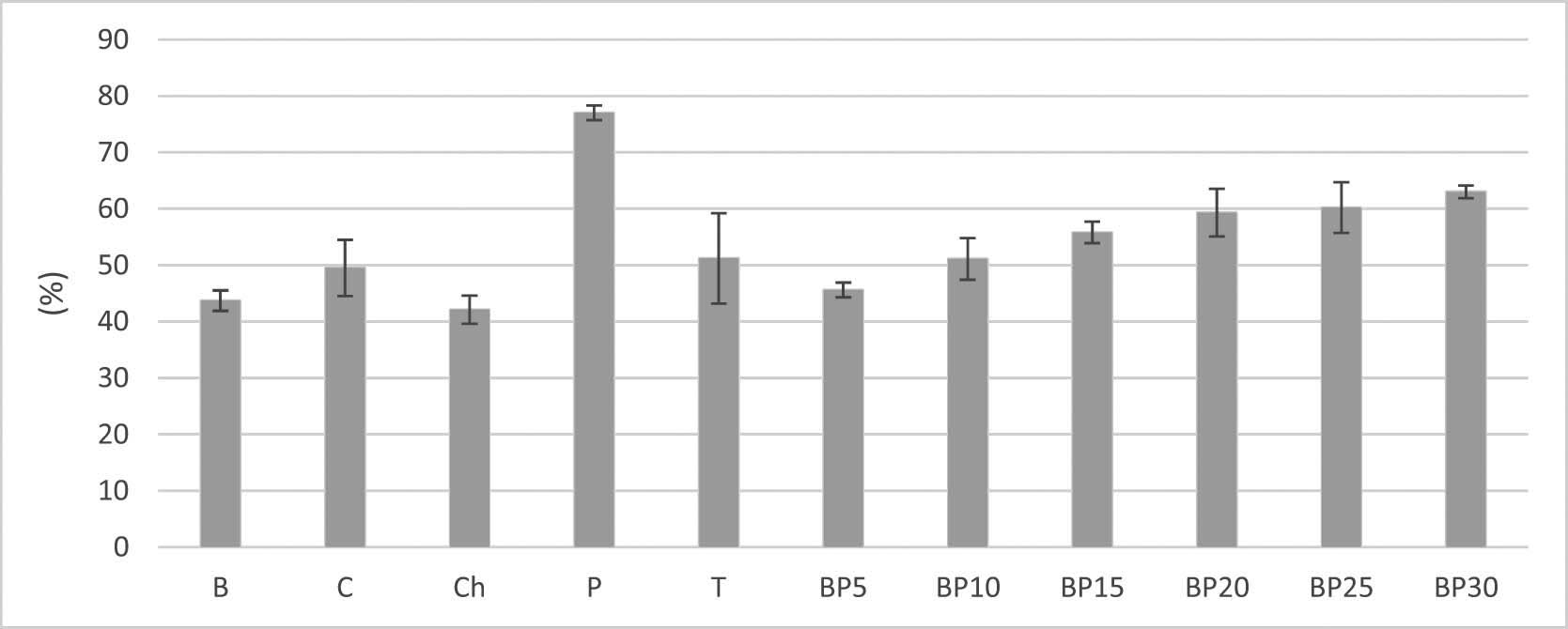
COX 2 inhibition in infusions with the bark of bird cherry.
4 Discussion
Many research authors described the composition and properties of bird cherry; however, no direction was indicated for the use of the bark for nutritional purposes. The presented study shows that the bark may be a source of calcium and magnesium, which may be important for deficiencies found in populations. This is also confirmed by other studies, where it was proved that bird cherry contains 192.30 ± 0.58 mg/100 g of calcium and 249.15 ± 0.34a mg/100 g of magnesium [17]. Those components are soluble in water, thus obtaining infusions from mixtures containing bark can enrich them in the above-mentioned components.
P. padus bark, leaves and fruit are also known for their anti-inflammatory, antimicrobial, and antioxidant properties [8]. The known use of the fruit or the leaves will not affect the limitation of bird cherry expansion in the environment. The bark also contains plant metabolites, particularly polyphenols, which play an important role in protecting the body against the adverse effects of free radicals involved in oxidative stress [18]. The high antioxidant potential of the bark was also presented by other authors who analyzed methanolic extracts of bird cherry bark for DPPH radical scavenging activity. They found that the bark has high antioxidant potential (85.82 ± 4.42b% EDA – electron-donating ability) [19]. In the presented study using hydroxyl radical, the addition of bark to the herbal mixture increased the antioxidant activity by 52% compared to the control tea. Likely, the compounds found in bird cherry bark acted synergistically with the compounds extracted from linden flower which showed higher activity by 146% compared to that of the base infusion.
Therefore, the use of the bark may have beneficial antioxidant and supporting functions of the raw materials known and used as infusion ingredients. Furthermore, it should be pointed out that the results indicating the highest antioxidant potential of the bark – compared to the results of our previous studies concerning bird cherry leaves and fruit – further confirmed the validity of using the bark as an ingredient of functional mixtures [20]. The above-mentioned effect of the bark was also pointed out by other authors who assessed the antioxidant activity using the DPPH-free radical scavenging assay. The antioxidative effect of P. padus bark water extract was 71% at 350 µg/mL and higher than 70% at all concentrations [21]. The effects of bark components may be multidirectional.
The compounds that belong to the group of antioxidants and are extracted from the bark can act according to different mechanisms. According to the presented study, the bark components can enhance the antioxidant activity of infusions by increasing the activity to reduce Fe(iii) ions to Fe(ii) and Cu(ii) ions to Cu(i).
The literature review shows that antioxidant properties of plant-derived products determined by the FRAP method tend to be in strong correlation with ascorbic acid content and with polyphenolic compound content. Hence, in the FRAP assay, the brewer containing bird cherry bark alone showed in the presented study a 48% higher activity than the infusion containing the base mixture. We determined the same correlation in the CUPRAC assay, where the mixture containing the bark alone showed a higher 37% activity to reduce copper ions than the base mixture alone. The infusion with 20% added bird cherry bark enhanced the tea activity by 20%.
Functional effects may include inhibition of COX-2, the enzyme involved in inflammation. It was proved that the bird cherry bark infusion and the infusion with the highest concentrations of bird cherry bark had the highest activity. Choi et al. demonstrated that methanolic extracts of P. padus stems possessed potent anti-inflammatory properties and not only suppressed various inflammatory mediators in vitro, but also reduced inflammatory swelling in vivo. It has also been shown to have potent antinociceptive effects, acting as a partial opioid agonist through central and peripheral mechanisms [8].
Although numerous new antibiotics have been developed in recent years, many human pathogens gained increased resistance to them due to the mass commercial use of antibiotics [22]. Therefore, alternative antibiotics – including plant extracts and phytochemicals – are needed to develop new treatments for infectious diseases. Bird cherry bark teas can also supplement a bacteriostatic diet. The highest antimicrobial activity occurred when the bird cherry bark content was between 20–30%, particularly against Listeria monocytogenes bacteria. The effect of P. padus bird cherry bark was also evaluated in another study. In this case, the methanolic extract of bird cherry bark showed antimicrobial activity against most of the gram-positive bacteria tested, while for gram-negative bacteria, it showed the highest activity against Kocuria rhizophila (Minimum inhibitory concentration = 125 μg/mL) [23].
5 Conclusion
The bark of the bird cherry is characterized by a high content of biologically active compounds that have a beneficial effect on the human body, as well as high antioxidant activity. Therefore, it can effectively reduce the occurrence of oxidative stress, which contributes to the emergence of civilization and neurodegenerative diseases. At the same time, it should be noted that the bark of the bird cherry is characterized by a diversified profile of bioactive compounds and a different antioxidant activity. This means that the best health-promoting effect can be obtained by using the bark of the bird cherry as an ingredient of functional food, e.g., herbal infusions with its addition. The research showed that the addition of bird cherry bark to herbal infusions can beneficially enrich the health-promoting properties of teas. Therefore, they can play an important role in the prevention of neurodegenerative diseases, thanks to their properties resulting from their inhibitory activity against key enzymes in health prophylaxis.
-
Funding information: This research received no external funding by the Department of Gastronomy Sciences and Functional Foods of Poznan University of Life Sciences, grant number 506.751.03.00.
-
Author contributions: A.T., J.K.C. – conceptualization; P.S., R.W. – data curation; A.T., D.S. – formal analysis; J.K.C. – funding acquisition; A.T., J.K.C., D.S. – investigation; J.K.C., R.W., D.S., D.S. – methodology; A.T. – project administration; A.T., P.S. – resources; D.S., R.W. – software; J.K.C., P.S. – supervision; A.T., D.S. – validation; D.S. – visualization; A.T. – writing – original draft; J.K.C., P.S. – writing – review & editing
-
Conflict of interest: The authors declare no conflicts of interest.
-
Ethical approval: The conducted research is not related to either human or animal use.
-
Data availability statement: All data generated or analyzed during this study are included in this published article.
References
[1] Gordon AG, Rowe DCF. Seed manual for ornamental trees and shrubs. UK For Comm Bull. 1982;59.Suche in Google Scholar
[2] Wickens GE, Kunkel G. Plants for human consumption. Kew Bull. 1987;42(1):273. 10.2307/4109919.Suche in Google Scholar
[3] Schultes RE. Cornucopia: a source book of edible plants. J Ethnopharmacol. 1991;34:291–2.10.1016/0378-8741(91)90056-JSuche in Google Scholar
[4] Telichowska A, Kobus-Cisowska J, Stuper-Szablewska K, Ligaj M, Tichoniuk M, Szymanowska D, et al. Exploring antimicrobial and antioxidant properties of phytocomponents from different anatomical parts of Prunus padus L. Int J Food Prop. 2020;23:2097–109.10.1080/10942912.2020.1843486Suche in Google Scholar
[5] Telichowska A, Kobus-cisowska J, Szulc P. Phytopharmacological possibilities of bird cherry prunus padus L. and Prunus serotina L. species and their bioactive phytochemicals. Nutrients. 2020;12:1–21.10.3390/nu12071966Suche in Google Scholar PubMed PubMed Central
[6] Telichowska A, Kobus-Cisowska J, Stuper-Szablewska K, Ligaj M, Tichoniuk M, Szymanowska D, et al. Exploring antimicrobial and antioxidant properties of phytocomponents from different anatomical parts of Prunus padus L. Int J Food Prop. 2020;23:2097–109.10.1080/10942912.2020.1843486Suche in Google Scholar
[7] Telichowska A, Kobus-Cisowska J, Ligaj M, Stuper-Szablewska K, Szymanowska D, Tichoniuk M, et al. Polyphenol content and antioxidant activities of Prunus padus L. and Prunus serotina L. leaves: Electrochemical and spectrophotometric approach and their antimicrobial properties. Open Chem. 2020;18:1125–35.10.1515/chem-2020-0121Suche in Google Scholar
[8] Choi JH, Cha DS, Jeon H. Anti-inflammatory and anti-nociceptive properties of Prunus padus. J Ethnopharmacol. 2012;144:379–86.10.1016/j.jep.2012.09.023Suche in Google Scholar PubMed
[9] Mikulic-Petkovsek M, Stampar F, Veberic R, Sircelj H. Wild Prunus fruit species as a rich source of bioactive compounds. J Food Sci. 2016;81:C1928–37.10.1111/1750-3841.13398Suche in Google Scholar PubMed
[10] Scalbert A, Williamson G. Dietary intake and bioavailability of polyphenols. J. Nutr. 2000;130(8):2073–85. American Institute of Nutrition.10.1093/jn/130.8.2073SSuche in Google Scholar PubMed
[11] Chan EWC, Lim YY, Chong KL, Tan JBL, Wong SK. Antioxidant properties of tropical and temperate herbal teas. J Food Compos Anal. 2010;23:185–9.10.1016/j.jfca.2009.10.002Suche in Google Scholar
[12] Meda A, Lamien CE, Romito M, Millogo J, Nacoulma OG. Determination of the total phenolic, flavonoid and proline contents in Burkina Fasan honey, as well as their radical scavenging activity. Food Chem. 2005;91:571–7.10.1016/j.foodchem.2004.10.006Suche in Google Scholar
[13] Denev P, Kratchanova M, Ciz M, et al. Biological activities of selected polyphenol-rich fruits related to immunity and gastrointestinal health. Food Chem. 2014;157:37–44.10.1016/j.foodchem.2014.02.022Suche in Google Scholar PubMed
[14] Kobus-Cisowska J, Szulc P, Szczepaniak O, Dziedziński M, Szymanowska D, Szymandera-Buszka K, et al. Variability of Hordeum vulgare L. Cultivars in yield, antioxidant potential, and cholinesterase inhibitory activity. Sustainability. 2020;12:1938.10.3390/su12051938Suche in Google Scholar
[15] Öztürk M, Duru ME, Kivrak Ş, Mercan-Doĝan N, Türkoglu A, Özler MA. In vitro antioxidant, anticholinesterase and antimicrobial activity studies on three Agaricus species with fatty acid compositions and iron contents: a comparative study on the three most edible mushrooms. Food Chem Toxicol. 2011;49:1353–60.10.1016/j.fct.2011.03.019Suche in Google Scholar PubMed
[16] Oyaizu M. Studies on products of browning reaction. Antioxidative activities of products of browning reaction prepared from glucosamine. Japanese J Nutr Diet. 1986;44:307–15.10.5264/eiyogakuzashi.44.307Suche in Google Scholar
[17] García-Aguilar L, Rojas-Molina A, Ibarra-Alvarado C, Rojas-Molina JI, Vázquez-Landaverde PA, Luna-Vázquez FJ, et al. Nutritional value and volatile compounds of black cherry (prunus serotina) seeds. Molecules. 2015;20:3479–95.10.3390/molecules20023479Suche in Google Scholar PubMed PubMed Central
[18] Telichowska A, Kobus-Cisowska J, Szulc P, Ligaj M, Stuper-Szablewska K, Szwajgier D, et al. Comparative analysis of infusions with the addition p. padus bark: assessment of the antioxidant potential and their inhibitory effect on enzymes associated with oxidative stress. Sustain. 2021;13:3913.10.3390/su13073913Suche in Google Scholar
[19] Hyun TK, Kim HC, Kim JS. In vitro screening for antioxidant, antimicrobial, and antidiabetic properties of some Korean native plants on Mt. Halla, Jeju Island. Indian J Pharm Sci. 2015;77:668–74.10.4103/0250-474X.174984Suche in Google Scholar PubMed PubMed Central
[20] Telichowska A, Kobus-Cisowska J, Stuper-Szablewska K, Ligaj M, Tichoniuk M, Szymanowska D, et al. Exploring antimicrobial and antioxidant properties of phytocomponents from different anatomical parts of Prunus padus L. Int J Food Prop. 2020;23:2097–109.10.1080/10942912.2020.1843486Suche in Google Scholar
[21] Hwang D, Kim H, Shin H, Jeong H, Kim J, Kim D. Cosmetic effects of Prunus padus bark extract. Korean J Chem Eng. 2014;31:2280–5.10.1007/s11814-014-0146-8Suche in Google Scholar
[22] Pattanayak S. Alternative to antibiotics from herbal origin - outline of a comprehensive research project. Curr Pharmacogenomics Person Med. 2018;16:9–62.10.2174/1875692116666180419154033Suche in Google Scholar
[23] Hyun TK, Kim HC, Kim JS. In vitro screening for antioxidant, antimicrobial, and antidiabetic properties of some Korean native plants on Mt. Halla, Jeju Island. Indian J Pharm Sci. 2015;77:668–74.10.4103/0250-474X.174984Suche in Google Scholar
© 2021 Aleksandra Telichowska et al., published by De Gruyter
This work is licensed under the Creative Commons Attribution 4.0 International License.
Artikel in diesem Heft
- Regular Articles
- Qualitative and semi-quantitative assessment of anthocyanins in Tibetan hulless barley from different geographical locations by UPLC-QTOF-MS and their antioxidant capacities
- Effect of sodium chloride on the expression of genes involved in the salt tolerance of Bacillus sp. strain “SX4” isolated from salinized greenhouse soil
- GC-MS analysis of mango stem bark extracts (Mangifera indica L.), Haden variety. Possible contribution of volatile compounds to its health effects
- Influence of nanoscale-modified apatite-type calcium phosphates on the biofilm formation by pathogenic microorganisms
- Removal of paracetamol from aqueous solution by containment composites
- Investigating a human pesticide intoxication incident: The importance of robust analytical approaches
- Induction of apoptosis and cell cycle arrest by chloroform fraction of Juniperus phoenicea and chemical constituents analysis
- Recovery of γ-Fe2O3 from copper ore tailings by magnetization roasting and magnetic separation
- Effects of different extraction methods on antioxidant properties of blueberry anthocyanins
- Modeling the removal of methylene blue dye using a graphene oxide/TiO2/SiO2 nanocomposite under sunlight irradiation by intelligent system
- Antimicrobial and antioxidant activities of Cinnamomum cassia essential oil and its application in food preservation
- Full spectrum and genetic algorithm-selected spectrum-based chemometric methods for simultaneous determination of azilsartan medoxomil, chlorthalidone, and azilsartan: Development, validation, and application on commercial dosage form
- Evaluation of the performance of immunoblot and immunodot techniques used to identify autoantibodies in patients with autoimmune diseases
- Computational studies by molecular docking of some antiviral drugs with COVID-19 receptors are an approach to medication for COVID-19
- Synthesis of amides and esters containing furan rings under microwave-assisted conditions
- Simultaneous removal efficiency of H2S and CO2 by high-gravity rotating packed bed: Experiments and simulation
- Design, synthesis, and biological activities of novel thiophene, pyrimidine, pyrazole, pyridine, coumarin and isoxazole: Dydrogesterone derivatives as antitumor agents
- Content and composition analysis of polysaccharides from Blaps rynchopetera and its macrophage phagocytic activity
- A new series of 2,4-thiazolidinediones endowed with potent aldose reductase inhibitory activity
- Assessing encapsulation of curcumin in cocoliposome: In vitro study
- Rare norisodinosterol derivatives from Xenia umbellata: Isolation and anti-proliferative activity
- Comparative study of antioxidant and anticancer activities and HPTLC quantification of rutin in white radish (Raphanus sativus L.) leaves and root extracts grown in Saudi Arabia
- Comparison of adsorption properties of commercial silica and rice husk ash (RHA) silica: A study by NIR spectroscopy
- Sodium borohydride (NaBH4) as a high-capacity material for next-generation sodium-ion capacitors
- Aroma components of tobacco powder from different producing areas based on gas chromatography ion mobility spectrometry
- The effects of salinity on changes in characteristics of soils collected in a saline region of the Mekong Delta, Vietnam
- Synthesis, properties, and activity of MoVTeNbO catalysts modified by zirconia-pillared clays in oxidative dehydrogenation of ethane
- Synthesis and crystal structure of N,N′-bis(4-chlorophenyl)thiourea N,N-dimethylformamide
- Quantitative analysis of volatile compounds of four Chinese traditional liquors by SPME-GC-MS and determination of total phenolic contents and antioxidant activities
- A novel separation method of the valuable components for activated clay production wastewater
- On ve-degree- and ev-degree-based topological properties of crystallographic structure of cuprite Cu2O
- Antihyperglycemic effect and phytochemical investigation of Rubia cordifolia (Indian Madder) leaves extract
- Microsphere molecularly imprinted solid-phase extraction for diazepam analysis using itaconic acid as a monomer in propanol
- A nitric oxide-releasing prodrug promotes apoptosis in human renal carcinoma cells: Involvement of reactive oxygen species
- Machine vision-based driving and feedback scheme for digital microfluidics system
- Study on the application of a steam-foam drive profile modification technology for heavy oil reservoir development
- Ni–Ru-containing mixed oxide-based composites as precursors for ethanol steam reforming catalysts: Effect of the synthesis methods on the structural and catalytic properties
- Preparation of composite soybean straw-based materials by LDHs modifying as a solid sorbent for removal of Pb(ii) from water samples
- Synthesis and spectral characterizations of vanadyl(ii) and chromium(iii) mixed ligand complexes containing metformin drug and glycine amino acid
- In vitro evaluation of lactic acid bacteria with probiotic activity isolated from local pickled leaf mustard from Wuwei in Anhui as substitutes for chemical synthetic additives
- Utilization and simulation of innovative new binuclear Co(ii), Ni(ii), Cu(ii), and Zn(ii) diimine Schiff base complexes in sterilization and coronavirus resistance (Covid-19)
- Phosphorylation of Pit-1 by cyclin-dependent kinase 5 at serine 126 is associated with cell proliferation and poor prognosis in prolactinomas
- Molecularly imprinted membrane for transport of urea, creatinine, and vitamin B12 as a hemodialysis candidate membrane
- Optimization of Murrayafoline A ethanol extraction process from the roots of Glycosmis stenocarpa, and evaluation of its Tumorigenesis inhibition activity on Hep-G2 cells
- Highly sensitive determination of α-lipoic acid in pharmaceuticals on a boron-doped diamond electrode
- Synthesis, chemo-informatics, and anticancer evaluation of fluorophenyl-isoxazole derivatives
- In vitro and in vivo investigation of polypharmacology of propolis extract as anticancer, antibacterial, anti-inflammatory, and chemical properties
- Topological indices of bipolar fuzzy incidence graph
- Preparation of Fe3O4@SiO2–ZnO catalyst and its catalytic synthesis of rosin glycol ester
- Construction of a new luminescent Cd(ii) compound for the detection of Fe3+ and treatment of Hepatitis B
- Investigation of bovine serum albumin aggregation upon exposure to silver(i) and copper(ii) metal ions using Zetasizer
- Discoloration of methylene blue at neutral pH by heterogeneous photo-Fenton-like reactions using crystalline and amorphous iron oxides
- Optimized extraction of polyphenols from leaves of Rosemary (Rosmarinus officinalis L.) grown in Lam Dong province, Vietnam, and evaluation of their antioxidant capacity
- Synthesis of novel thiourea-/urea-benzimidazole derivatives as anticancer agents
- Potency and selectivity indices of Myristica fragrans Houtt. mace chloroform extract against non-clinical and clinical human pathogens
- Simple modifications of nicotinic, isonicotinic, and 2,6-dichloroisonicotinic acids toward new weapons against plant diseases
- Synthesis, optical and structural characterisation of ZnS nanoparticles derived from Zn(ii) dithiocarbamate complexes
- Presence of short and cyclic peptides in Acacia and Ziziphus honeys may potentiate their medicinal values
- The role of vitamin D deficiency and elevated inflammatory biomarkers as risk factors for the progression of diabetic nephropathy in patients with type 2 diabetes mellitus
- Quantitative structure–activity relationship study on prolonged anticonvulsant activity of terpene derivatives in pentylenetetrazole test
- GADD45B induced the enhancing of cell viability and proliferation in radiotherapy and increased the radioresistance of HONE1 cells
- Cannabis sativa L. chemical compositions as potential plasmodium falciparum dihydrofolate reductase-thymidinesynthase enzyme inhibitors: An in silico study for drug development
- Dynamics of λ-cyhalothrin disappearance and expression of selected P450 genes in bees depending on the ambient temperature
- Identification of synthetic cannabinoid methyl 2-{[1-(cyclohexylmethyl)-1H-indol-3-yl] formamido}-3-methylbutanoate using modern mass spectrometry and nuclear magnetic resonance techniques
- Study on the speciation of arsenic in the genuine medicinal material honeysuckle
- Two Cu(ii)-based coordination polymers: Crystal structures and treatment activity on periodontitis
- Conversion of furfuryl alcohol to ethyl levulinate in the presence of mesoporous aluminosilicate catalyst
- Review Articles
- Hsien Wu and his major contributions to the chemical era of immunology
- Overview of the major classes of new psychoactive substances, psychoactive effects, analytical determination and conformational analysis of selected illegal drugs
- An overview of persistent organic pollutants along the coastal environment of Kuwait
- Mechanism underlying sevoflurane-induced protection in cerebral ischemia–reperfusion injury
- COVID-19 and SARS-CoV-2: Everything we know so far – A comprehensive review
- Challenge of diabetes mellitus and researchers’ contributions to its control
- Advances in the design and application of transition metal oxide-based supercapacitors
- Color and composition of beauty products formulated with lemongrass essential oil: Cosmetics formulation with lemongrass essential oil
- The structural chemistry of zinc(ii) and nickel(ii) dithiocarbamate complexes
- Bioprospecting for antituberculosis natural products – A review
- Recent progress in direct urea fuel cell
- Rapid Communications
- A comparative morphological study of titanium dioxide surface layer dental implants
- Changes in the antioxidative properties of honeys during their fermentation
- Erratum
- Erratum to “Corrosion study of copper in aqueous sulfuric acid solution in the presence of (2E,5E)-2,5-dibenzylidenecyclopentanone and (2E,5E)-bis[(4-dimethylamino)benzylidene]cyclopentanone: Experimental and theoretical study”
- Erratum to “Modified TDAE petroleum plasticiser”
- Corrigendum
- Corrigendum to “A nitric oxide-releasing prodrug promotes apoptosis in human renal carcinoma cells: Involvement of reactive oxygen species”
- Special Issue on 3rd IC3PE 2020
- Visible light-responsive photocatalyst of SnO2/rGO prepared using Pometia pinnata leaf extract
- Antihyperglycemic activity of Centella asiatica (L.) Urb. leaf ethanol extract SNEDDS in zebrafish (Danio rerio)
- Selection of oil extraction process from Chlorella species of microalgae by using multi-criteria decision analysis technique for biodiesel production
- Special Issue on the 14th Joint Conference of Chemistry (14JCC)
- Synthesis and in vitro cytotoxicity evaluation of isatin-pyrrole derivatives against HepG2 cell line
- CO2 gas separation using mixed matrix membranes based on polyethersulfone/MIL-100(Al)
- Effect of synthesis and activation methods on the character of CoMo/ultrastable Y-zeolite catalysts
- Special Issue on Electrochemical Amplified Sensors
- Enhancement of graphene oxide through β-cyclodextrin composite to sensitive analysis of an antidepressant: Sulpiride
- Investigation of the spectroelectrochemical behavior of quercetin isolated from Zanthoxylum bungeanum
- An electrochemical sensor for high sensitive determination of lysozyme based on the aptamer competition approach
- An improved non-enzymatic electrochemical sensor amplified with CuO nanostructures for sensitive determination of uric acid
- Special Issue on Applied Biochemistry and Biotechnology 2020
- Fast discrimination of avocado oil for different extracted methods using headspace-gas chromatography-ion mobility spectroscopy with PCA based on volatile organic compounds
- Effect of alkali bases on the synthesis of ZnO quantum dots
- Quality evaluation of Cabernet Sauvignon wines in different vintages by 1H nuclear magnetic resonance-based metabolomics
- Special Issue on the Joint Science Congress of Materials and Polymers (ISCMP 2019)
- Diatomaceous Earth: Characterization, thermal modification, and application
- Electrochemical determination of atenolol and propranolol using a carbon paste sensor modified with natural ilmenite
- Special Issue on the Conference of Energy, Fuels, Environment 2020
- Assessment of the mercury contamination of landfilled and recovered foundry waste – a case study
- Primary energy consumption in selected EU Countries compared to global trends
- Modified TDAE petroleum plasticiser
- Use of glycerol waste in lactic acid bacteria metabolism for the production of lactic acid: State of the art in Poland
- Topical Issue on Applications of Mathematics in Chemistry
- Theoretical study of energy, inertia and nullity of phenylene and anthracene
- Banhatti, revan and hyper-indices of silicon carbide Si2C3-III[n,m]
- Topical Issue on Agriculture
- Occurrence of mycotoxins in selected agricultural and commercial products available in eastern Poland
- Special Issue on Ethnobotanical, Phytochemical and Biological Investigation of Medicinal Plants
- Acute and repeated dose 60-day oral toxicity assessment of chemically characterized Berberis hispanica Boiss. and Reut in Wistar rats
- Phytochemical profile, in vitro antioxidant, and anti-protein denaturation activities of Curcuma longa L. rhizome and leaves
- Antiplasmodial potential of Eucalyptus obliqua leaf methanolic extract against Plasmodium vivax: An in vitro study
- Prunus padus L. bark as a functional promoting component in functional herbal infusions – cyclooxygenase-2 inhibitory, antioxidant, and antimicrobial effects
- Molecular and docking studies of tetramethoxy hydroxyflavone compound from Artemisia absinthium against carcinogens found in cigarette smoke
- Special Issue on the Joint Science Congress of Materials and Polymers (ISCMP 2020)
- Preparation of cypress (Cupressus sempervirens L.) essential oil loaded poly(lactic acid) nanofibers
- Influence of mica mineral on flame retardancy and mechanical properties of intumescent flame retardant polypropylene composites
- Production and characterization of thermoplastic elastomer foams based on the styrene–ethylene–butylene–styrene (SEBS) rubber and thermoplastic material
- Special Issue on Applied Chemistry in Agriculture and Food Science
- Impact of essential oils on the development of pathogens of the Fusarium genus and germination parameters of selected crops
- Yield, volume, quality, and reduction of biotic stress influenced by titanium application in oilseed rape, winter wheat, and maize cultivations
- Influence of potato variety on polyphenol profile composition and glycoalcaloid contents of potato juice
- Carryover effect of direct-fed microbial supplementation and early weaning on the growth performance and carcass characteristics of growing Najdi lambs
- Special Issue on Applied Biochemistry and Biotechnology (ABB 2021)
- The electrochemical redox mechanism and antioxidant activity of polyphenolic compounds based on inlaid multi-walled carbon nanotubes-modified graphite electrode
- Study of an adsorption method for trace mercury based on Bacillus subtilis
- Special Issue on The 1st Malaysia International Conference on Nanotechnology & Catalysis (MICNC2021)
- Mitigating membrane biofouling in biofuel cell system – A review
- Mechanical properties of polymeric biomaterials: Modified ePTFE using gamma irradiation
Artikel in diesem Heft
- Regular Articles
- Qualitative and semi-quantitative assessment of anthocyanins in Tibetan hulless barley from different geographical locations by UPLC-QTOF-MS and their antioxidant capacities
- Effect of sodium chloride on the expression of genes involved in the salt tolerance of Bacillus sp. strain “SX4” isolated from salinized greenhouse soil
- GC-MS analysis of mango stem bark extracts (Mangifera indica L.), Haden variety. Possible contribution of volatile compounds to its health effects
- Influence of nanoscale-modified apatite-type calcium phosphates on the biofilm formation by pathogenic microorganisms
- Removal of paracetamol from aqueous solution by containment composites
- Investigating a human pesticide intoxication incident: The importance of robust analytical approaches
- Induction of apoptosis and cell cycle arrest by chloroform fraction of Juniperus phoenicea and chemical constituents analysis
- Recovery of γ-Fe2O3 from copper ore tailings by magnetization roasting and magnetic separation
- Effects of different extraction methods on antioxidant properties of blueberry anthocyanins
- Modeling the removal of methylene blue dye using a graphene oxide/TiO2/SiO2 nanocomposite under sunlight irradiation by intelligent system
- Antimicrobial and antioxidant activities of Cinnamomum cassia essential oil and its application in food preservation
- Full spectrum and genetic algorithm-selected spectrum-based chemometric methods for simultaneous determination of azilsartan medoxomil, chlorthalidone, and azilsartan: Development, validation, and application on commercial dosage form
- Evaluation of the performance of immunoblot and immunodot techniques used to identify autoantibodies in patients with autoimmune diseases
- Computational studies by molecular docking of some antiviral drugs with COVID-19 receptors are an approach to medication for COVID-19
- Synthesis of amides and esters containing furan rings under microwave-assisted conditions
- Simultaneous removal efficiency of H2S and CO2 by high-gravity rotating packed bed: Experiments and simulation
- Design, synthesis, and biological activities of novel thiophene, pyrimidine, pyrazole, pyridine, coumarin and isoxazole: Dydrogesterone derivatives as antitumor agents
- Content and composition analysis of polysaccharides from Blaps rynchopetera and its macrophage phagocytic activity
- A new series of 2,4-thiazolidinediones endowed with potent aldose reductase inhibitory activity
- Assessing encapsulation of curcumin in cocoliposome: In vitro study
- Rare norisodinosterol derivatives from Xenia umbellata: Isolation and anti-proliferative activity
- Comparative study of antioxidant and anticancer activities and HPTLC quantification of rutin in white radish (Raphanus sativus L.) leaves and root extracts grown in Saudi Arabia
- Comparison of adsorption properties of commercial silica and rice husk ash (RHA) silica: A study by NIR spectroscopy
- Sodium borohydride (NaBH4) as a high-capacity material for next-generation sodium-ion capacitors
- Aroma components of tobacco powder from different producing areas based on gas chromatography ion mobility spectrometry
- The effects of salinity on changes in characteristics of soils collected in a saline region of the Mekong Delta, Vietnam
- Synthesis, properties, and activity of MoVTeNbO catalysts modified by zirconia-pillared clays in oxidative dehydrogenation of ethane
- Synthesis and crystal structure of N,N′-bis(4-chlorophenyl)thiourea N,N-dimethylformamide
- Quantitative analysis of volatile compounds of four Chinese traditional liquors by SPME-GC-MS and determination of total phenolic contents and antioxidant activities
- A novel separation method of the valuable components for activated clay production wastewater
- On ve-degree- and ev-degree-based topological properties of crystallographic structure of cuprite Cu2O
- Antihyperglycemic effect and phytochemical investigation of Rubia cordifolia (Indian Madder) leaves extract
- Microsphere molecularly imprinted solid-phase extraction for diazepam analysis using itaconic acid as a monomer in propanol
- A nitric oxide-releasing prodrug promotes apoptosis in human renal carcinoma cells: Involvement of reactive oxygen species
- Machine vision-based driving and feedback scheme for digital microfluidics system
- Study on the application of a steam-foam drive profile modification technology for heavy oil reservoir development
- Ni–Ru-containing mixed oxide-based composites as precursors for ethanol steam reforming catalysts: Effect of the synthesis methods on the structural and catalytic properties
- Preparation of composite soybean straw-based materials by LDHs modifying as a solid sorbent for removal of Pb(ii) from water samples
- Synthesis and spectral characterizations of vanadyl(ii) and chromium(iii) mixed ligand complexes containing metformin drug and glycine amino acid
- In vitro evaluation of lactic acid bacteria with probiotic activity isolated from local pickled leaf mustard from Wuwei in Anhui as substitutes for chemical synthetic additives
- Utilization and simulation of innovative new binuclear Co(ii), Ni(ii), Cu(ii), and Zn(ii) diimine Schiff base complexes in sterilization and coronavirus resistance (Covid-19)
- Phosphorylation of Pit-1 by cyclin-dependent kinase 5 at serine 126 is associated with cell proliferation and poor prognosis in prolactinomas
- Molecularly imprinted membrane for transport of urea, creatinine, and vitamin B12 as a hemodialysis candidate membrane
- Optimization of Murrayafoline A ethanol extraction process from the roots of Glycosmis stenocarpa, and evaluation of its Tumorigenesis inhibition activity on Hep-G2 cells
- Highly sensitive determination of α-lipoic acid in pharmaceuticals on a boron-doped diamond electrode
- Synthesis, chemo-informatics, and anticancer evaluation of fluorophenyl-isoxazole derivatives
- In vitro and in vivo investigation of polypharmacology of propolis extract as anticancer, antibacterial, anti-inflammatory, and chemical properties
- Topological indices of bipolar fuzzy incidence graph
- Preparation of Fe3O4@SiO2–ZnO catalyst and its catalytic synthesis of rosin glycol ester
- Construction of a new luminescent Cd(ii) compound for the detection of Fe3+ and treatment of Hepatitis B
- Investigation of bovine serum albumin aggregation upon exposure to silver(i) and copper(ii) metal ions using Zetasizer
- Discoloration of methylene blue at neutral pH by heterogeneous photo-Fenton-like reactions using crystalline and amorphous iron oxides
- Optimized extraction of polyphenols from leaves of Rosemary (Rosmarinus officinalis L.) grown in Lam Dong province, Vietnam, and evaluation of their antioxidant capacity
- Synthesis of novel thiourea-/urea-benzimidazole derivatives as anticancer agents
- Potency and selectivity indices of Myristica fragrans Houtt. mace chloroform extract against non-clinical and clinical human pathogens
- Simple modifications of nicotinic, isonicotinic, and 2,6-dichloroisonicotinic acids toward new weapons against plant diseases
- Synthesis, optical and structural characterisation of ZnS nanoparticles derived from Zn(ii) dithiocarbamate complexes
- Presence of short and cyclic peptides in Acacia and Ziziphus honeys may potentiate their medicinal values
- The role of vitamin D deficiency and elevated inflammatory biomarkers as risk factors for the progression of diabetic nephropathy in patients with type 2 diabetes mellitus
- Quantitative structure–activity relationship study on prolonged anticonvulsant activity of terpene derivatives in pentylenetetrazole test
- GADD45B induced the enhancing of cell viability and proliferation in radiotherapy and increased the radioresistance of HONE1 cells
- Cannabis sativa L. chemical compositions as potential plasmodium falciparum dihydrofolate reductase-thymidinesynthase enzyme inhibitors: An in silico study for drug development
- Dynamics of λ-cyhalothrin disappearance and expression of selected P450 genes in bees depending on the ambient temperature
- Identification of synthetic cannabinoid methyl 2-{[1-(cyclohexylmethyl)-1H-indol-3-yl] formamido}-3-methylbutanoate using modern mass spectrometry and nuclear magnetic resonance techniques
- Study on the speciation of arsenic in the genuine medicinal material honeysuckle
- Two Cu(ii)-based coordination polymers: Crystal structures and treatment activity on periodontitis
- Conversion of furfuryl alcohol to ethyl levulinate in the presence of mesoporous aluminosilicate catalyst
- Review Articles
- Hsien Wu and his major contributions to the chemical era of immunology
- Overview of the major classes of new psychoactive substances, psychoactive effects, analytical determination and conformational analysis of selected illegal drugs
- An overview of persistent organic pollutants along the coastal environment of Kuwait
- Mechanism underlying sevoflurane-induced protection in cerebral ischemia–reperfusion injury
- COVID-19 and SARS-CoV-2: Everything we know so far – A comprehensive review
- Challenge of diabetes mellitus and researchers’ contributions to its control
- Advances in the design and application of transition metal oxide-based supercapacitors
- Color and composition of beauty products formulated with lemongrass essential oil: Cosmetics formulation with lemongrass essential oil
- The structural chemistry of zinc(ii) and nickel(ii) dithiocarbamate complexes
- Bioprospecting for antituberculosis natural products – A review
- Recent progress in direct urea fuel cell
- Rapid Communications
- A comparative morphological study of titanium dioxide surface layer dental implants
- Changes in the antioxidative properties of honeys during their fermentation
- Erratum
- Erratum to “Corrosion study of copper in aqueous sulfuric acid solution in the presence of (2E,5E)-2,5-dibenzylidenecyclopentanone and (2E,5E)-bis[(4-dimethylamino)benzylidene]cyclopentanone: Experimental and theoretical study”
- Erratum to “Modified TDAE petroleum plasticiser”
- Corrigendum
- Corrigendum to “A nitric oxide-releasing prodrug promotes apoptosis in human renal carcinoma cells: Involvement of reactive oxygen species”
- Special Issue on 3rd IC3PE 2020
- Visible light-responsive photocatalyst of SnO2/rGO prepared using Pometia pinnata leaf extract
- Antihyperglycemic activity of Centella asiatica (L.) Urb. leaf ethanol extract SNEDDS in zebrafish (Danio rerio)
- Selection of oil extraction process from Chlorella species of microalgae by using multi-criteria decision analysis technique for biodiesel production
- Special Issue on the 14th Joint Conference of Chemistry (14JCC)
- Synthesis and in vitro cytotoxicity evaluation of isatin-pyrrole derivatives against HepG2 cell line
- CO2 gas separation using mixed matrix membranes based on polyethersulfone/MIL-100(Al)
- Effect of synthesis and activation methods on the character of CoMo/ultrastable Y-zeolite catalysts
- Special Issue on Electrochemical Amplified Sensors
- Enhancement of graphene oxide through β-cyclodextrin composite to sensitive analysis of an antidepressant: Sulpiride
- Investigation of the spectroelectrochemical behavior of quercetin isolated from Zanthoxylum bungeanum
- An electrochemical sensor for high sensitive determination of lysozyme based on the aptamer competition approach
- An improved non-enzymatic electrochemical sensor amplified with CuO nanostructures for sensitive determination of uric acid
- Special Issue on Applied Biochemistry and Biotechnology 2020
- Fast discrimination of avocado oil for different extracted methods using headspace-gas chromatography-ion mobility spectroscopy with PCA based on volatile organic compounds
- Effect of alkali bases on the synthesis of ZnO quantum dots
- Quality evaluation of Cabernet Sauvignon wines in different vintages by 1H nuclear magnetic resonance-based metabolomics
- Special Issue on the Joint Science Congress of Materials and Polymers (ISCMP 2019)
- Diatomaceous Earth: Characterization, thermal modification, and application
- Electrochemical determination of atenolol and propranolol using a carbon paste sensor modified with natural ilmenite
- Special Issue on the Conference of Energy, Fuels, Environment 2020
- Assessment of the mercury contamination of landfilled and recovered foundry waste – a case study
- Primary energy consumption in selected EU Countries compared to global trends
- Modified TDAE petroleum plasticiser
- Use of glycerol waste in lactic acid bacteria metabolism for the production of lactic acid: State of the art in Poland
- Topical Issue on Applications of Mathematics in Chemistry
- Theoretical study of energy, inertia and nullity of phenylene and anthracene
- Banhatti, revan and hyper-indices of silicon carbide Si2C3-III[n,m]
- Topical Issue on Agriculture
- Occurrence of mycotoxins in selected agricultural and commercial products available in eastern Poland
- Special Issue on Ethnobotanical, Phytochemical and Biological Investigation of Medicinal Plants
- Acute and repeated dose 60-day oral toxicity assessment of chemically characterized Berberis hispanica Boiss. and Reut in Wistar rats
- Phytochemical profile, in vitro antioxidant, and anti-protein denaturation activities of Curcuma longa L. rhizome and leaves
- Antiplasmodial potential of Eucalyptus obliqua leaf methanolic extract against Plasmodium vivax: An in vitro study
- Prunus padus L. bark as a functional promoting component in functional herbal infusions – cyclooxygenase-2 inhibitory, antioxidant, and antimicrobial effects
- Molecular and docking studies of tetramethoxy hydroxyflavone compound from Artemisia absinthium against carcinogens found in cigarette smoke
- Special Issue on the Joint Science Congress of Materials and Polymers (ISCMP 2020)
- Preparation of cypress (Cupressus sempervirens L.) essential oil loaded poly(lactic acid) nanofibers
- Influence of mica mineral on flame retardancy and mechanical properties of intumescent flame retardant polypropylene composites
- Production and characterization of thermoplastic elastomer foams based on the styrene–ethylene–butylene–styrene (SEBS) rubber and thermoplastic material
- Special Issue on Applied Chemistry in Agriculture and Food Science
- Impact of essential oils on the development of pathogens of the Fusarium genus and germination parameters of selected crops
- Yield, volume, quality, and reduction of biotic stress influenced by titanium application in oilseed rape, winter wheat, and maize cultivations
- Influence of potato variety on polyphenol profile composition and glycoalcaloid contents of potato juice
- Carryover effect of direct-fed microbial supplementation and early weaning on the growth performance and carcass characteristics of growing Najdi lambs
- Special Issue on Applied Biochemistry and Biotechnology (ABB 2021)
- The electrochemical redox mechanism and antioxidant activity of polyphenolic compounds based on inlaid multi-walled carbon nanotubes-modified graphite electrode
- Study of an adsorption method for trace mercury based on Bacillus subtilis
- Special Issue on The 1st Malaysia International Conference on Nanotechnology & Catalysis (MICNC2021)
- Mitigating membrane biofouling in biofuel cell system – A review
- Mechanical properties of polymeric biomaterials: Modified ePTFE using gamma irradiation
