Occurrence of mycotoxins in selected agricultural and commercial products available in eastern Poland
-
Grażyna Kowalska
 and
Radosław Kowalski
and
Radosław Kowalski

Abstract
The objective of this study was the estimation of the content of 13 mycotoxins (diacetoxyscirpenol, T-2 toxin, HT-2 toxin, nivalenol, deoxynivalenol, 3-acetyldeoxynivalenol, fusarenone X, aflatoxin B1, aflatoxin B2, aflatoxin G1, aflatoxin G2, ochratoxin A, and zearalenone) in various products from the eastern part of Poland. The content of mycotoxins in the analysed samples was assayed using the extraction method combined with HPLC-MS/MS analysis. We found mycotoxins in 25 of the 92 samples tested (27%). Contamination with mycotoxins was noted most frequently in samples of cereals – 56% – and also in samples of flour and cocoa, in which a content of mycotoxins was noted in 24 and 16% of the samples, respectively. The most frequently identified were the following – deoxynivalenol detected in 18 samples (72%), zearalenone detected in eight samples (32%), toxin HT-2 detected in four samples (16%), ochratoxin A identified in three samples (12%), and toxin T-2 detected in one sample (4%). In one analysed sample of mixed flour and in one analysed sample of wheat and rye flour, the maximum allowable concentration was exceeded in the case of two identified mycotoxins – deoxynivalenol (2,250 μg/kg) and ochratoxin A (15.6 and 17.1 μg/kg).
1 Introduction
Agriculture is one of the main branches of production oriented at the acquisition of raw materials necessary for the production of food and fodders [1,2,3]. In the process of food production, the key issue is the necessity of ensuring safety standards regarding the content of toxic substances that originate from various sources and represent highly diverse chemical groups [4,5,6,7]. One of such groups of contaminants are mycotoxins which are secondary metabolites produced by filamentous fungi, e.g. Alternaria, Aspergillus, Fusarium, and Penicillium. So far over 400 compounds have been identified and classified as mycotoxins. However, from the viewpoint of food safety, the most problematic ones are aflatoxin B1 (AFB1), aflatoxin B2 (AFB2), aflatoxin G1 (AFG1), aflatoxin G2 (AFG2), deoxynivalenol (DON), nivalenol (NIV), ochratoxin A (OTA), toxins HT-2 and T-2, and zearalenone (ZEN).
Mycotoxins are present in various products, mainly of plant origin (cereals, flours, nuts, oils, cocoa, rice, maize, herbs, spices, coffee, and tea), and also in products of animal origin. Numerous studies demonstrated a correlation between the consumption of contaminated food and the development of unfavourable reactions in the human organism, such as allergic, mutagenic, or carcinogenic reactions. Those effects vary in relation to the kind of mycotoxin and the ingested concentration. The threat related to the consumption of food that potentially can contain mycotoxins provides a stimulus for conducting monitoring of the content of those substances both in raw materials and in ready products [4].
In the European Union, the documents regulating the highest permissible levels of mycotoxins in food products are: the Commission Regulation (EC) No. 1881/2006 of 19 December 2006 setting the maximum levels for certain contaminants in foodstuffs [8], and the Commission Regulation (EC) No. 1126/2007 of 28 September 2007 amending Regulation (EC) No. 1881/2006 setting maximum levels for certain contaminants in foodstuffs as regards Fusarium toxins in maize and maize products [9]. Monitoring studies on food contamination with mycotoxins allow to estimate the exposure of consumers to the presence of those compounds in food products and to perform risk assessment. The results of such studies provide also significant information on actual levels of mycotoxins and can have an impact on the modification of the level of their application in agriculture to reduce the risk of exceeding the maximum concentrations. Addressing the research subject matter in the area of estimation of the content of mycotoxins in products originating from agricultural production and in foodstuffs, one should take into account the chemical diversity of those contaminants, which means the development of suitable analytical procedures that allow simultaneous isolation of those structures and next their analysis using dedicated analytical techniques [4,10]. A method that is convenient in the preparation of samples for the analysis of mycotoxins is the so-called QuEChERS method which was originally developed for the purpose of isolation of compounds from the group of pesticides and is characterised by a high level of universality, allowing various modifications in the range of introduction of new compounds, analysed matrices, and also equipment and analytical techniques used in the laboratory [11,12,13,14,15,16,17,18,19,20,21]. Taking into account the progress in the development of the so-called multi-methods that allow analyses concerning the presence of structurally diverse mycotoxins in a broad range of products, it is recommended to undertake studies that will allow to bring the knowledge on the subject up to date and can constitute one of the fundamental criteria in the estimation of the quality and safety of foodstuffs and feeds. For the above reasons, the objective of this study was the estimation of the content of 13 mycotoxins (diacetoxyscirpenol (DAS), T-2 toxin (T-2), HT-2 toxin (HT-2), nivalenol (NIV), deoxynivalenol (DON), 3-acetyldeoxynivalenol (3Ac DON), fusarenone X (FUS X), aflatoxin B1 (AFB1), aflatoxin B2 (AFB2), aflatoxin G1 (AFG1), aflatoxin G2 (AFG2), ochratoxin A (OTA), and zearalenone (ZEN)) in various products of agricultural origin and in commercial food products from producers and importers from the eastern part of Poland.
2 Materials and methods
2.1 Sample collection
The majority of the test material consisted of samples of selected agricultural products from farms situated in the eastern part of Poland in the years 2015–2018. Some samples came from import – samples of maize – while the remaining samples were commercial products available in Poland – produced locally and/or imported – sample of cocoa, peanuts, herbage of cistus, and grain of rice. The samples were taken according to the guidelines contained in Annex I of Commission Regulation (EC) No. 401/2006 [22]. The type of sample matrix and the batch weight were taken into account in the sampling procedure. Please be advised that the conducted research was not subject to official control. The research was a scientific study on the occurrence of mycotoxins in various agricultural and commercial products. The minimum mass of the sample used for the tests was 3 kg. The total number of sample was 92, and they were classified into seven groups:
cereals (40) – wheat (27), barley (7), triticale (2), maize (2), oat (1), and rice (1);
herbs (16) – root of lovage (5), seeds of flax (4), root of liquorice (3), herbage of cistus (2), herbage of horsetail (1), and seeds of milk thistle (1);
cereal-based food products (17) – rye flour (3), wheat flour (5), mixed flour (3), muesli (3), barley groats (1), rye bran (1), and wheat roll (1);
fruits (7) – chokeberry (2), common bilberry (2), elderberry (1), seaberry (1), and dog rose (1);
oilseed rape (5);
cocoa (4);
peanuts (4).
Each laboratory sample was properly ground and thoroughly mixed in a process that was shown to achieve complete homogenisation [22].
2.2 Analysis of mycotoxins content in tested samples
The mycotoxin analysis was performed at the Central Agroecological Laboratory of the University of Life Sciences in Lublin. When preparing the analytical procedure for mycotoxin determination, the guidelines of Commission Regulation (EC) No. 401/2006 [22] were followed. In addition, the analytical procedure has been validated taking into account the guidelines “Guidance Document on the Estimation of LOD and LOQ for Measurements in the Field of Contaminants in Feed and Food” [23] and SANTE/12089/2016 “Guidance document on identification of mycotoxins in food and feed” [24]. The procedure applied in the study has been approved by the Polish Centre of Accreditation (PCA 1375).
2.2.1 Reagents and chemicals
High-purity mycotoxin standards (99.0 ± 1.0%): diacetoxyscirpenol (DAS), T-2 toxin (T-2), HT-2 toxin (HT-2), nivalenol (NIV), deoxynivalenol (DON), 3-acetyldeoxynivalenol (3Ac DON), fusarenone X (FUS X), aflatoxin B1 (AFB1), aflatoxin B2 (AFB2), aflatoxin G1 (AFG1), aflatoxin G2 (AFG2), ochratoxin A (OTA), zearalenone (ZEN), as well as the internal standards ZEN (13C18) and T-2 (13C24) were bought from Romer Labs Diagnostic (Tulln, Austria). Acetonitrile (HPLC-grade, 99.9%), ammonium acetate (LC-MS grade), acetic acid (LC-MS grade), and methanol (LC-MS grade) were purchased from Merck (Darmstadt, Germany). Deionised water for analysis from Hydrolab HLP 20 systems demineraliser (Straszyn, Poland), was used.
2.2.2 Preparation of standard solutions
Standard solutions of mycotoxin in acetonitrile (approx. 1,000 mg/L) were prepared. Next, stock solutions of a mixture of mycotoxins in acetonitrile (35 mg/L) were prepared for each of the compounds. Working solutions were prepared by diluting the stock solutions with acetonitrile. All standard solutions were stored at less than −20°C.
2.2.3 Extraction and clean up
The samples were prepared in three replicates according to the modified procedure AB Sciex [25]. To begin with, a representative sample was prepared in accordance with the requirements of good laboratory practice. Every non-homogeneous sample (plant material) was carefully ground using the A11 Basic grinder (IKA Werke, GMBH & Co. KG, Staufen, Germany), then portions of 10 g were weighed and transferred to a 50 mL extraction vessel (Eppendorf, Hamburg, Germany), and 40 μL of external standards ZEN (13C18) and T-2 (13C24) were added, with a concentration of 10 μg/mL. Samples prepared in that manner were extracted with 40 mL of a mixture of acetonitrile:water (84:16). The sample was protected against evaporation and intensively shaken for 60 min using a GFL 317 shaker (Gesellschaft für Labortechnik, Burgwedel, Germany). Next, 40 mL of acetonitrile was added, and the sample was stirred and strained through a paper filter; 15 mL of the filtrate was purified using a MycoSep® 226 AflaZon column (Romer Labs Diagnostic, Tulln, Austria), and 8 mL of the obtained extract was transferred to a test tube and evaporated till dry in an air stream using the Romer EvapTM System (Romer Diagnostic, Getzersdorf, Austria). Ultimately, the dry residue was dissolved in 1 mL of a mixture of methanol:water (20:80) with an admixture of ammonium acetate (10 Mm) and transferred to a 1.5 mL Eppendorf-type tube and centrifuged at maximum rpm for 5 min using an Eppendorf 5415R laboratory centrifuge (Eppendorf, Hamburg, Germany). The obtained supernatant, with a volume of 500 μL, was transferred to an HPLC vial, placed in an autosampler, and subjected to HPLC-MS/MS analysis.
2.2.4 Instrumentation and conditions applied
Shimadzu Prominence LC-20 System (Shimadzu, Tokyo, Japan) consisting of a 4000 QTRAP® mass spectrometer coupled with a Turbo V source (Foster City, California, USA) were used for LC-MS/MS analysis. The HPLC system was equipped with a binary pump (LC-20AD), autosampler (SIL-20AC), degasser (DGU-20A5), and column oven (CTO-20A). Use N2 of 99% purity from a Peak Scientific nitrogen generator (Billerica, MA, USA) in the ESI source and the collision cell. The sample was separated using a Phenomenex, Gemini® 3 u C18 column with 50 × 2 mm × 3 µm. Chromatograms were obtained at 35°C. A mobile phase gradient: eluent A–5 mM ammonium acetate in HPLC-grade water with methanol (80/20, v/v) and eluent B–5 mM ammonium acetate in HPLC-grade water with methanol (10/90, v/v), and flow rate of 0.5 mL/min were used. The gradient elution was performed as follows: 0–0.5 min: 20% B; 0.5–3.0 min: 20–55% B; 3.0–7.0 min: 55–60% B; 7.0–13.50 min: 60–98% B; 13.50–15 min: 98% B; 15–15.10 min: 98–20%; 15.10–19.00: 20%. The sample injection volume was 20 μL.
The MS instrument was operated using electrospray ionisation (ESI) in positive and negative ion mode. Source parameters were optimised as follows: ion spray voltage 5.5 kV for ESI (+) and −4.5 kV for ESI (−), curtain gas (N2) 25 psi, collision gas (N2) 5 psi, ion source gas “1” and ion source gas “2” 50 and 65 psi, respectively, ion source temperature 600°C. The quantification and confirmation purposes were performed by multiple-reactions monitoring (MRM), in both positive and negative polarities, by scanning two precursor/products ion transitions for each target analyte (Tables 1 and 2).
List of mycotoxins determined in the positive ionisation mode
| No. | ID | RT (min) | Most fragment ions with RInt (%) | Q1 | Q3 | DP | EP | CE | CXP |
|---|---|---|---|---|---|---|---|---|---|
| 1 | AFB1 1 | 4.2 | 313(15), 241(100), 269(75), 128(2) | 313 | 128.1 | 136 | 10 | 91 | 10 |
| 2 | AFB1 2 | 4.2 | 313 | 241.1 | 136 | 10 | 51 | 10 | |
| 3 | AFB2 1 | 3.9 | 315(100), 287(85), 259(73) | 315.2 | 259.1 | 101 | 10 | 43 | 6 |
| 4 | AFB2 2 | 3.9 | 315.2 | 287.1 | 101 | 10 | 41 | 20 | |
| 5 | AFG1 1 | 3.6 | 329(21), 243(100), 283(35), 200(18) | 329.1 | 243 | 106 | 10 | 37 | 18 |
| 6 | AFG1 2 | 3.6 | 329.1 | 200 | 106 | 10 | 59 | 12 | |
| 7 | AFG2 1 | 3.4 | 331(100), 313(80), 245(75), 189(13) | 330.9 | 245.1 | 76 | 10 | 45 | 12 |
| 8 | AFG2 2 | 3.4 | 330.9 | 189 | 76 | 10 | 59 | 13 | |
| 9 | DAS 1 | 4.1 | 307(100), 247(74), 105(43), 199(29) | 384.236 | 307.1 | 56 | 10 | 17 | 10 |
| 10 | DAS 2 | 4.1 | 384.236 | 199.1 | 56 | 10 | 27 | 14 | |
| 11 | HT 2 1 | 4.8 | 447(100), 345(58), 285(25) | 447.189 | 345.1 | 91 | 10 | 27 | 20 |
| 12 | HT 2 2 | 4.8 | 447.189 | 285.3 | 91 | 10 | 29 | 24 | |
| 13 | OTA 1 | 6.1 | 404(90), 358(100), 239(19), 120(10) | 404.197 | 239 | 56 | 10 | 35 | 18 |
| 14 | OTA 2 | 6.1 | 404.197 | 358 | 56 | 10 | 21 | 10 | |
| 15 | OTA 3 | 6.1 | 404.197 | 120 | 56 | 10 | 101 | 6 | |
| 16 | T-2 1 | 5.3 | 489(100), 387(22), 327(15), 245(11) | 489.203 | 245.3 | 111 | 10 | 37 | 18 |
| 17 | T-2 2 | 5.3 | 489.203 | 387.3 | 111 | 10 | 31 | 32 |
ID – compound (1 – quantifier ion, 2 – qualifier ion); RT – retention time; RInt (%) – relative intensities; Q1 – pseudo-molecular ion; Q3 – fragment ion; DP – declustering potential; EP – entrance potential; CE – collision energy; CXP – collision cell exit potential; aflatoxin B1 (AFB1), aflatoxin B2 (AFB2), aflatoxin G1 (AFG1), diacetoxyscirpenol (DAS), HT-2 toxin (HT-2), ochratoxin A (OTA), T-2 toxin (T-2).
List of mycotoxins determined in the negative ionisation mode
| No. | ID | RT (min) | Most fragment ions with RInt (%) | Q1 | Q3 | DP | EP | CE | CXP |
|---|---|---|---|---|---|---|---|---|---|
| 1 | 3 Ac DON 1 | 2.9 | 337(100), 383(34), 307(4), 173(1) | 337.097 | 307.1 | −35 | −10 | −18 | −11 |
| 2 | 3 Ac DON 2 | 2.9 | 337.097 | 173 | −35 | −10 | −16 | −13 | |
| 3 | DON 1 | 1.1 | 295(100), 265(32), 138(2) | 295.11 | 265 | −35 | −10 | −16 | −13 |
| 4 | DON 2 | 1.1 | 295.11 | 138 | −35 | −10 | −26 | −11 | |
| 5 | FUS X 1 | 5.1 | 353(100), 399(84), 413(14), 263(1), 59(1) | 413.103 | 58.9 | −55 | −10 | −40 | −6 |
| 6 | FUS X 2 | 5.1 | 413.103 | 262.9 | −55 | −10 | −22 | −16 | |
| 7 | NIV 1 | 3.8 | 371(100), 281(32), 311(8), 170(7) | 371.088 | 281 | −45 | −10 | −16 | −21 |
| 8 | NIV 2 | 3.8 | 371.088 | 281.1 | −45 | −10 | −20 | −2 | |
| 9 | ZEN 1 | 5.6 | 317(100), 273(22), 175(20), 131(5) | 317.076 | 131 | −85 | −10 | −40 | −9 |
| 10 | ZEN 2 | 5.6 | 317.076 | 175 | −80 | −10 | −37 | −9 |
ID – compound (1 – quantifier ion, 2 – qualifier ion); RT – retention time; RInt (%) – relative intensities;Q1 – pseudo-molecular ion; Q3 – fragment ion; DP – declustering potential; EP – entrance potential; CE – collision energy; CXP – collision cell exit potential; 3-acetyldeoxynivalenol (3Ac DON), deoxynivalenol (DON), fusarenone X (FUS X), nivalenol (NIV), zearalenone (ZEN).
2.2.5 Assessment of the correctness of the analytical procedure – validation parameters
Linearity range, limits of detection (LOD, S/N = 3) and quantitation (LOQ, S/N = 10), repeatability (RSD%), and recovery rates (R%) were determined. The LOD and LOQ values were calculated from mycotoxin standards spiked into a blank plant extract and into a pure solvent, using the Analyst 1.6 software, version 1.6.2 (Sciex, ON, Canada, 2012). Calibration curves were made in a blank matrix for the types of samples tested (cereal, flour, cocoa, peanuts, dog rose, rapeseed, lovage root, and mixed herbs), which were previously prepared by the extraction method. Calibration was performed using internal standards (IS) – T-2 (13C24) in positive ionisation mode and ZEN (13C18) in negative ionisation mode. To prepare the final mycotoxin solution (Master Mix), stock solutions containing the individual mycotoxins in concentrations of 1 mg/mL or 10 µg/mL were prepared beforehand. The Master Mix was made by mixing the stock solutions and supplementing them with a pure matrix extract, respectively, to obtain a concentration of 100 ng/mL. The recovery for mycotoxins in the matrices tested ranged from 70 to 120%. The limit criterion for linearity was the range above r ≥ 0.995 (values from 0.9950 to 0.9998 were obtained). The limits of quantitation (LOQ) obtained for each mycotoxin using the analytical method are presented in Table 3. Moreover, the analytical quality was controlled using reference materials: BCR 263R (defatted peanut meal), FAPAS T2266 (breakfast cereal), FAPAS T04169 (rice), and FAPAS TET017RM (maize) – Table 4.
The limits of quantitation (LOQs) obtained in different matrices for each mycotoxin using the analytical method
| Mycotoxin | LOQ (µg/kg) | |||||||
|---|---|---|---|---|---|---|---|---|
| Cereal | Flour | Cocoa | Peanuts | Dog rose | Rapeseed | Lovage root | Mixed herbs | |
| AFB1 | 1 | 1 | 1 | 0.5 | 1 | 1 | 1 | 1 |
| AFB2 | 1 | 1 | 1 | 1 | 1 | 1 | 1 | 1 |
| AFG1 | 1 | 1 | 1 | 0.5 | 1 | 1 | 1 | 1 |
| AFG2 | 1 | 1 | 1 | 1 | 1 | 1 | 1 | 1 |
| DAS | 1 | 1 | 5 | 5 | 25 | 25 | 15 | 15 |
| HT 2 | 1 | 1 | 1 | 10 | 10 | 20 | 25 | 25 |
| OTA | 0.5 | 0.5 | 0.5 | 0.5 | 1 | 10 | 10 | 10 |
| T-2 | 1 | 1 | 1 | 1 | 1 | 1 | 1 | 1 |
| 3 Ac DON | 1 | 1 | 1 | 1 | 1 | 1 | 1 | 1 |
| DON | 25 | 25 | 1 | 25 | 1 | 25 | 1 | 1 |
| FUS X | 1 | 1 | 1 | 1 | 1 | 1 | 1 | 1 |
| NIV | 1 | 1 | 1 | 1 | 1 | 1 | 1 | 1 |
| ZEN | 1 | 1 | 25 | 25 | 25 | 25 | 25 | 25 |
Analysis of reference materials and comparison between the assigned value and measured concentrations
| Mycotoxin | Result obtained in own research (µg/kg) | Recovery (%) | Result declared by the manufacturer (µg/kg) | Satisfactory range (µg/kg) |
|---|---|---|---|---|
| FAPAS T04169 | ||||
| AF B1 | 7.05 ± 1.00 | 106.3 | 6.63 ± 2.92 | 3.71–9.55 |
| AF B2 | 2.30 ± 0.36 | 117.9 | 1.95 ± 0.86 | 1.09–2.81 |
| AF G1 | 3.44 ± 0.30 | 79.9 | 4.30 ± 1.89 | 2.41–6.19 |
| AF G2 | 1.03 ± 0.14 | 96.3 | 1.07 ± 0.47 | 0.60–1.54 |
| BCR 263R | ||||
| AF B1 | 19.9 ± 4.94 | 116.4 | 17.1 ± 4.86 | 14.7–19.5 |
| AF B2 | 3.25 ± 045 | 108.3 | 3.0 ± 0.41 | 2.6–3.4 |
| AF G1 | 3.49 ± 0.8 | 116.3 | 3.0 ± 0.68 | 2.5–3.5 |
| FAPAS T2266 | ||||
| ZEN | 64.6 ± 15.9 | 95.70 | 67.5 ± 24.11 | 37.8–97.3 |
| FAPAS TET017RM | ||||
| AFB1 | 9.98 ± 0.92 | 105.2 | 9.49 ± 0.85 | 8.64–10.34 |
| DON | 1,881 ± 188 | 95.43 | 1,971 ± 195 | 1,776–2,166 |
| ZEN | 218.4 ± 30.58 | 94.55 | 231 ± 25 | 206–256 |
| OTA | 5.00 ± 0.67 | 103.95 | 4.81 ± 0.75 | 4.06–5.56 |
-
Ethical approval: The conducted research is not related to either human or animal use.
3 Results and discussion
3.1 Occurrence of mycotoxins
The results concerning the presence of mycotoxins in the tested samples are presented in Table 5. In the group of 92 tested samples, the mycotoxins were detected in 25 samples (27%), while the presence of the tested substances was not found in 67 samples (73%). In the group of analysed samples of herbs, fruits, oilseed rape, and nuts, no analysed contaminants were detected – Table 5. Contamination with mycotoxins was noted most frequently in samples of cereals – 56% – and also in samples of flour and cocoa, in which a content of mycotoxins was noted in 24 and 16% of the samples, respectively. The occurrence of the analysed contaminants in the particular kinds of analysed samples is presented in Table 6.
Number of samples with and without detected mycotoxins for each analysed samples
| Type of sample analysed | Samples analysed | Negative results | Positive results <ML | Positive results >ML |
|---|---|---|---|---|
| Cereals | 40 | 26 | 13 | 1 |
| Herbs | 16 | 16 | 0 | 0 |
| Cereal-based flour and foods | 17 | 10 | 5 | 2 |
| Fruits | 7 | 7 | 0 | 0 |
| Oilseed rape | 5 | 5 | 0 | 0 |
| Cocoa | 4 | 0 | 4 | 0 |
| Nuts | 3 | 3 | 0 | 0 |
ML – maximum levels.
Mycotoxin contamination in analysed plant products
| No | Food product | Mycotoxins | ML (μg/kg) | Concentration ± uncertainty (μg/kg) |
|---|---|---|---|---|
| 1 | Wheat | Deoxynivalenol | 1,250 | 275 ± 52 |
| 2 | Wheat | Deoxynivalenol | 1,250 | 380 ± 75 |
| 3 | Wheat | Deoxynivalenol | 1,250 | 238 ± 50 |
| 4 | Wheat | Deoxynivalenol | 1,250 | 175 ± 38 |
| 5 | Wheat | Deoxynivalenol | 1,250 | 28.2 ± 6.2 |
| 6 | Wheat | Deoxynivalenol | 1,250 | 65.7 ± 14.2 |
| 7 | Wheat | Deoxynivalenol | 1,250 | 48.0 ± 10.6 |
| 8 | Wheat | Deoxynivalenol | 1,250 | 215 ± 41 |
| 9 | Wheat | Deoxynivalenol | 1,250 | 45.8 ± 10.2 |
| 10 | Wheat | Deoxynivalenol | 1,250 | 60.5 ± 14.0 |
| 11 | Wheat | Deoxynivalenol | 1,250 | 49.5 ± 10.8 |
| 12 | Wheat | Deoxynivalenol | 1,250 | 52.3 ± 11.2 |
| 13 | Wheat | Deoxynivalenol | 1,250 | 41.7 ± 9.17 |
| 14 | Wheat | Ochratoxin A | 5.0 | 15.6 ± 3.1 |
| 15 | Rye flour | Ochratoxin A | 3.0 | 17.1 ± 3.9 |
| 16 | Wheat flour | Deoxynivalenol | 750 | 29.6 ± 6 .5 |
| 17 | Wheat flour | Ochratoxin A | 3.0 | 0.70 ± 0.19 |
| 18 | Mixed flour with spelled | HT-2 toxin | — | 4.73 ± 1.95 |
| Deoxynivalenol | 750 | 90.1 ± 9.03 | ||
| Zearalenone | 75 | 1.07 ± 0.39 | ||
| 19 | Mixed flour with three grains | HT-2 toxin | — | 2.73 ± 1.13 |
| Deoxynivalenol | 750 | 133 ± 13.32 | ||
| Zearalenone | 75 | 1.04 ± 0.37 | ||
| 20 | Rye and wheat flour | HT-2 toxin | — | 3.7 ± 1.53 |
| T-2 toxin | — | 3.7 ± 1.15 | ||
| Deoxynivalenol | 750 | 2,250 ± 225.5 | ||
| Zearalenone | 75 | 24.9 ± 8.9 | ||
| 21 | Mixed flour with sunflower seeds | HT-2 toxin | — | 3.4 ± 1.4 |
| Deoxynivalenol | 750 | 303 ± 30.36 | ||
| Zearalenone | 75 | 5.22 ± 1.86 | ||
| 22 | Cocoa reduced fat content | Zearalenone | — | 3.55 ± 1.26 |
| 23 | Extra dark cocoa | Zearalenone | — | 7.05 ± 2.52 |
| 24 | Natural cocoa | Zearalenone | — | 1.61 ± 0.58 |
| 25 | Dark cocoa | Zearalenone | — | 1.38 ± 0.5 |
ML – maximum levels.
In the presented study, the percentage of samples of plant origin containing mycotoxins (27%) correlates with the results obtained by other authors (Table 7). In a study on selected food products – cereals, flour, processed cereals, fruits, and coffee, purchased in Polish supermarkets, it was demonstrated that 41% of the samples contained mycotoxins in their composition [26]. During a monitoring study on breakfast cereals in Brazil, in the aspect of the content of the identified substances, the presence of mycotoxins was noted in 29% of the analysed samples [27], while in a study on samples of wheat, wheat flour, and bread in Lebanon the percentage of samples containing mycotoxins was at the level of 3% of all the analysed samples [13]. The results obtained, showing mycotoxin contamination at the level of 27% of the samples, differ from the results obtained by Kim et al. [28] in a study on Korean cereals and cereal products, and also by De Almeida et al. [14] and Lanza et al. [15] in studies on Brazilian samples of wheat flour, pasta, and biscuits, in which the levels of contamination with those substances were 65, 95, and 100% of the analysed samples, respectively. Analysis of mycotoxin contamination of Greek and Tunisian samples of cereals and cereal-based food products [19,29] also demonstrated that 100% of the analysed samples contained at least one mycotoxin. The differences relating to the levels of mycotoxins presented by various authors may result from numerous factors, such as diversity, year of cultivation, geographical situation, as well as unsuitable conditions of storage of raw materials after harvest, which can significantly contribute to an increase in contamination of samples of food products with mycotoxins. An important factor, conducive to the growth of pathogenic fungi, is high humidity characteristic for tropical countries. It should be emphasised that in Poland the climate is characterised by a fairly low humidity, and therefore products originating from cultivations in Poland can be subject to a lower risk of appearance of fungal pathogens, provided that all other stages of processing will not exceed the critical values for the required parameters.
Summary of the most frequently detected mycotoxins in different plant samples reported in the literature
| Type of sample | No. of samples | No. of samples with detected mycotoxins | No. of analysed mycotoxins | No. of detected mycotoxins | Most frequently found mycotoxins | Percentagea | Percentageb | References |
|---|---|---|---|---|---|---|---|---|
| Biscuits, fruit, and jams | 97 | Not defined | 9 | 9 | Ochratoxin A | Not defined | 100 | [10] |
| Deoxynivalenol | ||||||||
| Aflatoxin B1 | ||||||||
| Aflatoxin B2 | ||||||||
| Aflatoxin G1 | ||||||||
| Aflatoxin G2 | ||||||||
| Wheat flour, pasta, and biscuits | 134 | 127 | 1 | 1 | Deoxynivalenol | 95 | 100 | [8] |
| Cereals and cereal-based products | 97 | 63 | 8 | 6 | Alternariol | 65 | 75 | [22] |
| Alternariol monomethyl | ||||||||
| Ether | ||||||||
| Tentoxin | ||||||||
| Cereals and cereal-based products | 7,049 | 5,710 | 8 | 8 | Deoxynivalenol | 81 | 100 | [38] |
| Zearalenone | ||||||||
| Fumonizin | ||||||||
| Wheat | 745 | 648 | 3 | 3 | Deoxynivalenol | 87 | 100 | [34] |
| Nivalenol | ||||||||
| Zearalenone | ||||||||
| Wheat | 175 | 163 | 2 | 2 | Deoxynivalenol | 93 | 100 | [6] |
| Fumonizin | ||||||||
| Wheat, wheat flour, and bread | 137 | 4 | 4 | 1 | Ochratoxin A | 3 | 25 | [7] |
| Wheat flour | 39 | 39 | 12 | 2 | Deoxynivalenol | 100 | 17 | [9] |
| Zearalenone | ||||||||
| Wheat flour | 672 | 615 | 3 | 3 | Deoxynivalenol | 92 | 100 | [35] |
| Mixed flour | 50 | 25 | 14 | 9 | Nivalenol | 50 | 64 | [14] |
| Beauvericin | ||||||||
| Food products | 506 | Not defined | 4 | 4 | Deoxynivalenol | Not defined | 100 | [11] |
| Nivalenol | ||||||||
| Food products | 103 | 42 | 8 | 8 | Ochratoxin A | 41 | 100 | [16, 20] |
| Deoxynivalenol | ||||||||
| Zearalenone | ||||||||
| Cereal-based food products | 115 | 115 | 22 | 4 | Deoxynivalenol | 100 | 18 | [13] |
| Enniatin B | ||||||||
| Cereal-based food products | 215 | 62 | 16 | 6 | Aflatoxin B1 | 29 | 38 | [21] |
| Deoxynivalenol | ||||||||
| Zearalenone | ||||||||
| Cereal-based food products | 76 | 76 | 8 | 7 | Deoxynivalenol | 100 | 88 | [23] |
| Zearalenone | ||||||||
| Spices and herbs | 300 | 20 | 11 | 4 | Deoxynivalenol | 7 | 36 | [12] |
| Zearalenone |
- a
The percentage of total number of analysed sample to the total number of mycotoxins samples.
- b
The percentage of detected mycotoxins to the total number of mycotoxins analysed.
The results of this study, in the aspect of no presence of mycotoxins in samples of herbs, find support in a study by Reinholds et al. [18], in which those authors observed a content of contaminants in only 7% of analysed samples of herbs and spices.
In the presented study, in all the analysed samples of cocoa the presence of zearalenone was found (1.38–7.05 μg/kg). Earlier studies on the analysis of mycotoxins in cocoa and cocoa products showed the presence of zearalenones ranging from 10.4 to 2364.7 μg/kg [30]. The lack of mycotoxin contamination in the oilseed rape samples in the presented study does not confirm the previous studies in Lithuania, which showed the presence of mycotoxins in 18–100% of the rape seeds analysed [31]. Nuts belong to crops that may be often contaminated with mycotoxins, which was not confirmed by the presented research. Data are available in the literature on peanut and pistachio testing for aflatoxins contamination, which is considered a major problem in the USA [32] as well as in Asia [33,34] and Africa [35].
The tested fruits in the presented study belong to the group of pro-health raw materials, characterised by a valuable chemical composition with a high antioxidant potential. There are no data in the literature concerning detailed tests of this group of fruits for the presence of mycotoxins. Genchev et al. [36] examined the chokeberry fruit from Bulgaria and found the presence of fungal pathogens, including Penicillium sp., and four isolates were capable of producing ochratoxin A (OTA). Moreover, the presence of patulin at the level of 21 μg/kg was previously found in blueberries [37]. However, there are no reports of mycotoxins in elderberry, seaberry, and dog rose.
In the group of the analysed samples of cereals, contamination with mycotoxins was noted most often in samples of wheat (52%), while in the group of cereal products in samples of flour (64%) – Table 5. Among the 40 analysed samples of cereals, 26 of them (65%) did not contain any mycotoxin contaminants. The remaining 14 of the analysed samples of wheat (35%) contained the compounds sought, which finds support in the studies by Santos et al. [38], Savi et al. [39], and Calori-Domingues et al. [40], who demonstrated similar values of mycotoxin content in the analysed samples of wheat, at 66, 47, and 86%, respectively.
In the case of the analysed cereal samples, the most often detected mycotoxin was deoxynivalenol (28.2–380 μg/kg) – 13 samples (93%) – while in one sample the presence of ochratoxin A was detected (15.6 μg/kg) – 7%. The presence of deoxynivalenol in 93% of the tested samples correlates with the results of Brazilian and Chinese studies on wheat samples, in which the most frequent mycotoxin was also deoxynivalenol [41]. In a study by Cendoya et al. [12], it was demonstrated that 93% of Argentine wheat grain was contaminated with deoxynivalenol. The presented results find support also in a study on samples of cereals conducted in Poland in the aspect of contamination with mycotoxins, which showed that 90–100% of the analysed samples also contained deoxynivalenol [26,42].
In seven samples of flour, the most often detected mycotoxin was also deoxynivalenol (29.6–2,250 μg/kg), identified in five samples (71%), as well as toxin HT-2 (2.73–4.73 μg/kg) and zearalenone (1.04–24.9 μg/kg) identified in four samples (57%). In two samples of analysed flour (29%) the presence of ochratoxin A was detected (0.7–17.1 μg/kg), as well as toxin T-2 (3.7 μg/kg) identified in one sample. High levels of deoxynivalenol contamination of samples of wheat flour find support in studies by Lamardo et al. [43], De Almeida [14], Liu et al. [21], and Lanza et al. [15], who observed the presence of the analysed substance in 50, 91, 92, and 100% of the analysed samples, respectively. The results obtained find support in a study by Rodrigues and Naehrer [44], in which the analysis of more than 7,000 samples from various cereal cultivations and cereal-based foods from South America, North America, Europe, Asia, the Middle East, and Africa demonstrated that 81% of the analysed samples were contaminated with zearalenone and deoxynivalenol. Similarly, Rubert et al. [20] observed contamination with deoxynivalenol and zearalenone in 100% of the analysed samples of wheat flour.
3.2 Co-occurrence of mycotoxins
The number of mycotoxins detected in the presented study varied from one to four compounds in a single sample – Table 6. Among the 25 samples in which contamination with mycotoxins was noted, in 21 of them one analysed substance was identified (84%), in four samples (16%) contamination with three mycotoxins was found, while in one sample (4%) four mycotoxins were found. Co-occurrence of the analysed substances was noted in three samples of mixed flour, which contained a combination of three mycotoxins – toxin HT-2 (2.73–4.73 μg/kg), deoxynivalenol (90.1–2,250 μg/kg), and zearalenone (1.04–24.9 μg/kg) and in one sample of mixed flour, which contained a combination of four mycotoxins toxin HT-2 (3.7 μg/kg), toxin T-2 (3.7 μg/kg), deoxyniwalenol (2,250 μg/kg), and zearalenon (24.9 μg/kg) – Table 6. The results of the presented study are in support of earlier reports concerning studies on cereal-based food products, in which the number of identified compounds in individual samples varied from one to four [16,19,29]. In a study on Greek samples of cereal-based food products, 100% of the analysed samples were contaminated with at least one mycotoxin, 21.1% with a minimum of two mycotoxin, 50 and 30% with three and four contaminants, respectively [29]. In a Tunisian study on cereals, 100% of the analysed samples contained one mycotoxin, 80% of the samples of bread were contaminated with two mycotoxins, and 65% of the analysed samples of cereal biscuits contained a combination of three of the analysed substances [19]. Similarly, in a study on cereal products conducted in Serbia, the percentage of samples containing more than one mycotoxin was 31%, and one sample contained a combination of four contaminants from the group of mycotoxins [16]. These results also find support in a study by Mallmanna et al. [27], in which the co-occurrence of two or three mycotoxins was noted in 32% of samples of the analysed breakfast cereals. As numerous authors point out, the total toxicity resulting from the co-occurrence of many mycotoxins in a single sample can be notably higher than the sum of toxicities of the individual mycotoxins. From this point of view, that phenomenon can constitute a toxicologically underestimated threat which results from insufficient knowledge on the cocktail effect of mycotoxins on the health and nutrition safety of the consumers [45].
3.3 The frequency of occurrence mycotoxins in the tested samples
In the analysed samples, contamination with a total of five mycotoxins was noted. The most frequently identified were the following: deoxynivalenol detected in 18 samples (72%), zearalenone detected in eight samples (32%), toxin HT-2 detected in four samples (16%), ochratoxin A identified in three samples (12%), and toxin T-2 detected in one sample (4%). The frequency of occurrence of all detected mycotoxins is presented in Figure 1. Of the 13 mycotoxins tested, five were identified in the tested samples (38%). No contaminants were found for the remaining eight mycotoxins. A compilation of numerical data from research reports on the presence of various mycotoxin contaminations in various samples of products of plant origin is presented in Figure 2. Analysis of the frequency of occurrence of the individual active substances in the analysed groups of products showed that the most frequently detected mycotoxins were: deoxynivalenol (93%), zearalenone (50%), ochratoxin A (21%), nivalenol (21%), fumonisin (14%), and aflatoxin B1 (14%). Three of those – deoxynivalenol (72%), zearalenone (32%), and ochratoxin A (12%) – were also among the most frequently identified mycotoxins in the presented study – Figure 1.
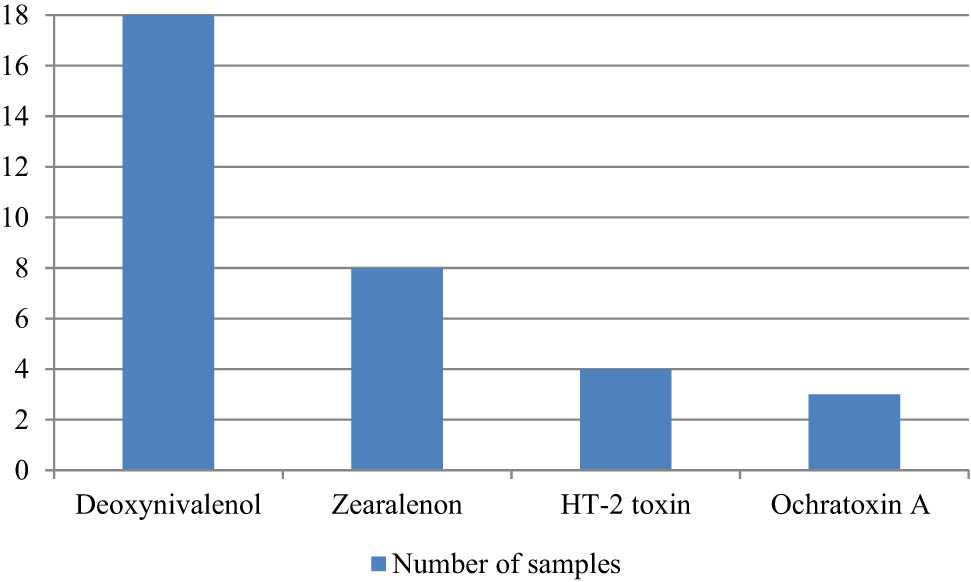
Mycotoxins occurrence frequency in analysed samples.
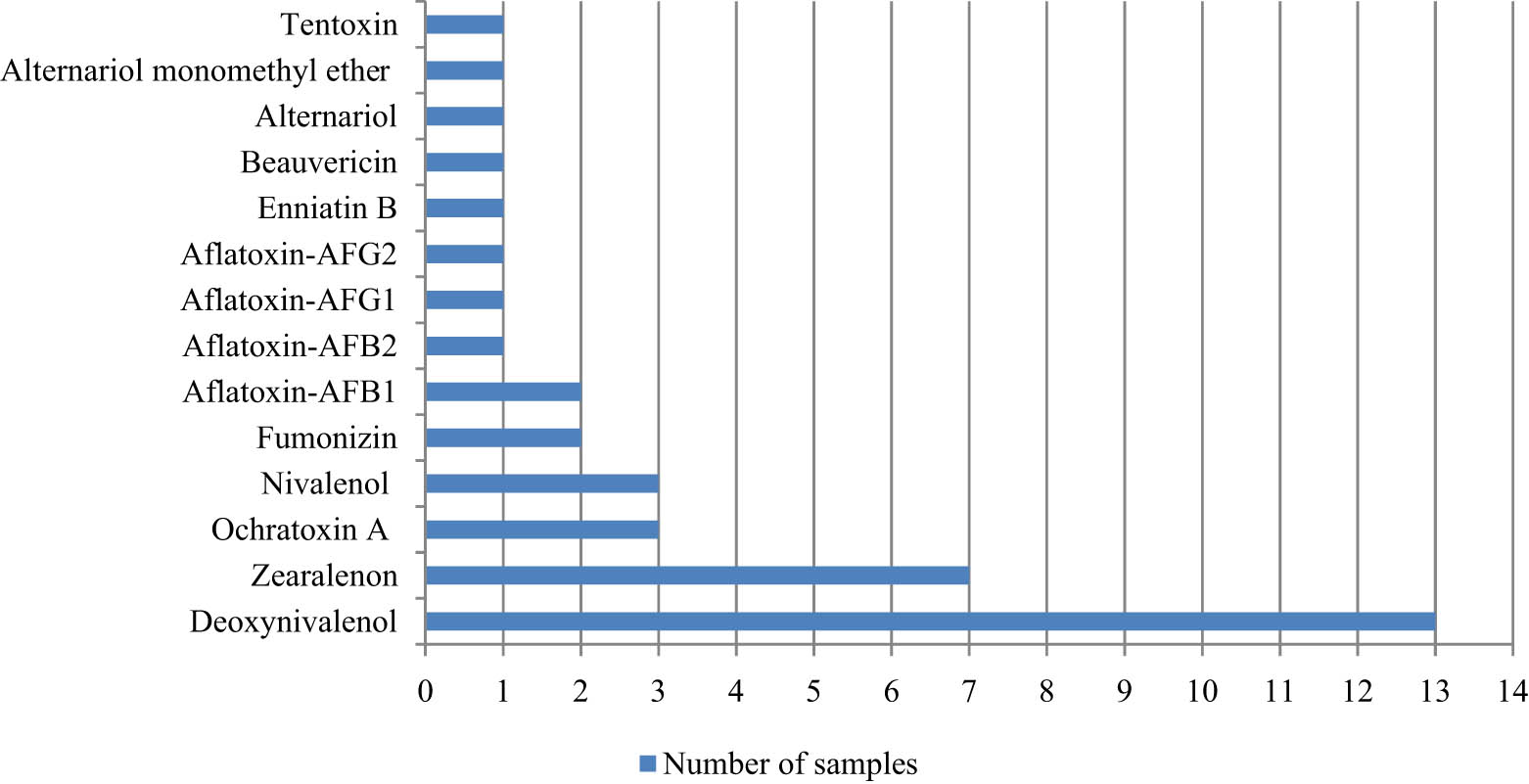
The most frequent compounds in plant products – literature reports in Table 7.
3.4 Exceeding the maximum levels of mycotoxins
In the present study, in one analysed sample of mixed flour the maximum allowable concentration was exceeded in the case of one identified active substance – deoxynivalenol (assayed level of 2,250 μg/kg at maximum allowable concentration ML of 750 μg/kg). Moreover, in one analysed sample of wheat and rye flour, the maximum allowable concentration for ochratoxin was exceeded (assayed level of 15.6 μg/kg and 17.1 at maximum allowable concentration ML of 5 μg/kg and 3 μg/kg) – Table 6. These results are confirmed by previous studies that find support in the results of studies on Polish cereal products, in which exceeded maximum levels of deoxynivalenol and ochratoxin A were also noted in the case of one analysed sample among 25 and 7 analysed samples, respectively [26,46]. Similar results were obtained by Skendi et al. [29], who analysed 76 samples of cereal-based food products and found an instance of exceeded maximum limit of deoxynivalenol in one analysed sample.
Summing up the results obtained in this study, one should emphasise that 27% of the samples of selected agricultural and commercial products available in eastern Poland contained mycotoxins, and in 12% of the samples exceeded maximum allowable concentration was noted. Most frequently the analysed substances were detected in samples of cereals (56%), relative to the remaining groups of the analysed products (flour and cocoa), where the percentage share of samples containing the compounds under analysis varied from 16 to 24%. Attention should be paid to the cleanliness of analysed samples of herbs, fruits, oilseed rape, and nuts, in the aspect of the presence of mycotoxins. Possible contamination of samples of wheat, flour, and cocoa with deoxynivalenol, zearalenone, and ochratoxin A appears to be of particular importance. The analysed samples of flour contained the biggest number and greatest variety of identified mycotoxins, relative to the remaining samples, which raises concern relating to the quality of those food components. The results of the study indicate the need to monitor the contamination of mycotoxin contamination of grain samples, common wheat, which turned out to be the most contaminated matrix in this product group.
4 Conclusion
The results obtained allow the supposition that, in their majority, agricultural and commercial products available in eastern Poland meet the relevant requirements relating to food contamination with mycotoxins. In the presented study, in three analysed samples the exceeded maximum allowable concentration of the analysed substances was noted, which indicates that the mycotoxin contamination of the analysed products cannot be considered as a serious threat to human and animal lives. However, the study confirmed the occurrence of mycotoxins in a high percentage of samples of cereals and flour, which is in support of the necessity of continuation of monitoring of the occurrence of mycotoxins in samples of food products. Although there was a high frequency of mycotoxins (especially deoxynivalenol – in 72% of the samples tested), their concentrations were low. The percentage of samples in which the content of mycotoxins exceeded the maximum allowable level of the tested substance established by the European Commission was also small and amounted to 12% of all samples contaminated with mycotoxins. Attention should also be paid to the need of effective control of the temperature and relative humidity in wheat and/or flour storage facilities, to reduce the occurrence of mycotoxins and to ensure protection of agricultural production and of food safety for the consumers.
-
Funding information: This work was financed by a statutory activity subsidy from the Polish Ministry of Science and Higher Education for the Faculty of Agrobioengineering of University of Life Sciences in Lublin.
-
Author contributions: G. K.: conceptualisation, data curation, formal analysis, investigation, methodology, project administration, resources, supervision, writing – original draft; R. K.: data curation, formal analysis, investigation, methodology, software, supervision, validation, writing – review and editing.
-
Conflict of interest: The authors declare that they have no conflicts of interest to disclose.
-
Data availability statement: The data used to support the findings of this study are included within the article.
References
[1] Eren T, Atar N, Yola ML, Karimi-Maleh H. A sensitive molecularly imprinted polymer based quartz crystal microbalance nanosensor for selective determination of lovastatin in red yeast rice. Food Chem. 2015;185(15):430–6.10.1016/j.foodchem.2015.03.153Search in Google Scholar PubMed
[2] Jamali T, Karimi-Maleh H, Khalilzadeh MA. A novel nanosensor based on Pt:Co nanoalloy ionic liquid carbon paste electrode for voltammetric determination of vitamin B9 in food samples. LWT Food Sci Technol. 2014;57(2):679–85.10.1016/j.lwt.2014.01.023Search in Google Scholar
[3] Bijad M, Karimi-Maleh H, Khalilzadeh MA. Application of ZnO/CNTs nanocomposite ionic liquid paste electrode as a sensitive voltammetric sensorfor determination of ascorbic acid in food samples. Food Anal Methods. 2013;6:1639–47.10.1007/s12161-013-9585-9Search in Google Scholar
[4] Kowalska G, Kowalski R. Control of the presence of mycotoxins in agricultural products and food. Part I: a review. Agron Sci. 2020;75(3):19–42.10.24326/as.2020.3.2Search in Google Scholar
[5] Baghizadeh A, Karimi-Maleh H, Khoshnama Z, Hassankhani A, Abbasghorbani M. A voltammetric sensor for simultaneous determination of vitamin C and vitamin B6 in food samples using ZrO2 nanoparticle/ionic liquids carbon paste electrode. Food Anal Methods. 2015;8:549–57.10.1007/s12161-014-9926-3Search in Google Scholar
[6] Bijad M, Karimi‑Maleh H, Farsi M, Shahidi SA. An electrochemical-amplified-platform based on the nanostructure voltammetric sensor for the determination of carmoisine in the presence of tartrazine in dried fruit and soft drink samples. Food Measure. 2018;12:634–40.10.1007/s11694-017-9676-1Search in Google Scholar
[7] Zabihpour T, Shahidi SA, Karimi-Maleh H, Ghorbani-HasanSaraei A. Voltammetric food analytical sensor for determining vanillin based on amplified NiFe2O4 nanoparticle/ionic liquid sensor. Food Measure. 2020;14:1039–45.10.1007/s11694-019-00353-8Search in Google Scholar
[8] European Commission (EC). European Commission Regulation (EC) No 1881/2006 of 19 December 2006 Setting maximum levels for certain contaminants in foodstuffs. J Eur Union. 2006;L364:5–24.Search in Google Scholar
[9] European Commission (EC). European Commission Regulation (EC) No. 1126/2007 of 28 September 2007 amending Regulation (EC) No 1881/2006 setting maximum levels for certain contaminants in foodstuffs as regards Fusarium toxins in maize and maize products. J Eur Union. 2007;255:14–7.Search in Google Scholar
[10] Kowalska G, Kowalski R. Control of the presence of mycotoxins in agricultural products and food. Part II: a review. Agron Sci. 2020;75(3):43–58.10.24326/as.2020.3.3Search in Google Scholar
[11] Kowalska G, Pankiewicz U, Kowalski R. Estimation of pesticide residues in selected products of plant origin from Poland with the use of the HPLC-MS/MS technique. Agriculture. 2020;10(192):1–20.10.3390/agriculture10060192Search in Google Scholar
[12] Cendoya E, Monge MP, Palacios SA, Chiacchiera SM, Torres AM, Farnochi MC, et al. Fumonisin occurrence in naturally contaminated wheat grain harvested in Argentina. Food Contr. 2014;37:56–61.10.1016/j.foodcont.2013.09.031Search in Google Scholar
[13] Elaridi J, Yamani O, Al Matari A, Dakroub S, Attieh Z. Determination of ochratoxin A (OTA), ochratoxin B (OTB), T-2, and HT-2 toxins in wheat grains, wheat flour, and bread in lebanon by LC-MS/MS. Toxins. 2019;11:471.10.3390/toxins11080471Search in Google Scholar PubMed PubMed Central
[14] De Almeida AP, Lamardo LCA, Shundo L, Da Silva SA, Navas SA, Alaburda J, et al. Occurrence of deoxynivalenol in wheat flour, instant noodle and biscuits commercialised in Brazil. Food Addit Contam Part B. 2016;9(4):251–5.10.1080/19393210.2016.1195880Search in Google Scholar PubMed
[15] Lanza A, Da Silva RC, Dos Santos JD, Pizzutt IR, Cence K, Cansian RL, et al. Mycotoxins’ evaluation in wheat flours used in Brazilian bakeries. Food Sci Biotechnol. 2019;28(3):931–7.10.1007/s10068-018-0537-4Search in Google Scholar PubMed PubMed Central
[16] Škrbić B, Antić I, Cvejanov J. Determination of mycotoxins in biscuits, dried fruits and fruit jams: an assessment of human exposure. Food Addit Contam Part A. 2017;34(6):1012–25.10.1080/19440049.2017.1303195Search in Google Scholar PubMed
[17] Lee SY, Woo SY, Tian F, Song J, Michlmayr H, Kim J-B, et al. Occurrence of deoxynivalenol, nivalenol, and their glucosides in Korean market foods and estimation of their population exposure through food consumption. Toxins. 2020;12(89):1–12.10.3390/toxins12020089Search in Google Scholar PubMed PubMed Central
[18] Reinholds I, Pugajeva I, Bavrins K, Kuckovska G, Bartkevics V. Mycotoxins, pesticides and toxic metals in commercial spices and herbs. Food Addit Contam Part B. 2017;10:5–14.10.1080/19393210.2016.1210244Search in Google Scholar PubMed
[19] Oueslati S, Berrada H, Juan-García A, Mañes J, Juan C. Multiple mycotoxin determination on Tunisian cereals-based food and evaluation of the population exposure. Food Anal Meth. 2020;13:1271–81.10.1007/s12161-020-01737-zSearch in Google Scholar
[20] Rubert J, Soler C, Manes J. Evaluation of matrix solid-phase dispersion (MSPD) extraction for multi-mycotoxin determination in different flours using LC–MS/MS. Talanta. 2011;58:206–15.10.1016/j.talanta.2011.03.046Search in Google Scholar PubMed
[21] Liu Y, Lu Y, Wang L, Chang F, Yang L. Occurrence of deoxynivalenol in wheat, Hebei Province, China. Food Chem. 2016;197:1271–4.10.1016/j.foodchem.2015.11.047Search in Google Scholar PubMed
[22] European Union. Commission Regulation (EC) No 401/2006 of 23 February 2006 laying down the methods of sampling and analysis for the official control of the levels of mycotoxins in foodstuffs. J Eur Union. 2006;L70:12–34.Search in Google Scholar
[23] Wenzl T, Haedrich J, Schaechtele A, Robouch P, Stroka J. Guidance document on the estimation of LOD and LOQ for measurements in the field of contaminants in feed and food; EUR 28099. Luxembourg: Publications Office of the European Union; 2016.Search in Google Scholar
[24] European Commission Health and Food Safety Directorate-General (DG SANTE). Guidance document on identification of mycotoxin in food and feed. SANTE/12089/2016. Bruxelles, Belgium: European Commission – DG SANTE; 2016.Search in Google Scholar
[25] Elbert D, Von Czapiewski K, Bujara I, Kunze J, Giger A. Simultaneous analysis of 10 mycotoxins in crude extracts of different types of grains by LC-MS/MS. Darmstadt, Germany: AB SCIEX; Hamburg, Germany: SGS GmbH; 2010.Search in Google Scholar
[26] Mruczyk K, Jeszka J. Assessment of mycotoxin content in selected food products from the Lubuskie province. Bromat Chem Toksykol. 2013;46(1):89–95.Search in Google Scholar
[27] Mallmanna CA, Tyska D, Almeidaa CAA, Oliveira MS, Gressler LT. Mycotoxicological monitoring of breakfast and infant cereals marketed in Brazil. Intern J Food Microbiol. 2020;331:1–7.10.1016/j.ijfoodmicro.2020.108628Search in Google Scholar PubMed
[28] Kim D-B, Song N-E, Nam TG, Lee S, Seo D, Yoo M. Occurrence of emerging mycotoxins in cereals and cereal-based products from the Korean market using LC-MS/MS. Food Addit Contam Part A. 2019;36(2):289–95.10.1080/19440049.2018.1562233Search in Google Scholar PubMed
[29] Skendi A, Papageorgiou M, Irakli M, Katsantonis D. Presence of mycotoxins, heavy metals and nitrate residues in organic commercial cereal-based foods sold in the Greek market. J Consum Prot Food Saf. 2020;15:109–19.10.1007/s00003-019-01231-7Search in Google Scholar
[30] Egbuta MA, Chilaka CA, Phoku JZ, Mwanza M, Dutton MF. Co-contamination of Nigerian cocoa and cocoa-based powder beverages destined for human consumption by mycotoxins. Stud Ethno-Med. 2013;7(3):187–94.10.1080/09735070.2013.11886460Search in Google Scholar
[31] Mankeviciene A, Suproniene S, Brazauskiene I, Gruzdeviene E. Natural occurrence of fusarium mycotoxins in oil crop seed. Plant Breed Seeds Sci. 2011;63:109–16.10.2478/v10129-011-0022-1Search in Google Scholar
[32] Bhatnagar D, Payne GA, Cleveland TE, Robens JF. Mycotoxins: current issues in USA. In: Barug D, van Egmond H, López-García R, van Osenbruggen T, Visconti A, editors. Meeting the mycotoxin menace. The Netherlands: Wageningen Academic Publishers; 2004. 17–47Search in Google Scholar
[33] Bonjar GHS. Incidence of aflatoxin producing fungi in early split pistachio nuts of Kerman, Iran. J Biol Sci. 2004;4(2):199–202.10.3923/jbs.2004.199.202Search in Google Scholar
[34] Taghizadeh SF, Rezaee R, Davarynejad G, Asili J, Nemati SH, Goumenou M, et al. Risk assessment of exposure to aflatoxin B1 and ochratoxin A through consumption of different Pistachio (Pistacia vera L.) cultivars collected from four geographical regions of Iran. Environ Toxicol Pharmacol. 2018;61:61–6.10.1016/j.etap.2018.05.010Search in Google Scholar PubMed
[35] Bankole S, Schollenberger M, Drochner W. Mycotoxins in food systems in Sub Saharian Africa: a review. Mycotoxin Res. 2006;22(3):163–9.10.1007/BF02959270Search in Google Scholar PubMed
[36] Genchev R, Angelova G, Laskova I, Gotcheva V, Angelov A. Mycoflora of fresh chokeberry (Aronia melanocarpa) and ochratoxin-producing ability of Penicillium isolates. Qual Assur Saf Crop Foods. 2015;7(2):123–31.10.3920/QAS2012.0198Search in Google Scholar
[37] Drusch S, Ragab W. Mycotoxins in fruits, fruit juices and dried fruits. J Food Prot. 2003;66(8):1514–27.10.4315/0362-028X-66.8.1514Search in Google Scholar
[38] Santos JS, Souza TM, Ono EYS, Hashimoto EH, Bassoi MC, Miranda MZ, et al. Natural occurrence of deoxynivalenol in wheat from Paraná State, Brazil and estimated daily intake by wheat products. Food Chem. 2013;138:90–5.10.1016/j.foodchem.2012.09.100Search in Google Scholar PubMed
[39] Savi GD, Piacentini KC, Tibola CS, Scussel VM. Mycoflora and deoxynivalenol in whole wheat grains (Triticum aestivum L.) from Southern Brazil. Food Addit Contam Part B Surveill. 2014;7:232–7.10.1080/19393210.2014.898337Search in Google Scholar PubMed
[40] Calori-Domingues MA, Bernardi CMG, Nardin MS, De Souza GV, Dos Santos FGR, De Abreu Stein M, et al. Co-occurrence and distribution of deoxynivalenol, nivalenol and zearalenone in wheat from Brazil. Food Addit Contam Part B. 2016;9(2):142–51.10.1080/19393210.2016.1152598Search in Google Scholar PubMed
[41] Li Y, Qin S, Yang Y, Sun H, Qiao X, Li J. Research status of mycotoxin contamination in grains in China. J Chin Cereals Oils Assoc. 2020;35(3):186–94.Search in Google Scholar
[42] Kosicki R, Twarużek M, Dopierała P, Rudzki B, Grajewski J. Occurrence of mycotoxins in winter rye varieties cultivated in Poland (2017–2019). Toxins. 2020;12423:1–17.10.3390/toxins12060423Search in Google Scholar PubMed PubMed Central
[43] Lamardo LCA, Navas SA, Sabino M. Desoxinivalenol (DON) em trigo e farinha de trigo comercializados na Cidade de São Paulo. Rev Inst Adolfo Lutz. 2006;65:32–5.10.53393/rial.2006.65.32965Search in Google Scholar
[44] Rodrigues I, Naehrer KA. Three-year survey on the worldwide occurrence of mycotoxins in feedstuffs and feed. Toxins. 2012;4:663–75.10.3390/toxins4090663Search in Google Scholar PubMed PubMed Central
[45] Veprikova Z, Zachariasova M, Dzuman Z, Zachariasov A, Fenclova M, Slavikova P, et al. Mycotoxins in plant-based dietary supplements: hidden health risk for consumers. J Agric Food Chem. 2015;63:6633–43.10.1021/acs.jafc.5b02105Search in Google Scholar PubMed
[46] Stanisławczyk R, Rudy M, Świątek B. The occurrence of mycotoxins in cereals and cereal products present in retail outlets in the province of Podkarpacie. Żywność Nauka Technologia Jakość. 2010;6(73):58–66.10.15193/zntj/2010/73/058-066Search in Google Scholar
© 2021 Grażyna Kowalska and Radosław Kowalski, published by De Gruyter
This work is licensed under the Creative Commons Attribution 4.0 International License.
Articles in the same Issue
- Regular Articles
- Qualitative and semi-quantitative assessment of anthocyanins in Tibetan hulless barley from different geographical locations by UPLC-QTOF-MS and their antioxidant capacities
- Effect of sodium chloride on the expression of genes involved in the salt tolerance of Bacillus sp. strain “SX4” isolated from salinized greenhouse soil
- GC-MS analysis of mango stem bark extracts (Mangifera indica L.), Haden variety. Possible contribution of volatile compounds to its health effects
- Influence of nanoscale-modified apatite-type calcium phosphates on the biofilm formation by pathogenic microorganisms
- Removal of paracetamol from aqueous solution by containment composites
- Investigating a human pesticide intoxication incident: The importance of robust analytical approaches
- Induction of apoptosis and cell cycle arrest by chloroform fraction of Juniperus phoenicea and chemical constituents analysis
- Recovery of γ-Fe2O3 from copper ore tailings by magnetization roasting and magnetic separation
- Effects of different extraction methods on antioxidant properties of blueberry anthocyanins
- Modeling the removal of methylene blue dye using a graphene oxide/TiO2/SiO2 nanocomposite under sunlight irradiation by intelligent system
- Antimicrobial and antioxidant activities of Cinnamomum cassia essential oil and its application in food preservation
- Full spectrum and genetic algorithm-selected spectrum-based chemometric methods for simultaneous determination of azilsartan medoxomil, chlorthalidone, and azilsartan: Development, validation, and application on commercial dosage form
- Evaluation of the performance of immunoblot and immunodot techniques used to identify autoantibodies in patients with autoimmune diseases
- Computational studies by molecular docking of some antiviral drugs with COVID-19 receptors are an approach to medication for COVID-19
- Synthesis of amides and esters containing furan rings under microwave-assisted conditions
- Simultaneous removal efficiency of H2S and CO2 by high-gravity rotating packed bed: Experiments and simulation
- Design, synthesis, and biological activities of novel thiophene, pyrimidine, pyrazole, pyridine, coumarin and isoxazole: Dydrogesterone derivatives as antitumor agents
- Content and composition analysis of polysaccharides from Blaps rynchopetera and its macrophage phagocytic activity
- A new series of 2,4-thiazolidinediones endowed with potent aldose reductase inhibitory activity
- Assessing encapsulation of curcumin in cocoliposome: In vitro study
- Rare norisodinosterol derivatives from Xenia umbellata: Isolation and anti-proliferative activity
- Comparative study of antioxidant and anticancer activities and HPTLC quantification of rutin in white radish (Raphanus sativus L.) leaves and root extracts grown in Saudi Arabia
- Comparison of adsorption properties of commercial silica and rice husk ash (RHA) silica: A study by NIR spectroscopy
- Sodium borohydride (NaBH4) as a high-capacity material for next-generation sodium-ion capacitors
- Aroma components of tobacco powder from different producing areas based on gas chromatography ion mobility spectrometry
- The effects of salinity on changes in characteristics of soils collected in a saline region of the Mekong Delta, Vietnam
- Synthesis, properties, and activity of MoVTeNbO catalysts modified by zirconia-pillared clays in oxidative dehydrogenation of ethane
- Synthesis and crystal structure of N,N′-bis(4-chlorophenyl)thiourea N,N-dimethylformamide
- Quantitative analysis of volatile compounds of four Chinese traditional liquors by SPME-GC-MS and determination of total phenolic contents and antioxidant activities
- A novel separation method of the valuable components for activated clay production wastewater
- On ve-degree- and ev-degree-based topological properties of crystallographic structure of cuprite Cu2O
- Antihyperglycemic effect and phytochemical investigation of Rubia cordifolia (Indian Madder) leaves extract
- Microsphere molecularly imprinted solid-phase extraction for diazepam analysis using itaconic acid as a monomer in propanol
- A nitric oxide-releasing prodrug promotes apoptosis in human renal carcinoma cells: Involvement of reactive oxygen species
- Machine vision-based driving and feedback scheme for digital microfluidics system
- Study on the application of a steam-foam drive profile modification technology for heavy oil reservoir development
- Ni–Ru-containing mixed oxide-based composites as precursors for ethanol steam reforming catalysts: Effect of the synthesis methods on the structural and catalytic properties
- Preparation of composite soybean straw-based materials by LDHs modifying as a solid sorbent for removal of Pb(ii) from water samples
- Synthesis and spectral characterizations of vanadyl(ii) and chromium(iii) mixed ligand complexes containing metformin drug and glycine amino acid
- In vitro evaluation of lactic acid bacteria with probiotic activity isolated from local pickled leaf mustard from Wuwei in Anhui as substitutes for chemical synthetic additives
- Utilization and simulation of innovative new binuclear Co(ii), Ni(ii), Cu(ii), and Zn(ii) diimine Schiff base complexes in sterilization and coronavirus resistance (Covid-19)
- Phosphorylation of Pit-1 by cyclin-dependent kinase 5 at serine 126 is associated with cell proliferation and poor prognosis in prolactinomas
- Molecularly imprinted membrane for transport of urea, creatinine, and vitamin B12 as a hemodialysis candidate membrane
- Optimization of Murrayafoline A ethanol extraction process from the roots of Glycosmis stenocarpa, and evaluation of its Tumorigenesis inhibition activity on Hep-G2 cells
- Highly sensitive determination of α-lipoic acid in pharmaceuticals on a boron-doped diamond electrode
- Synthesis, chemo-informatics, and anticancer evaluation of fluorophenyl-isoxazole derivatives
- In vitro and in vivo investigation of polypharmacology of propolis extract as anticancer, antibacterial, anti-inflammatory, and chemical properties
- Topological indices of bipolar fuzzy incidence graph
- Preparation of Fe3O4@SiO2–ZnO catalyst and its catalytic synthesis of rosin glycol ester
- Construction of a new luminescent Cd(ii) compound for the detection of Fe3+ and treatment of Hepatitis B
- Investigation of bovine serum albumin aggregation upon exposure to silver(i) and copper(ii) metal ions using Zetasizer
- Discoloration of methylene blue at neutral pH by heterogeneous photo-Fenton-like reactions using crystalline and amorphous iron oxides
- Optimized extraction of polyphenols from leaves of Rosemary (Rosmarinus officinalis L.) grown in Lam Dong province, Vietnam, and evaluation of their antioxidant capacity
- Synthesis of novel thiourea-/urea-benzimidazole derivatives as anticancer agents
- Potency and selectivity indices of Myristica fragrans Houtt. mace chloroform extract against non-clinical and clinical human pathogens
- Simple modifications of nicotinic, isonicotinic, and 2,6-dichloroisonicotinic acids toward new weapons against plant diseases
- Synthesis, optical and structural characterisation of ZnS nanoparticles derived from Zn(ii) dithiocarbamate complexes
- Presence of short and cyclic peptides in Acacia and Ziziphus honeys may potentiate their medicinal values
- The role of vitamin D deficiency and elevated inflammatory biomarkers as risk factors for the progression of diabetic nephropathy in patients with type 2 diabetes mellitus
- Quantitative structure–activity relationship study on prolonged anticonvulsant activity of terpene derivatives in pentylenetetrazole test
- GADD45B induced the enhancing of cell viability and proliferation in radiotherapy and increased the radioresistance of HONE1 cells
- Cannabis sativa L. chemical compositions as potential plasmodium falciparum dihydrofolate reductase-thymidinesynthase enzyme inhibitors: An in silico study for drug development
- Dynamics of λ-cyhalothrin disappearance and expression of selected P450 genes in bees depending on the ambient temperature
- Identification of synthetic cannabinoid methyl 2-{[1-(cyclohexylmethyl)-1H-indol-3-yl] formamido}-3-methylbutanoate using modern mass spectrometry and nuclear magnetic resonance techniques
- Study on the speciation of arsenic in the genuine medicinal material honeysuckle
- Two Cu(ii)-based coordination polymers: Crystal structures and treatment activity on periodontitis
- Conversion of furfuryl alcohol to ethyl levulinate in the presence of mesoporous aluminosilicate catalyst
- Review Articles
- Hsien Wu and his major contributions to the chemical era of immunology
- Overview of the major classes of new psychoactive substances, psychoactive effects, analytical determination and conformational analysis of selected illegal drugs
- An overview of persistent organic pollutants along the coastal environment of Kuwait
- Mechanism underlying sevoflurane-induced protection in cerebral ischemia–reperfusion injury
- COVID-19 and SARS-CoV-2: Everything we know so far – A comprehensive review
- Challenge of diabetes mellitus and researchers’ contributions to its control
- Advances in the design and application of transition metal oxide-based supercapacitors
- Color and composition of beauty products formulated with lemongrass essential oil: Cosmetics formulation with lemongrass essential oil
- The structural chemistry of zinc(ii) and nickel(ii) dithiocarbamate complexes
- Bioprospecting for antituberculosis natural products – A review
- Recent progress in direct urea fuel cell
- Rapid Communications
- A comparative morphological study of titanium dioxide surface layer dental implants
- Changes in the antioxidative properties of honeys during their fermentation
- Erratum
- Erratum to “Corrosion study of copper in aqueous sulfuric acid solution in the presence of (2E,5E)-2,5-dibenzylidenecyclopentanone and (2E,5E)-bis[(4-dimethylamino)benzylidene]cyclopentanone: Experimental and theoretical study”
- Erratum to “Modified TDAE petroleum plasticiser”
- Corrigendum
- Corrigendum to “A nitric oxide-releasing prodrug promotes apoptosis in human renal carcinoma cells: Involvement of reactive oxygen species”
- Special Issue on 3rd IC3PE 2020
- Visible light-responsive photocatalyst of SnO2/rGO prepared using Pometia pinnata leaf extract
- Antihyperglycemic activity of Centella asiatica (L.) Urb. leaf ethanol extract SNEDDS in zebrafish (Danio rerio)
- Selection of oil extraction process from Chlorella species of microalgae by using multi-criteria decision analysis technique for biodiesel production
- Special Issue on the 14th Joint Conference of Chemistry (14JCC)
- Synthesis and in vitro cytotoxicity evaluation of isatin-pyrrole derivatives against HepG2 cell line
- CO2 gas separation using mixed matrix membranes based on polyethersulfone/MIL-100(Al)
- Effect of synthesis and activation methods on the character of CoMo/ultrastable Y-zeolite catalysts
- Special Issue on Electrochemical Amplified Sensors
- Enhancement of graphene oxide through β-cyclodextrin composite to sensitive analysis of an antidepressant: Sulpiride
- Investigation of the spectroelectrochemical behavior of quercetin isolated from Zanthoxylum bungeanum
- An electrochemical sensor for high sensitive determination of lysozyme based on the aptamer competition approach
- An improved non-enzymatic electrochemical sensor amplified with CuO nanostructures for sensitive determination of uric acid
- Special Issue on Applied Biochemistry and Biotechnology 2020
- Fast discrimination of avocado oil for different extracted methods using headspace-gas chromatography-ion mobility spectroscopy with PCA based on volatile organic compounds
- Effect of alkali bases on the synthesis of ZnO quantum dots
- Quality evaluation of Cabernet Sauvignon wines in different vintages by 1H nuclear magnetic resonance-based metabolomics
- Special Issue on the Joint Science Congress of Materials and Polymers (ISCMP 2019)
- Diatomaceous Earth: Characterization, thermal modification, and application
- Electrochemical determination of atenolol and propranolol using a carbon paste sensor modified with natural ilmenite
- Special Issue on the Conference of Energy, Fuels, Environment 2020
- Assessment of the mercury contamination of landfilled and recovered foundry waste – a case study
- Primary energy consumption in selected EU Countries compared to global trends
- Modified TDAE petroleum plasticiser
- Use of glycerol waste in lactic acid bacteria metabolism for the production of lactic acid: State of the art in Poland
- Topical Issue on Applications of Mathematics in Chemistry
- Theoretical study of energy, inertia and nullity of phenylene and anthracene
- Banhatti, revan and hyper-indices of silicon carbide Si2C3-III[n,m]
- Topical Issue on Agriculture
- Occurrence of mycotoxins in selected agricultural and commercial products available in eastern Poland
- Special Issue on Ethnobotanical, Phytochemical and Biological Investigation of Medicinal Plants
- Acute and repeated dose 60-day oral toxicity assessment of chemically characterized Berberis hispanica Boiss. and Reut in Wistar rats
- Phytochemical profile, in vitro antioxidant, and anti-protein denaturation activities of Curcuma longa L. rhizome and leaves
- Antiplasmodial potential of Eucalyptus obliqua leaf methanolic extract against Plasmodium vivax: An in vitro study
- Prunus padus L. bark as a functional promoting component in functional herbal infusions – cyclooxygenase-2 inhibitory, antioxidant, and antimicrobial effects
- Molecular and docking studies of tetramethoxy hydroxyflavone compound from Artemisia absinthium against carcinogens found in cigarette smoke
- Special Issue on the Joint Science Congress of Materials and Polymers (ISCMP 2020)
- Preparation of cypress (Cupressus sempervirens L.) essential oil loaded poly(lactic acid) nanofibers
- Influence of mica mineral on flame retardancy and mechanical properties of intumescent flame retardant polypropylene composites
- Production and characterization of thermoplastic elastomer foams based on the styrene–ethylene–butylene–styrene (SEBS) rubber and thermoplastic material
- Special Issue on Applied Chemistry in Agriculture and Food Science
- Impact of essential oils on the development of pathogens of the Fusarium genus and germination parameters of selected crops
- Yield, volume, quality, and reduction of biotic stress influenced by titanium application in oilseed rape, winter wheat, and maize cultivations
- Influence of potato variety on polyphenol profile composition and glycoalcaloid contents of potato juice
- Carryover effect of direct-fed microbial supplementation and early weaning on the growth performance and carcass characteristics of growing Najdi lambs
- Special Issue on Applied Biochemistry and Biotechnology (ABB 2021)
- The electrochemical redox mechanism and antioxidant activity of polyphenolic compounds based on inlaid multi-walled carbon nanotubes-modified graphite electrode
- Study of an adsorption method for trace mercury based on Bacillus subtilis
- Special Issue on The 1st Malaysia International Conference on Nanotechnology & Catalysis (MICNC2021)
- Mitigating membrane biofouling in biofuel cell system – A review
- Mechanical properties of polymeric biomaterials: Modified ePTFE using gamma irradiation
Articles in the same Issue
- Regular Articles
- Qualitative and semi-quantitative assessment of anthocyanins in Tibetan hulless barley from different geographical locations by UPLC-QTOF-MS and their antioxidant capacities
- Effect of sodium chloride on the expression of genes involved in the salt tolerance of Bacillus sp. strain “SX4” isolated from salinized greenhouse soil
- GC-MS analysis of mango stem bark extracts (Mangifera indica L.), Haden variety. Possible contribution of volatile compounds to its health effects
- Influence of nanoscale-modified apatite-type calcium phosphates on the biofilm formation by pathogenic microorganisms
- Removal of paracetamol from aqueous solution by containment composites
- Investigating a human pesticide intoxication incident: The importance of robust analytical approaches
- Induction of apoptosis and cell cycle arrest by chloroform fraction of Juniperus phoenicea and chemical constituents analysis
- Recovery of γ-Fe2O3 from copper ore tailings by magnetization roasting and magnetic separation
- Effects of different extraction methods on antioxidant properties of blueberry anthocyanins
- Modeling the removal of methylene blue dye using a graphene oxide/TiO2/SiO2 nanocomposite under sunlight irradiation by intelligent system
- Antimicrobial and antioxidant activities of Cinnamomum cassia essential oil and its application in food preservation
- Full spectrum and genetic algorithm-selected spectrum-based chemometric methods for simultaneous determination of azilsartan medoxomil, chlorthalidone, and azilsartan: Development, validation, and application on commercial dosage form
- Evaluation of the performance of immunoblot and immunodot techniques used to identify autoantibodies in patients with autoimmune diseases
- Computational studies by molecular docking of some antiviral drugs with COVID-19 receptors are an approach to medication for COVID-19
- Synthesis of amides and esters containing furan rings under microwave-assisted conditions
- Simultaneous removal efficiency of H2S and CO2 by high-gravity rotating packed bed: Experiments and simulation
- Design, synthesis, and biological activities of novel thiophene, pyrimidine, pyrazole, pyridine, coumarin and isoxazole: Dydrogesterone derivatives as antitumor agents
- Content and composition analysis of polysaccharides from Blaps rynchopetera and its macrophage phagocytic activity
- A new series of 2,4-thiazolidinediones endowed with potent aldose reductase inhibitory activity
- Assessing encapsulation of curcumin in cocoliposome: In vitro study
- Rare norisodinosterol derivatives from Xenia umbellata: Isolation and anti-proliferative activity
- Comparative study of antioxidant and anticancer activities and HPTLC quantification of rutin in white radish (Raphanus sativus L.) leaves and root extracts grown in Saudi Arabia
- Comparison of adsorption properties of commercial silica and rice husk ash (RHA) silica: A study by NIR spectroscopy
- Sodium borohydride (NaBH4) as a high-capacity material for next-generation sodium-ion capacitors
- Aroma components of tobacco powder from different producing areas based on gas chromatography ion mobility spectrometry
- The effects of salinity on changes in characteristics of soils collected in a saline region of the Mekong Delta, Vietnam
- Synthesis, properties, and activity of MoVTeNbO catalysts modified by zirconia-pillared clays in oxidative dehydrogenation of ethane
- Synthesis and crystal structure of N,N′-bis(4-chlorophenyl)thiourea N,N-dimethylformamide
- Quantitative analysis of volatile compounds of four Chinese traditional liquors by SPME-GC-MS and determination of total phenolic contents and antioxidant activities
- A novel separation method of the valuable components for activated clay production wastewater
- On ve-degree- and ev-degree-based topological properties of crystallographic structure of cuprite Cu2O
- Antihyperglycemic effect and phytochemical investigation of Rubia cordifolia (Indian Madder) leaves extract
- Microsphere molecularly imprinted solid-phase extraction for diazepam analysis using itaconic acid as a monomer in propanol
- A nitric oxide-releasing prodrug promotes apoptosis in human renal carcinoma cells: Involvement of reactive oxygen species
- Machine vision-based driving and feedback scheme for digital microfluidics system
- Study on the application of a steam-foam drive profile modification technology for heavy oil reservoir development
- Ni–Ru-containing mixed oxide-based composites as precursors for ethanol steam reforming catalysts: Effect of the synthesis methods on the structural and catalytic properties
- Preparation of composite soybean straw-based materials by LDHs modifying as a solid sorbent for removal of Pb(ii) from water samples
- Synthesis and spectral characterizations of vanadyl(ii) and chromium(iii) mixed ligand complexes containing metformin drug and glycine amino acid
- In vitro evaluation of lactic acid bacteria with probiotic activity isolated from local pickled leaf mustard from Wuwei in Anhui as substitutes for chemical synthetic additives
- Utilization and simulation of innovative new binuclear Co(ii), Ni(ii), Cu(ii), and Zn(ii) diimine Schiff base complexes in sterilization and coronavirus resistance (Covid-19)
- Phosphorylation of Pit-1 by cyclin-dependent kinase 5 at serine 126 is associated with cell proliferation and poor prognosis in prolactinomas
- Molecularly imprinted membrane for transport of urea, creatinine, and vitamin B12 as a hemodialysis candidate membrane
- Optimization of Murrayafoline A ethanol extraction process from the roots of Glycosmis stenocarpa, and evaluation of its Tumorigenesis inhibition activity on Hep-G2 cells
- Highly sensitive determination of α-lipoic acid in pharmaceuticals on a boron-doped diamond electrode
- Synthesis, chemo-informatics, and anticancer evaluation of fluorophenyl-isoxazole derivatives
- In vitro and in vivo investigation of polypharmacology of propolis extract as anticancer, antibacterial, anti-inflammatory, and chemical properties
- Topological indices of bipolar fuzzy incidence graph
- Preparation of Fe3O4@SiO2–ZnO catalyst and its catalytic synthesis of rosin glycol ester
- Construction of a new luminescent Cd(ii) compound for the detection of Fe3+ and treatment of Hepatitis B
- Investigation of bovine serum albumin aggregation upon exposure to silver(i) and copper(ii) metal ions using Zetasizer
- Discoloration of methylene blue at neutral pH by heterogeneous photo-Fenton-like reactions using crystalline and amorphous iron oxides
- Optimized extraction of polyphenols from leaves of Rosemary (Rosmarinus officinalis L.) grown in Lam Dong province, Vietnam, and evaluation of their antioxidant capacity
- Synthesis of novel thiourea-/urea-benzimidazole derivatives as anticancer agents
- Potency and selectivity indices of Myristica fragrans Houtt. mace chloroform extract against non-clinical and clinical human pathogens
- Simple modifications of nicotinic, isonicotinic, and 2,6-dichloroisonicotinic acids toward new weapons against plant diseases
- Synthesis, optical and structural characterisation of ZnS nanoparticles derived from Zn(ii) dithiocarbamate complexes
- Presence of short and cyclic peptides in Acacia and Ziziphus honeys may potentiate their medicinal values
- The role of vitamin D deficiency and elevated inflammatory biomarkers as risk factors for the progression of diabetic nephropathy in patients with type 2 diabetes mellitus
- Quantitative structure–activity relationship study on prolonged anticonvulsant activity of terpene derivatives in pentylenetetrazole test
- GADD45B induced the enhancing of cell viability and proliferation in radiotherapy and increased the radioresistance of HONE1 cells
- Cannabis sativa L. chemical compositions as potential plasmodium falciparum dihydrofolate reductase-thymidinesynthase enzyme inhibitors: An in silico study for drug development
- Dynamics of λ-cyhalothrin disappearance and expression of selected P450 genes in bees depending on the ambient temperature
- Identification of synthetic cannabinoid methyl 2-{[1-(cyclohexylmethyl)-1H-indol-3-yl] formamido}-3-methylbutanoate using modern mass spectrometry and nuclear magnetic resonance techniques
- Study on the speciation of arsenic in the genuine medicinal material honeysuckle
- Two Cu(ii)-based coordination polymers: Crystal structures and treatment activity on periodontitis
- Conversion of furfuryl alcohol to ethyl levulinate in the presence of mesoporous aluminosilicate catalyst
- Review Articles
- Hsien Wu and his major contributions to the chemical era of immunology
- Overview of the major classes of new psychoactive substances, psychoactive effects, analytical determination and conformational analysis of selected illegal drugs
- An overview of persistent organic pollutants along the coastal environment of Kuwait
- Mechanism underlying sevoflurane-induced protection in cerebral ischemia–reperfusion injury
- COVID-19 and SARS-CoV-2: Everything we know so far – A comprehensive review
- Challenge of diabetes mellitus and researchers’ contributions to its control
- Advances in the design and application of transition metal oxide-based supercapacitors
- Color and composition of beauty products formulated with lemongrass essential oil: Cosmetics formulation with lemongrass essential oil
- The structural chemistry of zinc(ii) and nickel(ii) dithiocarbamate complexes
- Bioprospecting for antituberculosis natural products – A review
- Recent progress in direct urea fuel cell
- Rapid Communications
- A comparative morphological study of titanium dioxide surface layer dental implants
- Changes in the antioxidative properties of honeys during their fermentation
- Erratum
- Erratum to “Corrosion study of copper in aqueous sulfuric acid solution in the presence of (2E,5E)-2,5-dibenzylidenecyclopentanone and (2E,5E)-bis[(4-dimethylamino)benzylidene]cyclopentanone: Experimental and theoretical study”
- Erratum to “Modified TDAE petroleum plasticiser”
- Corrigendum
- Corrigendum to “A nitric oxide-releasing prodrug promotes apoptosis in human renal carcinoma cells: Involvement of reactive oxygen species”
- Special Issue on 3rd IC3PE 2020
- Visible light-responsive photocatalyst of SnO2/rGO prepared using Pometia pinnata leaf extract
- Antihyperglycemic activity of Centella asiatica (L.) Urb. leaf ethanol extract SNEDDS in zebrafish (Danio rerio)
- Selection of oil extraction process from Chlorella species of microalgae by using multi-criteria decision analysis technique for biodiesel production
- Special Issue on the 14th Joint Conference of Chemistry (14JCC)
- Synthesis and in vitro cytotoxicity evaluation of isatin-pyrrole derivatives against HepG2 cell line
- CO2 gas separation using mixed matrix membranes based on polyethersulfone/MIL-100(Al)
- Effect of synthesis and activation methods on the character of CoMo/ultrastable Y-zeolite catalysts
- Special Issue on Electrochemical Amplified Sensors
- Enhancement of graphene oxide through β-cyclodextrin composite to sensitive analysis of an antidepressant: Sulpiride
- Investigation of the spectroelectrochemical behavior of quercetin isolated from Zanthoxylum bungeanum
- An electrochemical sensor for high sensitive determination of lysozyme based on the aptamer competition approach
- An improved non-enzymatic electrochemical sensor amplified with CuO nanostructures for sensitive determination of uric acid
- Special Issue on Applied Biochemistry and Biotechnology 2020
- Fast discrimination of avocado oil for different extracted methods using headspace-gas chromatography-ion mobility spectroscopy with PCA based on volatile organic compounds
- Effect of alkali bases on the synthesis of ZnO quantum dots
- Quality evaluation of Cabernet Sauvignon wines in different vintages by 1H nuclear magnetic resonance-based metabolomics
- Special Issue on the Joint Science Congress of Materials and Polymers (ISCMP 2019)
- Diatomaceous Earth: Characterization, thermal modification, and application
- Electrochemical determination of atenolol and propranolol using a carbon paste sensor modified with natural ilmenite
- Special Issue on the Conference of Energy, Fuels, Environment 2020
- Assessment of the mercury contamination of landfilled and recovered foundry waste – a case study
- Primary energy consumption in selected EU Countries compared to global trends
- Modified TDAE petroleum plasticiser
- Use of glycerol waste in lactic acid bacteria metabolism for the production of lactic acid: State of the art in Poland
- Topical Issue on Applications of Mathematics in Chemistry
- Theoretical study of energy, inertia and nullity of phenylene and anthracene
- Banhatti, revan and hyper-indices of silicon carbide Si2C3-III[n,m]
- Topical Issue on Agriculture
- Occurrence of mycotoxins in selected agricultural and commercial products available in eastern Poland
- Special Issue on Ethnobotanical, Phytochemical and Biological Investigation of Medicinal Plants
- Acute and repeated dose 60-day oral toxicity assessment of chemically characterized Berberis hispanica Boiss. and Reut in Wistar rats
- Phytochemical profile, in vitro antioxidant, and anti-protein denaturation activities of Curcuma longa L. rhizome and leaves
- Antiplasmodial potential of Eucalyptus obliqua leaf methanolic extract against Plasmodium vivax: An in vitro study
- Prunus padus L. bark as a functional promoting component in functional herbal infusions – cyclooxygenase-2 inhibitory, antioxidant, and antimicrobial effects
- Molecular and docking studies of tetramethoxy hydroxyflavone compound from Artemisia absinthium against carcinogens found in cigarette smoke
- Special Issue on the Joint Science Congress of Materials and Polymers (ISCMP 2020)
- Preparation of cypress (Cupressus sempervirens L.) essential oil loaded poly(lactic acid) nanofibers
- Influence of mica mineral on flame retardancy and mechanical properties of intumescent flame retardant polypropylene composites
- Production and characterization of thermoplastic elastomer foams based on the styrene–ethylene–butylene–styrene (SEBS) rubber and thermoplastic material
- Special Issue on Applied Chemistry in Agriculture and Food Science
- Impact of essential oils on the development of pathogens of the Fusarium genus and germination parameters of selected crops
- Yield, volume, quality, and reduction of biotic stress influenced by titanium application in oilseed rape, winter wheat, and maize cultivations
- Influence of potato variety on polyphenol profile composition and glycoalcaloid contents of potato juice
- Carryover effect of direct-fed microbial supplementation and early weaning on the growth performance and carcass characteristics of growing Najdi lambs
- Special Issue on Applied Biochemistry and Biotechnology (ABB 2021)
- The electrochemical redox mechanism and antioxidant activity of polyphenolic compounds based on inlaid multi-walled carbon nanotubes-modified graphite electrode
- Study of an adsorption method for trace mercury based on Bacillus subtilis
- Special Issue on The 1st Malaysia International Conference on Nanotechnology & Catalysis (MICNC2021)
- Mitigating membrane biofouling in biofuel cell system – A review
- Mechanical properties of polymeric biomaterials: Modified ePTFE using gamma irradiation
