Investigation of the pathogenic variants induced Sjogren’s syndrome in Turkish population
-
Ulku Terzi
 ,
Ilker Ates
,
Abdulsamet Erden
,
Sinan Suzen
,
Lalu Muhammad Irham
und
Serkan Yilmaz
,
Ilker Ates
,
Abdulsamet Erden
,
Sinan Suzen
,
Lalu Muhammad Irham
und
Serkan Yilmaz


Abstract
Background
Sjögren’s syndrome (SS) is a chronic autoimmune disorder primarily affecting the exocrine glands, leading to symptoms such as dry eyes and mouth, joint pain, fever, and neurological complications. The etiology of SS involves a complex interplay of hormonal, immune, environmental, and genetic factors. Previous studies have identified associations between SS susceptibility and polymorphisms in genes such as HLA-II, STAT4, BAFF, and TNIP1. However, these associations have not been explored in the Turkish population.
Objective
This study aimed to investigate the association between four specific single nucleotide polymorphisms (SNPs) – rs1130380, rs7574865, rs9514828, and rs17728338 – and susceptibility to SS in a Turkish cohort.
Methods
A total of 115 SS patients and 40 healthy controls were recruited from Turkey. Genomic DNA was extracted, and genotyping of the four selected SNPs was performed using the polymerase chain reaction – restriction fragment length polymorphism method. Genotypic and allelic distributions were compared between the patient and control groups.
Results
Significant associations were found between the analyzed polymorphisms and SS susceptibility. Additionally, allele frequency comparisons with global datasets revealed that the risk alleles occur at higher frequencies in the Turkish population compared to European, American, and Asian populations, indicating a potential population-specific genetic predisposition.
Conclusion
These findings suggest that the SNPs rs1130380, rs7574865, rs9514828, and rs17728338 may contribute to SS susceptibility in the Turkish population. This preliminary evidence supports the need for larger, population-based studies to further elucidate the genetic underpinnings of SS in Turkey.
1 Introduction
Sjögren’s syndrome (SS) is a chronic autoimmune disease of unidentified etiology including exocrine glands. SS patients show dry eyes and mouth, joint pain, fever, and neurological symptoms [1]. Yet uncertain interplay of genetic, epigenetic, and environmental procedures accounts for the initiation, perpetuation, and sustainability of the autoimmune inflammatory reply toward the influenced epithelium [2]. SS is frequently named “autoimmune epithelitis” [3] since epithelial cells play a primary function in this disorder as both targets and initiators of the autoimmune process [4]. The epithelial cells create proinflammatory cytokines, which in turn guides to defective function of the salivary glands [5].
The SS can be disunited into primary SS (pSS) and secondary SS (sSS). A lack of disorders other than rheumatologic disease represents pSS [6,7], whereas sSS arises secondary to autoimmune diseases involving systemic sclerosis, systemic lupus erythematosus (SLE), or rheumatoid arthritis (RA). The moderate incidence of SS is 6.0 per 100,000 people and is ten-fold higher in women corresponded to men. The incidence of SS raises with age; the highest incidence in women happens at 55–64 years and in men at 65–74 years [8]. Although country-specific incidence data for SS in Turkey remain limited, available clinical experience and regional reports suggest the disease follows a similar demographic pattern, with a predominance in middle-aged women and frequent presentation of classic sicca symptoms (dry eyes and mouth), arthralgia, and less commonly, extraglandular manifestations. Multiple investigators have broadly examined the reasons underlying SS and have discovered multifactorial pathogenesis of SS such as genetic, environmental, neuroendocrine, and immune (related to immune cells and cytokines) factors. The pathogenesis of SS has not been completely clarified, and there stay problems in the clinical diagnosis of SS. Genetic preconception is a condition (HLA-DRB1*03: 01, DQA1*05: 01, DQB1*02: 01 [71,77], X chromosomes), but epigenetic changes [9] are also needed for the evolution of this autoimmune disorder. An improved risk for connective tissue illnesses (such as SLE and systemic scleroderma [SS]) or other autoimmune disorders has been exhibited in SS patients’ families [11].
Other elements such as immune dysregulation, hormones, and environmental impacts (among other factors, stress [12], infections [13], drugs [14], vaccines [15], or silicone breast implants [16]) are currently being conferred to guide the misdirected activation of the innate and adaptive immune system. This triggers type 1 and type 2 interferon signaling cascades that promote B cells’ proliferation. Genetic susceptibility plays an essential role in SS pathogenesis. Actual data appeared in the last years ensuring that the essential players in SS pathogenesis are the continuous activation of type I interferon (IFN-I) system concurrently with autoreactive B and T cells and disease-associated autoantibodies, therefore, showing attractive targets for individualized therapeutic strategies in SS [17]. Earlier studies utilized SS genome-wide association studies (GWAS) to specify HLA-II, BAFF, IRF5-TNPO3, STAT4, IL12A, FAM167A-BLK, DDX6-CXCR5, and TNIP1 as risk locations, IRF5 and STAT4 as susceptibility genes for SS [77].
Human leucocyte antigen (HLA) complex is positioned on the short arm of chromosome 6 [18–20]. HLA antigens are expressed on many cell surfaces and have a primary role in the acclaim of antigenic stimulants, stimulation of the immune system, and regulation of cellular and humoral immunity [19]. HLA complexes are categorized into three classes as Class I, Class II, and Class III [20]. HLA Class II proteins have the most hereditable susceptibility to autoimmune diseases such as SS. HLA-DQB1 is the beta 1 subunit of the HLA-DQ surface receptor, in the human major histocompatibility complex (MHC), part of immune regulation. It is linked to immune conditions [21]. This gene is found to be associated with several diseases; DQB1*0201 and DQB1*0302 are high risk, particularly together in type I diabetes, DQB1*06:02 form has been strongly linked with narcolepsy [22–24]. The highest risk in celiac disease is DQB1*02 form with the HLA-DQ2.5 heterodimer (HLA-DQA1*05-DQB1*02) [25], DQB1*0501 is associated with scleroderma in Chinese population [26], DQB1*03 confers susceptibility to hepatitis C in Japanese population [27] and DQB1*0202 is possibly connected to podoconiosis [28,29]. Although it has been shown that the HLA-DQB1 gene is associated with SS, there is no scientific data on the effect of the HLA-DQB1*03 rs1130380 polymorphism on the development of the disease.
The signal transducer and activator of transcription 4 (STAT4) is a partner of the STAT family and localizes to the cytoplasm. STAT4 is phosphorylated after a variety of cytokines [30] attach to the membrane and then dimerized STAT4 translocates to the nucleus to regulate gene expression. STAT4 plays a vital function in a wide variety of cells and the pathogenesis of diverse human disorders, particularly multiple kinds of autoimmune and inflammatory illnesses, through activation by various cytokines via the Janus kinase (JAK)-STAT signaling path [31]. Various combinations of STAT4 are induced by a variety of cytokines. Cytokines play essential role in a broad spectrum of biological processes, particularly in inflammation and immune response, and are key mediators of the toxic and pathogenic effects seen in humans [32] such as interleukin (IL)12, IFN-I, IL23, IL2, IL27, and IL35.
B cell-activating factor (BAFF) is a partner of the TNF superfamily that regulates immune responses. BAFF is a cytokine with influential impacts on the development and selecting of B cells [33]. It is expressed as membrane-bound BAFF and soluble protein BAFF [33,36–39]. Sjöstrand et al. [40] uncovered raised BAFF expression in the immune cells of pSS patients, mainly neutrophils. In addition, they specified an approvingly preserved IFN-stimulated response element (ISRE) area close to the BAFF gene promoter, which was functionally confirmed. The association of BAFF polymorphisms in the development of further autoimmune disorders has been revealed theretofore [34,41–49]. BAFF rs9514828 polymorphism is found to be linked to several inflammatory and autoimmune diseases via several scientific studies [48,50–53].
Tumor necrosis factor-alpha inducible protein 3 (TNFAIP3) interacting protein 1 (TNIP1) encoded by the TNIP1 gene is a vital signaling protein in the NF-κB path. It operates together with the TNFAIP3 protein to repress NF-κB activation. The association of TNIP1 gene polymorphism with many autoimmune diseases such as systemic sclerosis, RA, psoriasis, and SLE was demonstrated [54–59]. TNIP1 rs17728338 polymorphism is revealed to be associated with some inflammatory and autoimmune diseases through scientific studies [60–63].
Although many variants have been identified which were associated with SJS development, however the variants (rs1130380, rs7574865, rs9514828, and rs17728338) have not been investigated in Turkish population. Thus, the purpose of this study was to investigate whether the polymorphisms (HLA-DQB1*03 rs1130380, STAT4 rs7574865, BAFF rs9514828, and TINIP1 rs17728338) is associated with SS development in a group of Turkish patients.
2 Materials and methods
2.1 Study population
This study group consisted 40 healthy subjects and 115 patients with age range of 18–75 with SS who were attending the Rheumatology Clinic at the Ankara Bilkent City Hospital (Figure 1). SS was diagnosed according to the criteria set out by American College of Rheumatology/European League Against Rheumatism classification criteria for pSS [7]. Each subject responded a brief questionnaire that gives information about previous medical history, smoking, and lifestyle. Informed consent was obtained from all subjects in accordance with the Helsinki Declaration of the World Medical Association [64]. We have had approval of the Ankara University Faculty of Medicine Ethic Committee for this research and possess informed consent of each subject participating in the study. The power analysis has been performed for choosing the number of control and patient group.
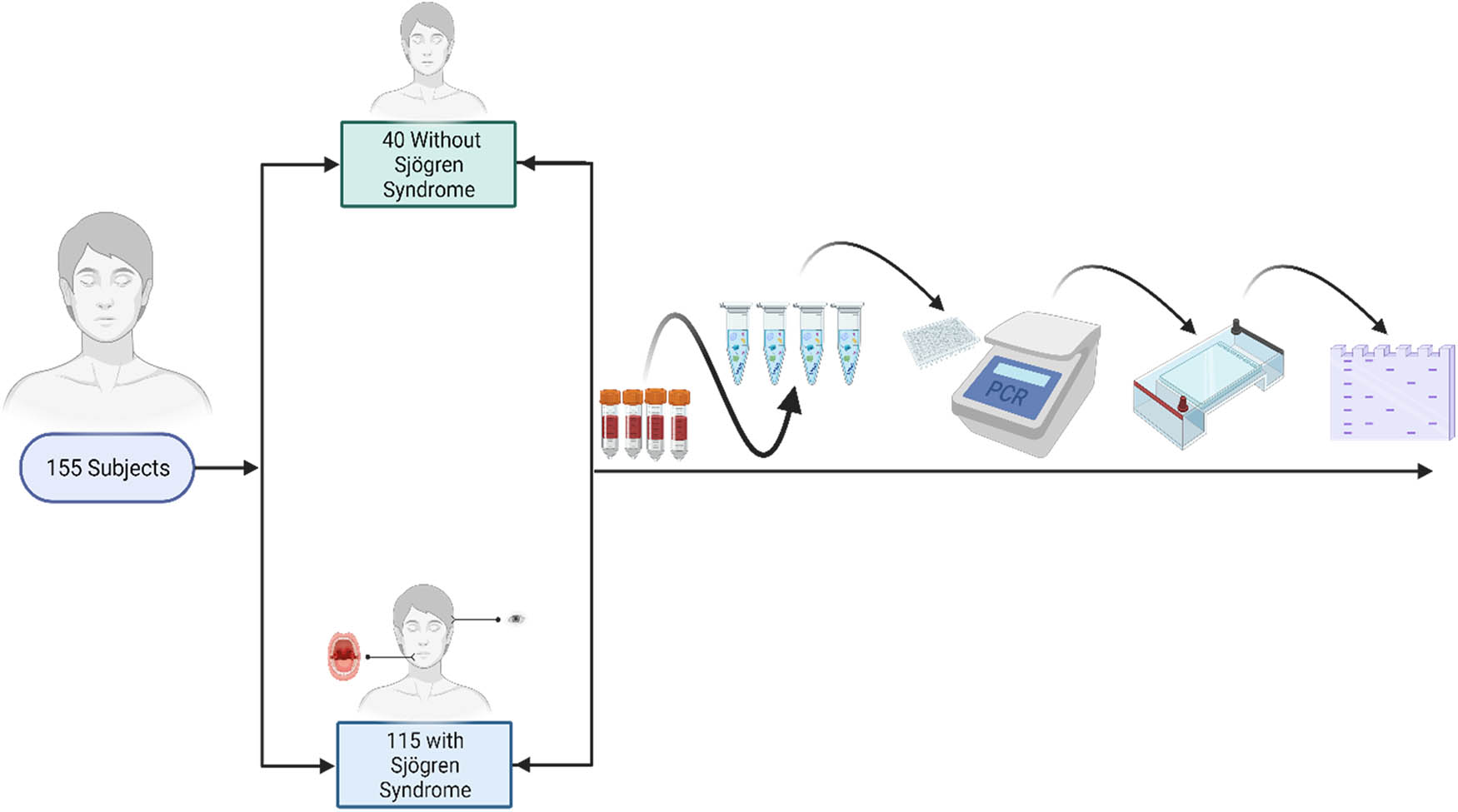
This study group consisted 40 healthy subjects and 115 patients with age range of 18–75 with SS who were attending the Rheumatology Clinic at the Ankara Bilkent City Hospital.
2.2 Blood samples collection
The 5 mL blood samples of the individuals of the control and patient groups participating in the study were taken under the supervision of a doctor at the Ankara Bilkent City Hospital Rheumatology Clinic. Blood samples were taken into heparinized tubes and then transferred to Ankara University Faculty of Pharmacy, Department of Pharmaceutical Toxicology Research Laboratory with cold chain without wasting any time, where all experiments were performed. DNA isolation method, which is the preliminary step of genotyping experiments, was applied to blood samples and DNA samplings of each individual in the experimental groups were isolated. These DNA samplings were stored at −20°C until genotyping experiments were performed. Genotyping experiments were performed using the polymerase chain reaction–restriction fragment length polymorphism (PCR–RFLP) method.
2.3 DNA isolation and DNA quantification
The Wizard Genomic DNA Purification kit, produced by Promega, was used for the isolation of each individuals’ DNA sample.
The purity of the DNA samples we obtained was determined by dividing the absorbance value read at 260 nm in the spectrophotometer by the absorbance value read at 280 nm. Accordingly, it was determined that DNA samples with values between 1.7 and 2.0 were isolated with sufficient purity.
2.4 Genotyping experiments
2.4.1 Determination of HLA-DQB1*03 rs1130380 gene polymorphism
The HLA-DQB1*03 rs1130380 encoded polymorphism was detected according to the method of Soetjipto et al. [10]. HLA-DQB1*03 rs1130380 polymorphism analyses were performed using PCR and RFLP methods.
Total reaction mix of 50 µL contains 5 µL 10× PCR buffer, 100 mM MgCl2, 100 µmol dNTP mix, 77 pmol forward primer DQBS43 (5′-TGC TAC TTC ACC A(C/T) GGG-3′) and reverse primer DQBA249 (5′-GTA GTT GTG TCT GCA (C/T)A C-3′), 5,000 U Taq DNA polymerase, and 50 ng DNA. For amplification, 35 cycles were performed using the following steps: denaturation at 94°C for 1 min, annealing at 60°C for 2 min, and extension using Taq DNA polymerase at 72°C for 3 min, with the final step after 35 cycles at 72°C for 3–10 min.
Following the PCR reaction, the RFLP method was applied by restriction with MspI restriction enzyme overnight at 37°C. After enzyme digestion, PAGE electrophoresis was performed and three bands of 99, 72, and 36 bp showed the wild type genotype (*0301), two bands of 171 and 36 bp showed heterozygous genotype (*0303), and a single band of 207 bp showed the presence of homozygous mutant genotype (*0601).
2.4.2 Determination of STAT4 rs7574865 gene polymorphism
The STAT4 rs7574865 encoded polymorphism was detected according to the method of Migita et al. [35]. STAT4 rs7574865 polymorphism analyses were performed using PCR and RFLP methods.
Total reaction mix of 50 µL contains 5 µL 10× PCR buffer, 100 mM MgCl2, 100 µmol dNTP mix, 100 pmol forward primer (5′-AAA GAA GTG GGA TAA AAA GAA GTT TG-3′) and reverse primer (5′-CCA CTG AAA TAA GAT AAC CAC TGT-3′), 5,000 U Taq DNA polymerase, and 50 ng DNA. Denaturation step was started with initial heating at 95°C for 5 min, followed by the addition of the polymerase and then 35 cycles of denaturing (at 95°C for 20 s), annealing (at 56°C for 30 s), and chain extension (at 72°C for 1 min), followed with a final extension step at 72°C for 3 min.
Following the PCR reaction, the RFLP method was applied by restriction with HpaI restriction enzyme overnight at 37°C. After enzyme digestion, PAGE electrophoresis was performed and a single band of 147 bp showed the wild type genotype (G allele), three bands of 147, 122, and 25 bp showed heterozygous genotype (G/T allele) and two bands of 122 and 25 bp showed the presence of homozygous mutant genotype (T allele).
2.4.3 Determination of BAFF rs9514828 gene polymorphism
The BAFF rs9514828 encoded polymorphism was detected according to the method of Marin-Rosales et al. [79]. BAFF rs9514828 polymorphism analyses were performed using PCR and RFLP methods.
Total reaction mix of 30 µL contains 5 µL 10× PCR buffer, 2 mM MgCl2, 200 µmol dNTP mix, 25 ng forward primer (5′-TTG TAC ACC GAC CTG TTA GG-3′) and reverse primer (5′-TGG AAG TAA GTC CAG ACT GGG AAT-3′), 5,000 U Taq DNA polymerase, and 40 ng DNA. The PCR conditions were initial denaturation cycle at 94°C for 3 min, 35 cycles of denaturation for 30 s at 94°C, annealing for 20 s at 57°C, extension for 30 s at 72°C, and final extension for 1 min at 72°C.
Following the PCR reaction, the RFLP method was applied by restriction with HpaI restriction enzyme overnight at 37°C. After enzyme digestion, PAGE electrophoresis was performed and two bands of 261 and 137 bp showed the wild type genotype (C allele), three bands of 398, 261, and 137 bp showed heterozygous genotype (C/T allele), and a single band of 398 bp showed the presence of homozygous mutant genotype (T allele).
2.4.4 Determination of TNIP1 rs17728338 gene polymorphism
The TNIP1 rs17728338 encoded polymorphism was detected according to the method. TNIP1 rs17728338 polymorphism analyses were performed using PCR and RFLP methods.
Total reaction mix of 20 µL contains 5 µL 1× PCR buffer, 1.5 mM MgCl2, 200 µmol dNTP mix, 30 ng forward primer (5′-GTA TGT TTT GCA CCT AGC ACG T-3′) and reverse primer (5′-CCA TTC GGG AGC CTT TTG CCA-3′), 1 U Taq DNA polymerase, and 20 ng DNA. Samples were denatured at 95°C for 2 min followed by 30 cycles of 94°C for 45 s, annealing for 45 s at 72°C, and ended with a final extension for 7 min at 72°C.
Following the PCR reaction, the RFLP method was applied by restriction with NcoI restriction enzyme overnight at 37°C. After enzyme digestion, PAGE electrophoresis was performed and a single band of 197 bp showed the wild type genotype (G allele), three bands of 197, 174, and 23 bp showed heterozygous genotype (G/A allele) and two bands of 174 and 23 bp showed the presence of homozygous mutant genotype (A allele).
2.5 Statistical analysis
Statistics analysis was performed by SPSS software version 27.0 for windows (SPSS Inc., Chicago, IL, USA). The frequencies of genotypes and alleles for all the studied polymorphisms were determined assuming co-dominant inheritance. The statistical significance of the genotype and allele frequency variables between the patients with SS and control group was evaluated by chi-square test with Yates correction for small numbers. Using the chi-square test, Hardy–Weinberg equilibrium was tested for the studied four single nucleotide polymorphism (SNPs) in patients with SS and controls. Relative risk associated with the significant genotype was estimated by the odds ratio (OR). OR with 95% confidence intervals (95% CI) was tested using a chi-square distribution, and the null hypothesis being tested is OR = 1. Allele frequencies were also evaluated. P-values <0.05 were considered as statistically significant.
-
Informed consent: Informed consent was obtained from all subjects participating in the study.
-
Ethical approval: The study was conducted in accordance with the Helsinki Declaration of the World Medical Association and had the approval of the Ankara University Faculty of Medicine Ethic Committee.
3 Results
The aim of this study is to identify the association between four variants including rs1130380 encoded the HLA-DQB1*03 gene, rs7574865 encoded STAT4 gene, rs9514828 encoded the BAFF gene, and rs17728338 encoded the TINIP1 gene and the development of the SS. This study recruited 155 subjects (40 healthy subjects and 115 patients with SS) in a Turkish population. In Table 1 the demographic data of the all subjects are shown.
Demographic data of the subjects
| Parameter | Control group | Patient group | ||
|---|---|---|---|---|
| Male | Female | Male | Female | |
| Number of subjects | 3 | 37 | 10 | 105 |
| Age (mean ± SD) | 53.33 ± 4.51 | 53.43 ± 11.92 | 54.40 ± 7.97 | 53.79 ± 10.77 |
| Smoking status (%) | ||||
| Yes | 1 (33.3%) | 8 (21.6%) | 2 (20.0%) | 21 (20.0%) |
| No | 2 (66.7%) | 29 (78.4%) | 8 (80.0%) | 84 (80.0%) |
Correlations between SS age and smoking were evaluated by multiple linear regressions but no significant association was obtained.
Age, smoking, gender, family history, anti-Ro/SSA seropositivity, anti-La/SSB seropositivity, RF seropositivity, ANA seropositivity, SS type (primer/seconder), and disease year were evaluated as risk factors for SS so they were statistically analyzed by multiple logistic regression analysis. Due to the data, except age and smoking all other factors have a significant relationship with SS development (family history and type of SS factors’ significance limit is <0.05; gender, disease year, and all seropositivity factors’ significance limit is <0.01). All the data related to these are shown in Table 2.
Multiple logistic regression analysis for possible risk factors of SS
| Risk factor | OR (95% CI) |
|---|---|
| Age | 0.67 (0.23–0.91) |
| Smoking | 1.21 (0.57–1.87) |
| Gender | 3.09 (2.07–5.78)b |
| Family history (%) | 1.48 (1.04–2.70)a |
| Anti-Ro/SSA seropositivity | 3.17 (1.64–6.25)b |
| Anti-La/SSB seropositivity | 2.91 (1.53–5.11)b |
| RF seropositivity | 2.55 (1.49–4.27)b |
| ANA seropositivity | 2.04 (1.63–3.78)b |
| Primer/seconder SS | 1.61 (1.15–3.44)a |
| Disease year (x̄) | 2.21 (1.53–4.03)b |
a P < 0.05.
b P < 0.01.
The genotypic distribution of all the studied gene polymorphisms is demonstrated in Table 3. According to the outcomes, all examined variants displayed a significant relationship with the development of the disease. The HLA-DQB1*03 1/2 and 2/2 allele carriers were significantly over-represented in SS patients. The OR for SS with the HLA-DQB1*03 variant was admiringly raised (OR = 6.05, 95% CI: 2.78–13.20). The OR of the STAT4 variant was improved in SS patients about six-fold similarly with HLA-DQB1*03 variant (OR = 5.88, 95% CI: 2.69–12.86). Likewise with the others, BAFF variant was amazingly triggered in SS patient about seven-fold compared with the controls (OR = 6.71, 95% CI: 3.05–14.79). With regard to the last studied variant TNIP1, it was also raised in SS patients compared with the controls and this enhancement was significant (OR = 4.87, 95% CI: 2.26–10.50). All the impacts had a P-value smaller than 0.001. Genotype distributions for all the gene polymorphisms suit forecasts for Hardy–Weinberg equilibrium.
Genotypic distribution of the studied genes
| Region | 1/1 Allele* (%) | 1/2 or 2/2 Allele (%) | Total | OR* (CI) | P |
|---|---|---|---|---|---|
| HLA-DQB1*03 rs1130380 | |||||
| Control | 26 (65.0) | 14 (35.0) | 40 | 1.00 | <0.001 |
| Patient | 27 (23.5) | 88 (76.5) | 115 | 6.05 (2.78–13.20) | |
| STAT4 rs7574865 | |||||
| Control | 27 (67.5) | 13 (32.5) | 40 | 1.00 | < 0.001 |
| Patient | 30 (26.1) | 85 (73.9) | 115 | 5.88 (2.69–12.86) | |
| BAFF rs9514828 | |||||
| Control | 24 (60.0) | 16 (40.0) | 40 | 1.00 | < 0.001 |
| Patient | 21 (18.3) | 94 (81.7) | 115 | 6.71 (3.05–14.79) | |
| TNIP1 rs17728338 | |||||
| Control | 23 (57.5) | 17 (42.5) | 40 | 1.00 | < 0.001 |
| Patient | 25 (21.7) | 90 (78.3) | 115 | 4.87 (2.26–10.50) |
*1 allele major variant, 2 allele minor variant.
In Table 4, allele frequencies of all the studied gene polymorphisms are given. When we evaluate the results, it is clearly seen that the allele 2 frequencies were about two folds increased in SS patients compared to the controls.
Allele frequencies of the studied genes
| Allele | Allele frequency | |||
|---|---|---|---|---|
| HLA-DQB1*03 | STAT4 | BAFF | TNIP1 | |
| Control group | ||||
| 1/1 | 0.775 | 0.790 | 0.725 | 0.730 |
| 2/2 | 0.225 | 0.210 | 0.275 | 0.270 |
| Patient group | ||||
| 1/1 | 0.505 | 0.510 | 0.465 | 0.510 |
| 2/2 | 0.495 | 0.490 | 0.535 | 0.490 |
| P* | <0.01 | <0.01 | <0.05 | <0.05 |
*Comparison between the 2/2 variant of the patients with those of controls.
To the best of our knowledge, this study is the first where all these four gene polymorphisms are thought to have a relationship with SS development at the same time especially in Turkish population.
The allele frequency of each variant (rs1130380, rs7574865, rs9514828, rs17728338) was then assessed in regional populations including African, American, European, and Asian cohorts. The results of this study indicate that (rs1130380, rs7574865, rs9514828, rs17728338) upregulating variants are more common in Turkish populations than in European, American, and other Asian populations, suggesting that Turkish populations may be more susceptible to the development of SS (Table 5).
Allele frequencies’ SNPs examined in this study and multiple continents
| SNP | Position (hg19) (bp) | Gene | Location | Allele | Allele frequencies (N) | |||||
|---|---|---|---|---|---|---|---|---|---|---|
| Ref | Eff* | EUR | AFR | AMR | ASN | Our | ||||
| rs1130380 | chr6: 32632694 | HLA-DQB1 | Missense | C | A, G, T | 0 | 0 | 0 | 0 | 0.495 |
| rs7574865 | chr2: 191964633 | STAT4 | Intron | T | G | 0.77 | 0.86 | 0.69 | 0.66 | 0.490 |
| rs9514828 | chr13: 108921373 | BAFF | — | C | T | 0.53 | 0.09 | 0.28 | 0.40 | 0.535 |
| rs17728338 | chr5: 150478318 | ANXA6 | — | C | T | 0.07 | 0.07 | 0.05 | 0.11 | 0.490 |
EUR, European; AFR, African; AMR, American; ASN, Asian; Ref, reference, and Eff, effect allele of EUR, AFR, AMR, ASN were extracted from the HaploReg Version 4.1 (https://pubs.broadinstitute.org/mammals/haploreg).
4 Discussion
SS is a chronic autoimmune disease and genetic susceptibility plays a major role in SS pathogenesis. Chused et al. first demonstrated HLA genes as a risk factor for SS in 1977 [65]. The relationship between HLA-DR3 and SS was demonstrated especially in the white ethnicity. On the other side, association between SS and HLA-DR3-DQ haplotypes was revealed in various ethnic groups [66–76]. Numerous methods have been accustomed including the genetic linkage analysis, positional candidate gene analysis using microsatellite markers, and more newly the GWAS studies completed on a huge series of SS patients and controls with SNP markers [77–79].
Nevertheless, a meta-analysis pinpoints DRB1*0301, DQA1*0501, DQB1*0201, and DRB1*03 alleles as risk factors for SS, while pinpointing DQA1*0201, DQA1*0301, and DQB1*0501 alleles as preservatives [80]. Lately, a powerful connection between HLA-DRA, HLA-DQB1, and HLA-DQA1 and SS in 6p21 locus in an extensive study in Europe was documented [77]. In a Chinese research, HLA-DRB1/HLA-DQA1 in 6p21.3 locus and two separate signals linked with HLA-DPB1/COL11A2 [102]. Degeneration of autoreactive T cell toleration via the existence of unnatural antigen displays the primary role of HLAs in autoimmune diseases. The disorder association of HLA-suspected alleles is familiar in autoimmune diseases and further specific alleles and haplotypes are developed, extra alleles with simple targeting of typical autoantigens [81]. HLA Class II is linked with autoantibody production in SS, whereas anti-Ro/SSA and anti-La/SSB are particularly more elevated in HLA-DQ1/HLA-DQ2 heterozygous patients [82] but not connected to further clinical characteristics [71]. HLA-DRB1*1501-DRB1*0301 is associated with anti-anticyclic citrullinated antibodies [83]. Amino acid deviations in the hypervariable province of the HLA complex influence peptide binding and T cell display. The association of specific divergences in binding wells 7 and 9 of HLA-DRB1 with differences in depth and polarity was established in the Chinese population [75]. Although HLA Class I and HLA Class III genes were also investigated in the subsequent years, investigations concentrated on HLA Class II genes.
Multitudinous studies were performed showing the relationship between HLA alleles and SS. Different genetic polymorphisms of HLA have been associated with predisposition and/or outcome of different infectious diseases such as hepatitis B virus, hepatitis C virus, chikungunya, Chagas, dengue, influenza A, and tuberculosis [84–88]. A meta-analysis performed by Cruz-Tapias et al. [80] pinpointed that some of HLA alleles such as DRB1*0301, DQA1*0501, DQB1*0201, and DRB1*03 were risk factors for SS and the others including DQA1*0201, DQA1*0301, and DQB1*0501 as preservatives. Recently, a strong association between HLA-DRA, HLA-DQB1, and HLA-DQA1 and SS in 6p21 locus in a comprehensive study in Europe was reported [77]. HLA-DQB1 is the beta 1 subunit of the HLA-DQ surface receptor, in the MHC, part of immune regulation. It is linked to immune disorders [21]. This gene is found to be linked with some disorders such as type I diabetes, narcolepsy, celiac disease, and scleroderma. Although it has been documented that the HLA-DQB1 gene is associated with SS, there is no scientific data on the impact of the HLA-DQB1*03 rs1130380 polymorphism on the development of the disease. From this point of view, our results are very valuable in terms of evaluating the possible effect of HLA-DQB1 gene variation on SS. Due to our results, HLA-DQB1*03 rs1130380 variation had a significant relationship with the development of SS about six-fold compared with controls (OR = 6.05, 95% CI: 2.78–13.20).
STAT4 is a member of the STAT family and it has a crucial position in a broad variety of cells and the pathogenesis of various human diseases, particularly multiple types of autoimmune and inflammatory disorders, via activation by different cytokines via the JAK-STAT signaling path [31]. STAT4 is a critical transcription factor for the transmission of IL-12, IL-23, and IFN-I-mediated signals implicated in Th1 and Th17 differentiation, activation of monocytes, and INFγ production [89–91]. STAT4 haplotypes have been suggested to be a risk factor for the development of SLE and RA in the Caucasians and its connection with SS [92]. STAT4 polymorphism was investigated in different ethnic groups in other loci such as rs7574865 [93] and rs7582694 [94]. In these three studies, it was pointed that rs7582694 polymorphism posed a risk for SS. rs7574865 of the STAT4 gene has been reported in a massive study of Swedes to be connected to both lupus (SLE) and RA [95]. RA risk associated with rs7574865(T) allele was also discovered in studies of 923 Spanish, 273 Swedish, and 876 Dutch patients [96]. The rs7574865(T) allele is linked with an increased risk for type-1 diabetes established by a study of Greek patients [97]. In research including 2,776 Spanish subjects, the rs7574865(T) allele was observed to be associated with RA, Crohn’s disease, ulcerative colitis, and type-1 diabetes, but not with multiple sclerosis [98]. In a study of 124 Caucasian patients with pSS, the rs7574865(T) allele was linked with a moderately increased risk for the disease [92]. Similarly, we found this variant to be associated with approximately a six-fold increased risk of SS development compared to controls (OR = 5.88, 95% CI: 2.69–12.86). These findings align with broader evidence that the STAT4 rs7574865 T allele confers susceptibility to multiple autoimmune diseases, including SS, supporting its role as a genetic risk factor without overstating the magnitude of effect.
BAFF is a member of the TNF superfamily which regulates immune responses. Sjöstrand et al. [40] discovered extended BAFF expression in the immune cells of pSS patients, especially neutrophils. They also established an admiringly preserved ISRE area close to the BAFF gene promoter, which was functionally confirmed. The association of BAFF polymorphisms in the development of additional autoimmune diseases has been displayed previously [37,41,43–49]. BAFF rs9514828 polymorphism is found to be connected with numerous autoimmune and inflammatory disorders such as SS, lymphoma, leukemia, haemophilia, and periodontitis through some scientific investigations [48,50–53]. In an investigation by Nezos et al. [48], it was found that high risk pSS group was characterized by higher frequency of the minor T allele of the rs9514828 BAFF polymorphism compared to healthy controls. Our findings are also in line with this study in which we found that in SS patients the minor variant had approximately seven-fold risk compared to the controls (OR = 6.71, 95% CI: 3.05–14.79).
Recent advances in artificial intelligence (AI) have revolutionized biomedical research and clinical practice by enabling integration and interpretation of complex multidimensional data. For example, AlphaFold accurately predicts protein structures from sequences, accelerating drug discovery [99], while AI models analyzing clinical imaging improve personalized diagnosis and treatment [100]. Our validated genetic dataset offers a rich resource for training AI models aimed at early SS risk prediction and diagnostic classification, underpinning future multimodal “genetic–clinical–imaging” AI frameworks. These approaches promise transformative improvements in population-specific precision medicine, particularly for ethnically distinct groups such as the Turkish cohort studied here.
In addition to elucidating genetic susceptibility, this study highlights the therapeutic potential of the identified genes as drug targets for SS, opening avenues for drug repurposing strategies. Although HLA-DQB1 is primarily recognized as a pharmacogenetic marker guiding drug choice rather than a direct target, the other genes have more direct therapeutic relevance. STAT4 functions within the JAK-STAT signaling pathway, and JAK inhibitors, which are approved for autoimmune diseases such as RA and psoriatic arthritis, are actively being explored in clinical trials for SS treatment. BAFF, a critical regulator of B cell survival and activation, is an established drug target; belimumab (FDA-approved for SLE) and ianalumab (in Phase III trials) target BAFF signaling and have shown promising efficacy in SS, with ianalumab demonstrating significant disease activity reduction in pivotal Phase III studies [101]. TNIP1 (ANXA6) is currently an investigational target with no approved drugs yet, but its role in NF-κB pathway regulation makes it a potential candidate for future therapeutic development. Thus, our genetic findings not only broaden understanding of underlying disease mechanisms but also underline key molecular targets with repurposing potential, facilitating precision medicine approaches in SS.
Importantly, rs9514828 is located within the promoter region of the BAFF gene and is believed to influence gene expression by altering transcription factor binding affinity. The minor allele at this locus may enhance promoter activity, resulting in elevated BAFF levels. This increase in BAFF expression can lead to exaggerated B cell activation, a key event in SS pathogenesis. Our data support this mechanism, linking the rs9514828 variant’s significant association with SS susceptibility in the Turkish population to a possible functional upregulation of BAFF expression.
TNIP1 is encoded by the TNIP1 gene which is a critical signaling protein in the NF-κB path. It functions with the TNFAIP3 protein together to suppress NF-κB activation. The connection of TNIP1 gene polymorphism with multiple autoimmune disorders such as systemic sclerosis, RA, psoriasis, and SLE was demonstrated [54–59]. TNIP1 rs17728338 polymorphism is revealed to be linked to several inflammatory and autoimmune diseases including psoriatic arthritis and psoriasis via scientific investigations [60–63]. There are limited studies related to the TNIP1 rs17728338 polymorphism and SS. Nordmark et al. [59] figured out that polymorphisms in TNIP1 are related to antibody-positive pSS. We also found that minor variant of the TNIP1 polymorphism was a risk factor in SS patients with about five-fold compared to the control group (OR = 4.87, 95%CI: 2.26–10.50).
Mechanistically, TNIP1 functions as a key negative regulator of the NF-κB signaling pathway by working in concert with the TNFAIP3 (A20) protein to repress NF-κB activation. The rs17728338 variant may affect TNIP1 expression or its protein function, potentially attenuating its inhibitory effect on NF-κB. This could result in prolonged or enhanced NF-κB signaling, fostering a pro-inflammatory environment contributing to SS pathogenesis. Our finding of a significant association of rs17728338 minor allele with SS supports the variant’s possible role in dysregulating immune responses through the NF-κB pathway in the Turkish population.
We acknowledge that this study calls for further validation with larger cohorts and other populations to enhance the generalizability and statistical power of the findings. In particular, the relatively small control group size represents a limitation that may affect the robustness of our conclusions. Nevertheless, our data provide valuable evidence that polymorphisms rs1130380, rs7574865, rs9514828, and rs17728338 are significantly associated with SS susceptibility in the Turkish population, likely through impacting key immunoregulatory pathways involving HLA-DQB1, STAT4, BAFF, and TNIP1. Future studies with expanded sample sizes and diverse populations are essential to confirm and extend these insights.
5 Conclusion
This study identified significant associations between four SNPs (rs1130380, rs7574865, rs9514828, rs17728338) and SS in the Turkish population, supporting their potential role as genetic risk factors. While these polymorphisms may contribute to SS susceptibility, additional studies with larger cohorts and functional analyses are required to validate their utility as biomarkers for risk assessment.
-
Funding information: The authors state no funding involved.
-
Author contributions: I.A.: conceptualization, methodology, resources, writing – review & editing, funding acquisition, supervision; U.T.: visualization, investigation, experimental analysis, data curation, writing – original draft; A.E.: methodology, visualization, investigation; S.S.: writing – review & editing, supervision; L.M.I.: writing – review & editing, supervision; S.Y.: writing – review & editing, supervision.
-
Conflict of interest: The authors state no conflict of interest.
-
Data availability statement: The datasets generated during and/or analyzed during the current study are available from the corresponding author on reasonable request.
References
[1] Tian Y, Yang H, Liu N, Li Y, Chen J. Advances in pathogenesis of Sjögren’s syndrome. J Immunol Res. 2021;2021:5928232.10.1155/2021/5928232Suche in Google Scholar PubMed PubMed Central
[2] Cafaro G, Bursi R, Chatzis LG, Fulvio G, Ferro F, Bartoloni E, et al. One year in review 2021: Sjögren’s syndrome. Clin Exp Rheumatol. 2021;133:3–13.10.55563/clinexprheumatol/eojaolSuche in Google Scholar PubMed
[3] Skopouli FN, Moutsopoulos HM. Autoimmune epitheliitis: Sjogren’s syndrome. Clin Exp Rheumatol. 1994;12(Suppl 11):9–11.Suche in Google Scholar
[4] Manoussakis MN, Kapsogeorgou EK. The role of intrinsic epithelial activation in the pathogenesis of Sjogren’s syndrome. J Autoimmun. 2010;35(3):219–24.10.1016/j.jaut.2010.06.011Suche in Google Scholar PubMed
[5] Verstappen GM, Pringle S, Bootsma H, Kroese FGM. Epithelial-immune cell interplay in primary Sjogren syndrome salivary gland pathogenesis. Nat Rev Rheumatol. 2021;17(6):333–48.10.1038/s41584-021-00605-2Suche in Google Scholar PubMed PubMed Central
[6] Malladi AS, Sack KE, Shiboski SC, Shiboski CH, Baer AN, Banushree R, et al. Primary Sjögren’s syndrome as a systemic disease: a study of participants enrolled in an international Sjögren’s syndrome registry. AC&R. 2012;64(6):911–8.10.1002/acr.21610Suche in Google Scholar PubMed PubMed Central
[7] Shiboski CH, Shiboski SC, Seror R, Criswell LA, Labetoulle M, Lietman TM, et al. American College of Rheumatology/European League against rheumatism classification criteria for primary Sjögren’s syndrome: a consensus and data‐driven methodology involving three international patient cohorts. Arthritis Rheumatol. 2016;69(1):35–45.10.1002/art.39859Suche in Google Scholar PubMed PubMed Central
[8] Weng MY, Huang YT, Liu MF, Lu TH. Incidence and mortality of treated primary Sjögren’s syndrome in Taiwan: a population-based study. J Rheumatol. 2011;38(4):706–8.10.3899/jrheum.100883Suche in Google Scholar PubMed
[9] Bombardieri M, Argyropoulou OD, Ferro F, Coleby R, Pontarini E, Governato G, et al. One year in review 2020: pathogenesis of primary Sjogren’s syndrome. Clin Exp Rheumatol. 2020;38(Suppl 126(4)):3–9.Suche in Google Scholar
[10] Soetjipto, Rochmah N, Faizi M, Hisbiyah Y, Endaryanto, A. HLA-DQA1 and HLA-DQB1 gene polymorphism in Indonesian children with type I diabetes mellitus. Appl Clin Genet. 2022;15:11–7.10.2147/TACG.S348115Suche in Google Scholar PubMed PubMed Central
[11] Kuo CF, Grainge MJ, Valdes AM, See LC, Luo SF, Yu KH, et al. Familial risk of Sjogren’s syndrome and co-aggregation of autoimmune diseases in affected families: a nationwide population study. Arthritis Rheumatol. 2015;67(7):1904–12.10.1002/art.39127Suche in Google Scholar PubMed PubMed Central
[12] Skopouli FN, Katsiougiannis S. How stress contributes to autoimmunity-lessons from Sjogren’s syndrome. FEBS Lett. 2018;592(1):5–14.10.1002/1873-3468.12933Suche in Google Scholar PubMed
[13] Utomo SW, Putri JF. Infections as risk factor of Sjogren’s syndrome. Open Access Rheumatol. 2020;12:257–66.10.2147/OARRR.S276727Suche in Google Scholar PubMed PubMed Central
[14] Ramos-Casals M, Maria A, Suarez-Almazor ME, Lambotte O, Fisher BA, Hernandez-Molina G, et al. Sicca/Sjogren’s syndrome triggered by PD-1/PD-L1 checkpoint inhibitors. Data from the International Immuno Cancer Registry (ICIR). Clin Exp Rheumatol. 2019;37(Suppl 118(3)):114–22.Suche in Google Scholar
[15] Colafrancesco S, Perricone C, Priori R, Valesini G, Shoenfeld Y. Sjogren’s syndrome: another facet of the autoimmune/inflammatory syndrome induced by adjuvants (ASIA). J Autoimmun. 2014;51:10–6.10.1016/j.jaut.2014.03.003Suche in Google Scholar PubMed
[16] Coroneos CJ, Selber JC, Offodile 2nd AC, Butler CE, Clemens MW. US FDA Breast implant postapproval studies: long-term outcomes in 99,993 patients. Ann Surg. 2019;269(1):30–6.10.1097/SLA.0000000000002990Suche in Google Scholar PubMed
[17] Kiefer K, Oropallo MA, Cancro MP, Marshak-Rothstein A. Role of type I interferons in the activation of autoreactive B cells. Immunol Cell Biol. 2012;90:498–504.10.1038/icb.2012.10Suche in Google Scholar PubMed PubMed Central
[18] Klein J, Sato A. The HLA system. First of two parts. N Engl J Med. 2000;343(10):702–9.10.1056/NEJM200009073431006Suche in Google Scholar PubMed
[19] Sumitran-Holgersson S. Beyond ABO and human histocompatibility antigen: other histocompatibility antigens with a role in transplantation. Curr OpinOrgan Transplant. 2008;13(4):425–9.10.1097/MOT.0b013e328307ebd7Suche in Google Scholar PubMed
[20] Howell WM, Carter V, Clark B. The HLA system: immunobiology, HLA typing, antibody screening and crossmatching techniques. J Clin Pathol. 2010;63(5):387–90.10.1136/jcp.2009.072371Suche in Google Scholar PubMed
[21] Snpedia. https://www.snpedia.com/index.php/HLA-DQB, 2023 (accessed 22 July 2023).Suche in Google Scholar
[22] Geremew D, Rahimi-Golkhandan A, Sadeghniiat-Haghighi K, Shakiba Y, Khajeh-Mehrizi A, Ansaripour B, et al. Association study of HLA-DQB1*0602 allele in Iranian patients with narcolepsy. Iran J Allergy Asthma Immunol. 2017;16(5):452–6.Suche in Google Scholar
[23] Vuorela A, Freitag TL, Leskinen K, Pessa H, Harkönen T, Stracenski I, et al. Enhanced influenza A H1N1 T cell epitope recognition and cross-reactivity to protein-O-mannosyltransferase 1 in Pandemrix-associated narcolepsy type 1. Nat Commun. 2021;12(1):2283.10.1038/s41467-021-22637-8Suche in Google Scholar PubMed PubMed Central
[24] Stranks L, Ellender CM, Wong K, Naqvi H, Grunstein R, Yee BJ, et al. Retrospective cohort study of hypersomnias of central origin from two Australian tertiary sleep disorders services. Intern Med J. 2023;53(10):1783–9.10.1111/imj.15920Suche in Google Scholar PubMed
[25] Ruiz-Ortiz E, Montraveta M, Cabre E, Herrero-Mata MJ, Pujol-Borrell R, Palou E, et al. HLA-DQ2/DQ8 and HLA-DQB1*02 homozygosity typing by real-time polymerase chain reaction for the assessment of celiac disease genetic risk: evaluation of a Spanish celiac population. Tissue Antigens. 2014;84(6):545–53.10.1111/tan.12472Suche in Google Scholar PubMed
[26] Zhou XD, Yi L, Guo XJ, Chen E, Zou HJ, Jin L, et al. Association of HLA-DQB1*0501 with scleroderma and its clinical features in Chinese population. Int J Immunopathol Pharmacol. 2013;26(3):747–51.10.1177/039463201302600318Suche in Google Scholar PubMed PubMed Central
[27] Miki D, Ochi H, Takahashi A, Hayes CN, Urabe Y, Abe H, et al. HLA-DQB1*03 confers susceptibility to chronic hepatitis C in Japanese: a genome-wide association study. PLoS One. 2013;8(12):e84226.10.1371/journal.pone.0084226Suche in Google Scholar PubMed PubMed Central
[28] Tekola-Ayele F, Adeyemo A, Finan C, Hailu E, Sinnott P, Burlinson ND, et al. HLA Class II locus and susceptibility to podoconiosis. N Engl J Med. 2012;366(13):1200–8.10.1056/NEJMoa1108448Suche in Google Scholar PubMed PubMed Central
[29] Gebresilase T, Finan C, Suveges D, Tessema TS, Aseffa A, Davey G, et al. Replication of HLA class II locus association with susceptibility to podoconiosis in three Ethiopian ethnic groups. Sci Rep. 2021;11(1):3285.10.1038/s41598-021-81836-xSuche in Google Scholar PubMed PubMed Central
[30] Darnell JE, Kerr Jr IM, Stark GR. Jak-STAT pathways and transcriptional activation in response to IFNs and other extracellular signaling proteins. Science. 1994;264:1415–21.10.1126/science.8197455Suche in Google Scholar PubMed
[31] Yang C, Mai H, Peng J, Zhou B, Hou J, Jiang D. STAT4: an immunoregulator contributing to diverse human diseases. Int J Biol Sci. 2020;16(9):1575–85.10.7150/ijbs.41852Suche in Google Scholar PubMed PubMed Central
[32] Ates I, Yucesoy B, Yucel A, Suzen SH, Karakas Y, Karakaya A. Possible effect of gene polymorphisms on the release of TNFa and IL1 cytokines in coal workers’ pneumoconiosis. Exp Toxicol Pathol. 2011;63:175–9.10.1016/j.etp.2009.11.006Suche in Google Scholar PubMed
[33] Fox RI. Sjogren’s syndrome. Lancet. 2005;366(9482):321–31.10.1016/S0140-6736(05)66990-5Suche in Google Scholar PubMed
[34] Nezos A, Evangelopoulos M-E, Mavragani CP. Genetic contributors and soluble mediators in prediction of autoimmune comorbidity. J Autoimmun. 2019;104:102317.10.1016/j.jaut.2019.102317Suche in Google Scholar PubMed
[35] Migita K, Nakamura M, Abiru S, Jiuchi Y, Nagaoka S, Komori A, et al. Association of STAT4 polymorphisms with susceptibility to Type-1 autoimmune hepatitis in the Japanese population. PLoS One. 2013;8(8):e71382.10.1371/journal.pone.0071382Suche in Google Scholar PubMed PubMed Central
[36] Ittah M, Miceli-Richard C, Eric GJ, Lavie F, Lazure T, Ba N, et al. B cell-activating factor of the tumor necrosis factor family (BAFF) is expressed under stimulation by interferon in salivary gland epithelial cells in primary Sjögren’s syndrome. Arthritis Res Ther. 2006;8(2):51.10.1186/ar1912Suche in Google Scholar PubMed PubMed Central
[37] Novak AJ, Grote DM, Ziesmer SC, Kline MP, Manske MK, Slager S, et al. Elevated serum B-lymphocyte stimulator levels in patients with familial lymphoproliferative disorders. J Clin Oncol. 2006;24(6):983–7.10.1200/JCO.2005.02.7938Suche in Google Scholar PubMed
[38] Mackay F, Schneider P. Cracking the BAFF code. Nat Rev Immunol. 2009;9(7):491–502.10.1038/nri2572Suche in Google Scholar PubMed
[39] Manetta J, Bina H, Ryan P, Fox N, Witcher DR, Kikly K. Generation and characterization of tabalumab, a human monoclonal antibody that neutralizes both soluble and membrane-bound B-cell activating factor. J Inflamm Res. 2014;20(7):121–31.10.2147/JIR.S67751Suche in Google Scholar PubMed PubMed Central
[40] Sjöstrand M, Johansson A, Aqrawi L, Olsson T, Wahren-Herlenius M, Espinosa A. The expression of BAFF is controlled by IRF transcription factors. J Immunol. 2016;196(1):91–6.10.4049/jimmunol.1501061Suche in Google Scholar PubMed PubMed Central
[41] Nossent JC, Lester S, Zahra D, Mackay CR, Rischmueller M. Polymorphism in the 5´regulatory region of the B-lymphocyte activating factor gene is associated with the Ro/La autoantibody response and serum BAFF levels in primary Sjogren’s syndrome. Rheumatol. 2008;47(9):1311–6.10.1093/rheumatology/ken246Suche in Google Scholar PubMed
[42] Novak AJ, Slager SL, Fredericksen ZS, Wang AH, Manske MM, Ziesmer S, et al. Genetic variation in B-cell-activating factor is associated with an increased risk of developing B-cell non-Hodgkin lymphoma. Cancer Res. 2009;69(10):4217–24.10.1158/0008-5472.CAN-08-4915Suche in Google Scholar PubMed PubMed Central
[43] Hildebrand JM, Luo Z, Manske MK, Price-Troska T, Ziesmer SC, Lin W, et al. A BAFF-R mutation associated with non-Hodgkin lymphoma alters TRAF recruitment and reveals new insights into BAFF-R signaling. J Exp Med. 2010;207(12):2569–79.10.1084/jem.20100857Suche in Google Scholar PubMed PubMed Central
[44] Baek A, Park HJ, Na S-J, Shim DS, Moon J-S, Yang Y, Choi Y-C. The expression of BAFF in the muscles of patients with dermatomyositis. J Neuroimmunol. 2012;249(1–2):96–100.10.1016/j.jneuroim.2012.04.006Suche in Google Scholar PubMed
[45] Ohmatsu H, Sugaya M, Miyagaki T, Suga H, Fujita H, Asano Y, et al. BAFF levels are increased in lesional skin and sera in patients with cutaneous T-cell lymphoma. Br J Dermatol. 2012;167(2):359–67.10.1111/j.1365-2133.2012.10998.xSuche in Google Scholar PubMed
[46] Zhai K, Tian X, Wu C, Lu N, Chang J, Huang L, et al. Cytokine BAFF gene variation is associated with survival of patients with T-cell lymphomas. Clin Cancer Res. 2012;18(8):2250–6.10.1158/1078-0432.CCR-11-3009Suche in Google Scholar PubMed
[47] Thompson N, Isenberg DA, Jury EC, Ciurtin C. Exploring BAFF: its expression, receptors and contribution to the immunopathogenesis of Sjögren’s syndrome. Rheumatology. 2016;55(9):1548–55.10.1093/rheumatology/kev420Suche in Google Scholar PubMed
[48] Nezos A, Papageorgiou A, Fragoulis G, Ioakeimidis D, Koutsilieris M, Tzioufas AG, et al. B-cell activating factor genetic variants in lymphomagenesis associated with primary Sjogren’s syndrome. J Autoimmun. 2014;51:89–98.10.1016/j.jaut.2013.04.005Suche in Google Scholar PubMed
[49] Barliana MI, Afifah NN, Amalia R, Hamijoyo L, Abdullah R. Genetic polymorphisms and the clinical response to systemic lupus erythematosus treatment towards personalized medicine. Front Pharmacol. 2022;13:820927.10.3389/fphar.2022.820927Suche in Google Scholar PubMed PubMed Central
[50] Li X, Tian X, Zhang B, Zhang Y, Chen J. Variation in dicer gene is associated with increased survival in T-cell lymphoma. PLoS One. 2012;7(12):e51640.10.1371/journal.pone.0051640Suche in Google Scholar PubMed PubMed Central
[51] Jasek M, Bojarska-Junak A, Wagner M, Sobcznyski M, Wolowiec D, Rolinski J, et al. Association of variants in BAFF (rs9514828 and rs1041569) and BAFF-R (rs61756766) genes with the risk of chronic lymphocytic leukemia. Tumor Biol. 2016;37:13617–26.10.1007/s13277-016-5182-zSuche in Google Scholar PubMed PubMed Central
[52] Hodeib H, El Amrousy D, Youssef A, Elaskary E, Fouda MH. BAFF rs9514828 gene polymorphism and the risk of the development of inhibitors in children with severe haemophilia A. Haemophilia. 2022;28(3):472–9.10.1111/hae.14555Suche in Google Scholar PubMed
[53] Cruz A, Gascon LG, Palafox-Sanchez CA, Flores-Garcia C, Espinoza-Garcia N, Sagrereo-Fabela N, et al. TNFSF13B rs9514828 gene polymorphism and soluble B cell activating factor levels: association with apical periodontitis. Int Endod J. 2023;56(4):419–31.10.1111/iej.13879Suche in Google Scholar PubMed
[54] Thomson W, Barton A, Ke X, Eyre S, Hinks A, Bowes J, et al. Rheumatoid arthritis association at 6q23. Nat Genet. 2007;39(12):1431–3.10.1038/ng.2007.32Suche in Google Scholar PubMed PubMed Central
[55] Musone SL, Taylor KE, Lu TT, Nititham J, Ferreira RC, Ortmann W, et al. Multiple polymorphisms in the TNFAIP3 region are independently associated with systemic lupus erythematosus. Nat Genet. 2008;40(9):1062–4.10.1038/ng.202Suche in Google Scholar PubMed PubMed Central
[56] Fung EYMG, Smyth DJ, Howson JMM, Cooper JD, Walker NM, Stevens H, et al. Analysis of 17 autoimmune disease-associated variants in type 1 diabetes identifies 6q23/TNFAIP3 as a susceptibility locus. Genes Immun. 2009;10(2):188–91.10.1038/gene.2008.99Suche in Google Scholar PubMed
[57] Nair RP, Duffin KC, Helms C, Ding J, Stuart PE, Goldgar D, et al. Collaborative Association study of psoriasis genome-wide scan reveals association of psoriasis with IL-23 and NF-kappa B pathways. Nat Genet. 2009;41(2):199–204.10.1038/ng.311Suche in Google Scholar PubMed PubMed Central
[58] Dieude P, Guedj M, Wipff J, Ruiz B, Riemekasten G, Matucci-Cerinic M, et al. Association of the TNFAIP3 rs5029939 variant with systemic sclerosis in the European Caucasian population. Ann Rheum Dis. 2010;69(11):1958–64.10.1136/ard.2009.127928Suche in Google Scholar PubMed
[59] Nordmark G, Wang C, Vasaitis L, Eriksson P, Theander E, Kvarnström M, et al. Association of genes in the NF-κB pathway with antibody-positive primary Sjögren’s syndrome. Scand J Immunol. 2013;78(5):447–54.10.1111/sji.12101Suche in Google Scholar PubMed
[60] Bowes J, Orozco G, Flynn E, Ho P, Brier R, Marzo-Ortega H, et al. Confirmation of TNIP1 and IL23A as susceptibility loci for psoriatic arthritis. Ann Rheum Dis. 2011;70(9):1641–4.10.1136/ard.2011.150102Suche in Google Scholar PubMed PubMed Central
[61] Kubanov AA, Mineyeva AA. Molecular and genetic studies of the predisposition to the development of psoriasis among the population of the Russian Federation: a study of polymorphisms of TNFAIP3, TNIP1, TYK2 and REL genes. Vestnık Dermatologıı I Venerologıı. 2014;90(5):73–80.10.25208/0042-4609-2014-90-5-73-80Suche in Google Scholar
[62] Han J-W, Wang Y, Alateng C, Li H-B, Bai Y-H, Lyu X-X, et al. Tumor necrosis factor-alpha induced protein 3 interacting protein 1 gene polymorphisms and pustular psoriasis in Chinese Han population. Chin Med J. 2016;129(13):1519–24.10.4103/0366-6999.184470Suche in Google Scholar PubMed PubMed Central
[63] Gong H-B, Gao S-T, Pu X-M, Kang X-J, Wu X-J. Association of rs610604 in TNFAIP3 and rs17728338 in TNIP1 gene polymorphisms with psoriasis susceptibility: a meta-analysis of case–control studies. BMC Med Genet. 2020;21:103.10.1186/s12881-020-01041-xSuche in Google Scholar PubMed PubMed Central
[64] World Medical Association. World medical association declaration of Helsinki Ethical principles for medical research involving human subjects. JAMA. 2013;310:2191–4.10.1001/jama.2013.281053Suche in Google Scholar PubMed
[65] Chused TM, Kassan SS, Opelz G, Moutsopoulos HM, Terasaki PI. Sjögren’s syndrome association with HLA-Dw3. N Engl J Med. 1977;296(16):895–7.10.1056/NEJM197704212961602Suche in Google Scholar PubMed
[66] Guggenbuhl P, Jean S, Jego P, Grosbois B, Chalès G, Semana G, et al. Primary Sjögren’s syndrome: role of the HLA-DRB1*0301-*1501 heterozygotes. J Rheumatol. 1998;25(5):900–5.Suche in Google Scholar
[67] Jean S, Quelvennec E, Alizadeh M, Guggenbuhl P, Birebent B, Perdriger A, et al. DRB1*15 and DRB1*03 extended haplotype interaction in primary Sjögren’s syndrome genetic susceptibility. Clin Exp Rheumatol. 1998;16:725–8.Suche in Google Scholar
[68] Bolstad AI, Wassmuth R, Haga HJ, Jonsson R. HLA markers and clinical characteristics in Caucasians with primary Sjogren’s syndrome. J Rheumatol. 2001;28(7):1554–62.Suche in Google Scholar
[69] Loiseau P, Lepage V, Djelal F, Busson M, Tamouza R, Raffoux C, et al. HLA Class I and Class II are both associated with the genetic predisposition to primary Sjögren Syndrome. Hum Immunol. 2001;62(7):725–31.10.1016/S0198-8859(01)00253-1Suche in Google Scholar PubMed
[70] Anaya JM, Correa PA, Mantilla RD, Arcos-Burgos M, Tap M. TAP, HLA-DQB1, and HLA-DRB1 polymorphism in Colombian patients with primary Sjögren’s syndrome. Semin Arthritis Rheum. 2002;31(6):396–405.10.1053/sarh.2002.32557Suche in Google Scholar PubMed
[71] Gottenberg JE, Busson M, Loiseau P, Cohen-Solal J, Lepage V, Charron D, et al. In primary Sjögren’s syndrome, HLA class II is associated exclusively with autoantibody production and spreading of the autoimmune response. Arthritis Rheum. 2003;48(8):2240–5.10.1002/art.11103Suche in Google Scholar PubMed
[72] Nakken B, Jonsson R, Brokstad KA, Omholt K, Nerland AH, Haga HJ, et al. Associations of MHC class II alleles in Norwegian primary Sjögren’s syndrome patients: implications for development of autoantibodies to the Ro52 autoantigen. Scand J Immunol. 2008;54:428–33.10.1046/j.1365-3083.2001.00993.xSuche in Google Scholar PubMed
[73] Perez P, Anaya J-M, Aguilera S, Urzúa U, Munroe D, Molina C, et al. Gene expression and chromosomal location for susceptibility to Sjogren’s syndrome. J Autoimmun. 2009;33(2):99–108.10.1016/j.jaut.2009.05.001Suche in Google Scholar PubMed
[74] Hernández Molina G, Vargas Alarcón G, Rodríguez Pérez J, Martínez-Rodríguez N, Lima G, Sánchez-Guerrero J. High resolution HLA analysis of primary and secondary Sjögren’s syndrome: a common immunogenetic background in Mexican patients. Rheumatol Int. 2015;35(4):643–9.10.1007/s00296-014-3143-7Suche in Google Scholar PubMed
[75] Huang R, Yin J, Chen Y, Deng F, Chen J, Gao X, et al. The amino acid variation within the binding pocket 7 and 9 of HLA-DRB1 molecules are associated with primary Sjögren’s syndrome. J Autoimmun. 2015;57:53–9.10.1016/j.jaut.2014.11.006Suche in Google Scholar PubMed
[76] Lagha A, Messadi A, Boussaidi S, Kochbati S, Tazeghdenti A, Ghazouani E, et al. HLA DRB1/DQB1 alleles and DRB1-DQB1 haplotypes and the risk of rheumatoid arthritis in Tunisians: a population-based case–control study. HLA. 2016;88:100–9.10.1111/tan.12855Suche in Google Scholar PubMed
[77] Lessard CJ, Li H, Adrianto I, Ice JA, Rasmussen A, Grundahl KM, et al. Variants at multiple loci implicated in both innate and adaptive immune responses are associated with Sjögren’s syndrome. Nat Genet. 2013;45(11):1284–92.10.1038/ng.2792Suche in Google Scholar PubMed PubMed Central
[78] Burbelo PD, Ambatipudi K, Alevizos I. Genome-wide association studies in Sjögren’s syndrome: what do the genes tell us about disease pathogenesis? Autoimmun Rev. 2014;13(7):756–61.10.1016/j.autrev.2014.02.002Suche in Google Scholar PubMed PubMed Central
[79] Marin-Rosales M, Cruz A, Salazar-Camarena DC, Santillan-Lopez E, Espinoza-Garcia N, Munoz-Valle JF, et al. High BAFF expression associated with active disease in systemic lupus erythematosus and relationship with rs9514828C > T polymorphism in TNFSF13B gene. Clin Exp Med. 2019;19:183–90.10.1007/s10238-019-00549-8Suche in Google Scholar PubMed
[80] Cruz-Tapias P, Rojas-Villarraga A, Maier-Moore S, Anaya JM. HLA and Sjögren’s syndrome susceptibility. A meta-analysis of worldwide studies. Autoimmun Rev. 2012;11(4):281–7.10.1016/j.autrev.2011.10.002Suche in Google Scholar PubMed
[81] Fernando MMA, Stevens CR, Walsh EC, De Jager PL, Goyette P, Plenge RM, et al. Defining the role of the MHC in autoimmunity: a review and pooled analysis. PLoS Genetics. 2008;4(4):e1000024.10.1371/journal.pgen.1000024Suche in Google Scholar PubMed PubMed Central
[82] Harley JB, Reichlin M, Arnett FC, Alexander EL, Bias WB, Provost TT. Gene interaction at HLA-DQ enhances auto-antibody production in primary Sjögren’s syndrome. Science. 1986;232(4754):1145–7.10.1126/science.3458307Suche in Google Scholar PubMed
[83] Mohammed K, Pope J, Le Riche N, Brintnell W, Cairns E, Coles R, et al. Association of severe inflammatory polyarthritis in primary Sjögren’s syndrome: clinical, serologic, and HLA analysis. J Rheumatol. 2009;36(9):1937–42.10.3899/jrheum.080234Suche in Google Scholar PubMed
[84] Dutta M, Dutta P, Medhi S, Borkakoty B, Biswas DI. Polymorphism of HLA class I and class II alleles in influenza A(H1N1) pdm09 virus infected population of Assam, Northeast India. J Med Virol. 2018;90:854–60.10.1002/jmv.25018Suche in Google Scholar PubMed
[85] Lai M-W, Hsu C-W, Lin C-L, Chien R-N, Lin W-R, Chang C-S, et al. Multiple doses of hepatitis B recombinant vaccine for chronic hepatitis B patients with low surface antigen levels: a pilot study. Hepatol Int. 2018;12:456–64.10.1007/s12072-018-9890-xSuche in Google Scholar PubMed
[86] Ou G, Xu H, Yu H, Liu X, Yang L, Ji X, et al. The roles of HLA-DQB1 gene polymorphisms in hepatitis B virus infection. J Transl Med. 2018;16:362.10.1186/s12967-018-1716-zSuche in Google Scholar PubMed PubMed Central
[87] Tuttolomondo A, Colomba C, Di Bona D, Casuccio A, Di Raimondo D, Clemente G, et al. HLA and killer cell immunoglobulin-like receptor (KIRs) genotyping in patients with acute viral encephalitis. Oncotarget. 2018;9:17523–32.10.18632/oncotarget.24778Suche in Google Scholar PubMed PubMed Central
[88] Zhao J, Wang L, Lin H, Yu W, Xu X, Hu H, et al. Association of HLA-DRB1/DQB1 polymorphism with high-risk HPV infection and cervical intraepithelial neoplasia women from Shanghai. Int J Clin Exp Pathol. 2018;11:748–56.Suche in Google Scholar
[89] Mathur AN, Chang H-C, Zisoulis DG, Stritesky GL, Yu Q, O’Malley JT, et al. Stat3 and Stat4 direct development of IL-17-secreting Th cells. J Immunol. 2007;178(8):4901–7.10.4049/jimmunol.178.8.4901Suche in Google Scholar PubMed
[90] Korman BD, Kastner DL, Gregersen PK, Remmers EF. STAT4: genetics, mechanisms, and implications for autoimmunity. Curr Allergy Asthma Rep. 2008;8(5):398–403.10.1007/s11882-008-0077-8Suche in Google Scholar PubMed PubMed Central
[91] Liu Q-F, Li Y, Zhao Q-H, Wang Z-Y, Hu S, Yang C-Q, et al. Association of STAT4 rs7574865 polymorphism with susceptibility to inflammatory bowel disease: a systematic review and meta-analysis. Clin Res Hepatol Gastroenterol. 2015;39(5):627–36.10.1016/j.clinre.2015.04.002Suche in Google Scholar PubMed
[92] Korman BD, Alba MI, Le JM, Alevizos I, Smith JA, Nikolov NP, et al. Variant form of STAT4 is associated with primary Sjögren’s syndrome. Genes Immun. 2008;9(3):267–70.10.1038/gene.2008.1Suche in Google Scholar PubMed
[93] Palomino-Morales RJ, Diaz-Gallo L-M, Witte T, Anaya J-M, Martin J. Influence of STAT4 polymorphism in primary Sjogren’s syndrome. J Rheumatol. 2010;37(5):1016–9.10.3899/jrheum.091007Suche in Google Scholar PubMed
[94] Gestermann N, Mekinian A, Comets E, Loiseau P, Puechal X, Hachulla E, et al. STAT4 is a confirmed genetic risk factor for Sjögren’s syndrome and could be involved in type 1 interferon pathway signalling. Genes Immun. 2010;11(5):432–8.10.1038/gene.2010.29Suche in Google Scholar PubMed
[95] Yuan H, Feng J-B, Pan H-F, Qiu L-X, Li L-H, Zhang N, et al. A meta-analysis of the association of STAT4 polymorphism with systemic lupus erythematosus. Mod Rheumatol. 2010;20(3):257–62.10.1007/s10165-010-0275-9Suche in Google Scholar PubMed
[96] Orozco G, Alizadeh BZ, Delgado-Vega AM, Gonzalez-Gay MA, Balsa A, Pascual-Salcedo D, et al. Association of STAT4 with rheumatoid arthritis: a replication study in three european populations. Arthritis Rheum. 2008;58(7):1974–80.10.1002/art.23549Suche in Google Scholar PubMed
[97] Zervou MI, Mamoulakis D, Panierakis C, Boumpas DT, Gouielmos GN. STAT4: a risk factor for type 1 diabetes? Hum Immunol. 2008;69(10):647–50.10.1016/j.humimm.2008.07.004Suche in Google Scholar PubMed
[98] Martinez A, Varade J, Marquez A, Cenit MC, Espino L, Perdigones N, et al. Association of the STAT4 gene with increased susceptibility for some immune-mediated diseases. Arthritis Rheum. 2008;58(9):2598–602.10.1002/art.23792Suche in Google Scholar PubMed
[99] Guo SB, Meng Y, Lin L, Zhou ZZ, Li HL, Tian XP, et al. Artificial intelligence alphafold model for molecular biology and drug discovery: a machine-learning-driven informatics investigation. Mol Cancer. 2024;23(1):223.10.1186/s12943-024-02140-6Suche in Google Scholar PubMed PubMed Central
[100] Strizzi CT, Pesce F. Future designs of clinical trials in nephrology: integrating methodological innovation and computational power. Sensors. 2025;25(16):4909.10.3390/s25164909Suche in Google Scholar PubMed PubMed Central
[101] Sanfilippo C, Castrogiovanni P, Vinciguerra M, Imbesi R, Ulivieri M, Fazio F, et al. Neuro-immune deconvolution analysis of OAS3 as a transcriptomic central node in HIV-associated neurocognitive disorders. J Neurol Sci. 2023;15(446):120562.10.1016/j.jns.2023.120562Suche in Google Scholar PubMed
[102] Li Y, Zhang K, Chen H, Sun F, Xu J, Wu Z, et al. A genome-wide association study in Han Chinese identifies a susceptibility locus for primary Sjögren’s syndrome at 7q11.23. Nat Genet. 2013;45(11):1361–5.10.1038/ng.2779Suche in Google Scholar PubMed
© 2025 the author(s), published by De Gruyter
This work is licensed under the Creative Commons Attribution 4.0 International License.
Artikel in diesem Heft
- Research Articles
- Network pharmacological analysis and in vitro testing of the rutin effects on triple-negative breast cancer
- Impact of diabetes on long-term survival in elderly liver cancer patients: A retrospective study
- Knockdown of CCNB1 alleviates high glucose-triggered trophoblast dysfunction during gestational diabetes via Wnt/β-catenin signaling pathway
- Risk factors for severe adverse drug reactions in hospitalized patients
- Analysis of the effect of ALA-PDT on macrophages in footpad model of mice infected with Fonsecaea monophora based on single-cell sequencing
- Development and validation of headspace gas chromatography with a flame ionization detector method for the determination of ethanol in the vitreous humor
- CMSP exerts anti-tumor effects on small cell lung cancer cells by inducing mitochondrial dysfunction and ferroptosis
- Predictive value of plasma sB7-H3 and YKL-40 in pediatric refractory Mycoplasma pneumoniae pneumonia
- Antiangiogenic potential of Elaeagnus umbellata extracts and molecular docking study by targeting VEGFR-2 pathway
- Comparison of the effectiveness of nurse-led preoperative counseling and postoperative follow-up care vs standard care for patients with gastric cancer
- Comparing the therapeutic efficacy of endoscopic minimally invasive surgery and traditional surgery for early-stage breast cancer: A meta-analysis
- Adhered macrophages as an additional marker of cardiomyocyte injury in biopsies of patients with dilated cardiomyopathy
- Association between statin administration and outcome in patients with sepsis: A retrospective study
- Exploration of the association between estimated glucose disposal rate and osteoarthritis in middle-aged and older adults: An analysis of NHANES data from 2011 to 2018
- A comparative analysis of the binary and multiclass classified chest X-ray images of pneumonia and COVID-19 with ML and DL models
- Lysophosphatidic acid 2 alleviates deep vein thrombosis via protective endothelial barrier function
- Transcription factor A, mitochondrial promotes lymph node metastasis and lymphangiogenesis in epithelial ovarian carcinoma
- Serum PM20D1 levels are associated with nutritional status and inflammatory factors in gastric cancer patients undergoing early enteral nutrition
- Hydromorphone reduced the incidence of emergence agitation after adenotonsillectomy in children with obstructive sleep apnea: A randomized, double-blind study
- Vitamin D replacement therapy may regulate sleep habits in patients with restless leg syndrome
- The first-line antihypertensive nitrendipine potentiated the therapeutic effect of oxaliplatin by downregulating CACNA1D in colorectal cancer
- Health literacy and health-related quality of life: The mediating role of irrational happiness
- Modulatory effects of Lycium barbarum polysaccharide on bone cell dynamics in osteoporosis
- Mechanism research on inhibition of gastric cancer in vitro by the extract of Pinellia ternata based on network pharmacology and cellular metabolomics
- Examination of the causal role of immune cells in non-alcoholic fatty liver disease by a bidirectional Mendelian randomization study
- Clinical analysis of ten cases of HIV infection combined with acute leukemia
- Investigating the cardioprotective potential of quercetin against tacrolimus-induced cardiotoxicity in Wistar rats: A mechanistic insights
- Clinical observation of probiotics combined with mesalazine and Yiyi Baitouweng Decoction retention enema in treating mild-to-moderate ulcerative colitis
- Diagnostic value of ratio of blood inflammation to coagulation markers in periprosthetic joint infection
- Sex-specific associations of sex hormone binding globulin and risk of bladder cancer
- Core muscle strength and stability-oriented breathing training reduces inter-recti distance in postpartum women
- The ERAS nursing care strategy for patients undergoing transsphenoidal endoscopic pituitary tumor resection: A randomized blinded controlled trial
- The serum IL-17A levels in patients with traumatic bowel rupture post-surgery and its predictive value for patient prognosis
- Impact of Kolb’s experiential learning theory-based nursing on caregiver burden and psychological state of caregivers of dementia patients
- Analysis of serum NLR combined with intraoperative margin condition to predict the prognosis of cervical HSIL patients undergoing LEEP surgery
- Commiphora gileadensis ameliorate infertility and erectile dysfunction in diabetic male mice
- The correlation between epithelial–mesenchymal transition classification and MMP2 expression of circulating tumor cells and prognosis of advanced or metastatic nasopharyngeal carcinoma
- Tetrahydropalmatine improves mitochondrial function in vascular smooth muscle cells of atherosclerosis in vitro by inhibiting Ras homolog gene family A/Rho-associated protein kinase-1 signaling pathway
- A cross-sectional study: Relationship between serum oxidative stress levels and arteriovenous fistula maturation in maintenance dialysis patients
- A comparative analysis of the impact of repeated administration of flavan 3-ol on brown, subcutaneous, and visceral adipose tissue
- Identifying early screening factors for depression in middle-aged and older adults: A cohort study
- Perform tumor-specific survival analysis for Merkel cell carcinoma patients undergoing surgical resection based on the SEER database by constructing a nomogram chart
- Unveiling the role of CXCL10 in pancreatic cancer progression: A novel prognostic indicator
- High-dose preoperative intraperitoneal erythropoietin and intravenous methylprednisolone in acute traumatic spinal cord injuries following decompression surgeries
- RAB39B: A novel biomarker for acute myeloid leukemia identified via multi-omics and functional validation
- Impact of peripheral conditioning on reperfusion injury following primary percutaneous coronary intervention in diabetic and non-diabetic STEMI patients
- Clinical efficacy of azacitidine in the treatment of middle- and high-risk myelodysplastic syndrome in middle-aged and elderly patients: A retrospective study
- The effect of ambulatory blood pressure load on mitral regurgitation in continuous ambulatory peritoneal dialysis patients
- Expression and clinical significance of ITGA3 in breast cancer
- Single-nucleus RNA sequencing reveals ARHGAP28 expression of podocytes as a biomarker in human diabetic nephropathy
- rSIG combined with NLR in the prognostic assessment of patients with multiple injuries
- Toxic metals and metalloids in collagen supplements of fish and jellyfish origin: Risk assessment for daily intake
- Exploring causal relationship between 41 inflammatory cytokines and marginal zone lymphoma: A bidirectional Mendelian randomization study
- Gender beliefs and legitimization of dating violence in adolescents
- Effect of serum IL-6, CRP, and MMP-9 levels on the efficacy of modified preperitoneal Kugel repair in patients with inguinal hernia
- Effect of smoking and smoking cessation on hematological parameters in polycythemic patients
- Pathogen surveillance and risk factors for pulmonary infection in patients with lung cancer: A retrospective single-center study
- Necroptosis of hippocampal neurons in paclitaxel chemotherapy-induced cognitive impairment mediates microglial activation via TLR4/MyD88 signaling pathway
- Celastrol suppresses neovascularization in rat aortic vascular endothelial cells stimulated by inflammatory tenocytes via modulating the NLRP3 pathway
- Cord-lamina angle and foraminal diameter as key predictors of C5 palsy after anterior cervical decompression and fusion surgery
- GATA1: A key biomarker for predicting the prognosis of patients with diffuse large B-cell lymphoma
- Influencing factors of false lumen thrombosis in type B aortic dissection: A single-center retrospective study
- MZB1 regulates the immune microenvironment and inhibits ovarian cancer cell migration
- Integrating experimental and network pharmacology to explore the pharmacological mechanisms of Dioscin against glioblastoma
- Trends in research on preterm birth in twin pregnancy based on bibliometrics
- Four-week IgE/baseline IgE ratio combined with tryptase predicts clinical outcome in omalizumab-treated children with moderate-to-severe asthma
- Single-cell transcriptomic analysis identifies a stress response Schwann cell subtype
- Acute pancreatitis risk in the diagnosis and management of inflammatory bowel disease: A critical focus
- Effect of subclinical esketamine on NLRP3 and cognitive dysfunction in elderly ischemic stroke patients
- Interleukin-37 mediates the anti-oral tumor activity in oral cancer through STAT3
- CA199 and CEA expression levels, and minimally invasive postoperative prognosis analysis in esophageal squamous carcinoma patients
- Efficacy of a novel drainage catheter in the treatment of CSF leak after posterior spine surgery: A retrospective cohort study
- Comprehensive biomedicine assessment of Apteranthes tuberculata extracts: Phytochemical analysis and multifaceted pharmacological evaluation in animal models
- Relation of time in range to severity of coronary artery disease in patients with type 2 diabetes: A cross-sectional study
- Dopamine attenuates ethanol-induced neuronal apoptosis by stimulating electrical activity in the developing rat retina
- Correlation between albumin levels during the third trimester and the risk of postpartum levator ani muscle rupture
- Factors associated with maternal attention and distraction during breastfeeding and childcare: A cross-sectional study in the west of Iran
- Mechanisms of hesperetin in treating metabolic dysfunction-associated steatosis liver disease via network pharmacology and in vitro experiments
- The law on oncological oblivion in the Italian and European context: How to best uphold the cancer patients’ rights to privacy and self-determination?
- The prognostic value of the neutrophil-to-lymphocyte ratio, platelet-to-lymphocyte ratio, and prognostic nutritional index for survival in patients with colorectal cancer
- Factors affecting the measurements of peripheral oxygen saturation values in healthy young adults
- Comparison and correlations between findings of hysteroscopy and vaginal color Doppler ultrasonography for detection of uterine abnormalities in patients with recurrent implantation failure
- The effects of different types of RAGT on balance function in stroke patients with low levels of independent walking in a convalescent rehabilitation hospital
- Causal relationship between asthma and ankylosing spondylitis: A bidirectional two-sample univariable and multivariable Mendelian randomization study
- Correlations of health literacy with individuals’ understanding and use of medications in Southern Taiwan
- Correlation of serum calprotectin with outcome of acute cerebral infarction
- Comparison of computed tomography and guided bronchoscopy in the diagnosis of pulmonary nodules: A systematic review and meta-analysis
- Curdione protects vascular endothelial cells and atherosclerosis via the regulation of DNMT1-mediated ERBB4 promoter methylation
- The identification of novel missense variant in ChAT gene in a patient with gestational diabetes denotes plausible genetic association
- Molecular genotyping of multi-system rare blood types in foreign blood donors based on DNA sequencing and its clinical significance
- Exploring the role of succinyl carnitine in the association between CD39⁺ CD4⁺ T cell and ulcerative colitis: A Mendelian randomization study
- Dexmedetomidine suppresses microglial activation in postoperative cognitive dysfunction via the mmu-miRNA-125/TRAF6 signaling axis
- Analysis of serum metabolomics in patients with different types of chronic heart failure
- Diagnostic value of hematological parameters in the early diagnosis of acute cholecystitis
- Pachymaran alleviates fat accumulation, hepatocyte degeneration, and injury in mice with nonalcoholic fatty liver disease
- Decrease in CD4 and CD8 lymphocytes are predictors of severe clinical picture and unfavorable outcome of the disease in patients with COVID-19
- METTL3 blocked the progression of diabetic retinopathy through m6A-modified SOX2
- The predictive significance of anti-RO-52 antibody in patients with interstitial pneumonia after treatment of malignant tumors
- Exploring cerebrospinal fluid metabolites, cognitive function, and brain atrophy: Insights from Mendelian randomization
- Development and validation of potential molecular subtypes and signatures of ocular sarcoidosis based on autophagy-related gene analysis
- Widespread venous thrombosis: Unveiling a complex case of Behçet’s disease with a literature perspective
- Uterine fibroid embolization: An analysis of clinical outcomes and impact on patients’ quality of life
- Discovery of lipid metabolism-related diagnostic biomarkers and construction of diagnostic model in steroid-induced osteonecrosis of femoral head
- Serum-derived exomiR-188-3p is a promising novel biomarker for early-stage ovarian cancer
- Enhancing chronic back pain management: A comparative study of ultrasound–MRI fusion guidance for paravertebral nerve block
- Peptide CCAT1-70aa promotes hepatocellular carcinoma proliferation and invasion via the MAPK/ERK pathway
- Electroacupuncture-induced reduction of myocardial ischemia–reperfusion injury via FTO-dependent m6A methylation modulation
- Hemorrhoids and cardiovascular disease: A bidirectional Mendelian randomization study
- Cell-free adipose extract inhibits hypertrophic scar formation through collagen remodeling and antiangiogenesis
- HALP score in Demodex blepharitis: A case–control study
- Assessment of SOX2 performance as a marker for circulating cancer stem-like cells (CCSCs) identification in advanced breast cancer patients using CytoTrack system
- Risk and prognosis for brain metastasis in primary metastatic cervical cancer patients: A population-based study
- Comparison of the two intestinal anastomosis methods in pediatric patients
- Factors influencing hematological toxicity and adverse effects of perioperative hyperthermic intraperitoneal vs intraperitoneal chemotherapy in gastrointestinal cancer
- Endotoxin tolerance inhibits NLRP3 inflammasome activation in macrophages of septic mice by restoring autophagic flux through TRIM26
- Lateral transperitoneal laparoscopic adrenalectomy: A single-centre experience of 21 procedures
- Petunidin attenuates lipopolysaccharide-induced retinal microglia inflammatory response in diabetic retinopathy by targeting OGT/NF-κB/LCN2 axis
- Procalcitonin and C-reactive protein as biomarkers for diagnosing and assessing the severity of acute cholecystitis
- Factors determining the number of sessions in successful extracorporeal shock wave lithotripsy patients
- Development of a nomogram for predicting cancer-specific survival in patients with renal pelvic cancer following surgery
- Inhibition of ATG7 promotes orthodontic tooth movement by regulating the RANKL/OPG ratio under compression force
- A machine learning-based prognostic model integrating mRNA stemness index, hypoxia, and glycolysis‑related biomarkers for colorectal cancer
- Glutathione attenuates sepsis-associated encephalopathy via dual modulation of NF-κB and PKA/CREB pathways
- FAHD1 prevents neuronal ferroptosis by modulating R-loop and the cGAS–STING pathway
- Association of placenta weight and morphology with term low birth weight: A case–control study
- Investigation of the pathogenic variants induced Sjogren’s syndrome in Turkish population
- Nucleotide metabolic abnormalities in post-COVID-19 condition and type 2 diabetes mellitus patients and their association with endocrine dysfunction
- TGF-β–Smad2/3 signaling in high-altitude pulmonary hypertension in rats: Role and mechanisms via macrophage M2 polarization
- Ultrasound-guided unilateral versus bilateral erector spinae plane block for postoperative analgesia of patients undergoing laparoscopic cholecystectomy
- Profiling gut microbiome dynamics in subacute thyroiditis: Implications for pathogenesis, diagnosis, and treatment
- Delta neutrophil index, CRP/albumin ratio, procalcitonin, immature granulocytes, and HALP score in acute appendicitis: Best performing biomarker?
- Anticancer activity mechanism of novelly synthesized and characterized benzofuran ring-linked 3-nitrophenyl chalcone derivative on colon cancer cells
- H2valdien3 arrests the cell cycle and induces apoptosis of gastric cancer
- Prognostic relevance of PRSS2 and its immune correlates in papillary thyroid carcinoma
- Association of SGLT2 inhibition with psychiatric disorders: A Mendelian randomization study
- Motivational interviewing for alcohol use reduction in Thai patients
- Luteolin alleviates oxygen-glucose deprivation/reoxygenation-induced neuron injury by regulating NLRP3/IL-1β signaling
- Polyphyllin II inhibits thyroid cancer cell growth by simultaneously inhibiting glycolysis and oxidative phosphorylation
- Relationship between the expression of copper death promoting factor SLC31A1 in papillary thyroid carcinoma and clinicopathological indicators and prognosis
- CSF2 polarized neutrophils and invaded renal cancer cells in vitro influence
- Proton pump inhibitors-induced thrombocytopenia: A systematic literature analysis of case reports
- The current status and influence factors of research ability among community nurses: A sequential qualitative–quantitative study
- OKAIN: A comprehensive oncology knowledge base for the interpretation of clinically actionable alterations
- The relationship between serum CA50, CA242, and SAA levels and clinical pathological characteristics and prognosis in patients with pancreatic cancer
- Identification and external validation of a prognostic signature based on hypoxia–glycolysis-related genes for kidney renal clear cell carcinoma
- Engineered RBC-derived nanovesicles functionalized with tumor-targeting ligands: A comparative study on breast cancer targeting efficiency and biocompatibility
- Relationship of resting echocardiography combined with serum micronutrients to the severity of low-gradient severe aortic stenosis
- Effect of vibration on pain during subcutaneous heparin injection: A randomized, single-blind, placebo-controlled trial
- The diagnostic performance of machine learning-based FFRCT for coronary artery disease: A meta-analysis
- Comparing biofeedback device vs diaphragmatic breathing for bloating relief: A randomized controlled trial
- Serum uric acid to albumin ratio and C-reactive protein as predictive biomarkers for chronic total occlusion and coronary collateral circulation quality
- Multiple organ scoring systems for predicting in-hospital mortality of sepsis patients in the intensive care unit
- Single-cell RNA sequencing data analysis of the inner ear in gentamicin-treated mice via intraperitoneal injection
- Suppression of cathepsin B attenuates myocardial injury via limiting cardiomyocyte apoptosis
- Influence of sevoflurane combined with propofol anesthesia on the anesthesia effect and adverse reactions in children with acute appendicitis
- Identification of hub genes related to acute kidney injury caused by sevoflurane anesthesia and endoplasmic reticulum stress
- Efficacy and safety of PD-1/PD-L1 inhibitors in pancreatic ductal adenocarcinoma: a systematic review and Meta-analysis of randomized controlled trials
- The value of diagnostic experience in O-RADS MRI score for ovarian-adnexal lesions
- Health education pathway for individuals with temporary enterostomies using patient journey mapping
- Serum TLR8 as a potential diagnostic biomarker of coronary heart disease
- Intraoperative temperature management and its effect on surgical outcomes in elderly patients undergoing lichtenstein unilateral inguinal hernia repair
- Immunohistochemical profiling and neuroepithelial heterogeneity in immature ovarian teratomas: a retrospective digital pathology-based study
- Associated risk factors and prevalence of human papillomavirus infection among females visiting tertiary care hospital: a cross-sectional study from Nepal
- Comparative evaluation of various disc elution methods for the detection of colistin-resistant gram-negative bacteria
- Effect of timing of cholecystectomy on weight loss after sleeve gastrectomy in morbidly obese individuals with cholelithiasis: a retrospective cohort study
- Causal association between ceramide levels and central precocious puberty: a mendelian randomization study
- Novel predictive model for colorectal liver metastases recurrence: a radiomics and clinical data approach
- Relationship between resident physicians’ perceived professional value and exposure to violence
- Multiple sclerosis and type 1 diabetes: a Mendelian randomization study of European ancestry
- Rapid pathogen identification in peritoneal dialysis effluent by MALDI-TOF MS following blood culture enrichment
- Comparison of open and percutaneous A1 pulley release in pediatric trigger thumb: a retrospective cohort study
- Impact of combined diaphragm-lung ultrasound assessment on postoperative respiratory function in patients under general anesthesia recovery
- Development and internal validation of a nomogram for predicting short-term prognosis in ICU patients with acute pyelonephritis
- The association between hypoxic burden and blood pressure in patients with obstructive sleep apnea
- Promotion of asthenozoospermia by C9orf72 through suppression of spermatogonia activity via fructose metabolism and mitophagy
- Review Articles
- The effects of enhanced external counter-pulsation on post-acute sequelae of COVID-19: A narrative review
- Diabetes-related cognitive impairment: Mechanisms, symptoms, and treatments
- Microscopic changes and gross morphology of placenta in women affected by gestational diabetes mellitus in dietary treatment: A systematic review
- Review of mechanisms and frontier applications in IL-17A-induced hypertension
- Research progress on the correlation between islet amyloid peptides and type 2 diabetes mellitus
- The safety and efficacy of BCG combined with mitomycin C compared with BCG monotherapy in patients with non-muscle-invasive bladder cancer: A systematic review and meta-analysis
- The application of augmented reality in robotic general surgery: A mini-review
- The effect of Greek mountain tea extract and wheat germ extract on peripheral blood flow and eicosanoid metabolism in mammals
- Neurogasobiology of migraine: Carbon monoxide, hydrogen sulfide, and nitric oxide as emerging pathophysiological trinacrium relevant to nociception regulation
- Plant polyphenols, terpenes, and terpenoids in oral health
- Laboratory medicine between technological innovation, rights safeguarding, and patient safety: A bioethical perspective
- End-of-life in cancer patients: Medicolegal implications and ethical challenges in Europe
- The maternal factors during pregnancy for intrauterine growth retardation: An umbrella review
- Intra-abdominal hypertension/abdominal compartment syndrome of pediatric patients in critical care settings
- PI3K/Akt pathway and neuroinflammation in sepsis-associated encephalopathy
- Screening of Group B Streptococcus in pregnancy: A systematic review for the laboratory detection
- Giant borderline ovarian tumours – review of the literature
- Leveraging artificial intelligence for collaborative care planning: Innovations and impacts in shared decision-making – A systematic review
- Cholera epidemiology analysis through the experience of the 1973 Naples epidemic
- Risk factors of frailty/sarcopenia in community older adults: Meta-analysis
- Supplement strategies for infertility in overweight women: Evidence and legal insights
- Scurvy, a not obsolete disorder: Clinical report in eight young children and literature review
- A meta-analysis of the effects of DBS on cognitive function in patients with advanced PD
- Protective role of selenium in sepsis: Mechanisms and potential therapeutic strategies
- Strategies for hyperkalemia management in dialysis patients: A systematic review
- C-reactive protein-to-albumin ratio in peripheral artery disease
- Research progress on autophagy and its roles in sepsis induced organ injury
- Neuronutrition in autism spectrum disorders
- Pumilio 2 in neural development, function, and specific neurological disorders
- Antibiotic prescribing patterns in general dental practice- a scoping review
- Clinical and medico-legal reflections on non-invasive prenatal testing
- Smartphone use and back pain: a narrative review of postural pathologies
- Targeting endothelial oxidative stress in hypertension
- Exploring links between acne and metabolic syndrome: a narrative review
- Case Reports
- Delayed graft function after renal transplantation
- Semaglutide treatment for type 2 diabetes in a patient with chronic myeloid leukemia: A case report and review of the literature
- Diverse electrophysiological demyelinating features in a late-onset glycogen storage disease type IIIa case
- Giant right atrial hemangioma presenting with ascites: A case report
- Laser excision of a large granular cell tumor of the vocal cord with subglottic extension: A case report
- EsoFLIP-assisted dilation for dysphagia in systemic sclerosis: Highlighting the role of multimodal esophageal evaluation
- Molecular hydrogen-rhodiola as an adjuvant therapy for ischemic stroke in internal carotid artery occlusion: A case report
- Coronary artery anomalies: A case of the “malignant” left coronary artery and its surgical management
- Combined VAT and retroperitoneoscopy for pleural empyema due to nephro-pleuric fistula in xanthogranulomatous pyelonephritis
- A rare case of Opalski syndrome with a suspected multiple sclerosis etiology
- Newly diagnosed B-cell acute lymphoblastic leukemia demonstrating localized bone marrow infiltration exclusively in the lower extremities
- Rapid Communication
- Biological properties of valve materials using RGD and EC
-
A single oral administration of flavanols enhances short
-term memory in mice along with increased brain-derived neurotrophic factor - Repeat influenza incidence across two consecutive influenza seasons
- Letter to the Editor
- Role of enhanced external counterpulsation in long COVID
- Expression of Concern
- Expression of concern “A ceRNA network mediated by LINC00475 in papillary thyroid carcinoma”
- Expression of concern “Notoginsenoside R1 alleviates spinal cord injury through the miR-301a/KLF7 axis to activate Wnt/β-catenin pathway”
- Expression of concern “circ_0020123 promotes cell proliferation and migration in lung adenocarcinoma via PDZD8”
- Corrigendum
- Corrigendum to “Empagliflozin improves aortic injury in obese mice by regulating fatty acid metabolism”
- Corrigendum to “Comparing the therapeutic efficacy of endoscopic minimally invasive surgery and traditional surgery for early-stage breast cancer: A meta-analysis”
- Corrigendum to “The progress of autoimmune hepatitis research and future challenges”
- Retraction
- Retraction of “miR-654-5p promotes gastric cancer progression via the GPRIN1/NF-κB pathway”
- Retraction of: “LncRNA CASC15 inhibition relieves renal fibrosis in diabetic nephropathy through downregulating SP-A by sponging to miR-424”
- Retraction of: “SCARA5 inhibits oral squamous cell carcinoma via inactivating the STAT3 and PI3K/AKT signaling pathways”
- Special Issue Advancements in oncology: bridging clinical and experimental research - Part II
- Unveiling novel biomarkers for platinum chemoresistance in ovarian cancer
- Lathyrol affects the expression of AR and PSA and inhibits the malignant behavior of RCC cells
- The era of increasing cancer survivorship: Trends in fertility preservation, medico-legal implications, and ethical challenges
- Bone scintigraphy and positron emission tomography in the early diagnosis of MRONJ
- Meta-analysis of clinical efficacy and safety of immunotherapy combined with chemotherapy in non-small cell lung cancer
- Special Issue Computational Intelligence Methodologies Meets Recurrent Cancers - Part IV
- Exploration of mRNA-modifying METTL3 oncogene as momentous prognostic biomarker responsible for colorectal cancer development
- Special Issue The evolving saga of RNAs from bench to bedside - Part III
- Interaction and verification of ferroptosis-related RNAs Rela and Stat3 in promoting sepsis-associated acute kidney injury
- The mRNA MOXD1: Link to oxidative stress and prognostic significance in gastric cancer
- Special Issue Exploring the biological mechanism of human diseases based on MultiOmics Technology - Part II
- Dynamic changes in lactate-related genes in microglia and their role in immune cell interactions after ischemic stroke
- A prognostic model correlated with fatty acid metabolism in Ewing’s sarcoma based on bioinformatics analysis
- Red cell distribution width predicts early kidney injury: A NHANES cross-sectional study
- Special Issue Diabetes mellitus: pathophysiology, complications & treatment
- Nutritional risk assessment and nutritional support in children with congenital diabetes during surgery
- Correlation of the differential expressions of RANK, RANKL, and OPG with obesity in the elderly population in Xinjiang
- A discussion on the application of fluorescence micro-optical sectioning tomography in the research of cognitive dysfunction in diabetes
- A review of brain research on T2DM-related cognitive dysfunction
- Metformin and estrogen modulation in LABC with T2DM: A 36-month randomized trial
- Special Issue Innovative Biomarker Discovery and Precision Medicine in Cancer Diagnostics
- CircASH1L-mediated tumor progression in triple-negative breast cancer: PI3K/AKT pathway mechanisms
Artikel in diesem Heft
- Research Articles
- Network pharmacological analysis and in vitro testing of the rutin effects on triple-negative breast cancer
- Impact of diabetes on long-term survival in elderly liver cancer patients: A retrospective study
- Knockdown of CCNB1 alleviates high glucose-triggered trophoblast dysfunction during gestational diabetes via Wnt/β-catenin signaling pathway
- Risk factors for severe adverse drug reactions in hospitalized patients
- Analysis of the effect of ALA-PDT on macrophages in footpad model of mice infected with Fonsecaea monophora based on single-cell sequencing
- Development and validation of headspace gas chromatography with a flame ionization detector method for the determination of ethanol in the vitreous humor
- CMSP exerts anti-tumor effects on small cell lung cancer cells by inducing mitochondrial dysfunction and ferroptosis
- Predictive value of plasma sB7-H3 and YKL-40 in pediatric refractory Mycoplasma pneumoniae pneumonia
- Antiangiogenic potential of Elaeagnus umbellata extracts and molecular docking study by targeting VEGFR-2 pathway
- Comparison of the effectiveness of nurse-led preoperative counseling and postoperative follow-up care vs standard care for patients with gastric cancer
- Comparing the therapeutic efficacy of endoscopic minimally invasive surgery and traditional surgery for early-stage breast cancer: A meta-analysis
- Adhered macrophages as an additional marker of cardiomyocyte injury in biopsies of patients with dilated cardiomyopathy
- Association between statin administration and outcome in patients with sepsis: A retrospective study
- Exploration of the association between estimated glucose disposal rate and osteoarthritis in middle-aged and older adults: An analysis of NHANES data from 2011 to 2018
- A comparative analysis of the binary and multiclass classified chest X-ray images of pneumonia and COVID-19 with ML and DL models
- Lysophosphatidic acid 2 alleviates deep vein thrombosis via protective endothelial barrier function
- Transcription factor A, mitochondrial promotes lymph node metastasis and lymphangiogenesis in epithelial ovarian carcinoma
- Serum PM20D1 levels are associated with nutritional status and inflammatory factors in gastric cancer patients undergoing early enteral nutrition
- Hydromorphone reduced the incidence of emergence agitation after adenotonsillectomy in children with obstructive sleep apnea: A randomized, double-blind study
- Vitamin D replacement therapy may regulate sleep habits in patients with restless leg syndrome
- The first-line antihypertensive nitrendipine potentiated the therapeutic effect of oxaliplatin by downregulating CACNA1D in colorectal cancer
- Health literacy and health-related quality of life: The mediating role of irrational happiness
- Modulatory effects of Lycium barbarum polysaccharide on bone cell dynamics in osteoporosis
- Mechanism research on inhibition of gastric cancer in vitro by the extract of Pinellia ternata based on network pharmacology and cellular metabolomics
- Examination of the causal role of immune cells in non-alcoholic fatty liver disease by a bidirectional Mendelian randomization study
- Clinical analysis of ten cases of HIV infection combined with acute leukemia
- Investigating the cardioprotective potential of quercetin against tacrolimus-induced cardiotoxicity in Wistar rats: A mechanistic insights
- Clinical observation of probiotics combined with mesalazine and Yiyi Baitouweng Decoction retention enema in treating mild-to-moderate ulcerative colitis
- Diagnostic value of ratio of blood inflammation to coagulation markers in periprosthetic joint infection
- Sex-specific associations of sex hormone binding globulin and risk of bladder cancer
- Core muscle strength and stability-oriented breathing training reduces inter-recti distance in postpartum women
- The ERAS nursing care strategy for patients undergoing transsphenoidal endoscopic pituitary tumor resection: A randomized blinded controlled trial
- The serum IL-17A levels in patients with traumatic bowel rupture post-surgery and its predictive value for patient prognosis
- Impact of Kolb’s experiential learning theory-based nursing on caregiver burden and psychological state of caregivers of dementia patients
- Analysis of serum NLR combined with intraoperative margin condition to predict the prognosis of cervical HSIL patients undergoing LEEP surgery
- Commiphora gileadensis ameliorate infertility and erectile dysfunction in diabetic male mice
- The correlation between epithelial–mesenchymal transition classification and MMP2 expression of circulating tumor cells and prognosis of advanced or metastatic nasopharyngeal carcinoma
- Tetrahydropalmatine improves mitochondrial function in vascular smooth muscle cells of atherosclerosis in vitro by inhibiting Ras homolog gene family A/Rho-associated protein kinase-1 signaling pathway
- A cross-sectional study: Relationship between serum oxidative stress levels and arteriovenous fistula maturation in maintenance dialysis patients
- A comparative analysis of the impact of repeated administration of flavan 3-ol on brown, subcutaneous, and visceral adipose tissue
- Identifying early screening factors for depression in middle-aged and older adults: A cohort study
- Perform tumor-specific survival analysis for Merkel cell carcinoma patients undergoing surgical resection based on the SEER database by constructing a nomogram chart
- Unveiling the role of CXCL10 in pancreatic cancer progression: A novel prognostic indicator
- High-dose preoperative intraperitoneal erythropoietin and intravenous methylprednisolone in acute traumatic spinal cord injuries following decompression surgeries
- RAB39B: A novel biomarker for acute myeloid leukemia identified via multi-omics and functional validation
- Impact of peripheral conditioning on reperfusion injury following primary percutaneous coronary intervention in diabetic and non-diabetic STEMI patients
- Clinical efficacy of azacitidine in the treatment of middle- and high-risk myelodysplastic syndrome in middle-aged and elderly patients: A retrospective study
- The effect of ambulatory blood pressure load on mitral regurgitation in continuous ambulatory peritoneal dialysis patients
- Expression and clinical significance of ITGA3 in breast cancer
- Single-nucleus RNA sequencing reveals ARHGAP28 expression of podocytes as a biomarker in human diabetic nephropathy
- rSIG combined with NLR in the prognostic assessment of patients with multiple injuries
- Toxic metals and metalloids in collagen supplements of fish and jellyfish origin: Risk assessment for daily intake
- Exploring causal relationship between 41 inflammatory cytokines and marginal zone lymphoma: A bidirectional Mendelian randomization study
- Gender beliefs and legitimization of dating violence in adolescents
- Effect of serum IL-6, CRP, and MMP-9 levels on the efficacy of modified preperitoneal Kugel repair in patients with inguinal hernia
- Effect of smoking and smoking cessation on hematological parameters in polycythemic patients
- Pathogen surveillance and risk factors for pulmonary infection in patients with lung cancer: A retrospective single-center study
- Necroptosis of hippocampal neurons in paclitaxel chemotherapy-induced cognitive impairment mediates microglial activation via TLR4/MyD88 signaling pathway
- Celastrol suppresses neovascularization in rat aortic vascular endothelial cells stimulated by inflammatory tenocytes via modulating the NLRP3 pathway
- Cord-lamina angle and foraminal diameter as key predictors of C5 palsy after anterior cervical decompression and fusion surgery
- GATA1: A key biomarker for predicting the prognosis of patients with diffuse large B-cell lymphoma
- Influencing factors of false lumen thrombosis in type B aortic dissection: A single-center retrospective study
- MZB1 regulates the immune microenvironment and inhibits ovarian cancer cell migration
- Integrating experimental and network pharmacology to explore the pharmacological mechanisms of Dioscin against glioblastoma
- Trends in research on preterm birth in twin pregnancy based on bibliometrics
- Four-week IgE/baseline IgE ratio combined with tryptase predicts clinical outcome in omalizumab-treated children with moderate-to-severe asthma
- Single-cell transcriptomic analysis identifies a stress response Schwann cell subtype
- Acute pancreatitis risk in the diagnosis and management of inflammatory bowel disease: A critical focus
- Effect of subclinical esketamine on NLRP3 and cognitive dysfunction in elderly ischemic stroke patients
- Interleukin-37 mediates the anti-oral tumor activity in oral cancer through STAT3
- CA199 and CEA expression levels, and minimally invasive postoperative prognosis analysis in esophageal squamous carcinoma patients
- Efficacy of a novel drainage catheter in the treatment of CSF leak after posterior spine surgery: A retrospective cohort study
- Comprehensive biomedicine assessment of Apteranthes tuberculata extracts: Phytochemical analysis and multifaceted pharmacological evaluation in animal models
- Relation of time in range to severity of coronary artery disease in patients with type 2 diabetes: A cross-sectional study
- Dopamine attenuates ethanol-induced neuronal apoptosis by stimulating electrical activity in the developing rat retina
- Correlation between albumin levels during the third trimester and the risk of postpartum levator ani muscle rupture
- Factors associated with maternal attention and distraction during breastfeeding and childcare: A cross-sectional study in the west of Iran
- Mechanisms of hesperetin in treating metabolic dysfunction-associated steatosis liver disease via network pharmacology and in vitro experiments
- The law on oncological oblivion in the Italian and European context: How to best uphold the cancer patients’ rights to privacy and self-determination?
- The prognostic value of the neutrophil-to-lymphocyte ratio, platelet-to-lymphocyte ratio, and prognostic nutritional index for survival in patients with colorectal cancer
- Factors affecting the measurements of peripheral oxygen saturation values in healthy young adults
- Comparison and correlations between findings of hysteroscopy and vaginal color Doppler ultrasonography for detection of uterine abnormalities in patients with recurrent implantation failure
- The effects of different types of RAGT on balance function in stroke patients with low levels of independent walking in a convalescent rehabilitation hospital
- Causal relationship between asthma and ankylosing spondylitis: A bidirectional two-sample univariable and multivariable Mendelian randomization study
- Correlations of health literacy with individuals’ understanding and use of medications in Southern Taiwan
- Correlation of serum calprotectin with outcome of acute cerebral infarction
- Comparison of computed tomography and guided bronchoscopy in the diagnosis of pulmonary nodules: A systematic review and meta-analysis
- Curdione protects vascular endothelial cells and atherosclerosis via the regulation of DNMT1-mediated ERBB4 promoter methylation
- The identification of novel missense variant in ChAT gene in a patient with gestational diabetes denotes plausible genetic association
- Molecular genotyping of multi-system rare blood types in foreign blood donors based on DNA sequencing and its clinical significance
- Exploring the role of succinyl carnitine in the association between CD39⁺ CD4⁺ T cell and ulcerative colitis: A Mendelian randomization study
- Dexmedetomidine suppresses microglial activation in postoperative cognitive dysfunction via the mmu-miRNA-125/TRAF6 signaling axis
- Analysis of serum metabolomics in patients with different types of chronic heart failure
- Diagnostic value of hematological parameters in the early diagnosis of acute cholecystitis
- Pachymaran alleviates fat accumulation, hepatocyte degeneration, and injury in mice with nonalcoholic fatty liver disease
- Decrease in CD4 and CD8 lymphocytes are predictors of severe clinical picture and unfavorable outcome of the disease in patients with COVID-19
- METTL3 blocked the progression of diabetic retinopathy through m6A-modified SOX2
- The predictive significance of anti-RO-52 antibody in patients with interstitial pneumonia after treatment of malignant tumors
- Exploring cerebrospinal fluid metabolites, cognitive function, and brain atrophy: Insights from Mendelian randomization
- Development and validation of potential molecular subtypes and signatures of ocular sarcoidosis based on autophagy-related gene analysis
- Widespread venous thrombosis: Unveiling a complex case of Behçet’s disease with a literature perspective
- Uterine fibroid embolization: An analysis of clinical outcomes and impact on patients’ quality of life
- Discovery of lipid metabolism-related diagnostic biomarkers and construction of diagnostic model in steroid-induced osteonecrosis of femoral head
- Serum-derived exomiR-188-3p is a promising novel biomarker for early-stage ovarian cancer
- Enhancing chronic back pain management: A comparative study of ultrasound–MRI fusion guidance for paravertebral nerve block
- Peptide CCAT1-70aa promotes hepatocellular carcinoma proliferation and invasion via the MAPK/ERK pathway
- Electroacupuncture-induced reduction of myocardial ischemia–reperfusion injury via FTO-dependent m6A methylation modulation
- Hemorrhoids and cardiovascular disease: A bidirectional Mendelian randomization study
- Cell-free adipose extract inhibits hypertrophic scar formation through collagen remodeling and antiangiogenesis
- HALP score in Demodex blepharitis: A case–control study
- Assessment of SOX2 performance as a marker for circulating cancer stem-like cells (CCSCs) identification in advanced breast cancer patients using CytoTrack system
- Risk and prognosis for brain metastasis in primary metastatic cervical cancer patients: A population-based study
- Comparison of the two intestinal anastomosis methods in pediatric patients
- Factors influencing hematological toxicity and adverse effects of perioperative hyperthermic intraperitoneal vs intraperitoneal chemotherapy in gastrointestinal cancer
- Endotoxin tolerance inhibits NLRP3 inflammasome activation in macrophages of septic mice by restoring autophagic flux through TRIM26
- Lateral transperitoneal laparoscopic adrenalectomy: A single-centre experience of 21 procedures
- Petunidin attenuates lipopolysaccharide-induced retinal microglia inflammatory response in diabetic retinopathy by targeting OGT/NF-κB/LCN2 axis
- Procalcitonin and C-reactive protein as biomarkers for diagnosing and assessing the severity of acute cholecystitis
- Factors determining the number of sessions in successful extracorporeal shock wave lithotripsy patients
- Development of a nomogram for predicting cancer-specific survival in patients with renal pelvic cancer following surgery
- Inhibition of ATG7 promotes orthodontic tooth movement by regulating the RANKL/OPG ratio under compression force
- A machine learning-based prognostic model integrating mRNA stemness index, hypoxia, and glycolysis‑related biomarkers for colorectal cancer
- Glutathione attenuates sepsis-associated encephalopathy via dual modulation of NF-κB and PKA/CREB pathways
- FAHD1 prevents neuronal ferroptosis by modulating R-loop and the cGAS–STING pathway
- Association of placenta weight and morphology with term low birth weight: A case–control study
- Investigation of the pathogenic variants induced Sjogren’s syndrome in Turkish population
- Nucleotide metabolic abnormalities in post-COVID-19 condition and type 2 diabetes mellitus patients and their association with endocrine dysfunction
- TGF-β–Smad2/3 signaling in high-altitude pulmonary hypertension in rats: Role and mechanisms via macrophage M2 polarization
- Ultrasound-guided unilateral versus bilateral erector spinae plane block for postoperative analgesia of patients undergoing laparoscopic cholecystectomy
- Profiling gut microbiome dynamics in subacute thyroiditis: Implications for pathogenesis, diagnosis, and treatment
- Delta neutrophil index, CRP/albumin ratio, procalcitonin, immature granulocytes, and HALP score in acute appendicitis: Best performing biomarker?
- Anticancer activity mechanism of novelly synthesized and characterized benzofuran ring-linked 3-nitrophenyl chalcone derivative on colon cancer cells
- H2valdien3 arrests the cell cycle and induces apoptosis of gastric cancer
- Prognostic relevance of PRSS2 and its immune correlates in papillary thyroid carcinoma
- Association of SGLT2 inhibition with psychiatric disorders: A Mendelian randomization study
- Motivational interviewing for alcohol use reduction in Thai patients
- Luteolin alleviates oxygen-glucose deprivation/reoxygenation-induced neuron injury by regulating NLRP3/IL-1β signaling
- Polyphyllin II inhibits thyroid cancer cell growth by simultaneously inhibiting glycolysis and oxidative phosphorylation
- Relationship between the expression of copper death promoting factor SLC31A1 in papillary thyroid carcinoma and clinicopathological indicators and prognosis
- CSF2 polarized neutrophils and invaded renal cancer cells in vitro influence
- Proton pump inhibitors-induced thrombocytopenia: A systematic literature analysis of case reports
- The current status and influence factors of research ability among community nurses: A sequential qualitative–quantitative study
- OKAIN: A comprehensive oncology knowledge base for the interpretation of clinically actionable alterations
- The relationship between serum CA50, CA242, and SAA levels and clinical pathological characteristics and prognosis in patients with pancreatic cancer
- Identification and external validation of a prognostic signature based on hypoxia–glycolysis-related genes for kidney renal clear cell carcinoma
- Engineered RBC-derived nanovesicles functionalized with tumor-targeting ligands: A comparative study on breast cancer targeting efficiency and biocompatibility
- Relationship of resting echocardiography combined with serum micronutrients to the severity of low-gradient severe aortic stenosis
- Effect of vibration on pain during subcutaneous heparin injection: A randomized, single-blind, placebo-controlled trial
- The diagnostic performance of machine learning-based FFRCT for coronary artery disease: A meta-analysis
- Comparing biofeedback device vs diaphragmatic breathing for bloating relief: A randomized controlled trial
- Serum uric acid to albumin ratio and C-reactive protein as predictive biomarkers for chronic total occlusion and coronary collateral circulation quality
- Multiple organ scoring systems for predicting in-hospital mortality of sepsis patients in the intensive care unit
- Single-cell RNA sequencing data analysis of the inner ear in gentamicin-treated mice via intraperitoneal injection
- Suppression of cathepsin B attenuates myocardial injury via limiting cardiomyocyte apoptosis
- Influence of sevoflurane combined with propofol anesthesia on the anesthesia effect and adverse reactions in children with acute appendicitis
- Identification of hub genes related to acute kidney injury caused by sevoflurane anesthesia and endoplasmic reticulum stress
- Efficacy and safety of PD-1/PD-L1 inhibitors in pancreatic ductal adenocarcinoma: a systematic review and Meta-analysis of randomized controlled trials
- The value of diagnostic experience in O-RADS MRI score for ovarian-adnexal lesions
- Health education pathway for individuals with temporary enterostomies using patient journey mapping
- Serum TLR8 as a potential diagnostic biomarker of coronary heart disease
- Intraoperative temperature management and its effect on surgical outcomes in elderly patients undergoing lichtenstein unilateral inguinal hernia repair
- Immunohistochemical profiling and neuroepithelial heterogeneity in immature ovarian teratomas: a retrospective digital pathology-based study
- Associated risk factors and prevalence of human papillomavirus infection among females visiting tertiary care hospital: a cross-sectional study from Nepal
- Comparative evaluation of various disc elution methods for the detection of colistin-resistant gram-negative bacteria
- Effect of timing of cholecystectomy on weight loss after sleeve gastrectomy in morbidly obese individuals with cholelithiasis: a retrospective cohort study
- Causal association between ceramide levels and central precocious puberty: a mendelian randomization study
- Novel predictive model for colorectal liver metastases recurrence: a radiomics and clinical data approach
- Relationship between resident physicians’ perceived professional value and exposure to violence
- Multiple sclerosis and type 1 diabetes: a Mendelian randomization study of European ancestry
- Rapid pathogen identification in peritoneal dialysis effluent by MALDI-TOF MS following blood culture enrichment
- Comparison of open and percutaneous A1 pulley release in pediatric trigger thumb: a retrospective cohort study
- Impact of combined diaphragm-lung ultrasound assessment on postoperative respiratory function in patients under general anesthesia recovery
- Development and internal validation of a nomogram for predicting short-term prognosis in ICU patients with acute pyelonephritis
- The association between hypoxic burden and blood pressure in patients with obstructive sleep apnea
- Promotion of asthenozoospermia by C9orf72 through suppression of spermatogonia activity via fructose metabolism and mitophagy
- Review Articles
- The effects of enhanced external counter-pulsation on post-acute sequelae of COVID-19: A narrative review
- Diabetes-related cognitive impairment: Mechanisms, symptoms, and treatments
- Microscopic changes and gross morphology of placenta in women affected by gestational diabetes mellitus in dietary treatment: A systematic review
- Review of mechanisms and frontier applications in IL-17A-induced hypertension
- Research progress on the correlation between islet amyloid peptides and type 2 diabetes mellitus
- The safety and efficacy of BCG combined with mitomycin C compared with BCG monotherapy in patients with non-muscle-invasive bladder cancer: A systematic review and meta-analysis
- The application of augmented reality in robotic general surgery: A mini-review
- The effect of Greek mountain tea extract and wheat germ extract on peripheral blood flow and eicosanoid metabolism in mammals
- Neurogasobiology of migraine: Carbon monoxide, hydrogen sulfide, and nitric oxide as emerging pathophysiological trinacrium relevant to nociception regulation
- Plant polyphenols, terpenes, and terpenoids in oral health
- Laboratory medicine between technological innovation, rights safeguarding, and patient safety: A bioethical perspective
- End-of-life in cancer patients: Medicolegal implications and ethical challenges in Europe
- The maternal factors during pregnancy for intrauterine growth retardation: An umbrella review
- Intra-abdominal hypertension/abdominal compartment syndrome of pediatric patients in critical care settings
- PI3K/Akt pathway and neuroinflammation in sepsis-associated encephalopathy
- Screening of Group B Streptococcus in pregnancy: A systematic review for the laboratory detection
- Giant borderline ovarian tumours – review of the literature
- Leveraging artificial intelligence for collaborative care planning: Innovations and impacts in shared decision-making – A systematic review
- Cholera epidemiology analysis through the experience of the 1973 Naples epidemic
- Risk factors of frailty/sarcopenia in community older adults: Meta-analysis
- Supplement strategies for infertility in overweight women: Evidence and legal insights
- Scurvy, a not obsolete disorder: Clinical report in eight young children and literature review
- A meta-analysis of the effects of DBS on cognitive function in patients with advanced PD
- Protective role of selenium in sepsis: Mechanisms and potential therapeutic strategies
- Strategies for hyperkalemia management in dialysis patients: A systematic review
- C-reactive protein-to-albumin ratio in peripheral artery disease
- Research progress on autophagy and its roles in sepsis induced organ injury
- Neuronutrition in autism spectrum disorders
- Pumilio 2 in neural development, function, and specific neurological disorders
- Antibiotic prescribing patterns in general dental practice- a scoping review
- Clinical and medico-legal reflections on non-invasive prenatal testing
- Smartphone use and back pain: a narrative review of postural pathologies
- Targeting endothelial oxidative stress in hypertension
- Exploring links between acne and metabolic syndrome: a narrative review
- Case Reports
- Delayed graft function after renal transplantation
- Semaglutide treatment for type 2 diabetes in a patient with chronic myeloid leukemia: A case report and review of the literature
- Diverse electrophysiological demyelinating features in a late-onset glycogen storage disease type IIIa case
- Giant right atrial hemangioma presenting with ascites: A case report
- Laser excision of a large granular cell tumor of the vocal cord with subglottic extension: A case report
- EsoFLIP-assisted dilation for dysphagia in systemic sclerosis: Highlighting the role of multimodal esophageal evaluation
- Molecular hydrogen-rhodiola as an adjuvant therapy for ischemic stroke in internal carotid artery occlusion: A case report
- Coronary artery anomalies: A case of the “malignant” left coronary artery and its surgical management
- Combined VAT and retroperitoneoscopy for pleural empyema due to nephro-pleuric fistula in xanthogranulomatous pyelonephritis
- A rare case of Opalski syndrome with a suspected multiple sclerosis etiology
- Newly diagnosed B-cell acute lymphoblastic leukemia demonstrating localized bone marrow infiltration exclusively in the lower extremities
- Rapid Communication
- Biological properties of valve materials using RGD and EC
-
A single oral administration of flavanols enhances short
-term memory in mice along with increased brain-derived neurotrophic factor - Repeat influenza incidence across two consecutive influenza seasons
- Letter to the Editor
- Role of enhanced external counterpulsation in long COVID
- Expression of Concern
- Expression of concern “A ceRNA network mediated by LINC00475 in papillary thyroid carcinoma”
- Expression of concern “Notoginsenoside R1 alleviates spinal cord injury through the miR-301a/KLF7 axis to activate Wnt/β-catenin pathway”
- Expression of concern “circ_0020123 promotes cell proliferation and migration in lung adenocarcinoma via PDZD8”
- Corrigendum
- Corrigendum to “Empagliflozin improves aortic injury in obese mice by regulating fatty acid metabolism”
- Corrigendum to “Comparing the therapeutic efficacy of endoscopic minimally invasive surgery and traditional surgery for early-stage breast cancer: A meta-analysis”
- Corrigendum to “The progress of autoimmune hepatitis research and future challenges”
- Retraction
- Retraction of “miR-654-5p promotes gastric cancer progression via the GPRIN1/NF-κB pathway”
- Retraction of: “LncRNA CASC15 inhibition relieves renal fibrosis in diabetic nephropathy through downregulating SP-A by sponging to miR-424”
- Retraction of: “SCARA5 inhibits oral squamous cell carcinoma via inactivating the STAT3 and PI3K/AKT signaling pathways”
- Special Issue Advancements in oncology: bridging clinical and experimental research - Part II
- Unveiling novel biomarkers for platinum chemoresistance in ovarian cancer
- Lathyrol affects the expression of AR and PSA and inhibits the malignant behavior of RCC cells
- The era of increasing cancer survivorship: Trends in fertility preservation, medico-legal implications, and ethical challenges
- Bone scintigraphy and positron emission tomography in the early diagnosis of MRONJ
- Meta-analysis of clinical efficacy and safety of immunotherapy combined with chemotherapy in non-small cell lung cancer
- Special Issue Computational Intelligence Methodologies Meets Recurrent Cancers - Part IV
- Exploration of mRNA-modifying METTL3 oncogene as momentous prognostic biomarker responsible for colorectal cancer development
- Special Issue The evolving saga of RNAs from bench to bedside - Part III
- Interaction and verification of ferroptosis-related RNAs Rela and Stat3 in promoting sepsis-associated acute kidney injury
- The mRNA MOXD1: Link to oxidative stress and prognostic significance in gastric cancer
- Special Issue Exploring the biological mechanism of human diseases based on MultiOmics Technology - Part II
- Dynamic changes in lactate-related genes in microglia and their role in immune cell interactions after ischemic stroke
- A prognostic model correlated with fatty acid metabolism in Ewing’s sarcoma based on bioinformatics analysis
- Red cell distribution width predicts early kidney injury: A NHANES cross-sectional study
- Special Issue Diabetes mellitus: pathophysiology, complications & treatment
- Nutritional risk assessment and nutritional support in children with congenital diabetes during surgery
- Correlation of the differential expressions of RANK, RANKL, and OPG with obesity in the elderly population in Xinjiang
- A discussion on the application of fluorescence micro-optical sectioning tomography in the research of cognitive dysfunction in diabetes
- A review of brain research on T2DM-related cognitive dysfunction
- Metformin and estrogen modulation in LABC with T2DM: A 36-month randomized trial
- Special Issue Innovative Biomarker Discovery and Precision Medicine in Cancer Diagnostics
- CircASH1L-mediated tumor progression in triple-negative breast cancer: PI3K/AKT pathway mechanisms
