The effect of Greek mountain tea extract and wheat germ extract on peripheral blood flow and eicosanoid metabolism in mammals
-
 and
and

Abstract
Introduction
Polyphenols are a group of compounds identified as secondary metabolites of plants, with 8,000 types identified to date. Previous research findings have indicated the potential anti-inflammatory properties of polyphenols, with studies suggesting a reduction in disease risk and therapeutic benefits observed in various diseases, including diabesity, neurodegeneration, cancer, and cardiovascular disease.
Objective
The objective of this study was to comprehensively analyze the polyphenol composition of extracts of Greek mountain tea (GMT) and wheat germ (WG) and investigate their effects on microcirculation and eicosanoid metabolism.
Materials and methods
The polyphenol and spermidine composition of GMT and WGE was analyzed using LC–HRMS. Hemodynamic impact of GMT or WG on rat cremasteric arteriole blood flow was measured after compound administration using a laser Doppler blood flow meter. Lipidomic analysis in urine after co-administration of GMT and WGE was measured by LC–HRMS mass spectrometry.
Results
This study shows that GMT contains large amount of polyphenols, expecially ferulic acid and petunidin. In contrast, in the WG extract we found minimal polyphenol content. Subsequent to the administration of GMT to rats, a significant increase in rat cremasteric arteriole blood flow was observed, while WG extract exhibited minimal change. Following a single oral administration of GMT or WG to mice, 24 h urine was analyzed for eicosanoids. A significant decrease in pro-inflammatory eicosanoids and a substantial increase in anti-inflammatory eicosanoids were observed in the treatment group compared with the control group.
Conclusions
Given the established role of polyphenol intake in enhancing vascular endothelial function and increasing peripheral blood flow, we suggest that the observed increase in blood flow is a consequence of polyphenols in GMT. In contrast, the enhancement of eicosanoid balance was more pronounced in the WG extract group compared to the GMT group, suggesting that this effect may be attributable to components other than polyphenols present in these fractions.
1 Introduction
Polyphenols are a group of compounds that have been identified as secondary metabolites of plants, with 8,000 types identified to date [1]. Previous research findings have indicated the potential anti-inflammatory properties of polyphenols, with studies suggesting a reduction in disease risk and therapeutic benefits observed in various diseases, including diabetes [2] and obesity [3], neurodegeneration [4], cancer [5], and cardiovascular disease (CVD) [6].
Greek mountain tea (GMT; Sideritis scardica) is known as an herb rich in various bioactive compounds. The plant, which is indigenous to the rocky slopes of the Greek mountains, has been found to be rich in phytochemicals such as essential oil [7], flavonoids [8], terpenes [9], and polyphenols [10]. These compounds exhibit anti-inflammatory [11], antioxidant [12], and antibacterial effects [11], among others, contributing to its health-promoting properties.
Wheat germ (WG) is a by-product of wheat milling and is rich in antioxidants, including carotenoids, tocopherols, flavonoids, and phenolic acids [13]. The potential health benefits of WG are numerous, including a reduced risk of CVD [14], anti-obesity [15], and antidiabetic effects [16]. These benefits are thought to be partially due to the polyphenols contained in WG, but related research is limited.
In the circulatory system, polyphenols have been shown to promote nitric acid (NO) production, relax blood vessels, and protect the cells that make up the blood vessels [17,18]. Additionally, their regulatory function in the synthesis of eicosanoids [19,20], a group of oxygenated fatty acids with the capacity to induce inflammation, is considered to be significant in the context of vascular protection [19,20]. On the other hand, the effects of polyphenol on the metabolism of these eicosanoids remain unclear.
The present study was conducted with the objective of confirming the effect of polyphenols on vascular function and the effect of eicosanoids on the output. The focus was on GMT and WG extracts, and the polyphenols contained within them were comprehensively detected. The effects of these compositions on vascular function were observed in experimental animals using the intravital observation system, and the eicosanoids in the urine of mice administered were comprehensively analyzed.
2 Materials and methods
2.1 Materials
GMT and WG were kindly provided by System Biologie AG, Wollerau (Switzerland). Folin-Ciocalteu reagent, gallic acid, Tween 80, and urethane were obtained from Sigma Aldrich Japan (Tokyo, Japan).
2.2 Animals
All animals were humanely raised according to the ARRIVE guidelines of this period. All surgery was performed under anesthesia, and all efforts were made to minimize suffering. Fourteen male Wistar rats aged 7–8 weeks (200–280 g body weight), were obtained from Saitama Experimental Animal Supply (Tokyo, Japan). Sixteen 10 weeks old male C57BL/6J mice were obtained from CLEA Japan, Inc. (Tokyo, Japan). During 2 weeks acclimation period, the animals were carefully handled to reduce anxiety behaviors. Mice were housed at room temperature (24–26°C) under a 12 h light/dark cycle (light cycle: 7:00–19:00, dark cycle: 19:00–7:00) with free access to water and food. The solid diet (MF) for laboratory animals was obtained from Oriental Yeast Co., Ltd (Tokyo, Japan). The protocol was approved by the Animal Experimentation Committee of Shibaura Institute of Technology (approval number: AEA23009).
2.3 Analysis of polyphenols and spermidine in GMT and WG by the method of LC–Orbitrap-MS
The polyphenol and spermidine composition of GMT and WGE was analyzed using LC–HRMS as shown below, and the total polyphenol content of each fraction was quantified by the Folin-Ciocalteu method using gallic acid as a standard substance [21].
2.3.1 Chemical reagents
The standard solutions of catechin, caffeic acid, syringic acid, rutin, hesperidin, ferulic acid, myricetin, quercetin, apigenin, naringenin, kaempferol, epigallocatechin, petunidin, procyanidin A2, procyanidin B2, cyanidin, pelargodin, petunidin, delphinidin, malvidin, and spermidine (each with a purity exceeding 99.9%) were obtained from Sigma-Aldrich S.r.l. (Milan, Italy), while chlorogenic acid was sourced from HWI Analytik GmbH (Rülzheim, Germany). A 10 mg portion of each powdered standard was dissolved in 10 mL of methanol to prepare solutions with a concentration of 1,000 mg L⁻¹. Notably, apigenin and kaempferol were dissolved in an aqueous solution with a pH greater than 8 (Alfano et al. [22]). Ultrapure deionized water was produced using a Milli-Q® Integral water purification system from Millipore (Bedford, MA, USA). All reagents were of HPLC grade; acetone, acetonitrile, and formic acid were supplied by Sigma Aldrich (Amsterdam, Netherlands), and hydrochloric acid by Carlo Erba (Milan, Italy).
2.3.2 Sample pretreatment and extraction method for polyphenols
The extraction protocol for phenolic compounds followed the method described by Puigventos et al. (2014; https://doi.org/10.1007/s00216-014-8298-2). Briefly 0.1 g of the sample of extracts was added to a 10 mL solution of acetone, water, and hydrochloric acid in a 70:29:0.1 v/v/v ratio. The mixture underwent sonication for 30 min, followed by centrifugation at 3,500 rpm for 15 min. The resulting extract was stored at −4°C. Before analysis, the extract was filtered using 0.45 μm nylon filters.
2.3.3 LC–HRMS analysis for polyphenols
Chromatographic separations for phenolic compounds detection were carried out using a Raptor C18 column (2.1 mm × 100 mm, 1.7 μm). The mobile phase comprised eluent A (H2O + formic acid 1%) and eluent B (acetonitrile + formic acid 1%), with a total run time of 14 min and a flow rate of 0.3 mL/min. The chromatographic run initiates with 95% of A and 5% of B. Subsequently, there is a decrease in A and an increase in B by 25% within 0.33 min. Over the next 1.63 min, there is a continuous increase in B up to 100%. This condition is maintained for approximately 9 min. Finally, there is an increase in A and a decrease in B until the initial conditions are restored at 11.63 min. The quantification was conducted employing a Q-Exactive Plus Hybrid Quadrupole-Orbitrap™ Mass Spectrometer (Thermo Fisher Scientific, Waltham, MA, USA) in both positive and negative polarity modes. Polyphenol concentrations were expressed as mg/kg. The method underwent validation for linearity, recovery, repeatability, and reproducibility within the laboratory, following ISO/IEC 17025:2018, the Commission Regulation 836/2011 and the decision 657/2002/EC of the European Union. Limits of detection and limits of quantification (LOQs) were determined using the 3σ and 10σ approach (Lo Dico 2018; https://doi.org/10.1016/j.foodchem.2017.11.052).
2.3.4 Sample extraction and detection of spermidine in WG extract
Spermidine extraction and detection was carried out according to the protocols proposed by Atikur Rahman et al. (2017; https://doi.org/10.4236/ajps.2017.812205). Briefly, 500 µL of a methanol/10 mM aqueous ammonium acetate solution (50:50) was added to the extract and vortexed for 1 min at room temperature. The mixture was then sonicated for 20 min and centrifuged at 17,000 × g for 10 min at 4°C. A 350 µL aliquot of the supernatant was transferred to 2 mL tube and evaporated under a gentle stream of nitrogen gas at 30°C. The dried residue was reconstituted in 100 µL of 0.1% aqueous formic acid. All the samples were analyzed in a Q-Exactive Plus Hybrid Quadrupole-Orbitrap™ Mass Spectrometer (Thermo Fisher Scientific, Waltham, MA, USA) in both positive and negative polarity modes. Chromatographic separation was carried out on a Raptor C18 column (2.1 mm × 100 mm, 1.7 μm). The flow rate was 350 µL/min and column temperature was 25°C. Total run time per sample was 21 min. The method was validated according to ISO/IEC 17025:2018, the Commission Regulation 836/2011 and the decision 657/2002/EC of the European Union.
2.4 Hemodynamic impact of GMT or WG on flow mediated vasodilation rat cremasteric arteriole blood flow
The animals were divided into two treatment groups: vehicle (4 mL/kg in 3% Tween 80 solution, n = 9), GMT (100 mg/kg, n = 9) or WG (100 mg/kg, n = 9). All chemicals were dissolved in a 3% Tween 80 solution. Blood flow measurement was performed according to previous report [23] as shown in Figure 2a. Briefly, rats were anesthetized with urethane (1 g/kg s.c.), and a gastric tube was inserted into the stomach. The cremaster muscle was exteriorized, and the surface was perfused with phosphate-buffered saline. After a post-surgical equilibration period, cremaster arteriole blood flow baseline measurements were conducted for 10 min. Each treatment was orally administered to animals through the gastric tube. Blood flow in the cremaster artery was monitored for 60 min after compound administration using a laser Doppler blood flow meter (Periscan PIM-2, Perimed Co. Ltd, Stockholm, Sweden).
2.5 Lipidomic analysis of mice urine after co-administration of GMT and WGE
It has been suggested that brief periods of social isolation in metabolic cages can markedly alter sympathetic nervous system activity in mice. In our preceding research, we demonstrated that co-housing two mice in metabolic cages markedly reduced the stress response associated with single housing [24]. Consequently, in the present study, we employed this approach to examine the eicosanoid metabolism after a single oral gavage administration of 100 mg/kg GMT or/and 100 mg/kg WG (n = 8). Following a 48 h acclimation period, urine was collected for 24 h using a tube containing 20 µL of 2.5 mol/L HCl following oral administration of test chemicals. Oral administration was performed between 10:00 and 11:00.
2.5.1 Sample extraction and chromatographic analysis
To comprehensively observe the effects of GMT and WG extracts on eicosanoid metabolism (Figure 1), the following analysis was carried out. The concentration of creatinine was measured using Laboassay creatinine (FUJIFILM Wako Pure Chemical Corporation).
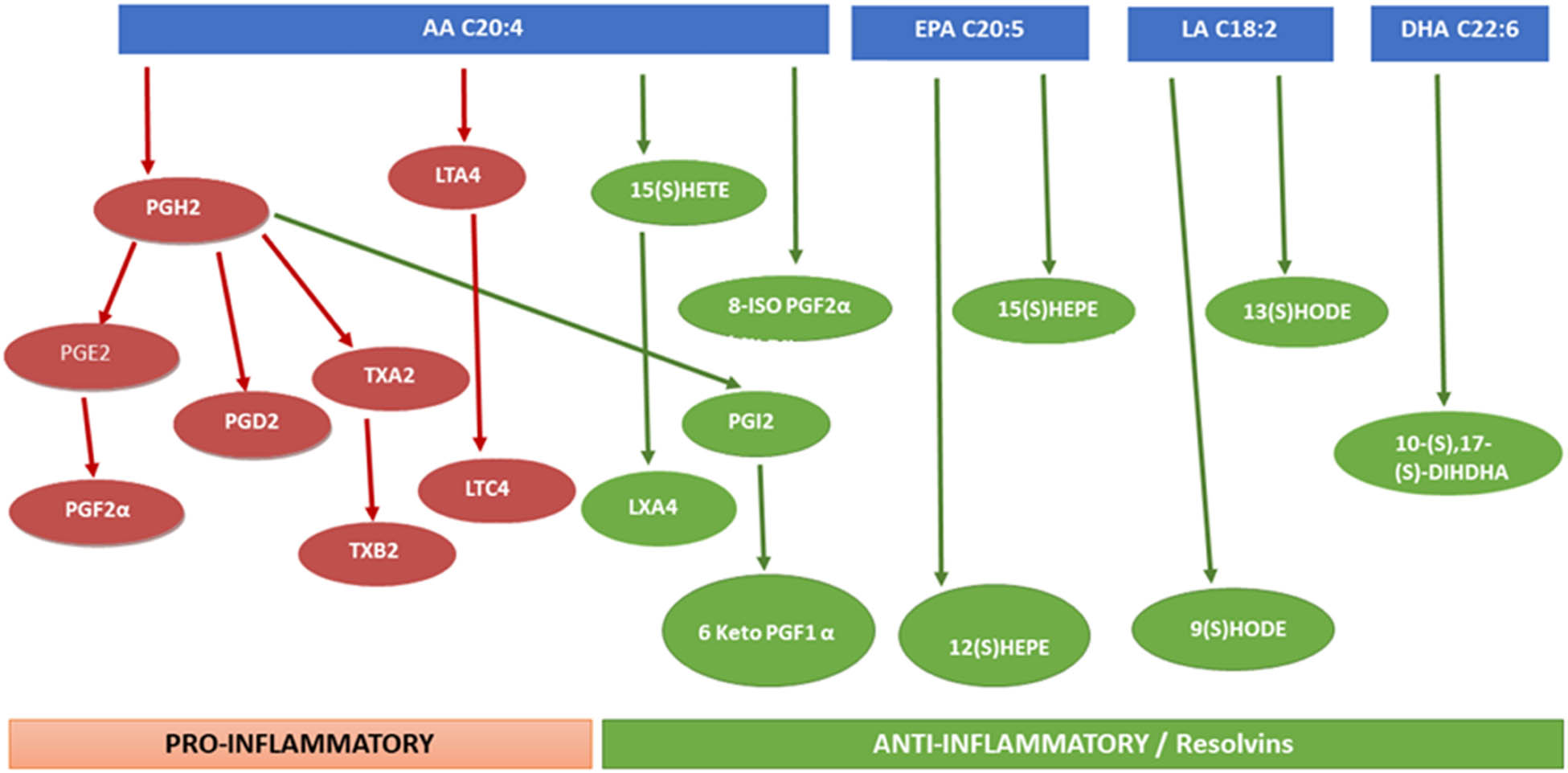
Scheme for mass spectrometry platforms that enable the quantification of diverse eicosanoid species in urine. AA, arachidonic acid; EPA, eicosapentaenoic acid; LA, linoleic acid; DHA, docosahexaenoic acid; LT, leukotriene; PG, prostaglandin; HEPE, hydroxy-eicosapentaenoic acid; HETE, hydroxy-eicosatetraenes; HODE, hydroxy-octadecadienoic acid; DIHDHA, dihydroxy-docosahexaenoic acids.
Urinary eicosanoid contents were shown for each pair and their average values. The urine samples were produced in accordance with previously published techniques [25]. In brief, 50 µL of urine was vortexed with 50 µL of MeOH and 20 µL of IS working solution. The chromatographic separation was performed on a 25°C XBridge BEH C18 column (21 mm × 50 mm, 2.5 µm). The mobile phases were H2O + 0.1% formic acid (A) and acetonitrile + 0.1% formic acid (B), with a flow rate of 0.25 mL/min. The injection volume was 10 µL, and all analytes were eluted between 0.10 and 12 min with gradients ranging from 10 to 90% B.
2.5.2 MS conditions and validation of the method
As a mass spectrometer, a Q ExactiveTM Plus Hybrid Quadrupole-OrbitrapTM (Thermo Fisher Scientific, California, USA) with a heated electrospray ionization source was employed (HESI-II). Wolfer et al. provided the source parameters. The Full MS scan/dd-MS2 mode was used to collect all data. The resolution of the Orbitrap was adjusted to 140,000 FWHM (scan range 200–800 m/z). For a maximum injection period of 100 ms, the automatic gain control was set to 1 × 10⁶ ions. The product ions were discovered by raising the normalized collision energy (NCE) until the precursor ions were completely fragmented. Each analyte was assigned a NCE value. The retention time (RT), accurate mass, and distinctive fragmentation were used to identify the analytes. All analyses were performed with no lock mass. Each day before the study, an external calibration for mass accuracy was done. Thermo Xcalibur TM version 4.0 software was used to record and expound on acquisition data. The method’s performance was evaluated for linearity, specificity, and trueness in compliance with Commission Decision 2002/657. The LOQ was computed as the smallest amount of standard required to generate an S/N > 5 while remaining within the calibration curve’s linear range (back-calculated residual 20%). The linearity test yielded good results for all analytes tested (r 2 > 0.997). Trueness by recovery yielded values ranging between 80 and 104%. This method allows simultaneous analysis of the following eicosanoids: prostaglandin F2α(PGF2α), prostaglandin E2(PGE2), prostaglandin D2 (PGD2), leukotriene C4 (LTC4), thromboxane B2 (TXB2), 11-dehydro thromboxane B2 (11-dehydro TXB2), 12-(R)-hydroxy-eicosatetraenes (12RHETE), 9-(S)-hydroxy-octadecadienoic acid (9SHODE), 15-(S)-hydroxy-eicosapentaenoic acid (15SHEPE), 12-(S)-hydroxy-eicosapentaenoic acid (12SHEPE), 13-(S)-hydroxy-octadecadienoic acid (13SHODE), 15-(S)-hydroxy-eicosatetraenes (15SHETE), 8-(S)-hydroxy-eicosatetraenes (8SHETE), 6-Keto prostaglandin F1α (6-Keto PGF1α), 10-(S),17-(S)-dihydroxy-docosahexaenoic acids (10S17SDIHDHA), and docosahexaenoyl ethanolamide.
2.6 Data analysis and statistical methods
The results of blood flow changes were expressed as the mean and standard deviation and statistical analysis was performed using two-way analysis of variance, and post hoc comparisons were made using Tukey’s test. All statistical analysis was conducted by using the software GraphPad Prism 10 (https://www.graphpad.com/features). The probability of p < 0.05 was considered significant. The urine excretion of each eicosanoid was expressed as a ratio with the urinary creatinine concentration.
3 Results
3.1 Concentration of polyphenols and spermidine in GMT and WG
The retention time (RT) and concentration of polyphenols and spermidine obtained in GMT and WGE samples are reported in Table 1. As reported, in GMT we found very high amount of ferulic acid, epigallocatechin and, in particular, petunidin. In WG we found at significantly high amount spermidin and apigenin. LC-MS analysis of WG and GMT extracts are shown, respectively, in Figure 3a and b.
Polyphenol and spermidine composition of GMT and WG extracts
| Compound | RT (min) | m/z | GMT (µg/g) | WG (µg/g) |
|---|---|---|---|---|
| Chlorogenic acid | 2.80 | 355.10236 | n.d. | 8.965 |
| Caffeic acid | 3.11 | 181.04954 | 77.359 | 1.563 |
| Rutin | 4.10 | 611.16066 | 20.773 | n.d. |
| Ferulic acid | 3.50 | 195.06519 | 3927 | n.d. |
| Quercetin | 5.50 | 303.04993 | 16.135 | n.d. |
| Apigenin | 5.13 | 196.06519 | n.d. | 118.639 |
| Epigallocatechin | 6.30 | 307.08193 | 179.871 | n.d. |
| Petunidin | 7.18 | 317.06558 | 19159.426 | n.d. |
| Spermidine | 2.04 | 229.08592 | n.d. | 290200.37 |
| Total polyphenols* | 17.8 | 1.25 |
*Total polyphenols content was measured by the Folin method and was expressed in % (w/w) gallic acid equivalents. n.d. = not detected.
3.2 Hemodynamic impact of GMT or WG on rat cremasteric arteriole blood flow
The change of blood flow in rat cremaster arteriole after a gavage administration of 100 mg/kg GMT or WG extraction are shown in Figure 2b and c. Immediately after GMT was administered, blood flow began to increase, and showed a significant increase compared to the control group from 10 to 60 min (Figure 2b). In contrast, as reported in Figure 2c, a slight increase in blood flow was observed 45–50 min after administration of the WG extract.

Change of blood flow in rat cremasteric arteriole GMT or WG. (a) Experimental procedure, (b) change in blood flow following a single gavage dose of vehicle (3% tween 80, n = 9) or 100 mg/kg GMT (n = 9), (c) change in blood flow following a single gavage dose of vehicle (3% tween 80, n = 9) or 100 mg/kg WG (n = 9). The values represent mean ± standard deviation. # p < 0.1, *p < 0.05, **p < 0.01, two-way ANOVA, followed by the post hoc Dunnett’s test, compared with vehicle.
3.3 Lipidomic analysis of mice urine after co-administration of GMT and WGE
The urinary excretion of the pro-inflammatory eicosanoids PGF2α, PGE2, TXB2, 11-dehydro TXB2, and 12RHETE was significantly decreased by administration of GMT or WG extract, and the effect was particularly strong with WG extract. Co-administration of these substances resulted in additive decreases. The urinary excretion of the anti-inflammatory eicosanoids 9SHODE, 13SHODE, 6-Keto PGF1α, and docosahexaenoyl ethanolamide was significantly increased by administration of GMT or WG extract, and the effect was particularly strong with WG extract. Co-administration of these substances resulted in additive increases. PGD2, LTC4 15SHEPE, 12SHEPE, 15SHETE, 8SHETE, 6-Keto PGF1 α, and 10S17SDIHDHA in the collected urine were below the detection limit (Figure 4).
4 Discussion
A thorough investigation into the polyphenol composition of the GMT and WG extracts was conducted in this study, yielding notable findings. The analysis revealed the presence of substantial concentrations of ferulic acid, epigallocatechin and, in particular, petunidin in GMT, with the total polyphenol content being recorded at 17.8% (Table 1 and Figure 3a). In addition, following oral administration of GMT, a significant increase in blood flow was observed in the rat’s elevator muscle, which was sustained throughout the 60 min observation period (Figure 3). It is well established that flow-mediated vasodilation (FMD) increases 2 h after the ingestion of polyphenol-containing foods in numerous intervention studies, including those examining cocoa [26], grape [27], cranberry [28], and black tea [29]. These intervention studies have shown that NO metabolites, which are responsible for vasodilation, increase. It has been suggested that polyphenol intake immediately activates eNOS in the vascular endothelial cells, and the NO produced relaxes the vascular smooth muscle, increasing the blood flow, resulting in an increase in FMD values [30]. Decreased endothelial function reduces the flexibility of blood vessels and increases the blood pressure, which increases the risk of arteriosclerosis directly linked to CVD [31,32]. Previous epidemiological studies have demonstrated a strong negative correlation between the frequency of polyphenol intake and CVD risk [30]. Based on these findings, it is expected that the intake of GMT will improve the vascular function and reduce the risk of CVD. However, polyphenols are poorly absorbed from the digestive tract, so it is unlikely that they are distributed in the blood and have a direct effect on blood vessels [33]. We demonstrate here that GMT has high levels of antocyanidins. Accordingly, it is known that monomeric and dimeric procyanidins undergo some absorption within the gastrointestinal tract, while their larger oligomeric and polymeric counterparts are not bioavailable. However, higher molecular weight procyanidins engage with the colonic microbiota, fostering the production of bioavailable metabolites that undergo metabolic processes, culminating in the emergence of bioactive agents capable of modulating physiological processes. Consistent with this notion, flavonols are degraded by intestinal bacteria to produce a specific metabolite, phenyl-γ-valerolactone (gVLM). Therefore, many researchers believe that the various beneficial effects of flavonols may be mediated by these metabolites [34]. However, in mammals, it has been reported that FL reached two peaks in plasma concentration (C max) of 260 and 88 nmol/L gVLM at 1.8 and 5.3 h (T max) after ingestion [35]. In contrast, the WG extract employed in this study exhibited low levels of polyphenols compared with GMT (Table 1 and Figure 3b). Moreover, the augmentation in blood flow within the skeletal muscles of rats subsequent to the administration of WG extract was slight in comparison to GMT. These outcomes are presumably indicative of discrepancies in polyphenol content. Conversely, a comparison of urinary eicosanoid excretion after single administration of GMT and WG extracts to mice revealed some notable findings. All pro-inflammatory eicosanoids were decreased by administration of GMT or WG, but this effect was more pronounced with WG than with GMT. Conversely, all anti-inflammatory eicosanoids were significantly increased by administration of GMT or WG, but this effect was more pronounced with WG than with GMT. Furthermore, in the combination study, the balance between pro-inflammatory and anti-inflammatory eicosanoids was improved by the combination of GMT and WG (Figure 4, Table 1). These results suggest that the mechanism of action of WG extract on eicosanoid metabolism may be brought about by components other than the different polyphenols contained in WG.

LC–HRMS chromatograms from WG (a) and GMT (b) extracts.

Change of total pro- or anti-inflammatory eicosanoids concentration in urine after a single gavage administration of GMT (100 mg/kg) or/and WG extract (100 mg/kg). Each value represents the average of ratio with the urinary creatinine concentration. LT, leukotriene; PG, prostaglandin; HEPE, hydroxy-eicosapentaenoic acid; HETE, hydroxy-eicosatetraenes; HODE, hydroxy-octadecadienoic acid; DIHDHA, dihydroxy-docosahexaenoic acids; DE, docosahexaenoyl ethanolamide.
GMT or/and WG extract showed to decrease the in vivo synthesis of PGE2 and TXA2, as evidenced by the reduced urinary excretion of their metabolites, PGF2α and TXB2 (Figure 4, Table 1). It is well established that PGE2, which is produced in significant quantities at pro-inflammatory sites, is a major mediator of inflammation and functions as a key protein in the generation of inflammatory pain [36,37]. Furthermore, TXA2 was recognized for its potent vasoconstricting action and platelet activation, which contributes to thrombus formation during periods of tissue damage or inflammation [38]. The capacity to inhibit the production of these pro-inflammatory eicosanoids offers significant potential for the regulation of a range of inflammatory conditions, including cardiovascular or neurodegenerative diseases. Furthermore, the urinary excretion of 9HODE and 13HODE was increased by GMT or/and WG extract. HODEs have heretofore been considered to be biomarkers reflecting increased oxidative stress in various diseases [39,40]. Conversely, it has been reported that in early atherosclerosis, 13-HODE, produced by macrophages, activates peroxisome proliferator-activated receptor γ and promotes the removal of lipids and lipid-laden cells from the arterial wall [41,42]. In addition, it has been hypothesized that both 9HODE and 13HODE may enhance the apoptosis sensitivity of vascular cells and suppress the formation of atherosclerotic plaques [41,43]. Consequently, these findings suggest that the alterations in eicosanoid balance induced by oral ingestion of GMT and WG may be vascular protective. Although, presently, our experiments did not clarify the components in GMT and WG extracts that regulate eicosanoid metabolism and, in addition, due to the analytical approach, we cannot exclude the possibility that water-soluble components in GMT and WG extracts might contribute also to the observed regulation of eicosanoid balance. We here observed that GMT and WG extracts tended to suppress the production of pro-inflammatory eicosanoids and promote the production of anti-inflammatory eicosanoids, yet the components responsible for this beneficial effect remain unknown. Further comprehensive analysis of the components contained in GMT and WG extracts would clarify better the mechanism of action associated with pro-health effect of our tested extracts. It is also important to conduct long-term animal studies to clarify the cardiovascular and neuroprotective benefits of GMT and WG extracts and to link them to intervention studies.
In conclusion, we found that GMT contains a wealth of polyphenols and enhances vascular endothelial function immediately after administration, and that GMT and WG extracts contain powerful eicosanoid balance-regulating components in addition to polyphenols. Further studies are needed to clarify the cardiovascular and neurodegenerative disease risk reduction effects of GMT and WG extracts.
-
Funding information: This study was supported by grants from “Piano di incentivi per la Ricerca, Linea Intervento 2 PIACERI, 2022–2024,” University of Catania, Italy and PRIN 2022FWB4EX, Italian MUR.
-
Author contributions: L.P., K.H., A.O., Y.O., Y.F., G.C., and G.M.L.D.: conceptualization, data curation, methodology, formal analysis; L.M., U.M.J., and B.H.: conceptualization; V.F.: conceptualization and formal analysis. N.O. and V.C.: conceptualization, investigation, funding acquisition, supervision, validation, writing, original draft – review and editing.
-
Conflict of interest: Prof. Calabrese is Editor in Chief and Prof. Osakabe is the Editor of Open Medicine Journal. This fact has not affected the peer review process. There is no other conflict of interest.
-
Data availability statement: Data can be made available upon motivated request to the corresponding author.
References
[1] Arts IC, Hollman PC. Polyphenols and disease risk in epidemiologic studies. Am J Clin Nutr. 2005;81(1 Suppl):317s–25s.10.1093/ajcn/81.1.317SSearch in Google Scholar PubMed
[2] Leiherer A, Mündlein A, Drexel H. Phytochemicals and their impact on adipose tissue inflammation and diabetes. Vasc Pharmacol. 2013;58(1–2):3–20.10.1016/j.vph.2012.09.002Search in Google Scholar PubMed
[3] Meydani M, Hasan ST. Dietary polyphenols and obesity. Nutrients. 2010;2(7):737–51.10.3390/nu2070737Search in Google Scholar PubMed PubMed Central
[4] Commenges D, Scotet V, Renaud S, Jacqmin-Gadda H, Barberger-Gateau P, Dartigues JF. Intake of flavonoids and risk of dementia. Eur J Epidemiol. 2000;16(4):357–63.10.1023/A:1007614613771Search in Google Scholar
[5] Hadi SM, Asad SF, Singh S, Ahmad A. Putative mechanism for anticancer and apoptosis-inducing properties of plant-derived polyphenolic compounds. IUBMB Life. 2000;50(3):167–71.10.1080/152165400300001471Search in Google Scholar PubMed
[6] Huang SM, Wu CH, Yen GC. Effects of flavonoids on the expression of the pro-inflammatory response in human monocytes induced by ligation of the receptor for AGEs. Mol Nutr Food Res. 2006;50(12):1129–39.10.1002/mnfr.200600075Search in Google Scholar PubMed
[7] Buchbauer G, Jirovetz L, Jäger W, Dietrich H, Plank C. Aromatherapy: evidence for sedative effects of the essential oil of lavender after inhalation. Z Naturforsch C J Biosci. 1991;46(11–12):1067–72.10.1515/znc-1991-11-1223Search in Google Scholar PubMed
[8] Panche AN, Diwan AD, Chandra SR. Flavonoids: an overview. J Nutr Sci. 2016;5:e47.10.1017/jns.2016.41Search in Google Scholar PubMed PubMed Central
[9] Houghton PJ. The role of plants in traditional medicine and current therapy. J Altern Complement Med. 1995;1(2):131–43.10.1089/acm.1995.1.131Search in Google Scholar PubMed
[10] Tresserra-Rimbau A, Lamuela-Raventos RM, Moreno JJ. Polyphenols, food and pharma: current knowledge and directions for future research. Biochem Pharmacol. 2018;156:186–95.10.1016/j.bcp.2018.07.050Search in Google Scholar PubMed
[11] Tadić VM, Jeremic I, Dobric S, Isakovic A, Markovic I, Trajkovic V, et al. Anti-inflammatory, gastroprotective, and cytotoxic effects of Sideritis scardica extracts. Planta Med. 2012;78(5):415–27.10.1055/s-0031-1298172Search in Google Scholar PubMed
[12] Danesi F, Saha S, Kroon PA, Glibetić M, Konić-Ristić A, D’Antuono LF, et al. Bioactive-rich Sideritis scardica tea (mountain tea) is as potent as Camellia sinensis tea at inducing cellular antioxidant defences and preventing oxidative stress. J Sci Food Agric. 2013;93(14):3558–64.10.1002/jsfa.6214Search in Google Scholar PubMed
[13] Jamdar F, Ali Mortazavi S, Reza Saiedi Asl M, Sharifi A. Physicochemical properties and enzymatic activity of wheat germ extract microencapsulated with spray and freeze drying. Food Sci Nutr. 2021;9(2):1192–201.10.1002/fsn3.2104Search in Google Scholar PubMed PubMed Central
[14] Fardet A. New hypotheses for the health-protective mechanisms of whole-grain cereals: what is beyond fibre? Nutr Res Rev. 2010;23(1):65–134.10.1017/S0954422410000041Search in Google Scholar PubMed
[15] Soujanya KV, Jayadeep AP. Obesity-associated biochemical markers of inflammation and the role of grain phytochemicals. J Food Biochem. 2022;46(9):e14257.10.1111/jfbc.14257Search in Google Scholar PubMed
[16] Skeie G, Fadnes LT. Cereals and cereal products – a scoping review for Nordic Nutrition Recommendations 2023. Food Nutr Res. 2024;68. 10.29219/fnr.v68.10457.Search in Google Scholar PubMed PubMed Central
[17] Schini-Kerth VB, Auger C, Kim JH, Etienne-Selloum N, Chataigneau T. Nutritional improvement of the endothelial control of vascular tone by polyphenols: role of NO and EDHF. Pflug Archiv: Eur J Physiol. 2010;459(6):853–62.10.1007/s00424-010-0806-4Search in Google Scholar PubMed
[18] Nicholson SK, Tucker GA, Brameld JM. Physiological concentrations of dietary polyphenols regulate vascular endothelial cell expression of genes important in cardiovascular health. Br J Nutr. 2010;103(10):1398–403.10.1017/S0007114509993485Search in Google Scholar PubMed
[19] Stoclet J-C, Chataigneau T, Ndiaye M, Oak M-H, El Bedoui J, Chataigneau M, et al. Vascular protection by dietary polyphenols. Eur J Pharmacol. 2004;500(1):299–313.10.1016/j.ejphar.2004.07.034Search in Google Scholar PubMed
[20] Grosso G, Godos J, Currenti W, Micek A, Falzone L, Libra M, et al. The effect of dietary polyphenols on vascular health and hypertension: current evidence and mechanisms of action. Nutrients. 2022;14(3):545. 10.3390/nu14030545.Search in Google Scholar PubMed PubMed Central
[21] Yoshida Y, Shimizu K, Nakamura H, Fujii Y, Fritsch T, Abdelhameed A, et al. An immunohistochemical evaluation of fast twitch muscle formation induced by repeated administration of flavan 3-ols in mice. FASEB J: Off Publ Fed Am Soc Exp Biol. 2024;38(24):e70193.10.1096/fj.202401865RSearch in Google Scholar PubMed
[22] Alfano C, Messina EMD, Cammilleri G, Galluzzo FG, Pantano L, Buscemi MD, et al. Detection of polyphenols in carob pods (Ceratonia siliqua) from Southern Italy by a LC-HRMS method. Nat Prod Res. 2024;1–8. 10.1080/14786419.2024.2429527.Search in Google Scholar PubMed
[23] Fushimi T, Fujii Y, Koshino H, Inagawa K, Saito A, Koizumi R, et al. Method for detecting hemodynamic alterations following a single gavage in rats. Exp Anim. 2021;70(3):372–7.10.1538/expanim.20-0200Search in Google Scholar PubMed PubMed Central
[24] Muta O, Odaka M, Fujii Y, Fushimi T, Sato H, Osakabe N. Difference in endocrine and behavior between short-term single- and paired-housing mice in metabolic cage. Neurosci Lett. 2023;806:137246.10.1016/j.neulet.2023.137246Search in Google Scholar PubMed
[25] Wolfer AM, Gaudin M, Taylor-Robinson SD, Holmes E, Nicholson JK. Development and validation of a high-throughput ultrahigh-performance liquid chromatography-mass spectrometry approach for screening of oxylipins and their precursors. Anal Chem. 2015;87(23):11721–31.10.1021/acs.analchem.5b02794Search in Google Scholar PubMed
[26] Monahan KD, Feehan RP, Kunselman AR, Preston AG, Miller DL, Lott ME. Dose-dependent increases in flow-mediated dilation following acute cocoa ingestion in healthy older adults. J Appl Physiol. 19852011;111(6):1568–74.10.1152/japplphysiol.00865.2011Search in Google Scholar PubMed PubMed Central
[27] Barona J, Aristizabal JC, Blesso CN, Volek JS, Fernandez ML. Grape polyphenols reduce blood pressure and increase flow-mediated vasodilation in men with metabolic syndrome. J Nutr. 2012;142(9):1626–32.10.3945/jn.112.162743Search in Google Scholar PubMed
[28] Dohadwala MM, Holbrook M, Hamburg NM, Shenouda SM, Chung WB, Titas M, et al. Effects of cranberry juice consumption on vascular function in patients with coronary artery disease. Am J Clin Nutr. 2011;93(5):934–40.10.3945/ajcn.110.004242Search in Google Scholar PubMed PubMed Central
[29] Saito A, Nakazato R, Suhara Y, Shibata M, Fukui T, Ishii T, et al. The impact of theaflavins on systemic-and microcirculation alterations: the murine and randomized feasibility trials. J Nutr Biochem. 2016;32:107–14.10.1016/j.jnutbio.2016.01.012Search in Google Scholar PubMed
[30] Osakabe N, Terao J. Possible mechanisms of postprandial physiological alterations following flavan 3-ol ingestion. Nutr Rev. 2018;76(3):174–86.10.1093/nutrit/nux070Search in Google Scholar PubMed
[31] Sun Y, Zimmermann D, De Castro CA, Actis-Goretta L. Dose–response relationship between cocoa flavanols and human endothelial function: a systematic review and meta-analysis of randomized trials. Food Funct. 2019;10(10):6322–30.10.1039/C9FO01747JSearch in Google Scholar PubMed
[32] Dharmashankar K, Widlansky ME. Vascular endothelial function and hypertension: insights and directions. Curr Hypertens Rep. 2010;12(6):448–55.10.1007/s11906-010-0150-2Search in Google Scholar PubMed PubMed Central
[33] Teng H, Chen L. Polyphenols and bioavailability: an update. Crit Rev Food Sci Nutr. 2019;59(13):2040–51.10.1080/10408398.2018.1437023Search in Google Scholar PubMed
[34] Baron G, Altomare A, Della Vedova L, Gado F, Quagliano O, Casati S, et al. Unraveling the parahormetic mechanism underlying the health-protecting effects of grapeseed procyanidins. Redox Biol. 2024;69:102981.10.1016/j.redox.2023.102981Search in Google Scholar PubMed PubMed Central
[35] Di Pede G, Mena P, Bresciani L, Achour M, Lamuela-Raventós RM, Estruch R, et al. Revisiting the bioavailability of flavan-3-ols in humans: a systematic review and comprehensive data analysis. Mol Asp Med. 2023;89:101146.10.1016/j.mam.2022.101146Search in Google Scholar PubMed
[36] Hohjoh H, Inazumi T, Tsuchiya S, Sugimoto Y. Prostanoid receptors and acute inflammation in skin. Biochimie. 2014;107(Pt A):78–81.10.1016/j.biochi.2014.08.010Search in Google Scholar PubMed
[37] Kawahara K, Hohjoh H, Inazumi T, Tsuchiya S, Sugimoto Y. Prostaglandin E2-induced inflammation: relevance of prostaglandin E receptors. Biochim Biophys Acta. 2015;1851(4):414–21.10.1016/j.bbalip.2014.07.008Search in Google Scholar PubMed
[38] Yuhki K, Kojima F, Kashiwagi H, Kawabe J, Fujino T, Narumiya S, et al. Roles of prostanoids in the pathogenesis of cardiovascular diseases: novel insights from knockout mouse studies. Pharmacol Ther. 2011;129(2):195–205.10.1016/j.pharmthera.2010.09.004Search in Google Scholar PubMed
[39] Yoshida Y, Umeno A, Akazawa Y, Shichiri M, Murotomi K, Horie M. Chemistry of lipid peroxidation products and their use as biomarkers in early detection of diseases. J Oleo Sci. 2015;64(4):347–56.10.5650/jos.ess14281Search in Google Scholar PubMed
[40] Umeno A, Shichiri M, Ishida N, Hashimoto Y, Abe K, Kataoka M, et al. Singlet oxygen induced products of linoleates, 10- and 12-(Z,E)-hydroxyoctadecadienoic acids (HODE), can be potential biomarkers for early detection of type 2 diabetes. PLoS One. 2013;8(5):e63542.10.1371/journal.pone.0063542Search in Google Scholar PubMed PubMed Central
[41] Vangaveti V, Baune BT, Kennedy RL. Hydroxyoctadecadienoic acids: novel regulators of macrophage differentiation and atherogenesis. Ther Adv Endocrinol Metab. 2010;1(2):51–60.10.1177/2042018810375656Search in Google Scholar PubMed PubMed Central
[42] Szczuko M, Kotlęga D, Palma J, Zembroń-Łacny A, Tylutka A, Gołąb-Janowska M, et al. Lipoxins, RevD1 and 9, 13 HODE as the most important derivatives after an early incident of ischemic stroke. Sci Rep. 2020;10(1):12849.10.1038/s41598-020-69831-0Search in Google Scholar PubMed PubMed Central
[43] Vangaveti VN, Shashidhar VM, Rush C, Malabu UH, Rasalam RR, Collier F, et al. Hydroxyoctadecadienoic acids regulate apoptosis in human THP-1 cells in a PPARγ-dependent manner. Lipids. 2014;49(12):1181–92.10.1007/s11745-014-3954-zSearch in Google Scholar PubMed
© 2025 the author(s), published by De Gruyter
This work is licensed under the Creative Commons Attribution 4.0 International License.
Articles in the same Issue
- Research Articles
- Network pharmacological analysis and in vitro testing of the rutin effects on triple-negative breast cancer
- Impact of diabetes on long-term survival in elderly liver cancer patients: A retrospective study
- Knockdown of CCNB1 alleviates high glucose-triggered trophoblast dysfunction during gestational diabetes via Wnt/β-catenin signaling pathway
- Risk factors for severe adverse drug reactions in hospitalized patients
- Analysis of the effect of ALA-PDT on macrophages in footpad model of mice infected with Fonsecaea monophora based on single-cell sequencing
- Development and validation of headspace gas chromatography with a flame ionization detector method for the determination of ethanol in the vitreous humor
- CMSP exerts anti-tumor effects on small cell lung cancer cells by inducing mitochondrial dysfunction and ferroptosis
- Predictive value of plasma sB7-H3 and YKL-40 in pediatric refractory Mycoplasma pneumoniae pneumonia
- Antiangiogenic potential of Elaeagnus umbellata extracts and molecular docking study by targeting VEGFR-2 pathway
- Comparison of the effectiveness of nurse-led preoperative counseling and postoperative follow-up care vs standard care for patients with gastric cancer
- Comparing the therapeutic efficacy of endoscopic minimally invasive surgery and traditional surgery for early-stage breast cancer: A meta-analysis
- Adhered macrophages as an additional marker of cardiomyocyte injury in biopsies of patients with dilated cardiomyopathy
- Association between statin administration and outcome in patients with sepsis: A retrospective study
- Exploration of the association between estimated glucose disposal rate and osteoarthritis in middle-aged and older adults: An analysis of NHANES data from 2011 to 2018
- A comparative analysis of the binary and multiclass classified chest X-ray images of pneumonia and COVID-19 with ML and DL models
- Lysophosphatidic acid 2 alleviates deep vein thrombosis via protective endothelial barrier function
- Transcription factor A, mitochondrial promotes lymph node metastasis and lymphangiogenesis in epithelial ovarian carcinoma
- Serum PM20D1 levels are associated with nutritional status and inflammatory factors in gastric cancer patients undergoing early enteral nutrition
- Hydromorphone reduced the incidence of emergence agitation after adenotonsillectomy in children with obstructive sleep apnea: A randomized, double-blind study
- Vitamin D replacement therapy may regulate sleep habits in patients with restless leg syndrome
- The first-line antihypertensive nitrendipine potentiated the therapeutic effect of oxaliplatin by downregulating CACNA1D in colorectal cancer
- Health literacy and health-related quality of life: The mediating role of irrational happiness
- Modulatory effects of Lycium barbarum polysaccharide on bone cell dynamics in osteoporosis
- Mechanism research on inhibition of gastric cancer in vitro by the extract of Pinellia ternata based on network pharmacology and cellular metabolomics
- Examination of the causal role of immune cells in non-alcoholic fatty liver disease by a bidirectional Mendelian randomization study
- Clinical analysis of ten cases of HIV infection combined with acute leukemia
- Investigating the cardioprotective potential of quercetin against tacrolimus-induced cardiotoxicity in Wistar rats: A mechanistic insights
- Clinical observation of probiotics combined with mesalazine and Yiyi Baitouweng Decoction retention enema in treating mild-to-moderate ulcerative colitis
- Diagnostic value of ratio of blood inflammation to coagulation markers in periprosthetic joint infection
- Sex-specific associations of sex hormone binding globulin and risk of bladder cancer
- Core muscle strength and stability-oriented breathing training reduces inter-recti distance in postpartum women
- The ERAS nursing care strategy for patients undergoing transsphenoidal endoscopic pituitary tumor resection: A randomized blinded controlled trial
- The serum IL-17A levels in patients with traumatic bowel rupture post-surgery and its predictive value for patient prognosis
- Impact of Kolb’s experiential learning theory-based nursing on caregiver burden and psychological state of caregivers of dementia patients
- Analysis of serum NLR combined with intraoperative margin condition to predict the prognosis of cervical HSIL patients undergoing LEEP surgery
- Commiphora gileadensis ameliorate infertility and erectile dysfunction in diabetic male mice
- The correlation between epithelial–mesenchymal transition classification and MMP2 expression of circulating tumor cells and prognosis of advanced or metastatic nasopharyngeal carcinoma
- Tetrahydropalmatine improves mitochondrial function in vascular smooth muscle cells of atherosclerosis in vitro by inhibiting Ras homolog gene family A/Rho-associated protein kinase-1 signaling pathway
- A cross-sectional study: Relationship between serum oxidative stress levels and arteriovenous fistula maturation in maintenance dialysis patients
- A comparative analysis of the impact of repeated administration of flavan 3-ol on brown, subcutaneous, and visceral adipose tissue
- Identifying early screening factors for depression in middle-aged and older adults: A cohort study
- Perform tumor-specific survival analysis for Merkel cell carcinoma patients undergoing surgical resection based on the SEER database by constructing a nomogram chart
- Unveiling the role of CXCL10 in pancreatic cancer progression: A novel prognostic indicator
- High-dose preoperative intraperitoneal erythropoietin and intravenous methylprednisolone in acute traumatic spinal cord injuries following decompression surgeries
- RAB39B: A novel biomarker for acute myeloid leukemia identified via multi-omics and functional validation
- Impact of peripheral conditioning on reperfusion injury following primary percutaneous coronary intervention in diabetic and non-diabetic STEMI patients
- Clinical efficacy of azacitidine in the treatment of middle- and high-risk myelodysplastic syndrome in middle-aged and elderly patients: A retrospective study
- The effect of ambulatory blood pressure load on mitral regurgitation in continuous ambulatory peritoneal dialysis patients
- Expression and clinical significance of ITGA3 in breast cancer
- Single-nucleus RNA sequencing reveals ARHGAP28 expression of podocytes as a biomarker in human diabetic nephropathy
- rSIG combined with NLR in the prognostic assessment of patients with multiple injuries
- Toxic metals and metalloids in collagen supplements of fish and jellyfish origin: Risk assessment for daily intake
- Exploring causal relationship between 41 inflammatory cytokines and marginal zone lymphoma: A bidirectional Mendelian randomization study
- Gender beliefs and legitimization of dating violence in adolescents
- Effect of serum IL-6, CRP, and MMP-9 levels on the efficacy of modified preperitoneal Kugel repair in patients with inguinal hernia
- Effect of smoking and smoking cessation on hematological parameters in polycythemic patients
- Pathogen surveillance and risk factors for pulmonary infection in patients with lung cancer: A retrospective single-center study
- Necroptosis of hippocampal neurons in paclitaxel chemotherapy-induced cognitive impairment mediates microglial activation via TLR4/MyD88 signaling pathway
- Celastrol suppresses neovascularization in rat aortic vascular endothelial cells stimulated by inflammatory tenocytes via modulating the NLRP3 pathway
- Cord-lamina angle and foraminal diameter as key predictors of C5 palsy after anterior cervical decompression and fusion surgery
- GATA1: A key biomarker for predicting the prognosis of patients with diffuse large B-cell lymphoma
- Influencing factors of false lumen thrombosis in type B aortic dissection: A single-center retrospective study
- MZB1 regulates the immune microenvironment and inhibits ovarian cancer cell migration
- Integrating experimental and network pharmacology to explore the pharmacological mechanisms of Dioscin against glioblastoma
- Trends in research on preterm birth in twin pregnancy based on bibliometrics
- Four-week IgE/baseline IgE ratio combined with tryptase predicts clinical outcome in omalizumab-treated children with moderate-to-severe asthma
- Single-cell transcriptomic analysis identifies a stress response Schwann cell subtype
- Acute pancreatitis risk in the diagnosis and management of inflammatory bowel disease: A critical focus
- Effect of subclinical esketamine on NLRP3 and cognitive dysfunction in elderly ischemic stroke patients
- Interleukin-37 mediates the anti-oral tumor activity in oral cancer through STAT3
- CA199 and CEA expression levels, and minimally invasive postoperative prognosis analysis in esophageal squamous carcinoma patients
- Efficacy of a novel drainage catheter in the treatment of CSF leak after posterior spine surgery: A retrospective cohort study
- Comprehensive biomedicine assessment of Apteranthes tuberculata extracts: Phytochemical analysis and multifaceted pharmacological evaluation in animal models
- Relation of time in range to severity of coronary artery disease in patients with type 2 diabetes: A cross-sectional study
- Dopamine attenuates ethanol-induced neuronal apoptosis by stimulating electrical activity in the developing rat retina
- Correlation between albumin levels during the third trimester and the risk of postpartum levator ani muscle rupture
- Factors associated with maternal attention and distraction during breastfeeding and childcare: A cross-sectional study in the west of Iran
- Mechanisms of hesperetin in treating metabolic dysfunction-associated steatosis liver disease via network pharmacology and in vitro experiments
- The law on oncological oblivion in the Italian and European context: How to best uphold the cancer patients’ rights to privacy and self-determination?
- The prognostic value of the neutrophil-to-lymphocyte ratio, platelet-to-lymphocyte ratio, and prognostic nutritional index for survival in patients with colorectal cancer
- Factors affecting the measurements of peripheral oxygen saturation values in healthy young adults
- Comparison and correlations between findings of hysteroscopy and vaginal color Doppler ultrasonography for detection of uterine abnormalities in patients with recurrent implantation failure
- The effects of different types of RAGT on balance function in stroke patients with low levels of independent walking in a convalescent rehabilitation hospital
- Causal relationship between asthma and ankylosing spondylitis: A bidirectional two-sample univariable and multivariable Mendelian randomization study
- Correlations of health literacy with individuals’ understanding and use of medications in Southern Taiwan
- Correlation of serum calprotectin with outcome of acute cerebral infarction
- Comparison of computed tomography and guided bronchoscopy in the diagnosis of pulmonary nodules: A systematic review and meta-analysis
- Curdione protects vascular endothelial cells and atherosclerosis via the regulation of DNMT1-mediated ERBB4 promoter methylation
- The identification of novel missense variant in ChAT gene in a patient with gestational diabetes denotes plausible genetic association
- Molecular genotyping of multi-system rare blood types in foreign blood donors based on DNA sequencing and its clinical significance
- Exploring the role of succinyl carnitine in the association between CD39⁺ CD4⁺ T cell and ulcerative colitis: A Mendelian randomization study
- Dexmedetomidine suppresses microglial activation in postoperative cognitive dysfunction via the mmu-miRNA-125/TRAF6 signaling axis
- Analysis of serum metabolomics in patients with different types of chronic heart failure
- Diagnostic value of hematological parameters in the early diagnosis of acute cholecystitis
- Pachymaran alleviates fat accumulation, hepatocyte degeneration, and injury in mice with nonalcoholic fatty liver disease
- Decrease in CD4 and CD8 lymphocytes are predictors of severe clinical picture and unfavorable outcome of the disease in patients with COVID-19
- METTL3 blocked the progression of diabetic retinopathy through m6A-modified SOX2
- The predictive significance of anti-RO-52 antibody in patients with interstitial pneumonia after treatment of malignant tumors
- Exploring cerebrospinal fluid metabolites, cognitive function, and brain atrophy: Insights from Mendelian randomization
- Development and validation of potential molecular subtypes and signatures of ocular sarcoidosis based on autophagy-related gene analysis
- Widespread venous thrombosis: Unveiling a complex case of Behçet’s disease with a literature perspective
- Uterine fibroid embolization: An analysis of clinical outcomes and impact on patients’ quality of life
- Discovery of lipid metabolism-related diagnostic biomarkers and construction of diagnostic model in steroid-induced osteonecrosis of femoral head
- Serum-derived exomiR-188-3p is a promising novel biomarker for early-stage ovarian cancer
- Enhancing chronic back pain management: A comparative study of ultrasound–MRI fusion guidance for paravertebral nerve block
- Peptide CCAT1-70aa promotes hepatocellular carcinoma proliferation and invasion via the MAPK/ERK pathway
- Electroacupuncture-induced reduction of myocardial ischemia–reperfusion injury via FTO-dependent m6A methylation modulation
- Hemorrhoids and cardiovascular disease: A bidirectional Mendelian randomization study
- Cell-free adipose extract inhibits hypertrophic scar formation through collagen remodeling and antiangiogenesis
- HALP score in Demodex blepharitis: A case–control study
- Assessment of SOX2 performance as a marker for circulating cancer stem-like cells (CCSCs) identification in advanced breast cancer patients using CytoTrack system
- Risk and prognosis for brain metastasis in primary metastatic cervical cancer patients: A population-based study
- Comparison of the two intestinal anastomosis methods in pediatric patients
- Factors influencing hematological toxicity and adverse effects of perioperative hyperthermic intraperitoneal vs intraperitoneal chemotherapy in gastrointestinal cancer
- Endotoxin tolerance inhibits NLRP3 inflammasome activation in macrophages of septic mice by restoring autophagic flux through TRIM26
- Lateral transperitoneal laparoscopic adrenalectomy: A single-centre experience of 21 procedures
- Petunidin attenuates lipopolysaccharide-induced retinal microglia inflammatory response in diabetic retinopathy by targeting OGT/NF-κB/LCN2 axis
- Procalcitonin and C-reactive protein as biomarkers for diagnosing and assessing the severity of acute cholecystitis
- Factors determining the number of sessions in successful extracorporeal shock wave lithotripsy patients
- Development of a nomogram for predicting cancer-specific survival in patients with renal pelvic cancer following surgery
- Inhibition of ATG7 promotes orthodontic tooth movement by regulating the RANKL/OPG ratio under compression force
- A machine learning-based prognostic model integrating mRNA stemness index, hypoxia, and glycolysis‑related biomarkers for colorectal cancer
- Glutathione attenuates sepsis-associated encephalopathy via dual modulation of NF-κB and PKA/CREB pathways
- FAHD1 prevents neuronal ferroptosis by modulating R-loop and the cGAS–STING pathway
- Association of placenta weight and morphology with term low birth weight: A case–control study
- Investigation of the pathogenic variants induced Sjogren’s syndrome in Turkish population
- Nucleotide metabolic abnormalities in post-COVID-19 condition and type 2 diabetes mellitus patients and their association with endocrine dysfunction
- TGF-β–Smad2/3 signaling in high-altitude pulmonary hypertension in rats: Role and mechanisms via macrophage M2 polarization
- Ultrasound-guided unilateral versus bilateral erector spinae plane block for postoperative analgesia of patients undergoing laparoscopic cholecystectomy
- Profiling gut microbiome dynamics in subacute thyroiditis: Implications for pathogenesis, diagnosis, and treatment
- Delta neutrophil index, CRP/albumin ratio, procalcitonin, immature granulocytes, and HALP score in acute appendicitis: Best performing biomarker?
- Anticancer activity mechanism of novelly synthesized and characterized benzofuran ring-linked 3-nitrophenyl chalcone derivative on colon cancer cells
- H2valdien3 arrests the cell cycle and induces apoptosis of gastric cancer
- Prognostic relevance of PRSS2 and its immune correlates in papillary thyroid carcinoma
- Association of SGLT2 inhibition with psychiatric disorders: A Mendelian randomization study
- Motivational interviewing for alcohol use reduction in Thai patients
- Luteolin alleviates oxygen-glucose deprivation/reoxygenation-induced neuron injury by regulating NLRP3/IL-1β signaling
- Polyphyllin II inhibits thyroid cancer cell growth by simultaneously inhibiting glycolysis and oxidative phosphorylation
- Relationship between the expression of copper death promoting factor SLC31A1 in papillary thyroid carcinoma and clinicopathological indicators and prognosis
- CSF2 polarized neutrophils and invaded renal cancer cells in vitro influence
- Proton pump inhibitors-induced thrombocytopenia: A systematic literature analysis of case reports
- The current status and influence factors of research ability among community nurses: A sequential qualitative–quantitative study
- OKAIN: A comprehensive oncology knowledge base for the interpretation of clinically actionable alterations
- The relationship between serum CA50, CA242, and SAA levels and clinical pathological characteristics and prognosis in patients with pancreatic cancer
- Identification and external validation of a prognostic signature based on hypoxia–glycolysis-related genes for kidney renal clear cell carcinoma
- Engineered RBC-derived nanovesicles functionalized with tumor-targeting ligands: A comparative study on breast cancer targeting efficiency and biocompatibility
- Relationship of resting echocardiography combined with serum micronutrients to the severity of low-gradient severe aortic stenosis
- Effect of vibration on pain during subcutaneous heparin injection: A randomized, single-blind, placebo-controlled trial
- The diagnostic performance of machine learning-based FFRCT for coronary artery disease: A meta-analysis
- Comparing biofeedback device vs diaphragmatic breathing for bloating relief: A randomized controlled trial
- Serum uric acid to albumin ratio and C-reactive protein as predictive biomarkers for chronic total occlusion and coronary collateral circulation quality
- Multiple organ scoring systems for predicting in-hospital mortality of sepsis patients in the intensive care unit
- Single-cell RNA sequencing data analysis of the inner ear in gentamicin-treated mice via intraperitoneal injection
- Suppression of cathepsin B attenuates myocardial injury via limiting cardiomyocyte apoptosis
- Influence of sevoflurane combined with propofol anesthesia on the anesthesia effect and adverse reactions in children with acute appendicitis
- Identification of hub genes related to acute kidney injury caused by sevoflurane anesthesia and endoplasmic reticulum stress
- Efficacy and safety of PD-1/PD-L1 inhibitors in pancreatic ductal adenocarcinoma: a systematic review and Meta-analysis of randomized controlled trials
- The value of diagnostic experience in O-RADS MRI score for ovarian-adnexal lesions
- Health education pathway for individuals with temporary enterostomies using patient journey mapping
- Serum TLR8 as a potential diagnostic biomarker of coronary heart disease
- Intraoperative temperature management and its effect on surgical outcomes in elderly patients undergoing lichtenstein unilateral inguinal hernia repair
- Immunohistochemical profiling and neuroepithelial heterogeneity in immature ovarian teratomas: a retrospective digital pathology-based study
- Associated risk factors and prevalence of human papillomavirus infection among females visiting tertiary care hospital: a cross-sectional study from Nepal
- Comparative evaluation of various disc elution methods for the detection of colistin-resistant gram-negative bacteria
- Effect of timing of cholecystectomy on weight loss after sleeve gastrectomy in morbidly obese individuals with cholelithiasis: a retrospective cohort study
- Causal association between ceramide levels and central precocious puberty: a mendelian randomization study
- Novel predictive model for colorectal liver metastases recurrence: a radiomics and clinical data approach
- Relationship between resident physicians’ perceived professional value and exposure to violence
- Multiple sclerosis and type 1 diabetes: a Mendelian randomization study of European ancestry
- Rapid pathogen identification in peritoneal dialysis effluent by MALDI-TOF MS following blood culture enrichment
- Comparison of open and percutaneous A1 pulley release in pediatric trigger thumb: a retrospective cohort study
- Impact of combined diaphragm-lung ultrasound assessment on postoperative respiratory function in patients under general anesthesia recovery
- Development and internal validation of a nomogram for predicting short-term prognosis in ICU patients with acute pyelonephritis
- The association between hypoxic burden and blood pressure in patients with obstructive sleep apnea
- Promotion of asthenozoospermia by C9orf72 through suppression of spermatogonia activity via fructose metabolism and mitophagy
- Review Articles
- The effects of enhanced external counter-pulsation on post-acute sequelae of COVID-19: A narrative review
- Diabetes-related cognitive impairment: Mechanisms, symptoms, and treatments
- Microscopic changes and gross morphology of placenta in women affected by gestational diabetes mellitus in dietary treatment: A systematic review
- Review of mechanisms and frontier applications in IL-17A-induced hypertension
- Research progress on the correlation between islet amyloid peptides and type 2 diabetes mellitus
- The safety and efficacy of BCG combined with mitomycin C compared with BCG monotherapy in patients with non-muscle-invasive bladder cancer: A systematic review and meta-analysis
- The application of augmented reality in robotic general surgery: A mini-review
- The effect of Greek mountain tea extract and wheat germ extract on peripheral blood flow and eicosanoid metabolism in mammals
- Neurogasobiology of migraine: Carbon monoxide, hydrogen sulfide, and nitric oxide as emerging pathophysiological trinacrium relevant to nociception regulation
- Plant polyphenols, terpenes, and terpenoids in oral health
- Laboratory medicine between technological innovation, rights safeguarding, and patient safety: A bioethical perspective
- End-of-life in cancer patients: Medicolegal implications and ethical challenges in Europe
- The maternal factors during pregnancy for intrauterine growth retardation: An umbrella review
- Intra-abdominal hypertension/abdominal compartment syndrome of pediatric patients in critical care settings
- PI3K/Akt pathway and neuroinflammation in sepsis-associated encephalopathy
- Screening of Group B Streptococcus in pregnancy: A systematic review for the laboratory detection
- Giant borderline ovarian tumours – review of the literature
- Leveraging artificial intelligence for collaborative care planning: Innovations and impacts in shared decision-making – A systematic review
- Cholera epidemiology analysis through the experience of the 1973 Naples epidemic
- Risk factors of frailty/sarcopenia in community older adults: Meta-analysis
- Supplement strategies for infertility in overweight women: Evidence and legal insights
- Scurvy, a not obsolete disorder: Clinical report in eight young children and literature review
- A meta-analysis of the effects of DBS on cognitive function in patients with advanced PD
- Protective role of selenium in sepsis: Mechanisms and potential therapeutic strategies
- Strategies for hyperkalemia management in dialysis patients: A systematic review
- C-reactive protein-to-albumin ratio in peripheral artery disease
- Research progress on autophagy and its roles in sepsis induced organ injury
- Neuronutrition in autism spectrum disorders
- Pumilio 2 in neural development, function, and specific neurological disorders
- Antibiotic prescribing patterns in general dental practice- a scoping review
- Clinical and medico-legal reflections on non-invasive prenatal testing
- Smartphone use and back pain: a narrative review of postural pathologies
- Targeting endothelial oxidative stress in hypertension
- Exploring links between acne and metabolic syndrome: a narrative review
- Case Reports
- Delayed graft function after renal transplantation
- Semaglutide treatment for type 2 diabetes in a patient with chronic myeloid leukemia: A case report and review of the literature
- Diverse electrophysiological demyelinating features in a late-onset glycogen storage disease type IIIa case
- Giant right atrial hemangioma presenting with ascites: A case report
- Laser excision of a large granular cell tumor of the vocal cord with subglottic extension: A case report
- EsoFLIP-assisted dilation for dysphagia in systemic sclerosis: Highlighting the role of multimodal esophageal evaluation
- Molecular hydrogen-rhodiola as an adjuvant therapy for ischemic stroke in internal carotid artery occlusion: A case report
- Coronary artery anomalies: A case of the “malignant” left coronary artery and its surgical management
- Combined VAT and retroperitoneoscopy for pleural empyema due to nephro-pleuric fistula in xanthogranulomatous pyelonephritis
- A rare case of Opalski syndrome with a suspected multiple sclerosis etiology
- Newly diagnosed B-cell acute lymphoblastic leukemia demonstrating localized bone marrow infiltration exclusively in the lower extremities
- Rapid Communication
- Biological properties of valve materials using RGD and EC
-
A single oral administration of flavanols enhances short
-term memory in mice along with increased brain-derived neurotrophic factor - Repeat influenza incidence across two consecutive influenza seasons
- Letter to the Editor
- Role of enhanced external counterpulsation in long COVID
- Expression of Concern
- Expression of concern “A ceRNA network mediated by LINC00475 in papillary thyroid carcinoma”
- Expression of concern “Notoginsenoside R1 alleviates spinal cord injury through the miR-301a/KLF7 axis to activate Wnt/β-catenin pathway”
- Expression of concern “circ_0020123 promotes cell proliferation and migration in lung adenocarcinoma via PDZD8”
- Corrigendum
- Corrigendum to “Empagliflozin improves aortic injury in obese mice by regulating fatty acid metabolism”
- Corrigendum to “Comparing the therapeutic efficacy of endoscopic minimally invasive surgery and traditional surgery for early-stage breast cancer: A meta-analysis”
- Corrigendum to “The progress of autoimmune hepatitis research and future challenges”
- Retraction
- Retraction of “miR-654-5p promotes gastric cancer progression via the GPRIN1/NF-κB pathway”
- Retraction of: “LncRNA CASC15 inhibition relieves renal fibrosis in diabetic nephropathy through downregulating SP-A by sponging to miR-424”
- Retraction of: “SCARA5 inhibits oral squamous cell carcinoma via inactivating the STAT3 and PI3K/AKT signaling pathways”
- Special Issue Advancements in oncology: bridging clinical and experimental research - Part II
- Unveiling novel biomarkers for platinum chemoresistance in ovarian cancer
- Lathyrol affects the expression of AR and PSA and inhibits the malignant behavior of RCC cells
- The era of increasing cancer survivorship: Trends in fertility preservation, medico-legal implications, and ethical challenges
- Bone scintigraphy and positron emission tomography in the early diagnosis of MRONJ
- Meta-analysis of clinical efficacy and safety of immunotherapy combined with chemotherapy in non-small cell lung cancer
- Special Issue Computational Intelligence Methodologies Meets Recurrent Cancers - Part IV
- Exploration of mRNA-modifying METTL3 oncogene as momentous prognostic biomarker responsible for colorectal cancer development
- Special Issue The evolving saga of RNAs from bench to bedside - Part III
- Interaction and verification of ferroptosis-related RNAs Rela and Stat3 in promoting sepsis-associated acute kidney injury
- The mRNA MOXD1: Link to oxidative stress and prognostic significance in gastric cancer
- Special Issue Exploring the biological mechanism of human diseases based on MultiOmics Technology - Part II
- Dynamic changes in lactate-related genes in microglia and their role in immune cell interactions after ischemic stroke
- A prognostic model correlated with fatty acid metabolism in Ewing’s sarcoma based on bioinformatics analysis
- Red cell distribution width predicts early kidney injury: A NHANES cross-sectional study
- Special Issue Diabetes mellitus: pathophysiology, complications & treatment
- Nutritional risk assessment and nutritional support in children with congenital diabetes during surgery
- Correlation of the differential expressions of RANK, RANKL, and OPG with obesity in the elderly population in Xinjiang
- A discussion on the application of fluorescence micro-optical sectioning tomography in the research of cognitive dysfunction in diabetes
- A review of brain research on T2DM-related cognitive dysfunction
- Metformin and estrogen modulation in LABC with T2DM: A 36-month randomized trial
- Special Issue Innovative Biomarker Discovery and Precision Medicine in Cancer Diagnostics
- CircASH1L-mediated tumor progression in triple-negative breast cancer: PI3K/AKT pathway mechanisms
Articles in the same Issue
- Research Articles
- Network pharmacological analysis and in vitro testing of the rutin effects on triple-negative breast cancer
- Impact of diabetes on long-term survival in elderly liver cancer patients: A retrospective study
- Knockdown of CCNB1 alleviates high glucose-triggered trophoblast dysfunction during gestational diabetes via Wnt/β-catenin signaling pathway
- Risk factors for severe adverse drug reactions in hospitalized patients
- Analysis of the effect of ALA-PDT on macrophages in footpad model of mice infected with Fonsecaea monophora based on single-cell sequencing
- Development and validation of headspace gas chromatography with a flame ionization detector method for the determination of ethanol in the vitreous humor
- CMSP exerts anti-tumor effects on small cell lung cancer cells by inducing mitochondrial dysfunction and ferroptosis
- Predictive value of plasma sB7-H3 and YKL-40 in pediatric refractory Mycoplasma pneumoniae pneumonia
- Antiangiogenic potential of Elaeagnus umbellata extracts and molecular docking study by targeting VEGFR-2 pathway
- Comparison of the effectiveness of nurse-led preoperative counseling and postoperative follow-up care vs standard care for patients with gastric cancer
- Comparing the therapeutic efficacy of endoscopic minimally invasive surgery and traditional surgery for early-stage breast cancer: A meta-analysis
- Adhered macrophages as an additional marker of cardiomyocyte injury in biopsies of patients with dilated cardiomyopathy
- Association between statin administration and outcome in patients with sepsis: A retrospective study
- Exploration of the association between estimated glucose disposal rate and osteoarthritis in middle-aged and older adults: An analysis of NHANES data from 2011 to 2018
- A comparative analysis of the binary and multiclass classified chest X-ray images of pneumonia and COVID-19 with ML and DL models
- Lysophosphatidic acid 2 alleviates deep vein thrombosis via protective endothelial barrier function
- Transcription factor A, mitochondrial promotes lymph node metastasis and lymphangiogenesis in epithelial ovarian carcinoma
- Serum PM20D1 levels are associated with nutritional status and inflammatory factors in gastric cancer patients undergoing early enteral nutrition
- Hydromorphone reduced the incidence of emergence agitation after adenotonsillectomy in children with obstructive sleep apnea: A randomized, double-blind study
- Vitamin D replacement therapy may regulate sleep habits in patients with restless leg syndrome
- The first-line antihypertensive nitrendipine potentiated the therapeutic effect of oxaliplatin by downregulating CACNA1D in colorectal cancer
- Health literacy and health-related quality of life: The mediating role of irrational happiness
- Modulatory effects of Lycium barbarum polysaccharide on bone cell dynamics in osteoporosis
- Mechanism research on inhibition of gastric cancer in vitro by the extract of Pinellia ternata based on network pharmacology and cellular metabolomics
- Examination of the causal role of immune cells in non-alcoholic fatty liver disease by a bidirectional Mendelian randomization study
- Clinical analysis of ten cases of HIV infection combined with acute leukemia
- Investigating the cardioprotective potential of quercetin against tacrolimus-induced cardiotoxicity in Wistar rats: A mechanistic insights
- Clinical observation of probiotics combined with mesalazine and Yiyi Baitouweng Decoction retention enema in treating mild-to-moderate ulcerative colitis
- Diagnostic value of ratio of blood inflammation to coagulation markers in periprosthetic joint infection
- Sex-specific associations of sex hormone binding globulin and risk of bladder cancer
- Core muscle strength and stability-oriented breathing training reduces inter-recti distance in postpartum women
- The ERAS nursing care strategy for patients undergoing transsphenoidal endoscopic pituitary tumor resection: A randomized blinded controlled trial
- The serum IL-17A levels in patients with traumatic bowel rupture post-surgery and its predictive value for patient prognosis
- Impact of Kolb’s experiential learning theory-based nursing on caregiver burden and psychological state of caregivers of dementia patients
- Analysis of serum NLR combined with intraoperative margin condition to predict the prognosis of cervical HSIL patients undergoing LEEP surgery
- Commiphora gileadensis ameliorate infertility and erectile dysfunction in diabetic male mice
- The correlation between epithelial–mesenchymal transition classification and MMP2 expression of circulating tumor cells and prognosis of advanced or metastatic nasopharyngeal carcinoma
- Tetrahydropalmatine improves mitochondrial function in vascular smooth muscle cells of atherosclerosis in vitro by inhibiting Ras homolog gene family A/Rho-associated protein kinase-1 signaling pathway
- A cross-sectional study: Relationship between serum oxidative stress levels and arteriovenous fistula maturation in maintenance dialysis patients
- A comparative analysis of the impact of repeated administration of flavan 3-ol on brown, subcutaneous, and visceral adipose tissue
- Identifying early screening factors for depression in middle-aged and older adults: A cohort study
- Perform tumor-specific survival analysis for Merkel cell carcinoma patients undergoing surgical resection based on the SEER database by constructing a nomogram chart
- Unveiling the role of CXCL10 in pancreatic cancer progression: A novel prognostic indicator
- High-dose preoperative intraperitoneal erythropoietin and intravenous methylprednisolone in acute traumatic spinal cord injuries following decompression surgeries
- RAB39B: A novel biomarker for acute myeloid leukemia identified via multi-omics and functional validation
- Impact of peripheral conditioning on reperfusion injury following primary percutaneous coronary intervention in diabetic and non-diabetic STEMI patients
- Clinical efficacy of azacitidine in the treatment of middle- and high-risk myelodysplastic syndrome in middle-aged and elderly patients: A retrospective study
- The effect of ambulatory blood pressure load on mitral regurgitation in continuous ambulatory peritoneal dialysis patients
- Expression and clinical significance of ITGA3 in breast cancer
- Single-nucleus RNA sequencing reveals ARHGAP28 expression of podocytes as a biomarker in human diabetic nephropathy
- rSIG combined with NLR in the prognostic assessment of patients with multiple injuries
- Toxic metals and metalloids in collagen supplements of fish and jellyfish origin: Risk assessment for daily intake
- Exploring causal relationship between 41 inflammatory cytokines and marginal zone lymphoma: A bidirectional Mendelian randomization study
- Gender beliefs and legitimization of dating violence in adolescents
- Effect of serum IL-6, CRP, and MMP-9 levels on the efficacy of modified preperitoneal Kugel repair in patients with inguinal hernia
- Effect of smoking and smoking cessation on hematological parameters in polycythemic patients
- Pathogen surveillance and risk factors for pulmonary infection in patients with lung cancer: A retrospective single-center study
- Necroptosis of hippocampal neurons in paclitaxel chemotherapy-induced cognitive impairment mediates microglial activation via TLR4/MyD88 signaling pathway
- Celastrol suppresses neovascularization in rat aortic vascular endothelial cells stimulated by inflammatory tenocytes via modulating the NLRP3 pathway
- Cord-lamina angle and foraminal diameter as key predictors of C5 palsy after anterior cervical decompression and fusion surgery
- GATA1: A key biomarker for predicting the prognosis of patients with diffuse large B-cell lymphoma
- Influencing factors of false lumen thrombosis in type B aortic dissection: A single-center retrospective study
- MZB1 regulates the immune microenvironment and inhibits ovarian cancer cell migration
- Integrating experimental and network pharmacology to explore the pharmacological mechanisms of Dioscin against glioblastoma
- Trends in research on preterm birth in twin pregnancy based on bibliometrics
- Four-week IgE/baseline IgE ratio combined with tryptase predicts clinical outcome in omalizumab-treated children with moderate-to-severe asthma
- Single-cell transcriptomic analysis identifies a stress response Schwann cell subtype
- Acute pancreatitis risk in the diagnosis and management of inflammatory bowel disease: A critical focus
- Effect of subclinical esketamine on NLRP3 and cognitive dysfunction in elderly ischemic stroke patients
- Interleukin-37 mediates the anti-oral tumor activity in oral cancer through STAT3
- CA199 and CEA expression levels, and minimally invasive postoperative prognosis analysis in esophageal squamous carcinoma patients
- Efficacy of a novel drainage catheter in the treatment of CSF leak after posterior spine surgery: A retrospective cohort study
- Comprehensive biomedicine assessment of Apteranthes tuberculata extracts: Phytochemical analysis and multifaceted pharmacological evaluation in animal models
- Relation of time in range to severity of coronary artery disease in patients with type 2 diabetes: A cross-sectional study
- Dopamine attenuates ethanol-induced neuronal apoptosis by stimulating electrical activity in the developing rat retina
- Correlation between albumin levels during the third trimester and the risk of postpartum levator ani muscle rupture
- Factors associated with maternal attention and distraction during breastfeeding and childcare: A cross-sectional study in the west of Iran
- Mechanisms of hesperetin in treating metabolic dysfunction-associated steatosis liver disease via network pharmacology and in vitro experiments
- The law on oncological oblivion in the Italian and European context: How to best uphold the cancer patients’ rights to privacy and self-determination?
- The prognostic value of the neutrophil-to-lymphocyte ratio, platelet-to-lymphocyte ratio, and prognostic nutritional index for survival in patients with colorectal cancer
- Factors affecting the measurements of peripheral oxygen saturation values in healthy young adults
- Comparison and correlations between findings of hysteroscopy and vaginal color Doppler ultrasonography for detection of uterine abnormalities in patients with recurrent implantation failure
- The effects of different types of RAGT on balance function in stroke patients with low levels of independent walking in a convalescent rehabilitation hospital
- Causal relationship between asthma and ankylosing spondylitis: A bidirectional two-sample univariable and multivariable Mendelian randomization study
- Correlations of health literacy with individuals’ understanding and use of medications in Southern Taiwan
- Correlation of serum calprotectin with outcome of acute cerebral infarction
- Comparison of computed tomography and guided bronchoscopy in the diagnosis of pulmonary nodules: A systematic review and meta-analysis
- Curdione protects vascular endothelial cells and atherosclerosis via the regulation of DNMT1-mediated ERBB4 promoter methylation
- The identification of novel missense variant in ChAT gene in a patient with gestational diabetes denotes plausible genetic association
- Molecular genotyping of multi-system rare blood types in foreign blood donors based on DNA sequencing and its clinical significance
- Exploring the role of succinyl carnitine in the association between CD39⁺ CD4⁺ T cell and ulcerative colitis: A Mendelian randomization study
- Dexmedetomidine suppresses microglial activation in postoperative cognitive dysfunction via the mmu-miRNA-125/TRAF6 signaling axis
- Analysis of serum metabolomics in patients with different types of chronic heart failure
- Diagnostic value of hematological parameters in the early diagnosis of acute cholecystitis
- Pachymaran alleviates fat accumulation, hepatocyte degeneration, and injury in mice with nonalcoholic fatty liver disease
- Decrease in CD4 and CD8 lymphocytes are predictors of severe clinical picture and unfavorable outcome of the disease in patients with COVID-19
- METTL3 blocked the progression of diabetic retinopathy through m6A-modified SOX2
- The predictive significance of anti-RO-52 antibody in patients with interstitial pneumonia after treatment of malignant tumors
- Exploring cerebrospinal fluid metabolites, cognitive function, and brain atrophy: Insights from Mendelian randomization
- Development and validation of potential molecular subtypes and signatures of ocular sarcoidosis based on autophagy-related gene analysis
- Widespread venous thrombosis: Unveiling a complex case of Behçet’s disease with a literature perspective
- Uterine fibroid embolization: An analysis of clinical outcomes and impact on patients’ quality of life
- Discovery of lipid metabolism-related diagnostic biomarkers and construction of diagnostic model in steroid-induced osteonecrosis of femoral head
- Serum-derived exomiR-188-3p is a promising novel biomarker for early-stage ovarian cancer
- Enhancing chronic back pain management: A comparative study of ultrasound–MRI fusion guidance for paravertebral nerve block
- Peptide CCAT1-70aa promotes hepatocellular carcinoma proliferation and invasion via the MAPK/ERK pathway
- Electroacupuncture-induced reduction of myocardial ischemia–reperfusion injury via FTO-dependent m6A methylation modulation
- Hemorrhoids and cardiovascular disease: A bidirectional Mendelian randomization study
- Cell-free adipose extract inhibits hypertrophic scar formation through collagen remodeling and antiangiogenesis
- HALP score in Demodex blepharitis: A case–control study
- Assessment of SOX2 performance as a marker for circulating cancer stem-like cells (CCSCs) identification in advanced breast cancer patients using CytoTrack system
- Risk and prognosis for brain metastasis in primary metastatic cervical cancer patients: A population-based study
- Comparison of the two intestinal anastomosis methods in pediatric patients
- Factors influencing hematological toxicity and adverse effects of perioperative hyperthermic intraperitoneal vs intraperitoneal chemotherapy in gastrointestinal cancer
- Endotoxin tolerance inhibits NLRP3 inflammasome activation in macrophages of septic mice by restoring autophagic flux through TRIM26
- Lateral transperitoneal laparoscopic adrenalectomy: A single-centre experience of 21 procedures
- Petunidin attenuates lipopolysaccharide-induced retinal microglia inflammatory response in diabetic retinopathy by targeting OGT/NF-κB/LCN2 axis
- Procalcitonin and C-reactive protein as biomarkers for diagnosing and assessing the severity of acute cholecystitis
- Factors determining the number of sessions in successful extracorporeal shock wave lithotripsy patients
- Development of a nomogram for predicting cancer-specific survival in patients with renal pelvic cancer following surgery
- Inhibition of ATG7 promotes orthodontic tooth movement by regulating the RANKL/OPG ratio under compression force
- A machine learning-based prognostic model integrating mRNA stemness index, hypoxia, and glycolysis‑related biomarkers for colorectal cancer
- Glutathione attenuates sepsis-associated encephalopathy via dual modulation of NF-κB and PKA/CREB pathways
- FAHD1 prevents neuronal ferroptosis by modulating R-loop and the cGAS–STING pathway
- Association of placenta weight and morphology with term low birth weight: A case–control study
- Investigation of the pathogenic variants induced Sjogren’s syndrome in Turkish population
- Nucleotide metabolic abnormalities in post-COVID-19 condition and type 2 diabetes mellitus patients and their association with endocrine dysfunction
- TGF-β–Smad2/3 signaling in high-altitude pulmonary hypertension in rats: Role and mechanisms via macrophage M2 polarization
- Ultrasound-guided unilateral versus bilateral erector spinae plane block for postoperative analgesia of patients undergoing laparoscopic cholecystectomy
- Profiling gut microbiome dynamics in subacute thyroiditis: Implications for pathogenesis, diagnosis, and treatment
- Delta neutrophil index, CRP/albumin ratio, procalcitonin, immature granulocytes, and HALP score in acute appendicitis: Best performing biomarker?
- Anticancer activity mechanism of novelly synthesized and characterized benzofuran ring-linked 3-nitrophenyl chalcone derivative on colon cancer cells
- H2valdien3 arrests the cell cycle and induces apoptosis of gastric cancer
- Prognostic relevance of PRSS2 and its immune correlates in papillary thyroid carcinoma
- Association of SGLT2 inhibition with psychiatric disorders: A Mendelian randomization study
- Motivational interviewing for alcohol use reduction in Thai patients
- Luteolin alleviates oxygen-glucose deprivation/reoxygenation-induced neuron injury by regulating NLRP3/IL-1β signaling
- Polyphyllin II inhibits thyroid cancer cell growth by simultaneously inhibiting glycolysis and oxidative phosphorylation
- Relationship between the expression of copper death promoting factor SLC31A1 in papillary thyroid carcinoma and clinicopathological indicators and prognosis
- CSF2 polarized neutrophils and invaded renal cancer cells in vitro influence
- Proton pump inhibitors-induced thrombocytopenia: A systematic literature analysis of case reports
- The current status and influence factors of research ability among community nurses: A sequential qualitative–quantitative study
- OKAIN: A comprehensive oncology knowledge base for the interpretation of clinically actionable alterations
- The relationship between serum CA50, CA242, and SAA levels and clinical pathological characteristics and prognosis in patients with pancreatic cancer
- Identification and external validation of a prognostic signature based on hypoxia–glycolysis-related genes for kidney renal clear cell carcinoma
- Engineered RBC-derived nanovesicles functionalized with tumor-targeting ligands: A comparative study on breast cancer targeting efficiency and biocompatibility
- Relationship of resting echocardiography combined with serum micronutrients to the severity of low-gradient severe aortic stenosis
- Effect of vibration on pain during subcutaneous heparin injection: A randomized, single-blind, placebo-controlled trial
- The diagnostic performance of machine learning-based FFRCT for coronary artery disease: A meta-analysis
- Comparing biofeedback device vs diaphragmatic breathing for bloating relief: A randomized controlled trial
- Serum uric acid to albumin ratio and C-reactive protein as predictive biomarkers for chronic total occlusion and coronary collateral circulation quality
- Multiple organ scoring systems for predicting in-hospital mortality of sepsis patients in the intensive care unit
- Single-cell RNA sequencing data analysis of the inner ear in gentamicin-treated mice via intraperitoneal injection
- Suppression of cathepsin B attenuates myocardial injury via limiting cardiomyocyte apoptosis
- Influence of sevoflurane combined with propofol anesthesia on the anesthesia effect and adverse reactions in children with acute appendicitis
- Identification of hub genes related to acute kidney injury caused by sevoflurane anesthesia and endoplasmic reticulum stress
- Efficacy and safety of PD-1/PD-L1 inhibitors in pancreatic ductal adenocarcinoma: a systematic review and Meta-analysis of randomized controlled trials
- The value of diagnostic experience in O-RADS MRI score for ovarian-adnexal lesions
- Health education pathway for individuals with temporary enterostomies using patient journey mapping
- Serum TLR8 as a potential diagnostic biomarker of coronary heart disease
- Intraoperative temperature management and its effect on surgical outcomes in elderly patients undergoing lichtenstein unilateral inguinal hernia repair
- Immunohistochemical profiling and neuroepithelial heterogeneity in immature ovarian teratomas: a retrospective digital pathology-based study
- Associated risk factors and prevalence of human papillomavirus infection among females visiting tertiary care hospital: a cross-sectional study from Nepal
- Comparative evaluation of various disc elution methods for the detection of colistin-resistant gram-negative bacteria
- Effect of timing of cholecystectomy on weight loss after sleeve gastrectomy in morbidly obese individuals with cholelithiasis: a retrospective cohort study
- Causal association between ceramide levels and central precocious puberty: a mendelian randomization study
- Novel predictive model for colorectal liver metastases recurrence: a radiomics and clinical data approach
- Relationship between resident physicians’ perceived professional value and exposure to violence
- Multiple sclerosis and type 1 diabetes: a Mendelian randomization study of European ancestry
- Rapid pathogen identification in peritoneal dialysis effluent by MALDI-TOF MS following blood culture enrichment
- Comparison of open and percutaneous A1 pulley release in pediatric trigger thumb: a retrospective cohort study
- Impact of combined diaphragm-lung ultrasound assessment on postoperative respiratory function in patients under general anesthesia recovery
- Development and internal validation of a nomogram for predicting short-term prognosis in ICU patients with acute pyelonephritis
- The association between hypoxic burden and blood pressure in patients with obstructive sleep apnea
- Promotion of asthenozoospermia by C9orf72 through suppression of spermatogonia activity via fructose metabolism and mitophagy
- Review Articles
- The effects of enhanced external counter-pulsation on post-acute sequelae of COVID-19: A narrative review
- Diabetes-related cognitive impairment: Mechanisms, symptoms, and treatments
- Microscopic changes and gross morphology of placenta in women affected by gestational diabetes mellitus in dietary treatment: A systematic review
- Review of mechanisms and frontier applications in IL-17A-induced hypertension
- Research progress on the correlation between islet amyloid peptides and type 2 diabetes mellitus
- The safety and efficacy of BCG combined with mitomycin C compared with BCG monotherapy in patients with non-muscle-invasive bladder cancer: A systematic review and meta-analysis
- The application of augmented reality in robotic general surgery: A mini-review
- The effect of Greek mountain tea extract and wheat germ extract on peripheral blood flow and eicosanoid metabolism in mammals
- Neurogasobiology of migraine: Carbon monoxide, hydrogen sulfide, and nitric oxide as emerging pathophysiological trinacrium relevant to nociception regulation
- Plant polyphenols, terpenes, and terpenoids in oral health
- Laboratory medicine between technological innovation, rights safeguarding, and patient safety: A bioethical perspective
- End-of-life in cancer patients: Medicolegal implications and ethical challenges in Europe
- The maternal factors during pregnancy for intrauterine growth retardation: An umbrella review
- Intra-abdominal hypertension/abdominal compartment syndrome of pediatric patients in critical care settings
- PI3K/Akt pathway and neuroinflammation in sepsis-associated encephalopathy
- Screening of Group B Streptococcus in pregnancy: A systematic review for the laboratory detection
- Giant borderline ovarian tumours – review of the literature
- Leveraging artificial intelligence for collaborative care planning: Innovations and impacts in shared decision-making – A systematic review
- Cholera epidemiology analysis through the experience of the 1973 Naples epidemic
- Risk factors of frailty/sarcopenia in community older adults: Meta-analysis
- Supplement strategies for infertility in overweight women: Evidence and legal insights
- Scurvy, a not obsolete disorder: Clinical report in eight young children and literature review
- A meta-analysis of the effects of DBS on cognitive function in patients with advanced PD
- Protective role of selenium in sepsis: Mechanisms and potential therapeutic strategies
- Strategies for hyperkalemia management in dialysis patients: A systematic review
- C-reactive protein-to-albumin ratio in peripheral artery disease
- Research progress on autophagy and its roles in sepsis induced organ injury
- Neuronutrition in autism spectrum disorders
- Pumilio 2 in neural development, function, and specific neurological disorders
- Antibiotic prescribing patterns in general dental practice- a scoping review
- Clinical and medico-legal reflections on non-invasive prenatal testing
- Smartphone use and back pain: a narrative review of postural pathologies
- Targeting endothelial oxidative stress in hypertension
- Exploring links between acne and metabolic syndrome: a narrative review
- Case Reports
- Delayed graft function after renal transplantation
- Semaglutide treatment for type 2 diabetes in a patient with chronic myeloid leukemia: A case report and review of the literature
- Diverse electrophysiological demyelinating features in a late-onset glycogen storage disease type IIIa case
- Giant right atrial hemangioma presenting with ascites: A case report
- Laser excision of a large granular cell tumor of the vocal cord with subglottic extension: A case report
- EsoFLIP-assisted dilation for dysphagia in systemic sclerosis: Highlighting the role of multimodal esophageal evaluation
- Molecular hydrogen-rhodiola as an adjuvant therapy for ischemic stroke in internal carotid artery occlusion: A case report
- Coronary artery anomalies: A case of the “malignant” left coronary artery and its surgical management
- Combined VAT and retroperitoneoscopy for pleural empyema due to nephro-pleuric fistula in xanthogranulomatous pyelonephritis
- A rare case of Opalski syndrome with a suspected multiple sclerosis etiology
- Newly diagnosed B-cell acute lymphoblastic leukemia demonstrating localized bone marrow infiltration exclusively in the lower extremities
- Rapid Communication
- Biological properties of valve materials using RGD and EC
-
A single oral administration of flavanols enhances short
-term memory in mice along with increased brain-derived neurotrophic factor - Repeat influenza incidence across two consecutive influenza seasons
- Letter to the Editor
- Role of enhanced external counterpulsation in long COVID
- Expression of Concern
- Expression of concern “A ceRNA network mediated by LINC00475 in papillary thyroid carcinoma”
- Expression of concern “Notoginsenoside R1 alleviates spinal cord injury through the miR-301a/KLF7 axis to activate Wnt/β-catenin pathway”
- Expression of concern “circ_0020123 promotes cell proliferation and migration in lung adenocarcinoma via PDZD8”
- Corrigendum
- Corrigendum to “Empagliflozin improves aortic injury in obese mice by regulating fatty acid metabolism”
- Corrigendum to “Comparing the therapeutic efficacy of endoscopic minimally invasive surgery and traditional surgery for early-stage breast cancer: A meta-analysis”
- Corrigendum to “The progress of autoimmune hepatitis research and future challenges”
- Retraction
- Retraction of “miR-654-5p promotes gastric cancer progression via the GPRIN1/NF-κB pathway”
- Retraction of: “LncRNA CASC15 inhibition relieves renal fibrosis in diabetic nephropathy through downregulating SP-A by sponging to miR-424”
- Retraction of: “SCARA5 inhibits oral squamous cell carcinoma via inactivating the STAT3 and PI3K/AKT signaling pathways”
- Special Issue Advancements in oncology: bridging clinical and experimental research - Part II
- Unveiling novel biomarkers for platinum chemoresistance in ovarian cancer
- Lathyrol affects the expression of AR and PSA and inhibits the malignant behavior of RCC cells
- The era of increasing cancer survivorship: Trends in fertility preservation, medico-legal implications, and ethical challenges
- Bone scintigraphy and positron emission tomography in the early diagnosis of MRONJ
- Meta-analysis of clinical efficacy and safety of immunotherapy combined with chemotherapy in non-small cell lung cancer
- Special Issue Computational Intelligence Methodologies Meets Recurrent Cancers - Part IV
- Exploration of mRNA-modifying METTL3 oncogene as momentous prognostic biomarker responsible for colorectal cancer development
- Special Issue The evolving saga of RNAs from bench to bedside - Part III
- Interaction and verification of ferroptosis-related RNAs Rela and Stat3 in promoting sepsis-associated acute kidney injury
- The mRNA MOXD1: Link to oxidative stress and prognostic significance in gastric cancer
- Special Issue Exploring the biological mechanism of human diseases based on MultiOmics Technology - Part II
- Dynamic changes in lactate-related genes in microglia and their role in immune cell interactions after ischemic stroke
- A prognostic model correlated with fatty acid metabolism in Ewing’s sarcoma based on bioinformatics analysis
- Red cell distribution width predicts early kidney injury: A NHANES cross-sectional study
- Special Issue Diabetes mellitus: pathophysiology, complications & treatment
- Nutritional risk assessment and nutritional support in children with congenital diabetes during surgery
- Correlation of the differential expressions of RANK, RANKL, and OPG with obesity in the elderly population in Xinjiang
- A discussion on the application of fluorescence micro-optical sectioning tomography in the research of cognitive dysfunction in diabetes
- A review of brain research on T2DM-related cognitive dysfunction
- Metformin and estrogen modulation in LABC with T2DM: A 36-month randomized trial
- Special Issue Innovative Biomarker Discovery and Precision Medicine in Cancer Diagnostics
- CircASH1L-mediated tumor progression in triple-negative breast cancer: PI3K/AKT pathway mechanisms
