Discovery of lipid metabolism-related diagnostic biomarkers and construction of diagnostic model in steroid-induced osteonecrosis of femoral head
-
Bin Zuo
 and
Hao Shen
and
Hao Shen

Abstract
This study aimed to identify candidate diagnostic biomarkers for steroid-induced osteonecrosis of the femoral head (SONFH). Two datasets were downloaded from the Gene Expression Omnibus for analyses of differentially expressed genes (DEGs) and lipid scores in SONFH and control groups and a weighted gene co-expression network analysis. Overlap between genes in the disease-related module, DEGs, and lipid metabolism-related genes was evaluated to obtain lipid metabolism-related DEGs. A diagnostic model was constructed and evaluated using a nomogram analysis and calibration curves. Correlations between immune cells and lipid metabolism-related DEGs in the model were evaluated. In total, 1,724 DEGs were screened between the SONFH and control groups. Seven SONFH-related modules and 18 lipid metabolism-related DEGs were identified. A total of six optimized genes, CDK8, CHPT1, DPEP3, ORMDL3, PIP5K1B, and PPT2, were obtained. A model based on these genes had good diagnostic performance for SONFH in GSE123568 and GSE74089. The six genes were significantly related to two immune cell subsets, myeloid dendritic cell activated and neutrophil. These six genes may be novel biomarkers for SONFH and the combination is a potential diagnostic signature.
1 Introduction
Nontraumatic osteonecrosis of the femoral head (NONFH) is a common debilitating orthopedic disease with high disability rate [1]. A large-scale epidemiological study conducted in China estimated that the cumulative number of patients with NONFH has reached 8.12 million [2]. The pain and restricted hip joint mobility resulting from femoral head necrosis can significantly impair the quality of life of affected individuals [3]. Steroid hormones are the primary cause of NONFH [4]. Hormones can lead to an increase in adipocytes in the femoral head and accumulation in the medullary cavity, which increases the pressure in the medullary cavity and compresses the surrounding blood vessels, eventually leading to steroid-induced ONFH (SONFH) [5]. SONFH is a debilitating orthopedic condition characterized by the progressive deterioration of the hip joint in individuals aged 20–50 years [6,7]. As the disease advances, the range of joint motion decreases gradually. When necrotic lesions exceed 30% in volume, the collapse rate of the femoral head can reach 80%, severely impacting quality of life [8]. However, SONFH is challenging to diagnose in its early stages and difficult to reverse in its advanced stages. Therefore, early diagnosis utilizing effective biomarkers and interventions are of great clinical significance.
Abnormal lipid metabolism is a primary pathological process in osteonecrosis [9]. Hormone drugs increase blood lipids, and the abnormal distribution of lipids can cause fat emboli in microvessels, leading to ischemic necrosis of the femoral head. In cases of SONFH, lipid accumulation within osteocytes causes these cells to enlarge, compressing the nucleus and compromising the integrity of the cell membrane, ultimately resulting in cell death and necrosis [10]. Ren et al. confirmed that glucocorticoid-induced ONFH is closely associated with lipid metabolism disorders induced by high-dose steroid administration in vivo [11,12]. Jiang et al. [13] found that the occurrence of SONFH could be inhibited by reducing the content of blood lipids, which could promote the growth of osteoblasts and inhibit adipocyte gene expression. Nozaki et al. [14] found that pravastatin can decrease the content of adipocytes within the femoral head of rats by regulating lipid metabolism, which in turn inhibits the occurrence of ONFH. Yeh et al. [15] confirmed that the expression of genes related to bone formation can be inhibited by hormones and increase the expression of lipid-related genes. However, the particular molecular mechanism by which lipid metabolism contributes to SONFH needs to be investigated.
In this study, the relationship between SONFH and lipid metabolism-related genes were studied. Genes that are significantly related to lipid metabolism and differentially expressed in SONFH were screened, and a diagnostic model based on these genes was constructed. The results provide a basis for diagnosis as well as potential therapeutic targets for SONFH.
2 Methods
2.1 Dataset and samples
GSE123568 and GSE74089 were downloaded on November 6, 2023 from the National Center for Biotechnology Information (NCBI) Gene Expression Omnibus (GEO) database [16] (http://www.ncbi.nlm.nih.gov/geo/). GSE123568 [17], used as a training dataset, contained 40 human blood serum samples from 30 patients with SONFH and 10 normal controls. The detection platform for GSE123568 was GPL15207 ([PrimeView] Affymetrix Human Gene Expression Array). GSE74089, used as the validation dataset, contained eight human synovial tissue samples from four patients with NFH and four normal controls (CTRL). The platform for GSE74089 was GPL13497 (Agilent-026652 Whole Human Genome Microarray 4x44K v2).
2.2 Screening of significantly differentially expressed genes (DEGs)
The limma package (version 3.34.7) (https://bioconductor.org/packages/release/bioc/html/limma.html) of R3.6.1 language [18] was used to screen DEGs between the control and SONFH groups in the GSE123568 dataset. False discovery rate (FDR) < 0.05 and |log2fold change (FC)| > 0.5 were selected as thresholds. Then, based on the DEGs, the pheatmap package (version 1.0.8) [19] (https://cran.r-project.org/package=pheatmap) in R3.6.1 was used for a bi-directional hierarchical clustering analysis of the expression values [20,21]. The results were visualized using a heatmap.
2.3 Assessment of lipid scores
Relevant genes involved in lipid metabolism pathways were downloaded from the Molecular Signatures Database (MSigDB) module of the Gene Set Enrichment Analysis (GSEA) database (http://software.broadinstitute.org/gsea/downloads.jsp) [22]. The lipid scores for samples in the SONFH and CTRL groups were evaluated using the GSVA package (version 1.36.3) in R (http://www.bioconductor.org/packages/release/bioc/html/GSVA.html) [23]. Subsequently, the distributions of lipid scores in the SONFH and CTRL groups were compared using the Kruskal–Wallis test. Furthermore, the ability of the lipid score to identify SONFH was assessed through the receiver operating characteristic (ROC) curve method using the pROC package (version 1.12.1) (https://cran.r-project.org/web/packages/pROC/index.html) in R 3.6.1 [24].
2.4 Identification of disease- and lipid metabolism-related DEGs
A weighed gene co-expression network analysis (WGCNA) is a bioinformatics approach for constructing co-expression networks to identify modules associated with diseases and screening important pathogenic mechanisms or potential therapeutic targets [25]. Modules related to SONFH were screened using the WGCNA package (version 1.61) in R3.6.1 [26] (https://cran.r-project.org/web/packages/WGCNA/index.html) based on DEGs. The thresholds for module partitions were as follows: module set containing at least 100 genes and cutheight = 0.995. The correlations between each module and the disease status and lipid score were calculated, and the modules that were significantly correlated with these parameters were retained.
Then, lipid metabolism-related genes obtained from the GSEA database, genes in the modules that were correlated with the disease status and lipid score, and DEGs identified through screening were compared, and the overlapping genes were selected as lipid metabolism-related DEGs. A functional enrichment analysis of lipid metabolism-related DEGs was conducted using the Gene Ontology (GO)-Biology Process (BP) and Kyoto Encyclopedia of Genes and Genomes (KEGG) databases based on DAVID version 6.8 [27,28] (https://DAVID.ncifcrf.gov/). A p-value of less than 0.05 was selected as the threshold for significant enrichment.
2.5 Construction of a diagnostic model based on lipid metabolism-related DEGs
Based on the expression levels of lipid metabolism-related DEGs, univariate logistic regression analyses were performed using the rms package version 6.3-0 [29] (https://cran.r-project.org/web/packages/rms/index.html) in R3.6.1, retaining only those genes with a p-value less than 0.05. The lipid metabolism-related DEGs identified through univariate logistic regression analyses were further refined using the LASSO algorithm in the lars package (version 1.2) [30] (https://cran.r-project.org/web/packages/lars/index.html) in the R 3.6.1 software to select the optimal lipid metabolism-related DEG combination. Subsequently, to assess the diagnostic potential of lipid metabolism-related DEGs in SONFH, three machine learning algorithms – support vector machine (SVM), decision tree, and random forest – were applied. The SVM model was constructed using the e1071 package in R, the decision tree model was developed using the “rpart” package, and the random forest model was created using the “randomForest” package. The performance of each model was then evaluated using the ROC curve method in the R 3.6.1 pROC package (version 1.12.1), separately assessing the efficacy of model using both the GSE123568 training dataset and GSE74089 validation dataset. Finally, a nomogram model and calibration curves were constructed using the rms package (version 5.1-2) (https://cran.r-project.org/web/packages/rms/index.html) [31] in R3.6.1.
2.6 Immune correlation analysis
The samples in the GSE123568 dataset were used to evaluate the proportions of immune cell types via CIBERSORT (https://CIBERSORT.stanford.edu/index.php) [32]. Differences in immune cell frequencies between SONFH and CTRL were evaluated using the Kruskal–Wallis test in R3.6.1. Finally, correlations between the distribution of immune cells and lipid metabolism-related DEGs in the model were evaluated.
2.7 Cell culture and treatment
The MC3T3-E1 cell line was obtained from the Institute of Cell Bank for Biological Sciences (Shanghai, China). These cells were maintained in Dulbecco’s Modified Eagle Medium (Invitrogen, Carlsbad, CA, USA) supplemented with 10% fetal bovine serum, and incubated at 37°C in a 5% CO2 atmosphere. To simulate steroid-induced femoral head necrosis at the cellular level, MC3T3-E1 cells were exposed to various concentrations of dexamethasone (DXM) (1, 10, 100, 200, and 300 μM) for 24 h. MC3T3-E1 cells not treated with DXM served as the control group.
2.8 Cell viability
The Cell Counting Kit-8 (CCK-8; Dojindo, Tokyo, Japan) was used to evaluate the viability of MC3T3-E1 cells, both untreated and treated with DXM. Cells were seeded at a density of 5,000 cells per well in 96-well plates and incubated at 37°C with 5% CO2 for 72 h. Afterward, 10 μL of CCK-8 solution was added to each well and incubated for 2 h. Cell viability was measured at 450 nm using a microplate reader (BioTek, Winooski, VT, USA).
2.9 Quantitative real-time polymerase chain reaction (qRT-PCR)
Total RNA was isolated from the cell lines using RNAiso Plus (Takara, Beijing, China). The RNA was then reverse transcribed into complementary DNA using PrimeScript RT Master Mix (Takara). qRT-PCR was conducted using Power SYBR Green PCR Master Mix (Thermo, Waltham, MA, USA). The thermal cycling protocol included an initial denaturation at 95°C for 2 min, followed by 40 cycles of 95°C for 15 s and 60°C for 60 s. A dissociation step was performed at 95°C for 15 s, 60°C for 60 s, and 95°C for 15 s. Relative gene expression was determined using the 2−ΔΔCt method, with GAPDH as the reference gene. Primer sequences are listed in Table 1.
Primers sequences
| Name of primer | Sequences (5′–3′) |
|---|---|
| CDK8-F | ACCTGTTTGAATACGAGGGCT |
| CDK8-R | TGCCGACATAGAGATCCCAGT |
| CHPT1-F | CACCGAAGAGGCACCATACTG |
| CHPT1-R | CCCTAAAGGGGAACAAGAGTTTG |
| DPEP3-F | GATGCGGAGTTTCCCACTCG |
| DPEP3-R | GGCACACATGCGGTGAATG |
| ORMDL3-F | AACACGCGGGTGATGAACAG |
| ORMDL3-R | AGGGACACTCACAAACGGGA |
| PIP5K1B-F | CTGGGAATAGGATACACAGTGGG |
| PIP5K1B-R | GCTGGGTAGGAACACACTTTC |
| PPT2-F | ACAGTGCTCGATCTCTTCGAT |
| PPT2-R | CAGCCTCTCGGAACCCTTG |
| OCN-F | CACTCCTCGCCCTATTGGC |
| OCN-R | CCCTCCTGCTTGGACACAAAG |
| RUNX2-F | TGGTTACTGTCATGGCGGGTA |
| RUNX2-R | TCTCAGATCGTTGAACCTTGCTA |
| COL1-F | GAGGGCCAAGACGAAGACATC |
| COL1-R | CAGATCACGTCATCGCACAAC |
| GAPDH-F | TGACAACTTTGGTATCGTGGAAGG |
| GAPDH-R | AGGCAGGGATGATGTTCTGGAGAG |
2.10 Statistical analysis
Statistical analyses were performed using GraphPad Prism 9.0 (GraphPad Software), and the results are expressed as the mean ± standard deviation. Differences between two groups were evaluated using Student’s t-tests, while comparisons among multiple groups were conducted using one-way ANOVA. A p-value of less than 0.05 was considered significant.
3 Results
3.1 DEGs between SONFH and CTRL groups
A total of 1,724 DEGs (948 downregulated and 776 upregulated) were screened between the SONFH and CTRL groups. A volcano diagram showing the gene expression differences between the two groups is shown in Figure 1a. A clustering heatmap based on the expression levels of DEGs indicated that genes with similar expression patterns were clustered together and could obviously distinguish SONFH and CTRL samples (Figure 1b).
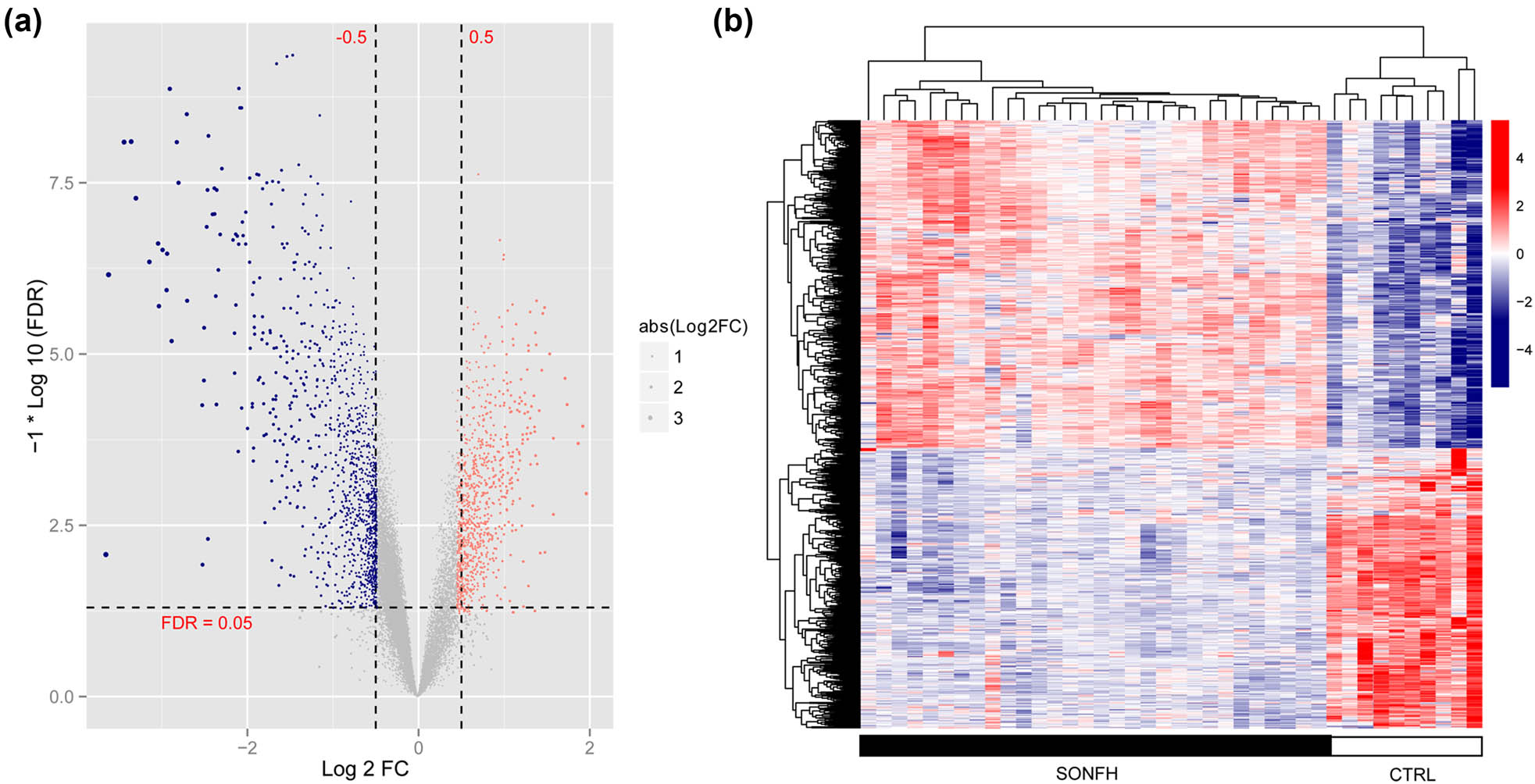
Volcano plot (a) and heat map (b) of DEGs between SONFH and CTRL groups. The gradient color change from blue to red represents expression changes, from downregulation to upregulation. FC: fold change. FDR: false discovery rate.
3.2 Lipid scores
From the MSigDB of GSEA, 738 lipid metabolic pathway-related genes were obtained. The lipid score in the SONFH group was significantly lower than that in the CTRL group (p = 0.0025, Figure 2a). We examined the diagnostic value of the lipid score in SONFH. The results suggested that the lipid score effectively discriminates between the SONFH and CTRL groups with an AUC of 0.960, sensitivity of 100%, and specificity of 86.7% (Figure 2b).
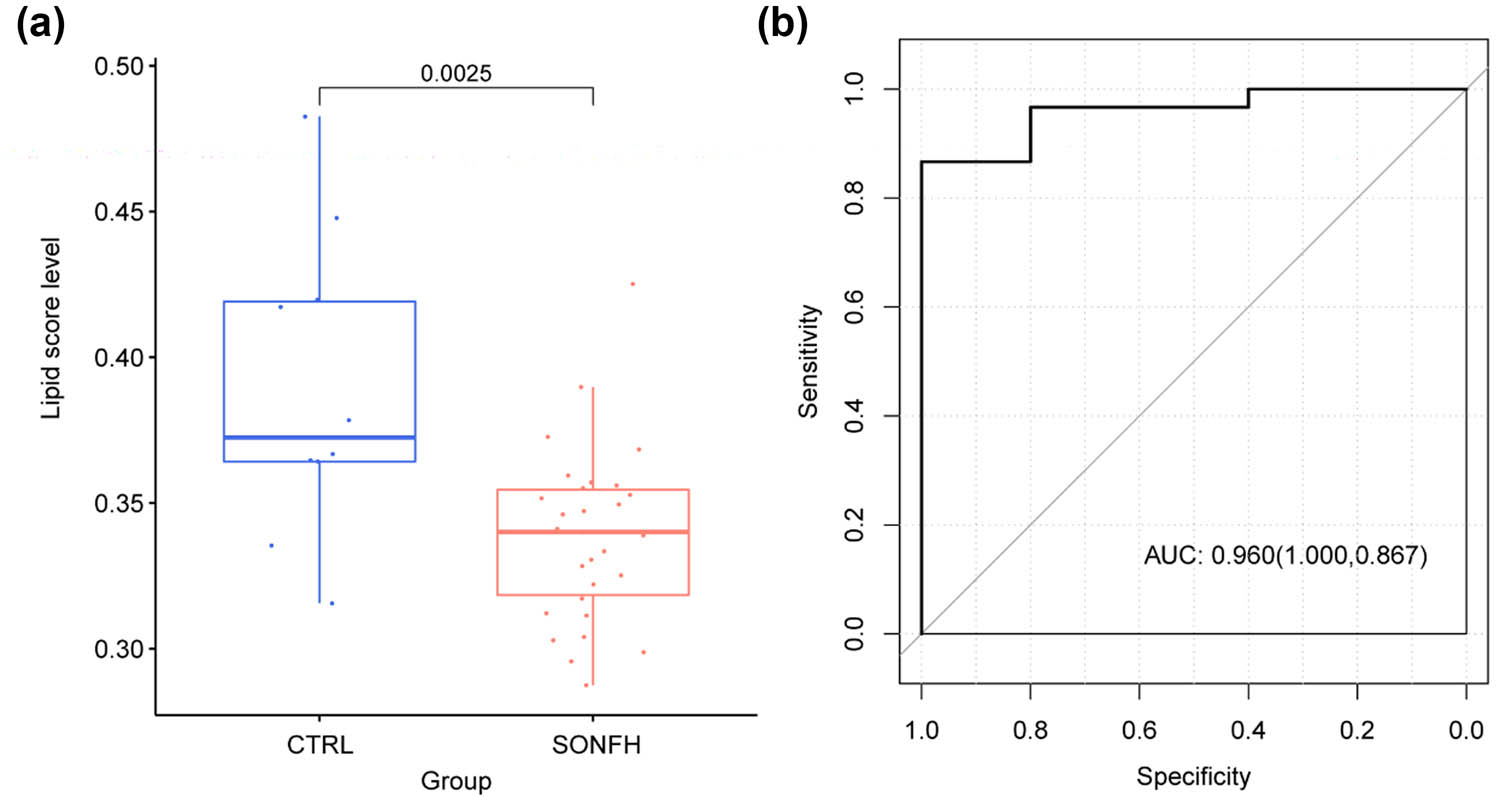
(a) Distribution of lipid scores in SONFH and CTRL groups. (b) ROC curve for the performance of the lipid score in identifying the sample type.
3.3 Disease- and lipid metabolism-related DEGs
A soft threshold power of 9 was chosen to create networks with a scale-free topology (R 2 reached 0.9; mean connectivity was equal to 1) (Figure 3a). In the dendrogram, the genes were clustered into 11 modules (Figure 3b). Correlations between these modules and the disease status as well as lipid scores are depicted in Figure 3c. Based on the correlation coefficients for relationships between each gene module and phenotypes (SONFH, CTRL, or lipid score), the yellow module exhibited the strongest correlations (cor = −0.80, p = 0.00, Figure 3c).
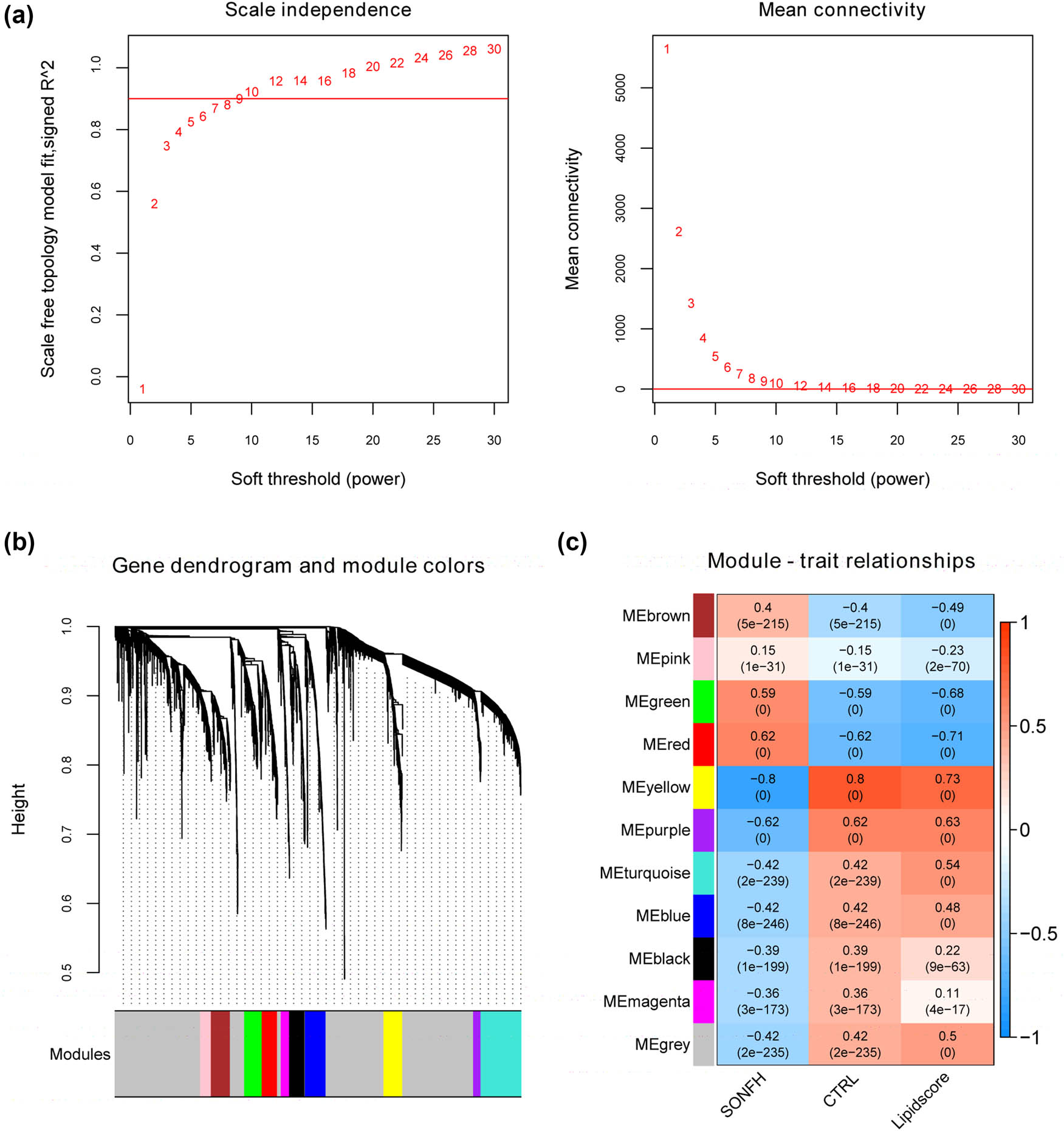
Weighted gene co-expression network analysis. (a) Selection of the soft threshold; (b) co-expression network of DEGs from GSE123568; (c) module–trait relationships: upper numbers for each module indicate the correlation coefficient, and numbers in brackets indicate the p-value.
Among the 11 modules, the blue, brown, green, purple, red, turquoise, and yellow modules were significantly associated with both the disease state and lipid score (p > 0.3), encompassing a total of 1,929 genes. A Venn diagram analysis revealed 18 overlapping lipid metabolism-related DEGs among the lipid metabolism-related genes obtained from the GSEA database, genes within the modules correlated with the disease status and lipid score, and DEGs identified through screening. These 18 lipid metabolism-related DEGs were as follows: ACSM3, SLC27A3, CDK8, PTGS2, THEM5, DPEP1, PCTP, PIP5K1B, CHPT1, ORMDL3, DPEP3, TMEM86B, PPT2, PTGR1, PLA2G4F, DPEP2, PISD, and GPAT3. GO and KEGG functional analyses of the 18 lipid metabolism-related DEGs revealed 13 GO-BP terms, including lipid metabolic process, leukotriene metabolic process, response to estradiol, aging, and prostaglandin biosynthetic process, and 8 KEGG signaling pathways, including metabolic pathways, glycerophospholipid metabolism, ether lipid metabolism, VEGF signaling pathway, and arachidonic acid metabolism, were identified (Figure 4a and b).
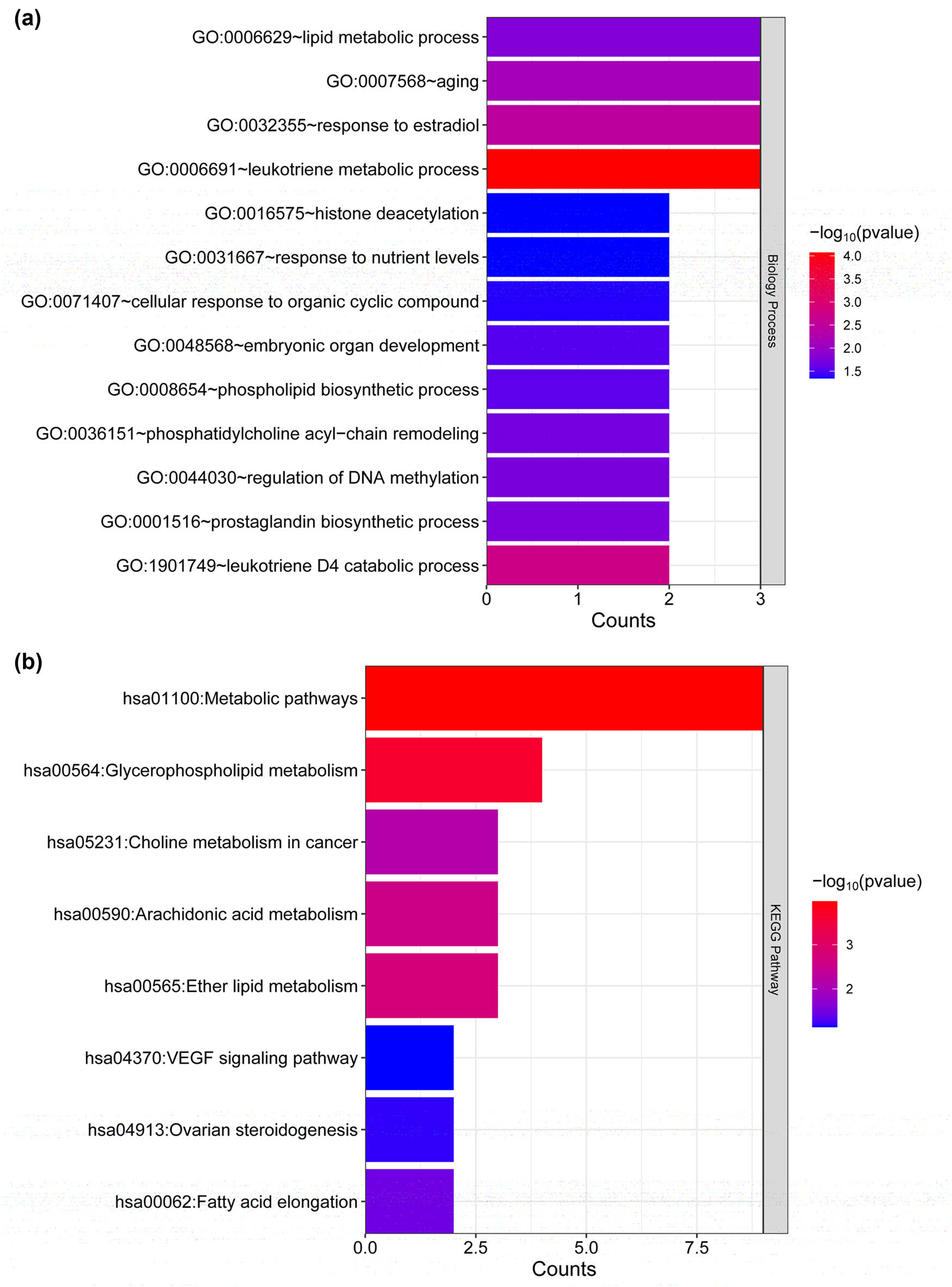
Functional pathway enrichment of lipid metabolism-related DEGs. (a) GO analysis of hub genes and (b) KEGG pathway analysis of hub genes. The horizontal axis represents the number of genes associated with the term, the vertical axis represents the term, and the color represents significance.
3.4 Diagnostic model based on lipid metabolism-related DEGs
Univariate logistic regression analyses of the 18 lipid metabolism-related DEGs revealed significant associations with the disease state (p < 0.05) (Figure 5a). A LASSO analysis was performed to further screen these genes, resulting in the identification of six optimized lipid metabolism-related DEGs: CDK8, CHPT1, DPEP3, ORMDL3, PIP5K1B, and PPT2 (Figure 5b).
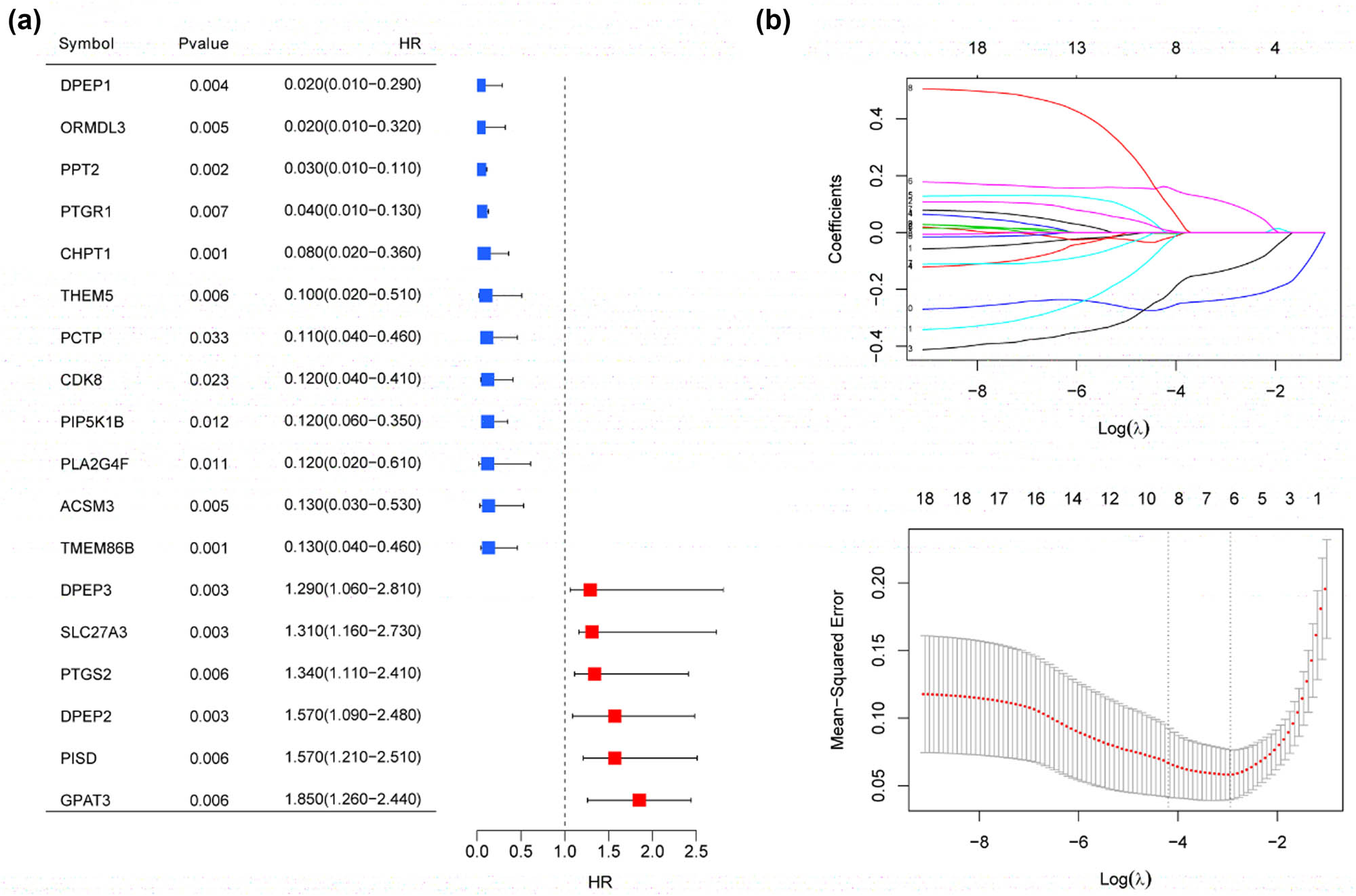
Univariate logistic regression analyses of lipid metabolism-related DEGs. (a) Screening of optimized genes associated with prognosis in GSE123568 by LASSO regression (b).
We further visualized the expression levels of these six optimized lipid metabolism-related DEGs in the GSE123568 and GSE74089 datasets. Compared with levels in the CTRL group, the expression levels of CDK8, CHPT1, ORMDL3, PIP5K1B, and PPT2 were significantly lower in the SONFH group, while the expression level of DPEP3 was significantly higher (p < 0.05, Figure 6a and d). The diagnostic value of the optimized lipid metabolism-related DEGs in SONFH was examined utilizing SVM, decision tree, and random forest models. The SVM model achieved AUC values of 0.957 for the GSE123568 dataset and 0.912 for the GSE74089 dataset (Figure 6b and e). The random forest model yielded AUC values of 0.947 for the GSE123568 dataset and 0.873 for the GSE74089 dataset (Figure A1). Similarly, the decision tree model recorded AUC values of 0.943 for the GSE123568 dataset and 0.863 for the GSE74089 dataset (Figure A2). These results indicate that all three models, developed based on the expression levels of six optimized lipid metabolism-related DEGs, demonstrate significant discriminatory ability between the SONFH and CTRL groups. Furthermore, the nomogram model and calibration curves for six genes across two databases are illustrated in Figure 6c and f. The concordance index (C-index) of the nomogram reached 0.9967 in GSE123568 and 0.9669 in GSE74089, indicating a high capacity for distinguishing between the SONFH and CTRL groups.
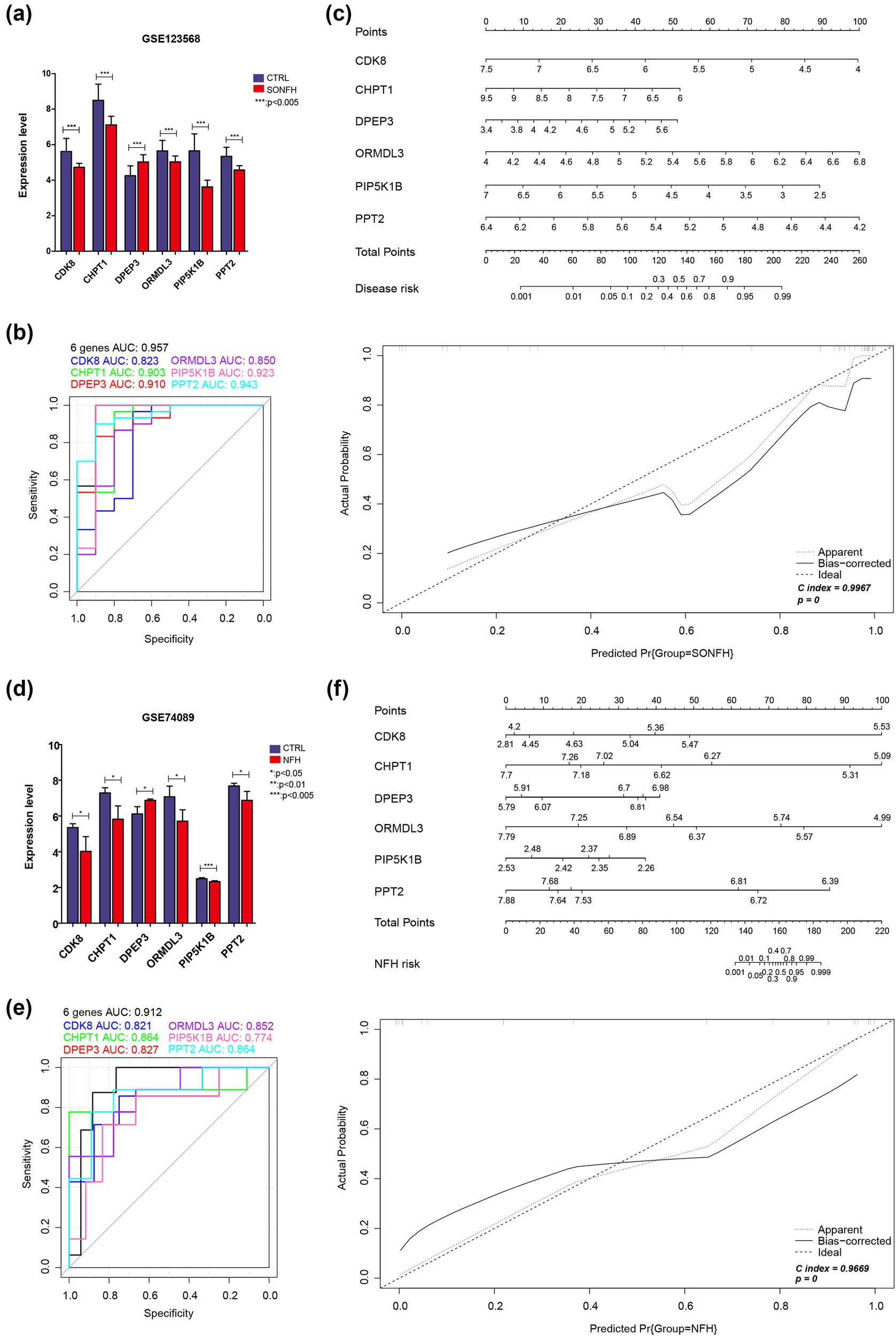
In GSE123568, the expression of six genes in the two groups (a), ROC curves and area under the curve for the candidate genes (b), and nomogram and calibration of the combination of six optimized genes (CDK8, CHPT1, DPEP3, ORMDL3, PIP5K1B, and PPT2) (c). In GSE74089, the expression of six genes in the two groups (d), ROC curves and area under the curve for the candidate genes (e), and nomogram and calibration of combination of six optimized genes (CDK8, CHPT1, DPEP3, ORMDL3, PIP5K1B, and PPT2) (f).
3.5 Validation of six optimized lipid metabolism-related DEGs
In vitro experiments were conducted to assess the expression of the six optimized DEGs related to lipid metabolism. The MC3T3-E1 cell line was treated with DEX to simulate SONFH. To determine the optimal DEX concentration for induction, cell viability was evaluated using CCK-8 assays after treatment with various DEX concentrations. After 24 h of treatment with 300 μM DEX, cell viability decreased by over 50% (Figure 7a). Consequently, 200 μM DEX was selected for further experiments. Following DEX treatment, mRNA expression analyses revealed that the osteogenesis-related genes COL1, OCN, and RUNX2 were downregulated, indicating impaired osteogenic differentiation (p < 0.05, Figure 7b). Subsequently, qRT-PCR was used to analyze the mRNA expression levels of the six optimized lipid metabolism-related DEGs in both control and DEX-treated groups. The DEX group exhibited significantly lower levels of CDK8, CHPT1, ORMDL3, PIP5K1B, and PPT2 than those in the control group, while DPEP3 expression was significantly increased (p < 0.05, Figure 7c).
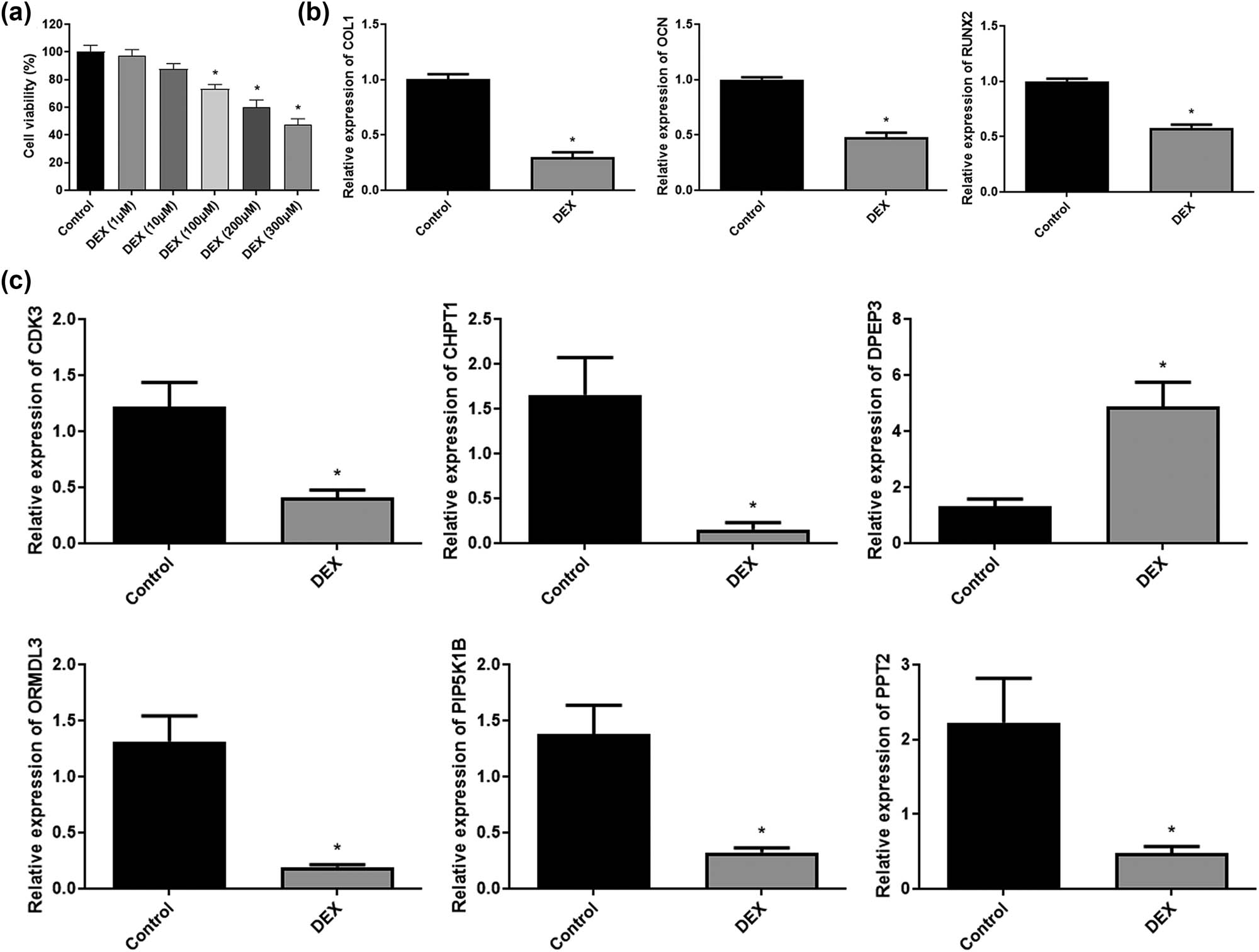
Validation of the six optimized genes. (a) CCK-8 assay was used to detect the viability of MC3T3-E1 cells and DXM-treated MC3T3-E1 cells. *p < 0.05, compared with the control. (b) qRT-PCR was used to detect the expression levels of COL1, OCN, and RUNX2. *p < 0.05, compared with the control. (c) qRT-PCR was used to detect the expression levels of CDK8, CHPT1, DPEP3, ORMDL3, PIP5K1B, and PPT2. *p < 0.05, compared with the control.
3.6 Relationships between candidate genes and differential immune cells
Finally, the immune cell distributions in the GSE123568 samples were evaluated using CIBERSORT, as shown in Figure 8a. As determined using the Kruskal–Wallis test, two immune cell types, myeloid dendritic cell activated and neutrophil, differed significantly between the two groups (Figure 8b); the frequency of myeloid dendritic cell activated was significantly higher in CRTL than in SONFH (p < 0.05), while that of neutrophil showed the opposite pattern (p < 0.001). Immune cell frequencies were positively correlated with the expression levels of CDK8, CHPT1, ORMDL3 PIP5K1B, and PPT2 and DPEP3 expression was negatively correlated with myeloid dendritic cell activated (Figure 9a). The directions of the correlations between genes and neutrophil and myeloid dendritic cell activated frequencies were opposite (Figure 9b). Additionally, the six genes were significantly correlated with the lipid score (Figure 9c).
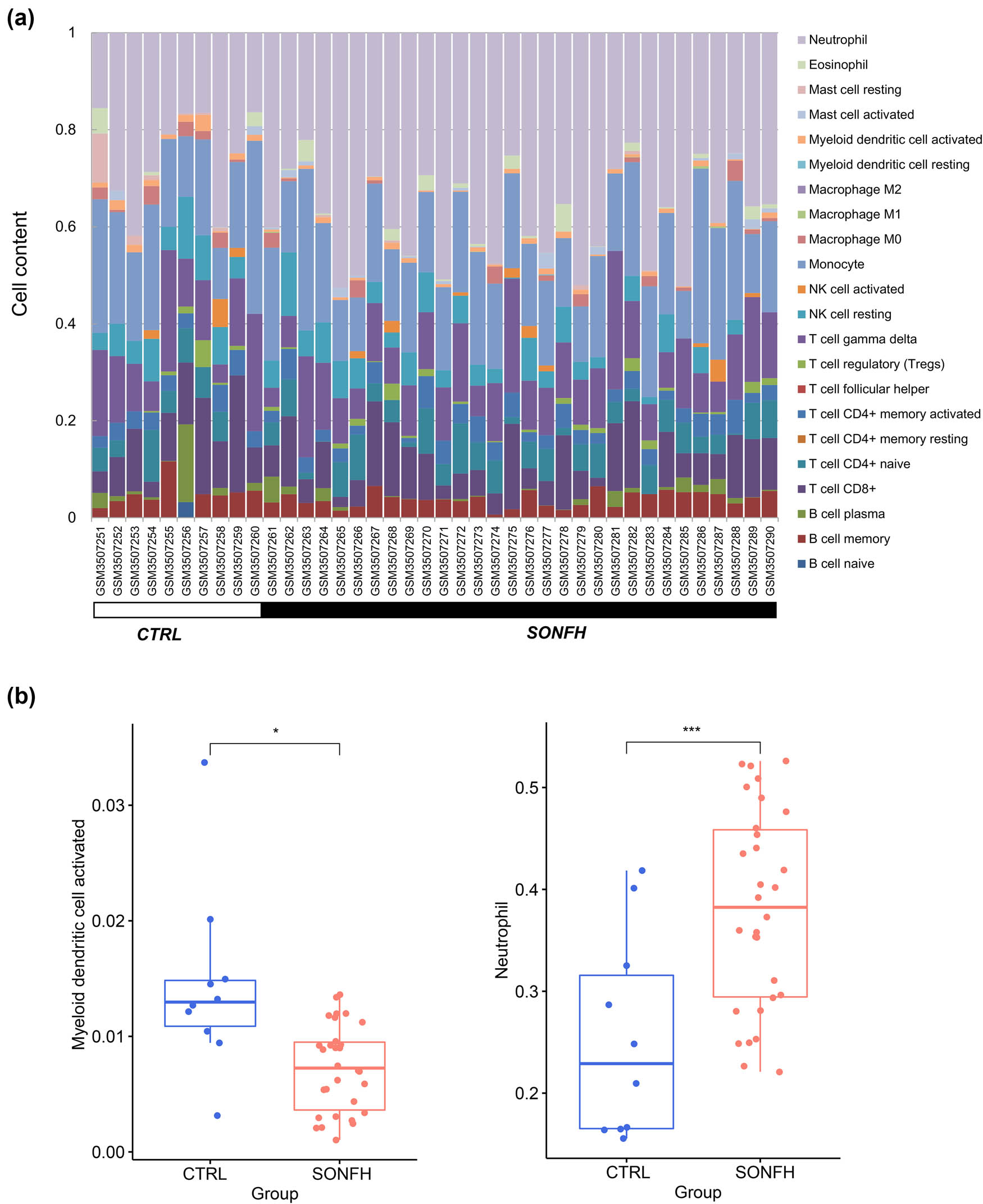
(a) Distribution of immune cells in two samples. (b) Two distinctly distributed immune cells (myeloid dendritic cell activated and neutrophil).
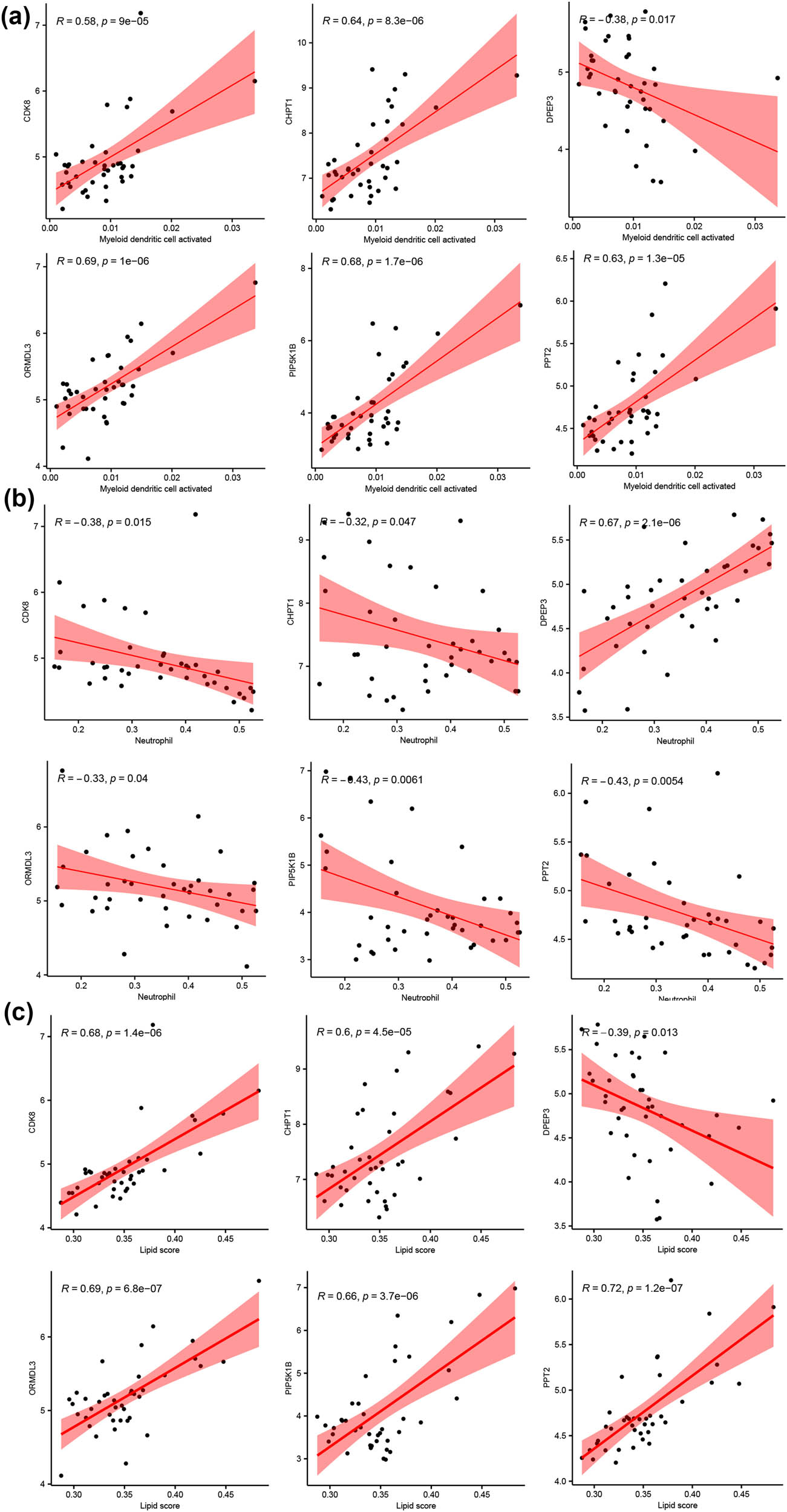
Correlations between expression levels of six genes and myeloid dendritic cell activated (a), neutrophil (b), and lipid score (c).
4 Discussion
Owing to the high disability rate and difficulty in osteonecrotic tissue repair, SONFH has attracted increasing attention [33]. There is recent evidence for the role of abnormal lipid metabolism in SONFH [5,34]. In this study, we performed a multi-step integrative bioinformatics analysis of microarray data to identify lipid metabolism-related DEGs as diagnostic biomarkers of SONFH. Using gene expression profiles in the GSE123568 dataset, a total of 1,724 DEGs (948 downregulated and 776 upregulated) were identified. Additionally, 738 lipid metabolic pathway-related genes were obtained from the MSigDB of GSEA. A module analysis and optimized gene identification revealed six lipid metabolism-related DEGs. The SVM model was used to predict the potential application of biomarkers in SONFH diagnosis, with high AUC values (i.e., 0.957 for the GSE123568 dataset and 0.912 for the GSE74089 dataset), suggesting that this risk classifier has good discriminatory ability between SONFH and CTRL groups. Our results demonstrated that these six optimized lipid metabolism-related DEGs can be used as potential biomarkers for the diagnosis of SONFH.
A total of 18 overlapping lipid metabolism-related, SONFH-related genes were identified. We identified six optimized lipid metabolism-related DEGs among the overlapping DEGs, namely CDK8, CHPT1, DPEP3, ORMDL3, PIP5K1B, and PPT2. Previous studies have indicated that immune cell infiltration and inflammatory pathway activation significantly impact the occurrence and development of femoral head necrosis [15,34,35]. The correlations between immune cells and SONFH have been investigated extensively [35,36]. A previous study has indicated that circRNA-CDK8 is involved in osteogenic differentiation via influencing autophagy and apoptosis in a hypoxic microenvironment [37]. CDK8 regulates de novo lipogenesis and lipid accumulation [38] and is related to lipid production, accumulation, and metabolism [38–40]. In addition, CDK8 is closely related to immune cells, including NK cells [41] and activated dendritic cells [42]. Dorighello et al. revealed that CHPT1 contributes to de novo phosphatidylcholine synthesis [43]. It may participate in lipid metabolism disorders by regulating glycerophospholipid metabolism in silicosis [44]. DPEP3, a member of the DPEP family, is associated with immune responses and cholesterol clearance in vascular tissues [45,46]. The substrate of DPEP2 is a pro-inflammatory lipid mediator [47]. Lai et al. have shown that DPEP3 expression is positively related to the levels of IL-1α, IL-1β, and IL-17A and may be involved in inflammation [48]. ORMDL3 plays important role in metabolic diseases [49]. Members of the ORMDL family are involved in de novo sphingolipid synthesis [50], and ORMDL3 contributes to autoimmune/inflammatory diseases [51]. PIP5Ks and PIP4Ks are two lipid kinases families [52]. PIP5K1B encodes PIP5Kβ and is associated with CD28 stimulation; it participates in T cell activation and lipid raft accumulation [53]. PPT2, a lipase, may play a special role in lysosomal lipid metabolism [54]. These results indicated that the candidate genes may contribute to the development of SONFH via lipid metabolism and immune responses. In addition, the six-gene combination has relatively high reference value for the diagnosis of SONFH.
The study results should be validated in larger clinical samples using bioinformatics approaches. Furthermore, the clinical diagnostic value of the six-gene model should be evaluated in additional in vitro and in vivo studies.
Several studies have developed prognostic models for SONFH based on DEGs. For instance, a partial least squares model exhibited high predictive accuracy (81.34–91.20%) and AUC (0.804–0.901) when used to distinguish patients with SONFH from controls in a large clinical cohort, suggesting its potential contribution to the diagnosis and prevention of femoral head collapse [55]. Wu et al. conducted an ROC curve analysis based on ten endoplasmic reticulum stress-related genes, finding that all hub genes had AUC values greater than 0.6, confirming the diagnostic potential of these genes for SONFH [56]. Similarly, Liang et al. found 11 hub genes with high diagnostic value in a comparison between SONFH and non-SONFH samples (AUC > 0.9) [57]. In this study, the diagnostic value of six optimized lipid metabolism-related DEGs in SONFH was assessed using the SVM model. An ROC analysis demonstrated good diagnostic performance for SONFH (AUC values for GSE123568 and GSE74089 of 0.957 and 0.912, respectively). These results indicate that the six optimized lipid metabolism-related DEGs possess good diagnostic ability for SONFH.
The study had several limitations. First, the diagnostic efficiency and prognostic value of the critical genes were analyzed and validated solely within the GEO dataset. Second, most of the conclusions were derived from bioinformatics analyses. Therefore, additional experiments are necessary to validate these findings using tumor samples and clinical data. Additionally, in vivo and in vitro experiments could further elucidate the functions of the critical genes in SONFH.
5 Conclusion
In conclusion, this study showed that CDK8, CHPT1, DPEP3, ORMDL3, PIP5K1B, and PPT2 may play important roles in the pathogenesis of SONFH and may be novel biomarkers. A model based on the six genes had relatively high auxiliary diagnostic value for SONFH.
Abbreviations
- DEGs
-
differentially expressed genes
- GO
-
gene ontology
- GSEA
-
Gene Set Enrichment Analysis
- KEGG
-
Kyoto Encyclopedia of Genes and Genomes
- NONFH
-
nontraumatic osteonecrosis of the femoral head
- ROC
-
receiver operating characteristic
- SONFH
-
steroid-induced osteonecrosis of femoral head
- SVM
-
support vector machine
- WGCNA
-
weighed gene co-expression network analysis
Acknowledgments
None.
-
Funding information: The authors state no funding involved.
-
Author contributions: Conception and design of the research: B.Z.; acquisition of data: B.Z.; analysis and interpretation of data: Z.C.W. and H.S.; statistical analysis: H.L.; drafting the manuscript: B.Z. and Z.C.W.; revision of manuscript for important intellectual content: H.L. and H.S. All authors read and approved the final manuscript.
-
Conflict of interest: The authors state no conflict interest.
-
Data availability statement: The datasets used and/or analyzed during the current study are available from the corresponding author upon reasonable request.
Appendix
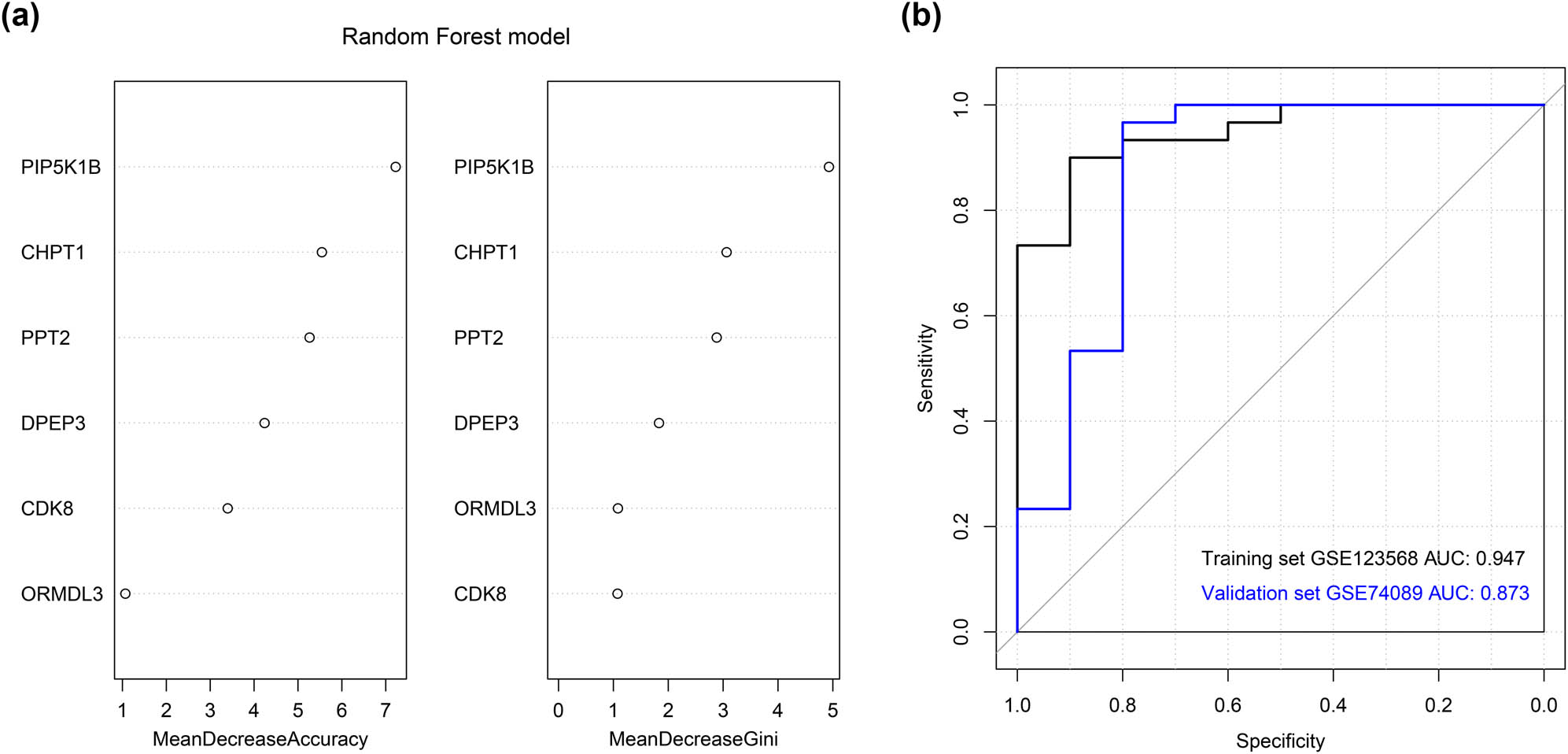
ROC results for the random forest model based on the six optimized genes for discrimination between the SONFH and CTRL groups.
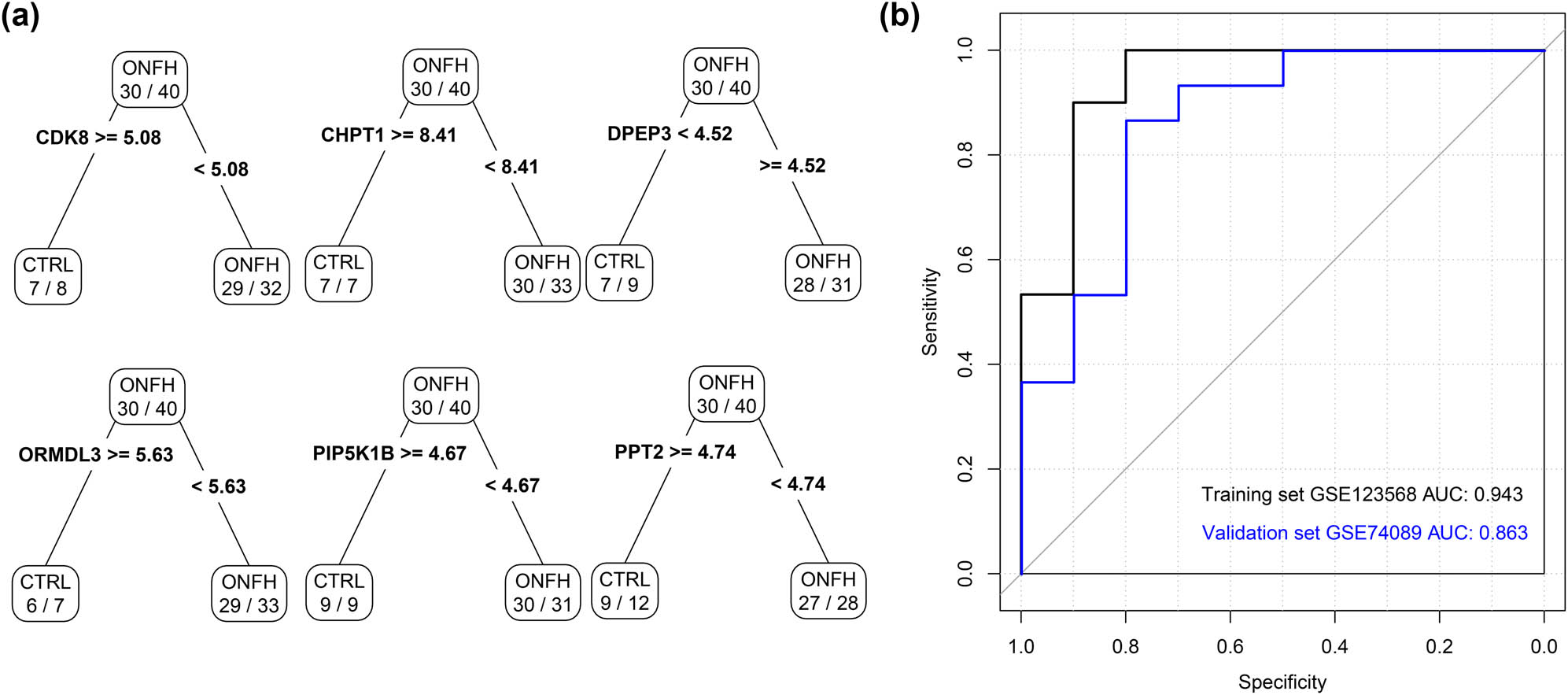
ROC results for the decision tree model based on the six optimized genes for discrimination between the SONFH and CTRL groups.
References
[1] Agarwala S, Vijayvargiya M. Bisphosphonate combination therapy for non-femoral avascular necrosis. J Orthop Surg Res. 2019;14(1):112.10.1186/s13018-019-1152-7Search in Google Scholar PubMed PubMed Central
[2] Zhao DW, Yu M, Hu K, Wang W, Yang L, Wang BJ, et al. Prevalence of nontraumatic osteonecrosis of the femoral head and its associated risk factors in the Chinese population: results from a nationally representative survey. Chin Med J (Engl). 2015;128(21):2843–50.10.4103/0366-6999.168017Search in Google Scholar PubMed PubMed Central
[3] Liu N, Zheng C, Wang Q, Huang Z. Treatment of non-traumatic avascular necrosis of the femoral head (Review). Exp Ther Med. 2022;23(5):321.10.3892/etm.2022.11250Search in Google Scholar PubMed PubMed Central
[4] Liu F, Wang W, Yang L, Wang B, Zhao D. An epidemiological study of etiology and clinical characteristics in patients with nontraumatic osteonecrosis of the femoral head. J Res Med Sci. 2017;22(1):15.10.4103/1735-1995.200273Search in Google Scholar PubMed PubMed Central
[5] Lu SB, Peng J, Wang AY, Sun MX, Dong LM. Biomedical engineering in surgical repair of osteonecrosis: the role of imaging technology. In: Qin L, Genant HK, Griffith JF, Leung KS, editors. Advanced bioimaging technologies in assessment of the quality of bone and scaffold materials. Berlin, Heidelberg: Springer; 2007.Search in Google Scholar
[6] Kong L, Zuo R, Wang M, Wang W, Xu J, Chai Y, et al. Silencing microRNA-137-3p, which targets RUNX2 and CXCL12 prevents steroid-induced osteonecrosis of the femoral head by facilitating osteogenesis and angiogenesis. Int J Biol Sci. 2020;16(4):655–70.10.7150/ijbs.38713Search in Google Scholar PubMed PubMed Central
[7] Yu H, Liu P, Zuo W, Sun X, Liu H, Lu F, et al. Decreased angiogenic and increased apoptotic activities of bone microvascular endothelial cells in patients with glucocorticoid-induced osteonecrosis of the femoral head. BMC Musculoskelet Disord. 2020;21(1):277.10.1186/s12891-020-03225-1Search in Google Scholar PubMed PubMed Central
[8] Chen L, Hong G, Fang B, Zhou G, Han X, Guan T, et al. Predicting the collapse of the femoral head due to osteonecrosis: from basic methods to application prospects. J Orthop Transl. 2017;11:62–72.10.1016/j.jot.2016.11.002Search in Google Scholar PubMed PubMed Central
[9] Gangji V, De Maertelaer V, Hauzeur J-P. Autologous bone marrow cell implantation in the treatment of non-traumatic osteonecrosis of the femoral head: five year follow-up of a prospective controlled study. Bone. 2011;49(5):1005–9.10.1016/j.bone.2011.07.032Search in Google Scholar PubMed
[10] Boskey AL, Raggio CL, Bullough PG, Kinnett JG. Changes in the bone tissue lipids in persons with steroid- and alcohol-induced osteonecrosis. Clin Orthop Relat Res. 1983;(172):289–95.10.1097/00003086-198301000-00046Search in Google Scholar
[11] Ren X, Fan W, Shao Z, Chen K, Yu X, Liang Q. A metabolomic study on early detection of steroid-induced avascular necrosis of the femoral head. Oncotarget. 2018;9(8):7984–95.10.18632/oncotarget.24150Search in Google Scholar PubMed PubMed Central
[12] Ren X, Shao Z, Fan W, Wang Z, Chen K, Yu X. Untargeted metabolomics reveals the effect of lovastatin on steroid-induced necrosis of the femoral head in rabbits. J Orthop Surg Res. 2020;15(1):497.10.1186/s13018-020-02026-5Search in Google Scholar PubMed PubMed Central
[13] Jiang Y, Liu D, Kong X, Xu Y, Chen W, Lin N. Huogu I formula prevents steroid-induced osteonecrosis in rats by down-regulating PPARγ expression and activating Wnt/LRP5/β-catenin signaling. J Tradit Chin Med. 2014;34(3):342–50.10.1016/S0254-6272(14)60100-XSearch in Google Scholar
[14] Nozaki Y, Kumagai K, Miyata N, Niwa M. Pravastatin reduces steroid-induced osteonecrosis of the femoral head in SHRSP rats. Acta Orthop. 2012;83(1):87–92.10.3109/17453674.2011.641103Search in Google Scholar PubMed PubMed Central
[15] Yeh CH, Chang JK, Wang YH, Ho ML, Wang GJ. Ethanol may suppress Wnt/beta-catenin signaling on human bone marrow stroma cells: a preliminary study. Clin Orthop Relat Res. 2008;466(5):1047–53.10.1007/s11999-008-0171-1Search in Google Scholar PubMed PubMed Central
[16] Barrett T, Wilhite SE, Ledoux P, Evangelista C, Kim IF, Tomashevsky M, et al. NCBI GEO: archive for functional genomics data sets—update. Nucleic Acids Res. 2012;41(D1):D991–5.10.1093/nar/gks1193Search in Google Scholar PubMed PubMed Central
[17] Jia Y, Zhang Y, Li S, Li R, Li W, Li T, et al. Identification and assessment of novel dynamic biomarkers for monitoring non-traumatic osteonecrosis of the femoral head staging. Clin Transl Med. 2023 Jun;13(6):e1295. 10.1002/ctm2.1295.Search in Google Scholar PubMed PubMed Central
[18] Ritchie ME, Belinda P, Di W, Yifang H, Law CW, Wei S, et al. Limma powers differential expression analyses for RNA-sequencing and microarray studies. Nucleic Acids Res. 2015;43(7):e47.10.1093/nar/gkv007Search in Google Scholar PubMed PubMed Central
[19] Wang L, Cao C, Ma Q, Zeng Q, Wang H, Cheng Z, et al. RNA-seq analyses of multiple meristems of soybean: novel and alternative transcripts, evolutionary and functional implications. BMC Plant Biol. 2014;14(1):169.10.1186/1471-2229-14-169Search in Google Scholar PubMed PubMed Central
[20] Szekely GJ, Rizzo ML. Hierarchical clustering via joint between-within distances: extending Ward’s minimum variance method. J Classif. 2005;22(2):151–83.10.1007/s00357-005-0012-9Search in Google Scholar
[21] Press W, Teukolsky S, Vetterling W, Flannery B. Hierarchical clustering by phylogenetic trees. Section 16.4 numerical recipes: The art of scientific computing. 3rd. New York, NY: Cambridge University Press; 2007.Search in Google Scholar
[22] Subramanian A, Tamayo P, Mootha VK, Mukherjee S, Ebert BL, Gillette MA, et al. Gene set enrichment analysis: a knowledge-based approach for interpreting genome-wide expression profiles. Proc Natl Acad Sci. 2005;102(43):15545–50.10.1073/pnas.0506580102Search in Google Scholar PubMed PubMed Central
[23] Hnzelmann S, Castelo R, Guinney J. GSVA: gene set variation analysis for microarray and RNA-Seq data. BMC Bioinf. 2013;14(1):7.10.1186/1471-2105-14-7Search in Google Scholar
[24] Robin X, Turck N, Hainard A, Tiberti N, Lisacek F, Sanchez JC, et al. pROC: an open-source package for R and S+ to analyze and compare ROC curves. BMC Bioinf. 2011;12(1):77.10.1186/1471-2105-12-77Search in Google Scholar
[25] Chen R, Mias GI, Li-Pook-Than J, Jiang L, Lam HY, Chen R, et al. Personal omics profiling reveals dynamic molecular and medical phenotypes. Cell. 2012;148(6):1293–307.10.1016/j.cell.2012.02.009Search in Google Scholar
[26] Langfelder P, Horvath S, Langfelder P, Horvath S. WGCNA: an R package for weighted correlation network analysis. BMC Bioinform 9: 559. BMC Bioinform. 2009;9(559):559.10.1186/1471-2105-9-559Search in Google Scholar
[27] Huang DW, Sherman BT, Lempicki RA. Systematic and integrative analysis of large gene lists using DAVID bioinformatics resources. Nat Protoc. 2008;44(1):44–57.10.1038/nprot.2008.211Search in Google Scholar
[28] Wei HD, Sherman BT, Lempicki RA. Bioinformatics enrichment tools: paths toward the comprehensive functional analysis of large gene lists. Nucleic Acids Res. 2009;37(1):1–13.10.1093/nar/gkn923Search in Google Scholar
[29] Harrell Jr FE. rms: Regression modeling strategies. R package version. 2016;5(2):1–263.Search in Google Scholar
[30] Tibshirani R. The lasso method for variable selection in the Cox model. Stat Med. 1997;16(4):385–95.10.1002/(SICI)1097-0258(19970228)16:4<385::AID-SIM380>3.0.CO;2-3Search in Google Scholar
[31] Wu J, Zhang H, Li L, Hu M, Chen L, Xu B, et al. A nomogram for predicting overall survival in patients with low-grade endometrial stromal sarcoma: a population‐based analysis. Cancer Commun. 2020;40(7):301–12.10.1002/cac2.12067Search in Google Scholar
[32] Chen B, Khodadoust MS, Liu CL, Newman AM, Alizadeh AA. Profiling tumor infiltrating immune cells with CIBERSORT. Methods Mol Biol. 2018;1711:243–59.10.1007/978-1-4939-7493-1_12Search in Google Scholar
[33] Wang A, Ren M, Wang J. The pathogenesis of steroid-induced osteonecrosis of the femoral head: a systematic review of the literature. Gene. 2018;671:103–9.10.1016/j.gene.2018.05.091Search in Google Scholar
[34] Adapala NS, Yamaguchi R, Phipps M, Aruwajoye O, Kim HKW. Necrotic bone stimulates proinflammatory responses in macrophages through the activation of toll-like receptor 4. Am J Pathol. 2016;186(11):2987–99.10.1016/j.ajpath.2016.06.024Search in Google Scholar PubMed
[35] Zhao J, Zhang X, Guan J, Su Y, Jiang J. Identification of key biomarkers in steroid-induced osteonecrosis of the femoral head and their correlation with immune infiltration by bioinformatics analysis. BMC Musculoskelet Disord. 2022;23(1):1–12.10.1186/s12891-022-04994-7Search in Google Scholar PubMed PubMed Central
[36] Wang B, Gong S, Shao W, Han L, Li Z, Zhang Z, et al. Comprehensive analysis of pivotal biomarkers, immune cell infiltration and therapeutic drugs for steroid-induced osteonecrosis of the femoral head. Bioengineered. 2021;12(1):5971–84.10.1080/21655979.2021.1972081Search in Google Scholar PubMed PubMed Central
[37] Zheng J, Zhu X, He Y, Hou S, Liu T, Zhi K, et al. CircCDK8 regulates osteogenic differentiation and apoptosis of PDLSCs by inducing ER stress/autophagy during hypoxia. Ann N Y Acad Sci. 2021;1485(1):56–70.10.1111/nyas.14483Search in Google Scholar PubMed
[38] Zhao X, Feng D, Wang Q, Abdulla A, Xie XJ, Zhou J, et al. Regulation of lipogenesis by cyclin-dependent kinase 8-mediated control of SREBP-1. J Clin Invest. 2012;122(7):2417–27.10.1172/JCI61462Search in Google Scholar PubMed PubMed Central
[39] Lindsay AK, Morales DK, Liu Z, Grahl N, Zhang A, Willger SD, et al. Analysis of Candida albicans mutants defective in the Cdk8 module of mediator reveal links between metabolism and biofilm formation. PLOS Genet. 2014;10(10):e1004567.10.1371/journal.pgen.1004567Search in Google Scholar PubMed PubMed Central
[40] Gu W, Wang C, Li W, Hsu F-N, Tian L, Zhou J, et al. Tumor-suppressive effects of CDK8 in endometrial cancer cells. Cell Cycle. 2013;12(6):987–99.10.4161/cc.24003Search in Google Scholar PubMed PubMed Central
[41] Sohn GS, Cho S, Kim YM, Cho CH, Kim MR, Lee SR. Current medical treatment of uterine fibroids. Obstet Gynecol Sci. 2018;61(2):192–201.10.5468/ogs.2018.61.2.192Search in Google Scholar PubMed PubMed Central
[42] Johannessen L, Sundberg T, O’Connell D, Kolde R, Berstler J, Billings K, et al. Small-molecule studies identify CDK8 as a regulator of IL-10 in myeloid cells. Nat Chem Biol. 2017;13(10):1102–8.10.1038/nchembio.2458Search in Google Scholar PubMed PubMed Central
[43] Dorighello G, McPhee M, Halliday K, Dellaire G, Ridgway ND. Differential contributions of phosphotransferases CEPT1 and CHPT1 to phosphatidylcholine homeostasis and lipid droplet biogenesis. J Biol Chem. 2023;299(4):3.10.1016/j.jbc.2023.104578Search in Google Scholar PubMed PubMed Central
[44] He H, Qi R, Cui J, Liu M, Guan B, Zhou Y, et al. Lipid characteristics of lung tissue in silicosis rat model were studied based on lipid metabolomics. Toxicol Lett. 2024;391:111–9.10.1016/j.toxlet.2023.12.002Search in Google Scholar PubMed
[45] Dabritz J, Weinhage T, Varga G, Wirth T, Walscheid K, Brockhausen A, et al. Reprogramming of monocytes by GM-CSF contributes to regulatory immune functions during intestinal inflammation. J Immunol. 2015;194(5):2424.10.4049/jimmunol.1401482Search in Google Scholar PubMed
[46] Chen HH, Keyhanian K, Zhou X, Vilmundarson RO, Almontashiri NA, Cruz SA, et al. IRF2BP2 reduces macrophage inflammation and susceptibility to atherosclerosis. Circ Res: A J Am Heart Assoc. 2015;117(8):671–83.10.1161/CIRCRESAHA.114.305777Search in Google Scholar PubMed
[47] Steinke JW, Negri J, Payne SC, Borish L. Biological effects of leukotriene E4 on eosinophils. Prostaglandins Leukot Essent Fat Acids. 2014;91(3):105–10.10.1016/j.plefa.2014.02.006Search in Google Scholar PubMed PubMed Central
[48] Lai W, Wang C, Lai R, Peng X, Luo J. Lycium barbarum polysaccharide modulates gut microbiota to alleviate rheumatoid arthritis in a rat model. npj Sci Food. 2022;6(1):34.10.1038/s41538-022-00149-zSearch in Google Scholar PubMed PubMed Central
[49] Brown RDR, Spiegel S. ORMDL in metabolic health and disease. Pharmacol Ther. 2023;245:108401.10.1016/j.pharmthera.2023.108401Search in Google Scholar PubMed PubMed Central
[50] Curtiss ML, Deshane JS. “Stick a Fork in Me; I’m Done”: epithelial cell expression of ORMDL sphingolipid biosynthesis regulator 3 mediates autophagic cell death. Am J Respir Cell Mol Biol. 2022;66(6):593–5.10.1165/rcmb.2022-0023EDSearch in Google Scholar PubMed PubMed Central
[51] Worgall TS. Sphingolipids, ORMDL3 and asthma: what is the evidence? Curr Opin Clin Nutr Metab Care. 2017;20(2):99–103.10.1097/MCO.0000000000000349Search in Google Scholar PubMed
[52] Shibasaki Y. Cloning of cDNAs encoding two isoforms of 68-kDa type I phosphatidylinositol4-phosphate 5-kinase. J Biol Chem. 1996;271(39):23611–4.10.1074/jbc.271.39.23611Search in Google Scholar PubMed
[53] Kallikourdis M, Trovato AE, Roselli G, Muscolini M, Porciello N, Tuosto L, et al. Phosphatidylinositol 4-phosphate 5-kinase β controls recruitment of lipid rafts into the immunological synapse. J Immunol. 2016;196(4):1955–63.10.4049/jimmunol.1501788Search in Google Scholar PubMed
[54] Soyombo AA, Hofmann SL. Molecular cloning and expression of palmitoyl-protein thioesterase 2 (PPT2), a homolog of lysosomal palmitoyl-protein thioesterase with a distinct substrate specificity. J Biol Chem. 1997;272(43):27456–63.10.1074/jbc.272.43.27456Search in Google Scholar PubMed
[55] Li T, Zhang Y, Wang R, Xue Z, Li S, Cao Y, et al. Discovery and validation an eight-biomarker serum gene signature for the diagnosis of steroid-induced osteonecrosis of the femoral head. Bone. 2019;122:199–208.10.1016/j.bone.2019.03.008Search in Google Scholar PubMed
[56] Wu T, Shi W, Zhou Y, Guo S, Tian H, Jiang Y, et al. Identification and validation of endoplasmic reticulum stress-related genes in patients with steroid-induced osteonecrosis of the femoral head. Sci Rep. 2024;14(1):21634.10.1038/s41598-024-72941-8Search in Google Scholar PubMed PubMed Central
[57] Liang XZ, Liu XC, Li S, Wen MT, Chen YR, Luo D, et al. IRF8 and its related molecules as potential diagnostic biomarkers or therapeutic candidates and immune cell infiltration characteristics in steroid-induced osteonecrosis of the femoral head. J Orthop Surg Res. 2023;18(1):27.10.1186/s13018-022-03381-1Search in Google Scholar PubMed PubMed Central
© 2025 the author(s), published by De Gruyter
This work is licensed under the Creative Commons Attribution 4.0 International License.
Articles in the same Issue
- Research Articles
- Network pharmacological analysis and in vitro testing of the rutin effects on triple-negative breast cancer
- Impact of diabetes on long-term survival in elderly liver cancer patients: A retrospective study
- Knockdown of CCNB1 alleviates high glucose-triggered trophoblast dysfunction during gestational diabetes via Wnt/β-catenin signaling pathway
- Risk factors for severe adverse drug reactions in hospitalized patients
- Analysis of the effect of ALA-PDT on macrophages in footpad model of mice infected with Fonsecaea monophora based on single-cell sequencing
- Development and validation of headspace gas chromatography with a flame ionization detector method for the determination of ethanol in the vitreous humor
- CMSP exerts anti-tumor effects on small cell lung cancer cells by inducing mitochondrial dysfunction and ferroptosis
- Predictive value of plasma sB7-H3 and YKL-40 in pediatric refractory Mycoplasma pneumoniae pneumonia
- Antiangiogenic potential of Elaeagnus umbellata extracts and molecular docking study by targeting VEGFR-2 pathway
- Comparison of the effectiveness of nurse-led preoperative counseling and postoperative follow-up care vs standard care for patients with gastric cancer
- Comparing the therapeutic efficacy of endoscopic minimally invasive surgery and traditional surgery for early-stage breast cancer: A meta-analysis
- Adhered macrophages as an additional marker of cardiomyocyte injury in biopsies of patients with dilated cardiomyopathy
- Association between statin administration and outcome in patients with sepsis: A retrospective study
- Exploration of the association between estimated glucose disposal rate and osteoarthritis in middle-aged and older adults: An analysis of NHANES data from 2011 to 2018
- A comparative analysis of the binary and multiclass classified chest X-ray images of pneumonia and COVID-19 with ML and DL models
- Lysophosphatidic acid 2 alleviates deep vein thrombosis via protective endothelial barrier function
- Transcription factor A, mitochondrial promotes lymph node metastasis and lymphangiogenesis in epithelial ovarian carcinoma
- Serum PM20D1 levels are associated with nutritional status and inflammatory factors in gastric cancer patients undergoing early enteral nutrition
- Hydromorphone reduced the incidence of emergence agitation after adenotonsillectomy in children with obstructive sleep apnea: A randomized, double-blind study
- Vitamin D replacement therapy may regulate sleep habits in patients with restless leg syndrome
- The first-line antihypertensive nitrendipine potentiated the therapeutic effect of oxaliplatin by downregulating CACNA1D in colorectal cancer
- Health literacy and health-related quality of life: The mediating role of irrational happiness
- Modulatory effects of Lycium barbarum polysaccharide on bone cell dynamics in osteoporosis
- Mechanism research on inhibition of gastric cancer in vitro by the extract of Pinellia ternata based on network pharmacology and cellular metabolomics
- Examination of the causal role of immune cells in non-alcoholic fatty liver disease by a bidirectional Mendelian randomization study
- Clinical analysis of ten cases of HIV infection combined with acute leukemia
- Investigating the cardioprotective potential of quercetin against tacrolimus-induced cardiotoxicity in Wistar rats: A mechanistic insights
- Clinical observation of probiotics combined with mesalazine and Yiyi Baitouweng Decoction retention enema in treating mild-to-moderate ulcerative colitis
- Diagnostic value of ratio of blood inflammation to coagulation markers in periprosthetic joint infection
- Sex-specific associations of sex hormone binding globulin and risk of bladder cancer
- Core muscle strength and stability-oriented breathing training reduces inter-recti distance in postpartum women
- The ERAS nursing care strategy for patients undergoing transsphenoidal endoscopic pituitary tumor resection: A randomized blinded controlled trial
- The serum IL-17A levels in patients with traumatic bowel rupture post-surgery and its predictive value for patient prognosis
- Impact of Kolb’s experiential learning theory-based nursing on caregiver burden and psychological state of caregivers of dementia patients
- Analysis of serum NLR combined with intraoperative margin condition to predict the prognosis of cervical HSIL patients undergoing LEEP surgery
- Commiphora gileadensis ameliorate infertility and erectile dysfunction in diabetic male mice
- The correlation between epithelial–mesenchymal transition classification and MMP2 expression of circulating tumor cells and prognosis of advanced or metastatic nasopharyngeal carcinoma
- Tetrahydropalmatine improves mitochondrial function in vascular smooth muscle cells of atherosclerosis in vitro by inhibiting Ras homolog gene family A/Rho-associated protein kinase-1 signaling pathway
- A cross-sectional study: Relationship between serum oxidative stress levels and arteriovenous fistula maturation in maintenance dialysis patients
- A comparative analysis of the impact of repeated administration of flavan 3-ol on brown, subcutaneous, and visceral adipose tissue
- Identifying early screening factors for depression in middle-aged and older adults: A cohort study
- Perform tumor-specific survival analysis for Merkel cell carcinoma patients undergoing surgical resection based on the SEER database by constructing a nomogram chart
- Unveiling the role of CXCL10 in pancreatic cancer progression: A novel prognostic indicator
- High-dose preoperative intraperitoneal erythropoietin and intravenous methylprednisolone in acute traumatic spinal cord injuries following decompression surgeries
- RAB39B: A novel biomarker for acute myeloid leukemia identified via multi-omics and functional validation
- Impact of peripheral conditioning on reperfusion injury following primary percutaneous coronary intervention in diabetic and non-diabetic STEMI patients
- Clinical efficacy of azacitidine in the treatment of middle- and high-risk myelodysplastic syndrome in middle-aged and elderly patients: A retrospective study
- The effect of ambulatory blood pressure load on mitral regurgitation in continuous ambulatory peritoneal dialysis patients
- Expression and clinical significance of ITGA3 in breast cancer
- Single-nucleus RNA sequencing reveals ARHGAP28 expression of podocytes as a biomarker in human diabetic nephropathy
- rSIG combined with NLR in the prognostic assessment of patients with multiple injuries
- Toxic metals and metalloids in collagen supplements of fish and jellyfish origin: Risk assessment for daily intake
- Exploring causal relationship between 41 inflammatory cytokines and marginal zone lymphoma: A bidirectional Mendelian randomization study
- Gender beliefs and legitimization of dating violence in adolescents
- Effect of serum IL-6, CRP, and MMP-9 levels on the efficacy of modified preperitoneal Kugel repair in patients with inguinal hernia
- Effect of smoking and smoking cessation on hematological parameters in polycythemic patients
- Pathogen surveillance and risk factors for pulmonary infection in patients with lung cancer: A retrospective single-center study
- Necroptosis of hippocampal neurons in paclitaxel chemotherapy-induced cognitive impairment mediates microglial activation via TLR4/MyD88 signaling pathway
- Celastrol suppresses neovascularization in rat aortic vascular endothelial cells stimulated by inflammatory tenocytes via modulating the NLRP3 pathway
- Cord-lamina angle and foraminal diameter as key predictors of C5 palsy after anterior cervical decompression and fusion surgery
- GATA1: A key biomarker for predicting the prognosis of patients with diffuse large B-cell lymphoma
- Influencing factors of false lumen thrombosis in type B aortic dissection: A single-center retrospective study
- MZB1 regulates the immune microenvironment and inhibits ovarian cancer cell migration
- Integrating experimental and network pharmacology to explore the pharmacological mechanisms of Dioscin against glioblastoma
- Trends in research on preterm birth in twin pregnancy based on bibliometrics
- Four-week IgE/baseline IgE ratio combined with tryptase predicts clinical outcome in omalizumab-treated children with moderate-to-severe asthma
- Single-cell transcriptomic analysis identifies a stress response Schwann cell subtype
- Acute pancreatitis risk in the diagnosis and management of inflammatory bowel disease: A critical focus
- Effect of subclinical esketamine on NLRP3 and cognitive dysfunction in elderly ischemic stroke patients
- Interleukin-37 mediates the anti-oral tumor activity in oral cancer through STAT3
- CA199 and CEA expression levels, and minimally invasive postoperative prognosis analysis in esophageal squamous carcinoma patients
- Efficacy of a novel drainage catheter in the treatment of CSF leak after posterior spine surgery: A retrospective cohort study
- Comprehensive biomedicine assessment of Apteranthes tuberculata extracts: Phytochemical analysis and multifaceted pharmacological evaluation in animal models
- Relation of time in range to severity of coronary artery disease in patients with type 2 diabetes: A cross-sectional study
- Dopamine attenuates ethanol-induced neuronal apoptosis by stimulating electrical activity in the developing rat retina
- Correlation between albumin levels during the third trimester and the risk of postpartum levator ani muscle rupture
- Factors associated with maternal attention and distraction during breastfeeding and childcare: A cross-sectional study in the west of Iran
- Mechanisms of hesperetin in treating metabolic dysfunction-associated steatosis liver disease via network pharmacology and in vitro experiments
- The law on oncological oblivion in the Italian and European context: How to best uphold the cancer patients’ rights to privacy and self-determination?
- The prognostic value of the neutrophil-to-lymphocyte ratio, platelet-to-lymphocyte ratio, and prognostic nutritional index for survival in patients with colorectal cancer
- Factors affecting the measurements of peripheral oxygen saturation values in healthy young adults
- Comparison and correlations between findings of hysteroscopy and vaginal color Doppler ultrasonography for detection of uterine abnormalities in patients with recurrent implantation failure
- The effects of different types of RAGT on balance function in stroke patients with low levels of independent walking in a convalescent rehabilitation hospital
- Causal relationship between asthma and ankylosing spondylitis: A bidirectional two-sample univariable and multivariable Mendelian randomization study
- Correlations of health literacy with individuals’ understanding and use of medications in Southern Taiwan
- Correlation of serum calprotectin with outcome of acute cerebral infarction
- Comparison of computed tomography and guided bronchoscopy in the diagnosis of pulmonary nodules: A systematic review and meta-analysis
- Curdione protects vascular endothelial cells and atherosclerosis via the regulation of DNMT1-mediated ERBB4 promoter methylation
- The identification of novel missense variant in ChAT gene in a patient with gestational diabetes denotes plausible genetic association
- Molecular genotyping of multi-system rare blood types in foreign blood donors based on DNA sequencing and its clinical significance
- Exploring the role of succinyl carnitine in the association between CD39⁺ CD4⁺ T cell and ulcerative colitis: A Mendelian randomization study
- Dexmedetomidine suppresses microglial activation in postoperative cognitive dysfunction via the mmu-miRNA-125/TRAF6 signaling axis
- Analysis of serum metabolomics in patients with different types of chronic heart failure
- Diagnostic value of hematological parameters in the early diagnosis of acute cholecystitis
- Pachymaran alleviates fat accumulation, hepatocyte degeneration, and injury in mice with nonalcoholic fatty liver disease
- Decrease in CD4 and CD8 lymphocytes are predictors of severe clinical picture and unfavorable outcome of the disease in patients with COVID-19
- METTL3 blocked the progression of diabetic retinopathy through m6A-modified SOX2
- The predictive significance of anti-RO-52 antibody in patients with interstitial pneumonia after treatment of malignant tumors
- Exploring cerebrospinal fluid metabolites, cognitive function, and brain atrophy: Insights from Mendelian randomization
- Development and validation of potential molecular subtypes and signatures of ocular sarcoidosis based on autophagy-related gene analysis
- Widespread venous thrombosis: Unveiling a complex case of Behçet’s disease with a literature perspective
- Uterine fibroid embolization: An analysis of clinical outcomes and impact on patients’ quality of life
- Discovery of lipid metabolism-related diagnostic biomarkers and construction of diagnostic model in steroid-induced osteonecrosis of femoral head
- Serum-derived exomiR-188-3p is a promising novel biomarker for early-stage ovarian cancer
- Enhancing chronic back pain management: A comparative study of ultrasound–MRI fusion guidance for paravertebral nerve block
- Peptide CCAT1-70aa promotes hepatocellular carcinoma proliferation and invasion via the MAPK/ERK pathway
- Electroacupuncture-induced reduction of myocardial ischemia–reperfusion injury via FTO-dependent m6A methylation modulation
- Hemorrhoids and cardiovascular disease: A bidirectional Mendelian randomization study
- Cell-free adipose extract inhibits hypertrophic scar formation through collagen remodeling and antiangiogenesis
- HALP score in Demodex blepharitis: A case–control study
- Assessment of SOX2 performance as a marker for circulating cancer stem-like cells (CCSCs) identification in advanced breast cancer patients using CytoTrack system
- Risk and prognosis for brain metastasis in primary metastatic cervical cancer patients: A population-based study
- Comparison of the two intestinal anastomosis methods in pediatric patients
- Factors influencing hematological toxicity and adverse effects of perioperative hyperthermic intraperitoneal vs intraperitoneal chemotherapy in gastrointestinal cancer
- Endotoxin tolerance inhibits NLRP3 inflammasome activation in macrophages of septic mice by restoring autophagic flux through TRIM26
- Lateral transperitoneal laparoscopic adrenalectomy: A single-centre experience of 21 procedures
- Petunidin attenuates lipopolysaccharide-induced retinal microglia inflammatory response in diabetic retinopathy by targeting OGT/NF-κB/LCN2 axis
- Procalcitonin and C-reactive protein as biomarkers for diagnosing and assessing the severity of acute cholecystitis
- Factors determining the number of sessions in successful extracorporeal shock wave lithotripsy patients
- Development of a nomogram for predicting cancer-specific survival in patients with renal pelvic cancer following surgery
- Inhibition of ATG7 promotes orthodontic tooth movement by regulating the RANKL/OPG ratio under compression force
- A machine learning-based prognostic model integrating mRNA stemness index, hypoxia, and glycolysis‑related biomarkers for colorectal cancer
- Glutathione attenuates sepsis-associated encephalopathy via dual modulation of NF-κB and PKA/CREB pathways
- FAHD1 prevents neuronal ferroptosis by modulating R-loop and the cGAS–STING pathway
- Association of placenta weight and morphology with term low birth weight: A case–control study
- Investigation of the pathogenic variants induced Sjogren’s syndrome in Turkish population
- Nucleotide metabolic abnormalities in post-COVID-19 condition and type 2 diabetes mellitus patients and their association with endocrine dysfunction
- TGF-β–Smad2/3 signaling in high-altitude pulmonary hypertension in rats: Role and mechanisms via macrophage M2 polarization
- Ultrasound-guided unilateral versus bilateral erector spinae plane block for postoperative analgesia of patients undergoing laparoscopic cholecystectomy
- Profiling gut microbiome dynamics in subacute thyroiditis: Implications for pathogenesis, diagnosis, and treatment
- Delta neutrophil index, CRP/albumin ratio, procalcitonin, immature granulocytes, and HALP score in acute appendicitis: Best performing biomarker?
- Anticancer activity mechanism of novelly synthesized and characterized benzofuran ring-linked 3-nitrophenyl chalcone derivative on colon cancer cells
- H2valdien3 arrests the cell cycle and induces apoptosis of gastric cancer
- Prognostic relevance of PRSS2 and its immune correlates in papillary thyroid carcinoma
- Association of SGLT2 inhibition with psychiatric disorders: A Mendelian randomization study
- Motivational interviewing for alcohol use reduction in Thai patients
- Luteolin alleviates oxygen-glucose deprivation/reoxygenation-induced neuron injury by regulating NLRP3/IL-1β signaling
- Polyphyllin II inhibits thyroid cancer cell growth by simultaneously inhibiting glycolysis and oxidative phosphorylation
- Relationship between the expression of copper death promoting factor SLC31A1 in papillary thyroid carcinoma and clinicopathological indicators and prognosis
- CSF2 polarized neutrophils and invaded renal cancer cells in vitro influence
- Proton pump inhibitors-induced thrombocytopenia: A systematic literature analysis of case reports
- The current status and influence factors of research ability among community nurses: A sequential qualitative–quantitative study
- OKAIN: A comprehensive oncology knowledge base for the interpretation of clinically actionable alterations
- The relationship between serum CA50, CA242, and SAA levels and clinical pathological characteristics and prognosis in patients with pancreatic cancer
- Identification and external validation of a prognostic signature based on hypoxia–glycolysis-related genes for kidney renal clear cell carcinoma
- Engineered RBC-derived nanovesicles functionalized with tumor-targeting ligands: A comparative study on breast cancer targeting efficiency and biocompatibility
- Relationship of resting echocardiography combined with serum micronutrients to the severity of low-gradient severe aortic stenosis
- Effect of vibration on pain during subcutaneous heparin injection: A randomized, single-blind, placebo-controlled trial
- The diagnostic performance of machine learning-based FFRCT for coronary artery disease: A meta-analysis
- Comparing biofeedback device vs diaphragmatic breathing for bloating relief: A randomized controlled trial
- Serum uric acid to albumin ratio and C-reactive protein as predictive biomarkers for chronic total occlusion and coronary collateral circulation quality
- Multiple organ scoring systems for predicting in-hospital mortality of sepsis patients in the intensive care unit
- Single-cell RNA sequencing data analysis of the inner ear in gentamicin-treated mice via intraperitoneal injection
- Suppression of cathepsin B attenuates myocardial injury via limiting cardiomyocyte apoptosis
- Influence of sevoflurane combined with propofol anesthesia on the anesthesia effect and adverse reactions in children with acute appendicitis
- Identification of hub genes related to acute kidney injury caused by sevoflurane anesthesia and endoplasmic reticulum stress
- Efficacy and safety of PD-1/PD-L1 inhibitors in pancreatic ductal adenocarcinoma: a systematic review and Meta-analysis of randomized controlled trials
- The value of diagnostic experience in O-RADS MRI score for ovarian-adnexal lesions
- Health education pathway for individuals with temporary enterostomies using patient journey mapping
- Serum TLR8 as a potential diagnostic biomarker of coronary heart disease
- Intraoperative temperature management and its effect on surgical outcomes in elderly patients undergoing lichtenstein unilateral inguinal hernia repair
- Immunohistochemical profiling and neuroepithelial heterogeneity in immature ovarian teratomas: a retrospective digital pathology-based study
- Associated risk factors and prevalence of human papillomavirus infection among females visiting tertiary care hospital: a cross-sectional study from Nepal
- Comparative evaluation of various disc elution methods for the detection of colistin-resistant gram-negative bacteria
- Effect of timing of cholecystectomy on weight loss after sleeve gastrectomy in morbidly obese individuals with cholelithiasis: a retrospective cohort study
- Causal association between ceramide levels and central precocious puberty: a mendelian randomization study
- Novel predictive model for colorectal liver metastases recurrence: a radiomics and clinical data approach
- Relationship between resident physicians’ perceived professional value and exposure to violence
- Multiple sclerosis and type 1 diabetes: a Mendelian randomization study of European ancestry
- Rapid pathogen identification in peritoneal dialysis effluent by MALDI-TOF MS following blood culture enrichment
- Comparison of open and percutaneous A1 pulley release in pediatric trigger thumb: a retrospective cohort study
- Impact of combined diaphragm-lung ultrasound assessment on postoperative respiratory function in patients under general anesthesia recovery
- Development and internal validation of a nomogram for predicting short-term prognosis in ICU patients with acute pyelonephritis
- The association between hypoxic burden and blood pressure in patients with obstructive sleep apnea
- Promotion of asthenozoospermia by C9orf72 through suppression of spermatogonia activity via fructose metabolism and mitophagy
- Review Articles
- The effects of enhanced external counter-pulsation on post-acute sequelae of COVID-19: A narrative review
- Diabetes-related cognitive impairment: Mechanisms, symptoms, and treatments
- Microscopic changes and gross morphology of placenta in women affected by gestational diabetes mellitus in dietary treatment: A systematic review
- Review of mechanisms and frontier applications in IL-17A-induced hypertension
- Research progress on the correlation between islet amyloid peptides and type 2 diabetes mellitus
- The safety and efficacy of BCG combined with mitomycin C compared with BCG monotherapy in patients with non-muscle-invasive bladder cancer: A systematic review and meta-analysis
- The application of augmented reality in robotic general surgery: A mini-review
- The effect of Greek mountain tea extract and wheat germ extract on peripheral blood flow and eicosanoid metabolism in mammals
- Neurogasobiology of migraine: Carbon monoxide, hydrogen sulfide, and nitric oxide as emerging pathophysiological trinacrium relevant to nociception regulation
- Plant polyphenols, terpenes, and terpenoids in oral health
- Laboratory medicine between technological innovation, rights safeguarding, and patient safety: A bioethical perspective
- End-of-life in cancer patients: Medicolegal implications and ethical challenges in Europe
- The maternal factors during pregnancy for intrauterine growth retardation: An umbrella review
- Intra-abdominal hypertension/abdominal compartment syndrome of pediatric patients in critical care settings
- PI3K/Akt pathway and neuroinflammation in sepsis-associated encephalopathy
- Screening of Group B Streptococcus in pregnancy: A systematic review for the laboratory detection
- Giant borderline ovarian tumours – review of the literature
- Leveraging artificial intelligence for collaborative care planning: Innovations and impacts in shared decision-making – A systematic review
- Cholera epidemiology analysis through the experience of the 1973 Naples epidemic
- Risk factors of frailty/sarcopenia in community older adults: Meta-analysis
- Supplement strategies for infertility in overweight women: Evidence and legal insights
- Scurvy, a not obsolete disorder: Clinical report in eight young children and literature review
- A meta-analysis of the effects of DBS on cognitive function in patients with advanced PD
- Protective role of selenium in sepsis: Mechanisms and potential therapeutic strategies
- Strategies for hyperkalemia management in dialysis patients: A systematic review
- C-reactive protein-to-albumin ratio in peripheral artery disease
- Research progress on autophagy and its roles in sepsis induced organ injury
- Neuronutrition in autism spectrum disorders
- Pumilio 2 in neural development, function, and specific neurological disorders
- Antibiotic prescribing patterns in general dental practice- a scoping review
- Clinical and medico-legal reflections on non-invasive prenatal testing
- Smartphone use and back pain: a narrative review of postural pathologies
- Targeting endothelial oxidative stress in hypertension
- Exploring links between acne and metabolic syndrome: a narrative review
- Case Reports
- Delayed graft function after renal transplantation
- Semaglutide treatment for type 2 diabetes in a patient with chronic myeloid leukemia: A case report and review of the literature
- Diverse electrophysiological demyelinating features in a late-onset glycogen storage disease type IIIa case
- Giant right atrial hemangioma presenting with ascites: A case report
- Laser excision of a large granular cell tumor of the vocal cord with subglottic extension: A case report
- EsoFLIP-assisted dilation for dysphagia in systemic sclerosis: Highlighting the role of multimodal esophageal evaluation
- Molecular hydrogen-rhodiola as an adjuvant therapy for ischemic stroke in internal carotid artery occlusion: A case report
- Coronary artery anomalies: A case of the “malignant” left coronary artery and its surgical management
- Combined VAT and retroperitoneoscopy for pleural empyema due to nephro-pleuric fistula in xanthogranulomatous pyelonephritis
- A rare case of Opalski syndrome with a suspected multiple sclerosis etiology
- Newly diagnosed B-cell acute lymphoblastic leukemia demonstrating localized bone marrow infiltration exclusively in the lower extremities
- Rapid Communication
- Biological properties of valve materials using RGD and EC
-
A single oral administration of flavanols enhances short
-term memory in mice along with increased brain-derived neurotrophic factor - Repeat influenza incidence across two consecutive influenza seasons
- Letter to the Editor
- Role of enhanced external counterpulsation in long COVID
- Expression of Concern
- Expression of concern “A ceRNA network mediated by LINC00475 in papillary thyroid carcinoma”
- Expression of concern “Notoginsenoside R1 alleviates spinal cord injury through the miR-301a/KLF7 axis to activate Wnt/β-catenin pathway”
- Expression of concern “circ_0020123 promotes cell proliferation and migration in lung adenocarcinoma via PDZD8”
- Corrigendum
- Corrigendum to “Empagliflozin improves aortic injury in obese mice by regulating fatty acid metabolism”
- Corrigendum to “Comparing the therapeutic efficacy of endoscopic minimally invasive surgery and traditional surgery for early-stage breast cancer: A meta-analysis”
- Corrigendum to “The progress of autoimmune hepatitis research and future challenges”
- Retraction
- Retraction of “miR-654-5p promotes gastric cancer progression via the GPRIN1/NF-κB pathway”
- Retraction of: “LncRNA CASC15 inhibition relieves renal fibrosis in diabetic nephropathy through downregulating SP-A by sponging to miR-424”
- Retraction of: “SCARA5 inhibits oral squamous cell carcinoma via inactivating the STAT3 and PI3K/AKT signaling pathways”
- Special Issue Advancements in oncology: bridging clinical and experimental research - Part II
- Unveiling novel biomarkers for platinum chemoresistance in ovarian cancer
- Lathyrol affects the expression of AR and PSA and inhibits the malignant behavior of RCC cells
- The era of increasing cancer survivorship: Trends in fertility preservation, medico-legal implications, and ethical challenges
- Bone scintigraphy and positron emission tomography in the early diagnosis of MRONJ
- Meta-analysis of clinical efficacy and safety of immunotherapy combined with chemotherapy in non-small cell lung cancer
- Special Issue Computational Intelligence Methodologies Meets Recurrent Cancers - Part IV
- Exploration of mRNA-modifying METTL3 oncogene as momentous prognostic biomarker responsible for colorectal cancer development
- Special Issue The evolving saga of RNAs from bench to bedside - Part III
- Interaction and verification of ferroptosis-related RNAs Rela and Stat3 in promoting sepsis-associated acute kidney injury
- The mRNA MOXD1: Link to oxidative stress and prognostic significance in gastric cancer
- Special Issue Exploring the biological mechanism of human diseases based on MultiOmics Technology - Part II
- Dynamic changes in lactate-related genes in microglia and their role in immune cell interactions after ischemic stroke
- A prognostic model correlated with fatty acid metabolism in Ewing’s sarcoma based on bioinformatics analysis
- Red cell distribution width predicts early kidney injury: A NHANES cross-sectional study
- Special Issue Diabetes mellitus: pathophysiology, complications & treatment
- Nutritional risk assessment and nutritional support in children with congenital diabetes during surgery
- Correlation of the differential expressions of RANK, RANKL, and OPG with obesity in the elderly population in Xinjiang
- A discussion on the application of fluorescence micro-optical sectioning tomography in the research of cognitive dysfunction in diabetes
- A review of brain research on T2DM-related cognitive dysfunction
- Metformin and estrogen modulation in LABC with T2DM: A 36-month randomized trial
- Special Issue Innovative Biomarker Discovery and Precision Medicine in Cancer Diagnostics
- CircASH1L-mediated tumor progression in triple-negative breast cancer: PI3K/AKT pathway mechanisms
Articles in the same Issue
- Research Articles
- Network pharmacological analysis and in vitro testing of the rutin effects on triple-negative breast cancer
- Impact of diabetes on long-term survival in elderly liver cancer patients: A retrospective study
- Knockdown of CCNB1 alleviates high glucose-triggered trophoblast dysfunction during gestational diabetes via Wnt/β-catenin signaling pathway
- Risk factors for severe adverse drug reactions in hospitalized patients
- Analysis of the effect of ALA-PDT on macrophages in footpad model of mice infected with Fonsecaea monophora based on single-cell sequencing
- Development and validation of headspace gas chromatography with a flame ionization detector method for the determination of ethanol in the vitreous humor
- CMSP exerts anti-tumor effects on small cell lung cancer cells by inducing mitochondrial dysfunction and ferroptosis
- Predictive value of plasma sB7-H3 and YKL-40 in pediatric refractory Mycoplasma pneumoniae pneumonia
- Antiangiogenic potential of Elaeagnus umbellata extracts and molecular docking study by targeting VEGFR-2 pathway
- Comparison of the effectiveness of nurse-led preoperative counseling and postoperative follow-up care vs standard care for patients with gastric cancer
- Comparing the therapeutic efficacy of endoscopic minimally invasive surgery and traditional surgery for early-stage breast cancer: A meta-analysis
- Adhered macrophages as an additional marker of cardiomyocyte injury in biopsies of patients with dilated cardiomyopathy
- Association between statin administration and outcome in patients with sepsis: A retrospective study
- Exploration of the association between estimated glucose disposal rate and osteoarthritis in middle-aged and older adults: An analysis of NHANES data from 2011 to 2018
- A comparative analysis of the binary and multiclass classified chest X-ray images of pneumonia and COVID-19 with ML and DL models
- Lysophosphatidic acid 2 alleviates deep vein thrombosis via protective endothelial barrier function
- Transcription factor A, mitochondrial promotes lymph node metastasis and lymphangiogenesis in epithelial ovarian carcinoma
- Serum PM20D1 levels are associated with nutritional status and inflammatory factors in gastric cancer patients undergoing early enteral nutrition
- Hydromorphone reduced the incidence of emergence agitation after adenotonsillectomy in children with obstructive sleep apnea: A randomized, double-blind study
- Vitamin D replacement therapy may regulate sleep habits in patients with restless leg syndrome
- The first-line antihypertensive nitrendipine potentiated the therapeutic effect of oxaliplatin by downregulating CACNA1D in colorectal cancer
- Health literacy and health-related quality of life: The mediating role of irrational happiness
- Modulatory effects of Lycium barbarum polysaccharide on bone cell dynamics in osteoporosis
- Mechanism research on inhibition of gastric cancer in vitro by the extract of Pinellia ternata based on network pharmacology and cellular metabolomics
- Examination of the causal role of immune cells in non-alcoholic fatty liver disease by a bidirectional Mendelian randomization study
- Clinical analysis of ten cases of HIV infection combined with acute leukemia
- Investigating the cardioprotective potential of quercetin against tacrolimus-induced cardiotoxicity in Wistar rats: A mechanistic insights
- Clinical observation of probiotics combined with mesalazine and Yiyi Baitouweng Decoction retention enema in treating mild-to-moderate ulcerative colitis
- Diagnostic value of ratio of blood inflammation to coagulation markers in periprosthetic joint infection
- Sex-specific associations of sex hormone binding globulin and risk of bladder cancer
- Core muscle strength and stability-oriented breathing training reduces inter-recti distance in postpartum women
- The ERAS nursing care strategy for patients undergoing transsphenoidal endoscopic pituitary tumor resection: A randomized blinded controlled trial
- The serum IL-17A levels in patients with traumatic bowel rupture post-surgery and its predictive value for patient prognosis
- Impact of Kolb’s experiential learning theory-based nursing on caregiver burden and psychological state of caregivers of dementia patients
- Analysis of serum NLR combined with intraoperative margin condition to predict the prognosis of cervical HSIL patients undergoing LEEP surgery
- Commiphora gileadensis ameliorate infertility and erectile dysfunction in diabetic male mice
- The correlation between epithelial–mesenchymal transition classification and MMP2 expression of circulating tumor cells and prognosis of advanced or metastatic nasopharyngeal carcinoma
- Tetrahydropalmatine improves mitochondrial function in vascular smooth muscle cells of atherosclerosis in vitro by inhibiting Ras homolog gene family A/Rho-associated protein kinase-1 signaling pathway
- A cross-sectional study: Relationship between serum oxidative stress levels and arteriovenous fistula maturation in maintenance dialysis patients
- A comparative analysis of the impact of repeated administration of flavan 3-ol on brown, subcutaneous, and visceral adipose tissue
- Identifying early screening factors for depression in middle-aged and older adults: A cohort study
- Perform tumor-specific survival analysis for Merkel cell carcinoma patients undergoing surgical resection based on the SEER database by constructing a nomogram chart
- Unveiling the role of CXCL10 in pancreatic cancer progression: A novel prognostic indicator
- High-dose preoperative intraperitoneal erythropoietin and intravenous methylprednisolone in acute traumatic spinal cord injuries following decompression surgeries
- RAB39B: A novel biomarker for acute myeloid leukemia identified via multi-omics and functional validation
- Impact of peripheral conditioning on reperfusion injury following primary percutaneous coronary intervention in diabetic and non-diabetic STEMI patients
- Clinical efficacy of azacitidine in the treatment of middle- and high-risk myelodysplastic syndrome in middle-aged and elderly patients: A retrospective study
- The effect of ambulatory blood pressure load on mitral regurgitation in continuous ambulatory peritoneal dialysis patients
- Expression and clinical significance of ITGA3 in breast cancer
- Single-nucleus RNA sequencing reveals ARHGAP28 expression of podocytes as a biomarker in human diabetic nephropathy
- rSIG combined with NLR in the prognostic assessment of patients with multiple injuries
- Toxic metals and metalloids in collagen supplements of fish and jellyfish origin: Risk assessment for daily intake
- Exploring causal relationship between 41 inflammatory cytokines and marginal zone lymphoma: A bidirectional Mendelian randomization study
- Gender beliefs and legitimization of dating violence in adolescents
- Effect of serum IL-6, CRP, and MMP-9 levels on the efficacy of modified preperitoneal Kugel repair in patients with inguinal hernia
- Effect of smoking and smoking cessation on hematological parameters in polycythemic patients
- Pathogen surveillance and risk factors for pulmonary infection in patients with lung cancer: A retrospective single-center study
- Necroptosis of hippocampal neurons in paclitaxel chemotherapy-induced cognitive impairment mediates microglial activation via TLR4/MyD88 signaling pathway
- Celastrol suppresses neovascularization in rat aortic vascular endothelial cells stimulated by inflammatory tenocytes via modulating the NLRP3 pathway
- Cord-lamina angle and foraminal diameter as key predictors of C5 palsy after anterior cervical decompression and fusion surgery
- GATA1: A key biomarker for predicting the prognosis of patients with diffuse large B-cell lymphoma
- Influencing factors of false lumen thrombosis in type B aortic dissection: A single-center retrospective study
- MZB1 regulates the immune microenvironment and inhibits ovarian cancer cell migration
- Integrating experimental and network pharmacology to explore the pharmacological mechanisms of Dioscin against glioblastoma
- Trends in research on preterm birth in twin pregnancy based on bibliometrics
- Four-week IgE/baseline IgE ratio combined with tryptase predicts clinical outcome in omalizumab-treated children with moderate-to-severe asthma
- Single-cell transcriptomic analysis identifies a stress response Schwann cell subtype
- Acute pancreatitis risk in the diagnosis and management of inflammatory bowel disease: A critical focus
- Effect of subclinical esketamine on NLRP3 and cognitive dysfunction in elderly ischemic stroke patients
- Interleukin-37 mediates the anti-oral tumor activity in oral cancer through STAT3
- CA199 and CEA expression levels, and minimally invasive postoperative prognosis analysis in esophageal squamous carcinoma patients
- Efficacy of a novel drainage catheter in the treatment of CSF leak after posterior spine surgery: A retrospective cohort study
- Comprehensive biomedicine assessment of Apteranthes tuberculata extracts: Phytochemical analysis and multifaceted pharmacological evaluation in animal models
- Relation of time in range to severity of coronary artery disease in patients with type 2 diabetes: A cross-sectional study
- Dopamine attenuates ethanol-induced neuronal apoptosis by stimulating electrical activity in the developing rat retina
- Correlation between albumin levels during the third trimester and the risk of postpartum levator ani muscle rupture
- Factors associated with maternal attention and distraction during breastfeeding and childcare: A cross-sectional study in the west of Iran
- Mechanisms of hesperetin in treating metabolic dysfunction-associated steatosis liver disease via network pharmacology and in vitro experiments
- The law on oncological oblivion in the Italian and European context: How to best uphold the cancer patients’ rights to privacy and self-determination?
- The prognostic value of the neutrophil-to-lymphocyte ratio, platelet-to-lymphocyte ratio, and prognostic nutritional index for survival in patients with colorectal cancer
- Factors affecting the measurements of peripheral oxygen saturation values in healthy young adults
- Comparison and correlations between findings of hysteroscopy and vaginal color Doppler ultrasonography for detection of uterine abnormalities in patients with recurrent implantation failure
- The effects of different types of RAGT on balance function in stroke patients with low levels of independent walking in a convalescent rehabilitation hospital
- Causal relationship between asthma and ankylosing spondylitis: A bidirectional two-sample univariable and multivariable Mendelian randomization study
- Correlations of health literacy with individuals’ understanding and use of medications in Southern Taiwan
- Correlation of serum calprotectin with outcome of acute cerebral infarction
- Comparison of computed tomography and guided bronchoscopy in the diagnosis of pulmonary nodules: A systematic review and meta-analysis
- Curdione protects vascular endothelial cells and atherosclerosis via the regulation of DNMT1-mediated ERBB4 promoter methylation
- The identification of novel missense variant in ChAT gene in a patient with gestational diabetes denotes plausible genetic association
- Molecular genotyping of multi-system rare blood types in foreign blood donors based on DNA sequencing and its clinical significance
- Exploring the role of succinyl carnitine in the association between CD39⁺ CD4⁺ T cell and ulcerative colitis: A Mendelian randomization study
- Dexmedetomidine suppresses microglial activation in postoperative cognitive dysfunction via the mmu-miRNA-125/TRAF6 signaling axis
- Analysis of serum metabolomics in patients with different types of chronic heart failure
- Diagnostic value of hematological parameters in the early diagnosis of acute cholecystitis
- Pachymaran alleviates fat accumulation, hepatocyte degeneration, and injury in mice with nonalcoholic fatty liver disease
- Decrease in CD4 and CD8 lymphocytes are predictors of severe clinical picture and unfavorable outcome of the disease in patients with COVID-19
- METTL3 blocked the progression of diabetic retinopathy through m6A-modified SOX2
- The predictive significance of anti-RO-52 antibody in patients with interstitial pneumonia after treatment of malignant tumors
- Exploring cerebrospinal fluid metabolites, cognitive function, and brain atrophy: Insights from Mendelian randomization
- Development and validation of potential molecular subtypes and signatures of ocular sarcoidosis based on autophagy-related gene analysis
- Widespread venous thrombosis: Unveiling a complex case of Behçet’s disease with a literature perspective
- Uterine fibroid embolization: An analysis of clinical outcomes and impact on patients’ quality of life
- Discovery of lipid metabolism-related diagnostic biomarkers and construction of diagnostic model in steroid-induced osteonecrosis of femoral head
- Serum-derived exomiR-188-3p is a promising novel biomarker for early-stage ovarian cancer
- Enhancing chronic back pain management: A comparative study of ultrasound–MRI fusion guidance for paravertebral nerve block
- Peptide CCAT1-70aa promotes hepatocellular carcinoma proliferation and invasion via the MAPK/ERK pathway
- Electroacupuncture-induced reduction of myocardial ischemia–reperfusion injury via FTO-dependent m6A methylation modulation
- Hemorrhoids and cardiovascular disease: A bidirectional Mendelian randomization study
- Cell-free adipose extract inhibits hypertrophic scar formation through collagen remodeling and antiangiogenesis
- HALP score in Demodex blepharitis: A case–control study
- Assessment of SOX2 performance as a marker for circulating cancer stem-like cells (CCSCs) identification in advanced breast cancer patients using CytoTrack system
- Risk and prognosis for brain metastasis in primary metastatic cervical cancer patients: A population-based study
- Comparison of the two intestinal anastomosis methods in pediatric patients
- Factors influencing hematological toxicity and adverse effects of perioperative hyperthermic intraperitoneal vs intraperitoneal chemotherapy in gastrointestinal cancer
- Endotoxin tolerance inhibits NLRP3 inflammasome activation in macrophages of septic mice by restoring autophagic flux through TRIM26
- Lateral transperitoneal laparoscopic adrenalectomy: A single-centre experience of 21 procedures
- Petunidin attenuates lipopolysaccharide-induced retinal microglia inflammatory response in diabetic retinopathy by targeting OGT/NF-κB/LCN2 axis
- Procalcitonin and C-reactive protein as biomarkers for diagnosing and assessing the severity of acute cholecystitis
- Factors determining the number of sessions in successful extracorporeal shock wave lithotripsy patients
- Development of a nomogram for predicting cancer-specific survival in patients with renal pelvic cancer following surgery
- Inhibition of ATG7 promotes orthodontic tooth movement by regulating the RANKL/OPG ratio under compression force
- A machine learning-based prognostic model integrating mRNA stemness index, hypoxia, and glycolysis‑related biomarkers for colorectal cancer
- Glutathione attenuates sepsis-associated encephalopathy via dual modulation of NF-κB and PKA/CREB pathways
- FAHD1 prevents neuronal ferroptosis by modulating R-loop and the cGAS–STING pathway
- Association of placenta weight and morphology with term low birth weight: A case–control study
- Investigation of the pathogenic variants induced Sjogren’s syndrome in Turkish population
- Nucleotide metabolic abnormalities in post-COVID-19 condition and type 2 diabetes mellitus patients and their association with endocrine dysfunction
- TGF-β–Smad2/3 signaling in high-altitude pulmonary hypertension in rats: Role and mechanisms via macrophage M2 polarization
- Ultrasound-guided unilateral versus bilateral erector spinae plane block for postoperative analgesia of patients undergoing laparoscopic cholecystectomy
- Profiling gut microbiome dynamics in subacute thyroiditis: Implications for pathogenesis, diagnosis, and treatment
- Delta neutrophil index, CRP/albumin ratio, procalcitonin, immature granulocytes, and HALP score in acute appendicitis: Best performing biomarker?
- Anticancer activity mechanism of novelly synthesized and characterized benzofuran ring-linked 3-nitrophenyl chalcone derivative on colon cancer cells
- H2valdien3 arrests the cell cycle and induces apoptosis of gastric cancer
- Prognostic relevance of PRSS2 and its immune correlates in papillary thyroid carcinoma
- Association of SGLT2 inhibition with psychiatric disorders: A Mendelian randomization study
- Motivational interviewing for alcohol use reduction in Thai patients
- Luteolin alleviates oxygen-glucose deprivation/reoxygenation-induced neuron injury by regulating NLRP3/IL-1β signaling
- Polyphyllin II inhibits thyroid cancer cell growth by simultaneously inhibiting glycolysis and oxidative phosphorylation
- Relationship between the expression of copper death promoting factor SLC31A1 in papillary thyroid carcinoma and clinicopathological indicators and prognosis
- CSF2 polarized neutrophils and invaded renal cancer cells in vitro influence
- Proton pump inhibitors-induced thrombocytopenia: A systematic literature analysis of case reports
- The current status and influence factors of research ability among community nurses: A sequential qualitative–quantitative study
- OKAIN: A comprehensive oncology knowledge base for the interpretation of clinically actionable alterations
- The relationship between serum CA50, CA242, and SAA levels and clinical pathological characteristics and prognosis in patients with pancreatic cancer
- Identification and external validation of a prognostic signature based on hypoxia–glycolysis-related genes for kidney renal clear cell carcinoma
- Engineered RBC-derived nanovesicles functionalized with tumor-targeting ligands: A comparative study on breast cancer targeting efficiency and biocompatibility
- Relationship of resting echocardiography combined with serum micronutrients to the severity of low-gradient severe aortic stenosis
- Effect of vibration on pain during subcutaneous heparin injection: A randomized, single-blind, placebo-controlled trial
- The diagnostic performance of machine learning-based FFRCT for coronary artery disease: A meta-analysis
- Comparing biofeedback device vs diaphragmatic breathing for bloating relief: A randomized controlled trial
- Serum uric acid to albumin ratio and C-reactive protein as predictive biomarkers for chronic total occlusion and coronary collateral circulation quality
- Multiple organ scoring systems for predicting in-hospital mortality of sepsis patients in the intensive care unit
- Single-cell RNA sequencing data analysis of the inner ear in gentamicin-treated mice via intraperitoneal injection
- Suppression of cathepsin B attenuates myocardial injury via limiting cardiomyocyte apoptosis
- Influence of sevoflurane combined with propofol anesthesia on the anesthesia effect and adverse reactions in children with acute appendicitis
- Identification of hub genes related to acute kidney injury caused by sevoflurane anesthesia and endoplasmic reticulum stress
- Efficacy and safety of PD-1/PD-L1 inhibitors in pancreatic ductal adenocarcinoma: a systematic review and Meta-analysis of randomized controlled trials
- The value of diagnostic experience in O-RADS MRI score for ovarian-adnexal lesions
- Health education pathway for individuals with temporary enterostomies using patient journey mapping
- Serum TLR8 as a potential diagnostic biomarker of coronary heart disease
- Intraoperative temperature management and its effect on surgical outcomes in elderly patients undergoing lichtenstein unilateral inguinal hernia repair
- Immunohistochemical profiling and neuroepithelial heterogeneity in immature ovarian teratomas: a retrospective digital pathology-based study
- Associated risk factors and prevalence of human papillomavirus infection among females visiting tertiary care hospital: a cross-sectional study from Nepal
- Comparative evaluation of various disc elution methods for the detection of colistin-resistant gram-negative bacteria
- Effect of timing of cholecystectomy on weight loss after sleeve gastrectomy in morbidly obese individuals with cholelithiasis: a retrospective cohort study
- Causal association between ceramide levels and central precocious puberty: a mendelian randomization study
- Novel predictive model for colorectal liver metastases recurrence: a radiomics and clinical data approach
- Relationship between resident physicians’ perceived professional value and exposure to violence
- Multiple sclerosis and type 1 diabetes: a Mendelian randomization study of European ancestry
- Rapid pathogen identification in peritoneal dialysis effluent by MALDI-TOF MS following blood culture enrichment
- Comparison of open and percutaneous A1 pulley release in pediatric trigger thumb: a retrospective cohort study
- Impact of combined diaphragm-lung ultrasound assessment on postoperative respiratory function in patients under general anesthesia recovery
- Development and internal validation of a nomogram for predicting short-term prognosis in ICU patients with acute pyelonephritis
- The association between hypoxic burden and blood pressure in patients with obstructive sleep apnea
- Promotion of asthenozoospermia by C9orf72 through suppression of spermatogonia activity via fructose metabolism and mitophagy
- Review Articles
- The effects of enhanced external counter-pulsation on post-acute sequelae of COVID-19: A narrative review
- Diabetes-related cognitive impairment: Mechanisms, symptoms, and treatments
- Microscopic changes and gross morphology of placenta in women affected by gestational diabetes mellitus in dietary treatment: A systematic review
- Review of mechanisms and frontier applications in IL-17A-induced hypertension
- Research progress on the correlation between islet amyloid peptides and type 2 diabetes mellitus
- The safety and efficacy of BCG combined with mitomycin C compared with BCG monotherapy in patients with non-muscle-invasive bladder cancer: A systematic review and meta-analysis
- The application of augmented reality in robotic general surgery: A mini-review
- The effect of Greek mountain tea extract and wheat germ extract on peripheral blood flow and eicosanoid metabolism in mammals
- Neurogasobiology of migraine: Carbon monoxide, hydrogen sulfide, and nitric oxide as emerging pathophysiological trinacrium relevant to nociception regulation
- Plant polyphenols, terpenes, and terpenoids in oral health
- Laboratory medicine between technological innovation, rights safeguarding, and patient safety: A bioethical perspective
- End-of-life in cancer patients: Medicolegal implications and ethical challenges in Europe
- The maternal factors during pregnancy for intrauterine growth retardation: An umbrella review
- Intra-abdominal hypertension/abdominal compartment syndrome of pediatric patients in critical care settings
- PI3K/Akt pathway and neuroinflammation in sepsis-associated encephalopathy
- Screening of Group B Streptococcus in pregnancy: A systematic review for the laboratory detection
- Giant borderline ovarian tumours – review of the literature
- Leveraging artificial intelligence for collaborative care planning: Innovations and impacts in shared decision-making – A systematic review
- Cholera epidemiology analysis through the experience of the 1973 Naples epidemic
- Risk factors of frailty/sarcopenia in community older adults: Meta-analysis
- Supplement strategies for infertility in overweight women: Evidence and legal insights
- Scurvy, a not obsolete disorder: Clinical report in eight young children and literature review
- A meta-analysis of the effects of DBS on cognitive function in patients with advanced PD
- Protective role of selenium in sepsis: Mechanisms and potential therapeutic strategies
- Strategies for hyperkalemia management in dialysis patients: A systematic review
- C-reactive protein-to-albumin ratio in peripheral artery disease
- Research progress on autophagy and its roles in sepsis induced organ injury
- Neuronutrition in autism spectrum disorders
- Pumilio 2 in neural development, function, and specific neurological disorders
- Antibiotic prescribing patterns in general dental practice- a scoping review
- Clinical and medico-legal reflections on non-invasive prenatal testing
- Smartphone use and back pain: a narrative review of postural pathologies
- Targeting endothelial oxidative stress in hypertension
- Exploring links between acne and metabolic syndrome: a narrative review
- Case Reports
- Delayed graft function after renal transplantation
- Semaglutide treatment for type 2 diabetes in a patient with chronic myeloid leukemia: A case report and review of the literature
- Diverse electrophysiological demyelinating features in a late-onset glycogen storage disease type IIIa case
- Giant right atrial hemangioma presenting with ascites: A case report
- Laser excision of a large granular cell tumor of the vocal cord with subglottic extension: A case report
- EsoFLIP-assisted dilation for dysphagia in systemic sclerosis: Highlighting the role of multimodal esophageal evaluation
- Molecular hydrogen-rhodiola as an adjuvant therapy for ischemic stroke in internal carotid artery occlusion: A case report
- Coronary artery anomalies: A case of the “malignant” left coronary artery and its surgical management
- Combined VAT and retroperitoneoscopy for pleural empyema due to nephro-pleuric fistula in xanthogranulomatous pyelonephritis
- A rare case of Opalski syndrome with a suspected multiple sclerosis etiology
- Newly diagnosed B-cell acute lymphoblastic leukemia demonstrating localized bone marrow infiltration exclusively in the lower extremities
- Rapid Communication
- Biological properties of valve materials using RGD and EC
-
A single oral administration of flavanols enhances short
-term memory in mice along with increased brain-derived neurotrophic factor - Repeat influenza incidence across two consecutive influenza seasons
- Letter to the Editor
- Role of enhanced external counterpulsation in long COVID
- Expression of Concern
- Expression of concern “A ceRNA network mediated by LINC00475 in papillary thyroid carcinoma”
- Expression of concern “Notoginsenoside R1 alleviates spinal cord injury through the miR-301a/KLF7 axis to activate Wnt/β-catenin pathway”
- Expression of concern “circ_0020123 promotes cell proliferation and migration in lung adenocarcinoma via PDZD8”
- Corrigendum
- Corrigendum to “Empagliflozin improves aortic injury in obese mice by regulating fatty acid metabolism”
- Corrigendum to “Comparing the therapeutic efficacy of endoscopic minimally invasive surgery and traditional surgery for early-stage breast cancer: A meta-analysis”
- Corrigendum to “The progress of autoimmune hepatitis research and future challenges”
- Retraction
- Retraction of “miR-654-5p promotes gastric cancer progression via the GPRIN1/NF-κB pathway”
- Retraction of: “LncRNA CASC15 inhibition relieves renal fibrosis in diabetic nephropathy through downregulating SP-A by sponging to miR-424”
- Retraction of: “SCARA5 inhibits oral squamous cell carcinoma via inactivating the STAT3 and PI3K/AKT signaling pathways”
- Special Issue Advancements in oncology: bridging clinical and experimental research - Part II
- Unveiling novel biomarkers for platinum chemoresistance in ovarian cancer
- Lathyrol affects the expression of AR and PSA and inhibits the malignant behavior of RCC cells
- The era of increasing cancer survivorship: Trends in fertility preservation, medico-legal implications, and ethical challenges
- Bone scintigraphy and positron emission tomography in the early diagnosis of MRONJ
- Meta-analysis of clinical efficacy and safety of immunotherapy combined with chemotherapy in non-small cell lung cancer
- Special Issue Computational Intelligence Methodologies Meets Recurrent Cancers - Part IV
- Exploration of mRNA-modifying METTL3 oncogene as momentous prognostic biomarker responsible for colorectal cancer development
- Special Issue The evolving saga of RNAs from bench to bedside - Part III
- Interaction and verification of ferroptosis-related RNAs Rela and Stat3 in promoting sepsis-associated acute kidney injury
- The mRNA MOXD1: Link to oxidative stress and prognostic significance in gastric cancer
- Special Issue Exploring the biological mechanism of human diseases based on MultiOmics Technology - Part II
- Dynamic changes in lactate-related genes in microglia and their role in immune cell interactions after ischemic stroke
- A prognostic model correlated with fatty acid metabolism in Ewing’s sarcoma based on bioinformatics analysis
- Red cell distribution width predicts early kidney injury: A NHANES cross-sectional study
- Special Issue Diabetes mellitus: pathophysiology, complications & treatment
- Nutritional risk assessment and nutritional support in children with congenital diabetes during surgery
- Correlation of the differential expressions of RANK, RANKL, and OPG with obesity in the elderly population in Xinjiang
- A discussion on the application of fluorescence micro-optical sectioning tomography in the research of cognitive dysfunction in diabetes
- A review of brain research on T2DM-related cognitive dysfunction
- Metformin and estrogen modulation in LABC with T2DM: A 36-month randomized trial
- Special Issue Innovative Biomarker Discovery and Precision Medicine in Cancer Diagnostics
- CircASH1L-mediated tumor progression in triple-negative breast cancer: PI3K/AKT pathway mechanisms
