Identification of hub genes related to acute kidney injury caused by sevoflurane anesthesia and endoplasmic reticulum stress
-
Bin Zhou


Abstract
Objectives
Sevoflurane is among the most frequently used anesthetic agents in general anesthesia for cardiac procedures. Acute kidney injury (AKI) stands as the primary cause of complications and mortality following cardiac surgery. However, the influence of anesthetic agents on the development of AKI following surgery has not been thoroughly investigated. Endoplasmic reticulum stress (ERS) significantly contributes to the pathophysiology of AKI. This study aims to examine the effects of sevoflurane anesthesia on AKI and to identify key genes associated with ERS, as well as to explore their relationship with the immune microenvironment.
Methods
The dataset GSE4386 was obtained from the Gene Expression Omnibus (GEO) database. Genes associated with acute kidney injury (AKI) were retrieved from the DisGeNET database, while ERS-related genes were collected from relevant literature. We initially identified the intersection among differentially expressed genes, ERS-related genes, and AKI-related genes from GSE4386 to derive cross-talk genes. We then employed Least Absolute Shrinkage and Selection Operator (LASSO) analysis to filter for four hub genes. Furthermore, we examined the area under curve (AUC) values of hub genes, differences in gene expression, pathway enrichment, and immune landscapes. Lastly, we predicted potential drugs targeting the hub genes.
Results
We identified seven cross-talk genes and selected four hub genes: HP, IL6, LRP2, and VEGFA. Our analysis revealed that these hub genes are significantly involved in protein translation processes and pathways associated with selenium amino acid metabolism. Additionally, we observed increased infiltration of inflammation-associated immune cells, including activated dendritic cells, mast cells, neutrophils, and NK cells. Furthermore, Situximab and Pegaptanib may act as potential targeted drugs for these hub genes.
Conclusions
We identified four key genes: HP, IL6, LRP2, and VEGFA. These genes relate to AKI and ERS caused by sevoflurane anesthesia. This discovery enhances our understanding of the mechanisms behind sevoflurane-induced AKI. It will aid in developing targeted strategies for preventing and treating AKI following cardiac surgery in the future.
Introduction
In recent years, sevoflurane and isoflurane have emerged as the leading anesthetics in general anesthesia, primarily due to their safety, rapid onset, and favorable tolerability [1]. However, anesthesia protocols significantly influence outcomes in adult cardiac surgery, which is frequently complicated by postoperative issues such as myocardial dysfunction, pulmonary complications, neurological injury, and acute kidney injury (AKI) [2]. Bang et al. reported that sevoflurane anesthesia may lead to a moderate increase in the incidence of acute kidney injury compared to propofol anesthesia [3]. Additionally, Sneyd et al. noted that sevoflurane sedation in the intensive care unit (ICU) correlates with renal diabetes insipidus [4]. Therefore, while sevoflurane may be linked to adverse outcomes like AKI, further investigation is necessary to clarify this relationship. AKI refers to the abrupt decline in renal excretory function [5]. It manifests through a swift rise in serum creatinine levels, reduced urine output, or a combination of both [6]. AKI frequently arises post-cardiac surgery, presenting a significant incidence and mortality rate. Approximately 40 % of patients undergoing cardiac procedures experience AKI [7]. Furthermore, endoplasmic reticulum stress (ERS) plays a crucial role in the pathogenesis of AKI [8].
The accumulation of misfolded or unfolded proteins within the endoplasmic reticulum (ER) initiates endoplasmic reticulum stress (ERS) [9]. This stress can activates various cell death pathways, such as autophagy, apoptosis, ferroptosis, and pyroptosis, via key transmembrane receptors on the ER membrane [10]. Excessive and sustained ERS results in prolonged activation of unfolded protein responses, which causes kidney cell death [11]. ERS correlates with the advancement of AKI. Numerous studies indicate that effectively alleviating ERS can slow the progression of AKI. Wang et al. created a kidney-targeted, reactive oxygen species (ROS) responsive drug delivery system to mitigate calcium overload-induced ER stress in AKI treatment [12]. Valdivia et al. demonstrated that C-phycoerythrin protects against AKI by diminishing oxidative and ER stress [13]. Therefore, a deeper understanding of ERS mechanisms may provide novel therapeutic avenues for the prevention and treatment of AKI.
In this research, we utilized the Gene Expression Omnibus (GEO) database in conjunction with gene sets related to ERS and AKI to identify seven cross-talk genes, from which four hub genes were subsequently screened. We examined the area under the curve (AUC) values of these hub genes, assessed gene expression variations, conducted pathway enrichment analyses, explored the immune landscape, and identified targeted pharmacological agents. Our findings elucidate the roles of hub genes that are both involved in the pathological process of AKI and closely associated with sevoflurane anaesthesia and ERS. Furthermore, we established the relationship between these hub genes and the immune microenvironment, as well as potential therapeutic agents. This knowledge will inform the development of effective prevention and treatment strategies for AKI following cardiac surgery in the future.
Methods
Data download
Acute kidney injury related genes (AKIRGs) were obtained from DisGeNET (https://www.disgenet. org/, C2609414), which containing 114 genes. DisGeNET is an authoritative database that integrates a large amount of gene-disease association information, with data sources covering literature reports, gene expression and clinical studies. The database can systematically reflect the strength of gene-disease associations and ensure that the selected genes have high biological relevance and research value. The search term is “acute kidney injury”. We accessed endoplasmic reticulum stress (ERS)-related genes (ERSRGs) from the GeneCards database (https://www.genecards.org/) and selected those with correlation scores of 7 or higher, yielding 1,467 genes. The score integrates multiple data sources, including literature reports, gene expression and protein interactions, to reflect the strength of association between genes and endoplasmic reticulum stress function, with higher values indicating stronger correlation. The chip data GSE4386, which details gene expression changes induced by sevoflurane anesthesia, originates from the GEO database and includes 20 normal samples alongside 10 case samples. This dataset was initially used to study the effects of anaesthetic drugs on the myocardial transcriptome in patients undergoing coronary artery bypass grafting (CABG). CABG patients are at high risk of postoperative acute kidney injury and sevoflurane is the anaesthetic of interest in this study, making this dataset a highly suitable fit for the needs of the present study in terms of both clinical phenotypes and research objectives.
Identification and analysis of cross-talk genes
We utilized the limma package to conduct differential expression analysis of GSE4386 (|logFC|>1, adj.p.value <0.05) to identify differentially expressed genes (DEGs). Subsequently, we intersected these DEGs with ERSRGs and genes associated with AKI to obtain cross-talk genes. We then assessed the correlation between the cross-talk genes and performed Gene Ontology (GO) and Kyoto Encyclopedia of Genes and Genomes (KEGG) enrichment analyses on these genes. Finally, we employed STRING to construct the protein-protein interaction (PPI) network of the cross-talk genes (confidence score >0.4) and visualized the network using Cytoscape.
Screening of hub genes
To further reduce the risk of overfitting, Least absolute shrinkage and selection operator (LASSO) is able to better address the covariance between variables compared to other regression methods. We employed the glmnet package to conduct LASSO regression analysis on cross-talk genes [14]. The regularisation parameter lambda (λ) in the LASSO model is used to regulate the model complexity, preventing model overfitting by applying penalties to the regression coefficients. When the value of λ is large, the penalty is enhanced so that some of the regression coefficients shrink to zero, thus achieving variable screening and model simplification. To determine the optimal λ value, we used 10-fold cross-validation by dividing the data into 10 subsets, training the model using 9 subsets in turn, and validating the remaining 1 subset to calculate the prediction error. By comparing the average validation errors corresponding to different λ, the λ that minimises the error is selected as the final regularisation parameter. We utilized cross-validation to identify the optimal penalty parameter, lambda. This process facilitated the elimination of higly correlated genes, thereby decreasing model complexity. Afterwords, we obtained hub genes.
Gene set enrichment analysis (GSEA)
To investigate pathway differences among the hub genes, We used the gene set c2.cp.v2023.2.Hs.symbols.gmt as the reference dataset, and conducted pathway enrichment analysis on the hub genes through the R package clusterProfiler. To reduce false positive outcomes, thresholds were set at an adj pvalue <0.05 and |NES|>1. Each hub gene showcased the top 5 pathways exhibiting the most significant adj.pvalue.
Receiver operating characteristic (ROC) curves and expression level validation
In order to validate the AUC values of the hub genes and to explore their potential as biomarkers, we employed the R package pROC to generate the ROC curve for the hub gene. Subsequently, we applied the Wilcoxon test to assess the significant variations in expression levels.
Analysis of immune cell infiltration
In order to comprehensively and accurately assess immune cell infiltration in the samples, several immune infiltration assessment algorithms were used. We employed the CIBERSORT, EPIC, ssGSEA, and xCell algorithms on both the case and normal samples. CIBERSORT can accurately distinguish 22 immune cell subtypes and is suitable for resolving complex immune microenvironments [15]; EPIC not only estimates the proportion of immune cells, but also evaluates non-immune cells, such as cancer cells and fibroblasts, and is suitable for tissue analysis of coexisting multicellular cell types [16]; ssGSEA reflects immune cell activity status through gene set enrichment analysis [17]; xCell covers up to 64 immune and non-immune cell types with high resolution and wide applicability [18]. The combination of multiple algorithms can complement each other’s strengths, verify the reliability of the analysis results, and cover a more comprehensive range of immune cell types, thus enhancing the accuracy and robustness of immune infiltration analysis. We analyzed the correlations between differential immune cell types and between unique genes and these immune cells using the ggcorrplot package.
Development of competing endogenous RNA (ceRNA) network
We employed the R package multiMiR to identify miRNAs that interact with specific genes by integrating predictions from both the TargetScan and miRDB databases. We then cross-referenced the predictions from these databases. Additionally, we retrieved interaction data between lncRNA and miRNA from ENCORI (https://rnasysu.com/encori/) and filtered for lncRNAs with clipExpNum >10. Finally, we utilized the ggsankey package for visualization.
Construction of protein-protein interaction (PPI) network
We employed the GeneMANIA platform (http://genemania.org) to identify predicted genes with functions analogous to those of the hub genes, and subsequently constructed a PPI network. Concurrently, we conducted functional enrichment analysis to investigate the potential functions of hub genes alongside their functionally related genes.
Drug prediction
Potential drugs targeting the hub genes were predicted using the Drug-Gene Interaction Database (DGIdb, https://www.dgidb.org/). Subsequently, we identified approved drugs and visualized the results using Cytoscape.
Results
Identification and enrichment analysis of cross-talk genes
We used GSE4386 microarray datasets, comprising 20 normal samples and 10 case samples, to identify 676 differentially expressed genes (DEGs), including 224 downregulated genes and 452 upregulated genes (Figure 1A and B). We defined cross-talk genes as those shared among DEGs, acute kidney injury-related genes (AKIRGs), and endoplasmic reticulum stress (ERS)-related genes (ERSRGs). Consequently, we identified 7 cross-talk genes: HP (haptoglobin), LRP2 (LDL receptor-related protein 2), VEGFA (vascular endothelial growth factor A), IL6 (interleukin-6), NFKB1(nuclear factor kappa B subunit 1), HMOX1 (heme oxygenase 1), and SERPINA1 (serpin family A member 1) (Figure 1C). The correlation matrix illustrates relationships among these 7 cross-talk genes. HP demonstrates a significant negative correlation with VEGFA, IL6, and NFKB1, yet shows a strong positive correlation with LRP2. LRP2 exhibits a significant negative correlation with VEGFA and NFKB1. VEGFA maintains a strong positive correlation with NFKB1, while IL6 is positively correlated with both HMOX1 and NFKB1, and NFKB1 is positively correlated with SERPINA1 (Figure 1D). The protein-protein interaction (PPI) network, consisting of 7 nodes and 9 edges, reveals that IL6 interacts with HP, HMOX1, NFKB1, and SERPINA1, indicating close interactions at the protein level (Figure 1E). To explore the biological roles and pathways linked to cross-talk genes, we conducted Gene Ontology (GO) and Kyoto Encyclopedia of Genes and Genomes (KEGG) enrichment analyses. The GO enrichment yielded 582 results. Notably, essential biological functions such as secretory granule lumen, cytoplasmic vesicle lumen, vesicle lumen, acute-phase response, acute inflammatory response, gland development, and wound healing predominated in the GO findings (Figure 1F). Meanwhile, the PI3K-Akt signaling pathway and microRNAs associated with cancer frequently appeared in the KEGG enrichment results (Figure 1G).
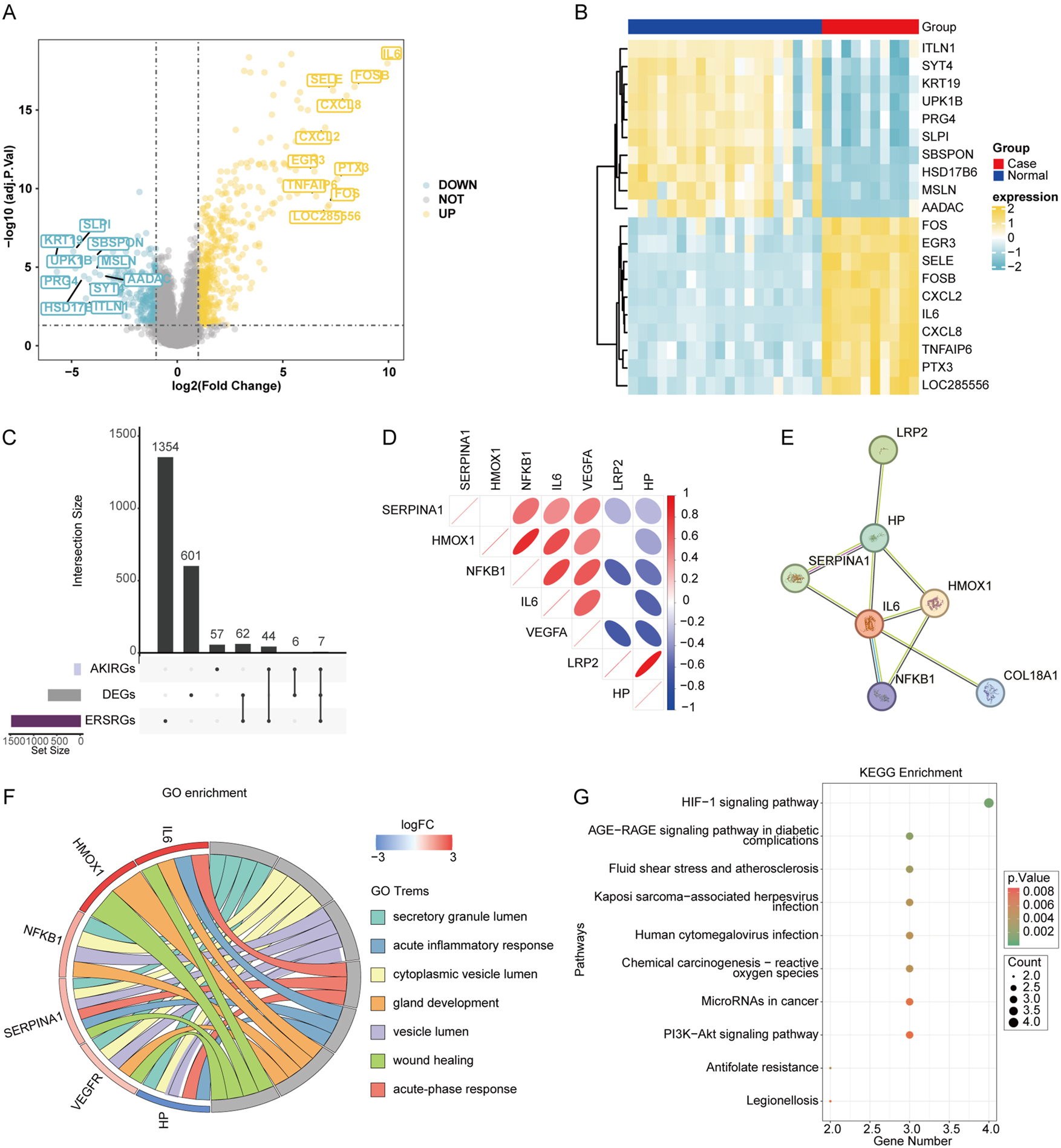
Identification and enrichment analysis of cross-talk genes. (A) DEGs of GSE4386, bule notes indicate downregulated DEGs, grey nodes indicate no significant, and yellow notes indicate upregulated DEGs. (B) Heat map of top 20 DEGs, the left part represents normal samples, the right part represents case samples, yellow represents upregulation and bule represents downregulation. (C) UpSetR plots depicts the number of unique and shared genes between AKIRGs, DEGs and ERSRGs. (D) Correlation matrix of the 7 cross-talk genes. (E) Interaction map of the 7 cross-talk genes PPI network. (F) GO and (G) KEGG enrichment analysis of the 7 cross-talk genes. AKIRGs, acute kidney injury related genes; DEGs, differentially expressed genes; ERSRGs, endoplasmic reticulum stress-related genes.
Diagnostic value and expression pattern of hub genes selected from cross-talk genes
To identify the most significant hub genes, we employed LASSO analysis, which identified four hub genes from seven cross-talk genes: HP, IL6, LRP2, and VEGFA (Figure 2A and B). We subsequently assessed the diagnostic potential of these hub genes. The area under the curve (AUC) values for HP, IL6, LRP2, and VEGFA were 0.945, 1.000, 0.940, and 0.950, respectively (Figure 2C). Notably, the expression levels of HP and LRP2 were lower than those in the normal controls, while IL6 and VEGFA exhibited higher expression compared to the normal controls (Figure 2D). The AUC values and expression patterns indicated the diagnostic model from the four hub genes has high predictive accuracy.
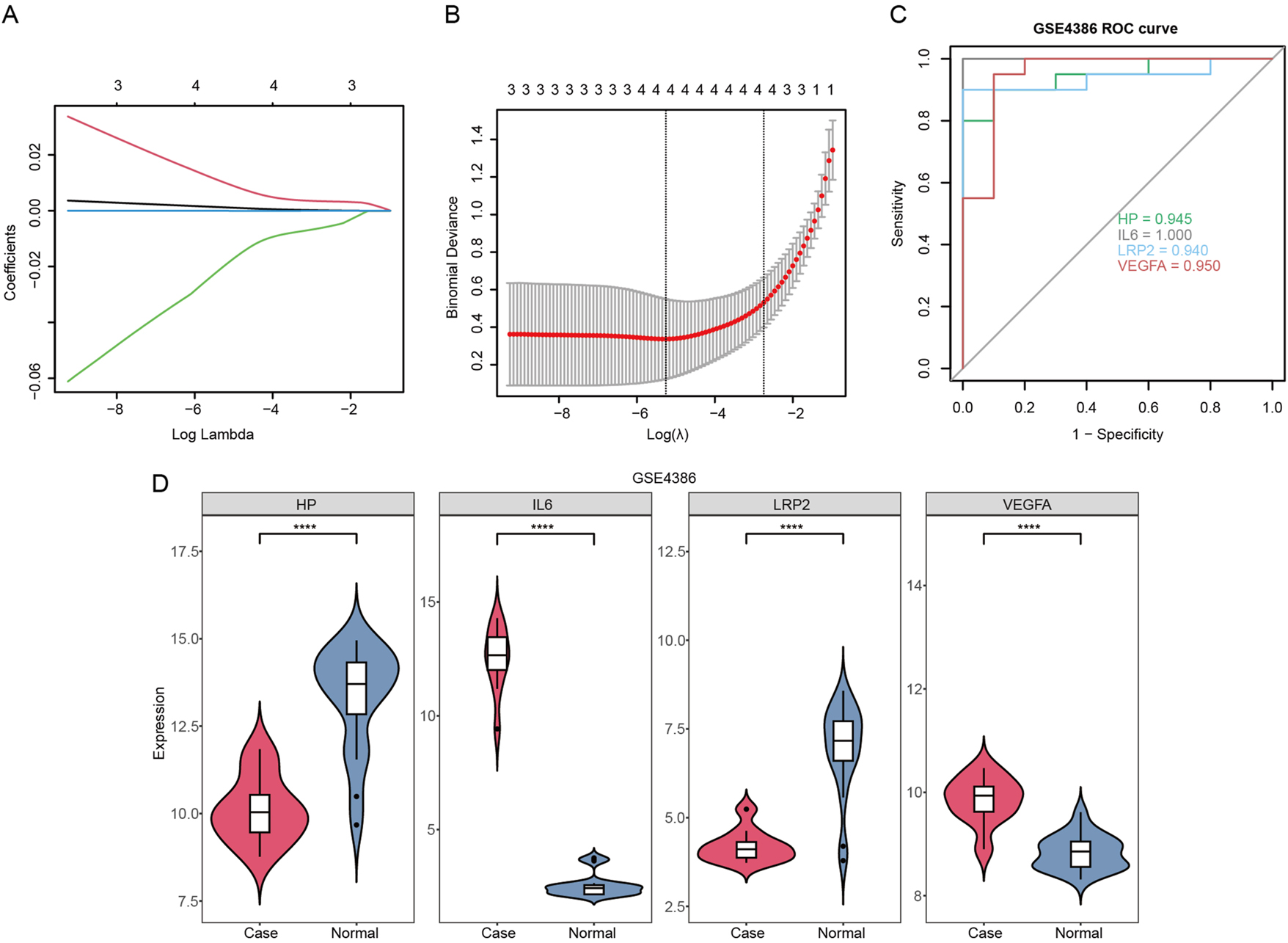
Screening of hub genes from cross-talk genes and their diagnostic value and expression pattern. (A) Coefficient distribution map for logarithmic (λ) sequences in LASSO regression model. (B) Coefficient spectrum of LASSO cox analysis. (C) ROC curve of HP, IL6, LRP2, and VEGFA in GSE4386. (D) Expression of HP, IL6, LRP2, and VEGFA between case and normal control in GSE4386. ****p<0.0001.
Gene set enrichment analysis (GSEA) of hub genes
We employed GSEA to identify significant pathways associated with each hub gene. HP exhibited positive enrichment in five pathways: translation initiation, cytoplasmic ribosomal proteins, ribosome, SRP-dependent cotranslational protein targeting to the membrane, and selenoamino acid metabolism (Figure 3A). IL6 also demonstrated positive enrichment in interleukin 4 and interleukin 13 signaling, the nuclear receptors meta pathway, signaling by interleukins, cytokine-cytokine receptor interaction, and proinflammatory and profibrotic mediators (Figure 3B). LDLR showed positive enrichment in five pathways: translation, ribosome, SRP-dependent cotranslational protein targeting to the membrane, translation initiation, and selenoamino acid metabolism (Figure 3C). Conversely, VEGFA revealed negative enrichment in five pathways: ribosome, selenoamino acid metabolism, translation initiation, translation, and SRP-dependent cotranslational protein targeting to the membrane (Figure 3D).
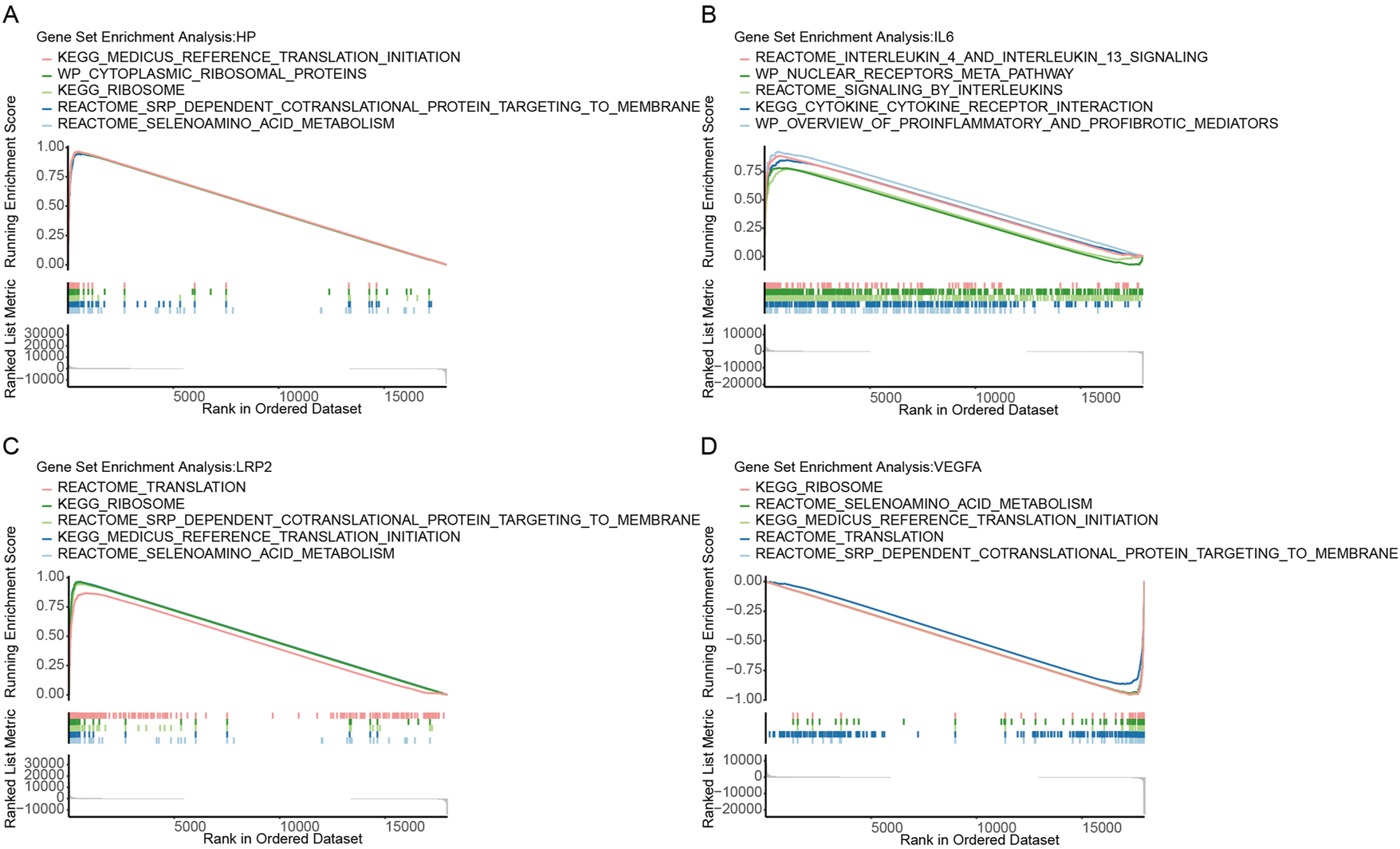
GSEA of hub genes HP, IL6, LRP2, and VEGFA. GSEA of (A) HP, (B) IL6, (C) LRP2, and (D) VEGFA for top 5 pathways.
Construction of endogenous RNA (ceRNA) and PPI networks
To gain deeper insights into the potential roles of the hub genes, we initially developed a competing ceRNA network. This network explored the interactions among the mRNA of IL6, LRP2, and VEGFA, as well as associated miRNAs and lncRNAs. We identified 175 interactions, comprising 46 miRNAs, 19 lncRNAs, and 3 mRNAs (Figure 4A). Furthermore, we performed GeneMANIA analysis to investigate the potential functions of hub genes and their functionally analogous genes. The findings indicated that the characteristic genes and their functionally similar counterparts primarily relate to biological processes such as the regulation of endothelial cell proliferation, epithelial cell proliferation, and the positive regulation of both epithelial cell proliferation and chemotaxis (Figure 4B).
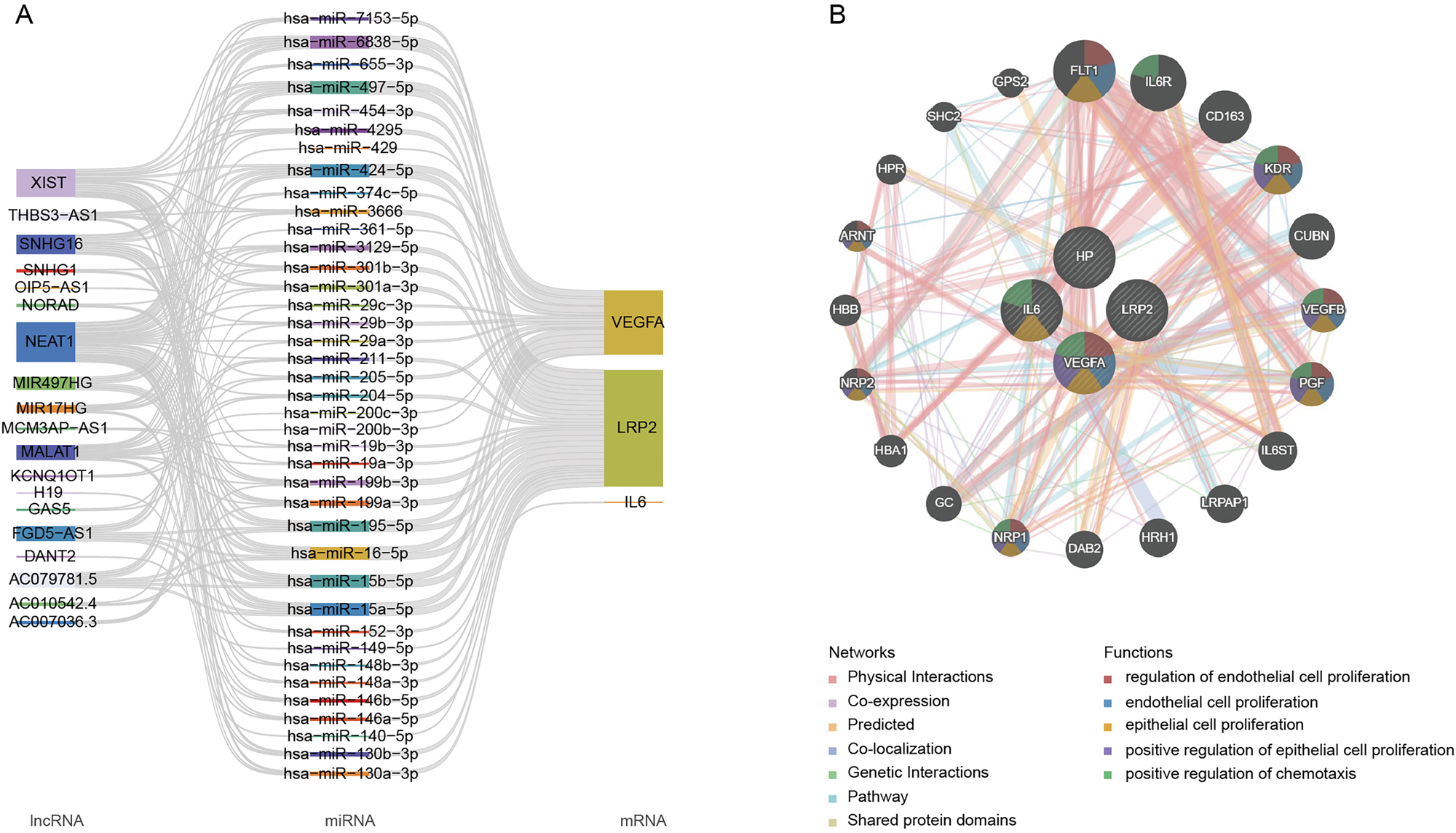
Construction and function analysis of ceRNA and hub gene interaction networks. (A) ceRNA network of hub genes IL6, LRP2, and VEGFA. The left section illustrates lncRNA, the middle section depicts miRNA, and the right section shows mRNA. (B) Interaction networks and functions between hub genes and functionally analogous genes.
Immune cells infiltration and its association with hub genes
To assess the immune profile of patients undergoing sevoflurane anesthesia, we employed the CIBERSORT, Epic, ssGSEA, and xcell algorithms to evaluate the infiltration levels of various immune cell types (Figure 5 and 6). The CIBERSORT results revealed an upregulation of naive B cells, follicular helper T cells, activated dendritic cells, activated mast cells, and neutrophils in the case samples. Conversely, plasma cells, resting dendritic cells, and resting mast cells showed a downregulation in these samples (Figure 5A). Furthermore, HP and LRP2 exhibited significant negative correlations with follicular helper T cells and resting mast cells, while IL6 and VEGFA demonstrated significant positive correlations with these cell types. Additionally, HP and LRP2 positively correlated with activated mast cells, whereas IL6 and VEGFA negatively correlated with them (Figure 5B). The Epic algorithm indicated a downregulation of CD8 T cells in the case samples (Figure 5C). HP and LRP2 positively correlated with cancer-associated fibroblasts (CAFs), while IL6 and VEGFA negatively correlated with CD8 T cells (Figure 5D).
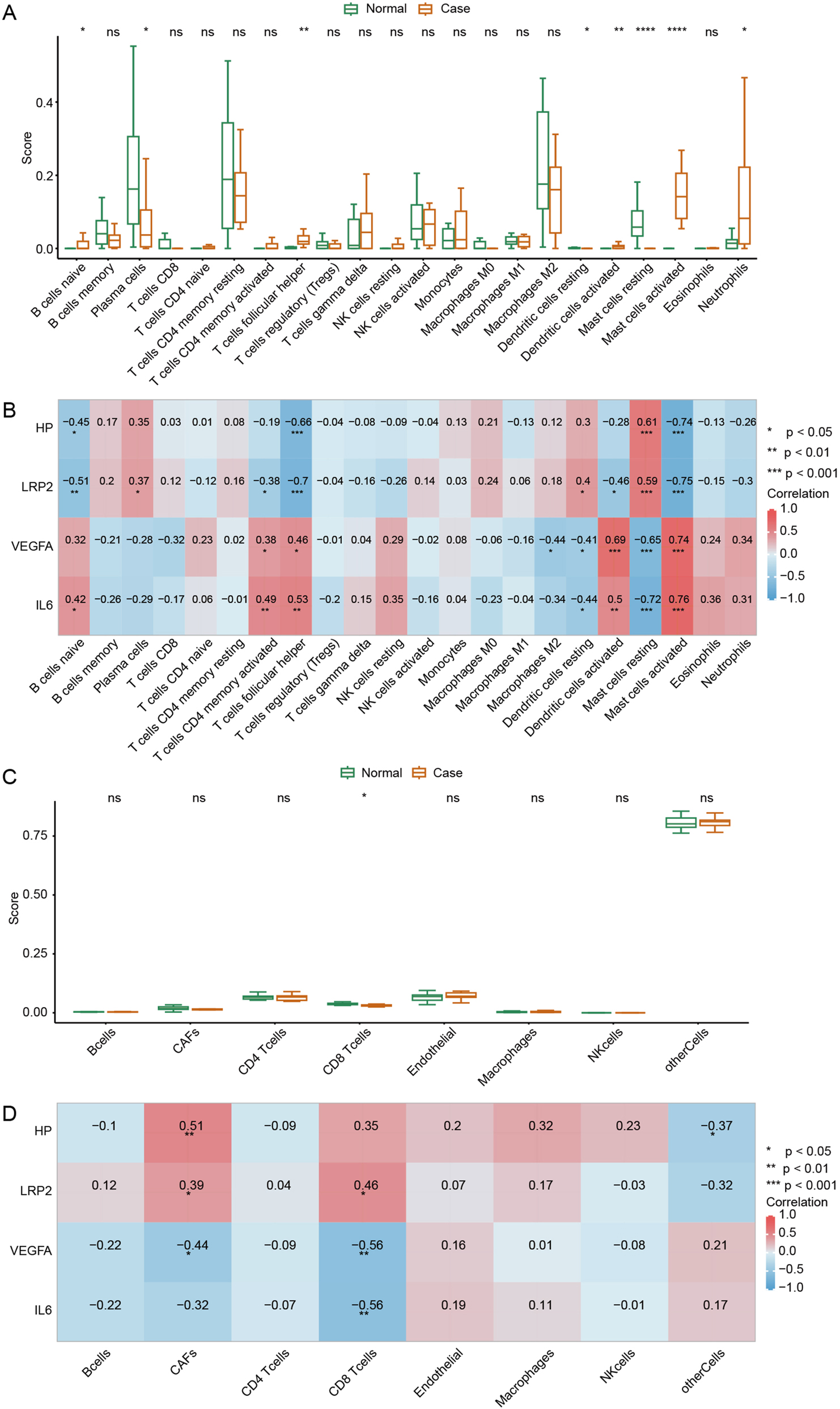
Immune cells infiltration in GSE4386 by CIBERSORT and EPIC algorithm. Comparison of (A) 22 immune cells infiltration and (B) relative abundance between case and normal control by CIBERSORT algorithm. Comparison of (C) immune cells and (D) relative abundance between case and normal control by EPIC algorithm. p values: ns, not significant, *p<0.05, **p<0.01, ***p<0.001, ****p<0.0001.
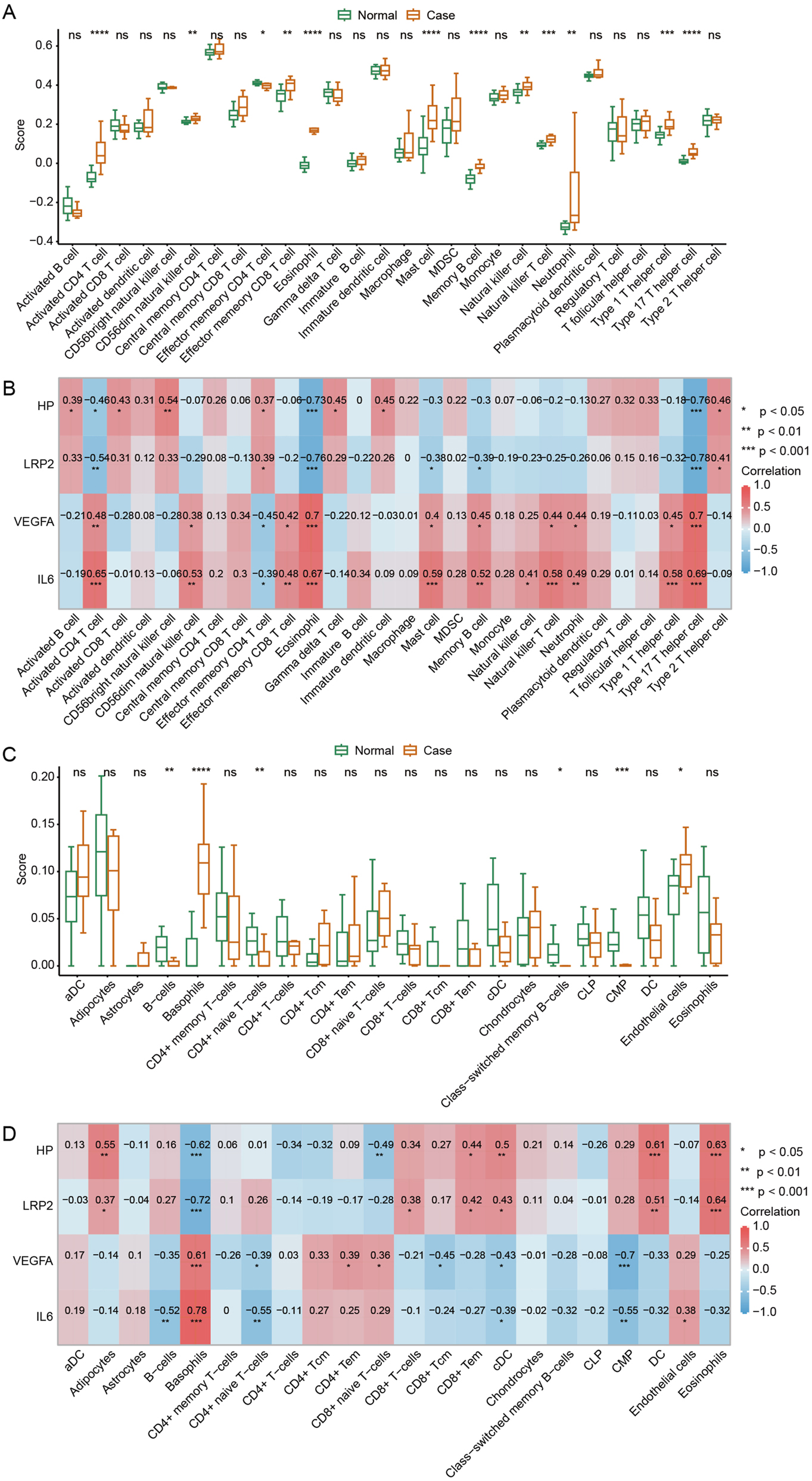
Immune cells infiltration in GSE4386 by ssGSEA and xcell algorithm. Comparison of (A) immune cells infiltration and (B) relative abundance between case and normal control by ssGSEA algorithm. Comparison of (C) immune cells and (D) relative abundance between case and normal control by xcell algorithm. p values: ns, not significant, *p<0.05, **p<0.01, ***p<0.001, ****p<0.0001.
The ssGSEA results demonstrated an upregulation of activated CD4 T cells, CD56dim natural killer cells, effector memory CD8 T cells, eosinophils, mast cells, memory B cells, natural killer cells, natural killer T cells, neutrophils, type 1 T helper cells, and type 17 T helper cells in the case samples. However, effector memory CD4 T cells were downregulated (Figure 6A). Notably, HP and LRP2 negatively correlated with activated CD4 T cells, eosinophils, and type 17 T helper cells, while IL6 and VEGFA positively correlated with these cell types (Figure 6B). The xcell algorithm results indicated an upregulation of basophils and endothelial cells in the case samples, while B cells, naive CD4+ T cells, class-switched memory B cells, and common myeloid progenitors (CMP) were downregulated (Figure 6C). HP and LRP2 positively correlated with basophils, whereas IL6 and VEGFA negatively correlated with them (Figure 6D).
Prediction of potential drugs
To identify potential therapeutic agents for hub genes, we utilized the DGIdb database to select approved medications and develop a gene-drug network. HP forecasts four approved drugs, with Migalastat and Vitamin B6 showing a strong correlation. VEGFA predicts 27 approved drugs, including Pegaptanib, a targeted therapy for VEGFA. IL6 predicts 28 approved drugs, among which Siltuximab serves as a specific monoclonal antibody for IL6 (Figure 7). Furthermore, we find that Fenofibrate Micronised and Adalimumab-adbm target both IL6 and VEGFA. These predictions offer valuable insights for targeting hub genes.
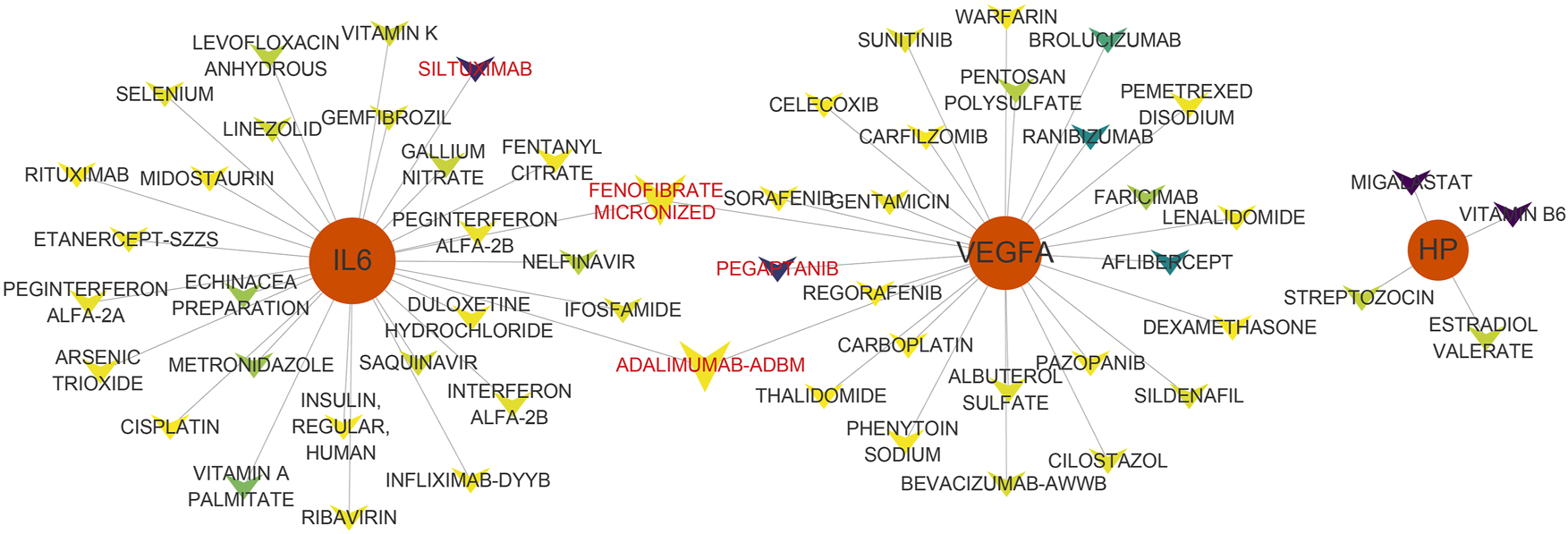
Prediction of potential drugs for HP, IL6, and VEGFA. Ellipses represent genes, V-shaped represents drugs, and darker color indicates higher interaction scores. The node size represents the number of edges, the larger the node, the more edges.
Discussion
Acute kidney injury (AKI) ranks as a primary cause of complications and mortality following cardiac surgery. However, the influence of anesthetics on AKI development remains poorly understood. Sevoflurane, a halogenated inhaled general anesthetic, produces inorganic fluoride and compound A, both of which may exhibit nephrotoxic properties [19]. Studies have linked sevoflurane to adverse outcomes, including AKI, in lung transplant [20] and colorectal surgeries [3]. Endoplasmic reticulum stress (ERS) significantly contributes to the pathophysiology of AKI [21]. The metabolic disturbances resulting from ERS alter the kidney cell microenvironment and trigger apoptosis [22]. Thus, investigating the mechanisms by which sevoflurane contributes to AKI post-cardiac surgery is essential for improving prevention and treatment strategies.
In this investigation, we used LASSO analysis to identify four key genes, HP, IL6, LRP2 and VEGFA. These genes showed significant expression profiles in AKI, ERS, and a collection of genes associated with sevoflurane anaesthesia, suggesting that they may be involved in related pathological processes. However, further experimental and clinical data validation is needed to clarify their specific roles and mechanisms in sevoflurane anaesthesia-induced AKI. HP (haptoglobin), serves as a precursor that binds free plasma hemoglobin. This binding facilitates the entry of degradation enzymes into hemoglobin while preventing iron loss via the kidneys, thereby protecting renal tissues from hemoglobin-induced damage [23]. Venier et al. reported two cases of significant haptoglobin depletion in AKI resulting from hemolysis following pulmonary vein ablation (PFA) surgery for atrial fibrillation [24]. Similarly, Greite et al. observed markedly reduced haptoglobin levels in AKI patients at the conclusion of surgery [25]. Our expression profile results align with these findings, revealing a notable downregulation of HP levels in case samples. IL6 (interleukin-6), primarily arises in acute and chronic inflammatory sites, instigating transcriptional inflammatory responses via the interleukin-6 receptor alpha [26]. This cytokine is associated with various inflammation-related diseases and is commonly elevated during AKI. Privratsky et al. discovered that macrophages express interleukin-1 receptor antagonists, thereby inhibiting endothelial cells from producing interleukin-6 to mitigate AKI [27]. Our results corroborate this, as IL-6 levels were significantly increased in case samples, suggesting that antagonizing IL-6 may help attenuate AKI progression. LRP2, also known as megalin (LDL receptor-related protein 2), functions as a multi-ligand endocytic receptor essential for the reuptake of various ligands, including lipoproteins, sterols, vitamin-binding proteins, and hormones [28]. VEGFA or vascular endothelial growth factor A, belongs to the PDGF/VEGF growth factor family and acts as a heparin-binding protein that promotes the proliferation and migration of vascular endothelial cells [29]. VEGFA is frequently upregulated in numerous diseases and tumors, with its expression correlating with tumor staging and progression. Anti-VEGF therapies are prevalent in oncology [30]. Taken together, these studies indicate that HP, IL6, LRP2, and VEGFA are intricately associated with the onset and progression of AKI, aligning with our analytical results. Thus, concentrating on these four hub genes will enhance our understanding of the mechanisms underlying sevoflurane-induced AKI following cardiac surgery and inform future research endeavors.
The results of GASE and PPI analysis indicate that all four hub genes are significantly associated with protein translation and selenium amino acid metabolism, among these, IL-6 is closely related to pro-inflammatory response and is associated with endothelial cell proliferation and epithelial cell proliferation functions. Qi et al. reported that m6A modification regulates RNA expression through splicing, output, attenuation, and translation initiation efficiency, and is associated with the occurrence and development of kidney disease [31]. In addition, IL-6 is a pleiotropic pro-inflammatory cytokine that affects the pathogenesis of various diseases [32]. Groza et al. stated that IgA nephropathy is associated with elevated plasma IL-6 concentration and elevated plasma abnormal galactosylated IgA1 immunoglobulin (Gd-IgA1) concentration [33]. These findings correspond to our analysis results, where IL-6 was significantly upregulated in the case samples and may promote the occurrence of AKI. Furthermore, AKI is often associated with rapid loss of renal tubular epithelial cells (TEC) [34]. Endothelial mesenchymal transition (EndoMT) in the kidneys is often associated with endothelial dysfunction, fibrosis, and progression of kidney disease [35]. The function of endothelial cells is closely related to ERS [36] and ERS often leads to inflammation and apoptosis of endothelial cells [37], 38]. This suggests that the occurrence of AKI may be closely related to inflammation and apoptosis of endothelial and epithelial cells.
The analysis of immune cell infiltration revealed an increased proportion of activated dendritic cells, mast cells, neutrophils, and NK cells. Plasmacytoid dendritic cells (pDCs) have been shown to rapidly infiltrate the kidneys during acute AKI, contributing to tissue damage through the production of IFN-α [39]. Tolerogenic dendritic cells represent a promising strategy for cell-based therapy in AKI [40], 41]. Additionally, mast cells [42], neutrophils [43] and NK cells [44] play critical roles in cytokine secretion and the inflammatory response, with increased infiltration rates likely linked to these processes. Li et al. demonstrated that Cordyceps sinensis extract inhibits perforin expression in NK cells via the STING/IRF3 pathway, thereby preventing AKI [45]. Theese findings suggest a correlation between the infiltration patterns of immune cells and the onset of AKI, providing a rationale for the development of targeted immunotherapies aimed at modulating immune cell activity to prevent and treat AKI.
Ultimately, we identified potential pharmacological agents targeting the hub genes. Our analysis revealed that IL6 and VEGFA exhibited significant upregulation in samples following sevoflurane anesthesia. Based on these findings, we propose the use of the IL6-specific monoclonal antibody Siltuximab and the VEGFA-targeted agent Pegaptanib as potential therapeutic options for the prevention and treatment of AKI induced by sevoflurane anesthesia. Siltuximab, an anti-IL-6 monoclonal antibody, has been shown to have a potential role in modulating inflammatory responses and attenuating renal injury [46]. IL-6 is a multifunctional pro-inflammatory cytokine that mediates inflammatory responses in AKI by activating signalling pathways, such as JAK/STAT3, and promotes immune cell activation and release of inflammatory factors, which in turn aggravate renal injury [47], 48]. It has been shown that blocking the IL-6 signalling pathway (e.g., with Siltuximab) can inhibit the inflammatory response and attenuate tissue damage, suggesting its therapeutic potential in AKI and related inflammatory disorders [49], 50]. Pegaptanib, an anti-VEGF nucleic acid aptamer, has been mainly used for the treatment of abnormal angiogenesis in ophthalmological diseases [51]. The VEGF signalling pathway also plays an important role in renal pathology, and is involved in angiogenesis, inflammatory response and fibrosis [52], 53]. Studies have shown that aberrant VEGF expression is closely associated with the progression of AKI and chronic kidney disease, and inhibition of VEGF activity may help to reduce renal inflammation and tissue damage [54]. Therefore, although Pegaptanib is mainly used in ophthalmology, its mechanism of targeting VEGF provides a theoretical basis for its potential application in renal disease. Taken together, these studies provide a biological rationale for the potential applicability of Siltuximab and Pegaptanib in the setting of AKI and associated inflammation, but further functional validation and clinical studies are needed to support their specific efficacy. In addition, we also identified two drugs that target both IL6 and VEGFA: Fenofibrate Micronised and Adalimumab-adbm.Fenofibrate Micronised, a drug that regulates lipid metabolism, has been shown to participate in anti-inflammatory and anti-angiogenic processes through the modulation of inflammatory factors (e.g. IL6) and angiogenic factors (e.g., VEGFA) in anti-inflammatory and anti-angiogenic processes, which may exert synergistic therapeutic effects on related diseases [55], [56], [57]. Adalimumab-adbm, as an anti-TNF-α monoclonal antibody, in addition to the direct inhibition of TNF-α, also indirectly modulates the expression of IL6 and VEGFA, attenuating inflammatory responses and pathological angiogenesis [58], 59]. These findings not only reveal the potential of the two drugs in the multi-target regulation of key gene networks, but also provide a theoretical basis for the development of combined therapeutic strategies against complex diseases.
In summary, this study identified four key genes for endoplasmic reticulum stress associated with sevoflurane anaesthesia-induced AKI. However, several limitations remain in this study. Firstly, the present study was based on the GSE4386 dataset for high-throughput gene expression bioinformatics analysis, which, although it provides important clues for the study of the molecular mechanisms of the associated diseases, is statistically limited in high-dimensional gene expression analyses because of its small sample size (containing only 20 control groups and 10 case groups). The lack of sample size may increase the false-positive rate and lead to model overfitting, thus affecting the stability and generalisability of the results. We chose this dataset mainly based on its high data quality and well-established clinical information, but fully recognise that its size limits the broad applicability of the findings. Future studies should incorporate larger independent cohorts or multicentre data for validation to enhance the reliability and generalizability of the results. Second, this study relied exclusively on computational bioinformatics methods and lacked functional experimental validation of key genes, which is particularly critical when proposing potential therapeutic targets. Although bioinformatics analyses can effectively screen potential key genes and regulatory pathways, these findings still need to be validated by in vitro and in vivo experiments. For example, qPCR and Western blot technologies can be used to detect the expression changes of key genes in cell models, combined with immunohistochemistry to observe their localisation in tissues; knockdown or overexpression experiments can be performed to assess their effects on cell proliferation, migration and apoptosis; and animal models can be used to validate the regulatory effects of key genes on the disease phenotype. Functional validation not only helps to confirm the biological significance of genes, but also provides a solid experimental basis for their potential as therapeutic targets. Future work is planned to combine multi-level experimental validation and clinical sample analysis to further elucidate the molecular mechanisms of key genes and their application value in disease diagnosis and treatment. Finally, this study performed a preliminary screening of potential drugs based on the DGIdb database, and although this method can rapidly identify possible therapeutic targets, the clinical applicability of the relevant drugs still needs to be interpreted with caution due to the lack of functional experimental validation and molecular docking analysis. In summary, although this study achieved preliminary results in screening potential key genes, the scientific rigour of the findings and the potential for clinical translation still need to be consolidated by larger-scale data and systematic experiments.
Conclusions
In conclusion, we identified four key pivotal genes by integrating genetic data related to AKI, ERS and sevoflurane anaesthesia. We systematically analysed the expression patterns and functional characteristics of these genes and their association with the immune microenvironment, and explored potential therapeutic targets. Unlike previous studies that mainly focused on generic mechanisms of AKI, this study is the first to focus on AKI in the context of sevoflurane anaesthesia from multidimensional data, revealing the specific regulatory networks that these genes may be involved in, and deepening the understanding of the molecular mechanisms of sevoflurane-induced AKI. This study provides a new theoretical basis and potential targets for the future development of precise intervention strategies for perioperative renal protection in cardiac surgery patients.
Acknowledgments
Not applicable.
-
Funding information: This work was partially supported by fund of Science and Technology Bureau of Jinhua Municipal (No.2021-3-068) and Zhejiang Medical and Health Science and Technology Project Research Project(No.2022KY1328).
-
Author contribution: BZ, WYP and DT contributed to the study design. BZ conducted the literature search. BZ and WYP acquired the data. BZ wrote the article and performed data analysis. DT revised the article and gave the final approval of the version to be submitted. All authors read and approved the final manuscript.
-
Conflict of interest: The authors declare that they have no potential conflicts of interest.
-
Data Availability Statement: The data and materials in the current study are available from the corresponding author on reasonable request.
References
1. Miao, M, Han, Y, Wang, Y, Wang, J, Zhu, R, Yang, Y, et al.. Dysregulation of iron homeostasis and ferroptosis in sevoflurane and isoflurane associated perioperative neurocognitive disorders. CNS Neurosci Ther 2024;30:e14553. https://doi.org/10.1111/cns.14553.Suche in Google Scholar PubMed PubMed Central
2. Pisano, A, Torella, M, Yavorovskiy, A, Landoni, G. The impact of anesthetic regimen on outcomes in adult cardiac surgery: a narrative review. J Cardiothorac Vasc Anesth 2021;35:711–29. https://doi.org/10.1053/j.jvca.2020.03.054.Suche in Google Scholar PubMed
3. Bang, JY, Lee, J, Oh, J, Song, JG, Hwang, GS. The influence of propofol and sevoflurane on acute kidney injury after colorectal surgery: a retrospective cohort study. Anesth Analg 2016;123:363–70. https://doi.org/10.1213/ane.0000000000001274.Suche in Google Scholar
4. Sneyd, JR. Avoiding kidney damage in ICU sedation with sevoflurane: use isoflurane instead. Br J Anaesth 2022;129:7–10. https://doi.org/10.1016/j.bja.2022.02.031.Suche in Google Scholar PubMed
5. Kellum, JA, Romagnani, P, Ashuntantang, G, Ronco, C, Zarbock, A, Anders, HJ. Acute kidney injury. Nat Rev Dis Primers 2021;7:52. https://doi.org/10.1038/s41572-021-00284-z.Suche in Google Scholar PubMed
6. Ronco, C, Bellomo, R, Kellum, JA. Acute kidney injury. Lancet (London, England) 2019;394:1949–64. https://doi.org/10.1016/s0140-6736-19-32563-2.Suche in Google Scholar
7. Massoth, C, Zarbock, A, Meersch, M. Acute kidney injury in cardiac surgery. Crit Care Clin 2021;37:267–78. https://doi.org/10.1016/j.ccc.2020.11.009.Suche in Google Scholar PubMed
8. Inagi, R. Organelle stress and metabolic derangement in kidney disease. Int J Mol Sci 2022;23:1723. https://doi.org/10.3390/ijms23031723.Suche in Google Scholar PubMed PubMed Central
9. Chen, X, Shi, C, He, M, Xiong, S, Xia, X. Endoplasmic reticulum stress: molecular mechanism and therapeutic targets. Signal Transduct Targeted Ther 2023;8:352. https://doi.org/10.1038/s41392-023-01570-w.Suche in Google Scholar PubMed PubMed Central
10. Zhang, J, Guo, J, Yang, N, Huang, Y, Hu, T, Rao, C. Endoplasmic reticulum stress-mediated cell death in liver injury. Cell Death Dis 2022;13:1051. https://doi.org/10.1038/s41419-022-05444-x.Suche in Google Scholar PubMed PubMed Central
11. Habshi, T, Shelke, V, Kale, A, Anders, HJ, Gaikwad, AB. Role of endoplasmic reticulum stress and autophagy in the transition from acute kidney injury to chronic kidney disease. J Cell Physiol 2023;238:82–93. https://doi.org/10.1002/jcp.30918.Suche in Google Scholar PubMed
12. Wang, Y, Pu, M, Yan, J, Zhang, J, Wei, H, Yu, L, et al.. 1,2-Bis(2-aminophenoxy)ethane-N,N,N’,N’-tetraacetic acid acetoxymethyl ester loaded reactive oxygen species responsive hyaluronic acid-bilirubin nanoparticles for acute kidney injury therapy via alleviating calcium overload mediated endoplasmic reticulum stress. ACS Nano 2023;17:472–91. https://doi.org/10.1021/acsnano.2c08982.Suche in Google Scholar PubMed
13. Blas-Valdivia, V, Rojas-Franco, P, Serrano-Contreras, JI, Sfriso, AA, Garcia-Hernandez, C, Franco-Colín, M, et al.. C-phycoerythrin from phormidium persicinum prevents acute kidney injury by attenuating oxidative and endoplasmic reticulum stress. Mar Drugs 2021;19:589. https://doi.org/10.3390/md19110589.Suche in Google Scholar PubMed PubMed Central
14. Engebretsen, S, Bohlin, J. Statistical predictions with glmnet. Clin Epigenet 2019;11:123. https://doi.org/10.1186/s13148-019-0730-1.Suche in Google Scholar PubMed PubMed Central
15. Newman, AM, Liu, CL, Green, MR, Gentles, AJ, Feng, W, Xu, Y, et al.. Robust enumeration of cell subsets from tissue expression profiles. Nat Methods 2015;12:453–7. https://doi.org/10.1038/nmeth.3337.Suche in Google Scholar PubMed PubMed Central
16. Racle, J, de Jonge, K, Baumgaertner, P, Speiser, DE, Gfeller, D. Simultaneous enumeration of cancer and immune cell types from bulk tumor gene expression data. eLife 2017;6:e26476. https://doi.org/10.7554/elife.26476.Suche in Google Scholar
17. Bindea, G, Mlecnik, B, Tosolini, M, Kirilovsky, A, Waldner, M, Obenauf, AC, et al.. Spatiotemporal dynamics of intratumoral immune cells reveal the immune landscape in human cancer. Immunity 2013;39:782–95. https://doi.org/10.1016/j.immuni.2013.10.003.Suche in Google Scholar PubMed
18. Aran, D, Hu, Z, Butte, AJ. xCell: digitally portraying the tissue cellular heterogeneity landscape. Genome Biol 2017;18:220. https://doi.org/10.1186/s13059-017-1349-1.Suche in Google Scholar PubMed PubMed Central
19. Bestas, A, Kemal Bayar, M, Akpolat, N, Nihat Okuducu, M. Effect of sevoflurane anesthesia on the severity of renal histopathologic changes in rabbits pretreated with gentamicin: a controlled, investigator-blinded, experimental study. Curr Ther Res Clin Exp 2006;67:386–95. https://doi.org/10.1016/j.curtheres.2006.12.002.Suche in Google Scholar PubMed PubMed Central
20. Song, Y, Paik, HC, Kim, N, Jung, H, Lee, JG, Yoo, YC. Effect of propofol versus sevoflurane anesthesia on acute kidney injury after lung transplantation surgery: a prospective randomized controlled trial. J Clin Med 2022;11:6862. https://doi.org/10.3390/jcm11226862.Suche in Google Scholar PubMed PubMed Central
21. Marciniak, SJ, Chambers, JE, Ron, D. Pharmacological targeting of endoplasmic reticulum stress in disease. Nat Rev Drug Discov 2022;21:115–40. https://doi.org/10.1038/s41573-021-00320-3.Suche in Google Scholar PubMed
22. Cao, Y, Chen, X, Zhu, Z, Luo, Z, Hao, Y, Yang, X, et al.. STING contributes to lipopolysaccharide-induced tubular cell inflammation and pyroptosis by activating endoplasmic reticulum stress in acute kidney injury. Cell Death Dis 2024;15:217. https://doi.org/10.1038/s41419-024-06600-1.Suche in Google Scholar PubMed PubMed Central
23. Andersen, CBF, Stødkilde, K, Sæderup, KL, Kuhlee, A, Raunser, S, Graversen, JH, et al.. Haptoglobin. Antioxidants Redox Signal 2017;26:814–31. https://doi.org/10.1089/ars.2016.6793.Suche in Google Scholar PubMed
24. Venier, S, Vaxelaire, N, Jacon, P, Carabelli, A, Desbiolles, A, Garban, F, et al.. Severe acute kidney injury related to haemolysis after pulsed field ablation for atrial fibrillation. Europace: European Pacing, Arrhythmias, and Cardiac Electrophysiology: Journal of the Working Groups on Cardiac Pacing, Arrhythmias, and Cardiac Cellular Electrophysiology of the European Society of Cardiology 2023;26:euad371. https://doi.org/10.1093/europace/euad371.Suche in Google Scholar PubMed PubMed Central
25. Greite, R, Wang, L, Gohlke, L, Schott, S, Kreimann, K, Doricic, J, et al.. Cell-free hemoglobin in acute kidney injury after lung transplantation and experimental renal ischemia/reperfusion. Int J Mol Sci 2022;23:13272. https://doi.org/10.3390/ijms232113272.Suche in Google Scholar PubMed PubMed Central
26. Choy, EH, De Benedetti, F, Takeuchi, T, Hashizume, M, John, MR, Kishimoto, T. Translating IL-6 biology into effective treatments. Nat Rev Rheumatol 2020;16:335–45. https://doi.org/10.1038/s41584-020-0419-z.Suche in Google Scholar PubMed PubMed Central
27. Privratsky, JR, Ide, S, Chen, Y, Kitai, H, Ren, J, Fradin, H, et al.. A macrophage-endothelial immunoregulatory axis ameliorates septic acute kidney injury. Kidney Int 2023;103:514–28. https://doi.org/10.1016/j.kint.2022.10.008.Suche in Google Scholar PubMed PubMed Central
28. Khan, SS, Petkovich, M, Holden, RM, Adams, MA. Megalin and vitamin D metabolism-implications in non-renal tissues and kidney disease. Nutrients 2022;14:3690. https://doi.org/10.3390/nu14183690.Suche in Google Scholar PubMed PubMed Central
29. White, AL, Bix, GJ. VEGFA isoforms as pro-angiogenic therapeutics for cerebrovascular diseases. Biomolecules 2023;13:702. https://doi.org/10.3390/biom13040702.Suche in Google Scholar PubMed PubMed Central
30. Pérez-Gutiérrez, L, Ferrara, N. Biology and therapeutic targeting of vascular endothelial growth factor A. Nat Rev Mol Cell Biol 2023;24:816–34. https://doi.org/10.1038/s41580-023-00631-w.Suche in Google Scholar PubMed
31. Qi, S, Song, J, Chen, L, Weng, H. The role of N-methyladenosine modification in acute and chronic kidney diseases. Mol Med 2023;29:166. https://doi.org/10.1186/s10020-023-00764-w.Suche in Google Scholar PubMed PubMed Central
32. Rose-John, S, Jenkins, BJ, Garbers, C, Moll, JM, Scheller, J. Targeting IL-6 trans-signalling: past, present and future prospects. Nat Rev Immunol 2023;23:666–81. https://doi.org/10.1038/s41577-023-00856-y.Suche in Google Scholar PubMed PubMed Central
33. Groza, Y, Jemelkova, J, Kafkova, LR, Maly, P, Raska, M. IL-6 and its role in IgA nephropathy development. Cytokine Growth Factor Rev 2022;66:1–14. https://doi.org/10.1016/j.cytogfr.2022.04.001.Suche in Google Scholar PubMed
34. Zhou, Z, Shi, L, Chen, B, Qian, H. Regulation of regulated cell death by extracellular vesicles in acute kidney injury and chronic kidney disease. Cytokine Growth Factor Rev 2024;76:99–111. https://doi.org/10.1016/j.cytogfr.2023.12.006.Suche in Google Scholar PubMed
35. Pohl, L, Schiessl, IM. Endothelial cell plasticity in kidney fibrosis and disease. Acta Physiol 2023;239:e14038. https://doi.org/10.1111/apha.14038.Suche in Google Scholar PubMed
36. Ma, DJ, Hwang, JS, Noh, KB, Oh, SH, Kim, KW, Shin, YJ. Role of NADPH oxidase 4 in corneal endothelial cells is mediated by endoplasmic reticulum stress and autophagy. Antioxidants 2023;12:1228. https://doi.org/10.3390/antiox12061228.Suche in Google Scholar PubMed PubMed Central
37. Gao, ZF, Ji, XL, Gu, J, Wang, XY, Ding, L, Zhang, H. microRNA-107 protects against inflammation and endoplasmic reticulum stress of vascular endothelial cells via KRT1-dependent notch signaling pathway in a mouse model of coronary atherosclerosis. J Cell Physiol 2019;234:12029–41. https://doi.org/10.1002/jcp.27864.Suche in Google Scholar PubMed
38. Meng, J, Song, X, Yan, G, Wang, H, Li, H, Lou, D. Dendrobine suppresses endoplasmic reticulum stress-induced apoptosis through upregulating microRNA miR-381-3p to decrease caspase-4. Bioengineered 2021;12:4452–63. https://doi.org/10.1080/21655979.2021.1956672.Suche in Google Scholar PubMed PubMed Central
39. Deng, B, Lin, Y, Chen, Y, Ma, S, Cai, Q, Wang, W, et al.. Plasmacytoid dendritic cells promote acute kidney injury by producing interferon-α. Cell Mol Immunol 2021;18:219–29. https://doi.org/10.1038/s41423-019-0343-9.Suche in Google Scholar PubMed PubMed Central
40. Li, JSY, Robertson, H, Trinh, K, Raghubar, AM, Nguyen, Q, Matigian, N, et al.. Tolerogenic dendritic cells protect against acute kidney injury. Kidney Int 2023;104:492–507. https://doi.org/10.1016/j.kint.2023.05.008.Suche in Google Scholar PubMed
41. Nakamura, Y, Inoue, T. Tolerogenic dendritic cells: promising cell therapy for acute kidney injury. Kidney Int 2023;104:420–2. https://doi.org/10.1016/j.kint.2023.06.015.Suche in Google Scholar PubMed
42. Marshall, JS, Portales-Cervantes, L, Leong, E. Mast cell responses to viruses and pathogen products. Int J Mol Sci 2019;20:4241. https://doi.org/10.3390/ijms20174241.Suche in Google Scholar PubMed PubMed Central
43. Silvestre-Roig, C, Braster, Q, Ortega-Gomez, A, Soehnlein, O. Neutrophils as regulators of cardiovascular inflammation. Nat Rev Cardiol 2020;17:327–40. https://doi.org/10.1038/s41569-019-0326-7.Suche in Google Scholar PubMed
44. Chen, C, Ai, QD, Chu, SF, Zhang, Z, Chen, NH. NK cells in cerebral ischemia. Biomedicine & pharmacotherapy=Biomedecine & pharmacotherapie 2019;109:547–54. https://doi.org/10.1016/j.biopha.2018.10.103.Suche in Google Scholar PubMed
45. Li, S, Pang, W, Wang, Y, Zhang, Y. Cordyceps sinensis extract protects against acute kidney injury by inhibiting perforin expression in NK cells via the STING/IRF3 pathway. Aging 2024;16:5887–904. https://doi.org/10.18632/aging.205676.Suche in Google Scholar PubMed PubMed Central
46. Morra, DE, Pierson, SK, Shilling, D, Nemat, S, Appiani, C, Guilfoyle, M, et al.. Predictors of response to anti-IL6 monoclonal antibody therapy (siltuximab) in idiopathic multicentric castleman disease: secondary analyses of phase II clinical trial data. Br J Haematol 2019;184:232–41. https://doi.org/10.1111/bjh.15588.Suche in Google Scholar PubMed PubMed Central
47. Su, H, Lei, CT, Zhang, C. Interleukin-6 signaling pathway and its role in kidney disease: an update. Front Immunol 2017;8:405. https://doi.org/10.3389/fimmu.2017.00405.Suche in Google Scholar PubMed PubMed Central
48. Gubernatorova, EO, Samsonov, MY, Drutskaya, MS, Lebedeva, S, Bukhanova, D, Materenchuk, M, et al.. Targeting inerleukin-6 for renoprotection. Front Immunol 2024;15:1502299. https://doi.org/10.3389/fimmu.2024.1502299.Suche in Google Scholar PubMed PubMed Central
49. Rossi, JF, Négrier, S, James, ND, Kocak, I, Hawkins, R, Davis, H, et al.. A phase I/II study of siltuximab (CNTO 328), an anti-interleukin-6 monoclonal antibody, in metastatic renal cell cancer. Br J Cancer 2010;103:1154–62. https://doi.org/10.1038/sj.bjc.6605872.Suche in Google Scholar PubMed PubMed Central
50. Joseph, A, Lafarge, A, Azoulay, E, Zafrani, L. Acute kidney injury in cancer immunotherapy recipients. Cells 2022;11:3991. https://doi.org/10.3390/cells11243991.Suche in Google Scholar PubMed PubMed Central
51. Ng, EW, Adamis, AP. Anti-VEGF aptamer (pegaptanib) therapy for ocular vascular diseases. Ann N Y Acad Sci 2006;1082:151–71. https://doi.org/10.1196/annals.1348.062.Suche in Google Scholar PubMed
52. Engel, JE, Williams, E, Williams, ML, Bidwell, GL3rd, Chade, AR. Targeted VEGF (vascular endothelial growth factor) therapy induces long-term renal recovery in chronic kidney disease via macrophage polarization. Hypertension (Dallas) 2019;74:1113–23. https://doi.org/10.1161/hypertensionaha.119.13469.Suche in Google Scholar
53. Guise, E, Chade, AR. VEGF therapy for the kidney: emerging strategies. Am J Physiol Ren Physiol 2018;315:F747–f51. https://doi.org/10.1152/ajprenal.00617.2017.Suche in Google Scholar PubMed PubMed Central
54. Huang, MJ, Ji, YW, Chen, JW, Li, D, Zhou, T, Qi, P, et al.. Targeted VEGFA therapy in regulating early acute kidney injury and late fibrosis. Acta Pharmacol Sin 2023;44:1815–25. https://doi.org/10.1038/s41401-023-01070-1.Suche in Google Scholar PubMed PubMed Central
55. Gervois, P, Kleemann, R, Pilon, A, Percevault, F, Koenig, W, Staels, B, et al.. Global suppression of IL-6-induced acute phase response gene expression after chronic in vivo treatment with the peroxisome proliferator-activated receptor-alpha activator fenofibrate. J Biol Chem 2004;279:16154–60. https://doi.org/10.1074/jbc.m400346200.Suche in Google Scholar PubMed
56. Wang, N, Zou, C, Zhao, S, Wang, Y, Han, C, Zheng, Z. Fenofibrate exerts protective effects in diabetic retinopathy via inhibition of the ANGPTL3 pathway. Investig Ophthalmol Vis Sci 2018;59:4210–7. https://doi.org/10.1167/iovs.18-24155.Suche in Google Scholar PubMed
57. Tomita, Y, Lee, D, Tsubota, K, Negishi, K, Kurihara, T. Updates on the current treatments for diabetic retinopathy and possibility of future oral therapy. J Clin Med 2021;10:4666. https://doi.org/10.3390/jcm10204666.Suche in Google Scholar PubMed PubMed Central
58. Nakahara, H, Song, J, Sugimoto, M, Hagihara, K, Kishimoto, T, Yoshizaki, K, et al.. Anti-interleukin-6 receptor antibody therapy reduces vascular endothelial growth factor production in rheumatoid arthritis. Arthritis Rheum 2003;48:1521–9. https://doi.org/10.1002/art.11143.Suche in Google Scholar PubMed
59. Brahe, CH, Dehlendorff, C, Østergaard, M, Johansen, JS, Ørnbjerg, LM, Hørslev-Petersen, K, et al.. Circulating serum interleukin-6, serum chitinase-3-like protein-1, and plasma vascular endothelial growth factor are not predictive for remission and radiographic progression in patients with early rheumatoid arthritis: post-hoc explorative and validation studies based on the CIMESTRA and OPERA trials. Scand J Rheumatol 2018;47:259–69. https://doi.org/10.1080/03009742.2017.1376107.Suche in Google Scholar PubMed
© 2025 the author(s), published by De Gruyter, Berlin/Boston
This work is licensed under the Creative Commons Attribution 4.0 International License.
Artikel in diesem Heft
- Research Articles
- Network pharmacological analysis and in vitro testing of the rutin effects on triple-negative breast cancer
- Impact of diabetes on long-term survival in elderly liver cancer patients: A retrospective study
- Knockdown of CCNB1 alleviates high glucose-triggered trophoblast dysfunction during gestational diabetes via Wnt/β-catenin signaling pathway
- Risk factors for severe adverse drug reactions in hospitalized patients
- Analysis of the effect of ALA-PDT on macrophages in footpad model of mice infected with Fonsecaea monophora based on single-cell sequencing
- Development and validation of headspace gas chromatography with a flame ionization detector method for the determination of ethanol in the vitreous humor
- CMSP exerts anti-tumor effects on small cell lung cancer cells by inducing mitochondrial dysfunction and ferroptosis
- Predictive value of plasma sB7-H3 and YKL-40 in pediatric refractory Mycoplasma pneumoniae pneumonia
- Antiangiogenic potential of Elaeagnus umbellata extracts and molecular docking study by targeting VEGFR-2 pathway
- Comparison of the effectiveness of nurse-led preoperative counseling and postoperative follow-up care vs standard care for patients with gastric cancer
- Comparing the therapeutic efficacy of endoscopic minimally invasive surgery and traditional surgery for early-stage breast cancer: A meta-analysis
- Adhered macrophages as an additional marker of cardiomyocyte injury in biopsies of patients with dilated cardiomyopathy
- Association between statin administration and outcome in patients with sepsis: A retrospective study
- Exploration of the association between estimated glucose disposal rate and osteoarthritis in middle-aged and older adults: An analysis of NHANES data from 2011 to 2018
- A comparative analysis of the binary and multiclass classified chest X-ray images of pneumonia and COVID-19 with ML and DL models
- Lysophosphatidic acid 2 alleviates deep vein thrombosis via protective endothelial barrier function
- Transcription factor A, mitochondrial promotes lymph node metastasis and lymphangiogenesis in epithelial ovarian carcinoma
- Serum PM20D1 levels are associated with nutritional status and inflammatory factors in gastric cancer patients undergoing early enteral nutrition
- Hydromorphone reduced the incidence of emergence agitation after adenotonsillectomy in children with obstructive sleep apnea: A randomized, double-blind study
- Vitamin D replacement therapy may regulate sleep habits in patients with restless leg syndrome
- The first-line antihypertensive nitrendipine potentiated the therapeutic effect of oxaliplatin by downregulating CACNA1D in colorectal cancer
- Health literacy and health-related quality of life: The mediating role of irrational happiness
- Modulatory effects of Lycium barbarum polysaccharide on bone cell dynamics in osteoporosis
- Mechanism research on inhibition of gastric cancer in vitro by the extract of Pinellia ternata based on network pharmacology and cellular metabolomics
- Examination of the causal role of immune cells in non-alcoholic fatty liver disease by a bidirectional Mendelian randomization study
- Clinical analysis of ten cases of HIV infection combined with acute leukemia
- Investigating the cardioprotective potential of quercetin against tacrolimus-induced cardiotoxicity in Wistar rats: A mechanistic insights
- Clinical observation of probiotics combined with mesalazine and Yiyi Baitouweng Decoction retention enema in treating mild-to-moderate ulcerative colitis
- Diagnostic value of ratio of blood inflammation to coagulation markers in periprosthetic joint infection
- Sex-specific associations of sex hormone binding globulin and risk of bladder cancer
- Core muscle strength and stability-oriented breathing training reduces inter-recti distance in postpartum women
- The ERAS nursing care strategy for patients undergoing transsphenoidal endoscopic pituitary tumor resection: A randomized blinded controlled trial
- The serum IL-17A levels in patients with traumatic bowel rupture post-surgery and its predictive value for patient prognosis
- Impact of Kolb’s experiential learning theory-based nursing on caregiver burden and psychological state of caregivers of dementia patients
- Analysis of serum NLR combined with intraoperative margin condition to predict the prognosis of cervical HSIL patients undergoing LEEP surgery
- Commiphora gileadensis ameliorate infertility and erectile dysfunction in diabetic male mice
- The correlation between epithelial–mesenchymal transition classification and MMP2 expression of circulating tumor cells and prognosis of advanced or metastatic nasopharyngeal carcinoma
- Tetrahydropalmatine improves mitochondrial function in vascular smooth muscle cells of atherosclerosis in vitro by inhibiting Ras homolog gene family A/Rho-associated protein kinase-1 signaling pathway
- A cross-sectional study: Relationship between serum oxidative stress levels and arteriovenous fistula maturation in maintenance dialysis patients
- A comparative analysis of the impact of repeated administration of flavan 3-ol on brown, subcutaneous, and visceral adipose tissue
- Identifying early screening factors for depression in middle-aged and older adults: A cohort study
- Perform tumor-specific survival analysis for Merkel cell carcinoma patients undergoing surgical resection based on the SEER database by constructing a nomogram chart
- Unveiling the role of CXCL10 in pancreatic cancer progression: A novel prognostic indicator
- High-dose preoperative intraperitoneal erythropoietin and intravenous methylprednisolone in acute traumatic spinal cord injuries following decompression surgeries
- RAB39B: A novel biomarker for acute myeloid leukemia identified via multi-omics and functional validation
- Impact of peripheral conditioning on reperfusion injury following primary percutaneous coronary intervention in diabetic and non-diabetic STEMI patients
- Clinical efficacy of azacitidine in the treatment of middle- and high-risk myelodysplastic syndrome in middle-aged and elderly patients: A retrospective study
- The effect of ambulatory blood pressure load on mitral regurgitation in continuous ambulatory peritoneal dialysis patients
- Expression and clinical significance of ITGA3 in breast cancer
- Single-nucleus RNA sequencing reveals ARHGAP28 expression of podocytes as a biomarker in human diabetic nephropathy
- rSIG combined with NLR in the prognostic assessment of patients with multiple injuries
- Toxic metals and metalloids in collagen supplements of fish and jellyfish origin: Risk assessment for daily intake
- Exploring causal relationship between 41 inflammatory cytokines and marginal zone lymphoma: A bidirectional Mendelian randomization study
- Gender beliefs and legitimization of dating violence in adolescents
- Effect of serum IL-6, CRP, and MMP-9 levels on the efficacy of modified preperitoneal Kugel repair in patients with inguinal hernia
- Effect of smoking and smoking cessation on hematological parameters in polycythemic patients
- Pathogen surveillance and risk factors for pulmonary infection in patients with lung cancer: A retrospective single-center study
- Necroptosis of hippocampal neurons in paclitaxel chemotherapy-induced cognitive impairment mediates microglial activation via TLR4/MyD88 signaling pathway
- Celastrol suppresses neovascularization in rat aortic vascular endothelial cells stimulated by inflammatory tenocytes via modulating the NLRP3 pathway
- Cord-lamina angle and foraminal diameter as key predictors of C5 palsy after anterior cervical decompression and fusion surgery
- GATA1: A key biomarker for predicting the prognosis of patients with diffuse large B-cell lymphoma
- Influencing factors of false lumen thrombosis in type B aortic dissection: A single-center retrospective study
- MZB1 regulates the immune microenvironment and inhibits ovarian cancer cell migration
- Integrating experimental and network pharmacology to explore the pharmacological mechanisms of Dioscin against glioblastoma
- Trends in research on preterm birth in twin pregnancy based on bibliometrics
- Four-week IgE/baseline IgE ratio combined with tryptase predicts clinical outcome in omalizumab-treated children with moderate-to-severe asthma
- Single-cell transcriptomic analysis identifies a stress response Schwann cell subtype
- Acute pancreatitis risk in the diagnosis and management of inflammatory bowel disease: A critical focus
- Effect of subclinical esketamine on NLRP3 and cognitive dysfunction in elderly ischemic stroke patients
- Interleukin-37 mediates the anti-oral tumor activity in oral cancer through STAT3
- CA199 and CEA expression levels, and minimally invasive postoperative prognosis analysis in esophageal squamous carcinoma patients
- Efficacy of a novel drainage catheter in the treatment of CSF leak after posterior spine surgery: A retrospective cohort study
- Comprehensive biomedicine assessment of Apteranthes tuberculata extracts: Phytochemical analysis and multifaceted pharmacological evaluation in animal models
- Relation of time in range to severity of coronary artery disease in patients with type 2 diabetes: A cross-sectional study
- Dopamine attenuates ethanol-induced neuronal apoptosis by stimulating electrical activity in the developing rat retina
- Correlation between albumin levels during the third trimester and the risk of postpartum levator ani muscle rupture
- Factors associated with maternal attention and distraction during breastfeeding and childcare: A cross-sectional study in the west of Iran
- Mechanisms of hesperetin in treating metabolic dysfunction-associated steatosis liver disease via network pharmacology and in vitro experiments
- The law on oncological oblivion in the Italian and European context: How to best uphold the cancer patients’ rights to privacy and self-determination?
- The prognostic value of the neutrophil-to-lymphocyte ratio, platelet-to-lymphocyte ratio, and prognostic nutritional index for survival in patients with colorectal cancer
- Factors affecting the measurements of peripheral oxygen saturation values in healthy young adults
- Comparison and correlations between findings of hysteroscopy and vaginal color Doppler ultrasonography for detection of uterine abnormalities in patients with recurrent implantation failure
- The effects of different types of RAGT on balance function in stroke patients with low levels of independent walking in a convalescent rehabilitation hospital
- Causal relationship between asthma and ankylosing spondylitis: A bidirectional two-sample univariable and multivariable Mendelian randomization study
- Correlations of health literacy with individuals’ understanding and use of medications in Southern Taiwan
- Correlation of serum calprotectin with outcome of acute cerebral infarction
- Comparison of computed tomography and guided bronchoscopy in the diagnosis of pulmonary nodules: A systematic review and meta-analysis
- Curdione protects vascular endothelial cells and atherosclerosis via the regulation of DNMT1-mediated ERBB4 promoter methylation
- The identification of novel missense variant in ChAT gene in a patient with gestational diabetes denotes plausible genetic association
- Molecular genotyping of multi-system rare blood types in foreign blood donors based on DNA sequencing and its clinical significance
- Exploring the role of succinyl carnitine in the association between CD39⁺ CD4⁺ T cell and ulcerative colitis: A Mendelian randomization study
- Dexmedetomidine suppresses microglial activation in postoperative cognitive dysfunction via the mmu-miRNA-125/TRAF6 signaling axis
- Analysis of serum metabolomics in patients with different types of chronic heart failure
- Diagnostic value of hematological parameters in the early diagnosis of acute cholecystitis
- Pachymaran alleviates fat accumulation, hepatocyte degeneration, and injury in mice with nonalcoholic fatty liver disease
- Decrease in CD4 and CD8 lymphocytes are predictors of severe clinical picture and unfavorable outcome of the disease in patients with COVID-19
- METTL3 blocked the progression of diabetic retinopathy through m6A-modified SOX2
- The predictive significance of anti-RO-52 antibody in patients with interstitial pneumonia after treatment of malignant tumors
- Exploring cerebrospinal fluid metabolites, cognitive function, and brain atrophy: Insights from Mendelian randomization
- Development and validation of potential molecular subtypes and signatures of ocular sarcoidosis based on autophagy-related gene analysis
- Widespread venous thrombosis: Unveiling a complex case of Behçet’s disease with a literature perspective
- Uterine fibroid embolization: An analysis of clinical outcomes and impact on patients’ quality of life
- Discovery of lipid metabolism-related diagnostic biomarkers and construction of diagnostic model in steroid-induced osteonecrosis of femoral head
- Serum-derived exomiR-188-3p is a promising novel biomarker for early-stage ovarian cancer
- Enhancing chronic back pain management: A comparative study of ultrasound–MRI fusion guidance for paravertebral nerve block
- Peptide CCAT1-70aa promotes hepatocellular carcinoma proliferation and invasion via the MAPK/ERK pathway
- Electroacupuncture-induced reduction of myocardial ischemia–reperfusion injury via FTO-dependent m6A methylation modulation
- Hemorrhoids and cardiovascular disease: A bidirectional Mendelian randomization study
- Cell-free adipose extract inhibits hypertrophic scar formation through collagen remodeling and antiangiogenesis
- HALP score in Demodex blepharitis: A case–control study
- Assessment of SOX2 performance as a marker for circulating cancer stem-like cells (CCSCs) identification in advanced breast cancer patients using CytoTrack system
- Risk and prognosis for brain metastasis in primary metastatic cervical cancer patients: A population-based study
- Comparison of the two intestinal anastomosis methods in pediatric patients
- Factors influencing hematological toxicity and adverse effects of perioperative hyperthermic intraperitoneal vs intraperitoneal chemotherapy in gastrointestinal cancer
- Endotoxin tolerance inhibits NLRP3 inflammasome activation in macrophages of septic mice by restoring autophagic flux through TRIM26
- Lateral transperitoneal laparoscopic adrenalectomy: A single-centre experience of 21 procedures
- Petunidin attenuates lipopolysaccharide-induced retinal microglia inflammatory response in diabetic retinopathy by targeting OGT/NF-κB/LCN2 axis
- Procalcitonin and C-reactive protein as biomarkers for diagnosing and assessing the severity of acute cholecystitis
- Factors determining the number of sessions in successful extracorporeal shock wave lithotripsy patients
- Development of a nomogram for predicting cancer-specific survival in patients with renal pelvic cancer following surgery
- Inhibition of ATG7 promotes orthodontic tooth movement by regulating the RANKL/OPG ratio under compression force
- A machine learning-based prognostic model integrating mRNA stemness index, hypoxia, and glycolysis‑related biomarkers for colorectal cancer
- Glutathione attenuates sepsis-associated encephalopathy via dual modulation of NF-κB and PKA/CREB pathways
- FAHD1 prevents neuronal ferroptosis by modulating R-loop and the cGAS–STING pathway
- Association of placenta weight and morphology with term low birth weight: A case–control study
- Investigation of the pathogenic variants induced Sjogren’s syndrome in Turkish population
- Nucleotide metabolic abnormalities in post-COVID-19 condition and type 2 diabetes mellitus patients and their association with endocrine dysfunction
- TGF-β–Smad2/3 signaling in high-altitude pulmonary hypertension in rats: Role and mechanisms via macrophage M2 polarization
- Ultrasound-guided unilateral versus bilateral erector spinae plane block for postoperative analgesia of patients undergoing laparoscopic cholecystectomy
- Profiling gut microbiome dynamics in subacute thyroiditis: Implications for pathogenesis, diagnosis, and treatment
- Delta neutrophil index, CRP/albumin ratio, procalcitonin, immature granulocytes, and HALP score in acute appendicitis: Best performing biomarker?
- Anticancer activity mechanism of novelly synthesized and characterized benzofuran ring-linked 3-nitrophenyl chalcone derivative on colon cancer cells
- H2valdien3 arrests the cell cycle and induces apoptosis of gastric cancer
- Prognostic relevance of PRSS2 and its immune correlates in papillary thyroid carcinoma
- Association of SGLT2 inhibition with psychiatric disorders: A Mendelian randomization study
- Motivational interviewing for alcohol use reduction in Thai patients
- Luteolin alleviates oxygen-glucose deprivation/reoxygenation-induced neuron injury by regulating NLRP3/IL-1β signaling
- Polyphyllin II inhibits thyroid cancer cell growth by simultaneously inhibiting glycolysis and oxidative phosphorylation
- Relationship between the expression of copper death promoting factor SLC31A1 in papillary thyroid carcinoma and clinicopathological indicators and prognosis
- CSF2 polarized neutrophils and invaded renal cancer cells in vitro influence
- Proton pump inhibitors-induced thrombocytopenia: A systematic literature analysis of case reports
- The current status and influence factors of research ability among community nurses: A sequential qualitative–quantitative study
- OKAIN: A comprehensive oncology knowledge base for the interpretation of clinically actionable alterations
- The relationship between serum CA50, CA242, and SAA levels and clinical pathological characteristics and prognosis in patients with pancreatic cancer
- Identification and external validation of a prognostic signature based on hypoxia–glycolysis-related genes for kidney renal clear cell carcinoma
- Engineered RBC-derived nanovesicles functionalized with tumor-targeting ligands: A comparative study on breast cancer targeting efficiency and biocompatibility
- Relationship of resting echocardiography combined with serum micronutrients to the severity of low-gradient severe aortic stenosis
- Effect of vibration on pain during subcutaneous heparin injection: A randomized, single-blind, placebo-controlled trial
- The diagnostic performance of machine learning-based FFRCT for coronary artery disease: A meta-analysis
- Comparing biofeedback device vs diaphragmatic breathing for bloating relief: A randomized controlled trial
- Serum uric acid to albumin ratio and C-reactive protein as predictive biomarkers for chronic total occlusion and coronary collateral circulation quality
- Multiple organ scoring systems for predicting in-hospital mortality of sepsis patients in the intensive care unit
- Single-cell RNA sequencing data analysis of the inner ear in gentamicin-treated mice via intraperitoneal injection
- Suppression of cathepsin B attenuates myocardial injury via limiting cardiomyocyte apoptosis
- Influence of sevoflurane combined with propofol anesthesia on the anesthesia effect and adverse reactions in children with acute appendicitis
- Identification of hub genes related to acute kidney injury caused by sevoflurane anesthesia and endoplasmic reticulum stress
- Efficacy and safety of PD-1/PD-L1 inhibitors in pancreatic ductal adenocarcinoma: a systematic review and Meta-analysis of randomized controlled trials
- The value of diagnostic experience in O-RADS MRI score for ovarian-adnexal lesions
- Health education pathway for individuals with temporary enterostomies using patient journey mapping
- Serum TLR8 as a potential diagnostic biomarker of coronary heart disease
- Intraoperative temperature management and its effect on surgical outcomes in elderly patients undergoing lichtenstein unilateral inguinal hernia repair
- Immunohistochemical profiling and neuroepithelial heterogeneity in immature ovarian teratomas: a retrospective digital pathology-based study
- Associated risk factors and prevalence of human papillomavirus infection among females visiting tertiary care hospital: a cross-sectional study from Nepal
- Comparative evaluation of various disc elution methods for the detection of colistin-resistant gram-negative bacteria
- Effect of timing of cholecystectomy on weight loss after sleeve gastrectomy in morbidly obese individuals with cholelithiasis: a retrospective cohort study
- Causal association between ceramide levels and central precocious puberty: a mendelian randomization study
- Novel predictive model for colorectal liver metastases recurrence: a radiomics and clinical data approach
- Relationship between resident physicians’ perceived professional value and exposure to violence
- Multiple sclerosis and type 1 diabetes: a Mendelian randomization study of European ancestry
- Rapid pathogen identification in peritoneal dialysis effluent by MALDI-TOF MS following blood culture enrichment
- Comparison of open and percutaneous A1 pulley release in pediatric trigger thumb: a retrospective cohort study
- Impact of combined diaphragm-lung ultrasound assessment on postoperative respiratory function in patients under general anesthesia recovery
- Development and internal validation of a nomogram for predicting short-term prognosis in ICU patients with acute pyelonephritis
- The association between hypoxic burden and blood pressure in patients with obstructive sleep apnea
- Promotion of asthenozoospermia by C9orf72 through suppression of spermatogonia activity via fructose metabolism and mitophagy
- Review Articles
- The effects of enhanced external counter-pulsation on post-acute sequelae of COVID-19: A narrative review
- Diabetes-related cognitive impairment: Mechanisms, symptoms, and treatments
- Microscopic changes and gross morphology of placenta in women affected by gestational diabetes mellitus in dietary treatment: A systematic review
- Review of mechanisms and frontier applications in IL-17A-induced hypertension
- Research progress on the correlation between islet amyloid peptides and type 2 diabetes mellitus
- The safety and efficacy of BCG combined with mitomycin C compared with BCG monotherapy in patients with non-muscle-invasive bladder cancer: A systematic review and meta-analysis
- The application of augmented reality in robotic general surgery: A mini-review
- The effect of Greek mountain tea extract and wheat germ extract on peripheral blood flow and eicosanoid metabolism in mammals
- Neurogasobiology of migraine: Carbon monoxide, hydrogen sulfide, and nitric oxide as emerging pathophysiological trinacrium relevant to nociception regulation
- Plant polyphenols, terpenes, and terpenoids in oral health
- Laboratory medicine between technological innovation, rights safeguarding, and patient safety: A bioethical perspective
- End-of-life in cancer patients: Medicolegal implications and ethical challenges in Europe
- The maternal factors during pregnancy for intrauterine growth retardation: An umbrella review
- Intra-abdominal hypertension/abdominal compartment syndrome of pediatric patients in critical care settings
- PI3K/Akt pathway and neuroinflammation in sepsis-associated encephalopathy
- Screening of Group B Streptococcus in pregnancy: A systematic review for the laboratory detection
- Giant borderline ovarian tumours – review of the literature
- Leveraging artificial intelligence for collaborative care planning: Innovations and impacts in shared decision-making – A systematic review
- Cholera epidemiology analysis through the experience of the 1973 Naples epidemic
- Risk factors of frailty/sarcopenia in community older adults: Meta-analysis
- Supplement strategies for infertility in overweight women: Evidence and legal insights
- Scurvy, a not obsolete disorder: Clinical report in eight young children and literature review
- A meta-analysis of the effects of DBS on cognitive function in patients with advanced PD
- Protective role of selenium in sepsis: Mechanisms and potential therapeutic strategies
- Strategies for hyperkalemia management in dialysis patients: A systematic review
- C-reactive protein-to-albumin ratio in peripheral artery disease
- Research progress on autophagy and its roles in sepsis induced organ injury
- Neuronutrition in autism spectrum disorders
- Pumilio 2 in neural development, function, and specific neurological disorders
- Antibiotic prescribing patterns in general dental practice- a scoping review
- Clinical and medico-legal reflections on non-invasive prenatal testing
- Smartphone use and back pain: a narrative review of postural pathologies
- Targeting endothelial oxidative stress in hypertension
- Exploring links between acne and metabolic syndrome: a narrative review
- Case Reports
- Delayed graft function after renal transplantation
- Semaglutide treatment for type 2 diabetes in a patient with chronic myeloid leukemia: A case report and review of the literature
- Diverse electrophysiological demyelinating features in a late-onset glycogen storage disease type IIIa case
- Giant right atrial hemangioma presenting with ascites: A case report
- Laser excision of a large granular cell tumor of the vocal cord with subglottic extension: A case report
- EsoFLIP-assisted dilation for dysphagia in systemic sclerosis: Highlighting the role of multimodal esophageal evaluation
- Molecular hydrogen-rhodiola as an adjuvant therapy for ischemic stroke in internal carotid artery occlusion: A case report
- Coronary artery anomalies: A case of the “malignant” left coronary artery and its surgical management
- Combined VAT and retroperitoneoscopy for pleural empyema due to nephro-pleuric fistula in xanthogranulomatous pyelonephritis
- A rare case of Opalski syndrome with a suspected multiple sclerosis etiology
- Newly diagnosed B-cell acute lymphoblastic leukemia demonstrating localized bone marrow infiltration exclusively in the lower extremities
- Rapid Communication
- Biological properties of valve materials using RGD and EC
-
A single oral administration of flavanols enhances short
-term memory in mice along with increased brain-derived neurotrophic factor - Repeat influenza incidence across two consecutive influenza seasons
- Letter to the Editor
- Role of enhanced external counterpulsation in long COVID
- Expression of Concern
- Expression of concern “A ceRNA network mediated by LINC00475 in papillary thyroid carcinoma”
- Expression of concern “Notoginsenoside R1 alleviates spinal cord injury through the miR-301a/KLF7 axis to activate Wnt/β-catenin pathway”
- Expression of concern “circ_0020123 promotes cell proliferation and migration in lung adenocarcinoma via PDZD8”
- Corrigendum
- Corrigendum to “Empagliflozin improves aortic injury in obese mice by regulating fatty acid metabolism”
- Corrigendum to “Comparing the therapeutic efficacy of endoscopic minimally invasive surgery and traditional surgery for early-stage breast cancer: A meta-analysis”
- Corrigendum to “The progress of autoimmune hepatitis research and future challenges”
- Retraction
- Retraction of “miR-654-5p promotes gastric cancer progression via the GPRIN1/NF-κB pathway”
- Retraction of: “LncRNA CASC15 inhibition relieves renal fibrosis in diabetic nephropathy through downregulating SP-A by sponging to miR-424”
- Retraction of: “SCARA5 inhibits oral squamous cell carcinoma via inactivating the STAT3 and PI3K/AKT signaling pathways”
- Special Issue Advancements in oncology: bridging clinical and experimental research - Part II
- Unveiling novel biomarkers for platinum chemoresistance in ovarian cancer
- Lathyrol affects the expression of AR and PSA and inhibits the malignant behavior of RCC cells
- The era of increasing cancer survivorship: Trends in fertility preservation, medico-legal implications, and ethical challenges
- Bone scintigraphy and positron emission tomography in the early diagnosis of MRONJ
- Meta-analysis of clinical efficacy and safety of immunotherapy combined with chemotherapy in non-small cell lung cancer
- Special Issue Computational Intelligence Methodologies Meets Recurrent Cancers - Part IV
- Exploration of mRNA-modifying METTL3 oncogene as momentous prognostic biomarker responsible for colorectal cancer development
- Special Issue The evolving saga of RNAs from bench to bedside - Part III
- Interaction and verification of ferroptosis-related RNAs Rela and Stat3 in promoting sepsis-associated acute kidney injury
- The mRNA MOXD1: Link to oxidative stress and prognostic significance in gastric cancer
- Special Issue Exploring the biological mechanism of human diseases based on MultiOmics Technology - Part II
- Dynamic changes in lactate-related genes in microglia and their role in immune cell interactions after ischemic stroke
- A prognostic model correlated with fatty acid metabolism in Ewing’s sarcoma based on bioinformatics analysis
- Red cell distribution width predicts early kidney injury: A NHANES cross-sectional study
- Special Issue Diabetes mellitus: pathophysiology, complications & treatment
- Nutritional risk assessment and nutritional support in children with congenital diabetes during surgery
- Correlation of the differential expressions of RANK, RANKL, and OPG with obesity in the elderly population in Xinjiang
- A discussion on the application of fluorescence micro-optical sectioning tomography in the research of cognitive dysfunction in diabetes
- A review of brain research on T2DM-related cognitive dysfunction
- Metformin and estrogen modulation in LABC with T2DM: A 36-month randomized trial
- Special Issue Innovative Biomarker Discovery and Precision Medicine in Cancer Diagnostics
- CircASH1L-mediated tumor progression in triple-negative breast cancer: PI3K/AKT pathway mechanisms
Artikel in diesem Heft
- Research Articles
- Network pharmacological analysis and in vitro testing of the rutin effects on triple-negative breast cancer
- Impact of diabetes on long-term survival in elderly liver cancer patients: A retrospective study
- Knockdown of CCNB1 alleviates high glucose-triggered trophoblast dysfunction during gestational diabetes via Wnt/β-catenin signaling pathway
- Risk factors for severe adverse drug reactions in hospitalized patients
- Analysis of the effect of ALA-PDT on macrophages in footpad model of mice infected with Fonsecaea monophora based on single-cell sequencing
- Development and validation of headspace gas chromatography with a flame ionization detector method for the determination of ethanol in the vitreous humor
- CMSP exerts anti-tumor effects on small cell lung cancer cells by inducing mitochondrial dysfunction and ferroptosis
- Predictive value of plasma sB7-H3 and YKL-40 in pediatric refractory Mycoplasma pneumoniae pneumonia
- Antiangiogenic potential of Elaeagnus umbellata extracts and molecular docking study by targeting VEGFR-2 pathway
- Comparison of the effectiveness of nurse-led preoperative counseling and postoperative follow-up care vs standard care for patients with gastric cancer
- Comparing the therapeutic efficacy of endoscopic minimally invasive surgery and traditional surgery for early-stage breast cancer: A meta-analysis
- Adhered macrophages as an additional marker of cardiomyocyte injury in biopsies of patients with dilated cardiomyopathy
- Association between statin administration and outcome in patients with sepsis: A retrospective study
- Exploration of the association between estimated glucose disposal rate and osteoarthritis in middle-aged and older adults: An analysis of NHANES data from 2011 to 2018
- A comparative analysis of the binary and multiclass classified chest X-ray images of pneumonia and COVID-19 with ML and DL models
- Lysophosphatidic acid 2 alleviates deep vein thrombosis via protective endothelial barrier function
- Transcription factor A, mitochondrial promotes lymph node metastasis and lymphangiogenesis in epithelial ovarian carcinoma
- Serum PM20D1 levels are associated with nutritional status and inflammatory factors in gastric cancer patients undergoing early enteral nutrition
- Hydromorphone reduced the incidence of emergence agitation after adenotonsillectomy in children with obstructive sleep apnea: A randomized, double-blind study
- Vitamin D replacement therapy may regulate sleep habits in patients with restless leg syndrome
- The first-line antihypertensive nitrendipine potentiated the therapeutic effect of oxaliplatin by downregulating CACNA1D in colorectal cancer
- Health literacy and health-related quality of life: The mediating role of irrational happiness
- Modulatory effects of Lycium barbarum polysaccharide on bone cell dynamics in osteoporosis
- Mechanism research on inhibition of gastric cancer in vitro by the extract of Pinellia ternata based on network pharmacology and cellular metabolomics
- Examination of the causal role of immune cells in non-alcoholic fatty liver disease by a bidirectional Mendelian randomization study
- Clinical analysis of ten cases of HIV infection combined with acute leukemia
- Investigating the cardioprotective potential of quercetin against tacrolimus-induced cardiotoxicity in Wistar rats: A mechanistic insights
- Clinical observation of probiotics combined with mesalazine and Yiyi Baitouweng Decoction retention enema in treating mild-to-moderate ulcerative colitis
- Diagnostic value of ratio of blood inflammation to coagulation markers in periprosthetic joint infection
- Sex-specific associations of sex hormone binding globulin and risk of bladder cancer
- Core muscle strength and stability-oriented breathing training reduces inter-recti distance in postpartum women
- The ERAS nursing care strategy for patients undergoing transsphenoidal endoscopic pituitary tumor resection: A randomized blinded controlled trial
- The serum IL-17A levels in patients with traumatic bowel rupture post-surgery and its predictive value for patient prognosis
- Impact of Kolb’s experiential learning theory-based nursing on caregiver burden and psychological state of caregivers of dementia patients
- Analysis of serum NLR combined with intraoperative margin condition to predict the prognosis of cervical HSIL patients undergoing LEEP surgery
- Commiphora gileadensis ameliorate infertility and erectile dysfunction in diabetic male mice
- The correlation between epithelial–mesenchymal transition classification and MMP2 expression of circulating tumor cells and prognosis of advanced or metastatic nasopharyngeal carcinoma
- Tetrahydropalmatine improves mitochondrial function in vascular smooth muscle cells of atherosclerosis in vitro by inhibiting Ras homolog gene family A/Rho-associated protein kinase-1 signaling pathway
- A cross-sectional study: Relationship between serum oxidative stress levels and arteriovenous fistula maturation in maintenance dialysis patients
- A comparative analysis of the impact of repeated administration of flavan 3-ol on brown, subcutaneous, and visceral adipose tissue
- Identifying early screening factors for depression in middle-aged and older adults: A cohort study
- Perform tumor-specific survival analysis for Merkel cell carcinoma patients undergoing surgical resection based on the SEER database by constructing a nomogram chart
- Unveiling the role of CXCL10 in pancreatic cancer progression: A novel prognostic indicator
- High-dose preoperative intraperitoneal erythropoietin and intravenous methylprednisolone in acute traumatic spinal cord injuries following decompression surgeries
- RAB39B: A novel biomarker for acute myeloid leukemia identified via multi-omics and functional validation
- Impact of peripheral conditioning on reperfusion injury following primary percutaneous coronary intervention in diabetic and non-diabetic STEMI patients
- Clinical efficacy of azacitidine in the treatment of middle- and high-risk myelodysplastic syndrome in middle-aged and elderly patients: A retrospective study
- The effect of ambulatory blood pressure load on mitral regurgitation in continuous ambulatory peritoneal dialysis patients
- Expression and clinical significance of ITGA3 in breast cancer
- Single-nucleus RNA sequencing reveals ARHGAP28 expression of podocytes as a biomarker in human diabetic nephropathy
- rSIG combined with NLR in the prognostic assessment of patients with multiple injuries
- Toxic metals and metalloids in collagen supplements of fish and jellyfish origin: Risk assessment for daily intake
- Exploring causal relationship between 41 inflammatory cytokines and marginal zone lymphoma: A bidirectional Mendelian randomization study
- Gender beliefs and legitimization of dating violence in adolescents
- Effect of serum IL-6, CRP, and MMP-9 levels on the efficacy of modified preperitoneal Kugel repair in patients with inguinal hernia
- Effect of smoking and smoking cessation on hematological parameters in polycythemic patients
- Pathogen surveillance and risk factors for pulmonary infection in patients with lung cancer: A retrospective single-center study
- Necroptosis of hippocampal neurons in paclitaxel chemotherapy-induced cognitive impairment mediates microglial activation via TLR4/MyD88 signaling pathway
- Celastrol suppresses neovascularization in rat aortic vascular endothelial cells stimulated by inflammatory tenocytes via modulating the NLRP3 pathway
- Cord-lamina angle and foraminal diameter as key predictors of C5 palsy after anterior cervical decompression and fusion surgery
- GATA1: A key biomarker for predicting the prognosis of patients with diffuse large B-cell lymphoma
- Influencing factors of false lumen thrombosis in type B aortic dissection: A single-center retrospective study
- MZB1 regulates the immune microenvironment and inhibits ovarian cancer cell migration
- Integrating experimental and network pharmacology to explore the pharmacological mechanisms of Dioscin against glioblastoma
- Trends in research on preterm birth in twin pregnancy based on bibliometrics
- Four-week IgE/baseline IgE ratio combined with tryptase predicts clinical outcome in omalizumab-treated children with moderate-to-severe asthma
- Single-cell transcriptomic analysis identifies a stress response Schwann cell subtype
- Acute pancreatitis risk in the diagnosis and management of inflammatory bowel disease: A critical focus
- Effect of subclinical esketamine on NLRP3 and cognitive dysfunction in elderly ischemic stroke patients
- Interleukin-37 mediates the anti-oral tumor activity in oral cancer through STAT3
- CA199 and CEA expression levels, and minimally invasive postoperative prognosis analysis in esophageal squamous carcinoma patients
- Efficacy of a novel drainage catheter in the treatment of CSF leak after posterior spine surgery: A retrospective cohort study
- Comprehensive biomedicine assessment of Apteranthes tuberculata extracts: Phytochemical analysis and multifaceted pharmacological evaluation in animal models
- Relation of time in range to severity of coronary artery disease in patients with type 2 diabetes: A cross-sectional study
- Dopamine attenuates ethanol-induced neuronal apoptosis by stimulating electrical activity in the developing rat retina
- Correlation between albumin levels during the third trimester and the risk of postpartum levator ani muscle rupture
- Factors associated with maternal attention and distraction during breastfeeding and childcare: A cross-sectional study in the west of Iran
- Mechanisms of hesperetin in treating metabolic dysfunction-associated steatosis liver disease via network pharmacology and in vitro experiments
- The law on oncological oblivion in the Italian and European context: How to best uphold the cancer patients’ rights to privacy and self-determination?
- The prognostic value of the neutrophil-to-lymphocyte ratio, platelet-to-lymphocyte ratio, and prognostic nutritional index for survival in patients with colorectal cancer
- Factors affecting the measurements of peripheral oxygen saturation values in healthy young adults
- Comparison and correlations between findings of hysteroscopy and vaginal color Doppler ultrasonography for detection of uterine abnormalities in patients with recurrent implantation failure
- The effects of different types of RAGT on balance function in stroke patients with low levels of independent walking in a convalescent rehabilitation hospital
- Causal relationship between asthma and ankylosing spondylitis: A bidirectional two-sample univariable and multivariable Mendelian randomization study
- Correlations of health literacy with individuals’ understanding and use of medications in Southern Taiwan
- Correlation of serum calprotectin with outcome of acute cerebral infarction
- Comparison of computed tomography and guided bronchoscopy in the diagnosis of pulmonary nodules: A systematic review and meta-analysis
- Curdione protects vascular endothelial cells and atherosclerosis via the regulation of DNMT1-mediated ERBB4 promoter methylation
- The identification of novel missense variant in ChAT gene in a patient with gestational diabetes denotes plausible genetic association
- Molecular genotyping of multi-system rare blood types in foreign blood donors based on DNA sequencing and its clinical significance
- Exploring the role of succinyl carnitine in the association between CD39⁺ CD4⁺ T cell and ulcerative colitis: A Mendelian randomization study
- Dexmedetomidine suppresses microglial activation in postoperative cognitive dysfunction via the mmu-miRNA-125/TRAF6 signaling axis
- Analysis of serum metabolomics in patients with different types of chronic heart failure
- Diagnostic value of hematological parameters in the early diagnosis of acute cholecystitis
- Pachymaran alleviates fat accumulation, hepatocyte degeneration, and injury in mice with nonalcoholic fatty liver disease
- Decrease in CD4 and CD8 lymphocytes are predictors of severe clinical picture and unfavorable outcome of the disease in patients with COVID-19
- METTL3 blocked the progression of diabetic retinopathy through m6A-modified SOX2
- The predictive significance of anti-RO-52 antibody in patients with interstitial pneumonia after treatment of malignant tumors
- Exploring cerebrospinal fluid metabolites, cognitive function, and brain atrophy: Insights from Mendelian randomization
- Development and validation of potential molecular subtypes and signatures of ocular sarcoidosis based on autophagy-related gene analysis
- Widespread venous thrombosis: Unveiling a complex case of Behçet’s disease with a literature perspective
- Uterine fibroid embolization: An analysis of clinical outcomes and impact on patients’ quality of life
- Discovery of lipid metabolism-related diagnostic biomarkers and construction of diagnostic model in steroid-induced osteonecrosis of femoral head
- Serum-derived exomiR-188-3p is a promising novel biomarker for early-stage ovarian cancer
- Enhancing chronic back pain management: A comparative study of ultrasound–MRI fusion guidance for paravertebral nerve block
- Peptide CCAT1-70aa promotes hepatocellular carcinoma proliferation and invasion via the MAPK/ERK pathway
- Electroacupuncture-induced reduction of myocardial ischemia–reperfusion injury via FTO-dependent m6A methylation modulation
- Hemorrhoids and cardiovascular disease: A bidirectional Mendelian randomization study
- Cell-free adipose extract inhibits hypertrophic scar formation through collagen remodeling and antiangiogenesis
- HALP score in Demodex blepharitis: A case–control study
- Assessment of SOX2 performance as a marker for circulating cancer stem-like cells (CCSCs) identification in advanced breast cancer patients using CytoTrack system
- Risk and prognosis for brain metastasis in primary metastatic cervical cancer patients: A population-based study
- Comparison of the two intestinal anastomosis methods in pediatric patients
- Factors influencing hematological toxicity and adverse effects of perioperative hyperthermic intraperitoneal vs intraperitoneal chemotherapy in gastrointestinal cancer
- Endotoxin tolerance inhibits NLRP3 inflammasome activation in macrophages of septic mice by restoring autophagic flux through TRIM26
- Lateral transperitoneal laparoscopic adrenalectomy: A single-centre experience of 21 procedures
- Petunidin attenuates lipopolysaccharide-induced retinal microglia inflammatory response in diabetic retinopathy by targeting OGT/NF-κB/LCN2 axis
- Procalcitonin and C-reactive protein as biomarkers for diagnosing and assessing the severity of acute cholecystitis
- Factors determining the number of sessions in successful extracorporeal shock wave lithotripsy patients
- Development of a nomogram for predicting cancer-specific survival in patients with renal pelvic cancer following surgery
- Inhibition of ATG7 promotes orthodontic tooth movement by regulating the RANKL/OPG ratio under compression force
- A machine learning-based prognostic model integrating mRNA stemness index, hypoxia, and glycolysis‑related biomarkers for colorectal cancer
- Glutathione attenuates sepsis-associated encephalopathy via dual modulation of NF-κB and PKA/CREB pathways
- FAHD1 prevents neuronal ferroptosis by modulating R-loop and the cGAS–STING pathway
- Association of placenta weight and morphology with term low birth weight: A case–control study
- Investigation of the pathogenic variants induced Sjogren’s syndrome in Turkish population
- Nucleotide metabolic abnormalities in post-COVID-19 condition and type 2 diabetes mellitus patients and their association with endocrine dysfunction
- TGF-β–Smad2/3 signaling in high-altitude pulmonary hypertension in rats: Role and mechanisms via macrophage M2 polarization
- Ultrasound-guided unilateral versus bilateral erector spinae plane block for postoperative analgesia of patients undergoing laparoscopic cholecystectomy
- Profiling gut microbiome dynamics in subacute thyroiditis: Implications for pathogenesis, diagnosis, and treatment
- Delta neutrophil index, CRP/albumin ratio, procalcitonin, immature granulocytes, and HALP score in acute appendicitis: Best performing biomarker?
- Anticancer activity mechanism of novelly synthesized and characterized benzofuran ring-linked 3-nitrophenyl chalcone derivative on colon cancer cells
- H2valdien3 arrests the cell cycle and induces apoptosis of gastric cancer
- Prognostic relevance of PRSS2 and its immune correlates in papillary thyroid carcinoma
- Association of SGLT2 inhibition with psychiatric disorders: A Mendelian randomization study
- Motivational interviewing for alcohol use reduction in Thai patients
- Luteolin alleviates oxygen-glucose deprivation/reoxygenation-induced neuron injury by regulating NLRP3/IL-1β signaling
- Polyphyllin II inhibits thyroid cancer cell growth by simultaneously inhibiting glycolysis and oxidative phosphorylation
- Relationship between the expression of copper death promoting factor SLC31A1 in papillary thyroid carcinoma and clinicopathological indicators and prognosis
- CSF2 polarized neutrophils and invaded renal cancer cells in vitro influence
- Proton pump inhibitors-induced thrombocytopenia: A systematic literature analysis of case reports
- The current status and influence factors of research ability among community nurses: A sequential qualitative–quantitative study
- OKAIN: A comprehensive oncology knowledge base for the interpretation of clinically actionable alterations
- The relationship between serum CA50, CA242, and SAA levels and clinical pathological characteristics and prognosis in patients with pancreatic cancer
- Identification and external validation of a prognostic signature based on hypoxia–glycolysis-related genes for kidney renal clear cell carcinoma
- Engineered RBC-derived nanovesicles functionalized with tumor-targeting ligands: A comparative study on breast cancer targeting efficiency and biocompatibility
- Relationship of resting echocardiography combined with serum micronutrients to the severity of low-gradient severe aortic stenosis
- Effect of vibration on pain during subcutaneous heparin injection: A randomized, single-blind, placebo-controlled trial
- The diagnostic performance of machine learning-based FFRCT for coronary artery disease: A meta-analysis
- Comparing biofeedback device vs diaphragmatic breathing for bloating relief: A randomized controlled trial
- Serum uric acid to albumin ratio and C-reactive protein as predictive biomarkers for chronic total occlusion and coronary collateral circulation quality
- Multiple organ scoring systems for predicting in-hospital mortality of sepsis patients in the intensive care unit
- Single-cell RNA sequencing data analysis of the inner ear in gentamicin-treated mice via intraperitoneal injection
- Suppression of cathepsin B attenuates myocardial injury via limiting cardiomyocyte apoptosis
- Influence of sevoflurane combined with propofol anesthesia on the anesthesia effect and adverse reactions in children with acute appendicitis
- Identification of hub genes related to acute kidney injury caused by sevoflurane anesthesia and endoplasmic reticulum stress
- Efficacy and safety of PD-1/PD-L1 inhibitors in pancreatic ductal adenocarcinoma: a systematic review and Meta-analysis of randomized controlled trials
- The value of diagnostic experience in O-RADS MRI score for ovarian-adnexal lesions
- Health education pathway for individuals with temporary enterostomies using patient journey mapping
- Serum TLR8 as a potential diagnostic biomarker of coronary heart disease
- Intraoperative temperature management and its effect on surgical outcomes in elderly patients undergoing lichtenstein unilateral inguinal hernia repair
- Immunohistochemical profiling and neuroepithelial heterogeneity in immature ovarian teratomas: a retrospective digital pathology-based study
- Associated risk factors and prevalence of human papillomavirus infection among females visiting tertiary care hospital: a cross-sectional study from Nepal
- Comparative evaluation of various disc elution methods for the detection of colistin-resistant gram-negative bacteria
- Effect of timing of cholecystectomy on weight loss after sleeve gastrectomy in morbidly obese individuals with cholelithiasis: a retrospective cohort study
- Causal association between ceramide levels and central precocious puberty: a mendelian randomization study
- Novel predictive model for colorectal liver metastases recurrence: a radiomics and clinical data approach
- Relationship between resident physicians’ perceived professional value and exposure to violence
- Multiple sclerosis and type 1 diabetes: a Mendelian randomization study of European ancestry
- Rapid pathogen identification in peritoneal dialysis effluent by MALDI-TOF MS following blood culture enrichment
- Comparison of open and percutaneous A1 pulley release in pediatric trigger thumb: a retrospective cohort study
- Impact of combined diaphragm-lung ultrasound assessment on postoperative respiratory function in patients under general anesthesia recovery
- Development and internal validation of a nomogram for predicting short-term prognosis in ICU patients with acute pyelonephritis
- The association between hypoxic burden and blood pressure in patients with obstructive sleep apnea
- Promotion of asthenozoospermia by C9orf72 through suppression of spermatogonia activity via fructose metabolism and mitophagy
- Review Articles
- The effects of enhanced external counter-pulsation on post-acute sequelae of COVID-19: A narrative review
- Diabetes-related cognitive impairment: Mechanisms, symptoms, and treatments
- Microscopic changes and gross morphology of placenta in women affected by gestational diabetes mellitus in dietary treatment: A systematic review
- Review of mechanisms and frontier applications in IL-17A-induced hypertension
- Research progress on the correlation between islet amyloid peptides and type 2 diabetes mellitus
- The safety and efficacy of BCG combined with mitomycin C compared with BCG monotherapy in patients with non-muscle-invasive bladder cancer: A systematic review and meta-analysis
- The application of augmented reality in robotic general surgery: A mini-review
- The effect of Greek mountain tea extract and wheat germ extract on peripheral blood flow and eicosanoid metabolism in mammals
- Neurogasobiology of migraine: Carbon monoxide, hydrogen sulfide, and nitric oxide as emerging pathophysiological trinacrium relevant to nociception regulation
- Plant polyphenols, terpenes, and terpenoids in oral health
- Laboratory medicine between technological innovation, rights safeguarding, and patient safety: A bioethical perspective
- End-of-life in cancer patients: Medicolegal implications and ethical challenges in Europe
- The maternal factors during pregnancy for intrauterine growth retardation: An umbrella review
- Intra-abdominal hypertension/abdominal compartment syndrome of pediatric patients in critical care settings
- PI3K/Akt pathway and neuroinflammation in sepsis-associated encephalopathy
- Screening of Group B Streptococcus in pregnancy: A systematic review for the laboratory detection
- Giant borderline ovarian tumours – review of the literature
- Leveraging artificial intelligence for collaborative care planning: Innovations and impacts in shared decision-making – A systematic review
- Cholera epidemiology analysis through the experience of the 1973 Naples epidemic
- Risk factors of frailty/sarcopenia in community older adults: Meta-analysis
- Supplement strategies for infertility in overweight women: Evidence and legal insights
- Scurvy, a not obsolete disorder: Clinical report in eight young children and literature review
- A meta-analysis of the effects of DBS on cognitive function in patients with advanced PD
- Protective role of selenium in sepsis: Mechanisms and potential therapeutic strategies
- Strategies for hyperkalemia management in dialysis patients: A systematic review
- C-reactive protein-to-albumin ratio in peripheral artery disease
- Research progress on autophagy and its roles in sepsis induced organ injury
- Neuronutrition in autism spectrum disorders
- Pumilio 2 in neural development, function, and specific neurological disorders
- Antibiotic prescribing patterns in general dental practice- a scoping review
- Clinical and medico-legal reflections on non-invasive prenatal testing
- Smartphone use and back pain: a narrative review of postural pathologies
- Targeting endothelial oxidative stress in hypertension
- Exploring links between acne and metabolic syndrome: a narrative review
- Case Reports
- Delayed graft function after renal transplantation
- Semaglutide treatment for type 2 diabetes in a patient with chronic myeloid leukemia: A case report and review of the literature
- Diverse electrophysiological demyelinating features in a late-onset glycogen storage disease type IIIa case
- Giant right atrial hemangioma presenting with ascites: A case report
- Laser excision of a large granular cell tumor of the vocal cord with subglottic extension: A case report
- EsoFLIP-assisted dilation for dysphagia in systemic sclerosis: Highlighting the role of multimodal esophageal evaluation
- Molecular hydrogen-rhodiola as an adjuvant therapy for ischemic stroke in internal carotid artery occlusion: A case report
- Coronary artery anomalies: A case of the “malignant” left coronary artery and its surgical management
- Combined VAT and retroperitoneoscopy for pleural empyema due to nephro-pleuric fistula in xanthogranulomatous pyelonephritis
- A rare case of Opalski syndrome with a suspected multiple sclerosis etiology
- Newly diagnosed B-cell acute lymphoblastic leukemia demonstrating localized bone marrow infiltration exclusively in the lower extremities
- Rapid Communication
- Biological properties of valve materials using RGD and EC
-
A single oral administration of flavanols enhances short
-term memory in mice along with increased brain-derived neurotrophic factor - Repeat influenza incidence across two consecutive influenza seasons
- Letter to the Editor
- Role of enhanced external counterpulsation in long COVID
- Expression of Concern
- Expression of concern “A ceRNA network mediated by LINC00475 in papillary thyroid carcinoma”
- Expression of concern “Notoginsenoside R1 alleviates spinal cord injury through the miR-301a/KLF7 axis to activate Wnt/β-catenin pathway”
- Expression of concern “circ_0020123 promotes cell proliferation and migration in lung adenocarcinoma via PDZD8”
- Corrigendum
- Corrigendum to “Empagliflozin improves aortic injury in obese mice by regulating fatty acid metabolism”
- Corrigendum to “Comparing the therapeutic efficacy of endoscopic minimally invasive surgery and traditional surgery for early-stage breast cancer: A meta-analysis”
- Corrigendum to “The progress of autoimmune hepatitis research and future challenges”
- Retraction
- Retraction of “miR-654-5p promotes gastric cancer progression via the GPRIN1/NF-κB pathway”
- Retraction of: “LncRNA CASC15 inhibition relieves renal fibrosis in diabetic nephropathy through downregulating SP-A by sponging to miR-424”
- Retraction of: “SCARA5 inhibits oral squamous cell carcinoma via inactivating the STAT3 and PI3K/AKT signaling pathways”
- Special Issue Advancements in oncology: bridging clinical and experimental research - Part II
- Unveiling novel biomarkers for platinum chemoresistance in ovarian cancer
- Lathyrol affects the expression of AR and PSA and inhibits the malignant behavior of RCC cells
- The era of increasing cancer survivorship: Trends in fertility preservation, medico-legal implications, and ethical challenges
- Bone scintigraphy and positron emission tomography in the early diagnosis of MRONJ
- Meta-analysis of clinical efficacy and safety of immunotherapy combined with chemotherapy in non-small cell lung cancer
- Special Issue Computational Intelligence Methodologies Meets Recurrent Cancers - Part IV
- Exploration of mRNA-modifying METTL3 oncogene as momentous prognostic biomarker responsible for colorectal cancer development
- Special Issue The evolving saga of RNAs from bench to bedside - Part III
- Interaction and verification of ferroptosis-related RNAs Rela and Stat3 in promoting sepsis-associated acute kidney injury
- The mRNA MOXD1: Link to oxidative stress and prognostic significance in gastric cancer
- Special Issue Exploring the biological mechanism of human diseases based on MultiOmics Technology - Part II
- Dynamic changes in lactate-related genes in microglia and their role in immune cell interactions after ischemic stroke
- A prognostic model correlated with fatty acid metabolism in Ewing’s sarcoma based on bioinformatics analysis
- Red cell distribution width predicts early kidney injury: A NHANES cross-sectional study
- Special Issue Diabetes mellitus: pathophysiology, complications & treatment
- Nutritional risk assessment and nutritional support in children with congenital diabetes during surgery
- Correlation of the differential expressions of RANK, RANKL, and OPG with obesity in the elderly population in Xinjiang
- A discussion on the application of fluorescence micro-optical sectioning tomography in the research of cognitive dysfunction in diabetes
- A review of brain research on T2DM-related cognitive dysfunction
- Metformin and estrogen modulation in LABC with T2DM: A 36-month randomized trial
- Special Issue Innovative Biomarker Discovery and Precision Medicine in Cancer Diagnostics
- CircASH1L-mediated tumor progression in triple-negative breast cancer: PI3K/AKT pathway mechanisms
