Combined VAT and retroperitoneoscopy for pleural empyema due to nephro-pleuric fistula in xanthogranulomatous pyelonephritis
-
Marco Moretti

 ,
Andrea Felice Ferroni
,
Andrea Felice Ferroni

Abstract
Objectives
Pleural empyemas generally derive by pulmonary or bronchial infections, while pleural empyemas are typically caused by pulmonary or bronchial infections, they can rarely arise from abdominal pathologies where exudative effusions traverse the diaphragm through pre-existing defects or newly formed fistulas.
Case Presentation
A left pleural empyema occurred in 73 y-o female patient with ipsilateral retroperitoneal collection and trans-diaphragmatic fistula due to xanthogranulomatous pyelonehritys (XGP). The patient was admitted at the Emergency Department with fever, left flank pain, respiratory distress: whole body CT scan showed left empyema, ipsilateral lung atelectasis, perinephric abscess, non-functioning left kidney, nephrolithiasis and trans-diaphragmatic fistula; pleural and perinephric fluids percutaneously drained grew Klebsiella pneumoniae, which was treated with Piperacillin and Levofloxacin based on culture sensitivity. Despite a temporary improvement in respiratory conditions, the persistent pleural collections necessitated urgent combined urological-thoracic treatment, which involved retroperitoneoscopic radical nephrectomy with fistulectomy and diaphragmatic closure plus simultaneous video-assisted thoracoscopy (VAT) pleural decortication. Renal histology reported the presence of chronic interstitial pyelonephritis which is a hallmark of XGP.
Conclusions
In cases of pleural empyema of unknown cause, a possible abdominal etiology, although rare, must be excluded. In these cases, the retroperitoneoscopic approach is recommended to avoid peritoneal contamination and to minimize the diaphragmatic distension which reduces the pulmonary capacity thus altering the respiratory compliance already compromised.
Introdution
Pleural empyemas typically arise from pulmonary or bronchial infections; however, abdominal pathologies are also known to cause exudative effusions that reach the chest through diaphragmatic defects or fistulas; alongside pancreatitis or nephrotic syndrome-related cases, are more frequently described situations due to retroperitoneal abscesses caused by infected kidneys and renal surgical complications [1]. These conditions lead to fistulas formation with other endo-addominal organs such as the duodenum or colon, with the skin, and as already mentioned with the thoracic cavity. We report a patient with pleural empyema due to nephro-pleuric fistula in xanthogranulomatous pyelonephritis undergoing combined VAT and Retroperitoneoscopy. The pathophysiology, etiology, clinical manifestations, and treatment options are discussed.
Case presentation
A 73 y-o female patient was referred to “MG Vannini” Hospital in Rome with a complaint of dull persistent left flank pain with intermittent sciatica, general malaise, dysuria, and fever (39 °C): initially, the patient was normotensive but exhibited tachycardia (130/min) and then rapidly, during the first hospitalization hours in Emergy Room, developed respiratory distress and sepsis with drowsiness, hypotension and tachypnea. Blood tests showed leukocytosis (14.3 103/mm3, normal value 4.0–10.0), thrombocytosis (PLT 525 103/mm3, normal value 140–400), increased fibrinogen (>900 mg/dL, normal value 150–400), and C-reactive protein levels (17.0 mg/dL, normal value 0.0–0.5); blood gas analysis in ambient air patient breathing showed pH=7,24, pCO2=50,3 mmHg, pO2=73,7 mmHg, O2 saturation 93 %. This results were compatible with a septic state. Renal function was normal so patient underwent a contrast medium whole body CT scan which showed left pleural empyema (35 mm maximum thickness) associated with ipsilateral lung complete atelectasis and left main bronchus caliber abrupt reduction (Figure 1); the abdominal imaging showed the left kidney with a widespread parenchymal density alteration with reduction of the cortico-medullary boundary, multiple nephrolithiasis even at upper ureter level, with perinephric mostly retro-renal abscess collections (maximum diameter 43 mm), which seem to communicate with the left pleural cavity through a trans-diaphragmatic fistula (Figure 2). The right kidney was normal in shape and excretory function: no left-kidney contrast medium elimination was shown. Chest drain was inserted by Seldinger technique under direct ultrasound guidance obtaining 200 mL of purulent material which resulted in partial respiratory improvement, even if an oxygen supplementation was still required; the perirenal abscess was also drained percutaneously and a broad spectrum intravenous antibiotic was administered (Meropenem 1,000 mg every 8 h). Microbiology specimens from the pleural and perinephric fluids grew Klebsiella pneumoniae which was treated with Piperacillin and Levofloxacin based on culture sensitivity. Starting from the fourth hospitalization day, with empirical antibiotics in progress and therefore before applying the appropriate culture responses-based treatment, patient’s respiratory conditions improved (pH 7.36, pCO2 46.4 mmHg, pO2 91.8 mmHg, O2 saturation 95 %), as did the inflammation (leucocytes=11.2 103/mm3, C-reactive protein levels=13.0 mg/dL); however, a further CT scan showed the pleural empyema and perirenal collection persistence, also reported by the drainage positivity, leading us to proceed with a combined urological-thoracic surgery. With patient’s left side up, at 90° on the operating table to allow simultaneous thoracic approach without changing position, a retroperitoneoscopic left nephrectomy with a wide extra-gerotal dissection was performed; in between the upper pole and left diaphragm a huge pus collection and a trans-diaphragmatic fistula were appreciable, confirming CT findings. The fistulous tract was excised and the diaphragm was closed with 0-0 absorbable interrupted stitches; the retroperitoneoscopy was performed using a valvelss-trocar system (AirSeal®), pre-setting the CO2 pressure between 8 and 10 mmHg thus avoiding increased CO2 absorption and higher end-tidal CO2 and PaCO2, resulting in reduced venous flow and respiratory compliance. These biochemical, vascular and respiratory alterations commonly observed in conventional CO2 insufflation, both with trans-peritoneal and retroperitoneal approach, may be potentially harmful events in one case like ours; moreover the retroperiteoscopy avoided excessive diaphragmatic fibres distension, thus reducing the intrathoracic compression which would have limited the already reduced pulmunary expansion. Even though the working space was small especially in the fistulectomy and diaphragmatic closure phase, the retroperitoneoscopic experience gained over the years by the urology team allowed the operation to be completed without complications, using two straight needle holders and a 2/0 absorbable suture with interrupted stitches. Once the kidney has been removed and complete retroperitoneal cleaning and fistulectomy have been carried out a VAT surgery to decorticate pleural cavity and lung surface was performed by the thoracic surgery equipe. No intraoperative complications were observed; renal histology revealed XGP and renal stones, with multiple renal abscesses. Patient was discharged in 7 post-op day. At time, after one year, patients has not presented infectious pleural/retroperitoneal recurrecences.
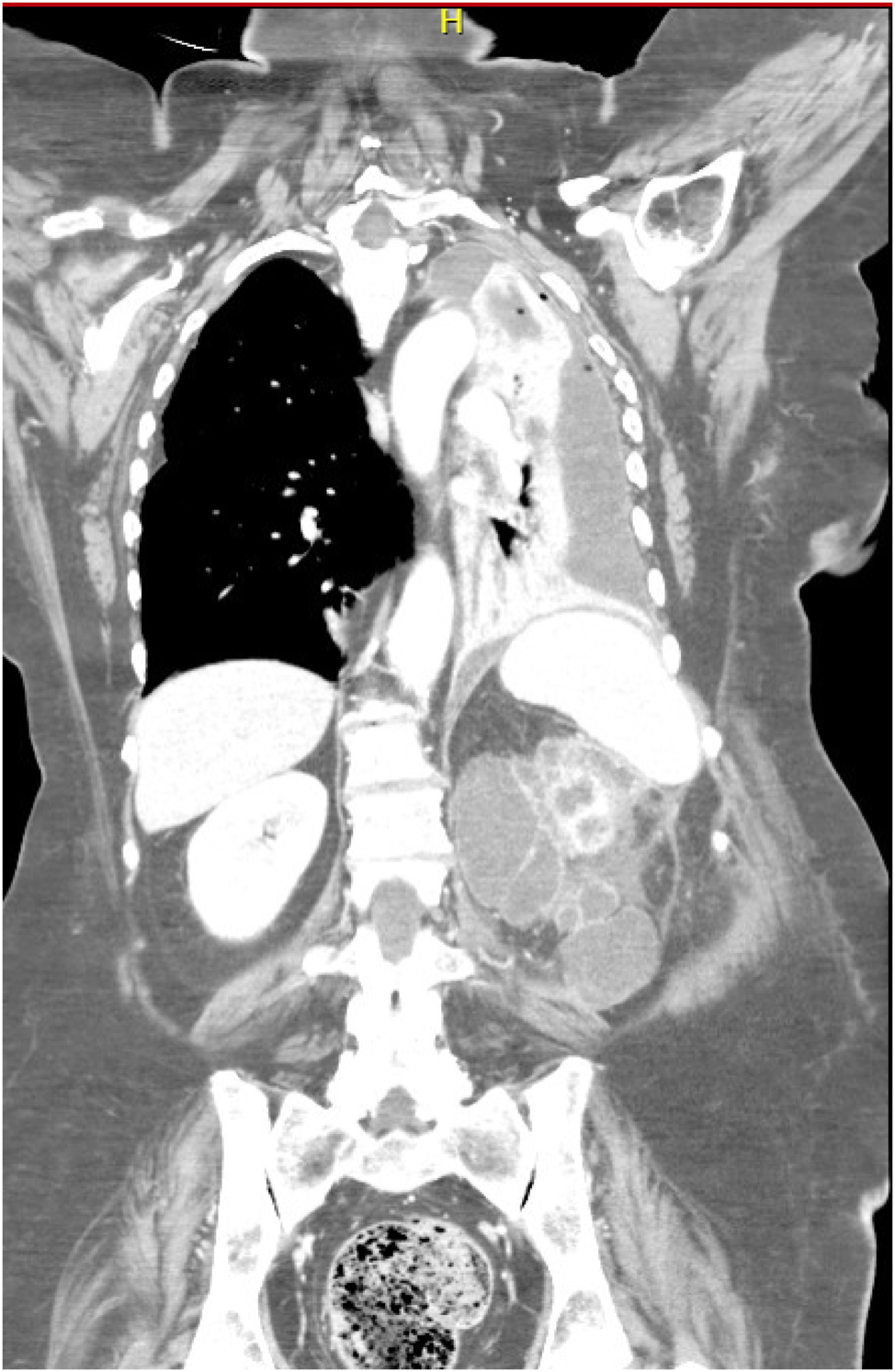
Preoperative thorax-abdomen contrast-enhanced CT, showing left pleural empyema (35 mm maximum thickness) associated with ipsilateral lung complete atelectasis and left main bronchus caliber abrupt reduction.
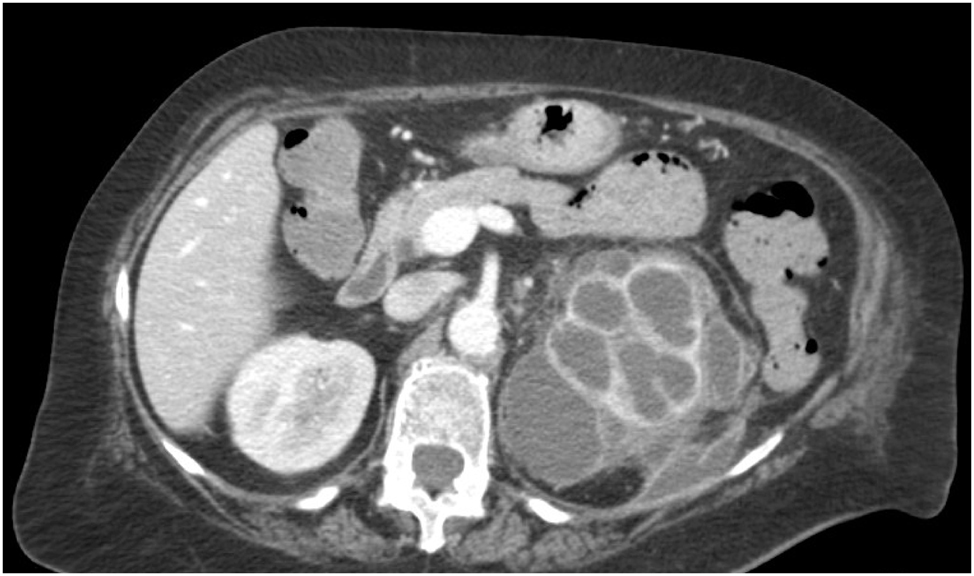
Preoperative abdomen contrast-enhanced CT, showing the left kidney with a widespread parenchymal density alteration with reduction of the cortico-medullary boundary and “bear-paw sign”.
Discussion
The vast majority of complicated pleural effusions and empyemas develop following pulmonary infections, even if chest manifestations of abdominal pathologies are not rare since associations between sub-phrenich collections and exudative pleural effusions have been described; it is known that pulmonary and pleural complications are present in more than 20 % of renal infections and that 1/3 of empyemas due to abdominal pathology [2] is related to pyonephrosis, which may cause peri-renal abscesses from which nephro-pleural or more rarely nephro-bronchial fistulae can develop, causing uroptysis [3]. The perinephric abscess tracks up the superior attachment of Gerota’s fascia where it fuses with the diaphragm: the infected fluid collection makes its way through a trans-diaphragmatic fistula that leads to the ipsilateral pleural cavity, although in some cases congenital malformations of the diaphragm, such as Bochdalek’s foramen or smaller diaphragmatic wall defects [4], facilitate retroperitoneal transit into the chest. The CT scan provides the most correct empyema diagnosis, as it guarantees the mediastinal, chest wall and pleural lesions evaluation showing a picture of unilateral pleural effusion with a consolidation area, sometimes loculated and often with typical “split pleural sign” due to thickened enhancing parietal and visceral layers separated by pleural fluid [5]; the mediastinal lymph-node enlargement and bronchial alterations are also seen, such as extrapleuric tissue thickening and increased attenuation of the extrapelural fat. The most frequently described causes of empyema arising from trans-diaphragmatic fistulas concern complications of percutaneous nephrolithotomy [6], ureteric stenting [7], infected renal cysts [8], but there are also cases due to XGP, a fairly rare complication of chronic pyelonephritis associated with obstructive often lithiasic uropathy, which causes renal parenchyma destruction in such an aggressive manner as to cause fistulas extended to the nearby organs and compartments [9]; for this reason XGP is classified into local extension-linked categories (I – renal parenchyma; II – peri-renal fat; III – para-renal spaces and retroperitoneum) [10], 11]. The XGP is usually unilateral, it affects females twice as often as males with a preference of the right side [12] and may cause also duodenal, cholic, cholecystic, cutaneous fistulas in addition to trans-diaphragmatic ones [13], [14], [15], [16]; the most frequently cultured organisms are Escherichia Coli and Proteus Mirabilis, although it is not uncommon to obtain other culture reports such as K. pneumoniae, Serratia macescens [17], or even sterile urine, and it shows symptoms such as generalized abdominal pain, flank pain sometimes with atypical irradiation depending on the collection extent [18], weight loss, dysuria. The radiological XGP diagnosis can be confusing enough, to have earned the disease the “great imitator” epithet [19], since it presents renal cell tumor (RCC), upper tract urinary cancer (UTUC) or renal tuberculosis radiological signs; CT scan provides typical altough not pathognomonic indications, such as the “bear-paw sign” (FIG.2) [20], and describes extra-renal collections and the fistulous tracts presence. Despite this the diagnosis is histological with a picture of chronic interstitial pyelonephritis and periglomerular fibrosis, rare thyroidisation and tubular atrophy. The management of empyemas due to nephro-pleural fistulas associated with XGP follows similar protocols to those for other causes of empyema [21], requiring nephrectomy and pleural decortication: the retroperitoneoscopic route was chosen to avoid peritoneal contamination, to minimize the diaphragmatic distension which reduces the pulmonary capacity and venous flow thus altering the respiratory compliance already compromised [22], and because it is the most frequently used technique by the Department’s urologists [23], therefore representing a safe surgery. The combined vat-retroperitoneoscopy approach was chosen after careful anaesthesiologic evaluation to avoid patient having to undergo long anaesthesia time, considering the already described respiratory conditions. Moreover keeping the patient in position also useful for VAT (left side up, 90° angle on the operating table), which was performed immediately after the nephrectomy and diaphragmatic fistulectomy, allowed to save time reducing mobilization as much as possible. We evaluated surgical alternatives but the only viable option was the trans-peritoneal laparotomy followed by thoracotomy or vat; in order to avoid respiratory or infectious risks the combined route was preferred.
It is appropriate to emphasize that a very recent multicenter study has demonstrated how the laparoscopic approach remains practical and effective, with the potential to reduce recovery [24], even in the need for conversion to open surgery, especially in Malek class III [10]. This statement is also confirmed by older reports, where retrospective studies have shown very low percentages of conversion to open surgery for XGP nephrectomy [25], by single center experiences, which confirm the laparoscopic choice goodness in expert hands [26], and in recent reviews that justify laparoscopy stressing that it does not affect mortality and morbidity [27]. Radiological staging remains fundamental as it is the only one capable of providing indications regarding the surgical approach [28], being also able to predict the risk of major complications [29].
To our knowledge, only cases of combined thoracoscopic-retroperitoenoscopic approach for spinal surgery have been described to date [30], therefore the case we have presented is the first case of a combined approach for the simultaneous treatment of pleuro-pulmonary and renal pathology.
The valveless-trocar system insufflation, unlike the conventional one, maintained a low CO2 pressure pre-setting to avoid an excessive CO2 absorption and an higher end-tidal CO2 and PaCO2, leading to a significant reduction in operating time [31], 32], and also minimizing the effects on respiratory compliance.
Conclusions
Pleural empyemas can be caused by abdominal infections which through the formation of fistulas can lead to the ipsilateral pleural cavity. In these cases, the retroperitoneal route is preferable for surgical treatment because it avoids peritoneal contamination and minimizes the diaphragmatic distension which reduces the pulmonary capacity and venous flow thus altering the respiratory compliance already compromised.
-
Funding information: No funding was received for this article.
-
Authors contribution: MM and EL gathered the data and drafted the manuscript. MP and AFF performed the procedures, drafted, and supervised the manuscript. ST and EC supervised the manuscript. All authors approved the final work.
-
Conflict of interest: The authors declare that the research was conducted in the absence of any commercial or financial relationships that could be construed as a potential conflict of interest.
-
Data Availability Statement: The original contributions presented in the study are included in the supplementary material, further inquiries can be directed to the corresponding author.
-
Ethics Approval: Procedures performed in the studies involving human participants were carried out in accordance with the ethical standards of the institutional and/or national research committee and with the 1964 Helsinki declaration and its later amendments or comparable ethical standards. Written informed consent was obtained from the individual(s) for the publication of any potentially identifiable images or data included in this article.
References
1. Mehta, K, Nangia, S, Gandhi, R, Chaudhury, S. Empyema resulting from a nephro-pleural fistula in an adult with polycystic kidney disease eith obstructive uropathy. Cureus 2024;16:e57671. https://doi.org/10.7759/cureus.57671.Search in Google Scholar PubMed PubMed Central
2. Irving, AD, Turner, MA. Pleural empyema in association with renal sepsis. Br J Surg 1976;63:70–2. https://doi.org/10.1002/bjs.1800630116.Search in Google Scholar PubMed
3. O’Neill, S, Motyer, R, O’Neill, H, Brennan, I, Ryan, JM, Guiney, M, et al.. Uroptysis!” – a case report of xanthogranulomatous pyelonephritis with nephrobronchial fistulation. Int J Surg Case Rep 2022;98:107551. https://doi.org/10.1016/j.ijscr.2022.107551.Search in Google Scholar PubMed PubMed Central
4. Hampel, N, Sidor, TA, Persky, L. Nephrobronchial fistula. Complication of perinephric abscess secondary to ureteral obstruction and pyonephrosis. Urology 1980;16:608–10. https://doi.org/10.1016/0090-4295(80)90571-3.Search in Google Scholar PubMed
5. Tamburrini, S, Lugarà, M, Saturnino, PP, Ferrandino, G, Quassone, P, Leboffe, S, et al.. Pleural empyema secondary to nephropleural fistula in complicated pyonephrosis. Radiol Case Rep 2021;16:2714–18. https://doi.org/10.1016/j.radcr.2021.06.051.Search in Google Scholar PubMed PubMed Central
6. Bhat, A, Katz, JE, Smith, N, Shah, HN. Nephropleural fistula after supracostal approach for PCNL: report of two cases with review of literature. BMJ Case Rep 2021;14:e241360. https://doi.org/10.1136/bcr-2020-241360.Search in Google Scholar PubMed PubMed Central
7. Chen, YH, Chen, M, Chen, YH. Intrathoracic ureteric stent migration through a reno-pleural fistula: a case report of rare antegrade ureteric stenting complication. BMC Womens Health 2021;21:270. https://doi.org/10.1186/s12905-021-01405-2.Search in Google Scholar PubMed PubMed Central
8. Earasi, K, Welch, C, Zelickson, A, Westover, C, Ramani, C, Sumner, C, et al.. Proteus empyema as a rare complication from an infected renal cyst, a case report. BMC Pulm Med 2020;20:314. https://doi.org/10.1186/s12890-020-01346-w.Search in Google Scholar PubMed PubMed Central
9. Maxwell, A, Kent, A, Tinkler, M, Mathur, S, Beale, A. Pleural empyema secondary to xanthogranulomatous pyelonephritis. Thorax 2021;76:740–1. https://doi.org/10.1136/thoraxjnl-2020-215786.Search in Google Scholar PubMed
10. Malek, RS, Elder, JS. Xanthogranulomatous pyelonephritis: a critical analysis of 26 cases and of the literature. J Urol 1978;119:589–93. https://doi.org/10.1016/s0022-5347(17)57559-x.Search in Google Scholar PubMed
11. Burbano, MA, Nati-Castillo, HA, Castaño-Giraldo, N, López, G, Placencia-André, R, Salazar-Santoliva, C, et al.. Fatal nephrobronchial fistula arising from xanthogranulomatous pyelonephritis: a case report. Front Med 2024;11:1374043. https://doi.org/10.3389/fmed.2024.1374043.Search in Google Scholar PubMed PubMed Central
12. Grainger, RG, Longstaff, AJ, Parsons, MA. Xanthogranulomatous pyelonephritis: a reappraisal. Lancet 1982;1:1398–401. https://doi.org/10.1016/s0140-6736(82)92511-9.Search in Google Scholar PubMed
13. Wang, G, Tandon, P, Wayne Teshima, C. Pyeloduodenal fistula in xanthogranulomatous pyelonephritis. J Can Assoc Gastroenterol 2022;6:53–4. https://doi.org/10.1093/jcag/gwac008.Search in Google Scholar PubMed PubMed Central
14. McDermott, RL, Dowling, CM, Alsinnawi, M, Grainger, R. Incidental renocolic fistula with xanthogranulomatous pyelonephritis. Int J Surg Case Rep 2013;4:222–4. https://doi.org/10.1016/j.ijscr.2012.08.003.Search in Google Scholar PubMed PubMed Central
15. Tan, JR, Lunevicius, R. Cholecystoappendiceal fistula associated with xanthogranulomatous cholecystitis. BMJ Case Rep 2024;17:e260954. https://doi.org/10.1136/bcr-2024-260954.Search in Google Scholar PubMed
16. Weissman, S, Ghaffar, M, Safavian, D, Rubal, S, Khabut, A, Maruf, MG, et al.. Nephrocutaneous fistula due to xanthogranulomatous pyelonephritis. Cureus 2018;10:e3467. https://doi.org/10.7759/cureus.3467.Search in Google Scholar PubMed PubMed Central
17. Kundu, R, Baliyan, A, Dhingra, H, Bhalla, V, Punia, RS. Clinicopathological spectrum of xanthogranulomatous pyelonephritis. Indian J Nephrol 2019;29:111–15. https://doi.org/10.4103/ijn.IJN_50_18.Search in Google Scholar PubMed PubMed Central
18. Germani, S, Miano, R, Forte, F, Finazzi Agrò, E, Virgili, G, Vespasiani, G, et al.. Acute lumbago and sciatica as first symptoms of focal xanthogranulomatous pyelonephritis. Urol Int 2002;69:247–9. https://doi.org/10.1159/000063938.Search in Google Scholar PubMed
19. Chlif, M, Chakroun, M, Ben Rhouma, S, Ben Chehida, MA, Sellami, A, Gargouri, MM, et al.. Xanthogranulomatous pyelonephritis presenting as a pseudotumour. Can Urol Assoc J 2016;10:E36–40. https://doi.org/10.5489/cuaj.3225.Search in Google Scholar PubMed PubMed Central
20. Garrido-Abad, P, Rodríguez-Cabello, MÁ, Vera-Berón, R, Platas-Sancho, A. Bear paw sign: xanthogranulomatous pyelonephritis. J Radiol Case Rep 2018;12:18–24. https://doi.org/10.3941/jrcr.v12i11.3415.Search in Google Scholar PubMed PubMed Central
21. Lee, GY, Moon, SK, You, MW, Lim, JW. A case of xanthogranulomatous pyelonephritis with nephropleural fistula formation: role of MRI in diagnosis and treatment. Taehan Yongsang Uihakhoe Chi. 2021;82:475–80. https://doi.org/10.3348/jksr.2020.0044.Search in Google Scholar PubMed PubMed Central
22. Liapis, D, de la Taille, A, Ploussard, G, Robert, G, Bastien, L, Hoznek, A, et al.. Analysis of complications from 600 retroperitoneoscopic procedures of the upper urinary tract during the last 10 years. World J Urol 2008;26:523–30. https://doi.org/10.1007/s00345-008-0319-3.Search in Google Scholar PubMed PubMed Central
23. Corongiu, E, Grande, P, Di Santo, A, Pagliarella, G, Squillacciotti, S, Liberati, E, et al.. Safety and efficacy of retroperitoneal sutureless zero ischemia laparoscopic partial nephrectomy for low nephrometry score masses. Arch Ital Urol Androl 2019;91. https://doi.org/10.4081/aiua.2019.3.157.Search in Google Scholar PubMed
24. Robles-Torres, JI, Zapata-González, JA, Sánchez-Rendón, MA, Montelongo-Rodríguez, FA, García-Saucedo, J, Kumar, S, et al.. Risk factors for conversion to open surgery in laparoscopic nephrectomy for xanthogranulomatous pyelonephritis: a multicenter study. J Endourol 2025;39:464–9. https://doi.org/10.1089/end.2024.0814.Search in Google Scholar PubMed
25. Manohar, T, Desai, M, Desai, M. Laparoscopic nephrectomy for benign and inflammatory conditions. J Endourol 2007;21:1323–8. https://doi.org/10.1089/end.2007.9883.Search in Google Scholar PubMed
26. Arvind, NK, Singh, O, Ali, Q, Gupta, SS, Sahay, S. Laparoscopic nephrectomy in xanthogranulomatous pyelonephritis: 7-year single-surgeon outcome. Urology 2011;78:797–801. https://doi.org/10.1016/j.urology.2011.05.062.Search in Google Scholar PubMed
27. Harley, F, Wei, G, O’Callaghan, M, Wong, L, Hennessey, D, Kinnear, N, et al.. Xanthogranulomatous pyelonephritis: a systematic review of treatment and mortality in more than 1000 cases. BJU Int 2023;131:395–407. https://doi.org/10.1111/bju.15878.Search in Google Scholar PubMed
28. Barboza, MP, Nottingham, CU, Calaway, AC, Wei, T, Flack, CK, Cary, C, et al.. Xanthogranulomatous pyelonephritis: a comparison of open and minimally-invasive surgical approaches. J Robot Surg 2021;15:611–7. https://doi.org/10.1007/s11701-020-01153-9.Search in Google Scholar PubMed
29. Robles-Torres, JI, García-Chairez, LR, Castellani, D, Enrriquez-Ávila, JV, Monzón-Falconi, JF, Esqueda-Mendoza, A, et al.. Perioperative outcomes and risk factors for major complications associated with nephrectomy for Xanthogranulomatous pyelonephritis: a multicenter study. World J Urol 2023;41:2905–14. https://doi.org/10.1007/s00345-023-04415-x.Search in Google Scholar PubMed
30. Watanabe, K, Yabuki, S, Konno, S, Kikuchi, S. Complications of endoscopic spinal surgery: a retrospective study of thoracoscopy and retroperitoneoscopy. J Orthop Sci 2007;12:42–8. https://doi.org/10.1007/s00132-015-3167-z.Search in Google Scholar PubMed
31. Forte, F, Tripodi, D, Pironi, D, Corongiu, E, Gagliardi, F, Frisenda, M, et al.. Comparison of laparoscopic partial nephrectomy performed with AirSeal® system vs. standard insufflator: results from a referral center. Front Surg 2023;10:1220332. https://doi.org/10.3389/fsurg.2023.1220332.Search in Google Scholar PubMed PubMed Central
32. Herati, AS, Andonian, S, Rais-Bahrami, S, Atalla, MA, Srinivasan, AK, Richstone, L, et al.. Use of the valveless trocar system reduces carbon dioxide absorption during laparoscopy when compared with standard trocars. Urology 2011;77:1126–32. https://doi.org/10.1016/j.urology.2010.06.052.Search in Google Scholar PubMed
© 2025 the author(s), published by De Gruyter, Berlin/Boston
This work is licensed under the Creative Commons Attribution 4.0 International License.
Articles in the same Issue
- Research Articles
- Network pharmacological analysis and in vitro testing of the rutin effects on triple-negative breast cancer
- Impact of diabetes on long-term survival in elderly liver cancer patients: A retrospective study
- Knockdown of CCNB1 alleviates high glucose-triggered trophoblast dysfunction during gestational diabetes via Wnt/β-catenin signaling pathway
- Risk factors for severe adverse drug reactions in hospitalized patients
- Analysis of the effect of ALA-PDT on macrophages in footpad model of mice infected with Fonsecaea monophora based on single-cell sequencing
- Development and validation of headspace gas chromatography with a flame ionization detector method for the determination of ethanol in the vitreous humor
- CMSP exerts anti-tumor effects on small cell lung cancer cells by inducing mitochondrial dysfunction and ferroptosis
- Predictive value of plasma sB7-H3 and YKL-40 in pediatric refractory Mycoplasma pneumoniae pneumonia
- Antiangiogenic potential of Elaeagnus umbellata extracts and molecular docking study by targeting VEGFR-2 pathway
- Comparison of the effectiveness of nurse-led preoperative counseling and postoperative follow-up care vs standard care for patients with gastric cancer
- Comparing the therapeutic efficacy of endoscopic minimally invasive surgery and traditional surgery for early-stage breast cancer: A meta-analysis
- Adhered macrophages as an additional marker of cardiomyocyte injury in biopsies of patients with dilated cardiomyopathy
- Association between statin administration and outcome in patients with sepsis: A retrospective study
- Exploration of the association between estimated glucose disposal rate and osteoarthritis in middle-aged and older adults: An analysis of NHANES data from 2011 to 2018
- A comparative analysis of the binary and multiclass classified chest X-ray images of pneumonia and COVID-19 with ML and DL models
- Lysophosphatidic acid 2 alleviates deep vein thrombosis via protective endothelial barrier function
- Transcription factor A, mitochondrial promotes lymph node metastasis and lymphangiogenesis in epithelial ovarian carcinoma
- Serum PM20D1 levels are associated with nutritional status and inflammatory factors in gastric cancer patients undergoing early enteral nutrition
- Hydromorphone reduced the incidence of emergence agitation after adenotonsillectomy in children with obstructive sleep apnea: A randomized, double-blind study
- Vitamin D replacement therapy may regulate sleep habits in patients with restless leg syndrome
- The first-line antihypertensive nitrendipine potentiated the therapeutic effect of oxaliplatin by downregulating CACNA1D in colorectal cancer
- Health literacy and health-related quality of life: The mediating role of irrational happiness
- Modulatory effects of Lycium barbarum polysaccharide on bone cell dynamics in osteoporosis
- Mechanism research on inhibition of gastric cancer in vitro by the extract of Pinellia ternata based on network pharmacology and cellular metabolomics
- Examination of the causal role of immune cells in non-alcoholic fatty liver disease by a bidirectional Mendelian randomization study
- Clinical analysis of ten cases of HIV infection combined with acute leukemia
- Investigating the cardioprotective potential of quercetin against tacrolimus-induced cardiotoxicity in Wistar rats: A mechanistic insights
- Clinical observation of probiotics combined with mesalazine and Yiyi Baitouweng Decoction retention enema in treating mild-to-moderate ulcerative colitis
- Diagnostic value of ratio of blood inflammation to coagulation markers in periprosthetic joint infection
- Sex-specific associations of sex hormone binding globulin and risk of bladder cancer
- Core muscle strength and stability-oriented breathing training reduces inter-recti distance in postpartum women
- The ERAS nursing care strategy for patients undergoing transsphenoidal endoscopic pituitary tumor resection: A randomized blinded controlled trial
- The serum IL-17A levels in patients with traumatic bowel rupture post-surgery and its predictive value for patient prognosis
- Impact of Kolb’s experiential learning theory-based nursing on caregiver burden and psychological state of caregivers of dementia patients
- Analysis of serum NLR combined with intraoperative margin condition to predict the prognosis of cervical HSIL patients undergoing LEEP surgery
- Commiphora gileadensis ameliorate infertility and erectile dysfunction in diabetic male mice
- The correlation between epithelial–mesenchymal transition classification and MMP2 expression of circulating tumor cells and prognosis of advanced or metastatic nasopharyngeal carcinoma
- Tetrahydropalmatine improves mitochondrial function in vascular smooth muscle cells of atherosclerosis in vitro by inhibiting Ras homolog gene family A/Rho-associated protein kinase-1 signaling pathway
- A cross-sectional study: Relationship between serum oxidative stress levels and arteriovenous fistula maturation in maintenance dialysis patients
- A comparative analysis of the impact of repeated administration of flavan 3-ol on brown, subcutaneous, and visceral adipose tissue
- Identifying early screening factors for depression in middle-aged and older adults: A cohort study
- Perform tumor-specific survival analysis for Merkel cell carcinoma patients undergoing surgical resection based on the SEER database by constructing a nomogram chart
- Unveiling the role of CXCL10 in pancreatic cancer progression: A novel prognostic indicator
- High-dose preoperative intraperitoneal erythropoietin and intravenous methylprednisolone in acute traumatic spinal cord injuries following decompression surgeries
- RAB39B: A novel biomarker for acute myeloid leukemia identified via multi-omics and functional validation
- Impact of peripheral conditioning on reperfusion injury following primary percutaneous coronary intervention in diabetic and non-diabetic STEMI patients
- Clinical efficacy of azacitidine in the treatment of middle- and high-risk myelodysplastic syndrome in middle-aged and elderly patients: A retrospective study
- The effect of ambulatory blood pressure load on mitral regurgitation in continuous ambulatory peritoneal dialysis patients
- Expression and clinical significance of ITGA3 in breast cancer
- Single-nucleus RNA sequencing reveals ARHGAP28 expression of podocytes as a biomarker in human diabetic nephropathy
- rSIG combined with NLR in the prognostic assessment of patients with multiple injuries
- Toxic metals and metalloids in collagen supplements of fish and jellyfish origin: Risk assessment for daily intake
- Exploring causal relationship between 41 inflammatory cytokines and marginal zone lymphoma: A bidirectional Mendelian randomization study
- Gender beliefs and legitimization of dating violence in adolescents
- Effect of serum IL-6, CRP, and MMP-9 levels on the efficacy of modified preperitoneal Kugel repair in patients with inguinal hernia
- Effect of smoking and smoking cessation on hematological parameters in polycythemic patients
- Pathogen surveillance and risk factors for pulmonary infection in patients with lung cancer: A retrospective single-center study
- Necroptosis of hippocampal neurons in paclitaxel chemotherapy-induced cognitive impairment mediates microglial activation via TLR4/MyD88 signaling pathway
- Celastrol suppresses neovascularization in rat aortic vascular endothelial cells stimulated by inflammatory tenocytes via modulating the NLRP3 pathway
- Cord-lamina angle and foraminal diameter as key predictors of C5 palsy after anterior cervical decompression and fusion surgery
- GATA1: A key biomarker for predicting the prognosis of patients with diffuse large B-cell lymphoma
- Influencing factors of false lumen thrombosis in type B aortic dissection: A single-center retrospective study
- MZB1 regulates the immune microenvironment and inhibits ovarian cancer cell migration
- Integrating experimental and network pharmacology to explore the pharmacological mechanisms of Dioscin against glioblastoma
- Trends in research on preterm birth in twin pregnancy based on bibliometrics
- Four-week IgE/baseline IgE ratio combined with tryptase predicts clinical outcome in omalizumab-treated children with moderate-to-severe asthma
- Single-cell transcriptomic analysis identifies a stress response Schwann cell subtype
- Acute pancreatitis risk in the diagnosis and management of inflammatory bowel disease: A critical focus
- Effect of subclinical esketamine on NLRP3 and cognitive dysfunction in elderly ischemic stroke patients
- Interleukin-37 mediates the anti-oral tumor activity in oral cancer through STAT3
- CA199 and CEA expression levels, and minimally invasive postoperative prognosis analysis in esophageal squamous carcinoma patients
- Efficacy of a novel drainage catheter in the treatment of CSF leak after posterior spine surgery: A retrospective cohort study
- Comprehensive biomedicine assessment of Apteranthes tuberculata extracts: Phytochemical analysis and multifaceted pharmacological evaluation in animal models
- Relation of time in range to severity of coronary artery disease in patients with type 2 diabetes: A cross-sectional study
- Dopamine attenuates ethanol-induced neuronal apoptosis by stimulating electrical activity in the developing rat retina
- Correlation between albumin levels during the third trimester and the risk of postpartum levator ani muscle rupture
- Factors associated with maternal attention and distraction during breastfeeding and childcare: A cross-sectional study in the west of Iran
- Mechanisms of hesperetin in treating metabolic dysfunction-associated steatosis liver disease via network pharmacology and in vitro experiments
- The law on oncological oblivion in the Italian and European context: How to best uphold the cancer patients’ rights to privacy and self-determination?
- The prognostic value of the neutrophil-to-lymphocyte ratio, platelet-to-lymphocyte ratio, and prognostic nutritional index for survival in patients with colorectal cancer
- Factors affecting the measurements of peripheral oxygen saturation values in healthy young adults
- Comparison and correlations between findings of hysteroscopy and vaginal color Doppler ultrasonography for detection of uterine abnormalities in patients with recurrent implantation failure
- The effects of different types of RAGT on balance function in stroke patients with low levels of independent walking in a convalescent rehabilitation hospital
- Causal relationship between asthma and ankylosing spondylitis: A bidirectional two-sample univariable and multivariable Mendelian randomization study
- Correlations of health literacy with individuals’ understanding and use of medications in Southern Taiwan
- Correlation of serum calprotectin with outcome of acute cerebral infarction
- Comparison of computed tomography and guided bronchoscopy in the diagnosis of pulmonary nodules: A systematic review and meta-analysis
- Curdione protects vascular endothelial cells and atherosclerosis via the regulation of DNMT1-mediated ERBB4 promoter methylation
- The identification of novel missense variant in ChAT gene in a patient with gestational diabetes denotes plausible genetic association
- Molecular genotyping of multi-system rare blood types in foreign blood donors based on DNA sequencing and its clinical significance
- Exploring the role of succinyl carnitine in the association between CD39⁺ CD4⁺ T cell and ulcerative colitis: A Mendelian randomization study
- Dexmedetomidine suppresses microglial activation in postoperative cognitive dysfunction via the mmu-miRNA-125/TRAF6 signaling axis
- Analysis of serum metabolomics in patients with different types of chronic heart failure
- Diagnostic value of hematological parameters in the early diagnosis of acute cholecystitis
- Pachymaran alleviates fat accumulation, hepatocyte degeneration, and injury in mice with nonalcoholic fatty liver disease
- Decrease in CD4 and CD8 lymphocytes are predictors of severe clinical picture and unfavorable outcome of the disease in patients with COVID-19
- METTL3 blocked the progression of diabetic retinopathy through m6A-modified SOX2
- The predictive significance of anti-RO-52 antibody in patients with interstitial pneumonia after treatment of malignant tumors
- Exploring cerebrospinal fluid metabolites, cognitive function, and brain atrophy: Insights from Mendelian randomization
- Development and validation of potential molecular subtypes and signatures of ocular sarcoidosis based on autophagy-related gene analysis
- Widespread venous thrombosis: Unveiling a complex case of Behçet’s disease with a literature perspective
- Uterine fibroid embolization: An analysis of clinical outcomes and impact on patients’ quality of life
- Discovery of lipid metabolism-related diagnostic biomarkers and construction of diagnostic model in steroid-induced osteonecrosis of femoral head
- Serum-derived exomiR-188-3p is a promising novel biomarker for early-stage ovarian cancer
- Enhancing chronic back pain management: A comparative study of ultrasound–MRI fusion guidance for paravertebral nerve block
- Peptide CCAT1-70aa promotes hepatocellular carcinoma proliferation and invasion via the MAPK/ERK pathway
- Electroacupuncture-induced reduction of myocardial ischemia–reperfusion injury via FTO-dependent m6A methylation modulation
- Hemorrhoids and cardiovascular disease: A bidirectional Mendelian randomization study
- Cell-free adipose extract inhibits hypertrophic scar formation through collagen remodeling and antiangiogenesis
- HALP score in Demodex blepharitis: A case–control study
- Assessment of SOX2 performance as a marker for circulating cancer stem-like cells (CCSCs) identification in advanced breast cancer patients using CytoTrack system
- Risk and prognosis for brain metastasis in primary metastatic cervical cancer patients: A population-based study
- Comparison of the two intestinal anastomosis methods in pediatric patients
- Factors influencing hematological toxicity and adverse effects of perioperative hyperthermic intraperitoneal vs intraperitoneal chemotherapy in gastrointestinal cancer
- Endotoxin tolerance inhibits NLRP3 inflammasome activation in macrophages of septic mice by restoring autophagic flux through TRIM26
- Lateral transperitoneal laparoscopic adrenalectomy: A single-centre experience of 21 procedures
- Petunidin attenuates lipopolysaccharide-induced retinal microglia inflammatory response in diabetic retinopathy by targeting OGT/NF-κB/LCN2 axis
- Procalcitonin and C-reactive protein as biomarkers for diagnosing and assessing the severity of acute cholecystitis
- Factors determining the number of sessions in successful extracorporeal shock wave lithotripsy patients
- Development of a nomogram for predicting cancer-specific survival in patients with renal pelvic cancer following surgery
- Inhibition of ATG7 promotes orthodontic tooth movement by regulating the RANKL/OPG ratio under compression force
- A machine learning-based prognostic model integrating mRNA stemness index, hypoxia, and glycolysis‑related biomarkers for colorectal cancer
- Glutathione attenuates sepsis-associated encephalopathy via dual modulation of NF-κB and PKA/CREB pathways
- FAHD1 prevents neuronal ferroptosis by modulating R-loop and the cGAS–STING pathway
- Association of placenta weight and morphology with term low birth weight: A case–control study
- Investigation of the pathogenic variants induced Sjogren’s syndrome in Turkish population
- Nucleotide metabolic abnormalities in post-COVID-19 condition and type 2 diabetes mellitus patients and their association with endocrine dysfunction
- TGF-β–Smad2/3 signaling in high-altitude pulmonary hypertension in rats: Role and mechanisms via macrophage M2 polarization
- Ultrasound-guided unilateral versus bilateral erector spinae plane block for postoperative analgesia of patients undergoing laparoscopic cholecystectomy
- Profiling gut microbiome dynamics in subacute thyroiditis: Implications for pathogenesis, diagnosis, and treatment
- Delta neutrophil index, CRP/albumin ratio, procalcitonin, immature granulocytes, and HALP score in acute appendicitis: Best performing biomarker?
- Anticancer activity mechanism of novelly synthesized and characterized benzofuran ring-linked 3-nitrophenyl chalcone derivative on colon cancer cells
- H2valdien3 arrests the cell cycle and induces apoptosis of gastric cancer
- Prognostic relevance of PRSS2 and its immune correlates in papillary thyroid carcinoma
- Association of SGLT2 inhibition with psychiatric disorders: A Mendelian randomization study
- Motivational interviewing for alcohol use reduction in Thai patients
- Luteolin alleviates oxygen-glucose deprivation/reoxygenation-induced neuron injury by regulating NLRP3/IL-1β signaling
- Polyphyllin II inhibits thyroid cancer cell growth by simultaneously inhibiting glycolysis and oxidative phosphorylation
- Relationship between the expression of copper death promoting factor SLC31A1 in papillary thyroid carcinoma and clinicopathological indicators and prognosis
- CSF2 polarized neutrophils and invaded renal cancer cells in vitro influence
- Proton pump inhibitors-induced thrombocytopenia: A systematic literature analysis of case reports
- The current status and influence factors of research ability among community nurses: A sequential qualitative–quantitative study
- OKAIN: A comprehensive oncology knowledge base for the interpretation of clinically actionable alterations
- The relationship between serum CA50, CA242, and SAA levels and clinical pathological characteristics and prognosis in patients with pancreatic cancer
- Identification and external validation of a prognostic signature based on hypoxia–glycolysis-related genes for kidney renal clear cell carcinoma
- Engineered RBC-derived nanovesicles functionalized with tumor-targeting ligands: A comparative study on breast cancer targeting efficiency and biocompatibility
- Relationship of resting echocardiography combined with serum micronutrients to the severity of low-gradient severe aortic stenosis
- Effect of vibration on pain during subcutaneous heparin injection: A randomized, single-blind, placebo-controlled trial
- The diagnostic performance of machine learning-based FFRCT for coronary artery disease: A meta-analysis
- Comparing biofeedback device vs diaphragmatic breathing for bloating relief: A randomized controlled trial
- Serum uric acid to albumin ratio and C-reactive protein as predictive biomarkers for chronic total occlusion and coronary collateral circulation quality
- Multiple organ scoring systems for predicting in-hospital mortality of sepsis patients in the intensive care unit
- Single-cell RNA sequencing data analysis of the inner ear in gentamicin-treated mice via intraperitoneal injection
- Suppression of cathepsin B attenuates myocardial injury via limiting cardiomyocyte apoptosis
- Influence of sevoflurane combined with propofol anesthesia on the anesthesia effect and adverse reactions in children with acute appendicitis
- Identification of hub genes related to acute kidney injury caused by sevoflurane anesthesia and endoplasmic reticulum stress
- 10.1515/med-2025-1313
- 10.1515/med-2025-1316
- Health education pathway for individuals with temporary enterostomies using patient journey mapping
- 10.1515/med-2025-1321
- 10.1515/med-2025-1324
- 10.1515/med-2025-1325
- 10.1515/med-2025-1327
- 10.1515/med-2025-1331
- Effect of timing of cholecystectomy on weight loss after sleeve gastrectomy in morbidly obese individuals with cholelithiasis: a retrospective cohort study
- 10.1515/med-2025-1337
- 10.1515/med-2025-1347
- 10.1515/med-2025-1360
- Multiple sclerosis and type 1 diabetes: a Mendelian randomization study of European ancestry
- Rapid pathogen identification in peritoneal dialysis effluent by MALDI-TOF MS following blood culture enrichment
- Comparison of open and percutaneous A1 pulley release in pediatric trigger thumb: a retrospective cohort study
- Review Articles
- The effects of enhanced external counter-pulsation on post-acute sequelae of COVID-19: A narrative review
- Diabetes-related cognitive impairment: Mechanisms, symptoms, and treatments
- Microscopic changes and gross morphology of placenta in women affected by gestational diabetes mellitus in dietary treatment: A systematic review
- Review of mechanisms and frontier applications in IL-17A-induced hypertension
- Research progress on the correlation between islet amyloid peptides and type 2 diabetes mellitus
- The safety and efficacy of BCG combined with mitomycin C compared with BCG monotherapy in patients with non-muscle-invasive bladder cancer: A systematic review and meta-analysis
- The application of augmented reality in robotic general surgery: A mini-review
- The effect of Greek mountain tea extract and wheat germ extract on peripheral blood flow and eicosanoid metabolism in mammals
- Neurogasobiology of migraine: Carbon monoxide, hydrogen sulfide, and nitric oxide as emerging pathophysiological trinacrium relevant to nociception regulation
- Plant polyphenols, terpenes, and terpenoids in oral health
- Laboratory medicine between technological innovation, rights safeguarding, and patient safety: A bioethical perspective
- End-of-life in cancer patients: Medicolegal implications and ethical challenges in Europe
- The maternal factors during pregnancy for intrauterine growth retardation: An umbrella review
- Intra-abdominal hypertension/abdominal compartment syndrome of pediatric patients in critical care settings
- PI3K/Akt pathway and neuroinflammation in sepsis-associated encephalopathy
- Screening of Group B Streptococcus in pregnancy: A systematic review for the laboratory detection
- Giant borderline ovarian tumours – review of the literature
- Leveraging artificial intelligence for collaborative care planning: Innovations and impacts in shared decision-making – A systematic review
- Cholera epidemiology analysis through the experience of the 1973 Naples epidemic
- Risk factors of frailty/sarcopenia in community older adults: Meta-analysis
- Supplement strategies for infertility in overweight women: Evidence and legal insights
- Scurvy, a not obsolete disorder: Clinical report in eight young children and literature review
- A meta-analysis of the effects of DBS on cognitive function in patients with advanced PD
- Protective role of selenium in sepsis: Mechanisms and potential therapeutic strategies
- Strategies for hyperkalemia management in dialysis patients: A systematic review
- C-reactive protein-to-albumin ratio in peripheral artery disease
- 10.1515/med-2025-1251
- 10.1515/med-2025-1330
- 10.1515/med-2025-1332
- Antibiotic prescribing patterns in general dental practice- a scoping review
- Clinical and medico-legal reflections on non-invasive prenatal testing
- Case Reports
- Delayed graft function after renal transplantation
- Semaglutide treatment for type 2 diabetes in a patient with chronic myeloid leukemia: A case report and review of the literature
- Diverse electrophysiological demyelinating features in a late-onset glycogen storage disease type IIIa case
- Giant right atrial hemangioma presenting with ascites: A case report
- Laser excision of a large granular cell tumor of the vocal cord with subglottic extension: A case report
- EsoFLIP-assisted dilation for dysphagia in systemic sclerosis: Highlighting the role of multimodal esophageal evaluation
- Molecular hydrogen-rhodiola as an adjuvant therapy for ischemic stroke in internal carotid artery occlusion: A case report
- Coronary artery anomalies: A case of the “malignant” left coronary artery and its surgical management
- Combined VAT and retroperitoneoscopy for pleural empyema due to nephro-pleuric fistula in xanthogranulomatous pyelonephritis
- 10.1515/med-2025-1362
- Rapid Communication
- Biological properties of valve materials using RGD and EC
-
A single oral administration of flavanols enhances short
-term memory in mice along with increased brain-derived neurotrophic factor - Letter to the Editor
- Role of enhanced external counterpulsation in long COVID
- Expression of Concern
- Expression of concern “A ceRNA network mediated by LINC00475 in papillary thyroid carcinoma”
- Expression of concern “Notoginsenoside R1 alleviates spinal cord injury through the miR-301a/KLF7 axis to activate Wnt/β-catenin pathway”
- Expression of concern “circ_0020123 promotes cell proliferation and migration in lung adenocarcinoma via PDZD8”
- Corrigendum
- Corrigendum to “Empagliflozin improves aortic injury in obese mice by regulating fatty acid metabolism”
- Corrigendum to “Comparing the therapeutic efficacy of endoscopic minimally invasive surgery and traditional surgery for early-stage breast cancer: A meta-analysis”
- Corrigendum to “The progress of autoimmune hepatitis research and future challenges”
- Retraction
- Retraction of “miR-654-5p promotes gastric cancer progression via the GPRIN1/NF-κB pathway”
- Retraction of: “LncRNA CASC15 inhibition relieves renal fibrosis in diabetic nephropathy through downregulating SP-A by sponging to miR-424”
- Retraction of: “SCARA5 inhibits oral squamous cell carcinoma via inactivating the STAT3 and PI3K/AKT signaling pathways”
- Special Issue Advancements in oncology: bridging clinical and experimental research - Part II
- Unveiling novel biomarkers for platinum chemoresistance in ovarian cancer
- Lathyrol affects the expression of AR and PSA and inhibits the malignant behavior of RCC cells
- The era of increasing cancer survivorship: Trends in fertility preservation, medico-legal implications, and ethical challenges
- Bone scintigraphy and positron emission tomography in the early diagnosis of MRONJ
- Meta-analysis of clinical efficacy and safety of immunotherapy combined with chemotherapy in non-small cell lung cancer
- Special Issue Computational Intelligence Methodologies Meets Recurrent Cancers - Part IV
- Exploration of mRNA-modifying METTL3 oncogene as momentous prognostic biomarker responsible for colorectal cancer development
- Special Issue The evolving saga of RNAs from bench to bedside - Part III
- Interaction and verification of ferroptosis-related RNAs Rela and Stat3 in promoting sepsis-associated acute kidney injury
- The mRNA MOXD1: Link to oxidative stress and prognostic significance in gastric cancer
- Special Issue Exploring the biological mechanism of human diseases based on MultiOmics Technology - Part II
- Dynamic changes in lactate-related genes in microglia and their role in immune cell interactions after ischemic stroke
- A prognostic model correlated with fatty acid metabolism in Ewing’s sarcoma based on bioinformatics analysis
- Red cell distribution width predicts early kidney injury: A NHANES cross-sectional study
- Special Issue Diabetes mellitus: pathophysiology, complications & treatment
- Nutritional risk assessment and nutritional support in children with congenital diabetes during surgery
- Correlation of the differential expressions of RANK, RANKL, and OPG with obesity in the elderly population in Xinjiang
- A discussion on the application of fluorescence micro-optical sectioning tomography in the research of cognitive dysfunction in diabetes
- A review of brain research on T2DM-related cognitive dysfunction
- Metformin and estrogen modulation in LABC with T2DM: A 36-month randomized trial
- Special Issue Innovative Biomarker Discovery and Precision Medicine in Cancer Diagnostics
- CircASH1L-mediated tumor progression in triple-negative breast cancer: PI3K/AKT pathway mechanisms
Articles in the same Issue
- Research Articles
- Network pharmacological analysis and in vitro testing of the rutin effects on triple-negative breast cancer
- Impact of diabetes on long-term survival in elderly liver cancer patients: A retrospective study
- Knockdown of CCNB1 alleviates high glucose-triggered trophoblast dysfunction during gestational diabetes via Wnt/β-catenin signaling pathway
- Risk factors for severe adverse drug reactions in hospitalized patients
- Analysis of the effect of ALA-PDT on macrophages in footpad model of mice infected with Fonsecaea monophora based on single-cell sequencing
- Development and validation of headspace gas chromatography with a flame ionization detector method for the determination of ethanol in the vitreous humor
- CMSP exerts anti-tumor effects on small cell lung cancer cells by inducing mitochondrial dysfunction and ferroptosis
- Predictive value of plasma sB7-H3 and YKL-40 in pediatric refractory Mycoplasma pneumoniae pneumonia
- Antiangiogenic potential of Elaeagnus umbellata extracts and molecular docking study by targeting VEGFR-2 pathway
- Comparison of the effectiveness of nurse-led preoperative counseling and postoperative follow-up care vs standard care for patients with gastric cancer
- Comparing the therapeutic efficacy of endoscopic minimally invasive surgery and traditional surgery for early-stage breast cancer: A meta-analysis
- Adhered macrophages as an additional marker of cardiomyocyte injury in biopsies of patients with dilated cardiomyopathy
- Association between statin administration and outcome in patients with sepsis: A retrospective study
- Exploration of the association between estimated glucose disposal rate and osteoarthritis in middle-aged and older adults: An analysis of NHANES data from 2011 to 2018
- A comparative analysis of the binary and multiclass classified chest X-ray images of pneumonia and COVID-19 with ML and DL models
- Lysophosphatidic acid 2 alleviates deep vein thrombosis via protective endothelial barrier function
- Transcription factor A, mitochondrial promotes lymph node metastasis and lymphangiogenesis in epithelial ovarian carcinoma
- Serum PM20D1 levels are associated with nutritional status and inflammatory factors in gastric cancer patients undergoing early enteral nutrition
- Hydromorphone reduced the incidence of emergence agitation after adenotonsillectomy in children with obstructive sleep apnea: A randomized, double-blind study
- Vitamin D replacement therapy may regulate sleep habits in patients with restless leg syndrome
- The first-line antihypertensive nitrendipine potentiated the therapeutic effect of oxaliplatin by downregulating CACNA1D in colorectal cancer
- Health literacy and health-related quality of life: The mediating role of irrational happiness
- Modulatory effects of Lycium barbarum polysaccharide on bone cell dynamics in osteoporosis
- Mechanism research on inhibition of gastric cancer in vitro by the extract of Pinellia ternata based on network pharmacology and cellular metabolomics
- Examination of the causal role of immune cells in non-alcoholic fatty liver disease by a bidirectional Mendelian randomization study
- Clinical analysis of ten cases of HIV infection combined with acute leukemia
- Investigating the cardioprotective potential of quercetin against tacrolimus-induced cardiotoxicity in Wistar rats: A mechanistic insights
- Clinical observation of probiotics combined with mesalazine and Yiyi Baitouweng Decoction retention enema in treating mild-to-moderate ulcerative colitis
- Diagnostic value of ratio of blood inflammation to coagulation markers in periprosthetic joint infection
- Sex-specific associations of sex hormone binding globulin and risk of bladder cancer
- Core muscle strength and stability-oriented breathing training reduces inter-recti distance in postpartum women
- The ERAS nursing care strategy for patients undergoing transsphenoidal endoscopic pituitary tumor resection: A randomized blinded controlled trial
- The serum IL-17A levels in patients with traumatic bowel rupture post-surgery and its predictive value for patient prognosis
- Impact of Kolb’s experiential learning theory-based nursing on caregiver burden and psychological state of caregivers of dementia patients
- Analysis of serum NLR combined with intraoperative margin condition to predict the prognosis of cervical HSIL patients undergoing LEEP surgery
- Commiphora gileadensis ameliorate infertility and erectile dysfunction in diabetic male mice
- The correlation between epithelial–mesenchymal transition classification and MMP2 expression of circulating tumor cells and prognosis of advanced or metastatic nasopharyngeal carcinoma
- Tetrahydropalmatine improves mitochondrial function in vascular smooth muscle cells of atherosclerosis in vitro by inhibiting Ras homolog gene family A/Rho-associated protein kinase-1 signaling pathway
- A cross-sectional study: Relationship between serum oxidative stress levels and arteriovenous fistula maturation in maintenance dialysis patients
- A comparative analysis of the impact of repeated administration of flavan 3-ol on brown, subcutaneous, and visceral adipose tissue
- Identifying early screening factors for depression in middle-aged and older adults: A cohort study
- Perform tumor-specific survival analysis for Merkel cell carcinoma patients undergoing surgical resection based on the SEER database by constructing a nomogram chart
- Unveiling the role of CXCL10 in pancreatic cancer progression: A novel prognostic indicator
- High-dose preoperative intraperitoneal erythropoietin and intravenous methylprednisolone in acute traumatic spinal cord injuries following decompression surgeries
- RAB39B: A novel biomarker for acute myeloid leukemia identified via multi-omics and functional validation
- Impact of peripheral conditioning on reperfusion injury following primary percutaneous coronary intervention in diabetic and non-diabetic STEMI patients
- Clinical efficacy of azacitidine in the treatment of middle- and high-risk myelodysplastic syndrome in middle-aged and elderly patients: A retrospective study
- The effect of ambulatory blood pressure load on mitral regurgitation in continuous ambulatory peritoneal dialysis patients
- Expression and clinical significance of ITGA3 in breast cancer
- Single-nucleus RNA sequencing reveals ARHGAP28 expression of podocytes as a biomarker in human diabetic nephropathy
- rSIG combined with NLR in the prognostic assessment of patients with multiple injuries
- Toxic metals and metalloids in collagen supplements of fish and jellyfish origin: Risk assessment for daily intake
- Exploring causal relationship between 41 inflammatory cytokines and marginal zone lymphoma: A bidirectional Mendelian randomization study
- Gender beliefs and legitimization of dating violence in adolescents
- Effect of serum IL-6, CRP, and MMP-9 levels on the efficacy of modified preperitoneal Kugel repair in patients with inguinal hernia
- Effect of smoking and smoking cessation on hematological parameters in polycythemic patients
- Pathogen surveillance and risk factors for pulmonary infection in patients with lung cancer: A retrospective single-center study
- Necroptosis of hippocampal neurons in paclitaxel chemotherapy-induced cognitive impairment mediates microglial activation via TLR4/MyD88 signaling pathway
- Celastrol suppresses neovascularization in rat aortic vascular endothelial cells stimulated by inflammatory tenocytes via modulating the NLRP3 pathway
- Cord-lamina angle and foraminal diameter as key predictors of C5 palsy after anterior cervical decompression and fusion surgery
- GATA1: A key biomarker for predicting the prognosis of patients with diffuse large B-cell lymphoma
- Influencing factors of false lumen thrombosis in type B aortic dissection: A single-center retrospective study
- MZB1 regulates the immune microenvironment and inhibits ovarian cancer cell migration
- Integrating experimental and network pharmacology to explore the pharmacological mechanisms of Dioscin against glioblastoma
- Trends in research on preterm birth in twin pregnancy based on bibliometrics
- Four-week IgE/baseline IgE ratio combined with tryptase predicts clinical outcome in omalizumab-treated children with moderate-to-severe asthma
- Single-cell transcriptomic analysis identifies a stress response Schwann cell subtype
- Acute pancreatitis risk in the diagnosis and management of inflammatory bowel disease: A critical focus
- Effect of subclinical esketamine on NLRP3 and cognitive dysfunction in elderly ischemic stroke patients
- Interleukin-37 mediates the anti-oral tumor activity in oral cancer through STAT3
- CA199 and CEA expression levels, and minimally invasive postoperative prognosis analysis in esophageal squamous carcinoma patients
- Efficacy of a novel drainage catheter in the treatment of CSF leak after posterior spine surgery: A retrospective cohort study
- Comprehensive biomedicine assessment of Apteranthes tuberculata extracts: Phytochemical analysis and multifaceted pharmacological evaluation in animal models
- Relation of time in range to severity of coronary artery disease in patients with type 2 diabetes: A cross-sectional study
- Dopamine attenuates ethanol-induced neuronal apoptosis by stimulating electrical activity in the developing rat retina
- Correlation between albumin levels during the third trimester and the risk of postpartum levator ani muscle rupture
- Factors associated with maternal attention and distraction during breastfeeding and childcare: A cross-sectional study in the west of Iran
- Mechanisms of hesperetin in treating metabolic dysfunction-associated steatosis liver disease via network pharmacology and in vitro experiments
- The law on oncological oblivion in the Italian and European context: How to best uphold the cancer patients’ rights to privacy and self-determination?
- The prognostic value of the neutrophil-to-lymphocyte ratio, platelet-to-lymphocyte ratio, and prognostic nutritional index for survival in patients with colorectal cancer
- Factors affecting the measurements of peripheral oxygen saturation values in healthy young adults
- Comparison and correlations between findings of hysteroscopy and vaginal color Doppler ultrasonography for detection of uterine abnormalities in patients with recurrent implantation failure
- The effects of different types of RAGT on balance function in stroke patients with low levels of independent walking in a convalescent rehabilitation hospital
- Causal relationship between asthma and ankylosing spondylitis: A bidirectional two-sample univariable and multivariable Mendelian randomization study
- Correlations of health literacy with individuals’ understanding and use of medications in Southern Taiwan
- Correlation of serum calprotectin with outcome of acute cerebral infarction
- Comparison of computed tomography and guided bronchoscopy in the diagnosis of pulmonary nodules: A systematic review and meta-analysis
- Curdione protects vascular endothelial cells and atherosclerosis via the regulation of DNMT1-mediated ERBB4 promoter methylation
- The identification of novel missense variant in ChAT gene in a patient with gestational diabetes denotes plausible genetic association
- Molecular genotyping of multi-system rare blood types in foreign blood donors based on DNA sequencing and its clinical significance
- Exploring the role of succinyl carnitine in the association between CD39⁺ CD4⁺ T cell and ulcerative colitis: A Mendelian randomization study
- Dexmedetomidine suppresses microglial activation in postoperative cognitive dysfunction via the mmu-miRNA-125/TRAF6 signaling axis
- Analysis of serum metabolomics in patients with different types of chronic heart failure
- Diagnostic value of hematological parameters in the early diagnosis of acute cholecystitis
- Pachymaran alleviates fat accumulation, hepatocyte degeneration, and injury in mice with nonalcoholic fatty liver disease
- Decrease in CD4 and CD8 lymphocytes are predictors of severe clinical picture and unfavorable outcome of the disease in patients with COVID-19
- METTL3 blocked the progression of diabetic retinopathy through m6A-modified SOX2
- The predictive significance of anti-RO-52 antibody in patients with interstitial pneumonia after treatment of malignant tumors
- Exploring cerebrospinal fluid metabolites, cognitive function, and brain atrophy: Insights from Mendelian randomization
- Development and validation of potential molecular subtypes and signatures of ocular sarcoidosis based on autophagy-related gene analysis
- Widespread venous thrombosis: Unveiling a complex case of Behçet’s disease with a literature perspective
- Uterine fibroid embolization: An analysis of clinical outcomes and impact on patients’ quality of life
- Discovery of lipid metabolism-related diagnostic biomarkers and construction of diagnostic model in steroid-induced osteonecrosis of femoral head
- Serum-derived exomiR-188-3p is a promising novel biomarker for early-stage ovarian cancer
- Enhancing chronic back pain management: A comparative study of ultrasound–MRI fusion guidance for paravertebral nerve block
- Peptide CCAT1-70aa promotes hepatocellular carcinoma proliferation and invasion via the MAPK/ERK pathway
- Electroacupuncture-induced reduction of myocardial ischemia–reperfusion injury via FTO-dependent m6A methylation modulation
- Hemorrhoids and cardiovascular disease: A bidirectional Mendelian randomization study
- Cell-free adipose extract inhibits hypertrophic scar formation through collagen remodeling and antiangiogenesis
- HALP score in Demodex blepharitis: A case–control study
- Assessment of SOX2 performance as a marker for circulating cancer stem-like cells (CCSCs) identification in advanced breast cancer patients using CytoTrack system
- Risk and prognosis for brain metastasis in primary metastatic cervical cancer patients: A population-based study
- Comparison of the two intestinal anastomosis methods in pediatric patients
- Factors influencing hematological toxicity and adverse effects of perioperative hyperthermic intraperitoneal vs intraperitoneal chemotherapy in gastrointestinal cancer
- Endotoxin tolerance inhibits NLRP3 inflammasome activation in macrophages of septic mice by restoring autophagic flux through TRIM26
- Lateral transperitoneal laparoscopic adrenalectomy: A single-centre experience of 21 procedures
- Petunidin attenuates lipopolysaccharide-induced retinal microglia inflammatory response in diabetic retinopathy by targeting OGT/NF-κB/LCN2 axis
- Procalcitonin and C-reactive protein as biomarkers for diagnosing and assessing the severity of acute cholecystitis
- Factors determining the number of sessions in successful extracorporeal shock wave lithotripsy patients
- Development of a nomogram for predicting cancer-specific survival in patients with renal pelvic cancer following surgery
- Inhibition of ATG7 promotes orthodontic tooth movement by regulating the RANKL/OPG ratio under compression force
- A machine learning-based prognostic model integrating mRNA stemness index, hypoxia, and glycolysis‑related biomarkers for colorectal cancer
- Glutathione attenuates sepsis-associated encephalopathy via dual modulation of NF-κB and PKA/CREB pathways
- FAHD1 prevents neuronal ferroptosis by modulating R-loop and the cGAS–STING pathway
- Association of placenta weight and morphology with term low birth weight: A case–control study
- Investigation of the pathogenic variants induced Sjogren’s syndrome in Turkish population
- Nucleotide metabolic abnormalities in post-COVID-19 condition and type 2 diabetes mellitus patients and their association with endocrine dysfunction
- TGF-β–Smad2/3 signaling in high-altitude pulmonary hypertension in rats: Role and mechanisms via macrophage M2 polarization
- Ultrasound-guided unilateral versus bilateral erector spinae plane block for postoperative analgesia of patients undergoing laparoscopic cholecystectomy
- Profiling gut microbiome dynamics in subacute thyroiditis: Implications for pathogenesis, diagnosis, and treatment
- Delta neutrophil index, CRP/albumin ratio, procalcitonin, immature granulocytes, and HALP score in acute appendicitis: Best performing biomarker?
- Anticancer activity mechanism of novelly synthesized and characterized benzofuran ring-linked 3-nitrophenyl chalcone derivative on colon cancer cells
- H2valdien3 arrests the cell cycle and induces apoptosis of gastric cancer
- Prognostic relevance of PRSS2 and its immune correlates in papillary thyroid carcinoma
- Association of SGLT2 inhibition with psychiatric disorders: A Mendelian randomization study
- Motivational interviewing for alcohol use reduction in Thai patients
- Luteolin alleviates oxygen-glucose deprivation/reoxygenation-induced neuron injury by regulating NLRP3/IL-1β signaling
- Polyphyllin II inhibits thyroid cancer cell growth by simultaneously inhibiting glycolysis and oxidative phosphorylation
- Relationship between the expression of copper death promoting factor SLC31A1 in papillary thyroid carcinoma and clinicopathological indicators and prognosis
- CSF2 polarized neutrophils and invaded renal cancer cells in vitro influence
- Proton pump inhibitors-induced thrombocytopenia: A systematic literature analysis of case reports
- The current status and influence factors of research ability among community nurses: A sequential qualitative–quantitative study
- OKAIN: A comprehensive oncology knowledge base for the interpretation of clinically actionable alterations
- The relationship between serum CA50, CA242, and SAA levels and clinical pathological characteristics and prognosis in patients with pancreatic cancer
- Identification and external validation of a prognostic signature based on hypoxia–glycolysis-related genes for kidney renal clear cell carcinoma
- Engineered RBC-derived nanovesicles functionalized with tumor-targeting ligands: A comparative study on breast cancer targeting efficiency and biocompatibility
- Relationship of resting echocardiography combined with serum micronutrients to the severity of low-gradient severe aortic stenosis
- Effect of vibration on pain during subcutaneous heparin injection: A randomized, single-blind, placebo-controlled trial
- The diagnostic performance of machine learning-based FFRCT for coronary artery disease: A meta-analysis
- Comparing biofeedback device vs diaphragmatic breathing for bloating relief: A randomized controlled trial
- Serum uric acid to albumin ratio and C-reactive protein as predictive biomarkers for chronic total occlusion and coronary collateral circulation quality
- Multiple organ scoring systems for predicting in-hospital mortality of sepsis patients in the intensive care unit
- Single-cell RNA sequencing data analysis of the inner ear in gentamicin-treated mice via intraperitoneal injection
- Suppression of cathepsin B attenuates myocardial injury via limiting cardiomyocyte apoptosis
- Influence of sevoflurane combined with propofol anesthesia on the anesthesia effect and adverse reactions in children with acute appendicitis
- Identification of hub genes related to acute kidney injury caused by sevoflurane anesthesia and endoplasmic reticulum stress
- 10.1515/med-2025-1313
- 10.1515/med-2025-1316
- Health education pathway for individuals with temporary enterostomies using patient journey mapping
- 10.1515/med-2025-1321
- 10.1515/med-2025-1324
- 10.1515/med-2025-1325
- 10.1515/med-2025-1327
- 10.1515/med-2025-1331
- Effect of timing of cholecystectomy on weight loss after sleeve gastrectomy in morbidly obese individuals with cholelithiasis: a retrospective cohort study
- 10.1515/med-2025-1337
- 10.1515/med-2025-1347
- 10.1515/med-2025-1360
- Multiple sclerosis and type 1 diabetes: a Mendelian randomization study of European ancestry
- Rapid pathogen identification in peritoneal dialysis effluent by MALDI-TOF MS following blood culture enrichment
- Comparison of open and percutaneous A1 pulley release in pediatric trigger thumb: a retrospective cohort study
- Review Articles
- The effects of enhanced external counter-pulsation on post-acute sequelae of COVID-19: A narrative review
- Diabetes-related cognitive impairment: Mechanisms, symptoms, and treatments
- Microscopic changes and gross morphology of placenta in women affected by gestational diabetes mellitus in dietary treatment: A systematic review
- Review of mechanisms and frontier applications in IL-17A-induced hypertension
- Research progress on the correlation between islet amyloid peptides and type 2 diabetes mellitus
- The safety and efficacy of BCG combined with mitomycin C compared with BCG monotherapy in patients with non-muscle-invasive bladder cancer: A systematic review and meta-analysis
- The application of augmented reality in robotic general surgery: A mini-review
- The effect of Greek mountain tea extract and wheat germ extract on peripheral blood flow and eicosanoid metabolism in mammals
- Neurogasobiology of migraine: Carbon monoxide, hydrogen sulfide, and nitric oxide as emerging pathophysiological trinacrium relevant to nociception regulation
- Plant polyphenols, terpenes, and terpenoids in oral health
- Laboratory medicine between technological innovation, rights safeguarding, and patient safety: A bioethical perspective
- End-of-life in cancer patients: Medicolegal implications and ethical challenges in Europe
- The maternal factors during pregnancy for intrauterine growth retardation: An umbrella review
- Intra-abdominal hypertension/abdominal compartment syndrome of pediatric patients in critical care settings
- PI3K/Akt pathway and neuroinflammation in sepsis-associated encephalopathy
- Screening of Group B Streptococcus in pregnancy: A systematic review for the laboratory detection
- Giant borderline ovarian tumours – review of the literature
- Leveraging artificial intelligence for collaborative care planning: Innovations and impacts in shared decision-making – A systematic review
- Cholera epidemiology analysis through the experience of the 1973 Naples epidemic
- Risk factors of frailty/sarcopenia in community older adults: Meta-analysis
- Supplement strategies for infertility in overweight women: Evidence and legal insights
- Scurvy, a not obsolete disorder: Clinical report in eight young children and literature review
- A meta-analysis of the effects of DBS on cognitive function in patients with advanced PD
- Protective role of selenium in sepsis: Mechanisms and potential therapeutic strategies
- Strategies for hyperkalemia management in dialysis patients: A systematic review
- C-reactive protein-to-albumin ratio in peripheral artery disease
- 10.1515/med-2025-1251
- 10.1515/med-2025-1330
- 10.1515/med-2025-1332
- Antibiotic prescribing patterns in general dental practice- a scoping review
- Clinical and medico-legal reflections on non-invasive prenatal testing
- Case Reports
- Delayed graft function after renal transplantation
- Semaglutide treatment for type 2 diabetes in a patient with chronic myeloid leukemia: A case report and review of the literature
- Diverse electrophysiological demyelinating features in a late-onset glycogen storage disease type IIIa case
- Giant right atrial hemangioma presenting with ascites: A case report
- Laser excision of a large granular cell tumor of the vocal cord with subglottic extension: A case report
- EsoFLIP-assisted dilation for dysphagia in systemic sclerosis: Highlighting the role of multimodal esophageal evaluation
- Molecular hydrogen-rhodiola as an adjuvant therapy for ischemic stroke in internal carotid artery occlusion: A case report
- Coronary artery anomalies: A case of the “malignant” left coronary artery and its surgical management
- Combined VAT and retroperitoneoscopy for pleural empyema due to nephro-pleuric fistula in xanthogranulomatous pyelonephritis
- 10.1515/med-2025-1362
- Rapid Communication
- Biological properties of valve materials using RGD and EC
-
A single oral administration of flavanols enhances short
-term memory in mice along with increased brain-derived neurotrophic factor - Letter to the Editor
- Role of enhanced external counterpulsation in long COVID
- Expression of Concern
- Expression of concern “A ceRNA network mediated by LINC00475 in papillary thyroid carcinoma”
- Expression of concern “Notoginsenoside R1 alleviates spinal cord injury through the miR-301a/KLF7 axis to activate Wnt/β-catenin pathway”
- Expression of concern “circ_0020123 promotes cell proliferation and migration in lung adenocarcinoma via PDZD8”
- Corrigendum
- Corrigendum to “Empagliflozin improves aortic injury in obese mice by regulating fatty acid metabolism”
- Corrigendum to “Comparing the therapeutic efficacy of endoscopic minimally invasive surgery and traditional surgery for early-stage breast cancer: A meta-analysis”
- Corrigendum to “The progress of autoimmune hepatitis research and future challenges”
- Retraction
- Retraction of “miR-654-5p promotes gastric cancer progression via the GPRIN1/NF-κB pathway”
- Retraction of: “LncRNA CASC15 inhibition relieves renal fibrosis in diabetic nephropathy through downregulating SP-A by sponging to miR-424”
- Retraction of: “SCARA5 inhibits oral squamous cell carcinoma via inactivating the STAT3 and PI3K/AKT signaling pathways”
- Special Issue Advancements in oncology: bridging clinical and experimental research - Part II
- Unveiling novel biomarkers for platinum chemoresistance in ovarian cancer
- Lathyrol affects the expression of AR and PSA and inhibits the malignant behavior of RCC cells
- The era of increasing cancer survivorship: Trends in fertility preservation, medico-legal implications, and ethical challenges
- Bone scintigraphy and positron emission tomography in the early diagnosis of MRONJ
- Meta-analysis of clinical efficacy and safety of immunotherapy combined with chemotherapy in non-small cell lung cancer
- Special Issue Computational Intelligence Methodologies Meets Recurrent Cancers - Part IV
- Exploration of mRNA-modifying METTL3 oncogene as momentous prognostic biomarker responsible for colorectal cancer development
- Special Issue The evolving saga of RNAs from bench to bedside - Part III
- Interaction and verification of ferroptosis-related RNAs Rela and Stat3 in promoting sepsis-associated acute kidney injury
- The mRNA MOXD1: Link to oxidative stress and prognostic significance in gastric cancer
- Special Issue Exploring the biological mechanism of human diseases based on MultiOmics Technology - Part II
- Dynamic changes in lactate-related genes in microglia and their role in immune cell interactions after ischemic stroke
- A prognostic model correlated with fatty acid metabolism in Ewing’s sarcoma based on bioinformatics analysis
- Red cell distribution width predicts early kidney injury: A NHANES cross-sectional study
- Special Issue Diabetes mellitus: pathophysiology, complications & treatment
- Nutritional risk assessment and nutritional support in children with congenital diabetes during surgery
- Correlation of the differential expressions of RANK, RANKL, and OPG with obesity in the elderly population in Xinjiang
- A discussion on the application of fluorescence micro-optical sectioning tomography in the research of cognitive dysfunction in diabetes
- A review of brain research on T2DM-related cognitive dysfunction
- Metformin and estrogen modulation in LABC with T2DM: A 36-month randomized trial
- Special Issue Innovative Biomarker Discovery and Precision Medicine in Cancer Diagnostics
- CircASH1L-mediated tumor progression in triple-negative breast cancer: PI3K/AKT pathway mechanisms
