
Hydromorphone reduced the incidence of emergence agitation after adenotonsillectomy in children with obstructive sleep apnea: A randomized, double-blind study
-
Qiyuan Huang
 und
Tao Zhu
und
Tao Zhu

Abstract
Purpose
Emergence agitation (EA) after (adeno)tonsillectomy (AT) surgery impairs recovery in children. Adequate analgesia plays a crucial role in reducing EA incidence. This study investigated whether hydromorphone infusion (30 μg/kg) during anesthesia induction could reduce EA following AT surgery for obstructive sleep apnea in children.
Patients and methods
A total of 186 ASA I–III children aged 3–7 years undergoing AT surgery were enrolled in a blinded randomized trial comparing hydromorphone (30 μg/kg) to fentanyl (4 μg/kg). The primary outcome was EA incidence within 30 min post-extubation. Secondary outcomes included pediatric anesthesia emergence delirium (PAED), face, legs, activity, crying, consolability (FLACC), Ramsay sedation scores, extubation time, rescue analgesia incidence, and adverse events.
Results
The incidence of EA was significantly lower in the hydromorphone group [48.4% (45/93) vs 64.5% (60/93); absolute difference: 16.1%; 95% CI: 18.9–29.5%; P = 0.027]. Hydromorphone improved PAED, FLACC, and Ramsay scores and reduced moderate-to-severe pain and rescue analgesia. No postoperative complications occurred in either group.
Conclusion
Hydromorphone at 30 μg/kg effectively reduces the incidence of EA within 30 min post-extubation in children after AT surgery compared to fentanyl. It shows superior analgesia and has a low incidence of adverse effects.
1 Introduction
Pediatric obstructive sleep apnea (OSA) is a high socioeconomic and humanistic burden for both family and public health [1,2]. (Adeno)tonsillectomy (AT) used to be performed based on the “focal infection” theory that the tonsils were the portal of entry for these infections. In recent decades, as the understanding of the negative effects of upper airway obstruction comprehended, AT surgery has emerged as the first-line minimal invasive treatment for OSA.
Pain and discomfort following surgery are known triggers for emergence agitation (EA). AT surgery is an independent risk factor of postoperative EA in pediatrics, attributed to moderate to severe postoperative pain and intense discomfort at the surgical site [3]. In younger pediatric patients, particularly those aged 3–5 years, the incidence of EA following AT surgery varies between 25.5 and 63.3%, exceeding the average incidence of post-general anesthesia delirium in this popularity [4–8]. Although transient (typically within the first 10–30 min after surgery), EA significantly hinders enhanced recovery after surgery. It is associated with several complications, including an increased risk of postoperative bleeding [9,10], prolonged recovery times, and early postoperative negative behaviors such as sleep disturbances and separation anxiety [11]. Therefore, optimizing analgesic protocols to treat EA in children undergoing AT surgery is crucial, but still challenging.
Earlier survey study suggested diverse approaches to prevent and treat EA in children using opioid analgesics [12], α2-adrenergic receptor agonists [13], or propofol [14,15]. Nevertheless, consideration must be given to unperceived postoperative airway obstruction and severe respiratory depression in children with OSA, especially when using opioid analgesics [16]. Fentanyl is a commonly administrated opioid analgesic during induction of general anesthesia in children, and it significantly decreases the incidence of EA in children undergoing general anesthesia [17,18]. Hydromorphone, as an opioid analgesic with a potent and relatively long-lasting effect compared to fentanyl, can potentially reduce postoperative pain more effectively, which in turn may decrease the incidence of EA by mitigating one of its primary causes [19–21]. The administration of 5–30 μg/kg hydromorphone (intravenous injection) during induction of general anesthesia showed good acute pain management and low incidence of adverse respiratory events in children [22,23]. Other studies have shown that an infusion of hydromorphone by nurse/caregiver-controlled analgesia provides satisfactory analgesia and demonstrates a high safety profile in diverse postoperative settings [24]. Literature on using hydromorphone during induction of general anesthesia is still sorely lacking, especially among children undergoing AT surgery.
To test the hypothesis that administrating hydromorphone as part of the anesthesia induction regimen could better control postoperative EA in children who underwent AT surgery, we conducted a prospective controlled trial to measure the difference in incidence of EA between groups assigned to hydromorphone infusion (30 μg/kg) and fentanyl infusion (4 μg/kg).
2 Methods
2.1 Study design
This prospective, randomized, double-blind clinical trial was conducted at the West China Hospital, a tertiary teaching hospital, from July 15, 2020 to July 15, 2022. Patient enrollment began on November 12, 2020 to December 31, 2021.
2.2 Population
The study population comprised children scheduled for AT surgery. Children of both sexes with an American Society of Anesthesiologists (ASA) physical status of I, II and III, ages 3–7 years, were included. The exclusion criteria were patients who had contraindications to general anesthesia, or allergy to any medication of regimens of both groups, or who has psychomotor disorder/retardation that precluded adequate communication, or whose parents had conditions that precluded adequate communication during follow-up visits.
2.3 Randomization and blinding
Patients and all study personnel except the investigative pharmacist at each site were blinded to the treatment assignment. Eligible patients were randomized 1:1 to receive hydromorphone to obtain more comprehensive safety data during anesthesia induction use. Fentanyl was selected as the comparator medication because it was commonly used for induction of anesthesia and perioperative analgesia in children in many countries [22,25,26], including China [12]. All patients were randomized using a computer-generated schedule. Detailed information regarding baseline demographics, BMI, and ASA physical status was obtained at the time of enrollment after consent was signed.
One nurse prepared all the study drugs and syringe pump systems for micro-infusion, and this nurse was not involved in the surgical procedure or postoperative care. Hydromorphone and fentanyl were diluted with the same 20 mL of saline in each group, so it was not possible to distinguish the drugs by the appearance of the syringe.
The allocation was concealed by providing sequentially coded and numbered syringe packets of study medications, labeled with serial numbers and no identifiers for the medication. The study packets (containing prepared study medication syringes) were delivered to the attending anesthesiologist by a research assistant. The research assistant was not aware of the allocation sequence and was also blinded to the study medications. The research assistant would attach the medication sequence number on the patient case report form records and write down the patient’s hospital ID on the medication record log. Since the medication syringes contained clear solutions of study medications in equivalent volume, the anesthesiologists, patients, PACU nurses, and research assistants were effectively blinded.
The patient’s adverse effects were monitored by the nurse in PACU and ward. If the child had any adverse effects, a blinded anesthesiologist was immediately notified for appropriate management.
2.4 Anesthetic regimen and study drug administration
Premedication was not administered. Under standard monitoring (electrocardiogram, pulse oximeter oxygen saturation, non-invasive blood pressure, end-tidal carbon dioxide, and the bispectral index [BIS]), we induced anesthesia with 0.05 mg/kg midazolam (maximum 1 mg) and 2–3 mg/kg propofol, accompanied by dexamethasone 0.25 mg/kg. Analgesics during induction were administrated as follows: patients in fentanyl group received 20 min of micro-infusion of fentanyl (4 μg/kg fentanyl in total diluted in 20 mL 0.9% sodium chloride); whereas patients in hydromorphone group received 30 μg/kg hydromorphone [23] in the same way.
Tracheal intubation was facilitated with 0.1–0.15 mg/kg cis-atracurium, then mechanically controlled ventilation was used to maintain end-tidal carbon dioxide at 35 ± 5 mmHg during the surgery. Anesthesia was maintained with 1.0–4.0 vol% end-tidal sevoflurane in an air-oxygen mixture (fraction of inspired oxygen = 0.5) and micro-infusion of remifentanil at 0.15–0.2 μg/kg/min. The speed of remifentanil infusion and concentration of end-tidal sevoflurane was adjusted according to the clinical parameters (blood pressure or heart rate within 20% of the baseline and BIS of 40–60). Normal saline solution was administered for fluid management (according to 4/2/1 rule) to all the patients. The same otolaryngologist performed all surgical procedures to maintain a uniform application of the surgical stimulus. Sevoflurane and remifentanil were discontinued at the end of the operation. We antagonized neuromuscular blockade with intravenous neostigmine 0.05 mg/kg and atropine 0.01 mg/kg. During the operation, normal blood volume was maintained via 0.9% sodium chloride–2.5% glucose mixed solution. The intraoperative warming was conducted via a warm blanket set at 42°C.
Ten minutes before the end of the operation, we administrated ondansetron 0.15 mg/kg to prevent nausea or vomiting. Before being transferred to the PACU, children received 1–2 mg/mL propofol to prevent accident endotracheal extubation during transfer. The wake-extubation technique was performed in the PACU. After the child awakened, popsicles were given at the child’s request to help control postoperative pharyngeal pain. Before transferring to the ward, all patients were evaluated with the modified Aldrete score and reached at least 9 points.
2.5 Outcomes
The primary outcome was the incidence of EA within 30 min after extubation evaluated using the Pediatric Anesthesia Emergence Delirium (PAED) scale [27] (Table 1). PAED scale ≥12 was defined as EA. If the children with EA denied crying due to pain and reassuring words was inconsolable, a single dose of propofol (1 mg/kg) was administered intravenously to treat EA. After 5 min of propofol administration, children with PAED scales still above 12 points received a single dose of propofol again.
PAED
| Descriptions | Not at all | Just a little | Quite a bit | Very much | Extremely |
|---|---|---|---|---|---|
| The child makes eye contact with the caregiver | 4 | 3 | 2 | 1 | 0 |
| The child shows purposeful actions | 4 | 3 | 2 | 1 | 0 |
| The child is aware of his or her surroundings | 4 | 3 | 2 | 1 | 0 |
| The child is restless | 0 | 1 | 2 | 3 | 4 |
| The child is inconsolable | 0 | 1 | 2 | 3 | 4 |
The secondary outcomes were as follows:
EA: incidence of EA and PAED scale at 0, 10, 20, 30 min after extubation, before leaving PACU, and 2, 4, 6 h after operation.
Postoperative pain: the face, legs, activity, crying, consolability (FLACC) scale at 0, 10, 20, 30 min after extubation, before leaving PACU, and 2, 4, 6 h after operation; mild pain: FLACC = 1–3, moderate pain: FLACC = 4–6, severe pain: FLACC = 7–10 [28].
Sedation: Ramsay scales at 0, 10, 20, 30 min after extubation, before leaving PACU, and 2, 4, 6 h after operation.
Extubation time: the time between discontinuation of anesthesia and that taken to meet extubation criteria, i.e., regular respiration, grimaces, and/or purposeful movements [8].
Duration of PACU stay: the time from the end of surgery to discharge from the PACU.
Incidence of rescue analgesia or sedation in PACU: when the FLACC score >3, children in the fentanyl group received intravenous injections of 0.5 μg/kg fentanyl. In the hydromorphone group, hydromorphone was intravenously administrated at 5 μg/kg.
Side effects: incidence of postoperative nausea and vomiting, respiratory depression, oversedation, desaturation, constipation, urinary retention, or severe itching within 24 h after surgery.
2.6 Sample size and statistical analyses
The primary endpoint of this study was EA incidence within 30 min after extubation. The incidence of EA varies between 25.5 and 63.3% in children following AT surgery [4–8]. At our institution, the incidence of EA after fentanyl-sevoflurane anesthesia for pediatric AT surgery was 55%. At a design inspection efficiency (1−β) = 0.8, inspection level α = 0.05 (bilateral), if we expected a 40% reduction in the incidence of EA with hydromorphone treatment (33% of the children in the hydromorphone group may have EA), 84 patients in each group were required. Assuming a 10% dropout rate, the final sample size was set at 186 patients (93 patients per group).
We analyzed outcomes according to a modified intention-to-treat principle in the full analysis set. Children who received the allocated intervention and had at least one data point after treatment were included in the full analysis set. Distributions of data were first examined for normality. Dichotomous outcomes were reported as numbers and percentages for each group, and odds ratio to compare between groups. 95% confidence intervals were reported for precision. For continuous variables, Shapiro–Wilk test was used for the normal distribution test and Levene’s test was used to test the homoscedasticity assumption. Data that retained both assumptions were analyzed by the independent sample t-tests. Otherwise, Mann–Whitney U tests were used to compare medians. Categorical variables were analyzed with chi-square tests with continuity correction or Fisher exact tests. For all analyses, a two-sided test with α = 0.05 was designated as significant. Statistical analyses were performed using SPSS (IBM SPSS Statistics, version 25.0).
-
Informed consent: Informed consent was obtained from the parents/legal guardians of the study participants prior to study commencement.
-
Ethical approval: This study has been approved by the Ethics Committee on Biomedical Research, West China Hospital of Sichuan University, China (ethical approval number 2020-459). The study complied with guidelines of the Consolidate Standard of Reporting Trials (CONSORT) checklist and was retrospectively recorded at the Chinese Clinical Trials Register (www.chictr.org.cn); registration number: ChiCTR2000039914.
3 Results
3.1 Demographic, surgery, and anesthesia data
A total of 233 patients were screened for eligibility. 47 patients were excluded since they did not meet the inclusion criteria or refused to participate. 93 patients in the hydromorphone group and 93 patients in the fentanyl group received the intervention and were included in the statistical analysis (Figure 1). There were no significant differences in demographics, ASA status, modified Yale preoperative anxiety scale (m-YPAS) scores, or duration of anesthesia or operation (P > 0.05) (Table 2). However, the duration of PACU stay (60.4 ± 14.3 vs 55.1 ± 11.5, P < 0.01) and extubation time (37.7 ± 12.5 vs 30.5 ± 10.9, P < 0.0001) in hydromorphone group was significantly longer than that in the fentanyl group.
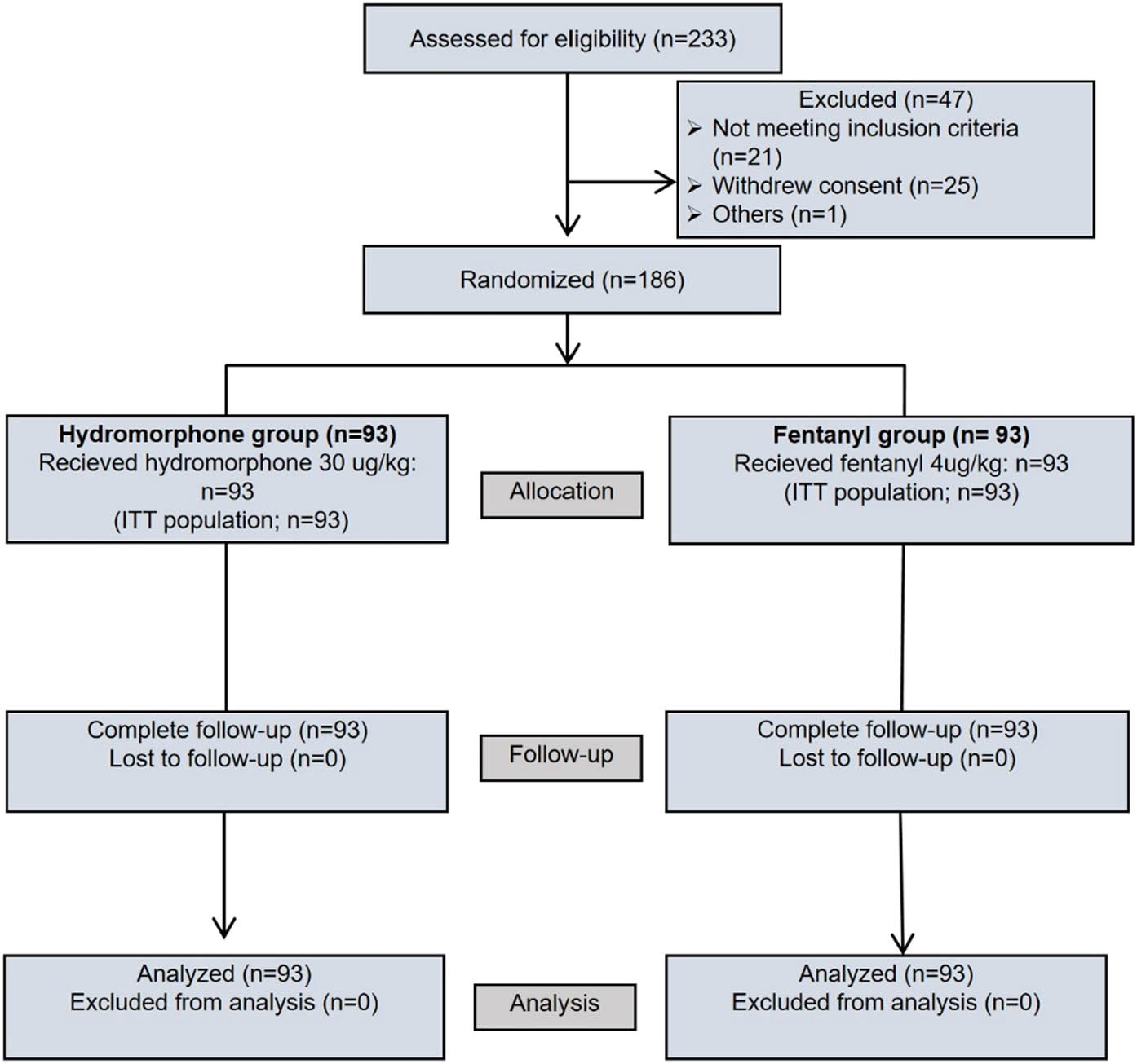
Consolidated standards of reporting trials flow diagram.
Baseline participant characteristics
| Characteristic | Hydromorphone group (n = 93) | Fentanyl group (n = 93) | P-valuea,b |
|---|---|---|---|
| Age (years) | 4.9 ± 1.3 | 5.3 ± 1.3 | 0.057 |
| Sex | 0.100 | ||
| Male | 50 (53.8) | 61 (65.6) | |
| Female | 43 (46.2) | 32 (34.4) | |
| Weight (kg) | 19.4 ± 4.4 | 20.3 ± 4.9 | 0.190 |
| Height (cm) | 111.6 ± 10.1 | 114.4 ± 10.3 | 0.069 |
| BMI (kg/m2) | 15.4 ± 1.8 | 15.3 ± 2.0 | 0.766 |
| ASA status | 0.989 | ||
| I | 5 (5.4) | 4 (4.3) | |
| II | 87 (93.5) | 89 (95.7) | |
| III | 1 (1.1) | 0 | |
| m-YPAS | 35.9 ± 5.2 | 36.2 ± 6.7 | 0.791 |
| Duration of anesthesia (min) | 66. 0 ± 15.4 | 69.1 ± 20.5 | 0.249 |
| Duration of surgery (min) | 34.3 ± 13.4 | 38.8 ± 17.9 | 0.053 |
| Dosage of remifentanil (μg) | 172.8 ± 83.0 | 190.7 ± 104.2 | 0.196 |
| Extubation time (min) | 37.7 ± 12.5 | 30.5 ± 10.9 | <0.0001 |
| Duration of PACU stay (min) | 60.4 ± 14.3 | 55.1 ± 11.5 | <0.01 |
Values are mean ± SD or number (%).
Abbreviations: SD, standard deviation; BMI, body mass index; ASA, American Society of Anesthesiologists; m-YPAS, modified Yale preoperative anxiety scale; PACU, post-anesthesia care unit. a P value compares the hydromorphone group and fentanyl group. b t-test used to compare mean values and chi-squared test used to compare proportions; the Whitney–Mann U test was used for the comparison of ordinal variables.
The data are bolded to highlight the values with a p-value less than 0.05, indicating statistical significance.
3.2 Primary outcome
A cut-off PAED score of ≥12 was defined as EA [27]. The incidence of EA within 30 min after extubation was significantly lower in the hydromorphone group compared to the fentanyl group [48.4% (45/93) vs 64.5% (60/93); absolute difference, 16.1%; 95% confidence interval, 18.9–29.5%; P = 0.027].
3.2.1 Components of the primary outcome
The incidence of EA in the hydromorphone group was significantly lower than that in the fentanyl group at 10, 20, and 30 min after extubation and before leaving PACU (Table 3). The trend Chi-square test was used to analyze the trend of the incidence of EA at nine different time points in both groups. The trend P-values were lower than 0.001, suggesting a decreasing trend in the incidence of EA after transferring to PACU in both groups (Table 3).
Comparison of incidence of emergence agitation between two groups at different time points after transferring to PACU
| Time points/subgroups | Hydromorphone group, n (%) | Fentanyl group, n (%) | OR (95% CI) | P-valuea,b |
|---|---|---|---|---|
| Emergence agitation within 30 min after extubation | ||||
| All subjects | 45/93 (48.4) | 60/93 (64.5) | 1.94 (1.08–3.49) | 0.027 |
| 3–5 years old | 30/58 (51.7) | 38/49 (77.6) | 3.22 (1.38–7.51) | 0.006 |
| 6–7 years old | 15/35 (42.9) | 22/44 (50.0) | 1.33 (0.55–3.26) | 0.527 |
| Emergence agitation at each time point | ||||
| Eyes open | 35 (37.6) | 43 (46.2) | 1.43 (0.79–2.56) | 0.235 |
| 0 min at extubation | 37 (39.8) | 36 (38.7) | 0.96 (0.53–1.72) | 0.881 |
| 10 min at extubation | 14 (15.1) | 32 (34.4) | 2.96 (1.45–6.03) | 0.002 |
| 20 min at extubation | 7 (7.5) | 30 (32.3) | 5.85 (2.42–14.17) | <0.001 |
| 30 min at extubation | 7 (7.5) | 25 (26.9) | 4.52 (1.84–11.07) | <0.001 |
| Exiting PACU | 3 (3.2) | 20 (21.5) | 8.22 (2.35–28.75) | <0.001 |
| Postoperative 2 h | 1 (1.1) | 4 (4.3) | 4.13 (0.45–37.71) | 0.368 |
| Postoperative 4 h | 1 (1.1) | 1 (1.1) | 1.00 (0.06–16.23) | 1.000 |
| Postoperative 6 h | 1 (1.1) | 0 | — | 1.000 |
| P trendc | <0.001 | <0.001 | ||
Abbreviations: PACU, post-anesthesia care unit; OR, odd ratio; CI, confidence interval. a P-value compares the hydromorphone group and fentanyl group. bChi-squared test was used to compare proportions. cChi-squared trend test was used to calculate P trend.
In subgroup post-analysis by age, the difference in the incidence of EA between hydromorphone and fentanyl was only observed in children aged 3–5 years old (51.7% vs 77.6%, P = 0.006). However, this difference became insignificant in older children aged 6–7 years old (42.9% vs 50.0%, P = 0.527).
3.3 Secondary outcomes
3.3.1 EA-related outcomes
We observed significantly lower mean PAED scores in the hydromorphone group at 10, 20, and 30 min after extubation and before leaving PACU (Figure 2a and Table S1). Although the incidence of EA at postoperative 4 and 6 h were comparable between the two groups, the mean PAED scores were significantly lower in the hydromorphone group.
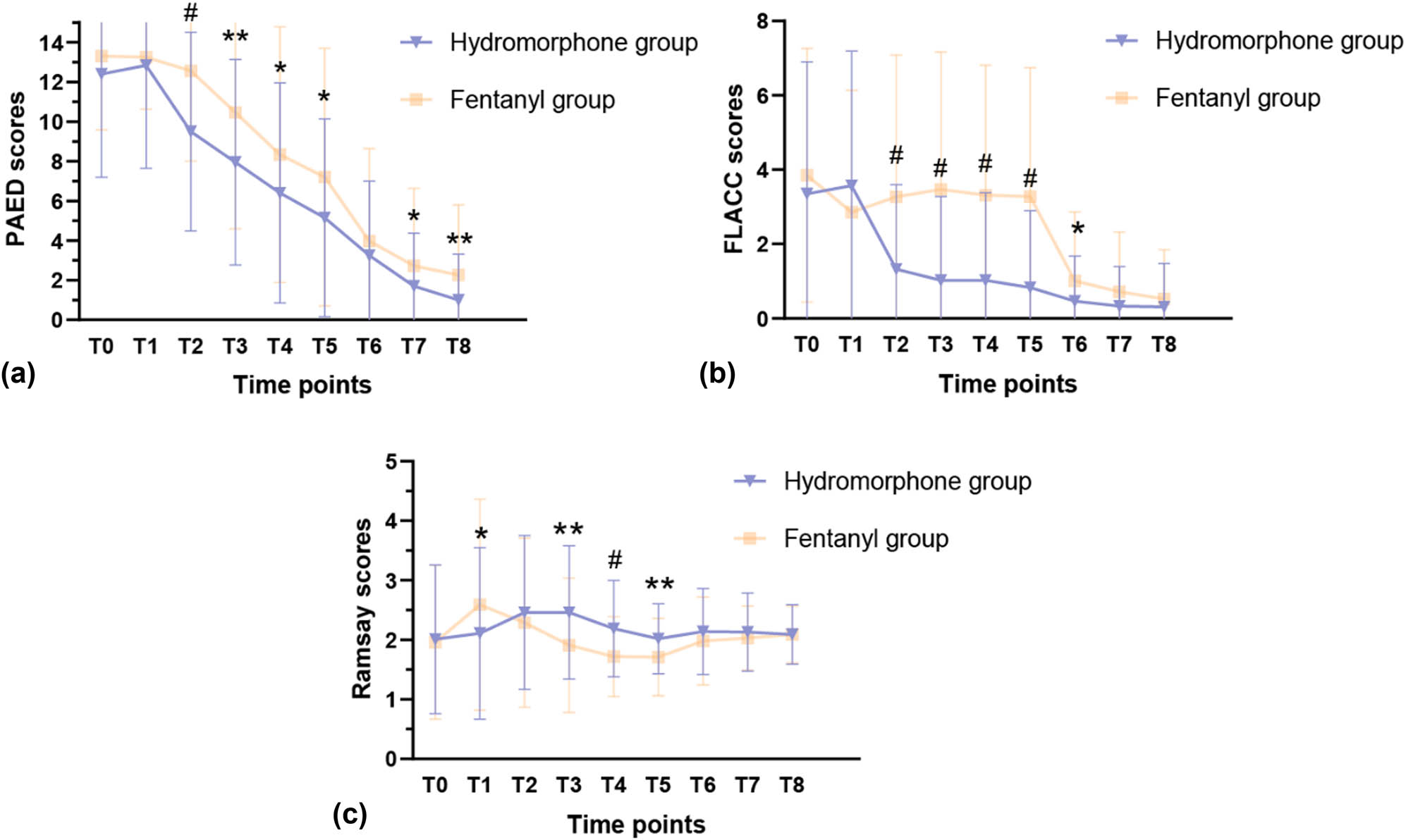
Comparison of (a) PAED, (b) FLACC, and (c) Ramsay scores at T0 (eyes open), T1 (0 min at extubation), T2 (10 min at extubation), T3 (20 min at extubation), T4 (30 min at extubation), T5 (exiting post-anesthesia care unit), T6 (postoperative 2 h), T7 (postoperative 4 h), and T8 (postoperative 6 h) between the hydromorphone group and fentanyl group. * P < 0.05; ** P < 0.01; # P < 0.001.
3.3.2 Pain-related outcomes
Since postoperative pain intensity and sedation play a vital role in the incidence of EA, we evaluated postoperative FLACC scores and Ramsay scale values. The results showed that FLACC scores were lower in the hydromorphone group than in the fentanyl group at 10, 20, and 30 min after extubation and before leaving PACU (Figure 2b and Table S2). The proportion of patients with postoperative moderate-to-severe pain (FLACC scores >3 at any time point) was significantly lower in the hydromorphone group than in the fentanyl group (57.0% vs 77.4%, χ 2 = 8.806, P = 0.003). Ramsay scale scores at 10, 20, and 30 min after extubation and before leaving PACU in the hydromorphone group were lower than those in the fentanyl group (Figure 2c and Table S3).
3.3.3 Rescue analgesia and complications
Only three patients (3.2%) in the hydromorphone group received rescue analgesia, while this number in the fentanyl group reaches 24 (25.8%), and the overall proportion of rescue analgesia was significantly higher in the fentanyl group (3.2% vs 25.8%, χ 2 = 19.107, P<0.001). Incidences of rescue sedation were comparable between the two groups (5.4% vs 12.9%, χ 2 = 3.172, P = 0.075). Hyperthermia and post-AT hemorrhage in PACU were observed in one child of the fentanyl group. No other adverse effect was observed in all subjects, e.g., postoperative nausea and vomiting, respiratory depression, oversedation, desaturation, constipation, urinary retention, or severe itching.
4 Discussion
The most important finding was that the anesthesia induction with hydromorphone infusion was associated with a lower incidence of EA within 30 min after extubation among children undergoing AT surgery.
In children, EA and pain are often present simultaneously. Somaini et al. found that in the early postoperative, 21% of patients had EA, and EA and pain are associated in up to 65% of patients [29]. Therefore, the ideal drug should be administrated preemptively [30], and it should have a reliable postoperative analgesic effect and light respiratory depression effect. This study demonstrated that administration of hydromorphone during induction of anesthesia provided a significantly stronger analgesic effect than fentanyl and reduced the incidence of EA in the early postoperative period. We attributed this strong analgesic effect to the high affinity of hydromorphone for both μ and δ receptors, thus reducing the afferent of injurious stimuli.
In subgroup-analysis by age, our finding aligned well with previous study that showed how incidence of EA varied in different age groups with three times greater risk in pre-school age (less than 6 years) [31]. We believe children aged 3–5 years may benefit more from hydromorphone compared to fentanyl, whereas this advantage may not be as pronounced in older preschool-aged children.
Hydromorphone provides satisfactory analgesia in the current setting. Although the decrease in mean PAED scores was statistically significant in the hydromorphone group, the CI for the difference in mean PAED scores did not fully exceed the clinically important difference (at least 4 points [32]) at any of these prespecified time points. The clinical relevance of this change therefore remains uncertain, and the interpretation of the alleviated PAED scores based on this study should be considered inconclusive.
Among pediatric patients who underwent ambulatory operations the overall opioid use trended downward, while the intravenous administration of fentanyl and hydromorphone increased from 2010 to 2017 [33]. A growing number of studies have investigated the potential of various types of hydromorphone administration. In the present study, children received hydromorphone at a dose of 30 μg/kg by microinjection. Several previous studies have selected 5–200 μg/kg hydromorphone for intravenous administration [22,34,35], continuous infusion of 40–60 μg/h for epidural administration, or 10–15 µg/kg with 2.5–6 µg/kg on-demand for patient-controlled analgesia [20,21]. The inactive metabolite of hydromorphone contributes to its safe administration in a variety of situations. Since the incidence of rescue analgesia is low and no opioid-associated complications occurred in this study, we consider applying hydromorphone by micro-infusion at a dose of 30 μg/kg may be adequate and safe in this setting.
Here, hydromorphone compared to fentanyl prolong the mean extubation time by 7 min and the duration of PACU stay by 5 min, though it did not increase the incidence of postoperative complications. We attribute this result to the longer and stronger analgesic effect of hydromorphone compared to fentanyl. According to previous research, “Extubation time” was defined as the time between discontinuation of anesthesia and that taken to meet extubation criteria, i.e., regular respiration, grimaces, and/or purposeful movements [22]. Therefore, in the fentanyl group, inadequate analgesia could relatively shorten the time to emergence and extubation, causing higher occurrences of EA and moderate-to-severe pain.
One notable benefit of hydromorphone is its potency; it is 5–7 times more potent than morphine [19]. This increased potency allows for smaller dosages while still achieving effective pain control, which may help reduce the risk of opioid-related side effects. In contrast, when compared to non-opioid agents, such as NSAIDs, hydromorphone’s superior potency and flexibility in administration enable it to manage moderate-to-severe postoperative pain more effectively. Moreover, compared to sedative drugs (e.g., midazolam and propofol [14]), hydromorphone demonstrates greater effectiveness in simultaneously achieving rapid and sustained control of pain and agitation, both of which are crucial in postoperative settings.
Despite its efficacy, hydromorphone should be administered cautiously in children with OSA, as they may exhibit heightened sensitivity to opioids [16]. Hydromorphone is currently regarded as an alternative option for managing moderate to severe nociceptive pain, and precautions must be taken to prevent the inadvertent administration of hydromorphone when morphine is intended [19,36]. Strategies to minimize opioid consumption and avoid opioid misuse include:
During: peri-operative multimodal analgesia: other promising candidates and adjuvants for controlling EA in children include nalbuphine [12], ketamine, and dexmedetomidine. Ketamine’s NMDA receptor antagonism and dexmedetomidine’s alpha-2 adrenergic receptor agonism provide both analgesic and sedative effects, making them effective in minimizing EA without significant side effects [39–41]. Local regional anesthesia and non-pharmacological techniques are also effective.
Several limitations were noted in the present study.
This is a single-center study with a limited sample size.
No quantitative assessment of pre-anesthesia anxiety (as baseline) in children and parents.
The follow-up data of the present study are unable to provide information on long-term recovery including postoperative chronic pain and postoperative negative behaviors [11].
The optimal dosage for hydromorphone administration during AT surgery remains undiscovered. Choosing hydromorphone dosage based on the severity of OSA may help develop a personalized regimen [22].
The neuromuscular blockade had not been monitored; this may hinder the evaluation of outcomes by confusing EA with psychomotor agitation due to incomplete muscle relaxant reversal or re-curarization [45].
5 Conclusion
Hydromorphone at a dose of 30 μg/kg can reduce the incidence of EA within 30 min after extubation among children after AT surgery compared to fentanyl. Hydromorphone showed superior analgesic effect, and it did not increase the incidence of oversedation, respiratory depression, or other adverse effects.
Acknowledgements
The authors appreciate the efforts of all those involved in the study and the members of the research team for their dedicated efforts in conducting the clinical trial and completing the follow-up.
-
Funding information: Not applicable.
-
Author contributions: Conceptualization: Y.C., G.C., T.Z.; study implementation: Y.C., Q.H., X.S., Y.S.; data analysis: Q.H., R.Z., T.Z.; writing – original draft: Q.H., Y.C.; writing – review & editing: all authors.
-
Conflict of interest: The authors have no conflict of interest to declare.
-
Data availability statement: The datasets generated during and/or analyzed during the current study are available from the corresponding author on reasonable request.
References
[1] Clements AC, Walsh JM, Dai X, Skinner ML, Sterni LM, Tunkel DE, et al. Cardiopulmonary testing before pediatric adenotonsillectomy for severe and very severe obstructive sleep apnea syndrome. Laryngoscope. 2021;131(10):2361–8. 10.1002/lary.29480.Suche in Google Scholar PubMed
[2] Ai S, Li Z, Wang S, Chen S, Chan JW, Au CT, et al. Blood pressure and childhood obstructive sleep apnea: a systematic review and meta-analysis. Sleep Med Rev. 2022;65:101663. 10.1016/j.smrv.2022.101663.Suche in Google Scholar PubMed
[3] Somaini M, Engelhardt T, Ingelmo P. Emergence from general anaesthesia: can we discriminate between emergence delirium and postoperative pain? J Pers Med. 2023;13(3):435. 10.3390/jpm13030435.Suche in Google Scholar PubMed PubMed Central
[4] Patel A, Davidson M, Tran MC, Quraishi H, Schoenberg C, Sant M, et al. Dexmedetomidine infusion for analgesia and prevention of emergence agitation in children with obstructive sleep apnea syndrome undergoing tonsillectomy and adenoidectomy. Anesth Analg. 2010;111(4):1004–10. 10.1213/ANE.0b013e3181ee82fa.Suche in Google Scholar PubMed
[5] Li LQ, Wang C, Xu HY, Lu HL, Zhang HZ. Effects of different doses of intranasal dexmedetomidine on preoperative sedation and postoperative agitation in pediatric with total intravenous anesthesia undergoing adenoidectomy with or without tonsillectomy. Medicine. 2018;97(39):e12140. 10.1097/md.0000000000012140.Suche in Google Scholar
[6] Tsiotou AG, Malisiova A, Kouptsova E, Mavri M, Anagnostopoulou M, Kalliardou E. Dexmedetomidine for the reduction of emergence delirium in children undergoing tonsillectomy with propofol anesthesia: a double-blind, randomized study. Paediatr Anaesth. 2018;28(7):632–8. 10.1111/pan.13397.Suche in Google Scholar PubMed
[7] Hauber JA, Davis PJ, Bendel LP, Martyn SV, McCarthy DL, Evans MC, et al. Dexmedetomidine as a rapid bolus for treatment and prophylactic prevention of emergence agitation in anesthetized children. Anesth Analg. 2015;121(5):1308–15. 10.1213/ane.0000000000000931.Suche in Google Scholar PubMed
[8] Simonini A, Vittori A, Cascella M, Calevo MG, Marinangeli F. The impact of emergence delirium on hospital length of stay for children who underwent tonsillectomy/adenotonsillectomy: an observational retrospective study. Braz J Anesthesiol (Elsevier). 2023;73(2):171–6. 10.1016/j.bjane.2021.10.006.Suche in Google Scholar PubMed PubMed Central
[9] Persino PR, Saleh L, Walner DL. Pain control following tonsillectomy in children: a survey of patients. Int J Pediatr Otorhinolaryngol. 2017;103:76–9. 10.1016/j.ijporl.2017.10.016.Suche in Google Scholar PubMed
[10] Tan GX, Tunkel DE. Control of pain after tonsillectomy in children: a review. JAMA Otolaryngol Head Neck Surg. 2017;143(9):937–42. 10.1001/jamaoto.2017.0845.Suche in Google Scholar PubMed
[11] Houben A, Ghamari S, Fischer A, Neumann C, Baehner T, Ellerkmann RK. Pediatric emergence delirium is linked to increased early postoperative negative behavior within two weeks after adenoidectomy: an observational study. Braz J Anesthesiol (Elsevier); 2021;74(5):744114. 10.1016/j.bjane.2021.03.008.Suche in Google Scholar PubMed PubMed Central
[12] Jian H, Lei Z, Tao T, Xianjie W, Daguang C, Xueqin Z, et al. Nalbuphine reduces the incidence of emergence agitation in children undergoing adenotonsillectomy: a prospective, randomized, double-blind, multicenter study. J Clin Anesth. 2023;85:111044. 10.1016/j.jclinane.2022.111044.Suche in Google Scholar PubMed
[13] Zhang YZ, Wei XL, Tang B, Qin YY, Ou M, Jiang XH, et al. The effects of different doses of alfentanil and dexmedetomidine on prevention of emergence agitation in pediatric tonsillectomy and adenoidectomy surgery. Front Pharmacol. 2022;13:648802. 10.3389/fphar.2022.648802.Suche in Google Scholar PubMed PubMed Central
[14] Aouad MT, Yazbeck-Karam VG, Nasr VG, El-Khatib MF, Kanazi GE, Bleik JH. A single dose of propofol at the end of surgery for the prevention of emergence agitation in children undergoing strabismus surgery during sevoflurane anesthesia. Anesthesiology. 2007;107(5):733–8. 10.1097/01.anes.0000287009.46896.a7.Suche in Google Scholar PubMed
[15] Miyake T, Miyamoto Y, Nakamura N. Subanesthetic-dose propofol infusion for preventing emergence agitation in children: a retrospective observational study. J Anesth. 2023;37(4):546–54. 10.1007/s00540-023-03201-8.Suche in Google Scholar PubMed PubMed Central
[16] Brown KA, Laferriere A, Moss IR. Recurrent hypoxemia in young children with obstructive sleep apnea is associated with reduced opioid requirement for analgesia. Anesthesiology. 2004;100(4):806–10. discussion 5A. 10.1097/00000542-200404000-00009.Suche in Google Scholar PubMed
[17] Tan Y, Shi Y, Ding H, Kong X, Zhou H, Tian J. μ-Opioid agonists for preventing emergence agitation under sevoflurane anesthesia in children: a meta-analysis of randomized controlled trials. Paediatr Anaesth. 2016;26(2):139–50. 10.1111/pan.12815.Suche in Google Scholar PubMed
[18] Kim N, Park JH, Lee JS, Choi T, Kim MS. Effects of intravenous fentanyl around the end of surgery on emergence agitation in children: systematic review and meta-analysis. Paediatr Anaesth. 2017;27(9):885–92. 10.1111/pan.13181.Suche in Google Scholar PubMed
[19] Rodieux F, Ivanyuk A, Besson M, Desmeules J, Samer CF. Hydromorphone prescription for pain in children-what place in clinical practice? Front Pediatrics. 2022;10:842454. 10.3389/fped.2022.842454.Suche in Google Scholar PubMed PubMed Central
[20] Balyan R, Dong M, Pilipenko V, Geisler K, Vinks A, Chidambaran V. Hydromorphone population pharmacokinetics in pediatric surgical patients. Paediatr Anaesth. 2020;30(10):1091–101. 10.1111/pan.13975.Suche in Google Scholar PubMed
[21] Farid I, Lewis J, Kendrick E. The safety and efficacy of hydromorphone via patient controlled analgesia or patient controlled analgesia by proxy for pediatric postoperative pain control. J Clin Anesth. 2020;60:65–6. 10.1016/j.jclinane.2019.08.033.Suche in Google Scholar PubMed
[22] Isaiah A, Pereira KD. Outcomes after adenotonsillectomy using a fixed anesthesia protocol in children with obstructive sleep apnea. Int J Pediatr Otorhinolaryngol. 2015;79(5):638–43. 10.1016/j.ijporl.2015.01.034.Suche in Google Scholar PubMed
[23] Yi W, Li J, Zhuang Y, Wan L, Li W, Jia J. The effect of two different doses of dexmedetomidine to prevent emergence agitation in children undergoing adenotonsillectomy: a randomized controlled trial. Braz J Anesthesiol (Elsevier). 2022;72(1):63–8. 10.1016/j.bjane.2021.08.019.Suche in Google Scholar PubMed PubMed Central
[24] Rosen DM, Alcock MM, Palmer GM. Opioids for acute pain management in children. Anaesth Intensive Care. 2022;50(1–2):81–94. 10.1177/0310057x211065769.Suche in Google Scholar PubMed
[25] Flubacher P, Fournier N, Cherpillod J, Waridel F, Nydegger M, Albrecht E. A randomised controlled trial of placebo, droperidol or ondansetron to prevent nausea and vomiting after tonsillectomy in children receiving dexamethasone. Anaesthesia. 2017;72(7):859–63. 10.1111/anae.13907.Suche in Google Scholar PubMed
[26] Costi D, Cyna A, Ahmed S, Stephens K, Strickland P, Ellwood J, et al. Effects of sevoflurane versus other general anaesthesia on emergence agitation in children. Cochrane Database Syst Rev. 2014;9:CD007084. 10.1002/14651858.CD007084.pub2.Suche in Google Scholar PubMed PubMed Central
[27] Sikich N, Lerman J. Development and psychometric evaluation of the pediatric anesthesia emergence delirium scale. Anesthesiology. 2004;100(5):1138–45. 10.1097/00000542-200405000-00015.Suche in Google Scholar PubMed
[28] Crellin DJ, Babl FE, Santamaria N, Harrison D. The psychometric properties of the MBPS scale used to assess procedural pain. J Pain. 2018;19(6):660–9. 10.1016/j.jpain.2018.01.012.Suche in Google Scholar PubMed
[29] Somaini M, Sahillioğlu E, Marzorati C, Lovisari F, Engelhardt T, Ingelmo PM. Emergence delirium, pain or both? A challenge for clinicians. Paediatr Anaesth. 2015;25(5):524–9. 10.1111/pan.12580.Suche in Google Scholar PubMed
[30] Singh R, Kharbanda M, Sood N, Mahajan V, Chatterji C. Comparative evaluation of incidence of emergence agitation and post-operative recovery profile in paediatric patients after isoflurane, sevoflurane and desflurane anaesthesia. Indian J Anaesth. 2012;56(2):156–61. 10.4103/0019-5049.96325.Suche in Google Scholar PubMed PubMed Central
[31] Denberu E, Habtamu G, Zewditu A, Mamaru M. Incidence and associated factors of emergence agitation after general anesthesia and surgery among pediatric patients: a prospective follow-up study. Int J Surg Open. 2020;27:25–31. 10.1016/j.ijso.2020.10.005.Suche in Google Scholar
[32] Frederick H, Wofford K, de Lisle Dear G, Schulman S. A randomized controlled trial to determine the effect of depth of anesthesia on emergence agitation in children. Anesth Analg. 2016;122(4):1141–6. 10.1213/ane.0000000000001145.Suche in Google Scholar PubMed
[33] Rizeq Y, Many B, Vacek J, Silver I, Goldstein S, Abdullah F, et al. Trends in perioperative opioid and non-opioid utilization during ambulatory surgery in children. Surgery. 2019;166(2):172–6. 10.1016/j.surg.2019.04.005.Suche in Google Scholar PubMed
[34] Hajdini H, Steurer LM, Balakas K, Ercole PM. A randomized controlled trial to compare pain medications in children undergoing strabismus surgery. J Perianesth Nurs. 2019;34(6):1196–204. 10.1016/j.jopan.2019.01.012.Suche in Google Scholar PubMed
[35] Pan Y, Wang Y, Lie D, Liu D, Chen X, Wu Z, et al. Effectiveness of analgesia with hydromorphone hydrochloride for postoperative pain following surgical repair of structural congenital malformations in children: a randomized controlled trial. BMC Anesthesiol. 2021;21(1):192. 10.1186/s12871-021-01412-8.Suche in Google Scholar PubMed PubMed Central
[36] Cascella M, Capuozzo M, Ferrara F, Ottaiano A, Perri F, Sabbatino F, et al. Two-year opioid prescription trends in local sanitary agency Naples 3 South, Campania Region, Italy. Descriptive analyses and AI-based translational perspectives. Transl Med@UniSa. 2024;26(1):1–14. 10.37825/2239-9747.1047.Suche in Google Scholar PubMed PubMed Central
[37] The Lancet Digital H. Big data, artificial intelligence, and the opioid crisis. Lancet Digital Health. 2021;3(6):e330. 10.1016/s2589-7500(21)00087-x.Suche in Google Scholar
[38] Atias D, Tuttnauer A, Shomron N, Obolski U. Prediction of sustained opioid use in children and adolescents using machine learning. Br J Anaesth. 2024;133(2):351–9. 10.1016/j.bja.2024.05.001.Suche in Google Scholar PubMed
[39] Shen F, Zhang Q, Xu Y, Wang X, Xia J, Chen C, et al. Effect of intranasal dexmedetomidine or midazolam for premedication on the occurrence of respiratory adverse events in children undergoing tonsillectomy and adenoidectomy: a randomized clinical trial. JAMA Netw Open. 2022;5(8):e2225473. 10.1001/jamanetworkopen.2022.25473.Suche in Google Scholar PubMed PubMed Central
[40] Rao Y, Zeng R, Jiang X, Li J, Wang X. The effect of dexmedetomidine on emergence agitation or delirium in children after anesthesia – a systematic review and meta-analysis of clinical studies. Front Pediatr. 2020;8:329. 10.3389/fped.2020.00329.Suche in Google Scholar PubMed PubMed Central
[41] Ng KT, Sarode D, Lai YS, Teoh WY, Wang CY. The effect of ketamine on emergence agitation in children: a systematic review and meta-analysis. Paediatr Anaesth. 2019;29(12):1163–72. 10.1111/pan.13752.Suche in Google Scholar PubMed
[42] Wilson ME, Helgadóttir HL. Patterns of pain and analgesic use in 3- to 7-year-old children after tonsillectomy. Pain Manag Nurs: Off J Am Soc Pain Manag Nurses. 2006;7(4):159–66. 10.1016/j.pmn.2006.09.005.Suche in Google Scholar PubMed
[43] Cascella M, Marinangeli F, Vittori A, Scala C, Piccinini M, Braga A, et al. Open issues and practical suggestions for telemedicine in chronic pain. Int J Environ Res Public Health. 2021;18(23):12416.10.3390/ijerph182312416Suche in Google Scholar PubMed PubMed Central
[44] Cascella M, Coluccia S, Grizzuti M, Romano MC, Esposito G, Crispo A, et al. Satisfaction with telemedicine for cancer pain management: a model of care and cross-sectional patient satisfaction study. Curr Oncol. 2022;29(8):5566–78.10.3390/curroncol29080439Suche in Google Scholar PubMed PubMed Central
[45] Vested M, Tarpgaard M, Eriksen K, Rasmussen LS. Incidence of residual neuromuscular blockade in children below 3 years after a single bolus of cisatracurium 0.1 mg/kg: a quality assurance study. Acta Anaesthesiol Scand. 2020;64(2):168–72. 10.1111/aas.13495.Suche in Google Scholar PubMed
© 2025 the author(s), published by De Gruyter
This work is licensed under the Creative Commons Attribution 4.0 International License.
Artikel in diesem Heft
- Research Articles
- Network pharmacological analysis and in vitro testing of the rutin effects on triple-negative breast cancer
- Impact of diabetes on long-term survival in elderly liver cancer patients: A retrospective study
- Knockdown of CCNB1 alleviates high glucose-triggered trophoblast dysfunction during gestational diabetes via Wnt/β-catenin signaling pathway
- Risk factors for severe adverse drug reactions in hospitalized patients
- Analysis of the effect of ALA-PDT on macrophages in footpad model of mice infected with Fonsecaea monophora based on single-cell sequencing
- Development and validation of headspace gas chromatography with a flame ionization detector method for the determination of ethanol in the vitreous humor
- CMSP exerts anti-tumor effects on small cell lung cancer cells by inducing mitochondrial dysfunction and ferroptosis
- Predictive value of plasma sB7-H3 and YKL-40 in pediatric refractory Mycoplasma pneumoniae pneumonia
- Antiangiogenic potential of Elaeagnus umbellata extracts and molecular docking study by targeting VEGFR-2 pathway
- Comparison of the effectiveness of nurse-led preoperative counseling and postoperative follow-up care vs standard care for patients with gastric cancer
- Comparing the therapeutic efficacy of endoscopic minimally invasive surgery and traditional surgery for early-stage breast cancer: A meta-analysis
- Adhered macrophages as an additional marker of cardiomyocyte injury in biopsies of patients with dilated cardiomyopathy
- Association between statin administration and outcome in patients with sepsis: A retrospective study
- Exploration of the association between estimated glucose disposal rate and osteoarthritis in middle-aged and older adults: An analysis of NHANES data from 2011 to 2018
- A comparative analysis of the binary and multiclass classified chest X-ray images of pneumonia and COVID-19 with ML and DL models
- Lysophosphatidic acid 2 alleviates deep vein thrombosis via protective endothelial barrier function
- Transcription factor A, mitochondrial promotes lymph node metastasis and lymphangiogenesis in epithelial ovarian carcinoma
- Serum PM20D1 levels are associated with nutritional status and inflammatory factors in gastric cancer patients undergoing early enteral nutrition
- Hydromorphone reduced the incidence of emergence agitation after adenotonsillectomy in children with obstructive sleep apnea: A randomized, double-blind study
- Vitamin D replacement therapy may regulate sleep habits in patients with restless leg syndrome
- The first-line antihypertensive nitrendipine potentiated the therapeutic effect of oxaliplatin by downregulating CACNA1D in colorectal cancer
- Health literacy and health-related quality of life: The mediating role of irrational happiness
- Modulatory effects of Lycium barbarum polysaccharide on bone cell dynamics in osteoporosis
- Mechanism research on inhibition of gastric cancer in vitro by the extract of Pinellia ternata based on network pharmacology and cellular metabolomics
- Examination of the causal role of immune cells in non-alcoholic fatty liver disease by a bidirectional Mendelian randomization study
- Clinical analysis of ten cases of HIV infection combined with acute leukemia
- Investigating the cardioprotective potential of quercetin against tacrolimus-induced cardiotoxicity in Wistar rats: A mechanistic insights
- Clinical observation of probiotics combined with mesalazine and Yiyi Baitouweng Decoction retention enema in treating mild-to-moderate ulcerative colitis
- Diagnostic value of ratio of blood inflammation to coagulation markers in periprosthetic joint infection
- Sex-specific associations of sex hormone binding globulin and risk of bladder cancer
- Core muscle strength and stability-oriented breathing training reduces inter-recti distance in postpartum women
- The ERAS nursing care strategy for patients undergoing transsphenoidal endoscopic pituitary tumor resection: A randomized blinded controlled trial
- The serum IL-17A levels in patients with traumatic bowel rupture post-surgery and its predictive value for patient prognosis
- Impact of Kolb’s experiential learning theory-based nursing on caregiver burden and psychological state of caregivers of dementia patients
- Analysis of serum NLR combined with intraoperative margin condition to predict the prognosis of cervical HSIL patients undergoing LEEP surgery
- Commiphora gileadensis ameliorate infertility and erectile dysfunction in diabetic male mice
- The correlation between epithelial–mesenchymal transition classification and MMP2 expression of circulating tumor cells and prognosis of advanced or metastatic nasopharyngeal carcinoma
- Tetrahydropalmatine improves mitochondrial function in vascular smooth muscle cells of atherosclerosis in vitro by inhibiting Ras homolog gene family A/Rho-associated protein kinase-1 signaling pathway
- A cross-sectional study: Relationship between serum oxidative stress levels and arteriovenous fistula maturation in maintenance dialysis patients
- A comparative analysis of the impact of repeated administration of flavan 3-ol on brown, subcutaneous, and visceral adipose tissue
- Identifying early screening factors for depression in middle-aged and older adults: A cohort study
- Perform tumor-specific survival analysis for Merkel cell carcinoma patients undergoing surgical resection based on the SEER database by constructing a nomogram chart
- Unveiling the role of CXCL10 in pancreatic cancer progression: A novel prognostic indicator
- High-dose preoperative intraperitoneal erythropoietin and intravenous methylprednisolone in acute traumatic spinal cord injuries following decompression surgeries
- RAB39B: A novel biomarker for acute myeloid leukemia identified via multi-omics and functional validation
- Impact of peripheral conditioning on reperfusion injury following primary percutaneous coronary intervention in diabetic and non-diabetic STEMI patients
- Clinical efficacy of azacitidine in the treatment of middle- and high-risk myelodysplastic syndrome in middle-aged and elderly patients: A retrospective study
- The effect of ambulatory blood pressure load on mitral regurgitation in continuous ambulatory peritoneal dialysis patients
- Expression and clinical significance of ITGA3 in breast cancer
- Single-nucleus RNA sequencing reveals ARHGAP28 expression of podocytes as a biomarker in human diabetic nephropathy
- rSIG combined with NLR in the prognostic assessment of patients with multiple injuries
- Toxic metals and metalloids in collagen supplements of fish and jellyfish origin: Risk assessment for daily intake
- Exploring causal relationship between 41 inflammatory cytokines and marginal zone lymphoma: A bidirectional Mendelian randomization study
- Gender beliefs and legitimization of dating violence in adolescents
- Effect of serum IL-6, CRP, and MMP-9 levels on the efficacy of modified preperitoneal Kugel repair in patients with inguinal hernia
- Effect of smoking and smoking cessation on hematological parameters in polycythemic patients
- Pathogen surveillance and risk factors for pulmonary infection in patients with lung cancer: A retrospective single-center study
- Necroptosis of hippocampal neurons in paclitaxel chemotherapy-induced cognitive impairment mediates microglial activation via TLR4/MyD88 signaling pathway
- Celastrol suppresses neovascularization in rat aortic vascular endothelial cells stimulated by inflammatory tenocytes via modulating the NLRP3 pathway
- Cord-lamina angle and foraminal diameter as key predictors of C5 palsy after anterior cervical decompression and fusion surgery
- GATA1: A key biomarker for predicting the prognosis of patients with diffuse large B-cell lymphoma
- Influencing factors of false lumen thrombosis in type B aortic dissection: A single-center retrospective study
- MZB1 regulates the immune microenvironment and inhibits ovarian cancer cell migration
- Integrating experimental and network pharmacology to explore the pharmacological mechanisms of Dioscin against glioblastoma
- Trends in research on preterm birth in twin pregnancy based on bibliometrics
- Four-week IgE/baseline IgE ratio combined with tryptase predicts clinical outcome in omalizumab-treated children with moderate-to-severe asthma
- Single-cell transcriptomic analysis identifies a stress response Schwann cell subtype
- Acute pancreatitis risk in the diagnosis and management of inflammatory bowel disease: A critical focus
- Effect of subclinical esketamine on NLRP3 and cognitive dysfunction in elderly ischemic stroke patients
- Interleukin-37 mediates the anti-oral tumor activity in oral cancer through STAT3
- CA199 and CEA expression levels, and minimally invasive postoperative prognosis analysis in esophageal squamous carcinoma patients
- Efficacy of a novel drainage catheter in the treatment of CSF leak after posterior spine surgery: A retrospective cohort study
- Comprehensive biomedicine assessment of Apteranthes tuberculata extracts: Phytochemical analysis and multifaceted pharmacological evaluation in animal models
- Relation of time in range to severity of coronary artery disease in patients with type 2 diabetes: A cross-sectional study
- Dopamine attenuates ethanol-induced neuronal apoptosis by stimulating electrical activity in the developing rat retina
- Correlation between albumin levels during the third trimester and the risk of postpartum levator ani muscle rupture
- Factors associated with maternal attention and distraction during breastfeeding and childcare: A cross-sectional study in the west of Iran
- Mechanisms of hesperetin in treating metabolic dysfunction-associated steatosis liver disease via network pharmacology and in vitro experiments
- The law on oncological oblivion in the Italian and European context: How to best uphold the cancer patients’ rights to privacy and self-determination?
- The prognostic value of the neutrophil-to-lymphocyte ratio, platelet-to-lymphocyte ratio, and prognostic nutritional index for survival in patients with colorectal cancer
- Factors affecting the measurements of peripheral oxygen saturation values in healthy young adults
- Comparison and correlations between findings of hysteroscopy and vaginal color Doppler ultrasonography for detection of uterine abnormalities in patients with recurrent implantation failure
- The effects of different types of RAGT on balance function in stroke patients with low levels of independent walking in a convalescent rehabilitation hospital
- Causal relationship between asthma and ankylosing spondylitis: A bidirectional two-sample univariable and multivariable Mendelian randomization study
- Correlations of health literacy with individuals’ understanding and use of medications in Southern Taiwan
- Correlation of serum calprotectin with outcome of acute cerebral infarction
- Comparison of computed tomography and guided bronchoscopy in the diagnosis of pulmonary nodules: A systematic review and meta-analysis
- Curdione protects vascular endothelial cells and atherosclerosis via the regulation of DNMT1-mediated ERBB4 promoter methylation
- The identification of novel missense variant in ChAT gene in a patient with gestational diabetes denotes plausible genetic association
- Molecular genotyping of multi-system rare blood types in foreign blood donors based on DNA sequencing and its clinical significance
- Exploring the role of succinyl carnitine in the association between CD39⁺ CD4⁺ T cell and ulcerative colitis: A Mendelian randomization study
- Dexmedetomidine suppresses microglial activation in postoperative cognitive dysfunction via the mmu-miRNA-125/TRAF6 signaling axis
- Analysis of serum metabolomics in patients with different types of chronic heart failure
- Diagnostic value of hematological parameters in the early diagnosis of acute cholecystitis
- Pachymaran alleviates fat accumulation, hepatocyte degeneration, and injury in mice with nonalcoholic fatty liver disease
- Decrease in CD4 and CD8 lymphocytes are predictors of severe clinical picture and unfavorable outcome of the disease in patients with COVID-19
- METTL3 blocked the progression of diabetic retinopathy through m6A-modified SOX2
- The predictive significance of anti-RO-52 antibody in patients with interstitial pneumonia after treatment of malignant tumors
- Exploring cerebrospinal fluid metabolites, cognitive function, and brain atrophy: Insights from Mendelian randomization
- Development and validation of potential molecular subtypes and signatures of ocular sarcoidosis based on autophagy-related gene analysis
- Widespread venous thrombosis: Unveiling a complex case of Behçet’s disease with a literature perspective
- Uterine fibroid embolization: An analysis of clinical outcomes and impact on patients’ quality of life
- Discovery of lipid metabolism-related diagnostic biomarkers and construction of diagnostic model in steroid-induced osteonecrosis of femoral head
- Serum-derived exomiR-188-3p is a promising novel biomarker for early-stage ovarian cancer
- Enhancing chronic back pain management: A comparative study of ultrasound–MRI fusion guidance for paravertebral nerve block
- Peptide CCAT1-70aa promotes hepatocellular carcinoma proliferation and invasion via the MAPK/ERK pathway
- Electroacupuncture-induced reduction of myocardial ischemia–reperfusion injury via FTO-dependent m6A methylation modulation
- Hemorrhoids and cardiovascular disease: A bidirectional Mendelian randomization study
- Cell-free adipose extract inhibits hypertrophic scar formation through collagen remodeling and antiangiogenesis
- HALP score in Demodex blepharitis: A case–control study
- Assessment of SOX2 performance as a marker for circulating cancer stem-like cells (CCSCs) identification in advanced breast cancer patients using CytoTrack system
- Risk and prognosis for brain metastasis in primary metastatic cervical cancer patients: A population-based study
- Comparison of the two intestinal anastomosis methods in pediatric patients
- Factors influencing hematological toxicity and adverse effects of perioperative hyperthermic intraperitoneal vs intraperitoneal chemotherapy in gastrointestinal cancer
- Endotoxin tolerance inhibits NLRP3 inflammasome activation in macrophages of septic mice by restoring autophagic flux through TRIM26
- Lateral transperitoneal laparoscopic adrenalectomy: A single-centre experience of 21 procedures
- Petunidin attenuates lipopolysaccharide-induced retinal microglia inflammatory response in diabetic retinopathy by targeting OGT/NF-κB/LCN2 axis
- Procalcitonin and C-reactive protein as biomarkers for diagnosing and assessing the severity of acute cholecystitis
- Factors determining the number of sessions in successful extracorporeal shock wave lithotripsy patients
- Development of a nomogram for predicting cancer-specific survival in patients with renal pelvic cancer following surgery
- Inhibition of ATG7 promotes orthodontic tooth movement by regulating the RANKL/OPG ratio under compression force
- A machine learning-based prognostic model integrating mRNA stemness index, hypoxia, and glycolysis‑related biomarkers for colorectal cancer
- Glutathione attenuates sepsis-associated encephalopathy via dual modulation of NF-κB and PKA/CREB pathways
- FAHD1 prevents neuronal ferroptosis by modulating R-loop and the cGAS–STING pathway
- Association of placenta weight and morphology with term low birth weight: A case–control study
- Investigation of the pathogenic variants induced Sjogren’s syndrome in Turkish population
- Nucleotide metabolic abnormalities in post-COVID-19 condition and type 2 diabetes mellitus patients and their association with endocrine dysfunction
- TGF-β–Smad2/3 signaling in high-altitude pulmonary hypertension in rats: Role and mechanisms via macrophage M2 polarization
- Ultrasound-guided unilateral versus bilateral erector spinae plane block for postoperative analgesia of patients undergoing laparoscopic cholecystectomy
- Profiling gut microbiome dynamics in subacute thyroiditis: Implications for pathogenesis, diagnosis, and treatment
- Delta neutrophil index, CRP/albumin ratio, procalcitonin, immature granulocytes, and HALP score in acute appendicitis: Best performing biomarker?
- Anticancer activity mechanism of novelly synthesized and characterized benzofuran ring-linked 3-nitrophenyl chalcone derivative on colon cancer cells
- H2valdien3 arrests the cell cycle and induces apoptosis of gastric cancer
- Prognostic relevance of PRSS2 and its immune correlates in papillary thyroid carcinoma
- Association of SGLT2 inhibition with psychiatric disorders: A Mendelian randomization study
- Motivational interviewing for alcohol use reduction in Thai patients
- Luteolin alleviates oxygen-glucose deprivation/reoxygenation-induced neuron injury by regulating NLRP3/IL-1β signaling
- Polyphyllin II inhibits thyroid cancer cell growth by simultaneously inhibiting glycolysis and oxidative phosphorylation
- Relationship between the expression of copper death promoting factor SLC31A1 in papillary thyroid carcinoma and clinicopathological indicators and prognosis
- CSF2 polarized neutrophils and invaded renal cancer cells in vitro influence
- Proton pump inhibitors-induced thrombocytopenia: A systematic literature analysis of case reports
- The current status and influence factors of research ability among community nurses: A sequential qualitative–quantitative study
- OKAIN: A comprehensive oncology knowledge base for the interpretation of clinically actionable alterations
- The relationship between serum CA50, CA242, and SAA levels and clinical pathological characteristics and prognosis in patients with pancreatic cancer
- Identification and external validation of a prognostic signature based on hypoxia–glycolysis-related genes for kidney renal clear cell carcinoma
- Engineered RBC-derived nanovesicles functionalized with tumor-targeting ligands: A comparative study on breast cancer targeting efficiency and biocompatibility
- Relationship of resting echocardiography combined with serum micronutrients to the severity of low-gradient severe aortic stenosis
- Effect of vibration on pain during subcutaneous heparin injection: A randomized, single-blind, placebo-controlled trial
- The diagnostic performance of machine learning-based FFRCT for coronary artery disease: A meta-analysis
- Comparing biofeedback device vs diaphragmatic breathing for bloating relief: A randomized controlled trial
- Serum uric acid to albumin ratio and C-reactive protein as predictive biomarkers for chronic total occlusion and coronary collateral circulation quality
- Multiple organ scoring systems for predicting in-hospital mortality of sepsis patients in the intensive care unit
- Single-cell RNA sequencing data analysis of the inner ear in gentamicin-treated mice via intraperitoneal injection
- Suppression of cathepsin B attenuates myocardial injury via limiting cardiomyocyte apoptosis
- Influence of sevoflurane combined with propofol anesthesia on the anesthesia effect and adverse reactions in children with acute appendicitis
- Review Articles
- The effects of enhanced external counter-pulsation on post-acute sequelae of COVID-19: A narrative review
- Diabetes-related cognitive impairment: Mechanisms, symptoms, and treatments
- Microscopic changes and gross morphology of placenta in women affected by gestational diabetes mellitus in dietary treatment: A systematic review
- Review of mechanisms and frontier applications in IL-17A-induced hypertension
- Research progress on the correlation between islet amyloid peptides and type 2 diabetes mellitus
- The safety and efficacy of BCG combined with mitomycin C compared with BCG monotherapy in patients with non-muscle-invasive bladder cancer: A systematic review and meta-analysis
- The application of augmented reality in robotic general surgery: A mini-review
- The effect of Greek mountain tea extract and wheat germ extract on peripheral blood flow and eicosanoid metabolism in mammals
- Neurogasobiology of migraine: Carbon monoxide, hydrogen sulfide, and nitric oxide as emerging pathophysiological trinacrium relevant to nociception regulation
- Plant polyphenols, terpenes, and terpenoids in oral health
- Laboratory medicine between technological innovation, rights safeguarding, and patient safety: A bioethical perspective
- End-of-life in cancer patients: Medicolegal implications and ethical challenges in Europe
- The maternal factors during pregnancy for intrauterine growth retardation: An umbrella review
- Intra-abdominal hypertension/abdominal compartment syndrome of pediatric patients in critical care settings
- PI3K/Akt pathway and neuroinflammation in sepsis-associated encephalopathy
- Screening of Group B Streptococcus in pregnancy: A systematic review for the laboratory detection
- Giant borderline ovarian tumours – review of the literature
- Leveraging artificial intelligence for collaborative care planning: Innovations and impacts in shared decision-making – A systematic review
- Cholera epidemiology analysis through the experience of the 1973 Naples epidemic
- Risk factors of frailty/sarcopenia in community older adults: Meta-analysis
- Supplement strategies for infertility in overweight women: Evidence and legal insights
- Scurvy, a not obsolete disorder: Clinical report in eight young children and literature review
- A meta-analysis of the effects of DBS on cognitive function in patients with advanced PD
- Protective role of selenium in sepsis: Mechanisms and potential therapeutic strategies
- Strategies for hyperkalemia management in dialysis patients: A systematic review
- C-reactive protein-to-albumin ratio in peripheral artery disease
- Case Reports
- Delayed graft function after renal transplantation
- Semaglutide treatment for type 2 diabetes in a patient with chronic myeloid leukemia: A case report and review of the literature
- Diverse electrophysiological demyelinating features in a late-onset glycogen storage disease type IIIa case
- Giant right atrial hemangioma presenting with ascites: A case report
- Laser excision of a large granular cell tumor of the vocal cord with subglottic extension: A case report
- EsoFLIP-assisted dilation for dysphagia in systemic sclerosis: Highlighting the role of multimodal esophageal evaluation
- Molecular hydrogen-rhodiola as an adjuvant therapy for ischemic stroke in internal carotid artery occlusion: A case report
- Coronary artery anomalies: A case of the “malignant” left coronary artery and its surgical management
- Rapid Communication
- Biological properties of valve materials using RGD and EC
-
A single oral administration of flavanols enhances short
-term memory in mice along with increased brain-derived neurotrophic factor - Letter to the Editor
- Role of enhanced external counterpulsation in long COVID
- Expression of Concern
- Expression of concern “A ceRNA network mediated by LINC00475 in papillary thyroid carcinoma”
- Expression of concern “Notoginsenoside R1 alleviates spinal cord injury through the miR-301a/KLF7 axis to activate Wnt/β-catenin pathway”
- Expression of concern “circ_0020123 promotes cell proliferation and migration in lung adenocarcinoma via PDZD8”
- Corrigendum
- Corrigendum to “Empagliflozin improves aortic injury in obese mice by regulating fatty acid metabolism”
- Corrigendum to “Comparing the therapeutic efficacy of endoscopic minimally invasive surgery and traditional surgery for early-stage breast cancer: A meta-analysis”
- Corrigendum to “The progress of autoimmune hepatitis research and future challenges”
- Retraction
- Retraction of “miR-654-5p promotes gastric cancer progression via the GPRIN1/NF-κB pathway”
- Retraction of: “LncRNA CASC15 inhibition relieves renal fibrosis in diabetic nephropathy through downregulating SP-A by sponging to miR-424”
- Retraction of: “SCARA5 inhibits oral squamous cell carcinoma via inactivating the STAT3 and PI3K/AKT signaling pathways”
- Special Issue Advancements in oncology: bridging clinical and experimental research - Part II
- Unveiling novel biomarkers for platinum chemoresistance in ovarian cancer
- Lathyrol affects the expression of AR and PSA and inhibits the malignant behavior of RCC cells
- The era of increasing cancer survivorship: Trends in fertility preservation, medico-legal implications, and ethical challenges
- Bone scintigraphy and positron emission tomography in the early diagnosis of MRONJ
- Meta-analysis of clinical efficacy and safety of immunotherapy combined with chemotherapy in non-small cell lung cancer
- Special Issue Computational Intelligence Methodologies Meets Recurrent Cancers - Part IV
- Exploration of mRNA-modifying METTL3 oncogene as momentous prognostic biomarker responsible for colorectal cancer development
- Special Issue The evolving saga of RNAs from bench to bedside - Part III
- Interaction and verification of ferroptosis-related RNAs Rela and Stat3 in promoting sepsis-associated acute kidney injury
- The mRNA MOXD1: Link to oxidative stress and prognostic significance in gastric cancer
- Special Issue Exploring the biological mechanism of human diseases based on MultiOmics Technology - Part II
- Dynamic changes in lactate-related genes in microglia and their role in immune cell interactions after ischemic stroke
- A prognostic model correlated with fatty acid metabolism in Ewing’s sarcoma based on bioinformatics analysis
- Red cell distribution width predicts early kidney injury: A NHANES cross-sectional study
- Special Issue Diabetes mellitus: pathophysiology, complications & treatment
- Nutritional risk assessment and nutritional support in children with congenital diabetes during surgery
- Correlation of the differential expressions of RANK, RANKL, and OPG with obesity in the elderly population in Xinjiang
- A discussion on the application of fluorescence micro-optical sectioning tomography in the research of cognitive dysfunction in diabetes
- A review of brain research on T2DM-related cognitive dysfunction
- Metformin and estrogen modulation in LABC with T2DM: A 36-month randomized trial
- Special Issue Innovative Biomarker Discovery and Precision Medicine in Cancer Diagnostics
- CircASH1L-mediated tumor progression in triple-negative breast cancer: PI3K/AKT pathway mechanisms
Artikel in diesem Heft
- Research Articles
- Network pharmacological analysis and in vitro testing of the rutin effects on triple-negative breast cancer
- Impact of diabetes on long-term survival in elderly liver cancer patients: A retrospective study
- Knockdown of CCNB1 alleviates high glucose-triggered trophoblast dysfunction during gestational diabetes via Wnt/β-catenin signaling pathway
- Risk factors for severe adverse drug reactions in hospitalized patients
- Analysis of the effect of ALA-PDT on macrophages in footpad model of mice infected with Fonsecaea monophora based on single-cell sequencing
- Development and validation of headspace gas chromatography with a flame ionization detector method for the determination of ethanol in the vitreous humor
- CMSP exerts anti-tumor effects on small cell lung cancer cells by inducing mitochondrial dysfunction and ferroptosis
- Predictive value of plasma sB7-H3 and YKL-40 in pediatric refractory Mycoplasma pneumoniae pneumonia
- Antiangiogenic potential of Elaeagnus umbellata extracts and molecular docking study by targeting VEGFR-2 pathway
- Comparison of the effectiveness of nurse-led preoperative counseling and postoperative follow-up care vs standard care for patients with gastric cancer
- Comparing the therapeutic efficacy of endoscopic minimally invasive surgery and traditional surgery for early-stage breast cancer: A meta-analysis
- Adhered macrophages as an additional marker of cardiomyocyte injury in biopsies of patients with dilated cardiomyopathy
- Association between statin administration and outcome in patients with sepsis: A retrospective study
- Exploration of the association between estimated glucose disposal rate and osteoarthritis in middle-aged and older adults: An analysis of NHANES data from 2011 to 2018
- A comparative analysis of the binary and multiclass classified chest X-ray images of pneumonia and COVID-19 with ML and DL models
- Lysophosphatidic acid 2 alleviates deep vein thrombosis via protective endothelial barrier function
- Transcription factor A, mitochondrial promotes lymph node metastasis and lymphangiogenesis in epithelial ovarian carcinoma
- Serum PM20D1 levels are associated with nutritional status and inflammatory factors in gastric cancer patients undergoing early enteral nutrition
- Hydromorphone reduced the incidence of emergence agitation after adenotonsillectomy in children with obstructive sleep apnea: A randomized, double-blind study
- Vitamin D replacement therapy may regulate sleep habits in patients with restless leg syndrome
- The first-line antihypertensive nitrendipine potentiated the therapeutic effect of oxaliplatin by downregulating CACNA1D in colorectal cancer
- Health literacy and health-related quality of life: The mediating role of irrational happiness
- Modulatory effects of Lycium barbarum polysaccharide on bone cell dynamics in osteoporosis
- Mechanism research on inhibition of gastric cancer in vitro by the extract of Pinellia ternata based on network pharmacology and cellular metabolomics
- Examination of the causal role of immune cells in non-alcoholic fatty liver disease by a bidirectional Mendelian randomization study
- Clinical analysis of ten cases of HIV infection combined with acute leukemia
- Investigating the cardioprotective potential of quercetin against tacrolimus-induced cardiotoxicity in Wistar rats: A mechanistic insights
- Clinical observation of probiotics combined with mesalazine and Yiyi Baitouweng Decoction retention enema in treating mild-to-moderate ulcerative colitis
- Diagnostic value of ratio of blood inflammation to coagulation markers in periprosthetic joint infection
- Sex-specific associations of sex hormone binding globulin and risk of bladder cancer
- Core muscle strength and stability-oriented breathing training reduces inter-recti distance in postpartum women
- The ERAS nursing care strategy for patients undergoing transsphenoidal endoscopic pituitary tumor resection: A randomized blinded controlled trial
- The serum IL-17A levels in patients with traumatic bowel rupture post-surgery and its predictive value for patient prognosis
- Impact of Kolb’s experiential learning theory-based nursing on caregiver burden and psychological state of caregivers of dementia patients
- Analysis of serum NLR combined with intraoperative margin condition to predict the prognosis of cervical HSIL patients undergoing LEEP surgery
- Commiphora gileadensis ameliorate infertility and erectile dysfunction in diabetic male mice
- The correlation between epithelial–mesenchymal transition classification and MMP2 expression of circulating tumor cells and prognosis of advanced or metastatic nasopharyngeal carcinoma
- Tetrahydropalmatine improves mitochondrial function in vascular smooth muscle cells of atherosclerosis in vitro by inhibiting Ras homolog gene family A/Rho-associated protein kinase-1 signaling pathway
- A cross-sectional study: Relationship between serum oxidative stress levels and arteriovenous fistula maturation in maintenance dialysis patients
- A comparative analysis of the impact of repeated administration of flavan 3-ol on brown, subcutaneous, and visceral adipose tissue
- Identifying early screening factors for depression in middle-aged and older adults: A cohort study
- Perform tumor-specific survival analysis for Merkel cell carcinoma patients undergoing surgical resection based on the SEER database by constructing a nomogram chart
- Unveiling the role of CXCL10 in pancreatic cancer progression: A novel prognostic indicator
- High-dose preoperative intraperitoneal erythropoietin and intravenous methylprednisolone in acute traumatic spinal cord injuries following decompression surgeries
- RAB39B: A novel biomarker for acute myeloid leukemia identified via multi-omics and functional validation
- Impact of peripheral conditioning on reperfusion injury following primary percutaneous coronary intervention in diabetic and non-diabetic STEMI patients
- Clinical efficacy of azacitidine in the treatment of middle- and high-risk myelodysplastic syndrome in middle-aged and elderly patients: A retrospective study
- The effect of ambulatory blood pressure load on mitral regurgitation in continuous ambulatory peritoneal dialysis patients
- Expression and clinical significance of ITGA3 in breast cancer
- Single-nucleus RNA sequencing reveals ARHGAP28 expression of podocytes as a biomarker in human diabetic nephropathy
- rSIG combined with NLR in the prognostic assessment of patients with multiple injuries
- Toxic metals and metalloids in collagen supplements of fish and jellyfish origin: Risk assessment for daily intake
- Exploring causal relationship between 41 inflammatory cytokines and marginal zone lymphoma: A bidirectional Mendelian randomization study
- Gender beliefs and legitimization of dating violence in adolescents
- Effect of serum IL-6, CRP, and MMP-9 levels on the efficacy of modified preperitoneal Kugel repair in patients with inguinal hernia
- Effect of smoking and smoking cessation on hematological parameters in polycythemic patients
- Pathogen surveillance and risk factors for pulmonary infection in patients with lung cancer: A retrospective single-center study
- Necroptosis of hippocampal neurons in paclitaxel chemotherapy-induced cognitive impairment mediates microglial activation via TLR4/MyD88 signaling pathway
- Celastrol suppresses neovascularization in rat aortic vascular endothelial cells stimulated by inflammatory tenocytes via modulating the NLRP3 pathway
- Cord-lamina angle and foraminal diameter as key predictors of C5 palsy after anterior cervical decompression and fusion surgery
- GATA1: A key biomarker for predicting the prognosis of patients with diffuse large B-cell lymphoma
- Influencing factors of false lumen thrombosis in type B aortic dissection: A single-center retrospective study
- MZB1 regulates the immune microenvironment and inhibits ovarian cancer cell migration
- Integrating experimental and network pharmacology to explore the pharmacological mechanisms of Dioscin against glioblastoma
- Trends in research on preterm birth in twin pregnancy based on bibliometrics
- Four-week IgE/baseline IgE ratio combined with tryptase predicts clinical outcome in omalizumab-treated children with moderate-to-severe asthma
- Single-cell transcriptomic analysis identifies a stress response Schwann cell subtype
- Acute pancreatitis risk in the diagnosis and management of inflammatory bowel disease: A critical focus
- Effect of subclinical esketamine on NLRP3 and cognitive dysfunction in elderly ischemic stroke patients
- Interleukin-37 mediates the anti-oral tumor activity in oral cancer through STAT3
- CA199 and CEA expression levels, and minimally invasive postoperative prognosis analysis in esophageal squamous carcinoma patients
- Efficacy of a novel drainage catheter in the treatment of CSF leak after posterior spine surgery: A retrospective cohort study
- Comprehensive biomedicine assessment of Apteranthes tuberculata extracts: Phytochemical analysis and multifaceted pharmacological evaluation in animal models
- Relation of time in range to severity of coronary artery disease in patients with type 2 diabetes: A cross-sectional study
- Dopamine attenuates ethanol-induced neuronal apoptosis by stimulating electrical activity in the developing rat retina
- Correlation between albumin levels during the third trimester and the risk of postpartum levator ani muscle rupture
- Factors associated with maternal attention and distraction during breastfeeding and childcare: A cross-sectional study in the west of Iran
- Mechanisms of hesperetin in treating metabolic dysfunction-associated steatosis liver disease via network pharmacology and in vitro experiments
- The law on oncological oblivion in the Italian and European context: How to best uphold the cancer patients’ rights to privacy and self-determination?
- The prognostic value of the neutrophil-to-lymphocyte ratio, platelet-to-lymphocyte ratio, and prognostic nutritional index for survival in patients with colorectal cancer
- Factors affecting the measurements of peripheral oxygen saturation values in healthy young adults
- Comparison and correlations between findings of hysteroscopy and vaginal color Doppler ultrasonography for detection of uterine abnormalities in patients with recurrent implantation failure
- The effects of different types of RAGT on balance function in stroke patients with low levels of independent walking in a convalescent rehabilitation hospital
- Causal relationship between asthma and ankylosing spondylitis: A bidirectional two-sample univariable and multivariable Mendelian randomization study
- Correlations of health literacy with individuals’ understanding and use of medications in Southern Taiwan
- Correlation of serum calprotectin with outcome of acute cerebral infarction
- Comparison of computed tomography and guided bronchoscopy in the diagnosis of pulmonary nodules: A systematic review and meta-analysis
- Curdione protects vascular endothelial cells and atherosclerosis via the regulation of DNMT1-mediated ERBB4 promoter methylation
- The identification of novel missense variant in ChAT gene in a patient with gestational diabetes denotes plausible genetic association
- Molecular genotyping of multi-system rare blood types in foreign blood donors based on DNA sequencing and its clinical significance
- Exploring the role of succinyl carnitine in the association between CD39⁺ CD4⁺ T cell and ulcerative colitis: A Mendelian randomization study
- Dexmedetomidine suppresses microglial activation in postoperative cognitive dysfunction via the mmu-miRNA-125/TRAF6 signaling axis
- Analysis of serum metabolomics in patients with different types of chronic heart failure
- Diagnostic value of hematological parameters in the early diagnosis of acute cholecystitis
- Pachymaran alleviates fat accumulation, hepatocyte degeneration, and injury in mice with nonalcoholic fatty liver disease
- Decrease in CD4 and CD8 lymphocytes are predictors of severe clinical picture and unfavorable outcome of the disease in patients with COVID-19
- METTL3 blocked the progression of diabetic retinopathy through m6A-modified SOX2
- The predictive significance of anti-RO-52 antibody in patients with interstitial pneumonia after treatment of malignant tumors
- Exploring cerebrospinal fluid metabolites, cognitive function, and brain atrophy: Insights from Mendelian randomization
- Development and validation of potential molecular subtypes and signatures of ocular sarcoidosis based on autophagy-related gene analysis
- Widespread venous thrombosis: Unveiling a complex case of Behçet’s disease with a literature perspective
- Uterine fibroid embolization: An analysis of clinical outcomes and impact on patients’ quality of life
- Discovery of lipid metabolism-related diagnostic biomarkers and construction of diagnostic model in steroid-induced osteonecrosis of femoral head
- Serum-derived exomiR-188-3p is a promising novel biomarker for early-stage ovarian cancer
- Enhancing chronic back pain management: A comparative study of ultrasound–MRI fusion guidance for paravertebral nerve block
- Peptide CCAT1-70aa promotes hepatocellular carcinoma proliferation and invasion via the MAPK/ERK pathway
- Electroacupuncture-induced reduction of myocardial ischemia–reperfusion injury via FTO-dependent m6A methylation modulation
- Hemorrhoids and cardiovascular disease: A bidirectional Mendelian randomization study
- Cell-free adipose extract inhibits hypertrophic scar formation through collagen remodeling and antiangiogenesis
- HALP score in Demodex blepharitis: A case–control study
- Assessment of SOX2 performance as a marker for circulating cancer stem-like cells (CCSCs) identification in advanced breast cancer patients using CytoTrack system
- Risk and prognosis for brain metastasis in primary metastatic cervical cancer patients: A population-based study
- Comparison of the two intestinal anastomosis methods in pediatric patients
- Factors influencing hematological toxicity and adverse effects of perioperative hyperthermic intraperitoneal vs intraperitoneal chemotherapy in gastrointestinal cancer
- Endotoxin tolerance inhibits NLRP3 inflammasome activation in macrophages of septic mice by restoring autophagic flux through TRIM26
- Lateral transperitoneal laparoscopic adrenalectomy: A single-centre experience of 21 procedures
- Petunidin attenuates lipopolysaccharide-induced retinal microglia inflammatory response in diabetic retinopathy by targeting OGT/NF-κB/LCN2 axis
- Procalcitonin and C-reactive protein as biomarkers for diagnosing and assessing the severity of acute cholecystitis
- Factors determining the number of sessions in successful extracorporeal shock wave lithotripsy patients
- Development of a nomogram for predicting cancer-specific survival in patients with renal pelvic cancer following surgery
- Inhibition of ATG7 promotes orthodontic tooth movement by regulating the RANKL/OPG ratio under compression force
- A machine learning-based prognostic model integrating mRNA stemness index, hypoxia, and glycolysis‑related biomarkers for colorectal cancer
- Glutathione attenuates sepsis-associated encephalopathy via dual modulation of NF-κB and PKA/CREB pathways
- FAHD1 prevents neuronal ferroptosis by modulating R-loop and the cGAS–STING pathway
- Association of placenta weight and morphology with term low birth weight: A case–control study
- Investigation of the pathogenic variants induced Sjogren’s syndrome in Turkish population
- Nucleotide metabolic abnormalities in post-COVID-19 condition and type 2 diabetes mellitus patients and their association with endocrine dysfunction
- TGF-β–Smad2/3 signaling in high-altitude pulmonary hypertension in rats: Role and mechanisms via macrophage M2 polarization
- Ultrasound-guided unilateral versus bilateral erector spinae plane block for postoperative analgesia of patients undergoing laparoscopic cholecystectomy
- Profiling gut microbiome dynamics in subacute thyroiditis: Implications for pathogenesis, diagnosis, and treatment
- Delta neutrophil index, CRP/albumin ratio, procalcitonin, immature granulocytes, and HALP score in acute appendicitis: Best performing biomarker?
- Anticancer activity mechanism of novelly synthesized and characterized benzofuran ring-linked 3-nitrophenyl chalcone derivative on colon cancer cells
- H2valdien3 arrests the cell cycle and induces apoptosis of gastric cancer
- Prognostic relevance of PRSS2 and its immune correlates in papillary thyroid carcinoma
- Association of SGLT2 inhibition with psychiatric disorders: A Mendelian randomization study
- Motivational interviewing for alcohol use reduction in Thai patients
- Luteolin alleviates oxygen-glucose deprivation/reoxygenation-induced neuron injury by regulating NLRP3/IL-1β signaling
- Polyphyllin II inhibits thyroid cancer cell growth by simultaneously inhibiting glycolysis and oxidative phosphorylation
- Relationship between the expression of copper death promoting factor SLC31A1 in papillary thyroid carcinoma and clinicopathological indicators and prognosis
- CSF2 polarized neutrophils and invaded renal cancer cells in vitro influence
- Proton pump inhibitors-induced thrombocytopenia: A systematic literature analysis of case reports
- The current status and influence factors of research ability among community nurses: A sequential qualitative–quantitative study
- OKAIN: A comprehensive oncology knowledge base for the interpretation of clinically actionable alterations
- The relationship between serum CA50, CA242, and SAA levels and clinical pathological characteristics and prognosis in patients with pancreatic cancer
- Identification and external validation of a prognostic signature based on hypoxia–glycolysis-related genes for kidney renal clear cell carcinoma
- Engineered RBC-derived nanovesicles functionalized with tumor-targeting ligands: A comparative study on breast cancer targeting efficiency and biocompatibility
- Relationship of resting echocardiography combined with serum micronutrients to the severity of low-gradient severe aortic stenosis
- Effect of vibration on pain during subcutaneous heparin injection: A randomized, single-blind, placebo-controlled trial
- The diagnostic performance of machine learning-based FFRCT for coronary artery disease: A meta-analysis
- Comparing biofeedback device vs diaphragmatic breathing for bloating relief: A randomized controlled trial
- Serum uric acid to albumin ratio and C-reactive protein as predictive biomarkers for chronic total occlusion and coronary collateral circulation quality
- Multiple organ scoring systems for predicting in-hospital mortality of sepsis patients in the intensive care unit
- Single-cell RNA sequencing data analysis of the inner ear in gentamicin-treated mice via intraperitoneal injection
- Suppression of cathepsin B attenuates myocardial injury via limiting cardiomyocyte apoptosis
- Influence of sevoflurane combined with propofol anesthesia on the anesthesia effect and adverse reactions in children with acute appendicitis
- Review Articles
- The effects of enhanced external counter-pulsation on post-acute sequelae of COVID-19: A narrative review
- Diabetes-related cognitive impairment: Mechanisms, symptoms, and treatments
- Microscopic changes and gross morphology of placenta in women affected by gestational diabetes mellitus in dietary treatment: A systematic review
- Review of mechanisms and frontier applications in IL-17A-induced hypertension
- Research progress on the correlation between islet amyloid peptides and type 2 diabetes mellitus
- The safety and efficacy of BCG combined with mitomycin C compared with BCG monotherapy in patients with non-muscle-invasive bladder cancer: A systematic review and meta-analysis
- The application of augmented reality in robotic general surgery: A mini-review
- The effect of Greek mountain tea extract and wheat germ extract on peripheral blood flow and eicosanoid metabolism in mammals
- Neurogasobiology of migraine: Carbon monoxide, hydrogen sulfide, and nitric oxide as emerging pathophysiological trinacrium relevant to nociception regulation
- Plant polyphenols, terpenes, and terpenoids in oral health
- Laboratory medicine between technological innovation, rights safeguarding, and patient safety: A bioethical perspective
- End-of-life in cancer patients: Medicolegal implications and ethical challenges in Europe
- The maternal factors during pregnancy for intrauterine growth retardation: An umbrella review
- Intra-abdominal hypertension/abdominal compartment syndrome of pediatric patients in critical care settings
- PI3K/Akt pathway and neuroinflammation in sepsis-associated encephalopathy
- Screening of Group B Streptococcus in pregnancy: A systematic review for the laboratory detection
- Giant borderline ovarian tumours – review of the literature
- Leveraging artificial intelligence for collaborative care planning: Innovations and impacts in shared decision-making – A systematic review
- Cholera epidemiology analysis through the experience of the 1973 Naples epidemic
- Risk factors of frailty/sarcopenia in community older adults: Meta-analysis
- Supplement strategies for infertility in overweight women: Evidence and legal insights
- Scurvy, a not obsolete disorder: Clinical report in eight young children and literature review
- A meta-analysis of the effects of DBS on cognitive function in patients with advanced PD
- Protective role of selenium in sepsis: Mechanisms and potential therapeutic strategies
- Strategies for hyperkalemia management in dialysis patients: A systematic review
- C-reactive protein-to-albumin ratio in peripheral artery disease
- Case Reports
- Delayed graft function after renal transplantation
- Semaglutide treatment for type 2 diabetes in a patient with chronic myeloid leukemia: A case report and review of the literature
- Diverse electrophysiological demyelinating features in a late-onset glycogen storage disease type IIIa case
- Giant right atrial hemangioma presenting with ascites: A case report
- Laser excision of a large granular cell tumor of the vocal cord with subglottic extension: A case report
- EsoFLIP-assisted dilation for dysphagia in systemic sclerosis: Highlighting the role of multimodal esophageal evaluation
- Molecular hydrogen-rhodiola as an adjuvant therapy for ischemic stroke in internal carotid artery occlusion: A case report
- Coronary artery anomalies: A case of the “malignant” left coronary artery and its surgical management
- Rapid Communication
- Biological properties of valve materials using RGD and EC
-
A single oral administration of flavanols enhances short
-term memory in mice along with increased brain-derived neurotrophic factor - Letter to the Editor
- Role of enhanced external counterpulsation in long COVID
- Expression of Concern
- Expression of concern “A ceRNA network mediated by LINC00475 in papillary thyroid carcinoma”
- Expression of concern “Notoginsenoside R1 alleviates spinal cord injury through the miR-301a/KLF7 axis to activate Wnt/β-catenin pathway”
- Expression of concern “circ_0020123 promotes cell proliferation and migration in lung adenocarcinoma via PDZD8”
- Corrigendum
- Corrigendum to “Empagliflozin improves aortic injury in obese mice by regulating fatty acid metabolism”
- Corrigendum to “Comparing the therapeutic efficacy of endoscopic minimally invasive surgery and traditional surgery for early-stage breast cancer: A meta-analysis”
- Corrigendum to “The progress of autoimmune hepatitis research and future challenges”
- Retraction
- Retraction of “miR-654-5p promotes gastric cancer progression via the GPRIN1/NF-κB pathway”
- Retraction of: “LncRNA CASC15 inhibition relieves renal fibrosis in diabetic nephropathy through downregulating SP-A by sponging to miR-424”
- Retraction of: “SCARA5 inhibits oral squamous cell carcinoma via inactivating the STAT3 and PI3K/AKT signaling pathways”
- Special Issue Advancements in oncology: bridging clinical and experimental research - Part II
- Unveiling novel biomarkers for platinum chemoresistance in ovarian cancer
- Lathyrol affects the expression of AR and PSA and inhibits the malignant behavior of RCC cells
- The era of increasing cancer survivorship: Trends in fertility preservation, medico-legal implications, and ethical challenges
- Bone scintigraphy and positron emission tomography in the early diagnosis of MRONJ
- Meta-analysis of clinical efficacy and safety of immunotherapy combined with chemotherapy in non-small cell lung cancer
- Special Issue Computational Intelligence Methodologies Meets Recurrent Cancers - Part IV
- Exploration of mRNA-modifying METTL3 oncogene as momentous prognostic biomarker responsible for colorectal cancer development
- Special Issue The evolving saga of RNAs from bench to bedside - Part III
- Interaction and verification of ferroptosis-related RNAs Rela and Stat3 in promoting sepsis-associated acute kidney injury
- The mRNA MOXD1: Link to oxidative stress and prognostic significance in gastric cancer
- Special Issue Exploring the biological mechanism of human diseases based on MultiOmics Technology - Part II
- Dynamic changes in lactate-related genes in microglia and their role in immune cell interactions after ischemic stroke
- A prognostic model correlated with fatty acid metabolism in Ewing’s sarcoma based on bioinformatics analysis
- Red cell distribution width predicts early kidney injury: A NHANES cross-sectional study
- Special Issue Diabetes mellitus: pathophysiology, complications & treatment
- Nutritional risk assessment and nutritional support in children with congenital diabetes during surgery
- Correlation of the differential expressions of RANK, RANKL, and OPG with obesity in the elderly population in Xinjiang
- A discussion on the application of fluorescence micro-optical sectioning tomography in the research of cognitive dysfunction in diabetes
- A review of brain research on T2DM-related cognitive dysfunction
- Metformin and estrogen modulation in LABC with T2DM: A 36-month randomized trial
- Special Issue Innovative Biomarker Discovery and Precision Medicine in Cancer Diagnostics
- CircASH1L-mediated tumor progression in triple-negative breast cancer: PI3K/AKT pathway mechanisms
