
Profiling gut microbiome dynamics in subacute thyroiditis: Implications for pathogenesis, diagnosis, and treatment
-
Jiayun Li


Abstract
Aim
The aim of this study is to characterize gut microbiome alterations in newly diagnosed subacute thyroiditis (SAT) patients, and identify potential microbial signatures associated with SAT and treatment response.
Methods
Fecal samples collected from 20 newly diagnosed SAT patients and 20 healthy controls were analyzed using 16S ribosomal RNA gene sequencing. Bioinformatics analysis was performed to assess alpha and beta diversity, taxonomic composition, and differential abundance of gut microbiota between the groups. Correlations between gut microbiome and clinical parameters were also investigated.
Results
Newly diagnosed SAT patients exhibited significant alterations in gut microbiota composition. There was increased abundance of Escherichia-Shigella, Bifidobacterium, Akkermansia, Veillonella, and Streptococcus, while the abundance of Bacteroidetes, Faecalibacterium, Prevotella, Roseburia, and Ruminococcus were significantly decreased. Prednisolone treatment partially normalized the gut microbiota, with Lactobacillus, Lactobacillaceae, Lactobacillus reuteri, and Prevotella emerging as key biomarkers in post-treatment SAT. Significant correlations were found between specific gut microbiome and clinical markers.
Conclusion
SAT is associated with distinct gut microbiome alterations, partially reversible with treatment, which suggest a potential role for the gut microbiome in SAT pathogenesis and treatment response.
1 Introduction
The gut microbiome, a complex and diverse microbial ecosystem, is often referred to as the “second genome” due to its significant impact on human physiology. These microorganisms play pivotal roles in various physiological processes, including nutrient metabolism, immune modulation, endocrine system homeostasis, and neurodevelopment [1]. The thyroid gland’s embryonic origin in the primitive foregut [2], a shared developmental origin with the gastrointestinal system, suggests a potential relationship between thyroid disorders and gut microbiome dysbiosis. This developmental link underscores the importance of investigating the intricate relationship between these two systems to elucidate the role of gut microbiome in thyroid pathophysiology.
Advancements in sequencing technology have revolutionized the study of the gut microbiota by enabling the identification and quantification of bacterial populations at an unprecedented level of detail. This has unlocked novel insights into the intricate interplay between gut microbiome and human disease conditions. In 2017, Lerner et al. [3] provided compelling evidence for a potential pathogenic role of the gut microbiome in primary hypothyroidism, introducing the concept of the “thyroid-gut axis” [4] and highlighting the intricate relationship between these two systems. Subsequent studies have confirmed associations between autoimmune thyroid diseases [5,6,7,8], such as Graves’ disease (GD) and Hashimoto’s thyroiditis (HT), and dysbiosis in the gut microbiome.
Subacute thyroiditis (SAT) is the most prevalent self-limiting form of thyroiditis, characterized by thyroidal pain, systemic inflammation, and thyrotoxicosis. However, its precise etiology and pathogenesis remain incompletely understood [9], and the potential contribution of the gut microbiome to this condition has not been fully elucidated. The aim of this study is to address this knowledge gap by profiling the gut microbiota composition in SAT patients compared to healthy controls. Additionally, we sought to investigate dynamic changes in the gut microbiome before and after prednisolone treatment, and to assess potential correlations between these alterations and relevant clinical parameters. By identifying distinct microbial signatures associated with SAT, this research aims to provide insights into the underlying pathophysiology of the disease and potentially pave the way for the development of novel diagnostic biomarkers, personalized therapeutic interventions, and improved prognostication for SAT patients.
2 Materials and methods
2.1 Participant selection and enrollment
Inclusion criteria for the SAT cohort included a diagnosis of SAT according to the “Chinese Guidelines for the Diagnosis and Treatment of Thyroid Diseases: Thyroiditis”, age between 25 and 40 years, Han ethnicity, body mass index (BMI) between 18 and 28 kg/m2, and no history of other thyroid, autoimmune, endocrine, or metabolic disorders. Additionally, individuals with no recent history of diarrhea or antibiotic/probiotic use within 1 month prior to stool sample collection were included.
Exclusion criteria were a history of using antibiotics, hormones (excluding thyroid hormone replacement), laxatives, herbal medicines, or microbial preparations within 3 months prior to enrollment. Individuals with hypertension, diabetes mellitus, dyslipidemia, or a BMI outside the normal range were also excluded. Further exclusion criteria included a history of malignancy, gastrointestinal disease, or gastrointestinal surgery, as well as pregnancy, lactation, smoking, or alcohol consumption. Finally, individuals with other chronic inflammatory conditions were not eligible for participation.
Twenty newly diagnosed, treatment-naïve SAT patients (8 men, 12 women) with a mean age of 45.37 ± 10.53 years and a mean BMI of 24.17 ± 2.23 kg/m², presenting to the Endocrinology Department of the 920th Hospital of the Joint Logistics Support Force of the People’s Liberation Army of China between June 2022 and March 2023, were enrolled as the experimental group, and were treated with oral prednisone (0.5–1 mg/kg/day) for 6–8 weeks. Concurrently, 20 healthy individuals (9 men, 11 women) with a mean age of 48.24 ± 11.33 years and a mean BMI of 24.45 ± 2.56 kg/m², undergoing routine physical examinations during the same period, were recruited as the control group.
2.2 Sample collection and processing
Stool samples were collected from a total of 60 participants, comprising 20 SAT patients before treatment, 20 SAT patients after 12 weeks of treatment, and 20 healthy control subjects. All samples were immediately stored at −80°C. Blood samples were also obtained from SAT patients before and after treatment for subsequent analysis.
2.3 DNA extraction, amplification, and library preparation
Microbial genomic DNA was extracted from all stool samples using a modified cetyltrimethylammonium bromide protocol optimized for fecal material. DNA purity and integrity were assessed using spectrophotometry and agarose gel electrophoresis. The extracted metagenomic DNA served as the template for multiplex PCR and high-fidelity low-cycle PCR amplification. Amplicons were purified using AmPure XT beads (Beckman Coulter, CA) following the manufacturer’s instructions. Purified amplicons were quantified, normalized, and pooled in equimolar ratios to create the final sequencing library.
2.4 Sequencing and data processing
The DNA libraries were assessed for quality and quantity using an Agilent 2100 Bioanalyzer and Illumina library quantification kit. Libraries with a concentration of 2 nM or higher were considered suitable for sequencing. Paired-end sequencing (2 × 250 base pairs) was performed on a NovaSeq 6000 platform. Raw sequencing data underwent quality filtering, adapter trimming, and chimera removal using established pipelines.
2.5 Bioinformatics analysis
Amplicon Sequence Variants (ASVs) were inferred using Qiime dada2 denoise-paired and served as the operational taxonomic units for downstream analysis. Taxonomic classification and annotation of ASVs were performed against the SILVA 16S rRNA gene database. Alpha diversity and beta diversity metrics were calculated to assess microbial community richness, evenness, and composition. Differential abundance analysis was conducted to identify taxa significantly associated with SAT status and treatment response.
2.6 Statistical analysis
Statistical analyses and visualization were performed using R (Version 4.2.1), Origin (Version 2021b), and SPSS (Version 26.0). Spearman correlation analysis was used to assess the relationship between gut microbiome composition and clinical indicators. For normally distributed data, results were presented as mean value ± standard deviation (SD). Independent t-tests were used for between-group comparisons (SAT vs. control), paired t-tests for within-group comparisons before and after treatment, and one-way analysis of variance followed by Tukey’s honestly significant difference test for multiple group comparisons. Non-normally distributed data were presented as median and interquartile range and compared using the Mann-Whitney U test for two groups and the Kruskal-Wallis test for multiple groups. Mann-Whitney U p-values were adjusted for multiple comparisons via Benjamini-Hochberg false discovery rate (FDR) correction control. Significance was defined as q-value <0.05.
-
Ethical approval: The study protocol was approved by the Medical Ethics Committee of the 920th Hospital of the Joint Logistics Support Force of the People’s Liberation Army of China. This study was conducted in accordance with the declaration of Helsinki and approved by the Ethics Committee of the 920th Hospital of the Joint Logistics Support Force of the Chinese People’s Liberation Army (No. 2022-128-01).
-
Informed consent: All participants provided written informed consent before enrollment.
3 Results
3.1 Prednisone normalizes thyroid function and suppresses inflammation in SAT patients
After treatment with oral prednisone (0.5–1 mg/kg/day) for 6–8 weeks, significant reductions (P < 0.05) were observed in serum concentrations of tri-iodothyronine (T3), thyroxine (T4), free tri-iodothyronine (FT3), free thyroxine (FT4), thyroglobulin (Tg), thyroid peroxidase antibody (TPO), C-reactive protein (CRP), erythrocyte sedimentation rate (ESR), white blood cell count (WBC), neutrophil (NEU) count, ferritin (FT), and fibrinogen (FIB), while thyroid-stimulating hormone (TSH) levels increased significantly (P < 0.05) (Table 1). These results indicate that prednisone effectively reduces both thyroid hormone production and the inflammatory response in SAT patients.
Comparison of clinical and laboratory parameters in SAT patients before and after treatment
| Control value | Before treatment | After treatment | z-value | p-value | |
|---|---|---|---|---|---|
| T3 (nmol/L) | 1.01–2.96 | 3.25 (2.79, 4.47) | 1.92 (1.56, 2.07) | −3.36 | 0.001* |
| T4 (nmol/L) | 55.4–161.25 | 204.80 (158.55, 237.03) | 112.90 (92.78, 129.63) | −3.31 | 0.001* |
| TSH (nmol/L) | 0.38–4.34 | 0.01 (0.01, 0.08) | 2.00 (0.69, 2.87) | −3.36 | 0.001* |
| FT3 (nmol/L) | 2.77–6.31 | 14.30 (9.77, 26.84) | 4.87 (4.79, 6.33) | −3.52 | 0.000* |
| FT4 (nmol/L) | 10.44–24.38 | 38.49 (29.45, 46.10) | 15.38 (13.83, 19.04) | −3.516 | 0.000* |
| Tg (nmol/L) | 0–20 | 20.59 (15.32, 26.88) | 16.83 (8.72, 18.65) | −2.068 | 0.039* |
| TgAb (IU/mL) | 0–2.1 | 1.90 (0.79, 3.70) | 2.06 (1.10, 8.02) | −1.112 | 0.266 |
| TPO (IU/mL) | 0–2.1 | 4.18 (2.79, 8.29) | 1.92 (0.94, 2.74) | −3.103 | 0.002* |
| CRP (mg/L) | 0.0–8.2 | 36.80 (20.35, 105.30) | 3.84 (2.56, 7.98) | −3.413 | 0.001* |
| ESR (mm/H) | Male <20 | 100.00 (50.75, 117.00) | 4.00 (3.25, 19.50) | −3.465 | 0.001* |
| Female <34 | |||||
| WBC (109/L) | 3.50–9.50 | 9.92 (5.10, 18.56) | 6.64 (5.91, 7.58) | −2.414 | 0.006* |
| Neu (109/L) | 1.80–6.30 | 5.49 (3.98, 6.91) | 3.71 (3.39, 4.70) | −2.603 | 0.015* |
| Lym (109/L) | 1.10–3.20 | 1.72 (1.28, 2.12) | 1.94 (1.74, 2.30) | −1.655 | 0.098 |
| UA (μmol/L) | Male: 208–428 | 318.00 (264.25, 412.50) | 284.50 (248.00, 341.00) | −1.034 | 0.301 |
| Female: 155–357 | |||||
| FT (ng/mL) | 18.2–341.2 | 5.91 (4.36, 7.41) | 2.43 (1.97, 3.24) | −3.206 | 0.001* |
| FIB (g/L) | 150–350 | 425.60 (389.15, 599.500) | 155.60 (51.02, 236.90) | −2.844 | 0.004* |
| Glu (mmol/L) | 3.89–6.11 | 5.24 (4.76, 7.27) | 5.12 (4.61, 7.26) | −0.259 | 0.796 |
| TG (mmol/L) | 0–1.7 | 1.38 (0.80, 1.86) | 1.84 (1.11, 3.46) | −1.448 | 0.148 |
| TC (mmol/L) | 0–5.2 | 4.01 (3.13, 4.72) | 4.09 (2.98, 5.45) | −0.233 | 0.816 |
This table presents the mean values and SD of various clinical and laboratory parameters in SAT patients before and after prednisone treatment. T3: Triiodothyronine; T4: Thyroxine; TSH: Thyroid stimulating hormone; FT3: Free triiothyronine; FT4: Free thyroxine; Tg: Thyroglobulin; TgAb: Antithyroglobulin antibody; TPO: Antithyroid peroxidase antibody; CRP: C-reactive protein; ESR: Blood sedimentation; WBC: White blood cell; NEU: Neutrophils; Lym: Lymphocytes; UA: Uric acid; FT: Ferritin; FIB: Fibrinogen; Glu: Glucose; TG: Triglycerides; TC: Cholesterol. *Indicates p < 0.05.
3.2 Gut microbiota diversity analysis
3.2.1 Alpha diversity
Newly diagnosed SAT patients exhibited a significantly higher Chao1 index, indicating increased microbial richness, compared to the healthy control group. The Shannon index, indicative of microbial diversity, and Pielou’s evenness index, measuring the uniformity of species distribution, were significantly lower in SAT patients, suggesting reduced diversity and evenness in their gut microbiota (Table 2). This indicates that while SAT patients harbor a greater number of microbial species, their gut microbiota is less diverse and more unevenly distributed. Although not statistically significant (p > 0.05), a trend toward decreasing richness and increasing diversity and evenness was observed following prednisone treatment, suggesting a potential shift in microbial composition toward a healthier profile.
Alpha diversity indices of gut microbiota in SAT patients before and after treatment, and healthy controls
| Healthy control | Before treatment | After treatment | q 1-value | Q 2-value | q 3-value | |
|---|---|---|---|---|---|---|
| Chao1 | 290.48 ± 71.22 | 299.48 ± 73.01 | 268.81 ± 75.20 | 0.34 | 0.65 | 0.64 |
| Shannon | 5.44 ± 0.68 | 4.57 ± 1.17 | 4.96 ± 0.92 | 0.48 | 0.09 | 0.34 |
| Pielou | 0.62 ± 0.12 | 0.57 ± 0.11 | 0.63 ± 0.07 | 0.11 | 0.05 | 0.26 |
Data are presented as mean values ± SD. q 1: q-value comparing pre-treatment SAT patients with post-treatment SAT patients; q 2: q-value comparing pre-treatment SAT patients with healthy controls; q 3: q-value comparing post-treatment SAT patients with healthy controls. FDR q-value < 0.05.
3.2.2 Beta diversity
Unweighted unique fraction metric (UniFrac) analysis, a phylogenetic distance metric, revealed distinct clustering of gut microbiota profiles between SAT patients (both pre- and post-treatment) and healthy controls, as visualized along both principal coordinate analysis (PCoA) axes 1 and 2. This separation indicates significant differences in the overall microbial community composition between the groups. Notably, samples within each group clustered tightly together, suggesting greater homogeneity in species composition within groups compared to between them (Figure 1a). Analysis of similarities (ANOSIM) revealed statistically significant group dissimilarities (R = 0.633, p = 0.001), indicating higher variation between groups compared to within groups (Figure 1b).
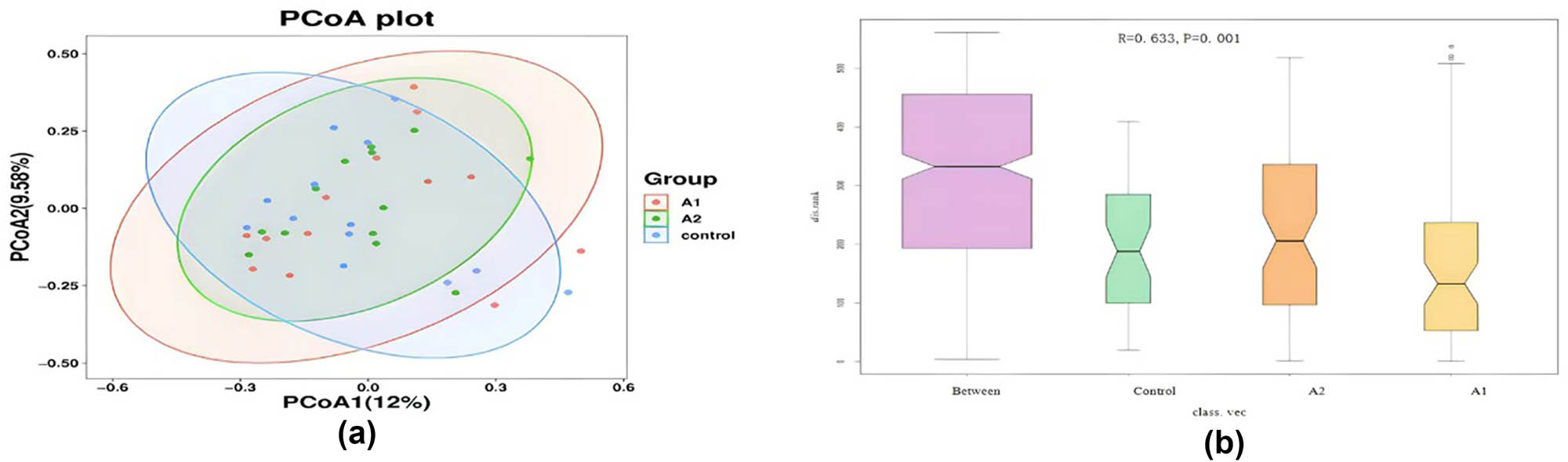
(a) Principal coordinate analysis (PCoA) of unweighted UniFrac distances in gut microbiota. This plot illustrates the distinct clustering of gut microbial communities among the three groups: Pre-treatment SAT patients (A1), post-treatment SAT patients (A2), and healthy control group (Control); (b) ANOSIM results for gut microbiota composition. This diagram displays the results of the ANOSIM analysis (R = 0.633, p = 0.001), quantifying the dissimilarity between microbial communities in pre-treatment SAT (A1), post-treatment SAT (A2), and healthy controls (Control).
3.3 Phylum-level composition and differential abundance analysis of gut microbiota
The gut microbiota composition in SAT patients significantly differed from that of healthy controls, particularly in the relative abundance of key phyla. Relative abundance analysis of the 30 most abundant bacterial taxa, classified at the phylum level, revealed that Firmicutes, Bacteroidota, Proteobacteria, Actinobacteriota, and Verrucomicrobiota were the predominant phyla, constituting over 98% of the total gut microbiota in both healthy controls and SAT patients. Compared to healthy controls, newly diagnosed SAT patients exhibited a significant decrease in the relative abundance of Firmicutes and Verrucomicrobiota (p < 0.05). This depletion of Firmicutes, typically associated with maintaining gut homeostasis, and Verrucomicrobiota, known for anti-inflammatory properties, could contribute to the dysregulated immune response and inflammation seen in SAT. Following prednisone treatment, a significant increase in Verrucomicrobiota was observed (p < 0.05), suggesting a potential restoration of beneficial microbes that could contribute to the resolution of inflammation (Table 3).
Relative abundance of gut microbiota at the phylum level in SAT patients before and after treatment, and healthy controls
| Healthy control | Before treatment | After treatment | t 1-value | t 2-value | q 1-value | q 2-value | |
|---|---|---|---|---|---|---|---|
| Firmicutes | 63.33 ± 4.11 | 49.09 ± 6.37 | 58.66 ± 7.62 | −2.45 | 1.21 | 0.04* | 0.27 |
| Bacteroidota | 22.33 ± 5.00 | 13.10 ± 5.12 | 14.35 ± 5.30 | −1.50 | 0.15 | 0.18 | 0.88 |
| Proteobacteria | 8.49 ± 4.12 | 19.58 ± 8.66 | 15.72 ± 4.18 | 1.10 | −0.48 | 0.30 | 0.65 |
| Actinobacteriota | 4.65 ± 1.22 | 10.41 ± 4.39 | 10.34 ± 3.85 | 1.27 | −0.10 | 0.25 | 0.99 |
| Verrucomicrobiota | 0.23 ± 0.22 | 0.07 ± 0.01 | 0.10 ± 0.01 | −1.72 | 4.31 | 0.004* | 0.03* |
Data are presented as mean values ± SD. Statistical comparisons were performed using t-tests, with * indicating significant differences (q < 0.05). t 1 and q 1 represent the t-value and q-value comparing pre-treatment SAT patients with healthy controls, while t 2 and q 2 represent the t-value and q-value comparing post-treatment SAT patients with pre-treatment SAT patients.
3.4 Genus-level composition and differential abundance analysis of gut microbiota
Differential abundance analysis, using the Mann-Whitney U test, identified significant shifts in the relative abundance of specific bacterial genera in SAT patients compared to healthy controls. Newly diagnosed SAT patients exhibited significant enrichments in Escherichia-Shigella, Bifidobacterium, Akkermansia, Lactobacillus, and Veillonella (q < 0.05), while Prevotella, Faecalibacterium, Streptococcus, Enterococcus, and Clostridium were significantly depleted (q < 0.05). Following SAT treatment, a reversal of some of these trends was observed, with significant increases in Streptococcus, Enterococcus, Ruminococcus, Faecalibacterium, Rothia, and Clostridium and concomitant decreases in Escherichia-Shigella, Bacteroides, Lactobacillus, Akkermansia, and Veillonella (q < 0.05) (Table 4). These findings highlight the dynamic nature of the gut microbiota in SAT patients and its potential responsiveness to prednisone treatment.
Relative abundance of gut microbiota at the genus level in SAT patients before and after treatment, and healthy controls
| Healthy control | Before treatment | After treatment | t 1-value | t 2-value | q 1-value | q 2-value | |
|---|---|---|---|---|---|---|---|
| Bacteroidota | 17.94 ± 2.60 | 10.18 ± 1.40 | 11.79 ± 1.80 | −10.66 | 0.401 | 0.000* | 0.207 |
| Faecalibacterium | 14.32 ± 1.19 | 6.86 ± 1.29 | 6.98 ± 1.50 | −9.58 | 0.21 | 0.000* | 0.84 |
| Escherichia- Shigella | 7.31 ± 1.74 | 15.47 ± 1.46 | 9.67 ± 1.99 | 15.14 | −5.23 | 0.000* | 0.001* |
| Bifidobacterium | 3.39 ± 0.49 | 9.55 ± 0.45 | 8.9 ± 0.62 | 29.54 | −1.848 | 0.000* | 0.107 |
| Lachnospiraceae | 3.53 ± 1.08 | 4.58 ± 1.7 | 4.47 ± 1.19 | 0.487 | −0.086 | 0.641 | 0.934 |
| Agathobacter | 7.72 ± 1.26 | 8.42 ± 1.15 | 2.80 ± 0.77 | 0.16 | −13.76 | 0.877 | 0.000* |
| Streptococcus | 1.53 ± 0.08 | 0.42 ± 0.07 | 2.16 ± 0.36 | −8.009 | 4.607 | 0.000* | 0.002* |
| Ruminococcus gnavus | 1.36 ± 0.77 | 5.98 ± 1.01 | 3.64 ± 1.93 | 2.97 | −2.3 | 0.039* | 0.048* |
| Subdoligranulum | 1.59 ± 0.16 | 1.05 ± 0.15 | 0.98 ± 0.17 | −2.277 | −0.225 | 0.057 | 0.828 |
| Dialister | 2.92 ± 0.23 | 0.11 ± 0.003 | 2.76 ± 0.005 | −2.264 | 2.305 | 0.038* | 0.023* |
| Megamonas | 2.83 ± 0.64 | 0.04 ± 0.002 | 0.04 ± 0.022 | −2.69 | 0.17 | 0.034* | 0.87 |
| Prevotella | 1.83 ± 0.79 | 0.37 ± 0.09 | 0.13 ± 0.02 | −4.64 | −0.665 | 0.002* | 0.527 |
| Roseburia | 17.94 ± 2.60 | 0.94 ± 0.10 | 1.07 ± 0.16 | −2.918 | 0.708 | 0.022* | 0.502 |
| Ruminococcus | 14.32 ± 1.19 | 0.61 ± 0.023 | 5.16 ± 1.09 | −4.63 | 9.76 | 0.002* | 0.000* |
| Coprococcus | 7.31 ± 1.74 | 0.445 ± 0.016 | 3.99 ± 0.62 | −2.96 | 15.67 | 0.021* | 0.000* |
| Akkermansia muciniphila | 3.39 ± 0.49 | 5.82 ± 1.15 | 0.10 ± 0.001 | 6.87 | −7.601 | 0.000* | 0.000* |
| Lactobacillus reuteri | 3.53 ± 1.08 | 0.53 ± 0.03 | 2.37 ± 0.15 | −1.35 | 5.89 | 0.216 | 0.001* |
| Veillonella | 7.72 ± 1.26 | 1.95 ± 0.40 | 0.20 ± 0.03 | −3.91 | −14.30 | 0.006* | 0.000* |
| Lachnoclostridium | 0.15 ± 0.004 | 0.044 ± 0.006 | 0.21 ± 0.01 | −0.73 | 4.73 | 0.753 | 0.000* |
Data are presented as mean value ± SD. Statistical comparisons were performed using t-tests, with * indicating significant differences (q < 0.05). t 1 and q 1 represent the t-value and q-value comparing pre-treatment SAT patients with healthy controls, while t2 and q 2 represent the t-value and q-value comparing post-treatment SAT patients with pre-treatment SAT patients.
3.5 Identification of microbial biomarkers
Linear discriminant analysis (LDA) effect size (LEfSe) analysis revealed distinct microbial signatures associated with SAT and its treatment response. Nineteen taxa were found to be enriched in healthy controls, while eight taxa were specifically enriched in SAT patients, with Prevotella and Akkermansia emerging as key discriminative biomarkers (Figure 2a). Interestingly, the microbial signature shifted following prednisone treatment. Twenty-one taxa were identified as biomarkers in the pre-treatment group, whereas only seven were identified in the post-treatment group, including Ruminococcus, Rothia, and Prevotella (Figure 2b). These findings underscore the distinct microbial signatures associated with SAT and its treatment response, highlighting the potential of these taxa as biomarkers for monitoring therapeutic efficacy and elucidating the dynamic shifts in gut microbiota composition associated with thyroid disorders.
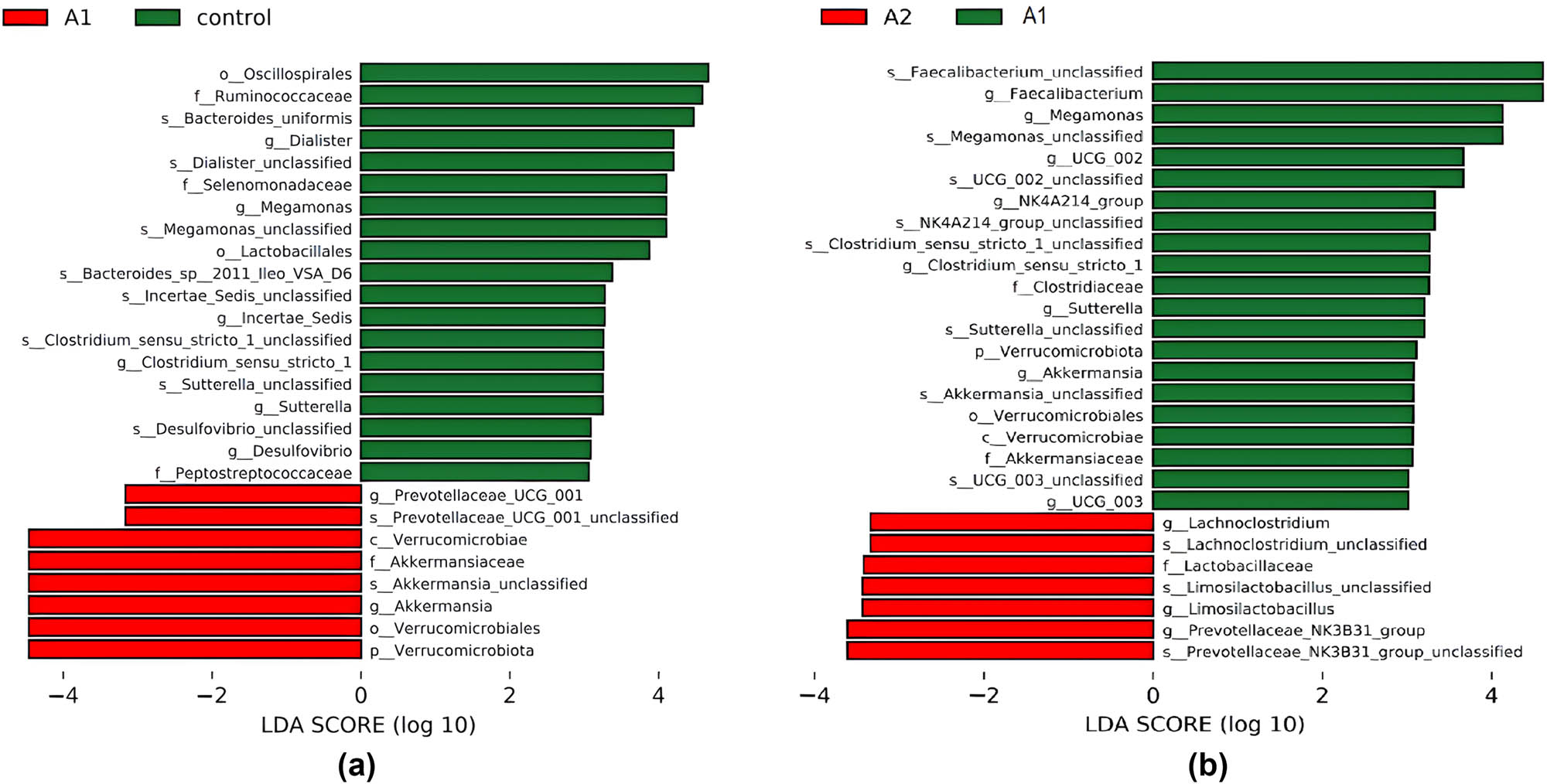
(a) Histogram of LEfSe scores for differentially abundant taxa in pre-treatment SAT patients and healthy controls. This histogram displays the distribution of LDA scores for bacterial taxa identified as significantly differentially abundant between pre-treatment SAT patients (A1) and healthy controls (Control); (b) histogram of LEfSe scores for differentially abundant taxa in post-treatment and pre-treatment SAT patients. This histogram displays the distribution of LDA scores for bacterial taxa identified as significantly differentially abundant between post-treatment SAT patients (A2) and pre-treatment SAT patients (A1). The LDA score quantifies the magnitude and direction of the effect (positive for enrichment in A2, negative for enrichment in A1).
3.6 Correlation analysis between gut microbiota and clinical parameters in SAT patients
Spearman correlation analysis revealed significant associations between the relative abundance of specific gut microbial taxa and clinical parameters in SAT patients, suggesting a potential interplay between gut microbiota and thyroid function and inflammation. Ruminococcus abundance was negatively correlated with FT4 and ESR, and positively correlated with Tg. Streptococcus abundance exhibited negative correlations with CRP, total T4, FIB, and TPO. Actinomyces abundance was negatively correlated with Tg and thyroglobulin antibody (TgAb). Romboutsia abundance exhibited negative correlations with CRP and total cholesterol (TC). Enterobacter abundance was negatively correlated with WBC, T3, T4, FT3, TPO, and FIB, and positively correlated with FT. Bacteroides abundance was negatively correlated with FIB, FT3, and T3, and positively correlated with TSH and Tg. Lactobacillus abundance was positively correlated with lymphocytes (Lym) and Tg, while Enterococcus abundance was negatively correlated with ESR. Additionally, the abundance of Bifidobacterium, Roseburia, Bacteroides, and Faecalibacterium demonstrated positive correlations with TgAb and TPO (Figure 3).
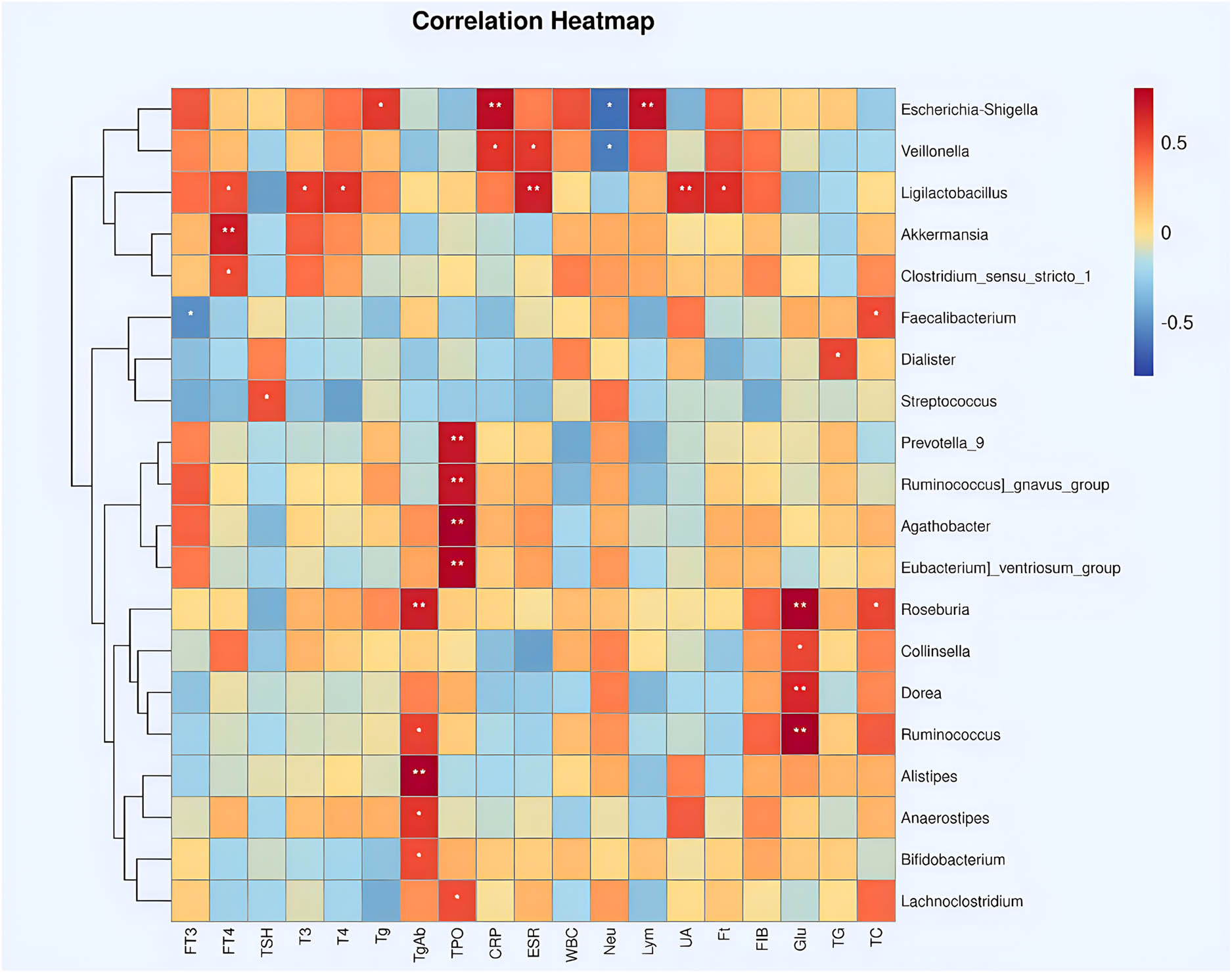
Heatmap of spearman correlation analysis between gut microbiota and clinical parameters in SAT patients. This heatmap illustrates the strength and direction of correlations between the relative abundance of specific gut microbial taxa (rows) and clinical parameters (columns) in SAT patients. Positive correlations are represented by warm colors (red), negative correlations by cool colors (blue), and non-significant correlations by white. The intensity of the color reflects the magnitude of the correlation coefficient. *P < 0.05, **P < 0.01.
These findings reveal potential associations between specific gut microbial taxa and clinical parameters in SAT patients, suggesting their potential relevance as biomarkers in the assessment and management of thyroid-related conditions.
4 Discussion
Our study investigated the gut microbiome of patients with SAT before and after prednisone treatment, revealing a distinct microbial signature associated with the disease. Notably, SAT patients exhibited reduced microbial diversity and enrichment of specific taxa such as Prevotella and Akkermansia, correlating with altered thyroid function and elevated inflammatory markers. This suggests a potential role for gut dysbiosis in SAT pathogenesis. Importantly, prednisone treatment not only ameliorated the clinical manifestations of SAT but also shifted the gut microbiome toward a healthier state, as evidenced by the increased abundance of beneficial bacteria such as Verrucomicrobiota. These findings underscore the intricate interaction between the gut microbiome and thyroid health, highlighting potential avenues for novel diagnostic and therapeutic strategies in SAT.
Consistent with previous studies, our findings indicate that SAT is associated with elevated levels of inflammatory markers, including FT, FIB, ESR and CRP. FT is an acute-phase reactant that increases in response to systemic inflammation. Previous studies in patients with SAT have reported significant decreases in FT, ESR, and CRP levels following treatment, with a positive correlation observed between FT and both ESR and CRP [10]. FIB, another acute-phase protein, is also elevated in SAT and decreases as the condition improves [11]. Our study further substantiates these findings by demonstrating that newly diagnosed SAT patients exhibit elevated levels of T3, T4, FT3, FT4, Tg, TPO, CRP, ESR, WBC, NEU count, FT, and FIB. Following prednisone treatment, these biomarkers significantly decreased, consistent with the expected resolution of inflammation. This observation underscores the potential of FT and FIB, in addition to ESR and CRP, as inflammatory biomarkers that reflect the severity of SAT and enable the monitoring of disease activity and response to treatment.
While research on the gut microbiome in SAT is limited, studies on other thyroid disorders such as GD and HT provide context for interpreting our findings. In GD, studies consistently report enrichment of genera such as Bifidobacterium and Lactobacillus, with concomitant depletion of Blautia and Ruminococcus [5,6]. In contrast, research in HT reveals increased abundance of Blautia, Roseburia, Ruminococcus, Dialister, Sporobacter, and Haemophilus, alongside reductions in Bifidobacterium and Prevotella [7,8]. Our study findings demonstrate that newly diagnosed SAT patients exhibit a distinct gut microbiota profile characterized by significant increases in the abundance of genera such as Escherichia-Shigella, Bifidobacterium, Akkermansia, Veillonella, and Enterococcus, accompanied by notable decreases in genera such as Bacteroides, Faecalibacterium, Streptococcus, Veillonella, and Ruminococcus. Following prednisone treatment, this profile shifts, with significant increased abundance in Streptococcus, Enterococcus, Ruminococcus, Faecalibacterium, Roseburia, and Lactobacillus, and decreased abundance in Escherichia-Shigella, Bacteroides, Veillonella, Akkermansia, and Enterococcus.
Correlation analyses revealed distinct associations between specific bacterial taxa and clinical parameters in SAT patients, highlighting their potential roles in disease pathogenesis and treatment response. Key biomarkers identified in newly diagnosed SAT patients include Prevotella and Akkermansia, while post-treatment biomarkers comprise Faecalibacterium, Roseburia, and Prevotella. Escherichia-Shigella abundance correlates positively with Tg, CRP, and Lym, but negatively with NEU count. Veillonella abundance correlates positively with CRP, ESR, and the neutrophil-to-lymphocyte ratio (NLR), and negatively with NEU count. Lactobacillus abundance exhibits positive correlations with FT4, total T3, total T4, ESR, NLR, uric acid (UA), and FT. Akkermansia abundance positively correlates with FT4, while Faecalibacterium abundance correlates positively with TC and negatively with FT3. Enterococcus abundance positively correlates with Tg, and Streptococcus abundance with TSH. Prevotella, Veillonella, Faecalibacterium, Enterococcus, and Ruminococcus abundances demonstrate positive correlations with TPO. Roseburia abundance correlates positively with TgAb, glucose (Glu), and TC. Collinsella, Dorea, and Ruminococcus abundances correlate positively with Glu, while Actinomyces, Faecalibacterium, and Bifidobacterium abundances positively correlate with TgAb.
Prevotella, known for its anti-inflammatory properties due to the production of metabolites such as propionic acid [12], has been shown to suppress T helper 17 (Th17) polarization and promote anti-inflammatory regulatory T cells (Treg)/T regulatory type 1 (Tr1) cell differentiation in the gut [13,14]. Consistent with findings in other autoimmune diseases, such as HT [15], type 1 diabetes [16], and multiple sclerosis [17], we observed a decreased relative abundance of Prevotella in SAT patients. This depletion, which was positively correlated with TPO levels, suggests a potential contribution to the inflammatory and autoimmune processes in SAT. Excessive proliferation of Akkermansia can disrupt the intestinal barrier integrity and exacerbate inflammation [18]. Our study revealed a significant enrichment of Akkermansia in SAT patients, coupled with decreased abundances of commensal bacteria such as Faecalibacterium and Roseburia. This dysbiosis may contribute to reduced species diversity, intestinal barrier dysfunction, and ultimately, the progression of SAT.
Ruminococcus, an important gut commensal, ferments polysaccharides into short-chain fatty acids (SCFAs) such as butyrate and acetate [19]. These SCFAs promote intestinal epithelial cell growth, enhance gut barrier function, and modulate immune responses [20]. As a biomarker enriched in the post-treatment SAT group, Ruminococcus may play a crucial role in restoring gut microbial balance and facilitating recovery from SAT. Additionally, Veillonella, by metabolizing lactate into SCFAs, regulates SCFA and lactate dynamics, contributing to the maintenance of normal gut function [21,22,23].
Glucocorticoids (GCs), primary stress hormones with anti-inflammatory and immunosuppressive properties, are known to influence gut microbiota composition. Yun [24] demonstrated that prednisolone treatment in rats increased the relative abundance of Proteobacteria and Bacillus, while decreasing Bacteroides, Prevotella, and Lactobacillus. Similarly, a study by Lauren [25] in red squirrels (Tamiasciurus hudsonicus) revealed a negative correlation between host GC levels and gut microbiota alpha diversity. Elevated GC levels were associated with increased abundance of Enterobacteriaceae, Streptococcus, Enterococcus, Prevotella, Ruminococcus, Clostridium, Treponema, and Megasphaera, and decreased abundance of Yersinia and Salmonella.
In our study, all SAT patients received glucocorticoid therapy, a factor that may have influenced the observed changes in gut microbiota composition. Specifically, we noted decreased microbial richness and increased diversity at the phylum level, characterized by an increase in Firmicutes, Bacteroidetes, and Verrucomicrobia, and a decrease in Actinobacteria and Proteobacteria. At the genus level, we observed a decrease in abundance of Escherichia-Shigella, Akkermansia, and Veillonella, and an increased abundance of Prevotella. To minimize the direct effects of glucocorticoid on the gut microbiota, patients received a low dose of oral prednisone (0.5–1 mg/kg/day) for 6 to 8 weeks, followed by a 4 week washout period before fecal sample collection. Therefore, the changes observed in the post-treatment group likely reflect a combination of the disease itself and the residual effects of glucocorticoid therapy.
5 Conclusion
Our study provides valuable insights into the gut microbiome in SAT. However, this study has several limitations. The cross-sectional design precludes determination of causal relationships between observed gut microbiota alterations and SAT pathogenesis or treatment response. Additionally, the relatively small sample size may limit the generalizability of our findings to larger populations. While we identified correlations between gut microbiota composition and SAT, the underlying mechanisms remain elusive. Future studies with larger cohorts and longitudinal designs are needed to establish causality and to track the dynamic changes in the gut microbiome throughout the course of SAT and treatment, and to explore the potential of modulating gut microbiome as a therapeutic intervention for this condition.
Acknowledgments
The authors would like to acknowledge TopEdit (www.topeditsci.com) for their valuable linguistic support during the preparation of this manuscript.
-
Funding information: This work was supported by the Yunnan Province Xingdian Talent, Medical and Health Talent Project (XDYC-YLWS-2023-0098).
-
Author contributions: Jiayun Li: data curation, formal analysis, and writing – original draft. Jiasheng Ju: conceptualization, formal analysis, and writing – original draft. Qian Xu: data curation. Xiang Han: data curation. Haibing Ju: conceptualization, methodology, writing – original draft, and writing – review and editing.
-
Conflict of interest: The authors declare that they have no known competing financial interests or personal relationships that could have appeared to influence the work reported in this article.
-
Data availability statement: The original contributions presented in the study are included in the article, further inquiries can be directed to the corresponding author.
References
[1] Bhatt A, Haslam A, Prasad V. The effect of gastrointestinal microbiome supplementation on immune checkpoint inhibitor immunotherapy: a systematic review. J Cancer Res Clin Oncol. 2023;149(10):7355–62.Search in Google Scholar
[2] Cellini M, Santaguida MG, Virili C, Capriello S, Brusca N, Gargano L, et al. Hashimoto’s thyroiditis and autoimmune gastritis. Front Endocrinol. 2017;8:92.Search in Google Scholar
[3] Lerner A, Jeremias P, Matthias T. Gut-thyroid axis and celiac disease. Endocr Connect. 2017;6(4):R52–8.Search in Google Scholar
[4] Mendoza-León MJ, Mangalam AK, Regaldiz A, González-Madrid E, Rangel-Ramírez MA, Álvarez-Mardonez O, et al. Gut microbiota short-chain fatty acids and their impact on the host thyroid function and diseases. Front Endocrinol. 2023;14:1192216.Search in Google Scholar
[5] Jiang W, Yu X, Kosik RO, Song Y, Qiao T, Tong J, et al. Gut microbiota may play a significant role in the pathogenesis of Graves’ disease. Thyroid. 2021;31(5):810–20.Search in Google Scholar
[6] Yan HX, An WC, Chen F, An B, Pan Y, Jin J, et al. Intestinal microbiota changes in Graves’ disease: a prospective clinical study. Biosci Rep. 2020;40(9):BSR20191242.Search in Google Scholar
[7] Liu J, Qin X, Lin B, Cui J, Liao J, Zhang F, et al. Analysis of gut microbiota diversity in Hashimoto’s thyroiditis patients. BMC Microbiol. 2022;22(1):318.Search in Google Scholar
[8] Ishaq HM, Mohammad IS, Guo H, Shahzad M, Hou YJ, Ma C, et al. Molecular estimation of alteration in intestinal microbial composition in Hashimoto’s thyroiditis patients. Biomed Pharmacother. 2017;95:865–74.Search in Google Scholar
[9] Cayres LCF, de Salis LVV, Rodrigues GSP, Lengert AVH, Biondi APC, Sargentini LDB, et al. Detection of alterations in the gut microbiota and intestinal permeability in patients with Hashimoto thyroiditis. Front Immunol. 2021;12:579140.Search in Google Scholar
[10] Ling H, Liu X, Li W, Ying C. Analysis of serum ferritin correlation with blood sedimentation and C-reactive protein in patients with subacute thyroiditis. Chin Med Res. 2015;13(31):88–9.Search in Google Scholar
[11] Ma J, Liu R, Wu D, Miao W, Chen Q, Li Y, et al. Utility of plasma fibrinogen in the differential diagnosis of thyrotoxicosis. Int J Clin Exp Med. 2015;8(1):1220–6.Search in Google Scholar
[12] Tian D, Xu W, Pan W, Zheng B, Yang W, Jia W, et al. Fecal microbiota transplantation enhances cell therapy in a rat model of hypoganglionosis by SCFA-induced MEK1/2 signaling pathway. Embo J. 2023;42(1):e111139.Search in Google Scholar
[13] Lee PC, Wu CJ, Hung YW, Lee CJ, Chi CT, Lee IC, et al. Gut microbiota and metabolites associate with outcomes of immune checkpoint inhibitor-treated unresectable hepatocellular carcinoma. J Immunother Cancer. 2022;10(6):e004779.Search in Google Scholar
[14] Paroni M, Leccese G, Ranzani V, Moschetti G, Chiara M, Perillo F, et al. An intestinal Th17 subset is associated with inflammation in Crohn’s disease and activated by adherent-invasive Escherichia coli. J Crohns Colitis. 2023;17(12):1988–2001.Search in Google Scholar
[15] Virili C, Fallahi P, Antonelli A, Benvenga S, Centanni M. Gut microbiota and Hashimoto’s thyroiditis. Rev Endocr Metab Disord. 2018;19(4):293–300.Search in Google Scholar
[16] Del Chierico F, Rapini N, Deodati A, Matteoli MC, Cianfarani S, Putignani L. Pathophysiology of type 1 diabetes and gut microbiota role. Int J Mol Sci. 2022;23(23):14650.Search in Google Scholar
[17] Correale J, Hohlfeld R, Baranzini SE. The role of the gut microbiota in multiple sclerosis. Nat Rev Neurol. 2022;18(9):544–58.Search in Google Scholar
[18] Zheng M, Han R, Yuan Y, Xing Y, Zhang W, Sun Z, et al. The role of Akkermansia muciniphila in inflammatory bowel disease: Current knowledge and perspectives. Front Immunol. 2022;13:1089600.Search in Google Scholar
[19] Crost EH, Coletto E, Bell A, Juge N. Ruminococcus gnavus: friend or foe for human health. FEMS Microbiol Rev. 2023;47(2):fuad014.Search in Google Scholar
[20] Ding Q, Cao F, Lai S, Zhuge H, Chang K, Valencak TG, et al. Lactobacillus plantarum ZY08 relieves chronic alcohol-induced hepatic steatosis and liver injury in mice via restoring intestinal flora homeostasis. Food Res Int. 2022;157:111259.Search in Google Scholar
[21] Rojas-Tapias DF, Brown EM, Temple ER, Onyekaba MA, Mohamed AMT, Duncan K, et al. Inflammation-associated nitrate facilitates ectopic colonization of oral bacterium Veillonella parvula in the intestine. Nat Microbiol. 2022;7(10):1673–85.Search in Google Scholar
[22] Jones SE, Versalovic J. Probiotic Lactobacillus reuteri biofilms produce antimicrobial and anti-inflammatory factors. BMC Microbiol. 2009;9:35.Search in Google Scholar
[23] Hung JH, Zhang SM, Huang SL. Nitrate promotes the growth and the production of short-chain fatty acids and tryptophan from commensal anaerobe Veillonella dispar in the lactate-deficient environment by facilitating the catabolism of glutamate and aspartate. Appl Environ Microbiol. 2024;90:e01148–24.Search in Google Scholar
[24] Yun S, Zhang J, Qu W, Gu L, Huang W, Zhu G, et al. Effects of long-term treatment with prednisone acetate on intestinal flora in adriamycin-induced nephrotic rats. J Pathog Biol. 2023;18(6):643–9.Search in Google Scholar
[25] Petrullo L, Ren T, Wu M, Boonstra R, Palme R, Boutin S, et al. Glucocorticoids coordinate changes in gut microbiome composition in wild North American red squirrels. Sci Rep. 2022;12(1):2605.Search in Google Scholar
© 2025 the author(s), published by De Gruyter
This work is licensed under the Creative Commons Attribution 4.0 International License.
Articles in the same Issue
- Research Articles
- Network pharmacological analysis and in vitro testing of the rutin effects on triple-negative breast cancer
- Impact of diabetes on long-term survival in elderly liver cancer patients: A retrospective study
- Knockdown of CCNB1 alleviates high glucose-triggered trophoblast dysfunction during gestational diabetes via Wnt/β-catenin signaling pathway
- Risk factors for severe adverse drug reactions in hospitalized patients
- Analysis of the effect of ALA-PDT on macrophages in footpad model of mice infected with Fonsecaea monophora based on single-cell sequencing
- Development and validation of headspace gas chromatography with a flame ionization detector method for the determination of ethanol in the vitreous humor
- CMSP exerts anti-tumor effects on small cell lung cancer cells by inducing mitochondrial dysfunction and ferroptosis
- Predictive value of plasma sB7-H3 and YKL-40 in pediatric refractory Mycoplasma pneumoniae pneumonia
- Antiangiogenic potential of Elaeagnus umbellata extracts and molecular docking study by targeting VEGFR-2 pathway
- Comparison of the effectiveness of nurse-led preoperative counseling and postoperative follow-up care vs standard care for patients with gastric cancer
- Comparing the therapeutic efficacy of endoscopic minimally invasive surgery and traditional surgery for early-stage breast cancer: A meta-analysis
- Adhered macrophages as an additional marker of cardiomyocyte injury in biopsies of patients with dilated cardiomyopathy
- Association between statin administration and outcome in patients with sepsis: A retrospective study
- Exploration of the association between estimated glucose disposal rate and osteoarthritis in middle-aged and older adults: An analysis of NHANES data from 2011 to 2018
- A comparative analysis of the binary and multiclass classified chest X-ray images of pneumonia and COVID-19 with ML and DL models
- Lysophosphatidic acid 2 alleviates deep vein thrombosis via protective endothelial barrier function
- Transcription factor A, mitochondrial promotes lymph node metastasis and lymphangiogenesis in epithelial ovarian carcinoma
- Serum PM20D1 levels are associated with nutritional status and inflammatory factors in gastric cancer patients undergoing early enteral nutrition
- Hydromorphone reduced the incidence of emergence agitation after adenotonsillectomy in children with obstructive sleep apnea: A randomized, double-blind study
- Vitamin D replacement therapy may regulate sleep habits in patients with restless leg syndrome
- The first-line antihypertensive nitrendipine potentiated the therapeutic effect of oxaliplatin by downregulating CACNA1D in colorectal cancer
- Health literacy and health-related quality of life: The mediating role of irrational happiness
- Modulatory effects of Lycium barbarum polysaccharide on bone cell dynamics in osteoporosis
- Mechanism research on inhibition of gastric cancer in vitro by the extract of Pinellia ternata based on network pharmacology and cellular metabolomics
- Examination of the causal role of immune cells in non-alcoholic fatty liver disease by a bidirectional Mendelian randomization study
- Clinical analysis of ten cases of HIV infection combined with acute leukemia
- Investigating the cardioprotective potential of quercetin against tacrolimus-induced cardiotoxicity in Wistar rats: A mechanistic insights
- Clinical observation of probiotics combined with mesalazine and Yiyi Baitouweng Decoction retention enema in treating mild-to-moderate ulcerative colitis
- Diagnostic value of ratio of blood inflammation to coagulation markers in periprosthetic joint infection
- Sex-specific associations of sex hormone binding globulin and risk of bladder cancer
- Core muscle strength and stability-oriented breathing training reduces inter-recti distance in postpartum women
- The ERAS nursing care strategy for patients undergoing transsphenoidal endoscopic pituitary tumor resection: A randomized blinded controlled trial
- The serum IL-17A levels in patients with traumatic bowel rupture post-surgery and its predictive value for patient prognosis
- Impact of Kolb’s experiential learning theory-based nursing on caregiver burden and psychological state of caregivers of dementia patients
- Analysis of serum NLR combined with intraoperative margin condition to predict the prognosis of cervical HSIL patients undergoing LEEP surgery
- Commiphora gileadensis ameliorate infertility and erectile dysfunction in diabetic male mice
- The correlation between epithelial–mesenchymal transition classification and MMP2 expression of circulating tumor cells and prognosis of advanced or metastatic nasopharyngeal carcinoma
- Tetrahydropalmatine improves mitochondrial function in vascular smooth muscle cells of atherosclerosis in vitro by inhibiting Ras homolog gene family A/Rho-associated protein kinase-1 signaling pathway
- A cross-sectional study: Relationship between serum oxidative stress levels and arteriovenous fistula maturation in maintenance dialysis patients
- A comparative analysis of the impact of repeated administration of flavan 3-ol on brown, subcutaneous, and visceral adipose tissue
- Identifying early screening factors for depression in middle-aged and older adults: A cohort study
- Perform tumor-specific survival analysis for Merkel cell carcinoma patients undergoing surgical resection based on the SEER database by constructing a nomogram chart
- Unveiling the role of CXCL10 in pancreatic cancer progression: A novel prognostic indicator
- High-dose preoperative intraperitoneal erythropoietin and intravenous methylprednisolone in acute traumatic spinal cord injuries following decompression surgeries
- RAB39B: A novel biomarker for acute myeloid leukemia identified via multi-omics and functional validation
- Impact of peripheral conditioning on reperfusion injury following primary percutaneous coronary intervention in diabetic and non-diabetic STEMI patients
- Clinical efficacy of azacitidine in the treatment of middle- and high-risk myelodysplastic syndrome in middle-aged and elderly patients: A retrospective study
- The effect of ambulatory blood pressure load on mitral regurgitation in continuous ambulatory peritoneal dialysis patients
- Expression and clinical significance of ITGA3 in breast cancer
- Single-nucleus RNA sequencing reveals ARHGAP28 expression of podocytes as a biomarker in human diabetic nephropathy
- rSIG combined with NLR in the prognostic assessment of patients with multiple injuries
- Toxic metals and metalloids in collagen supplements of fish and jellyfish origin: Risk assessment for daily intake
- Exploring causal relationship between 41 inflammatory cytokines and marginal zone lymphoma: A bidirectional Mendelian randomization study
- Gender beliefs and legitimization of dating violence in adolescents
- Effect of serum IL-6, CRP, and MMP-9 levels on the efficacy of modified preperitoneal Kugel repair in patients with inguinal hernia
- Effect of smoking and smoking cessation on hematological parameters in polycythemic patients
- Pathogen surveillance and risk factors for pulmonary infection in patients with lung cancer: A retrospective single-center study
- Necroptosis of hippocampal neurons in paclitaxel chemotherapy-induced cognitive impairment mediates microglial activation via TLR4/MyD88 signaling pathway
- Celastrol suppresses neovascularization in rat aortic vascular endothelial cells stimulated by inflammatory tenocytes via modulating the NLRP3 pathway
- Cord-lamina angle and foraminal diameter as key predictors of C5 palsy after anterior cervical decompression and fusion surgery
- GATA1: A key biomarker for predicting the prognosis of patients with diffuse large B-cell lymphoma
- Influencing factors of false lumen thrombosis in type B aortic dissection: A single-center retrospective study
- MZB1 regulates the immune microenvironment and inhibits ovarian cancer cell migration
- Integrating experimental and network pharmacology to explore the pharmacological mechanisms of Dioscin against glioblastoma
- Trends in research on preterm birth in twin pregnancy based on bibliometrics
- Four-week IgE/baseline IgE ratio combined with tryptase predicts clinical outcome in omalizumab-treated children with moderate-to-severe asthma
- Single-cell transcriptomic analysis identifies a stress response Schwann cell subtype
- Acute pancreatitis risk in the diagnosis and management of inflammatory bowel disease: A critical focus
- Effect of subclinical esketamine on NLRP3 and cognitive dysfunction in elderly ischemic stroke patients
- Interleukin-37 mediates the anti-oral tumor activity in oral cancer through STAT3
- CA199 and CEA expression levels, and minimally invasive postoperative prognosis analysis in esophageal squamous carcinoma patients
- Efficacy of a novel drainage catheter in the treatment of CSF leak after posterior spine surgery: A retrospective cohort study
- Comprehensive biomedicine assessment of Apteranthes tuberculata extracts: Phytochemical analysis and multifaceted pharmacological evaluation in animal models
- Relation of time in range to severity of coronary artery disease in patients with type 2 diabetes: A cross-sectional study
- Dopamine attenuates ethanol-induced neuronal apoptosis by stimulating electrical activity in the developing rat retina
- Correlation between albumin levels during the third trimester and the risk of postpartum levator ani muscle rupture
- Factors associated with maternal attention and distraction during breastfeeding and childcare: A cross-sectional study in the west of Iran
- Mechanisms of hesperetin in treating metabolic dysfunction-associated steatosis liver disease via network pharmacology and in vitro experiments
- The law on oncological oblivion in the Italian and European context: How to best uphold the cancer patients’ rights to privacy and self-determination?
- The prognostic value of the neutrophil-to-lymphocyte ratio, platelet-to-lymphocyte ratio, and prognostic nutritional index for survival in patients with colorectal cancer
- Factors affecting the measurements of peripheral oxygen saturation values in healthy young adults
- Comparison and correlations between findings of hysteroscopy and vaginal color Doppler ultrasonography for detection of uterine abnormalities in patients with recurrent implantation failure
- The effects of different types of RAGT on balance function in stroke patients with low levels of independent walking in a convalescent rehabilitation hospital
- Causal relationship between asthma and ankylosing spondylitis: A bidirectional two-sample univariable and multivariable Mendelian randomization study
- Correlations of health literacy with individuals’ understanding and use of medications in Southern Taiwan
- Correlation of serum calprotectin with outcome of acute cerebral infarction
- Comparison of computed tomography and guided bronchoscopy in the diagnosis of pulmonary nodules: A systematic review and meta-analysis
- Curdione protects vascular endothelial cells and atherosclerosis via the regulation of DNMT1-mediated ERBB4 promoter methylation
- The identification of novel missense variant in ChAT gene in a patient with gestational diabetes denotes plausible genetic association
- Molecular genotyping of multi-system rare blood types in foreign blood donors based on DNA sequencing and its clinical significance
- Exploring the role of succinyl carnitine in the association between CD39⁺ CD4⁺ T cell and ulcerative colitis: A Mendelian randomization study
- Dexmedetomidine suppresses microglial activation in postoperative cognitive dysfunction via the mmu-miRNA-125/TRAF6 signaling axis
- Analysis of serum metabolomics in patients with different types of chronic heart failure
- Diagnostic value of hematological parameters in the early diagnosis of acute cholecystitis
- Pachymaran alleviates fat accumulation, hepatocyte degeneration, and injury in mice with nonalcoholic fatty liver disease
- Decrease in CD4 and CD8 lymphocytes are predictors of severe clinical picture and unfavorable outcome of the disease in patients with COVID-19
- METTL3 blocked the progression of diabetic retinopathy through m6A-modified SOX2
- The predictive significance of anti-RO-52 antibody in patients with interstitial pneumonia after treatment of malignant tumors
- Exploring cerebrospinal fluid metabolites, cognitive function, and brain atrophy: Insights from Mendelian randomization
- Development and validation of potential molecular subtypes and signatures of ocular sarcoidosis based on autophagy-related gene analysis
- Widespread venous thrombosis: Unveiling a complex case of Behçet’s disease with a literature perspective
- Uterine fibroid embolization: An analysis of clinical outcomes and impact on patients’ quality of life
- Discovery of lipid metabolism-related diagnostic biomarkers and construction of diagnostic model in steroid-induced osteonecrosis of femoral head
- Serum-derived exomiR-188-3p is a promising novel biomarker for early-stage ovarian cancer
- Enhancing chronic back pain management: A comparative study of ultrasound–MRI fusion guidance for paravertebral nerve block
- Peptide CCAT1-70aa promotes hepatocellular carcinoma proliferation and invasion via the MAPK/ERK pathway
- Electroacupuncture-induced reduction of myocardial ischemia–reperfusion injury via FTO-dependent m6A methylation modulation
- Hemorrhoids and cardiovascular disease: A bidirectional Mendelian randomization study
- Cell-free adipose extract inhibits hypertrophic scar formation through collagen remodeling and antiangiogenesis
- HALP score in Demodex blepharitis: A case–control study
- Assessment of SOX2 performance as a marker for circulating cancer stem-like cells (CCSCs) identification in advanced breast cancer patients using CytoTrack system
- Risk and prognosis for brain metastasis in primary metastatic cervical cancer patients: A population-based study
- Comparison of the two intestinal anastomosis methods in pediatric patients
- Factors influencing hematological toxicity and adverse effects of perioperative hyperthermic intraperitoneal vs intraperitoneal chemotherapy in gastrointestinal cancer
- Endotoxin tolerance inhibits NLRP3 inflammasome activation in macrophages of septic mice by restoring autophagic flux through TRIM26
- Lateral transperitoneal laparoscopic adrenalectomy: A single-centre experience of 21 procedures
- Petunidin attenuates lipopolysaccharide-induced retinal microglia inflammatory response in diabetic retinopathy by targeting OGT/NF-κB/LCN2 axis
- Procalcitonin and C-reactive protein as biomarkers for diagnosing and assessing the severity of acute cholecystitis
- Factors determining the number of sessions in successful extracorporeal shock wave lithotripsy patients
- Development of a nomogram for predicting cancer-specific survival in patients with renal pelvic cancer following surgery
- Inhibition of ATG7 promotes orthodontic tooth movement by regulating the RANKL/OPG ratio under compression force
- A machine learning-based prognostic model integrating mRNA stemness index, hypoxia, and glycolysis‑related biomarkers for colorectal cancer
- Glutathione attenuates sepsis-associated encephalopathy via dual modulation of NF-κB and PKA/CREB pathways
- FAHD1 prevents neuronal ferroptosis by modulating R-loop and the cGAS–STING pathway
- Association of placenta weight and morphology with term low birth weight: A case–control study
- Investigation of the pathogenic variants induced Sjogren’s syndrome in Turkish population
- Nucleotide metabolic abnormalities in post-COVID-19 condition and type 2 diabetes mellitus patients and their association with endocrine dysfunction
- TGF-β–Smad2/3 signaling in high-altitude pulmonary hypertension in rats: Role and mechanisms via macrophage M2 polarization
- Ultrasound-guided unilateral versus bilateral erector spinae plane block for postoperative analgesia of patients undergoing laparoscopic cholecystectomy
- Profiling gut microbiome dynamics in subacute thyroiditis: Implications for pathogenesis, diagnosis, and treatment
- Delta neutrophil index, CRP/albumin ratio, procalcitonin, immature granulocytes, and HALP score in acute appendicitis: Best performing biomarker?
- Anticancer activity mechanism of novelly synthesized and characterized benzofuran ring-linked 3-nitrophenyl chalcone derivative on colon cancer cells
- H2valdien3 arrests the cell cycle and induces apoptosis of gastric cancer
- Prognostic relevance of PRSS2 and its immune correlates in papillary thyroid carcinoma
- Association of SGLT2 inhibition with psychiatric disorders: A Mendelian randomization study
- Motivational interviewing for alcohol use reduction in Thai patients
- Luteolin alleviates oxygen-glucose deprivation/reoxygenation-induced neuron injury by regulating NLRP3/IL-1β signaling
- Polyphyllin II inhibits thyroid cancer cell growth by simultaneously inhibiting glycolysis and oxidative phosphorylation
- Relationship between the expression of copper death promoting factor SLC31A1 in papillary thyroid carcinoma and clinicopathological indicators and prognosis
- CSF2 polarized neutrophils and invaded renal cancer cells in vitro influence
- Proton pump inhibitors-induced thrombocytopenia: A systematic literature analysis of case reports
- The current status and influence factors of research ability among community nurses: A sequential qualitative–quantitative study
- OKAIN: A comprehensive oncology knowledge base for the interpretation of clinically actionable alterations
- The relationship between serum CA50, CA242, and SAA levels and clinical pathological characteristics and prognosis in patients with pancreatic cancer
- Identification and external validation of a prognostic signature based on hypoxia–glycolysis-related genes for kidney renal clear cell carcinoma
- Engineered RBC-derived nanovesicles functionalized with tumor-targeting ligands: A comparative study on breast cancer targeting efficiency and biocompatibility
- Relationship of resting echocardiography combined with serum micronutrients to the severity of low-gradient severe aortic stenosis
- Effect of vibration on pain during subcutaneous heparin injection: A randomized, single-blind, placebo-controlled trial
- The diagnostic performance of machine learning-based FFRCT for coronary artery disease: A meta-analysis
- Comparing biofeedback device vs diaphragmatic breathing for bloating relief: A randomized controlled trial
- Serum uric acid to albumin ratio and C-reactive protein as predictive biomarkers for chronic total occlusion and coronary collateral circulation quality
- Multiple organ scoring systems for predicting in-hospital mortality of sepsis patients in the intensive care unit
- Single-cell RNA sequencing data analysis of the inner ear in gentamicin-treated mice via intraperitoneal injection
- Suppression of cathepsin B attenuates myocardial injury via limiting cardiomyocyte apoptosis
- Review Articles
- The effects of enhanced external counter-pulsation on post-acute sequelae of COVID-19: A narrative review
- Diabetes-related cognitive impairment: Mechanisms, symptoms, and treatments
- Microscopic changes and gross morphology of placenta in women affected by gestational diabetes mellitus in dietary treatment: A systematic review
- Review of mechanisms and frontier applications in IL-17A-induced hypertension
- Research progress on the correlation between islet amyloid peptides and type 2 diabetes mellitus
- The safety and efficacy of BCG combined with mitomycin C compared with BCG monotherapy in patients with non-muscle-invasive bladder cancer: A systematic review and meta-analysis
- The application of augmented reality in robotic general surgery: A mini-review
- The effect of Greek mountain tea extract and wheat germ extract on peripheral blood flow and eicosanoid metabolism in mammals
- Neurogasobiology of migraine: Carbon monoxide, hydrogen sulfide, and nitric oxide as emerging pathophysiological trinacrium relevant to nociception regulation
- Plant polyphenols, terpenes, and terpenoids in oral health
- Laboratory medicine between technological innovation, rights safeguarding, and patient safety: A bioethical perspective
- End-of-life in cancer patients: Medicolegal implications and ethical challenges in Europe
- The maternal factors during pregnancy for intrauterine growth retardation: An umbrella review
- Intra-abdominal hypertension/abdominal compartment syndrome of pediatric patients in critical care settings
- PI3K/Akt pathway and neuroinflammation in sepsis-associated encephalopathy
- Screening of Group B Streptococcus in pregnancy: A systematic review for the laboratory detection
- Giant borderline ovarian tumours – review of the literature
- Leveraging artificial intelligence for collaborative care planning: Innovations and impacts in shared decision-making – A systematic review
- Cholera epidemiology analysis through the experience of the 1973 Naples epidemic
- Risk factors of frailty/sarcopenia in community older adults: Meta-analysis
- Supplement strategies for infertility in overweight women: Evidence and legal insights
- Scurvy, a not obsolete disorder: Clinical report in eight young children and literature review
- A meta-analysis of the effects of DBS on cognitive function in patients with advanced PD
- Protective role of selenium in sepsis: Mechanisms and potential therapeutic strategies
- Strategies for hyperkalemia management in dialysis patients: A systematic review
- C-reactive protein-to-albumin ratio in peripheral artery disease
- Case Reports
- Delayed graft function after renal transplantation
- Semaglutide treatment for type 2 diabetes in a patient with chronic myeloid leukemia: A case report and review of the literature
- Diverse electrophysiological demyelinating features in a late-onset glycogen storage disease type IIIa case
- Giant right atrial hemangioma presenting with ascites: A case report
- Laser excision of a large granular cell tumor of the vocal cord with subglottic extension: A case report
- EsoFLIP-assisted dilation for dysphagia in systemic sclerosis: Highlighting the role of multimodal esophageal evaluation
- Molecular hydrogen-rhodiola as an adjuvant therapy for ischemic stroke in internal carotid artery occlusion: A case report
- Coronary artery anomalies: A case of the “malignant” left coronary artery and its surgical management
- Rapid Communication
- Biological properties of valve materials using RGD and EC
-
A single oral administration of flavanols enhances short
-term memory in mice along with increased brain-derived neurotrophic factor - Letter to the Editor
- Role of enhanced external counterpulsation in long COVID
- Expression of Concern
- Expression of concern “A ceRNA network mediated by LINC00475 in papillary thyroid carcinoma”
- Expression of concern “Notoginsenoside R1 alleviates spinal cord injury through the miR-301a/KLF7 axis to activate Wnt/β-catenin pathway”
- Expression of concern “circ_0020123 promotes cell proliferation and migration in lung adenocarcinoma via PDZD8”
- Corrigendum
- Corrigendum to “Empagliflozin improves aortic injury in obese mice by regulating fatty acid metabolism”
- Corrigendum to “Comparing the therapeutic efficacy of endoscopic minimally invasive surgery and traditional surgery for early-stage breast cancer: A meta-analysis”
- Corrigendum to “The progress of autoimmune hepatitis research and future challenges”
- Retraction
- Retraction of “miR-654-5p promotes gastric cancer progression via the GPRIN1/NF-κB pathway”
- Retraction of: “LncRNA CASC15 inhibition relieves renal fibrosis in diabetic nephropathy through downregulating SP-A by sponging to miR-424”
- Retraction of: “SCARA5 inhibits oral squamous cell carcinoma via inactivating the STAT3 and PI3K/AKT signaling pathways”
- Special Issue Advancements in oncology: bridging clinical and experimental research - Part II
- Unveiling novel biomarkers for platinum chemoresistance in ovarian cancer
- Lathyrol affects the expression of AR and PSA and inhibits the malignant behavior of RCC cells
- The era of increasing cancer survivorship: Trends in fertility preservation, medico-legal implications, and ethical challenges
- Bone scintigraphy and positron emission tomography in the early diagnosis of MRONJ
- Meta-analysis of clinical efficacy and safety of immunotherapy combined with chemotherapy in non-small cell lung cancer
- Special Issue Computational Intelligence Methodologies Meets Recurrent Cancers - Part IV
- Exploration of mRNA-modifying METTL3 oncogene as momentous prognostic biomarker responsible for colorectal cancer development
- Special Issue The evolving saga of RNAs from bench to bedside - Part III
- Interaction and verification of ferroptosis-related RNAs Rela and Stat3 in promoting sepsis-associated acute kidney injury
- The mRNA MOXD1: Link to oxidative stress and prognostic significance in gastric cancer
- Special Issue Exploring the biological mechanism of human diseases based on MultiOmics Technology - Part II
- Dynamic changes in lactate-related genes in microglia and their role in immune cell interactions after ischemic stroke
- A prognostic model correlated with fatty acid metabolism in Ewing’s sarcoma based on bioinformatics analysis
- Red cell distribution width predicts early kidney injury: A NHANES cross-sectional study
- Special Issue Diabetes mellitus: pathophysiology, complications & treatment
- Nutritional risk assessment and nutritional support in children with congenital diabetes during surgery
- Correlation of the differential expressions of RANK, RANKL, and OPG with obesity in the elderly population in Xinjiang
- A discussion on the application of fluorescence micro-optical sectioning tomography in the research of cognitive dysfunction in diabetes
- A review of brain research on T2DM-related cognitive dysfunction
- Metformin and estrogen modulation in LABC with T2DM: A 36-month randomized trial
- Special Issue Innovative Biomarker Discovery and Precision Medicine in Cancer Diagnostics
- CircASH1L-mediated tumor progression in triple-negative breast cancer: PI3K/AKT pathway mechanisms
Articles in the same Issue
- Research Articles
- Network pharmacological analysis and in vitro testing of the rutin effects on triple-negative breast cancer
- Impact of diabetes on long-term survival in elderly liver cancer patients: A retrospective study
- Knockdown of CCNB1 alleviates high glucose-triggered trophoblast dysfunction during gestational diabetes via Wnt/β-catenin signaling pathway
- Risk factors for severe adverse drug reactions in hospitalized patients
- Analysis of the effect of ALA-PDT on macrophages in footpad model of mice infected with Fonsecaea monophora based on single-cell sequencing
- Development and validation of headspace gas chromatography with a flame ionization detector method for the determination of ethanol in the vitreous humor
- CMSP exerts anti-tumor effects on small cell lung cancer cells by inducing mitochondrial dysfunction and ferroptosis
- Predictive value of plasma sB7-H3 and YKL-40 in pediatric refractory Mycoplasma pneumoniae pneumonia
- Antiangiogenic potential of Elaeagnus umbellata extracts and molecular docking study by targeting VEGFR-2 pathway
- Comparison of the effectiveness of nurse-led preoperative counseling and postoperative follow-up care vs standard care for patients with gastric cancer
- Comparing the therapeutic efficacy of endoscopic minimally invasive surgery and traditional surgery for early-stage breast cancer: A meta-analysis
- Adhered macrophages as an additional marker of cardiomyocyte injury in biopsies of patients with dilated cardiomyopathy
- Association between statin administration and outcome in patients with sepsis: A retrospective study
- Exploration of the association between estimated glucose disposal rate and osteoarthritis in middle-aged and older adults: An analysis of NHANES data from 2011 to 2018
- A comparative analysis of the binary and multiclass classified chest X-ray images of pneumonia and COVID-19 with ML and DL models
- Lysophosphatidic acid 2 alleviates deep vein thrombosis via protective endothelial barrier function
- Transcription factor A, mitochondrial promotes lymph node metastasis and lymphangiogenesis in epithelial ovarian carcinoma
- Serum PM20D1 levels are associated with nutritional status and inflammatory factors in gastric cancer patients undergoing early enteral nutrition
- Hydromorphone reduced the incidence of emergence agitation after adenotonsillectomy in children with obstructive sleep apnea: A randomized, double-blind study
- Vitamin D replacement therapy may regulate sleep habits in patients with restless leg syndrome
- The first-line antihypertensive nitrendipine potentiated the therapeutic effect of oxaliplatin by downregulating CACNA1D in colorectal cancer
- Health literacy and health-related quality of life: The mediating role of irrational happiness
- Modulatory effects of Lycium barbarum polysaccharide on bone cell dynamics in osteoporosis
- Mechanism research on inhibition of gastric cancer in vitro by the extract of Pinellia ternata based on network pharmacology and cellular metabolomics
- Examination of the causal role of immune cells in non-alcoholic fatty liver disease by a bidirectional Mendelian randomization study
- Clinical analysis of ten cases of HIV infection combined with acute leukemia
- Investigating the cardioprotective potential of quercetin against tacrolimus-induced cardiotoxicity in Wistar rats: A mechanistic insights
- Clinical observation of probiotics combined with mesalazine and Yiyi Baitouweng Decoction retention enema in treating mild-to-moderate ulcerative colitis
- Diagnostic value of ratio of blood inflammation to coagulation markers in periprosthetic joint infection
- Sex-specific associations of sex hormone binding globulin and risk of bladder cancer
- Core muscle strength and stability-oriented breathing training reduces inter-recti distance in postpartum women
- The ERAS nursing care strategy for patients undergoing transsphenoidal endoscopic pituitary tumor resection: A randomized blinded controlled trial
- The serum IL-17A levels in patients with traumatic bowel rupture post-surgery and its predictive value for patient prognosis
- Impact of Kolb’s experiential learning theory-based nursing on caregiver burden and psychological state of caregivers of dementia patients
- Analysis of serum NLR combined with intraoperative margin condition to predict the prognosis of cervical HSIL patients undergoing LEEP surgery
- Commiphora gileadensis ameliorate infertility and erectile dysfunction in diabetic male mice
- The correlation between epithelial–mesenchymal transition classification and MMP2 expression of circulating tumor cells and prognosis of advanced or metastatic nasopharyngeal carcinoma
- Tetrahydropalmatine improves mitochondrial function in vascular smooth muscle cells of atherosclerosis in vitro by inhibiting Ras homolog gene family A/Rho-associated protein kinase-1 signaling pathway
- A cross-sectional study: Relationship between serum oxidative stress levels and arteriovenous fistula maturation in maintenance dialysis patients
- A comparative analysis of the impact of repeated administration of flavan 3-ol on brown, subcutaneous, and visceral adipose tissue
- Identifying early screening factors for depression in middle-aged and older adults: A cohort study
- Perform tumor-specific survival analysis for Merkel cell carcinoma patients undergoing surgical resection based on the SEER database by constructing a nomogram chart
- Unveiling the role of CXCL10 in pancreatic cancer progression: A novel prognostic indicator
- High-dose preoperative intraperitoneal erythropoietin and intravenous methylprednisolone in acute traumatic spinal cord injuries following decompression surgeries
- RAB39B: A novel biomarker for acute myeloid leukemia identified via multi-omics and functional validation
- Impact of peripheral conditioning on reperfusion injury following primary percutaneous coronary intervention in diabetic and non-diabetic STEMI patients
- Clinical efficacy of azacitidine in the treatment of middle- and high-risk myelodysplastic syndrome in middle-aged and elderly patients: A retrospective study
- The effect of ambulatory blood pressure load on mitral regurgitation in continuous ambulatory peritoneal dialysis patients
- Expression and clinical significance of ITGA3 in breast cancer
- Single-nucleus RNA sequencing reveals ARHGAP28 expression of podocytes as a biomarker in human diabetic nephropathy
- rSIG combined with NLR in the prognostic assessment of patients with multiple injuries
- Toxic metals and metalloids in collagen supplements of fish and jellyfish origin: Risk assessment for daily intake
- Exploring causal relationship between 41 inflammatory cytokines and marginal zone lymphoma: A bidirectional Mendelian randomization study
- Gender beliefs and legitimization of dating violence in adolescents
- Effect of serum IL-6, CRP, and MMP-9 levels on the efficacy of modified preperitoneal Kugel repair in patients with inguinal hernia
- Effect of smoking and smoking cessation on hematological parameters in polycythemic patients
- Pathogen surveillance and risk factors for pulmonary infection in patients with lung cancer: A retrospective single-center study
- Necroptosis of hippocampal neurons in paclitaxel chemotherapy-induced cognitive impairment mediates microglial activation via TLR4/MyD88 signaling pathway
- Celastrol suppresses neovascularization in rat aortic vascular endothelial cells stimulated by inflammatory tenocytes via modulating the NLRP3 pathway
- Cord-lamina angle and foraminal diameter as key predictors of C5 palsy after anterior cervical decompression and fusion surgery
- GATA1: A key biomarker for predicting the prognosis of patients with diffuse large B-cell lymphoma
- Influencing factors of false lumen thrombosis in type B aortic dissection: A single-center retrospective study
- MZB1 regulates the immune microenvironment and inhibits ovarian cancer cell migration
- Integrating experimental and network pharmacology to explore the pharmacological mechanisms of Dioscin against glioblastoma
- Trends in research on preterm birth in twin pregnancy based on bibliometrics
- Four-week IgE/baseline IgE ratio combined with tryptase predicts clinical outcome in omalizumab-treated children with moderate-to-severe asthma
- Single-cell transcriptomic analysis identifies a stress response Schwann cell subtype
- Acute pancreatitis risk in the diagnosis and management of inflammatory bowel disease: A critical focus
- Effect of subclinical esketamine on NLRP3 and cognitive dysfunction in elderly ischemic stroke patients
- Interleukin-37 mediates the anti-oral tumor activity in oral cancer through STAT3
- CA199 and CEA expression levels, and minimally invasive postoperative prognosis analysis in esophageal squamous carcinoma patients
- Efficacy of a novel drainage catheter in the treatment of CSF leak after posterior spine surgery: A retrospective cohort study
- Comprehensive biomedicine assessment of Apteranthes tuberculata extracts: Phytochemical analysis and multifaceted pharmacological evaluation in animal models
- Relation of time in range to severity of coronary artery disease in patients with type 2 diabetes: A cross-sectional study
- Dopamine attenuates ethanol-induced neuronal apoptosis by stimulating electrical activity in the developing rat retina
- Correlation between albumin levels during the third trimester and the risk of postpartum levator ani muscle rupture
- Factors associated with maternal attention and distraction during breastfeeding and childcare: A cross-sectional study in the west of Iran
- Mechanisms of hesperetin in treating metabolic dysfunction-associated steatosis liver disease via network pharmacology and in vitro experiments
- The law on oncological oblivion in the Italian and European context: How to best uphold the cancer patients’ rights to privacy and self-determination?
- The prognostic value of the neutrophil-to-lymphocyte ratio, platelet-to-lymphocyte ratio, and prognostic nutritional index for survival in patients with colorectal cancer
- Factors affecting the measurements of peripheral oxygen saturation values in healthy young adults
- Comparison and correlations between findings of hysteroscopy and vaginal color Doppler ultrasonography for detection of uterine abnormalities in patients with recurrent implantation failure
- The effects of different types of RAGT on balance function in stroke patients with low levels of independent walking in a convalescent rehabilitation hospital
- Causal relationship between asthma and ankylosing spondylitis: A bidirectional two-sample univariable and multivariable Mendelian randomization study
- Correlations of health literacy with individuals’ understanding and use of medications in Southern Taiwan
- Correlation of serum calprotectin with outcome of acute cerebral infarction
- Comparison of computed tomography and guided bronchoscopy in the diagnosis of pulmonary nodules: A systematic review and meta-analysis
- Curdione protects vascular endothelial cells and atherosclerosis via the regulation of DNMT1-mediated ERBB4 promoter methylation
- The identification of novel missense variant in ChAT gene in a patient with gestational diabetes denotes plausible genetic association
- Molecular genotyping of multi-system rare blood types in foreign blood donors based on DNA sequencing and its clinical significance
- Exploring the role of succinyl carnitine in the association between CD39⁺ CD4⁺ T cell and ulcerative colitis: A Mendelian randomization study
- Dexmedetomidine suppresses microglial activation in postoperative cognitive dysfunction via the mmu-miRNA-125/TRAF6 signaling axis
- Analysis of serum metabolomics in patients with different types of chronic heart failure
- Diagnostic value of hematological parameters in the early diagnosis of acute cholecystitis
- Pachymaran alleviates fat accumulation, hepatocyte degeneration, and injury in mice with nonalcoholic fatty liver disease
- Decrease in CD4 and CD8 lymphocytes are predictors of severe clinical picture and unfavorable outcome of the disease in patients with COVID-19
- METTL3 blocked the progression of diabetic retinopathy through m6A-modified SOX2
- The predictive significance of anti-RO-52 antibody in patients with interstitial pneumonia after treatment of malignant tumors
- Exploring cerebrospinal fluid metabolites, cognitive function, and brain atrophy: Insights from Mendelian randomization
- Development and validation of potential molecular subtypes and signatures of ocular sarcoidosis based on autophagy-related gene analysis
- Widespread venous thrombosis: Unveiling a complex case of Behçet’s disease with a literature perspective
- Uterine fibroid embolization: An analysis of clinical outcomes and impact on patients’ quality of life
- Discovery of lipid metabolism-related diagnostic biomarkers and construction of diagnostic model in steroid-induced osteonecrosis of femoral head
- Serum-derived exomiR-188-3p is a promising novel biomarker for early-stage ovarian cancer
- Enhancing chronic back pain management: A comparative study of ultrasound–MRI fusion guidance for paravertebral nerve block
- Peptide CCAT1-70aa promotes hepatocellular carcinoma proliferation and invasion via the MAPK/ERK pathway
- Electroacupuncture-induced reduction of myocardial ischemia–reperfusion injury via FTO-dependent m6A methylation modulation
- Hemorrhoids and cardiovascular disease: A bidirectional Mendelian randomization study
- Cell-free adipose extract inhibits hypertrophic scar formation through collagen remodeling and antiangiogenesis
- HALP score in Demodex blepharitis: A case–control study
- Assessment of SOX2 performance as a marker for circulating cancer stem-like cells (CCSCs) identification in advanced breast cancer patients using CytoTrack system
- Risk and prognosis for brain metastasis in primary metastatic cervical cancer patients: A population-based study
- Comparison of the two intestinal anastomosis methods in pediatric patients
- Factors influencing hematological toxicity and adverse effects of perioperative hyperthermic intraperitoneal vs intraperitoneal chemotherapy in gastrointestinal cancer
- Endotoxin tolerance inhibits NLRP3 inflammasome activation in macrophages of septic mice by restoring autophagic flux through TRIM26
- Lateral transperitoneal laparoscopic adrenalectomy: A single-centre experience of 21 procedures
- Petunidin attenuates lipopolysaccharide-induced retinal microglia inflammatory response in diabetic retinopathy by targeting OGT/NF-κB/LCN2 axis
- Procalcitonin and C-reactive protein as biomarkers for diagnosing and assessing the severity of acute cholecystitis
- Factors determining the number of sessions in successful extracorporeal shock wave lithotripsy patients
- Development of a nomogram for predicting cancer-specific survival in patients with renal pelvic cancer following surgery
- Inhibition of ATG7 promotes orthodontic tooth movement by regulating the RANKL/OPG ratio under compression force
- A machine learning-based prognostic model integrating mRNA stemness index, hypoxia, and glycolysis‑related biomarkers for colorectal cancer
- Glutathione attenuates sepsis-associated encephalopathy via dual modulation of NF-κB and PKA/CREB pathways
- FAHD1 prevents neuronal ferroptosis by modulating R-loop and the cGAS–STING pathway
- Association of placenta weight and morphology with term low birth weight: A case–control study
- Investigation of the pathogenic variants induced Sjogren’s syndrome in Turkish population
- Nucleotide metabolic abnormalities in post-COVID-19 condition and type 2 diabetes mellitus patients and their association with endocrine dysfunction
- TGF-β–Smad2/3 signaling in high-altitude pulmonary hypertension in rats: Role and mechanisms via macrophage M2 polarization
- Ultrasound-guided unilateral versus bilateral erector spinae plane block for postoperative analgesia of patients undergoing laparoscopic cholecystectomy
- Profiling gut microbiome dynamics in subacute thyroiditis: Implications for pathogenesis, diagnosis, and treatment
- Delta neutrophil index, CRP/albumin ratio, procalcitonin, immature granulocytes, and HALP score in acute appendicitis: Best performing biomarker?
- Anticancer activity mechanism of novelly synthesized and characterized benzofuran ring-linked 3-nitrophenyl chalcone derivative on colon cancer cells
- H2valdien3 arrests the cell cycle and induces apoptosis of gastric cancer
- Prognostic relevance of PRSS2 and its immune correlates in papillary thyroid carcinoma
- Association of SGLT2 inhibition with psychiatric disorders: A Mendelian randomization study
- Motivational interviewing for alcohol use reduction in Thai patients
- Luteolin alleviates oxygen-glucose deprivation/reoxygenation-induced neuron injury by regulating NLRP3/IL-1β signaling
- Polyphyllin II inhibits thyroid cancer cell growth by simultaneously inhibiting glycolysis and oxidative phosphorylation
- Relationship between the expression of copper death promoting factor SLC31A1 in papillary thyroid carcinoma and clinicopathological indicators and prognosis
- CSF2 polarized neutrophils and invaded renal cancer cells in vitro influence
- Proton pump inhibitors-induced thrombocytopenia: A systematic literature analysis of case reports
- The current status and influence factors of research ability among community nurses: A sequential qualitative–quantitative study
- OKAIN: A comprehensive oncology knowledge base for the interpretation of clinically actionable alterations
- The relationship between serum CA50, CA242, and SAA levels and clinical pathological characteristics and prognosis in patients with pancreatic cancer
- Identification and external validation of a prognostic signature based on hypoxia–glycolysis-related genes for kidney renal clear cell carcinoma
- Engineered RBC-derived nanovesicles functionalized with tumor-targeting ligands: A comparative study on breast cancer targeting efficiency and biocompatibility
- Relationship of resting echocardiography combined with serum micronutrients to the severity of low-gradient severe aortic stenosis
- Effect of vibration on pain during subcutaneous heparin injection: A randomized, single-blind, placebo-controlled trial
- The diagnostic performance of machine learning-based FFRCT for coronary artery disease: A meta-analysis
- Comparing biofeedback device vs diaphragmatic breathing for bloating relief: A randomized controlled trial
- Serum uric acid to albumin ratio and C-reactive protein as predictive biomarkers for chronic total occlusion and coronary collateral circulation quality
- Multiple organ scoring systems for predicting in-hospital mortality of sepsis patients in the intensive care unit
- Single-cell RNA sequencing data analysis of the inner ear in gentamicin-treated mice via intraperitoneal injection
- Suppression of cathepsin B attenuates myocardial injury via limiting cardiomyocyte apoptosis
- Review Articles
- The effects of enhanced external counter-pulsation on post-acute sequelae of COVID-19: A narrative review
- Diabetes-related cognitive impairment: Mechanisms, symptoms, and treatments
- Microscopic changes and gross morphology of placenta in women affected by gestational diabetes mellitus in dietary treatment: A systematic review
- Review of mechanisms and frontier applications in IL-17A-induced hypertension
- Research progress on the correlation between islet amyloid peptides and type 2 diabetes mellitus
- The safety and efficacy of BCG combined with mitomycin C compared with BCG monotherapy in patients with non-muscle-invasive bladder cancer: A systematic review and meta-analysis
- The application of augmented reality in robotic general surgery: A mini-review
- The effect of Greek mountain tea extract and wheat germ extract on peripheral blood flow and eicosanoid metabolism in mammals
- Neurogasobiology of migraine: Carbon monoxide, hydrogen sulfide, and nitric oxide as emerging pathophysiological trinacrium relevant to nociception regulation
- Plant polyphenols, terpenes, and terpenoids in oral health
- Laboratory medicine between technological innovation, rights safeguarding, and patient safety: A bioethical perspective
- End-of-life in cancer patients: Medicolegal implications and ethical challenges in Europe
- The maternal factors during pregnancy for intrauterine growth retardation: An umbrella review
- Intra-abdominal hypertension/abdominal compartment syndrome of pediatric patients in critical care settings
- PI3K/Akt pathway and neuroinflammation in sepsis-associated encephalopathy
- Screening of Group B Streptococcus in pregnancy: A systematic review for the laboratory detection
- Giant borderline ovarian tumours – review of the literature
- Leveraging artificial intelligence for collaborative care planning: Innovations and impacts in shared decision-making – A systematic review
- Cholera epidemiology analysis through the experience of the 1973 Naples epidemic
- Risk factors of frailty/sarcopenia in community older adults: Meta-analysis
- Supplement strategies for infertility in overweight women: Evidence and legal insights
- Scurvy, a not obsolete disorder: Clinical report in eight young children and literature review
- A meta-analysis of the effects of DBS on cognitive function in patients with advanced PD
- Protective role of selenium in sepsis: Mechanisms and potential therapeutic strategies
- Strategies for hyperkalemia management in dialysis patients: A systematic review
- C-reactive protein-to-albumin ratio in peripheral artery disease
- Case Reports
- Delayed graft function after renal transplantation
- Semaglutide treatment for type 2 diabetes in a patient with chronic myeloid leukemia: A case report and review of the literature
- Diverse electrophysiological demyelinating features in a late-onset glycogen storage disease type IIIa case
- Giant right atrial hemangioma presenting with ascites: A case report
- Laser excision of a large granular cell tumor of the vocal cord with subglottic extension: A case report
- EsoFLIP-assisted dilation for dysphagia in systemic sclerosis: Highlighting the role of multimodal esophageal evaluation
- Molecular hydrogen-rhodiola as an adjuvant therapy for ischemic stroke in internal carotid artery occlusion: A case report
- Coronary artery anomalies: A case of the “malignant” left coronary artery and its surgical management
- Rapid Communication
- Biological properties of valve materials using RGD and EC
-
A single oral administration of flavanols enhances short
-term memory in mice along with increased brain-derived neurotrophic factor - Letter to the Editor
- Role of enhanced external counterpulsation in long COVID
- Expression of Concern
- Expression of concern “A ceRNA network mediated by LINC00475 in papillary thyroid carcinoma”
- Expression of concern “Notoginsenoside R1 alleviates spinal cord injury through the miR-301a/KLF7 axis to activate Wnt/β-catenin pathway”
- Expression of concern “circ_0020123 promotes cell proliferation and migration in lung adenocarcinoma via PDZD8”
- Corrigendum
- Corrigendum to “Empagliflozin improves aortic injury in obese mice by regulating fatty acid metabolism”
- Corrigendum to “Comparing the therapeutic efficacy of endoscopic minimally invasive surgery and traditional surgery for early-stage breast cancer: A meta-analysis”
- Corrigendum to “The progress of autoimmune hepatitis research and future challenges”
- Retraction
- Retraction of “miR-654-5p promotes gastric cancer progression via the GPRIN1/NF-κB pathway”
- Retraction of: “LncRNA CASC15 inhibition relieves renal fibrosis in diabetic nephropathy through downregulating SP-A by sponging to miR-424”
- Retraction of: “SCARA5 inhibits oral squamous cell carcinoma via inactivating the STAT3 and PI3K/AKT signaling pathways”
- Special Issue Advancements in oncology: bridging clinical and experimental research - Part II
- Unveiling novel biomarkers for platinum chemoresistance in ovarian cancer
- Lathyrol affects the expression of AR and PSA and inhibits the malignant behavior of RCC cells
- The era of increasing cancer survivorship: Trends in fertility preservation, medico-legal implications, and ethical challenges
- Bone scintigraphy and positron emission tomography in the early diagnosis of MRONJ
- Meta-analysis of clinical efficacy and safety of immunotherapy combined with chemotherapy in non-small cell lung cancer
- Special Issue Computational Intelligence Methodologies Meets Recurrent Cancers - Part IV
- Exploration of mRNA-modifying METTL3 oncogene as momentous prognostic biomarker responsible for colorectal cancer development
- Special Issue The evolving saga of RNAs from bench to bedside - Part III
- Interaction and verification of ferroptosis-related RNAs Rela and Stat3 in promoting sepsis-associated acute kidney injury
- The mRNA MOXD1: Link to oxidative stress and prognostic significance in gastric cancer
- Special Issue Exploring the biological mechanism of human diseases based on MultiOmics Technology - Part II
- Dynamic changes in lactate-related genes in microglia and their role in immune cell interactions after ischemic stroke
- A prognostic model correlated with fatty acid metabolism in Ewing’s sarcoma based on bioinformatics analysis
- Red cell distribution width predicts early kidney injury: A NHANES cross-sectional study
- Special Issue Diabetes mellitus: pathophysiology, complications & treatment
- Nutritional risk assessment and nutritional support in children with congenital diabetes during surgery
- Correlation of the differential expressions of RANK, RANKL, and OPG with obesity in the elderly population in Xinjiang
- A discussion on the application of fluorescence micro-optical sectioning tomography in the research of cognitive dysfunction in diabetes
- A review of brain research on T2DM-related cognitive dysfunction
- Metformin and estrogen modulation in LABC with T2DM: A 36-month randomized trial
- Special Issue Innovative Biomarker Discovery and Precision Medicine in Cancer Diagnostics
- CircASH1L-mediated tumor progression in triple-negative breast cancer: PI3K/AKT pathway mechanisms
