Network pharmacology combined with molecular docking and experimental validation to reveal the pharmacological mechanism of naringin against renal fibrosis
-


Abstract
To explore the pharmacological mechanism of naringin (NRG) in renal fibrosis (RF) based on network pharmacology combined with molecular docking and experimental validation. We used databases to screen for the targets of NRG and RF. The “drug-disease network” was established using Cytoscape. Gene Ontology (GO) and Kyoto Encyclopedia of Genes and Genomes (KEGG) analyses of targets were performed using Metascape, and molecular docking was performed using Schrödinger. We established an RF model in both mice and cells to validate the results of network pharmacology. After screening the database, we identified 222 common targets of NRG and RF and established a target network. Molecular docking showed that the target AKT had a good interaction with NRG. We found that the phosphatidylinositol 3-kinase (PI3K)/AKT signaling pathway was enriched by multiple targets and served as a target for experimental validation through GO and KEGG. The results revealed that NRG ameliorated renal dysfunction, reduced the release of inflammatory cytokines, decreased the expression of α-SMA, collagen I, and Fn, and recovered the expression of E-cad by inhibiting the PI3K/AKT signaling pathway. Our study used pharmacological analysis to predict the targets and mechanisms of NRG against RF. Furthermore, experiments proved that NRG inhibited RF effectively by targeting the PI3K/AKT signaling pathway.
1 Introduction
Chronic kidney disease (CKD) has gradually become a global public health problem. As of 2017, there were 697.5 million cases of CKD worldwide, and the number of deaths due to CKD is expected to reach 4 million by 2040 [1]. CKD leads to an increase in the global incidence rate and mortality, which seriously affects human health. Renal fibrosis (RF) is a common pathophysiological pathway for the progression of CKD to end-stage renal disease caused by various causes [2]. The main pathological features of RF are the continuous proliferation of renal interstitial fibroblasts, abnormal and excessive deposition of extracellular matrix (EMC), and excessive production of collagen I (COLI) and collagen III. This leads to the gradual destruction of renal tubular and interstitial structures until the complete loss of renal function [3,4]. The most important cause of RF is epithelial–mesenchymal transformation (EMT), which is characterized by renal tubular epithelial cells losing their epithelial phenotype, acquiring an immature mesenchymal phenotype, and activating myofibroblast (MFB) cells [5]. The skeletal proteins of MFB mainly include smooth muscle actin (α-SMA) and vimentin, among which MFB with positive expression of α-SMA is the main ECM synthesis cell that promotes the deposition of EMC and progressive renal interstitial fibrosis [6]. RF has become a global public health problem that seriously endangers human health [7]. Although it can be relieved by dialysis or kidney transplantation, the effect is limited. Most patients have poor prognoses and heavy economic burdens, making the treatment of RF a global challenge [8]. Exploring safe and efficient treatments for RF is crucial in the medical field. Compared to the high side effects of chemical drugs, natural plant compounds may become a new treatment for RF [9].
Naringin (NRG) is a dihydroflavonoid extracted from natural plants, which mainly exists in the immature dried exocarp of pomelo and citrus. Its chemical formula is C27H32O14, with a molecular weight of 580.53, and it is a light yellow or white-like powder with a bitter taste [10,11,12,13]. Pharmacological studies have shown that NRG has many biological activities, including antioxidant, anticancer, anti-inflammatory, antibacterial, and antifibrotic effects [14,15,16]. According to reports, NRG can be used in cardiovascular, metabolic, nervous, and respiratory diseases and plays a protective role in various pathological processes, such as liver fibrosis and pulmonary fibrosis [17,18]. In addition, NRG can effectively alleviate renal injury in kidney diseases caused by various factors. However, there are few studies on the role of NRG in RF. Therefore, it was imperative to determine whether NRG can alleviate RF and explore its underlying mechanism.
As a new field, network pharmacology is an interdisciplinary subject that combines systems biology and pharmacology [19]. Network pharmacology reflects the complex relationship between drugs and disease targets, revolutionizing the definition, diagnosis, treatment, and ideal cure of diseases [20]. Network pharmacology emphasizes the multi-channel regulation of signal pathways, improves the therapeutic effect of drugs, and reduces toxicity and side effects, thus improving the treatment success rate and saving the cost of drug research and development [21]. Molecular docking is a method based on a silicon-based structure widely used in drug discovery to identify new compounds with therapeutic significance and predict ligand–target interactions at the molecular level [22]. Our study used network pharmacology methods combined with molecular docking and experimental validation to explore the main targets and molecular biological mechanisms of NRG in the treatment of RF to provide a scientific theoretical basis for follow-up clinical application of NRG. A flowchart of the study is shown in Figure 1.

Flowchart for illustrating the mechanism of NRG against RF.
2 Materials and methods
2.1 Network pharmacology
2.1.1 Screening the targets of NRG and RF
Type “Naringin” into the PubChem database to search and then click on the Structure column to download the 3D chemical structure of NRG. (https://pubchem.ncbi.nlm.nih.gov/compound/442428) [23]. Based on the 3D structure of NRG, the potential targets of NRG are screened by the PharmMapper database (http://www.lilab-ecust.cn/pharmmapper/) and the targets were converted into official names through the UniProt database (https://www.uniprot.org/) [24,25,26]. Screen potential targets of RF in GeneCards database through the keyword “RF” (https://www.genecards.org/).
2.1.2 Construction of drug–target disease network
The common targets of NRG and RF were determined using a Venn diagram (https://bioinfogp.cnb.csic.es/tools/venny/index.html) [27], which was imported into Cytoscape to construct a drug–target disease network.
2.1.3 Construction of PPI Network
The common targets of NRG and RF were input into STRING (https://string-db.org/) to obtain protein interaction information, which was imported into Cytoscape to construct a protein–protein interaction (PPI) network. Then, we performed a network analysis of the PPI network and screened the top 10 targets according to the degree centrality (DC) values.
2.1.4 Functional enrichment analysis
Metascape (https://metascape.org/) [28] was used to perform Gene Ontology (GO) and KEGG functional enrichment analyses of the core targets. The GO and KEGG pathway analyses were screened for P < 0.05, and the top 20 GO and KEGG analyses were mapped as bubble plots. The top 20 results of KEGG were imported into Cytoscape to obtain the network of the “target - KEGG enrichment pathway.”
2.2 Molecular docking
We used NRG as a ligand, selected some key targets as receptors, and docked them using Schrödinger software. First, the 3D structure of NRG was obtained from PubChem, and the ligand structure was optimized using the LigPrep module. The protein sequence of the key target receptor protein was determined using the PDB database (https://www.rcsb.org), and the receptor protein was optimized using the Protein Preparation Wizard module. Finally, molecular docking was carried out using the Ligand Docking module, and the results were visualized using PyMOL software [29].
2.3 Main reagents and kits
NRG was purchased from Sigma-Aldrich (CAS No. 71162; purity ≥95%). Dulbecco’s modified eagle medium and 0.25% Trypsin-EDTA were purchased from Gibco. Penicillin–streptomycin was purchased from BasalMedia. Fetal bovine serum was purchased from EXcell Bio. Dimethyl sulfoxide (DMSO) was purchased from Sevier Bio. Cell Counting Kit-8 (CCK-8) was purchased from Yeasen Biotechnology (Shanghai, China). TGF-β1 was purchased from GenScript Inc. Radioimmunoprecipitation assay (RIPA) buffer, phenylmethylsulfonyl fluoride, 50× cocktail protease inhibitor, phosphorylated protease inhibitor, and BCA protein quantitative detection kit were purchased from Servicebio. α-SMA, E-cad, phosphatidylinositol 3-kinase (PI3K), AKT, and p-Akt were purchased from Cell Signaling Technology. COLI was purchased from Affinity Biosciences. Fn was purchased from Abcam. Horseradish peroxidase goat anti-rabbit IgG (H + L) was purchased from ABclonal. The PAGE Gel Fast Preparation Kit was purchased from Epizyme. GAPDH, a Marker (10–180 kDa), and Super ECL Plus were purchased from PROTEINBIO.
2.4 Experimental validation
2.4.1 In vitro study
Mouse renal tubular epithelial (mRTE) cells were seeded in 96-well plates at a density of 5 × 10³ cells/well and incubated with different concentrations of NRG for 48 h. CCK-8 was used to calculate cell viability. Cell viability = (absorbance of treatment group − absorbance of blank)/(absorbance of control group − absorbance of blank) × 100%. mRTE cells were seeded into 96-well plates at 1×10⁴ cells/well density. When the cell density reached 40–50%, 10 ng/mL TGF- β1 was added to the control group, and 10 ng/mL TGF-β1 and different concentrations of NRG were added to the treatment group for 48 h. The cell survival rate was also calculated using CCK-8, and the cells were collected for subsequent WB experiments.
2.4.2 In vivo study
2.4.2.1 Animal experiments
Male C57BL/6J mice (8 weeks old, weighing 20–22 g) were purchased from Jiangsu Jicui Yaokang Biotechnology Co., Ltd. and housed in a standard laboratory animal facility with a 12 h light/dark cycle, 20°C, 55% relative humidity, and free access to food and water. Unilateral ureteral obstruction (UUO) animal models have been widely used to simulate pathological changes in RF. Within 7 days of modeling, the kidneys of UUO mice showed apparent changes in hemodynamics and metabolism [30]. After anesthesia, a longitudinal incision was made on the left back to expose the left kidney and ureter, and the left ureter was dissociated. After ligation with 5-0 silk thread, the back was sutured layer by layer. Mice were randomly divided into four groups: sham (n = 5), NRG (n = 5), UUO (n = 5), and UUO + NRG (n = 5). In the sham and NRG groups, the left ureter was dissociated without ligation. Mice in the NRG and UUO + NRG groups were intraperitoneally injected with NRG 100 mg/kg on the second day after modeling. The sham and UUO groups were administered the same volume of 0.1% DMSO for 7 days. Animals were sacrificed 7 days later to collect renal tissue and blood samples for subsequent experiments.
2.4.2.2 Renal function and inflammatory factors
The levels of blood urea nitrogen (BUN) and serum creatinine (Scr) were measured using commercial kits according to the manufacturer’s instructions (Jiancheng Bioengineering Institute, Nanjing, China). The concentrations of inflammatory factors (TNF-α, IL-1β, and IL-6) were measured using an enzyme-linked immunosorbent assay kit according to the manufacturer’s instructions (Elabscience, Wuhan, China).
2.4.2.3 Histological and immunohistochemical staining
Kidneys were fixed with 4% paraformaldehyde, embedded in paraffin, and sliced into 5-µm-thick sections. Hematoxylin and eosin (HE), Masson, and PAS staining kits (Sevier, Wuhan, China) were used for histological staining. For immunohistochemical staining, each sample was incubated with primary antibodies COLI (1:100), E-Cad (1:400), and α-SMA (1:500) at 4°C overnight. The renal tubular injury scale (0, no injury; 1, mild injury; 2, moderate injury; 3, severe injury) was used as the semi-quantitative score. Image-Pro Plus software (version 6.0) was used to calculate the percentage of positive areas in each experimental group for statistical analysis (percentage positive area = positive area/tissue area × 100%).
2.4.2.4 Western blot analysis
Total protein was extracted from the RIPA lysate and quantified using the bicinchoninic acid method. The proteins were separated by sodium dodecyl sulfate-polyacrylamide gel electrophoresis and transferred to an nitrocellulose filter membrane. Membranes were incubated with primary antibodies against COLI (1:1,000), Fn (1:1,000), E-cad (1:1,000), α-SMA (1:1,000), PI3K (1:1,000), AKT (1:1,000), p-AKT (1:1,000), and GAPDH (1:1,000) at 4°C overnight. The results were visualized using Super ECL Plus and developed using a gel imaging system (Azure Biosystems).
-
Institutional review board statement: The studies involving animals were reviewed and approved by the Ethics Committees of The Affiliated Huai’an Hospital of Xuzhou Medical University and Huai’an Second People’s Hospital.
3 Results
3.1 Network pharmacology
3.1.1 The common targets of NRG and RF
Based on the three-dimensional chemical structure of NRG (Figure 2a), we used public databases to predict the potential targets and RF target genes, including 289 NRG and 6,581 RF. We identified 222 common targets that cross-targeted NRG and RF (Figure 2b) and constructed a drug–target disease network (Figure 2c).

The common targets of NRG and RF. (a) NRG chemical structure. (b) Venn diagram of NRG and RF common targets. (c) NRG–target RF network.
3.1.2 PPI network and core targets
The common targets of NRG and RF were inputted into STRING, and a PPI network with 210 nodes and 2,102 edges was constructed using Cytoscape (Figure 3a). The size of the nodes in the PPI network was adjusted according to their degree. The color gradient was adjusted by betweenness centrality. Nodes that are larger and redder indicate higher correlations with other proteins in the network, indicating greater importance. Then, we performed a network analysis of the PPI network and screened the top 10 targets according to the DC values (Figure 3b).

PPI network and core targets. (a) PPI network. (b) Top 10 core targets.
3.1.3 GO and KEGG enrichment analysis
GO and KEGG functional enrichment analyses were carried out to investigate the biological processes or potential signaling pathways regulated by NRG. GO enrichment analysis showed that 1,607 biological progress (BP), 84 cellular components (CC), and 190 molecular functions (MF) were obtained using Metascape; the top 20 entries of BP, CC, and MF are shown in Figure 4a–c. BP analysis showed that the common targets were mainly focused on the response to hormones, regulation of kinase activity, and protein phosphorylation. CC analysis was mainly focused on the vesicle lumen, secretory granule lumen, cytoplasmic vesicle lumen, etc. In addition, MF was primarily enriched in kinase activity, phosphotransferase activity, and protein kinase activity. Metascape was also used for KEGG analysis, and 200 results were obtained. The 20 most significant KEGG results related to NRG are shown in Figure 4d. The top 20 KEGG results of KEGG into Cytoscape to obtain the network of “target–KEGG enrichment pathway” (Figure 4e). In addition, there were 43 signaling pathways related to our profession, of which the PI3K/AKT signaling pathway ranked first, and its predictive targets are shown in detail in Figure 4f.

GO and KEGG enrichment analysis. (a) The top 20 entries of BP. (b) The top 20 entries of CC. (c) The top 20 entries of MF. (d) The top 20 entries of KEGG. (e) NRG against RF targets–KEGG enrichment pathway. (f) PI3K/AKT signaling pathway.
3.2 Molecular docking
According to the screened core targets and the results of KEGG analysis, NRG most likely affected RF by regulating the PI3K/AKT signaling pathway. Therefore, we used NRG as the ligand and AKT1 (PDB database number: 7NH5) as the receptor to carry out molecular docking using Schrödinger and visualization using PyMOL, as shown in Figure 5. It is generally believed that the lower the binding energy, the higher the affinity between the receptor and ligand, and the greater the possibility of action. Our molecular docking results showed that the binding energies of NRG and AKT1 were −9.964 kcal/mol, which indicated that NRG and AKT1 had high docking activity and affinity.

Molecular docking. (a) Overall 3D map. (b) Active pocket diagram. (c) 2D action diagram.
3.3 Experimental validation
3.3.1 In vitro study
First, at diluted concentrations 50, 100, and 200 ng/mL, NRG showed no obvious cytotoxicity to mRTE cells, while the concentration reached 400 ng/mL, and the cell viability decreased significantly (Figure 6a). It can be seen that the maximum safe concentration of NRG to mRTE cells is 200 ng/mL. We found that the morphology of cells stimulated with 10 ng/mL TGF-β1 for 48 h changed, showing an elongated spindle shape (Figure 6b), and the number of cells increased significantly. However, NRG at concentrations 100 and 200 ng/mL inhibited the effects of TGF-β1 on cells (Figure 6c). We also found that NRG at a diluted concentration of 200 ng/mL inhibited the expression of α-SMA, COLI, and Fn and promoted the expression of E-cad (Figure 6d and e). Furthermore, the expression of PI3K and p-AKT in the TGF-β1 group was elevated, whereas the levels of PI3K and p-AKT in cells incubated with NRG were dramatically reduced (Figure 6f and g). These results indicate that NRG can effectively suppress RF in vitro by inhibiting the PI3K/AKT signaling pathway.

In vitro study. (a) Cell viability of each group mRTE cells. (b) Morphological changes in mRTE (×100). (c) Cell viability of different group cells. (d) Representative Western blot for Fn, COLI, a-SMA, and E-cad. (e) The relative protein levels of Fn, COLI, a-SMA, and E-cad. (f) Representative Western blot for PI3K and p-AKT. (g) The relative protein levels of PI3K and p-AKT. Data are presented as mean ± SD, # P < 0.05 vs control, ## P < 0.01 vs control, * P < 0.05 vs TGF-β1, ** P < 0.01 vs TGF-β1.
3.3.2 In vivo study
3.3.2.1 Renal function and inflammatory factors
In the UUO group, the naked eye volume of the mouse kidney was significantly increased, and there was a urinary vesicle containing yellow turbid urine, indicating that the model was successful (Figure 7a). Renal damage in UUO mice led to a sharp increase in BUN and Scr (Figure 7b). After NRG treatment, the levels of IL-1 β, IL-6, and TNF-α decreased significantly (Figure 7c), indicating that NRG reduced renal damage and inflammatory response to RF.

Renal function and inflammatory factors. (a) The naked eye volume of the mouse kidney. (b) BUN and Scr level. (c) The levels of IL-1β, IL-6, and TNF-α. Data are presented as mean ± SD, # P < 0.05 vs sham, ## P < 0.01 vs sham, *P < 0.05 vs UUO, **P < 0.01 vs UUO.
3.3.2.2 Histological and immunohistochemical staining
HE results showed that the structures of the heart, liver, spleen, lung, and kidney of the mice in the NRG group were normal (Figure 8a), which was not different from that of the sham group, indicating that NRG had no toxicity or damage to various organs of mice. The renal tubular structure in the sham group appeared normal, while the UUO group showed highly edematous renal tubular epithelial cells and diffuse infiltration of inflammatory cells (Figure 8b). PAS showed that the glomerular basement membrane and interstitium of the mice in the UUO group were significantly proliferated, the lumen of the renal tubules was dilated, and the brush border disappeared. After NRG treatment, the renal injury was significantly reduced compared with UUO (Figure 8b). The kidneys were stained with Masson’s trichrome to capture collagen accumulation. UUO showed obvious collagen fiber formation, while the collagen was significantly reduced after NRG treatment, and the positive area was smaller than that of UUO (Figure 8b). In addition, after NRG treatment, immunohistochemical results showed that COLI and α-SMA expression decreased and E-cad expression returned to normal compared with UUO (Figure 8c), which further confirmed that NRG significantly inhibited RF.
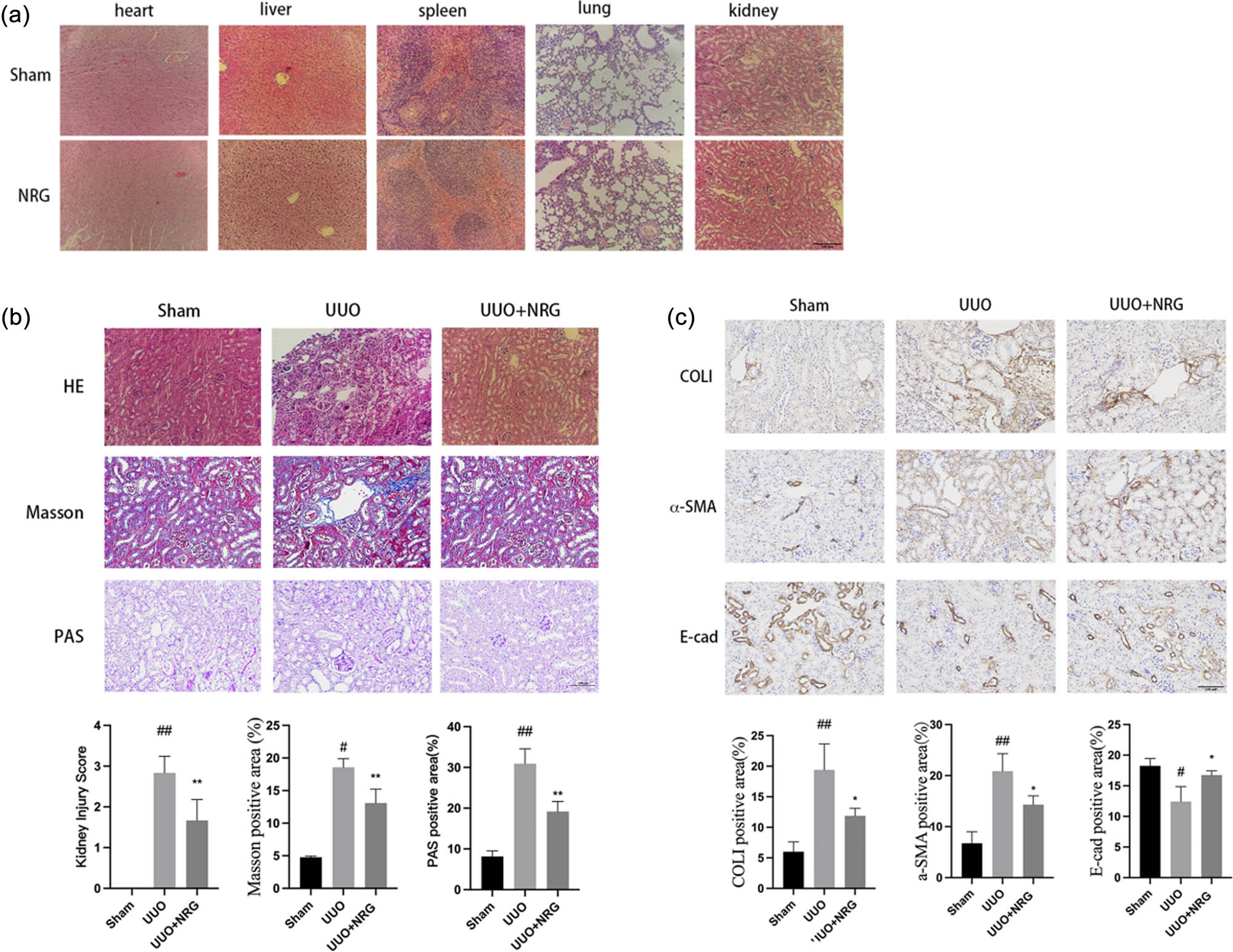
Histological and immunohistochemical staining. (a) HE of organs in sham and NRG. (b) HE, Masson, and PAS map and semi-quantitative score/positive area (%) of each group. (c) Immunohistochemical map and positive area (%) of each group. Magnification: ×200. Scale bar: 100 μm. Data are presented as mean ± SD, # P < 0.05 vs sham, ## P < 0.01 vs sham, *P < 0.05 vs UUO, **P < 0.01 vs UUO.
3.4 Western blot analysis
The expression of α-SMA, COLI, and Fn in UUO was significantly higher than that in the sham group, while the expression of E-cad was significantly lower than that in the sham group. After NRG treatment, the upregulation of α-SMA, COLI, and Fn was inhibited, and E-cad expression was promoted (Figure 9a). The expression of PI3K and p-AKT in UUO was elevated (Figure 9b), whereas the levels of PI3K and p-AKT in UUO + NRG were dramatically reduced. These results indicate that NRG suppressed RF in vivo by inhibiting the PI3K/AKT signaling pathway.
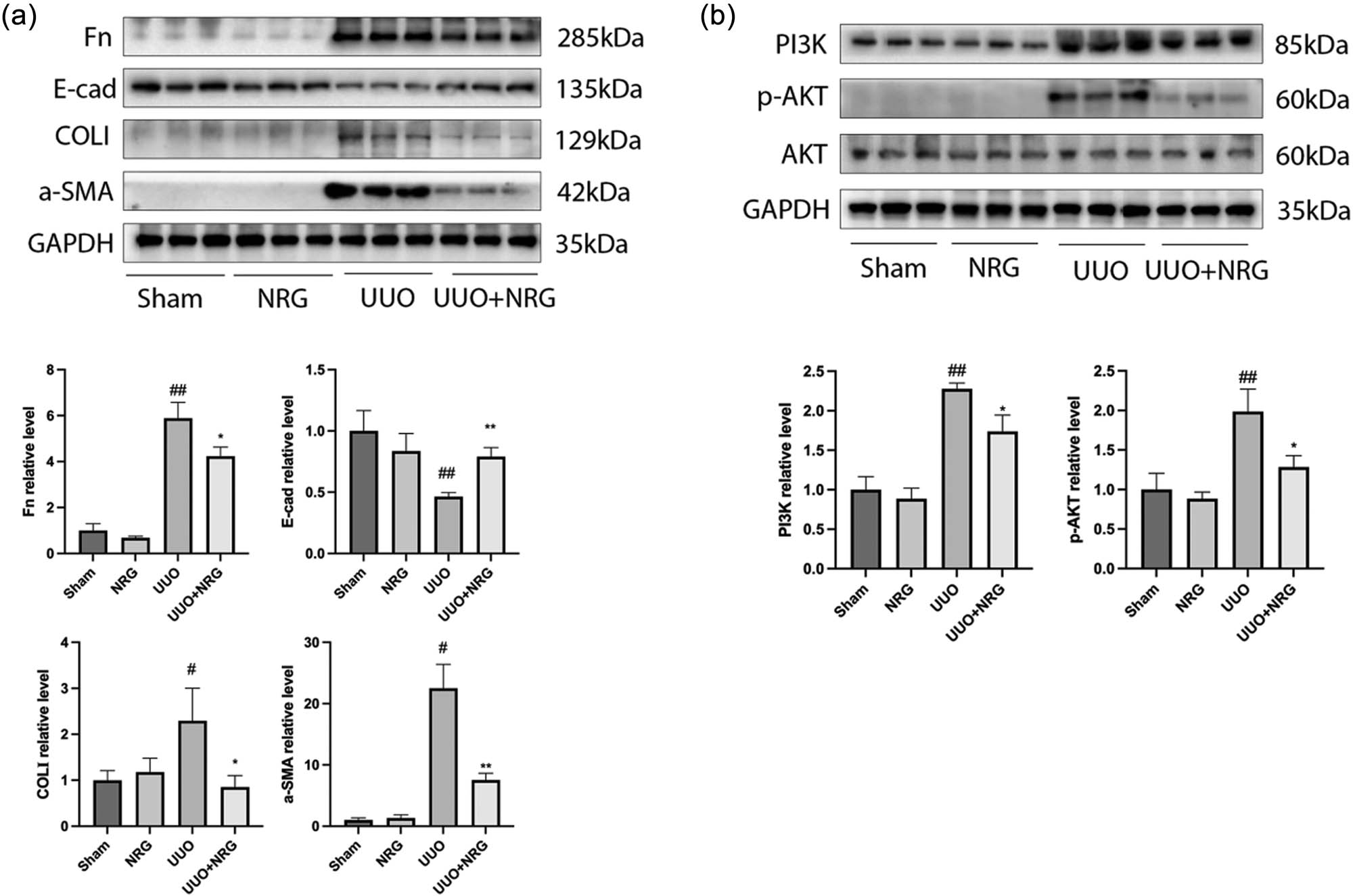
(a) Western blot and relative protein levels of Fn, COLI, a-SMA, and E-cad. (b) Western blot and relative protein levels of PI3K and p-AKT. Data are presented as mean ± SD, # P < 0.05 vs sham, ## P < 0.01 vs sham, *P < 0.05 vs UUO, **P < 0.01 vs UUO.
4 Discussion
RF is an irreversible pathological change in the progression of CKD to ERSD. The pathogenesis and development of RF involve many mechanisms, including a variety of factors related to the activation of various cells, cytokines, and vasoactive substances, which have not been fully elucidated [31,32]. As a flavonoid compound extracted from plants, NRG has a variety of biological activities. Many studies have shown that flavonoids can treat kidney diseases by inhibiting inflammatory reactions, apoptosis, and regulating signaling pathways [33]. Network pharmacology is a novel method for systematically detecting the mechanisms of action of Chinese herbal medicine [34]. Our study investigated the effect of NRG on RF and its possible mechanism based on network pharmacology combined with experimental validation.
We first described 222 potential targets of NRG in the treatment of RF through network pharmacology, and the top 10 key targets selected according to their degree included ALB, AKT1, EGFR, SRC, and HSP90AA1. AKT1 is one of the three mammalian subtypes of AKT kinase, a serine/threonine kinase activated by PI3K [35]. Studies have shown that AKT1 is involved in the proliferation and activation of interstitial fibroblasts, mesangial cells, and tubular epithelial cells during RF development [36]. Inhibiting the activation of AKT1 can inhibit the inflammatory response, fight renal injury, and slow the progression of CKD [37]. EGFR is a family of epidermal growth factor receptors expressed in large amounts along the nephron in the kidney [38]. When EGFR ligand is added to renal tubular cells in vitro, it can promote cell proliferation, mesenchymal–epithelial cell transdifferentiation, and collagen production and plays a major role in developing renal diseases [39]. It can be seen that NRG suppression of RF is achieved through multiple targets.
The mechanism of action of NRG against RF remains unknown. Therefore, we used network pharmacology to explore the possible pharmacological mechanism. The results of the KEGG enrichment analysis showed that the related targets were mainly enriched in PI3K–AKT, MAPK, RAS, and other signaling pathways, which may be the key signaling pathways of NRG against RF. PI3K is a group of plasma membrane-related lipoproteins that catalyzes the production of phosphatidylinositol triphosphate, resulting in AKT binding to the cell membrane [40]. PI3K inhibitor and PI3K knockout short hairpin RNA can block AKT phosphorylation and reduce oxidative stress and inflammation [41]. The MAPK cascade is a key signaling pathway for regulating various cellular processes. Zhou et al. [42] showed that inhibition of the MAPK pathway could reduce the expression of pro-inflammatory factors, inhibit renal cell apoptosis, and down-regulate TGF-β1 expression to alleviate RF. Therefore, we suspect that NRG can alleviate RF through multiple signaling pathways.
The classic pro-inflammatory cytokines IL-6, IL-1β, and TNF-α have the effect of promoting fibrosis, which has been observed in fibrosis models of lung, heart, kidney. and other organs [43]. In this study, the levels of IL-6, IL-1β, and TNF-α in the UUO group were significantly higher than those in the sham group, but the levels of inflammatory cytokines in the NRG group were significantly lower than those in the UUO group, which indicated that NRG could relieve fibrosis by reducing the inflammatory response. Fn and COLI are the main components of ECM. Excessive accumulation of ECM will promote renal parenchyma sclerosis and fibrous scar formation, thus destroying normal renal tissue [44]. The results showed that the expression of Fn and COLI in the UUO group was higher than that in the sham group, but the expression of Fn and COLI in the UUO + NRG group was lower than that in the UUO group, which indicated that NRG could reduce the expression of Fn and COLI and prevent the excessive accumulation of ECM.
In the process of EMT, epithelial cells reduce adhesion markers such as E-cad and obtain interstitial markers such as α-SMA, thus losing the characteristics of cell adhesion [45]. The results showed that the expression of α-SMA in the UUO group was higher than that in the sham group, while the expression of E-cad was lower than that in the sham group. However, after treatment with NRG, the expression of α-SMA was significantly lower than that of the UUO group, and the expression of E-cad was higher than that of the UUO group, which indicated that NRG could reduce the expression of α-SMA, restore E-cad expression, and inhibit the process of EMT. In addition, EMT is closely related to the activation of the PI3K/AKT signal pathway [46]. In this experiment, the expression of PI3K and p-AKT in the UUO group was higher than that in the sham group, but the expression of PI3K and p-AKT in the UUO + NRG group was significantly lower than that in the UUO group. This confirms that NRG can inhibit EMT and slow down the progression of fibrosis by inhibiting the activation of the PI3K/AKT signal pathway.
In this study, the related targets and signal pathways of NRG in the treatment of RF were obtained for the first time through network pharmacological analysis. It was verified by experiments that NRG can promote the recovery of renal function, reduce renal tissue injury, reduce inflammatory reaction, and inhibit PI3K/AKT pathway to reduce fibrosis. Our research findings undoubtedly enrich the pharmacological mechanisms of RF, provide a new option for the treatment of fibrosis, and provide a theoretical basis for the use of natural drugs for disease treatment. However, there are also some shortcomings in our research: one is that the database used in network pharmacological analysis may be lack of completeness and accuracy and the other is that we only carry out experimental verification in cell and mouse models. the relevant data of clinical patients were not collected.
5 Conclusion
Our study predicted the targets and potential mechanism of NRG in treating RF through network pharmacology and preliminarily clarified that NRG may treat RF through multiple targets and pathways. In addition, we verified that NRG could alleviate RF by inhibiting the PI3K/AKT signaling pathway in vitro and in vivo, providing a scientific basis for further research and clinical application.
Acknowledgments
We thank all the participants in this research.
-
Funding information: This work was supported by the National Natural Science Foundation of China (Grant Number 82170757).
-
Author contributions: DZ, XL, and YZ conceived and designed the experiments, YZ performed the experiments, and HL, JX, and YZ. contributed reagents/material/analysis tools. All authors contributed to the article and approved the submitted version.
-
Conflict of interest: The authors declare no conflict of interest.
-
Data availability statement: The datasets generated during and/or analyzed during the current study are available from the corresponding author on reasonable request.
References
[1] Bikbov B, Purcell CA, Levey AS, Smith M, Abdoli A, Abebe M, et al. Global, regional, and national burden of chronic kidney disease, 1990-2017: a systematic analysis for the global burden of disease study 2017, regional, and national burden of chronic kidney disease, 1990-2017: a systematic analysis for the global burden of disease study 2017. Lancet. 2020;395(10225):709–33.10.1016/S0140-6736(20)30045-3Search in Google Scholar PubMed PubMed Central
[2] Leaf IA, Duffield JS. What can target kidney fibrosis? Nephrol Dial Transpl. 2017;32(suppl_1):i89–97.10.1093/ndt/gfw388Search in Google Scholar PubMed
[3] Djudjaj S, Boor P. Cellular and molecular mechanisms of kidney fibrosis. Mol Asp Med. 2019;65:16–36.10.1016/j.mam.2018.06.002Search in Google Scholar PubMed
[4] Bülow RD, Boor P. Extracellular matrix in kidney fibrosis: more than just a scaffold. J Histochem Cytochem. 2019;67(9):643–61.10.1369/0022155419849388Search in Google Scholar PubMed PubMed Central
[5] Bischoff J. Endothelial-to-Mesenchymal Transition. Circ Res. 2019;124(8):1163–5.10.1161/CIRCRESAHA.119.314813Search in Google Scholar PubMed PubMed Central
[6] Hinz B, Lagares D. Evasion of apoptosis by myofibroblasts: a hallmark of fibrotic diseases. Nat Rev Rheumatol. 2020;16(1):11–31.10.1038/s41584-019-0324-5Search in Google Scholar PubMed PubMed Central
[7] Swartling O, Rydell H, Stendahl M, Segelmark M, Trolle Lagerros Y, Evans M. CKD Progression and mortality among men and women: a Nationwide study in Sweden. Am J Kidney Dis. 2021;78(2):190–9.10.1053/j.ajkd.2020.11.026Search in Google Scholar PubMed
[8] Ruiz-Ortega M, Rayego-Mateos S, Lamas S, Ortiz A, Rodrigues-Diez RR. Targeting the progression of chronic kidney disease. Nat Rev Nephrol. 2020;16(5):269–88.10.1038/s41581-019-0248-ySearch in Google Scholar PubMed
[9] Avila-Carrasco L, García-Mayorga EA, Díaz-Avila DL, Garza-Veloz I, Martinez-Fierro ML, González-Mateo GT. Potential therapeutic effects of natural plant compounds in kidney disease. Molecules. 2021;26(20):6096.10.3390/molecules26206096Search in Google Scholar PubMed PubMed Central
[10] Ahmed S, Khan H, Aschner M, Hasan MM, Hassan STS. Therapeutic potential of naringin in neurological disorders. Food Chem Toxicol. 2019;132:110646.10.1016/j.fct.2019.110646Search in Google Scholar PubMed
[11] Joshi R, Kulkarni YA, Wairkar S. Pharmacokinetic, pharmacodynamic and formulations aspects of Naringenin: An update. Life Sci. 2018;215:43–56.10.1016/j.lfs.2018.10.066Search in Google Scholar PubMed
[12] Rivoira MA, Rodriguez V, Talamoni G, Tolosa de Talamoni N. New perspectives in the pharmacological potential of naringin in medicine. Curr Med Chem. 2021;28(10):1987–2007.10.2174/0929867327666200604171351Search in Google Scholar PubMed
[13] Salehi B, Fokou PVT, Sharifi-Rad M, Zucca P, Pezzani R, Martins N, et al. The therapeutic potential of naringenin: A review of clinical trials. Pharm (Basel). 2019;12(1):11.10.3390/ph12010011Search in Google Scholar PubMed PubMed Central
[14] Chen R, Qi QL, Wang MT, Li QY. Therapeutic potential of naringin: an overview. Pharm Biol. 2016;54(12):3203–10.10.1080/13880209.2016.1216131Search in Google Scholar PubMed
[15] Memariani Z, Abbas SQ, Ul Hassan SS, Ahmadi A, Chabra A. Naringin and naringenin as anticancer agents and adjuvants in cancer combination therapy: Efficacy and molecular mechanisms of action, a comprehensive narrative review. Pharmacol Res. 2021;171:105264.10.1016/j.phrs.2020.105264Search in Google Scholar PubMed
[16] Dey P, Parai D, Banerjee M, Hossain ST, Mukherjee SK. Naringin sensitizes the antibiofilm effect of ciprofloxacin and tetracycline against Pseudomonas aeruginosa biofilm. Int J Med Microbiol. 2020;310(3):151410.10.1016/j.ijmm.2020.151410Search in Google Scholar PubMed
[17] Akamo AJ, Rotimi SO, Akinloye DI, Ugbaja RN, Adeleye OO, Dosumu OA, et al. Naringin prevents cyclophosphamide-induced hepatotoxicity in rats by attenuating oxidative stress, fibrosis, and inflammation. Food Chem Toxicol. 2021;153:112266.10.1016/j.fct.2021.112266Search in Google Scholar PubMed
[18] Kim JK, Park JH, Ku HJ, Kim SH, Lim YJ, Park JW, et al. Naringin protects acrolein-induced pulmonary injuries through modulating apoptotic signaling and inflammation signaling pathways in mice. J Nutr Biochem. 2018;59:10–6.10.1016/j.jnutbio.2018.05.012Search in Google Scholar PubMed
[19] Liu Y, Li BG, Su YH, Zhao RX, Song P, Li H, et al. Potential activity of traditional Chinese medicine against ulcerative colitis: a review. J Ethnopharmacol. 2022;289:115084.10.1016/j.jep.2022.115084Search in Google Scholar PubMed
[20] Nogales C, Mamdouh ZM, List M, Kiel C, Casas AI, Schmidt H. Network pharmacology: curing causal mechanisms instead of treating symptoms. Trends Pharmacol Sci. 2022;43(2):136–50.10.1016/j.tips.2021.11.004Search in Google Scholar PubMed
[21] Li S, Zhang B. Traditional Chinese medicine network pharmacology: theory, methodology and application. Chin J Nat Med. 2013;11(2):110–20.10.1016/S1875-5364(13)60037-0Search in Google Scholar PubMed
[22] Pinzi L, Rastelli G. Molecular docking: shifting paradigms in drug discovery. Int J Mol Sci. 2019;20(18):4331.10.3390/ijms20184331Search in Google Scholar PubMed PubMed Central
[23] National Center for Biotechnology Information (2022). PubChem compound summary for CID 442428, Naringin. Retrieved August 26, 2022 from https://pubchem.ncbi.nlm.nih.gov/compound/442428.Search in Google Scholar
[24] Liu X, Ouyang S, Yu B, Liu Y, Huang K, Gong J, et al. PharmMapper server: a web server for potential drug target identification using pharmacophore mapping approach. Nucleic Acids Res. 2010;38(Web Server issue):W609–14.10.1093/nar/gkq300Search in Google Scholar PubMed PubMed Central
[25] Wang X, Pan C, Gong J, Liu X, Li H. Enhancing the enrichment of pharmacophore-based target prediction for the polypharmacological profiles of drugs. J Chem Inf Model. 2016;56(6):1175–83.10.1021/acs.jcim.5b00690Search in Google Scholar PubMed
[26] Wang X, Shen Y, Wang S, Li S, Zhang W, Liu X, et al. PharmMapper 2017 update: a web server for potential drug target identification with a comprehensive target pharmacophore database. Nucleic Acids Res. 2017;45(W1):W356–60.10.1093/nar/gkx374Search in Google Scholar PubMed PubMed Central
[27] Oliveros JC. Venny. An interactive tool for comparing lists with Venn’s diagrams; 2007–2015. https://bioinfogp.cnb.csic.es/tools/venny/index.html.Search in Google Scholar
[28] Zhou Y, Zhou B, Pache L, Chang M, Khodabakhshi AH, Tanaseichuk O, et al. Metascape provides a biologist-oriented resource for the analysis of systems-level datasets. Nat Commun. 2019;10(1):1523.10.1038/s41467-019-09234-6Search in Google Scholar PubMed PubMed Central
[29] Shi W, Li C, Wartmann T, Kahlert C, Du R, Perrakis A, et al. Sensory ion channel candidates inform on the clinical course of pancreatic cancer and present potential targets for repurposing of FDA-approved agents. J Pers Med. 2022;12(3):478.10.3390/jpm12030478Search in Google Scholar PubMed PubMed Central
[30] Chevalier RL, Forbes MS, Thornhill BA. Ureteral obstruction as a model of renal interstitial fibrosis and obstructive nephropathy. Kidney Int. 2009;75(11):1145–52.10.1038/ki.2009.86Search in Google Scholar PubMed
[31] Boor P, Floege J. Renal allograft fibrosis: biology and therapeutic targets. Am J Transpl. 2015;15(4):863–86.10.1111/ajt.13180Search in Google Scholar PubMed
[32] González-Guerrero C, Cannata-Ortiz P, Guerri C, Egido J, Ortiz A, Ramos AM. TLR4-mediated inflammation is a key pathogenic event leading to kidney damage and fibrosis in cyclosporine nephrotoxicity. Arch Toxicol. 2017;91(4):1925–39.10.1007/s00204-016-1830-8Search in Google Scholar PubMed
[33] Cao YL, Lin JH, Hammes HP, Zhang C. Flavonoids in Treatment of Chronic Kidney Disease. Molecules. 2022;27(7):2365.10.3390/molecules27072365Search in Google Scholar PubMed PubMed Central
[34] Shi H, Dong C, Wang M, Liu R, Wang Y, Kan Z, et al. Exploring the mechanism of Yizhi Tongmai decoction in the treatment of vascular dementia through network pharmacology and molecular docking. Ann Transl Med. 2021;9(2):164.10.21037/atm-20-8165Search in Google Scholar PubMed PubMed Central
[35] Manning BD, Toker A. AKT/PKB signaling: Navigating the network. Cell. 2017;169(3):381–405.10.1016/j.cell.2017.04.001Search in Google Scholar PubMed PubMed Central
[36] Kim IY, Park YK, Song SH, Seong EY, Lee DW, Bae SS, et al. Akt1 is involved in tubular apoptosis and inflammatory response during renal ischemia-reperfusion injury. Mol Biol Rep. 2020;47(12):9511–20.10.1007/s11033-020-06021-1Search in Google Scholar PubMed
[37] Lin HY, Chen Y, Chen YH, Ta AP, Lee HC, MacGregor GR, et al. Tubular mitochondrial AKT1 is activated during ischemia reperfusion injury and has a critical role in predisposition to chronic kidney disease. Kidney Int. 2021;99(4):870–84.10.1016/j.kint.2020.10.038Search in Google Scholar PubMed PubMed Central
[38] Lautrette A, Li S, Alili R, Sunnarborg SW, Burtin M, Lee DC, et al. Angiotensin II and EGF receptor cross-talk in chronic kidney diseases: a new therapeutic approach. Nat Med. 2005;11(8):867–74.10.1038/nm1275Search in Google Scholar PubMed
[39] Xu L, Li X, Zhang F, Wu L, Dong Z, Zhang D. EGFR drives the progression of AKI to CKD through HIPK2 overexpression. Theranostics. 2019;9(9):2712–26.10.7150/thno.31424Search in Google Scholar PubMed PubMed Central
[40] Xie Y, Shi X, Sheng K, Han G, Li W, Zhao Q, et al. PI3K/Akt signaling transduction pathway, erythropoiesis and glycolysis in hypoxia (Review). Mol Med Rep. 2019;19(2):783–91.10.3892/mmr.2018.9713Search in Google Scholar PubMed PubMed Central
[41] Wang D, Jin M, Zhao X, Zhao T, Lin W, He Z, et al. FGF1(ΔHBS) ameliorates chronic kidney disease via PI3K/AKT mediated suppression of oxidative stress and inflammation. Cell Death Dis. 2019;10(6):464.10.1038/s41419-019-1696-9Search in Google Scholar PubMed PubMed Central
[42] Zhou S, He Y, Zhang W, Xiong Y, Jiang L, Wang J, et al. Ophiocordyceps lanpingensis polysaccharides alleviate chronic kidney disease through MAPK/NF-κB pathway. J Ethnopharmacol. 2021;276:114189.10.1016/j.jep.2021.114189Search in Google Scholar PubMed
[43] Mack M. Inflammation and fibrosis. Matrix Biol. 2018;68–69:106–21.10.1016/j.matbio.2017.11.010Search in Google Scholar PubMed
[44] Sun YB, Qu X, Caruana G, Li J. The origin of renal fibroblasts/myofibroblasts and the signals that trigger fibrosis. Differentiation. 2016;92(3):102–7.10.1016/j.diff.2016.05.008Search in Google Scholar PubMed
[45] Sisto M, Ribatti D, Lisi S. Organ fibrosis and autoimmunity: The role of inflammation in TGFβ-dependent EMT. Biomolecules. 2021;11(2):310.10.3390/biom11020310Search in Google Scholar PubMed PubMed Central
[46] Xu W, Yang Z, Lu N. A new role for the PI3K/Akt signaling pathway in the epithelial-mesenchymal transition. Cell Adh Migr. 2015;9(4):317–24.10.1080/19336918.2015.1016686Search in Google Scholar PubMed PubMed Central
© 2023 the author(s), published by De Gruyter
This work is licensed under the Creative Commons Attribution 4.0 International License.
Articles in the same Issue
- Research Articles
- Exosomes derived from mesenchymal stem cells overexpressing miR-210 inhibits neuronal inflammation and contribute to neurite outgrowth through modulating microglia polarization
- Current situation of acute ST-segment elevation myocardial infarction in a county hospital chest pain center during an epidemic of novel coronavirus pneumonia
- circ-IARS depletion inhibits the progression of non-small-cell lung cancer by circ-IARS/miR-1252-5p/HDGF ceRNA pathway
- circRNA ITGA7 restrains growth and enhances radiosensitivity by up-regulating SMAD4 in colorectal carcinoma
- WDR79 promotes aerobic glycolysis of pancreatic ductal adenocarcinoma (PDAC) by the suppression of SIRT4
- Up-regulation of collagen type V alpha 2 (COL5A2) promotes malignant phenotypes in gastric cancer cell via inducing epithelial–mesenchymal transition (EMT)
- Inhibition of TERC inhibits neural apoptosis and inflammation in spinal cord injury through Akt activation and p-38 inhibition via the miR-34a-5p/XBP-1 axis
- 3D-printed polyether-ether-ketone/n-TiO2 composite enhances the cytocompatibility and osteogenic differentiation of MC3T3-E1 cells by downregulating miR-154-5p
- Propofol-mediated circ_0000735 downregulation restrains tumor growth by decreasing integrin-β1 expression in non-small cell lung cancer
- PVT1/miR-16/CCND1 axis regulates gastric cancer progression
- Silencing of circ_002136 sensitizes gastric cancer to paclitaxel by targeting the miR-16-5p/HMGA1 axis
- Short-term outcomes after simultaneous gastrectomy plus cholecystectomy in gastric cancer: A pooling up analysis
- SCARA5 inhibits oral squamous cell carcinoma via inactivating the STAT3 and PI3K/AKT signaling pathways
- Molecular mechanism by which the Notch signaling pathway regulates autophagy in a rat model of pulmonary fibrosis in pigeon breeder’s lung
- lncRNA TPT1-AS1 promotes cell migration and invasion in esophageal squamous-cell carcinomas by regulating the miR-26a/HMGA1 axis
- SIRT1/APE1 promotes the viability of gastric cancer cells by inhibiting p53 to suppress ferroptosis
- Glycoprotein non-metastatic melanoma B interacts with epidermal growth factor receptor to regulate neural stem cell survival and differentiation
- Treatments for brain metastases from EGFR/ALK-negative/unselected NSCLC: A network meta-analysis
- Association of osteoporosis and skeletal muscle loss with serum type I collagen carboxyl-terminal peptide β glypeptide: A cross-sectional study in elder Chinese population
- circ_0000376 knockdown suppresses non-small cell lung cancer cell tumor properties by the miR-545-3p/PDPK1 pathway
- Delivery in a vertical birth chair supported by freedom of movement during labor: A randomized control trial
- UBE2J1 knockdown promotes cell apoptosis in endometrial cancer via regulating PI3K/AKT and MDM2/p53 signaling
- Metabolic resuscitation therapy in critically ill patients with sepsis and septic shock: A pilot prospective randomized controlled trial
- Lycopene ameliorates locomotor activity and urinary frequency induced by pelvic venous congestion in rats
- UHRF1-induced connexin26 methylation is involved in hearing damage triggered by intermittent hypoxia in neonatal rats
- LINC00511 promotes melanoma progression by targeting miR-610/NUCB2
- Ultra-high-performance liquid chromatography-tandem mass spectrometry analysis of serum metabolomic characteristics in people with different vitamin D levels
- Role of Jumonji domain-containing protein D3 and its inhibitor GSK-J4 in Hashimoto’s thyroiditis
- circ_0014736 induces GPR4 to regulate the biological behaviors of human placental trophoblast cells through miR-942-5p in preeclampsia
- Monitoring of sirolimus in the whole blood samples from pediatric patients with lymphatic anomalies
- Effects of osteogenic growth peptide C-terminal pentapeptide and its analogue on bone remodeling in an osteoporosis rat model
- A novel autophagy-related long non-coding RNAs signature predicting progression-free interval and I-131 therapy benefits in papillary thyroid carcinoma
- WGCNA-based identification of potential targets and pathways in response to treatment in locally advanced breast cancer patients
- Radiomics model using preoperative computed tomography angiography images to differentiate new from old emboli of acute lower limb arterial embolism
- Dysregulated lncRNAs are involved in the progress of myocardial infarction by constructing regulatory networks
- Single-arm trial to evaluate the efficacy and safety of baclofen in treatment of intractable hiccup caused by malignant tumor chemotherapy
- Genetic polymorphisms of MRPS30-DT and NINJ2 may influence lung cancer risk
- Efficacy of immune checkpoint inhibitors in patients with KRAS-mutant advanced non-small cell lung cancer: A retrospective analysis
- Pyroptosis-based risk score predicts prognosis and drug sensitivity in lung adenocarcinoma
- Upregulation of lncRNA LANCL1-AS1 inhibits the progression of non-small-cell lung cancer via the miR-3680-3p/GMFG axis
- CircRANBP17 modulated KDM1A to regulate neuroblastoma progression by sponging miR-27b-3p
- Exosomal miR-93-5p regulated the progression of osteoarthritis by targeting ADAMTS9
- Downregulation of RBM17 enhances cisplatin sensitivity and inhibits cell invasion in human hypopharyngeal cancer cells
- HDAC5-mediated PRAME regulates the proliferation, migration, invasion, and EMT of laryngeal squamous cell carcinoma via the PI3K/AKT/mTOR signaling pathway
- The association between sleep duration, quality, and nonalcoholic fatty liver disease: A cross-sectional study
- Myostatin silencing inhibits podocyte apoptosis in membranous nephropathy through Smad3/PKA/NOX4 signaling pathway
- A novel long noncoding RNA AC125257.1 facilitates colorectal cancer progression by targeting miR-133a-3p/CASC5 axis
- Impact of omicron wave and associated control measures in Shanghai on health management and psychosocial well-being of patients with chronic conditions
- Clinicopathological characteristics and prognosis of young patients aged ≤45 years old with non-small cell lung cancer
- TMT-based comprehensive proteomic profiling identifies serum prognostic signatures of acute myeloid leukemia
- The dose limits of teeth protection for patients with nasopharyngeal carcinoma undergoing radiotherapy based on the early oral health-related quality of life
- miR-30b-5p targeting GRIN2A inhibits hippocampal damage in epilepsy
- Long non-coding RNA AL137789.1 promoted malignant biological behaviors and immune escape of pancreatic carcinoma cells
- IRF6 and FGF1 polymorphisms in non-syndromic cleft lip with or without cleft palate in the Polish population
- Comprehensive analysis of the role of SFXN family in breast cancer
- Efficacy of bronchoscopic intratumoral injection of endostar and cisplatin in lung squamous cell carcinoma patients underwent conventional chemoradiotherapy
- Silencing of long noncoding RNA MIAT inhibits the viability and proliferation of breast cancer cells by promoting miR-378a-5p expression
- AG1024, an IGF-1 receptor inhibitor, ameliorates renal injury in rats with diabetic nephropathy via the SOCS/JAK2/STAT pathway
- Downregulation of KIAA1199 alleviated the activation, proliferation, and migration of hepatic stellate cells by the inhibition of epithelial–mesenchymal transition
- Exendin-4 regulates the MAPK and WNT signaling pathways to alleviate the osteogenic inhibition of periodontal ligament stem cells in a high glucose environment
- Inhibition of glycolysis represses the growth and alleviates the endoplasmic reticulum stress of breast cancer cells by regulating TMTC3
- The function of lncRNA EMX2OS/miR-653-5p and its regulatory mechanism in lung adenocarcinoma
- Tectorigenin alleviates the apoptosis and inflammation in spinal cord injury cell model through inhibiting insulin-like growth factor-binding protein 6
- Ultrasound examination supporting CT or MRI in the evaluation of cervical lymphadenopathy in patients with irradiation-treated head and neck cancer
- F-box and WD repeat domain containing 7 inhibits the activation of hepatic stellate cells by degrading delta-like ligand 1 to block Notch signaling pathway
- Knockdown of circ_0005615 enhances the radiosensitivity of colorectal cancer by regulating the miR-665/NOTCH1 axis
- Long noncoding RNA Mhrt alleviates angiotensin II-induced cardiac hypertrophy phenotypes by mediating the miR-765/Wnt family member 7B pathway
- Effect of miR-499-5p/SOX6 axis on atrial fibrosis in rats with atrial fibrillation
- Cholesterol induces inflammation and reduces glucose utilization
- circ_0004904 regulates the trophoblast cell in preeclampsia via miR-19b-3p/ARRDC3 axis
- NECAB3 promotes the migration and invasion of liver cancer cells through HIF-1α/RIT1 signaling pathway
- The poor performance of cardiovascular risk scores in identifying patients with idiopathic inflammatory myopathies at high cardiovascular risk
- miR-2053 inhibits the growth of ovarian cancer cells by downregulating SOX4
- Nucleophosmin 1 associating with engulfment and cell motility protein 1 regulates hepatocellular carcinoma cell chemotaxis and metastasis
- α-Hederin regulates macrophage polarization to relieve sepsis-induced lung and liver injuries in mice
- Changes of microbiota level in urinary tract infections: A meta-analysis
- Identification of key enzalutamide-resistance-related genes in castration-resistant prostate cancer and verification of RAD51 functions
- Falls during oxaliplatin-based chemotherapy for gastrointestinal malignancies – (lessons learned from) a prospective study
- Outcomes of low-risk birth care during the Covid-19 pandemic: A cohort study from a tertiary care center in Lithuania
- Vitamin D protects intestines from liver cirrhosis-induced inflammation and oxidative stress by inhibiting the TLR4/MyD88/NF-κB signaling pathway
- Integrated transcriptome analysis identifies APPL1/RPS6KB2/GALK1 as immune-related metastasis factors in breast cancer
- Genomic analysis of immunogenic cell death-related subtypes for predicting prognosis and immunotherapy outcomes in glioblastoma multiforme
- Circular RNA Circ_0038467 promotes the maturation of miRNA-203 to increase lipopolysaccharide-induced apoptosis of chondrocytes
- An economic evaluation of fine-needle cytology as the primary diagnostic tool in the diagnosis of lymphadenopathy
- Midazolam impedes lung carcinoma cell proliferation and migration via EGFR/MEK/ERK signaling pathway
- Network pharmacology combined with molecular docking and experimental validation to reveal the pharmacological mechanism of naringin against renal fibrosis
- PTPN12 down-regulated by miR-146b-3p gene affects the malignant progression of laryngeal squamous cell carcinoma
- miR-141-3p accelerates ovarian cancer progression and promotes M2-like macrophage polarization by targeting the Keap1-Nrf2 pathway
- lncRNA OIP5-AS1 attenuates the osteoarthritis progression in IL-1β-stimulated chondrocytes
- Overexpression of LINC00607 inhibits cell growth and aggressiveness by regulating the miR-1289/EFNA5 axis in non-small-cell lung cancer
- Subjective well-being in informal caregivers during the COVID-19 pandemic
- Nrf2 protects against myocardial ischemia-reperfusion injury in diabetic rats by inhibiting Drp1-mediated mitochondrial fission
- Unfolded protein response inhibits KAT2B/MLKL-mediated necroptosis of hepatocytes by promoting BMI1 level to ubiquitinate KAT2B
- Bladder cancer screening: The new selection and prediction model
- circNFATC3 facilitated the progression of oral squamous cell carcinoma via the miR-520h/LDHA axis
- Prone position effect in intensive care patients with SARS-COV-2 pneumonia
- Clinical observation on the efficacy of Tongdu Tuina manipulation in the treatment of primary enuresis in children
- Dihydroartemisinin ameliorates cerebral I/R injury in rats via regulating VWF and autophagy-mediated SIRT1/FOXO1 pathway
- Knockdown of circ_0113656 assuages oxidized low-density lipoprotein-induced vascular smooth muscle cell injury through the miR-188-3p/IGF2 pathway
- Low Ang-(1–7) and high des-Arg9 bradykinin serum levels are correlated with cardiovascular risk factors in patients with COVID-19
- Effect of maternal age and body mass index on induction of labor with oral misoprostol for premature rupture of membrane at term: A retrospective cross-sectional study
- Potential protective effects of Huanglian Jiedu Decoction against COVID-19-associated acute kidney injury: A network-based pharmacological and molecular docking study
- Clinical significance of serum MBD3 detection in girls with central precocious puberty
- Clinical features of varicella-zoster virus caused neurological diseases detected by metagenomic next-generation sequencing
- Collagen treatment of complex anorectal fistula: 3 years follow-up
- LncRNA CASC15 inhibition relieves renal fibrosis in diabetic nephropathy through down-regulating SP-A by sponging to miR-424
- Efficacy analysis of empirical bismuth quadruple therapy, high-dose dual therapy, and resistance gene-based triple therapy as a first-line Helicobacter pylori eradication regimen – An open-label, randomized trial
- SMOC2 plays a role in heart failure via regulating TGF-β1/Smad3 pathway-mediated autophagy
- A prospective cohort study of the impact of chronic disease on fall injuries in middle-aged and older adults
- circRNA THBS1 silencing inhibits the malignant biological behavior of cervical cancer cells via the regulation of miR-543/HMGB2 axis
- hsa_circ_0000285 sponging miR-582-3p promotes neuroblastoma progression by regulating the Wnt/β-catenin signaling pathway
- Long non-coding RNA GNAS-AS1 knockdown inhibits proliferation and epithelial–mesenchymal transition of lung adenocarcinoma cells via the microRNA-433-3p/Rab3A axis
- lncRNA UCA1 regulates miR-132/Lrrfip1 axis to promote vascular smooth muscle cell proliferation
- Twenty-four-color full spectrum flow cytometry panel for minimal residual disease detection in acute myeloid leukemia
- Hsa-miR-223-3p participates in the process of anthracycline-induced cardiomyocyte damage by regulating NFIA gene
- Anti-inflammatory effect of ApoE23 on Salmonella typhimurium-induced sepsis in mice
- Analysis of somatic mutations and key driving factors of cervical cancer progression
- Hsa_circ_0028007 regulates the progression of nasopharyngeal carcinoma through the miR-1179/SQLE axis
- Variations in sexual function after laparoendoscopic single-site hysterectomy in women with benign gynecologic diseases
- Effects of pharmacological delay with roxadustat on multi-territory perforator flap survival in rats
- Analysis of heroin effects on calcium channels in rat cardiomyocytes based on transcriptomics and metabolomics
- Risk factors of recurrent bacterial vaginosis among women of reproductive age: A cross-sectional study
- Alkbh5 plays indispensable roles in maintaining self-renewal of hematopoietic stem cells
- Study to compare the effect of casirivimab and imdevimab, remdesivir, and favipiravir on progression and multi-organ function of hospitalized COVID-19 patients
- Correlation between microvessel maturity and ISUP grades assessed using contrast-enhanced transrectal ultrasonography in prostate cancer
- The protective effect of caffeic acid phenethyl ester in the nephrotoxicity induced by α-cypermethrin
- Norepinephrine alleviates cyclosporin A-induced nephrotoxicity by enhancing the expression of SFRP1
- Effect of RUNX1/FOXP3 axis on apoptosis of T and B lymphocytes and immunosuppression in sepsis
- The function of Foxp1 represses β-adrenergic receptor transcription in the occurrence and development of bladder cancer through STAT3 activity
- Risk model and validation of carbapenem-resistant Klebsiella pneumoniae infection in patients with cerebrovascular disease in the ICU
- Calycosin protects against chronic prostatitis in rats via inhibition of the p38MAPK/NF-κB pathway
- Pan-cancer analysis of the PDE4DIP gene with potential prognostic and immunotherapeutic values in multiple cancers including acute myeloid leukemia
- The safety and immunogenicity to inactivated COVID-19 vaccine in patients with hyperlipemia
- Circ-UBR4 regulates the proliferation, migration, inflammation, and apoptosis in ox-LDL-induced vascular smooth muscle cells via miR-515-5p/IGF2 axis
- Clinical characteristics of current COVID-19 rehabilitation outpatients in China
- Luteolin alleviates ulcerative colitis in rats via regulating immune response, oxidative stress, and metabolic profiling
- miR-199a-5p inhibits aortic valve calcification by targeting ATF6 and GRP78 in valve interstitial cells
- The application of iliac fascia space block combined with esketamine intravenous general anesthesia in PFNA surgery of the elderly: A prospective, single-center, controlled trial
- Elevated blood acetoacetate levels reduce major adverse cardiac and cerebrovascular events risk in acute myocardial infarction
- The effects of progesterone on the healing of obstetric anal sphincter damage in female rats
- Identification of cuproptosis-related genes for predicting the development of prostate cancer
- Lumican silencing ameliorates β-glycerophosphate-mediated vascular smooth muscle cell calcification by attenuating the inhibition of APOB on KIF2C activity
- Targeting PTBP1 blocks glutamine metabolism to improve the cisplatin sensitivity of hepatocarcinoma cells through modulating the mRNA stability of glutaminase
- A single center prospective study: Influences of different hip flexion angles on the measurement of lumbar spine bone mineral density by dual energy X-ray absorptiometry
- Clinical analysis of AN69ST membrane continuous venous hemofiltration in the treatment of severe sepsis
- Antibiotics therapy combined with probiotics administered intravaginally for the treatment of bacterial vaginosis: A systematic review and meta-analysis
- Construction of a ceRNA network to reveal a vascular invasion associated prognostic model in hepatocellular carcinoma
- A pan-cancer analysis of STAT3 expression and genetic alterations in human tumors
- A prognostic signature based on seven T-cell-related cell clustering genes in bladder urothelial carcinoma
- Pepsin concentration in oral lavage fluid of rabbit reflux model constructed by dilating the lower esophageal sphincter
- The antihypertensive felodipine shows synergistic activity with immune checkpoint blockade and inhibits tumor growth via NFAT1 in LUSC
- Tanshinone IIA attenuates valvular interstitial cells’ calcification induced by oxidized low density lipoprotein via reducing endoplasmic reticulum stress
- AS-IV enhances the antitumor effects of propofol in NSCLC cells by inhibiting autophagy
- Establishment of two oxaliplatin-resistant gallbladder cancer cell lines and comprehensive analysis of dysregulated genes
- Trial protocol: Feasibility of neuromodulation with connectivity-guided intermittent theta-burst stimulation for improving cognition in multiple sclerosis
- LncRNA LINC00592 mediates the promoter methylation of WIF1 to promote the development of bladder cancer
- Factors associated with gastrointestinal dysmotility in critically ill patients
- Mechanisms by which spinal cord stimulation intervenes in atrial fibrillation: The involvement of the endothelin-1 and nerve growth factor/p75NTR pathways
- Analysis of two-gene signatures and related drugs in small-cell lung cancer by bioinformatics
- Silencing USP19 alleviates cigarette smoke extract-induced mitochondrial dysfunction in BEAS-2B cells by targeting FUNDC1
- Menstrual irregularities associated with COVID-19 vaccines among women in Saudi Arabia: A survey during 2022
- Ferroptosis involves in Schwann cell death in diabetic peripheral neuropathy
- The effect of AQP4 on tau protein aggregation in neurodegeneration and persistent neuroinflammation after cerebral microinfarcts
- Activation of UBEC2 by transcription factor MYBL2 affects DNA damage and promotes gastric cancer progression and cisplatin resistance
- Analysis of clinical characteristics in proximal and distal reflux monitoring among patients with gastroesophageal reflux disease
- Exosomal circ-0020887 and circ-0009590 as novel biomarkers for the diagnosis and prediction of short-term adverse cardiovascular outcomes in STEMI patients
- Upregulated microRNA-429 confers endometrial stromal cell dysfunction by targeting HIF1AN and regulating the HIF1A/VEGF pathway
- Bibliometrics and knowledge map analysis of ultrasound-guided regional anesthesia
- Knockdown of NUPR1 inhibits angiogenesis in lung cancer through IRE1/XBP1 and PERK/eIF2α/ATF4 signaling pathways
- D-dimer trends predict COVID-19 patient’s prognosis: A retrospective chart review study
- WTAP affects intracranial aneurysm progression by regulating m6A methylation modification
- Using of endoscopic polypectomy in patients with diagnosed malignant colorectal polyp – The cross-sectional clinical study
- Anti-S100A4 antibody administration alleviates bronchial epithelial–mesenchymal transition in asthmatic mice
- Prognostic evaluation of system immune-inflammatory index and prognostic nutritional index in double expressor diffuse large B-cell lymphoma
- Prevalence and antibiogram of bacteria causing urinary tract infection among patients with chronic kidney disease
- Reactive oxygen species within the vaginal space: An additional promoter of cervical intraepithelial neoplasia and uterine cervical cancer development?
- Identification of disulfidptosis-related genes and immune infiltration in lower-grade glioma
- A new technique for uterine-preserving pelvic organ prolapse surgery: Laparoscopic rectus abdominis hysteropexy for uterine prolapse by comparing with traditional techniques
- Self-isolation of an Italian long-term care facility during COVID-19 pandemic: A comparison study on care-related infectious episodes
- A comparative study on the overlapping effects of clinically applicable therapeutic interventions in patients with central nervous system damage
- Low intensity extracorporeal shockwave therapy for chronic pelvic pain syndrome: Long-term follow-up
- The diagnostic accuracy of touch imprint cytology for sentinel lymph node metastases of breast cancer: An up-to-date meta-analysis of 4,073 patients
- Mortality associated with Sjögren’s syndrome in the United States in the 1999–2020 period: A multiple cause-of-death study
- CircMMP11 as a prognostic biomarker mediates miR-361-3p/HMGB1 axis to accelerate malignant progression of hepatocellular carcinoma
- Analysis of the clinical characteristics and prognosis of adult de novo acute myeloid leukemia (none APL) with PTPN11 mutations
- KMT2A maintains stemness of gastric cancer cells through regulating Wnt/β-catenin signaling-activated transcriptional factor KLF11
- Evaluation of placental oxygenation by near-infrared spectroscopy in relation to ultrasound maturation grade in physiological term pregnancies
- The role of ultrasonographic findings for PIK3CA-mutated, hormone receptor-positive, human epidermal growth factor receptor-2-negative breast cancer
- Construction of immunogenic cell death-related molecular subtypes and prognostic signature in colorectal cancer
- Long-term prognostic value of high-sensitivity cardiac troponin-I in patients with idiopathic dilated cardiomyopathy
- Establishing a novel Fanconi anemia signaling pathway-associated prognostic model and tumor clustering for pediatric acute myeloid leukemia patients
- Integrative bioinformatics analysis reveals STAT2 as a novel biomarker of inflammation-related cardiac dysfunction in atrial fibrillation
- Adipose-derived stem cells repair radiation-induced chronic lung injury via inhibiting TGF-β1/Smad 3 signaling pathway
- Real-world practice of idiopathic pulmonary fibrosis: Results from a 2000–2016 cohort
- lncRNA LENGA sponges miR-378 to promote myocardial fibrosis in atrial fibrillation
- Diagnostic value of urinary Tamm-Horsfall protein and 24 h urine osmolality for recurrent calcium oxalate stones of the upper urinary tract: Cross-sectional study
- The value of color Doppler ultrasonography combined with serum tumor markers in differential diagnosis of gastric stromal tumor and gastric cancer
- The spike protein of SARS-CoV-2 induces inflammation and EMT of lung epithelial cells and fibroblasts through the upregulation of GADD45A
- Mycophenolate mofetil versus cyclophosphamide plus in patients with connective tissue disease-associated interstitial lung disease: Efficacy and safety analysis
- MiR-1278 targets CALD1 and suppresses the progression of gastric cancer via the MAPK pathway
- Metabolomic analysis of serum short-chain fatty acid concentrations in a mouse of MPTP-induced Parkinson’s disease after dietary supplementation with branched-chain amino acids
- Cimifugin inhibits adipogenesis and TNF-α-induced insulin resistance in 3T3-L1 cells
- Predictors of gastrointestinal complaints in patients on metformin therapy
- Prescribing patterns in patients with chronic obstructive pulmonary disease and atrial fibrillation
- A retrospective analysis of the effect of latent tuberculosis infection on clinical pregnancy outcomes of in vitro fertilization–fresh embryo transferred in infertile women
- Appropriateness and clinical outcomes of short sustained low-efficiency dialysis: A national experience
- miR-29 regulates metabolism by inhibiting JNK-1 expression in non-obese patients with type 2 diabetes mellitus and NAFLD
- Clinical features and management of lymphoepithelial cyst
- Serum VEGF, high-sensitivity CRP, and cystatin-C assist in the diagnosis of type 2 diabetic retinopathy complicated with hyperuricemia
- ENPP1 ameliorates vascular calcification via inhibiting the osteogenic transformation of VSMCs and generating PPi
- Significance of monitoring the levels of thyroid hormone antibodies and glucose and lipid metabolism antibodies in patients suffer from type 2 diabetes
- The causal relationship between immune cells and different kidney diseases: A Mendelian randomization study
- Interleukin 33, soluble suppression of tumorigenicity 2, interleukin 27, and galectin 3 as predictors for outcome in patients admitted to intensive care units
- Identification of diagnostic immune-related gene biomarkers for predicting heart failure after acute myocardial infarction
- Long-term administration of probiotics prevents gastrointestinal mucosal barrier dysfunction in septic mice partly by upregulating the 5-HT degradation pathway
- miR-192 inhibits the activation of hepatic stellate cells by targeting Rictor
- Diagnostic and prognostic value of MR-pro ADM, procalcitonin, and copeptin in sepsis
- Review Articles
- Prenatal diagnosis of fetal defects and its implications on the delivery mode
- Electromagnetic fields exposure on fetal and childhood abnormalities: Systematic review and meta-analysis
- Characteristics of antibiotic resistance mechanisms and genes of Klebsiella pneumoniae
- Saddle pulmonary embolism in the setting of COVID-19 infection: A systematic review of case reports and case series
- Vitamin C and epigenetics: A short physiological overview
- Ebselen: A promising therapy protecting cardiomyocytes from excess iron in iron-overloaded thalassemia patients
- Aspirin versus LMWH for VTE prophylaxis after orthopedic surgery
- Mechanism of rhubarb in the treatment of hyperlipidemia: A recent review
- Surgical management and outcomes of traumatic global brachial plexus injury: A concise review and our center approach
- The progress of autoimmune hepatitis research and future challenges
- METTL16 in human diseases: What should we do next?
- New insights into the prevention of ureteral stents encrustation
- VISTA as a prospective immune checkpoint in gynecological malignant tumors: A review of the literature
- Case Reports
- Mycobacterium xenopi infection of the kidney and lymph nodes: A case report
- Genetic mutation of SLC6A20 (c.1072T > C) in a family with nephrolithiasis: A case report
- Chronic hepatitis B complicated with secondary hemochromatosis was cured clinically: A case report
- Liver abscess complicated with multiple organ invasive infection caused by hematogenous disseminated hypervirulent Klebsiella pneumoniae: A case report
- Urokinase-based lock solutions for catheter salvage: A case of an upcoming kidney transplant recipient
- Two case reports of maturity-onset diabetes of the young type 3 caused by the hepatocyte nuclear factor 1α gene mutation
- Immune checkpoint inhibitor-related pancreatitis: What is known and what is not
- Does total hip arthroplasty result in intercostal nerve injury? A case report and literature review
- Clinicopathological characteristics and diagnosis of hepatic sinusoidal obstruction syndrome caused by Tusanqi – Case report and literature review
- Synchronous triple primary gastrointestinal malignant tumors treated with laparoscopic surgery: A case report
- CT-guided percutaneous microwave ablation combined with bone cement injection for the treatment of transverse metastases: A case report
- Malignant hyperthermia: Report on a successful rescue of a case with the highest temperature of 44.2°C
- Anesthetic management of fetal pulmonary valvuloplasty: A case report
- Rapid Communication
- Impact of COVID-19 lockdown on glycemic levels during pregnancy: A retrospective analysis
- Erratum
- Erratum to “Inhibition of miR-21 improves pulmonary vascular responses in bronchopulmonary dysplasia by targeting the DDAH1/ADMA/NO pathway”
- Erratum to: “Fer exacerbates renal fibrosis and can be targeted by miR-29c-3p”
- Retraction
- Retraction of “Study to compare the effect of casirivimab and imdevimab, remdesivir, and favipiravir on progression and multi-organ function of hospitalized COVID-19 patients”
- Retraction of “circ_0062491 alleviates periodontitis via the miR-142-5p/IGF1 axis”
- Retraction of “miR-223-3p alleviates TGF-β-induced epithelial-mesenchymal transition and extracellular matrix deposition by targeting SP3 in endometrial epithelial cells”
- Retraction of “SLCO4A1-AS1 mediates pancreatic cancer development via miR-4673/KIF21B axis”
- Retraction of “circRNA_0001679/miR-338-3p/DUSP16 axis aggravates acute lung injury”
- Retraction of “lncRNA ACTA2-AS1 inhibits malignant phenotypes of gastric cancer cells”
- Special issue Linking Pathobiological Mechanisms to Clinical Application for cardiovascular diseases
- Effect of cardiac rehabilitation therapy on depressed patients with cardiac insufficiency after cardiac surgery
- Special issue The evolving saga of RNAs from bench to bedside - Part I
- FBLIM1 mRNA is a novel prognostic biomarker and is associated with immune infiltrates in glioma
- Special Issue Computational Intelligence Methodologies Meets Recurrent Cancers - Part III
- Development of a machine learning-based signature utilizing inflammatory response genes for predicting prognosis and immune microenvironment in ovarian cancer
Articles in the same Issue
- Research Articles
- Exosomes derived from mesenchymal stem cells overexpressing miR-210 inhibits neuronal inflammation and contribute to neurite outgrowth through modulating microglia polarization
- Current situation of acute ST-segment elevation myocardial infarction in a county hospital chest pain center during an epidemic of novel coronavirus pneumonia
- circ-IARS depletion inhibits the progression of non-small-cell lung cancer by circ-IARS/miR-1252-5p/HDGF ceRNA pathway
- circRNA ITGA7 restrains growth and enhances radiosensitivity by up-regulating SMAD4 in colorectal carcinoma
- WDR79 promotes aerobic glycolysis of pancreatic ductal adenocarcinoma (PDAC) by the suppression of SIRT4
- Up-regulation of collagen type V alpha 2 (COL5A2) promotes malignant phenotypes in gastric cancer cell via inducing epithelial–mesenchymal transition (EMT)
- Inhibition of TERC inhibits neural apoptosis and inflammation in spinal cord injury through Akt activation and p-38 inhibition via the miR-34a-5p/XBP-1 axis
- 3D-printed polyether-ether-ketone/n-TiO2 composite enhances the cytocompatibility and osteogenic differentiation of MC3T3-E1 cells by downregulating miR-154-5p
- Propofol-mediated circ_0000735 downregulation restrains tumor growth by decreasing integrin-β1 expression in non-small cell lung cancer
- PVT1/miR-16/CCND1 axis regulates gastric cancer progression
- Silencing of circ_002136 sensitizes gastric cancer to paclitaxel by targeting the miR-16-5p/HMGA1 axis
- Short-term outcomes after simultaneous gastrectomy plus cholecystectomy in gastric cancer: A pooling up analysis
- SCARA5 inhibits oral squamous cell carcinoma via inactivating the STAT3 and PI3K/AKT signaling pathways
- Molecular mechanism by which the Notch signaling pathway regulates autophagy in a rat model of pulmonary fibrosis in pigeon breeder’s lung
- lncRNA TPT1-AS1 promotes cell migration and invasion in esophageal squamous-cell carcinomas by regulating the miR-26a/HMGA1 axis
- SIRT1/APE1 promotes the viability of gastric cancer cells by inhibiting p53 to suppress ferroptosis
- Glycoprotein non-metastatic melanoma B interacts with epidermal growth factor receptor to regulate neural stem cell survival and differentiation
- Treatments for brain metastases from EGFR/ALK-negative/unselected NSCLC: A network meta-analysis
- Association of osteoporosis and skeletal muscle loss with serum type I collagen carboxyl-terminal peptide β glypeptide: A cross-sectional study in elder Chinese population
- circ_0000376 knockdown suppresses non-small cell lung cancer cell tumor properties by the miR-545-3p/PDPK1 pathway
- Delivery in a vertical birth chair supported by freedom of movement during labor: A randomized control trial
- UBE2J1 knockdown promotes cell apoptosis in endometrial cancer via regulating PI3K/AKT and MDM2/p53 signaling
- Metabolic resuscitation therapy in critically ill patients with sepsis and septic shock: A pilot prospective randomized controlled trial
- Lycopene ameliorates locomotor activity and urinary frequency induced by pelvic venous congestion in rats
- UHRF1-induced connexin26 methylation is involved in hearing damage triggered by intermittent hypoxia in neonatal rats
- LINC00511 promotes melanoma progression by targeting miR-610/NUCB2
- Ultra-high-performance liquid chromatography-tandem mass spectrometry analysis of serum metabolomic characteristics in people with different vitamin D levels
- Role of Jumonji domain-containing protein D3 and its inhibitor GSK-J4 in Hashimoto’s thyroiditis
- circ_0014736 induces GPR4 to regulate the biological behaviors of human placental trophoblast cells through miR-942-5p in preeclampsia
- Monitoring of sirolimus in the whole blood samples from pediatric patients with lymphatic anomalies
- Effects of osteogenic growth peptide C-terminal pentapeptide and its analogue on bone remodeling in an osteoporosis rat model
- A novel autophagy-related long non-coding RNAs signature predicting progression-free interval and I-131 therapy benefits in papillary thyroid carcinoma
- WGCNA-based identification of potential targets and pathways in response to treatment in locally advanced breast cancer patients
- Radiomics model using preoperative computed tomography angiography images to differentiate new from old emboli of acute lower limb arterial embolism
- Dysregulated lncRNAs are involved in the progress of myocardial infarction by constructing regulatory networks
- Single-arm trial to evaluate the efficacy and safety of baclofen in treatment of intractable hiccup caused by malignant tumor chemotherapy
- Genetic polymorphisms of MRPS30-DT and NINJ2 may influence lung cancer risk
- Efficacy of immune checkpoint inhibitors in patients with KRAS-mutant advanced non-small cell lung cancer: A retrospective analysis
- Pyroptosis-based risk score predicts prognosis and drug sensitivity in lung adenocarcinoma
- Upregulation of lncRNA LANCL1-AS1 inhibits the progression of non-small-cell lung cancer via the miR-3680-3p/GMFG axis
- CircRANBP17 modulated KDM1A to regulate neuroblastoma progression by sponging miR-27b-3p
- Exosomal miR-93-5p regulated the progression of osteoarthritis by targeting ADAMTS9
- Downregulation of RBM17 enhances cisplatin sensitivity and inhibits cell invasion in human hypopharyngeal cancer cells
- HDAC5-mediated PRAME regulates the proliferation, migration, invasion, and EMT of laryngeal squamous cell carcinoma via the PI3K/AKT/mTOR signaling pathway
- The association between sleep duration, quality, and nonalcoholic fatty liver disease: A cross-sectional study
- Myostatin silencing inhibits podocyte apoptosis in membranous nephropathy through Smad3/PKA/NOX4 signaling pathway
- A novel long noncoding RNA AC125257.1 facilitates colorectal cancer progression by targeting miR-133a-3p/CASC5 axis
- Impact of omicron wave and associated control measures in Shanghai on health management and psychosocial well-being of patients with chronic conditions
- Clinicopathological characteristics and prognosis of young patients aged ≤45 years old with non-small cell lung cancer
- TMT-based comprehensive proteomic profiling identifies serum prognostic signatures of acute myeloid leukemia
- The dose limits of teeth protection for patients with nasopharyngeal carcinoma undergoing radiotherapy based on the early oral health-related quality of life
- miR-30b-5p targeting GRIN2A inhibits hippocampal damage in epilepsy
- Long non-coding RNA AL137789.1 promoted malignant biological behaviors and immune escape of pancreatic carcinoma cells
- IRF6 and FGF1 polymorphisms in non-syndromic cleft lip with or without cleft palate in the Polish population
- Comprehensive analysis of the role of SFXN family in breast cancer
- Efficacy of bronchoscopic intratumoral injection of endostar and cisplatin in lung squamous cell carcinoma patients underwent conventional chemoradiotherapy
- Silencing of long noncoding RNA MIAT inhibits the viability and proliferation of breast cancer cells by promoting miR-378a-5p expression
- AG1024, an IGF-1 receptor inhibitor, ameliorates renal injury in rats with diabetic nephropathy via the SOCS/JAK2/STAT pathway
- Downregulation of KIAA1199 alleviated the activation, proliferation, and migration of hepatic stellate cells by the inhibition of epithelial–mesenchymal transition
- Exendin-4 regulates the MAPK and WNT signaling pathways to alleviate the osteogenic inhibition of periodontal ligament stem cells in a high glucose environment
- Inhibition of glycolysis represses the growth and alleviates the endoplasmic reticulum stress of breast cancer cells by regulating TMTC3
- The function of lncRNA EMX2OS/miR-653-5p and its regulatory mechanism in lung adenocarcinoma
- Tectorigenin alleviates the apoptosis and inflammation in spinal cord injury cell model through inhibiting insulin-like growth factor-binding protein 6
- Ultrasound examination supporting CT or MRI in the evaluation of cervical lymphadenopathy in patients with irradiation-treated head and neck cancer
- F-box and WD repeat domain containing 7 inhibits the activation of hepatic stellate cells by degrading delta-like ligand 1 to block Notch signaling pathway
- Knockdown of circ_0005615 enhances the radiosensitivity of colorectal cancer by regulating the miR-665/NOTCH1 axis
- Long noncoding RNA Mhrt alleviates angiotensin II-induced cardiac hypertrophy phenotypes by mediating the miR-765/Wnt family member 7B pathway
- Effect of miR-499-5p/SOX6 axis on atrial fibrosis in rats with atrial fibrillation
- Cholesterol induces inflammation and reduces glucose utilization
- circ_0004904 regulates the trophoblast cell in preeclampsia via miR-19b-3p/ARRDC3 axis
- NECAB3 promotes the migration and invasion of liver cancer cells through HIF-1α/RIT1 signaling pathway
- The poor performance of cardiovascular risk scores in identifying patients with idiopathic inflammatory myopathies at high cardiovascular risk
- miR-2053 inhibits the growth of ovarian cancer cells by downregulating SOX4
- Nucleophosmin 1 associating with engulfment and cell motility protein 1 regulates hepatocellular carcinoma cell chemotaxis and metastasis
- α-Hederin regulates macrophage polarization to relieve sepsis-induced lung and liver injuries in mice
- Changes of microbiota level in urinary tract infections: A meta-analysis
- Identification of key enzalutamide-resistance-related genes in castration-resistant prostate cancer and verification of RAD51 functions
- Falls during oxaliplatin-based chemotherapy for gastrointestinal malignancies – (lessons learned from) a prospective study
- Outcomes of low-risk birth care during the Covid-19 pandemic: A cohort study from a tertiary care center in Lithuania
- Vitamin D protects intestines from liver cirrhosis-induced inflammation and oxidative stress by inhibiting the TLR4/MyD88/NF-κB signaling pathway
- Integrated transcriptome analysis identifies APPL1/RPS6KB2/GALK1 as immune-related metastasis factors in breast cancer
- Genomic analysis of immunogenic cell death-related subtypes for predicting prognosis and immunotherapy outcomes in glioblastoma multiforme
- Circular RNA Circ_0038467 promotes the maturation of miRNA-203 to increase lipopolysaccharide-induced apoptosis of chondrocytes
- An economic evaluation of fine-needle cytology as the primary diagnostic tool in the diagnosis of lymphadenopathy
- Midazolam impedes lung carcinoma cell proliferation and migration via EGFR/MEK/ERK signaling pathway
- Network pharmacology combined with molecular docking and experimental validation to reveal the pharmacological mechanism of naringin against renal fibrosis
- PTPN12 down-regulated by miR-146b-3p gene affects the malignant progression of laryngeal squamous cell carcinoma
- miR-141-3p accelerates ovarian cancer progression and promotes M2-like macrophage polarization by targeting the Keap1-Nrf2 pathway
- lncRNA OIP5-AS1 attenuates the osteoarthritis progression in IL-1β-stimulated chondrocytes
- Overexpression of LINC00607 inhibits cell growth and aggressiveness by regulating the miR-1289/EFNA5 axis in non-small-cell lung cancer
- Subjective well-being in informal caregivers during the COVID-19 pandemic
- Nrf2 protects against myocardial ischemia-reperfusion injury in diabetic rats by inhibiting Drp1-mediated mitochondrial fission
- Unfolded protein response inhibits KAT2B/MLKL-mediated necroptosis of hepatocytes by promoting BMI1 level to ubiquitinate KAT2B
- Bladder cancer screening: The new selection and prediction model
- circNFATC3 facilitated the progression of oral squamous cell carcinoma via the miR-520h/LDHA axis
- Prone position effect in intensive care patients with SARS-COV-2 pneumonia
- Clinical observation on the efficacy of Tongdu Tuina manipulation in the treatment of primary enuresis in children
- Dihydroartemisinin ameliorates cerebral I/R injury in rats via regulating VWF and autophagy-mediated SIRT1/FOXO1 pathway
- Knockdown of circ_0113656 assuages oxidized low-density lipoprotein-induced vascular smooth muscle cell injury through the miR-188-3p/IGF2 pathway
- Low Ang-(1–7) and high des-Arg9 bradykinin serum levels are correlated with cardiovascular risk factors in patients with COVID-19
- Effect of maternal age and body mass index on induction of labor with oral misoprostol for premature rupture of membrane at term: A retrospective cross-sectional study
- Potential protective effects of Huanglian Jiedu Decoction against COVID-19-associated acute kidney injury: A network-based pharmacological and molecular docking study
- Clinical significance of serum MBD3 detection in girls with central precocious puberty
- Clinical features of varicella-zoster virus caused neurological diseases detected by metagenomic next-generation sequencing
- Collagen treatment of complex anorectal fistula: 3 years follow-up
- LncRNA CASC15 inhibition relieves renal fibrosis in diabetic nephropathy through down-regulating SP-A by sponging to miR-424
- Efficacy analysis of empirical bismuth quadruple therapy, high-dose dual therapy, and resistance gene-based triple therapy as a first-line Helicobacter pylori eradication regimen – An open-label, randomized trial
- SMOC2 plays a role in heart failure via regulating TGF-β1/Smad3 pathway-mediated autophagy
- A prospective cohort study of the impact of chronic disease on fall injuries in middle-aged and older adults
- circRNA THBS1 silencing inhibits the malignant biological behavior of cervical cancer cells via the regulation of miR-543/HMGB2 axis
- hsa_circ_0000285 sponging miR-582-3p promotes neuroblastoma progression by regulating the Wnt/β-catenin signaling pathway
- Long non-coding RNA GNAS-AS1 knockdown inhibits proliferation and epithelial–mesenchymal transition of lung adenocarcinoma cells via the microRNA-433-3p/Rab3A axis
- lncRNA UCA1 regulates miR-132/Lrrfip1 axis to promote vascular smooth muscle cell proliferation
- Twenty-four-color full spectrum flow cytometry panel for minimal residual disease detection in acute myeloid leukemia
- Hsa-miR-223-3p participates in the process of anthracycline-induced cardiomyocyte damage by regulating NFIA gene
- Anti-inflammatory effect of ApoE23 on Salmonella typhimurium-induced sepsis in mice
- Analysis of somatic mutations and key driving factors of cervical cancer progression
- Hsa_circ_0028007 regulates the progression of nasopharyngeal carcinoma through the miR-1179/SQLE axis
- Variations in sexual function after laparoendoscopic single-site hysterectomy in women with benign gynecologic diseases
- Effects of pharmacological delay with roxadustat on multi-territory perforator flap survival in rats
- Analysis of heroin effects on calcium channels in rat cardiomyocytes based on transcriptomics and metabolomics
- Risk factors of recurrent bacterial vaginosis among women of reproductive age: A cross-sectional study
- Alkbh5 plays indispensable roles in maintaining self-renewal of hematopoietic stem cells
- Study to compare the effect of casirivimab and imdevimab, remdesivir, and favipiravir on progression and multi-organ function of hospitalized COVID-19 patients
- Correlation between microvessel maturity and ISUP grades assessed using contrast-enhanced transrectal ultrasonography in prostate cancer
- The protective effect of caffeic acid phenethyl ester in the nephrotoxicity induced by α-cypermethrin
- Norepinephrine alleviates cyclosporin A-induced nephrotoxicity by enhancing the expression of SFRP1
- Effect of RUNX1/FOXP3 axis on apoptosis of T and B lymphocytes and immunosuppression in sepsis
- The function of Foxp1 represses β-adrenergic receptor transcription in the occurrence and development of bladder cancer through STAT3 activity
- Risk model and validation of carbapenem-resistant Klebsiella pneumoniae infection in patients with cerebrovascular disease in the ICU
- Calycosin protects against chronic prostatitis in rats via inhibition of the p38MAPK/NF-κB pathway
- Pan-cancer analysis of the PDE4DIP gene with potential prognostic and immunotherapeutic values in multiple cancers including acute myeloid leukemia
- The safety and immunogenicity to inactivated COVID-19 vaccine in patients with hyperlipemia
- Circ-UBR4 regulates the proliferation, migration, inflammation, and apoptosis in ox-LDL-induced vascular smooth muscle cells via miR-515-5p/IGF2 axis
- Clinical characteristics of current COVID-19 rehabilitation outpatients in China
- Luteolin alleviates ulcerative colitis in rats via regulating immune response, oxidative stress, and metabolic profiling
- miR-199a-5p inhibits aortic valve calcification by targeting ATF6 and GRP78 in valve interstitial cells
- The application of iliac fascia space block combined with esketamine intravenous general anesthesia in PFNA surgery of the elderly: A prospective, single-center, controlled trial
- Elevated blood acetoacetate levels reduce major adverse cardiac and cerebrovascular events risk in acute myocardial infarction
- The effects of progesterone on the healing of obstetric anal sphincter damage in female rats
- Identification of cuproptosis-related genes for predicting the development of prostate cancer
- Lumican silencing ameliorates β-glycerophosphate-mediated vascular smooth muscle cell calcification by attenuating the inhibition of APOB on KIF2C activity
- Targeting PTBP1 blocks glutamine metabolism to improve the cisplatin sensitivity of hepatocarcinoma cells through modulating the mRNA stability of glutaminase
- A single center prospective study: Influences of different hip flexion angles on the measurement of lumbar spine bone mineral density by dual energy X-ray absorptiometry
- Clinical analysis of AN69ST membrane continuous venous hemofiltration in the treatment of severe sepsis
- Antibiotics therapy combined with probiotics administered intravaginally for the treatment of bacterial vaginosis: A systematic review and meta-analysis
- Construction of a ceRNA network to reveal a vascular invasion associated prognostic model in hepatocellular carcinoma
- A pan-cancer analysis of STAT3 expression and genetic alterations in human tumors
- A prognostic signature based on seven T-cell-related cell clustering genes in bladder urothelial carcinoma
- Pepsin concentration in oral lavage fluid of rabbit reflux model constructed by dilating the lower esophageal sphincter
- The antihypertensive felodipine shows synergistic activity with immune checkpoint blockade and inhibits tumor growth via NFAT1 in LUSC
- Tanshinone IIA attenuates valvular interstitial cells’ calcification induced by oxidized low density lipoprotein via reducing endoplasmic reticulum stress
- AS-IV enhances the antitumor effects of propofol in NSCLC cells by inhibiting autophagy
- Establishment of two oxaliplatin-resistant gallbladder cancer cell lines and comprehensive analysis of dysregulated genes
- Trial protocol: Feasibility of neuromodulation with connectivity-guided intermittent theta-burst stimulation for improving cognition in multiple sclerosis
- LncRNA LINC00592 mediates the promoter methylation of WIF1 to promote the development of bladder cancer
- Factors associated with gastrointestinal dysmotility in critically ill patients
- Mechanisms by which spinal cord stimulation intervenes in atrial fibrillation: The involvement of the endothelin-1 and nerve growth factor/p75NTR pathways
- Analysis of two-gene signatures and related drugs in small-cell lung cancer by bioinformatics
- Silencing USP19 alleviates cigarette smoke extract-induced mitochondrial dysfunction in BEAS-2B cells by targeting FUNDC1
- Menstrual irregularities associated with COVID-19 vaccines among women in Saudi Arabia: A survey during 2022
- Ferroptosis involves in Schwann cell death in diabetic peripheral neuropathy
- The effect of AQP4 on tau protein aggregation in neurodegeneration and persistent neuroinflammation after cerebral microinfarcts
- Activation of UBEC2 by transcription factor MYBL2 affects DNA damage and promotes gastric cancer progression and cisplatin resistance
- Analysis of clinical characteristics in proximal and distal reflux monitoring among patients with gastroesophageal reflux disease
- Exosomal circ-0020887 and circ-0009590 as novel biomarkers for the diagnosis and prediction of short-term adverse cardiovascular outcomes in STEMI patients
- Upregulated microRNA-429 confers endometrial stromal cell dysfunction by targeting HIF1AN and regulating the HIF1A/VEGF pathway
- Bibliometrics and knowledge map analysis of ultrasound-guided regional anesthesia
- Knockdown of NUPR1 inhibits angiogenesis in lung cancer through IRE1/XBP1 and PERK/eIF2α/ATF4 signaling pathways
- D-dimer trends predict COVID-19 patient’s prognosis: A retrospective chart review study
- WTAP affects intracranial aneurysm progression by regulating m6A methylation modification
- Using of endoscopic polypectomy in patients with diagnosed malignant colorectal polyp – The cross-sectional clinical study
- Anti-S100A4 antibody administration alleviates bronchial epithelial–mesenchymal transition in asthmatic mice
- Prognostic evaluation of system immune-inflammatory index and prognostic nutritional index in double expressor diffuse large B-cell lymphoma
- Prevalence and antibiogram of bacteria causing urinary tract infection among patients with chronic kidney disease
- Reactive oxygen species within the vaginal space: An additional promoter of cervical intraepithelial neoplasia and uterine cervical cancer development?
- Identification of disulfidptosis-related genes and immune infiltration in lower-grade glioma
- A new technique for uterine-preserving pelvic organ prolapse surgery: Laparoscopic rectus abdominis hysteropexy for uterine prolapse by comparing with traditional techniques
- Self-isolation of an Italian long-term care facility during COVID-19 pandemic: A comparison study on care-related infectious episodes
- A comparative study on the overlapping effects of clinically applicable therapeutic interventions in patients with central nervous system damage
- Low intensity extracorporeal shockwave therapy for chronic pelvic pain syndrome: Long-term follow-up
- The diagnostic accuracy of touch imprint cytology for sentinel lymph node metastases of breast cancer: An up-to-date meta-analysis of 4,073 patients
- Mortality associated with Sjögren’s syndrome in the United States in the 1999–2020 period: A multiple cause-of-death study
- CircMMP11 as a prognostic biomarker mediates miR-361-3p/HMGB1 axis to accelerate malignant progression of hepatocellular carcinoma
- Analysis of the clinical characteristics and prognosis of adult de novo acute myeloid leukemia (none APL) with PTPN11 mutations
- KMT2A maintains stemness of gastric cancer cells through regulating Wnt/β-catenin signaling-activated transcriptional factor KLF11
- Evaluation of placental oxygenation by near-infrared spectroscopy in relation to ultrasound maturation grade in physiological term pregnancies
- The role of ultrasonographic findings for PIK3CA-mutated, hormone receptor-positive, human epidermal growth factor receptor-2-negative breast cancer
- Construction of immunogenic cell death-related molecular subtypes and prognostic signature in colorectal cancer
- Long-term prognostic value of high-sensitivity cardiac troponin-I in patients with idiopathic dilated cardiomyopathy
- Establishing a novel Fanconi anemia signaling pathway-associated prognostic model and tumor clustering for pediatric acute myeloid leukemia patients
- Integrative bioinformatics analysis reveals STAT2 as a novel biomarker of inflammation-related cardiac dysfunction in atrial fibrillation
- Adipose-derived stem cells repair radiation-induced chronic lung injury via inhibiting TGF-β1/Smad 3 signaling pathway
- Real-world practice of idiopathic pulmonary fibrosis: Results from a 2000–2016 cohort
- lncRNA LENGA sponges miR-378 to promote myocardial fibrosis in atrial fibrillation
- Diagnostic value of urinary Tamm-Horsfall protein and 24 h urine osmolality for recurrent calcium oxalate stones of the upper urinary tract: Cross-sectional study
- The value of color Doppler ultrasonography combined with serum tumor markers in differential diagnosis of gastric stromal tumor and gastric cancer
- The spike protein of SARS-CoV-2 induces inflammation and EMT of lung epithelial cells and fibroblasts through the upregulation of GADD45A
- Mycophenolate mofetil versus cyclophosphamide plus in patients with connective tissue disease-associated interstitial lung disease: Efficacy and safety analysis
- MiR-1278 targets CALD1 and suppresses the progression of gastric cancer via the MAPK pathway
- Metabolomic analysis of serum short-chain fatty acid concentrations in a mouse of MPTP-induced Parkinson’s disease after dietary supplementation with branched-chain amino acids
- Cimifugin inhibits adipogenesis and TNF-α-induced insulin resistance in 3T3-L1 cells
- Predictors of gastrointestinal complaints in patients on metformin therapy
- Prescribing patterns in patients with chronic obstructive pulmonary disease and atrial fibrillation
- A retrospective analysis of the effect of latent tuberculosis infection on clinical pregnancy outcomes of in vitro fertilization–fresh embryo transferred in infertile women
- Appropriateness and clinical outcomes of short sustained low-efficiency dialysis: A national experience
- miR-29 regulates metabolism by inhibiting JNK-1 expression in non-obese patients with type 2 diabetes mellitus and NAFLD
- Clinical features and management of lymphoepithelial cyst
- Serum VEGF, high-sensitivity CRP, and cystatin-C assist in the diagnosis of type 2 diabetic retinopathy complicated with hyperuricemia
- ENPP1 ameliorates vascular calcification via inhibiting the osteogenic transformation of VSMCs and generating PPi
- Significance of monitoring the levels of thyroid hormone antibodies and glucose and lipid metabolism antibodies in patients suffer from type 2 diabetes
- The causal relationship between immune cells and different kidney diseases: A Mendelian randomization study
- Interleukin 33, soluble suppression of tumorigenicity 2, interleukin 27, and galectin 3 as predictors for outcome in patients admitted to intensive care units
- Identification of diagnostic immune-related gene biomarkers for predicting heart failure after acute myocardial infarction
- Long-term administration of probiotics prevents gastrointestinal mucosal barrier dysfunction in septic mice partly by upregulating the 5-HT degradation pathway
- miR-192 inhibits the activation of hepatic stellate cells by targeting Rictor
- Diagnostic and prognostic value of MR-pro ADM, procalcitonin, and copeptin in sepsis
- Review Articles
- Prenatal diagnosis of fetal defects and its implications on the delivery mode
- Electromagnetic fields exposure on fetal and childhood abnormalities: Systematic review and meta-analysis
- Characteristics of antibiotic resistance mechanisms and genes of Klebsiella pneumoniae
- Saddle pulmonary embolism in the setting of COVID-19 infection: A systematic review of case reports and case series
- Vitamin C and epigenetics: A short physiological overview
- Ebselen: A promising therapy protecting cardiomyocytes from excess iron in iron-overloaded thalassemia patients
- Aspirin versus LMWH for VTE prophylaxis after orthopedic surgery
- Mechanism of rhubarb in the treatment of hyperlipidemia: A recent review
- Surgical management and outcomes of traumatic global brachial plexus injury: A concise review and our center approach
- The progress of autoimmune hepatitis research and future challenges
- METTL16 in human diseases: What should we do next?
- New insights into the prevention of ureteral stents encrustation
- VISTA as a prospective immune checkpoint in gynecological malignant tumors: A review of the literature
- Case Reports
- Mycobacterium xenopi infection of the kidney and lymph nodes: A case report
- Genetic mutation of SLC6A20 (c.1072T > C) in a family with nephrolithiasis: A case report
- Chronic hepatitis B complicated with secondary hemochromatosis was cured clinically: A case report
- Liver abscess complicated with multiple organ invasive infection caused by hematogenous disseminated hypervirulent Klebsiella pneumoniae: A case report
- Urokinase-based lock solutions for catheter salvage: A case of an upcoming kidney transplant recipient
- Two case reports of maturity-onset diabetes of the young type 3 caused by the hepatocyte nuclear factor 1α gene mutation
- Immune checkpoint inhibitor-related pancreatitis: What is known and what is not
- Does total hip arthroplasty result in intercostal nerve injury? A case report and literature review
- Clinicopathological characteristics and diagnosis of hepatic sinusoidal obstruction syndrome caused by Tusanqi – Case report and literature review
- Synchronous triple primary gastrointestinal malignant tumors treated with laparoscopic surgery: A case report
- CT-guided percutaneous microwave ablation combined with bone cement injection for the treatment of transverse metastases: A case report
- Malignant hyperthermia: Report on a successful rescue of a case with the highest temperature of 44.2°C
- Anesthetic management of fetal pulmonary valvuloplasty: A case report
- Rapid Communication
- Impact of COVID-19 lockdown on glycemic levels during pregnancy: A retrospective analysis
- Erratum
- Erratum to “Inhibition of miR-21 improves pulmonary vascular responses in bronchopulmonary dysplasia by targeting the DDAH1/ADMA/NO pathway”
- Erratum to: “Fer exacerbates renal fibrosis and can be targeted by miR-29c-3p”
- Retraction
- Retraction of “Study to compare the effect of casirivimab and imdevimab, remdesivir, and favipiravir on progression and multi-organ function of hospitalized COVID-19 patients”
- Retraction of “circ_0062491 alleviates periodontitis via the miR-142-5p/IGF1 axis”
- Retraction of “miR-223-3p alleviates TGF-β-induced epithelial-mesenchymal transition and extracellular matrix deposition by targeting SP3 in endometrial epithelial cells”
- Retraction of “SLCO4A1-AS1 mediates pancreatic cancer development via miR-4673/KIF21B axis”
- Retraction of “circRNA_0001679/miR-338-3p/DUSP16 axis aggravates acute lung injury”
- Retraction of “lncRNA ACTA2-AS1 inhibits malignant phenotypes of gastric cancer cells”
- Special issue Linking Pathobiological Mechanisms to Clinical Application for cardiovascular diseases
- Effect of cardiac rehabilitation therapy on depressed patients with cardiac insufficiency after cardiac surgery
- Special issue The evolving saga of RNAs from bench to bedside - Part I
- FBLIM1 mRNA is a novel prognostic biomarker and is associated with immune infiltrates in glioma
- Special Issue Computational Intelligence Methodologies Meets Recurrent Cancers - Part III
- Development of a machine learning-based signature utilizing inflammatory response genes for predicting prognosis and immune microenvironment in ovarian cancer
