Ultra-high-performance liquid chromatography-tandem mass spectrometry analysis of serum metabolomic characteristics in people with different vitamin D levels
-
Huan Li
 ,
Li Zhang
,
Li Zhang

Abstract
Vitamin D is a fat-soluble vitamin with multiple functions. However, the metabolism of people with different vitamin D concentrations is still unclear. Herein, we collected clinical data and analysed the serum metabolome of people with 25-hydroxyvitamin D (25[OH]D) ≥40 ng/mL (A), 30 ng/mL ≤25(OH)D <40 ng/mL (B) and 25(OH)D <30 ng/mL (C) by the ultra-high-performance liquid chromatography-tandem mass spectrometry method. We found that haemoglobin A1c, fasting blood glucose, fasting insulin, homeostasis model assessment of insulin resistance and thioredoxin interaction protein were enhanced, while HOMA-β was reduced with the decrease of 25(OH)D concentration. In addition, people in the C group were diagnosed with prediabetes or diabetes. Metabolomics analysis showed that seven, thirty-four and nine differential metabolites were identified in the groups B vs A, C vs A and C vs B, respectively. Metabolites associated with cholesterol metabolism and bile acid biosynthesis, such as 7-ketolithocholic acid, 12-ketolithocholic acid, apocholic acid, N-arachidene glycine and d-mannose 6-phosphate, were significantly upregulated in the C group compared with the A or B groups. In conclusion, the disorder of vitamin D metabolism may be related to cholesterol metabolism and bile acid biosynthesis. This study provided a basis for exploring the possible mechanism leading to abnormal vitamin D metabolism.
1 Introduction
Vitamin D is a fat-soluble vitamin and performs various functions in the body. Vitamin D is present in the body in two primary forms, and It is mainly produced in the skin following exposure to ultraviolet irradiation. The vitamin D is also absorbed via food intake. In the liver, vitamin D is hydroxylated by the enzyme 25-hydroxylase to form 25-hydroxyvitamin D [25(OH)D], which is subsequently hydroxylated to 1α,25-dihydroxyvitamin D [1α,25(OH)2D] [1]. Active vitamin D exerts its biological function by combining it with the vitamin D receptor (VDR). The vitamin D status is evaluated by detecting 25(OH)D serum concentration. In 2011, the Endocrine Society defined 25(OH)D less than 20 ng/mL as vitamin D deficiency, 25(OH)D more than 30 ng/mL as vitamin D sufficiency and 25(OH)D between 20 and 30 ng/mL as vitamin D insufficiency [2]. Studies have shown that high and low vitamin D levels are associated with various diseases, including chronic complications of type 2 diabetes, non-alcoholic fatty liver disease, obesity, anxiety and depression [3,4,5,6]. Excessive vitamin D may result in hypercalcaemia, hypercalciuria and hyperphosphatemia [7]. Vitamin D deficiency is presumed to participate in the pathogenesis of metabolic syndromes by promoting inflammatory response, increasing insulin resistance, promoting adipocyte differentiation and affecting lipid metabolism [8]. Some studies have indicated that vitamin D deficiency is related to type I and type II diabetes [9,10]. Interestingly, 1α,25(OH)2D plays a crucial role in glucose homeostasis through various mechanisms. It not only boosts the insulin sensitivity of target cells (skeletal muscle, liver and adipose tissue), but also directly protects β cells from harmful immune attacks [11,12]. However, the metabolic characteristics of people with different vitamin D levels are unclear.
Metabolomics technology combines analytical chemistry based on physics, stoichiometry based on mathematical computational modelling and life science based on biochemistry. The metabolomic techniques frequently used mainly include nuclear magnetic resonance, liquid chromatography and liquid chromatography-tandem mass spectrometry (LC-MS/MS) [13]. LC-MS/MS has been widely employed due to its advantages of high sensitivity, strong specificity and simple sample treatment [14]. Ultra-high-performance LC-MS/MS (UPLC-MS/MS) has high separation efficiency and sufficient resolution. UPLC-MS/MS is a powerful method for determining metabolomics divergence derived from disease-related changes [15,16]. Therefore, UPLC-MS/MS could help analyse the metabolomics of people with different vitamin D levels.
In the present study, we aimed to investigate the metabolomic changes in people with different vitamin D levels. We assessed the clinical characteristics and the metabolites measured with UPLC-MS/MS in a cohort stratified on the full range of vitamin D levels. Moreover, we explored the possible mechanism leading to abnormal vitamin D metabolism.
2 Materials and methods
2.1 Subjects
Forty subjects were recruited from the physical examination Centre of The First People’s Hospital of Yinchuan. There were 22 males and 18 females, aged 27 to 57. According to 25(OH)D levels, they were divided into three groups: A, 15 people with 25(OH)D ≥40 ng/mL; B, 15 people with 25(OH)D between 30–40 ng/mL; C, 10 people with 25(OH)D <30 ng/mL. The disorder of vitamin D metabolism was defined as 25(OH)VD <30 ng/mL. None of the people received any lifestyle interventions or medications. Exclusion criteria are as follows: (a) prior diagnosis of prediabetes and diabetes; (b) patients with kidney, liver, or cancer; (c) patients with acute/chronic inflammatory disease; (d) patients with a history of cardiovascular and cerebrovascular diseases; (e) patients with thyroid dysfunction; (f) patients with blood disease; (g) people with alcohol or drug abuse or smoking; (h) women with hormone replacements; (i) patients who had taken vitamin D supplements in the last three months.
-
Ethical approval: This study was approved by the Ethics Committee of The First People’s Hospital of Yinchuan.
-
Informed consent statement: Written informed consent was obtained from all the participants.
2.2 General measurements
All subjects were given a unified questionnaire, and general data were collected, including gender, age, smoking history, height, weight, waist circumference (WC), hip circumference, body index (BMI), waist-hip ratio (WHR), systolic blood pressure (SBP) and diastolic blood pressure (DBP). All subjects were sampled from August 2020 to November 2020, and peripheral venous blood was collected after fasting for 8–12 h. The serum samples of all subjects were stored at −80°C. Fasting blood glucose (FBG), total cholesterol (TC), triglyceride (TG), low-density lipoprotein (LDL), high-density lipoprotein (HDL), uric acid (UA), urea, creatinine (Cr), alanine aminotransferase (ALT), aspartate aminotransferase (AST) and gamma-glutamyl transpeptidase (GGT) were measured using Beckman Coulter automatic biochemical analyser AU5821. The concentration of fasting insulin (FINS), haemoglobin A1c (HbA1c), 25(OH)D and thioredoxin-interacting protein (TXNIP) was determined by ELISA. Homeostasis model assessment of insulin resistance (HOMA-IR) = FBG*FINS/22.5. Homeostasis model assessment-β (HOMA-β) = 20*FINS/(FBG-3.5).
2.3 UPLC-MS/MS
A UPLC HSS T3 column (1.8 μm particle size, 2.1 mm × 100 mm) served as the stationary phase for the chromatographic isolation. The samples were isolated using acetonitrile and water (0.1% formic acid) through gradient elution with a flow rate of 0.4 mL/min. The gradient elution was as follows: 0 min, water/acetonitrile (95:5 V/V); 11.0 min, water/acetonitrile (10:90 V/V); 12.0 min, water/acetonitrile (10:90 V/V); 12.1 min, water/acetonitrile (95:5 V/V) and 14.0 min, water/acetonitrile (95:5 V/V). The column temperature was 40°C, and the injection volume was 2 μL.
MS conditions were set as follows: Electrospray ionisation temperature was set at 500°C. MS voltage was 5,500 V positive and −4,500 V negative. Ion source gas I (GS I) was 55 psi. Gas II (GS II) was 60 psi. The curtain gas was 25 psi. The collision-activated ionization parameter was set to high. Each ion pair was scanned in a triple quadrupole based on the optimized declustering potential and collision energy.
The frozen blood was resuscitated at room temperature, and 1 mL of 80% methanol internal standard extraction agent was added to the samples. The samples were subjected to liquid nitrogen, thawing and vortex three times and centrifuged at 12,000 rpm at 4°C for 10 min. After centrifugation, 200 µL of supernatant was taken into the inner tube of the corresponding bottle for UPLC-MS/MS analysis.
2.4 Metabolomics data analysis
The mass spectrum data were processed using the Analyst 1.6.3 software. Principal component analysis (PCA) and orthogonal partial least squares-discriminant analysis (OPLS-DA) were carried out using ropls of R package 3.3.2. OPLS-DA model parameters, R2X, R2Y and Q2, were applied to evaluate model validity. The metabolites were analysed statistically in line with variable importance for the projection (VIP), P-value of t-test and fold change (FC). FC ≥ 2, P ≤ 0.05 and VIP ≥ 1 were used as criteria for the preliminary screening of metabolites between groups and combined with the Venn diagram, differential metabolites between groups were further screened. MetaboAnalyst 5.0 software (https://www.metaboanalyst.ca/) combined with the Kyoto Encyclopedia of Genes and Genomes (KEGG) and HMDB database was employed to analyse the metabolic pathways of the screened differential metabolites. The sequencing and bioinformatics analysis was performed by Beijing Biomarker Technology.
2.5 Statistical analysis
The data were analysed using SPSS 26.0 and presented as the mean ± standard deviation (SD). The t-test was utilised to analyse the difference between the two groups, and one-way analysis of variance (ANOVA) was employed to evaluate the statistical significance of exceeding two groups. P < 0.05 was considered statistically significant.
3 Results
3.1 Clinical characteristics of subjects with different vitamin D levels
A total of 15 people with 25(OH)D ≥40 ng/mL (group A), 15 people with 25(OH)D between 30–40 ng/mL (group B) and 10 people with 25(OH)D <30 ng/mL (group C) were enrolled in this study. The clinical information of the subjects recruited is shown in Table 1. There was no remarkable difference among the three groups in age, SBP, DBP, BMI, WC, WHR, TG, TC, HDL, LDL, ALT, AST, GGT, urea, Cr and UA. The 25(OH)D concentration decrease significantly promoted the levels of HbA1c, FBG, FINS, HOMA-IR and TXNIP and inhibited HOMA-β. The levels of HbA1c, FBG, FINS, HOMA-IR and TXNIP were the highest, while HOMA-β was the lowest in the serum of people with 25(OH)D <30 ng/mL. However, the opposite results were observed in the serum of people with 25(OH)D ≥40 ng/mL. The results indicated that vitamin D deficiency led to FBG elevation and insulin resistance.
Demographic and clinical information of participants
| Characteristics | A (n = 15) | B (n = 15) | C (n = 10) | F | P value |
|---|---|---|---|---|---|
| Age (year) | 44.93 ± 8.67 | 43.47 ± 6.66 | 44.90 ± 8.72 | 0.155 | 0.857 |
| SBP (mmHg) | 118.40 ± 7.42 | 118.40 ± 10.11 | 121.90 ± 10.71 | 0.526 | 0.596 |
| DBP (mmHg) | 75.00 ± 9.35 | 73.07 ± 8.15 | 75.00 ± 6.13 | 0.26 | 0.772 |
| BMI (kg/m2) | 23.90 ± 3.60 | 23.42 ± 2.30 | 25.61 ± 3.75 | 1.455 | 0.246 |
| WC (cm) | 82.07 ± 10.07 | 78.93 ± 6.72 | 88.00 ± 9.31 | 3.237 | 0.051 |
| WHR (cm/cm) | 0.86 ± 0.07 | 0.82 ± 0.05 | 0.88 ± 0.03 | 3.001 | 0.062 |
| TG (mmol/L) | 2.01 ± 1.19 | 2.77 ± 3.98 | 2.29 ± 0.97 | 0.173 | 0.842 |
| TC (mmol/L) | 4.92 ± 1.07 | 5.35 ± 2.42 | 5.60 ± 1.29 | 0.49 | 0.617 |
| HDL (mmol/L) | 1.36 ± 0.30 | 1.33 ± 0.27 | 1.29 ± 0.17 | 0.233 | 0.793 |
| LDL (mmol/L) | 2.71 ± 0.78 | 3.33 ± 1.73 | 3.33 ± 0.96 | 1.224 | 0.306 |
| ALT (μmol/L) | 23.10 ± 7.13 | 23.55 ± 6.44 | 25.78 ± 4.53 | 0.724 | 0.501 |
| AST (μmol/L) | 25.57 ± 6.04 | 23.55 ± 6.44 | 25.78 ± 4.53 | 0.606 | 0.551 |
| GGT (μ/L) | 32.44 ± 17.06 | 33.72 ± 17.63 | 62.94 ± 76.03 | 1.379 | 0.264 |
| UREA (mmol/L) | 4.68 ± 0.99 | 4.50 ± 1.16 | 4.81 ± 1.15 | 0.252 | 0.779 |
| Cr (mmol/L) | 64.05 ± 12.05 | 58.65 ± 13.34 | 61.26 ± 12.56 | 0.796 | 0.459 |
| UA (mmol/L) | 334.61 ± 92.88 | 281.70 ± 95.99 | 309.43 ± 96.08 | 0.451 | 0.718 |
| HbA1c (ng/mL) | 172.17 ± 31.88 | 210.56 ± 30.34 | 247.04 ± 19.76 | 20.721 | <0.01 |
| FBG (mmol/L) | 5.44 ± 0.66 | 7.00 ± 2.98 | 10.46 ± 3.10 | 16.477 | <0.01 |
| FINS (mIU/L) | 4.99 ± 0.69 | 5.75 ± 0.71 | 6.43 ± 0.62 | 13.66 | <0.01 |
| HOMA-IR | 1.22 ± 0.30 | 1.84 ± 1.00 | 3.04 ± 1.08 | 18.212 | <0.01 |
| HOMA-β | 56.62 ± 18.83 | 44.48 ± 18.90 | 22.97 ± 11.67 | 14.912 | <0.01 |
| 25(OH)D (ng/mL) | 49.12 ± 6.64 | 36.10 ± 3.72 | 22.21 ± 3.83 | 86.09 | <0.01 |
| TXNIP (ng/mL) | 3.45 ± 0.81 | 4.59 ± 1.13 | 6.11 ± 1.16 | 20.097 | <0.01 |
The data are represented as the mean ± SD. The one-way ANOVA (F-test) was utilised to determine differences in various indicators among A, B and C groups. F and P represented the results of ANOVA analysis among all the groups. A group: people with 25(OH)D ≥40 ng/mL; B group: people with 30 ng/mL ≤ 25(OH)D <40 ng/mL; C group: people with 25(OH)D <30 ng/mL; SBP: systolic blood pressure; DBP: diastolic blood pressure; BMI: body mass index; WC: waist circumference; WHR: waist-hip rate; TG: triglyceride; TC: total cholesterol; HDL: high-density lipoprotein; LDL: low-density lipoprotein; ALT: alanine aminotransferase; AST: aspartate aminotransferase; GGT: gamma-glutamyl transpeptidase; Cr: creatinine; UA: uric acid; HbA1c: haemoglobin A1c; FBG: fasting blood glucose; FINS: fasting insulin; HOMA-IR: homeostasis model assessment of insulin resistance; HOMA-β: homeostasis model assessment-β; 25(OH)D: 25-hydroxyvitamin D; TXNIP: thioredoxin interaction protein.
3.2 Analysis of abnormal glucose metabolism in individuals with low vitamin D
The analysis of abnormal glucose metabolism is shown in Table 2. In the A group, people with less than 5.6 mmol/L of FBG accounted for 53.33%, and people with 5.6–7 mmol/L of FBG accounted for 46.67%. In the B group, people with less than 5.6 mmol/L of FBG accounted for 13.33%, people with 5.6–7 mmol/L of FBG accounted for 66.67%, and people with more than 7 mmol/L of FBG accounted for 20%. In the C group, people with 5.6–7 mmol/L of FBG accounted for 30%, people with more than 7 mmol/L of FBG accounted for 70%. There were statistically significant differences among the three groups. Overall, 46.67% of people with 25(OH)D ≥40 ng/mL were diagnosed with prediabetes, 86.67% of people with 30–40 ng/mL of 25(OH)D were diagnosed with prediabetes or diabetes, and all people with 25 (OH)D <30 ng/mL were diagnosed with prediabetes or diabetes. Together, vitamin D deficiency contributes to abnormal glucose metabolism.
The proportion of abnormal glucose metabolism at different 25(OH)D levels
| group | n | FBG <5.6 mmol/L (%) | 5.6 mmol/L ≤ FBG <7.0 mmol/L (%) | FBG ≥7.0 mmol/L (%) |
|
P |
|---|---|---|---|---|---|---|
| A | 15 | 8 (53.33%) | 7 (46.67%) | 0 (0.00%) | ||
| B | 15 | 2 (13.33%) | 10 (66.67%) | 3 (20.00%) | 21.80 | <0.001 |
| C | 10 | 0 (0.00%) | 3 (30.00%) | 7 (70.00%) |
3.3 Multivariate analysis of serum metabolites
PCA is an unsupervised analysis method employed to observe the overall distribution trend among samples. The B and A groups were mostly overlapping and isolated in part, indicating that the serum components separation effect of the two groups was not very remarkable (Figure 1a). Similarly, the C vs A and C vs B groups showed the same results (Figure 1b and c). However, given the complexity of metabolomics, PCA analysis may not be capable of differentiating samples of different groups. Thus, to optimise the difference, OPLS-DA was performed. OPLS-DA is a supervised pattern recognition method which can reduce the differences within samples and more accurately characterise the characteristics between samples. OPLS-DA models showed apparent isolation of the metabolic profiles in B vs A, C vs A and C vs B groups (Figure 2a–c). R2Y values in the B vs A, C vs A and C vs B groups were 0.981, 0.987 and 0.989, respectively, suggesting that the model has a good distinction between the samples and that the samples within the same group are highly aggregated. OPLS-DA permutation verification showed that the original R2 and Q2 of the three groups were greater than the corresponding values after Y substitution, suggesting that the three groups were not over-fitted and could be used for the subsequent identification of metabolites. PCA and OPLS-DA score plots revealed a remarkable separation trend in serum comparison groups, indicating that vitamin D affected metabolic profiles.

PCA score plots of serum samples from the A, B and C groups. (a) PCA score plots in the B vs A group. (b) PCA score plots in the C vs A group. (c) PCA score plots in the C vs B group. A: people with 25-hydroxyvitamin D (25(OH)D) ≥40 ng/mL; B: people with 30 ng/mL ≤ 25(OH)D <40 ng/mL; C: people with 25(OH)D <30 ng/mL.
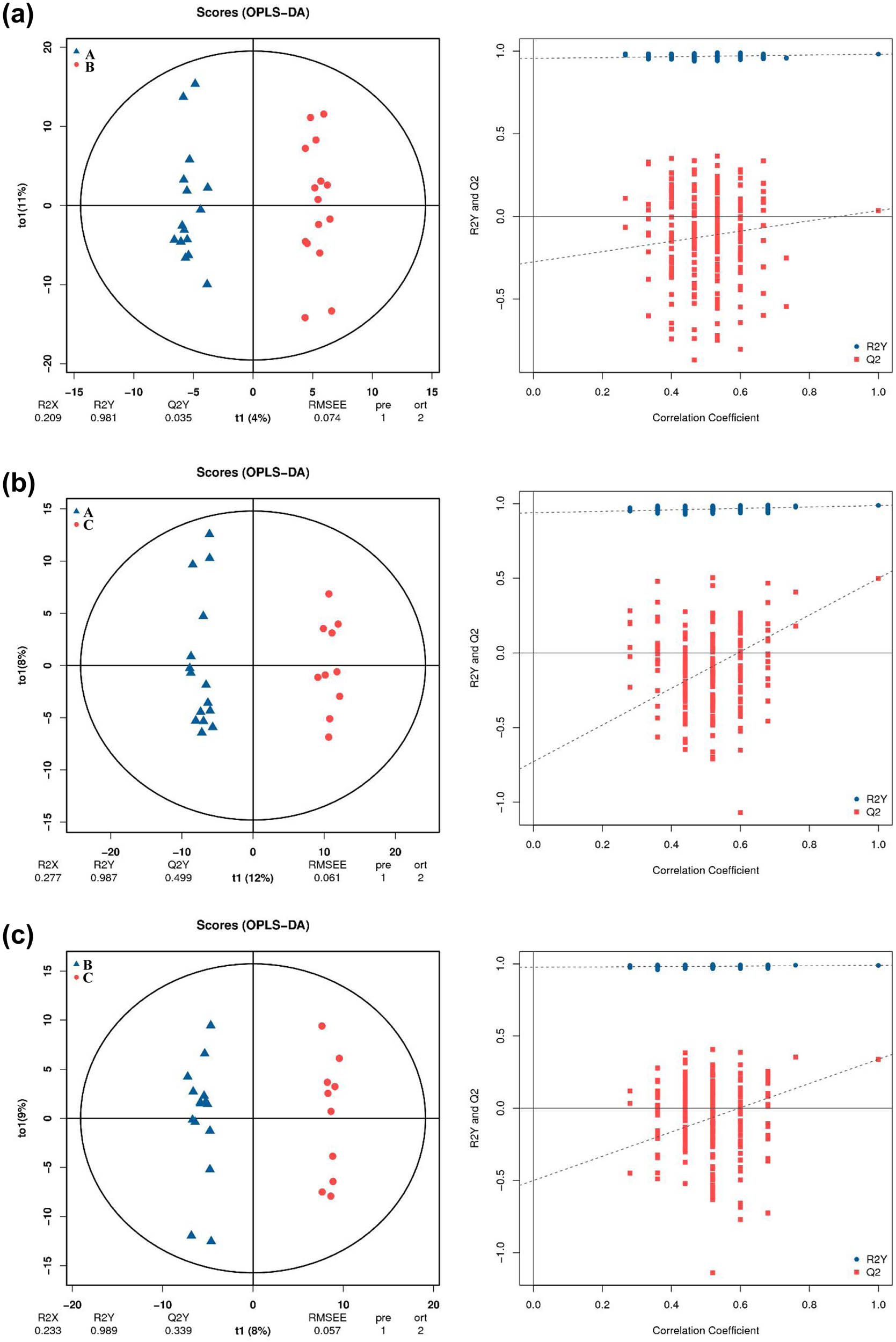
OPLS-DA score plots and OPLS-DA permutation test of serum metabolic profiling. (a) OPLS-DA score plots and OPLS-DA permutation test in B vs A. (b) OPLS-DA score plots and OPLS-DA permutation test in C vs A. (c) OPLS-DA score plots and OPLS-DA permutation test in C vs B.
3.4 Identification of potential metabolites related to vitamin D
The VIP and P values were used to reveal the importance of metabolites. Differential metabolites were screened based on the standard with VIP > 1 and P < 0.05. Of 38 differential metabolites, seven, 34, and nine were significantly altered in the B vs A, C vs A and C vs B groups, respectively (Figure 3a, Table 3). Compared with the A group, two metabolites were upregulated in the B group, including hexanoyl glycine and 7-ketodeoxycholic acid, while five were downregulated, including urocanic acid, dl-stachydrine, stachydrine, cyclopentylglycine and 1-methylpiperidine-2-carboxylic acid (Figure 3b). Compared with the A group, 27 metabolites were upregulated in the C group, including 7-ketolithocholic acid, 12-ketolithocholic acid, apocholic acid, d-fructose 6-phosphate-disodium salt, and d-mannose 6-phosphate, while seven metabolites were downregulated, including guanine, 2-hydroxy-6-aminopurine, dl-stachydrine, stachydrine and 1-methylpiperidine-2-carboxylic acid (Figure 3c). Compared with the B group, six metabolites were upregulated in the C group, including N-arachidene glycine, 7-ketolithocholic acid, 12-ketolithocholic acid, apocholic acid, d-mannose 6-phosphate and 2-furoylglycine, while three metabolites were downregulated, including Gly-Val, 2-hydroxy-6-aminopurine, and guanine (Figure 3d). Interestingly, there were five common upregulated metabolites and two common downregulated metabolites between the C vs A and C vs B groups (Figure 3e). N-arachidene glycine, 7-ketolithocholic acid, 12-ketolithocholic acid, apocholic acid and d-mannose 6-phosphate were upregulated, while 2-hydroxy-6-aminopurine and guanine were downregulated in the C group compared with the A or B groups (Table 3).
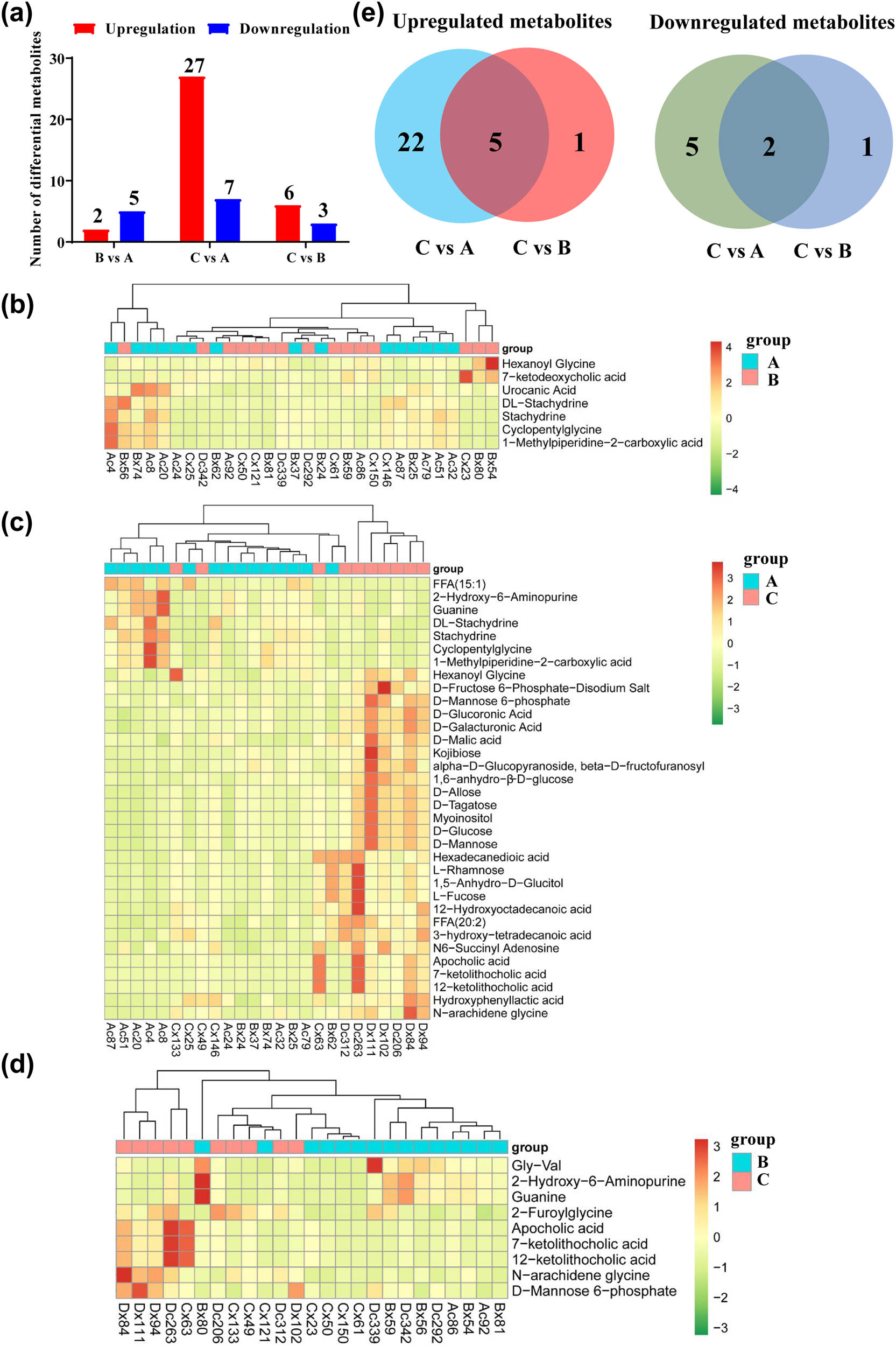
Analyses of differential metabolites in people with different concentrations of vitamin D. (a) The number of differentially upregulated and downregulated metabolites in B vs A, C vs A, and C vs B groups. (b) The heatmap of the metabolites in the B vs A group. (c) The heatmap of the metabolites in the C vs A group. (d) The heatmap of the metabolites in the C vs B group. (e) Venn diagram comparison of upregulated and downregulated metabolites between the C vs A and C vs B groups.
Identification results of differential metabolites in B vs A, C vs A, and C vs B groups in serum
| B vs A | Name | A_Mean | B_Mean | Fold_change | log2FC | P value | VIP | Regulated |
|---|---|---|---|---|---|---|---|---|
| Hexanoyl glycine | 1.31 × 10⁻⁶ | 2.63 × 10⁻⁶ | 2.005967 | 0.844079 | 0.040607 | 1.905295 | Up | |
| 7-Ketodeoxycholic acid | 3.86 × 10⁻⁷ | 9.76 × 10⁻⁷ | 2.529795 | 1.389847 | 0.033554 | 1.98678 | Up | |
| Urocanic acid | 1.82 × 10⁻⁵ | 8.47 × 10⁻⁶ | 0.46546 | −0.98821 | 0.013973 | 2.055689 | Down | |
| dl-Stachydrine | 0.000224 | 9.33 × 10⁻⁵ | 0.41736 | −1.62124 | 0.037106 | 1.935163 | Down | |
| Stachydrine | 0.001707 | 0.000579 | 0.339247 | −1.44771 | 0.006879 | 2.3834 | Down | |
| Cyclopentylglycine | 0.00018 | 8.63 × 10⁻⁵ | 0.480418 | −0.94127 | 0.019105 | 2.125388 | Down | |
| 1-Methylpiperidine-2-carboxylic acid | 0.00018 | 8.63 × 10⁻⁵ | 0.480418 | −0.94127 | 0.019105 | 2.125388 | Down |
| C vs A | Name | A_Mean | C_Mean | Fold_change | log2FC | P value | VIP | Regulated |
|---|---|---|---|---|---|---|---|---|
| Hexanoyl glycine | 1.31 × 10⁻⁶ | 2.82 × 10⁻⁶ | 2.151301 | 1.161114 | 0.007712 | 1.692944 | Up | |
| 1,5-Anhydro-d-glucitol | 1.71 × 10⁻⁵ | 3.77 × 10⁻⁵ | 2.200946 | 1.230686 | 0.039567 | 1.378615 | Up | |
| d-Glucose | 9.78 × 10⁻⁶ | 1.96 × 10⁻⁵ | 2.001923 | 0.970512 | 0.001199 | 2.06755 | Up | |
| d-Mannose | 9.78 × 10⁻⁶ | 1.96 × 10⁻⁵ | 2.001923 | 0.970512 | 0.001199 | 2.06755 | Up | |
| l-Fucose | 1.71 × 10⁻⁵ | 3.77 × 10⁻⁵ | 2.200946 | 1.230686 | 0.039567 | 1.378615 | Up | |
| l-Rhamnose | 1.71 × 10⁻⁵ | 3.77 × 10⁻⁵ | 2.200946 | 1.230686 | 0.039567 | 1.378615 | Up | |
| d-Glucoronic acid | 7.13 × 10⁻⁶ | 1.75 × 10⁻⁵ | 2.460647 | 1.27646 | 0.00165 | 2.084885 | Up | |
| FFA(20:2) | 1.18 × 10⁻⁶ | 2.36 × 10⁻⁶ | 2.00392 | 1.051267 | 0.001095 | 1.93024 | Up | |
| N6-Succinyl adenosine | 1.18 × 10⁻⁶ | 2.44 × 10⁻⁶ | 2.074618 | 1.116866 | 0.001011 | 1.987407 | Up | |
| d-Fructose 6-phosphate-disodium salt | 2.89 × 10⁻⁶ | 9.52 × 10⁻⁶ | 3.297107 | 1.45351 | 0.017558 | 1.666147 | Up | |
| Hydroxyphenyllactic acid | 3.99 × 10⁻⁶ | 8.15 × 10⁻⁶ | 2.042949 | 1.235163 | 0.003343 | 1.714463 | Up | |
| d-Malic acid | 1.8 × 10⁻⁶ | 4 × 10⁻⁶ | 2.226528 | 1.228234 | 0.002488 | 1.850066 | Up | |
| Hexadecanedioic acid | 0.000104 | 0.000219 | 2.101325 | 1.139583 | 0.026595 | 1.460663 | Up | |
| Myoinositol | 9.78 × 10⁻⁶ | 1.96 × 10⁻⁵ | 2.001923 | 0.970512 | 0.001199 | 2.06755 | Up | |
| N-Arachidene glycine | 6.95 × 10⁻⁷ | 1.72 × 10⁻⁶ | 2.474231 | 1.256188 | 0.007601 | 1.818215 | Up | |
| 7-Ketolithocholic acid | 2.05 × 10⁻⁵ | 0.000211 | 10.33455 | 2.534241 | 0.016816 | 1.79233 | Up | |
| 1,6-Anhydro-β-d-glucose | 2.2 × 10⁻⁶ | 5.55 × 10⁻⁶ | 2.524028 | 1.228959 | 0.003908 | 1.913047 | Up | |
| 12-Ketolithocholic acid | 2.05 × 10⁻⁵ | 0.000211 | 10.33455 | 2.534241 | 0.016816 | 1.79233 | Up | |
| Apocholic acid | 2.05 × 10⁻⁵ | 0.000211 | 10.33455 | 2.534241 | 0.016816 | 1.79233 | Up | |
| d-Mannose 6-phosphate | 5.2 × 10⁻⁶ | 1.44 × 10⁻⁵ | 2.769348 | 1.285293 | 0.011309 | 1.708365 | Up | |
| 12-Hydroxyoctadecanoic acid | 6.16 × 10⁻⁶ | 1.44 × 10⁻⁵ | 2.344905 | 1.189824 | 0.008935 | 1.856682 | Up | |
| d-Galacturonic Acid | 7.13 × 10⁻⁶ | 1.75 × 10⁻⁵ | 2.460647 | 1.27646 | 0.00165 | 2.084885 | Up | |
| d-Tagatose | 9.78 × 10⁻⁶ | 1.96 × 10⁻⁵ | 2.001923 | 0.970512 | 0.001199 | 2.06755 | Up | |
| 3-Hydroxy-tetradecanoic acid | 2.64 × 10⁻⁵ | 5.55 × 10⁻⁵ | 2.102486 | 1.183012 | 0.000731 | 1.953677 | Up | |
| d-Allose | 9.78 × 10⁻⁶ | 1.96 × 10⁻⁵ | 2.001923 | 0.970512 | 0.001199 | 2.06755 | Up | |
| Kojibiose | 2.1 × 10⁻⁵ | 5.83 × 10⁻⁵ | 2.783261 | 1.278691 | 0.019954 | 1.563984 | Up | |
| alpha-d-Glucopyranoside, beta-d-fructofuranosyl | 7.07 × 10⁻⁶ | 1.72 × 10⁻⁵ | 2.426247 | 1.217379 | 0.027871 | 1.445197 | Up | |
| FFA(15:1) | 0.000521 | 5.16 × 10⁻⁵ | 0.098985 | −2.38714 | 0.002171 | 1.516013 | Down | |
| 2-Hydroxy-6-aminopurine | 3.14 × 10⁻⁶ | 8.59 × 10⁻⁷ | 0.273076 | −2.29488 | 0.003089 | 1.397046 | Down | |
| dl-Stachydrine | 0.000224 | 7.02 × 10⁻⁵ | 0.313853 | −1.66445 | 0.00328 | 1.432255 | Down | |
| Guanine | 3.14 × 10⁻⁶ | 8.59 × 10⁻⁷ | 0.273076 | −2.29488 | 0.003089 | 1.397046 | Down | |
| Stachydrine | 0.001707 | 0.000566 | 0.331413 | −1.62896 | 0.00725 | 1.344179 | Down | |
| Cyclopentylglycine | 0.00018 | 8.12 × 10⁻⁵ | 0.45202 | −0.841 | 0.009717 | 1.290841 | Down | |
| 1-Methylpiperidine-2-carboxylic acid | 0.00018 | 8.12 × 10⁻⁵ | 0.45202 | −0.841 | 0.009717 | 1.290841 | Down |
| C vs B | Name | B_Mean | C_Mean | Fold_change | log2FC | P value | VIP | Regulated |
|---|---|---|---|---|---|---|---|---|
| N-Arachidene glycine | 6.96 × 10⁻⁷ | 1.72 × 10⁻⁶ | 2.471037 | 1.177458 | 0.007508 | 2.355552 | Up | |
| 7-Ketolithocholic acid | 3.75 × 10⁻⁵ | 0.000211 | 5.633176 | 1.875363 | 0.026005 | 2.005959 | Up | |
| 12-Ketolithocholic acid | 3.75 × 10⁻⁵ | 0.000211 | 5.633176 | 1.875363 | 0.026005 | 2.005959 | Up | |
| Apocholic acid | 3.75 × 10⁻⁵ | 0.000211 | 5.633176 | 1.875363 | 0.026005 | 2.005959 | Up | |
| d-Mannose 6-phosphate | 6.38 × 10⁻⁶ | 1.44 × 10⁻⁵ | 2.257515 | 0.996863 | 0.022986 | 2.014334 | Up | |
| 2-Furoylglycine | 3.49 × 10⁻⁶ | 7.17 × 10⁻⁶ | 2.056719 | 1.132398 | 0.00245 | 2.216046 | Up | |
| Gly-Val | 5.12 × 10⁻⁶ | 2.15 × 10⁻⁶ | 0.420746 | −0.50897 | 0.042666 | 1.278769 | Down | |
| 2-Hydroxy-6-aminopurine | 2.49 × 10⁻⁶ | 8.59 × 10⁻⁷ | 0.344707 | −1.4607 | 0.031704 | 1.483084 | Down | |
| Guanine | 2.49 × 10⁻⁶ | 8.59 × 10⁻⁷ | 0.344707 | −1.4607 | 0.031704 | 1.483084 | Down |
3.5 Metabolic pathway analysis of potential metabolites
Metabolic pathway enrichment analysis was carried out using the KEGG database. Due to the deficiency of vitamin D in the C group, we focused on the metabolic pathways in the C vs B and C vs A groups. Differentially expressed metabolites in the C vs B group were mainly involved in the lysosome, amino sugar and nucleotide sugar metabolism, fructose and mannose metabolism and purine metabolism (Figure 4a). Differentially expressed metabolites in the C vs A group were mainly related to fructose and mannose metabolism, amino sugar and nucleotide sugar metabolism, ABC transporters and galactose metabolism (Figure 4b).
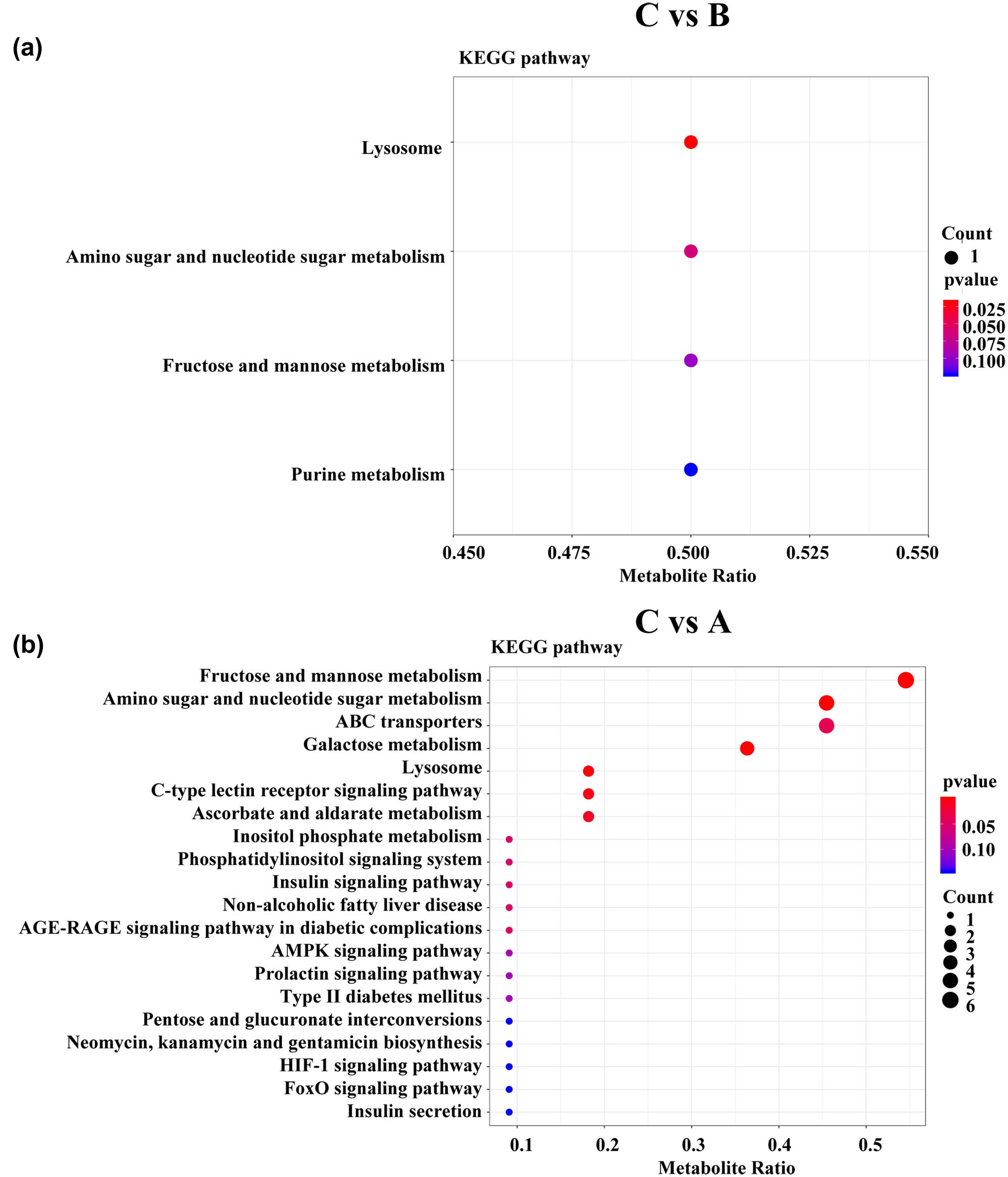
Analyses of metabolic pathways. (a) KEGG pathway analyses of the differential metabolites in C vs B. (b) KEGG pathway analyses of the differential metabolites in C vs A. Each point represents one metabolic pathway. The size of the dots indicates the number of metabolites. Circle colours indicate pathway enrichment significance.
4 Discussion
Vitamin D has a variety of biological functions, including anti-oxidation, anti-inflammation, blood pressure control, immune regulation, apoptosis inhibition and anti-angiogenesis [17,18,19,20]. Some studies demonstrated that 25(OH)D can be significantly reduced in pre-type 2 diabetes mellitus, and the regulation of 1,25(OH)2D3 on oxidative stress is dependent on plasma glucose concentration [21,22]. In this study, we found that 46.67% of people with 25(OH)D ≥40 ng/mL were diagnosed with prediabetes, 86.67% of people with 30–40 ng/mL of 25(OH)D were diagnosed with prediabetes or diabetes, and all people with 25(OH)D <30 ng/mL were diagnosed with prediabetes or diabetes. At the same time, with the decrease of 25(OH)D concentration, HbA1c, FBG, FINS, TXNIP and HOMA-IR were increased, whereas HOMA-β was decreased. These results confirm that vitamin D reduction was closely related to blood glucose disorder, pancreatic β cell secretion disorder and insulin resistance.
In the present study, we found that the levels of TC and LDL were increased with a decrease in 25(OH)D concentration. Cholesterol is essential to all cell membranes and exists inside and outside cells. Lipoprotein particles transport cholesterol and other non-polar substances in plasma [23]. LDL consists of cholesterol, protein and phospholipid shell. It is the leading carrier of cholesterol in peripheral tissues. Its components are easily oxidised to produce oxidised LDL [24]. 7-Ketone cholesterol is the most abundant oxysterol in oxidised LDL, which can repress the rate-limiting step in bile acid biosynthesis and strongly suppress the rate-limiting enzyme HMG-CoA reductase in cholesterol biosynthesis [25,26,27]. It is an endogenous regulator of cholesterol biosynthesis. These results suggested that the 25(OH)D concentration decrease was closely related to cholesterol metabolism disorder.
In this study, we discovered that the expression of bile acid metabolites, such as 7-ketodeoxycholic acid, 7-ketolithocholic acid, 12-ketolithocholic acid and apocholic acid, was significantly upregulated when 25(OH)D was less than 30 ng/mL. Bile acids are synthesised by cholesterol in liver parenchymal cells through a classical pathway intervened by cholesterol 7α -hydroxylase (CYP7A1) and an alternate pathway intervened by sterol 27-hydroxylase (CYP27A1). At least 75% of bile acids are produced by the classical pathway under normal conditions. Deoxycholic acid and chenodeoxycholic acid strongly induce 7α- and 7β-hydroxysteroid dehydrogenase to mediate bile metabolism [28]. Elevated lithocholic acid levels during cholestasis were thought to cause liver damage by inducing apoptotic cell death [29]. Over-physiological dose of lithocholic acid can lead to oxidative stress and DNA damage and induce apoptosis of hepatocytes and colonic epithelial cells. Apocholic acid is a dehydrated product of cholic acid and has carcinogenic activity [30]. As a ligand of G protein-coupled receptor, such as TGR5, cholic acid can regulate its synthesis and hepatoenteric recycling and the homeostasis of TG, cholesterol, energy and glucose [31]. Our findings suggested that the disorder of glucose and lipid metabolism and insulin resistance made the bile acid metabolism in the liver overload and further aggravated the oxidative stress of the liver.
Primary bile acids produced by the liver combine with glycine to form conjugated bile acids [32]. In our study, we discovered that hexanoyl glycine, N-arachidene glycine, apocholic acid, 2-furoylglycine and d-mannose-6-phosphate were significantly upregulated, and cyclopentylglycine, Gly-Val and 2-hydroxy-6-aminopurine were significantly downregulated when 25(OH)D was under 30 ng/mL, which were closely associated with bile acid metabolism. The abnormal expression of these glycine derivatives was closely related to cholesterol metabolism.
Cholesterol can be oxidised in the skin to 7-dehydrocholesterol (7DHC), which is converted to vitamin D3 by ultraviolet irradiation. Ultraviolet irradiation reduced the expression of 7-dehydrocholesterol reductase (DHCR7), which converted 7DHC into cholesterol. CYP27A1, CYP2R1 and CYP27B1 are critical enzymes in active vitamin D synthesis. Ultraviolet irradiation could significantly upregulate CYP27B1 and promote the synthesis of 1α,25(OH)2D3 [33]. CYP2R1 mRNA dramatically declined in the liver of mice fed with high-fat diet [34]. Therefore, the decrease in 25(OH)VD levels in people with abnormal glucose metabolism in our study may be related to the upregulation of DHCR7 and downregulation of CYP27B1 in the body under the condition of excessive energy load, which leads to vitamin D synthesis disorder and further aggravates oxidative stress and chronic inflammation.
The current study had several limitations. We just analysed the clinical characteristics and compared the differential metabolites and related pathways in people with different vitamin D levels using UPLC-MS/MS. We discovered that the disorder of vitamin D metabolism might be associated with cholesterol metabolism and bile acid biosynthesis. However, there is a lack of validation of differential metabolites involved in these processes. In addition, the potential mechanism of abnormal vitamin D metabolism was not further investigated via in vitro and in vivo experiments. Our findings can guide future research in abnormal vitamin D metabolism.
In conclusion, we performed a serum metabolic profiling study in people with different levels of vitamin D. A total of seven, 34 and nine differential metabolites were identified in B vs A, C vs A and C vs B groups, respectively. Moreover, 7-ketolithocholic acid, 12-ketolithocholic acid, apocholic acid, N-arachidene glycine and d-mannose 6-phosphate were associated with cholesterol metabolism and bile acid biosynthesis. This study will lay the foundation for further research on vitamin D metabolism.
Acknowledgments
Not applicable.
-
Funding information: This study was supported by Science and Technology benefit program of Ningxia Hui Autonomous Region in 2022 (2022CMG03031), Local science and technology development special projects under the guidance of Ningxia Department of Science and Technology [(2019) No. 49] and Ningxia Natural Science Foundation (2022AAC03732).
-
Conflict of interest: The authors declare that there is no conflict of interest.
-
Data availability statement: The data sets used and/or analysed during the current study are available from the corresponding author on reasonable request.
References
[1] Kim HK, Chung HJ, Le HG, Na BK, Cho MC. Serum 24,25-dihydroxyvitamin D level in general Korean population and its relationship with other vitamin D biomarkers. PLoS One. 2021;16:e0246541.10.1371/journal.pone.0246541Search in Google Scholar PubMed PubMed Central
[2] Holick MF, Binkley NC, Bischoff-Ferrari HA, Gordon CM, Hanley DA, Heaney RP, et al. Evaluation, treatment, and prevention of vitamin D deficiency: an Endocrine Society clinical practice guideline. J Clin Endocrinol Metab. 2011;96:1911–30.10.1210/jc.2011-0385Search in Google Scholar PubMed
[3] Walsh JS, Bowles S, Evans AL. Vitamin D in obesity. Curr Opin Endocrinol Diabetes Obes. 2017;24:389–94.10.1097/MED.0000000000000371Search in Google Scholar PubMed
[4] Barchetta I, Cimini FA, Cavallo MG. Vitamin D supplementation and non-alcoholic fatty liver disease: present and future. Nutrients. 2017;9(9):1015.10.3390/nu9091015Search in Google Scholar PubMed PubMed Central
[5] Fazelian S, Amani R, Paknahad Z, Kheiri S, Khajehali L. Effect of vitamin D supplement on mood status and inflammation in vitamin D deficient type 2 diabetic women with anxiety: A randomized clinical trial. Int J Prev Med. 2019;10:17.10.4103/ijpvm.IJPVM_174_18Search in Google Scholar PubMed PubMed Central
[6] Omidian M, Mahmoudi M, Abshirini M, Eshraghian MR, Javanbakht MH, Zarei M, et al. Effects of vitamin D supplementation on depressive symptoms in type 2 diabetes mellitus patients: Randomized placebo-controlled double-blind clinical trial. Diabetes Metab Syndr. 2019;13:2375–80.10.1016/j.dsx.2019.06.011Search in Google Scholar PubMed
[7] Razzaque MS. Can adverse effects of excessive vitamin D supplementation occur without developing hypervitaminosis D? J Steroid Biochem Mol Biol. 2018;180:81–6.10.1016/j.jsbmb.2017.07.006Search in Google Scholar PubMed
[8] Tao YL, Tang XL, Guan CH. Advances in the effects of supplementation vitamin D on metabolic syndrome. J Hainan Med Univ. 2021;27:396–400.Search in Google Scholar
[9] Al-Agha AE, Alafif MM, Abd-Elhameed IA. Glycemic control, complications, and associated autoimmune diseases in children and adolescents with type 1 diabetes in Jeddah, Saudi Arabia. Saudi Med J. 2015;36:26–31.10.15537/smj.2015.1.9829Search in Google Scholar PubMed PubMed Central
[10] Kostoglou-Athanassiou I, Athanassiou P, Gkountouvas A, Kaldrymides P. Vitamin D and glycemic control in diabetes mellitus type 2. Ther Adv Endocrinol Metab. 2013;4:122–8.10.1177/2042018813501189Search in Google Scholar PubMed PubMed Central
[11] Sung CC, Liao MT, Lu KC, Wu CC. Role of vitamin D in insulin resistance. J Biomed Biotechnol. 2012;2012:634195.10.1155/2012/634195Search in Google Scholar PubMed PubMed Central
[12] Kongsbak M, Levring TB, Geisler C, von Essen MR. The vitamin d receptor and T cell function. Front Immunol. 2013;4:148.10.3389/fimmu.2013.00148Search in Google Scholar PubMed PubMed Central
[13] Xie G, Wang L, Chen T, Zhou K, Zhang Z, Li J, et al. A metabolite array technology for precision medicine. Anal Chem. 2021;93:5709–17.10.1021/acs.analchem.0c04686Search in Google Scholar PubMed
[14] Rodriguez-Morato J, Pozo OJ, Marcos J. Targeting human urinary metabolome by LC-MS/MS: a review. Bioanalysis. 2018;10:489–516.10.4155/bio-2017-0285Search in Google Scholar PubMed
[15] Huang R, Cathey S, Pollard L, Wood T. UPLC-MS/MS analysis of urinary free oligosaccharides for lysosomal storage diseases: Diagnosis and potential treatment monitoring. Clin Chem. 2018;64:1772–9.10.1373/clinchem.2018.289645Search in Google Scholar PubMed
[16] Ly TK, Ho TD, Behra P, Nhu-Trang TT. Determination of 400 pesticide residues in green tea leaves by UPLC-MS/MS and GC-MS/MS combined with QuEChERS extraction and mixed-mode SPE clean-up method. Food Chem. 2020;326:126928.10.1016/j.foodchem.2020.126928Search in Google Scholar PubMed
[17] Plum LA, DeLuca HF. Vitamin D, disease and therapeutic opportunities. Nat Rev Drug Discov. 2010;9:941–55.10.1038/nrd3318Search in Google Scholar PubMed
[18] Chagas CE, Borges MC, Martini LA, Rogero MM. Focus on vitamin D, inflammation and type 2 diabetes. Nutrients. 2012;4:52–67.10.3390/nu4010052Search in Google Scholar PubMed PubMed Central
[19] Guillot X, Semerano L, Saidenberg-Kermanac’h N, Falgarone G, Boissier MC. Vitamin D and inflammation. Jt Bone Spine. 2010;77:552–7.10.1016/j.jbspin.2010.09.018Search in Google Scholar PubMed
[20] Tarcin O, Yavuz DG, Ozben B, Telli A, Ogunc AV, Yuksel M, et al. Effect of vitamin D deficiency and replacement on endothelial function in asymptomatic subjects. J Clin Endocrinol Metab. 2009;94:4023–30.10.1210/jc.2008-1212Search in Google Scholar PubMed
[21] Xie X, Bai G, Liu H, Zhang L, He Y, Qiang D, et al. Early predictors in the onset of type 2 diabetes at different fasting blood glucose levels. Diabetes Metab Syndr Obes. 2021;14:1485–92.10.2147/DMSO.S301352Search in Google Scholar PubMed PubMed Central
[22] Abu El Maaty MA, Almouhanna F, Wolfl S. Expression of TXNIP in cancer cells and regulation by 1,25(OH)(2)D(3): Is it really the Vitamin D(3) upregulated protein? Int J Mol Sci. 2018;19:796.10.3390/ijms19030796Search in Google Scholar PubMed PubMed Central
[23] Cox RA, Garcia-Palmieri MR. Cholesterol, triglycerides, and associated lipoproteins. In: Walker HK, Hall WD, Hurst JW, editors. Clinical Methods: The History, Physical, and Laboratory Examinations. Boston: Butterworths; 1990.Search in Google Scholar
[24] Dias HK, Brown CL, Polidori MC, Lip GY, Griffiths HR. LDL-lipids from patients with hypercholesterolaemia and Alzheimer’s disease are inflammatory to microvascular endothelial cells: mitigation by statin intervention. Clin Sci (Lond). 2015;129:1195–206.10.1042/CS20150351Search in Google Scholar PubMed PubMed Central
[25] Oh MJ, Zhang C, LeMaster E, Adamos C, Berdyshev E, Bogachkov Y, et al. Oxidized LDL signals through Rho-GTPase to induce endothelial cell stiffening and promote capillary formation. J Lipid Res. 2016;57:791–808.10.1194/jlr.M062539Search in Google Scholar PubMed PubMed Central
[26] Lyons MA, Brown AJ. 7-Ketocholesterol. Int J Biochem Cell Biol. 1999;31:369–75.10.1016/S1357-2725(98)00123-XSearch in Google Scholar PubMed
[27] Brown AJ, Dean RT, Jessup W. Free and esterified oxysterol: formation during copper-oxidation of low density lipoprotein and uptake by macrophages. J Lipid Res. 1996;37:320–35.10.1016/S0022-2275(20)37619-7Search in Google Scholar
[28] Sutherland JD, Macdonald IA. The metabolism of primary, 7-oxo, and 7 beta-hydroxy bile acids by Clostridium absonum. J Lipid Res. 1982;23:726–32.10.1016/S0022-2275(20)38105-0Search in Google Scholar
[29] Barrasa JI, Olmo N, Lizarbe MA, Turnay J. Bile acids in the colon, from healthy to cytotoxic molecules. Toxicol Vitro. 2013;27:964–77.10.1016/j.tiv.2012.12.020Search in Google Scholar PubMed
[30] Lacassagne A, Buu-Hoi NP, Zajdela F. Carcinogenic activity of apocholic acid. Nature. 1961;190:1007–8.10.1038/1901007a0Search in Google Scholar PubMed
[31] Thomas C, Pellicciari R, Pruzanski M, Auwerx J, Schoonjans K. Targeting bile-acid signalling for metabolic diseases. Nat Rev Drug Discov. 2008;7:678–93.10.1038/nrd2619Search in Google Scholar PubMed
[32] Adeva-Andany M, Souto-Adeva G, Ameneiros-Rodriguez E, Fernandez-Fernandez C, Donapetry-Garcia C, Dominguez-Montero A. Insulin resistance and glycine metabolism in humans. Amino Acids. 2018;50:11–27.10.1007/s00726-017-2508-0Search in Google Scholar PubMed
[33] Shin MH, Lee Y, Kim MK, Lee DH, Chung JH. UV increases skin-derived 1alpha,25-dihydroxyvitamin D3 production, leading to MMP-1 expression by altering the balance of vitamin D and cholesterol synthesis from 7-dehydrocholesterol. J Steroid Biochem Mol Biol. 2019;195:105449.10.1016/j.jsbmb.2019.105449Search in Google Scholar PubMed
[34] Roizen JD, Long C, Casella A, O’Lear L, Caplan I, Lai M, et al. Obesity decreases hepatic 25-hydroxylase activity causing low serum 25-hydroxyvitamin D. J Bone Min Res. 2019;34:1068–73.10.1002/jbmr.3686Search in Google Scholar PubMed PubMed Central
© 2023 the author(s), published by De Gruyter
This work is licensed under the Creative Commons Attribution 4.0 International License.
Articles in the same Issue
- Research Articles
- Exosomes derived from mesenchymal stem cells overexpressing miR-210 inhibits neuronal inflammation and contribute to neurite outgrowth through modulating microglia polarization
- Current situation of acute ST-segment elevation myocardial infarction in a county hospital chest pain center during an epidemic of novel coronavirus pneumonia
- circ-IARS depletion inhibits the progression of non-small-cell lung cancer by circ-IARS/miR-1252-5p/HDGF ceRNA pathway
- circRNA ITGA7 restrains growth and enhances radiosensitivity by up-regulating SMAD4 in colorectal carcinoma
- WDR79 promotes aerobic glycolysis of pancreatic ductal adenocarcinoma (PDAC) by the suppression of SIRT4
- Up-regulation of collagen type V alpha 2 (COL5A2) promotes malignant phenotypes in gastric cancer cell via inducing epithelial–mesenchymal transition (EMT)
- Inhibition of TERC inhibits neural apoptosis and inflammation in spinal cord injury through Akt activation and p-38 inhibition via the miR-34a-5p/XBP-1 axis
- 3D-printed polyether-ether-ketone/n-TiO2 composite enhances the cytocompatibility and osteogenic differentiation of MC3T3-E1 cells by downregulating miR-154-5p
- Propofol-mediated circ_0000735 downregulation restrains tumor growth by decreasing integrin-β1 expression in non-small cell lung cancer
- PVT1/miR-16/CCND1 axis regulates gastric cancer progression
- Silencing of circ_002136 sensitizes gastric cancer to paclitaxel by targeting the miR-16-5p/HMGA1 axis
- Short-term outcomes after simultaneous gastrectomy plus cholecystectomy in gastric cancer: A pooling up analysis
- SCARA5 inhibits oral squamous cell carcinoma via inactivating the STAT3 and PI3K/AKT signaling pathways
- Molecular mechanism by which the Notch signaling pathway regulates autophagy in a rat model of pulmonary fibrosis in pigeon breeder’s lung
- lncRNA TPT1-AS1 promotes cell migration and invasion in esophageal squamous-cell carcinomas by regulating the miR-26a/HMGA1 axis
- SIRT1/APE1 promotes the viability of gastric cancer cells by inhibiting p53 to suppress ferroptosis
- Glycoprotein non-metastatic melanoma B interacts with epidermal growth factor receptor to regulate neural stem cell survival and differentiation
- Treatments for brain metastases from EGFR/ALK-negative/unselected NSCLC: A network meta-analysis
- Association of osteoporosis and skeletal muscle loss with serum type I collagen carboxyl-terminal peptide β glypeptide: A cross-sectional study in elder Chinese population
- circ_0000376 knockdown suppresses non-small cell lung cancer cell tumor properties by the miR-545-3p/PDPK1 pathway
- Delivery in a vertical birth chair supported by freedom of movement during labor: A randomized control trial
- UBE2J1 knockdown promotes cell apoptosis in endometrial cancer via regulating PI3K/AKT and MDM2/p53 signaling
- Metabolic resuscitation therapy in critically ill patients with sepsis and septic shock: A pilot prospective randomized controlled trial
- Lycopene ameliorates locomotor activity and urinary frequency induced by pelvic venous congestion in rats
- UHRF1-induced connexin26 methylation is involved in hearing damage triggered by intermittent hypoxia in neonatal rats
- LINC00511 promotes melanoma progression by targeting miR-610/NUCB2
- Ultra-high-performance liquid chromatography-tandem mass spectrometry analysis of serum metabolomic characteristics in people with different vitamin D levels
- Role of Jumonji domain-containing protein D3 and its inhibitor GSK-J4 in Hashimoto’s thyroiditis
- circ_0014736 induces GPR4 to regulate the biological behaviors of human placental trophoblast cells through miR-942-5p in preeclampsia
- Monitoring of sirolimus in the whole blood samples from pediatric patients with lymphatic anomalies
- Effects of osteogenic growth peptide C-terminal pentapeptide and its analogue on bone remodeling in an osteoporosis rat model
- A novel autophagy-related long non-coding RNAs signature predicting progression-free interval and I-131 therapy benefits in papillary thyroid carcinoma
- WGCNA-based identification of potential targets and pathways in response to treatment in locally advanced breast cancer patients
- Radiomics model using preoperative computed tomography angiography images to differentiate new from old emboli of acute lower limb arterial embolism
- Dysregulated lncRNAs are involved in the progress of myocardial infarction by constructing regulatory networks
- Single-arm trial to evaluate the efficacy and safety of baclofen in treatment of intractable hiccup caused by malignant tumor chemotherapy
- Genetic polymorphisms of MRPS30-DT and NINJ2 may influence lung cancer risk
- Efficacy of immune checkpoint inhibitors in patients with KRAS-mutant advanced non-small cell lung cancer: A retrospective analysis
- Pyroptosis-based risk score predicts prognosis and drug sensitivity in lung adenocarcinoma
- Upregulation of lncRNA LANCL1-AS1 inhibits the progression of non-small-cell lung cancer via the miR-3680-3p/GMFG axis
- CircRANBP17 modulated KDM1A to regulate neuroblastoma progression by sponging miR-27b-3p
- Exosomal miR-93-5p regulated the progression of osteoarthritis by targeting ADAMTS9
- Downregulation of RBM17 enhances cisplatin sensitivity and inhibits cell invasion in human hypopharyngeal cancer cells
- HDAC5-mediated PRAME regulates the proliferation, migration, invasion, and EMT of laryngeal squamous cell carcinoma via the PI3K/AKT/mTOR signaling pathway
- The association between sleep duration, quality, and nonalcoholic fatty liver disease: A cross-sectional study
- Myostatin silencing inhibits podocyte apoptosis in membranous nephropathy through Smad3/PKA/NOX4 signaling pathway
- A novel long noncoding RNA AC125257.1 facilitates colorectal cancer progression by targeting miR-133a-3p/CASC5 axis
- Impact of omicron wave and associated control measures in Shanghai on health management and psychosocial well-being of patients with chronic conditions
- Clinicopathological characteristics and prognosis of young patients aged ≤45 years old with non-small cell lung cancer
- TMT-based comprehensive proteomic profiling identifies serum prognostic signatures of acute myeloid leukemia
- The dose limits of teeth protection for patients with nasopharyngeal carcinoma undergoing radiotherapy based on the early oral health-related quality of life
- miR-30b-5p targeting GRIN2A inhibits hippocampal damage in epilepsy
- Long non-coding RNA AL137789.1 promoted malignant biological behaviors and immune escape of pancreatic carcinoma cells
- IRF6 and FGF1 polymorphisms in non-syndromic cleft lip with or without cleft palate in the Polish population
- Comprehensive analysis of the role of SFXN family in breast cancer
- Efficacy of bronchoscopic intratumoral injection of endostar and cisplatin in lung squamous cell carcinoma patients underwent conventional chemoradiotherapy
- Silencing of long noncoding RNA MIAT inhibits the viability and proliferation of breast cancer cells by promoting miR-378a-5p expression
- AG1024, an IGF-1 receptor inhibitor, ameliorates renal injury in rats with diabetic nephropathy via the SOCS/JAK2/STAT pathway
- Downregulation of KIAA1199 alleviated the activation, proliferation, and migration of hepatic stellate cells by the inhibition of epithelial–mesenchymal transition
- Exendin-4 regulates the MAPK and WNT signaling pathways to alleviate the osteogenic inhibition of periodontal ligament stem cells in a high glucose environment
- Inhibition of glycolysis represses the growth and alleviates the endoplasmic reticulum stress of breast cancer cells by regulating TMTC3
- The function of lncRNA EMX2OS/miR-653-5p and its regulatory mechanism in lung adenocarcinoma
- Tectorigenin alleviates the apoptosis and inflammation in spinal cord injury cell model through inhibiting insulin-like growth factor-binding protein 6
- Ultrasound examination supporting CT or MRI in the evaluation of cervical lymphadenopathy in patients with irradiation-treated head and neck cancer
- F-box and WD repeat domain containing 7 inhibits the activation of hepatic stellate cells by degrading delta-like ligand 1 to block Notch signaling pathway
- Knockdown of circ_0005615 enhances the radiosensitivity of colorectal cancer by regulating the miR-665/NOTCH1 axis
- Long noncoding RNA Mhrt alleviates angiotensin II-induced cardiac hypertrophy phenotypes by mediating the miR-765/Wnt family member 7B pathway
- Effect of miR-499-5p/SOX6 axis on atrial fibrosis in rats with atrial fibrillation
- Cholesterol induces inflammation and reduces glucose utilization
- circ_0004904 regulates the trophoblast cell in preeclampsia via miR-19b-3p/ARRDC3 axis
- NECAB3 promotes the migration and invasion of liver cancer cells through HIF-1α/RIT1 signaling pathway
- The poor performance of cardiovascular risk scores in identifying patients with idiopathic inflammatory myopathies at high cardiovascular risk
- miR-2053 inhibits the growth of ovarian cancer cells by downregulating SOX4
- Nucleophosmin 1 associating with engulfment and cell motility protein 1 regulates hepatocellular carcinoma cell chemotaxis and metastasis
- α-Hederin regulates macrophage polarization to relieve sepsis-induced lung and liver injuries in mice
- Changes of microbiota level in urinary tract infections: A meta-analysis
- Identification of key enzalutamide-resistance-related genes in castration-resistant prostate cancer and verification of RAD51 functions
- Falls during oxaliplatin-based chemotherapy for gastrointestinal malignancies – (lessons learned from) a prospective study
- Outcomes of low-risk birth care during the Covid-19 pandemic: A cohort study from a tertiary care center in Lithuania
- Vitamin D protects intestines from liver cirrhosis-induced inflammation and oxidative stress by inhibiting the TLR4/MyD88/NF-κB signaling pathway
- Integrated transcriptome analysis identifies APPL1/RPS6KB2/GALK1 as immune-related metastasis factors in breast cancer
- Genomic analysis of immunogenic cell death-related subtypes for predicting prognosis and immunotherapy outcomes in glioblastoma multiforme
- Circular RNA Circ_0038467 promotes the maturation of miRNA-203 to increase lipopolysaccharide-induced apoptosis of chondrocytes
- An economic evaluation of fine-needle cytology as the primary diagnostic tool in the diagnosis of lymphadenopathy
- Midazolam impedes lung carcinoma cell proliferation and migration via EGFR/MEK/ERK signaling pathway
- Network pharmacology combined with molecular docking and experimental validation to reveal the pharmacological mechanism of naringin against renal fibrosis
- PTPN12 down-regulated by miR-146b-3p gene affects the malignant progression of laryngeal squamous cell carcinoma
- miR-141-3p accelerates ovarian cancer progression and promotes M2-like macrophage polarization by targeting the Keap1-Nrf2 pathway
- lncRNA OIP5-AS1 attenuates the osteoarthritis progression in IL-1β-stimulated chondrocytes
- Overexpression of LINC00607 inhibits cell growth and aggressiveness by regulating the miR-1289/EFNA5 axis in non-small-cell lung cancer
- Subjective well-being in informal caregivers during the COVID-19 pandemic
- Nrf2 protects against myocardial ischemia-reperfusion injury in diabetic rats by inhibiting Drp1-mediated mitochondrial fission
- Unfolded protein response inhibits KAT2B/MLKL-mediated necroptosis of hepatocytes by promoting BMI1 level to ubiquitinate KAT2B
- Bladder cancer screening: The new selection and prediction model
- circNFATC3 facilitated the progression of oral squamous cell carcinoma via the miR-520h/LDHA axis
- Prone position effect in intensive care patients with SARS-COV-2 pneumonia
- Clinical observation on the efficacy of Tongdu Tuina manipulation in the treatment of primary enuresis in children
- Dihydroartemisinin ameliorates cerebral I/R injury in rats via regulating VWF and autophagy-mediated SIRT1/FOXO1 pathway
- Knockdown of circ_0113656 assuages oxidized low-density lipoprotein-induced vascular smooth muscle cell injury through the miR-188-3p/IGF2 pathway
- Low Ang-(1–7) and high des-Arg9 bradykinin serum levels are correlated with cardiovascular risk factors in patients with COVID-19
- Effect of maternal age and body mass index on induction of labor with oral misoprostol for premature rupture of membrane at term: A retrospective cross-sectional study
- Potential protective effects of Huanglian Jiedu Decoction against COVID-19-associated acute kidney injury: A network-based pharmacological and molecular docking study
- Clinical significance of serum MBD3 detection in girls with central precocious puberty
- Clinical features of varicella-zoster virus caused neurological diseases detected by metagenomic next-generation sequencing
- Collagen treatment of complex anorectal fistula: 3 years follow-up
- LncRNA CASC15 inhibition relieves renal fibrosis in diabetic nephropathy through down-regulating SP-A by sponging to miR-424
- Efficacy analysis of empirical bismuth quadruple therapy, high-dose dual therapy, and resistance gene-based triple therapy as a first-line Helicobacter pylori eradication regimen – An open-label, randomized trial
- SMOC2 plays a role in heart failure via regulating TGF-β1/Smad3 pathway-mediated autophagy
- A prospective cohort study of the impact of chronic disease on fall injuries in middle-aged and older adults
- circRNA THBS1 silencing inhibits the malignant biological behavior of cervical cancer cells via the regulation of miR-543/HMGB2 axis
- hsa_circ_0000285 sponging miR-582-3p promotes neuroblastoma progression by regulating the Wnt/β-catenin signaling pathway
- Long non-coding RNA GNAS-AS1 knockdown inhibits proliferation and epithelial–mesenchymal transition of lung adenocarcinoma cells via the microRNA-433-3p/Rab3A axis
- lncRNA UCA1 regulates miR-132/Lrrfip1 axis to promote vascular smooth muscle cell proliferation
- Twenty-four-color full spectrum flow cytometry panel for minimal residual disease detection in acute myeloid leukemia
- Hsa-miR-223-3p participates in the process of anthracycline-induced cardiomyocyte damage by regulating NFIA gene
- Anti-inflammatory effect of ApoE23 on Salmonella typhimurium-induced sepsis in mice
- Analysis of somatic mutations and key driving factors of cervical cancer progression
- Hsa_circ_0028007 regulates the progression of nasopharyngeal carcinoma through the miR-1179/SQLE axis
- Variations in sexual function after laparoendoscopic single-site hysterectomy in women with benign gynecologic diseases
- Effects of pharmacological delay with roxadustat on multi-territory perforator flap survival in rats
- Analysis of heroin effects on calcium channels in rat cardiomyocytes based on transcriptomics and metabolomics
- Risk factors of recurrent bacterial vaginosis among women of reproductive age: A cross-sectional study
- Alkbh5 plays indispensable roles in maintaining self-renewal of hematopoietic stem cells
- Study to compare the effect of casirivimab and imdevimab, remdesivir, and favipiravir on progression and multi-organ function of hospitalized COVID-19 patients
- Correlation between microvessel maturity and ISUP grades assessed using contrast-enhanced transrectal ultrasonography in prostate cancer
- The protective effect of caffeic acid phenethyl ester in the nephrotoxicity induced by α-cypermethrin
- Norepinephrine alleviates cyclosporin A-induced nephrotoxicity by enhancing the expression of SFRP1
- Effect of RUNX1/FOXP3 axis on apoptosis of T and B lymphocytes and immunosuppression in sepsis
- The function of Foxp1 represses β-adrenergic receptor transcription in the occurrence and development of bladder cancer through STAT3 activity
- Risk model and validation of carbapenem-resistant Klebsiella pneumoniae infection in patients with cerebrovascular disease in the ICU
- Calycosin protects against chronic prostatitis in rats via inhibition of the p38MAPK/NF-κB pathway
- Pan-cancer analysis of the PDE4DIP gene with potential prognostic and immunotherapeutic values in multiple cancers including acute myeloid leukemia
- The safety and immunogenicity to inactivated COVID-19 vaccine in patients with hyperlipemia
- Circ-UBR4 regulates the proliferation, migration, inflammation, and apoptosis in ox-LDL-induced vascular smooth muscle cells via miR-515-5p/IGF2 axis
- Clinical characteristics of current COVID-19 rehabilitation outpatients in China
- Luteolin alleviates ulcerative colitis in rats via regulating immune response, oxidative stress, and metabolic profiling
- miR-199a-5p inhibits aortic valve calcification by targeting ATF6 and GRP78 in valve interstitial cells
- The application of iliac fascia space block combined with esketamine intravenous general anesthesia in PFNA surgery of the elderly: A prospective, single-center, controlled trial
- Elevated blood acetoacetate levels reduce major adverse cardiac and cerebrovascular events risk in acute myocardial infarction
- The effects of progesterone on the healing of obstetric anal sphincter damage in female rats
- Identification of cuproptosis-related genes for predicting the development of prostate cancer
- Lumican silencing ameliorates β-glycerophosphate-mediated vascular smooth muscle cell calcification by attenuating the inhibition of APOB on KIF2C activity
- Targeting PTBP1 blocks glutamine metabolism to improve the cisplatin sensitivity of hepatocarcinoma cells through modulating the mRNA stability of glutaminase
- A single center prospective study: Influences of different hip flexion angles on the measurement of lumbar spine bone mineral density by dual energy X-ray absorptiometry
- Clinical analysis of AN69ST membrane continuous venous hemofiltration in the treatment of severe sepsis
- Antibiotics therapy combined with probiotics administered intravaginally for the treatment of bacterial vaginosis: A systematic review and meta-analysis
- Construction of a ceRNA network to reveal a vascular invasion associated prognostic model in hepatocellular carcinoma
- A pan-cancer analysis of STAT3 expression and genetic alterations in human tumors
- A prognostic signature based on seven T-cell-related cell clustering genes in bladder urothelial carcinoma
- Pepsin concentration in oral lavage fluid of rabbit reflux model constructed by dilating the lower esophageal sphincter
- The antihypertensive felodipine shows synergistic activity with immune checkpoint blockade and inhibits tumor growth via NFAT1 in LUSC
- Tanshinone IIA attenuates valvular interstitial cells’ calcification induced by oxidized low density lipoprotein via reducing endoplasmic reticulum stress
- AS-IV enhances the antitumor effects of propofol in NSCLC cells by inhibiting autophagy
- Establishment of two oxaliplatin-resistant gallbladder cancer cell lines and comprehensive analysis of dysregulated genes
- Trial protocol: Feasibility of neuromodulation with connectivity-guided intermittent theta-burst stimulation for improving cognition in multiple sclerosis
- LncRNA LINC00592 mediates the promoter methylation of WIF1 to promote the development of bladder cancer
- Factors associated with gastrointestinal dysmotility in critically ill patients
- Mechanisms by which spinal cord stimulation intervenes in atrial fibrillation: The involvement of the endothelin-1 and nerve growth factor/p75NTR pathways
- Analysis of two-gene signatures and related drugs in small-cell lung cancer by bioinformatics
- Silencing USP19 alleviates cigarette smoke extract-induced mitochondrial dysfunction in BEAS-2B cells by targeting FUNDC1
- Menstrual irregularities associated with COVID-19 vaccines among women in Saudi Arabia: A survey during 2022
- Ferroptosis involves in Schwann cell death in diabetic peripheral neuropathy
- The effect of AQP4 on tau protein aggregation in neurodegeneration and persistent neuroinflammation after cerebral microinfarcts
- Activation of UBEC2 by transcription factor MYBL2 affects DNA damage and promotes gastric cancer progression and cisplatin resistance
- Analysis of clinical characteristics in proximal and distal reflux monitoring among patients with gastroesophageal reflux disease
- Exosomal circ-0020887 and circ-0009590 as novel biomarkers for the diagnosis and prediction of short-term adverse cardiovascular outcomes in STEMI patients
- Upregulated microRNA-429 confers endometrial stromal cell dysfunction by targeting HIF1AN and regulating the HIF1A/VEGF pathway
- Bibliometrics and knowledge map analysis of ultrasound-guided regional anesthesia
- Knockdown of NUPR1 inhibits angiogenesis in lung cancer through IRE1/XBP1 and PERK/eIF2α/ATF4 signaling pathways
- D-dimer trends predict COVID-19 patient’s prognosis: A retrospective chart review study
- WTAP affects intracranial aneurysm progression by regulating m6A methylation modification
- Using of endoscopic polypectomy in patients with diagnosed malignant colorectal polyp – The cross-sectional clinical study
- Anti-S100A4 antibody administration alleviates bronchial epithelial–mesenchymal transition in asthmatic mice
- Prognostic evaluation of system immune-inflammatory index and prognostic nutritional index in double expressor diffuse large B-cell lymphoma
- Prevalence and antibiogram of bacteria causing urinary tract infection among patients with chronic kidney disease
- Reactive oxygen species within the vaginal space: An additional promoter of cervical intraepithelial neoplasia and uterine cervical cancer development?
- Identification of disulfidptosis-related genes and immune infiltration in lower-grade glioma
- A new technique for uterine-preserving pelvic organ prolapse surgery: Laparoscopic rectus abdominis hysteropexy for uterine prolapse by comparing with traditional techniques
- Self-isolation of an Italian long-term care facility during COVID-19 pandemic: A comparison study on care-related infectious episodes
- A comparative study on the overlapping effects of clinically applicable therapeutic interventions in patients with central nervous system damage
- Low intensity extracorporeal shockwave therapy for chronic pelvic pain syndrome: Long-term follow-up
- The diagnostic accuracy of touch imprint cytology for sentinel lymph node metastases of breast cancer: An up-to-date meta-analysis of 4,073 patients
- Mortality associated with Sjögren’s syndrome in the United States in the 1999–2020 period: A multiple cause-of-death study
- CircMMP11 as a prognostic biomarker mediates miR-361-3p/HMGB1 axis to accelerate malignant progression of hepatocellular carcinoma
- Analysis of the clinical characteristics and prognosis of adult de novo acute myeloid leukemia (none APL) with PTPN11 mutations
- KMT2A maintains stemness of gastric cancer cells through regulating Wnt/β-catenin signaling-activated transcriptional factor KLF11
- Evaluation of placental oxygenation by near-infrared spectroscopy in relation to ultrasound maturation grade in physiological term pregnancies
- The role of ultrasonographic findings for PIK3CA-mutated, hormone receptor-positive, human epidermal growth factor receptor-2-negative breast cancer
- Construction of immunogenic cell death-related molecular subtypes and prognostic signature in colorectal cancer
- Long-term prognostic value of high-sensitivity cardiac troponin-I in patients with idiopathic dilated cardiomyopathy
- Establishing a novel Fanconi anemia signaling pathway-associated prognostic model and tumor clustering for pediatric acute myeloid leukemia patients
- Integrative bioinformatics analysis reveals STAT2 as a novel biomarker of inflammation-related cardiac dysfunction in atrial fibrillation
- Adipose-derived stem cells repair radiation-induced chronic lung injury via inhibiting TGF-β1/Smad 3 signaling pathway
- Real-world practice of idiopathic pulmonary fibrosis: Results from a 2000–2016 cohort
- lncRNA LENGA sponges miR-378 to promote myocardial fibrosis in atrial fibrillation
- Diagnostic value of urinary Tamm-Horsfall protein and 24 h urine osmolality for recurrent calcium oxalate stones of the upper urinary tract: Cross-sectional study
- The value of color Doppler ultrasonography combined with serum tumor markers in differential diagnosis of gastric stromal tumor and gastric cancer
- The spike protein of SARS-CoV-2 induces inflammation and EMT of lung epithelial cells and fibroblasts through the upregulation of GADD45A
- Mycophenolate mofetil versus cyclophosphamide plus in patients with connective tissue disease-associated interstitial lung disease: Efficacy and safety analysis
- MiR-1278 targets CALD1 and suppresses the progression of gastric cancer via the MAPK pathway
- Metabolomic analysis of serum short-chain fatty acid concentrations in a mouse of MPTP-induced Parkinson’s disease after dietary supplementation with branched-chain amino acids
- Cimifugin inhibits adipogenesis and TNF-α-induced insulin resistance in 3T3-L1 cells
- Predictors of gastrointestinal complaints in patients on metformin therapy
- Prescribing patterns in patients with chronic obstructive pulmonary disease and atrial fibrillation
- A retrospective analysis of the effect of latent tuberculosis infection on clinical pregnancy outcomes of in vitro fertilization–fresh embryo transferred in infertile women
- Appropriateness and clinical outcomes of short sustained low-efficiency dialysis: A national experience
- miR-29 regulates metabolism by inhibiting JNK-1 expression in non-obese patients with type 2 diabetes mellitus and NAFLD
- Clinical features and management of lymphoepithelial cyst
- Serum VEGF, high-sensitivity CRP, and cystatin-C assist in the diagnosis of type 2 diabetic retinopathy complicated with hyperuricemia
- ENPP1 ameliorates vascular calcification via inhibiting the osteogenic transformation of VSMCs and generating PPi
- Significance of monitoring the levels of thyroid hormone antibodies and glucose and lipid metabolism antibodies in patients suffer from type 2 diabetes
- The causal relationship between immune cells and different kidney diseases: A Mendelian randomization study
- Interleukin 33, soluble suppression of tumorigenicity 2, interleukin 27, and galectin 3 as predictors for outcome in patients admitted to intensive care units
- Identification of diagnostic immune-related gene biomarkers for predicting heart failure after acute myocardial infarction
- Long-term administration of probiotics prevents gastrointestinal mucosal barrier dysfunction in septic mice partly by upregulating the 5-HT degradation pathway
- miR-192 inhibits the activation of hepatic stellate cells by targeting Rictor
- Diagnostic and prognostic value of MR-pro ADM, procalcitonin, and copeptin in sepsis
- Review Articles
- Prenatal diagnosis of fetal defects and its implications on the delivery mode
- Electromagnetic fields exposure on fetal and childhood abnormalities: Systematic review and meta-analysis
- Characteristics of antibiotic resistance mechanisms and genes of Klebsiella pneumoniae
- Saddle pulmonary embolism in the setting of COVID-19 infection: A systematic review of case reports and case series
- Vitamin C and epigenetics: A short physiological overview
- Ebselen: A promising therapy protecting cardiomyocytes from excess iron in iron-overloaded thalassemia patients
- Aspirin versus LMWH for VTE prophylaxis after orthopedic surgery
- Mechanism of rhubarb in the treatment of hyperlipidemia: A recent review
- Surgical management and outcomes of traumatic global brachial plexus injury: A concise review and our center approach
- The progress of autoimmune hepatitis research and future challenges
- METTL16 in human diseases: What should we do next?
- New insights into the prevention of ureteral stents encrustation
- VISTA as a prospective immune checkpoint in gynecological malignant tumors: A review of the literature
- Case Reports
- Mycobacterium xenopi infection of the kidney and lymph nodes: A case report
- Genetic mutation of SLC6A20 (c.1072T > C) in a family with nephrolithiasis: A case report
- Chronic hepatitis B complicated with secondary hemochromatosis was cured clinically: A case report
- Liver abscess complicated with multiple organ invasive infection caused by hematogenous disseminated hypervirulent Klebsiella pneumoniae: A case report
- Urokinase-based lock solutions for catheter salvage: A case of an upcoming kidney transplant recipient
- Two case reports of maturity-onset diabetes of the young type 3 caused by the hepatocyte nuclear factor 1α gene mutation
- Immune checkpoint inhibitor-related pancreatitis: What is known and what is not
- Does total hip arthroplasty result in intercostal nerve injury? A case report and literature review
- Clinicopathological characteristics and diagnosis of hepatic sinusoidal obstruction syndrome caused by Tusanqi – Case report and literature review
- Synchronous triple primary gastrointestinal malignant tumors treated with laparoscopic surgery: A case report
- CT-guided percutaneous microwave ablation combined with bone cement injection for the treatment of transverse metastases: A case report
- Malignant hyperthermia: Report on a successful rescue of a case with the highest temperature of 44.2°C
- Anesthetic management of fetal pulmonary valvuloplasty: A case report
- Rapid Communication
- Impact of COVID-19 lockdown on glycemic levels during pregnancy: A retrospective analysis
- Erratum
- Erratum to “Inhibition of miR-21 improves pulmonary vascular responses in bronchopulmonary dysplasia by targeting the DDAH1/ADMA/NO pathway”
- Erratum to: “Fer exacerbates renal fibrosis and can be targeted by miR-29c-3p”
- Retraction
- Retraction of “Study to compare the effect of casirivimab and imdevimab, remdesivir, and favipiravir on progression and multi-organ function of hospitalized COVID-19 patients”
- Retraction of “circ_0062491 alleviates periodontitis via the miR-142-5p/IGF1 axis”
- Retraction of “miR-223-3p alleviates TGF-β-induced epithelial-mesenchymal transition and extracellular matrix deposition by targeting SP3 in endometrial epithelial cells”
- Retraction of “SLCO4A1-AS1 mediates pancreatic cancer development via miR-4673/KIF21B axis”
- Retraction of “circRNA_0001679/miR-338-3p/DUSP16 axis aggravates acute lung injury”
- Retraction of “lncRNA ACTA2-AS1 inhibits malignant phenotypes of gastric cancer cells”
- Special issue Linking Pathobiological Mechanisms to Clinical Application for cardiovascular diseases
- Effect of cardiac rehabilitation therapy on depressed patients with cardiac insufficiency after cardiac surgery
- Special issue The evolving saga of RNAs from bench to bedside - Part I
- FBLIM1 mRNA is a novel prognostic biomarker and is associated with immune infiltrates in glioma
- Special Issue Computational Intelligence Methodologies Meets Recurrent Cancers - Part III
- Development of a machine learning-based signature utilizing inflammatory response genes for predicting prognosis and immune microenvironment in ovarian cancer
Articles in the same Issue
- Research Articles
- Exosomes derived from mesenchymal stem cells overexpressing miR-210 inhibits neuronal inflammation and contribute to neurite outgrowth through modulating microglia polarization
- Current situation of acute ST-segment elevation myocardial infarction in a county hospital chest pain center during an epidemic of novel coronavirus pneumonia
- circ-IARS depletion inhibits the progression of non-small-cell lung cancer by circ-IARS/miR-1252-5p/HDGF ceRNA pathway
- circRNA ITGA7 restrains growth and enhances radiosensitivity by up-regulating SMAD4 in colorectal carcinoma
- WDR79 promotes aerobic glycolysis of pancreatic ductal adenocarcinoma (PDAC) by the suppression of SIRT4
- Up-regulation of collagen type V alpha 2 (COL5A2) promotes malignant phenotypes in gastric cancer cell via inducing epithelial–mesenchymal transition (EMT)
- Inhibition of TERC inhibits neural apoptosis and inflammation in spinal cord injury through Akt activation and p-38 inhibition via the miR-34a-5p/XBP-1 axis
- 3D-printed polyether-ether-ketone/n-TiO2 composite enhances the cytocompatibility and osteogenic differentiation of MC3T3-E1 cells by downregulating miR-154-5p
- Propofol-mediated circ_0000735 downregulation restrains tumor growth by decreasing integrin-β1 expression in non-small cell lung cancer
- PVT1/miR-16/CCND1 axis regulates gastric cancer progression
- Silencing of circ_002136 sensitizes gastric cancer to paclitaxel by targeting the miR-16-5p/HMGA1 axis
- Short-term outcomes after simultaneous gastrectomy plus cholecystectomy in gastric cancer: A pooling up analysis
- SCARA5 inhibits oral squamous cell carcinoma via inactivating the STAT3 and PI3K/AKT signaling pathways
- Molecular mechanism by which the Notch signaling pathway regulates autophagy in a rat model of pulmonary fibrosis in pigeon breeder’s lung
- lncRNA TPT1-AS1 promotes cell migration and invasion in esophageal squamous-cell carcinomas by regulating the miR-26a/HMGA1 axis
- SIRT1/APE1 promotes the viability of gastric cancer cells by inhibiting p53 to suppress ferroptosis
- Glycoprotein non-metastatic melanoma B interacts with epidermal growth factor receptor to regulate neural stem cell survival and differentiation
- Treatments for brain metastases from EGFR/ALK-negative/unselected NSCLC: A network meta-analysis
- Association of osteoporosis and skeletal muscle loss with serum type I collagen carboxyl-terminal peptide β glypeptide: A cross-sectional study in elder Chinese population
- circ_0000376 knockdown suppresses non-small cell lung cancer cell tumor properties by the miR-545-3p/PDPK1 pathway
- Delivery in a vertical birth chair supported by freedom of movement during labor: A randomized control trial
- UBE2J1 knockdown promotes cell apoptosis in endometrial cancer via regulating PI3K/AKT and MDM2/p53 signaling
- Metabolic resuscitation therapy in critically ill patients with sepsis and septic shock: A pilot prospective randomized controlled trial
- Lycopene ameliorates locomotor activity and urinary frequency induced by pelvic venous congestion in rats
- UHRF1-induced connexin26 methylation is involved in hearing damage triggered by intermittent hypoxia in neonatal rats
- LINC00511 promotes melanoma progression by targeting miR-610/NUCB2
- Ultra-high-performance liquid chromatography-tandem mass spectrometry analysis of serum metabolomic characteristics in people with different vitamin D levels
- Role of Jumonji domain-containing protein D3 and its inhibitor GSK-J4 in Hashimoto’s thyroiditis
- circ_0014736 induces GPR4 to regulate the biological behaviors of human placental trophoblast cells through miR-942-5p in preeclampsia
- Monitoring of sirolimus in the whole blood samples from pediatric patients with lymphatic anomalies
- Effects of osteogenic growth peptide C-terminal pentapeptide and its analogue on bone remodeling in an osteoporosis rat model
- A novel autophagy-related long non-coding RNAs signature predicting progression-free interval and I-131 therapy benefits in papillary thyroid carcinoma
- WGCNA-based identification of potential targets and pathways in response to treatment in locally advanced breast cancer patients
- Radiomics model using preoperative computed tomography angiography images to differentiate new from old emboli of acute lower limb arterial embolism
- Dysregulated lncRNAs are involved in the progress of myocardial infarction by constructing regulatory networks
- Single-arm trial to evaluate the efficacy and safety of baclofen in treatment of intractable hiccup caused by malignant tumor chemotherapy
- Genetic polymorphisms of MRPS30-DT and NINJ2 may influence lung cancer risk
- Efficacy of immune checkpoint inhibitors in patients with KRAS-mutant advanced non-small cell lung cancer: A retrospective analysis
- Pyroptosis-based risk score predicts prognosis and drug sensitivity in lung adenocarcinoma
- Upregulation of lncRNA LANCL1-AS1 inhibits the progression of non-small-cell lung cancer via the miR-3680-3p/GMFG axis
- CircRANBP17 modulated KDM1A to regulate neuroblastoma progression by sponging miR-27b-3p
- Exosomal miR-93-5p regulated the progression of osteoarthritis by targeting ADAMTS9
- Downregulation of RBM17 enhances cisplatin sensitivity and inhibits cell invasion in human hypopharyngeal cancer cells
- HDAC5-mediated PRAME regulates the proliferation, migration, invasion, and EMT of laryngeal squamous cell carcinoma via the PI3K/AKT/mTOR signaling pathway
- The association between sleep duration, quality, and nonalcoholic fatty liver disease: A cross-sectional study
- Myostatin silencing inhibits podocyte apoptosis in membranous nephropathy through Smad3/PKA/NOX4 signaling pathway
- A novel long noncoding RNA AC125257.1 facilitates colorectal cancer progression by targeting miR-133a-3p/CASC5 axis
- Impact of omicron wave and associated control measures in Shanghai on health management and psychosocial well-being of patients with chronic conditions
- Clinicopathological characteristics and prognosis of young patients aged ≤45 years old with non-small cell lung cancer
- TMT-based comprehensive proteomic profiling identifies serum prognostic signatures of acute myeloid leukemia
- The dose limits of teeth protection for patients with nasopharyngeal carcinoma undergoing radiotherapy based on the early oral health-related quality of life
- miR-30b-5p targeting GRIN2A inhibits hippocampal damage in epilepsy
- Long non-coding RNA AL137789.1 promoted malignant biological behaviors and immune escape of pancreatic carcinoma cells
- IRF6 and FGF1 polymorphisms in non-syndromic cleft lip with or without cleft palate in the Polish population
- Comprehensive analysis of the role of SFXN family in breast cancer
- Efficacy of bronchoscopic intratumoral injection of endostar and cisplatin in lung squamous cell carcinoma patients underwent conventional chemoradiotherapy
- Silencing of long noncoding RNA MIAT inhibits the viability and proliferation of breast cancer cells by promoting miR-378a-5p expression
- AG1024, an IGF-1 receptor inhibitor, ameliorates renal injury in rats with diabetic nephropathy via the SOCS/JAK2/STAT pathway
- Downregulation of KIAA1199 alleviated the activation, proliferation, and migration of hepatic stellate cells by the inhibition of epithelial–mesenchymal transition
- Exendin-4 regulates the MAPK and WNT signaling pathways to alleviate the osteogenic inhibition of periodontal ligament stem cells in a high glucose environment
- Inhibition of glycolysis represses the growth and alleviates the endoplasmic reticulum stress of breast cancer cells by regulating TMTC3
- The function of lncRNA EMX2OS/miR-653-5p and its regulatory mechanism in lung adenocarcinoma
- Tectorigenin alleviates the apoptosis and inflammation in spinal cord injury cell model through inhibiting insulin-like growth factor-binding protein 6
- Ultrasound examination supporting CT or MRI in the evaluation of cervical lymphadenopathy in patients with irradiation-treated head and neck cancer
- F-box and WD repeat domain containing 7 inhibits the activation of hepatic stellate cells by degrading delta-like ligand 1 to block Notch signaling pathway
- Knockdown of circ_0005615 enhances the radiosensitivity of colorectal cancer by regulating the miR-665/NOTCH1 axis
- Long noncoding RNA Mhrt alleviates angiotensin II-induced cardiac hypertrophy phenotypes by mediating the miR-765/Wnt family member 7B pathway
- Effect of miR-499-5p/SOX6 axis on atrial fibrosis in rats with atrial fibrillation
- Cholesterol induces inflammation and reduces glucose utilization
- circ_0004904 regulates the trophoblast cell in preeclampsia via miR-19b-3p/ARRDC3 axis
- NECAB3 promotes the migration and invasion of liver cancer cells through HIF-1α/RIT1 signaling pathway
- The poor performance of cardiovascular risk scores in identifying patients with idiopathic inflammatory myopathies at high cardiovascular risk
- miR-2053 inhibits the growth of ovarian cancer cells by downregulating SOX4
- Nucleophosmin 1 associating with engulfment and cell motility protein 1 regulates hepatocellular carcinoma cell chemotaxis and metastasis
- α-Hederin regulates macrophage polarization to relieve sepsis-induced lung and liver injuries in mice
- Changes of microbiota level in urinary tract infections: A meta-analysis
- Identification of key enzalutamide-resistance-related genes in castration-resistant prostate cancer and verification of RAD51 functions
- Falls during oxaliplatin-based chemotherapy for gastrointestinal malignancies – (lessons learned from) a prospective study
- Outcomes of low-risk birth care during the Covid-19 pandemic: A cohort study from a tertiary care center in Lithuania
- Vitamin D protects intestines from liver cirrhosis-induced inflammation and oxidative stress by inhibiting the TLR4/MyD88/NF-κB signaling pathway
- Integrated transcriptome analysis identifies APPL1/RPS6KB2/GALK1 as immune-related metastasis factors in breast cancer
- Genomic analysis of immunogenic cell death-related subtypes for predicting prognosis and immunotherapy outcomes in glioblastoma multiforme
- Circular RNA Circ_0038467 promotes the maturation of miRNA-203 to increase lipopolysaccharide-induced apoptosis of chondrocytes
- An economic evaluation of fine-needle cytology as the primary diagnostic tool in the diagnosis of lymphadenopathy
- Midazolam impedes lung carcinoma cell proliferation and migration via EGFR/MEK/ERK signaling pathway
- Network pharmacology combined with molecular docking and experimental validation to reveal the pharmacological mechanism of naringin against renal fibrosis
- PTPN12 down-regulated by miR-146b-3p gene affects the malignant progression of laryngeal squamous cell carcinoma
- miR-141-3p accelerates ovarian cancer progression and promotes M2-like macrophage polarization by targeting the Keap1-Nrf2 pathway
- lncRNA OIP5-AS1 attenuates the osteoarthritis progression in IL-1β-stimulated chondrocytes
- Overexpression of LINC00607 inhibits cell growth and aggressiveness by regulating the miR-1289/EFNA5 axis in non-small-cell lung cancer
- Subjective well-being in informal caregivers during the COVID-19 pandemic
- Nrf2 protects against myocardial ischemia-reperfusion injury in diabetic rats by inhibiting Drp1-mediated mitochondrial fission
- Unfolded protein response inhibits KAT2B/MLKL-mediated necroptosis of hepatocytes by promoting BMI1 level to ubiquitinate KAT2B
- Bladder cancer screening: The new selection and prediction model
- circNFATC3 facilitated the progression of oral squamous cell carcinoma via the miR-520h/LDHA axis
- Prone position effect in intensive care patients with SARS-COV-2 pneumonia
- Clinical observation on the efficacy of Tongdu Tuina manipulation in the treatment of primary enuresis in children
- Dihydroartemisinin ameliorates cerebral I/R injury in rats via regulating VWF and autophagy-mediated SIRT1/FOXO1 pathway
- Knockdown of circ_0113656 assuages oxidized low-density lipoprotein-induced vascular smooth muscle cell injury through the miR-188-3p/IGF2 pathway
- Low Ang-(1–7) and high des-Arg9 bradykinin serum levels are correlated with cardiovascular risk factors in patients with COVID-19
- Effect of maternal age and body mass index on induction of labor with oral misoprostol for premature rupture of membrane at term: A retrospective cross-sectional study
- Potential protective effects of Huanglian Jiedu Decoction against COVID-19-associated acute kidney injury: A network-based pharmacological and molecular docking study
- Clinical significance of serum MBD3 detection in girls with central precocious puberty
- Clinical features of varicella-zoster virus caused neurological diseases detected by metagenomic next-generation sequencing
- Collagen treatment of complex anorectal fistula: 3 years follow-up
- LncRNA CASC15 inhibition relieves renal fibrosis in diabetic nephropathy through down-regulating SP-A by sponging to miR-424
- Efficacy analysis of empirical bismuth quadruple therapy, high-dose dual therapy, and resistance gene-based triple therapy as a first-line Helicobacter pylori eradication regimen – An open-label, randomized trial
- SMOC2 plays a role in heart failure via regulating TGF-β1/Smad3 pathway-mediated autophagy
- A prospective cohort study of the impact of chronic disease on fall injuries in middle-aged and older adults
- circRNA THBS1 silencing inhibits the malignant biological behavior of cervical cancer cells via the regulation of miR-543/HMGB2 axis
- hsa_circ_0000285 sponging miR-582-3p promotes neuroblastoma progression by regulating the Wnt/β-catenin signaling pathway
- Long non-coding RNA GNAS-AS1 knockdown inhibits proliferation and epithelial–mesenchymal transition of lung adenocarcinoma cells via the microRNA-433-3p/Rab3A axis
- lncRNA UCA1 regulates miR-132/Lrrfip1 axis to promote vascular smooth muscle cell proliferation
- Twenty-four-color full spectrum flow cytometry panel for minimal residual disease detection in acute myeloid leukemia
- Hsa-miR-223-3p participates in the process of anthracycline-induced cardiomyocyte damage by regulating NFIA gene
- Anti-inflammatory effect of ApoE23 on Salmonella typhimurium-induced sepsis in mice
- Analysis of somatic mutations and key driving factors of cervical cancer progression
- Hsa_circ_0028007 regulates the progression of nasopharyngeal carcinoma through the miR-1179/SQLE axis
- Variations in sexual function after laparoendoscopic single-site hysterectomy in women with benign gynecologic diseases
- Effects of pharmacological delay with roxadustat on multi-territory perforator flap survival in rats
- Analysis of heroin effects on calcium channels in rat cardiomyocytes based on transcriptomics and metabolomics
- Risk factors of recurrent bacterial vaginosis among women of reproductive age: A cross-sectional study
- Alkbh5 plays indispensable roles in maintaining self-renewal of hematopoietic stem cells
- Study to compare the effect of casirivimab and imdevimab, remdesivir, and favipiravir on progression and multi-organ function of hospitalized COVID-19 patients
- Correlation between microvessel maturity and ISUP grades assessed using contrast-enhanced transrectal ultrasonography in prostate cancer
- The protective effect of caffeic acid phenethyl ester in the nephrotoxicity induced by α-cypermethrin
- Norepinephrine alleviates cyclosporin A-induced nephrotoxicity by enhancing the expression of SFRP1
- Effect of RUNX1/FOXP3 axis on apoptosis of T and B lymphocytes and immunosuppression in sepsis
- The function of Foxp1 represses β-adrenergic receptor transcription in the occurrence and development of bladder cancer through STAT3 activity
- Risk model and validation of carbapenem-resistant Klebsiella pneumoniae infection in patients with cerebrovascular disease in the ICU
- Calycosin protects against chronic prostatitis in rats via inhibition of the p38MAPK/NF-κB pathway
- Pan-cancer analysis of the PDE4DIP gene with potential prognostic and immunotherapeutic values in multiple cancers including acute myeloid leukemia
- The safety and immunogenicity to inactivated COVID-19 vaccine in patients with hyperlipemia
- Circ-UBR4 regulates the proliferation, migration, inflammation, and apoptosis in ox-LDL-induced vascular smooth muscle cells via miR-515-5p/IGF2 axis
- Clinical characteristics of current COVID-19 rehabilitation outpatients in China
- Luteolin alleviates ulcerative colitis in rats via regulating immune response, oxidative stress, and metabolic profiling
- miR-199a-5p inhibits aortic valve calcification by targeting ATF6 and GRP78 in valve interstitial cells
- The application of iliac fascia space block combined with esketamine intravenous general anesthesia in PFNA surgery of the elderly: A prospective, single-center, controlled trial
- Elevated blood acetoacetate levels reduce major adverse cardiac and cerebrovascular events risk in acute myocardial infarction
- The effects of progesterone on the healing of obstetric anal sphincter damage in female rats
- Identification of cuproptosis-related genes for predicting the development of prostate cancer
- Lumican silencing ameliorates β-glycerophosphate-mediated vascular smooth muscle cell calcification by attenuating the inhibition of APOB on KIF2C activity
- Targeting PTBP1 blocks glutamine metabolism to improve the cisplatin sensitivity of hepatocarcinoma cells through modulating the mRNA stability of glutaminase
- A single center prospective study: Influences of different hip flexion angles on the measurement of lumbar spine bone mineral density by dual energy X-ray absorptiometry
- Clinical analysis of AN69ST membrane continuous venous hemofiltration in the treatment of severe sepsis
- Antibiotics therapy combined with probiotics administered intravaginally for the treatment of bacterial vaginosis: A systematic review and meta-analysis
- Construction of a ceRNA network to reveal a vascular invasion associated prognostic model in hepatocellular carcinoma
- A pan-cancer analysis of STAT3 expression and genetic alterations in human tumors
- A prognostic signature based on seven T-cell-related cell clustering genes in bladder urothelial carcinoma
- Pepsin concentration in oral lavage fluid of rabbit reflux model constructed by dilating the lower esophageal sphincter
- The antihypertensive felodipine shows synergistic activity with immune checkpoint blockade and inhibits tumor growth via NFAT1 in LUSC
- Tanshinone IIA attenuates valvular interstitial cells’ calcification induced by oxidized low density lipoprotein via reducing endoplasmic reticulum stress
- AS-IV enhances the antitumor effects of propofol in NSCLC cells by inhibiting autophagy
- Establishment of two oxaliplatin-resistant gallbladder cancer cell lines and comprehensive analysis of dysregulated genes
- Trial protocol: Feasibility of neuromodulation with connectivity-guided intermittent theta-burst stimulation for improving cognition in multiple sclerosis
- LncRNA LINC00592 mediates the promoter methylation of WIF1 to promote the development of bladder cancer
- Factors associated with gastrointestinal dysmotility in critically ill patients
- Mechanisms by which spinal cord stimulation intervenes in atrial fibrillation: The involvement of the endothelin-1 and nerve growth factor/p75NTR pathways
- Analysis of two-gene signatures and related drugs in small-cell lung cancer by bioinformatics
- Silencing USP19 alleviates cigarette smoke extract-induced mitochondrial dysfunction in BEAS-2B cells by targeting FUNDC1
- Menstrual irregularities associated with COVID-19 vaccines among women in Saudi Arabia: A survey during 2022
- Ferroptosis involves in Schwann cell death in diabetic peripheral neuropathy
- The effect of AQP4 on tau protein aggregation in neurodegeneration and persistent neuroinflammation after cerebral microinfarcts
- Activation of UBEC2 by transcription factor MYBL2 affects DNA damage and promotes gastric cancer progression and cisplatin resistance
- Analysis of clinical characteristics in proximal and distal reflux monitoring among patients with gastroesophageal reflux disease
- Exosomal circ-0020887 and circ-0009590 as novel biomarkers for the diagnosis and prediction of short-term adverse cardiovascular outcomes in STEMI patients
- Upregulated microRNA-429 confers endometrial stromal cell dysfunction by targeting HIF1AN and regulating the HIF1A/VEGF pathway
- Bibliometrics and knowledge map analysis of ultrasound-guided regional anesthesia
- Knockdown of NUPR1 inhibits angiogenesis in lung cancer through IRE1/XBP1 and PERK/eIF2α/ATF4 signaling pathways
- D-dimer trends predict COVID-19 patient’s prognosis: A retrospective chart review study
- WTAP affects intracranial aneurysm progression by regulating m6A methylation modification
- Using of endoscopic polypectomy in patients with diagnosed malignant colorectal polyp – The cross-sectional clinical study
- Anti-S100A4 antibody administration alleviates bronchial epithelial–mesenchymal transition in asthmatic mice
- Prognostic evaluation of system immune-inflammatory index and prognostic nutritional index in double expressor diffuse large B-cell lymphoma
- Prevalence and antibiogram of bacteria causing urinary tract infection among patients with chronic kidney disease
- Reactive oxygen species within the vaginal space: An additional promoter of cervical intraepithelial neoplasia and uterine cervical cancer development?
- Identification of disulfidptosis-related genes and immune infiltration in lower-grade glioma
- A new technique for uterine-preserving pelvic organ prolapse surgery: Laparoscopic rectus abdominis hysteropexy for uterine prolapse by comparing with traditional techniques
- Self-isolation of an Italian long-term care facility during COVID-19 pandemic: A comparison study on care-related infectious episodes
- A comparative study on the overlapping effects of clinically applicable therapeutic interventions in patients with central nervous system damage
- Low intensity extracorporeal shockwave therapy for chronic pelvic pain syndrome: Long-term follow-up
- The diagnostic accuracy of touch imprint cytology for sentinel lymph node metastases of breast cancer: An up-to-date meta-analysis of 4,073 patients
- Mortality associated with Sjögren’s syndrome in the United States in the 1999–2020 period: A multiple cause-of-death study
- CircMMP11 as a prognostic biomarker mediates miR-361-3p/HMGB1 axis to accelerate malignant progression of hepatocellular carcinoma
- Analysis of the clinical characteristics and prognosis of adult de novo acute myeloid leukemia (none APL) with PTPN11 mutations
- KMT2A maintains stemness of gastric cancer cells through regulating Wnt/β-catenin signaling-activated transcriptional factor KLF11
- Evaluation of placental oxygenation by near-infrared spectroscopy in relation to ultrasound maturation grade in physiological term pregnancies
- The role of ultrasonographic findings for PIK3CA-mutated, hormone receptor-positive, human epidermal growth factor receptor-2-negative breast cancer
- Construction of immunogenic cell death-related molecular subtypes and prognostic signature in colorectal cancer
- Long-term prognostic value of high-sensitivity cardiac troponin-I in patients with idiopathic dilated cardiomyopathy
- Establishing a novel Fanconi anemia signaling pathway-associated prognostic model and tumor clustering for pediatric acute myeloid leukemia patients
- Integrative bioinformatics analysis reveals STAT2 as a novel biomarker of inflammation-related cardiac dysfunction in atrial fibrillation
- Adipose-derived stem cells repair radiation-induced chronic lung injury via inhibiting TGF-β1/Smad 3 signaling pathway
- Real-world practice of idiopathic pulmonary fibrosis: Results from a 2000–2016 cohort
- lncRNA LENGA sponges miR-378 to promote myocardial fibrosis in atrial fibrillation
- Diagnostic value of urinary Tamm-Horsfall protein and 24 h urine osmolality for recurrent calcium oxalate stones of the upper urinary tract: Cross-sectional study
- The value of color Doppler ultrasonography combined with serum tumor markers in differential diagnosis of gastric stromal tumor and gastric cancer
- The spike protein of SARS-CoV-2 induces inflammation and EMT of lung epithelial cells and fibroblasts through the upregulation of GADD45A
- Mycophenolate mofetil versus cyclophosphamide plus in patients with connective tissue disease-associated interstitial lung disease: Efficacy and safety analysis
- MiR-1278 targets CALD1 and suppresses the progression of gastric cancer via the MAPK pathway
- Metabolomic analysis of serum short-chain fatty acid concentrations in a mouse of MPTP-induced Parkinson’s disease after dietary supplementation with branched-chain amino acids
- Cimifugin inhibits adipogenesis and TNF-α-induced insulin resistance in 3T3-L1 cells
- Predictors of gastrointestinal complaints in patients on metformin therapy
- Prescribing patterns in patients with chronic obstructive pulmonary disease and atrial fibrillation
- A retrospective analysis of the effect of latent tuberculosis infection on clinical pregnancy outcomes of in vitro fertilization–fresh embryo transferred in infertile women
- Appropriateness and clinical outcomes of short sustained low-efficiency dialysis: A national experience
- miR-29 regulates metabolism by inhibiting JNK-1 expression in non-obese patients with type 2 diabetes mellitus and NAFLD
- Clinical features and management of lymphoepithelial cyst
- Serum VEGF, high-sensitivity CRP, and cystatin-C assist in the diagnosis of type 2 diabetic retinopathy complicated with hyperuricemia
- ENPP1 ameliorates vascular calcification via inhibiting the osteogenic transformation of VSMCs and generating PPi
- Significance of monitoring the levels of thyroid hormone antibodies and glucose and lipid metabolism antibodies in patients suffer from type 2 diabetes
- The causal relationship between immune cells and different kidney diseases: A Mendelian randomization study
- Interleukin 33, soluble suppression of tumorigenicity 2, interleukin 27, and galectin 3 as predictors for outcome in patients admitted to intensive care units
- Identification of diagnostic immune-related gene biomarkers for predicting heart failure after acute myocardial infarction
- Long-term administration of probiotics prevents gastrointestinal mucosal barrier dysfunction in septic mice partly by upregulating the 5-HT degradation pathway
- miR-192 inhibits the activation of hepatic stellate cells by targeting Rictor
- Diagnostic and prognostic value of MR-pro ADM, procalcitonin, and copeptin in sepsis
- Review Articles
- Prenatal diagnosis of fetal defects and its implications on the delivery mode
- Electromagnetic fields exposure on fetal and childhood abnormalities: Systematic review and meta-analysis
- Characteristics of antibiotic resistance mechanisms and genes of Klebsiella pneumoniae
- Saddle pulmonary embolism in the setting of COVID-19 infection: A systematic review of case reports and case series
- Vitamin C and epigenetics: A short physiological overview
- Ebselen: A promising therapy protecting cardiomyocytes from excess iron in iron-overloaded thalassemia patients
- Aspirin versus LMWH for VTE prophylaxis after orthopedic surgery
- Mechanism of rhubarb in the treatment of hyperlipidemia: A recent review
- Surgical management and outcomes of traumatic global brachial plexus injury: A concise review and our center approach
- The progress of autoimmune hepatitis research and future challenges
- METTL16 in human diseases: What should we do next?
- New insights into the prevention of ureteral stents encrustation
- VISTA as a prospective immune checkpoint in gynecological malignant tumors: A review of the literature
- Case Reports
- Mycobacterium xenopi infection of the kidney and lymph nodes: A case report
- Genetic mutation of SLC6A20 (c.1072T > C) in a family with nephrolithiasis: A case report
- Chronic hepatitis B complicated with secondary hemochromatosis was cured clinically: A case report
- Liver abscess complicated with multiple organ invasive infection caused by hematogenous disseminated hypervirulent Klebsiella pneumoniae: A case report
- Urokinase-based lock solutions for catheter salvage: A case of an upcoming kidney transplant recipient
- Two case reports of maturity-onset diabetes of the young type 3 caused by the hepatocyte nuclear factor 1α gene mutation
- Immune checkpoint inhibitor-related pancreatitis: What is known and what is not
- Does total hip arthroplasty result in intercostal nerve injury? A case report and literature review
- Clinicopathological characteristics and diagnosis of hepatic sinusoidal obstruction syndrome caused by Tusanqi – Case report and literature review
- Synchronous triple primary gastrointestinal malignant tumors treated with laparoscopic surgery: A case report
- CT-guided percutaneous microwave ablation combined with bone cement injection for the treatment of transverse metastases: A case report
- Malignant hyperthermia: Report on a successful rescue of a case with the highest temperature of 44.2°C
- Anesthetic management of fetal pulmonary valvuloplasty: A case report
- Rapid Communication
- Impact of COVID-19 lockdown on glycemic levels during pregnancy: A retrospective analysis
- Erratum
- Erratum to “Inhibition of miR-21 improves pulmonary vascular responses in bronchopulmonary dysplasia by targeting the DDAH1/ADMA/NO pathway”
- Erratum to: “Fer exacerbates renal fibrosis and can be targeted by miR-29c-3p”
- Retraction
- Retraction of “Study to compare the effect of casirivimab and imdevimab, remdesivir, and favipiravir on progression and multi-organ function of hospitalized COVID-19 patients”
- Retraction of “circ_0062491 alleviates periodontitis via the miR-142-5p/IGF1 axis”
- Retraction of “miR-223-3p alleviates TGF-β-induced epithelial-mesenchymal transition and extracellular matrix deposition by targeting SP3 in endometrial epithelial cells”
- Retraction of “SLCO4A1-AS1 mediates pancreatic cancer development via miR-4673/KIF21B axis”
- Retraction of “circRNA_0001679/miR-338-3p/DUSP16 axis aggravates acute lung injury”
- Retraction of “lncRNA ACTA2-AS1 inhibits malignant phenotypes of gastric cancer cells”
- Special issue Linking Pathobiological Mechanisms to Clinical Application for cardiovascular diseases
- Effect of cardiac rehabilitation therapy on depressed patients with cardiac insufficiency after cardiac surgery
- Special issue The evolving saga of RNAs from bench to bedside - Part I
- FBLIM1 mRNA is a novel prognostic biomarker and is associated with immune infiltrates in glioma
- Special Issue Computational Intelligence Methodologies Meets Recurrent Cancers - Part III
- Development of a machine learning-based signature utilizing inflammatory response genes for predicting prognosis and immune microenvironment in ovarian cancer
