Gastrointestinal health anti-diarrheal mixture relieves spleen deficiency-induced diarrhea through regulating gut microbiota
-
 ,
,

Abstract
This study evaluated the therapeutic efficacy of the gastrointestinal health anti-diarrheal mixture (GHAM) on diarrhea induced by spleen deficiency, focusing on its modulation of gut microbiota. Using specific pathogen-free Wistar rats, a spleen deficiency model was created through senna leaf gavage. Rats were divided into control, model, positive control, and GHAM treatment groups. After a 14-day treatment, fecal samples were analyzed via 16S rDNA sequencing to assess microbiota alterations. GHAM significantly mitigated diarrhea and enhanced food intake and fecal quality. It increased the abundance of beneficial bacteria, such as Romboutsia and Clostridium_sensu_stricto_1, and decreased the levels of diarrhea-associated bacteria, such as Prevotellaceae and Bacillus, thereby improving microbiota functionality. GHAM’s modulation of gut microbiota structure and function effectively alleviated spleen deficiency-induced diarrhea, positioning it as a potential natural herbal treatment for gastrointestinal ailments. This study lays the groundwork for further exploration of GHAM’s regulatory impact on gut health.
1 Introduction
In the traditional Chinese medicine (TCM) framework, the spleen is revered as a vital organ that encompasses a holistic integration of structure and function [1]. Its multifaceted roles in digestion, absorption, energy metabolism, and immune system regulation are fundamental to sustaining the body’s physiological balance [2]. The spleen’s influence on the body’s overall health is profound, and its deficiency can lead to a systemic weakening, particularly affecting the gastrointestinal system [2]. Diarrhea, when induced by spleen deficiency, emerges as a prevalent gastrointestinal disorder within TCM, presenting with symptoms such as loose stools, weight loss, and fatigue [3]. This condition sets itself apart from inflammatory bowel diseases and colitis, demanding a distinct approach to treatment and management.
The gut microbiota, a rich and intricate ecosystem of microorganisms, has been recognized for its significant contributions to intestinal health [4]. It plays a pivotal role in aiding digestion, synthesizing vitamins, and bolstering the immune system [4]. The composition and balance of the gut microbiota are closely intertwined with the spleen’s function, and disruptions in this balance have been observed in cases of spleen deficiency [5]. These disruptions can exacerbate diarrheal symptoms and contribute to the complexity of the condition.
Despite the clinical prevalence and impact of spleen deficiency-induced diarrhea, the search for effective treatments is ongoing. TCM offers a unique and holistic approach to addressing this condition, with herbal formulations such as the gastrointestinal health anti-diarrheal mixture (GHAM) demonstrating efficacy in clinical settings in China [6]. GHAM, a synergistic blend of traditional Chinese medicinal herbs, is believed to modulate the gut microbiota, thereby potentially alleviating the symptoms of diarrhea [7,8]. However, the precise mechanisms by which GHAM influences the gut microbiota and its overall therapeutic effects remain to be fully elucidated.
This study aims to address this gap in knowledge by conducting a comprehensive evaluation of the impact of GHAM on the gut microbiota in a rat model of spleen deficiency-induced diarrhea. Utilizing 16S rRNA gene sequencing, we will characterize the restructuring of the intestinal microbiota following GHAM treatment. The insights gained from this research could significantly contribute to the therapeutic potential of GHAM and enhance our understanding of TCM’s role in modulating gut health. Furthermore, this study will lay the groundwork for future explorations into the intricate relationship between the spleen, gut microbiota, and the treatment of gastrointestinal disorders.
2 Materials and methods
2.1 Preparation of GHAM
The GHAM formulation was obtained from the Scientific Research and Preparation Center of Gansu Provincial Hospital of Traditional Chinese Medicine. It is composed of a precise ratio of 11 medicinal herbs: Agastache rugosa, Pueraria lobata, citrus peel, Coptis chinensis, Portulaca oleracea, pomegranate peel, Chinese yam, Saussurea costus, Atractylodes macrocephala, Glycyrrhiza glabra, and Poria cocos, prepared in the following proportions: 2:2:2:1:2:2:3:1:3:1:3. The mixture was standardized to a concentration of 0.75 g of GHAM per milliliter of solution to ensure consistency in treatment administration.
2.2 In vivo experimental design
Specific pathogen-free Wistar rats, weighing 200 ± 20 g, were sourced from SiPeiFu Biotech (Beijing, SCXK 2019-0010). These animals were maintained under standardized conditions with a controlled temperature ranging from 20 to 26°C, relative humidity between 40 and 70%, and a 12 h light/dark cycle to simulate natural diurnal rhythms. Throughout the study, the rats were provided with a standard diet and water ad libitum. An acclimatization period of 1 week was observed prior to the commencement of experimental procedures to ensure their well-being and adaptability to the experimental environment. A total of 50 Wistar rats were evenly distributed into five experimental groups, each comprising ten individuals: a negative control (NC) group, a model group (M), a positive control group treated with medilac-vita (PC), and two GHAM treatment groups receiving low (ML) and high (MH) doses, respectively. With the exception of the NC group, all rats were subjected to daily gavage with a senna leaf solution at a dosage of 10 mL/kg body weight for a period of 30 consecutive days to induce the spleen deficiency condition. The PC group received 0.2 g/kg/day of medilac-vita, the ML group received 4.5 g/kg/day of GHAM, and the MH group received 18 g/kg/day of GHAM for 14 days. The NC group was administered an equivalent volume of physiological saline. Intestinal samples were collected at the end of the treatment period. The experimental design was conducted in strict accordance with the principles and guidelines recommended by the Chinese Association for Laboratory Animal Science and was approved by the Laboratory Animal Ethics Committee of Gansu University of Traditional Chinese Medicine. All procedures were performed under anesthesia with 0.6% pentobarbital sodium, and efforts were made to minimize animal suffering and reduce the number of animals used to obtain reliable data.
-
Ethical approval: The research related to animal use has been complied with all the relevant national regulations and institutional policies for the care and use of animals, and has been approved by the Laboratory Animal Ethics Committee of Gansu University of Traditional Chinese Medicine (Approval No. LL-202301300002).
2.3 Recording of loose feces and changes in food intake in rats
Food intake was measured in each group of rats before modeling and again at week 9 post-modeling. The criteria for successful replication of the diarrhea model with spleen deficiency were based on the Guiding Principles for Clinical Research of New Chinese Medicines. The rat model of spleen deficiency was evaluated using a combination of clinical evaluation criteria and quantitative indexes. A model was considered successful if the rat exhibited two or more symptoms of loose stools and decreased appetite, with a total score exceeding 5 points.
2.4 16S rDNA gene sequencing and analysis
Samples (200–500 mg) were weighed and pretreated. Total bacterial DNA from rat fecal samples was extracted using the magnetic bead method soil and fecal genomic DNA extraction kit (TianGen, China). DNA concentration and purity were assessed using a Qubit dsDNA HS Assay kit. DNA sample quality was controlled by 1% agarose gel electrophoresis. Amplification of the V3–V4 region of the 16S rRNA gene was performed using primers (forward: CCTAYGGGRBGCASGAG; reverse: GGACTACNNGGGGTATCTAAT). PCR products were purified by 2% agarose gel electrophoresis, and libraries were constructed using the NEB Next® Ultra™ II FS DNA PCR-free Library Prep kit (New England Biolabs). The constructed libraries were quantified by Qubit and Q-PCR. After the library was qualified, PE250 upsequencing was performed using the NovaSeq 6000.
2.5 Statistical analysis
All experimental data are presented as mean ± standard deviation (x ± s). To ensure the robustness of our findings, a comprehensive suite of statistical tests was employed. Initially, a chi-square test of variance was conducted to assess normality and homogeneity of variance among groups. Subsequently, one-way analysis of variance (ANOVA) was utilized to detect significant inter-group differences.
Given the multiple comparisons, the Bonferroni correction was applied to adjust the significance threshold, reducing the likelihood of type I errors. The corrected alpha level (α′) was set to α/n, where n denotes the number of comparisons. This adjustment ensures that the family-wise error rate remains within acceptable limits.
For post-ANOVA pairwise comparisons, Tukey’s Honestly Significant Difference test was used, allowing for the determination of groups which significantly differ while controlling the overall type I error rate.
In addition to parametric tests, non-parametric analyses were conducted for data not meeting normality assumptions. The Kruskal–Wallis test served as an alternative to ANOVA, with the Mann–Whitney U-test applied for pairwise comparisons of non-normally distributed data.
Statistical significance was set at P < 0.05. All analyses were performed using SPSS version 22.0, facilitating the management and interpretation of complex datasets.
3 Results
3.1 Successful construction of a rat model of spleen deficiency-induced diarrhea
Following 30 days of continuous senna gavage, rats exhibited characteristic loose stools. A significant reduction in food intake was observed at the ninth week post-modeling (Figure 1).

Successful construction of a rat model of spleen deficiency-induced diarrhea by continuous gavage of senna solution. Changes in food intake of rats before and after modeling. *Represents a significant difference compared with the control group.
3.2 Venn diagram of intestinal flora species abundance profiles and distribution of characteristic sequences
The chart shows the top ten genera in each group at the genus classification level, with the most abundant genera being Blutia, Alloprevotella, Lachnospiraceae, Clostridia, Turicibacter, Escherichia-Shigella, Romboutsia, Muribaculaceae, AKKermansia, and Lactobacillus (Figure 2a). The NC, M, PC, ML, and MH groups contained 876 shared sequences. The numbers of unique sequences in the NC, M, PC, ML, and MH groups were 811, 451, 349, 255, and 259, respectively (Figure 2b).

Plot of the abundance of genera and Venn diagram of the distribution of characteristic sequences in each group. (a) Abundance of groups at genus taxonomic level. (b) Venn diagram of the distribution of the characteristic sequences for each group. Note: Each circle represents a group of samples, the number of overlapping circles represents the number of feature sequences common to the sample group, the numbers without overlapping parts represent sequences unique to the sample group.
3.3 Alpha index of diversity and beta index of diversity
The Alpha diversity index of each group is shown in Table 1, which is closer and not significantly different between the groups, indicating that the diversity and homogeneity of the colonies in each group were closer. The NC and model groups had the most pronounced differences in community composition, and the samples were more dispersed within these two groups. The ML and MH groups had more concentrated samples within the groups and were more similar in terms of community composition (Figure 3).
Alpha index of diversity
| Sample_Name | Chao1 | Dominance | Goods_coverage | Observed_features | Pielou_e | Shannon | Simpson |
|---|---|---|---|---|---|---|---|
| NC | 2649.06 | 0.029 | 1 | 2,630 | 0.685 | 7.779 | 0.971 |
| M | 2209.611 | 0.02 | 1 | 2,196 | 0.694 | 7.704 | 0.98 |
| PC | 2222.168 | 0.011 | 1 | 2,211 | 0.75 | 8.338 | 0.989 |
| ML | 2013.088 | 0.023 | 1 | 1,985 | 0.698 | 7.643 | 0.977 |
| MH | 1993.405 | 0.021 | 1 | 1,977 | 0.695 | 7.613 | 0.979 |
Note: Chao1: estimating the total number of species contained in a community sample; Dominance: the probability that two sequences, taken at random, are from the same sample; Goods_coverage: coverage of sequencing; Observed_features: number of species visually observed; Pielou _e: homogeneity index; Shannon: total number of classifications in the sample and their percentage; Simpson: characterization of the diversity and evenness of species distributions within communities.
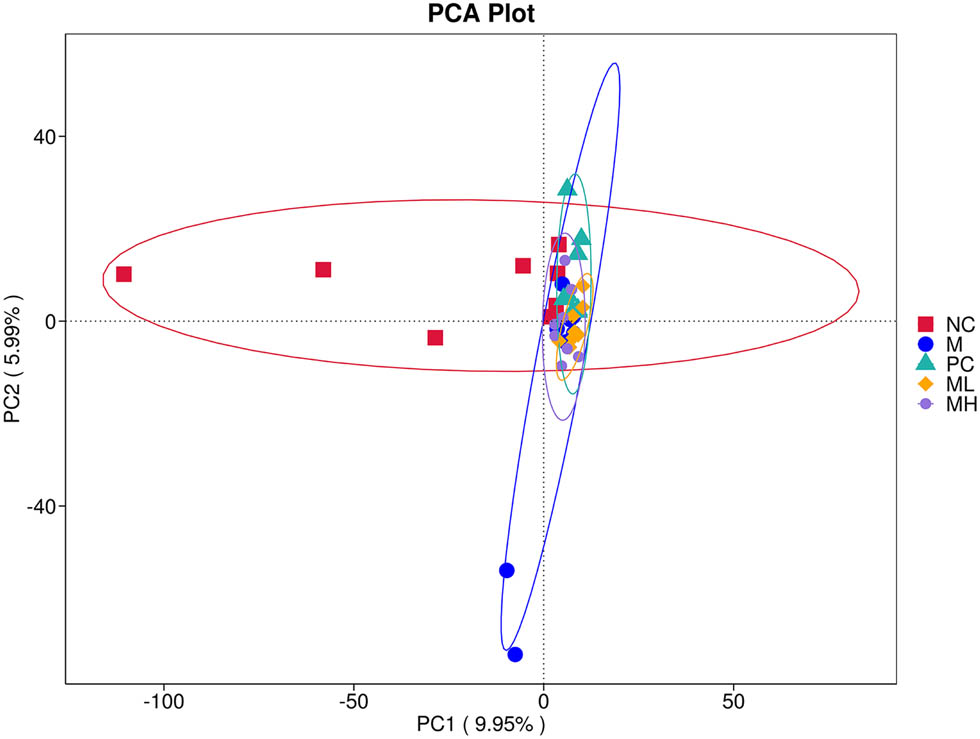
Alpha diversity table and PCA plot of beta diversity. Note: In a PCA plot, the closer the distance between groups, the more similar the community composition of the samples.
3.4 Differences in changes in the content of intestinal bacterial genera among groups of rats
Comparisons were made at the genus level using the t-test ANOVA. In the NC group, compared with the M group, Prevotellaceae, Prevotella, Eubacterium_coprostanoligenes_group, Lachnospiraceae_UGG-010, Bacillus, Frisingicoccus, and Negativibacillus were significantly downregulated, while Acidocella was significantly upregulated (Figure 4a). In the PC group, compared with the M group, Lactobacillus and Anaerostipes were significantly downregulated, whereas Muribaculaceae, Prevotella, Rikenellaceae_RC9_gut_group, and UGG_009 were significantly upregulated (Figure 4b). In the M group compared to the ML group, Romboutsia, Turicibacter, Clostridium_sensu_stricto_1, Bifidobacterium, UGG_005, Faecalibaculum, Ruminococcus_torques_group, and UGG_009 were significantly downregulated, and Phascolarctobacterium and Anaerostipes were significantly upregulated (Figure 4c). In the M group compared with the MH group, Romboutsia, Turicibacter, Clostridium_sensu_stricto_1, Bifidobacterium, Dubosiella, Faecalibaculum, and Listeria were significantly downregulated, and Lactobacillus, Prevotellaceae_UGG-001, and Anaerostipes were significantly upregulated (Figure 4d).

Plot of differences in changes in genus content. (a) Bacterial genus plot of the NC group compared to the M group. (b) Bacterial genus plot of the PC group compared to the M group. (c) Bacterial genus plot of the M group compared to the ML group. (d) Bacterial genus plot of the M group compared to the MH group.
3.5 Functional prediction and heat map of rat intestinal flora
According to the results of the Venn diagram, the number of the same functions in the NC, M, PC, ML, and MH groups was 6,130. The numbers of unique functions of the NC, M, PC, ML, and MH groups were 4, 2, 0, 0, and 0, respectively (Figure 5a).

Functional prediction and heat map of rat intestinal flora. (a) Venn diagram of functional prediction distribution. (b) Heat plot of functional prediction. (c) Abundance plot of functional prediction.
Using the Tax4Fun function, bacteria in the NC, M, PC, ML, and MH groups were predicted to play roles in organismal systems, human diseases, cellular processes, environmental information processing, genetic information processing, and metabolic pathways (Figure 5b).
Compared to the PC and NC groups, the function of the bacteria in the M group was weakened in cellular processes, environmental information processing, and increased in metabolism, genetic information processing, and human diseases. Compared to the M group, the function of the bacteria in the ML group was weakened in metabolism and strengthened in genetic information processing, cellular processes, and environmental information processing. Compared with the M group, the function of the bacteria in the MH group was weakened in organismal systems, metabolism, and human diseases and strengthened in genetic information processing and cellular processes (Figure 5c).
4 Discussion
GHAM effectively tonifies the spleen and boosts qi. Qi facilitates and invigorates the spleen’s physiological functions, reflecting its dynamic flow, known as spleen qi circulation. Diminished spleen qi impairs the spleen’s transportation and transformation abilities, consequently disrupting food digestion and reducing the assimilation and distribution of vital nutrients throughout the body. This condition leads to a loss of appetite, bloating, loose bowel movements, and emaciation.
The GHAM formulation is a refined and synergistic blend of Huo-xiang-zheng-qi powder [9], Ge-gen-qin-lian decoction [10], and Sijunzi decoction [11], incorporating 11 types of traditional Chinese medicinal herbs. A. rugosa [12] serves to regulate gastrointestinal function, purify the internal environment, and reduce dampness. P. lobata [13] exhibits heat-clearing and diuretic properties, enhancing Yang energy, arresting diarrhea, and aiding in the production of body fluids. Citrus peel [14] regulates qi and restores splenic function. C. chinensis [15] can dry dampness, clear heat, extinguish fire, and detoxify. P. oleracea [16] can clear heat, detoxify and lower blood pressure, and treat diarrhea. Pomegranate peel [17] can stop diarrhea by reducing excessive activity in the intestines. Chinese yam [18] can strengthen the spleen and intestines, contributing to a healthy body. S. costus [19] can strengthen the spleen and promote qi. A. macrocephala [20], G. glabra [21], and P. cocos [22] have analgesic effects. Overall, this formula regulates the stomach and intestines, adjusts inner dampness, regulates qi and blood circulation, and relieves symptoms of excessive intestinal activity.
In this study, we successfully constructed a rat model of spleen deficiency-induced diarrhea by continuous gavage of senna, and the rats showed a significant reduction in food intake and diarrhea phenotype. We can also conclude the success of the diarrhea model from the results of the comparison at the genus level of the flora in the M and NC groups. In the M group, there was a notable increase in the levels of Prevotellaceae [23], Prevotella [24], Bacillus [25], and Negativibacillus [26], all of which are implicated in the pathophysiology of diarrhea. Relative to the M group, the ML and MH groups exhibited elevated levels of Romboutsia, Clostridium_sensu_stricto_1, and Turicibacter, indicating a positive modulation of the gut microbiota. Romboutsia [27] and Clostridium_sensu_stricto_1 [28] are beneficial bacteria. Turicibacter is a key gut microbe that suppresses persistent systemic inflammation [29]. The ML and MH groups demonstrated a moderated metabolic function, coupled with an enhancement in cellular processes and genetic information processing relative to the M group. The results indicate that GHAM treatment partially reinstated the functionality of the intestinal bacteria, approximating them to their normal state.
Furthermore, GHAM treatment reinforces the metabolic capabilities and genetic information processing of the gut microbiota. Relative to the model group, the ML and MH groups exhibited a dampened metabolic activity, counterbalanced by an upregulation in genetic information processing and cellular processes. This suggests that GHAM may improve gut health by promoting the growth of beneficial bacteria and enhancing the beneficial functions of the gut microbiota.
The results of this study indicate that GHAM has shown positive therapeutic effects in a diarrhea rat model induced by spleen deficiency. By regulating the structure and function of the gut microbiota, GHAM significantly alleviated diarrhea symptoms and improved food intake and fecal quality. In particular, GHAM increased the abundance of beneficial bacteria such as Romboutsia and Clostridium_sensu_stricto_1, while reducing the levels of bacteria associated with diarrhea, such as Prevotellaceae and Bacillus.
However, we must cautiously point out that these conclusions are based on preliminary research results from animal models. Although these findings provide some scientific basis for GHAM as a potential treatment for gastrointestinal diseases, they do not mean that GHAM can be directly applied to human clinical treatment. Before applying GHAM as a therapeutic method in humans, more research is needed, including further animal studies and human clinical trials, to verify its safety, efficacy, and mechanism of action.
In addition, our research results also suggest that the regulatory effect of GHAM on the gut microbiota may be related to its therapeutic effects. Future research can further explore the specific impact of GHAM on the gut microbiota and how these impacts are associated with improving intestinal health and alleviating diarrhea symptoms.
In summary, this study provides evidence of the potential therapeutic effect of GHAM on diarrhea caused by spleen deficiency and lays the foundation for future research. However, further research is needed to verify these preliminary results and fully assess the potential of GHAM as a treatment method for gastrointestinal diseases.
Acknowledgements
The authors would like to thank all the members of their department for their experimental support.
-
Funding information: This work was supported by the Science and Technology Program of Gansu Province under Grant (number 21JR11RA206).
-
Author contributions: Z.W. (the first author) participated in the conception and design of the article and final approval of the published version. L.Y. and J.G. analyzed and interpreted the data. Z.X. and Z.W. participated in drafting the manuscript and critically revised it for intellectual content. All authors agreed to be accountable for all aspects of this study.
-
Conflict of interest: Authors state no conflict of interest.
-
Data availability statement: The datasets generated during and/or analyzed during the current study are available from the corresponding author on reasonable request.
References
[1] Zhang J, Chen T, Wen Y, Siah KTH, Tang X. Insights and future prospects of traditional Chinese medicine in the treatment of functional dyspepsia. Phytomedicine. 2024;127:155481.Search in Google Scholar
[2] Zhang Z, Yang S, Lin X, Huang Y, Wei X, Zhou J, et al. Metabolomics of Spleen-Yang deficiency syndrome and the therapeutic effect of Fuzi Lizhong pill on regulating endogenous metabolism. J Ethnopharmacol. 2021;278:114281.Search in Google Scholar
[3] Wang K, Li G, Yang Z, Yang F, Sun Y, Duan G, et al. Compound Chinese medicine (F1) improves spleen deficiency diarrhea by protecting the intestinal mucosa and regulating the intestinal flora. Front Microbiol. 2023;14:1292082.Search in Google Scholar
[4] Adak A, Khan MR. An insight into gut microbiota and its functionalities. Cell Mol Life Sci. 2019;76:473–93.Search in Google Scholar
[5] Wang Y, Cai Y, Li F, Zhang M, Wu Y, Dai Y, et al. Effects of Scutellaria baicalensis Georgi. on intestinal flora in rats with spleen deficiency and damp-heat. J Pharm Biomed Anal. 2022;217:114831.Search in Google Scholar
[6] Peng Y, Wang Z, Lu Y, Wu CF, Yang JY, Li XB. Intestinal microflora molecular markers of spleen-deficient rats and evaluation of traditional Chinese drugs. World J Gastroenterol. 2009;15:2220–7.Search in Google Scholar
[7] Gao Q, Tian W, Yang H, Hu H, Zheng J, Yao X, et al. Shen-Ling-Bai-Zhu-San alleviates the imbalance of intestinal homeostasis in dextran sodium sulfate-induced colitis mice by regulating gut microbiota and inhibiting the NLRP3 inflammasome activation. J Ethnopharmacol. 2024;319:117136.Search in Google Scholar
[8] Qu Q, Li SP, Dong Q, Du HL, Wang ZH, Ma YM, et al. Transcriptome profiling revealed the potential mechanisms of Shen Lin Bai Zhu San n-butanol extract on DSS induced colitis in mice and LC-MS analysis. Phytomedicine. 2023;110:154645.Search in Google Scholar
[9] Zhao M, Chen Y, Wang C, Xiao W, Chen S, Zhang S, et al. Systems pharmacology dissection of multi-scale mechanisms of action of Huo-Xiang-Zheng-Qi formula for the treatment of gastrointestinal diseases. Front Pharmacol. 2018;9:1448.Search in Google Scholar
[10] Ding Z, Zhong R, Yang Y, Xia T, Wang W, Wang Y, et al. Systems pharmacology reveals the mechanism of activity of Ge-Gen-Qin-Lian decoction against LPS-induced acute lung injury: a novel strategy for exploring active components and effective mechanism of TCM formulae. Pharmacol Res. 2020;156:104759.Search in Google Scholar
[11] Ma P, Peng Y, Zhao L, Liu F, Li X. Differential effect of polysaccharide and nonpolysaccharide components in Sijunzi decoction on spleen deficiency syndrome and their mechanisms. Phytomedicine. 2021;93:153790.Search in Google Scholar
[12] Nam HH, Kim JS, Lee J, Seo YH, Kim HS, Ryu SM, et al. Pharmacological effects of Agastache rugosa against gastritis using a network pharmacology approach. Biomolecules. 2020;10(9):1298.Search in Google Scholar
[13] Zhou YX, Zhang H, Peng C. Puerarin: a review of pharmacological effects. Phytother Res. 2014;28:961–75.Search in Google Scholar
[14] Singh B, Singh JP, Kaur A, Singh N. Phenolic composition, antioxidant potential and health benefits of citrus peel. Food Res Int. 2020;132:109114.Search in Google Scholar
[15] Wu J, Luo Y, Deng D, Su S, Li S, Xiang L, et al. Coptisine from Coptis chinensis exerts diverse beneficial properties: a concise review. J Cell Mol Med. 2019;23:7946–60.Search in Google Scholar
[16] Zhou YX, Xin HL, Rahman K, Wang SJ, Peng C, Zhang H. Portulaca oleracea L.: a review of phytochemistry and pharmacological effects. Biomed Res Int. 2015;2015:925631.Search in Google Scholar
[17] Xiang Q, Li M, Wen J, Ren F, Yang Z, Jiang X, et al. The bioactivity and applications of pomegranate peel extract: a review. J Food Biochem. 2022;46:e14105.Search in Google Scholar
[18] Zhou S, Huang G, Chen G. Extraction, structural analysis, derivatization and antioxidant activity of polysaccharide from Chinese yam. Food Chem. 2021;361:130089.Search in Google Scholar
[19] Kumari R, Negi M, Thakur P, Mahajan H, Raina K, Sharma R, et al. Saussurea costus (Falc.) Lipsch.: a comprehensive review of its pharmacology, phytochemicals, ethnobotanical uses, and therapeutic potential. Naunyn Schmiedebergs Arch Pharmacol. 2024;397(3):1505–24.Search in Google Scholar
[20] Yang L, Yu H, Hou A, Man W, Wang S, Zhang J, et al. A review of the ethnopharmacology, phytochemistry, pharmacology, application, quality control, processing, toxicology, and pharmacokinetics of the dried rhizome of Atractylodes macrocephala. Front Pharmacol. 2021;12:727154.Search in Google Scholar
[21] Wahab S, Annadurai S, Abullais SS, Das G, Ahmad W, Ahmad MF, et al. Glycyrrhiza glabra (Licorice): a comprehensive review on its phytochemistry, biological activities, clinical evidence and toxicology. Plants (Basel). 2021;10:2751.Search in Google Scholar
[22] Rios JL. Chemical constituents and pharmacological properties of Poria cocos. Planta Med. 2011;77:681–91.Search in Google Scholar
[23] Yue SJ, Liu J, Wang WX, Wang AT, Yang XY, Guan HS, et al. Berberine treatment-emergent mild diarrhea associated with gut microbiota dysbiosis. Biomed Pharmacother. 2019;116:109002.Search in Google Scholar
[24] Leo S, Lazarevic V, Gaia N, Estellat C, Girard M, Matheron S, et al. The intestinal microbiota predisposes to traveler’s diarrhea and to the carriage of multidrug-resistant Enterobacteriaceae after traveling to tropical regions. Gut Microbes. 2019;10:631–41.Search in Google Scholar
[25] Huang Z, Yuan X, Zhu Z, Feng Y, Li N, Yu S, et al. Isolation and characterization of Bacillus cereus bacteriophage DZ1 and its application in foods. Food Chem. 2024;431:137128.Search in Google Scholar
[26] Aziz M, Yelamanchili VS. Yersinia Enterocolitica. Treasure Island (FL): StatPearls, ineligible companies. Disclosure: Varun Yelamanchili declares no relevant financial relationships with ineligible companies; 2023.Search in Google Scholar
[27] Wang G, Wang X, Ma Y, Cai S, Yang L, Fan Y, et al. Lactobacillus reuteri improves the development and maturation of fecal microbiota in piglets through mother-to-infant microbe and metabolite vertical transmission. Microbiome. 2022;10:211.Search in Google Scholar
[28] Fu Q, Tan Z, Shi L, Xun W. Resveratrol attenuates diquat-induced oxidative stress by regulating gut microbiota and metabolome characteristics in piglets. Front Microbiol. 2021;12:695155.Search in Google Scholar
[29] Zhen Z, Xia L, You H, Jingwei Z, Shasha Y, Xinyi W, et al. An integrated gut microbiota and network pharmacology study on fuzi-lizhong pill for treating diarrhea-predominant irritable bowel syndrome. Front Pharmacol. 2021;12:746923.Search in Google Scholar
© 2024 the author(s), published by De Gruyter
This work is licensed under the Creative Commons Attribution 4.0 International License.
Articles in the same Issue
- Biomedical Sciences
- Constitutive and evoked release of ATP in adult mouse olfactory epithelium
- LARP1 knockdown inhibits cultured gastric carcinoma cell cycle progression and metastatic behavior
- PEGylated porcine–human recombinant uricase: A novel fusion protein with improved efficacy and safety for the treatment of hyperuricemia and renal complications
- Research progress on ocular complications caused by type 2 diabetes mellitus and the function of tears and blepharons
- The role and mechanism of esketamine in preventing and treating remifentanil-induced hyperalgesia based on the NMDA receptor–CaMKII pathway
- Brucella infection combined with Nocardia infection: A case report and literature review
- Detection of serum interleukin-18 level and neutrophil/lymphocyte ratio in patients with antineutrophil cytoplasmic antibody-associated vasculitis and its clinical significance
- Ang-1, Ang-2, and Tie2 are diagnostic biomarkers for Henoch-Schönlein purpura and pediatric-onset systemic lupus erythematous
- PTTG1 induces pancreatic cancer cell proliferation and promotes aerobic glycolysis by regulating c-myc
- Role of serum B-cell-activating factor and interleukin-17 as biomarkers in the classification of interstitial pneumonia with autoimmune features
- Effectiveness and safety of a mumps containing vaccine in preventing laboratory-confirmed mumps cases from 2002 to 2017: A meta-analysis
- Low levels of sex hormone-binding globulin predict an increased breast cancer risk and its underlying molecular mechanisms
- A case of Trousseau syndrome: Screening, detection and complication
- Application of the integrated airway humidification device enhances the humidification effect of the rabbit tracheotomy model
- Preparation of Cu2+/TA/HAP composite coating with anti-bacterial and osteogenic potential on 3D-printed porous Ti alloy scaffolds for orthopedic applications
- Aquaporin-8 promotes human dermal fibroblasts to counteract hydrogen peroxide-induced oxidative damage: A novel target for management of skin aging
- Current research and evidence gaps on placental development in iron deficiency anemia
- Single-nucleotide polymorphism rs2910829 in PDE4D is related to stroke susceptibility in Chinese populations: The results of a meta-analysis
- Pheochromocytoma-induced myocardial infarction: A case report
- Kaempferol regulates apoptosis and migration of neural stem cells to attenuate cerebral infarction by O‐GlcNAcylation of β-catenin
- Sirtuin 5 regulates acute myeloid leukemia cell viability and apoptosis by succinylation modification of glycine decarboxylase
- Apigenin 7-glucoside impedes hypoxia-induced malignant phenotypes of cervical cancer cells in a p16-dependent manner
- KAT2A changes the function of endometrial stromal cells via regulating the succinylation of ENO1
- Current state of research on copper complexes in the treatment of breast cancer
- Exploring antioxidant strategies in the pathogenesis of ALS
- Helicobacter pylori causes gastric dysbacteriosis in chronic gastritis patients
- IL-33/soluble ST2 axis is associated with radiation-induced cardiac injury
- The predictive value of serum NLR, SII, and OPNI for lymph node metastasis in breast cancer patients with internal mammary lymph nodes after thoracoscopic surgery
- Carrying SNP rs17506395 (T > G) in TP63 gene and CCR5Δ32 mutation associated with the occurrence of breast cancer in Burkina Faso
- P2X7 receptor: A receptor closely linked with sepsis-associated encephalopathy
- Probiotics for inflammatory bowel disease: Is there sufficient evidence?
- Identification of KDM4C as a gene conferring drug resistance in multiple myeloma
- Microbial perspective on the skin–gut axis and atopic dermatitis
- Thymosin α1 combined with XELOX improves immune function and reduces serum tumor markers in colorectal cancer patients after radical surgery
- Highly specific vaginal microbiome signature for gynecological cancers
- Sample size estimation for AQP4-IgG seropositive optic neuritis: Retinal damage detection by optical coherence tomography
- The effects of SDF-1 combined application with VEGF on femoral distraction osteogenesis in rats
- Fabrication and characterization of gold nanoparticles using alginate: In vitro and in vivo assessment of its administration effects with swimming exercise on diabetic rats
- Mitigating digestive disorders: Action mechanisms of Mediterranean herbal active compounds
- Distribution of CYP2D6 and CYP2C19 gene polymorphisms in Han and Uygur populations with breast cancer in Xinjiang, China
- VSP-2 attenuates secretion of inflammatory cytokines induced by LPS in BV2 cells by mediating the PPARγ/NF-κB signaling pathway
- Factors influencing spontaneous hypothermia after emergency trauma and the construction of a predictive model
- Long-term administration of morphine specifically alters the level of protein expression in different brain regions and affects the redox state
- Application of metagenomic next-generation sequencing technology in the etiological diagnosis of peritoneal dialysis-associated peritonitis
- Clinical diagnosis, prevention, and treatment of neurodyspepsia syndrome using intelligent medicine
- Case report: Successful bronchoscopic interventional treatment of endobronchial leiomyomas
- Preliminary investigation into the genetic etiology of short stature in children through whole exon sequencing of the core family
- Cystic adenomyoma of the uterus: Case report and literature review
- Mesoporous silica nanoparticles as a drug delivery mechanism
- Dynamic changes in autophagy activity in different degrees of pulmonary fibrosis in mice
- Vitamin D deficiency and inflammatory markers in type 2 diabetes: Big data insights
- Lactate-induced IGF1R protein lactylation promotes proliferation and metabolic reprogramming of lung cancer cells
- Meta-analysis on the efficacy of allogeneic hematopoietic stem cell transplantation to treat malignant lymphoma
- Mitochondrial DNA drives neuroinflammation through the cGAS-IFN signaling pathway in the spinal cord of neuropathic pain mice
- Application value of artificial intelligence algorithm-based magnetic resonance multi-sequence imaging in staging diagnosis of cervical cancer
- Embedded monitoring system and teaching of artificial intelligence online drug component recognition
- Investigation into the association of FNDC1 and ADAMTS12 gene expression with plumage coloration in Muscovy ducks
- Yak meat content in feed and its impact on the growth of rats
- A rare case of Richter transformation with breast involvement: A case report and literature review
- First report of Nocardia wallacei infection in an immunocompetent patient in Zhejiang province
- Rhodococcus equi and Brucella pulmonary mass in immunocompetent: A case report and literature review
- Downregulation of RIP3 ameliorates the left ventricular mechanics and function after myocardial infarction via modulating NF-κB/NLRP3 pathway
- Evaluation of the role of some non-enzymatic antioxidants among Iraqi patients with non-alcoholic fatty liver disease
- The role of Phafin proteins in cell signaling pathways and diseases
- Ten-year anemia as initial manifestation of Castleman disease in the abdominal cavity: A case report
- Coexistence of hereditary spherocytosis with SPTB P.Trp1150 gene variant and Gilbert syndrome: A case report and literature review
- Utilization of convolutional neural networks to analyze microscopic images for high-throughput screening of mesenchymal stem cells
- Exploratory evaluation supported by experimental and modeling approaches of Inula viscosa root extract as a potent corrosion inhibitor for mild steel in a 1 M HCl solution
- Imaging manifestations of ductal adenoma of the breast: A case report
- Gut microbiota and sleep: Interaction mechanisms and therapeutic prospects
- Isomangiferin promotes the migration and osteogenic differentiation of rat bone marrow mesenchymal stem cells
- Prognostic value and microenvironmental crosstalk of exosome-related signatures in human epidermal growth factor receptor 2 positive breast cancer
- Circular RNAs as potential biomarkers for male severe sepsis
- Knockdown of Stanniocalcin-1 inhibits growth and glycolysis in oral squamous cell carcinoma cells
- The expression and biological role of complement C1s in esophageal squamous cell carcinoma
- A novel GNAS mutation in pseudohypoparathyroidism type 1a with articular flexion deformity: A case report
- Predictive value of serum magnesium levels for prognosis in patients with non-small cell lung cancer undergoing EGFR-TKI therapy
- HSPB1 alleviates acute-on-chronic liver failure via the P53/Bax pathway
- IgG4-related disease complicated by PLA2R-associated membranous nephropathy: A case report
- Baculovirus-mediated endostatin and angiostatin activation of autophagy through the AMPK/AKT/mTOR pathway inhibits angiogenesis in hepatocellular carcinoma
- Metformin mitigates osteoarthritis progression by modulating the PI3K/AKT/mTOR signaling pathway and enhancing chondrocyte autophagy
- Evaluation of the activity of antimicrobial peptides against bacterial vaginosis
- Atypical presentation of γ/δ mycosis fungoides with an unusual phenotype and SOCS1 mutation
- Analysis of the microecological mechanism of diabetic kidney disease based on the theory of “gut–kidney axis”: A systematic review
- Omega-3 fatty acids prevent gestational diabetes mellitus via modulation of lipid metabolism
- Refractory hypertension complicated with Turner syndrome: A case report
- Interaction of ncRNAs and the PI3K/AKT/mTOR pathway: Implications for osteosarcoma
- Association of low attenuation area scores with pulmonary function and clinical prognosis in patients with chronic obstructive pulmonary disease
- Long non-coding RNAs in bone formation: Key regulators and therapeutic prospects
- The deubiquitinating enzyme USP35 regulates the stability of NRF2 protein
- Neutrophil-to-lymphocyte ratio and platelet-to-lymphocyte ratio as potential diagnostic markers for rebleeding in patients with esophagogastric variceal bleeding
- G protein-coupled receptor 1 participating in the mechanism of mediating gestational diabetes mellitus by phosphorylating the AKT pathway
- LL37-mtDNA regulates viability, apoptosis, inflammation, and autophagy in lipopolysaccharide-treated RLE-6TN cells by targeting Hsp90aa1
- The analgesic effect of paeoniflorin: A focused review
- Chemical composition’s effect on Solanum nigrum Linn.’s antioxidant capacity and erythrocyte protection: Bioactive components and molecular docking analysis
- Knockdown of HCK promotes HREC cell viability and inner blood–retinal barrier integrity by regulating the AMPK signaling pathway
- The role of rapamycin in the PINK1/Parkin signaling pathway in mitophagy in podocytes
- Laryngeal non-Hodgkin lymphoma: Report of four cases and review of the literature
- Clinical value of macrogenome next-generation sequencing on infections
- Overview of dendritic cells and related pathways in autoimmune uveitis
- TAK-242 alleviates diabetic cardiomyopathy via inhibiting pyroptosis and TLR4/CaMKII/NLRP3 pathway
- Hypomethylation in promoters of PGC-1α involved in exercise-driven skeletal muscular alterations in old age
- Profile and antimicrobial susceptibility patterns of bacteria isolated from effluents of Kolladiba and Debark hospitals
- The expression and clinical significance of syncytin-1 in serum exosomes of hepatocellular carcinoma patients
- A histomorphometric study to evaluate the therapeutic effects of biosynthesized silver nanoparticles on the kidneys infected with Plasmodium chabaudi
- PGRMC1 and PAQR4 are promising molecular targets for a rare subtype of ovarian cancer
- Analysis of MDA, SOD, TAOC, MNCV, SNCV, and TSS scores in patients with diabetes peripheral neuropathy
- SLIT3 deficiency promotes non-small cell lung cancer progression by modulating UBE2C/WNT signaling
- The relationship between TMCO1 and CALR in the pathological characteristics of prostate cancer and its effect on the metastasis of prostate cancer cells
- Heterogeneous nuclear ribonucleoprotein K is a potential target for enhancing the chemosensitivity of nasopharyngeal carcinoma
- PHB2 alleviates retinal pigment epithelium cell fibrosis by suppressing the AGE–RAGE pathway
- Anti-γ-aminobutyric acid-B receptor autoimmune encephalitis with syncope as the initial symptom: Case report and literature review
- Comparative analysis of chloroplast genome of Lonicera japonica cv. Damaohua
- Human umbilical cord mesenchymal stem cells regulate glutathione metabolism depending on the ERK–Nrf2–HO-1 signal pathway to repair phosphoramide mustard-induced ovarian cancer cells
- Electroacupuncture on GB acupoints improves osteoporosis via the estradiol–PI3K–Akt signaling pathway
- Renalase protects against podocyte injury by inhibiting oxidative stress and apoptosis in diabetic nephropathy
- Review: Dicranostigma leptopodum: A peculiar plant of Papaveraceae
- Combination effect of flavonoids attenuates lung cancer cell proliferation by inhibiting the STAT3 and FAK signaling pathway
- Renal microangiopathy and immune complex glomerulonephritis induced by anti-tumour agents: A case report
- Correlation analysis of AVPR1a and AVPR2 with abnormal water and sodium and potassium metabolism in rats
- Gastrointestinal health anti-diarrheal mixture relieves spleen deficiency-induced diarrhea through regulating gut microbiota
- Myriad factors and pathways influencing tumor radiotherapy resistance
- Exploring the effects of culture conditions on Yapsin (YPS) gene expression in Nakaseomyces glabratus
- Screening of prognostic core genes based on cell–cell interaction in the peripheral blood of patients with sepsis
- Coagulation factor II thrombin receptor as a promising biomarker in breast cancer management
- Ileocecal mucinous carcinoma misdiagnosed as incarcerated hernia: A case report
- Methyltransferase like 13 promotes malignant behaviors of bladder cancer cells through targeting PI3K/ATK signaling pathway
- The debate between electricity and heat, efficacy and safety of irreversible electroporation and radiofrequency ablation in the treatment of liver cancer: A meta-analysis
- ZAG promotes colorectal cancer cell proliferation and epithelial–mesenchymal transition by promoting lipid synthesis
- Baicalein inhibits NLRP3 inflammasome activation and mitigates placental inflammation and oxidative stress in gestational diabetes mellitus
- Impact of SWCNT-conjugated senna leaf extract on breast cancer cells: A potential apoptotic therapeutic strategy
- MFAP5 inhibits the malignant progression of endometrial cancer cells in vitro
- Major ozonated autohemotherapy promoted functional recovery following spinal cord injury in adult rats via the inhibition of oxidative stress and inflammation
- Axodendritic targeting of TAU and MAP2 and microtubule polarization in iPSC-derived versus SH-SY5Y-derived human neurons
- Differential expression of phosphoinositide 3-kinase/protein kinase B and Toll-like receptor/nuclear factor kappa B signaling pathways in experimental obesity Wistar rat model
- The therapeutic potential of targeting Oncostatin M and the interleukin-6 family in retinal diseases: A comprehensive review
- BA inhibits LPS-stimulated inflammatory response and apoptosis in human middle ear epithelial cells by regulating the Nf-Kb/Iκbα axis
- Role of circRMRP and circRPL27 in chronic obstructive pulmonary disease
- Investigating the role of hyperexpressed HCN1 in inducing myocardial infarction through activation of the NF-κB signaling pathway
- Characterization of phenolic compounds and evaluation of anti-diabetic potential in Cannabis sativa L. seeds: In vivo, in vitro, and in silico studies
- Quantitative immunohistochemistry analysis of breast Ki67 based on artificial intelligence
- Ecology and Environmental Science
- Screening of different growth conditions of Bacillus subtilis isolated from membrane-less microbial fuel cell toward antimicrobial activity profiling
- Degradation of a mixture of 13 polycyclic aromatic hydrocarbons by commercial effective microorganisms
- Evaluation of the impact of two citrus plants on the variation of Panonychus citri (Acari: Tetranychidae) and beneficial phytoseiid mites
- Prediction of present and future distribution areas of Juniperus drupacea Labill and determination of ethnobotany properties in Antalya Province, Türkiye
- Population genetics of Todarodes pacificus (Cephalopoda: Ommastrephidae) in the northwest Pacific Ocean via GBS sequencing
- A comparative analysis of dendrometric, macromorphological, and micromorphological characteristics of Pistacia atlantica subsp. atlantica and Pistacia terebinthus in the middle Atlas region of Morocco
- Macrofungal sporocarp community in the lichen Scots pine forests
- Assessing the proximate compositions of indigenous forage species in Yemen’s pastoral rangelands
- Food Science
- Gut microbiota changes associated with low-carbohydrate diet intervention for obesity
- Reexamination of Aspergillus cristatus phylogeny in dark tea: Characteristics of the mitochondrial genome
- Differences in the flavonoid composition of the leaves, fruits, and branches of mulberry are distinguished based on a plant metabolomics approach
- Investigating the impact of wet rendering (solventless method) on PUFA-rich oil from catfish (Clarias magur) viscera
- Non-linear associations between cardiovascular metabolic indices and metabolic-associated fatty liver disease: A cross-sectional study in the US population (2017–2020)
- Knockdown of USP7 alleviates atherosclerosis in ApoE-deficient mice by regulating EZH2 expression
- Utility of dairy microbiome as a tool for authentication and traceability
- Agriculture
- Enhancing faba bean (Vicia faba L.) productivity through establishing the area-specific fertilizer rate recommendation in southwest Ethiopia
- Impact of novel herbicide based on synthetic auxins and ALS inhibitor on weed control
- Perspectives of pteridophytes microbiome for bioremediation in agricultural applications
- Fertilizer application parameters for drip-irrigated peanut based on the fertilizer effect function established from a “3414” field trial
- Improving the productivity and profitability of maize (Zea mays L.) using optimum blended inorganic fertilization
- Application of leaf multispectral analyzer in comparison to hyperspectral device to assess the diversity of spectral reflectance indices in wheat genotypes
- Animal Sciences
- Knockdown of ANP32E inhibits colorectal cancer cell growth and glycolysis by regulating the AKT/mTOR pathway
- Development of a detection chip for major pathogenic drug-resistant genes and drug targets in bovine respiratory system diseases
- Exploration of the genetic influence of MYOT and MB genes on the plumage coloration of Muscovy ducks
- Transcriptome analysis of adipose tissue in grazing cattle: Identifying key regulators of fat metabolism
- Comparison of nutritional value of the wild and cultivated spiny loaches at three growth stages
- Transcriptomic analysis of liver immune response in Chinese spiny frog (Quasipaa spinosa) infected with Proteus mirabilis
- Disruption of BCAA degradation is a critical characteristic of diabetic cardiomyopathy revealed by integrated transcriptome and metabolome analysis
- Plant Sciences
- Effect of long-term in-row branch covering on soil microorganisms in pear orchards
- Photosynthetic physiological characteristics, growth performance, and element concentrations reveal the calcicole–calcifuge behaviors of three Camellia species
- Transcriptome analysis reveals the mechanism of NaHCO3 promoting tobacco leaf maturation
- Bioinformatics, expression analysis, and functional verification of allene oxide synthase gene HvnAOS1 and HvnAOS2 in qingke
- Water, nitrogen, and phosphorus coupling improves gray jujube fruit quality and yield
- Improving grape fruit quality through soil conditioner: Insights from RNA-seq analysis of Cabernet Sauvignon roots
- Role of Embinin in the reabsorption of nucleus pulposus in lumbar disc herniation: Promotion of nucleus pulposus neovascularization and apoptosis of nucleus pulposus cells
- Revealing the effects of amino acid, organic acid, and phytohormones on the germination of tomato seeds under salinity stress
- Combined effects of nitrogen fertilizer and biochar on the growth, yield, and quality of pepper
- Comprehensive phytochemical and toxicological analysis of Chenopodium ambrosioides (L.) fractions
- Impact of “3414” fertilization on the yield and quality of greenhouse tomatoes
- Exploring the coupling mode of water and fertilizer for improving growth, fruit quality, and yield of the pear in the arid region
- Metagenomic analysis of endophytic bacteria in seed potato (Solanum tuberosum)
- Antibacterial, antifungal, and phytochemical properties of Salsola kali ethanolic extract
- Exploring the hepatoprotective properties of citronellol: In vitro and in silico studies on ethanol-induced damage in HepG2 cells
- Enhanced osmotic dehydration of watermelon rind using honey–sucrose solutions: A study on pre-treatment efficacy and mass transfer kinetics
- Effects of exogenous 2,4-epibrassinolide on photosynthetic traits of 53 cowpea varieties under NaCl stress
- Comparative transcriptome analysis of maize (Zea mays L.) seedlings in response to copper stress
- An optimization method for measuring the stomata in cassava (Manihot esculenta Crantz) under multiple abiotic stresses
- Fosinopril inhibits Ang II-induced VSMC proliferation, phenotype transformation, migration, and oxidative stress through the TGF-β1/Smad signaling pathway
- Antioxidant and antimicrobial activities of Salsola imbricata methanolic extract and its phytochemical characterization
- Bioengineering and Biotechnology
- Absorbable calcium and phosphorus bioactive membranes promote bone marrow mesenchymal stem cells osteogenic differentiation for bone regeneration
- New advances in protein engineering for industrial applications: Key takeaways
- An overview of the production and use of Bacillus thuringiensis toxin
- Research progress of nanoparticles in diagnosis and treatment of hepatocellular carcinoma
- Bioelectrochemical biosensors for water quality assessment and wastewater monitoring
- PEI/MMNs@LNA-542 nanoparticles alleviate ICU-acquired weakness through targeted autophagy inhibition and mitochondrial protection
- Unleashing of cytotoxic effects of thymoquinone-bovine serum albumin nanoparticles on A549 lung cancer cells
- Erratum
- Erratum to “Investigating the association between dietary patterns and glycemic control among children and adolescents with T1DM”
- Erratum to “Activation of hypermethylated P2RY1 mitigates gastric cancer by promoting apoptosis and inhibiting proliferation”
- Retraction
- Retraction to “MiR-223-3p regulates cell viability, migration, invasion, and apoptosis of non-small cell lung cancer cells by targeting RHOB”
- Retraction to “A data mining technique for detecting malignant mesothelioma cancer using multiple regression analysis”
- Special Issue on Advances in Neurodegenerative Disease Research and Treatment
- Transplantation of human neural stem cell prevents symptomatic motor behavior disability in a rat model of Parkinson’s disease
- Special Issue on Multi-omics
- Inflammasome complex genes with clinical relevance suggest potential as therapeutic targets for anti-tumor drugs in clear cell renal cell carcinoma
- Gastroesophageal varices in primary biliary cholangitis with anti-centromere antibody positivity: Early onset?
Articles in the same Issue
- Biomedical Sciences
- Constitutive and evoked release of ATP in adult mouse olfactory epithelium
- LARP1 knockdown inhibits cultured gastric carcinoma cell cycle progression and metastatic behavior
- PEGylated porcine–human recombinant uricase: A novel fusion protein with improved efficacy and safety for the treatment of hyperuricemia and renal complications
- Research progress on ocular complications caused by type 2 diabetes mellitus and the function of tears and blepharons
- The role and mechanism of esketamine in preventing and treating remifentanil-induced hyperalgesia based on the NMDA receptor–CaMKII pathway
- Brucella infection combined with Nocardia infection: A case report and literature review
- Detection of serum interleukin-18 level and neutrophil/lymphocyte ratio in patients with antineutrophil cytoplasmic antibody-associated vasculitis and its clinical significance
- Ang-1, Ang-2, and Tie2 are diagnostic biomarkers for Henoch-Schönlein purpura and pediatric-onset systemic lupus erythematous
- PTTG1 induces pancreatic cancer cell proliferation and promotes aerobic glycolysis by regulating c-myc
- Role of serum B-cell-activating factor and interleukin-17 as biomarkers in the classification of interstitial pneumonia with autoimmune features
- Effectiveness and safety of a mumps containing vaccine in preventing laboratory-confirmed mumps cases from 2002 to 2017: A meta-analysis
- Low levels of sex hormone-binding globulin predict an increased breast cancer risk and its underlying molecular mechanisms
- A case of Trousseau syndrome: Screening, detection and complication
- Application of the integrated airway humidification device enhances the humidification effect of the rabbit tracheotomy model
- Preparation of Cu2+/TA/HAP composite coating with anti-bacterial and osteogenic potential on 3D-printed porous Ti alloy scaffolds for orthopedic applications
- Aquaporin-8 promotes human dermal fibroblasts to counteract hydrogen peroxide-induced oxidative damage: A novel target for management of skin aging
- Current research and evidence gaps on placental development in iron deficiency anemia
- Single-nucleotide polymorphism rs2910829 in PDE4D is related to stroke susceptibility in Chinese populations: The results of a meta-analysis
- Pheochromocytoma-induced myocardial infarction: A case report
- Kaempferol regulates apoptosis and migration of neural stem cells to attenuate cerebral infarction by O‐GlcNAcylation of β-catenin
- Sirtuin 5 regulates acute myeloid leukemia cell viability and apoptosis by succinylation modification of glycine decarboxylase
- Apigenin 7-glucoside impedes hypoxia-induced malignant phenotypes of cervical cancer cells in a p16-dependent manner
- KAT2A changes the function of endometrial stromal cells via regulating the succinylation of ENO1
- Current state of research on copper complexes in the treatment of breast cancer
- Exploring antioxidant strategies in the pathogenesis of ALS
- Helicobacter pylori causes gastric dysbacteriosis in chronic gastritis patients
- IL-33/soluble ST2 axis is associated with radiation-induced cardiac injury
- The predictive value of serum NLR, SII, and OPNI for lymph node metastasis in breast cancer patients with internal mammary lymph nodes after thoracoscopic surgery
- Carrying SNP rs17506395 (T > G) in TP63 gene and CCR5Δ32 mutation associated with the occurrence of breast cancer in Burkina Faso
- P2X7 receptor: A receptor closely linked with sepsis-associated encephalopathy
- Probiotics for inflammatory bowel disease: Is there sufficient evidence?
- Identification of KDM4C as a gene conferring drug resistance in multiple myeloma
- Microbial perspective on the skin–gut axis and atopic dermatitis
- Thymosin α1 combined with XELOX improves immune function and reduces serum tumor markers in colorectal cancer patients after radical surgery
- Highly specific vaginal microbiome signature for gynecological cancers
- Sample size estimation for AQP4-IgG seropositive optic neuritis: Retinal damage detection by optical coherence tomography
- The effects of SDF-1 combined application with VEGF on femoral distraction osteogenesis in rats
- Fabrication and characterization of gold nanoparticles using alginate: In vitro and in vivo assessment of its administration effects with swimming exercise on diabetic rats
- Mitigating digestive disorders: Action mechanisms of Mediterranean herbal active compounds
- Distribution of CYP2D6 and CYP2C19 gene polymorphisms in Han and Uygur populations with breast cancer in Xinjiang, China
- VSP-2 attenuates secretion of inflammatory cytokines induced by LPS in BV2 cells by mediating the PPARγ/NF-κB signaling pathway
- Factors influencing spontaneous hypothermia after emergency trauma and the construction of a predictive model
- Long-term administration of morphine specifically alters the level of protein expression in different brain regions and affects the redox state
- Application of metagenomic next-generation sequencing technology in the etiological diagnosis of peritoneal dialysis-associated peritonitis
- Clinical diagnosis, prevention, and treatment of neurodyspepsia syndrome using intelligent medicine
- Case report: Successful bronchoscopic interventional treatment of endobronchial leiomyomas
- Preliminary investigation into the genetic etiology of short stature in children through whole exon sequencing of the core family
- Cystic adenomyoma of the uterus: Case report and literature review
- Mesoporous silica nanoparticles as a drug delivery mechanism
- Dynamic changes in autophagy activity in different degrees of pulmonary fibrosis in mice
- Vitamin D deficiency and inflammatory markers in type 2 diabetes: Big data insights
- Lactate-induced IGF1R protein lactylation promotes proliferation and metabolic reprogramming of lung cancer cells
- Meta-analysis on the efficacy of allogeneic hematopoietic stem cell transplantation to treat malignant lymphoma
- Mitochondrial DNA drives neuroinflammation through the cGAS-IFN signaling pathway in the spinal cord of neuropathic pain mice
- Application value of artificial intelligence algorithm-based magnetic resonance multi-sequence imaging in staging diagnosis of cervical cancer
- Embedded monitoring system and teaching of artificial intelligence online drug component recognition
- Investigation into the association of FNDC1 and ADAMTS12 gene expression with plumage coloration in Muscovy ducks
- Yak meat content in feed and its impact on the growth of rats
- A rare case of Richter transformation with breast involvement: A case report and literature review
- First report of Nocardia wallacei infection in an immunocompetent patient in Zhejiang province
- Rhodococcus equi and Brucella pulmonary mass in immunocompetent: A case report and literature review
- Downregulation of RIP3 ameliorates the left ventricular mechanics and function after myocardial infarction via modulating NF-κB/NLRP3 pathway
- Evaluation of the role of some non-enzymatic antioxidants among Iraqi patients with non-alcoholic fatty liver disease
- The role of Phafin proteins in cell signaling pathways and diseases
- Ten-year anemia as initial manifestation of Castleman disease in the abdominal cavity: A case report
- Coexistence of hereditary spherocytosis with SPTB P.Trp1150 gene variant and Gilbert syndrome: A case report and literature review
- Utilization of convolutional neural networks to analyze microscopic images for high-throughput screening of mesenchymal stem cells
- Exploratory evaluation supported by experimental and modeling approaches of Inula viscosa root extract as a potent corrosion inhibitor for mild steel in a 1 M HCl solution
- Imaging manifestations of ductal adenoma of the breast: A case report
- Gut microbiota and sleep: Interaction mechanisms and therapeutic prospects
- Isomangiferin promotes the migration and osteogenic differentiation of rat bone marrow mesenchymal stem cells
- Prognostic value and microenvironmental crosstalk of exosome-related signatures in human epidermal growth factor receptor 2 positive breast cancer
- Circular RNAs as potential biomarkers for male severe sepsis
- Knockdown of Stanniocalcin-1 inhibits growth and glycolysis in oral squamous cell carcinoma cells
- The expression and biological role of complement C1s in esophageal squamous cell carcinoma
- A novel GNAS mutation in pseudohypoparathyroidism type 1a with articular flexion deformity: A case report
- Predictive value of serum magnesium levels for prognosis in patients with non-small cell lung cancer undergoing EGFR-TKI therapy
- HSPB1 alleviates acute-on-chronic liver failure via the P53/Bax pathway
- IgG4-related disease complicated by PLA2R-associated membranous nephropathy: A case report
- Baculovirus-mediated endostatin and angiostatin activation of autophagy through the AMPK/AKT/mTOR pathway inhibits angiogenesis in hepatocellular carcinoma
- Metformin mitigates osteoarthritis progression by modulating the PI3K/AKT/mTOR signaling pathway and enhancing chondrocyte autophagy
- Evaluation of the activity of antimicrobial peptides against bacterial vaginosis
- Atypical presentation of γ/δ mycosis fungoides with an unusual phenotype and SOCS1 mutation
- Analysis of the microecological mechanism of diabetic kidney disease based on the theory of “gut–kidney axis”: A systematic review
- Omega-3 fatty acids prevent gestational diabetes mellitus via modulation of lipid metabolism
- Refractory hypertension complicated with Turner syndrome: A case report
- Interaction of ncRNAs and the PI3K/AKT/mTOR pathway: Implications for osteosarcoma
- Association of low attenuation area scores with pulmonary function and clinical prognosis in patients with chronic obstructive pulmonary disease
- Long non-coding RNAs in bone formation: Key regulators and therapeutic prospects
- The deubiquitinating enzyme USP35 regulates the stability of NRF2 protein
- Neutrophil-to-lymphocyte ratio and platelet-to-lymphocyte ratio as potential diagnostic markers for rebleeding in patients with esophagogastric variceal bleeding
- G protein-coupled receptor 1 participating in the mechanism of mediating gestational diabetes mellitus by phosphorylating the AKT pathway
- LL37-mtDNA regulates viability, apoptosis, inflammation, and autophagy in lipopolysaccharide-treated RLE-6TN cells by targeting Hsp90aa1
- The analgesic effect of paeoniflorin: A focused review
- Chemical composition’s effect on Solanum nigrum Linn.’s antioxidant capacity and erythrocyte protection: Bioactive components and molecular docking analysis
- Knockdown of HCK promotes HREC cell viability and inner blood–retinal barrier integrity by regulating the AMPK signaling pathway
- The role of rapamycin in the PINK1/Parkin signaling pathway in mitophagy in podocytes
- Laryngeal non-Hodgkin lymphoma: Report of four cases and review of the literature
- Clinical value of macrogenome next-generation sequencing on infections
- Overview of dendritic cells and related pathways in autoimmune uveitis
- TAK-242 alleviates diabetic cardiomyopathy via inhibiting pyroptosis and TLR4/CaMKII/NLRP3 pathway
- Hypomethylation in promoters of PGC-1α involved in exercise-driven skeletal muscular alterations in old age
- Profile and antimicrobial susceptibility patterns of bacteria isolated from effluents of Kolladiba and Debark hospitals
- The expression and clinical significance of syncytin-1 in serum exosomes of hepatocellular carcinoma patients
- A histomorphometric study to evaluate the therapeutic effects of biosynthesized silver nanoparticles on the kidneys infected with Plasmodium chabaudi
- PGRMC1 and PAQR4 are promising molecular targets for a rare subtype of ovarian cancer
- Analysis of MDA, SOD, TAOC, MNCV, SNCV, and TSS scores in patients with diabetes peripheral neuropathy
- SLIT3 deficiency promotes non-small cell lung cancer progression by modulating UBE2C/WNT signaling
- The relationship between TMCO1 and CALR in the pathological characteristics of prostate cancer and its effect on the metastasis of prostate cancer cells
- Heterogeneous nuclear ribonucleoprotein K is a potential target for enhancing the chemosensitivity of nasopharyngeal carcinoma
- PHB2 alleviates retinal pigment epithelium cell fibrosis by suppressing the AGE–RAGE pathway
- Anti-γ-aminobutyric acid-B receptor autoimmune encephalitis with syncope as the initial symptom: Case report and literature review
- Comparative analysis of chloroplast genome of Lonicera japonica cv. Damaohua
- Human umbilical cord mesenchymal stem cells regulate glutathione metabolism depending on the ERK–Nrf2–HO-1 signal pathway to repair phosphoramide mustard-induced ovarian cancer cells
- Electroacupuncture on GB acupoints improves osteoporosis via the estradiol–PI3K–Akt signaling pathway
- Renalase protects against podocyte injury by inhibiting oxidative stress and apoptosis in diabetic nephropathy
- Review: Dicranostigma leptopodum: A peculiar plant of Papaveraceae
- Combination effect of flavonoids attenuates lung cancer cell proliferation by inhibiting the STAT3 and FAK signaling pathway
- Renal microangiopathy and immune complex glomerulonephritis induced by anti-tumour agents: A case report
- Correlation analysis of AVPR1a and AVPR2 with abnormal water and sodium and potassium metabolism in rats
- Gastrointestinal health anti-diarrheal mixture relieves spleen deficiency-induced diarrhea through regulating gut microbiota
- Myriad factors and pathways influencing tumor radiotherapy resistance
- Exploring the effects of culture conditions on Yapsin (YPS) gene expression in Nakaseomyces glabratus
- Screening of prognostic core genes based on cell–cell interaction in the peripheral blood of patients with sepsis
- Coagulation factor II thrombin receptor as a promising biomarker in breast cancer management
- Ileocecal mucinous carcinoma misdiagnosed as incarcerated hernia: A case report
- Methyltransferase like 13 promotes malignant behaviors of bladder cancer cells through targeting PI3K/ATK signaling pathway
- The debate between electricity and heat, efficacy and safety of irreversible electroporation and radiofrequency ablation in the treatment of liver cancer: A meta-analysis
- ZAG promotes colorectal cancer cell proliferation and epithelial–mesenchymal transition by promoting lipid synthesis
- Baicalein inhibits NLRP3 inflammasome activation and mitigates placental inflammation and oxidative stress in gestational diabetes mellitus
- Impact of SWCNT-conjugated senna leaf extract on breast cancer cells: A potential apoptotic therapeutic strategy
- MFAP5 inhibits the malignant progression of endometrial cancer cells in vitro
- Major ozonated autohemotherapy promoted functional recovery following spinal cord injury in adult rats via the inhibition of oxidative stress and inflammation
- Axodendritic targeting of TAU and MAP2 and microtubule polarization in iPSC-derived versus SH-SY5Y-derived human neurons
- Differential expression of phosphoinositide 3-kinase/protein kinase B and Toll-like receptor/nuclear factor kappa B signaling pathways in experimental obesity Wistar rat model
- The therapeutic potential of targeting Oncostatin M and the interleukin-6 family in retinal diseases: A comprehensive review
- BA inhibits LPS-stimulated inflammatory response and apoptosis in human middle ear epithelial cells by regulating the Nf-Kb/Iκbα axis
- Role of circRMRP and circRPL27 in chronic obstructive pulmonary disease
- Investigating the role of hyperexpressed HCN1 in inducing myocardial infarction through activation of the NF-κB signaling pathway
- Characterization of phenolic compounds and evaluation of anti-diabetic potential in Cannabis sativa L. seeds: In vivo, in vitro, and in silico studies
- Quantitative immunohistochemistry analysis of breast Ki67 based on artificial intelligence
- Ecology and Environmental Science
- Screening of different growth conditions of Bacillus subtilis isolated from membrane-less microbial fuel cell toward antimicrobial activity profiling
- Degradation of a mixture of 13 polycyclic aromatic hydrocarbons by commercial effective microorganisms
- Evaluation of the impact of two citrus plants on the variation of Panonychus citri (Acari: Tetranychidae) and beneficial phytoseiid mites
- Prediction of present and future distribution areas of Juniperus drupacea Labill and determination of ethnobotany properties in Antalya Province, Türkiye
- Population genetics of Todarodes pacificus (Cephalopoda: Ommastrephidae) in the northwest Pacific Ocean via GBS sequencing
- A comparative analysis of dendrometric, macromorphological, and micromorphological characteristics of Pistacia atlantica subsp. atlantica and Pistacia terebinthus in the middle Atlas region of Morocco
- Macrofungal sporocarp community in the lichen Scots pine forests
- Assessing the proximate compositions of indigenous forage species in Yemen’s pastoral rangelands
- Food Science
- Gut microbiota changes associated with low-carbohydrate diet intervention for obesity
- Reexamination of Aspergillus cristatus phylogeny in dark tea: Characteristics of the mitochondrial genome
- Differences in the flavonoid composition of the leaves, fruits, and branches of mulberry are distinguished based on a plant metabolomics approach
- Investigating the impact of wet rendering (solventless method) on PUFA-rich oil from catfish (Clarias magur) viscera
- Non-linear associations between cardiovascular metabolic indices and metabolic-associated fatty liver disease: A cross-sectional study in the US population (2017–2020)
- Knockdown of USP7 alleviates atherosclerosis in ApoE-deficient mice by regulating EZH2 expression
- Utility of dairy microbiome as a tool for authentication and traceability
- Agriculture
- Enhancing faba bean (Vicia faba L.) productivity through establishing the area-specific fertilizer rate recommendation in southwest Ethiopia
- Impact of novel herbicide based on synthetic auxins and ALS inhibitor on weed control
- Perspectives of pteridophytes microbiome for bioremediation in agricultural applications
- Fertilizer application parameters for drip-irrigated peanut based on the fertilizer effect function established from a “3414” field trial
- Improving the productivity and profitability of maize (Zea mays L.) using optimum blended inorganic fertilization
- Application of leaf multispectral analyzer in comparison to hyperspectral device to assess the diversity of spectral reflectance indices in wheat genotypes
- Animal Sciences
- Knockdown of ANP32E inhibits colorectal cancer cell growth and glycolysis by regulating the AKT/mTOR pathway
- Development of a detection chip for major pathogenic drug-resistant genes and drug targets in bovine respiratory system diseases
- Exploration of the genetic influence of MYOT and MB genes on the plumage coloration of Muscovy ducks
- Transcriptome analysis of adipose tissue in grazing cattle: Identifying key regulators of fat metabolism
- Comparison of nutritional value of the wild and cultivated spiny loaches at three growth stages
- Transcriptomic analysis of liver immune response in Chinese spiny frog (Quasipaa spinosa) infected with Proteus mirabilis
- Disruption of BCAA degradation is a critical characteristic of diabetic cardiomyopathy revealed by integrated transcriptome and metabolome analysis
- Plant Sciences
- Effect of long-term in-row branch covering on soil microorganisms in pear orchards
- Photosynthetic physiological characteristics, growth performance, and element concentrations reveal the calcicole–calcifuge behaviors of three Camellia species
- Transcriptome analysis reveals the mechanism of NaHCO3 promoting tobacco leaf maturation
- Bioinformatics, expression analysis, and functional verification of allene oxide synthase gene HvnAOS1 and HvnAOS2 in qingke
- Water, nitrogen, and phosphorus coupling improves gray jujube fruit quality and yield
- Improving grape fruit quality through soil conditioner: Insights from RNA-seq analysis of Cabernet Sauvignon roots
- Role of Embinin in the reabsorption of nucleus pulposus in lumbar disc herniation: Promotion of nucleus pulposus neovascularization and apoptosis of nucleus pulposus cells
- Revealing the effects of amino acid, organic acid, and phytohormones on the germination of tomato seeds under salinity stress
- Combined effects of nitrogen fertilizer and biochar on the growth, yield, and quality of pepper
- Comprehensive phytochemical and toxicological analysis of Chenopodium ambrosioides (L.) fractions
- Impact of “3414” fertilization on the yield and quality of greenhouse tomatoes
- Exploring the coupling mode of water and fertilizer for improving growth, fruit quality, and yield of the pear in the arid region
- Metagenomic analysis of endophytic bacteria in seed potato (Solanum tuberosum)
- Antibacterial, antifungal, and phytochemical properties of Salsola kali ethanolic extract
- Exploring the hepatoprotective properties of citronellol: In vitro and in silico studies on ethanol-induced damage in HepG2 cells
- Enhanced osmotic dehydration of watermelon rind using honey–sucrose solutions: A study on pre-treatment efficacy and mass transfer kinetics
- Effects of exogenous 2,4-epibrassinolide on photosynthetic traits of 53 cowpea varieties under NaCl stress
- Comparative transcriptome analysis of maize (Zea mays L.) seedlings in response to copper stress
- An optimization method for measuring the stomata in cassava (Manihot esculenta Crantz) under multiple abiotic stresses
- Fosinopril inhibits Ang II-induced VSMC proliferation, phenotype transformation, migration, and oxidative stress through the TGF-β1/Smad signaling pathway
- Antioxidant and antimicrobial activities of Salsola imbricata methanolic extract and its phytochemical characterization
- Bioengineering and Biotechnology
- Absorbable calcium and phosphorus bioactive membranes promote bone marrow mesenchymal stem cells osteogenic differentiation for bone regeneration
- New advances in protein engineering for industrial applications: Key takeaways
- An overview of the production and use of Bacillus thuringiensis toxin
- Research progress of nanoparticles in diagnosis and treatment of hepatocellular carcinoma
- Bioelectrochemical biosensors for water quality assessment and wastewater monitoring
- PEI/MMNs@LNA-542 nanoparticles alleviate ICU-acquired weakness through targeted autophagy inhibition and mitochondrial protection
- Unleashing of cytotoxic effects of thymoquinone-bovine serum albumin nanoparticles on A549 lung cancer cells
- Erratum
- Erratum to “Investigating the association between dietary patterns and glycemic control among children and adolescents with T1DM”
- Erratum to “Activation of hypermethylated P2RY1 mitigates gastric cancer by promoting apoptosis and inhibiting proliferation”
- Retraction
- Retraction to “MiR-223-3p regulates cell viability, migration, invasion, and apoptosis of non-small cell lung cancer cells by targeting RHOB”
- Retraction to “A data mining technique for detecting malignant mesothelioma cancer using multiple regression analysis”
- Special Issue on Advances in Neurodegenerative Disease Research and Treatment
- Transplantation of human neural stem cell prevents symptomatic motor behavior disability in a rat model of Parkinson’s disease
- Special Issue on Multi-omics
- Inflammasome complex genes with clinical relevance suggest potential as therapeutic targets for anti-tumor drugs in clear cell renal cell carcinoma
- Gastroesophageal varices in primary biliary cholangitis with anti-centromere antibody positivity: Early onset?
