Antibacterial, mechanical, and dielectric properties of hydroxyapatite cordierite/zirconia porous nanocomposites for use in bone tissue engineering applications
-
Ahmed B. Khoshaim
 und
Rasha A. Youness
und
Rasha A. Youness

Abstract
We made nanocomposites with different amounts of hydroxyapatite (HA), cordierite (Cord), and zirconia (ZrO2), then sinterized them and studied them using X-ray diffraction (XRD) technique and field emission scanning electron microscopy (FESEM). Additionally, the bioactivity of the sintered samples was assessed in vitro following treatment with simulated bodily fluid (SBF), and FESEM was used to validate the creation of the HA layer on their surfaces. Measurements were also made for mechanical and antibacterial properties. All materials' electrical and dielectric characteristics were assessed before and after being treated with SBF solution. All of the samples that were studies had porosity increases of about 7.14, 22.44, 43.87, and 73.46%. This was because the sintering temperature was lowered while the concentration of ZrO2 in the samples increased. Also, the microhardness got 5.35, 14.28, 28.57, and 55.35% better because there was more ZrO2 and Cord in the samples than in the sample that did not have them. In addition, the compressive strength of all studied samples followed this trend, as it increased by 2.81, 7.79, 17.74, and 34.32% due to the reasons mentioned above. Furthermore, the electrical conductivity of the tested samples decreased as they increased their ZrO2 and Cord contents. The bioactivity of the research materials also somewhat decreased as the concentrations of Cord and ZrO2 were enhanced over time. Due to the magnesium (Mg2+) ions found in Cord's composition and the samples' porousness, which aided in forming an apatite layer on their surface, their bioactivity behavior was slightly reduced. All the samples that were looked at had a strong antibacterial effect on Staphylococcus epidermidis (S. epidermidis bacteria), which stopped their growth to a point between 2.33–3.30 mm. These results supported the notion that the generated porous nanocomposites have great potential for use in bone tissue engineering.
1 Introduction
Focusing on biomaterials used in the treatment of bone tissue, much effort has recently been put into designing biomaterials for repairing injured human tissues. It should be noted that these endeavors do not end due to the wide variety of standards for materials used in orthopedic applications, which are strongly affected by industrial progress [1,2,3,4,5]. Unfortunately, bone resorption, partly caused by wear and corrosion debris from the implants infiltrating the surrounding tissue and causing the implants to become loose, necessitates the replacement of 10–20% of implanted joints within 15–20 years. A superb biomaterial for surgical implantation should thus have a good combination of various physical properties. It should, first and foremost, be highly wear and corrosion resistant and also have good biocompatibility. Second, a material with a low modulus and high strength closer to the bone will be preferred. The material surface must maintain its integrity under pressure as the third important component [6]. Based on this, the best candidate materials should possess several properties such as osteoconductivity, biocompatibility, antimicrobial, electrical, and mechanical properties. Since no single material can satisfy all these needs, scientists have created composite materials to meet these diverse requirements [7,8].
HA (Ca10(PO4)6(OH)2) is one of the materials with the best prospects for use in orthopedic and dental applications. Its biocompatibility and capacity for bone bonding account for this remarkable significance in these various biological applications. In addition, the formation of B‒type carbonated hydroxyapatite (B‒CHA), which gives HA more desirable qualities, is the consequence of the partial replacement of certain phosphate (
Aluminum oxide (Al2O3), and MgO, make up the ternary system of oxide that makes up Cord (Mg2Al4Si5O18) [14]. Due to its hardness, resistance to compression, chemical inertness, and porosity, which are suitable for the majority of the requirements for the success of biological materials, Cord has demonstrated remarkable success in various manufacturing methods in a variety of applications, particularly those involving biology [15].
One of the most often used biomaterials is ZrO2 because of its promising properties, which include remarkable mechanical and thermal capabilities. As the color is so remarkably similar to the color of teeth, it also offers great aesthetic attributes. Because of these positive characteristics, it was initially used in dentistry in the 1990s [16,17]. As ZrO2 is a chemical oxide, it also has the advantage of not dissolving in water, which lowers bacterial adhesion and exhibits minimum cytotoxicity. Moreover, it offers excellent corrosion resistance. The characteristics mentioned earlier have led to an expansion of the biological applications of ZrO2 to orthopedic applications. Nevertheless, ZrO2’s fundamental drawback limiting its clinical application is that it is bioinert [18]. As a result, creating nanocomposites with bioactive phases is one of the most promising ways to solve this issue.
The incidence of biomaterial-centered illnesses is one of the main disadvantages of using biomaterials. The host will interact with the biomaterial after implantation by developing a conditioning coating on its surface. The surface characteristics of the biomaterial mediate microorganism adhesion. The infection will begin when microorganisms on the surface start to multiply. For example, according to an in vitro investigation, Staphylococcus epidermidis multiplied in the first 8–12 h following implantation. Efforts have been made to avoid microbial contamination of foreign materials during implantation. Antibiotic usage undoubtedly helps limit the frequency of infections focused on biomaterials, but a sizable proportion of patients struggle with this illness [19].
The effect of ZrO2 on enhancing HA’s mechanical and antibacterial properties has been studied by many researchers [20,21,22,23]. However, according to the authors’ knowledge, the effect of adding different contents of Cord on HA has not gained the attention of researchers before. Therefore, one might expect that the combination of adding these two reinforcements, i.e., ZrO2 and Cord, to HA and studying the biological, physical, mechanical, electrical, and dielectric properties of the resulting nanocomposites has not been studied. In addition, the novelty of this study extends to the investigation of the electrical and dielectric properties of samples after soaking them in simulated body fluid (SBF) for 10 days.
2 Materials and methods
2.1 Preparation of CHA nanopowders
To physically activate the chemical interaction between calcium carbonate (CaCO3) and calcium hydrogen phosphate dihydrate (CaHPO4·2H2O) powders as reported in the studies by Youness et al. [24,25], CHA nanopowders have been created in this study with the use of a high-energy ball mill (HEBM). In a nutshell, HEBM was combined with CaHPO4·2H2O and CaCO3 for 5 h while rotating at 150 rpm. After that, milling was carried out for 10 h in dry conditions using 10 mm-diameter alumina balls and a 10:1 ball-to-powder ratio (BPR). The obtained CHA nanopowders phase composition, particle size, and crystallinity were investigated by XRD technique (Philips PW 1373; diffractometer with CuK–Ni filtered radiation at a scan speed of 0.5 min−1) and high-resolution transmission electron microscopy–selected area electron diffraction (HRTEM-SAED; JEOL JEM-2100 Japan, operated at accelerating voltage of 120 kV).
2.2 Preparation of Cord nanopowders
Al2O3 (98.5%), SiO2 (97.5%), and MgO (98%) powder were used to create the first combination of the Cord stoichiometric composition (2MgO·2Al2O3·5SiO2). The powder was mechanically blended for 30 min to verify the homogeneity of the representative batch. This mixture was dried and then heated for 3 h at 1,300°C with air present to study the reaction process. Then, the resultant Cord powders were investigated using XRD and HRTEM-SAED techniques.
2.3 Fabrication of HA/Cord/ZrO2 nanocomposites
The purchased ZrO2 powders (purity 99.5%) were mixed with the as-prepared materials, i.e., CHA and Cord, using HEBM for 20 h and BPR = 5:1 running in the dry condition in alumina vials and balls with diameters of 10 mm at 150 rpm as a rotational speed. Then, the nanocomposite powders were pressed using a hydraulic press at 30 MPa and sintered at 600°C for 1 h at a heating rate of 5°C/min. The compositions of the samples prepared and their abbreviations are presented in Table 1.
Scheme of the prepared nanocomposites referring to the sample code and its composition (vol%)
| Samples code | HA | Cord | ZrO2 |
|---|---|---|---|
| CZ0 | 100 | 0 | 0 |
| CZ1 | 97 | 2.5 | 0.5 |
| CZ2 | 94 | 5 | 1 |
| CZ3 | 88 | 10 | 2 |
| CZ4 | 76 | 20 | 4 |
2.4 Investigation of phase composition and microstructure of the sintered nanocomposites
With the XRD method’s assistance, the sintered nanocomposites’ phase composition was examined. In addition, FESEM (Philips XL3000 type) was used to analyze the microstructure of the sintered nanocomposites.
2.5 Biological properties of the tested samples
2.5.1 In vitro bioactivity assessment
It was possible to assess the in vitro bioactivity of the materials by letting the created nanocomposites soak in an SBF prepared in accordance with the guidelines provided by Kokubo et al. [26,27] for 10 days while maintaining the ratio of glass grains to the volume of solution = 0.01 g/ml [28]. FESEM was then used on the soaked samples to look into the changes to their surfaces brought on by soaking them in SBF solution.
2.5.2 Antibacterial effect
The disc‒diffusion method was used in the current study to assess the antibacterial activity of sintered nanocomposites against S. epidermidis and Escherichia coli, two typical species of Gram-positive and Gram-negative bacteria, respectively.
2.6 Measurement of the different properties of the obtained nanocomposites
2.6.1 Physical properties
We sintered all the samples at 600 °C for one hour and used the Archimedes method (ASTM B962-13), which is explained in Ref. [29], to figure out their bulk density and apparent porosity.
2.6.2 Mechanical properties
The microhardness of the sintered samples was determined in accordance with ASTM: B933-09, as mentioned in our most recent papers [30,31]. Notably, each data point included measurements of at least five indentations per specimen. On the other hand, all samples underwent the compressive strength test under ASTM E9.
2.6.3 Electrical and dielectric properties
Using a broadband dielectric spectroscopic method, the produced samples’ AC electrical conductivity, dielectric constant, and dielectric loss were assessed at room temperature before and after soaking in the SBF solution for 10 days.
3 Results and discussion
3.1 Investigation of the phase composition, crystallinity, and particle size of the starting materials
XRD equipment was used to investigate the phase composition of all starting materials, such as HA, Cord, and ZrO2. The results are shown in Figure 1. By analyzing the obtained data, it is possible to see the clarity of distinct HA XRD peaks without the presence of any other XRD peaks. This result suggests that the HA was produced correctly. The original materials, such as HA, Cord, and ZrO2, may also be found to be in the nanoscale range based on the observed broadness in their diffraction peaks. One of the most important advantages of nanostructured biomaterial is its improved capacity to interact with proteins and cells that make bone [32].

XRD patterns of the as-prepared powders, i.e., (a) HA, (b) Cord, and (c) ZrO2 powders.
The particle sizes and crystallinity of the HA, Cord, and ZrO2 powders used are shown in Figure 2(a)–(c). The pictures in these figures make it very clear that the HA, Cord, and ZrO2 are made up of spherical nanoparticles. This is because the milling process seems to have strongly grouped the HA powder particles together.

HRTEM images and their corresponding SAED patterns for the starting materials, i.e., (a) HA, (b) Cord, and (c) ZrO2 powders.
It is important to remember that the average particle sizes of HA, Cord, and ZrO2 are 42.34, 56.62, and 77.74 nm, respectively. In addition, the SAED patterns demonstrated the presence of polycrystalline diffraction rings generated from the d-spacing ICCD file cards previously described.
3.2 Characterization of the sintered nanocomposites
3.2.1 XRD analysis
The XRD patterns of each sintered sample are displayed in Figure 3. The following key facts are supported by this figure and can be distilled as follows:
The typical XRD peaks for HA, Cord, and ZrO2 are clearly visible.
Despite being treated to a high sintering temperature, there is no evidence that the HA particles decompose and form β-tricalcium phosphate (β-TCP; Ca3(PO4)2).
No other peaks could be detected on the X-ray diffractogram, indicating that the component phases of these nanocomposites did not interact and that there was no contamination during the synthesis of the nanocomposites or the sintering process.
The sintering process, which reflects improved crystallization, shows a noticeable sharpness at all peaks compared to Figure 1.

XRD patterns of sintered HA/Cord/ZrO2 nanocomposites samples.
3.2.2 Investigation of the microstructure of the samples by FESEM
The microstructure of all fabricated samples was analyzed using FESEM, as shown in Figure 4(a)–(e). From this figure, one can observe the porous structure of all samples. The reason for obtaining a porous structure for all the samples prepared from the initial sample, i.e., CZ0, to the last sample, i.e., CZ4, is the high melting temperatures of HA (1,650°C), Cord (1,460°C), and ZrO2 (2,715°C) compared to the temperature used to perform the sintering process (600°C). As discussed earlier, since ZrO2 has the highest melting temperature among the other materials used to prepare nanocomposites, increasing its volume percent is considered a major factor in increasing the porosity level. This conclusion is based on the significant increase in the number of pores and the proportion of ZrO2. Another explanation for the observed increase in porosity as a result of increasing the content of ZrO2 is the difference in particle sizes between HA (42 nm) and ZrO2 (77 nm), as discussed in Section 3.1, which led to more pores between their particles due to a reduction in the contact area between HA and ZrO2 particles, which resulted in hollow areas [33].

FESEM micrographs of all sintered samples; namely (a) CZ0, (b) CZ1, (c) CZ2, (d) CZ3, and (e) CZ4.
3.3 Biological properties of the tested samples
3.3.1 In vitro bioactivity assessment
In general, treatment in an SBF solution is known as a straightforward and affordable test to reliably assess a biomaterial’s capacity to create a bone-like layer on its surface following immersion in it. It should be noted that the “bioactivity property” refers to a substance’s capacity to build the desired layer. Based on this, the substance is thought to exhibit superb adhesion to nearby living bone tissue when it is transplanted into a person [34]. The sintered samples, i.e., CZ0, CZ2, and CZ4, were incubated in the SBF solution for 10 days, and then they were submitted to FESEM to provide the reader with visual proof of the creation of the HA layer on their surfaces shown in Figure 5(a)–(c). Given that the bioactivity of the sintered nanocomposites displays a falling sequence, CZ0 > CZ2 > CZ4, it is clear that all sintered samples have shown a good formation for the apatite layer on their surfaces. In other words, when Cord and ZrO2 concentrations rise, but HA amounts fall, the investigated samples’ bioactivity marginally declines. This observation is supported by the generated layer almost completely covering the CZ0 sample’s surface. On the other hand, this layer gradually thins down as Cord and ZrO2 levels rise, thankfully without significantly affecting the samples’ bioactivity. The obtained results can be explained in terms of many factors. First, the presence of negative charge content of HA, namely, (PO4)3‒, which may quickly absorb the cations, specifically calcium (Ca)2+, present in the solution and result in the creation of an amorphous calcium phosphate layer, as indicated in our previous study [35]. The generated layer is then crystallized on the sample surface to produce HA crystals. Second, the Mg2+ ions in the Cord composition encouraged the growth of apatite on the sample surface [36]. Third, an increase in sample porosity encourages the development of apatite on a sample’s surface. This is because materials with larger porosities will have better SBF flow, which will provide simpler ion dissolution between samples and SBF solution [37]. Noteworthy, the literature highly supports the obtained results [38,39]. Based on the findings, it is possible to restore injured tissues, such as the hip, knee, teeth, and joints, using the nanocomposites that have been created [40].
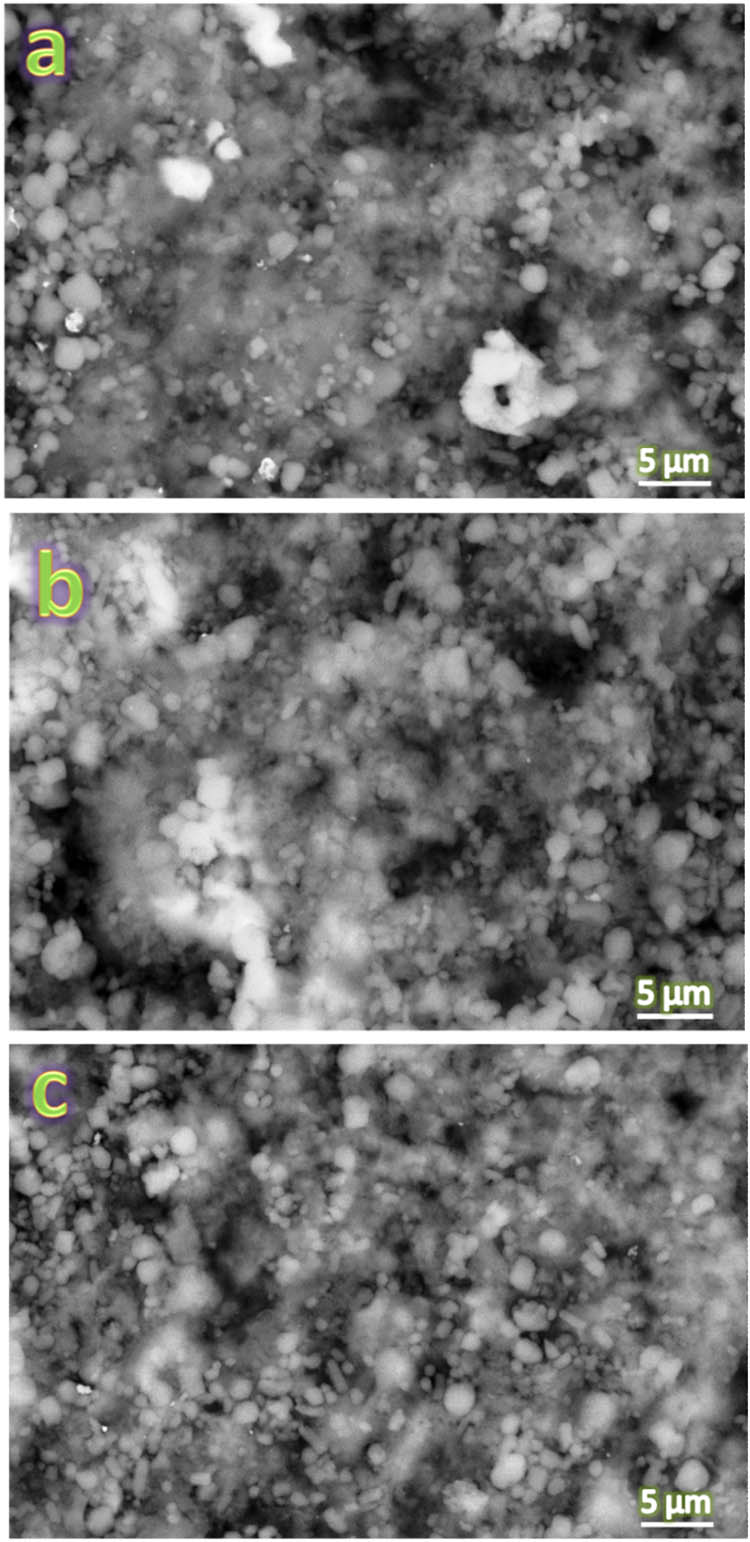
FESEM micrographs of (a) CZ0-, (b) CZ2-, and (c) CZ4-sintered samples after their treatment in the SBF solution for 10 days.
3.3.2 Antibacterial effect
In most cases, bacterial infections acquired during surgical procedures cause severe difficulties following the implantation of biomaterials into people [41]. Based on this reality, assessing a possible biomaterial's antibacterial performance is crucial. Therefore, using disc diffusion tests, the antibacterial properties of the sintered samples were examined against S. epidermidis (ATCC12228) and E. coli (ATCC25922), which are Gram+ and Gram‒ bacteria, respectively. The results are displayed in Figure 6(a) and (b), and the measured diameter of the inhibition zones is tabulated in Table 2. The acquired images show that the growth of E. coli was markedly inhibited in all tested samples, including Cord and ZrO2-free samples. These results can be attributed to the strong antibacterial effects of ZrO2 and MgO present in the Cord and possible changes in the pH value due to the possible dissolution of the CZ0 sample in the surrounding medium. It is important to remember that these nanocomposites do not affect the growth of S. epidermidis. Here, we summarize how nano-ZrO2 and nano-MgO in Cord kill bacteria.

Photos of Petri dishes after conducting agar disc–diffusion assays against (a) S. epidermidis and (b) E. coli for sintered samples.
The measured inhibition zone diameters for all examined nanocomposites samples against S. epidermidis and E. coli bacteria
| Samples’ code | Inhibition zone (mm) | |
|---|---|---|
| S. epidermidis | E. coli | |
| CZ0 | 2.33 | … |
| CZ1 | 2.50 | … |
| CZ2 | 2.78 | … |
| CZ3 | 3 | … |
| CZ4 | 3.3 | … |
Nano-ZrO2 particles harm bacterial cell membranes by releasing active oxygen. As a result of this disruption, the cytoplasmic regions of the cells degrade, which also raises permeability [42]. On the other hand, the different possible antibacterial effects of MgO nanoparticles can be attributed to the fact that, according to references [43–45], the effects of MgO nanoparticles can be attributed to reactive oxygen species (ROS) production preventing E. coli from growing. The capacity of MgO to attach to the cell membrane and induce damage, resulting in an observable change in the shape of the cell membrane and causing deformation and cell death, is another antibacterial mechanism for Gram-negative bacteria. Gram-positive bacteria, on the other hand, have a strong peptidoglycan protective coating; therefore, this method does not apply to them.
3.4 Measurement of the different properties of the obtained nanocomposites
3.4.1 Physical properties
All samples’ bulk density and apparent porosity are depicted in Figure 7(a) and (b), respectively. The findings show that the bulk density of the samples under investigation noticeably decreased when the volume percentages of Cord and ZrO2 were successively increased. It is interesting to note that this decrease is not significant because HA (3.15 g/cm3) was substituted with a lighter material, namely, Cord (2.28 g/cm3), and a heavier material, namely, ZrO2 (5.68 g/cm3), while percentage increases for ZrO2 were only 4 and Cord 20 vol%, respectively. In contrast, as discussed in Section 3.2.2, the low temperature used in the sintering process and the presence of ZrO2 with a higher melting temperature, i.e., 2,715°C, contributed to the increased porosity of the sintered samples.

(a) Bulk density and porosity and (b) relative density of samples sintered at 600°C for 1 h.
These findings are well aligned with those covered in Section 3.2.2. Various variables greatly influence ceramic materials’ densification, including the sintering temperature, the surrounding environment, and the initial powder’s grain size. Most notably, it can be assumed that if the materials utilized are in the small size range, the porosity of the generated composites will be higher since nano-sized powders exhibit superior condensation behavior than micron-sized ones at lower sintering temperatures [46].
3.4.2 Mechanical properties
The microhardness and compressive strength measurements for all nanocomposites are shown in Figure 8(a) and (b). These figures demonstrate how the combined effects of Cord and ZrO2 boosted all the tested mechanical qualities. CZ0, CZ1, CZ2, CZ3, and CZ4 samples’ microhardness values are 2.80, 2.95, 3.20, 3.60, and 4.35 Hv, respectively, whereas their compressive strength values are 60.30, 62, 65, 71, and 81 MPa, respectively. Better mechanical properties of the reinforcements used in this study, i.e., Cord and ZrO2, can be used to explain the results obtained. These outcomes are quite consistent with those mentioned in Abushanab et al. [47]. It is important to note that the CZ4 sample’s compressive strength is close to that of cortical bone (100–150 MPa), indicating that the surrounding bone would not experience the stress-shielding effect if the CZ4 sample was implanted into human bone. Importantly, the stress-shielding effect is extremely damaging and causes a major weakening of the bone since it lacks the stimuli required for the ongoing remodeling process, according to Wolff’s law [48].

(a) Microhardness and (b) compressive strength of samples sintered at 600°C for 1 h.
3.4.3 Electrical and dielectric properties
There is no denying that the good electrical properties of biomaterials greatly aid in encouraging bone formation [49]. This research examines the electrical and dielectric characteristics of sintered nanocomposites and the effect of the produced apatite layer on their surfaces. Readers interested in studying diverse biomaterial characteristics will find this article new due to its immense relevance. The electrical conductivity and dielectric properties, such as the dielectric constant and dielectric loss, were tested in this regard at various frequencies. Measurements at 1, 5, 10, and 20 MHz were made, and the results are displayed in Tables 3 and 4. It is clear that the materials’ electrical conductivity significantly decreased when the amounts of Cord and ZrO2 increased due to their electrical insulating behavior. However, this propensity increased a little bit with frequency increasing. Polarization typically confers HA’s dielectric properties, which are known to significantly improve bone tissue regeneration. Interestingly, the ε′ represents the real component of the dielectric, i.e., and the ε″ represents the imaginary part.
AC conductivity of all examined samples measured at different frequencies, i.e., 1, 5, 10, and 20 MHz
| AC conductivity (S/cm) | ||||
|---|---|---|---|---|
| 1 MHz | 5 MHz | 10 MHz | 20 MHz | |
| CZ0 | 1.21 × 10⁻⁶ | 3.31 × 10⁻⁶ | 6.55 × 10⁻⁵ | 1.35 × 10⁻⁴ |
| CZ1 | 9.71 × 10⁻⁷ | 2.60 × 10⁻⁶ | 5.24 × 10⁻⁵ | 1.11 × 10⁻⁴ |
| CZ2 | 7.71 × 10⁻⁷ | 1.77 × 10⁻⁶ | 3.90 × 10⁻⁵ | 9.30 × 10⁻⁵ |
| CZ3 | 5.29 × 10⁻⁷ | 9.61 × 10⁻⁷ | 1.92 × 10⁻⁵ | 5.70 × 10⁻⁵ |
| CZ4 | 1.08 × 10⁻⁷ | 4.42 × 10⁻⁷ | 5.76 × 10⁻⁶ | 1.05 × 10⁻⁵ |
ε′ and ε″ of all examined samples measured at different frequencies, i.e., 1, 5, 10, and 20 MHz
| 1 MHz | 5 MHz | 10 MHz | 20 MHz | |
|---|---|---|---|---|
| ε′ | ||||
| CZ0 | 4.911 | 3.401 | 1.991 | 1.477 |
| CZ1 | 5.977 | 4.398 | 2.511 | 1.741 |
| CZ2 | 7.700 | 6.072 | 3.362 | 2.228 |
| CZ3 | 10.908 | 8.385 | 4.837 | 3.130 |
| CZ4 | 14.548 | 11.929 | 7.829 | 4.351 |
| ε″ | ||||
| CZ0 | 1.112 | 8.991 | 7.011 | 5.101 |
| CZ1 | 0.136 | 0.132 | 0.099 | 0.078 |
| CZ2 | 0.177 | 0.169 | 0.146 | 0.124 |
| CZ3 | 0.264 | 0.256 | 0.232 | 0.194 |
| CZ4 | 0.397 | 0.392 | 0.364 | 0.291 |
The natural frequency of these ions is the same as the frequency used in the AC field, according to Arul et al. [50]. The conduction of nano-sized HA at lower frequencies is due to the mild oscillation of Ca2+,
where σ dc is the DC electrical conductivity, B is a constant, ω is the angular frequency, and s is an exponent [53].
The rise in AC conductivity with higher frequency is due to the separation of a complex set of ions along the c-axis of the HA crystal structure [50]. The AC conductivity continuously declines when the amounts of Cord and ZrO2 are increased because there are fewer charge carriers, which raises the nanocomposites’ resistance [54,55].
After analyzing the data, it is evident that ε′ rises with higher Cord and ZrO2 levels while falling with higher applied frequency. Notably, the values drastically dropped with frequency up to 10 MHz, but the decline in values becomes less pronounced at 20 MHz. The fact that the tested samples’ dipoles prefer to point in the direction of the applied electric field may be used to explain why the values of ε′ decreased as frequency increased. In contrast, because of the slower relaxation of the highly oriented dipoles at lower frequencies, ε′ records substantially greater values [50]. Conversely, a reduction in the number of dipoles that point in the direction of the AC field is brought on by increasing the concentrations of Cord and ZrO2. With the increasing frequency, a similar declining trend was also seen for ε″. The electric dipoles do not have enough time to align themselves with the applied electric field before it changes direction, which accounts for the apparent reduction caused by rising AC frequency; however, because there are fewer charge carriers, the higher contents of Cord and ZrO2 aid in raising the measured ε″ values [56].
When the same frequencies were used, the AC electrical conductivity, ε′, and ε″ were also measured to see what happened to the samples’ electrical and dielectric behavior when a bone-like layer on the surface. The results were listed in Tables 5 and 6 as well. The characteristics of the nanocomposites indicated earlier before and after treatment in the SBF solution at lower and higher frequencies, i.e., 1 and 20 MHz, are further depicted in Figures 9–11, respectively, to simplify the comparison of these properties before and after incubation in the SBF solution. The findings showed that the tested sample’s AC conductance is very minimally increased by the produced HA layer. This favorable outcome can be due to reducing surface pores, which enhances conductivity. In addition, the insulating ceramic components present in the CZ1, CZ2, CZ3, and CZ4 samples are covered by this surface semiconductor layer. After incubation in the SBF solution, the values of ε′ and ε″ displayed an opposite pattern, declining, which reflected the reduced dielectric characteristics of the examined samples.
AC conductivity of all samples examined at different frequencies after incubation in SBF solution for 10 days
| AC conductivity (S/cm) | ||||
|---|---|---|---|---|
| 1 MHz | 5 MHz | 10 MHz | 20 MHz | |
| CZ0 | 1.31 × 10⁻⁶ | 3.61 × 10⁻⁶ | 7.14 × 10⁻⁵ | 1.44 × 10⁻⁴ |
| CZ1 | 1.11 × 10⁻⁶ | 3.12 × 10⁻⁶ | 6.12 × 10⁻⁵ | 1.36 × 10⁻⁴ |
| CZ2 | 9.36 × 10⁻⁷ | 7.12 × 10⁻⁶ | 4.79 × 10⁻⁵ | 1.18 × 10⁻⁴ |
| CZ3 | 6.44 × 10⁻⁷ | 1.20 × 10⁻⁶ | 2.47 × 10⁻⁵ | 7.09 × 10⁻⁵ |
| CZ4 | 1.35 × 10⁻⁷ | 5.53 × 10⁻⁷ | 7.11 × 10⁻⁶ | 1.32 × 10⁻⁵ |
ε′ and ε″ of all samples evaluated at various frequencies after a 10-day incubation period in SBF solution
| 1 MHz | 5 MHz | 10 MHz | 20 MHz | |
|---|---|---|---|---|
| ε′ | ||||
| CZ0 | 4.549 | 3.224 | 1.883 | 1.297 |
| CZ1 | 5.352 | 3.911 | 2.207 | 1.510 |
| CZ2 | 6.769 | 5.429 | 2.874 | 1.879 |
| CZ3 | 9.205 | 7.172 | 4.002 | 2.570 |
| CZ4 | 11.788 | 10.150 | 6.194 | 3.724 |
| ε″ | ||||
| CZ0 | 0.10 | 0.083 | 0.063 | 0.047 |
| CZ1 | 0.123 | 0.120 | 0.084 | 0.064 |
| CZ2 | 0.161 | 0.150 | 0.121 | 0.106 |
| CZ3 | 0.228 | 0.211 | 0.191 | 0.149 |
| CZ4 | 0.348 | 0.321 | 0.298 | 0.232 |

AC conductivity of all sintered samples before and after treatment in the SBF solution for 10 days at (a) 1 MHz and (b) 20 MHz.

Dielectric constant of all sintered samples before and after treatment in the SBF solution for 10 days at (a) 1 MHz and (b) 20 MHz.

Dielectric loss of all sintered samples before and after treatment in the SBF solution for 10 days at (a) 1 MHz and (b) 20 MHz.
4 Conclusions
In the present study, nanopowders of Cord, and HA have been successfully prepared with the help of high-energy ball mill and sintering process. Subsequently, different contents of Cord were added to HA in combination with ZrO2 to produce nanocomposites with promising properties for use in bone tissue engineering applications. The findings demonstrated that there were porosity increases of around 7.14, 22.44, 43.87, and 73.46% in all of the studied samples. This occurred as a result of the samples' increasing ZrO2 concentration and decreasing sintering temperature. Furthermore, compared to the sample without ZrO2 and Cord, the microhardness was enhanced as a result of the higher ZrO2 and Cord contents. Additionally, due to the previously described factors, the compressive strength of each of the examined samples increased by 2.81, 7.79, 17.74, and 34.32%. Additionally, as ZrO2 and Cord concentrations are raised, the resistance of the nanocomposites increases because there are fewer charge carriers, which causes the AC conductivity to constantly decrease. As the quantities of ZrO2 and Cord increased over time, the study materials' in vitro bioactivity also slightly diminished. Thankfully, the porous nature of the samples and the presence of Mg2+ ions in Cord's composition prevented the samples' bioactivity behavior from significantly declining. Strong antibacterial effects against S. epidermidis bacteria were seen in all examined samples. However, none of the materials under examination had any effect on the development of E. coli bacteria. The results show that the developed nanocomposites may be used to repair damaged bone tissues.
Acknowledgments
This research work was funded by Institutional Fund Projects under grant no. (IFPIP-85-135-1443). The authors gratefully acknowledge the technical and financial support provided by the Ministry of Education and King Abdulaziz University, DSR, Jeddah, Saudi Arabia.
-
Funding information: This research work was funded by Institutional Fund Projects under grant no. (IFPIP-85-135-1443). The authors gratefully acknowledge the technical and financial support provided by the Ministry of Education and King Abdulaziz University, DSR, Jeddah, Saudi Arabia.
-
Author contributions: All authors have accepted responsibility for the entire content of this manuscript and approved its submission.
-
Conflict of interest: The authors state no conflict of interest.
-
Ethical approval: The research related to human use has been complied with all the relevant national regulations, institutional policies and in accordance the tenets of the Helsinki Declaration, and has been approved by the authors’ institutional review board or equivalent committee.
References
[1] Youness RA, TagEl-deen DM, Taha MA. A review on calcium silicate ceramics: properties, limitations, and solutions for their use in biomedical applications. Silicon. 2022, In Press.10.1007/s12633-022-02207-3Suche in Google Scholar
[2] Abushanab WS, Moustafa EB, Youness RA. Evaluation of the dynamic behavior, elastic properties, and In vitro bioactivity of some borophosphosilicate glasses for orthopedic applications. J Non-Cryst Solids. 2022;586:121539.10.1016/j.jnoncrysol.2022.121539Suche in Google Scholar
[3] Youness RA, Amer MS, Taha MA. Comprehensive in vivo and In vitro studies for evaluating the bone-bonding ability of Na2O–CaO–SiO2–B2O3–Ag2O glasses for fracture healing applications. Inorg Organomet Polym Mater. 2023, In Press.10.1007/s10904-023-02626-8Suche in Google Scholar
[4] Vafa E, Tayebi L, Abbasi M, Azizli MJ, Lari RB, Talaiekhozani A, et al. A better roadmap for designing novel bioactive glasses: effective approaches for the development of innovative revolutionary bioglasses for future biomedical applications. Environ Sci Pollut Res Int. 2022. 10.1007/s11356-022-24176-1.Suche in Google Scholar PubMed
[5] Vafa E, Lari RB, Bahrololoom ME, Amani AM. Effect of polyvinyl alcohol concentration on biomedical application of chitosan/bioactive glass composite coated on AZ91D magnesium alloy. Mater Chem Phys. 2022;291:126650.10.1016/j.matchemphys.2022.126650Suche in Google Scholar
[6] Zhao T, Li. Y, Liu Y, Zhao X. Nano-hardness, wear resistance and pseudoelasticity of hafnium implanted NiTi shape memory alloy. J Mech Behav Biomed Mater. 2012;13:174–84.10.1016/j.jmbbm.2012.04.004Suche in Google Scholar PubMed
[7] Youness RA, Zawrah MF, Taha MA. Synthesis of ZnO‑containing calcium silicate nano powders: a study on sinterability, mechanical and electrical properties. Silicon. 2023, In Press.10.1007/s12633-023-02406-6Suche in Google Scholar
[8] Bagerifard A, Yekta HJ, Aghdam HA, Motififard M, Sanatizadeh E, Nejad MG, et al. Improvement in osseointegration of tricalcium phosphate-zircon for orthopedic applications: an in vitro and in vivo evaluation. Med Biol Eng Comput. 2020;58:1681–93.10.1007/s11517-020-02157-1Suche in Google Scholar PubMed
[9] Alturki AM, Abulyazied DE, Taha MA, Abomostafa HM, Youness RA. A study to evaluate the bioactivity behavior and electrical properties of hydroxyapatite/Ag2O-borosilicate glass nanocomposites for biomedical applications. J Inorg Organomet Polym Mater. 2022;32:169–79.10.1007/s10904-021-02100-3Suche in Google Scholar
[10] Youness RA, Amer MS, Taha MA. Tribo-mechanical measurements and in vivo performance of zirconia-containing biphasic calcium phosphate material implanted in a rat model for bone replacement applications. Mater Chem Phys. 2022;285:126085.10.1016/j.matchemphys.2022.126085Suche in Google Scholar
[11] Youness RA, Ibrahim MA, Taha MA. Evaluation of the electrical and dielectric behavior of the apatite layer on the surface of hydroxyapatite/hardystonite/copper oxide hybrid nanocomposites for bone repair applications. Ceram Int. 2022;48:19837–50.10.1016/j.ceramint.2022.03.259Suche in Google Scholar
[12] Heidari F, Tabatabaei FS, Razavi M, Lari RB, Tavangar M, Romanos GE, et al. 3D construct of hydroxyapatite/zinc oxide/palladium nanocomposite scaffold for bone tissue engineering. J Mater Sci Mater Med. 2020;31:85.10.1007/s10856-020-06409-2Suche in Google Scholar PubMed
[13] Heidari F, Lari RB, Razavi M, Fahimipour F, Vashaee D, Tayebi L. Nano-hydroxyapatite and nano-hydroxyapatite/zinc oxide scaffold for bone tissue engineering application. Int J Appl Ceram Technol. 2020;17:2752–61.10.1111/ijac.13596Suche in Google Scholar
[14] Srivastava A, Singh VK, Kumar V, Kumar PH. Low cement castable based on auto combustion processed high alumina cement and mechanochemically synthesized cordierite: formulation and properties. Ceram Int. 2014;40:14061–72.10.1016/j.ceramint.2014.05.134Suche in Google Scholar
[15] Mahdi OS. Preparation cordierite and zirconia-doped cordierite composite and study bioactive properties. Mater Today Proc. 2021;42:2006–11.10.1016/j.matpr.2020.12.249Suche in Google Scholar
[16] Youness RA, Taha MA, Ibrahim MA. The influence of various zirconia contents on crystallite sizes, shrinkage, and physical and mechanical properties of hydroxyapatite-based nanobiocomposites. Egypt J Chem. 2021;64:1347–52.Suche in Google Scholar
[17] Jasemi A, Moghadas BK, Khandan A, Samandari SS. A porous calcium-zirconia scaffolds composed of magnetic nanoparticles for bone cancer treatment: Fabrication, characterization and FEM analysis. Ceram Int. 2022;48(1):1314–25.10.1016/j.ceramint.2021.09.216Suche in Google Scholar
[18] Youness RA, Taha MA, Ibrahim MA. In vitro bioactivity, molecular structure and mechanical properties of zirconia-carbonated hydroxyapatite nanobiocomposites sintered at different temperatures. Mater Chem Phys. 2020;239:122011.10.1016/j.matchemphys.2019.122011Suche in Google Scholar
[19] Siswomihardjo W, Sunaritya S, Totowi AE. The effect of zirconia in hydroxyapatite on Staphylococcus epidermidis growth. Int J Biomater. 2012;2012:432372.10.1155/2012/432372Suche in Google Scholar PubMed PubMed Central
[20] Sung YM, Shin YK, Ryu JJ. Preparation of hydroxyapatite/zirconia bioceramic nanocomposites for orthopaedic and dental prosthesis applications. Nanotechnology. 2007;18:065602.10.1088/0957-4484/18/6/065602Suche in Google Scholar
[21] Sivaperumal VR, Mani R, Polisetti V, Aruchamy K, Oh T. Synthesis of hydroxyapatite (HAp)-zirconia nanocomposite powder and evaluation of its biocompatibility: an In vitro study. Appl Sci. 2022;12:11056.10.3390/app122111056Suche in Google Scholar
[22] Cao Y, Shi T, Jiao C, Liang H, Chen R, Tian Z, et al. Fabrication and properties of zirconia/hydroxyapatite composite scaffold based on digital light processing. Ceram Int. 2020;46:2300–8.10.1016/j.ceramint.2019.09.219Suche in Google Scholar
[23] Salehi S, Fathi MH. Fabrication and characterization of sol–gel derived hydroxyapatite/zirconia composite nanopowders with various yttria contents. Ceram Int. 2010;36:1659–67.10.1016/j.ceramint.2010.02.045Suche in Google Scholar
[24] Youness RA, Taha MA, Elhaes H, Ibrahim M. Molecular modeling, FTIR spectral characterization and mechanical properties of carbonated-hydroxyapatite prepared by mechanochemical synthesis. Mater Chem Phys. 2017;190:209–18.10.1016/j.matchemphys.2017.01.004Suche in Google Scholar
[25] Youness RA, Taha MA, Elhaes H, Ibrahim M. Preparation, FTIR characterization and mechanical properties of hydroxyapatite nanopowders. J Comput Theor Nanosci. 2017;14:2409–15.10.1166/jctn.2017.6841Suche in Google Scholar
[26] Kokubo T, Takadama H. How useful is SBF in predicting in vivo bone bioactivity. Biomaterials. 2006;27:2907–15.10.1016/j.biomaterials.2006.01.017Suche in Google Scholar PubMed
[27] Kokubo T, Kushitani H, Sakka S, Kitsugi T, Yamamuro T. Solutions able to reproduce in vivo surface-structure changes in bioactive glass-ceramics A-W. J Biomed Mater Res A. 1990;24:721–34.10.1002/jbm.820240607Suche in Google Scholar PubMed
[28] Siqueira RL, Zanotto ED. The influence of phosphorus precursors on the synthesis and bioactivity of SiO2-CaO-P2O5 sol-gel glasses and glass-ceramics. J Mater Sci Mater Med. 2013;24:365–79.10.1007/s10856-012-4797-xSuche in Google Scholar PubMed
[29] Issa SAM, Almutairi AM, Albalawi K, Dakhilallah OK, Zakaly HMH, Ene A, et al. Production of hybrid nanocomposites based on iron waste reinforced with niobium carbide/granite nanoparticles with outstanding strength and wear resistance for use in industrial applications. Nanomaterials. 2023;13:537.10.3390/nano13030537Suche in Google Scholar PubMed PubMed Central
[30] Moustafa EB, Ghandourah E, Youness RA, Melaibari AA, Taha MA. Ultralight functionally graded hybrid nanocomposites based on yttrium and silica-reinforced Mg10Li5Al alloy: thermal and tribomechanical properties. Materials. 2022;15:9052.10.3390/ma15249052Suche in Google Scholar PubMed PubMed Central
[31] Khalil EMA, Youness RA, Amer MS, Taha MA. Mechanical properties, In vitro and in vivo bioactivity assessment of Na2O-CaO-P2O5-B2O3-SiO2 glass-ceramics. Ceram Int. 2018;44:7867–76.10.1016/j.ceramint.2018.01.222Suche in Google Scholar
[32] Eslami H, Hashjin MS, Tahriri M. Synthesis and charcterization of hydroxyapatite nanocrystals via chemical precipitation technique. Iran J Pharm Sci. 2008;4:127–34.Suche in Google Scholar
[33] Fakhruddin AK, Anjalani NA, Mohamad H. Fabrication of bioactive glass-cordierite composite scaffold by gelcasting method. AIP Conf Proc. 2020;2267:020018.10.1063/5.0015707Suche in Google Scholar
[34] Gheisari H, Karamian E, Abdellahi M. A novel hydroxyapatite–hardystonite nanocomposite ceramic. Ceram Int. 2015;41:5967–75.10.1016/j.ceramint.2015.01.033Suche in Google Scholar
[35] Youness RA, Taha. MA, Ibrahim M. In vitro bioactivity, physical and mechanical properties of carbonated-fluoroapatite during mechanochemical synthesis Ceram Int. 2018;44:21323–9.10.1016/j.ceramint.2018.08.184Suche in Google Scholar
[36] Lyutova E, Borilo L, Izosimova E. The effect of sodium and magnesium ions on the properties of calcium–phosphate biomaterials. Prog Biomater. 2019;8:127–36.10.1007/s40204-019-0117-6Suche in Google Scholar PubMed PubMed Central
[37] Lakshmi R, Velmurugan V, Sasikumar S. Preparation and phase evolution of wollastonite by sol-gel combustion method using sucrose as the fuel. Combust Sci Technol. 2013;185:1777–85.10.1080/00102202.2013.835308Suche in Google Scholar
[38] Basheet MH, Farhan FK, Abed AN, Alobaidi OR. The biomedical investigation of bioceramic cordierite as orthopedic material. Key Eng Mater. 2022;937:69–77.10.4028/p-o30xcqSuche in Google Scholar
[39] Taha MA, Youness RA, Ibrahim M. Biocompatability, physico-chemical and mechanical properties of hydroxyapatite-based silicon dioxide nanocomposites for biomedical applications. Ceram Int. 2020;46:23599–610.10.1016/j.ceramint.2020.06.132Suche in Google Scholar
[40] Hamvar M, Baksheshi-Rad HR, Omidi M, Ismail AF, Aziz M, Berto F, et al. Biocompatibility and bioactivity of hardystonite-based nanocomposite scaffold for tissue engineering applications. Biomed Eng Express. 2020;6:035011.10.1088/2057-1976/ab7284Suche in Google Scholar PubMed
[41] Taha MA, Youness RA, Zawrah MF. Phase composition, sinterability and bioactivity of amorphous nano-CaO-SiO2-CuO powder synthesized by sol-gel technique. Ceram Int. 2020;46:24462–71.10.1016/j.ceramint.2020.06.231Suche in Google Scholar
[42] Gad MM, Al-Thobity AM, Shahin SY, Alsaqer BT, Ali AA. Inhibitory effect of zirconium oxide nanoparticles on Candida albicans adhesion to repaired polymethyl methacrylate denture bases and interim removable prostheses: a new approach for denture stomatitis prevention. Int J Nanomed. 2017;12:5409–19.10.2147/IJN.S142857Suche in Google Scholar PubMed PubMed Central
[43] Bhattacharya P, Dey A, Neogi S. An insight into the mechanism of antibacterial activity by magnesium oxide nanoparticles. J Mater Chem B. 2021;9:5329.10.1039/D1TB00875GSuche in Google Scholar PubMed
[44] Nguyen NY, Grelling N, LeeWetteland C, Rosario R, Liu H. Antimicrobial activities and mechanisms of magnesium oxide nanoparticles (nMgO) against pathogenic bacteria, yeasts, and biofilms. Sci Rep. 2018;8:16260.10.1038/s41598-018-34567-5Suche in Google Scholar PubMed PubMed Central
[45] He Y, Ingudam S, Reed S, Gehring A, Strobaugh Jr TP, Irwin P. Study on the mechanism of antibacterial action of magnesium oxide nanoparticles against foodborne pathogens. Nanobiotechnol. 2016;14:54.10.1186/s12951-016-0202-0Suche in Google Scholar PubMed PubMed Central
[46] Prakasam M, Locs J, Salma-Ancane K, Loca D, Largeteau A, Berzina-Cimdina L. Fabrication, properties and applications of dense hydroxyapatite: a review. J Funct Biomater. 2015;6:1099–140.10.3390/jfb6041099Suche in Google Scholar PubMed PubMed Central
[47] Abushanab WS, Moustafa EB, Youness RA. Mechanical behavior and tribological properties of hydroxyapatite/hardystonite/zirconia hybrid nanocomposites for orthopedic applications. Appl Phys A. 2023, In Press.10.1007/s00339-023-06675-1Suche in Google Scholar
[48] Frost HM. Wolff’s Law and bone’s structural adaptations to mechanical usage: an overview for clinicians. Angle Orthod. 1994;64:175–88.Suche in Google Scholar
[49] Mahabole MP, Bahir MM, Kalyankar NV, Khairnar RS. Effect of incubation in simulated body fluid on dielectric and photoluminescence properties of nano-hydroxyapatite ceramic doped with strontium ions. J Biomed Sci Eng. 2012;5:396–405.10.4236/jbise.2012.57050Suche in Google Scholar
[50] Arul KT, Ramya JR, Kalkura SN. Impact of dopants on the electrical and optical properties of hydroxyapatite. In: Vizureanu P, Botelho CMCF, editors. Biomaterials. IntechOpen; 2020 10.5772/intechopen.93092.Suche in Google Scholar
[51] Gittings JP, Bowen CR, Dent ACE, Turner IG, Baxter FR, Chaudhuri JB. Electrical characterization of hydroxyapatite-based bioceramics. Acta Biomater. 2009;5:743–54.10.1016/j.actbio.2008.08.012Suche in Google Scholar PubMed
[52] Kalil SM, Beheri HH, Fattah WIA. Structural and electrical properties of zirconia/hydroxyapatite porous composites. Ceram Int. 2002;28:451–8.10.1016/S0272-8842(01)00118-3Suche in Google Scholar
[53] Sundarabharathi L, Ponnamma D, Parangusan H, Chinnaswamy M, AlMaadeed MA. Effect of anions on the structural, morphological and dielectric properties of hydrothermally synthesized hydroxyapatite nanoparticles. Appl Sci. 2020;2:1–11.10.1007/s42452-019-1807-3Suche in Google Scholar
[54] Hashim A, Hadi Q. Structural, electrical and optical properties of (biopolymer blend/titanium carbide) nanocomposites for low cost humidity sensors. J Mater Sci Mater Electron. 2018;29:11598–604.10.1007/s10854-018-9257-zSuche in Google Scholar
[55] Hashim A, Q.Hadi. Synthesis of novel (polymer blend-ceramics) Nanocomposites: structural, optical and electrical properties for humidity sensors. J Inorg Organomet Polym Mater. 2018;28:1–7.10.1007/s10904-018-0837-4Suche in Google Scholar
[56] Ahmed H, Hashim A. Fabrication of PVA/NiO/SiC nanocomposites and studying their dielectric properties for antibacterial applications. Egypt J Chem. 2020;63:805–11.Suche in Google Scholar
© 2024 the author(s), published by De Gruyter
This work is licensed under the Creative Commons Attribution 4.0 International License.
Artikel in diesem Heft
- Research Articles
- Tension buckling and postbuckling of nanocomposite laminated plates with in-plane negative Poisson’s ratio
- Polyvinylpyrrolidone-stabilised gold nanoparticle coatings inhibit blood protein adsorption
- Energy and mass transmission through hybrid nanofluid flow passing over a spinning sphere with magnetic effect and heat source/sink
- Surface treatment with nano-silica and magnesium potassium phosphate cement co-action for enhancing recycled aggregate concrete
- Numerical investigation of thermal radiation with entropy generation effects in hybrid nanofluid flow over a shrinking/stretching sheet
- Enhancing the performance of thermal energy storage by adding nano-particles with paraffin phase change materials
- Using nano-CaCO3 and ceramic tile waste to design low-carbon ultra high performance concrete
- Numerical analysis of thermophoretic particle deposition in a magneto-Marangoni convective dusty tangent hyperbolic nanofluid flow – Thermal and magnetic features
- Dual numerical solutions of Casson SA–hybrid nanofluid toward a stagnation point flow over stretching/shrinking cylinder
- Single flake homo p–n diode of MoTe2 enabled by oxygen plasma doping
- Electrostatic self-assembly effect of Fe3O4 nanoparticles on performance of carbon nanotubes in cement-based materials
- Multi-scale alignment to buried atom-scale devices using Kelvin probe force microscopy
- Antibacterial, mechanical, and dielectric properties of hydroxyapatite cordierite/zirconia porous nanocomposites for use in bone tissue engineering applications
- Time-dependent Darcy–Forchheimer flow of Casson hybrid nanofluid comprising the CNTs through a Riga plate with nonlinear thermal radiation and viscous dissipation
- Durability prediction of geopolymer mortar reinforced with nanoparticles and PVA fiber using particle swarm optimized BP neural network
- Utilization of zein nano-based system for promoting antibiofilm and anti-virulence activities of curcumin against Pseudomonas aeruginosa
- Antibacterial effect of novel dental resin composites containing rod-like zinc oxide
- An extended model to assess Jeffery–Hamel blood flow through arteries with iron-oxide (Fe2O3) nanoparticles and melting effects: Entropy optimization analysis
- Comparative study of copper nanoparticles over radially stretching sheet with water and silicone oil
- Cementitious composites modified by nanocarbon fillers with cooperation effect possessing excellent self-sensing properties
- Confinement size effect on dielectric properties, antimicrobial activity, and recycling of TiO2 quantum dots via photodegradation processes of Congo red dye and real industrial textile wastewater
- Biogenic silver nanoparticles of Moringa oleifera leaf extract: Characterization and photocatalytic application
- Novel integrated structure and function of Mg–Gd neutron shielding materials
- Impact of multiple slips on thermally radiative peristaltic transport of Sisko nanofluid with double diffusion convection, viscous dissipation, and induced magnetic field
- Magnetized water-based hybrid nanofluid flow over an exponentially stretching sheet with thermal convective and mass flux conditions: HAM solution
- A numerical investigation of the two-dimensional magnetohydrodynamic water-based hybrid nanofluid flow composed of Fe3O4 and Au nanoparticles over a heated surface
- Development and modeling of an ultra-robust TPU-MWCNT foam with high flexibility and compressibility
- Effects of nanofillers on the physical, mechanical, and tribological behavior of carbon/kenaf fiber–reinforced phenolic composites
- Polymer nanocomposite for protecting photovoltaic cells from solar ultraviolet in space
- Study on the mechanical properties and microstructure of recycled concrete reinforced with basalt fibers and nano-silica in early low-temperature environments
- Synergistic effect of carbon nanotubes and polyvinyl alcohol on the mechanical performance and microstructure of cement mortar
- CFD analysis of paraffin-based hybrid (Co–Au) and trihybrid (Co–Au–ZrO2) nanofluid flow through a porous medium
- Forced convective tangent hyperbolic nanofluid flow subject to heat source/sink and Lorentz force over a permeable wedge: Numerical exploration
- Physiochemical and electrical activities of nano copper oxides synthesised via hydrothermal method utilising natural reduction agents for solar cell application
- A homotopic analysis of the blood-based bioconvection Carreau–Yasuda hybrid nanofluid flow over a stretching sheet with convective conditions
- In situ synthesis of reduced graphene oxide/SnIn4S8 nanocomposites with enhanced photocatalytic performance for pollutant degradation
- A coarse-grained Poisson–Nernst–Planck model for polyelectrolyte-modified nanofluidic diodes
- A numerical investigation of the magnetized water-based hybrid nanofluid flow over an extending sheet with a convective condition: Active and passive controls of nanoparticles
- The LyP-1 cyclic peptide modified mesoporous polydopamine nanospheres for targeted delivery of triptolide regulate the macrophage repolarization in atherosclerosis
- Synergistic effect of hydroxyapatite-magnetite nanocomposites in magnetic hyperthermia for bone cancer treatment
- The significance of quadratic thermal radiative scrutinization of a nanofluid flow across a microchannel with thermophoretic particle deposition effects
- Ferromagnetic effect on Casson nanofluid flow and transport phenomena across a bi-directional Riga sensor device: Darcy–Forchheimer model
- Performance of carbon nanomaterials incorporated with concrete exposed to high temperature
- Multicriteria-based optimization of roller compacted concrete pavement containing crumb rubber and nano-silica
- Revisiting hydrotalcite synthesis: Efficient combined mechanochemical/coprecipitation synthesis to design advanced tunable basic catalysts
- Exploration of irreversibility process and thermal energy of a tetra hybrid radiative binary nanofluid focusing on solar implementations
- Effect of graphene oxide on the properties of ternary limestone clay cement paste
- Improved mechanical properties of graphene-modified basalt fibre–epoxy composites
- Sodium titanate nanostructured modified by green synthesis of iron oxide for highly efficient photodegradation of dye contaminants
- Green synthesis of Vitis vinifera extract-appended magnesium oxide NPs for biomedical applications
- Differential study on the thermal–physical properties of metal and its oxide nanoparticle-formed nanofluids: Molecular dynamics simulation investigation of argon-based nanofluids
- Heat convection and irreversibility of magneto-micropolar hybrid nanofluids within a porous hexagonal-shaped enclosure having heated obstacle
- Numerical simulation and optimization of biological nanocomposite system for enhanced oil recovery
- Laser ablation and chemical vapor deposition to prepare a nanostructured PPy layer on the Ti surface
- Cilostazol niosomes-loaded transdermal gels: An in vitro and in vivo anti-aggregant and skin permeation activity investigations towards preparing an efficient nanoscale formulation
- Linear and nonlinear optical studies on successfully mixed vanadium oxide and zinc oxide nanoparticles synthesized by sol–gel technique
- Analytical investigation of convective phenomena with nonlinearity characteristics in nanostratified liquid film above an inclined extended sheet
- Optimization method for low-velocity impact identification in nanocomposite using genetic algorithm
- Analyzing the 3D-MHD flow of a sodium alginate-based nanofluid flow containing alumina nanoparticles over a bi-directional extending sheet using variable porous medium and slip conditions
- A comprehensive study of laser irradiated hydrothermally synthesized 2D layered heterostructure V2O5(1−x)MoS2(x) (X = 1–5%) nanocomposites for photocatalytic application
- Computational analysis of water-based silver, copper, and alumina hybrid nanoparticles over a stretchable sheet embedded in a porous medium with thermophoretic particle deposition effects
- A deep dive into AI integration and advanced nanobiosensor technologies for enhanced bacterial infection monitoring
- Effects of normal strain on pyramidal I and II 〈c + a〉 screw dislocation mobility and structure in single-crystal magnesium
- Computational study of cross-flow in entropy-optimized nanofluids
- Significance of nanoparticle aggregation for thermal transport over magnetized sensor surface
- A green and facile synthesis route of nanosize cupric oxide at room temperature
- Effect of annealing time on bending performance and microstructure of C19400 alloy strip
- Chitosan-based Mupirocin and Alkanna tinctoria extract nanoparticles for the management of burn wound: In vitro and in vivo characterization
- Electrospinning of MNZ/PLGA/SF nanofibers for periodontitis
- Photocatalytic degradation of methylene blue by Nd-doped titanium dioxide thin films
- Shell-core-structured electrospinning film with sequential anti-inflammatory and pro-neurogenic effects for peripheral nerve repairment
- Flow and heat transfer insights into a chemically reactive micropolar Williamson ternary hybrid nanofluid with cross-diffusion theory
- One-pot fabrication of open-spherical shapes based on the decoration of copper sulfide/poly-O-amino benzenethiol on copper oxide as a promising photocathode for hydrogen generation from the natural source of Red Sea water
- A penta-hybrid approach for modeling the nanofluid flow in a spatially dependent magnetic field
- Advancing sustainable agriculture: Metal-doped urea–hydroxyapatite hybrid nanofertilizer for agro-industry
- Utilizing Ziziphus spina-christi for eco-friendly synthesis of silver nanoparticles: Antimicrobial activity and promising application in wound healing
- Plant-mediated synthesis, characterization, and evaluation of a copper oxide/silicon dioxide nanocomposite by an antimicrobial study
- Effects of PVA fibers and nano-SiO2 on rheological properties of geopolymer mortar
- Investigating silver and alumina nanoparticles’ impact on fluid behavior over porous stretching surface
- Potential pharmaceutical applications and molecular docking study for green fabricated ZnO nanoparticles mediated Raphanus sativus: In vitro and in vivo study
- Effect of temperature and nanoparticle size on the interfacial layer thickness of TiO2–water nanofluids using molecular dynamics
- Characteristics of induced magnetic field on the time-dependent MHD nanofluid flow through parallel plates
- Flexural and vibration behaviours of novel covered CFRP composite joints with an MWCNT-modified adhesive
- Experimental research on mechanically and thermally activation of nano-kaolin to improve the properties of ultra-high-performance fiber-reinforced concrete
- Analysis of variable fluid properties for three-dimensional flow of ternary hybrid nanofluid on a stretching sheet with MHD effects
- Biodegradability of corn starch films containing nanocellulose fiber and thymol
- Toxicity assessment of copper oxide nanoparticles: In vivo study
- Some measures to enhance the energy output performances of triboelectric nanogenerators
- Reinforcement of graphene nanoplatelets on water uptake and thermomechanical behaviour of epoxy adhesive subjected to water ageing conditions
- Optimization of preparation parameters and testing verification of carbon nanotube suspensions used in concrete
- Max-phase Ti3SiC2 and diverse nanoparticle reinforcements for enhancement of the mechanical, dynamic, and microstructural properties of AA5083 aluminum alloy via FSP
- Advancing drug delivery: Neural network perspectives on nanoparticle-mediated treatments for cancerous tissues
- PEG-PLGA core–shell nanoparticles for the controlled delivery of picoplatin–hydroxypropyl β-cyclodextrin inclusion complex in triple-negative breast cancer: In vitro and in vivo study
- Conduction transportation from graphene to an insulative polymer medium: A novel approach for the conductivity of nanocomposites
- Review Articles
- Developments of terahertz metasurface biosensors: A literature review
- Overview of amorphous carbon memristor device, modeling, and applications for neuromorphic computing
- Advances in the synthesis of gold nanoclusters (AuNCs) of proteins extracted from nature
- A review of ternary polymer nanocomposites containing clay and calcium carbonate and their biomedical applications
- Recent advancements in polyoxometalate-functionalized fiber materials: A review
- Special contribution of atomic force microscopy in cell death research
- A comprehensive review of oral chitosan drug delivery systems: Applications for oral insulin delivery
- Cellular senescence and nanoparticle-based therapies: Current developments and perspectives
- Cyclodextrins-block copolymer drug delivery systems: From design and development to preclinical studies
- Micelle-based nanoparticles with stimuli-responsive properties for drug delivery
- Critical assessment of the thermal stability and degradation of chemically functionalized nanocellulose-based polymer nanocomposites
- Research progress in preparation technology of micro and nano titanium alloy powder
- Nanoformulations for lysozyme-based additives in animal feed: An alternative to fight antibiotic resistance spread
- Incorporation of organic photochromic molecules in mesoporous silica materials: Synthesis and applications
- A review on modeling of graphene and associated nanostructures reinforced concrete
- A review on strengthening mechanisms of carbon quantum dots-reinforced Cu-matrix nanocomposites
- Review on nanocellulose composites and CNFs assembled microfiber toward automotive applications
- Nanomaterial coating for layered lithium rich transition metal oxide cathode for lithium-ion battery
- Application of AgNPs in biomedicine: An overview and current trends
- Nanobiotechnology and microbial influence on cold adaptation in plants
- Hepatotoxicity of nanomaterials: From mechanism to therapeutic strategy
- Applications of micro-nanobubble and its influence on concrete properties: An in-depth review
- A comprehensive systematic literature review of ML in nanotechnology for sustainable development
- Exploiting the nanotechnological approaches for traditional Chinese medicine in childhood rhinitis: A review of future perspectives
- Twisto-photonics in two-dimensional materials: A comprehensive review
- Current advances of anticancer drugs based on solubilization technology
- Recent process of using nanoparticles in the T cell-based immunometabolic therapy
- Future prospects of gold nanoclusters in hydrogen storage systems and sustainable environmental treatment applications
- Preparation, types, and applications of one- and two-dimensional nanochannels and their transport properties for water and ions
- Microstructural, mechanical, and corrosion characteristics of Mg–Gd–x systems: A review of recent advancements
- Functionalized nanostructures and targeted delivery systems with a focus on plant-derived natural agents for COVID-19 therapy: A review and outlook
- Mapping evolution and trends of cell membrane-coated nanoparticles: A bibliometric analysis and scoping review
- Nanoparticles and their application in the diagnosis of hepatocellular carcinoma
- In situ growth of carbon nanotubes on fly ash substrates
- Structural performance of boards through nanoparticle reinforcement: An advance review
- Reinforcing mechanisms review of the graphene oxide on cement composites
- Seed regeneration aided by nanomaterials in a climate change scenario: A comprehensive review
- Surface-engineered quantum dot nanocomposites for neurodegenerative disorder remediation and avenue for neuroimaging
- Graphitic carbon nitride hybrid thin films for energy conversion: A mini-review on defect activation with different materials
- Nanoparticles and the treatment of hepatocellular carcinoma
- Special Issue on Advanced Nanomaterials and Composites for Energy Conversion and Storage - Part II
- Highly safe lithium vanadium oxide anode for fast-charging dendrite-free lithium-ion batteries
- Recent progress in nanomaterials of battery energy storage: A patent landscape analysis, technology updates, and future prospects
- Special Issue on Advanced Nanomaterials for Carbon Capture, Environment and Utilization for Energy Sustainability - Part II
- Calcium-, magnesium-, and yttrium-doped lithium nickel phosphate nanomaterials as high-performance catalysts for electrochemical water oxidation reaction
- Low alkaline vegetation concrete with silica fume and nano-fly ash composites to improve the planting properties and soil ecology
- Mesoporous silica-grafted deep eutectic solvent-based mixed matrix membranes for wastewater treatment: Synthesis and emerging pollutant removal performance
- Electrochemically prepared ultrathin two-dimensional graphitic nanosheets as cathodes for advanced Zn-based energy storage devices
- Enhanced catalytic degradation of amoxicillin by phyto-mediated synthesised ZnO NPs and ZnO-rGO hybrid nanocomposite: Assessment of antioxidant activity, adsorption, and thermodynamic analysis
- Incorporating GO in PI matrix to advance nanocomposite coating: An enhancing strategy to prevent corrosion
- Synthesis, characterization, thermal stability, and application of microporous hyper cross-linked polyphosphazenes with naphthylamine group for CO2 uptake
- Engineering in ceramic albite morphology by the addition of additives: Carbon nanotubes and graphene oxide for energy applications
- Nanoscale synergy: Optimizing energy storage with SnO2 quantum dots on ZnO hexagonal prisms for advanced supercapacitors
- Aging assessment of silicone rubber materials under corona discharge accompanied by humidity and UV radiation
- Tuning structural and electrical properties of Co-precipitated and Cu-incorporated nickel ferrite for energy applications
- Sodium alginate-supported AgSr nanoparticles for catalytic degradation of malachite green and methyl orange in aqueous medium
- An environmentally greener and reusability approach for bioenergy production using Mallotus philippensis (Kamala) seed oil feedstock via phytonanotechnology
- Micro-/nano-alumina trihydrate and -magnesium hydroxide fillers in RTV-SR composites under electrical and environmental stresses
- Mechanism exploration of ion-implanted epoxy on surface trap distribution: An approach to augment the vacuum flashover voltages
- Nanoscale engineering of semiconductor photocatalysts boosting charge separation for solar-driven H2 production: Recent advances and future perspective
- Excellent catalytic performance over reduced graphene-boosted novel nanoparticles for oxidative desulfurization of fuel oil
- Special Issue on Advances in Nanotechnology for Agriculture
- Deciphering the synergistic potential of mycogenic zinc oxide nanoparticles and bio-slurry formulation on phenology and physiology of Vigna radiata
- Nanomaterials: Cross-disciplinary applications in ornamental plants
- Special Issue on Catechol Based Nano and Microstructures
- Polydopamine films: Versatile but interface-dependent coatings
- In vitro anticancer activity of melanin-like nanoparticles for multimodal therapy of glioblastoma
- Poly-3,4-dihydroxybenzylidenhydrazine, a different analogue of polydopamine
- Chirality and self-assembly of structures derived from optically active 1,2-diaminocyclohexane and catecholamines
- Advancing resource sustainability with green photothermal materials: Insights from organic waste-derived and bioderived sources
- Bioinspired neuromelanin-like Pt(iv) polymeric nanoparticles for cancer treatment
- Special Issue on Implementing Nanotechnology for Smart Healthcare System
- Intelligent explainable optical sensing on Internet of nanorobots for disease detection
- Special Issue on Green Mono, Bi and Tri Metallic Nanoparticles for Biological and Environmental Applications
- Tracking success of interaction of green-synthesized Carbopol nanoemulgel (neomycin-decorated Ag/ZnO nanocomposite) with wound-based MDR bacteria
- Green synthesis of copper oxide nanoparticles using genus Inula and evaluation of biological therapeutics and environmental applications
- Biogenic fabrication and multifunctional therapeutic applications of silver nanoparticles synthesized from rose petal extract
- Metal oxides on the frontlines: Antimicrobial activity in plant-derived biometallic nanoparticles
- Controlling pore size during the synthesis of hydroxyapatite nanoparticles using CTAB by the sol–gel hydrothermal method and their biological activities
- Special Issue on State-of-Art Advanced Nanotechnology for Healthcare
- Applications of nanomedicine-integrated phototherapeutic agents in cancer theranostics: A comprehensive review of the current state of research
- Smart bionanomaterials for treatment and diagnosis of inflammatory bowel disease
- Beyond conventional therapy: Synthesis of multifunctional nanoparticles for rheumatoid arthritis therapy
Artikel in diesem Heft
- Research Articles
- Tension buckling and postbuckling of nanocomposite laminated plates with in-plane negative Poisson’s ratio
- Polyvinylpyrrolidone-stabilised gold nanoparticle coatings inhibit blood protein adsorption
- Energy and mass transmission through hybrid nanofluid flow passing over a spinning sphere with magnetic effect and heat source/sink
- Surface treatment with nano-silica and magnesium potassium phosphate cement co-action for enhancing recycled aggregate concrete
- Numerical investigation of thermal radiation with entropy generation effects in hybrid nanofluid flow over a shrinking/stretching sheet
- Enhancing the performance of thermal energy storage by adding nano-particles with paraffin phase change materials
- Using nano-CaCO3 and ceramic tile waste to design low-carbon ultra high performance concrete
- Numerical analysis of thermophoretic particle deposition in a magneto-Marangoni convective dusty tangent hyperbolic nanofluid flow – Thermal and magnetic features
- Dual numerical solutions of Casson SA–hybrid nanofluid toward a stagnation point flow over stretching/shrinking cylinder
- Single flake homo p–n diode of MoTe2 enabled by oxygen plasma doping
- Electrostatic self-assembly effect of Fe3O4 nanoparticles on performance of carbon nanotubes in cement-based materials
- Multi-scale alignment to buried atom-scale devices using Kelvin probe force microscopy
- Antibacterial, mechanical, and dielectric properties of hydroxyapatite cordierite/zirconia porous nanocomposites for use in bone tissue engineering applications
- Time-dependent Darcy–Forchheimer flow of Casson hybrid nanofluid comprising the CNTs through a Riga plate with nonlinear thermal radiation and viscous dissipation
- Durability prediction of geopolymer mortar reinforced with nanoparticles and PVA fiber using particle swarm optimized BP neural network
- Utilization of zein nano-based system for promoting antibiofilm and anti-virulence activities of curcumin against Pseudomonas aeruginosa
- Antibacterial effect of novel dental resin composites containing rod-like zinc oxide
- An extended model to assess Jeffery–Hamel blood flow through arteries with iron-oxide (Fe2O3) nanoparticles and melting effects: Entropy optimization analysis
- Comparative study of copper nanoparticles over radially stretching sheet with water and silicone oil
- Cementitious composites modified by nanocarbon fillers with cooperation effect possessing excellent self-sensing properties
- Confinement size effect on dielectric properties, antimicrobial activity, and recycling of TiO2 quantum dots via photodegradation processes of Congo red dye and real industrial textile wastewater
- Biogenic silver nanoparticles of Moringa oleifera leaf extract: Characterization and photocatalytic application
- Novel integrated structure and function of Mg–Gd neutron shielding materials
- Impact of multiple slips on thermally radiative peristaltic transport of Sisko nanofluid with double diffusion convection, viscous dissipation, and induced magnetic field
- Magnetized water-based hybrid nanofluid flow over an exponentially stretching sheet with thermal convective and mass flux conditions: HAM solution
- A numerical investigation of the two-dimensional magnetohydrodynamic water-based hybrid nanofluid flow composed of Fe3O4 and Au nanoparticles over a heated surface
- Development and modeling of an ultra-robust TPU-MWCNT foam with high flexibility and compressibility
- Effects of nanofillers on the physical, mechanical, and tribological behavior of carbon/kenaf fiber–reinforced phenolic composites
- Polymer nanocomposite for protecting photovoltaic cells from solar ultraviolet in space
- Study on the mechanical properties and microstructure of recycled concrete reinforced with basalt fibers and nano-silica in early low-temperature environments
- Synergistic effect of carbon nanotubes and polyvinyl alcohol on the mechanical performance and microstructure of cement mortar
- CFD analysis of paraffin-based hybrid (Co–Au) and trihybrid (Co–Au–ZrO2) nanofluid flow through a porous medium
- Forced convective tangent hyperbolic nanofluid flow subject to heat source/sink and Lorentz force over a permeable wedge: Numerical exploration
- Physiochemical and electrical activities of nano copper oxides synthesised via hydrothermal method utilising natural reduction agents for solar cell application
- A homotopic analysis of the blood-based bioconvection Carreau–Yasuda hybrid nanofluid flow over a stretching sheet with convective conditions
- In situ synthesis of reduced graphene oxide/SnIn4S8 nanocomposites with enhanced photocatalytic performance for pollutant degradation
- A coarse-grained Poisson–Nernst–Planck model for polyelectrolyte-modified nanofluidic diodes
- A numerical investigation of the magnetized water-based hybrid nanofluid flow over an extending sheet with a convective condition: Active and passive controls of nanoparticles
- The LyP-1 cyclic peptide modified mesoporous polydopamine nanospheres for targeted delivery of triptolide regulate the macrophage repolarization in atherosclerosis
- Synergistic effect of hydroxyapatite-magnetite nanocomposites in magnetic hyperthermia for bone cancer treatment
- The significance of quadratic thermal radiative scrutinization of a nanofluid flow across a microchannel with thermophoretic particle deposition effects
- Ferromagnetic effect on Casson nanofluid flow and transport phenomena across a bi-directional Riga sensor device: Darcy–Forchheimer model
- Performance of carbon nanomaterials incorporated with concrete exposed to high temperature
- Multicriteria-based optimization of roller compacted concrete pavement containing crumb rubber and nano-silica
- Revisiting hydrotalcite synthesis: Efficient combined mechanochemical/coprecipitation synthesis to design advanced tunable basic catalysts
- Exploration of irreversibility process and thermal energy of a tetra hybrid radiative binary nanofluid focusing on solar implementations
- Effect of graphene oxide on the properties of ternary limestone clay cement paste
- Improved mechanical properties of graphene-modified basalt fibre–epoxy composites
- Sodium titanate nanostructured modified by green synthesis of iron oxide for highly efficient photodegradation of dye contaminants
- Green synthesis of Vitis vinifera extract-appended magnesium oxide NPs for biomedical applications
- Differential study on the thermal–physical properties of metal and its oxide nanoparticle-formed nanofluids: Molecular dynamics simulation investigation of argon-based nanofluids
- Heat convection and irreversibility of magneto-micropolar hybrid nanofluids within a porous hexagonal-shaped enclosure having heated obstacle
- Numerical simulation and optimization of biological nanocomposite system for enhanced oil recovery
- Laser ablation and chemical vapor deposition to prepare a nanostructured PPy layer on the Ti surface
- Cilostazol niosomes-loaded transdermal gels: An in vitro and in vivo anti-aggregant and skin permeation activity investigations towards preparing an efficient nanoscale formulation
- Linear and nonlinear optical studies on successfully mixed vanadium oxide and zinc oxide nanoparticles synthesized by sol–gel technique
- Analytical investigation of convective phenomena with nonlinearity characteristics in nanostratified liquid film above an inclined extended sheet
- Optimization method for low-velocity impact identification in nanocomposite using genetic algorithm
- Analyzing the 3D-MHD flow of a sodium alginate-based nanofluid flow containing alumina nanoparticles over a bi-directional extending sheet using variable porous medium and slip conditions
- A comprehensive study of laser irradiated hydrothermally synthesized 2D layered heterostructure V2O5(1−x)MoS2(x) (X = 1–5%) nanocomposites for photocatalytic application
- Computational analysis of water-based silver, copper, and alumina hybrid nanoparticles over a stretchable sheet embedded in a porous medium with thermophoretic particle deposition effects
- A deep dive into AI integration and advanced nanobiosensor technologies for enhanced bacterial infection monitoring
- Effects of normal strain on pyramidal I and II 〈c + a〉 screw dislocation mobility and structure in single-crystal magnesium
- Computational study of cross-flow in entropy-optimized nanofluids
- Significance of nanoparticle aggregation for thermal transport over magnetized sensor surface
- A green and facile synthesis route of nanosize cupric oxide at room temperature
- Effect of annealing time on bending performance and microstructure of C19400 alloy strip
- Chitosan-based Mupirocin and Alkanna tinctoria extract nanoparticles for the management of burn wound: In vitro and in vivo characterization
- Electrospinning of MNZ/PLGA/SF nanofibers for periodontitis
- Photocatalytic degradation of methylene blue by Nd-doped titanium dioxide thin films
- Shell-core-structured electrospinning film with sequential anti-inflammatory and pro-neurogenic effects for peripheral nerve repairment
- Flow and heat transfer insights into a chemically reactive micropolar Williamson ternary hybrid nanofluid with cross-diffusion theory
- One-pot fabrication of open-spherical shapes based on the decoration of copper sulfide/poly-O-amino benzenethiol on copper oxide as a promising photocathode for hydrogen generation from the natural source of Red Sea water
- A penta-hybrid approach for modeling the nanofluid flow in a spatially dependent magnetic field
- Advancing sustainable agriculture: Metal-doped urea–hydroxyapatite hybrid nanofertilizer for agro-industry
- Utilizing Ziziphus spina-christi for eco-friendly synthesis of silver nanoparticles: Antimicrobial activity and promising application in wound healing
- Plant-mediated synthesis, characterization, and evaluation of a copper oxide/silicon dioxide nanocomposite by an antimicrobial study
- Effects of PVA fibers and nano-SiO2 on rheological properties of geopolymer mortar
- Investigating silver and alumina nanoparticles’ impact on fluid behavior over porous stretching surface
- Potential pharmaceutical applications and molecular docking study for green fabricated ZnO nanoparticles mediated Raphanus sativus: In vitro and in vivo study
- Effect of temperature and nanoparticle size on the interfacial layer thickness of TiO2–water nanofluids using molecular dynamics
- Characteristics of induced magnetic field on the time-dependent MHD nanofluid flow through parallel plates
- Flexural and vibration behaviours of novel covered CFRP composite joints with an MWCNT-modified adhesive
- Experimental research on mechanically and thermally activation of nano-kaolin to improve the properties of ultra-high-performance fiber-reinforced concrete
- Analysis of variable fluid properties for three-dimensional flow of ternary hybrid nanofluid on a stretching sheet with MHD effects
- Biodegradability of corn starch films containing nanocellulose fiber and thymol
- Toxicity assessment of copper oxide nanoparticles: In vivo study
- Some measures to enhance the energy output performances of triboelectric nanogenerators
- Reinforcement of graphene nanoplatelets on water uptake and thermomechanical behaviour of epoxy adhesive subjected to water ageing conditions
- Optimization of preparation parameters and testing verification of carbon nanotube suspensions used in concrete
- Max-phase Ti3SiC2 and diverse nanoparticle reinforcements for enhancement of the mechanical, dynamic, and microstructural properties of AA5083 aluminum alloy via FSP
- Advancing drug delivery: Neural network perspectives on nanoparticle-mediated treatments for cancerous tissues
- PEG-PLGA core–shell nanoparticles for the controlled delivery of picoplatin–hydroxypropyl β-cyclodextrin inclusion complex in triple-negative breast cancer: In vitro and in vivo study
- Conduction transportation from graphene to an insulative polymer medium: A novel approach for the conductivity of nanocomposites
- Review Articles
- Developments of terahertz metasurface biosensors: A literature review
- Overview of amorphous carbon memristor device, modeling, and applications for neuromorphic computing
- Advances in the synthesis of gold nanoclusters (AuNCs) of proteins extracted from nature
- A review of ternary polymer nanocomposites containing clay and calcium carbonate and their biomedical applications
- Recent advancements in polyoxometalate-functionalized fiber materials: A review
- Special contribution of atomic force microscopy in cell death research
- A comprehensive review of oral chitosan drug delivery systems: Applications for oral insulin delivery
- Cellular senescence and nanoparticle-based therapies: Current developments and perspectives
- Cyclodextrins-block copolymer drug delivery systems: From design and development to preclinical studies
- Micelle-based nanoparticles with stimuli-responsive properties for drug delivery
- Critical assessment of the thermal stability and degradation of chemically functionalized nanocellulose-based polymer nanocomposites
- Research progress in preparation technology of micro and nano titanium alloy powder
- Nanoformulations for lysozyme-based additives in animal feed: An alternative to fight antibiotic resistance spread
- Incorporation of organic photochromic molecules in mesoporous silica materials: Synthesis and applications
- A review on modeling of graphene and associated nanostructures reinforced concrete
- A review on strengthening mechanisms of carbon quantum dots-reinforced Cu-matrix nanocomposites
- Review on nanocellulose composites and CNFs assembled microfiber toward automotive applications
- Nanomaterial coating for layered lithium rich transition metal oxide cathode for lithium-ion battery
- Application of AgNPs in biomedicine: An overview and current trends
- Nanobiotechnology and microbial influence on cold adaptation in plants
- Hepatotoxicity of nanomaterials: From mechanism to therapeutic strategy
- Applications of micro-nanobubble and its influence on concrete properties: An in-depth review
- A comprehensive systematic literature review of ML in nanotechnology for sustainable development
- Exploiting the nanotechnological approaches for traditional Chinese medicine in childhood rhinitis: A review of future perspectives
- Twisto-photonics in two-dimensional materials: A comprehensive review
- Current advances of anticancer drugs based on solubilization technology
- Recent process of using nanoparticles in the T cell-based immunometabolic therapy
- Future prospects of gold nanoclusters in hydrogen storage systems and sustainable environmental treatment applications
- Preparation, types, and applications of one- and two-dimensional nanochannels and their transport properties for water and ions
- Microstructural, mechanical, and corrosion characteristics of Mg–Gd–x systems: A review of recent advancements
- Functionalized nanostructures and targeted delivery systems with a focus on plant-derived natural agents for COVID-19 therapy: A review and outlook
- Mapping evolution and trends of cell membrane-coated nanoparticles: A bibliometric analysis and scoping review
- Nanoparticles and their application in the diagnosis of hepatocellular carcinoma
- In situ growth of carbon nanotubes on fly ash substrates
- Structural performance of boards through nanoparticle reinforcement: An advance review
- Reinforcing mechanisms review of the graphene oxide on cement composites
- Seed regeneration aided by nanomaterials in a climate change scenario: A comprehensive review
- Surface-engineered quantum dot nanocomposites for neurodegenerative disorder remediation and avenue for neuroimaging
- Graphitic carbon nitride hybrid thin films for energy conversion: A mini-review on defect activation with different materials
- Nanoparticles and the treatment of hepatocellular carcinoma
- Special Issue on Advanced Nanomaterials and Composites for Energy Conversion and Storage - Part II
- Highly safe lithium vanadium oxide anode for fast-charging dendrite-free lithium-ion batteries
- Recent progress in nanomaterials of battery energy storage: A patent landscape analysis, technology updates, and future prospects
- Special Issue on Advanced Nanomaterials for Carbon Capture, Environment and Utilization for Energy Sustainability - Part II
- Calcium-, magnesium-, and yttrium-doped lithium nickel phosphate nanomaterials as high-performance catalysts for electrochemical water oxidation reaction
- Low alkaline vegetation concrete with silica fume and nano-fly ash composites to improve the planting properties and soil ecology
- Mesoporous silica-grafted deep eutectic solvent-based mixed matrix membranes for wastewater treatment: Synthesis and emerging pollutant removal performance
- Electrochemically prepared ultrathin two-dimensional graphitic nanosheets as cathodes for advanced Zn-based energy storage devices
- Enhanced catalytic degradation of amoxicillin by phyto-mediated synthesised ZnO NPs and ZnO-rGO hybrid nanocomposite: Assessment of antioxidant activity, adsorption, and thermodynamic analysis
- Incorporating GO in PI matrix to advance nanocomposite coating: An enhancing strategy to prevent corrosion
- Synthesis, characterization, thermal stability, and application of microporous hyper cross-linked polyphosphazenes with naphthylamine group for CO2 uptake
- Engineering in ceramic albite morphology by the addition of additives: Carbon nanotubes and graphene oxide for energy applications
- Nanoscale synergy: Optimizing energy storage with SnO2 quantum dots on ZnO hexagonal prisms for advanced supercapacitors
- Aging assessment of silicone rubber materials under corona discharge accompanied by humidity and UV radiation
- Tuning structural and electrical properties of Co-precipitated and Cu-incorporated nickel ferrite for energy applications
- Sodium alginate-supported AgSr nanoparticles for catalytic degradation of malachite green and methyl orange in aqueous medium
- An environmentally greener and reusability approach for bioenergy production using Mallotus philippensis (Kamala) seed oil feedstock via phytonanotechnology
- Micro-/nano-alumina trihydrate and -magnesium hydroxide fillers in RTV-SR composites under electrical and environmental stresses
- Mechanism exploration of ion-implanted epoxy on surface trap distribution: An approach to augment the vacuum flashover voltages
- Nanoscale engineering of semiconductor photocatalysts boosting charge separation for solar-driven H2 production: Recent advances and future perspective
- Excellent catalytic performance over reduced graphene-boosted novel nanoparticles for oxidative desulfurization of fuel oil
- Special Issue on Advances in Nanotechnology for Agriculture
- Deciphering the synergistic potential of mycogenic zinc oxide nanoparticles and bio-slurry formulation on phenology and physiology of Vigna radiata
- Nanomaterials: Cross-disciplinary applications in ornamental plants
- Special Issue on Catechol Based Nano and Microstructures
- Polydopamine films: Versatile but interface-dependent coatings
- In vitro anticancer activity of melanin-like nanoparticles for multimodal therapy of glioblastoma
- Poly-3,4-dihydroxybenzylidenhydrazine, a different analogue of polydopamine
- Chirality and self-assembly of structures derived from optically active 1,2-diaminocyclohexane and catecholamines
- Advancing resource sustainability with green photothermal materials: Insights from organic waste-derived and bioderived sources
- Bioinspired neuromelanin-like Pt(iv) polymeric nanoparticles for cancer treatment
- Special Issue on Implementing Nanotechnology for Smart Healthcare System
- Intelligent explainable optical sensing on Internet of nanorobots for disease detection
- Special Issue on Green Mono, Bi and Tri Metallic Nanoparticles for Biological and Environmental Applications
- Tracking success of interaction of green-synthesized Carbopol nanoemulgel (neomycin-decorated Ag/ZnO nanocomposite) with wound-based MDR bacteria
- Green synthesis of copper oxide nanoparticles using genus Inula and evaluation of biological therapeutics and environmental applications
- Biogenic fabrication and multifunctional therapeutic applications of silver nanoparticles synthesized from rose petal extract
- Metal oxides on the frontlines: Antimicrobial activity in plant-derived biometallic nanoparticles
- Controlling pore size during the synthesis of hydroxyapatite nanoparticles using CTAB by the sol–gel hydrothermal method and their biological activities
- Special Issue on State-of-Art Advanced Nanotechnology for Healthcare
- Applications of nanomedicine-integrated phototherapeutic agents in cancer theranostics: A comprehensive review of the current state of research
- Smart bionanomaterials for treatment and diagnosis of inflammatory bowel disease
- Beyond conventional therapy: Synthesis of multifunctional nanoparticles for rheumatoid arthritis therapy
