Exploration of irreversibility process and thermal energy of a tetra hybrid radiative binary nanofluid focusing on solar implementations
-
 ,
,

Abstract
Thermal energy from the Sun comes mostly from sunlight. These energies might be used in photovoltaic cells, sustainable power systems, solar light poles, and water-collecting solar pumps. This age studies solar energy and how direct sunshine might improve solar panel efficiency. Solar energy, especially solar tiles, is widely used in manufacturing today. The literature includes a modified Buongiorno hybrid nanofluid prototype. There are no studies that have examined the impact of tri-hybrid and unique tetra hybridity nanomolecules integrated with the Buongiorno nanofluid prototype on liquid moving on a flexible surface. This study examines the effects of an improved Buongiorno tetra hybrid nanoliquid prototypical with Buongiorno and Tiwari–Das nanofluid on magnetized double-diffusive binary nanofluid with cross fluid and Maxwell liquid flowing with variant thermal conductance over a porous medium. Different profiles include diffusion thermo and thermo diffusion. The LobattoIIIA scheme’s convergence and stability are examined in terms of residual error, mesh points for ordinary differential equations (ODEs), and boundary conditions. Leading equations about liquid flow continuity, impetus, temperature, and concentricity are obtained using continuity, conservation of momentum, the second law of thermodynamics, Fick’s second law of diffusion, and boundary layer expectations. The system of partial differential equations obtained from the given assumption becomes a system of ODEs and well-established LobattoIII. Their numerical solution is obtained using a numerical technique. Statistical charts and tables provide numerical solutions. The heat transport rate of tetra-hybrid nanomolecules increases dramatically, unlike tri- and di-hybrid nanomolecules. The improved Buongiorno tetra hybrid nanofluid (BTHNF) model produces more heat when radiation
Abbreviations
- AC
-
alternating current
- BTHNF
-
Buongiorno tetra hybrid nanofluid
- C-CHF
-
Cattaneo–Christov heat fluxing
- DC
-
direct current
- HNF
-
hybrid nanofluid
- LFRs
-
linear Fresnel mirrors
- MBNF
-
modified Buongiorno nanofluid
- MHD
-
magneto hydrodynamics
- PV
-
photovoltaic
- THNF
-
tetra hybrid nanofluid
1 Introduction
Due to intricate stress–strain relationships, non-Newtonian fluids are hard to predict. This Maxwell–cross model, which combines viscoelastic and power law models, can simulate flow in the power law zone and regions with low and high shear rates. This model also accurately describes territory movement at low and high shear rates and liquid relaxation time. This technique requires temporal relaxation but can conduct many scientific simulations. Everyday Maxwell–cross fluids include tomato sauce, paint, and blood. Megahed and Abbas [1] studied stratified cross-fluid flow, porosity material, and chemical reactions and found that porosity limitation increases the slow fluid flow. This shows that chemical reactions have a significant impact. Hauswirth and colleagues [2] found that porosity reduced the velocity when the cross model traveled over an expanding sheet by increasing the Weissenberg quantity. Patel [3] showed that when a magnetic force acts on stalled Carreau liquid in a porous medium, the liquid temperature increases with the heat production factor. Research investigating magnetic effects on Carreau liquid revealed this. Shaw et al. [4] and Sahu et al. [5] found that nonlinearly based thermal radiative fluxing transfers heat faster than thermal radiation in a cross-liquid. They also observed that the Darcy–Forchheimer effect amplification lowered the liquid flow speed. An implanted cross-nanofluid with a Cattaneo–Christov heat fluxing (C-CHF) and chemical reaction was thoroughly studied by Ramzan et al. [6]. They found that C-CHF increases heat transfer. The heat transfer study of a cross-nanoliquid via a parabolic trough surface collector was extensively studied by Reddy et al. [7]. Chemical reactions and MHD effects on crossflow liquid in an inflatable cylinder were examined by Ali et al. [8]. They observed that magnetized force improvement reduced the speed field. Azam et al. [9] examined how sun radiation affects unsteady cross-nanoliquid. They found that sunlight raises the fluid temperature.
Recent studies have examined triple HNF effects on fluid dynamics and thermal convection. In energy connections, triple hybrid nanocomposites surpass regular liquids, nanofluid, mixed nanofluid, petroleum, and ethanol. We cannot compare them with regular liquids. Hybrid nanofluids may freeze under hot conditions and other temperature-dependent phenomena. Recent research has examined the impact of ternary hybrid nanofluids on fluid flow in complex geometries. Asghar et al. [10] analyzed how HNF affected a fluid flow under the sheet that was expanding and contracting with the inclusion of thermal radiation and rotating effect. While studying the effects of tri-hybrid nanoparticles and thermal radiative consequence on a water-based nanoliquid passing a rotative sphere, Khan et al. [11] discovered that a boost in thermal radiation increases the Nusselt number. Heat transfer is amplified because of enlargement in the fractional size of ternary hybridity nanomolecules, as reported by Algehyne et al. [12], who assessed the impact of tri-nanomolecules on pseudoplastic liquid movement exposed toward a porousness material. The effect of copper–alumina/water-based nanoliquid with the inclusion of the magnetic effect and slip condition was probed by Rasool et al. [13]. Hou et al. [14] examined the Soret/Dufour type influence on pseudoplastic THNF and found that even amplification inhibits mass transmission. Praksha et al. [15] compared the di- and tri-hybrid nanofluid flow subjected to an expanding sheet and showed that THNF magnifies the Nusselt number. Sarada et al. [16] found that the heat-generating factor increases the THNF interior temperature. Shamshuddin et al. [17] examined how linear-based thermal rays and the Hall current affect THNF flow toward a rotating disk. Using a wedge, Sajid et al. [18] explained how chemical processes and activation affect THNF. Rosca et al. [19] used a modified Buongiorno nanofluid model (MBNF) on fluid in an elastic media with zero mass flux. Puneeth et al. [20] examined how microorganisms and thermal conductivity affected modified Buongiorno ternary hybrid nanofluid flow toward expandable media and found that the THNF volume percentage greatly increases the heat phenomenon. MBNF flow into a bi-directional stretching medium was examined by Owhaib and Al-Kouj [21]. Ramesh et al. [22] observed MBNF flow via a thin needle and found that the ternary hybrid nanofluid temperature increased more than the hybrid liquid. Ali et al. [23] employed FEM for unsteady rotational flow utilizing MBNF and found that growing an unsteady parameter debacles the liquid velocity. Rana and Gupta [24] solved a three-dimensional fluid embedded with MBNF traveling over an expanding sheet with zero mass flux using a finite element technique. Rana et al. [25] examined the buoyancy impact on fluid embedded with MBNF across a slippery plate and found that the liquid speed decreases. Sabu et al. examined magneto hybridity nanoliquid flowing over slippery, porous material using MBNF [26]. Alblawi et al. [27] examined exponentially curved MBNF flow.
The Soret and Dufour effects in fluid mechanics and heat transfer explain non-uniform mass and energy transport in fluid mixtures. These effects are especially important in multicomponent mixes with temperature and concentration gradients. Researchers worldwide have studied the effects of diffusion thermo and thermo diffusion on the fluid flow over an expanding sheet. Cross-diffusion and double-diffusion convection in a Casson liquid flow on the Riga plate were studied by Asogwa et al. [28]. Shoaib et al. [29] examined Soret and Dufour’s effects on tilted nanofluid flow. Yadav et al. [30] examined Soret and Dufour-type phenomena on fluid flow via a porous expandable sheet. Ramchandraiah et al. [31] examined Soret and Dufour’s effects on bidispersive medium. Murray and Chen [32] studied thermal and diffusion processes on flow in a porous elastic media. Asghar et al. [33] studied mixed convection on heat-generating/absorbing hybrid nanoliquid. Yogeesha et al. [34] studied Stefan blowing and the Soret/Dufour effect on a ternary hybrid nanofluid fluid exposed to a porous, unsteady expanding sheet and found that the Dufour effect increases the fluid temperature. Hafeez et al. [35] considered the Soret/Dufour impact on a hybrid Casson nanoliquid with ethylene glycol. Song et al. [36] discussed hybrid nanofluid non-linear heat generation (sinking).
The amount of entropy created by irreversible processes in a thermodynamic system is called “entropy generation.” This definition of “processes” includes heat transmission via a liquid, viscosity, diffusion, heat flux, dispersion, permeability, and more. According to the second principle of thermodynamics, an increase in total entropy during a process that may be interrupted and restarted is undesirable. Nanofluid commonly suffers irreversible events such as dispersion, viscosity-induced fluid friction, heat flux, permeability, and others while traveling over that medium, which might increase the structure’s total entropy. Even nanofluid travels through these and other phenomena. Minimizing a system’s power sources requires entropy production. The researchers aim to lower entropy from a number of industrial processes and situations. The objective is to increase productivity and output. Dharmaiah et al. [37] investigated the influence of thermal radiation on the tangent hyperbolic nanofluid as it moved over the cone, while mixed convection and activation energy were also considered. Nasir et al. [38] explored the influence of nanoparticles on the Maxwell nanoliquid as it moved toward an exponential wall. Throughout their research, they also achieved the irreversibility of liquid flow. Berrehal et al. [39] studied entropy generation analysis of hybrid nanofluid flow subjected to a thermic moving wedge. They discovered that the total entropy of the system increases as a result of expansion, as in the Brinkman quantity. Oweidi et al. [40] investigated in depth the entropy generation of ternary hybrid nanofluids traveling through such a rotating disc supplemented with Hall current and also thermal radiation. Naz et al. [41] recalculated the entropy production of magnetized Cross-nano liquid across an elastomeric sheet consisting of motile microbes. Dharmaiah et al. [42] evaluated the effect that a magnetic field combined with activation had on a Buongiorno nanofluid flow toward Howarth’s wavy cylinder.
Regression characterization typically uses mathematical formulae. However, differential equations (DEs) may be beneficial for certain modeling situations. Creating a DE model for data collection and then making informed assumptions about the model’s uncertain variable quantities based on those estimates and values may achieve this. Quadratic regression (QRE) is used to obtain the best-fitting parabola regression equation for data collection. This extrapolation is an extension of linear regression, which was used to create a straight-line equation that fits the data. One kind of regression calculates the equation of a straight line that best explains a set of data. To solve model-based DEs linked to liquid flow across stretchy media faster, researchers worldwide have been employing regression analysis to examine the relationship between two parameters. Falodun and Ige [43] analyzed the Casson–Williamson nanofluid using linear and quadratic regression and control the chemical processes and heat radiation. Sajid et al. [44] performed a quadratic regression analysis of a Reiner–Philippoff fluid with a heat source, sink, and hybrid nanofluid and used Galerkin finite-element method to calculate the model’s numerical findings. Nandi et al. [45] performed a QRE analysis of a stationary hybrid nanofluid in an exponentially expanding medium with a magnetic field and radiation heat effect. A magnetically inclined Carreau nanoliquid was numerically calculated by El-Din et al. [46] using spectrum relaxation. They used QRE regression to study the dynamics of attained dimensional measurements to better understand their behavior. Raju et al. [47] studied a thermally radiated axisymmetric ternary hybrid nanofluid flow toward expanding and contracting permeable barriers using simple linear regression.
With regard to the above-stated literature, the objective of this examination is to inspect the impression of the intended novel modified tetra hybridized Buongiorno nanoliquid model on Maxwell–cross nanofluid in the presence of Soret/Dufour, thermal conductance, and thermal radiative effects. A Maxwell–cross fluid with these types of effects, especially by consumption of a transformed Buongiorno tetra hybrid nanoliquid simulation, has not been discovered yet in the existing literature. Entropy generation and quadratic regression analysis of a tetra hybrid liquid is not available in the literature.
2 Mechanism of solar-powered tiles
2.1 Solar tiles
Solar radiation is a very potent technique for harnessing solar energy. Solar energy emitted by the Sun immediately reaches photovoltaic cells located on the surface of the solar tiles. A nanofluid containing tetra-hybridized nanomolecules flows across a stretched sheet positioned underneath the PV cells sheet inside the solar tiles. A tetra-hybridized nanofluid is being directed across a plate that is being stretched. Solar radiation passes through the PV solar panel sheet and is incident on the stretched surface. The addition of tetra-hybrid nanomolecules significantly enhances the solar panels’ ability to absorb solar energy. More heating is absorbed by the panel because of tetra hybrid nanoparticles present inside the solar panel sheet.
2.2 Power controller
A solar-powered charge controller protects the battery from being overcharged by regulating both the voltage and the current that goes from the solar panel to the battery. This keeps the battery from being in an unstable state. With maximum power point tracking technology, the solar panel can charge the battery 30% quicker each day. The setting for this technology is 15 A/200 W.
2.3 Batteries packed with equipment
Solar tiles employ solar energy to generate electricity, storing the power in their built-in batteries for future use instead of relying on fuel. A pack of batteries is a device that stores energy for later use. The photovoltaic technology harnesses solar energy to generate electricity, which is then stored in a battery. The longer the electrical system in houses gets charged throughout daytime hours when it is exposed to sunshine, the fewer issues will be observed at night. This energy pertains to the use of power inside residential buildings, gardens, outdoor spaces, garages, and security lighting systems.
2.4 Solar inverter
Among the many crucial components of a solar power setup is an inverter, which is a machine that converts the DC power a solar array generates into AC power that even the power company’s power lines require. Multitasking is likely built into a converter in a residential solar power system. It may also serve as a hub for connecting to other networks and monitoring the system while turning solar energy into AC electricity. The ability of solar-based devices, in addition to battery storage devices, to continue functioning in the absence of grid assistance during outages is dependent on the use of sophisticated inverters (Figure 1).

Mechanism of solar comprising of solar tiles.
3 Problem formulation
Two-dimensional incompressible laminar binary fluid (cross fluid + Maxwell fluid) is moving subjected to an expandable surface having an extending rate
with boundary conditions

Flow behavior.
Temperature-based heat conduction is
whereas
The symbols
The thermophysical properties of Zn, TiO2, Ag, and Al2O3, along with the base fluid EG [16,18,44,48,49,50], are displayed in Table 1.
Thermophysical properties of the conventional liquid and solid nanomaterials
| Property | EG | Zn | TiO2 | Ag | Al2O3 |
|---|---|---|---|---|---|
|
|
1113.5 | 7,140 | 4,250 | 10,500 | 3,970 |
|
|
2,430 | 390 | 690 | 235 | 765 |
|
|
0.253 | 116 | 8.953 | 429 | 40 |
Adopting similarity variables [24,30,31],
After transformations, equations (2)–(4) together with (5) are as follows:
Expressions regarding frictional factors in additional heat transference rate are
The shear stresses
The dimensionless drag coefficient is represented by
The heat transfer dimensionless form is
whereas
The dimensionless parameters in the above equations are presented in Table 2.
| Dimensionless parameters | Dimensional parameters | Dimensional parameters |
|---|---|---|
|
|
|
Γ
|
|
|
|
|
|
|
|
|
|
|
|
|
|
|
|
|
|
|
|
|
|
|
|
|
|
|
|
|
|
|
4 Entropy generation analysis
The entropy in its mathematical form is given as follows:
Here, the first term describes the unsustainability of the heat occurrence, the second describes the irreversibility of the liquid friction that is associated with the cross-liquid, the third term describes the irreversibility of a permeability occurrence, and the final term describes the unsustainability of concentration. The interpretation in terms of entropy dissipation is
and the non-dimensional expression of the entropy rate is given by
Here,
although
The formula for calculating the Bejan number is as follows:
5 Methodology
Utilizing MATLAB’s developed bvp4c code in combination with the LobattoIIIA methodology allows for the dimensionless equation system to be managed numerically. This is made possible by the LobattoIIIA strategy [51,52,53]. Throughout this process, the nonlinearly modeled partial differential equations (PDEs), which take into account a variety of effects in momentum energy and concentration formulas, are transferred into ordinary differential equations (ODEs) with the assistance of similarity components. As in the second phase, these ODEs were diminished to first-order ODEs again for the LobattoIIIA methodology by adopting the values
with boundary conditions

The procedure of the proposed model from numerical PDEs to numerical computations.
6 Graphical results and discussions
6.1 Velocity profile
Figures 4 and 5 are designed to check the Forchheimer number

Impact of Forchheimer number

Influence of porosity

Effect of viscosity index
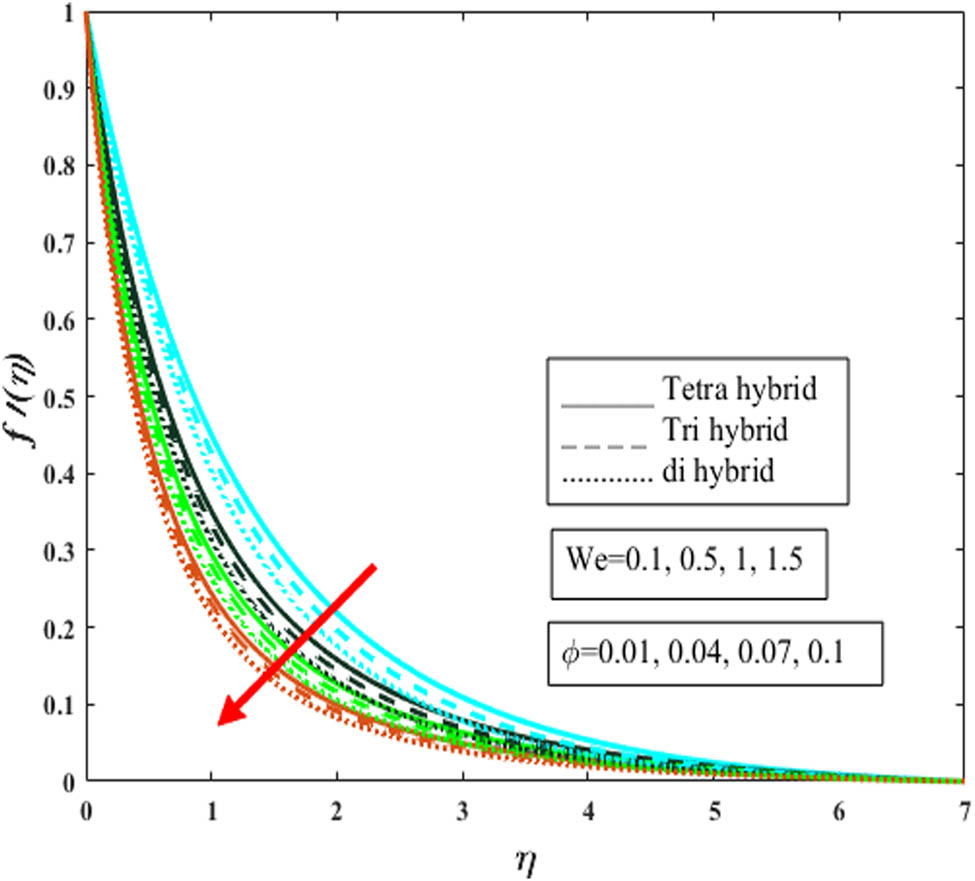
Impact of Weissenberg number
6.2 Temperature profile
Figures 8–13 illustrate the influence that a wide range of diverse factors has on the temperature

Effect of Prandtl number
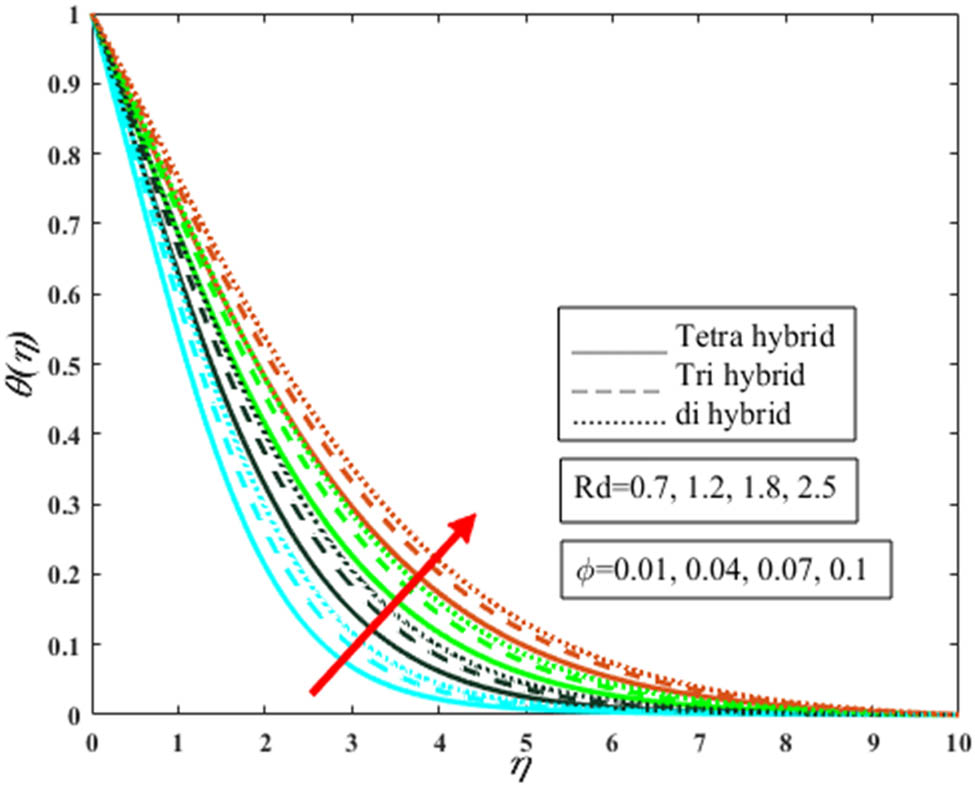
Effect of radiation number
Thermal radiation flux is used in situations that need a significant temperature difference and has a wide range of applications in production, including nuclear reactors and combustible nuclear power plants, among others. The production of polymer substances, water treatment, and similar procedures are discussed. Increasing the value of

Effect of Brownian diffusion

Effect of thermophoresis diffusion

Effect of Dufour number

Effect of thermal conductivity
6.3 Concentration profile
Figures 14 and 15 show the impact of

Effect of Schmidt number

Behavior of Soret number
6.4 Statistical analysis
The effectiveness of

Effect of power law index

Effect of Maxwell fluid parameter

Effect of Weissenberg number

Effect of Dufour number

Investigation of thermal radiation

Impact of Soret number
6.5 Entropy generation analysis
Figures 22 and 23 show the effects of

Impact of Brinkman number

Impact of Reynolds number

Impact of Weissenberg number

Impact of radiation

Impact of diffusion concentration

Impact of Brinkman number

Impact of Reynolds’s number
7 An examination in the tabulated form of results acquired numerically
7.1 Effect of a variety of characteristics on the frictional force factor of the surface
Table 3 shows the effect of a wide diversity of influences on the drag coefficient. It is well known that drag frictions are forces that operate in the opposing direction of the material upon which the liquid is moving. A decrease in velocity as well as an increase in the drag friction are both found to result from a significant change in
Influence of a variety of elements on the frictional force factor
|
|
|
|
|
|
|
|---|---|---|---|---|---|
| 0.5 | 0.3 | 0.3 | 0.1 | 0.1 | 1.7321 |
| 1.2 | 1.3015 | ||||
| 1.6 | 1.1278 | ||||
| 0.5 | 1.6345 | ||||
| 0.7 | 1.7214 | ||||
| 0.9 | 1.8510 | ||||
| 0.5 | 1.4143 | ||||
| 0.7 | 1.6015 | ||||
| 0.8 | 1.8231 | ||||
| 0.5 | 1.2176 | ||||
| 1 | 1.1015 | ||||
| 1.5 | 0.6312 | ||||
| 0.3 | 1.7213 | ||||
| 0.5 | 1.7487 | ||||
| 0.7 | 1.7854 |
7.2 Effect of different factors on the Nusselt number
Table 4 displays the effects of various factors on the heat transportation phenomenon. The Nusselt number actually represents the temperature difference at the plate with the ratio of convection heat transference to conducting heat transport. A temperature change strengthens with an increase in Dufour number
Influence of different dimensionless parameters on the Nusselt number
|
|
|
|
|
|
|
|---|---|---|---|---|---|
| 0.5 | 0.1 | 0.3 | 0.3 | 0.5 | 2.3954 |
| 0.1 | 2.5218 | ||||
| 1.5 | 2.7115 | ||||
| 2 | 2.9763 | ||||
| 0.4 | 2.6215 | ||||
| 0.7 | 2.8312 | ||||
| 1.0 | 3.1102 | ||||
| 0.6 | 2.5210 | ||||
| 0.9 | 2.3016 | ||||
| 1.2 | 2.2015 | ||||
| 0.6 | 2.7156 | ||||
| 0.9 | 3.2015 | ||||
| 1.2 | 3.5781 | ||||
| 1.0 | 3.1218 | ||||
| 1.5 | 3.4032 | ||||
| 2.0 | 3.6217 |
7.3 Impact of parameters on the heat transportation phenomenon for di hybrid, ternary hybrid, and tetra hybrid nanoparticles
Table 5 shows the effect of
Influence of different dimensionless parameters on the Nusselt number by increasing the amount of nanoparticles
|
|
|
|
|
Di hybrid
|
Tri hybrid
|
Tetra hybrid
|
|---|---|---|---|---|---|---|
| 0.5 | 0.5 | 0.5 | 0.5 | 2.2312 | 2.6213 | 2.9012 |
| 1 | 2.6145 | 2.9019 | 3.3121 | |||
| 1.5 | 2.8151 | 3.1214 | 3.5317 | |||
| 1 | 2.4212 | 2.5116 | 2.7521 | |||
| 1.5 | 2.6101 | 2.7368 | 2.9291 | |||
| 2 | 2.8351 | 2.8481 | 3.4152 | |||
| 1 | 2.1234 | 1.6241 | 1.4765 | |||
| 1.5 | 1.8785 | 1.4413 | 1.3837 | |||
| 2 | 1.7015 | 1.2147 | 1.2612 | |||
| 1 | 2.8121 | 3.1209 | 3.8123 | |||
| 1.5 | 3.1013 | 3.4561 | 4.1243 | |||
| 2 | 3.4345 | 3.7215 | 4.3316 |
8 Validation in the obtained results
Table 6 shows the analysis results caused by a positive variation in the inclined magnetic field
Analysis of the achieved results regarding the surface frictional force factor
| Parameter | Skin friction | |
|---|---|---|
|
|
Khan et al. [54] | Existing findings |
| 0.1 | 1.0000 | 1.0000005 |
| 0.5 | 1.1181 | 1.1181052 |
| 1.0 | 1.4141 | 1.4142081 |
9 Quadratic regression analysis for frictional factor and Nusselt number
The values of all the other distinguishable indicators are held constant throughout the procedure for carrying out a regression analysis. Throughout the cases of
Here,
Optimal error calculation utilizing statistical quadratic regression analysis for surface drag by augmenting
|
|
|
|
|
|
|
|
|
|
|---|---|---|---|---|---|---|---|---|
| 0.1 | 1 | 0.5461 | −0.2001 | 1.2642 | 0.0270 | −0.4140 | 0.0612 | 0.0037 |
| 0.1 | 1.5 | 0.3412 | −0.1621 | 1.6753 | 0.0212 | −0.6126 | 0.0070 | 0.0015 |
| 0.5 | 1 | 0.8431 | −0.7682 | 1.3801 | 0.1876 | −0.1101 | 0.6762 | 0.0028 |
| 0.5 | 1.5 | 0.8156 | −0.4307 | 1.1739 | 0.1213 | −0.6853 | 0.3540 | 0.0013 |
Calculation of optimal error for heat transition by improving
|
|
|
|
|
|
|
|
|
|
|---|---|---|---|---|---|---|---|---|
| 0.5 | 0.6 | 2.5360 | 0.0321 | −0.0234 | −0.0315 | 0.0245 | 0.1240 | 0.0152 |
| 0.5 | 1 | 2.5372 | 0.0035 | −0.0439 | −0.0011 | 0.0424 | 0.1763 | 0.0135 |
| 1.5 | 0.6 | 2.5456 | 0.0216 | −0.0870 | 0.0012 | 0.3120 | 0.1854 | 0.0215 |
| 1.5 | 1 | 2.5481 | 0.0042 | −0.0862 | 0.0215 | 0.2152 | 0.1801 | 0.0210 |
10 Conclusions
The purpose of this work is to explore the influence that a Buongiorno tetra hybrid nanofluid (BTHNF) model has on a Maxwell–cross liquid that is embedded with the Soret and Dufour effects and therefore is flowing while being exposed to an extendable surface. The conclusions are as follows:
Fluid thickness increases as a result of increases in the viscosity index
The rate on which heat is delivered increases as a consequence of a little modification to
A decrease in fluid velocity results from even a little change in
The addition of tetra hybrid nanoparticles (THNF) to the foundation liquid causes an improvement in the heat capacity of the liquid. This, in turn, indicates a boost in the Nusselt numbers.
In comparison to standard THNF, the BTHNF generates a greater amount of heat.
Changing
Because of the increase in
The Bejan number decreases as a consequence of the increasing effect that Br and Re have.
Nanofluids with different effects like thermal radiation and thermal conductivity can be used as promising working fluids in different real-world industrial thermal energy systems, including heat exchangers, heat pipes, nuclear reactors, electronic cooling systems, and automobile radiators.
This novel BTHNF model has been implemented in the case of fluid flow over various geometries like cone, wedge, cylinder, and Riga plates. Various nanofluid models like Maxwell, Hamilton-Crosser, Tiwari and Das, Yamada, and Ota nanofluid models have been modified in a similar fashion into ternary hybrid and tetra hybrid cases in order to achieve more heat.
Acknowledgments
The authors extend their appreciation to the Deanship of Scientific Research at King Khalid University for funding this work through a small group Research Project under grant number RGP.1/97/44.
-
Funding information: The authors extend their appreciation to the Deanship of Scientific Research at King Khalid University for funding this work through small group Research Project under grant number RGP.1/97/44.
-
Author contributions: Conceptualization: Wasim Jamshed; formal analysis: Tanveer Sajid; investigation: Wasim Jamshed; methodology: Mohamed R. Eid; software: Tanveer Sajid; re-graphical representation and analysis of data: Salem Algarni; writing – original draft: Tanveer Sajid, Wasim Jamshed, and Mohamed R. Eid; writing - review editing: Talal Alqahtani; numerical process breakdown: Hijaz Ahmad; re-modeling design: Kashif Irshad; re-Validation: Ayesha Amjad. All authors have accepted responsibility for the entire content of this manuscript and approved its submission.
-
Conflict of interest: The authors state no conflict of interest.
References
[1] Megahed AM, Abbas W. Non-Newtonian Cross fluid flow through a porous medium with regard to the effect of chemical reaction and thermal stratification phenomenon. Case Stud Therm Eng. 2022;29:101715.10.1016/j.csite.2021.101715Search in Google Scholar
[2] Hauswirth SC, Bowers CA, Fowler CP, Schultz PB, Hauswirth AD, Weigand T, et al. Modeling cross model non-Newtonian fluid flow in porous media. J Contam Hydrol. 2020;235:103708.10.1016/j.jconhyd.2020.103708Search in Google Scholar PubMed
[3] Patel HR. Cross diffusion and heat generation effects on mixed convection stagnation point MHD Carreau fluid flow in a porous medium. Int J Ambient Energy. 2021;43(1):1–16. 10.1080/01430750.2021.1931960.Search in Google Scholar
[4] Shaw S, Samantaray SS, Misra A, Nayak MK, Makinde OD. Hydromagnetic flow and thermal interpretations of Cross hybrid nanofluid influenced by linear, non-linear and quadratic thermal radiations for any Prandtl number. Int Commun Heat Mass Transf. 2022;130:105816.10.1016/j.icheatmasstransfer.2021.105816Search in Google Scholar
[5] Sahu SK, Shaw S, Thatoi DN, Nayak MK. A thermal management of Darcy-Forchheimer SWCNT–MWCNT Cross hybrid nanofluid flow due to vertical stretched cylinder with and without inertia effects. Waves in Random and Complex Media; 2022. 10.1080/17455030.2022.2088889. (Article in press).Search in Google Scholar
[6] Ramzan M, Shamshad U, Rehman S, Junaid MS, Saeed A, Kumam P. Analytical simulation of hall current and Cattaneo–Christov heat flux in cross-hybrid nanofluid with autocatalytic chemical reaction: An engineering application of engine oil. Arab J Sci Eng. 2023;48:3797–817.10.1007/s13369-022-07218-1Search in Google Scholar
[7] Reddy VRM, Reddy MG, Dinesh PA, Sandeep N. Enhanced heat transfer efficiency of PTSC using hydromagnetic cross nanofluid: A hydrogen energy application. Int J Hydrog Energy. 2022;47:20254–64.10.1016/j.ijhydene.2022.04.106Search in Google Scholar
[8] Ali M, Shahzad M, Sultan F, Khan WA. Numerical analysis of chemical reaction and non-linear radiation for magneto-cross nanofluid over a stretching cylinder. Appl Nanosci. 2020;10:3259–67.10.1007/s13204-020-01385-zSearch in Google Scholar
[9] Azam M, Shakoor A, Rasool HF, Khan M. Numerical simulation for solar energy aspects on unsteady convective flow of MHD Cross nanofluid: A revised approach. Int J Heat Mass Transf. 2019;131:495–505.10.1016/j.ijheatmasstransfer.2018.11.022Search in Google Scholar
[10] Asghar A, Lund LA, Shah Z, Vrinceanu N, Deebani W, Shutaywi M. Effect of thermal radiation on three-dimensional magnetized rotating flow of a hybrid nanofluid. Nanomaterial’s. 2022;12:1566.10.3390/nano12091566Search in Google Scholar PubMed PubMed Central
[11] Khan U, Kumar RN, Zaib A, Prasannakumara BC, Ishak A, Galal AM, et al. Time-dependent flow of water-based ternary hybrid nanoparticles over a radially contracting/expanding and rotating permeable stretching sphere. Therm Sci Eng Prog. 2022;36:101521.10.1016/j.tsep.2022.101521Search in Google Scholar
[12] Algehyne EA, El-Zahar ER, Sohail M, Nazir U, AL-bonsrulah HAZ, Veeman D, et al. Thermal improvement in pseudoplastic material using ternary hybrid nanoparticles via non-Fourier’s law over porous heated surface. Energies. 2021;14:8115.10.3390/en14238115Search in Google Scholar
[13] Rasool G, Xinhua W, Lund LA, Yashkun U, Wakif A, Asghar A. Dual solutions of unsteady flow of copper-alumina/water based hybrid nanofluid with acute magnetic force and slip condition. Heliyon. 2023;9:e22737.10.1016/j.heliyon.2023.e22737Search in Google Scholar PubMed PubMed Central
[14] Hou E, Wang F, Nazir U, Sohail M, Jabbar N, Thounthong P. Dynamics of tri-hybrid nanoparticles in the rheology of pseudoplastic liquid with dufour and soret effects. Micromachines. 2022;13:201.10.3390/mi13020201Search in Google Scholar PubMed PubMed Central
[15] Prakasha DG, Sudharani MVVNL, Ganesh Kumar K, Chamkha AJ. Comparative study of hybrid (graphene/magnesium oxide) and ternary hybrid (graphene/zirconium oxide/magnesium oxide) nanomaterials over a moving plate. Int Commun Heat Mass Transf. 2023;140:106557.10.1016/j.icheatmasstransfer.2022.106557Search in Google Scholar
[16] Sarada K, Gamaoun F, Abdulrahman A, Paramesh SO, Kumar R, Prasanna GD, et al. Impact of exponential form of internal heat generation on water-based ternary hybrid nanofluid flow by capitalizing non-Fourier heat flux model. Case Stud Therm Eng. 2022;38:102332.10.1016/j.csite.2022.102332Search in Google Scholar
[17] Shamshuddin MD, Akkurt N, Saeed A, Kumam P. Radiation mechanism on dissipative ternary hybrid nanoliquid flow through rotating disk encountered by Hall currents: HAM solution. Alex Eng J. 2023;65:543–59.10.1016/j.aej.2022.10.021Search in Google Scholar
[18] Sajid T, Ayub A, Shah SZH, Jamshed W, Eid MR, El Din ES, et al. Trace of chemical reactions accompanied with arrhenius energy on ternary hybridity nanofluid past a wedge. Symmetry. 2022;14:1850.10.3390/sym14091850Search in Google Scholar
[19] Roşca NC, Roşca AV, Aly EH, Pop I. Flow and heat transfer past a stretching/shrinking sheet using modified Buongiorno nanoliquid model. Mathematics. 2021;9:3047.10.3390/math9233047Search in Google Scholar
[20] Puneeth V, Anandika R, Manjunatha S, Khan MI, Khan MI, Althobaiti A, et al. Implementation of modified Buongiorno’s model for the investigation of chemically reacting rGO-Fe3O4-TiO2-H2O ternary nanofluid jet flow in the presence of bio-active mixers. Chem Phys Lett. 2022;786:139194.10.1016/j.cplett.2021.139194Search in Google Scholar
[21] Owhaib W, Al-Kouz W. Three-dimensional numerical analysis of flow and heat transfer of bi-directional stretched nanofluid film exposed to an exponential heat generation using modified Buongiorno model. Sci Rep. 2022;12:10060.10.1038/s41598-022-13351-6Search in Google Scholar PubMed PubMed Central
[22] Ramesh GK, Madhukesh JK, Aly EH, Pop I. Modified Buongiorno’s model for biomagnetic hybrid nanoliquid past a permeable moving thin needle. Int J Numer Methods Heat Fluid Flow. 2022;32:3551–78.10.1108/HFF-10-2021-0696Search in Google Scholar
[23] Ali B, Hussain S, Shafique M, Habib D, Rasool G. Analyzing the interaction of hybrid base liquid C2H6O2–H2O with hybrid nano-material Ag–MoS2 for unsteady rotational flow referred to an elongated surface using modified Buongiorno’s model: FEM simulation. Math Computers Simul. 2021;190:57–74.10.1016/j.matcom.2021.05.012Search in Google Scholar
[24] Rana P, Gupta G. Numerical and sensitivity computations of three-dimensional flow and heat transfer of nanoliquid over a wedge using modified Buongiorno model. Computers Math Appl. 2021;101:51–62.10.1016/j.camwa.2021.09.010Search in Google Scholar
[25] Rana P, Mahanthesh B, Mackolil J, Al-Kouz W. Nanofluid flow past a vertical plate with nanoparticle aggregation kinematics, thermal slip and significant buoyancy force effects using modified Buongiorno model. Waves in Random and Complex Media; 2021. 10.1080/17455030.2021.1977416. (Article in press).Search in Google Scholar
[26] Sabu AS, Areekara S, Mathew A. Regression analysis on MHD Darcy-Forchheimer hybrid nanoliquid flow over an elongated permeable sheet in a porous medium with hydrodynamic slip constraint: a realistic two-phase modified Buongiorno model. Waves in Random and Complex Media; 2022. p. 1–24. 10.1080/17455030.2022.2086318. (Article in press).Search in Google Scholar
[27] Alblawi A, Malik MY, Nadeem S, Abbas N. Buongiorno’s nanofluid model over a curved exponentially stretching surface. Processes. 2019;7:665.10.3390/pr7100665Search in Google Scholar
[28] Asogwa KK, Alsulami MD, Prasannakumara BC, Muhammad T. Double diffusive convection and cross diffusion effects on Casson fluid over a Lorentz force driven Riga plate in a porous medium with heat sink: An analytical approach. Int Commun Heat Mass Transf. 2022;131:105761.10.1016/j.icheatmasstransfer.2021.105761Search in Google Scholar
[29] Shoaib M, Rafia T, Raja MAZ, Khan WA, Waqas M. Further analysis of double-diffusive flow of nanofluid through a porous medium situated on an inclined plane: AI-based Levenberg–Marquardt scheme with backpropagated neural network. J Braz Soc Mech Sci Eng. 2022;44(6):227.10.1007/s40430-022-03451-9Search in Google Scholar
[30] Yadav D, Kumar Awasthi M, Al-Siyabi M, Al-Nadhairi S, Al-Rahbi A, Al-Subhi M, et al. Double diffusive convective motion in a reactive porous medium layer saturated by a non-Newtonian Kuvshiniski fluid. Phys Fluids. 2022;34(2):024104.10.1063/5.0083378Search in Google Scholar
[31] Ramchandraiah C, Kishan N, Reddy GSK, Paidipati KK, Chesneau C. Double-diffusive convection in bidispersive porous medium with coriolis effect. Math Comput Appl. 2022;27:56.10.3390/mca27040056Search in Google Scholar
[32] Murray BT, Chen CF. Double-diffusive convection in a porous medium. J Fluid Mech. 1989;201:147–66.10.1017/S002211208900087XSearch in Google Scholar
[33] Asghar A, Chandio AF, Shah Z, Vrinceanu N, Deebani W, Shutaywi M, et al. Magnetized mixed convection hybrid nanofluid with effect of heat generation/absorption and velocity slip condition. Heliyon. 2023;9:e13189.10.1016/j.heliyon.2023.e13189Search in Google Scholar PubMed PubMed Central
[34] Yogeesha KM, Megalamani SB, Gill HS, Umeshaiah M, Madhukesh JK. The physical impact of blowing, Soret and Dufour over an unsteady stretching surface immersed in a porous medium in the presence of ternary nanofluid. Heat Transf. 2022;51:6961–76.10.1002/htj.22632Search in Google Scholar
[35] Hafeez MB, Sumelka W, Nazir U, Ahmad H, Askar S. Mechanism of solute and thermal characteristics in a casson hybrid nanofluid based with ethylene glycol influenced by soret and dufour effects. Energies. 2021;14:6818.10.3390/en14206818Search in Google Scholar
[36] Song Y-Q, Khan MI, Qayyum S, Gowda RP, Kumar RN, Prasannakumara B, et al. Physical impact of thermo-diffusion and diffusion-thermo on Marangoni convective flow of hybrid nanofluid (MnZiFe2O4–NiZnFe2O4–H2O) with non-linear heat source/sink and radiative heat flux. Mod Phys Lett B. 2021;35(22):2141006.10.1142/S0217984921410062Search in Google Scholar
[37] Dharmaiah G, Dinarvand S, Durgaprasad P, Noeiaghdam S. Arrhenius activation energy of tangent hyperbolic nanofluid over a cone with radiation absorption. Results Eng. 2022;16:100745.10.1016/j.rineng.2022.100745Search in Google Scholar
[38] Nasir S, Berrouk AS, Aamir A, Shah Z. Entropy optimization and heat flux analysis of Maxwell nanofluid configurated by an exponentially stretching surface with velocity slip. Sci Rep. 2023;13(1):2006.10.1038/s41598-023-29137-3Search in Google Scholar PubMed PubMed Central
[39] Berrehal H, Dinarvand S, Khan I. Mass-based hybrid nanofluid model for entropy generation analysis of flow upon a convectively-warmed moving wedge. Chin J Phys. 2022;77:2603–16.10.1016/j.cjph.2022.04.017Search in Google Scholar
[40] Al Oweidi KF, Shahzad F, Jamshed W. Partial differential equations of entropy analysis on ternary hybridity nanofluid flow model via rotating disk with hall current and electromagnetic radiative influences. Sci Rep. 2022;12:20692.10.1038/s41598-022-24895-ySearch in Google Scholar PubMed PubMed Central
[41] Naz R, Tariq S, Sohail M, Shah Z. Investigation of entropy generation in stratified MHD Carreau nanofluid with gyrotactic microorganisms under Von Neumann similarity transformations. Eur Phys J Plus. 2020;135(2):178.10.1140/epjp/s13360-019-00069-0Search in Google Scholar
[42] Dharmaiah G, Dinarvand S, Rama Prasad JL, Noeiaghdam S, Abdollahzadeh M. Non-homogeneous two-component Buongiorno model for nanofluid flow toward Howarth’s wavy cylinder with activation energy. Results Eng. 2023;17:100879.10.1016/j.rineng.2023.100879Search in Google Scholar
[43] Falodun BO, Ige EO. Linear and quadratic multiple regressions analysis on magneto-thermal and chemical reactions on the Casson-Williamson nanofluids boundary layer flow under Soret-Dufour mechanism. Arab J Basic Appl Sci. 2022;29(1):269–86.10.1080/25765299.2022.2115688Search in Google Scholar
[44] Sajid T, Jamshed W, Ibrahim RW, Eid MR, Abd-Elmonem A, Arshad M. Quadratic regression analysis for non-linear heat source/sink and mathematical Fourier heat law influences on Reiner-Philippoff hybrid nanofluid flow applying Galerkin finite element method. J Magn Magn Mater. 2023;568:170383.10.1016/j.jmmm.2023.170383Search in Google Scholar
[45] Nandi S, Kumbhakar B, Seth GS. Quadratic regression analysis of unsteady MHD free convective and radiative–dissipative stagnation flow of hybrid nanofluid over an exponentially stretching surface under porous medium. Chin J Phys. 2022;77:2090–105.10.1016/j.cjph.2021.12.011Search in Google Scholar
[46] El Din SM, Darvesh A, Ayub A. Quadratic multiple regression model and spectral relaxation approach for Carreau nanofluid inclined magnetized dipole along stagnation point geometry. Sci Rep. 2022;12:17337.10.1038/s41598-022-22308-8Search in Google Scholar PubMed PubMed Central
[47] Raju CSK, Ahammad NA, Sajjan K, Shah NA, Yook S-J, Dinesh Kumar M. Non-linear movements of axisymmetric ternary hybrid nanofluids in a thermally radiated expanding or contracting permeable Darcy Walls with different shapes and densities: Simple linear regression. Int Commun Heat Mass Transf. 2022;135:106110.10.1016/j.icheatmasstransfer.2022.106110Search in Google Scholar
[48] Dinarvand S, Behrouz M, Ahmadi S, Ghasemi P, Noeiaghdam S, Gamiz UF. Mixed convection of thermomicropolar AgNPs-GrNPs nanofluid: An application of mass-based hybrid nanofluid model. Case Stud Therm Eng. 2023;49:103224.10.1016/j.csite.2023.103224Search in Google Scholar
[49] Dinarvand S, Berrehal H, Tamim H, Sowmya G, Noeiaghdam S, Abdollahzadeh M. Squeezing flow of aqueous CNTs-Fe3O4 hybrid nanofluid through mass-based approach: Effect of heat source/sink, nanoparticle shape, and an oblique magnetic field. Results Eng. 2023;17:100976.10.1016/j.rineng.2023.100976Search in Google Scholar
[50] Dinarvand S, Berrehal H, Pop I, Chamkha AJ. Blood-based hybrid nanofluid flow through converging/diverging channel with multiple slips effect: a development of Jeffery-Hamel problem. Int J Numer Methods Heat Fluid Flow. 2023;33:1144–60.10.1108/HFF-08-2022-0489Search in Google Scholar
[51] Dinarvand S, Yousefi M, Chamkha A. Numerical simulation of unsteady flow toward a stretching/shrinking sheet in porous medium filled with a hybrid nanofluid. J Appl Comput Mech. 2022;8(1):11–20.Search in Google Scholar
[52] Lund LA, Asghar A, Rasool G, Yashkun U. Magnetized casson SA-hybrid nanofluid flow over a permeable moving surface with thermal radiation and Joule heating effect. Case Stud Therm Eng. 2023;50:103510.10.1016/j.csite.2023.103510Search in Google Scholar
[53] Asghar A, Vrinceanu N, Ying TY, Lund LA, Shah Z, Tirth V. Dual solutions of convective rotating flow of three-dimensional hybrid nanofluid across the linear stretching/shrinking sheet. Alex Eng J. 2023;75:297–312.10.1016/j.aej.2023.05.089Search in Google Scholar
[54] Khan M, Malik MY, Salahuddin T, Khan I. Numerical modeling of Carreau fluid due to variable thicked surface, Results in Physics. 2017;7: 2384–390.10.1016/j.rinp.2017.07.008Search in Google Scholar
© 2024 the author(s), published by De Gruyter
This work is licensed under the Creative Commons Attribution 4.0 International License.
Articles in the same Issue
- Research Articles
- Tension buckling and postbuckling of nanocomposite laminated plates with in-plane negative Poisson’s ratio
- Polyvinylpyrrolidone-stabilised gold nanoparticle coatings inhibit blood protein adsorption
- Energy and mass transmission through hybrid nanofluid flow passing over a spinning sphere with magnetic effect and heat source/sink
- Surface treatment with nano-silica and magnesium potassium phosphate cement co-action for enhancing recycled aggregate concrete
- Numerical investigation of thermal radiation with entropy generation effects in hybrid nanofluid flow over a shrinking/stretching sheet
- Enhancing the performance of thermal energy storage by adding nano-particles with paraffin phase change materials
- Using nano-CaCO3 and ceramic tile waste to design low-carbon ultra high performance concrete
- Numerical analysis of thermophoretic particle deposition in a magneto-Marangoni convective dusty tangent hyperbolic nanofluid flow – Thermal and magnetic features
- Dual numerical solutions of Casson SA–hybrid nanofluid toward a stagnation point flow over stretching/shrinking cylinder
- Single flake homo p–n diode of MoTe2 enabled by oxygen plasma doping
- Electrostatic self-assembly effect of Fe3O4 nanoparticles on performance of carbon nanotubes in cement-based materials
- Multi-scale alignment to buried atom-scale devices using Kelvin probe force microscopy
- Antibacterial, mechanical, and dielectric properties of hydroxyapatite cordierite/zirconia porous nanocomposites for use in bone tissue engineering applications
- Time-dependent Darcy–Forchheimer flow of Casson hybrid nanofluid comprising the CNTs through a Riga plate with nonlinear thermal radiation and viscous dissipation
- Durability prediction of geopolymer mortar reinforced with nanoparticles and PVA fiber using particle swarm optimized BP neural network
- Utilization of zein nano-based system for promoting antibiofilm and anti-virulence activities of curcumin against Pseudomonas aeruginosa
- Antibacterial effect of novel dental resin composites containing rod-like zinc oxide
- An extended model to assess Jeffery–Hamel blood flow through arteries with iron-oxide (Fe2O3) nanoparticles and melting effects: Entropy optimization analysis
- Comparative study of copper nanoparticles over radially stretching sheet with water and silicone oil
- Cementitious composites modified by nanocarbon fillers with cooperation effect possessing excellent self-sensing properties
- Confinement size effect on dielectric properties, antimicrobial activity, and recycling of TiO2 quantum dots via photodegradation processes of Congo red dye and real industrial textile wastewater
- Biogenic silver nanoparticles of Moringa oleifera leaf extract: Characterization and photocatalytic application
- Novel integrated structure and function of Mg–Gd neutron shielding materials
- Impact of multiple slips on thermally radiative peristaltic transport of Sisko nanofluid with double diffusion convection, viscous dissipation, and induced magnetic field
- Magnetized water-based hybrid nanofluid flow over an exponentially stretching sheet with thermal convective and mass flux conditions: HAM solution
- A numerical investigation of the two-dimensional magnetohydrodynamic water-based hybrid nanofluid flow composed of Fe3O4 and Au nanoparticles over a heated surface
- Development and modeling of an ultra-robust TPU-MWCNT foam with high flexibility and compressibility
- Effects of nanofillers on the physical, mechanical, and tribological behavior of carbon/kenaf fiber–reinforced phenolic composites
- Polymer nanocomposite for protecting photovoltaic cells from solar ultraviolet in space
- Study on the mechanical properties and microstructure of recycled concrete reinforced with basalt fibers and nano-silica in early low-temperature environments
- Synergistic effect of carbon nanotubes and polyvinyl alcohol on the mechanical performance and microstructure of cement mortar
- CFD analysis of paraffin-based hybrid (Co–Au) and trihybrid (Co–Au–ZrO2) nanofluid flow through a porous medium
- Forced convective tangent hyperbolic nanofluid flow subject to heat source/sink and Lorentz force over a permeable wedge: Numerical exploration
- Physiochemical and electrical activities of nano copper oxides synthesised via hydrothermal method utilising natural reduction agents for solar cell application
- A homotopic analysis of the blood-based bioconvection Carreau–Yasuda hybrid nanofluid flow over a stretching sheet with convective conditions
- In situ synthesis of reduced graphene oxide/SnIn4S8 nanocomposites with enhanced photocatalytic performance for pollutant degradation
- A coarse-grained Poisson–Nernst–Planck model for polyelectrolyte-modified nanofluidic diodes
- A numerical investigation of the magnetized water-based hybrid nanofluid flow over an extending sheet with a convective condition: Active and passive controls of nanoparticles
- The LyP-1 cyclic peptide modified mesoporous polydopamine nanospheres for targeted delivery of triptolide regulate the macrophage repolarization in atherosclerosis
- Synergistic effect of hydroxyapatite-magnetite nanocomposites in magnetic hyperthermia for bone cancer treatment
- The significance of quadratic thermal radiative scrutinization of a nanofluid flow across a microchannel with thermophoretic particle deposition effects
- Ferromagnetic effect on Casson nanofluid flow and transport phenomena across a bi-directional Riga sensor device: Darcy–Forchheimer model
- Performance of carbon nanomaterials incorporated with concrete exposed to high temperature
- Multicriteria-based optimization of roller compacted concrete pavement containing crumb rubber and nano-silica
- Revisiting hydrotalcite synthesis: Efficient combined mechanochemical/coprecipitation synthesis to design advanced tunable basic catalysts
- Exploration of irreversibility process and thermal energy of a tetra hybrid radiative binary nanofluid focusing on solar implementations
- Effect of graphene oxide on the properties of ternary limestone clay cement paste
- Improved mechanical properties of graphene-modified basalt fibre–epoxy composites
- Sodium titanate nanostructured modified by green synthesis of iron oxide for highly efficient photodegradation of dye contaminants
- Green synthesis of Vitis vinifera extract-appended magnesium oxide NPs for biomedical applications
- Differential study on the thermal–physical properties of metal and its oxide nanoparticle-formed nanofluids: Molecular dynamics simulation investigation of argon-based nanofluids
- Heat convection and irreversibility of magneto-micropolar hybrid nanofluids within a porous hexagonal-shaped enclosure having heated obstacle
- Numerical simulation and optimization of biological nanocomposite system for enhanced oil recovery
- Laser ablation and chemical vapor deposition to prepare a nanostructured PPy layer on the Ti surface
- Cilostazol niosomes-loaded transdermal gels: An in vitro and in vivo anti-aggregant and skin permeation activity investigations towards preparing an efficient nanoscale formulation
- Linear and nonlinear optical studies on successfully mixed vanadium oxide and zinc oxide nanoparticles synthesized by sol–gel technique
- Analytical investigation of convective phenomena with nonlinearity characteristics in nanostratified liquid film above an inclined extended sheet
- Optimization method for low-velocity impact identification in nanocomposite using genetic algorithm
- Analyzing the 3D-MHD flow of a sodium alginate-based nanofluid flow containing alumina nanoparticles over a bi-directional extending sheet using variable porous medium and slip conditions
- A comprehensive study of laser irradiated hydrothermally synthesized 2D layered heterostructure V2O5(1−x)MoS2(x) (X = 1–5%) nanocomposites for photocatalytic application
- Computational analysis of water-based silver, copper, and alumina hybrid nanoparticles over a stretchable sheet embedded in a porous medium with thermophoretic particle deposition effects
- A deep dive into AI integration and advanced nanobiosensor technologies for enhanced bacterial infection monitoring
- Effects of normal strain on pyramidal I and II 〈c + a〉 screw dislocation mobility and structure in single-crystal magnesium
- Computational study of cross-flow in entropy-optimized nanofluids
- Significance of nanoparticle aggregation for thermal transport over magnetized sensor surface
- A green and facile synthesis route of nanosize cupric oxide at room temperature
- Effect of annealing time on bending performance and microstructure of C19400 alloy strip
- Chitosan-based Mupirocin and Alkanna tinctoria extract nanoparticles for the management of burn wound: In vitro and in vivo characterization
- Electrospinning of MNZ/PLGA/SF nanofibers for periodontitis
- Photocatalytic degradation of methylene blue by Nd-doped titanium dioxide thin films
- Shell-core-structured electrospinning film with sequential anti-inflammatory and pro-neurogenic effects for peripheral nerve repairment
- Flow and heat transfer insights into a chemically reactive micropolar Williamson ternary hybrid nanofluid with cross-diffusion theory
- One-pot fabrication of open-spherical shapes based on the decoration of copper sulfide/poly-O-amino benzenethiol on copper oxide as a promising photocathode for hydrogen generation from the natural source of Red Sea water
- A penta-hybrid approach for modeling the nanofluid flow in a spatially dependent magnetic field
- Advancing sustainable agriculture: Metal-doped urea–hydroxyapatite hybrid nanofertilizer for agro-industry
- Utilizing Ziziphus spina-christi for eco-friendly synthesis of silver nanoparticles: Antimicrobial activity and promising application in wound healing
- Plant-mediated synthesis, characterization, and evaluation of a copper oxide/silicon dioxide nanocomposite by an antimicrobial study
- Effects of PVA fibers and nano-SiO2 on rheological properties of geopolymer mortar
- Investigating silver and alumina nanoparticles’ impact on fluid behavior over porous stretching surface
- Potential pharmaceutical applications and molecular docking study for green fabricated ZnO nanoparticles mediated Raphanus sativus: In vitro and in vivo study
- Effect of temperature and nanoparticle size on the interfacial layer thickness of TiO2–water nanofluids using molecular dynamics
- Characteristics of induced magnetic field on the time-dependent MHD nanofluid flow through parallel plates
- Flexural and vibration behaviours of novel covered CFRP composite joints with an MWCNT-modified adhesive
- Experimental research on mechanically and thermally activation of nano-kaolin to improve the properties of ultra-high-performance fiber-reinforced concrete
- Analysis of variable fluid properties for three-dimensional flow of ternary hybrid nanofluid on a stretching sheet with MHD effects
- Biodegradability of corn starch films containing nanocellulose fiber and thymol
- Toxicity assessment of copper oxide nanoparticles: In vivo study
- Some measures to enhance the energy output performances of triboelectric nanogenerators
- Reinforcement of graphene nanoplatelets on water uptake and thermomechanical behaviour of epoxy adhesive subjected to water ageing conditions
- Optimization of preparation parameters and testing verification of carbon nanotube suspensions used in concrete
- Max-phase Ti3SiC2 and diverse nanoparticle reinforcements for enhancement of the mechanical, dynamic, and microstructural properties of AA5083 aluminum alloy via FSP
- Advancing drug delivery: Neural network perspectives on nanoparticle-mediated treatments for cancerous tissues
- PEG-PLGA core–shell nanoparticles for the controlled delivery of picoplatin–hydroxypropyl β-cyclodextrin inclusion complex in triple-negative breast cancer: In vitro and in vivo study
- Conduction transportation from graphene to an insulative polymer medium: A novel approach for the conductivity of nanocomposites
- Review Articles
- Developments of terahertz metasurface biosensors: A literature review
- Overview of amorphous carbon memristor device, modeling, and applications for neuromorphic computing
- Advances in the synthesis of gold nanoclusters (AuNCs) of proteins extracted from nature
- A review of ternary polymer nanocomposites containing clay and calcium carbonate and their biomedical applications
- Recent advancements in polyoxometalate-functionalized fiber materials: A review
- Special contribution of atomic force microscopy in cell death research
- A comprehensive review of oral chitosan drug delivery systems: Applications for oral insulin delivery
- Cellular senescence and nanoparticle-based therapies: Current developments and perspectives
- Cyclodextrins-block copolymer drug delivery systems: From design and development to preclinical studies
- Micelle-based nanoparticles with stimuli-responsive properties for drug delivery
- Critical assessment of the thermal stability and degradation of chemically functionalized nanocellulose-based polymer nanocomposites
- Research progress in preparation technology of micro and nano titanium alloy powder
- Nanoformulations for lysozyme-based additives in animal feed: An alternative to fight antibiotic resistance spread
- Incorporation of organic photochromic molecules in mesoporous silica materials: Synthesis and applications
- A review on modeling of graphene and associated nanostructures reinforced concrete
- A review on strengthening mechanisms of carbon quantum dots-reinforced Cu-matrix nanocomposites
- Review on nanocellulose composites and CNFs assembled microfiber toward automotive applications
- Nanomaterial coating for layered lithium rich transition metal oxide cathode for lithium-ion battery
- Application of AgNPs in biomedicine: An overview and current trends
- Nanobiotechnology and microbial influence on cold adaptation in plants
- Hepatotoxicity of nanomaterials: From mechanism to therapeutic strategy
- Applications of micro-nanobubble and its influence on concrete properties: An in-depth review
- A comprehensive systematic literature review of ML in nanotechnology for sustainable development
- Exploiting the nanotechnological approaches for traditional Chinese medicine in childhood rhinitis: A review of future perspectives
- Twisto-photonics in two-dimensional materials: A comprehensive review
- Current advances of anticancer drugs based on solubilization technology
- Recent process of using nanoparticles in the T cell-based immunometabolic therapy
- Future prospects of gold nanoclusters in hydrogen storage systems and sustainable environmental treatment applications
- Preparation, types, and applications of one- and two-dimensional nanochannels and their transport properties for water and ions
- Microstructural, mechanical, and corrosion characteristics of Mg–Gd–x systems: A review of recent advancements
- Functionalized nanostructures and targeted delivery systems with a focus on plant-derived natural agents for COVID-19 therapy: A review and outlook
- Mapping evolution and trends of cell membrane-coated nanoparticles: A bibliometric analysis and scoping review
- Nanoparticles and their application in the diagnosis of hepatocellular carcinoma
- In situ growth of carbon nanotubes on fly ash substrates
- Structural performance of boards through nanoparticle reinforcement: An advance review
- Reinforcing mechanisms review of the graphene oxide on cement composites
- Seed regeneration aided by nanomaterials in a climate change scenario: A comprehensive review
- Surface-engineered quantum dot nanocomposites for neurodegenerative disorder remediation and avenue for neuroimaging
- Graphitic carbon nitride hybrid thin films for energy conversion: A mini-review on defect activation with different materials
- Nanoparticles and the treatment of hepatocellular carcinoma
- Special Issue on Advanced Nanomaterials and Composites for Energy Conversion and Storage - Part II
- Highly safe lithium vanadium oxide anode for fast-charging dendrite-free lithium-ion batteries
- Recent progress in nanomaterials of battery energy storage: A patent landscape analysis, technology updates, and future prospects
- Special Issue on Advanced Nanomaterials for Carbon Capture, Environment and Utilization for Energy Sustainability - Part II
- Calcium-, magnesium-, and yttrium-doped lithium nickel phosphate nanomaterials as high-performance catalysts for electrochemical water oxidation reaction
- Low alkaline vegetation concrete with silica fume and nano-fly ash composites to improve the planting properties and soil ecology
- Mesoporous silica-grafted deep eutectic solvent-based mixed matrix membranes for wastewater treatment: Synthesis and emerging pollutant removal performance
- Electrochemically prepared ultrathin two-dimensional graphitic nanosheets as cathodes for advanced Zn-based energy storage devices
- Enhanced catalytic degradation of amoxicillin by phyto-mediated synthesised ZnO NPs and ZnO-rGO hybrid nanocomposite: Assessment of antioxidant activity, adsorption, and thermodynamic analysis
- Incorporating GO in PI matrix to advance nanocomposite coating: An enhancing strategy to prevent corrosion
- Synthesis, characterization, thermal stability, and application of microporous hyper cross-linked polyphosphazenes with naphthylamine group for CO2 uptake
- Engineering in ceramic albite morphology by the addition of additives: Carbon nanotubes and graphene oxide for energy applications
- Nanoscale synergy: Optimizing energy storage with SnO2 quantum dots on ZnO hexagonal prisms for advanced supercapacitors
- Aging assessment of silicone rubber materials under corona discharge accompanied by humidity and UV radiation
- Tuning structural and electrical properties of Co-precipitated and Cu-incorporated nickel ferrite for energy applications
- Sodium alginate-supported AgSr nanoparticles for catalytic degradation of malachite green and methyl orange in aqueous medium
- An environmentally greener and reusability approach for bioenergy production using Mallotus philippensis (Kamala) seed oil feedstock via phytonanotechnology
- Micro-/nano-alumina trihydrate and -magnesium hydroxide fillers in RTV-SR composites under electrical and environmental stresses
- Mechanism exploration of ion-implanted epoxy on surface trap distribution: An approach to augment the vacuum flashover voltages
- Nanoscale engineering of semiconductor photocatalysts boosting charge separation for solar-driven H2 production: Recent advances and future perspective
- Excellent catalytic performance over reduced graphene-boosted novel nanoparticles for oxidative desulfurization of fuel oil
- Special Issue on Advances in Nanotechnology for Agriculture
- Deciphering the synergistic potential of mycogenic zinc oxide nanoparticles and bio-slurry formulation on phenology and physiology of Vigna radiata
- Nanomaterials: Cross-disciplinary applications in ornamental plants
- Special Issue on Catechol Based Nano and Microstructures
- Polydopamine films: Versatile but interface-dependent coatings
- In vitro anticancer activity of melanin-like nanoparticles for multimodal therapy of glioblastoma
- Poly-3,4-dihydroxybenzylidenhydrazine, a different analogue of polydopamine
- Chirality and self-assembly of structures derived from optically active 1,2-diaminocyclohexane and catecholamines
- Advancing resource sustainability with green photothermal materials: Insights from organic waste-derived and bioderived sources
- Bioinspired neuromelanin-like Pt(iv) polymeric nanoparticles for cancer treatment
- Special Issue on Implementing Nanotechnology for Smart Healthcare System
- Intelligent explainable optical sensing on Internet of nanorobots for disease detection
- Special Issue on Green Mono, Bi and Tri Metallic Nanoparticles for Biological and Environmental Applications
- Tracking success of interaction of green-synthesized Carbopol nanoemulgel (neomycin-decorated Ag/ZnO nanocomposite) with wound-based MDR bacteria
- Green synthesis of copper oxide nanoparticles using genus Inula and evaluation of biological therapeutics and environmental applications
- Biogenic fabrication and multifunctional therapeutic applications of silver nanoparticles synthesized from rose petal extract
- Metal oxides on the frontlines: Antimicrobial activity in plant-derived biometallic nanoparticles
- Controlling pore size during the synthesis of hydroxyapatite nanoparticles using CTAB by the sol–gel hydrothermal method and their biological activities
- Special Issue on State-of-Art Advanced Nanotechnology for Healthcare
- Applications of nanomedicine-integrated phototherapeutic agents in cancer theranostics: A comprehensive review of the current state of research
- Smart bionanomaterials for treatment and diagnosis of inflammatory bowel disease
- Beyond conventional therapy: Synthesis of multifunctional nanoparticles for rheumatoid arthritis therapy
Articles in the same Issue
- Research Articles
- Tension buckling and postbuckling of nanocomposite laminated plates with in-plane negative Poisson’s ratio
- Polyvinylpyrrolidone-stabilised gold nanoparticle coatings inhibit blood protein adsorption
- Energy and mass transmission through hybrid nanofluid flow passing over a spinning sphere with magnetic effect and heat source/sink
- Surface treatment with nano-silica and magnesium potassium phosphate cement co-action for enhancing recycled aggregate concrete
- Numerical investigation of thermal radiation with entropy generation effects in hybrid nanofluid flow over a shrinking/stretching sheet
- Enhancing the performance of thermal energy storage by adding nano-particles with paraffin phase change materials
- Using nano-CaCO3 and ceramic tile waste to design low-carbon ultra high performance concrete
- Numerical analysis of thermophoretic particle deposition in a magneto-Marangoni convective dusty tangent hyperbolic nanofluid flow – Thermal and magnetic features
- Dual numerical solutions of Casson SA–hybrid nanofluid toward a stagnation point flow over stretching/shrinking cylinder
- Single flake homo p–n diode of MoTe2 enabled by oxygen plasma doping
- Electrostatic self-assembly effect of Fe3O4 nanoparticles on performance of carbon nanotubes in cement-based materials
- Multi-scale alignment to buried atom-scale devices using Kelvin probe force microscopy
- Antibacterial, mechanical, and dielectric properties of hydroxyapatite cordierite/zirconia porous nanocomposites for use in bone tissue engineering applications
- Time-dependent Darcy–Forchheimer flow of Casson hybrid nanofluid comprising the CNTs through a Riga plate with nonlinear thermal radiation and viscous dissipation
- Durability prediction of geopolymer mortar reinforced with nanoparticles and PVA fiber using particle swarm optimized BP neural network
- Utilization of zein nano-based system for promoting antibiofilm and anti-virulence activities of curcumin against Pseudomonas aeruginosa
- Antibacterial effect of novel dental resin composites containing rod-like zinc oxide
- An extended model to assess Jeffery–Hamel blood flow through arteries with iron-oxide (Fe2O3) nanoparticles and melting effects: Entropy optimization analysis
- Comparative study of copper nanoparticles over radially stretching sheet with water and silicone oil
- Cementitious composites modified by nanocarbon fillers with cooperation effect possessing excellent self-sensing properties
- Confinement size effect on dielectric properties, antimicrobial activity, and recycling of TiO2 quantum dots via photodegradation processes of Congo red dye and real industrial textile wastewater
- Biogenic silver nanoparticles of Moringa oleifera leaf extract: Characterization and photocatalytic application
- Novel integrated structure and function of Mg–Gd neutron shielding materials
- Impact of multiple slips on thermally radiative peristaltic transport of Sisko nanofluid with double diffusion convection, viscous dissipation, and induced magnetic field
- Magnetized water-based hybrid nanofluid flow over an exponentially stretching sheet with thermal convective and mass flux conditions: HAM solution
- A numerical investigation of the two-dimensional magnetohydrodynamic water-based hybrid nanofluid flow composed of Fe3O4 and Au nanoparticles over a heated surface
- Development and modeling of an ultra-robust TPU-MWCNT foam with high flexibility and compressibility
- Effects of nanofillers on the physical, mechanical, and tribological behavior of carbon/kenaf fiber–reinforced phenolic composites
- Polymer nanocomposite for protecting photovoltaic cells from solar ultraviolet in space
- Study on the mechanical properties and microstructure of recycled concrete reinforced with basalt fibers and nano-silica in early low-temperature environments
- Synergistic effect of carbon nanotubes and polyvinyl alcohol on the mechanical performance and microstructure of cement mortar
- CFD analysis of paraffin-based hybrid (Co–Au) and trihybrid (Co–Au–ZrO2) nanofluid flow through a porous medium
- Forced convective tangent hyperbolic nanofluid flow subject to heat source/sink and Lorentz force over a permeable wedge: Numerical exploration
- Physiochemical and electrical activities of nano copper oxides synthesised via hydrothermal method utilising natural reduction agents for solar cell application
- A homotopic analysis of the blood-based bioconvection Carreau–Yasuda hybrid nanofluid flow over a stretching sheet with convective conditions
- In situ synthesis of reduced graphene oxide/SnIn4S8 nanocomposites with enhanced photocatalytic performance for pollutant degradation
- A coarse-grained Poisson–Nernst–Planck model for polyelectrolyte-modified nanofluidic diodes
- A numerical investigation of the magnetized water-based hybrid nanofluid flow over an extending sheet with a convective condition: Active and passive controls of nanoparticles
- The LyP-1 cyclic peptide modified mesoporous polydopamine nanospheres for targeted delivery of triptolide regulate the macrophage repolarization in atherosclerosis
- Synergistic effect of hydroxyapatite-magnetite nanocomposites in magnetic hyperthermia for bone cancer treatment
- The significance of quadratic thermal radiative scrutinization of a nanofluid flow across a microchannel with thermophoretic particle deposition effects
- Ferromagnetic effect on Casson nanofluid flow and transport phenomena across a bi-directional Riga sensor device: Darcy–Forchheimer model
- Performance of carbon nanomaterials incorporated with concrete exposed to high temperature
- Multicriteria-based optimization of roller compacted concrete pavement containing crumb rubber and nano-silica
- Revisiting hydrotalcite synthesis: Efficient combined mechanochemical/coprecipitation synthesis to design advanced tunable basic catalysts
- Exploration of irreversibility process and thermal energy of a tetra hybrid radiative binary nanofluid focusing on solar implementations
- Effect of graphene oxide on the properties of ternary limestone clay cement paste
- Improved mechanical properties of graphene-modified basalt fibre–epoxy composites
- Sodium titanate nanostructured modified by green synthesis of iron oxide for highly efficient photodegradation of dye contaminants
- Green synthesis of Vitis vinifera extract-appended magnesium oxide NPs for biomedical applications
- Differential study on the thermal–physical properties of metal and its oxide nanoparticle-formed nanofluids: Molecular dynamics simulation investigation of argon-based nanofluids
- Heat convection and irreversibility of magneto-micropolar hybrid nanofluids within a porous hexagonal-shaped enclosure having heated obstacle
- Numerical simulation and optimization of biological nanocomposite system for enhanced oil recovery
- Laser ablation and chemical vapor deposition to prepare a nanostructured PPy layer on the Ti surface
- Cilostazol niosomes-loaded transdermal gels: An in vitro and in vivo anti-aggregant and skin permeation activity investigations towards preparing an efficient nanoscale formulation
- Linear and nonlinear optical studies on successfully mixed vanadium oxide and zinc oxide nanoparticles synthesized by sol–gel technique
- Analytical investigation of convective phenomena with nonlinearity characteristics in nanostratified liquid film above an inclined extended sheet
- Optimization method for low-velocity impact identification in nanocomposite using genetic algorithm
- Analyzing the 3D-MHD flow of a sodium alginate-based nanofluid flow containing alumina nanoparticles over a bi-directional extending sheet using variable porous medium and slip conditions
- A comprehensive study of laser irradiated hydrothermally synthesized 2D layered heterostructure V2O5(1−x)MoS2(x) (X = 1–5%) nanocomposites for photocatalytic application
- Computational analysis of water-based silver, copper, and alumina hybrid nanoparticles over a stretchable sheet embedded in a porous medium with thermophoretic particle deposition effects
- A deep dive into AI integration and advanced nanobiosensor technologies for enhanced bacterial infection monitoring
- Effects of normal strain on pyramidal I and II 〈c + a〉 screw dislocation mobility and structure in single-crystal magnesium
- Computational study of cross-flow in entropy-optimized nanofluids
- Significance of nanoparticle aggregation for thermal transport over magnetized sensor surface
- A green and facile synthesis route of nanosize cupric oxide at room temperature
- Effect of annealing time on bending performance and microstructure of C19400 alloy strip
- Chitosan-based Mupirocin and Alkanna tinctoria extract nanoparticles for the management of burn wound: In vitro and in vivo characterization
- Electrospinning of MNZ/PLGA/SF nanofibers for periodontitis
- Photocatalytic degradation of methylene blue by Nd-doped titanium dioxide thin films
- Shell-core-structured electrospinning film with sequential anti-inflammatory and pro-neurogenic effects for peripheral nerve repairment
- Flow and heat transfer insights into a chemically reactive micropolar Williamson ternary hybrid nanofluid with cross-diffusion theory
- One-pot fabrication of open-spherical shapes based on the decoration of copper sulfide/poly-O-amino benzenethiol on copper oxide as a promising photocathode for hydrogen generation from the natural source of Red Sea water
- A penta-hybrid approach for modeling the nanofluid flow in a spatially dependent magnetic field
- Advancing sustainable agriculture: Metal-doped urea–hydroxyapatite hybrid nanofertilizer for agro-industry
- Utilizing Ziziphus spina-christi for eco-friendly synthesis of silver nanoparticles: Antimicrobial activity and promising application in wound healing
- Plant-mediated synthesis, characterization, and evaluation of a copper oxide/silicon dioxide nanocomposite by an antimicrobial study
- Effects of PVA fibers and nano-SiO2 on rheological properties of geopolymer mortar
- Investigating silver and alumina nanoparticles’ impact on fluid behavior over porous stretching surface
- Potential pharmaceutical applications and molecular docking study for green fabricated ZnO nanoparticles mediated Raphanus sativus: In vitro and in vivo study
- Effect of temperature and nanoparticle size on the interfacial layer thickness of TiO2–water nanofluids using molecular dynamics
- Characteristics of induced magnetic field on the time-dependent MHD nanofluid flow through parallel plates
- Flexural and vibration behaviours of novel covered CFRP composite joints with an MWCNT-modified adhesive
- Experimental research on mechanically and thermally activation of nano-kaolin to improve the properties of ultra-high-performance fiber-reinforced concrete
- Analysis of variable fluid properties for three-dimensional flow of ternary hybrid nanofluid on a stretching sheet with MHD effects
- Biodegradability of corn starch films containing nanocellulose fiber and thymol
- Toxicity assessment of copper oxide nanoparticles: In vivo study
- Some measures to enhance the energy output performances of triboelectric nanogenerators
- Reinforcement of graphene nanoplatelets on water uptake and thermomechanical behaviour of epoxy adhesive subjected to water ageing conditions
- Optimization of preparation parameters and testing verification of carbon nanotube suspensions used in concrete
- Max-phase Ti3SiC2 and diverse nanoparticle reinforcements for enhancement of the mechanical, dynamic, and microstructural properties of AA5083 aluminum alloy via FSP
- Advancing drug delivery: Neural network perspectives on nanoparticle-mediated treatments for cancerous tissues
- PEG-PLGA core–shell nanoparticles for the controlled delivery of picoplatin–hydroxypropyl β-cyclodextrin inclusion complex in triple-negative breast cancer: In vitro and in vivo study
- Conduction transportation from graphene to an insulative polymer medium: A novel approach for the conductivity of nanocomposites
- Review Articles
- Developments of terahertz metasurface biosensors: A literature review
- Overview of amorphous carbon memristor device, modeling, and applications for neuromorphic computing
- Advances in the synthesis of gold nanoclusters (AuNCs) of proteins extracted from nature
- A review of ternary polymer nanocomposites containing clay and calcium carbonate and their biomedical applications
- Recent advancements in polyoxometalate-functionalized fiber materials: A review
- Special contribution of atomic force microscopy in cell death research
- A comprehensive review of oral chitosan drug delivery systems: Applications for oral insulin delivery
- Cellular senescence and nanoparticle-based therapies: Current developments and perspectives
- Cyclodextrins-block copolymer drug delivery systems: From design and development to preclinical studies
- Micelle-based nanoparticles with stimuli-responsive properties for drug delivery
- Critical assessment of the thermal stability and degradation of chemically functionalized nanocellulose-based polymer nanocomposites
- Research progress in preparation technology of micro and nano titanium alloy powder
- Nanoformulations for lysozyme-based additives in animal feed: An alternative to fight antibiotic resistance spread
- Incorporation of organic photochromic molecules in mesoporous silica materials: Synthesis and applications
- A review on modeling of graphene and associated nanostructures reinforced concrete
- A review on strengthening mechanisms of carbon quantum dots-reinforced Cu-matrix nanocomposites
- Review on nanocellulose composites and CNFs assembled microfiber toward automotive applications
- Nanomaterial coating for layered lithium rich transition metal oxide cathode for lithium-ion battery
- Application of AgNPs in biomedicine: An overview and current trends
- Nanobiotechnology and microbial influence on cold adaptation in plants
- Hepatotoxicity of nanomaterials: From mechanism to therapeutic strategy
- Applications of micro-nanobubble and its influence on concrete properties: An in-depth review
- A comprehensive systematic literature review of ML in nanotechnology for sustainable development
- Exploiting the nanotechnological approaches for traditional Chinese medicine in childhood rhinitis: A review of future perspectives
- Twisto-photonics in two-dimensional materials: A comprehensive review
- Current advances of anticancer drugs based on solubilization technology
- Recent process of using nanoparticles in the T cell-based immunometabolic therapy
- Future prospects of gold nanoclusters in hydrogen storage systems and sustainable environmental treatment applications
- Preparation, types, and applications of one- and two-dimensional nanochannels and their transport properties for water and ions
- Microstructural, mechanical, and corrosion characteristics of Mg–Gd–x systems: A review of recent advancements
- Functionalized nanostructures and targeted delivery systems with a focus on plant-derived natural agents for COVID-19 therapy: A review and outlook
- Mapping evolution and trends of cell membrane-coated nanoparticles: A bibliometric analysis and scoping review
- Nanoparticles and their application in the diagnosis of hepatocellular carcinoma
- In situ growth of carbon nanotubes on fly ash substrates
- Structural performance of boards through nanoparticle reinforcement: An advance review
- Reinforcing mechanisms review of the graphene oxide on cement composites
- Seed regeneration aided by nanomaterials in a climate change scenario: A comprehensive review
- Surface-engineered quantum dot nanocomposites for neurodegenerative disorder remediation and avenue for neuroimaging
- Graphitic carbon nitride hybrid thin films for energy conversion: A mini-review on defect activation with different materials
- Nanoparticles and the treatment of hepatocellular carcinoma
- Special Issue on Advanced Nanomaterials and Composites for Energy Conversion and Storage - Part II
- Highly safe lithium vanadium oxide anode for fast-charging dendrite-free lithium-ion batteries
- Recent progress in nanomaterials of battery energy storage: A patent landscape analysis, technology updates, and future prospects
- Special Issue on Advanced Nanomaterials for Carbon Capture, Environment and Utilization for Energy Sustainability - Part II
- Calcium-, magnesium-, and yttrium-doped lithium nickel phosphate nanomaterials as high-performance catalysts for electrochemical water oxidation reaction
- Low alkaline vegetation concrete with silica fume and nano-fly ash composites to improve the planting properties and soil ecology
- Mesoporous silica-grafted deep eutectic solvent-based mixed matrix membranes for wastewater treatment: Synthesis and emerging pollutant removal performance
- Electrochemically prepared ultrathin two-dimensional graphitic nanosheets as cathodes for advanced Zn-based energy storage devices
- Enhanced catalytic degradation of amoxicillin by phyto-mediated synthesised ZnO NPs and ZnO-rGO hybrid nanocomposite: Assessment of antioxidant activity, adsorption, and thermodynamic analysis
- Incorporating GO in PI matrix to advance nanocomposite coating: An enhancing strategy to prevent corrosion
- Synthesis, characterization, thermal stability, and application of microporous hyper cross-linked polyphosphazenes with naphthylamine group for CO2 uptake
- Engineering in ceramic albite morphology by the addition of additives: Carbon nanotubes and graphene oxide for energy applications
- Nanoscale synergy: Optimizing energy storage with SnO2 quantum dots on ZnO hexagonal prisms for advanced supercapacitors
- Aging assessment of silicone rubber materials under corona discharge accompanied by humidity and UV radiation
- Tuning structural and electrical properties of Co-precipitated and Cu-incorporated nickel ferrite for energy applications
- Sodium alginate-supported AgSr nanoparticles for catalytic degradation of malachite green and methyl orange in aqueous medium
- An environmentally greener and reusability approach for bioenergy production using Mallotus philippensis (Kamala) seed oil feedstock via phytonanotechnology
- Micro-/nano-alumina trihydrate and -magnesium hydroxide fillers in RTV-SR composites under electrical and environmental stresses
- Mechanism exploration of ion-implanted epoxy on surface trap distribution: An approach to augment the vacuum flashover voltages
- Nanoscale engineering of semiconductor photocatalysts boosting charge separation for solar-driven H2 production: Recent advances and future perspective
- Excellent catalytic performance over reduced graphene-boosted novel nanoparticles for oxidative desulfurization of fuel oil
- Special Issue on Advances in Nanotechnology for Agriculture
- Deciphering the synergistic potential of mycogenic zinc oxide nanoparticles and bio-slurry formulation on phenology and physiology of Vigna radiata
- Nanomaterials: Cross-disciplinary applications in ornamental plants
- Special Issue on Catechol Based Nano and Microstructures
- Polydopamine films: Versatile but interface-dependent coatings
- In vitro anticancer activity of melanin-like nanoparticles for multimodal therapy of glioblastoma
- Poly-3,4-dihydroxybenzylidenhydrazine, a different analogue of polydopamine
- Chirality and self-assembly of structures derived from optically active 1,2-diaminocyclohexane and catecholamines
- Advancing resource sustainability with green photothermal materials: Insights from organic waste-derived and bioderived sources
- Bioinspired neuromelanin-like Pt(iv) polymeric nanoparticles for cancer treatment
- Special Issue on Implementing Nanotechnology for Smart Healthcare System
- Intelligent explainable optical sensing on Internet of nanorobots for disease detection
- Special Issue on Green Mono, Bi and Tri Metallic Nanoparticles for Biological and Environmental Applications
- Tracking success of interaction of green-synthesized Carbopol nanoemulgel (neomycin-decorated Ag/ZnO nanocomposite) with wound-based MDR bacteria
- Green synthesis of copper oxide nanoparticles using genus Inula and evaluation of biological therapeutics and environmental applications
- Biogenic fabrication and multifunctional therapeutic applications of silver nanoparticles synthesized from rose petal extract
- Metal oxides on the frontlines: Antimicrobial activity in plant-derived biometallic nanoparticles
- Controlling pore size during the synthesis of hydroxyapatite nanoparticles using CTAB by the sol–gel hydrothermal method and their biological activities
- Special Issue on State-of-Art Advanced Nanotechnology for Healthcare
- Applications of nanomedicine-integrated phototherapeutic agents in cancer theranostics: A comprehensive review of the current state of research
- Smart bionanomaterials for treatment and diagnosis of inflammatory bowel disease
- Beyond conventional therapy: Synthesis of multifunctional nanoparticles for rheumatoid arthritis therapy
