Real-time control of laboratory information system based on nonlinear programming
-
Fei Lv


Abstract
In order to study the real-time control research of laboratory information system based on nonlinear programming, by analyzing the role played by the laboratory information management system (LIMS) in quality management, and the relationship with quality control, put forward the functions that LIMS should set up and possess in the management of controlled documents, processing of inspection data, etc., an accurate and reliable method to ensure the test results. It has been verified that the system can meet the performance requirements of 350 virtual concurrent users, its memory usage and CPU usage are within acceptable limits, the response time of important operations of each module of the system is within 3 s. The average memory consumption obtained from the test is 2.02 GB, and the average utilization rate of CPU is 66%. The two indicators basically meet the performance requirements of the system. The system can meet the performance requirements of the number of virtual concurrent users 350, both its memory occupancy and CPU utilization rate are in the acceptable range. It not only improves the accuracy of the sample processing results, but also reduces the labor intensity of the technicians, so that the laboratory expands the analysis function from the simple reporting function.
1 Introduction
The laboratory information management system (hereinafter referred to as LIMS) is an information management networked system specially applied to various types of information in analysis and testing laboratories, especially sample analysis. It can provide a platform for the efficient and scientific operation of the laboratory and the preservation, communication, and processing of information; quantitative quality management can be carried out on all aspects of laboratory work. It is the product of the combination of computer technology, management science, and analysis technology. It regards the overall environment of the laboratory as the management object, with the help of computer network technology to improve the overall management of laboratory work, in order to achieve the purpose of improving the laboratory’s work efficiency, work level, analyzing data quality, and reducing costs [1]. On the basis of combining the business process and analyzing the functional requirements of the system, the functional modules of laboratory information management system (LIS) system are mainly divided into three parts: user management, sample management, and inspection data management. The user management is divided into three sub-modules: user registration, user login, and password modification; sample management is divided into three sub-modules of sample sampling, sample collection, and sample test and inspection data management is divided into four sub-modules: report review, quality control, report query, and report printing. The overall design of the LIS system functional module is shown in Figure 1.
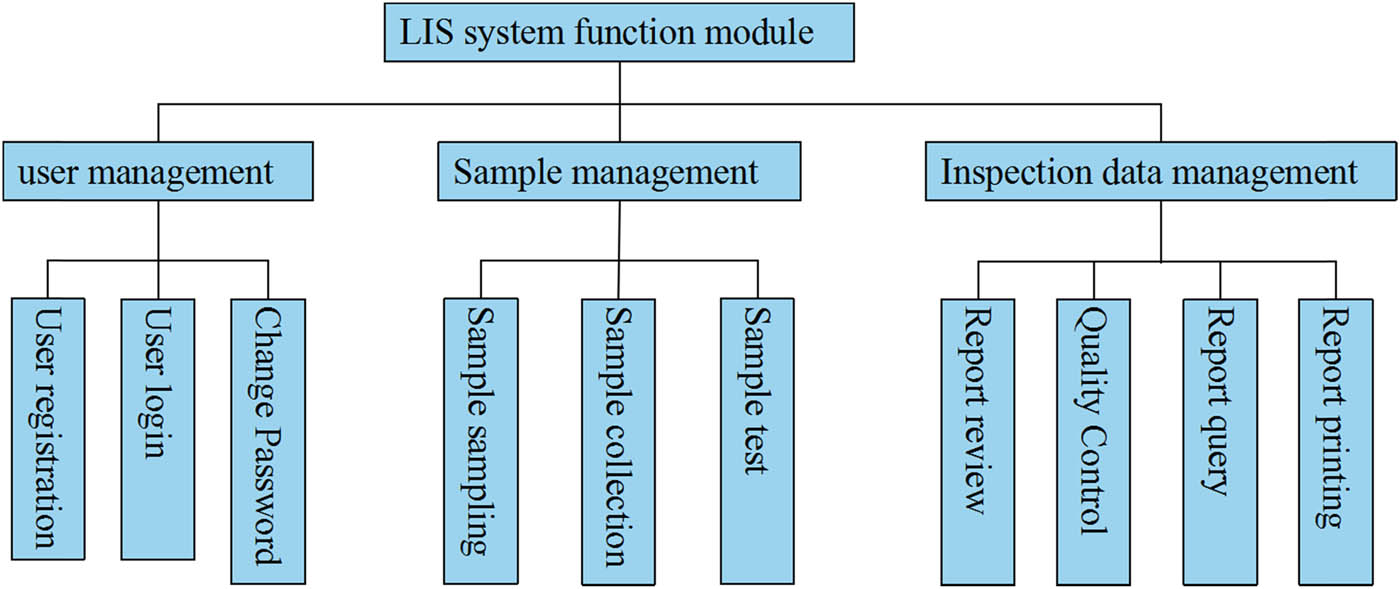
Functional module division of the LIS system.
In accordance with the requirements of ISO/IEC 17025: 2005, the accreditation criteria for testing and calibration laboratories, realize the application of total quality management ideas in the management of testing laboratories. T laboratory is regarded as a data production unit, and the raw materials are samples, the product is analytical data, and a corresponding management system is constructed by analyzing each link of the output of these data products to ensure the reliability of the final test data. Nonlinear programming under a set of equality and inequality constraints, find the extreme value problem of a function [2]. In 1951, Kuhn, Tucker, and others proposed the optimality condition of nonlinear programming, which laid a theoretical foundation for its development. With the development and application of computers, various nonlinear programming algorithms have emerged. The most famous algorithms include Davidon Fletcher Powell (DFP) unconstrained scaling method, Hestens Powell (HP), and Wilson–Han–Powell (WHP) constrained scaling method. The focus is on the current best algorithm Broyden–Fletcher–Goldfarb–Shanno (BFGS) unrestricted scaling method and Sequential Quadratic Programming (SQP) constrained sequential quadratic programming method [3]. Recognize that the final quality of a product is determined by the quality of each process or processing link in the production or processing of this product; therefore, in order to ensure the quality of the final product, all links related to product processing must be controlled.
2 Literature review
In the links of human, machine, material, method, environment, and measurement, quality control is one of the main functions of LIMS. On the contrary, LIMS is also an important link in many aspects of quality control. It is also one of the objects of quality control, and plays a role of mutual promotion and common improvement. Research has shown that, Zhu and Li believe that there is another characteristic of LIS system applications abroad. Since there is no complicated test, it is usually a simple small-scale test, and the population base is small, the daily processing sample size of the hospital is not large. A LIS system can simultaneously support the clinical inspection work of dozens of hospitals in some areas [4,5]. When Wang et al., senior technicians in the laboratory, review the inspection report, other relevant information (such as past medical history, onset time, etc.) of the patient in the electronic medical record can also be retrieved through the hospital information system (HIS) system as a reference. In order to avoid errors and improve accuracy, LIS systems generally use barcode scanning technology, i.e., laser scanning is carried out through a barcode gun, record basic patient information, sample collection information, etc. in the barcode. It can be printed out and pasted on the test tube containing the sample for inspection. Both the LIS system and the inspection instrument have the barcode recognition function during sample acceptance and inspection, which can accurately complete the sample application test items [6].The LIMS has been widely used in laboratory activities. However, the current biosafety laboratory (BSL) does not have the function to improve the safety of the laboratory work, which is the main concern of the BSL. With the increase in biosafety information to manage and biosafety-related research projects, it is necessary to expand the existing LIMS framework. Sun et al. built a much more suitable system for sticker use. Such a system should be careful to weigh routine laboratory activities between safety and efficiency, allowing laboratory staff to conduct their research as freely as possible, while ensuring that they are in harmony with the environment. To achieve this goal, information on the good collection and full use of research content, laboratory personnel, experimental materials, and experimental equipment is needed through a centralized system and its database [7]. Zhu et al. analyzed nonparametric methods using healthy human thyroid hormone reference interval data in laboratory information systems using nonparametric methods. The normal distribution of the raw data was tested using the Kolmogorov–Smirnov test. Biased data were converted into normal distribution using BOX-COX technique and outliers were identified using Turkey method. Continuous percentile curves were established using the bias coefficient-median-coefficient of variation (LMS) method. The cut-off values for age were determined by the decision tree, and the intergroup differences were validated by the z-test. The establishment of thyroid hormone RIs based on LIS data is simple and reliable and suitable for clinical laboratory applications [8]. In the management process, traditional methods and data that are not combined with the management of the laboratory, the recording of laboratory assets, scheduling, and evaluation are used. The record at this time is completed by using Microsoft Excel, which is limited to the record, and there is no synchronization and social interaction with the teacher, so the use of laboratory space is usually conflicting. The records of laboratory assets are not neat, so it is impossible to supervise the maintenance and replacement of assets. The overall architecture synthesis approach was implemented by Saputra et al. The function of the overall architecture comprehensive approach is to determine the requirements and design of the business process architecture and system architecture [9].
Against the design and implementation of the medical laboratory information system of a hospital, this article first analyzes the industry development and academic research related to the medical laboratory information system at home and abroad, then analyzes the demand and business process of the project system, constructs the overall framework, functional planning, database hierarchy and architecture of the system, and implements the functional sub-modules of the system, including user management, sample management, and test data management, which can realize the functions of medical order transfer, billing transmission, sample collection, sample collection, report review, and result transmission. The system realizes the interface with the hospital information management system, which enables the seamless real-time sharing of patients, billing, basic sample information, and test results. In addition, the system can perform quality control and conduct statistical analysis of the results.
3 LIMS and testing controlled documents
LIMS can transfer all kinds of standards, specifications, manuals, etc. involved in the management system in electronic text or other forms, which is convenient for application in work. In daily work, after the sample is received, the selection is made according to the testing basis of the approved project. You can view it at any time when you need to search or call, you can also set a controlled logo in the software, and the function of checking new standards in time. Ensure the validity of standards and avoid the use of obsolete standards. For the laboratory, with the in-depth development of testing work, various types of original inspection records, sampling (sampling) records, on-site monitoring records, on-site investigation records, etc., when you are busy at work, you will forget to carry it and not be able to record in real time and violate the requirements of the management system; therefore, the controlled formatted inspection original record related forms can be preset in the software, for the selection of inspection personnel. It can be used and updated at any time and it is easy to manage to solve the complicated input in the analysis process of various common projects [10,11], as shown in Figure 2.
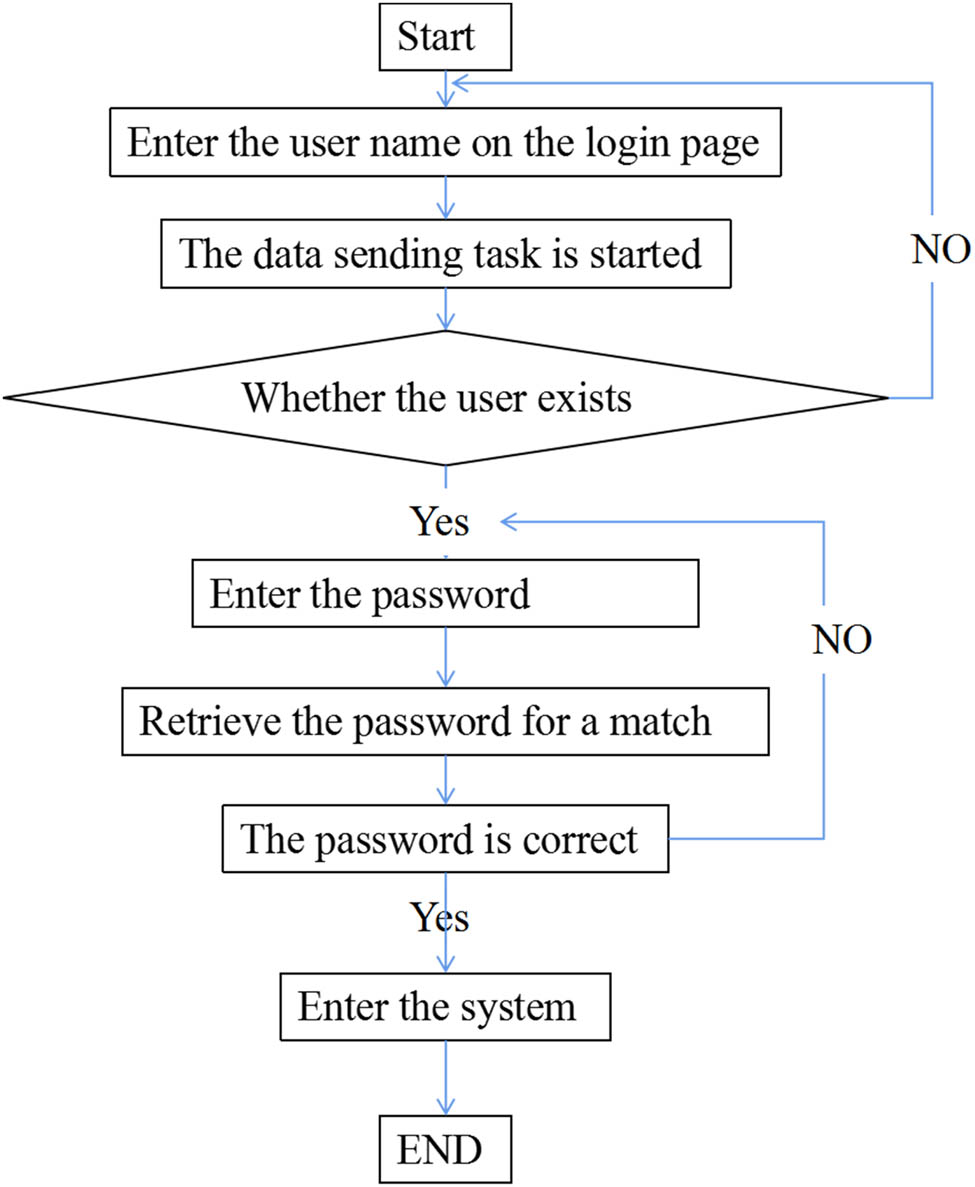
Flow chart of user login module.
3.1 LIMS and test data
Requirements of ISO/IEC 17025: 2005 for the accreditation criteria for the competence of testing and calibration laboratories, solution for inputting inspection results based on plug-in technology in the software system. It can easily respond to various personalized input format requirements for various inspections, automatically enter the data entry subsystem to reduce the error rate [12,13]. When the detection data needs to be entered, the data should be initially checked, when the inspector enters the computer system based on the written original data record, the following methods should be set up to ensure the consistency of entry.
3.1.1 Initial verification of data
The method of self-checking by input is obviously not high in error recognition rate, and the operability of using others to check method is not strong. Relatively speaking, using simultaneous entry twice, the method of system verification is better, it can complete the entry in a short time and can find the error caused by the entry operation. When the entered data meet certain requirements, the system will identify, remind, or automatically correct the abnormal data. For example, the air pressure parameter only allows to enter 101.3 ± 5.0 kPa, ambient temperature – 10–50°C, etc. When the entered data exceed the normal range, the system should make a reminder and issue a reminder or automatically correct it.
3.1.2 Protection of data attributes
Data has its own attributes and should remain unchanged during input, transmission, conversion, calculation, and storage [14,15]. For example, weighing 10.2 g, the decimal places have been fixed due to software settings during data entry, the data are automatically converted to 10.20, and one more significant digit is reserved, which changes the attributes of the data.
3.2 Calculation of data
3.2.1 Fitting of the calibration curve
Relative measurement tests often need to draw a calibration curve and then test the sample. Under normal circumstances, inspectors are accustomed to using linear regression to fit the calibration curve. Observed through actual work, there are many data that are not linearly distributed. In order to fit the curve more accurately, other nonlinear fitting equations should be used. However, the calculation of nonlinear equations is complicated, and the operation of the calculator alone is time-consuming and laborious. The application of computer system software can allow the inspector to intuitively select a more suitable fitting curve based on the fitting curve graph, such as quadratic equations, logarithmic equations, etc. [16,17].
3.2.2 Application control of calibration curve
Make judgments or prompts on the acceptability of the calculated calibration curve equation. It can be judged by the set correlation coefficient limit, and the value of the sample can be obtained by substituting the signal value of the sample into the equation. The system recognizes the calculated value according to the application range of the curve, and promptly warns of exceeding the range.
3.2.3 Treatment of lower detection limit
Intermediate or final results of detection are often reported as the lower limit of detection, and the system can automatically process it according to the set limit. When the intermediate result is expressed as the lower limit of detection, the system should convert to the final result according to the calculation formula. For example, weigh 10.0 g of sample and dilute it to 5.0 m after digestion, the instrument test result report is less than 0.02 mg/L, at this time, the final result should be 0.01 mg/kg.
Data rounding is an indispensable step in the calculation process. The system should make corresponding roundings according to the actual attributes and results of the data, and follow the rule of rounding to five to stay in pairs [18,19]. The system should allow to specify rounding conditions for each variable in the calculation, when there are multiple calculation formulas, the system should avoid repeated rounding phenomenon, when calculating the average value, the average value should be calculated based on the unrounded or at least one more valid value. Some test data need to look up the table to get the final result. For example, the result of the coliform in the microbiological test is obtained by checking the MPN table, the determination of alcohol content needs to obtain the result by checking the temperature and concentration conversion table of the alcohol meter according to the measured temperature and concentration. For the determination of reducing sugar in food (the second method), the content of cuprous oxide is calculated based on the consumption of potassium permanganate, and then the reducing sugar content is obtained by checking the table.
When the quality control sample is used for control, the system can judge according to the range of the quality control sample’s fixed value, and make the necessary warnings. Establishing a quality control chart is also the most commonly used quality control method. The software can update and draw the quality control chart in time, and use the control chart to judge the single data, and make the trend analysis in time. The quality control chart module should be considered in the software design, and the upper and lower limits of quality control should be entered to indicate the upper and lower warning limits and that the upper and lower control limits are exceeded, then timely measures can be taken [20].
3.3 Introduction to nonlinear programming algorithm
The general description of the nonlinear programming problem is:
Among them,
The effective and accurate solution to this problem depends not only on the number of approximations and design variables, but also on the characteristics of the objective function and constraints [7,21]. When the objective function and constraints are linear functions of design variables, the problem is a linear programming (LP) problem. The quadratic programming (QP) problem is about the minimum and maximum problem of the quadratic objective function of linearization constraints. For LP and QP problems, reasonable solving procedures are easily available. It is more difficult to solve the nonlinear programming (NP) problem because the objective function and constraints may be nonlinear functions of the design variables. The solution of NP problems generally requires an iterative procedure to determine the direction to look for in each major iteration. There are many unconstrained optimization methods, mainly the gradient method, and the quasi-Newton method is the most effective method in the gradient method [22,23].
Consider the quadratic model problem:
When the partial differential of
The optimal solution of Eq. (2) exists. The optimal solution
The most effective algorithm for Hessian iteration is the BFGS algorithm:
where
The starting point
4 System test analysis
The blood, biochemical, bacteria, urine, and other inspection instruments have different manufacturers and specifications, different sample type, test type, and patient gender code [24,25], but the principle of customized communication protocol with LIS system is basically as described above, using serial RS232 technology, and the procedure for receiving data is basically similar, which will not be repeated. Screenshots of the instrument communication setting interface in the LIS system are shown in Table 1.
Instrument communication settings for the LIS system
| Inspection team | Port | Baud rate | Data bit | Stop bit | Check bit | Whether to use | Two-way |
|---|---|---|---|---|---|---|---|
| Biochemical group | 1 | 9,600 | 8 | 2 | X | 1 | 0 |
| Body fluid group | 3 | 9,600 | 8 | 1 | X | 1 | 0 |
| Body fluid group | 1 | 9,600 | 8 | 1 | X | 1 | –1 |
| Immunity class | 6 | 9,600 | 8 | 1 | X | 1 | –1 |
| Body fluid group 2 | 6 | 9,600 | 8 | 1 | X | 1 | 0 |
| Blood group | 1 | 9,600 | 8 | 2 | X | 1 | 0 |
| Blood group | 1 | 9,600 | 8 | 2 | X | 1 | 0 |
| Immunity class | 1 | 9,600 | 8 | 2 | X | 1 | 0 |
| Blood group | 3 | 9,600 | 8 | 2 | X | 1 | 0 |
| Body fluid group 2 | 1 | 9,600 | 8 | 1 | X | 1 | 0 |
X: no check bit.
The performance test of the LIS system is to conduct concurrent performance testing according to the performance requirements of the system. The selected automated load testing tool is QALoad performance testing software that can monitor SQL Sever and support the Windows environment. Performance test indicators mainly include system memory usage, average CPU usage, response time, number of transactions per minute, etc. [26,27]. LIS system end user computers generally have to install LIS, HIS, PACS, EMR, and other medical programs at the same time, usually two of them are used at the same time, so the optimization of memory footprint can improve work efficiency and product experience. The system processing speed test is mainly to detect the system response time and the number of transactions per minute for key functional operations such as sample acceptance, report review, and quality control chart issuance [28,29]. After the LIS system is launched in this project, the client hospital needs to process about 10,000 samples per day, as long as one day’s sample size cannot be processed in time, it will affect the normal operation of the hospital’s inspection business. In severe cases, it may even face the crisis of paralysis of the entire inspection business, so the processing speed of the system must be controlled within the range of requirements.
The steps of LIS system performance test are as follows:
Restart five client computers.
Each computer runs LIS program and HIS program at the same time.
Divide the information of 300 excel simulation samples prepared in advance by the hospital into five groups and import them into the LIS system of each client.
From the five items of blood, biochemistry, urinalysis, immunity, and bacteria, each group selects four groups and a total of 20 groups of quality control samples for on-board quality control testing.
Use test tools to perform sample acceptance, sample inspection, report review, and issue a concurrent performance test of the four nodes of the quality control chart on the system in order, the number of simulated concurrent users is 350, and the software testing time lasts for 4 h.
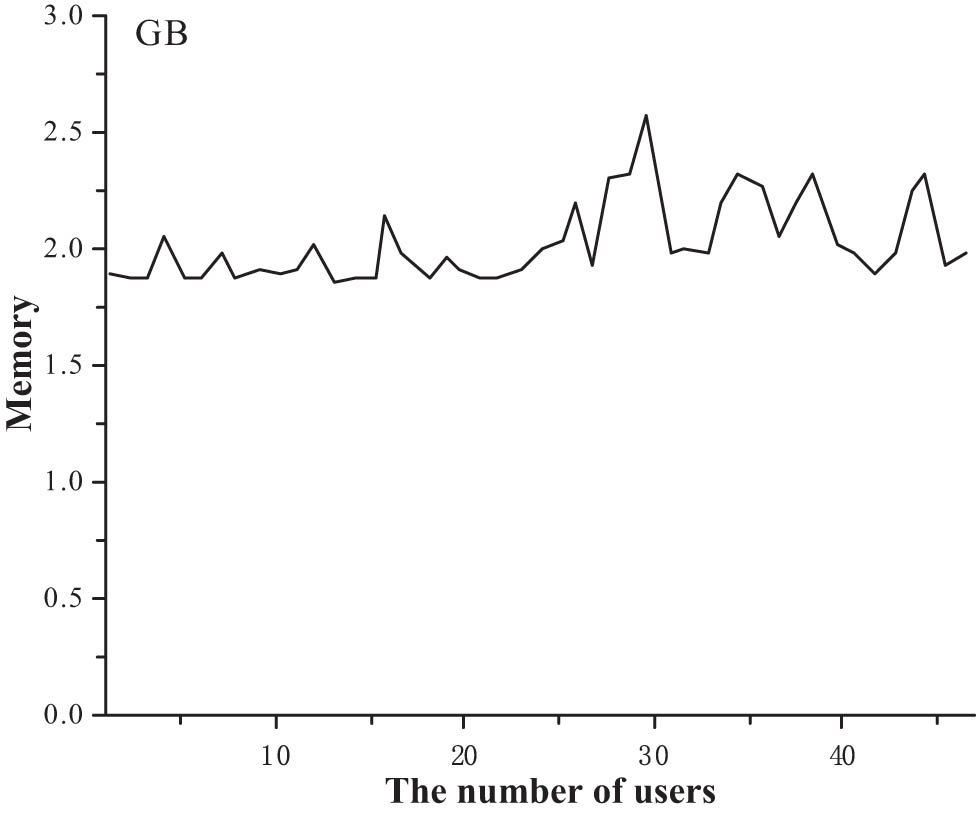
Curve of memory usage test results.
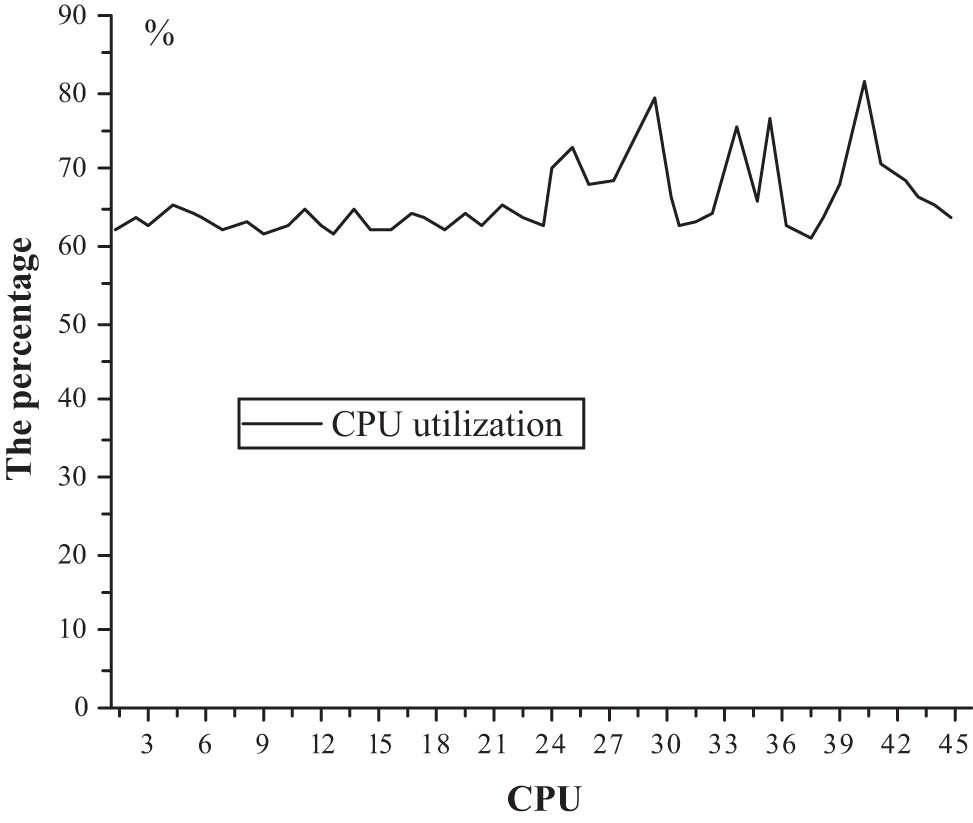
Curve of CPU usage test results.
It can be seen from the test result graph that the memory usage of the system is relatively balanced throughout the test process, reaching a peak in the quality control chart. The average memory usage obtained by the test is 2.02 GB and the average CPU usage rate is 66%. The two indicators basically meet the system performance requirements. According to the result value of the system’s automatic processing speed test, the average processing time for sample acceptance, sample inspection, and report review are 1.9, 2.8, and 2.1 s respectively, which meets the system performance requirements. The LIS system has different time for issuing quality control charts for samples of different projects, among which the time for the biochemical group and the bacterial group is relatively long. These two groups of samples also have the most complex chemical indicators that need to be tested in practice, and the time for other items is relatively short [30,31]. The average processing time of the control chart issuance system for blood, biochemistry, urinalysis, immunity, and bacteria is 2.53, 2.74, 2.49, 2.62, and 2.97 s. Overall, the average time for issuance of quality control charts for all projects has reached the performance requirements within 3 s. The test results are shown in Table 2.
Time test result table of quality control chart issuance
| Project | Group 1 processing time | Group 2 processing time | Group 3 processing time | Group 4 processing time | Average processing time |
|---|---|---|---|---|---|
| Blood | 2.53 | 2.52 | 2.56 | 2.52 | 2.53 |
| Biochemical | 2.76 | 2.7 | 2.75 | 2.68 | 2.72 |
| Urine test | 2.23 | 2.46 | 2.46 | 2.46 | 2.46 |
| The immune | 2.63 | 2.63 | 2.56 | 2.63 | 2.63 |
| Bacteria | 3.13 | 3.02 | 2.89 | 2.87 | 2.97 |
The results of functional testing and performance testing show that the LIS system has basically met user needs. Specifically, the LIS system can realize the creation, login, password, and information modification of various users in the inspection business during the test. It can support nurse users to accurately collect and record samples, and can support laboratory technician users to check and accept samples sent for inspection. It can accurately receive the billing and other data information from the HIS system and the inspection instrument and display it normally, able to pass the inspection results in the LIS system back to the HIS system, and be able to use different modules for different levels of users, able to complete the system review, query, and print of samples, and can normally issue quality control curves for quality control inspections [32,33]. The system can meet the performance requirements in the case of 350 virtual concurrent users. Its memory usage and CPU usage are within acceptable ranges, and the response time of important operations of each module of the system is within 3 s.
In this article, design and implementation of medical laboratory information system for various departments involved in clinical trial saves manpower and time cost, especially the inspection of science and technology from the backward manual operation mode, not only shortens the laboratory sample processing time, but also increases the precision of the sample processing results, it also reduce the labor intensity of technician’s work, so that the laboratory expands from the simple report function to the function of analysis [34,35]. The laboratory information system is also connected with the hospital resource management system to help the hospital carry out information management from the whole level.
5 Conclusion
Quasi-Newton gradient algorithm and sequential quadratic programming algorithm are well-known nonlinear programming algorithms, and their calculation accuracy and efficiency are better than other algorithms. The NCD software package makes full use of the powerful mathematical operations and graphic display functions of MATLAB, making the acquisition of target performance and the optimization process of adjustable parameters intuitive and simple. Its friendly interface, simple operation, and easy man–machine dialogue design will surely be more and more favored by engineering optimization designers. Through application examples, the effectiveness of the algorithm and the superiority of the software operation are proved. In the whole test process, the memory occupation of the system is relatively balanced, reaching the peak of issuing the quality control map. The average memory consumption obtained from the test is 2.02 GB, and the average utilization rate of CPU is 66%. The two indicators basically meet the performance requirements of the system. The system can meet the performance requirements of the number of virtual concurrent users 350. Both its memory occupancy and CPU utilization rate are in the acceptable range, and the response time of important operations of each module of the system is within 3 s. The medical laboratory information system designed and implemented saves labor and time costs for various departments involved in clinical testing, especially to liberate inspection technicians from the backward mode of manual operation, not only shortens the laboratory sample processing time, but also improves the accuracy of the sample processing results, it also reduces the labor intensity of technicians, and expands the laboratory from the simple reporting function to the analysis function. The laboratory information system also realizes the docking with the hospital resource management system, helping the hospital to carry out information management from the overall level. Research work also has limitations, as mentioned in the introduction. Domestic LIS products have developed the fourth-generation online version, although it has not been actually developed and applied, this is an inevitable trend. Whether in clinical laboratory practice or academic fields, with the development of information technology and the increasing needs of users and patients, we will further explore and study the process model, mobile application, and remote control technology of the medical laboratory information system.
-
Funding information: The authors state no funding involved.
-
Author contributions: All authors have accepted responsibility for the entire content of this manuscript and approved its submission.
-
Conflict of interest: The authors state no conflict of interest.
References
[1] Wang M, Cao Y, Wang C, Wang H, Chen J. Trigger control research of electromagnetic coil launcher based on real-time velocity measurement. IEEE Trans Plasma Sci. 2016;44(5):885–8.10.1109/EML.2014.6920614Search in Google Scholar
[2] Wu L, Liu H, Bai K. Research on smart tracking strategy of wind power and energy storage combined generation system based on three-stage rolling optimisation. J Eng. 2017;2017(13):1809–13.10.1049/joe.2017.0643Search in Google Scholar
[3] Sahassananda D, Thanachartwet V, Chonsawat P, Wongphan B, Desakorn V. Evaluation of hematocrit in adults with dengue by a laboratory information system. J Tropical Med. 2021;2021(4):1–9.10.1155/2021/8852031Search in Google Scholar PubMed PubMed Central
[4] Zhang P. Image data security mechanism based on the internet of things cardiac catheterization laboratory information management system research and design. J Healthc Eng. 2021;2021(1):1–14.10.1155/2021/5592185Search in Google Scholar PubMed PubMed Central
[5] Zhu H, Li J. Research on the CNC incremental forming based on multidirectional real-time adjustment of the sheet posture. Int J Adv Manuf Technol. 2020;110(5–8):1–12.10.1007/s00170-020-05918-2Search in Google Scholar
[6] Wang W, Gao W, Wu DM, Du Z. Research on a mobile manipulator for biochemical sampling tasks. Ind Robot. 2017;44(4):467–78.10.1108/IR-11-2016-0305Search in Google Scholar
[7] Sun D, Wu L, Fan G. Laboratory information management system for biosafety laboratory: safety and efficiency. J Biosaf Biosec. 2021;3(1):28–34.10.1016/j.jobb.2021.03.001Search in Google Scholar
[8] Zhu XT, Wang KJ, Zhou Q, Xu JC. Establishing reference intervals of thyroid hormone based on a laboratory information system. Zhonghua Nei Ke za Zhi [Chin J Intern Med]. 2020;59(2):129–33.Search in Google Scholar
[9] Saputra AB, Cahyono A. Analisis Dan Perancangan Laboratory Information Management System (LIMS) Menggunakan Metode Total Architecture Synthesis (TAS). JISKA (J Inform Sunan Kalijaga). 2020;5(1):7–13.10.14421/jiska.2020.51-02Search in Google Scholar
[10] Zhan S, Wang Z. Optimal control for a class of complex singular system based on adaptive dynamic programming. IEEE/CAA J Automatica Sin. 2019;6(1):191–200.10.1109/JAS.2019.1911342Search in Google Scholar
[11] Bockeria LA, Satyukova AS, Yarustovskiy MB, Tetvadze IV, Grankov AV. Laboratory information systems in internal quality control of a cardiac surgery hospital. Zdravookhranenie Rossiĭskoĭ Federatsii/Ministerstvo zdravookhraneniia RSFSR. 2021;65(1):12–6.10.47470/0044-197X-2021-65-1-12-16Search in Google Scholar
[12] Huang Z, Jiang X, Chen L, Fan D. Research on safe communication architecture for real-time ethernet distributed control system. IEEE Access. 2019;99:1.10.1109/ACCESS.2019.2926650Search in Google Scholar
[13] Iqbal S, Sharafat S. Installation and implementation of automation and its impact on clinical chemistry laboratory productivity. Rawal Med J. 2021;202(46):228–31.Search in Google Scholar
[14] Craciun S, Kirchgessner R, George AD, Lam H, Principe JC. A real-time, power-efficient architecture for mean-shift image segmentation. J Real-Time Image Process. 2018;14(2):379–94.10.1007/s11554-014-0459-1Search in Google Scholar
[15] Inman M, Lyon AW, Lyon O, Lyon ME. Estimated risk for insulin dose error among hospital patients due to glucose meter hematocrit bias in 2020. Arch Pathol Lab Med. 2020;144(10):1204–8.10.5858/arpa.2020-0101-RASearch in Google Scholar PubMed
[16] Nishom M, Wibowo DS. Sistem Informasi Laboratorium Berbasis Website Di Program Studi D Iv Teknik Informatika Politeknik Harapan Bersama Tegal. Gema Teknologi. 2020;21(1):1–10.10.14710/gt.v21i1.28746Search in Google Scholar
[17] Mahajan S, Thapar S, Khillan V, Gupta P, Gupta E. Comparative evaluation of echinococcus serology with cytology for the diagnosis of hepatic hydatid disease. J Lab Phys. 2020;12(2):98–102.10.1055/s-0040-1716460Search in Google Scholar PubMed PubMed Central
[18] Olalubi OA, Salako G, Adetunde OT, Sawyerr HO, Tambo E. Geospatial modeled analysis and laboratory based technology for determination of malaria risk and burden in a rural community. Int J Tropical Dis Health. 2020;41(8):59–71.10.9734/ijtdh/2020/v41i830312Search in Google Scholar
[19] Bakr A, Guney M. Evaluation of Toxoplasma gondii IgM and IgG seropositivities in serum samples sent from pediatric and adult hematology/oncology outpatient clinics. Med Lab Technol J. 2020;6(2):163–71.10.31964/mltj.v6i2.342Search in Google Scholar
[20] Asmelash D, Worede A. Extra-analytical clinical laboratory errors in Africa: a systematic review and meta-analysis. J Int Federation Clin Chem/IFCC. 2020;31(3):208–24.Search in Google Scholar
[21] Khalifa A, Mason CC, Garvin JH, Williams MS, Huff SM. A qualitative study of prevalent laboratory information systems and data communication patterns for genetic test reporting. Genet Med. 2021;23:1–7.10.1038/s41436-021-01251-5Search in Google Scholar PubMed
[22] Yi X, Cao C, Fan L, Zhang R. Quantum secure multi-party summation protocol based on blind matrix and quantum Fourier transform. Quant Inf Process. 2021;20(7):1–20.10.1007/s11128-021-03183-0Search in Google Scholar
[23] Yang L. Data acquisition and transmission of laboratory local area network based on fuzzy dematel algorithm. Wirel Netw. 2021;12:1–10.10.1007/s11276-021-02709-9Search in Google Scholar
[24] Huang R, Zhang S, Zhang W, Yang X. Progress of zinc oxide-based nanocomposites in the textile industry. IET Collab Intell Manuf. 2021;3(3):281–9.10.1049/cim2.12029Search in Google Scholar
[25] Cheng B, Wu P. Recycled iontronic from discarded chewed gum for personalized healthcare monitoring and intelligent information encryption. ACS Appl Mater Interfaces. 2021;13(5):6731–8.10.1021/acsami.1c00402Search in Google Scholar PubMed
[26] Xin L, Jianqi L, Jiayao C, Fangchuan Z. Degradation of benzene, toluene, and xylene with high gaseous hourly space velocity by double dielectric barrier discharge combined with Mn3O4/activated carbon fibers. J Phys D Appl Phys. 2022;55(12):125206.10.1088/1361-6463/ac4133Search in Google Scholar
[27] Jayakumar J, Nagaraj B, Chacko S, Ajay P. Conceptual implementation of artificial intelligent based E-mobility controller in smart city environment. Wirel Commun Mob Comput. 2021;2021:1–8.10.1155/2021/5325116Search in Google Scholar
[28] Li Y, Sun Q, Wang D, Huang J, Li P, Wang Y, et al. A GM-CPHD filtering algorithm assisted by luminance information. J Phys: Conf Ser. 2021;1971(1):012065.10.1088/1742-6596/1971/1/012065Search in Google Scholar
[29] Pinzani P, D’Argenio V, Del Re M, Pellegrini C, Cucchiara F, Salvianti F, et al. Updates on liquid biopsy: current trends and future perspectives for clinical application in solid tumors. Clin Chem Lab Med. 2021;59(7):1181–200.10.1515/cclm-2020-1685Search in Google Scholar PubMed
[30] Ren Z, An X, Li G, Zhang X, Huang R. Layout dependence of total-ionizing-dose response in 65-nm bulk Si pMOSFET. Sci China Inf Sci. 2021;64(2):1–2.10.1007/s11432-019-2795-7Search in Google Scholar
[31] Gustriansyah R, Suhandi N, Alie J, Antony F, Heryati A. Optimization of laboratory application by utilizing the ISO/IEC 25010 model. IOP Conf Ser: Mater Sci Eng. 2021;1088(1):012067.10.1088/1757-899X/1088/1/012067Search in Google Scholar
[32] Chu C, Qi M, Jiang J, Chen C, Wu J. Pyramid and similarity based feature enhancement network for person re-identification. J Phys: Conf Ser. 2021;1880(1):012020.10.1088/1742-6596/1880/1/012020Search in Google Scholar
[33] Sharma A, Kumar R. Performance comparison and detailed study of AODV, DSDV, DSR, TORA and OLSR routing protocols in ad hoc networks. 2016 Fourth International Conference on Parallel, Distributed and Grid Computing. (PDGC); 2016 Dec 22–24; Waknaghat, India. IEEE; 2017. p. 732–736.10.1109/PDGC.2016.7913218Search in Google Scholar
[34] Ma X, Ding H, Zhou Y, Liu P, Hu T, Yan S. Development and research of intelligent testing information system for full performance test of metrology equipment. J Phys: Conf Ser. 2021;1982(1):012045.10.1088/1742-6596/1982/1/012045Search in Google Scholar
[35] Liu J, Li Z, Zhou T. Research on the practical application of server virtualization technology in computer laboratory. J Phys: Conf Ser. 2021;1744(2):022042.10.1088/1742-6596/1744/2/022042Search in Google Scholar
© 2022 Fei Lv and Junfang Yu, published by De Gruyter
This work is licensed under the Creative Commons Attribution 4.0 International License.
Articles in the same Issue
- Research Articles
- Fractal approach to the fluidity of a cement mortar
- Novel results on conformable Bessel functions
- The role of relaxation and retardation phenomenon of Oldroyd-B fluid flow through Stehfest’s and Tzou’s algorithms
- Damage identification of wind turbine blades based on dynamic characteristics
- Improving nonlinear behavior and tensile and compressive strengths of sustainable lightweight concrete using waste glass powder, nanosilica, and recycled polypropylene fiber
- Two-point nonlocal nonlinear fractional boundary value problem with Caputo derivative: Analysis and numerical solution
- Construction of optical solitons of Radhakrishnan–Kundu–Lakshmanan equation in birefringent fibers
- Dynamics and simulations of discretized Caputo-conformable fractional-order Lotka–Volterra models
- Research on facial expression recognition based on an improved fusion algorithm
- N-dimensional quintic B-spline functions for solving n-dimensional partial differential equations
- Solution of two-dimensional fractional diffusion equation by a novel hybrid D(TQ) method
- Investigation of three-dimensional hybrid nanofluid flow affected by nonuniform MHD over exponential stretching/shrinking plate
- Solution for a rotational pendulum system by the Rach–Adomian–Meyers decomposition method
- Study on the technical parameters model of the functional components of cone crushers
- Using Krasnoselskii's theorem to investigate the Cauchy and neutral fractional q-integro-differential equation via numerical technique
- Smear character recognition method of side-end power meter based on PCA image enhancement
- Significance of adding titanium dioxide nanoparticles to an existing distilled water conveying aluminum oxide and zinc oxide nanoparticles: Scrutinization of chemical reactive ternary-hybrid nanofluid due to bioconvection on a convectively heated surface
- An analytical approach for Shehu transform on fractional coupled 1D, 2D and 3D Burgers’ equations
- Exploration of the dynamics of hyperbolic tangent fluid through a tapered asymmetric porous channel
- Bond behavior of recycled coarse aggregate concrete with rebar after freeze–thaw cycles: Finite element nonlinear analysis
- Edge detection using nonlinear structure tensor
- Synchronizing a synchronverter to an unbalanced power grid using sequence component decomposition
- Distinguishability criteria of conformable hybrid linear systems
- A new computational investigation to the new exact solutions of (3 + 1)-dimensional WKdV equations via two novel procedures arising in shallow water magnetohydrodynamics
- A passive verses active exposure of mathematical smoking model: A role for optimal and dynamical control
- A new analytical method to simulate the mutual impact of space-time memory indices embedded in (1 + 2)-physical models
- Exploration of peristaltic pumping of Casson fluid flow through a porous peripheral layer in a channel
- Investigation of optimized ELM using Invasive Weed-optimization and Cuckoo-Search optimization
- Analytical analysis for non-homogeneous two-layer functionally graded material
- Investigation of critical load of structures using modified energy method in nonlinear-geometry solid mechanics problems
- Thermal and multi-boiling analysis of a rectangular porous fin: A spectral approach
- The path planning of collision avoidance for an unmanned ship navigating in waterways based on an artificial neural network
- Shear bond and compressive strength of clay stabilised with lime/cement jet grouting and deep mixing: A case of Norvik, Nynäshamn
- Communication
- Results for the heat transfer of a fin with exponential-law temperature-dependent thermal conductivity and power-law temperature-dependent heat transfer coefficients
- Special Issue: Recent trends and emergence of technology in nonlinear engineering and its applications - Part I
- Research on fault detection and identification methods of nonlinear dynamic process based on ICA
- Multi-objective optimization design of steel structure building energy consumption simulation based on genetic algorithm
- Study on modal parameter identification of engineering structures based on nonlinear characteristics
- On-line monitoring of steel ball stamping by mechatronics cold heading equipment based on PVDF polymer sensing material
- Vibration signal acquisition and computer simulation detection of mechanical equipment failure
- Development of a CPU-GPU heterogeneous platform based on a nonlinear parallel algorithm
- A GA-BP neural network for nonlinear time-series forecasting and its application in cigarette sales forecast
- Analysis of radiation effects of semiconductor devices based on numerical simulation Fermi–Dirac
- Design of motion-assisted training control system based on nonlinear mechanics
- Nonlinear discrete system model of tobacco supply chain information
- Performance degradation detection method of aeroengine fuel metering device
- Research on contour feature extraction method of multiple sports images based on nonlinear mechanics
- Design and implementation of Internet-of-Things software monitoring and early warning system based on nonlinear technology
- Application of nonlinear adaptive technology in GPS positioning trajectory of ship navigation
- Real-time control of laboratory information system based on nonlinear programming
- Software engineering defect detection and classification system based on artificial intelligence
- Vibration signal collection and analysis of mechanical equipment failure based on computer simulation detection
- Fractal analysis of retinal vasculature in relation with retinal diseases – an machine learning approach
- Application of programmable logic control in the nonlinear machine automation control using numerical control technology
- Application of nonlinear recursion equation in network security risk detection
- Study on mechanical maintenance method of ballasted track of high-speed railway based on nonlinear discrete element theory
- Optimal control and nonlinear numerical simulation analysis of tunnel rock deformation parameters
- Nonlinear reliability of urban rail transit network connectivity based on computer aided design and topology
- Optimization of target acquisition and sorting for object-finding multi-manipulator based on open MV vision
- Nonlinear numerical simulation of dynamic response of pile site and pile foundation under earthquake
- Research on stability of hydraulic system based on nonlinear PID control
- Design and simulation of vehicle vibration test based on virtual reality technology
- Nonlinear parameter optimization method for high-resolution monitoring of marine environment
- Mobile app for COVID-19 patient education – Development process using the analysis, design, development, implementation, and evaluation models
- Internet of Things-based smart vehicles design of bio-inspired algorithms using artificial intelligence charging system
- Construction vibration risk assessment of engineering projects based on nonlinear feature algorithm
- Application of third-order nonlinear optical materials in complex crystalline chemical reactions of borates
- Evaluation of LoRa nodes for long-range communication
- Secret information security system in computer network based on Bayesian classification and nonlinear algorithm
- Experimental and simulation research on the difference in motion technology levels based on nonlinear characteristics
- Research on computer 3D image encryption processing based on the nonlinear algorithm
- Outage probability for a multiuser NOMA-based network using energy harvesting relays
Articles in the same Issue
- Research Articles
- Fractal approach to the fluidity of a cement mortar
- Novel results on conformable Bessel functions
- The role of relaxation and retardation phenomenon of Oldroyd-B fluid flow through Stehfest’s and Tzou’s algorithms
- Damage identification of wind turbine blades based on dynamic characteristics
- Improving nonlinear behavior and tensile and compressive strengths of sustainable lightweight concrete using waste glass powder, nanosilica, and recycled polypropylene fiber
- Two-point nonlocal nonlinear fractional boundary value problem with Caputo derivative: Analysis and numerical solution
- Construction of optical solitons of Radhakrishnan–Kundu–Lakshmanan equation in birefringent fibers
- Dynamics and simulations of discretized Caputo-conformable fractional-order Lotka–Volterra models
- Research on facial expression recognition based on an improved fusion algorithm
- N-dimensional quintic B-spline functions for solving n-dimensional partial differential equations
- Solution of two-dimensional fractional diffusion equation by a novel hybrid D(TQ) method
- Investigation of three-dimensional hybrid nanofluid flow affected by nonuniform MHD over exponential stretching/shrinking plate
- Solution for a rotational pendulum system by the Rach–Adomian–Meyers decomposition method
- Study on the technical parameters model of the functional components of cone crushers
- Using Krasnoselskii's theorem to investigate the Cauchy and neutral fractional q-integro-differential equation via numerical technique
- Smear character recognition method of side-end power meter based on PCA image enhancement
- Significance of adding titanium dioxide nanoparticles to an existing distilled water conveying aluminum oxide and zinc oxide nanoparticles: Scrutinization of chemical reactive ternary-hybrid nanofluid due to bioconvection on a convectively heated surface
- An analytical approach for Shehu transform on fractional coupled 1D, 2D and 3D Burgers’ equations
- Exploration of the dynamics of hyperbolic tangent fluid through a tapered asymmetric porous channel
- Bond behavior of recycled coarse aggregate concrete with rebar after freeze–thaw cycles: Finite element nonlinear analysis
- Edge detection using nonlinear structure tensor
- Synchronizing a synchronverter to an unbalanced power grid using sequence component decomposition
- Distinguishability criteria of conformable hybrid linear systems
- A new computational investigation to the new exact solutions of (3 + 1)-dimensional WKdV equations via two novel procedures arising in shallow water magnetohydrodynamics
- A passive verses active exposure of mathematical smoking model: A role for optimal and dynamical control
- A new analytical method to simulate the mutual impact of space-time memory indices embedded in (1 + 2)-physical models
- Exploration of peristaltic pumping of Casson fluid flow through a porous peripheral layer in a channel
- Investigation of optimized ELM using Invasive Weed-optimization and Cuckoo-Search optimization
- Analytical analysis for non-homogeneous two-layer functionally graded material
- Investigation of critical load of structures using modified energy method in nonlinear-geometry solid mechanics problems
- Thermal and multi-boiling analysis of a rectangular porous fin: A spectral approach
- The path planning of collision avoidance for an unmanned ship navigating in waterways based on an artificial neural network
- Shear bond and compressive strength of clay stabilised with lime/cement jet grouting and deep mixing: A case of Norvik, Nynäshamn
- Communication
- Results for the heat transfer of a fin with exponential-law temperature-dependent thermal conductivity and power-law temperature-dependent heat transfer coefficients
- Special Issue: Recent trends and emergence of technology in nonlinear engineering and its applications - Part I
- Research on fault detection and identification methods of nonlinear dynamic process based on ICA
- Multi-objective optimization design of steel structure building energy consumption simulation based on genetic algorithm
- Study on modal parameter identification of engineering structures based on nonlinear characteristics
- On-line monitoring of steel ball stamping by mechatronics cold heading equipment based on PVDF polymer sensing material
- Vibration signal acquisition and computer simulation detection of mechanical equipment failure
- Development of a CPU-GPU heterogeneous platform based on a nonlinear parallel algorithm
- A GA-BP neural network for nonlinear time-series forecasting and its application in cigarette sales forecast
- Analysis of radiation effects of semiconductor devices based on numerical simulation Fermi–Dirac
- Design of motion-assisted training control system based on nonlinear mechanics
- Nonlinear discrete system model of tobacco supply chain information
- Performance degradation detection method of aeroengine fuel metering device
- Research on contour feature extraction method of multiple sports images based on nonlinear mechanics
- Design and implementation of Internet-of-Things software monitoring and early warning system based on nonlinear technology
- Application of nonlinear adaptive technology in GPS positioning trajectory of ship navigation
- Real-time control of laboratory information system based on nonlinear programming
- Software engineering defect detection and classification system based on artificial intelligence
- Vibration signal collection and analysis of mechanical equipment failure based on computer simulation detection
- Fractal analysis of retinal vasculature in relation with retinal diseases – an machine learning approach
- Application of programmable logic control in the nonlinear machine automation control using numerical control technology
- Application of nonlinear recursion equation in network security risk detection
- Study on mechanical maintenance method of ballasted track of high-speed railway based on nonlinear discrete element theory
- Optimal control and nonlinear numerical simulation analysis of tunnel rock deformation parameters
- Nonlinear reliability of urban rail transit network connectivity based on computer aided design and topology
- Optimization of target acquisition and sorting for object-finding multi-manipulator based on open MV vision
- Nonlinear numerical simulation of dynamic response of pile site and pile foundation under earthquake
- Research on stability of hydraulic system based on nonlinear PID control
- Design and simulation of vehicle vibration test based on virtual reality technology
- Nonlinear parameter optimization method for high-resolution monitoring of marine environment
- Mobile app for COVID-19 patient education – Development process using the analysis, design, development, implementation, and evaluation models
- Internet of Things-based smart vehicles design of bio-inspired algorithms using artificial intelligence charging system
- Construction vibration risk assessment of engineering projects based on nonlinear feature algorithm
- Application of third-order nonlinear optical materials in complex crystalline chemical reactions of borates
- Evaluation of LoRa nodes for long-range communication
- Secret information security system in computer network based on Bayesian classification and nonlinear algorithm
- Experimental and simulation research on the difference in motion technology levels based on nonlinear characteristics
- Research on computer 3D image encryption processing based on the nonlinear algorithm
- Outage probability for a multiuser NOMA-based network using energy harvesting relays
