Ancient spring waters still emerging and accessible in the Roman Forum area: Chemical–physical and microbiological characterization
-
 ,
,

Abstract
The presence of abundant surface and underground waters and, consequently, fertile and flat soils favored the birth and expansion of Rome. Before the construction of the first aqueduct, the “springs” were probably the only source of drinking water in Rome. At the same time, today, many of them are only scarce outcrops that, anyway, constitute an important heritage for their hydrogeological, archaeological, and monumental significance. In the present study, a multiparametric analytical approach is reported to highlight possible differences among the still emerging and accessible sources in the area of the Roman Forum and to exclude infiltrations from the water and/or sewage network. Temperature, conductivity, pH, dissolved oxygen, and redox potential were measured in situ, while the salt and bicarbonate content, the fixed residue, some UV-Vis indices, and the volatile organic compounds were determined in the laboratory. The microbiological water quality was evaluated by assaying Escherichia coli, intestinal Enterococci, and Salmonella, with the total bacterial count at 22 and 37°C. As expected, all samples are non-potable. Nevertheless, the comparison of data on standpipes close to the springs allowed us to exclude important infiltrations from the water network and the microbiological analysis of those from the sewer network.
Graphical abstract
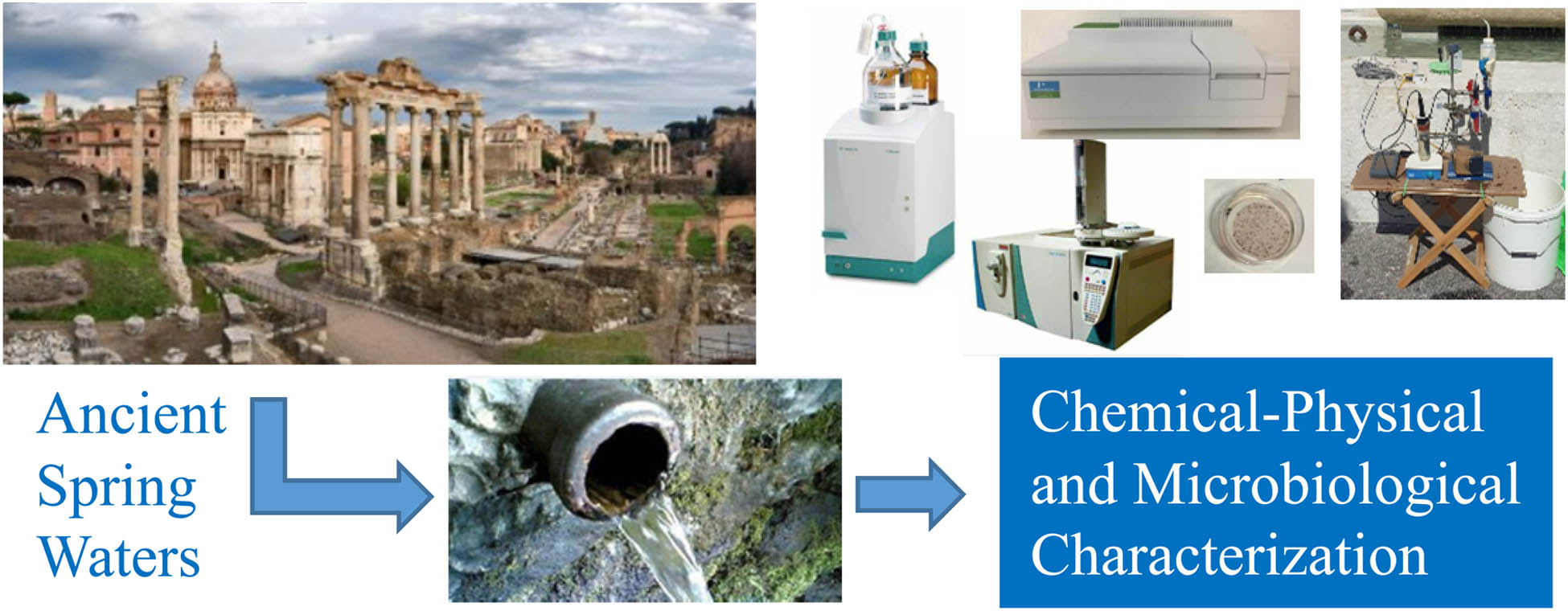
1 Introduction
Water is an essential resource that affects every aspect of human life [1]. Although today most of the world has access to clean, filtered, and/or treated water, this was not quite the case in the past. Civilizations such as the ancient Romans made great strides to improve reliable access to clean water [2]. The first water project in Rome was probably the Cloaca Maxima, i.e., a drainage canal built to drain the flood-prone area between the hills of Rome (Palatine, Esquiline, and Capitoline), which would later become the Roman Forum. Later additional canals were added and covered over to allow for the construction of structures above them, creating the sewer network that is still in place today. Rome’s initial water sources consisted of local springs, wells, and cisterns near the city. Later, the need for more consistent supplies led to the emergence of aqueducts [3].
Many of the historic springs can be found in the city’s central area, such as the Roman Forum. Some springs are still observable as they were sacralized by the Romans, who had the cult of deities linked to water [4]. Some of these waters are still gushing from several famous and artistic fountains in Rome located at various city points. In addition, underground waters can be seen surfacing in some churches (Santa Maria in Via, San Lorenzo in Lucina, and San Bartolomeo all’Isola Tiberina) [4].
Because of their hydrogeological, archaeological, and monumental significance, the historical springs in Rome constitute important geosites [5,6]. The reasons for their cultural and scientific interest are related to their rarity, representativeness, historical value, and location in the central part of the city, and their accessibility has given that some of them fall within areas open to the public and/or are commemorated by monumental elements usable by anyone. Therefore, the historic springs of Rome represent a truly unique historical, archaeological, cultural, and natural heritage. Consequently, they must be considered valuable assets to be protected and safeguarded from the threat of possible pollution phenomena or even disappearance due to anthropogenic interventions that determine changes in the subsurface capable of interfering with the natural emergence.
Urban environments and modern construction such as roads, parking lots, and buildings can significantly alter the nature of recharge to groundwater aquifers due to the decreased amount of percolation areas [7,8,9]. On the other hand, the modern city can also increase the groundwater recharge through park irrigation and any water loss in supply and sewage networks [10,11]. Interrelationships between anthropogenic land use and natural recharge processes influence the chemical composition of a water source [12,13]. Trace metals from industrial areas, organic material from damaged infrastructure, excessive nitrates from area agriculture, and acid rain components from urban air pollution can be found in water [12,13]. Chemical–physical and bacteriological analysis of ancient water sources is important for understanding the vulnerability of these valuable water resources [14,15] and essential for the state of water quality [12]. However, the selection of chemical–physical and biological parameters for water quality analysis is challenging, as there is no particular technique [16,17,18,19].
Preliminary results in a previous study [20] highlighted differences in some ancient springs in the Roman Forum compared to main water and the presence of a high nitrate content, which can be associated with possible pollution of a biological nature. The present study aimed, therefore, to investigate through a multiparametric analytical approach the ancient springs still visible and accessible in 12 different points of the Roman Forum area to obtain their chemical–physical and microbiological characterization and to exclude infiltration from the water network or contamination of pollutants.
2 Materials and methods
2.1 Study design
A total of 14 water samples (12 ancient spring water samples still emerging and accessible in the Roman Forum area and 2 drinking water samples from the ACEA public aqueduct of Rome; Table 1) were collected during the spring of 2021 and analyzed. Several parameters were determined in situ (conductivity, pH, temperature, dissolved oxygen [DO], and redox potential [ORP]) and in the laboratory (eight anions, eight cations, bicarbonate [
Abbreviations used in all the figures and tables for the analyzed samples
| Source | Abbreviation |
|---|---|
| Valentini Palace baths | VPb |
| Valentini Palace column | VPco |
| Valentini Palace canteen | VPca |
| Juturnae | J |
| Caesarian Galleries | CG |
| Drilling near Lapis Niger | D |
| Lapis Niger | LN |
| Divine Romulus temple | DR |
| Tullianum | T |
| Forum standpipe | Fsp |
| Valentini Palace standpipe | VPsp |
| Tullianum standpipe | Tsp |
| ACEA aqueduct Salone Vergine | ACEAv |
| ACEA aqueduct Peschiera Capore | ACEAp |
Figure S1 shows the sampling points of the water sources in the area of the Roman Forum. In the first map (Figure S1a), the sources of water inside the Valentini Palace were selected. In the second map (Figure S1b), the sources of water present inside the Roman Forum and the Mamertino Prison were considered. The description of the sampling sites is shown in Section S1 of the Supplementary material.
Valentini Palace [21,22] is surely considered an urban area as early as the beginning of the Imperial age when it turned from burial into a trading area and partially into a residential area. However, the archaeological remains testify that it was completely transformed by the construction [23,24] of Trajan’s Forum between the end of the first and the early second century [25]; the pre-existing buildings were buried under a new terrace upon which new buildings were constructed. The archaeological remains under Valentini Palace can belong to two different contexts: a public context to the South and West most probably referred to a very large building dating back to the age of Hadrian that delimits the Trajan’s Forum to the north and can be identified with the Templum Divi Traiani et Divae Plotinae [25,26,27,28,29]; a private residential context to the North and East, with the remains of two wealthy Domus of the mid- and late-Imperial time [30,31,32,33,34]. Figure S1a and b shows the sampling points inside the Valentini Palace and the Roman Forum and the Mamertine Prison, respectively.
In ancient times, the Forum was a marshy area. The Roman Forum began to take shape starting from the end of the seventh century BC, after the reclamation of the valley, and it remained the center of public life for over a millennium.
The Mamertine Prison was the oldest and the only maximum security prison in the Roman State. It is located on the slopes of the Campidoglio and overlooks the Roman Forum. The complex consists of two distinct nuclei: the upper room, called Carcer, which dates back to the seventh century BC, and the Tullianum, the lower hall, which dates back to the sixth century BC.
2.2 Instrument and materials
Perkin-Elmer (Waltham, USA) lambda 16 spectrophotometer managed by the WinLab 2.80.3 UV program was used, with a quartz cuvette with 2, 10, and 50 mm optical path.
Chromatograph 761 compact IC Metrohm (Herisau, Switzerland) with IC NET 2.3 interface equipped with a Dionex (Sunnyvale, California) CS12A 4 mm × 250 mm column, 1 μm Reodine filter, and Metrohm Suppressor Module was used for the anion analysis. A Dionex AS22 4 mm × 250 mm and a 2 μm Supelco (Darmstadt, Germany) filter were instead used for the cation analysis.
The following eluents were used for anion and cation analyses. Anions: 1.3 mM sodium carbonate and 4.5 mM sodium bicarbonate, obtained from sodium carbonate anhydrous 99.9% and sodium bicarbonate anhydrous 99.5% from Fluka (Darmstadt, Germany), 1% v/v methanol normapur 99.8% from Sigma-Aldrich (Darmstadt, Germany). Cations: 2 mM superpure nitric acid and 4 mM pure oxalic acid from Carlo Erba (Milan, Italy), 1% v/v Fluka acetonitrile for LC-MS. Certified standards certipur of anions and cations from Merck (Darmstadt, Germany).
Amel 2.33 auto burette and Amel 338 pH-meter equipped with Crison (Barcelona, Spain) 5202 electrode and Amel TC100. Titrant: HCl FIXANAL 38280-1EA 0.1 M.
VOCs were determined using a Trace GC ULTRA gas chromatograph coupled to a Focus DSQ mass spectrometer (Thermo Fisher Scientific, MA, USA) running in electron impact ionization mode (EI, 70 eV; source at 250°C) and operating in SIM mode. GC was equipped with a purge and trap device (Stratum Purge & Trap, Teledyne Tekmar, OH, USA) employed as an extractor, concentration/trapping, and injection system of VOC analytes. Chromatographic separation was performed on an SPB-624 capillary column (30 m × 0.25 mm × 1.4 μm film thickness; Supelco, Darmstadt, Germany) specific for VOC analyte separation, employing helium (purity grade ≥ 99.9999% v/v) from Linde (Milan, Italy) as carrier gas at a constant flow rate of 1 mL min−1. Xcalibur software by Thermo Fisher Scientific (MA, USA) was used for data acquisition/processing and instrument management. A standard mixture containing 18 purgeable halocarbons in methanol (100 ± 0.5 mg mL−1) was from Ultra Scientific (Bologna, Italy). Methanol of high purity grade was purchased from Merck (Darmstadt, Germany). Ultrapure water was obtained using the Milli-Q Millipore water purification system (Merck Life Science S.r.l., Milan, Italy). Glass vials of 40 mL, with top screw hole cap and septa (silicone/PTFE, 20 mm diameter) were obtained from VWR (Milan, Italy); 25 mL Hamilton gastight syringe with PTFE luer lock was obtained from Agilent (Santa Clara, CA, USA).
Cellulose acetate filters with a pore size of 0.45 µm from Millipore and a Combisart vacuum pump were used to prepare the sample for the microbiological tests.
Culture media used were as follows: Tryptone Bile X-GLUC Agar (TBX) (VWR) for E. coli and Slanetz Bartley Agar (SB) (Merck) for IE; Reasoner’s 2A agar (R2A) plate from Merck for the total bacteria count (TBC) and Salmonella xylose lysine desoxycholate (XLD) agar (Biolife) for Salmonella.
All the other reagents were of analytical grade.
2.3 Analytical techniques
2.3.1 Sampling
The sampling from the outcrops for the chemical–physical analyses was carried out by immersing a plumb line ending with a tied test tube, which served as a sampler. Subsequently, the water withdrawn was poured into 50 mL test tubes for in situ analyses and into 1 L glass bottles for the analyses in the laboratory. Samples from the standpipes were collected by simply filling the 50 mL tubes from the tap. All samples were labeled, transported, and stored at a temperature of ±4°C.
Water sampling for the microbiological tests was performed with sterile containers by qualified personnel using personal protective equipment according to the standard procedure [35]; each sample was appropriately labeled, transported, and stored at a temperature of ±4°C and analyzed within 24 h.
2.3.2 In situ measurements
Conductivity, pH, temperature, DO, and redox potential were measured with portable instruments. The tube with the DO electrode was larger to contain a magnetic helix adapter. A magnetic stirrer was positioned under this tube; all the sensors were connected to a Vernier Laboquest 2 data logger. The temperature of the bottom and surface of the source were also measured using PT100 connected to a Hobo data logger. All the sensors were calibrated in the lab on the day first of the measures, and the complete workstation was tested in the basin in Piazza della Minerva of the Sapienza University.
2.3.3 Ion chromatography (soluble salts)
The anions fluoride (F−), chloride (Cl−), bromide (Br−), acetate (CH3COO−), phosphate (
2.3.4 Acid–base titration (bicarbonate)
The
2.3.5 UV-vis spectrophotometry
The UV-vis spectrophotometric analysis for the evaluation of nitrates and nitrites, organic substances, chlorophyll, red photosynthetic pigments, chlorophyll A, and turbidity was carried out with cuvettes with an optical path of 20 mm. The scan was programmed from 900 to 190 nm, and the spectrum was obtained with the WinLab UV program.
2.3.6 Microbiology tests
The membrane filter method was used to analyze two microbiological indicators, E. coli [39] and intestinal Enterococci (IE) [40]. Briefly, 100 mL of sample was filtered through cellulose acetate filters (0.45 µm, Millipore, Merck KGaA, Darmstadt, Germany) using a Combisart vacuum pump (Lab World, Milan, Italy) [38]. Subsequently, the filters were placed on Petri dishes containing the selective culture media, previously prepared following the manufacturer’s instructions. Finally, the plates were incubated in thermostatic stoves (Intercontinental, Rome, Italy) at different temperatures and times for each indicator. Tryptone Bile X-Gluc-TBX agar plates (VWR International, Milan, Italy) at 44 ± 1°C for 24 h and Slanetz and Bartley-SB Agar plates (Merck KGaA, Darmstadt, Germany) at 37 ± 1°C for 48 h were used for E. coli and IE, respectively. After incubation, the grown colonies were counted and distinguished according to the different colors they had assumed: red/brown for IE and blue/green for E. coli. The results were expressed in colony-forming units per 100 mL (CFU/100 mL).
The TBC, which estimates the total number of viable individual microorganisms, bacteria, yeasts, and mold species in 1 mL of the water sample, was determined as suggested by the European Pharmacopoeia [41]. Briefly, samples were spread onto two R2A plates (Merck KGaA, Darmstadt, Germany), subsequently incubated separately, one at 22 ± 1°C for 72 h and the other at 37 ± 1°C for 48 h. The results were expressed in CFU per milliliter (CFU/1 mL). Salmonella spp. was isolated as previously reported [42].
2.3.7 VOCs
The seven VOCs (bromodichloromethane, CHBrCl2; bromoform, CHBr3; carbon tetrachloride, CCl4; chloroform, CHCl3; dibromochloromethane, CHBr2Cl; tetrachloroethylene, C2Cl4; and trichloroethylene, C2HCl3) were analyzed as follows. About 25 mL of water sample was injected in the purge and trap system injection port. The volatile analytes were sampled from the water headspace by purging helium at a constant flow rate of 40 mL min−1 for 11 min at 35°C and trapped on a carboxy trap (VOCARB 3000 – Stratum PTC, Supelco, Darmstadt, Germany). The extracts were thermally desorbed at 260°C by fluxing He at 40 mL min−1 for 2 min and directly injected into the split/splitless injection port, supporting an inlet liner for SPME, 0.75 mm i.d. (Supelco, Darmstadt, Germany), operating in a constant temperature split mode, at 200°C (split flow, 11 mL min−1; split ratio, 10). The oven temperature program was as follows: 35°C held for 6.50 min, ramped to 150°C at 8°C min–1, and finally ramped to 260°C at 30°C min–1 and held for 1 min (total run time, 26 min). The analytes were univocally characterized based on their retention times and mass-to-charge ratios obtained in a scan mode (ion range, 50–350 m/z; scan rate, 1.6 scan s–1). For the quantification of analytes, the mass spectrometer operated in an SIM (selected ion monitoring) mode in 17 acquisition windows (total scan times of 0.14 s, dwell time of 100 ms). The ions chosen for detection/quantification exhibited the strongest intensities in the full-scan EI/MS spectra.
2.3.8 Cluster analysis
We first standardized the data matrix, containing all the chemical–physical data, and then used the hierarchical method of Centroid linkage clustering, or UPGMC (unweighted pair group method with centroid average), calculating the Euclidean distances among clusters. The Epina Datalab software was used.
For the microbiological data, the Cluster Analysis but with the Bray–Curtis similarity index [43] were also used; such an index is used to quantify the compositional diversity between the sites based on the abundances found in each of them; it ranges from 0 to 1, where 0 is the homogeneous samples, and 1 if they have no similar value. Data were standardized following the formula log(x + 1); analyses were performed using PAST software v 2.17 [44].
3 Results and discussion
Table 1 lists all the ancient springs analyzed, the small fountains close to them, and the two main aqueducts that supply the main water to Rome. Details of the sampling sites are shown in Section S1 of the Supplementary material.
3.1 In situ measurements
A slightly alkaline pH was measured in all the samples (Figure S2), except the Giuturna basin. The slightly acid pH is attributable to its complete exposure to the outside and, therefore, to possible acid pollution. Conductivity values range between ∼400 µS in the well inside the Temple of divus Romulus and ∼800 µS close to the collapsed column inside Valentini Palace (Figure S2).
It is well known that conductivity can be an index of the soluble salt content of aqueous samples. It is also known that it depends on the charge/radius of the ion, so a low conductivity can mean the presence of a low concentration of ions with high conductivity or of a medium or high concentration of ions with low conductivity. The correlation found between the total ion content in the samples and the measured conductivity has the expected fair but not good correlation (Figure S3). DO may be the only parameter affecting ORP in the absence of other redox couples. The ORP should be measured after deoxygenation of the sample to have a correct evaluation of the presence of other oxidizing species, but the procedure becomes complex in situ and therefore has not been followed. The lack of correlation between DO and ORP highlights, in any case, the presence of other redox species (Figure S4). The figure also highlights the higher presence of reducing substances (lower ORP) in the springs compared to the standpipes, except the well inside the Piccole Terme of Valentini Palace.
3.2 Bicarbonate
The last row in Table S2 shows a lower bicarbonate content in all the sources than in the standpipes. The LODs are given in Table S1. As bicarbonate in water is generally the main counterion of calcium and magnesium, this is congruent with the chromatographic data on the saline content.
Values found for the standpipes are significantly lower than those of the aqueduct; anyway, looking at the ACEA data we noted that the bicarbonate content results equal to the fixed residue, so we suspect an error in such data.
3.3 Soluble salt content
Figures 1–3 and Table S2, as expected, indicate that the most abundant anions were

Soluble salt composition of the sources sampled inside Forum and standpipe (Fsp).

Soluble salt composition of the source sampled inside Tullianum and standpipe of comparison.

Soluble salt composition of the sources sampled inside Valentini Palace and standpipe of comparison.
Among the cations, as expected, Ca2+, Mg2+, Na+, and K+ are present in all the samples at higher concentrations;
Figure S5 shows a good correlation between the total anions (including
The previously published data [20] differ more or less from those reported here; the highest differences are obtained for nitrates; in particular, its content in the well near the collapsed column inside the Valentini Palazzo and the Giuturna is, respectively, more than double and slightly more than half compared to the current one. In the case of Juturnae, due to its completely outside location, we suspect periodic disinfection may be responsible for the nitrate content variation. At the same time, all the other differences can be imputed to the different seasonal sampling periods. Therefore, a series of four seasonal measure campaigns are already planned.
3.4 Spectrophotometric indices
All the spectrophotometric indices resulted higher in the sources than in the standpipes (Table 2). The presence of nitrate is congruent enough with the chromatographic data; in fact, the correlation between the last and the absorbance at 198 nm is satisfying until it reaches the saturation value (Figure S6). A low but detectable amount of pigments and organic matter is present in all sources, while significant turbidity was found only in the Tullianum source (Table 2).
Spectrophotometric indices
| Sample | Absorbance | |||||
|---|---|---|---|---|---|---|
| 200 nma | 254 nmb | 440 nmc | 550 nmd | 664 nme | 750 nmf | |
| VPb | 2.104 | 0.013 | 0.000 | 0.000 | 0.000 | 0.002 |
| VPco | 2.093 | 0.034 | 0.003 | 0.001 | 0.004 | 0.004 |
| VPca | 2.048 | 0.028 | 0.006 | 0.003 | 0.004 | 0.000 |
| J | 2.074 | 0.022 | 0.013 | 0.012 | 0.009 | 0.005 |
| GC | 0.639 | 0.088 | 0.010 | 0.004 | 0.002 | 0.001 |
| D | 0.365 | 0.060 | 0.018 | 0.013 | 0.008 | 0.005 |
| LN | 2.093 | 0.021 | 0.013 | 0.010 | 0.008 | 0.005 |
| DR | 2.078 | 0.020 | 0.001 | 0.003 | 0.008 | 0.000 |
| T | 2.146 | 0.027 | 0.018 | 0.127 | 0.354 | 0.534 |
| VPsp | 0.720 | 0.008 | 0.002 | 0.002 | 0.002 | 0.003 |
| Fsp | 0.582 | 0.005 | 0.001 | 0.002 | 0.002 | 0.001 |
| Tsp | 0.627 | 0.006 | 0.001 | 0.003 | 0.004 | 0.000 |
3.5 Cluster analysis
Figure S7 shows the Cluster Analysis for the chemical–physical data in the center; on the left, the measured parameters, and on the right, the method procedures are, respectively, listed. Figure S7 confirms the similarities between the three standpipes and, in turn, their similarities with the two aqueducts (that differ from each other more than the standpipes) and a significant difference between them and the sources. Among the sources, the Lapis Niger and the Valentini Palace canteen show the highest similarities, probably due to their similar muddy nature resulting from the shallow depth of the outcrop and its direct placement in the ground (Figure 4a–d). Similarities of these two sources with the others decrease and become maxima with Tullianum (Figure 4k and l), which is completely different from all the samples. Also, in the Cluster Analysis of the microbiological data (Figure S8), the three fountains are aggregated similarly, with a homogeneity of 0. The Divine Romulus is independent because it has a relevant value in the TBC. The other springs grouped presented similar concentrations of microorganisms.

Sampling points inside Valentini Palace: (a) thermal bath inside Valentini Palace (VPb); (b) well close to the collapsed column (VPco); (c) standpipe in the Valentini Palace courtyard (VPsp); and (d) outcrop close to the former canteen (VPca); Roman Forum area: (e) Juturnae (J); (f) Cesarean Galleris (CG); (g) drilling close to Lapis Niger (D); (h) Lapis Niger (LN); (i) standpipe on the via Sacra (Fsp); and (j) well inside Divine Romulus Temple (DR). Tullianum: (k) inside well Tullianum (T); and (l) outside standpipe Tullianum (Tsp).
3.6 Microbiological characterization
The water quality assessment from a sanitary point of view concerns the recovery of the two mandatory fecal microbiological indicators, E. coli and IE, required by the current Bathing and Drinking Water Directives [48]. In addition, E. coli and IE must not be present (0 CFU/100 mL) for water to be considered as drinkable [48].
Furthermore, the two qualitative microbiological parameters have been investigated, TBC at 22 and 37°C, which estimates the total number of viable individual microorganisms, bacteria, yeasts, and mold species in a volume of 1 mL. They are used to assess water quality used in the production of pharmaceutical and medical device industries and for drinking water [49]. Finally, the Salmonella pathogen has been researched because it represents an immediate risk to human health; few cells can cause illness and must be absent in drinking water [42].
Figure 5 (top panel) shows a relatively similar trend of the two indicators, E. coli and IE, so we can affirm no potability of water springs. The highest concentration of E. coli was detected in the Lapis Niger (112 CFU/100 mL) and Tulliano samples (87 CFU/100 mL). While the public fountains samples, Fsp, Tsp, VPb, and VPsp samples, where the two microbiological indicators were absent, provide drinking water.
![Figure 5
Microbiological indicator results (top panel). The red lines indicate the limits of excellent water quality of E. coli (E.c.) and intestinal Enterococci (I.E.), respectively, 250 CFU/mL and 100 CFU/100 mL, for the classification according to the legislation of bathing water [48], while for drinking water, they must be absent (0 CFU/100 mL). TBC at 37 ± 1°C and 22 ± 1°C were obtained in the tested samples (bottom panel).](/document/doi/10.1515/chem-2023-0366/asset/graphic/j_chem-2023-0366_fig_005.jpg)
Microbiological indicator results (top panel). The red lines indicate the limits of excellent water quality of E. coli (E.c.) and intestinal Enterococci (I.E.), respectively, 250 CFU/mL and 100 CFU/100 mL, for the classification according to the legislation of bathing water [48], while for drinking water, they must be absent (0 CFU/100 mL). TBC at 37 ± 1°C and 22 ± 1°C were obtained in the tested samples (bottom panel).
The TBC results highlighted the presence of microorganisms in all samples analyzed with values lower than 100 CFU/mL, except those from drinking water fountains. Only in the Divine Romulus sample, the TBC at 37°C turned out to be 197 CFU/mL (Figure 5, bottom panel). Finally, the Salmonella pathogen was not detected in any of the analyzed samples.
The high contamination of Lapis Niger and Tullianum from the Mamertino prison can be explained by exposure to animals near the sites, such as rodents. Another note regarding the Lapis Niger is the restoration works in progress during the sampling campaign, which may have contributed to the site’s pollution. On the other hand, colonies of IE were found in high concentrations in Cesariana tunnels, the coring, the Lapis Niger, and the Giuturna spring. All these sites are located in the same area of the Roman Forum. Still, among these, the value of the Cesariana Gallery stands out; its contamination could also occur due to its proximity to the Cloaca Maxima, which passes under the same area. Furthermore, wastes were found abandoned at the sampling time due to human neglect. Finally, colonies of IE were found in the water of the Giuturna spring, plausibly due to fecal contamination of animals, probably birds, since the site is located outdoors.
At the Valentini Palace site, the presence of both indicators was recovered only in one of the three sampling points, the one near Trajan’s column. It is a deep well and, therefore, probably subject to fecal contamination of animals, especially rodents. The site with the minor contamination appeared to be the well inside the Temple of the Divine Romulus in the Roman Forum. The absence of fecal microbiological indicators is presumably derived from the location of the well since a trapdoor was opened on the temple floor to access it, which was sealed to divide the rooms. Human or animal contamination can be considered irrelevant in this place, and the water inside the well was crystal clear.
The only non-zero parameter concerning this source is the TBC at 37°C, related to mesophilic microorganisms’ presence, i.e., those from humans and animals. No scientific evidence correlates this result with health risks, but it may instead be an early sign of pollution. A plausible explanation would be that the atmospheric temperature of the sampling day inside the Roman Forum and the previous days exceeded 30°C, which could have enhanced bacterial proliferation.
3.7 VOCs
The limit value set for trichloroethylene and tetrachloroethylene in mineral waters is the limit value of the instrumental performance, fixed by the decree at 0.1 µg/L (0.5 µg/L for trihalomethanes) – limit value for a single compound. In all sampled sites, the concentration levels of selected VOCs result below the limit values both of groundwater [50] and of drinking water [51]. Especially, the low concentrations of tri- and tetra-chloroethylene show poor contamination by anthropogenic pollutants. On the other hand, the low levels of trihalomethanes, resulting from the water disinfection treatment (chlorinated disinfection by-products [DBPs]), demonstrate that there is no mixing of the ancient springs with main water, thus excluding the possibility of infiltration from the water losses in the supply network.
3.8 Limitations of the study
The mineral profile of the waters can vary considerably and depends on the different sources and geographical and geological conditions (for example, geology and mineralogy of the aquifers, climate, and topography). However, similar types of rocks can lead to different types of mineral water depending on the geochemical processes and the time of residence in the subsoil [52]. Most components can also change their concentration to the original composition due to variations in physical–chemical parameters, such as temperature, redox conditions, and adsorption phenomena [53].
Therefore, in the future, it would be important to study the variation of the investigated parameters in the ancient spring waters still emerging and accessible in the Roman Forum area as a function of the sampling season. Furthermore, to better characterize each ancient source, it would be very useful to study the content of trace elements, including toxic elements. The levels of trace elements, such as As, B, Ba, Sb, and U, in addition to providing information on any environmental pollution, strictly depend on the water–rock interactions and therefore allow us to highlight better the differences and similarities between the different waters [54].
4 Conclusions
The different chemical composition of the springs compared to the fountains and, above all, the contrasting differences (for example, a significantly lower concentration of Ca2+ and higher concentrations of Na+ and K+) ensure that there are no significant infiltrations of the main water. VOC analyses, reporting very low levels of chlorinated DBPs, substantially confirm such deduction, as well as indicate a low level of anthropogenic pollution. As expected, the
Acknowledgments
The authors gratefully thank Dr. Alfonsina Russo pro tempore director of the Colosseum Archaeological Park, MiC (Rome, Italy), and Dr. Roberto Del Signore and Dr. Marco Cardilli of Palazzo Valentini (Rome, Italy) for their important support in the study.
-
Funding information: The authors state no funding is involved.
-
Author contributions: Conceptualization, M.P.S and G.V.; methodology, M.P.S.; software, G.V.; validation, M.P.S., and M.V.; formal analysis, G.V.; investigation, S.M., A.A., and G.V.; resources, M.P.S. and M.V.; data curation, M.P.S., S.M., and A.A.; writing – original draft preparation, M.P.S., M.L.A., and S.M.; writing – review and editing, M.P.S., A.G., M.L.A., S.M., L.M., M.V., P.B., I.D.G., and G.V.; visualization, M.L.A.; supervision, M.P.S., and M.V. All authors have read and agreed to the published version of the manuscript.
-
Conflict of interest: The authors state no conflict of interest.
-
Ethical approval: The conducted research is not related to either human or animal use.
-
Data availability statement: All data generated or analyzed during this study are included in this published article (and its supplementary information files).
References
[1] Akhtar N, Ishak MI, Ahmad MI, Umar K, Md Yusuff MS, Anees MT, et al. Modification of the water quality index (WQI) process for simple calculation using the multi-criteria decision-making (MCDM) method: A review. Water. 2021 Mar;13(7):905. 10.3390/w13070905.Search in Google Scholar
[2] Mays LW, Koutsoyiannis D, Angelakis AN. A brief history of urban water supply in antiquity. Water Sci Technol: Water Supply. 2007 Mar;7(1):1–12. 10.2166/ws.2007.001.Search in Google Scholar
[3] Bono P, Boni C. Water supply of Rome in antiquity and today. Environ Geol. 1996 Mar;27:126–34. 10.1007/BF01061685.Search in Google Scholar
[4] Corazza A, Lombardi L. Le sorgenti storiche di Roma. Acque Sotterranee-Ital J Groundw. 2015 Dec;4(4):71–3. 10.7343/as-133-16-0160.Search in Google Scholar
[5] Corazza A. Le sorgenti di Roma antica: un geotopo di grande valore. In: Gisotti G, Zarlenga F, editors. Atti secondo convegno internazionale sulla conservazione del patrimonio geologico: i geotopi, esperienze internazionali e italiane. Roma: Istituto Poligrafico e Zecca dello Stato; 1996 May. p. 20–2.Search in Google Scholar
[6] Fabbri M, Lanzini M, Mancinella D, Succhiarelli C. I geositi del territorio di Roma Capitale. Roma: Società Italiana Geologia Ambientale; 2014.Search in Google Scholar
[7] Amiel RB, Grodek T, Frumkin A. Characterization of the hydrogeology of the sacred Gihon Spring, Jerusalem: a deteriorating urban karst spring. Hydrogeol J. 2010 Sep;18(6):1465–79. 10.1007/s10040-010-0600-6.Search in Google Scholar
[8] Barrett MH, Hiscock KM, Pedley S, Lerner DN, Tellam JH, French MJ. Marker species for identifying urban groundwater recharge sources: A review and case study in Nottingham, UK. Water Res. 1999 Oct;33(14):3083–97. 10.1016/S0043-1354(99)00021-4.Search in Google Scholar
[9] Kondoh A, Nishiyama J. Changes in hydrological cycle due to urbanization in the suburb of Tokyo Metropolitan area, Japan. Adv Space Res. 2000 Jan;26(7):1173–6. 10.1016/S0273-1177(99)01143-6.Search in Google Scholar
[10] Lerner DN. Leaking pipes recharge ground water. Groundwater. 1986 Sep;24(5):654–62. 10.1111/j.1745-6584.1986.tb03714.x.Search in Google Scholar
[11] Schot PP, Van der Wal J. Human impact on regional groundwater composition through intervention in natural flow patterns and changes in land use. J Hydrol. 1992 Jun;134(1–4):297–313. 10.1016/0022-1694(92)90040-3.Search in Google Scholar
[12] Akhtar N, Syakir Ishak MI, Bhawani SA, Umar K. Various natural and anthropogenic factors responsible for water quality degradation: A review. Water. 2021 Sep;13(19):2660. 10.3390/w13192660.Search in Google Scholar
[13] Khatri N, Tyagi S. Influences of natural and anthropogenic factors on surface and groundwater quality in rural and urban areas. Front Life Sci. 2015 Jan;8(1):23–39. 10.1080/21553769.2014.933716.Search in Google Scholar
[14] Li H, Yu X, Zhang W, Huan Y, Yu J, Zhang Y. Risk assessment of groundwater organic pollution using hazard, intrinsic vulnerability, and groundwater value, Suzhou City in China. Expo Health. 2018 Jun;10:99–115. 10.1007/s12403-017-0248-8.Search in Google Scholar
[15] Birk S, Liedl R, Sauter M. Identification of localised recharge and conduit flow by combined analysis of hydraulic and physico-chemical spring responses (Urenbrunnen, SW-Germany). J Hydrol. 2004 Jan;286(1–4):179–93. 10.1016/j.jhydrol.2003.09.007.Search in Google Scholar
[16] Nong X, Shao D, Zhong H, Liang J. Evaluation of water quality in the South-to-North Water Diversion Project of China using the water quality index (WQI) method. Water Res. 2020 Jul;178:115781. 10.1016/j.watres.2020.115781.Search in Google Scholar PubMed
[17] Sutadian AD, Muttil N, Yilmaz AG, Perera BJ. Using the Analytic Hierarchy Process to identify parameter weights for developing a water quality index. Ecol Indic. 2017 Apr;75:220–33. 10.1016/j.ecolind.2016.12.043.Search in Google Scholar
[18] Satyanarayana E, Ratnakar D, Muralidhar M. Major ion chemistry of groundwater and surface water in parts of Mulugu-Venkatapur Mandal, Warangal District, Telangana State, India. Hydrol Curr Res. 2016;7(3):253. 10.4172/2157-7587.1000253.Search in Google Scholar
[19] Katyal D. Water quality indices used for surface water vulnerability assessment. Int J Environ Sci. 2011 Sep;2(1):154–73.Search in Google Scholar
[20] Sammartino MP, Cipriano E, Dagostino A, Fortini P, Visco G. Spring waters and the birth of a civilization, sacred waters of Roman Forum, physical chemical analysis of the sources in the III millennium, preliminary measurements. Rendiconti Lincei Scienze Fisiche e Naturali. 2018 Sep;29:605–8. 10.1007/s12210-018-0705-8.Search in Google Scholar
[21] Cola MC. Palazzo Valentini a Roma: la committenza Zambeccari, Boncompagni, Bonelli tra Cinquecento e Settecento. Rome: Cangemi Editore; 2012. p. 1–270.Search in Google Scholar
[22] Napoli L, Baldassarri P. Palazzo Valentini: Archaeological discoveries and redevelopment projects. Front Archit Res. 2015 Jun;4(2):91–9. 10.1016/j.foar.2015.01.003.Search in Google Scholar
[23] Montalbano R. La via Lata meridionale. Contributo alla Carta Archeologica di Roma. Modena: Palombi Editori; 2016.Search in Google Scholar
[24] Pizzo A, Montalbano R. Tra le pendici del Quirinale e il Campo Marzio: in memoria di Emilio Rodríguez Almeida. Rome: Arbor Sapientiae; 2022.Search in Google Scholar
[25] Baldassarri P. Gli scavi di Palazzo Valentini e il Templum divi Traiani et divae Plotinae: omaggio di Adriano divis parentibus. Rome: L’Erma di Bretschneider; 2020. p. 37–62.Search in Google Scholar
[26] Baldassarri P. Alla ricerca del tempio perduto: indagini archeologiche a Palazzo Valentini e il templum divi Traiani et divae Plotinae. Rome: L’Erma di Bretschneider; 2013. p. 371–481.Search in Google Scholar
[27] Baldassarri P. Indagini archeologiche a Palazzo Valentini. Nuovi dati per la ricostruzione del tempio di Traiano e Plotina divi. RM. 2016;122:171–202.Search in Google Scholar
[28] Baldassarri P. Grifi e Divi: un frammento di fregio dagli scavi di Palazzo Valentini a Roma. Rome: L’Erma di Bretschneider; 2021. p. 145–85.Search in Google Scholar
[29] Baldassarri P. Il Tempio dei divi Traiano e Plotina ei suoi disiecta membra: novità dalle indagini a Palazzo Valentini. Rome: L’Erma di Bretschneider; 2021. p. 157–81.Search in Google Scholar
[30] Baldassarri P. Indagini archeologiche a Palazzo Valentini. La campagna 2005–2007. Palazzo Valentini. L’area tra Antichità ed età Moderna: Scoperte Archeologiche e Progetti di Valorizzazione. Rome: Ediart; 2008. p. 29–80.Search in Google Scholar
[31] Lumacone A, Quattrocchi M. I rivestimenti in opus sectile della domus B. In: Del Signore R, editor. Palazzo Valentini. L’area tra antichità ed età moderna: scoperte archeologiche e progetti di valorizzazione. Rome: Ediart; 2008. p. 95–107.Search in Google Scholar
[32] Quattrocchi M. I mosaici della domus A. In: Del Signore R, editor. Palazzo Valentini. L’area tra antichità ed età moderna: scoperte archeologiche e progetti di valorizzazione. Rome: Ediart; 2008. p. 81–93.Search in Google Scholar
[33] Baldassarri P. Indagini archeologiche a Palazzo Valentini: domus di età imperiale ai margini del Foro di Traiano. Atti della pontificia accademia romana di archeologia. Rendiconti. 2009;81(2009):343.Search in Google Scholar
[34] Baldassarri P. Lusso privato nella tarda antichità: le piccole terme di Palazzo Valentini e un pavimento in opus sectile con motivi complessi. Rome: L'Erma di Bretschneider; 2017. p. 245–87.Search in Google Scholar
[35] EN-ISO 19458: 2006. Water quality - Sampling for microbiological analysis. Switzerland: ISO; 2006.Search in Google Scholar
[36] ASTM D4327-11. Standard test method for anions in water by suppressed ion chromatography. American Society for Testing and Materials. Pennsylvania: ASTM International; 2011.Search in Google Scholar
[37] Belli M, Centioli D, de Zorzi P, Sansone U, Capri S, Pagnotta R, et al. Metodi analitici per le acque, APAT, IRSA-CNR, Ed. 29/2003.Search in Google Scholar
[38] Lipps WC, Braun-Howland EB, Baxter TE. Standard Methods for the Examination of Water and Wastewater, American Public Health Association, American Water Works Association, Water Environment Federation. 23rd edn. Washington DC: APHA Press; 2017.Search in Google Scholar
[39] EN ISO 9308-3:2001. Water quality - Detection and enumeration of Escherichia coli and coliform bacteria in surface and wastewater - Part 3: Miniaturized method. 2001.Search in Google Scholar
[40] EN-ISO 7899:2-2001. Water quality - Detection and enumeration of intestinal enterococci - Part 2: Membrane filtration method (ISO 7899-2:2000). 2001.Search in Google Scholar
[41] European Directorate for the Quality of Medicine and Health Care of Council of Europe. European Pharmacopea (Ph. Eur). 8th edn. Strasbourg: Council of Europe; 2012.Search in Google Scholar
[42] Marcheggiani S, D’Ugo E, Puccinelli C, Giuseppetti R, D’Angelo AM, Gualerzi CO, et al. Detection of emerging and re-emerging pathogens in surface waters close to an urban area. Int J Environ Res Public Health. 2015 May;12(5):5505–27. 10.3390/ijerph120505505.Search in Google Scholar PubMed PubMed Central
[43] Bray JR, Curtis JT. An ordination of the upland forest communities of southern Wisconsin. Ecol Monogr. 1957 Oct;27(4):326–49. 10.2307/1942268.Search in Google Scholar
[44] Hammer Ø, Harper DA, Ryan PD. PAST: Paleontological statistics software package for education and data analysis. Palaeontol Electron. 2001 Jun;4(1):9.Search in Google Scholar
[45] Spangenberg M, Bryant JI, Gibson SJ, Mousley PJ, Ramachers Y, Bell GR. Ultraviolet absorption of contaminants in water. Sci Rep. 2021 Feb;11(1):1–8. 10.1038/s41598-021-83322-w.Search in Google Scholar PubMed PubMed Central
[46] Thomas O, Burgess C. UV-visible spectrophotometry of water and wastewater 2017. 2nd edn. Amsterdam: Elsevier Ed; 2017.10.1016/B978-0-444-63897-7.00009-3Search in Google Scholar
[47] Ihuoma SO, Madramootoo CA. Sensitivity of spectral vegetation indices for monitoring water stress in tomato plants. Comput Electron Agric. 2019 Aug;163:104860. 10.1016/j.compag.2019.104860.Search in Google Scholar
[48] Council of European Communities (CEC). Directive of EU 2020/2184 of the European Parliament and of the Council of 16 December 2020 on the quality of water intended for human consumption (recast). J Eur Un. 2020;435:1–62.Search in Google Scholar
[49] Marcheggiani S, Romanelli C, D’Angelo AM, Pierdominici E, Caciolli S, Puccinelli C, et al. First Italian guidelines to ensure the microbiological safety of water used in the medical device industry-An operational tool. Microchem J. 2018 Jan;136:287–92. 10.1016/j.microc.2016.12.011.Search in Google Scholar
[50] Degree Law of the Italian Ministry of Health, 2015. Criteria for assessing the characteristics of natural mineral waters. Italian Off J. 50, 02-03-2015.Search in Google Scholar
[51] Italian Legislative Decree No. 31, 2001, Implementation of EU Drinking Water Directive 98/83/EC on the quality of water intended for human consumption. Italian Off J. 52 of 03/03/2001.Search in Google Scholar
[52] Ciotoli G, Guerra M. Distribution and physico-chemical data of Italian bottled natural mineral waters. J Maps. 2016 Oct;12(5):917–35.10.1080/17445647.2015.1096846Search in Google Scholar
[53] Van der Aa M. Classification of mineral water types and comparison with drinking water standards. Environ Geol. 2003 Aug;44(5):554–63.10.1007/s00254-003-0791-4Search in Google Scholar
[54] Cidu R, Frau F, Tore P. Drinking water quality: Comparing inorganic components in bottled water and Italian tap water. J Food Compos Anal. 2011 Mar;24(2):184–93.10.1016/j.jfca.2010.08.005Search in Google Scholar
© 2023 the author(s), published by De Gruyter
This work is licensed under the Creative Commons Attribution 4.0 International License.
Articles in the same Issue
- Characteristics, source, and health risk assessment of aerosol polyaromatic hydrocarbons in the rural and urban regions of western Saudi Arabia
- Regular Articles
- A network-based correlation research between element electronegativity and node importance
- Pomegranate attenuates kidney injury in cyclosporine-induced nephrotoxicity in rats by suppressing oxidative stress
- Ab initio study of fundamental properties of XInO3 (X = K, Rb, Cs) perovskites
- Responses of feldspathic sandstone and sand-reconstituted soil C and N to freeze–thaw cycles
- Robust fractional control based on high gain observers design (RNFC) for a Spirulina maxima culture interfaced with an advanced oxidation process
- Study on arsenic speciation and redistribution mechanism in Lonicera japonica plants via synchrotron techniques
- Optimization of machining Nilo 36 superalloy parameters in turning operation
- Vacuum impregnation pre-treatment: A novel method for incorporating mono- and divalent cations into potato strips to reduce the acrylamide formation in French fries
- Characterization of effective constituents in Acanthopanax senticosus fruit for blood deficiency syndrome based on the chinmedomics strategy
- Comparative analysis of the metabolites in Pinellia ternata from two producing regions using ultra-high-performance liquid chromatography–electrospray ionization–tandem mass spectrometry
- The assessment of environmental parameter along the desalination plants in the Kingdom of Saudi Arabia
- Effects of harpin and carbendazim on antioxidant accumulation in young jujube leaves
- The effects of in ovo injected with sodium borate on hatching performance and small intestine morphology in broiler chicks
- Optimization of cutting forces and surface roughness via ANOVA and grey relational analysis in machining of In718
- Essential oils of Origanum compactum Benth: Chemical characterization, in vitro, in silico, antioxidant, and antibacterial activities
- Translocation of tungsten(vi) oxide/gadolinium(iii) fluoride in tellurite glasses towards improvement of gamma-ray attenuation features in high-density glass shields
- Mechanical properties, elastic moduli, and gamma ray attenuation competencies of some TeO2–WO3–GdF3 glasses: Tailoring WO3–GdF3 substitution toward optimum behavioral state range
- Comparison between the CIDR or sponge with hormone injection to induce estrus synchronization for twining and sex preselection in Naimi sheep
- Exergetic performance analyses of three different cogeneration plants
- Psoralea corylifolia (babchi) seeds enhance proliferation of normal human cultured melanocytes: GC–MS profiling and biological investigation
- A novel electrochemical micro-titration method for quantitative evaluation of the DPPH free radical scavenging capacity of caffeic acid
- Comparative study between supported bimetallic catalysts for nitrate remediation in water
- Persicaline, an alkaloid from Salvadora persica, inhibits proliferation and induces apoptosis and cell-cycle arrest in MCF-7 cells
- Determination of nicotine content in locally produced smokeless tobacco (Shammah) samples from Jazan region of Saudi Arabia using a convenient HPLC-MS/MS method
- Changes in oxidative stress markers in pediatric burn injury over a 1-week period
- Integrated geophysical techniques applied for petroleum basins structural characterization in the central part of the Western Desert, Egypt
- The impact of chemical modifications on gamma-ray attenuation properties of some WO3-reinforced tellurite glasses
- Microwave and Cs+-assisted chemo selective reaction protocol for synthesizing 2-styryl quinoline biorelevant molecules
- Structural, physical, and radiation absorption properties of a significant nuclear power plant component: A comparison between REX-734 and 316L SS austenitic stainless steels
- Effect of Moringa oleifera on serum YKL-40 level: In vivo rat periodontitis model
- Investigating the impact of CO2 emissions on the COVID-19 pandemic by generalized linear mixed model approach with inverse Gaussian and gamma distributions
- Influence of WO3 content on gamma rays attenuation characteristics of phosphate glasses at low energy range
- Study on CO2 absorption performance of ternary DES formed based on DEA as promoting factor
- Performance analyses of detonation engine cogeneration cycles
- Sterols from Centaurea pumilio L. with cell proliferative activity: In vitro and in silico studies
- Untargeted metabolomics revealing changes in aroma substances in flue-cured tobacco
- Effect of pumpkin enriched with calcium lactate on iron status in an animal model of postmenopausal osteoporosis
- Energy consumption, mechanical and metallographic properties of cryogenically treated tool steels
- Optimization of ultra-high pressure-assisted extraction of total phenols from Eucommia ulmoides leaves by response surface methodology
- Harpin enhances antioxidant nutrient accumulation and decreases enzymatic browning in stored soybean sprouts
- Physicochemical and biological properties of carvacrol
- Radix puerariae in the treatment of diabetic nephropathy: A network pharmacology analysis and experimental validation
- Anti-Alzheimer, antioxidants, glucose-6-phosphate dehydrogenase effects of Taverniera glabra mediated ZnO and Fe2O3 nanoparticles in alloxan-induced diabetic rats
- Experimental study on photocatalytic CO2 reduction performance of ZnS/CdS-TiO2 nanotube array thin films
- Epoxy-reinforced heavy metal oxides for gamma ray shielding purposes
- Black mulberry (Morus nigra L.) fruits: As a medicinal plant rich in human health-promoting compounds
- Promising antioxidant and antimicrobial effects of essential oils extracted from fruits of Juniperus thurifera: In vitro and in silico investigations
- Chloramine-T-induced oxidation of Rizatriptan Benzoate: An integral chemical and spectroscopic study of products, mechanisms and kinetics
- Study on antioxidant and antimicrobial potential of chemically profiled essential oils extracted from Juniperus phoenicea (L.) by use of in vitro and in silico approaches
- Screening and characterization of fungal taxol-producing endophytic fungi for evaluation of antimicrobial and anticancer activities
- Mineral composition, principal polyphenolic components, and evaluation of the anti-inflammatory, analgesic, and antioxidant properties of Cytisus villosus Pourr leaf extracts
- In vitro antiproliferative efficacy of Annona muricata seed and fruit extracts on several cancer cell lines
- An experimental study for chemical characterization of artificial anterior cruciate ligament with coated chitosan as biomaterial
- Prevalence of residual risks of the transfusion-transmitted infections in Riyadh hospitals: A two-year retrospective study
- Computational and experimental investigation of antibacterial and antifungal properties of Nicotiana tabacum extracts
- Reinforcement of cementitious mortars with hemp fibers and shives
- X-ray shielding properties of bismuth-borate glass doped with rare earth ions
- Green supported silver nanoparticles over modified reduced graphene oxide: Investigation of its antioxidant and anti-ovarian cancer effects
- Orthogonal synthesis of a versatile building block for dual functionalization of targeting vectors
- Thymbra spicata leaf extract driven biogenic synthesis of Au/Fe3O4 nanocomposite and its bio-application in the treatment of different types of leukemia
- The role of Ag2O incorporation in nuclear radiation shielding behaviors of the Li2O–Pb3O4–SiO2 glass system: A multi-step characterization study
- A stimuli-responsive in situ spray hydrogel co-loaded with naringenin and gentamicin for chronic wounds
- Assessment of the impact of γ-irradiation on the piperine content and microbial quality of black pepper
- Antioxidant, sensory, and functional properties of low-alcoholic IPA beer with Pinus sylvestris L. shoots addition fermented using unconventional yeast
- Screening and optimization of extracellular pectinase produced by Bacillus thuringiensis SH7
- Determination of polyphenols in Chinese jujube using ultra-performance liquid chromatography–mass spectrometry
- Synergistic effects of harpin and NaCl in determining soybean sprout quality under non-sterile conditions
- Field evaluation of different eco-friendly alternative control methods against Panonychus citri [Acari: Tetranychidae] spider mite and its predators in citrus orchards
- Exploring the antimicrobial potential of biologically synthesized zero valent iron nanoparticles
- NaCl regulates goldfish growth and survival at three food supply levels under hypoxia
- An exploration of the physical, optical, mechanical, and radiation shielding properties of PbO–MgO–ZnO–B2O3 glasses
- A novel statistical modeling of air pollution and the COVID-19 pandemic mortality data by Poisson, geometric, and negative binomial regression models with fixed and random effects
- Treatment activity of the injectable hydrogels loaded with dexamethasone In(iii) complex on glioma by inhibiting the VEGF signaling pathway
- An alternative approach for the excess lifetime cancer risk and prediction of radiological parameters
- Panax ginseng leaf aqueous extract mediated green synthesis of AgNPs under ultrasound condition and investigation of its anti-lung adenocarcinoma effects
- Study of hydrolysis and production of instant ginger (Zingiber officinale) tea
- Novel green synthesis of zinc oxide nanoparticles using Salvia rosmarinus extract for treatment of human lung cancer
- Evaluation of second trimester plasma lipoxin A4, VEGFR-1, IL-6, and TNF-α levels in pregnant women with gestational diabetes mellitus
- Antidiabetic, antioxidant and cytotoxicity activities of ortho- and para-substituted Schiff bases derived from metformin hydrochloride: Validation by molecular docking and in silico ADME studies
- Antioxidant, antidiabetic, antiglaucoma, and anticholinergic effects of Tayfi grape (Vitis vinifera): A phytochemical screening by LC-MS/MS analysis
- Identification of genetic polymorphisms in the stearoyl CoA desaturase gene and its association with milk quality traits in Najdi sheep
- Cold-acclimation effect on cadmium absorption and biosynthesis of polyphenolics, and free proline and photosynthetic pigments in Spirogyra aequinoctialis
- Analysis of secondary metabolites in Xinjiang Morus nigra leaves using different extraction methods with UPLC-Q/TOF-MS/MS technology
- Nanoarchitectonics and performance evaluation of a Fe3O4-stabilized Pickering emulsion-type differential pressure plugging agent
- Investigating pyrolysis characteristics of Shengdong coal through Py-GC/MS
- Extraction, phytochemical characterization, and antifungal activity of Salvia rosmarinus extract
- Introducing a novel and natural antibiotic for the treatment of oral pathogens: Abelmoschus esculentus green-formulated silver nanoparticles
- Optimization of gallic acid-enriched ultrasonic-assisted extraction from mango peels
- Effect of gamma rays irradiation in the structure, optical, and electrical properties of samarium doped bismuth titanate ceramics
- Combinatory in silico investigation for potential inhibitors from Curcuma sahuynhensis Škorničk. & N.S. Lý volatile phytoconstituents against influenza A hemagglutinin, SARS-CoV-2 main protease, and Omicron-variant spike protein
- Physical, mechanical, and gamma ray shielding properties of the Bi2O3–BaO–B2O3–ZnO–As2O3–MgO–Na2O glass system
- Twofold interpenetrated 3D Cd(ii) complex: Crystal structure and luminescent property
- Study on the microstructure and soil quality variation of composite soil with soft rock and sand
- Ancient spring waters still emerging and accessible in the Roman Forum area: Chemical–physical and microbiological characterization
- Extraction and characterization of type I collagen from scales of Mexican Biajaiba fish
- Finding small molecular compounds to decrease trimethylamine oxide levels in atherosclerosis by virtual screening
- Prefatory in silico studies and in vitro insecticidal effect of Nigella sativa (L.) essential oil and its active compound (carvacrol) against the Callosobruchus maculatus adults (Fab), a major pest of chickpea
- Polymerized methyl imidazole silver bromide (CH3C6H5AgBr)6: Synthesis, crystal structures, and catalytic activity
- Using calcined waste fish bones as a green solid catalyst for biodiesel production from date seed oil
- Influence of the addition of WO3 on TeO2–Na2O glass systems in view of the feature of mechanical, optical, and photon attenuation
- Naringin ameliorates 5-fluorouracil elicited neurotoxicity by curtailing oxidative stress and iNOS/NF-ĸB/caspase-3 pathway
- GC-MS profile of extracts of an endophytic fungus Alternaria and evaluation of its anticancer and antibacterial potentialities
- Green synthesis, chemical characterization, and antioxidant and anti-colorectal cancer effects of vanadium nanoparticles
- Determination of caffeine content in coffee drinks prepared in some coffee shops in the local market in Jeddah City, Saudi Arabia
- A new 3D supramolecular Cu(ii) framework: Crystal structure and photocatalytic characteristics
- Bordeaux mixture accelerates ripening, delays senescence, and promotes metabolite accumulation in jujube fruit
- Important application value of injectable hydrogels loaded with omeprazole Schiff base complex in the treatment of pancreatitis
- Color tunable benzothiadiazole-based small molecules for lightening applications
- Investigation of structural, dielectric, impedance, and mechanical properties of hydroxyapatite-modified barium titanate composites for biomedical applications
- Metal gel particles loaded with epidermal cell growth factor promote skin wound repair mechanism by regulating miRNA
- In vitro exploration of Hypsizygus ulmarius (Bull.) mushroom fruiting bodies: Potential antidiabetic and anti-inflammatory agent
- Alteration in the molecular structure of the adenine base exposed to gamma irradiation: An ESR study
- Comprehensive study of optical, thermal, and gamma-ray shielding properties of Bi2O3–ZnO–PbO–B2O3 glasses
- Lewis acids as co-catalysts in Pd-based catalyzed systems of the octene-1 hydroethoxycarbonylation reaction
- Synthesis, Hirshfeld surface analysis, thermal, and selective α-glucosidase inhibitory studies of Schiff base transition metal complexes
- Protective properties of AgNPs green-synthesized by Abelmoschus esculentus on retinal damage on the virtue of its anti-inflammatory and antioxidant effects in diabetic rat
- Effects of green decorated AgNPs on lignin-modified magnetic nanoparticles mediated by Cydonia on cecal ligation and puncture-induced sepsis
- Treatment of gastric cancer by green mediated silver nanoparticles using Pistacia atlantica bark aqueous extract
- Preparation of newly developed porcelain ceramics containing WO3 nanoparticles for radiation shielding applications
- Utilization of computational methods for the identification of new natural inhibitors of human neutrophil elastase in inflammation therapy
- Some anticancer agents as effective glutathione S-transferase (GST) inhibitors
- Clay-based bricks’ rich illite mineral for gamma-ray shielding applications: An experimental evaluation of the effect of pressure rates on gamma-ray attenuation parameters
- Stability kinetics of orevactaene pigments produced by Epicoccum nigrum in solid-state fermentation
- Treatment of denture stomatitis using iron nanoparticles green-synthesized by Silybum marianum extract
- Characterization and antioxidant potential of white mustard (Brassica hirta) leaf extract and stabilization of sunflower oil
- Characteristics of Langmuir monomolecular monolayers formed by the novel oil blends
- Strategies for optimizing the single GdSrFeO4 phase synthesis
- Oleic acid and linoleic acid nanosomes boost immunity and provoke cell death via the upregulation of beta-defensin-4 at genetic and epigenetic levels
- Unraveling the therapeutic potential of Bombax ceiba roots: A comprehensive study of chemical composition, heavy metal content, antibacterial activity, and in silico analysis
- Green synthesis of AgNPs using plant extract and investigation of its anti-human colorectal cancer application
- The adsorption of naproxen on adsorbents obtained from pepper stalk extract by green synthesis
- Treatment of gastric cancer by silver nanoparticles encapsulated by chitosan polymers mediated by Pistacia atlantica extract under ultrasound condition
- In vitro protective and anti-inflammatory effects of Capparis spinosa and its flavonoids profile
- Wear and corrosion behavior of TiC and WC coatings deposited on high-speed steels by electro-spark deposition
- Therapeutic effects of green-formulated gold nanoparticles by Origanum majorana on spinal cord injury in rats
- Melanin antibacterial activity of two new strains, SN1 and SN2, of Exophiala phaeomuriformis against five human pathogens
- Evaluation of the analgesic and anesthetic properties of silver nanoparticles supported over biodegradable acacia gum-modified magnetic nanoparticles
- Review Articles
- Role and mechanism of fruit waste polyphenols in diabetes management
- A comprehensive review of non-alkaloidal metabolites from the subfamily Amaryllidoideae (Amaryllidaceae)
- Discovery of the chemical constituents, structural characteristics, and pharmacological functions of Chinese caterpillar fungus
- Eco-friendly green approach of nickel oxide nanoparticles for biomedical applications
- Advances in the pharmaceutical research of curcumin for oral administration
- Rapid Communication
- Determination of the contents of bioactive compounds in St. John’s wort (Hypericum perforatum): Comparison of commercial and wild samples
- Retraction
- Retraction of “Two mixed-ligand coordination polymers based on 2,5-thiophenedicarboxylic acid and flexible N-donor ligands: The protective effect on periodontitis via reducing the release of IL-1β and TNF-α”
- Topical Issue on Phytochemicals, biological and toxicological analysis of aromatic medicinal plants
- Anti-plasmodial potential of selected medicinal plants and a compound Atropine isolated from Eucalyptus obliqua
- Anthocyanin extract from black rice attenuates chronic inflammation in DSS-induced colitis mouse model by modulating the gut microbiota
- Evaluation of antibiofilm and cytotoxicity effect of Rumex vesicarius methanol extract
- Chemical compositions of Litsea umbellata and inhibition activities
- Green synthesis, characterization of silver nanoparticles using Rhynchosia capitata leaf extract and their biological activities
- GC-MS analysis and antibacterial activities of some plants belonging to the genus Euphorbia on selected bacterial isolates
- The abrogative effect of propolis on acrylamide-induced toxicity in male albino rats: Histological study
- A phytoconstituent 6-aminoflavone ameliorates lipopolysaccharide-induced oxidative stress mediated synapse and memory dysfunction via p-Akt/NF-kB pathway in albino mice
- Anti-diabetic potentials of Sorbaria tomentosa Lindl. Rehder: Phytochemistry (GC-MS analysis), α-amylase, α-glucosidase inhibitory, in vivo hypoglycemic, and biochemical analysis
- Assessment of cytotoxic and apoptotic activities of the Cassia angustifolia aqueous extract against SW480 colon cancer
- Biochemical analysis, antioxidant, and antibacterial efficacy of the bee propolis extract (Hymenoptera: Apis mellifera) against Staphylococcus aureus-induced infection in BALB/c mice: In vitro and in vivo study
- Assessment of essential elements and heavy metals in Saudi Arabian rice samples underwent various processing methods
- Two new compounds from leaves of Capparis dongvanensis (Sy, B. H. Quang & D. V. Hai) and inhibition activities
- Hydroxyquinoline sulfanilamide ameliorates STZ-induced hyperglycemia-mediated amyleoid beta burden and memory impairment in adult mice
- An automated reading of semi-quantitative hemagglutination results in microplates: Micro-assay for plant lectins
- Inductively coupled plasma mass spectrometry assessment of essential and toxic trace elements in traditional spices consumed by the population of the Middle Eastern region in their recipes
- Phytochemical analysis and anticancer activity of the Pithecellobium dulce seed extract in colorectal cancer cells
- Impact of climatic disturbances on the chemical compositions and metabolites of Salvia officinalis
- Physicochemical characterization, antioxidant and antifungal activities of essential oils of Urginea maritima and Allium sativum
- Phytochemical analysis and antifungal efficiency of Origanum majorana extracts against some phytopathogenic fungi causing tomato damping-off diseases
- Special Issue on 4th IC3PE
- Graphene quantum dots: A comprehensive overview
- Studies on the intercalation of calcium–aluminium layered double hydroxide-MCPA and its controlled release mechanism as a potential green herbicide
- Synergetic effect of adsorption and photocatalysis by zinc ferrite-anchored graphitic carbon nitride nanosheet for the removal of ciprofloxacin under visible light irradiation
- Exploring anticancer activity of the Indonesian guava leaf (Psidium guajava L.) fraction on various human cancer cell lines in an in vitro cell-based approach
- The comparison of gold extraction methods from the rock using thiourea and thiosulfate
- Special Issue on Marine environmental sciences and significance of the multidisciplinary approaches
- Sorption of alkylphenols and estrogens on microplastics in marine conditions
- Cytotoxic ketosteroids from the Red Sea soft coral Dendronephthya sp.
- Antibacterial and biofilm prevention metabolites from Acanthophora spicifera
- Characteristics, source, and health risk assessment of aerosol polyaromatic hydrocarbons in the rural and urban regions of western Saudi Arabia
- Special Issue on Advanced Nanomaterials for Energy, Environmental and Biological Applications - Part II
- Green synthesis, characterization, and evaluation of antibacterial activities of cobalt nanoparticles produced by marine fungal species Periconia prolifica
- Combustion-mediated sol–gel preparation of cobalt-doped ZnO nanohybrids for the degradation of acid red and antibacterial performance
- Perinatal supplementation with selenium nanoparticles modified with ascorbic acid improves hepatotoxicity in rat gestational diabetes
- Evaluation and chemical characterization of bioactive secondary metabolites from endophytic fungi associated with the ethnomedicinal plant Bergenia ciliata
- Enhancing photovoltaic efficiency with SQI-Br and SQI-I sensitizers: A comparative analysis
- Nanostructured p-PbS/p-CuO sulfide/oxide bilayer heterojunction as a promising photoelectrode for hydrogen gas generation
Articles in the same Issue
- Characteristics, source, and health risk assessment of aerosol polyaromatic hydrocarbons in the rural and urban regions of western Saudi Arabia
- Regular Articles
- A network-based correlation research between element electronegativity and node importance
- Pomegranate attenuates kidney injury in cyclosporine-induced nephrotoxicity in rats by suppressing oxidative stress
- Ab initio study of fundamental properties of XInO3 (X = K, Rb, Cs) perovskites
- Responses of feldspathic sandstone and sand-reconstituted soil C and N to freeze–thaw cycles
- Robust fractional control based on high gain observers design (RNFC) for a Spirulina maxima culture interfaced with an advanced oxidation process
- Study on arsenic speciation and redistribution mechanism in Lonicera japonica plants via synchrotron techniques
- Optimization of machining Nilo 36 superalloy parameters in turning operation
- Vacuum impregnation pre-treatment: A novel method for incorporating mono- and divalent cations into potato strips to reduce the acrylamide formation in French fries
- Characterization of effective constituents in Acanthopanax senticosus fruit for blood deficiency syndrome based on the chinmedomics strategy
- Comparative analysis of the metabolites in Pinellia ternata from two producing regions using ultra-high-performance liquid chromatography–electrospray ionization–tandem mass spectrometry
- The assessment of environmental parameter along the desalination plants in the Kingdom of Saudi Arabia
- Effects of harpin and carbendazim on antioxidant accumulation in young jujube leaves
- The effects of in ovo injected with sodium borate on hatching performance and small intestine morphology in broiler chicks
- Optimization of cutting forces and surface roughness via ANOVA and grey relational analysis in machining of In718
- Essential oils of Origanum compactum Benth: Chemical characterization, in vitro, in silico, antioxidant, and antibacterial activities
- Translocation of tungsten(vi) oxide/gadolinium(iii) fluoride in tellurite glasses towards improvement of gamma-ray attenuation features in high-density glass shields
- Mechanical properties, elastic moduli, and gamma ray attenuation competencies of some TeO2–WO3–GdF3 glasses: Tailoring WO3–GdF3 substitution toward optimum behavioral state range
- Comparison between the CIDR or sponge with hormone injection to induce estrus synchronization for twining and sex preselection in Naimi sheep
- Exergetic performance analyses of three different cogeneration plants
- Psoralea corylifolia (babchi) seeds enhance proliferation of normal human cultured melanocytes: GC–MS profiling and biological investigation
- A novel electrochemical micro-titration method for quantitative evaluation of the DPPH free radical scavenging capacity of caffeic acid
- Comparative study between supported bimetallic catalysts for nitrate remediation in water
- Persicaline, an alkaloid from Salvadora persica, inhibits proliferation and induces apoptosis and cell-cycle arrest in MCF-7 cells
- Determination of nicotine content in locally produced smokeless tobacco (Shammah) samples from Jazan region of Saudi Arabia using a convenient HPLC-MS/MS method
- Changes in oxidative stress markers in pediatric burn injury over a 1-week period
- Integrated geophysical techniques applied for petroleum basins structural characterization in the central part of the Western Desert, Egypt
- The impact of chemical modifications on gamma-ray attenuation properties of some WO3-reinforced tellurite glasses
- Microwave and Cs+-assisted chemo selective reaction protocol for synthesizing 2-styryl quinoline biorelevant molecules
- Structural, physical, and radiation absorption properties of a significant nuclear power plant component: A comparison between REX-734 and 316L SS austenitic stainless steels
- Effect of Moringa oleifera on serum YKL-40 level: In vivo rat periodontitis model
- Investigating the impact of CO2 emissions on the COVID-19 pandemic by generalized linear mixed model approach with inverse Gaussian and gamma distributions
- Influence of WO3 content on gamma rays attenuation characteristics of phosphate glasses at low energy range
- Study on CO2 absorption performance of ternary DES formed based on DEA as promoting factor
- Performance analyses of detonation engine cogeneration cycles
- Sterols from Centaurea pumilio L. with cell proliferative activity: In vitro and in silico studies
- Untargeted metabolomics revealing changes in aroma substances in flue-cured tobacco
- Effect of pumpkin enriched with calcium lactate on iron status in an animal model of postmenopausal osteoporosis
- Energy consumption, mechanical and metallographic properties of cryogenically treated tool steels
- Optimization of ultra-high pressure-assisted extraction of total phenols from Eucommia ulmoides leaves by response surface methodology
- Harpin enhances antioxidant nutrient accumulation and decreases enzymatic browning in stored soybean sprouts
- Physicochemical and biological properties of carvacrol
- Radix puerariae in the treatment of diabetic nephropathy: A network pharmacology analysis and experimental validation
- Anti-Alzheimer, antioxidants, glucose-6-phosphate dehydrogenase effects of Taverniera glabra mediated ZnO and Fe2O3 nanoparticles in alloxan-induced diabetic rats
- Experimental study on photocatalytic CO2 reduction performance of ZnS/CdS-TiO2 nanotube array thin films
- Epoxy-reinforced heavy metal oxides for gamma ray shielding purposes
- Black mulberry (Morus nigra L.) fruits: As a medicinal plant rich in human health-promoting compounds
- Promising antioxidant and antimicrobial effects of essential oils extracted from fruits of Juniperus thurifera: In vitro and in silico investigations
- Chloramine-T-induced oxidation of Rizatriptan Benzoate: An integral chemical and spectroscopic study of products, mechanisms and kinetics
- Study on antioxidant and antimicrobial potential of chemically profiled essential oils extracted from Juniperus phoenicea (L.) by use of in vitro and in silico approaches
- Screening and characterization of fungal taxol-producing endophytic fungi for evaluation of antimicrobial and anticancer activities
- Mineral composition, principal polyphenolic components, and evaluation of the anti-inflammatory, analgesic, and antioxidant properties of Cytisus villosus Pourr leaf extracts
- In vitro antiproliferative efficacy of Annona muricata seed and fruit extracts on several cancer cell lines
- An experimental study for chemical characterization of artificial anterior cruciate ligament with coated chitosan as biomaterial
- Prevalence of residual risks of the transfusion-transmitted infections in Riyadh hospitals: A two-year retrospective study
- Computational and experimental investigation of antibacterial and antifungal properties of Nicotiana tabacum extracts
- Reinforcement of cementitious mortars with hemp fibers and shives
- X-ray shielding properties of bismuth-borate glass doped with rare earth ions
- Green supported silver nanoparticles over modified reduced graphene oxide: Investigation of its antioxidant and anti-ovarian cancer effects
- Orthogonal synthesis of a versatile building block for dual functionalization of targeting vectors
- Thymbra spicata leaf extract driven biogenic synthesis of Au/Fe3O4 nanocomposite and its bio-application in the treatment of different types of leukemia
- The role of Ag2O incorporation in nuclear radiation shielding behaviors of the Li2O–Pb3O4–SiO2 glass system: A multi-step characterization study
- A stimuli-responsive in situ spray hydrogel co-loaded with naringenin and gentamicin for chronic wounds
- Assessment of the impact of γ-irradiation on the piperine content and microbial quality of black pepper
- Antioxidant, sensory, and functional properties of low-alcoholic IPA beer with Pinus sylvestris L. shoots addition fermented using unconventional yeast
- Screening and optimization of extracellular pectinase produced by Bacillus thuringiensis SH7
- Determination of polyphenols in Chinese jujube using ultra-performance liquid chromatography–mass spectrometry
- Synergistic effects of harpin and NaCl in determining soybean sprout quality under non-sterile conditions
- Field evaluation of different eco-friendly alternative control methods against Panonychus citri [Acari: Tetranychidae] spider mite and its predators in citrus orchards
- Exploring the antimicrobial potential of biologically synthesized zero valent iron nanoparticles
- NaCl regulates goldfish growth and survival at three food supply levels under hypoxia
- An exploration of the physical, optical, mechanical, and radiation shielding properties of PbO–MgO–ZnO–B2O3 glasses
- A novel statistical modeling of air pollution and the COVID-19 pandemic mortality data by Poisson, geometric, and negative binomial regression models with fixed and random effects
- Treatment activity of the injectable hydrogels loaded with dexamethasone In(iii) complex on glioma by inhibiting the VEGF signaling pathway
- An alternative approach for the excess lifetime cancer risk and prediction of radiological parameters
- Panax ginseng leaf aqueous extract mediated green synthesis of AgNPs under ultrasound condition and investigation of its anti-lung adenocarcinoma effects
- Study of hydrolysis and production of instant ginger (Zingiber officinale) tea
- Novel green synthesis of zinc oxide nanoparticles using Salvia rosmarinus extract for treatment of human lung cancer
- Evaluation of second trimester plasma lipoxin A4, VEGFR-1, IL-6, and TNF-α levels in pregnant women with gestational diabetes mellitus
- Antidiabetic, antioxidant and cytotoxicity activities of ortho- and para-substituted Schiff bases derived from metformin hydrochloride: Validation by molecular docking and in silico ADME studies
- Antioxidant, antidiabetic, antiglaucoma, and anticholinergic effects of Tayfi grape (Vitis vinifera): A phytochemical screening by LC-MS/MS analysis
- Identification of genetic polymorphisms in the stearoyl CoA desaturase gene and its association with milk quality traits in Najdi sheep
- Cold-acclimation effect on cadmium absorption and biosynthesis of polyphenolics, and free proline and photosynthetic pigments in Spirogyra aequinoctialis
- Analysis of secondary metabolites in Xinjiang Morus nigra leaves using different extraction methods with UPLC-Q/TOF-MS/MS technology
- Nanoarchitectonics and performance evaluation of a Fe3O4-stabilized Pickering emulsion-type differential pressure plugging agent
- Investigating pyrolysis characteristics of Shengdong coal through Py-GC/MS
- Extraction, phytochemical characterization, and antifungal activity of Salvia rosmarinus extract
- Introducing a novel and natural antibiotic for the treatment of oral pathogens: Abelmoschus esculentus green-formulated silver nanoparticles
- Optimization of gallic acid-enriched ultrasonic-assisted extraction from mango peels
- Effect of gamma rays irradiation in the structure, optical, and electrical properties of samarium doped bismuth titanate ceramics
- Combinatory in silico investigation for potential inhibitors from Curcuma sahuynhensis Škorničk. & N.S. Lý volatile phytoconstituents against influenza A hemagglutinin, SARS-CoV-2 main protease, and Omicron-variant spike protein
- Physical, mechanical, and gamma ray shielding properties of the Bi2O3–BaO–B2O3–ZnO–As2O3–MgO–Na2O glass system
- Twofold interpenetrated 3D Cd(ii) complex: Crystal structure and luminescent property
- Study on the microstructure and soil quality variation of composite soil with soft rock and sand
- Ancient spring waters still emerging and accessible in the Roman Forum area: Chemical–physical and microbiological characterization
- Extraction and characterization of type I collagen from scales of Mexican Biajaiba fish
- Finding small molecular compounds to decrease trimethylamine oxide levels in atherosclerosis by virtual screening
- Prefatory in silico studies and in vitro insecticidal effect of Nigella sativa (L.) essential oil and its active compound (carvacrol) against the Callosobruchus maculatus adults (Fab), a major pest of chickpea
- Polymerized methyl imidazole silver bromide (CH3C6H5AgBr)6: Synthesis, crystal structures, and catalytic activity
- Using calcined waste fish bones as a green solid catalyst for biodiesel production from date seed oil
- Influence of the addition of WO3 on TeO2–Na2O glass systems in view of the feature of mechanical, optical, and photon attenuation
- Naringin ameliorates 5-fluorouracil elicited neurotoxicity by curtailing oxidative stress and iNOS/NF-ĸB/caspase-3 pathway
- GC-MS profile of extracts of an endophytic fungus Alternaria and evaluation of its anticancer and antibacterial potentialities
- Green synthesis, chemical characterization, and antioxidant and anti-colorectal cancer effects of vanadium nanoparticles
- Determination of caffeine content in coffee drinks prepared in some coffee shops in the local market in Jeddah City, Saudi Arabia
- A new 3D supramolecular Cu(ii) framework: Crystal structure and photocatalytic characteristics
- Bordeaux mixture accelerates ripening, delays senescence, and promotes metabolite accumulation in jujube fruit
- Important application value of injectable hydrogels loaded with omeprazole Schiff base complex in the treatment of pancreatitis
- Color tunable benzothiadiazole-based small molecules for lightening applications
- Investigation of structural, dielectric, impedance, and mechanical properties of hydroxyapatite-modified barium titanate composites for biomedical applications
- Metal gel particles loaded with epidermal cell growth factor promote skin wound repair mechanism by regulating miRNA
- In vitro exploration of Hypsizygus ulmarius (Bull.) mushroom fruiting bodies: Potential antidiabetic and anti-inflammatory agent
- Alteration in the molecular structure of the adenine base exposed to gamma irradiation: An ESR study
- Comprehensive study of optical, thermal, and gamma-ray shielding properties of Bi2O3–ZnO–PbO–B2O3 glasses
- Lewis acids as co-catalysts in Pd-based catalyzed systems of the octene-1 hydroethoxycarbonylation reaction
- Synthesis, Hirshfeld surface analysis, thermal, and selective α-glucosidase inhibitory studies of Schiff base transition metal complexes
- Protective properties of AgNPs green-synthesized by Abelmoschus esculentus on retinal damage on the virtue of its anti-inflammatory and antioxidant effects in diabetic rat
- Effects of green decorated AgNPs on lignin-modified magnetic nanoparticles mediated by Cydonia on cecal ligation and puncture-induced sepsis
- Treatment of gastric cancer by green mediated silver nanoparticles using Pistacia atlantica bark aqueous extract
- Preparation of newly developed porcelain ceramics containing WO3 nanoparticles for radiation shielding applications
- Utilization of computational methods for the identification of new natural inhibitors of human neutrophil elastase in inflammation therapy
- Some anticancer agents as effective glutathione S-transferase (GST) inhibitors
- Clay-based bricks’ rich illite mineral for gamma-ray shielding applications: An experimental evaluation of the effect of pressure rates on gamma-ray attenuation parameters
- Stability kinetics of orevactaene pigments produced by Epicoccum nigrum in solid-state fermentation
- Treatment of denture stomatitis using iron nanoparticles green-synthesized by Silybum marianum extract
- Characterization and antioxidant potential of white mustard (Brassica hirta) leaf extract and stabilization of sunflower oil
- Characteristics of Langmuir monomolecular monolayers formed by the novel oil blends
- Strategies for optimizing the single GdSrFeO4 phase synthesis
- Oleic acid and linoleic acid nanosomes boost immunity and provoke cell death via the upregulation of beta-defensin-4 at genetic and epigenetic levels
- Unraveling the therapeutic potential of Bombax ceiba roots: A comprehensive study of chemical composition, heavy metal content, antibacterial activity, and in silico analysis
- Green synthesis of AgNPs using plant extract and investigation of its anti-human colorectal cancer application
- The adsorption of naproxen on adsorbents obtained from pepper stalk extract by green synthesis
- Treatment of gastric cancer by silver nanoparticles encapsulated by chitosan polymers mediated by Pistacia atlantica extract under ultrasound condition
- In vitro protective and anti-inflammatory effects of Capparis spinosa and its flavonoids profile
- Wear and corrosion behavior of TiC and WC coatings deposited on high-speed steels by electro-spark deposition
- Therapeutic effects of green-formulated gold nanoparticles by Origanum majorana on spinal cord injury in rats
- Melanin antibacterial activity of two new strains, SN1 and SN2, of Exophiala phaeomuriformis against five human pathogens
- Evaluation of the analgesic and anesthetic properties of silver nanoparticles supported over biodegradable acacia gum-modified magnetic nanoparticles
- Review Articles
- Role and mechanism of fruit waste polyphenols in diabetes management
- A comprehensive review of non-alkaloidal metabolites from the subfamily Amaryllidoideae (Amaryllidaceae)
- Discovery of the chemical constituents, structural characteristics, and pharmacological functions of Chinese caterpillar fungus
- Eco-friendly green approach of nickel oxide nanoparticles for biomedical applications
- Advances in the pharmaceutical research of curcumin for oral administration
- Rapid Communication
- Determination of the contents of bioactive compounds in St. John’s wort (Hypericum perforatum): Comparison of commercial and wild samples
- Retraction
- Retraction of “Two mixed-ligand coordination polymers based on 2,5-thiophenedicarboxylic acid and flexible N-donor ligands: The protective effect on periodontitis via reducing the release of IL-1β and TNF-α”
- Topical Issue on Phytochemicals, biological and toxicological analysis of aromatic medicinal plants
- Anti-plasmodial potential of selected medicinal plants and a compound Atropine isolated from Eucalyptus obliqua
- Anthocyanin extract from black rice attenuates chronic inflammation in DSS-induced colitis mouse model by modulating the gut microbiota
- Evaluation of antibiofilm and cytotoxicity effect of Rumex vesicarius methanol extract
- Chemical compositions of Litsea umbellata and inhibition activities
- Green synthesis, characterization of silver nanoparticles using Rhynchosia capitata leaf extract and their biological activities
- GC-MS analysis and antibacterial activities of some plants belonging to the genus Euphorbia on selected bacterial isolates
- The abrogative effect of propolis on acrylamide-induced toxicity in male albino rats: Histological study
- A phytoconstituent 6-aminoflavone ameliorates lipopolysaccharide-induced oxidative stress mediated synapse and memory dysfunction via p-Akt/NF-kB pathway in albino mice
- Anti-diabetic potentials of Sorbaria tomentosa Lindl. Rehder: Phytochemistry (GC-MS analysis), α-amylase, α-glucosidase inhibitory, in vivo hypoglycemic, and biochemical analysis
- Assessment of cytotoxic and apoptotic activities of the Cassia angustifolia aqueous extract against SW480 colon cancer
- Biochemical analysis, antioxidant, and antibacterial efficacy of the bee propolis extract (Hymenoptera: Apis mellifera) against Staphylococcus aureus-induced infection in BALB/c mice: In vitro and in vivo study
- Assessment of essential elements and heavy metals in Saudi Arabian rice samples underwent various processing methods
- Two new compounds from leaves of Capparis dongvanensis (Sy, B. H. Quang & D. V. Hai) and inhibition activities
- Hydroxyquinoline sulfanilamide ameliorates STZ-induced hyperglycemia-mediated amyleoid beta burden and memory impairment in adult mice
- An automated reading of semi-quantitative hemagglutination results in microplates: Micro-assay for plant lectins
- Inductively coupled plasma mass spectrometry assessment of essential and toxic trace elements in traditional spices consumed by the population of the Middle Eastern region in their recipes
- Phytochemical analysis and anticancer activity of the Pithecellobium dulce seed extract in colorectal cancer cells
- Impact of climatic disturbances on the chemical compositions and metabolites of Salvia officinalis
- Physicochemical characterization, antioxidant and antifungal activities of essential oils of Urginea maritima and Allium sativum
- Phytochemical analysis and antifungal efficiency of Origanum majorana extracts against some phytopathogenic fungi causing tomato damping-off diseases
- Special Issue on 4th IC3PE
- Graphene quantum dots: A comprehensive overview
- Studies on the intercalation of calcium–aluminium layered double hydroxide-MCPA and its controlled release mechanism as a potential green herbicide
- Synergetic effect of adsorption and photocatalysis by zinc ferrite-anchored graphitic carbon nitride nanosheet for the removal of ciprofloxacin under visible light irradiation
- Exploring anticancer activity of the Indonesian guava leaf (Psidium guajava L.) fraction on various human cancer cell lines in an in vitro cell-based approach
- The comparison of gold extraction methods from the rock using thiourea and thiosulfate
- Special Issue on Marine environmental sciences and significance of the multidisciplinary approaches
- Sorption of alkylphenols and estrogens on microplastics in marine conditions
- Cytotoxic ketosteroids from the Red Sea soft coral Dendronephthya sp.
- Antibacterial and biofilm prevention metabolites from Acanthophora spicifera
- Characteristics, source, and health risk assessment of aerosol polyaromatic hydrocarbons in the rural and urban regions of western Saudi Arabia
- Special Issue on Advanced Nanomaterials for Energy, Environmental and Biological Applications - Part II
- Green synthesis, characterization, and evaluation of antibacterial activities of cobalt nanoparticles produced by marine fungal species Periconia prolifica
- Combustion-mediated sol–gel preparation of cobalt-doped ZnO nanohybrids for the degradation of acid red and antibacterial performance
- Perinatal supplementation with selenium nanoparticles modified with ascorbic acid improves hepatotoxicity in rat gestational diabetes
- Evaluation and chemical characterization of bioactive secondary metabolites from endophytic fungi associated with the ethnomedicinal plant Bergenia ciliata
- Enhancing photovoltaic efficiency with SQI-Br and SQI-I sensitizers: A comparative analysis
- Nanostructured p-PbS/p-CuO sulfide/oxide bilayer heterojunction as a promising photoelectrode for hydrogen gas generation
