Assessment of essential elements and heavy metals in Saudi Arabian rice samples underwent various processing methods
-
 ,
,

Abstract
Environmental, soil, and groundwater pollution from toxic heavy metals, as well as food safety are all global concerns nowadays. The effect of various processes viz. washing, soaking, and cooking of rice samples (ten rice varieties, 50 samples) on the concentration of essential elements and toxic heavy metals was determined using the inductively coupled plasma-mass spectrometry technique. The concentrations of As, Cd, Cu, and Ni were found to be below the maximum permissible levels. The range of mean concentrations of metals (mg/kg) was recorded as Al (15.495–8.151), Fe (10.358–7.499), Ni (0.399–0.176), Cu (4.518–2.615), Zn (28.635–12.880), As (0.152–0.042), Cd (0.233–0.038), Pb (0.713–0.417), Ti (2.157 > 0.521), Sn (1.406–0.016), and W (1.114–0.017) mg/kg. Pt and Ag metals were not found in all samples. Soaking rice for 2 h was one of the most successful techniques for lowering heavy metal concentrations, followed by overnight soaking, which aided in the elimination of Al, Cd, Pb, and Pb. Heavy metal exposure has a significant impact on human health. This study creates a promising view to use a simple and accurate detection method for minimizing the effect of different processing methods on the essential elements and heavy metal contents.
1 Introduction
Toxic metals primarily arising from intensified agriculture, rapid urbanization, and industrialization has become an issue of global concern [1]. Toxic metals such as cadmium (Cd), manganese (Mn), lead (Pb), arsenic (As), chromium (Cr), and antimony (Sb) are naturally present in the earth. They have polluted the environment (water, air, soils, and food), and through the food chains have produced adverse effects on human health [2,3].
Toxic metal contamination of food is one of the most important assessment parameters for food quality assurance. Exceedance of certain threshold levels could lead to several adverse health effects [4–6] considering their tendency for poor biodegradability, accumulation over time, and long biological half-lives. Human exposure to high or low levels of toxic metals (As, Pb, Cd, etc.) through polluted air or diet can cause severe adverse lung, skin, kidney, prostate, and gall bladder cancerous effects [7]. Dietary exposure is the most common route through which toxic metals affect human health [8].
Grains including rice, oats, maize, etc. are the common daily diet that provides nutrients, proteins, essential elements, and carbohydrates to humans. Rice is one of the most prevalent grain crops that has a crucial contribution to fulfilling food requirements across the globe. It represents the dominant staple food for over half of the world’s population especially in Asian developing countries [9]. According to the Food and Agriculture Organization reports in recent years, the production of rice has increased to reach 498.3 million metric tons, of which 90% was consumed for food [10].
Because the high soil mobility and availability of the total As, Cd, and Pb mainly derived from the indiscriminate use of pesticides and fertilizers creates a severe warning to produce contaminant free and safe crops worldwide [8,11,12]. Despite rice being widely consumed by humans as a source of certain vitamins, carbohydrates, minerals, and essential elements, it is an important route of toxic metal exposure due to its ability to accumulate more metals than other cereals [13,14]. Rice plants are more efficient in assimilating As and Cd as toxic heavy metals into their grains than other cereal crops and their content in rice grains depends on cultivation conditions. The bioavailability of these toxic metals is enhanced in flooded (reduced) soil conditions [15,16]. However, with the progress of human activities, mainly industrial processing, these toxic heavy metals have become the most challenging environmental aspects [17].
Different reports have described the toxicity of rice with various heavy metals such as Cd, As, and Pb [18,19]. Others reported the effect of different preparation methods and cooking processes on the reduction of toxic metals of various rice species [20,21]. The influences of different pre-cooking and cooking methods on the concentration of toxic Fe, Co, Zn, As, Pb, and Cd metals in different consumed rice types have been evaluated [22]. All cooking methods can cause a considerable removal of toxic metals from the rice samples. Furthermore, the effect of the parboiling cooking method on toxic metal content and the nutritional constituents of three rice varieties have been studied. Parboiling has reduced the toxic levels of aluminum, nickel, magnesium, chromium, lead, and arsenic [23]. Multiple studies addressed that the addition of excess water for cooking rice plays an important role in the reduction and removal of As by 15–63% [24–26]. However, the use of excess water for cooking may cause a loss of essential elements such as iron (Fe) by 40–75% according to the type of rice and the technique of cooking [27].
Many analytical techniques such as atomic absorption spectrometry [28], electrochemical atomic absorption spectrometry [29], laser-induced breakdown spectroscopy [30], and inductively coupled plasma optical emission spectroscopy [31] have previously determined the heavy metal contaminations in rice.
Inductively coupled plasma-mass spectrometry (ICP-MS) has been suggested for the quantification of heavy metal concentrations in various rice samples usually used in Saudi Arabia. The identified levels of heavy metals are categorized based on the recommended limit allowed by the FAO/WHO guidelines [32]. Based on the importance of this crop in the food basket of the Saudi Arabia, and in order to find the best and safest methods in the process of preparing rice to avoid contamination with heavy metals as much as possible, this study examined the impact of washing, soaking, and cooking methods on the heavy metal contents of different kinds of rice available in the local markets of Saudi Arabia. Also, this research aims to compare the conditions for utilizing rice as main foodstuff and find out the optimal conditions that preserve the important components and remove the heavy metals and make suitable for eating based on the dietary preferences of people.
2 Materials and methods
2.1 Sampling
Ten rice varieties of the major brands consumed in Saudi Arabia were purchased from local Saudi Arabia markets. Four samples (three long/white 2016, 2017 and one long/brown 2017, India), two samples (medium/white and long/white 2018, Australia), two samples (medium/yellow and long/white 2018, America), and the last two samples (long/white 2018 Egypt and Pakistan) were selected. Five samples were collected from each rice variety and each sample was analyzed in triplicates. The samples were collected and kept in polypropylene plastic bags at room temperature for further analysis.
2.2 Chemicals and instruments
The multi-elements stock standard solution was used to prepare 10 µg/mL of elemental standard materials. Nitric acid (HNO3 of purity grade, 65%) was supplied by Sigma-Aldrich (Hamburg, Germany). Ultrapure water was obtained from 18.2 MX cm of a Millipore ultrapure water purification system (Bedfordshire, UK) at ambient temperature.
The analytical measurements of trace metals were performed using an ICP-MS of model NexION 300 D (PerkinElmer, Waltham, USA). The detection was carried out in triplicates in a dwell time of 40 min using lens voltage of 9.55 V, analog stage voltage of −1,745 V, and pulse stage voltage of 950 V. Details of the ICP-MS settings are given in Table 1.
Instrument operating conditions for the determination of metallic species in rice samples
| RF power | 1,600 W |
| Nebulizer gas flow | 0.65 L/min |
| Lens voltage | 9.55 V |
| Analog stage voltage | −1,745 V |
| Pulse stage voltage | 950 V |
| Number of replicates | 3 |
| Reading/replicates | 20 |
| Scan mode | Peak hopping |
| Dwell time | 40 ms |
| Integration | 1,200 ms |
2.3 Preparation of samples
The preparation of the sample was performed by cleaning, drying, and weighing 2 g of rice in a ceramic crucible. The quantity of rice was heated using an electric cooker until the disappearance of fumes and then transferred to a high-temperature oven. The sample was first carbonized at a low temperature and then incinerated at a high temperature of 800°C for 10–12 h. The obtained sample was cooled and treated with 10 mL of 3% (v/v) HNO3 solution followed by gently heating to near dryness. After cooling, it was transferred into a 100 mL volumetric flask and ultrapure water to the constant mark. Prior to analysis, the resulting solution was shaken well [33].
2.4 Chemical analysis
ICP-MS technique was applied to determine 13 toxic elements of aluminum (Al), iron (Fe), nickel (Ni), copper (Cu), zinc (Zn), arsenic (As), silver (Ag), cadmium (Cd), lead (Pb), titanium (Ti), tin (Sn), platinum (Pt), and tungsten (W). The equipment was calibrated using standard reference materials of the elemental mixture. To maintain the precision and accuracy of the sample analysis, blanks and certified reference materials were analyzed with other unknown samples in each batch of rice samples. All rice samples were analyzed in triplicates.
3 Results
Despite the fact that heavy metals are the oldest known poisons detrimental to humans, heavy metal toxicity remains a highly broad issue due to the wide range of symptoms caused by heavy metal poisoning. As, Cd, mercury (Hg), and Pb are some of the most often encountered metals that have been linked to a variety of negative consequences in humans because of their buildup in the human body as a result of any dietary product. Heavy metal exposure frequently causes chronic and subtle symptoms that resemble those of other disorders. As is regarded as one of the most harmful contaminants due to its presence in the environment, poisonous activity, and potential for human exposure. It causes skin damage, circulatory problems, and enhances the cancer developments [34]. Cd is a very poisonous non-essential element that occurs as a byproduct of zinc manufacture and is commonly found in phosphate fertilizers. Cd may be found literally everywhere due to its extensive technical and industrial applications and it is acknowledged as one of the most harmful trace elements in the environment due to its high soil to plant transference rate. Cd exposure can result in a number of degenerative changes in various organs and tissues. Cd has a broad carcinogenic activity that can impact a variety of organs including the pancreas, kidneys, lungs, urinary bladder, breast, and prostate, as well as cause diabetic problems, hypertension, and osteoporosis [35]. Because lead is a typically cumulative hazardous element, there has been a great deal of concern over lead usage and lead exposure in recent decades. Lead exposure causes toxic consequences in the kidney, neurological, hematological, gastrointestinal systems, male and female reproductive organs, and other soft tissues, with long-term lead deposition mainly accumulating in the bones [36]. Hg is a common and persistent element that may be found almost anywhere. Hg is considered to be one of the most harmful heavy metals for human intake due to high levels of Hg content in a wide range of food and its bioaccumulation in the environment, particularly the aquatic chain. Exposure to Hg causes neurological disorders and kidney damage [37].
The acceptable limits recommended by WHO [38] for some elements that are present in foodstuff are Al (1 mg/kg), Fe (0.8 mg/kg), Ni (0.5 mg/kg), Cu (2–3 mg/day), Zn (40 mg/day), As (0.05 mg/kg), Cd (0.1 mg/kg), Pd (0.2 mg/kg), Ti (1%), Sn (5 mg/kg), and W (50 µg/kg). The obtained results from the conducted study were compared with the acceptable WHO values and are shown in Tables 2–6.
Heavy metals concentrationa in rice samples (without wash)b (mg/kg ± %RSD) in comparison with WHO standard limit
| No. | Al | Fe | Ni | Cu | Zn | As | Cd | Pb | Ti | Sn | W |
|---|---|---|---|---|---|---|---|---|---|---|---|
| WHO standard | 1.0 | 0.8 | 0.5 | 2–3 | 40 | 0.05 | 0.1 | 0.2 | 1% | 5.0 | 50 |
| S1 | 19.895 ± 1.6 | 22.299 ± 2.0 | 0.604 ± 2.7 | 4.891 ± 3.3 | 16.2 ± 3.0 | 0.049 ± 3.5 | 0.14 ± 2.1 | 0.96 ± 1.2 | 0.099 ± 1.3 | 0.024 ± 1.6 | 7.767 ± 2.3 |
| S2 | 13.144 ± 2.2 | 17.889 ± 1.1 | 0.471 ± 1.0 | 3.917 ± 1.0 | 24.246 ± 1.8 | 0.048 ± 1.3 | 0.082 ± 1.5 | 0.553 ± 0.6 | 0.399 ± 3.0 | 0.018 ± 3.1 | 1.971 ± 0.5 |
| S3 | 7.665 ± 2.4 | 5.931 ± 0.4 | 0.289 ± 1.1 | 2.678 ± 0.7 | 14.688 ± 1.0 | 0.023 ± 2.3 | 0.093 ± 0.8 | 1.385 ± 1.5 | 0.147 ± 2.8 | 0.012 ± 3 | ND |
| S4 | 36.045 ± 2.4 | 13.82 ± 0.4 | 0.67 ± 1.1 | 4.61 ± 0.7 | 22.825 ± 1.0 | 0.04 ± 3.1 | 0.32 ± 1.4 | 0.649 ± 0.8 | 0.649 ± 1.5 | 0.026 ± 3.0 | ND |
| S5 | 8.225 ± 1.0 | 8.302 ± 0.5 | 0.288 ± 0.7 | 3.249 ± 1.2 | 17.423 ± 0.1 | 0.029 ± 2.5 | 0.033 ± 0.7 | 0.5 ± 2.7 | 0.329 ± 1.7 | 0.011 ± 3.0 | 0.057 ± 1.7 |
| S6 | 12.106 ± 1.1 | 9.811 ± 1.2 | 0.256 ± 2.1 | 4.426 ± 1.4 | 75.1 ± 0.6 | 0.033 ± 0.2 | 0.12 ± 1.2 | 0.709 ± 0.8 | 0.201 ± 3.1 | 0.013 ± 2.7 | 1.182 ± 1.5 |
| S7 | 10.709 ± 3.0 | 4.079 ± 2.8 | 0.187 ± 2.4 | 1.383 ± 2.7 | 61.801 ± 1.8 | 0.055 ± 3.0 | 0.017 ± 1.4 | 0.214 ± 3.1 | 0.134 ± 3.2 | 0.04 ± 2.3 | ND |
| S8 | 23.298 ± 2 | 8.24 ± 2.7 | 0.247 ± 2.8 | 3.126 ± 0.4 | 15.018 ± 0.7 | 0.067 ± 1.2 | 0.092 ± 0.9 | 0.7 ± 1.0 | 0.627 ± 2.6 | 0.006 ± 3.1 | ND |
| S9 | 14.175 ± 3.1 | 4.785 ± 1.8 | 0.244 ± 1.6 | 3.246 ± 1.1 | 25.279 ± 2.3 | 0.019 ± 3.0 | 0.103 ± 2.4 | 0.934 ± 1.9 | 0.132 ± 2.4 | 0.005 ± 2.2 | ND |
| S10 | 9.687 ± 1.9 | 8.428 ± 1.6 | 0.288 ± 2.4 | 2.908 ± 1.6 | 13.772 ± 2.7 | 0.055 ± 2.2 | 0.122 ± 2.1 | 0.523 ± 1.8 | 0.511 ± 2.8 | 0.009 ± 2.9 | 0.159 ± 0.3 |
aThe mean of three measurements.
bPt and Ag are not detected (ND).
Heavy metals concentrationa in rice samples (with washing three time)b (mg/kg) in comparison with WHO standard limit
| No. | Al (µg/g) | Fe | Ni | Cu | Zn | As | Cd | Pb | Ti | Sn | W |
|---|---|---|---|---|---|---|---|---|---|---|---|
| WHO standard | 1.0 | 0.8 | 0.5 | 2–3 | 40 | 0.05 | 0.1 | 0.2 | 1% | 5.0 | 50 |
| S1 | 14.309 ± 0.9 | 9.84 ± 1.1 | 0.414 ± 0.9 | 2.45 ± 1.3 | 8.996 ± 1.1 | 0.046 ± 1.4 | 0.067 ± 1.8 | 0.3360 ± 0.6 | 3.816 ± 1.6 | 0.006 ± 2.8 | 0.300 ± 0.8 |
| S2 | 16.697 ± 1.0 | 15.818 ± 2.1 | 0.718 ± 1.5 | 2.644 ± 1.2 | 17.741 ± 3.1 | 0.046 ± 3.1 | 0.099 ± 1.5 | 0.375 ± 0.5 | 1.569 ± 2.4 | 0.006 ± 3.1 | 0.259 ± 1.3 |
| S3 | 6.072 ± 0.6 | 4.707 ± 2.2 | 0.239 ± 1.6 | 1.754 ± 0.7 | 13.94 ± 0.9 | 0.028 ± 2.2 | 0.059 ± 1.2 | 0.290 ± 0.9 | 0.499 ± 2.4 | 0.009 ± 1.2 | 0.067 ± 3.1 |
| S4 | 10.332 ± 0.7 | 9.674 ± 1.9 | 0.382 ± 0.7 | 2.563 ± 1.2 | 7.202 ± 1.6 | 0.045 ± 2.8 | 0.033 ± 2.6 | 0.607 ± 1.2 | 0.677 ± 2.3 | 0.090 ± 1.7 | 0.499 ± 1.4 |
| S5 | 9.595 ± 2.2 | 14.123 ± 1.0 | 0.329 ± 1.1 | 4.402 ± 1.2 | 16.095 ± 0.7 | 0.774 ± 0.7 | 0.044 ± 0.6 | 0.984 ± 1.5 | 0.237 ± 2.4 | 0.821 ± 0.5 | 0.058 ± 2.6 |
| S6 | 3.087 ± 2.3 | 4.425 ± 1.9 | 0.244 ± 1.1 | 2.901 ± 2.6 | 15.587 ± 1.7 | 0.032 ± 2.2 | 0.035 ± 1.3 | 0.502 ± 1.3 | ND | 0.007 ± 2.4 | 0.043 ± 3.0 |
| S7 | 4.622 ± 2.0 | 4.143 ± 2.1 | 0.262 ± 0.3 | 2.601 ± 1.3 | 13.18 ± 2.1 | 0.045 ± 2.3 | 0.019 ± 3.2 | 0.438 ± 0.1 | 0.131 ± 3.1 | 0.007 ± 2.6 | 0.038 ± 3.0 |
| S8 | 2.335 ± 0.4 | 6.826 ± 3.0 | 0.209 ± 2.0 | 2.319 ± 1.7 | 9.965 ± 1.6 | 0.085 ± 1.0 | 0.029 ± 1.5 | 0.518 ± 0.3 | 0.586 ± 3.1 | 0.007 ± 3.0 | 0.051 ± 2.6 |
| S9 | 4.742 ± 1.3 | 5.308 ± 1.7 | 0.271 ± 1.8 | 3.027 ± 1.9 | 15.689 ± 2.0 | 0.023 ± 2.0 | 0.089 ± 2.8 | 1.640 ± 0.4 | 0.173 ± 2.5 | 0.006 ± 1.9 | 0.034 ± 2.7 |
| S10 | 9.723 ± 2.5 | 5.062 ± 3.0 | 0.332 ± 1.5 | 2.026 ± 2.2 | 10.303 ± 2.6 | 0.060 ± 1.0 | 1.858 ± 1.4 | 0.449 ± 3.2 | 0.578 ± 2.5 | ND | ND |
aThe mean of three measurements.
bPt and Ag are not detected (ND).
Heavy metals concentrationa in rice samples (with soaking for 2 h)b (mg/kg) in comparison with WHO standard limit
| No. | Al | Fe | Ni | Cu | Zn | As | Cd | Pb | Ti | Sn | W |
|---|---|---|---|---|---|---|---|---|---|---|---|
| WHO standard | 1.0 | 0.8 | 0.5 | 2–3 | 40 | 0.05 | 0.1 | 0.2 | 1% | 5.0 | 50 |
| S1 | 8.170 ± 2.0 | 4.806 ± 2.5 | 0.250 ± 1.7 | 4.580 ± 0.4 | 8.478 ± 3.2 | 0.028 ± 2.5 | 0.046 ± 0.8 | 0.403 ± 1.5 | 2.066 ± 2.4 | 0.006 ± 3.1 | 0.3 ± 0.8 |
| S2 | 6.408 ± 1.3 | 12.773 ± 2.8 | 0.400 ± 1.3 | 3.257 ± 1.9 | 17.413 ± 2.3 | 0.040 ± 2.5 | 0.036 ± 1.6 | 0.295 ± 0.7 | 0.479 ± 3.1 | 0.006 ± 1.9 | 0.035 ± 1.6 |
| S3 | 15.751 ± 0.6 | 5.628 ± 3.0 | 0.188 ± 1.5 | 4.151 ± 1.3 | 13.358 ± 2.2 | 0.025 ± 1.3 | 0.056 ± 1.5 | 0.381 ± 0.4 | 0.185 ± 2.5 | 0.008 ± 3.0 | 0.052 ± 1.4 |
| S4 | 10.233 ± 1.3 | 6.804 ± 2.0 | 0.332 ± 1.1 | 3.521 ± 0.6 | 6.895 ± 2.0 | 0.036 ± 1.2 | 0.028 ± 1.0 | 0.357 ± 0.2 | 0.187 ± 2.5 | 0.011 ± 1.2 | 0.050 ± 1.2 |
| S5 | 12.348 ± 0.3 | 5.481 ± 3.2 | 0.162 ± 2.5 | 3.074 ± 0.9 | 13.889 ± 1.6 | 0.029 ± 2.4 | 0.040 ± 2.2 | 0.256 ± 0.7 | 0.222 ± 2.5 | 7.430 ± 3.0 | 0.055 ± 2.4 |
| S6 | 4.992 ± 2.6 | 4.153 ± 2.5 | 0.156 ± 1.7 | 3.006 ± 1.2 | 11.447 ± 2.0 | 0.025 ± 2.0 | 0.033 ± 3.1 | 0.286 ± 0.4 | 0.167 ± 3.1 | 0.008 ± 2.1 | 0.111 ± 0.4 |
| S7 | 4.699 ± 3.0 | 10.492 ± 1.7 | 0.160 ± 2.5 | 3.306 ± 1.5 | 13.319 ± 2.3 | 0.094 ± 1.3 | 0.026 ± 3.0 | 0.652 ± 2.2 | 0.617 ± 3.2 | 0.005 ± 2.4 | 0.052 ± 0.5 |
| S8 | 4.855 ± 1.9 | 10.605 ± 3.2 | 0.160 ± 3.0 | 3.305 ± 2.5 | 12.315 ± 2.7 | 0.094 ± 1.9 | 0.026 ± 3.0 | 0.651 ± 1.4 | 0.616 ± 2.5 | 0.005 ± 0.6 | 0.052 ± 1.2 |
| S9 | 10.075 ± 2.5 | 4.704 ± 3.2 | 0.224 ± 2.2 | 2.585 ± 2.4 | 19.539 ± 1.1 | 0.023 ± 1.9 | 0.030 ± 0.9 | 0.393 ± 2.3 | 0.059 ± 3.7 | 0.029 ± 2.2 | ND |
| S10 | 4.153 ± 1.5 | 9.549 ± 2.4 | 0.283 ± 0.6 | 2.607 ± 1.8 | 11.303 ± 1.3 | 0.054 ± 3.0 | 0.063 ± 0.6 | 0.500 ± 0.3 | 0.695 ± 2.5 | 0.005 ± 2.7 | 0.246 ± 0.7 |
aThe mean of three measurements.
bPt and Ag are not detected (ND).
Heavy metals concentrationa in rice samples (with soaking overnight)b (mg/kg) in comparison with WHO standard limit
| No. | Al | Fe | Ni | Cu | Zn | As | Cd | Pb | Ti | Sn | W |
|---|---|---|---|---|---|---|---|---|---|---|---|
| WHO standard | 1.0 | 0.8 | 0.5 | 2–3 | 40 | 0.05 | 0.1 | 0.2 | 1% | 5.0 | 50 |
| S1 | 25.086 ± 2.7 | 5.855 ± 0.8 | 0.196 ± 0.5 | 1.935 ± 1.4 | 8.517 ± 1.4 | 0.034 ± 2.0 | 0.041 ± 2.5 | 0.380 ± 1.8 | 1.805 ± 1.3 | 5.488 ± 2.7 | ND |
| S2 | 12.278 ± 1.8 | 29.378 ± 1.9 | 0.343 ± 3.0 | 3.267 ± 0.3 | 18.767 ± 1.0 | 1.173 ± 0.2 | 0.040 ± 0.6 | 1.505 ± 0.9 | 0.739 ± 2.5 | 2.068 ± 0.2 | 0.048 ± 1.0 |
| S3 | 9.096 ± 3.0 | 3.878 ± 3.2 | 0.149 ± 1.5 | 1.395 ± 1.0 | 12.568 ± 1.3 | 0.029 ± 2.5 | 0.037 ± 0.6 | 0.272 ± 0.6 | ND | ND | ND |
| S4 | 28.119 ± 1.5 | 14.537 ± 2.5 | 0.134 ± 2.6 | 2.348 ± 1.3 | 6.363 ± 1.1 | 0.082 ± 2.1 | 0.163 ± 1.3 | 0.672 ± 0.4 | 5.879 ± 1.9 | 0.091 ± 1.9 | 0.065 ± 0.8 |
| S5 | 15.060 ± 1.0 | 5.340 ± 2.4 | 0.262 ± 2.5 | 2.569 ± 1.2 | 14.267 ± 2.3 | 0.026 ± 3.2 | 0.057 ± 2.6 | 0.764 ± 0.8 | 0.205 ± 2.5 | 0.009 ± 1.2 | ND |
| S6 | 9.154 ± 2.9 | 3.769 ± 3.2 | 0.099 ± 1.7 | 2.187 ± 2.5 | 12.661 ± 2.9 | 0.029 ± 2.5 | 0.107 ± 0.4 | 0.309 ± 1.6 | 0.212 ± 3.2 | 0.008 ± 2.5 | 0.111 ± 0.6 |
| S7 | 5.168 ± 1.3 | 3.649 ± 2.6 | 0.108 ± 2.7 | 2.642 ± 2.1 | 11.915 ± 1.4 | 0.039 ± 1.0 | 0.0179 ± 3.0 | 0.333 ± 1.1 | 0.143 ± 2.5 | 4.962 ± 3.0 | 0.126 ± 1.2 |
| S8 | 1.780 ± 0.2 | 6.701 ± 1.0 | 0.130 ± 2.1 | 2.392 ± 1.8 | 9.628 ± 2.3 | 0.055 ± 1.4 | 0.021 ± 3.0 | 0.407 ± 0.9 | 0.475 ± 2.5 | 0.014 ± 0.2 | 0.109 ± 1.3 |
| S9 | 11.513 ± 1.4 | 4.926 ± 2.5 | 0.161 ± 1.7 | 5.000 ± 2.3 | 12.507 ± 1.4 | 0.021 ± 1.2 | 0.077 ± 1.6 | 0.362 ± 0.4 | 0.144 ± 3.0 | 0.008 ± 1.2 | 0.417 ± 1.3 |
| S10 | 2.320 ± 3.0 | 7.980 ± 2.5 | 0.180 ± 3.0 | 2.419 ± 2.9 | 11.015 ± 3.1 | 0.033 ± 1.1 | 0.028 ± 2.5 | 0.306 ± 2.1 | 0.581 ± 3.2 | 0.006 ± 2.5 | 0.233 ± 1.5 |
aThe mean of three measurements.
bPt and Ag are not detected (ND).
Heavy metals concentrationa in rice samples (with cooking)b (mg/kg) in comparison with WHO standard limit
| No. | Al | Fe | Ni | Cu | Zn | As | Cd | Pb | Ti | Sn | W |
|---|---|---|---|---|---|---|---|---|---|---|---|
| WHO standard | 1.0 | 0.8 | 0.5 | 2–3 | 40 | 0.05 | 0.1 | 0.2 | 1% | 5.0 | 50 |
| S1 | 13.518 ± 2.0 | 5.007 ± 3.1 | 0.387 ± 2.3 | 4.705 ± 2.3 | 8.619 ± 2.5 | 0.032 ± 2.8 | 0.029 ± 0.4 | 0.444 ± 2.1 | 0.225 ± 3.1 | 0.009 ± 0.8 | ND |
| S2 | 5.719 ± 3.0 | 11.448 ± 3.1 | 0.402 ± 2.5 | 3.363 ± 2.1 | 20.487 ± 1.0 | 0.039 ± 2.9 | 0.041 ± 1.8 | 0.482 ± 3.0 | 0.329 ± 2.1 | 0.007 ± 3.4 | ND |
| S3 | 7.973 ± 1.8 | 6.667 ± 0.6 | 0.289 ± 0.4 | 3.444 ± 0.9 | 14.446 ± 1.8 | 0.035 ± 0.8 | 0.182 ± 1.2 | 0.453 ± 0.5 | 0.245 ± 0.9 | 0.015 ± 2.5 | 0.041 ± 1.9 |
| S4 | 8.948 ± 1.4 | 4.863 ± 0.9 | 0.676 ± 1.2 | 4.512 ± 1.4 | 8.715 ± 3.0 | 0.036 ± 2.7 | 0.036 ± 3.0 | 0.348 ± 1.4 | 0.148 ± 3.2 | 0.013 ± 3.0 | ND |
| S5 | 11.174 ± 0.6 | 5.327 ± 1.8 | 0.239 ± 1.4 | 3.296 ± 1.3 | 15.441 ± 1.9 | 0.026 ± 2.2 | 0.057 ± 1.5 | 0.417 ± 0.4 | 0.254 ± 1.1 | 0.009 ± 1.8 | ND |
| S6 | 9.456 ± 0.9 | 5.339 ± 1.5 | 0.289 ± 2.3 | 6.303 ± 0.7 | 15.300 ± 2.3 | 0.049 ± 0.2 | 0.020 ± 3.0 | 0.723 ± 0.8 | 2.216 ± 1.7 | 0.023 ± 0.9 | 0.042 ± 1.6 |
| S7 | 10.226 ± 2.4 | 3.942 ± 1.1 | 0.307 ± 1.4 | 4.300 ± 2.1 | 18.697 ± 0.8 | 0.098 ± 1.1 | 0.019 ± 0.9 | 0.385 ± 0.9 | ND | 0.009 ± 1.6 | ND |
| S8 | 6.388 ± 0.6 | 7.408 ± 2.0 | 0.200 ± 2.7 | 4.853 ± 1.4 | 9.459 ± 2.4 | 0.079 ± 2.0 | 0.069 ± 2.2 | 0.585 ± 0.4 | 0.667 ± 3.1 | 0.013 ± 2.0 | ND |
| S9 | 12.758 ± 2.1 | 6.427 ± 0.8 | 0.609 ± 2.3 | 4.519 ± 1.5 | 25.340 ± 0.4 | 0.023 ± 1.8 | 0.034 ± 1.1 | 0.379 ± 0.3 | 0.342 ± 3.1 | 0.089 ± 0.6 | ND |
| S10 | 4.544 ± 1.2 | 10.553 ± 1.0 | 0.592 ± 2.0 | 5.885 ± 1.2 | 18.563 ± 0.6 | 0.066 ± 1.0 | 0.035 ± 1.3 | 0.369 ± 0.3 | 0.782 ± 2.5 | 0.016 ± 0.7 | 0.089 ± 1.4 |
aThe mean of three measurements.
bPt and Ag are not detected (ND).
3.1 Heavy metal concentrations in rice samples without washing
The concentrations of heavy metals and other elements were measured without washing in ten rice samples commonly consumed in Saudi Arabia determined in triplicates and are summarized in Table 2. The outcomes revealed that the levels of Al (7.6–36.0 mg/kg), Fe (4.0–22.8 mg/kg), Cu (1.3–4.8 mg/kg), Zn (13.7–75.1 mg/kg), and Pb (0.21–1.38 mg/kg) were higher than those recommended by WHO. However, the other elements such as Ni (0.18–0.67 mg/kg), As (0.02–0.05 mg/kg), Cd (0.03–0.32 mg/kg), Sn (0.006–0.04 mg/kg), and W (0.05–7.76 mg/kg) displayed acceptable concentrations with respect the WHO values.
3.2 Heavy metal concentrations in rice samples after three times of washing
The contents of heavy metals and other elements in the same rice samples were evaluated after three times of washing. The results are summarized in Table 3 and are as follows: Al 2.335 ± 0.4–16.697 ± 1.0, Fe 4.143 ± 2.1–15.818 ± 2.1, Ni 0.209 ± 2.0–0.718 ± 1.5, Cu 1.754 ± 0.7–4.402 ± 1.2, Zn 7.202 ± 1.6–17.741 ± 3.1, As 0.023 ± 2.0–0.774 ± 0.7, Cd 0.019 ± 3.2–1.858 ± 1.4, Pb 0.290 ± 0.9–1.640 ± 0.4, Ti 0.131 ± 3.1–3.816 ± 1.6, Sn 0.006 ± 1.9–0.821 ± 0.5, W 0.034 ± 2.7–0.499 ± 1.4. Pt and Ag were not detected in all samples. These results showed decrease in the concentration of all existent elements after washing the rice samples three times with water.
3.3 Heavy metal concentrations in rice samples after soaking for 2 h
The rice samples were subjected to soaking for 2 h and the contents of heavy metals and other elements were estimated. The results are presented in Table 4 and are as follows: Al 4.153 ± 1.5–15.751 ± 0.6, Fe 4.153 ± 2.5–12.773 ± 2.8, Ni 0.156 ± 1.7–0.400 ± 1.3, Cu 2.585 ± 2.4–4.580 ± 0.4, Zn 6.895 ± 2.0–19.539 ± 1.1, As 0.023 ± 1.9–0.094 ± 1.9, Cd 0.026 ± 3.0–0.063 ± 0.6, Pb 0.256 ± 0.7–0.652 ± 2.2, Ti 0.059 ± 3.7–2.066 ± 2.4, Sn 0.005 ± 2.7–7.430 ± 3.0, W 0.035 ± 1.6–0.300 ± 0.8. Pt and Ag were not detected in all samples. The estimated data indicated that soaking process of rice samples for 2 h showed remarkable reduction in some heavy metals such as As, Cd, Ti, Sn, and W. However, slight decrease in the concentrations of Al, Fe, Ni, Cu, and Zn was observed.
3.4 Heavy metal concentrations in rice samples after soaking for 12 h
Another study was performed to evaluate the contents of heavy metals and other essential elements in rice samples after soaking for 12 h. The results are shown in Table 5 and are as follows: Al 1.780 ± 0.2–28.119 ± 1.5, Fe 3.769 ± 3.2–29.378 ± 1.9, Ni 0.099 ± 1.7–0.343 ± 3.0, Cu 1.935 ± 1.4–5.000 ± 2.3, Zn 6.363 ± 1.1–19.767 ± 1.0, As 0.021 ± 1.2–1.173 ± 0.2, Cd 0.017 ± 3.0–0.163 ± 1.3, Pb 0.272 ± 0.6–1.505 ± 0.9, Ti 0.143 ± 2.5–5.879 ± 1.9, Sn 0.006 ± 2.5–5.488 ± 2.7, W 0.048 ± 1.0–0.417 ± 1.3. Pt and Ag were not detected in all the samples. The obtained results after soaking the rice samples for 12 h displayed a significant decrease in the concentration of heavy metals to half its values.
3.5 Heavy metal concentrations in rice samples after cooking
Cooking rice is one of the most common processing methods used to evaluate the contents of heavy metals and essential elements Table 6 summarizes the resulting values of the tested heavy metals and essential elements: Al 4.544 ± 1.2–13.518 ± 2.0, Fe 4.863 ± 0.9–11.448 ± 3.1, Ni 0.200 ± 2.7–0.676 ± 1.2, Cu 3.296 ± 1.3–6.303 ± 0.7, Zn 8.619 ± 2.5–25.340 ± 0.4, As 0.023 ± 1.8–0.098 ± 1.1, Cd 0.019 ± 0.9–0.069 ± 2.2, Pb 0.348 ± 1.4–0.723 ± 0.8, Ti 0.148 ± 2.2–2.216 ± 1.7, Sn 0.007 ± 3.4–0.023 ± 0.9, W 0.041 ± 1.9–0.089 ± 1.4. Pt and Ag were not detected in all the samples. As shown in Table 6 the levels of the heavy metals were significantly reduced after cooking the rice samples to relatively half its values.
The above outcomes revealed that various concentrations of heavy metals in the selected rice samples were recorded. It was observed that high concentrations of Zn, Fe, Ti, and Cu and fewer concentrations of Sn, Pb, Ni, As, Cd, and W have been recorded after various rice preparation methods. However, Ag and Pt are not detected. According to the recorded data in Table 2, a large variation in the concentrations of Fe and Zn was observed. This could be probably due to the variation in the rice source. Pb concentrations in the rice samples were much higher than the current allowable limits recommended by FAO/WHO (2004) [38]. The obtained results are fully in agreement with those obtained from previously published studies which stated that the levels of Pb are over 0.2 μg/g in unwashed samples [39]. The levels of various metals after washing the rice samples three times, soaking the rice for 2 h, overnight soaking, and cooking are summarized in Tables 3–6 as the mean values of three experimental measurements ± relative standard deviation (%RSD) and are expressed in mg/kg. The recorded concentration levels of the heavy metals including, As, Cd, Cu, and Ni in all studied samples using three different processing methods (washing, soaking, and cooking) were found to be below the maximum permissible levels which were recommended by FAO/WHO. Additionally, the average As was substantially lower than that of the safe limit recommended by FAO/WHO (0.2 μg/g) and similar to the previously reported results [40–42]. The recorded results also indicated that W was found in some of the rice batches without a wash (Sample 1) with the highest concentration of 7.767 μg/g. Throughout all rice processing methods, it was observed that both Pt and Ag metals have not been detected in any of the rice samples.
3.6 Effect of processing methods of rice samples
3.6.1 Essential element (Zn, Fe, Cu, and Al) levels
The levels of all elements in rice samples were greatly influenced by the processing methods of these samples. The most censorious of these are the levels of essential elements like Zn, Fe, Cu, and Al. The mean percentage recovery levels of Zn extended to 41 mg/kg in rice grains without washing. However, washing three times, soaking the rice samples for 2 h, soaking all night, and cooking decreased its concentration to approximately half 12.7956, 12.8798, 11.821, and 15.515 mg/kg, respectively. The Fe metal concentrations were maintained at 7.9926, 7.4995, and 8.6013 mg/kg after washing three times, soaking for 2 h, and soaking the rice all night, respectively. However, the concentration of Fe was greatly affected by cooking, its level decreased from 10.3584 mg/kg prior to washing to 6.6981 mg/kg after cooking. However, Cu concentration in rice grain was found to be 3.443 mg/kg without washing, and the lowest Cu concentrations in rice samples after washing three times, soaking for 2 h, and soaking all night were 2.6687, 3.3392, and 2.6154 mg/kg, respectively. The rice samples showed an average high concentration of Cu at 4.518 mg/kg after cooking. Figure 1 shows the level variation of each essential element in rice samples throughout various processing methods.
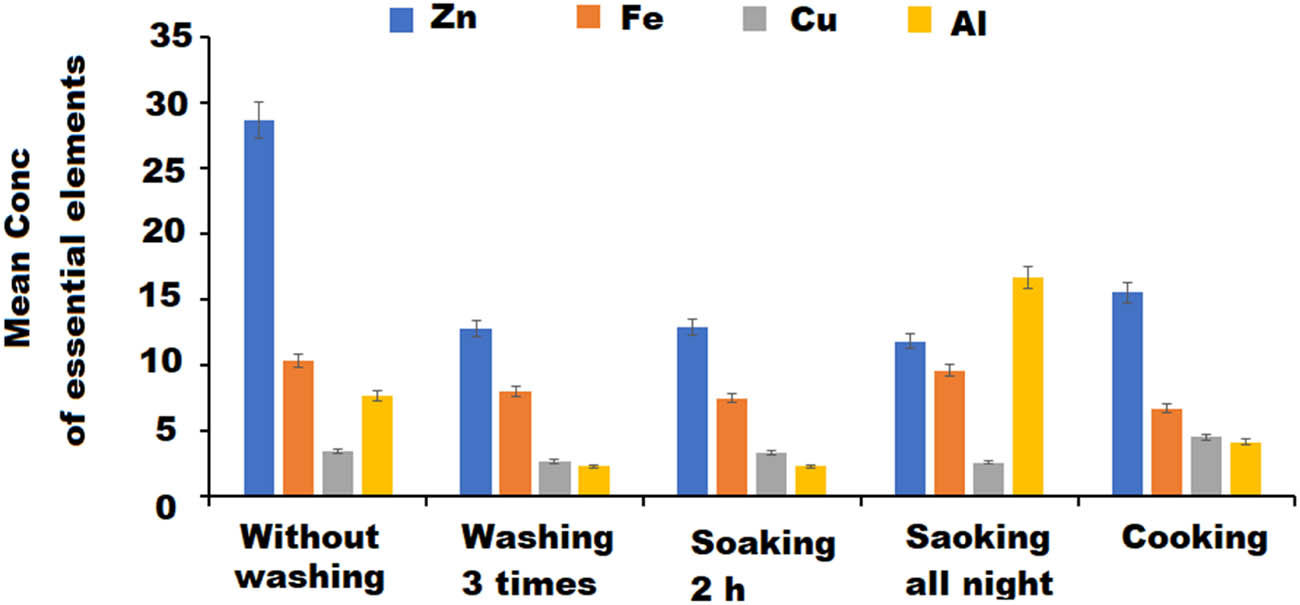
Comparison of mean concentration of essential elements (Zn, Fe, Cu, and Al) contents available in rice samples with the treatment effects.
3.6.2 Reduction of toxic elements in rice samples
Throughout various processing methods, the concentration of toxic elements in the rice samples was greatly influenced and large variations in the concentration of toxic elements were observed. Al, Ni, Pb, Sn, W, and Ti were detected in all samples with the five different processing methods, while Ag and Pt were not detected. The Al element was observed at high levels in all treatment methods with mean percentage recovery of the ten samples and was higher than the levels of Ni, Pb, Sn, W, and Ti. Moreover, the minimal concentration of Al was achieved when washed several times and soaked for 2 h. The minimal concentration of Ni element was obtained after soaking the rice samples overnight, while cooking process caused an increase in its concentration level in only three samples. Soaking overnight and cooking were the most effective processing methods for reducing their levels. Soaking for 2 h gave a decrease in Pb, Ti, and W concentrations and an increase in the concentration of Sn element. Furthermore, soaking overnight increased the As and Sn concentration levels, while cooking was the most effective in reducing their concentrations. It was noticed that the tungsten (W) element was the only toxic heavy metal that extended to the minimum limit as well as the iron (Fe) element after cooking. Figure 2 illustrates the comparative mean concentrations of heavy metals in rice samples after being treated with various processing methods.
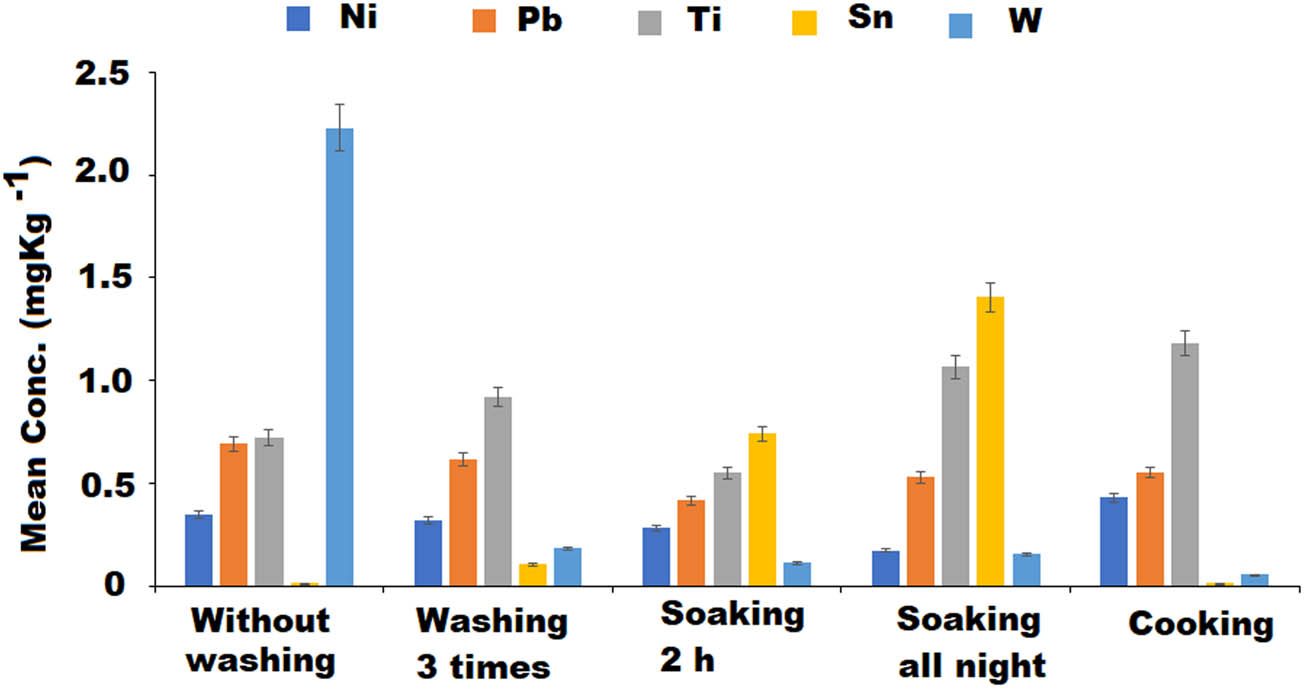
Comparison of mean concentration of heavy metals (Ni, Pb, Ti, Sn, and W) contents available in rice samples with the treatment effects.
4 Discussion
Rice is one of the most important foods in Saudi Arabia. There are many rice varieties that vary in their sources, essential elements, and contents of toxic metals. There is no doubt that the methods of rice processing before and after cooking play an important role in maintaining or removing many essential and important elements for human health. The current study evaluated the effect of rice processing methods such as washing, soaking, and cooking on the concentrations of essential and heavy elements of ten commonly used rice varieties in the Kingdom of Saudi Arabia using the ICP-MS technique. The obtained results confirmed that the percentage concentration levels of essential elements such as Zn, Cu, and Fe were decreased after using the three processing (washing, soaking, and cooking) methods. The Fe metal concentrations were approximately maintained constant after washing three times, soaking for 2 h, and soaking the rice all night. However, the cooking process has greatly decreased the level of Fe. The Cu concentrations were decreased after washing and soaking, while the Cu level was higher than in other processes. Accordingly, the loss of essential elements is based on their localization on the rice grains’ surface, which helps their easy removal through washing, soaking, and cooking processing methods [43]. The washing process once or several times is a common method to prepare rice worldwide. This study showed a different effect on some essential elements such as Fe and Al, and on some toxic elements like Pb, Sn, and Ti. The obtained results also revealed that soaking for 2 h was one of the most potent methods to reduce the concentration of toxic elements except for two toxic elements Ti and Cd, where their concentrations are maintained high. However, soaking the rice overnight removed some toxic elements such as Al, Cd, Pb, Ni, and W. Although, soaking overnight served to remove some concentrations of toxic metals, unfortunately, it increased the concentrations of Ti, As, and Sn. The large variation in the increase or decrease of essential and toxic elements can be attributed to the type of rice, the resistance of the surface layers of rice gains to water infiltration, the elements, and the ability of organic compounds and proteins to form complexes with metals in the rice grains. These outcomes were in agreement with those previously reported by several studies which have focused on the effect of different rice processing methods in decreasing or increasing the number of essential elements [44–46]. Al-Saleh and Abduljabbar [47] stated that soaking or rinsing rice grains with water was served to reduce Pb levels in 36 brands of rice grains to acceptable safe levels. Consequently, the study carried out by Adibi et al. [48] revealed that soaking rice from 1 to 12 h augments the entrance of water in grains and more metals could be dissolved in water.
Some elements may permeate the inner layers of the rice grains, and after a short duration of soaking for 2 h, they are released to the outside and appear on the surface, while soaking for long periods, overnight, are more effective in removing toxic minerals from the rice. So, soaking time affects the reduction of elements in the samples [49].
Washing several times and soaking for 2 h was effective in removing heavy metals from rice. This can be attributed to the increase in soaking time causing a greater quantity of water that penetrates the layers of rice grains and hence, higher removal of toxic metals will be observed. The report [50] revealed that significant quantities of toxic metals (As and Cd) can be removed by discarding the water used for washing and cooking. This removal is enhanced by the fact that a surface region of the grains of about 80 μm thickness is the richest in these elements.
However, important elements like Zn, Mg, K, and Ca (16.75%) were lost in the water after washing several times. Similar results were obtained in the present study and a decrease in the concentration of essential elements to the Respiratory Distribution Index was observed with an increase in rice cooking water, except for Fe [51]. Various factors including the type of rice, its cultivation conditions (soil quality, irrigation source, and fertilizers), as well as the ratios of water in the cooking process could affect the concentration of toxic and essential metals in rice [52]. Furthermore, the use of heat during cooking enhances protein degradation which may influence the heavy metal concentrations in food. The report [53] addressed that using a large volume of water (6:1 water: rice) for cooking rice and soaking rinsed rice in 2% NaCl solution for 2 h had the greatest effect to decrease As levels in cooked rice. The washing process once or several times is a common method to prepare rice worldwide, our research showed a different effect on some essential elements such as Fe and Al, and some toxic elements like Pb, Sn, and Ti [21]. Additionally, cooking methods reduced the substance of heavy metals, except that the cooking method influenced the concentration of heavy elements negatively, especially Fe. This result is in agreement with the demonstration that cooking rice with extra water (rice to water ratio 1:6) can decrease As and a number of essential elements like K, Ni, Mg, Co, Mn, Ca, Fe, Zn, and others. The obtained outcomes clarified that the concentrations of all essential and toxic metals were found to be less than those reported by Deng et al. [8]. It should be noted that the duration of cooking, the proportions of water used, as well as different sources of rice has a great effect on the decrease or increase of elements after the cooking process [8]. These results are in agreement with several previous studies which stated that the cooking conditions including, boiling time, temperature, and cooking process reduced the toxic elements Cd, Pb, Hg, and As [54,55].
5 Conclusions
The presence of toxic heavy metals and essential elements in rice has been reported in various studies. Few of these studies have been concerned with the effect of different rice processing methods on the concentrations of essential and toxic metals. The present study focuses on the effect of different processing methods of rice including drying, washing, soaking, and cooking on the concentration level of essential elements and toxic heavy metals. The results revealed that washing several times greatly affect the levels of heavy metals and essential elements such as Al, Fe, Ca, and Zn that were decreased from 7.66 to 2.33, 22.29 to 15.0, 4.89 to 4.4, and 75.1 to 17.0 mg/kg, respectively. However, washing several times did not significantly influence the levels of heavy metals such as As, Cd, Pb, and Ti. Meanwhile, the overnight soaking process and cooking decreased the concentration of the previously mentioned heavy metals and essential elements by half. Thus, soaking, washing after overnight soaking and cooking was strongly influencing the concentration level of these metals. The use of low cost ICP-MS technique for the detection of heavy metal residue in rice after different processing methods is recommended since it is relatively cheap, easily used, and provides sensitive detection of heavy metals. This study opens a future promising view for scientific researchers to study the relationship between the processing methods and the removal of toxic elements. Also, to minimize the harmful risk and increase public health awareness of these toxic heavy metals, especially in Saudi Arabia.
Acknowledgements
The authors provide great appreciation to all members of Researchers Supporting Project (RSP) in King Saud University, Riyadh, Saudi Arabia.
-
Funding information: This research was funded by the Researchers Supporting Project which supported this project, and the code number is RSP-2023R247.
-
Author contributions: Hanan F. Al-Harbi designed the protocol and outlines of this study. Amal M. Al-Mohaimeed performed the practical experiments and carried out the statistical assessments. Maha F. El-Tohamy revised and wrote the English edition of the manuscript. All authors discussed and approved the included results.
-
Conflict of interest: The authors state no conflict of interest related to this study.
-
Ethical approval: The conducted research is not related to either human or animal use.
-
Data availability statement: All data generated or analyzed during this study are included in this published article.
References
[1] Naccarato A, Tassone A, Cavaliere F, Elliani R, Pirrone N, Sprovieri F, et al. Agrochemical treatments as a source of heavy metals and rare earth elements in agricultural soils and bioaccumulation in ground beetles. Sci Total Environ. 2020;749:141438. 10.1016/j.scitotenv.2020.141438.Search in Google Scholar PubMed
[2] Zheng S, Wang Q, Yuan Y, Sun W. Human health risk assessment of heavy metals in soil and food crops in the Pearl River Delta urban agglomeration of China. Food Chem. 2020;316:126213. 10.1016/j.foodchem.2020.126213.Search in Google Scholar PubMed
[3] Ullah R, Alqahtani AS. GC-MS analysis, heavy metals, biological, and toxicological evaluation of Reseda muricata and Marrubium vulgare methanol extracts. Evid Based Complement Alternat Med. 2022;2022:2284328. 10.1155/2022/2284328.Search in Google Scholar PubMed PubMed Central
[4] Zhang J, Hu H, Wang M, Li Y, Wu S, Cao Y, et al. Land application of sewage sludge biochar: assessments of soil–plant–human health risks from potentially toxic metals. Sci Total Environ. 2021;756:144137. 10.1016/j.scitotenv.2020.144137.Search in Google Scholar PubMed
[5] Ihedioha JN, Abugu HO, Ujam OT, Ekere NR. Ecological and human health risk evaluation of potential toxic metals in paddy soil, rice plants, and rice grains (Oryza sativa) of Omor Rice Field, Nigeria. Environ Monit Assess. 2021;193(9):1–7. 10.1007/s10661-021-09386-3.Search in Google Scholar PubMed
[6] El Menyiy N, Mrabti HN, El Omari N, Bakili AE, Bakrim S, Mekkaoui M, et al. Medicinal uses, phytochemistry, pharmacology, and toxicology of Mentha spicata. Evid Based Complement Alternat Med. 2022;2022:7990508. 10.1155/2022/7990508.Search in Google Scholar PubMed PubMed Central
[7] Chen QY, DesMarais T, Costa M. Metals and mechanisms of carcinogenesis. Annu Rev Pharmacol Toxicol. 2019;59:537–54. 10.1146%2Fannurev-pharmtox-010818-021031.Search in Google Scholar
[8] Deng F, Yu M, Martinoia E, Song WY. Ideal cereals with lower arsenic and cadmium by accurately enhancing vacuolar sequestration capacity. Front Genet. 2019;10:322. 10.3389/fgene.2019.00322.Search in Google Scholar PubMed PubMed Central
[9] Chandio AA, Gokmenoglu KK, Ahmad M, Jiang Y. Towards sustainable rice production in Asia: the role of climatic factors. Earth System Environ. 2021;23:1–4. 10.1007/s41748-021-00210-z.Search in Google Scholar
[10] United Nations Food and Agriculture Organization, Corporate Statistical Database (FAOSTAT). 2022.Search in Google Scholar
[11] Khan AZ, Khan S, Khan MA, Alam M, Ayaz T. Biochar reduced the uptake of toxic heavy metals and their associated health risk via rice (Oryza sativa L.) grown in Cr–Mn mine contaminated soils. Environ Technol Innov. 2020;17:100590. 10.1016/j.eti.2019.100590.Search in Google Scholar
[12] Gao Y, Li X, Dong J, Cao Y, Li T, Mielke HW. Snack foods and lead ingestion risks for school aged children: a comparative evaluation of potentially toxic metals and children’s exposure response of blood lead, copper and zinc levels. Chemosphere. 2020;261:127547. 10.1016/j.chemosphere.2020.127547.Search in Google Scholar PubMed
[13] Pateriya A, Verma RK, Sankhla MS, Kumar R. Heavy metal toxicity in rice and its effects on human health. Lett Appl NanoBio Sci. 2020;10(1):1833–45. 10.33263/LIANBS101.18331845.Search in Google Scholar
[14] Bhattacharya S, Gupta K, Debnath S, Ghosh UC, Chattopadhyay D, Mukhopadhyay A. Arsenic bioaccumulation in rice and edible plants and subsequent transmission through food chain in Bengal basin: a review of the perspectives for environmental health. Toxicol Environ Chem. 2012;94(3):429–41. 10.1080/02772248.2012.657200.Search in Google Scholar
[15] de Oliveira VF, Busanello C, Viana VE, Stafen CF, Pedrolo AM, Paniz FP, et al. Assessing mineral and toxic elements content in rice grains grown in southern Brazil. J Food Comp Anal. 2021;100:103914. 10.1016/j.jfca.2021.103914.Search in Google Scholar
[16] Roman-Ochoa Y, Delgado GT, Tejada TR, Yucra HR, Durand AE, Hamaker BR. Heavy metal contamination and health risk assessment in grains and grain-based processed food in Arequipa region of Peru. Chemosphere. 2021;274:129792. 10.1016/j.chemosphere.2021.129792.Search in Google Scholar PubMed
[17] Ugulu I, Khan ZI, Aslam Z, Ahmad K, Bashir H, Munir M. Potentially toxic metal accumulation in grains of wheat variety Galaxy-2013 irrigated with sugar industry wastewater and human health risk assessment. EuroMediterr J Environ Integr. 2021;6(1):38. 10.1007/s41207-020-00203-w.Search in Google Scholar
[18] Song T, Das D, Hu Q, Yang F, Zhang J. Alternate wetting and drying irrigation and phosphorus rates affect grain yield and quality and heavy metal accumulation in rice. Sci Total Environ. 2021;752:141862. 10.1016/j.scitotenv.2020.141862.Search in Google Scholar PubMed
[19] Chen H, Liang X, Gong X, Reinfelder JR, Chen H, Sun C, et al. Comparative physiological and transcriptomic analyses illuminate common mechanisms by which silicon alleviates cadmium and arsenic toxicity in rice seedlings. J Environ Sci. 2021;109:88–101. 10.1016/j.jes.2021.02.030.Search in Google Scholar PubMed
[20] Huang H, Li M, Rizwan M, Dai Z, Yuan Y, Hossain MM, et al. Synergistic effect of silicon and selenium on the alleviation of cadmium toxicity in rice plants. J Hazard Mater. 2021;401:123393. 10.1016/j.jhazmat.2020.123393.Search in Google Scholar PubMed
[21] Mohammadi F, Marti A, Nayebzadeh K, Hosseini SM, Tajdar-Oranj B, Jazaeri S. Effect of washing, soaking and pH in combination with ultrasound on enzymatic rancidity, phytic acid, heavy metals and coliforms of rice bran. Food Chem. 2021;334:127583. 10.1016/j.foodchem.2020.127583.Search in Google Scholar PubMed
[22] Sharafi K, Yunesian M, Mahvi AH, Pirsaheb M, Nazmara S, Nodehi RN. Advantages and disadvantages of different pre-cooking and cooking methods in removal of essential and toxic metals from various rice types-human health risk assessment in Tehran households, Iran. Ecotoxicol Environ Safe. 2019;175:128–37. 10.1016/j.ecoenv.2019.03.056.Search in Google Scholar PubMed
[23] David EE, Nwobodo V, Famurewa AC, Igwenyi IO, Egedeigwe-Ekeleme CA, Obeten UN, et al. Effect of parboiling on toxic metal content and nutritional composition of three rice varieties locally produced in Nigeria. Sci Afr. 2020;10:e00580. 10.1016/j.sciaf.2020.e00580.Search in Google Scholar
[24] Sengupta MK, Hossain MA, Mukherjee A, Ahamed S, Das B, Nayak B, et al. Arsenic burden of cooked rice: traditional and modern methods. Food Chem Toxicol. 2006;44(11):1823–9. 10.1016/j.fct.2006.06.003.Search in Google Scholar PubMed
[25] Mihucz VG, Virág I, Zang C, Jao Y, Zaray G. Arsenic removal from rice by washing and cooking with water. Food Chem. 2007;105(4):1718–25. 10.1016/j.foodchem.2007.04.057.Search in Google Scholar
[26] Raab A, Baskaran C, Feldmann J, Meharg AA. Cooking rice in a high water to rice ratio reduces inorganic arsenic content. J Environ Monit. 2009;11(1):41–4. 10.1039/B816906C.Search in Google Scholar
[27] Gray PJ, Conklin SD, Todorov TI, Kasko SM. Cooking rice in excess water reduces both arsenic and enriched vitamins in the cooked grain. Food Addit Contam Part A. 2016;33(1):78–85. 10.1080/19440049.2015.1103906.Search in Google Scholar PubMed
[28] Kheamphet P, Masawat P. A simple and cost-effective smartphone-based digital imaging device for the quantification of selected heavy metals in Thai rice. Anal Methods. 2020;14:165–173. 10.1039/D1AY01816G.Search in Google Scholar
[29] Gunduz S, Akman S. Investigation of arsenic and cadmium contents in rice samples in Turkey by electrothermal atomic absorption spectrometry. Food Anal Method. 2013;6(6):1693–6. 10.1007/s12161-013-9588-6.Search in Google Scholar
[30] Salloom HT, Hamad TK, Mohammed AH. Detection of harmful metal elements in rice using laser induced breakdown spectroscopy. J Phys Confer Series. 2021;1818(1):012178. IOP Publishing.10.1088/1742-6596/1818/1/012178Search in Google Scholar
[31] Ebrahimi-Najafabadi H, Pasdaran A, Bezenjani RR, Bozorgzadeh E. Determination of toxic heavy metals in rice samples using ultrasound assisted emulsification microextraction combined with inductively coupled plasma optical emission spectroscopy. Food Chem. 2019;289:26–32. 10.1016/j.foodchem.2019.03.046.Search in Google Scholar PubMed
[32] Food and Agriculture Organization of the United Nations and the World Health Organization (FAO/WHO). General standard for contaminants and toxins in food and feed (CXS 193-1995): Amended in 2019; 2019. http://www.fao.org/fao-who-codexalimentarius/codex-texts/list-standards/en/ Accessed 12 June 2021.Search in Google Scholar
[33] Qing-Zhou Z, Chun-Miao Z. Spectrophotometric determination of silicon in rice and alloy steel samples. Instrum Sci Technol. 2009;37:472–481.10.1080/10739140903087980Search in Google Scholar
[34] Jomova K, Jenisova Z, Feszterova M, Baros S, Liska J, Hudecova D, et al. Arsenic: toxicity, oxidative stress and human disease. J Appl Toxicol. 2011;31:95–107. 10.1002/jat.1649.Search in Google Scholar PubMed
[35] Genchi G, Sinicropi MS, Lauria G, Carocci A, Catalano A. The effects of cadmium toxicity. Int J Environ Res Public Health. 2020;17:3782. 10.3390/ijerph17113782.Search in Google Scholar PubMed PubMed Central
[36] Kumar A, Kumar A, Cabral-Pinto MMS, Chaturvedi AK, Shabnam AA, Subrahmanyam G, et al. Lead toxicity: health hazards, influence on food chain, and sustainable remediation approaches. Int J Environ Res Public Health. 2020;17:2179. 10.3390/ijerph17072179.Search in Google Scholar PubMed PubMed Central
[37] Bernhoft RA. Mercury toxicity and treatment: a review of the literature. J Environ Public Health. 2012;2012:460508. 10.1155/2012/460508.Search in Google Scholar PubMed PubMed Central
[38] Joint FAO/WHO food standards programmed codex Alimentarius Commission 28 Session Geneva, 28 June–2 July 2004;102.Search in Google Scholar
[39] Ministry of Health, People Republic of China. National Food Safety Standard: Maximum Levels of Contaminants in Foods. GAIN Report no: CH10000, 2010.Search in Google Scholar
[40] Morekian R, Mirlohi M, Azadbakht L, Maracy MR. Heavy metal distribution frequency in Iranian and imported rice varieties marketed in central Iran, Yazd, 2012. Int J Environ Health Eng. 2013;2(1):36. 10.4103/2277-9183.122419.Search in Google Scholar
[41] Roya AQ, Ali MS. Heavy metals in rice samples on the Torbat-Heidarieh market, Iran. Food Addit Contam Part B. 2017;10:59–63. 10.1080/19393210.2016.1247918.Search in Google Scholar PubMed
[42] Sharafi K, Nodehi RN, Yunesian M, Mahvi AH, Pirsaheb M, Nazmara S. Human health risk assessment for some toxic metals in widely consumed rice brands (domestic and imported) in Tehran, Iran: uncertainty and sensitivity analysis. Food Chem. 2019;277:145–55. 10.1016/j.foodchem.2018.10.090.Search in Google Scholar PubMed
[43] Babu PM, Neeraja CN, Rathod S, Suman K, Uttam GA, Chakravartty N, et al. Stable SNP allele associations with high grain zinc content in polished rice (Oryza sativa L.) identified based on ddRAD sequencing. Front Genet. 2020;11:763. 10.3389/fgene.2020.00763.Search in Google Scholar PubMed PubMed Central
[44] Cano-Lamadrid M, Girona D, García-García E, Dominguis-Rovira V, Domingo C, Sendra E, et al. Distribution of essential and non-essential elements in rice located in a Protected Natural Reserve “Marjal de Pego-Oliva”. J Food Comp Anal. 2020;94:103654.10.1016/j.jfca.2020.103654Search in Google Scholar
[45] Shariatifar N, Rezaei M, Sani MA, Alimohammadi M, Arabameri M. Assessment of rice marketed in Iran with emphasis on toxic and essential elements; effect of different cooking methods. Biol Trace Elem Res. 2020;198:721–31. 10.1007/s12011-020-02110-1.Search in Google Scholar PubMed
[46] Sharafi K, Yunesian M, Nodehi RN, Mahvi AH, Pirsaheb M, Nazmara S. The reduction of toxic metals of various rice types by different preparation and cooking processes–human health risk assessment in Tehran households, Iran. Food Chem. 2019;280:294–2. 10.1016/j.foodchem.2018.12.060.Search in Google Scholar PubMed
[47] Al-Saleh I, Abduljabbar M. Heavy metals (lead, cadmium, methylmercury, arsenic) in commonly imported rice grains (Oryza sativa) sold in Saudi Arabia and their potential health risk. Int J Hyg Environ Health. 2017;220(7):1168. 10.1016/j.ijheh.2017.07.007.Search in Google Scholar PubMed
[48] Adibi H, Mazhari M, Bidoki SK, Mahmoodi M. The effect of washing and soaking on decreasing heavy metals (Pb, Cd and As) in the rice distributed in Kermanshah in 2011. J Kerm Univ Med Sci. 2014;17(10):e74332. 10.22110/jkums.v17i10.1080.Search in Google Scholar
[49] Al-Harbi HFA, Aliaish MMM, Alijhfl NHS. The effect of normal treatment methods at home in the removal of heavy metals from surface of rice distributed in Riyadh region. Int J Adv Appl Sci. 2019;6(7):77–82.10.21833/ijaas.2019.07.010Search in Google Scholar
[50] Mihucz VG, Silversmit G, Szalóki I, De Samber B, Schoonjans T, Tatár E, et al. Removal of some elements from washed and cooked rice studied by inductively coupled plasma mass spectrometry and synchrotron based confocal micro-X-ray fluorescence. Food Chem. 2010;121(1):290–7. 10.1016/j.foodchem.2009.11.090.Search in Google Scholar
[51] Shariatifar N, Rezaei M, Alizadeh Sani M, Alimohammadi M, Arabameri M. Assessment of rice marketed in Iran with emphasis on toxic and essential elements; effect of different cooking methods. Biol Trace Elem Res. 2020;198(2):721–31. 10.1007/s12011-020-02110-1.Search in Google Scholar PubMed
[52] Lu Y, Song S, Wang R, Liu Z, Meng J, Sweetman AJ, et al. Impacts of soil and water pollution on food safety and health risks in China. Environ Int. 2015;77:5–15.10.1016/j.envint.2014.12.010Search in Google Scholar PubMed
[53] Moghadam RJ, Ziarati P. Reduction of arsenic content in imported polished rice: association of cooking method Ranna Jafari. J Chem Pharm Res. 2016;8(4):622–27.Search in Google Scholar
[54] Tyagi N, Raghuvanshi R, Upadhyay MK, Srivastava AK, Suprasanna P, Srivastava S. Elemental (As, Zn, Fe and Cu) analysis and health risk assessment of rice grains and rice-based food products collected from markets from different cities of Gangetic basin, India. J Food Comp Anal. 2020;93:103612. 10.1016/j.jfca.2020.103612.Search in Google Scholar
[55] Geng DH, Zho S, Wang L, Zhou X, Liu L, Lin Z, et al. Effects of slight milling combined with cellulase enzymatic treatment on the textural and nutritional properties of brown rice noodles. LWT. 2020;128:109520. 10.1016/j.lwt.2020.109520.Search in Google Scholar
© 2023 the author(s), published by De Gruyter
This work is licensed under the Creative Commons Attribution 4.0 International License.
Articles in the same Issue
- Characteristics, source, and health risk assessment of aerosol polyaromatic hydrocarbons in the rural and urban regions of western Saudi Arabia
- Regular Articles
- A network-based correlation research between element electronegativity and node importance
- Pomegranate attenuates kidney injury in cyclosporine-induced nephrotoxicity in rats by suppressing oxidative stress
- Ab initio study of fundamental properties of XInO3 (X = K, Rb, Cs) perovskites
- Responses of feldspathic sandstone and sand-reconstituted soil C and N to freeze–thaw cycles
- Robust fractional control based on high gain observers design (RNFC) for a Spirulina maxima culture interfaced with an advanced oxidation process
- Study on arsenic speciation and redistribution mechanism in Lonicera japonica plants via synchrotron techniques
- Optimization of machining Nilo 36 superalloy parameters in turning operation
- Vacuum impregnation pre-treatment: A novel method for incorporating mono- and divalent cations into potato strips to reduce the acrylamide formation in French fries
- Characterization of effective constituents in Acanthopanax senticosus fruit for blood deficiency syndrome based on the chinmedomics strategy
- Comparative analysis of the metabolites in Pinellia ternata from two producing regions using ultra-high-performance liquid chromatography–electrospray ionization–tandem mass spectrometry
- The assessment of environmental parameter along the desalination plants in the Kingdom of Saudi Arabia
- Effects of harpin and carbendazim on antioxidant accumulation in young jujube leaves
- The effects of in ovo injected with sodium borate on hatching performance and small intestine morphology in broiler chicks
- Optimization of cutting forces and surface roughness via ANOVA and grey relational analysis in machining of In718
- Essential oils of Origanum compactum Benth: Chemical characterization, in vitro, in silico, antioxidant, and antibacterial activities
- Translocation of tungsten(vi) oxide/gadolinium(iii) fluoride in tellurite glasses towards improvement of gamma-ray attenuation features in high-density glass shields
- Mechanical properties, elastic moduli, and gamma ray attenuation competencies of some TeO2–WO3–GdF3 glasses: Tailoring WO3–GdF3 substitution toward optimum behavioral state range
- Comparison between the CIDR or sponge with hormone injection to induce estrus synchronization for twining and sex preselection in Naimi sheep
- Exergetic performance analyses of three different cogeneration plants
- Psoralea corylifolia (babchi) seeds enhance proliferation of normal human cultured melanocytes: GC–MS profiling and biological investigation
- A novel electrochemical micro-titration method for quantitative evaluation of the DPPH free radical scavenging capacity of caffeic acid
- Comparative study between supported bimetallic catalysts for nitrate remediation in water
- Persicaline, an alkaloid from Salvadora persica, inhibits proliferation and induces apoptosis and cell-cycle arrest in MCF-7 cells
- Determination of nicotine content in locally produced smokeless tobacco (Shammah) samples from Jazan region of Saudi Arabia using a convenient HPLC-MS/MS method
- Changes in oxidative stress markers in pediatric burn injury over a 1-week period
- Integrated geophysical techniques applied for petroleum basins structural characterization in the central part of the Western Desert, Egypt
- The impact of chemical modifications on gamma-ray attenuation properties of some WO3-reinforced tellurite glasses
- Microwave and Cs+-assisted chemo selective reaction protocol for synthesizing 2-styryl quinoline biorelevant molecules
- Structural, physical, and radiation absorption properties of a significant nuclear power plant component: A comparison between REX-734 and 316L SS austenitic stainless steels
- Effect of Moringa oleifera on serum YKL-40 level: In vivo rat periodontitis model
- Investigating the impact of CO2 emissions on the COVID-19 pandemic by generalized linear mixed model approach with inverse Gaussian and gamma distributions
- Influence of WO3 content on gamma rays attenuation characteristics of phosphate glasses at low energy range
- Study on CO2 absorption performance of ternary DES formed based on DEA as promoting factor
- Performance analyses of detonation engine cogeneration cycles
- Sterols from Centaurea pumilio L. with cell proliferative activity: In vitro and in silico studies
- Untargeted metabolomics revealing changes in aroma substances in flue-cured tobacco
- Effect of pumpkin enriched with calcium lactate on iron status in an animal model of postmenopausal osteoporosis
- Energy consumption, mechanical and metallographic properties of cryogenically treated tool steels
- Optimization of ultra-high pressure-assisted extraction of total phenols from Eucommia ulmoides leaves by response surface methodology
- Harpin enhances antioxidant nutrient accumulation and decreases enzymatic browning in stored soybean sprouts
- Physicochemical and biological properties of carvacrol
- Radix puerariae in the treatment of diabetic nephropathy: A network pharmacology analysis and experimental validation
- Anti-Alzheimer, antioxidants, glucose-6-phosphate dehydrogenase effects of Taverniera glabra mediated ZnO and Fe2O3 nanoparticles in alloxan-induced diabetic rats
- Experimental study on photocatalytic CO2 reduction performance of ZnS/CdS-TiO2 nanotube array thin films
- Epoxy-reinforced heavy metal oxides for gamma ray shielding purposes
- Black mulberry (Morus nigra L.) fruits: As a medicinal plant rich in human health-promoting compounds
- Promising antioxidant and antimicrobial effects of essential oils extracted from fruits of Juniperus thurifera: In vitro and in silico investigations
- Chloramine-T-induced oxidation of Rizatriptan Benzoate: An integral chemical and spectroscopic study of products, mechanisms and kinetics
- Study on antioxidant and antimicrobial potential of chemically profiled essential oils extracted from Juniperus phoenicea (L.) by use of in vitro and in silico approaches
- Screening and characterization of fungal taxol-producing endophytic fungi for evaluation of antimicrobial and anticancer activities
- Mineral composition, principal polyphenolic components, and evaluation of the anti-inflammatory, analgesic, and antioxidant properties of Cytisus villosus Pourr leaf extracts
- In vitro antiproliferative efficacy of Annona muricata seed and fruit extracts on several cancer cell lines
- An experimental study for chemical characterization of artificial anterior cruciate ligament with coated chitosan as biomaterial
- Prevalence of residual risks of the transfusion-transmitted infections in Riyadh hospitals: A two-year retrospective study
- Computational and experimental investigation of antibacterial and antifungal properties of Nicotiana tabacum extracts
- Reinforcement of cementitious mortars with hemp fibers and shives
- X-ray shielding properties of bismuth-borate glass doped with rare earth ions
- Green supported silver nanoparticles over modified reduced graphene oxide: Investigation of its antioxidant and anti-ovarian cancer effects
- Orthogonal synthesis of a versatile building block for dual functionalization of targeting vectors
- Thymbra spicata leaf extract driven biogenic synthesis of Au/Fe3O4 nanocomposite and its bio-application in the treatment of different types of leukemia
- The role of Ag2O incorporation in nuclear radiation shielding behaviors of the Li2O–Pb3O4–SiO2 glass system: A multi-step characterization study
- A stimuli-responsive in situ spray hydrogel co-loaded with naringenin and gentamicin for chronic wounds
- Assessment of the impact of γ-irradiation on the piperine content and microbial quality of black pepper
- Antioxidant, sensory, and functional properties of low-alcoholic IPA beer with Pinus sylvestris L. shoots addition fermented using unconventional yeast
- Screening and optimization of extracellular pectinase produced by Bacillus thuringiensis SH7
- Determination of polyphenols in Chinese jujube using ultra-performance liquid chromatography–mass spectrometry
- Synergistic effects of harpin and NaCl in determining soybean sprout quality under non-sterile conditions
- Field evaluation of different eco-friendly alternative control methods against Panonychus citri [Acari: Tetranychidae] spider mite and its predators in citrus orchards
- Exploring the antimicrobial potential of biologically synthesized zero valent iron nanoparticles
- NaCl regulates goldfish growth and survival at three food supply levels under hypoxia
- An exploration of the physical, optical, mechanical, and radiation shielding properties of PbO–MgO–ZnO–B2O3 glasses
- A novel statistical modeling of air pollution and the COVID-19 pandemic mortality data by Poisson, geometric, and negative binomial regression models with fixed and random effects
- Treatment activity of the injectable hydrogels loaded with dexamethasone In(iii) complex on glioma by inhibiting the VEGF signaling pathway
- An alternative approach for the excess lifetime cancer risk and prediction of radiological parameters
- Panax ginseng leaf aqueous extract mediated green synthesis of AgNPs under ultrasound condition and investigation of its anti-lung adenocarcinoma effects
- Study of hydrolysis and production of instant ginger (Zingiber officinale) tea
- Novel green synthesis of zinc oxide nanoparticles using Salvia rosmarinus extract for treatment of human lung cancer
- Evaluation of second trimester plasma lipoxin A4, VEGFR-1, IL-6, and TNF-α levels in pregnant women with gestational diabetes mellitus
- Antidiabetic, antioxidant and cytotoxicity activities of ortho- and para-substituted Schiff bases derived from metformin hydrochloride: Validation by molecular docking and in silico ADME studies
- Antioxidant, antidiabetic, antiglaucoma, and anticholinergic effects of Tayfi grape (Vitis vinifera): A phytochemical screening by LC-MS/MS analysis
- Identification of genetic polymorphisms in the stearoyl CoA desaturase gene and its association with milk quality traits in Najdi sheep
- Cold-acclimation effect on cadmium absorption and biosynthesis of polyphenolics, and free proline and photosynthetic pigments in Spirogyra aequinoctialis
- Analysis of secondary metabolites in Xinjiang Morus nigra leaves using different extraction methods with UPLC-Q/TOF-MS/MS technology
- Nanoarchitectonics and performance evaluation of a Fe3O4-stabilized Pickering emulsion-type differential pressure plugging agent
- Investigating pyrolysis characteristics of Shengdong coal through Py-GC/MS
- Extraction, phytochemical characterization, and antifungal activity of Salvia rosmarinus extract
- Introducing a novel and natural antibiotic for the treatment of oral pathogens: Abelmoschus esculentus green-formulated silver nanoparticles
- Optimization of gallic acid-enriched ultrasonic-assisted extraction from mango peels
- Effect of gamma rays irradiation in the structure, optical, and electrical properties of samarium doped bismuth titanate ceramics
- Combinatory in silico investigation for potential inhibitors from Curcuma sahuynhensis Škorničk. & N.S. Lý volatile phytoconstituents against influenza A hemagglutinin, SARS-CoV-2 main protease, and Omicron-variant spike protein
- Physical, mechanical, and gamma ray shielding properties of the Bi2O3–BaO–B2O3–ZnO–As2O3–MgO–Na2O glass system
- Twofold interpenetrated 3D Cd(ii) complex: Crystal structure and luminescent property
- Study on the microstructure and soil quality variation of composite soil with soft rock and sand
- Ancient spring waters still emerging and accessible in the Roman Forum area: Chemical–physical and microbiological characterization
- Extraction and characterization of type I collagen from scales of Mexican Biajaiba fish
- Finding small molecular compounds to decrease trimethylamine oxide levels in atherosclerosis by virtual screening
- Prefatory in silico studies and in vitro insecticidal effect of Nigella sativa (L.) essential oil and its active compound (carvacrol) against the Callosobruchus maculatus adults (Fab), a major pest of chickpea
- Polymerized methyl imidazole silver bromide (CH3C6H5AgBr)6: Synthesis, crystal structures, and catalytic activity
- Using calcined waste fish bones as a green solid catalyst for biodiesel production from date seed oil
- Influence of the addition of WO3 on TeO2–Na2O glass systems in view of the feature of mechanical, optical, and photon attenuation
- Naringin ameliorates 5-fluorouracil elicited neurotoxicity by curtailing oxidative stress and iNOS/NF-ĸB/caspase-3 pathway
- GC-MS profile of extracts of an endophytic fungus Alternaria and evaluation of its anticancer and antibacterial potentialities
- Green synthesis, chemical characterization, and antioxidant and anti-colorectal cancer effects of vanadium nanoparticles
- Determination of caffeine content in coffee drinks prepared in some coffee shops in the local market in Jeddah City, Saudi Arabia
- A new 3D supramolecular Cu(ii) framework: Crystal structure and photocatalytic characteristics
- Bordeaux mixture accelerates ripening, delays senescence, and promotes metabolite accumulation in jujube fruit
- Important application value of injectable hydrogels loaded with omeprazole Schiff base complex in the treatment of pancreatitis
- Color tunable benzothiadiazole-based small molecules for lightening applications
- Investigation of structural, dielectric, impedance, and mechanical properties of hydroxyapatite-modified barium titanate composites for biomedical applications
- Metal gel particles loaded with epidermal cell growth factor promote skin wound repair mechanism by regulating miRNA
- In vitro exploration of Hypsizygus ulmarius (Bull.) mushroom fruiting bodies: Potential antidiabetic and anti-inflammatory agent
- Alteration in the molecular structure of the adenine base exposed to gamma irradiation: An ESR study
- Comprehensive study of optical, thermal, and gamma-ray shielding properties of Bi2O3–ZnO–PbO–B2O3 glasses
- Lewis acids as co-catalysts in Pd-based catalyzed systems of the octene-1 hydroethoxycarbonylation reaction
- Synthesis, Hirshfeld surface analysis, thermal, and selective α-glucosidase inhibitory studies of Schiff base transition metal complexes
- Protective properties of AgNPs green-synthesized by Abelmoschus esculentus on retinal damage on the virtue of its anti-inflammatory and antioxidant effects in diabetic rat
- Effects of green decorated AgNPs on lignin-modified magnetic nanoparticles mediated by Cydonia on cecal ligation and puncture-induced sepsis
- Treatment of gastric cancer by green mediated silver nanoparticles using Pistacia atlantica bark aqueous extract
- Preparation of newly developed porcelain ceramics containing WO3 nanoparticles for radiation shielding applications
- Utilization of computational methods for the identification of new natural inhibitors of human neutrophil elastase in inflammation therapy
- Some anticancer agents as effective glutathione S-transferase (GST) inhibitors
- Clay-based bricks’ rich illite mineral for gamma-ray shielding applications: An experimental evaluation of the effect of pressure rates on gamma-ray attenuation parameters
- Stability kinetics of orevactaene pigments produced by Epicoccum nigrum in solid-state fermentation
- Treatment of denture stomatitis using iron nanoparticles green-synthesized by Silybum marianum extract
- Characterization and antioxidant potential of white mustard (Brassica hirta) leaf extract and stabilization of sunflower oil
- Characteristics of Langmuir monomolecular monolayers formed by the novel oil blends
- Strategies for optimizing the single GdSrFeO4 phase synthesis
- Oleic acid and linoleic acid nanosomes boost immunity and provoke cell death via the upregulation of beta-defensin-4 at genetic and epigenetic levels
- Unraveling the therapeutic potential of Bombax ceiba roots: A comprehensive study of chemical composition, heavy metal content, antibacterial activity, and in silico analysis
- Green synthesis of AgNPs using plant extract and investigation of its anti-human colorectal cancer application
- The adsorption of naproxen on adsorbents obtained from pepper stalk extract by green synthesis
- Treatment of gastric cancer by silver nanoparticles encapsulated by chitosan polymers mediated by Pistacia atlantica extract under ultrasound condition
- In vitro protective and anti-inflammatory effects of Capparis spinosa and its flavonoids profile
- Wear and corrosion behavior of TiC and WC coatings deposited on high-speed steels by electro-spark deposition
- Therapeutic effects of green-formulated gold nanoparticles by Origanum majorana on spinal cord injury in rats
- Melanin antibacterial activity of two new strains, SN1 and SN2, of Exophiala phaeomuriformis against five human pathogens
- Evaluation of the analgesic and anesthetic properties of silver nanoparticles supported over biodegradable acacia gum-modified magnetic nanoparticles
- Review Articles
- Role and mechanism of fruit waste polyphenols in diabetes management
- A comprehensive review of non-alkaloidal metabolites from the subfamily Amaryllidoideae (Amaryllidaceae)
- Discovery of the chemical constituents, structural characteristics, and pharmacological functions of Chinese caterpillar fungus
- Eco-friendly green approach of nickel oxide nanoparticles for biomedical applications
- Advances in the pharmaceutical research of curcumin for oral administration
- Rapid Communication
- Determination of the contents of bioactive compounds in St. John’s wort (Hypericum perforatum): Comparison of commercial and wild samples
- Retraction
- Retraction of “Two mixed-ligand coordination polymers based on 2,5-thiophenedicarboxylic acid and flexible N-donor ligands: The protective effect on periodontitis via reducing the release of IL-1β and TNF-α”
- Topical Issue on Phytochemicals, biological and toxicological analysis of aromatic medicinal plants
- Anti-plasmodial potential of selected medicinal plants and a compound Atropine isolated from Eucalyptus obliqua
- Anthocyanin extract from black rice attenuates chronic inflammation in DSS-induced colitis mouse model by modulating the gut microbiota
- Evaluation of antibiofilm and cytotoxicity effect of Rumex vesicarius methanol extract
- Chemical compositions of Litsea umbellata and inhibition activities
- Green synthesis, characterization of silver nanoparticles using Rhynchosia capitata leaf extract and their biological activities
- GC-MS analysis and antibacterial activities of some plants belonging to the genus Euphorbia on selected bacterial isolates
- The abrogative effect of propolis on acrylamide-induced toxicity in male albino rats: Histological study
- A phytoconstituent 6-aminoflavone ameliorates lipopolysaccharide-induced oxidative stress mediated synapse and memory dysfunction via p-Akt/NF-kB pathway in albino mice
- Anti-diabetic potentials of Sorbaria tomentosa Lindl. Rehder: Phytochemistry (GC-MS analysis), α-amylase, α-glucosidase inhibitory, in vivo hypoglycemic, and biochemical analysis
- Assessment of cytotoxic and apoptotic activities of the Cassia angustifolia aqueous extract against SW480 colon cancer
- Biochemical analysis, antioxidant, and antibacterial efficacy of the bee propolis extract (Hymenoptera: Apis mellifera) against Staphylococcus aureus-induced infection in BALB/c mice: In vitro and in vivo study
- Assessment of essential elements and heavy metals in Saudi Arabian rice samples underwent various processing methods
- Two new compounds from leaves of Capparis dongvanensis (Sy, B. H. Quang & D. V. Hai) and inhibition activities
- Hydroxyquinoline sulfanilamide ameliorates STZ-induced hyperglycemia-mediated amyleoid beta burden and memory impairment in adult mice
- An automated reading of semi-quantitative hemagglutination results in microplates: Micro-assay for plant lectins
- Inductively coupled plasma mass spectrometry assessment of essential and toxic trace elements in traditional spices consumed by the population of the Middle Eastern region in their recipes
- Phytochemical analysis and anticancer activity of the Pithecellobium dulce seed extract in colorectal cancer cells
- Impact of climatic disturbances on the chemical compositions and metabolites of Salvia officinalis
- Physicochemical characterization, antioxidant and antifungal activities of essential oils of Urginea maritima and Allium sativum
- Phytochemical analysis and antifungal efficiency of Origanum majorana extracts against some phytopathogenic fungi causing tomato damping-off diseases
- Special Issue on 4th IC3PE
- Graphene quantum dots: A comprehensive overview
- Studies on the intercalation of calcium–aluminium layered double hydroxide-MCPA and its controlled release mechanism as a potential green herbicide
- Synergetic effect of adsorption and photocatalysis by zinc ferrite-anchored graphitic carbon nitride nanosheet for the removal of ciprofloxacin under visible light irradiation
- Exploring anticancer activity of the Indonesian guava leaf (Psidium guajava L.) fraction on various human cancer cell lines in an in vitro cell-based approach
- The comparison of gold extraction methods from the rock using thiourea and thiosulfate
- Special Issue on Marine environmental sciences and significance of the multidisciplinary approaches
- Sorption of alkylphenols and estrogens on microplastics in marine conditions
- Cytotoxic ketosteroids from the Red Sea soft coral Dendronephthya sp.
- Antibacterial and biofilm prevention metabolites from Acanthophora spicifera
- Characteristics, source, and health risk assessment of aerosol polyaromatic hydrocarbons in the rural and urban regions of western Saudi Arabia
- Special Issue on Advanced Nanomaterials for Energy, Environmental and Biological Applications - Part II
- Green synthesis, characterization, and evaluation of antibacterial activities of cobalt nanoparticles produced by marine fungal species Periconia prolifica
- Combustion-mediated sol–gel preparation of cobalt-doped ZnO nanohybrids for the degradation of acid red and antibacterial performance
- Perinatal supplementation with selenium nanoparticles modified with ascorbic acid improves hepatotoxicity in rat gestational diabetes
- Evaluation and chemical characterization of bioactive secondary metabolites from endophytic fungi associated with the ethnomedicinal plant Bergenia ciliata
- Enhancing photovoltaic efficiency with SQI-Br and SQI-I sensitizers: A comparative analysis
- Nanostructured p-PbS/p-CuO sulfide/oxide bilayer heterojunction as a promising photoelectrode for hydrogen gas generation
Articles in the same Issue
- Characteristics, source, and health risk assessment of aerosol polyaromatic hydrocarbons in the rural and urban regions of western Saudi Arabia
- Regular Articles
- A network-based correlation research between element electronegativity and node importance
- Pomegranate attenuates kidney injury in cyclosporine-induced nephrotoxicity in rats by suppressing oxidative stress
- Ab initio study of fundamental properties of XInO3 (X = K, Rb, Cs) perovskites
- Responses of feldspathic sandstone and sand-reconstituted soil C and N to freeze–thaw cycles
- Robust fractional control based on high gain observers design (RNFC) for a Spirulina maxima culture interfaced with an advanced oxidation process
- Study on arsenic speciation and redistribution mechanism in Lonicera japonica plants via synchrotron techniques
- Optimization of machining Nilo 36 superalloy parameters in turning operation
- Vacuum impregnation pre-treatment: A novel method for incorporating mono- and divalent cations into potato strips to reduce the acrylamide formation in French fries
- Characterization of effective constituents in Acanthopanax senticosus fruit for blood deficiency syndrome based on the chinmedomics strategy
- Comparative analysis of the metabolites in Pinellia ternata from two producing regions using ultra-high-performance liquid chromatography–electrospray ionization–tandem mass spectrometry
- The assessment of environmental parameter along the desalination plants in the Kingdom of Saudi Arabia
- Effects of harpin and carbendazim on antioxidant accumulation in young jujube leaves
- The effects of in ovo injected with sodium borate on hatching performance and small intestine morphology in broiler chicks
- Optimization of cutting forces and surface roughness via ANOVA and grey relational analysis in machining of In718
- Essential oils of Origanum compactum Benth: Chemical characterization, in vitro, in silico, antioxidant, and antibacterial activities
- Translocation of tungsten(vi) oxide/gadolinium(iii) fluoride in tellurite glasses towards improvement of gamma-ray attenuation features in high-density glass shields
- Mechanical properties, elastic moduli, and gamma ray attenuation competencies of some TeO2–WO3–GdF3 glasses: Tailoring WO3–GdF3 substitution toward optimum behavioral state range
- Comparison between the CIDR or sponge with hormone injection to induce estrus synchronization for twining and sex preselection in Naimi sheep
- Exergetic performance analyses of three different cogeneration plants
- Psoralea corylifolia (babchi) seeds enhance proliferation of normal human cultured melanocytes: GC–MS profiling and biological investigation
- A novel electrochemical micro-titration method for quantitative evaluation of the DPPH free radical scavenging capacity of caffeic acid
- Comparative study between supported bimetallic catalysts for nitrate remediation in water
- Persicaline, an alkaloid from Salvadora persica, inhibits proliferation and induces apoptosis and cell-cycle arrest in MCF-7 cells
- Determination of nicotine content in locally produced smokeless tobacco (Shammah) samples from Jazan region of Saudi Arabia using a convenient HPLC-MS/MS method
- Changes in oxidative stress markers in pediatric burn injury over a 1-week period
- Integrated geophysical techniques applied for petroleum basins structural characterization in the central part of the Western Desert, Egypt
- The impact of chemical modifications on gamma-ray attenuation properties of some WO3-reinforced tellurite glasses
- Microwave and Cs+-assisted chemo selective reaction protocol for synthesizing 2-styryl quinoline biorelevant molecules
- Structural, physical, and radiation absorption properties of a significant nuclear power plant component: A comparison between REX-734 and 316L SS austenitic stainless steels
- Effect of Moringa oleifera on serum YKL-40 level: In vivo rat periodontitis model
- Investigating the impact of CO2 emissions on the COVID-19 pandemic by generalized linear mixed model approach with inverse Gaussian and gamma distributions
- Influence of WO3 content on gamma rays attenuation characteristics of phosphate glasses at low energy range
- Study on CO2 absorption performance of ternary DES formed based on DEA as promoting factor
- Performance analyses of detonation engine cogeneration cycles
- Sterols from Centaurea pumilio L. with cell proliferative activity: In vitro and in silico studies
- Untargeted metabolomics revealing changes in aroma substances in flue-cured tobacco
- Effect of pumpkin enriched with calcium lactate on iron status in an animal model of postmenopausal osteoporosis
- Energy consumption, mechanical and metallographic properties of cryogenically treated tool steels
- Optimization of ultra-high pressure-assisted extraction of total phenols from Eucommia ulmoides leaves by response surface methodology
- Harpin enhances antioxidant nutrient accumulation and decreases enzymatic browning in stored soybean sprouts
- Physicochemical and biological properties of carvacrol
- Radix puerariae in the treatment of diabetic nephropathy: A network pharmacology analysis and experimental validation
- Anti-Alzheimer, antioxidants, glucose-6-phosphate dehydrogenase effects of Taverniera glabra mediated ZnO and Fe2O3 nanoparticles in alloxan-induced diabetic rats
- Experimental study on photocatalytic CO2 reduction performance of ZnS/CdS-TiO2 nanotube array thin films
- Epoxy-reinforced heavy metal oxides for gamma ray shielding purposes
- Black mulberry (Morus nigra L.) fruits: As a medicinal plant rich in human health-promoting compounds
- Promising antioxidant and antimicrobial effects of essential oils extracted from fruits of Juniperus thurifera: In vitro and in silico investigations
- Chloramine-T-induced oxidation of Rizatriptan Benzoate: An integral chemical and spectroscopic study of products, mechanisms and kinetics
- Study on antioxidant and antimicrobial potential of chemically profiled essential oils extracted from Juniperus phoenicea (L.) by use of in vitro and in silico approaches
- Screening and characterization of fungal taxol-producing endophytic fungi for evaluation of antimicrobial and anticancer activities
- Mineral composition, principal polyphenolic components, and evaluation of the anti-inflammatory, analgesic, and antioxidant properties of Cytisus villosus Pourr leaf extracts
- In vitro antiproliferative efficacy of Annona muricata seed and fruit extracts on several cancer cell lines
- An experimental study for chemical characterization of artificial anterior cruciate ligament with coated chitosan as biomaterial
- Prevalence of residual risks of the transfusion-transmitted infections in Riyadh hospitals: A two-year retrospective study
- Computational and experimental investigation of antibacterial and antifungal properties of Nicotiana tabacum extracts
- Reinforcement of cementitious mortars with hemp fibers and shives
- X-ray shielding properties of bismuth-borate glass doped with rare earth ions
- Green supported silver nanoparticles over modified reduced graphene oxide: Investigation of its antioxidant and anti-ovarian cancer effects
- Orthogonal synthesis of a versatile building block for dual functionalization of targeting vectors
- Thymbra spicata leaf extract driven biogenic synthesis of Au/Fe3O4 nanocomposite and its bio-application in the treatment of different types of leukemia
- The role of Ag2O incorporation in nuclear radiation shielding behaviors of the Li2O–Pb3O4–SiO2 glass system: A multi-step characterization study
- A stimuli-responsive in situ spray hydrogel co-loaded with naringenin and gentamicin for chronic wounds
- Assessment of the impact of γ-irradiation on the piperine content and microbial quality of black pepper
- Antioxidant, sensory, and functional properties of low-alcoholic IPA beer with Pinus sylvestris L. shoots addition fermented using unconventional yeast
- Screening and optimization of extracellular pectinase produced by Bacillus thuringiensis SH7
- Determination of polyphenols in Chinese jujube using ultra-performance liquid chromatography–mass spectrometry
- Synergistic effects of harpin and NaCl in determining soybean sprout quality under non-sterile conditions
- Field evaluation of different eco-friendly alternative control methods against Panonychus citri [Acari: Tetranychidae] spider mite and its predators in citrus orchards
- Exploring the antimicrobial potential of biologically synthesized zero valent iron nanoparticles
- NaCl regulates goldfish growth and survival at three food supply levels under hypoxia
- An exploration of the physical, optical, mechanical, and radiation shielding properties of PbO–MgO–ZnO–B2O3 glasses
- A novel statistical modeling of air pollution and the COVID-19 pandemic mortality data by Poisson, geometric, and negative binomial regression models with fixed and random effects
- Treatment activity of the injectable hydrogels loaded with dexamethasone In(iii) complex on glioma by inhibiting the VEGF signaling pathway
- An alternative approach for the excess lifetime cancer risk and prediction of radiological parameters
- Panax ginseng leaf aqueous extract mediated green synthesis of AgNPs under ultrasound condition and investigation of its anti-lung adenocarcinoma effects
- Study of hydrolysis and production of instant ginger (Zingiber officinale) tea
- Novel green synthesis of zinc oxide nanoparticles using Salvia rosmarinus extract for treatment of human lung cancer
- Evaluation of second trimester plasma lipoxin A4, VEGFR-1, IL-6, and TNF-α levels in pregnant women with gestational diabetes mellitus
- Antidiabetic, antioxidant and cytotoxicity activities of ortho- and para-substituted Schiff bases derived from metformin hydrochloride: Validation by molecular docking and in silico ADME studies
- Antioxidant, antidiabetic, antiglaucoma, and anticholinergic effects of Tayfi grape (Vitis vinifera): A phytochemical screening by LC-MS/MS analysis
- Identification of genetic polymorphisms in the stearoyl CoA desaturase gene and its association with milk quality traits in Najdi sheep
- Cold-acclimation effect on cadmium absorption and biosynthesis of polyphenolics, and free proline and photosynthetic pigments in Spirogyra aequinoctialis
- Analysis of secondary metabolites in Xinjiang Morus nigra leaves using different extraction methods with UPLC-Q/TOF-MS/MS technology
- Nanoarchitectonics and performance evaluation of a Fe3O4-stabilized Pickering emulsion-type differential pressure plugging agent
- Investigating pyrolysis characteristics of Shengdong coal through Py-GC/MS
- Extraction, phytochemical characterization, and antifungal activity of Salvia rosmarinus extract
- Introducing a novel and natural antibiotic for the treatment of oral pathogens: Abelmoschus esculentus green-formulated silver nanoparticles
- Optimization of gallic acid-enriched ultrasonic-assisted extraction from mango peels
- Effect of gamma rays irradiation in the structure, optical, and electrical properties of samarium doped bismuth titanate ceramics
- Combinatory in silico investigation for potential inhibitors from Curcuma sahuynhensis Škorničk. & N.S. Lý volatile phytoconstituents against influenza A hemagglutinin, SARS-CoV-2 main protease, and Omicron-variant spike protein
- Physical, mechanical, and gamma ray shielding properties of the Bi2O3–BaO–B2O3–ZnO–As2O3–MgO–Na2O glass system
- Twofold interpenetrated 3D Cd(ii) complex: Crystal structure and luminescent property
- Study on the microstructure and soil quality variation of composite soil with soft rock and sand
- Ancient spring waters still emerging and accessible in the Roman Forum area: Chemical–physical and microbiological characterization
- Extraction and characterization of type I collagen from scales of Mexican Biajaiba fish
- Finding small molecular compounds to decrease trimethylamine oxide levels in atherosclerosis by virtual screening
- Prefatory in silico studies and in vitro insecticidal effect of Nigella sativa (L.) essential oil and its active compound (carvacrol) against the Callosobruchus maculatus adults (Fab), a major pest of chickpea
- Polymerized methyl imidazole silver bromide (CH3C6H5AgBr)6: Synthesis, crystal structures, and catalytic activity
- Using calcined waste fish bones as a green solid catalyst for biodiesel production from date seed oil
- Influence of the addition of WO3 on TeO2–Na2O glass systems in view of the feature of mechanical, optical, and photon attenuation
- Naringin ameliorates 5-fluorouracil elicited neurotoxicity by curtailing oxidative stress and iNOS/NF-ĸB/caspase-3 pathway
- GC-MS profile of extracts of an endophytic fungus Alternaria and evaluation of its anticancer and antibacterial potentialities
- Green synthesis, chemical characterization, and antioxidant and anti-colorectal cancer effects of vanadium nanoparticles
- Determination of caffeine content in coffee drinks prepared in some coffee shops in the local market in Jeddah City, Saudi Arabia
- A new 3D supramolecular Cu(ii) framework: Crystal structure and photocatalytic characteristics
- Bordeaux mixture accelerates ripening, delays senescence, and promotes metabolite accumulation in jujube fruit
- Important application value of injectable hydrogels loaded with omeprazole Schiff base complex in the treatment of pancreatitis
- Color tunable benzothiadiazole-based small molecules for lightening applications
- Investigation of structural, dielectric, impedance, and mechanical properties of hydroxyapatite-modified barium titanate composites for biomedical applications
- Metal gel particles loaded with epidermal cell growth factor promote skin wound repair mechanism by regulating miRNA
- In vitro exploration of Hypsizygus ulmarius (Bull.) mushroom fruiting bodies: Potential antidiabetic and anti-inflammatory agent
- Alteration in the molecular structure of the adenine base exposed to gamma irradiation: An ESR study
- Comprehensive study of optical, thermal, and gamma-ray shielding properties of Bi2O3–ZnO–PbO–B2O3 glasses
- Lewis acids as co-catalysts in Pd-based catalyzed systems of the octene-1 hydroethoxycarbonylation reaction
- Synthesis, Hirshfeld surface analysis, thermal, and selective α-glucosidase inhibitory studies of Schiff base transition metal complexes
- Protective properties of AgNPs green-synthesized by Abelmoschus esculentus on retinal damage on the virtue of its anti-inflammatory and antioxidant effects in diabetic rat
- Effects of green decorated AgNPs on lignin-modified magnetic nanoparticles mediated by Cydonia on cecal ligation and puncture-induced sepsis
- Treatment of gastric cancer by green mediated silver nanoparticles using Pistacia atlantica bark aqueous extract
- Preparation of newly developed porcelain ceramics containing WO3 nanoparticles for radiation shielding applications
- Utilization of computational methods for the identification of new natural inhibitors of human neutrophil elastase in inflammation therapy
- Some anticancer agents as effective glutathione S-transferase (GST) inhibitors
- Clay-based bricks’ rich illite mineral for gamma-ray shielding applications: An experimental evaluation of the effect of pressure rates on gamma-ray attenuation parameters
- Stability kinetics of orevactaene pigments produced by Epicoccum nigrum in solid-state fermentation
- Treatment of denture stomatitis using iron nanoparticles green-synthesized by Silybum marianum extract
- Characterization and antioxidant potential of white mustard (Brassica hirta) leaf extract and stabilization of sunflower oil
- Characteristics of Langmuir monomolecular monolayers formed by the novel oil blends
- Strategies for optimizing the single GdSrFeO4 phase synthesis
- Oleic acid and linoleic acid nanosomes boost immunity and provoke cell death via the upregulation of beta-defensin-4 at genetic and epigenetic levels
- Unraveling the therapeutic potential of Bombax ceiba roots: A comprehensive study of chemical composition, heavy metal content, antibacterial activity, and in silico analysis
- Green synthesis of AgNPs using plant extract and investigation of its anti-human colorectal cancer application
- The adsorption of naproxen on adsorbents obtained from pepper stalk extract by green synthesis
- Treatment of gastric cancer by silver nanoparticles encapsulated by chitosan polymers mediated by Pistacia atlantica extract under ultrasound condition
- In vitro protective and anti-inflammatory effects of Capparis spinosa and its flavonoids profile
- Wear and corrosion behavior of TiC and WC coatings deposited on high-speed steels by electro-spark deposition
- Therapeutic effects of green-formulated gold nanoparticles by Origanum majorana on spinal cord injury in rats
- Melanin antibacterial activity of two new strains, SN1 and SN2, of Exophiala phaeomuriformis against five human pathogens
- Evaluation of the analgesic and anesthetic properties of silver nanoparticles supported over biodegradable acacia gum-modified magnetic nanoparticles
- Review Articles
- Role and mechanism of fruit waste polyphenols in diabetes management
- A comprehensive review of non-alkaloidal metabolites from the subfamily Amaryllidoideae (Amaryllidaceae)
- Discovery of the chemical constituents, structural characteristics, and pharmacological functions of Chinese caterpillar fungus
- Eco-friendly green approach of nickel oxide nanoparticles for biomedical applications
- Advances in the pharmaceutical research of curcumin for oral administration
- Rapid Communication
- Determination of the contents of bioactive compounds in St. John’s wort (Hypericum perforatum): Comparison of commercial and wild samples
- Retraction
- Retraction of “Two mixed-ligand coordination polymers based on 2,5-thiophenedicarboxylic acid and flexible N-donor ligands: The protective effect on periodontitis via reducing the release of IL-1β and TNF-α”
- Topical Issue on Phytochemicals, biological and toxicological analysis of aromatic medicinal plants
- Anti-plasmodial potential of selected medicinal plants and a compound Atropine isolated from Eucalyptus obliqua
- Anthocyanin extract from black rice attenuates chronic inflammation in DSS-induced colitis mouse model by modulating the gut microbiota
- Evaluation of antibiofilm and cytotoxicity effect of Rumex vesicarius methanol extract
- Chemical compositions of Litsea umbellata and inhibition activities
- Green synthesis, characterization of silver nanoparticles using Rhynchosia capitata leaf extract and their biological activities
- GC-MS analysis and antibacterial activities of some plants belonging to the genus Euphorbia on selected bacterial isolates
- The abrogative effect of propolis on acrylamide-induced toxicity in male albino rats: Histological study
- A phytoconstituent 6-aminoflavone ameliorates lipopolysaccharide-induced oxidative stress mediated synapse and memory dysfunction via p-Akt/NF-kB pathway in albino mice
- Anti-diabetic potentials of Sorbaria tomentosa Lindl. Rehder: Phytochemistry (GC-MS analysis), α-amylase, α-glucosidase inhibitory, in vivo hypoglycemic, and biochemical analysis
- Assessment of cytotoxic and apoptotic activities of the Cassia angustifolia aqueous extract against SW480 colon cancer
- Biochemical analysis, antioxidant, and antibacterial efficacy of the bee propolis extract (Hymenoptera: Apis mellifera) against Staphylococcus aureus-induced infection in BALB/c mice: In vitro and in vivo study
- Assessment of essential elements and heavy metals in Saudi Arabian rice samples underwent various processing methods
- Two new compounds from leaves of Capparis dongvanensis (Sy, B. H. Quang & D. V. Hai) and inhibition activities
- Hydroxyquinoline sulfanilamide ameliorates STZ-induced hyperglycemia-mediated amyleoid beta burden and memory impairment in adult mice
- An automated reading of semi-quantitative hemagglutination results in microplates: Micro-assay for plant lectins
- Inductively coupled plasma mass spectrometry assessment of essential and toxic trace elements in traditional spices consumed by the population of the Middle Eastern region in their recipes
- Phytochemical analysis and anticancer activity of the Pithecellobium dulce seed extract in colorectal cancer cells
- Impact of climatic disturbances on the chemical compositions and metabolites of Salvia officinalis
- Physicochemical characterization, antioxidant and antifungal activities of essential oils of Urginea maritima and Allium sativum
- Phytochemical analysis and antifungal efficiency of Origanum majorana extracts against some phytopathogenic fungi causing tomato damping-off diseases
- Special Issue on 4th IC3PE
- Graphene quantum dots: A comprehensive overview
- Studies on the intercalation of calcium–aluminium layered double hydroxide-MCPA and its controlled release mechanism as a potential green herbicide
- Synergetic effect of adsorption and photocatalysis by zinc ferrite-anchored graphitic carbon nitride nanosheet for the removal of ciprofloxacin under visible light irradiation
- Exploring anticancer activity of the Indonesian guava leaf (Psidium guajava L.) fraction on various human cancer cell lines in an in vitro cell-based approach
- The comparison of gold extraction methods from the rock using thiourea and thiosulfate
- Special Issue on Marine environmental sciences and significance of the multidisciplinary approaches
- Sorption of alkylphenols and estrogens on microplastics in marine conditions
- Cytotoxic ketosteroids from the Red Sea soft coral Dendronephthya sp.
- Antibacterial and biofilm prevention metabolites from Acanthophora spicifera
- Characteristics, source, and health risk assessment of aerosol polyaromatic hydrocarbons in the rural and urban regions of western Saudi Arabia
- Special Issue on Advanced Nanomaterials for Energy, Environmental and Biological Applications - Part II
- Green synthesis, characterization, and evaluation of antibacterial activities of cobalt nanoparticles produced by marine fungal species Periconia prolifica
- Combustion-mediated sol–gel preparation of cobalt-doped ZnO nanohybrids for the degradation of acid red and antibacterial performance
- Perinatal supplementation with selenium nanoparticles modified with ascorbic acid improves hepatotoxicity in rat gestational diabetes
- Evaluation and chemical characterization of bioactive secondary metabolites from endophytic fungi associated with the ethnomedicinal plant Bergenia ciliata
- Enhancing photovoltaic efficiency with SQI-Br and SQI-I sensitizers: A comparative analysis
- Nanostructured p-PbS/p-CuO sulfide/oxide bilayer heterojunction as a promising photoelectrode for hydrogen gas generation
