Biological evaluation of a series of benzothiazole derivatives as mosquitocidal agents
-
Belgin Sever
 ,
Ahmet Özdemir
,
Ahmet Özdemir

Abstract
Aedes aegypti is associated with the transmission of numerous human and animal diseases, such as yellow fever, dengue fever, chikungunya, and more recently Zika virus. Emerging insecticide resistance has created a need to develop new mosquitocidal agents for effective control operations. A series of benzothiazole-piperidine derivatives (1-24) were investigated for their larvicidal and adulticidal effects on Ae. aegypti It was observed that compounds 2, 4, 6, 7, 8, 11 and 13 showed notable larvicidal activity. Furthermore, compounds 6 and 10 showed promising adulticidal activity. Based on the mosquitocidal properties of these compounds, docking studies were also carried out in the active site of the AeSCP2 enzyme to explore any insights into further in vitro enzyme studies. Docking results indicated that all these active compounds showed reasonable interactions with critical residues in the active site of this enzyme. This outcome suggested that these compounds might show their larvicidal and adulticidal effects via the inhibition of AeSCP2. According to in vitro and in silico studies, compounds 2, 4, 6, 7, 8, 10, 11 and 13 stand out as candidates for further studies.
1 Introduction
Mosquitoes are one of the most dangerous insect vectors and infectious disease carriers in developing countries [1]. Among mosquito species, Aedes aegypti L. transmits yellow fever, dengue fever, chikungunya, and more recently, Zika virus [2]. Dengue is an endemic viral disease found mainly in the tropical and subtropical regions across the globe [3,4]. Dengue is characterized by fever, headache, muscle, and joint pain together with nausea and vomiting [4, 5, 6]. Zika virus also causes severe brain defects and threatens the lives and health of adults and newborns from infected mothers [7].
The battle against mosquitoes has become a crucial environmental, economic and social health issue. Generally, chemical insecticides are considered as the first option for reducing vector-borne disease but evolving resistance caused by cytochrome P450 monooxygenases (P450s), which are capable of metabolizing many insecticides, as well as decreases in target site sensitivity can limit the success of insecticide treatment [8, 9, 10]. In particular, overexpression of P450s such as the CYP9J32 gene in Ae. aegypti is associated with pyrethroid resistance [11,12].
Sterol carrier protein-2 (SCP-2), a nonspecific intracellular lipid carrier, is expressed throughout the animal kingdom including insects. Moreover, single SCP-2 domain genes have also been proven to be expanded in mosquitoes [13]. Cholesterol is crucial for insects in order to grow, develop and reproduce, but they are not capable of synthesizing cholesterol de novo [14,15]. The mosquito SCP-2, Ae. aegypti SCP-2 (AeSCP2), has been reported to be involved in cholesterol and fatty acid uptake in the midgut in both larval and adult mosquitoes [16]. A small number of studies have focused on developing new insecticides that prevent cholesterol biosynthesis targeting AeSCP2 [17, 18, 19]. Fifty seven compounds were identified in silico as possible inhibitors of the cholesterol-binding capacity of SCP-2 from the library of 16000 compounds [20]. Therefore, targeting this cholesterol transport pathway associated with AeSCP2 could be an alternative target for the development of specific mosquitocidal agents.
Benzothiazole (BT) is a privileged bicyclic ring system present in a wide variety of synthetic and natural products. BT and its derivatives play a distinctive role in medicinal chemistry due to their diverse biological activities such as antiprotozoal, antimicrobial, anticancer, antischizophrenia, antihypertensive, anti-inflammatory, and antiviral activities [21, 22, 23, 24, 25]. Venugopala et al. 2013 [26], also screened benzothiazole analogs for their mosquitocidal and repellent properties against Anopheles arabiensis by mosquito feeding-probing assay, cone bio-assay and standard World Health Organization (WHO) larvicidal assay. Similarly, piperidine is a strong base mainly found in several natural alkaloid skeletons [27]. Diversely substituted piperidines are the leading heterocycles in the structure of several important pharmaceuticals such as bupivacaine, troxipide, tofacitinib, fexofenadine, astemizole, fentanyl, haloperidol, loperamide, trimeperidine, etc. [28].
On the basis of these findings, benzothiazole-piperidine derivatives, which had been reported previously for their antimicrobial effects on pathogenic bacteria and Candida species by our research group [29], were evaluated for their insecticidal activities against Ae. aegypti. In addition, molecular docking studies were performed for the most effective compounds within the active site of AeSCP2 (PDB code: 1PZ4) to provide a mechanistic approach for further studies [30].
2 Experimental
2.1 Chemistry
2-Chloro-N-(benzothiazol-2-yl)acetamide derivatives were synthesized via the reaction of 2-aminobenzothiazoles with chloroacetyl chloride in the presence of triethylamine. N-(Benzothiazol-2-yl)-2-(piperidin-1-yl)acetamide derivatives (1-24) (Table 1) were obtained by the nucleophilic substitution reaction of 2-chloro-N-(benzothiazol-2-yl) acetamides with piperidine derivatives in the presence of potassium carbonate. The synthetic protocol and spectral data of the compounds were reported previously by our research group [29].
Structures of compounds 1-24 [29].
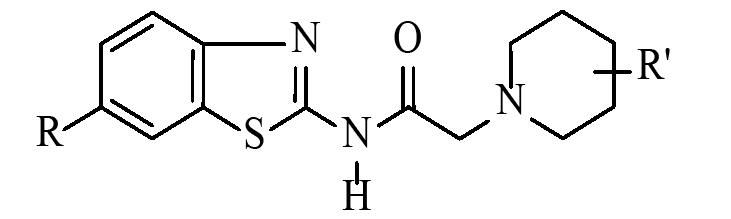 | |||
|---|---|---|---|
| Compound | R | R’ | |
| 1 | H | 4-methyl | |
| 2 | H | 3-methyl | |
| 3 | H | 2,6-dimethyl | |
| 4 | H | 3,5-dimethyl | |
| 5 | Cl | 4-methyl | |
| 6 | Cl | 3-methyl | |
| 7 | Cl | 2,6-dimethyl | |
| 8 | Cl | 3,5-dimethyl | |
| 9 | CH3 | 4-methyl | |
| 10 | CH3 | 3-methyl | |
| 11 | CH3 | 2,6-dimethyl | |
| 12 | CH3 | 3,5-dimethyl | |
| 13 | OCH3 | 4-methyl | |
| 14 | OCH3 | 3-methyl | |
| 15 | OCH3 | 2,6-dimethyl | |
| 16 | OCH3 | 3,5-dimethyl | |
| 17 | OC2H5 | 4-methyl | |
| 18 | OC2H5 | 3-methyl | |
| 19 | OC2H5 | 2,6-dimethyl | |
| 20 | OC2H5 | 3,5-dimethyl | |
| 21 | NO2 | 4-methyl | |
| 22 | NO2 | 3-methyl | |
| 23 | NO2 | 2,6-dimethyl | |
| 24 | NO2 | 3,5-dimethyl | |
2.2 Biological assays
2.2.1 Mosquitoes
The Orlando 1952 strain (ORL1952) of Ae. aegypti is a laboratory susceptible colony that has been without wildtype supplementation for over seventy years. The strain was originally collected near Orlando Florida, USA and has been maintained by the USDA ARS Center for Medical, Agricultural and Veterinary Entomology (CMAVE) in Gainesville, Florida (previously the Insects Affecting Man Laboratory). Insecticide susceptibility of this strain has been characterized for a large number of common pesticides [31,32]. Colony maintenance and organism rearing for bioassays were described previously [31].
2.2.2 Larvicidal activity
The larval bioassay was described in detail previously [31]. Briefly, ORL1952 eggs were hatched overnight in approximately 100 mL of deionized water. Five first instar larvae were transferred into the wells of 96-well flat-bottom tissue culture plate in 188 μL of deionized water. Ten microliters of a 2% solution of finely ground alfalfa powder were added to each well.
Compounds 1-24 were dissolved in DMSO to produce a 100 mg/μL stock solution. Dilutions of each stock solution were created by adding 2, 1, 0.5, or 0.2 microliters to the wells containing larva and food media for the initial screening bioassay. Negative control wells were prepared with 2 microliters of DMSO and positive control wells contained permethrin. Bioassay plates were covered and maintained on the benchtop at 22-23°C. Mortality was scored at 24 hours and the assay was repeated on three separate days. Additional dilutions (to 0.01 mg/μL; 0.005 mg/μL for compound 11) of active compounds (>80% mortality at 0.1 mg/μL) were tested to determine the full dose response curve and allow calculation of LC50 values.
2.2.3 Adulticidal activity
Three to seven-day post-emergence female Ae. aegypti were sorted into groups of 10 in TK35 plastic cups after one hour of chilling at 4°C. Compound stock solutions in DMSO (100 μg/μL) were diluted in acetone to produce a 10 mg/μL solution. Five hundred nanoliters of the compound solution were applied to the thorax of each mosquito using a repeating syringe with a blunt tip needle (Hamilton PB600 with 7100 syringe). Cups containing treated mosquitoes were capped with tulle mesh and mosquitoes were allowed to recover with access to 10% sucrose saturated cotton balls. Mortality was recorded at 24 hours and the assay was repeated at least three times. Acetone was used as a negative control, whereas permethrin (mixture of 46.1% cis and 53.2% trans isomers (Chemservice, West Chester, PA, USA)) was used as a positive control. Additional dilutions (from 5 ug/mosq to 0.5 ug/mosq) and assays of active compounds were performed to calculate LD50 values. Specific details of the adult topical bioassay were published previously [33].
2.2.4 LD50 and LC50 calculation
Median lethal doses were calculated using SigmaPlot (v13). Raw mortality counts from each dose of each replicate were converted to percentage mortality and plotted. Curve fitting of dose and mortality data was performed using a four parameter logistic model with constrained minimum and maximum values of 0 and 100, respectively.
2.3 Molecular docking studies
Molecular docking studies were carried out to understand the relationship between protein structures and substrates, which can provide reasonable explanations for substrate specificities and differences in the active site of the target structure. As previously mentioned, inhibition of AeSCP2 can reduce the uptake of cholesterol and lead to death in both larval and adult mosquitoes. For this purpose, compounds 2, 4, 6, 7, 8, 10, 11 and 13 were docked to the active site of AeSCP2 due to their in vitro mosquitocidal potencies. Ligands were sketched and cleaned in Maestro molecular modeling workspace followed by energy minimization in ligand preparation program of Schrödinger’s Maestro molecular modeling package (Schrödinger Release 2016-2: Schrödinger, LLC, New York, NY, USA) using Optimized Potential Liquid Simulations (OPLS_2005) force field. The X-ray crystallographic structure of the AeSCP2 complex with palmitic acid (PDB code: 1PZ4) [30] was retrieved from the Protein Data Bank (PDB) server and optimized for docking analysis in protein preparation module of Schrödinger software. In molecular docking simulations, Glide/XP docking protocols were applied for the prediction of topologies of active compounds in the active site of AeSCP2.
Ethical approval: The conducted research is not related to either human or animal use.
3 Results and Discussion
Compounds 1-24 were investigated for their larvicidal and adulticidal activities against Ae. aegypti Initial screening of the first instar larvae was completed at four concentrations (1.0, 0.5, 0.25, 0.1 mg/μL) with seven compounds producing more than 80% mortality at the 0.1 mg/μL dose (Table 2). Compounds 6 and 10 produced more than 80% mortality in initial screening of adult Ae. aegypti females (Table 2). LC50 or LD50 values were subsequently determined for compounds that produced
Twenty-four hour larval and adult topical mortality of compounds 1-24 against the susceptible Orlando (ORL1952) strain of Ae. aegypti
| # | Larvicidal activity against 1st instar Ae. aegypti* | Adulticidal activity against adult female Ae. aegypti** | |||||||||
|---|---|---|---|---|---|---|---|---|---|---|---|
| 1 mg/μL | 0.5 mg/μL | 0.25 mg/μL | 0.1 mg/μL | LC50 ± SE (mg/μL) | IC50 (μM) | R2 | 5 mg/ mosquito | LD50 ± SE (mg/mosq.) | LD50 (μM) | R2 | |
| 1 | 93 ± 12 | 87 ± 12 | 100 | 73 ± 31 | - | - | 64 ± 6 | - | - | ||
| 2 | 100 | 100 | 100 | 100 | 0.096 ± 0.005 | 332.2 | 0.984 | 47 ± 6 | - | - | |
| 3 | 73 ± 12 | 40 ± 20 | 0 | 0 | - | - | 47 ± 29 | - | - | ||
| 4 | 100 | 100 | 100 | 87 ± 23 | 0.065 ± 0.011 | 214.5 | 0.794 | 60 ± 27 | - | - | |
| 5 | 100 | 93 ± 12 | 87 ± 23 | 60 ± 53 | - | - | 77 ± 21 | - | - | ||
| 6 | 100 | 100 | 100 | 100 | 0.053 ± 0.011 | 163.8 | 0.643 | 83 ± 12 | 2.084 ± 0.338 | 6442.0 | 0.926 |
| 7 | 100 | 100 | 93 ± 12 | 93 ± 12 | 0.128 ± 0.019 | 379.2 | 0.803 | 47 ± 29 | - | - | |
| 8 | 100 | 100 | 100 | 87 ± 23 | 0.123 ± 0.015 | 364.4 | 0.981 | 63 ± 12 | - | - | |
| 9 | 47 ± 42 | 47 ± 42 | 33 ± 31 | 33 ± 58 | - | - | 70 | - | - | ||
| 10 | 100 | 87 ± 12 | 80 ± 20 | 67 ± 12 | - | - | 83 ± 6 | 2.962 ± 0.670 | 9775.6 | 0.533 | |
| 11 | 100 | 100 | 100 | 100 | 0.034 ± 0.003 | 107.3 | 0.647 | 40 ± 17 | - | - | |
| 12 | 100 | 87 ± 23 | 73 ± 46 | 67 ± 58 | - | - | 57 ± 15 | - | - | ||
| 13 | 100 | 100 | 100 | 100 | 0.098 ± 0.001 | 307.2 | 0.958 | 67 ± 25 | - | - | |
| 14 | 100 | 100 | 100 | 73 ± 23 | - | - | 50 ± 36 | - | - | ||
| 15 | 55 ± 22 | 40 ± 0 | 25 ± 7 | 15 ± 7 | - | - | 73 ± 12 | - | - | ||
| 16 | 100 | 100 | 73 ± 46 | 67 ± 58 | - | - | 53 ± 12 | - | - | ||
| 17 | 100 | 73 ± 31 | 47 ± 50 | 67 ± 58 | - | - | 63 ± 15 | - | - | ||
| 18 | 100 | 93 ± 12 | 87 ± 23 | 47 ± 31 | - | - | 37 ± 6 | - | - | ||
| 19 | 100 | 93 ± 12 | 80 ± 35 | 67 ± 31 | - | - | 67 ± 12 | - | - | ||
| 20 | 65 ± 21 | 45 ± 7 | 30 ± 14 | 15 ± 7 | - | - | 50 ± 10 | - | - | ||
| 21 | 93 ± 12 | 53 ± 50 | 33 ± 58 | 33 ± 58 | - | - | 50 ± 30 | - | - | ||
| 22 | 93 ± 12 | 53 ± 50 | 33 ± 58 | 33 ± 58 | - | - | 63 ± 6 | - | - | ||
| 23 | 33 ± 31 | 20 ± 20 | 27 ± 46 | 7 ± 12 | - | - | 73 ± 12 | - | - | ||
| 24 | 100 | 100 | 93 ± 12 | 67 ± 31 | - | - | 73 ± 12 | - | - | ||
* Positive control permethrin at 3.0 pg/μL resulted in 26.7 ± 23.1 % mortality. Negative control solvent control (DMSO) had 0% mortality.
** The average mortality in the two permethrin positive controls of 0.1935 and 0.4772 ng/mosquito was 63.3 ± 15.3 and 100, respectively. Acetone controls had 0% mortality.
>80% mortality at the discriminating dose in either or both bioassays by further subdilutions and additional assays (Table 2). Compounds 11, 6, 4, 2, 13, 8, and 7 showed the highest larvicidal activity with LC50 values of 0.034 (107.3 μM), 0.053 (163.8 μM), 0.065 (214.5 μM), 0.096 (332.2 μM), 0.098 (307.2 μM), 0.123 (364.4 μM), and 0.128 (379.2 μM) μg/μL, respectively. Compounds 6 and 10 exhibited the highest adulticidal activity with LD50 values of 2.084 (6442.0 μM) and 2.962 (9775.6 μM) μg/mosquito, respectively. Compounds 1, 3, 5, 9, 12, 14-24 did not show strong larvicidal or adulticidal activity.
Generally, 4-methyl substitution on the piperidine ring and 6-methoxy substitution on the benzothiazole ring, apart from compound 13, caused the loss of larvicidal activity. On the other hand, 6-chloro substituted benzothiazoles (6, 7 and 8) displayed reasonable larvicidal activity; only compound 5 did not possess any antimosquito properties related to 4-methyl substitution on the piperidine ring. This outcome indicated the importance of the chloro substitution at the sixth position of the benzothiazole scaffold. Among nonsubstituted benzothiazoles (1-4), only 3-methyl substituted piperidine-based compound 2 and 3,5-dimethyl substituted piperidine-based compound 4 showed significant larvicidal activity, indicating that the methyl substitution at the third position of the piperidine ring enhanced the larvicidal activity. The presence of 3-methyl moiety on piperidine ring also influenced adulticidal activity positively as observed in compounds 6 and 10. In general, the loss of larvicidal activity was detected with 6-ethoxy and 6-nitro substitutions on the benzothiazole ring as observed in compounds 17-24.
According to docking results, compounds 2, 4, 6, 7, 8, 10, 11, and 13 showed high affinity and substrate-specific interactions in the active site of AeSCP2 [30,34] (Figure: 1). Benzothiazoles of compounds 2, 6, 7, 10, 11, and 13 presented π-π interactions with Arg15 and Phe105 residues of the binding site of AeSCP2. The methoxy substitution on the benzothiazole ring of compound 13 could account for all interactions of this compound. Piperidines of compounds 4, 6, 7, 8, 10 and 11 displayed cation-π interaction with the Arg15 residue and only 4-methyl substitution on the piperidine ring did not have a positive influence. All interactions of compounds 4 and 8 were related to 3,5-dimethyl substitution on the piperidine ring. Moreover, the acetamido moieties of compounds 2 and 10 served as H-bond donors for the in pocket residue Leu102. The docking score, glide gscore and glide emodel results of compounds 2, 4, 6, 7, 8, 10, 11, and 13 are also given in Table 3. The emodel score is appropriate for the comparison of different conformations of the same ligand, but the docking score is generally used for the comparison of different ligands [35]. The docking scores of the compounds were determined to range between -8.19 and -8.95 kcal/mol as similar to each other.
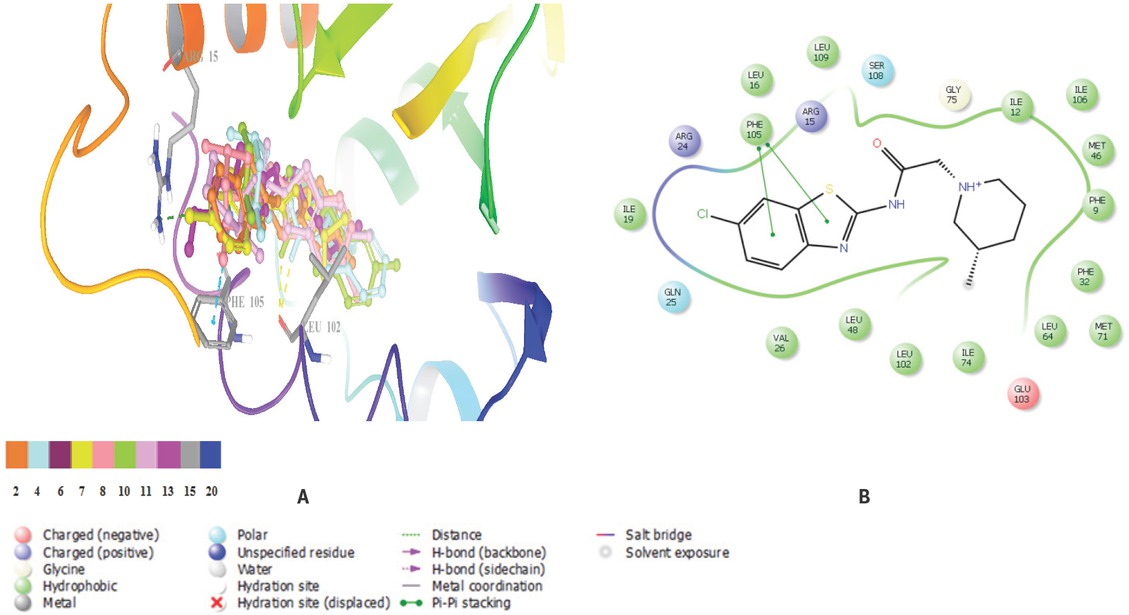
Docked poses of compounds 2, 4, 6, 7, 8, 10, 11 and 13 (Yellow dashes: Hydrogen bonding; Blue and green dashes: π-π interactions) (A) and interactions of compound 6 in the active site of AeSCP2 (B).
Docking score (kcal/mol), glide gscore (kcal/mol) and glide emodel (kcal/mol) results of compounds 2, 4, 6, 7, 8, 10, 11 and 13 for AeSCP2 (PDB code: 1PZ4).
| Compound | Docking score | Glide gscore | Glide emodel |
|---|---|---|---|
| 2 | -8.30 | -8.38 | -57.51 |
| 4 | -8.46 | -8.53 | -48.20 |
| 6 | -8.81 | -8.85 | -53.64 |
| 7 | -8.19 | -8.24 | -61.35 |
| 8 | -8.21 | -8.27 | -56.70 |
| 10 | -8.95 | -8.98 | -67.02 |
| 11 | -8.92 | -8.99 | -47.42 |
| 13 | -8.22 | -8.25 | -32.66 |
4 Conclusions
In the present work, compounds carrying benzothiazole and piperidine rings were investigated for first instar larvicidal activity and adulticidal activity against Ae. aegypti. The most potent larvicidal and adulticidal compounds in this series were also analyzed for molecular docking interactions in the active site of the AeSCP2 to provide mechanistic insight for further in vitro enzyme studies. According to mosquitocidal assays, compounds 2, 4, 6, 7, 8, 11 and 13 were found to be the most promising larvicidal agents, whereas compounds 6 and 10 were identified as the most promising adulticidal agents. Based on the results, 3-methyl substitution on the piperidine ring enhanced the larvicidal and adulticidal activity. Besides, 6-chloro substitution on the benzothiazole ring also increased the larvicidal activity. The docking results of compounds 2, 4, 6, 7, 8, 10, 11 and 13 suggested that π-π interactions and hydrogen bonds were responsible for the observed affinity in the active site of the AeSCP2. This outcome supported the hypothesis that the larvicidal and adulticidal activities of these compounds could result from the inhibition of AeSCP2.
Acknowledgments
This study was partly funded by the Deployed War-Fighter Protection Research Program via grants from the U.S. Department of Defense through the Armed Forces Pest Management Board (to JJB and to JRB). We thank Miss Jessica Louton (USDA-ARS, CMAVE, Gainesville, FL) for mosquito bioassays. Mention of trade names or commercial products in this publication is solely for the purpose of providing specific information and does not imply recommendation or endorsement by the U.S. Department of Agriculture or the U.S. Department of Defense. USDA is an equal opportunity provider and employer.
Conflict of interest: The authors declare that they have no conflict of interest.
References
[1] David J.P., Ismail H.M., Chandor-Proust A., Paine M.J., Role of cytochrome P450s in insecticide resistance: impact on the control of mosquito-borne diseases and use of insecticides on Earth, Philos. Trans. R. Soc. Lond. B: Biol. Sci., 2013, 368, 20120429.10.1098/rstb.2012.0429Search in Google Scholar PubMed PubMed Central
[2] Smith L.B., Kasai S., Scott J.G., Voltage-sensitive sodium channel mutations S989P + V1016G in Aedes aegypti confer variable resistance to pyrethroids, DDT and oxadiazines, Pest. Manag. Sci., 2018, 74, 737-745.10.1002/ps.4771Search in Google Scholar PubMed PubMed Central
[3] Shu P.Y., Huang J.H., Current advances in dengue diagnosis, Clin. Diagn. Lab. Immunol., 2004, 11, 642-650.10.1128/CDLI.11.4.642-650.2004Search in Google Scholar PubMed PubMed Central
[4] Chakraborty G., Shin J., Nguyen Q.T., Harikishore A., Baek K., Yoon H.S., Solution structure of FK506-binding protein 12 from Aedes aegypti Proteins, 2012, 80, 2476-2481.10.1002/prot.24146Search in Google Scholar PubMed
[5] Bhatt S., Gething P.W., Brady O.J., Messina J.P., Farlow A.W., Moyes C.L., et al., The global distribution and burden of dengue, Nature, 2013, 496, 504-507.10.1038/nature12060Search in Google Scholar PubMed PubMed Central
[6] WHO Regional Office for the Eastern Mediterranean Integrated vector management, 2017, Strategic framework for the Eastern Mediterranean Region 2016–2020. Cairo: Licence: CC BYNC-SA 3.0 IGO.Search in Google Scholar
[7] Pompon J., Morales-Vargas R., Manuel M., Huat Tan C., Vial T., Hao Tan J., et al., A Zika virus from America is more efficiently transmitted than an Asian virus by Aedes aegypti mosquitoes from Asia, Sci. Rep., 2017, 7, 1215.10.1038/s41598-017-01282-6Search in Google Scholar PubMed PubMed Central
[8] Schuler M.A., Werck-Reichhart D., Functional genomics of P450s, Annu. Rev. Plant. Biol., 2003, 54, 629-667.10.1146/annurev.arplant.54.031902.134840Search in Google Scholar PubMed
[9] Li X., Schuler M.A., Berenbaum M.R., Molecular mechanisms of metabolic resistance to synthetic and natural xenobiotics, Annu. Rev. Entomol., 2007, 52, 231-253.10.1146/annurev.ento.51.110104.151104Search in Google Scholar PubMed
[10] Liu N., Insecticide resistance in mosquitoes: impact, mechanisms, and research directions, Annu. Rev. Entomol., 2015, 60, 537-559.10.1146/annurev-ento-010814-020828Search in Google Scholar PubMed
[11] Stevenson B.J., Pignatelli P., Nikou D., Paine M.J., Pinpointing P450s associated with pyrethroid metabolism in the dengue vector, Aedes aegypti Developing new tools to combat insecticide resistance, PLoS Negl. Trop. Dis., 2012, 6, e1595.10.1371/journal.pntd.0001595Search in Google Scholar PubMed PubMed Central
[12] Chandor-Proust A., Bibby J., Régent-Kloeckner M., Roux J., Guittard-Crilat E., Poupardin R., Riaz M.A., Paine M., Dauphin-Villemant C., Reynaud S., David J.P., The central role of mosquito cytochrome P450 CYP6Zs in insecticide detoxification revealed by functional expression and structural modelling, Biochem. J., 2013, 455, 75-85.10.1042/BJ20130577Search in Google Scholar PubMed PubMed Central
[13] Dyer D.H., Vyazunova I., Lorch J.M., Forest K.T., Lan Q. Characterization of the yellow fever mosquito sterol carrier protein-2 like 3 gene and ligand-bound protein structure, Mol. Cell Biochem., 2009, 326, 67-77.10.1007/s11010-008-0007-zSearch in Google Scholar PubMed PubMed Central
[14] Li T., Lan Q., Liu N., Larvicidal activity of mosquito sterol carrier protein-2 inhibitors to the insecticide-resistant mosquito Culex quinquefasciatus (Diptera: Culicidae), J. Med. Entomol., 2009, 46, 1430-1435.10.1603/033.046.0626Search in Google Scholar PubMed
[15] Ma H., Ma Y., Liu X., Dyer D.H., Xu P., Liu K., et al., NMR structure and function of Helicoverpa armigera sterol carrier protein-2, an important insecticidal target from the cotton bollworm, Sci. Rep., 2015, 5, 18186.10.1038/srep18186Search in Google Scholar PubMed PubMed Central
[16] Radek J.T., Dyer D.H., Lan Q., Effects of mutations in Aedes aegypti sterol carrier protein-2 on the biological function of the protein, Biochemistry, 2010, 49, 7532-7541.10.1021/bi902026vSearch in Google Scholar PubMed PubMed Central
[17] Kim M.S., Wessely V., Lan Q., Identification of mosquito sterol carrier protein-2 inhibitors, J. Lipid Res., 2005, 46, 650-657.10.1194/jlr.M400389-JLR200Search in Google Scholar PubMed
[18] Kumar R.B., Shanmugapriya B., Thiyagesan K., Kumar S.R., Xavier S.M., A search for mosquito larvicidal compounds by blocking the sterol carrying protein, AeSCP-2, through computational screening and docking strategies, Pharmacognosy Res., 2010, 2, 247-253.10.4103/0974-8490.69126Search in Google Scholar PubMed PubMed Central
[19] Singarapu K.K., Ahuja A., Potula P.R., Ummanni R., Solution nuclear magnetic resonance studies of sterol carrier protein 2 like 2 (SCP2L2) reveal the insecticide specific structural characteristics of SCP2 proteins in Aedes aegypti mosquitoes, Biochemistry, 2016, 55, 4919-4927.10.1021/acs.biochem.6b00322Search in Google Scholar PubMed
[20] Senthil Raja P., Kathiresan K., Computational selection of mangrove-derived compounds as mosquito larvicides by blocking the sterol carrying protein, AeSCP-2, Res. Bioscientia, 2011, 2, 1-6.Search in Google Scholar
[21] Sharma P.C., Sinhmar A., Sharma A., Rajak H., Pathak D.P., Medicinal significance of benzothiazole scaffold: an insight view, J. Enzyme Inhib. Med. Chem., 2013, 28, 240-266.10.3109/14756366.2012.720572Search in Google Scholar PubMed
[22] Keri R.S., Patil M.R., Patil S.A., Budagumpi S., A comprehensive review in current developments of benzothiazole-based molecules in medicinal Chemistry, Eur. J. Med. Chem., 2015, 89, 207-251.10.1016/j.ejmech.2014.10.059Search in Google Scholar PubMed
[23] Rouf A., Tanyeli C., Bioactive thiazole and benzothiazole derivatives, Eur. J. Med. Chem., 2015, 97, 911-927.10.1016/j.ejmech.2014.10.058Search in Google Scholar PubMed
[24] Agarwal S., Gandhi D., Kalal P., Benzothiazole: a versatile and multitargeted pharmacophore in the field of medicinal Chemistry, Lett. Org. Chem., 2017, 14, 729-742.10.2174/1570178614666170707160654Search in Google Scholar
[25] Mao M.Z., Wang H.Y., Wang W., Ning B.K., Li Y.X., Xiong L.X., Li Z.M., Synthesis and biological evaluation of novel N-pyridylpyrazolecarboxamides containing benzothiazole, Phosphorus Sulfur Silicon Relat. Elem., 2017, 192, 42-46.10.1080/10426507.2016.1224876Search in Google Scholar
[26] Venugopala K.N., Krishnappa M., Nayak S.K., Subrahmanya B.K., Vaderapura J.P., Chalannavar R.K., Synthesis and antimosquito properties of 2,6-substituted benzo[d]thiazole and 2,4-substituted benzo[d]thiazole analogues against Anopheles arabiensis Eur. J. Med. Chem., 2013, 65, 295-303.10.1016/j.ejmech.2013.04.061Search in Google Scholar PubMed
[27] Rubiralta M., Giralt E., Diez A., Piperidine: structure, preparation, reactivity, and synthetic applications of piperidine and its derivatives, Elsevier Science Publishers, Amsterdam-Oxford- New York- Tokyo, 1991.Search in Google Scholar
[28] Vardanyan R., Piperidine-based drug discovery, Elsevier, Amsterdam, 2017.10.1016/B978-0-12-805157-3.00010-7Search in Google Scholar
[29] Altintop M.D., Özdemir A., Kaplancikli Z.A., Turan-Zitouni G., İşcan G., Akalın Çiftçi G., Synthesis and biological evaluation of some amide derivatives bearing benzothiazole and piperidine moieties as antimicrobial agents, Lett. Drug Des. Discov., 2013, 10, 453-461.10.2174/1570180811310050013Search in Google Scholar
[30] Dyer D.H., Lovell S., Thoden J.B., Holden H.M., Rayment I., Lan Q., The structural determination of an insect sterol carrier protein-2 with a ligand-bound C16 fatty acid at 1.35-Å resolution, J. Biol. Chem., 2003, 278, 39085-39091.10.1074/jbc.M306214200Search in Google Scholar PubMed
[31] Pridgeon J.W., Becnel J.J., Clark G.G., Linthicum K.J., A high-throughput screening method to identify potential pesticides for mosquito control, J. Med. Entomol., 2009, 46, 335-341.10.1603/033.046.0219Search in Google Scholar PubMed
[32] Estep A.S., Sanscrainte N.D., Waits C.M., Louton J.E., Becnel J.J., Resistance status and resistance mechanisms in a strain of Aedes aegypti (Diptera: Culicidae) from Puerto Rico, J. Med. Entomol., 2017, 54, 1643-1648.10.1093/jme/tjx143Search in Google Scholar PubMed
[33] Pridgeon J.W., Pereira R.M., Becnel J.J., Allan S.A., Clark G.G., Linthicum K.J., Susceptibility of Aedes aegyptiCulex quinquefasciatus Say, and Anopheles quadrimaculatus Say to 19 pesticides with different modes of action, J. Med. Entomol., 2008, 45, 82-87.10.1093/jmedent/45.1.82Search in Google Scholar
[34] da Silva J.B., Navarro D.M., da Silva A.G., Santos G.K., Dutra K.A., Moreira D.R., et al., Thiosemicarbazones as Aedes aegypti larvicidal, Eur. J. Med. Chem., 2015, 100, 162-175.10.1016/j.ejmech.2015.04.061Search in Google Scholar PubMed
[35] Van Den Driessche G., Fourches D., Adverse drug reactions triggered by the common HLA-B*57:01 variant: A molecular docking study, J. Cheminform., 2017, 9, 13.10.1186/s13321-017-0202-6Search in Google Scholar PubMed PubMed Central
© 2019 Belgin Sever et al., published by De Gruyter
This work is licensed under the Creative Commons Attribution 4.0 Public License.
Articles in the same Issue
- Regular Articles
- Research on correlation of compositions with oestrogenic activity of Cistanche based on LC/Q-TOF-MS/MS technology
- Efficacy of Pyrus elaeagnifolia subsp. elaeagnifolia in acetic acid–induced colitis model
- Anti-inflammatory and antinociceptive features of Bryonia alba L.: As a possible alternative in treating rheumatism
- High efficiency liposome fusion induced by reducing undesired membrane peptides interaction
- Prediction of the Blood-Brain Barrier Permeability Using RP-18 Thin Layer Chromatography
- Phytic Acid Extracted from Rice Bran as a Growth Promoter for Euglena gracilis
- Development of a validated spectrofluorimetric method for assay of sotalol hydrochloride in tablets and human plasma: application for stability-indicating studies
- Topological Indices of Hyaluronic Acid-Paclitaxel Conjugates’ Molecular Structure in Cancer Treatment
- Thermodynamic properties of the bubble growth process in a pool boiling of water-ethanol mixture two-component system
- Critical Roles of the PI3K-Akt-mTOR Signaling Pathway in Apoptosis and Autophagy of Astrocytes Induced by Methamphetamine
- Characteristics of Stable Hydrogen and Oxygen Isotopes of Soil Moisture under Different Land Use in Dry Hot Valley of Yuanmou
- Specific, highly sensitive and simple spectrofluorimetric method for quantification of daclatasvir in HCV human plasma patients and in tablets dosage form
- Chromium-modified cobalt molybdenum nitrides as catalysts for ammonia synthesis
- Langerhans cell-like dendritic cells treated with ginsenoside Rh2 regulate the differentiation of Th1 and Th2 cells in vivo
- Identification of Powdery Mildew Blumeria graminis f. sp. tritici Resistance Genes in Selected Wheat Varieties and Development of Multiplex PCR
- Computational Analysis of new Degree-based descriptors of oxide networks
- The Use Of Chemical Composition And Additives To Classify Petrol And Diesel Using Gas Chromatography–Mass Spectrometry And Chemometric Analysis: A Uk Study
- Minimal Energy Tree with 4 Branched Vertices
- Jatropha seed oil derived poly(esteramide-urethane)/ fumed silica nanocomposite coatings for corrosion protection
- Calculating topological indices of certain OTIS interconnection networks
- Energy storage analysis of R125 in UIO-66 and MOF-5 nanoparticles: A molecular simulation study
- Velvet Antler compounds targeting major cell signaling pathways in osteosarcoma - a new insight into mediating the process of invasion and metastasis in OS
- Effects of Azadirachta Indica Leaf Extract, Capping Agents, on the Synthesis of Pure And Cu Doped ZnO-Nanoparticles: A Green Approach and Microbial Activity
- Aqueous Micro-hydration of Na+(H2O)n=1-7 Clusters: DFT Study
- A proposed image-based detection of methamidophos pesticide using peroxyoxalate chemiluminescence system
- Phytochemical screening and estrogenic activity of total glycosides of Cistanche deserticola
- Biological evaluation of a series of benzothiazole derivatives as mosquitocidal agents
- Chemical pretreatments of Trapa bispinosa's peel (TBP) biosorbent to enhance adsorption capacity for Pb(ll)
- Dynamic Changes in MMP1 and TIMP1 in the Antifibrotic Process of Dahuang Zhechong Pill in Rats with Liver Fibrosis
- The Optimization and Production of Ginkgolide B Lipid Microemulsion
- Photodynamic Therapy Enhanced the Antitumor Effects of Berberine on HeLa Cells
- Chiral and Achiral Enantiomeric Separation of (±)-Alprenolol
- Correlation of Water Fluoride with Body Fluids, Dental Fluorosis and FT4, FT3 –TSH Disruption among Children in an Endemic Fluorosis area in Pakistan
- A one-step incubation ELISA kit for rapid determination of dibutyl phthalate in water, beverage and liquor
- Free Radical Scavenging Activity of Essential Oil of Eugenia caryophylata from Amboina Island and Derivatives of Eugenol
- Effects of Blue and Red Light On Growth And Nitrate Metabolism In Pakchoi
- miRNA-199a-5p functions as a tumor suppressor in prolactinomas
- Solar photodegradation of carbamazepine from aqueous solutions using a compound parabolic concentrator equipped with a sun tracking system
- Influence of sub-inhibitory concentration of selected plant essential oils on the physical and biochemical properties of Pseudomonas orientalis
- Preparation and spectroscopic studies of Fe(II), Ru(II), Pd(II) and Zn(II) complexes of Schiff base containing terephthalaldehyde and their transfer hydrogenation and Suzuki-Miyaura coupling reaction
- Complex formation in a liquid-liquid extraction-chromogenic system for vanadium(IV)
- Synthesis, characterization (IR, 1H, 13C & 31P NMR), fungicidal, herbicidal and molecular docking evaluation of steroid phosphorus compounds
- Analysis and Biological Evaluation of Arisaema Amuremse Maxim Essential Oil
- A preliminary assessment of potential ecological risk and soil contamination by heavy metals around a cement factory, western Saudi Arabia
- Anti- inflammatory effect of Prunus tomentosa Thunb total flavones in LPS-induced RAW264.7 cells
- Collaborative Influence of Elevated CO2 Concentration and High Temperature on Potato Biomass Accumulation and Characteristics
- Methods of extraction, physicochemical properties of alginates and their applications in biomedical field – a review
- Characteristics of liposomes derived from egg yolk
- Preparation of ternary ZnO/Ag/cellulose and its enhanced photocatalytic degradation property on phenol and benzene in VOCs
- Influence of Human Serum Albumin Glycation on the Binding Affinities for Natural Flavonoids
- Synthesis and antioxidant activity of 2-methylthio-pyrido[3,2-e][1,2,4] triazolo[1,5-a]pyrimidines
- Comparative study on the antioxidant activities of ten common flower teas from China
- Molecular Properties of Symmetrical Networks Using Topological Polynomials
- Synthesis of Co3O4 Nano Aggregates by Co-precipitation Method and its Catalytic and Fuel Additive Applications
- Phytochemical analysis, Antioxidant and Antiprotoscolices potential of ethanol extracts of selected plants species against Echinococcus granulosus: In-vitro study
- Silver nanoparticles enhanced fluorescence for sensitive determination of fluoroquinolones in water solutions
- Simultaneous Quantification of the New Psychoactive Substances 3-FMC, 3-FPM, 4-CEC, and 4-BMC in Human Blood using GC-MS
- Biodiesel Production by Lipids From Indonesian strain of Microalgae Chlorella vulgaris
- Miscibility studies of polystyrene/polyvinyl chloride blend in presence of organoclay
- Antibacterial Activities of Transition Metal complexes of Mesocyclic Amidine 1,4-diazacycloheptane (DACH)
- Novel 1,8-Naphthyridine Derivatives: Design, Synthesis and in vitro screening of their cytotoxic activity against MCF7 cell line
- Investigation of Stress Corrosion Cracking Behaviour of Mg-Al-Zn Alloys in Different pH Environments by SSRT Method
- Various Combinations of Flame Retardants for Poly (vinyl chloride)
- Phenolic compounds and biological activities of rye (Secale cereale L.) grains
- Oxidative degradation of gentamicin present in water by an electro-Fenton process and biodegradability improvement
- Optimizing Suitable Conditions for the Removal of Ammonium Nitrogen by a Microbe Isolated from Chicken Manure
- Anti-inflammatory, antipyretic, analgesic, and antioxidant activities of Haloxylon salicornicum aqueous fraction
- The anti-corrosion behaviour of Satureja montana L. extract on iron in NaCl solution
- Interleukin-4, hemopexin, and lipoprotein-associated phospholipase A2 are significantly increased in patients with unstable carotid plaque
- A comparative study of the crystal structures of 2-(4-(2-(4-(3-chlorophenyl)pipera -zinyl)ethyl) benzyl)isoindoline-1,3-dione by synchrotron radiation X-ray powder diffraction and single-crystal X-ray diffraction
- Conceptual DFT as a Novel Chemoinformatics Tool for Studying the Chemical Reactivity Properties of the Amatoxin Family of Fungal Peptides
- Occurrence of Aflatoxin M1 in Milk-based Mithae samples from Pakistan
- Kinetics of Iron Removal From Ti-Extraction Blast Furnace Slag by Chlorination Calcination
- Increasing the activity of DNAzyme based on the telomeric sequence: 2’-OMe-RNA and LNA modifications
- Exploring the optoelectronic properties of a chromene-appended pyrimidone derivative for photovoltaic applications
- Effect of He Qi San on DNA Methylation in Type 2 Diabetes Mellitus Patients with Phlegm-blood Stasis Syndrome
- Cyclodextrin potentiometric sensors based on selective recognition sites for procainamide: Comparative and theoretical study
- Greener synthesis of dimethyl carbonate from carbon dioxide and methanol using a tunable ionic liquid catalyst
- Nonisothermal Cold Crystallization Kinetics of Poly(lactic acid)/Bacterial Poly(hydroxyoctanoate) (PHO)/Talc
- Enhanced adsorption of sulfonamide antibiotics in water by modified biochar derived from bagasse
- Study on the Mechanism of Shugan Xiaozhi Fang on Cells with Non-alcoholic Fatty Liver Disease
- Comparative Effects of Salt and Alkali Stress on Antioxidant System in Cotton (Gossypium Hirsutum L.) Leaves
- Optimization of chromatographic systems for analysis of selected psychotropic drugs and their metabolites in serum and saliva by HPLC in order to monitor therapeutic drugs
- Electrocatalytic Properties of Ni-Doped BaFe12O19 for Oxygen Evolution in Alkaline Solution
- Study on the removal of high contents of ammonium from piggery wastewater by clinoptilolite and the corresponding mechanisms
- Phytochemistry and toxicological assessment of Bryonia dioica roots used in north-African alternative medicine
- The essential oil composition of selected Hemerocallis cultivars and their biological activity
- Mechanical Properties of Carbon Fiber Reinforced Nanocrystalline Nickel Composite Electroforming Deposit
- Anti-c-myc efficacy block EGFL7 induced prolactinoma tumorigenesis
- Topical Issue on Applications of Mathematics in Chemistry
- Zagreb Connection Number Index of Nanotubes and Regular Hexagonal Lattice
- The Sanskruti index of trees and unicyclic graphs
-
Valency-based molecular descriptors of Bakelite network
- Computing Topological Indices for Para-Line Graphs of Anthracene
- Zagreb Polynomials and redefined Zagreb indices of Dendrimers and Polyomino Chains
- Topological Descriptor of 2-Dimensional Silicon Carbons and Their Applications
- Topological invariants for the line graphs of some classes of graphs
- Words for maximal Subgroups of Fi24‘
- Generators of Maximal Subgroups of Harada-Norton and some Linear Groups
- Special Issue on POKOCHA 2018
- Influence of Production Parameters on the Content of Polyphenolic Compounds in Extruded Porridge Enriched with Chokeberry Fruit (Aronia melanocarpa (Michx.) Elliott)
- Effects of Supercritical Carbon Dioxide Extraction (SC-CO2) on the content of tiliroside in the extracts from Tilia L. flowers
- Impact of xanthan gum addition on phenolic acids composition and selected properties of new gluten-free maize-field bean pasta
- Impact of storage temperature and time on Moldavian dragonhead oil – spectroscopic and chemometric analysis
- The effect of selected substances on the stability of standard solutions in voltammetric analysis of ascorbic acid in fruit juices
- Determination of the content of Pb, Cd, Cu, Zn in dairy products from various regions of Poland
- Special Issue on IC3PE 2018 Conference
- The Photocatalytic Activity of Zns-TiO2 on a Carbon Fiber Prepared by Chemical Bath Deposition
- N-octyl chitosan derivatives as amphiphilic carrier agents for herbicide formulations
- Kinetics and Mechanistic Study of Hydrolysis of Adenosine Monophosphate Disodium Salt (AMPNa2) in Acidic and Alkaline Media
- Antimalarial Activity of Andrographis Paniculata Ness‘s N-hexane Extract and Its Major Compounds
- Special Issue on ABB2018 Conference
- Special Issue on ICCESEN 2017
- Theoretical Diagnostics of Second and Third-order Hyperpolarizabilities of Several Acid Derivatives
- Determination of Gamma Rays Efficiency Against Rhizoctonia solani in Potatoes
- Studies On Compatibilization Of Recycled Polyethylene/Thermoplastic Starch Blends By Using Different Compatibilizer
- Liquid−Liquid Extraction of Linalool from Methyl Eugenol with 1-Ethyl-3-methylimidazolium Hydrogen Sulfate [EMIM][HSO4] Ionic Liquid
- Synthesis of Graphene Oxide Through Ultrasonic Assisted Electrochemical Exfoliation
- Special Issue on ISCMP 2018
- Synthesis and antiproliferative evaluation of some 1,4-naphthoquinone derivatives against human cervical cancer cells
- The influence of the grafted aryl groups on the solvation properties of the graphyne and graphdiyne - a MD study
- Electrochemical modification of platinum and glassy carbon surfaces with pyridine layers and their use as complexing agents for copper (II) ions
- Effect of Electrospinning Process on Total Antioxidant Activity of Electrospun Nanofibers Containing Grape Seed Extract
- Effect Of Thermal Treatment Of Trepel At Temperature Range 800-1200˚C
- Topical Issue on Agriculture
- The effect of Cladophora glomerata exudates on the amino acid composition of Cladophora fracta and Rhizoclonium sp.
- Influence of the Static Magnetic Field and Algal Extract on the Germination of Soybean Seeds
- The use of UV-induced fluorescence for the assessment of homogeneity of granular mixtures
- The use of microorganisms as bio-fertilizers in the cultivation of white lupine
- Lyophilized apples on flax oil and ethyl esters of flax oil - stability and antioxidant evaluation
- Production of phosphorus biofertilizer based on the renewable materials in large laboratory scale
- Human health risk assessment of potential toxic elements in paddy soil and rice (Oryza sativa) from Ugbawka fields, Enugu, Nigeria
- Recovery of phosphates(V) from wastewaters of different chemical composition
- Special Issue on the 4th Green Chemistry 2018
- Dead zone for hydrogenation of propylene reaction carried out on commercial catalyst pellets
- Improved thermally stable oligoetherols from 6-aminouracil, ethylene carbonate and boric acid
- The role of a chemical loop in removal of hazardous contaminants from coke oven wastewater during its treatment
- Combating paraben pollution in surface waters with a variety of photocatalyzed systems: Looking for the most efficient technology
- Special Issue on Chemistry Today for Tomorrow 2019
- Applying Discriminant and Cluster Analyses to Separate Allergenic from Non-allergenic Proteins
- Chemometric Expertise Of Clinical Monitoring Data Of Prolactinoma Patients
- Chemomertic Risk Assessment of Soil Pollution
- New composite sorbent for speciation analysis of soluble chromium in textiles
- Photocatalytic activity of NiFe2O4 and Zn0.5Ni0.5Fe2O4 modified by Eu(III) and Tb(III) for decomposition of Malachite Green
- Photophysical and antibacterial activity of light-activated quaternary eosin Y
- Spectral properties and biological activity of La(III) and Nd(III) Monensinates
- Special Issue on Monitoring, Risk Assessment and Sustainable Management for the Exposure to Environmental Toxins
- Soil organic carbon mineralization in relation to microbial dynamics in subtropical red soils dominated by differently sized aggregates
- A potential reusable fluorescent aptasensor based on magnetic nanoparticles for ochratoxin A analysis
- Special Issue on 13th JCC 2018
- Fluorescence study of 5-nitroisatin Schiff base immobilized on SBA-15 for sensing Fe3+
- Thermal and Morphology Properties of Cellulose Nanofiber from TEMPO-oxidized Lower part of Empty Fruit Bunches (LEFB)
- Encapsulation of Vitamin C in Sesame Liposomes: Computational and Experimental Studies
- A comparative study of the utilization of synthetic foaming agent and aluminum powder as pore-forming agents in lightweight geopolymer synthesis
- Synthesis of high surface area mesoporous silica SBA-15 by adjusting hydrothermal treatment time and the amount of polyvinyl alcohol
- Review of large-pore mesostructured cellular foam (MCF) silica and its applications
- Ion Exchange of Benzoate in Ni-Al-Benzoate Layered Double Hydroxide by Amoxicillin
- Synthesis And Characterization Of CoMo/Mordenite Catalyst For Hydrotreatment Of Lignin Compound Models
- Production of Biodiesel from Nyamplung (Calophyllum inophyllum L.) using Microwave with CaO Catalyst from Eggshell Waste: Optimization of Transesterification Process Parameters
- The Study of the Optical Properties of C60 Fullerene in Different Organic Solvents
- Composite Material Consisting of HKUST-1 and Indonesian Activated Natural Zeolite and its Application in CO2 Capture
- Topical Issue on Environmental Chemistry
- Ionic liquids modified cobalt/ZSM-5 as a highly efficient catalyst for enhancing the selectivity towards KA oil in the aerobic oxidation of cyclohexane
- Application of Thermal Resistant Gemini Surfactants in Highly Thixotropic Water-in-oil Drilling Fluid System
- Screening Study on Rheological Behavior and Phase Transition Point of Polymer-containing Fluids produced under the Oil Freezing Point Temperature
- The Chemical Softening Effect and Mechanism of Low Rank Coal Soaked in Alkaline Solution
- The Influence Of NO/O2 On The NOx Storage Properties Over A Pt-Ba-Ce/γ-Al2O3 Catalyst
- Special Issue on the International conference CosCI 2018
- Design of SiO2/TiO2 that Synergistically Increases The Hydrophobicity of Methyltrimethoxysilane Coated Glass
- Antidiabetes and Antioxidant agents from Clausena excavata root as medicinal plant of Myanmar
- Development of a Gold Immunochromatographic Assay Method Using Candida Biofilm Antigen as a Bioreceptor for Candidiasis in Rats
- Special Issue on Applied Biochemistry and Biotechnology 2019
- Adsorption of copper ions on Magnolia officinalis residues after solid-phase fermentation with Phanerochaete chrysosporium
- Erratum
- Erratum to: Sand Dune Characterization For Preparing Metallurgical Grade Silicon
Articles in the same Issue
- Regular Articles
- Research on correlation of compositions with oestrogenic activity of Cistanche based on LC/Q-TOF-MS/MS technology
- Efficacy of Pyrus elaeagnifolia subsp. elaeagnifolia in acetic acid–induced colitis model
- Anti-inflammatory and antinociceptive features of Bryonia alba L.: As a possible alternative in treating rheumatism
- High efficiency liposome fusion induced by reducing undesired membrane peptides interaction
- Prediction of the Blood-Brain Barrier Permeability Using RP-18 Thin Layer Chromatography
- Phytic Acid Extracted from Rice Bran as a Growth Promoter for Euglena gracilis
- Development of a validated spectrofluorimetric method for assay of sotalol hydrochloride in tablets and human plasma: application for stability-indicating studies
- Topological Indices of Hyaluronic Acid-Paclitaxel Conjugates’ Molecular Structure in Cancer Treatment
- Thermodynamic properties of the bubble growth process in a pool boiling of water-ethanol mixture two-component system
- Critical Roles of the PI3K-Akt-mTOR Signaling Pathway in Apoptosis and Autophagy of Astrocytes Induced by Methamphetamine
- Characteristics of Stable Hydrogen and Oxygen Isotopes of Soil Moisture under Different Land Use in Dry Hot Valley of Yuanmou
- Specific, highly sensitive and simple spectrofluorimetric method for quantification of daclatasvir in HCV human plasma patients and in tablets dosage form
- Chromium-modified cobalt molybdenum nitrides as catalysts for ammonia synthesis
- Langerhans cell-like dendritic cells treated with ginsenoside Rh2 regulate the differentiation of Th1 and Th2 cells in vivo
- Identification of Powdery Mildew Blumeria graminis f. sp. tritici Resistance Genes in Selected Wheat Varieties and Development of Multiplex PCR
- Computational Analysis of new Degree-based descriptors of oxide networks
- The Use Of Chemical Composition And Additives To Classify Petrol And Diesel Using Gas Chromatography–Mass Spectrometry And Chemometric Analysis: A Uk Study
- Minimal Energy Tree with 4 Branched Vertices
- Jatropha seed oil derived poly(esteramide-urethane)/ fumed silica nanocomposite coatings for corrosion protection
- Calculating topological indices of certain OTIS interconnection networks
- Energy storage analysis of R125 in UIO-66 and MOF-5 nanoparticles: A molecular simulation study
- Velvet Antler compounds targeting major cell signaling pathways in osteosarcoma - a new insight into mediating the process of invasion and metastasis in OS
- Effects of Azadirachta Indica Leaf Extract, Capping Agents, on the Synthesis of Pure And Cu Doped ZnO-Nanoparticles: A Green Approach and Microbial Activity
- Aqueous Micro-hydration of Na+(H2O)n=1-7 Clusters: DFT Study
- A proposed image-based detection of methamidophos pesticide using peroxyoxalate chemiluminescence system
- Phytochemical screening and estrogenic activity of total glycosides of Cistanche deserticola
- Biological evaluation of a series of benzothiazole derivatives as mosquitocidal agents
- Chemical pretreatments of Trapa bispinosa's peel (TBP) biosorbent to enhance adsorption capacity for Pb(ll)
- Dynamic Changes in MMP1 and TIMP1 in the Antifibrotic Process of Dahuang Zhechong Pill in Rats with Liver Fibrosis
- The Optimization and Production of Ginkgolide B Lipid Microemulsion
- Photodynamic Therapy Enhanced the Antitumor Effects of Berberine on HeLa Cells
- Chiral and Achiral Enantiomeric Separation of (±)-Alprenolol
- Correlation of Water Fluoride with Body Fluids, Dental Fluorosis and FT4, FT3 –TSH Disruption among Children in an Endemic Fluorosis area in Pakistan
- A one-step incubation ELISA kit for rapid determination of dibutyl phthalate in water, beverage and liquor
- Free Radical Scavenging Activity of Essential Oil of Eugenia caryophylata from Amboina Island and Derivatives of Eugenol
- Effects of Blue and Red Light On Growth And Nitrate Metabolism In Pakchoi
- miRNA-199a-5p functions as a tumor suppressor in prolactinomas
- Solar photodegradation of carbamazepine from aqueous solutions using a compound parabolic concentrator equipped with a sun tracking system
- Influence of sub-inhibitory concentration of selected plant essential oils on the physical and biochemical properties of Pseudomonas orientalis
- Preparation and spectroscopic studies of Fe(II), Ru(II), Pd(II) and Zn(II) complexes of Schiff base containing terephthalaldehyde and their transfer hydrogenation and Suzuki-Miyaura coupling reaction
- Complex formation in a liquid-liquid extraction-chromogenic system for vanadium(IV)
- Synthesis, characterization (IR, 1H, 13C & 31P NMR), fungicidal, herbicidal and molecular docking evaluation of steroid phosphorus compounds
- Analysis and Biological Evaluation of Arisaema Amuremse Maxim Essential Oil
- A preliminary assessment of potential ecological risk and soil contamination by heavy metals around a cement factory, western Saudi Arabia
- Anti- inflammatory effect of Prunus tomentosa Thunb total flavones in LPS-induced RAW264.7 cells
- Collaborative Influence of Elevated CO2 Concentration and High Temperature on Potato Biomass Accumulation and Characteristics
- Methods of extraction, physicochemical properties of alginates and their applications in biomedical field – a review
- Characteristics of liposomes derived from egg yolk
- Preparation of ternary ZnO/Ag/cellulose and its enhanced photocatalytic degradation property on phenol and benzene in VOCs
- Influence of Human Serum Albumin Glycation on the Binding Affinities for Natural Flavonoids
- Synthesis and antioxidant activity of 2-methylthio-pyrido[3,2-e][1,2,4] triazolo[1,5-a]pyrimidines
- Comparative study on the antioxidant activities of ten common flower teas from China
- Molecular Properties of Symmetrical Networks Using Topological Polynomials
- Synthesis of Co3O4 Nano Aggregates by Co-precipitation Method and its Catalytic and Fuel Additive Applications
- Phytochemical analysis, Antioxidant and Antiprotoscolices potential of ethanol extracts of selected plants species against Echinococcus granulosus: In-vitro study
- Silver nanoparticles enhanced fluorescence for sensitive determination of fluoroquinolones in water solutions
- Simultaneous Quantification of the New Psychoactive Substances 3-FMC, 3-FPM, 4-CEC, and 4-BMC in Human Blood using GC-MS
- Biodiesel Production by Lipids From Indonesian strain of Microalgae Chlorella vulgaris
- Miscibility studies of polystyrene/polyvinyl chloride blend in presence of organoclay
- Antibacterial Activities of Transition Metal complexes of Mesocyclic Amidine 1,4-diazacycloheptane (DACH)
- Novel 1,8-Naphthyridine Derivatives: Design, Synthesis and in vitro screening of their cytotoxic activity against MCF7 cell line
- Investigation of Stress Corrosion Cracking Behaviour of Mg-Al-Zn Alloys in Different pH Environments by SSRT Method
- Various Combinations of Flame Retardants for Poly (vinyl chloride)
- Phenolic compounds and biological activities of rye (Secale cereale L.) grains
- Oxidative degradation of gentamicin present in water by an electro-Fenton process and biodegradability improvement
- Optimizing Suitable Conditions for the Removal of Ammonium Nitrogen by a Microbe Isolated from Chicken Manure
- Anti-inflammatory, antipyretic, analgesic, and antioxidant activities of Haloxylon salicornicum aqueous fraction
- The anti-corrosion behaviour of Satureja montana L. extract on iron in NaCl solution
- Interleukin-4, hemopexin, and lipoprotein-associated phospholipase A2 are significantly increased in patients with unstable carotid plaque
- A comparative study of the crystal structures of 2-(4-(2-(4-(3-chlorophenyl)pipera -zinyl)ethyl) benzyl)isoindoline-1,3-dione by synchrotron radiation X-ray powder diffraction and single-crystal X-ray diffraction
- Conceptual DFT as a Novel Chemoinformatics Tool for Studying the Chemical Reactivity Properties of the Amatoxin Family of Fungal Peptides
- Occurrence of Aflatoxin M1 in Milk-based Mithae samples from Pakistan
- Kinetics of Iron Removal From Ti-Extraction Blast Furnace Slag by Chlorination Calcination
- Increasing the activity of DNAzyme based on the telomeric sequence: 2’-OMe-RNA and LNA modifications
- Exploring the optoelectronic properties of a chromene-appended pyrimidone derivative for photovoltaic applications
- Effect of He Qi San on DNA Methylation in Type 2 Diabetes Mellitus Patients with Phlegm-blood Stasis Syndrome
- Cyclodextrin potentiometric sensors based on selective recognition sites for procainamide: Comparative and theoretical study
- Greener synthesis of dimethyl carbonate from carbon dioxide and methanol using a tunable ionic liquid catalyst
- Nonisothermal Cold Crystallization Kinetics of Poly(lactic acid)/Bacterial Poly(hydroxyoctanoate) (PHO)/Talc
- Enhanced adsorption of sulfonamide antibiotics in water by modified biochar derived from bagasse
- Study on the Mechanism of Shugan Xiaozhi Fang on Cells with Non-alcoholic Fatty Liver Disease
- Comparative Effects of Salt and Alkali Stress on Antioxidant System in Cotton (Gossypium Hirsutum L.) Leaves
- Optimization of chromatographic systems for analysis of selected psychotropic drugs and their metabolites in serum and saliva by HPLC in order to monitor therapeutic drugs
- Electrocatalytic Properties of Ni-Doped BaFe12O19 for Oxygen Evolution in Alkaline Solution
- Study on the removal of high contents of ammonium from piggery wastewater by clinoptilolite and the corresponding mechanisms
- Phytochemistry and toxicological assessment of Bryonia dioica roots used in north-African alternative medicine
- The essential oil composition of selected Hemerocallis cultivars and their biological activity
- Mechanical Properties of Carbon Fiber Reinforced Nanocrystalline Nickel Composite Electroforming Deposit
- Anti-c-myc efficacy block EGFL7 induced prolactinoma tumorigenesis
- Topical Issue on Applications of Mathematics in Chemistry
- Zagreb Connection Number Index of Nanotubes and Regular Hexagonal Lattice
- The Sanskruti index of trees and unicyclic graphs
-
Valency-based molecular descriptors of Bakelite network
- Computing Topological Indices for Para-Line Graphs of Anthracene
- Zagreb Polynomials and redefined Zagreb indices of Dendrimers and Polyomino Chains
- Topological Descriptor of 2-Dimensional Silicon Carbons and Their Applications
- Topological invariants for the line graphs of some classes of graphs
- Words for maximal Subgroups of Fi24‘
- Generators of Maximal Subgroups of Harada-Norton and some Linear Groups
- Special Issue on POKOCHA 2018
- Influence of Production Parameters on the Content of Polyphenolic Compounds in Extruded Porridge Enriched with Chokeberry Fruit (Aronia melanocarpa (Michx.) Elliott)
- Effects of Supercritical Carbon Dioxide Extraction (SC-CO2) on the content of tiliroside in the extracts from Tilia L. flowers
- Impact of xanthan gum addition on phenolic acids composition and selected properties of new gluten-free maize-field bean pasta
- Impact of storage temperature and time on Moldavian dragonhead oil – spectroscopic and chemometric analysis
- The effect of selected substances on the stability of standard solutions in voltammetric analysis of ascorbic acid in fruit juices
- Determination of the content of Pb, Cd, Cu, Zn in dairy products from various regions of Poland
- Special Issue on IC3PE 2018 Conference
- The Photocatalytic Activity of Zns-TiO2 on a Carbon Fiber Prepared by Chemical Bath Deposition
- N-octyl chitosan derivatives as amphiphilic carrier agents for herbicide formulations
- Kinetics and Mechanistic Study of Hydrolysis of Adenosine Monophosphate Disodium Salt (AMPNa2) in Acidic and Alkaline Media
- Antimalarial Activity of Andrographis Paniculata Ness‘s N-hexane Extract and Its Major Compounds
- Special Issue on ABB2018 Conference
- Special Issue on ICCESEN 2017
- Theoretical Diagnostics of Second and Third-order Hyperpolarizabilities of Several Acid Derivatives
- Determination of Gamma Rays Efficiency Against Rhizoctonia solani in Potatoes
- Studies On Compatibilization Of Recycled Polyethylene/Thermoplastic Starch Blends By Using Different Compatibilizer
- Liquid−Liquid Extraction of Linalool from Methyl Eugenol with 1-Ethyl-3-methylimidazolium Hydrogen Sulfate [EMIM][HSO4] Ionic Liquid
- Synthesis of Graphene Oxide Through Ultrasonic Assisted Electrochemical Exfoliation
- Special Issue on ISCMP 2018
- Synthesis and antiproliferative evaluation of some 1,4-naphthoquinone derivatives against human cervical cancer cells
- The influence of the grafted aryl groups on the solvation properties of the graphyne and graphdiyne - a MD study
- Electrochemical modification of platinum and glassy carbon surfaces with pyridine layers and their use as complexing agents for copper (II) ions
- Effect of Electrospinning Process on Total Antioxidant Activity of Electrospun Nanofibers Containing Grape Seed Extract
- Effect Of Thermal Treatment Of Trepel At Temperature Range 800-1200˚C
- Topical Issue on Agriculture
- The effect of Cladophora glomerata exudates on the amino acid composition of Cladophora fracta and Rhizoclonium sp.
- Influence of the Static Magnetic Field and Algal Extract on the Germination of Soybean Seeds
- The use of UV-induced fluorescence for the assessment of homogeneity of granular mixtures
- The use of microorganisms as bio-fertilizers in the cultivation of white lupine
- Lyophilized apples on flax oil and ethyl esters of flax oil - stability and antioxidant evaluation
- Production of phosphorus biofertilizer based on the renewable materials in large laboratory scale
- Human health risk assessment of potential toxic elements in paddy soil and rice (Oryza sativa) from Ugbawka fields, Enugu, Nigeria
- Recovery of phosphates(V) from wastewaters of different chemical composition
- Special Issue on the 4th Green Chemistry 2018
- Dead zone for hydrogenation of propylene reaction carried out on commercial catalyst pellets
- Improved thermally stable oligoetherols from 6-aminouracil, ethylene carbonate and boric acid
- The role of a chemical loop in removal of hazardous contaminants from coke oven wastewater during its treatment
- Combating paraben pollution in surface waters with a variety of photocatalyzed systems: Looking for the most efficient technology
- Special Issue on Chemistry Today for Tomorrow 2019
- Applying Discriminant and Cluster Analyses to Separate Allergenic from Non-allergenic Proteins
- Chemometric Expertise Of Clinical Monitoring Data Of Prolactinoma Patients
- Chemomertic Risk Assessment of Soil Pollution
- New composite sorbent for speciation analysis of soluble chromium in textiles
- Photocatalytic activity of NiFe2O4 and Zn0.5Ni0.5Fe2O4 modified by Eu(III) and Tb(III) for decomposition of Malachite Green
- Photophysical and antibacterial activity of light-activated quaternary eosin Y
- Spectral properties and biological activity of La(III) and Nd(III) Monensinates
- Special Issue on Monitoring, Risk Assessment and Sustainable Management for the Exposure to Environmental Toxins
- Soil organic carbon mineralization in relation to microbial dynamics in subtropical red soils dominated by differently sized aggregates
- A potential reusable fluorescent aptasensor based on magnetic nanoparticles for ochratoxin A analysis
- Special Issue on 13th JCC 2018
- Fluorescence study of 5-nitroisatin Schiff base immobilized on SBA-15 for sensing Fe3+
- Thermal and Morphology Properties of Cellulose Nanofiber from TEMPO-oxidized Lower part of Empty Fruit Bunches (LEFB)
- Encapsulation of Vitamin C in Sesame Liposomes: Computational and Experimental Studies
- A comparative study of the utilization of synthetic foaming agent and aluminum powder as pore-forming agents in lightweight geopolymer synthesis
- Synthesis of high surface area mesoporous silica SBA-15 by adjusting hydrothermal treatment time and the amount of polyvinyl alcohol
- Review of large-pore mesostructured cellular foam (MCF) silica and its applications
- Ion Exchange of Benzoate in Ni-Al-Benzoate Layered Double Hydroxide by Amoxicillin
- Synthesis And Characterization Of CoMo/Mordenite Catalyst For Hydrotreatment Of Lignin Compound Models
- Production of Biodiesel from Nyamplung (Calophyllum inophyllum L.) using Microwave with CaO Catalyst from Eggshell Waste: Optimization of Transesterification Process Parameters
- The Study of the Optical Properties of C60 Fullerene in Different Organic Solvents
- Composite Material Consisting of HKUST-1 and Indonesian Activated Natural Zeolite and its Application in CO2 Capture
- Topical Issue on Environmental Chemistry
- Ionic liquids modified cobalt/ZSM-5 as a highly efficient catalyst for enhancing the selectivity towards KA oil in the aerobic oxidation of cyclohexane
- Application of Thermal Resistant Gemini Surfactants in Highly Thixotropic Water-in-oil Drilling Fluid System
- Screening Study on Rheological Behavior and Phase Transition Point of Polymer-containing Fluids produced under the Oil Freezing Point Temperature
- The Chemical Softening Effect and Mechanism of Low Rank Coal Soaked in Alkaline Solution
- The Influence Of NO/O2 On The NOx Storage Properties Over A Pt-Ba-Ce/γ-Al2O3 Catalyst
- Special Issue on the International conference CosCI 2018
- Design of SiO2/TiO2 that Synergistically Increases The Hydrophobicity of Methyltrimethoxysilane Coated Glass
- Antidiabetes and Antioxidant agents from Clausena excavata root as medicinal plant of Myanmar
- Development of a Gold Immunochromatographic Assay Method Using Candida Biofilm Antigen as a Bioreceptor for Candidiasis in Rats
- Special Issue on Applied Biochemistry and Biotechnology 2019
- Adsorption of copper ions on Magnolia officinalis residues after solid-phase fermentation with Phanerochaete chrysosporium
- Erratum
- Erratum to: Sand Dune Characterization For Preparing Metallurgical Grade Silicon
