Green synthesis methods and characterization of bacterial cellulose/silver nanoparticle composites
-
Tintin Mutiara


Abstract
Bacterial cellulose (BC) is a microbiologically produced cellulose with high purity and excellent biocompatibility, allowing it to be used alone or in combination with other materials, including polymers and nanoparticles. This study was conducted to incorporate silver nanoparticles (AgNPs) into a BC matrix using simple and environmentally friendly methods in order to create a composite with superior industrial properties. The fabricated composites were characterized with Fourier transform infrared, X-ray diffraction (XRD), scanning electron microscopy (SEM), and energy dispersive X-ray (EDX), while the thermal stability was investigated by thermogravimetric analysis. The antimicrobial activity of the composites was determined by observing the formation of an inhibition zone during the incubation of Staphylococcus aureus (gram-positive) and Escherichia coli (gram-negative). The SEM, EDX, and XRD analysis confirmed the presence of AgNPs. The composites also exhibit excellent thermal stability and significant antimicrobial activity against S. aureus and E. coli.
1 Introduction
Nanotechnology is a scientific discipline that describes the chemistry of nanoparticles. Richard P. Feynman was the first to introduce the concept of nanotechnology in his lecture There’s plenty of room at the Bottom in 1959 [1], and the term nanotechnology was first introduced by Taniguchi in 1974 [2] to describe the production of materials in nanometer size. Nanoparticles combine a group of atoms or molecules of different materials with nanoscale sizes of about 10−9 m [3]. In one dimension, the size of nanoparticles can range from 1 nm to several tens of nm. Nanoparticles and minerals exhibit unique catalytic, electronic, magnetic, chemical, photochemical, and optical properties compared to conventional materials [4]. Many types of nanoparticles, including metals, metal oxides, polymers, carbon-based, and composites, can be manufactured according to the desired application [5].
Gold and silver are the most popular metal nanoparticles used in various applications, including electronics, textiles, sensors, and biomedicine applications. Silver nanoparticles (AgNPs) have several unique properties depending on their size, morphology, and surface charge, inspiring a vast range of applications. Additionally, AgNPs are recognized for their enhanced antimicrobial properties against pathogenic microbes such as bacteria, fungi, algae, and viruses [6]. On the other hand, the rapid oxidation of AgNPs and their dependence on the surface charge of the suspension medium severely restrict the use of AgNPs [7]. Therefore, numerous AgNP applications are incorporated into nanocomposites to enhance their stability. So far, numerous studies have been conducted on the synthesis and properties of silver nanocomposites. AgNPs can be incorporated into a matrix of materials to form nanocomposites, such as polymers [5,7], graphene/graphene oxide [8,9], chitosan [10,11], and cellulose.
Bacterial cellulose (BC) is a microbiologically produced cellulose that is a natural biopolymer. Compared to conventional cellulose, utilizing BC has remarkable advantages such as higher purity, greater mechanical strength, and relatively more straightforward obtainability [12,13]. Because of its purity and biocompatibility, BC can be used alone or in combination with other materials to alter its structure and function, providing a perspective for using BC in industrial and medical applications [14]. Composites of cellulose have been frequently used as templates to create inorganic nanoparticles. Because cellulose contains abundant hydroxyl groups, it is compatible with polar matrices and enhances the homogenous dispersion of inorganic nanoparticles [15]. In addition, BC is relatively easy to undergo various chemical reactions and structural transformation due to three free hydroxyl groups located at C2, C3, and C6 [16].
Recent studies have been conducted to incorporate AgNPs into cellulose structure to form a composite to obtain new materials with superior properties in industrial applications, for example, in generated cellulose membrane by dip coating [17], in BC by in situ [18,19,20] and ex situ preparation [21,22]. However, all the aforementioned studies utilized chemicals to boost the reduction of silver ions into cellulose matrix to form AgNPs; some of those chemicals are hazardous and may be dangerous if released into the environment. This study focused on producing BC/AgNP composites by greener methods than previously conducted studies. In this study, BC was made from a fermentation process by Acetobacter xylinum bacteria in a simple coconut water medium to produce low-cost BC sheets. Then BC was utilized as a support and dispersion media for AgNPs. A natural reducing agent, Averrhoa bilimbi fruit extract, and a hydrothermal method assisted the reducing process of silver ions into AgNPs in the BC matrix. Averrhoa bilimbi was chosen as a reducing agent because of the high content of phytochemicals such as flavonoids, saponins, terpenoids, and tannins [23,24,25], which play a significant role in the bioreduction and stabilization of AgNPs [26,27]. Those methods were simple, cost-effective, and chemical-free, which have not been studied before. These methods were expected to broaden the technology to generate metal cellulose composites, particularly those with antimicrobial properties for biotechnology applications. The eco-friendly BC AgNP composite was also beneficial for antimicrobial applications, especially those involving direct human contact. Green AgNPs offer pharmacological and biological potential, including antiviral, antimicrobial, antifungal, antiparasitic, antioxidant, anticoagulant, and biofilm inhibition activity, as well as anticancer activity against various cancers [28,29]. The most significant contribution of this research was the development of sustainable nanoparticle composite biomaterials that utilize inexpensive and indigenous materials.
2 Experimental
2.1 Materials and methods
All chemicals used in this study were of analytical grade and purchased from Merck. BC samples for this study were obtained, as reported in our previous study [30]. The BC samples resulted from the fermentation of Acetobacter xylinum in a simple coconut water medium at a static condition and room temperature. After 4 days of fermentation, BC was harvested and cleaned under running water. The BC was then boiled in water for 5 min to kill the remaining Acetobacter xylinum bacteria, and the sample was ready for the following treatment, as displayed in Figure 2a.
Averrhoa bilimbi was obtained from local parks. Fruits were crushed and then boiled for 5 min. After cooling down, the stew was pressed and filtered for the liquid-only extract. The Averrhoa bilimbi fruit and its extract are displayed in Figure 1.
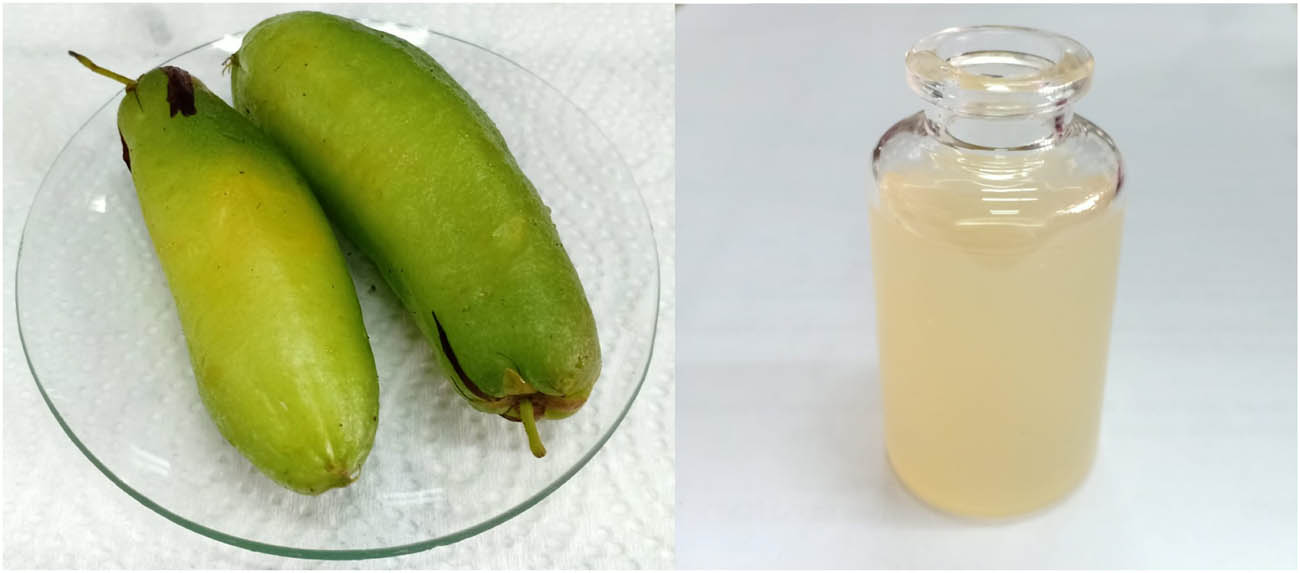
Averrhoa bilimbi fruit and its extract.
2.2 Impregnation of Ag into BC
The impregnation of Ag ions into BC involved simple steps. First, pristine BC was immersed in an AgNO3 solution with a concentration of 10 mM. The mixture was stirred for 1 h, then rested for a night. Afterward, BC was picked and rinsed multiple times with distilled water to eliminate the remaining AgNO3 solution. BC sample was ready for the reduction process, as seen in Figure 2b. BC color became thicker and grayish at this point compared to pristine BC.

(a) Pristine BC nata de coco, (b) BC after treated by immersing in AgNO3 solution, reduction of Ag ions in BC by the support of (c) hydrothermal treatment, (d) Averrhoa bilimbi extract, and (e) dried obtained composite sheet.
2.3 Green reduction methods
2.3.1 Immersion in Averrhoa bilimbi extract
In this reduction method, the BC sample previously immersed in AgNO3 solution was immersed in Averrhoa bilimbi extract for 1 h. As depicted in Figure 2d, a grayish hue change was observed. The BC sample was then rinsed and dried at 65°C in an oven. This method’s dry sheet sample was designated as BC/AgNPs-A.
2.3.2 Hydrothermal treatment
The reduction method by a hydrothermal treatment was conducted by isolating the BC sample in a glass bottle and then putting it in a water bath at a static condition at 75°C for 1 h. Similar to the previous reduction method, the sample was dried in the oven until a dried sheet was obtained. The dry sheet sample of this method was denoted as BC/AgNPs-H.
2.4 Characterization of BC/AgNP composite
The Fourier transform infrared (FTIR) spectra were collected with the Nicolet Avatar 360 IR instrument, measured at a 4,000–500 cm−1 wavelength. The X-ray diffraction (XRD) patterns were obtained with a Bruker D2 Phaser XRD instrument. The diffractograms 2θ were recorded between 10° and 80° and λ = 1.54060 nm. Scanning electron microscopy (SEM) and energy dispersive X-ray (EDX) Phenom Desktop ProXL were utilized to analyze the composite samples’ morphological characteristics and elemental composition. The samples were made conductive by coating them with a thin layer of gold using a sputtering technique before SEM and EDX analysis. A Linseis PT1000 instrument measured the thermal stability of the samples with an analytical temperature from 0°C to 600°C and a heating rate value of 10°C‧min−1. A nitrogen gas flow rate of 50 mL‧min−1 was used to avoid burning of the sample.
2.5 Antimicrobial activity of BC/AgNP composite
Staphylococcus aureus (gram-positive) and Escherichia coli (gram-negative) were precultured in agar nutrients placed in a 10 cm diameter petri dish at 37°C for 24 h to reach a concentration of approximately 107 colony forming unit‧mL−1. Around 1 cm × 1 cm composite samples were placed on the surface of the medium, and the formation of the inhibition zone was measured for each sample.
3 Results and discussion
3.1 Chemical and morphological characterization
FTIR spectra data were used to determine which functional group shifts are essential in forming AgNPs in the BC structure. Figure 3 compares the FTIR spectra of pure BC to composite samples. FTIR spectra of both pure BC and composites displayed a typical cellulose spectrum. A strong broad spectrum at 3,550–3,200 cm−1 indicated the O–H stretching of alcohol. This hydroxyl group was crucial in converting Ag+ to Ag0 and stabilizing AgNPs formed in the BC matrix [31,32]. The reduction process of Ag+ ions in the BC structure was proved by the appearance of a peak at a wavelength of around 1,700 cm−1, which indicates the presence of C═O from the carbonyl group. In contrast, the spectrum’s peak at the mentioned wavelength is not significant enough in the BC sample. The notable change in the FTIR spectrum reflects the main factor in synthesizing metal nanoparticles: the oxidation of hydroxyl groups to form carbonyl groups [31,33].

The FTIR spectra of BC and composite samples.
XRD analysis was performed to validate and characterize the presence of AgNPs in the BC matrix. The X-ray spectra of BC and composite samples are shown in Figure 4. All three samples’ diffraction spectra show peaks at 14.5°, 16.7°, and 22.7°, which respectively correspond to the planes (1ī0), (110), and (200) of crystalline Cellulose I [30]. Additional peaks of 2θ from 30° to 60° corresponded to AgNPs in BC/AgNPs-A and BC/AgNPs-H spectra, whereas no such diffraction was observed in BC. The diffraction peaks at 32.5°, 46.5°, and 54.7° are assigned to the reflection of crystal planes (111), (200), and (220) of AgNPs [34,35,36]. These peaks clarify the presence of the face-centered cubic structure of AgNPs. As the intensity of AgNP peaks was relatively small, SEM and EDX analysis was performed to ensure the existence of AgNPs in the composite samples.

The XRD spectrum of BC and composite samples.
As displayed in Figure 5, the morphological surface of BC and composite samples was studied using SEM images. Figure 5a shows a clear 3D network of BC microfibril. The BC sample is composed of microfibril networks arranged in such a way as to form a dense matrix network. The remaining oval-shaped Acetobacter xylinum bacteria in the BC matrix is also spotted. The presence of white spots in Figure 5b,c confirms the attachment of AgNPs to the BC matrix of composite samples. The shape of the AgNPs can be spherical or cubical in one BC/AgNP composite sample [20].

The SEM image of (a) BC, (b) BC/AgNPs-A, and (c) BC/AgNPs-H with 5,000× image magnification.
Figures 6 and 7 display the area selected from the composite sample for chemical element analysis, whereas Table 1 presents the mass percentage of chemical elements determined by the EDX quantitative analysis spectrum. The results show that carbon and oxygen are the elements with the first and second-highest mass percentages, corresponding to cellulose’s primary constituents [17]. On the other hand, the presence of Ag elements was detected quite significantly in all areas analyzed. The peaks around 2.98 keV correspond to the binding energy of AgL, proving that the synthesized composites were composed of AgNPs. Table 1 shows that the AgNPs could be synthesized in the BC matrix by the reduction method with the support of Averrhoa bilimbi extract and hydrothermal treatment.

Various selected areas for EDX analysis of BC/AgNPs-A sample.
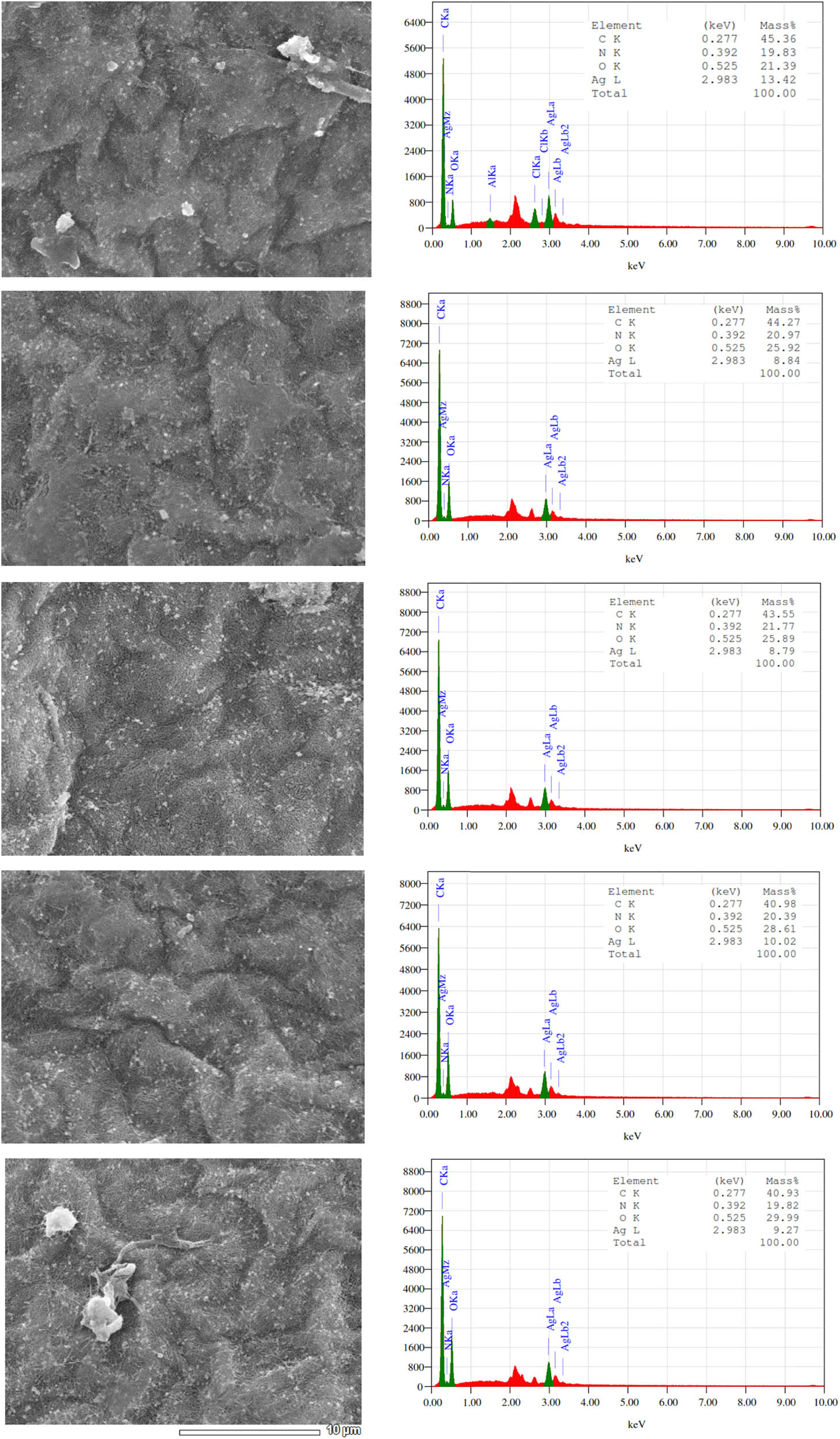
Various selected areas for EDX analysis of BC/AgNPs-H sample.
Details of elements contained in composite samples
| Area | BC/AgNPs-A elements (%mass) | BC/AgNPs-H elements (%mass) | ||||||
|---|---|---|---|---|---|---|---|---|
| C | N | O | Ag | C | N | O | Ag | |
| 1 | 43.57 | 24.52 | 24.94 | 6.97 | 45.36 | 19.83 | 21.39 | 13.42 |
| 2 | 42.92 | 22.84 | 29.3 | 4.94 | 44.27 | 20.97 | 25.92 | 8.84 |
| 3 | 43.79 | 21.25 | 31.4 | 3.57 | 43.55 | 21.77 | 25.89 | 8.79 |
| 4 | 43.09 | 23.43 | 24.27 | 9.21 | 40.98 | 20.39 | 28.61 | 10.02 |
| 5 | 41.97 | 23.41 | 23.73 | 10.89 | 40.93 | 19.82 | 29.99 | 9.27 |
| Mean | 43.07 | 23.09 | 26.73 | 7.12 | 43.02 | 20.56 | 26.36 | 10.07 |
| Deviation | ±0.71 | ±1.19 | ±3.42 | ±3.00 | ±1.99 | ±0.83 | ±3.29 | ±1.94 |
AgNO3 dissolved in water will form the ion (Ag(H2O)2)+, and the diffusion of hydrated Ag ions (Ag(H2O)2)+ into the BC matrix leads to coordination with the hydroxyl groups of cellulose [37]. Ionic interactions occur between these Ag ions and the hydroxyl groups of cellulose. AgNPs form when Ag ions are reduced from Ag+ to Ag0, and the hydroxyl groups of cellulose are oxidized to form carbonyl groups. In forming metal nanoparticles, the surface of BC is abundant in hydroxyl groups capable of lowering the energy demand for metal reduction. Additional energy or an external reducing agent might be needed to ease the reaction. The hydrothermal treatment was conducted at 75°C in order to facilitate the reduction reaction. BC, which had been soaked in AgNO3 solution and incubated at room temperature for 2 days, did not undergo a color change. By increasing the temperature, a slow reaction was observed as a color change [38]. Using plant extracts as a reducing agent is the second environmentally friendly method for synthesizing metal nanoparticles. It has been demonstrated that Averrhoa bilimbi contains high levels of flavonoids and terpenoids [25,39]. Plant phytochemicals with more than two hydroxyl groups, such as saponin, flavonoid, terpenoid, and tannin, play a role in the bioreduction and stabilization of AgNPs [26,27].
The highest Ag content was found in the BC/AgNPs-H sample with a value of 13.42% mass and an overall average of 10.07 ± 1.94%. Compared to previously published studies [20,36,40], the composites of this study are quite promising as sustainable nanoparticle composite biomaterials. The cellulose matrix is a suitable host material for metal nanoparticle interactions. Cellulose’s abundant hydroxyl groups serve as active sites for electropositive metal cations [36].
Thermogravimetric analysis (TGA) was carried out to investigate the thermal stability of the samples, as shown in Figure 8. There were three stages of weight reduction during temperature increase for BC and composite samples. The first stage was a minor weight reduction at a temperature below 260°C, probably due to the evaporation of water and other liquid contained in the samples. A significant weight loss was observed in heating temperatures 260°C to 330°C, indicating the degradation process of the cellulose components due to thermal oxidation [41]. The exothermic effect due to the intense heating was observed in weight reduction at the temperature above 330°C and it finally produced char. Significant weight loss difference was observed for each sample. At the end of the TGA process, the remaining weight was 28.03% for BC, 47.56% for BC/AgNPs-A, and 34.41% for BC/AgNPs-H. For the BC sample, the remaining weight corresponded to produced char, consistent with previous studies’ findings [12,30]. On the other hand, for BC/AgNPs-A and BC/AgNPs-H, there was a way more residual mass on heating up to 600°C, this probably indicating the presence of AgNPs in the matrix of the two samples, which were not degraded during the heating process. Overall, both BC and BC composite materials of this study had good temperature resistance, as evidenced by their high stability at heating over 250°C, which has met the requirements of industrial applications for biopolymer materials [12].

The TGA graph corresponding to the BC and composite samples.
3.2 Assay of antimicrobial activity
Due to their ability to generate reactive oxygen species (ROS), nanoparticles have significant antimicrobial potential. The formation of ROS inhibits the antioxidant defense system and damages the cell membrane mechanically [42]. As shown in Figures 9 and 10, the antimicrobial activity of composite samples was tested against pathogenic microbes E. coli and S. aureus. During the incubation period, the microbes around the BC membrane grew normally. On the other hand, a distinct inhibition zone formed around the composite sample. The BC/AgNP-H composite was proven to be able to form a larger inhibition zone against S. aureus compared to E. coli, whereas the BC/AgNP-A sample exhibited the same antimicrobial strength against both microbes. There are several factors that may influence the biological activity of AgNPs, such as concentration [30,43], size and shape [44,45], surface charge, silver ion release rate, and stability [46]. These factors should be the primary concern while synthesizing AgNPs and their clinical use.

Antimicrobial activity of (a) BC, (b) BC/AgNPs-A, (c) BC/AgNPs-H against E. coli.
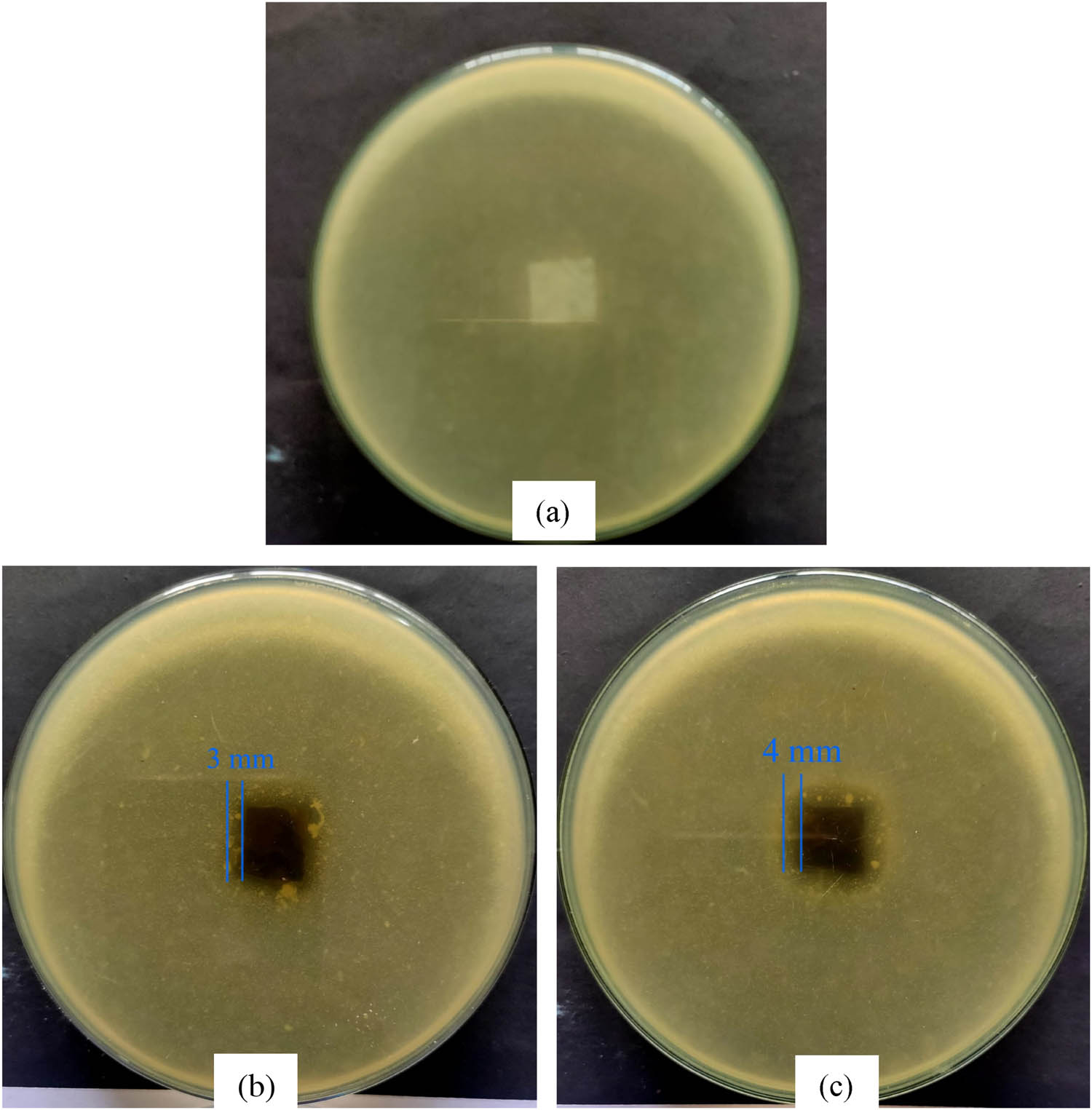
Antimicrobial activity of (a) BC, (b) BC/AgNPs-A, (c) BC/AgNPs-H against S. aureus.
4 Conclusions
In conclusion, BC/AgNP composites were successfully prepared using green methods: treatment with the bioreduction agent Averrhoa bilimbi extract and increasing reduction temperature through hydrothermal treatment. The FTIR spectrum reflects that the oxidation of hydroxyl groups to form carbonyl groups is essential in forming AgNPs. The XRD spectrum confirms the presence of the face-centered cubic structure of AgNPs. The SEM images exhibit the attachment of AgNPs to the BC matrix, while EDX quantitative analysis detailed the elements contained in composite samples. The highest Ag content was found in the BC/AgNP-H sample with a value of 13.42% mass. The TGA graph showed that both BC and composite materials of this study had good temperature resistance and met the requirements of industrial applications. Finally, the BC/AgNP composites demonstrated significant antimicrobial activity by forming a clear inhibition zone against S. aureus and E. coli.
Acknowledgments
All authors gratefully acknowledge the Directorate of Research and Community Service, Gadjah Mada University, for funding this research project.
-
Funding information: This work was funded by the Directorate of Research and Community Service, Gadjah Mada University, under contract number 3550/UN1.P.III/Dit-Lit/PT.01.05/2022 (Final Assignment Recognition Grant 2022, batch 1).
-
Author contributions: Tintin Mutiara: writing – original draft, conceptualization, methodology, investigation, visualization; Hary Sulistyo: writing – review, investigation, supervision; Mohammad Fahrurrozi: writing – review, investigation, supervision; Muslikhin Hidayat: writing – review, conceptualization, investigation, supervision, project administration, funding acquisition.
-
Conflict of interest: The authors declare that they have no conflict of interest.
References
[1] Feynman RP. Plenty of room at the bottom. Am Phys Soc; 1959.Suche in Google Scholar
[2] Taniguchi N. On the basic concept of nanotechnology. Proceeding ICPE; 1974.Suche in Google Scholar
[3] Li Q, Liu F, Li M, Chen C, Gadd GM. Nanoparticle and nanomineral production by fungi. Fungal Biol Rev. 2022;41:31–44.10.1016/j.fbr.2021.07.003Suche in Google Scholar
[4] Mandal D, Bolander ME, Mukhopadhyay D, Sarkar G, Mukherjee P. The use of microorganisms for the formation of metal nanoparticles and their application. Appl Microbiol Biotechnol. 2006;69:485–92.10.1007/s00253-005-0179-3Suche in Google Scholar PubMed
[5] Patil DS, Pawar SA, Hwang J, Kim JH, Patil PS, Shin JC. Silver incorporated PEDOT: PSS for enhanced electrochemical performance. J Ind Eng Chem. 2016;42:113–20.10.1016/j.jiec.2016.07.034Suche in Google Scholar
[6] Ahmed S, Ahmad M, Swami BL, Ikram S. A review on plants extract mediated synthesis of silver nanoparticles for antimicrobial applications: A green expertise. J Adv Res. 2016;7:17–28.10.1016/j.jare.2015.02.007Suche in Google Scholar PubMed PubMed Central
[7] Das C, Chatterjee S, Kumaraswamy G, Krishnamoorthy K. Elastic compressible energy storage devices from ice templated polymer gels treated with polyphenols. J Phys Chem C. 2017;121:3270–8.10.1021/acs.jpcc.6b12822Suche in Google Scholar
[8] Kumar SV, Huang NM, Lim HN, Zainy M, Harrison I, Chia CH. Preparation of highly water dispersible functional graphene/silver nanocomposite for the detection of melamine. Sens Actuators B Chem. 2013;181:885–93.10.1016/j.snb.2013.02.045Suche in Google Scholar
[9] Liu G, Wang Y, Pu X, Jiang Y, Cheng L, Jiao Z. One-step synthesis of high conductivity silver nanoparticle-reduced graphene oxide composite films by electron beam irradiation. Appl Surf Sci. 2015;349:570–5.10.1016/j.apsusc.2015.05.044Suche in Google Scholar
[10] Shameli K, Ahmad MB, Yunus WMZW, Rustaiyan A, Ibrahim NA, Zargar M, et al. Green synthesis of silver/montmorillonite/chitosan bionanocomposites using the UV irradiation method and evaluation of antibacterial activity. Int J Nanomedicine. 2010;5:875–87.10.2147/IJN.S13632Suche in Google Scholar PubMed PubMed Central
[11] Wang B-L, Liu X-S, Ji Y, Ren K-F, Ji J. Fast and long-acting antibacterial properties of chitosan-Ag/polyvinylpyrrolidone nanocomposite films. Carbohydr Polym. 2012;90:8–15.10.1016/j.carbpol.2012.03.080Suche in Google Scholar PubMed
[12] Galdino CJS, Maia AD, Meira HM, Souza TC, Amorim JDP, Almeida FCG, et al. Use of a bacterial cellulose filter for the removal of oil from wastewater. Process Biochem. 2020;91:288–96.10.1016/j.procbio.2019.12.020Suche in Google Scholar
[13] Wang J, Tavakoli J, Tang Y. Bacterial cellulose production, properties and applications with different culture methods – A review. Carbohydr Polym. 2019;219:63–76.10.1016/j.carbpol.2019.05.008Suche in Google Scholar PubMed
[14] Chen C, Ding W, Zhang H, Zhang L, Huang Y, Fan M, et al. Bacterial cellulose-based biomaterials: From fabrication to application. Carbohydr Polym. 2022;278:118995.10.1016/j.carbpol.2021.118995Suche in Google Scholar PubMed
[15] Cumba RMT, Ligalig CB, Tingson JMD, Molina MP, Alguno AC, Deocaris CC, et al. Photocatalytic activity of cellulose nanocrystals/zinc oxide nanocomposite against thiazine dye under UV and visible light irradiation. ASEAN J Chem Eng. 2022;22:168–77.10.22146/ajche.72331Suche in Google Scholar
[16] Ludwicka K, Kaczmarek M, Białkowska A. Bacterial nanocellulose-a biobased polymer for active and intelligent food packaging applications: recent advances and developments. Polymers. 2020;12:2209.10.3390/polym12102209Suche in Google Scholar PubMed PubMed Central
[17] Benavente J, García ME, Urbano N, López-Romero JM, Contreras-Cáceres RC, Casado-Rodríguez MA, et al. Inclusion of silver nanoparticles for improving regenerated cellulose membrane performance and reduction of biofouling. Int J Biol Macromol. 2017;103:758–63.10.1016/j.ijbiomac.2017.05.133Suche in Google Scholar PubMed
[18] Shao W, Liu H, Liu X, Sun H, Wang S, Zhang R. pH-responsive release behavior and anti-bacterial activity of bacterial cellulose-silver nanocomposites. Int J Biol Macromol. 2015;76:209–17.10.1016/j.ijbiomac.2015.02.048Suche in Google Scholar PubMed
[19] Yang G, Wang C, Hong F, Yang X, Cao Z. Preparation and characterization of BC/PAM-AgNPs nanocomposites for antibacterial applications. Carbohydr Polym. 2015;115:636–42.10.1016/j.carbpol.2014.09.042Suche in Google Scholar PubMed
[20] Elayaraja S, Zagorsek K, Li F, Xiang J. In situ synthesis of silver nanoparticles into TEMPO-mediated oxidized bacterial cellulose and their antivibriocidal activity against shrimp pathogens. Carbohydr Polym. 2017;166:329–37.10.1016/j.carbpol.2017.02.093Suche in Google Scholar PubMed
[21] Horue M, Cacicedo ML, Fernandez MA, Rodenak-Kladniew B, Torres Sánchez RM, Castro GR. Antimicrobial activities of bacterial cellulose – Silver montmorillonite nanocomposites for wound healing. Mater Sci Eng C. 2020;116:111152.10.1016/j.msec.2020.111152Suche in Google Scholar PubMed
[22] Nicoara AI, Stoica AE, Ene D-I, Vasile BS, Holban AM, Neacsu IA. In situ and ex situ designed hydroxyapatite: bacterial cellulose materials with biomedical applications. Mater Basel Switz. 2020;13:4793.10.3390/ma13214793Suche in Google Scholar PubMed PubMed Central
[23] Siddique KI. Phytochemical screenings, thrombolytic activity and antimicrobial properties of the bark extracts of Averrhoa bilimbi. J Appl Pharm Sci. 2013;3(3):94–6.Suche in Google Scholar
[24] Alhassan AM, Ahmed QU. Averrhoa bilimbi Linn.: A review of its ethnomedicinal uses, phytochemistry, and pharmacology. J Pharm Bioallied Sci. 2016;8:265–71.10.4103/0975-7406.199342Suche in Google Scholar PubMed PubMed Central
[25] Chau TP, Muthusamy M, Chinnathambi A, Alahmadi TA, Kuppusamy S. Optimization of extraction and quantification of Flavonoids from Averrhoa bilimbi fruits using RP-HPLC and its correlation between total flavonoids content against antimicrobial activity. Appl Nanosci. 2023;13:1293–300.10.1007/s13204-021-02020-1Suche in Google Scholar PubMed PubMed Central
[26] Hamedi S, Shojaosadati SA, Mohammadi A. Evaluation of the catalytic, antibacterial and anti-biofilm activities of the Convolvulus arvensis extract functionalized silver nanoparticles. J Photochem Photobiol B. 2017;167:36–44.10.1016/j.jphotobiol.2016.12.025Suche in Google Scholar PubMed
[27] Akter M, Sikder MT, Rahman MM, Ullah AKMA, Hossain KFB, Banik S, et al. A systematic review on silver nanoparticles-induced cytotoxicity: Physicochemical properties and perspectives. J Adv Res. 2018;9:1–16.10.1016/j.jare.2017.10.008Suche in Google Scholar PubMed PubMed Central
[28] Mostafavi E, Zarepour A, Barabadi H, Zarrabi A, Truong LB, Medina-Cruz D. Antineoplastic activity of biogenic silver and gold nanoparticles to combat leukemia: Beginning a new era in cancer theragnostic. Biotechnol Rep Amst Neth. 2022;34:00714.10.1016/j.btre.2022.e00714Suche in Google Scholar PubMed PubMed Central
[29] Barabadi H, Noqani H, Ashouri F, Prasad A, Jounaki K, Mobaraki K, et al. Nanobiotechnological approaches in anticoagulant therapy: The role of bioengineered silver and gold nanomaterials. Talanta. 2023;256:124279.10.1016/j.talanta.2023.124279Suche in Google Scholar PubMed
[30] Mutiara T, Sulistyo H, Fahrurrozi M, Hidayat M. Facile route of synthesis of silver nanoparticles templated bacterial cellulose, characterization, and its antibacterial application. Green Process Synth. 2022;11:361–72.10.1515/gps-2022-0038Suche in Google Scholar
[31] Escárcega-González CE, Garza-Cervantes JA, Vázquez-Rodríguez A, Morones-Ramírez JR. Bacterial exopolysaccharides as reducing and/or stabilizing agents during synthesis of metal nanoparticles with biomedical applications. Int J Polym Sci. 2018;2018:7045852.10.1155/2018/7045852Suche in Google Scholar
[32] Işık Z, Ünyayar A, Dizge N. Filtration and antibacterial properties of bacterial cellulose membranes for textile wastewater treatment. Avicenna J Environ Health Eng. 2018;5:106–14.10.15171/ajehe.2018.14Suche in Google Scholar
[33] Dong H, Snyder JF, Tran DT, Leadore JL. Hydrogel, aerogel and film of cellulose nanofibrils functionalized with silver nanoparticles. Carbohydr Polym. 2013;95:760–7.10.1016/j.carbpol.2013.03.041Suche in Google Scholar PubMed
[34] Li Z, Wang L, Chen S, Feng C, Chen S, Yin N, et al. Facilely green synthesis of silver nanoparticles into bacterial cellulose. Cellulose. 2015;22:373–83.10.1007/s10570-014-0487-9Suche in Google Scholar
[35] Gaminian H, Montazer M. Decorating silver nanoparticles on electrospun cellulose nanofibers through a facile method by dopamine and ultraviolet irradiation. Cellulose. 2017;24:3179–90.10.1007/s10570-017-1343-5Suche in Google Scholar
[36] Muthulakshmi L, Rajini N, Varada Rajalu A, Siengchin S, Kathiresan T. Synthesis and characterization of cellulose/silver nanocomposites from bioflocculant reducing agent. Int J Biol Macromol. 2017;103:1113–20.10.1016/j.ijbiomac.2017.05.068Suche in Google Scholar PubMed
[37] Barud HS, Barrios C, Regiani T, Marques RFC, Verelst M, Dexpert-Ghys J, et al. Self-supported silver nanoparticles containing bacterial cellulose membranes. Mater Sci Eng C. 2008;28:515–8.10.1016/j.msec.2007.05.001Suche in Google Scholar
[38] Yang G, Xie J, Deng Y, Bian Y, Hong F. Hydrothermal synthesis of bacterial cellulose/AgNPs composite: A “green” route for antibacterial application. Carbohydr Polym. 2012;87:2482–7.10.1016/j.carbpol.2011.11.017Suche in Google Scholar
[39] Nur A, Reski Fajar D. Identifikasi senyawa kimia pada ekstrak etanol 70% buah belimbing wuluh (Averrhoa bilimbi l.). Kieraha Med J. 2019;1(1).10.33387/kmj.v1i1.1740Suche in Google Scholar
[40] Feng J, Shi Q, Li W, Shu X, Chen A, Xie X, et al. Antimicrobial activity of silver nanoparticles in situ growth on TEMPO-mediated oxidized bacterial cellulose. Cellulose. 2014;21:4557–67.10.1007/s10570-014-0449-2Suche in Google Scholar
[41] Thiagamani SMK, Rajini N, Siengchin S, Varada Rajulu A, Hariram N, Ayrilmis N. Influence of silver nanoparticles on the mechanical, thermal and antimicrobial properties of cellulose-based hybrid nanocomposites. Compos B Eng. 2019;165:516–25.10.1016/j.compositesb.2019.02.006Suche in Google Scholar
[42] Chauhan A, Verma R, Kumari S, Sharma A, Shandilya P, Li X, et al. Photocatalytic dye degradation and antimicrobial activities of Pure and Ag-doped ZnO using Cannabis sativa leaf extract. Sci Rep. 2020;10:7881.10.1038/s41598-020-64419-0Suche in Google Scholar PubMed PubMed Central
[43] Rai M, Kon K, Ingle A, Duran N, Galdiero S, Galdiero M. Broad-spectrum bioactivities of silver nanoparticles: the emerging trends and future prospects. Appl Microbiol Biotechnol. 2014;98:1951–61.10.1007/s00253-013-5473-xSuche in Google Scholar PubMed PubMed Central
[44] Wasilewska A, Klekotka U, Zambrzycka M, Zambrowski G, Święcicka I, Kalska-Szostko B. Physico-chemical properties and antimicrobial activity of silver nanoparticles fabricated by green synthesis. Food Chem. 2023;400:133960.10.1016/j.foodchem.2022.133960Suche in Google Scholar PubMed
[45] Han Y, Wu X, Zhang X, Zhou Z, Lu C. Reductant-free synthesis of silver nanoparticles-doped cellulose microgels for catalyzing and product separation. ACS Sustain Chem Eng. 2016;4:6322–31.10.1021/acssuschemeng.6b00889Suche in Google Scholar
[46] Vazquez-Muñoz R, Bogdanchikova N, Huerta-Saquero A. Beyond the nanomaterials approach: influence of culture conditions on the stability and antimicrobial activity of silver nanoparticles. ACS Omega. 2020;5:28441–51.10.1021/acsomega.0c02007Suche in Google Scholar PubMed PubMed Central
© 2023 the author(s), published by De Gruyter
This work is licensed under the Creative Commons Attribution 4.0 International License.
Artikel in diesem Heft
- Research Articles
- Value-added utilization of coal fly ash and recycled polyvinyl chloride in door or window sub-frame composites
- High removal efficiency of volatile phenol from coking wastewater using coal gasification slag via optimized adsorption and multi-grade batch process
- Evolution of surface morphology and properties of diamond films by hydrogen plasma etching
- Removal efficiency of dibenzofuran using CuZn-zeolitic imidazole frameworks as a catalyst and adsorbent
- Rapid and efficient microwave-assisted extraction of Caesalpinia sappan Linn. heartwood and subsequent synthesis of gold nanoparticles
- The catalytic characteristics of 2-methylnaphthalene acylation with AlCl3 immobilized on Hβ as Lewis acid catalyst
- Biodegradation of synthetic PVP biofilms using natural materials and nanoparticles
- Rutin-loaded selenium nanoparticles modulated the redox status, inflammatory, and apoptotic pathways associated with pentylenetetrazole-induced epilepsy in mice
- Optimization of apigenin nanoparticles prepared by planetary ball milling: In vitro and in vivo studies
- Synthesis and characterization of silver nanoparticles using Origanum onites leaves: Cytotoxic, apoptotic, and necrotic effects on Capan-1, L929, and Caco-2 cell lines
- Exergy analysis of a conceptual CO2 capture process with an amine-based DES
- Construction of fluorescence system of felodipine–tetracyanovinyl–2,2′-bipyridine complex
- Excellent photocatalytic degradation of rhodamine B over Bi2O3 supported on Zn-MOF nanocomposites under visible light
- Optimization-based control strategy for a large-scale polyhydroxyalkanoates production in a fed-batch bioreactor using a coupled PDE–ODE system
- Effectiveness of pH and amount of Artemia urumiana extract on physical, chemical, and biological attributes of UV-fabricated biogold nanoparticles
- Geranium leaf-mediated synthesis of silver nanoparticles and their transcriptomic effects on Candida albicans
- Synthesis, characterization, anticancer, anti-inflammatory activities, and docking studies of 3,5-disubstituted thiadiazine-2-thiones
- Synthesis and stability of phospholipid-encapsulated nano-selenium
- Putative anti-proliferative effect of Indian mustard (Brassica juncea) seed and its nano-formulation
- Enrichment of low-grade phosphorites by the selective leaching method
- Electrochemical analysis of the dissolution of gold in a copper–ethylenediamine–thiosulfate system
- Characterisation of carbonate lake sediments as a potential filler for polymer composites
- Evaluation of nano-selenium biofortification characteristics of alfalfa (Medicago sativa L.)
- Quality of oil extracted by cold press from Nigella sativa seeds incorporated with rosemary extracts and pretreated by microwaves
- Heteropolyacid-loaded MOF-derived mesoporous zirconia catalyst for chemical degradation of rhodamine B
- Recovery of critical metals from carbonatite-type mineral wastes: Geochemical modeling investigation of (bio)hydrometallurgical leaching of REEs
- Photocatalytic properties of ZnFe-mixed oxides synthesized via a simple route for water remediation
- Attenuation of di(2-ethylhexyl)phthalate-induced hepatic and renal toxicity by naringin nanoparticles in a rat model
- Novel in situ synthesis of quaternary core–shell metallic sulfide nanocomposites for degradation of organic dyes and hydrogen production
- Microfluidic steam-based synthesis of luminescent carbon quantum dots as sensing probes for nitrite detection
- Transformation of eggshell waste to egg white protein solution, calcium chloride dihydrate, and eggshell membrane powder
- Preparation of Zr-MOFs for the adsorption of doxycycline hydrochloride from wastewater
- Green nanoarchitectonics of the silver nanocrystal potential for treating malaria and their cytotoxic effects on the kidney Vero cell line
- Carbon emissions analysis of producing modified asphalt with natural asphalt
- An efficient and green synthesis of 2-phenylquinazolin-4(3H)-ones via t-BuONa-mediated oxidative condensation of 2-aminobenzamides and benzyl alcohols under solvent- and transition metal-free conditions
- Chitosan nanoparticles loaded with mesosulfuron methyl and mesosulfuron methyl + florasulam + MCPA isooctyl to manage weeds of wheat (Triticum aestivum L.)
- Synergism between lignite and high-sulfur petroleum coke in CO2 gasification
- Facile aqueous synthesis of ZnCuInS/ZnS–ZnS QDs with enhanced photoluminescence lifetime for selective detection of Cu(ii) ions
- Rapid synthesis of copper nanoparticles using Nepeta cataria leaves: An eco-friendly management of disease-causing vectors and bacterial pathogens
- Study on the photoelectrocatalytic activity of reduced TiO2 nanotube films for removal of methyl orange
- Development of a fuzzy logic model for the prediction of spark-ignition engine performance and emission for gasoline–ethanol blends
- Micro-impact-induced mechano-chemical synthesis of organic precursors from FeC/FeN and carbonates/nitrates in water and its extension to nucleobases
- Green synthesis of strontium-doped tin dioxide (SrSnO2) nanoparticles using the Mahonia bealei leaf extract and evaluation of their anticancer and antimicrobial activities
- A study on the larvicidal and adulticidal potential of Cladostepus spongiosus macroalgae and green-fabricated silver nanoparticles against mosquito vectors
- Catalysts based on nickel salt heteropolytungstates for selective oxidation of diphenyl sulfide
- Powerful antibacterial nanocomposites from Corallina officinalis-mediated nanometals and chitosan nanoparticles against fish-borne pathogens
- Removal behavior of Zn and alkalis from blast furnace dust in pre-reduction sinter process
- Environmentally friendly synthesis and computational studies of novel class of acridinedione integrated spirothiopyrrolizidines/indolizidines
- The mechanisms of inhibition and lubrication of clean fracturing flowback fluids in water-based drilling fluids
- Adsorption/desorption performance of cellulose membrane for Pb(ii)
- A one-pot, multicomponent tandem synthesis of fused polycyclic pyrrolo[3,2-c]quinolinone/pyrrolizino[2,3-c]quinolinone hybrid heterocycles via environmentally benign solid state melt reaction
- Green synthesis of silver nanoparticles using durian rind extract and optical characteristics of surface plasmon resonance-based optical sensor for the detection of hydrogen peroxide
- Electrochemical analysis of copper-EDTA-ammonia-gold thiosulfate dissolution system
- Characterization of bio-oil production by microwave pyrolysis from cashew nut shells and Cassia fistula pods
- Green synthesis methods and characterization of bacterial cellulose/silver nanoparticle composites
- Photocatalytic research performance of zinc oxide/graphite phase carbon nitride catalyst and its application in environment
- Effect of phytogenic iron nanoparticles on the bio-fortification of wheat varieties
- In vitro anti-cancer and antimicrobial effects of manganese oxide nanoparticles synthesized using the Glycyrrhiza uralensis leaf extract on breast cancer cell lines
- Preparation of Pd/Ce(F)-MCM-48 catalysts and their catalytic performance of n-heptane isomerization
- Green “one-pot” fluorescent bis-indolizine synthesis with whole-cell plant biocatalysis
- Silica-titania mesoporous silicas of MCM-41 type as effective catalysts and photocatalysts for selective oxidation of diphenyl sulfide by H2O2
- Biosynthesis of zinc oxide nanoparticles from molted feathers of Pavo cristatus and their antibiofilm and anticancer activities
- Clean preparation of rutile from Ti-containing mixed molten slag by CO2 oxidation
- Synthesis and characterization of Pluronic F-127-coated titanium dioxide nanoparticles synthesized from extracts of Atractylodes macrocephala leaf for antioxidant, antimicrobial, and anticancer properties
- Effect of pretreatment with alkali on the anaerobic digestion characteristics of kitchen waste and analysis of microbial diversity
- Ameliorated antimicrobial, antioxidant, and anticancer properties by Plectranthus vettiveroides root extract-mediated green synthesis of chitosan nanoparticles
- Microwave-accelerated pretreatment technique in green extraction of oil and bioactive compounds from camelina seeds: Effectiveness and characterization
- Studies on the extraction performance of phorate by aptamer-functionalized magnetic nanoparticles in plasma samples
- Investigation of structural properties and antibacterial activity of AgO nanoparticle extract from Solanum nigrum/Mentha leaf extracts by green synthesis method
- Green fabrication of chitosan from marine crustaceans and mushroom waste: Toward sustainable resource utilization
- Synthesis, characterization, and evaluation of nanoparticles of clodinofop propargyl and fenoxaprop-P-ethyl on weed control, growth, and yield of wheat (Triticum aestivum L.)
- The enhanced adsorption properties of phosphorus from aqueous solutions using lanthanum modified synthetic zeolites
- Separation of graphene oxides of different sizes by multi-layer dialysis and anti-friction and lubrication performance
- Visible-light-assisted base-catalyzed, one-pot synthesis of highly functionalized cinnolines
- The experimental study on the air oxidation of 5-hydroxymethylfurfural to 2,5-furandicarboxylic acid with Co–Mn–Br system
- Highly efficient removal of tetracycline and methyl violet 2B from aqueous solution using the bimetallic FeZn-ZIFs catalyst
- A thermo-tolerant cellulase enzyme produced by Bacillus amyloliquefaciens M7, an insight into synthesis, optimization, characterization, and bio-polishing activity
- Exploration of ketone derivatives of succinimide for their antidiabetic potential: In vitro and in vivo approaches
- Ultrasound-assisted green synthesis and in silico study of 6-(4-(butylamino)-6-(diethylamino)-1,3,5-triazin-2-yl)oxypyridazine derivatives
- A study of the anticancer potential of Pluronic F-127 encapsulated Fe2O3 nanoparticles derived from Berberis vulgaris extract
- Biogenic synthesis of silver nanoparticles using Consolida orientalis flowers: Identification, catalytic degradation, and biological effect
- Initial assessment of the presence of plastic waste in some coastal mangrove forests in Vietnam
- Adsorption synergy electrocatalytic degradation of phenol by active oxygen-containing species generated in Co-coal based cathode and graphite anode
- Antibacterial, antifungal, antioxidant, and cytotoxicity activities of the aqueous extract of Syzygium aromaticum-mediated synthesized novel silver nanoparticles
- Synthesis of a silica matrix with ZnO nanoparticles for the fabrication of a recyclable photodegradation system to eliminate methylene blue dye
- Natural polymer fillers instead of dye and pigments: Pumice and scoria in PDMS fluid and elastomer composites
- Study on the preparation of glycerylphosphorylcholine by transesterification under supported sodium methoxide
- Wireless network handheld terminal-based green ecological sustainable design evaluation system: Improved data communication and reduced packet loss rate
- The optimization of hydrogel strength from cassava starch using oxidized sucrose as a crosslinking agent
- Green synthesis of silver nanoparticles using Saccharum officinarum leaf extract for antiviral paint
- Study on the reliability of nano-silver-coated tin solder joints for flip chips
- Environmentally sustainable analytical quality by design aided RP-HPLC method for the estimation of brilliant blue in commercial food samples employing a green-ultrasound-assisted extraction technique
- Anticancer and antimicrobial potential of zinc/sodium alginate/polyethylene glycol/d-pinitol nanocomposites against osteosarcoma MG-63 cells
- Nanoporous carbon@CoFe2O4 nanocomposite as a green absorbent for the adsorptive removal of Hg(ii) from aqueous solutions
- Characterization of silver sulfide nanoparticles from actinobacterial strain (M10A62) and its toxicity against lepidopteran and dipterans insect species
- Phyto-fabrication and characterization of silver nanoparticles using Withania somnifera: Investigating antioxidant potential
- Effect of e-waste nanofillers on the mechanical, thermal, and wear properties of epoxy-blend sisal woven fiber-reinforced composites
- Magnesium nanohydroxide (2D brucite) as a host matrix for thymol and carvacrol: Synthesis, characterization, and inhibition of foodborne pathogens
- Synergistic inhibitive effect of a hybrid zinc oxide-benzalkonium chloride composite on the corrosion of carbon steel in a sulfuric acidic solution
- Review Articles
- Role and the importance of green approach in biosynthesis of nanopropolis and effectiveness of propolis in the treatment of COVID-19 pandemic
- Gum tragacanth-mediated synthesis of metal nanoparticles, characterization, and their applications as a bactericide, catalyst, antioxidant, and peroxidase mimic
- Green-processed nano-biocomposite (ZnO–TiO2): Potential candidates for biomedical applications
- Reaction mechanisms in microwave-assisted lignin depolymerisation in hydrogen-donating solvents
- Recent progress on non-noble metal catalysts for the deoxydehydration of biomass-derived oxygenates
- Rapid Communication
- Phosphorus removal by iron–carbon microelectrolysis: A new way to achieve phosphorus recovery
- Special Issue: Biomolecules-derived synthesis of nanomaterials for environmental and biological applications (Guest Editors: Arpita Roy and Fernanda Maria Policarpo Tonelli)
- Biomolecules-derived synthesis of nanomaterials for environmental and biological applications
- Nano-encapsulated tanshinone IIA in PLGA-PEG-COOH inhibits apoptosis and inflammation in cerebral ischemia/reperfusion injury
- Green fabrication of silver nanoparticles using Melia azedarach ripened fruit extract, their characterization, and biological properties
- Green-synthesized nanoparticles and their therapeutic applications: A review
- Antioxidant, antibacterial, and cytotoxicity potential of synthesized silver nanoparticles from the Cassia alata leaf aqueous extract
- Green synthesis of silver nanoparticles using Callisia fragrans leaf extract and its anticancer activity against MCF-7, HepG2, KB, LU-1, and MKN-7 cell lines
- Algae-based green AgNPs, AuNPs, and FeNPs as potential nanoremediators
- Green synthesis of Kickxia elatine-induced silver nanoparticles and their role as anti-acetylcholinesterase in the treatment of Alzheimer’s disease
- Phytocrystallization of silver nanoparticles using Cassia alata flower extract for effective control of fungal skin pathogens
- Antibacterial wound dressing with hydrogel from chitosan and polyvinyl alcohol from the red cabbage extract loaded with silver nanoparticles
- Leveraging of mycogenic copper oxide nanostructures for disease management of Alternaria blight of Brassica juncea
- Nanoscale molecular reactions in microbiological medicines in modern medical applications
- Synthesis and characterization of ZnO/β-cyclodextrin/nicotinic acid nanocomposite and its biological and environmental application
- Green synthesis of silver nanoparticles via Taxus wallichiana Zucc. plant-derived Taxol: Novel utilization as anticancer, antioxidation, anti-inflammation, and antiurolithic potential
- Recyclability and catalytic characteristics of copper oxide nanoparticles derived from bougainvillea plant flower extract for biomedical application
- Phytofabrication, characterization, and evaluation of novel bioinspired selenium–iron (Se–Fe) nanocomposites using Allium sativum extract for bio-potential applications
- Erratum
- Erratum to “Synthesis, characterization, and evaluation of nanoparticles of clodinofop propargyl and fenoxaprop-P-ethyl on weed control, growth, and yield of wheat (Triticum aestivum L.)”
Artikel in diesem Heft
- Research Articles
- Value-added utilization of coal fly ash and recycled polyvinyl chloride in door or window sub-frame composites
- High removal efficiency of volatile phenol from coking wastewater using coal gasification slag via optimized adsorption and multi-grade batch process
- Evolution of surface morphology and properties of diamond films by hydrogen plasma etching
- Removal efficiency of dibenzofuran using CuZn-zeolitic imidazole frameworks as a catalyst and adsorbent
- Rapid and efficient microwave-assisted extraction of Caesalpinia sappan Linn. heartwood and subsequent synthesis of gold nanoparticles
- The catalytic characteristics of 2-methylnaphthalene acylation with AlCl3 immobilized on Hβ as Lewis acid catalyst
- Biodegradation of synthetic PVP biofilms using natural materials and nanoparticles
- Rutin-loaded selenium nanoparticles modulated the redox status, inflammatory, and apoptotic pathways associated with pentylenetetrazole-induced epilepsy in mice
- Optimization of apigenin nanoparticles prepared by planetary ball milling: In vitro and in vivo studies
- Synthesis and characterization of silver nanoparticles using Origanum onites leaves: Cytotoxic, apoptotic, and necrotic effects on Capan-1, L929, and Caco-2 cell lines
- Exergy analysis of a conceptual CO2 capture process with an amine-based DES
- Construction of fluorescence system of felodipine–tetracyanovinyl–2,2′-bipyridine complex
- Excellent photocatalytic degradation of rhodamine B over Bi2O3 supported on Zn-MOF nanocomposites under visible light
- Optimization-based control strategy for a large-scale polyhydroxyalkanoates production in a fed-batch bioreactor using a coupled PDE–ODE system
- Effectiveness of pH and amount of Artemia urumiana extract on physical, chemical, and biological attributes of UV-fabricated biogold nanoparticles
- Geranium leaf-mediated synthesis of silver nanoparticles and their transcriptomic effects on Candida albicans
- Synthesis, characterization, anticancer, anti-inflammatory activities, and docking studies of 3,5-disubstituted thiadiazine-2-thiones
- Synthesis and stability of phospholipid-encapsulated nano-selenium
- Putative anti-proliferative effect of Indian mustard (Brassica juncea) seed and its nano-formulation
- Enrichment of low-grade phosphorites by the selective leaching method
- Electrochemical analysis of the dissolution of gold in a copper–ethylenediamine–thiosulfate system
- Characterisation of carbonate lake sediments as a potential filler for polymer composites
- Evaluation of nano-selenium biofortification characteristics of alfalfa (Medicago sativa L.)
- Quality of oil extracted by cold press from Nigella sativa seeds incorporated with rosemary extracts and pretreated by microwaves
- Heteropolyacid-loaded MOF-derived mesoporous zirconia catalyst for chemical degradation of rhodamine B
- Recovery of critical metals from carbonatite-type mineral wastes: Geochemical modeling investigation of (bio)hydrometallurgical leaching of REEs
- Photocatalytic properties of ZnFe-mixed oxides synthesized via a simple route for water remediation
- Attenuation of di(2-ethylhexyl)phthalate-induced hepatic and renal toxicity by naringin nanoparticles in a rat model
- Novel in situ synthesis of quaternary core–shell metallic sulfide nanocomposites for degradation of organic dyes and hydrogen production
- Microfluidic steam-based synthesis of luminescent carbon quantum dots as sensing probes for nitrite detection
- Transformation of eggshell waste to egg white protein solution, calcium chloride dihydrate, and eggshell membrane powder
- Preparation of Zr-MOFs for the adsorption of doxycycline hydrochloride from wastewater
- Green nanoarchitectonics of the silver nanocrystal potential for treating malaria and their cytotoxic effects on the kidney Vero cell line
- Carbon emissions analysis of producing modified asphalt with natural asphalt
- An efficient and green synthesis of 2-phenylquinazolin-4(3H)-ones via t-BuONa-mediated oxidative condensation of 2-aminobenzamides and benzyl alcohols under solvent- and transition metal-free conditions
- Chitosan nanoparticles loaded with mesosulfuron methyl and mesosulfuron methyl + florasulam + MCPA isooctyl to manage weeds of wheat (Triticum aestivum L.)
- Synergism between lignite and high-sulfur petroleum coke in CO2 gasification
- Facile aqueous synthesis of ZnCuInS/ZnS–ZnS QDs with enhanced photoluminescence lifetime for selective detection of Cu(ii) ions
- Rapid synthesis of copper nanoparticles using Nepeta cataria leaves: An eco-friendly management of disease-causing vectors and bacterial pathogens
- Study on the photoelectrocatalytic activity of reduced TiO2 nanotube films for removal of methyl orange
- Development of a fuzzy logic model for the prediction of spark-ignition engine performance and emission for gasoline–ethanol blends
- Micro-impact-induced mechano-chemical synthesis of organic precursors from FeC/FeN and carbonates/nitrates in water and its extension to nucleobases
- Green synthesis of strontium-doped tin dioxide (SrSnO2) nanoparticles using the Mahonia bealei leaf extract and evaluation of their anticancer and antimicrobial activities
- A study on the larvicidal and adulticidal potential of Cladostepus spongiosus macroalgae and green-fabricated silver nanoparticles against mosquito vectors
- Catalysts based on nickel salt heteropolytungstates for selective oxidation of diphenyl sulfide
- Powerful antibacterial nanocomposites from Corallina officinalis-mediated nanometals and chitosan nanoparticles against fish-borne pathogens
- Removal behavior of Zn and alkalis from blast furnace dust in pre-reduction sinter process
- Environmentally friendly synthesis and computational studies of novel class of acridinedione integrated spirothiopyrrolizidines/indolizidines
- The mechanisms of inhibition and lubrication of clean fracturing flowback fluids in water-based drilling fluids
- Adsorption/desorption performance of cellulose membrane for Pb(ii)
- A one-pot, multicomponent tandem synthesis of fused polycyclic pyrrolo[3,2-c]quinolinone/pyrrolizino[2,3-c]quinolinone hybrid heterocycles via environmentally benign solid state melt reaction
- Green synthesis of silver nanoparticles using durian rind extract and optical characteristics of surface plasmon resonance-based optical sensor for the detection of hydrogen peroxide
- Electrochemical analysis of copper-EDTA-ammonia-gold thiosulfate dissolution system
- Characterization of bio-oil production by microwave pyrolysis from cashew nut shells and Cassia fistula pods
- Green synthesis methods and characterization of bacterial cellulose/silver nanoparticle composites
- Photocatalytic research performance of zinc oxide/graphite phase carbon nitride catalyst and its application in environment
- Effect of phytogenic iron nanoparticles on the bio-fortification of wheat varieties
- In vitro anti-cancer and antimicrobial effects of manganese oxide nanoparticles synthesized using the Glycyrrhiza uralensis leaf extract on breast cancer cell lines
- Preparation of Pd/Ce(F)-MCM-48 catalysts and their catalytic performance of n-heptane isomerization
- Green “one-pot” fluorescent bis-indolizine synthesis with whole-cell plant biocatalysis
- Silica-titania mesoporous silicas of MCM-41 type as effective catalysts and photocatalysts for selective oxidation of diphenyl sulfide by H2O2
- Biosynthesis of zinc oxide nanoparticles from molted feathers of Pavo cristatus and their antibiofilm and anticancer activities
- Clean preparation of rutile from Ti-containing mixed molten slag by CO2 oxidation
- Synthesis and characterization of Pluronic F-127-coated titanium dioxide nanoparticles synthesized from extracts of Atractylodes macrocephala leaf for antioxidant, antimicrobial, and anticancer properties
- Effect of pretreatment with alkali on the anaerobic digestion characteristics of kitchen waste and analysis of microbial diversity
- Ameliorated antimicrobial, antioxidant, and anticancer properties by Plectranthus vettiveroides root extract-mediated green synthesis of chitosan nanoparticles
- Microwave-accelerated pretreatment technique in green extraction of oil and bioactive compounds from camelina seeds: Effectiveness and characterization
- Studies on the extraction performance of phorate by aptamer-functionalized magnetic nanoparticles in plasma samples
- Investigation of structural properties and antibacterial activity of AgO nanoparticle extract from Solanum nigrum/Mentha leaf extracts by green synthesis method
- Green fabrication of chitosan from marine crustaceans and mushroom waste: Toward sustainable resource utilization
- Synthesis, characterization, and evaluation of nanoparticles of clodinofop propargyl and fenoxaprop-P-ethyl on weed control, growth, and yield of wheat (Triticum aestivum L.)
- The enhanced adsorption properties of phosphorus from aqueous solutions using lanthanum modified synthetic zeolites
- Separation of graphene oxides of different sizes by multi-layer dialysis and anti-friction and lubrication performance
- Visible-light-assisted base-catalyzed, one-pot synthesis of highly functionalized cinnolines
- The experimental study on the air oxidation of 5-hydroxymethylfurfural to 2,5-furandicarboxylic acid with Co–Mn–Br system
- Highly efficient removal of tetracycline and methyl violet 2B from aqueous solution using the bimetallic FeZn-ZIFs catalyst
- A thermo-tolerant cellulase enzyme produced by Bacillus amyloliquefaciens M7, an insight into synthesis, optimization, characterization, and bio-polishing activity
- Exploration of ketone derivatives of succinimide for their antidiabetic potential: In vitro and in vivo approaches
- Ultrasound-assisted green synthesis and in silico study of 6-(4-(butylamino)-6-(diethylamino)-1,3,5-triazin-2-yl)oxypyridazine derivatives
- A study of the anticancer potential of Pluronic F-127 encapsulated Fe2O3 nanoparticles derived from Berberis vulgaris extract
- Biogenic synthesis of silver nanoparticles using Consolida orientalis flowers: Identification, catalytic degradation, and biological effect
- Initial assessment of the presence of plastic waste in some coastal mangrove forests in Vietnam
- Adsorption synergy electrocatalytic degradation of phenol by active oxygen-containing species generated in Co-coal based cathode and graphite anode
- Antibacterial, antifungal, antioxidant, and cytotoxicity activities of the aqueous extract of Syzygium aromaticum-mediated synthesized novel silver nanoparticles
- Synthesis of a silica matrix with ZnO nanoparticles for the fabrication of a recyclable photodegradation system to eliminate methylene blue dye
- Natural polymer fillers instead of dye and pigments: Pumice and scoria in PDMS fluid and elastomer composites
- Study on the preparation of glycerylphosphorylcholine by transesterification under supported sodium methoxide
- Wireless network handheld terminal-based green ecological sustainable design evaluation system: Improved data communication and reduced packet loss rate
- The optimization of hydrogel strength from cassava starch using oxidized sucrose as a crosslinking agent
- Green synthesis of silver nanoparticles using Saccharum officinarum leaf extract for antiviral paint
- Study on the reliability of nano-silver-coated tin solder joints for flip chips
- Environmentally sustainable analytical quality by design aided RP-HPLC method for the estimation of brilliant blue in commercial food samples employing a green-ultrasound-assisted extraction technique
- Anticancer and antimicrobial potential of zinc/sodium alginate/polyethylene glycol/d-pinitol nanocomposites against osteosarcoma MG-63 cells
- Nanoporous carbon@CoFe2O4 nanocomposite as a green absorbent for the adsorptive removal of Hg(ii) from aqueous solutions
- Characterization of silver sulfide nanoparticles from actinobacterial strain (M10A62) and its toxicity against lepidopteran and dipterans insect species
- Phyto-fabrication and characterization of silver nanoparticles using Withania somnifera: Investigating antioxidant potential
- Effect of e-waste nanofillers on the mechanical, thermal, and wear properties of epoxy-blend sisal woven fiber-reinforced composites
- Magnesium nanohydroxide (2D brucite) as a host matrix for thymol and carvacrol: Synthesis, characterization, and inhibition of foodborne pathogens
- Synergistic inhibitive effect of a hybrid zinc oxide-benzalkonium chloride composite on the corrosion of carbon steel in a sulfuric acidic solution
- Review Articles
- Role and the importance of green approach in biosynthesis of nanopropolis and effectiveness of propolis in the treatment of COVID-19 pandemic
- Gum tragacanth-mediated synthesis of metal nanoparticles, characterization, and their applications as a bactericide, catalyst, antioxidant, and peroxidase mimic
- Green-processed nano-biocomposite (ZnO–TiO2): Potential candidates for biomedical applications
- Reaction mechanisms in microwave-assisted lignin depolymerisation in hydrogen-donating solvents
- Recent progress on non-noble metal catalysts for the deoxydehydration of biomass-derived oxygenates
- Rapid Communication
- Phosphorus removal by iron–carbon microelectrolysis: A new way to achieve phosphorus recovery
- Special Issue: Biomolecules-derived synthesis of nanomaterials for environmental and biological applications (Guest Editors: Arpita Roy and Fernanda Maria Policarpo Tonelli)
- Biomolecules-derived synthesis of nanomaterials for environmental and biological applications
- Nano-encapsulated tanshinone IIA in PLGA-PEG-COOH inhibits apoptosis and inflammation in cerebral ischemia/reperfusion injury
- Green fabrication of silver nanoparticles using Melia azedarach ripened fruit extract, their characterization, and biological properties
- Green-synthesized nanoparticles and their therapeutic applications: A review
- Antioxidant, antibacterial, and cytotoxicity potential of synthesized silver nanoparticles from the Cassia alata leaf aqueous extract
- Green synthesis of silver nanoparticles using Callisia fragrans leaf extract and its anticancer activity against MCF-7, HepG2, KB, LU-1, and MKN-7 cell lines
- Algae-based green AgNPs, AuNPs, and FeNPs as potential nanoremediators
- Green synthesis of Kickxia elatine-induced silver nanoparticles and their role as anti-acetylcholinesterase in the treatment of Alzheimer’s disease
- Phytocrystallization of silver nanoparticles using Cassia alata flower extract for effective control of fungal skin pathogens
- Antibacterial wound dressing with hydrogel from chitosan and polyvinyl alcohol from the red cabbage extract loaded with silver nanoparticles
- Leveraging of mycogenic copper oxide nanostructures for disease management of Alternaria blight of Brassica juncea
- Nanoscale molecular reactions in microbiological medicines in modern medical applications
- Synthesis and characterization of ZnO/β-cyclodextrin/nicotinic acid nanocomposite and its biological and environmental application
- Green synthesis of silver nanoparticles via Taxus wallichiana Zucc. plant-derived Taxol: Novel utilization as anticancer, antioxidation, anti-inflammation, and antiurolithic potential
- Recyclability and catalytic characteristics of copper oxide nanoparticles derived from bougainvillea plant flower extract for biomedical application
- Phytofabrication, characterization, and evaluation of novel bioinspired selenium–iron (Se–Fe) nanocomposites using Allium sativum extract for bio-potential applications
- Erratum
- Erratum to “Synthesis, characterization, and evaluation of nanoparticles of clodinofop propargyl and fenoxaprop-P-ethyl on weed control, growth, and yield of wheat (Triticum aestivum L.)”
