Powerful antibacterial nanocomposites from Corallina officinalis-mediated nanometals and chitosan nanoparticles against fish-borne pathogens
-
Ahmed A. Tayel
 ,
Nancy A. Elsayes
,
Nancy A. Elsayes

Abstract
The fish-borne zoonotic bacteria may pose a risk to humans; nanobiotechnological techniques could serve as effective solutions for fighting them. The direct phycosynthesis of metals’ nanoparticles (NPs), silver (AgNPs), and selenium (SeNPs) using Corallina officinalis extract (CoE) was achieved. The construction of nanocomposites (NCs) from phycosynthesized NPs and nano-chitosan (NCht) was also accomplished to evaluate these entire compounds/NCs as antibacterial amalgams against fish-borne bacteria, Aeromonas hydrophila, Pseudomonas aeruginosa, Salmonella typhimurium, and Staphylococcus aureus. The entire agents/NCs were characterized and assessed. The structure and interactions of chemicals and NCs were determined using infrared analysis. CoE/AgNPs, CoE/SeNPs, NCht, NCht/CoE/AgNPs, and NCht/CoE/SeNPs had mean particles’ diameter of 5.52, 12.46, 59.81, 64.59, and 77.16 nm, respectively, which were confirmed by size studies and electron microscopy. The challenged bacteria were entirely susceptible to the inspected agents, using both qualitative and quantitative assays; S. aureus was more resistant, while A. hydrophila was the most sensitive strain. The NCs (NCht/CoE/AgNPs and NCht/CoE/SeNPs) have the utmost bactericidal potentialities, respectively; they exceeded the action of ampicillin. The total distortion, disintegration, and lysis of the treated A. hydrophila cells were highlighted by scanning imaging within 10 h of exposure. The conjugation of CoE-mediated NPs with NCht produced effective and harmless NCs, valid for applications to remove fish-borne pathogens with biosafe characteristics.
1 Introduction
Human threatening with fetal diseases, including dysenteries, pneumonia, diphtheria, syphilis, typhoid fever, leprosy, tetanus, etc., are frequently caused by pathogenic bacteria [1]. As microorganisms can develop numerous strategies for evading the antibiotics’ action (e.g., emerging drug-resistant strains), the search for unusual alternative antimicrobials became an essential communal priority to explore/develop more effectual, cheaper, bioavailable, biosafe, and biocidal agents [2]. Fish (farmed or wildly cultured) are frequently threatened by numerous microorganisms that cause their fatality and may spread via human ingestion or handling [3]. These fish-borne zoonotic microorganisms are frequently the cause of a variety of infectious illnesses that have been identified following contact with or eating of a variety of fish and seafoods [4]. Staphylococcus aureus is the pathogen from these fish-borne zoonoses that causes many human illnesses including skin infection and septic/toxic shock syndromes, whereas Salmonella typhimurium, along with Escherichia coli, was the key causatives of various lethal diseases, e.g., uremia, acute respiratory distress syndrome, typhoid fever, and hepatic failures [5]. The resistant strains of Salmonella spp. and E. coli were formerly detected in many seafoods and fresh fish [6]. Additionally, literature has emphasized the most dangerous bacteria that can be spread through fish, such as Aeromonas hydrophila, Vibrio spp., Clostridium botulinum, E. coli, Salmonella spp., Shigella spp., S. aureus, Klebsiella spp., Mycobacterium tuberculosis, Streptococcus iniae, Yersinia spp., Brucella spp., and Edwardsiella tarda [4,7,8].
A. hydrophila is a Gram-negative (G‒) zoonotic bacteria that causes large-scale septicemia outbreaks and significant losses in aquaculture [9]; it can transmit to humans to cause gastroenteritis, bacteremia, and necrotizing fasciitis [8]. With the over-use of antibiotics, A. hydrophila can express multiple resistances to various antibiotics [10,11].
The resistant strains of Gram-positive (G+) S. aureus were isolated following numerous food poisoning outbreaks [12], including seafood consumption [13].
Macroalgae (seaweeds) comprise large diversified groups of autotrophs; they inhabit the seashores and depth down of ∼30 m in oceans, where sufficient light for their photosynthesis is obtainable [14]. Seaweeds have produced a wide range of unique biochemicals (with varied bioactivities), including the anti-ulcers, antibiotics, anticoagulants, anticancers, antiviral, and laxatives [5]. Various bioactive molecules are produced from macroalgae including halogenated terpenoids and sulfated polysaccharides (e.g., carrageenan, fucoidan, and ulvan) that are solely extracted from seaweeds and have potent antimicrobial, anticancerous, and antiviral bioactivities [15,16]. Green chemistry methods were effectively used to synthesize nanoparticles (NPs) from seaweed extracts and derivatives. The phycosynthesized NPs had a variety of sizes, morphologies, and shapes and were used extensively in various pharmaceutical and environmental applications [17,18,19].
Corallina officinalis (the edible red seaweed) is commonly found worldwide; the bioactive and sulfated polysaccharides of C. officinalis demonstrated particular imperative bioactivities such as antitumor, anticoagulant, antithrombotic, antiherpetic, and antiviral (HIV-1) activities [16]. Additionally, the C. officinalis extract (CoE) was effectively employed as a mediator for the biosynthesis of several metal NPs, including gold NPs with potent cytotoxic activity [20] and silver (AgNPs) with antifungal and microbicidal activities [17].
The selenium element (Se) offers a natural, non-metallic, and energetic micronutrient for mammals (daily requirements = 30–300 µg); Se could be regularly consumed in the form of a regular diet or supplements [21]. The Se zero-states of oxidation (e.g., Se0) are often achieved from their NPs (SeNPs), which have minimal toxicity and estimable bioavailability with regard to the further oxidation states of Se [22]. When compared to other (physical–chemical) synthesis methods, the green (biogenic) fabrications of SeNPs offered a significant advantage for applications in pharmacological, nutritional, and medicinal fields because they produced SeNPs that were very stable, non-aggregated, biosafe, and effective [23]. The non-biogenic approaches habitually involved high temperatures, advanced technologies, low pH, hazardous chemicals, and elevated cost, although the biosynthesized SeNPs showed improved bioavailability, larger functionality/bioactivity, and lowermost toxicity [22,24,25]. The frequently reported antibacterial activities of biogenic SeNPs to include reactive oxygen species (ROS) production, cell penetration, interactions with/deactivation of energetic cell organelles, obstruction of metabolic pathways, and distressing cell membrane synthesis and permeabilities [24,26,27].
The conjugations (compositing) of biologically synthesized SeNPs within covering polysaccharides/biopolymers (e.g., chitosan, curcumin, plant mucilage, etc.) were shown to provide SeNPs with more bioactivity and biosafety attributes as powerful antimicrobial conjugates, with lowest biotoxicity potentials [25,28,29].
The biosynthesized silver NPs (AgNPs) were also well confirmed with powerful bactericidal potentialities; the use of biogenic methods for AgNP synthesis significantly reduces biotoxicity toward mammals’ tissue while conserving their biocidal activities toward microbes [30,31].
The NPs of biopolymers expressed elevated superiority for applications in drug encapsulating, carrying, or delivery; the nanobiopolymers are potentially excellent in terms of biodegradability, non-toxicity, non-immunogenicity, water solubility, cost-effective, biocompatibility, and self-bioactivity attributes [32,33]. The deacetylated form of chitin, chitosan (Cht), can be obtained from the shells of crustaceans, fungi, plants, or insect skeletons [34]. Cht can be facilely transformed into nanostructures (mostly via ionic cross-linking, self-assembly, or polyelectrolyte development approaches), which generate more effective chitosan NPs (NCht), e.g., the supreme nanocarriers for various drugs/molecules, with _protruding biocompatibilities, biodegradability, negligible immunogenicity, and toxicity [35]. The cationic (positive-charging) nature of Cht and NCht enhanced their desirable adhesion/attachment into anionic (negative-charging) biological surfaces, e.g., cancer cells, microbial surfaces, microbial organelles, DNA, mucosal membranes, and RNA through electrostatic interfaces, which give additional significant rationales to that biopolymer for the delivery and internalization of biomolecules throughout targeted cells/tissues [36].
The term nanocomposite (NC) refers to a conjugation of several materials at the “nano” scale; NCs based on biopolymers usually have a single dimension of less than 1,000 nm [37]. The NCht and additional hydrophilic biopolymer NCs are of outstanding importance for nanobiotechnology applications to deliver therapeutic/bioactive agents, nutraceuticals, genes, antibiotics, anticancer, and assembly of engineered tissues with the highest biosafety qualities [38,39].
The use of CoE-mediated nanomaterials in conjugation with NCht to generate biosafe antimicrobial NCs has not yet been studied.
Accordingly, we focused on using CoE to mediate AgNPs and SeNPs, to create bioactive NCs from the phycosynthesized NPs with NCht, and to evaluate their prospective antibacterial effects toward fish-borne diseases.
2 Materials and methods
2.1 Chemicals used
Unless otherwise noted, all used chemicals, buffers, media, and reagents were procured from Sigma-Aldrich Co. (St. Louis, MO, USA).
2.2 Algae sampling and processing
The red seaweeds (C. officinalis) were hand-harvested off the northern Egyptian coast (near Abu Qir, Alexandria, around 31°18′N, 30°04′E). The morphological recognition of macroalgae specimens was performed by a marine phycologist expert at the National Institute of Oceanography and Fisheries (NIOF; Alexandria, Egypt) and validated to be C. officinalis seaweed (Figure 1). The algal samples were thoroughly cleaned/washed with deionized water (DIW), dried (thru warm air at 43 ± 2°C), and pulverized to ∼65 mesh size.
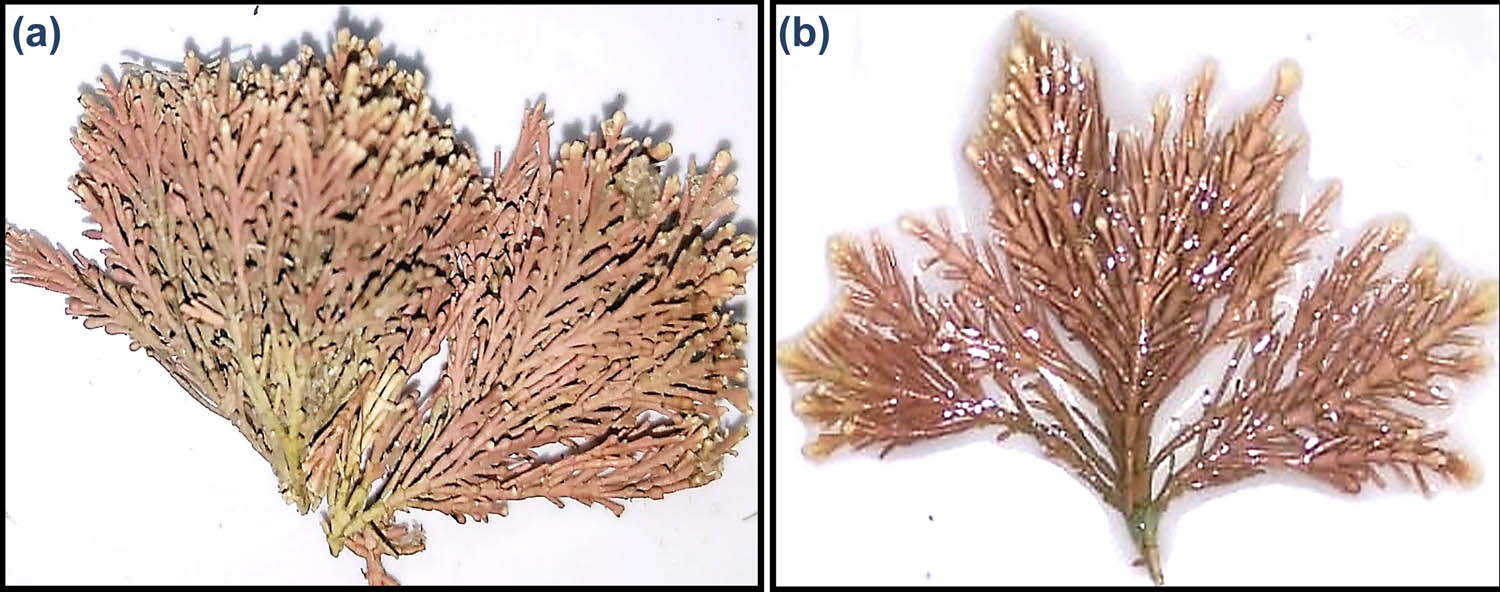
Morphological feature of screened Corallina officinalis red algae: (a) dried samples, (b) fresh samples.
2.3 Chitosan extraction
The Cht was extracted from the shell-wastes of Fenneropenaeus indicus (white prawn), which was cultivated in an aquaculture research farm at Kafrelsheikh University [40]. The shells were cleaned extensively (manually peeled), dried at 48 ± 2°C, and pulverized. The materials were treated by 20 folds (w/v) of 1.0 N NaOH and then by 1.0 N HCl (for 5 h each at 25 ± 2°C ambient temperature). Each immersing was followed by extensive DIW washing and hot-air drying (45 ± 2°C); then the final powder (chitin) was immersion-treated in 60% NaOH (w/v) solution and autoclaved at 110 ± 2°C for 100 min to de-acetyl chitin and yield Cht. The molecular weight (Mw) of Cht was estimated through gel permeation chromatography (GPC; Water Breeze, Milford, MA, USA), whereas deacetylation degree (DD) was determined from the Cht infrared spectrum using Fourier transform infrared spectroscopy (FTIR; JASCO FTIR-360, Japan).
2.4 Phycosynthesis of metals’ NPs
The algal material was immersed in 25 folds (w/v) of DIW and vortexed (240 × g) for 4 h at 65 ± 3°C to extract the dried C. officinalis powder. The algal residues were omitted through filtration, and the filtered CoE was vacuum evaporated at 43 ± 2°C until dry. While CoE was reconstituted in DIW to get 0.1% (w/v) concentration, fresh suspensions of Na2SeO3 and AgNO3 were produced in DIW at 2.0 mM concentration each. For the phycosynthesis of nanometals, 75 mL of each metal suspensions and 25 mL of CoE solution were combined in the dark and vortexed vigorously (730 × g) for 125 min without heating [19]. About 2.5 mL of ascorbic acid (1.0% solution) was incorporated into the mixture solution while stirring to prepare SeNPs. When metals are reduced to nanoforms, the color of mixed solutions changes from clear to dark brown (for CoE/AgNPs) and brownish-orange (for CoE/SeNPs). The generated NPs were collected by centrifugation (9,400 × g, 22 min). For achieving plain AgNPs and SeNPs, the harvested NPs pellets were washed 5 times with DIW and centrifuged after each wash.
2.5 Synthesis of NCht-based nanocomposites
Aqueous acetic acid (1.3%, v/v) solution was created, and 0.1% (w/v) of Cht was thoroughly dissolved in this solution. The pH of this mixture was then changed to 5.5 before filtering. Additionally, a 0.05%, w/v, concentration of Na-tripolyphosphate (TPP) solution in DIW was prepared. The NCht synthesis was directed via dropping (slowly at 18 mL·h−1) of half volume of TPP into the Cht solution, throughout its speedy stirring (710 × g), and the stirring continued for 75 min after dropping [41]. The produced NCht was collected by centrifugation (9,100 × g, 18 min). For the NCht-based NCs (e.g., NCht/CoE/AgNPs and NCht/CoE/SeNPs), 0.02% (w/v) of CoE/AgNPs and CoE/SeNPs were added into the Cht solution before adding TPP. The mixtures were vortexed for 100 min, then the TPP solution was introduced, and the previous steps were repeated [19]. The designed NPs/NCs were lyophilized and analyzed.
2.6 Nanomaterial characterization
After mixing KBr with samples, the structural and biochemical bonds/groups of CoE, CoE/AgNPs, CoE/SeNPs, NCht, NCht/CoE/AgNPs, and NCht/CoE/SeNPs were examined through FTIR spectroscopy, in transmission mode in the 4,000–450 cm−1 range of wavenumber. The spectrophotometry (Shimadzu, UV-2450, Japan) assessed the surface plasmon resonance (SPR) of CoE/AgNPs and CoE/SeNPs, within the wavelength range 200–800 nm. The particle sizes (Ps) and superficial charges (zeta potentiality, ζ) of fabricated NPs/NCs were assessed through a dynamic light scattering (DLS) approach, using Brookhaven zetasizer (ZetaPlusTM, Holtsville, NY, USA). The NPs/NC ultrastructures (e.g., plain AgNPs, SeNPs, CoE/AgNPs, CoE/SeNPs, NCht/CoE/AgNPs, and NCht/CoE/SeNPs) were screened using electron microscopy imaging. The scanning electron microscope (SEM; IT100, JEOL, Tokyo, Japan) and transmission electron microscope (TEM; JEM‐100CX, JEOL) were used for screening the Ps, apparent shape, and distributions of nanomaterials.
2.7 In vitro antibacterial evaluation
The antibacterial efficacies of CoE, NCht, CoE/AgNPs, CoE/SeNPs, NCht/CoE/AgNPs, and NCht/CoE/SeNPs, in comparison to ampicillin (standard antibiotic, MerckTM; Germany), were evaluated qualitatively/quantitatively against fish-borne pathogens from G‒ bacteria (A. hydrophila – ATCC7966, P. aeruginosa – ATCC15692, and S. typhimurium – ATCC23852), and G+ strains (S. aureus – ATCC25923). Nutrient agar/broth (NA/NB, respectively) worked to grow and challenge bacteria under aerobic and warm (37 ± 1°C) conditions. Ampicillin was screened with typical challenges conditions. While the qualitative examination assessed the inhibition zone (ZOI; disc diffusion assay), assessment, the quantitative examination measured the minimum inhibitory concentration (MIC; mg·L−1).
2.7.1 The qualitative examination
The bacterial-inhibition activity was qualitatively evaluated by the ZOI assay. On NA plates, bacterial cultures were swabbed for spreading, and then paper discs impregnated with 0.1% (w/v) of NP/NC solutions were positioned over inoculated plates. After incubation for 22 ± 2 h, the emerged ZOIs (clear zones from grown colonies) were precisely assessed [42].
2.7.2 The quantitative examination
The inhibitory doses from screened NPs/NCs toward challenged pathogens were quantitatively evaluated by the MIC test [42]. The NPs/NCs were diluted successively (from 10 to 100 mg·L−1) and added to NB tubes, which were then injected with bacterial cells (∼2 × 10⁶ CFU·mL−1) and allowed to grow for 23 ± 2 h. Then, portions (100 µL) of transparent tubes without noticeable turbidity were injected onto untreated NA plates without nanomaterials and further incubated for an additional cycle. The bacterial-free tubes/plates appointed the nanomaterials MICs toward pathogens.
2.7.3 SEM imagining of NCs bactericidal action
The apparent deformation/distortions in the cellular structure/morphology of A. hydrophila were screened following their exposure to NCs (NCht/CoE/AgNPs and NCht/CoE/SeNPs) for 5 and 10 h, compared to control (firstly exposed) cells by SEM imaging. The logarithmic bacterial culture in NB was exposed and incubated with 35.0 and 40.0 µg·mL−1 of NCht/CoE/AgNPs and NCht/CoE/SeNPs, respectively. The bacteria were harvested by centrifugation (4,800g) after incubation for the required times. The bacteria were then treated for fixation, e.g., with glutaraldehyde 2.5% (30 min), paraformaldehyde 2.0%, and 0.1 M Na-cacodylate buffer (pH 7.25). Successive ethanol concentration treatments dehydrated the cells, which were dried subsequently using Autosamdri-931 (critical-point dryer, Tousimis, Rockville, MD, USA), covered with palladium/gold and imaged with an SEM to check for morphological distortions or changes that had appeared after the cells had been exposed to NCs.
2.8 Statistical analysis
SPSS package (V-21.0, SPSS Inc., Chicago, IL) was used to determine statistical significance at p ≤ 0.05. ANOVA (one-way) and student t-test were used to determine the significant differences from computed triplicates’ means.
3 Results and discussion
The Cht was effectively obtained from shrimp wastes, with an Mw of ∼158.7 kDa, a DD of ∼88.6%, and a yield of 13.6% from the weight of the original shells. It was successful to achieve and characterize the biosynthesis of nanopolymers (e.g., NCht) and nanocomposites (NCs) based on CoE, e.g., CoE-mediated AgNPs (CoE/AgNPs), CoE-mediated SeNPs (CoE/SeNPs), NCht/CoE/AgNPs, and NCht/CoE/SeNPs.
3.1 IR analysis
The FTIR of examined agents/nanocomposites was evaluated to emphasize their key groups/bonds and their potential roles in the synthesis of NPs and interactions between NCs (Figure 2). The FTIR technique is commonly employed to assess NP surface composition, functionalization, and interactions; this method involved the materials’ irradiation with infrared waves to record the transmitted or absorbed radiation. The recorded FTIR spectra of compounds could represent unique fingerprints of them, including their nature, polarity, oxidation state, and the involved bonds/groups in their functionalities [18]. In the biosynthesis of metal NPs, the FTIR can highlight the responsible biomolecules and biochemical groups for nanomaterial reduction/stabilization [18].
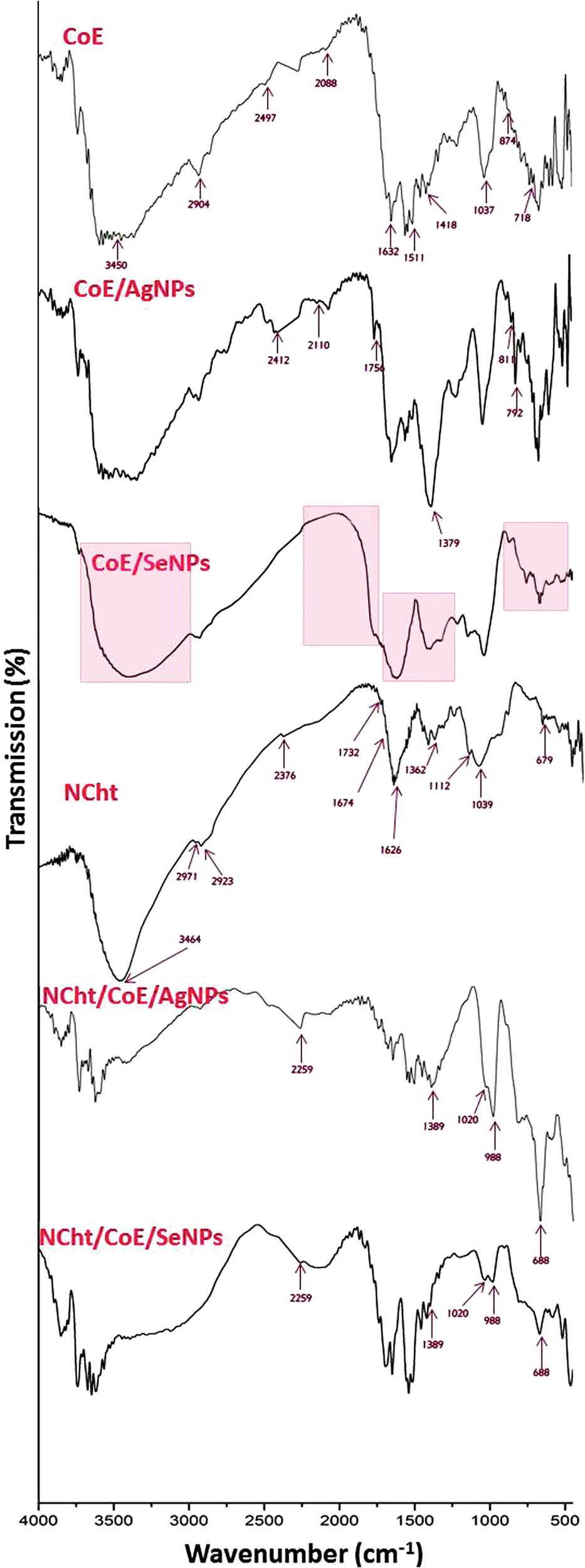
Infra-red spectra of Corallina officinalis aqueous extract (CoE), CoE-mediated AgNPs (CoE/AgNPs), CoE-mediated SeNPs (CoE/SeNPs), chitosan nanoparticles (NCht), their combined composites (NCht/CoE/AgNPs and NCht/CoE/SeNPs).
The IR spectra of CoE revealed the presence of many functional biochemical groups/bonds that were linked to designative constituents of CoE. The main CoE indicative beaks (CoE in Figure 2) were detected at: 1,632.12 cm−1 (carboxylic group of uronic acid), 717.91 cm−1 (sulfates, the stretched C–S and C═S of sulfides), 874.18 cm−1 (bending C–H of glucose and galactose), 1,037.64 cm−1 (stretched S═O of starch/polysaccharides sulfonides), 1,418.45 cm−1 (stretched C–O and bended O–H of cutin), 1,511.19 cm−1 (C═C stretching in lignin), 2,088.36 cm−1 (cyanide stretch of nitrile), 2,496.86 cm−1 (C–O stretching and P–H stretching of phosphine), 2,904.24 cm−1 (stretched CH3 and CH2 of aliphatic compounds), and around 3,450 cm−1 (stretched O–H of polysaccharides and N–H of amino acids) [5,16,20,43].
The IR spectra of CoE/AgNPs revealed the potential CoE biomolecules that are thought to be responsible for the reduction of Ag+ ions and the capping of phytosynthesized AgNPs (CoE/AgNPs in Figure 2). In comparison to the plain CoE spectrum, many emerged and more strong bands were appeared in the CoE/AgNP spectrum (e.g., at wavenumbers of 792.54, 811.15, 1,379.44, 1,756.27, 2,109.83, and 2,412.29 cm−1), which indicates the formation of new bonds between the CoE groups and the synthesized AgNPs. Many other peaks were eliminated or became less intense in the CoE/AgNP spectrum (e.g., at wavenumbers of 1,431.25 cm−1), which indicated the presence of these bonds with AgNPs and their interaction with this NM [19,44].
Similarly, the CoE/SeNP spectrum differed from the CoE spectrum in the disappearance of numerous bands in the ranges of 490–920 cm−1, 1,260–1,725 cm−1, 1,770–2,240 cm−1, and at 3,000–3,700 cm−1 (highlighted with bale red in CoE/SeNPs in Figure 2), indicating the occupation of such disappeared bonds/groups with SeNPs and their interaction with them during SeNP phycosynthesis and capping [27,29,44].
The cell walls of macroalgae (e.g., C. officinalis) frequently contain a variety of functional biomolecules with amine, sulfate, carboxyl, phosphate, and imidazole groups, combined with proteins, alginic acid, and polysaccharides to facilitate interactions, reduce metal ions and cap them during their transformation to nanoforms [17]. Several indicative bands in the CoE spectrum were shifted to close wavelengths, and others appeared with changed intensities after combining with AgNPs and SeNPs, which are assumed to associate with the reduced particles’ surface area and their increased crystallinity degrees [18,20,25]. The FTIR spectrum of NCht identified the fundamental bonds/groups that characterize the bulk Cht (NCht in Figure 2) [28]. The key indicative peaks in the plain NCht spectrum included: 3,464.25 cm−1 (vibrated N−H and O−H stretching), 2,923.41 cm−1 (vibrated aliphatic C−H stretching), 2,970.81 cm−1 (vibrated CH2/CH3 stretching), 1,732.24 cm−1 (stretched C═O of amide I), 1,674.02 cm−1 (vibrated stretching of N−H in amide II), 1,112.43 cm−1 (−OH vibrated stretching of C3), and 1,038.88 cm−1 (−OH vibrated stretching of C6) [41,45]. Furthermore, in the NCht spectrum, the 3,464.25 cm−1 band, which frequently showed lower intensity/wider spacing than bulk Cht, provides evidence for reduced −H bonding caused by the interactions with TPP cross-linkage [40]. The existed sharp peak (1,626.32 cm−1) is indicative to cross-linkage between the NH4 of NCht and TPP [46,47].
The interactions and conjugation between NCht and CoE-mediated NPs (e.g., NCht/CoE/AgNPs and NCht/CoE/SeNPs) resulted in the appearance of the main distinctive peaks from both interacting molecules (NCht/CoE/AgNPs and NCht/CoE/SeNPs in Figure 2), which could convincingly indicate that the occurred interactions among these molecules were physical rather than biochemical associations [19]. Additionally, many distinctive bands in the NCht spectrum were shifted after coupling with both CoE/AgNPs and CoE/SeNPs, e.g., from 2,376.43, 1,361.82, and 112.43 cm−1 (−OH vibrated stretching of C3), 1,038.88 cm−1 (−OH vibrated stretching of C6), and 679.33 to ∼2,259 cm−1, 1,389.44, 1,020, 988, and 688 cm−1, respectively. These shifts could suggest the biochemical interactions between NCht functional groups/bonds and the CoE-mediated nanometals, rather than their physical couplings [32,39,44].
3.2 Optical inspection of phycosynthesized nanometals
The phycosyntheses of CoE-mediated NPs (CoE/AgNPs and CoE/SeNPs) were validated via visual inspection and UV/Vis spectral analysis (Figure 3). The clear suspensions of AgNO3 and Na2SeO3 turned dark brown and brownish orange, respectively, after mixing with CoE and reducing metal ions to AgNPs and SeNPs (upper photo in Figure 3). The UV/Vis spectrum of CoE/AgNPs emphasized a distinctive peak at 437 nm, whereas the main maximum absorbance peaks for CoE/SeNPs were recorded at 275 and 211 nm (lower curves in Figure 3). The UV/Vis spectroscopy provides simple and direct indications of NPs’ optical properties; the electrons’ transition from ground states to excited (nano) states is measured using absorption UV/Vis spectroscopy, which give evidences for nanometals’ reduction [18]. The absorbance curve and maximum absorbance value (λ max) of a metal NPs SPR indicate the particle reduction, size distribution, and homogeneity [18,25,29].
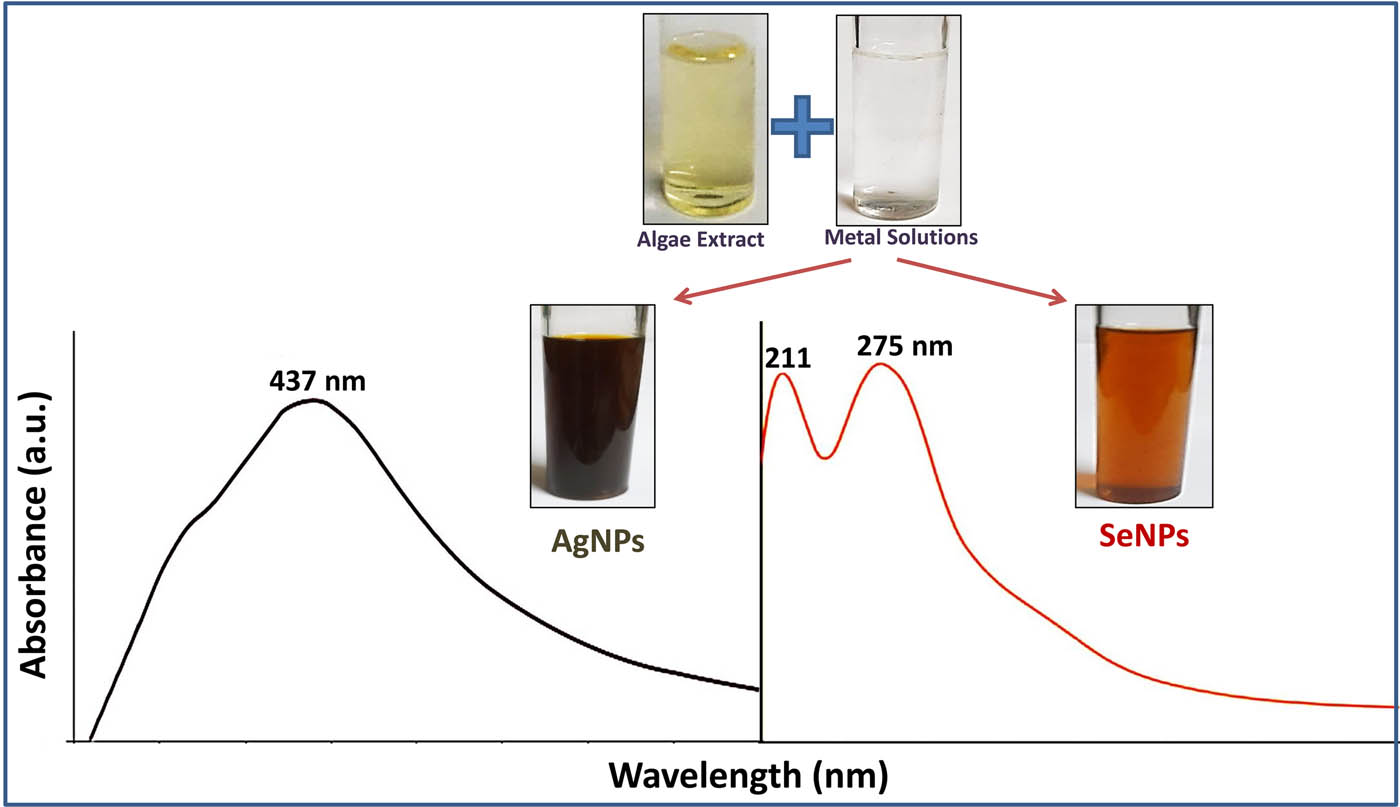
The visual appearance and UV-Vis spectra of Corallina officinalis extract-mediated nanometals (AgNPs and SeNPs).
The developed brown color and the maximum UV absorbance band at 437 nm are both attributed to SPR of CoE-mediated AgNPs, and validated the effectual biosynthesis of AgNPs after reduction with CoE [33].
The AgNPs usually have liberated electrons, with vibrated SPR at maximum adsorption at 435–440 nm, which is the distinctive absorption for AgNPs [48,49]. The appearance of a single peak in the CoE/AgNP spectrum could confirm the purity and sole synthesis of the AgNPs [50].
The CoE could immediately transform the Ag solution to brown color (e.g., AgNP formation), indicating the high reducing effectiveness of the extract [51]. As the position and width of the SPR band could indicate particles’ shape, charge, size, and interaction with the surrounding medium, the recorded broad band of CoE/AgNPs could indicate the wide distribution of the formed AgNP sizes [52].
The biosynthesis of SeNPs with CoE could be optically proved from the color transformation into brownish orange and the detection of maximum UV absorption peaks at 211 and 275 nm, due to illustrated SPR for SeNPs [53], which confirms the effectiveness of CoE to reduce the Se ions into their NPs form. The less intense peak at 211 nm is usually attributed to a smaller SeNP size [27,53]. The appearance of two absorption bands in the UV/Vis spectrum of the SeNPs and one band of the AgNP spectrum could indicate the uniformity and homogeneousness of synthesized AgNP sizes after reduction with CoE [50,51,52], whereas the reduction of SeNPs with generated low levels of NP sizes, which could be assumingly attributed to the combined actions of both CoE and ascorbic acid in reducing the Se to NPs [22,23,24,25,26,27,52,53].
3.3 Ultrastructure analysis of synthesized NPs
The structural physiognomies of generated NPs/NCs were screened via electron microscopic (TEM and SEM) imaging (Figure 4); the precise size and charges of nanomaterials were further determined using zetasizer and DLS approach (Table 1). Harmonized NP/NC sizes were detected using both microscopic imaging and DLS analysis. The TEM images of plain CoE-mediated AgNPs and SeNPs indicated their homogenous sizes and well-distribution (1A and 1S in Figure 4); the NM were mostly spherical with no apparent aggregations among them. The DLS results for CoE-mediated AgNPs and SeNPs were the particles’ size means of 5.52 and 12.46 nm, respectively, and the negative charges (−24.8 and −33.2 mV) on their surfaces (Table 1). The microscopic imaging of NCs illustrating their topographical features (SEM images; 2AC and 2SC in Figure 4) and the TEM imaging appraised their sizes and associations between the biopolymer NCht and correlated NM (3AC and 3SC in Figure 4). The NCht/CoE/AgNPs had a smaller size mean (64.59 nm) than NCht/CoE/SeNPs (77.16 nm) and both of them were larger than the plain NCht mean size (59.81 nm). The NCht had strong positive charges (+38.7 mV), and these charges were slightly lessened after conjugation with CoE/AgNPs and CoE/SeNPs to be +34.3 and +32.1, respectively, which indicates the upholding of NCht molecules to NM, where the abundant surface charges were the NCht positives [19,54]. The embedding of CoE/AgNPs and CoE/SeNPs within NCht particles could be evidenced through their TEM images (3AC and 3SC in Figure 4, respectively), where most of the NM were implanted inside the NCht molecules.
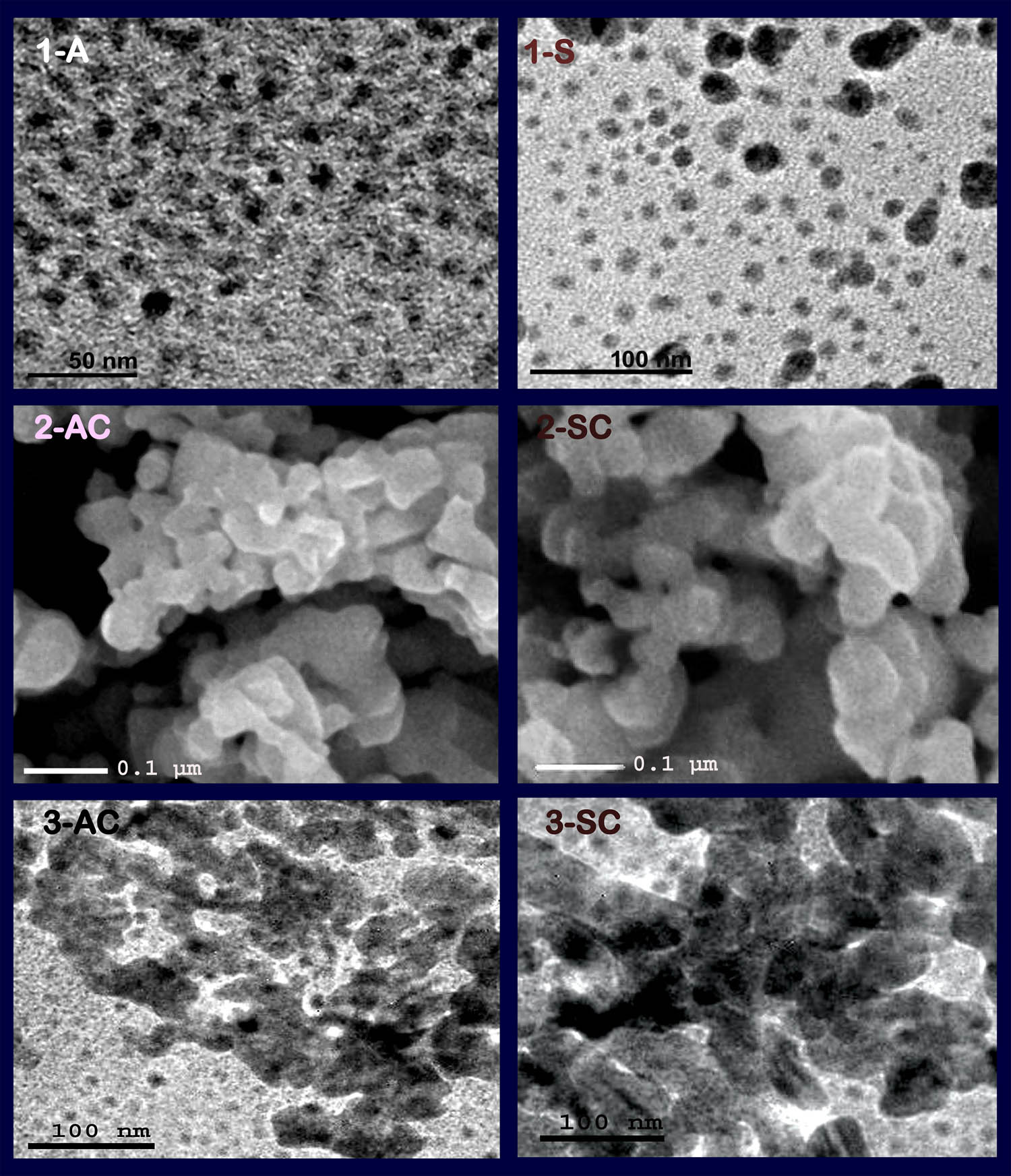
Electron microscopy imaging of synthesized nanomaterials/nanocomposites, including TEM images of plain AgNPs (1-A) and SeNPs (1-S), the SEM imaging of NCht/CoE/AgNPs (2-AC) and NCht/CoE/SeNPs (2-SC) nanocomposites, and the TEM images of the nanocomposites (3-AC and 3-SC, respectively).
Particle size distributions and zeta potential of synthesized nanomaterials/nanocomposites
| Nanomaterials* | Particle size range (nm) | Mean size diameter (nm) | Zeta potential (mV) |
|---|---|---|---|
| CoE/SeNPs | 3.21–31.63 | 12.46 | −33.2 |
| CoE/AgNP | 1.34–14.76 | 5.52 | −24.8 |
| NCht | 21.92–93.41 | 59.81 | +38.7 |
| NCht/CoE/SeNPs | 26.81–112.74 | 77.16 | +32.1 |
| NCht/CoE/AgNPs | 24.65–109.66 | 64.59 | +34.3 |
*CoE/SeNPs: Corallina officinalis extract-mediated selenium nanoparticles; CoE/AgNPs: Corallina officinalis extract-mediated silver nanoparticles; NCht: nanochitosan.
As the accustomed NM could impose some potential toxicities to humans, especially when made by chemical/physical approaches, the biosynthesis of such NM with biomolecules (e.g., CoE in this study) could improve their biosafety and biocompatibility [55].
The CoE/AgNP and CoE/SeNP amalgamations with NCht biopolymer are additionally believed to expressively enhance the NM stabilization, biocompatibility, and bioactivities via the formation of extra functional bonds with the nanopolymer, which can substantially reduce their likely human cytotoxicity [33,56,57].
3.4 Antibacterial assessment
The antibacterial potentialities, emerged after challenging pathogenic strains with screened molecules/NPs/NCs, were proved using qualitative/quantitative assays (e.g., ZOI and MIC, respectively) (Table 2). The entire compounds/NPs/NCs, e.g., CoE, CoE/SeNPs, CoE/AgNPs, NCht, NCht/CoE/SeNPs, and NCht/CoE/AgNPs, exhibited significant antibacterial powers toward all strains in this order: CoE < NCht < CoE/SeNPs < CoE/AgNP < NCht/CoE/SeNPs < NCht/CoE/AgNPs. The challenged bacteria were entirely susceptible to the inspected agents; their sensitivities to the studied antimicrobials can be arranged in this order: G+ < G‒ (e.g., S. aureus < S. typhimurium < P. aeruginosa < A. hydrophila). While many investigated agents exhibited equivalent antibacterial activities to ampicillin, some formulations (especially the NCs) could significantly exceed the bactericidal effect of the standard antibiotic. These results were consistent with earlier studies that used NCht-based NCs for the bacterial challenge [28,40].
Antibacterial potentialities of Corallina officinalis extract-mediated nanometals and their composites with nanochitosan against fish-borne pathogens
| Antibacterial agent**** | Antibacterial activity*** | |||||||
|---|---|---|---|---|---|---|---|---|
| Staphylococcus aureus | Pseudomonas aeruginosa | Aeromonas hydrophila | Salmonella typhimurium | |||||
| ZOI* | MIC** | ZOI | MIC | ZOI | MIC | ZOI | MIC | |
| CoE | 9.2 ± 0.6# | >100 | 9.7 ± 0.9# | 92.5 | 9.8 ± 0.8# | 85.0 | 9.5 ± 0.7# | >100 |
| CoE/SeNPs | 15.6 ± 1.2^ | 57.5 | 17.7 ± 1.6# | 47.5 | 17.9 ± 1.8# | 45.0 | 16.4 ± 1.5# | 57.5 |
| CoE/AgNPs | 17.2 ± 1.5^ | 52.5 | 21.8 ± 1.9^ | 45.0 | 22.4 ± 2.3# | 42.5 | 19.6 ± 1.9^ | 50.0 |
| NCht | 13.5 ± 0.8# | 72.5 | 16.1 ± 1.5# | 62.5 | 16.8 ± 1.7# | 60.0 | 14.8 ± 1.5# | 67.5 |
| NCht/CoE/SeNPs | 17.8 ± 1.9^ | 47.5 | 27.9 ± 2.6# | 42.5 | 28.8 ± 2.6^ | 40.0 | 23.5 ± 2.1^ | 42.5 |
| NCht/CoE/AgNPs | 19.2 ± 2.1^ | 42.5 | 30.3 ± 2.8# | 37.5 | 32.9 ± 2.9^ | 35.0 | 26.8 ± 2.7^ | 40.0 |
| Ampicillin | 17.5 ± 1.7^ | 52.5 | 22.7 ± 2.2^ | 40.0 | 29.8 ± 1.4^ | 40.0 | 22.1 ± 1.4^ | 45.0 |
*Zone of inhibition (mm); calculated from triplicates mean ± SD, counting the disc diameter of 6 mm; **MIC – minimal inhibitory concentration, µg·mL−1; ***Dissimilar symbols (superscript) in one column indicate significant difference (p ≤ 0.05), compared to standard antibiotic; ****CoE: Corallina officinalis extract; CoE/SeNPs: Corallina officinalis extract-mediated selenium nanoparticles; CoE/AgNPs: Corallina officinalis extract-mediated silver nanoparticles; NCht: nanochitosan.
The higher resistance of G+ bacteria to microbicidal nanometals was assumingly attributed to their thick peptidoglycan protective layer, comprising teichoic and lipoteichoic acids, which give G+ bacteria more barriers to resist NP penetrations into interior cells [40,53]. In contrast, the G‒ bacterial cells have thinner peptidoglycan protective layers, less cross-linkage/condensed membranes, and comprise more lipopolysaccharides with high negative charges in the exterior membranes, which lead to the formation of porin channels and increase the penetration of biocidal NPs/NCs into interior cells/vital organelles [58,59,60,61].
The porine channels in G‒ bacteria could selectively pass penetration of NPs/NM into cells, associating with ROS generation from AgNPs and SeNPs, which lead to the destruction/inactivation of G‒ vital components (DNA, proteins, enzymes, etc.) [24,53].
The synergistic bactericidal activities of conjugated NCs (e.g., NCht/CoE/AgNPs and NCht/CoE/SeNPs in this study) were formerly attributed to NCht (highly positive charging) capability for upholding NM, attaching the negative bacterial membranes and increasing their permeability, and its potentialities for inhibiting bacterial biosystems [16,45,62]. The final positive surfaces of the NCs facilitate their attachment with negatively charged bacterial walls and vital components [63]. The biosynthesized NM (AgNPs and SeNPs) were documented to possess powerful bactericidal action, which is chiefly dependent on ROS production and cytotoxicity toward bacterial cells via interaction/inactivation of metabolic pathways [27,55,60]. The conjugation of these NM with biopolymer systems could greatly diminish their toxicity toward mammal tissues but favorably preserve their bioactivities against microbes [55,56,57].
3.5 Structural analysis of treated bacteria with nanocomposites
For the possible explanation of NCs’ (NCht/CoE/AgNPs and NCht/CoE/SeNPs) antibacterial actions, scanning microscopy visualizations were conducted for exposed A. hydrophila cells (as the most sensitive strain in antimicrobial assessment) to NCs after 5 and 10 h, compared with zero-time treatments (Figure 5). In zero-time treatment, the bacterial cells appeared with wholesome, smooth, and ordinary structures, with minimum evidence for deformation or distortions or lysis (Se-0 and Ag-0 in Figure 5). After being exposed to NCs for 5 h, numerous deformation/lysis signs were observable on the bacterial surfaces, and many NC particles were seen attached to them. The deformation signs were more observable in NCht/CoE/AgNP-treated cells (Ag-5 in Figure 5) than in NCht/CoE/SeNP treatments (Se-5 in Figure 5). After NC exposure for 10 h, most bacterial cells misplaced the uniformed/contacted membranes and liberated their internal constituents (Ag-10 and Se-10 in Figure 5). The NC particles were more observable, interacted with the fully lysed cells and their released internal components. The A. hydrophila cells’ distortions were also more evidenced with NCht/CoE/AgNP treatments than for NCht/CoE/SeNP exposure. Following treatments of bacteria with NCht-based NCs that contained NM or phyto-constituents, matched observations were reported [33,54].
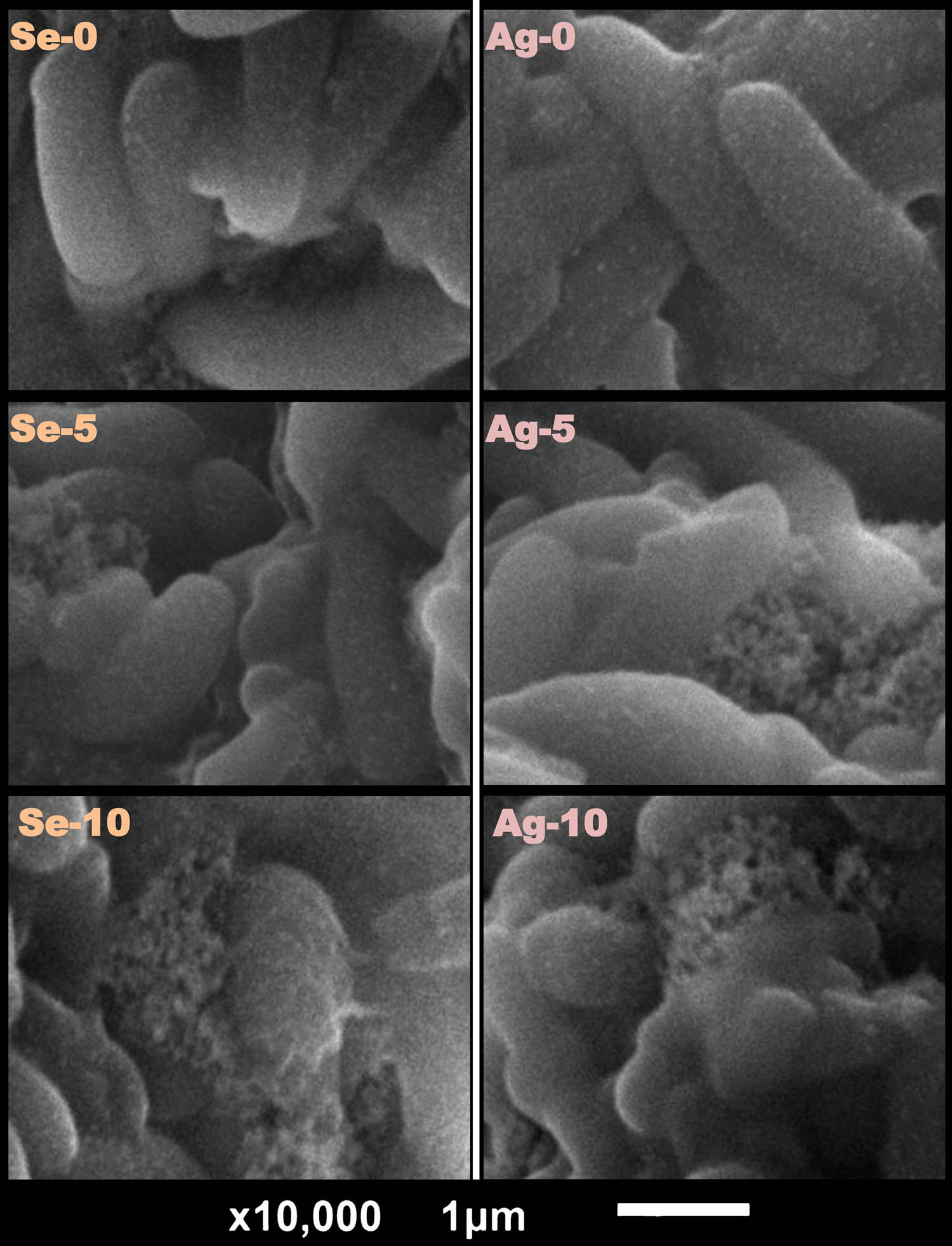
Scanning microscope imaging of exposed Aeromonas hydrophila to nanochitosan and Corallina officinalis extract-mediated nanometals (Ag and Se) after 0, 5 and 10 h of exposure (the used concentrations from the nanocomposites were 40.0 and 35.0 µg·mL−1, for the Se- and Ag-based composites, respectively).
The role of NCht in the NC antibacterial actions was clear from the captured images, because of its capability to stick onto bacteria, with the accompanied bactericides, and facilitate their movement for penetrating cells [19,62,64].
Since A. hydrophila was chosen for the SEM experiment as the most sensitive strain that could provide helpful explanations and evidence about the NC's actions, the captured images may illustrate that the NCs could have diverse potential mechanisms as antibacterial agents. The probable NCs’ effects that originated from the synergism between reacted nanomaterials include the adhesion to cell membranes; increase in membrane permeability; penetration into inner cells; inactivation of cell membrane synthesis; leakages of vital components outside the cells; suppression of the metabolic bioactivities/pathways; and interacting with crucial constituents of cells [24,35].
4 Conclusion
AgNPs and SeNPs were synthesized using CoE as a mediator; the NM had desirable physiognomies, including their minute sizes and synthesis with a diminished toxicity approach. Furthermore, the conjugation between each CoE/AgNP and CoE/SeNP and NCht was conducted and characterized to confirm nanomolecule interaction and compositing to minimize their likely toxicity for humans. The synthetic NCs could effectively inhibit various fish-borne bacterial pathogens with comparable activities to the accustomed antibiotic. SEM imaging was used to validate the antibacterial tests and showed that NCs were acting firmly against harmful microorganisms. The ecofriendly method for NM phycosynthesis and conjugation with nano-biopolymer NCht produced effective and harmless NCs, suitable for use in applications to remove fish-borne pathogens with biosafe characteristics.
-
Funding information: The authors state no funding involved.
-
Author contributions: Ahmed A. Tayel contributed in the conception, investigation, interpretation of data, supervision, work drafting and submission; Nancy A. Elsayes contributed in the conception, design of the work, investigation, analysis, and work drafting; Mohamed M. Zayed contributed in design of the work, investigation and analysis, work drafting, supervision; Mohammed A. Alsieni contributed in the formal analysis, interpretation of data, resources, and work drafting; Fuad A. Alatawi contributed in interpretation of data, resources, administration and work drafting; Adel I. Alalawy contributed in interpretation of data, resources, and work drafting; Amany M. Diab contributed in the conception, interpretation of data, work drafting, revising and supervision. All authors read and approved the final manuscript.
-
Conflict of interest: The authors state no conflict of interest.
-
Data availability statement: All data generated or analyzed during this study are included in this published article.
References
[1] Kim Y, Gu C, Kim HU, Lee SY. Current status of pan-genome analysis for pathogenic bacteria. Curr Opin Biotechnol. 2020;63:54–62. 10.1016/j.copbio.2019.12.001.Search in Google Scholar PubMed
[2] Cano A, Ettcheto M, Espina M, López-Machado A, Cajal Y, Rabanal F, et al. State-of-the-art polymeric nanoparticles as promising therapeutic tools against human bacterial infections. J Nanobiotechnol. 2020;18:1–24. 10.1186/s12951-020-00714-2.Search in Google Scholar PubMed PubMed Central
[3] Han BA, Kramer AM, Drake JM. Global patterns of zoonotic disease in mammals. Trends Parasitol. 2016;32:565–77. 10.1016/j.pt.2016.04.007.Search in Google Scholar PubMed PubMed Central
[4] Gauthier DT. Bacterial zoonoses of fishes: A review and appraisal of evidence for linkages between fish and human infections. Vet J. 2015;203:27–35. 10.1016/j.tvjl.2014.10.028.Search in Google Scholar PubMed
[5] Shobier AH, Ismail MM, Hassan SWM. Variation in anti inflammatory, anti arthritic, and antimicrobial activities of different extracts of common Egyptian seaweeds with an emphasis on their phytochemical and heavy metal contents. Biol Trace Elem Res. 2023;201:2071–87. 10.1007/s12011-022-03297-1.Search in Google Scholar PubMed PubMed Central
[6] Zhang J, Yang X, Kuang D, Shi X, Xiao W, Zhang J, et al. Prevalence of antimicrobial resistance of non-typhoidal Salmonella serovars in retail aquaculture products. Int J Food Microbiol. 2015;210:47–52. 10.1016/j.ijfoodmicro.2015.04.019.Search in Google Scholar PubMed
[7] Shamsi S. Seafood-borne parasitic diseases: A “One-Health” approach is needed. Fishes. 2019;4(1):9. 10.3390/fishes4010009.Search in Google Scholar
[8] Ziarati M, Zorriehzahra MJ, Hassantabar F, Mehrabi Z, Dhawan M, Sharun K, et al. Zoonotic diseases of fish and their prevention and control. Vet Q. 2022;42:95–118. 10.1080/01652176.2022.2080298.Search in Google Scholar PubMed PubMed Central
[9] Rahman MT, Sobur MA, Islam MS, Ievy S, Hossain MJ, Zowalaty MEE, et al. Zoonotic diseases: Etiology, impact, and control. Microorganisms. 2020;8(9):1405. 10.3390/microorganisms8091405.Search in Google Scholar PubMed PubMed Central
[10] Stratev D, Odeyemi OA. Antimicrobial resistance of Aeromonas hydrophila isolated from different food sources: A mini-review. J Infect Public Health. 2016;9:535–44. 10.1016/j.jiph.2015.10.006.Search in Google Scholar PubMed
[11] Sun Y, Zhao Y, Xu W, Fang R, Wu Q, He H, et al. Taxonomy, virulence determinants and antimicrobial susceptibility of Aeromonas spp. isolated from bacteremia in southeastern China. Antimicrob Resist Infect Control. 2021;10:43. 10.1186/s13756-021-00911-0.Search in Google Scholar PubMed PubMed Central
[12] Fisher EL, Otto M, Cheung G. Basis of virulence in enterotoxin-mediated staphylococcal food poisoning. Front Microbiol. 2018;9:436. 10.3389/fmicb.2018.00436.Search in Google Scholar PubMed PubMed Central
[13] Vaiyapuri M, Joseph TC, Rao BM, Lalitha KV, Prasad MM. Methicillin-resistant Staphylococcus aureus in seafood: Prevalence, laboratory detection, clonal nature, and control in seafood chain. J Food Sci. 2019;84:3341–51. 10.1111/1750-3841.14915.Search in Google Scholar PubMed
[14] Mine I. Biological interactions during the life history of seaweed-A microscopic review. Kuroshio Sci. 2008;2:35–40.Search in Google Scholar
[15] Smit AJ. Medicinal and pharmaceutical uses of seaweed natural products: A review. J Appl Phycol. 2004;16:245–62. 10.1023/B:JAPH.0000047783.36600.ef.Search in Google Scholar
[16] Yang Y, Liu D, Wu J, Chen Y, Wang S. In vitro antioxidant activities of sulfated polysaccharide fractions extracted from Corallina officinalis. Int J Biol Macromol. 2011;49:1031–7. 10.1016/j.ijbiomac.2011.08.026.Search in Google Scholar PubMed
[17] El-Badry A, Assawah S, El-Kassas H, Hegab D, Amer D. New remedy to control human skin fungal infections by silver nanoparticles biosynthesized by two marine macro algae. Middle East J Appl Sci. 2019;59:493–511. 10.21608/ejbo.2019.5351.1219.Search in Google Scholar
[18] Joudeh N, Linke D. Nanoparticle classification, physicochemical properties, characterization, and applications: A comprehensive review for biologists. J Nanobiotechnol. 2022;20(1):262. 10.1186/s12951-022-01477-8.Search in Google Scholar PubMed PubMed Central
[19] Alsaggaf MS, Tayel AA, Alghuthaymi MA, Moussa SH. Synergistic antimicrobial action of phyco-synthesized silver nanoparticles and nano-fungal chitosan composites against drug resistant bacterial pathogens. Biotechnol Biotechnol Equip. 2020;34:631–9. 10.1080/13102818.2020.1796787.Search in Google Scholar
[20] El-Kassas HY, El-Sheekh MM. Cytotoxic activity of biosynthesized gold nanoparticles with an extract of the red seaweed Corallina officinalis on the MCF-7 human breast cancer cell line. Asian Pac J Cancer Prev. 2014;15:4311–7. 10.7314/APJCP.2014.15.10.4311.Search in Google Scholar
[21] Wang H, Zhang J, Yu H. Elemental selenium at nano size possesses lower toxicity without compromising the fundamental effect on selenoenzymes: Comparison with selenomethionine in mice. Free Radic Biol Med. 2007;42:1524–33.10.1016/j.freeradbiomed.2007.02.013Search in Google Scholar PubMed
[22] Wadhwani SA, Gorain M, Banerjee P, Shedbalkar UU, Singh R, Kundu GC, et al. Green synthesis of selenium nanoparticles using Acinetobacter sp. SW30: optimization, characterization and its anticancer activity in breast cancer cells. J Nanomed. 2017;12:6841–55. 10.2147/IJN.S139212.Search in Google Scholar PubMed PubMed Central
[23] Gad HA, Tayel AA, Al-Saggaf MS, Moussa SH, Diab AM. Phyto-fabrication of selenium nanorods using extract of pomegranate rind wastes and their potentialities for inhibiting fish-borne pathogens. Green Process Synth. 2021;10:529–37. 10.1515/gps-2021-0049.Search in Google Scholar
[24] Shehab MM, Elbialy ZI, Tayel AA, Moussa SH, Al-Hawary II. Quality boost and shelf-life prolongation of African catfish fillet using Lepidium sativum mucilage extract and selenium nanoparticles. J Food Qual. 2022;2022:9063801. 10.1155/2022/9063801.Search in Google Scholar
[25] Husen A, Siddiqi KS. Plants and microbes assisted selenium nanoparticles: characterization and application. J Nanobiotechnol. 2014;12:28. 10.1186/s12951-014-0028-6.Search in Google Scholar PubMed PubMed Central
[26] Elsaied BEF, Diab AM, Tayel AA, Alghuthaymi MA, Moussa SH. Potent antibacterial action of phycosynthesized selenium nanoparticles using Spirulina platensis extract. Green Process Synth. 2021;10:49–60. 10.1515/gps-2021-0005.Search in Google Scholar
[27] Alghuthaymi MA, Diab AM, Elzahy AF, Mazrou KE, Tayel AA, Moussa SH. Green biosynthesized selenium nanoparticles by cinnamon extract and their antimicrobial activity and application as edible coatings with nano-chitosan. J Food Qual. 2021;2021:6670709. 10.1155/2021/6670709.Search in Google Scholar
[28] Gad HA, Alshubaily FA, Alsieni MA, Tayel AA, Diab AM. Biosynthesis of nano-curcumin/nano-selenium composite and their potentialities as bactericides against fish-borne pathogens. Green Process Synth. 2022;11:1098–107. 10.1515/gps-2022-0095.Search in Google Scholar
[29] Siddiqi KS, Husen A, Rao RA. A review on biosynthesis of silver nanoparticles and their biocidal properties. J Nanobiotechnol. 2018;16:14. 10.1186/s12951-018-0334-5.Search in Google Scholar PubMed PubMed Central
[30] Slavin YN, Asnis J, Hńfeli UO, Bach H. Metal nanoparticles: Understanding the mechanisms behind antibacterial activity. J Nanobiotechnol. 2017;15:65. 10.1186/s12951-017-0308-z.Search in Google Scholar PubMed PubMed Central
[31] Li SR, Huo FY, Wang HQ, Wang J, Xu C, Liu B, et al. Recent advances in porous nanomaterials-based drug delivery systems for cancer immunotherapy. J Nanobiotechnol. 2022;20:277. 10.1186/s12951-022-01489-4.Search in Google Scholar PubMed PubMed Central
[32] Elnagar SE, Tayel AA, Elguindy NM, Al-saggaf MS, Moussa SH. Innovative biosynthesis of silver nanoparticles using yeast glucan nanopolymer and their potentiality as antibacterial composite. J Basic Microbiol. 2021;61:677–85. 10.1002/jobm.202100195.Search in Google Scholar PubMed
[33] Kou S(Gabriel), Peters LM, Mucalo MR. Chitosan: A review of sources and preparation methods. Int J Biol Macromol. 2021;169:85–94. 10.1016/j.ijbiomac.2020.12.005.Search in Google Scholar PubMed
[34] El-Sherbiny MM, Elekhtiar RS, El-Hefnawy ME, Mahrous H, Alhayyani S, Al-Goul ST, et al. Fabrication and assessment of potent anticancer nanoconjugates from chitosan nanoparticles, curcumin, and eugenol. Front Bioeng Biotechnol. 2022;10:1030936. 10.3389/fbioe.2022.1030936.Search in Google Scholar PubMed PubMed Central
[35] Jesus S, Marques AP, Duarte A, Soares E, Costa JP, Colaço M, et al. Chitosan nanoparticles: Shedding light on immunotoxicity and hemocompatibility. Front Bioeng Biotechnol. 2020;8:100. 10.3389/fbioe.2020.00100.Search in Google Scholar PubMed PubMed Central
[36] Bamburowicz-Klimkowska M, Poplawska M, Grudzinski IP. Nanocomposites as biomolecules delivery agents in nanomedicine. J Nanobiotechnol. 2019;17:48. 10.1186/s12951-019-0479-x.Search in Google Scholar PubMed PubMed Central
[37] Soppimath KS, Aminabhavi TM, Kulkarni AR. Biodegradable polymeric nanoparticles as drug delivery devices. J Control Release. 2001;70:1–20. 10.1016/S0168-3659(00)00339-4.Search in Google Scholar
[38] Rajam M, Pulavendran S, Rose C, Mandal AB. Chitosan nanoparticles as a dual growth factor delivery system for tissue engineering applications. Int J Pharm. 2011;410:145–52. 10.1016/j.ijpharm.2011.02.065.Search in Google Scholar PubMed
[39] Tayel AA, Elzahy AF, Moussa SH, Al-Saggaf MS, Diab AM. Biopreservation of shrimps using composed edible coatings from chitosan nanoparticles and cloves extract. J Food Qual. 2020;2020:8878452. 10.1155/2020/8878452.Search in Google Scholar
[40] Alsharari SF, Tayel AA, Moussa SH. Soil emendation with nano-fungal chitosan for heavy metals biosorption. Int J Biol Macromol. 2018;118:2265–8. 10.1016/j.ijbiomac.2018.07.103.Search in Google Scholar PubMed
[41] Tayel AA, El-tras WF, Moussa S, El-baz AF, Mahrous H, Salem MF, et al. Antibacterial action of zinc oxide nanoparticles against foodborne pathogens. J Food Safe. 2011;31:211–8. 10.1111/j.1745-4565.2010.00287.x.Search in Google Scholar
[42] Ismail MM, Amer MS. Characterization and biological properties of sulfated polysaccharides of Corallina officinalis and Pterocladia capillacea. Middle East J Appl Sci. 2020;34:623–32. 10.1590/0102-33062020abb0121.Search in Google Scholar
[43] AlMasoud N, Alhaik H, Almutairi M, Houjak A, Hazazi K, Alhayek F, et al. Green nanotechnology synthesized silver nanoparticles: Characterization and testing its antibacterial activity. Green Process Synth. 2021;10(1):518–28. 10.1515/gps-2021-0048.Search in Google Scholar
[44] Rajeshkumar S, Tharani M, Rajeswari VD, Alharbi NS, Kadaikunnan S, Khaled JM, et al. Synthesis of greener silver nanoparticle-based chitosan nanocomposites and their potential antimicrobial activity against oral pathogens. Green Process Synth. 2021;10(1):658–65. 10.1515/gps-2021-0060.Search in Google Scholar
[45] El Rabey HA, Almutairi FM, Alalawy AI, Al-Duais MA, Sakran MI, Zidan NS, et al. Augmented control of drug-resistant Candida spp. via fluconazole loading into fungal chitosan nanoparticles. Int J Biol Macromol. 2019;141:511–6. 10.1016/j.ijbiomac.2019.09.036.Search in Google Scholar PubMed
[46] Alalawy AI, El Rabey HA, Almutairi FM, Tayel AA, Al-Duais MA, Zidan NS, et al. Effectual anticancer potentiality of loaded bee venom onto fungal chitosan nanoparticles. Int J Polym Sci. 2020;2020:2785304. 10.1155/2020/2785304.Search in Google Scholar
[47] Salem SS, Fouda A. Green synthesis of metallic nanoparticles and their prospective biotechnological applications: An overview. Biol Trace Elem Res. 2020;199:344–70. 10.1007/s12011-020-02138-3.Search in Google Scholar PubMed
[48] El-Abd NM, Hamouda RA, Al-Shaikh TM, Abdel-Hamid MS. Influence of biosynthesized silver nanoparticles using red alga Corallina elongata on broiler chicks’ performance. Green Process Synth. 2022;11(1):238–53. 10.1515/gps-2022-0025.Search in Google Scholar
[49] El-Baz AF, El-Batal AI, Abomosalam FM, Tayel AA, Shetaia YM, Yang ST. Extracellular biosynthesis of anti-Candida silver nanoparticles using Monascus purpureus. J Basic Microbiol. 2016;56:531–40. 10.1002/jobm.201500503.Search in Google Scholar PubMed
[50] Mouzaki M, Maroui I, Mir Y, Lemkhente Z, Attaoui H, El Ouardy K, et al. Green synthesis of silver nanoparticles and their antibacterial activities. Green Green Process Synth. 2022;11(1):1136–47. 10.1515/gps-2022-0061.Search in Google Scholar
[51] Alwhibi MS, Soliman DA, Awad MA, Alangery AB, Al Dehaish H, Alwasel YA. Green synthesis of silver nanoparticles: Characterization and its potential biomedical applications. Green Process Synth. 2021;10:412–20. 10.1515/gps-2021-0039.Search in Google Scholar
[52] Fardsadegh B, Vaghari H, Mohammad-Jafari R, Najian Y, Jafarizadeh-Malmiri H. Biosynthesis, characterization and antimicrobial activities assessment of fabricated selenium nanoparticles using Pelargonium zonale leaf extract. Green Process Synth. 2019;8(1):191–8. 10.1515/gps-2018-0060.Search in Google Scholar
[53] Youssef DM, Alshubaily FA, Tayel AA, Alghuthaymi MA, Al-Saman MA. Application of nanocomposites from bees products and nano-selenium in edible coating for catfish fillets biopreservation. Polymers. 2022;14(12):2378. 10.3390/polym14122378.Search in Google Scholar PubMed PubMed Central
[54] Długosz O, Szostak K, Staroń A, Pulit-Prociak J, Banach M. Methods for reducing the toxicity of metal and metal oxide NPs as biomedicine. Materials. 2020;13(2):279. 10.3390/ma13020279.Search in Google Scholar PubMed PubMed Central
[55] Saravanakumar G, Jo D-G, H. Park J. Polysaccharide-based nanoparticles: A versatile platform for drug delivery and biomedical imaging. Curr Med Chem. 2012;19:3212–29. 10.2174/092986712800784658.Search in Google Scholar PubMed
[56] Zienkiewicz-Strzałka M, Deryło-Marczewska A. Small AgNP in the biopolymer nanocomposite system. Int J Mol Sci. 2020;21(24):9388. 10.3390/ijms21249388.Search in Google Scholar PubMed PubMed Central
[57] El Shafey AM. Green synthesis of metal and metal oxide nanoparticles from plant leaf extracts and their applications: A review. Green Process Synth. 2020;9(1):304–9. 10.1515/gps-2020-0031.Search in Google Scholar
[58] Godlewska-żyłkiewicz B, Świsłocka R, Kalinowska M, Golonko A, Świderski G, Arciszewska Ż, et al. Biologically active compounds of plants: Structure-related antioxidant, microbiological and cytotoxic activity of selected carboxylic acids. Materials. 2020;13(19):4454. 10.3390/ma13194454.Search in Google Scholar PubMed PubMed Central
[59] Breijyeh Z, Jubeh BKR. Resistance of gram-positive bacteria to current antibacterial agents and overcoming approaches. Molecules. 2020;25(6):1340. 10.3390/molecules25122888.Search in Google Scholar PubMed PubMed Central
[60] Bloukh SH, Edis Z, Sara HAAM. Antimicrobial properties of Lepidium sativum L. facilitated silver nanoparticles. Pharmaceutics. 2021;13(9):1352. 10.3390/pharmaceutics13091352.Search in Google Scholar PubMed PubMed Central
[61] Tayel AA, Ghanem RA, Al-Saggaf MS, Elebeedy D, Abd El Maksoud AI. Application of fish collagen-nanochitosan-henna extract composites for the control of skin pathogens and accelerating wound healing. Int J Polym Sci. 2021;2021:1907914. 10.1155/2021/1907914.Search in Google Scholar
[62] Larsson M, Hill A, Duffy J. Suspensionstability; why particle size, zeta potentialand rheology are important. Ann Trans Nord Rheol Soc. 2012;20:209–14.Search in Google Scholar
[63] Manivasagan P, Oh J. Marine polysaccharide-based nanomaterials as a novel source of nanobiotechnological applications. Int J Biol Macromol. 2016;82:315–27. 10.1016/j.ijbiomac.2015.10.081.Search in Google Scholar PubMed
[64] Sarkar J, Mridha D, Davoodbasha MA, Banerjee J, Chanda S, Ray K, et al. A state-of-the-art systemic review on selenium nanoparticles: Mechanisms and factors influencing biogenesis and its potential applications. Biol Trace Elem Res. 2023. 10.1007/s12011-022-03549-0.Search in Google Scholar PubMed
© 2023 the author(s), published by De Gruyter
This work is licensed under the Creative Commons Attribution 4.0 International License.
Articles in the same Issue
- Research Articles
- Value-added utilization of coal fly ash and recycled polyvinyl chloride in door or window sub-frame composites
- High removal efficiency of volatile phenol from coking wastewater using coal gasification slag via optimized adsorption and multi-grade batch process
- Evolution of surface morphology and properties of diamond films by hydrogen plasma etching
- Removal efficiency of dibenzofuran using CuZn-zeolitic imidazole frameworks as a catalyst and adsorbent
- Rapid and efficient microwave-assisted extraction of Caesalpinia sappan Linn. heartwood and subsequent synthesis of gold nanoparticles
- The catalytic characteristics of 2-methylnaphthalene acylation with AlCl3 immobilized on Hβ as Lewis acid catalyst
- Biodegradation of synthetic PVP biofilms using natural materials and nanoparticles
- Rutin-loaded selenium nanoparticles modulated the redox status, inflammatory, and apoptotic pathways associated with pentylenetetrazole-induced epilepsy in mice
- Optimization of apigenin nanoparticles prepared by planetary ball milling: In vitro and in vivo studies
- Synthesis and characterization of silver nanoparticles using Origanum onites leaves: Cytotoxic, apoptotic, and necrotic effects on Capan-1, L929, and Caco-2 cell lines
- Exergy analysis of a conceptual CO2 capture process with an amine-based DES
- Construction of fluorescence system of felodipine–tetracyanovinyl–2,2′-bipyridine complex
- Excellent photocatalytic degradation of rhodamine B over Bi2O3 supported on Zn-MOF nanocomposites under visible light
- Optimization-based control strategy for a large-scale polyhydroxyalkanoates production in a fed-batch bioreactor using a coupled PDE–ODE system
- Effectiveness of pH and amount of Artemia urumiana extract on physical, chemical, and biological attributes of UV-fabricated biogold nanoparticles
- Geranium leaf-mediated synthesis of silver nanoparticles and their transcriptomic effects on Candida albicans
- Synthesis, characterization, anticancer, anti-inflammatory activities, and docking studies of 3,5-disubstituted thiadiazine-2-thiones
- Synthesis and stability of phospholipid-encapsulated nano-selenium
- Putative anti-proliferative effect of Indian mustard (Brassica juncea) seed and its nano-formulation
- Enrichment of low-grade phosphorites by the selective leaching method
- Electrochemical analysis of the dissolution of gold in a copper–ethylenediamine–thiosulfate system
- Characterisation of carbonate lake sediments as a potential filler for polymer composites
- Evaluation of nano-selenium biofortification characteristics of alfalfa (Medicago sativa L.)
- Quality of oil extracted by cold press from Nigella sativa seeds incorporated with rosemary extracts and pretreated by microwaves
- Heteropolyacid-loaded MOF-derived mesoporous zirconia catalyst for chemical degradation of rhodamine B
- Recovery of critical metals from carbonatite-type mineral wastes: Geochemical modeling investigation of (bio)hydrometallurgical leaching of REEs
- Photocatalytic properties of ZnFe-mixed oxides synthesized via a simple route for water remediation
- Attenuation of di(2-ethylhexyl)phthalate-induced hepatic and renal toxicity by naringin nanoparticles in a rat model
- Novel in situ synthesis of quaternary core–shell metallic sulfide nanocomposites for degradation of organic dyes and hydrogen production
- Microfluidic steam-based synthesis of luminescent carbon quantum dots as sensing probes for nitrite detection
- Transformation of eggshell waste to egg white protein solution, calcium chloride dihydrate, and eggshell membrane powder
- Preparation of Zr-MOFs for the adsorption of doxycycline hydrochloride from wastewater
- Green nanoarchitectonics of the silver nanocrystal potential for treating malaria and their cytotoxic effects on the kidney Vero cell line
- Carbon emissions analysis of producing modified asphalt with natural asphalt
- An efficient and green synthesis of 2-phenylquinazolin-4(3H)-ones via t-BuONa-mediated oxidative condensation of 2-aminobenzamides and benzyl alcohols under solvent- and transition metal-free conditions
- Chitosan nanoparticles loaded with mesosulfuron methyl and mesosulfuron methyl + florasulam + MCPA isooctyl to manage weeds of wheat (Triticum aestivum L.)
- Synergism between lignite and high-sulfur petroleum coke in CO2 gasification
- Facile aqueous synthesis of ZnCuInS/ZnS–ZnS QDs with enhanced photoluminescence lifetime for selective detection of Cu(ii) ions
- Rapid synthesis of copper nanoparticles using Nepeta cataria leaves: An eco-friendly management of disease-causing vectors and bacterial pathogens
- Study on the photoelectrocatalytic activity of reduced TiO2 nanotube films for removal of methyl orange
- Development of a fuzzy logic model for the prediction of spark-ignition engine performance and emission for gasoline–ethanol blends
- Micro-impact-induced mechano-chemical synthesis of organic precursors from FeC/FeN and carbonates/nitrates in water and its extension to nucleobases
- Green synthesis of strontium-doped tin dioxide (SrSnO2) nanoparticles using the Mahonia bealei leaf extract and evaluation of their anticancer and antimicrobial activities
- A study on the larvicidal and adulticidal potential of Cladostepus spongiosus macroalgae and green-fabricated silver nanoparticles against mosquito vectors
- Catalysts based on nickel salt heteropolytungstates for selective oxidation of diphenyl sulfide
- Powerful antibacterial nanocomposites from Corallina officinalis-mediated nanometals and chitosan nanoparticles against fish-borne pathogens
- Removal behavior of Zn and alkalis from blast furnace dust in pre-reduction sinter process
- Environmentally friendly synthesis and computational studies of novel class of acridinedione integrated spirothiopyrrolizidines/indolizidines
- The mechanisms of inhibition and lubrication of clean fracturing flowback fluids in water-based drilling fluids
- Adsorption/desorption performance of cellulose membrane for Pb(ii)
- A one-pot, multicomponent tandem synthesis of fused polycyclic pyrrolo[3,2-c]quinolinone/pyrrolizino[2,3-c]quinolinone hybrid heterocycles via environmentally benign solid state melt reaction
- Green synthesis of silver nanoparticles using durian rind extract and optical characteristics of surface plasmon resonance-based optical sensor for the detection of hydrogen peroxide
- Electrochemical analysis of copper-EDTA-ammonia-gold thiosulfate dissolution system
- Characterization of bio-oil production by microwave pyrolysis from cashew nut shells and Cassia fistula pods
- Green synthesis methods and characterization of bacterial cellulose/silver nanoparticle composites
- Photocatalytic research performance of zinc oxide/graphite phase carbon nitride catalyst and its application in environment
- Effect of phytogenic iron nanoparticles on the bio-fortification of wheat varieties
- In vitro anti-cancer and antimicrobial effects of manganese oxide nanoparticles synthesized using the Glycyrrhiza uralensis leaf extract on breast cancer cell lines
- Preparation of Pd/Ce(F)-MCM-48 catalysts and their catalytic performance of n-heptane isomerization
- Green “one-pot” fluorescent bis-indolizine synthesis with whole-cell plant biocatalysis
- Silica-titania mesoporous silicas of MCM-41 type as effective catalysts and photocatalysts for selective oxidation of diphenyl sulfide by H2O2
- Biosynthesis of zinc oxide nanoparticles from molted feathers of Pavo cristatus and their antibiofilm and anticancer activities
- Clean preparation of rutile from Ti-containing mixed molten slag by CO2 oxidation
- Synthesis and characterization of Pluronic F-127-coated titanium dioxide nanoparticles synthesized from extracts of Atractylodes macrocephala leaf for antioxidant, antimicrobial, and anticancer properties
- Effect of pretreatment with alkali on the anaerobic digestion characteristics of kitchen waste and analysis of microbial diversity
- Ameliorated antimicrobial, antioxidant, and anticancer properties by Plectranthus vettiveroides root extract-mediated green synthesis of chitosan nanoparticles
- Microwave-accelerated pretreatment technique in green extraction of oil and bioactive compounds from camelina seeds: Effectiveness and characterization
- Studies on the extraction performance of phorate by aptamer-functionalized magnetic nanoparticles in plasma samples
- Investigation of structural properties and antibacterial activity of AgO nanoparticle extract from Solanum nigrum/Mentha leaf extracts by green synthesis method
- Green fabrication of chitosan from marine crustaceans and mushroom waste: Toward sustainable resource utilization
- Synthesis, characterization, and evaluation of nanoparticles of clodinofop propargyl and fenoxaprop-P-ethyl on weed control, growth, and yield of wheat (Triticum aestivum L.)
- The enhanced adsorption properties of phosphorus from aqueous solutions using lanthanum modified synthetic zeolites
- Separation of graphene oxides of different sizes by multi-layer dialysis and anti-friction and lubrication performance
- Visible-light-assisted base-catalyzed, one-pot synthesis of highly functionalized cinnolines
- The experimental study on the air oxidation of 5-hydroxymethylfurfural to 2,5-furandicarboxylic acid with Co–Mn–Br system
- Highly efficient removal of tetracycline and methyl violet 2B from aqueous solution using the bimetallic FeZn-ZIFs catalyst
- A thermo-tolerant cellulase enzyme produced by Bacillus amyloliquefaciens M7, an insight into synthesis, optimization, characterization, and bio-polishing activity
- Exploration of ketone derivatives of succinimide for their antidiabetic potential: In vitro and in vivo approaches
- Ultrasound-assisted green synthesis and in silico study of 6-(4-(butylamino)-6-(diethylamino)-1,3,5-triazin-2-yl)oxypyridazine derivatives
- A study of the anticancer potential of Pluronic F-127 encapsulated Fe2O3 nanoparticles derived from Berberis vulgaris extract
- Biogenic synthesis of silver nanoparticles using Consolida orientalis flowers: Identification, catalytic degradation, and biological effect
- Initial assessment of the presence of plastic waste in some coastal mangrove forests in Vietnam
- Adsorption synergy electrocatalytic degradation of phenol by active oxygen-containing species generated in Co-coal based cathode and graphite anode
- Antibacterial, antifungal, antioxidant, and cytotoxicity activities of the aqueous extract of Syzygium aromaticum-mediated synthesized novel silver nanoparticles
- Synthesis of a silica matrix with ZnO nanoparticles for the fabrication of a recyclable photodegradation system to eliminate methylene blue dye
- Natural polymer fillers instead of dye and pigments: Pumice and scoria in PDMS fluid and elastomer composites
- Study on the preparation of glycerylphosphorylcholine by transesterification under supported sodium methoxide
- Wireless network handheld terminal-based green ecological sustainable design evaluation system: Improved data communication and reduced packet loss rate
- The optimization of hydrogel strength from cassava starch using oxidized sucrose as a crosslinking agent
- Green synthesis of silver nanoparticles using Saccharum officinarum leaf extract for antiviral paint
- Study on the reliability of nano-silver-coated tin solder joints for flip chips
- Environmentally sustainable analytical quality by design aided RP-HPLC method for the estimation of brilliant blue in commercial food samples employing a green-ultrasound-assisted extraction technique
- Anticancer and antimicrobial potential of zinc/sodium alginate/polyethylene glycol/d-pinitol nanocomposites against osteosarcoma MG-63 cells
- Nanoporous carbon@CoFe2O4 nanocomposite as a green absorbent for the adsorptive removal of Hg(ii) from aqueous solutions
- Characterization of silver sulfide nanoparticles from actinobacterial strain (M10A62) and its toxicity against lepidopteran and dipterans insect species
- Phyto-fabrication and characterization of silver nanoparticles using Withania somnifera: Investigating antioxidant potential
- Effect of e-waste nanofillers on the mechanical, thermal, and wear properties of epoxy-blend sisal woven fiber-reinforced composites
- Magnesium nanohydroxide (2D brucite) as a host matrix for thymol and carvacrol: Synthesis, characterization, and inhibition of foodborne pathogens
- Synergistic inhibitive effect of a hybrid zinc oxide-benzalkonium chloride composite on the corrosion of carbon steel in a sulfuric acidic solution
- Review Articles
- Role and the importance of green approach in biosynthesis of nanopropolis and effectiveness of propolis in the treatment of COVID-19 pandemic
- Gum tragacanth-mediated synthesis of metal nanoparticles, characterization, and their applications as a bactericide, catalyst, antioxidant, and peroxidase mimic
- Green-processed nano-biocomposite (ZnO–TiO2): Potential candidates for biomedical applications
- Reaction mechanisms in microwave-assisted lignin depolymerisation in hydrogen-donating solvents
- Recent progress on non-noble metal catalysts for the deoxydehydration of biomass-derived oxygenates
- Rapid Communication
- Phosphorus removal by iron–carbon microelectrolysis: A new way to achieve phosphorus recovery
- Special Issue: Biomolecules-derived synthesis of nanomaterials for environmental and biological applications (Guest Editors: Arpita Roy and Fernanda Maria Policarpo Tonelli)
- Biomolecules-derived synthesis of nanomaterials for environmental and biological applications
- Nano-encapsulated tanshinone IIA in PLGA-PEG-COOH inhibits apoptosis and inflammation in cerebral ischemia/reperfusion injury
- Green fabrication of silver nanoparticles using Melia azedarach ripened fruit extract, their characterization, and biological properties
- Green-synthesized nanoparticles and their therapeutic applications: A review
- Antioxidant, antibacterial, and cytotoxicity potential of synthesized silver nanoparticles from the Cassia alata leaf aqueous extract
- Green synthesis of silver nanoparticles using Callisia fragrans leaf extract and its anticancer activity against MCF-7, HepG2, KB, LU-1, and MKN-7 cell lines
- Algae-based green AgNPs, AuNPs, and FeNPs as potential nanoremediators
- Green synthesis of Kickxia elatine-induced silver nanoparticles and their role as anti-acetylcholinesterase in the treatment of Alzheimer’s disease
- Phytocrystallization of silver nanoparticles using Cassia alata flower extract for effective control of fungal skin pathogens
- Antibacterial wound dressing with hydrogel from chitosan and polyvinyl alcohol from the red cabbage extract loaded with silver nanoparticles
- Leveraging of mycogenic copper oxide nanostructures for disease management of Alternaria blight of Brassica juncea
- Nanoscale molecular reactions in microbiological medicines in modern medical applications
- Synthesis and characterization of ZnO/β-cyclodextrin/nicotinic acid nanocomposite and its biological and environmental application
- Green synthesis of silver nanoparticles via Taxus wallichiana Zucc. plant-derived Taxol: Novel utilization as anticancer, antioxidation, anti-inflammation, and antiurolithic potential
- Recyclability and catalytic characteristics of copper oxide nanoparticles derived from bougainvillea plant flower extract for biomedical application
- Phytofabrication, characterization, and evaluation of novel bioinspired selenium–iron (Se–Fe) nanocomposites using Allium sativum extract for bio-potential applications
- Erratum
- Erratum to “Synthesis, characterization, and evaluation of nanoparticles of clodinofop propargyl and fenoxaprop-P-ethyl on weed control, growth, and yield of wheat (Triticum aestivum L.)”
Articles in the same Issue
- Research Articles
- Value-added utilization of coal fly ash and recycled polyvinyl chloride in door or window sub-frame composites
- High removal efficiency of volatile phenol from coking wastewater using coal gasification slag via optimized adsorption and multi-grade batch process
- Evolution of surface morphology and properties of diamond films by hydrogen plasma etching
- Removal efficiency of dibenzofuran using CuZn-zeolitic imidazole frameworks as a catalyst and adsorbent
- Rapid and efficient microwave-assisted extraction of Caesalpinia sappan Linn. heartwood and subsequent synthesis of gold nanoparticles
- The catalytic characteristics of 2-methylnaphthalene acylation with AlCl3 immobilized on Hβ as Lewis acid catalyst
- Biodegradation of synthetic PVP biofilms using natural materials and nanoparticles
- Rutin-loaded selenium nanoparticles modulated the redox status, inflammatory, and apoptotic pathways associated with pentylenetetrazole-induced epilepsy in mice
- Optimization of apigenin nanoparticles prepared by planetary ball milling: In vitro and in vivo studies
- Synthesis and characterization of silver nanoparticles using Origanum onites leaves: Cytotoxic, apoptotic, and necrotic effects on Capan-1, L929, and Caco-2 cell lines
- Exergy analysis of a conceptual CO2 capture process with an amine-based DES
- Construction of fluorescence system of felodipine–tetracyanovinyl–2,2′-bipyridine complex
- Excellent photocatalytic degradation of rhodamine B over Bi2O3 supported on Zn-MOF nanocomposites under visible light
- Optimization-based control strategy for a large-scale polyhydroxyalkanoates production in a fed-batch bioreactor using a coupled PDE–ODE system
- Effectiveness of pH and amount of Artemia urumiana extract on physical, chemical, and biological attributes of UV-fabricated biogold nanoparticles
- Geranium leaf-mediated synthesis of silver nanoparticles and their transcriptomic effects on Candida albicans
- Synthesis, characterization, anticancer, anti-inflammatory activities, and docking studies of 3,5-disubstituted thiadiazine-2-thiones
- Synthesis and stability of phospholipid-encapsulated nano-selenium
- Putative anti-proliferative effect of Indian mustard (Brassica juncea) seed and its nano-formulation
- Enrichment of low-grade phosphorites by the selective leaching method
- Electrochemical analysis of the dissolution of gold in a copper–ethylenediamine–thiosulfate system
- Characterisation of carbonate lake sediments as a potential filler for polymer composites
- Evaluation of nano-selenium biofortification characteristics of alfalfa (Medicago sativa L.)
- Quality of oil extracted by cold press from Nigella sativa seeds incorporated with rosemary extracts and pretreated by microwaves
- Heteropolyacid-loaded MOF-derived mesoporous zirconia catalyst for chemical degradation of rhodamine B
- Recovery of critical metals from carbonatite-type mineral wastes: Geochemical modeling investigation of (bio)hydrometallurgical leaching of REEs
- Photocatalytic properties of ZnFe-mixed oxides synthesized via a simple route for water remediation
- Attenuation of di(2-ethylhexyl)phthalate-induced hepatic and renal toxicity by naringin nanoparticles in a rat model
- Novel in situ synthesis of quaternary core–shell metallic sulfide nanocomposites for degradation of organic dyes and hydrogen production
- Microfluidic steam-based synthesis of luminescent carbon quantum dots as sensing probes for nitrite detection
- Transformation of eggshell waste to egg white protein solution, calcium chloride dihydrate, and eggshell membrane powder
- Preparation of Zr-MOFs for the adsorption of doxycycline hydrochloride from wastewater
- Green nanoarchitectonics of the silver nanocrystal potential for treating malaria and their cytotoxic effects on the kidney Vero cell line
- Carbon emissions analysis of producing modified asphalt with natural asphalt
- An efficient and green synthesis of 2-phenylquinazolin-4(3H)-ones via t-BuONa-mediated oxidative condensation of 2-aminobenzamides and benzyl alcohols under solvent- and transition metal-free conditions
- Chitosan nanoparticles loaded with mesosulfuron methyl and mesosulfuron methyl + florasulam + MCPA isooctyl to manage weeds of wheat (Triticum aestivum L.)
- Synergism between lignite and high-sulfur petroleum coke in CO2 gasification
- Facile aqueous synthesis of ZnCuInS/ZnS–ZnS QDs with enhanced photoluminescence lifetime for selective detection of Cu(ii) ions
- Rapid synthesis of copper nanoparticles using Nepeta cataria leaves: An eco-friendly management of disease-causing vectors and bacterial pathogens
- Study on the photoelectrocatalytic activity of reduced TiO2 nanotube films for removal of methyl orange
- Development of a fuzzy logic model for the prediction of spark-ignition engine performance and emission for gasoline–ethanol blends
- Micro-impact-induced mechano-chemical synthesis of organic precursors from FeC/FeN and carbonates/nitrates in water and its extension to nucleobases
- Green synthesis of strontium-doped tin dioxide (SrSnO2) nanoparticles using the Mahonia bealei leaf extract and evaluation of their anticancer and antimicrobial activities
- A study on the larvicidal and adulticidal potential of Cladostepus spongiosus macroalgae and green-fabricated silver nanoparticles against mosquito vectors
- Catalysts based on nickel salt heteropolytungstates for selective oxidation of diphenyl sulfide
- Powerful antibacterial nanocomposites from Corallina officinalis-mediated nanometals and chitosan nanoparticles against fish-borne pathogens
- Removal behavior of Zn and alkalis from blast furnace dust in pre-reduction sinter process
- Environmentally friendly synthesis and computational studies of novel class of acridinedione integrated spirothiopyrrolizidines/indolizidines
- The mechanisms of inhibition and lubrication of clean fracturing flowback fluids in water-based drilling fluids
- Adsorption/desorption performance of cellulose membrane for Pb(ii)
- A one-pot, multicomponent tandem synthesis of fused polycyclic pyrrolo[3,2-c]quinolinone/pyrrolizino[2,3-c]quinolinone hybrid heterocycles via environmentally benign solid state melt reaction
- Green synthesis of silver nanoparticles using durian rind extract and optical characteristics of surface plasmon resonance-based optical sensor for the detection of hydrogen peroxide
- Electrochemical analysis of copper-EDTA-ammonia-gold thiosulfate dissolution system
- Characterization of bio-oil production by microwave pyrolysis from cashew nut shells and Cassia fistula pods
- Green synthesis methods and characterization of bacterial cellulose/silver nanoparticle composites
- Photocatalytic research performance of zinc oxide/graphite phase carbon nitride catalyst and its application in environment
- Effect of phytogenic iron nanoparticles on the bio-fortification of wheat varieties
- In vitro anti-cancer and antimicrobial effects of manganese oxide nanoparticles synthesized using the Glycyrrhiza uralensis leaf extract on breast cancer cell lines
- Preparation of Pd/Ce(F)-MCM-48 catalysts and their catalytic performance of n-heptane isomerization
- Green “one-pot” fluorescent bis-indolizine synthesis with whole-cell plant biocatalysis
- Silica-titania mesoporous silicas of MCM-41 type as effective catalysts and photocatalysts for selective oxidation of diphenyl sulfide by H2O2
- Biosynthesis of zinc oxide nanoparticles from molted feathers of Pavo cristatus and their antibiofilm and anticancer activities
- Clean preparation of rutile from Ti-containing mixed molten slag by CO2 oxidation
- Synthesis and characterization of Pluronic F-127-coated titanium dioxide nanoparticles synthesized from extracts of Atractylodes macrocephala leaf for antioxidant, antimicrobial, and anticancer properties
- Effect of pretreatment with alkali on the anaerobic digestion characteristics of kitchen waste and analysis of microbial diversity
- Ameliorated antimicrobial, antioxidant, and anticancer properties by Plectranthus vettiveroides root extract-mediated green synthesis of chitosan nanoparticles
- Microwave-accelerated pretreatment technique in green extraction of oil and bioactive compounds from camelina seeds: Effectiveness and characterization
- Studies on the extraction performance of phorate by aptamer-functionalized magnetic nanoparticles in plasma samples
- Investigation of structural properties and antibacterial activity of AgO nanoparticle extract from Solanum nigrum/Mentha leaf extracts by green synthesis method
- Green fabrication of chitosan from marine crustaceans and mushroom waste: Toward sustainable resource utilization
- Synthesis, characterization, and evaluation of nanoparticles of clodinofop propargyl and fenoxaprop-P-ethyl on weed control, growth, and yield of wheat (Triticum aestivum L.)
- The enhanced adsorption properties of phosphorus from aqueous solutions using lanthanum modified synthetic zeolites
- Separation of graphene oxides of different sizes by multi-layer dialysis and anti-friction and lubrication performance
- Visible-light-assisted base-catalyzed, one-pot synthesis of highly functionalized cinnolines
- The experimental study on the air oxidation of 5-hydroxymethylfurfural to 2,5-furandicarboxylic acid with Co–Mn–Br system
- Highly efficient removal of tetracycline and methyl violet 2B from aqueous solution using the bimetallic FeZn-ZIFs catalyst
- A thermo-tolerant cellulase enzyme produced by Bacillus amyloliquefaciens M7, an insight into synthesis, optimization, characterization, and bio-polishing activity
- Exploration of ketone derivatives of succinimide for their antidiabetic potential: In vitro and in vivo approaches
- Ultrasound-assisted green synthesis and in silico study of 6-(4-(butylamino)-6-(diethylamino)-1,3,5-triazin-2-yl)oxypyridazine derivatives
- A study of the anticancer potential of Pluronic F-127 encapsulated Fe2O3 nanoparticles derived from Berberis vulgaris extract
- Biogenic synthesis of silver nanoparticles using Consolida orientalis flowers: Identification, catalytic degradation, and biological effect
- Initial assessment of the presence of plastic waste in some coastal mangrove forests in Vietnam
- Adsorption synergy electrocatalytic degradation of phenol by active oxygen-containing species generated in Co-coal based cathode and graphite anode
- Antibacterial, antifungal, antioxidant, and cytotoxicity activities of the aqueous extract of Syzygium aromaticum-mediated synthesized novel silver nanoparticles
- Synthesis of a silica matrix with ZnO nanoparticles for the fabrication of a recyclable photodegradation system to eliminate methylene blue dye
- Natural polymer fillers instead of dye and pigments: Pumice and scoria in PDMS fluid and elastomer composites
- Study on the preparation of glycerylphosphorylcholine by transesterification under supported sodium methoxide
- Wireless network handheld terminal-based green ecological sustainable design evaluation system: Improved data communication and reduced packet loss rate
- The optimization of hydrogel strength from cassava starch using oxidized sucrose as a crosslinking agent
- Green synthesis of silver nanoparticles using Saccharum officinarum leaf extract for antiviral paint
- Study on the reliability of nano-silver-coated tin solder joints for flip chips
- Environmentally sustainable analytical quality by design aided RP-HPLC method for the estimation of brilliant blue in commercial food samples employing a green-ultrasound-assisted extraction technique
- Anticancer and antimicrobial potential of zinc/sodium alginate/polyethylene glycol/d-pinitol nanocomposites against osteosarcoma MG-63 cells
- Nanoporous carbon@CoFe2O4 nanocomposite as a green absorbent for the adsorptive removal of Hg(ii) from aqueous solutions
- Characterization of silver sulfide nanoparticles from actinobacterial strain (M10A62) and its toxicity against lepidopteran and dipterans insect species
- Phyto-fabrication and characterization of silver nanoparticles using Withania somnifera: Investigating antioxidant potential
- Effect of e-waste nanofillers on the mechanical, thermal, and wear properties of epoxy-blend sisal woven fiber-reinforced composites
- Magnesium nanohydroxide (2D brucite) as a host matrix for thymol and carvacrol: Synthesis, characterization, and inhibition of foodborne pathogens
- Synergistic inhibitive effect of a hybrid zinc oxide-benzalkonium chloride composite on the corrosion of carbon steel in a sulfuric acidic solution
- Review Articles
- Role and the importance of green approach in biosynthesis of nanopropolis and effectiveness of propolis in the treatment of COVID-19 pandemic
- Gum tragacanth-mediated synthesis of metal nanoparticles, characterization, and their applications as a bactericide, catalyst, antioxidant, and peroxidase mimic
- Green-processed nano-biocomposite (ZnO–TiO2): Potential candidates for biomedical applications
- Reaction mechanisms in microwave-assisted lignin depolymerisation in hydrogen-donating solvents
- Recent progress on non-noble metal catalysts for the deoxydehydration of biomass-derived oxygenates
- Rapid Communication
- Phosphorus removal by iron–carbon microelectrolysis: A new way to achieve phosphorus recovery
- Special Issue: Biomolecules-derived synthesis of nanomaterials for environmental and biological applications (Guest Editors: Arpita Roy and Fernanda Maria Policarpo Tonelli)
- Biomolecules-derived synthesis of nanomaterials for environmental and biological applications
- Nano-encapsulated tanshinone IIA in PLGA-PEG-COOH inhibits apoptosis and inflammation in cerebral ischemia/reperfusion injury
- Green fabrication of silver nanoparticles using Melia azedarach ripened fruit extract, their characterization, and biological properties
- Green-synthesized nanoparticles and their therapeutic applications: A review
- Antioxidant, antibacterial, and cytotoxicity potential of synthesized silver nanoparticles from the Cassia alata leaf aqueous extract
- Green synthesis of silver nanoparticles using Callisia fragrans leaf extract and its anticancer activity against MCF-7, HepG2, KB, LU-1, and MKN-7 cell lines
- Algae-based green AgNPs, AuNPs, and FeNPs as potential nanoremediators
- Green synthesis of Kickxia elatine-induced silver nanoparticles and their role as anti-acetylcholinesterase in the treatment of Alzheimer’s disease
- Phytocrystallization of silver nanoparticles using Cassia alata flower extract for effective control of fungal skin pathogens
- Antibacterial wound dressing with hydrogel from chitosan and polyvinyl alcohol from the red cabbage extract loaded with silver nanoparticles
- Leveraging of mycogenic copper oxide nanostructures for disease management of Alternaria blight of Brassica juncea
- Nanoscale molecular reactions in microbiological medicines in modern medical applications
- Synthesis and characterization of ZnO/β-cyclodextrin/nicotinic acid nanocomposite and its biological and environmental application
- Green synthesis of silver nanoparticles via Taxus wallichiana Zucc. plant-derived Taxol: Novel utilization as anticancer, antioxidation, anti-inflammation, and antiurolithic potential
- Recyclability and catalytic characteristics of copper oxide nanoparticles derived from bougainvillea plant flower extract for biomedical application
- Phytofabrication, characterization, and evaluation of novel bioinspired selenium–iron (Se–Fe) nanocomposites using Allium sativum extract for bio-potential applications
- Erratum
- Erratum to “Synthesis, characterization, and evaluation of nanoparticles of clodinofop propargyl and fenoxaprop-P-ethyl on weed control, growth, and yield of wheat (Triticum aestivum L.)”
