Green-synthesized nanoparticles and their therapeutic applications: A review
-
Shilpa Borehalli Mayegowda
 ,
Saad Alghamdi
,
Saad Alghamdi

Abstract
Antibiotic-resistant microorganisms are a rising issue when it comes to human health. Microbial pathogens that cause harmful infections are quickly becoming resistant to the antimicrobial action of traditional antibiotics. Nanotechnology, an innovative sector being an indispensable part of healthcare and research, has in-depth and extensive applications. Nano-compounds have been promising antimicrobial agents, anti-cancerous mediators, vehicles for drug delivery, formulations for functional foods, identification of pathogens, food and drug packaging industry, and many more. However, the chemical synthesis of nanoparticles (NPs) has certain drawbacks such as causing toxicity and other adverse effects. For more than a decade, the use of NPs that are conjugated or green-synthesized has gained popularity due to the two-fold action of metallic NPs mixed with biological sources. In contrast, NPs synthesized using plant or microbial extracts, conjugated with biologically active components, appear to be a safe alternative approach as they are environmentally friendly and cost-effective. Such environmentally safe techniques are referred to as “green nanotechnology” or “clean technology” and are feasible alternatives to chemical methods. Furthermore, NPs conjugated with natural biomolecules have improved bioavailability and have minimal side effects, as they are smaller in size and have higher permeability in addition to being reducing and stabilizing agents possessing excellent antioxidant activity. NPs serve as potential antimicrobial agents due to their affinity towards sulphur-rich amino acids, adhere to microbial cell walls by means of electrostatic attraction, and disrupt the cytoplasmic membrane along with the nucleic acid of microbes. They possess anticancer activity owing to oxidative stress, damage to cellular DNA, and lipid peroxidation. The green-synthesized NPs are thus a promising and safe alternative for healthcare therapeutic applications.
1 Introduction
Currently, the most widely used technology for translational research has been nanotechnology. This branch has gained immense popularity with the development of metallic nanoparticles (NPs) that employ eco-friendly biological constituents. Green-synthesized NPs have been formulated with nanostructure sizes ranging from 1 to 100 nm, which were synthesized using biological approaches along with techniques involving chemistry, physics, engineering, and computational sciences [1,2]. With wide applications, these biological NPs are considered one of the most promising arenas with varied applications, such as in catalysis, biomedical, environmental, cosmetics, drug delivery, food, health care, optics, and space industries [3,4]. Generally, two strategies are applied to synthesize NPs: the top-down method breaks down larger structures into smaller particles by applying physical, chemical, and biological approaches, while the bottom-up method uses atomic levels for NP synthesis by involving various chemical, physical, and biological reactions to form larger nanostructures (Table 1) [5].
Types of NPs synthesis with their properties and applications
| Name | Shape | Properties | Applications | Reference |
|---|---|---|---|---|
| Nanobubbles | Bubble-like structure at room temperature | Selective drug/ligand delivery to target cells | Gene therapy and cancer treatment | [15] |
| Liposomes | Shaped like a vesicle with a hollow aqueous core, within a phospholipid layer | Can be used for both hydrophilic and hydrophobic nanodrugs | Can be used as an IV, IM, or topical; it gets degraded in the GI tract | [16] |
| Superparamagnetic iron oxide NPs (SPIO NPs) | Oval or spherical | They can be coated with silica and have magnetic properties that would help in the absorption of light | Diagnosis of cancer using contrast MRI, treatment of cancer using photothermal therapy and magnetic hyperthermia, drug delivery | [17] |
| Dendrimers | Complex spherical structures that are highly branched | Has an appearance that resembles trees | Antimicrobial properties (such as against Pseudomonas, MRSA, etc.), imaging, vaccination, treatment of cancer | [18,19] |
| Cadmium selenide (CdSe) NPs | Cubic crystal structure | Photostability, luminescence | Imaging, sensing | [20] |
| Pt NPs | Polyhedral (octahedral, tetrahedral, cubic, etc.) | Catalytic property | Biocatalyst, sensing | [21,22] |
The NP synthesis involving physical and chemical strategies widely uses chemicals with potential hazards, such as the prominently used reducing agents, stabilizers, and solvents that help to prevent colloidal agglomeration. Hence, these chemically synthesized NPs limit their use in biomedicine and other clinical uses due to their carcinogenic and toxic effects on cells [6]. This led researchers to the expansion of an eco-friendly, biologically active, reliable, and clean technique to synthesize NPs [7,8].
Green NPs that implement unicellular and multicellular biological cells such as bacteria, actinomycetes, fungi, plants, viruses, and yeasts have gained attention [9,10,11,12,13]. Green NPs with varied shapes, sizes, and physiochemical properties have been excellent biological systems for NP usage. The most important microbial NP synthesis is to successfully use their potential metabolites such as enzymes, polysaccharides, vitamins, and biopolymers to be used in various applications. These microbes are considered to be one of the best potential biofactory resources for synthesizing various NPs such as gold, platinum, copper, silver, palladium, cadmium, and magnetite. NPs with unique biological, physical, and chemical characteristics have gained immense interest in innumerable applications ranging from biosensors, antimicrobials, optical devices, memory schemes, medical imaging, drug delivery, and hyperthermia of tumours [14].
1.1 Green-synthesized NPs using biological components
NPs synthesized chemically and physically using top-up and bottom-up methods require greater energy and manufacturing processes and involve bulk substrates. Further, characterization, low yields, and processes using solvents and chemicals require operative parameters generating greenhouse gases that have toxic effects on both atmosphere and human health [23] (Figure 1). Green-synthesized NPs are eco-friendly and can be prepared by a single-step reduction method that utilizes relatively low energy for their reactions to occur and is found to be highly efficient [24,25]. The activities of the metal oxides were increased when they were synthesized using plants, because biomolecules from diverse sources of plants have strong strengthening reducers and function as stabilizers when combined with numerous kinds of proteins, tannins, phenolic compounds, terpenoids, flavonoids, etc. These sources help to release metal ions that enter the cells and interrupt the metabolic processes. NPs conjugated with natural biomolecules are easily absorbed in human cells with fewer adverse effects and have been shown to be more effective. Simultaneously, they function as reducing and stabilizing agents, with reduced size and more penetrating capability, demonstrating good therapeutic action. Green-synthesized NPs are a superior choice in terms of therapies because of their unique properties that include the larger surface area, strong mechanical abilities, nanosize, high porosity, dispersibility, hydrophobicity, and hydrophilicity. Various NPs have been successful in inhibiting the growth of various microorganisms, both pathogenic and non-pathogenic, and act as a potential anti-microbial agent and an antioxidant as observed by various studies. Hence, the current review is focused on the gaps where green NPs have shown significant results in research and application in various fields of medicine. Some of the topics covered in this review include various applications of green nanotechnology in treating cancers, target drug delivery, biosensors, gene therapy, magnetic resonance imaging, and antimicrobial agents [26] (Figure 2).

Advantages of green-synthesized NPs over conventional physical and chemical methods.

Various applications of nanotechnology in different fields of nanomedicine.
1.2 Green synthesis and mechanism of NPs using microorganisms
The best choice for NP synthesis is basically the solvent system such as water or the natural extract from the component itself. Ionic liquids are the best choice as they are made up of ions with less than 100°C melting point, and are also referred to as “room temperature ionic liquids.” These ionic liquids are either hydrophobic or hydrophilic based on the presence of anions or cations. Further, they serve as reductants and protective agents for the synthesis of various NPs such as Ag, Au, Al, and Pt [27]. The NP synthesis in microbes involves both intracellular and extracellular processes and uses various metals and metal oxides [28]. The microbial NP synthesis is also mediated by a biochemical mechanism during cellular detoxification by altering the enzymatic catalysed reduction or precipitation reactions with soluble inorganic or toxic ions. Microbial cells bind to the target toxic metal ions from the environment and convert them into an elemental metal through enzymes. In the extracellular process, the microbes trap these ions onto the cell surface, reducing them by enzyme-catalysed reactions. During the NP synthesis, the metal ions are reduced in the extracellular process by their enzymes, proteins, components of the cell walls, or the organic components used in the culture media. However, the ions are transported from the surrounding intracellular enzymes of the microbes and transformed into NPs by their microbial enzymes. The process involves the electrostatic attraction between the carboxyl groups present in the microbial cells and the metal ions and, further, gets reduced by the intracellular enzymes and cofactors. The enzymes involved in both mechanisms include the oxidoreductases, such as cysteine desulfhydrase, NADH-dependent nitrate reductase, NADPH-dependent sulphite reductase, flavoprotein subunit α along with the cell transporters [29].
1.3 Microorganisms-derived NPs
1.3.1 Bacterial-derived NPs
Bacterial species have been extensively used in various applications that include bioremediation, genetic engineering, and other fields [13]. Bacterial species have been found to be utilized for the preparation of various NPs due to their characteristic properties that reduce metal ions; they are significant NP producers and relatively the process is alleviated by microbial manipulation. Several parameters such as the process involving the production of NPs, pH, temperature, particle size, time, and porosity greatly influence the potentiality of the synthesized NPs [3].
Bacterial species are extensively used for NP synthesis such as bioreduced silver nanoparticles (AgNPs) and employed for their distinctive morphologies of size and shape. Examples of such bacteria are Bacillus amyloliquefaciens, Escherichia coli, Aeromonas spp. SH10, Phaeocystis antarctica, Bacillus cereus, Bacillus indica, Bacillus cecembensis, Shewanella oneidensis, Pseudomonas proteolytica, Geobacter spp., Arthrobacter gangotriensis, Corynebacterium sps SH09, Lactobacillus casei, and Enterobacter cloacae. Gold nanoparticles (AuNPs) have been synthesized using Shewanella oneidensis, Arthrobacter gangotriensis, Desulfovibrio desulfuricans, Bacillus megaterium D01, and Corynebacterium sp. SH09 [30,31].
1.3.2 Fungal-derived NPs
NPs consisting of metal/metal oxide biosynthesis have been effective in generating monodispersed NPs with definitive morphologies due to different intracellular enzymes [32]. Fungal NPs can be synthesized in larger amounts compared to bacteria with additional enzymes and proteins along with reducing compounds that are present in the microbial cell walls [33,34]. A total of 1,500 eukaryotic species of single-celled yeast have been studied and identified. Fungi are used to synthesize metal or metal oxide NPs such as silver, gold, etc. The synthesis of NPs uses the enzyme reductase present in the cell walls or inside the cells [32]. Yeasts have been used for the synthesis of nanomaterials and NPs by various researchers, of which AgNPs/AuNPs and Saccharomyces cerevisiae have the potential to be employed in innumerable applications [34].
1.3.3 Algae-derived NPs
Algae have the capability to accumulate heavy metals and are used for the synthesis of biogenic metallic NPs. The dried extracts of unicellular Chlorella vulgaris are used to synthesize NPs of various shapes with promising antibacterial activity towards pathogens like Staphylococcus aureus that are multidrug-resistant and are alarmingly increasing in nature [35]. The proteins of these algal extracts function as stabilizing agents, reducing agents, and modifiers for shape-controlling mechanisms [36]. A marine algal, Sargassum wightii, is also used to synthesize extracellular bimetallic NPs involving Ag, Au, and Ag/Au [37]. Other algal species used for the NP synthesis include Fucus vesiculosus [38], Kappaphycus alvarezii, and Spirogyra insignis [39].
1.3.4 Virus-derived NPs
The virus has been used to synthesize the quantum dots for NP synthesis; the viral capsid has a striking function due to its protein content that helps in the effective synthesis of NPs providing a highly reactive surface to interact with metal ions [40,41,42,43]. The tobacco mosaic virus (TMV) is used to synthesize the three-dimensional vessels that help in various pharmaceutical applications. With the prior addition of a low concentration of TMV to Au or Ag salts to the plant extracts such as Nicotiana benthamiana (Tobacco round leaves) or Hordeum vulgare (Barley), a decreased NP synthesis was seen [44]. Relatively, the TMV serves as a biotemplate to make the nanowires through metallization. However, there has been an unexplored virus potential that needs to be researched for NP biosynthesis and its applications.
1.3.5 Plant-derived NPs
The potentiality to accumulate heavy metals in diverse parts of plants and their extracts has been employed for the biosynthesis of NPs as it favours simplicity, efficiency, and cost-effectiveness as compared to conventional methods. To reduce and stabilize these metallic NPs, the “one pot” method has been employed using different plant extracts. For the green-synthesized NPs, these plants provide biomolecules like carbohydrates, proteins, and coenzymes with efficacy to reduce the metal salts like Au, Ag, ZnO, Ni, Co, and Cu for the biosynthesis of NPs. Various plant extracts used are alfa alfa (Medicago sativa), tulsi (Ocimum sanctum), lemon (Citrus limon), aloe vera (Aloe barbadensis Miller), coriander (Coriandrum sativum), mustard (Brassica juncea), lemon grass (Cymbopogon flexuosus), sunflower (Helianthus annuus), crown flower (Calotropis gigantea), and green tea (Camellia sinensis) [45,46,47,48,49].
2 Applications of NPs
Chemically synthesized NPs hold tremendous promise due to their ease of synthesis and wide range of applications; however, it also results in toxic side effects. Green synthesis is a promising and alternative, safe process. Biological NPs are excellent tools that have been implemented in various fields for the detection of pathogens/toxins, diagnosis, wound healing, tumour therapy, etc. (Figure 3). NPs are used to target cancers by drug delivery owing to their small size and they also mitigate the adverse effects caused due to photodynamic cancer therapy. A dye used in photodynamic therapy migrates to the skin and eyes leading to sensitivity that can be prevented by partial encapsulation of the dye in NPs [50]. Furthermore, AuNPs have been pragmatically useful in immunohistochemistry and the identification of protein–protein interactions as observed in the synthesized AuNP-probe with catalytic activity for protein identification [51]. Extensive medical use of chemically made NPs has shown adverse effects that have now been shifted to safer green synthetic bio-NPs. The following section highlights the commercial, medicinal, and other significant applications of green synthetic NPs [49,50,51,52,53].
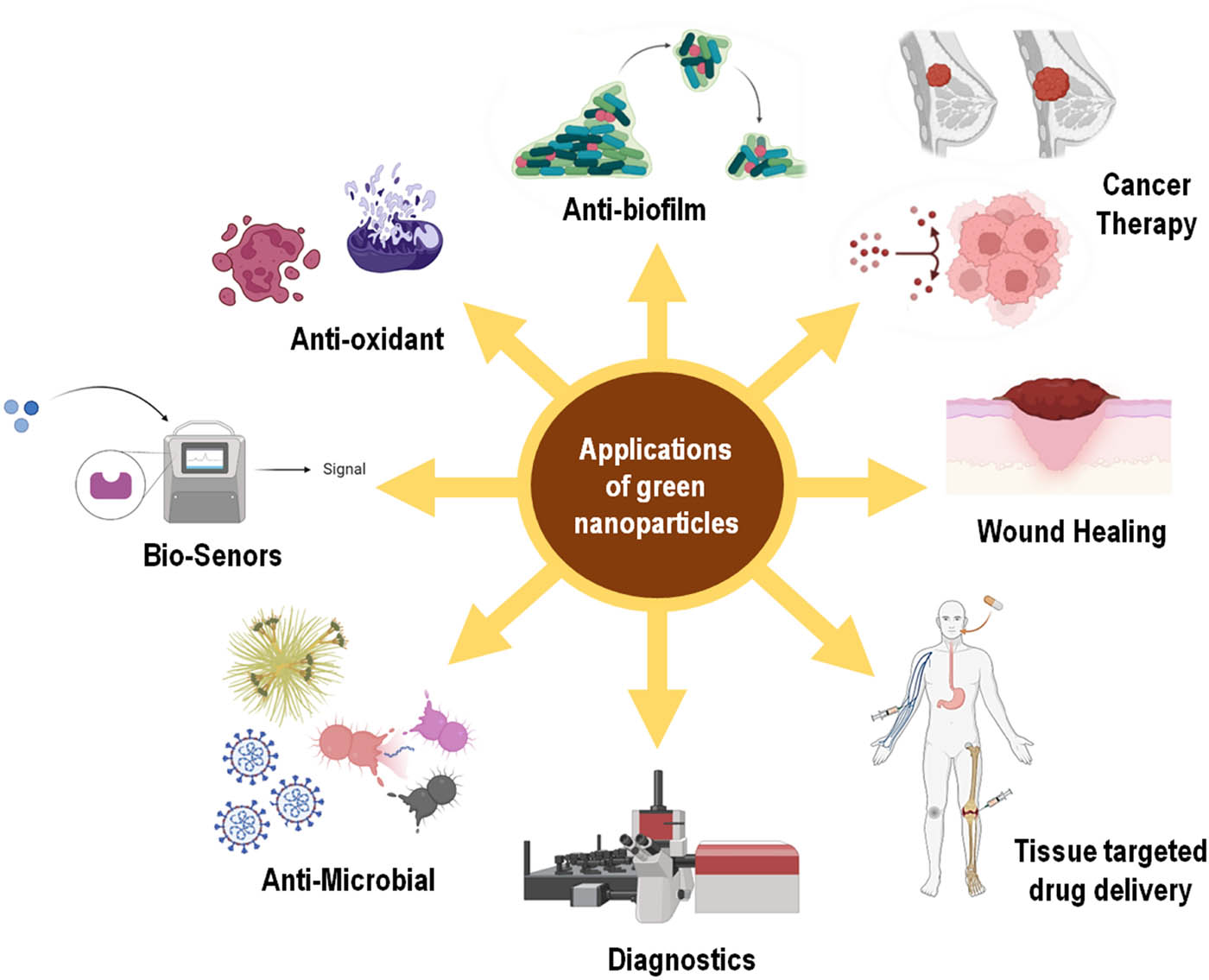
Applications of green-synthesized NPs derived from plants and microbes with varied biomedical applications and therapies.
2.1 Nanodrug delivery systems
2.1.1 Bacteria
With the current lifestyle, there has been increase in multidrug resistant (MDR) pathogens. The use of gadgets such as mobile phones has been an indispensable part of our lives for education, communication, and entertainment with an increased rate of MDR bacteria [54]. The treatment options for these MDR strains are very limited, as seen along with the use of β-lactam drugs in the treatment [55]. Silver (Ag) NPs exhibit antibacterial properties that continuously release Ag2+ ions which adhere to bacterial cell membranes and cell walls with cell disruption [53,54,55,56]. On entering the cells, Ag2+ ions deactivate respiratory enzymes due to the production of reactive oxygen species (ROS) [57]. Accumulation of ROS damages RNA, DNA, and proteins, while Ag++ released from NPs binds to the sulphur and phosphorus of DNA molecules and blocks further replication and cell division, eventually leading to cell death. Ag2+ ions also denature ribosomes in the cytoplasm further inhibiting protein synthesis [58,59,60] (Figure 4).
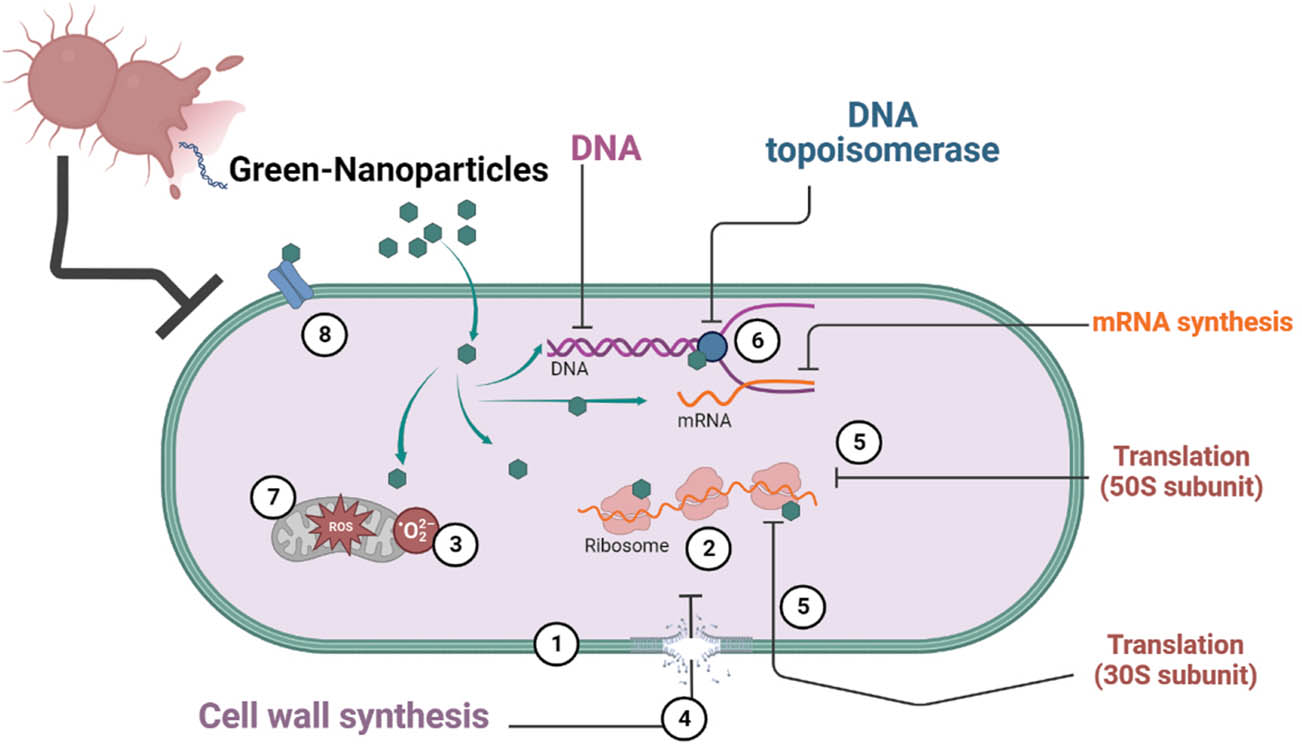
Mechanism of bacterial destruction by the green-synthesized NPs. (1) Metal NPs attack the bacterial cell wall and cell membrane. (2) Generates ions from the metal NPs that bind ribosomes and denatures them. (3) ROS starts to accumulate. (4) ROS with NPs ruptures the cell membrane. (5) Protein structure gets altered and damaged. (6) DNA denaturation occurs. (7) Inhibits electron transport chain. (8) Receptor sites are bounded by metal NPs causing conformational changes, which eventually, lead to cell death.
AgNPs accumulate in the cells and alter the membrane structure, resulting in cell lysis [61]. The charges present on the surface of the NP have a substantial role in determining its interaction with the cell membrane. Cationic NPs infiltrate the cell and inflict extensive damage, while anionic NPs do not penetrate the plasma membrane but destabilize it at specific concentrations. The property of charged NPs suggests potential damage to cells as it acts as vehicles for drug delivery to cancerous cells. The denatured cytoplasmic membrane often leads to organelle rupture, eventually resulting in cell lysis. Bacterial signal transduction involves phosphorylation events, which enable them to sense, adapt, and respond to environmental changes. NPs cause dephosphorylation and the disruption of signal transduction leading to apoptosis. Ag NPs are spherical or quasi-spherical and can easily release Ag2+ ions due to their larger surface area [62].
In order to avoid agglomeration, capping agents are used to coat the NPs, which modifies their surface and affects their dissolution. The presence of inorganic and organic substrates in the medium also affects the NP dissolution by aggregating with them. It has been very well noted that Ag NPs release Ag2+ ions effectively and faster in an acidic solution as compared to neutral solutions [63]. A different mode of action by NPs has been observed in both Gram-negative and Gram-positive bacteria owing to the presence of peptidoglycan in Gram-positive bacteria, which hinders efficient penetration [6]. NPs with 10 nm or less in size have direct cell wall permeability that enables them to enter into bacteria and cause cellular impairment, which suggests a direct correlation between the NP uptake and its antibacterial property [63,64,65]. Hence, Ag NPs have a greater potential as antibacterial agents, while the application of AgNPs as a biofilm inhibitor needs further investigation [66]. NPs of magnesium oxide are reported to possess anti-biofilm and anti-adhesion properties, thereby making them efficient against drug-resistant bacteria [67]. Cerium oxide (CeO2) NPs have been noted to have potential applications. The green-synthesized NPs of CeO2 are well known for their antibacterial and antifungal activities against various pathogens [68].
2.1.2 Fungi
Studies on antifungal activity are limited, as it has been observed that the concentration-dependent inhibitory activity is probably low due to the saturation of fungal hyphae with higher-density NPs, leading to pathogenic fungal inactivation [69]. While the studies on the effect of Ag ions on fungi are limited, reports suggest their inhibitory effect on the replication of DNA and inactivate ribosomes, enzymes, and proteins involved in ATP production [70,71]. Ag NPs synthesized with ribose sugar that acts as a reducing agent and sodium dodecyl sulphate as a capping agent showed antifungal properties against highly resistant fungi Candida albicans and Candida tropicalis [72]. Similar results against fungal infections were obtained by other researchers too [73]. Fungal cells sustained with an ion gradient, trehalose, and glucose protects the biological viability of cells from protein denaturation caused by environmental stresses such as heat, cold, high pH, dehydration, oxidative stress, and toxins [74]. NPs disrupt the membrane structure and subsequently the permeability, causing leakage of cell contents intracellularly along with damage to the membrane potential. Observations under a TEM depict the formation of pits in the fungal membrane when treated with Ag2+ ions leading to cell cycle arrest and death in Candida albicans with additional destruction of membrane and inhibition of budding [73]. Palladium NPs demonstrated effective antifungal activity against Colletotrichum gloeosporioides and F. oxysporum, although in a size-dependent manner, by disrupting cellular integrity, generating reactive species, and creating an osmotic imbalance in pathogens [75,76].
2.1.3 Viruses
While several viral diseases have been eradicated, emerging threats from novel viruses cannot be ignored due to their adaptability and mutagenic ability [77]. Hence, such viruses pose a continuous challenge to the scientific community. Enfuvirtide is one such synthetic peptide drug, permitted by US Food and Drug Administration (FDA), which targets the HIV gp41 envelope protein and prevents its fusion [78]. Under such challenging circumstances, NPs emerge as promising antiviral mediators for their exceptional physiochemical features and high surface area [79]. NPs block the attachment and entry of infectious viral particles by obstructing the multivalent interactions between viral cell surface mechanisms and host receptors on cell membranes (Figure 5) [80]. Previous studies have demonstrated the efficacy of NPs against HIV-1 [79,80], hepatitis B virus, Herpes simplex virus type 1, monkeypox virus, and influenza [81,82,83,84]. Although the interaction and efficacy of NPs against viruses were largely dependent on the size of NPs, they also interacted at specific sites. NPs also bound strongly to sulphur-containing residues of GP120 [82]. Both Ag and gold NPs have promising antiviral properties, particularly against enveloped DNA/RNA viruses.

Metallic NPs attach to the cell surface proteins and viral genomes further stopping the replication process.
2.1.4 Parasitic infections
NPs have been recently used alone and/or with a combination of the recommended drug in the antimalarial treatment that has helped to represent an innovative therapy [85]. AgNPs synthesized with leaf extracts of Anisomeles indica and Carissa spinarum were effective against the mosquito species such as Anopheles subpictus, Culex tritaeniorhynchus, and Anopheles albopictus with toxicity [86,87,88,89,90]. AgNPs synthesized using Bacillus safensis have potential activity against Anopheles gambiae larvae and showed 100% mortality with LC50 of 42.19 μg·mL−1 [91]. The Hyptis suaveolens and Leucas aspera leaf extracts were used to synthesize AgNPs that displayed larvicidal commotion against Aedes aegypti, Anopheles spp., and Culex quinquefasciatus [92]. A seaweed Ulva lactuca extract of AgNPs displayed a potential activity against A. stephensi with inhibitory activity against Plasmodium falciparum [90,93]. Leaf extracts of Cinnamomum zeylanicum used with the AgNP synthesis exhibited mosquitocidal activity and the NPs had greater efficacy towards larvicidal activity, as also observed with the flower extracts of Couroupita guianensis [91].
Trypanosomiasis, occurring in two major forms, has accounted as a severe disease in humans and includes American and African types. Sleeping sickness or African trypanosomiasis is transmitted by the vector tsetse fly, caused by haemoflagellate parasite Trypanosoma brucei, and affects millions of people leading to death if not treated; however, the American type is called “Chagas disease,” and is caused by Trypanosoma cruzi [92]. The use of NPs for the treatment of trypanosomiasis has not been much researched yet; however, there are few reports of spherical AgNPs (4–9 nm) and AuNPs (7–22 nm) that had potential activity against it [93]. The crude extract of Callistemon citrinus when used in the AgNP biosynthesis has antitrypanosomal activity. It has been noted that the bioactive agents derived from Serratia marcescens and Chromobacterium violaceum when used in AgNP and AuNP syntheses inhibited the growth of Trypanosoma brucei gambiense, however, at a lower rate [94,95].
3 Anti-inflammatory agents
Detecting NPs is difficult due to their little or no detection signals; however, it is notable that NPs are useful in delivering drugs that reduce inflammation. In certain autoimmune diseases, such as rheumatoid arthritis (RA), which is a chronic syndrome characterized by rapid progression, swelling, inflammation, and eventually, destructs joints. The available medications for the treatment, although initially beneficial, cause adverse side effects during long-term use (Table 2). An improved method of administration of the drugs would be to administer them directly at the site of inflammation. This would be an arduous and expensive task. This can be done using NPs as vectors that target and administer the anti-inflammatory drugs straight onto the inflammation sites [110]. This can be observed in several studies where NPs as encapsulated drugs containing liposomes are used to deliver drugs, such as glucocorticoids and clodronate, targeting arthritis in animal models [111]. An additional study on an RA model observed that clodronate liposomes when administered through the IV route could potentially suppress the onset of the disorder by specifically targeting the macrophages [112]. In a study done on adjuvant-induced rats, it was observed that when glucocorticoid prednisolone was encapsulated in polyethylene glycol (PEG)-coated liposomes and when these NPs were directed to rats, it was evidenced to be effective tenfold more compared to the usual approach. Symptoms were seen to have disappeared within 2 days and the rats were in complete remission after 6 days [113]. These observations show that NPs can be considered potential candidates for anti-inflammatory actions in disorders, especially autoimmune disorders.
Synthesis of microbial-derived NPs and their application in various fields of medicine
| Microorganism | Metal | Size (nm) | Shape of the NP | Applications | Reference |
|---|---|---|---|---|---|
| K. pneumoniae, E. coli, Enterobacter cloacae | AgNP | 28–122 | Round | Antimicrobial agents, electrical batteries, and optical receptors | [96] |
| Lactobacillus casei | AgNP | 20–50 | Sphere-shaped | Bio‑labelling drug delivery, cancer treatments | [97] |
| Bacillus cereus | AgNP | 20–40 | Round | Pathogens colonization by E. coli, S. aureus, P. aeruginosa, and S. typhi is inhibited by the green-synthesized NPs | [98] |
| P. proteolytica, Bacillus cecembensis | AgNP | 6–13 | Globular | P. antarctica, P. proteolytica, A. gangotriensis, A. kerguelensis, E. coli, and B. indicus are inhibited by the potential AgNPs | [99] |
| Bacillus indicus | AgNP | — | — | Antimicrobial activity, catalysis | [100] |
| Shewanella alga | AuNP | At pH 7: 10–20 | Wedge-shaped | pH-dependent synthesis of NPs | [101] |
| At pH 2: 5: 15–200 | |||||
| At pH 2: 20 | |||||
| Desulfovibrio desulfuricans | AuNP | 20–50 | Round | Catalysis reaction | [102] |
| Rhodopseudomonas capsulate | AuNP | 10–20 | Triangular | Cancer hyperthermia | [103] |
| Magnetospirillum magnetotacticum | Fe2O3NP | 47 | Handle-shaped cluster | [104] | |
| Klebsiella aerogenes | Cadmium sulphide (CdS) NP | 20–200 | — | — | [105] |
| E. coli | CdSNP | 2–5 | Labelled with fluorescent probe | Wurtzite structures | [31] |
| Aspergillus flavus | AgNP | 1–8 | Isotropic | [106] | |
| Aspergillus niger | AgNP | 20 | Sphere-shaped | Antimicrobial activity | [107] |
| Fusarium solani | AgNP | 5–35 | Round | Biolabelling, sensors, drug delivery | [108] |
| Aspergillus fumigates | AgNP | 5–25 | Circular | Coating for solar energy absorption and material for intercalation for electrical batteries | [11] |
| Penicillium fellutanum | AgNP | 5–25 | Circular | Surface coating and thin film for various applications | [109] |
4 Anticoagulants
The current procedures for the control and prevention of blood clots during surgical procedures, bloodlines, and treatment of thromboembolic events are majorly dependent on heparin-based anticoagulant drugs. Although effective, these anticoagulants require constant monitoring and need neutralization using antidotes [114] due to the bleeding risks associated with their administration, which is more prevalent among patients with a high bleeding risk [115]. NPs aim to overcome these associated risks by being used as anticoagulating agents. Magnetic NPs are a potential candidate in the areas of magnetic resonance imaging, drug delivery, gene transfer, and magnetic drug targeting [116]. In a study done in 2018, the heparin-stabilized ferrimagnetic iron oxide nanoparticles (Hep-SPIONs) were used for haemodialysis and classified as an active nano-anticoagulant. Compared to the commercial heparin widely used for medical procedures, these Hep-SPIONs showed similar anticoagulant activity and have the promising magnetic ability. This is further supported by the fact that Hep-SPIONs also exhibit significant blood compatibility without severe toxicity in an animal haemodialysis model. Since Hep-SPIONs show these considerable properties, they can be potentially used as an effective and safe treatment for a number of purifying blood procedures in the future [117].
5 Thrombolytic activity
Cardiovascular disorders, such as myocardial infarctions, venous thromboembolisms, and ischemic strokes, are a group of potentially fatal disorders with high morbidity and high mortality that are primarily caused by thrombotic occlusions of blood vessels [118,119]. Currently, these can be treated by thrombolytic drugs/therapy by the use of injections containing plasminogen activators (PAs). The use of PAs has major limitations and can have side effects such as rapid drug elimination from the body, narrow therapeutic window, and haemorrhagic risks. Nanomedicine, which is an amalgamation of medical applications and nanotechnology, can reduce the potential fatal side effects of the present thrombolytic drugs [120].
6 Anticancer therapeutics
NPs have long been studied for potential anticancer properties and, in certain studies, specific NPs have been seen to exhibit anticancer properties. In a study published in 2019, it was observed that titanium oxide nanotubes were coated with selenium NPs; the latter were seen to prevent the growth of MG-63 cancer cells. The TiO2 tubes coated with these Se-NPs were capable of exhibiting anticancer properties along with other beneficial properties such as antibacterial properties [121]. The existing therapeutic strategies meant to tackle cancer in the form of cancer chemotherapy and cancer biology are far from being used at their optimal levels, as expected [122]. The usage of mesoporous silica NPs has been used effectively as a drug delivery vector due to their faster dissolution rate of the drugs being dissipated. This is further supported by better availability and stability within in vivo environments (Table 2) [123]. While graphite g-C3H4 has been used for various activities like remediation, energy production, microbial disinfection, and drug delivery, especially in cancer therapy has been a potential resource due to its effectiveness, surface activity, stability, and biocompatibility [124]. Green-synthesized CeO2 NPs have also shown promising and potential activity against cancers and also for diabetes due to their stability [125].
7 Nanobiosensors
Certain organic compounds have been used as antimicrobial packaging materials such as essential oils, organic acids, and bacteriocins [126]. Nanobiosensors are used in the food industry for pathogen detection during processing [127]. Many NPs like Ag, chitosan, copper, and metal oxide NPs like zinc oxide (ZnO) or titanium oxide (TiO2) have antimicrobial properties [128]. Conventional methods for infectious disease diagnosis are slow with low efficiency, time-consuming, and complicated processes, especially during emergencies. Microbial biosensors have made a benchmark by providing a rapid, inexpensive, and accurate for diagnosing infectious agents, hormonal imbalances, and DNA. Epinephrine was determined by immobilizing Phanerochaete chrysosporium ME446, a white rot fungus, using glutaraldehyde crosslinked with gelatin on a Pt electrode for NPs ranging from 5 to 100 μm in size with 1.04 μM detection limits. Epinephrine was converted into epinephrine quinone by redox reactions in fungal cells, which are catalysed by lactase enzyme, thus increasing the current flow [129]. For viral infections, as observed in rat basophilic leukaemia, mast cells form an exocytotic response within minutes of the addition of antigens that have been used to construct biosensors for pathogen detection [130]. E. coli SOS-EGFP was analysed to study the SOS response triggered following harmful chemicals in DNA, which was noted in DNA damage detected by the fluorescent protein controlled by a recA gene promoter [131]. Lab-on-a-chip, which works on the electrochemical system by integrating microbes onto a microfluid chip, has been fabricated as a microfluid device that enables the detection of the analyte even at very low concentrations by energetically transferring the targeted analyte to the surface of the microbial biosensors [132]. Forensic identification for recognition of body fluidic traces containing DNA and miRNA as evidential proof has been analysed using microbial biosensors [133]. These portable biosensors might be a promising array system that can help to minimize cost and increase the speed with efficiency.
8 Nanoimaging
Currently, NPs have been used as a potential tool for diagnosis purposes. The role of NPs as multimodal and multifunctional imaging at a molecular level has been an additional advantage. Further, their nanoscale size, loading capacity, and controlled release patterns with tailored surfaces have enhanced their potentiality and hence gained immense popularity and strategy for cancer diagnosis. Magnetic NPs using iron oxide have been used in magnetic resonance imaging (NMR), as drug delivery systems, cancer treatment, and therapy with magnetic fluid hyperthermia [134]. The most minute details of the critical growth of the lethal cancerous cells can be checked by imaging the sentinel lymph nodes (SLNs). Food-grade honey can be used for the synthesis of carbon NPs in SLN imaging, for its strong optical absorption in the near-infrared regions, smaller size, and rapid lymphatic transport for greater resection of the SLN and reduces the complications in axillary investigations using low-resolution imaging process [135]. Grape juice synthesized for fluorescent carbon NPs is simple, chemically free for hydrothermal treatment with less toxicity, and excellent stability has been employed as probes for cellular imaging, which might be an alternative to the traditional quantum dots [136]. These imaging probes of fluorescent NPs are the current labelling technique that can be expected in near future as new medical diagnostic tools owing to their photostable properties and brightness [137].
9 Future perspectives
Nanotechnology has been growing rapidly with an extensive range of applications in various arenas. NPs affect humans and animals and cause numerous health disorders of the lungs, kidneys, etc. However, there is still a lack of information on the risks associated with prolonged use that needs to be worked on. Green synthesis offers a safe mechanism to produce non-toxic NPs with additional beneficial effects. Green synthesis has already been applied in several fields owing to the use of natural alternatives. Nanomedicine is presently one of the most striking research areas that span the diagnosis and therapeutics options including cancer, drug delivery, etc. There is a need to generate NPs of uniform sizes, consistency in properties, biocompatible with drug loading, and release only to the target cells. Though NPs are known to have a significant advance in the field of diagnosis and therapy, their anticipation needs to be extended in other areas like treatment for parasitic infections and response in cancer therapy, which has been neglected and remains limited. The main fundamental research needs to be on the fundamental markers of NPs to allow the specific target sites of diseased tissues without altering the normal cellular functioning; emphasizing the molecular genetics of diseases will help further to signify the advanced nanomedicine, modelling cell interactions with drugs, and animal model studies. The toxicity and efficacy of these NPs need further research. An interesting upcoming area is the development of personalized healthcare that needs to be built on the concepts and mechanism by including nanodevices and nanorobots for successfully handling the near future with care; these green-synthesized NPs are potentially viable and can be a safe biomaterial.
10 Summary and conclusion
Recent years have seen a lot of increasing demand for environmentally friendly based green technology using plants and microbes. With the increasing demand for NPs synthesized from biological sources, the research has paved way for their varied applications. NPs are generally utilized for their antimicrobial properties resulting from their metal components to act against bacteria, fungi, and certain viruses. However, green-synthesized NPs being eco-friendly and low cost have different biomolecules as vital components that have gained immense popularity. The antimicrobial properties of green-synthesized NPs are employed in various industries such as in food packaging, active agents in skin care products, treatment for diseases, and drug delivery. The role of this novel nanomedical discipline has been well reported with its antimicrobial, anticancer, antioxidant, anticoagulant, antiparasitic, diagnosis, and nanoimaging properties. Although it is to be noted that overuse and extensive deployment of NPs might lead to toxicity due to the accumulation of metals and ions that are released leading to lethal effects on humans, currently, concentration usage has not been signified yet. In conclusion, green synthesis is a largely positive and quite significant venture in all fields of science where the use of biological and biodegradable resources used in the synthesis of NPs will undoubtedly lead to an eco-friendly era. However, some shortcoming challenges need to be studied, such as the extraction process, non-uniform particle sizes, environmental parameters, biological resources used, and most important application without toxicity. Improvising green-synthesized NP particles with reference to the above challenges will undeniably be a great choice in a simple, low-cost, energy saving, and substantial process. It will further help to investigate the future challenges and issues in understanding their translation to clinical trials and offer in the future development of improvised health care, especially in personalized medicines.
-
Funding information: The authors state that no funding was involved.
-
Author contributions: Shilpa Borehalli Mayegowda: writing – concept template, writing – review and editing, figures, proofreading, referencing; Gitartha Sarma: writing – original draft and figures; Manjula Nagalapur Gadilingappa, Saad Alghamdi, Akhmed Aslam, Bassem Refaat, Mazen Almehmadi, Mamdouh Allahyani, Ahad Amer Alsaiari, Abdulelah Aljuaid, and Issa Saad Al-Moraya: writing – original draft, writing – review and editing.
-
Conflict of interest: The authors state no conflict of interest.
References
[1] Shenton W, Douglas T, Young M, Stubbs G, Mann S. Inorganic–organic nanotube composites from template mineralization of tobacco mosaic virus. Adv Mater. 1999 Mar;11(3):253–6. 10.1002/(SICI)1521-4095(199903).Search in Google Scholar
[2] Medvedeva NV, Ipatova OM, Ivanov YD, Drozhzhin AI, Archakov AI. Nanobiotechnology and nanomedicine. Biochem (Mosc) Suppl Ser B: Biomed Chem. 2007 Jun;1(2):114–24. 10.1134/S1990750807020023.Search in Google Scholar
[3] Thakkar KN, Mhatre SS, Parikh RY. Biological synthesis of metallic nanoparticles. Nanomed: Nanotechnol Biol Med. 2010 Apr 1;6(2):257–62. 10.1016/j.nano.2009.07.002.Search in Google Scholar PubMed
[4] Singh P, Kim YJ, Zhang D, Yang DC. Biological synthesis of nanoparticles from plants and microorganisms. Trends Biotechnol. 2016 Jul 1;34(7):588–99. 10.1016/j.tibtech.2016.02.006.Search in Google Scholar PubMed
[5] Das RK, Pachapur VL, Lonappan L, Naghdi M, Pulicharla R, Maiti S, et al. Biological synthesis of metallic nanoparticles: plants, animals and microbial aspects. Nanotechnol Environ Eng. 2017 Dec;2(1):1–21. 10.1007/s41204-017-0029-4.Search in Google Scholar
[6] Hua S, De Matos MB, Metselaar JM, Storm G. Current trends and challenges in the clinical translation of nanoparticulate nanomedicines: pathways for translational development and commercialization. Front Pharmacol. 2018 Jul 17;9:790. 10.3389/fphar.2018.00790.Search in Google Scholar PubMed PubMed Central
[7] Jain N, Bhargava A, Majumdar S, Tarafdar JC, Panwar J. Extracellular biosynthesis and characterization of silver nanoparticles using Aspergillus flavus NJP08: a mechanism perspective. Nanoscale. 2011;3(2):635–41. 10.1039/C0NR00656D.Search in Google Scholar
[8] Kulkarni N, Muddapur U. Biosynthesis of metal nanoparticles: a review. J Nanotechnol. 2014 May;2014. 10.1155/2014/510246.Search in Google Scholar
[9] Husseiny MI, Abd El-Aziz M, Badr Y, Mahmoud MA. Biosynthesis of gold nanoparticles using Pseudomonas aeruginosa. Spectrochimica Acta Part A: Mol Biomolecular Spectrosc. 2007 Jul 1;67(3–4):1003–6. 10.1016/j.saa.2006.09.028.Search in Google Scholar PubMed
[10] Joglekar S, Kodam K, Dhaygude M, Hudlikar M. Novel route for rapid biosynthesis of lead nanoparticles using aqueous extract of Jatropha curcas L. latex. Mater Lett. 2011 Oct 1;65(19–20):3170–2. 10.1016/j.matlet.2011.06.075.Search in Google Scholar
[11] Bhainsa KC, D’souza SF. Extracellular biosynthesis of silver nanoparticles using the fungus Aspergillus fumigatus. Colloids Surf B: Biointerfaces. 2006 Feb 1;47(2):160–4. 10.1016/j.colsurfb.2005.11.026.Search in Google Scholar PubMed
[12] Khan AA, Fox EK, Górzny MŁ, Nikulina E, Brougham DF, Wege C, et al. pH control of the electrostatic binding of gold and iron oxide nanoparticles to tobacco mosaic virus. Langmuir. 2013 Feb 19;29(7):2094–8. 10.1021/la3044126.Search in Google Scholar PubMed
[13] Gericke M, Pinches A. Microbial production of gold nanoparticles. Gold Bull. 2006a;39:22–8. 10.1007/BF03215529.Search in Google Scholar
[14] Iravani S. Green synthesis of metal nanoparticles using plants. Green Chem. 2011;13(10):2638–50.10.1039/c1gc15386bSearch in Google Scholar
[15] Mohantya N, Palaib T, Prustyc B, Mohapatrad J. An overview of nanomedicine in veterinary science. Vet Res. 2014 Oct;2(4):90–5.Search in Google Scholar
[16] Meena NS, Sahni YP, Thakur D, Singh RP. Applications of nanotechnology in veterinary therapeutics. J Entomol Zool Stud. 2018;6(2):167–75.Search in Google Scholar
[17] Revia RA, Zhang M. Magnetite nanoparticles for cancer diagnosis, treatment, and treatment monitoring: recent advances. Mater Today. 2016 Apr 1;19(3):157–68. 10.1016/j.mattod.2015.08.022.Search in Google Scholar PubMed PubMed Central
[18] Chakravarthi VP, Balaji N. Applications of nanotechnology in veterinary medicine. Vet World. 2010 Oct 1;3(10):477.10.5455/vetworld.2010.477-480Search in Google Scholar
[19] Jurj A, Braicu C, Pop LA, Tomuleasa C, Gherman CD, Berindan-Neagoe I. The new era of nanotechnology, an alternative to change cancer treatment. Drug Design Dev Ther. 2017;11:2871. 10.2147/DDDT.S142337.Search in Google Scholar PubMed PubMed Central
[20] Devi RA, Latha M, Velumani S, Oza G, Reyes-Figueroa P, Rohini M, et al. Synthesis and characterization of cadmium sulfide nanoparticles by chemical precipitation method. J Nanosci Nanotechnol. 2015 Nov 1;15(11):8434–9. 10.1166/jnn.2015.11472.Search in Google Scholar PubMed
[21] Nasimi P, Haidari M. Medical use of nanoparticles: Drug delivery and diagnosis diseases. Int J Green Nanotechnol. 2013 Jul 30;1:1943089213506978.10.1177/1943089213506978Search in Google Scholar
[22] Nguyen VL, Ohtaki M, Cao MT, Nogami M. Structure and morphology of platinum nanoparticles with critical new issues of low-and high-index facets. Advances in Natural. Sciences: Nanosci Nanotechnol. 2012 Apr 3;3(2):025005.10.1088/2043-6262/3/2/025005Search in Google Scholar
[23] Dahoumane SA, Yéprémian C, Djédiat C, Couté A, Fiévet F, Coradin T, et al. Improvement of kinetics, yield, and colloidal stability of biogenic gold nanoparticles using living cells of Euglena gracilis microalga. J Nanopart Res. 2016;8:1–12. 10.1007/s11051-016-3378-1.Search in Google Scholar
[24] Husen A, Siddiqi KS. Plants and microbes assisted selenium nanoparticles: characterization and application. J Nanobiotechnol. 2014 Dec;12(1):1.10.1186/s12951-014-0028-6Search in Google Scholar PubMed PubMed Central
[25] Rotti RB, Sunitha DV, Manjunath R, Roy A, Mayegowda SB, Gnanaprakash AP, et al. Green synthesis of MgO nanoparticles and its antibacterial properties. Front Chem. 2023;11:145.10.3389/fchem.2023.1143614Search in Google Scholar PubMed PubMed Central
[26] Jadimurthy R, Mayegowda SB, Nayak SC, Mohan CD, Rangappa KS. Escaping mechanisms of ESKAPE pathogens from antibiotics and their targeting by natural compounds. Biotechnol Rep. 2022 Jun 1;34:e00728. 10.1016/j.btre.2022.e00728.Search in Google Scholar PubMed PubMed Central
[27] Vollmer C, Redel E, Abu-Shandi K, Thomann R, Manyar H, Hardacre C, et al. Microwave irradiation for the facile synthesis of transition-metal nanoparticles (NPs) in ionic liquids (ILs) from metal-carbonyl precursors and Ru-, Rh-, and Ir-NP/IL dispersions as biphasic liquid-liquid hydrogenation nanocatalysts for cyclohexene. Chem A Eur J. 2010;16:3849–58. 10.1002/chem.200903214.Search in Google Scholar PubMed
[28] Patil S, Chandrasekaran R. Biogenic nanoparticles: A comprehensive perspective in synthesis, characterization, application and its challenges. J Genet Eng Biotechnol. 2020;18:1–23.10.1186/s43141-020-00081-3Search in Google Scholar PubMed PubMed Central
[29] Grasso G, Zane D, Dragone R. Microbial nanotechnology: challenges and prospects for green biocatalytic synthesis of nanoscale materials for sensoristic and biomedical applications. Nanomaterials. 2019;10(1):11.10.3390/nano10010011Search in Google Scholar PubMed PubMed Central
[30] Singh J, Dutta T, Kim KH, Rawat M, Samddar P, Kumar P. ‘Green’ synthesis of metals and their oxide nanoparticles: applications for environmental remediation. J Nanobiotechnol. 2018 Dec;16(1):1–24. 10.1186/s12951-018-0408-4.Search in Google Scholar PubMed PubMed Central
[31] Chen YL, Tuan HY, Tien CW, Lo WH, Liang HC, Hu YC. Augmented biosynthesis of cadmium sulfide nanoparticles by genetically engineered Escherichia coli. Biotechnol Prog. 2009 Sep;25(5):1260–6. 10.1002/btpr.199.Search in Google Scholar PubMed
[32] Mohanpuria P, Rana NK, Yadav SK. Biosynthesis of nanoparticles: technological concepts and future applications. J Nanopart Res. 2008 Mar;10(3):507–17.10.1007/s11051-007-9275-xSearch in Google Scholar
[33] Narayanan KB, Sakthivel N. Synthesis and characterization of nano-gold composite using Cylindrocladium floridanum and its heterogeneous catalysis in the degradation of 4-nitrophenol. J Hazard Mater. 2011 May 15;189(1–2):519–25. 10.1016/j.jhazmat.2011.02.069.Search in Google Scholar PubMed
[34] Mourato A, Gadanho M, Lino AR, Tenreiro R. Biosynthesis of crystalline silver and gold nanoparticles by extremophilic yeasts. Bioinorganic Chem Appl. 2011 Oct;2011. 10.1155/2011/546074.Search in Google Scholar PubMed PubMed Central
[35] Kahzad N, Salehzadeh A. Green synthesis of CuFe2O4@ Ag nanocomposite using the Chlorella vulgaris and evaluation of its effect on the expression of norA efflux pump gene among Staphylococcus aureus strains. Biol Trace Elem Res. 2020 Nov;198(1):359–70. 10.1007/s12011-020-02055-5.Search in Google Scholar PubMed
[36] Shilpa BM, Rashmi R, Manjula NG, Sreekantha A. Bioremediation of heavy metal contaminated sites using phytogenic nanoparticles. In Phytonanotechnology. Singapore: Springer; 2022. p. 227–53.10.1007/978-981-19-4811-4_11Search in Google Scholar
[37] Govindaraju K, Kiruthiga V, Kumar VG, Singaravelu G. Extracellular synthesis of silver nanoparticles by a marine alga, Sargassum wightii Grevilli and their antibacterial effects. J Nanosci Nanotechnol. 2009 Sep;9(9):5497–501. 10.1166/jnn.2009.1199.Search in Google Scholar PubMed
[38] Mata YN, Torres E, Blazquez ML, Ballester A, González FM, Munoz JA. Gold (III) biosorption and bioreduction with the brown alga Fucus vesiculosus. J Hazard Mater. 2009 Jul;166(2–3):612–8. 10.1016/j.jhazmat.2008.11.064.Search in Google Scholar PubMed
[39] Rajasulochana P, Dhamotharan R, Murugakoothan P, Murugesan S, Krishnamoorthy P. Biosynthesis and characterization of gold nanoparticles using the alga Kappaphycus alvarezii. Int J Nanosci. 2010 Oct;9(5):511–6. 10.1142/S0219581X10007149.Search in Google Scholar
[40] Dameron CT, Reese RN, Mehra RK, Kortan AR, Carroll PJ, Steigerwald ML, et al. Biosynthesis of cadmium sulphide quantum semiconductor crystallites. Nature. 1989 Apr;338(6216):596–7. 10.1038/338596a0.Search in Google Scholar
[41] Lee SW, Mao C, Flynn CE, Belcher AM. Ordering of quantum dots using genetically engineered viruses. Science. 2002 May 3;296(5569):892–5. 10.1126/science.1068054.Search in Google Scholar PubMed
[42] Makarov VV, Love AJ, Sinitsyna OV, Makarova SS, Yaminsky IV, Taliansky ME, et al. “Green” nanotechnologies: synthesis of metal nanoparticles using plants. Acta Naturae (aнглoязычнaя вepcия). 2014;6(1(20)):35–44. 10.32607/20758251-2014-6-1-35-44.Search in Google Scholar
[43] Love AJ, Makarov V, Yaminsky I, Kalinina NO, Taliansky ME. The use of tobacco mosaic virus and cowpea mosaic virus for the production of novel metal nanomaterials. Virology. 2014 Jan 20;449:133–9. 10.1016/j.virol.2013.11.002.Search in Google Scholar PubMed
[44] Marchiol L. Synthesis of metal nanoparticles in living plants. Italian J Agron. 2012 Aug 6;7(3):e37.10.4081/ija.2012.e37Search in Google Scholar
[45] Vidya C, Hiremath S, Chandraprabha MN, Antonyraj ML, Gopal IV, Jain A, et al. Green synthesis of ZnO nanoparticles by Calotropis gigantea. Int J Curr Eng Technol. 2013 Apr;1(1):118–20.Search in Google Scholar
[46] Maensiri S, Laokul P, Klinkaewnarong J, Phokha S, Promarak V, Seraphin S. Indium oxide (In2O3) nanoparticles using Aloe vera plant extract: synthesis and optical properties. J Optoelectron Adv Mater. 2008 Mar 1;10(3):161–5.Search in Google Scholar
[47] Gunalan S, Sivaraj R, Rajendran V. Green synthesized ZnO nanoparticles against bacterial and fungal pathogens. Prog Nat Sci: Mater Int. 2012 Dec 1;22(6):693–700. 10.1016/j.pnsc.2012.11.015.Search in Google Scholar
[48] Chouke PB, Shrirame T, Potbhare AK, Mondal A, Chaudhary AR, Mondal S, et al. Bioinspired metal/metal oxide nanoparticles: A road map to potential applications . Mater Today Adv. 2022 December;16:100314. 10.1016/j.mtadv.2022.100314.Search in Google Scholar
[49] Ananda A, Ramakrishnappa T, Archana S, Yadav LR, Shilpa BM, Nagaraju G, et al. Green synthesis of MgO nanoparticles using Phyllanthus emblica for Evans blue degradation and antibacterial activity. Mater Today: Proc. 2022;49:801–10. 10.1016/j.matpr.2021.05.340.Search in Google Scholar
[50] Adarsha JR, Ravishankar TN, Ananda A, Manjunatha CR, Shilpa BM, Ramakrishnappa T. Hydrothermal synthesis of novel heterostructured Ag/TiO2/CuFe2O4 nanocomposite: Characterization, enhanced photocatalytic degradation of methylene blue dye and efficient antibacterial studies. Water Environ Res. 2022 Jun;94(6):e10744. 10.1002/wer.10744.Search in Google Scholar PubMed
[51] Archana S, Jayanna BK, Ananda A, Shilpa BM, Pandiarajan D, Muralidhara HB, et al. Synthesis of nickel oxide grafted graphene oxide nanocomposites - A systematic research on chemisorption of heavy metal ions and its antibacterial activity. Environ Nanotechnol Monit Manag. 2021 December;16:100486. 10.1016/j.enmm.2021.100486.Search in Google Scholar
[52] Ramkumar VS, Pugazhendhi A, Gopalakrishnan K, Sivagurunathan P, Saratale GD, Dung TN, et al. Biofabrication and characterization of silver nanoparticles using aqueous extract of seaweed Enteromorpha compressa and its biomedical properties. Biotechnol Rep. 2017;14:1–7. 10.1016/j.btre.2017.02.001.Search in Google Scholar PubMed PubMed Central
[53] Mayegowda SB, Ng M, Alghamdi S, Atwah B, Alhindi Z, Islam F. Role of antimicrobial drug in the development of potential therapeutics. Evidence-Based Complementary Altern Med. 2022 May 5;2022. 10.1155/2022/2500613.Search in Google Scholar PubMed PubMed Central
[54] Ng M, Borehalli Mayegowda S, Priyanka L, Priyanka D, Alghamdi S, Choudary S, et al. Antibiotic susceptibility patterns of ESβL producers isolated from the mobile phones. Evidence-Based Complementary Altern Med. 2022 May 27;2022:1527488.10.1155/2022/1527488Search in Google Scholar PubMed PubMed Central
[55] Nagshetty K, Shilpa BM, Patil SA, Shivannavar CT, Manjula NG. An overview of extended spectrum beta lactamases and metallo beta lactamases. Adv Microbiol. 2021 Jan 28;11(1):37.10.4236/aim.2021.111004Search in Google Scholar
[56] Durán N, Durán M, De Jesus MB, Seabra AB, Fávaro WJ, Nakazato G. Silver nanoparticles: A new view on mechanistic aspects on antimicrobial activity. Nanomedicine: Nanotechnol Biol Med. 2016 Apr 1;12(3):789–99. 10.1016/j.nano.2015.11.016.Search in Google Scholar PubMed
[57] Mayegowda SB, Sureshkumar K, Yashaswini R, Ramakrishnappa T. Phytonanotechnology for the removal of pollutants from the contaminated soil environment. In Phytonanotechnology. Singapore: Springer; 2022. p. 319–36.10.1007/978-981-19-4811-4_15Search in Google Scholar
[58] Liao C, Li Y, Tjong SC. Bactericidal and cytotoxic properties of silver nanoparticles. Int J Mol Sci. 2019 Jan 21;20(2):449. 10.3390/ijms20020449.Search in Google Scholar PubMed PubMed Central
[59] Li L, Li L, Zhou X, Yu Y, Li Z, Zuo D, et al. Silver nanoparticles induce protective autophagy via Ca2 +/CaMKKβ/AMPK/mTOR pathway in SH-SY5Y cells and rat brains. Nanotoxicology. 2019 Mar 16;13(3):369–91. 10.1080/17435390.2018.1550226.Search in Google Scholar PubMed
[60] Shanmuganathan R, MubarakAli D, Prabakar D, Muthukumar H, Thajuddin N, Kumar SS, et al. An enhancement of antimicrobial efficacy of biogenic and ceftriaxone-conjugated silver nanoparticles: green approach. Environ Sci Pollut Res. 2018 Apr;25(11):10362–70. 10.1007/s11356-017-9367-9.Search in Google Scholar PubMed
[61] Jacob JM, John MS, Jacob A, Abitha P, Kumar SS, Rajan R, et al. Bactericidal coating of paper towels via sustainable biosynthesis of silver nanoparticles using Ocimum sanctum leaf extract. Mater Res Express. 2019 Jan 16;6(4):045401.10.1088/2053-1591/aafaedSearch in Google Scholar
[62] Meikle TG, Dyett BP, Strachan JB, White J, Drummond CJ, Conn CE. Preparation, characterization, and antimicrobial activity of cubosome encapsulated metal nanocrystals. ACS Appl Mater Interfaces. 2020 Jan 9;12(6):6944–54. 10.1021/acsami.9b21783.Search in Google Scholar PubMed
[63] Pugazhendhi A, Prabakar D, Jacob JM, Karuppusamy I, Saratale RG. Synthesis and characterization of silver nanoparticles using Gelidium amansii and its antimicrobial property against various pathogenic bacteria. Microb Pathogenesis. 2018 Jan 1;114:41–5. 10.1016/j.micpath.2017.11.013.Search in Google Scholar PubMed
[64] Yadav LS, Shilpa BM, Suma BP, Venkatesh R, Nagaraju G. Synergistic effect of photocatalytic, antibacterial and electrochemical activities on biosynthesized zirconium oxide nanoparticles. Eur Phys J Plus. 2021 Jul;136(7):1–7. 10.1140/epjp/s13360-021-01606-6.Search in Google Scholar
[65] Hayat S, Muzammil S, Rasool MH, Nisar Z, Hussain SZ, Sabri AN, et al. In vitro antibiofilm and anti‐adhesion effects of magnesium oxide nanoparticles against antibiotic resistant bacteria. Microbiol Immunol. 2018 Apr;62(4):211–20. 10.1111/1348-0421.12580.Search in Google Scholar PubMed
[66] Feng QL, Wu J, Chen GQ, Cui FZ, Kim TN, Kim JO. A mechanistic study of the antibacterial effect of silver ions on Escherichia coli and Staphylococcus aureus. J Biomed Mater Res. 2000 Dec 15;52(4):662–8. 10.1002/1097-4636(20001215)52:4<662:aid-jbm10>3.0.co;2-3.Search in Google Scholar
[67] Yamanaka M, Hara K, Kudo J. Bactericidal actions of a silver ion solution on Escherichia coli, studied by energy-filtering transmission electron microscopy and proteomic analysis. Appl Environ Microbiol. 2005 Nov;71(11):7589–93. 10.1128/AEM.71.11.7589-7593.2005.Search in Google Scholar
[68] Kim SW, Jung JH, Lamsal K, Kim YS, Min JS, Lee YS. Antifungal effects of silver nanoparticles (AgNPs) against various plant pathogenic fungi. Mycobiology. 2012 Mar 1;40(1):53–8. 10.5941/MYCO.2012.40.1.053.Search in Google Scholar
[69] Mallmann EJ, Cunha FA, Castro BN, Maciel AM, Menezes EA, Fechine PB. Antifungal activity of silver nanoparticles obtained by green synthesis. Rev do Inst de Medicina Tropical de São Paulo. 2015 Mar;57:165–7. 10.1590/S0036-46652015000200011.Search in Google Scholar
[70] Kim KJ, Sung WS, Suh BK, Moon SK, Choi JS, Kim JG, et al. Antifungal activity and mode of action of silver nano-particles on Candida albicans. Biometals. 2009 Apr;22(2):235–42. 10.1007/s10534-008-9159-2.Search in Google Scholar
[71] Endo M, Takesako K, Kato I, Yamaguchi H. Fungicidal action of aureobasidin A, a cyclic depsipeptide antifungal antibiotic, against Saccharomyces cerevisiae. Antimicrob Agents Chemother. 1997 Mar;41(3):672–6.10.1128/AAC.41.3.672Search in Google Scholar
[72] Alvarez-Peral FJ, Zaragoza O, Pedreno Y, Argüelles JC. Protective role of trehalose during severe oxidative stress caused by hydrogen peroxide and the adaptive oxidative stress response in Candida albicans. Microbiology. 2002 Aug 1;148(8):2599–606. 10.1099/00221287-148-8-2599.Search in Google Scholar
[73] Osonga FJ, Kalra S, Miller RM, Isika D, Sadik OA. Synthesis, characterization and antifungal activities of eco-friendly palladium nanoparticles. RSC Adv. 2020;10(10):5894–904. 10.1039/C9RA07800B.Search in Google Scholar
[74] Esteban MA, Wang T, Qin B, Yang J, Qin D, Cai J, et al. Vitamin C enhances the generation of mouse and human induced pluripotent stem cells. Cell Stem Cell. 2010 Jan 8;6(1):71–9.10.1016/j.stem.2009.12.001Search in Google Scholar
[75] Galdiero S, Falanga A, Vitiello M, Cantisani M, Marra V, Galdiero M. Silver nanoparticles as potential antiviral agents. Molecules. 2011 Oct 24;16(10):8894–918. 10.3390/molecules16108894.Search in Google Scholar PubMed PubMed Central
[76] Elechiguerra JL, Burt JL, Morones JR, Camacho-Bragado A, Gao X, Lara HH, et al. Interaction of silver nanoparticles with HIV-1. J nanobiotechnology. 2005 Jun;3(1):1. 10.1186/1477-3155-3-6.Search in Google Scholar PubMed PubMed Central
[77] Helenius A. Virus entry and uncoating. In Fields’ Virology. London, UK: Lippincott Williams & Wilkins; 2007. p. 99–118.Search in Google Scholar
[78] Sun RW, Chen R, Chung NP, Ho CM, Lin CL, Che CM. Silver nanoparticles fabricated in Hepes buffer exhibit cytoprotective activities toward HIV-1 infected cells. Chem Commun. 2005;40:5059–61. 10.1039/b510984a.Search in Google Scholar PubMed
[79] Lara HH, Ayala-Nuñez NV, Ixtepan-Turrent L, Rodriguez-Padilla C. Mode of antiviral action of silver nanoparticles against HIV-1. J Nanobiotechnol. 2010 Dec;8(1):1. 10.1186/1477-3155-8-1.Search in Google Scholar PubMed PubMed Central
[80] Lara HH, Ixtepan-Turrent L, Garza-Treviño EN, Rodriguez-Padilla C. PVP-coated silver nanoparticles block the transmission of cell-free and cell-associated HIV-1 in human cervical culture. J Nanobiotechnol. 2010 Dec;8(1):1. 10.1186/1477-3155-8-15oson.Search in Google Scholar
[81] Mori Y, Ono T, Miyahira Y, Nguyen VQ, Matsui T, Ishihara M. Antiviral activity of silver nanoparticle/chitosan composites against H1N1 influenza A virus. Nanoscale Res Lett. 2013 Dec;8(1):1–6.10.1186/1556-276X-8-93Search in Google Scholar PubMed PubMed Central
[82] Baram-Pinto D, Shukla S, Perkas N, Gedanken A, Sarid R. Inhibition of herpes simplex virus type 1 infection by silver nanoparticles capped with mercaptoethane sulfonate. Bioconjugate Chem. 2009 Aug 19;20(8):1497–502. 10.1021/bc900215b.Search in Google Scholar PubMed
[83] Rogers JV, Parkinson CV, Choi YW, Speshock JL, Hussain SM. A preliminary assessment of silver nanoparticle inhibition of monkeypox virus plaque formation. Nanoscale Res Lett. 2008 Apr;3(4):129–33. 10.1007/s11671-008-9128-2.Search in Google Scholar
[84] Papp I, Sieben C, Ludwig K, Roskamp M, Böttcher C, Schlecht S, et al. Inhibition of influenza virus infection by multivalent sialic‐acid‐functionalized gold nanoparticles. Small. 2010 Dec 20;6(24):2900–6.10.1002/smll.201001349Search in Google Scholar PubMed
[85] Benelli G. Plant-mediated biosynthesis of nanoparticles as an emerging tool against mosquitoes of medical and veterinary importance: a review. Parasitology Res. 2016 Jan;115(1):23–34. 10.1007/s00436-015-4800-9.Search in Google Scholar PubMed
[86] Govindarajan M, Rajeswary M, Veerakumar K, Muthukumaran U, Hoti SL, Benelli G. Green synthesis and characterization of silver nanoparticles fabricated using Anisomeles indica: mosquitocidal potential against malaria, dengue and Japanese encephalitis vectors. Exp Parasitology. 2016 Feb 1;161:40–7. 10.1016/j.exppara.2015.12.011.Search in Google Scholar PubMed
[87] Govindarajan M, Nicoletti M, Benelli G. Bio-physical characterization of poly-dispersed silver nanocrystals fabricated using Carissa spinarum: a potent tool against mosquito vectors. J Clust Sci. 2016 Mar;27(2):745–61.10.1007/s10876-016-0977-zSearch in Google Scholar
[88] Lateef A, Ojo SA, Akinwale AS, Azeez L, Gueguim-Kana EB, Beukes LS. Biogenic synthesis of silver nanoparticles using cell-free extract of Bacillus safensis LAU 13: antimicrobial, free radical scavenging and larvicidal activities. Biologia. 2015 Oct 1;70(10):1295–306.10.1515/biolog-2015-0164Search in Google Scholar
[89] Elumalai D, Hemavathi M, Deepaa CV, Kaleena PK. Evaluation of phytosynthesised silver nanoparticles from leaf extracts of Leucas aspera and Hyptis suaveolens and their larvicidal activity against malaria, dengue and filariasis vectors. Parasite Epidemiol Control. 2017 Nov 1;2(4):15–26.10.1016/j.parepi.2017.09.001Search in Google Scholar PubMed PubMed Central
[90] Murugan K, Samidoss CM, Panneerselvam C, Higuchi A, Roni M, Suresh U, et al. Seaweed-synthesized silver nanoparticles: an eco-friendly tool in the fight against Plasmodium falciparum and its vector Anopheles stephensi? Parasitol Res. 2015 Nov;114(11):4087–97.10.1007/s00436-015-4638-1Search in Google Scholar PubMed
[91] Subramaniam J, Murugan K, Panneerselvam C, Kovendan K, Madhiyazhagan P, Dinesh D, et al. Multipurpose effectiveness of Couroupita guianensis-synthesized gold nanoparticles: high antiplasmodial potential, field efficacy against malaria vectors and synergy with Aplocheilus lineatus predators. Environ Sci Pollut Res. 2016 Apr;23(8):7543–58.10.1007/s11356-015-6007-0Search in Google Scholar PubMed
[92] Della Pepa ME, Martora F, Finamore E, Vitiello M, Galdiero M, Franci G. Role of nanoparticles in treatment of human parasites. In Nanotechnology applied to Pharmaceutical Technology. Cham: Springer; 2017. p. 307–33.10.1007/978-3-319-70299-5_13Search in Google Scholar
[93] Adeyemi OS, Whiteley CG. Interaction of nanoparticles with arginine kinase from Trypanosoma brucei: kinetic and mechanistic evaluation. Int J Biol Macromol. 2013 Nov 1;62:450–6.10.1016/j.ijbiomac.2013.09.008Search in Google Scholar PubMed
[94] Larayetan R, Ojemaye MO, Okoh OO, Okoh AI. Silver nanoparticles mediated by Callistemon citrinus extracts and their antimalaria, antitrypanosoma and antibacterial efficacy. J Mol Liq. 2019 Jan 1;273:615–25.10.1016/j.molliq.2018.10.020Search in Google Scholar
[95] Rahul S, Chandrashekhar P, Hemant B, Bipinchandra S, Mouray E, Grellier P, et al. In vitro antiparasitic activity of microbial pigments and their combination with phytosynthesized metal nanoparticles. Parasitol Int. 2015 Oct 1;64(5):353–6.10.1016/j.parint.2015.05.004Search in Google Scholar PubMed
[96] Ahmad N, Sharma S, Alam MK, Singh VN, Shamsi SF, Mehta BR, et al. Rapid synthesis of silver nanoparticles using dried medicinal plant of basil. Colloids Surf B: Biointerfaces. 2010 Nov 1;81(1):81–6.10.1016/j.colsurfb.2010.06.029Search in Google Scholar PubMed
[97] Korbekandi H, Iravani S, Abbasi S. Optimization of biological synthesis of silver nanoparticles using Lactobacillus casei subsp. casei. J Chem Technol Biotechnol. 2012 Jul;87(7):932–7.10.1002/jctb.3702Search in Google Scholar
[98] Sunkar S, Nachiyar CV. Biogenesis of antibacterial silver nanoparticles using the endophytic bacterium Bacillus cereus isolated from Garcinia xanthochymus. Asian Pac J Tropical Biomedicine. 2012 Dec 1;2(12):953–9.10.1016/S2221-1691(13)60006-4Search in Google Scholar PubMed PubMed Central
[99] Shivaji S, Madhu S, Singh S. Extracellular synthesis of antibacterial silver nanoparticles using psychrophilic bacteria. Process Biochem. 2011 Sep 1;46(9):1800–7.10.1016/j.procbio.2011.06.008Search in Google Scholar
[100] Mouxing FU, Qingbiao LI, Daohua SU, Yinghua LU, Ning HE, Xu DE, et al. Rapid preparation process of silver nanoparticles by bioreduction and their characterizations. Chin J Chem Eng. 2006 Feb 1;14(1):114–7.10.1016/S1004-9541(06)60046-3Search in Google Scholar
[101] Konishi Y, Tsukiyama T, Tachimi T, Saitoh N, Nomura T, Nagamine S. Microbial deposition of gold nanoparticles by the metal-reducing bacterium Shewanella algae. Electrochim Acta. 2007 Nov 20;53(1):186–92.10.1016/j.electacta.2007.02.073Search in Google Scholar
[102] Deplanche K, Macaskie LE. Biorecovery of gold by Escherichia coli and Desulfovibrio desulfuricans. Biotechnol Bioeng. 2008 Apr 1;99(5):1055–64.10.1002/bit.21688Search in Google Scholar PubMed
[103] He S, Guo Z, Zhang Y, Zhang S, Wang J, Gu N. Biosynthesis of gold nanoparticles using the bacteria Rhodopseudomonas capsulata. Mater Lett. 2007 Jul 1;61(18):3984–7.10.1016/j.matlet.2007.01.018Search in Google Scholar
[104] Philipse AP, Maas D. Magnetic colloids from magnetotactic bacteria: chain formation and colloidal stability. Langmuir. 2002 Dec 10;18(25):9977–84.10.1021/la0205811Search in Google Scholar
[105] Holmes JD, Smith PR, Evans-Gowing R, Richardson DJ, Russell DA, Sodeau JR. Energy-dispersive X-ray analysis of the extracellular cadmium sulfide crystallites of Klebsiella aerogenes. Arch Microbiol. 1995 Feb;163(2):143–7.10.1007/BF00381789Search in Google Scholar PubMed
[106] Vigneshwaran N, Kathe AA, Varadarajan PV, Nachane RP, Balasubramanya RH. Biomimetics of silver nanoparticles by white rot fungus, Phaenerochaete chrysosporium. Colloids Surf B: Biointerfaces. 2006 Nov 1;53(1):55–9.10.1016/j.colsurfb.2006.07.014Search in Google Scholar PubMed
[107] Gade AK, Bonde PP, Ingle AP, Marcato PD, Duran N, Rai MK. Exploitation of Aspergillus niger for synthesis of silver nanoparticles. J Biobased Mater Bioenergy. 2008 Sep 1;2(3):243–7.10.1166/jbmb.2008.401Search in Google Scholar
[108] Ingle A, Rai M, Gade A, Bawaskar M. Fusarium solani: a novel biological agent for the extracellular synthesis of silver nanoparticles. J Nanopart Res. 2009 Nov;11(8):2079–85.10.1007/s11051-008-9573-ySearch in Google Scholar
[109] Kathiresan K, Manivannan S, Nabeel MA, Dhivya B. Studies on silver nanoparticles synthesized by a marine fungus, Penicillium fellutanum isolated from coastal mangrove sediment. Colloids Surf B: Biointerfaces. 2009 Jun 1;71(1):133–7.10.1016/j.colsurfb.2009.01.016Search in Google Scholar PubMed
[110] Stevenson R, Hueber AJ, Hutton A, McInnes IB, Graham D. Nanoparticles and inflammation. Sci World J. 2011 Jun 9;11:1300–12. 10.1100/tsw.2011.106.Search in Google Scholar PubMed PubMed Central
[111] Metselaar JM, Wauben MH, Wagenaar‐Hilbers JP, Boerman OC, Storm G. Complete remission of experimental arthritis by joint targeting of glucocorticoids with long‐circulating liposomes. Arthritis Rheumatism: Off J Am Coll Rheumatol. 2003 Jul;48(7):2059–66. 10.1002/art.11140.Search in Google Scholar PubMed
[112] Richards PJ, Williams AS, Goodfellow RM, Williams BD. Liposomal clodronate eliminates synovial macrophages, reduces inflammation and ameliorates joint destruction in antigen-induced arthritis. Rheumatology. 1999 Sep 1;38(9):818–25. 10.1093/rheumatology/38.9.818.Search in Google Scholar PubMed
[113] Allen TM, Brandeis E, Hansen CB, Kao GY, Zalipsky S. A new strategy for attachment of antibodies to sterically stabilized liposomes resulting in efficient targeting to cancer cells. Biochimica et Biophysica Acta (BBA)-Biomembranes. 1995 Jul 26;1237(2):99–108. 10.1016/0005-2736(95)00085-h.Search in Google Scholar PubMed
[114] Crowther MA, Warkentin TE. Bleeding risk and the management of bleeding complications in patients undergoing anticoagulant therapy: focus on new anticoagulant agents. Blood, J Am Soc Hematol. 2008 May 15;111(10):4871–9. 10.1182/blood-2007-10-120543.Search in Google Scholar PubMed
[115] Meijers BK, Poesen R, Evenepoel P. Heparin-coated dialyzer membranes: is non-inferiority good enough? Kidney Int. 2014 Dec 1;86(6):1084–6. 10.1038/ki.2014.315.Search in Google Scholar PubMed
[116] Ali A, Shah T, Ullah R, Zhou P, Guo M, Ovais M, et al. Review on recent progress in magnetic nanoparticles: Synthesis, characterization, and diverse applications. Front Chem. 2021 July;9:629054. 10.3389/fchem.2021.629054.Search in Google Scholar PubMed PubMed Central
[117] Zhao W, Liu Q, Zhang X, Su B, Zhao C. Rationally designed magnetic nanoparticles as anticoagulants for blood purification. Colloids Surf B: Biointerfaces. 2018 Apr 1;164:316–23. 10.1016/j.colsurfb.2018.01.050.Search in Google Scholar PubMed
[118] González-Palomo AK, Fernández-Macias JC, Rangel-Ramírez VV, Jimenez-Avalos JA, Cortés-Garcia JD. Transcriptomics Applied in Research of Non-Communicable Diseases. In Transcriptomics from Aquatic Organisms to Humans. Florida, United States: CRC Press; 2021 Dec 13. p. 91–124.10.1201/9781003212416-5Search in Google Scholar
[119] Benjamin EJ, Muntner P, Alonso A, Bittencourt MS, Callaway CW, Carson AP, et al. Heart disease and stroke statistics-2019 update: A report from the American Heart Association. Circulation. 2019;139(10):e56–28. 10.1161/CIR.0000000000000659.Search in Google Scholar PubMed
[120] Zenych A, Fournier L, Chauvierre C. Nanomedicine progress in thrombolytic therapy. Biomaterials. 2020 Nov 1;258:120297. 10.1016/j.biomaterials.2020.120297.Search in Google Scholar PubMed
[121] Bilek O, Fohlerova Z, Hubalek J. Enhanced antibacterial and anticancer properties of Se-NPs decorated TiO2 nanotube film. PLoS One. 2019 Mar 22;14(3):e0214066. 10.1371/journal.pone.0214066.Search in Google Scholar PubMed PubMed Central
[122] Llinas MC, Martinez-Edo G, Cascante A, Porcar I, Borros S, Sanchez-Garcia D. Preparation of a mesoporous silica-based nano-vehicle for dual DOX/CPT pH-triggered delivery. Drug Delivery. 2018 Jan 1;25(1):1137–46. 10.1080/10717544.2018.1472678.Search in Google Scholar PubMed PubMed Central
[123] Barkat A, Beg S, Panda SK, Alharbi KS, Rahman M, Ahmed FJ. Functionalized mesoporous silica nanoparticles in anticancer therapeutics. In Seminars in Cancer Biology. Vol. 69. London, United Kingdom: Academic Press; 2021 Feb. p. 365–75. 10.1016/j.semcancer.2019.08.022.Search in Google Scholar PubMed
[124] Pourmadadi M, Rahmani E, Eshaghi MM, Shamsabadipour A, Ghotekar S, Rahdar A, et al. Graphitic carbon nitride (g-C3N4) synthesis methods, surface functionalization, and drug delivery applications: A review. J Drug Delivery Sci Technol. 2023;79:104001. 10.1016/j.jddst.2022.104001.Search in Google Scholar
[125] Pansambal S, Oza R, Borgave S, Chauhan A, Bardapurkar P, Vyas S, et al. Bioengineered cerium oxide (CeO2) nanoparticles and their diverse applications: a review. Appl Nanosci. 2022;1–28. 10.1007/s13204-022-02574-8.Search in Google Scholar
[126] Gálvez A, Abriouel H, López RL, Omar NB. Bacteriocin-based strategies for food biopreservation. Int J Food Microbiology. 2007 Nov 30;120(1–2):51–70. 10.1016/j.ijfoodmicro.2007.06.001.Search in Google Scholar PubMed
[127] Helmke BP, Minerick AR. Designing a nano-interface in a microfluidic chip to probe living cells: challenges and perspectives. Proc Natl Acad Sci. 2006 Apr 25;103(17):6419–24. 10.1073/pnas.0507304103.Search in Google Scholar PubMed PubMed Central
[128] Manjula NG, Sarma G, Shilpa BM, Suresh Kumar K. Environmental applications of green engineered copper nanoparticles. In Phytonanotechnology. Singapore: Springer; 2022. p. 255–76.10.1007/978-981-19-4811-4_12Search in Google Scholar
[129] Akyilmaz E, Turemis M, Yasa İ. Voltammetric determination of epinephrine by White rot fungi (Phanerochaete chrysosporium ME446) cells based microbial biosensor. Biosens Bioelectron. 2011 Jan 15;26(5):2590–4. 10.1016/j.bios.2010.11.012.Search in Google Scholar PubMed
[130] Curtis T, Naal RM, Batt C, Tabb J, Holowka D. Development of a mast cell-based biosensor. Biosens Bioelectron. 2008 Feb 28;23(7):1024–31. 10.1016/j.bios.2007.10.007.Search in Google Scholar PubMed PubMed Central
[131] Chen Z, Lu M, Zou D, Wang H. An E. coli SOS-EGFP biosensor for fast and sensitive detection of DNA damaging agents. J Environ Sci. 2012 Mar 1;24(3):541–9. 10.1016/S1001-0742(11)60722-5.Search in Google Scholar
[132] De Leo E, Galluccio L, Lombardo A, Morabito G. Networked labs-on-a-chip (NLoC): Introducing networking technologies in microfluidic systems. Nano Commun Netw. 2012 Dec 1;3(4):217–28. 10.1016/j.nancom.2012.09.007.Search in Google Scholar
[133] Wang Z, Zhang J, Luo H, Ye Y, Yan J, Hou Y. Screening and confirmation of microRNA markers for forensic body fluid identification. Forensic Sci Int: Genet. 2013 Jan 1;7(1):116–23. 10.1016/j.fsigen.2012.07.006.Search in Google Scholar PubMed
[134] Hoskins C. The use of iron oxide nanoparticles for pancreatic cancer therapy. J Nanomed Res. 2014;1(1). 10.15406/jnmr.2014.01.00004.Search in Google Scholar
[135] Wu L, Cai X, Nelson K, Xing W, Xia J, Zhang R, et al. A green synthesis of carbon nanoparticles from honey and their use in real-time photoacoustic imaging. Nano Res. 2013 May;6(5):312–25.10.1007/s12274-013-0308-8Search in Google Scholar PubMed PubMed Central
[136] Huang H, Xu Y, Tang CJ, Chen JR, Wang AJ, Feng JJ. Facile and green synthesis of photoluminescent carbon nanoparticles for cellular imaging. N J Chem. 2014;38(2):784–9; Bhunia SK, Saha A, Maity AR, Ray SC, Jana NR. Carbon nanoparticle-based fluorescent bioimaging probes. Scientific Reports. 2013 Mar 18;3(1):1–7.Search in Google Scholar
[137] Ganguly S, Margel S. Bioimaging probes based on magneto-fluorescent nanoparticles. Pharmaceutics. 2023;15(2):686.10.3390/pharmaceutics15020686Search in Google Scholar PubMed PubMed Central
© 2023 the author(s), published by De Gruyter
This work is licensed under the Creative Commons Attribution 4.0 International License.
Articles in the same Issue
- Research Articles
- Value-added utilization of coal fly ash and recycled polyvinyl chloride in door or window sub-frame composites
- High removal efficiency of volatile phenol from coking wastewater using coal gasification slag via optimized adsorption and multi-grade batch process
- Evolution of surface morphology and properties of diamond films by hydrogen plasma etching
- Removal efficiency of dibenzofuran using CuZn-zeolitic imidazole frameworks as a catalyst and adsorbent
- Rapid and efficient microwave-assisted extraction of Caesalpinia sappan Linn. heartwood and subsequent synthesis of gold nanoparticles
- The catalytic characteristics of 2-methylnaphthalene acylation with AlCl3 immobilized on Hβ as Lewis acid catalyst
- Biodegradation of synthetic PVP biofilms using natural materials and nanoparticles
- Rutin-loaded selenium nanoparticles modulated the redox status, inflammatory, and apoptotic pathways associated with pentylenetetrazole-induced epilepsy in mice
- Optimization of apigenin nanoparticles prepared by planetary ball milling: In vitro and in vivo studies
- Synthesis and characterization of silver nanoparticles using Origanum onites leaves: Cytotoxic, apoptotic, and necrotic effects on Capan-1, L929, and Caco-2 cell lines
- Exergy analysis of a conceptual CO2 capture process with an amine-based DES
- Construction of fluorescence system of felodipine–tetracyanovinyl–2,2′-bipyridine complex
- Excellent photocatalytic degradation of rhodamine B over Bi2O3 supported on Zn-MOF nanocomposites under visible light
- Optimization-based control strategy for a large-scale polyhydroxyalkanoates production in a fed-batch bioreactor using a coupled PDE–ODE system
- Effectiveness of pH and amount of Artemia urumiana extract on physical, chemical, and biological attributes of UV-fabricated biogold nanoparticles
- Geranium leaf-mediated synthesis of silver nanoparticles and their transcriptomic effects on Candida albicans
- Synthesis, characterization, anticancer, anti-inflammatory activities, and docking studies of 3,5-disubstituted thiadiazine-2-thiones
- Synthesis and stability of phospholipid-encapsulated nano-selenium
- Putative anti-proliferative effect of Indian mustard (Brassica juncea) seed and its nano-formulation
- Enrichment of low-grade phosphorites by the selective leaching method
- Electrochemical analysis of the dissolution of gold in a copper–ethylenediamine–thiosulfate system
- Characterisation of carbonate lake sediments as a potential filler for polymer composites
- Evaluation of nano-selenium biofortification characteristics of alfalfa (Medicago sativa L.)
- Quality of oil extracted by cold press from Nigella sativa seeds incorporated with rosemary extracts and pretreated by microwaves
- Heteropolyacid-loaded MOF-derived mesoporous zirconia catalyst for chemical degradation of rhodamine B
- Recovery of critical metals from carbonatite-type mineral wastes: Geochemical modeling investigation of (bio)hydrometallurgical leaching of REEs
- Photocatalytic properties of ZnFe-mixed oxides synthesized via a simple route for water remediation
- Attenuation of di(2-ethylhexyl)phthalate-induced hepatic and renal toxicity by naringin nanoparticles in a rat model
- Novel in situ synthesis of quaternary core–shell metallic sulfide nanocomposites for degradation of organic dyes and hydrogen production
- Microfluidic steam-based synthesis of luminescent carbon quantum dots as sensing probes for nitrite detection
- Transformation of eggshell waste to egg white protein solution, calcium chloride dihydrate, and eggshell membrane powder
- Preparation of Zr-MOFs for the adsorption of doxycycline hydrochloride from wastewater
- Green nanoarchitectonics of the silver nanocrystal potential for treating malaria and their cytotoxic effects on the kidney Vero cell line
- Carbon emissions analysis of producing modified asphalt with natural asphalt
- An efficient and green synthesis of 2-phenylquinazolin-4(3H)-ones via t-BuONa-mediated oxidative condensation of 2-aminobenzamides and benzyl alcohols under solvent- and transition metal-free conditions
- Chitosan nanoparticles loaded with mesosulfuron methyl and mesosulfuron methyl + florasulam + MCPA isooctyl to manage weeds of wheat (Triticum aestivum L.)
- Synergism between lignite and high-sulfur petroleum coke in CO2 gasification
- Facile aqueous synthesis of ZnCuInS/ZnS–ZnS QDs with enhanced photoluminescence lifetime for selective detection of Cu(ii) ions
- Rapid synthesis of copper nanoparticles using Nepeta cataria leaves: An eco-friendly management of disease-causing vectors and bacterial pathogens
- Study on the photoelectrocatalytic activity of reduced TiO2 nanotube films for removal of methyl orange
- Development of a fuzzy logic model for the prediction of spark-ignition engine performance and emission for gasoline–ethanol blends
- Micro-impact-induced mechano-chemical synthesis of organic precursors from FeC/FeN and carbonates/nitrates in water and its extension to nucleobases
- Green synthesis of strontium-doped tin dioxide (SrSnO2) nanoparticles using the Mahonia bealei leaf extract and evaluation of their anticancer and antimicrobial activities
- A study on the larvicidal and adulticidal potential of Cladostepus spongiosus macroalgae and green-fabricated silver nanoparticles against mosquito vectors
- Catalysts based on nickel salt heteropolytungstates for selective oxidation of diphenyl sulfide
- Powerful antibacterial nanocomposites from Corallina officinalis-mediated nanometals and chitosan nanoparticles against fish-borne pathogens
- Removal behavior of Zn and alkalis from blast furnace dust in pre-reduction sinter process
- Environmentally friendly synthesis and computational studies of novel class of acridinedione integrated spirothiopyrrolizidines/indolizidines
- The mechanisms of inhibition and lubrication of clean fracturing flowback fluids in water-based drilling fluids
- Adsorption/desorption performance of cellulose membrane for Pb(ii)
- A one-pot, multicomponent tandem synthesis of fused polycyclic pyrrolo[3,2-c]quinolinone/pyrrolizino[2,3-c]quinolinone hybrid heterocycles via environmentally benign solid state melt reaction
- Green synthesis of silver nanoparticles using durian rind extract and optical characteristics of surface plasmon resonance-based optical sensor for the detection of hydrogen peroxide
- Electrochemical analysis of copper-EDTA-ammonia-gold thiosulfate dissolution system
- Characterization of bio-oil production by microwave pyrolysis from cashew nut shells and Cassia fistula pods
- Green synthesis methods and characterization of bacterial cellulose/silver nanoparticle composites
- Photocatalytic research performance of zinc oxide/graphite phase carbon nitride catalyst and its application in environment
- Effect of phytogenic iron nanoparticles on the bio-fortification of wheat varieties
- In vitro anti-cancer and antimicrobial effects of manganese oxide nanoparticles synthesized using the Glycyrrhiza uralensis leaf extract on breast cancer cell lines
- Preparation of Pd/Ce(F)-MCM-48 catalysts and their catalytic performance of n-heptane isomerization
- Green “one-pot” fluorescent bis-indolizine synthesis with whole-cell plant biocatalysis
- Silica-titania mesoporous silicas of MCM-41 type as effective catalysts and photocatalysts for selective oxidation of diphenyl sulfide by H2O2
- Biosynthesis of zinc oxide nanoparticles from molted feathers of Pavo cristatus and their antibiofilm and anticancer activities
- Clean preparation of rutile from Ti-containing mixed molten slag by CO2 oxidation
- Synthesis and characterization of Pluronic F-127-coated titanium dioxide nanoparticles synthesized from extracts of Atractylodes macrocephala leaf for antioxidant, antimicrobial, and anticancer properties
- Effect of pretreatment with alkali on the anaerobic digestion characteristics of kitchen waste and analysis of microbial diversity
- Ameliorated antimicrobial, antioxidant, and anticancer properties by Plectranthus vettiveroides root extract-mediated green synthesis of chitosan nanoparticles
- Microwave-accelerated pretreatment technique in green extraction of oil and bioactive compounds from camelina seeds: Effectiveness and characterization
- Studies on the extraction performance of phorate by aptamer-functionalized magnetic nanoparticles in plasma samples
- Investigation of structural properties and antibacterial activity of AgO nanoparticle extract from Solanum nigrum/Mentha leaf extracts by green synthesis method
- Green fabrication of chitosan from marine crustaceans and mushroom waste: Toward sustainable resource utilization
- Synthesis, characterization, and evaluation of nanoparticles of clodinofop propargyl and fenoxaprop-P-ethyl on weed control, growth, and yield of wheat (Triticum aestivum L.)
- The enhanced adsorption properties of phosphorus from aqueous solutions using lanthanum modified synthetic zeolites
- Separation of graphene oxides of different sizes by multi-layer dialysis and anti-friction and lubrication performance
- Visible-light-assisted base-catalyzed, one-pot synthesis of highly functionalized cinnolines
- The experimental study on the air oxidation of 5-hydroxymethylfurfural to 2,5-furandicarboxylic acid with Co–Mn–Br system
- Highly efficient removal of tetracycline and methyl violet 2B from aqueous solution using the bimetallic FeZn-ZIFs catalyst
- A thermo-tolerant cellulase enzyme produced by Bacillus amyloliquefaciens M7, an insight into synthesis, optimization, characterization, and bio-polishing activity
- Exploration of ketone derivatives of succinimide for their antidiabetic potential: In vitro and in vivo approaches
- Ultrasound-assisted green synthesis and in silico study of 6-(4-(butylamino)-6-(diethylamino)-1,3,5-triazin-2-yl)oxypyridazine derivatives
- A study of the anticancer potential of Pluronic F-127 encapsulated Fe2O3 nanoparticles derived from Berberis vulgaris extract
- Biogenic synthesis of silver nanoparticles using Consolida orientalis flowers: Identification, catalytic degradation, and biological effect
- Initial assessment of the presence of plastic waste in some coastal mangrove forests in Vietnam
- Adsorption synergy electrocatalytic degradation of phenol by active oxygen-containing species generated in Co-coal based cathode and graphite anode
- Antibacterial, antifungal, antioxidant, and cytotoxicity activities of the aqueous extract of Syzygium aromaticum-mediated synthesized novel silver nanoparticles
- Synthesis of a silica matrix with ZnO nanoparticles for the fabrication of a recyclable photodegradation system to eliminate methylene blue dye
- Natural polymer fillers instead of dye and pigments: Pumice and scoria in PDMS fluid and elastomer composites
- Study on the preparation of glycerylphosphorylcholine by transesterification under supported sodium methoxide
- Wireless network handheld terminal-based green ecological sustainable design evaluation system: Improved data communication and reduced packet loss rate
- The optimization of hydrogel strength from cassava starch using oxidized sucrose as a crosslinking agent
- Green synthesis of silver nanoparticles using Saccharum officinarum leaf extract for antiviral paint
- Study on the reliability of nano-silver-coated tin solder joints for flip chips
- Environmentally sustainable analytical quality by design aided RP-HPLC method for the estimation of brilliant blue in commercial food samples employing a green-ultrasound-assisted extraction technique
- Anticancer and antimicrobial potential of zinc/sodium alginate/polyethylene glycol/d-pinitol nanocomposites against osteosarcoma MG-63 cells
- Nanoporous carbon@CoFe2O4 nanocomposite as a green absorbent for the adsorptive removal of Hg(ii) from aqueous solutions
- Characterization of silver sulfide nanoparticles from actinobacterial strain (M10A62) and its toxicity against lepidopteran and dipterans insect species
- Phyto-fabrication and characterization of silver nanoparticles using Withania somnifera: Investigating antioxidant potential
- Effect of e-waste nanofillers on the mechanical, thermal, and wear properties of epoxy-blend sisal woven fiber-reinforced composites
- Magnesium nanohydroxide (2D brucite) as a host matrix for thymol and carvacrol: Synthesis, characterization, and inhibition of foodborne pathogens
- Synergistic inhibitive effect of a hybrid zinc oxide-benzalkonium chloride composite on the corrosion of carbon steel in a sulfuric acidic solution
- Review Articles
- Role and the importance of green approach in biosynthesis of nanopropolis and effectiveness of propolis in the treatment of COVID-19 pandemic
- Gum tragacanth-mediated synthesis of metal nanoparticles, characterization, and their applications as a bactericide, catalyst, antioxidant, and peroxidase mimic
- Green-processed nano-biocomposite (ZnO–TiO2): Potential candidates for biomedical applications
- Reaction mechanisms in microwave-assisted lignin depolymerisation in hydrogen-donating solvents
- Recent progress on non-noble metal catalysts for the deoxydehydration of biomass-derived oxygenates
- Rapid Communication
- Phosphorus removal by iron–carbon microelectrolysis: A new way to achieve phosphorus recovery
- Special Issue: Biomolecules-derived synthesis of nanomaterials for environmental and biological applications (Guest Editors: Arpita Roy and Fernanda Maria Policarpo Tonelli)
- Biomolecules-derived synthesis of nanomaterials for environmental and biological applications
- Nano-encapsulated tanshinone IIA in PLGA-PEG-COOH inhibits apoptosis and inflammation in cerebral ischemia/reperfusion injury
- Green fabrication of silver nanoparticles using Melia azedarach ripened fruit extract, their characterization, and biological properties
- Green-synthesized nanoparticles and their therapeutic applications: A review
- Antioxidant, antibacterial, and cytotoxicity potential of synthesized silver nanoparticles from the Cassia alata leaf aqueous extract
- Green synthesis of silver nanoparticles using Callisia fragrans leaf extract and its anticancer activity against MCF-7, HepG2, KB, LU-1, and MKN-7 cell lines
- Algae-based green AgNPs, AuNPs, and FeNPs as potential nanoremediators
- Green synthesis of Kickxia elatine-induced silver nanoparticles and their role as anti-acetylcholinesterase in the treatment of Alzheimer’s disease
- Phytocrystallization of silver nanoparticles using Cassia alata flower extract for effective control of fungal skin pathogens
- Antibacterial wound dressing with hydrogel from chitosan and polyvinyl alcohol from the red cabbage extract loaded with silver nanoparticles
- Leveraging of mycogenic copper oxide nanostructures for disease management of Alternaria blight of Brassica juncea
- Nanoscale molecular reactions in microbiological medicines in modern medical applications
- Synthesis and characterization of ZnO/β-cyclodextrin/nicotinic acid nanocomposite and its biological and environmental application
- Green synthesis of silver nanoparticles via Taxus wallichiana Zucc. plant-derived Taxol: Novel utilization as anticancer, antioxidation, anti-inflammation, and antiurolithic potential
- Recyclability and catalytic characteristics of copper oxide nanoparticles derived from bougainvillea plant flower extract for biomedical application
- Phytofabrication, characterization, and evaluation of novel bioinspired selenium–iron (Se–Fe) nanocomposites using Allium sativum extract for bio-potential applications
- Erratum
- Erratum to “Synthesis, characterization, and evaluation of nanoparticles of clodinofop propargyl and fenoxaprop-P-ethyl on weed control, growth, and yield of wheat (Triticum aestivum L.)”
Articles in the same Issue
- Research Articles
- Value-added utilization of coal fly ash and recycled polyvinyl chloride in door or window sub-frame composites
- High removal efficiency of volatile phenol from coking wastewater using coal gasification slag via optimized adsorption and multi-grade batch process
- Evolution of surface morphology and properties of diamond films by hydrogen plasma etching
- Removal efficiency of dibenzofuran using CuZn-zeolitic imidazole frameworks as a catalyst and adsorbent
- Rapid and efficient microwave-assisted extraction of Caesalpinia sappan Linn. heartwood and subsequent synthesis of gold nanoparticles
- The catalytic characteristics of 2-methylnaphthalene acylation with AlCl3 immobilized on Hβ as Lewis acid catalyst
- Biodegradation of synthetic PVP biofilms using natural materials and nanoparticles
- Rutin-loaded selenium nanoparticles modulated the redox status, inflammatory, and apoptotic pathways associated with pentylenetetrazole-induced epilepsy in mice
- Optimization of apigenin nanoparticles prepared by planetary ball milling: In vitro and in vivo studies
- Synthesis and characterization of silver nanoparticles using Origanum onites leaves: Cytotoxic, apoptotic, and necrotic effects on Capan-1, L929, and Caco-2 cell lines
- Exergy analysis of a conceptual CO2 capture process with an amine-based DES
- Construction of fluorescence system of felodipine–tetracyanovinyl–2,2′-bipyridine complex
- Excellent photocatalytic degradation of rhodamine B over Bi2O3 supported on Zn-MOF nanocomposites under visible light
- Optimization-based control strategy for a large-scale polyhydroxyalkanoates production in a fed-batch bioreactor using a coupled PDE–ODE system
- Effectiveness of pH and amount of Artemia urumiana extract on physical, chemical, and biological attributes of UV-fabricated biogold nanoparticles
- Geranium leaf-mediated synthesis of silver nanoparticles and their transcriptomic effects on Candida albicans
- Synthesis, characterization, anticancer, anti-inflammatory activities, and docking studies of 3,5-disubstituted thiadiazine-2-thiones
- Synthesis and stability of phospholipid-encapsulated nano-selenium
- Putative anti-proliferative effect of Indian mustard (Brassica juncea) seed and its nano-formulation
- Enrichment of low-grade phosphorites by the selective leaching method
- Electrochemical analysis of the dissolution of gold in a copper–ethylenediamine–thiosulfate system
- Characterisation of carbonate lake sediments as a potential filler for polymer composites
- Evaluation of nano-selenium biofortification characteristics of alfalfa (Medicago sativa L.)
- Quality of oil extracted by cold press from Nigella sativa seeds incorporated with rosemary extracts and pretreated by microwaves
- Heteropolyacid-loaded MOF-derived mesoporous zirconia catalyst for chemical degradation of rhodamine B
- Recovery of critical metals from carbonatite-type mineral wastes: Geochemical modeling investigation of (bio)hydrometallurgical leaching of REEs
- Photocatalytic properties of ZnFe-mixed oxides synthesized via a simple route for water remediation
- Attenuation of di(2-ethylhexyl)phthalate-induced hepatic and renal toxicity by naringin nanoparticles in a rat model
- Novel in situ synthesis of quaternary core–shell metallic sulfide nanocomposites for degradation of organic dyes and hydrogen production
- Microfluidic steam-based synthesis of luminescent carbon quantum dots as sensing probes for nitrite detection
- Transformation of eggshell waste to egg white protein solution, calcium chloride dihydrate, and eggshell membrane powder
- Preparation of Zr-MOFs for the adsorption of doxycycline hydrochloride from wastewater
- Green nanoarchitectonics of the silver nanocrystal potential for treating malaria and their cytotoxic effects on the kidney Vero cell line
- Carbon emissions analysis of producing modified asphalt with natural asphalt
- An efficient and green synthesis of 2-phenylquinazolin-4(3H)-ones via t-BuONa-mediated oxidative condensation of 2-aminobenzamides and benzyl alcohols under solvent- and transition metal-free conditions
- Chitosan nanoparticles loaded with mesosulfuron methyl and mesosulfuron methyl + florasulam + MCPA isooctyl to manage weeds of wheat (Triticum aestivum L.)
- Synergism between lignite and high-sulfur petroleum coke in CO2 gasification
- Facile aqueous synthesis of ZnCuInS/ZnS–ZnS QDs with enhanced photoluminescence lifetime for selective detection of Cu(ii) ions
- Rapid synthesis of copper nanoparticles using Nepeta cataria leaves: An eco-friendly management of disease-causing vectors and bacterial pathogens
- Study on the photoelectrocatalytic activity of reduced TiO2 nanotube films for removal of methyl orange
- Development of a fuzzy logic model for the prediction of spark-ignition engine performance and emission for gasoline–ethanol blends
- Micro-impact-induced mechano-chemical synthesis of organic precursors from FeC/FeN and carbonates/nitrates in water and its extension to nucleobases
- Green synthesis of strontium-doped tin dioxide (SrSnO2) nanoparticles using the Mahonia bealei leaf extract and evaluation of their anticancer and antimicrobial activities
- A study on the larvicidal and adulticidal potential of Cladostepus spongiosus macroalgae and green-fabricated silver nanoparticles against mosquito vectors
- Catalysts based on nickel salt heteropolytungstates for selective oxidation of diphenyl sulfide
- Powerful antibacterial nanocomposites from Corallina officinalis-mediated nanometals and chitosan nanoparticles against fish-borne pathogens
- Removal behavior of Zn and alkalis from blast furnace dust in pre-reduction sinter process
- Environmentally friendly synthesis and computational studies of novel class of acridinedione integrated spirothiopyrrolizidines/indolizidines
- The mechanisms of inhibition and lubrication of clean fracturing flowback fluids in water-based drilling fluids
- Adsorption/desorption performance of cellulose membrane for Pb(ii)
- A one-pot, multicomponent tandem synthesis of fused polycyclic pyrrolo[3,2-c]quinolinone/pyrrolizino[2,3-c]quinolinone hybrid heterocycles via environmentally benign solid state melt reaction
- Green synthesis of silver nanoparticles using durian rind extract and optical characteristics of surface plasmon resonance-based optical sensor for the detection of hydrogen peroxide
- Electrochemical analysis of copper-EDTA-ammonia-gold thiosulfate dissolution system
- Characterization of bio-oil production by microwave pyrolysis from cashew nut shells and Cassia fistula pods
- Green synthesis methods and characterization of bacterial cellulose/silver nanoparticle composites
- Photocatalytic research performance of zinc oxide/graphite phase carbon nitride catalyst and its application in environment
- Effect of phytogenic iron nanoparticles on the bio-fortification of wheat varieties
- In vitro anti-cancer and antimicrobial effects of manganese oxide nanoparticles synthesized using the Glycyrrhiza uralensis leaf extract on breast cancer cell lines
- Preparation of Pd/Ce(F)-MCM-48 catalysts and their catalytic performance of n-heptane isomerization
- Green “one-pot” fluorescent bis-indolizine synthesis with whole-cell plant biocatalysis
- Silica-titania mesoporous silicas of MCM-41 type as effective catalysts and photocatalysts for selective oxidation of diphenyl sulfide by H2O2
- Biosynthesis of zinc oxide nanoparticles from molted feathers of Pavo cristatus and their antibiofilm and anticancer activities
- Clean preparation of rutile from Ti-containing mixed molten slag by CO2 oxidation
- Synthesis and characterization of Pluronic F-127-coated titanium dioxide nanoparticles synthesized from extracts of Atractylodes macrocephala leaf for antioxidant, antimicrobial, and anticancer properties
- Effect of pretreatment with alkali on the anaerobic digestion characteristics of kitchen waste and analysis of microbial diversity
- Ameliorated antimicrobial, antioxidant, and anticancer properties by Plectranthus vettiveroides root extract-mediated green synthesis of chitosan nanoparticles
- Microwave-accelerated pretreatment technique in green extraction of oil and bioactive compounds from camelina seeds: Effectiveness and characterization
- Studies on the extraction performance of phorate by aptamer-functionalized magnetic nanoparticles in plasma samples
- Investigation of structural properties and antibacterial activity of AgO nanoparticle extract from Solanum nigrum/Mentha leaf extracts by green synthesis method
- Green fabrication of chitosan from marine crustaceans and mushroom waste: Toward sustainable resource utilization
- Synthesis, characterization, and evaluation of nanoparticles of clodinofop propargyl and fenoxaprop-P-ethyl on weed control, growth, and yield of wheat (Triticum aestivum L.)
- The enhanced adsorption properties of phosphorus from aqueous solutions using lanthanum modified synthetic zeolites
- Separation of graphene oxides of different sizes by multi-layer dialysis and anti-friction and lubrication performance
- Visible-light-assisted base-catalyzed, one-pot synthesis of highly functionalized cinnolines
- The experimental study on the air oxidation of 5-hydroxymethylfurfural to 2,5-furandicarboxylic acid with Co–Mn–Br system
- Highly efficient removal of tetracycline and methyl violet 2B from aqueous solution using the bimetallic FeZn-ZIFs catalyst
- A thermo-tolerant cellulase enzyme produced by Bacillus amyloliquefaciens M7, an insight into synthesis, optimization, characterization, and bio-polishing activity
- Exploration of ketone derivatives of succinimide for their antidiabetic potential: In vitro and in vivo approaches
- Ultrasound-assisted green synthesis and in silico study of 6-(4-(butylamino)-6-(diethylamino)-1,3,5-triazin-2-yl)oxypyridazine derivatives
- A study of the anticancer potential of Pluronic F-127 encapsulated Fe2O3 nanoparticles derived from Berberis vulgaris extract
- Biogenic synthesis of silver nanoparticles using Consolida orientalis flowers: Identification, catalytic degradation, and biological effect
- Initial assessment of the presence of plastic waste in some coastal mangrove forests in Vietnam
- Adsorption synergy electrocatalytic degradation of phenol by active oxygen-containing species generated in Co-coal based cathode and graphite anode
- Antibacterial, antifungal, antioxidant, and cytotoxicity activities of the aqueous extract of Syzygium aromaticum-mediated synthesized novel silver nanoparticles
- Synthesis of a silica matrix with ZnO nanoparticles for the fabrication of a recyclable photodegradation system to eliminate methylene blue dye
- Natural polymer fillers instead of dye and pigments: Pumice and scoria in PDMS fluid and elastomer composites
- Study on the preparation of glycerylphosphorylcholine by transesterification under supported sodium methoxide
- Wireless network handheld terminal-based green ecological sustainable design evaluation system: Improved data communication and reduced packet loss rate
- The optimization of hydrogel strength from cassava starch using oxidized sucrose as a crosslinking agent
- Green synthesis of silver nanoparticles using Saccharum officinarum leaf extract for antiviral paint
- Study on the reliability of nano-silver-coated tin solder joints for flip chips
- Environmentally sustainable analytical quality by design aided RP-HPLC method for the estimation of brilliant blue in commercial food samples employing a green-ultrasound-assisted extraction technique
- Anticancer and antimicrobial potential of zinc/sodium alginate/polyethylene glycol/d-pinitol nanocomposites against osteosarcoma MG-63 cells
- Nanoporous carbon@CoFe2O4 nanocomposite as a green absorbent for the adsorptive removal of Hg(ii) from aqueous solutions
- Characterization of silver sulfide nanoparticles from actinobacterial strain (M10A62) and its toxicity against lepidopteran and dipterans insect species
- Phyto-fabrication and characterization of silver nanoparticles using Withania somnifera: Investigating antioxidant potential
- Effect of e-waste nanofillers on the mechanical, thermal, and wear properties of epoxy-blend sisal woven fiber-reinforced composites
- Magnesium nanohydroxide (2D brucite) as a host matrix for thymol and carvacrol: Synthesis, characterization, and inhibition of foodborne pathogens
- Synergistic inhibitive effect of a hybrid zinc oxide-benzalkonium chloride composite on the corrosion of carbon steel in a sulfuric acidic solution
- Review Articles
- Role and the importance of green approach in biosynthesis of nanopropolis and effectiveness of propolis in the treatment of COVID-19 pandemic
- Gum tragacanth-mediated synthesis of metal nanoparticles, characterization, and their applications as a bactericide, catalyst, antioxidant, and peroxidase mimic
- Green-processed nano-biocomposite (ZnO–TiO2): Potential candidates for biomedical applications
- Reaction mechanisms in microwave-assisted lignin depolymerisation in hydrogen-donating solvents
- Recent progress on non-noble metal catalysts for the deoxydehydration of biomass-derived oxygenates
- Rapid Communication
- Phosphorus removal by iron–carbon microelectrolysis: A new way to achieve phosphorus recovery
- Special Issue: Biomolecules-derived synthesis of nanomaterials for environmental and biological applications (Guest Editors: Arpita Roy and Fernanda Maria Policarpo Tonelli)
- Biomolecules-derived synthesis of nanomaterials for environmental and biological applications
- Nano-encapsulated tanshinone IIA in PLGA-PEG-COOH inhibits apoptosis and inflammation in cerebral ischemia/reperfusion injury
- Green fabrication of silver nanoparticles using Melia azedarach ripened fruit extract, their characterization, and biological properties
- Green-synthesized nanoparticles and their therapeutic applications: A review
- Antioxidant, antibacterial, and cytotoxicity potential of synthesized silver nanoparticles from the Cassia alata leaf aqueous extract
- Green synthesis of silver nanoparticles using Callisia fragrans leaf extract and its anticancer activity against MCF-7, HepG2, KB, LU-1, and MKN-7 cell lines
- Algae-based green AgNPs, AuNPs, and FeNPs as potential nanoremediators
- Green synthesis of Kickxia elatine-induced silver nanoparticles and their role as anti-acetylcholinesterase in the treatment of Alzheimer’s disease
- Phytocrystallization of silver nanoparticles using Cassia alata flower extract for effective control of fungal skin pathogens
- Antibacterial wound dressing with hydrogel from chitosan and polyvinyl alcohol from the red cabbage extract loaded with silver nanoparticles
- Leveraging of mycogenic copper oxide nanostructures for disease management of Alternaria blight of Brassica juncea
- Nanoscale molecular reactions in microbiological medicines in modern medical applications
- Synthesis and characterization of ZnO/β-cyclodextrin/nicotinic acid nanocomposite and its biological and environmental application
- Green synthesis of silver nanoparticles via Taxus wallichiana Zucc. plant-derived Taxol: Novel utilization as anticancer, antioxidation, anti-inflammation, and antiurolithic potential
- Recyclability and catalytic characteristics of copper oxide nanoparticles derived from bougainvillea plant flower extract for biomedical application
- Phytofabrication, characterization, and evaluation of novel bioinspired selenium–iron (Se–Fe) nanocomposites using Allium sativum extract for bio-potential applications
- Erratum
- Erratum to “Synthesis, characterization, and evaluation of nanoparticles of clodinofop propargyl and fenoxaprop-P-ethyl on weed control, growth, and yield of wheat (Triticum aestivum L.)”
