
Green synthesis of silver nanoparticles using Saccharum officinarum leaf extract for antiviral paint
-
Benjaporn Noppradit


Abstract
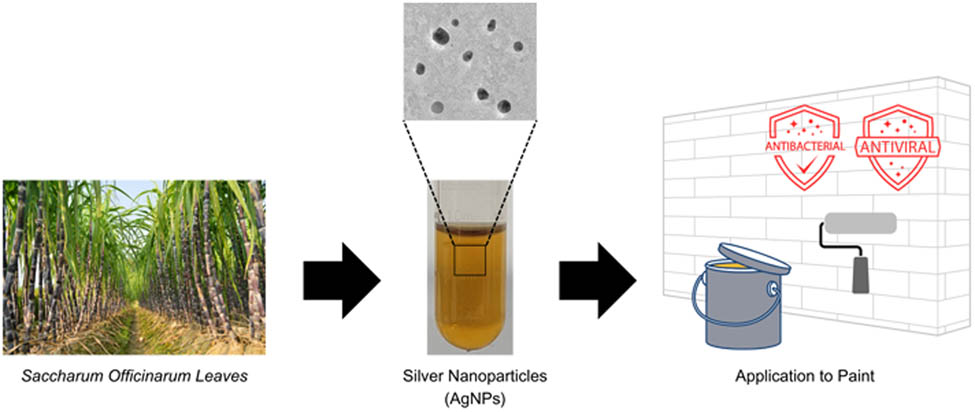
In this study, silver nanoparticles (AgNPs) were synthesized via an eco-friendly approach using an extract from sugarcane leaves (Saccharum officinarum). The optimal synthesis conditions were determined to be a pH of 10, yielding AgNPs with an average size of 11.7 ± 2.8 nm. This was substantiated by UV-vis spectral analysis, transmission electron microscopy, and field emission transmission electron microscope coupling with selected area electron diffraction. The synthesized AgNPs exhibited notable antibacterial efficacy against two prominent pathogens, namely Staphylococcus aureus and Escherichia coli, with minimum inhibitory concentration values of 20 and 2.5 ppm, respectively. Further extending the applications of AgNPs, they were successfully integrated into architectural paints at varying concentrations to create antiviral coatings. The addition of AgNPs influenced several properties of the paints, including viscosity, hiding power, and color characteristics. Notably, our findings revealed that the antiviral paint containing 80 ppm of AgNPs effectively hindered virus propagation, exhibiting a remarkable reduction of over 90% when compared to the control, measured by 50% tissue culture infectious dose.
Graphical abstract
1 Introduction
The current COVID-19 pandemic has been a global wake-up call in ways never before imagined. People have now changed how they live and incorporate hygienic practices into their daily lives to avoid catching the virus [1,2]. Regularly washing our hands, wearing masks, and avoiding crowds do not provide sufficient protection. Because the coronavirus (SARS-CoV-2) can remain viable on surfaces for several hours to days, the chance of infection increases after touching those surfaces [3]. Although viruses are relatively easy to destroy using simple cleansers, such as sanitizer or detergent, it is difficult to sanitize surfaces continuously, and they are usually quickly contaminated again. Thus, many people want to use antimicrobial paint on many surfaces for safety and to create hygiene zones while navigating this pandemic [4].
The paint is mostly desired for use in high-cleanliness areas, including healthcare, hospitality, office, and educational environments, but it can also be used in residential environments. Due to high demand, several paint manufacturers have tried to develop effective antiviral formulas. Antiviral paint serves as an intelligent delivery mechanism aimed at mitigating the potential hazards associated with contact of contaminated high-touch surfaces [5,6,7]. Generally, the paint contains a readily available metal that has been used since ancient times to reduce harmful germs, such as copper. Silver has been known to have effective bactericidal properties for centuries and was widely used to reduce infections in burns, open wounds, and chronic ulcers [8,9].
At present, nanotechnology is associated with various medical and hygiene applications [10]. Silver nanoparticles (AgNPs), with their potential as antibiotic alternatives, can interact with and permeate bacterial cell membranes. The escalating bacterial resistance to antibiotics, largely attributed to their overuse or misuse, signals a concerning era for commonly employed antibiotics [11]. AgNPs have recently become a topic of interest because of their biological properties, including their antifungal, antiviral, anti-inflammatory, antiangiogenetic, and antiplatelet activity [12]. Moreover, AgNPs have various potential applications in non-medical areas, such as food, cosmetics, electronics, engineering, and pharmacology [13,14,15,16,17]. The increasingly high-paced research has yielded improved properties based on specific characteristics, such as size, distribution, and morphology [18].
Conventional AgNP syntheses are relatively expensive and environmentally unfriendly. Because some of the chemicals used for nanoparticle synthesis and stabilization are toxic, the synthesis by-products are not eco-friendly. Thus, the increasing demand for ecologically benign methods of synthesizing nanoparticles or green chemical processes has sparked a growing interest in utilizing biological materials for green synthesis and environmentally friendly technologies [19,20,21,22,23,24,25,26,27]. This aligns with the objectives of the United Nations Sustainable Development Goals, which aim to mitigate climate change through the zero-waste utilization of agricultural by-products [28].
One of the most popular plants used to synthesize AgNPs is sugarcane (Saccharum officinarum) [16]. In particular, sugarcane leaves are available for the synthesis procedure throughout the year. To use more industrial waste, the sugarcane bagasse has also been used [17]. An extract from fresh sugarcane leaves provides a simple, cost-effective, eco-friendly, stable, and efficient route for synthesizing AgNPs [16,29]. Furthermore, the AgNPs from this green synthesis procedure using fresh sugarcane leaves showed effective antibacterial and antifungal activity against multiple drug-resistant hospital isolates [16]. In another report, the AgNPs were prepared using a Soxhlet extract of the sugarcane bagasse as a reducing and capping agent. In addition, good antimicrobial activity was observed when these AgNPs were used against Gram-negative and Gram-positive bacteria [29]. This new green synthesis method supports the valuable utilization of biomass for the synthesis of metal nanoparticles.
To leverage waste material for value creation, sugarcane leaves represent a promising option for the green synthesis of AgNPs. This choice is substantiated by the eco-friendly and substantial post-harvest waste generated, which contributes significantly to the production of PM 2.5 through combustion processes [30]. This approach not only addresses air pollution concerns in agricultural contexts but also offers environmentally friendly means of utilizing green AgNPs to mitigate the risk of infection transmission among people. Although the green-synthesized AgNPs exhibited strong antibacterial activity, another desirable property of AgNPs is antiviral activity. Numerous objects incorporating silver in daily life have been found to provide antiviral activity [31,32]. However, a few studies have focused on the viral inhibitory effect of surface-coating AgNPs in paints. Therefore, our research goal was to develop green AgNPs synthesized using sugarcane leaves combined with paint products to control viruses. This research yields a smart delivery system to reduce the risk of exposure to contaminated high-touch surfaces.
2 Materials and methods
2.1 Chemicals and materials
Silver nitrate (AgNO3) and sodium hydroxide (NaOH) were purchased from Merck. The glassware was soaked in 0.5 M HNO3 before it was cleaned with detergent and rinsed with deionized (DI) water. All chemicals were of analytical grade and were used as received. DI water was used as a solvent throughout this study.
2.2 Sugarcane leaf extraction
Fresh sugarcane leaves (Saccharum officinarum) were harvested from local farms in Kanchanaburi Province, Thailand, during November and December. These freshly harvested leaves were then subjected to a 1-week drying process under direct sunlight. The leaves were cut into short strips and rinsed with DI water three times to remove impurities. A 500 g portion of sugarcane leaf was prepared by placing the cut leaves within a semi-permeable cloth bag and submerging it in 22 L of hot DI water. The reaction was conducted at 80°C for 2 h with continuous stirring. The brown solution was then cooled to room temperature and filtered using Whatman No. 1 filter paper.
2.3 Synthesis of AgNPs
Silver ions (500 ppm) from AgNO3 were prepared in DI water. AgNO3 was completely dissolved and mixed with the sugarcane leaf extract in a 1:1 ratio. Next, 1 M NaOH was added to adjust the pH of the solution to 6, 8, 10, and 12; the reaction was conducted at room temperature with 10 min of constant stirring. During the reaction, the brown sugarcane leaf extract solution changed to a clear brownish-yellow color. AgNPs reached a final concentration of 250 ppm, and the solution was used as the stock solution for subsequent procedures.
2.4 Characterization of AgNPs
AgNPs were analyzed using UV-vis spectrophotometry in the wavelength range of 300–700 nm (Genesys 30 UV-Vis Spectrophotometer; Thermo Scientific). Furthermore, the dimensions, morphology, and characteristic crystalline structure of the resulting AgNPs were assessed using transmission electron microscopy (JEM-2100 TEM; JEOL) and field emission transmission electron microscope (Talos F200i FE-TEM; Thermo Fisher Scientific) coupling with selected area electron diffraction (SAED) detector. To obtain molecular bonding information, attenuated total reflection-Fourier transform infrared (ATR-FTIR) spectra of the AgNPs were collected with a diamond probe from 500 to 4,000 cm−1 (Nicolet iS5 FT-IR Spectrometer; Thermo Scientific).
2.5 Antibacterial properties of AgNPs
The antibacterial properties of AgNPs were evaluated using the minimum inhibitory concentration (MIC) protocol provided by the Department of Microbiology, Chulalongkorn University, Thailand. AgNP concentrations (0–40 ppm) were tested against Staphylococcus aureus (S. aureus) and Escherichia coli (E. coli) in Luria–Bertani (LB) broth. A UV-Vis spectrophotometer was used to measure growth inhibition via optical density at 600 nm. The negative and positive controls used AgNP-free and AgNP-containing LB broth, respectively.
2.6 Blending AgNPs in paint
AgNPs at a concentration of 250 ppm were incorporated into 3,000 mL of architectural paint through agitation with 4-blade mixing impellers at 500–800 rpm for 10 min (LaboratoryKreis-Basket-Mill®, Wilhelm Niemann). The AgNP concentrations in the paint, ranging from 60 to 120 ppm, were manipulated by adjusting the volume of the initial AgNP stock solution before mixing. Subsequently, viscometers (CAP 2000 viscometer; BYK and Digital Krebs viscometer (480); Sheen) and a spectrophotometer (Color i7 spectrophotometer; X-Rite) were employed to assess the viscosity and color characteristics of the resulting antiviral paint.
2.7 Antiviral activity of AgNP-containing paint
The antiviral assessment of AgNPs included 50% tissue culture infectious dose (TCID50) provided by Virology Research Services, UK. Specimens were positioned on disks, and a virus solution containing 2 × 10⁶ IU·mL−1 of human coronavirus NL63 was applied with Rhesus Monkey Kidney Epithelial (LLC-MK2) cells serving as the host. Then, the disks were covered by the film. The virus was added to the control as a baseline. After incubation, the film was removed, and the samples were washed to recover the virus. The TCID50 determined the recovered infectious virus quantity.
3 Results and discussion
3.1 Effect of pH on AgNP morphology
In agreement with previous investigations, pH is key to the optimal green synthesis of AgNPs. This influence extends beyond the reliance of the reduction potential solely upon the abundance of reducing functional groups inherent in natural sources [33]. The concentrations of the acidic or basic environment impact the initiation of nucleation events needed for the synthesis of AgNPs. This, in turn, increases or decreases the population of AgNPs [34]. Consequently, to exploit this behavior, the pH was changed to 6, 8, 10, and 12 during the incorporation of the sugarcane leaf extract, giving it the capacity to act as a reducing agent. At pH 12, a notable quantity of gray particulates precipitated during the AgNP synthesis, likely due to the elevated ionic strength from the alkaline environment. This subsequently reduced the stability of the system, resulting in a simultaneous coalescence of AgNPs [35]. After this preparatory phase, an in-depth exploration was undertaken using the UV-Vis spectra of colloidal AgNPs (Figure 1).
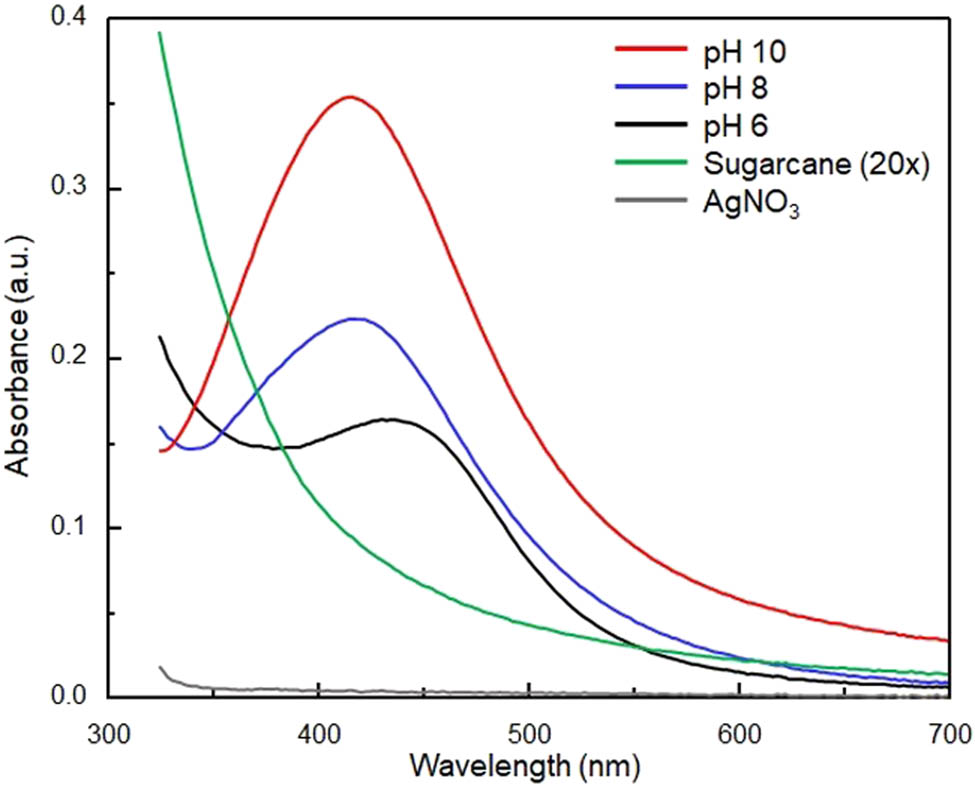
UV-Vis spectra of AgNPs via green synthesis at pH 6, 8, and 10 compared with AgNO3 and sugarcane leaf at 20× dilution.
The absorption behavior of AgNPs surpassed that exhibited by either the AgNO3 precursor or the sugarcane leaf that acted as the reducing agent. The UV-Vis spectra acquired from the green synthesis at various pH values revealed distinct attributes indicative of AgNPs, marked by a maximal absorption peak within the spectral range of 400–450 nm. The discernible yellow hue of the resulting solution, coupled with a single absorption band within the visible region, corroborates the occurrence of localized surface plasmon resonance (LSPR) characteristics of spherical AgNPs, while the absorption intensity directly shows the population density of AgNPs [36]. Furthermore, notable, blue-shifted spectra were observed, specifically in the context of increasing the pH from 6 to 8 to 10, each yielding maximum absorption peaks at 430, 420, and 410 nm, respectively. To further investigate this phenomenon, the morphology of AgNPs synthesized at various pH values was studied using TEM (Figure 2).
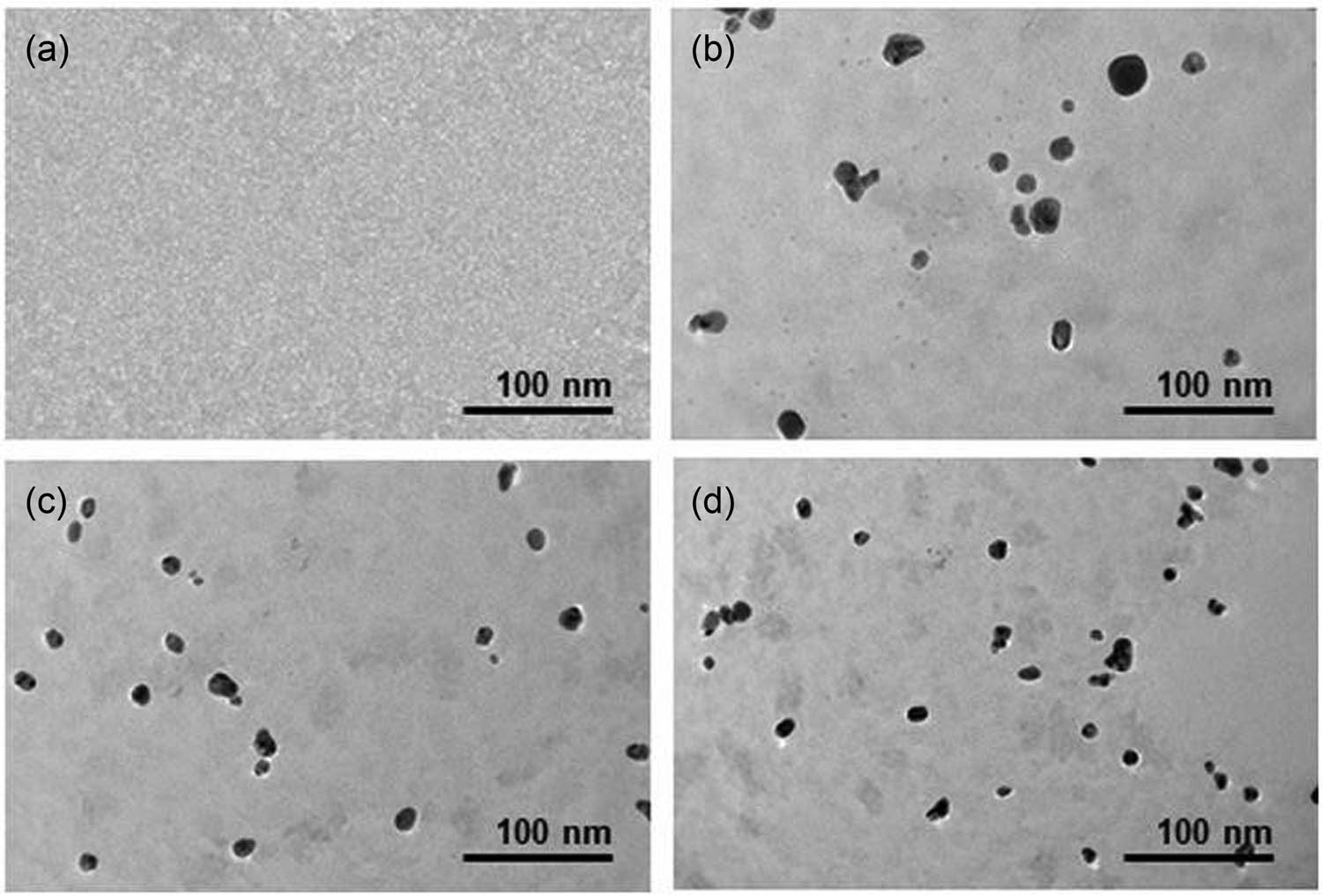
TEM images of (a) the sugarcane leaf extract and AgNPs via green synthesis at pH (b) 6, (c) 8, and (d) 10.
The TEM analysis revealed the formation of AgNPs during the green synthesis, which was distinct from the sugarcane leaf extract (Figure 2a). Furthermore, a reduction in the average particle size with increasing pH was observed, measuring 18.2 ± 5.4 (Figure 2b), 13.8 ± 3.8 (Figure 2c), and 11.7 ± 2.8 nm (Figure 2d). These results agree with the trend in particle dimensions determined from the LSPR characteristics in the preceding section (Figure 1). These distinctive optical phenomena show that the particle dimensions of AgNPs are influenced by changing the pH of the sugarcane leaf extract, ultimately leading to a reduction in the particle size [37].
To conduct a comprehensive investigation, AgNPs synthesized through the green synthesis process at pH 10 was deliberately chosen. This analysis was carried out employing FE-TEM (Figure 3a). At higher magnification, the atomic structure exhibited characteristics consistent with closely packed arrangements, revealing a d-spacing of 0.235 Å. This observation conclusively establishes that the crystal plane (111) corresponds to a face-centered cubic crystal structure of silver [38]. Furthermore, the SAED pattern demonstrates the presence of multiple crystal planes, including (111), (200), (220), (311), and (222) (Figure 3b). These crystal planes were ascertained by comparison with XRD and SAED patterns reported in previous studies of AgNP synthesis [39]. Therefore, the collective evidence derived from spectroscopic, morphological, and crystallographic analyses serves to affirm that the green synthesis process employed herein is indeed capable of yielding AgNPs.
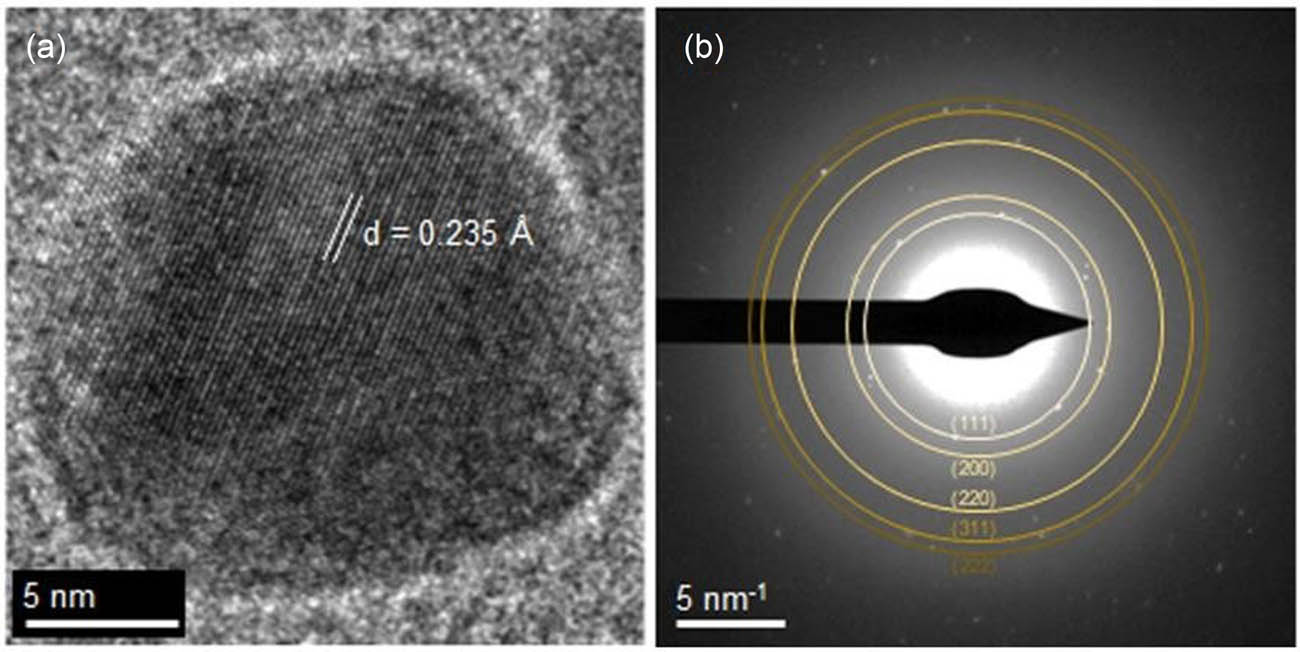
FE-TEM images illustrating (a) AgNPs synthesized via a green synthesis process at pH 10, accompanied by (b) the corresponding SAED pattern.
It is generally acknowledged that the growth kinetics of metal nanoparticles are regulated by the reducing power, which is contingent upon the concentration of the reducing agent [40]. Within the environment of sugarcane leaves, the heightened reduction potential inherent in the –NH, –OH, and phenolic groups makes them effective reducing agents, particularly under alkaline conditions [41,42]. Therefore, increasing the alkaline conditions should promote the reduction potential of the sugarcane leaf extract. To better understand this system, the green-synthesized AgNPs at pH 10 were analyzed using ATR-FTIR spectroscopy (Figure S1 and Table S1). This analysis showed a pronounced transmission peak at 941 cm−1, assigned to amine and hydroxyl groups, which can act as relatively mild reducing agents [43]. Furthermore, the distinctive functional group of –COO− was observed at 1,510 cm−1. Numerous studies have shown that carboxylic derivatives can stabilize AgNPs [44,45]. Thus, the sugarcane leaf extract has a dual role as a reducing agent and stabilizer. Subsequently, the AgNPs in this study were synthesized using the sugarcane leaf extract at pH 10, a choice informed by observing the smallest particle size and the highest population density in the ensuing investigations (Figures 1 and 2).
3.2 Antibacterial properties of AgNPs
Generally, metal nanomaterials physically interact with prokaryotic cells, disrupting cellular functions, destabilizing the phospholipid bilayer of cells, and inducing cell lysis. They can also bind to cytosolic proteins like DNA, leading to cell death, and generate reactive oxygen species by elevating oxidative stress and cell instability [46,47]. As previously documented, green AgNPs have exhibited notably potent antibacterial properties [48,49,50,51]. To preliminarily assess their potential antiviral efficacy, the antibacterial effectiveness of the synthesized AgNPs was evaluated against S. aureus and E. coli in the LB broth. The MIC test was employed as the defining criterion, indicating the lowest concentration of an antimicrobial agent that effectively suppresses visible microbial growth following an incubation period [52]. The MIC tests of AgNPs against the specified bacterial strains (Figure 4) revealed distinct concentrations corresponding to MIC values of 20 ppm for S. aureus and 2.5 ppm for E. coli (Tables S2 and S3). Additionally, MIC values reported in this research emphasize the effectiveness of AgNPs, approximately 10 nm in size, synthesized using both green and conventional methods that involve aggressive chemicals. These nanoparticles exhibited similar efficiency in inhibiting the growth of both S. aureus and E. coli [53]. As previously reported, SARS-CoV-2 has exhibited less susceptibility to AgNPs than E. coli, and S. aureus outside the host environment, as evidenced by comparative assessments of their survival at analogous AgNP concentration levels [53,54,55]. Therefore, this observation underscores the potential of green AgNPs as a basis for developing antiviral coatings with promising efficacy.
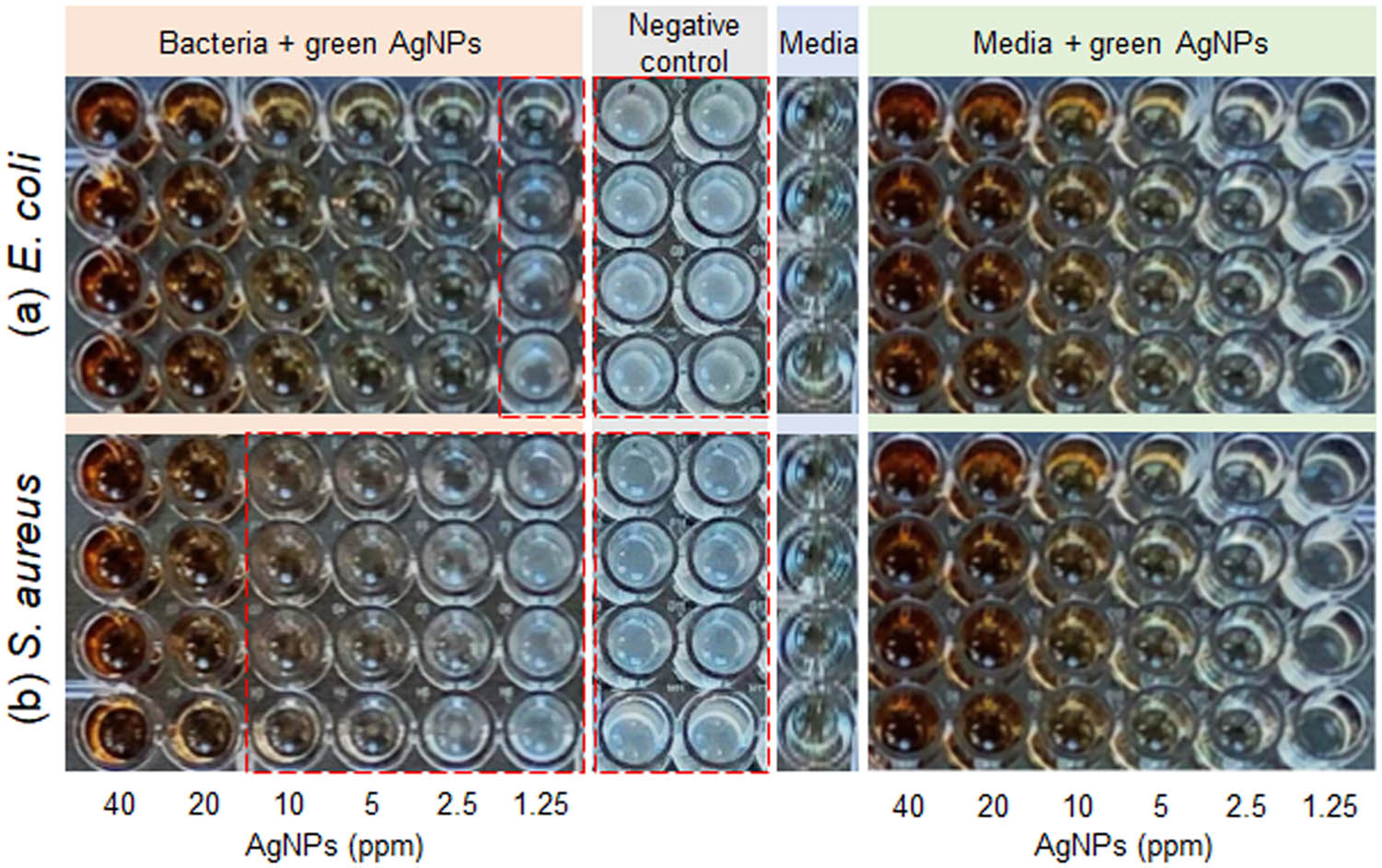
MIC tests for (a) E. coli and (b) S. aureus at AgNP concentrations ranging from 1.25 to 40 ppm over 24 h.
3.3 Properties of paint blended with AgNPs
To synergistically integrate the antiviral attributes of AgNPs within architectural coatings, the physical and optical characteristics of the resultant paints were investigated thoroughly, including parameters such as viscosity, hiding power, and tonal characteristics, with reference to an unmodified control paint sample. The viscosities of the control paint and the 60, 80, 100, and 120 ppm AgNP-incorporated formulations were determined with Krebs and cone–plate viscometers (Figure 5). Due to the inherent thixotropic characteristics of the paint, this viscosity assessment examined the variation in viscosity under shear stress, along with a comprehensive analysis of the distribution of shear rates. This multifaceted viscosity evaluation is particularly relevant to practical applications within painting techniques [56].
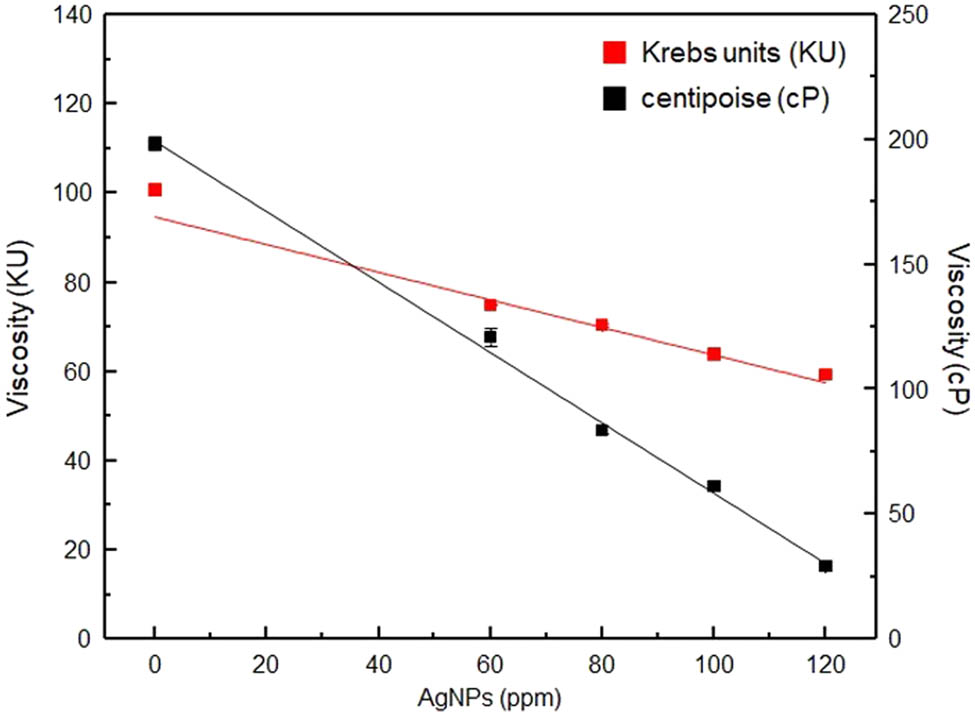
The viscosity of architectural paints with varying AgNP concentrations ranging between 0 and 120 ppm, measured by Krebs and cone–plate viscometers.
This analysis indicates a substantial reduction in viscosity. The linear reduction is correlated with increasing AgNP concentration. The colloidal AgNPs were seamlessly incorporated into the architectural coatings; that is, AgNPs were directly integrated into water-based paints. However, the paint base was diluted by adding colloidal AgNPs suspended in water, which served as the solvent. Adhering to established guidelines for architectural coatings, the viscosity of paints must be within 70–80 KU or 75–100 cP to function correctly in conventional paint application methodologies involving rollers [57]. Additionally, decreasing the paint base concentration impacts coverage efficacy and opacity, aspects that were rigorously assessed [58].
To investigate the impact of dilution on AgNP-infused paint, the hiding power was evaluated utilizing a checkerboard-patterned black and white wallpaper (Figure 6). The efficacy of surface coverage decreased when the AgNP concentrations were 100 and 120 ppm. The diminished concealment capacity observed at elevated AgNP concentration coincides with the lower viscosity values measured previously. Consequently, the effect of dilution is crucial to both the viscosity and hiding power of AgNP-loaded paint formulations.
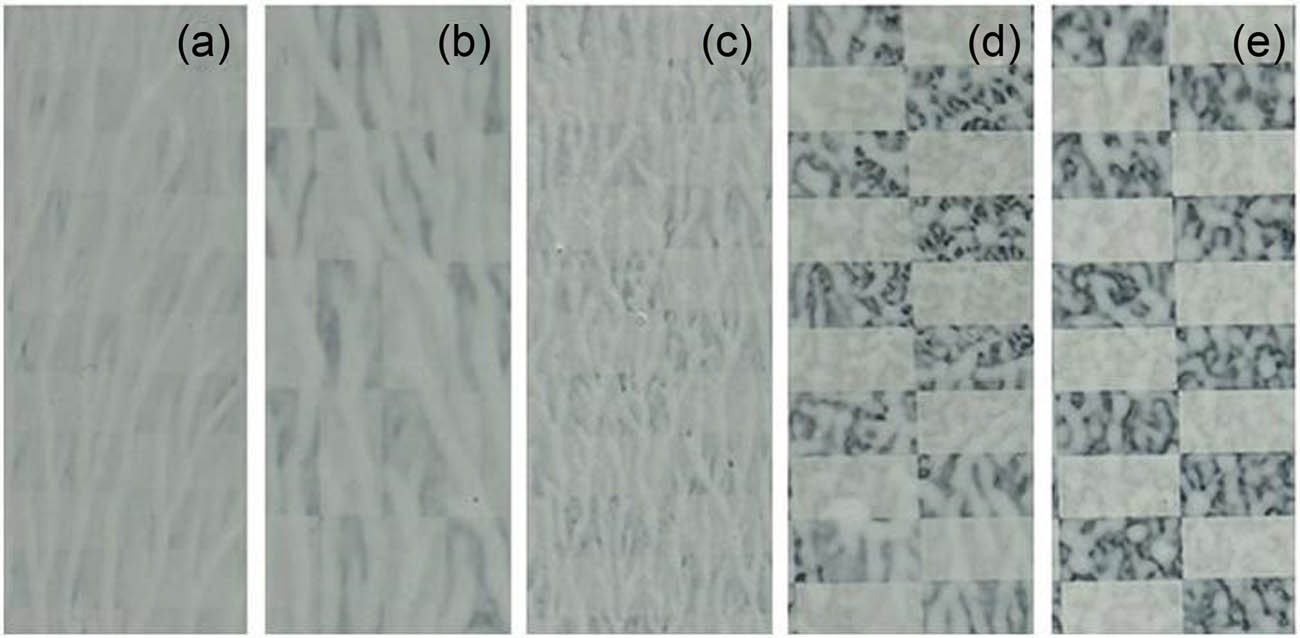
The hiding power of architectural paints with AgNP concentrations of (a) 0, (b) 60, (c) 80, (d) 100, and (e) 120 ppm.
The effects of adding AgNPs extended beyond surface attributes and included changes in the appearance with varied concentrations of AgNPs. Color changes resulting from different AgNP paint concentrations were systematically quantified using the CIE color scale (Table S4). The CIE color scale measurements were subsequently translated into RGB values (Figure 7). Notably, the most elevated RGB values were measured in the control, which contained no AgNPs. When AgNPs were added, the influence of different concentrations on the coloration of the paint was clear, especially when compared to the control conditions. This contrast was particularly discernible in the Hex color variations observed for AgNP concentrations of 100 and 120 ppm.
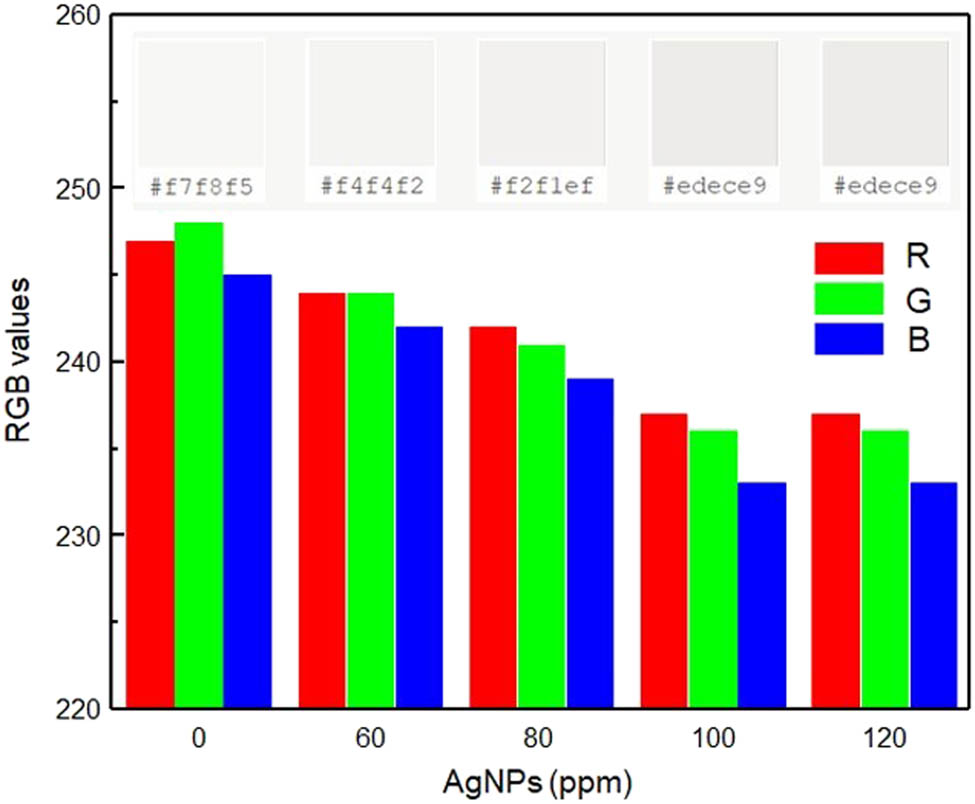
RBG values with inset images of Hex color codes of architectural paints with AgNP concentrations ranging between 0 and 120 ppm.
With increasing AgNP concentration, the RGB values decreased, most likely due to the dilution of the paint. Concomitantly, a positive correlation was observed between the ratio of the red component (R) to the overall RGB value and the increasing AgNP concentration. This phenomenon is explained by the vibrant color attributed to the LSPR of AgNPs, particularly the yellow color, which corresponded to an increased R to RGB ratio [59].
Despite the chromatic alterations from the LSPR of AgNPs, the fundamental composition and morphology of AgNPs remained unchanged within the paint. Paints containing increased concentrations of AgNPs should increase efficacy in suppressing a wide spectrum of bacterial agents [60]. Within the paints containing AgNPs, careful selection of AgNP concentration is necessary to attain enhanced antiviral effects. However, AgNP-bearing paints must have physical and optical properties close to those of the control paint. Considering these criteria, an AgNP concentration of 80 ppm was chosen for subsequent antiviral assessments.
3.4 Antiviral efficacy of paint containing AgNPs
AgNPs exhibit antiviral potential by interacting with viral envelope/surface proteins, blocking viral entry into cells, and disrupting cellular pathways of infection. They can also interact with viral genetic material, target viral replication processes, and interfere with cellular components essential for viral replication [61]. Therefore, AgNPs have a high potential to be included in consuming health care for antiviral properties. In this work, the treated substrate with AgNP paint showed measurable virucidal propensity against human coronavirus NL63, with a contact duration of 24 h. The dilution at which 50% of cells were infected or eradicated (TCID50) was determined using the Reed and Muench method [62]. The quantification of the antiviral activity (R) is given by the following equation:
where Ut represents the average of the logarithm of the number of infectious units recovered from the untreated test specimens after the incubation period, while At represents the average of the logarithm of the number of infectious units recovered from the treated test specimens at the termination of the incubation period [63]. The results of this antiviral test for the AgNP-bearing paint are summarized in Table S5. An R-value greater than or equal to 1 indicates the presence of antiviral activity. In summary, the average recovered titer for the treated material was 2.96 × 10 TDIC50·cm−2 compared to an average recovered titer of 1.04 × 10³ TDIC50·cm−2 for the untreated reference control (see Figure 8). In this study, the antiviral activity is assessed by the R-value. For these data, the calculated R-value of 1.55 surpasses the threshold of 1, substantiating the presence of antiviral activity. This observation signifies a reduction of virus propagation exceeding 90% compared to the reference control. This suggests their promising role in antiviral applications and our result validates the robust antiviral efficacy of AgNPs contained within the paint.
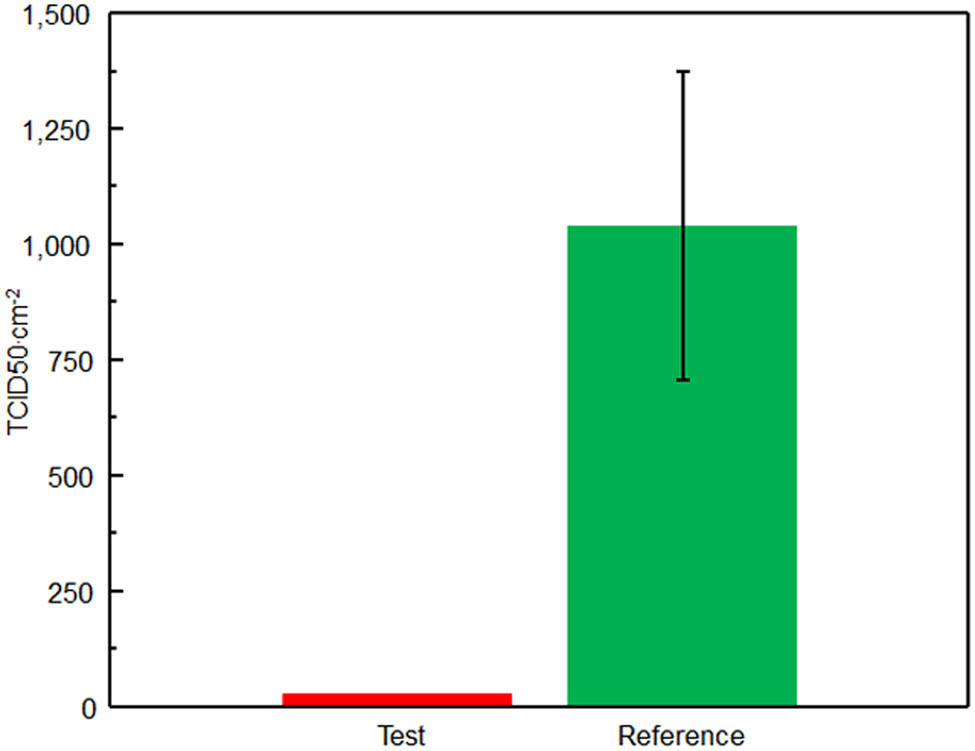
The mean TDIC50·cm−2 values for human coronavirus NL63 following a contact time of 24 h for test and reference control materials.
4 Conclusions
This study presents an environmentally friendly approach to synthesizing AgNPs using the sugarcane (Saccharum officinarum) leaf extract. Optimal synthesis conditions were determined under alkaline pH and enhancing reducing potential. UV-vis spectroscopy, TEM, FE-TEM coupling with SAED, and Fourier transform infrared spectroscopy were used to measure optical, morphological, crystallographic, and molecular properties influenced by pH. AgNPs exhibited notable antibacterial activity against S. aureus and E. coli, confirmed by the MIC. The integration of AgNPs into architectural paints for antiviral coatings was explored while adhering to architectural paint standards. Significantly, the formulation containing 80 ppm AgNPs showcased remarkable antiviral potential, achieving over 90% reduction in virus propagation compared to the reference control, as determined by the TCID50. This discovery shows that sugarcane leaf extract-derived AgNPs are potent antibacterial agents and essential components for advanced antiviral architectural paints. The research contributes to advancing nanomaterial synthesis and holds promising implications for prospective applications.
Acknowledgement
The authors would like to thank B.N. Brothers Company Limited, Thailand, for materials, instruments, and kind advice.
-
Funding information: This work (Number 364005) was financially supported by the Faculty of Science, Prince of Songkla University, Thailand.
-
Author contributions: Benjaporn Noppradit: conceptualization, methodology, validation, formal analysis, and writing – original draft. Setsiri Chaiyosburana: methodology, validation, and investigation. Nutthaphol Khupsathianwong: methodology, validation, and investigation. Weena Aemaeg Tapachai: resources and methodology. Yupa Wattanakanjana: resources and methodology. Apichat Phengdaam: resources, methodology, validation, investigation, writing – review & editing, supervision, and funding acquisition.
-
Conflict of interest: The authors state no conflict of interest.
-
Data availability statement: All data generated or analyzed during this study are included in this published article and its supplementary information file.
References
[1] Sarmiento PJD. Changing landscapes of death and burial practices: public health response in time of COVID-19 pandemic. J Public Health. 2020;43(2):e267–8.10.1093/pubmed/fdaa211Search in Google Scholar PubMed PubMed Central
[2] Tabari P, Amini M, Moghadami M, Moosavi M. International public health responses to COVID-19 outbreak: A rapid review. Iran J Med Sci. 2020;45(3):157–69.Search in Google Scholar
[3] Otter J, Donskey C, Yezli S, Douthwaite S, Goldenberg S, Weber D. Transmission of SARS and MERS coronaviruses and influenza virus in healthcare settings: the possible role of dry surface contamination. J Hosp Infect. 2016;92(3):235–50.10.1016/j.jhin.2015.08.027Search in Google Scholar PubMed PubMed Central
[4] Nguyen THT, Le HT, Le XTT, Do TTT, Ngo TV, Phan HT, et al. Interdisciplinary assessment of hygiene practices in multiple locations: Implications for COVID-19 pandemic preparedness in Vietnam. Front Public Health. 2021;8:589183.10.3389/fpubh.2020.589183Search in Google Scholar PubMed PubMed Central
[5] Grover N, Douaisi MP, Borkar IV, Lee L, Dinu CZ, Kane RS, et al. Perhydrolase-nanotube paint composites with sporicidal and antiviral activity. Appl Microbiol Biotechnol. 2013;97(19):8813–21.10.1007/s00253-012-4573-3Search in Google Scholar PubMed
[6] Haldar J, Weight AK, Klibanov AM. Preparation, application and testing of permanent antibacterial and antiviral coatings. Nat Protoc. 2007;2(10):2412–7.10.1038/nprot.2007.353Search in Google Scholar PubMed
[7] Rakowska PD, Tiddia M, Faruqui N, Bankier C, Pei Y, Pollard AJ, et al. Antiviral surfaces and coatings and their mechanisms of action. Commun Mater. 2021;2(1):53.10.1038/s43246-021-00153-ySearch in Google Scholar
[8] Parikh DV, Fink T, Rajasekharan K, Sachinvala ND, Sawhney APS, Calamari TA, et al. Antimicrobial silver/sodium carboxymethyl cotton dressings for burn wounds. Text Res J. 2016;75(2):134–8.10.1177/004051750507500208Search in Google Scholar
[9] Shankar SS, Rai A, Ahmad A, Sastry M. Controlling the optical properties of lemongrass extract synthesized gold nanotriangles and potential application in infrared-absorbing optical coatings. Chem Mater. 2005;17(3):566–72.10.1021/cm048292gSearch in Google Scholar
[10] Dos Santos CA, Seckler MM, Ingle AP, Gupta I, Galdiero S, Galdiero M, et al. Silver nanoparticles: therapeutical uses, toxicity, and safety issues. J Pharm Sci. 2014;103(7):1931–44.10.1002/jps.24001Search in Google Scholar PubMed
[11] Baran MF, Keskin C, Baran A, Hatipoğlu A, Yildiztekin M, Küçükaydin S, et al. Green synthesis of silver nanoparticles from Allium cepa L. Peel extract, their antioxidant, antipathogenic, and anticholinesterase activity. Molecules. 2023;28(5):2310.10.3390/molecules28052310Search in Google Scholar PubMed PubMed Central
[12] Wiley BJ, Im SH, Li Z-Y, McLellan J, Siekkinen A, Xia Y. Maneuvering the surface plasmon resonance of silver nanostructures through shape-controlled synthesis. J Phys Chem B. 2006;110(32):15666–75.10.1021/jp0608628Search in Google Scholar PubMed
[13] Li W-R, Xie X-B, Shi Q-S, Zeng H-Y, Ou-Yang Y-S, Chen Y-B. Antibacterial activity and mechanism of silver nanoparticles on Escherichia coli. Appl Microbiol Biotechnol. 2009;85(4):1115–22.10.1007/s00253-009-2159-5Search in Google Scholar PubMed
[14] Kaur H, Bhatnagar A, Tripathi SK. Size tunable green synthesis of silver nanoparticles using Trachyspermum Ammi (Ajwain) and their effect on a B cell line. J Nanoeng Nanomanuf. 2013;3(2):154–61.10.1166/jnan.2013.1126Search in Google Scholar
[15] Zhang X-F, Liu Z-G, Shen W, Gurunathan S. Silver nanoparticles: synthesis, characterization, properties, applications, and therapeutic approaches. Int J Mol Sci. 2016;17(9):1534.10.3390/ijms17091534Search in Google Scholar PubMed PubMed Central
[16] Chaudhari PR, Masurkar SA, Shidore VB, Kamble SP. Biosynthesis of silver nanoparticles using Saccharum officinarum and its antimicrobial activity. Micro Nano Lett. 2012;7(7):646–50.10.1049/mnl.2012.0135Search in Google Scholar
[17] Mishra A, Sardar M. Rapid biosynthesis of silver nanoparticles using sugarcane bagasse—an industrial waste. J Nanoeng Nanomanuf. 2013;3(3):217–9.10.1166/jnan.2013.1135Search in Google Scholar
[18] Singh A, Jain D, Upadhyay MK, Khandelwal N, Verma HN. Green synthesis of silver nanoparticles using Argemone Mexicana leaf extract and evaluation of their antimicrobial activities. Dig J Nanomater Biostruct. 2010;5(2):483–9.Search in Google Scholar
[19] Raveendran P, Fu J, Wallen SL. Completely “Green” synthesis and stabilization of metal nanoparticles. J Am Chem Soc. 2003;125(46):13940–1.10.1021/ja029267jSearch in Google Scholar PubMed
[20] Mittal AK, Chisti Y, Banerjee UC. Synthesis of metallic nanoparticles using plant extracts. Biotechnol Adv. 2013;31(2):346–56.10.1016/j.biotechadv.2013.01.003Search in Google Scholar PubMed
[21] Yildirim A, Baran MF, Acay H. Kinetic and isotherm investigation into the removal of heavy metals using a fungal-extract-based bio-nanosorbent. Environ Technol Innov. 2020;20:101076.10.1016/j.eti.2020.101076Search in Google Scholar
[22] Baran MF, Duz MZ. Removal of cadmium(ii) in the aqueous solutions by biosorption of Bacillus licheniformis isolated from soil in the area of Tigris River. Int J Environ Anal Chem. 2021;101(4):533–48.10.1080/03067319.2019.1669583Search in Google Scholar
[23] Keskin C, Baran A, Baran MF, Hatipoğlu A, Adican MT, Atalar MN, et al. Green synthesis, characterization of gold nanomaterials using Gundelia tournefortii leaf extract, and determination of their nanomedicinal (antibacterial, antifungal, and cytotoxic) potential. J Nanomater. 2022;2022:7211066.10.1155/2022/7211066Search in Google Scholar
[24] Baran M, Duz M, Uzan S, Dolak İ, Celik K, Kılınç E. Removal of Hg(ii) from aqueous solution by Bacillus subtilis ATCC 6051 (B1). J Bioprocess Biotech. 2018;8(4):1–7.10.4172/2155-9821.1000329Search in Google Scholar
[25] Hatipoğlu A, Baran A, Keskin C, Baran MF, Eftekhari A, Omarova S, et al. Green synthesis of silver nanoparticles based on the Raphanus sativus leaf aqueous extract and their toxicological/microbiological activities. Environ Sci Pollut Res. 2023;30:1–13.10.1007/s11356-023-26499-zSearch in Google Scholar PubMed
[26] Moradi F, Sedaghat S, Moradi O, Arab Salmanabadi S. Review on green nanobiosynthesis of silver nanoparticles and their biological activities: With an emphasis on medicinal plants. Inorg Nano-Metal Chem. 2021;51(1):133–42.10.1080/24701556.2020.1769662Search in Google Scholar
[27] Sheikh-Mohseni MH, Sedaghat S, Derakhshi P, Safekordi A. Green biosynthesis of Ni/montmorillonite nanocomposite using extract of Allium jesdianum as the nano-catalyst for electrocatalytic oxidation of methanol. Chin J Chem Eng. 2020;28(10):2555–65.10.1016/j.cjche.2020.04.017Search in Google Scholar
[28] Axon S, James D. The UN sustainable development goals: How can sustainable chemistry contribute? A view from the chemical industry. Curr Opin Green Sustain Chem. 2018;13:140–5.10.1016/j.cogsc.2018.04.010Search in Google Scholar
[29] Aguilar NM, Arteaga-Cardona F, Estévez JO, Silva-González NR, BenítezSerrano JC, Salazar-Kuri U. Controlled biosynthesis of silver nanoparticles using sugar industry waste, and its antimicrobial activity. J Environ Chem Eng. 2018;6(5):6275–81.10.1016/j.jece.2018.09.056Search in Google Scholar
[30] Silva FS, Cristale J, André PA, Saldiva PH, Marchi MR. PM2. 5 and PM10: The influence of sugarcane burning on potential cancer risk. Atmos Environ. 2010;44(39):5133–8.10.1016/j.atmosenv.2010.09.001Search in Google Scholar
[31] Davies RL, Etris SF. The development and functions of silver in water purification and disease control. Catal Today. 1997;36(1):107–14.10.1016/S0920-5861(96)00203-9Search in Google Scholar
[32] Silvestry-Rodriguez N, Bright KR, Slack DC, Uhlmann DR, Gerba CP. Silver as a residual disinfectant to prevent biofilm formation in water distribution systems. Appl Environ Microbiol. 2008;74(5):1639–41.10.1128/AEM.02237-07Search in Google Scholar PubMed PubMed Central
[33] Tongsakul D, Wongravee K, Thammacharoen C, Ekgasit S. Enhancement of the reduction efficiency of soluble starch for platinum nanoparticles synthesis. Carbohydr Res. 2012;357:90–7.10.1016/j.carres.2012.04.012Search in Google Scholar PubMed
[34] Ahmad N, Sharma S. Green synthesis of silver nanoparticles using extracts of Ananas comosus. Green Sustain Chem. 2012;2:141–7.10.4236/gsc.2012.24020Search in Google Scholar
[35] Xia Y, Xiong Y, Lim B, Skrabalak SE. Shape-controlled synthesis of metal nanocrystals: simple chemistry meets complex physics? Angew Chem Int Ed. 2009;48(1):60–103.10.1002/anie.200802248Search in Google Scholar PubMed PubMed Central
[36] Parnklang T, Lertvachirapaiboon C, Pienpinijtham P, Wongravee K, Thammacharoen C, Ekgasit S. H2O2-triggered shape transformation of silver nanospheres to nanoprisms with controllable longitudinal LSPR wavelengths. RSC Adv. 2013;3(31):12886–94.10.1039/c3ra41486hSearch in Google Scholar
[37] Phengdaam A, Nootchanat S, Ishikawa R, Lertvachirapaiboon C, Shinbo K, Kato K, et al. Improvement of organic solar cell performance by multiple plasmonic excitations using mixed-silver nanoprisms. J Sci: Adv Mater Dev. 2021;6(2):264–70.10.1016/j.jsamd.2021.02.007Search in Google Scholar
[38] Rani P, Kumar V, Singh PP, Matharu AS, Zhang W, Kim K-H, et al. Highly stable AgNPs prepared via a novel green approach for catalytic and photocatalytic removal of biological and non-biological pollutants. Environ Int. 2020;143:105924.10.1016/j.envint.2020.105924Search in Google Scholar PubMed
[39] Cai Y, Piao X, Gao W, Zhang Z, Nie E, Sun Z. Large-scale and facile synthesis of silver nanoparticles via a microwave method for a conductive pen. RSC Adv. 2017;7(54):34041–8.10.1039/C7RA05125ESearch in Google Scholar
[40] Yoo S, Nam DH, Singh TI, Leem G, Lee S. Effect of reducing agents on the synthesis of anisotropic gold nanoparticles. Nano Convergence. 2022;9(1):5.10.1186/s40580-021-00296-1Search in Google Scholar PubMed PubMed Central
[41] Velu M, Lee J-H, Chang W-S, Lovanh N, Park Y-J, Jayanthi P, et al. Fabrication, optimization, and characterization of noble silver nanoparticles from sugarcane leaf (Saccharum officinarum) extract for antifungal application. 3 Biotech. 2017;7:1–9.10.1007/s13205-017-0749-ySearch in Google Scholar PubMed PubMed Central
[42] Srikhao N, Kasemsiri P, Lorwanishpaisarn N, Okhawilai M. Green synthesis of silver nanoparticles using sugarcane leaves extract for colorimetric detection of ammonia and hydrogen peroxide. Res Chem Intermed. 2021;47:1269–83.10.1007/s11164-020-04354-xSearch in Google Scholar
[43] Xiong Y, Washio I, Chen J, Cai H, Li Z-Y, Xia Y. Poly (vinyl pyrrolidone): a dual functional reductant and stabilizer for the facile synthesis of noble metal nanoplates in aqueous solutions. Langmuir. 2006;22(20):8563–70.10.1021/la061323xSearch in Google Scholar PubMed
[44] Titkov AI, Logutenko OA, Gerasimov EY, Shundrina IK, Karpova EV, Lyakhov NZ. Synthesis of silver nanoparticles stabilized by carboxylated methoxypolyethylene glycols: the role of carboxyl terminal groups in the particle size and morphology. J Incl Phenom Macrocycl Chem. 2019;94(3):287–95.10.1007/s10847-019-00921-xSearch in Google Scholar
[45] Irfan MI, Amjad F, Abbas A, Rehman MFu, Kanwal F, Saeed M, et al. Novel carboxylic acid-capped silver nanoparticles as antimicrobial and colorimetric sensing agents. Molecules. 2022;27(11):3363.10.3390/molecules27113363Search in Google Scholar PubMed PubMed Central
[46] Gold K, Slay B, Knackstedt M, Gaharwar AK. Antimicrobial activity of metal and metal‐oxide based nanoparticles. Adv Ther. 2018;1(3):1700033.10.1002/adtp.201700033Search in Google Scholar
[47] Hoseini-Alfatemi SM, Karimi A, Armin S, Fakharzadeh S, Fallah F, Kalanaky S. Antibacterial and antibiofilm activity of nanochelating based silver nanoparticles against several nosocomial pathogens. Appl Organomet Chem. 2018;32(5):e4327.10.1002/aoc.4327Search in Google Scholar
[48] Acay H, Baran M. Biosynthesis and characterization of silver nanoparticles using king oyster (Pleurotus eryngii) extract: Effect on some microorganisms. Appl Ecol Environ Res. 2019;17(4):9205–14.10.15666/aeer/1704_92059214Search in Google Scholar
[49] Baran MF. Synthesis and antimicrobial applications of silver nanoparticles from artemisia absinthium plant. Biol Chem Res. 2019;6:96–103.Search in Google Scholar
[50] Acay H, Baran MF. Investigating antimi crobial activity of silver nanoparticles produc ed through green syn thesis using leaf extract of common grape (Vitis Vinifera). Appl Ecol Environ Res. 2019;17(2):4539–46.10.15666/aeer/1702_45394546Search in Google Scholar
[51] Baran M, Koç A, Uzan S. Synthesis, characterization and antimicrobial applications of silver nanoparticles (AgNPs) with kenger (Gundelia tournefortii) leaf. EJONS. Int J Math Eng Nat Sci. 2018;5:44–52.Search in Google Scholar
[52] Andrews JM. Determination of minimum inhibitory concentrations. J Antimicrob Chemother. 2001;48(suppl_1):5–16.10.1093/jac/48.suppl_1.5Search in Google Scholar PubMed
[53] Agnihotri S, Mukherji S, Mukherji S. Size-controlled silver nanoparticles synthesized over the range 5–100 nm using the same protocol and their antibacterial efficacy. RSC Adv. 2014;4(8):3974–83.10.1039/C3RA44507KSearch in Google Scholar
[54] Tremiliosi GC, Simoes LGP, Minozzi DT, Santos RI, Vilela DCB, Durigon EL, et al. Ag nanoparticles-based antimicrobial polycotton fabrics to prevent the transmission and spread of SARS-CoV-2. bioRxiv. 2020 Jun;2020:152520.10.1101/2020.06.26.152520Search in Google Scholar
[55] Jeremiah SS, Miyakawa K, Morita T, Yamaoka Y, Ryo A. Potent antiviral effect of silver nanoparticles on SARS-CoV-2. Biochem Biophys Res Commun. 2020;533(1):195–200.10.1016/j.bbrc.2020.09.018Search in Google Scholar PubMed PubMed Central
[56] Lapasin R, Pricl S, Lapasin R, Pricl S. Rheometry. Rheology of Industrial Polysaccharides: Theory and Applications. NY: Springer; 1995. p. 495–578.10.1007/978-1-4615-2185-3_5Search in Google Scholar
[57] Committee. Test Method for Consistency of Paints Measuring Krebs Unit (KU) Viscosity Using a Stormer-Type Viscometer. West Conshohocken, PA: ASTM International; 2018.Search in Google Scholar
[58] Committee. Test method for relative hiding power of paints by the visual evaluation of brushouts. West Conshohocken, PA: ASTM International; 1997.Search in Google Scholar
[59] Lobregas MOS, Bantang JPO, Camacho DH. Carrageenan-stabilized silver nanoparticle gel probe kit for colorimetric sensing of mercury(ii) using digital image analysis. Sens Bio-Sens Res. 2019;26:100303.10.1016/j.sbsr.2019.100303Search in Google Scholar
[60] Ciriminna R, Albo Y, Pagliaro M. New antivirals and antibacterials based on silver nanoparticles. ChemMedChem. 2020;15(17):1619–23.10.1002/cmdc.202000390Search in Google Scholar PubMed PubMed Central
[61] Rai M, Deshmukh SD, Ingle AP, Gupta IR, Galdiero M, Galdiero S. Metal nanoparticles: The protective nanoshield against virus infection. Crit Rev Microbiol. 2016;42(1):46–56.10.3109/1040841X.2013.879849Search in Google Scholar PubMed
[62] Reed LJ, Muench H. A simple method of estimating fifty per cent endpoints12. Am J Epidemiol. 1938;27(3):493–7.10.1093/oxfordjournals.aje.a118408Search in Google Scholar
[63] Committee, Measurement of antiviral activity on plastics and other non-porous surfaces, in Plastics in general. Vol. ISO 21702. Geneva: International Organization for Standardization; 2019. p. 2019.Search in Google Scholar
© 2023 the author(s), published by De Gruyter
This work is licensed under the Creative Commons Attribution 4.0 International License.
Articles in the same Issue
- Research Articles
- Value-added utilization of coal fly ash and recycled polyvinyl chloride in door or window sub-frame composites
- High removal efficiency of volatile phenol from coking wastewater using coal gasification slag via optimized adsorption and multi-grade batch process
- Evolution of surface morphology and properties of diamond films by hydrogen plasma etching
- Removal efficiency of dibenzofuran using CuZn-zeolitic imidazole frameworks as a catalyst and adsorbent
- Rapid and efficient microwave-assisted extraction of Caesalpinia sappan Linn. heartwood and subsequent synthesis of gold nanoparticles
- The catalytic characteristics of 2-methylnaphthalene acylation with AlCl3 immobilized on Hβ as Lewis acid catalyst
- Biodegradation of synthetic PVP biofilms using natural materials and nanoparticles
- Rutin-loaded selenium nanoparticles modulated the redox status, inflammatory, and apoptotic pathways associated with pentylenetetrazole-induced epilepsy in mice
- Optimization of apigenin nanoparticles prepared by planetary ball milling: In vitro and in vivo studies
- Synthesis and characterization of silver nanoparticles using Origanum onites leaves: Cytotoxic, apoptotic, and necrotic effects on Capan-1, L929, and Caco-2 cell lines
- Exergy analysis of a conceptual CO2 capture process with an amine-based DES
- Construction of fluorescence system of felodipine–tetracyanovinyl–2,2′-bipyridine complex
- Excellent photocatalytic degradation of rhodamine B over Bi2O3 supported on Zn-MOF nanocomposites under visible light
- Optimization-based control strategy for a large-scale polyhydroxyalkanoates production in a fed-batch bioreactor using a coupled PDE–ODE system
- Effectiveness of pH and amount of Artemia urumiana extract on physical, chemical, and biological attributes of UV-fabricated biogold nanoparticles
- Geranium leaf-mediated synthesis of silver nanoparticles and their transcriptomic effects on Candida albicans
- Synthesis, characterization, anticancer, anti-inflammatory activities, and docking studies of 3,5-disubstituted thiadiazine-2-thiones
- Synthesis and stability of phospholipid-encapsulated nano-selenium
- Putative anti-proliferative effect of Indian mustard (Brassica juncea) seed and its nano-formulation
- Enrichment of low-grade phosphorites by the selective leaching method
- Electrochemical analysis of the dissolution of gold in a copper–ethylenediamine–thiosulfate system
- Characterisation of carbonate lake sediments as a potential filler for polymer composites
- Evaluation of nano-selenium biofortification characteristics of alfalfa (Medicago sativa L.)
- Quality of oil extracted by cold press from Nigella sativa seeds incorporated with rosemary extracts and pretreated by microwaves
- Heteropolyacid-loaded MOF-derived mesoporous zirconia catalyst for chemical degradation of rhodamine B
- Recovery of critical metals from carbonatite-type mineral wastes: Geochemical modeling investigation of (bio)hydrometallurgical leaching of REEs
- Photocatalytic properties of ZnFe-mixed oxides synthesized via a simple route for water remediation
- Attenuation of di(2-ethylhexyl)phthalate-induced hepatic and renal toxicity by naringin nanoparticles in a rat model
- Novel in situ synthesis of quaternary core–shell metallic sulfide nanocomposites for degradation of organic dyes and hydrogen production
- Microfluidic steam-based synthesis of luminescent carbon quantum dots as sensing probes for nitrite detection
- Transformation of eggshell waste to egg white protein solution, calcium chloride dihydrate, and eggshell membrane powder
- Preparation of Zr-MOFs for the adsorption of doxycycline hydrochloride from wastewater
- Green nanoarchitectonics of the silver nanocrystal potential for treating malaria and their cytotoxic effects on the kidney Vero cell line
- Carbon emissions analysis of producing modified asphalt with natural asphalt
- An efficient and green synthesis of 2-phenylquinazolin-4(3H)-ones via t-BuONa-mediated oxidative condensation of 2-aminobenzamides and benzyl alcohols under solvent- and transition metal-free conditions
- Chitosan nanoparticles loaded with mesosulfuron methyl and mesosulfuron methyl + florasulam + MCPA isooctyl to manage weeds of wheat (Triticum aestivum L.)
- Synergism between lignite and high-sulfur petroleum coke in CO2 gasification
- Facile aqueous synthesis of ZnCuInS/ZnS–ZnS QDs with enhanced photoluminescence lifetime for selective detection of Cu(ii) ions
- Rapid synthesis of copper nanoparticles using Nepeta cataria leaves: An eco-friendly management of disease-causing vectors and bacterial pathogens
- Study on the photoelectrocatalytic activity of reduced TiO2 nanotube films for removal of methyl orange
- Development of a fuzzy logic model for the prediction of spark-ignition engine performance and emission for gasoline–ethanol blends
- Micro-impact-induced mechano-chemical synthesis of organic precursors from FeC/FeN and carbonates/nitrates in water and its extension to nucleobases
- Green synthesis of strontium-doped tin dioxide (SrSnO2) nanoparticles using the Mahonia bealei leaf extract and evaluation of their anticancer and antimicrobial activities
- A study on the larvicidal and adulticidal potential of Cladostepus spongiosus macroalgae and green-fabricated silver nanoparticles against mosquito vectors
- Catalysts based on nickel salt heteropolytungstates for selective oxidation of diphenyl sulfide
- Powerful antibacterial nanocomposites from Corallina officinalis-mediated nanometals and chitosan nanoparticles against fish-borne pathogens
- Removal behavior of Zn and alkalis from blast furnace dust in pre-reduction sinter process
- Environmentally friendly synthesis and computational studies of novel class of acridinedione integrated spirothiopyrrolizidines/indolizidines
- The mechanisms of inhibition and lubrication of clean fracturing flowback fluids in water-based drilling fluids
- Adsorption/desorption performance of cellulose membrane for Pb(ii)
- A one-pot, multicomponent tandem synthesis of fused polycyclic pyrrolo[3,2-c]quinolinone/pyrrolizino[2,3-c]quinolinone hybrid heterocycles via environmentally benign solid state melt reaction
- Green synthesis of silver nanoparticles using durian rind extract and optical characteristics of surface plasmon resonance-based optical sensor for the detection of hydrogen peroxide
- Electrochemical analysis of copper-EDTA-ammonia-gold thiosulfate dissolution system
- Characterization of bio-oil production by microwave pyrolysis from cashew nut shells and Cassia fistula pods
- Green synthesis methods and characterization of bacterial cellulose/silver nanoparticle composites
- Photocatalytic research performance of zinc oxide/graphite phase carbon nitride catalyst and its application in environment
- Effect of phytogenic iron nanoparticles on the bio-fortification of wheat varieties
- In vitro anti-cancer and antimicrobial effects of manganese oxide nanoparticles synthesized using the Glycyrrhiza uralensis leaf extract on breast cancer cell lines
- Preparation of Pd/Ce(F)-MCM-48 catalysts and their catalytic performance of n-heptane isomerization
- Green “one-pot” fluorescent bis-indolizine synthesis with whole-cell plant biocatalysis
- Silica-titania mesoporous silicas of MCM-41 type as effective catalysts and photocatalysts for selective oxidation of diphenyl sulfide by H2O2
- Biosynthesis of zinc oxide nanoparticles from molted feathers of Pavo cristatus and their antibiofilm and anticancer activities
- Clean preparation of rutile from Ti-containing mixed molten slag by CO2 oxidation
- Synthesis and characterization of Pluronic F-127-coated titanium dioxide nanoparticles synthesized from extracts of Atractylodes macrocephala leaf for antioxidant, antimicrobial, and anticancer properties
- Effect of pretreatment with alkali on the anaerobic digestion characteristics of kitchen waste and analysis of microbial diversity
- Ameliorated antimicrobial, antioxidant, and anticancer properties by Plectranthus vettiveroides root extract-mediated green synthesis of chitosan nanoparticles
- Microwave-accelerated pretreatment technique in green extraction of oil and bioactive compounds from camelina seeds: Effectiveness and characterization
- Studies on the extraction performance of phorate by aptamer-functionalized magnetic nanoparticles in plasma samples
- Investigation of structural properties and antibacterial activity of AgO nanoparticle extract from Solanum nigrum/Mentha leaf extracts by green synthesis method
- Green fabrication of chitosan from marine crustaceans and mushroom waste: Toward sustainable resource utilization
- Synthesis, characterization, and evaluation of nanoparticles of clodinofop propargyl and fenoxaprop-P-ethyl on weed control, growth, and yield of wheat (Triticum aestivum L.)
- The enhanced adsorption properties of phosphorus from aqueous solutions using lanthanum modified synthetic zeolites
- Separation of graphene oxides of different sizes by multi-layer dialysis and anti-friction and lubrication performance
- Visible-light-assisted base-catalyzed, one-pot synthesis of highly functionalized cinnolines
- The experimental study on the air oxidation of 5-hydroxymethylfurfural to 2,5-furandicarboxylic acid with Co–Mn–Br system
- Highly efficient removal of tetracycline and methyl violet 2B from aqueous solution using the bimetallic FeZn-ZIFs catalyst
- A thermo-tolerant cellulase enzyme produced by Bacillus amyloliquefaciens M7, an insight into synthesis, optimization, characterization, and bio-polishing activity
- Exploration of ketone derivatives of succinimide for their antidiabetic potential: In vitro and in vivo approaches
- Ultrasound-assisted green synthesis and in silico study of 6-(4-(butylamino)-6-(diethylamino)-1,3,5-triazin-2-yl)oxypyridazine derivatives
- A study of the anticancer potential of Pluronic F-127 encapsulated Fe2O3 nanoparticles derived from Berberis vulgaris extract
- Biogenic synthesis of silver nanoparticles using Consolida orientalis flowers: Identification, catalytic degradation, and biological effect
- Initial assessment of the presence of plastic waste in some coastal mangrove forests in Vietnam
- Adsorption synergy electrocatalytic degradation of phenol by active oxygen-containing species generated in Co-coal based cathode and graphite anode
- Antibacterial, antifungal, antioxidant, and cytotoxicity activities of the aqueous extract of Syzygium aromaticum-mediated synthesized novel silver nanoparticles
- Synthesis of a silica matrix with ZnO nanoparticles for the fabrication of a recyclable photodegradation system to eliminate methylene blue dye
- Natural polymer fillers instead of dye and pigments: Pumice and scoria in PDMS fluid and elastomer composites
- Study on the preparation of glycerylphosphorylcholine by transesterification under supported sodium methoxide
- Wireless network handheld terminal-based green ecological sustainable design evaluation system: Improved data communication and reduced packet loss rate
- The optimization of hydrogel strength from cassava starch using oxidized sucrose as a crosslinking agent
- Green synthesis of silver nanoparticles using Saccharum officinarum leaf extract for antiviral paint
- Study on the reliability of nano-silver-coated tin solder joints for flip chips
- Environmentally sustainable analytical quality by design aided RP-HPLC method for the estimation of brilliant blue in commercial food samples employing a green-ultrasound-assisted extraction technique
- Anticancer and antimicrobial potential of zinc/sodium alginate/polyethylene glycol/d-pinitol nanocomposites against osteosarcoma MG-63 cells
- Nanoporous carbon@CoFe2O4 nanocomposite as a green absorbent for the adsorptive removal of Hg(ii) from aqueous solutions
- Characterization of silver sulfide nanoparticles from actinobacterial strain (M10A62) and its toxicity against lepidopteran and dipterans insect species
- Phyto-fabrication and characterization of silver nanoparticles using Withania somnifera: Investigating antioxidant potential
- Effect of e-waste nanofillers on the mechanical, thermal, and wear properties of epoxy-blend sisal woven fiber-reinforced composites
- Magnesium nanohydroxide (2D brucite) as a host matrix for thymol and carvacrol: Synthesis, characterization, and inhibition of foodborne pathogens
- Synergistic inhibitive effect of a hybrid zinc oxide-benzalkonium chloride composite on the corrosion of carbon steel in a sulfuric acidic solution
- Review Articles
- Role and the importance of green approach in biosynthesis of nanopropolis and effectiveness of propolis in the treatment of COVID-19 pandemic
- Gum tragacanth-mediated synthesis of metal nanoparticles, characterization, and their applications as a bactericide, catalyst, antioxidant, and peroxidase mimic
- Green-processed nano-biocomposite (ZnO–TiO2): Potential candidates for biomedical applications
- Reaction mechanisms in microwave-assisted lignin depolymerisation in hydrogen-donating solvents
- Recent progress on non-noble metal catalysts for the deoxydehydration of biomass-derived oxygenates
- Rapid Communication
- Phosphorus removal by iron–carbon microelectrolysis: A new way to achieve phosphorus recovery
- Special Issue: Biomolecules-derived synthesis of nanomaterials for environmental and biological applications (Guest Editors: Arpita Roy and Fernanda Maria Policarpo Tonelli)
- Biomolecules-derived synthesis of nanomaterials for environmental and biological applications
- Nano-encapsulated tanshinone IIA in PLGA-PEG-COOH inhibits apoptosis and inflammation in cerebral ischemia/reperfusion injury
- Green fabrication of silver nanoparticles using Melia azedarach ripened fruit extract, their characterization, and biological properties
- Green-synthesized nanoparticles and their therapeutic applications: A review
- Antioxidant, antibacterial, and cytotoxicity potential of synthesized silver nanoparticles from the Cassia alata leaf aqueous extract
- Green synthesis of silver nanoparticles using Callisia fragrans leaf extract and its anticancer activity against MCF-7, HepG2, KB, LU-1, and MKN-7 cell lines
- Algae-based green AgNPs, AuNPs, and FeNPs as potential nanoremediators
- Green synthesis of Kickxia elatine-induced silver nanoparticles and their role as anti-acetylcholinesterase in the treatment of Alzheimer’s disease
- Phytocrystallization of silver nanoparticles using Cassia alata flower extract for effective control of fungal skin pathogens
- Antibacterial wound dressing with hydrogel from chitosan and polyvinyl alcohol from the red cabbage extract loaded with silver nanoparticles
- Leveraging of mycogenic copper oxide nanostructures for disease management of Alternaria blight of Brassica juncea
- Nanoscale molecular reactions in microbiological medicines in modern medical applications
- Synthesis and characterization of ZnO/β-cyclodextrin/nicotinic acid nanocomposite and its biological and environmental application
- Green synthesis of silver nanoparticles via Taxus wallichiana Zucc. plant-derived Taxol: Novel utilization as anticancer, antioxidation, anti-inflammation, and antiurolithic potential
- Recyclability and catalytic characteristics of copper oxide nanoparticles derived from bougainvillea plant flower extract for biomedical application
- Phytofabrication, characterization, and evaluation of novel bioinspired selenium–iron (Se–Fe) nanocomposites using Allium sativum extract for bio-potential applications
- Erratum
- Erratum to “Synthesis, characterization, and evaluation of nanoparticles of clodinofop propargyl and fenoxaprop-P-ethyl on weed control, growth, and yield of wheat (Triticum aestivum L.)”
Articles in the same Issue
- Research Articles
- Value-added utilization of coal fly ash and recycled polyvinyl chloride in door or window sub-frame composites
- High removal efficiency of volatile phenol from coking wastewater using coal gasification slag via optimized adsorption and multi-grade batch process
- Evolution of surface morphology and properties of diamond films by hydrogen plasma etching
- Removal efficiency of dibenzofuran using CuZn-zeolitic imidazole frameworks as a catalyst and adsorbent
- Rapid and efficient microwave-assisted extraction of Caesalpinia sappan Linn. heartwood and subsequent synthesis of gold nanoparticles
- The catalytic characteristics of 2-methylnaphthalene acylation with AlCl3 immobilized on Hβ as Lewis acid catalyst
- Biodegradation of synthetic PVP biofilms using natural materials and nanoparticles
- Rutin-loaded selenium nanoparticles modulated the redox status, inflammatory, and apoptotic pathways associated with pentylenetetrazole-induced epilepsy in mice
- Optimization of apigenin nanoparticles prepared by planetary ball milling: In vitro and in vivo studies
- Synthesis and characterization of silver nanoparticles using Origanum onites leaves: Cytotoxic, apoptotic, and necrotic effects on Capan-1, L929, and Caco-2 cell lines
- Exergy analysis of a conceptual CO2 capture process with an amine-based DES
- Construction of fluorescence system of felodipine–tetracyanovinyl–2,2′-bipyridine complex
- Excellent photocatalytic degradation of rhodamine B over Bi2O3 supported on Zn-MOF nanocomposites under visible light
- Optimization-based control strategy for a large-scale polyhydroxyalkanoates production in a fed-batch bioreactor using a coupled PDE–ODE system
- Effectiveness of pH and amount of Artemia urumiana extract on physical, chemical, and biological attributes of UV-fabricated biogold nanoparticles
- Geranium leaf-mediated synthesis of silver nanoparticles and their transcriptomic effects on Candida albicans
- Synthesis, characterization, anticancer, anti-inflammatory activities, and docking studies of 3,5-disubstituted thiadiazine-2-thiones
- Synthesis and stability of phospholipid-encapsulated nano-selenium
- Putative anti-proliferative effect of Indian mustard (Brassica juncea) seed and its nano-formulation
- Enrichment of low-grade phosphorites by the selective leaching method
- Electrochemical analysis of the dissolution of gold in a copper–ethylenediamine–thiosulfate system
- Characterisation of carbonate lake sediments as a potential filler for polymer composites
- Evaluation of nano-selenium biofortification characteristics of alfalfa (Medicago sativa L.)
- Quality of oil extracted by cold press from Nigella sativa seeds incorporated with rosemary extracts and pretreated by microwaves
- Heteropolyacid-loaded MOF-derived mesoporous zirconia catalyst for chemical degradation of rhodamine B
- Recovery of critical metals from carbonatite-type mineral wastes: Geochemical modeling investigation of (bio)hydrometallurgical leaching of REEs
- Photocatalytic properties of ZnFe-mixed oxides synthesized via a simple route for water remediation
- Attenuation of di(2-ethylhexyl)phthalate-induced hepatic and renal toxicity by naringin nanoparticles in a rat model
- Novel in situ synthesis of quaternary core–shell metallic sulfide nanocomposites for degradation of organic dyes and hydrogen production
- Microfluidic steam-based synthesis of luminescent carbon quantum dots as sensing probes for nitrite detection
- Transformation of eggshell waste to egg white protein solution, calcium chloride dihydrate, and eggshell membrane powder
- Preparation of Zr-MOFs for the adsorption of doxycycline hydrochloride from wastewater
- Green nanoarchitectonics of the silver nanocrystal potential for treating malaria and their cytotoxic effects on the kidney Vero cell line
- Carbon emissions analysis of producing modified asphalt with natural asphalt
- An efficient and green synthesis of 2-phenylquinazolin-4(3H)-ones via t-BuONa-mediated oxidative condensation of 2-aminobenzamides and benzyl alcohols under solvent- and transition metal-free conditions
- Chitosan nanoparticles loaded with mesosulfuron methyl and mesosulfuron methyl + florasulam + MCPA isooctyl to manage weeds of wheat (Triticum aestivum L.)
- Synergism between lignite and high-sulfur petroleum coke in CO2 gasification
- Facile aqueous synthesis of ZnCuInS/ZnS–ZnS QDs with enhanced photoluminescence lifetime for selective detection of Cu(ii) ions
- Rapid synthesis of copper nanoparticles using Nepeta cataria leaves: An eco-friendly management of disease-causing vectors and bacterial pathogens
- Study on the photoelectrocatalytic activity of reduced TiO2 nanotube films for removal of methyl orange
- Development of a fuzzy logic model for the prediction of spark-ignition engine performance and emission for gasoline–ethanol blends
- Micro-impact-induced mechano-chemical synthesis of organic precursors from FeC/FeN and carbonates/nitrates in water and its extension to nucleobases
- Green synthesis of strontium-doped tin dioxide (SrSnO2) nanoparticles using the Mahonia bealei leaf extract and evaluation of their anticancer and antimicrobial activities
- A study on the larvicidal and adulticidal potential of Cladostepus spongiosus macroalgae and green-fabricated silver nanoparticles against mosquito vectors
- Catalysts based on nickel salt heteropolytungstates for selective oxidation of diphenyl sulfide
- Powerful antibacterial nanocomposites from Corallina officinalis-mediated nanometals and chitosan nanoparticles against fish-borne pathogens
- Removal behavior of Zn and alkalis from blast furnace dust in pre-reduction sinter process
- Environmentally friendly synthesis and computational studies of novel class of acridinedione integrated spirothiopyrrolizidines/indolizidines
- The mechanisms of inhibition and lubrication of clean fracturing flowback fluids in water-based drilling fluids
- Adsorption/desorption performance of cellulose membrane for Pb(ii)
- A one-pot, multicomponent tandem synthesis of fused polycyclic pyrrolo[3,2-c]quinolinone/pyrrolizino[2,3-c]quinolinone hybrid heterocycles via environmentally benign solid state melt reaction
- Green synthesis of silver nanoparticles using durian rind extract and optical characteristics of surface plasmon resonance-based optical sensor for the detection of hydrogen peroxide
- Electrochemical analysis of copper-EDTA-ammonia-gold thiosulfate dissolution system
- Characterization of bio-oil production by microwave pyrolysis from cashew nut shells and Cassia fistula pods
- Green synthesis methods and characterization of bacterial cellulose/silver nanoparticle composites
- Photocatalytic research performance of zinc oxide/graphite phase carbon nitride catalyst and its application in environment
- Effect of phytogenic iron nanoparticles on the bio-fortification of wheat varieties
- In vitro anti-cancer and antimicrobial effects of manganese oxide nanoparticles synthesized using the Glycyrrhiza uralensis leaf extract on breast cancer cell lines
- Preparation of Pd/Ce(F)-MCM-48 catalysts and their catalytic performance of n-heptane isomerization
- Green “one-pot” fluorescent bis-indolizine synthesis with whole-cell plant biocatalysis
- Silica-titania mesoporous silicas of MCM-41 type as effective catalysts and photocatalysts for selective oxidation of diphenyl sulfide by H2O2
- Biosynthesis of zinc oxide nanoparticles from molted feathers of Pavo cristatus and their antibiofilm and anticancer activities
- Clean preparation of rutile from Ti-containing mixed molten slag by CO2 oxidation
- Synthesis and characterization of Pluronic F-127-coated titanium dioxide nanoparticles synthesized from extracts of Atractylodes macrocephala leaf for antioxidant, antimicrobial, and anticancer properties
- Effect of pretreatment with alkali on the anaerobic digestion characteristics of kitchen waste and analysis of microbial diversity
- Ameliorated antimicrobial, antioxidant, and anticancer properties by Plectranthus vettiveroides root extract-mediated green synthesis of chitosan nanoparticles
- Microwave-accelerated pretreatment technique in green extraction of oil and bioactive compounds from camelina seeds: Effectiveness and characterization
- Studies on the extraction performance of phorate by aptamer-functionalized magnetic nanoparticles in plasma samples
- Investigation of structural properties and antibacterial activity of AgO nanoparticle extract from Solanum nigrum/Mentha leaf extracts by green synthesis method
- Green fabrication of chitosan from marine crustaceans and mushroom waste: Toward sustainable resource utilization
- Synthesis, characterization, and evaluation of nanoparticles of clodinofop propargyl and fenoxaprop-P-ethyl on weed control, growth, and yield of wheat (Triticum aestivum L.)
- The enhanced adsorption properties of phosphorus from aqueous solutions using lanthanum modified synthetic zeolites
- Separation of graphene oxides of different sizes by multi-layer dialysis and anti-friction and lubrication performance
- Visible-light-assisted base-catalyzed, one-pot synthesis of highly functionalized cinnolines
- The experimental study on the air oxidation of 5-hydroxymethylfurfural to 2,5-furandicarboxylic acid with Co–Mn–Br system
- Highly efficient removal of tetracycline and methyl violet 2B from aqueous solution using the bimetallic FeZn-ZIFs catalyst
- A thermo-tolerant cellulase enzyme produced by Bacillus amyloliquefaciens M7, an insight into synthesis, optimization, characterization, and bio-polishing activity
- Exploration of ketone derivatives of succinimide for their antidiabetic potential: In vitro and in vivo approaches
- Ultrasound-assisted green synthesis and in silico study of 6-(4-(butylamino)-6-(diethylamino)-1,3,5-triazin-2-yl)oxypyridazine derivatives
- A study of the anticancer potential of Pluronic F-127 encapsulated Fe2O3 nanoparticles derived from Berberis vulgaris extract
- Biogenic synthesis of silver nanoparticles using Consolida orientalis flowers: Identification, catalytic degradation, and biological effect
- Initial assessment of the presence of plastic waste in some coastal mangrove forests in Vietnam
- Adsorption synergy electrocatalytic degradation of phenol by active oxygen-containing species generated in Co-coal based cathode and graphite anode
- Antibacterial, antifungal, antioxidant, and cytotoxicity activities of the aqueous extract of Syzygium aromaticum-mediated synthesized novel silver nanoparticles
- Synthesis of a silica matrix with ZnO nanoparticles for the fabrication of a recyclable photodegradation system to eliminate methylene blue dye
- Natural polymer fillers instead of dye and pigments: Pumice and scoria in PDMS fluid and elastomer composites
- Study on the preparation of glycerylphosphorylcholine by transesterification under supported sodium methoxide
- Wireless network handheld terminal-based green ecological sustainable design evaluation system: Improved data communication and reduced packet loss rate
- The optimization of hydrogel strength from cassava starch using oxidized sucrose as a crosslinking agent
- Green synthesis of silver nanoparticles using Saccharum officinarum leaf extract for antiviral paint
- Study on the reliability of nano-silver-coated tin solder joints for flip chips
- Environmentally sustainable analytical quality by design aided RP-HPLC method for the estimation of brilliant blue in commercial food samples employing a green-ultrasound-assisted extraction technique
- Anticancer and antimicrobial potential of zinc/sodium alginate/polyethylene glycol/d-pinitol nanocomposites against osteosarcoma MG-63 cells
- Nanoporous carbon@CoFe2O4 nanocomposite as a green absorbent for the adsorptive removal of Hg(ii) from aqueous solutions
- Characterization of silver sulfide nanoparticles from actinobacterial strain (M10A62) and its toxicity against lepidopteran and dipterans insect species
- Phyto-fabrication and characterization of silver nanoparticles using Withania somnifera: Investigating antioxidant potential
- Effect of e-waste nanofillers on the mechanical, thermal, and wear properties of epoxy-blend sisal woven fiber-reinforced composites
- Magnesium nanohydroxide (2D brucite) as a host matrix for thymol and carvacrol: Synthesis, characterization, and inhibition of foodborne pathogens
- Synergistic inhibitive effect of a hybrid zinc oxide-benzalkonium chloride composite on the corrosion of carbon steel in a sulfuric acidic solution
- Review Articles
- Role and the importance of green approach in biosynthesis of nanopropolis and effectiveness of propolis in the treatment of COVID-19 pandemic
- Gum tragacanth-mediated synthesis of metal nanoparticles, characterization, and their applications as a bactericide, catalyst, antioxidant, and peroxidase mimic
- Green-processed nano-biocomposite (ZnO–TiO2): Potential candidates for biomedical applications
- Reaction mechanisms in microwave-assisted lignin depolymerisation in hydrogen-donating solvents
- Recent progress on non-noble metal catalysts for the deoxydehydration of biomass-derived oxygenates
- Rapid Communication
- Phosphorus removal by iron–carbon microelectrolysis: A new way to achieve phosphorus recovery
- Special Issue: Biomolecules-derived synthesis of nanomaterials for environmental and biological applications (Guest Editors: Arpita Roy and Fernanda Maria Policarpo Tonelli)
- Biomolecules-derived synthesis of nanomaterials for environmental and biological applications
- Nano-encapsulated tanshinone IIA in PLGA-PEG-COOH inhibits apoptosis and inflammation in cerebral ischemia/reperfusion injury
- Green fabrication of silver nanoparticles using Melia azedarach ripened fruit extract, their characterization, and biological properties
- Green-synthesized nanoparticles and their therapeutic applications: A review
- Antioxidant, antibacterial, and cytotoxicity potential of synthesized silver nanoparticles from the Cassia alata leaf aqueous extract
- Green synthesis of silver nanoparticles using Callisia fragrans leaf extract and its anticancer activity against MCF-7, HepG2, KB, LU-1, and MKN-7 cell lines
- Algae-based green AgNPs, AuNPs, and FeNPs as potential nanoremediators
- Green synthesis of Kickxia elatine-induced silver nanoparticles and their role as anti-acetylcholinesterase in the treatment of Alzheimer’s disease
- Phytocrystallization of silver nanoparticles using Cassia alata flower extract for effective control of fungal skin pathogens
- Antibacterial wound dressing with hydrogel from chitosan and polyvinyl alcohol from the red cabbage extract loaded with silver nanoparticles
- Leveraging of mycogenic copper oxide nanostructures for disease management of Alternaria blight of Brassica juncea
- Nanoscale molecular reactions in microbiological medicines in modern medical applications
- Synthesis and characterization of ZnO/β-cyclodextrin/nicotinic acid nanocomposite and its biological and environmental application
- Green synthesis of silver nanoparticles via Taxus wallichiana Zucc. plant-derived Taxol: Novel utilization as anticancer, antioxidation, anti-inflammation, and antiurolithic potential
- Recyclability and catalytic characteristics of copper oxide nanoparticles derived from bougainvillea plant flower extract for biomedical application
- Phytofabrication, characterization, and evaluation of novel bioinspired selenium–iron (Se–Fe) nanocomposites using Allium sativum extract for bio-potential applications
- Erratum
- Erratum to “Synthesis, characterization, and evaluation of nanoparticles of clodinofop propargyl and fenoxaprop-P-ethyl on weed control, growth, and yield of wheat (Triticum aestivum L.)”
