Anticancer and antimicrobial potential of zinc/sodium alginate/polyethylene glycol/d-pinitol nanocomposites against osteosarcoma MG-63 cells
-
Anandaraj Lakshmanan


Abstract
Background
The field of nanomedicine has attracted much interest and is now serving as the impetus for many revolutionary advances in the pharmaceutical industry.
Objectives
In the current exploration, we intended to fabricate the zinc/sodium alginate/polyethylene glycol/d-pinitol nanocomposites (ZSP/D-Pin/NCs) and evaluate their antimicrobial and anticancer properties against MG-63 cells.
Methods
ZSP/D-Pin/NCs were synthesized and characterized using several techniques and their cytotoxicity was examined against osteosarcoma MG-63 cells and normal 3T3 cells using the MTT assay. The levels of oxidative stress and apoptotic protein were examined using assay kits and fluorescence staining.
Results and Conclusion
The findings of several characterization studies revealed the development of agglomerated and crystalline ZSP/D-Pin/NCs. The antimicrobial assay demonstrated that ZSP/D-Pin/NCs substantially inhibited the growth of pathogens. Additionally, the MG-63 cell viability, which was exposed to several doses (1–20 µg) of ZSP/D-Pin/NCs, showed a remarkable decrease at various time periods, i.e., 24, 48, and 72 h without showing toxicity in 3T3 cells. The results of the fluorescence staining assay demonstrated that ZSP/D-Pin/NCs considerably increased apoptosis in the MG-63 cells by triggering oxidative stress. The antioxidants were reduced and upregulated the Bax and caspase expressions in ZSP/D-Pin/NC-treated MG-63 cells.
1 Introduction
Nanotechnology is a popular study area in modern materials science [1]. Nanomaterials have recently been widely identified with distinctive characteristics and spectacular abilities, as they open the door for conducting transdisciplinary studies and resolving many practical issues [2,3]. The rapid increase of drug resistance in pathogens can be due to the overuse of antibiotics. Infections by bacteria are problems when it comes to therapy. The upsurge of antibiotic-resistant microbial infections has been one of the most significant public health complications in recent years [4,5,6]. The nanomedicine’s exceptional qualities, such as their small size, high surface area, and strong mechanical stability, make them ideal for use in medicine for features like antibacterial activity [7].
Cancer is a serious illness worldwide, as it is the second-leading cause of mortality [8]. In children and young adults, osteosarcoma is a widespread and aggressive tumor of the bone. Patients’ mobility is severely restricted by osteosarcoma, which frequently affects the distal femur, proximal tibia, and humerus [9]. Osteosarcoma has a high mortality rate and unfavorable prognosis, commonly due to metastasis to the lung and cancer recurrence. Patients with localized osteosarcoma tumors have a long-term survival rate at 5 years of about 60%, and lung metastasis at the time of diagnosis drastically lowers it to 20%. Additionally, during the past 30 years, the effectiveness of the treatment has remained constant due to chemotherapeutic drug resistance and low selectivity. Tumor recurrence and lung metastases are the primary causes of osteosarcoma therapy failure [10]. In order to combat osteosarcoma, innovative and effective treatments are urgently needed. Cancer treatment is made harder by the fact that conventional diagnostic procedures only discover cancers at advanced stages. Unlike other tumors, osteosarcoma has a complicated cytology that does not respond to traditional radiation and chemotherapy, and the adverse effects of several chemotherapeutic drugs are very dangerous [11,12].
Biomedical researchers are looking at ways to treat cancers despite several obstacles, such as poor oral bioavailability, insufficient water solubility, and non-specific biological transport and targeting [13]. Researchers have long been drawn to nanomedicine because of its practical uses for inexpensive drug delivery to specific organs, tissues, or cells for the treatment of cancer or for biocarriers that can traverse the blood–brain barrier. Nanoparticles (NPs) have a vast surface area and surface functionalization, which makes it easier to load drugs into them. Additionally, nanocomposites have recently developed rapidly for their exceptional properties and use in the medical field [14,15]. Zinc is one of the most important biometals in the human body [16]. Zinc and other biodegradable metals have lately received a lot of interest in tissue engineering [17]. Due to their distinctive optical and chemical characteristics, zinc NPs have received a lot of attention. Chemically, zinc has an abundance of −OH groups on its surface, which allows it to slowly dissolve in both acidic and strongly basic environments (such as those seen in tumor cells and their surrounding tissue) [18].
Alginate is a natural polysaccharide and is recognized as a potential biomaterial due to its superior biocompatibility, biodegradability, nontoxicity, and affordability in contrast to other materials [19]. In tissue engineering and regenerative medicine, alginates are frequently employed as cell scaffolding materials [20]. Polyethylene glycol (PEG) can be utilized to create a hydrated layer on the surface of NPs in order to decrease plasma clearance, enhance medication absorption, and avoid macrophage opsonization. PEG is also more beneficial in the NP drug delivery method due to its high biocompatibility and hydrophilicity [21]. D-Pinitol is an inositol that occurs naturally in a variety of plant species. It is particularly abundant in the pulp of the carob fruit (Ceratonia siliqua) that enables its separation and industrial production. D-Pinitol is well known to increase insulin sensitivity [22]. This natural inositol has been shown to have positive benefits on several disorders, including cancer, diabetes, osteoporosis, aging, hepatoprotection, and neurological diseases [23,24,25,26,27]. In the present exploration, we aimed to fabricate the zinc/sodium alginate/polyethylene glycol/d-pinitol nanocomposites (ZSP/D-Pin/NCs) and evaluate their antimicrobial and in vitro cytotoxicity activities against MG-63 cells.
2 Materials and methods
2.1 Chemicals
The following chemicals were bought from Sigma-Aldrich, USA: D-pinitol, zinc nitrate, sodium alginate, and PEG. The ELISA test kits used to measure the biochemical parameters were supplied by Thermofisher Scientific and MyBioSource, USA.
2.2 Synthesis of ZSP/D-Pin/NCs
For the synthesis of ZSP/D-Pin/NCs, first D-pinitol was dissolved in 20 ml of DMSO, which was then suspended in a 0.1% (wt/vol) solution of zinc nitrate. The mixture was continuously agitated until the development of the reaction suspension. The suspension was ultrasonically sonicated to reduce NPs, and the reaction solution containing zinc and D-pinitol was then added to the polymer solution, which was created using PEG and sodium alginate to coat the generated NPs. The coating process was performed using the microvolume flow titration technique. The final reaction mixture was dried using a spray pyrolysis method following the coating process in order to gather the powdered nanocomposite. The formulated ZSP/D-Pin/NCs were used for various characterization studies.
2.3 Characterization of fabricated ZSP/D-Pin/NCs
The UV-visible study was employed to verify that ZSP/D-Pin/NCs had developed in suspension. With the use of a UV-vis spectrophotometer (Shimadzu-1700, Japan), the ZSP/D-Pin/NCs were observed, and absorbance of the reaction solution at wavelengths between 200 and 1,000 nm was calculated.
A spectrofluorimeter (F-2500 FL Spectrophotometer, Hitachi) was used to measure the photoluminescence spectra of ZSP/D-Pin/NCs.
The elemental components of the formulated ZSP/D-Pin/NCs were determined by EDX, and the appearance and dispersion of ZSP/D-Pin/NCs were determined by SEM. A Carl Zeiss Ultra 55 FESEM device with EDX was used to determine the produced ZSP/D-Pin/NCs.
The distribution patterns and average size of the formed ZSP/D-Pin/NCs were examined using a Zeta Sizer (Malvern, USA) DLS. The formulated ZSP/D-Pin/NCs were investigated using an XRD (X’pert Pro PANalytical System) with a scan range of 2θ = 10–80° and Cu-Kα radiation of wavelength λ = 0.1541 nm.
2.4 Antimicrobial assay
By using the well-diffusion technique, the formulated antibacterial effects of ZSP/D-Pin/NCs were evaluated. About 1 ml of 5% DMSO solution was used to dissolve the ZSP/D-Pin/NC sample and utilized as a stock for bacterial strains such as Staphylococcus aureus, Streptococcus pneumoniae, Klebsiella pneumoniae, and Streptococcus pneumoniae, and SDA media was utilized for the fungal strain Candida albicans. After each strain was smeared over the culture medium, 6 mm wells were made on the surface of the media, and the wells were loaded with different doses (40, 50, and 60 µg) of formulated ZSP/D-Pin/NCs. The common antibiotic amoxicillin (30 µg/well) was utilized as a positive control. After the incubation period, the results were assessed, and the data were tabulated.
2.5 In vitro assays
2.5.1 Cell collection and maintenance
MG-63 cells and non-malignant fibroblast 3T3 cells were acquired from ATCC, USA. Then, cells were grown in DMEM enriched with FBS (10%) at 37°C in a CO2 incubator. After the cells had reached 80% confluency, they were separated and used for the subsequent tests.
2.5.2 MTT assay
The viability of osteosarcoma MG-63 cells and normal 3T3 cells were exposed to ZSP/D-Pin/NCs and examined at three different time periods, i.e., 24, 48, and 72 h using the MTT assay. A 96-well plate containing MG-63 cells and 3T3 cells separately at a level of 5 × 10³ cells were grown for 24 h before receiving different doses of the produced ZSP/D-Pin/NCs (1, 2.5, 5, 7.5, 10, and 20 µg) for additional 24, 48, and 72 h. After the treatment, DMEM (100 µl) and MTT reagent (20 µl) were applied to each well for 4 h. After liquefying the formed formazan stones in each well with 100 µl of DMSO, the absorbance at 570 nm was determined.
2.5.3 Analysis of mitochondrial membrane potential (MMP)
Rhodamine-123 (Rh-123) staining was used to examine the MMP levels in both control and ZSP/D-Pin/NC-treated MG-63 cells. The cells were loaded into a 24-well plate and treated with different doses (7.5 and 10 µg) of ZSP/D-Pin/NCs 24 h at 37°C. The cells were then stained for 30 min with Rh-123 at a concentration of 10 µg/ml. The MMP of both control and treated cells was examined using a fluorescence microscope.
2.5.4 Dual staining
The dual staining test was done in order to examine the apoptotic cell death in both control and treated cells. The MG-63 cells were loaded on DMEM medium in a 24-well plate and treated with 7.5 and 10 µg of ZSP/D-Pin/NCs for 24 h. Then, 100 µg/ml AO/EB (1:1) dye was added to each well to stain the cells for 5 min at 37°C. Finally, apoptotic cell death was confirmed by observing the cells under a fluorescence microscope.
2.5.5 DAPI staining
DAPI staining was performed to analyze the altered nuclear morphology and apoptosis in control and ZSP/D-Pin/NC-treated MG-63 cells. The cells were grown on a 24-well plate for 24 h and then exposed to 7.5 and 10 µg of ZSP/D-Pin/NCs for 24 h. After that, cells were fixed using paraformaldehyde (4%) for 30 min. After rinsing with saline, MG-63 cells were stained with DAPI (200 µg/ml) for 30 min. In the following step, a fluorescence microscope was utilized to observe chromatin condensation and remodeling in the treated cells.
2.6 Estimation of oxidative stress markers
The cell lysates were prepared using control and ZSP/D-Pin/NC-treated MG-63 cells by collecting and homogenizing the cells with saline solution. The levels of the lipid peroxidation marker TBARS and the antioxidants GSH and SOD in the control and ZSP/D-Pin/NC-exposed MG-63 cells were estimated using the corresponding assay kits as per the protocols described by the manufacturer (Thermofisher, USA).
2.7 Estimation of apoptotic protein levels
The Bax, Bcl-2, caspase-3, and -9 expressions in the control and ZSP/D-Pin/NC-exposed MG-63 cells were determined using the corresponding assay kits as per the protocols recommended by the manufacturer (Thermofisher, USA).
2.8 Statistical analysis
After the values were evaluated with GraphPad Prism software, the results are shown as mean ± SD of three separate assays. With a significance level of p < 0.05, one-way ANOVA and DMRT were employed to analyze the changes in the values of the treatment groups.
3 Results
3.1 Characterization of formulated ZSP/D-Pin/NCs
3.1.1 UV-visible spectral analysis
The UV-visible spectra of ZSP/D-Pin/NCs are shown in Figure 1(a). At various wavelengths (200–1,000 nm), the absorbance of the synthesized ZSP/D-Pin/NCs was measured. The formation of ZSP/D-Pin/NCs was demonstrated by the maximum absorbance being observed at 369 nm (Figure 1a).

UV-visible spectrum and photoluminescence (PL) analysis of the synthesized ZSP/D-Pin/NCs. (a) UV-visible spectrum analysis of synthesized ZSP/D-Pin/NCs revealed the maximum absorbance peak at 369 nm. (b) The results of PL analysis of formulated ZSP/D-Pin/NCs showed several excitations at 470, 504, 578, and 532 nm, respectively.
3.1.2 Photoluminescence (PL) analysis
The PL spectrum of synthesized ZSP/D-Pin/NCs is depicted in Figure 1(b). The presence of ZSP/D-Pin/NCs was demonstrated by excitations at 470, 504, 518, and 532 nm caused by ZSP/D-Pin/NCs. The crystal mode of the synthesized ZSP/D-Pin/NCs is revealed by the PL spectrum, together with structural and surface flaws. Exciton recombination may be seen in the peaks at 470 and 504 nm. Due to the interstitial oxygen vacancy, blue-green emissions were detected at 518 nm. In the synthesized ZSP/D-Pin/NCs, the peak at 532 nm shows the vacancy of singly ionized oxygen (Figure 1b).
3.1.3 SEM and EDX analysis
To examine the morphological appearance and elemental compositions of the developed ZSP/D-Pin/NCs, SEM and EDX tests were performed, and the results are shown in Figure 2. The formulated ZSP/D-Pin/NCs exhibited agglomerated morphology, which is evidenced by SEM images (Figure 2a). The occurrence of numerous elements, including carbon, nitrogen, oxygen, and zinc, was shown by the EDX analysis of ZSP/D-Pin/NCs (Figure 2b).

SEM and EDX analysis of the synthesized ZSP/D-Pin/NCs. (a) SEM images of the synthesized ZSP/D-Pin/NCs revealed the agglomerated morphological appearances. (b) EDX results showed the presence of carbon, nitrogen, oxygen, and zinc elements in the formulated ZSP/D-Pin/NCs.
3.1.4 XRD analysis
The XRD analysis results of the synthesized ZSP/D-Pin/NCs are shown in Figure 3, which support their purity and crystallinity. The characteristic peaks of the ZSP/D-Pin/NCs were observed at (100), (002), (101), (102), (110), (103), (200), (112), (201), and (202), demonstrating their crystalline nature.
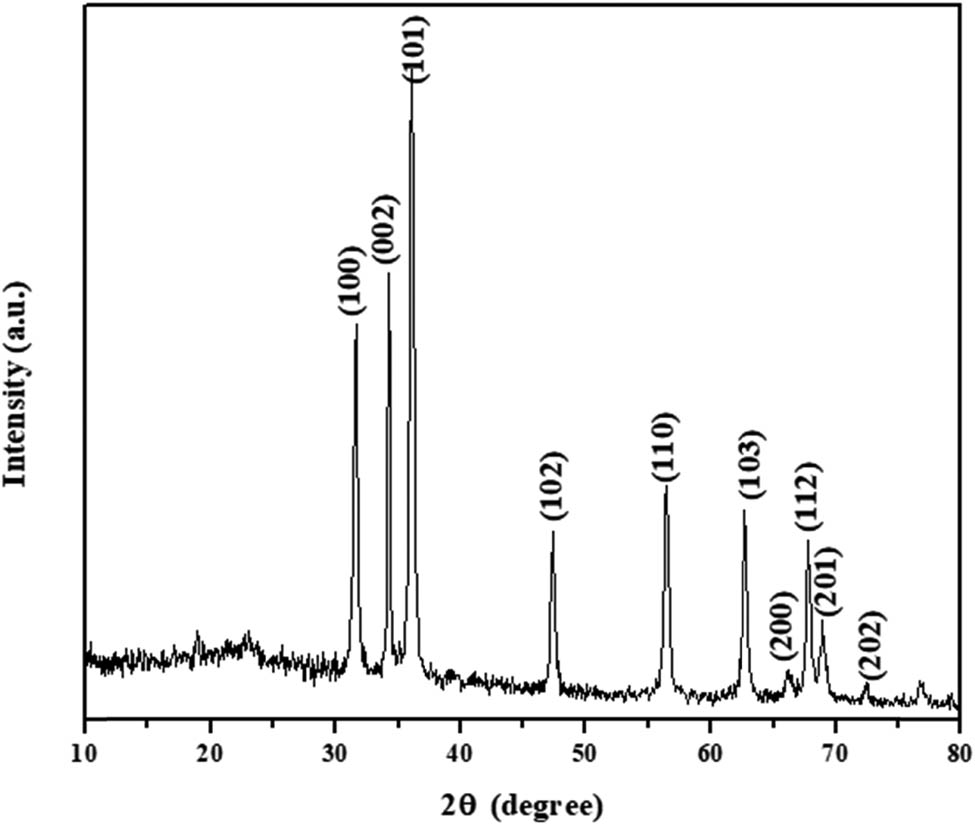
XRD analysis of the synthesized ZSP/D-Pin/NCs. The findings of XRD analysis revealed several peaks, which verify the crystalline nature of the synthesized ZSP/D-Pin/NCs.
3.1.5 DLS analysis
The DLS investigation results, which show the distribution of the fabricated ZSP/D-Pin/NCs, are shown in Figure 4. Discrete peaks with average sizes ranging from 100–160 nm that adhered to the narrower distribution were observed.
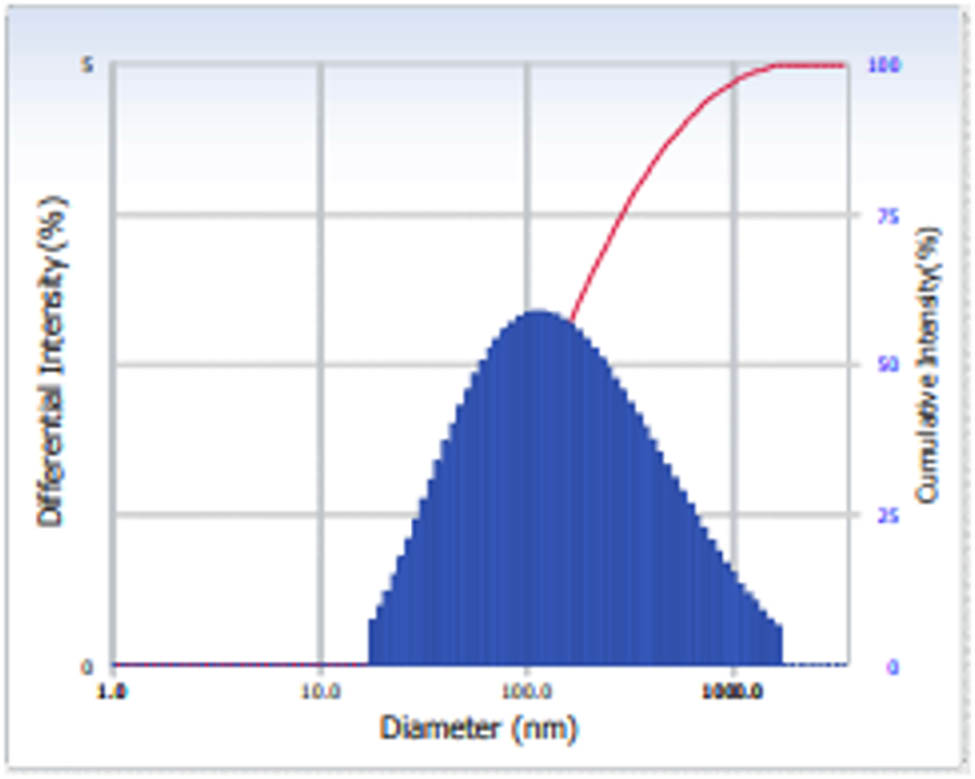
DLS analysis of the synthesized ZSP/D-Pin/NCs. The results of the DLS analysis demonstrated the distinctive peak that verifies the narrow distribution of the synthesized ZSP/D-Pin/NCs with sizes ranging from 100 to 160 nm.
3.2 Antimicrobial activity of formulated ZSP/D-Pin/NCs
The antimicrobial properties of the formulated ZSP/D-Pin/NCs against pathogenic bacterial and fungal pathogens such as S. aureus, Escherichia coli, K. pneumoniae, S. pneumoniae, and C. albicans were investigated by the well diffusion method, and the results are shown in Table 1 and Figure 5. The findings demonstrated that the fabricated ZSP/D-Pin/NCs have substantial antimicrobial properties, as they potentially inhibited the growth of the tested pathogens. On the growth plates, higher inhibitory zones were observed around increased doses of ZSP/D-Pin/NCs (40, 50, and 60 µg) loaded wells. The increased zone of inhibition was observed against S. pneumoniae (14 mm), C. albicans (14 mm), and S. aureus (13 mm), which were treated with the formulated ZSP/D-Pin/NCs (Figure 5). Variable zones of inhibition are observed (Table 1) based on the nature of the strains and the concentration of ZSP/D-Pin/NCs.
Antimicrobial activity of the synthesized ZSP/D-Pin/NCs
| Pathogen | 40 μg (mm) | 50 μg (mm) | 60 μg (mm) | A mx (mm) |
|---|---|---|---|---|
| K. pneumoniae | 8.5 | 9.5 | 9 | 16 |
| S. pneumoniae | 9 | 13 | 11 | 14 |
| E. coli | 9 | 9 | 9.5 | 13 |
| S. aureus | 13 | 13.5 | 14 | 14 |
| C. albicans | 11 | 13.5 | 14 | 9 |
The inhibitory zones (mm) of the tested pathogens are revealed, which were treated with 40, 50, and 60 µg of synthesized ZSP/D-Pin/NCs. The varied zone of inhibition was observed around the wells based on the pathogen characteristics and the concentration of ZSP/D-Pin/NCs.

Antimicrobial activity of the synthesized ZSP/D-Pin/NCs. The antimicrobial properties of the synthesized ZSP/D-Pin/NCs were assessed against several pathogens such as S. pneumoniae, K. pneumoniae, E. coli, S. aureus, and C. albicans. The results indicate that ZSP/D-Pin/NCs substantially inhibited the growth of the tested pathogens.
3.3 Effect of ZSP/D-Pin/NCs on the viability of MG-63 cells
The viability of control and fabricated ZSP/D-Pin/NC-treated MG-63 cells and non-malignant 3T3 cells is shown in Figure 6. The treatment of 1, 2.5, 5, 7.5, 10, and 20 µg of prepared ZSP/D-Pin/NCs remarkably decreased MG–63 cell viability at various time periods, i.e., 24, 48, and 72 h. The same doses of ZSP/D-Pin/NCs did not reduce the viability of 3T3 cells. When compared to 24 and 48 h of treatment, the 72 h treatment drastically reduced the MG-63 cell viability, and a mild reduction was noted in the viability of 3T3 cells over 48 and 72 h of treatment. The MG-63 cell growth was noticeably decreased by the higher dosages of the formulated ZSP/D-Pin/NCs, and the IC50 level of ZSP/D-Pin/NCs was found at 5–7.5 µg for 48–72 h (Figure 6).

Effect of synthesized ZSP/D-Pin/NCs on the viability of MG-63 cells and normal 3T3 cells. (a) The MTT assay results revealed that the MG-63 cell viability was substantially decreased upon treatment with the synthesized ZSP/D-Pin/NCs at several doses, i.e., 5–30 µg at different time periods (24, 48, and 72 h). (b) The same dose of synthesized ZSP/D-Pin/NCs did not affect normal 3T3 cell viability; only a slight decrease in viability was observed after 48 and 72 h of treatment. Values are expressed as mean ± SD of triplicate measurements. Data are scrutinized statistically by one-way ANOVA and DMRT. *p < 0.05 when compared to the control.
3.4 Effect of ZSP/D-Pin/NCs on the MMP level in MG-63 cells
Figure 7 shows the changes in the MMP status in the control and ZSP/D-Pin/NC-exposed MG-63 cells. The exposure of MG-63 cells to 7.5 and 10 µg of ZSP/D-Pin/NCs resulted in significantly less green fluorescence and morphological changes compared to the control. These findings show that the MMP status in MG-63 cells treated with ZSP/D-Pin/NCs are reduced.

Effect of synthesized ZSP/D-Pin/NCs on the MMP level in MG-63 cells. Rh-123 staining was performed to analyze the changes in the MMP level in the control and treated cells. The ZSP/D-Pin/NCs-treated MG-63 cells showed decreased green fluorescence with morphological changes (yellow arrows) compared to the control, which proves the reduction in MMP levels.
3.5 Effect of ZSP/D-Pin/NCs on the apoptosis in MG-63 cells
The results of AO/EB staining on apoptosis in control and treated MG-63 cells are shown in Figure 8. As shown in Figure 8, apoptotic cell death in MG-63 cells was significantly elevated after treatment with 7.5 and 10 µg of ZSP/D-Pin/NCs compared to control. The enhanced orange/yellow fluorescence, cell damage, and morphological changes in the ZSP/D-Pin/NC-treated cells reveal the increased number of cells with apoptosis.

Effect of synthesized ZSP/D-Pin/NCs on the apoptosis in MG-63 cells. The dual staining assay was used to detect apoptosis in control and ZSP/D-Pin/NC-treated MG-63 cells. The images showed increased orange/red fluorescence in ZSP/D-Pin/NC-treated MG-63 cells (white arrows) compared to the control, which indicates the presence of an increased number of cells with apoptosis.
3.6 Effect of ZSP/D-Pin/NCs on the apoptotic cell nuclear morphology of MG-63 cells
Figure 9 shows the results of ZSP/D-Pin/NC-induced apoptosis in MG-63 cells, which was detected by DAPI staining. When compared to the control, the MG-63 cells treated with 7.5 and 10 µg of ZSP/D-Pin/NCs showed an increased presence of apoptosis. The ZSP/D-Pin/NC treatment resulted in cell damage, alterations in the cell nucleus, and the development of apoptotic bodies, which verifies the occurrence of apoptosis.

Effect of synthesized ZSP/D-Pin/NCs on the apoptotic cell nuclear changes in MG-63 cells. The changes in the apoptotic cell nuclear damages in the control and treated cells were assessed by DAPI staining. In comparison to the control, the ZSP/D-Pin/NC-treated MG-63 cells showed increased cell damage, altered nuclei, and the formation of apoptotic bodies (yellow arrows).
3.7 Effect of ZSP/D-Pin/NCs on the oxidative stress marker level in MG-63 cells
Figure 10 shows the results of an investigation on the changes in oxidative stress markers in the control and ZSP/D-Pin/NC-treated MG-63 cells. The MG-63 cells that were exposed to 7.5 and 10 µg of ZSP/D-Pin/NCs showed a substantial increase in the BARS level compared to the control. Furthermore, SOD and GSH levels in the MG-63 cells were considerably downregulated by the ZSP/D-Pin/NC treatment when compared to control. These results showed that ZSP/D-Pin/NCs facilitate oxidative stress-mediated cell death in MG-63 cells.

Effect of synthesized ZSP/D-Pin/NCs on the oxidative stress marker levels. Values are expressed as mean ± SD of triplicate measurements. Data are scrutinized statistically by one-way ANOVA and DMRT. * p < 0.05 compared with control.
3.8 Effect of ZSP/D-Pin/NCs on apoptotic protein levels in MG-63 cells
The levels of apoptotic protein levels in the control and treated MG-63 cells were analyzed using corresponding assay kits, and the results are shown in Figure 11. In the 7.5 and 10 µg of ZSP/D-Pin/NC-treated MG-63 cells, apoptotic proteins such as Bax, caspase-3, and -9 were significantly higher than in the control, while Bcl-2 was lower. These results demonstrated that in MG-63 cells, ZSP/D-Pin/NCs increased the expression of apoptotic proteins and facilitated apoptosis.
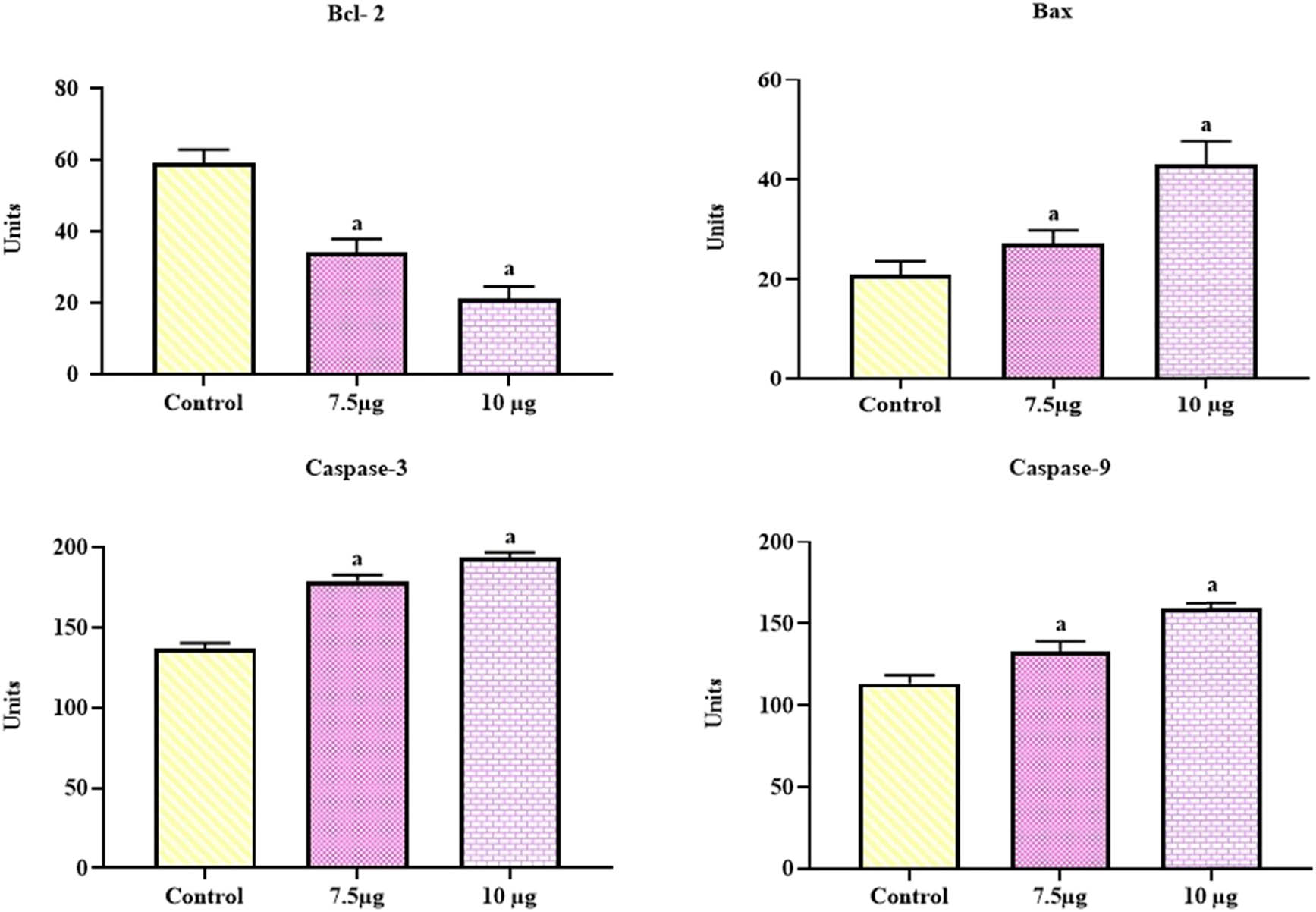
Effect of synthesized ZSP/D-Pin/NCs on the apoptotic protein levels. Values are expressed as mean ± SD of triplicate measurements. Data are scrutinized statistically by one-way ANOVA and DMRT. * p < 0.05 compared with control.
4 Discussion
In this work, we formulated ZSP/D-Pin/NCs and characterized them using several techniques. UV-visible spectroscopy was used to investigate the optical characteristics. The produced ZSP/D-Pin/NCs displayed a single absorption band that was caused by the coherent oscillation of the ZSP/D-Pin/NCs’ free electrons that were triggered by electromagnetic waves with energy in the visible spectrum [28]. The location of the wavelength at a maximum absorption (λ max) in each bimetallic nanosystem relies on the atomic makeup of the nanomaterials. Here, the maximum absorbance of the prepared ZSP/D-Pin/NCs was observed at 369 nm (Figure 1). ZSP/D-Pin/NCs were further characterized using XRD in order to investigate the samples’ structure and phase composition (Figure 3). Figure 2 displays the resulting images from the FESEM analysis of the prepared ZSP/D-Pin/NCs’ morphology and microstructure.
Currently, nanomedicines are employed extensively in several areas of medicine, and nearly all of them can be doped or decorated with substances that have potential medical applications [29]. It is also recommended to combine two or more components to enhance the therapeutic qualities of each material separately. NCs formed by conjugating NPs with antibacterial or anticancer moieties or natural compounds have been established as efficient materials for treating antibiotic resistance [30]. The field of nanomedicine has attracted a lot of interest and is now serving as an impetus for numerous evolutionary and revolutionary advances in the pharmaceutical industry. Because nanomedicine enhances the selective targeting of medication to cancer cells through the mechanisms of active internalization and passive permeation, it is utilized to treat cancer and bacterial infections. Additionally, nanomedicine improves cytotoxicity against cancer cells and reduces cell treatment resistance [31,32]. It is believed that the use of nanomaterials will revolutionize cancer treatment and diagnosis. In this sense, zinc NPs have proven to be one of the most promising choices in nanomedicine. The release of dissolved zinc ions and the stimulation of ROS, which causes the death of cancerous cells, are theorized to be the causes of zinc NPs’ enhanced cytotoxicity to tumor cells [33].
WHO highlights that antimicrobial resistance is a foremost health issue worldwide [34]. It currently poses a danger to the efficiency of standard infection treatment and prevention around the world and has grown to be a global concern. However, in addition to being a challenging procedure, creating new antibiotics, biological products, or adjuvant medicines cannot keep up with the increasing rate of drug resistance. It is essential to find new alternatives since bacteria can become resistant to both natural and man-made antibiotics through a variety of methods, rendering them ineffective. Consequently, there is a huge demand for new, clinically approved antibiotic medicines. Recently, the delivery of antibacterial drugs has faced difficulties due to limited bioavailability and drug-related toxicities. Nano-formulations have emerged as a solution to these issues [35]. Here, our results demonstrated that ZSP/D-Pin/NCs effectively inhibited the growth of the tested pathogens (Figure 5). Combinations of inorganic and organic NPs known as nanocomposites are already reported to have reliable antimicrobial activity [36,37]. The exact mechanisms of antibacterial activity of ZnO particles are not well understood yet, although some statements have been proposed, such as the production of hydrogen peroxide being the main factor of antibacterial activity [38] or the binding of ZnO particles on bacterial surfaces due to electrostatic forces being a mechanism [39].
Zinc is one of the micronutrients that the human body needs in order to function properly since it is necessary for the action of several enzymes, including alcohol dehydrogenase, carboxypeptidase, and carbonic anhydrase, which are crucial for eukaryotic metabolic processes [40]. Zinc-based nanocomposites have recently attracted interest in the biological and pharmaceutical sectors. Combining one material with another may improve its antibacterial, hydrophobic, tensile, and self-cleaning qualities. According to an earlier report, caprolactam–casein–ZnO–nanocomposite latexes have shown improved antibacterial activity, greater flexibility, and characteristics of hydrophobic casein films [41]. Similarly, we also discovered that the synthesized ZSP/D-Pin/NCs have strong antimicrobial properties against clinical pathogens (Table 1).
Osteosarcoma is the most prevalent primary bone cancer worldwide. The primary clinical therapeutic modalities are surgical resection and preoperative and postoperative adjuvant chemotherapy [42]. However, conventional chemotherapeutic agents have a number of adverse effects and inadequate targeting, which dramatically lower patient’s quality of life. The development of targeted pharmaceuticals offers novel approaches to treat cancers. Nevertheless, some medications have poor absorption, low selectivity, and poor stability in tumor tissues [43]. Therefore, researchers have given special attention to novel therapies for cancer treatment. Recently, nanomedicines have demonstrated enormous potential in the detection, diagnosis, and cancer treatment [44]. Due to their great selectivity between tumor and healthy cells, the adverse effects are reduced, and the harm to healthy cells is avoided.
Nano-drug delivery systems for treating osteosarcoma are characterized by controllable drug release, biocompatibility, targeted changes in cancerous tissue, and better patient compliance. Insoluble drugs can be carried as nanomedicines to increase tissue permeability and passively target cancer locations [45]. The analysis of the cytotoxic profile of newly prepared sample drugs or nanomedicines is an essential step for successful drug development [46]. In this work, we analyzed the cytotoxicity of the formulated ZSP/D-Pin/NCs against both MG-63 and non-malignant 3T3 cells. The results showed a substantial diminution in the viability of osteosarcoma MG-63 cells but not affected the 3T3 cell growth (Figure 6). These findings revealed that ZSP/D-Pin/NCs inhibited the viability of osteosarcoma cells.
Oxidative stress is a major cause of cancer development. This phenomenon is characterized by excessive ROS production, altered cell metabolism and homeostasis, dysregulated gene expressions, and antioxidant instabilities [47]. Mild oxidative stress is constantly present in tumor cells, which appears to be beneficial to them and boosts their growth and metastasis, assisting tumor development [48]. In carcinogenesis, it is well established that alterations to antioxidant defense mechanisms facilitate tumor development. However, excessive oxidative stress is detrimental to cancer cells; the release of excessive ROS due to chemotherapy, irradiation, or the innate immune reaction is cytotoxic and results in cancer cell death [49].
The overproduction of ROS causes higher lipid peroxidation and TBARS formation, thereby damaging the cell structure and functions. The increase in TBARS is an indicator of excessive oxidative stress [50]. The primary defense of cells against oxidative stress is antioxidants, which maintain cellular homeostasis by removing excessive free radicals. GSH and SOD are well-known antioxidants that protect cells against oxidative damage [51]. Inducing high levels of ROS production to stimulate lipid peroxidation and apoptosis is a common strategy in current cancer treatment. Osteosarcoma cells are frequently resistant to oxidative damage caused by therapies [52]. In the current study, our outcomes proved that the ZSP/D-Pin/NC treatment increased the TBARS (51.91 ± 14) while decreasing the SOD (18.37 ± 2) and GSH (11.87 ± 3) in the MG-63 cells (Figure 10), thereby facilitating oxidative stress-mediated cell death.
Initiation and development of malignancies, including osteosarcoma, are profoundly influenced by apoptosis. Evasion of apoptosis is a common phenomenon in malignancies [53]. Accelerated tumor growth and metastasis are caused by the deregulation of apoptotic pathways. Apoptosis is an important mechanism for protecting tissues from abnormal proliferation by removing uncontrollably proliferating cells [54]. Apoptosis can be activated by several signaling pathways. Furthermore, mitochondria are crucial players in activating endogenous apoptotic pathways [55,56]. The major chemotherapeutic drugs usually work against cancer by activating apoptotic mechanisms in the tumor cells. In the current work, our results of DAPI and dual staining confirmed the onset of apoptosis in ZSP/D-Pin/NC-exposed MG-63 cells (Figures 8 and 9). Additionally, ZSP/D-Pin/NCs also diminished the MMP status in MG-63 cells (Figure 7). Hence, it was clear that ZSP/D-Pin/NCs could be used to treat osteosarcoma by promoting apoptosis.
It is well known that both intrinsic and extrinsic pathways play major roles in initiating apoptosis. There are key regulators in the Bcl-2 protein family that play main roles in mitochondria-mediated apoptosis. When cells undergo apoptosis, Bax is required for the permeabilization of the mitochondrial membrane [57]. It has already been reported that several anticancer drugs regulate the Bcl-2 family proteins to activate mitochondria-mediated apoptosis. Over the past decades, apoptosis induction has served a crucial role in osteosarcoma treatment, and its fundamental signaling axis has been extensively studied [58]. In the MG-63 cells, treatment with ZSP/D-Pin/NCs triggered Bax (41.61 ± 2) and caspase-3 (174.27 ± 15), and -9 (154.59 ± 12) expressions while inhibiting the expression of Bcl-2 (19.58 ± 4). Our findings revealed that apoptotic signaling in MG-63 cells was induced by the ZSP/D-Pin/NC treatment (Figure 11). Overall, ZSP/D-Pin/NCs were found to effectively inhibit viability and promote apoptosis in osteosarcoma MG-63 cells.
5 Conclusion
We synthesized ZSP/D-Pin/NCs and characterized them using several techniques. The findings of characterization studies revealed the formation of agglomerated and crystalline ZSP/D-Pin/NCs. The findings of antimicrobial activity revealed that the formulated ZSP/D-Pin/NCs efficiently inhibited the growth of various pathogens. Furthermore, ZSP/D-Pin/NCs substantially inhibited viability, decreased MMP levels, and promoted apoptosis in MG-63 cells. Overall, these findings revealed that SP/D-Pin/NCs have strong antimicrobial and anticancer properties. In addition, the lack of in vivo studies is one of the major limitations of this work, and further experiments still need to be performed in the future in order to develop ZSP/D-Pin/NCs as talented antimicrobial and anticancer agents.
Acknowledgement
The authors would like to thank the Head, School of Life Sciences (Ooty Campus) and the management of JSS AHER, Mysuru for providing the facilities and support.
-
Funding information: This project was supported by Researchers Supporting Project number (RSPD2023R712), King Saud University, Riyadh, Saudi Arabia.
-
Author contributions: Anandaraj Lakshmanan contributed in the conception, investigation, interpretation of data, supervision, work drafting, and submission; Hariprasath Lakshmanan contributed in the conception, design of the work, investigation, analysis, and work drafting; Monishsanthosh Ramesh contributed in design of the work, investigation and analysis, work drafting, and supervision; Chandramohan Govindasamy contributed in the formal analysis, interpretation of data, resources, and work drafting; Allur Subramaniyan Sivakumar contributed in interpretation of data, resources, administration, and work drafting; and Samer Hasan Hussein-Al-Ali contributed in interpretation of data, resources, and work drafting, conception, revising, and supervision. All authors read and approved the final manuscript.
-
Conflict of interest: The authors state no conflict of interest.
-
Data availability statement: The datasets generated during and/or analyzed during the current study are available from the corresponding author on reasonable request.
References
[1] Mukherjee S, Vinothkumar B, Prashanthi S, Bangal PR, Sreedhar B, Patra CR. Potential therapeutic and diagnostic applications of one-step in situ biosynthesized gold nanoconjugates (2-in-1 system) in cancer treatment. R Soc Chem Adv. 2013;3:2318.10.1039/c2ra22299jSuche in Google Scholar
[2] Ghotekar S, Pagar T, Pansambal S, Oza R. A review on green synthesis of sulfur nanoparticles via plant extract, characterization and its applications. Adv J Chem. 2020;2(3):128–43.Suche in Google Scholar
[3] Sahoo S. Socio-ethical issues and nanotechnology development: Perspectives from India. Conference on Nanotechnology. Institute of Electrical and Electronics Engineers; 2010. p. 1205–10.10.1109/NANO.2010.5697887Suche in Google Scholar
[4] Burchacka E, Pstrowska K, Beran E, Faltynowicz H, Chojnacka K, Kulazynski M. Antibacterial agents adsorbed on active carbon: A new approach for S. aureus and E. coli pathogen elimination. Pathogen. 2021;10(8):1066.10.3390/pathogens10081066Suche in Google Scholar PubMed PubMed Central
[5] Jin SE, Jin HE. Antimicrobial activity of zinc oxide nano/microparticles and their combinations against pathogenic microorganisms for biomedical applications: From physicochemical characteristics to pharmacological aspects. Nanomaterial. 2021;11(2):1–35.10.3390/nano11020263Suche in Google Scholar PubMed PubMed Central
[6] Singh A, Gautam PK, Verma A, Singh V, Shivapriya PM, Shivalkar S, et al. Green synthesis of metallic nanoparticles as effective alternatives to treat antibiotics resistant bacterial infections: a review. Biotech Rep. 2020;25:e00427.10.1016/j.btre.2020.e00427Suche in Google Scholar PubMed PubMed Central
[7] Sharma R, Garg R, Kumari A. A review on biogenic synthesis, applications and toxicity aspects of zinc oxide nanoparticles. Exp Clin Sci J. 2020;19:1325.Suche in Google Scholar
[8] Singh P, Pandit S, Mokkapati V, Garg A, Ravikumar V, Mijakovi I. Gold nanoparticles in diagnostics and therapeutics for human cancer. Int J Mol Sci. 2018;19:1979.10.3390/ijms19071979Suche in Google Scholar PubMed PubMed Central
[9] Letaief F, Khrouf S, Yahiaoui Y, Hamdi A, Gabsi A, Ayadi M, et al. Prognostic factors in high-grade localized osteosarcoma of the extremities: The Tunisian experience. J Orthop Sur. 2020;28:3.10.1177/2309499020974501Suche in Google Scholar PubMed
[10] Lilienthal I, Herold N. Targeting molecular mechanisms underlying treatment efficacy and resistance in Osteosarcoma: A review of current and future strategies. Int J Mol Sci. 2020;21(18):6885.10.3390/ijms21186885Suche in Google Scholar PubMed PubMed Central
[11] Yan J, Wang Y, Ran M, Mustafa RA, Luo H, Wang J, et al. Peritumoral microgel reservoir for long-term light-controlled triple-synergistic treatment of osteosarcoma with single ultra-low dose. Small. 2021;17(31):e2100479.10.1002/smll.202100479Suche in Google Scholar PubMed
[12] Caliskan Y, Dalgic AD, Gerekci S, Gulec EA, Tezcaner A, Ozen C, et al. A new therapeutic combination for Osteosarcoma: Gemcitabine and Clofazimine co-loaded liposomal formulation. Int J Pharma Sci Res. 2019;557:97–104.10.1016/j.ijpharm.2018.12.041Suche in Google Scholar PubMed
[13] Rahman HS, Othman HH, Hammadi NI, Yeap SK, Amin KM, Samad NA, et al. Novel drug delivery systems for loading of natural plant extracts and their biomedical applications. Int J Nanomed. 2020;15:2439–83.10.2147/IJN.S227805Suche in Google Scholar PubMed PubMed Central
[14] Krishnan P, Rajan M, Kumari S, Sakinah S, Priya SP, Amira F, et al. Efficiency of newly formulated camptothecin with β-cyclodextrin-EDTA-Fe3O4 nanoparticle-conjugated nanocarriers as an anti-colon cancer (HT29) drug. Sci Rep. 2017;7(1):10962.10.1038/s41598-017-09140-1Suche in Google Scholar PubMed PubMed Central
[15] Nuthalapati S, Shirhatti V, Kedambaimoole V, Neella N, Nayak MM, Rajanna K, et al. Highly sensitive, scalable reduced graphene oxide with palladium nano-composite as strain sensor. Nanotech. 2020;31(3):035501.10.1088/1361-6528/ab4855Suche in Google Scholar PubMed
[16] Tapiero H, Tew KD. Trace elements in human physiology and pathology: Zinc and metallothioneins. Biomed Pharma J. 2003;57:399–411.10.1016/S0753-3322(03)00081-7Suche in Google Scholar PubMed
[17] Saifullah B, Hussein MZ, Hussein-Al-Ali SH, Arulselvan P. Fakurazi. Antituberculosis nanodelivery system with controlled-release properties based on para-amino salicylate-zinc aluminum-layered double-hydroxide nanocomposites. Drug Des Dev Ther. 2003;7:1365–75.Suche in Google Scholar
[18] Kahsay MH, Tadesse A, Ramadevi D, Belachew N, Basavaiah K. Green synthesis of zinc oxide nanostructures and investigation of their photocatalytic and bactericidal applications. R Soc Chem Adv. 2019;9(63):36967–81.10.1039/C9RA07630ASuche in Google Scholar
[19] Tan JM, Karthivashan G, Arulselvan P, Fakurazi S, Hussein MZ. Characterization and in vitro studies of the anticancer effect of oxidized carbon nanotubes functionalized with betulinic acid. Drug Des Dev Ther. 2018;8:2333–43.10.2147/DDDT.S70650Suche in Google Scholar PubMed PubMed Central
[20] Barahuie F, Hussein MZ, Hussein-Al-Ali SH, Arulselvan P, Fakurazi S, Zainal Z. Preparation and controlled-release studies of a protocatechuic acid-magnesium/aluminum-layered double hydroxide nanocomposites. Int J Nanomed. 2013;8:1975–87.10.2147/IJN.S42718Suche in Google Scholar PubMed PubMed Central
[21] Arcaute K, Mann BK, Wicker RB. Stereolithography of three-dimensional bioactive poly(ethylene Glycol) constructs with encapsulated cells. Ann Biomed Eng. 2006;34(9):1429–41.10.1007/s10439-006-9156-ySuche in Google Scholar PubMed
[22] Navarro JA, Decara J, Medina-Vera D, Tovar R, Suarez J, Pavon J, et al. D-Pinitol from Ceratonia siliqua is an orally active natural inositol that reduces pancreas insulin secretion and increases circulating ghrelin levels in Wistar rats. Nutrient. 2020;12(7):2030.10.3390/nu12072030Suche in Google Scholar PubMed PubMed Central
[23] Jayasooriya RGPT, Kang CH, Park SR, Choi IH, Kim GY. Pinitol suppresses tumor necrosis factor-α-induced invasion of prostate cancer LNCaP cells by inhibiting nuclear factor-κB-mediated matrix metalloproteinase-9 expression. Trop J Pharma Res. 2015;14(8):1357–64.10.4314/tjpr.v14i8.6Suche in Google Scholar
[24] Choi MS, Lee MK, Jung UJ, Kim HJ, Do GM, Park YB, et al. Metabolic response of soy pinitol on lipid-lowering, antioxidant and hepatoprotective action in hamsters fed-high fat and high cholesterol diet. Mol Nutr Food Res. 2009;53(6):751–9.10.1002/mnfr.200800241Suche in Google Scholar PubMed
[25] Liu SC, Chuang SM, Tang CH. D-Pinitol inhibits RANKL induced osteoclastogenesis. Int Immunopharmacol. 2012;12(3):494–500.10.1016/j.intimp.2012.01.002Suche in Google Scholar PubMed
[26] Hada B, Yoo MR, Seong KM, Jin YM, Myeong HK, Min KJ. D-Chiro-inositol and pinitol extend the life span of Drosophila melanogaster. J Gerontol Ser Bio Sci Med Sci. 2013;68(3):226–34.10.1093/gerona/gls156Suche in Google Scholar PubMed
[27] Lopez-Gambero AJ, Sanjuan C, Serrano-Castro PJ, Suárez J, Rodríguez de Fonseca F. The biomedical uses of inositols: A nutraceutical approach to metabolic dysfunction in aging and neurodegenerative diseases. Biomed. 2020;8(9):295.10.3390/biomedicines8090295Suche in Google Scholar PubMed PubMed Central
[28] Unser S, Bruzas I, He JL, Sagle L. Localized surface plasmon resonance biosensing: Current challenges and approaches. Sensors. 2015;15:15684.10.3390/s150715684Suche in Google Scholar PubMed PubMed Central
[29] Carofiglio M, Barui S, Cauda V, Laurenti M. Doped zinc oxide nanoparticles: Synthesis, characterization and potential use in nanomedicine. App Sci. 2020;10:5194.10.3390/app10155194Suche in Google Scholar PubMed PubMed Central
[30] Pozdnyakov A, Emel’yanov A, Ivanova A, Kuznetsova N, Semenova T, Bolgova Y, et al. Strong antimicrobial activity of highly stable nanocomposite containing AgNPs based on water-soluble Triazole-Sulfonate copolymer. Pharmaceutics. 2022;14:206.10.3390/pharmaceutics14010206Suche in Google Scholar PubMed PubMed Central
[31] Anjum SM, Hashim SA, Malik M, Khan JM, Lorenzo BH, Abbasi C, et al. Recent advances in zinc oxide nanoparticles (ZnO NPs) for cancer diagnosis, target. Drug Delivery Treat Cancers. 2021;13:4570.10.3390/cancers13184570Suche in Google Scholar PubMed PubMed Central
[32] Garbayo E, Pascual-Gil S, Rodríguez-Nogales C, Saludas L, Estella-Hermoso de Mendoza A, Blanco-Prieto MJ. Nanomedicine and drug delivery systems in cancer and regenerative medicine. Nanomed Nanobiotech. 2020;12:5.10.1002/wnan.1637Suche in Google Scholar PubMed
[33] Mishra PK, Mishra H, Ekielski A, Talegaonkar S, Vaidya B. Zinc oxide nanoparticles: A promising nanomaterial for biomedical applications. Drug Discovery Today. 2017;22:1825–34.10.1016/j.drudis.2017.08.006Suche in Google Scholar PubMed
[34] Piddock LJ. The crisis of no new antibiotics – What is the way forward. Lancet Infect Dis. 2012;12:249–53.10.1016/S1473-3099(11)70316-4Suche in Google Scholar PubMed
[35] Saifullah B, Hussein MZ, Hussein-Al-Ali SH, Arulselvan P, Fakurazi S. Sustained release formulation of an anti-tuberculosis drug based on para-amino salicylic acid-zinc layered hydroxide nanocomposites. Chem Cent J. 2013;7(1):72.10.1186/1752-153X-7-72Suche in Google Scholar PubMed PubMed Central
[36] Mei L, Lu Z, Zhang X, Li C, Jia Y. Polymer-Ag nanocomposites with enhanced antimicrobial activity against bacterial infection. ACS App Mat Interface. 2014;6:15813–21.10.1021/am502886mSuche in Google Scholar PubMed
[37] Naskar A, Lee S, Lee Y, Kim S, Kim KS. A new nano-platform of erythromycin combined with Ag nano-particle ZnO nano-structure against methicillin-resistant Staphylococcus aureus. Pharmaceutics. 2020;12:841.10.3390/pharmaceutics12090841Suche in Google Scholar PubMed PubMed Central
[38] Sirelkhatim A, Mahmud S, Seeni A, Kaus NHM, Ann LC, Bakhori SKM, et al. Review on zinc oxide nanoparticles: antibacterial activity and toxicity mechanism. Nano-Micro Lett. 2015;7:219–42.10.1007/s40820-015-0040-xSuche in Google Scholar PubMed PubMed Central
[39] Stoimenov PK, Klinger RL, Marchin GL, Klabunde KJ. Metal oxide nanoparticles as bactericidal agents. Langmuir. 2002;18:6679–86.10.1021/la0202374Suche in Google Scholar
[40] Maret W. Zinc biochemistry: From a single zinc enzyme to a key element of life. Adv Nutr. 2013;4:82–91.10.3945/an.112.003038Suche in Google Scholar PubMed PubMed Central
[41] Wang Y, Ma J, Xu Q, Zhang J. Fabrication of antibacterial casein-based ZnO nanocomposite for flexible coatings. Mat Des. 2017;113:240–5.10.1016/j.matdes.2016.09.082Suche in Google Scholar
[42] Wu X, Zhang X, Feng W, Feng H, Ding Z, Zhao Q, et al. A targeted erythrocyte membrane-encapsulated drug-delivery system with antiosteosarcoma and anti-osteolytic effects. ACS App Mat Interface. 2021;13(24):27920–33.10.1021/acsami.1c06059Suche in Google Scholar PubMed
[43] Burns J, Wilding CP. Proteomic research in sarcomas – current status and future opportunities. Semin Cancer Bio. 2020;61:56–70.10.1016/j.semcancer.2019.11.003Suche in Google Scholar PubMed PubMed Central
[44] Ikram M, Javed B, Raja NI, Mashwani ZR. Biomedical potential of plant-based selenium nanoparticles: a comprehensive review on therapeutic and mechanistic aspects. Int J Nanomed. 2021;16:249–68.10.2147/IJN.S295053Suche in Google Scholar
[45] Lu ZR, Steinmetz NF, Zhu H. New directions for drug delivery in cancer therapy. Mol Pharma. 2018;15(9):3601–2.10.1021/acs.molpharmaceut.8b00860Suche in Google Scholar
[46] Yew YP, Shameli K, Miyake M, Khairudin NBBA, Mohamad SEB, Naiki T, et al. Green biosynthesis of superparamagnetic magnetite Fe3O4 nanoparticles and biomedical applications in targeted anticancer drug delivery system: a review. Arab J Chem. 2020;13:2287–308.10.1016/j.arabjc.2018.04.013Suche in Google Scholar
[47] Mu XC, Isaac C, Schott T, Huard J, Weiss K. Rapamycin inhibits ALDH activity, resistance to oxidative stress, and metastatic potential in murine osteosarcoma cells. Sarcoma. 2013;2013:11.10.1155/2013/480713Suche in Google Scholar
[48] Hayes JD, Dinkova-Kostova AT, Tew KD. Oxidative stress in cancer. Cancer Cell. 2020;38:167–97.10.1016/j.ccell.2020.06.001Suche in Google Scholar
[49] Jaganjac M, Borovic Sunjic S, Zarkovic N. Utilizing iron for targeted lipid peroxidation as anticancer option of integrative biomedicine: A short review of nanosystems containing iron. Antioxidant. 2020;9:191.10.3390/antiox9030191Suche in Google Scholar
[50] Kuper H, Tzonou A, Kaklamani E, Hsie CC, Lagiou P, Adami HO. Tobacco smoking alcohol consumption and their interaction in the causation of hepetocellular carcinoma. Int J Cancer. 2000;85:498–502.10.1002/(SICI)1097-0215(20000215)85:4<498::AID-IJC9>3.0.CO;2-FSuche in Google Scholar
[51] Arulkumaran S, Ramprasath VR, Shanthi P, Sachdanandam P. Restorative effects of Kalpamiruthaa, and indigenous preparation, on oxidative damage in mammary gland mitochondrial fraction in experimental mammary carcinoma. Mol Cell Biochem. 2006;291:77–82.10.1007/s11010-006-9199-2Suche in Google Scholar
[52] dos Santos Cavalcanti A, Meohas W, de Ribeiro GO, de Sá Lopes AC, Gholamin S, Razavi M, et al. Patient-derived osteosarcoma cells are resistant to methotrexate. PLoS ONE. 2017;12(9):e0184891.10.1371/journal.pone.0184891Suche in Google Scholar
[53] Bai Y, Liu X, Qi X, Liu X, Peng F, Li H, et al. PDIA6 modulates apoptosis and autophagy of non-small cell lung cancer cells via the MAP4K1/JNK signaling pathway. EBioMedicine. 2019;42:311–25.10.1016/j.ebiom.2019.03.045Suche in Google Scholar
[54] Celik B, Cicek K, Leal AF, Tomatsu S. Regulation of molecular targets in osteosarcoma treatment. Int J Mol Sci. 2022;23(20):12583.10.3390/ijms232012583Suche in Google Scholar PubMed PubMed Central
[55] McArthur K, Kile B. Apoptotic caspases: multiple or mistaken identities. Trends Cell Biol. 2018;28(6):475–93.10.1016/j.tcb.2018.02.003Suche in Google Scholar PubMed
[56] Strasser A, Vaux DL. Cell death in the origin and treatment of cancer. Mol Cell. 2020;78(6):1045–54.10.1016/j.molcel.2020.05.014Suche in Google Scholar PubMed
[57] Jin PY, Lu HJ, Tang Y, Fan SH, Zhang ZF, Wang Y, et al. The effect of DNA-PKcs gene silencing on proliferation, migration, invasion and apoptosis, and in vivo tumorigenicity of human osteosarcoma MG-63 cells. Biomed Pharmacother. 2017;96:1324–34.10.1016/j.biopha.2017.11.079Suche in Google Scholar PubMed
[58] White E, Lattime EC, Guo JY. Autophagy regulates stress responses, metabolism, and anticancer immunity. Trends Cancer. 2021;7(8):778–89.10.1016/j.trecan.2021.05.003Suche in Google Scholar PubMed PubMed Central
© 2023 the author(s), published by De Gruyter
This work is licensed under the Creative Commons Attribution 4.0 International License.
Artikel in diesem Heft
- Research Articles
- Value-added utilization of coal fly ash and recycled polyvinyl chloride in door or window sub-frame composites
- High removal efficiency of volatile phenol from coking wastewater using coal gasification slag via optimized adsorption and multi-grade batch process
- Evolution of surface morphology and properties of diamond films by hydrogen plasma etching
- Removal efficiency of dibenzofuran using CuZn-zeolitic imidazole frameworks as a catalyst and adsorbent
- Rapid and efficient microwave-assisted extraction of Caesalpinia sappan Linn. heartwood and subsequent synthesis of gold nanoparticles
- The catalytic characteristics of 2-methylnaphthalene acylation with AlCl3 immobilized on Hβ as Lewis acid catalyst
- Biodegradation of synthetic PVP biofilms using natural materials and nanoparticles
- Rutin-loaded selenium nanoparticles modulated the redox status, inflammatory, and apoptotic pathways associated with pentylenetetrazole-induced epilepsy in mice
- Optimization of apigenin nanoparticles prepared by planetary ball milling: In vitro and in vivo studies
- Synthesis and characterization of silver nanoparticles using Origanum onites leaves: Cytotoxic, apoptotic, and necrotic effects on Capan-1, L929, and Caco-2 cell lines
- Exergy analysis of a conceptual CO2 capture process with an amine-based DES
- Construction of fluorescence system of felodipine–tetracyanovinyl–2,2′-bipyridine complex
- Excellent photocatalytic degradation of rhodamine B over Bi2O3 supported on Zn-MOF nanocomposites under visible light
- Optimization-based control strategy for a large-scale polyhydroxyalkanoates production in a fed-batch bioreactor using a coupled PDE–ODE system
- Effectiveness of pH and amount of Artemia urumiana extract on physical, chemical, and biological attributes of UV-fabricated biogold nanoparticles
- Geranium leaf-mediated synthesis of silver nanoparticles and their transcriptomic effects on Candida albicans
- Synthesis, characterization, anticancer, anti-inflammatory activities, and docking studies of 3,5-disubstituted thiadiazine-2-thiones
- Synthesis and stability of phospholipid-encapsulated nano-selenium
- Putative anti-proliferative effect of Indian mustard (Brassica juncea) seed and its nano-formulation
- Enrichment of low-grade phosphorites by the selective leaching method
- Electrochemical analysis of the dissolution of gold in a copper–ethylenediamine–thiosulfate system
- Characterisation of carbonate lake sediments as a potential filler for polymer composites
- Evaluation of nano-selenium biofortification characteristics of alfalfa (Medicago sativa L.)
- Quality of oil extracted by cold press from Nigella sativa seeds incorporated with rosemary extracts and pretreated by microwaves
- Heteropolyacid-loaded MOF-derived mesoporous zirconia catalyst for chemical degradation of rhodamine B
- Recovery of critical metals from carbonatite-type mineral wastes: Geochemical modeling investigation of (bio)hydrometallurgical leaching of REEs
- Photocatalytic properties of ZnFe-mixed oxides synthesized via a simple route for water remediation
- Attenuation of di(2-ethylhexyl)phthalate-induced hepatic and renal toxicity by naringin nanoparticles in a rat model
- Novel in situ synthesis of quaternary core–shell metallic sulfide nanocomposites for degradation of organic dyes and hydrogen production
- Microfluidic steam-based synthesis of luminescent carbon quantum dots as sensing probes for nitrite detection
- Transformation of eggshell waste to egg white protein solution, calcium chloride dihydrate, and eggshell membrane powder
- Preparation of Zr-MOFs for the adsorption of doxycycline hydrochloride from wastewater
- Green nanoarchitectonics of the silver nanocrystal potential for treating malaria and their cytotoxic effects on the kidney Vero cell line
- Carbon emissions analysis of producing modified asphalt with natural asphalt
- An efficient and green synthesis of 2-phenylquinazolin-4(3H)-ones via t-BuONa-mediated oxidative condensation of 2-aminobenzamides and benzyl alcohols under solvent- and transition metal-free conditions
- Chitosan nanoparticles loaded with mesosulfuron methyl and mesosulfuron methyl + florasulam + MCPA isooctyl to manage weeds of wheat (Triticum aestivum L.)
- Synergism between lignite and high-sulfur petroleum coke in CO2 gasification
- Facile aqueous synthesis of ZnCuInS/ZnS–ZnS QDs with enhanced photoluminescence lifetime for selective detection of Cu(ii) ions
- Rapid synthesis of copper nanoparticles using Nepeta cataria leaves: An eco-friendly management of disease-causing vectors and bacterial pathogens
- Study on the photoelectrocatalytic activity of reduced TiO2 nanotube films for removal of methyl orange
- Development of a fuzzy logic model for the prediction of spark-ignition engine performance and emission for gasoline–ethanol blends
- Micro-impact-induced mechano-chemical synthesis of organic precursors from FeC/FeN and carbonates/nitrates in water and its extension to nucleobases
- Green synthesis of strontium-doped tin dioxide (SrSnO2) nanoparticles using the Mahonia bealei leaf extract and evaluation of their anticancer and antimicrobial activities
- A study on the larvicidal and adulticidal potential of Cladostepus spongiosus macroalgae and green-fabricated silver nanoparticles against mosquito vectors
- Catalysts based on nickel salt heteropolytungstates for selective oxidation of diphenyl sulfide
- Powerful antibacterial nanocomposites from Corallina officinalis-mediated nanometals and chitosan nanoparticles against fish-borne pathogens
- Removal behavior of Zn and alkalis from blast furnace dust in pre-reduction sinter process
- Environmentally friendly synthesis and computational studies of novel class of acridinedione integrated spirothiopyrrolizidines/indolizidines
- The mechanisms of inhibition and lubrication of clean fracturing flowback fluids in water-based drilling fluids
- Adsorption/desorption performance of cellulose membrane for Pb(ii)
- A one-pot, multicomponent tandem synthesis of fused polycyclic pyrrolo[3,2-c]quinolinone/pyrrolizino[2,3-c]quinolinone hybrid heterocycles via environmentally benign solid state melt reaction
- Green synthesis of silver nanoparticles using durian rind extract and optical characteristics of surface plasmon resonance-based optical sensor for the detection of hydrogen peroxide
- Electrochemical analysis of copper-EDTA-ammonia-gold thiosulfate dissolution system
- Characterization of bio-oil production by microwave pyrolysis from cashew nut shells and Cassia fistula pods
- Green synthesis methods and characterization of bacterial cellulose/silver nanoparticle composites
- Photocatalytic research performance of zinc oxide/graphite phase carbon nitride catalyst and its application in environment
- Effect of phytogenic iron nanoparticles on the bio-fortification of wheat varieties
- In vitro anti-cancer and antimicrobial effects of manganese oxide nanoparticles synthesized using the Glycyrrhiza uralensis leaf extract on breast cancer cell lines
- Preparation of Pd/Ce(F)-MCM-48 catalysts and their catalytic performance of n-heptane isomerization
- Green “one-pot” fluorescent bis-indolizine synthesis with whole-cell plant biocatalysis
- Silica-titania mesoporous silicas of MCM-41 type as effective catalysts and photocatalysts for selective oxidation of diphenyl sulfide by H2O2
- Biosynthesis of zinc oxide nanoparticles from molted feathers of Pavo cristatus and their antibiofilm and anticancer activities
- Clean preparation of rutile from Ti-containing mixed molten slag by CO2 oxidation
- Synthesis and characterization of Pluronic F-127-coated titanium dioxide nanoparticles synthesized from extracts of Atractylodes macrocephala leaf for antioxidant, antimicrobial, and anticancer properties
- Effect of pretreatment with alkali on the anaerobic digestion characteristics of kitchen waste and analysis of microbial diversity
- Ameliorated antimicrobial, antioxidant, and anticancer properties by Plectranthus vettiveroides root extract-mediated green synthesis of chitosan nanoparticles
- Microwave-accelerated pretreatment technique in green extraction of oil and bioactive compounds from camelina seeds: Effectiveness and characterization
- Studies on the extraction performance of phorate by aptamer-functionalized magnetic nanoparticles in plasma samples
- Investigation of structural properties and antibacterial activity of AgO nanoparticle extract from Solanum nigrum/Mentha leaf extracts by green synthesis method
- Green fabrication of chitosan from marine crustaceans and mushroom waste: Toward sustainable resource utilization
- Synthesis, characterization, and evaluation of nanoparticles of clodinofop propargyl and fenoxaprop-P-ethyl on weed control, growth, and yield of wheat (Triticum aestivum L.)
- The enhanced adsorption properties of phosphorus from aqueous solutions using lanthanum modified synthetic zeolites
- Separation of graphene oxides of different sizes by multi-layer dialysis and anti-friction and lubrication performance
- Visible-light-assisted base-catalyzed, one-pot synthesis of highly functionalized cinnolines
- The experimental study on the air oxidation of 5-hydroxymethylfurfural to 2,5-furandicarboxylic acid with Co–Mn–Br system
- Highly efficient removal of tetracycline and methyl violet 2B from aqueous solution using the bimetallic FeZn-ZIFs catalyst
- A thermo-tolerant cellulase enzyme produced by Bacillus amyloliquefaciens M7, an insight into synthesis, optimization, characterization, and bio-polishing activity
- Exploration of ketone derivatives of succinimide for their antidiabetic potential: In vitro and in vivo approaches
- Ultrasound-assisted green synthesis and in silico study of 6-(4-(butylamino)-6-(diethylamino)-1,3,5-triazin-2-yl)oxypyridazine derivatives
- A study of the anticancer potential of Pluronic F-127 encapsulated Fe2O3 nanoparticles derived from Berberis vulgaris extract
- Biogenic synthesis of silver nanoparticles using Consolida orientalis flowers: Identification, catalytic degradation, and biological effect
- Initial assessment of the presence of plastic waste in some coastal mangrove forests in Vietnam
- Adsorption synergy electrocatalytic degradation of phenol by active oxygen-containing species generated in Co-coal based cathode and graphite anode
- Antibacterial, antifungal, antioxidant, and cytotoxicity activities of the aqueous extract of Syzygium aromaticum-mediated synthesized novel silver nanoparticles
- Synthesis of a silica matrix with ZnO nanoparticles for the fabrication of a recyclable photodegradation system to eliminate methylene blue dye
- Natural polymer fillers instead of dye and pigments: Pumice and scoria in PDMS fluid and elastomer composites
- Study on the preparation of glycerylphosphorylcholine by transesterification under supported sodium methoxide
- Wireless network handheld terminal-based green ecological sustainable design evaluation system: Improved data communication and reduced packet loss rate
- The optimization of hydrogel strength from cassava starch using oxidized sucrose as a crosslinking agent
- Green synthesis of silver nanoparticles using Saccharum officinarum leaf extract for antiviral paint
- Study on the reliability of nano-silver-coated tin solder joints for flip chips
- Environmentally sustainable analytical quality by design aided RP-HPLC method for the estimation of brilliant blue in commercial food samples employing a green-ultrasound-assisted extraction technique
- Anticancer and antimicrobial potential of zinc/sodium alginate/polyethylene glycol/d-pinitol nanocomposites against osteosarcoma MG-63 cells
- Nanoporous carbon@CoFe2O4 nanocomposite as a green absorbent for the adsorptive removal of Hg(ii) from aqueous solutions
- Characterization of silver sulfide nanoparticles from actinobacterial strain (M10A62) and its toxicity against lepidopteran and dipterans insect species
- Phyto-fabrication and characterization of silver nanoparticles using Withania somnifera: Investigating antioxidant potential
- Effect of e-waste nanofillers on the mechanical, thermal, and wear properties of epoxy-blend sisal woven fiber-reinforced composites
- Magnesium nanohydroxide (2D brucite) as a host matrix for thymol and carvacrol: Synthesis, characterization, and inhibition of foodborne pathogens
- Synergistic inhibitive effect of a hybrid zinc oxide-benzalkonium chloride composite on the corrosion of carbon steel in a sulfuric acidic solution
- Review Articles
- Role and the importance of green approach in biosynthesis of nanopropolis and effectiveness of propolis in the treatment of COVID-19 pandemic
- Gum tragacanth-mediated synthesis of metal nanoparticles, characterization, and their applications as a bactericide, catalyst, antioxidant, and peroxidase mimic
- Green-processed nano-biocomposite (ZnO–TiO2): Potential candidates for biomedical applications
- Reaction mechanisms in microwave-assisted lignin depolymerisation in hydrogen-donating solvents
- Recent progress on non-noble metal catalysts for the deoxydehydration of biomass-derived oxygenates
- Rapid Communication
- Phosphorus removal by iron–carbon microelectrolysis: A new way to achieve phosphorus recovery
- Special Issue: Biomolecules-derived synthesis of nanomaterials for environmental and biological applications (Guest Editors: Arpita Roy and Fernanda Maria Policarpo Tonelli)
- Biomolecules-derived synthesis of nanomaterials for environmental and biological applications
- Nano-encapsulated tanshinone IIA in PLGA-PEG-COOH inhibits apoptosis and inflammation in cerebral ischemia/reperfusion injury
- Green fabrication of silver nanoparticles using Melia azedarach ripened fruit extract, their characterization, and biological properties
- Green-synthesized nanoparticles and their therapeutic applications: A review
- Antioxidant, antibacterial, and cytotoxicity potential of synthesized silver nanoparticles from the Cassia alata leaf aqueous extract
- Green synthesis of silver nanoparticles using Callisia fragrans leaf extract and its anticancer activity against MCF-7, HepG2, KB, LU-1, and MKN-7 cell lines
- Algae-based green AgNPs, AuNPs, and FeNPs as potential nanoremediators
- Green synthesis of Kickxia elatine-induced silver nanoparticles and their role as anti-acetylcholinesterase in the treatment of Alzheimer’s disease
- Phytocrystallization of silver nanoparticles using Cassia alata flower extract for effective control of fungal skin pathogens
- Antibacterial wound dressing with hydrogel from chitosan and polyvinyl alcohol from the red cabbage extract loaded with silver nanoparticles
- Leveraging of mycogenic copper oxide nanostructures for disease management of Alternaria blight of Brassica juncea
- Nanoscale molecular reactions in microbiological medicines in modern medical applications
- Synthesis and characterization of ZnO/β-cyclodextrin/nicotinic acid nanocomposite and its biological and environmental application
- Green synthesis of silver nanoparticles via Taxus wallichiana Zucc. plant-derived Taxol: Novel utilization as anticancer, antioxidation, anti-inflammation, and antiurolithic potential
- Recyclability and catalytic characteristics of copper oxide nanoparticles derived from bougainvillea plant flower extract for biomedical application
- Phytofabrication, characterization, and evaluation of novel bioinspired selenium–iron (Se–Fe) nanocomposites using Allium sativum extract for bio-potential applications
- Erratum
- Erratum to “Synthesis, characterization, and evaluation of nanoparticles of clodinofop propargyl and fenoxaprop-P-ethyl on weed control, growth, and yield of wheat (Triticum aestivum L.)”
Artikel in diesem Heft
- Research Articles
- Value-added utilization of coal fly ash and recycled polyvinyl chloride in door or window sub-frame composites
- High removal efficiency of volatile phenol from coking wastewater using coal gasification slag via optimized adsorption and multi-grade batch process
- Evolution of surface morphology and properties of diamond films by hydrogen plasma etching
- Removal efficiency of dibenzofuran using CuZn-zeolitic imidazole frameworks as a catalyst and adsorbent
- Rapid and efficient microwave-assisted extraction of Caesalpinia sappan Linn. heartwood and subsequent synthesis of gold nanoparticles
- The catalytic characteristics of 2-methylnaphthalene acylation with AlCl3 immobilized on Hβ as Lewis acid catalyst
- Biodegradation of synthetic PVP biofilms using natural materials and nanoparticles
- Rutin-loaded selenium nanoparticles modulated the redox status, inflammatory, and apoptotic pathways associated with pentylenetetrazole-induced epilepsy in mice
- Optimization of apigenin nanoparticles prepared by planetary ball milling: In vitro and in vivo studies
- Synthesis and characterization of silver nanoparticles using Origanum onites leaves: Cytotoxic, apoptotic, and necrotic effects on Capan-1, L929, and Caco-2 cell lines
- Exergy analysis of a conceptual CO2 capture process with an amine-based DES
- Construction of fluorescence system of felodipine–tetracyanovinyl–2,2′-bipyridine complex
- Excellent photocatalytic degradation of rhodamine B over Bi2O3 supported on Zn-MOF nanocomposites under visible light
- Optimization-based control strategy for a large-scale polyhydroxyalkanoates production in a fed-batch bioreactor using a coupled PDE–ODE system
- Effectiveness of pH and amount of Artemia urumiana extract on physical, chemical, and biological attributes of UV-fabricated biogold nanoparticles
- Geranium leaf-mediated synthesis of silver nanoparticles and their transcriptomic effects on Candida albicans
- Synthesis, characterization, anticancer, anti-inflammatory activities, and docking studies of 3,5-disubstituted thiadiazine-2-thiones
- Synthesis and stability of phospholipid-encapsulated nano-selenium
- Putative anti-proliferative effect of Indian mustard (Brassica juncea) seed and its nano-formulation
- Enrichment of low-grade phosphorites by the selective leaching method
- Electrochemical analysis of the dissolution of gold in a copper–ethylenediamine–thiosulfate system
- Characterisation of carbonate lake sediments as a potential filler for polymer composites
- Evaluation of nano-selenium biofortification characteristics of alfalfa (Medicago sativa L.)
- Quality of oil extracted by cold press from Nigella sativa seeds incorporated with rosemary extracts and pretreated by microwaves
- Heteropolyacid-loaded MOF-derived mesoporous zirconia catalyst for chemical degradation of rhodamine B
- Recovery of critical metals from carbonatite-type mineral wastes: Geochemical modeling investigation of (bio)hydrometallurgical leaching of REEs
- Photocatalytic properties of ZnFe-mixed oxides synthesized via a simple route for water remediation
- Attenuation of di(2-ethylhexyl)phthalate-induced hepatic and renal toxicity by naringin nanoparticles in a rat model
- Novel in situ synthesis of quaternary core–shell metallic sulfide nanocomposites for degradation of organic dyes and hydrogen production
- Microfluidic steam-based synthesis of luminescent carbon quantum dots as sensing probes for nitrite detection
- Transformation of eggshell waste to egg white protein solution, calcium chloride dihydrate, and eggshell membrane powder
- Preparation of Zr-MOFs for the adsorption of doxycycline hydrochloride from wastewater
- Green nanoarchitectonics of the silver nanocrystal potential for treating malaria and their cytotoxic effects on the kidney Vero cell line
- Carbon emissions analysis of producing modified asphalt with natural asphalt
- An efficient and green synthesis of 2-phenylquinazolin-4(3H)-ones via t-BuONa-mediated oxidative condensation of 2-aminobenzamides and benzyl alcohols under solvent- and transition metal-free conditions
- Chitosan nanoparticles loaded with mesosulfuron methyl and mesosulfuron methyl + florasulam + MCPA isooctyl to manage weeds of wheat (Triticum aestivum L.)
- Synergism between lignite and high-sulfur petroleum coke in CO2 gasification
- Facile aqueous synthesis of ZnCuInS/ZnS–ZnS QDs with enhanced photoluminescence lifetime for selective detection of Cu(ii) ions
- Rapid synthesis of copper nanoparticles using Nepeta cataria leaves: An eco-friendly management of disease-causing vectors and bacterial pathogens
- Study on the photoelectrocatalytic activity of reduced TiO2 nanotube films for removal of methyl orange
- Development of a fuzzy logic model for the prediction of spark-ignition engine performance and emission for gasoline–ethanol blends
- Micro-impact-induced mechano-chemical synthesis of organic precursors from FeC/FeN and carbonates/nitrates in water and its extension to nucleobases
- Green synthesis of strontium-doped tin dioxide (SrSnO2) nanoparticles using the Mahonia bealei leaf extract and evaluation of their anticancer and antimicrobial activities
- A study on the larvicidal and adulticidal potential of Cladostepus spongiosus macroalgae and green-fabricated silver nanoparticles against mosquito vectors
- Catalysts based on nickel salt heteropolytungstates for selective oxidation of diphenyl sulfide
- Powerful antibacterial nanocomposites from Corallina officinalis-mediated nanometals and chitosan nanoparticles against fish-borne pathogens
- Removal behavior of Zn and alkalis from blast furnace dust in pre-reduction sinter process
- Environmentally friendly synthesis and computational studies of novel class of acridinedione integrated spirothiopyrrolizidines/indolizidines
- The mechanisms of inhibition and lubrication of clean fracturing flowback fluids in water-based drilling fluids
- Adsorption/desorption performance of cellulose membrane for Pb(ii)
- A one-pot, multicomponent tandem synthesis of fused polycyclic pyrrolo[3,2-c]quinolinone/pyrrolizino[2,3-c]quinolinone hybrid heterocycles via environmentally benign solid state melt reaction
- Green synthesis of silver nanoparticles using durian rind extract and optical characteristics of surface plasmon resonance-based optical sensor for the detection of hydrogen peroxide
- Electrochemical analysis of copper-EDTA-ammonia-gold thiosulfate dissolution system
- Characterization of bio-oil production by microwave pyrolysis from cashew nut shells and Cassia fistula pods
- Green synthesis methods and characterization of bacterial cellulose/silver nanoparticle composites
- Photocatalytic research performance of zinc oxide/graphite phase carbon nitride catalyst and its application in environment
- Effect of phytogenic iron nanoparticles on the bio-fortification of wheat varieties
- In vitro anti-cancer and antimicrobial effects of manganese oxide nanoparticles synthesized using the Glycyrrhiza uralensis leaf extract on breast cancer cell lines
- Preparation of Pd/Ce(F)-MCM-48 catalysts and their catalytic performance of n-heptane isomerization
- Green “one-pot” fluorescent bis-indolizine synthesis with whole-cell plant biocatalysis
- Silica-titania mesoporous silicas of MCM-41 type as effective catalysts and photocatalysts for selective oxidation of diphenyl sulfide by H2O2
- Biosynthesis of zinc oxide nanoparticles from molted feathers of Pavo cristatus and their antibiofilm and anticancer activities
- Clean preparation of rutile from Ti-containing mixed molten slag by CO2 oxidation
- Synthesis and characterization of Pluronic F-127-coated titanium dioxide nanoparticles synthesized from extracts of Atractylodes macrocephala leaf for antioxidant, antimicrobial, and anticancer properties
- Effect of pretreatment with alkali on the anaerobic digestion characteristics of kitchen waste and analysis of microbial diversity
- Ameliorated antimicrobial, antioxidant, and anticancer properties by Plectranthus vettiveroides root extract-mediated green synthesis of chitosan nanoparticles
- Microwave-accelerated pretreatment technique in green extraction of oil and bioactive compounds from camelina seeds: Effectiveness and characterization
- Studies on the extraction performance of phorate by aptamer-functionalized magnetic nanoparticles in plasma samples
- Investigation of structural properties and antibacterial activity of AgO nanoparticle extract from Solanum nigrum/Mentha leaf extracts by green synthesis method
- Green fabrication of chitosan from marine crustaceans and mushroom waste: Toward sustainable resource utilization
- Synthesis, characterization, and evaluation of nanoparticles of clodinofop propargyl and fenoxaprop-P-ethyl on weed control, growth, and yield of wheat (Triticum aestivum L.)
- The enhanced adsorption properties of phosphorus from aqueous solutions using lanthanum modified synthetic zeolites
- Separation of graphene oxides of different sizes by multi-layer dialysis and anti-friction and lubrication performance
- Visible-light-assisted base-catalyzed, one-pot synthesis of highly functionalized cinnolines
- The experimental study on the air oxidation of 5-hydroxymethylfurfural to 2,5-furandicarboxylic acid with Co–Mn–Br system
- Highly efficient removal of tetracycline and methyl violet 2B from aqueous solution using the bimetallic FeZn-ZIFs catalyst
- A thermo-tolerant cellulase enzyme produced by Bacillus amyloliquefaciens M7, an insight into synthesis, optimization, characterization, and bio-polishing activity
- Exploration of ketone derivatives of succinimide for their antidiabetic potential: In vitro and in vivo approaches
- Ultrasound-assisted green synthesis and in silico study of 6-(4-(butylamino)-6-(diethylamino)-1,3,5-triazin-2-yl)oxypyridazine derivatives
- A study of the anticancer potential of Pluronic F-127 encapsulated Fe2O3 nanoparticles derived from Berberis vulgaris extract
- Biogenic synthesis of silver nanoparticles using Consolida orientalis flowers: Identification, catalytic degradation, and biological effect
- Initial assessment of the presence of plastic waste in some coastal mangrove forests in Vietnam
- Adsorption synergy electrocatalytic degradation of phenol by active oxygen-containing species generated in Co-coal based cathode and graphite anode
- Antibacterial, antifungal, antioxidant, and cytotoxicity activities of the aqueous extract of Syzygium aromaticum-mediated synthesized novel silver nanoparticles
- Synthesis of a silica matrix with ZnO nanoparticles for the fabrication of a recyclable photodegradation system to eliminate methylene blue dye
- Natural polymer fillers instead of dye and pigments: Pumice and scoria in PDMS fluid and elastomer composites
- Study on the preparation of glycerylphosphorylcholine by transesterification under supported sodium methoxide
- Wireless network handheld terminal-based green ecological sustainable design evaluation system: Improved data communication and reduced packet loss rate
- The optimization of hydrogel strength from cassava starch using oxidized sucrose as a crosslinking agent
- Green synthesis of silver nanoparticles using Saccharum officinarum leaf extract for antiviral paint
- Study on the reliability of nano-silver-coated tin solder joints for flip chips
- Environmentally sustainable analytical quality by design aided RP-HPLC method for the estimation of brilliant blue in commercial food samples employing a green-ultrasound-assisted extraction technique
- Anticancer and antimicrobial potential of zinc/sodium alginate/polyethylene glycol/d-pinitol nanocomposites against osteosarcoma MG-63 cells
- Nanoporous carbon@CoFe2O4 nanocomposite as a green absorbent for the adsorptive removal of Hg(ii) from aqueous solutions
- Characterization of silver sulfide nanoparticles from actinobacterial strain (M10A62) and its toxicity against lepidopteran and dipterans insect species
- Phyto-fabrication and characterization of silver nanoparticles using Withania somnifera: Investigating antioxidant potential
- Effect of e-waste nanofillers on the mechanical, thermal, and wear properties of epoxy-blend sisal woven fiber-reinforced composites
- Magnesium nanohydroxide (2D brucite) as a host matrix for thymol and carvacrol: Synthesis, characterization, and inhibition of foodborne pathogens
- Synergistic inhibitive effect of a hybrid zinc oxide-benzalkonium chloride composite on the corrosion of carbon steel in a sulfuric acidic solution
- Review Articles
- Role and the importance of green approach in biosynthesis of nanopropolis and effectiveness of propolis in the treatment of COVID-19 pandemic
- Gum tragacanth-mediated synthesis of metal nanoparticles, characterization, and their applications as a bactericide, catalyst, antioxidant, and peroxidase mimic
- Green-processed nano-biocomposite (ZnO–TiO2): Potential candidates for biomedical applications
- Reaction mechanisms in microwave-assisted lignin depolymerisation in hydrogen-donating solvents
- Recent progress on non-noble metal catalysts for the deoxydehydration of biomass-derived oxygenates
- Rapid Communication
- Phosphorus removal by iron–carbon microelectrolysis: A new way to achieve phosphorus recovery
- Special Issue: Biomolecules-derived synthesis of nanomaterials for environmental and biological applications (Guest Editors: Arpita Roy and Fernanda Maria Policarpo Tonelli)
- Biomolecules-derived synthesis of nanomaterials for environmental and biological applications
- Nano-encapsulated tanshinone IIA in PLGA-PEG-COOH inhibits apoptosis and inflammation in cerebral ischemia/reperfusion injury
- Green fabrication of silver nanoparticles using Melia azedarach ripened fruit extract, their characterization, and biological properties
- Green-synthesized nanoparticles and their therapeutic applications: A review
- Antioxidant, antibacterial, and cytotoxicity potential of synthesized silver nanoparticles from the Cassia alata leaf aqueous extract
- Green synthesis of silver nanoparticles using Callisia fragrans leaf extract and its anticancer activity against MCF-7, HepG2, KB, LU-1, and MKN-7 cell lines
- Algae-based green AgNPs, AuNPs, and FeNPs as potential nanoremediators
- Green synthesis of Kickxia elatine-induced silver nanoparticles and their role as anti-acetylcholinesterase in the treatment of Alzheimer’s disease
- Phytocrystallization of silver nanoparticles using Cassia alata flower extract for effective control of fungal skin pathogens
- Antibacterial wound dressing with hydrogel from chitosan and polyvinyl alcohol from the red cabbage extract loaded with silver nanoparticles
- Leveraging of mycogenic copper oxide nanostructures for disease management of Alternaria blight of Brassica juncea
- Nanoscale molecular reactions in microbiological medicines in modern medical applications
- Synthesis and characterization of ZnO/β-cyclodextrin/nicotinic acid nanocomposite and its biological and environmental application
- Green synthesis of silver nanoparticles via Taxus wallichiana Zucc. plant-derived Taxol: Novel utilization as anticancer, antioxidation, anti-inflammation, and antiurolithic potential
- Recyclability and catalytic characteristics of copper oxide nanoparticles derived from bougainvillea plant flower extract for biomedical application
- Phytofabrication, characterization, and evaluation of novel bioinspired selenium–iron (Se–Fe) nanocomposites using Allium sativum extract for bio-potential applications
- Erratum
- Erratum to “Synthesis, characterization, and evaluation of nanoparticles of clodinofop propargyl and fenoxaprop-P-ethyl on weed control, growth, and yield of wheat (Triticum aestivum L.)”
