A study on the larvicidal and adulticidal potential of Cladostepus spongiosus macroalgae and green-fabricated silver nanoparticles against mosquito vectors
-
Al Thabiani Aziz


Abstract
Mosquito vectors in the present universe cause a major problem due to the transmission of pathogens with high morbidity. The present research aimed to explore the larvicidal and adulticidal toxicity of the Cladostepus spongiosus extract and its fabricated AgNPs on key mosquito vectors. The synthesized AgNPs were confirmed by UV-Vis spectroscopy, transmission electron microscopy, energy-dispersive X-ray spectroscopy, Fourier transform infrared spectrophotometry, and X-ray diffraction analysis. In the mosquitocidal assay, the C. spongiosus extract has shown good larvicidal mortality against Aedes aegypti (88.9%), Anopheles stephensi (84.1%), and Culex. quinquefasciatus (81.6%). Further, adulticidal mortality percentages were 78.8%, 75.4%, and 67.6% against An. stephensi, Ae. Aegypti, and Cx. quinquefasciatus at 1,000 ppm. AgNPs revealed larvicidal mortality percentages of 94.8% against An. stephensi, 92.8% against Ae. Aegypti, and 90.6% against Cx. quinquefasciatus; the adulticidal potential was also revealed to be higher against An. stephensi (89.4%) followed by Ae. aegypti (86.8%) and Cx. quinquefasciatus (83.2%). Comparing the results achieved from the C. spongiosus extract and its derived AgNPs, promising activity was attained against key mosquito vectors at a minimal dose of 70 ppm of AgNPs. Thus, C. spongiosus-mediated AgNPs can be an alternative tool in controlling key mosquito vectors.
1 Introduction
Mosquitoes are the arthropod vectors for diseases like malaria, dengue, and filariasis, which cause significant global mortality and morbidity with increased insecticide resistance [1,2]. World Health Organization reports showed 247 million cases of malaria in 2021 and 619,000 deaths [3]; it is a primordial disease caused by Plasmodium parasites and spread through the bites of infected female Anopheles mosquitoes [4,5]. Dengue is a viral infection mainly transmitted by Aedes aegypti and Ae. albopictus [6], and it has been estimated that 100–400 million infections occur per year [7]. Also, the Aedes mosquito vector carries the pathogens, which cause yellow fever, dengue, zika fever, and encephalitis [8]. The most common clinical manifestations observed are fever, rash, eye pain, arthralgias, myalgias, and haemorrhage [9]. The Culex species are the vector of encephalitis and West Nile fever in tropical and subtropical climatic conditions [10]. It is opportunistic and feeds on humans and animals [11]. The life stages of the mosquito are usually targeted using diverse conventional and microbial agents [12]. However, these agents have adverse effects on human health and the environment [13,14]. Therefore, recently green sources have been implemented to augment the control of mosquito vectors, with special reference to botanical mosquitocidal. Botanical is endowed with good photochemical potential, which has promising activities against insect vectors [15] and non-target effects against other beneficial organisms [12,16,17,18]. Besides terrestrial, oceans are known to have magnificent diversities of living organisms covering 70% of the total surface area of the Earth. Algae are photosynthetic organisms and include a wide range of species with the extreme habitat of microalgae to seaweeds [19]. Algae are rich in antioxidants due to the presence of ascorbic acid, reduced glutathione, phenols, and flavonoids [20,21,22]; they have been reported as insecticidal, repellent, and oviposition deterrence on insects [21,23,24].
Cladostephus spongiosus (Hudson) is a marine brown alga, ranging 2–3 mm in width, and appears narrow, tough, and wiry in nature. Alves et al. [25] highlighted that the algae exhibit a number of biological activities including anti-microbial, anti-cancer, anti-inflammatory, and anti-protozoal. Insecticides synthesized from natural products, such as metal and metal oxide nanomaterials of herbal origin, could have a prominent role in the existing situation. Nanomaterials of varied sizes have gained broad applications based on definite particulate dispersions with a size range of 1–100 nm [26,27]. Silver nanoparticles (AgNPs) possess potential microbial, anticancer, and mosquitocidal properties [28,29,30].
Nanoparticles are smaller in their structure with definite shape and are more specific in their action; hence, they have gained significance in the research fraternity and many other diverse fields [26,27]. The AgNPs synthesized have more potential against microbes, cancer, mosquitoes, and anticancer [28,31]. Green synthesized nanoparticles from plants are gaining significance owing to their simplicity and the rapid rate of synthesis of nanoparticles of diverse morphologies and eco-friendliness [32]. The present study aimed to explore the bio-fabrication of macroalgae-mediated AgNPs and the produced nanomaterials were categorized through various biophysical techniques. Further, the larvicidal and adulticidal potentials of the C. spongiosus extract and C. spongiosus-synthesized AgNPs against key mosquito vectors, An. stephensi, A. aegypti, and Cu. quenifascienses, are studied.
2 Materials and methods
2.1 Collection of plant materials and extraction
The alga Cladostepus spongiosus ((Hudson) C. Agardh, 1817) was collected from Haql (29°20025.400 N, 34°56053.5100 E), in the Tabuk region, Saudi Arabia, during morning hours and identified by a plant taxonomist at the Department of Biology, Tabuk University, Saudi Arabia. The algae harvested were washed in running tap water twice or thrice and air-dried in shade at room temperature (25 ± 2°C). The dried algae were chopped into fine pieces using an electric blender (Torrington, CT, USA) and used for further extraction and experimental procedures.
C. spongiosus was extracted using Soxhlet apparatus with ethanol for 48 h at 76–78°C. About 200 g of fine-powdered algae was dissolved in 750 mL of ethanol, and the concentrated crude extract obtained was further evaporated in a rotary evaporator at 40–60°C to remove excess solvent and stored at 2–8°C for further activities.
2.2 Preparation of the standard solution
The standard solution was prepared by adding 1 mL of the extract to 98.5 mL of deionized water and 0.5 mL of Triton-×100 as an emulsifying agent. This gives a concentration of 1,000 ppm, which can be diluted for further experiments.
2.3 Synthesis of C. spongiosus-based AgNPs and characterization
About 1 mL of the C. spongiosus ethanol extract was added to 1 mL of silver nitrate (AgNO3) 10−3, 97.5 mL of distilled water, and 0.5 mL of Triton-X100. The above solution was further incubated at room temperature until the colour changed to grey, which indicated the synthesis of nanoparticles [33]. The nanoparticles synthesized were subjected to Fourier transform infrared spectrophotometry (FTIR), energy-dispersive X-ray (EDX) spectroscopy, and transmission electron microscopy (TEM).
2.4 Mosquito culture
Mosquitoes of Indian strains Ae. aegypti, An. stephensi, and Cx. quinquefasciatus were cultured and maintained in the entomology laboratory, at Tabuk University, Saudi Arabia, for more than 6 years without exposure to insecticides. Cultures were maintained at 27 ± 2°C and 75–85% relative humidity under a 14:10 L/D photoperiod. Larvae were fed with Brewer’s yeast and dog biscuits, and algae were collected at 3:1:1. The pupae that emerged were transferred to a cup of tap water and replaced in a cage (dimension: 50 cm × 50 cm × 50 cm) for adult emergence. Adults were fed with 10% sucrose solution, and further larvae emerging from the eggs were used for further experimental purposes.
2.5 Larvicidal bioassays
Bioassays were performed for 24 instars of Ae. aegypti, An. stephensi, and Cx. quinquefasciatus at varied concentrations: 300, 450, 600, and 750 ppm of the crude extract of C. spongiosus and 10, 25, 40, 55, and 70 ppm of C. spongiosus-fabricated AgNPs. No food was provided throughout our experiments and the mortality rate was observed after 24 h. The experiments were repeated five times and each concentration had a control. The mean mortality was determined using Abbott’s [34] formula:
2.6 Adulticidal bioassay
Different concentrations of the ethanolic algal extract at 200, 400, 600, 800, and 1,000 ppm and 10, 25, 40, 55, and 70 ppm of C. spongiosus green-fabricated nanoparticles were tested for adulticidal activity. Different concentrations of extracts were impregnated to Whatman no. 1 filter paper (12 cm × 15 cm); ethanol was used as a control. The impregnated paper was air-dried for 5 min and kept in an exposure tube. Twenty adult mosquitoes, 2–5 days old, starved for blood meal were introduced into the holding tube for 1 h. The tested mosquitoes were blown back to the holding tube after exposure. The tubes were accomplished with a 10% glucose solution, which was soaked in cotton and was used as feed for the surviving mosquitoes. At the end of 24 h, the number of dead mosquitoes was recorded to determine their mortality.
2.7 Statistical analysis
The observed mortality from our experiment was exposed to the analysis of variance (ANOVA of arcsin, logarithmic, and square root transformed percentages). The significant differences obtained between treated and control groups were evaluated by Tukey’s multiple range test (significance at P < 0.05) using the Minitab®17 program.
3 Results
The nanofabricated AgNPs synthesized from C. spongiosus were characterized using FTIR, spectrophotometry, and they showed significant peaks. The peaks observed were 461.33, 711.49, 780.48, 873.74, 1,034.74, 1,423.08, 2,521.27, 2,930.71, and 3,409.34 cm−1 and indicated the presence of S═S disulfide asym., ═CH out of plane, C–H out of plane, C–H out of plane, P–OR ester, S═O sulphate ester, S–H (sharp), and CH2, ArO–H bond, respectively. The results obtained are shown in Figure 1 and Table 1.
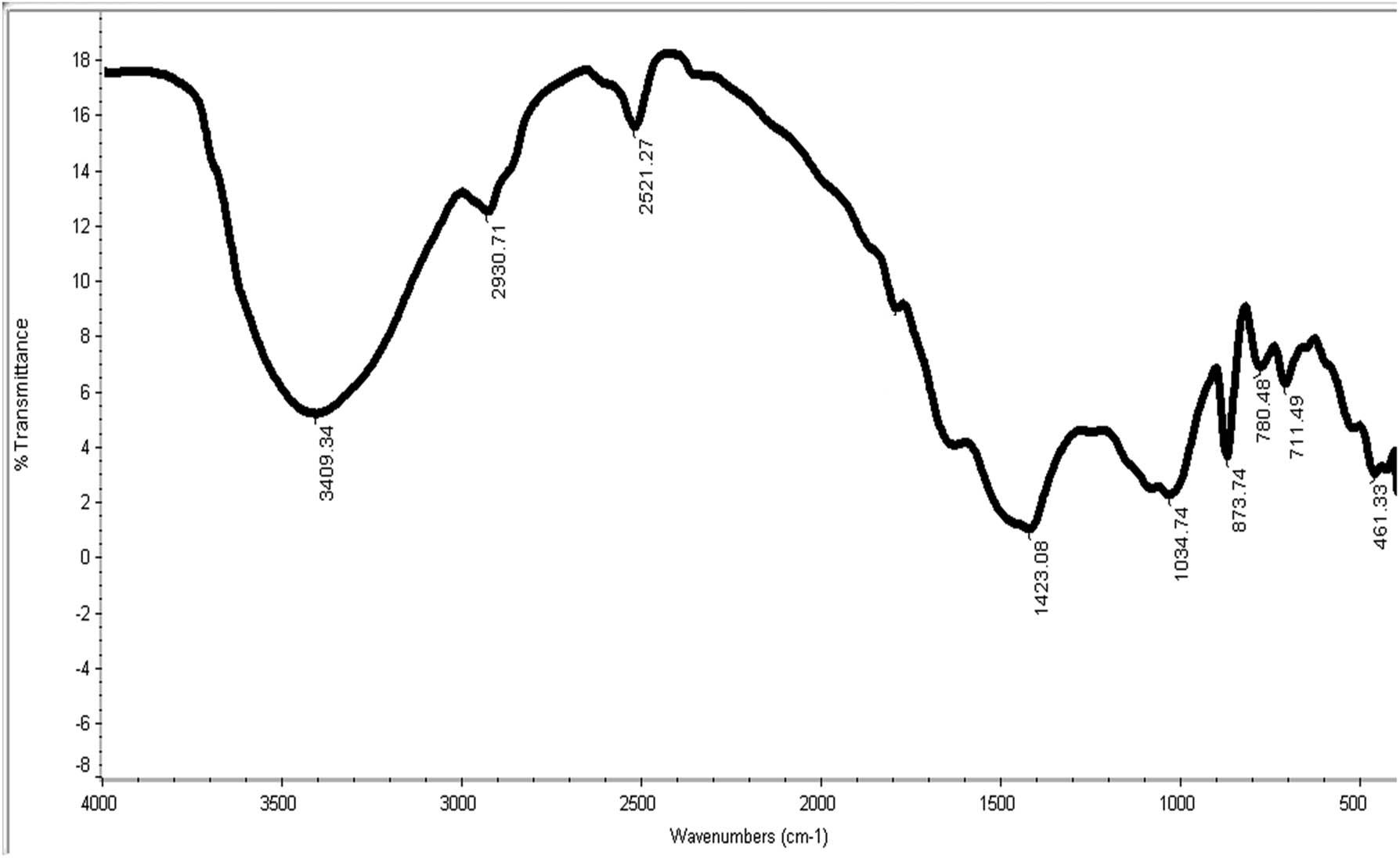
FTIR analysis of green-fabricated C. spongiosus.
FTIR analysis of green-fabricated C. spongiosus
| Peak | Class | Structure | Assignments |
|---|---|---|---|
| 461.33 | Misc | S═S disulphide | S═S disulphide asym. |
| 711.49 | Alkenes | Trans RCH = CHR | ═CH out of plane |
| 780.48 | Aromatics | 1,2,3-trisub | C–H out of plane |
| 873.74 | Aromatics | 1,2,3,4,5-pentasub | C–H out of plane |
| 1034.74 | Misc | P-OR ester | P–OR ester |
| 1423.08 | Misc | S═O sulphate | S═O sulphate ester |
| 2521.27 | Misc | S═H thiols | S–H (sharp) |
| 2930.71 | Alkanes | CH2 | CH2 |
| 3409.34 | Phenols | ArO–H bonded | ArO–H bonded |
EDX analysis of C. spongiosus-mediated green-fabricated AgNPs showed strong signals of silver atoms at 3 keV. This implies the synthesis of AgNPs, as shown in Figure 2. The signals apart from silver, such as carbon and copper, are due to the TEM grid.

EDX spectrum of C. spongiosus-mediated AgNPs showing distribution of elements.
UV-visible spectrophotometric analysis of synthesized nanoparticles showed an absorption peak at 341 nm, which indicated the synthesis of AgNPs. The results obtained are shown in Figure 3.

UV-Vis spectra of C. spongiosus green-fabricated AgNPs.
The TEM results also implied the synthesis of nanoparticles. The shape and size of the nanoparticles synthesized were 20 and 50 nm, as shown in Figure 4.

TEM image of the synthesized AgNPs at 20 and 50 nm.
X-ray diffraction (XRD) analysis of the synthesized nanoparticles showed the corresponding peaks of (111), (200), (220), and (311) planes, confirming that the material synthesized was nanoparticles. The results obtained are shown in Figure 5.

XRD spectrum of AgNPs C. spongiosus-mediated green-fabricated AgNPs.
The larvicidal activity of the ethanolic crude extract of C. spongiosus against treated mosquito vectors such as Ae. aegypti, An. stephensi, and Cx. quinquefasciatus showed promising activity, which was evident by its mortality percentage. Larvae treated at concentrations of 150, 300, 450, 600, and 750 ppm showed good mortality in a dose-dependent manner. The mortality percentage was higher at higher concentrations and least at lower concentrations. At 150 ppm, the mortality percentages were 24.2% against Cx. quinquefasciatus, 26.7% against Ae. Aegypti, and 29.5% against An. stephensi. At a higher concentration of 750 ppm, the mortality percentages were 81.6% in Cx. quinquefasciatus, 84.1% in Ae. aegypti, and 88.9% in An. stephensi. This implies that the extract has exceeded its potential to control mosquito larvae vectors. The results obtained are shown in Figure 6.
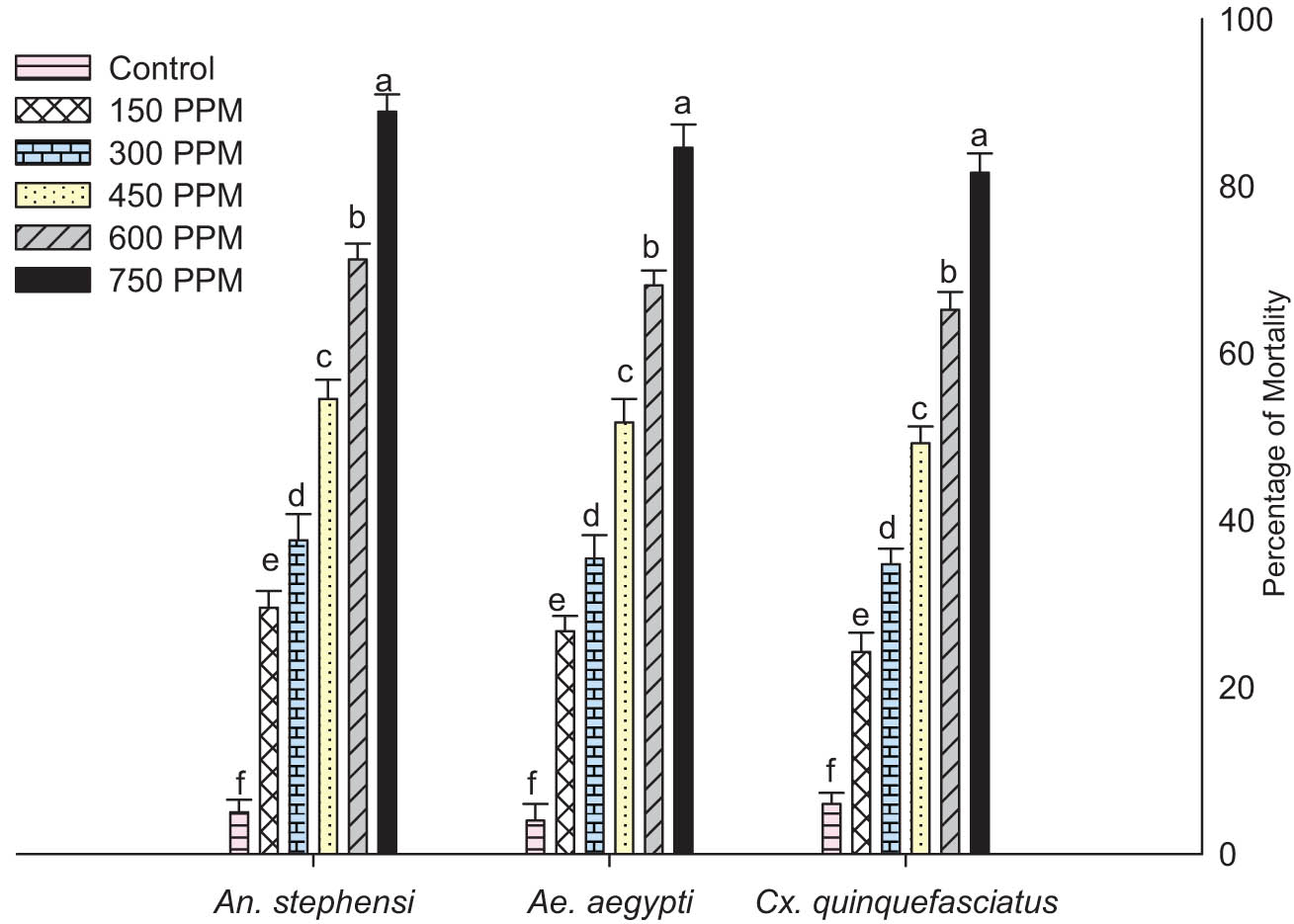
Larvicidal activity of the ethanolic extract of C. spongiosus against mosquito vectors.
The larvicidal activity of green-fabricated C. spongiosus-mediated AgNPs against mosquito vectors showed good activity. Larvae treated at different concentrations of 10, 25, 40, 55, and 70 ppm showed good potential to control mosquito populations in their larval stage. The results obtained at 10 ppm concentration showed mortality of 35.2% against Cx. quinquefasciatus, 37.4% against Ae. aegypti, and 40.6% against An. stephensi. The nanosynthesized C. spongiosus-mediated AgNPs showed mortality percentages of 90.6%, 92.8%, and 94.8% against Cx. quinquefasciatus, Ae. aegypti, and An. stephensi, respectively. The mortality percentages obtained from green-fabricated C. spongiosus-mediated AgNPs against mosquito vectors are shown in Figure 7.
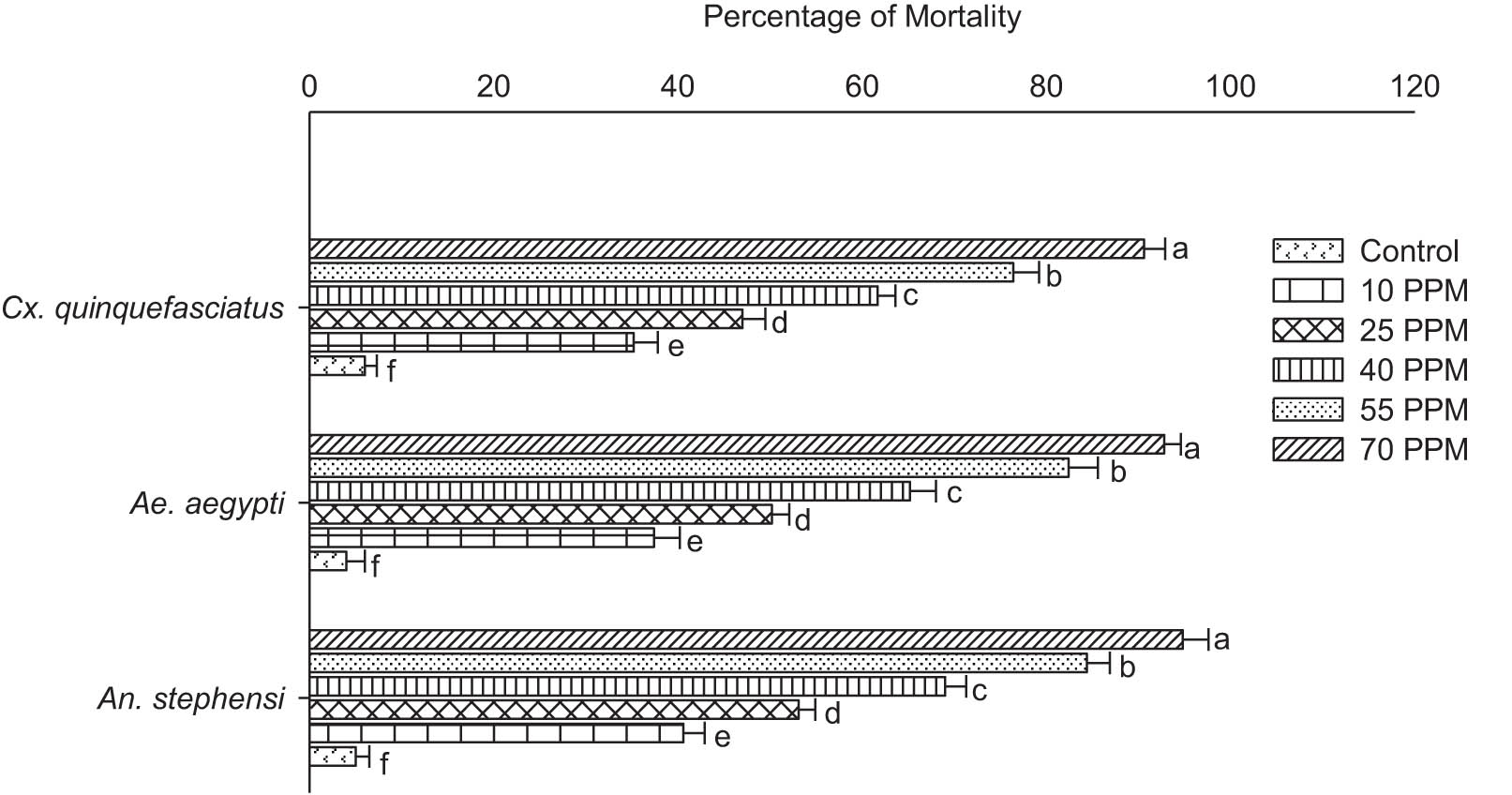
Larvicidal activity of green-fabricated C. spongiosus-mediated AgNPs against mosquito vectors.
The adulticidal activity of the ethanolic extract of C. spongiosus showed good activity against the treated vectors. The adulticidal potential was implied by its mortality percentage obtained. Adults treated with 200, 400, 600, 800, and 1,000 ppm of the C. spongiosus extract showed the mortality percentage in a dose-dependent manner. The mortality percentages were 24.0%, 28.8%, and 30.4% at a concentration of 200 ppm against Cx. quinquefasciatus, Ae. aegypti, and An. stephensi, respectively. At a concentration of 1,000 ppm, the mortality percentages were 67.6% against Cx. quinquefasciatus, 75.4% against Ae. aegypti, and 78.8% against An. stephensi. The results obtained are displayed in Figure 8.

Adulticidal activity of the ethanolic extract of C. spongiosus against mosquito vectors.
Green-fabricated C. spongiosus-mediated AgNPs against adult mosquito vectors showed good results at lower concentrations. The adults treated at 10, 25, 40, 55, and 70 ppm showed significant mortality. At a lower concentration of 10 ppm, the mortality percentages were 49.6%, 51.2%, and 55.2% against Cx. quinquefasciatus, Ae. aegypti, and An. stephensi, respectively. At a higher concentration of 70 ppm, the mortality percentages were higher, 83.2%, 86.8%, and 89.4% against Cx. quinquefasciatus, Ae. aegypti, and An. stephensi. The results obtained are shown in Figure 9.
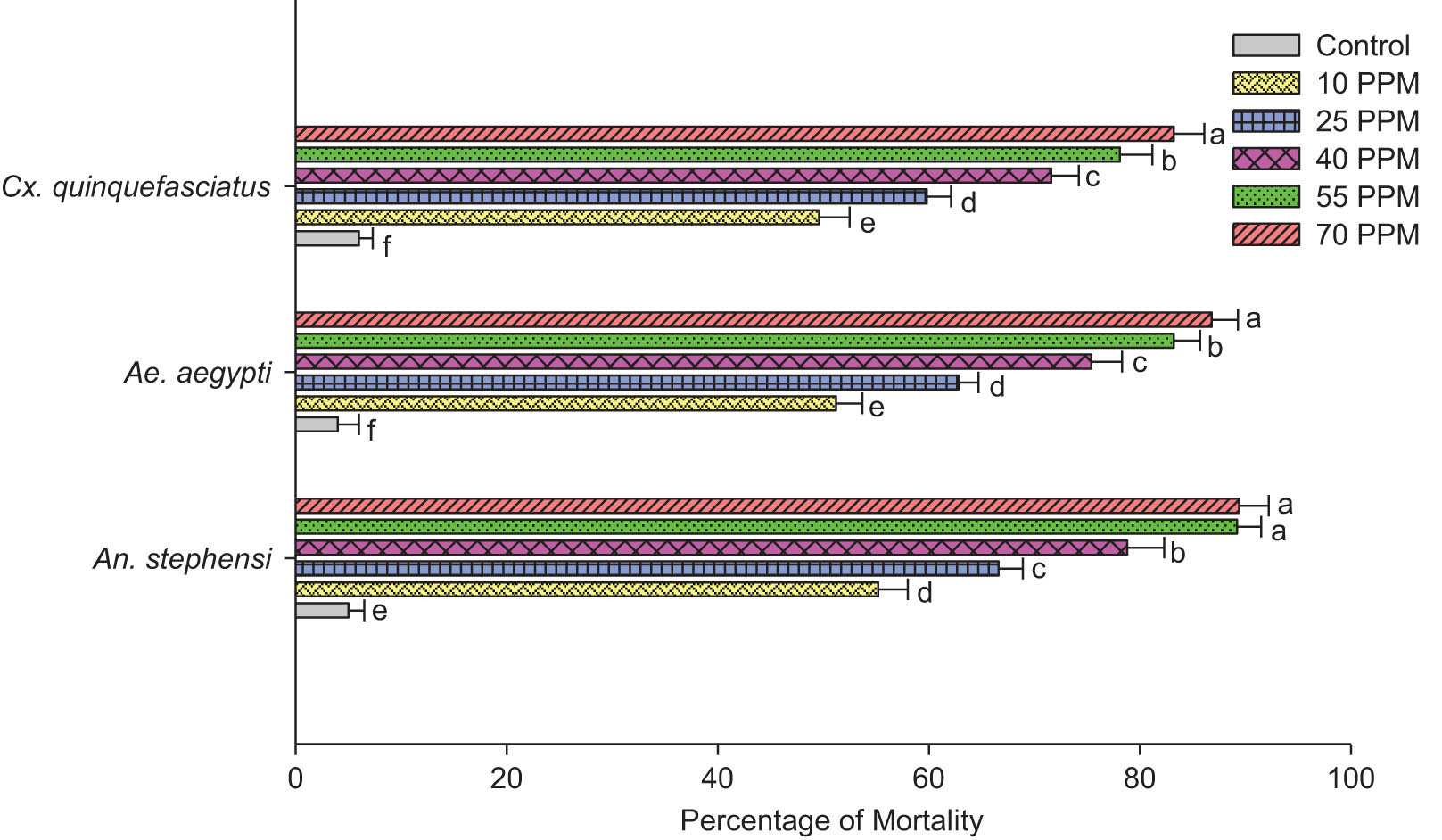
Adulticidal activity of green-fabricated C. spongiosus-mediated AgNPs against mosquito vectors.
4 Discussion
The mosquito control program is challenging in the present environment due to its resistance against most of the insecticides. The continuous use of chemical pesticides to control vector-based disease spread has become a global problem against food chain and environmental pollution [35]. Insecticides developed from the natural environment or plant-based origin have good potential with no toxicity against the environment. Several studies are in progress to develop potential insecticides at low cost and with high mortality [35,36,37].
Seaweeds are widely distributed in the universe and can be obtained at lower costs from the seas and oceans [24]. Thus, it can be an alternative source for the present synthetic insecticides [27]. C. spongiosus extracted with ethanol showed promising activities against mosquito vectors. Similarly, earlier research reports reveal that the algae have good larvicidal potential owing to the presence of bioactive compounds [38].
Nanosynthesized green-fabricated nanoparticles have more advantages than crude extracts due to their rapid action at the lowest concentration. Green-fabricated C. spongiosus-mediated AgNPs synthesized via ethanol extraction showed colour changes. Cittararasu et al. [39] revealed that changes in the colour indicated the initial confirmation of nanoparticles, which was compared with the Ag nanoparticles synthesized biologically from Barleria longiflora. The FT-IR spectra of the synthesized nanoparticles showed the presence of S═S disulfide asym., ═CH out of plane, C–H out of plane, C–H out of plane, P–OR ester, S═O sulphate ester, S–H (sharp), and CH2, ArO–H. Similarly, Sargassum myriocystum-mediated AgNPs showed the presence of N–H stretch, C═C stretch, 1 C–C (O)–C stretch with esters, and C–C stretch with alkyl halides [40].
EDX analysis revealed the crystalline nature of the particles synthesized. Balaraman et al. [40] revealed the phase formation and crystalline nature of the nanoparticles synthesized from S. myriocystum. The nanoparticles synthesized from C. spongiosus showed Ag ions in the range of 2.7–3 keV. A similar study was reported in which Ag NPs were synthesized from S. siliquosum that shows Ag ions at ∼3 keV [41].
UV-Vis spectrophotometric analysis of the synthesized nanoparticles showed an absorption peak at 341 nm, which indicated the synthesis of AgNPs. Similar to our report, AgNPs prepared on montmorillonite clay in n-hexanol exhibited fluorescence peaks at 341 nm [42].
TEM analysis showed that the synthesized nanoparticles were of size 20 and 50 nm. Reports from earlier findings reveal that particle sizes in the range of 1–100 nm and solid particles in the range of 10–1,000 nm are considered to be nanoparticles [43,44].
The XRD analysis of the synthesized nanoparticles showed corresponding peaks of (111), (200), (220), and (311) planes, confirming that the material synthesized is nanoparticle. Our reports agree with the findings of other researchers, who found similar findings when analysed for marine fabricated AgNPs [43,45,46].
The ethanolic extract of C. spongiosus algae showed promising activities against Cx. quinquefasciatus, Ae. aegypti, and An. stephensi larvae. Similarly, the methanolic extract of brown, green, and red algae tested against Ae. albopictus and Ae. aegypti showed strong larvicidal activity [28]. The ethanolic extract of C. spongiosus treated at concentrations of 150, 300, 600, and 750 ppm showed good mortality against An. stephensi followed by Ae. aegypti and Cx. quinquefasciatus. This implies that the bioactive compounds available in the extract exhibit their potential by binding to their target site [47]. Similarly, the leaf extract of Annona muricata treated against mosquito vectors An. stephensi, Cu. quinquefasciatus, and Ae. aegypti showed good activity when treated at concentrations of 100, 200, 300, 400, and 500 ppm [48].
The adulticidal potential of the ethanolic C. spongiosus extract showed significant activity against all vectors showing maximum activity at 1,000 ppm. The adults showed a maximum of 78.8% followed by 75.4% and 67.6% against An. stephensi, Ae. aegypti, and Cx. Quinquefasciatus, respectively. Similarly, the ethanolic extract of Sargassum polycystum, which was tested against adulticidal potential, showed good activity; when treated at 100, 150, 200, 250, and 300 ppm, it showed significant activity on Ae. aegypti and Cx. quinquefasciatus [49].
The synthesized green-fabricated C. spongiosus-mediated AgNPs which were tested against larvae of An. stephensi, Ae. aegypti, and Cx. quinquefasciatus showed their potential by the mortality percentage. The mortality percentages obtained against the vectors are higher even at lower concentrations. The larvae treated at the lowest concentration of 10 ppm exhibited mortality percentages of 40.6%, 37.4%, and 35.2% against An. stephensi, Ae. aegypti, and Cx. Quinquefasciatus, respectively. Similarly, plant-fabricated nanoparticles show higher mortality against mosquito larvae at lower concentrations [46].
The maximum larvicidal activity was obtained at a concentration of 70 ppm against An. stephensi (94.8%), followed by 83.8% and 90.6% against Ae. aegypti and Cx. quinquefasciatus, respectively. Similarly, R. mucronate-mediated AgNPs showed maximum activity at a concentration of 10 mg·L−1, which showed 100% mortality against Ae. aegypti and Cx. quinquefasciatus [50].
The adulticidal potential of C. spongiosus-mediated AgNPs was good in governing mosquito adults. The treated adults showed maximum percentages of mortality at a concentration of 70 ppm: 89.4% against An. stephensi adults, 86.4% against Ae. Aegypti, and 83.2% against Cx. quinquefasciatus. Likewise, AgNPs fabricated using the Acacia caesia showed promising potential against treated adults at a lower concentration of 45 µg·mL−1, with a mortality percentage of 100% against An. subpictus, 98.2% against Ae. albopictus, and 95.6% against Cu. tritaeniorhynchus [51].
The percentage of mortality against larvae and adults of An. stephensi, Ae. aegypti, and Cx. quinquefasciatus via C. spongiosus may change from place to place within the same species. This may directly depend on the availability of bioactive compounds in the algae with respect to environmental factors or stress. A similar result was stated by earlier researchers: species of the same division change due to ecological and geographical factors, etc. [52].
Acknowledgements
The author is thankful to the Entomology and Toxicology Laboratory, Faculty of Science, University of Tabuk, Kingdom of Saudi Arabia.
-
Funding information: The author states no funding involved.
-
Author contributions: Al Thabiani Aziz performed the entire experimental studies, data compilation, as well as wrote and edited the manuscript.
-
Conflict of interest: The author states no conflict of interest.
-
Data availability statement: The author confirms that the data supporting the findings of this study are available in the article.
References
[1] Mehlhorn H, Al-Rasheid KAS, Al-Quraishy S, Abdel-Ghaffar F. Research and increase of expertise in arachno-entomology are urgently needed. Parasitol Res. 2012;110:259–65.10.1007/s00436-011-2480-7Suche in Google Scholar PubMed
[2] WHO. Vector borne diseases. Retrieved from https://www.who.int/news-room/fact-sheets/detail/vector-borne-diseases. 2020.Suche in Google Scholar
[3] WHO. https://www.who.int/news-room/fact-sheets/detail/malaria. 2021.Suche in Google Scholar
[4] Tadesse FG, Ashine T, Teka H, Esayas E, Messenger LA, Chali W, et al. Anopheles stephensi mosquitoes as vectors of Plasmodium vivax and falciparum, Horn of Africa, 2019. Emerg Infect Dis. 2021;27(2):603.10.3201/eid2702.200019Suche in Google Scholar PubMed PubMed Central
[5] Vyas-Patel N. The suppression of Plasmodium berghei in Anopheles coluzzii infected later with Vavraia culicis. bioRxiv. 2023;2. 10.1101/2023.02.05.527158.Suche in Google Scholar
[6] Basurko C, Matheus S, Hildéral H, Everhard S, Restrepo M, Cuadro-Alvarez E, et al. Estimating the risk of vertical transmission of dengue: a prospective study. Am J Trop Med Hyg. 2018;98(6):1826.10.4269/ajtmh.16-0794Suche in Google Scholar PubMed PubMed Central
[7] WHO. https://www.who.int/news-room/fact-sheets/detail/dengue-and-severe-dengue. 2022.Suche in Google Scholar
[8] Edwin ES, Vasantha-Srinivasan P, Senthil-Nathan S, Thanigaivel A, Ponsankar A, Pradeepa V, et al. Anti-dengue efficacy of bioactive andrographolide from Andrographis paniculata (Lamiales: Acanthaceae) against the primary dengue vector Aedes aegypti (Diptera: Culicidae). Acta Trop. 2016;163:167–78.10.1016/j.actatropica.2016.07.009Suche in Google Scholar PubMed
[9] Bhatt S, Gething PW, Brady OJ, Messina JP, Farlow AW, Moyes CL, et al. The global distribution and burden of dengue. Nature. 2013;496(7446):504–7.10.1038/nature12060Suche in Google Scholar PubMed PubMed Central
[10] Derua YA, Rumisha SF, Batengana BM, Max DA, Stanle G, Kisinza WN, et al. Lymphatic filariasis transmission on Mafia Islands, Tanzania: Evidence from xenomonitoring in mosquito vectors. PLoS Negl Trop Dis. 2017;11(10):e0005938.10.1371/journal.pntd.0005938Suche in Google Scholar PubMed PubMed Central
[11] Weissenböck H, Hubálek Z, Bakonyi T, Nowotny N. Zoonotic mosquito-borne flaviviruses: Worldwide presence of agents with proven pathogenicity and potential candidates of future emerging diseases. Vet Microbiol. 2010;140(3–4):271–80.10.1016/j.vetmic.2009.08.025Suche in Google Scholar PubMed
[12] Benelli G. Research in mosquito control: Current challenges for a brighter future. Parasitol Res. 2015;114:2801–5.10.1007/s00436-015-4586-9Suche in Google Scholar PubMed
[13] Hemingway J, Ranson H. Insecticide resistance in insect vectors of human disease. Annu Rev Entomol. 2000;45:371–91.10.1146/annurev.ento.45.1.371Suche in Google Scholar PubMed
[14] Lowy I. Leaking containers: Success and failure in controlling the mosquito Aedes aegypti in Brazil. Am J Public Health. 2017;107:517–24.10.2105/AJPH.2017.303652Suche in Google Scholar PubMed PubMed Central
[15] Vivekanandhan P, Kannan S, Pittarate S, Chinnasamy R, Krutmuang P. Essential oils from Acacia nilotica (Fabales: Fabaceae) seeds: May have insecticidal effects? Heliyon. 2023;9(4):e14808.10.1016/j.heliyon.2023.e14808Suche in Google Scholar PubMed PubMed Central
[16] Azizullah A, Rehman ZU, Ali I, Murad W, Muhammad N, Ullah W, et al. Chlorophyll derivatives can be an efficient weapon in the fight against dengue. Parasitol Res. 2014;113:4321–6.10.1007/s00436-014-4175-3Suche in Google Scholar PubMed
[17] Vivekanandhan P, Venkatesan R, Ramkumar G, Karthi S, Senthil-Nathan S, Shivakumar MS. Comparative analysis of major mosquito vectors response to seed-derived essential oil and seed pod-derived extract from Acacia nilotica. Int J Env Res Public Health. 2018;15(2):388.10.3390/ijerph15020388Suche in Google Scholar PubMed PubMed Central
[18] Vivekanandhan P, Usha-Raja-Nanthini A, Valli G, Shivakumar MS. Comparative efficacy of Eucalyptus globulus (Labill) hydrodistilled essential oil and temephos as mosquito larvicide. Nat Prod Res. 2020;34(18):2626–9.10.1080/14786419.2018.1547290Suche in Google Scholar PubMed
[19] Seckbach J, Editor. Algae and cyanobacteria in extreme environments. Vol. 11. Israel: Springer Science & Business Media; 2007.10.1007/978-1-4020-6112-7Suche in Google Scholar
[20] Barbosa O, Ortiz C, Berenguer-Murcia A, Torres R, Rodrigues RC, Fernandez-Lafuente R. Glutaraldehyde in bio-catalysts design: A useful crosslinker and a versatile tool in enzyme immobilization. RSC Adv. 2014;4(4):1583–600.10.1039/C3RA45991HSuche in Google Scholar
[21] Tabakaeva OV, Tabakaev AV. Amino acids from potentially commercial Far-East brown algae Costaria costata and Undaria pinnatifida. Chem Nat Compd. 2016;52:376–8.10.1007/s10600-016-1651-2Suche in Google Scholar
[22] Stiger-Pouvreau V, Zubia M. Macroalgal diversity for sustainable biotechnological development in French tropical overseas territories. Bot Mar. 2020;63(1):17–41.10.1515/bot-2019-0032Suche in Google Scholar
[23] Ghosh A, Chowdhury N, Chandra G. Plant extracts as potential mosquito larvicides. Ind J Med Res. 2012;135(5):581.Suche in Google Scholar
[24] Suganya S, Ishwarya R, Jayakumar R, Govindarajan M, Alharbi NS, Kadaikunnan S, et al. New insecticides and antimicrobials derived from Sargassum wightii and Halimeda gracillis seaweeds: Toxicity against mosquito vectors and antibiofilm activity against microbial pathogens. S Afr J Bot. 2019;125:466–80.10.1016/j.sajb.2019.08.006Suche in Google Scholar
[25] Alves C, Silva J, Pinteus S, Gaspar H, Alpoim MC, Botana LM, et al. From marine origin to therapeutics: The antitumor potential of marine algae-derived compounds. Front Pharmacol. 2018;9:777.10.3389/fphar.2018.00777Suche in Google Scholar PubMed PubMed Central
[26] Shah M, Fawcett D, Sharma S, Tripathy SK, Poinern GEJ. Green synthesis of metallic nanoparticles via biological entities. Materials. 2015;8(11):7278–308.10.3390/ma8115377Suche in Google Scholar PubMed PubMed Central
[27] Dahoumane SA, Mechouet M, Wijesekera K, Filipe CD, Sicard C, Bazylinski DA, et al. Algae-mediated biosynthesis of inorganic nanomaterials as a promising route in nanobiotechnology–A review. Green Chem. 2017;19(3):552–87.10.1039/C6GC02346KSuche in Google Scholar
[28] Ahmed S, Ahmad M, Swami BL, Ikram S. A review on plants extract mediated synthesis of silver nanoparticles for antimicrobial applications: A green expertise. J Adv Res. 2016;7(1):17–28.10.1016/j.jare.2015.02.007Suche in Google Scholar PubMed PubMed Central
[29] Vanaraj S, Cindhu B, Preethi K, Sathiskumar S, Mohammed AA, Samy S, et al. Ultra-sonication-enhanced green synthesis of silver nanoparticles using Barleria buxifolia leaf extract and their possible application. Artif Cells Nanomed Biotechnol. 2022;50(1):177–87.10.1080/21691401.2022.2084100Suche in Google Scholar PubMed
[30] Loganathan K, Chellamuthu V, Karupuswami D, Mohan K, Suresh U, Panneerselvam C, et al. Bio-inspired synthesis AgNPs from lichen as potential antibacterial and mosquito larvicidal activity with negligible toxicity on Gambusia affinis. Entomol Res. 2023;53(4):133–47.10.1111/1748-5967.12638Suche in Google Scholar
[31] Panneerselvam C, Adel IA, Karma A, Hamza SA, Humaira P, Hatem AA, et al. Anticancer activity of bioactive compound chavicol as potential toxic against human lung cancer A549 cells. J Drug Deliv Sci Technol. 2022;73:103442.10.1016/j.jddst.2022.103442Suche in Google Scholar
[32] Ganesan R, Manigandan S, Samuel MS, Shanmuganathan R, Brindhadevi K, Chi NTL, et al. A review on prospective production of biofuel from microalgae. Biotechnol Rep. 2020;27:e00509.10.1016/j.btre.2020.e00509Suche in Google Scholar PubMed PubMed Central
[33] Roni M, Murugan K, Panneerselvam C, Subramaniam J, Hwang JS. Evaluation of leaf aqueous extract and synthesized silver nanoparticles using Nerium oleander against Anopheles stephensi (Diptera: Culicidae). Parasitol Res. 2013;112:981–90.10.1007/s00436-012-3220-3Suche in Google Scholar PubMed
[34] Abbott WS. A method of computing the effectiveness of an insecticide. J Econ Entomol. 1925;18(2):265–7.10.1093/jee/18.2.265aSuche in Google Scholar
[35] Haleem DRA, El-Tablawy NH, Alkeridis LA, Sayed S, Saad AM, El-Saadony MT, et al. Screening and evaluation of different algal extracts and prospects for controlling the disease vector mosquito Culex pipiens L. Saudi J Biol Sci. 2022;29(2):933–40.10.1016/j.sjbs.2021.10.009Suche in Google Scholar PubMed PubMed Central
[36] Hasaballah AI, El-Naggar HA. Antimicrobial activities of some marine sponges, and its biological, repellent effects against Culex pipiens (Diptera: Culicidae). Annu Res Rev Biol. 2017;12:1–14.10.9734/ARRB/2017/32450Suche in Google Scholar
[37] El-Naggar HA, Hasaballah AI. Acute larvicidal toxicity and repellency effect of Octopus cyanea crude extracts against the filariasis vector, Culex pipiens. J Egypt Soc Parasitol. 2018;48(3):721–8.10.21608/jesp.2018.76592Suche in Google Scholar
[38] Roni M, Murugan K, Panneerselvam C, Subramaniam J, Nicoletti M, Madhiyazhagan P, et al. Characterization and biotoxicity of Hypnea musciformis-synthesized silver nanoparticles as potential eco-friendly control tool against Aedes aegypti and Plutella xylostella. Ecotoxicol Environ Saf. 2015;121:31–8.10.1016/j.ecoenv.2015.07.005Suche in Google Scholar PubMed
[39] Cittrarasu V, Balasubramanian B, Kaliannan D, Park S, Maluventhan V, Kaul T, et al. Biological mediated Ag nanoparticles from Barleria longifora for antimicrobial activity and photocatalytic degradation using methylene blue. Artif Cell Nanomed Biotechnol. 2019;47(1):2424–30.10.1080/21691401.2019.1626407Suche in Google Scholar PubMed
[40] Balaraman P, Balasubramanian B, Durairaj K, Mahendran D, Kamyab H, Park S, et al. Phyco-synthesis of silver nanoparticles mediated from marine algae Sargassum myriocystum and its potential biological and environmental applications. Waste Biomass Valoriz. 2020;11(10):5255–71. 10.1007/s12649-020-01083-5.Suche in Google Scholar
[41] Vasquez RD, Apostol JG, de Leon JD, Mariano JD, Mirhan CMC, Pangan SS, et al. Polysaccharide-mediated green synthesis of silver nanoparticles from Sargassum siliquosum JG. Agardh: assessment of toxicity and hepatoprotective activity. Open Nano. 2016;1:16–24.10.1016/j.onano.2016.03.001Suche in Google Scholar
[42] Panneerselvam C, Murugan K, Roni M, Aziz AT, Suresh U, Rajaganesh R, et al. Fern-synthesized nanoparticles in the fight against malaria: LC/MS analysis of Pteridium aquilinum leaf extract and biosynthesis of silver nanoparticles with high mosquitocidal and antiplasmodial activity. Parasitol Res. 2016;115(3):997–1013.10.1007/s00436-015-4828-xSuche in Google Scholar PubMed
[43] Murugan K, Benelli G, Ayyappan S, Dinesh D, Panneerselvam C, Nicoletti M, et al. Toxicity of seaweed-synthesized silver nanoparticles against the filariasis vector Culex quinquefasciatus and its impact on predation efficiency of the cyclopoid crustacean Mesocyclops longisetus. Parasitol Res. 2015;114(6):2243–53.10.1007/s00436-015-4417-zSuche in Google Scholar PubMed
[44] Aziz AT, Alshehri MA, Alanazi NA, Panneerselvam C, Trivedi S, Maggi F, et al. Phytochemical analysis of Rhazya stricta extract and its use in fabrication of silver nanoparticles effective against mosquito vectors and microbial pathogens. Sci Total Environ. 2020;700:134443.10.1016/j.scitotenv.2019.134443Suche in Google Scholar PubMed
[45] Aziz AT, Alshehri MA, Alanazi NA, Panneerselvam C, Murugan K, Trivedi S, et al. The desert wormwood (Artemisia herba-alba)–From Arabian folk medicine to a source of green and effective nanoinsecticides against mosquito vectors. J Photochem Photobiol B Biol. 2018;180:225–34.10.1016/j.jphotobiol.2018.02.012Suche in Google Scholar PubMed
[46] Priyadarshini KA, Murugan K, Panneerselvam C, Ponarulselvam S, Hwang JS, Nicoletti M. Biolarvicidal and pupicidal potential of silver nanoparticles synthesized using Euphorbia hitra against Anopheles stephensi Liston (Diptera: Culicidae). Parasitol Res. 2012;111:997–1006.10.1007/s00436-012-2924-8Suche in Google Scholar PubMed
[47] Pratheeba T, Vivekanandhan P, Nur Faeza AK, Natarajan D. Chemical constituents and larvicidal efficacy of Naringi crenulata (Rutaceae) plant extracts and bioassay guided fractions against Culex quinquefasciatus mosquito (Diptera: Culicidae). Biocatal Agric Biotechnol. 2019;19:101137. 10.1016/j.bcab.2019.101137.Suche in Google Scholar
[48] Santhosh SB, Ragavendran C, Natarajan D. Spectral and HRTEM analyses of Annona muricata leaf extract mediated silver nanoparticles and its Larvicidal efficacy against three mosquito vectors Anopheles stephensi, Culex quinquefasciatus, and Aedes aegypti. J Photochem Photobiol B. 2015;153:184–90.10.1016/j.jphotobiol.2015.09.018Suche in Google Scholar PubMed
[49] Desiyamani P, Syed Ali M, Anuradha V, Yogananth N, Sheeba H. Eco toxicity of plant-based mosquito larvicidal, repellent and adulticidal activities of Sargassum polycystum extract against dengue and filaria vectors. J Entomol Zool Stud. 2018;6(2):1108–17.Suche in Google Scholar
[50] Gnanadesigan M, Anand M, Ravikumar S, Maruthupandy M, Vijayakumar V, Selvam S, et al. Biosynthesis of silver nanoparticles by using mangrove plant extract and their potential mosquito larvicidal property. Asian Pac J Trop Med. 2011;4(10):799–803.10.1016/S1995-7645(11)60197-1Suche in Google Scholar PubMed
[51] Benelli G, Kadaikunnan S, Alharbi NS, Govindarajan M. Biophysical characterization of Acacia caesia-fabricated silver nanoparticles: effectiveness on mosquito vectors of public health relevance and impact on non-target aquatic biocontrol agents. Environ Sci Pollut Res Int. 2018;25(11):10228–42.10.1007/s11356-017-8482-ySuche in Google Scholar PubMed
[52] Ali MYS, Ravikumar S, Beula JM. Mosquito larvicidal activity of seaweeds extracts against Anopheles stephensi, Aedes aegypti and Culex quinquefasciatus. Asian Pac J Trop Dis. 2013;3(3):196–201.10.1016/S2222-1808(13)60040-7Suche in Google Scholar
© 2023 the author(s), published by De Gruyter
This work is licensed under the Creative Commons Attribution 4.0 International License.
Artikel in diesem Heft
- Research Articles
- Value-added utilization of coal fly ash and recycled polyvinyl chloride in door or window sub-frame composites
- High removal efficiency of volatile phenol from coking wastewater using coal gasification slag via optimized adsorption and multi-grade batch process
- Evolution of surface morphology and properties of diamond films by hydrogen plasma etching
- Removal efficiency of dibenzofuran using CuZn-zeolitic imidazole frameworks as a catalyst and adsorbent
- Rapid and efficient microwave-assisted extraction of Caesalpinia sappan Linn. heartwood and subsequent synthesis of gold nanoparticles
- The catalytic characteristics of 2-methylnaphthalene acylation with AlCl3 immobilized on Hβ as Lewis acid catalyst
- Biodegradation of synthetic PVP biofilms using natural materials and nanoparticles
- Rutin-loaded selenium nanoparticles modulated the redox status, inflammatory, and apoptotic pathways associated with pentylenetetrazole-induced epilepsy in mice
- Optimization of apigenin nanoparticles prepared by planetary ball milling: In vitro and in vivo studies
- Synthesis and characterization of silver nanoparticles using Origanum onites leaves: Cytotoxic, apoptotic, and necrotic effects on Capan-1, L929, and Caco-2 cell lines
- Exergy analysis of a conceptual CO2 capture process with an amine-based DES
- Construction of fluorescence system of felodipine–tetracyanovinyl–2,2′-bipyridine complex
- Excellent photocatalytic degradation of rhodamine B over Bi2O3 supported on Zn-MOF nanocomposites under visible light
- Optimization-based control strategy for a large-scale polyhydroxyalkanoates production in a fed-batch bioreactor using a coupled PDE–ODE system
- Effectiveness of pH and amount of Artemia urumiana extract on physical, chemical, and biological attributes of UV-fabricated biogold nanoparticles
- Geranium leaf-mediated synthesis of silver nanoparticles and their transcriptomic effects on Candida albicans
- Synthesis, characterization, anticancer, anti-inflammatory activities, and docking studies of 3,5-disubstituted thiadiazine-2-thiones
- Synthesis and stability of phospholipid-encapsulated nano-selenium
- Putative anti-proliferative effect of Indian mustard (Brassica juncea) seed and its nano-formulation
- Enrichment of low-grade phosphorites by the selective leaching method
- Electrochemical analysis of the dissolution of gold in a copper–ethylenediamine–thiosulfate system
- Characterisation of carbonate lake sediments as a potential filler for polymer composites
- Evaluation of nano-selenium biofortification characteristics of alfalfa (Medicago sativa L.)
- Quality of oil extracted by cold press from Nigella sativa seeds incorporated with rosemary extracts and pretreated by microwaves
- Heteropolyacid-loaded MOF-derived mesoporous zirconia catalyst for chemical degradation of rhodamine B
- Recovery of critical metals from carbonatite-type mineral wastes: Geochemical modeling investigation of (bio)hydrometallurgical leaching of REEs
- Photocatalytic properties of ZnFe-mixed oxides synthesized via a simple route for water remediation
- Attenuation of di(2-ethylhexyl)phthalate-induced hepatic and renal toxicity by naringin nanoparticles in a rat model
- Novel in situ synthesis of quaternary core–shell metallic sulfide nanocomposites for degradation of organic dyes and hydrogen production
- Microfluidic steam-based synthesis of luminescent carbon quantum dots as sensing probes for nitrite detection
- Transformation of eggshell waste to egg white protein solution, calcium chloride dihydrate, and eggshell membrane powder
- Preparation of Zr-MOFs for the adsorption of doxycycline hydrochloride from wastewater
- Green nanoarchitectonics of the silver nanocrystal potential for treating malaria and their cytotoxic effects on the kidney Vero cell line
- Carbon emissions analysis of producing modified asphalt with natural asphalt
- An efficient and green synthesis of 2-phenylquinazolin-4(3H)-ones via t-BuONa-mediated oxidative condensation of 2-aminobenzamides and benzyl alcohols under solvent- and transition metal-free conditions
- Chitosan nanoparticles loaded with mesosulfuron methyl and mesosulfuron methyl + florasulam + MCPA isooctyl to manage weeds of wheat (Triticum aestivum L.)
- Synergism between lignite and high-sulfur petroleum coke in CO2 gasification
- Facile aqueous synthesis of ZnCuInS/ZnS–ZnS QDs with enhanced photoluminescence lifetime for selective detection of Cu(ii) ions
- Rapid synthesis of copper nanoparticles using Nepeta cataria leaves: An eco-friendly management of disease-causing vectors and bacterial pathogens
- Study on the photoelectrocatalytic activity of reduced TiO2 nanotube films for removal of methyl orange
- Development of a fuzzy logic model for the prediction of spark-ignition engine performance and emission for gasoline–ethanol blends
- Micro-impact-induced mechano-chemical synthesis of organic precursors from FeC/FeN and carbonates/nitrates in water and its extension to nucleobases
- Green synthesis of strontium-doped tin dioxide (SrSnO2) nanoparticles using the Mahonia bealei leaf extract and evaluation of their anticancer and antimicrobial activities
- A study on the larvicidal and adulticidal potential of Cladostepus spongiosus macroalgae and green-fabricated silver nanoparticles against mosquito vectors
- Catalysts based on nickel salt heteropolytungstates for selective oxidation of diphenyl sulfide
- Powerful antibacterial nanocomposites from Corallina officinalis-mediated nanometals and chitosan nanoparticles against fish-borne pathogens
- Removal behavior of Zn and alkalis from blast furnace dust in pre-reduction sinter process
- Environmentally friendly synthesis and computational studies of novel class of acridinedione integrated spirothiopyrrolizidines/indolizidines
- The mechanisms of inhibition and lubrication of clean fracturing flowback fluids in water-based drilling fluids
- Adsorption/desorption performance of cellulose membrane for Pb(ii)
- A one-pot, multicomponent tandem synthesis of fused polycyclic pyrrolo[3,2-c]quinolinone/pyrrolizino[2,3-c]quinolinone hybrid heterocycles via environmentally benign solid state melt reaction
- Green synthesis of silver nanoparticles using durian rind extract and optical characteristics of surface plasmon resonance-based optical sensor for the detection of hydrogen peroxide
- Electrochemical analysis of copper-EDTA-ammonia-gold thiosulfate dissolution system
- Characterization of bio-oil production by microwave pyrolysis from cashew nut shells and Cassia fistula pods
- Green synthesis methods and characterization of bacterial cellulose/silver nanoparticle composites
- Photocatalytic research performance of zinc oxide/graphite phase carbon nitride catalyst and its application in environment
- Effect of phytogenic iron nanoparticles on the bio-fortification of wheat varieties
- In vitro anti-cancer and antimicrobial effects of manganese oxide nanoparticles synthesized using the Glycyrrhiza uralensis leaf extract on breast cancer cell lines
- Preparation of Pd/Ce(F)-MCM-48 catalysts and their catalytic performance of n-heptane isomerization
- Green “one-pot” fluorescent bis-indolizine synthesis with whole-cell plant biocatalysis
- Silica-titania mesoporous silicas of MCM-41 type as effective catalysts and photocatalysts for selective oxidation of diphenyl sulfide by H2O2
- Biosynthesis of zinc oxide nanoparticles from molted feathers of Pavo cristatus and their antibiofilm and anticancer activities
- Clean preparation of rutile from Ti-containing mixed molten slag by CO2 oxidation
- Synthesis and characterization of Pluronic F-127-coated titanium dioxide nanoparticles synthesized from extracts of Atractylodes macrocephala leaf for antioxidant, antimicrobial, and anticancer properties
- Effect of pretreatment with alkali on the anaerobic digestion characteristics of kitchen waste and analysis of microbial diversity
- Ameliorated antimicrobial, antioxidant, and anticancer properties by Plectranthus vettiveroides root extract-mediated green synthesis of chitosan nanoparticles
- Microwave-accelerated pretreatment technique in green extraction of oil and bioactive compounds from camelina seeds: Effectiveness and characterization
- Studies on the extraction performance of phorate by aptamer-functionalized magnetic nanoparticles in plasma samples
- Investigation of structural properties and antibacterial activity of AgO nanoparticle extract from Solanum nigrum/Mentha leaf extracts by green synthesis method
- Green fabrication of chitosan from marine crustaceans and mushroom waste: Toward sustainable resource utilization
- Synthesis, characterization, and evaluation of nanoparticles of clodinofop propargyl and fenoxaprop-P-ethyl on weed control, growth, and yield of wheat (Triticum aestivum L.)
- The enhanced adsorption properties of phosphorus from aqueous solutions using lanthanum modified synthetic zeolites
- Separation of graphene oxides of different sizes by multi-layer dialysis and anti-friction and lubrication performance
- Visible-light-assisted base-catalyzed, one-pot synthesis of highly functionalized cinnolines
- The experimental study on the air oxidation of 5-hydroxymethylfurfural to 2,5-furandicarboxylic acid with Co–Mn–Br system
- Highly efficient removal of tetracycline and methyl violet 2B from aqueous solution using the bimetallic FeZn-ZIFs catalyst
- A thermo-tolerant cellulase enzyme produced by Bacillus amyloliquefaciens M7, an insight into synthesis, optimization, characterization, and bio-polishing activity
- Exploration of ketone derivatives of succinimide for their antidiabetic potential: In vitro and in vivo approaches
- Ultrasound-assisted green synthesis and in silico study of 6-(4-(butylamino)-6-(diethylamino)-1,3,5-triazin-2-yl)oxypyridazine derivatives
- A study of the anticancer potential of Pluronic F-127 encapsulated Fe2O3 nanoparticles derived from Berberis vulgaris extract
- Biogenic synthesis of silver nanoparticles using Consolida orientalis flowers: Identification, catalytic degradation, and biological effect
- Initial assessment of the presence of plastic waste in some coastal mangrove forests in Vietnam
- Adsorption synergy electrocatalytic degradation of phenol by active oxygen-containing species generated in Co-coal based cathode and graphite anode
- Antibacterial, antifungal, antioxidant, and cytotoxicity activities of the aqueous extract of Syzygium aromaticum-mediated synthesized novel silver nanoparticles
- Synthesis of a silica matrix with ZnO nanoparticles for the fabrication of a recyclable photodegradation system to eliminate methylene blue dye
- Natural polymer fillers instead of dye and pigments: Pumice and scoria in PDMS fluid and elastomer composites
- Study on the preparation of glycerylphosphorylcholine by transesterification under supported sodium methoxide
- Wireless network handheld terminal-based green ecological sustainable design evaluation system: Improved data communication and reduced packet loss rate
- The optimization of hydrogel strength from cassava starch using oxidized sucrose as a crosslinking agent
- Green synthesis of silver nanoparticles using Saccharum officinarum leaf extract for antiviral paint
- Study on the reliability of nano-silver-coated tin solder joints for flip chips
- Environmentally sustainable analytical quality by design aided RP-HPLC method for the estimation of brilliant blue in commercial food samples employing a green-ultrasound-assisted extraction technique
- Anticancer and antimicrobial potential of zinc/sodium alginate/polyethylene glycol/d-pinitol nanocomposites against osteosarcoma MG-63 cells
- Nanoporous carbon@CoFe2O4 nanocomposite as a green absorbent for the adsorptive removal of Hg(ii) from aqueous solutions
- Characterization of silver sulfide nanoparticles from actinobacterial strain (M10A62) and its toxicity against lepidopteran and dipterans insect species
- Phyto-fabrication and characterization of silver nanoparticles using Withania somnifera: Investigating antioxidant potential
- Effect of e-waste nanofillers on the mechanical, thermal, and wear properties of epoxy-blend sisal woven fiber-reinforced composites
- Magnesium nanohydroxide (2D brucite) as a host matrix for thymol and carvacrol: Synthesis, characterization, and inhibition of foodborne pathogens
- Synergistic inhibitive effect of a hybrid zinc oxide-benzalkonium chloride composite on the corrosion of carbon steel in a sulfuric acidic solution
- Review Articles
- Role and the importance of green approach in biosynthesis of nanopropolis and effectiveness of propolis in the treatment of COVID-19 pandemic
- Gum tragacanth-mediated synthesis of metal nanoparticles, characterization, and their applications as a bactericide, catalyst, antioxidant, and peroxidase mimic
- Green-processed nano-biocomposite (ZnO–TiO2): Potential candidates for biomedical applications
- Reaction mechanisms in microwave-assisted lignin depolymerisation in hydrogen-donating solvents
- Recent progress on non-noble metal catalysts for the deoxydehydration of biomass-derived oxygenates
- Rapid Communication
- Phosphorus removal by iron–carbon microelectrolysis: A new way to achieve phosphorus recovery
- Special Issue: Biomolecules-derived synthesis of nanomaterials for environmental and biological applications (Guest Editors: Arpita Roy and Fernanda Maria Policarpo Tonelli)
- Biomolecules-derived synthesis of nanomaterials for environmental and biological applications
- Nano-encapsulated tanshinone IIA in PLGA-PEG-COOH inhibits apoptosis and inflammation in cerebral ischemia/reperfusion injury
- Green fabrication of silver nanoparticles using Melia azedarach ripened fruit extract, their characterization, and biological properties
- Green-synthesized nanoparticles and their therapeutic applications: A review
- Antioxidant, antibacterial, and cytotoxicity potential of synthesized silver nanoparticles from the Cassia alata leaf aqueous extract
- Green synthesis of silver nanoparticles using Callisia fragrans leaf extract and its anticancer activity against MCF-7, HepG2, KB, LU-1, and MKN-7 cell lines
- Algae-based green AgNPs, AuNPs, and FeNPs as potential nanoremediators
- Green synthesis of Kickxia elatine-induced silver nanoparticles and their role as anti-acetylcholinesterase in the treatment of Alzheimer’s disease
- Phytocrystallization of silver nanoparticles using Cassia alata flower extract for effective control of fungal skin pathogens
- Antibacterial wound dressing with hydrogel from chitosan and polyvinyl alcohol from the red cabbage extract loaded with silver nanoparticles
- Leveraging of mycogenic copper oxide nanostructures for disease management of Alternaria blight of Brassica juncea
- Nanoscale molecular reactions in microbiological medicines in modern medical applications
- Synthesis and characterization of ZnO/β-cyclodextrin/nicotinic acid nanocomposite and its biological and environmental application
- Green synthesis of silver nanoparticles via Taxus wallichiana Zucc. plant-derived Taxol: Novel utilization as anticancer, antioxidation, anti-inflammation, and antiurolithic potential
- Recyclability and catalytic characteristics of copper oxide nanoparticles derived from bougainvillea plant flower extract for biomedical application
- Phytofabrication, characterization, and evaluation of novel bioinspired selenium–iron (Se–Fe) nanocomposites using Allium sativum extract for bio-potential applications
- Erratum
- Erratum to “Synthesis, characterization, and evaluation of nanoparticles of clodinofop propargyl and fenoxaprop-P-ethyl on weed control, growth, and yield of wheat (Triticum aestivum L.)”
Artikel in diesem Heft
- Research Articles
- Value-added utilization of coal fly ash and recycled polyvinyl chloride in door or window sub-frame composites
- High removal efficiency of volatile phenol from coking wastewater using coal gasification slag via optimized adsorption and multi-grade batch process
- Evolution of surface morphology and properties of diamond films by hydrogen plasma etching
- Removal efficiency of dibenzofuran using CuZn-zeolitic imidazole frameworks as a catalyst and adsorbent
- Rapid and efficient microwave-assisted extraction of Caesalpinia sappan Linn. heartwood and subsequent synthesis of gold nanoparticles
- The catalytic characteristics of 2-methylnaphthalene acylation with AlCl3 immobilized on Hβ as Lewis acid catalyst
- Biodegradation of synthetic PVP biofilms using natural materials and nanoparticles
- Rutin-loaded selenium nanoparticles modulated the redox status, inflammatory, and apoptotic pathways associated with pentylenetetrazole-induced epilepsy in mice
- Optimization of apigenin nanoparticles prepared by planetary ball milling: In vitro and in vivo studies
- Synthesis and characterization of silver nanoparticles using Origanum onites leaves: Cytotoxic, apoptotic, and necrotic effects on Capan-1, L929, and Caco-2 cell lines
- Exergy analysis of a conceptual CO2 capture process with an amine-based DES
- Construction of fluorescence system of felodipine–tetracyanovinyl–2,2′-bipyridine complex
- Excellent photocatalytic degradation of rhodamine B over Bi2O3 supported on Zn-MOF nanocomposites under visible light
- Optimization-based control strategy for a large-scale polyhydroxyalkanoates production in a fed-batch bioreactor using a coupled PDE–ODE system
- Effectiveness of pH and amount of Artemia urumiana extract on physical, chemical, and biological attributes of UV-fabricated biogold nanoparticles
- Geranium leaf-mediated synthesis of silver nanoparticles and their transcriptomic effects on Candida albicans
- Synthesis, characterization, anticancer, anti-inflammatory activities, and docking studies of 3,5-disubstituted thiadiazine-2-thiones
- Synthesis and stability of phospholipid-encapsulated nano-selenium
- Putative anti-proliferative effect of Indian mustard (Brassica juncea) seed and its nano-formulation
- Enrichment of low-grade phosphorites by the selective leaching method
- Electrochemical analysis of the dissolution of gold in a copper–ethylenediamine–thiosulfate system
- Characterisation of carbonate lake sediments as a potential filler for polymer composites
- Evaluation of nano-selenium biofortification characteristics of alfalfa (Medicago sativa L.)
- Quality of oil extracted by cold press from Nigella sativa seeds incorporated with rosemary extracts and pretreated by microwaves
- Heteropolyacid-loaded MOF-derived mesoporous zirconia catalyst for chemical degradation of rhodamine B
- Recovery of critical metals from carbonatite-type mineral wastes: Geochemical modeling investigation of (bio)hydrometallurgical leaching of REEs
- Photocatalytic properties of ZnFe-mixed oxides synthesized via a simple route for water remediation
- Attenuation of di(2-ethylhexyl)phthalate-induced hepatic and renal toxicity by naringin nanoparticles in a rat model
- Novel in situ synthesis of quaternary core–shell metallic sulfide nanocomposites for degradation of organic dyes and hydrogen production
- Microfluidic steam-based synthesis of luminescent carbon quantum dots as sensing probes for nitrite detection
- Transformation of eggshell waste to egg white protein solution, calcium chloride dihydrate, and eggshell membrane powder
- Preparation of Zr-MOFs for the adsorption of doxycycline hydrochloride from wastewater
- Green nanoarchitectonics of the silver nanocrystal potential for treating malaria and their cytotoxic effects on the kidney Vero cell line
- Carbon emissions analysis of producing modified asphalt with natural asphalt
- An efficient and green synthesis of 2-phenylquinazolin-4(3H)-ones via t-BuONa-mediated oxidative condensation of 2-aminobenzamides and benzyl alcohols under solvent- and transition metal-free conditions
- Chitosan nanoparticles loaded with mesosulfuron methyl and mesosulfuron methyl + florasulam + MCPA isooctyl to manage weeds of wheat (Triticum aestivum L.)
- Synergism between lignite and high-sulfur petroleum coke in CO2 gasification
- Facile aqueous synthesis of ZnCuInS/ZnS–ZnS QDs with enhanced photoluminescence lifetime for selective detection of Cu(ii) ions
- Rapid synthesis of copper nanoparticles using Nepeta cataria leaves: An eco-friendly management of disease-causing vectors and bacterial pathogens
- Study on the photoelectrocatalytic activity of reduced TiO2 nanotube films for removal of methyl orange
- Development of a fuzzy logic model for the prediction of spark-ignition engine performance and emission for gasoline–ethanol blends
- Micro-impact-induced mechano-chemical synthesis of organic precursors from FeC/FeN and carbonates/nitrates in water and its extension to nucleobases
- Green synthesis of strontium-doped tin dioxide (SrSnO2) nanoparticles using the Mahonia bealei leaf extract and evaluation of their anticancer and antimicrobial activities
- A study on the larvicidal and adulticidal potential of Cladostepus spongiosus macroalgae and green-fabricated silver nanoparticles against mosquito vectors
- Catalysts based on nickel salt heteropolytungstates for selective oxidation of diphenyl sulfide
- Powerful antibacterial nanocomposites from Corallina officinalis-mediated nanometals and chitosan nanoparticles against fish-borne pathogens
- Removal behavior of Zn and alkalis from blast furnace dust in pre-reduction sinter process
- Environmentally friendly synthesis and computational studies of novel class of acridinedione integrated spirothiopyrrolizidines/indolizidines
- The mechanisms of inhibition and lubrication of clean fracturing flowback fluids in water-based drilling fluids
- Adsorption/desorption performance of cellulose membrane for Pb(ii)
- A one-pot, multicomponent tandem synthesis of fused polycyclic pyrrolo[3,2-c]quinolinone/pyrrolizino[2,3-c]quinolinone hybrid heterocycles via environmentally benign solid state melt reaction
- Green synthesis of silver nanoparticles using durian rind extract and optical characteristics of surface plasmon resonance-based optical sensor for the detection of hydrogen peroxide
- Electrochemical analysis of copper-EDTA-ammonia-gold thiosulfate dissolution system
- Characterization of bio-oil production by microwave pyrolysis from cashew nut shells and Cassia fistula pods
- Green synthesis methods and characterization of bacterial cellulose/silver nanoparticle composites
- Photocatalytic research performance of zinc oxide/graphite phase carbon nitride catalyst and its application in environment
- Effect of phytogenic iron nanoparticles on the bio-fortification of wheat varieties
- In vitro anti-cancer and antimicrobial effects of manganese oxide nanoparticles synthesized using the Glycyrrhiza uralensis leaf extract on breast cancer cell lines
- Preparation of Pd/Ce(F)-MCM-48 catalysts and their catalytic performance of n-heptane isomerization
- Green “one-pot” fluorescent bis-indolizine synthesis with whole-cell plant biocatalysis
- Silica-titania mesoporous silicas of MCM-41 type as effective catalysts and photocatalysts for selective oxidation of diphenyl sulfide by H2O2
- Biosynthesis of zinc oxide nanoparticles from molted feathers of Pavo cristatus and their antibiofilm and anticancer activities
- Clean preparation of rutile from Ti-containing mixed molten slag by CO2 oxidation
- Synthesis and characterization of Pluronic F-127-coated titanium dioxide nanoparticles synthesized from extracts of Atractylodes macrocephala leaf for antioxidant, antimicrobial, and anticancer properties
- Effect of pretreatment with alkali on the anaerobic digestion characteristics of kitchen waste and analysis of microbial diversity
- Ameliorated antimicrobial, antioxidant, and anticancer properties by Plectranthus vettiveroides root extract-mediated green synthesis of chitosan nanoparticles
- Microwave-accelerated pretreatment technique in green extraction of oil and bioactive compounds from camelina seeds: Effectiveness and characterization
- Studies on the extraction performance of phorate by aptamer-functionalized magnetic nanoparticles in plasma samples
- Investigation of structural properties and antibacterial activity of AgO nanoparticle extract from Solanum nigrum/Mentha leaf extracts by green synthesis method
- Green fabrication of chitosan from marine crustaceans and mushroom waste: Toward sustainable resource utilization
- Synthesis, characterization, and evaluation of nanoparticles of clodinofop propargyl and fenoxaprop-P-ethyl on weed control, growth, and yield of wheat (Triticum aestivum L.)
- The enhanced adsorption properties of phosphorus from aqueous solutions using lanthanum modified synthetic zeolites
- Separation of graphene oxides of different sizes by multi-layer dialysis and anti-friction and lubrication performance
- Visible-light-assisted base-catalyzed, one-pot synthesis of highly functionalized cinnolines
- The experimental study on the air oxidation of 5-hydroxymethylfurfural to 2,5-furandicarboxylic acid with Co–Mn–Br system
- Highly efficient removal of tetracycline and methyl violet 2B from aqueous solution using the bimetallic FeZn-ZIFs catalyst
- A thermo-tolerant cellulase enzyme produced by Bacillus amyloliquefaciens M7, an insight into synthesis, optimization, characterization, and bio-polishing activity
- Exploration of ketone derivatives of succinimide for their antidiabetic potential: In vitro and in vivo approaches
- Ultrasound-assisted green synthesis and in silico study of 6-(4-(butylamino)-6-(diethylamino)-1,3,5-triazin-2-yl)oxypyridazine derivatives
- A study of the anticancer potential of Pluronic F-127 encapsulated Fe2O3 nanoparticles derived from Berberis vulgaris extract
- Biogenic synthesis of silver nanoparticles using Consolida orientalis flowers: Identification, catalytic degradation, and biological effect
- Initial assessment of the presence of plastic waste in some coastal mangrove forests in Vietnam
- Adsorption synergy electrocatalytic degradation of phenol by active oxygen-containing species generated in Co-coal based cathode and graphite anode
- Antibacterial, antifungal, antioxidant, and cytotoxicity activities of the aqueous extract of Syzygium aromaticum-mediated synthesized novel silver nanoparticles
- Synthesis of a silica matrix with ZnO nanoparticles for the fabrication of a recyclable photodegradation system to eliminate methylene blue dye
- Natural polymer fillers instead of dye and pigments: Pumice and scoria in PDMS fluid and elastomer composites
- Study on the preparation of glycerylphosphorylcholine by transesterification under supported sodium methoxide
- Wireless network handheld terminal-based green ecological sustainable design evaluation system: Improved data communication and reduced packet loss rate
- The optimization of hydrogel strength from cassava starch using oxidized sucrose as a crosslinking agent
- Green synthesis of silver nanoparticles using Saccharum officinarum leaf extract for antiviral paint
- Study on the reliability of nano-silver-coated tin solder joints for flip chips
- Environmentally sustainable analytical quality by design aided RP-HPLC method for the estimation of brilliant blue in commercial food samples employing a green-ultrasound-assisted extraction technique
- Anticancer and antimicrobial potential of zinc/sodium alginate/polyethylene glycol/d-pinitol nanocomposites against osteosarcoma MG-63 cells
- Nanoporous carbon@CoFe2O4 nanocomposite as a green absorbent for the adsorptive removal of Hg(ii) from aqueous solutions
- Characterization of silver sulfide nanoparticles from actinobacterial strain (M10A62) and its toxicity against lepidopteran and dipterans insect species
- Phyto-fabrication and characterization of silver nanoparticles using Withania somnifera: Investigating antioxidant potential
- Effect of e-waste nanofillers on the mechanical, thermal, and wear properties of epoxy-blend sisal woven fiber-reinforced composites
- Magnesium nanohydroxide (2D brucite) as a host matrix for thymol and carvacrol: Synthesis, characterization, and inhibition of foodborne pathogens
- Synergistic inhibitive effect of a hybrid zinc oxide-benzalkonium chloride composite on the corrosion of carbon steel in a sulfuric acidic solution
- Review Articles
- Role and the importance of green approach in biosynthesis of nanopropolis and effectiveness of propolis in the treatment of COVID-19 pandemic
- Gum tragacanth-mediated synthesis of metal nanoparticles, characterization, and their applications as a bactericide, catalyst, antioxidant, and peroxidase mimic
- Green-processed nano-biocomposite (ZnO–TiO2): Potential candidates for biomedical applications
- Reaction mechanisms in microwave-assisted lignin depolymerisation in hydrogen-donating solvents
- Recent progress on non-noble metal catalysts for the deoxydehydration of biomass-derived oxygenates
- Rapid Communication
- Phosphorus removal by iron–carbon microelectrolysis: A new way to achieve phosphorus recovery
- Special Issue: Biomolecules-derived synthesis of nanomaterials for environmental and biological applications (Guest Editors: Arpita Roy and Fernanda Maria Policarpo Tonelli)
- Biomolecules-derived synthesis of nanomaterials for environmental and biological applications
- Nano-encapsulated tanshinone IIA in PLGA-PEG-COOH inhibits apoptosis and inflammation in cerebral ischemia/reperfusion injury
- Green fabrication of silver nanoparticles using Melia azedarach ripened fruit extract, their characterization, and biological properties
- Green-synthesized nanoparticles and their therapeutic applications: A review
- Antioxidant, antibacterial, and cytotoxicity potential of synthesized silver nanoparticles from the Cassia alata leaf aqueous extract
- Green synthesis of silver nanoparticles using Callisia fragrans leaf extract and its anticancer activity against MCF-7, HepG2, KB, LU-1, and MKN-7 cell lines
- Algae-based green AgNPs, AuNPs, and FeNPs as potential nanoremediators
- Green synthesis of Kickxia elatine-induced silver nanoparticles and their role as anti-acetylcholinesterase in the treatment of Alzheimer’s disease
- Phytocrystallization of silver nanoparticles using Cassia alata flower extract for effective control of fungal skin pathogens
- Antibacterial wound dressing with hydrogel from chitosan and polyvinyl alcohol from the red cabbage extract loaded with silver nanoparticles
- Leveraging of mycogenic copper oxide nanostructures for disease management of Alternaria blight of Brassica juncea
- Nanoscale molecular reactions in microbiological medicines in modern medical applications
- Synthesis and characterization of ZnO/β-cyclodextrin/nicotinic acid nanocomposite and its biological and environmental application
- Green synthesis of silver nanoparticles via Taxus wallichiana Zucc. plant-derived Taxol: Novel utilization as anticancer, antioxidation, anti-inflammation, and antiurolithic potential
- Recyclability and catalytic characteristics of copper oxide nanoparticles derived from bougainvillea plant flower extract for biomedical application
- Phytofabrication, characterization, and evaluation of novel bioinspired selenium–iron (Se–Fe) nanocomposites using Allium sativum extract for bio-potential applications
- Erratum
- Erratum to “Synthesis, characterization, and evaluation of nanoparticles of clodinofop propargyl and fenoxaprop-P-ethyl on weed control, growth, and yield of wheat (Triticum aestivum L.)”
