METTL3-mediated methylation of CYP2C19 mRNA may aggravate clopidogrel resistance in ischemic stroke patients
-
Quandan Tan


Abstract
Background
N6-methyladenosine (m6A) is the most frequently occurring interior modification in eukaryotic messenger RNA (mRNA), and abnormal mRNA modifications can affect many biological processes. However, m6A’s effect on the metabolism of antiplatelet drugs for the prevention of ischemic stroke (IS) remains largely unclear.
Methods
We analyzed the m6A enzymes and m6A methylation in peripheral blood samples of IS patients with/without clopidogrel resistance (CR), and the peripheral blood and liver of rat models with/without CR. We also compared the effect of m6A methylation on the expression of the drug-metabolizing enzymes (CYP2C19 and CYP2C6v1) in CR and non-CR samples.
Results
Methyltransferase-like 3 (METTL3), an m6A enzyme, was highly expressed in the peripheral blood of patients with CR, and in both the peripheral blood and liver of rats with CR. This enzyme targets CYP2C19 or CYP2C6v1 mRNA through m6A methylation, resulting in low expression of CYP2C19 or CYP2C6v1 mRNA. Consequently, this leads to decreased clopidogrel metabolism and CR.
Conclusion
The METTL3-mediated methylation of CYP2C19 mRNA may aggravate CR in IS patients.
1 Introduction
The global burden of stroke is large and escalating, making it a leading cause of adult disability and death worldwide [1,2]. Alongside this, the incidence of recurrent stroke continues to rise [3]. Antiplatelet therapy has been shown to reduce annual stroke risk by 9% in patients with carotid artery disease and prevents stroke recurrence in 20% of patients with ischemic stroke (IS) [4,5]. Clopidogrel is one of the most studied and widely used antiplatelets for the prevention of IS, and trials have shown that clopidogrel can effectively reduce serious cerebrovascular events, such as stroke recurrence [6,7]. However, 17.2–86.1% of patients receiving clopidogrel have shown inadequate treatment response and experienced recurrent IS or other vascular events in the Asian population [8], which is termed clopidogrel resistance (CR) [9]. The mechanisms of CR remain largely unclear [10]. Hepatic CYP2C19 is the key hepatic enzyme that converts clopidogrel to its active form [8,11]. Research into new CYP2C19 and CR regulating mechanisms is urgently needed.
N6-methyladenine (m6A) modification is an epitranscriptomic modification, considered to be the most prevailing and reversible modification of messenger RNA (mRNA) in eukaryotes [12]. Methyltransferase-like 3 (METTL3) is an mRNA methyltransferase that has been shown to be a writer of m6A [13], and METTL3 can participate in mRNA biogenesis, translation, and decay through m6A methylation [14]. Previous studies [15–18] have demonstrated that METTL3 plays an important role in anticancer drug resistance, particularly in regulating the expression of cytochrome P450 family members [18]. Nevertheless, the impact of METTL3 on antiplatelet drug resistance is unclear. An in-depth and comprehensive elucidation of the m6A mechanisms of CYP2C19 regulation and CR may help guide individualized clopidogrel therapy for IS patients.
2 Materials and methods
2.1 Human samples
Human sample studies were conducted according to the principles of the Declaration of Helsinki and authorized by the Ethics Supervision Committee of Sichuan Provincial People’s Hospital (Ethics No. 251, 2022). The inclusion criteria were (1) participants aged 18–75 years, (2) patients diagnosed with IS, and (3) those who had been taking clopidogrel 75 mg/day continuously as the sole antiplatelet agent for more than 5 days. The exclusion criteria were (1) patients receiving anticoagulation and thrombolytic therapy, (2) patients taking other antiplatelet drugs, (3) patients with malignant tumors and liver diseases, and (4) patients with severe organ failure. Written informed consent was attained from the patients or legal guardians of subjects participating in this study. Platelet aggregation function tests were performed in subjects using VerifyNow (Accumetrics Inc., San Diego, USA). CR was defined by a P2Y12 Reaction Units (PRU) test value greater than 208 [19–21].
2.2 Animal experiments
All animal experiments are authorized by the Laboratory Animal Welfare Ethics Review Committee of Chengdu Medical College (IACUC-22-026). Sprague-Dawley rats (SPF grade, >400 g, male, 3 months old), purchased from Chengdu Dashuo Laboratory Animal Co., Ltd, were adapted to standard housing conditions for 1 week under a 12 h light/12 h dark cycle.
Clopidogrel (1 mg/kg/day, Shenzhen Xinlitai Pharmaceutical Co., Ltd, China) powder was dissolved in saline and administered intragastrically to rats for 4 days. On the night of the fourth day, rats were food-deprived but allowed to drink. On the morning of the fifth day, rats were anesthetized with sodium pentobarbital (50 mg/kg body weight, i.p.), followed by jugular venous blood collection. About 1.8 mL of blood was collected into a single-use vacuum blood collection containing sodium citrate (Huabo Medical Device Co., Ltd, China) and the test tube was reversed five times to intermix the contents. Automated platelet aggregation (PL-12, SINNOWA, China) was used to detect adenosine diphosphate (ADP) (Sigma-Aldrich, Deisenhofen, Germany)-mediated platelet aggregation, including platelet count, average aggregation rate, and maximum aggregation rate (MAR). CR was defined as having a platelet aggregation inhibition rate ([unadministered MAR – MAR after administration]/unadministered MAR) <30% [22].
The rats were fully perfused with 1× phosphate buffered saline (PBS) solution. Following this, the hepatic portal duct system was ligated and severed using blunt and sharp combination method. The liver tissue was placed in sterile Petri dishes, washed with 1× PBS solution, and then weighed and recorded. The rat liver tissue was divided into five parts on average, one part was used for the experiment, and the rest was put into a sterile frozen storage tube at −80°C for storage.
2.3 Western blot (WB)
Lysis buffer (Real-Times (Beijing) Biotechnology Co., Ltd, RL1020) was used to lyse peripheral blood and liver tissue into protein, and the supernatant fluid was collected for western blotting. Regarding homogenization methods, we used a glass homogenizer to grind up the liver tissue of rats. Before analysis, the protein concentration was measured using a BCA kit (Beyotime Biotechnology, China). First, the same quantity of protein was subjected to sodium dodecyl sulfate-polyacrylamide gel electrophoresis and transferred to polyvinylidene fluoride membranes. Membranes were blocked with 5% defatted milk for 1 h on a shaking table and incubated by primary anti-METTL3 antibody (Proteintech, #27226-1-AP, 1:1,000), anti-CYP2C19 antibody (Monoclonal, 10G5, 1:1,500), and anti-GAPDH (Proteintech, #60004-1-Ig, 1:10,000) for 75 min at room temperature. We washed the membranes with PBST buffer three times, 5 min each time, and incubated the membranes with an appropriate secondary antibody for 1 h at room temperature. After that, membranes were scanned and imaged promptly. All experimentations were performed three times, and typical blots were displayed.
2.4 Quantitative RT-PCR
Total RNA was extracted from peripheral blood and liver tissue with TRIzol reagent (Invitrogen, USA). After that, the RNA was reverse-transcribed to cDNA according to the manufacturer’s (EZBioscience, USA) instructions. The relative expression of objective genes was standardized by GAPDH and computed by the 2−ΔΔT method. The primer sequences utilized in this study are listed in Table 1.
Primer sequence
| Gene primers | Sequences (5′–3′) |
|---|---|
| Human-METTL3-F | GTTAGCCTTCGGGGTGTCC |
| Human-METTL3-R | GTAGATCCAAGTGCCCCGAG |
| Human-METTL14-F | TTGGACCTTGGAAGAGTGTGTTT |
| Human-METTL14-R | TGAAGTCCCCGTCTGTGCTA |
| Human-FTO-F | AATTCTATCAGCAGTGGCAGC |
| Human-FTO-R | TGAGGATGCGAGATACCGGA |
| Human-ALKBH5-F | GTGCTCAGTGGATATGCTGC |
| Human-ALKBH5-F | TTGGGTTTCAGAGCAGGGTC |
| Human-CYP2C19-F | AGGATTGTAAGCACCCCCTG |
| Human-CYP2C19-R | TGTCCATCGATTCTTGGTGTTC |
| Human-GAPDH-F | GAAAGCCTGCCGGTGACTAA |
| Human-GAPDH-R | GCCCAATACGACCAAATCAGAGA |
| Rat-METTL3-F | ATGTGCAGCCCAACTGGATT |
| Rat-METTL3-R | CTGTGCTTAAACCGGGCAAC |
| Rat-CYP2C6v1-F | TTTGAGCAGTCCCTGGACAC |
| Rat-CYP2C6v1-R | AGTCCCGGGGATTTGTAACAT |
| Rat-GAPDH-F | TCTCTGCTCCTCCCTGTTCT |
| Rat-GAPDH-R | TACGGCCAAATCCGTTCACA |
2.5 Dot blot
RNA (1 µg) was spotted onto a nitrocellulose membrane (PR04769, Merck Millipore Ltd, Tullagreen, Carrigtwohill, Co. Cork, Ireland). Subsequently, the membrane was UV-crosslinked and blocked in tris buffered saline with Tween-20 (TBST), 0.1% Tween 20 plus TBS (50 mM Tris-Cl, 150 mM NaCl, pH 7.5), which contained 5% bovine serum albumin at room temperature for 1 h. M6A monoclonal antibody was diluted at 1:2,000 with TBS-T, incubated at 4°C overnight, and then washed three times with TBST. Rabbit anti-mouse IgG H&L (HRP) was prepared by diluting it at a ratio of 1:10,000, and solution was incubated for 1 h at room temperature. Following incubation, it was washed three times with TBST and incubated with enhanced chemiluminescence reagents for 1 min. After incubation, we covered it with plastic wrap, ensuring to remove any excess solution from the surface. Finally, the X-ray film was exposed in the darkroom.
2.6 Prediction of m6A sites
We used SRAMP (sequence-based RNA adenosine methylation site predictor) (http://www.cuilab.cn/sramp.) to predict the m6A methylation site of METTL3 mRNA. Only RNA sequences are required when running a prediction and no external omics data were loaded. We selected “Mature mRNA mode,” then completed all steps according to the prompts, and finally clicked “Submit” to get the predicted results.
2.7 Methylated RNA immunoprecipitation (MeRIP)
After total RNA (200 µg) was extracted with TRIzol reagent, RiboMinusTM Eukaryote Kit v2 (A15020, Invitrogen) was used to remove ribosomal RNA. Afterward, the RNA was cut into about 100 nucleotide fragments using RNA fragmentation reagents (AM8740, Invitrogen). Subsequently, a part of the RNA liquor as input for PCR or RNA sequencing was preserved at –80°C. An anti-m6A antibody (Abcam) was incubated with RNA at 4°C for 1 h. Prewashed PierceTM Protein A/G Magnetic Beads (88803, Thermo Scientific) were intermixed with the antibody-treated RNA in immunoprecipitation buffer overnight at 4°C. At last, the methylated RNA was purified for qPCR.
2.8 Statistical analysis
GraphPad Prism software (Version 9, GraphPad Software, Inc., USA) was used for data analysis. Outcomes were presented as mean ± standard deviation, and the differences between the two groups were analyzed by Student’s t-test. When the P-value was less than 0.05, the difference was regarded as statistically significant.
3 Results
3.1 METTL3 levels in the peripheral blood of CR patients are elevated
We collected blood samples from ten IS patients (including five CR patients) (Figure 1) (specific details can be found in Section 2). In the peripheral blood samples of the human CR and non-CR groups, we measured changes in the expression levels of regulators that control RNA m6A modifications, including METTL3, METTL14, FTO, and ALKBH5. The results of qPCR demonstrated that the expression levels of METTL3 in the peripheral blood from the human CR group were up-regulated 2.2-fold compared to the non-CR group (Figure 2a). In addition, the results of the western blotting showed that the expression levels of METTL3 in the peripheral blood from the human CR group were up-regulated 1.7-fold compared to the non-CR group (Figure 2b). The results of western blotting were also in keeping with those of qPCR. Thus, in subsequent studies, METTL3 was selected as the primary m6A methylation-related molecule.

PRU of human blood samples. CR was defined as having a test result >208 P2Y12 Reaction Units (PU). Values are mean ± std. N = 5. Unpaired t-test, ****P < 0.0001.

METTL3 levels in peripheral blood were elevated in humans with CR. (a) qPCR test results of m6A regulators expression levels in mRNA. (b) WB analysis results of METTL3 expression levels. Values are mean ± std. N = 3. Unpaired t-test, *P < 0.05.
3.2 METTL3 modifies CYP2C19 mRNA m6A in the peripheral blood of CR patients, which is associated with a decrease in CYP2C19 mRNA and protein
To verify whether CYP2C19 mRNA itself is affected by RNA m6A methylation, we predicted the possible m6A methylation site of CYP2C19 mRNA and performed a MeRIP test (Figure 3a). We found that the complex cross-link with the anti-m6A antibody of CYP2C19 in the CR group can be amplified to obtain a specific product of CYP2C19 mRNA, which is more than that in the non-CR group (Figure 3b). The experimental results showed higher levels of m6A methylation of CYP2C19 mRNA in the peripheral blood of CR patients compared to non-CR patients. Subsequently, the results of qPCR revealed that the expression levels of CYP2C19 mRNA in the peripheral blood of the CR group were down-regulated 0.53-fold compared to that of the non-CR group (Figure 3c). The results of WB revealed that the expression levels of CYP2C19 protein in the peripheral blood of the CR group were down-regulated 0.48-fold compared to that of the non-CR group (Figure 3d). Hence, the experimental results indicated that in patients with CR, METTL3 promoted m6A methylation at specific sites in CYP2C19 mRNA. This increased methylation correlates with decreased expression of CYP2C19 mRNA and CYP2C19, which in turn may lead to reduced clopidogrel metabolism.

METTL3 modifies CYP2C19 RNA m6A in the peripheral blood of human subjects with CR, which is associated with decreased CYP2C19 RNA and CYP2C19 expression. (a) Prediction of the possible m6A methylation site of CYP2C19 mRNA. (b) MeRIP results. M6A methylation levels of CYP2C19 mRNA in the peripheral blood of human clopidogrel resistant is higher than that of non-clopidogrel resistant. (c and d) The levels of CYP2C19 in human peripheral blood were determined by qPCR and WB analysis. Values are mean ± std. N = 3. Unpaired t-test, *P < 0.05, **P < 0.01. R, resistance; N, non-resistance.
3.3 Elevated METTL3 leads to increasing global m6A levels in rats with CR
Six rats (three CR and three non-CR) were used for experimentation (Figure 4) (specific details can be seen in Section 2). We compared the peripheral blood and liver expression levels of METTL3 between rats with CR and non-CR. The results of qPCR and WB revealed that the METTL3 levels in the peripheral blood and liver of rats in the CR group were dramatically elevated compared with rats in the non-CR group (Figure 5a–d). The results of qPCR demonstrated that the expression levels of METTL3 mRNA with the CR group were up-regulated 4.7-fold in the peripheral blood of rats and 3.6-fold in the liver of rats compared to the non-CR group (Figure 5a and b). The results of WB showed that the expression levels of METTL3 were up-regulated 1.7-fold in the peripheral blood of rats and 2.8-fold in the liver of rats compared to the control (Figure 5c and d). These results were in keeping with the results from the analysis of CR human peripheral blood. METTL3 levels were elevated both in IS patients with CR and in rats with CR. The results of the dot blot test in the liver of rats revealed that the global m6A levels in the CR group were up-regulated 1.7-fold compared to the non-CR group (Figure 5e). Together, these results imply that elevated levels of m6A methylation in the liver of rats with CR are primarily associated with elevated METTL3.

Relative decline rate of MAR in the peripheral blood of rats. CR is defined as platelet aggregation inhibition rate = (unadministered MAR – MAR after administration)/unadministered MAR <30%. Values are mean ± std. N = 3. Unpaired t-test, **P < 0.001.
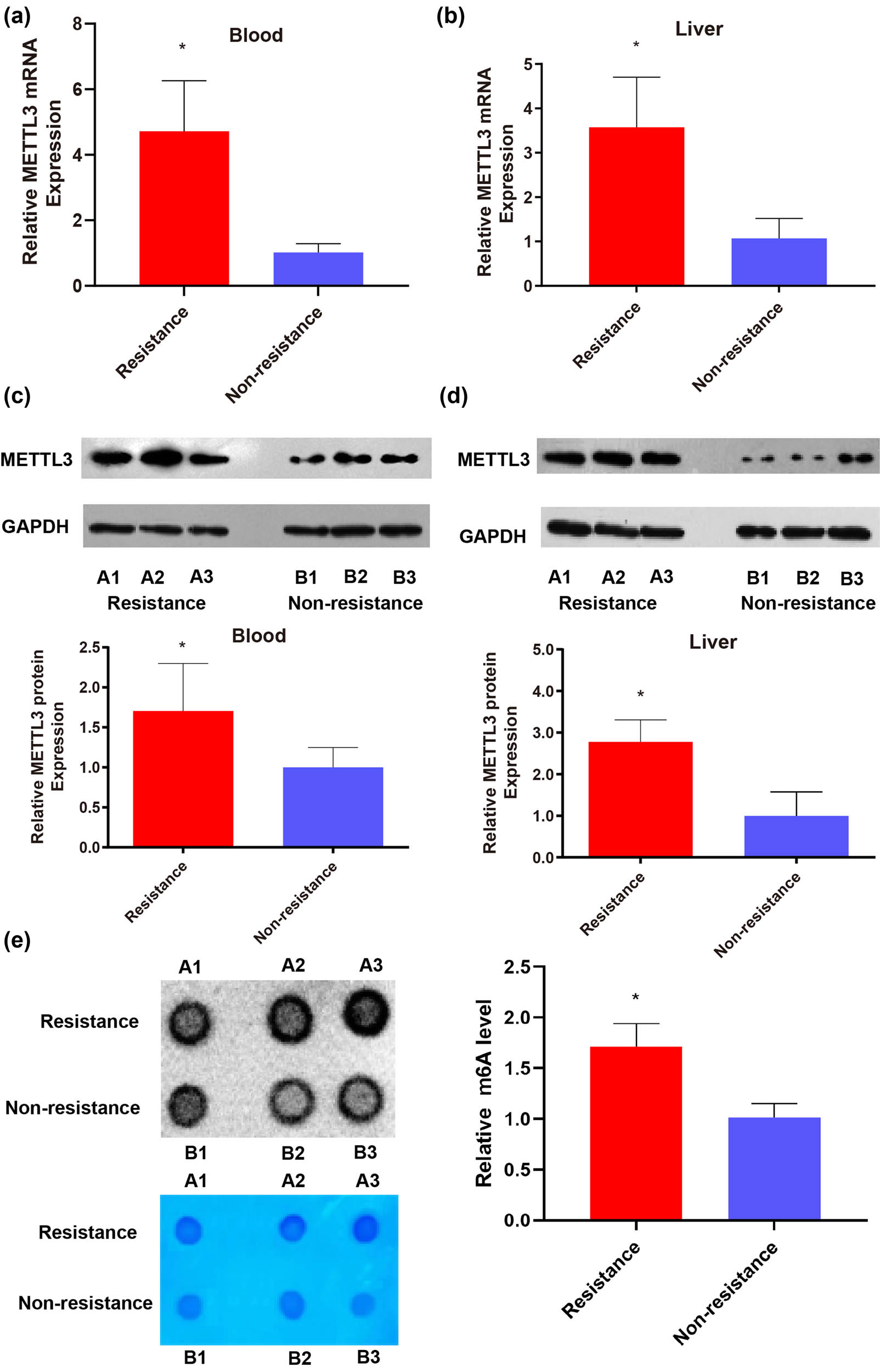
METTL3 levels in peripheral blood and liver were elevated in rats with CR. (a) qPCR results of METTL3 expression levels in mRNA in peripheral blood of rats. (b) qPCR results of METTL3 expression levels in mRNA in the liver of rats. (c) WB results of METTL3 protein expression in peripheral blood of rats. (d) WB results of METTL3 protein expression in the liver of rats. (e) Dot blot analysis results of global m6A levels in the liver of rats. Values are mean ± std. N = 3. Unpaired t-test, *P < 0.05.
3.4 METTL3 modifies CYP2C6v1 mRNA in the peripheral blood and liver of rats with CR and results in decreased CYP2C6v1 mRNA
Rat CYP2C6v1 is orthologous to human CYP2C19, which activates the metabolism of clopidogrel in rat liver [23]. We made predictions about the possible m6A methylation sites for CYP2C6v1 mRNA (Figure 6a). Subsequent MeRIP-PCR results revealed that the m6A methylation level of CYP2C6v1 mRNA in the peripheral blood of rats in the CR group was up-regulated 2.6-fold compared to the non-CR group (Figure 6b). Subsequently, the results of qPCR revealed that the expression levels of CYP2C6v1 mRNA in the peripheral blood of rats in the CR group were down-regulated 0.4-fold compared to those in the non-CR group (Figure 6c). Combined, these results along with human MeRIP and qPCR test findings, demonstrate that elevated methylation level of CYP2C19 mRNA/CYP2C6v1 mRNA in peripheral blood correlated with their decreased expression, resulting in CR. Next, to determine whether the CYP2C6v1 mRNA also underwent m6A methylation and its expression in the liver, MeRIP and qPCR analysis were performed using RNA samples from rat livers. These results align with those obtained from studies of peripheral blood of rats (Figures 6d and e), suggesting that METTL3 promotes m6A methylation at specific sites in CYP2C6v1 mRNA. This methylation leads to reduced expression of CYP2C6v1 mRNA, which in turn results in decreased active clopidogrel metabolism in the liver.

METTL3 modifies CYP2C6v1 RNA in the peripheral blood and liver of rats with CR and results in decreased CYP2C6v1 RNA expression. (a) Prediction of the possible m6A methylation site of CYP2C6v1 mRNA in rats. (b) MeRIP-PCR results. m6A methylation level of CYP2C6v1 mRNA in the peripheral blood of rats of the clopidogrel-resistant group was significantly higher than the non-clopidogrel-resistant group. (c) qPCR results of CYP2C6v1 expression levels in mRNA in peripheral blood of rats. (d) MeRIP results. M6A methylation level of CYP2C6v1 mRNA in liver of rats in clopidogrel-resistant group was higher than that in non-clopidogrel-resistant group. (e) qPCR results of CYP2C6v1 expression levels in mRNA in the liver of rats. Values are mean ± std. N = 3. Unpaired t-test, *P < 0.05. ****P < 0.0001. R, resistance; N, non-resistance.
4 Discussion
This study found that METTL3 enhanced m6A methylation of specific regions of CYP2C19 or CYP2C6v1 mRNA. This increased methylation resulted in reduced expression of CYP2C19 mRNA and protein or CYP2C6v1 mRNA. These changes led to a decrease in the active metabolism of clopidogrel, thereby contributing to the development of CR.
For patients with previous IS, the European Stroke Organization recommends long-term use of antiplatelet therapy to reduce the risk of recurrent stroke [24]. Clopidogrel is a widely used antiplatelet drug, with similar efficacy as aspirin in reducing the risk of IS [25]. However, insufficient inhibition of platelet activation may cause thrombosis progression or recurrence, which may lead to IS progression or relapse [26].
Previous studies have shown that CR may be affected by genetic polymorphisms, drug interactions, drug dosage, diabetes mellitus, and other factors [8,27–30]. Clopidogrel is a pro-drug that is converted to its active form through the metabolic pathway mediated by the CYP enzyme in the liver, and CYP2C19 is the key enzyme of clopidogrel active metabolism [11]. In addition, previous studies have shown that the polymorphisms of the CYP2C19 gene can affect the efficiency of clopidogrel metabolism, especially the CYP2C19*2 and CYP2C19*3 alleles [31–33]. However, most of the mechanism of CR remains largely unclear. Therefore, studies from other perspectives investigating the possible mechanisms of CR are urgently needed.
m6A methylation was first discovered in the 1970s [34], which can influence the function and structure of RNAs, and plays a vital regulatory role in the pathogenesis of multiple diseases, such as cancers, IS, and coronary heart disease [35,36]. In addition, several studies have revealed that m6A methylation also plays a part in cancer treatment and drug resistance [15,37]. For example, METTL3 is a main regulator of m6A methylation that can lead to resistance to gefitinib, sorafenib, temozolomide, cisplatin, and adriamycin [38–41]. Of note, in our research, we first found that METTL3 was markedly overexpressed in human peripheral blood with CR (Figure 2a). In terms of mechanism, we also showed that CYP2C19 mRNA was affected by m6A-dependent methylation of METTL3 (Figure 3) and that this post-transcriptional modification eventually affected the expression of CYP2C19 protein (Figure 3). Therefore, we believe that m6A methylation targets CYP2C19 mRNA, and thus contributes to clopidogrel metabolism and CR (Figure 7). Similarly, Nakano et al. showed that METTL3 upregulation could increase m6A levels and promote CYP2C8 mRNA degradation, which results in decreased expression of CYP2C8 [18].

Mechanism by which METTL3 promotes CR in IS by targeting CYP2C19 mRNA N6-methyladenosine.
CYP2C19 mainly exists in the liver, and the levels of hepatic CYP2C19 and its levels in the peripheral blood are not closely correlated. However, it was difficult for us to obtain CR human liver tissue. The rat CYP2C6v1 gene is homologous to the human CYP2C19 gene, therefore we used rats’ peripheral blood and liver tissue to confirm our hypothesis. First, we completed the construction of the rat model with CR. In this research, CR in rats was defined as having less than a 30% decrease under ADP stimulation in platelet aggregation rate before and after clopidogrel administration [8,42]. Then, in this study, we discovered that the METTL3 levels in the peripheral blood of rats with CR were markedly higher than those of rats with non-CR. In the peripheral blood of rats with CR, METTL3 affected the methylation levels of CYP2C6v1 mRNA, which led to changes in the expression of CYP2C6v1 mRNA. These results corroborated our tests using human peripheral blood with CR. Subsequently, we further verified this result using tissues from the liver of rats. The experimental results in rats’ livers were similar to those in rats’ peripheral blood and human peripheral blood. Meanwhile, we also found that in the liver of rats with CR, the upregulation of METTL3 had led to an increase in the overall levels of m6A methylation. Elevated levels of METTL3 lead to an overall increase in global m6A levels, resulting in an increase in the methylation levels of CYP2C6v1 mRNA and a decrease in the expression of CYP2C6v1 mRNA. Therefore, it is undeniable that METTL3, the m6A writer, is one of the regulators of the expression of the drug-metabolizing enzyme CYP2C6v1 both in the peripheral blood and liver. According to the experimental results, the level of METTL3 and CYP2C19 in peripheral blood can reflect the level of METTL3 and CYP2C19 in the liver, thus they could be useful as new biomarkers for the early and simple diagnosis of CR. Meanwhile, CYP2C19 mRNA m6A in the liver might become a new therapeutic target for CR in the future.
However, the findings of this study must take into account the following limitations. First, we used a rat model of CR in this study as a simulation of the common CR phenomenon. The regulation mechanism of CYP2C6v1 mRNA m6A in rat liver does not fully reflect the corresponding regulation mechanism of CYP2C19 in human liver. In the future, we will conduct human hepatocyte experiments in vitro to further confirm our hypothesis. Second, the exact m6A regulatory mechanism of the liver CYP enzyme is still unclear. Shortly, we will conduct animal experiments with overexpression or site-directed knockout to further confirm the exact m6A regulating mechanism of CYP enzyme in the liver, and to verify CR’s specific m6A targets for diagnosis and intervention.
5 Conclusions
In summary, the current study has indicated that METTL3-targeted mRNA methylation regulates the expression of CYP2C19, which in turn leads to individual differences in clopidogrel metabolism and CR. Our findings provide new insights for CR diagnosis and potentially more individualized clopidogrel therapy, warranting further investigations.
-
Funding information: This research was funded by the National Natural Science Foundation of China (82171295), Chengdu Science and Technology Bureau (2020-GH02-00057-HZ), the Science & Technology Department of Sichuan Province (23ZDYF1785), and the Sichuan Science and Technology Program (2021YFS0376, 2023YFS0042).
-
Author contributions: Quandan Tan, Le Yang and Jie Yang designed the study. Shanshan Yuan, Yapeng Lin, Ying He, Shuntian Chen, Junli Hao, Jin Dai, Haisong Jiang conducted the experiments. Kejie Chen, Song He and Fengkai Mao analyzed the data. Quandan Tan wrote the manuscript. Danni Zheng, Xinyi Leng, Haisong Jiang and Jie Yang revised the manuscript. All authors read and approved the final version of the manuscript.
-
Conflict of interest: The authors declare no conflict of interest.
-
Data availability statement: The datasets used and/or analyzed during the present study are available from the corresponding author on reasonable request.
References
[1] Saini V, Guada L, Yavagal DR. Global epidemiology of stroke and access to acute ischemic stroke interventions. Neurology. 2021;97(20 Suppl 2):S6–16.10.1212/WNL.0000000000012781Suche in Google Scholar PubMed
[2] Feigin VL, Brainin M, Norrving B, Martins S, Sacco RL, Hacke W, et al. World Stroke Organization (WSO): global stroke fact sheet 2022. Int J Stroke. 2022;17(1):18–29.10.1177/17474930211065917Suche in Google Scholar PubMed
[3] Tsao CW, Aday AW, Almarzooq ZI, Alonso A, Beaton AZ, Bittencourt MS, et al. Heart disease and stroke statistics-2022 update: a report from the American Heart Association. Circulation. 2022;145(8):e153–639.Suche in Google Scholar
[4] Collaboration AT. Collaborative overview of randomised trials ofantiplatelet therapy I: prevention ofdeath, myocardial infarction, and stroke by prolonged antiplatelet therapy in various categories of patients. BMJ. 1994;308(6921):81–106.10.1136/bmj.308.6921.81Suche in Google Scholar
[5] Antithrombotic Trialists C, Baigent C, Blackwell L, Collins R, Emberson J, Godwin J, et al. Aspirin in the primary and secondary prevention of vascular disease: collaborative meta-analysis of individual participant data from randomised trials. Lancet. 2009;373(9678):1849–60.10.1016/S0140-6736(09)60503-1Suche in Google Scholar PubMed PubMed Central
[6] Levine GN, Bates ER, Bittl JA, Brindis RG, Fihn SD, Fleisher LA, et al. 2016 ACC/AHA guideline focused update on duration of dual antiplatelet therapy in patients with coronary artery disease: a report of the American College of Cardiology/American Heart Association Task Force on clinical practice guidelines: An update of the 2011 ACCF/AHA/SCAI guideline for percutaneous coronary intervention, 2011 ACCF/AHA guideline for coronary artery bypass graft surgery, 2012 ACC/AHA/ACP/AATS/PCNA/SCAI/STS guideline for the diagnosis and management of patients with stable ischemic heart disease, 2013 ACCF/AHA guideline for the management of ST-elevation myocardial infarction, 2014 AHA/ACC guideline for the management of patients with non-ST-elevation acute coronary syndromes, and 2014 ACC/AHA guideline on perioperative cardiovascular evaluation and management of patients undergoing noncardiac surgery. Circulation. 2016;134(10):e123–55.10.1161/CIR.0000000000000404Suche in Google Scholar PubMed
[7] Ma Q, Chen GZ, Zhang YH, Zhang L, Huang LA. Clinical outcomes and predictive model of platelet reactivity to clopidogrel after acute ischemic vascular events. Chin Med J (Engl). 2019;132(9):1053–62.10.1097/CM9.0000000000000210Suche in Google Scholar PubMed PubMed Central
[8] Akkaif MA, Daud NAA, Sha’aban A, Ng ML, Abdul Kader MAS, Noor DAM, et al. The role of genetic polymorphism and other factors on clopidogrel resistance (CR) in an Asian population with coronary heart disease (CHD). Molecules. 2021;26(7):1987.10.3390/molecules26071987Suche in Google Scholar PubMed PubMed Central
[9] Yin T, Miyata T. Pharmacogenomics of clopidogrel: evidence and perspectives. Thromb Res. 2011;128(4):307–16.10.1016/j.thromres.2011.04.010Suche in Google Scholar PubMed
[10] Zhuo ZL, Xian HP, Long Y, Liu C, Sun YY, Ma YT, et al. Association between CYP2C19 and ABCB1 polymorphisms and clopidogrel resistance in clopidogrel-treated Chinese patients. Anatol J Cardiol. 2018;19(2):123–9.10.14744/AnatolJCardiol.2017.8097Suche in Google Scholar PubMed PubMed Central
[11] Zou JJ, Xie HG, Chen SL, Tan J, Lin L, Zhao YY, et al. Influence of CYP2C19 loss-of-function variants on the antiplatelet effects and cardiovascular events in clopidogrel-treated Chinese patients undergoing percutaneous coronary intervention. Eur J Clin Pharmacol. 2013;69(4):771–7.10.1007/s00228-012-1392-5Suche in Google Scholar PubMed
[12] He PC, He C. m(6) A RNA methylation: from mechanisms to therapeutic potential. EMBO J. 2021;40(3):e105977.10.15252/embj.2020105977Suche in Google Scholar PubMed PubMed Central
[13] Alderman MH 3rd, Xiao AZ. N(6)-methyladenine in eukaryotes. Cell Mol Life Sci. 2019;76(15):2957–66.10.1007/s00018-019-03146-wSuche in Google Scholar PubMed PubMed Central
[14] Lin S, Choe J, Du P, Triboulet R, Gregory RI. The m(6)A methyltransferase METTL3 promotes translation in human cancer cells. Mol Cell. 2016;62(3):335–45.10.1016/j.molcel.2016.03.021Suche in Google Scholar PubMed PubMed Central
[15] Lin H, Wang Y, Wang P, Long F, Wang T. Mutual regulation between N6-methyladenosine (m6A) modification and circular RNAs in cancer: impacts on therapeutic resistance. Mol Cancer. 2022;21(1):148.10.1186/s12943-022-01620-xSuche in Google Scholar PubMed PubMed Central
[16] Xu K, Zhang Q, Chen M, Li B, Wang N, Li C, et al. N(6)-methyladenosine modification regulates imatinib resistance of gastrointestinal stromal tumor by enhancing the expression of multidrug transporter MRP1. Cancer Lett. 2022;530:85–99.10.1016/j.canlet.2022.01.008Suche in Google Scholar PubMed
[17] Jin D, Guo J, Wu Y, Du J, Yang L, Wang X, et al. m(6)A mRNA methylation initiated by METTL3 directly promotes YAP translation and increases YAP activity by regulating the MALAT1-miR-1914-3p-YAP axis to induce NSCLC drug resistance and metastasis. J Hematol Oncol. 2019;12(1):135.10.1186/s13045-019-0830-6Suche in Google Scholar PubMed PubMed Central
[18] Nakano M, Ondo K, Takemoto S, Fukami T, Nakajima M. Methylation of adenosine at the N(6) position post-transcriptionally regulates hepatic P450s expression. Biochem Pharmacol. 2020;171:113697.10.1016/j.bcp.2019.113697Suche in Google Scholar PubMed
[19] Tantry US, Bonello L, Aradi D, Price MJ, Jeong Y-H, Angiolillo DJ, et al. Consensus and update on the definition of on-treatment platelet reactivity to adenosine diphosphate associated with ischemia and bleeding. J Am Coll Cardiol. 2013;62(24):2261–73.10.1016/j.jacc.2013.07.101Suche in Google Scholar PubMed
[20] Wang Y, Chen W, Lin Y, Meng X, Chen G, Wang Z, et al. Ticagrelor plus aspirin versus clopidogrel plus aspirin for platelet reactivity in patients with minor stroke or transient ischaemic attack: open label, blinded endpoint, randomised controlled phase II trial. BMJ. 2019;365:l2211.10.1136/bmj.l2211Suche in Google Scholar PubMed PubMed Central
[21] Jang J, Lim J, Chang K, Kim Y, Kim M, il Park H, et al. A comparison of INNOVANCE® PFA P2Y and VerifyNow P2Y12 assay for the assessment of clopidogrel resistance in patients undergoing percutaneous coronary intervention. J Clin Lab Anal. 2012;26(4):262–6.10.1002/jcla.21515Suche in Google Scholar PubMed PubMed Central
[22] Ma R, Fu W, Zhang J, Hu X, Yang J, Jiang H. TMAO: a potential mediator of clopidogrel resistance. Sci Rep. 2021;11(1):6580.10.1038/s41598-021-85950-8Suche in Google Scholar PubMed PubMed Central
[23] Alliance of Genome Resources Consortium. Harmonizing model organism data in the alliance of genome resources. Genetics. 2022;220(4):iyac022.Suche in Google Scholar
[24] Dawson J, Bejot Y, Christensen LM, De Marchis GM, Dichgans M, Hagberg G, et al. European Stroke Organisation (ESO) guideline on pharmacological interventions for long-term secondary prevention after ischaemic stroke or transient ischaemic attack. Eur Stroke J. 2022;7(3):I–II.10.1177/23969873221100032Suche in Google Scholar PubMed PubMed Central
[25] Committee CS. A randomised, blinded, trial of clopidogrel versus aspirin in patients at risk of ischaemic events (CAPRIE). CAPRIE Steering Committee. Lancet. 1996;348(9038):1329–39.10.1016/S0140-6736(96)09457-3Suche in Google Scholar
[26] Yi X, Wang C, Liu P, Fu C, Lin J, Chen Y. Antiplatelet drug resistance is associated with early neurological deterioration in acute minor ischemic stroke in the Chinese population. J Neurol. 2016;263(8):1612–9.10.1007/s00415-016-8181-5Suche in Google Scholar PubMed
[27] Bates ER, Lau WC, Angiolillo DJ. Clopidogrel–drug interactions. J Am Coll Cardiol. 2011;57(11):1251–63.10.1016/j.jacc.2010.11.024Suche in Google Scholar PubMed
[28] L’Allier PL, Ducrocq G, Pranno N, Noble S, Ibrahim R, Grégoire JC, et al. Clopidogrel 600-mg double loading dose achieves stronger platelet inhibition than conventional regimens. J Am Coll Cardiol. 2008;51(11):1066–72.10.1016/j.jacc.2007.12.013Suche in Google Scholar PubMed
[29] Angiolillo DJ, Jakubowski JA, Ferreiro JL, Tello-Montoliu A, Rollini F, Franchi F, et al. Impaired responsiveness to the platelet P2Y12 receptor antagonist clopidogrel in patients with type 2 diabetes and coronary artery disease. J Am Coll Cardiol. 2014;64(10):1005–14.10.1016/j.jacc.2014.06.1170Suche in Google Scholar PubMed
[30] Capodanno D, Angiolillo DJ. Antithrombotic therapy for atherosclerotic cardiovascular disease risk mitigation in patients with coronary artery disease and diabetes mellitus. Circulation. 2020;142(22):2172–88.10.1161/CIRCULATIONAHA.120.045465Suche in Google Scholar PubMed
[31] Amin AM, Sheau Chin L, Mohamed Noor DA, Mostafa H, Abdul Kader M, Kah Hay Y, et al. The effect of CYP2C19 genetic polymorphism and non-genetic factors on clopidogrel platelets inhibition in East Asian coronary artery disease patients. Thromb Res. 2017;158:22–4.10.1016/j.thromres.2017.07.032Suche in Google Scholar PubMed
[32] Li Z, Dong W, Yang D, Sun L, He X, Hu H, et al. Body weight, CYP2C19, and P2Y12 receptor polymorphisms relate to clopidogrel resistance in a cohort of Chinese ischemic stroke patients with aspirin intolerance. Eur J Clin Pharmacol. 2020;76(11):1517–27.10.1007/s00228-020-02946-5Suche in Google Scholar PubMed
[33] Alhazzani AA, Munisamy M, Karunakaran G. Pharmacogenetics of CYP2C19 genetic polymorphism on clopidogrel response in patients with ischemic stroke from Saudi Arabia. Neurosciences (Riyadh). 2017;22(1):31–7.10.17712/nsj.2017.1.20160303Suche in Google Scholar PubMed PubMed Central
[34] Desrosiers R, Friderici K, Rottman F. Identification of methylated nucleosides in messenger RNA from Novikoff hepatoma cells. Proc Natl Acad Sci U S A. 1974;71(10):3971–5.10.1073/pnas.71.10.3971Suche in Google Scholar PubMed PubMed Central
[35] Sun T, Wu R, Ming L. The role of m6A RNA methylation in cancer. Biomed Pharmacother. 2019;112:108613.10.1016/j.biopha.2019.108613Suche in Google Scholar PubMed
[36] Xu Z, Lv B, Qin Y, Zhang B. Emerging roles and mechanism of m6A methylation in cardiometabolic diseases. Cells. 2022;11(7):1101.10.3390/cells11071101Suche in Google Scholar PubMed PubMed Central
[37] Huang X, Guo H, Wang L, Yang L, Shao Z, Zhang W. Recent advances in crosstalk between N6-methyladenosine (m6A) modification and circular RNAs in cancer. Mol Ther Nucleic Acids. 2022;27:947–55.10.1016/j.omtn.2022.01.013Suche in Google Scholar PubMed PubMed Central
[38] Gao F, Wang Q, Zhang C, Zhang C, Qu T, Zhang J, et al. RNA methyltransferase METTL3 induces intrinsic resistance to gefitinib by combining with MET to regulate PI3K/AKT pathway in lung adenocarcinoma. J Cell Mol Med. 2021;25(5):2418–25.10.1111/jcmm.16114Suche in Google Scholar PubMed PubMed Central
[39] Chen YT, Xiang D, Zhao XY, Chu XY. Upregulation of lncRNA NIFK-AS1 in hepatocellular carcinoma by m(6)A methylation promotes disease progression and sorafenib resistance. Hum Cell. 2021;34(6):1800–11.10.1007/s13577-021-00587-zSuche in Google Scholar PubMed
[40] Jin D, Guo J, Wu Y, Du J, Yang L, Wang X, et al. m(6)A mRNA methylation initiated by METTL3 directly promotes YAP translation and increases YAP activity by regulating the MALAT1-miR-1914-3p-YAP axis to induce NSCLC drug resistance and metastasis. J Hematol Oncol. 2021;14(1):32.10.1186/s13045-021-01048-8Suche in Google Scholar PubMed PubMed Central
[41] Pan X, Hong X, Li S, Meng P, Xiao F. METTL3 promotes adriamycin resistance in MCF-7 breast cancer cells by accelerating pri-microRNA-221-3p maturation in a m6A-dependent manner. Exp Mol Med. 2021;53(1):91–102.10.1038/s12276-020-00510-wSuche in Google Scholar PubMed PubMed Central
[42] Smock KJ, Saunders PJ, Rodgers GM, Johari V. Laboratory evaluation of clopidogrel responsiveness by platelet function and genetic methods. Am J Hematol. 2011;86(12):1032–4.10.1002/ajh.22112Suche in Google Scholar PubMed
© 2024 the author(s), published by De Gruyter
This work is licensed under the Creative Commons Attribution 4.0 International License.
Artikel in diesem Heft
- Research Articles
- EDNRB inhibits the growth and migration of prostate cancer cells by activating the cGMP-PKG pathway
- STK11 (LKB1) mutation suppresses ferroptosis in lung adenocarcinoma by facilitating monounsaturated fatty acid synthesis
- Association of SOX6 gene polymorphisms with Kashin-Beck disease risk in the Chinese Han population
- The pyroptosis-related signature predicts prognosis and influences the tumor immune microenvironment in dedifferentiated liposarcoma
- METTL3 attenuates ferroptosis sensitivity in lung cancer via modulating TFRC
- Identification and validation of molecular subtypes and prognostic signature for stage I and stage II gastric cancer based on neutrophil extracellular traps
- Novel lumbar plexus block versus femoral nerve block for analgesia and motor recovery after total knee arthroplasty
- Correlation between ABCB1 and OLIG2 polymorphisms and the severity and prognosis of patients with cerebral infarction
- Study on the radiotherapy effect and serum neutral granulocyte lymphocyte ratio and inflammatory factor expression of nasopharyngeal carcinoma
- Transcriptome analysis of effects of Tecrl deficiency on cardiometabolic and calcium regulation in cardiac tissue
- Aflatoxin B1 induces infertility, fetal deformities, and potential therapies
- Serum levels of HMW adiponectin and its receptors are associated with cytokine levels and clinical characteristics in chronic obstructive pulmonary disease
- METTL3-mediated methylation of CYP2C19 mRNA may aggravate clopidogrel resistance in ischemic stroke patients
- Understand how machine learning impact lung cancer research from 2010 to 2021: A bibliometric analysis
- Pressure ulcers in German hospitals: Analysis of reimbursement and length of stay
- Metformin plus L-carnitine enhances brown/beige adipose tissue activity via Nrf2/HO-1 signaling to reduce lipid accumulation and inflammation in murine obesity
- Downregulation of carbonic anhydrase IX expression in mouse xenograft nasopharyngeal carcinoma model via doxorubicin nanobubble combined with ultrasound
- Feasibility of 3-dimensional printed models in simulated training and teaching of transcatheter aortic valve replacement
- miR-335-3p improves type II diabetes mellitus by IGF-1 regulating macrophage polarization
- The analyses of human MCPH1 DNA repair machinery and genetic variations
- Activation of Piezo1 increases the sensitivity of breast cancer to hyperthermia therapy
- Comprehensive analysis based on the disulfidptosis-related genes identifies hub genes and immune infiltration for pancreatic adenocarcinoma
- Changes of serum CA125 and PGE2 before and after high-intensity focused ultrasound combined with GnRH-a in treatment of patients with adenomyosis
- The clinical value of the hepatic venous pressure gradient in patients undergoing hepatic resection for hepatocellular carcinoma with or without liver cirrhosis
- Development and validation of a novel model to predict pulmonary embolism in cardiology suspected patients: A 10-year retrospective analysis
- Downregulation of lncRNA XLOC_032768 in diabetic patients predicts the occurrence of diabetic nephropathy
- Circ_0051428 targeting miR-885-3p/MMP2 axis enhances the malignancy of cervical cancer
- Effectiveness of ginkgo diterpene lactone meglumine on cognitive function in patients with acute ischemic stroke
- The construction of a novel prognostic prediction model for glioma based on GWAS-identified prognostic-related risk loci
- Evaluating the impact of childhood BMI on the risk of coronavirus disease 2019: A Mendelian randomization study
- Lactate dehydrogenase to albumin ratio is associated with in-hospital mortality in patients with acute heart failure: Data from the MIMIC-III database
- CD36-mediated podocyte lipotoxicity promotes foot process effacement
- Efficacy of etonogestrel subcutaneous implants versus the levonorgestrel-releasing intrauterine system in the conservative treatment of adenomyosis
- FLRT2 mediates chondrogenesis of nasal septal cartilage and mandibular condyle cartilage
- Challenges in treating primary immune thrombocytopenia patients undergoing COVID-19 vaccination: A retrospective study
- Let-7 family regulates HaCaT cell proliferation and apoptosis via the ΔNp63/PI3K/AKT pathway
- Phospholipid transfer protein ameliorates sepsis-induced cardiac dysfunction through NLRP3 inflammasome inhibition
- Postoperative cognitive dysfunction in elderly patients with colorectal cancer: A randomized controlled study comparing goal-directed and conventional fluid therapy
- Long-pulsed ultrasound-mediated microbubble thrombolysis in a rat model of microvascular obstruction
- High SEC61A1 expression predicts poor outcome of acute myeloid leukemia
- Comparison of polymerase chain reaction and next-generation sequencing with conventional urine culture for the diagnosis of urinary tract infections: A meta-analysis
- Secreted frizzled-related protein 5 protects against renal fibrosis by inhibiting Wnt/β-catenin pathway
- Pan-cancer and single-cell analysis of actin cytoskeleton genes related to disulfidptosis
- Overexpression of miR-532-5p restrains oxidative stress response of chondrocytes in nontraumatic osteonecrosis of the femoral head by inhibiting ABL1
- Autologous liver transplantation for unresectable hepatobiliary malignancies in enhanced recovery after surgery model
- Clinical analysis of incomplete rupture of the uterus secondary to previous cesarean section
- Abnormal sleep duration is associated with sarcopenia in older Chinese people: A large retrospective cross-sectional study
- No genetic causality between obesity and benign paroxysmal vertigo: A two-sample Mendelian randomization study
- Identification and validation of autophagy-related genes in SSc
- Long non-coding RNA SRA1 suppresses radiotherapy resistance in esophageal squamous cell carcinoma by modulating glycolytic reprogramming
- Evaluation of quality of life in patients with schizophrenia: An inpatient social welfare institution-based cross-sectional study
- The possible role of oxidative stress marker glutathione in the assessment of cognitive impairment in multiple sclerosis
- Compilation of a self-management assessment scale for postoperative patients with aortic dissection
- Left atrial appendage closure in conjunction with radiofrequency ablation: Effects on left atrial functioning in patients with paroxysmal atrial fibrillation
- Effect of anterior femoral cortical notch grade on postoperative function and complications during TKA surgery: A multicenter, retrospective study
- Clinical characteristics and assessment of risk factors in patients with influenza A-induced severe pneumonia after the prevalence of SARS-CoV-2
- Analgesia nociception index is an indicator of laparoscopic trocar insertion-induced transient nociceptive stimuli
- High STAT4 expression correlates with poor prognosis in acute myeloid leukemia and facilitates disease progression by upregulating VEGFA expression
- Factors influencing cardiovascular system-related post-COVID-19 sequelae: A single-center cohort study
- HOXD10 regulates intestinal permeability and inhibits inflammation of dextran sulfate sodium-induced ulcerative colitis through the inactivation of the Rho/ROCK/MMPs axis
- Mesenchymal stem cell-derived exosomal miR-26a induces ferroptosis, suppresses hepatic stellate cell activation, and ameliorates liver fibrosis by modulating SLC7A11
- Endovascular thrombectomy versus intravenous thrombolysis for primary distal, medium vessel occlusion in acute ischemic stroke
- ANO6 (TMEM16F) inhibits gastrointestinal stromal tumor growth and induces ferroptosis
- Prognostic value of EIF5A2 in solid tumors: A meta-analysis and bioinformatics analysis
- The role of enhanced expression of Cx43 in patients with ulcerative colitis
- Choosing a COVID-19 vaccination site might be driven by anxiety and body vigilance
- Role of ICAM-1 in triple-negative breast cancer
- Cost-effectiveness of ambroxol in the treatment of Gaucher disease type 2
- HLA-DRB5 promotes immune thrombocytopenia via activating CD8+ T cells
- Efficacy and factors of myofascial release therapy combined with electrical and magnetic stimulation in the treatment of chronic pelvic pain syndrome
- Efficacy of tacrolimus monotherapy in primary membranous nephropathy
- Mechanisms of Tripterygium wilfordii Hook F on treating rheumatoid arthritis explored by network pharmacology analysis and molecular docking
- FBXO45 levels regulated ferroptosis renal tubular epithelial cells in a model of diabetic nephropathy by PLK1
- Optimizing anesthesia strategies to NSCLC patients in VATS procedures: Insights from drug requirements and patient recovery patterns
- Alpha-lipoic acid upregulates the PPARγ/NRF2/GPX4 signal pathway to inhibit ferroptosis in the pathogenesis of unexplained recurrent pregnancy loss
- Correlation between fat-soluble vitamin levels and inflammatory factors in paediatric community-acquired pneumonia: A prospective study
- CD1d affects the proliferation, migration, and apoptosis of human papillary thyroid carcinoma TPC-1 cells via regulating MAPK/NF-κB signaling pathway
- miR-let-7a inhibits sympathetic nerve remodeling after myocardial infarction by downregulating the expression of nerve growth factor
- Immune response analysis of solid organ transplantation recipients inoculated with inactivated COVID-19 vaccine: A retrospective analysis
- The H2Valdien derivatives regulate the epithelial–mesenchymal transition of hepatoma carcinoma cells through the Hedgehog signaling pathway
- Clinical efficacy of dexamethasone combined with isoniazid in the treatment of tuberculous meningitis and its effect on peripheral blood T cell subsets
- Comparison of short-segment and long-segment fixation in treatment of degenerative scoliosis and analysis of factors associated with adjacent spondylolisthesis
- Lycopene inhibits pyroptosis of endothelial progenitor cells induced by ox-LDL through the AMPK/mTOR/NLRP3 pathway
- Methylation regulation for FUNDC1 stability in childhood leukemia was up-regulated and facilitates metastasis and reduces ferroptosis of leukemia through mitochondrial damage by FBXL2
- Correlation of single-fiber electromyography studies and functional status in patients with amyotrophic lateral sclerosis
- Risk factors of postoperative airway obstruction complications in children with oral floor mass
- Expression levels and clinical significance of serum miR-19a/CCL20 in patients with acute cerebral infarction
- Physical activity and mental health trends in Korean adolescents: Analyzing the impact of the COVID-19 pandemic from 2018 to 2022
- Evaluating anemia in HIV-infected patients using chest CT
- Ponticulus posticus and skeletal malocclusion: A pilot study in a Southern Italian pre-orthodontic court
- Causal association of circulating immune cells and lymphoma: A Mendelian randomization study
- Assessment of the renal function and fibrosis indexes of conventional western medicine with Chinese medicine for dredging collaterals on treating renal fibrosis: A systematic review and meta-analysis
- Comprehensive landscape of integrator complex subunits and their association with prognosis and tumor microenvironment in gastric cancer
- New target-HMGCR inhibitors for the treatment of primary sclerosing cholangitis: A drug Mendelian randomization study
- Population pharmacokinetics of meropenem in critically ill patients
- Comparison of the ability of newly inflammatory markers to predict complicated appendicitis
- Comparative morphology of the cruciate ligaments: A radiological study
- Immune landscape of hepatocellular carcinoma: The central role of TP53-inducible glycolysis and apoptosis regulator
- Serum SIRT3 levels in epilepsy patients and its association with clinical outcomes and severity: A prospective observational study
- SHP-1 mediates cigarette smoke extract-induced epithelial–mesenchymal transformation and inflammation in 16HBE cells
- Acute hyper-hypoxia accelerates the development of depression in mice via the IL-6/PGC1α/MFN2 signaling pathway
- The GJB3 correlates with the prognosis, immune cell infiltration, and therapeutic responses in lung adenocarcinoma
- Physical fitness and blood parameters outcomes of breast cancer survivor in a low-intensity circuit resistance exercise program
- Exploring anesthetic-induced gene expression changes and immune cell dynamics in atrial tissue post-coronary artery bypass graft surgery
- Empagliflozin improves aortic injury in obese mice by regulating fatty acid metabolism
- Analysis of the risk factors of the radiation-induced encephalopathy in nasopharyngeal carcinoma: A retrospective cohort study
- Reproductive outcomes in women with BRCA 1/2 germline mutations: A retrospective observational study and literature review
- Evaluation of upper airway ultrasonographic measurements in predicting difficult intubation: A cross-section of the Turkish population
- Prognostic and diagnostic value of circulating IGFBP2 in pancreatic cancer
- Postural stability after operative reconstruction of the AFTL in chronic ankle instability comparing three different surgical techniques
- Research trends related to emergence agitation in the post-anaesthesia care unit from 2001 to 2023: A bibliometric analysis
- Frequency and clinicopathological correlation of gastrointestinal polyps: A six-year single center experience
- ACSL4 mediates inflammatory bowel disease and contributes to LPS-induced intestinal epithelial cell dysfunction by activating ferroptosis and inflammation
- Affibody-based molecular probe 99mTc-(HE)3ZHER2:V2 for non-invasive HER2 detection in ovarian and breast cancer xenografts
- Effectiveness of nutritional support for clinical outcomes in gastric cancer patients: A meta-analysis of randomized controlled trials
- The relationship between IFN-γ, IL-10, IL-6 cytokines, and severity of the condition with serum zinc and Fe in children infected with Mycoplasma pneumoniae
- Paraquat disrupts the blood–brain barrier by increasing IL-6 expression and oxidative stress through the activation of PI3K/AKT signaling pathway
- Sleep quality associate with the increased prevalence of cognitive impairment in coronary artery disease patients: A retrospective case–control study
- Dioscin protects against chronic prostatitis through the TLR4/NF-κB pathway
- Association of polymorphisms in FBN1, MYH11, and TGF-β signaling-related genes with susceptibility of sporadic thoracic aortic aneurysm and dissection in the Zhejiang Han population
- Application value of multi-parameter magnetic resonance image-transrectal ultrasound cognitive fusion in prostate biopsy
- Laboratory variables‐based artificial neural network models for predicting fatty liver disease: A retrospective study
- Decreased BIRC5-206 promotes epithelial–mesenchymal transition in nasopharyngeal carcinoma through sponging miR-145-5p
- Sepsis induces the cardiomyocyte apoptosis and cardiac dysfunction through activation of YAP1/Serpine1/caspase-3 pathway
- Assessment of iron metabolism and iron deficiency in incident patients on incident continuous ambulatory peritoneal dialysis
- Tibial periosteum flap combined with autologous bone grafting in the treatment of Gustilo-IIIB/IIIC open tibial fractures
- The application of intravenous general anesthesia under nasopharyngeal airway assisted ventilation undergoing ureteroscopic holmium laser lithotripsy: A prospective, single-center, controlled trial
- Long intergenic noncoding RNA for IGF2BP2 stability suppresses gastric cancer cell apoptosis by inhibiting the maturation of microRNA-34a
- Role of FOXM1 and AURKB in regulating keratinocyte function in psoriasis
- Parental control attitudes over their pre-school children’s diet
- The role of auto-HSCT in extranodal natural killer/T cell lymphoma
- Significance of negative cervical cytology and positive HPV in the diagnosis of cervical lesions by colposcopy
- Echinacoside inhibits PASMCs calcium overload to prevent hypoxic pulmonary artery remodeling by regulating TRPC1/4/6 and calmodulin
- ADAR1 plays a protective role in proximal tubular cells under high glucose conditions by attenuating the PI3K/AKT/mTOR signaling pathway
- The risk of cancer among insulin glargine users in Lithuania: A retrospective population-based study
- The unusual location of primary hydatid cyst: A case series study
- Intraoperative changes in electrophysiological monitoring can be used to predict clinical outcomes in patients with spinal cavernous malformation
- Obesity and risk of placenta accreta spectrum: A meta-analysis
- Shikonin alleviates asthma phenotypes in mice via an airway epithelial STAT3-dependent mechanism
- NSUN6 and HTR7 disturbed the stability of carotid atherosclerotic plaques by regulating the immune responses of macrophages
- The effect of COVID-19 lockdown on admission rates in Maternity Hospital
- Temporal muscle thickness is not a prognostic predictor in patients with high-grade glioma, an experience at two centers in China
- Luteolin alleviates cerebral ischemia/reperfusion injury by regulating cell pyroptosis
- Therapeutic role of respiratory exercise in patients with tuberculous pleurisy
- Effects of CFTR-ENaC on spinal cord edema after spinal cord injury
- Irisin-regulated lncRNAs and their potential regulatory functions in chondrogenic differentiation of human mesenchymal stem cells
- DMD mutations in pediatric patients with phenotypes of Duchenne/Becker muscular dystrophy
- Combination of C-reactive protein and fibrinogen-to-albumin ratio as a novel predictor of all-cause mortality in heart failure patients
- Significant role and the underly mechanism of cullin-1 in chronic obstructive pulmonary disease
- Ferroptosis-related prognostic model of mantle cell lymphoma
- Observation of choking reaction and other related indexes in elderly painless fiberoptic bronchoscopy with transnasal high-flow humidification oxygen therapy
- A bibliometric analysis of Prader-Willi syndrome from 2002 to 2022
- The causal effects of childhood sunburn occasions on melanoma: A univariable and multivariable Mendelian randomization study
- Oxidative stress regulates glycogen synthase kinase-3 in lymphocytes of diabetes mellitus patients complicated with cerebral infarction
- Role of COX6C and NDUFB3 in septic shock and stroke
- Trends in disease burden of type 2 diabetes, stroke, and hypertensive heart disease attributable to high BMI in China: 1990–2019
- Purinergic P2X7 receptor mediates hyperoxia-induced injury in pulmonary microvascular endothelial cells via NLRP3-mediated pyroptotic pathway
- Investigating the role of oviductal mucosa–endometrial co-culture in modulating factors relevant to embryo implantation
- Analgesic effect of external oblique intercostal block in laparoscopic cholecystectomy: A retrospective study
- Elevated serum miR-142-5p correlates with ischemic lesions and both NSE and S100β in ischemic stroke patients
- Correlation between the mechanism of arteriopathy in IgA nephropathy and blood stasis syndrome: A cohort study
- Risk factors for progressive kyphosis after percutaneous kyphoplasty in osteoporotic vertebral compression fracture
- Predictive role of neuron-specific enolase and S100-β in early neurological deterioration and unfavorable prognosis in patients with ischemic stroke
- The potential risk factors of postoperative cognitive dysfunction for endovascular therapy in acute ischemic stroke with general anesthesia
- Fluoxetine inhibited RANKL-induced osteoclastic differentiation in vitro
- Detection of serum FOXM1 and IGF2 in patients with ARDS and their correlation with disease and prognosis
- Rhein promotes skin wound healing by activating the PI3K/AKT signaling pathway
- Differences in mortality risk by levels of physical activity among persons with disabilities in South Korea
- Review Articles
- Cutaneous signs of selected cardiovascular disorders: A narrative review
- XRCC1 and hOGG1 polymorphisms and endometrial carcinoma: A meta-analysis
- A narrative review on adverse drug reactions of COVID-19 treatments on the kidney
- Emerging role and function of SPDL1 in human health and diseases
- Adverse reactions of piperacillin: A literature review of case reports
- Molecular mechanism and intervention measures of microvascular complications in diabetes
- Regulation of mesenchymal stem cell differentiation by autophagy
- Molecular landscape of borderline ovarian tumours: A systematic review
- Advances in synthetic lethality modalities for glioblastoma multiforme
- Investigating hormesis, aging, and neurodegeneration: From bench to clinics
- Frankincense: A neuronutrient to approach Parkinson’s disease treatment
- Sox9: A potential regulator of cancer stem cells in osteosarcoma
- Early detection of cardiovascular risk markers through non-invasive ultrasound methodologies in periodontitis patients
- Advanced neuroimaging and criminal interrogation in lie detection
- Maternal factors for neural tube defects in offspring: An umbrella review
- The chemoprotective hormetic effects of rosmarinic acid
- CBD’s potential impact on Parkinson’s disease: An updated overview
- Progress in cytokine research for ARDS: A comprehensive review
- Utilizing reactive oxygen species-scavenging nanoparticles for targeting oxidative stress in the treatment of ischemic stroke: A review
- NRXN1-related disorders, attempt to better define clinical assessment
- Lidocaine infusion for the treatment of complex regional pain syndrome: Case series and literature review
- Trends and future directions of autophagy in osteosarcoma: A bibliometric analysis
- Iron in ventricular remodeling and aneurysms post-myocardial infarction
- Case Reports
- Sirolimus potentiated angioedema: A case report and review of the literature
- Identification of mixed anaerobic infections after inguinal hernia repair based on metagenomic next-generation sequencing: A case report
- Successful treatment with bortezomib in combination with dexamethasone in a middle-aged male with idiopathic multicentric Castleman’s disease: A case report
- Complete heart block associated with hepatitis A infection in a female child with fatal outcome
- Elevation of D-dimer in eosinophilic gastrointestinal diseases in the absence of venous thrombosis: A case series and literature review
- Four years of natural progressive course: A rare case report of juvenile Xp11.2 translocations renal cell carcinoma with TFE3 gene fusion
- Advancing prenatal diagnosis: Echocardiographic detection of Scimitar syndrome in China – A case series
- Outcomes and complications of hemodialysis in patients with renal cancer following bilateral nephrectomy
- Anti-HMGCR myopathy mimicking facioscapulohumeral muscular dystrophy
- Recurrent opportunistic infections in a HIV-negative patient with combined C6 and NFKB1 mutations: A case report, pedigree analysis, and literature review
- Letter to the Editor
- Letter to the Editor: Total parenteral nutrition-induced Wernicke’s encephalopathy after oncologic gastrointestinal surgery
- Erratum
- Erratum to “Bladder-embedded ectopic intrauterine device with calculus”
- Retraction
- Retraction of “XRCC1 and hOGG1 polymorphisms and endometrial carcinoma: A meta-analysis”
- Corrigendum
- Corrigendum to “Investigating hormesis, aging, and neurodegeneration: From bench to clinics”
- Corrigendum to “Frankincense: A neuronutrient to approach Parkinson’s disease treatment”
- Special Issue The evolving saga of RNAs from bench to bedside - Part II
- Machine-learning-based prediction of a diagnostic model using autophagy-related genes based on RNA sequencing for patients with papillary thyroid carcinoma
- Unlocking the future of hepatocellular carcinoma treatment: A comprehensive analysis of disulfidptosis-related lncRNAs for prognosis and drug screening
- Elevated mRNA level indicates FSIP1 promotes EMT and gastric cancer progression by regulating fibroblasts in tumor microenvironment
- Special Issue Advancements in oncology: bridging clinical and experimental research - Part I
- Ultrasound-guided transperineal vs transrectal prostate biopsy: A meta-analysis of diagnostic accuracy and complication rates
- Assessment of diagnostic value of unilateral systematic biopsy combined with targeted biopsy in detecting clinically significant prostate cancer
- SENP7 inhibits glioblastoma metastasis and invasion by dissociating SUMO2/3 binding to specific target proteins
- MARK1 suppress malignant progression of hepatocellular carcinoma and improves sorafenib resistance through negatively regulating POTEE
- Analysis of postoperative complications in bladder cancer patients
- Carboplatin combined with arsenic trioxide versus carboplatin combined with docetaxel treatment for LACC: A randomized, open-label, phase II clinical study
- Special Issue Exploring the biological mechanism of human diseases based on MultiOmics Technology - Part I
- Comprehensive pan-cancer investigation of carnosine dipeptidase 1 and its prospective prognostic significance in hepatocellular carcinoma
- Identification of signatures associated with microsatellite instability and immune characteristics to predict the prognostic risk of colon cancer
- Single-cell analysis identified key macrophage subpopulations associated with atherosclerosis
Artikel in diesem Heft
- Research Articles
- EDNRB inhibits the growth and migration of prostate cancer cells by activating the cGMP-PKG pathway
- STK11 (LKB1) mutation suppresses ferroptosis in lung adenocarcinoma by facilitating monounsaturated fatty acid synthesis
- Association of SOX6 gene polymorphisms with Kashin-Beck disease risk in the Chinese Han population
- The pyroptosis-related signature predicts prognosis and influences the tumor immune microenvironment in dedifferentiated liposarcoma
- METTL3 attenuates ferroptosis sensitivity in lung cancer via modulating TFRC
- Identification and validation of molecular subtypes and prognostic signature for stage I and stage II gastric cancer based on neutrophil extracellular traps
- Novel lumbar plexus block versus femoral nerve block for analgesia and motor recovery after total knee arthroplasty
- Correlation between ABCB1 and OLIG2 polymorphisms and the severity and prognosis of patients with cerebral infarction
- Study on the radiotherapy effect and serum neutral granulocyte lymphocyte ratio and inflammatory factor expression of nasopharyngeal carcinoma
- Transcriptome analysis of effects of Tecrl deficiency on cardiometabolic and calcium regulation in cardiac tissue
- Aflatoxin B1 induces infertility, fetal deformities, and potential therapies
- Serum levels of HMW adiponectin and its receptors are associated with cytokine levels and clinical characteristics in chronic obstructive pulmonary disease
- METTL3-mediated methylation of CYP2C19 mRNA may aggravate clopidogrel resistance in ischemic stroke patients
- Understand how machine learning impact lung cancer research from 2010 to 2021: A bibliometric analysis
- Pressure ulcers in German hospitals: Analysis of reimbursement and length of stay
- Metformin plus L-carnitine enhances brown/beige adipose tissue activity via Nrf2/HO-1 signaling to reduce lipid accumulation and inflammation in murine obesity
- Downregulation of carbonic anhydrase IX expression in mouse xenograft nasopharyngeal carcinoma model via doxorubicin nanobubble combined with ultrasound
- Feasibility of 3-dimensional printed models in simulated training and teaching of transcatheter aortic valve replacement
- miR-335-3p improves type II diabetes mellitus by IGF-1 regulating macrophage polarization
- The analyses of human MCPH1 DNA repair machinery and genetic variations
- Activation of Piezo1 increases the sensitivity of breast cancer to hyperthermia therapy
- Comprehensive analysis based on the disulfidptosis-related genes identifies hub genes and immune infiltration for pancreatic adenocarcinoma
- Changes of serum CA125 and PGE2 before and after high-intensity focused ultrasound combined with GnRH-a in treatment of patients with adenomyosis
- The clinical value of the hepatic venous pressure gradient in patients undergoing hepatic resection for hepatocellular carcinoma with or without liver cirrhosis
- Development and validation of a novel model to predict pulmonary embolism in cardiology suspected patients: A 10-year retrospective analysis
- Downregulation of lncRNA XLOC_032768 in diabetic patients predicts the occurrence of diabetic nephropathy
- Circ_0051428 targeting miR-885-3p/MMP2 axis enhances the malignancy of cervical cancer
- Effectiveness of ginkgo diterpene lactone meglumine on cognitive function in patients with acute ischemic stroke
- The construction of a novel prognostic prediction model for glioma based on GWAS-identified prognostic-related risk loci
- Evaluating the impact of childhood BMI on the risk of coronavirus disease 2019: A Mendelian randomization study
- Lactate dehydrogenase to albumin ratio is associated with in-hospital mortality in patients with acute heart failure: Data from the MIMIC-III database
- CD36-mediated podocyte lipotoxicity promotes foot process effacement
- Efficacy of etonogestrel subcutaneous implants versus the levonorgestrel-releasing intrauterine system in the conservative treatment of adenomyosis
- FLRT2 mediates chondrogenesis of nasal septal cartilage and mandibular condyle cartilage
- Challenges in treating primary immune thrombocytopenia patients undergoing COVID-19 vaccination: A retrospective study
- Let-7 family regulates HaCaT cell proliferation and apoptosis via the ΔNp63/PI3K/AKT pathway
- Phospholipid transfer protein ameliorates sepsis-induced cardiac dysfunction through NLRP3 inflammasome inhibition
- Postoperative cognitive dysfunction in elderly patients with colorectal cancer: A randomized controlled study comparing goal-directed and conventional fluid therapy
- Long-pulsed ultrasound-mediated microbubble thrombolysis in a rat model of microvascular obstruction
- High SEC61A1 expression predicts poor outcome of acute myeloid leukemia
- Comparison of polymerase chain reaction and next-generation sequencing with conventional urine culture for the diagnosis of urinary tract infections: A meta-analysis
- Secreted frizzled-related protein 5 protects against renal fibrosis by inhibiting Wnt/β-catenin pathway
- Pan-cancer and single-cell analysis of actin cytoskeleton genes related to disulfidptosis
- Overexpression of miR-532-5p restrains oxidative stress response of chondrocytes in nontraumatic osteonecrosis of the femoral head by inhibiting ABL1
- Autologous liver transplantation for unresectable hepatobiliary malignancies in enhanced recovery after surgery model
- Clinical analysis of incomplete rupture of the uterus secondary to previous cesarean section
- Abnormal sleep duration is associated with sarcopenia in older Chinese people: A large retrospective cross-sectional study
- No genetic causality between obesity and benign paroxysmal vertigo: A two-sample Mendelian randomization study
- Identification and validation of autophagy-related genes in SSc
- Long non-coding RNA SRA1 suppresses radiotherapy resistance in esophageal squamous cell carcinoma by modulating glycolytic reprogramming
- Evaluation of quality of life in patients with schizophrenia: An inpatient social welfare institution-based cross-sectional study
- The possible role of oxidative stress marker glutathione in the assessment of cognitive impairment in multiple sclerosis
- Compilation of a self-management assessment scale for postoperative patients with aortic dissection
- Left atrial appendage closure in conjunction with radiofrequency ablation: Effects on left atrial functioning in patients with paroxysmal atrial fibrillation
- Effect of anterior femoral cortical notch grade on postoperative function and complications during TKA surgery: A multicenter, retrospective study
- Clinical characteristics and assessment of risk factors in patients with influenza A-induced severe pneumonia after the prevalence of SARS-CoV-2
- Analgesia nociception index is an indicator of laparoscopic trocar insertion-induced transient nociceptive stimuli
- High STAT4 expression correlates with poor prognosis in acute myeloid leukemia and facilitates disease progression by upregulating VEGFA expression
- Factors influencing cardiovascular system-related post-COVID-19 sequelae: A single-center cohort study
- HOXD10 regulates intestinal permeability and inhibits inflammation of dextran sulfate sodium-induced ulcerative colitis through the inactivation of the Rho/ROCK/MMPs axis
- Mesenchymal stem cell-derived exosomal miR-26a induces ferroptosis, suppresses hepatic stellate cell activation, and ameliorates liver fibrosis by modulating SLC7A11
- Endovascular thrombectomy versus intravenous thrombolysis for primary distal, medium vessel occlusion in acute ischemic stroke
- ANO6 (TMEM16F) inhibits gastrointestinal stromal tumor growth and induces ferroptosis
- Prognostic value of EIF5A2 in solid tumors: A meta-analysis and bioinformatics analysis
- The role of enhanced expression of Cx43 in patients with ulcerative colitis
- Choosing a COVID-19 vaccination site might be driven by anxiety and body vigilance
- Role of ICAM-1 in triple-negative breast cancer
- Cost-effectiveness of ambroxol in the treatment of Gaucher disease type 2
- HLA-DRB5 promotes immune thrombocytopenia via activating CD8+ T cells
- Efficacy and factors of myofascial release therapy combined with electrical and magnetic stimulation in the treatment of chronic pelvic pain syndrome
- Efficacy of tacrolimus monotherapy in primary membranous nephropathy
- Mechanisms of Tripterygium wilfordii Hook F on treating rheumatoid arthritis explored by network pharmacology analysis and molecular docking
- FBXO45 levels regulated ferroptosis renal tubular epithelial cells in a model of diabetic nephropathy by PLK1
- Optimizing anesthesia strategies to NSCLC patients in VATS procedures: Insights from drug requirements and patient recovery patterns
- Alpha-lipoic acid upregulates the PPARγ/NRF2/GPX4 signal pathway to inhibit ferroptosis in the pathogenesis of unexplained recurrent pregnancy loss
- Correlation between fat-soluble vitamin levels and inflammatory factors in paediatric community-acquired pneumonia: A prospective study
- CD1d affects the proliferation, migration, and apoptosis of human papillary thyroid carcinoma TPC-1 cells via regulating MAPK/NF-κB signaling pathway
- miR-let-7a inhibits sympathetic nerve remodeling after myocardial infarction by downregulating the expression of nerve growth factor
- Immune response analysis of solid organ transplantation recipients inoculated with inactivated COVID-19 vaccine: A retrospective analysis
- The H2Valdien derivatives regulate the epithelial–mesenchymal transition of hepatoma carcinoma cells through the Hedgehog signaling pathway
- Clinical efficacy of dexamethasone combined with isoniazid in the treatment of tuberculous meningitis and its effect on peripheral blood T cell subsets
- Comparison of short-segment and long-segment fixation in treatment of degenerative scoliosis and analysis of factors associated with adjacent spondylolisthesis
- Lycopene inhibits pyroptosis of endothelial progenitor cells induced by ox-LDL through the AMPK/mTOR/NLRP3 pathway
- Methylation regulation for FUNDC1 stability in childhood leukemia was up-regulated and facilitates metastasis and reduces ferroptosis of leukemia through mitochondrial damage by FBXL2
- Correlation of single-fiber electromyography studies and functional status in patients with amyotrophic lateral sclerosis
- Risk factors of postoperative airway obstruction complications in children with oral floor mass
- Expression levels and clinical significance of serum miR-19a/CCL20 in patients with acute cerebral infarction
- Physical activity and mental health trends in Korean adolescents: Analyzing the impact of the COVID-19 pandemic from 2018 to 2022
- Evaluating anemia in HIV-infected patients using chest CT
- Ponticulus posticus and skeletal malocclusion: A pilot study in a Southern Italian pre-orthodontic court
- Causal association of circulating immune cells and lymphoma: A Mendelian randomization study
- Assessment of the renal function and fibrosis indexes of conventional western medicine with Chinese medicine for dredging collaterals on treating renal fibrosis: A systematic review and meta-analysis
- Comprehensive landscape of integrator complex subunits and their association with prognosis and tumor microenvironment in gastric cancer
- New target-HMGCR inhibitors for the treatment of primary sclerosing cholangitis: A drug Mendelian randomization study
- Population pharmacokinetics of meropenem in critically ill patients
- Comparison of the ability of newly inflammatory markers to predict complicated appendicitis
- Comparative morphology of the cruciate ligaments: A radiological study
- Immune landscape of hepatocellular carcinoma: The central role of TP53-inducible glycolysis and apoptosis regulator
- Serum SIRT3 levels in epilepsy patients and its association with clinical outcomes and severity: A prospective observational study
- SHP-1 mediates cigarette smoke extract-induced epithelial–mesenchymal transformation and inflammation in 16HBE cells
- Acute hyper-hypoxia accelerates the development of depression in mice via the IL-6/PGC1α/MFN2 signaling pathway
- The GJB3 correlates with the prognosis, immune cell infiltration, and therapeutic responses in lung adenocarcinoma
- Physical fitness and blood parameters outcomes of breast cancer survivor in a low-intensity circuit resistance exercise program
- Exploring anesthetic-induced gene expression changes and immune cell dynamics in atrial tissue post-coronary artery bypass graft surgery
- Empagliflozin improves aortic injury in obese mice by regulating fatty acid metabolism
- Analysis of the risk factors of the radiation-induced encephalopathy in nasopharyngeal carcinoma: A retrospective cohort study
- Reproductive outcomes in women with BRCA 1/2 germline mutations: A retrospective observational study and literature review
- Evaluation of upper airway ultrasonographic measurements in predicting difficult intubation: A cross-section of the Turkish population
- Prognostic and diagnostic value of circulating IGFBP2 in pancreatic cancer
- Postural stability after operative reconstruction of the AFTL in chronic ankle instability comparing three different surgical techniques
- Research trends related to emergence agitation in the post-anaesthesia care unit from 2001 to 2023: A bibliometric analysis
- Frequency and clinicopathological correlation of gastrointestinal polyps: A six-year single center experience
- ACSL4 mediates inflammatory bowel disease and contributes to LPS-induced intestinal epithelial cell dysfunction by activating ferroptosis and inflammation
- Affibody-based molecular probe 99mTc-(HE)3ZHER2:V2 for non-invasive HER2 detection in ovarian and breast cancer xenografts
- Effectiveness of nutritional support for clinical outcomes in gastric cancer patients: A meta-analysis of randomized controlled trials
- The relationship between IFN-γ, IL-10, IL-6 cytokines, and severity of the condition with serum zinc and Fe in children infected with Mycoplasma pneumoniae
- Paraquat disrupts the blood–brain barrier by increasing IL-6 expression and oxidative stress through the activation of PI3K/AKT signaling pathway
- Sleep quality associate with the increased prevalence of cognitive impairment in coronary artery disease patients: A retrospective case–control study
- Dioscin protects against chronic prostatitis through the TLR4/NF-κB pathway
- Association of polymorphisms in FBN1, MYH11, and TGF-β signaling-related genes with susceptibility of sporadic thoracic aortic aneurysm and dissection in the Zhejiang Han population
- Application value of multi-parameter magnetic resonance image-transrectal ultrasound cognitive fusion in prostate biopsy
- Laboratory variables‐based artificial neural network models for predicting fatty liver disease: A retrospective study
- Decreased BIRC5-206 promotes epithelial–mesenchymal transition in nasopharyngeal carcinoma through sponging miR-145-5p
- Sepsis induces the cardiomyocyte apoptosis and cardiac dysfunction through activation of YAP1/Serpine1/caspase-3 pathway
- Assessment of iron metabolism and iron deficiency in incident patients on incident continuous ambulatory peritoneal dialysis
- Tibial periosteum flap combined with autologous bone grafting in the treatment of Gustilo-IIIB/IIIC open tibial fractures
- The application of intravenous general anesthesia under nasopharyngeal airway assisted ventilation undergoing ureteroscopic holmium laser lithotripsy: A prospective, single-center, controlled trial
- Long intergenic noncoding RNA for IGF2BP2 stability suppresses gastric cancer cell apoptosis by inhibiting the maturation of microRNA-34a
- Role of FOXM1 and AURKB in regulating keratinocyte function in psoriasis
- Parental control attitudes over their pre-school children’s diet
- The role of auto-HSCT in extranodal natural killer/T cell lymphoma
- Significance of negative cervical cytology and positive HPV in the diagnosis of cervical lesions by colposcopy
- Echinacoside inhibits PASMCs calcium overload to prevent hypoxic pulmonary artery remodeling by regulating TRPC1/4/6 and calmodulin
- ADAR1 plays a protective role in proximal tubular cells under high glucose conditions by attenuating the PI3K/AKT/mTOR signaling pathway
- The risk of cancer among insulin glargine users in Lithuania: A retrospective population-based study
- The unusual location of primary hydatid cyst: A case series study
- Intraoperative changes in electrophysiological monitoring can be used to predict clinical outcomes in patients with spinal cavernous malformation
- Obesity and risk of placenta accreta spectrum: A meta-analysis
- Shikonin alleviates asthma phenotypes in mice via an airway epithelial STAT3-dependent mechanism
- NSUN6 and HTR7 disturbed the stability of carotid atherosclerotic plaques by regulating the immune responses of macrophages
- The effect of COVID-19 lockdown on admission rates in Maternity Hospital
- Temporal muscle thickness is not a prognostic predictor in patients with high-grade glioma, an experience at two centers in China
- Luteolin alleviates cerebral ischemia/reperfusion injury by regulating cell pyroptosis
- Therapeutic role of respiratory exercise in patients with tuberculous pleurisy
- Effects of CFTR-ENaC on spinal cord edema after spinal cord injury
- Irisin-regulated lncRNAs and their potential regulatory functions in chondrogenic differentiation of human mesenchymal stem cells
- DMD mutations in pediatric patients with phenotypes of Duchenne/Becker muscular dystrophy
- Combination of C-reactive protein and fibrinogen-to-albumin ratio as a novel predictor of all-cause mortality in heart failure patients
- Significant role and the underly mechanism of cullin-1 in chronic obstructive pulmonary disease
- Ferroptosis-related prognostic model of mantle cell lymphoma
- Observation of choking reaction and other related indexes in elderly painless fiberoptic bronchoscopy with transnasal high-flow humidification oxygen therapy
- A bibliometric analysis of Prader-Willi syndrome from 2002 to 2022
- The causal effects of childhood sunburn occasions on melanoma: A univariable and multivariable Mendelian randomization study
- Oxidative stress regulates glycogen synthase kinase-3 in lymphocytes of diabetes mellitus patients complicated with cerebral infarction
- Role of COX6C and NDUFB3 in septic shock and stroke
- Trends in disease burden of type 2 diabetes, stroke, and hypertensive heart disease attributable to high BMI in China: 1990–2019
- Purinergic P2X7 receptor mediates hyperoxia-induced injury in pulmonary microvascular endothelial cells via NLRP3-mediated pyroptotic pathway
- Investigating the role of oviductal mucosa–endometrial co-culture in modulating factors relevant to embryo implantation
- Analgesic effect of external oblique intercostal block in laparoscopic cholecystectomy: A retrospective study
- Elevated serum miR-142-5p correlates with ischemic lesions and both NSE and S100β in ischemic stroke patients
- Correlation between the mechanism of arteriopathy in IgA nephropathy and blood stasis syndrome: A cohort study
- Risk factors for progressive kyphosis after percutaneous kyphoplasty in osteoporotic vertebral compression fracture
- Predictive role of neuron-specific enolase and S100-β in early neurological deterioration and unfavorable prognosis in patients with ischemic stroke
- The potential risk factors of postoperative cognitive dysfunction for endovascular therapy in acute ischemic stroke with general anesthesia
- Fluoxetine inhibited RANKL-induced osteoclastic differentiation in vitro
- Detection of serum FOXM1 and IGF2 in patients with ARDS and their correlation with disease and prognosis
- Rhein promotes skin wound healing by activating the PI3K/AKT signaling pathway
- Differences in mortality risk by levels of physical activity among persons with disabilities in South Korea
- Review Articles
- Cutaneous signs of selected cardiovascular disorders: A narrative review
- XRCC1 and hOGG1 polymorphisms and endometrial carcinoma: A meta-analysis
- A narrative review on adverse drug reactions of COVID-19 treatments on the kidney
- Emerging role and function of SPDL1 in human health and diseases
- Adverse reactions of piperacillin: A literature review of case reports
- Molecular mechanism and intervention measures of microvascular complications in diabetes
- Regulation of mesenchymal stem cell differentiation by autophagy
- Molecular landscape of borderline ovarian tumours: A systematic review
- Advances in synthetic lethality modalities for glioblastoma multiforme
- Investigating hormesis, aging, and neurodegeneration: From bench to clinics
- Frankincense: A neuronutrient to approach Parkinson’s disease treatment
- Sox9: A potential regulator of cancer stem cells in osteosarcoma
- Early detection of cardiovascular risk markers through non-invasive ultrasound methodologies in periodontitis patients
- Advanced neuroimaging and criminal interrogation in lie detection
- Maternal factors for neural tube defects in offspring: An umbrella review
- The chemoprotective hormetic effects of rosmarinic acid
- CBD’s potential impact on Parkinson’s disease: An updated overview
- Progress in cytokine research for ARDS: A comprehensive review
- Utilizing reactive oxygen species-scavenging nanoparticles for targeting oxidative stress in the treatment of ischemic stroke: A review
- NRXN1-related disorders, attempt to better define clinical assessment
- Lidocaine infusion for the treatment of complex regional pain syndrome: Case series and literature review
- Trends and future directions of autophagy in osteosarcoma: A bibliometric analysis
- Iron in ventricular remodeling and aneurysms post-myocardial infarction
- Case Reports
- Sirolimus potentiated angioedema: A case report and review of the literature
- Identification of mixed anaerobic infections after inguinal hernia repair based on metagenomic next-generation sequencing: A case report
- Successful treatment with bortezomib in combination with dexamethasone in a middle-aged male with idiopathic multicentric Castleman’s disease: A case report
- Complete heart block associated with hepatitis A infection in a female child with fatal outcome
- Elevation of D-dimer in eosinophilic gastrointestinal diseases in the absence of venous thrombosis: A case series and literature review
- Four years of natural progressive course: A rare case report of juvenile Xp11.2 translocations renal cell carcinoma with TFE3 gene fusion
- Advancing prenatal diagnosis: Echocardiographic detection of Scimitar syndrome in China – A case series
- Outcomes and complications of hemodialysis in patients with renal cancer following bilateral nephrectomy
- Anti-HMGCR myopathy mimicking facioscapulohumeral muscular dystrophy
- Recurrent opportunistic infections in a HIV-negative patient with combined C6 and NFKB1 mutations: A case report, pedigree analysis, and literature review
- Letter to the Editor
- Letter to the Editor: Total parenteral nutrition-induced Wernicke’s encephalopathy after oncologic gastrointestinal surgery
- Erratum
- Erratum to “Bladder-embedded ectopic intrauterine device with calculus”
- Retraction
- Retraction of “XRCC1 and hOGG1 polymorphisms and endometrial carcinoma: A meta-analysis”
- Corrigendum
- Corrigendum to “Investigating hormesis, aging, and neurodegeneration: From bench to clinics”
- Corrigendum to “Frankincense: A neuronutrient to approach Parkinson’s disease treatment”
- Special Issue The evolving saga of RNAs from bench to bedside - Part II
- Machine-learning-based prediction of a diagnostic model using autophagy-related genes based on RNA sequencing for patients with papillary thyroid carcinoma
- Unlocking the future of hepatocellular carcinoma treatment: A comprehensive analysis of disulfidptosis-related lncRNAs for prognosis and drug screening
- Elevated mRNA level indicates FSIP1 promotes EMT and gastric cancer progression by regulating fibroblasts in tumor microenvironment
- Special Issue Advancements in oncology: bridging clinical and experimental research - Part I
- Ultrasound-guided transperineal vs transrectal prostate biopsy: A meta-analysis of diagnostic accuracy and complication rates
- Assessment of diagnostic value of unilateral systematic biopsy combined with targeted biopsy in detecting clinically significant prostate cancer
- SENP7 inhibits glioblastoma metastasis and invasion by dissociating SUMO2/3 binding to specific target proteins
- MARK1 suppress malignant progression of hepatocellular carcinoma and improves sorafenib resistance through negatively regulating POTEE
- Analysis of postoperative complications in bladder cancer patients
- Carboplatin combined with arsenic trioxide versus carboplatin combined with docetaxel treatment for LACC: A randomized, open-label, phase II clinical study
- Special Issue Exploring the biological mechanism of human diseases based on MultiOmics Technology - Part I
- Comprehensive pan-cancer investigation of carnosine dipeptidase 1 and its prospective prognostic significance in hepatocellular carcinoma
- Identification of signatures associated with microsatellite instability and immune characteristics to predict the prognostic risk of colon cancer
- Single-cell analysis identified key macrophage subpopulations associated with atherosclerosis
