FBXO45 levels regulated ferroptosis renal tubular epithelial cells in a model of diabetic nephropathy by PLK1
-
Bingming Zhu


Abstract
Objective
This research aims to investigate the role and underlying biological mechanism of FBXO45 in regulating ferroptosis of renal fibrocytes in a diabetic nephropathy (DN) model.
Methods
C57BL/6 mice were fed with a high-fat diet and injected with streptozotocin to induce diabetes. Human renal glomerular endothelial cells stimulated with d-glucose.
Results
Serum FBXO45 mRNA expression was found to be down-regulated in patients with DN. There was a negative correlation between the expression of serum FBXO45 mRNA and serum α-SMA, Collagen I, and E-cadherin mRNA in patients with DN. Additionally, the expression of serum FBXO45 mRNA showed a negative correlation with blood sugar levels. Based on a 3D model prediction, it was observed that FBXO45 interacts with polo-like kinase 1 (PLK1) at GLY-271, ILE-226, GLY-166, LEU-165, ARG-245, and ASN-220, while PLK1 interacts with FBXO45 at TYR-417, ARG-516, HIS-489, TYR-485, GLN-536, and ARG-557. This interaction was confirmed through immunoprecipitation assay, which showed the interlinking of FBXO45 protein with PLK1 protein.
Conclusions
These findings indicate that FBXO45 plays a role in mitigating ferroptosis in DN through the regulation of the PLK1/GPX4/SOX2 pathway. This highlights the potential of targeting FBXO45 as a therapeutic approach to ameliorate ferroptosis in DN.
1 Introduction
Diabetic nephropathy (DN) is the most prevalent and severe complication of diabetes, accounting for a significant proportion of chronic microvascular complications. The incidence and mortality rates of DN are increasing among diabetes patients globally [1]. In the United States, there has been a substantial rise in the number of diabetes patients developing end-stage renal disease, while in China, the prevalence and incidence of DN have also witnessed a sharp increase over the past decade [2]. According to the 2019 report by the International Diabetes Federation, it is projected that the number of diabetes patients will reach 578 million by 2030, with approximately 20–40% of them developing DN, ultimately leading to the development of chronic renal failure [3]. Consequently, there is an urgent need to investigate the underlying mechanisms and treatment strategies for DN [4].
The onset of DN can be insidious, often presenting with negative urinary albumin levels in the early stages, making it difficult to detect kidney damage symptoms [5]. However, if left untreated, proteinuria will progressively develop [5]. Once proteinuria reaches a significant level, the risk of progressing to end-stage renal failure becomes approximately 14 times higher compared to other kidney diseases, posing a substantial threat to patients and potentially leading to fatal outcomes in severe cases [6]. Consequently, early diagnosis, prevention, and intervention strategies to delay the onset and progression of DN are crucial in enhancing both the quality of life and survival rates among individuals with diabetes [7].
Renal fibrosis (RF) represents a shared mechanism through which various chronic kidney diseases progress to end-stage renal failure. Therefore, the exploration of treatment strategies targeting RF has become a central focus in nephrology research [8,9]. RF primarily involves an abnormal accumulation of extracellular matrix (ECM), particularly collagen, within the kidney, leading to significant impairment of renal structural domains [10]. Consequently, inhibiting ECM synthesis within the kidney emerges as a critical approach for the treatment of RF.
Recent studies have elucidated the involvement of ferroptosis in the pathogenesis of DN. Ferroptosis, a recently identified form of regulated cell death, is characterized by its reliance on iron and reactive oxygen species (ROS) [11]. The mounting body of evidence supports the notion that ferroptosis plays a prominent role in the development of DN, further underscoring its significance [12]. Furthermore, in recent years, research has demonstrated the potential of certain active components found in traditional Chinese medicine to ameliorate DN progression through targeted modulation of ferroptosis [13].
Previous investigations have revealed that elevated levels of integrin-linked kinase can promote the proliferation and clonogenicity of bladder cancer cells. Moreover, the anticancer drug docetaxel has been shown to reduce apoptosis and increase invasion of bladder cancer cells, concomitant with an upregulation of ROS expression [14,15]. Polo-like kinase 1 (PLK1), a pivotal regulator of cell mitosis, participates in various biological processes, including cell cycle control and cytokine secretion [16]. It plays a critical role in initiating, maintaining, and completing mitosis. Studies have demonstrated that PLK1 is highly expressed in several malignant tumors such as melanoma, cutaneous Merkel cell carcinoma, pancreatic cancer, and liver cancer, with its expression level being closely associated with prognosis in some cancers [17,18]. Suppression of PLK1 expression through diverse approaches significantly diminishes cell proliferation while promoting tumor apoptosis [14].
FBXO45, a constituent protein of the SCF complex, belongs to the F-box protein family [19]. Its primary role is to facilitate the ubiquitination and subsequent degradation of substrate proteins. Despite being one of the members, there is currently limited research available regarding its specific function [14]. Situated on the human chromosome as an aging gene, FBXO45 acts as an inhibitor of cell proliferation and hinders progression through the G1 phase of the cell cycle [20]. Conversely, studies have indicated that FBXO31, another member of the F-box protein family, exhibits reduced expression in esophageal cancer and is implicated in tumor initiation and progression [21]. The objective of this study is to elucidate the role and underlying biological mechanism of FBXO45 in modulating ferroptosis in renal fibrocytes using a DN model.
2 Materials and methods
2.1 Patients
Patients with DN and normal healthy volunteers were obtained at The First Affiliated Hospital of Jinan University. Serum samples were collected and immediately stored at −80°C. The written informed consents were obtained from all the subjects and this study was approved by the Ethics Committee of The First Affiliated Hospital of Jinan University. The clinical parameters of the DN patients and healthy controls are shown in Table 1.
The clinical parameters of the DN patients and healthy controls
| Group | Normal | DN patients |
|---|---|---|
| Number | 12 | 12 |
| Weight (kg) | 61.67 ± 11.20 | 74.50 ± 11.62 |
| BMI | 22.05 ± 1.25 | 25.20 ± 1.63 |
| Age (year) | 46.83 ± 4.91 | 49.25 ± 4.33 |
| Sex (male/female) | 6/6 | 6/6 |
| MAP (mm Hg) | 103.83 ± 6.25 | 102.10 ± 4.90 |
| LDL-C (mmol/L) | 2.29 ± 0.17 | 2.30 ± 0.17 |
| BUN (mmol/L) | 5.12 ± 0.68 | 8.76 ± 0.98 |
2.2 Animal care model
C57BL/6 mice (male, 4–5 weeks, 17–19 g) were fed with a high-fat diet for 12 weeks and then injected with STZ (30 mg/kg of streptozotocin; Sigma, St Louis, MO, USA) i.p. for 7 consecutive days (No. 2021050811). Then, mice of the sham group were fed with normal diet and then injected with normal saline (i.p.) for 7 consecutive days. The number of every group was six. The diagnostic efficacy of clinical indicators of FBXO45 was analyzed using the receiver operating characteristic (ROC) curve and the area under the curve.
Blood glucose levels of mice were measured using 16.7 mmol/l of blood glucose after 1 week as successful induction of diabetes. The mice were euthanized under anesthesia using 50 mg/kg pentobarbital sodium and sacrificed using strangulation. Their kidneys were collected for analysis after the induction of STZ at 4 months.
The lentiviral vectors carrying FBXO45 plasmid were designed and chemically synthesized by Hanyin Biotechnology Limited Company (Shanghai, China). FBXO45 plasmid (1 × 10⁸ TU) and administered into the mice through tail vein injection. Animals were approved by the Animal Care and Use Committee of our hospital.
2.3 Histological examination
Urine albumin and creatinine were measured by ELISA kit (Nanjing Jiancheng Bioengineering Research Institute, Nanjing, China). Kidney function (restricted kinematic [RKA]/remaining kidney volume indexed [RKVd]/Raman kidney volume [RKVm]/Raman kidney volumes [RKVs]) was measured using a Vevo 770 high-resolution imaging system (Visual Sonics, Canada) equipped with a high-frequency ultrasound probe (RMV-707B).
Kidney slices were dehydrated and paraffin embedded and Standard procedures were performed as literature [22]. Kidney tissue samples were fixed in 4% paraformaldehyde, paraffn-embedded, and then sectioned into 5 μM slices for PAS staining. Kidney tissue samples were observed using a fluorescence microscope (Zeiss Axio Observer A1, Germany). Kidney slices incubated with primary antibodies against collagen IV (1:200, CST, USA) overnight at 4°C with the appropriate secondary antibodies (1:200, Santa Cruz, CA, USA). Kidney tissue samples were observed using a fluorescence microscope (Zeiss Axio Observer A1, Germany).
2.4 Kidney function
Kidney function was measured using a Vevo 770 high-resolution imaging system (Visual Sonics, Canada) equipped with a high-frequency ultrasound probe (RMV-707B). Urine albumin and creatinine were measured on a spot urine sample with an ELISA kit (Nanjing Jiancheng Bioengineering Research Institute).
2.5 Lentivirus injection
The lentiviral vectors carrying FBXO45 plasmid were designed and chemically synthesized by Hanyin Biotechnology Limited Company (Shanghai, China). The constructs were diluted to a total volume of 200 μL (1 × 10⁸ TU of FBXO45 plasmid) and administered into the mice through tail vein injection.
2.6 Cell culture and treatment
Human renal tubular epithelial cells HK-2 cells were seeded in a culture dish with RPMI 1640 (Gibco) supplemented with 10% fetal bovine serum (Gibco) under a humidified 5% (v/v) CO2 atmosphere at 37°C. HK-2 cells were stimulated with 20 mmol/L d-glucose for the DN model for 24–72 h [23,24]. The transfections (FBXO45 plasmid, sc-417503, Santa Cruz Biotechnology, Inc.; si-FBXO45 plasmid, sc-78222, Santa Cruz Biotechnology, Inc.) were performed using Lipofectamine 2000 (Thermo Fisher Scientific, Shanghai, China). After 48 h of transfection, HK-2 cells were stimulated with 20 mmol/L d-glucose for 24–72 h.
2.7 ELISA assay, cell counting kit‑8 (CCK-8) assay, lactate dehydrogenase (LDH) activity, propidium iodide (PI) staining, and calcein/PI staining
Blood, tissue, or cell samples were collected and used to measure inflammation and oxidative stress levels using ROS production (S0033S), CAT (S0051), SOD (S0101S), MDA (S0131S), INF-γ (PI521), TNF-α (C1058S), IL-6 (PI330), and IL-1β (PI305) ELISA kits (Nanjing Jiancheng Biological Engineering Institute, Nanjing, China) following the manufacturer’s instructions. Cells were stained with DCFH-DA and were observed using a fluorescence microscope (Zeiss Axio Observer A1, Germany).
Calcein AM/CoCl2 assay and JC-1 disaggregation were evaluated by AM/CoCl2 assay Kit (C2009S, Beyotime Biotechnology, Nanjing, China) and JC-1 Kit (C2003S, Beyotime Biotechnology, Nanjing, China). For (CCK-8, C0037), 2 × 10³ cells/well were seeded in a 96-well plate.
LDH activity levels were assessed via the absorbance using a microplate reader (Thermo Fisher Scientific) at 450 nm. Cells were incubated with PI staining (ST512, Beyotime Biotechnology, Nanjing, China) or Calcein/PI staining (C2015S, Beyotime Biotechnology, Nanjing, China).
2.8 Quantitative polymerase chain reaction (qPCR)
Total RNAs were isolated with RNA isolator total RNA extraction reagent (Takara) and cDNA was synthesized using PrimeScipt RT Master Mix (Takara). qPCR was performed with the ABI Prism 7500 sequence detection system according to the Prime-Script™ RT detection kit. Relative levels of the sample mRNA expression were calculated and expressed as 2−DDCt.
2.9 Western blotting analysis
Membranes were incubated with SOX2 (ab92494, 1:2,000, Abcam), GPX4 (ab41787, 1:2,000, Abcam), FBXO45 (ab190688, 1:2,000, Abcam), PLK1 (ab189139, 1:2,000, Abcam), and β-Actin (BS6007MH, 1:5,000, Bioworld Technology, Inc.) at 4°C overnight. The membranes were incubated with horseradish peroxidase-conjugated secondary antibodies (sc-2004 or sc-2005, 1:5,000, Santa Cruz, USA) for 1 h at 37°C after washing with TBST for 15 min. Protein was measured using an enhanced chemiluminescence system (ECL, Beyotime) and analyzed using an Image Lab 3.0 (Bio-Rad Laboratories, Inc.).
2.10 Electron microscope and bioluminescence imaging
Tissues were fixed in 0.2 M phosphate buffer (KH2PO4/Na2HPO4, pH 7.5) supplemented with 2.5% glutaraldehyde (G5882, Sigma-Aldrich) for Electron microscope as literature. Ultra-thin sections were observed using a Hitachi H7650 transmission electron microscope (Tokyo, Japan).
HK-2-hPLK1-Luc was structured according to the previously described [25]. Bioluminescent imaging was performed using an IVIS imaging system (Bio-Real, QuickView3000, Austria).
2.11 Molecular docking
This study downloaded PLK1 (PDB ID: 4X9R) from the PBD database and downloaded the protein structure of FBXO45 from the Uniprot database. The protein structure was imported into Pymol 2.3.0 to remove crystal water and small molecules and then docked FBXO45 and PLK1 using Hdock. The docking results showed that the binding energy between FBXO45 and PLK1 was −246.99 kcal/mol. The residues around the protein–protein interaction interface can form hydrogen bonds. These non-covalent bonds can help stabilize protein–protein complexes. Pymol 2.3.0 is used to analyze the interaction mode of the docking results.
2.12 Statistical analysis
Data were expressed as mean ± standard error of the mean. Multiple comparisons were used GraphPad Prism 8 to perform by Student’s t-test or one-way analysis of variance followed by Tukey’s post-test. P values <0.05 were considered statistically significant.
-
Ethical approval: The current study was approved by the Ethics Committee of The Affiliated Shunde Hospital Of Jinan University. All procedures were performed in accordance with the Guidance Suggestions for the Care and Use of Laboratory experiments, formulated by the Ministry of Science and Technology of China.
3 Results
3.1 FBXO45 levels in model of DN
In this study, our primary objective was to investigate the levels of FBXO45 in a DN model. We observed that serum FBXO45 mRNA expression was significantly down-regulated in patients with DN (Figure 1a). Furthermore, we found a negative correlation between serum FBXO45 mRNA expression and the mRNA expression levels of α-SMA, Collagen I, and E-cadherin in patients with DN (Figure 1b–d). Moreover, we observed a negative correlation between serum FBXO45 mRNA expression and blood sugar levels, as indicated by the ROC value of 0.9236 (Figure 1e and f). To further validate these findings, we examined FBXO45 mRNA and protein expression in kidney tissue from a mice model of DN. Consistently, both FBXO45 mRNA and protein expression were reduced in the kidney tissue of DN mice (Figure 1g–i).

FBXO45 levels in model of DN. FBXO45 mRNA expression (a); FBXO45 mRNA expression was negative correlation with serum α-SMA (b), Collagen I (c) mRNA expression, blood sugar (d); ROC FBXO45 mRNA/proteinuria, (e and f) in patients with DN; FBXO45 expression (immunohistochemical, (g) bars = 100 μm), mRNA expression (h), and protein expression (i) in kidney tissue of mice model of DN. ## p < 0.01 compared with the normal group or Sham group. The number of patients = 12, and the number of mice model = 6.
3.2 FBXO45 up-regulation reduced DN in mice model
We conducted experiments using a mice model to examine the impact of FBXO45 on DN. FBXO45 lentiviral vectors increased the expression of FBXO45 mRNA in kidney tissue of DN mice (Figure 2a). Through the use of FBXO45 lentiviral vectors, we observed several beneficial effects. Specifically, the lentiviral vectors led to a reduction in blood glucose levels and kidney/body weight, while promoting an increase in body weight. Additionally, they contributed to improvements in glomerular structure, as evidenced by inhibited water intake and decreased serum creatinine levels. Moreover, we noted a decrease in urea nitrogen and urea nitrogen levels in the DN mice model (Figure 2b–h). Furthermore, the administration of FBXO45 lentiviral vectors resulted in increased periostin mRNA expression and RKA levels, along with a reduction in E-cadherin mRNA expression level, RKVd, RKVm, and RKVs levels in the mice model of DN (Figure 2i–n). Finally, the introduction of FBXO45 lentiviral vectors also yielded a reduction in inflammation and oxidative stress in the mice model of DN (Figure 2o–p). These findings suggest that FBXO45 has potential therapeutic benefits for alleviating the symptoms of DN.

FBXO45 up-regulation reduced DN in mice model. FBXO45 mRNA expression (a), blood glucose (b), body weight (c), kidney/body weight (d), water intake 24 h (e), serum creatinine (f), urea nitrogen (g), Masson staining (h), urinary albumin levels (i), periostin mRNA expression (j), RKA/RKVd/RKVm/RKVs levels (k–n), and IL-1β/IL-6/INF-γ/TNF-α (o) and MDA/SOD/CAT (p) in mice model. The number of mice model = 6. ## p < 0.01 compared with the control group. The number of vitro model = 3.
3.3 FBXO45 up-regulation reduced inflammation and oxidative stress of Renal fibrocytes
This study aimed to investigate the impact of FBXO45 on inflammation and oxidative stress in renal fibrocytes. In an in vitro model of DN, we assessed the effects of FBXO45 plasmid and si-FBXO45 plasmid on FBXO45 mRNA expression in renal fibrocytes (Figure 3a). The results revealed that the introduction of FBXO45 plasmid led to an increase in FBXO45 mRNA expression, while the administration of si-FBXO45 plasmid resulted in a reduction of FBXO45 mRNA expression in renal fibrocytes. Furthermore, we examined the influence of FBXO45 up-regulation and down-regulation on ROS-induced oxidative stress and inflammation levels in the renal fibrocytes of the in vitro DN model (Figure 3b–j). Our findings showed that the up-regulation of FBXO45 contributed to a reduction in ROS-induced oxidative stress and inflammation levels in renal fibrocytes. Conversely, the down-regulation of FBXO45 led to an increase in ROS-induced oxidative stress and inflammation levels in these cells. These results suggest that FBXO45 plays a role in mitigating oxidative stress and inflammation in renal fibrocytes, highlighting its potential as a therapeutic target for managing complications associated with DN.

FBXO45 up-regulation reduced inflammation and oxidative stress of Renal fibrocytes. FBXO45 mRNA expression (a), lipid ROS level (b), SOD/CAT/MDA (c–e), and IL-1α/IL-1β/IL-6/INF-γ/TNF-α (f–j). Renal fibrocytes in vitro model. ## p < 0.01 compared with negative or si-nc group. The number of vitro model = 3, and the number of mice model = 6.
3.4 FBXO45 up-regulation reduced ferroptosis of renal fibrocytes
In this study, we aimed to investigate the effects of FBXO45 on ferroptosis in renal fibrocytes within a model of DN. Through the over-expression of FBXO45, we observed increased cell growth and reductions in LDH levels, iron content, and PI-positive cells in renal fibrocytes subjected to the DN model (Figure 4a–d). Conversely, down-regulation of FBXO45 resulted in decreased cell growth, elevated LDH levels, iron content, and an increase in PI-positive cells in these cells (Figure 4a–d). Moreover, FBXO45 over-expression promoted GSH activity levels and induced the expression of GPX4 and SOD2 proteins in renal fibrocytes within the DN model (Figure 4e and f). Conversely, FBXO45 down-regulation led to the suppression of GPX4 and SOD2 protein expression and a reduction in GSH activity levels in renal fibrocytes subjected to the DN model (Figure 4e and f). Additionally, through FBXO45 over-expression, we observed increased JC-1 levels, reduction in mitochondrial permeability transition (MPT), and mitigation of mitochondrial damage in renal fibrocytes within the DN model (Figure 4g–i). Conversely, FBXO45 down-regulation resulted in reduced JC-1 levels, increased MPT, and promoted mitochondrial damage in these cells (Figure 4g–i). Furthermore, in the mice model, the administration of FBXO45 lentiviral vectors increased GSH activity levels and induced GPX4 and SOD2 protein expression within kidney tissue (Figure 4j–l). These findings suggest that FBXO45 plays a significant role in regulating ferroptosis in renal fibrocytes within the context of DN. Additionally, FBXO45 may contribute to the protection of kidney tissue through the modulation of GSH activity, GPX4, and SOD2 protein expression, as well as the preservation of mitochondrial integrity.

FBXO45 up-regulation reduced ferroptosis of renal fibrocytes. Cell viability (a), LDH activity level (b), proportions of PI-positive cells (c), iron concentration (d), GSH levels (e), GPX4 and SOD protein expression (f), JC-1 levels (g), MPT (h), mitochondrial damage (electron microscope) (i) in vitro model, GSH levels (j), and GPX4 and SOD protein expression (k and l). ## p < 0.01 compared with negative or si-nc or control group.
3.5 FBXO45 up-regulation induced PLK1 expression
This study aimed to elucidate the underlying mechanism of FBXO45 in ferroptosis within a model of DN. Through the over-expression of FBXO45, we observed an induction of FBXO45 and PLK1 protein expression in renal fibrocytes subjected to the in vitro DN model (Figure 5a). Conversely, down-regulation of FBXO45 resulted in a reduction in FBXO45 and PLK1 protein expression in these renal fibrocytes (Figure 5a). Furthermore, in the mice model, the administration of FBXO45 lentiviral vectors also induced PLK1 protein expression in kidney tissue (Figure 5b and c). To further support these findings, immunofluorescence analysis demonstrated that FBXO45 over-expression increased the expression of FBXO45 and PLK1 in gastric cancer cells (Figure 5d). These results indicate that FBXO45 plays a crucial role in regulating the expression of FBXO45 itself and PLK1 in both renal fibrocytes and gastric cancer cells. These findings provide insights into the molecular mechanisms underlying the involvement of FBXO45 in the pathophysiology of DN and potentially other related diseases.
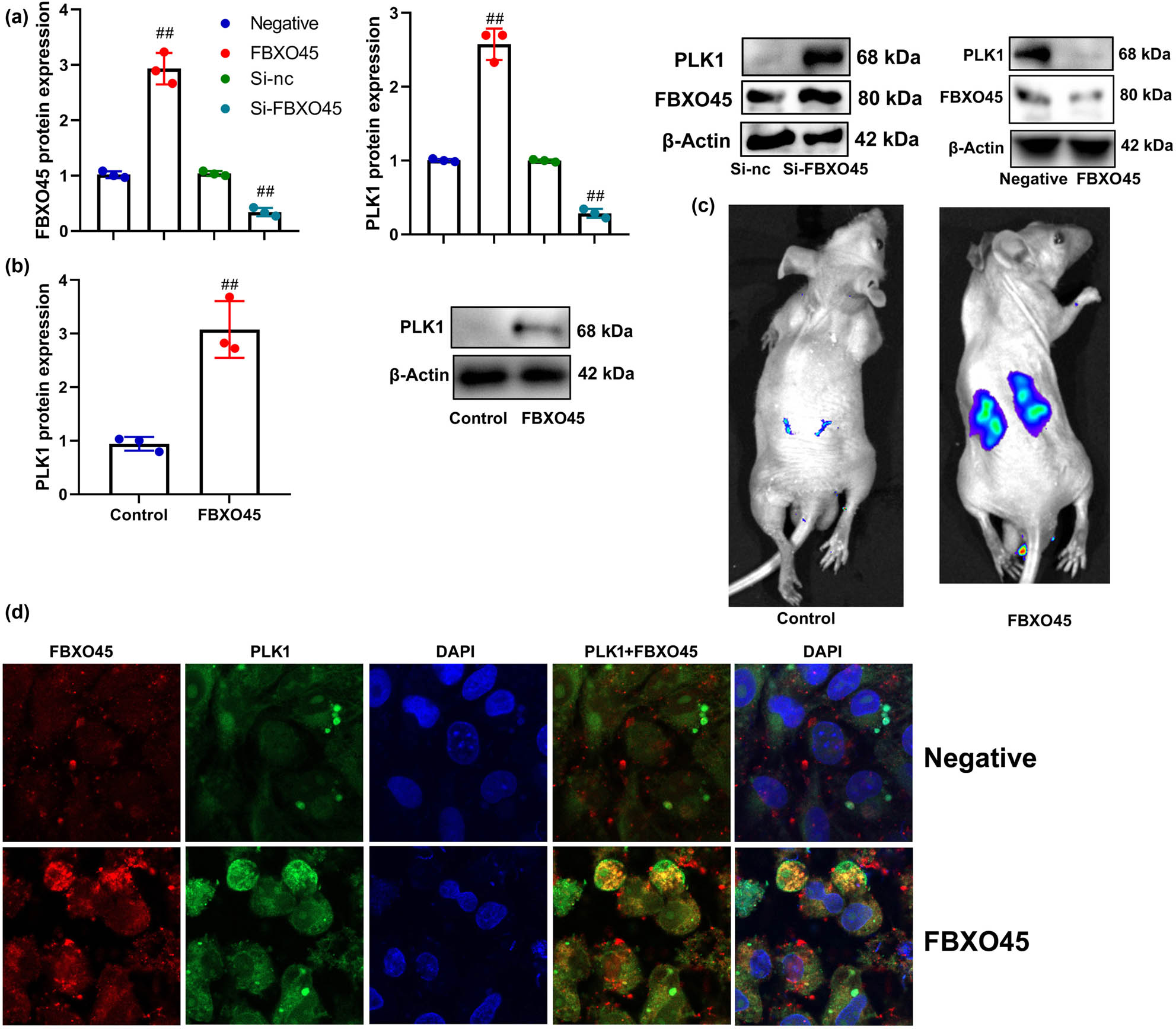
FBXO45 up-regulation induced PLK1 expression. FBXO45 and PLK1 protein expression in vitro model (a), PLK1 protein expression in mice model (b), bioluminescence imaging for PLK1 levels (c), and FBXO45 and PLK1 expression in vitro model immunofluorescence (d). ## p < 0.01 compared with negative or si-nc or control group. The number of vitro model = 3, and the number of mice model = 6.
3.6 PLK1 inhibitor reduced the effects of FBXO45 on DN
Moreover, we conducted further investigations to verify the involvement of PLK1 in the mechanism of FBXO45 within the DN model. To inhibit PLK1 activity, we utilized a PLK1 inhibitor called Onvansertib at a concentration of 10 μM. The results demonstrated that the administration of Onvansertib effectively mitigated the effects of FBXO45 on the expression of PLK1, GPX4, and SOD2, as well as on the development of DN in the mice model (Figure 6).

PLK1 inhibitor reduced the effects of FBXO45 on DN in the mice model. Blood glucose (a), body weight (b), PAS staining (c), kidney/body weight (d), water intake 24 h (e), E-cadherin mRNA expression (f), periostin mRNA expression (g), serum creatinine (h), RKA/RKVd/RKVm/RKVs levels (i–l), and PLK1/GPX4/SOD2 protein expression (m) in vitro model, ## p < 0.01 compared with the control group; **p < 0.01 compared with FBXO45 group. The number of mice model = 6.
Furthermore, in an in vitro model of DN using renal fibrocytes, treatment with the PLK1 inhibitor also counteracted the effects of FBXO45 on PLK1, GPX4, SOD2 expression, and ferroptosis (Figure 7). These findings suggest that the mechanism of FBXO45 in the context of DN is mediated, at least partly, through its interaction with PLK1. The use of a PLK1 inhibitor effectively attenuated the impact of FBXO45 on the expression of PLK1, GPX4, SOD2, and the progression of ferroptosis both in vivo and in vitro. These results highlight the significance of the FBXO45-PLK1 axis in the pathogenesis of DN and offer potential therapeutic implications for targeting this pathway.

PLK1 inhibitor reduced the effects of FBXO45 on DN in vitro model. Cell viability (a), LDH activity level (b), proportions of PI-positive cells (c), lron concentration (d), PLK1/GPX4/SOD2 protein expression (e), lipid ROS level (f), MDA (g), JC-1 levels (h), and MPT (i). ## p < 0.01 compared with the control group; **p < 0.01 compared with FBXO45 group. The number of vitro model = 3.
3.7 FBXO45 protein interlinked with PLK1 protein
In the subsequent phase of our study, we delved deeper into understanding the mechanism by which FBXO45 influences ferroptosis in renal fibrocytes. Using a 3D model prediction approach, we identified potential interaction sites between FBXO45 and PLK1. Specifically, the analysis revealed that FBXO45 residues GLY-271, ILE-226, GLY-166, LEU-165, ARG-245, and ASN-220 may interact with PLK1 residues TYR-417, ARG-516, HIS-489, TYR-485, GLN-536, and ARG-557 (Figure 8a and b). These predicted interactions provide valuable insights into the potential molecular interplay between FBXO45 and PLK1. To further validate this interaction, we constructed a schematic diagram highlighting the mutation sites and performed an immunoprecipitation (IP) assay. The results demonstrated the physical association between FBXO45 and PLK1 proteins, supporting the notion of direct interlinking between these two proteins (Figure 8c and d). These findings shed light on the molecular mechanisms underlying the influence of FBXO45 on ferroptosis in renal fibrocytes.

FBXO45 protein interlinked with PLK1 protein. 3D structure for FBXO45 protein interlinking with PLK1 protein (a), the binding site of TRIM47 protein interlinking with FOXO1 protein (b), schematic diagram of mutation sites (c), and IP assay for FBXO45 protein interlinking with PLK1 protein (d). The number of vitro model = 3.
4 Discussion
Kidney disease is a prevalent clinical condition that has seen an increasing incidence of kidney injury attributed to diabetes, owing to the rapid socioeconomic development, improved living standards, and changing lifestyles in China [26]. Diabetes is a group of chronic endocrine and metabolic disorders characterized by persistently elevated blood glucose levels. When the disease progresses, it can lead to kidney damage [27], eventually resulting in DN, which is a major microvascular complication of diabetes and the primary cause of end-stage renal disease [28]. In our study, we observed a down-regulation of serum FBXO45 mRNA expression in patients with DN as well as in a mouse model of DN. FBXO45 prevents renal fibrocytes in the model of DN through the inhibition of ferroptosis by PLK1 activity. These findings align with the work by Chuang et al., who reported decreased Fbxo45 expression in neuronal processes [29]. Collectively, these data provide evidence suggesting the regulatory role of Fbxo45 in DN-induced renal fibrocytes. The identification of FBXO45 as a potential player in the pathogenesis of DN underscores the importance of elucidating the molecular mechanisms underlying this disease. Further investigations into the precise role of FBXO45 in mediating renal fibrocyte function may offer valuable insights for the development of targeted therapeutic strategies aimed at ameliorating the progression of DN. α-SMA, COL I, and E-cad, these indicators are correlated with FBXO45. Of course, these indicators are not typical secret proteins, which is also a limitation of this study. We will continue to investigate the correlation between FBXO45 and DN in the next experiment.
Diabetes is a prevalent and increasingly common disease [30]. As people’s living standards improve and lifestyles change, the number of individuals diagnosed with diabetes continues to rise, along with the associated kidney damage. In China, diabetes nephropathy has surpassed glomerulonephritis as the leading cause of chronic kidney disease among hospitalized patients [31]. The etiology and pathogenesis of diabetes nephropathy are multifaceted, involving various factors such as genetic predisposition, renal hemodynamic effects, inflammatory responses, metabolic disruptions due to hyperglycemia, hypertension, abnormal metabolism of vasoactive substances, oxidative stress, and more. It is worth noting that the early stages of diabetes nephropathy often feature subtle signs, such as negative urinary albumin excretion, which can easily go unnoticed [32]. Our study provides data demonstrating the up-regulation of FBXO45 in a mouse model, which resulted in reduced DN. Interestingly, Lin et al. have previously suggested that FBXO45 could be targeted by miR-485-3p to modulate neuroinflammation in Parkinson’s disease [33]. These findings collectively suggest that FBXO45 may hold potential for the treatment of renal fibrocytes in the context of DN. By shedding light on the role of FBXO45 in mitigating the effects of DN, our research contributes to the understanding of this complex disease and highlights FBXO45 as a potential therapeutic target. Further investigations into the underlying molecular mechanisms and pathways involved may lead to the development of novel interventions for the treatment of DN.
The progression of interstitial fibrosis, a challenging condition to treat, is a prominent characteristic of progressive renal disease (PRD) and a major contributor to poor prognosis and limited treatment options for PRD patients in clinical settings [34]. Although many kidney diseases originate from the glomerulus, the extent of involvement of the renal tubulointerstitium serves as the most reliable prognostic indicator. PRD can have various causes, including obesity, hypertension, diabetes, or rare gene mutations. While its precise mechanism remains unclear, the ultimate outcome typically involves aggravated RF and eventual destruction of the blood-filtering cells [35]. In our study, we observed that up-regulation of FBXO45 led to a reduction in inflammation and oxidative stress in renal fibrocytes. This finding aligns with the work by Hsieh et al., who demonstrated that TNF-α suppresses Fbxo45 expression, contributing to the development of neuropathic allodynia in rats [36]. These data suggest that FBXO45 may have the potential to alleviate inflammation and oxidative stress in models of DN. Our findings provide insights into the role of FBXO45 in mitigating inflammation and oxidative stress in renal fibrocytes. Understanding the molecular mechanisms underlying these effects could pave the way for novel therapeutic strategies targeting RF in PRDs. Further investigations are warranted to elucidate the downstream pathways and molecular interactions involved in FBXO45-mediated modulation of inflammation and oxidative stress in the context of DN.
Ferroptosis is a distinct form of cell death that differs from apoptosis, necrosis, autophagy, and other known types of cell death [37]. The term “ferroptosis” was first proposed in 2012 [38]. It is an iron-dependent regulated cell death process driven by oxidative damage to polyunsaturated fatty acid-containing phospholipids in the cellular membrane. This process involves three key steps: iron accumulation, iron-dependent ROS production, and lipid peroxidation [39]. In our study, we observed that up-regulation of FBXO45 led to a reduction in ferroptosis in renal fibrocytes in both a mouse model of DN and an in vitro DN model. These findings are consistent with the work by Wang et al., who demonstrated that Fbxo45 inhibited apoptosis in Kyse-150, Kyse30, and ECA-109 cells [40]. Collectively, these data suggest that FBXO45 plays a role in reducing ferroptosis in renal fibrocytes within the context of DN. The identification of FBXO45 as a potential modulator of ferroptosis in renal fibrocytes provides new insights into the pathogenesis of DN. Further investigation into the underlying molecular mechanisms and signaling pathways involved may uncover novel therapeutic targets for preventing or treating ferroptosis-associated RF in the context of DN.
PLK1 is a member of the Polo-like kinase family, which comprises serine/threonine kinases found widely in eukaryotic cells [41]. Through its kinase activity, PLK1 can modulate various substrates, thereby regulating processes such as cell mitosis, cytokinesis, DNA damage response, and development [42]. High expression levels of PLK1 have been observed in several tumor tissues, including breast cancer, prostate cancer, ovarian cancer, and neuroblastoma [43]. In our study, we demonstrate that up-regulation of FBXO45 induces the expression of PLK1, and FBXO45 protein interacts with PLK1 protein in a model of DN. These findings align with the work by Lin et al., who reported the involvement of FBXO45 in liver tumorigenesis through upregulation of PLK1 [14]. Collectively, these data suggest that FBXO45 interacts with PLK1 protein to enhance the activity level of PLK1 in the context of DN. The identification of the interaction between FBXO45 and PLK1 sheds light on their potential collaborative role in the pathogenesis of DN. Further investigations into the underlying mechanisms governing this interaction may provide valuable insights into the development of targeted therapeutic approaches aimed at modulating PLK1 activity in the treatment of DN.
5 Conclusion
In conclusion, our study demonstrates that FBXO45 plays a crucial role in preventing renal fibrocytes in a model of DN through its regulation of PLK1 activity. These findings uncover a novel tissue-protective function of FBXO45 and highlight its potential therapeutic implications for targeting ferroptosis-associated renal fibrocytes in the context of DN. The identification of FBXO45 as a modulator of PLK1 activity provides new insights into the underlying molecular mechanisms involved in the pathogenesis of DN. Further exploration of the therapeutic potential of targeting FBXO45 in the context of ferroptosis-related RF may pave the way for the development of innovative treatments for DN. Overall, our study expands our understanding of the complex regulatory network involved in DN and suggests FBXO45 as a promising candidate for future therapeutic interventions aimed at mitigating the progression of this debilitating disease.
Acknowledgments
Not applicable.
-
Funding information: This study was supported by the Guangdong Provincial Medical Research Fund (A2023139).
-
Author contributions: Bingming Zhu designed the experiments. Yongxuan Hu and Ruishan Wu performed the experiments. Quan Yu and Wangrong Wen collected and analyzed the data. Yongxuan Hu and Wangrong Wen drafted the manuscript. All authors read and approved the final manuscript.
-
Conflict of interest: The authors declare that the research was conducted in the absence of any commercial or financial relationships that could be construed as a potential conflict of interest. The authors state that there are no financial, personal, or professional conflicts of interests that may hinder this work.
-
Data availability statement: The datasets used and/or analyzed during the current study are available from the corresponding author on reasonable request.
References
[1] Guo M, Gao J, Jiang L, Dai Y. Astragalus polysaccharide ameliorates renal inflammatory responses in a diabetic nephropathy by suppressing the TLR4/NF-κB pathway. Drug Des Devel Ther. 2023;17:2107–18. 10.2147/dddt.s411211.Search in Google Scholar PubMed PubMed Central
[2] Grasselli C, Bombelli S, D’Esposito V, Di Tolla MF, L’Imperio V, Rocchio F, et al. The therapeutic potential of an allosteric non-competitive CXCR1/2 antagonist for diabetic nephropathy. Diabetes Metab Res Rev. 2023;39(7):e3694. 10.1002/dmrr.3694.Search in Google Scholar PubMed
[3] Papadopoulou-Marketou N, Paschou SA, Marketos N, Adamidi S, Adamidis S, Kanaka-Gantenbein C. Diabetic nephropathy in type 1 diabetes. Minerva Med. 2018 Jun;109(3):218–28. 10.23736/s0026-4806.17.05496-9.Search in Google Scholar
[4] Fang J, Song K, Zhang D, Liang Y, Zhao H, Jin J, et al. Coffee intake and risk of diabetic nephropathy: a Mendelian randomization study. Front Endocrinol (Lausanne). 2023;14:1169933. 10.3389/fendo.2023.1169933.Search in Google Scholar PubMed PubMed Central
[5] Qi C, Mao X, Zhang Z, Wu H. Classification and differential diagnosis of diabetic nephropathy. J Diabetes Res. 2017;2017:8637138. 10.1155/2017/8637138.Search in Google Scholar PubMed PubMed Central
[6] Samsu N. Diabetic nephropathy: challenges in pathogenesis, diagnosis, and treatment. Biomed Res Int. 2021;2021:1497449. 10.1155/2021/1497449.Search in Google Scholar PubMed PubMed Central
[7] Kaewin S, Poolsri W, Korkut GG, Patrakka J, Aiebchun T, Rungrotmongkol T, et al. A sulfonamide chalcone AMPK activator ameliorates hyperglycemia and diabetic nephropathy in db/db mice. Biomed Pharmacother. 2023 Jul;165:115158. 10.1016/j.biopha.2023.115158.Search in Google Scholar PubMed
[8] Rayego-Mateos S, Valdivielso JM. New therapeutic targets in chronic kidney disease progression and renal fibrosis. Expert Opin Ther Targets. 2020 Jul;24(7):655–70. 10.1080/14728222.2020.1762173.Search in Google Scholar PubMed
[9] Wu Q, Sun S, Wei L, Liu M, Liu H, Liu T, et al. Twist1 regulates macrophage plasticity to promote renal fibrosis through galectin-3. Cell Mol Life Sci. 2022 Feb;79(3):137. 10.1007/s00018-022-04137-0.Search in Google Scholar PubMed PubMed Central
[10] Jing H, Tang S, Lin S, Liao M, Chen H, Fan Y, et al. Adiponectin in renal fibrosis. Aging (Albany NY). 2020 Feb;12(5):4660–72. 10.18632/aging.102811.Search in Google Scholar PubMed PubMed Central
[11] Li XT, Song JW, Zhang ZZ, Zhang MW, Liang LR, Miao R, et al. Sirtuin 7 mitigates renal ferroptosis, fibrosis and injury in hypertensive mice by facilitating the KLF15/Nrf2 signaling. Free Radic Biol Med. 2022 Nov;193(Pt 1):459–73. 10.1016/j.freeradbiomed.2022.10.320.Search in Google Scholar PubMed
[12] Liu Y, Wang J. Ferroptosis, a rising force against renal fibrosis. Oxid Med Cell Longev. 2022;2022:7686956. 10.1155/2022/7686956.Search in Google Scholar PubMed PubMed Central
[13] Feng X, Wang S, Sun Z, Dong H, Yu H, Huang M, et al. Ferroptosis Enhanced diabetic renal tubular injury via HIF-1α/HO-1 pathway in db/db mice. Front Endocrinol (Lausanne). 2021;12:626390. 10.3389/fendo.2021.626390.Search in Google Scholar PubMed PubMed Central
[14] Lin XT, Yu HQ, Fang L, Tan Y, Liu ZY, Wu D, et al. Elevated FBXO45 promotes liver tumorigenesis through enhancing IGF2BP1 ubiquitination and subsequent PLK1 upregulation. Elife. 2021;10:e70715. 10.7554/eLife.70715.Search in Google Scholar PubMed PubMed Central
[15] Liu Z, Sun Q, Wang X. PLK1, a potential target for cancer therapy. Transl Oncol. 2017 Feb;10(1):22–32. 10.1016/j.tranon.2016.10.003.Search in Google Scholar PubMed PubMed Central
[16] Su S, Chhabra G, Singh CK, Ndiaye MA, Ahmad N. PLK1 inhibition-based combination therapies for cancer management. Transl Oncol. 2022 Feb;16:101332. 10.1016/j.tranon.2021.101332.Search in Google Scholar PubMed PubMed Central
[17] Wang B, Huang X, Liang H, Yang H, Guo Z, Ai M, et al. PLK1 inhibition sensitizes breast cancer cells to radiation via suppressing autophagy. Int J Radiat Oncol Biol Phys. 2021 Jul;110(4):1234–47. 10.1016/j.ijrobp.2021.02.025.Search in Google Scholar PubMed
[18] Zhang Z, Cheng L, Li J, Qiao Q, Karki A, Allison DB, et al. Targeting Plk1 sensitizes pancreatic cancer to immune checkpoint therapy. Cancer Res. 2022 Oct;82(19):3532–48. 10.1158/0008-5472.can-22-0018.Search in Google Scholar PubMed PubMed Central
[19] Wang Q, Xu C, Cai R, An W, Yuan H, Xu M. Fbxo45-mediated NP-STEP(46) degradation via K6-linked ubiquitination sustains ERK activity in lung cancer. Mol Oncol. 2022 Aug;16(16):3017–33. 10.1002/1878-0261.13290.Search in Google Scholar PubMed PubMed Central
[20] Richter KT, Kschonsak YT, Vodicska B, Hoffmann I. FBXO45-MYCBP2 regulates mitotic cell fate by targeting FBXW7 for degradation. Cell Death Differ. 2020 Feb;27(2):758–72. 10.1038/s41418-019-0385-7.Search in Google Scholar PubMed PubMed Central
[21] Lin M, Wang ZW, Zhu X. FBXO45 is a potential therapeutic target for cancer therapy. Cell Death Discov. 2020;6:55. 10.1038/s41420-020-0291-2.Search in Google Scholar PubMed PubMed Central
[22] Zhou X, Cao L, Jiang C, Xie Y, Cheng X, Krausz KW, et al. PPARα-UGT axis activation represses intestinal FXR-FGF15 feedback signalling and exacerbates experimental colitis. Nat Commun. 2014 Sep;5:4573. 10.1038/ncomms5573.Search in Google Scholar PubMed PubMed Central
[23] Sedeek M, Callera G, Montezano A, Gutsol A, Heitz F, Szyndralewiez C, et al. Critical role of Nox4-based NADPH oxidase in glucose-induced oxidative stress in the kidney: implications in type 2 diabetic nephropathy. Am J Physiol Renal Physiol. 2010 Dec;299(6):F1348–58. 10.1152/ajprenal.00028.2010.Search in Google Scholar PubMed
[24] Guo Y, Ran Z, Zhang Y, Song Z, Wang L, Yao L, et al. Marein ameliorates diabetic nephropathy by inhibiting renal sodium glucose transporter 2 and activating the AMPK signaling pathway in db/db mice and high glucose-treated HK-2 cells. Biomed Pharmacother. 2020 Nov;131:110684. 10.1016/j.biopha.2020.110684.Search in Google Scholar PubMed
[25] Li L, Liu Z, Yang X, Yan H, Bao S, Fei J. Bioluminescence imaging for IL-1β expression in experimental colitis. J Inflamm (Lond). 2013 Apr;10(1):16. 10.1186/1476-9255-10-16.Search in Google Scholar PubMed PubMed Central
[26] Quan Y, Su P, Shangguan C, Hao H, Yue L, Chen C. Bergenin ameliorates diabetic nephropathy in C57BL/6 J mice by TLR4/MyD88/NF-κB signalling pathway regulation. Toxicol Appl Pharmacol. 2023;475:116633. 10.1016/j.taap.2023.116633.Search in Google Scholar PubMed
[27] Maekawa M, Maekawa T, Sasase T, Wakashima T, Uemura A, Uno K, et al. Renal transcriptome analysis of uninephrectomized db/db mice identified a mechanism for the transition to severe diabetic nephropathy. Exp Anim. 2023;73(1):29–40. 10.1538/expanim.22-0168.Search in Google Scholar PubMed PubMed Central
[28] Lin Z, Li S, Xiao H, Xu Z, Li C, Zeng J, et al. The degradation of TGR5 mediated by Smurf1 contributes to diabetic nephropathy. Cell Rep. 2023 Jul;42(8):112851. 10.1016/j.celrep.2023.112851.Search in Google Scholar PubMed
[29] Chung FZ, Sahasrabuddhe AA, Ma K, Chen X, Basrur V, Lim MS, et al. Fbxo45 inhibits calcium-sensitive proteolysis of N-cadherin and promotes neuronal differentiation. J Biol Chem. 2014 Oct;289(41):28448–59. 10.1074/jbc.M114.561241.Search in Google Scholar PubMed PubMed Central
[30] Wu H, Xu F, Huang X, Li X, Yu P, Zhang L, et al. Lupenone improves type 2 diabetic nephropathy by regulating NF-κB pathway-mediated inflammation and TGF-β1/Smad/CTGF-associated fibrosis. Phytomedicine. 2023 Jul;118:154959. 10.1016/j.phymed.2023.154959.Search in Google Scholar PubMed
[31] Yan M, Li W, Wei R, Li S, Liu Y, Huang Y, et al. Identification of pyroptosis-related genes and potential drugs in diabetic nephropathy. J Transl Med. 2023 Jul;21(1):490. 10.1186/s12967-023-04350-w.Search in Google Scholar PubMed PubMed Central
[32] Toyama T, Shimizu M, Yamaguchi T, Kurita H, Morita T, Oshima M, et al. A comprehensive risk factor analysis using association rules in people with diabetic kidney disease. Sci Rep. 2023 Jul;13(1):11690. 10.1038/s41598-023-38811-5.Search in Google Scholar PubMed PubMed Central
[33] Lin X, Wang R, Li R, Tao T, Zhang D, Qi Y. Diagnostic performance of miR-485-3p in patients with parkinson’s disease and its relationship with neuroinflammation. Neuromolecular Med. 2022 Jun;24(2):195–201. 10.1007/s12017-021-08676-w.Search in Google Scholar PubMed
[34] Xiong Y, Zhou L. The signaling of cellular senescence in diabetic nephropathy. Oxid Med Cell Longev. 2019;2019:7495629. 10.1155/2019/7495629.Search in Google Scholar PubMed PubMed Central
[35] Tervaert TW, Mooyaart AL, Amann K, Cohen AH, Cook HT, Drachenberg CB, et al. Pathologic classification of diabetic nephropathy. J Am Soc Nephrol. 2010 Apr;21(4):556–63. 10.1681/asn.2010010010.Search in Google Scholar PubMed
[36] Hsieh MC, Ho YC, Lai CY, Chou D, Chen GD, Lin TB, et al. Spinal TNF-α impedes Fbxo45-dependent Munc13-1 ubiquitination to mediate neuropathic allodynia in rats. Cell Death Dis. 2018 Jul;9(8):811. 10.1038/s41419-018-0859-4.Search in Google Scholar PubMed PubMed Central
[37] Wang J, Wang Y, Liu Y, Cai X, Huang X, Fu W, et al. Ferroptosis, a new target for treatment of renal injury and fibrosis in a 5/6 nephrectomy-induced CKD rat model. Cell Death Discovery. 2022 Mar;8(1):127. 10.1038/s41420-022-00931-8.Search in Google Scholar PubMed PubMed Central
[38] Zhang B, Chen X, Ru F, Gan Y, Li B, Xia W, et al. Liproxstatin-1 attenuates unilateral ureteral obstruction-induced renal fibrosis by inhibiting renal tubular epithelial cells ferroptosis. Cell Death Dis. 2021 Sep;12(9):843. 10.1038/s41419-021-04137-1.Search in Google Scholar PubMed PubMed Central
[39] Pan Q, Luo Y, Xia Q, He K. Ferroptosis and liver fibrosis. Int J Med Sci. 2021;18(15):3361–6. 10.7150/ijms.62903.Search in Google Scholar PubMed PubMed Central
[40] Wang Q, Wu L, Cao R, Gao J, Chai D, Qin Y, et al. Fbxo45 promotes the malignant development of esophageal squamous cell carcinoma by targeting GGNBP2 for ubiquitination and degradation. Oncogene. 2022 Oct;41(43):4795–807. 10.1038/s41388-022-02468-7.Search in Google Scholar PubMed
[41] Iliaki S, Beyaert R, Afonina IS. Polo-like kinase 1 (PLK1) signaling in cancer and beyond. Biochem Pharmacol. 2021 Nov;193:114747. 10.1016/j.bcp.2021.114747.Search in Google Scholar PubMed
[42] Kalous J, Aleshkina D. Multiple roles of PLK1 in mitosis and meiosis. Cells. 2023;12(1):187. 10.3390/cells12010187.Search in Google Scholar PubMed PubMed Central
[43] Chiappa M, Petrella S, Damia G, Broggini M, Guffanti F, Ricci F. Present and future perspective on PLK1 inhibition in cancer treatment. Front Oncol. 2022;12:903016. 10.3389/fonc.2022.903016.Search in Google Scholar PubMed PubMed Central
© 2024 the author(s), published by De Gruyter
This work is licensed under the Creative Commons Attribution 4.0 International License.
Articles in the same Issue
- Research Articles
- EDNRB inhibits the growth and migration of prostate cancer cells by activating the cGMP-PKG pathway
- STK11 (LKB1) mutation suppresses ferroptosis in lung adenocarcinoma by facilitating monounsaturated fatty acid synthesis
- Association of SOX6 gene polymorphisms with Kashin-Beck disease risk in the Chinese Han population
- The pyroptosis-related signature predicts prognosis and influences the tumor immune microenvironment in dedifferentiated liposarcoma
- METTL3 attenuates ferroptosis sensitivity in lung cancer via modulating TFRC
- Identification and validation of molecular subtypes and prognostic signature for stage I and stage II gastric cancer based on neutrophil extracellular traps
- Novel lumbar plexus block versus femoral nerve block for analgesia and motor recovery after total knee arthroplasty
- Correlation between ABCB1 and OLIG2 polymorphisms and the severity and prognosis of patients with cerebral infarction
- Study on the radiotherapy effect and serum neutral granulocyte lymphocyte ratio and inflammatory factor expression of nasopharyngeal carcinoma
- Transcriptome analysis of effects of Tecrl deficiency on cardiometabolic and calcium regulation in cardiac tissue
- Aflatoxin B1 induces infertility, fetal deformities, and potential therapies
- Serum levels of HMW adiponectin and its receptors are associated with cytokine levels and clinical characteristics in chronic obstructive pulmonary disease
- METTL3-mediated methylation of CYP2C19 mRNA may aggravate clopidogrel resistance in ischemic stroke patients
- Understand how machine learning impact lung cancer research from 2010 to 2021: A bibliometric analysis
- Pressure ulcers in German hospitals: Analysis of reimbursement and length of stay
- Metformin plus L-carnitine enhances brown/beige adipose tissue activity via Nrf2/HO-1 signaling to reduce lipid accumulation and inflammation in murine obesity
- Downregulation of carbonic anhydrase IX expression in mouse xenograft nasopharyngeal carcinoma model via doxorubicin nanobubble combined with ultrasound
- Feasibility of 3-dimensional printed models in simulated training and teaching of transcatheter aortic valve replacement
- miR-335-3p improves type II diabetes mellitus by IGF-1 regulating macrophage polarization
- The analyses of human MCPH1 DNA repair machinery and genetic variations
- Activation of Piezo1 increases the sensitivity of breast cancer to hyperthermia therapy
- Comprehensive analysis based on the disulfidptosis-related genes identifies hub genes and immune infiltration for pancreatic adenocarcinoma
- Changes of serum CA125 and PGE2 before and after high-intensity focused ultrasound combined with GnRH-a in treatment of patients with adenomyosis
- The clinical value of the hepatic venous pressure gradient in patients undergoing hepatic resection for hepatocellular carcinoma with or without liver cirrhosis
- Development and validation of a novel model to predict pulmonary embolism in cardiology suspected patients: A 10-year retrospective analysis
- Downregulation of lncRNA XLOC_032768 in diabetic patients predicts the occurrence of diabetic nephropathy
- Circ_0051428 targeting miR-885-3p/MMP2 axis enhances the malignancy of cervical cancer
- Effectiveness of ginkgo diterpene lactone meglumine on cognitive function in patients with acute ischemic stroke
- The construction of a novel prognostic prediction model for glioma based on GWAS-identified prognostic-related risk loci
- Evaluating the impact of childhood BMI on the risk of coronavirus disease 2019: A Mendelian randomization study
- Lactate dehydrogenase to albumin ratio is associated with in-hospital mortality in patients with acute heart failure: Data from the MIMIC-III database
- CD36-mediated podocyte lipotoxicity promotes foot process effacement
- Efficacy of etonogestrel subcutaneous implants versus the levonorgestrel-releasing intrauterine system in the conservative treatment of adenomyosis
- FLRT2 mediates chondrogenesis of nasal septal cartilage and mandibular condyle cartilage
- Challenges in treating primary immune thrombocytopenia patients undergoing COVID-19 vaccination: A retrospective study
- Let-7 family regulates HaCaT cell proliferation and apoptosis via the ΔNp63/PI3K/AKT pathway
- Phospholipid transfer protein ameliorates sepsis-induced cardiac dysfunction through NLRP3 inflammasome inhibition
- Postoperative cognitive dysfunction in elderly patients with colorectal cancer: A randomized controlled study comparing goal-directed and conventional fluid therapy
- Long-pulsed ultrasound-mediated microbubble thrombolysis in a rat model of microvascular obstruction
- High SEC61A1 expression predicts poor outcome of acute myeloid leukemia
- Comparison of polymerase chain reaction and next-generation sequencing with conventional urine culture for the diagnosis of urinary tract infections: A meta-analysis
- Secreted frizzled-related protein 5 protects against renal fibrosis by inhibiting Wnt/β-catenin pathway
- Pan-cancer and single-cell analysis of actin cytoskeleton genes related to disulfidptosis
- Overexpression of miR-532-5p restrains oxidative stress response of chondrocytes in nontraumatic osteonecrosis of the femoral head by inhibiting ABL1
- Autologous liver transplantation for unresectable hepatobiliary malignancies in enhanced recovery after surgery model
- Clinical analysis of incomplete rupture of the uterus secondary to previous cesarean section
- Abnormal sleep duration is associated with sarcopenia in older Chinese people: A large retrospective cross-sectional study
- No genetic causality between obesity and benign paroxysmal vertigo: A two-sample Mendelian randomization study
- Identification and validation of autophagy-related genes in SSc
- Long non-coding RNA SRA1 suppresses radiotherapy resistance in esophageal squamous cell carcinoma by modulating glycolytic reprogramming
- Evaluation of quality of life in patients with schizophrenia: An inpatient social welfare institution-based cross-sectional study
- The possible role of oxidative stress marker glutathione in the assessment of cognitive impairment in multiple sclerosis
- Compilation of a self-management assessment scale for postoperative patients with aortic dissection
- Left atrial appendage closure in conjunction with radiofrequency ablation: Effects on left atrial functioning in patients with paroxysmal atrial fibrillation
- Effect of anterior femoral cortical notch grade on postoperative function and complications during TKA surgery: A multicenter, retrospective study
- Clinical characteristics and assessment of risk factors in patients with influenza A-induced severe pneumonia after the prevalence of SARS-CoV-2
- Analgesia nociception index is an indicator of laparoscopic trocar insertion-induced transient nociceptive stimuli
- High STAT4 expression correlates with poor prognosis in acute myeloid leukemia and facilitates disease progression by upregulating VEGFA expression
- Factors influencing cardiovascular system-related post-COVID-19 sequelae: A single-center cohort study
- HOXD10 regulates intestinal permeability and inhibits inflammation of dextran sulfate sodium-induced ulcerative colitis through the inactivation of the Rho/ROCK/MMPs axis
- Mesenchymal stem cell-derived exosomal miR-26a induces ferroptosis, suppresses hepatic stellate cell activation, and ameliorates liver fibrosis by modulating SLC7A11
- Endovascular thrombectomy versus intravenous thrombolysis for primary distal, medium vessel occlusion in acute ischemic stroke
- ANO6 (TMEM16F) inhibits gastrointestinal stromal tumor growth and induces ferroptosis
- Prognostic value of EIF5A2 in solid tumors: A meta-analysis and bioinformatics analysis
- The role of enhanced expression of Cx43 in patients with ulcerative colitis
- Choosing a COVID-19 vaccination site might be driven by anxiety and body vigilance
- Role of ICAM-1 in triple-negative breast cancer
- Cost-effectiveness of ambroxol in the treatment of Gaucher disease type 2
- HLA-DRB5 promotes immune thrombocytopenia via activating CD8+ T cells
- Efficacy and factors of myofascial release therapy combined with electrical and magnetic stimulation in the treatment of chronic pelvic pain syndrome
- Efficacy of tacrolimus monotherapy in primary membranous nephropathy
- Mechanisms of Tripterygium wilfordii Hook F on treating rheumatoid arthritis explored by network pharmacology analysis and molecular docking
- FBXO45 levels regulated ferroptosis renal tubular epithelial cells in a model of diabetic nephropathy by PLK1
- Optimizing anesthesia strategies to NSCLC patients in VATS procedures: Insights from drug requirements and patient recovery patterns
- Alpha-lipoic acid upregulates the PPARγ/NRF2/GPX4 signal pathway to inhibit ferroptosis in the pathogenesis of unexplained recurrent pregnancy loss
- Correlation between fat-soluble vitamin levels and inflammatory factors in paediatric community-acquired pneumonia: A prospective study
- CD1d affects the proliferation, migration, and apoptosis of human papillary thyroid carcinoma TPC-1 cells via regulating MAPK/NF-κB signaling pathway
- miR-let-7a inhibits sympathetic nerve remodeling after myocardial infarction by downregulating the expression of nerve growth factor
- Immune response analysis of solid organ transplantation recipients inoculated with inactivated COVID-19 vaccine: A retrospective analysis
- The H2Valdien derivatives regulate the epithelial–mesenchymal transition of hepatoma carcinoma cells through the Hedgehog signaling pathway
- Clinical efficacy of dexamethasone combined with isoniazid in the treatment of tuberculous meningitis and its effect on peripheral blood T cell subsets
- Comparison of short-segment and long-segment fixation in treatment of degenerative scoliosis and analysis of factors associated with adjacent spondylolisthesis
- Lycopene inhibits pyroptosis of endothelial progenitor cells induced by ox-LDL through the AMPK/mTOR/NLRP3 pathway
- Methylation regulation for FUNDC1 stability in childhood leukemia was up-regulated and facilitates metastasis and reduces ferroptosis of leukemia through mitochondrial damage by FBXL2
- Correlation of single-fiber electromyography studies and functional status in patients with amyotrophic lateral sclerosis
- Risk factors of postoperative airway obstruction complications in children with oral floor mass
- Expression levels and clinical significance of serum miR-19a/CCL20 in patients with acute cerebral infarction
- Physical activity and mental health trends in Korean adolescents: Analyzing the impact of the COVID-19 pandemic from 2018 to 2022
- Evaluating anemia in HIV-infected patients using chest CT
- Ponticulus posticus and skeletal malocclusion: A pilot study in a Southern Italian pre-orthodontic court
- Causal association of circulating immune cells and lymphoma: A Mendelian randomization study
- Assessment of the renal function and fibrosis indexes of conventional western medicine with Chinese medicine for dredging collaterals on treating renal fibrosis: A systematic review and meta-analysis
- Comprehensive landscape of integrator complex subunits and their association with prognosis and tumor microenvironment in gastric cancer
- New target-HMGCR inhibitors for the treatment of primary sclerosing cholangitis: A drug Mendelian randomization study
- Population pharmacokinetics of meropenem in critically ill patients
- Comparison of the ability of newly inflammatory markers to predict complicated appendicitis
- Comparative morphology of the cruciate ligaments: A radiological study
- Immune landscape of hepatocellular carcinoma: The central role of TP53-inducible glycolysis and apoptosis regulator
- Serum SIRT3 levels in epilepsy patients and its association with clinical outcomes and severity: A prospective observational study
- SHP-1 mediates cigarette smoke extract-induced epithelial–mesenchymal transformation and inflammation in 16HBE cells
- Acute hyper-hypoxia accelerates the development of depression in mice via the IL-6/PGC1α/MFN2 signaling pathway
- The GJB3 correlates with the prognosis, immune cell infiltration, and therapeutic responses in lung adenocarcinoma
- Physical fitness and blood parameters outcomes of breast cancer survivor in a low-intensity circuit resistance exercise program
- Exploring anesthetic-induced gene expression changes and immune cell dynamics in atrial tissue post-coronary artery bypass graft surgery
- Empagliflozin improves aortic injury in obese mice by regulating fatty acid metabolism
- Analysis of the risk factors of the radiation-induced encephalopathy in nasopharyngeal carcinoma: A retrospective cohort study
- Reproductive outcomes in women with BRCA 1/2 germline mutations: A retrospective observational study and literature review
- Evaluation of upper airway ultrasonographic measurements in predicting difficult intubation: A cross-section of the Turkish population
- Prognostic and diagnostic value of circulating IGFBP2 in pancreatic cancer
- Postural stability after operative reconstruction of the AFTL in chronic ankle instability comparing three different surgical techniques
- Research trends related to emergence agitation in the post-anaesthesia care unit from 2001 to 2023: A bibliometric analysis
- Frequency and clinicopathological correlation of gastrointestinal polyps: A six-year single center experience
- ACSL4 mediates inflammatory bowel disease and contributes to LPS-induced intestinal epithelial cell dysfunction by activating ferroptosis and inflammation
- Affibody-based molecular probe 99mTc-(HE)3ZHER2:V2 for non-invasive HER2 detection in ovarian and breast cancer xenografts
- Effectiveness of nutritional support for clinical outcomes in gastric cancer patients: A meta-analysis of randomized controlled trials
- The relationship between IFN-γ, IL-10, IL-6 cytokines, and severity of the condition with serum zinc and Fe in children infected with Mycoplasma pneumoniae
- Paraquat disrupts the blood–brain barrier by increasing IL-6 expression and oxidative stress through the activation of PI3K/AKT signaling pathway
- Sleep quality associate with the increased prevalence of cognitive impairment in coronary artery disease patients: A retrospective case–control study
- Dioscin protects against chronic prostatitis through the TLR4/NF-κB pathway
- Association of polymorphisms in FBN1, MYH11, and TGF-β signaling-related genes with susceptibility of sporadic thoracic aortic aneurysm and dissection in the Zhejiang Han population
- Application value of multi-parameter magnetic resonance image-transrectal ultrasound cognitive fusion in prostate biopsy
- Laboratory variables‐based artificial neural network models for predicting fatty liver disease: A retrospective study
- Decreased BIRC5-206 promotes epithelial–mesenchymal transition in nasopharyngeal carcinoma through sponging miR-145-5p
- Sepsis induces the cardiomyocyte apoptosis and cardiac dysfunction through activation of YAP1/Serpine1/caspase-3 pathway
- Assessment of iron metabolism and iron deficiency in incident patients on incident continuous ambulatory peritoneal dialysis
- Tibial periosteum flap combined with autologous bone grafting in the treatment of Gustilo-IIIB/IIIC open tibial fractures
- The application of intravenous general anesthesia under nasopharyngeal airway assisted ventilation undergoing ureteroscopic holmium laser lithotripsy: A prospective, single-center, controlled trial
- Long intergenic noncoding RNA for IGF2BP2 stability suppresses gastric cancer cell apoptosis by inhibiting the maturation of microRNA-34a
- Role of FOXM1 and AURKB in regulating keratinocyte function in psoriasis
- Parental control attitudes over their pre-school children’s diet
- The role of auto-HSCT in extranodal natural killer/T cell lymphoma
- Significance of negative cervical cytology and positive HPV in the diagnosis of cervical lesions by colposcopy
- Echinacoside inhibits PASMCs calcium overload to prevent hypoxic pulmonary artery remodeling by regulating TRPC1/4/6 and calmodulin
- ADAR1 plays a protective role in proximal tubular cells under high glucose conditions by attenuating the PI3K/AKT/mTOR signaling pathway
- The risk of cancer among insulin glargine users in Lithuania: A retrospective population-based study
- The unusual location of primary hydatid cyst: A case series study
- Intraoperative changes in electrophysiological monitoring can be used to predict clinical outcomes in patients with spinal cavernous malformation
- Obesity and risk of placenta accreta spectrum: A meta-analysis
- Shikonin alleviates asthma phenotypes in mice via an airway epithelial STAT3-dependent mechanism
- NSUN6 and HTR7 disturbed the stability of carotid atherosclerotic plaques by regulating the immune responses of macrophages
- The effect of COVID-19 lockdown on admission rates in Maternity Hospital
- Temporal muscle thickness is not a prognostic predictor in patients with high-grade glioma, an experience at two centers in China
- Luteolin alleviates cerebral ischemia/reperfusion injury by regulating cell pyroptosis
- Therapeutic role of respiratory exercise in patients with tuberculous pleurisy
- Effects of CFTR-ENaC on spinal cord edema after spinal cord injury
- Irisin-regulated lncRNAs and their potential regulatory functions in chondrogenic differentiation of human mesenchymal stem cells
- DMD mutations in pediatric patients with phenotypes of Duchenne/Becker muscular dystrophy
- Combination of C-reactive protein and fibrinogen-to-albumin ratio as a novel predictor of all-cause mortality in heart failure patients
- Significant role and the underly mechanism of cullin-1 in chronic obstructive pulmonary disease
- Ferroptosis-related prognostic model of mantle cell lymphoma
- Observation of choking reaction and other related indexes in elderly painless fiberoptic bronchoscopy with transnasal high-flow humidification oxygen therapy
- A bibliometric analysis of Prader-Willi syndrome from 2002 to 2022
- The causal effects of childhood sunburn occasions on melanoma: A univariable and multivariable Mendelian randomization study
- Oxidative stress regulates glycogen synthase kinase-3 in lymphocytes of diabetes mellitus patients complicated with cerebral infarction
- Role of COX6C and NDUFB3 in septic shock and stroke
- Trends in disease burden of type 2 diabetes, stroke, and hypertensive heart disease attributable to high BMI in China: 1990–2019
- Purinergic P2X7 receptor mediates hyperoxia-induced injury in pulmonary microvascular endothelial cells via NLRP3-mediated pyroptotic pathway
- Investigating the role of oviductal mucosa–endometrial co-culture in modulating factors relevant to embryo implantation
- Analgesic effect of external oblique intercostal block in laparoscopic cholecystectomy: A retrospective study
- Elevated serum miR-142-5p correlates with ischemic lesions and both NSE and S100β in ischemic stroke patients
- Correlation between the mechanism of arteriopathy in IgA nephropathy and blood stasis syndrome: A cohort study
- Risk factors for progressive kyphosis after percutaneous kyphoplasty in osteoporotic vertebral compression fracture
- Predictive role of neuron-specific enolase and S100-β in early neurological deterioration and unfavorable prognosis in patients with ischemic stroke
- The potential risk factors of postoperative cognitive dysfunction for endovascular therapy in acute ischemic stroke with general anesthesia
- Fluoxetine inhibited RANKL-induced osteoclastic differentiation in vitro
- Detection of serum FOXM1 and IGF2 in patients with ARDS and their correlation with disease and prognosis
- Rhein promotes skin wound healing by activating the PI3K/AKT signaling pathway
- Differences in mortality risk by levels of physical activity among persons with disabilities in South Korea
- Review Articles
- Cutaneous signs of selected cardiovascular disorders: A narrative review
- XRCC1 and hOGG1 polymorphisms and endometrial carcinoma: A meta-analysis
- A narrative review on adverse drug reactions of COVID-19 treatments on the kidney
- Emerging role and function of SPDL1 in human health and diseases
- Adverse reactions of piperacillin: A literature review of case reports
- Molecular mechanism and intervention measures of microvascular complications in diabetes
- Regulation of mesenchymal stem cell differentiation by autophagy
- Molecular landscape of borderline ovarian tumours: A systematic review
- Advances in synthetic lethality modalities for glioblastoma multiforme
- Investigating hormesis, aging, and neurodegeneration: From bench to clinics
- Frankincense: A neuronutrient to approach Parkinson’s disease treatment
- Sox9: A potential regulator of cancer stem cells in osteosarcoma
- Early detection of cardiovascular risk markers through non-invasive ultrasound methodologies in periodontitis patients
- Advanced neuroimaging and criminal interrogation in lie detection
- Maternal factors for neural tube defects in offspring: An umbrella review
- The chemoprotective hormetic effects of rosmarinic acid
- CBD’s potential impact on Parkinson’s disease: An updated overview
- Progress in cytokine research for ARDS: A comprehensive review
- Utilizing reactive oxygen species-scavenging nanoparticles for targeting oxidative stress in the treatment of ischemic stroke: A review
- NRXN1-related disorders, attempt to better define clinical assessment
- Lidocaine infusion for the treatment of complex regional pain syndrome: Case series and literature review
- Trends and future directions of autophagy in osteosarcoma: A bibliometric analysis
- Iron in ventricular remodeling and aneurysms post-myocardial infarction
- Case Reports
- Sirolimus potentiated angioedema: A case report and review of the literature
- Identification of mixed anaerobic infections after inguinal hernia repair based on metagenomic next-generation sequencing: A case report
- Successful treatment with bortezomib in combination with dexamethasone in a middle-aged male with idiopathic multicentric Castleman’s disease: A case report
- Complete heart block associated with hepatitis A infection in a female child with fatal outcome
- Elevation of D-dimer in eosinophilic gastrointestinal diseases in the absence of venous thrombosis: A case series and literature review
- Four years of natural progressive course: A rare case report of juvenile Xp11.2 translocations renal cell carcinoma with TFE3 gene fusion
- Advancing prenatal diagnosis: Echocardiographic detection of Scimitar syndrome in China – A case series
- Outcomes and complications of hemodialysis in patients with renal cancer following bilateral nephrectomy
- Anti-HMGCR myopathy mimicking facioscapulohumeral muscular dystrophy
- Recurrent opportunistic infections in a HIV-negative patient with combined C6 and NFKB1 mutations: A case report, pedigree analysis, and literature review
- Letter to the Editor
- Letter to the Editor: Total parenteral nutrition-induced Wernicke’s encephalopathy after oncologic gastrointestinal surgery
- Erratum
- Erratum to “Bladder-embedded ectopic intrauterine device with calculus”
- Retraction
- Retraction of “XRCC1 and hOGG1 polymorphisms and endometrial carcinoma: A meta-analysis”
- Corrigendum
- Corrigendum to “Investigating hormesis, aging, and neurodegeneration: From bench to clinics”
- Corrigendum to “Frankincense: A neuronutrient to approach Parkinson’s disease treatment”
- Special Issue The evolving saga of RNAs from bench to bedside - Part II
- Machine-learning-based prediction of a diagnostic model using autophagy-related genes based on RNA sequencing for patients with papillary thyroid carcinoma
- Unlocking the future of hepatocellular carcinoma treatment: A comprehensive analysis of disulfidptosis-related lncRNAs for prognosis and drug screening
- Elevated mRNA level indicates FSIP1 promotes EMT and gastric cancer progression by regulating fibroblasts in tumor microenvironment
- Special Issue Advancements in oncology: bridging clinical and experimental research - Part I
- Ultrasound-guided transperineal vs transrectal prostate biopsy: A meta-analysis of diagnostic accuracy and complication rates
- Assessment of diagnostic value of unilateral systematic biopsy combined with targeted biopsy in detecting clinically significant prostate cancer
- SENP7 inhibits glioblastoma metastasis and invasion by dissociating SUMO2/3 binding to specific target proteins
- MARK1 suppress malignant progression of hepatocellular carcinoma and improves sorafenib resistance through negatively regulating POTEE
- Analysis of postoperative complications in bladder cancer patients
- Carboplatin combined with arsenic trioxide versus carboplatin combined with docetaxel treatment for LACC: A randomized, open-label, phase II clinical study
- Special Issue Exploring the biological mechanism of human diseases based on MultiOmics Technology - Part I
- Comprehensive pan-cancer investigation of carnosine dipeptidase 1 and its prospective prognostic significance in hepatocellular carcinoma
- Identification of signatures associated with microsatellite instability and immune characteristics to predict the prognostic risk of colon cancer
- Single-cell analysis identified key macrophage subpopulations associated with atherosclerosis
Articles in the same Issue
- Research Articles
- EDNRB inhibits the growth and migration of prostate cancer cells by activating the cGMP-PKG pathway
- STK11 (LKB1) mutation suppresses ferroptosis in lung adenocarcinoma by facilitating monounsaturated fatty acid synthesis
- Association of SOX6 gene polymorphisms with Kashin-Beck disease risk in the Chinese Han population
- The pyroptosis-related signature predicts prognosis and influences the tumor immune microenvironment in dedifferentiated liposarcoma
- METTL3 attenuates ferroptosis sensitivity in lung cancer via modulating TFRC
- Identification and validation of molecular subtypes and prognostic signature for stage I and stage II gastric cancer based on neutrophil extracellular traps
- Novel lumbar plexus block versus femoral nerve block for analgesia and motor recovery after total knee arthroplasty
- Correlation between ABCB1 and OLIG2 polymorphisms and the severity and prognosis of patients with cerebral infarction
- Study on the radiotherapy effect and serum neutral granulocyte lymphocyte ratio and inflammatory factor expression of nasopharyngeal carcinoma
- Transcriptome analysis of effects of Tecrl deficiency on cardiometabolic and calcium regulation in cardiac tissue
- Aflatoxin B1 induces infertility, fetal deformities, and potential therapies
- Serum levels of HMW adiponectin and its receptors are associated with cytokine levels and clinical characteristics in chronic obstructive pulmonary disease
- METTL3-mediated methylation of CYP2C19 mRNA may aggravate clopidogrel resistance in ischemic stroke patients
- Understand how machine learning impact lung cancer research from 2010 to 2021: A bibliometric analysis
- Pressure ulcers in German hospitals: Analysis of reimbursement and length of stay
- Metformin plus L-carnitine enhances brown/beige adipose tissue activity via Nrf2/HO-1 signaling to reduce lipid accumulation and inflammation in murine obesity
- Downregulation of carbonic anhydrase IX expression in mouse xenograft nasopharyngeal carcinoma model via doxorubicin nanobubble combined with ultrasound
- Feasibility of 3-dimensional printed models in simulated training and teaching of transcatheter aortic valve replacement
- miR-335-3p improves type II diabetes mellitus by IGF-1 regulating macrophage polarization
- The analyses of human MCPH1 DNA repair machinery and genetic variations
- Activation of Piezo1 increases the sensitivity of breast cancer to hyperthermia therapy
- Comprehensive analysis based on the disulfidptosis-related genes identifies hub genes and immune infiltration for pancreatic adenocarcinoma
- Changes of serum CA125 and PGE2 before and after high-intensity focused ultrasound combined with GnRH-a in treatment of patients with adenomyosis
- The clinical value of the hepatic venous pressure gradient in patients undergoing hepatic resection for hepatocellular carcinoma with or without liver cirrhosis
- Development and validation of a novel model to predict pulmonary embolism in cardiology suspected patients: A 10-year retrospective analysis
- Downregulation of lncRNA XLOC_032768 in diabetic patients predicts the occurrence of diabetic nephropathy
- Circ_0051428 targeting miR-885-3p/MMP2 axis enhances the malignancy of cervical cancer
- Effectiveness of ginkgo diterpene lactone meglumine on cognitive function in patients with acute ischemic stroke
- The construction of a novel prognostic prediction model for glioma based on GWAS-identified prognostic-related risk loci
- Evaluating the impact of childhood BMI on the risk of coronavirus disease 2019: A Mendelian randomization study
- Lactate dehydrogenase to albumin ratio is associated with in-hospital mortality in patients with acute heart failure: Data from the MIMIC-III database
- CD36-mediated podocyte lipotoxicity promotes foot process effacement
- Efficacy of etonogestrel subcutaneous implants versus the levonorgestrel-releasing intrauterine system in the conservative treatment of adenomyosis
- FLRT2 mediates chondrogenesis of nasal septal cartilage and mandibular condyle cartilage
- Challenges in treating primary immune thrombocytopenia patients undergoing COVID-19 vaccination: A retrospective study
- Let-7 family regulates HaCaT cell proliferation and apoptosis via the ΔNp63/PI3K/AKT pathway
- Phospholipid transfer protein ameliorates sepsis-induced cardiac dysfunction through NLRP3 inflammasome inhibition
- Postoperative cognitive dysfunction in elderly patients with colorectal cancer: A randomized controlled study comparing goal-directed and conventional fluid therapy
- Long-pulsed ultrasound-mediated microbubble thrombolysis in a rat model of microvascular obstruction
- High SEC61A1 expression predicts poor outcome of acute myeloid leukemia
- Comparison of polymerase chain reaction and next-generation sequencing with conventional urine culture for the diagnosis of urinary tract infections: A meta-analysis
- Secreted frizzled-related protein 5 protects against renal fibrosis by inhibiting Wnt/β-catenin pathway
- Pan-cancer and single-cell analysis of actin cytoskeleton genes related to disulfidptosis
- Overexpression of miR-532-5p restrains oxidative stress response of chondrocytes in nontraumatic osteonecrosis of the femoral head by inhibiting ABL1
- Autologous liver transplantation for unresectable hepatobiliary malignancies in enhanced recovery after surgery model
- Clinical analysis of incomplete rupture of the uterus secondary to previous cesarean section
- Abnormal sleep duration is associated with sarcopenia in older Chinese people: A large retrospective cross-sectional study
- No genetic causality between obesity and benign paroxysmal vertigo: A two-sample Mendelian randomization study
- Identification and validation of autophagy-related genes in SSc
- Long non-coding RNA SRA1 suppresses radiotherapy resistance in esophageal squamous cell carcinoma by modulating glycolytic reprogramming
- Evaluation of quality of life in patients with schizophrenia: An inpatient social welfare institution-based cross-sectional study
- The possible role of oxidative stress marker glutathione in the assessment of cognitive impairment in multiple sclerosis
- Compilation of a self-management assessment scale for postoperative patients with aortic dissection
- Left atrial appendage closure in conjunction with radiofrequency ablation: Effects on left atrial functioning in patients with paroxysmal atrial fibrillation
- Effect of anterior femoral cortical notch grade on postoperative function and complications during TKA surgery: A multicenter, retrospective study
- Clinical characteristics and assessment of risk factors in patients with influenza A-induced severe pneumonia after the prevalence of SARS-CoV-2
- Analgesia nociception index is an indicator of laparoscopic trocar insertion-induced transient nociceptive stimuli
- High STAT4 expression correlates with poor prognosis in acute myeloid leukemia and facilitates disease progression by upregulating VEGFA expression
- Factors influencing cardiovascular system-related post-COVID-19 sequelae: A single-center cohort study
- HOXD10 regulates intestinal permeability and inhibits inflammation of dextran sulfate sodium-induced ulcerative colitis through the inactivation of the Rho/ROCK/MMPs axis
- Mesenchymal stem cell-derived exosomal miR-26a induces ferroptosis, suppresses hepatic stellate cell activation, and ameliorates liver fibrosis by modulating SLC7A11
- Endovascular thrombectomy versus intravenous thrombolysis for primary distal, medium vessel occlusion in acute ischemic stroke
- ANO6 (TMEM16F) inhibits gastrointestinal stromal tumor growth and induces ferroptosis
- Prognostic value of EIF5A2 in solid tumors: A meta-analysis and bioinformatics analysis
- The role of enhanced expression of Cx43 in patients with ulcerative colitis
- Choosing a COVID-19 vaccination site might be driven by anxiety and body vigilance
- Role of ICAM-1 in triple-negative breast cancer
- Cost-effectiveness of ambroxol in the treatment of Gaucher disease type 2
- HLA-DRB5 promotes immune thrombocytopenia via activating CD8+ T cells
- Efficacy and factors of myofascial release therapy combined with electrical and magnetic stimulation in the treatment of chronic pelvic pain syndrome
- Efficacy of tacrolimus monotherapy in primary membranous nephropathy
- Mechanisms of Tripterygium wilfordii Hook F on treating rheumatoid arthritis explored by network pharmacology analysis and molecular docking
- FBXO45 levels regulated ferroptosis renal tubular epithelial cells in a model of diabetic nephropathy by PLK1
- Optimizing anesthesia strategies to NSCLC patients in VATS procedures: Insights from drug requirements and patient recovery patterns
- Alpha-lipoic acid upregulates the PPARγ/NRF2/GPX4 signal pathway to inhibit ferroptosis in the pathogenesis of unexplained recurrent pregnancy loss
- Correlation between fat-soluble vitamin levels and inflammatory factors in paediatric community-acquired pneumonia: A prospective study
- CD1d affects the proliferation, migration, and apoptosis of human papillary thyroid carcinoma TPC-1 cells via regulating MAPK/NF-κB signaling pathway
- miR-let-7a inhibits sympathetic nerve remodeling after myocardial infarction by downregulating the expression of nerve growth factor
- Immune response analysis of solid organ transplantation recipients inoculated with inactivated COVID-19 vaccine: A retrospective analysis
- The H2Valdien derivatives regulate the epithelial–mesenchymal transition of hepatoma carcinoma cells through the Hedgehog signaling pathway
- Clinical efficacy of dexamethasone combined with isoniazid in the treatment of tuberculous meningitis and its effect on peripheral blood T cell subsets
- Comparison of short-segment and long-segment fixation in treatment of degenerative scoliosis and analysis of factors associated with adjacent spondylolisthesis
- Lycopene inhibits pyroptosis of endothelial progenitor cells induced by ox-LDL through the AMPK/mTOR/NLRP3 pathway
- Methylation regulation for FUNDC1 stability in childhood leukemia was up-regulated and facilitates metastasis and reduces ferroptosis of leukemia through mitochondrial damage by FBXL2
- Correlation of single-fiber electromyography studies and functional status in patients with amyotrophic lateral sclerosis
- Risk factors of postoperative airway obstruction complications in children with oral floor mass
- Expression levels and clinical significance of serum miR-19a/CCL20 in patients with acute cerebral infarction
- Physical activity and mental health trends in Korean adolescents: Analyzing the impact of the COVID-19 pandemic from 2018 to 2022
- Evaluating anemia in HIV-infected patients using chest CT
- Ponticulus posticus and skeletal malocclusion: A pilot study in a Southern Italian pre-orthodontic court
- Causal association of circulating immune cells and lymphoma: A Mendelian randomization study
- Assessment of the renal function and fibrosis indexes of conventional western medicine with Chinese medicine for dredging collaterals on treating renal fibrosis: A systematic review and meta-analysis
- Comprehensive landscape of integrator complex subunits and their association with prognosis and tumor microenvironment in gastric cancer
- New target-HMGCR inhibitors for the treatment of primary sclerosing cholangitis: A drug Mendelian randomization study
- Population pharmacokinetics of meropenem in critically ill patients
- Comparison of the ability of newly inflammatory markers to predict complicated appendicitis
- Comparative morphology of the cruciate ligaments: A radiological study
- Immune landscape of hepatocellular carcinoma: The central role of TP53-inducible glycolysis and apoptosis regulator
- Serum SIRT3 levels in epilepsy patients and its association with clinical outcomes and severity: A prospective observational study
- SHP-1 mediates cigarette smoke extract-induced epithelial–mesenchymal transformation and inflammation in 16HBE cells
- Acute hyper-hypoxia accelerates the development of depression in mice via the IL-6/PGC1α/MFN2 signaling pathway
- The GJB3 correlates with the prognosis, immune cell infiltration, and therapeutic responses in lung adenocarcinoma
- Physical fitness and blood parameters outcomes of breast cancer survivor in a low-intensity circuit resistance exercise program
- Exploring anesthetic-induced gene expression changes and immune cell dynamics in atrial tissue post-coronary artery bypass graft surgery
- Empagliflozin improves aortic injury in obese mice by regulating fatty acid metabolism
- Analysis of the risk factors of the radiation-induced encephalopathy in nasopharyngeal carcinoma: A retrospective cohort study
- Reproductive outcomes in women with BRCA 1/2 germline mutations: A retrospective observational study and literature review
- Evaluation of upper airway ultrasonographic measurements in predicting difficult intubation: A cross-section of the Turkish population
- Prognostic and diagnostic value of circulating IGFBP2 in pancreatic cancer
- Postural stability after operative reconstruction of the AFTL in chronic ankle instability comparing three different surgical techniques
- Research trends related to emergence agitation in the post-anaesthesia care unit from 2001 to 2023: A bibliometric analysis
- Frequency and clinicopathological correlation of gastrointestinal polyps: A six-year single center experience
- ACSL4 mediates inflammatory bowel disease and contributes to LPS-induced intestinal epithelial cell dysfunction by activating ferroptosis and inflammation
- Affibody-based molecular probe 99mTc-(HE)3ZHER2:V2 for non-invasive HER2 detection in ovarian and breast cancer xenografts
- Effectiveness of nutritional support for clinical outcomes in gastric cancer patients: A meta-analysis of randomized controlled trials
- The relationship between IFN-γ, IL-10, IL-6 cytokines, and severity of the condition with serum zinc and Fe in children infected with Mycoplasma pneumoniae
- Paraquat disrupts the blood–brain barrier by increasing IL-6 expression and oxidative stress through the activation of PI3K/AKT signaling pathway
- Sleep quality associate with the increased prevalence of cognitive impairment in coronary artery disease patients: A retrospective case–control study
- Dioscin protects against chronic prostatitis through the TLR4/NF-κB pathway
- Association of polymorphisms in FBN1, MYH11, and TGF-β signaling-related genes with susceptibility of sporadic thoracic aortic aneurysm and dissection in the Zhejiang Han population
- Application value of multi-parameter magnetic resonance image-transrectal ultrasound cognitive fusion in prostate biopsy
- Laboratory variables‐based artificial neural network models for predicting fatty liver disease: A retrospective study
- Decreased BIRC5-206 promotes epithelial–mesenchymal transition in nasopharyngeal carcinoma through sponging miR-145-5p
- Sepsis induces the cardiomyocyte apoptosis and cardiac dysfunction through activation of YAP1/Serpine1/caspase-3 pathway
- Assessment of iron metabolism and iron deficiency in incident patients on incident continuous ambulatory peritoneal dialysis
- Tibial periosteum flap combined with autologous bone grafting in the treatment of Gustilo-IIIB/IIIC open tibial fractures
- The application of intravenous general anesthesia under nasopharyngeal airway assisted ventilation undergoing ureteroscopic holmium laser lithotripsy: A prospective, single-center, controlled trial
- Long intergenic noncoding RNA for IGF2BP2 stability suppresses gastric cancer cell apoptosis by inhibiting the maturation of microRNA-34a
- Role of FOXM1 and AURKB in regulating keratinocyte function in psoriasis
- Parental control attitudes over their pre-school children’s diet
- The role of auto-HSCT in extranodal natural killer/T cell lymphoma
- Significance of negative cervical cytology and positive HPV in the diagnosis of cervical lesions by colposcopy
- Echinacoside inhibits PASMCs calcium overload to prevent hypoxic pulmonary artery remodeling by regulating TRPC1/4/6 and calmodulin
- ADAR1 plays a protective role in proximal tubular cells under high glucose conditions by attenuating the PI3K/AKT/mTOR signaling pathway
- The risk of cancer among insulin glargine users in Lithuania: A retrospective population-based study
- The unusual location of primary hydatid cyst: A case series study
- Intraoperative changes in electrophysiological monitoring can be used to predict clinical outcomes in patients with spinal cavernous malformation
- Obesity and risk of placenta accreta spectrum: A meta-analysis
- Shikonin alleviates asthma phenotypes in mice via an airway epithelial STAT3-dependent mechanism
- NSUN6 and HTR7 disturbed the stability of carotid atherosclerotic plaques by regulating the immune responses of macrophages
- The effect of COVID-19 lockdown on admission rates in Maternity Hospital
- Temporal muscle thickness is not a prognostic predictor in patients with high-grade glioma, an experience at two centers in China
- Luteolin alleviates cerebral ischemia/reperfusion injury by regulating cell pyroptosis
- Therapeutic role of respiratory exercise in patients with tuberculous pleurisy
- Effects of CFTR-ENaC on spinal cord edema after spinal cord injury
- Irisin-regulated lncRNAs and their potential regulatory functions in chondrogenic differentiation of human mesenchymal stem cells
- DMD mutations in pediatric patients with phenotypes of Duchenne/Becker muscular dystrophy
- Combination of C-reactive protein and fibrinogen-to-albumin ratio as a novel predictor of all-cause mortality in heart failure patients
- Significant role and the underly mechanism of cullin-1 in chronic obstructive pulmonary disease
- Ferroptosis-related prognostic model of mantle cell lymphoma
- Observation of choking reaction and other related indexes in elderly painless fiberoptic bronchoscopy with transnasal high-flow humidification oxygen therapy
- A bibliometric analysis of Prader-Willi syndrome from 2002 to 2022
- The causal effects of childhood sunburn occasions on melanoma: A univariable and multivariable Mendelian randomization study
- Oxidative stress regulates glycogen synthase kinase-3 in lymphocytes of diabetes mellitus patients complicated with cerebral infarction
- Role of COX6C and NDUFB3 in septic shock and stroke
- Trends in disease burden of type 2 diabetes, stroke, and hypertensive heart disease attributable to high BMI in China: 1990–2019
- Purinergic P2X7 receptor mediates hyperoxia-induced injury in pulmonary microvascular endothelial cells via NLRP3-mediated pyroptotic pathway
- Investigating the role of oviductal mucosa–endometrial co-culture in modulating factors relevant to embryo implantation
- Analgesic effect of external oblique intercostal block in laparoscopic cholecystectomy: A retrospective study
- Elevated serum miR-142-5p correlates with ischemic lesions and both NSE and S100β in ischemic stroke patients
- Correlation between the mechanism of arteriopathy in IgA nephropathy and blood stasis syndrome: A cohort study
- Risk factors for progressive kyphosis after percutaneous kyphoplasty in osteoporotic vertebral compression fracture
- Predictive role of neuron-specific enolase and S100-β in early neurological deterioration and unfavorable prognosis in patients with ischemic stroke
- The potential risk factors of postoperative cognitive dysfunction for endovascular therapy in acute ischemic stroke with general anesthesia
- Fluoxetine inhibited RANKL-induced osteoclastic differentiation in vitro
- Detection of serum FOXM1 and IGF2 in patients with ARDS and their correlation with disease and prognosis
- Rhein promotes skin wound healing by activating the PI3K/AKT signaling pathway
- Differences in mortality risk by levels of physical activity among persons with disabilities in South Korea
- Review Articles
- Cutaneous signs of selected cardiovascular disorders: A narrative review
- XRCC1 and hOGG1 polymorphisms and endometrial carcinoma: A meta-analysis
- A narrative review on adverse drug reactions of COVID-19 treatments on the kidney
- Emerging role and function of SPDL1 in human health and diseases
- Adverse reactions of piperacillin: A literature review of case reports
- Molecular mechanism and intervention measures of microvascular complications in diabetes
- Regulation of mesenchymal stem cell differentiation by autophagy
- Molecular landscape of borderline ovarian tumours: A systematic review
- Advances in synthetic lethality modalities for glioblastoma multiforme
- Investigating hormesis, aging, and neurodegeneration: From bench to clinics
- Frankincense: A neuronutrient to approach Parkinson’s disease treatment
- Sox9: A potential regulator of cancer stem cells in osteosarcoma
- Early detection of cardiovascular risk markers through non-invasive ultrasound methodologies in periodontitis patients
- Advanced neuroimaging and criminal interrogation in lie detection
- Maternal factors for neural tube defects in offspring: An umbrella review
- The chemoprotective hormetic effects of rosmarinic acid
- CBD’s potential impact on Parkinson’s disease: An updated overview
- Progress in cytokine research for ARDS: A comprehensive review
- Utilizing reactive oxygen species-scavenging nanoparticles for targeting oxidative stress in the treatment of ischemic stroke: A review
- NRXN1-related disorders, attempt to better define clinical assessment
- Lidocaine infusion for the treatment of complex regional pain syndrome: Case series and literature review
- Trends and future directions of autophagy in osteosarcoma: A bibliometric analysis
- Iron in ventricular remodeling and aneurysms post-myocardial infarction
- Case Reports
- Sirolimus potentiated angioedema: A case report and review of the literature
- Identification of mixed anaerobic infections after inguinal hernia repair based on metagenomic next-generation sequencing: A case report
- Successful treatment with bortezomib in combination with dexamethasone in a middle-aged male with idiopathic multicentric Castleman’s disease: A case report
- Complete heart block associated with hepatitis A infection in a female child with fatal outcome
- Elevation of D-dimer in eosinophilic gastrointestinal diseases in the absence of venous thrombosis: A case series and literature review
- Four years of natural progressive course: A rare case report of juvenile Xp11.2 translocations renal cell carcinoma with TFE3 gene fusion
- Advancing prenatal diagnosis: Echocardiographic detection of Scimitar syndrome in China – A case series
- Outcomes and complications of hemodialysis in patients with renal cancer following bilateral nephrectomy
- Anti-HMGCR myopathy mimicking facioscapulohumeral muscular dystrophy
- Recurrent opportunistic infections in a HIV-negative patient with combined C6 and NFKB1 mutations: A case report, pedigree analysis, and literature review
- Letter to the Editor
- Letter to the Editor: Total parenteral nutrition-induced Wernicke’s encephalopathy after oncologic gastrointestinal surgery
- Erratum
- Erratum to “Bladder-embedded ectopic intrauterine device with calculus”
- Retraction
- Retraction of “XRCC1 and hOGG1 polymorphisms and endometrial carcinoma: A meta-analysis”
- Corrigendum
- Corrigendum to “Investigating hormesis, aging, and neurodegeneration: From bench to clinics”
- Corrigendum to “Frankincense: A neuronutrient to approach Parkinson’s disease treatment”
- Special Issue The evolving saga of RNAs from bench to bedside - Part II
- Machine-learning-based prediction of a diagnostic model using autophagy-related genes based on RNA sequencing for patients with papillary thyroid carcinoma
- Unlocking the future of hepatocellular carcinoma treatment: A comprehensive analysis of disulfidptosis-related lncRNAs for prognosis and drug screening
- Elevated mRNA level indicates FSIP1 promotes EMT and gastric cancer progression by regulating fibroblasts in tumor microenvironment
- Special Issue Advancements in oncology: bridging clinical and experimental research - Part I
- Ultrasound-guided transperineal vs transrectal prostate biopsy: A meta-analysis of diagnostic accuracy and complication rates
- Assessment of diagnostic value of unilateral systematic biopsy combined with targeted biopsy in detecting clinically significant prostate cancer
- SENP7 inhibits glioblastoma metastasis and invasion by dissociating SUMO2/3 binding to specific target proteins
- MARK1 suppress malignant progression of hepatocellular carcinoma and improves sorafenib resistance through negatively regulating POTEE
- Analysis of postoperative complications in bladder cancer patients
- Carboplatin combined with arsenic trioxide versus carboplatin combined with docetaxel treatment for LACC: A randomized, open-label, phase II clinical study
- Special Issue Exploring the biological mechanism of human diseases based on MultiOmics Technology - Part I
- Comprehensive pan-cancer investigation of carnosine dipeptidase 1 and its prospective prognostic significance in hepatocellular carcinoma
- Identification of signatures associated with microsatellite instability and immune characteristics to predict the prognostic risk of colon cancer
- Single-cell analysis identified key macrophage subpopulations associated with atherosclerosis
