Postural stability after operative reconstruction of the AFTL in chronic ankle instability comparing three different surgical techniques
-
Juergen Goetz


Abstract
Background
Chronic lateral ankle instability is a relatively frequent consequence after acute ankle sprain. In case of unsuccessful conservative treatment, surgical therapy is recommended to prevent osteoarthritis of the ankle joint. To date, different surgical methods have evolved. Yet, it remains unclear which approach reveals the best results. We hypothesized that the modified Broström–Gould procedure with suture anchor ligament fixation leads to superior postoperative results compared to the Broström–Gould procedure or the periosteal flap technique.
Material and methods
In a prospective study, we examined the three surgical techniques. For this purpose, we performed a matched-pair analysis with four groups according to age, sex, and body mass index: periosteal flap technique (G1), Broström–Gould procedure (G2), modified Broström–Gould procedure with suture anchor ligament fixation (G3), and a control group (G4). Results were compared with the American Orthopaedic Foot & Ankle Society (AOFAS) score, a functional analysis as well as measuring postural stability with the Biodex balance system.
Results
No significant differences were found between all four groups concerning AOFAS score, functional results, as well as postural stability.
Conclusion
All three surgical methods revealed satisfactory results. No significant differences could be detected in clinical and functional categories. The Broström–Gould method as well as the modified procedure with anchor can be recommended as surgical therapy for chronic lateral ankle instability. Additional anchors do not seem to have a significant positive impact on the results.
1 Introduction
Acute sprains of the lateral ankle ligament are one of the most common injuries of the lower extremity. The lateral ligament complex consists of three different parts: the anterior talofibular ligament (ATFL), the calcaneofibular ligament (CFL), and the posterior talofibular ligament, the latter being the strongest of all three [1]. Regarding the classical supination trauma, the injury usually starts with the ATFL. Depending on the severity of the trauma, the CFL as the second part of the lateral ankle ligament follows. Injury to all three ligament parts is reserved for high-speed trauma. Apart from the injury of all three parts of the ligament, conservative treatment is recommended. For conservative/treatment, several protocols exist, including functional rehabilitation therapy, pharmacological anti-inflammatory drugs, and physiotherapy. Despite the success of nonoperative treatment, some patients do not respond, resulting in chronic ankle instability (CAI). CAI describes a lack of both functional and mechanical stability, resulting in pain, swelling, weakness, instability, and multiple episodes of the ankle “giving way” with persistent symptoms [2,3,4]. Finally, CAI can lead to end-stage osteoarthritis of the ankle. Concerning literature, it is the main source for posttraumatic ankle osteoarthritis [5].
According to previous studies, the prevalence of CAI in injured persons comprises 40% [6] to 70% [7]. If conservative treatment fails and satisfactory function and stability are not provided, operative treatment has to be considered [1].
Different techniques for reconstructing joint stability have been described in the literature. They are divided into anatomical and non-anatomical procedures. Anatomic reconstruction using the modified Broström–Gould technique seems to be the gold standard. The technique consists of shortening and stabilization of the damaged or weak ATFL, followed by mobilization of the inferior extensor retinaculum and suturing it to the distal fibula to reinforce it [8].
Another well-known technique uses a periosteal flap from the distal fibula to reinforce the damaged ATFL [9].
Extra-anatomical techniques use autologous or allogenic tendons grafts (e.g., peroneal tendons, achilles tendon, semitendinosus tendon) with extra-articular fixation (e.g., Watson-Jones) [10].
Newer techniques comprise arthroscopic reconstruction of the lateral ligaments, generally with the application of suture anchors. Respectively, intra-articular pathologies can be addressed as well [11,12].
In this study, three different procedures for the reconstruction of ankle stability were evaluated: Periosteal flap technique, Broström–Gould technique, and modified Broström–Gould technique using an additional suture anchor.
2 Materials and methods
2.1 Patients
This prospective study was designed to compare postural stability as well as functional ankle status after AFTL reconstruction with three subgroups:
Group 1 (G1): Periosteal flap technique.
Group 2 (G2): Broström–Gould technique.
Group 3 (G3): Broström–Gould technique with additional suture anchors.
An additional neutral group was built as the reference group (G4).
The participants were recruited at the Orthopaedic Dept. of the University Hospital of Regensburg, where they underwent surgery for reconstruction of ankle instability between January 2005 and December 2016.
Inclusion criteria were persistent ankle instability after conservative treatment of at least 6 months including orthosis and intense physiotherapy.
Exclusion criteria were patients older than 80 years of age, patients with neurologic disease (e.g., Parkinson), patients with ophthalmologic disorders, patients with vestibular deficiencies, patients with previous ankle fracture, previous ankle surgery, existence of total hip or knee arthroplasty, use of psychotropic drugs or medications that impair coordination, or patients not willing to participate.
The existence of any concomitant surgical procedures (e.g., tendon suture, cartilage-addressing measures) was exclusion criteria, too.
Group 1 consisted of 29 patients, group 2 consisted of 32 patients, and group 3 consisted of 24 patients to choose from. Group 1 consisted of 29, group 2 consisted of 32 patients, and group 3 consisted of 24 patients, from whom the selection could be made. All patients were matched due to gender, age, and body mass index (BMI). This resulted in a final group division for the matched patients. After inclusion, the final data set consisted then of eight patients in group 1, eight patients in group 2, and seven patients in group 3 (Table 1).
Data of surgery and follow-up
| SG 1 | SG 2 | SG 3 | p-value | |
|---|---|---|---|---|
| Gender male | 6 | 4 | 2 | — |
| Gender female | 2 | 4 | 5 | — |
| Age at time of surgery (years) | 33 (16;42;10.0) | 33 (15; 48;12.3) | 36 (17;56;15.4) | 0.098 |
| Duration of surgery (min) | (n = 7) 76 (56;96;14.4) | (n = 7) 49 (23;75;24.4) | (n = 4) 67 (34;105;29.7) | 0.108 |
| Surgical side left | 2 | 1 | 5 | — |
| Surgical side right | 6 | 7 | 2 | — |
| Time span from surgery to follow-up examination (months) | 97 (18;126;38.0) | 28 (5;38;11.2) | 19 (6;37;12.0) | 0.004 |
| Age at follow-up (years) | 43 (21;54;11.8) | 36 (17;51;12.6) | 37 (19;59;16.0) | 0.730 |
| BMI (kg/m2) | 30 (26;36;3.5) | 32 (23;50;9.3) | 31 (23;37;5.1) | 0.901 |
The number of the probands in the reference group (G4) was adapted to the number of patients in groups G1–G3: 23 healthy employees of the hospital and human medicine students formed the control group. Healthy probands were matched due to gender, age, and BMI. In total, 46 patients and probands were included in this study.
The indications for surgery were based on patient’s symptoms of persistent pain or ankle instability, with examination findings of local tenderness over the anterolateral aspect of the affected ankle, a positive anterior drawer test, or a positive talar tilt test. Conservative therapy failed after at least 6 months of treatment.
2.2 Surgical technique
2.2.1 Group 1
The periosteal flap augmentation was performed with a 4–5 cm incision, from the ventrodistal tip of the fibula in the direction of the base of the fifth metatarsal. The intracapsular AFTL was exposed and incised and a part of the midportion was resected to adjust the tension of the ligament. Afterward, the incision was extended to proximal for about 2 cm to expose the lateral part of the fibula. A rectangular periosteal flap, measuring about 3 cm by 1 cm was detached from proximal to distal, the distal part of the flap still attached to the fibula. The inferior retinaculum was identified and mobilized. With the ankle in Pronation and slight dorsiflexion, the ligament was sutured. To reinforce the reconstructed ligament, the inferior retinaculum was sutured to the fibula. Then, the periosteal flap was flipped distally and sutured onto the distal insertion of the anterior fibulotalar ligament.
2.2.2 Group 2
The Broström–Gould technique was performed by a 4–5 cm incision, from the ventrodistal tip of the fibula in the direction of the base of the 5th metatarsal. The intracapsular AFTL was exposed and incised and a part of the midportion was resected to adjust the tension of the ligament. The inferior retinaculum was identified and mobilized. With the ankle in Pronation and slight dorsiflexion, the ligament was sutured. To reinforce the reconstructed ligament the inferior retinaculum was sutured to the fibula.
2.2.3 Group 3
The procedure was performed in the same way as described with group 2. To increase the strength, a suture anchor (Corkscrew 3.5, Arthrex®) was placed into the fibula using its FiberWires to attach the inferior retinaculum to the fibula. This procedure should guarantee a higher pull-out force and improve the tightness of the reconstructed AFTL.
In all cases post-operative aftercare included immobilization in a rigid orthosis with partial weight bearing for a period of 6 weeks, initially accompanied by lymphatic drainage and later with physiotherapeutic measures.
All operations were performed by three experienced foot and ankle surgeons.
2.3 Outcome assessment
Clinical outcome was assessed using the American Orthopaedic Foot & Ankle Society (AOFAS) ankle and hindfoot score (validated German version) [13].
The evaluation of the functional outcome also included the survey of anthropometric data, pre- and postoperative pain levels, subjective satisfaction, assessment of postoperative physiotherapy, and clinical examination using a standardized protocol.
Postural stability was measured by the Biodex Balance System (Biodex Inc. Shirley, NY, USA). This device consists of a multiaxial unstable, but gradually lockable platform, which is capable of tilting in the sagittal and transverse plane and a screen, located at head height. The platform measures and records the location of the center of mass of the person standing upright on the platform and displays it simultaneously on the screen. The maximum tilt of the platform is 20° in each direction. The apparatus prompts participants to center a cursor, viewed on a liquid crystal display, representing the center of mass while standing on the measuring platform. By altering the resistance of the platform to deviations, the level of difficulty for the patients can be altered (level 12 = locked platform, level 1 = most unstable setting). In our setting, two tests were performed with different levels of difficulty using levels 11 and 8.
The patients had to keep their center of mass (visible as a moving black dot on a screen in front of them) in the center of the target for 3 × 20 s. Patients and probands were positioned with legs hips-width apart and knees slightly bent. The hands were held over the handlebars for security reasons. However, all participants were instructed not to touch the handles unless they would otherwise fall off the stand. The participants had to stand on one leg and balance the black dot in the center for 3 × 20 s. We started with the operated leg. The standing leg was centered on the now locked platform and neither the other leg nor the hands were allowed to have contact with the system. The trial duration was set to 20 s and resting between trials was set to 10 s to prevent muscle tiredness. After the passage was completed, the opposite side was examined and, then, the examination was carried out in a two-legged stand. The test protocol as well as the examined parameters had been evaluated in other studies before [14,15]. In this study, we decided to repeat the procedure three times in total. In our experience, this setup is most likely to prevent the risk of falling, reduce the influence of muscle fatigue, and enable all patients to absolve this test (Figures 1 and 2).

Biodex balance system.
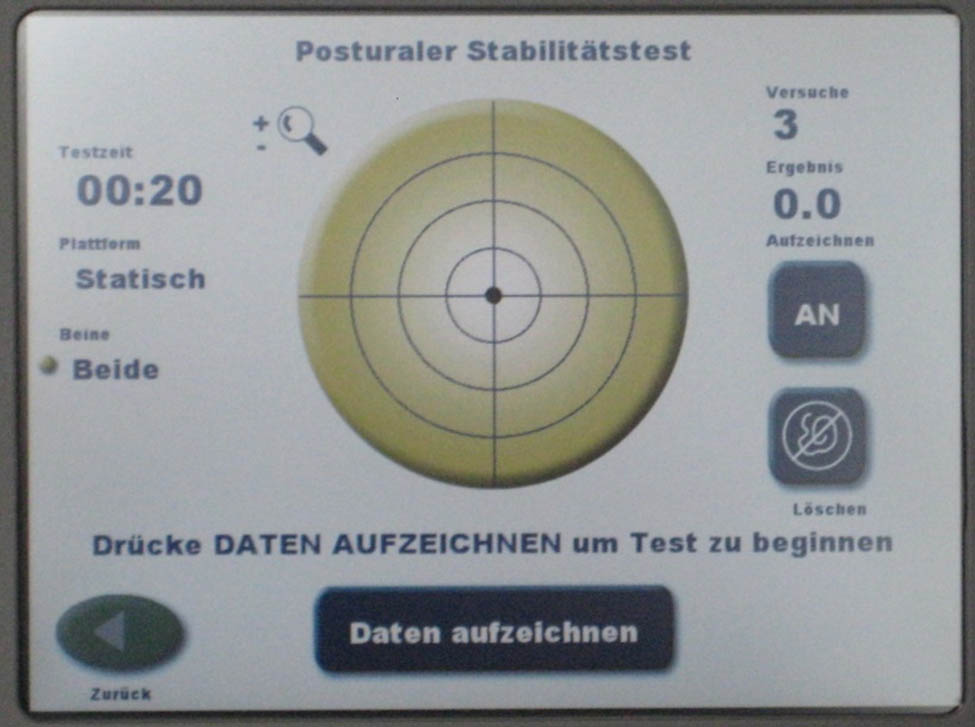
Screen capture of Biodex balance system.
The ability to balance is expressed by a balance index as a mean deviation in degrees of three required trials, calculated by using the time and deviation.
There are three different indices existing for postural stability: medial/lateral stability index (MLSI), anterior/posterior stability index (APSI), and overall stability index (OSI). MLSI and APSI represent only particular aspects of postural stability, which may be more interesting in, i.e., evaluating neurological deficits. While MLSI and APSI assess the fluctuations only in the mediolateral or anterior–posterior direction, respectively, the OSI as a composite of MLSI and APSI assesses the global status of postural stability concerning all directions. For data analysis, only the OSI was used to assess the global status of postural stability.
2.4 Statistics
Statistical analyses were performed using IBM SPSS Statistics Version 24.0 (IBM Corp., NY, USA). One-factor analysis of variance was used for interval-scaled and normally distributed characteristics in the comparison between subgroups. Independent samples t-test was used when comparing two groups on interval-scaled and normally distributed dependent characteristics. The dependent samples t-test was used for interval-scaled and normally distributed variables for comparison within a subgroup. For ordinal scaled or interval scaled and non-normally distributed data, the Wilcoxon test was carried out for comparison within a subgroup. The Mann–Whitney U test was used for comparison between the surgical subgroup and the associated control subgroup and the Kruskal–Wallis H test was used for comparison between the three subgroups. For the nominally scaled characteristics, the chi-square test was performed on cross-tabs. Variables were considered significant if P-values were less than 0.05. Patients excluded from the study for non-surgical associated reasons were not evaluated.
-
Ethical approval: The study protocol was approved by the local ethics committee (Nr. 17-430-101).
-
Informed consent: Written informed consent was obtained from all participants.
3 Results
3.1 Sample description
In total, 23 patients with surgical reconstruction after CAI were included in this study. Patients’ age at surgery was 34 years (12;56;12.1). Follow-up examination was 49 months after surgery (5;126;42.6). The mean BMI at follow-up was 31 kg/m2 (23;50;6.3). Subgroup data are listed in Table 1. Patients with reconstruction (group G1-3) and probands of the reference group (group G4) did not differ in gender, age, and BMI. Only the subgroup G1 did not show any significant differences concerning BMI (Table 2).
OSI at level 11
| Biodex balance system level 11 | ||||
|---|---|---|---|---|
| Patients | Total | G1 | G2 | G3 |
| Operated leg | 1.6 ± 0.52 | 1.61 ± 0.57 | 1,46 ± 0.47 | 1.73 ± 0.54 |
| Contralateral leg | 1.41 ± 0.52 | 1.44 ± 0.52 | 1.46 ± 0.61 | 1.33 ± 0.51 |
| Two-legged stance | 1.00 ± 0.3 | 1.00 ± 0.27 | 1.00 ± 0.42 | 1.02 ± 0.23 |
| Probands | Total | CG1 | CG2 | CG3 |
|---|---|---|---|---|
| Two-legged stance | 0.82 ± 0.28 | 0.83 ± 0.28 | 0.88 ± 0.32 | 0.76 ± 0.25 |
3.2 Complications
One patient of subgroup G1 showed impaired wound healing with MRSA superinfection, which healed without consequences after a wound revision. One patient in subgroup G3 suffered further supination trauma postoperatively and had to undergo revision surgery. Both patients were finally excluded from the study.
3.3 Functional evaluation
87% of all patients would undergo surgery once again (no significant difference in all subgroups). 56.5% of all patients stated that they had reached the preoperative activity level (no significant difference in all subgroups).
3.3.1 VAS pain score
The average pre-operative pain NAS score (Table 1) was 6.3 and reduced to an average of 1.3 postoperatively at follow-up. Clinical examination did not show any significant differences in Range of motion and perceived pain in all subgroups. Within each subgroup, there was no significant difference between operated and non-operated legs. By clinical examination, no significant instability (lateral, medial, and drawer sign) could be detected in the subgroups
3.4 AOFAS (validated German version)
The calculated mean of the total (maximum 100 points) of the AOFAS score of all patients was 88.9 points. In the “periosteal flap” subgroup, the mean was highest at 91.8 points. The mean of the “Broström–Gould without anchor” subgroup was 88.3 points, and the mean of the “Broström–Gould with anchor” subgroup was 87.1 points. No statistically significant difference (p = 0.874) could be found between the three subgroups.
3.5 Biodex balance system (postural stability)
OSI of the operated leg at level 11 (very stable condition) was best in group G3; however, the significance level was missed. There was also no significant difference within the subgroups regarding OSI of operated and non-operated legs. No difference could be shown between the subgroups and the control group in the two-legged stance (Table 2).
At level 8 (more unstable condition), an almost identical result was presented (no significant difference between operated and non-operated leg in single stance and no significant difference in two-legged stance between each subgroup and the control group) (Table 3).
OSI at level 8
| Biodex balance system level 8 | ||||
|---|---|---|---|---|
| Patients | Total | G1 | G2 | G3 |
| Operated leg | 1.45 ± 0.6 | 1.40 ± 0.66 | 1.30 ± 0.42 | 1.64 ± 0.71 |
| Contralateral leg | 1.55 ± 0.44 | 1.44 ± 0.43 | 1.44 ± 0.40 | 1.77 ± 0.45 |
| Two-legged stance | 1.07 ± 0.37 | 1.13 ± 0.31 | 1.03 ± 0.46 | 1.07 ± 0.36 |
| Probands | Total | CG1 | CG2 | CG3 |
|---|---|---|---|---|
| Two-legged stance | 0.81 ± 0.28 | 0.89 ± 0.31 | 0.78 ± 0.28 | 0.76 ± 0.29 |
So, the study did not support the hypothesis that the modified Broström–Gould technique is superior to the Broström Gould technique or the periosteal-flap technique. There was no improvement in postural stability.
4 Discussion
CAI is a consequence of lateral ligament injuries that should not be underestimated. Different surgical procedures exist when conservative treatment fails. This study compared the functional and clinical outcomes of three different surgical techniques: the periosteal flap technique, the Broström–Gould procedure without using a suture anchor system and, as a third method, a modified Broström–Gould procedure using an additional suture anchor system. To our knowledge, no study has directly compared the three methods mentioned above to date.
Concerning biomechanical stability, Waldrop et al. compared the resilience of the AFTL in a biomechanical study using different surgical techniques [16]. Twenty-four post-mortem deep-frozen human ankle joints were randomly divided into four groups: an intact control group, a Broström group in which the method used by Broström 1966 was used, and two groups of suture anchor techniques (in the talus or tibia). They were able to prove that the biomechanical stability of the surgical procedures was equivalent but did not reach the load-bearing capacity of an intact AFTL. However, the study did not include the Broström–Gould procedure, where the extensor retinaculum is used to reinforce the sutured ligament.
Cho et al evaluated the 2-year outcome after using the Broström–Gould technique with transosseous suture, on the one hand, and the Broström–Gould technique with suture anchor systems, on the other hand. They did not find any significant differences between the two techniques [17].
Hu et al. [18] compared a modified Broström procedure using transosseous sutures with drill holes in the distal fibula and a modified Broström procedure with a suture anchor system. The postoperative results showed no significant differences between the compared surgical groups.
Mederake et al. [19] compared the results after arthroscopic modified Broström operation versus open reconstruction with local periosteal flap in CAI. Three months postoperatively, they found significantly better results concerning pain and instability in the arthroscopic group; 1 year postoperatively, the differences, however, were evened out.
Concerning our study, we found significant differences (p < 0.05) in all three surgical groups concerning pre- and postoperative pain. On average, the strongest pain postoperatively on the latest follow-up could be found in group 3 (the “Broström–Gould with anchor” group) (2.3 out of a maximum of 10 points). A possible reason for this might be the significantly different follow-up period, with the shortest follow-up in group 3 (p = 0.004). Respectively, the shortest recovery time comprised the “Broström–Gould with anchor” group (19 months (G3) vs 97 months (G1) or 28 months (G2)). The shorter recovery time could be a reason for the higher pain level at follow-up, as the adaptation and healing processes are probably not as advanced after 19 months as after 28 months, respectively, 97 months.
There were no statistically significant differences between the groups in the subjective assessment of postoperative stability; several studies have already proven that proprioception training has a positive effect on postural stability and thus leads to a stable feeling in the ankle joint [20]. This may have been the reason why we could not measure a significant difference between the groups in postural stability because all groups received proprioceptive training postoperatively.
Concerning pain scores after surgical lateral ligament stabilization, the literature shows comparable results. At the follow-up examination 12 months after Broström-Gould procedure the VAS pain score was found in between 1.2 and 1.8, respectively in between 1.2 and 2.12 24 months postoperatively [21,22].
Postural stability was evaluated using the Biodex Balance System. Neither the comparisons of postural stability between the operated and non-operated legs of the patients, nor the comparisons of the operated legs between the surgical groups, nor the comparisons between the surgical groups and the assigned control groups in the two-legged stance were found to be significant (p > 0.05). As Maeda et al. [23] were able to prove that CAI was associated with poorer dynamic postural control among adolescent athletes, this result has to be considered as a positive restoration of postural stability by the surgical reconstruction of the AFTL in all subgroups. Even more, unless Greve et al. [24] were able to determine a negative correlation between increased BMI and postural instability, the results of our study must be interpreted even more positive because although the BMI differed significantly, no significant difference in postural stability could be shown between the operation groups and the control group. Kim et al. [25] examined the postural stability of patients after anatomic ATFL repair augmented with suture-tape for CAI with the poor quality of remnant ligamentous tissue. In this study, a significant side-to-side difference concerning postural stability was found at follow-up ≥3 years. Comparing this result with our study, the restoration of autogenous ligament structure with its proprioceptive capacities could have a more positive influence on the recovery of postural stability than the substitution with allogenic material, e.g., suture-tape of fibre-wires in case of the absence of sufficient ligamentous tissue. Lee et al. reported deficits in proprioception and neuromuscular control 3 months after the modified Broström–Gould procedure in dynamic balance tests with the Biodex Stability system [26].
Concerning the AOFAS score, we could not detect any significant differences, with the “periosteal flap” group with the highest score of 91.8 points. As mentioned above, the time interval between surgery and follow-up was the longest in group 1 and could explain the slight differences. Also, Zeng was able to demonstrate the time-dependent improvement in the results 6 months, 1 year, and 2 years after lateral ligament reconstruction, using an InternalBrace™ [27]. Lee et al. [28] published a postoperative AOFAS score averaged 90.8 points after AFTL reconstruction, slightly higher than in our present study (88.3 points); Brodsky et al. [29] reported an AOFAS score of 95 points after Broström–Gould procedure. The follow-up period was 10.6 years respectively 5.3 years after surgical intervention indicating that the length of time after surgery should be considered as an influencing factor in outcome assessment.
5 Limitations
The small number of test subjects and the heterogeneous follow-up period must be critically assessed. Strongly reliable long-term results could not be demonstrated. Although the postoperative follow-up protocol was standardized, it was interpreted differently by the treating physiotherapists and therefore led to a bias.
Concerning different postoperative rehabilitation and different follow-up periods, our results must be interpreted carefully. Literature shows the influence of rehab protocols as well as follow-up periods after lateral ligament stabilization [30,31].
Furthermore, we did not include patients with arthroscopic lateral ligament stabilization. Numerous studies were published with this minimal-invasive approach. Reviews and meta-analysis, however, do not reveal a superiority of arthroscopic or open technique so far [32,33].
6 Conclusion
In conclusion, this study demonstrates that no one of the examined procedures is superior to the other. None of the results of the examinations carried out found a significant difference between the three compared surgical methods, which makes the three surgical methods appear to be equivalent. Likewise, the postoperative postural stability of the patients showed no significant difference to the postural stability of the healthy volunteers, which also demonstrated the success of the surgical procedure
-
Funding information: The author(s) received no financial support for the research, authorship, and/or publication of this article.
-
Author contributions: Conceptualization, C.B.; methodology, H.R.S.; software, G.M.; investigation, H.R.S., C.B., G.M., J.G. (Juergen Goetz), and G.V.; resources, C.B.; data curation, H.R.S.; writing original draft, H.R.S., C.B., and J.G. (Juergen Goetz); writing review and editing, H.R.S. and J.G. (Juergen Goetz); supervision, G.M. and J.G. (Joachim Grifka); and project administration, J.G. (Juergen Goetz). All authors have read and agreed to the published version of the manuscript.
-
Conflict of interest: The author(s) declared no potential conflicts of interest with respect to the research, authorship, and/or publication of this article. Prof. Baier serves as Editor for OM, but it did not influence the peer-review process.
-
Data availability statement: The data presented in this study are available on request from the corresponding author due to privacy.
References
[1] Goru P, Talha S, Majeed H. Outcomes and return to sports following the ankle lateral ligament reconstruction in professional athletes: a systematic review of the literature. Indian J Orthop. 2021 Oct;56(2):208–15. 10.1007/s43465-021-00532-0, PMID: 35140851; PMCID: PMC8789970.Search in Google Scholar PubMed PubMed Central
[2] Biz C, Nicoletti P, Tomasin M, Bragazzi NL, Di Rubbo G, Ruggieri P. Is kinesio taping effective for sport performance and ankle function of athletes with chronic ankle instability (CAI)? A systematic review and meta-analysis. Medicina (Kaunas). 2022 Apr;58(5):620. 10.3390/medicina58050620, PMID: 35630037; PMCID: PMC9146435.Search in Google Scholar PubMed PubMed Central
[3] Cain MS, Ban RJ, Chen YP, Geil MD, Goerger BM, Linens SW. Four-week ankle-rehabilitation programs in adolescent athletes with chronic ankle instability. J Athl Train. 2020 Aug;55(8):801–10. 10.4085/1062-6050-41-19, PMID: 32577737; PMCID: PMC7462179.Search in Google Scholar PubMed PubMed Central
[4] Herzog MM, Kerr ZY, Marshall SW, Wikstrom EA. Epidemiology of ankle sprains and chronic ankle instability. J Athl Train. 2019 Jun;54(6):603–10. 10.4085/1062-6050-447-17, Epub 2019 May 28 PMID: 31135209; PMCID: PMC6602402.Search in Google Scholar PubMed PubMed Central
[5] Saltzman CL, Salamon ML, Blanchard GM, Huff T, Hayes A, Buckwalter JA, et al. Epidemiology of ankle arthritis: report of a consecutive series of 639 patients from a tertiary orthopaedic center. Iowa Orthop J. 2005;25:44–6; Valderrabano V, et al. Etiology of ankle osteoarthritis. Clin Orthop Rel Res. 2009;467:1800–6. doi: 10.1007/s11999-008-0543-6.Search in Google Scholar
[6] Doherty C, Bleakley C, Hertel J, Caulfield B, Ryan J, Delahunt E. Recovery from a first-time lateral ankle sprain and the predictors of chronic ankle instability: a prospective cohort analysis. Am J Sports Med. 2016 Apr;44(4):995–1003. 10.1177/0363546516628870, Epub 2016 Feb 24. PMID: 26912285.Search in Google Scholar PubMed
[7] Gribble PA, Bleakley CM, Caulfield BM, Docherty CL, Fourchet F, Fong DT, et al. Evidence review for the 2016 International Ankle Consortium consensus statement on the prevalence, impact and long-term consequences of lateral ankle sprains. Br J Sports Med. 2016 Dec;50(24):1496–505. 10.1136/bjsports-2016-096189, Epub 2016 Jun 3. PMID: 27259753.Search in Google Scholar PubMed
[8] Tay KS, Chew CP, Lie DTT. Effect of periosteal flap augmentation on outcomes of modified Broström-Gould procedure for chronic lateral ankle instability. Foot Ankle Orthop. 2020 Jul 30;5(3):2473011420934735. 10.1177/2473011420934735, PMID: 35097395; PMCID: PMC8697196.Search in Google Scholar PubMed PubMed Central
[9] Mittlmeier T, Rammelt S. Die Periostlappenplastik bei chronischer Instabilität des oberen Sprunggelenks [The periosteal flap augmentation technique in chronic lateral ankle instability]. Oper Orthop Traumatol. 2019 Jun;31(3):180–90. 10.1007/s00064-019-0600-1, Epub 2019 Apr 29. PMID: 31037329.Search in Google Scholar PubMed
[10] Corte-Real N, Caetano J. Ankle and syndesmosis instability: consensus and controversies. EFORT Open Rev. 2021 Jun;6(6):420–31. 10.1302/2058-5241.6.210017, PMID: 34267932; PMCID: PMC8246108.Search in Google Scholar PubMed PubMed Central
[11] Corte-Real NM, Moreira RM. Arthroscopic repair of chronic lateral ankle instability. Foot Ankle Int. 2009 Mar;30(3):213–7. 10.3113/FAI.2009.0213, PMID: 19321097.Search in Google Scholar PubMed
[12] Guelfi M, Zamperetti M, Pantalone A, Usuelli FG, Salini V, Oliva XM. Open and arthroscopic lateral ligament repair for treatment of chronic ankle instability: A systematic review. Foot Ankle Surg. 2018 Feb;24(1):11–8. 10.1016/j.fas.2016.05.315, Epub 2016 May 12. PMID: 29413768.Search in Google Scholar PubMed
[13] Kitaoka HB, Alexander IJ, Adelaar RS, Nunley JA, Myerson MS, Sanders M. Clinical rating systems for the ankle-hindfoot, mid-foot, hallux, and lesser toes. Foot Ankle Int. 1994;15(7):349–53.10.1177/107110079401500701Search in Google Scholar PubMed
[14] Arnold BL, Schmitz RJ. Examination of balance measures produced by the biodex stability system. J Athl Train. 1998;33(4):323–7.Search in Google Scholar
[15] Woollacott MH, Tang PF. Balance control during walking in the older adult: research and its implications. Phys Ther. 1997;77:646–60.10.1093/ptj/77.6.646Search in Google Scholar PubMed
[16] Waldrop 3rd NE, Wijdicks CA, Jansson KS, LaPrade RF, Clanton TO. Anatomic suture anchor versus the Broström technique for anterior talofibular ligament repair: a biomechanical comparison. Am J Sports Med. 2012 Nov;40(11):2590–6. 10.1177/0363546512458420, Epub 2012 Sep 7. PMID: 22962291.Search in Google Scholar PubMed
[17] Cho BK, Kim YM, Kim DS, Choi ES, Shon HC, Park KJ. Comparison between suture anchor and transosseous suture for the modified-Broström procedure. Foot Ankle Int. 2012 Jun;33(6):462–8. 10.3113/FAI.2012.0462, PMID: 22735317.Search in Google Scholar PubMed
[18] Hu C-Y, Lee K-B, Song E-K, Kim M-S, Park K-S. Comparison of bone tunnel and suture anchor techniques in the modified Broström procedure for chronic lateral ankle instability. Am J Sports Med. 2013;41(8):1877–84.10.1177/0363546513490647Search in Google Scholar PubMed
[19] Mederake M, Hofmann UK, Ipach I. Arthroscopic modified Broström operation versus open reconstruction with local periosteal flap in chronic ankle instability. Arch Orthop Trauma Surg. 2022 Dec;142(12):3581–8. 10.1007/s00402-021-03949-2, Epub 2021 May 16 PMID: 33993359; PMCID: PMC9596524.Search in Google Scholar PubMed PubMed Central
[20] McKeon PO, Ingersoll CD, Kerrigan DC, Saliba E, Bennett BC, Hertel J. Balance training improves function and postural control in those with chronic ankle instability. Med Sci Sports Exerc. 2008 Oct;40(10):1810–9. 10.1249/MSS.0b013e31817e0f92, PMID: 18799992.Search in Google Scholar PubMed
[21] Wang AH, Su T, Jiang YF, Zhu YC, Jiao C, Hu YL, et al. Arthroscopic modified Broström procedure achieved similar favorable short term outcomes to open procedure for chronic lateral ankle instability cases with generalized joint laxity. Knee Surg Sports Traumatol Arthrosc. 2023 Sep;31(9):4043–51. 10.1007/s00167-023-07431-x, Epub 2023 May 10. PMID: 37162539.Search in Google Scholar PubMed
[22] Woo BJ, Lai MC, Koo K. Arthroscopic versus open Broström-Gould repair for chronic ankle instability. Foot Ankle Int. 2020 Jun;41(6):647–53. 10.1177/1071100720914860, Epub 2020 Mar 24. PMID: 32207336.Search in Google Scholar PubMed
[23] Maeda N, Ikuta Y, Tsutsumi S, Arima S, Ishihara H, Ushio K, et al. Relationship of chronic ankle instability with foot alignment and dynamic postural stability in adolescent competitive athletes. Orthop J Sports Med. 2023 Oct;11(10):23259671231202220. 10.1177/23259671231202220, PMID: 37859752; PMCID: PMC10583524.Search in Google Scholar PubMed PubMed Central
[24] Greve J, Alonso A, Bordini ACPG, Camanho GL. Correlation between body mass index and postural balance. Clin (Sao Paulo). 2007;62(6):717–20.10.1590/S1807-59322007000600010Search in Google Scholar PubMed
[25] Kim SW, Cho BK, Kang C, Choi SM, Bang SM. Anatomic anterior talofibular ligament repair augmented with suture-tape for chronic ankle instability with poor quality of remnant ligamentous tissue. J Orthop Surg (Hong Kong). 2022 Sep-Dec;30(3):10225536221141477. 10.1177/10225536221141477, PMID: 36420544 Search in Google Scholar PubMed
[26] Lee JH, Jung HW, Jang WY. Proprioception and neuromuscular control at return to sport after ankle surgery with the modified Broström procedure. Sci Rep. 2022 Jan;12(1):610. 10.1038/s41598-021-04567-z, PMID: 35022508; PMCID: PMC8755731.Search in Google Scholar PubMed PubMed Central
[27] Zeng GL, Cai LM, Xie Q, Huang HB, Li YC, Su BY. Anterior talofibular ligament all-inside arthroscopic reconstruction with InternalBrace™ for chronic lateral ankle instability. Med Sci Monit. 2022 Oct;28:e937699. 10.12659/MSM.937699, PMID: 36199231; PMCID: PMC9552571.Search in Google Scholar PubMed PubMed Central
[28] Lee KT, Park YU, Kim JS, Kim JB, Kim KC, Kang SK. Long-term results after modified Brostrom procedure without calcaneofibular ligament reconstruction. Foot Ankle Int. 2011 Feb;32(2):153–7. 10.3113/FAI.2011.0153, PMID: 21288414.Search in Google Scholar PubMed
[29] Brodsky AR, O’Malley MJ, Bohne WH, Deland JA, Kennedy JG. An analysis of outcome measures following the Broström-Gould procedure for chronic lateral ankle instability. Foot Ankle Int. 2005;26(10):816–9.10.1177/107110070502601005Search in Google Scholar PubMed
[30] Teramoto A, Murahashi Y, Takahashi K, Watanabe K, Yamashita T. Effect of accelerated rehabilitation on early return to sport after arthroscopic ankle lateral ligament repair. Orthop J Sports Med. 2022 Sep;10(9):23259671221121676. 10.1177/23259671221121676, PMID: 36119122; PMCID: PMC9478717.Search in Google Scholar PubMed PubMed Central
[31] Zhao B, Sun Q, Xu X, Liu Y, Zhao Y, Gao Y, et al. Comparison of arthroscopic and open Brostrom-Gould surgery for chronic ankle instability: a systematic review and meta-analysis. J Orthop Surg Res. 2023 Nov;18(1):866. 10.1186/s13018-023-04292-5, PMID: 37964306; PMCID: PMC10644443.Search in Google Scholar PubMed PubMed Central
[32] Wittig U, Hohenberger G, Ornig M, Schuh R, Leithner A, Holweg P. All-arthroscopic reconstruction of the anterior talofibular ligament is comparable to open reconstruction: a systematic review. EFORT Open Rev. 2022 Jan;7(1):3–12. 10.1530/EOR-21-0075, PMID: 35262506; PMCID: PMC8788150.Search in Google Scholar PubMed PubMed Central
[33] Zhi X, Lv Z, Zhang C, Kong C, Wei S, Xu F. Does arthroscopic repair show superiority over open repair of lateral ankle ligament for chronic lateral ankle instability: a systematic review and meta-analysis. J Orthop Surg Res. 2020 Aug;15(1):355. 10.1186/s13018-020-01886-1, PMID: 32843055; PMCID: PMC7448467.Search in Google Scholar PubMed PubMed Central
© 2024 the author(s), published by De Gruyter
This work is licensed under the Creative Commons Attribution 4.0 International License.
Articles in the same Issue
- Research Articles
- EDNRB inhibits the growth and migration of prostate cancer cells by activating the cGMP-PKG pathway
- STK11 (LKB1) mutation suppresses ferroptosis in lung adenocarcinoma by facilitating monounsaturated fatty acid synthesis
- Association of SOX6 gene polymorphisms with Kashin-Beck disease risk in the Chinese Han population
- The pyroptosis-related signature predicts prognosis and influences the tumor immune microenvironment in dedifferentiated liposarcoma
- METTL3 attenuates ferroptosis sensitivity in lung cancer via modulating TFRC
- Identification and validation of molecular subtypes and prognostic signature for stage I and stage II gastric cancer based on neutrophil extracellular traps
- Novel lumbar plexus block versus femoral nerve block for analgesia and motor recovery after total knee arthroplasty
- Correlation between ABCB1 and OLIG2 polymorphisms and the severity and prognosis of patients with cerebral infarction
- Study on the radiotherapy effect and serum neutral granulocyte lymphocyte ratio and inflammatory factor expression of nasopharyngeal carcinoma
- Transcriptome analysis of effects of Tecrl deficiency on cardiometabolic and calcium regulation in cardiac tissue
- Aflatoxin B1 induces infertility, fetal deformities, and potential therapies
- Serum levels of HMW adiponectin and its receptors are associated with cytokine levels and clinical characteristics in chronic obstructive pulmonary disease
- METTL3-mediated methylation of CYP2C19 mRNA may aggravate clopidogrel resistance in ischemic stroke patients
- Understand how machine learning impact lung cancer research from 2010 to 2021: A bibliometric analysis
- Pressure ulcers in German hospitals: Analysis of reimbursement and length of stay
- Metformin plus L-carnitine enhances brown/beige adipose tissue activity via Nrf2/HO-1 signaling to reduce lipid accumulation and inflammation in murine obesity
- Downregulation of carbonic anhydrase IX expression in mouse xenograft nasopharyngeal carcinoma model via doxorubicin nanobubble combined with ultrasound
- Feasibility of 3-dimensional printed models in simulated training and teaching of transcatheter aortic valve replacement
- miR-335-3p improves type II diabetes mellitus by IGF-1 regulating macrophage polarization
- The analyses of human MCPH1 DNA repair machinery and genetic variations
- Activation of Piezo1 increases the sensitivity of breast cancer to hyperthermia therapy
- Comprehensive analysis based on the disulfidptosis-related genes identifies hub genes and immune infiltration for pancreatic adenocarcinoma
- Changes of serum CA125 and PGE2 before and after high-intensity focused ultrasound combined with GnRH-a in treatment of patients with adenomyosis
- The clinical value of the hepatic venous pressure gradient in patients undergoing hepatic resection for hepatocellular carcinoma with or without liver cirrhosis
- Development and validation of a novel model to predict pulmonary embolism in cardiology suspected patients: A 10-year retrospective analysis
- Downregulation of lncRNA XLOC_032768 in diabetic patients predicts the occurrence of diabetic nephropathy
- Circ_0051428 targeting miR-885-3p/MMP2 axis enhances the malignancy of cervical cancer
- Effectiveness of ginkgo diterpene lactone meglumine on cognitive function in patients with acute ischemic stroke
- The construction of a novel prognostic prediction model for glioma based on GWAS-identified prognostic-related risk loci
- Evaluating the impact of childhood BMI on the risk of coronavirus disease 2019: A Mendelian randomization study
- Lactate dehydrogenase to albumin ratio is associated with in-hospital mortality in patients with acute heart failure: Data from the MIMIC-III database
- CD36-mediated podocyte lipotoxicity promotes foot process effacement
- Efficacy of etonogestrel subcutaneous implants versus the levonorgestrel-releasing intrauterine system in the conservative treatment of adenomyosis
- FLRT2 mediates chondrogenesis of nasal septal cartilage and mandibular condyle cartilage
- Challenges in treating primary immune thrombocytopenia patients undergoing COVID-19 vaccination: A retrospective study
- Let-7 family regulates HaCaT cell proliferation and apoptosis via the ΔNp63/PI3K/AKT pathway
- Phospholipid transfer protein ameliorates sepsis-induced cardiac dysfunction through NLRP3 inflammasome inhibition
- Postoperative cognitive dysfunction in elderly patients with colorectal cancer: A randomized controlled study comparing goal-directed and conventional fluid therapy
- Long-pulsed ultrasound-mediated microbubble thrombolysis in a rat model of microvascular obstruction
- High SEC61A1 expression predicts poor outcome of acute myeloid leukemia
- Comparison of polymerase chain reaction and next-generation sequencing with conventional urine culture for the diagnosis of urinary tract infections: A meta-analysis
- Secreted frizzled-related protein 5 protects against renal fibrosis by inhibiting Wnt/β-catenin pathway
- Pan-cancer and single-cell analysis of actin cytoskeleton genes related to disulfidptosis
- Overexpression of miR-532-5p restrains oxidative stress response of chondrocytes in nontraumatic osteonecrosis of the femoral head by inhibiting ABL1
- Autologous liver transplantation for unresectable hepatobiliary malignancies in enhanced recovery after surgery model
- Clinical analysis of incomplete rupture of the uterus secondary to previous cesarean section
- Abnormal sleep duration is associated with sarcopenia in older Chinese people: A large retrospective cross-sectional study
- No genetic causality between obesity and benign paroxysmal vertigo: A two-sample Mendelian randomization study
- Identification and validation of autophagy-related genes in SSc
- Long non-coding RNA SRA1 suppresses radiotherapy resistance in esophageal squamous cell carcinoma by modulating glycolytic reprogramming
- Evaluation of quality of life in patients with schizophrenia: An inpatient social welfare institution-based cross-sectional study
- The possible role of oxidative stress marker glutathione in the assessment of cognitive impairment in multiple sclerosis
- Compilation of a self-management assessment scale for postoperative patients with aortic dissection
- Left atrial appendage closure in conjunction with radiofrequency ablation: Effects on left atrial functioning in patients with paroxysmal atrial fibrillation
- Effect of anterior femoral cortical notch grade on postoperative function and complications during TKA surgery: A multicenter, retrospective study
- Clinical characteristics and assessment of risk factors in patients with influenza A-induced severe pneumonia after the prevalence of SARS-CoV-2
- Analgesia nociception index is an indicator of laparoscopic trocar insertion-induced transient nociceptive stimuli
- High STAT4 expression correlates with poor prognosis in acute myeloid leukemia and facilitates disease progression by upregulating VEGFA expression
- Factors influencing cardiovascular system-related post-COVID-19 sequelae: A single-center cohort study
- HOXD10 regulates intestinal permeability and inhibits inflammation of dextran sulfate sodium-induced ulcerative colitis through the inactivation of the Rho/ROCK/MMPs axis
- Mesenchymal stem cell-derived exosomal miR-26a induces ferroptosis, suppresses hepatic stellate cell activation, and ameliorates liver fibrosis by modulating SLC7A11
- Endovascular thrombectomy versus intravenous thrombolysis for primary distal, medium vessel occlusion in acute ischemic stroke
- ANO6 (TMEM16F) inhibits gastrointestinal stromal tumor growth and induces ferroptosis
- Prognostic value of EIF5A2 in solid tumors: A meta-analysis and bioinformatics analysis
- The role of enhanced expression of Cx43 in patients with ulcerative colitis
- Choosing a COVID-19 vaccination site might be driven by anxiety and body vigilance
- Role of ICAM-1 in triple-negative breast cancer
- Cost-effectiveness of ambroxol in the treatment of Gaucher disease type 2
- HLA-DRB5 promotes immune thrombocytopenia via activating CD8+ T cells
- Efficacy and factors of myofascial release therapy combined with electrical and magnetic stimulation in the treatment of chronic pelvic pain syndrome
- Efficacy of tacrolimus monotherapy in primary membranous nephropathy
- Mechanisms of Tripterygium wilfordii Hook F on treating rheumatoid arthritis explored by network pharmacology analysis and molecular docking
- FBXO45 levels regulated ferroptosis renal tubular epithelial cells in a model of diabetic nephropathy by PLK1
- Optimizing anesthesia strategies to NSCLC patients in VATS procedures: Insights from drug requirements and patient recovery patterns
- Alpha-lipoic acid upregulates the PPARγ/NRF2/GPX4 signal pathway to inhibit ferroptosis in the pathogenesis of unexplained recurrent pregnancy loss
- Correlation between fat-soluble vitamin levels and inflammatory factors in paediatric community-acquired pneumonia: A prospective study
- CD1d affects the proliferation, migration, and apoptosis of human papillary thyroid carcinoma TPC-1 cells via regulating MAPK/NF-κB signaling pathway
- miR-let-7a inhibits sympathetic nerve remodeling after myocardial infarction by downregulating the expression of nerve growth factor
- Immune response analysis of solid organ transplantation recipients inoculated with inactivated COVID-19 vaccine: A retrospective analysis
- The H2Valdien derivatives regulate the epithelial–mesenchymal transition of hepatoma carcinoma cells through the Hedgehog signaling pathway
- Clinical efficacy of dexamethasone combined with isoniazid in the treatment of tuberculous meningitis and its effect on peripheral blood T cell subsets
- Comparison of short-segment and long-segment fixation in treatment of degenerative scoliosis and analysis of factors associated with adjacent spondylolisthesis
- Lycopene inhibits pyroptosis of endothelial progenitor cells induced by ox-LDL through the AMPK/mTOR/NLRP3 pathway
- Methylation regulation for FUNDC1 stability in childhood leukemia was up-regulated and facilitates metastasis and reduces ferroptosis of leukemia through mitochondrial damage by FBXL2
- Correlation of single-fiber electromyography studies and functional status in patients with amyotrophic lateral sclerosis
- Risk factors of postoperative airway obstruction complications in children with oral floor mass
- Expression levels and clinical significance of serum miR-19a/CCL20 in patients with acute cerebral infarction
- Physical activity and mental health trends in Korean adolescents: Analyzing the impact of the COVID-19 pandemic from 2018 to 2022
- Evaluating anemia in HIV-infected patients using chest CT
- Ponticulus posticus and skeletal malocclusion: A pilot study in a Southern Italian pre-orthodontic court
- Causal association of circulating immune cells and lymphoma: A Mendelian randomization study
- Assessment of the renal function and fibrosis indexes of conventional western medicine with Chinese medicine for dredging collaterals on treating renal fibrosis: A systematic review and meta-analysis
- Comprehensive landscape of integrator complex subunits and their association with prognosis and tumor microenvironment in gastric cancer
- New target-HMGCR inhibitors for the treatment of primary sclerosing cholangitis: A drug Mendelian randomization study
- Population pharmacokinetics of meropenem in critically ill patients
- Comparison of the ability of newly inflammatory markers to predict complicated appendicitis
- Comparative morphology of the cruciate ligaments: A radiological study
- Immune landscape of hepatocellular carcinoma: The central role of TP53-inducible glycolysis and apoptosis regulator
- Serum SIRT3 levels in epilepsy patients and its association with clinical outcomes and severity: A prospective observational study
- SHP-1 mediates cigarette smoke extract-induced epithelial–mesenchymal transformation and inflammation in 16HBE cells
- Acute hyper-hypoxia accelerates the development of depression in mice via the IL-6/PGC1α/MFN2 signaling pathway
- The GJB3 correlates with the prognosis, immune cell infiltration, and therapeutic responses in lung adenocarcinoma
- Physical fitness and blood parameters outcomes of breast cancer survivor in a low-intensity circuit resistance exercise program
- Exploring anesthetic-induced gene expression changes and immune cell dynamics in atrial tissue post-coronary artery bypass graft surgery
- Empagliflozin improves aortic injury in obese mice by regulating fatty acid metabolism
- Analysis of the risk factors of the radiation-induced encephalopathy in nasopharyngeal carcinoma: A retrospective cohort study
- Reproductive outcomes in women with BRCA 1/2 germline mutations: A retrospective observational study and literature review
- Evaluation of upper airway ultrasonographic measurements in predicting difficult intubation: A cross-section of the Turkish population
- Prognostic and diagnostic value of circulating IGFBP2 in pancreatic cancer
- Postural stability after operative reconstruction of the AFTL in chronic ankle instability comparing three different surgical techniques
- Research trends related to emergence agitation in the post-anaesthesia care unit from 2001 to 2023: A bibliometric analysis
- Frequency and clinicopathological correlation of gastrointestinal polyps: A six-year single center experience
- ACSL4 mediates inflammatory bowel disease and contributes to LPS-induced intestinal epithelial cell dysfunction by activating ferroptosis and inflammation
- Affibody-based molecular probe 99mTc-(HE)3ZHER2:V2 for non-invasive HER2 detection in ovarian and breast cancer xenografts
- Effectiveness of nutritional support for clinical outcomes in gastric cancer patients: A meta-analysis of randomized controlled trials
- The relationship between IFN-γ, IL-10, IL-6 cytokines, and severity of the condition with serum zinc and Fe in children infected with Mycoplasma pneumoniae
- Paraquat disrupts the blood–brain barrier by increasing IL-6 expression and oxidative stress through the activation of PI3K/AKT signaling pathway
- Sleep quality associate with the increased prevalence of cognitive impairment in coronary artery disease patients: A retrospective case–control study
- Dioscin protects against chronic prostatitis through the TLR4/NF-κB pathway
- Association of polymorphisms in FBN1, MYH11, and TGF-β signaling-related genes with susceptibility of sporadic thoracic aortic aneurysm and dissection in the Zhejiang Han population
- Application value of multi-parameter magnetic resonance image-transrectal ultrasound cognitive fusion in prostate biopsy
- Laboratory variables‐based artificial neural network models for predicting fatty liver disease: A retrospective study
- Decreased BIRC5-206 promotes epithelial–mesenchymal transition in nasopharyngeal carcinoma through sponging miR-145-5p
- Sepsis induces the cardiomyocyte apoptosis and cardiac dysfunction through activation of YAP1/Serpine1/caspase-3 pathway
- Assessment of iron metabolism and iron deficiency in incident patients on incident continuous ambulatory peritoneal dialysis
- Tibial periosteum flap combined with autologous bone grafting in the treatment of Gustilo-IIIB/IIIC open tibial fractures
- The application of intravenous general anesthesia under nasopharyngeal airway assisted ventilation undergoing ureteroscopic holmium laser lithotripsy: A prospective, single-center, controlled trial
- Long intergenic noncoding RNA for IGF2BP2 stability suppresses gastric cancer cell apoptosis by inhibiting the maturation of microRNA-34a
- Role of FOXM1 and AURKB in regulating keratinocyte function in psoriasis
- Parental control attitudes over their pre-school children’s diet
- The role of auto-HSCT in extranodal natural killer/T cell lymphoma
- Significance of negative cervical cytology and positive HPV in the diagnosis of cervical lesions by colposcopy
- Echinacoside inhibits PASMCs calcium overload to prevent hypoxic pulmonary artery remodeling by regulating TRPC1/4/6 and calmodulin
- ADAR1 plays a protective role in proximal tubular cells under high glucose conditions by attenuating the PI3K/AKT/mTOR signaling pathway
- The risk of cancer among insulin glargine users in Lithuania: A retrospective population-based study
- The unusual location of primary hydatid cyst: A case series study
- Intraoperative changes in electrophysiological monitoring can be used to predict clinical outcomes in patients with spinal cavernous malformation
- Obesity and risk of placenta accreta spectrum: A meta-analysis
- Shikonin alleviates asthma phenotypes in mice via an airway epithelial STAT3-dependent mechanism
- NSUN6 and HTR7 disturbed the stability of carotid atherosclerotic plaques by regulating the immune responses of macrophages
- The effect of COVID-19 lockdown on admission rates in Maternity Hospital
- Temporal muscle thickness is not a prognostic predictor in patients with high-grade glioma, an experience at two centers in China
- Luteolin alleviates cerebral ischemia/reperfusion injury by regulating cell pyroptosis
- Therapeutic role of respiratory exercise in patients with tuberculous pleurisy
- Effects of CFTR-ENaC on spinal cord edema after spinal cord injury
- Irisin-regulated lncRNAs and their potential regulatory functions in chondrogenic differentiation of human mesenchymal stem cells
- DMD mutations in pediatric patients with phenotypes of Duchenne/Becker muscular dystrophy
- Combination of C-reactive protein and fibrinogen-to-albumin ratio as a novel predictor of all-cause mortality in heart failure patients
- Significant role and the underly mechanism of cullin-1 in chronic obstructive pulmonary disease
- Ferroptosis-related prognostic model of mantle cell lymphoma
- Observation of choking reaction and other related indexes in elderly painless fiberoptic bronchoscopy with transnasal high-flow humidification oxygen therapy
- A bibliometric analysis of Prader-Willi syndrome from 2002 to 2022
- The causal effects of childhood sunburn occasions on melanoma: A univariable and multivariable Mendelian randomization study
- Oxidative stress regulates glycogen synthase kinase-3 in lymphocytes of diabetes mellitus patients complicated with cerebral infarction
- Role of COX6C and NDUFB3 in septic shock and stroke
- Trends in disease burden of type 2 diabetes, stroke, and hypertensive heart disease attributable to high BMI in China: 1990–2019
- Purinergic P2X7 receptor mediates hyperoxia-induced injury in pulmonary microvascular endothelial cells via NLRP3-mediated pyroptotic pathway
- Investigating the role of oviductal mucosa–endometrial co-culture in modulating factors relevant to embryo implantation
- Analgesic effect of external oblique intercostal block in laparoscopic cholecystectomy: A retrospective study
- Elevated serum miR-142-5p correlates with ischemic lesions and both NSE and S100β in ischemic stroke patients
- Correlation between the mechanism of arteriopathy in IgA nephropathy and blood stasis syndrome: A cohort study
- Risk factors for progressive kyphosis after percutaneous kyphoplasty in osteoporotic vertebral compression fracture
- Predictive role of neuron-specific enolase and S100-β in early neurological deterioration and unfavorable prognosis in patients with ischemic stroke
- The potential risk factors of postoperative cognitive dysfunction for endovascular therapy in acute ischemic stroke with general anesthesia
- Fluoxetine inhibited RANKL-induced osteoclastic differentiation in vitro
- Detection of serum FOXM1 and IGF2 in patients with ARDS and their correlation with disease and prognosis
- Rhein promotes skin wound healing by activating the PI3K/AKT signaling pathway
- Differences in mortality risk by levels of physical activity among persons with disabilities in South Korea
- Review Articles
- Cutaneous signs of selected cardiovascular disorders: A narrative review
- XRCC1 and hOGG1 polymorphisms and endometrial carcinoma: A meta-analysis
- A narrative review on adverse drug reactions of COVID-19 treatments on the kidney
- Emerging role and function of SPDL1 in human health and diseases
- Adverse reactions of piperacillin: A literature review of case reports
- Molecular mechanism and intervention measures of microvascular complications in diabetes
- Regulation of mesenchymal stem cell differentiation by autophagy
- Molecular landscape of borderline ovarian tumours: A systematic review
- Advances in synthetic lethality modalities for glioblastoma multiforme
- Investigating hormesis, aging, and neurodegeneration: From bench to clinics
- Frankincense: A neuronutrient to approach Parkinson’s disease treatment
- Sox9: A potential regulator of cancer stem cells in osteosarcoma
- Early detection of cardiovascular risk markers through non-invasive ultrasound methodologies in periodontitis patients
- Advanced neuroimaging and criminal interrogation in lie detection
- Maternal factors for neural tube defects in offspring: An umbrella review
- The chemoprotective hormetic effects of rosmarinic acid
- CBD’s potential impact on Parkinson’s disease: An updated overview
- Progress in cytokine research for ARDS: A comprehensive review
- Utilizing reactive oxygen species-scavenging nanoparticles for targeting oxidative stress in the treatment of ischemic stroke: A review
- NRXN1-related disorders, attempt to better define clinical assessment
- Lidocaine infusion for the treatment of complex regional pain syndrome: Case series and literature review
- Trends and future directions of autophagy in osteosarcoma: A bibliometric analysis
- Iron in ventricular remodeling and aneurysms post-myocardial infarction
- Case Reports
- Sirolimus potentiated angioedema: A case report and review of the literature
- Identification of mixed anaerobic infections after inguinal hernia repair based on metagenomic next-generation sequencing: A case report
- Successful treatment with bortezomib in combination with dexamethasone in a middle-aged male with idiopathic multicentric Castleman’s disease: A case report
- Complete heart block associated with hepatitis A infection in a female child with fatal outcome
- Elevation of D-dimer in eosinophilic gastrointestinal diseases in the absence of venous thrombosis: A case series and literature review
- Four years of natural progressive course: A rare case report of juvenile Xp11.2 translocations renal cell carcinoma with TFE3 gene fusion
- Advancing prenatal diagnosis: Echocardiographic detection of Scimitar syndrome in China – A case series
- Outcomes and complications of hemodialysis in patients with renal cancer following bilateral nephrectomy
- Anti-HMGCR myopathy mimicking facioscapulohumeral muscular dystrophy
- Recurrent opportunistic infections in a HIV-negative patient with combined C6 and NFKB1 mutations: A case report, pedigree analysis, and literature review
- Letter to the Editor
- Letter to the Editor: Total parenteral nutrition-induced Wernicke’s encephalopathy after oncologic gastrointestinal surgery
- Erratum
- Erratum to “Bladder-embedded ectopic intrauterine device with calculus”
- Retraction
- Retraction of “XRCC1 and hOGG1 polymorphisms and endometrial carcinoma: A meta-analysis”
- Corrigendum
- Corrigendum to “Investigating hormesis, aging, and neurodegeneration: From bench to clinics”
- Corrigendum to “Frankincense: A neuronutrient to approach Parkinson’s disease treatment”
- Special Issue The evolving saga of RNAs from bench to bedside - Part II
- Machine-learning-based prediction of a diagnostic model using autophagy-related genes based on RNA sequencing for patients with papillary thyroid carcinoma
- Unlocking the future of hepatocellular carcinoma treatment: A comprehensive analysis of disulfidptosis-related lncRNAs for prognosis and drug screening
- Elevated mRNA level indicates FSIP1 promotes EMT and gastric cancer progression by regulating fibroblasts in tumor microenvironment
- Special Issue Advancements in oncology: bridging clinical and experimental research - Part I
- Ultrasound-guided transperineal vs transrectal prostate biopsy: A meta-analysis of diagnostic accuracy and complication rates
- Assessment of diagnostic value of unilateral systematic biopsy combined with targeted biopsy in detecting clinically significant prostate cancer
- SENP7 inhibits glioblastoma metastasis and invasion by dissociating SUMO2/3 binding to specific target proteins
- MARK1 suppress malignant progression of hepatocellular carcinoma and improves sorafenib resistance through negatively regulating POTEE
- Analysis of postoperative complications in bladder cancer patients
- Carboplatin combined with arsenic trioxide versus carboplatin combined with docetaxel treatment for LACC: A randomized, open-label, phase II clinical study
- Special Issue Exploring the biological mechanism of human diseases based on MultiOmics Technology - Part I
- Comprehensive pan-cancer investigation of carnosine dipeptidase 1 and its prospective prognostic significance in hepatocellular carcinoma
- Identification of signatures associated with microsatellite instability and immune characteristics to predict the prognostic risk of colon cancer
- Single-cell analysis identified key macrophage subpopulations associated with atherosclerosis
Articles in the same Issue
- Research Articles
- EDNRB inhibits the growth and migration of prostate cancer cells by activating the cGMP-PKG pathway
- STK11 (LKB1) mutation suppresses ferroptosis in lung adenocarcinoma by facilitating monounsaturated fatty acid synthesis
- Association of SOX6 gene polymorphisms with Kashin-Beck disease risk in the Chinese Han population
- The pyroptosis-related signature predicts prognosis and influences the tumor immune microenvironment in dedifferentiated liposarcoma
- METTL3 attenuates ferroptosis sensitivity in lung cancer via modulating TFRC
- Identification and validation of molecular subtypes and prognostic signature for stage I and stage II gastric cancer based on neutrophil extracellular traps
- Novel lumbar plexus block versus femoral nerve block for analgesia and motor recovery after total knee arthroplasty
- Correlation between ABCB1 and OLIG2 polymorphisms and the severity and prognosis of patients with cerebral infarction
- Study on the radiotherapy effect and serum neutral granulocyte lymphocyte ratio and inflammatory factor expression of nasopharyngeal carcinoma
- Transcriptome analysis of effects of Tecrl deficiency on cardiometabolic and calcium regulation in cardiac tissue
- Aflatoxin B1 induces infertility, fetal deformities, and potential therapies
- Serum levels of HMW adiponectin and its receptors are associated with cytokine levels and clinical characteristics in chronic obstructive pulmonary disease
- METTL3-mediated methylation of CYP2C19 mRNA may aggravate clopidogrel resistance in ischemic stroke patients
- Understand how machine learning impact lung cancer research from 2010 to 2021: A bibliometric analysis
- Pressure ulcers in German hospitals: Analysis of reimbursement and length of stay
- Metformin plus L-carnitine enhances brown/beige adipose tissue activity via Nrf2/HO-1 signaling to reduce lipid accumulation and inflammation in murine obesity
- Downregulation of carbonic anhydrase IX expression in mouse xenograft nasopharyngeal carcinoma model via doxorubicin nanobubble combined with ultrasound
- Feasibility of 3-dimensional printed models in simulated training and teaching of transcatheter aortic valve replacement
- miR-335-3p improves type II diabetes mellitus by IGF-1 regulating macrophage polarization
- The analyses of human MCPH1 DNA repair machinery and genetic variations
- Activation of Piezo1 increases the sensitivity of breast cancer to hyperthermia therapy
- Comprehensive analysis based on the disulfidptosis-related genes identifies hub genes and immune infiltration for pancreatic adenocarcinoma
- Changes of serum CA125 and PGE2 before and after high-intensity focused ultrasound combined with GnRH-a in treatment of patients with adenomyosis
- The clinical value of the hepatic venous pressure gradient in patients undergoing hepatic resection for hepatocellular carcinoma with or without liver cirrhosis
- Development and validation of a novel model to predict pulmonary embolism in cardiology suspected patients: A 10-year retrospective analysis
- Downregulation of lncRNA XLOC_032768 in diabetic patients predicts the occurrence of diabetic nephropathy
- Circ_0051428 targeting miR-885-3p/MMP2 axis enhances the malignancy of cervical cancer
- Effectiveness of ginkgo diterpene lactone meglumine on cognitive function in patients with acute ischemic stroke
- The construction of a novel prognostic prediction model for glioma based on GWAS-identified prognostic-related risk loci
- Evaluating the impact of childhood BMI on the risk of coronavirus disease 2019: A Mendelian randomization study
- Lactate dehydrogenase to albumin ratio is associated with in-hospital mortality in patients with acute heart failure: Data from the MIMIC-III database
- CD36-mediated podocyte lipotoxicity promotes foot process effacement
- Efficacy of etonogestrel subcutaneous implants versus the levonorgestrel-releasing intrauterine system in the conservative treatment of adenomyosis
- FLRT2 mediates chondrogenesis of nasal septal cartilage and mandibular condyle cartilage
- Challenges in treating primary immune thrombocytopenia patients undergoing COVID-19 vaccination: A retrospective study
- Let-7 family regulates HaCaT cell proliferation and apoptosis via the ΔNp63/PI3K/AKT pathway
- Phospholipid transfer protein ameliorates sepsis-induced cardiac dysfunction through NLRP3 inflammasome inhibition
- Postoperative cognitive dysfunction in elderly patients with colorectal cancer: A randomized controlled study comparing goal-directed and conventional fluid therapy
- Long-pulsed ultrasound-mediated microbubble thrombolysis in a rat model of microvascular obstruction
- High SEC61A1 expression predicts poor outcome of acute myeloid leukemia
- Comparison of polymerase chain reaction and next-generation sequencing with conventional urine culture for the diagnosis of urinary tract infections: A meta-analysis
- Secreted frizzled-related protein 5 protects against renal fibrosis by inhibiting Wnt/β-catenin pathway
- Pan-cancer and single-cell analysis of actin cytoskeleton genes related to disulfidptosis
- Overexpression of miR-532-5p restrains oxidative stress response of chondrocytes in nontraumatic osteonecrosis of the femoral head by inhibiting ABL1
- Autologous liver transplantation for unresectable hepatobiliary malignancies in enhanced recovery after surgery model
- Clinical analysis of incomplete rupture of the uterus secondary to previous cesarean section
- Abnormal sleep duration is associated with sarcopenia in older Chinese people: A large retrospective cross-sectional study
- No genetic causality between obesity and benign paroxysmal vertigo: A two-sample Mendelian randomization study
- Identification and validation of autophagy-related genes in SSc
- Long non-coding RNA SRA1 suppresses radiotherapy resistance in esophageal squamous cell carcinoma by modulating glycolytic reprogramming
- Evaluation of quality of life in patients with schizophrenia: An inpatient social welfare institution-based cross-sectional study
- The possible role of oxidative stress marker glutathione in the assessment of cognitive impairment in multiple sclerosis
- Compilation of a self-management assessment scale for postoperative patients with aortic dissection
- Left atrial appendage closure in conjunction with radiofrequency ablation: Effects on left atrial functioning in patients with paroxysmal atrial fibrillation
- Effect of anterior femoral cortical notch grade on postoperative function and complications during TKA surgery: A multicenter, retrospective study
- Clinical characteristics and assessment of risk factors in patients with influenza A-induced severe pneumonia after the prevalence of SARS-CoV-2
- Analgesia nociception index is an indicator of laparoscopic trocar insertion-induced transient nociceptive stimuli
- High STAT4 expression correlates with poor prognosis in acute myeloid leukemia and facilitates disease progression by upregulating VEGFA expression
- Factors influencing cardiovascular system-related post-COVID-19 sequelae: A single-center cohort study
- HOXD10 regulates intestinal permeability and inhibits inflammation of dextran sulfate sodium-induced ulcerative colitis through the inactivation of the Rho/ROCK/MMPs axis
- Mesenchymal stem cell-derived exosomal miR-26a induces ferroptosis, suppresses hepatic stellate cell activation, and ameliorates liver fibrosis by modulating SLC7A11
- Endovascular thrombectomy versus intravenous thrombolysis for primary distal, medium vessel occlusion in acute ischemic stroke
- ANO6 (TMEM16F) inhibits gastrointestinal stromal tumor growth and induces ferroptosis
- Prognostic value of EIF5A2 in solid tumors: A meta-analysis and bioinformatics analysis
- The role of enhanced expression of Cx43 in patients with ulcerative colitis
- Choosing a COVID-19 vaccination site might be driven by anxiety and body vigilance
- Role of ICAM-1 in triple-negative breast cancer
- Cost-effectiveness of ambroxol in the treatment of Gaucher disease type 2
- HLA-DRB5 promotes immune thrombocytopenia via activating CD8+ T cells
- Efficacy and factors of myofascial release therapy combined with electrical and magnetic stimulation in the treatment of chronic pelvic pain syndrome
- Efficacy of tacrolimus monotherapy in primary membranous nephropathy
- Mechanisms of Tripterygium wilfordii Hook F on treating rheumatoid arthritis explored by network pharmacology analysis and molecular docking
- FBXO45 levels regulated ferroptosis renal tubular epithelial cells in a model of diabetic nephropathy by PLK1
- Optimizing anesthesia strategies to NSCLC patients in VATS procedures: Insights from drug requirements and patient recovery patterns
- Alpha-lipoic acid upregulates the PPARγ/NRF2/GPX4 signal pathway to inhibit ferroptosis in the pathogenesis of unexplained recurrent pregnancy loss
- Correlation between fat-soluble vitamin levels and inflammatory factors in paediatric community-acquired pneumonia: A prospective study
- CD1d affects the proliferation, migration, and apoptosis of human papillary thyroid carcinoma TPC-1 cells via regulating MAPK/NF-κB signaling pathway
- miR-let-7a inhibits sympathetic nerve remodeling after myocardial infarction by downregulating the expression of nerve growth factor
- Immune response analysis of solid organ transplantation recipients inoculated with inactivated COVID-19 vaccine: A retrospective analysis
- The H2Valdien derivatives regulate the epithelial–mesenchymal transition of hepatoma carcinoma cells through the Hedgehog signaling pathway
- Clinical efficacy of dexamethasone combined with isoniazid in the treatment of tuberculous meningitis and its effect on peripheral blood T cell subsets
- Comparison of short-segment and long-segment fixation in treatment of degenerative scoliosis and analysis of factors associated with adjacent spondylolisthesis
- Lycopene inhibits pyroptosis of endothelial progenitor cells induced by ox-LDL through the AMPK/mTOR/NLRP3 pathway
- Methylation regulation for FUNDC1 stability in childhood leukemia was up-regulated and facilitates metastasis and reduces ferroptosis of leukemia through mitochondrial damage by FBXL2
- Correlation of single-fiber electromyography studies and functional status in patients with amyotrophic lateral sclerosis
- Risk factors of postoperative airway obstruction complications in children with oral floor mass
- Expression levels and clinical significance of serum miR-19a/CCL20 in patients with acute cerebral infarction
- Physical activity and mental health trends in Korean adolescents: Analyzing the impact of the COVID-19 pandemic from 2018 to 2022
- Evaluating anemia in HIV-infected patients using chest CT
- Ponticulus posticus and skeletal malocclusion: A pilot study in a Southern Italian pre-orthodontic court
- Causal association of circulating immune cells and lymphoma: A Mendelian randomization study
- Assessment of the renal function and fibrosis indexes of conventional western medicine with Chinese medicine for dredging collaterals on treating renal fibrosis: A systematic review and meta-analysis
- Comprehensive landscape of integrator complex subunits and their association with prognosis and tumor microenvironment in gastric cancer
- New target-HMGCR inhibitors for the treatment of primary sclerosing cholangitis: A drug Mendelian randomization study
- Population pharmacokinetics of meropenem in critically ill patients
- Comparison of the ability of newly inflammatory markers to predict complicated appendicitis
- Comparative morphology of the cruciate ligaments: A radiological study
- Immune landscape of hepatocellular carcinoma: The central role of TP53-inducible glycolysis and apoptosis regulator
- Serum SIRT3 levels in epilepsy patients and its association with clinical outcomes and severity: A prospective observational study
- SHP-1 mediates cigarette smoke extract-induced epithelial–mesenchymal transformation and inflammation in 16HBE cells
- Acute hyper-hypoxia accelerates the development of depression in mice via the IL-6/PGC1α/MFN2 signaling pathway
- The GJB3 correlates with the prognosis, immune cell infiltration, and therapeutic responses in lung adenocarcinoma
- Physical fitness and blood parameters outcomes of breast cancer survivor in a low-intensity circuit resistance exercise program
- Exploring anesthetic-induced gene expression changes and immune cell dynamics in atrial tissue post-coronary artery bypass graft surgery
- Empagliflozin improves aortic injury in obese mice by regulating fatty acid metabolism
- Analysis of the risk factors of the radiation-induced encephalopathy in nasopharyngeal carcinoma: A retrospective cohort study
- Reproductive outcomes in women with BRCA 1/2 germline mutations: A retrospective observational study and literature review
- Evaluation of upper airway ultrasonographic measurements in predicting difficult intubation: A cross-section of the Turkish population
- Prognostic and diagnostic value of circulating IGFBP2 in pancreatic cancer
- Postural stability after operative reconstruction of the AFTL in chronic ankle instability comparing three different surgical techniques
- Research trends related to emergence agitation in the post-anaesthesia care unit from 2001 to 2023: A bibliometric analysis
- Frequency and clinicopathological correlation of gastrointestinal polyps: A six-year single center experience
- ACSL4 mediates inflammatory bowel disease and contributes to LPS-induced intestinal epithelial cell dysfunction by activating ferroptosis and inflammation
- Affibody-based molecular probe 99mTc-(HE)3ZHER2:V2 for non-invasive HER2 detection in ovarian and breast cancer xenografts
- Effectiveness of nutritional support for clinical outcomes in gastric cancer patients: A meta-analysis of randomized controlled trials
- The relationship between IFN-γ, IL-10, IL-6 cytokines, and severity of the condition with serum zinc and Fe in children infected with Mycoplasma pneumoniae
- Paraquat disrupts the blood–brain barrier by increasing IL-6 expression and oxidative stress through the activation of PI3K/AKT signaling pathway
- Sleep quality associate with the increased prevalence of cognitive impairment in coronary artery disease patients: A retrospective case–control study
- Dioscin protects against chronic prostatitis through the TLR4/NF-κB pathway
- Association of polymorphisms in FBN1, MYH11, and TGF-β signaling-related genes with susceptibility of sporadic thoracic aortic aneurysm and dissection in the Zhejiang Han population
- Application value of multi-parameter magnetic resonance image-transrectal ultrasound cognitive fusion in prostate biopsy
- Laboratory variables‐based artificial neural network models for predicting fatty liver disease: A retrospective study
- Decreased BIRC5-206 promotes epithelial–mesenchymal transition in nasopharyngeal carcinoma through sponging miR-145-5p
- Sepsis induces the cardiomyocyte apoptosis and cardiac dysfunction through activation of YAP1/Serpine1/caspase-3 pathway
- Assessment of iron metabolism and iron deficiency in incident patients on incident continuous ambulatory peritoneal dialysis
- Tibial periosteum flap combined with autologous bone grafting in the treatment of Gustilo-IIIB/IIIC open tibial fractures
- The application of intravenous general anesthesia under nasopharyngeal airway assisted ventilation undergoing ureteroscopic holmium laser lithotripsy: A prospective, single-center, controlled trial
- Long intergenic noncoding RNA for IGF2BP2 stability suppresses gastric cancer cell apoptosis by inhibiting the maturation of microRNA-34a
- Role of FOXM1 and AURKB in regulating keratinocyte function in psoriasis
- Parental control attitudes over their pre-school children’s diet
- The role of auto-HSCT in extranodal natural killer/T cell lymphoma
- Significance of negative cervical cytology and positive HPV in the diagnosis of cervical lesions by colposcopy
- Echinacoside inhibits PASMCs calcium overload to prevent hypoxic pulmonary artery remodeling by regulating TRPC1/4/6 and calmodulin
- ADAR1 plays a protective role in proximal tubular cells under high glucose conditions by attenuating the PI3K/AKT/mTOR signaling pathway
- The risk of cancer among insulin glargine users in Lithuania: A retrospective population-based study
- The unusual location of primary hydatid cyst: A case series study
- Intraoperative changes in electrophysiological monitoring can be used to predict clinical outcomes in patients with spinal cavernous malformation
- Obesity and risk of placenta accreta spectrum: A meta-analysis
- Shikonin alleviates asthma phenotypes in mice via an airway epithelial STAT3-dependent mechanism
- NSUN6 and HTR7 disturbed the stability of carotid atherosclerotic plaques by regulating the immune responses of macrophages
- The effect of COVID-19 lockdown on admission rates in Maternity Hospital
- Temporal muscle thickness is not a prognostic predictor in patients with high-grade glioma, an experience at two centers in China
- Luteolin alleviates cerebral ischemia/reperfusion injury by regulating cell pyroptosis
- Therapeutic role of respiratory exercise in patients with tuberculous pleurisy
- Effects of CFTR-ENaC on spinal cord edema after spinal cord injury
- Irisin-regulated lncRNAs and their potential regulatory functions in chondrogenic differentiation of human mesenchymal stem cells
- DMD mutations in pediatric patients with phenotypes of Duchenne/Becker muscular dystrophy
- Combination of C-reactive protein and fibrinogen-to-albumin ratio as a novel predictor of all-cause mortality in heart failure patients
- Significant role and the underly mechanism of cullin-1 in chronic obstructive pulmonary disease
- Ferroptosis-related prognostic model of mantle cell lymphoma
- Observation of choking reaction and other related indexes in elderly painless fiberoptic bronchoscopy with transnasal high-flow humidification oxygen therapy
- A bibliometric analysis of Prader-Willi syndrome from 2002 to 2022
- The causal effects of childhood sunburn occasions on melanoma: A univariable and multivariable Mendelian randomization study
- Oxidative stress regulates glycogen synthase kinase-3 in lymphocytes of diabetes mellitus patients complicated with cerebral infarction
- Role of COX6C and NDUFB3 in septic shock and stroke
- Trends in disease burden of type 2 diabetes, stroke, and hypertensive heart disease attributable to high BMI in China: 1990–2019
- Purinergic P2X7 receptor mediates hyperoxia-induced injury in pulmonary microvascular endothelial cells via NLRP3-mediated pyroptotic pathway
- Investigating the role of oviductal mucosa–endometrial co-culture in modulating factors relevant to embryo implantation
- Analgesic effect of external oblique intercostal block in laparoscopic cholecystectomy: A retrospective study
- Elevated serum miR-142-5p correlates with ischemic lesions and both NSE and S100β in ischemic stroke patients
- Correlation between the mechanism of arteriopathy in IgA nephropathy and blood stasis syndrome: A cohort study
- Risk factors for progressive kyphosis after percutaneous kyphoplasty in osteoporotic vertebral compression fracture
- Predictive role of neuron-specific enolase and S100-β in early neurological deterioration and unfavorable prognosis in patients with ischemic stroke
- The potential risk factors of postoperative cognitive dysfunction for endovascular therapy in acute ischemic stroke with general anesthesia
- Fluoxetine inhibited RANKL-induced osteoclastic differentiation in vitro
- Detection of serum FOXM1 and IGF2 in patients with ARDS and their correlation with disease and prognosis
- Rhein promotes skin wound healing by activating the PI3K/AKT signaling pathway
- Differences in mortality risk by levels of physical activity among persons with disabilities in South Korea
- Review Articles
- Cutaneous signs of selected cardiovascular disorders: A narrative review
- XRCC1 and hOGG1 polymorphisms and endometrial carcinoma: A meta-analysis
- A narrative review on adverse drug reactions of COVID-19 treatments on the kidney
- Emerging role and function of SPDL1 in human health and diseases
- Adverse reactions of piperacillin: A literature review of case reports
- Molecular mechanism and intervention measures of microvascular complications in diabetes
- Regulation of mesenchymal stem cell differentiation by autophagy
- Molecular landscape of borderline ovarian tumours: A systematic review
- Advances in synthetic lethality modalities for glioblastoma multiforme
- Investigating hormesis, aging, and neurodegeneration: From bench to clinics
- Frankincense: A neuronutrient to approach Parkinson’s disease treatment
- Sox9: A potential regulator of cancer stem cells in osteosarcoma
- Early detection of cardiovascular risk markers through non-invasive ultrasound methodologies in periodontitis patients
- Advanced neuroimaging and criminal interrogation in lie detection
- Maternal factors for neural tube defects in offspring: An umbrella review
- The chemoprotective hormetic effects of rosmarinic acid
- CBD’s potential impact on Parkinson’s disease: An updated overview
- Progress in cytokine research for ARDS: A comprehensive review
- Utilizing reactive oxygen species-scavenging nanoparticles for targeting oxidative stress in the treatment of ischemic stroke: A review
- NRXN1-related disorders, attempt to better define clinical assessment
- Lidocaine infusion for the treatment of complex regional pain syndrome: Case series and literature review
- Trends and future directions of autophagy in osteosarcoma: A bibliometric analysis
- Iron in ventricular remodeling and aneurysms post-myocardial infarction
- Case Reports
- Sirolimus potentiated angioedema: A case report and review of the literature
- Identification of mixed anaerobic infections after inguinal hernia repair based on metagenomic next-generation sequencing: A case report
- Successful treatment with bortezomib in combination with dexamethasone in a middle-aged male with idiopathic multicentric Castleman’s disease: A case report
- Complete heart block associated with hepatitis A infection in a female child with fatal outcome
- Elevation of D-dimer in eosinophilic gastrointestinal diseases in the absence of venous thrombosis: A case series and literature review
- Four years of natural progressive course: A rare case report of juvenile Xp11.2 translocations renal cell carcinoma with TFE3 gene fusion
- Advancing prenatal diagnosis: Echocardiographic detection of Scimitar syndrome in China – A case series
- Outcomes and complications of hemodialysis in patients with renal cancer following bilateral nephrectomy
- Anti-HMGCR myopathy mimicking facioscapulohumeral muscular dystrophy
- Recurrent opportunistic infections in a HIV-negative patient with combined C6 and NFKB1 mutations: A case report, pedigree analysis, and literature review
- Letter to the Editor
- Letter to the Editor: Total parenteral nutrition-induced Wernicke’s encephalopathy after oncologic gastrointestinal surgery
- Erratum
- Erratum to “Bladder-embedded ectopic intrauterine device with calculus”
- Retraction
- Retraction of “XRCC1 and hOGG1 polymorphisms and endometrial carcinoma: A meta-analysis”
- Corrigendum
- Corrigendum to “Investigating hormesis, aging, and neurodegeneration: From bench to clinics”
- Corrigendum to “Frankincense: A neuronutrient to approach Parkinson’s disease treatment”
- Special Issue The evolving saga of RNAs from bench to bedside - Part II
- Machine-learning-based prediction of a diagnostic model using autophagy-related genes based on RNA sequencing for patients with papillary thyroid carcinoma
- Unlocking the future of hepatocellular carcinoma treatment: A comprehensive analysis of disulfidptosis-related lncRNAs for prognosis and drug screening
- Elevated mRNA level indicates FSIP1 promotes EMT and gastric cancer progression by regulating fibroblasts in tumor microenvironment
- Special Issue Advancements in oncology: bridging clinical and experimental research - Part I
- Ultrasound-guided transperineal vs transrectal prostate biopsy: A meta-analysis of diagnostic accuracy and complication rates
- Assessment of diagnostic value of unilateral systematic biopsy combined with targeted biopsy in detecting clinically significant prostate cancer
- SENP7 inhibits glioblastoma metastasis and invasion by dissociating SUMO2/3 binding to specific target proteins
- MARK1 suppress malignant progression of hepatocellular carcinoma and improves sorafenib resistance through negatively regulating POTEE
- Analysis of postoperative complications in bladder cancer patients
- Carboplatin combined with arsenic trioxide versus carboplatin combined with docetaxel treatment for LACC: A randomized, open-label, phase II clinical study
- Special Issue Exploring the biological mechanism of human diseases based on MultiOmics Technology - Part I
- Comprehensive pan-cancer investigation of carnosine dipeptidase 1 and its prospective prognostic significance in hepatocellular carcinoma
- Identification of signatures associated with microsatellite instability and immune characteristics to predict the prognostic risk of colon cancer
- Single-cell analysis identified key macrophage subpopulations associated with atherosclerosis
