The influence of filler amount on selected properties of new experimental resin dental composite
-
Kinga Bociong
 ,
Agata Szczesio
,
Agata Szczesio

Abstract
Aim of the study was to evaluate the influence of filler amounts on mechanical properties and contraction stress of light-curing experimental composite. Hardness, flexural strength, diametral tensile strength of material filled with 40, 50 or 60 wt. % of silanized silica were tested. The contraction stress was measured after 24 h by means of photoelastic study. The addition of 40-60 wt. % filler to composite caused significant increase in hardness, Young’s modulus and flexural strength. The DTS, after incorporating filler into polymer matrix, was valued at ~26 MPa. The composite containing 40 wt. % of filler demonstrated significantly lower contraction stress in comparison to neat resin and filled > 50 wt. % of silica.
1 Introduction
Over 70% of all dental restorations are made from composites based on light-curing dimethacrylate resins. These biomaterials replace biological tissue in both appearance and function. Popularity of resin-dental materials is a result of their advantages i.e biocompatibility, application and curing behavior, esthetic and ultimate mechanical properties [1]. Composite dental restorative materials are limited by polymerization shrinkage and its consequence – contraction stress, limited toughness and the possibility of presence of toxic unreacted monomers that remain after unreacted polymerization. Chemistry and structure of polymer matrix, type and amount of filler are the most important aspects determining mechanical properties of dental composites. The most widely used commercial dental resins are prepared via polymerization of monomers: bisphenol A glycol dimethacrylate (bis-GMA), urethane dimethacrylate (UDMA), triethylene glycol dimethacrylate (TEGDMA), bisphenol A ethoxylated dimethacrylate (bis-EMA) (Figure 1) [2]. An inorganic part of composite are fillers, above all silicon compounds, such as dioxide (amorphous silica, quartz), borosilicates, lithium-, strontium-, as well as barium-aluminum glasses and zirconium and aluminum oxides [3,4,5].
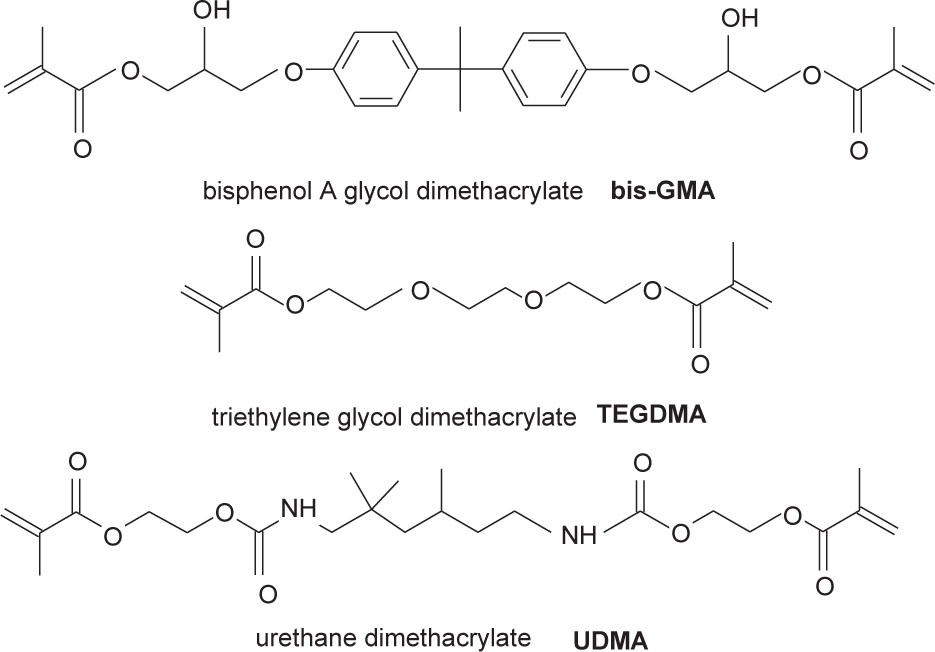
The basic monomers for resin dental composite.
Resin dental materials have been the focus of a great deal of research with the aim of improving restoration properties in the field of polymerization to decrease stress or improving mechanical features.
In our study, we have concentrated on properties of new experimental dental composites reinforced with different amounts of salinized silica. The filler loading in resin dental composite generally accounts for between 35-70 volume % or 50-85 weight % of composite [6]. The filler has several major roles in ultimate restoration, including enhancing modulus, radiopacity or altering thermal expansion behavior [1,7]. Theoretically, increasing filler content could also minimalize polymerization shrinkage and its consequence contraction stress due to reducing the organic phase volume [8]. Flexural strength and modulus, hardness as well as fracture toughness, are influenced by both filler morphology and filler loading [9]. There is a linear relationship between elastic module and filler loading. There is no clear correlation of fracture strength and fatigue tests to filler fraction, hence materials providing high initial strengths may not reveal the best fatigue resistance [7]. Tanimoto Y. et al, also demonstrated that the bending properties: such as maximum stress and bending modulus, increase with filler content [10].
As mentioned above, the aim of the study was to evaluate the mechanical properties and contraction stress generated during photopolymerization of experimental dental composite in terms of filler concentration.
2 Experimental Procedure
The experimental light-curing composite used in the presented study was developed in the University Laboratory of Material Research at the Medical University of Lodz. The polymer matrix is based on dimetacrylate resins: bis-GMA and TEGDMA (Sigma-Aldrich, USA), 40 - 60 wt. % of precipitated silica filler (Arsil, Z. Ch. Rudniki, Poland) modified with 3-methacryloxypropyltrimethoxysilane (A-174, Sigma-Aldrich, USA) and additions (< 2 wt. %) such as camphorquinone (CQ, Sigma-Aldrich, USA), dimethylaminoethyl methacrylate (DMAEMA, Sigma-Aldrich, USA) and 2,6-dit-butyl-p-cresol (BHT, Sigma-Aldrich, USA).
The material was cured with Elipar S10 lamp (3M ESPE, Germany) that has an output irradiance of 1450 mW/cm2 as stated by the manufacturer. To ensure consistent irradiance at each use of the light curing units, the calibrated radiometer system (Digital Light Meter 200 from Rolence Enterprice Inc., Taiwan) was used. The material was irradiated 20 second per 1 mm of material in silicon molds placed between basic laboratory slides. Direct contact of optical fiber with the sample surface was ensured. In order to ensure a satisfactory degree of conversion in the whole volume of material, the polymerization was carried out on both sides of the sample. The methods described below were used to evaluate mechanical properties of cured composites. Samples for this test were prepared by filling the appropriate silicone molds (3 mm high and 6 mm diameter).
Test of diametral tensile strength (DTS) is a method used to assess the strength of the dental composite materials according to the specifications ADA 15 (ADA/ANSI Specification 27). Samples were tested using universal testing machine (Z020, Zwick/Röell, Germany). The crosshead speed was 2 mm/min. Diametral tensile strength is the maximum resistance to withstand loads tending to destroy a sample. The numerical value is calculated according to the following formula:
where: DTS – diametral tensile strength [MPa], P – load applied [N], S – surface [mm2], D – diameter of sample [mm], T – thickness of sample [mm].
Semi-automatic hardness tester (ZHμ, Zwick/Röell, Germany) was used to determine the microhardness (HV) of composite materials. The assay was performed according to the Vickers method. Diamond shaped into a square base pyramid with apex angle of 136° is used for testing in this technique. During the test, the indenter was loaded with the weight of 1000 g and the contact time was 10 seconds.
Flexural strength was evaluated in a three-point bending test [11]. The three-point bending flexural test (TFS) was performed using a rectangular specimen (25×2×2 mm), placed on two supports 20 mm apart. The force was applied in the exact middle of the two supports at a 90° angle. Test was conducted according to ISO regulations [12] using universal testing maschine (Zwick Z020, Zwick/Röell, Germany) at crosshead speed of 1 mm/min. The maximum force, at which the fracture of tested material occurred, was measured for each specimen. Flexural strength [MPa] was calculated using following equation [13]:
where: b – width, h – thickness
Photoelastic analysis allows for quantitative measurement and visualization of stress concentration that develops during photopolymerization of resin composites. The method was described extensively in our earlier works [14,15,16]. Photoelastically sensitive plates of epoxy resin (Epidian 53, Organika-Sarzyna SA, Poland) were used in this study. Calibrated orifices of 3 mm in diameter and thickness of 4 mm were prepared in resin plates. The diameter of the orifices has been selected to mimic a tooth cavity and clinical conditions of average size. The generated strains in the plates were visualized in a circular transmission polariscope FL200 (Gunt, Germany) and photoelastic strain calculations were based on the Timoshenko equation [17].
Ethical approval: The conducted research is not related to either human or animals use.
3 Result and discussion
Incorporation of filler into resin matrix influences, generally, improves material properties provided that filler particles are bonded to polymer matrix or otherwise, it may act oppositely and weaken the resin. Hence, in our study, we used silanized silica as filler. Benefits of filler content presence are increased hardness, strength, radiopacity and decrease in polymerization shrinkage, thermal expansion and contraction, water sorption, softening, staining and finally improved workability [7].
According to our assumptions and on the basis of Vickers hardness measurements, it has been found that hardness of material surface increases almost 3 times if the filler is incorporated into resin matrix (Table 1). The commercially available composite materials, as delivered by the manufacturer, demonstrated overall significantly higher mechanical properties (DTS, HV) than experimental ones. Composite materials used in dentistry should demonstrate minimum hardness at the level of HV 40–50 [18]. It is crucial, because the aim of a restorative material is to mimic the tissue that it needs to be substituted, namely, enamel and dentine. The average hardness values of dental tissues range from 250 to 360 VHN (Vickers hardness) for enamel and from 50 to 70 KHN (Knoop hardness) for dentin [19]. Most of the conventional dental composites achieve top surface hardness of HV 70–110 [18,20,21,22], while experimental materials hardness is below HV 40 (Table 1) [23,24,25]. For our experimental composite material, low hardness (filled has HV = 24÷37, Table 1) narrows its clinical application to lining material or as class V and deciduous teeth restorative material. The commercial low shrinkage composite SDR (smart dentine replacement) (Dentsply, Germany) exhibits small DTS and HV values, which can be accepted in clinical conditions if the material surface exposed to occlusion loads (chewing surface) will be covered with a material with better strength parameters [26]. This procedure is recommended by the manufacturer, considering the material is designed as dentine substitute material [7].
The effect of filler amount on microhardness of samples (HV) on the cured side to a depth of 1.5 mm of material and polymerization efficiency; photopolymerisation conditions - 20 second/1 mm material thickness, the power of light curing unit 1400 mW/cm2.
| Filler amount, wt. % | HV1 | Polymerization efficiency | |
|---|---|---|---|
| polymerization side | 1.5 mm depth of material | ||
| 0 | 13 ± 2 | 11 ± 2 | 0.87 |
| 40 | 24 ± 4 | 23 ± 5 | 0.96 |
| 50 | 30 ± 1 | 25 ± 3 | 0.81 |
| 60 | 37 ± 1.5 | 31 ± 2 | 0.84 |
Equally important is the depth of crosslinking of the resin-based composite (DOC) that determines the thickness of the sample for which the optimal properties of the composite are retained. According to ISO standards, the optimal DOC should not be less than 1.5 mm [12]. It is possible to define the depth of crosslinking by dividing the microhardness of the material from the irradiated side to the microhardness on the cross-section of sample [27,28,29]. The minimum value of this ratio, ensuring that the material of a given thickness will be properly polymerized, is 0.85. It should be emphasized that the lower the value of the coefficient, the greater the amount of residual unreacted monomer, impurities of monomers, additives, degradation products released that can irritate the pulp and soft tooth and perineum tissue, stimulate bacterial growth or promote allergic reactions [30,31]. In our study, not all samples met the ISO standard criterion (DOC = 1.5 mm) (Table 1), concerning the ratio of hardness from the exposed side to the hardness at a depth of 1.5 mm of the sample cross-section, which may translate into the biocompatibility of the material. The decrease of polymerization efficiency in the case of material filled 50 or 60 wt. % is in agreement with Halvorson et al. study, which found that conversion progressively decreased with an increase in filler loading. It could be explained as restricted mobility of resin-monomers due to the existence fillers [32,33]. This led to decreased molecular and radical mobility and resulted in lower monomer conversion.
A significant increase in the Young’s modulus is connected to the introduction of filler to the polymer matrix, which increases the rigidity of the composite and reduces its plasticity [7] (Figure 2). Flexural strength for commonly used composite materials range from 60 to 180 MPa [34]. In the case of the presented experimental material, flexural strength exceed 50 MPa (Figure 3). This value meets the ISO standard for materials not suitable with occlusal loads [12] and limits material clinical indications to restorations in deciduous teeth, class V cavities or lining deep cavities. The obtained results are consistent with our previously published studies [35,36].
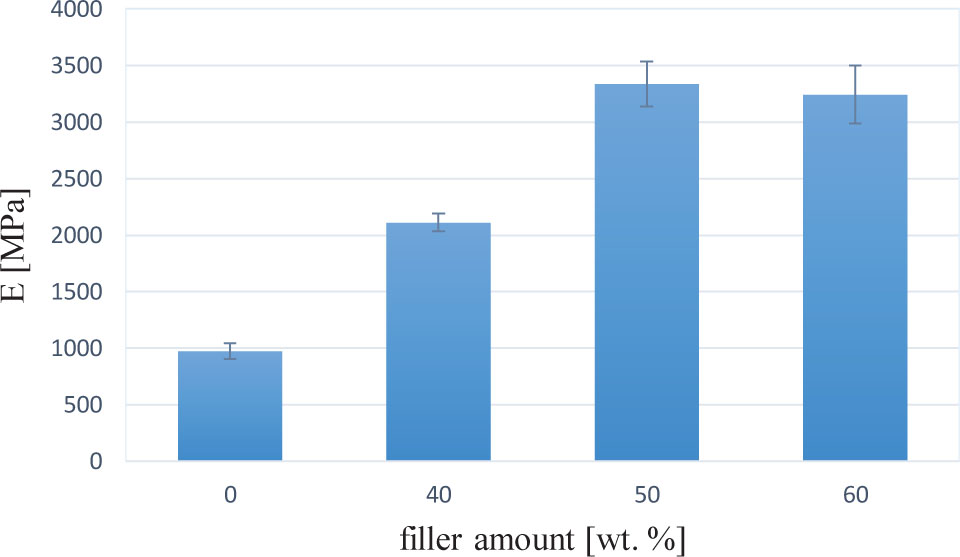
The influence of filler amount on Young’s modulus (E) of neat resin and composite filled with 40, 50 or 60 wt. % silanized silica; photopolymerization conditions - 20 second/1 mm material thickness, the power of light curing unit 1400 mW/cm2.
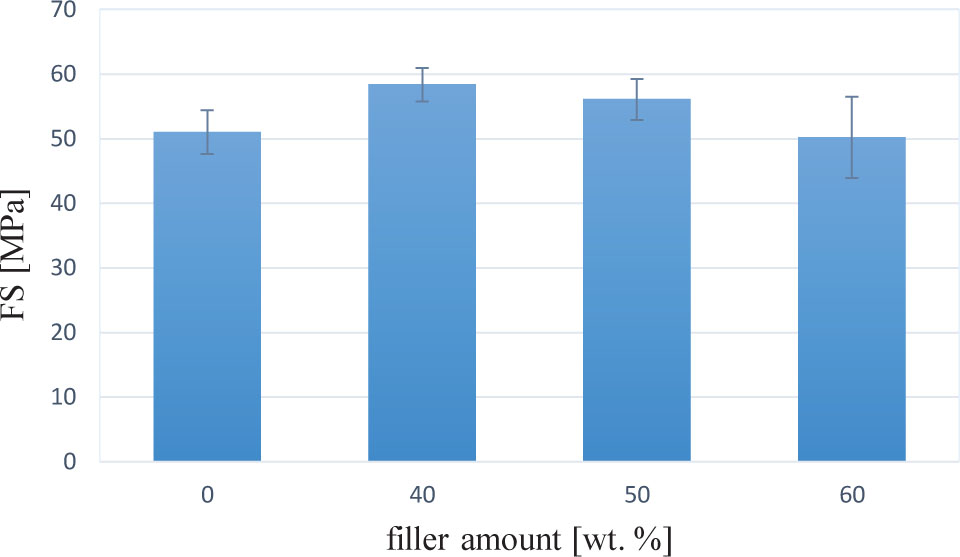
The influence of filler amount on flexural strength (FS) of neat resin and composite filled with 40,50 or 60 wt. % silanized silica; photopolymerization conditions - 20 second/1 mm material thickness, the power of light curing unit 1400 mW/cm2.
Polymerization processes of dental composites generates a shrinkage stress at the restoration-tooth interface (even 20 MPa, dependent on the material) [26]. The consequences of the stress contraction reported in the literature are: deformed tooth structure or even cracks in healthy tooth structure and damage of the adhesive bond between restoration and dental tissue. Shrinkage stresses can also lead to marginal discoloration, postoperative sensitivity and secondary caries [37,38,39]. Hence, determination of contraction stress is crucial, especially, for new materials. The calculation was conducted following the assumption that the relative change in volume of the composite material causes its extension and extension of the base material which is the “tooth model” (epoxy resin plate). We determined the total state of stress on the surface of the tooth-dentin connection and expressed it quantitatively as reduced stress (dint) (Table 2). On the basis of calculation of the radial stress dr, circumferential stress dq and reduced stress dint, it has been found that the blends containing 40 wt. % of filler have contraction stress reduced by 47% compared to neat resin (Figure 5 and Table 2). The contraction stress of that experimental composite (with 40 wt. % of silanized silica) is the smallest of all made composites. It should be emphasized that the contraction stress on level 7 MPa is, at least satisfactory, considering that low-shrinkage flowable dental composite - SDR has contraction stress account of 5 MPa [26]. The magnitude of the contraction stress has been directly correlated with filler concentration [40,41]. According to linear elastic model theory and Hook’s law, the increment in stress is proportional to the increase in materials elastic modulus [42,43]. This is in line with our Young’s modulus measurements (Figure 2). Material with 40 wt. % of filler exhibited elastic modulus of 2 GPa while composite with 50 or 60 wt. % of filler exhibited E ~ 3.3 GPa (Figure 2). Such low contraction stress could also be explained due to the possibility of occurrence of viscous flow. The plastic flow, mostly occurring prior to the acquisition of significant elastic modulus, allows part of the shrinkage to take place without stress built up at the interface and leads to remaining contraction stress reduce (Figure 5 and Table 2).
The influence of filler amount on the radial stress (dr), circumferential stress (dq) and reduced stress (dint) generated during polymerization of experimental dental composite of neat resin and composite filled with 40, 50 or 60 wt. % sialnized silica; photopolymerization conditions - 20 second/1 mm material thickness, the power of light curing unit 1400 mW/cm2.
| Filler amount, wt. % | dr, MPa | dq, MPa | dint, MPa |
|---|---|---|---|
| 0 | 5.8 ± 0,2 | -6.7 ± 0.2 | 12.5 ± 0.2 |
| 40 | 2.7 ± 0,2 | -3.9 ± 0.2 | 6.6 ± 0.1 |
| 50 | 7.9 ± 1 | -9.3 ± 1.2 | 17.2 ± 2.2 |
| 60 | 9.2 ± 1 | -11.1 ± 1.2 | 20.3 ± 2.2 |
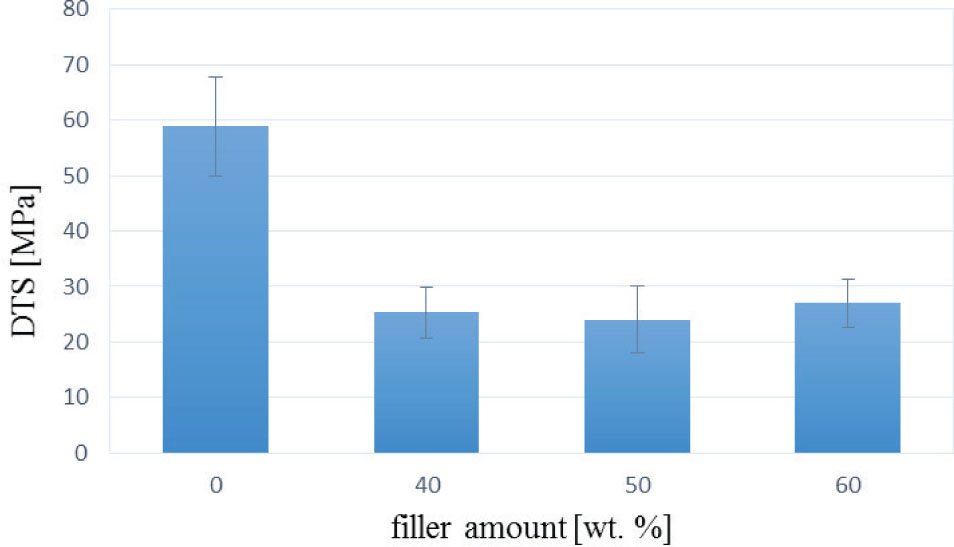
The influence of filler amount on diametral tensile strength (DTS) of neat resin and composite filled with 40, 50 or 60 wt. % silanized silica; photopolymerization conditions - 20 second/1 mm material thickness, the power of light curing unit 1400 mW/cm2.
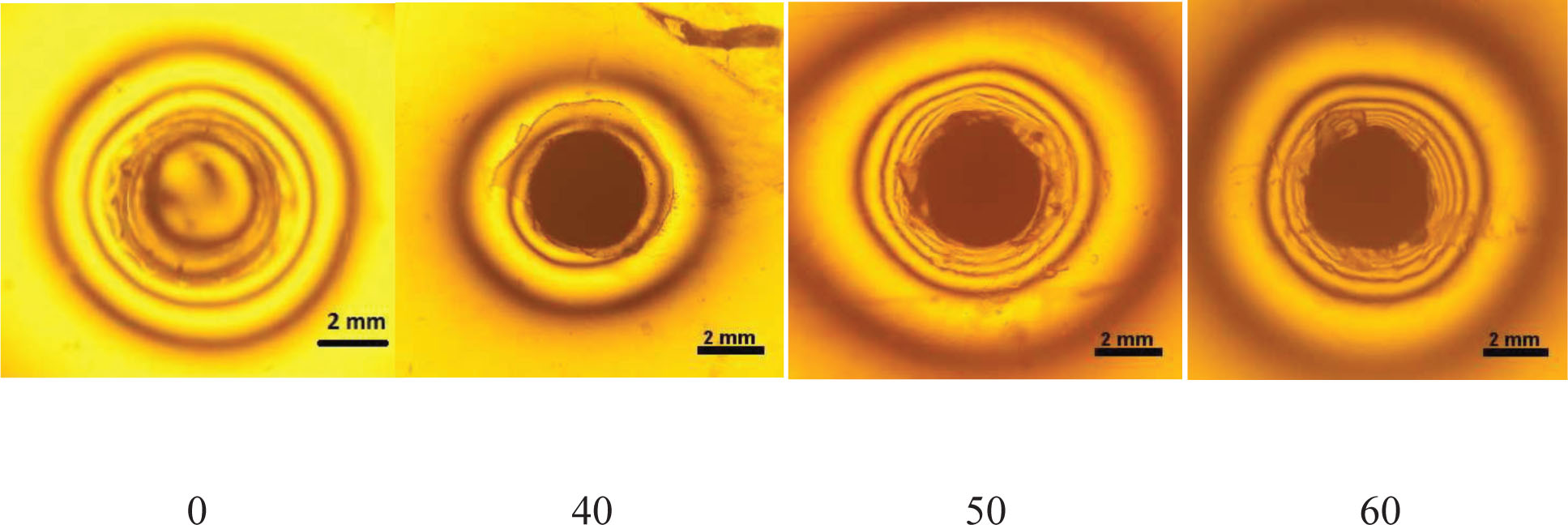
Isochromes in epoxy resin of experimental material with and without filler (0 ÷ 60 wt.%) around restorations, acquired in polarized light with parallel polarization facets.
4 Conclusions
The incorporation of silanized silica as filler to the experimental dental composite influenced significantly its properties. The hardness and elastic modulus increased with the amount of filler. The flexural strength and diametral tensile strength remained on the same level regardless filler concentration. Commercially available composite material showed higher mechanical properties than the experimental ones. Still, experimental material meets the ISO standard for materials used as suitable to restorations in deciduous teeth, class V cavities or lining deep cavities.
Considering the negative impact of contraction stress on clinical performance of bonded restoration, it needs to be emphasis that the experimental composite (bis-GMA/TEGDMA/40 wt. % silanized silica) has low stress values.
Conflict of interest: Authors state no conflict of interest.
References
[1] Cramer N.B., Stansbury J.W., Bowman C.N., Recent advances and developments in composite dental restorative materials, J. Dent. Res., 2011, 90(4), 402–416, 10.1177/0022034510381263.Search in Google Scholar PubMed PubMed Central
[2] Peutzfeldt A., Resin Composites in Dentistry: The Monomer Systems, Eur. J. Oral Sci., 1997, 105(2), 97–116.10.1111/j.1600-0722.1997.tb00188.xSearch in Google Scholar PubMed
[3] Hahnel S., Dowling A.H., El-Safty S., Fleming G.J.P., The influence of monomeric resin and filler characteristics on the performance of experimental resin-based composites (RBCs) Derived from a Commercial Formulation. Dent. Mater., 2012, 28(4), 416–423, 10.1016/j.dental.2011.11.016.Search in Google Scholar PubMed
[4] Musanje L., Ferracane J.L,. Effects of resin formulation and nanofiller surface treatment on the properties of experimental hybrid resin composite, Biomaterials, 2004, 25(18), 4065–4071, 10.1016/j.biomaterials.2003.11.003.Search in Google Scholar PubMed
[5] Rüttermann S., Dluzhevskaya I., Großisteinbeck C., Raab W.H.M., Janda R., Impact of replacing Bis-GMA and TEGDMA by other commercially available monomers on the properties of resin-based composites, Dent. Mater., 2010, 26(4), 353–359, 10.1016/j.dental.2009.12.006.Search in Google Scholar PubMed
[6] Sabbagh J., Ryelandt L., Bacherius L., Biebuyck J.-J., Vreven J., Lambrechts, et al., Characterization of the inorganic fraction of resin composites, J. Oral Rehabil., 2004, 31(11), 1090–1101, 10.1111/j.1365-2842.2004.01352.x.Search in Google Scholar PubMed
[7] Mousavinasab S.M., Effects of filler content on mechanical and optical properties of dental composite resin. In Metal, Ceramic and Polymeric Composites for Various Uses; Cuppoletti, J., Ed.; InTech: Rijeka, 2011.Search in Google Scholar
[8] Klapdohr S., A͂, N.M., Invited review new inorganic components for dental filling composites., 2005, 45, 21–45, 10.1007/s00706-004-0254-y.Search in Google Scholar
[9] Kim K.-H., Ong J.L., Okuno O., The effect of filler loading and morphology on the mechanical properties of contemporary composites, J. Prosthet. Dent., 2002, 87(6), 642–649.10.1067/mpr.2002.125179Search in Google Scholar PubMed
[10] Tanimoto Y., Nishiwaki T., Nemoto K., Ben G., Effect of filler content on bending properties of dental composites: Numerical Simulation with the Use of the Finite-Element Method, J. Biomed. Mater. Res. B. Appl. Biomater., 2004, 71(1), 188–195, 10.1002/jbm.b.30079.Search in Google Scholar PubMed
[11] Łapińska B., Podlewska A. Kleczewska J., Nowak J., Szczesio A., Sokołowski J., at al., Experimental Composite Material Modified with Calcium Fluoride – Three-Point Bending Flexural Tes, J. Achiev. Mater. Manuf. Eng. 2016, 74(2), 72–77, 10.5604/17348412.1225912.Search in Google Scholar
[12] PN-EN ISO 4049:2003. Warszawa, 2003.Search in Google Scholar
[13] Standard, A. N. AMERICAN NATIONAL STANDARD / AMERICAN DENTAL ASSOCIATION. 1992, No. 69.Search in Google Scholar
[14] Domarecka M., Sokołowski K., Krasowski M., Szczesio A., Bociong K., Sokołowski J., at al., Influence of water sorption on the shrinkage stresses of dental composites, J. Stomatol, 2016, 476–483.Search in Google Scholar
[15] Bociong K., Szczesio A., Sokolowski K., Domarecka M., Sokolowski J., Krasowski M. at al., The influence of water sorption of dental light-cured composites on shrinkage sstress, Materials, 2017, 10, 1142, 10.3390/ma10101142.Search in Google Scholar
[16] Bociong K., Krasowski M., Domarecka M., Sokołowski J., Wpływ metody fotopolimeryzacji kompozytów stomatologicznych na bazie żywic dimetakrylanowych na naprȩzenia skurczowe oraz wybrane właściwości utwardzonego materiału, Polimery/Polymers, 2016, 61 (7–8), 499–508, (in Polish). 10.14314/polimery.2016.499.Search in Google Scholar
[17] Timoshenko S., Goodier J. N., Theory of Elasticity, II.; McGraw-Hill: New York, 1951.Search in Google Scholar
[18] Poggio C., Lombardini M., Gaviati S. Chiesa M., Evaluation of vickers hardness and depth of cure of six composite resins photo-activated with different polymerization modes, J.Conserv. Dent.: JCD. India 2012, pp 237–241.10.4103/0972-0707.97946Search in Google Scholar
[19] Meredith N., Sherriff M., Setchell D. J., Swanson S. A., Measurement of the microhardness and young’s modulus of human enamel and dentine using an indentation technique, Arch. Oral Biol., 1996, 41 (6), 539–545.10.1016/0003-9969(96)00020-9Search in Google Scholar
[20] Esmaeili B., Hardness evaluation of composite resins cured with qth and led. 2014, pp 40–44.Search in Google Scholar
[21] Abuelenain D.A., Neel E.A.A., Surface and mechanical properties of different dental composites. 2015, 2(2).Search in Google Scholar
[22] Ferracane J.L., Resin Composite – State of the Art, Dent. Mater., 2011, 27(1), 29–38, 10.1016/j.dental.2010.10.020.Search in Google Scholar PubMed
[23] Łukomska-Szymańska M., Kleczewska J., Nowak J., Pryliński M., Szczesio A., Podlewska M., et al., Mechanical properties of calcium fluoride-based composite, Materials. Biomed Res. Int. 2016, 2016, 10.1155/2016/2752506.Search in Google Scholar PubMed PubMed Central
[24] Jan Y.D., Lee B. S., Lin C.P., Tseng W.Y., Conjugation of diisocyanate side chains to dimethacrylate reduces polymerization shrinkage and increases the hardness of composite resins, J. Formos. Med. Assoc., 2014, 113(4), 242–248, 10.1016/j.jfma.2012.07.003.Search in Google Scholar PubMed
[25] Gonalves F., Azevedo C.L.N., Ferracane J.L., Braga R.R., BisGMA/TEGDMA ratio and filler content effects on shrinkage stress, Dent. Mater., 2011, 27(6), 520–526, 10.1016/j.dental.2011.01.007.Search in Google Scholar PubMed
[26] Domarecka M., Some Properties of flowable low-shrinkage dental composites wybrane właściwości materiałów kompozytowych typu flow o niskim skurczu polimeryzacyjnym. 2014, No. March.Search in Google Scholar
[27] Moore B.K., Platt J.A., Borges G., Chu T.-M.G., Katsilieri I., Depth of cure of dental resin composites: ISO 4049 depth and microhardness of types of materials and shades, Oper. Dent., 2008, 33(4), 408–412, 10.2341/07-104.Search in Google Scholar PubMed
[28] Bouschlicher M. R., Rueggeberg F. A., Wilson B. M., Correlation of bottom-to-top surface microhardness and conversion ratios for a variety of resin composite compositions, Oper. Dent., 2004, 29(6), 698–704.Search in Google Scholar
[29] Bociong K., Kleczewska J., Sokołowski J., Efektywność fotopolimeryzacji oraz wybrane właściwości światłoutwardzalnych kompozytów stomatologicznych, Przem. Chem. 2014, 93, 779–782 (in Polish), dx.medra.org/10.12916/przemchem.2014.779.Search in Google Scholar
[30] Tanaka K., Taira M., Shintani H., Wakasa K., Yamaki M., Residual monomers (tegdma and bis-gma) of a set visible-light-cured dental composite resin when immersed in water, J. Oral Rehabil., 1991, 18(4), 353–362.10.1111/j.1365-2842.1991.tb00067.xSearch in Google Scholar
[31] Sideridou I.D., Achilias D.S., Elution study of unreacted bis-Gma, Tegdma, Udma, and bis-EMA from light-cured dental resins and resin composites using HPLC, J. Biomed. Mater. Res. - Part B Appl. Biomater., 2005, 74(1), 617–626, 10.1002/jbm.b.30252.Search in Google Scholar
[32] Halvorson R.H., Erickson R.L., Davidson C.L., The effect of filler and silane content on conversion of resin-based composite, Dent. Mater., 2003, 19(4), 327–333, 10.1016/S0109-5641(02)00062-3.Search in Google Scholar
[33] Rastelli A.N.S., Jacomassi D.P., Faloni A.P.S., Queiroz T.P., Rojas S.S., Bernardi M. I. B., et al., The filler content of the dental composite resins and their influence on different properties. Microsc. Res. Tech., 2012, 75(6), 758–765, 10.1002/jemt.21122.Search in Google Scholar PubMed
[34] Ronald L., Sakaguchi J.M.P., Craig’s Restorative Dental Materials, 13th Edition; Mosby Elsevier, 2012.Search in Google Scholar
[35] Bociong K., Rylska D., Sokołowski J., The modification of dental resin composite using selected dimethacrylate monomers, Inż. Mat., 2017, 38, n, 46–50.Search in Google Scholar
[36] Bociong K., Nowak J., Szczesio A., Sokołowski K., Sokołowski J., Wybrane właściwości mechaniczne eksperymentalnego kompozytu stomatologicznego. Cz. 1, Przem. Chem., 2017, 96(6), 1360–1363 (in Polish), 10.15199/62.2017.6.28.Search in Google Scholar
[37] Fu J., Liu W., Hao Z., Wu X., Yin J., Panjiyar A., et al., Characterization of a low shrinkage dental composite containing bismethylene spiroorthocarbonate expanding monomer, Int. J. Mol. Sci. 2014, 15(2), 2400–2412, 10.3390/ijms15022400.Search in Google Scholar PubMed PubMed Central
[38] van Dijken J.W.V., Lindberg A., A 15-Year randomized controlled study of a reduced shrinkage stress resin composite, Dent. Mater., 2015, 31(9), 1150–1158, 10.1016/j.dental.2015.06.012.Search in Google Scholar PubMed
[39] Domarecka M., Sokołowski K., Krasowski M., Szczesio A., Bociong K., Sokołowski J., et al., Influence of water sorption on the shrinkage stresses of dental composites, J. Stomatol. 2016, 69(4), 412–419, 10.5604/00114553.1225380.Search in Google Scholar
[40] Ferracane J.L., Developing a more complete understanding of stresses produced in dental composites during polymerization, Dent. Mater., 2005, 21(1), 36–42, 10.1016/j.dental.2004.10.004.Search in Google Scholar PubMed
[41] Condon J.R., Ferracane J.L., Assessing the effect of composite formulation on polymerization stress, J. Am. Dent. Assoc., 2000, 131(4), 497–503, 10.14219/jada.archive.2000.0207.Search in Google Scholar PubMed
[42] Feilzer A.J., Gee A.J. De, Davidson C.L., Quantitative determination of stress reduction by flow in composite restorations, Dent. Mater., 1990, 6(3), 167–171, https://doi.org/10.1016/0109-5641(90)90023-8.Search in Google Scholar
[43] Davidson C.L., Gee A.J. De., Relaxation of polymerization contraction stresses by flow in dental composites, J. Dent. Res., 1984, 63(2), 146–148, 10.1177/00220345840630021001.Search in Google Scholar PubMed
© 2018 Kinga Bociong et al., published by De Gruyter
This work is licensed under the Creative Commons Attribution-NonCommercial-NoDerivatives 4.0 License.
Articles in the same Issue
- Regular Articles
- The effect of CuO modification for a TiO2 nanotube confined CeO2 catalyst on the catalytic combustion of butane
- The preparation and antibacterial activity of cellulose/ZnO composite: a review
- Linde Type A and nano magnetite/NaA zeolites: cytotoxicity and doxorubicin loading efficiency
- Performance and thermal decomposition analysis of foaming agent NPL-10 for use in heavy oil recovery by steam injection
- Spectroscopic (FT-IR, FT-Raman, UV, 1H and 13C NMR) insights, electronic profiling and DFT computations on ({(E)-[3-(1H-imidazol-1-yl)-1-phenylpropylidene] amino}oxy)(4-nitrophenyl)methanone, an imidazole-bearing anti-Candida agent
- A Simplistic Preliminary Assessment of Ginstling-Brounstein Model for Solid Spherical Particles in the Context of a Diffusion-Controlled Synthesis
- M-Polynomials And Topological Indices Of Zigzag And Rhombic Benzenoid Systems
- Photochemical Transformation of some 3-benzyloxy-2-(benzo[b]thiophen-2-yl)-4Hchromen-4-ones: A Remote Substituent Effect
- Dynamic Changes of Secondary Metabolites and Antioxidant Activity of Ligustrum lucidum During Fruit Growth
- Studies on the flammability of polypropylene/ammonium polyphosphate and montmorillonite by using the cone calorimeter test
- DSC, FT-IR, NIR, NIR-PCA and NIR-ANOVA for determination of chemical stability of diuretic drugs: impact of excipients
- Antioxidant and Hepatoprotective Effects of Methanolic Extracts of Zilla spinosa and Hammada elegans Against Carbon Tetrachlorideinduced Hepatotoxicity in Rats
- Prunus cerasifera Ehrh. fabricated ZnO nano falcates and its photocatalytic and dose dependent in vitro bio-activity
- Organic biocides hosted in layered double hydroxides: enhancing antimicrobial activity
- Experimental study on the regulation of the cholinergic pathway in renal macrophages by microRNA-132 to alleviate inflammatory response
- Synthesis, characterization, in-vitro antimicrobial properties, molecular docking and DFT studies of 3-{(E)-[(4,6-dimethylpyrimidin-2-yl)imino]methyl} naphthalen-2-ol and Heteroleptic Mn(II), Co(II), Ni(II) and Zn(II) complexes
- M-Polynomials and Topological Indices of Dominating David Derived Networks
- Human Health Risk Assessment of Trace Metals in Surface Water Due to Leachate from the Municipal Dumpsite by Pollution Index: A Case Study from Ndawuse River, Abuja, Nigeria
- Analysis of Bowel Diseases from Blood Serum by Autofluorescence and Atomic Force Microscopy Techniques
- Hydrographic parameters and distribution of dissolved Cu, Ni, Zn and nutrients near Jeddah desalination plant
- Relationships between diatoms and environmental variables in industrial water biotopes of Trzuskawica S.A. (Poland)
- Optimum Conversion of Major Ginsenoside Rb1 to Minor Ginsenoside Rg3(S) by Pulsed Electric Field-Assisted Acid Hydrolysis Treatment
- Antioxidant, Anti-microbial Properties and Chemical Composition of Cumin Essential Oils Extracted by Three Methods
- Regulatory mechanism of ulinastatin on autophagy of macrophages and renal tubular epithelial cells
- Investigation of the sustained-release mechanism of hydroxypropyl methyl cellulose skeleton type Acipimox tablets
- Bio-accumulation of Polycyclic Aromatic Hydrocarbons in the Grey Mangrove (Avicennia marina) along Arabian Gulf, Saudi Coast
- Dynamic Change of Secondary Metabolites and spectrum-effect relationship of Malus halliana Koehne flowers during blooming
- Lipids constituents from Gardenia aqualla Stapf & Hutch
- Effect of using microwaves for catalysts preparation on the catalytic acetalization of glycerol with furfural to obtain fuel additives
- Effect of Humic Acid on the Degradation of Methylene Blue by Peroxymonosulfate
- Serum containing drugs of Gua Lou Xie Bai decoction (GLXB-D) can inhibit TGF-β1-Induced Epithelial to Mesenchymal Transition (EMT) in A549 Cells
- Antiulcer Activity of Different Extracts of Anvillea garcinii and Isolation of Two New Secondary Metabolites
- Analysis of Metabolites in Cabernet Sauvignon and Shiraz Dry Red Wines from Shanxi by 1H NMR Spectroscopy Combined with Pattern Recognition Analysis
- Can water temperature impact litter decomposition under pollution of copper and zinc mixture
- Released from ZrO2/SiO2 coating resveratrol inhibits senescence and oxidative stress of human adipose-derived stem cells (ASC)
- Validated thin-layer chromatographic method for alternative and simultaneous determination of two anti-gout agents in their fixed dose combinations
- Fast removal of pollutants from vehicle emissions during cold-start stage
- Review Article
- Catalytic activities of heterogeneous catalysts obtained by copolymerization of metal-containing 2-(acetoacetoxy)ethyl methacrylate
- Antibiotic Residue in the Aquatic Environment: Status in Africa
- Regular Articles
- Mercury fractionation in gypsum using temperature desorption and mass spectrometric detection
- Phytosynthetic Ag doped ZnO nanoparticles: Semiconducting green remediators
- Epithelial–Mesenchymal Transition Induced by SMAD4 Activation in Invasive Growth Hormone-Secreting Adenomas
- Physicochemical properties of stabilized sewage sludge admixtures by modified steel slag
- In Vitro Cytotoxic and Antiproliferative Activity of Cydonia oblonga flower petals, leaf and fruit pellet ethanolic extracts. Docking simulation of the active flavonoids on anti-apoptotic protein Bcl-2
- Synthesis and Characterization of Pd exchanged MMT Clay for Mizoroki-Heck Reaction
- A new selective, and sensitive method for the determination of lixivaptan, a vasopressin 2 (V2)-receptor antagonist, in mouse plasma and its application in a pharmacokinetic study
- Anti-EGFL7 antibodies inhibit rat prolactinoma MMQ cells proliferation and PRL secretion
- Density functional theory calculations, vibration spectral analysis and molecular docking of the antimicrobial agent 6-(1,3-benzodioxol-5-ylmethyl)-5-ethyl-2-{[2-(morpholin-4-yl)ethyl] sulfanyl}pyrimidin-4(3H)-one
- Effect of Nano Zeolite on the Transformation of Cadmium Speciation and Its Uptake by Tobacco in Cadmium-contaminated Soil
- Effects and Mechanisms of Jinniu Capsule on Methamphetamine-Induced Conditioned Place Preference in Rats
- Calculating the Degree-based Topological Indices of Dendrimers
- Efficient optimization and mineralization of UV absorbers: A comparative investigation with Fenton and UV/H2O2
- Metabolites of Tryptophane and Phenylalanine as Markers of Small Bowel Ischemia-Reperfusion Injury
- Adsorption and determination of polycyclic aromatic hydrocarbons in water through the aggregation of graphene oxide
- The role of NR2C2 in the prolactinomas
- Chromium removal from industrial wastewater using Phyllostachys pubescens biomass loaded Cu-S nanospheres
- Hydrotalcite Anchored Ruthenium Catalyst for CO2 Hydrogenation Reaction
- Preparation of Calcium Fluoride using Phosphogypsum by Orthogonal Experiment
- The mechanism of antibacterial activity of corylifolinin against three clinical bacteria from Psoralen corylifolia L
- 2-formyl-3,6-bis(hydroxymethyl)phenyl benzoate in Electrochemical Dry Cell
- Electro-photocatalytic degradation of amoxicillin using calcium titanate
- Effect of Malus halliana Koehne Polysaccharides on Functional Constipation
- Structural Properties and Nonlinear Optical Responses of Halogenated Compounds: A DFT Investigation on Molecular Modelling
- DMFDMA catalyzed synthesis of 2-((Dimethylamino)methylene)-3,4-dihydro-9-arylacridin-1(2H)-ones and their derivatives: in-vitro antifungal, antibacterial and antioxidant evaluations
- Production of Methanol as a Fuel Energy from CO2 Present in Polluted Seawater - A Photocatalytic Outlook
- Study of different extraction methods on finger print and fatty acid of raw beef fat using fourier transform infrared and gas chromatography-mass spectrometry
- Determination of trace fluoroquinolones in water solutions and in medicinal preparations by conventional and synchronous fluorescence spectrometry
- Extraction and determination of flavonoids in Carthamus tinctorius
- Therapeutic Application of Zinc and Vanadium Complexes against Diabetes Mellitus a Coronary Disease: A review
- Study of calcined eggshell as potential catalyst for biodiesel formation using used cooking oil
- Manganese oxalates - structure-based Insights
- Topological Indices of H-Naphtalenic Nanosheet
- Long-Term Dissolution of Glass Fibers in Water Described by Dissolving Cylinder Zero-Order Kinetic Model: Mass Loss and Radius Reduction
- Topological study of the para-line graphs of certain pentacene via topological indices
- A brief insight into the prediction of water vapor transmissibility in highly impermeable hybrid nanocomposites based on bromobutyl/epichlorohydrin rubber blends
- Comparative sulfite assay by voltammetry using Pt electrodes, photometry and titrimetry: Application to cider, vinegar and sugar analysis
- MicroRNA delivery mediated by PEGylated polyethylenimine for prostate cancer therapy
- Reversible Fluorescent Turn-on Sensors for Fe3+ based on a Receptor Composed of Tri-oxygen Atoms of Amide Groups in Water
- Sonocatalytic degradation of methyl orange in aqueous solution using Fe-doped TiO2 nanoparticles under mechanical agitation
- Hydrotalcite Anchored Ruthenium Catalyst for CO2 Hydrogenation Reaction
- Production and Analysis of Recycled Ammonium Perrhenate from CMSX-4 superalloys
- Topical Issue on Agriculture
- New phosphorus biofertilizers from renewable raw materials in the aspect of cadmium and lead contents in soil and plants
- Survey of content of cadmium, calcium, chromium, copper, iron, lead, magnesium, manganese, mercury, sodium and zinc in chamomile and green tea leaves by electrothermal or flame atomizer atomic absorption spectrometry
- Biogas digestate – benefits and risks for soil fertility and crop quality – an evaluation of grain maize response
- A numerical analysis of heat transfer in a cross-current heat exchanger with controlled and newly designed air flows
- Freshwater green macroalgae as a biosorbent of Cr(III) ions
- The main influencing factors of soil mechanical characteristics of the gravity erosion environment in the dry-hot valley of Jinsha river
- Free amino acids in Viola tricolor in relation to different habitat conditions
- The influence of filler amount on selected properties of new experimental resin dental composite
- Effect of poultry wastewater irrigation on nitrogen, phosphorus and carbon contents in farmland soil
- Response of spring wheat to NPK and S fertilization. The content and uptake of macronutrients and the value of ionic ratios
- The Effect of Macroalgal Extracts and Near Infrared Radiation on Germination of Soybean Seedlings: Preliminary Research Results
- Content of Zn, Cd and Pb in purple moor-grass in soils heavily contaminated with heavy metals around a zinc and lead ore tailing landfill
- Topical Issue on Research for Natural Bioactive Products
- Synthesis of (±)-3,4-dimethoxybenzyl-4-methyloctanoate as a novel internal standard for capsinoid determination by HPLC-ESI-MS/MS(QTOF)
- Repellent activity of monoterpenoid esters with neurotransmitter amino acids against yellow fever mosquito, Aedes aegypti
- Effect of Flammulina velutipes (golden needle mushroom, eno-kitake) polysaccharides on constipation
- Bioassay-directed fractionation of a blood coagulation factor Xa inhibitor, betulinic acid from Lycopus lucidus
- Antifungal and repellent activities of the essential oils from three aromatic herbs from western Himalaya
- Chemical composition and microbiological evaluation of essential oil from Hyssopus officinalis L. with white and pink flowers
- Bioassay-guided isolation and identification of Aedes aegypti larvicidal and biting deterrent compounds from Veratrum lobelianum
- α-Terpineol, a natural monoterpene: A review of its biological properties
- Utility of essential oils for development of host-based lures for Xyleborus glabratus (Coleoptera: Curculionidae: Scolytinae), vector of laurel wilt
- Phenolic composition and antioxidant potential of different organs of Kazakh Crataegus almaatensis Pojark: A comparison with the European Crataegus oxyacantha L. flowers
- Isolation of eudesmane type sesquiterpene ketone from Prangos heyniae H.Duman & M.F.Watson essential oil and mosquitocidal activity of the essential oils
- Comparative analysis of the polyphenols profiles and the antioxidant and cytotoxicity properties of various blue honeysuckle varieties
- Special Issue on ICCESEN 2017
- Modelling world energy security data from multinomial distribution by generalized linear model under different cumulative link functions
- Pine Cone and Boron Compounds Effect as Reinforcement on Mechanical and Flammability Properties of Polyester Composites
- Artificial Neural Network Modelling for Prediction of SNR Effected by Probe Properties on Ultrasonic Inspection of Austenitic Stainless Steel Weldments
- Calculation and 3D analyses of ERR in the band crack front contained in a rectangular plate made of multilayered material
- Improvement of fuel properties of biodiesel with bioadditive ethyl levulinate
- Properties of AlSi9Cu3 metal matrix micro and nano composites produced via stir casting
- Investigation of Antibacterial Properties of Ag Doped TiO2 Nanofibers Prepared by Electrospinning Process
- Modeling of Total Phenolic contents in Various Tea samples by Experimental Design Methods
- Nickel doping effect on the structural and optical properties of indium sulfide thin films by SILAR
- The effect mechanism of Ginnalin A as a homeopathic agent on various cancer cell lines
- Excitation functions of proton induced reactions of some radioisotopes used in medicine
- Oxide ionic conductivity and microstructures of Pr and Sm co-doped CeO2-based systems
- Rapid Synthesis of Metallic Reinforced in Situ Intermetallic Composites in Ti-Al-Nb System via Resistive Sintering
- Oxidation Behavior of NiCr/YSZ Thermal Barrier Coatings (TBCs)
- Clustering Analysis of Normal Strength Concretes Produced with Different Aggregate Types
- Magnetic Nano-Sized Solid Acid Catalyst Bearing Sulfonic Acid Groups for Biodiesel Synthesis
- The biological activities of Arabis alpina L. subsp. brevifolia (DC.) Cullen against food pathogens
- Humidity properties of Schiff base polymers
- Free Vibration Analysis of Fiber Metal Laminated Straight Beam
- Comparative study of in vitro antioxidant, acetylcholinesterase and butyrylcholinesterase activity of alfalfa (Medicago sativa L.) collected during different growth stages
- Isothermal Oxidation Behavior of Gadolinium Zirconate (Gd2Zr2O7) Thermal Barrier Coatings (TBCs) produced by Electron Beam Physical Vapor Deposition (EB-PVD) technique
- Optimization of Adsorption Parameters for Ultra-Fine Calcite Using a Box-Behnken Experimental Design
- The Microstructural Investigation of Vermiculite-Infiltrated Electron Beam Physical Vapor Deposition Thermal Barrier Coatings
- Modelling Porosity Permeability of Ceramic Tiles using Fuzzy Taguchi Method
- Experimental and theoretical study of a novel naphthoquinone Schiff base
- Physicochemical properties of heat treated sille stone for ceramic industry
- Sand Dune Characterization for Preparing Metallurgical Grade Silicon
- Catalytic Applications of Large Pore Sulfonic Acid-Functionalized SBA-15 Mesoporous Silica for Esterification
- One-photon Absorption Characterizations, Dipole Polarizabilities and Second Hyperpolarizabilities of Chlorophyll a and Crocin
- The Optical and Crystallite Characterization of Bilayer TiO2 Films Coated on Different ITO layers
- Topical Issue on Bond Activation
- Metal-mediated reactions towards the synthesis of a novel deaminolysed bisurea, dicarbamolyamine
- The structure of ortho-(trifluoromethyl)phenol in comparison to its homologues – A combined experimental and theoretical study
- Heterogeneous catalysis with encapsulated haem and other synthetic porphyrins: Harnessing the power of porphyrins for oxidation reactions
- Recent Advances on Mechanistic Studies on C–H Activation Catalyzed by Base Metals
- Reactions of the organoplatinum complex [Pt(cod) (neoSi)Cl] (neoSi = trimethylsilylmethyl) with the non-coordinating anions SbF6– and BPh4–
- Erratum
- Investigation on Two Compounds of O, O’-dithiophosphate Derivatives as Corrosion Inhibitors for Q235 Steel in Hydrochloric Acid Solution
Articles in the same Issue
- Regular Articles
- The effect of CuO modification for a TiO2 nanotube confined CeO2 catalyst on the catalytic combustion of butane
- The preparation and antibacterial activity of cellulose/ZnO composite: a review
- Linde Type A and nano magnetite/NaA zeolites: cytotoxicity and doxorubicin loading efficiency
- Performance and thermal decomposition analysis of foaming agent NPL-10 for use in heavy oil recovery by steam injection
- Spectroscopic (FT-IR, FT-Raman, UV, 1H and 13C NMR) insights, electronic profiling and DFT computations on ({(E)-[3-(1H-imidazol-1-yl)-1-phenylpropylidene] amino}oxy)(4-nitrophenyl)methanone, an imidazole-bearing anti-Candida agent
- A Simplistic Preliminary Assessment of Ginstling-Brounstein Model for Solid Spherical Particles in the Context of a Diffusion-Controlled Synthesis
- M-Polynomials And Topological Indices Of Zigzag And Rhombic Benzenoid Systems
- Photochemical Transformation of some 3-benzyloxy-2-(benzo[b]thiophen-2-yl)-4Hchromen-4-ones: A Remote Substituent Effect
- Dynamic Changes of Secondary Metabolites and Antioxidant Activity of Ligustrum lucidum During Fruit Growth
- Studies on the flammability of polypropylene/ammonium polyphosphate and montmorillonite by using the cone calorimeter test
- DSC, FT-IR, NIR, NIR-PCA and NIR-ANOVA for determination of chemical stability of diuretic drugs: impact of excipients
- Antioxidant and Hepatoprotective Effects of Methanolic Extracts of Zilla spinosa and Hammada elegans Against Carbon Tetrachlorideinduced Hepatotoxicity in Rats
- Prunus cerasifera Ehrh. fabricated ZnO nano falcates and its photocatalytic and dose dependent in vitro bio-activity
- Organic biocides hosted in layered double hydroxides: enhancing antimicrobial activity
- Experimental study on the regulation of the cholinergic pathway in renal macrophages by microRNA-132 to alleviate inflammatory response
- Synthesis, characterization, in-vitro antimicrobial properties, molecular docking and DFT studies of 3-{(E)-[(4,6-dimethylpyrimidin-2-yl)imino]methyl} naphthalen-2-ol and Heteroleptic Mn(II), Co(II), Ni(II) and Zn(II) complexes
- M-Polynomials and Topological Indices of Dominating David Derived Networks
- Human Health Risk Assessment of Trace Metals in Surface Water Due to Leachate from the Municipal Dumpsite by Pollution Index: A Case Study from Ndawuse River, Abuja, Nigeria
- Analysis of Bowel Diseases from Blood Serum by Autofluorescence and Atomic Force Microscopy Techniques
- Hydrographic parameters and distribution of dissolved Cu, Ni, Zn and nutrients near Jeddah desalination plant
- Relationships between diatoms and environmental variables in industrial water biotopes of Trzuskawica S.A. (Poland)
- Optimum Conversion of Major Ginsenoside Rb1 to Minor Ginsenoside Rg3(S) by Pulsed Electric Field-Assisted Acid Hydrolysis Treatment
- Antioxidant, Anti-microbial Properties and Chemical Composition of Cumin Essential Oils Extracted by Three Methods
- Regulatory mechanism of ulinastatin on autophagy of macrophages and renal tubular epithelial cells
- Investigation of the sustained-release mechanism of hydroxypropyl methyl cellulose skeleton type Acipimox tablets
- Bio-accumulation of Polycyclic Aromatic Hydrocarbons in the Grey Mangrove (Avicennia marina) along Arabian Gulf, Saudi Coast
- Dynamic Change of Secondary Metabolites and spectrum-effect relationship of Malus halliana Koehne flowers during blooming
- Lipids constituents from Gardenia aqualla Stapf & Hutch
- Effect of using microwaves for catalysts preparation on the catalytic acetalization of glycerol with furfural to obtain fuel additives
- Effect of Humic Acid on the Degradation of Methylene Blue by Peroxymonosulfate
- Serum containing drugs of Gua Lou Xie Bai decoction (GLXB-D) can inhibit TGF-β1-Induced Epithelial to Mesenchymal Transition (EMT) in A549 Cells
- Antiulcer Activity of Different Extracts of Anvillea garcinii and Isolation of Two New Secondary Metabolites
- Analysis of Metabolites in Cabernet Sauvignon and Shiraz Dry Red Wines from Shanxi by 1H NMR Spectroscopy Combined with Pattern Recognition Analysis
- Can water temperature impact litter decomposition under pollution of copper and zinc mixture
- Released from ZrO2/SiO2 coating resveratrol inhibits senescence and oxidative stress of human adipose-derived stem cells (ASC)
- Validated thin-layer chromatographic method for alternative and simultaneous determination of two anti-gout agents in their fixed dose combinations
- Fast removal of pollutants from vehicle emissions during cold-start stage
- Review Article
- Catalytic activities of heterogeneous catalysts obtained by copolymerization of metal-containing 2-(acetoacetoxy)ethyl methacrylate
- Antibiotic Residue in the Aquatic Environment: Status in Africa
- Regular Articles
- Mercury fractionation in gypsum using temperature desorption and mass spectrometric detection
- Phytosynthetic Ag doped ZnO nanoparticles: Semiconducting green remediators
- Epithelial–Mesenchymal Transition Induced by SMAD4 Activation in Invasive Growth Hormone-Secreting Adenomas
- Physicochemical properties of stabilized sewage sludge admixtures by modified steel slag
- In Vitro Cytotoxic and Antiproliferative Activity of Cydonia oblonga flower petals, leaf and fruit pellet ethanolic extracts. Docking simulation of the active flavonoids on anti-apoptotic protein Bcl-2
- Synthesis and Characterization of Pd exchanged MMT Clay for Mizoroki-Heck Reaction
- A new selective, and sensitive method for the determination of lixivaptan, a vasopressin 2 (V2)-receptor antagonist, in mouse plasma and its application in a pharmacokinetic study
- Anti-EGFL7 antibodies inhibit rat prolactinoma MMQ cells proliferation and PRL secretion
- Density functional theory calculations, vibration spectral analysis and molecular docking of the antimicrobial agent 6-(1,3-benzodioxol-5-ylmethyl)-5-ethyl-2-{[2-(morpholin-4-yl)ethyl] sulfanyl}pyrimidin-4(3H)-one
- Effect of Nano Zeolite on the Transformation of Cadmium Speciation and Its Uptake by Tobacco in Cadmium-contaminated Soil
- Effects and Mechanisms of Jinniu Capsule on Methamphetamine-Induced Conditioned Place Preference in Rats
- Calculating the Degree-based Topological Indices of Dendrimers
- Efficient optimization and mineralization of UV absorbers: A comparative investigation with Fenton and UV/H2O2
- Metabolites of Tryptophane and Phenylalanine as Markers of Small Bowel Ischemia-Reperfusion Injury
- Adsorption and determination of polycyclic aromatic hydrocarbons in water through the aggregation of graphene oxide
- The role of NR2C2 in the prolactinomas
- Chromium removal from industrial wastewater using Phyllostachys pubescens biomass loaded Cu-S nanospheres
- Hydrotalcite Anchored Ruthenium Catalyst for CO2 Hydrogenation Reaction
- Preparation of Calcium Fluoride using Phosphogypsum by Orthogonal Experiment
- The mechanism of antibacterial activity of corylifolinin against three clinical bacteria from Psoralen corylifolia L
- 2-formyl-3,6-bis(hydroxymethyl)phenyl benzoate in Electrochemical Dry Cell
- Electro-photocatalytic degradation of amoxicillin using calcium titanate
- Effect of Malus halliana Koehne Polysaccharides on Functional Constipation
- Structural Properties and Nonlinear Optical Responses of Halogenated Compounds: A DFT Investigation on Molecular Modelling
- DMFDMA catalyzed synthesis of 2-((Dimethylamino)methylene)-3,4-dihydro-9-arylacridin-1(2H)-ones and their derivatives: in-vitro antifungal, antibacterial and antioxidant evaluations
- Production of Methanol as a Fuel Energy from CO2 Present in Polluted Seawater - A Photocatalytic Outlook
- Study of different extraction methods on finger print and fatty acid of raw beef fat using fourier transform infrared and gas chromatography-mass spectrometry
- Determination of trace fluoroquinolones in water solutions and in medicinal preparations by conventional and synchronous fluorescence spectrometry
- Extraction and determination of flavonoids in Carthamus tinctorius
- Therapeutic Application of Zinc and Vanadium Complexes against Diabetes Mellitus a Coronary Disease: A review
- Study of calcined eggshell as potential catalyst for biodiesel formation using used cooking oil
- Manganese oxalates - structure-based Insights
- Topological Indices of H-Naphtalenic Nanosheet
- Long-Term Dissolution of Glass Fibers in Water Described by Dissolving Cylinder Zero-Order Kinetic Model: Mass Loss and Radius Reduction
- Topological study of the para-line graphs of certain pentacene via topological indices
- A brief insight into the prediction of water vapor transmissibility in highly impermeable hybrid nanocomposites based on bromobutyl/epichlorohydrin rubber blends
- Comparative sulfite assay by voltammetry using Pt electrodes, photometry and titrimetry: Application to cider, vinegar and sugar analysis
- MicroRNA delivery mediated by PEGylated polyethylenimine for prostate cancer therapy
- Reversible Fluorescent Turn-on Sensors for Fe3+ based on a Receptor Composed of Tri-oxygen Atoms of Amide Groups in Water
- Sonocatalytic degradation of methyl orange in aqueous solution using Fe-doped TiO2 nanoparticles under mechanical agitation
- Hydrotalcite Anchored Ruthenium Catalyst for CO2 Hydrogenation Reaction
- Production and Analysis of Recycled Ammonium Perrhenate from CMSX-4 superalloys
- Topical Issue on Agriculture
- New phosphorus biofertilizers from renewable raw materials in the aspect of cadmium and lead contents in soil and plants
- Survey of content of cadmium, calcium, chromium, copper, iron, lead, magnesium, manganese, mercury, sodium and zinc in chamomile and green tea leaves by electrothermal or flame atomizer atomic absorption spectrometry
- Biogas digestate – benefits and risks for soil fertility and crop quality – an evaluation of grain maize response
- A numerical analysis of heat transfer in a cross-current heat exchanger with controlled and newly designed air flows
- Freshwater green macroalgae as a biosorbent of Cr(III) ions
- The main influencing factors of soil mechanical characteristics of the gravity erosion environment in the dry-hot valley of Jinsha river
- Free amino acids in Viola tricolor in relation to different habitat conditions
- The influence of filler amount on selected properties of new experimental resin dental composite
- Effect of poultry wastewater irrigation on nitrogen, phosphorus and carbon contents in farmland soil
- Response of spring wheat to NPK and S fertilization. The content and uptake of macronutrients and the value of ionic ratios
- The Effect of Macroalgal Extracts and Near Infrared Radiation on Germination of Soybean Seedlings: Preliminary Research Results
- Content of Zn, Cd and Pb in purple moor-grass in soils heavily contaminated with heavy metals around a zinc and lead ore tailing landfill
- Topical Issue on Research for Natural Bioactive Products
- Synthesis of (±)-3,4-dimethoxybenzyl-4-methyloctanoate as a novel internal standard for capsinoid determination by HPLC-ESI-MS/MS(QTOF)
- Repellent activity of monoterpenoid esters with neurotransmitter amino acids against yellow fever mosquito, Aedes aegypti
- Effect of Flammulina velutipes (golden needle mushroom, eno-kitake) polysaccharides on constipation
- Bioassay-directed fractionation of a blood coagulation factor Xa inhibitor, betulinic acid from Lycopus lucidus
- Antifungal and repellent activities of the essential oils from three aromatic herbs from western Himalaya
- Chemical composition and microbiological evaluation of essential oil from Hyssopus officinalis L. with white and pink flowers
- Bioassay-guided isolation and identification of Aedes aegypti larvicidal and biting deterrent compounds from Veratrum lobelianum
- α-Terpineol, a natural monoterpene: A review of its biological properties
- Utility of essential oils for development of host-based lures for Xyleborus glabratus (Coleoptera: Curculionidae: Scolytinae), vector of laurel wilt
- Phenolic composition and antioxidant potential of different organs of Kazakh Crataegus almaatensis Pojark: A comparison with the European Crataegus oxyacantha L. flowers
- Isolation of eudesmane type sesquiterpene ketone from Prangos heyniae H.Duman & M.F.Watson essential oil and mosquitocidal activity of the essential oils
- Comparative analysis of the polyphenols profiles and the antioxidant and cytotoxicity properties of various blue honeysuckle varieties
- Special Issue on ICCESEN 2017
- Modelling world energy security data from multinomial distribution by generalized linear model under different cumulative link functions
- Pine Cone and Boron Compounds Effect as Reinforcement on Mechanical and Flammability Properties of Polyester Composites
- Artificial Neural Network Modelling for Prediction of SNR Effected by Probe Properties on Ultrasonic Inspection of Austenitic Stainless Steel Weldments
- Calculation and 3D analyses of ERR in the band crack front contained in a rectangular plate made of multilayered material
- Improvement of fuel properties of biodiesel with bioadditive ethyl levulinate
- Properties of AlSi9Cu3 metal matrix micro and nano composites produced via stir casting
- Investigation of Antibacterial Properties of Ag Doped TiO2 Nanofibers Prepared by Electrospinning Process
- Modeling of Total Phenolic contents in Various Tea samples by Experimental Design Methods
- Nickel doping effect on the structural and optical properties of indium sulfide thin films by SILAR
- The effect mechanism of Ginnalin A as a homeopathic agent on various cancer cell lines
- Excitation functions of proton induced reactions of some radioisotopes used in medicine
- Oxide ionic conductivity and microstructures of Pr and Sm co-doped CeO2-based systems
- Rapid Synthesis of Metallic Reinforced in Situ Intermetallic Composites in Ti-Al-Nb System via Resistive Sintering
- Oxidation Behavior of NiCr/YSZ Thermal Barrier Coatings (TBCs)
- Clustering Analysis of Normal Strength Concretes Produced with Different Aggregate Types
- Magnetic Nano-Sized Solid Acid Catalyst Bearing Sulfonic Acid Groups for Biodiesel Synthesis
- The biological activities of Arabis alpina L. subsp. brevifolia (DC.) Cullen against food pathogens
- Humidity properties of Schiff base polymers
- Free Vibration Analysis of Fiber Metal Laminated Straight Beam
- Comparative study of in vitro antioxidant, acetylcholinesterase and butyrylcholinesterase activity of alfalfa (Medicago sativa L.) collected during different growth stages
- Isothermal Oxidation Behavior of Gadolinium Zirconate (Gd2Zr2O7) Thermal Barrier Coatings (TBCs) produced by Electron Beam Physical Vapor Deposition (EB-PVD) technique
- Optimization of Adsorption Parameters for Ultra-Fine Calcite Using a Box-Behnken Experimental Design
- The Microstructural Investigation of Vermiculite-Infiltrated Electron Beam Physical Vapor Deposition Thermal Barrier Coatings
- Modelling Porosity Permeability of Ceramic Tiles using Fuzzy Taguchi Method
- Experimental and theoretical study of a novel naphthoquinone Schiff base
- Physicochemical properties of heat treated sille stone for ceramic industry
- Sand Dune Characterization for Preparing Metallurgical Grade Silicon
- Catalytic Applications of Large Pore Sulfonic Acid-Functionalized SBA-15 Mesoporous Silica for Esterification
- One-photon Absorption Characterizations, Dipole Polarizabilities and Second Hyperpolarizabilities of Chlorophyll a and Crocin
- The Optical and Crystallite Characterization of Bilayer TiO2 Films Coated on Different ITO layers
- Topical Issue on Bond Activation
- Metal-mediated reactions towards the synthesis of a novel deaminolysed bisurea, dicarbamolyamine
- The structure of ortho-(trifluoromethyl)phenol in comparison to its homologues – A combined experimental and theoretical study
- Heterogeneous catalysis with encapsulated haem and other synthetic porphyrins: Harnessing the power of porphyrins for oxidation reactions
- Recent Advances on Mechanistic Studies on C–H Activation Catalyzed by Base Metals
- Reactions of the organoplatinum complex [Pt(cod) (neoSi)Cl] (neoSi = trimethylsilylmethyl) with the non-coordinating anions SbF6– and BPh4–
- Erratum
- Investigation on Two Compounds of O, O’-dithiophosphate Derivatives as Corrosion Inhibitors for Q235 Steel in Hydrochloric Acid Solution
