Green synthesis of silver nanoparticles using Illicium verum extract: Optimization and characterization for biomedical applications
-
 ,
,

Abstract
The synthesis of noble metal nanoparticles is currently experiencing substantial development and considerable attention. Plant extracts are commonly used for the biological synthesis of nanoparticles because they contain biologically active constituents. In our present study, silver nanoparticles (AgNPs) were synthesized using an aqueous Illicium verum (Star anise) extract to evaluate their antimicrobial, antioxidant, and cytotoxicity activities. For maximum yields of AgNPs, the extract (2.5 ml), silver ions (500 µM), and pH (8) were shown to be the ideal nanoparticle production parameters. The visual colour shifted from pale brown to dark brown when the ultraviolet-visible spectrophotometer was used to validate the synthesis of AgNPs. A transmission electron microscope was utilized to evaluate nanoparticles’ physical nature. The presence of silver metal with face-centred cubic symmetry was confirmed by X-ray diffraction analysis. Fourier-transform infrared spectroscopy was used to identify the functional groups in charge of reducing silver ions (Ag+) and the stability of AgNPs produced using the I. verum aqueous extract. The agar well diffusion method investigated the antibacterial activity of I. verum silver nanoparticles (Iv-AgNPs) against pathogenic bacteria and fungi. At higher doses (100 µg·mL−1), the highest zone of inhibition was observed, and spherical AgNPs demonstrated the antibacterial activity. The I. verum extract and Iv-AgNPs enhanced (70%) their free radical scavenging activity at 500 µg·mL−1 according to the 2,2-diphenyl-1-picrylhydrazyl assay. Moreover, the cytotoxicity of Iv-AgNPs against the HCT-116 human colon cancer cell line indicated cell inhibition in a dose-dependent manner. Ultimately, the findings of this study indicate that techniques used to produce AgNPs are environmental friendly, cost-effective, harmless, uncomplicated, and can effectively tackle a broad spectrum of medical and nutritional concerns.
Graphical abstract

1 Introduction
Nanotechnology has become a vital and fascinating field of study due to its distinctive properties and extensive potential uses in agriculture, food production, and medicine [1]. The synthesis of nanoscale particles, typically between 1 and 100 nm in size, is at the core of nanotechnology. Nanoparticles have optical features due to their high surface area-to-volume ratio, which allows them to trap electrons and display quantum effects. Consequently, the diminutive dimensions of these entities enable the implementation of intuitive techniques for their detection [2]. Nanoparticles composed of metallic substances, including silver, gold, platinum, copper, zinc, titanium, and magnesium, have gained significant interest in biomedicine due to their versatile theranostic capabilities [3]. Due to their distinctive biological, chemical, and physical properties, silver nanoparticles (AgNPs) have recently attracted much attention and recognition, making them a prominent choice among various biosynthesized metallic nanoparticles. In addition, utilizing biological approaches for nanoparticle synthesis, such as employing microorganisms and plants, has gained significant attention due to their remarkable ability to reduce metals efficiently. These methods are considered environmentally friendly and economically viable alternatives to conventional synthesis techniques [4,5].
Research on medicinal plants and spices has experienced a substantial surge in earlier periods. An additional significant concern about using aromatic medicinal plants and herbs involves the prospective advancement of traditional medicine, focusing on ensuring safety, efficacy, and quality. This development would not only serve to safeguard the conventional heritage but also facilitate the judicious application of herbal medicine in both human and veterinary healthcare [6]. Many research studies have extensively investigated the potential of these medicinal plants as valuable sources of therapeutic compounds. Researchers have explored various extraction methods and techniques to isolate and purify the active constituents found in these herbs [7]. An extensive range of flavonoids is in ample quantities in many plants and their products. Quercetin is a kind of polyphenolic flavonoid that is often found in a variety of fruits, vegetables, leaves, and grains. The substance in question has the potential to serve as a constituent in various supplements, drinks, and food products while also exhibiting remarkable antioxidant properties [8].
Illicium verum, also known as star anise, belongs to the Magnoliaceae family and is predominantly distributed in Asia’s humid tropics and subtropics. The fruits, frequently traded in markets, are popular among consumers. Star anise, a commonly utilized spice, finds frequent application in various culinary and non-culinary domains. Its oil is often a flavour enhancer in confectionery, tobacco, liquors, and medicinal products. Chewing fruit has been observed to contribute to the sweetening of breath and aid digestion [9]. In traditional medicine, star anise alleviates rheumatic pain, stomach discomfort, skin irritation, vomiting, and sleeplessness. It has also been claimed to have antiflu, anti-HIV, antifungal, antiseptic, insecticidal, and chemopreventive properties. The plant has been known to contain various compounds such as phenylpropanoids, sesquilignans, shikimic acid, flavonoids, and seco-Prezizaane-type sesquiterpenoids [10]. The biological synthesis of AgNPs is a complex process that depends on many variables, including pH, temperature, and time [11].
Numerous studies have illustrated that AgNPs and their composites possess exceptional antimicrobial properties for biomedical applications. Integrating AgNPs into pectin and chitosan blend films can potentially enhance their antimicrobial and high biocompatibility properties [12,13]. AgNPs are crucial in increasing the antibacterial effectiveness of chitosan, gelatin, and polyvinylpyrrolidone against Gram-positive and Gram-negative microbes [14]. A composite material consisting of polyvinyl alcohol, polyvinylpyrrolidone, pectin, and mafenide acetate was loaded with AgNPs to heal wounds on the skin [15]. Despite various research studies that have been conducted, there is a need for more data about the biomedical application of AgNPs using I. verum. The present study aimed to synthesize AgNPs using I. verum fruit extract as a reducing agent, and the synthesis was optimized depending on pH and concentrations (metal ions and substrate). In addition, the synthesized AgNPs were characterized using various methods and examined for biomedical applications.
2 Materials and methods
2.1 Materials
The fruit of I. verum was obtained from a local spice market in Chennai, India. The present research utilized analytical-grade chemicals and solvents to ensure the accuracy and reliability of the experimental results. Silver nitrate (AgNO₃) with a purity of 99.9% and 2,2-diphenyl-1-picrylhydrazyl (DPPH) purity of 95% was procured from SRL, India. (3-(4,5-Dimethylthiazol-2-yl)-2,5-diphenyltetrazolium bromide (MTT) with a purity of 98% and the microbiological media Mueller Hinton agar (MHA), potato dextrose agar (PDA), the reference drug tetracycline (720 IU·mg−1), and nystatin (10,000 U·mL−1) used in this study were obtained from Hi-Media (Mumbai, India). The bacterial strains, including Enterococcus faecalis, Staphylococcus aureus, Klebsiella pneumonia, Proteus mirabilis, and Pseudomonas aeruginosa, and the fungal strains, including Aspergillus fumigatus, Candida albicans, Mucor sp., Trichophyton rubrum, and Epidermophyton floccosum, were obtained from Bharat Medical College and Hospital, Chennai, India. Aqueous solutions were prepared using double-distilled water (dDW) throughout the study.
2.2 Preparation of aqueous fruit extract
The fruits of I. verum were split into smaller pieces and pulverized into fine powder using a mixer grinder (BOSCH MGM4344BIN). An aqueous fruit extract was prepared by adding 5 g of the fine powder of I. verum with 100 mL of dDW. The mixture was then boiled at 100°C for 30 min using a heating mantle. As a result of this process, a highly concentrated extract with a pale brown colour was obtained. The residue was separated by filtration using Whatman No. 1 filter paper. The filtrate was subsequently stored in a refrigerator for future use.
2.3 Biosynthesis of I. verum silver nanoparticles (Iv-AgNPs)
AgNO3 solution with a 0.1 mM concentration was utilized for the biosynthesis of Iv-AgNPs. Briefly, 1 ml of I. verum aqueous extract was combined with 9 ml of a 0.1 mM AgNO3 solution. The mixture was meticulously blended at room temperature, and the resultant mixture was allowed to remain undisturbed in a dark place for 24 h. The solution exhibited a discernible alteration in colour as observed visually, progressing from a light brown to a deep brown colour. This transformation may be attributed to the synthesis of Iv-AgNPs. A UV-Vis spectrophotometer (UV-1800, Genesys 180, Thermo Fisher Scientific, USA) with a wavelength range of 200–800 nm was used to regularly check how the synthesized Iv-AgNPs were forming.
2.4 Optimization of Iv-AgNPs synthesis
2.4.1 pH
The optimization of pH was conducted by preparing 1.0 ml of I. verum aqueous extract with 9.0 ml of a 0.1 mM AgNO3 solution. Subsequently, the resultant was exposed to various pH between 4 and 11 at room temperature. The observed colour changes from pale brown to dark brown, indicating the Iv-AgNPs synthesis. The absorbance of the resulting solutions was measured using a UV-Vis spectrophotometer within the wavelength range of 300–800 nm [16].
2.4.2 Metal ion (AgNO3)
I. verum aqueous extract of 1.0 ml was mixed with 9.0 ml of AgNO3 solution at various concentrations (100, 200, 300, 400, and 500 µM). The mixture was then incubated at room temperature, maintaining pH at 8.0 and observed for colour changes. The absorbance of the resulting solutions was measured using a UV-Vis spectrophotometer within the wavelength range between 300 and 800 nm [16].
2.4.3 I. verum aqueous extract
Different volume of I. verum aqueous extract (0.5, 1, 1.5, 2, and 2.5 ml) was mixed with 0.1 mM of AgNO3 solution, resulting in a final volume of 10 ml. The mixture was subsequently incubated at room temperature, with a pH of 8.0, and observed for colour changes. A UV-Vis spectrophotometer was used to evaluate the resultant mixture absorbance at wavelengths between 300 and 800 nm [16].
2.5 Mass production of Iv-AgNPs
Iv-AgNPs were synthesized using optimized conditions, including pH, I. verum aqueous extract, and AgNO3 concentrations. After mass production, the Iv-AgNP solution was treated in an ultrasonic probe sonicator (LABMAN, Pro-650, India). The sonicator was operated at a frequency of 20 kHz and an input power of 650 W for 30 min, with a pulse-on of 15 s and a pulse-off of 3 s. The processed solution was then fed into the Nano spray dryer (Model STS 001 Mini Laboratory Spray Dryer, Spray Tech System, India), operated in a co-current mode with a retained inlet temperature of 130°C, an aspirator to a maximum airflow rate of 600 L·h−1, and the feeding speed at 18 rpm to keep the outlet temperature at 90°C. Iv-AgNP powder was collected from cyclones of the nano spray dryer and stored in an airtight container for further processing.
2.6 Characterization of Iv-AgNPs
The assessment of silver ion reduction and the formation of Iv-AgNPs was accomplished by estimating the UV-visible absorbance of the reaction mixture using a UV-Vis spectrophotometer without any dilution. The spectrometry process was used to verify the successful synthesis of AgNPs by monitoring a specific peak within the wavelength range of 300–800 nm. Transmission electron microscopy (TEM) analysis was conducted to ascertain the structure, dimensions, and shape of the Iv-AgNPs. TEM measurements were performed using the JEOL JEM-2011 microscope (Tokyo, Japan), which operated at 200 kV. The TEM grid was made by carefully depositing a small bio-reduced, diluted solution onto a carbon-coated copper grid, followed by gentle drying using light as a heat source. The elemental composition of the synthesized Iv-AgNPs was determined by analysing the energy diffraction X-ray (EDX) spectrum, which was conducted to examine energy dispersal. X-ray diffraction (XRD) pattern facilitated the examination of the crystalline nature of the synthesized Iv-AgNPs produced through the aqueous extract of I. verum. The crystalline properties, size, and phase identification of the Iv-AgNPs were determined by using the XRD analysis. The Debye–Scherrer equation, which is expressed as D = K λ/β cosθ, was used to determine the average particle size of Ag-NPs. In this equation, K represents the Scherrer constant (with a value of 0.89), λ denotes the wavelength of the X-ray (0.1542 nm), β represents the full width at half maximum (FWHM), and θ represents the Bragg angle. Fourier transform infrared (FTIR) spectroscopy was a powerful analytical technique to elucidate the functional groups in the synthesized Iv-AgNPs. FTIR spectroscopy is widely recognized for its ability to provide valuable information about the chemical composition and molecular structure of various materials. The synthesized Iv-AgNPs functional groups were analysed using FTIR spectroscopy (Nicolet Summit LITE FTIR spectrometer, Thermo Fisher Scientific, USA) by obtaining the FTIR spectrum in the 4,000–500 cm−1 range.
2.7 Bioactivity of Iv-AgNPs
2.7.1 Antimicrobial activity
The antimicrobial activity of the Iv-AgNPs was assessed using the agar well diffusion method. Sterile MHA agar plates were prepared and inoculated for antibacterial activity with a 24-h-old bacterial suspension (108 CFU·mL−1). The injection was performed using an L-shaped spreader, evenly distributing 0.1 mL of the bacterial suspension onto the agar surfaces. By using a sterile cork borer, four wells were made with a diameter of 6 mm in the agar plate at an equal distance. Specifically, two of these wells were loaded with Iv-AgNPs volumes of 50 μL (50 µg·mL−1) and 100 μL (100 µg·mL−1), respectively. The remaining two wells were treated with negative control dimethyl sulfoxide (DMSO) (50 μL) and reference drug tetracycline (5 μL), respectively.
Similarly, the antifungal activity was carried out using sterile prepared PDA agar plates. The plates were inoculated with the 48 h old fungal spore suspension evenly distributed using an L-shaped spreader. A sterile cork borer was employed to make four wells with a diameter of 6 mm. Iv-AgNPs volumes of 50 μL (50 µg·mL−1) and 100 μL (100 µg·mL−1) were loaded in two wells. The remaining two wells were treated with negative control (DMSO) and reference drug (Nystatin), with 50 and 5 μL volumes, respectively. The MHA plates were incubated at 37°C for 24 h and PDA plates at 28°C for 48 h. Each organism was tested three times to verify accuracy and reliability. An average inhibitory zone was calculated from measurements of triplicates.
2.7.2 Antioxidant activity
I. verum aqueous extract and Iv-AgNPs were tested for their antioxidant activities using the DPPH free radical assay. The DPPH radical scavenging activity was assessed using the method followed by Mihailović et al. [17] with minor changes. The I. verum aqueous extract and Iv-AgNPs were subjected to a reaction with the stable DPPH radical in an ethanol solution. The reaction mixture was prepared at various concentrations (25, 50, 100, 200, 300, 400, and 500 µg·mL−1) and mixed with DPPH radical solution in ethanol (80 µg·mL−1). The reduction of DPPH occurs when it reacts with an antioxidant molecule capable of hydrogen donation. The absorbance (Abs) at a wavelength of 517 nm was measured after 30 min of incubation. Ascorbic acid was used as a positive control. The percentage of scavenging was calculated using the following formula:
2.7.3 MTT assay
The cytotoxicity of Iv-AgNPs was determined by performing the MTT [3-(4,5-dimethylthiazole-2-yl)-2,5-diphenyltetrazolium] assay using the human colon cancer HCT-116 cell line. Conventional cell culture techniques cultured the cells at 37°C in a humidified 5% CO2 incubator (Borg, India). Different concentrations (100, 50, 25, 10, and 5 µg) of each sample were prepared by dilution with 5% DMEM. After 24 h, the growth medium was removed, and 100 µL of each concentration was added in triplicate to the respective wells and incubated at 37°C in a humidified 5% CO2 incubator. After incubation, the entire plate was observed under the microscope for variation in the morphology of the cells. Subsequently, the content present in the well was replaced with 20 µL of reconstituted MTT solution in both the test and control wells. The supernatant was removed, and the insoluble formazan crystals were dissolved in 100 µL of MTT consisting of DMSO. The absorbance values were determined using a microplate reader set to a wavelength of 540 nm [18]. The percentage of cell death was calculated using the following equation:
2.8 Statistical analysis
The data were expressed as mean ± standard deviation of triplicate, and the significance of differences was compared using one-way analysis of variance followed by Tukey’s test. P < 0.05 had been considered statistically significant.
3 Results and discussion
UV-Vis spectroscopy is an essential characterization technique in nanoparticle biosynthesis. The UV-visible spectrum of Ag+, I. verum aqueous extract, and Iv-AgNPs is depicted in Figure 1a. The results showed that the I. verum aqueous extract reduced Ag+, allowing for the production of Iv-AgNPs. The process of AgNP formation was monitored by observing a colour change in the reaction mixture [19]. The SPR peak at 436 nm has a Gaussian distribution, indicating that the AgNPs are spherical in shape. After incubation, the reaction mixture transitioned from light colour to dark brown colour (Figure 1a insert). This transformation was attributed to the active molecules present in the extract of I. Verum fruit, which facilitated a redox reaction. The surface plasmon resonance is influenced by particle size, dielectric medium, and neighbourhood environment [20]. The process of AgNP production was monitored using a UV-Vis spectrophotometer with a wavelength range of 300–800 nm. At 460 nm, a single, intense, and broad peak was observed in the UV-Vis spectrum (Figure 1a), indicating the polydispersity character of Iv-AgNPs. The findings exhibited greater resemblance to prior investigations concerning the environmentally friendly production of AgNPs from diverse plant extracts. Specifically, it was observed that the intensity of the SPR peak escalated as the time intervals and concentration of AgNO3 increased from 0.1 to 0.5 mM [21]. The current study, Iv-AgNPs, supports the previous research and has confirmed that the peak between 410 and 460 nm is attributable to AgNPs. Likewise, the biosynthesized AgNPs by different plant extracts like leaf extracts of Boerhavia erecta, Artemisia annua, Decaschistia crotonifolia and flower extracts of Aerva lanata and Ferulago macrocarpa [22,23,24] revealed similar results.
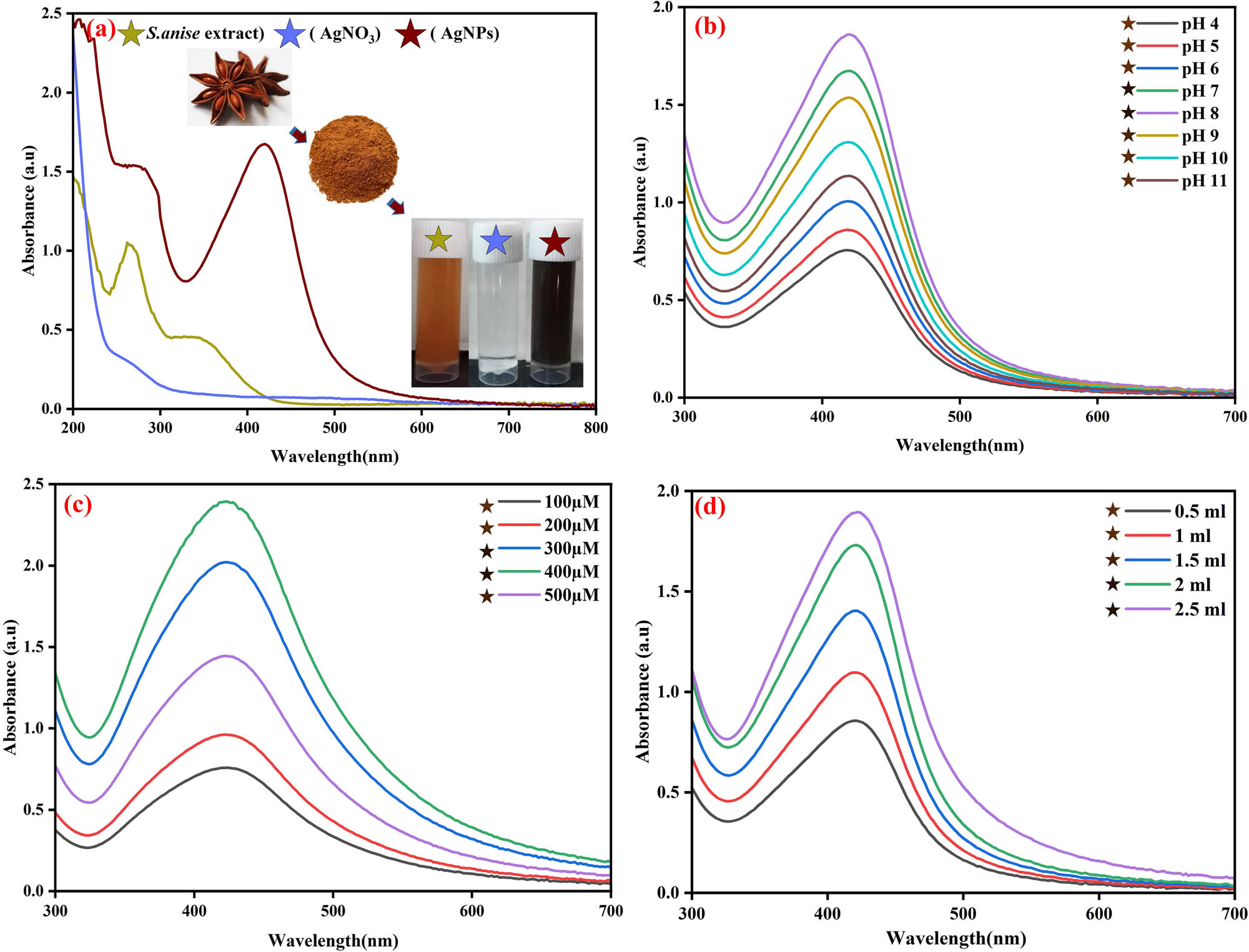
(a) UV-visible spectrum of Ag+ solution, I. verum aqueous extract, Iv-AgNPs and insert shows the I. verum aqueous extract, Ag+ solution, and synthesized Iv-AgNPs. (b) Surface plasmon resonance of formation of Iv-AgNPs monitored at different pH, (c) metal ion concentrations, and (d) I. verum aqueous extract concentrations.
The UV-Vis spectra revealed that acidic environments, specifically those with pH values ranging from 4 to 6, were not conducive to the formation of AgNPs. Furthermore, it was observed that the exposure to an acidic environment significantly diminished the colour intensity of the AgNPs solution. The nanoparticle dimensions are directly influenced by the pH level. The particulate size of the synthesized AgNPs would be more conspicuous in an acidic environment as opposed to its initial state in primary media. The influence of pH on the size effect is clearly discernible through the observed range of colours, which extend from transparent to pale brown [25]. The impact of the pH of the reaction on the electrical charges of biomolecules is a critical determinant that could potentially regulate their capacity to encapsulate and confine nanoparticles. The results of the investigation indicated a discernible change in hue when exposed to alkaline conditions at pH values of 8 and 11. Nevertheless, the discernible transition of prominent peaks towards more extended wavelengths in the spectra failed to furnish substantiation for the postulation of nanoparticle formation.
Furthermore, nanoparticle aggregation was also seen at pH 11, as shown in Figure 1b. The sample with pH 8 had the highest absorbance level at distinct peaks corresponding to surface plasmon resonance. Therefore, the optimum pH for synthesizing AgNPs is recommended as pH 8. The analysis of absorbance spectra revealed that the use of a low concentration (100 mM) of AgNO3 was determined to be inadequate for the synthesis of nanoparticles. The optimal concentration for achieving the highest synthesis yield of nanoparticles was determined to be 500 mM. Hence, it was determined that the most optimum concentration of AgNO3 was 500 mM, as shown in Figure 1c, which aligns with the findings of Liaqat et al. [26]. The analysis of the absorption spectra indicated that the optimal ratio of I. verum aqueous extract to AgNO₃ solution for achieving the highest output of Iv-AgNPs was determined to be 2.5 ml (Figure 1d).
The shape, size, and structure of the Iv-AgNPs were examined using TEM (Figure 2a). TEM images reveal that Iv-AgNPs exhibit a spherical morphology, with some irregularities in form, and have a size distribution ranging from 10 to 20 nm. The elemental composition and relative abundance of the biosynthesized Iv-AgNPs were determined by the EDX analysis. The purity and the comprehensive chemical composition of Iv-AgNPs are revealed by the EDX spectrum (Figure 2b). The presence of silver metal in conjunction with other chemical components was determined to be significant. In general, AgNPs have a unique optical absorption peak in the 2.5–3.5 keV region. Our results agreed with those of prior investigations [27].

Characterization of Iv-AgNPs: (a) TEM image, (b) EDX analysis, (c) XRD pattern, and (d) FTIR spectrum.
XRD analysis offers comprehensive insights into nanoparticles’ morphology, dimensions, and alignment. The XRD pattern of Iv-AgNPs was taken throughout the 2θ range of 20–80°. The XRD diffractogram exhibits notable peaks at 2θ values of 38.62, 44.71, 56.46, 64.83, and 69.55°, which have been determined to be associated with silver metal. These peaks correspond to the (hkl) values of (111), (200), (142), (220), and (311) planes of silver (Figure 2c). The patterns were compared to the diffractogram obtained from the standard powder diffraction card of JCPDS, namely, the silver file No. 04-0783. The observations mentioned above align with a silver metal exhibiting face-centred cubic symmetry, corroborated by the JCPDS file. The reflection of face-centered cubic materials shows a prominent high-intensity peak (200), which serves as an indication of the exceptional crystallinity of nanoparticles [28]. The diffraction peaks exhibit a certain degree of broadness, suggesting that the size of the crystallites is relatively tiny. The crystal size was determined using the Scherrer formula, D = Kλ/β cosθ, where K (typically set to 0.9), λ, β, and θ represent the Scherrer constant, the wavelength of the incident light used for diffraction, the FWHM of the sharp peaks, and the measured angle, respectively [29]. In this case, a significant and intense peak at 2θ of 38.32° was selected for the calculation, resulting in a crystal size of 12.84 nm.
The functional groups retained in Iv-AgNPs were analysed using FTIR. Numerous peaks attest to the existence of various functional groups (Figure 2d). The incidence of the peak at 3,259 cm−1 was attributed to the O–H stretching vibration. The peak at 2,981 cm−1 indicates the presence of N–H vibrations in amine salt. A broad peak at 2,921 and 2,854 cm−1 indicates C–H stretching, whereas the occurrence of the peak at 2,695 cm−1 expresses the presence of an aldehyde C–H extending; the peak monitored at 1,747 cm−1 displays the C–H bending with aromatic compound. Also, the absorption peak at 1,558 cm−1 was due to O═C═O stretching. The C–H stretch was experimented at 1,496 cm−1, which was related to alkane residues and had a solid potential to bind to metallic nanoparticles. The appearance of the peak at 1,394 and 1,344 cm−1 shows the existence of alcohol with O–H bending. Also, we noticed the peak at 1,179 cm−1 attributed to the medium C–N stretching amine. The peak at 1,055 cm−1 shows the existence of strong with S═O stretching. The absorption band appearing at 1,016, 9,28, 868, and 829 cm−1 can be assigned to unknown functional groups. Therefore, the FTIR results of Iv-AgNPs provided evidence of many phytochemical constituents, including flavonoids, polyphenols, and terpenoids derived from the I. verum aqueous extract. These components are supposed to have played a significant role in reducing Ag+ ions to Ag0 atoms. The compounds found in I. verum aqueous extract are particularly effective as reducing and encapsulating agents. Amino acids bind to metallic silver compounds due to the affinity between their carbonyl and NH2 groups and metals. It is fascinating how amino acids quickly bond with metallic silver compounds through the intense attraction between their carbonyl and NH2 groups and metals. As a result, a capping layer is formed on the surfaces of AgNPs, as observed in previous studies [30].
The antibacterial activity of Iv-AgNPs against tested bacteria was evaluated in different concentrations of 50 and 100 µg·mL−1 using the well diffusion method. The maximum zone of inhibition was found at a higher concentration (100 µg·mL−1) of Iv-AgNPs against all tested microbes. Among these, the maximum zone of inhibition was observed in E. faecalis (26 ± 0.4 mm), followed by P. mirabilis (24 ± 0.8 mm), K. pneumonia (23 ± 0.4 mm), S. aureus (22 ± 0.6 mm), and P. aeruginosa (17 ± 0.6 mm) (Figure 3a). Similarly, the antifungal activity of Iv-AgNPs against fungal pathogens was assessed via the well diffusion method. C. albicans procured the maximum inhibition zone (18 ± 0.6 mm), followed by Mucor sp. (16 ± 0.4 mm), A. fumigatus (14 ± 0.4 mm), E. floccosum (18 ± 0.6 mm), and T. rubrum (9 ± 0.8 mm), respectively (Figure 3b). The antimicrobial property of Iv-AgNPs may be attributed to disruption of the cell membrane and complexation with cellular compounds, causing cell membrane and cell wall damage, causing reactive oxygen species to develop and causing oxidative stress and influence signalling pathways [31,32]. The antibacterial activity of spherical AgNPs was optimistic and strong. However, it may be less than cuboid or triangular-shaped AgNPs [33]. Smaller AgNPs (10–50 nm) are more successful in biocompatibility, stability, and antibacterial action [34]. The nanoparticles ranged in size from 27 to 100 nm. As a result, synthesized Iv-AgNPs may help prevent bacterial infection.

(a) Antibacterial activity of Iv-AgNPs and (b) antifungal activity of Iv-AgNPs.
DPPH assay evaluated the I. verum aqueous extract and Iv-AgNP’s ability to scavenge free radicals. The free radical scavenging activity of the I. verum aqueous extract and Iv-AgNPs increased with an increase in concentration, as determined by DPPH evaluation. The freshly prepared DPPH solution displayed a dark purple hue with a peak absorbance of 517 nm. The disappearance of the purple hue upon the addition of synthesized Iv-AgNPs may be attributable to the presence of an antioxidant in the medium. The free radical scavenging activity of AgNPs towards the DPPH radical increased with increasing concentration, reaching an optimum of 70% at 500 µg·mL−1. At this concentration, however, the standard ascorbic acid exhibited 92% inhibition (Figure 4). Free radicals are the primary cause of most human diseases, and antioxidant substances regulate the free radicals generated by the body. Numerous forms of detrimental antioxidants are substituted with natural antioxidants [34]. Earlier studies indicate that several plants have significant antioxidant capabilities as a result of their ability to neutralize oxidative free radicals. The researchers used Tilia cordata flower extract to synthesize AgNPs, which exhibited notable DPPH radical scavenging activity [35]. In the earlier investigation, they discovered that the green production of AgNPs using Rosa canina resulted in an antioxidant activity of 86.4% at a concentration of 500 μg·mL−1, which is greater than the results we obtained in this study. Our results validate the previously observed enhanced DPPH scavenging capacity of R. canina AgNPs [36]. In contrast to the prior research, AgNPs produced from the aqueous extract of Basella alba leaves scavenge DPPH free radicals with remarkable efficacy [37]. This is attributed to the leaves’ abundance of phenolic compounds.

Antioxidant activity of I. verum aqueous extract and Iv-AgNPs.
The cytotoxicity of Iv-AgNPs was evaluated against the HCT-116 human colon cancer cell line to aid in the development of anticancer treatments. The inhibitory actions of AgNPs against EAC cells were tested using various concentrations. The percentage inhibition of HCT-116 cell growth was shown to be dependent on the concentration of AgNPs, ranging from 5 to 100 µg·mL−1 (Figure 5). Comparable findings were seen in a study where AgNPs synthesized from Pinus roxburghii needles exhibited significant cytotoxic effects on Ehrlich ascites carcinoma cells [38]. Prior research has shown that silver had the capability to enhance the concentration of free radicals inside cells, leading to DNA breakdown and the apoptotic death of cancer cells [39,40]. The synthesized AgNPs may exert their anticancer impact by being taken up and retained at a high level inside HCT-116 cells. The study has clearly shown the substantial inhibitory effect of Iv-AgNPs on cell proliferation. Nevertheless, this activity might arise due to the combined impact of nano-sized silver and bioactive phytocompounds attached to the surface of the nanoparticle. Extensive investigation will be necessary to comprehend the mechanism behind the anticancer action of synthesized AgNPs.

In vitro cytotoxic effect of Iv-AgNPs against human colon cancer HCT-116 cell line.
4 Conclusion
This study used an aqueous extract derived from I. verum fruit to synthesize AgNPs. Characterization methods were used to verify that the resulting particles were within the nanoscale range. The optimal parameters for achieving the maximum yield of AgNPs were determined, and the use of several methodologies confirmed the synthesis. The green synthesized AgNPs had strong antibacterial and antifungal properties and a significant ability to remove free radicals at higher concentrations. The activity of AgNPs against the HCT-116 human colon cancer cell line was shown to be dependent on the dosage. The phytochemicals in I. verum fruit extract, including diverse functional groups, catalyze the production of AgNPs. These nanoparticles possess antibacterial, antioxidant, and anticancer effects. The results of this work demonstrate that the methods employed to synthesize AgNPs are sustainable, inexpensive, non-toxic, and straightforward. These techniques can potentially address a wide range of medical and nutritional issues.
Acknowledgements
This project was supported by Researchers Supporting Project number (RSP2024R383), King Saud University, Riyadh, Saudi Arabia.
-
Funding information: This project was supported by Researchers Supporting Project number (RSP2024R383), King Saud University, Riyadh, Saudi Arabia.
-
Author contributions: Palanivel Velmurugan: conceptualization, investigation, data collection, formal analysis, methodology, writing – original draft, and visualization; Moorthy Muruganandham: formal analysis and visualization; Kanagasabapathy Sivasubramanian: formal analysis and methodology; Vinayagam Mohanavel: formal analysis and methodology; Arunachalam Chinnathambi: formal analysis and writing – review and editing; Sulaiman Ali Alharbi and Nagaraj Basavegowda: project administration, conceptualization, supervision, formal analysis, methodology, validation, writing – original draft, writing – review and editing, and visualization.
-
Conflict of interest: The authors state no conflict of interest.
-
Data availability statement: The datasets generated during and/or analysed during the current study are available from the corresponding author on reasonable request.
References
[1] Erci F, Cakir-Koc R, Isildak I. Green synthesis of silver nanoparticles using Thymbra spicata L. var. spicata (zahter) aqueous leaf extract and evaluation of their morphology dependent antibacterial and cytotoxic activity. Artif Cells Nanomed Biotechnol. 2018;46:150–8. 10.1080/21691401.2017.1415917.Suche in Google Scholar PubMed
[2] Rautela A, Rani J, Debnath (Das) M. Green synthesis of silver nanoparticles from Tectona grandis seeds extract: characterization and mechanism of antimicrobial action on different microorganisms. J Anal Sci Technol. 2019;10(5):1–10. 10.1186/s40543-018-0163-z.Suche in Google Scholar
[3] Behboodi S, Baghbani-Arani F, Abdalan S, Sadat Shandiz SA. Green engineered biomolecule-capped silver nanoparticles fabricated from Cichorium intybus extract: in vitro assessment on apoptosis properties toward human breast cancer (MCF-7) cells. Biol Trace Elem Res. 2019;187(2):392–402. 10.1007/s12011-018-1392-010.1088/2053-1591/ab4458.Suche in Google Scholar
[4] Ishak NM, Kamarudin SK, Timmiati SN. Green synthesis of metal and metal oxide nanoparticles via plant extracts: an overview. Mater Res Express. 2019;6(11):112004. 10.1088/2053-1591/ab4458.Suche in Google Scholar
[5] Bahrulolum H, Nooraei S, Javanshir N, Tarrahimofrad H, Mirbagheri VS, Easton AJ, et al. Green synthesis of metal nanoparticles using microorganisms and their application in the agrifood sector. J Nanobiotechnol. 2021;19(1):1–26. 10.1186/s12951-021-00834-3.Suche in Google Scholar PubMed PubMed Central
[6] Mukherjee PK, Bahadur S, Harwansh RK, Biswas S, Banerjee S. Paradigm shift in natural product research: traditional medicine inspired approaches. Phytochem Rev. 2017;16:803–26. 10.1007/s11101-016-9489-6.Suche in Google Scholar
[7] Macharia JM, Mwangi RW, Rozmann N, Zsolt K, Varjas T, Uchechukwu PO, et al. Medicinal plants with anti-colorectal cancer bioactive compounds: Potential game-changers in colorectal cancer management. Biomed Pharmacother. 2022;153:113383. 10.1016/j.biopha.2022.113383.Suche in Google Scholar PubMed
[8] Jain S, Mehata MS. Medicinal plant leaf extract and pure flavonoid mediated green synthesis of silver nanoparticles and their enhanced antibacterial property. Sci Rep. 2017;7(1):15867. 10.1038/s41598-017-15724-8.Suche in Google Scholar PubMed PubMed Central
[9] Nair KP. A compendium of unique and rare spices: Global economic potential. Springer Nature Switzerland; 2023. 10.1007/978-3-031-20249-0.Suche in Google Scholar
[10] Wang GW, Hu WT, Huang BK, Qin LP. Illicium verum: a review on its botany, traditional use, chemistry and pharmacology. J Ethnopharmacol. 2011;136(1):10–20. 10.1016/j.jep.2011.04.051.Suche in Google Scholar PubMed
[11] Puiso J, Jonkuviene D, Macioniene I, Salomskiene J, Jasutiene I, Kondrotas R. Biosynthesis of silver nanoparticles using lingonberry and cranberry juices and their antimicrobial activity. Colloids Surf, B. 2014;121:214–21. 10.1016/j.colsurfb.2014.05.001.Suche in Google Scholar PubMed
[12] Panneerselvam N, Sundaramurthy D, Maruthapillai A. Pectin/Xylitol incorporated with various metal oxide based nanocomposite films for its antibacterial and antioxidant activity. J Polym Environ. 2023;31(4):1598–609. 10.1007/s10924-022-02652-6.Suche in Google Scholar
[13] Rahimi M, Noruzi EB, Sheykhsaran E, Ebadi B, Kariminezhad Z, Molaparast M, et al. Carbohydrate polymer-based silver nanocomposites: Recent progress in the antimicrobial wound dressings. Carbohydr Polym. 2020;231:115696. 10.1016/j.carbpol.2019.115696.Suche in Google Scholar PubMed
[14] El-Aassar MR, Ibrahim OM, Fouda MM, Fakhry H, Ajarem J, Maodaa SN, et al. Wound dressing of chitosan-based-crosslinked gelatin/polyvinyl pyrrolidone embedded silver nanoparticles, for targeting multidrug resistance microbes. Carbohydr Polym. 2021;255:117484. 10.1016/j.carbpol.2020.117484.Suche in Google Scholar PubMed
[15] Alipour R, Khorshidi A, Shojaei AF, Mashayekhi F, Moghaddam MJ. Skin wound healing acceleration by Ag nanoparticles embedded in PVA/PVP/Pectin/Mafenide acetate composite nanofibers. Polym Test. 2019;79:106022. 10.1016/j.polymertesting.2019.106022.Suche in Google Scholar
[16] Sivasubramanian K, Sabarinathan S, Muruganandham M, Velmurugan P, Arumugam N, Almansour AI, et al. Antioxidant, antibacterial, and cytotoxicity potential of synthesized silver nanoparticles from the Cassia alata leaf aqueous extract. Green Process Synth. 2023;12(1):20230018. 10.1515/gps-2023-0018.Suche in Google Scholar
[17] Mihailović V, Srećković N, Nedić ZP, Dimitrijević S, Matić M, Obradović A, et al. Green synthesis of silver nanoparticles using Salvia verticillata and Filipendula ulmaria extracts: Optimization of synthesis, biological activities, and catalytic properties. Molecules. 2023;28(2):808. 10.3390/molecules28020808.Suche in Google Scholar PubMed PubMed Central
[18] Sheme FA, Aziz MA, Karim MR, Rahman MH, Rabbi MA, Nurujjaman M, et al. Green preparation of silver nanoparticles using leaf extract of Amoora rohituka for antioxidant, antibacterial and anticancer applications. J Agric Food Res. 2023;14:100889. 10.1016/j.jafr.2023.100889.Suche in Google Scholar
[19] Nadaf NY, Kanase SS. Biosynthesis of gold nanoparticles by Bacillus marisflavi and its potential in catalytic dye degradation. Arab J Chem. 2019;12(8):4806–14. 10.1016/j.arabjc.2016.09.020.Suche in Google Scholar
[20] Ajith P, Murali AS, Sreehari H, Vinod BS, Anil A, Smitha CS. Green synthesis of silver nanoparticles using Calotropis gigantea extract and its applications in antimicrobial and larvicidal activity. Mater Today Proc. 2019;18:4987–91. 10.1016/j.matpr.2019.07.491.Suche in Google Scholar
[21] Palle SR, Penchalaneni J, Lavudi K, Gaddam SA, Kotakadi VS, Challagundala VN. Green synthesis of silver nanoparticles by leaf extracts of Boerhavia erecta and spectral characterization and their antimicrobial, antioxidant ad cytotoxic studies on ovarian cancer cell lines. Lett Appl Nano BioSci. 2020;9(3):1165–76. 10.33263/LIANBS93.11651176.Suche in Google Scholar
[22] Palithya S, Gaddam SA, Kotakadi VS, Penchalaneni J, Golla N, Krishna SB, et al. Green synthesis of silver nanoparticles using flower extracts of Aerva lanata and their biomedical applications. Part Sci Technol. 2022;40(1):84–96. 1080/02726351.2021.1919259.Suche in Google Scholar
[23] Palithya S, Gaddam SA, Kotakadi VS, Penchalaneni J, Challagundla VN. Biosynthesis of silver nanoparticles using leaf extract of Decaschistia crotonifolia and its antibacterial, antioxidant, and catalytic applications. Green Chem Lett Rev. 2021;14(1):137–52. 10.1080/17518253.2021.1876172.Suche in Google Scholar
[24] Azarbani F, Shiravand S. Green synthesis of silver nanoparticles by Ferulago macrocarpa flowers extract and their antibacterial, antifungal and toxic effects. Green Chem Lett Rev. 2020;13(1):41–9. 10.1080/17518253.2020.1726504.Suche in Google Scholar
[25] Gontijo LA, Raphael E, Ferrari DP, Ferrari JL, Lyon JP, Schiavon MA. pH effect on the synthesis of different size silver nanoparticles evaluated by DLS and their size-dependent antimicrobial activity. Matéria. 2020;25(4):1–10. 10.1590/S1517-707620200004.1145.Suche in Google Scholar
[26] Liaqat N, Jahan N, Anwar T, Qureshi H. Green synthesized silver nanoparticles: Optimization, characterization, antimicrobial activity, and cytotoxicity study by hemolysis assay. Front Chem. 2022;10:952006. 10.3389/fchem.2022.952006.Suche in Google Scholar PubMed PubMed Central
[27] Hemmati S, Rashtiani A, Zangeneh MM, Mohammadi P, Zangeneh A, Veisi H. Green synthesis and characterization of silver nanoparticles using Fritillaria flower extract and their antibacterial activity against some human pathogens. Polyhedron. 2019;158:8–14. 10.1016/j.poly.2018.10.049.Suche in Google Scholar
[28] Maitra B, Khatun MH, Ahmed F, Ahmed N, Kadri HJ, Rasel MZ, et al. Biosynthesis of Bixa orellana seed extract mediated silver nanoparticles with moderate antioxidant, antibacterial and antiproliferative activity. Arab J Chem. 2023;16(5):104675. 10.1016/j.arabjc.2023.104675.Suche in Google Scholar
[29] Ren YY, Yang H, Wang T, Wang C. Bio-synthesis of silver nanoparticles with antibacterial activity. Mater Chem Phys. 2019;235:121746. 10.1016/j.matchemphys.2019.121746.Suche in Google Scholar
[30] Li C, Chen D, Xiao H. Green synthesis of silver nanoparticles using Pyrus betulifolia Bunge and their antibacterial and antioxidant activity. Mater Today Commun. 2021;26:102108. 10.1016/j.mtcomm.2021.102108.Suche in Google Scholar
[31] Asimuddin M, Shaik MR, Adil SF, Siddiqui MR, Alwarthan A, Jamil K, et al. Azadirachta indica based biosynthesis of silver nanoparticles and evaluation of their antibacterial and cytotoxic effects. J King Saud Univ-Sci. 2020;32(1):648–56.10.1016/j.jksus.2018.09.014Suche in Google Scholar
[32] Chien CS, Lin CJ, Ko CJ, Tseng SP, Shih CJ. Antibacterial activity of silver nanoparticles (AgNP) confined to mesostructured silica against methicillin-resistant Staphylococcus aureus (MRSA). J Alloys Compd. 2018;747:1–7.10.1016/j.jallcom.2018.02.334Suche in Google Scholar
[33] Qing YA, Cheng L, Li R, Liu G, Zhang Y, Tang X, et al. Potential antibacterial mechanism of silver nanoparticles and the optimization of orthopedic implants by advanced modification technologies. Int J Nanomed. 2018;3311–27.10.2147/IJN.S165125Suche in Google Scholar PubMed PubMed Central
[34] Sarwer Q, Amjad MS, Mehmood A, Binish Z, Mustafa G, Farooq A, et al. Green synthesis and characterization of silver nanoparticles using Myrsine africana leaf extract for their antibacterial, antioxidant and phytotoxic activities. Molecules. 2022;27(21):7612. 10.3390/molecules27217612.Suche in Google Scholar PubMed PubMed Central
[35] Saygi KO, Cacan E. Antioxidant and cytotoxic activities of silver nanoparticles synthesized using Tilia cordata flowers extract. Mater Today Commun. 2021;27:102316. 10.1016/j.mtcomm.2021.102316.Suche in Google Scholar
[36] Gulbagca F, Ozdemir S, Gulcan M, Sen F. Synthesis and characterization of Rosa canina mediated biogenic silver nanoparticles for anti-oxidant, antibacterial, antifungal, and DNA cleavage activities. Heliyon. 2019;5(12):e02980. 10.1016/j.heliyon.2019.e02980.Suche in Google Scholar PubMed PubMed Central
[37] Mani M, Pavithra S, Mohanraj K, Kumaresan S, Alotaibi SS, Eraqi MM, et al. Studies on the spectrometric analysis of metallic silver nanoparticles (Ag NPs) using Basella alba leaf for the antibacterial activities. Environ Res. 2021;199:111274. 10.1016/j.envres.2021.111274.Suche in Google Scholar PubMed
[38] Kumari R, Saini AK, Chhillar AK, Saini V, Saini RV. Antitumor effect of bio-fabricated silver nanoparticles towards ehrlich ascites carcinoma. Biointerface Res Appl Chem. 2021;11:12958–72. 10.33263/BRIAC115.1295812972.Suche in Google Scholar
[39] Taghavizadeh Yazdi ME, Amiri MS, Akbari S, Sharifalhoseini M, Nourbakhsh F, Mashreghi M, et al. Green synthesis of silver nanoparticles using Helichrysum graveolens for biomedical applications and wastewater treatment. BioNanoScience. 2020;10:1121–7. 10.1007/s12668-020-00794-2.Suche in Google Scholar
[40] Mousavi-Kouhi SM, Beyk-Khormizi A, Amiri MS, Mashreghi M, Yazdi ME. Silver-zinc oxide nanocomposite: From synthesis to antimicrobial and anticancer properties. Ceram Int. 2021;47(15):21490–7. 10.1016/j. ceramint.2021.04.160.Suche in Google Scholar
© 2024 the author(s), published by De Gruyter
This work is licensed under the Creative Commons Attribution 4.0 International License.
Artikel in diesem Heft
- Research Articles
- Green polymer electrolyte and activated charcoal-based supercapacitor for energy harvesting application: Electrochemical characteristics
- Research on the adsorption of Co2+ ions using halloysite clay and the ability to recover them by electrodeposition method
- Simultaneous estimation of ibuprofen, caffeine, and paracetamol in commercial products using a green reverse-phase HPTLC method
- Isolation, screening and optimization of alkaliphilic cellulolytic fungi for production of cellulase
- Functionalized gold nanoparticles coated with bacterial alginate and their antibacterial and anticancer activities
- Comparative analysis of bio-based amino acid surfactants obtained via Diels–Alder reaction of cyclic anhydrides
- Biosynthesis of silver nanoparticles on yellow phosphorus slag and its application in organic coatings
- Exploring antioxidant potential and phenolic compound extraction from Vitis vinifera L. using ultrasound-assisted extraction
- Manganese and copper-coated nickel oxide nanoparticles synthesized from Carica papaya leaf extract induce antimicrobial activity and breast cancer cell death by triggering mitochondrial caspases and p53
- Insight into heating method and Mozafari method as green processing techniques for the synthesis of micro- and nano-drug carriers
- Silicotungstic acid supported on Bi-based MOF-derived metal oxide for photodegradation of organic dyes
- Synthesis and characterization of capsaicin nanoparticles: An attempt to enhance its bioavailability and pharmacological actions
- Synthesis of Lawsonia inermis-encased silver–copper bimetallic nanoparticles with antioxidant, antibacterial, and cytotoxic activity
- Facile, polyherbal drug-mediated green synthesis of CuO nanoparticles and their potent biological applications
- Zinc oxide-manganese oxide/carboxymethyl cellulose-folic acid-sesamol hybrid nanomaterials: A molecularly targeted strategy for advanced triple-negative breast cancer therapy
- Exploring the antimicrobial potential of biogenically synthesized graphene oxide nanoparticles against targeted bacterial and fungal pathogens
- Biofabrication of silver nanoparticles using Uncaria tomentosa L.: Insight into characterization, antibacterial activities combined with antibiotics, and effect on Triticum aestivum germination
- Membrane distillation of synthetic urine for use in space structural habitat systems
- Investigation on mechanical properties of the green synthesis bamboo fiber/eggshell/coconut shell powder-based hybrid biocomposites under NaOH conditions
- Green synthesis of magnesium oxide nanoparticles using endophytic fungal strain to improve the growth, metabolic activities, yield traits, and phenolic compounds content of Nigella sativa L.
- Estimation of greenhouse gas emissions from rice and annual upland crops in Red River Delta of Vietnam using the denitrification–decomposition model
- Synthesis of humic acid with the obtaining of potassium humate based on coal waste from the Lenger deposit, Kazakhstan
- Ascorbic acid-mediated selenium nanoparticles as potential antihyperuricemic, antioxidant, anticoagulant, and thrombolytic agents
- Green synthesis of silver nanoparticles using Illicium verum extract: Optimization and characterization for biomedical applications
- Antibacterial and dynamical behaviour of silicon nanoparticles influenced sustainable waste flax fibre-reinforced epoxy composite for biomedical application
- Optimising coagulation/flocculation using response surface methodology and application of floc in biofertilisation
- Green synthesis and multifaceted characterization of iron oxide nanoparticles derived from Senna bicapsularis for enhanced in vitro and in vivo biological investigation
- Potent antibacterial nanocomposites from okra mucilage/chitosan/silver nanoparticles for multidrug-resistant Salmonella Typhimurium eradication
- Trachyspermum copticum aqueous seed extract-derived silver nanoparticles: Exploration of their structural characterization and comparative antibacterial performance against gram-positive and gram-negative bacteria
- Microwave-assisted ultrafine silver nanoparticle synthesis using Mitragyna speciosa for antimalarial applications
- Green synthesis and characterisation of spherical structure Ag/Fe2O3/TiO2 nanocomposite using acacia in the presence of neem and tulsi oils
- Green quantitative methods for linagliptin and empagliflozin in dosage forms
- Enhancement efficacy of omeprazole by conjugation with silver nanoparticles as a urease inhibitor
- Residual, sequential extraction, and ecological risk assessment of some metals in ash from municipal solid waste incineration, Vietnam
- Green synthesis of ZnO nanoparticles using the mangosteen (Garcinia mangostana L.) leaf extract: Comparative preliminary in vitro antibacterial study
- Simultaneous determination of lesinurad and febuxostat in commercial fixed-dose combinations using a greener normal-phase HPTLC method
- A greener RP-HPLC method for quaternary estimation of caffeine, paracetamol, levocetirizine, and phenylephrine acquiring AQbD with stability studies
- Optimization of biomass durian peel as a heterogeneous catalyst in biodiesel production using microwave irradiation
- Thermal treatment impact on the evolution of active phases in layered double hydroxide-based ZnCr photocatalysts: Photodegradation and antibacterial performance
- Preparation of silymarin-loaded zein polysaccharide core–shell nanostructures and evaluation of their biological potentials
- Preparation and characterization of composite-modified PA6 fiber for spectral heating and heat storage applications
- Preparation and electrocatalytic oxygen evolution of bimetallic phosphates (NiFe)2P/NF
- Rod-shaped Mo(vi) trichalcogenide–Mo(vi) oxide decorated on poly(1-H pyrrole) as a promising nanocomposite photoelectrode for green hydrogen generation from sewage water with high efficiency
- Green synthesis and studies on citrus medica leaf extract-mediated Au–ZnO nanocomposites: A sustainable approach for efficient photocatalytic degradation of rhodamine B dye in aqueous media
- Cellulosic materials for the removal of ciprofloxacin from aqueous environments
- The analytical assessment of metal contamination in industrial soils of Saudi Arabia using the inductively coupled plasma technology
- The effect of modified oily sludge on the slurry ability and combustion performance of coal water slurry
- Eggshell waste transformation to calcium chloride anhydride as food-grade additive and eggshell membranes as enzyme immobilization carrier
- Synthesis of EPAN and applications in the encapsulation of potassium humate
- Biosynthesis and characterization of silver nanoparticles from Cedrela toona leaf extracts: An exploration into their antibacterial, anticancer, and antioxidant potential
- Enhancing mechanical and rheological properties of HDPE films through annealing for eco-friendly agricultural applications
- Immobilisation of catalase purified from mushroom (Hydnum repandum) onto glutaraldehyde-activated chitosan and characterisation: Its application for the removal of hydrogen peroxide from artificial wastewater
- Sodium titanium oxide/zinc oxide (STO/ZnO) photocomposites for efficient dye degradation applications
- Effect of ex situ, eco-friendly ZnONPs incorporating green synthesised Moringa oleifera leaf extract in enhancing biochemical and molecular aspects of Vicia faba L. under salt stress
- Biosynthesis and characterization of selenium and silver nanoparticles using Trichoderma viride filtrate and their impact on Culex pipiens
- Photocatalytic degradation of organic dyes and biological potentials of biogenic zinc oxide nanoparticles synthesized using the polar extract of Cyperus scariosus R.Br. (Cyperaceae)
- Assessment of antiproliferative activity of green-synthesized nickel oxide nanoparticles against glioblastoma cells using Terminalia chebula
- Chlorine-free synthesis of phosphinic derivatives by change in the P-function
- Anticancer, antioxidant, and antimicrobial activities of nanoemulsions based on water-in-olive oil and loaded on biogenic silver nanoparticles
- Study and mechanism of formation of phosphorus production waste in Kazakhstan
- Synthesis and stabilization of anatase form of biomimetic TiO2 nanoparticles for enhancing anti-tumor potential
- Microwave-supported one-pot reaction for the synthesis of 5-alkyl/arylidene-2-(morpholin/thiomorpholin-4-yl)-1,3-thiazol-4(5H)-one derivatives over MgO solid base
- Screening the phytochemicals in Perilla leaves and phytosynthesis of bioactive silver nanoparticles for potential antioxidant and wound-healing application
- Graphene oxide/chitosan/manganese/folic acid-brucine functionalized nanocomposites show anticancer activity against liver cancer cells
- Nature of serpentinite interactions with low-concentration sulfuric acid solutions
- Multi-objective statistical optimisation utilising response surface methodology to predict engine performance using biofuels from waste plastic oil in CRDi engines
- Microwave-assisted extraction of acetosolv lignin from sugarcane bagasse and electrospinning of lignin/PEO nanofibres for carbon fibre production
- Biosynthesis, characterization, and investigation of cytotoxic activities of selenium nanoparticles utilizing Limosilactobacillus fermentum
- Highly photocatalytic materials based on the decoration of poly(O-chloroaniline) with molybdenum trichalcogenide oxide for green hydrogen generation from Red Sea water
- Highly efficient oil–water separation using superhydrophobic cellulose aerogels derived from corn straw
- Beta-cyclodextrin–Phyllanthus emblica emulsion for zinc oxide nanoparticles: Characteristics and photocatalysis
- Assessment of antimicrobial activity and methyl orange dye removal by Klebsiella pneumoniae-mediated silver nanoparticles
- Influential eradication of resistant Salmonella Typhimurium using bioactive nanocomposites from chitosan and radish seed-synthesized nanoselenium
- Antimicrobial activities and neuroprotective potential for Alzheimer’s disease of pure, Mn, Co, and Al-doped ZnO ultra-small nanoparticles
- Green synthesis of silver nanoparticles from Bauhinia variegata and their biological applications
- Synthesis and optimization of long-chain fatty acids via the oxidation of long-chain fatty alcohols
- Eminent Red Sea water hydrogen generation via a Pb(ii)-iodide/poly(1H-pyrrole) nanocomposite photocathode
- Green synthesis and effective genistein production by fungal β-glucosidase immobilized on Al2O3 nanocrystals synthesized in Cajanus cajan L. (Millsp.) leaf extracts
- Green stability-indicating RP-HPTLC technique for determining croconazole hydrochloride
- Green synthesis of La2O3–LaPO4 nanocomposites using Charybdis natator for DNA binding, cytotoxic, catalytic, and luminescence applications
- Eco-friendly drugs induce cellular changes in colistin-resistant bacteria
- Tangerine fruit peel extract mediated biogenic synthesized silver nanoparticles and their potential antimicrobial, antioxidant, and cytotoxic assessments
- Green synthesis on performance characteristics of a direct injection diesel engine using sandbox seed oil
- A highly sensitive β-AKBA-Ag-based fluorescent “turn off” chemosensor for rapid detection of abamectin in tomatoes
- Green synthesis and physical characterization of zinc oxide nanoparticles (ZnO NPs) derived from the methanol extract of Euphorbia dracunculoides Lam. (Euphorbiaceae) with enhanced biosafe applications
- Detection of morphine and data processing using surface plasmon resonance imaging sensor
- Effects of nanoparticles on the anaerobic digestion properties of sulfamethoxazole-containing chicken manure and analysis of bio-enzymes
- Bromic acid-thiourea synergistic leaching of sulfide gold ore
- Green chemistry approach to synthesize titanium dioxide nanoparticles using Fagonia Cretica extract, novel strategy for developing antimicrobial and antidiabetic therapies
- Green synthesis and effective utilization of biogenic Al2O3-nanocoupled fungal lipase in the resolution of active homochiral 2-octanol and its immobilization via aluminium oxide nanoparticles
- Eco-friendly RP-HPLC approach for simultaneously estimating the promising combination of pentoxifylline and simvastatin in therapeutic potential for breast cancer: Appraisal of greenness, whiteness, and Box–Behnken design
- Use of a humidity adsorbent derived from cockleshell waste in Thai fried fish crackers (Keropok)
- One-pot green synthesis, biological evaluation, and in silico study of pyrazole derivatives obtained from chalcones
- Bio-sorption of methylene blue and production of biofuel by brown alga Cystoseira sp. collected from Neom region, Kingdom of Saudi Arabia
- Synthesis of motexafin gadolinium: A promising radiosensitizer and imaging agent for cancer therapy
- The impact of varying sizes of silver nanoparticles on the induction of cellular damage in Klebsiella pneumoniae involving diverse mechanisms
- Microwave-assisted green synthesis, characterization, and in vitro antibacterial activity of NiO nanoparticles obtained from lemon peel extract
- Rhus microphylla-mediated biosynthesis of copper oxide nanoparticles for enhanced antibacterial and antibiofilm efficacy
- Harnessing trichalcogenide–molybdenum(vi) sulfide and molybdenum(vi) oxide within poly(1-amino-2-mercaptobenzene) frameworks as a photocathode for sustainable green hydrogen production from seawater without sacrificial agents
- Magnetically recyclable Fe3O4@SiO2 supported phosphonium ionic liquids for efficient and sustainable transformation of CO2 into oxazolidinones
- A comparative study of Fagonia arabica fabricated silver sulfide nanoparticles (Ag2S) and silver nanoparticles (AgNPs) with distinct antimicrobial, anticancer, and antioxidant properties
- Visible light photocatalytic degradation and biological activities of Aegle marmelos-mediated cerium oxide nanoparticles
- Physical intrinsic characteristics of spheroidal particles in coal gasification fine slag
- Exploring the effect of tea dust magnetic biochar on agricultural crops grown in polycyclic aromatic hydrocarbon contaminated soil
- Crosslinked chitosan-modified ultrafiltration membranes for efficient surface water treatment and enhanced anti-fouling performances
- Study on adsorption characteristics of biochars and their modified biochars for removal of organic dyes from aqueous solution
- Zein polymer nanocarrier for Ocimum basilicum var. purpurascens extract: Potential biomedical use
- Green synthesis, characterization, and in vitro and in vivo biological screening of iron oxide nanoparticles (Fe3O4) generated with hydroalcoholic extract of aerial parts of Euphorbia milii
- Novel microwave-based green approach for the synthesis of dual-loaded cyclodextrin nanosponges: Characterization, pharmacodynamics, and pharmacokinetics evaluation
- Bi2O3–BiOCl/poly-m-methyl aniline nanocomposite thin film for broad-spectrum light-sensing
- Green synthesis and characterization of CuO/ZnO nanocomposite using Musa acuminata leaf extract for cytotoxic studies on colorectal cancer cells (HCC2998)
- Review Articles
- Materials-based drug delivery approaches: Recent advances and future perspectives
- A review of thermal treatment for bamboo and its composites
- An overview of the role of nanoherbicides in tackling challenges of weed management in wheat: A novel approach
- An updated review on carbon nanomaterials: Types, synthesis, functionalization and applications, degradation and toxicity
- Special Issue: Emerging green nanomaterials for sustainable waste management and biomedical applications
- Green synthesis of silver nanoparticles using mature-pseudostem extracts of Alpinia nigra and their bioactivities
- Special Issue: New insights into nanopythotechnology: current trends and future prospects
- Green synthesis of FeO nanoparticles from coffee and its application for antibacterial, antifungal, and anti-oxidation activity
- Dye degradation activity of biogenically synthesized Cu/Fe/Ag trimetallic nanoparticles
- Special Issue: Composites and green composites
- Recent trends and advancements in the utilization of green composites and polymeric nanocarriers for enhancing food quality and sustainable processing
- Retraction
- Retraction of “Biosynthesis and characterization of silver nanoparticles from Cedrela toona leaf extracts: An exploration into their antibacterial, anticancer, and antioxidant potential”
- Retraction of “Photocatalytic degradation of organic dyes and biological potentials of biogenic zinc oxide nanoparticles synthesized using the polar extract of Cyperus scariosus R.Br. (Cyperaceae)”
- Retraction to “Green synthesis on performance characteristics of a direct injection diesel engine using sandbox seed oil”
Artikel in diesem Heft
- Research Articles
- Green polymer electrolyte and activated charcoal-based supercapacitor for energy harvesting application: Electrochemical characteristics
- Research on the adsorption of Co2+ ions using halloysite clay and the ability to recover them by electrodeposition method
- Simultaneous estimation of ibuprofen, caffeine, and paracetamol in commercial products using a green reverse-phase HPTLC method
- Isolation, screening and optimization of alkaliphilic cellulolytic fungi for production of cellulase
- Functionalized gold nanoparticles coated with bacterial alginate and their antibacterial and anticancer activities
- Comparative analysis of bio-based amino acid surfactants obtained via Diels–Alder reaction of cyclic anhydrides
- Biosynthesis of silver nanoparticles on yellow phosphorus slag and its application in organic coatings
- Exploring antioxidant potential and phenolic compound extraction from Vitis vinifera L. using ultrasound-assisted extraction
- Manganese and copper-coated nickel oxide nanoparticles synthesized from Carica papaya leaf extract induce antimicrobial activity and breast cancer cell death by triggering mitochondrial caspases and p53
- Insight into heating method and Mozafari method as green processing techniques for the synthesis of micro- and nano-drug carriers
- Silicotungstic acid supported on Bi-based MOF-derived metal oxide for photodegradation of organic dyes
- Synthesis and characterization of capsaicin nanoparticles: An attempt to enhance its bioavailability and pharmacological actions
- Synthesis of Lawsonia inermis-encased silver–copper bimetallic nanoparticles with antioxidant, antibacterial, and cytotoxic activity
- Facile, polyherbal drug-mediated green synthesis of CuO nanoparticles and their potent biological applications
- Zinc oxide-manganese oxide/carboxymethyl cellulose-folic acid-sesamol hybrid nanomaterials: A molecularly targeted strategy for advanced triple-negative breast cancer therapy
- Exploring the antimicrobial potential of biogenically synthesized graphene oxide nanoparticles against targeted bacterial and fungal pathogens
- Biofabrication of silver nanoparticles using Uncaria tomentosa L.: Insight into characterization, antibacterial activities combined with antibiotics, and effect on Triticum aestivum germination
- Membrane distillation of synthetic urine for use in space structural habitat systems
- Investigation on mechanical properties of the green synthesis bamboo fiber/eggshell/coconut shell powder-based hybrid biocomposites under NaOH conditions
- Green synthesis of magnesium oxide nanoparticles using endophytic fungal strain to improve the growth, metabolic activities, yield traits, and phenolic compounds content of Nigella sativa L.
- Estimation of greenhouse gas emissions from rice and annual upland crops in Red River Delta of Vietnam using the denitrification–decomposition model
- Synthesis of humic acid with the obtaining of potassium humate based on coal waste from the Lenger deposit, Kazakhstan
- Ascorbic acid-mediated selenium nanoparticles as potential antihyperuricemic, antioxidant, anticoagulant, and thrombolytic agents
- Green synthesis of silver nanoparticles using Illicium verum extract: Optimization and characterization for biomedical applications
- Antibacterial and dynamical behaviour of silicon nanoparticles influenced sustainable waste flax fibre-reinforced epoxy composite for biomedical application
- Optimising coagulation/flocculation using response surface methodology and application of floc in biofertilisation
- Green synthesis and multifaceted characterization of iron oxide nanoparticles derived from Senna bicapsularis for enhanced in vitro and in vivo biological investigation
- Potent antibacterial nanocomposites from okra mucilage/chitosan/silver nanoparticles for multidrug-resistant Salmonella Typhimurium eradication
- Trachyspermum copticum aqueous seed extract-derived silver nanoparticles: Exploration of their structural characterization and comparative antibacterial performance against gram-positive and gram-negative bacteria
- Microwave-assisted ultrafine silver nanoparticle synthesis using Mitragyna speciosa for antimalarial applications
- Green synthesis and characterisation of spherical structure Ag/Fe2O3/TiO2 nanocomposite using acacia in the presence of neem and tulsi oils
- Green quantitative methods for linagliptin and empagliflozin in dosage forms
- Enhancement efficacy of omeprazole by conjugation with silver nanoparticles as a urease inhibitor
- Residual, sequential extraction, and ecological risk assessment of some metals in ash from municipal solid waste incineration, Vietnam
- Green synthesis of ZnO nanoparticles using the mangosteen (Garcinia mangostana L.) leaf extract: Comparative preliminary in vitro antibacterial study
- Simultaneous determination of lesinurad and febuxostat in commercial fixed-dose combinations using a greener normal-phase HPTLC method
- A greener RP-HPLC method for quaternary estimation of caffeine, paracetamol, levocetirizine, and phenylephrine acquiring AQbD with stability studies
- Optimization of biomass durian peel as a heterogeneous catalyst in biodiesel production using microwave irradiation
- Thermal treatment impact on the evolution of active phases in layered double hydroxide-based ZnCr photocatalysts: Photodegradation and antibacterial performance
- Preparation of silymarin-loaded zein polysaccharide core–shell nanostructures and evaluation of their biological potentials
- Preparation and characterization of composite-modified PA6 fiber for spectral heating and heat storage applications
- Preparation and electrocatalytic oxygen evolution of bimetallic phosphates (NiFe)2P/NF
- Rod-shaped Mo(vi) trichalcogenide–Mo(vi) oxide decorated on poly(1-H pyrrole) as a promising nanocomposite photoelectrode for green hydrogen generation from sewage water with high efficiency
- Green synthesis and studies on citrus medica leaf extract-mediated Au–ZnO nanocomposites: A sustainable approach for efficient photocatalytic degradation of rhodamine B dye in aqueous media
- Cellulosic materials for the removal of ciprofloxacin from aqueous environments
- The analytical assessment of metal contamination in industrial soils of Saudi Arabia using the inductively coupled plasma technology
- The effect of modified oily sludge on the slurry ability and combustion performance of coal water slurry
- Eggshell waste transformation to calcium chloride anhydride as food-grade additive and eggshell membranes as enzyme immobilization carrier
- Synthesis of EPAN and applications in the encapsulation of potassium humate
- Biosynthesis and characterization of silver nanoparticles from Cedrela toona leaf extracts: An exploration into their antibacterial, anticancer, and antioxidant potential
- Enhancing mechanical and rheological properties of HDPE films through annealing for eco-friendly agricultural applications
- Immobilisation of catalase purified from mushroom (Hydnum repandum) onto glutaraldehyde-activated chitosan and characterisation: Its application for the removal of hydrogen peroxide from artificial wastewater
- Sodium titanium oxide/zinc oxide (STO/ZnO) photocomposites for efficient dye degradation applications
- Effect of ex situ, eco-friendly ZnONPs incorporating green synthesised Moringa oleifera leaf extract in enhancing biochemical and molecular aspects of Vicia faba L. under salt stress
- Biosynthesis and characterization of selenium and silver nanoparticles using Trichoderma viride filtrate and their impact on Culex pipiens
- Photocatalytic degradation of organic dyes and biological potentials of biogenic zinc oxide nanoparticles synthesized using the polar extract of Cyperus scariosus R.Br. (Cyperaceae)
- Assessment of antiproliferative activity of green-synthesized nickel oxide nanoparticles against glioblastoma cells using Terminalia chebula
- Chlorine-free synthesis of phosphinic derivatives by change in the P-function
- Anticancer, antioxidant, and antimicrobial activities of nanoemulsions based on water-in-olive oil and loaded on biogenic silver nanoparticles
- Study and mechanism of formation of phosphorus production waste in Kazakhstan
- Synthesis and stabilization of anatase form of biomimetic TiO2 nanoparticles for enhancing anti-tumor potential
- Microwave-supported one-pot reaction for the synthesis of 5-alkyl/arylidene-2-(morpholin/thiomorpholin-4-yl)-1,3-thiazol-4(5H)-one derivatives over MgO solid base
- Screening the phytochemicals in Perilla leaves and phytosynthesis of bioactive silver nanoparticles for potential antioxidant and wound-healing application
- Graphene oxide/chitosan/manganese/folic acid-brucine functionalized nanocomposites show anticancer activity against liver cancer cells
- Nature of serpentinite interactions with low-concentration sulfuric acid solutions
- Multi-objective statistical optimisation utilising response surface methodology to predict engine performance using biofuels from waste plastic oil in CRDi engines
- Microwave-assisted extraction of acetosolv lignin from sugarcane bagasse and electrospinning of lignin/PEO nanofibres for carbon fibre production
- Biosynthesis, characterization, and investigation of cytotoxic activities of selenium nanoparticles utilizing Limosilactobacillus fermentum
- Highly photocatalytic materials based on the decoration of poly(O-chloroaniline) with molybdenum trichalcogenide oxide for green hydrogen generation from Red Sea water
- Highly efficient oil–water separation using superhydrophobic cellulose aerogels derived from corn straw
- Beta-cyclodextrin–Phyllanthus emblica emulsion for zinc oxide nanoparticles: Characteristics and photocatalysis
- Assessment of antimicrobial activity and methyl orange dye removal by Klebsiella pneumoniae-mediated silver nanoparticles
- Influential eradication of resistant Salmonella Typhimurium using bioactive nanocomposites from chitosan and radish seed-synthesized nanoselenium
- Antimicrobial activities and neuroprotective potential for Alzheimer’s disease of pure, Mn, Co, and Al-doped ZnO ultra-small nanoparticles
- Green synthesis of silver nanoparticles from Bauhinia variegata and their biological applications
- Synthesis and optimization of long-chain fatty acids via the oxidation of long-chain fatty alcohols
- Eminent Red Sea water hydrogen generation via a Pb(ii)-iodide/poly(1H-pyrrole) nanocomposite photocathode
- Green synthesis and effective genistein production by fungal β-glucosidase immobilized on Al2O3 nanocrystals synthesized in Cajanus cajan L. (Millsp.) leaf extracts
- Green stability-indicating RP-HPTLC technique for determining croconazole hydrochloride
- Green synthesis of La2O3–LaPO4 nanocomposites using Charybdis natator for DNA binding, cytotoxic, catalytic, and luminescence applications
- Eco-friendly drugs induce cellular changes in colistin-resistant bacteria
- Tangerine fruit peel extract mediated biogenic synthesized silver nanoparticles and their potential antimicrobial, antioxidant, and cytotoxic assessments
- Green synthesis on performance characteristics of a direct injection diesel engine using sandbox seed oil
- A highly sensitive β-AKBA-Ag-based fluorescent “turn off” chemosensor for rapid detection of abamectin in tomatoes
- Green synthesis and physical characterization of zinc oxide nanoparticles (ZnO NPs) derived from the methanol extract of Euphorbia dracunculoides Lam. (Euphorbiaceae) with enhanced biosafe applications
- Detection of morphine and data processing using surface plasmon resonance imaging sensor
- Effects of nanoparticles on the anaerobic digestion properties of sulfamethoxazole-containing chicken manure and analysis of bio-enzymes
- Bromic acid-thiourea synergistic leaching of sulfide gold ore
- Green chemistry approach to synthesize titanium dioxide nanoparticles using Fagonia Cretica extract, novel strategy for developing antimicrobial and antidiabetic therapies
- Green synthesis and effective utilization of biogenic Al2O3-nanocoupled fungal lipase in the resolution of active homochiral 2-octanol and its immobilization via aluminium oxide nanoparticles
- Eco-friendly RP-HPLC approach for simultaneously estimating the promising combination of pentoxifylline and simvastatin in therapeutic potential for breast cancer: Appraisal of greenness, whiteness, and Box–Behnken design
- Use of a humidity adsorbent derived from cockleshell waste in Thai fried fish crackers (Keropok)
- One-pot green synthesis, biological evaluation, and in silico study of pyrazole derivatives obtained from chalcones
- Bio-sorption of methylene blue and production of biofuel by brown alga Cystoseira sp. collected from Neom region, Kingdom of Saudi Arabia
- Synthesis of motexafin gadolinium: A promising radiosensitizer and imaging agent for cancer therapy
- The impact of varying sizes of silver nanoparticles on the induction of cellular damage in Klebsiella pneumoniae involving diverse mechanisms
- Microwave-assisted green synthesis, characterization, and in vitro antibacterial activity of NiO nanoparticles obtained from lemon peel extract
- Rhus microphylla-mediated biosynthesis of copper oxide nanoparticles for enhanced antibacterial and antibiofilm efficacy
- Harnessing trichalcogenide–molybdenum(vi) sulfide and molybdenum(vi) oxide within poly(1-amino-2-mercaptobenzene) frameworks as a photocathode for sustainable green hydrogen production from seawater without sacrificial agents
- Magnetically recyclable Fe3O4@SiO2 supported phosphonium ionic liquids for efficient and sustainable transformation of CO2 into oxazolidinones
- A comparative study of Fagonia arabica fabricated silver sulfide nanoparticles (Ag2S) and silver nanoparticles (AgNPs) with distinct antimicrobial, anticancer, and antioxidant properties
- Visible light photocatalytic degradation and biological activities of Aegle marmelos-mediated cerium oxide nanoparticles
- Physical intrinsic characteristics of spheroidal particles in coal gasification fine slag
- Exploring the effect of tea dust magnetic biochar on agricultural crops grown in polycyclic aromatic hydrocarbon contaminated soil
- Crosslinked chitosan-modified ultrafiltration membranes for efficient surface water treatment and enhanced anti-fouling performances
- Study on adsorption characteristics of biochars and their modified biochars for removal of organic dyes from aqueous solution
- Zein polymer nanocarrier for Ocimum basilicum var. purpurascens extract: Potential biomedical use
- Green synthesis, characterization, and in vitro and in vivo biological screening of iron oxide nanoparticles (Fe3O4) generated with hydroalcoholic extract of aerial parts of Euphorbia milii
- Novel microwave-based green approach for the synthesis of dual-loaded cyclodextrin nanosponges: Characterization, pharmacodynamics, and pharmacokinetics evaluation
- Bi2O3–BiOCl/poly-m-methyl aniline nanocomposite thin film for broad-spectrum light-sensing
- Green synthesis and characterization of CuO/ZnO nanocomposite using Musa acuminata leaf extract for cytotoxic studies on colorectal cancer cells (HCC2998)
- Review Articles
- Materials-based drug delivery approaches: Recent advances and future perspectives
- A review of thermal treatment for bamboo and its composites
- An overview of the role of nanoherbicides in tackling challenges of weed management in wheat: A novel approach
- An updated review on carbon nanomaterials: Types, synthesis, functionalization and applications, degradation and toxicity
- Special Issue: Emerging green nanomaterials for sustainable waste management and biomedical applications
- Green synthesis of silver nanoparticles using mature-pseudostem extracts of Alpinia nigra and their bioactivities
- Special Issue: New insights into nanopythotechnology: current trends and future prospects
- Green synthesis of FeO nanoparticles from coffee and its application for antibacterial, antifungal, and anti-oxidation activity
- Dye degradation activity of biogenically synthesized Cu/Fe/Ag trimetallic nanoparticles
- Special Issue: Composites and green composites
- Recent trends and advancements in the utilization of green composites and polymeric nanocarriers for enhancing food quality and sustainable processing
- Retraction
- Retraction of “Biosynthesis and characterization of silver nanoparticles from Cedrela toona leaf extracts: An exploration into their antibacterial, anticancer, and antioxidant potential”
- Retraction of “Photocatalytic degradation of organic dyes and biological potentials of biogenic zinc oxide nanoparticles synthesized using the polar extract of Cyperus scariosus R.Br. (Cyperaceae)”
- Retraction to “Green synthesis on performance characteristics of a direct injection diesel engine using sandbox seed oil”
