Green synthesis and multifaceted characterization of iron oxide nanoparticles derived from Senna bicapsularis for enhanced in vitro and in vivo biological investigation
-
Zubair Ahmad
 ,
Haiyuan Zhang
,
Haiyuan Zhang

Abstract
Iron oxide nanoparticles have garnered significant interest in recent years due to their diverse applications, particularly in the therapeutic field. We present a green synthesis method using the extract of Senna bicapsularis, the production of iron oxide nanoparticles (IONPs). The successful synthesis of IONPs was confirmed by UV–visible spectroscopy, revealing the characteristic peak at 295 nm. Fourier-transform infrared spectroscopy (FTIR) and scanning electron microscopy were employed to elucidate the functional groups involved in the synthesis and characterize the morphological features of the nanoparticles. Subsequently, the synthesized IONPs were subjected to biological assays to assess their anticancer, enzyme inhibitory, analgesic, and sedative activities, following standardized protocols. The IONPs exhibited potent anticancer activity against the MDR 2780AD cell line, with IC50 values of 0.85 (extract) and 0.55 (iron oxide nanoparticles). Remarkable inhibitory effects were also observed against urease (IC50 = 12.98 ± 0.98) and xanthine oxidase (IC50 = 96.09 ± 0.65). Additionally, they demonstrated moderate carbonic anhydrase II inhibition, with 42.09% inhibition at a concentration of 0.25 mM. Furthermore, the extract and IONPs demonstrated a significant analgesic effect in a dose-dependent manner, while the sedative effect was also significant (p < 0.001).
1 Introduction
Nanoparticles (NPs) have emerged as pivotal agents with diverse applications across various scientific domains, including materials science, medicine, electronics, and environmental science [1,2,3,4,5]. Metal nanoparticles have emerged as versatile tools with a myriad of applications in both therapeutic and environmental domains. These nanoparticles exhibit unique physicochemical properties owing to their nanoscale dimensions, rendering them highly valuable across various scientific disciplines. In therapeutic applications, metal nanoparticles have shown promise in drug delivery systems, targeted therapies, and diagnostic imaging techniques [6]. Furthermore, metal nanoparticles find extensive use in environmental applications such as wastewater treatment, pollutant remediation, and sensing technologies. Their high surface area-to-volume ratio and reactivity make them efficient catalysts for pollutant degradation and environmental monitoring [7,8]. Amid the growing interest in NPs, there is a parallel surge in the exploration of sustainable and environmentally friendly synthesis methods, giving rise to green nanotechnology [9]. This approach, which employs biogenic or plant-derived materials, offers a more eco-conscious alternative to conventional chemical synthesis routes, reducing the ecological footprint associated with NP production [10]. Among the myriad of nanomaterials, iron oxide nanoparticles (IONPs) have emerged as versatile entities with unique physicochemical properties and a wide range of applications in fields such as medicine, environmental science, and technology [11]. These applications include drug delivery, magnetic resonance imaging, environmental remediation, and more [12,13,14]. However, synthesizing these nanoparticles often involves harsh chemicals and conditions, posing environmental and health risks [15].
Recently, there has been a growing interest in developing eco-friendly methods for synthesizing nanoparticles to address these concerns. Using plant extracts for nanoparticle synthesis, known as green synthesis, has emerged as a sustainable and biocompatible alternative to conventional chemical routes [16,17]. Green synthesis of nanoparticles has emerged as a pivotal strategy in modern nanotechnology, offering a sustainable and eco-friendly alternative to traditional chemical methods. By utilizing natural sources such as plant extracts and microorganisms, green synthesis eliminates the use of toxic chemicals and reduces environmental impact, making it inherently more sustainable. Beyond environmental benefits, green synthesis also presents advantages in terms of cost-effectiveness and scalability, with readily available and inexpensive materials enabling large-scale nanoparticle production. Additionally, nanoparticles synthesized through green methods often exhibit enhanced biocompatibility and stability, opening up opportunities for diverse biomedical applications. The rich biochemical diversity of natural sources allows for the engineering of nanoparticles with tailored properties and functionalities, further expanding their potential uses. Green synthesis not only advances the field of nanotechnology but also contributes to sustainable development by harnessing the power of nature to create innovative and environmentally benign nanomaterials [10,18,19,20].
Senna bicapsularis, a plant species commonly found in tropical and subtropical regions, has garnered attention for its abundant phytochemical constituents, including flavonoids, alkaloids, Terpenoids, Tannins, fatty acids, reducing sugar, and glucosides [21]. These bioactive compounds possess inherent reducing and stabilizing properties, making Senna bicapsularis an ideal candidate for the green synthesis of metal nanoparticles [22,23]. Furthermore, Senna bicapsularis is renowned for its traditional medicinal uses, which include treating diabetes, inflammatory conditions, and bacterial infections [21,24,25]. Leveraging the synthesis of IONPs from Senna bicapsularis extract aligns with the principles of green nanotechnology. It opens doors to the development of multifunctional nanomaterials with potential therapeutic applications.
While numerous studies have explored the synthesis and applications of various metal nanoparticles, there remains a notable research gap concerning the development of ecofriendly methods for synthesizing iron nanoparticles. Existing methodologies often rely on chemical routes that involve harsh reagents and conditions, posing significant environmental and health risks. Moreover, the sustainable production of iron nanoparticles is of paramount importance given their diverse applications in both therapeutic and environmental fields. By addressing this research gap, the primary objective of this research is to explore the green synthesis of IONPs using Senna bicapsularis extract and to characterize these nanoparticles comprehensively. The novelty of this work lies in its exploration of green synthesis methods, comprehensive characterization techniques, assessment of biological activities, and the potential multifunctional applications of the synthesized nanoparticles in therapeutics. Additionally, this study aims to evaluate the biological activities of the synthesized nanoparticles, focusing on antidiabetic, antibacterial, and anti-inflammatory properties. By achieving these objectives, this research seeks to advance green nanotechnology while providing insights into the potential applications of Senna bicapsularis-derived IONPs in medicine and environmental science.
2 Materials and methods
2.1 Reagents and chemicals
The following chemicals were used in the experiments: iron salt FeCl3·6H2O (procured from Sigma-Aldrich), Senna bicapsularis extract (prepared as described in Section 2.2), distilled water, Phenol reagent (1% w/v phenol, 0.005% w/v sodium nitroprusside), Alkali reagent (0.5% w/v NaOH, 0.1% active chloride NaOCl), Buffer solution containing 100 mM urea, Dimethyl sulphoxide (DMSO), Phosphate buffer, Foetal bovine serum (FBS), Penicillin sodium salt (100 g·mL−1), Streptomycin sulphate (100 g·mL−1), Thiourea, Diazepam, Acetic acid Allopurinol and all other reagents utilized in this work were of analytical grade and provided by the Department of Chemistry, University of Swabi, Pakistan.
2.2 Collection of plant and preparation of Senna bicapsularis extract
The plant material used in this study was collected from Tehsil Lahore of Distract Swabi, Pakistan, in November 2022. The aerial parts of Senna bicapsularis were carefully harvested, thoroughly cleaned to remove any impurities, and air-dried under controlled conditions to preserve their phytochemical content. The dried plant material was then finely ground into a powder using a mechanical grinder. To obtain the Senna bicapsularis extract, 50 grams of the powdered plant material was mixed with 250 mL of distilled water in a round-bottom flask. The mixture was macerated for 15 days at room temperature in a dark environment. After maceration, the extract was separated from the plant material by filtration through Whatman filter paper (Grade 1). The filtrate was concentrated using a rotary evaporator under reduced pressure to obtain a viscous, concentrated extract, which was stored until further use.
2.3 Synthesis of IONPs
The green synthesis of IONPs was carried out using the Senna bicapsularis extract as a reducing and stabilizing agent. In a typical synthesis, 1 mM of iron salt solution was mixed with an appropriate volume of 1% Senna bicapsularis extract at different ratios. The reaction was stirred continuously at 60–70°C for 3 h. The colour change from brown to dark brown indicated the formation of IONPs [26]. The schematic representation is given in Scheme 1.

Schematic representation of synthesis of IONPs using plant ext.
2.4 Characterization techniques
2.4.1 UV–visible spectroscopy
The formation of IONPs was confirmed using a UV–visible spectrophotometer (Model-UV2601). The sample was analysed over a 200–700 nm wavelength at regular intervals during the synthesis process. The characteristic absorption peak at 295 nm indicated the presence of IONPs.
2.4.2 FTIR
The functional groups stabilizing the synthesized nanoparticles were identified using Fourier-transform infrared spectroscopy (Model FTIR-990). FTIR spectra were recorded in the 500–6,000 cm−1 range.
2.4.3 Field-emission scanning electron microscopy (FESEM)
The morphology and size distribution of the IONPs were examined using a field-emission scanning electron microscope (Model JEM 2100, a Jeol CRL). Samples were prepared by drop-casting the nanoparticle solution onto a silicon wafer and subsequently gold-coated for enhanced imaging.
2.5 In-vitro biological testing
2.5.1 Anticancer activity
The cytotoxicity of the synthesized compound IOPNs was assessed using the MTT assay, as described in previous studies conducted by Burhan et al. and Muhammad et al. [27,28]. The RPMI 1640 medium, sourced from Gibco BRL, was supplemented with 10% FBS obtained from Gibco, Institute of Bioinformatics, National Chiao-Tung University, Hsinchu, Taiwan. Furthermore, the solution was comprised of streptomycin sulphate at a concentration of 100 g·mL−1 and penicillin sodium salt at a concentration of 100 g·mL−1. The A498 cell line, derived from renal tissue; the HepG2 cell line, derived from human hepatoma; the NCI-H226 cell line, derived from non-small cell lung tissue; he 2780AD cell line, derived from multidrug-resistant human ovarian cancer, were maintained in artificial culture media. In this study, hepatocytes obtained from mice were subjected to a culture process within 96-well plates. The cell density used for the HepG-R cells was 2 × 10⁴, while for the HepG2 cells, it was 9 × 10³. Following a 48-h incubation period, cellular entities were extracted from the experimental system under investigation. Subsequently, these cells were subjected to various treatments, including exposure to various chemical compounds at concentrations from 1.5 to 100 M. A control group was established wherein the cells were treated solely with a vehicle solution containing 0.2% DMSO. The monitoring procedure was carried out utilizing a 3-[4,5-dimethylthiazol-2-yl]-2,5-diphenyltetrazolium bromide (MTT) test procured from Sigma, located in St. Louis, MO, USA. The remaining cell lines were subjected to identical experimental conditions. Concentration–effect curves were employed to ascertain the IC50 value of the test compound across various cell lines. This study’s experimental design incorporated a positive control, specifically Paclitaxel (Sigma), to ensure the validity and reliability of the results obtained. A comprehensive investigation was undertaken to evaluate the cytotoxic effects of a substance through in-vitro testing. Specifically, LCMK-2 chimpanzee kidney epithelial cells and mouse hepatocytes were selected as representative cell models for this study. Cell viability was evaluated using MTT assays after a 24-h incubation period. The cells were cultured in RPMI 1640 media, a commonly used cell culture medium, supplemented with 10% foetal bovine serum (Gibco BRL), a serum derived from bovine foetuses that provides essential nutrients and growth factors for cell growth. Additionally, the media contained 2 mg·mL−1 sodium bicarbonate, a buffering agent that helps maintain the pH of the culture environment. Furthermore, the media was supplemented with 110 g·mL−1 penicillin sodium salt, an antibiotic that prevents bacterial contamination, and 100 g·mL−1 streptomycin sulphate, another antibiotic that targets different types of bacteria. These components were added to support optimal cell growth and maintain a sterile culture environment. In the preliminary imaging experiment, 7.1 × 10³ LCMK-2 cells and 8.6 × 10³ murine hepatocytes were seeded into individual wells of 96-well plates. Following a 48-h incubation period, the assessment of cell viability was conducted utilizing the MTT (3-[4,5-dimethylthiazol-2-yl]-2,5-diphenyltetrazolium bromide) technique, as per the protocol provided by Sigma. The experiment included a vehicle control group of 0.2% DMSO.
2.5.2 Urease inhibition assay
The assessment evaluated the inhibitory activity of the synthesized IONPs and Senna bicapsularis extract against jack bean urease. The experimental procedure encompassed the placement of 25 µL of jack bean urease, 55 µL of buffer solution containing 100 mM urea, and 0.25 mM·mL−1 of the test samples into 96-well plates. Subsequently, the plates were incubated at 30°C for 15 min. The determination of ammonia production, which indicates urease activity, was conducted utilizing the indophenol method. In each well, a combination of 45 µL of phenol reagent, containing 1% w/v phenol and 0.005% w/v sodium nitroprusside, and 70 µL of alkali reagent, containing 0.5% w/v NaOH and 0.1% active chloride NaOCl, was introduced. Following a duration of 50 min, the absorbance at a wavelength of 630 nm was quantified utilizing a microplate reader. The experimental procedure was carried out in triplicate, ensuring that each trial was repeated three times to account for any potential variability. The total volume used for each trial was 200 µL, carefully measured and maintained throughout the experiment. Thiourea was employed as a control agent in the experimental setup [29]. The calculation of the percentage inhibition was performed according to the formula proposed by Khan et al. in their 2014 publication [30].
2.5.3 Xanthine oxidase
The present study also aimed to assess the inhibitory capacity of the extract derived from Senna bicapsularis and the synthesized IONPs against xanthine oxidase. This evaluation was conducted by employing a hydroxylation reaction of xanthine as the substrate, ultimately forming colourless uric acid as the final product. The absorbance of uric acid was measured at a wavelength of 296 nm. The reaction mixture comprised the test sample, either a plant extract or iron oxide IONPs, along with phosphate buffer and xanthine oxidase enzyme. A test sample solution with a concentration of 0.25 millimolar per millilitre (mM·mL−1) was prepared. Subsequently, this solution’s volume of 10 microliters (µL) was dissolved in DMSO. In addition, a total of 0.003 units of xanthine oxidase enzyme were dissolved in 20 µL of phosphate buffer. The substrate used for the enzymatic reaction was xanthine, prepared at a 0.1 mmol.L−1 concentration. After adding xanthine oxidase, the experimental mixture underwent an incubation period of 10 min at ambient temperature. After the incubation period, the mixture underwent analysis within the ultraviolet (UV) region, specifically at a wavelength of maximum absorption (λmax) of 295 nm. Following the initial step, the substrate was introduced into the experimental setup, and absorbance measurements were taken at regular intervals of 1 min over 15 min utilizing a microplate reader. The percentage inhibition of the test sample, specifically the Iron Oxide Nanoparticles (IONPs), was calculated. The calculation of absorbance (A) was performed utilizing the formula
where aλ represents the absorptivity coefficient corresponding to the particular wavelength, b denotes the path length, and c signifies the concentration of the analyte. The IC50 values of the compounds were determined through the utilization of EZ-Fit, a Windows-based software specifically designed for this purpose. Allopurinol, a widely recognized positive control, was employed in this study to establish a benchmark for evaluating the inhibitory activities of the test samples. The objective was to compare the inhibitory effects of the test samples against the established standard, allopurinol. The experimental procedure was conducted in triplicate, as reported by Alam et al. [31].
2.5.4 Carbonic anhydrase II inhibition
The inhibitory effect of synthesized IONPs on the activity of Carbonic Anhydrase II enzyme was evaluated. The experimental procedure encompassed the quantification of carbon dioxide hydration by utilizing a pH indicator. The experimental setup consisted of a reaction mixture containing the test sample, specifically iron oxide IONPs, along with the Carbonic Anhydrase II enzyme and the substrate. The experimental procedure was conducted under conditions determined to be the most favourable in terms of temperature and pH for the enzymatic activity. Following the incubation period, the alteration in pH levels was assessed by using a pH indicator. The quantification of the inhibitory effect of iron oxide IONPs on the activity of the Carbonic Anhydrase II enzyme was determined by assessing the percentage inhibition. This was achieved by measuring the difference in pH alteration in the presence and absence of the IONPs. The study was carried out in triplicate to ensure the precision and dependability of the findings [32].
2.6 In-vivo biological testing
2.6.1 Analgesic activity
The anti-nociceptive activity of Au-WAs was evaluated using the acetic acid-induced writhing assay in mice, as described by Muhammad et al. in their 2012 study [28]. Prior to the commencement of the experiment, the animals were categorized into six distinct groups (n = 6). Group 1 was treated with normal saline (10 mL·kg−1) acting as negative for statistical analysis. Group 2 was treated with diclofenac sodium (10 mg·kg−1) acting as a positive control. Rested of the groups were treated with the samples to be tested at selected doses of 25, 50, and 100 mg·kg−1 (extract). Conversely, intraperitoneal injection of IONPs at concentrations of 2.5, 5, and 10 mg·kg−1 was administered to the rest of the groups. After a treatment period of 30 min, all animal subjects received a subsequent intraperitoneal injection containing 1% acetic acid. The measurement of abdominal constriction, or writhing, was performed for ten min following the administration of acetic acid for 5 min.
2.6.2 Sedative activity
The experimental setup employed in this study comprised a rectangular region constructed from white wood measuring 150 cm in diameter. The enclosure was constructed using stainless steel walls, ensuring a robust and durable structure. The circular area was further partitioned into 19 lines with equal space. The experimental room was made a soundproof to avoid disturbance. The animals were subjected to a period of acclimatization under red light conditions, specifically using a 40 W red bulb; this acclimatization period lasted for 1 h before the commencement of the experiment. Following a 30-min duration of administration involving diazepam at a dosage of 0.25 mg·kg−1, normal saline at a dosage of 10 mL·kg−1, Senna bicapsularis extract at dosages of 25, 50, and 100 mg·kg−1 intraperitoneally (i.p), as well as IONPs at dosages of 2.5, 5, and 10 mg·kg−1 i.p, each subject was positioned within the central area of the enclosure. Subsequently, the total count of lines traversed by the animals was recorded [33,34].
-
Ethical approval: The research related to animals’ use has been complied with all the relevant national regulations and institutional policies for the care and use of animals.
3 Results
3.1 Synthesis of IONPs
The synthesis of IONPs using Senna bicapsularis extract was visually confirmed by a distinct change in colour. The reaction mixture initially displayed a pale yellow colour, indicative of the presence of iron ions. This initial colour change was observed within the first few minutes of the synthesis process, suggesting the rapid reduction of iron ions by the components in the plant extract. As the synthesis progressed, the colour gradually shifted to a deep brown, a characteristic colour associated with IONPs (Figure 1). This transition from pale yellow to deep brown was a clear indication of the formation of IONPs within the reaction mixture. The intensity of the brown colour increased with time, providing further evidence of the continued growth and stabilization of the nanoparticles. The colour change observed during the synthesis process was not only visually striking but also served as a quick and convenient qualitative confirmation of successful nanoparticle formation. This change in colour is a well-documented phenomenon in the synthesis of IONPs using biological extracts, and it is attributed to the reduction of iron ions and the subsequent nucleation and growth of nanoparticles [17].
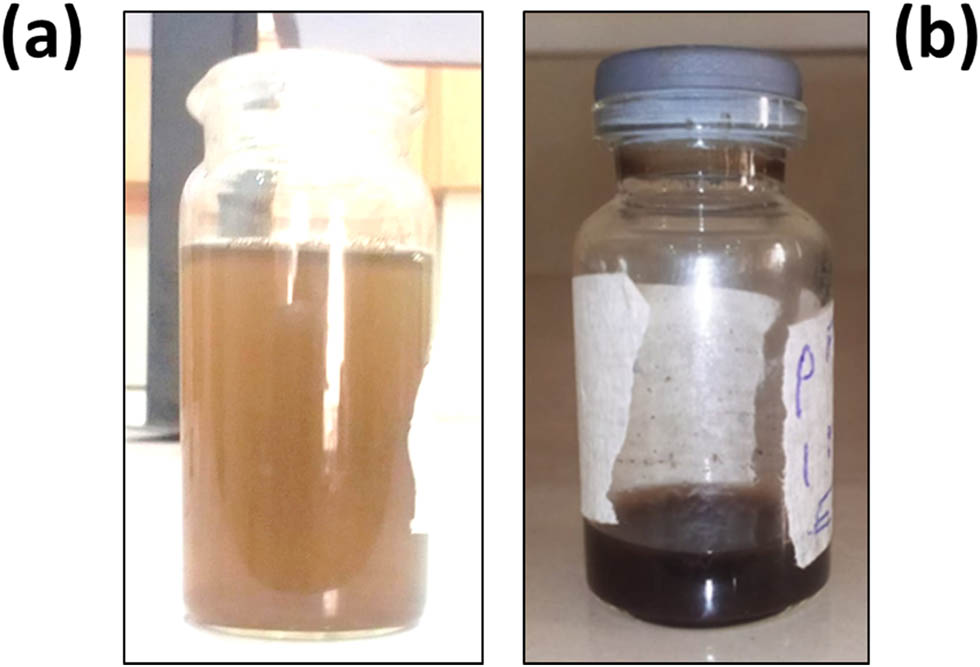
Colour change during nanoparticle synthesis; (a) extract, (b) IONPs.
3.2 Characterization
3.2.1 UV–visible spectroscopy
To further confirm the formation of IONPs, UV–visible spectroscopy was employed. This analytical technique provides valuable insights into the optical properties of nanoparticles, allowing for a more detailed characterization of the synthesized material. As shown in Figure 2, the UV–visible spectrum exhibited a sharp absorption peak at 295 nm, which is a characteristic feature of IONPs. This absorption peak corresponds to the surface plasmon resonance (SPR) of the nanoparticles and is a well-established indicator of their presence. The SPR arises from the collective oscillation of free electrons at the nanoparticle’s surface when illuminated with UV–visible light. The intensity of the peak at 295 nm increased with time, demonstrating the gradual formation and growth of the IONPs within the reaction mixture. This observation was consistent with the colour change previously described, further supporting the successful synthesis of nanoparticles [35].

UV–visible spectrum confirming nanoparticle synthesis.
3.2.2 FTIR
Fourier Transform Infrared spectroscopy was employed to analyse the chemical composition of the extract from Senna bicapsularis and the synthesized Iron Oxide Nanoparticles (IONPs). In the FTIR spectrum of the Senna bicapsularis extract, a broad band was prominently observed at 3,300 cm−1, which is characteristic of the O–H stretching vibrations, indicating the presence of hydroxyl groups. Additionally, a smaller band at 2,200 cm−1 suggests the presence of C≡C triple bonds, possibly corresponding to alkyne functional groups. Another notable feature was the sharp band at 1,700 cm−1, indicative of the C═O stretching vibrations, which may be associated with carbonyl groups. Similar bands were observed in the FTIR spectrum of plant mediated IONPs. However, there were distinct differences in the intensities of these bands compared to those observed in the raw Senna bicapsularis extract. This variation in band intensities strongly suggests the involvement of phytochemicals present in the extract in both the reduction and stabilization of metal ions, leading to the successful formation of nanoparticles [5]. The FTIR spectra are provided in the inset of Figure 3.

FTIR Spectra identifying functional groups in (a) extract, (b) IONPs.
3.2.3 FESEM
The morphology and size distribution of the IONPs were examined using FESEM, a powerful technique for visualizing high-resolution nanomaterials. This analysis provides crucial insights into the structural characteristics of the synthesized nanoparticles. Figure 4 illustrates FESEM images of the nanoparticles at both high and low resolution, revealing their distinctive spherical shape and uniform size distribution. The published literature also reported the same results [36,37]. At high resolution, the individual nanoparticles can be clearly observed, highlighting their well-defined spherical morphology. This spherical shape is a common feature of IONPs and is consistent with the idealized properties desired for various applications. Moreover, the low-resolution image provides an overview of the entire sample, indicating that the majority of the nanoparticles possess a remarkably consistent size distribution. The uniformity in size is a critical factor in nanoparticle applications because it ensures consistent behaviour and performance in various contexts.

FESEM Images showing nanoparticle morphology at (a) low resolution and (b) high resolution.
3.3 Biological assays
3.3.1 Anticancer activities
The demonstrated anticancer effect of the extract/IONPs against various cancer cell lines is illustrated in Table 1. The IC50 values observed against MDR 2780AD were found to be, at a minimum, precisely 0.85 (extract) and 0.55 (IONPs). A variable anticancer effect was observed against different cell lines. Paclitaxel was used as standard anticancer.
Anticancer potential of extract and IONPs derived from Senna bicapsularis
| Compounds | IC50 | |||
|---|---|---|---|---|
| HepG2 | A498 | NCI-H226 | MDR 2780AD | |
| Extract | >100 | >100 | 155.43 ± 0.65 | 1.60 ± 0.98 |
| IONPs | 98.45 ± 0.59 | 197.34 ± 0.34 | 122.43 ± 0.22 | 0.88 ± 0.29 |
| Paclitaxel | 7.66 ± 0.43 | 96.89 ± 0.29 | 61.09 ± 0.19 | 0.20 ± 0.05 |
3.3.2 Urease inhibition
The urease inhibition assay demonstrated notable inhibitory properties of the Senna bicapsularis extract and IONPs. The extract of Senna bicapsularis showed an inhibition rate of 46.09% when administered at a concentration of 0.25 µg. In contrast, the IONPs exhibited augmented inhibition, a notable percentage of 77.09% at a concentration of 0.25 mM. The findings suggest that the IONPs obtained from the extract of Senna bicapsularis exhibit strong inhibitory efficacy against urease. Thiourea, employed as a positive control, demonstrated robust inhibition of 98.09%, confirming the assay’s effectiveness, as depicted in Table 2.
Urease inhibition potential of extract and IONPs derived from Senna bicapsularis
| Sample | Concentration | % Inhibition | IC50 |
|---|---|---|---|
| Extract | 0.25 µg·mL−1 | 46.09 | — |
| IONPs | 0.25 mM·mL−1 | 77.09 | 12.98 ± 0.98 |
| Thiourea | 0.25 mM·mL−1 | 98.09 | 0.22 ± 0.14 |
3.3.3 Xanthine oxidase inhibition
The extract of Senna bicapsularis showed an inhibition rate of 32.98% when administered at a concentration of 0.25 µg. Conversely, the inhibitory activity of the IONPs was significantly enhanced, exhibiting a percentage of 65.98% at a concentration of 0.25 mM. Significantly, the IONPs demonstrated an IC50 value of 96.09 ± 0.65 µM, emphasising their robust inhibitory capacity against xanthine oxidase activity. Allopurinol, the pharmacological agent serving as the positive control, exhibited a notable inhibition percentage of 97.65%, as depicted in the inset of Table 3.
Xanthine oxidase inhibition screening of extract and IONPs derived from Senna bicapsularis
| Sample | Concentration | % Inhibition | IC50 |
|---|---|---|---|
| Extract | 0.25 µg·mL−1 | 32.98 | — |
| IONPs | 0.25 mM·mL−1 | 65.98 | 96.09 ± 0.65 |
| Allopurinol | 0.25 mM·mL−1 | 97.65 | 0.61 ± 0.87 |
3.3.4 Carbonic anhydrase II inhibition
The inhibitory effects of the Senna bicapsularis extract and IONPs were observed in the carbonic anhydrase II enzyme inhibition assay. The extract of Senna bicapsularis demonstrated a minimal inhibition of 13.91% at a concentration of 0.25 µg. In contrast, the inhibitory activity of the IONPs was significantly enhanced, exhibiting a percentage of 42.09% at a concentration of 0.25 mM. Acetazolamide, the pharmacological agent serving as the positive control, showed a notable inhibition percentage of 80.66%, confirming the assay’s accuracy, as depicted in Table 4.
Carbonic anhydrase II inhibition screening of extract and IONPs derived from Senna bicapsularis
| Sample | Concentration | % Inhibition | IC50 |
|---|---|---|---|
| Extract | 0.25 µg·mL−1 | 13.91 | — |
| IONPs | 0.25 mM·mL−1 | 42.09 | — |
| Acetazolamide | 0.25 mM·mL−1 | 80.66 | 13.32 ± 1.32 |
3.3.5 Analgesic activity
The analgesic effect exhibited by both the synthesized IONPs and Senna bicapsularis extract is detailed in Table 5. An observation of a dose-dependent effect was made. The maximum per cent effect of extract was 55% (100 mg·kg−1), while the maximum per cent effect of the IONPs was 78% at the tested dose of 10 mg·kg−1. The standard analgesic drug exhibited a stronger effect with 84% protection.
Analgesic activity of extract and IONPs derived from Senna bicapsularis
| Treatment | Dose (mg·kg−1) | Percent effect |
|---|---|---|
| Saline | 10 mL·kg−1 | — |
| Extract | 25 | 44.09 ± 2.43 |
| 50 | 56.09 ± 2.76 | |
| 100 | 60.42 ± 2.33 | |
| IONPs | 2.5 | 55.12 ± 2.09 |
| 5 | 66.34 ± 2.00 | |
| 10 | 78.09 ± 1.98 | |
| Diclofenac sodium | 1.5 | 84.11 ± 0.22 |
3.3.6 Sedative effect
The sedative properties of the extract and IONPs are presented in Table 6. Both of the tested samples exhibited a dose-dependent sedative effect that was observed for both the extract and IOPNs. In contrast, the IONPS demonstrated significant (p < 0.001) sedative effects at all tested concentrations and was determined to be more potent than the Senna bicapsularis extract.
Sedative effect of extract and IONPs derived from Senna bicapsularis
| Treatment | Dose (mg·kg−1) | Number of lines crossed in 10 min |
|---|---|---|
| Saline | 10 mL·kg−1 | 135.00 ± 0.96 |
| Extract | 25 | 71.98 ± 2.09* |
| 50 | 63.20 ± 1.87** | |
| 100 | 55.09 ± 1.21*** | |
| IONPs | 2.5 | 40.09 ± 1.43*** |
| 5 | 31.09 ± 1.56*** | |
| 10 | 22.98 ± 1.23*** | |
| Diazepam | 0.25 | 1.10 ± 1.23*** |
*p < 0.05; **p < 0.01; ***p < 0.001.
4 Discussion
Natural products are the main source of remedy for pathological and non-pathological disorders. The world population is now switching to alternative medicines due to the significant safety profile as compared to available synthetic drugs [38]. Therefore, the consumption of natural products as pharmaceuticals and cosmeceuticals increasing with time. The testing of the plant-based remedies must be scientifically screened in various experimental modes for good safety documentation. In the current research work, the nanoparticles and extract of Senna bicapsularis were tested for different pharmacological evaluations. A variable degree of antagonistic effect was noted against different enzymes. However, a significant (p < 0.001) analgesic effect was noted for both of the tested samples. The analgesic effect extract and IONPs have strong correlation with the folklore of Senna bicapsularis as a painkiller [21]. The analgesic effect of these samples might be due to the inhibitory effect of the local pain receptors or inhibition of the prostaglandins. The maximum analgesic effect of the IONPs might be due to the maximum penetration of the NPs at the target sites. In addition to the analgesic effect both the tested samples also demonstrated significant (p < 0.001) sedative effect. Although the plant is not documented for sedative effect, the use of Senna bicapsularis is well reported in the literature as a muscle relaxant. The mechanism of sedation and muscle relaxation is almost the same, i.e. GABA agonistic effect [39,40]. Therefore, the sedative effect of these tested samples might be attributed to the agonistic effect with GABA receptors. The results obtained from the biological assays highlight the promising potential of the IONPs derived from Senna bicapsularis as therapeutic agents. With demonstrated efficacy against multidrug-resistant cancer cells, as well as significant inhibitory effects on enzymes associated with various physiological processes, including urease, xanthine oxidase, and carbonic anhydrase II, these nanoparticles emerge as versatile candidates for therapeutic interventions. Their ability to exert dose-dependent analgesic and sedative effects further underscores their potential utility in pain management and muscle relaxation. Additionally, the traditional use of Senna bicapsularis in addressing constipation and skin lesions aligns with the observed pharmacological activities of the IONPs, suggesting broader applications as therapeutic agents.
5 Conclusion
In this study, we explore the potential of Senna bicapsularis-functionalized IONPs synthesized through an ecofriendly green synthesis approach. The successful confirmation of IONP synthesis using UV–visible spectroscopy, along with the elucidation of functional groups and morphological features through FTIR and scanning electron microscopy validates the viability of our environmentally conscious methodology. The diverse biological assessments conducted showcase the multifaceted nature of these nanoparticles. Notably, the IONPs exhibit significant anticancer activity, contributing to their potential therapeutic applications. Additionally, their inhibitory effects against enzymes and the observed moderate carbonic anhydrase II inhibition hint at their versatility in various therapeutic contexts. Furthermore, the in vivo demonstration of significant analgesic and sedative effects adds another dimension to the potential applications of IONPs. However, it is important to note some limitations and potential areas for improvement. One limitation is the need for further investigations into the long-term stability and potential toxicity of these nanoparticles, particularly in biological systems. Additionally, while the observed anticancer activity and enzyme inhibition are promising, more detailed mechanistic studies are warranted to fully understand the underlying pathways and optimize therapeutic efficacy. Looking ahead, future research could focus on optimizing the synthesis process to enhance the reproducibility and scalability of these nanoparticles. Moreover, exploring targeted delivery mechanisms and combination therapies could further enhance their efficacy in clinical settings. This study contributes to the evolving landscape of green chemistry and nanomedicine, laying the foundation for continued advancements in the field.
Acknowledgements
The authors thank the Pakistan Science Foundation for funding this research under project number PSF/CRP/18th Protocol (02). We are also thankful to the National Key R&D Program of China (2021YFE0100300).
-
Funding information: Project number PSF/CRP/18th protocol (02).
-
Author contributions: Zubair Ahmad (ZA): writing original draft and writing review and editing, investigation, experiments data curation, and software. Abdur Rauf (AR): Conceptualization and supervision. Haiyuan Zhang (HZ): Co-supervision. Muhammad Ibrahim: experimental work. Naveed Muhammad (NM): biological assays.
-
Conflict of interest: The contact author Dr. Abdur Rauf is the associate editor of GPS. The other authors state no conflict of interest.
-
Data availability statement: The data sets generated during and/or analysed during the current study are available from the corresponding author on reasonable request.
References
[1] Khan I, Saeed K, Khan I. Nanoparticles: Properties, applications and toxicities. Arab J Chem. 2019;12(7):908–31.10.1016/j.arabjc.2017.05.011Search in Google Scholar
[2] Aljohny BO, Ahmad Z, Shah SA, Anwar Y, Khan SA. Cellulose acetate composite films fabricated with zero‐valent iron nanoparticles and its use in the degradation of persistent organic pollutants. Appl Organomet Chem. 2020;34(11):e5892.10.1002/aoc.5892Search in Google Scholar
[3] Ahmad Z, Shah SA, Khattak I, Ullah H, Khan AA, Shah RA, et al. Melia Azedarach impregnated Co and Ni zero-valent metal nanoparticles for organic pollutants degradation: Validation of experiments through statistical analysis. J Mater Sci: Mater Electron. 2020;31:16938–50.10.1007/s10854-020-04250-5Search in Google Scholar
[4] Shah SA, Ahmad Z, Khan SA, Al-Ghamdi YO, Bakhsh EM, Khan N, et al. Biomass impregnated zero-valent Ag and Cu supported-catalyst: Evaluation in the reduction of nitrophenol and discoloration of dyes in aqueous medium. J Organomet Chem. 2021;938:121756.10.1016/j.jorganchem.2021.121756Search in Google Scholar
[5] Rahman H, Rauf A, Khan SA, Ahmad Z, Alshammari A, Alharbi M, et al. Green synthesis of silver nanoparticles using rhazya stricta decne extracts and their anti-microbial and anti-oxidant activities. Crystals. 2023;13(3):398.10.3390/cryst13030398Search in Google Scholar
[6] Shnoudeh AJ, Hamad I, Abdo RW, Qadumii L, Jaber AY, Surchi HS, et al. Synthesis, characterization, and applications of metal nanoparticles. Biomaterials and bionanotechnology. Netherlands: Elsevier; 2019. p. 527–612.10.1016/B978-0-12-814427-5.00015-9Search in Google Scholar
[7] Schmid G. Nanoparticles: from theory to application. United States: John Wiley & Sons; 2011.Search in Google Scholar
[8] Lanjwani MF, Tuzen M, Khuhawar MY, Saleh TA. Trends in photocatalytic degradation of organic dye pollutants using nanoparticles: a review. Inorg Chem Commun. 2024;159:111613.10.1016/j.inoche.2023.111613Search in Google Scholar
[9] Hussain I, Singh N, Singh A, Singh H, Singh S. Green synthesis of nanoparticles and its potential application. Biotechnol Lett. 2016;38:545–60.10.1007/s10529-015-2026-7Search in Google Scholar PubMed
[10] Nadaroglu H, Güngör AA, Selvi İ. Synthesis of nanoparticles by green synthesis method. Int J Innovative Res Rev. 2017;1(1):6–9.10.1515/gps-2016-0091Search in Google Scholar
[11] Rahman MM, Khan SB, Jamal A, Faisal M, Aisiri AM. Iron oxide nanoparticles. Nanomaterials. 2011;3:43–67.Search in Google Scholar
[12] Rukhsar M, Ahmad Z, Rauf A, Zeb H, Ur-Rehman M, Hemeg HA. An overview of iron oxide (Fe3O4) nanoparticles: From synthetic strategies, characterization to antibacterial and anticancer applications. Crystals. 2022;12(12):1809.10.3390/cryst12121809Search in Google Scholar
[13] Khan N, Shahida B, Khan SA, Ahmad Z, Saeeduddin, Sheikh Z, et al. Anchoring zero-valent Cu and Ni nanoparticles on carboxymethyl cellulose-polystyrene–block polyisoprene–block polystyrene composite films for nitrophenol reduction and dyes degradation. J Polym Environ. 2023;31(2):608–20.10.1007/s10924-022-02579-ySearch in Google Scholar
[14] Riaz M, Khan N, Khan SA, Ahmad Z, Khan MA, Iqbal M, et al. Enhanced catalytic reduction/degradation of organic pollutants and antimicrobial activity with metallic nanoparticles immobilized on copolymer modified with NaY zeolite films. J Mol Liq. 2022;359:119246.10.1016/j.molliq.2022.119246Search in Google Scholar
[15] Jamkhande PG, Ghule NW, Bamer AH, Kalaskar MG. Metal nanoparticles synthesis: An overview on methods of preparation, advantages and disadvantages, and applications. J Drug Delivery Sci Technol. 2019;53:101174.10.1016/j.jddst.2019.101174Search in Google Scholar
[16] Bhardwaj B, Singh P, Kumar A, Kumar S, Budhwar V. Eco-friendly greener synthesis of nanoparticles. Adv Pharm Bull. 2020;10(4):566.10.34172/apb.2020.067Search in Google Scholar PubMed PubMed Central
[17] Priya N, Kaur K, Sidhu AK. Green synthesis: An eco-friendly route for the synthesis of iron oxide nanoparticles. Front Nanotechnol. 2021;3:655062.10.3389/fnano.2021.655062Search in Google Scholar
[18] Parveen K, Banse V, Ledwani L, editors. Green synthesis of nanoparticles: Their advantages and disadvantages. AIP Conference Proceedings. AIP Publishing; 2016.10.1063/1.4945168Search in Google Scholar
[19] Ying S, Guan Z, Ofoegbu PC, Clubb P, Rico C, He F, et al. Green synthesis of nanoparticles: Current developments and limitations. Environ Technol & Innov. 2022;26:102336.10.1016/j.eti.2022.102336Search in Google Scholar
[20] Bhole R, Gonsalves D, Murugesan G, Narasimhan MK, Srinivasan N, Dave N, et al. Superparamagnetic spherical magnetite nanoparticles: synthesis, characterization and catalytic potential. Appl Nanosci. 2023;13(9):6003–14.10.1007/s13204-022-02532-4Search in Google Scholar
[21] Alhumaydhi FA. In vivo analgesic, muscle relaxant, sedative and toxicological studies of Senna bicapsularis (L.) Roxb. J Taibah Univ Sci. 2021;15(1):340–6.10.1080/16583655.2021.1978806Search in Google Scholar
[22] Koduru JR, Kailasa SK, Bhamore JR, Kim K-H, Dutta T, Vellingiri K. Phytochemical-assisted synthetic approaches for silver nanoparticles antimicrobial applications: A review. Adv Colloid Interface Sci. 2018;256:326–39.10.1016/j.cis.2018.03.001Search in Google Scholar PubMed
[23] Yousaf Z, Saleh N. Advanced concept of green synthesis of metallic nanoparticles by reducing phytochemicals. Nanobotany. 2018;11:17–36.10.1007/978-3-319-77119-9_2Search in Google Scholar
[24] Mak YW, Chuah LO, Ahmad R, Bhat R. Antioxidant and antibacterial activities of hibiscus (Hibiscus rosa-sinensis L.) and Cassia (Senna bicapsularis L.) flower extracts. J King Saud University-Science. 2013;25(4):275–82.10.1016/j.jksus.2012.12.003Search in Google Scholar
[25] Alshehri MM, Quispe C, Herrera-Bravo J, Sharifi-Rad J, Tutuncu S, Aydar EF, et al. A review of recent studies on the antioxidant and anti-infectious properties of Senna plants. Oxid Med Cell Longev. 2022;2022:6025900.10.1155/2022/6025900Search in Google Scholar PubMed PubMed Central
[26] Kanagasubbulakshmi S, Kadirvelu K. Green synthesis of iron oxide nanoparticles using Lagenaria siceraria and evaluation of its antimicrobial activity. Def Life Sci J. 2017;2(4):422–7.10.14429/dlsj.2.12277Search in Google Scholar
[27] Burhan A, Kamaruddin M, Ahmad R, Marzuki I. Anticancer and cytotoxic potentials of Vernonia amygdalina Delile on WiDr cell lines. Phytopharmacology Res J. 2022;1(1):1–7.Search in Google Scholar
[28] Muhammad N, Saeed M, Khan H. Antipyretic, analgesic and anti-inflammatory activity of Viola betonicifolia whole plant. BMC Complementary Altern Med. 2012;12:1–8.10.1186/1472-6882-12-59Search in Google Scholar PubMed PubMed Central
[29] Ali S, Bacha M, Shah MR, Shah W, Kubra K, Khan A, et al. Green synthesis of silver and gold nanoparticles using Crataegus oxyacantha extract and their urease inhibitory activities. Biotechnol Appl Biochem. 2021;68(5):992–1002.10.1002/bab.2018Search in Google Scholar PubMed
[30] Khan R, Quradha MM, Saif AQ, Ali J, Rauf A, Khan A. Comparative urease enzyme inhibition profile of leaves and stems of Rumex nervosus vahl. Nat Product Res. 2014;28(24):2355–7.10.1080/14786419.2014.940346Search in Google Scholar PubMed
[31] Alam M, Uddin G, Rashid U, Rauf A, Raza M, Shah SMM, et al. In vitro and in silico xanthine oxidase inhibitory potential of Benzofuran isolated from Viburnum grandiflorum Wall. Ex DC. South Afr J Botany. 2021;143:359–62.10.1016/j.sajb.2021.01.010Search in Google Scholar
[32] Bawazeer S, Rauf A, Shah SUA, Ullah N, Uddin G, Khan H, et al. Antioxidant and enzyme inhibitory activities of extracts and phytochemicals isolated from Pistacia integerrima. J Medicinal Spice Plants. 2019;23(2):55–8.Search in Google Scholar
[33] Archer J. Tests for emotionality in rats and mice: a review. Anim Behav. 1973;21(2):205–35.10.1016/S0003-3472(73)80065-XSearch in Google Scholar
[34] Goyal M, Nagori B, Sasmal D. Sedative and anticonvulsant effects of an alcoholic extract of Capparis decidua. J Nat Med. 2009;63:375–9.10.1007/s11418-009-0339-3Search in Google Scholar PubMed
[35] Karpagavinayagam P, Vedhi C. Green synthesis of iron oxide nanoparticles using Avicennia marina flower extract. Vacuum. 2019;160:286–92.10.1016/j.vacuum.2018.11.043Search in Google Scholar
[36] Beheshtkhoo N, Kouhbanani MAJ, Savardashtaki A, Amani AM, Taghizadeh S. Green synthesis of iron oxide nanoparticles by aqueous leaf extract of Daphne mezereum as a novel dye removing material. Appl Phys A. 2018;124:1–7.10.1007/s00339-018-1782-3Search in Google Scholar
[37] Aisida SO, Madubuonu N, Alnasir MH, Ahmad I, Botha S, Maaza M, et al. Biogenic synthesis of iron oxide nanorods using Moringa oleifera leaf extract for antibacterial applications. Appl Nanosci. 2020;10:305–15.10.1007/s13204-019-01099-xSearch in Google Scholar
[38] Mohd Zaid NA, Sekar M, Bonam SR, Gan SH, Lum PT, Begum MY, et al. Promising natural products in new drug design, development, and therapy for skin disorders: An overview of scientific evidence and understanding their mechanism of action. Drug Design Dev Ther. 2022;16:23–66.10.2147/DDDT.S326332Search in Google Scholar PubMed PubMed Central
[39] Brohan J, Goudra BG. The role of GABA receptor agonists in anesthesia and sedation. CNS Drugs. 2017;31:845–56.10.1007/s40263-017-0463-7Search in Google Scholar PubMed
[40] Murala S, Yelam A, Ismail MM, Bollu PC. GABA. Neurochemistry in clinical practice. German: Springer; 2022. p. 73–89.10.1007/978-3-031-07897-2_4Search in Google Scholar
© 2024 the author(s), published by De Gruyter
This work is licensed under the Creative Commons Attribution 4.0 International License.
Articles in the same Issue
- Research Articles
- Green polymer electrolyte and activated charcoal-based supercapacitor for energy harvesting application: Electrochemical characteristics
- Research on the adsorption of Co2+ ions using halloysite clay and the ability to recover them by electrodeposition method
- Simultaneous estimation of ibuprofen, caffeine, and paracetamol in commercial products using a green reverse-phase HPTLC method
- Isolation, screening and optimization of alkaliphilic cellulolytic fungi for production of cellulase
- Functionalized gold nanoparticles coated with bacterial alginate and their antibacterial and anticancer activities
- Comparative analysis of bio-based amino acid surfactants obtained via Diels–Alder reaction of cyclic anhydrides
- Biosynthesis of silver nanoparticles on yellow phosphorus slag and its application in organic coatings
- Exploring antioxidant potential and phenolic compound extraction from Vitis vinifera L. using ultrasound-assisted extraction
- Manganese and copper-coated nickel oxide nanoparticles synthesized from Carica papaya leaf extract induce antimicrobial activity and breast cancer cell death by triggering mitochondrial caspases and p53
- Insight into heating method and Mozafari method as green processing techniques for the synthesis of micro- and nano-drug carriers
- Silicotungstic acid supported on Bi-based MOF-derived metal oxide for photodegradation of organic dyes
- Synthesis and characterization of capsaicin nanoparticles: An attempt to enhance its bioavailability and pharmacological actions
- Synthesis of Lawsonia inermis-encased silver–copper bimetallic nanoparticles with antioxidant, antibacterial, and cytotoxic activity
- Facile, polyherbal drug-mediated green synthesis of CuO nanoparticles and their potent biological applications
- Zinc oxide-manganese oxide/carboxymethyl cellulose-folic acid-sesamol hybrid nanomaterials: A molecularly targeted strategy for advanced triple-negative breast cancer therapy
- Exploring the antimicrobial potential of biogenically synthesized graphene oxide nanoparticles against targeted bacterial and fungal pathogens
- Biofabrication of silver nanoparticles using Uncaria tomentosa L.: Insight into characterization, antibacterial activities combined with antibiotics, and effect on Triticum aestivum germination
- Membrane distillation of synthetic urine for use in space structural habitat systems
- Investigation on mechanical properties of the green synthesis bamboo fiber/eggshell/coconut shell powder-based hybrid biocomposites under NaOH conditions
- Green synthesis of magnesium oxide nanoparticles using endophytic fungal strain to improve the growth, metabolic activities, yield traits, and phenolic compounds content of Nigella sativa L.
- Estimation of greenhouse gas emissions from rice and annual upland crops in Red River Delta of Vietnam using the denitrification–decomposition model
- Synthesis of humic acid with the obtaining of potassium humate based on coal waste from the Lenger deposit, Kazakhstan
- Ascorbic acid-mediated selenium nanoparticles as potential antihyperuricemic, antioxidant, anticoagulant, and thrombolytic agents
- Green synthesis of silver nanoparticles using Illicium verum extract: Optimization and characterization for biomedical applications
- Antibacterial and dynamical behaviour of silicon nanoparticles influenced sustainable waste flax fibre-reinforced epoxy composite for biomedical application
- Optimising coagulation/flocculation using response surface methodology and application of floc in biofertilisation
- Green synthesis and multifaceted characterization of iron oxide nanoparticles derived from Senna bicapsularis for enhanced in vitro and in vivo biological investigation
- Potent antibacterial nanocomposites from okra mucilage/chitosan/silver nanoparticles for multidrug-resistant Salmonella Typhimurium eradication
- Trachyspermum copticum aqueous seed extract-derived silver nanoparticles: Exploration of their structural characterization and comparative antibacterial performance against gram-positive and gram-negative bacteria
- Microwave-assisted ultrafine silver nanoparticle synthesis using Mitragyna speciosa for antimalarial applications
- Green synthesis and characterisation of spherical structure Ag/Fe2O3/TiO2 nanocomposite using acacia in the presence of neem and tulsi oils
- Green quantitative methods for linagliptin and empagliflozin in dosage forms
- Enhancement efficacy of omeprazole by conjugation with silver nanoparticles as a urease inhibitor
- Residual, sequential extraction, and ecological risk assessment of some metals in ash from municipal solid waste incineration, Vietnam
- Green synthesis of ZnO nanoparticles using the mangosteen (Garcinia mangostana L.) leaf extract: Comparative preliminary in vitro antibacterial study
- Simultaneous determination of lesinurad and febuxostat in commercial fixed-dose combinations using a greener normal-phase HPTLC method
- A greener RP-HPLC method for quaternary estimation of caffeine, paracetamol, levocetirizine, and phenylephrine acquiring AQbD with stability studies
- Optimization of biomass durian peel as a heterogeneous catalyst in biodiesel production using microwave irradiation
- Thermal treatment impact on the evolution of active phases in layered double hydroxide-based ZnCr photocatalysts: Photodegradation and antibacterial performance
- Preparation of silymarin-loaded zein polysaccharide core–shell nanostructures and evaluation of their biological potentials
- Preparation and characterization of composite-modified PA6 fiber for spectral heating and heat storage applications
- Preparation and electrocatalytic oxygen evolution of bimetallic phosphates (NiFe)2P/NF
- Rod-shaped Mo(vi) trichalcogenide–Mo(vi) oxide decorated on poly(1-H pyrrole) as a promising nanocomposite photoelectrode for green hydrogen generation from sewage water with high efficiency
- Green synthesis and studies on citrus medica leaf extract-mediated Au–ZnO nanocomposites: A sustainable approach for efficient photocatalytic degradation of rhodamine B dye in aqueous media
- Cellulosic materials for the removal of ciprofloxacin from aqueous environments
- The analytical assessment of metal contamination in industrial soils of Saudi Arabia using the inductively coupled plasma technology
- The effect of modified oily sludge on the slurry ability and combustion performance of coal water slurry
- Eggshell waste transformation to calcium chloride anhydride as food-grade additive and eggshell membranes as enzyme immobilization carrier
- Synthesis of EPAN and applications in the encapsulation of potassium humate
- Biosynthesis and characterization of silver nanoparticles from Cedrela toona leaf extracts: An exploration into their antibacterial, anticancer, and antioxidant potential
- Enhancing mechanical and rheological properties of HDPE films through annealing for eco-friendly agricultural applications
- Immobilisation of catalase purified from mushroom (Hydnum repandum) onto glutaraldehyde-activated chitosan and characterisation: Its application for the removal of hydrogen peroxide from artificial wastewater
- Sodium titanium oxide/zinc oxide (STO/ZnO) photocomposites for efficient dye degradation applications
- Effect of ex situ, eco-friendly ZnONPs incorporating green synthesised Moringa oleifera leaf extract in enhancing biochemical and molecular aspects of Vicia faba L. under salt stress
- Biosynthesis and characterization of selenium and silver nanoparticles using Trichoderma viride filtrate and their impact on Culex pipiens
- Photocatalytic degradation of organic dyes and biological potentials of biogenic zinc oxide nanoparticles synthesized using the polar extract of Cyperus scariosus R.Br. (Cyperaceae)
- Assessment of antiproliferative activity of green-synthesized nickel oxide nanoparticles against glioblastoma cells using Terminalia chebula
- Chlorine-free synthesis of phosphinic derivatives by change in the P-function
- Anticancer, antioxidant, and antimicrobial activities of nanoemulsions based on water-in-olive oil and loaded on biogenic silver nanoparticles
- Study and mechanism of formation of phosphorus production waste in Kazakhstan
- Synthesis and stabilization of anatase form of biomimetic TiO2 nanoparticles for enhancing anti-tumor potential
- Microwave-supported one-pot reaction for the synthesis of 5-alkyl/arylidene-2-(morpholin/thiomorpholin-4-yl)-1,3-thiazol-4(5H)-one derivatives over MgO solid base
- Screening the phytochemicals in Perilla leaves and phytosynthesis of bioactive silver nanoparticles for potential antioxidant and wound-healing application
- Graphene oxide/chitosan/manganese/folic acid-brucine functionalized nanocomposites show anticancer activity against liver cancer cells
- Nature of serpentinite interactions with low-concentration sulfuric acid solutions
- Multi-objective statistical optimisation utilising response surface methodology to predict engine performance using biofuels from waste plastic oil in CRDi engines
- Microwave-assisted extraction of acetosolv lignin from sugarcane bagasse and electrospinning of lignin/PEO nanofibres for carbon fibre production
- Biosynthesis, characterization, and investigation of cytotoxic activities of selenium nanoparticles utilizing Limosilactobacillus fermentum
- Highly photocatalytic materials based on the decoration of poly(O-chloroaniline) with molybdenum trichalcogenide oxide for green hydrogen generation from Red Sea water
- Highly efficient oil–water separation using superhydrophobic cellulose aerogels derived from corn straw
- Beta-cyclodextrin–Phyllanthus emblica emulsion for zinc oxide nanoparticles: Characteristics and photocatalysis
- Assessment of antimicrobial activity and methyl orange dye removal by Klebsiella pneumoniae-mediated silver nanoparticles
- Influential eradication of resistant Salmonella Typhimurium using bioactive nanocomposites from chitosan and radish seed-synthesized nanoselenium
- Antimicrobial activities and neuroprotective potential for Alzheimer’s disease of pure, Mn, Co, and Al-doped ZnO ultra-small nanoparticles
- Green synthesis of silver nanoparticles from Bauhinia variegata and their biological applications
- Synthesis and optimization of long-chain fatty acids via the oxidation of long-chain fatty alcohols
- Eminent Red Sea water hydrogen generation via a Pb(ii)-iodide/poly(1H-pyrrole) nanocomposite photocathode
- Green synthesis and effective genistein production by fungal β-glucosidase immobilized on Al2O3 nanocrystals synthesized in Cajanus cajan L. (Millsp.) leaf extracts
- Green stability-indicating RP-HPTLC technique for determining croconazole hydrochloride
- Green synthesis of La2O3–LaPO4 nanocomposites using Charybdis natator for DNA binding, cytotoxic, catalytic, and luminescence applications
- Eco-friendly drugs induce cellular changes in colistin-resistant bacteria
- Tangerine fruit peel extract mediated biogenic synthesized silver nanoparticles and their potential antimicrobial, antioxidant, and cytotoxic assessments
- Green synthesis on performance characteristics of a direct injection diesel engine using sandbox seed oil
- A highly sensitive β-AKBA-Ag-based fluorescent “turn off” chemosensor for rapid detection of abamectin in tomatoes
- Green synthesis and physical characterization of zinc oxide nanoparticles (ZnO NPs) derived from the methanol extract of Euphorbia dracunculoides Lam. (Euphorbiaceae) with enhanced biosafe applications
- Detection of morphine and data processing using surface plasmon resonance imaging sensor
- Effects of nanoparticles on the anaerobic digestion properties of sulfamethoxazole-containing chicken manure and analysis of bio-enzymes
- Bromic acid-thiourea synergistic leaching of sulfide gold ore
- Green chemistry approach to synthesize titanium dioxide nanoparticles using Fagonia Cretica extract, novel strategy for developing antimicrobial and antidiabetic therapies
- Green synthesis and effective utilization of biogenic Al2O3-nanocoupled fungal lipase in the resolution of active homochiral 2-octanol and its immobilization via aluminium oxide nanoparticles
- Eco-friendly RP-HPLC approach for simultaneously estimating the promising combination of pentoxifylline and simvastatin in therapeutic potential for breast cancer: Appraisal of greenness, whiteness, and Box–Behnken design
- Use of a humidity adsorbent derived from cockleshell waste in Thai fried fish crackers (Keropok)
- One-pot green synthesis, biological evaluation, and in silico study of pyrazole derivatives obtained from chalcones
- Bio-sorption of methylene blue and production of biofuel by brown alga Cystoseira sp. collected from Neom region, Kingdom of Saudi Arabia
- Synthesis of motexafin gadolinium: A promising radiosensitizer and imaging agent for cancer therapy
- The impact of varying sizes of silver nanoparticles on the induction of cellular damage in Klebsiella pneumoniae involving diverse mechanisms
- Microwave-assisted green synthesis, characterization, and in vitro antibacterial activity of NiO nanoparticles obtained from lemon peel extract
- Rhus microphylla-mediated biosynthesis of copper oxide nanoparticles for enhanced antibacterial and antibiofilm efficacy
- Harnessing trichalcogenide–molybdenum(vi) sulfide and molybdenum(vi) oxide within poly(1-amino-2-mercaptobenzene) frameworks as a photocathode for sustainable green hydrogen production from seawater without sacrificial agents
- Magnetically recyclable Fe3O4@SiO2 supported phosphonium ionic liquids for efficient and sustainable transformation of CO2 into oxazolidinones
- A comparative study of Fagonia arabica fabricated silver sulfide nanoparticles (Ag2S) and silver nanoparticles (AgNPs) with distinct antimicrobial, anticancer, and antioxidant properties
- Visible light photocatalytic degradation and biological activities of Aegle marmelos-mediated cerium oxide nanoparticles
- Physical intrinsic characteristics of spheroidal particles in coal gasification fine slag
- Exploring the effect of tea dust magnetic biochar on agricultural crops grown in polycyclic aromatic hydrocarbon contaminated soil
- Crosslinked chitosan-modified ultrafiltration membranes for efficient surface water treatment and enhanced anti-fouling performances
- Study on adsorption characteristics of biochars and their modified biochars for removal of organic dyes from aqueous solution
- Zein polymer nanocarrier for Ocimum basilicum var. purpurascens extract: Potential biomedical use
- Green synthesis, characterization, and in vitro and in vivo biological screening of iron oxide nanoparticles (Fe3O4) generated with hydroalcoholic extract of aerial parts of Euphorbia milii
- Novel microwave-based green approach for the synthesis of dual-loaded cyclodextrin nanosponges: Characterization, pharmacodynamics, and pharmacokinetics evaluation
- Bi2O3–BiOCl/poly-m-methyl aniline nanocomposite thin film for broad-spectrum light-sensing
- Green synthesis and characterization of CuO/ZnO nanocomposite using Musa acuminata leaf extract for cytotoxic studies on colorectal cancer cells (HCC2998)
- Review Articles
- Materials-based drug delivery approaches: Recent advances and future perspectives
- A review of thermal treatment for bamboo and its composites
- An overview of the role of nanoherbicides in tackling challenges of weed management in wheat: A novel approach
- An updated review on carbon nanomaterials: Types, synthesis, functionalization and applications, degradation and toxicity
- Special Issue: Emerging green nanomaterials for sustainable waste management and biomedical applications
- Green synthesis of silver nanoparticles using mature-pseudostem extracts of Alpinia nigra and their bioactivities
- Special Issue: New insights into nanopythotechnology: current trends and future prospects
- Green synthesis of FeO nanoparticles from coffee and its application for antibacterial, antifungal, and anti-oxidation activity
- Dye degradation activity of biogenically synthesized Cu/Fe/Ag trimetallic nanoparticles
- Special Issue: Composites and green composites
- Recent trends and advancements in the utilization of green composites and polymeric nanocarriers for enhancing food quality and sustainable processing
- Retraction
- Retraction of “Biosynthesis and characterization of silver nanoparticles from Cedrela toona leaf extracts: An exploration into their antibacterial, anticancer, and antioxidant potential”
- Retraction of “Photocatalytic degradation of organic dyes and biological potentials of biogenic zinc oxide nanoparticles synthesized using the polar extract of Cyperus scariosus R.Br. (Cyperaceae)”
- Retraction to “Green synthesis on performance characteristics of a direct injection diesel engine using sandbox seed oil”
Articles in the same Issue
- Research Articles
- Green polymer electrolyte and activated charcoal-based supercapacitor for energy harvesting application: Electrochemical characteristics
- Research on the adsorption of Co2+ ions using halloysite clay and the ability to recover them by electrodeposition method
- Simultaneous estimation of ibuprofen, caffeine, and paracetamol in commercial products using a green reverse-phase HPTLC method
- Isolation, screening and optimization of alkaliphilic cellulolytic fungi for production of cellulase
- Functionalized gold nanoparticles coated with bacterial alginate and their antibacterial and anticancer activities
- Comparative analysis of bio-based amino acid surfactants obtained via Diels–Alder reaction of cyclic anhydrides
- Biosynthesis of silver nanoparticles on yellow phosphorus slag and its application in organic coatings
- Exploring antioxidant potential and phenolic compound extraction from Vitis vinifera L. using ultrasound-assisted extraction
- Manganese and copper-coated nickel oxide nanoparticles synthesized from Carica papaya leaf extract induce antimicrobial activity and breast cancer cell death by triggering mitochondrial caspases and p53
- Insight into heating method and Mozafari method as green processing techniques for the synthesis of micro- and nano-drug carriers
- Silicotungstic acid supported on Bi-based MOF-derived metal oxide for photodegradation of organic dyes
- Synthesis and characterization of capsaicin nanoparticles: An attempt to enhance its bioavailability and pharmacological actions
- Synthesis of Lawsonia inermis-encased silver–copper bimetallic nanoparticles with antioxidant, antibacterial, and cytotoxic activity
- Facile, polyherbal drug-mediated green synthesis of CuO nanoparticles and their potent biological applications
- Zinc oxide-manganese oxide/carboxymethyl cellulose-folic acid-sesamol hybrid nanomaterials: A molecularly targeted strategy for advanced triple-negative breast cancer therapy
- Exploring the antimicrobial potential of biogenically synthesized graphene oxide nanoparticles against targeted bacterial and fungal pathogens
- Biofabrication of silver nanoparticles using Uncaria tomentosa L.: Insight into characterization, antibacterial activities combined with antibiotics, and effect on Triticum aestivum germination
- Membrane distillation of synthetic urine for use in space structural habitat systems
- Investigation on mechanical properties of the green synthesis bamboo fiber/eggshell/coconut shell powder-based hybrid biocomposites under NaOH conditions
- Green synthesis of magnesium oxide nanoparticles using endophytic fungal strain to improve the growth, metabolic activities, yield traits, and phenolic compounds content of Nigella sativa L.
- Estimation of greenhouse gas emissions from rice and annual upland crops in Red River Delta of Vietnam using the denitrification–decomposition model
- Synthesis of humic acid with the obtaining of potassium humate based on coal waste from the Lenger deposit, Kazakhstan
- Ascorbic acid-mediated selenium nanoparticles as potential antihyperuricemic, antioxidant, anticoagulant, and thrombolytic agents
- Green synthesis of silver nanoparticles using Illicium verum extract: Optimization and characterization for biomedical applications
- Antibacterial and dynamical behaviour of silicon nanoparticles influenced sustainable waste flax fibre-reinforced epoxy composite for biomedical application
- Optimising coagulation/flocculation using response surface methodology and application of floc in biofertilisation
- Green synthesis and multifaceted characterization of iron oxide nanoparticles derived from Senna bicapsularis for enhanced in vitro and in vivo biological investigation
- Potent antibacterial nanocomposites from okra mucilage/chitosan/silver nanoparticles for multidrug-resistant Salmonella Typhimurium eradication
- Trachyspermum copticum aqueous seed extract-derived silver nanoparticles: Exploration of their structural characterization and comparative antibacterial performance against gram-positive and gram-negative bacteria
- Microwave-assisted ultrafine silver nanoparticle synthesis using Mitragyna speciosa for antimalarial applications
- Green synthesis and characterisation of spherical structure Ag/Fe2O3/TiO2 nanocomposite using acacia in the presence of neem and tulsi oils
- Green quantitative methods for linagliptin and empagliflozin in dosage forms
- Enhancement efficacy of omeprazole by conjugation with silver nanoparticles as a urease inhibitor
- Residual, sequential extraction, and ecological risk assessment of some metals in ash from municipal solid waste incineration, Vietnam
- Green synthesis of ZnO nanoparticles using the mangosteen (Garcinia mangostana L.) leaf extract: Comparative preliminary in vitro antibacterial study
- Simultaneous determination of lesinurad and febuxostat in commercial fixed-dose combinations using a greener normal-phase HPTLC method
- A greener RP-HPLC method for quaternary estimation of caffeine, paracetamol, levocetirizine, and phenylephrine acquiring AQbD with stability studies
- Optimization of biomass durian peel as a heterogeneous catalyst in biodiesel production using microwave irradiation
- Thermal treatment impact on the evolution of active phases in layered double hydroxide-based ZnCr photocatalysts: Photodegradation and antibacterial performance
- Preparation of silymarin-loaded zein polysaccharide core–shell nanostructures and evaluation of their biological potentials
- Preparation and characterization of composite-modified PA6 fiber for spectral heating and heat storage applications
- Preparation and electrocatalytic oxygen evolution of bimetallic phosphates (NiFe)2P/NF
- Rod-shaped Mo(vi) trichalcogenide–Mo(vi) oxide decorated on poly(1-H pyrrole) as a promising nanocomposite photoelectrode for green hydrogen generation from sewage water with high efficiency
- Green synthesis and studies on citrus medica leaf extract-mediated Au–ZnO nanocomposites: A sustainable approach for efficient photocatalytic degradation of rhodamine B dye in aqueous media
- Cellulosic materials for the removal of ciprofloxacin from aqueous environments
- The analytical assessment of metal contamination in industrial soils of Saudi Arabia using the inductively coupled plasma technology
- The effect of modified oily sludge on the slurry ability and combustion performance of coal water slurry
- Eggshell waste transformation to calcium chloride anhydride as food-grade additive and eggshell membranes as enzyme immobilization carrier
- Synthesis of EPAN and applications in the encapsulation of potassium humate
- Biosynthesis and characterization of silver nanoparticles from Cedrela toona leaf extracts: An exploration into their antibacterial, anticancer, and antioxidant potential
- Enhancing mechanical and rheological properties of HDPE films through annealing for eco-friendly agricultural applications
- Immobilisation of catalase purified from mushroom (Hydnum repandum) onto glutaraldehyde-activated chitosan and characterisation: Its application for the removal of hydrogen peroxide from artificial wastewater
- Sodium titanium oxide/zinc oxide (STO/ZnO) photocomposites for efficient dye degradation applications
- Effect of ex situ, eco-friendly ZnONPs incorporating green synthesised Moringa oleifera leaf extract in enhancing biochemical and molecular aspects of Vicia faba L. under salt stress
- Biosynthesis and characterization of selenium and silver nanoparticles using Trichoderma viride filtrate and their impact on Culex pipiens
- Photocatalytic degradation of organic dyes and biological potentials of biogenic zinc oxide nanoparticles synthesized using the polar extract of Cyperus scariosus R.Br. (Cyperaceae)
- Assessment of antiproliferative activity of green-synthesized nickel oxide nanoparticles against glioblastoma cells using Terminalia chebula
- Chlorine-free synthesis of phosphinic derivatives by change in the P-function
- Anticancer, antioxidant, and antimicrobial activities of nanoemulsions based on water-in-olive oil and loaded on biogenic silver nanoparticles
- Study and mechanism of formation of phosphorus production waste in Kazakhstan
- Synthesis and stabilization of anatase form of biomimetic TiO2 nanoparticles for enhancing anti-tumor potential
- Microwave-supported one-pot reaction for the synthesis of 5-alkyl/arylidene-2-(morpholin/thiomorpholin-4-yl)-1,3-thiazol-4(5H)-one derivatives over MgO solid base
- Screening the phytochemicals in Perilla leaves and phytosynthesis of bioactive silver nanoparticles for potential antioxidant and wound-healing application
- Graphene oxide/chitosan/manganese/folic acid-brucine functionalized nanocomposites show anticancer activity against liver cancer cells
- Nature of serpentinite interactions with low-concentration sulfuric acid solutions
- Multi-objective statistical optimisation utilising response surface methodology to predict engine performance using biofuels from waste plastic oil in CRDi engines
- Microwave-assisted extraction of acetosolv lignin from sugarcane bagasse and electrospinning of lignin/PEO nanofibres for carbon fibre production
- Biosynthesis, characterization, and investigation of cytotoxic activities of selenium nanoparticles utilizing Limosilactobacillus fermentum
- Highly photocatalytic materials based on the decoration of poly(O-chloroaniline) with molybdenum trichalcogenide oxide for green hydrogen generation from Red Sea water
- Highly efficient oil–water separation using superhydrophobic cellulose aerogels derived from corn straw
- Beta-cyclodextrin–Phyllanthus emblica emulsion for zinc oxide nanoparticles: Characteristics and photocatalysis
- Assessment of antimicrobial activity and methyl orange dye removal by Klebsiella pneumoniae-mediated silver nanoparticles
- Influential eradication of resistant Salmonella Typhimurium using bioactive nanocomposites from chitosan and radish seed-synthesized nanoselenium
- Antimicrobial activities and neuroprotective potential for Alzheimer’s disease of pure, Mn, Co, and Al-doped ZnO ultra-small nanoparticles
- Green synthesis of silver nanoparticles from Bauhinia variegata and their biological applications
- Synthesis and optimization of long-chain fatty acids via the oxidation of long-chain fatty alcohols
- Eminent Red Sea water hydrogen generation via a Pb(ii)-iodide/poly(1H-pyrrole) nanocomposite photocathode
- Green synthesis and effective genistein production by fungal β-glucosidase immobilized on Al2O3 nanocrystals synthesized in Cajanus cajan L. (Millsp.) leaf extracts
- Green stability-indicating RP-HPTLC technique for determining croconazole hydrochloride
- Green synthesis of La2O3–LaPO4 nanocomposites using Charybdis natator for DNA binding, cytotoxic, catalytic, and luminescence applications
- Eco-friendly drugs induce cellular changes in colistin-resistant bacteria
- Tangerine fruit peel extract mediated biogenic synthesized silver nanoparticles and their potential antimicrobial, antioxidant, and cytotoxic assessments
- Green synthesis on performance characteristics of a direct injection diesel engine using sandbox seed oil
- A highly sensitive β-AKBA-Ag-based fluorescent “turn off” chemosensor for rapid detection of abamectin in tomatoes
- Green synthesis and physical characterization of zinc oxide nanoparticles (ZnO NPs) derived from the methanol extract of Euphorbia dracunculoides Lam. (Euphorbiaceae) with enhanced biosafe applications
- Detection of morphine and data processing using surface plasmon resonance imaging sensor
- Effects of nanoparticles on the anaerobic digestion properties of sulfamethoxazole-containing chicken manure and analysis of bio-enzymes
- Bromic acid-thiourea synergistic leaching of sulfide gold ore
- Green chemistry approach to synthesize titanium dioxide nanoparticles using Fagonia Cretica extract, novel strategy for developing antimicrobial and antidiabetic therapies
- Green synthesis and effective utilization of biogenic Al2O3-nanocoupled fungal lipase in the resolution of active homochiral 2-octanol and its immobilization via aluminium oxide nanoparticles
- Eco-friendly RP-HPLC approach for simultaneously estimating the promising combination of pentoxifylline and simvastatin in therapeutic potential for breast cancer: Appraisal of greenness, whiteness, and Box–Behnken design
- Use of a humidity adsorbent derived from cockleshell waste in Thai fried fish crackers (Keropok)
- One-pot green synthesis, biological evaluation, and in silico study of pyrazole derivatives obtained from chalcones
- Bio-sorption of methylene blue and production of biofuel by brown alga Cystoseira sp. collected from Neom region, Kingdom of Saudi Arabia
- Synthesis of motexafin gadolinium: A promising radiosensitizer and imaging agent for cancer therapy
- The impact of varying sizes of silver nanoparticles on the induction of cellular damage in Klebsiella pneumoniae involving diverse mechanisms
- Microwave-assisted green synthesis, characterization, and in vitro antibacterial activity of NiO nanoparticles obtained from lemon peel extract
- Rhus microphylla-mediated biosynthesis of copper oxide nanoparticles for enhanced antibacterial and antibiofilm efficacy
- Harnessing trichalcogenide–molybdenum(vi) sulfide and molybdenum(vi) oxide within poly(1-amino-2-mercaptobenzene) frameworks as a photocathode for sustainable green hydrogen production from seawater without sacrificial agents
- Magnetically recyclable Fe3O4@SiO2 supported phosphonium ionic liquids for efficient and sustainable transformation of CO2 into oxazolidinones
- A comparative study of Fagonia arabica fabricated silver sulfide nanoparticles (Ag2S) and silver nanoparticles (AgNPs) with distinct antimicrobial, anticancer, and antioxidant properties
- Visible light photocatalytic degradation and biological activities of Aegle marmelos-mediated cerium oxide nanoparticles
- Physical intrinsic characteristics of spheroidal particles in coal gasification fine slag
- Exploring the effect of tea dust magnetic biochar on agricultural crops grown in polycyclic aromatic hydrocarbon contaminated soil
- Crosslinked chitosan-modified ultrafiltration membranes for efficient surface water treatment and enhanced anti-fouling performances
- Study on adsorption characteristics of biochars and their modified biochars for removal of organic dyes from aqueous solution
- Zein polymer nanocarrier for Ocimum basilicum var. purpurascens extract: Potential biomedical use
- Green synthesis, characterization, and in vitro and in vivo biological screening of iron oxide nanoparticles (Fe3O4) generated with hydroalcoholic extract of aerial parts of Euphorbia milii
- Novel microwave-based green approach for the synthesis of dual-loaded cyclodextrin nanosponges: Characterization, pharmacodynamics, and pharmacokinetics evaluation
- Bi2O3–BiOCl/poly-m-methyl aniline nanocomposite thin film for broad-spectrum light-sensing
- Green synthesis and characterization of CuO/ZnO nanocomposite using Musa acuminata leaf extract for cytotoxic studies on colorectal cancer cells (HCC2998)
- Review Articles
- Materials-based drug delivery approaches: Recent advances and future perspectives
- A review of thermal treatment for bamboo and its composites
- An overview of the role of nanoherbicides in tackling challenges of weed management in wheat: A novel approach
- An updated review on carbon nanomaterials: Types, synthesis, functionalization and applications, degradation and toxicity
- Special Issue: Emerging green nanomaterials for sustainable waste management and biomedical applications
- Green synthesis of silver nanoparticles using mature-pseudostem extracts of Alpinia nigra and their bioactivities
- Special Issue: New insights into nanopythotechnology: current trends and future prospects
- Green synthesis of FeO nanoparticles from coffee and its application for antibacterial, antifungal, and anti-oxidation activity
- Dye degradation activity of biogenically synthesized Cu/Fe/Ag trimetallic nanoparticles
- Special Issue: Composites and green composites
- Recent trends and advancements in the utilization of green composites and polymeric nanocarriers for enhancing food quality and sustainable processing
- Retraction
- Retraction of “Biosynthesis and characterization of silver nanoparticles from Cedrela toona leaf extracts: An exploration into their antibacterial, anticancer, and antioxidant potential”
- Retraction of “Photocatalytic degradation of organic dyes and biological potentials of biogenic zinc oxide nanoparticles synthesized using the polar extract of Cyperus scariosus R.Br. (Cyperaceae)”
- Retraction to “Green synthesis on performance characteristics of a direct injection diesel engine using sandbox seed oil”
