Residual, sequential extraction, and ecological risk assessment of some metals in ash from municipal solid waste incineration, Vietnam
-
Ngo Tra Mai
 ,
Hang Nguyen Thi Thuy
,
Hang Nguyen Thi Thuy

Abstract
Incineration plants for electricity generation have offered a solution to the challenges of domestic solid waste treatment in many countries. However, their emissions, fly ash (FA) and bottom ash (BA), have had a detrimental impact on environmental quality. This study investigated the morphology, element composition, and concentration of metals in FA and BA from municipal solid waste incineration plants using scanning electronic microscopy/energy-dispersive X-ray and inductively coupled plasma mass spectrometry techniques. It also evaluated the distribution ratios of metal species across five fractions: exchangeable, carbonate-bound, oxide-bound, organic-bound, and sulfide-bound, and residual. The total metal content in both FA and BA was comparable, with calcium having the highest concentration (28,170–135,130 mg·kg−1 dry weight) and silver having the lowest (5.26–19.3 mg·kg−1 dry weight). However, the percentage proportion of metals differed between the extracted fractions. Except for cadmium in FA, ecological risk assessment indicated low direct bioavailability and potential risk of metals in both FA and BA. These findings contribute to the hazard assessment of FA and BA generated from waste incinerators and provide a scientific basis for developing treatment techniques for this type of waste.
1 Introduction
Nowadays, the amount of municipal solid waste (MSW) is increasing due to population growth, socioeconomic development, and urbanization. Many countries face difficulties in managing the daily amount of solid waste generated in order to contribute to environmental protection. As of 2018, Vietnam generates around 61,600 tons per day of domestic solid waste, of which approximately 87.98% is collected, and the remaining 12% is discharged into the environment. Vietnam’s main solid waste treatment methods are landfilling, composting, and incineration. According to the 2019 National Environmental Report, 71% of domestic solid waste was disposed of in landfills, 17% was recovered through recycling and composting, and the remainder was processed by burning [1]. However, landfills are a source of soil, water, air, and ecological pollution and have a significant impact on the health of the local community due to toxins, leachate, and greenhouse gases [2].
Vietnam has recently adopted incineration as a popular MSW treatment for energy recovery and volume reduction. According to Decision No. 2068/QD-TTG of 2015 on the Development Strategy of Renewable Energy of Vietnam, the utilization rate of MSW for energy purposes is anticipated to increase from its current negligible level to 30% in 2020, approximately 70% by 2030, and the majority of the MSW will be used for energy purposes in 2050. As of December 2021, a number of waste incineration power plants are operating in Can Tho, Hanoi, and Da Nang. The first industrial waste-to-energy (WTE) plant in Vietnam was established in Hanoi in April 2017 using Hitachi Zosen Corporation technology. It can process 75 tons of waste per day and generate 1.93 MW of energy. The WTE plant in Can Tho is designed to treat 400 tons per day of MSW with a power generation capacity of 7.5 MW and produce approximately 60,000,000 kWh of green electricity per year. Soc Son WTE plant in Hanoi is in trial operation, and several other projects have been constructed [1]. The Ministry of Natural Resources and Environment expects that by 2030, most of Vietnam’s major cities will switch from landfill to incineration for heat recovery [1]. WTE technology has been used in developed countries such as Japan, Germany, Switzerland, the Netherlands, and Denmark, which is also applied in Vietnam.
However, waste incineration releases harmful chemicals and pollutants, such as air pollutants like particulate matter, heavy metals like lead and mercury, and toxic compounds like PFAS and dioxins [3,4]. Metals in fly ash (FA) and bottom ash (BA) from MSW power plants can be formed from two main sources: (1) metals present in the input MSW that have not been sorted for metal separation, and (2) metals are inorganic substances that do not decompose during combustion, only oxidized. Therefore, most metals are oxidized to oxides under high-temperature conditions. Denser elements, such as Al, Fe, and so on, will fall to the bottom of the furnace (BA), while lighter particles will be discharged with the exhaust gas. The volatile metals such as As, Cd, and Hg vaporized at furnace temperatures (>850°C) are often present in flue gases. Waste gas treatment residues include FA (1–5 wt%) and air pollution control (APC) residues. Due to their high concentration of heavy metals (volatile), soluble salts, and persistent organic pollutants, flue gas treatment residues are considered hazardous waste and must be disposed of in specialized landfills. The fluctuation of heavy metal content in FA depends on the exhaust gas treatment process [5].
FA from the MSW incinerator is collected at cyclones, filters, and electrostatic precipitator. The concentration of heavy metals in FA produced by the incineration of MSW depends on several conditions, such as the type of incinerator, the sources and composition of MSW, and the combustion temperature [3,6]. According to several recent studies, the incinerator ash residues accounted for nearly 35 wt% of all MSW incinerated, and their high concentrations of heavy metals and toxic organic pollutants are raising growing concern. The study of Haiying et al. showed that the total metal accounts for >1% of FA mass, including highly toxic metals such as Hg, Pb, and Cd [6]. In the study by Wang et al., the weight of Cd, Pb, Cr, Zn, Ni, Cu, As, and Hg emitted by MSW incineration in China in 2016 ranged from 14.7 to 3,640 tons [7]. The Netherlands had the highest heavy metal Pb and Zn content (mg·kg−1) in MSW incineration FA and MSW incineration BA, whereas Japan had the lowest [8]. FA and BA from solid waste incinerators are mainly treated by landfilling after being stabilized [9,10]. The mixtures of them with other materials can be used to produce concrete, and leveling materials are experimental methods due to the suspicion of hazardous properties of the ash [11,12]. A review article by He et al. analyzed and evaluated thermal separation technology to recover metals from FA for metals with concentrations greater than 1,000 mg·kg−1. Thus, FA will become a valuable secondary metallurgical raw material [13].
Some Vietnamese articles have detailed the chemical composition of BA, including heavy metals and PAHs [14,15]. Hue and Mai reported the emission coefficients of PeCB and HCB in samples of FA and BA from small-capacity domestic waste incinerators and other furnaces that have not yet recovered energy [16]. Hue et al. published a study on the content of metals (As, Cd, Cr, Cu, Ni, Pb, and Zn) in BA, FA, and PM10 dust samples at five factories burning solid waste in some northern provinces of Vietnam (including Hanoi, Hai Phong, Bac Ninh, Bac Giang, and Hai Duong). Research results show that the average concentrations of As, Cd, Cr, Cu, Ni, Pb, and Zn in the BA were 13.2, 9.63, 143, 975, 69.5, 91.1, and 1,628 mg·kg−1, respectively. The average concentrations of As, Cd, Cr, Cu, Ni, Pb, and Zn in the FA were 21.8, 38.9, 169, 401, 129, 216, 2.55 × 10³ mg·kg−1, respectively [17]. In Vietnam, there have been few studies on the form of metals in both FA and BA from WTE plants. In addition, research on methods to handle the increasing amount of FA and BA generated at WTE plants is limited.
Due to the lack of regulation, it is difficult to determine whether the FA from the MSW incinerator is hazardous waste. In addition, there are no practical solutions to treat FA and BA from solid waste incinerators. The storage of FA and BA at waste incinerator power plants poses many potential risks to the environment and human health. Therefore, this research aims to (1) evaluate the content of some species of metals to determine the hazardous properties of FA and BA from the WTE plants in Vietnam and (2) assess the potential ecological risk if FA and BA are not handled properly. The research results provide knowledge about the mobility and biological reactivity of metals in FA and BA, serving as a scientific basis for orientation in reuse, disposal, and management of hazardous waste.
2 Materials and methods
2.1 Study area
The samples of FA and BA were collected at two MSW incineration plants for power generation in (1) Can Tho and (2) Hanoi. Can Tho and Hanoi are two large cities located in the South and the North of Vietnam, respectively, and are distinguished by differences in natural and socio-economic characteristics. The Can Tho MSW incineration power plant is located in Thoi Lai district, Can Tho city. The plant has been in operation since 2019 with a capacity of 400 tons·day−1 and generates about 150,000 kWh of electricity (equivalent to 60 million kWh·year−1). The plant applies the technology with flipped-type incinerators and 7.5 MW condensate steam turbine generators developed by China Everbright International Limited (China) and SNCR emission treatment technology (NO x treatment technology after combustion by chemical reaction). The innovative technology based on some European standards has reduced waste generation by more than 80% without the need for additional fuel. In addition, the rate of furnace BA after treatment is approximately 16% of the amount of waste introduced into the furnace. The BA is treated by sorting, screening, and grinding and then collected to produce bricks or road construction materials, which are subsequently sold to units requiring leveling. Furthermore, the FA weight of the plant is currently about 6.0 to 8.0 tons·day−1 (accounting for about 1.5–2.0%), which is stabilized, collected, and then covered with tarpaulins and temporarily stored in the warehouse area of the plant. Currently, the plant treats more than 70% of domestic solid waste generated in Can Tho city. The climate of Can Tho is typical of southern Vietnam, which is hot and sunny all year, thus waste quickly decomposes and emits unpleasant odors. The moisture of MSW in Can Tho city was about 70.02%. The average physical composition of the MSW in Can Tho is 69.7% wet weight (ww) of organic matter, 15.1% ww of plastic, 8.2% ww of other combustible MSW, and 0.4% ww of metal waste.
In 2019, the Soc Son MSW incinerator power plant was constructed in the Soc Son district of Hanoi, Northern Vietnam. The plant has been piloted since July 2022 with the goal of treating 80% of domestic waste generated in the Hanoi capital. The stable operation of the plant will replace the current overloaded and polluting landfills in Hanoi (Soc Son and Xuan Son Landfills). Soc Son plant is the largest factory in Southeast Asia, with a capacity of 4,000 tons·day−1 (containing five furnaces with a capacity of 800 tons of waste·day−1). The amount of FA was approximately 1.5–2.0% of the total MSW weight. There are two distinct seasons in Hanoi: wet season and dry season. These climate conditions affect the humidity and calorific value of the waste. The Soc Son MSW incineration power plants use the WATERLEAU Energize® grate incineration technology. The Waterleau incinerator has a three-stage modular structure that corresponds to the incineration of waste with complex composition, high moisture content, and low calorific value. This incineration technology is ideal for burning unsorted domestic solid waste in Hanoi. MSW in Hanoi was moisture from 50.3% to 63.2% in the dry season and from 57.3% to 67.9% in the rainy season. Organic waste accounted for about 57.6%, and metal accounted for 0.557%.
2.2 Samples collection
During the wet and dry seasons, eight FA and eight BA samples were collected from each MSW incineration power plant. In Can Tho city, the samples were taken in July and August 2021 (wet season) and December 2021 and January 2022 (dry season), while at the Soc Son incineration power plant, the samples were collected in July and November 2022. FA samples were collected from the APC system using a dedicated sampling shovel from the ash hoppers and transportation bag, following the Vietnam Standard practice for sampling (TCVN 10302:2014 – Activity admixture – FA for concrete, mortar, and cement) [18]. FA and BA samples were labeled accordingly (CT.FA1 to CT.FA8 and CT.BA1 to CT.BA8 for Can Tho city; SS.FA1 to SS.FA2 and SS.BA1 to SS.BA8 for Soc Son district). A fine residue that results from the combustion of MSW is transported by flue gases and collected by cyclone separation or electrostatic precipitation. Every 8 h, a subsample was taken from each conveyor line using a hand shovel to collect BA samples. Three samples were collected daily in a plastic barrel and combined into one mixed sample [18]. FA and BA samples were stored in amber glass bottles and refrigerated for transportation to the laboratory. Subsequently, the samples were gently crushed in an agate mortar to the suitable particle size at the laboratory and stored at 2–5℃. At the laboratory, certain basic parameters, including density, moisture (ASTM D 4843-16), total volatile solids (TVS – ASTM D 3175-17), and ash contents (ASTM D 3174-12), were analyzed to evaluate physicochemical properties of FA and BA. The elemental composition, including C, H, N, and S, was determined using a FlashSmart Elemental Analyzer (Thermo Scientific) equipped with a Thermal conductivity Detector and Helium (He) as the carrier gas. Analytical procedures were performed according to the manufacturer’s instructions and ASTM D 5373-02 method. The analytical results were validated by comparing the repeatability of the CHN data to the requirements of ASTM D 5373-02 that differences between them were less than 0.5% [19].
2.3 Sample analysis
2.3.1 Scanning electronic microscopy (SEM)-energy-dispersive X-ray (EDX) analysis
After drying to constant weight, the mineral composition and morphology of FA and BA samples were determined using the SEM combined with EDX spectroscopy (Hitachi Model 8100 SEM with high resolution and low aberration, 0.7 nm resolution for secondary electrons [Vacc: 15 kV] and 0.8 nm [target voltage of 1 kV], magnification ranging from 20 to 1,000,000 times, gain with Bruker SDD detector [EDX – Hitachi Model S-4800]).
2.3.2 Total metal analysis
The total metal analysis was performed using the alkaline digestion method approached in Vietnam national standard TCVN 7131:2002 – Clays – Methods of chemical analysis [20]. A mass of 1.0 g of samples was placed into the quartz bowl and then mixed with 1 g of a mixture of Na2CO3 and K2CO3. After covering samples with a mixture of Na2CO3 and K2CO3, the sample was heated at 950°C for 2 h. After bringing the sample to room temperature, dissolve the precipitate with about 10 ml of solution HCl 1:1 (v/v). Then, 10 ml of aqua regia solution was added to completely dissolve the metal in the residue. The sample was filtered through a 0.45 μm filter and massed up to 100 ml in the volumetric flask before ICP-MS analysis (PlasmaQuant MS, Analytik Jena). The limits of detection for metals varied widely from 0.0036 ppb (Cd) to 10.47 ppb (Na). Therefore, the extracted solution of each sample was diluted with different ratios to quantify metals. The repeatability of analytical results is also determined for total metals and metal species. All metals’ repeat relative percentage difference values were less than 15%.
2.3.3 Sequential extraction
The sequential leaching procedure used to determine the chemical fraction of each metal in the samples in this study was suggested by Tessier et al. [21]. According to this procedure, each metal was divided into the five fractions: exchangeable fraction (F1), carbonate bound fraction (F2), oxides bound fraction (F3), the organic bound and sulfides fraction (F4), and the residual fraction (F5). Common abbreviations for each fraction are F1, F2, F3, F4, and F5. The summary of this procedure is presented in Figure 1. In brief, 1 g of the samples was employed for the initial step. The leaching solution from each step was uploaded through a 0.45 µm membrane filter using vacuum filtration. The concentration of the metals in the F5 fraction was analyzed using the alkaline digestion method. For quality assurance and quality control, the reagent blanks and analytical duplicates were applied to each sample batch. The sequential extraction approach is a highly effective method for evaluating the behavior of metal in the environment in terms of mobility or metal leaching potential [22].
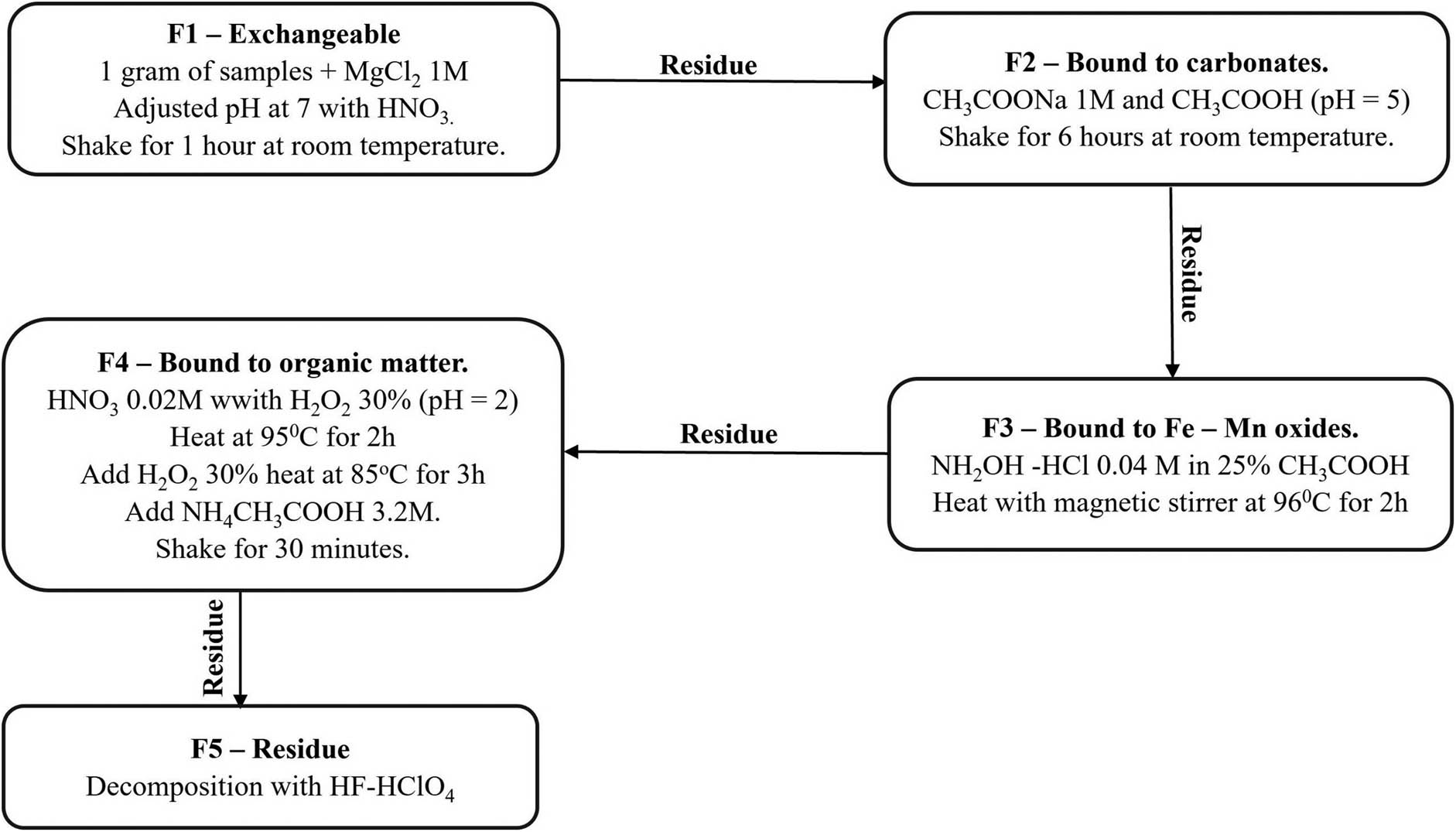
Sequential extraction procedure.
2.4 Ecological risk assessment method
Several previous studies have used risk assessment methods to assess the ecological risk of metals in FA from incineration plants [23,24,25]. The research results have also demonstrated the simplicity, speed, and accuracy of this method. The formula for calculating the potential environmental risk index (RI) is defined as follows:
where
According to Håkanson, the toxic response factors (
Classification criteria for potential environmental RI of single element (
|
|
RI | Risk level |
|---|---|---|
|
|
RI < 150 | Low risk |
| 40 ≤
|
150 ≤ RI < 300 | Moderate risk |
| 80 ≤
|
300 ≤ RI < 600 | Considerable risk |
| 160 ≤
|
RI ≥ 600 | High risk |
|
|
Very high risk |
3 Results and discussion
3.1 Elementary component
According to the analysis results presented in Table 2, the physicochemical characteristics of FA and BA from the two plants were identical. The moisture and density of FA samples (7.81% and 2.26 g·cm−3 on average) were higher than those of BA samples (2.05% and 1.36 g·cm−3 on average) because collection techniques of FA samples used water to trap the matter particle from the chimney. The FA samples contained 8.08% of volatile matter and 8.26% of carbon, indicating that the FA contained a relatively significant amount of unburned carbon. Similar findings were observed in previous studies by Bayuseno and Schmahl [29] and Nam and Namkoong [30]. In BA samples, the values of TVS were slightly high ranging from 22.5% to 29.8% (average content was 24.4% and 26.3% in Can Tho and Soc Son plants, respectively). Compared with the unburned content (material was burned at 500°C) in BA collected from MSW incinerators in Spain [31], the unburned materials were significantly larger. It should be noted that the differences obtained may be attributable to the applied combustion technology and the method of sampling performed on the BA layer. A high percentage of TVS given incomplete combustion at the remaining furnace temperature and time. However, the percentage of C, H, S, and N in BA samples was smaller than in FA samples.
Physicochemical characteristics of FA and BA samples
| Parameters | Unit | CT.FA | CT.BA | SS.FA | SS.BA |
|---|---|---|---|---|---|
| Density | g·cm−2 | 2.32 | 1.17 | 2.20 | 1.54 |
| Moisture | % | 7.66 | 2.01 | 7.95 | 2.09 |
| Ash | % | 91.9 | 75.6 | 92.0 | 73.7 |
| TVS | % | 8.12 | 24.4 | 7.97 | 26.3 |
| C | % | 6.86 | 3.87 | 9.66 | 3.71 |
| H | % | 1.92 | 0.172 | 2.31 | 0.356 |
| S | % | 2.18 | 0.552 | 2.31 | 0.412 |
| N | % | 1.48 | 1.30 | 1.27 | 0.968 |
Morphology: Over 70% of the FA from both plants has a crystalline structure, a spherical shape, and particle sizes ranging from 40 to 65 µm, while the remaining 30% consists of asymmetrical crystals with particle sizes exceeding 65 µm. The FA particles resulting from the acid reduction reaction and the condensation of combustion products should have a rough surface, high porosity, and a high specific charge, which are favorable conditions for the absorption of some metals generated by the waste incineration process. In addition, the surface layer of FA contains easily soluble porous crystalline chloride salts, producing a rough crystal surface (Figure 2). BA is formed alongside FA, while BA is an incomplete combustion product in the incinerator with a large size that falls to the bottom of the furnace. Therefore, BA is a porous, grayish, and coarse material that contains mainly non-combustible components of solid waste, such as glass, ceramics, ferrous, and non-ferrous materials with small amounts of organic carbon [32,33].

Image of SEM-EDX analysis: (a) FA in Can Tho, (b) BA in Can Tho, (c) FA in Soc Son, and (d) BA in Soc Son.
3.2 Composition of FA and BA
3.2.1 SEM-EDX results
The analysis image of SEM-EDX revealed that the main elements in FA and BA were Ca and O. In the BA samples, O and Ca accounted for more than 50% and about 20%, respectively, while Cl concentration was less than 1%. In the FA samples, the percentages of O, Ca, and Cl were approximately 45%, 10%, and 18%, respectively. Chlorine in the samples mainly existed in the chloride form of NaCl, KCl, and other soluble salts, which could increase metal leaching through ion exchange and thereby enhance the toxicity of ash. In addition, chlorine is an elemental component of highly toxic organic compounds like dioxins. Hence, the ash collected from the MSW incineration plant is hazardous waste that needs to be handled safely. In addition, the percentage composition of elements was significantly different between samples taken in Can Tho and Soc Son. Precisely, in Can Tho FA samples, the concentration of some metals and non-metallic went in the following order: Sb > Ca > Pb > Hg > Mg > Ag > Se > Si > Mn, whereas, in BA samples, the sequence was Sb > Ca > Mg > Pb > Se > Hg > Ag > Mn > Cr > Cu (Table 3). For ash samples taken at the Soc Son waste power plant, the Zn, Mg, and Si levels were higher than that of Pb and Hg. The difference in ash composition at the two plants is due to the various solid waste compositions of the two regions and the use of different incineration technologies.
Component of major elements in FA and BA samples
| Elements | CT.FA (wt%) | CT.BA (wt%) | SS.FA (wt%) | SS.BA (wt%) |
|---|---|---|---|---|
| Mg | 3.50 | 11.0 | 2.96 | 8.68 |
| Si | 2.09 | 0.812 | 6.09 | 4.56 |
| Cr | 0.210 | 1.26 | 0.108 | 0.052 |
| Mn | 1.69 | 1.95 | 0.465 | 0.310 |
| Fe | 0.575 | 0.860 | 1.12 | 1.77 |
| Co | 0.050 | ND* | 0.180 | 0.230 |
| Ni | 0.045 | 0.390 | 0.150 | 1.46 |
| Cu | 0.405 | 1.03 | 0.909 | 1.48 |
| Zn | 0.700 | 0.560 | 7.25 | 6.36 |
| As | ND* | ND* | 1.51 | 0.510 |
| Se | 2.24 | 3.73 | 2.88 | 1.35 |
| Ag | 3.12 | 2.71 | 8.43 | 6.85 |
| Cd | 20.7 | 23.4 | 19.4 | 20.6 |
| Sb | 41.3 | 40.2 | 45.5 | 43.0 |
| Hg | 7.60 | 3.40 | 0.250 | 0.740 |
| Pb | 15.8 | 8.65 | 2.81 | 2.14 |
*ND: not detected.
According to studies using various spectroscopic analyses, the main compounds in the ash from MSW incineration were oxides, hydroxides, and carbonates [34,35]. Some oxides such as SiO2, CaO, Fe2O3, and Al2O3 were found in high concentrations (>10% by weight of BA and BF), whereas Na2O, K2O, MgO, and TiO2 were found in low concentrations. The analysis results suggested that FA was composed of crystalline compounds such as silica glass and various oxides, including Ca3O5Si, SiO2, Fe2O3, Fe3O4, Al2O3, MgO, CaCO3, and Ca2MgO7Si2. Incineration is a heat treatment method that causes the metals in hazardous waste to become tightly bound in crystal and glass form. However, during heat treatment, there are still some volatile metals that contribute to secondary contamination. Tobermorite crystal (Ca5Si6O16(OH)2·4H2O) is one of the byproducts of combustion. Furthermore, in all BA samples, the total content of SiO2, Al2O3, and Fe2O3 was relatively high, accounting for about 92%, of which SiO2 and Al2O3 are the main components in the structure of zeolite, a substance with good adsorption capacity. In addition, there was about 4% of K2O by weight of BA, which is a source of potassium for plants.
3.2.2 ICP-MS results
The result of the total concentrations of metals in the ash samples is presented in Table 4. As shown in the table, the sequence of metal content in samples analyzed using the alkaline digestion method combined with ICP-MS was quite similar to the sequence of metal content measured using SEM-EDX. The concentrations of metals were not significantly different between samples collected during the wet and dry seasons. However, the concentrations of metals in the FA and BA samples, as well as those in Can Tho and Soc Son, varied greatly. The concentrations of alkaline metals (Na and K) and alkaline earth (Ca) were quite high in both FA and BA samples at both plants, with average concentrations higher than 10,000 mg·kg−1 in dry weight (Table 4). Other metals such as Fe, Zn, and Al had varying concentrations 2,764–5,812, 1,951–6,409, and 592–1,522 mg·kg−1 in FA and 12,431–15,132, 1,425–1,889, and 2,431–3,210 mg·kg−1 in BA, respectively. Thus, with a waste incineration capacity of 400 tons·day−1 at the Can Tho power plant, the generation rate of FA and BA is approximately 3% and 16%, respectively, and the minimum amount of metals Na, K, and Ca was approximately 959 kg·day−1, 99.2 kg·day−1, and 402 kg·day−1 in FA and 7,118, 838, and 5,007 kg·day−1 in BA, respectively. In addition, their generation weight of the minor content of Ni, Ag was about 0.070–0.098 and 0.055–0.116 kg·day−1 in FA and 2.39–3.43 and 0.420–0.617 kg·day−1 in BA, respectively. Compared with the baseline absolute content specified in QCVN 07:2009/BTNMT – National Technical Regulation on Hazardous Waste Thresholds, the concentration of Cd in both FA and BA samples was higher than the threshold value. In addition, the Pb content in the FA samples and the Cr content in the BA samples were 1.5–2.7 times higher than the limit value. Thus, according to Vietnamese regulations, the FA and BA from both the WTE plants are classified as hazardous waste that needs to be managed and treated strictly. During the trial operation period, the operating capacity of the Soc Son waste power plant was 800 tons·day−1, with the proportion of FA and BA being approximately 1.5% and 18%, respectively. Consequently, the metal source from the ash was also substantial, posing a formidable challenge for the management of BA and FA generated by power plants. Currently, the solidification method is being applied to the treatment of FA and BA at both plants. The FA and BA are mixed with cement or other additives to bind the particles together. These solid particles must be managed in accordance with regulations on hazardous waste management. However, many previous studies have identified the metal recovery method from FA and BA as a tool of the circular economy. Tang et al. and Lane et al. studied the recovery of metals Cd, Cu, Pb, and Zn from FA at the MSW incineration plant [36,37]. The triple-layered business model and the SWOT analysis were applied to analyze the role of recovered metals in the circular economy [38].
Results of the total of some metals in the samples
| Can Tho | Soc Son | |||||||
|---|---|---|---|---|---|---|---|---|
| Rainy season | Dry season | Rainy season | Dry season | |||||
| CT.FA | CT.BA | CT.FA | CT.BA | SS.FA | SS.BA | SS.FA | SS.BA | |
| Ag | 15.9 ± 3.13 | 8.20 ± 1.10 | 12.0 ± 3.20 | 7.21 ± 0.85 | 8.86 ± 1.74 | 6.15 ± 0.74 | 8.36 ± 1.30 | 6.30 ± 1.10 |
| Cd | 152 ± 32.0 | 17.0 ± 5.00 | 152 ± 17.6 | 15.0 ± 3.75 | 416 ± 69.4 | 20.6 ± 4.50 | 388 ± 90.7 | 19.4 ± 3.98 |
| Ni | 14.3 ± 1.61 | 51.6 ± 1.82 | 12.5 ± 1.24 | 45.5 ± 6.03 | 12.6 ± 1.68 | 58.6 ± 3.30 | 11.3 ± 2.90 | 57.9 ± 1.65 |
| Pb | 451 ± 58.6 | 178 ± 15.0 | 484 ± 26.7 | 177 ± 11.2 | 845 ± 127 | 186 ± 24.6 | 899 ± 146 | 181 ± 40.4 |
| Cr | 50.2 ± 5.44 | 170 ± 16.7 | 43.0 ± 1.10 | 171 ± 24.0 | 65.6 ± 11.0 | 270 ± 47.0 | 65.4 ± 8.94 | 237 ± 14.0 |
| As | 188 ± 19.0 | 252 ± 40.6 | 171 ± 25.7 | 238 ± 57.1 | 123 ± 10.4 | 288 ± 26.3 | 114 ± 6.51 | 280 ± 31.28 |
| Cu | 158 ± 43.0 | 645 ± 56.7 | 76.1 ± 15.5 | 547 ± 35.0 | 371 ± 70.7 | 1,110 ± 257 | 318 ± 47.2 | 1,123 ± 240 |
| Mn | 306 ± 30.4 | 878 ± 98.0 | 266 ± 25.0 | 767 ± 96.2 | 296 ± 79.3 | 1,556 ± 137 | 314 ± 73.2 | 1,525 ± 94.8 |
| Zn | 2,126 ± 131 | 1,603 ± 194 | 2,052 ± 65.5 | 1,541 ± 118 | 5,064 ± 1,156 | 1,707 ± 77.7 | 5,008 ± 1,006 | 1,708 ± 89.7 |
| Al | 1,288 ± 249 | 2,866 ± 278 | 1,196 ± 137 | 2,778 ± 267 | 651 ± 67.1 | 3,031 ± 86.8 | 649 ± 86.4 | 3,001 ± 78.8 |
| Fe | 3,261 ± 483 | 14,244 ± 789 | 3,136 ± 281 | 13,874 ± 1,315 | 4,944 ± 757 | 13,555 ± 583 | 4,675 ± 715 | 13,490 ± 419 |
| K | 20,473 ± 1,979 | 14,602 ± 1,386 | 18,416 ± 1,981 | 14,275 ± 1,302 | 13,233 ± 1,249 | 11,721 ± 633 | 13,458 ± 663 | 10,836 ± 712 |
| Ca | 75,315 ± 5,110 | 92,983 ± 10,979 | 70,625 ± 3,067 | 91,401 ± 11,240 | 38,999 ± 8,052 | 128,121 ± 6,508 | 37,235 ± 7,935 | 120,210 ± 5,144 |
| Na | 183,491 ± 17,292 | 135,798 ± 10,260 | 168,191 ± 12,582 | 128,934 ± 13,677 | 153,426 ± 2,992 | 149,755 ± 6,351 | 149,753 ± 4,464 | 135,290 ± 1,328 |
Unit: mg·kg−1 in dry weight.
This study differs from the work conducted by Hue et al. in several key aspects. Primarily, the BA and FA samples for this study were collected from two waste incineration plants: the Soc Son waste power plant with a processing capacity of 4,000 tons·day−1 (located in Northern Vietnam) and the Can Tho waste power plant with a capacity of 400 tons·day−1 (located in Southern Vietnam). These are two factories with the largest capacity in Vietnam and apply modern combustion technology. Meanwhile, the study by Hue et al. involved sampling BA, FA, and PM10 from five waste incineration plants in Northern Vietnam. Additionally, the present study encompasses a broader range of heavy metals, including Ag, Cd, Ni, Pb, Cr, As, Cu, Mn, Zn Al, and Fe, along with alkali metals K, Na, and Ca, in both FA and BA samples. At the same time, the study by Hue et al. was limited to only a few heavy metals [17]. Furthermore, the present study evaluates the metal oxide content in BA and FA samples, aiming to establish a data foundation for the utilization of BA in construction materials.
3.3 Sequential leaching results
The distribution ratio of some metals in the leaching solution of five fractions is depicted in Figure 3. In general, the FA and BA showed a similar pattern for each fraction for all metals. The concentration of metal species did not vary significantly between FA and BA samples but varied by metal. Some weakly adsorbed metals on ash particle surfaces, such as Na, K, and Ca, accounted for the highest ratio in the exchangeable fraction (F1) of FA and BA samples from both plants, with a range from 48.4% to 71.4%, 36.8% to 68.2%, and 23.1% to 42.5%, respectively. For the other, contents of exchangeable fraction were lower than 5%, except for Ag in all samples and Cd in Soc Son ash. The average percentages of Ag in Soc Son FA and BA were 10.5% and 8.84%, respectively, which is the highest of all metals. However, the leachate solution of Ag has no effect on the environment because of its less toxicity to humans, animals, and plants. Among metals, Al and As had the lowest F1, with maximum values of only 0.20% and 0.54%. Similarly, Fabricius et al. found that neither Al nor As were detectable in the solution from extraction using water (pH = 7) [39].

Distribution ratio of metals in the fractions: (a) FA in Can Tho, (b) BA in Can Tho, (c) FA in Soc Son, and (d) BA in Soc Son.
Similar to the F1 fraction, the F2 fraction contained a greater concentration of highly mobile metals such as Na, K, and Ca than other metals. However, in the second step, the mixture solution of CH3COONa and CH3COOH (pH = 5) was used as more favorable conditions for ion exchange. Therefore, the concentration of most metals, including Cd, Ni, Pb, Cr, Cu, Mn, Zn, Al, and Fe, was higher in the F2 solution than in the F1 solution. In this stage, the metals released were mainly derived from the co-precipitation process between heavy metals and carbonates [40].
In solution F3, the form of metals bound to Fe–Mn oxide was expected to leach in this stage. During the dissolution of metal oxides, environmental factors such as the pH of the solvent, temperature, and extraction time influenced the release rate and the concentration. As shown in Figure 3, the average percentage of the metals examined in this study descended as follows: Mn > Cd > Zn > Cu > Fe > Pb > Cr > Al > As > Ag, with the range of 3.68–49.0%. The high distribution ratio of metals in F3 fractions is due to the formation of oxide compounds deposited on the FA particles after their volatile chlorides are transferred to the vapor phase in the combustion zone. Several forms of double oxides with aluminum oxides of the metals can be formed, which reduces their mobility [41].
For the organic bound fraction (F4), the decomposition and oxidation of organometallic compounds that form from the combination between the metals and unburned substance and/or some new organic matters in the ash occurred in a strong acidic and oxidizing solution. The organic bound fraction of most metals in BA was relatively higher than in FA. In FA samples taken from both plants, the ratio of most metals was less than 10%, except Cu, which varies from 13.8% to 38.1%. In the BA sample, Cu in the F4 fraction accounted for more than 40%, while the others were lower than 20%. Previous studies demonstrated that Cu could bind with certain organic ligands to form complex polymeric substances. Jiao et al. [40] and Yao et al. [42] reported similar findings, with the distribution of Cu in the organic fraction of FA from power generation incinerators exceeding 30% [43].
In the residue remaining after four extraction fractions, the metals exist in a stable form and were only extracted under very strong acid and oxidation conditions. The extensive distribution of As, Cr, Ni, Pb, Al, Fe, and Ag in the residual fraction reflected their immobile propensities. In contrast, the F5 fraction of Cd, Zn, and Cu was the lowest in FA, at only 1.53%, 5.13%, and 5.84%, respectively. The metals in the residual fraction (F4) are primarily found in stable mineral-crystal structures, such as silicates and aluminates, and thus could not be completely released into the environment or recovered from ash.
Publications in other countries have also provided knowledge about heavy metals in FA and FA from MSW incineration. The metal content in size-granulated BA from waste incineration plants in Tehran varied widely [44]. Several metals with concentrations higher than 1,000 mg·kg−1 were Ca, Fe, Al, Na, Mg, K, P, S, Ti, and Mn. The study in Tehran has not provided the concentration of metal in the FA samples nor showed the different forms of metal existence in the BA samples [44]. Studies on metals and their behaviors in FA samples are more diverse [45]. Ajorloo et al. collected research data on metals in FA from MSW incineration plants in several countries. This result shows that metals in FA can leach into the environment. The process of metal leakage from FA depends on the metal formation process during combustion (metals exist in different forms in FA), the properties of FA, and surrounding environmental conditions. It is challenging to compare metal formation in different incinerators and countries because the solid waste’s incineration technology and composition are not clearly demonstrated [45]. In this study, there was no significant difference between the species fraction of metals in FA and those in BA samples due to the same incineration technology and similar solid waste composition. However, the metal leaching rate from BA and FA at the Soc Son WTE plant and the Can Tho WTE plant may differ due to the weather conditions in the two areas. Research results on the species of metals in both FA and BA are the basis for proposing appropriate treatment methods. When considering cost–benefit and environmental factors, several suitable BA and FA treatments, such as physical separation for metal recovery and solidification/chemical stabilization, could be selected. They can also be used as raw materials for producing fired bricks or cement when the volatile matter content meets technical requirements.
3.4 Ecological risk assessment results
This study conducts an ecological risk assessment of heavy metals specified in QCVN 03:2023/BTNMT – National Technical Regulation on Soil Quality of the Ministry of Natural Resources and Environment.
Similar to FA, the
| Metals |
|
|||
|---|---|---|---|---|
| CT.FA | CT.BA | SS.FA | SS.BA | |
| Pb | 3.34 | 1.27 | 6.23 | 1.31 |
| Zn | 1.04 | 0.786 | 2.52 | 0.854 |
| Cu | 0.293 | 1.49 | 0.862 | 2.79 |
| Cr | 0.372 | 1.36 | 0.524 | 2.03 |
| Cd | 75.8 | 7.99 | 200.9 | 9.99 |
| As | 8.98 | 12.3 | 5.94 | 14.2 |
| Ni | 0.134 | 0.485 | 0.119 | 0.582 |
The ecological RI was introduced to assess the potential risk caused by the overall metals in the ash samples. The RI was calculated as the sum of the seven RI values of the studied metals. In both incineration power plants, the RI values of metals in the FA sample were higher than in the BA sample (Figure 4). In the details, the average RI values for the FA and BA samples at Can Tho were 90 and 25.6, respectively, indicating a low level of risk. At the Soc Son plant, the RI value of FA samples (217 on average) indicated a moderate-risk potential, while the RI of BA samples (31.8 on average) indicated a low risk. BA is a byproduct of MSW combustion; therefore, the RI values of BA samples were significantly lower than those of FA samples. According to the results on the concentration of the five species of metals, the proportion of metals in the mobility form accounted for a relatively high percentage. In addition, in household solid waste, heavy metal complexes with some chemicals used in industries such as ethylenediaminetetraacetic acid, tartaric acid, and other chelating organic compounds can be found. These complexes can cause more toxic effects to organisms than free metal ions. When they enter the environment, the long-term accumulation in the environment, organisms, and bio-magnify up food chain of the metals increases their level of risk to human health [46,47]. Therefore, the metals from FA and BA from the MSW incineration power plant will continue to pose an environmental risk if the ash is not treated in accordance with hazardous waste treatment standards.
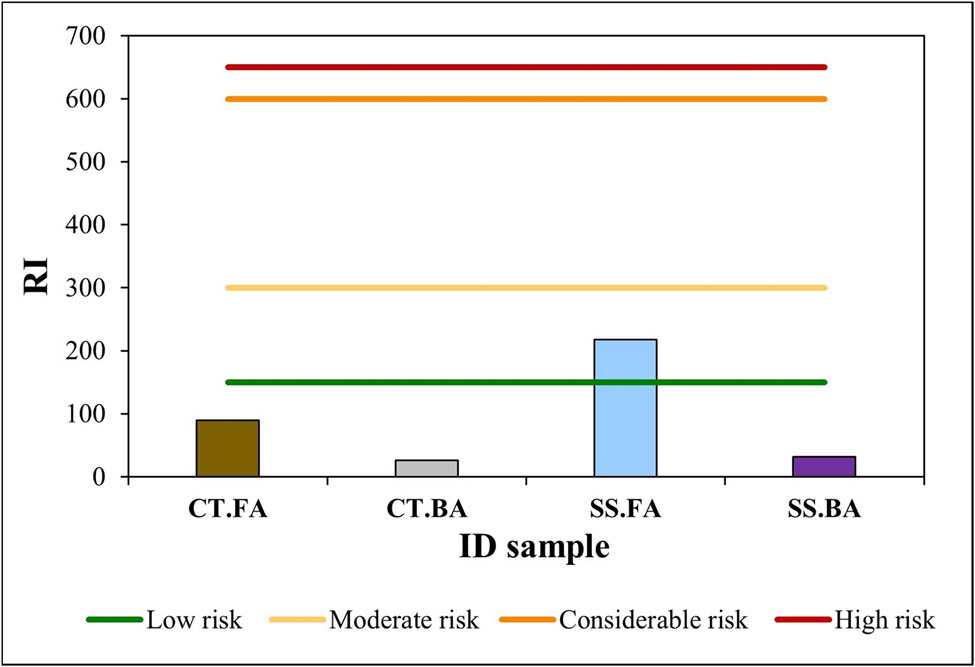
Potential ecological RI of some metals in FA and BA.
4 Conclusion
This study investigated the characteristics, elemental composition, and distribution of certain metals, as well as their potential risk and the leaching behaviors for MSW incineration ash. The findings led to the following conclusions:
The structural morphology of FA and BA collected from Can Tho and Soc Son MSW incineration plants was crystalline particles with color ranging from light brown-yellow to dark gray BA particle sizes were usually larger than FA particles due to their formation mechanism and collection method at different incineration plant processes.
Composition analysis results of FA and BA using SEM combined with EDX showed that the main components of FA and BA at Can Tho and Soc Son plants were metal oxides such as SiO2, CaO, Fe2O3, and Al2O3. In addition, the high content exceeding the hazardous waste threshold values of Cd, Cr, and Pb in FA and slag samples shows that further research is needed in selecting metal treatment methods from the ash of A waste incineration plant to generate electricity by Vietnam’s legal regulations.
The metal concentration obtained from sequential extraction and the possibility of metals leaching into the environment is relatively high if FA and BA are not stored properly. Although FA and BA generated at MSW incineration plants have been solidified, they must be isolated when stored and buried to avoid environmental leakage. Besides, the high proportion of metals in the residue shows the presence of hazardous waste from FA and BA in domestic solid waste incineration plants after applying metal recovery treatment methods.
The
This study could not perform a health risk assessment due to the need for more data regarding the exposure pathways and frequency of exposure for factory workers and the general population. Therefore, combustion ash should be pretreated or upgraded before reusing or landfilling. This study can pave the way for future research on FA and BA incineration treatment methodologies in the circular economy context. The study also provides a scientific basis for issuing technical instructions on the management of waste ash generated from waste incineration plants to generate electricity when there is a need to build plants to treat daily household waste increasing in Vietnam.
Acknowledgements
The sample collection in this study was supported by the staff working in the Can Tho and Soc Son MSW incineration plants. In addition, we acknowledge the support from the technical departments of the Environmental Laboratory and Hanoi University of Natural Resources and Environment during the implementation of this research.
-
Funding information: This research was funded by the Vietnam Academy of Science and Technology (VAST) with the project’s name “Research on the composition and properties of FA generated from domestic solid waste incinerators,” code KHCBVL.06/22-23 under the Physics Development Program.
-
Author contributions: The authors applied the SDC approach for the sequence of authors. All authors contributed to the study’s conception and design. Material preparation, data collection, and analysis were performed by Nguyen Thi Thuy Hang, Khuat Thi Hong, Nghiem Thi Ha Lien, Nguyen Trong Nghia, Phan Thi Thanh Hang, Van Huu Tap, Duong Van Thang. Data processing and analysis were implemented by Trinh Thi Tham and Do Thao Ly. The first draft of the manuscript was written by Trinh Thi Tham and Ngo Tra Mai, and all authors commented on previous versions of the manuscript. Supervision, conceptualization, writing–review, and editing by Vu Duc Toan. All authors read and approved the final manuscript.
-
Conflict of interest: Authors state no conflict of interest.
-
Data availability statement: The datasets generated during and/or analyzed during the current study are available from the corresponding author on reasonable request.
References
[1] Ministry of Natural Resources and Environment. Vietnam National report on the status of environment: Solid waste management. Vietnam Publishing house of Natural resources, Environment and Cartography; 2019.Search in Google Scholar
[2] Siddiqua A, Hahladakis JN, Attiya WKA. An overview of the environmental pollution and health effects associated with waste landflling and open dumping. Environ Sci Pollut R. 2022;29:58514–36. 10.1007/s11356-022-21578-z.Search in Google Scholar PubMed PubMed Central
[3] ADB. People’s Republic of China: Sustainable Management of Fly Ash from Municipal Solid Waste Incineration. Technical Assistance Consultant’s Report-ADB Can Tho; 2017.Search in Google Scholar
[4] Yao S, Zhang LL, Zhu Y, Wu J, Lu Z, Lu J. Evaluation of heavy metal element detection in municipal solid waste incineration fly ash based on LIBS sensor. Waste Manage. 2020;102:492–8. 10.1016/j.wasman.2019.11.010.Search in Google Scholar PubMed
[5] Tandon K, Aßbichler SH. Chapter 12 Fly ash from municipal solid waste Incineration: from industrial residue to resource for zinc. In: Pöllmann H, editor. Industrial waste: Characterization, modification and Applications of residues. Berlin, Boston: De Gruyter; 2021. p. 379–402.10.1515/9783110674941-012Search in Google Scholar
[6] Haiying Z, Youcai Z, Jingyu Q. Characterization of heavy metals in fly ash from municipal solid waste incinerators in Shanghai. Process Saf Environ. 2010;88(2):114–24. 10.1016/j.psep.2010.01.001.Search in Google Scholar
[7] Wang P, Hu Y, Cheng H. Municipal solid waste incineration fly ash as an important source of heavy metal pollution in China. Environ Pollut. 2019;252(Pt A):461–75. 10.1016/j.envpol.2019.04.082.Search in Google Scholar PubMed
[8] Kanhar AH, Chen S, Wang F. Incineration fly ash and it’s treatment to possible utilization: A Review. Energies. 2020;13(24):66–81. 10.3390/vi13246681.Search in Google Scholar
[9] Zhu J, Hao Q, Chen J, Hu M, Tu T, Jiang C. Distribution characteristics and comparison of chemical stabilization ways of heavy metals from MSW incineration fly ashes. Waste Manage. 2020;113:488–96. 10.1021/acs.energyfuels.9b02187.Search in Google Scholar
[10] Zhang Y, Wang L, Chen L, Ma B, Zhang Y, Ni W, et al. Treatment of municipal solid waste incineration fly ash: State-of-the-art technologies and future perspectives. J Hazard Mater. 2021;411:125–32. 10.1016/j.jhazmat.2021.125132.Search in Google Scholar PubMed
[11] Lu Y, Tian A, Zhang J, Tang Y, Shi P, Tang Q, et al. Physical and chemical properties, pretreatment, and recycling of municipal solid waste incineration fly ash and bottom ash for highway engineering: A literature review. Adv Civ Eng. 2020;2020:8886134. 10.1155/2020/8886134.Search in Google Scholar
[12] Liu Z, Ren X. Research progress on treatment technology of waste incineration fly ash. IOP Conference Series: Earth and Environmental Science, of the 3rd International Conference on Environmental Prevention and Pollution Control Technologies. Vol. 687, 2021. Earth Environ Sci; 10.1088/1755-1315/687/1/012038.Search in Google Scholar
[13] He D, Hu H, Jiao F, Zuo W, Liu C, Xie H, et al. Thermal separation of heavy metals from municipal solid waste incineration fly ash: A review. Chem Eng J. 2023;467:143344. 10.1016/j.cej.2023.143344.Search in Google Scholar
[14] Mai NT, Lap BQ. Study the nature, component and proposal how to use ash form domestic waste by burner generate. Water Resour Environ Eng. 2015;48:50–6.Search in Google Scholar
[15] Mai NT, Toan VD. Evaluating the amount of PAH within waste – to – energy generators’s ashes. J Sci Technol. 2019;195(2):11–6.Search in Google Scholar
[16] Hue NT, Mai NTP. Study on characterizaion of FeCB and HCB in residual ash from thermal in dustrial prosecsses. Anal Sci. 2020;2(25):45–51. 10.1080/10807039.2020.1718486.Search in Google Scholar
[17] Hue NT, Quoc PV, Mai NTP, Tu VV, Hien DT, Thang HM, et al. Distribution characteristics and ecological risks of heavy metals in bottom ash, fly ash, and particulate matter released from municipal solid waste incinerators in northern Vietnam. Environ Geochem Health. 2022;45(5):2579–90. 10.1007/s10653-022-01335-4.Search in Google Scholar PubMed
[18] Vietnam National Standard TCVN 120858:2017, Standard Practice for Sampling Unconsoli- dated Solids in Drums or Similar Containers. Ministry of Science and Technology Vietnam; 2017.Search in Google Scholar
[19] Krotz L, Leone F, Giazzi G. Elemental analysis: CHNS/O determination in coals. Thermo Fisher Sci. 2017;1–5.Search in Google Scholar
[20] Vietnam National Standard TCVN 7131:2002 – Clays – Methods ofchemical analysis. Ministry of Science and Technology Vietnam; 2002.Search in Google Scholar
[21] Tessier A, Campbell PGC, Bisson M. Sequential extraction procedure for the speciation of particulate trace element. Anal Chem. 1979;51:844–51. 10.1021/ac50043a017.Search in Google Scholar
[22] Chou JD, Wey MY, Chang SH. Evaluation of the distribution patterns of Pb, Cu and Cd from MSWI fly ash during thermal treatment by sequential extraction procedure. J Hazard Mater. 2009;162(2–3):1000–6. 10.1016/j.jhazmat.2008.05.155.Search in Google Scholar PubMed
[23] Ferreira C, Ribeiro A, Ottosen L. Heavy metals in MSW incineration fly ashes. J Phys IV. 2003;107:463–6. 10.1051/jp4:20030341.Search in Google Scholar
[24] Zhao K, Hu Y, Wang Y, Chen D, Feng Y. Speciation and risk assessment of heavy metals in municipal solid waste incineration fly ash during thermal processing. Energ Fuel. 2019;33(10):10066–77. 10.1021/acs.energyfuels.9b02187.Search in Google Scholar
[25] Shi Y, Li Y, Yuan X, Fu J, Ma Q, Wang Q. Environmental and human health risk evaluation of heavy metals in ceramsites from municipal solid waste incineration fly ash. Environ Geochem Health. 2020;42(11):3779–94. 10.1007/s10653-020-00639-7.Search in Google Scholar PubMed
[26] Håkanson L. An ecological risk index for aquatic pollution control. A sedimentological approach. Water Res. 1980;14(8):975–1001. 10.1016/0043-1354(80)90143-8.Search in Google Scholar
[27] Vietnam National Technical Regulation QCVN 03:2023/BTNMT - National Technical Regulation on Soil Quality. Ministry of Natural Resources and Environment; 2023.Search in Google Scholar
[28] Håkanson L. Aquatic contamination and environmental risk. An attempt to a conceptual framework. Water Res. 1984;18(9):1107–18. 10.1016/0043-1354(84)90225-2.Search in Google Scholar
[29] Bayuseno AP, Schmahl WW. Characterization of MSWI fly ash through mineralogy and water extraction. Resour Conserv Recycl. 2011;55(5):524–34. 10.1016/j.resconrec.2011.01.002.Search in Google Scholar
[30] Nam S, Namkoong W. Irradiation effect on leaching behavior and form of heavy metals in fly ash of municipal solid waste incinerator. J Hazard Mater. 2011;199–200:440–7. 10.1016/j.jhazmat.2011.11.049.Search in Google Scholar PubMed
[31] Forteza R, Far M, Seguı́l C, Cerdá V. Characterization of bottom ash in municipal solid waste incinerators for its use in road base. Waste Manage. 2004;24(9):899–909. 10.1016/j.wasman.2004.07.004.Search in Google Scholar PubMed
[32] Chandler A, Eighmy TT, Hartlén J, Helmar O, Kosson DS, Sawell SE et al. Municipal solid waste incinerator residues. Amsterdam: Elsevier; 1997.Search in Google Scholar
[33] Wiles C, Shepherd P. Beneficial use and recycling of municipal waste combustion residues - a comprehensive resource document. National Renewable Energy Laboratory (NREL), U.S. Department of Commerce – National Technical Information Service; 1999.10.2172/6180517Search in Google Scholar
[34] Bayuseno AP, Schmahl WW. Understanding the chemical and mineralogical properties of the inorganic portion of MSWI bottom ash. Waste Manage. 2010;30(8–9):1509–20. 10.1016/j.wasman.2010.03.010.Search in Google Scholar PubMed
[35] Wei Y, Shimaoka T, Saffarzadeh A, Takahashi F. Mineralogical characterization of municipal solid waste incineration bottom ash with an Emphasis on heavy metal-bearing phases. J Hazard Mater. 2011;187(1–3):534–43. 10.1016/j.jhazmat.2011.01.070.Search in Google Scholar PubMed
[36] Tang J, Su M, Wu Q, Wei L, Wang N, Xiao E, et al. Highly efficient recovery and clean-up of four heavy metals from MSWI fly ash by integrating leaching, selective extraction and adsorption. J Clean Prod. 2019;234:139–49. 10.1016/j.jclepro.2019.06.198.Search in Google Scholar
[37] Lane DJ, Hartikainen A, Sippula O, Lahde A, Mesceriakovas A, Peräniemi S, et al. Thermal separation of zinc and other valuable elements from municipal solid waste incineration fly ash. J Clean Prod. 2020;253:120014. 10.1016/j.jclepro.2020.120014.Search in Google Scholar
[38] Bakalár T, Pavolová H, Hajduová Z, Lacko R, Kyšeľa K. Metal recovery from municipal solid waste incineration fly ash as a tool of circular economy. J Clean Prod. 2021;302:126977. 10.1016/j.jclepro.2021.126977.Search in Google Scholar
[39] Fabricius AL, Renner M, Voss M, Frunk M, Perfoll A, Gehring F, et al. Municipal waste incineration fly ashes: from a multi-element approach to market potential evaluation. Environ Sci Eur. 2020;32(1):88. 10.1186/s12302-020-00365-y.Search in Google Scholar PubMed PubMed Central
[40] Jiao F, Zhang L, Dong Z, Namioka T, Yamada N, Ninomiya Y. Study on the species of heavy metals in MSW incineration fly ash and their leaching behavior. Fuel Process Technol. 2016;152:108–15. 10.1016/j.fuproc.2016.06.013.Search in Google Scholar
[41] Yu J, Sun L, Xiang J, Hu S, Su S, Qiu J. Vaporization of heavy metals during thermal treatment of model solid waste in a fluidized bed incinerator. Chemosphere. 2012;86(11):1122–6. 10.1016/j.chemosphere.2011.12.010.Search in Google Scholar PubMed
[42] Yao J, Li WB, Kong QN, Wu YY, He R, Shen DS. Content, mobility and transfer behavior of heavy metals in MSWI bottom ash in Zhejiang province, China. Fuel. 2010;89(3):616–22. 10.1016/j.fuel.2009.06.016.Search in Google Scholar
[43] Zomeren AV, Comans RNJ. Contribution of natural organic matter to copper leaching from municipal solid waste incinerator bottom ash. Environ Sci Technol. 2024;38:3927–32. 10.1021/es035266v.Search in Google Scholar PubMed
[44] Beikmohammadi M, Yaghmaeian K, Nabizadeh R, Mahvi AH. Analysis of heavy metal, rare, precious, and metallic element content in bottom ash from municipal solid waste incineration in Tehran based on particle size. Sci Rep. 2023;13:16044. 10.1038/s41598-023-43139-1.Search in Google Scholar PubMed PubMed Central
[45] Ajorloo M, Ghodrat M, Scott J, Strezov V. Heavy metals removal/stabilization from municipal solid waste incineration fly ash: a review and recent trends. J Mater Cycles Waste Manag. 2022;24:1693–717. 10.1007/s10163-022-01459-w.Search in Google Scholar
[46] Aziz KHH, Mustafa FS, Omer KM, Hama S, Hamarawfa RF, Rahmanac KO. Heavy metal pollution in the aquatic environment: efficient and low-cost removal approaches to eliminate their toxicity: a review. RSC Adv. 2023;13(26):17595–610. 10.1039/D3RA00723E.Search in Google Scholar
[47] Aziz KHH, Mustafa FS. Advanced oxidation processes for the decontamination of heavy metal complexes in aquatic systems: A review. Case Stud Chem Environ Eng. 2024;9:100567. 10.1016/j.cscee.2023.100567.Search in Google Scholar
© 2024 the author(s), published by De Gruyter
This work is licensed under the Creative Commons Attribution 4.0 International License.
Articles in the same Issue
- Research Articles
- Green polymer electrolyte and activated charcoal-based supercapacitor for energy harvesting application: Electrochemical characteristics
- Research on the adsorption of Co2+ ions using halloysite clay and the ability to recover them by electrodeposition method
- Simultaneous estimation of ibuprofen, caffeine, and paracetamol in commercial products using a green reverse-phase HPTLC method
- Isolation, screening and optimization of alkaliphilic cellulolytic fungi for production of cellulase
- Functionalized gold nanoparticles coated with bacterial alginate and their antibacterial and anticancer activities
- Comparative analysis of bio-based amino acid surfactants obtained via Diels–Alder reaction of cyclic anhydrides
- Biosynthesis of silver nanoparticles on yellow phosphorus slag and its application in organic coatings
- Exploring antioxidant potential and phenolic compound extraction from Vitis vinifera L. using ultrasound-assisted extraction
- Manganese and copper-coated nickel oxide nanoparticles synthesized from Carica papaya leaf extract induce antimicrobial activity and breast cancer cell death by triggering mitochondrial caspases and p53
- Insight into heating method and Mozafari method as green processing techniques for the synthesis of micro- and nano-drug carriers
- Silicotungstic acid supported on Bi-based MOF-derived metal oxide for photodegradation of organic dyes
- Synthesis and characterization of capsaicin nanoparticles: An attempt to enhance its bioavailability and pharmacological actions
- Synthesis of Lawsonia inermis-encased silver–copper bimetallic nanoparticles with antioxidant, antibacterial, and cytotoxic activity
- Facile, polyherbal drug-mediated green synthesis of CuO nanoparticles and their potent biological applications
- Zinc oxide-manganese oxide/carboxymethyl cellulose-folic acid-sesamol hybrid nanomaterials: A molecularly targeted strategy for advanced triple-negative breast cancer therapy
- Exploring the antimicrobial potential of biogenically synthesized graphene oxide nanoparticles against targeted bacterial and fungal pathogens
- Biofabrication of silver nanoparticles using Uncaria tomentosa L.: Insight into characterization, antibacterial activities combined with antibiotics, and effect on Triticum aestivum germination
- Membrane distillation of synthetic urine for use in space structural habitat systems
- Investigation on mechanical properties of the green synthesis bamboo fiber/eggshell/coconut shell powder-based hybrid biocomposites under NaOH conditions
- Green synthesis of magnesium oxide nanoparticles using endophytic fungal strain to improve the growth, metabolic activities, yield traits, and phenolic compounds content of Nigella sativa L.
- Estimation of greenhouse gas emissions from rice and annual upland crops in Red River Delta of Vietnam using the denitrification–decomposition model
- Synthesis of humic acid with the obtaining of potassium humate based on coal waste from the Lenger deposit, Kazakhstan
- Ascorbic acid-mediated selenium nanoparticles as potential antihyperuricemic, antioxidant, anticoagulant, and thrombolytic agents
- Green synthesis of silver nanoparticles using Illicium verum extract: Optimization and characterization for biomedical applications
- Antibacterial and dynamical behaviour of silicon nanoparticles influenced sustainable waste flax fibre-reinforced epoxy composite for biomedical application
- Optimising coagulation/flocculation using response surface methodology and application of floc in biofertilisation
- Green synthesis and multifaceted characterization of iron oxide nanoparticles derived from Senna bicapsularis for enhanced in vitro and in vivo biological investigation
- Potent antibacterial nanocomposites from okra mucilage/chitosan/silver nanoparticles for multidrug-resistant Salmonella Typhimurium eradication
- Trachyspermum copticum aqueous seed extract-derived silver nanoparticles: Exploration of their structural characterization and comparative antibacterial performance against gram-positive and gram-negative bacteria
- Microwave-assisted ultrafine silver nanoparticle synthesis using Mitragyna speciosa for antimalarial applications
- Green synthesis and characterisation of spherical structure Ag/Fe2O3/TiO2 nanocomposite using acacia in the presence of neem and tulsi oils
- Green quantitative methods for linagliptin and empagliflozin in dosage forms
- Enhancement efficacy of omeprazole by conjugation with silver nanoparticles as a urease inhibitor
- Residual, sequential extraction, and ecological risk assessment of some metals in ash from municipal solid waste incineration, Vietnam
- Green synthesis of ZnO nanoparticles using the mangosteen (Garcinia mangostana L.) leaf extract: Comparative preliminary in vitro antibacterial study
- Simultaneous determination of lesinurad and febuxostat in commercial fixed-dose combinations using a greener normal-phase HPTLC method
- A greener RP-HPLC method for quaternary estimation of caffeine, paracetamol, levocetirizine, and phenylephrine acquiring AQbD with stability studies
- Optimization of biomass durian peel as a heterogeneous catalyst in biodiesel production using microwave irradiation
- Thermal treatment impact on the evolution of active phases in layered double hydroxide-based ZnCr photocatalysts: Photodegradation and antibacterial performance
- Preparation of silymarin-loaded zein polysaccharide core–shell nanostructures and evaluation of their biological potentials
- Preparation and characterization of composite-modified PA6 fiber for spectral heating and heat storage applications
- Preparation and electrocatalytic oxygen evolution of bimetallic phosphates (NiFe)2P/NF
- Rod-shaped Mo(vi) trichalcogenide–Mo(vi) oxide decorated on poly(1-H pyrrole) as a promising nanocomposite photoelectrode for green hydrogen generation from sewage water with high efficiency
- Green synthesis and studies on citrus medica leaf extract-mediated Au–ZnO nanocomposites: A sustainable approach for efficient photocatalytic degradation of rhodamine B dye in aqueous media
- Cellulosic materials for the removal of ciprofloxacin from aqueous environments
- The analytical assessment of metal contamination in industrial soils of Saudi Arabia using the inductively coupled plasma technology
- The effect of modified oily sludge on the slurry ability and combustion performance of coal water slurry
- Eggshell waste transformation to calcium chloride anhydride as food-grade additive and eggshell membranes as enzyme immobilization carrier
- Synthesis of EPAN and applications in the encapsulation of potassium humate
- Biosynthesis and characterization of silver nanoparticles from Cedrela toona leaf extracts: An exploration into their antibacterial, anticancer, and antioxidant potential
- Enhancing mechanical and rheological properties of HDPE films through annealing for eco-friendly agricultural applications
- Immobilisation of catalase purified from mushroom (Hydnum repandum) onto glutaraldehyde-activated chitosan and characterisation: Its application for the removal of hydrogen peroxide from artificial wastewater
- Sodium titanium oxide/zinc oxide (STO/ZnO) photocomposites for efficient dye degradation applications
- Effect of ex situ, eco-friendly ZnONPs incorporating green synthesised Moringa oleifera leaf extract in enhancing biochemical and molecular aspects of Vicia faba L. under salt stress
- Biosynthesis and characterization of selenium and silver nanoparticles using Trichoderma viride filtrate and their impact on Culex pipiens
- Photocatalytic degradation of organic dyes and biological potentials of biogenic zinc oxide nanoparticles synthesized using the polar extract of Cyperus scariosus R.Br. (Cyperaceae)
- Assessment of antiproliferative activity of green-synthesized nickel oxide nanoparticles against glioblastoma cells using Terminalia chebula
- Chlorine-free synthesis of phosphinic derivatives by change in the P-function
- Anticancer, antioxidant, and antimicrobial activities of nanoemulsions based on water-in-olive oil and loaded on biogenic silver nanoparticles
- Study and mechanism of formation of phosphorus production waste in Kazakhstan
- Synthesis and stabilization of anatase form of biomimetic TiO2 nanoparticles for enhancing anti-tumor potential
- Microwave-supported one-pot reaction for the synthesis of 5-alkyl/arylidene-2-(morpholin/thiomorpholin-4-yl)-1,3-thiazol-4(5H)-one derivatives over MgO solid base
- Screening the phytochemicals in Perilla leaves and phytosynthesis of bioactive silver nanoparticles for potential antioxidant and wound-healing application
- Graphene oxide/chitosan/manganese/folic acid-brucine functionalized nanocomposites show anticancer activity against liver cancer cells
- Nature of serpentinite interactions with low-concentration sulfuric acid solutions
- Multi-objective statistical optimisation utilising response surface methodology to predict engine performance using biofuels from waste plastic oil in CRDi engines
- Microwave-assisted extraction of acetosolv lignin from sugarcane bagasse and electrospinning of lignin/PEO nanofibres for carbon fibre production
- Biosynthesis, characterization, and investigation of cytotoxic activities of selenium nanoparticles utilizing Limosilactobacillus fermentum
- Highly photocatalytic materials based on the decoration of poly(O-chloroaniline) with molybdenum trichalcogenide oxide for green hydrogen generation from Red Sea water
- Highly efficient oil–water separation using superhydrophobic cellulose aerogels derived from corn straw
- Beta-cyclodextrin–Phyllanthus emblica emulsion for zinc oxide nanoparticles: Characteristics and photocatalysis
- Assessment of antimicrobial activity and methyl orange dye removal by Klebsiella pneumoniae-mediated silver nanoparticles
- Influential eradication of resistant Salmonella Typhimurium using bioactive nanocomposites from chitosan and radish seed-synthesized nanoselenium
- Antimicrobial activities and neuroprotective potential for Alzheimer’s disease of pure, Mn, Co, and Al-doped ZnO ultra-small nanoparticles
- Green synthesis of silver nanoparticles from Bauhinia variegata and their biological applications
- Synthesis and optimization of long-chain fatty acids via the oxidation of long-chain fatty alcohols
- Eminent Red Sea water hydrogen generation via a Pb(ii)-iodide/poly(1H-pyrrole) nanocomposite photocathode
- Green synthesis and effective genistein production by fungal β-glucosidase immobilized on Al2O3 nanocrystals synthesized in Cajanus cajan L. (Millsp.) leaf extracts
- Green stability-indicating RP-HPTLC technique for determining croconazole hydrochloride
- Green synthesis of La2O3–LaPO4 nanocomposites using Charybdis natator for DNA binding, cytotoxic, catalytic, and luminescence applications
- Eco-friendly drugs induce cellular changes in colistin-resistant bacteria
- Tangerine fruit peel extract mediated biogenic synthesized silver nanoparticles and their potential antimicrobial, antioxidant, and cytotoxic assessments
- Green synthesis on performance characteristics of a direct injection diesel engine using sandbox seed oil
- A highly sensitive β-AKBA-Ag-based fluorescent “turn off” chemosensor for rapid detection of abamectin in tomatoes
- Green synthesis and physical characterization of zinc oxide nanoparticles (ZnO NPs) derived from the methanol extract of Euphorbia dracunculoides Lam. (Euphorbiaceae) with enhanced biosafe applications
- Detection of morphine and data processing using surface plasmon resonance imaging sensor
- Effects of nanoparticles on the anaerobic digestion properties of sulfamethoxazole-containing chicken manure and analysis of bio-enzymes
- Bromic acid-thiourea synergistic leaching of sulfide gold ore
- Green chemistry approach to synthesize titanium dioxide nanoparticles using Fagonia Cretica extract, novel strategy for developing antimicrobial and antidiabetic therapies
- Green synthesis and effective utilization of biogenic Al2O3-nanocoupled fungal lipase in the resolution of active homochiral 2-octanol and its immobilization via aluminium oxide nanoparticles
- Eco-friendly RP-HPLC approach for simultaneously estimating the promising combination of pentoxifylline and simvastatin in therapeutic potential for breast cancer: Appraisal of greenness, whiteness, and Box–Behnken design
- Use of a humidity adsorbent derived from cockleshell waste in Thai fried fish crackers (Keropok)
- One-pot green synthesis, biological evaluation, and in silico study of pyrazole derivatives obtained from chalcones
- Bio-sorption of methylene blue and production of biofuel by brown alga Cystoseira sp. collected from Neom region, Kingdom of Saudi Arabia
- Synthesis of motexafin gadolinium: A promising radiosensitizer and imaging agent for cancer therapy
- The impact of varying sizes of silver nanoparticles on the induction of cellular damage in Klebsiella pneumoniae involving diverse mechanisms
- Microwave-assisted green synthesis, characterization, and in vitro antibacterial activity of NiO nanoparticles obtained from lemon peel extract
- Rhus microphylla-mediated biosynthesis of copper oxide nanoparticles for enhanced antibacterial and antibiofilm efficacy
- Harnessing trichalcogenide–molybdenum(vi) sulfide and molybdenum(vi) oxide within poly(1-amino-2-mercaptobenzene) frameworks as a photocathode for sustainable green hydrogen production from seawater without sacrificial agents
- Magnetically recyclable Fe3O4@SiO2 supported phosphonium ionic liquids for efficient and sustainable transformation of CO2 into oxazolidinones
- A comparative study of Fagonia arabica fabricated silver sulfide nanoparticles (Ag2S) and silver nanoparticles (AgNPs) with distinct antimicrobial, anticancer, and antioxidant properties
- Visible light photocatalytic degradation and biological activities of Aegle marmelos-mediated cerium oxide nanoparticles
- Physical intrinsic characteristics of spheroidal particles in coal gasification fine slag
- Exploring the effect of tea dust magnetic biochar on agricultural crops grown in polycyclic aromatic hydrocarbon contaminated soil
- Crosslinked chitosan-modified ultrafiltration membranes for efficient surface water treatment and enhanced anti-fouling performances
- Study on adsorption characteristics of biochars and their modified biochars for removal of organic dyes from aqueous solution
- Zein polymer nanocarrier for Ocimum basilicum var. purpurascens extract: Potential biomedical use
- Green synthesis, characterization, and in vitro and in vivo biological screening of iron oxide nanoparticles (Fe3O4) generated with hydroalcoholic extract of aerial parts of Euphorbia milii
- Novel microwave-based green approach for the synthesis of dual-loaded cyclodextrin nanosponges: Characterization, pharmacodynamics, and pharmacokinetics evaluation
- Bi2O3–BiOCl/poly-m-methyl aniline nanocomposite thin film for broad-spectrum light-sensing
- Green synthesis and characterization of CuO/ZnO nanocomposite using Musa acuminata leaf extract for cytotoxic studies on colorectal cancer cells (HCC2998)
- Review Articles
- Materials-based drug delivery approaches: Recent advances and future perspectives
- A review of thermal treatment for bamboo and its composites
- An overview of the role of nanoherbicides in tackling challenges of weed management in wheat: A novel approach
- An updated review on carbon nanomaterials: Types, synthesis, functionalization and applications, degradation and toxicity
- Special Issue: Emerging green nanomaterials for sustainable waste management and biomedical applications
- Green synthesis of silver nanoparticles using mature-pseudostem extracts of Alpinia nigra and their bioactivities
- Special Issue: New insights into nanopythotechnology: current trends and future prospects
- Green synthesis of FeO nanoparticles from coffee and its application for antibacterial, antifungal, and anti-oxidation activity
- Dye degradation activity of biogenically synthesized Cu/Fe/Ag trimetallic nanoparticles
- Special Issue: Composites and green composites
- Recent trends and advancements in the utilization of green composites and polymeric nanocarriers for enhancing food quality and sustainable processing
- Retraction
- Retraction of “Biosynthesis and characterization of silver nanoparticles from Cedrela toona leaf extracts: An exploration into their antibacterial, anticancer, and antioxidant potential”
- Retraction of “Photocatalytic degradation of organic dyes and biological potentials of biogenic zinc oxide nanoparticles synthesized using the polar extract of Cyperus scariosus R.Br. (Cyperaceae)”
- Retraction to “Green synthesis on performance characteristics of a direct injection diesel engine using sandbox seed oil”
Articles in the same Issue
- Research Articles
- Green polymer electrolyte and activated charcoal-based supercapacitor for energy harvesting application: Electrochemical characteristics
- Research on the adsorption of Co2+ ions using halloysite clay and the ability to recover them by electrodeposition method
- Simultaneous estimation of ibuprofen, caffeine, and paracetamol in commercial products using a green reverse-phase HPTLC method
- Isolation, screening and optimization of alkaliphilic cellulolytic fungi for production of cellulase
- Functionalized gold nanoparticles coated with bacterial alginate and their antibacterial and anticancer activities
- Comparative analysis of bio-based amino acid surfactants obtained via Diels–Alder reaction of cyclic anhydrides
- Biosynthesis of silver nanoparticles on yellow phosphorus slag and its application in organic coatings
- Exploring antioxidant potential and phenolic compound extraction from Vitis vinifera L. using ultrasound-assisted extraction
- Manganese and copper-coated nickel oxide nanoparticles synthesized from Carica papaya leaf extract induce antimicrobial activity and breast cancer cell death by triggering mitochondrial caspases and p53
- Insight into heating method and Mozafari method as green processing techniques for the synthesis of micro- and nano-drug carriers
- Silicotungstic acid supported on Bi-based MOF-derived metal oxide for photodegradation of organic dyes
- Synthesis and characterization of capsaicin nanoparticles: An attempt to enhance its bioavailability and pharmacological actions
- Synthesis of Lawsonia inermis-encased silver–copper bimetallic nanoparticles with antioxidant, antibacterial, and cytotoxic activity
- Facile, polyherbal drug-mediated green synthesis of CuO nanoparticles and their potent biological applications
- Zinc oxide-manganese oxide/carboxymethyl cellulose-folic acid-sesamol hybrid nanomaterials: A molecularly targeted strategy for advanced triple-negative breast cancer therapy
- Exploring the antimicrobial potential of biogenically synthesized graphene oxide nanoparticles against targeted bacterial and fungal pathogens
- Biofabrication of silver nanoparticles using Uncaria tomentosa L.: Insight into characterization, antibacterial activities combined with antibiotics, and effect on Triticum aestivum germination
- Membrane distillation of synthetic urine for use in space structural habitat systems
- Investigation on mechanical properties of the green synthesis bamboo fiber/eggshell/coconut shell powder-based hybrid biocomposites under NaOH conditions
- Green synthesis of magnesium oxide nanoparticles using endophytic fungal strain to improve the growth, metabolic activities, yield traits, and phenolic compounds content of Nigella sativa L.
- Estimation of greenhouse gas emissions from rice and annual upland crops in Red River Delta of Vietnam using the denitrification–decomposition model
- Synthesis of humic acid with the obtaining of potassium humate based on coal waste from the Lenger deposit, Kazakhstan
- Ascorbic acid-mediated selenium nanoparticles as potential antihyperuricemic, antioxidant, anticoagulant, and thrombolytic agents
- Green synthesis of silver nanoparticles using Illicium verum extract: Optimization and characterization for biomedical applications
- Antibacterial and dynamical behaviour of silicon nanoparticles influenced sustainable waste flax fibre-reinforced epoxy composite for biomedical application
- Optimising coagulation/flocculation using response surface methodology and application of floc in biofertilisation
- Green synthesis and multifaceted characterization of iron oxide nanoparticles derived from Senna bicapsularis for enhanced in vitro and in vivo biological investigation
- Potent antibacterial nanocomposites from okra mucilage/chitosan/silver nanoparticles for multidrug-resistant Salmonella Typhimurium eradication
- Trachyspermum copticum aqueous seed extract-derived silver nanoparticles: Exploration of their structural characterization and comparative antibacterial performance against gram-positive and gram-negative bacteria
- Microwave-assisted ultrafine silver nanoparticle synthesis using Mitragyna speciosa for antimalarial applications
- Green synthesis and characterisation of spherical structure Ag/Fe2O3/TiO2 nanocomposite using acacia in the presence of neem and tulsi oils
- Green quantitative methods for linagliptin and empagliflozin in dosage forms
- Enhancement efficacy of omeprazole by conjugation with silver nanoparticles as a urease inhibitor
- Residual, sequential extraction, and ecological risk assessment of some metals in ash from municipal solid waste incineration, Vietnam
- Green synthesis of ZnO nanoparticles using the mangosteen (Garcinia mangostana L.) leaf extract: Comparative preliminary in vitro antibacterial study
- Simultaneous determination of lesinurad and febuxostat in commercial fixed-dose combinations using a greener normal-phase HPTLC method
- A greener RP-HPLC method for quaternary estimation of caffeine, paracetamol, levocetirizine, and phenylephrine acquiring AQbD with stability studies
- Optimization of biomass durian peel as a heterogeneous catalyst in biodiesel production using microwave irradiation
- Thermal treatment impact on the evolution of active phases in layered double hydroxide-based ZnCr photocatalysts: Photodegradation and antibacterial performance
- Preparation of silymarin-loaded zein polysaccharide core–shell nanostructures and evaluation of their biological potentials
- Preparation and characterization of composite-modified PA6 fiber for spectral heating and heat storage applications
- Preparation and electrocatalytic oxygen evolution of bimetallic phosphates (NiFe)2P/NF
- Rod-shaped Mo(vi) trichalcogenide–Mo(vi) oxide decorated on poly(1-H pyrrole) as a promising nanocomposite photoelectrode for green hydrogen generation from sewage water with high efficiency
- Green synthesis and studies on citrus medica leaf extract-mediated Au–ZnO nanocomposites: A sustainable approach for efficient photocatalytic degradation of rhodamine B dye in aqueous media
- Cellulosic materials for the removal of ciprofloxacin from aqueous environments
- The analytical assessment of metal contamination in industrial soils of Saudi Arabia using the inductively coupled plasma technology
- The effect of modified oily sludge on the slurry ability and combustion performance of coal water slurry
- Eggshell waste transformation to calcium chloride anhydride as food-grade additive and eggshell membranes as enzyme immobilization carrier
- Synthesis of EPAN and applications in the encapsulation of potassium humate
- Biosynthesis and characterization of silver nanoparticles from Cedrela toona leaf extracts: An exploration into their antibacterial, anticancer, and antioxidant potential
- Enhancing mechanical and rheological properties of HDPE films through annealing for eco-friendly agricultural applications
- Immobilisation of catalase purified from mushroom (Hydnum repandum) onto glutaraldehyde-activated chitosan and characterisation: Its application for the removal of hydrogen peroxide from artificial wastewater
- Sodium titanium oxide/zinc oxide (STO/ZnO) photocomposites for efficient dye degradation applications
- Effect of ex situ, eco-friendly ZnONPs incorporating green synthesised Moringa oleifera leaf extract in enhancing biochemical and molecular aspects of Vicia faba L. under salt stress
- Biosynthesis and characterization of selenium and silver nanoparticles using Trichoderma viride filtrate and their impact on Culex pipiens
- Photocatalytic degradation of organic dyes and biological potentials of biogenic zinc oxide nanoparticles synthesized using the polar extract of Cyperus scariosus R.Br. (Cyperaceae)
- Assessment of antiproliferative activity of green-synthesized nickel oxide nanoparticles against glioblastoma cells using Terminalia chebula
- Chlorine-free synthesis of phosphinic derivatives by change in the P-function
- Anticancer, antioxidant, and antimicrobial activities of nanoemulsions based on water-in-olive oil and loaded on biogenic silver nanoparticles
- Study and mechanism of formation of phosphorus production waste in Kazakhstan
- Synthesis and stabilization of anatase form of biomimetic TiO2 nanoparticles for enhancing anti-tumor potential
- Microwave-supported one-pot reaction for the synthesis of 5-alkyl/arylidene-2-(morpholin/thiomorpholin-4-yl)-1,3-thiazol-4(5H)-one derivatives over MgO solid base
- Screening the phytochemicals in Perilla leaves and phytosynthesis of bioactive silver nanoparticles for potential antioxidant and wound-healing application
- Graphene oxide/chitosan/manganese/folic acid-brucine functionalized nanocomposites show anticancer activity against liver cancer cells
- Nature of serpentinite interactions with low-concentration sulfuric acid solutions
- Multi-objective statistical optimisation utilising response surface methodology to predict engine performance using biofuels from waste plastic oil in CRDi engines
- Microwave-assisted extraction of acetosolv lignin from sugarcane bagasse and electrospinning of lignin/PEO nanofibres for carbon fibre production
- Biosynthesis, characterization, and investigation of cytotoxic activities of selenium nanoparticles utilizing Limosilactobacillus fermentum
- Highly photocatalytic materials based on the decoration of poly(O-chloroaniline) with molybdenum trichalcogenide oxide for green hydrogen generation from Red Sea water
- Highly efficient oil–water separation using superhydrophobic cellulose aerogels derived from corn straw
- Beta-cyclodextrin–Phyllanthus emblica emulsion for zinc oxide nanoparticles: Characteristics and photocatalysis
- Assessment of antimicrobial activity and methyl orange dye removal by Klebsiella pneumoniae-mediated silver nanoparticles
- Influential eradication of resistant Salmonella Typhimurium using bioactive nanocomposites from chitosan and radish seed-synthesized nanoselenium
- Antimicrobial activities and neuroprotective potential for Alzheimer’s disease of pure, Mn, Co, and Al-doped ZnO ultra-small nanoparticles
- Green synthesis of silver nanoparticles from Bauhinia variegata and their biological applications
- Synthesis and optimization of long-chain fatty acids via the oxidation of long-chain fatty alcohols
- Eminent Red Sea water hydrogen generation via a Pb(ii)-iodide/poly(1H-pyrrole) nanocomposite photocathode
- Green synthesis and effective genistein production by fungal β-glucosidase immobilized on Al2O3 nanocrystals synthesized in Cajanus cajan L. (Millsp.) leaf extracts
- Green stability-indicating RP-HPTLC technique for determining croconazole hydrochloride
- Green synthesis of La2O3–LaPO4 nanocomposites using Charybdis natator for DNA binding, cytotoxic, catalytic, and luminescence applications
- Eco-friendly drugs induce cellular changes in colistin-resistant bacteria
- Tangerine fruit peel extract mediated biogenic synthesized silver nanoparticles and their potential antimicrobial, antioxidant, and cytotoxic assessments
- Green synthesis on performance characteristics of a direct injection diesel engine using sandbox seed oil
- A highly sensitive β-AKBA-Ag-based fluorescent “turn off” chemosensor for rapid detection of abamectin in tomatoes
- Green synthesis and physical characterization of zinc oxide nanoparticles (ZnO NPs) derived from the methanol extract of Euphorbia dracunculoides Lam. (Euphorbiaceae) with enhanced biosafe applications
- Detection of morphine and data processing using surface plasmon resonance imaging sensor
- Effects of nanoparticles on the anaerobic digestion properties of sulfamethoxazole-containing chicken manure and analysis of bio-enzymes
- Bromic acid-thiourea synergistic leaching of sulfide gold ore
- Green chemistry approach to synthesize titanium dioxide nanoparticles using Fagonia Cretica extract, novel strategy for developing antimicrobial and antidiabetic therapies
- Green synthesis and effective utilization of biogenic Al2O3-nanocoupled fungal lipase in the resolution of active homochiral 2-octanol and its immobilization via aluminium oxide nanoparticles
- Eco-friendly RP-HPLC approach for simultaneously estimating the promising combination of pentoxifylline and simvastatin in therapeutic potential for breast cancer: Appraisal of greenness, whiteness, and Box–Behnken design
- Use of a humidity adsorbent derived from cockleshell waste in Thai fried fish crackers (Keropok)
- One-pot green synthesis, biological evaluation, and in silico study of pyrazole derivatives obtained from chalcones
- Bio-sorption of methylene blue and production of biofuel by brown alga Cystoseira sp. collected from Neom region, Kingdom of Saudi Arabia
- Synthesis of motexafin gadolinium: A promising radiosensitizer and imaging agent for cancer therapy
- The impact of varying sizes of silver nanoparticles on the induction of cellular damage in Klebsiella pneumoniae involving diverse mechanisms
- Microwave-assisted green synthesis, characterization, and in vitro antibacterial activity of NiO nanoparticles obtained from lemon peel extract
- Rhus microphylla-mediated biosynthesis of copper oxide nanoparticles for enhanced antibacterial and antibiofilm efficacy
- Harnessing trichalcogenide–molybdenum(vi) sulfide and molybdenum(vi) oxide within poly(1-amino-2-mercaptobenzene) frameworks as a photocathode for sustainable green hydrogen production from seawater without sacrificial agents
- Magnetically recyclable Fe3O4@SiO2 supported phosphonium ionic liquids for efficient and sustainable transformation of CO2 into oxazolidinones
- A comparative study of Fagonia arabica fabricated silver sulfide nanoparticles (Ag2S) and silver nanoparticles (AgNPs) with distinct antimicrobial, anticancer, and antioxidant properties
- Visible light photocatalytic degradation and biological activities of Aegle marmelos-mediated cerium oxide nanoparticles
- Physical intrinsic characteristics of spheroidal particles in coal gasification fine slag
- Exploring the effect of tea dust magnetic biochar on agricultural crops grown in polycyclic aromatic hydrocarbon contaminated soil
- Crosslinked chitosan-modified ultrafiltration membranes for efficient surface water treatment and enhanced anti-fouling performances
- Study on adsorption characteristics of biochars and their modified biochars for removal of organic dyes from aqueous solution
- Zein polymer nanocarrier for Ocimum basilicum var. purpurascens extract: Potential biomedical use
- Green synthesis, characterization, and in vitro and in vivo biological screening of iron oxide nanoparticles (Fe3O4) generated with hydroalcoholic extract of aerial parts of Euphorbia milii
- Novel microwave-based green approach for the synthesis of dual-loaded cyclodextrin nanosponges: Characterization, pharmacodynamics, and pharmacokinetics evaluation
- Bi2O3–BiOCl/poly-m-methyl aniline nanocomposite thin film for broad-spectrum light-sensing
- Green synthesis and characterization of CuO/ZnO nanocomposite using Musa acuminata leaf extract for cytotoxic studies on colorectal cancer cells (HCC2998)
- Review Articles
- Materials-based drug delivery approaches: Recent advances and future perspectives
- A review of thermal treatment for bamboo and its composites
- An overview of the role of nanoherbicides in tackling challenges of weed management in wheat: A novel approach
- An updated review on carbon nanomaterials: Types, synthesis, functionalization and applications, degradation and toxicity
- Special Issue: Emerging green nanomaterials for sustainable waste management and biomedical applications
- Green synthesis of silver nanoparticles using mature-pseudostem extracts of Alpinia nigra and their bioactivities
- Special Issue: New insights into nanopythotechnology: current trends and future prospects
- Green synthesis of FeO nanoparticles from coffee and its application for antibacterial, antifungal, and anti-oxidation activity
- Dye degradation activity of biogenically synthesized Cu/Fe/Ag trimetallic nanoparticles
- Special Issue: Composites and green composites
- Recent trends and advancements in the utilization of green composites and polymeric nanocarriers for enhancing food quality and sustainable processing
- Retraction
- Retraction of “Biosynthesis and characterization of silver nanoparticles from Cedrela toona leaf extracts: An exploration into their antibacterial, anticancer, and antioxidant potential”
- Retraction of “Photocatalytic degradation of organic dyes and biological potentials of biogenic zinc oxide nanoparticles synthesized using the polar extract of Cyperus scariosus R.Br. (Cyperaceae)”
- Retraction to “Green synthesis on performance characteristics of a direct injection diesel engine using sandbox seed oil”
