Expert evaluation of attachments (caps) for orthopaedic equipment dedicated to pedestrian road users
-
Beata Stasiak-Cieślak
 und
Piotr Malawko
und
Piotr Malawko

Abstract
The article presents results of expert evaluation of several dozen attachments for orthopaedic equipment available on the market. As part of the conducted research, detailed criteria for this assessment were developed. The criteria include the following features: shape, material, weight, size, tread structure, functionality, durability, safety, aesthetics, and versatility. The next stage of the research was the analysis of the results of the evaluation, conclusions, and recommendations. The article also presents a review of international patents and professional literature in the field of construction of attachments for orthopaedic crutches. The above activities justified the project of developing an attachment for orthopaedic crutches to improve the mobility and safety of pedestrian road users.
1 Introduction
The main purpose of orthopaedic equipment is to maintain the ability to function independently or to replace a lost function and to improve individual organs. Taking into account the variety of caps available on the market, the authors of the study focused on producing a cap that combines a set of the most useful features. The features that the discussed product should have include safety, purchase price, ease of use, quality, use in various devices, and in various weather conditions. Orthopaedic devices such as crutches, frames, supports, and canes are used by people with physical disabilities, as well as able-bodied people who temporarily need support in maintaining balance while walking [1].
Population forecasts for the coming years report that the number of elderly people, people with disabilities and people with mobility problems will increase [2,3]. In order to support this large and diverse group in terms of needs, systemic activities are conducted [4], using simple and constantly improved solutions.
There are many devices dedicated to pedestrians with mobility problems, in particular those using orthopaedic equipment, such as crutches, canes, and frames. Unfortunately, the consumable parts of these devices [5] do not meet the needs of users. A review of this type of devices shows that designers and manufacturers do not take into account many important characteristics, such as material, weight, size, strength, functionality, safety in use and of the users, price, quality, aesthetics, additional functions, etc. [6].
2 Review of the literature
According to the terminology, medical devices are all tools, instruments, apparatus, equipment, materials, and other articles, used alone or in combination with the necessary equipment and software, intended by the manufacturers for use by people [7,8,9,10]. Orthopaedic equipment such as crutches and canes are an extension of the upper limbs in order to use them to support the body weight and stabilize the figure. The choice of the device depends on the condition of the person, the functional state of his limbs, and the range of movements. A cane provides less weight support than a crutch. It requires a stable wrist joint and a functional hand used for support. Crutches support the patient’s upper limb in several points and can also be used by people with hand dysfunction [11,8].
Patent EP0112141B1 [12] concerns an attachment for a crutch or orthopaedic cane. As shown in Figure 1, the combination of elements (20-12) ensures the range of rotational movement of the mounting member (2), and thus, the angular movement of the rod (3) relative to the foot (1) in any direction. The soleplate of the underside of the foot (1) has an advantageous form of tread on the surface at point (10) for non-slip contact with the floor.
![Figure 1
Cap – invention EP0112141B1 [12].](/document/doi/10.1515/eng-2024-0104/asset/graphic/j_eng-2024-0104_fig_001.jpg)
Cap – invention EP0112141B1 [12].
The contact of the lower plane of the cap with the surface achieved and maintained by the device of the present invention is ensured in a self-regulating manner by the universal action of the rotating ball joint (20, 12). Furthermore, the bar (3) can rotate relative to the foot (1) so that freedom of movement is ensured, such as when the person using the bar (3) changes the direction he is facing.
The invention EP2200554B1 [13] describes an attachment for an orthopaedic crutch, with a chamber structure, in a flexible form, which is a pneumatic attachment to the lower end of the crutch. This cap is resistant to axial compression as well as bending.
The invention of JP2021010421A [14], on the other hand, presents a shock-absorbing cane that allows a person with motor disabilities to walk smoothly thanks to the full absorption of the impact force spreading in the reaction of a crutch equipped with a foot, with a mounted spring.
Worth presenting is the invention DE4131330A1 [15], which also concerns the orthopaedic crutch attachment. The cap has a tubular housing having a recess at its lower end in which a foot-ended plunger is received. Disc springs are mounted between the piston and the housing wall. The piston is surrounded by a rubber cap, whose inner circumferential rib enters the groove made in the housing (Tomaszewski, patent descriptions).
Another invention US9144275B1 [16] (Figure 2) describes an attachment for sticks, canes, and crutches having a base with four plates and a central flat part. The upper frustoconical member is mounted above the base member connected to the cup member. The connection between the upper member and the cup member defines a waist portion that is flexible and resilient, mimicking the movement of the human ankle when walking. According to the authors, the bumps on the bottom of the block and the underside improve grip.
![Figure 2
Invention US9144275B1 [16] – cap (attachment).](/document/doi/10.1515/eng-2024-0104/asset/graphic/j_eng-2024-0104_fig_002.jpg)
Invention US9144275B1 [16] – cap (attachment).
So far, the technical solutions described in the literature are not dedicated solely to securing movement in relation to specific road surfaces. Known solutions concern the shock-absorption of vertical pressure forces, the relief of the arm and joints.
The invention JP2021010421A [14] (Figure 3) presents a shock-absorbing cane that enables a person with motor disabilities to walk smoothly by absorbing the impact force spreading in the reaction of a crutch equipped with a foot, with a built-in spring. The cane includes a body consisting of a combination of multiple tubes; an almost spherical ball of the handle, which is connected to the upper end of the body and is made of a flexible material.
![Figure 3
Invention JP2021010421A [14] – ball, cap.](/document/doi/10.1515/eng-2024-0104/asset/graphic/j_eng-2024-0104_fig_003.jpg)
Invention JP2021010421A [14] – ball, cap.
The invention US20160120279A1 [17] (Figure 4) includes an embodiment of an anti-skid device including a foot pad. Flexible tabs counteract lateral forces that tend to cause slippage.
![Figure 4
Invention US20160120279A1 [17] – cap.](/document/doi/10.1515/eng-2024-0104/asset/graphic/j_eng-2024-0104_fig_004.jpg)
Invention US20160120279A1 [17] – cap.
Referring to the literature review, Skinner touched upon, in her publication, the subject of a technical solution supporting the movement of people with special needs. The author has developed a new type of attachment for orthopaedic crutches equipped with variable modules to increase safety when walking on various types of surfaces. The prototype of the cap with three interchangeable feet, thanks to its innovative design, can help people with special needs move in various weather conditions. The design of the cap is shown in Figures 5 and 6.
![Figure 5
The shape of the designed treads [18].](/document/doi/10.1515/eng-2024-0104/asset/graphic/j_eng-2024-0104_fig_005.jpg)
The shape of the designed treads [18].
![Figure 6
The shape of the designed treads [18].](/document/doi/10.1515/eng-2024-0104/asset/graphic/j_eng-2024-0104_fig_006.jpg)
The shape of the designed treads [18].
When conducting a review of the professional literature, the only published materials are articles on the structure and function of the crutches. The authors point to the need to improve the design of the crutches to address deficiencies, understand biomechanics and how the design of the crutch interacts with the user [19,20,21,22,23,24,25].
Spirals (Figure 7) is the only conceptual design of personalized orthopaedic crutch attachments. Their shape is to make the use of the crutches simple and comfortable. The form and shape of the caps depends on the type of surface, degree of shock absorption, or aesthetic needs. The caps can be prepared on an online platform and then 3D printed. The authors of the project are Viktoria Baran and Natalia Tarnowska.
![Figure 7
Cap design [5].](/document/doi/10.1515/eng-2024-0104/asset/graphic/j_eng-2024-0104_fig_007.jpg)
Cap design [5].
The aim of Amelia Rams’s project was to design an elbow crutch that would stand out with its functional features and appearance compared to the current market offer. The recipient is a resident of the city, a young person in his/her 20s leading an active lifestyle, forced to take temporary assistance for walking. The main assumptions of the project were to facilitate putting the crutch down, and the possibility of quickly reducing its dimensions by intuitive folding [26]. The crutch ends with a shock-absorbing rubber element, without providing detailed technical data.
The product designed by Małysiak (Figure 8) is characterized by a modern form and comfort of use. The main design assumption was to facilitate the process of putting away/hanging up the item. The stability of the object is influenced by the shape of the cap, the additional function of which is the cushioning of the crutch (without detailed technical data). The ergonomic assumptions are met by the anatomical shaping of the handle, angle adjustment of the elbow part, height adjustment of the elbow part, and leg height adjustment.
![Figure 8
Project of the crutch by Małysiak [26].](/document/doi/10.1515/eng-2024-0104/asset/graphic/j_eng-2024-0104_fig_008.jpg)
Project of the crutch by Małysiak [26].
The design of the crutch is extremely interesting and technologically advanced, assuming that it will be made of light materials that are resistant to distortion and damage.
It is important that scientific studies consider performance measurement parameters so that users can use the crutches effectively. Many existing studies only look at a subset of quantitative variables. Another important aspect is the user. Each type of crutch has specific characteristics that must match each other. Upper limb pain and injuries should also be considered an important factor. Articles that explored one or more of the following topics were included in the publication analysis: impact of crutches on the gait parameter, types of crutch walking patterns, improving walking efficiency through crutch design, and identifying important elements in gait testing. The articles provide an overview of users’ gait patterns, components, and crutches study measurements and design progress [19].
Previous literature has established that not all mobility aids are suitable for all users. Products and services should take into account various factors, including performance, reliability, simplicity, safety, and convenience to ensure user comfort. In many developing countries, there is nil or there is a small-scale production of the assistive devices. Rehabilitation engineering research has mainly focused on building a better wheelchair rather than improving walking aids [24,27].
The literature analysis conducted has revealed a gap related to carrying out functional and technical tests of caps to orthopaedic equipment, and looking only at crutches as a whole. It should be noted that manufacturers use solutions that are not supported by research involving the users themselves. Not all cited patents have been implemented, some of them have lost their patent protection.
Below are the stages of research preceding the start of work on the prototype of the attachment for crutches, taking into account the developed evaluation criteria and its results by the independent experts.
3 Expert evaluation of caps
In order to conduct the expert evaluation, the caps were selected, classified, research material was analysed and conclusions were made. Criteria for evaluating the test material were also developed. According to the Encyclopaedia of Management, the evaluation criteria are certain features assigned to a given activity or object, the intensity of which is the basis for giving them a certain value. We often encounter criteria, e.g. we compare products, assign certain features to them and, based on them, select a given product in accordance with our expectations, requirements, i.e. criteria [28]. Thanks to the criteria used, we can describe the features [5] and classify them based on these features [29].
As mentioned above, the study is divided into the following 4 stages.
3.1 Overview of attachments (caps) for devices supporting pedestrian road users
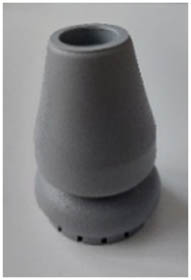
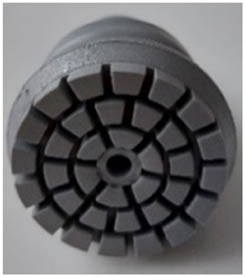
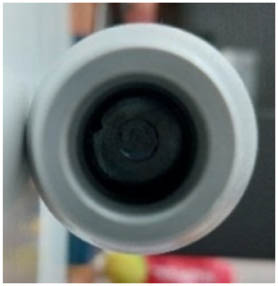
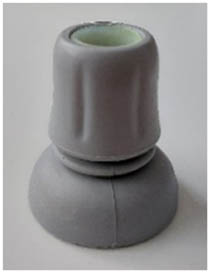
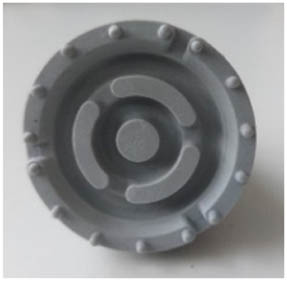
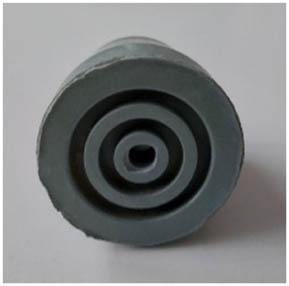
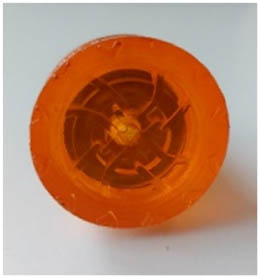
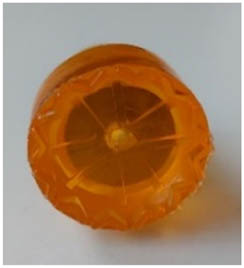
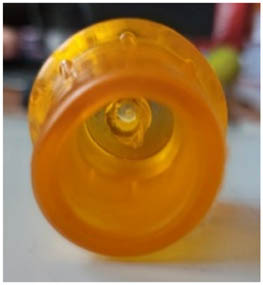
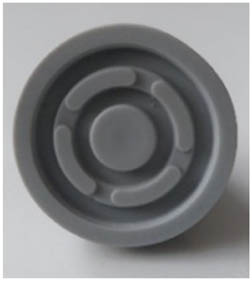
As part of the review, a factual study of 25 attachments was prepared, taking into account the following elements: visualization; version (summer, winter, universal); size; material; weight; additional functions; user feedback; price; and manufacturer. Based on this, 8 out of 25 attachments were selected. Table 1 shows eight sockets in three views.
Set of eight caps taking part in the evaluation, in three projections
| 1 |
 |
 |
 |
|---|---|---|---|
| 2 |
 |
 |
 |
| 3 |
 |
 |
 |
| 4 |
 |
 |
 |
| 5 |
 |
 |
 |
| 6 |
 |
 |
 |
| 7 |
 |
 |
 |
| 8 |
 |
 |
 |
Source: ITS.
3.2 Attachments evaluation criteria
In stage 2, criteria for the evaluation of attachments conducted by three independent experts were developed. For this purpose, an original evaluation form was prepared. The criteria used include the following features of the cap (Table 2):
Shape: external appearance, construction of the object, height, width,
Material: what the product is made of, e.g. rubber, caoutchouc, other material,
Weight: weight of the product,
Size: diameter of the cap at its base,
Tread: tread structure, grooves, fluid drains used in the construction, and bulges tangential to the ground,
Functionality: does it fulfil its function? Is it reinforced?
Durability: resistant to physical factors, abrasion, temperature deformation (high/low), contamination
Safety: whether appropriate measures are taken to prevent dangerous events such as slipping, e.g. reflective, anti-slip, tape, and reinforcement,
Aesthetics: “nice look”, colour, subjective qualities of “beauty,”
Universality: versatile vs summer/winter.
Cap evaluation criteria
| CAP evaluation criteria | |||||
|---|---|---|---|---|---|
| CAP feature | |||||
| 1 | 2 | 3 | 4 | 5 | |
| Shape (1) | Height | Width | Diameter (at the base) | Diameter (mushroom) | |
| Material (2) | Rubber | Polyvinylchloride | Caoutchouc | Plastic | |
| Weight (3) | 39 g | 110 g | 100 g | 115 g | 198 g |
| Diameter (4) | Ø 14 | Ø 16 | Ø 18 | Ø 20 | Ø 22 |
| Tread (5) | Grooves | Fluid drainage | Bulges | Tangential | Ball |
| Functionality (6) | Universal | Summer | Winter | Reinforced | Off-road |
| Resistance (7) | To abrasion | To deformation | To temperature (W)1 | To temperature (N)2 | To contamination |
| Safety (8) | Reflective | Anti-slip | Micro balls | Tape | Reinforcement |
| Aesthetics (9) | Colour | Size | Reflective | Shape | |
| Universality (10) | Universal | Summer | Winter | Off-road | |
1“High”.
2“Low”.
Source: study by B. Stasiak-Cieślak.
Each of the experts assessed the presence of the above features on a scale from 0 to 5. Table 2 presents the evaluation criteria, taking into account the basic features for each category.
3.3 Expert evaluation and analysis of the data collected
As part of stage 3, a summary of the results of the expert evaluation of eight caps, criteria, and rating (on a scale of 0–5) were prepared, and the averages and standard deviations for the applied criteria were calculated. Table 3 presents the results of the tests carried out, taking into account the categories and features listed in the above cap evaluation criteria.
Results of the expert evaluation of the caps
| 1 | 1 | 1 | m | σ | 2 | 2 | 2 | m | σ | 3 | 3 | 3 | m | σ | 4 | 4 | 4 | m | σ | 5 | 5 | 5 | m | σ | 6 | 6 | 6 | m | σ | 7 | 7 | 7 | m | σ | 8 | 8 | 8 | m | σ | |
|---|---|---|---|---|---|---|---|---|---|---|---|---|---|---|---|---|---|---|---|---|---|---|---|---|---|---|---|---|---|---|---|---|---|---|---|---|---|---|---|---|
| (1) | 3 | 3 | 3 | 3 | 0 | 4 | 4 | 5 | 4 | 1 | 4 | 1 | 5 | 3 | 2 | 2 | 2 | 3 | 2 | 1 | 2 | 2 | 5 | 3 | 2 | 3 | 4 | 5 | 4 | 1 | 3 | 3 | 5 | 4 | 1 | 2 | 2 | 5 | 3 | 2 |
| (2) | 2 | 4 | 5 | 4 | 2 | 4 | 3 | 5 | 4 | 1 | 3 | 2 | 4 | 3 | 1 | 2 | 4 | 3 | 3 | 1 | 2 | 4 | 4 | 3 | 1 | 3 | 5 | 3 | 4 | 1 | 3 | 4 | 3 | 3 | 1 | 2 | 3 | 5 | 3 | 2 |
| (3) | 1 | 2 | 3 | 2 | 1 | 4 | 4 | 5 | 4 | 1 | 2 | 4 | 5 | 4 | 2 | 2 | 3 | 4 | 3 | 1 | 3 | 4 | 4 | 4 | 1 | 2 | 4 | 4 | 3 | 1 | 2 | 3 | 5 | 3 | 2 | 1 | 5 | 5 | 4 | 2 |
| (4) | 2 | 3 | 5 | 3 | 2 | 4 | 3 | 5 | 4 | 1 | 3 | 3 | 5 | 4 | 1 | 2 | 3 | 3 | 3 | 1 | 2 | 3 | 4 | 3 | 1 | 2 | 3 | 5 | 3 | 2 | 2 | 3 | 5 | 3 | 2 | 1 | 2 | 5 | 3 | 2 |
| (5) | 3 | 4 | 4 | 4 | 1 | 3 | 3 | 5 | 4 | 1 | 3 | 3 | 3 | 3 | 0 | 2 | 2 | 2 | 2 | 0 | 2 | 3 | 3 | 3 | 1 | 3 | 3 | 2 | 3 | 1 | 3 | 4 | 2 | 3 | 1 | 2 | 2 | 4 | 3 | 1 |
| (6) | 2 | 4 | 4 | 3 | 1 | 3 | 3 | 5 | 4 | 1 | 3 | 3 | 3 | 3 | 0 | 2 | 3 | 3 | 3 | 1 | 2 | 3 | 4 | 3 | 1 | 3 | 4 | 3 | 3 | 1 | 3 | 4 | 3 | 3 | 1 | 2 | 2 | 4 | 3 | 1 |
| (7) | 3 | 4 | 4 | 4 | 1 | 3 | 3 | 5 | 4 | 1 | 2 | 4 | 4 | 3 | 1 | 2 | 4 | 3 | 3 | 1 | 2 | 4 | 3 | 3 | 1 | 1 | 3 | 3 | 2 | 1 | 2 | 3 | 1 | 2 | 1 | 2 | 2 | 5 | 3 | 2 |
| (8) | 2 | 4 | 4 | 3 | 1 | 3 | 2 | 1 | 2 | 1 | 2 | 3 | 3 | 3 | 1 | 2 | 3 | 3 | 3 | 1 | 2 | 3 | 4 | 3 | 1 | 2 | 3 | 3 | 3 | 1 | 3 | 3 | 1 | 2 | 1 | 2 | 2 | 5 | 3 | 2 |
| (9) | 1 | 3 | 3 | 2 | 1 | 3 | 4 | 5 | 4 | 1 | 2 | 1 | 4 | 2 | 2 | 1 | 1 | 3 | 2 | 1 | 2 | 4 | 4 | 3 | 1 | 2 | 5 | 4 | 4 | 2 | 2 | 4 | 4 | 3 | 1 | 2 | 3 | 5 | 3 | 2 |
| (10) | 2 | 4 | 4 | 3 | 1 | 4 | 4 | 5 | 4 | 1 | 3 | 2 | 4 | 3 | 1 | 2 | 3 | 3 | 3 | 1 | 3 | 3 | 3 | 3 | 0 | 3 | 4 | 2 | 3 | 1 | 3 | 3 | 2 | 3 | 1 | 2 | 3 | 5 | 3 | 2 |
Source: ITS.
The categories contained in Table 3 are marked as follows: (1) shape, (2) material, (3) weight, (4) diameter, (5) tread, (6) functionality, (7) resistance, (8) safety, (9) aesthetics, and (10) universality. The numbers 1–8 in the table indicate the cap numbers (Table 1), abbreviation “
3.4 Data analysis
Taking into account the selection of the most interesting solution in terms of the needs and expectations of future users, the properties of individual attachments were selected for analysis. The evaluation and selection of the recommended solution are presented in the further part of the article. The fourth stage involved recalculating the mean values and standard deviations (Table 3) for ten categories and evaluations of caps carried out by three experts. Then, a bonus (from +0 to +5) was applied to the score, proportional to the product of the experts’ agreement measure and the value of their assessment. There was no expert agreement bonus for a low score. The measure of expert agreement is the reciprocal of the standard deviation of their assessment, which is presented in the following formula:
where
The amount of the above bonus was variable and subject to analysis. The maximum bonus levels considered were 0, 1, 2, 3, 4, and 5. In the case of a value of “0,” no bonus was awarded, with a value of 1, it had a slight impact on the overall rating of the caps, and with a value of “5,” the maximum bonus awarded could double the value of the final grade. Table 4 presents the final rating values assigned to each attachment (from 1 to 8) assuming individual maximum bonus values (from 0 to 5).
Results of the expert assessment of the caps
| 0 | 1 | 2 | 3 | 4 | 5 | |
|---|---|---|---|---|---|---|
| 1 | 3.2 | 3.4 | 3.7 | 4.0 | 4.3 | 4.5 |
| 2 | 3.8 | 4.2 | 4.6 | 5.0 | 5.4 | 5.8 |
| 3 | 3.1 | 3.3 | 3.6 | 3.8 | 4.1 | 4.3 |
| 4 | 2.6 | 2.8 | 3.1 | 3.3 | 3.6 | 3.8 |
| 5 | 3.1 | 3.4 | 3.6 | 3.9 | 4.1 | 4.4 |
| 6 | 3.2 | 3.5 | 3.7 | 4.0 | 4.2 | 4.5 |
| 7 | 3.0 | 3.3 | 3.5 | 3.7 | 4.0 | 4.2 |
| 8 | 3.1 | 3.2 | 3.2 | 3.3 | 3.4 | 3.5 |
Source: ITS.
Table 5 presents the stage of simple ranking of products according to their rating from the highest to the lowest rated cap. In order to see the differences in the rating, bonuses (from 0+ to 5+) have been introduced for the agreement of experts in assessing the cap in a given category.
Results of the expert assessment of the caps
 |
Source: ITS.
The above analysis showed that the attachment (2) marked with a light grey colour in Table 5 received the highest rating, which at the same time obtained a high rating value and agreement of expert assessments in the selected categories (Figure 9).

The cap (2), which was rated the highest by the experts.
It was thus ranked first in the ranking. The evaluation of attachments (6) and (1) is marked in dark grey, also highly rated, and only the item related to the agreement of the expert evaluation (3+, 4+, 5+) with the value of ratings that do not affect the assessment (0+, 1+, 2+) has been changed.
The conducted analysis of the attachments, their selection, and evaluation by three experts using the criteria from Table 1 was aimed at drawing attention to the quality of their construction and functional features. The cap (2) is not an “ideal” cap, it is only an example of one of the better solutions available on the market. The obtained results were a valuable clue in the development of the cap design presented in the study by Cryż et al. [30]. The use of computational apparatus had a close connection when used to present the first conclusion intended for the experimental characterization of the research work.
4 Solution suggestion
In 2022, an interdisciplinary team of the Motor Transport Institute consisting of Aneta Wnuk PhD, Beata Stasiak-Cieślak PhD, Dagmara Jankowska-Karpa PhD, and Piotr Malawko PhD, begun work to support the mobility and safety of pedestrians using orthopaedic equipment by developing a multifunctional attachment (cap) as an element that improves comfort of movement in various weather conditions and conducting a number of tests in this area [31].
The first stage of the work was the review and evaluation – according to the developed criteria – of several dozen similar devices commonly available on the world market. Based on the results of this stage, referring to the principles of industrial/functional design and professional experience, the team of authors designed a prototype of a multifunctional attachment for orthopaedic equipment dedicated to pedestrians.
The proposed prototype was the subject of focus research with pedestrians who use such equipment daily (crutches with caps). The aim of the study entitled The diagnosis of the features of attachments for orthopaedic crutches and the opinion on the prototype of this type of device included getting to know the respondents’ expectations towards the proposed model of the attachment and its visual assessment. The surveyed persons very positively viewed the structure and functions of the presented orthopaedic crutch cap. They emphasized the innovativeness of the water drainage system and the reflective element used. There were also comments regarding the aesthetics of the solution. Most people would be willing to buy this orthopaedic crutch attachment. Their critical opinions during the conducted focus research allowed the authors to improve the product.
In October 2022, a patent application was filed (P.442575Z) for the visualization of the product developed by the research team. Figure 10 shows a prototype of the cap made in 3D printing, showing the tread presenting grooves, outflows, and a semi-circular inset. The structure of the tread is to be one of the necessary elements ensuring the safety of use related to the adhesion of the cap to the type of surface, taking into account the possibility of using it on various liquids and dirt.

Prototype of the cap – 3D printing. Source: ITS.
Figure 11 shows the prototype of the cap in three projections showing its external elements, with particular emphasis on the tread. The applied solution is distinguished by advantageous functional and technical elements in the form of an articulated structure, parameters of height, width, diameter at the base of the mushroom, removal of contaminations, the use of a tread structure suitable for pedestrian traffic in the form of grooves and outflow directions, elements in contact with the ground enhancing the grip of the foot, including the location of the hemispherical bulge in the centre of the tread and taking into account the possibility of using reflective material. The design of the cap hinders its uncontrolled lateral movement, the so-called “slip” during the movement of a pedestrian [32].
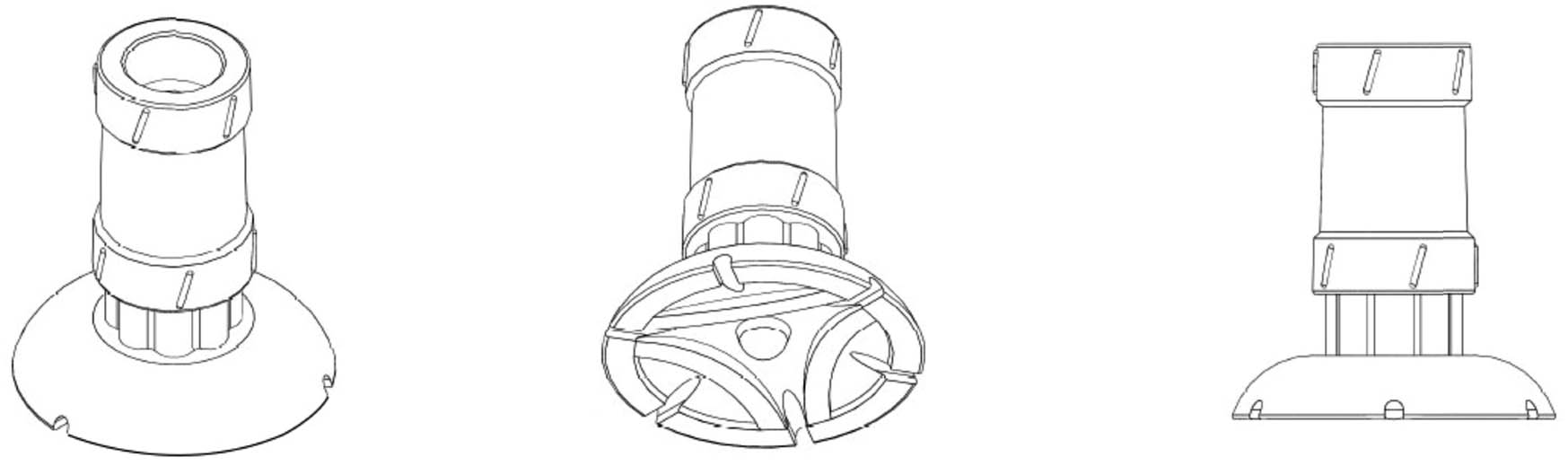
Drawing of the cap in three positions. Source: ITS.
Work is underway to develop the material from which the product will be made in winter/summer/universal versions. The next step will be the production of caps according to the design and material composition developed by the Motor Transport Institute. The caps produced in the test version will be evaluated by the target group – pedestrians using orthopaedic devices. A positive result of this evaluation will be an argument for implementing the product on the mass market and filing a patent application for the product material [33]. Completion of this process is planned by the end of 2023. The authors see a need to deepen the research work on a wider group of recipients. Tests are also planned on attachments made for various types of technical equipment (walkers, canes, orthopaedic crutches with a different grinding wheel than the one tested so far), as well as conducting tests in different weather conditions, which may bring interesting results in relation to the assumptions and expectations of the studies already obtained. Broadening the horizon and view regarding product testing should translate into the production of an attachment with better utility properties than the one produced so far. Deepening the research work may indicate the need for further product improvements.
5 Summary
Non-slip, easy-to-install caps are a necessary operating accessory for safe and functional movement on various surfaces using orthopaedic crutches. The caps are a replaceable detail, constituting an element that wears out quickly and, according to the manufacturers, should be replaced regularly in order to properly perform its function. A review of the professional literature and patent registers prove the thesis that the design of this type of elements is underestimated, and therefore, no attention is paid to the individual criteria that should be the starting point in their selection. Users – pedestrians are not aware of how important this element is and how much it affects functioning in everyday traffic. The variability of the physical phenomena experienced by the caps users is complex; from the construction and quality of the cap, through the quality of the surface (road infrastructure) on which pedestrians move, to the weather conditions.
Designers and thus, manufacturers do not take into account many important features of the product structure, but also in the case of the construction of crutches, the anthropometric measures of the “human” presented in the Anthropometric Atlas by Giedliczka [34], Nowak [35] or other researchers [36] are not taken into account. The currently used devices are largely unadapted to the needs and physical abilities of people with disabilities.
It is also worth paying attention to the design of the construction of shock-absorbing systems as one of the fundamental features of the crutches, because it reduces the forces acting on the user, and thus reduces the risk of injury. However, the cushioning system in the crutches available on the market causes discomfort to their users [37].
Designed attachment for orthopaedic equipment dedicated to pedestrian road users, named proMOVE refers to slogans related to the activity of people with special needs: p – protection, r – rehabilitation, o – opportunity, M – mobility, O – originality, V – vitality, and E – ergonomy. These terms refer to the functional description of the designed cap. The cap proposal is a rationalization approach expressed in the participation of people interested in such a product. User-centric design is a design process based on information about the people who will use the device. Focus research with this group of people and one of the persons with physical disabilities present in the design team is an approach to the user-centric design. With the right approach to designing both technical and organizational solutions, social exclusion can be counteracted. Adapting the devices for capabilities of people with special needs means that project teams are to open to new challenges that will result in learning about the needs and at the same time understanding them. Ultimately, it will cause better and more functional products to be produced. Determining these variables is the key to the design and research success [38].
The prototype of the proMOVE cap was entered in the International Competition of Inventors in Paris and received the Gold Medal. The patron of the Prix Eiffel Competition is Gustave Eiffel, an outstanding innovator and draftsman, a leading figure of the industrial era in Europe and in the world, the creator of the Eiffel Tower. The organizers of the competition are the French Federation of Inventors, the French Association of Inventors – Europe France Inventors and the Haller Pro Invention Foundation. Further research will be conducted, in a broader scope and with reference to the work done using a detailed statistical apparatus. They should therefore have a positive impact on the image of the model’s operation.
Acknowledgement
General scientific research methods are practiced in this research.
-
Funding information: The authors state no funding involved.
-
Author contributions: All authors have accepted responsibility for the entire content of this manuscript and consented to its submission to the journal, reviewed all the results and approved the final version of the manuscript. Beata Stasiak Cieślak and Piotr Malawko contributed and participated to the same extent in the creation of the concept, the project, and its implementation. The persons mentioned participated to the same extent in the interpretation of the reported research. All persons participating in the project have been mentioned. We would like to inform you that the article shows: Piotr Malawko – 50% and Beata Stasiak-Cieślak – 50%.
-
Conflict of interest: Authors state no conflict of interest.
-
Data availability statement: The datasets generated during and/or analysed during the current study are available from the corresponding author on reasonable request.
References
[1] https://www.brandvital.eu/pomoce-w-chodzeniu/kule-inwalidzkie-jak-dopasowac/ as on 15-10-2022.Suche in Google Scholar
[2] Oprac. Jacek Frączyk. 2021. https://businessinsider.com.pl/gospodarka/polska-starzeje-sie-coraz-szybciej-gus-bije-na-alarm/9139rn3 as on 19-11-2022.Suche in Google Scholar
[3] Eurostat. https://ec.europa.eu/eurostat/statisticsexplained/index.php?title=Archive:Struktura_ludno%C5%9Bci_i_starzenie_si%C4%99_spo%C5%82ecze%C5%84stwa as on 14-12-2022.Suche in Google Scholar
[4] Borucka A, Kozłowski E, Oleszczuk P, Świderski A. Predictive analysis of the impact of the time of day on road accidents in Poland. Open Eng. 2021;11:142–50. 10.1515/eng-2021-0017.Suche in Google Scholar
[5] Projekt nasadki. https://www.whitemad.pl/personalizowane-nakladki-na-kule-od-studentek-z-poznania as on 28-12-2022.Suche in Google Scholar
[6] Pieniak D, Cieślak P, Leszek GI, Dmowski A, Niewczas A. Badania eksploatacyjne stanu technicznego opon samochodów ciężarowych. Transp Samoch. 2022;66:17–34. 10.5604/01.3001.0016.2052.Suche in Google Scholar
[7] Grabski H, Myśliborski T. Zaopatrzenie ortopedyczne, [w:] Marciniak W, Szulc A, red. Wiktora Degi ortopedia i rehabilitacja. Warszawa: PZWL; 2003. p. 568–80 [Orthopedic supplies].Suche in Google Scholar
[8] Bartkowiak Z, Łuczak-Piechowiak A, Zgorzalewicz-Stachowiak M, Idzior M, Pajor J. Orthopedic equipment applied in children with cerebral palsy. Physiother Q. 2008;16:99–113. 10.2478/v10109-009-0049-0.Suche in Google Scholar
[9] Paśniczek R. Wybrane urządzenia wspomagające i fizjoterapeutyczne w rehabilitacji porażeń ośrodkowego układu nerwowego i amputacjach kończyn. Warszawa; Oficyna Wydawnicza Politechniki Warszawskiej; 1998; [Selected supporting and physiotherapeutic devices in the rehabilitation of central nervous system paralysis and limb amputations].Suche in Google Scholar
[10] Edelstein J. Canes, crutches and walkers. Atlas of orthoses and assistive devices. 5th edn. 2019; p. 377–82. 10.1016/B978-0-323-48323-0.00036-6.Suche in Google Scholar
[11] Syczewska M, Święcicka A, Kalinowska M, Gaff K. Zastosowanie ilościowej, obiektywnej analizy chodu do oceny doboru zaopatrzenia ortopedycznego u dzieci z mózgowym porażeniem dziecięcym (analiza chodu w doborze zaopatrzenia ortopedycznego w mpdz). Fizjoter Pol. 2006;6:298–303. [The use of quantitative, objective gait analysis to assess the selection of orthopedic devices in children with cerebral palsy (gait analysis in the selection of orthopedic devices in cerebral palsy)].Suche in Google Scholar
[12] European patent office. https://patents.google.com/patent/EP0112141B1 as on 14-12-2022.Suche in Google Scholar
[13] European patent office. https://patents.google.com/patent/EP2200554B1 as on 19-11-2022.Suche in Google Scholar
[14] European patent office. https://patents.google.com/patent/JP2021010421A as on 19-11-2022.Suche in Google Scholar
[15] European patent office. https://patents.google.com/patent/DE4131330A1 as on 19-11-2022Suche in Google Scholar
[16] European patent office. https://patents.google.com/patent/US9144275B1 as on 14-12-2022.Suche in Google Scholar
[17] European patent office. https://patents.google.com/patent/US20160120279A1 as on 14-12-2022.Suche in Google Scholar
[18] Skinner L. Development of a new ball tip design for overall increased stability and better movement in various terrain. Honors Theses. 2689; 2022. https://egrove.olemiss.edu/hon_thesis/2689.Suche in Google Scholar
[19] Rasouli F, Reed BK. Walking assistance using crutches: A state of the art review. J Biomech. 2020;98:109489. 10.1016/j.jbiomech.2019.109489.Suche in Google Scholar PubMed
[20] Febrer-Nafría M, Pallarès-López R, Fregly BJ, Font-Llagunes MJ. Prediction of three-dimensional crutch walking patterns using a torque-driven model. Multibody Syst Dyn. 2021;51:1–19. 10.1007/s11044-020-09751-z.Suche in Google Scholar
[21] Shoup TL, Fletcher S, Merrill BR. Biomechanics of crutch locomotion. J Biomech. 1974;7(1):11–9. 10.1016/0021-9290(74)90065-7.Suche in Google Scholar PubMed
[22] MacGillivray KM, Manocha HKR, Sawatzky B. The influence of a polymer damper on swing-through crutch gait biomechanics. Med Eng Phys. 2016;38(3):275–9. 10.1016/j.medengphy.2015.12.010.Suche in Google Scholar PubMed
[23] Segura A, Piazza JS. Mechanics of ambulation with standard and spring-loaded crutches. Arch Phys Med Rehabil. 2007;88(9):1159–63. 10.1016/j.apmr.2007.05.026.Suche in Google Scholar PubMed
[24] Brown S, Vairis A, Masoumifar MA, Petousis M. Common problems with the conventional design of crutches: Proposing a safer design and discussing the potential impact. Technol Soc. 2020;60:101215. 10.1016/j.techsoc.2019.101215.Suche in Google Scholar
[25] Bateni H, Maki EB. Assistive devices for balance and mobility: Benefits, demands, and adverse consequences. Arch Phys Med Rehabil. 2005;86:134–45. 10.1016/j.apmr.2004.04.023.Suche in Google Scholar PubMed
[26] Projekt kuli Małgorzata Małysiak. http://ergo.wfp.asp.krakow.pl/projekt/kula-ortopedyczna-dedykowana-sportowcom/ as on 30-12-2022.Suche in Google Scholar
[27] Borg J, Berman-Bieler R, Khasnabis C, Mitra G, Myhill WN, Raja DS. Assistive technology for children with disabilities: creating opportunities for education, inclusion and participation–a discussion paper. Geneva: WHO; 2015.Suche in Google Scholar
[28] Project evaluation criteria, smart growth program website. https://www.poir.gov.pl/strony/skorzystaj/kryteria-oceny-projektow/.Suche in Google Scholar
[29] Idzior M. Przegląd wybranych rozwiązań technicznych wpływających na bezpieczeństwo pieszych w ruchu drogowym. Transp Samoch. 2022;65:20–8. 10.5604/01.3001.0015.8710.Suche in Google Scholar
[30] Czyż Z, Jakubczak P, Podolak P, Skiba K, Karpiński P, Droździel-Jurkiewicz M, et al. System pomiaru odkształceń elementów UAV w celu poprawy ich bezpiecznej eksploatacji. Eksploatacja i Niezawodność – Maint Reliab. 2023;25. 10.17531/ein/172358.Suche in Google Scholar
[31] Wnuk A, Malawko P. Przegląd nasadek na kule ortopedyczne wspomagające mobilność pieszych uczestników ruchu drogowego z niepełnosprawnościami. Transp Samoch. 2023;67:20–30. 10.5604/01.3001.0053.9429.Suche in Google Scholar
[32] Siddiqui MIH, Alnaser IA, Alluhydan K. Ocena protezy lemiesza do biegania z włókna węglowego pod kątem zwiększenia niezawodności. Eksploatacja i Niezawodność – Maint Reliab. 2023;25. 10.17531/ein/172668.Suche in Google Scholar
[33] Krzyżak A, Racinowski D, Szczepaniak R, Kosicka E. Ocena niezawodności kompozytów CFRP stosowanych w węzłach tarcia po oddziaływaniu oddziaływań UV-A i szoków termicznych. Eksploatacja i Niezawodność – Maint Reliab. 2023;25. 10.17531/ein/174221.Suche in Google Scholar
[34] Giedliczka A. Atlas miar człowieka. Dane do projektowania i oceny ergonomicznej. Warszawa: Centralny Instytut Ochrony Pracy; 2001. [Atlas of human measurements. Data for design and ergonomic evaluation].Suche in Google Scholar
[35] Nowak E. Atlas antropometryczny populacji polski, dane do projektowania. Warszawa: IWP; 2000. [Anthropometric atlas of the Polish population, data for design].Suche in Google Scholar
[36] Batogowska A, Słowikowski J. Atlas antropometryczny dorosłej ludności polski dla potrzeb projektowania. Prace i materiały. 1994;149. [Anthropometric atlas of the adult population of Poland for design purposes].Suche in Google Scholar
[37] Pereira R, Carvalho A, Costa V, Galvão J, Matos A. The damping system in crutches: Development of new model. In: Machado J, Soares F, Trojanowska J, Ottaviano E, editors. icieng. LNME. Cham: Springer; 2021. p. 371–87.10.1007/978-3-030-79165-0_35Suche in Google Scholar
[38] Yang L, Liu B, Lin L, Chen K, Yang Q. Exploring clustering of bandits for online recommendation system. In Proceedings of the 14th ACM Conference on Recommender Systems. 2020. p. 120–9. 10.1145/3383313.3412250.Suche in Google Scholar
© 2025 the author(s), published by De Gruyter
This work is licensed under the Creative Commons Attribution 4.0 International License.
Artikel in diesem Heft
- Research Articles
- Modification of polymers to synthesize thermo-salt-resistant stabilizers of drilling fluids
- Study of the electronic stopping power of proton in different materials according to the Bohr and Bethe theories
- AI-driven UAV system for autonomous vehicle tracking and license plate recognition
- Enhancement of the output power of a small horizontal axis wind turbine based on the optimization approach
- Design of a vertically stacked double Luneburg lens-based beam-scanning antenna at 60 GHz
- Synergistic effect of nano-silica, steel slag, and waste glass on the microstructure, electrical resistivity, and strength of ultra-high-performance concrete
- Expert evaluation of attachments (caps) for orthopaedic equipment dedicated to pedestrian road users
- Performance and rheological characteristics of hot mix asphalt modified with melamine nanopowder polymer
- Second-order design of GNSS networks with different constraints using particle swarm optimization and genetic algorithms
- Impact of including a slab effect into a 2D RC frame on the seismic fragility assessment: A comparative study
- Analytical and numerical analysis of heat transfer from radial extended surface
- Comprehensive investigation of corrosion resistance of magnesium–titanium, aluminum, and aluminum–vanadium alloys in dilute electrolytes under zero-applied potential conditions
- Performance analysis of a novel design of an engine piston for a single cylinder
- Modeling performance of different sustainable self-compacting concrete pavement types utilizing various sample geometries
- The behavior of minors and road safety – case study of Poland
- The role of universities in efforts to increase the added value of recycled bucket tooth products through product design methods
- Adopting activated carbons on the PET depolymerization for purifying r-TPA
- Urban transportation challenges: Analysis and the mitigation strategies for road accidents, noise pollution and environmental impacts
- Enhancing the wear resistance and coefficient of friction of composite marine journal bearings utilizing nano-WC particles
- Sustainable bio-nanocomposite from lignocellulose nanofibers and HDPE for knee biomechanics: A tribological and mechanical properties study
- Effects of staggered transverse zigzag baffles and Al2O3–Cu hybrid nanofluid flow in a channel on thermofluid flow characteristics
- Mathematical modelling of Darcy–Forchheimer MHD Williamson nanofluid flow above a stretching/shrinking surface with slip conditions
- Energy efficiency and length modification of stilling basins with variable Baffle and chute block designs: A case study of the Fewa hydroelectric project
- Renewable-integrated power conversion architecture for urban heavy rail systems using bidirectional VSC and MPPT-controlled PV arrays as an auxiliary power source
- Exploitation of landfill gas vs refuse-derived fuel with landfill gas for electrical power generation in Basrah City/South of Iraq
- Two-phase numerical simulations of motile microorganisms in a 3D non-Newtonian nanofluid flow induced by chemical processes
- Sustainable cocoon waste epoxy composite solutions: Novel approach based on the deformation model using finite element analysis to determine Poisson’s ratio
- Impact and abrasion behavior of roller compacted concrete reinforced with different types of fibers
- Architectural design and its impact on daylighting in Gayo highland traditional mosques
- Structural and functional enhancement of Ni–Ti–Cu shape memory alloys via combined powder metallurgy techniques
- Design of an operational matrix method based on Haar wavelets and evolutionary algorithm for time-fractional advection–diffusion equations
- Design and optimization of a modified straight-tapered Vivaldi antenna using ANN for GPR system
- Analysis of operations of the antiresonance vibration mill of a circular trajectory of chamber vibrations
- Functions of changes in the mechanical properties of reinforcing steel under corrosive conditions
- 10.1515/eng-2025-0153
- Review Articles
- A modified adhesion evaluation method between asphalt and aggregate based on a pull off test and image processing
- Architectural practice process and artificial intelligence – an evolving practice
- Enhanced RRT motion planning for autonomous vehicles: a review on safety testing applications
- Special Issue: 51st KKBN - Part II
- The influence of storing mineral wool on its thermal conductivity in an open space
- Use of nondestructive test methods to determine the thickness and compressive strength of unilaterally accessible concrete components of building
- Use of modeling, BIM technology, and virtual reality in nondestructive testing and inventory, using the example of the Trzonolinowiec
- Tunable terahertz metasurface based on a modified Jerusalem cross for thin dielectric film evaluation
- Integration of SEM and acoustic emission methods in non-destructive evaluation of fiber–cement boards exposed to high temperatures
- Non-destructive method of characterizing nitrided layers in the 42CrMo4 steel using the amplitude-frequency technique of eddy currents
- Evaluation of braze welded joints using the ultrasonic method
- Analysis of the potential use of the passive magnetic method for detecting defects in welded joints made of X2CrNiMo17-12-2 steel
- Analysis of the possibility of applying a residual magnetic field for lack of fusion detection in welded joints of S235JR steel
- Eddy current methodology in the non-direct measurement of martensite during plastic deformation of SS316L
- Methodology for diagnosing hydraulic oil in production machines with the additional use of microfiltration
- Special Issue: IETAS 2024 - Part II
- Enhancing communication with elderly and stroke patients based on sign-gesture translation via audio-visual avatars
- Optimizing wireless charging for electric vehicles via a novel coil design and artificial intelligence techniques
- Evaluation of moisture damage for warm mix asphalt (WMA) containing reclaimed asphalt pavement (RAP)
- Comparative CFD case study on forced convection: Analysis of constant vs variable air properties in channel flow
- Evaluating sustainable indicators for urban street network: Al-Najaf network as a case study
- Node failure in self-organized sensor networks
- Comprehensive assessment of side friction impacts on urban traffic flow: A case study of Hilla City, Iraq
- Design a system to transfer alternating electric current using six channels of laser as an embedding and transmitting source
- Security and surveillance application in 3D modeling of a smart city: Kirkuk city as a case study
- Modified biochar derived from sewage sludge for purification of lead-contaminated water
- The future of space colonisation: Architectural considerations
- Design of a Tri-band Reconfigurable Antenna Using Metamaterials for IoT Applications
- Special Issue: AESMT-7 - Part II
- Experimental study on behavior of hybrid columns by using SIFCON under eccentric load
- Special Issue: ICESTA-2024 and ICCEEAS-2024
- A selective recovery of zinc and manganese from the spent primary battery black mass as zinc hydroxide and manganese carbonate
- Special Issue: REMO 2025 and BUDIN 2025
- Predictive modeling coupled with wireless sensor networks for sustainable marine ecosystem management using real-time remote monitoring of water quality
- Management strategies for refurbishment projects: A case study of an industrial heritage building
- Structural evaluation of historical masonry walls utilizing non-destructive techniques – Comprehensive analysis
Artikel in diesem Heft
- Research Articles
- Modification of polymers to synthesize thermo-salt-resistant stabilizers of drilling fluids
- Study of the electronic stopping power of proton in different materials according to the Bohr and Bethe theories
- AI-driven UAV system for autonomous vehicle tracking and license plate recognition
- Enhancement of the output power of a small horizontal axis wind turbine based on the optimization approach
- Design of a vertically stacked double Luneburg lens-based beam-scanning antenna at 60 GHz
- Synergistic effect of nano-silica, steel slag, and waste glass on the microstructure, electrical resistivity, and strength of ultra-high-performance concrete
- Expert evaluation of attachments (caps) for orthopaedic equipment dedicated to pedestrian road users
- Performance and rheological characteristics of hot mix asphalt modified with melamine nanopowder polymer
- Second-order design of GNSS networks with different constraints using particle swarm optimization and genetic algorithms
- Impact of including a slab effect into a 2D RC frame on the seismic fragility assessment: A comparative study
- Analytical and numerical analysis of heat transfer from radial extended surface
- Comprehensive investigation of corrosion resistance of magnesium–titanium, aluminum, and aluminum–vanadium alloys in dilute electrolytes under zero-applied potential conditions
- Performance analysis of a novel design of an engine piston for a single cylinder
- Modeling performance of different sustainable self-compacting concrete pavement types utilizing various sample geometries
- The behavior of minors and road safety – case study of Poland
- The role of universities in efforts to increase the added value of recycled bucket tooth products through product design methods
- Adopting activated carbons on the PET depolymerization for purifying r-TPA
- Urban transportation challenges: Analysis and the mitigation strategies for road accidents, noise pollution and environmental impacts
- Enhancing the wear resistance and coefficient of friction of composite marine journal bearings utilizing nano-WC particles
- Sustainable bio-nanocomposite from lignocellulose nanofibers and HDPE for knee biomechanics: A tribological and mechanical properties study
- Effects of staggered transverse zigzag baffles and Al2O3–Cu hybrid nanofluid flow in a channel on thermofluid flow characteristics
- Mathematical modelling of Darcy–Forchheimer MHD Williamson nanofluid flow above a stretching/shrinking surface with slip conditions
- Energy efficiency and length modification of stilling basins with variable Baffle and chute block designs: A case study of the Fewa hydroelectric project
- Renewable-integrated power conversion architecture for urban heavy rail systems using bidirectional VSC and MPPT-controlled PV arrays as an auxiliary power source
- Exploitation of landfill gas vs refuse-derived fuel with landfill gas for electrical power generation in Basrah City/South of Iraq
- Two-phase numerical simulations of motile microorganisms in a 3D non-Newtonian nanofluid flow induced by chemical processes
- Sustainable cocoon waste epoxy composite solutions: Novel approach based on the deformation model using finite element analysis to determine Poisson’s ratio
- Impact and abrasion behavior of roller compacted concrete reinforced with different types of fibers
- Architectural design and its impact on daylighting in Gayo highland traditional mosques
- Structural and functional enhancement of Ni–Ti–Cu shape memory alloys via combined powder metallurgy techniques
- Design of an operational matrix method based on Haar wavelets and evolutionary algorithm for time-fractional advection–diffusion equations
- Design and optimization of a modified straight-tapered Vivaldi antenna using ANN for GPR system
- Analysis of operations of the antiresonance vibration mill of a circular trajectory of chamber vibrations
- Functions of changes in the mechanical properties of reinforcing steel under corrosive conditions
- 10.1515/eng-2025-0153
- Review Articles
- A modified adhesion evaluation method between asphalt and aggregate based on a pull off test and image processing
- Architectural practice process and artificial intelligence – an evolving practice
- Enhanced RRT motion planning for autonomous vehicles: a review on safety testing applications
- Special Issue: 51st KKBN - Part II
- The influence of storing mineral wool on its thermal conductivity in an open space
- Use of nondestructive test methods to determine the thickness and compressive strength of unilaterally accessible concrete components of building
- Use of modeling, BIM technology, and virtual reality in nondestructive testing and inventory, using the example of the Trzonolinowiec
- Tunable terahertz metasurface based on a modified Jerusalem cross for thin dielectric film evaluation
- Integration of SEM and acoustic emission methods in non-destructive evaluation of fiber–cement boards exposed to high temperatures
- Non-destructive method of characterizing nitrided layers in the 42CrMo4 steel using the amplitude-frequency technique of eddy currents
- Evaluation of braze welded joints using the ultrasonic method
- Analysis of the potential use of the passive magnetic method for detecting defects in welded joints made of X2CrNiMo17-12-2 steel
- Analysis of the possibility of applying a residual magnetic field for lack of fusion detection in welded joints of S235JR steel
- Eddy current methodology in the non-direct measurement of martensite during plastic deformation of SS316L
- Methodology for diagnosing hydraulic oil in production machines with the additional use of microfiltration
- Special Issue: IETAS 2024 - Part II
- Enhancing communication with elderly and stroke patients based on sign-gesture translation via audio-visual avatars
- Optimizing wireless charging for electric vehicles via a novel coil design and artificial intelligence techniques
- Evaluation of moisture damage for warm mix asphalt (WMA) containing reclaimed asphalt pavement (RAP)
- Comparative CFD case study on forced convection: Analysis of constant vs variable air properties in channel flow
- Evaluating sustainable indicators for urban street network: Al-Najaf network as a case study
- Node failure in self-organized sensor networks
- Comprehensive assessment of side friction impacts on urban traffic flow: A case study of Hilla City, Iraq
- Design a system to transfer alternating electric current using six channels of laser as an embedding and transmitting source
- Security and surveillance application in 3D modeling of a smart city: Kirkuk city as a case study
- Modified biochar derived from sewage sludge for purification of lead-contaminated water
- The future of space colonisation: Architectural considerations
- Design of a Tri-band Reconfigurable Antenna Using Metamaterials for IoT Applications
- Special Issue: AESMT-7 - Part II
- Experimental study on behavior of hybrid columns by using SIFCON under eccentric load
- Special Issue: ICESTA-2024 and ICCEEAS-2024
- A selective recovery of zinc and manganese from the spent primary battery black mass as zinc hydroxide and manganese carbonate
- Special Issue: REMO 2025 and BUDIN 2025
- Predictive modeling coupled with wireless sensor networks for sustainable marine ecosystem management using real-time remote monitoring of water quality
- Management strategies for refurbishment projects: A case study of an industrial heritage building
- Structural evaluation of historical masonry walls utilizing non-destructive techniques – Comprehensive analysis
