
A rare case of endometrial polyp complicated with uterine inversion: A case report and clinical management
-
Fang Li


Abstract
Uterine inversion is a rare disease that is particularly uncommon among non-puerperal women. Herein we reported the only case of uterine inversion known to us that was caused by the endometrial thickening and changes in the polypoid lesion in early puberty. The patient was admitted to our hospital because of massive vaginal bleeding, abdominal pain, and a protruding mass from the vagina. We obtained the patient history by collecting the results of various examinations (including magnetic resonance imaging and color Doppler ultrasound), accurate diagnosis was performed, and a reasonable treatment protocol was developed. She was subjected to laparoscopic uterine-sparing surgery to preserve her fertility. Uterine inversion is a rare disease, and early diagnosis and selection of appropriate treatment options are essential for patients with fertility requirements.
1 Introduction
Uterine inversion is a clinically rare disease in which the uterine fundus protrudes into the uterine cavity, and the endometrium is inverted from the cervical orifice into the vagina. It can be divided into puerperal uterine inversion and non-puerperal uterine inversion according to the time of occurrence [1]. The former usually occurs during the third stage of delivery due to the improper treatment of placental delivery, the loose uterine orifice, and the external forces pulling the placenta that cause the uterine fundus to turn inside out and pass through the cervical canal until it falls off into the vagina [2]. According to a recent 10-year study in the United States, there were only 2,427 cases among 8,294,279 deliveries [3]. The non-puerperal uterine has a lower incidence and often occurs in those with a reproductive history and a presence of large submucous myomas or sarcomas in the uterine cavity when the uterine orifice becomes loose during gradual delivery, and the uterine fundus is dragged and gradually inverted by uterine cavity tissues. This typically includes four stages: (1) the uterus is incomplete, the uterine fundus is inverted, and the uterine cavity is located at the uterine fundus; (2) the uterine fundus is inverted through the vulvar orifice; (3) the uterus is completely inverted with the uterine fundus protruding beyond the vaginal orifice; and (4) the uterus is completely inverted and is prolapsing out of the vulva through the vagina [4].
The most common clinical symptoms include irregular vaginal bleeding, pelvic pain, increased vaginal secretion, intermittent acute urinary retention, and even infection complicated with shock. There are three types of uterine inversion according to the extent of inversion: (1) incomplete uterine inversion (the uterine fundus collapses downward and might approach or exceed the cervical orifice, but it is still partially within the uterine cavity); (2) complete uterine inversion (the uterine fundus protrudes through the cervix and into the vagina); (3) uterine inversion and prolapse (the inverted uterine body prolapses outside the vaginal orifice). Uterine inversion can also be divided into the acute and chronic types according to the onset of the disease. Patients with acute uterine inversion have severe abdominal pain. They often exhibit shock symptoms 3–4 h after the onset of the disease, and their condition may even become life-threatening. In contrast, chronic uterine inversion is more common in patients who seek medical advice after surviving the untimely detection of acute uterine inversion.
Surgery is an important means of treatment in uterine inversion, five surgical methods are currently defined for the hysterectomy of endropion, namely, Spinelli, Kushner, Huntington, Tjalma, and Haultain [5].
Herein we reported a case of a 11–year-old patient in early puberty, without childbearing history. Uterine inversion was caused by the endometrial thickening and changes in the polypoid lesion in early puberty. No similar report has been found in the previous literature.
During the whole treatment process, we objectively collected the main complaint symptoms, various examination results, changes in the condition during the treatment process, collected information to protect the privacy of patients, tried to protect the fertility and body least affected, and the publication of the disease case solicited the opinions of the patient and their guardians.
2 Case report
The patient was a 11-year-old Han Chinese girl without infectious disease history or special hereditary disease history in the family. She received GNRH treatment from Jiangxi Provincial Children’s Hospital 1 year ago after being diagnosed with precocious puberty. It was reported that the color ultrasound examination at that time revealed no abnormalities (no report was seen). On November 4, 2019, the patient presented to the outpatient department of our hospital because of repeated menstrual disorders. The color ultrasound results on the same day showed that the uterine size was about 64 mm × 56 mm × 49 mm, and the endometrial thickness was about 23 mm. The patient was prescribed with 1 Dydrogesterone tablet, twice per day for 20 days. Vaginal bleeding decreased slightly but did not stop. On November 24, the patient came to our hospital for further consultation, and the routine blood tests showed that Hgb was 95 g/L, the color ultrasound showed that the endometrial thickness was about 35 mm, and the remaining items were approximately the same as the previous one. This time, the patient was prescribed with 1 tablet of drospirenone and ethinylestradiol tablet (II), once every 12 h. Bleeding was significantly reduced but did not stop, and the routine blood test showed that HG was 103 g/L. On December 10, the patient came to our hospital for another re-diagnosis. The color ultrasound showed (Figure 1a and b) that the uterine size was about 72 mm × 65 mm × 58 mm, with even echoes from the muscular layer, and the endometrial thickness was about 42 mm, with uneven echoes, and a dark sieve-pore liquid was visible inside, which suggested that uterus was getting bigger and the endometrium was thickening. The patient felt occasional distending pain in the lower abdomen.
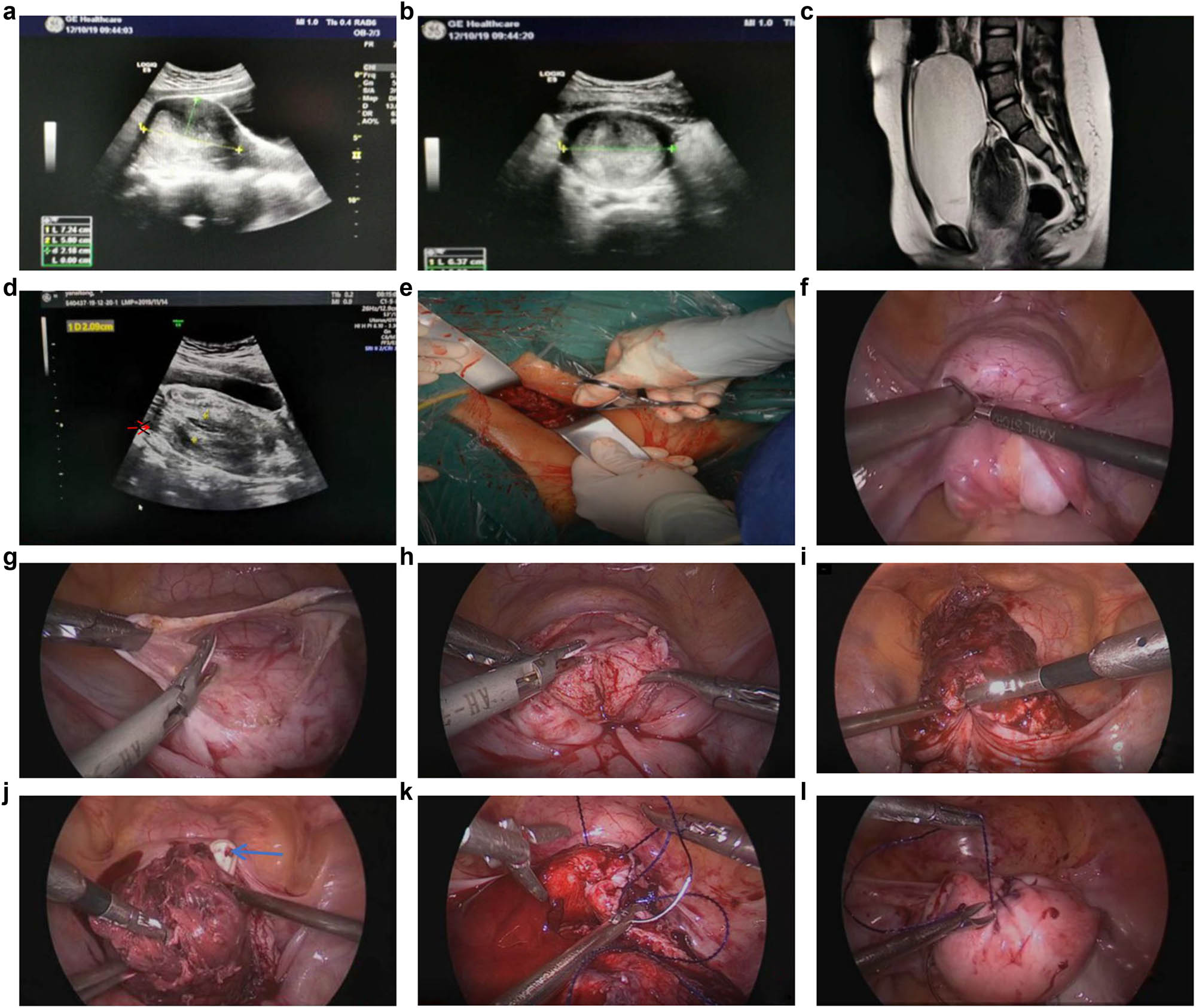
(a and b) Color ultrasound images (sagittal and transverse position) 10 days before the surgery. (c) MRI image after admission. (d) Color ultrasound image after admission (the arrow points to the ovary). (e) Intraoperative vaginal view. (f) Intraoperative laparoscopic view. (g) The uterine serosa was incised. (h) The anterior myometrium and the vagina were incised. (i and j) Uterus after incision (the blue arrow indicates the finger of the vaginal operator). (k) Suturing the vagina and the myometrium. (l) Uterus at the end of suturing.
On December 18, she experienced a sudden increase in vaginal bleeding, accompanied by severe pain in the lower abdomen, nausea, and vomiting, and a fleshy tissue about 6 cm in size could be seen at the vaginal orifice. On the same day, the patient came to our hospital after her family attempted to remove the fleshy tissue at home. The physical examination after admission showed a mass prolapsed from the vaginal orifice, about 6 cm in size, with a hard texture and uneven surface, and it was not possible to identify the cervical part with the vaginal palpation. The routine blood test at admission on December 18 showed that WBC was 24.57 × 10⁹/L, N was 91.20%, and Hgb was 77 g/L; the admission diagnosis was: (1) vaginal neoplasm: submucous myomas delivery? uterine sarcoma delivery? (2) Moderate anemia. The patient exhibited symptoms of urinary retention after admission, which were spontaneously relieved afterward, abdominal pain was gradually relieved, and the protruded mass returned to the vagina. On the day of admission, a partial tissue of about 3 cm × 1 cm × 1 cm in size was removed with tissue forceps and sent for pathological examination. The results showed a smooth muscle tissue with intravascular hyperplasia, dilatation, and hyperemia visible inside, complicated with inflammatory cell infiltration, and a few endometrial glands and stroma on the surface. Then, Magnetic Resonance Imaging (MRI) was performed, and the results showed (Figure 1c): (1) complete uterine inversion, which oppressed the urethra and caused urinary retention of the bladder; and (2) vaginal effusion, given the patient had moderate anemia at admission and continued to bleed after admission. A 1.5 Iu isotype red blood cell suspension was administered to correct the anemia. Since the risk of infection was increased because the tissue once prolapsed out of the vaginal orifice and the hemogram had increased, piperacillin sodium, sulbactam sodium, and metronidazole were administered through intravenous drip for anti-infectious treatment.
A color ultrasound re-examination on December 20 showed (Figure 1d) that the uterus lost its normal form, the demarcation between the uterine body and the cervix was unclear, the size was about 88 mm × 60 mm × 55 mm, the uterine fundus was inverted to the cervical external orifice, chaotic hyper-level echoes with a range of about 66 mm × 21 mm could be detected inside, striped blood flows could be seen on Color Doppler Flow Imaging, and the echoes of the two ovaries were detected in front of the internal cervical orifice. These results suggested uterine inversion.
On December 20, laparoscopic exploration was performed to get a definite diagnosis and restore the normal anatomical position of the uterus. During the surgery (Figure 1e–l), it could be seen that the uterine fundus was completely depressed for approximately 6 cm, and bilateral attachments were cohesive in the depression of the uterine fundus. Our attempt to reposition the uterus failed, so we incised the serosal layer of the anterior uterine wall and pushed down the bladder, after which we incised the entire layer of the anterior wall muscle layer from the everted bottom to about 2 cm of the vaginal segment. The intrauterine tissues were in disorder, in a status of thickening, edema, and necrosis, without clear tumor-like tissues. We removed the messy intrauterine tissues from the uterine cavity (rapid intraoperative histopathology did not indicate malignancy), repositioned the uterus, restored its anatomical position, and sutured the anterior wall myometrium and the vaginal segment continuously according to the anatomical structure of the muscular and the serosal layers. The surgery went smoothly. During the entire operation, bleeding was about 50 mL, and the uterus was beautifully stitched, The pathological examination showed that the tissue had a polypoid structure, the glands were in the shape of small round tubes or fissures, stromal cells showed mild decidual degeneration, and the internal blood vessels were significantly increased, congestive, expanded, and bleeding, thus suggesting an asynchronous reaction between endometrial glands and stroma. Antibiotics continued to be administered postoperatively for anti-infection purposes, and the patient recovered moderately well and was discharged from the hospital after 3 days. Regular follow-ups were carried out via telephone or on an outpatient basis.
A color ultrasound re-examination that was performed on January 6, 2020 showed no abnormalities with the uterine accessories (the uterus size was about 60 mm × 45 mm × 38 mm and the endometrium thickness was 5 mm). Consequently, a color ultrasound re-examination at the outpatient department of our hospital performed on March 25 showed that the uterus size was about 54 mm × 45 mm × 38 mm, and the endometrium thickness was 9 mm. No special treatment was given.
So far, the patient has been followed up for 6 months after the surgery. Her menstrual cycle lasted around 40 days with normal menstrual blood volume.
-
Ethics statement: The patient and her guardians provided consent to share this case in the present manuscript.
3 Discussion
Uterine inversion usually occurs in the third stage of the puerperium and has a fatality rate of approximately 15–43%. One of the common causes of non-puerperal uterine inversion includes intrauterine neoplasm, such as uterine submucosal myoma, uterine sarcoma, and endometrial carcinoma, which are regarded as a foreign body and are gradually extruded out of the uterine cavity. Then, the myometrial tissue at the uterine fundus to which the neoplasm is attached is pulled through the loose uterine orifice and gets stuck at the uterine orifice, unable to return to the uterus. Such patients often have a pregnancy-related disease history and a relatively loose cervix. Gomez-Lobo et al. [6] reported 150 cases of nulliparae with uterine inversion from 1887 to 2006, and suggested that nulliparous uterine inversion was mainly associated with benign myoma. A 2018 systematic review of 170 case reports found that benign leiomyomas were the leading cause of chronic uterine inversion (57.2%) followed by leiomyosarcomas at 13.5%. There was no evidence of abnormalities in 9.9% of all cases [7,8]. Myoma is the most common tumor in the benign group. The most common tumors in the malignant group are sarcoma, endometrial carcinoma, and malignant mixed Müllerian tumor. In previous case reports, the youngest patient was 15 years old [6], and an immature teratoma induced the disease in the uterus. In the present study, the uterine inversion was found in a 11-year-old girl in her early puberty. The intrauterine neoplasm was not too big and was without obvious tumor tissues. Thickening and edema of intimal tissues and polypoid tissues were mainly found, and the weighted intimal tissues dragged the fundus uteri muscular layer through the cervical canal. Further observations are necessary to establish whether the patient is complicated with congenital or acquired uterine local myometrium weakness, even though direct visual inspection revealed no obvious abnormalities, and whether there is any risk factor for uterine inversion recurrence.
Uterine inversion is a rare condition that can be easily misdiagnosed as a cervical malignant tumor or uterine submucous myomas delivery, and MRI can be helpful for the diagnosis. In this case, before the admission of the patient, repeated color ultrasounds revealed no signs of uterine inversion. The results only showed uterus enlargement, endometrial thickening, and sieve-pore changes. The patient was preliminarily diagnosed with submucous myomas delivery or uterine sarcoma delivery at the sight of the protruded mass from the vagina, while the frontal plane of MRI showed a V-shaped uterine cavity and a T2-weighted MRI image showed an inverted uterus in the shape of “bulls-eye” [9,10]. A color ultrasound re-examination revealed the inverted uterus, bilateral ovaries that were cohesive at the uterine fundus, and the shrunken uterine serosal layer, which might be misjudged as thickened endometrium. It was impossible to diagnose incomplete uterine inversion with just the single-use of color ultrasound. Partial inversion of the uterus caused ischemic necrosis of local tissues and increased edema, and the use of hormone promoted cervical dilatation and the relaxation of the cardinal uterine ligament to some extent, which finally resulted in the complete inversion of the uterus. Puerperal uterine inversion is mostly found in acute cases. The uterus of the patient in the case was completely inverted and protruding beyond the vaginal orifice, reaching stage IV. In the early stage, it was not easy to diagnose the condition since patients’ abdominal pain symptoms were not obvious, and there is only vaginal bleeding. Also, this condition can be easily overlooked considering the rarity of such cases, as well as lack of effective detection means. Future studies should focus on improving the early diagnosis rate of uterine inversion, timely detection of the disease and interventions, treatment of the factors leading to further occurrence, and terminating the inversion process. The present case can be used as a reference for the diagnosis capacities of color ultrasound.
Patients with uterine inversion often suffer from severe abdominal pain, possibly accompanied by nausea and vomiting. The contraction of the cervical ring and the insufficient blood supply to the uterine pedicle lead to ischemia and necrosis of the muscle layer and tumor body, thus further increasing vaginal bleeding and the possibility of infection. Symptoms of shock that were out of proportion with hemorrhage have been frequently reported in previous cases. One possible cause is that the extensive ligament and peritoneal nerve relaxation cause an increase in vagus nerve tension, thus exerting further pressure on the ovaries when pulled into the uterine cavity. Rapid identification and proper treatment can restrain the development of the disease. In this case, the patient was anemic due to repeated bleeding, and she exhibited symptoms of obvious abdominal pain and vaginal bleeding before admission; after admission, the patient underwent immediate blood transfusions and anti-inflammatory treatment, which helped in a timely control of the patient’s disease [11]. Since the inversion of the uterus causes abnormalities in the anatomical structure of surrounding tissues, it may result in urethral obstruction and urinary retention in the patient. The treatment of uterine inversion depends on the preoperative diagnosis, patients’ fertility requirements, and the severity of the disease. Most patients with puerperal uterine inversion, have a loose cervical orifice, and some patients can be treated by repositioning the uterus through the vagina under anesthesia, and transabdominal cervical cerclage or intrauterine tamponade balloon can be performed to prevent the recurrence of uterine inversion [12,13]. For patients in whom transvaginal repositioning has failed, laparotomy is often performed to incise the anterior wall of the uterus, reposition the uterus, and restore the anatomical structure of the uterus. In their study, Della Corte et al. [14] reviewed the literature and summarized 22 non-puerperal uterine inversion cases, reporting that most of the authors used the approach of combining vaginal and abdominal surgery. The first step was to identify the causes for inversion, after which the uterus was partially or completely excised, and only 2 patients, aged 15 and 19 years, retained their uteri; the causes of their valgus were associated with uterine teratomas and submucosal fibroids, respectively. There were two factors to consider, i.e., the severity of the disease and whether the patient had any fertility requirements. There are currently five defined surgical methods for the hysterectomy of uterine inversion [5]. Surgery can be performed by opening the anterior wall (Spinelli) and the posterior wall (Kushner) through the vagina. Huntington’s method and Tjalma’s method are abdominal surgeries without incision of the uterus. In Huntington’s method, Alice forceps are used to pull the inverted part out of the uterus, while Tjalma’s method requires retroperitoneal surgery. The best option might be not to cut apart the uterus to reduce the spread of tumor lesions from an oncological perspective; yet, some of the methods are not feasible (vaginal surgery), some generally do not work (Huntington), some require retroperitoneal surgery (Tjalma). In Haultain’s method, the anatomical position of the uterus is restored by incising the cervical ring vertically at the posterior part of the cervix and slowly pulling the uterine fundus. In the present case, due to the patient’s young age, we attempted to reposition the uterus by hand laparoscopically through the vagina under general anesthesia and performed the Huntington surgery; nonetheless, we failed due to the cervical ring being too narrow. Finally, we incised the entire anterior uterine wall and the upper vaginal section laparoscopically and repositioned the uterus, and the total length of the uterine and vaginal incision was about 8 cm. During the surgery, the intrauterine neoplasm was also excised, taken out through the vagina, placed in a specimen bag, and sent for a frozen pathological examination to exclude the possibility of malignancy. It is necessary to distinguish the anatomical hierarchy of the myometrium and the vaginal wall during the surgery. If necessary, cervical cerclage can be performed to ensure the uterine will not be inverted again. To the best of our knowledge, this is the first such case in which laparoscopic uterine-sparing surgery was performed on such a young patient with uterine inversion to preserve her fertility.
While uterine inversion is a rare condition, the non-puerperal uterine inversion is even less common, which makes it difficult to be diagnosed and to give reasonable treatment at the time of clinical occurrence. Clinicians and imaging doctors should constantly sum up experience to make early diagnoses and early intervention and to ultimately stop the occurrence of inversion.
Abbreviations
- MRI
-
magnetic resonance imaging
Acknowledgements
We would like to express our gratitude to Cui Ying from Jiangxi Maternal and Child Health Hospital for providing data and follow-up information for this case. Our gratitude also goes to Cheng Yufen and Luo Mingyan for their guidance in the surgery and the entire treatment process.
-
Funding information: No funding was received.
-
Author’ contributions: Fang Li contributed to formal analysis, investigation, software, and drafted and revised the manuscript. Ying Liang contributed to data collection and helped to draft the manuscript. Mingyan Luo contributed to data curation, project administration, resources, and visualization. Yufen Cheng contributed to conceptualization, funding acquisition, methodology, supervision and validation. All authors read and approved the final manuscript.
-
Conflict of interest: Authors state no conflict of interest.
-
Data availability statement: All data generated or analyzed during this study are included in this published article.
References
[1] Garg P, Bansal R. Unusual and delayed presentation of chronic uterine inversion in a young woman as a result of negligence by an untrained birth attendant: a case report. J Med Case Rep. 2020;14(1):143.10.1186/s13256-020-02466-xSearch in Google Scholar PubMed PubMed Central
[2] Michalska M, Bojar I, Borycki J, Zięba B, Brandl S, Kołaciński R, et al. Postnatal inversion of the uterus - management in specific cases. Ann Agric Environ Med. 2020;27(4):717–20.10.26444/aaem/130512Search in Google Scholar PubMed
[3] Coad SL, Dahlgren LS, Hutcheon JA. Risks and consequences of puerperal uterine inversion in the United States, 2004 through 2013. Am J Obstet Gynecol. 2017;217(3):377.e1–.e6.10.1016/j.ajog.2017.05.018Search in Google Scholar PubMed
[4] Skinner GN, Louden KA. Non-puerperal uterine inversion associated with an atypical leiomyoma. Aust N Z J Obstet Gynaecol. 2001;41(1):100–1.10.1111/j.1479-828X.2001.tb01304.xSearch in Google Scholar
[5] Buyukkurt S, Vardar MA, Zeren H, Ozgunen FT. Non-puerperal inversion of the uterus caused by leiomyosarcoma: a case report and clinical management. J Obstet Gynaecol Res. 2007;33(3):402–6.10.1111/j.1447-0756.2007.00546.xSearch in Google Scholar PubMed
[6] Gomez-Lobo V, Burch W, Khanna PC. Nonpuerperal uterine inversion associated with an immature teratoma of the uterus in an adolescent. Obstet Gynecol. 2007;110(2 Pt 2):491–3.10.1097/01.AOG.0000262898.96160.16Search in Google Scholar PubMed
[7] Rosa Silva B, de Oliveira Meller F, Uggioni ML, Grande AJ, Chiaramonte Silva N, Colonetti T, et al. Non-puerperal uterine inversion: a systematic review. Gynecol Obstet Invest. 2018;83(5):428–36.10.1159/000488089Search in Google Scholar
[8] Kesrouani A, Cortbaoui E, Khaddage A, Ghossein M, Nemr E. Characteristics and outcome in non-puerperal uterine inversion. Cureus. 2021;13(2):e13345.10.7759/cureus.13345Search in Google Scholar PubMed PubMed Central
[9] Occhionero M, Restaino G, Ciuffreda M, Carbone A, Sallustio G, Ferrandina G. Uterine inversion in association with uterine sarcoma: a case report with MRI findings and review of the literature. Gynecol Obstet Invest. 2012;73(3):260–4.10.1159/000334311Search in Google Scholar PubMed
[10] Mihmanli V, Kilic F, Pul S, Kilinc A, Kilickaya A. Magnetic resonance imaging of non-puerperal complete uterine inversion. Iran J Radiol. 2015;12(4):e9878.10.5812/iranjradiol.9878v2Search in Google Scholar PubMed PubMed Central
[11] Wendel MP, Shnaekel KL, Magann EF. Uterine inversion: a review of a life-threatening obstetrical emergency. Obstet Gynecol Surv. 2018;73(7):411–7.10.1097/OGX.0000000000000580Search in Google Scholar PubMed
[12] Haeri S, Rais S, Monks B. Intrauterine tamponade balloon use in the treatment of uterine inversion. BMJ Case Rep. 2015;2015:bcr2014206705.10.1136/bcr-2014-206705Search in Google Scholar PubMed PubMed Central
[13] Thiam M, Niang MM, Gueye L, Sarr FR, Dieme ME, Cisse ML. Puerperal uterine inversion managed by the uterine balloon tamponade. Pan Afr Med J. 2015;22:331.10.11604/pamj.2015.22.331.7823Search in Google Scholar PubMed PubMed Central
[14] Della Corte L, Giampaolino P, Fabozzi A, Di Spiezio Sardo A, Bifulco G. An exceptional uterine inversion in a virgo patient affected by submucosal leiomyoma: Case report and review of the literature. J Obstet Gynaecol Res. 2019;45(2):466–72.10.1111/jog.13806Search in Google Scholar PubMed
© 2022 Fang Li et al., published by De Gruyter
This work is licensed under the Creative Commons Attribution 4.0 International License.
Articles in the same Issue
- Research Articles
- AMBRA1 attenuates the proliferation of uveal melanoma cells
- A ceRNA network mediated by LINC00475 in papillary thyroid carcinoma
- Differences in complications between hepatitis B-related cirrhosis and alcohol-related cirrhosis
- Effect of gestational diabetes mellitus on lipid profile: A systematic review and meta-analysis
- Long noncoding RNA NR2F1-AS1 stimulates the tumorigenic behavior of non-small cell lung cancer cells by sponging miR-363-3p to increase SOX4
- Promising novel biomarkers and candidate small-molecule drugs for lung adenocarcinoma: Evidence from bioinformatics analysis of high-throughput data
- Plasmapheresis: Is it a potential alternative treatment for chronic urticaria?
- The biomarkers of key miRNAs and gene targets associated with extranodal NK/T-cell lymphoma
- Gene signature to predict prognostic survival of hepatocellular carcinoma
- Effects of miRNA-199a-5p on cell proliferation and apoptosis of uterine leiomyoma by targeting MED12
- Does diabetes affect paraneoplastic thrombocytosis in colorectal cancer?
- Is there any effect on imprinted genes H19, PEG3, and SNRPN during AOA?
- Leptin and PCSK9 concentrations are associated with vascular endothelial cytokines in patients with stable coronary heart disease
- Pericentric inversion of chromosome 6 and male fertility problems
- Staple line reinforcement with nebulized cyanoacrylate glue in laparoscopic sleeve gastrectomy: A propensity score-matched study
- Retrospective analysis of crescent score in clinical prognosis of IgA nephropathy
- Expression of DNM3 is associated with good outcome in colorectal cancer
- Activation of SphK2 contributes to adipocyte-induced EOC cell proliferation
- CRRT influences PICCO measurements in febrile critically ill patients
- SLCO4A1-AS1 mediates pancreatic cancer development via miR-4673/KIF21B axis
- lncRNA ACTA2-AS1 inhibits malignant phenotypes of gastric cancer cells
- circ_AKT3 knockdown suppresses cisplatin resistance in gastric cancer
- Prognostic value of nicotinamide N-methyltransferase in human cancers: Evidence from a meta-analysis and database validation
- GPC2 deficiency inhibits cell growth and metastasis in colon adenocarcinoma
- A pan-cancer analysis of the oncogenic role of Holliday junction recognition protein in human tumors
- Radiation increases COL1A1, COL3A1, and COL1A2 expression in breast cancer
- Association between preventable risk factors and metabolic syndrome
- miR-29c-5p knockdown reduces inflammation and blood–brain barrier disruption by upregulating LRP6
- Cardiac contractility modulation ameliorates myocardial metabolic remodeling in a rabbit model of chronic heart failure through activation of AMPK and PPAR-α pathway
- Quercitrin protects human bronchial epithelial cells from oxidative damage
- Smurf2 suppresses the metastasis of hepatocellular carcinoma via ubiquitin degradation of Smad2
- circRNA_0001679/miR-338-3p/DUSP16 axis aggravates acute lung injury
- Sonoclot’s usefulness in prediction of cardiopulmonary arrest prognosis: A proof of concept study
- Four drug metabolism-related subgroups of pancreatic adenocarcinoma in prognosis, immune infiltration, and gene mutation
- Decreased expression of miR-195 mediated by hypermethylation promotes osteosarcoma
- LMO3 promotes proliferation and metastasis of papillary thyroid carcinoma cells by regulating LIMK1-mediated cofilin and the β-catenin pathway
- Cx43 upregulation in HUVECs under stretch via TGF-β1 and cytoskeletal network
- Evaluation of menstrual irregularities after COVID-19 vaccination: Results of the MECOVAC survey
- Histopathologic findings on removed stomach after sleeve gastrectomy. Do they influence the outcome?
- Analysis of the expression and prognostic value of MT1-MMP, β1-integrin and YAP1 in glioma
- Optimal diagnosis of the skin cancer using a hybrid deep neural network and grasshopper optimization algorithm
- miR-223-3p alleviates TGF-β-induced epithelial-mesenchymal transition and extracellular matrix deposition by targeting SP3 in endometrial epithelial cells
- Clinical value of SIRT1 as a prognostic biomarker in esophageal squamous cell carcinoma, a systematic meta-analysis
- circ_0020123 promotes cell proliferation and migration in lung adenocarcinoma via PDZD8
- miR-22-5p regulates the self-renewal of spermatogonial stem cells by targeting EZH2
- hsa-miR-340-5p inhibits epithelial–mesenchymal transition in endometriosis by targeting MAP3K2 and inactivating MAPK/ERK signaling
- circ_0085296 inhibits the biological functions of trophoblast cells to promote the progression of preeclampsia via the miR-942-5p/THBS2 network
- TCD hemodynamics findings in the subacute phase of anterior circulation stroke patients treated with mechanical thrombectomy
- Development of a risk-stratification scoring system for predicting risk of breast cancer based on non-alcoholic fatty liver disease, non-alcoholic fatty pancreas disease, and uric acid
- Tollip promotes hepatocellular carcinoma progression via PI3K/AKT pathway
- circ_0062491 alleviates periodontitis via the miR-142-5p/IGF1 axis
- Human amniotic fluid as a source of stem cells
- lncRNA NONRATT013819.2 promotes transforming growth factor-β1-induced myofibroblastic transition of hepatic stellate cells by miR24-3p/lox
- NORAD modulates miR-30c-5p-LDHA to protect lung endothelial cells damage
- Idiopathic pulmonary fibrosis telemedicine management during COVID-19 outbreak
- Risk factors for adverse drug reactions associated with clopidogrel therapy
- Serum zinc associated with immunity and inflammatory markers in Covid-19
- The relationship between night shift work and breast cancer incidence: A systematic review and meta-analysis of observational studies
- LncRNA expression in idiopathic achalasia: New insight and preliminary exploration into pathogenesis
- Notoginsenoside R1 alleviates spinal cord injury through the miR-301a/KLF7 axis to activate Wnt/β-catenin pathway
- Moscatilin suppresses the inflammation from macrophages and T cells
- Zoledronate promotes ECM degradation and apoptosis via Wnt/β-catenin
- Epithelial-mesenchymal transition-related genes in coronary artery disease
- The effect evaluation of traditional vaginal surgery and transvaginal mesh surgery for severe pelvic organ prolapse: 5 years follow-up
- Repeated partial splenic artery embolization for hypersplenism improves platelet count
- Low expression of miR-27b in serum exosomes of non-small cell lung cancer facilitates its progression by affecting EGFR
- Exosomal hsa_circ_0000519 modulates the NSCLC cell growth and metastasis via miR-1258/RHOV axis
- miR-455-5p enhances 5-fluorouracil sensitivity in colorectal cancer cells by targeting PIK3R1 and DEPDC1
- The effect of tranexamic acid on the reduction of intraoperative and postoperative blood loss and thromboembolic risk in patients with hip fracture
- Isocitrate dehydrogenase 1 mutation in cholangiocarcinoma impairs tumor progression by sensitizing cells to ferroptosis
- Artemisinin protects against cerebral ischemia and reperfusion injury via inhibiting the NF-κB pathway
- A 16-gene signature associated with homologous recombination deficiency for prognosis prediction in patients with triple-negative breast cancer
- Lidocaine ameliorates chronic constriction injury-induced neuropathic pain through regulating M1/M2 microglia polarization
- MicroRNA 322-5p reduced neuronal inflammation via the TLR4/TRAF6/NF-κB axis in a rat epilepsy model
- miR-1273h-5p suppresses CXCL12 expression and inhibits gastric cancer cell invasion and metastasis
- Clinical characteristics of pneumonia patients of long course of illness infected with SARS-CoV-2
- circRNF20 aggravates the malignancy of retinoblastoma depending on the regulation of miR-132-3p/PAX6 axis
- Linezolid for resistant Gram-positive bacterial infections in children under 12 years: A meta-analysis
- Rack1 regulates pro-inflammatory cytokines by NF-κB in diabetic nephropathy
- Comprehensive analysis of molecular mechanism and a novel prognostic signature based on small nuclear RNA biomarkers in gastric cancer patients
- Smog and risk of maternal and fetal birth outcomes: A retrospective study in Baoding, China
- Let-7i-3p inhibits the cell cycle, proliferation, invasion, and migration of colorectal cancer cells via downregulating CCND1
- β2-Adrenergic receptor expression in subchondral bone of patients with varus knee osteoarthritis
- Possible impact of COVID-19 pandemic and lockdown on suicide behavior among patients in Southeast Serbia
- In vitro antimicrobial activity of ozonated oil in liposome eyedrop against multidrug-resistant bacteria
- Potential biomarkers for inflammatory response in acute lung injury
- A low serum uric acid concentration predicts a poor prognosis in adult patients with candidemia
- Antitumor activity of recombinant oncolytic vaccinia virus with human IL2
- ALKBH5 inhibits TNF-α-induced apoptosis of HUVECs through Bcl-2 pathway
- Risk prediction of cardiovascular disease using machine learning classifiers
- Value of ultrasonography parameters in diagnosing polycystic ovary syndrome
- Bioinformatics analysis reveals three key genes and four survival genes associated with youth-onset NSCLC
- Identification of autophagy-related biomarkers in patients with pulmonary arterial hypertension based on bioinformatics analysis
- Protective effects of glaucocalyxin A on the airway of asthmatic mice
- Overexpression of miR-100-5p inhibits papillary thyroid cancer progression via targeting FZD8
- Bioinformatics-based analysis of SUMOylation-related genes in hepatocellular carcinoma reveals a role of upregulated SAE1 in promoting cell proliferation
- Effectiveness and clinical benefits of new anti-diabetic drugs: A real life experience
- Identification of osteoporosis based on gene biomarkers using support vector machine
- Tanshinone IIA reverses oxaliplatin resistance in colorectal cancer through microRNA-30b-5p/AVEN axis
- miR-212-5p inhibits nasopharyngeal carcinoma progression by targeting METTL3
- Association of ST-T changes with all-cause mortality among patients with peripheral T-cell lymphomas
- LINC00665/miRNAs axis-mediated collagen type XI alpha 1 correlates with immune infiltration and malignant phenotypes in lung adenocarcinoma
- The perinatal factors that influence the excretion of fecal calprotectin in premature-born children
- Effect of femoral head necrosis cystic area on femoral head collapse and stress distribution in femoral head: A clinical and finite element study
- Does the use of 3D-printed cones give a chance to postpone the use of megaprostheses in patients with large bone defects in the knee joint?
- lncRNA HAGLR modulates myocardial ischemia–reperfusion injury in mice through regulating miR-133a-3p/MAPK1 axis
- Protective effect of ghrelin on intestinal I/R injury in rats
- In vivo knee kinematics of an innovative prosthesis design
- Relationship between the height of fibular head and the incidence and severity of knee osteoarthritis
- lncRNA WT1-AS attenuates hypoxia/ischemia-induced neuronal injury during cerebral ischemic stroke via miR-186-5p/XIAP axis
- Correlation of cardiac troponin T and APACHE III score with all-cause in-hospital mortality in critically ill patients with acute pulmonary embolism
- LncRNA LINC01857 reduces metastasis and angiogenesis in breast cancer cells via regulating miR-2052/CENPQ axis
- Endothelial cell-specific molecule 1 (ESM1) promoted by transcription factor SPI1 acts as an oncogene to modulate the malignant phenotype of endometrial cancer
- SELENBP1 inhibits progression of colorectal cancer by suppressing epithelial–mesenchymal transition
- Visfatin is negatively associated with coronary artery lesions in subjects with impaired fasting glucose
- Treatment and outcomes of mechanical complications of acute myocardial infarction during the Covid-19 era: A comparison with the pre-Covid-19 period. A systematic review and meta-analysis
- Neonatal stroke surveillance study protocol in the United Kingdom and Republic of Ireland
- Oncogenic role of TWF2 in human tumors: A pan-cancer analysis
- Mean corpuscular hemoglobin predicts the length of hospital stay independent of severity classification in patients with acute pancreatitis
- Association of gallstone and polymorphisms of UGT1A1*27 and UGT1A1*28 in patients with hepatitis B virus-related liver failure
- TGF-β1 upregulates Sar1a expression and induces procollagen-I secretion in hypertrophic scarring fibroblasts
- Antisense lncRNA PCNA-AS1 promotes esophageal squamous cell carcinoma progression through the miR-2467-3p/PCNA axis
- NK-cell dysfunction of acute myeloid leukemia in relation to the renin–angiotensin system and neurotransmitter genes
- The effect of dilution with glucose and prolonged injection time on dexamethasone-induced perineal irritation – A randomized controlled trial
- miR-146-5p restrains calcification of vascular smooth muscle cells by suppressing TRAF6
- Role of lncRNA MIAT/miR-361-3p/CCAR2 in prostate cancer cells
- lncRNA NORAD promotes lung cancer progression by competitively binding to miR-28-3p with E2F2
- Noninvasive diagnosis of AIH/PBC overlap syndrome based on prediction models
- lncRNA FAM230B is highly expressed in colorectal cancer and suppresses the maturation of miR-1182 to increase cell proliferation
- circ-LIMK1 regulates cisplatin resistance in lung adenocarcinoma by targeting miR-512-5p/HMGA1 axis
- LncRNA SNHG3 promoted cell proliferation, migration, and metastasis of esophageal squamous cell carcinoma via regulating miR-151a-3p/PFN2 axis
- Risk perception and affective state on work exhaustion in obstetrics during the COVID-19 pandemic
- lncRNA-AC130710/miR-129-5p/mGluR1 axis promote migration and invasion by activating PKCα-MAPK signal pathway in melanoma
- SNRPB promotes cell cycle progression in thyroid carcinoma via inhibiting p53
- Xylooligosaccharides and aerobic training regulate metabolism and behavior in rats with streptozotocin-induced type 1 diabetes
- Serpin family A member 1 is an oncogene in glioma and its translation is enhanced by NAD(P)H quinone dehydrogenase 1 through RNA-binding activity
- Silencing of CPSF7 inhibits the proliferation, migration, and invasion of lung adenocarcinoma cells by blocking the AKT/mTOR signaling pathway
- Ultrasound-guided lumbar plexus block versus transversus abdominis plane block for analgesia in children with hip dislocation: A double-blind, randomized trial
- Relationship of plasma MBP and 8-oxo-dG with brain damage in preterm
- Identification of a novel necroptosis-associated miRNA signature for predicting the prognosis in head and neck squamous cell carcinoma
- Delayed femoral vein ligation reduces operative time and blood loss during hip disarticulation in patients with extremity tumors
- The expression of ASAP3 and NOTCH3 and the clinicopathological characteristics of adult glioma patients
- Longitudinal analysis of factors related to Helicobacter pylori infection in Chinese adults
- HOXA10 enhances cell proliferation and suppresses apoptosis in esophageal cancer via activating p38/ERK signaling pathway
- Meta-analysis of early-life antibiotic use and allergic rhinitis
- Marital status and its correlation with age, race, and gender in prognosis of tonsil squamous cell carcinomas
- HPV16 E6E7 up-regulates KIF2A expression by activating JNK/c-Jun signal, is beneficial to migration and invasion of cervical cancer cells
- Amino acid profiles in the tissue and serum of patients with liver cancer
- Pain in critically ill COVID-19 patients: An Italian retrospective study
- Immunohistochemical distribution of Bcl-2 and p53 apoptotic markers in acetamiprid-induced nephrotoxicity
- Estradiol pretreatment in GnRH antagonist protocol for IVF/ICSI treatment
- Long non-coding RNAs LINC00689 inhibits the apoptosis of human nucleus pulposus cells via miR-3127-5p/ATG7 axis-mediated autophagy
- The relationship between oxygen therapy, drug therapy, and COVID-19 mortality
- Monitoring hypertensive disorders in pregnancy to prevent preeclampsia in pregnant women of advanced maternal age: Trial mimicking with retrospective data
- SETD1A promotes the proliferation and glycolysis of nasopharyngeal carcinoma cells by activating the PI3K/Akt pathway
- The role of Shunaoxin pills in the treatment of chronic cerebral hypoperfusion and its main pharmacodynamic components
- TET3 governs malignant behaviors and unfavorable prognosis of esophageal squamous cell carcinoma by activating the PI3K/AKT/GSK3β/β-catenin pathway
- Associations between morphokinetic parameters of temporary-arrest embryos and the clinical prognosis in FET cycles
- Long noncoding RNA WT1-AS regulates trophoblast proliferation, migration, and invasion via the microRNA-186-5p/CADM2 axis
- The incidence of bronchiectasis in chronic obstructive pulmonary disease
- Integrated bioinformatics analysis shows integrin alpha 3 is a prognostic biomarker for pancreatic cancer
- Inhibition of miR-21 improves pulmonary vascular responses in bronchopulmonary dysplasia by targeting the DDAH1/ADMA/NO pathway
- Comparison of hospitalized patients with severe pneumonia caused by COVID-19 and influenza A (H7N9 and H1N1): A retrospective study from a designated hospital
- lncRNA ZFAS1 promotes intervertebral disc degeneration by upregulating AAK1
- Pathological characteristics of liver injury induced by N,N-dimethylformamide: From humans to animal models
- lncRNA ELFN1-AS1 enhances the progression of colon cancer by targeting miR-4270 to upregulate AURKB
- DARS-AS1 modulates cell proliferation and migration of gastric cancer cells by regulating miR-330-3p/NAT10 axis
- Dezocine inhibits cell proliferation, migration, and invasion by targeting CRABP2 in ovarian cancer
- MGST1 alleviates the oxidative stress of trophoblast cells induced by hypoxia/reoxygenation and promotes cell proliferation, migration, and invasion by activating the PI3K/AKT/mTOR pathway
- Bifidobacterium lactis Probio-M8 ameliorated the symptoms of type 2 diabetes mellitus mice by changing ileum FXR-CYP7A1
- circRNA DENND1B inhibits tumorigenicity of clear cell renal cell carcinoma via miR-122-5p/TIMP2 axis
- EphA3 targeted by miR-3666 contributes to melanoma malignancy via activating ERK1/2 and p38 MAPK pathways
- Pacemakers and methylprednisolone pulse therapy in immune-related myocarditis concomitant with complete heart block
- miRNA-130a-3p targets sphingosine-1-phosphate receptor 1 to activate the microglial and astrocytes and to promote neural injury under the high glucose condition
- Review Articles
- Current management of cancer pain in Italy: Expert opinion paper
- Hearing loss and brain disorders: A review of multiple pathologies
- The rationale for using low-molecular weight heparin in the therapy of symptomatic COVID-19 patients
- Amyotrophic lateral sclerosis and delayed onset muscle soreness in light of the impaired blink and stretch reflexes – watch out for Piezo2
- Interleukin-35 in autoimmune dermatoses: Current concepts
- Recent discoveries in microbiota dysbiosis, cholangiocytic factors, and models for studying the pathogenesis of primary sclerosing cholangitis
- Advantages of ketamine in pediatric anesthesia
- Congenital adrenal hyperplasia. Role of dentist in early diagnosis
- Migraine management: Non-pharmacological points for patients and health care professionals
- Atherogenic index of plasma and coronary artery disease: A systematic review
- Physiological and modulatory role of thioredoxins in the cellular function
- Case Reports
- Intrauterine Bakri balloon tamponade plus cervical cerclage for the prevention and treatment of postpartum haemorrhage in late pregnancy complicated with acute aortic dissection: Case series
- A case of successful pembrolizumab monotherapy in a patient with advanced lung adenocarcinoma: Use of multiple biomarkers in combination for clinical practice
- Unusual neurological manifestations of bilateral medial medullary infarction: A case report
- Atypical symptoms of malignant hyperthermia: A rare causative mutation in the RYR1 gene
- A case report of dermatomyositis with the missed diagnosis of non-small cell lung cancer and concurrence of pulmonary tuberculosis
- A rare case of endometrial polyp complicated with uterine inversion: A case report and clinical management
- Spontaneous rupturing of splenic artery aneurysm: Another reason for fatal syncope and shock (Case report and literature review)
- Fungal infection mimicking COVID-19 infection – A case report
- Concurrent aspergillosis and cystic pulmonary metastases in a patient with tongue squamous cell carcinoma
- Paraganglioma-induced inverted takotsubo-like cardiomyopathy leading to cardiogenic shock successfully treated with extracorporeal membrane oxygenation
- Lineage switch from lymphoma to myeloid neoplasms: First case series from a single institution
- Trismus during tracheal extubation as a complication of general anaesthesia – A case report
- Simultaneous treatment of a pubovesical fistula and lymph node metastasis secondary to multimodal treatment for prostate cancer: Case report and review of the literature
- Two case reports of skin vasculitis following the COVID-19 immunization
- Ureteroiliac fistula after oncological surgery: Case report and review of the literature
- Synchronous triple primary malignant tumours in the bladder, prostate, and lung harbouring TP53 and MEK1 mutations accompanied with severe cardiovascular diseases: A case report
- Huge mucinous cystic neoplasms with adhesion to the left colon: A case report and literature review
- Commentary
- Commentary on “Clinicopathological features of programmed cell death-ligand 1 expression in patients with oral squamous cell carcinoma”
- Rapid Communication
- COVID-19 fear, post-traumatic stress, growth, and the role of resilience
- Erratum
- Erratum to “Tollip promotes hepatocellular carcinoma progression via PI3K/AKT pathway”
- Erratum to “Effect of femoral head necrosis cystic area on femoral head collapse and stress distribution in femoral head: A clinical and finite element study”
- Erratum to “lncRNA NORAD promotes lung cancer progression by competitively binding to miR-28-3p with E2F2”
- Retraction
- Expression and role of ABIN1 in sepsis: In vitro and in vivo studies
- Retraction to “miR-519d downregulates LEP expression to inhibit preeclampsia development”
- Special Issue Computational Intelligence Methodologies Meets Recurrent Cancers - Part II
- Usefulness of close surveillance for rectal cancer patients after neoadjuvant chemoradiotherapy
Articles in the same Issue
- Research Articles
- AMBRA1 attenuates the proliferation of uveal melanoma cells
- A ceRNA network mediated by LINC00475 in papillary thyroid carcinoma
- Differences in complications between hepatitis B-related cirrhosis and alcohol-related cirrhosis
- Effect of gestational diabetes mellitus on lipid profile: A systematic review and meta-analysis
- Long noncoding RNA NR2F1-AS1 stimulates the tumorigenic behavior of non-small cell lung cancer cells by sponging miR-363-3p to increase SOX4
- Promising novel biomarkers and candidate small-molecule drugs for lung adenocarcinoma: Evidence from bioinformatics analysis of high-throughput data
- Plasmapheresis: Is it a potential alternative treatment for chronic urticaria?
- The biomarkers of key miRNAs and gene targets associated with extranodal NK/T-cell lymphoma
- Gene signature to predict prognostic survival of hepatocellular carcinoma
- Effects of miRNA-199a-5p on cell proliferation and apoptosis of uterine leiomyoma by targeting MED12
- Does diabetes affect paraneoplastic thrombocytosis in colorectal cancer?
- Is there any effect on imprinted genes H19, PEG3, and SNRPN during AOA?
- Leptin and PCSK9 concentrations are associated with vascular endothelial cytokines in patients with stable coronary heart disease
- Pericentric inversion of chromosome 6 and male fertility problems
- Staple line reinforcement with nebulized cyanoacrylate glue in laparoscopic sleeve gastrectomy: A propensity score-matched study
- Retrospective analysis of crescent score in clinical prognosis of IgA nephropathy
- Expression of DNM3 is associated with good outcome in colorectal cancer
- Activation of SphK2 contributes to adipocyte-induced EOC cell proliferation
- CRRT influences PICCO measurements in febrile critically ill patients
- SLCO4A1-AS1 mediates pancreatic cancer development via miR-4673/KIF21B axis
- lncRNA ACTA2-AS1 inhibits malignant phenotypes of gastric cancer cells
- circ_AKT3 knockdown suppresses cisplatin resistance in gastric cancer
- Prognostic value of nicotinamide N-methyltransferase in human cancers: Evidence from a meta-analysis and database validation
- GPC2 deficiency inhibits cell growth and metastasis in colon adenocarcinoma
- A pan-cancer analysis of the oncogenic role of Holliday junction recognition protein in human tumors
- Radiation increases COL1A1, COL3A1, and COL1A2 expression in breast cancer
- Association between preventable risk factors and metabolic syndrome
- miR-29c-5p knockdown reduces inflammation and blood–brain barrier disruption by upregulating LRP6
- Cardiac contractility modulation ameliorates myocardial metabolic remodeling in a rabbit model of chronic heart failure through activation of AMPK and PPAR-α pathway
- Quercitrin protects human bronchial epithelial cells from oxidative damage
- Smurf2 suppresses the metastasis of hepatocellular carcinoma via ubiquitin degradation of Smad2
- circRNA_0001679/miR-338-3p/DUSP16 axis aggravates acute lung injury
- Sonoclot’s usefulness in prediction of cardiopulmonary arrest prognosis: A proof of concept study
- Four drug metabolism-related subgroups of pancreatic adenocarcinoma in prognosis, immune infiltration, and gene mutation
- Decreased expression of miR-195 mediated by hypermethylation promotes osteosarcoma
- LMO3 promotes proliferation and metastasis of papillary thyroid carcinoma cells by regulating LIMK1-mediated cofilin and the β-catenin pathway
- Cx43 upregulation in HUVECs under stretch via TGF-β1 and cytoskeletal network
- Evaluation of menstrual irregularities after COVID-19 vaccination: Results of the MECOVAC survey
- Histopathologic findings on removed stomach after sleeve gastrectomy. Do they influence the outcome?
- Analysis of the expression and prognostic value of MT1-MMP, β1-integrin and YAP1 in glioma
- Optimal diagnosis of the skin cancer using a hybrid deep neural network and grasshopper optimization algorithm
- miR-223-3p alleviates TGF-β-induced epithelial-mesenchymal transition and extracellular matrix deposition by targeting SP3 in endometrial epithelial cells
- Clinical value of SIRT1 as a prognostic biomarker in esophageal squamous cell carcinoma, a systematic meta-analysis
- circ_0020123 promotes cell proliferation and migration in lung adenocarcinoma via PDZD8
- miR-22-5p regulates the self-renewal of spermatogonial stem cells by targeting EZH2
- hsa-miR-340-5p inhibits epithelial–mesenchymal transition in endometriosis by targeting MAP3K2 and inactivating MAPK/ERK signaling
- circ_0085296 inhibits the biological functions of trophoblast cells to promote the progression of preeclampsia via the miR-942-5p/THBS2 network
- TCD hemodynamics findings in the subacute phase of anterior circulation stroke patients treated with mechanical thrombectomy
- Development of a risk-stratification scoring system for predicting risk of breast cancer based on non-alcoholic fatty liver disease, non-alcoholic fatty pancreas disease, and uric acid
- Tollip promotes hepatocellular carcinoma progression via PI3K/AKT pathway
- circ_0062491 alleviates periodontitis via the miR-142-5p/IGF1 axis
- Human amniotic fluid as a source of stem cells
- lncRNA NONRATT013819.2 promotes transforming growth factor-β1-induced myofibroblastic transition of hepatic stellate cells by miR24-3p/lox
- NORAD modulates miR-30c-5p-LDHA to protect lung endothelial cells damage
- Idiopathic pulmonary fibrosis telemedicine management during COVID-19 outbreak
- Risk factors for adverse drug reactions associated with clopidogrel therapy
- Serum zinc associated with immunity and inflammatory markers in Covid-19
- The relationship between night shift work and breast cancer incidence: A systematic review and meta-analysis of observational studies
- LncRNA expression in idiopathic achalasia: New insight and preliminary exploration into pathogenesis
- Notoginsenoside R1 alleviates spinal cord injury through the miR-301a/KLF7 axis to activate Wnt/β-catenin pathway
- Moscatilin suppresses the inflammation from macrophages and T cells
- Zoledronate promotes ECM degradation and apoptosis via Wnt/β-catenin
- Epithelial-mesenchymal transition-related genes in coronary artery disease
- The effect evaluation of traditional vaginal surgery and transvaginal mesh surgery for severe pelvic organ prolapse: 5 years follow-up
- Repeated partial splenic artery embolization for hypersplenism improves platelet count
- Low expression of miR-27b in serum exosomes of non-small cell lung cancer facilitates its progression by affecting EGFR
- Exosomal hsa_circ_0000519 modulates the NSCLC cell growth and metastasis via miR-1258/RHOV axis
- miR-455-5p enhances 5-fluorouracil sensitivity in colorectal cancer cells by targeting PIK3R1 and DEPDC1
- The effect of tranexamic acid on the reduction of intraoperative and postoperative blood loss and thromboembolic risk in patients with hip fracture
- Isocitrate dehydrogenase 1 mutation in cholangiocarcinoma impairs tumor progression by sensitizing cells to ferroptosis
- Artemisinin protects against cerebral ischemia and reperfusion injury via inhibiting the NF-κB pathway
- A 16-gene signature associated with homologous recombination deficiency for prognosis prediction in patients with triple-negative breast cancer
- Lidocaine ameliorates chronic constriction injury-induced neuropathic pain through regulating M1/M2 microglia polarization
- MicroRNA 322-5p reduced neuronal inflammation via the TLR4/TRAF6/NF-κB axis in a rat epilepsy model
- miR-1273h-5p suppresses CXCL12 expression and inhibits gastric cancer cell invasion and metastasis
- Clinical characteristics of pneumonia patients of long course of illness infected with SARS-CoV-2
- circRNF20 aggravates the malignancy of retinoblastoma depending on the regulation of miR-132-3p/PAX6 axis
- Linezolid for resistant Gram-positive bacterial infections in children under 12 years: A meta-analysis
- Rack1 regulates pro-inflammatory cytokines by NF-κB in diabetic nephropathy
- Comprehensive analysis of molecular mechanism and a novel prognostic signature based on small nuclear RNA biomarkers in gastric cancer patients
- Smog and risk of maternal and fetal birth outcomes: A retrospective study in Baoding, China
- Let-7i-3p inhibits the cell cycle, proliferation, invasion, and migration of colorectal cancer cells via downregulating CCND1
- β2-Adrenergic receptor expression in subchondral bone of patients with varus knee osteoarthritis
- Possible impact of COVID-19 pandemic and lockdown on suicide behavior among patients in Southeast Serbia
- In vitro antimicrobial activity of ozonated oil in liposome eyedrop against multidrug-resistant bacteria
- Potential biomarkers for inflammatory response in acute lung injury
- A low serum uric acid concentration predicts a poor prognosis in adult patients with candidemia
- Antitumor activity of recombinant oncolytic vaccinia virus with human IL2
- ALKBH5 inhibits TNF-α-induced apoptosis of HUVECs through Bcl-2 pathway
- Risk prediction of cardiovascular disease using machine learning classifiers
- Value of ultrasonography parameters in diagnosing polycystic ovary syndrome
- Bioinformatics analysis reveals three key genes and four survival genes associated with youth-onset NSCLC
- Identification of autophagy-related biomarkers in patients with pulmonary arterial hypertension based on bioinformatics analysis
- Protective effects of glaucocalyxin A on the airway of asthmatic mice
- Overexpression of miR-100-5p inhibits papillary thyroid cancer progression via targeting FZD8
- Bioinformatics-based analysis of SUMOylation-related genes in hepatocellular carcinoma reveals a role of upregulated SAE1 in promoting cell proliferation
- Effectiveness and clinical benefits of new anti-diabetic drugs: A real life experience
- Identification of osteoporosis based on gene biomarkers using support vector machine
- Tanshinone IIA reverses oxaliplatin resistance in colorectal cancer through microRNA-30b-5p/AVEN axis
- miR-212-5p inhibits nasopharyngeal carcinoma progression by targeting METTL3
- Association of ST-T changes with all-cause mortality among patients with peripheral T-cell lymphomas
- LINC00665/miRNAs axis-mediated collagen type XI alpha 1 correlates with immune infiltration and malignant phenotypes in lung adenocarcinoma
- The perinatal factors that influence the excretion of fecal calprotectin in premature-born children
- Effect of femoral head necrosis cystic area on femoral head collapse and stress distribution in femoral head: A clinical and finite element study
- Does the use of 3D-printed cones give a chance to postpone the use of megaprostheses in patients with large bone defects in the knee joint?
- lncRNA HAGLR modulates myocardial ischemia–reperfusion injury in mice through regulating miR-133a-3p/MAPK1 axis
- Protective effect of ghrelin on intestinal I/R injury in rats
- In vivo knee kinematics of an innovative prosthesis design
- Relationship between the height of fibular head and the incidence and severity of knee osteoarthritis
- lncRNA WT1-AS attenuates hypoxia/ischemia-induced neuronal injury during cerebral ischemic stroke via miR-186-5p/XIAP axis
- Correlation of cardiac troponin T and APACHE III score with all-cause in-hospital mortality in critically ill patients with acute pulmonary embolism
- LncRNA LINC01857 reduces metastasis and angiogenesis in breast cancer cells via regulating miR-2052/CENPQ axis
- Endothelial cell-specific molecule 1 (ESM1) promoted by transcription factor SPI1 acts as an oncogene to modulate the malignant phenotype of endometrial cancer
- SELENBP1 inhibits progression of colorectal cancer by suppressing epithelial–mesenchymal transition
- Visfatin is negatively associated with coronary artery lesions in subjects with impaired fasting glucose
- Treatment and outcomes of mechanical complications of acute myocardial infarction during the Covid-19 era: A comparison with the pre-Covid-19 period. A systematic review and meta-analysis
- Neonatal stroke surveillance study protocol in the United Kingdom and Republic of Ireland
- Oncogenic role of TWF2 in human tumors: A pan-cancer analysis
- Mean corpuscular hemoglobin predicts the length of hospital stay independent of severity classification in patients with acute pancreatitis
- Association of gallstone and polymorphisms of UGT1A1*27 and UGT1A1*28 in patients with hepatitis B virus-related liver failure
- TGF-β1 upregulates Sar1a expression and induces procollagen-I secretion in hypertrophic scarring fibroblasts
- Antisense lncRNA PCNA-AS1 promotes esophageal squamous cell carcinoma progression through the miR-2467-3p/PCNA axis
- NK-cell dysfunction of acute myeloid leukemia in relation to the renin–angiotensin system and neurotransmitter genes
- The effect of dilution with glucose and prolonged injection time on dexamethasone-induced perineal irritation – A randomized controlled trial
- miR-146-5p restrains calcification of vascular smooth muscle cells by suppressing TRAF6
- Role of lncRNA MIAT/miR-361-3p/CCAR2 in prostate cancer cells
- lncRNA NORAD promotes lung cancer progression by competitively binding to miR-28-3p with E2F2
- Noninvasive diagnosis of AIH/PBC overlap syndrome based on prediction models
- lncRNA FAM230B is highly expressed in colorectal cancer and suppresses the maturation of miR-1182 to increase cell proliferation
- circ-LIMK1 regulates cisplatin resistance in lung adenocarcinoma by targeting miR-512-5p/HMGA1 axis
- LncRNA SNHG3 promoted cell proliferation, migration, and metastasis of esophageal squamous cell carcinoma via regulating miR-151a-3p/PFN2 axis
- Risk perception and affective state on work exhaustion in obstetrics during the COVID-19 pandemic
- lncRNA-AC130710/miR-129-5p/mGluR1 axis promote migration and invasion by activating PKCα-MAPK signal pathway in melanoma
- SNRPB promotes cell cycle progression in thyroid carcinoma via inhibiting p53
- Xylooligosaccharides and aerobic training regulate metabolism and behavior in rats with streptozotocin-induced type 1 diabetes
- Serpin family A member 1 is an oncogene in glioma and its translation is enhanced by NAD(P)H quinone dehydrogenase 1 through RNA-binding activity
- Silencing of CPSF7 inhibits the proliferation, migration, and invasion of lung adenocarcinoma cells by blocking the AKT/mTOR signaling pathway
- Ultrasound-guided lumbar plexus block versus transversus abdominis plane block for analgesia in children with hip dislocation: A double-blind, randomized trial
- Relationship of plasma MBP and 8-oxo-dG with brain damage in preterm
- Identification of a novel necroptosis-associated miRNA signature for predicting the prognosis in head and neck squamous cell carcinoma
- Delayed femoral vein ligation reduces operative time and blood loss during hip disarticulation in patients with extremity tumors
- The expression of ASAP3 and NOTCH3 and the clinicopathological characteristics of adult glioma patients
- Longitudinal analysis of factors related to Helicobacter pylori infection in Chinese adults
- HOXA10 enhances cell proliferation and suppresses apoptosis in esophageal cancer via activating p38/ERK signaling pathway
- Meta-analysis of early-life antibiotic use and allergic rhinitis
- Marital status and its correlation with age, race, and gender in prognosis of tonsil squamous cell carcinomas
- HPV16 E6E7 up-regulates KIF2A expression by activating JNK/c-Jun signal, is beneficial to migration and invasion of cervical cancer cells
- Amino acid profiles in the tissue and serum of patients with liver cancer
- Pain in critically ill COVID-19 patients: An Italian retrospective study
- Immunohistochemical distribution of Bcl-2 and p53 apoptotic markers in acetamiprid-induced nephrotoxicity
- Estradiol pretreatment in GnRH antagonist protocol for IVF/ICSI treatment
- Long non-coding RNAs LINC00689 inhibits the apoptosis of human nucleus pulposus cells via miR-3127-5p/ATG7 axis-mediated autophagy
- The relationship between oxygen therapy, drug therapy, and COVID-19 mortality
- Monitoring hypertensive disorders in pregnancy to prevent preeclampsia in pregnant women of advanced maternal age: Trial mimicking with retrospective data
- SETD1A promotes the proliferation and glycolysis of nasopharyngeal carcinoma cells by activating the PI3K/Akt pathway
- The role of Shunaoxin pills in the treatment of chronic cerebral hypoperfusion and its main pharmacodynamic components
- TET3 governs malignant behaviors and unfavorable prognosis of esophageal squamous cell carcinoma by activating the PI3K/AKT/GSK3β/β-catenin pathway
- Associations between morphokinetic parameters of temporary-arrest embryos and the clinical prognosis in FET cycles
- Long noncoding RNA WT1-AS regulates trophoblast proliferation, migration, and invasion via the microRNA-186-5p/CADM2 axis
- The incidence of bronchiectasis in chronic obstructive pulmonary disease
- Integrated bioinformatics analysis shows integrin alpha 3 is a prognostic biomarker for pancreatic cancer
- Inhibition of miR-21 improves pulmonary vascular responses in bronchopulmonary dysplasia by targeting the DDAH1/ADMA/NO pathway
- Comparison of hospitalized patients with severe pneumonia caused by COVID-19 and influenza A (H7N9 and H1N1): A retrospective study from a designated hospital
- lncRNA ZFAS1 promotes intervertebral disc degeneration by upregulating AAK1
- Pathological characteristics of liver injury induced by N,N-dimethylformamide: From humans to animal models
- lncRNA ELFN1-AS1 enhances the progression of colon cancer by targeting miR-4270 to upregulate AURKB
- DARS-AS1 modulates cell proliferation and migration of gastric cancer cells by regulating miR-330-3p/NAT10 axis
- Dezocine inhibits cell proliferation, migration, and invasion by targeting CRABP2 in ovarian cancer
- MGST1 alleviates the oxidative stress of trophoblast cells induced by hypoxia/reoxygenation and promotes cell proliferation, migration, and invasion by activating the PI3K/AKT/mTOR pathway
- Bifidobacterium lactis Probio-M8 ameliorated the symptoms of type 2 diabetes mellitus mice by changing ileum FXR-CYP7A1
- circRNA DENND1B inhibits tumorigenicity of clear cell renal cell carcinoma via miR-122-5p/TIMP2 axis
- EphA3 targeted by miR-3666 contributes to melanoma malignancy via activating ERK1/2 and p38 MAPK pathways
- Pacemakers and methylprednisolone pulse therapy in immune-related myocarditis concomitant with complete heart block
- miRNA-130a-3p targets sphingosine-1-phosphate receptor 1 to activate the microglial and astrocytes and to promote neural injury under the high glucose condition
- Review Articles
- Current management of cancer pain in Italy: Expert opinion paper
- Hearing loss and brain disorders: A review of multiple pathologies
- The rationale for using low-molecular weight heparin in the therapy of symptomatic COVID-19 patients
- Amyotrophic lateral sclerosis and delayed onset muscle soreness in light of the impaired blink and stretch reflexes – watch out for Piezo2
- Interleukin-35 in autoimmune dermatoses: Current concepts
- Recent discoveries in microbiota dysbiosis, cholangiocytic factors, and models for studying the pathogenesis of primary sclerosing cholangitis
- Advantages of ketamine in pediatric anesthesia
- Congenital adrenal hyperplasia. Role of dentist in early diagnosis
- Migraine management: Non-pharmacological points for patients and health care professionals
- Atherogenic index of plasma and coronary artery disease: A systematic review
- Physiological and modulatory role of thioredoxins in the cellular function
- Case Reports
- Intrauterine Bakri balloon tamponade plus cervical cerclage for the prevention and treatment of postpartum haemorrhage in late pregnancy complicated with acute aortic dissection: Case series
- A case of successful pembrolizumab monotherapy in a patient with advanced lung adenocarcinoma: Use of multiple biomarkers in combination for clinical practice
- Unusual neurological manifestations of bilateral medial medullary infarction: A case report
- Atypical symptoms of malignant hyperthermia: A rare causative mutation in the RYR1 gene
- A case report of dermatomyositis with the missed diagnosis of non-small cell lung cancer and concurrence of pulmonary tuberculosis
- A rare case of endometrial polyp complicated with uterine inversion: A case report and clinical management
- Spontaneous rupturing of splenic artery aneurysm: Another reason for fatal syncope and shock (Case report and literature review)
- Fungal infection mimicking COVID-19 infection – A case report
- Concurrent aspergillosis and cystic pulmonary metastases in a patient with tongue squamous cell carcinoma
- Paraganglioma-induced inverted takotsubo-like cardiomyopathy leading to cardiogenic shock successfully treated with extracorporeal membrane oxygenation
- Lineage switch from lymphoma to myeloid neoplasms: First case series from a single institution
- Trismus during tracheal extubation as a complication of general anaesthesia – A case report
- Simultaneous treatment of a pubovesical fistula and lymph node metastasis secondary to multimodal treatment for prostate cancer: Case report and review of the literature
- Two case reports of skin vasculitis following the COVID-19 immunization
- Ureteroiliac fistula after oncological surgery: Case report and review of the literature
- Synchronous triple primary malignant tumours in the bladder, prostate, and lung harbouring TP53 and MEK1 mutations accompanied with severe cardiovascular diseases: A case report
- Huge mucinous cystic neoplasms with adhesion to the left colon: A case report and literature review
- Commentary
- Commentary on “Clinicopathological features of programmed cell death-ligand 1 expression in patients with oral squamous cell carcinoma”
- Rapid Communication
- COVID-19 fear, post-traumatic stress, growth, and the role of resilience
- Erratum
- Erratum to “Tollip promotes hepatocellular carcinoma progression via PI3K/AKT pathway”
- Erratum to “Effect of femoral head necrosis cystic area on femoral head collapse and stress distribution in femoral head: A clinical and finite element study”
- Erratum to “lncRNA NORAD promotes lung cancer progression by competitively binding to miR-28-3p with E2F2”
- Retraction
- Expression and role of ABIN1 in sepsis: In vitro and in vivo studies
- Retraction to “miR-519d downregulates LEP expression to inhibit preeclampsia development”
- Special Issue Computational Intelligence Methodologies Meets Recurrent Cancers - Part II
- Usefulness of close surveillance for rectal cancer patients after neoadjuvant chemoradiotherapy
