Performance optimization of geopolymer mortar blending in nano-SiO2 and PVA fiber based on set pair analysis
-
 and
and

Abstract
The method of set pair analysis was used to evaluate the comprehensive performance of geopolymer mortar (GM) based on metakaolin and fly ash modified by nano-SiO2 (NS) and polyvinyl alcohol (PVA) fiber, and the design of mix proportion for GM was optimized. According to the experimental results, the addition of the NS and PVA fiber can improve the comprehensive properties of GM. The properties of GM are better when the NS content is 1.5% and PVA fiber content is 0.6%. The comprehensive performance of GM included workability, mechanical properties, fracture properties, and durability, and the typical performance parameters were selected as slump flow, compressive strength, bending strength, fracture energy, loss ratio of compressive strength after cycles of freezing-thawing, and electric flux values. The results show that the weights of each indicator derived from the method of set pair analysis have reduced subjective arbitrariness, improved the evaluation accuracy, and made the conclusions obtained from the set pair analysis method more scientific and reasonable. The method of set pair analysis combines the mechanical properties, durability, and workability of GM blending in PVA fiber and NS to achieve a comprehensive qualitative and quantitative evaluation, which can provide a new method for assessing the comprehensive performance of the GM composites blending in PVA fiber and NS in the future.
1 Introduction
Cementitious composites are widely used in infrastructure construction due to their low-cost effectiveness, stable performance, and ease of construction (1,2). As a major contributor to carbon emissions, energy intensity, and natural resource consumption, cementitious materials are responsible for environmental sustainability (3,4). At the same time, with rapid economic development and the increasing scale of construction, more and more construction waste and demolition waste need to be disposed (5). Therefore, to meet the high demand for sustainable construction materials, the effective recycling of used materials (6) and the development of new green materials is an urgent issue today (7).
Geopolymers have the ability to replace silicate cements (8) and have received much attention in new green materials (9,10). The geopolymer is a brand-new three-dimensional mesh-structured aluminum-silica cementitious compound without calcium composed of inorganic SiO4 and AlO4 tetrahedral structural units (11), which is obtained by dissolution-monomer reconstruction-polycondensation reactions using active low-calcium aluminum-silica materials (e.g., metakaolin; MK, fly ash; FA, gangue, etc.) and alkali excitants as the main raw materials, using an appropriate process and maintained at less than 150°C or even at room temperature (12). A new type of inorganic cementitious material is obtained by monomer reconstruction-polycondensation reaction (12). Compared to silicate cements, geopolymers have more excellent properties, higher durability (13,14,15), lower pollution and energy consumption during production (16), higher strength, faster hardening, more outstanding mechanical properties (17), low shrinkage, low permeability (18), high temperature resistance (19,20), and good thermal insulation. Therefore, the properties possessed by geopolymers make them have quite broad application prospects in water conservancy municipalities, roads and bridges, underground engineering, marine engineering, and related military fields. In recent years, geopolymer mortar (GM) has been increasingly investigated by scholars. Sate et al. (21) found that the compressive strength and resistance to sulphate attack of lignite ash GM was greater than those of conventional silicate cements and bulk FA mortar. Wang et al. (22) explored the influence of different calcium materials on GMs. Temuujin et al. (23) prepared GMs with different sand aggregates and found that increasing the sand content without increasing the amount of alkaline activator led to a reduction in geopolymer bonding. Therefore, GMs are energy efficient and have better performance.
However, the use of GM is still limited by the fact that pure geopolymer matrices exhibit low mechanical properties due to the ceramic-like and brittle nature of geopolymers (24). According to the related research results on the modification of construction materials, it has been found that the high strength and modulus of polyvinyl alcohol (PVA) fiber can prevent brittle damage of composites (25,26). Besides, PVA fiber has good acid, alkali, and wear resistance, and is non-toxic and harmless. In addition, by altering the content, the properties of construction materials, type and distribution form of fibers can be enhanced. Due to the high strength and toughness of PVA fiber (27), homogeneous incorporation of appropriate amounts of PVA fiber in cementitious materials produces strain-hardening properties and multiple cracking, which controls the crack width well (28,29) and significantly improves the ductility (30), strength (31,32), and durability of cementitious materials (33). Skourup and Erdogmus (34) investigated the benefits of fiber-reinforced mortars in masonry applications in terms of improved mechanics, with the use of fiber-reinforced mortars in masonry joints increasing toughness, ductility, and energy absorption. Liu et al. (35) found that PVA fiber improved the early crack resistance of cementitious composites. Date and Kasai (36) investigated the mechanical properties of ultra-lightweight mortars reinforced with PVA fiber and discovered that the bending strength and resistance to the impact load generally increased as the fiber diameter decreased, and the fiber volume fraction increased. Related research results have shown that PVA fiber can enhance the mechanical properties, high temperature mechanical properties, physical properties, and workability of GM (37,38).
Nanomaterials, with their special “nano-effect,” have been widely used and nanotechnology has developed rapidly (39). Nano-SiO2 (NS) has many unique properties due to its ultra-fine nanoscale size ranging from 1 to 100 nm, such as its optical properties against ultraviolet light and its ability to improve the ageing resistance, strength, and chemical resistance of other materials. In recent years, as the use of NS in cementitious materials has become more sophisticated (40,41,42,43,44) and its manufacturing process is easier and manufacturing costs are lower, researchers have incorporated it in geopolymers and found that NS can improve the strength, workability, and microstructural properties of geopolymer materials (45,46). Alomayri et al. (47) found that NS could enhance the mechanical properties and microstructure of geopolymer composites, producing dense matrices and refined interfacial zones. Mu et al. (48) showed that the bond strength, shrinkage, and impermeability of MK geopolymer coatings were optimal when the SiO2/Na2O molar ratio was 1.0. Gao et al. (49) found that the incorporation of appropriate amounts of NS had a significant effect on the mechanical properties of alkali-activated MK reaction products. The mechanical and structural properties of kaolinite reaction products were improved. Therefore, the addition of NS can improve the mechanical properties, durability, and workability of GM. The properties of GM can be improved by mixing NS and PVA fiber with GM at the same time. Zhang et al. (50) determined the optimum admixture of NS and PVA fiber in GMs through experimental studies and explored the single and binary effects of PVA fiber and NS. Xu et al. (51) explored that the NS and PVA fiber were helpful to improve the durability and mechanical properties of a sustainable geopolymer based on FA. Zhang et al. (52) indicated that NS and PVA fiber could improve the bonding properties of GMs. Therefore, it is of great significance to optimize the properties and proportion of GM mixed with NS and PVA fiber in subsequent experiments and future construction.
There have been more and more methods for the performance prediction and optimizing the mix proportion of cementitious materials as well as geopolymer composites in recent years (53). Yoon et al. (54) developed an artificial neural network to predict the relationship between the components of light aggregate concrete and their compressive strength and modulus of elasticity. Ahmed et al. (55) developed three different models, namely, linear regression, multinomial logistic regression, and nonlinear regression, to predict the mechanical properties of GMs. The mechanical properties of the GM were analyzed, and the percentage of NS and alkaline liquid-cement ratio of the mix was predicted for optimum compressive strength. Ghafoor et al. (56) developed a flow prediction model for the design of self-compacting GM mixes. All these methods have their own advantages and certain limitations, such as artificial neural network model, in which although the prediction accuracy is high a large number of sample data are needed as model support as well as the preparation of more complex computer programs (57). Although the grey correlation method is suitable for small samples, the calculation is more complicated. Due to the shortcomings of the above methods, in this study, the method of set pair analysis was applied to optimize the mix proportion of GM blending in PVA fiber and NS. Since the set pair analysis method has some uncertainty in determining the weight index, this study uses the entropy weighting method to determine the weight index and to analyze the comprehensive performance of GM incorporating nanoparticles and PVA fiber. Set pair analysis has been widely used in many fields such as mathematics, computer science, genetics, and materials science.
2 Experimental procedure
The optimal design of PVA fiber-reinforced GM blending in SiO2 nanoparticles was carried out by using the method of set pair analysis, and the optimal proportion of PVA fiber-reinforced GM blending in NS was analyzed.
The purpose of the study is to investigate the comprehensive performance of the GM blending in various dosage levels of the NS and PVA fiber, which includes mechanical, durability, fracture properties, and workability. The amount of PVA fiber and NS are the main parameters; therefore, when carrying out the experimental design of the mix proportion, the controlled variable method should be used, with fixed values for the water-glass modulus, water-cement ratio, and cement-sand ratio, and only the amount of PVA fiber and NS should be changed. 99.0% NaOH flakes of purity and Class I FA are used in this test, with a mean value of 0.77 g·cm−3 for stacking density, 105% for water absorption, 47.1% for standard consistency and 2.16 g·cm−3 for density. The Gongyi Yuanheng Water Purification Material Factory manufactured the quartz sand, which has a particle that ranged in size from 75 to 120 μm. The water glass was a solution of water glass (sodium silicate) produced by Zhengzhou Longxiang Ceramics Co. The specific gravity of the water glass is 1.38 g·cm−3, with a solid content of 34.3%, and a modulus of 3.2. MK is from Shijiazhuang Chenxing Industrial Co., Ltd. It has a whiteness of 70–80%, a strength activity index of 12%, a lime activity of 1,350 mL, an average particle size of 1.2 μm, and a burn-off of 0.5%. The water reduction rate of the water reducing agent is 21%, the PH value is 4.52, the density is 1.058 g·cm−3, and the fixed content is 24.56%.
The ratio of cement to sand was 1:1. The test water-cement ratio (the proportion of water in the alkali-activated agent, additional water, and cementitious material mass) was 0.65. The alkali-activated agent was made by combining the sodium silicate solution with flaked NaOH and water. Besides, 30% of the mass of MK was replaced by an equal amount of FA. The modulus of the sodium silicate solution was adjusted from an initial value of 3.2 to 1.3 by the addition of NaOH, followed by the addition of water to adjust the NaOH mass fraction to 15%. PVA fiber manufactured by Kuraray Corporation with a diameter of 40 μm and a standard length of 12 mm, a tensile strength of 1,560 MPa, and an elongation at break of 6.5% were used for the tests. With a pH of 6.21, an average particle size of 30 nm, a heating reduction and cautery reduction of 1.0%, a specific surface area of 200 m2·g−1, and a content of 99.7%, the NS had an apparent density of 54 g·L−1. Chemical composition of FA are tabulated in Table 1.
Chemical constituents of FA
| Chemical constituents | NS | Al2O3 | Fe2O3 | CaO + MgO | K2O + Na2O |
|---|---|---|---|---|---|
| % | 54 | 18 | 6.5 | 12.4 | 4.3 |
In this study, the incorporation of NS and PVA fiber were divided into single incorporation and hybrid incorporation. The single-mixed GM contained only one type of NS or PVA fiber. The NS replaced FA by equal mass at 0.5%, 1.0%, 1.5%, 2.0%, and 2.5% and PVA fiber was mixed in 0.2%, 0.4%, 0.6%, 0.8%, 1.0%, and 1.2% by volume. The compounded GM contained both NS and PVA fiber. The dosage of NS was fixed at 1.0%, while the dosage of PVA fiber varied from 0.2 to 1.2% at an increment of 0.2%. When the dosage of NS changed, the dosage of PVA fiber was fixed at 0.6%, and the dosage of NS was changed to 0.5%. The amounts of various materials in 1 m3 GM blending in NS and PVA fiber are shown in Table 2.
Mixing proportions of GM blending in NS and PVA fiber (58)
| Mix no. | Water | MK | FA | Quartz sand | Water glass | NaOH | PVA fiber | NS | Water-reducing agents |
|---|---|---|---|---|---|---|---|---|---|
| (kg·m−3) | (kg·m−3) | (kg·m−3) | (kg·m−3) | (kg·m−3) | (kg·m−3) | (%) | (%) | (kg·m−3) | |
| 1 | 106.2 | 429.5 | 184.1 | 613.6 | 445.4 | 71 | 0 | 0 | 3.07 |
| 2 | 106.2 | 429.5 | 184.1 | 613.6 | 445.4 | 71 | 0.2 | 0 | 3.07 |
| 3 | 106.2 | 429.5 | 184.1 | 613.6 | 445.4 | 71 | 0.4 | 0 | 3.07 |
| 4 | 106.2 | 429.5 | 184.1 | 613.6 | 445.4 | 71 | 0.6 | 0 | 3.07 |
| 5 | 106.2 | 429.5 | 184.1 | 613.6 | 445.4 | 71 | 0.8 | 0 | 3.07 |
| 6 | 106.2 | 429.5 | 184.1 | 613.6 | 445.4 | 71 | 1.0 | 0 | 3.07 |
| 7 | 106.2 | 429.5 | 184.1 | 613.6 | 445.4 | 71 | 1.2 | 0 | 3.07 |
| 8 | 106.2 | 427.2 | 183.1 | 613.6 | 445.4 | 71 | 0 | 0.5 | 3.07 |
| 9 | 106.2 | 425.0 | 182.2 | 613.6 | 445.4 | 71 | 0 | 1.0 | 3.07 |
| 10 | 106.2 | 422.7 | 181.2 | 613.6 | 445.4 | 71 | 0 | 1.5 | 3.07 |
| 11 | 106.2 | 420.4 | 180.2 | 613.6 | 445.4 | 71 | 0 | 2.0 | 3.07 |
| 12 | 106.2 | 418.1 | 179.2 | 613.6 | 445.4 | 71 | 0 | 2.5 | 3.07 |
| 13 | 106.2 | 425.0 | 182.2 | 613.6 | 445.4 | 71 | 0.2 | 1.0 | 3.07 |
| 14 | 106.2 | 425.0 | 182.2 | 613.6 | 445.4 | 71 | 0.4 | 1.0 | 3.07 |
| 15 | 106.2 | 425.0 | 182.2 | 613.6 | 445.4 | 71 | 0.8 | 1.0 | 3.07 |
| 16 | 106.2 | 425.0 | 182.2 | 613.6 | 445.4 | 71 | 1.0 | 1.0 | 3.07 |
| 17 | 106.2 | 425.0 | 182.2 | 613.6 | 445.4 | 71 | 1.2 | 1.0 | 3.07 |
| 18 | 106.2 | 427.2 | 183.1 | 613.6 | 445.4 | 71 | 0.6 | 0.5 | 3.07 |
| 19 | 106.2 | 425.0 | 182.2 | 613.6 | 445.4 | 71 | 0.6 | 1.0 | 3.07 |
| 20 | 106.2 | 422.7 | 181.2 | 613.6 | 445.4 | 71 | 0.6 | 1.5 | 3.07 |
| 21 | 106.2 | 420.4 | 180.2 | 613.6 | 445.4 | 71 | 0.6 | 2.0 | 3.07 |
| 22 | 106.2 | 418.1 | 179.2 | 613.6 | 445.4 | 71 | 0.6 | 2.5 | 3.07 |
The mechanical properties of the GM blending in NS and PVA fiber include a number of aspects such as compressive strength, bending strength, and so on. Durability properties include resistance to chloride ion penetration, resistance to sulphate attack, and resistance to freeze-thaw cycles. Fracture properties include fracture energy and fracture toughness. The workability includes flowability, cohesiveness, and water retention. Slump flow, compressive strength, bending strength, fracture energy, loss ratio of compressive strength after cycles of freezing-thawing, and electric flux values were selected as the typical performance parameters for the study. The cube compressive strength values are used to visually and accurately assess the compressive strength, and the mean flexural strength is used as an indicator to evaluate the magnitude of the flexural strength. The larger the electric flux value measured in the test, the worse the permeability of chloride ions, and vice versa. The rate of compressive strength loss after 25 rapid freeze-thaw cycles is used as an indicator to evaluate the performance of freeze-thaw cycles. The GM with NS and PVA fiber has better resistance to freeze-thaw cycling if the GM exhibits lower compressive strength loss. The average value of slump flow is an index to evaluate the fluidity of GM blending in NS and PVA fiber. The larger the average value of slump flow is, the better its flowability is, and when vice versa, the worse. The data for each performance index of GM blending in nanoparticle and PVA fiber material are shown in Table 3.
Performance parameters of GM with NS and PVA fiber (58)
| Mix no. | Compressive strength | Bending strength | Electric flux values | Loss ratio of compressive strength | Slump flow |
|---|---|---|---|---|---|
| (MPa) | (MPa) | (C) | (%) | (mm) | |
| 1 | 44.2 | 5.81 | 1,426.31 | 18.8 | 530 |
| 2 | 50.8 | 6.22 | 1,294.38 | 17.7 | 500 |
| 3 | 55.3 | 6.78 | 1,216.08 | 15.9 | 465 |
| 4 | 58.5 | 7.18 | 1,185.84 | 14.7 | 435 |
| 5 | 60.3 | 7.6 | 1,150.24 | 12.6 | 415 |
| 6 | 50.5 | 8.45 | 1,158.52 | 10.1 | 400 |
| 7 | 48.1 | 9.76 | 1,195.41 | 8.9 | 390 |
| 8 | 45.0 | 6.05 | 1,220.82 | 17.1 | 540 |
| 9 | 47.3 | 6.49 | 1,185.06 | 15.0 | 550 |
| 10 | 50.1 | 7.17 | 1,121.13 | 12.4 | 525 |
| 11 | 48.8 | 7.59 | 1,164.84 | 13.5 | 495 |
| 12 | 46.4 | 7.63 | 1,190.52 | 15.7 | 470 |
| 13 | 53.9 | 6.82 | 1,147.62 | 13.7 | 515 |
| 14 | 57.4 | 7.27 | 1,107.48 | 11.1 | 480 |
| 15 | 62.4 | 7.67 | 1,071.78 | 8.2 | 455 |
| 16 | 55.7 | 8.35 | 1,076.94 | 6.8 | 425 |
| 17 | 54.1 | 8.81 | 1,102.36 | 5.4 | 410 |
| 18 | 59.1 | 9.91 | 1,157.88 | 11.2 | 405 |
| 19 | 61.1 | 7.42 | 1,096.02 | 9.7 | 440 |
| 20 | 63.6 | 8.06 | 1,055.16 | 7.5 | 410 |
| 21 | 62.3 | 8.38 | 1,107.06 | 11.6 | 375 |
| 22 | 59.7 | 10.27 | 1,166.98 | 14.4 | 365 |
For the compressive strength test, the standard mortar test cube with a side length of 70.7 mm was made. The test sample was poured after 24 h and sent to a standard maintenance room for maintenance. After 28 days of curing, the test is carried out on a pressure testing machine. In the flexural strength test, specimens with a side length of 40 mm and a height of 160 mm were used for each mix ratio, and the test of bending strength was carried out on the DYE 300-10 microcomputer controlled bending testing machine with a constant loading speed of 50 N·s−1. Once the specimens failed, the failure load was recorded. The electric flux method is used to test the permeability of chloride ions (59). The rapid freeze-thaw cycle test is carried out using the rapid freeze method and the rate of loss of compressive strength after 25 rapid freeze-thaw cycles is used as an indicator to evaluate the performance of the freeze-thaw cycle. The workability of the GM blending in NS and PVA fiber was evaluated by slump flow test. Based on a review of the literature of Wang et al. (60), the results of the experiment indicated that the optimal mixing contents of PVA fiber and NS were 0.6–0.8 vol% and 1.0–2.0 wt%, respectively.
3 Model establishment
3.1 Determination of weighting index
The entropy coefficient method is an objective weighting technique that allocates weight to indicators based on how much information each indicator’s observations contain. Entropy is a measure of the degree of disorder in a system. The entropy value of an indicator can be used to determine the degree of dispersion and the influence (i.e., weight) of the indicator on the comprehensive evaluation increases with the decrease in the entropy value (61). The entropy weighting coefficient method is calculated as presented below.
Collect the measured values of the indicators and construct the set X of measured values of the evaluation indicators of GM doped with NS and PVA fiber samples.
(1)Standardization of the measured values of the indicators. Eqs. 2 and 3 were used to standardize the measured values of the indicators to obtain the standard set of values A for the evaluation indicators of the GM blending in NS and PVA fiber samples.
For positive indicators:
(2)For negative indicators:
(3)Standard values set A:
(4)Figure out the weight of the ith data under the jth evaluation index
(5)Figure out the entropy value under the jth evaluation index
(6)Figure out the weighting factor of the jth evaluation index
3.2 Set pair analysis theory
The workability, mechanical properties, and durability as well as the fracture properties of the GM blending in various dosage of nanoparticles and PVA fibers were selected for the set pair analysis.
Set pair analysis is a kind of systematic and mathematical analysis of the certainty and uncertainty of two sets in set pair and the interaction between certainty and uncertainty under certain problem background and was proposed in 1989 by Chinese scholar Zhao Keqin. The core of the theory is the degree of connectedness. The first step is to establish the index set pair analysis connectedness. In general, when the GM with NS and PVA fiber is improved to have higher mechanical properties, it will also improve the durability performance of the material, but the corresponding fracture performance will be reduced. Thus, durability is the same degree of mechanical properties, while fracture properties are the opposite degree of mechanical properties, and workability is in between the two degrees of difference. In general, when controlling the durability index of GM blending in NS and PVA fiber, the more fluid the material is, the worse its mechanical properties and the better its fracture properties. Therefore, the GM mixed with the NS and PVA fiber is used as a systematic metric, and its mechanical properties, durability, workability, and fracture properties are used as set pairs or factors to analyze the correlation between the various indicators of the GM blending in NS and PVA fiber, to lay the foundation for optimizing its various properties, thus laying a good foundation for future engineering practice. It also offers a new method to assess the performance of GMs with the NS and PVA fiber.
The essence of set pair analysis is to analyze the connection and transformation of things from the same, different, and inverse aspects of the system of certainty and uncertainty. The degree of congruence, dissimilarity, and inverse linkage μ is calculated by the following formula:
where μ is the degree of association; a, b, and c are the degree of identity, the degree of difference, and the degree of opposition in the specified context of the set, respectively; N is the total number of features, and N 1, N 2, and N 3 denote the number of common features, the number of features that are neither common nor opposing, and the number of mutually opposing features that link two sets, respectively. In the formula, a + b + c = 1, N = N 1 + N 2 + N 3. i is the coefficient of difference and takes the value of [−1, 1] and j is the coefficient of opposition. This formula reflects the uncertainty of the system in terms of homogeneity, dissimilarity, and antagonism only, and is called the ternary degree of association. In the comprehensive evaluation of the system, it is sometimes necessary to be more precise in the classification of the evaluation levels, when the meta-connectedness can be used, generally in the form as follows:
where the value of
The processes for optimizing a thorough assessment system for the examination of GM sets with SiO2 nanoparticles and PVA fiber are as follows.
First, determine the performance evaluation index and evaluation system of GM with the NS and PVA fiber.
Let the evaluation system have m schemes forming the program set
To improve the reliability of the set pair analysis, the expected ideal solution
From the available solutions, the best performance indicators are selected and form the desired ideal solution
Calculate the same degree
Establish a homogeneity matrix D between the indicators of the evaluated program and the indicators of the ideal program.
Determine the weight values of each indicator coefficient according to the entropy weight coefficient method and establish the weighting matrix
where
Finally, the resulting solutions to be evaluated are ranked in terms of their uniformity with the ideal solution, so that the most ideal solution can be selected to offer a solid theoretical foundation to optimize the performance of the GM blending in NS and PVA fiber, and to provide a theoretical reference for engineering practice.
4 Result analysis
For analyzing the advantages and disadvantages of the performance of GMs with different dosage of PVA fiber and the NS, this study adopts the method of set pair analysis to optimize the design of GM with PVA fiber and the NS and to analyze the optimum performance of mix proportion.
First, the workability, mechanical properties, fracture properties and durability of the GM mixed with PVA fiber and the NS are selected as the four main performance indicators, and slump flow, compressive strength, bending strength, fracture energy, loss ratio of compressive strength after cycles of freezing-thawing, and chloride ion electric flux values are the six sub-indicators under the three main performance indicators, the greater the compressive strength and the bending compressive, the better the material performance, the smaller the loss ratio of compressive strength after cycles of freezing-thawing and the electric flux value, the better the material performance, and the smaller the slump flow, the better the material comprehensive performance, and then the ideal solution is expected to be:
Next the homogeneous matrix in set pair analysis theory is calculated.
Based on the entropy weight factor method, the weighting index for each indicator was calculated as follows:
Finally, the uniformity between the solution to be evaluated and the feasible solution is calculated. To facilitate the analysis, the uniformity index is plotted as a graph, which exhibits the change in the performance of the GM blending in PVA fiber and the NS as the amount of the two ingredients is varied, and the optimal mix proportion is derived.
According to Figure 1, as PVA fiber dosage increases, while the dosage of the NS is 0, the uniformity curve between feasible and ideal solutions roughly shows an increasing trend, reaching the maximum at 1.2% of PVA fiber dosage, which is 0.840. Therefore, it can be seen that when the NS dosage is 0, PVA fiber plays an optimal role in the performance of the GM. As the content of PVA fiber is 0, the unity between the feasible and ideal solutions rises and then falls as the NS dosage rises, and the unity between the feasible and ideal solutions reaches the maximum value of 0.737 when the NS dosage is 1.5%. When the dosage of the NS is 1.0%, the uniformity between the feasible and ideal solutions increases gradually with the increase in the NS dosage at 0, and it reaches a maximum of 0.909 at 1.2% of PVA fiber dosage. When the PVA fiber dosage is 0.6%, the unity between the feasible and ideal solutions roughly rises and then falls as the NS dosage rises, and the unity between the feasible and ideal solutions reaches the maximum value of 0.893 when the NS dosage is 1.5%. When the NS admixture is fixed and the PVA fiber admixture is 0.8–1.2%, the performance of the GM with the NS and PVA fiber is better; while when the PVA fiber admixture is fixed and the NS admixture is 1.5–2.5%, the performance of the GM with the NS and PVA fiber is better. PVA fiber had a greater impact on the performance of the GM with PVA fiber and the NS than the NS. In the 17th set, with the NS dosage fixed at 1.0%, when the PVA fiber dosage is 1.2%, the unity of the feasible solution with the ideal solution reaches a maximum value of 0.909 and the performance of the GM with the NS and PVA fiber reaches the optimum value.
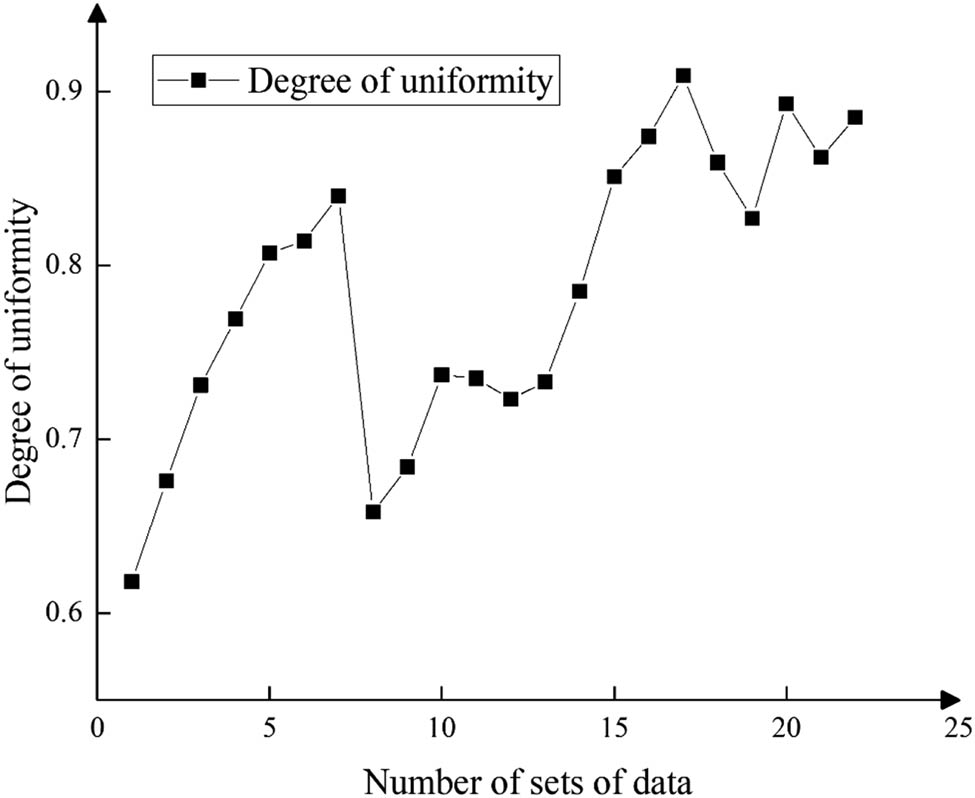
Degree of uniformity between the feasible and ideal scenarios.
The results offer a basis to optimize the properties of GM mixed with the NS and PVA fiber. This result is more consistent with the previous research results. Zhang et al. (62) discovered that the flowability of geopolymer composites reduced but the thixotropy increased as PVA fiber content increased. Alomayri et al. (47) showed that 2% NS could optimize the mechanical properties of FA geopolymer composites reinforced with steel fiber. Guo et al. (63) prepared nano-modified composite geopolymer and found that the optimum admixture of NS was 1.5%. Gao et al. (64) showed that the toughening impact of GM was strongest when the PVA fiber content was 0.8% and that the toughening effect increased and then decreased with the admixture of NS, which, on the whole, agrees with the findings of this study. However, this research result also differs from some of the research results. For example, Malik et al. (65) found that FA-based polymers doped with 5% PVA fiber had better structural properties and durability. Li et al. (66) stated that 2.0% PVA fiber improved FA-based polymers against carbonization optimally, which is basically consistent with the conclusion obtained in this study that a dosage of 1.5–2.5% PVA fiber is better, and also concluded that 2.0% of PVA fiber results in the optimum freeze-thaw cycling performance of fiber-reinforced soil-polymer hybrid mortars (67). Therefore, this study is a guide for future experiments and for the optimization of the performance of GM with PVA fiber and the NS.
When considering all the indicators, the performance of the GM blending in the NS and PVA fiber is better when the NS dosage is 1.5–2.5% and the PVA fiber dosage is 0.8–1.2%, which is consistent with the direct analysis of experimental data. Besides, the indicators of the GM are optimized when the NS dosage is fixed at 1.0% and the PVA fiber dosage is 1.2%. Due to the differences in the methods of determining the weight indices, which may bring about differences in the methods of set pair analysis, the entropy weight method is the most used and most common method of determining the weights; therefore, this study indicates that set pair analysis can be well used to evaluate and optimize the performance of GMs with the NS and PVA fiber, which will serve as a good guide for the selection of matching ratios in fabrication of GMs with NS and PVA fiber in future experiments.
5 Conclusion
The properties of GM with SiO2 nanoparticles and PVA fiber were optimized using set pair analysis. The workability, mechanical properties, durability, and fracture properties of the GMs with SiO2 nanoparticles and PVA fiber were investigated based on the following conclusions.
The GM blending in PVA fiber and the NS is studied as a system using the set pair analysis method and is considered in a comprehensive manner from the same, different, and opposite aspects. The degree of unity of the feasible solution and the ideal solution are calculated, and through comparison, a better mix proportion design is derived. The method thus achieves a comprehensive evaluation of qualitative and quantitative aspects and provides a good basis for future engineering practice, as well as a new method for assessing the effectiveness of the GM composites blending in PVA fiber and the NS.
In determining the weights, the entropy weighting coefficient method was introduced to objectively assign weights to the workability, mechanical properties, and durability of GM blending in PVA fiber and the NS. Wider dispersion of an index and its high influence on the overall evaluation are both correlated with a smaller entropy score for that index. The weights of each indicator derived from the entropy weighting coefficient method reduce subjective arbitrariness, improve the evaluation accuracy, and make the conclusions obtained from the set pair analysis method more scientific and reasonable.
When the dosage of NS is fixed, the comprehensive performance of GM blending in PVA fiber becomes increasingly superior with the increase in the dosage of PVA fiber. Besides, while the amount of PVA fiber dosage is 0.8–1.2%, the performance of the GM blending in the NS and PVA fiber is better. However, when the dosage of PVA fiber is fixed, as the NS dosage increases, the comprehensive performance of NS reinforced GM increases first and then decreases. The performance of the GM blending in the NS and PVA fiber is better when the amount of the NS dosage is 1.5–2.5%. When the dosage of PVA fiber is 1.2%, the GM exhibits the optimum comprehensive performance with the dosage of NS fixed at 1.0%.
-
Funding information: This project was supported by the National Natural Science Foundation of China (Grant Nos. 52278283 and U2040224), Natural Science Foundation of Henan Province of China (Grant No. 212300410018), and Project Special Funding of Yellow River Laboratory (Grant No. YRL22LT02).
-
Author contributions: Peng Zhang: conceptualization, writing – review and editing, and funding acquisition; Xuemei Zhang: formal analysis, writing – original draft, and methodology; Peng Yuan: data curation, visualization, and writing – review and editing; Shaowei Hu: writing – review and editing, and validation.
-
Conflict of interest: The authors state no conflict of interest.
-
Data availability statement: The data presented in this study are available on request from the corresponding author.
References
(1) Chung KL, Wang LL, Ghannam M, Guan MX, Luo JL. Prediction of concrete compressive strength based on early-age effective conductivity measurement. J Build Eng. 2021;35:101998.10.1016/j.jobe.2020.101998Search in Google Scholar
(2) Wang L, Lu X, Liu L, Xiao J, Zhang G, Guo F, et al. Influence of MgO on the hydration and shrinkage behavior of low heat Portland cement-based materials via pore structural and fractal analysis. Fractal Fract. 2021;5:164.10.3390/fractalfract6010040Search in Google Scholar
(3) Zhang P, Wang C, Gao Z, Wang F. A review on fracture properties of steel fiber reinforced concrete. J Build Eng. 2023;67:105975.10.1016/j.jobe.2023.105975Search in Google Scholar
(4) Golewski GL. Fracture performance of cementitious composites based on quaternary blended cements. Mater. 2022;15(17):6023.10.3390/ma15176023Search in Google Scholar PubMed PubMed Central
(5) Zheng Y, Zhang Y, Zhuo J, Zhang P, Hu S. Mesoscale synergistic effect mechanism of aggregate grading and specimen size on compressive strength of concrete with large aggregate size. Constr Build Mater. 2023;367:130346.10.1016/j.conbuildmat.2023.130346Search in Google Scholar
(6) Zheng YX, Zhuo JB, Zhang P, Ma M. Mechanical properties and meso-microscopic mechanism of basalt fiber-reinforced recycled aggregate concrete. J Clean Prod. 2022;370:133555.10.1016/j.jclepro.2022.133555Search in Google Scholar
(7) Golewski GL, Szostak B. Strength and microstructure of composites with cement matrixes modified by fly ash and active seeds of CSH phase. Struct Eng Mech. 2022;82(4):543–56.Search in Google Scholar
(8) Guo XL, Xiong GY. Resistance of fiber-reinforced fly ash-steel slag based geopolymer mortar to sulfate attack and drying-wetting cycles. Constr Build Mater. 2022;269:121326.10.1016/j.conbuildmat.2020.121326Search in Google Scholar
(9) Xu Z, Wu J, Zhao M, Bai ZJ, Wang KY, Miao JW, et al. Mechanical and microscopic properties of fiber-reinforced coal gangue-based geopolymer concrete. Nanotechnol Rev. 2022;11(1):526–43.10.1515/ntrev-2022-0033Search in Google Scholar
(10) Zhang P, Sun X, Wang F, Wang J. Mechanical properties and durability of geopolymer recycled aggregate concrete: A review. Polymers. 2023;15(3):615.10.3390/polym15030615Search in Google Scholar PubMed PubMed Central
(11) Korniejenko K, Lin WT, Simonova H. Mechanical properties of short polymer fiber-reinforced geopolymer composites. J Compos Sci. 2020;4(3):128.10.3390/jcs4030128Search in Google Scholar
(12) Liew YM, Heah CY, Li LY, Jaya NA, Abdullah MNA, Jin TS, et al. Formation of one-part-mixing geopolymers and geopolymer ceramics from geopolymer powder. Constr Build Mater. 2017;156:9–18.10.1016/j.conbuildmat.2017.08.110Search in Google Scholar
(13) Xu Z, Huang ZP, Liu CJ, Deng H, Deng XW, Hui D, et al. Research progress on key problems of nanomaterials-modified geopolymer concrete. Nanotechnol Rev. 2021;10(1):779–92.10.1515/ntrev-2021-0056Search in Google Scholar
(14) Wang L, Zeng X, Li Y, Yang H, Tang S. Influences of MgO and PVA fiber on the abrasion and cracking resistance, pore structure and fractal features of hydraulic concrete. Fractal Fract. 2022;6:674.10.3390/fractalfract6110674Search in Google Scholar
(15) Wang L, Luo R, Zhang W, Jin M, Tang S. Effects of fineness and content of phosphorus slag on cement hydration, permeability, pore structure and fractal dimension of concrete. Fractals. 2022;29:2140004.10.1142/S0218348X21400041Search in Google Scholar
(16) Liu CJ, Huang XC, Wu YY, Deng XW, Liu J, Zheng ZL, et al. Review on the research progress of cement-based and geopolymer materials modified by graphene and graphene oxide. Nanotechnol Rev. 2020;9(1):155–69.10.1515/ntrev-2020-0014Search in Google Scholar
(17) Shaikh FUA, Vimonsatit V. Compressive strength of fly-ash-based geopolymer concrete at elevated temperatures. Fire Mater. 2015;39(2):174–88.10.1002/fam.2240Search in Google Scholar
(18) Gunasekara C, Law DW, Setunge S. Long term permeation properties of different fly ash geopolymer concretes. Constr Build Mater. 2016;124:352–62.10.1016/j.conbuildmat.2016.07.121Search in Google Scholar
(19) Zhang D, Xu J, Sun F, Xu Z. Study on high-temperature behavior of coal gangue-based geopolymer concrete beams. Adv Civ Eng. 2022;2022:1615271.10.1155/2022/1615271Search in Google Scholar
(20) Castillo H, Callado H, Droguett T, Vesely M. State of the art of geopolymers: A review. E-polymers. 2022;22(1):108–24.10.1515/epoly-2022-0015Search in Google Scholar
(21) Sate V, Sathonsaowaphak A, Chindaprasirt P. Resistance of lignite bottom ash geopolymer mortar to sulfate and sulfuric acid attack. Cem Concr Comp. 2012;34(5):700–8.10.1016/j.cemconcomp.2012.01.010Search in Google Scholar
(22) Wang C, Li S, Bai Y, Milestone NB. Effect of different calcium materials on some properties of metakaolin-based geopolymer mortar. Proceeding of the 6th International Symposium on Cement and Concrete/Canmet-ACI International Symposium on Concrete Technology for Sustainable Development. Xi’an, China; 2006 Sep. p. 655–9.Search in Google Scholar
(23) Temuujin J, Ruessen A, MacKenzie KJD. Preparation and characterisation of fly ash based geopolymer mortars. Constr Build Mater. 2010;24(10):1906–10.10.1016/j.conbuildmat.2010.04.012Search in Google Scholar
(24) He PG, Jia DC, Lin TS, Wang MR, Zhou Y. Effects of high-temperature heat treatment on the mechanical properties of unidirectional carbon fiber reinforced geopolymer composites. Ceram Int. 2010;36(4):1447–53.10.1016/j.ceramint.2010.02.012Search in Google Scholar
(25) Ji T, Ji GJ, Wang SJ, Liu YX. Influence of polyvinyl alcohol fiber on properties of hydraulic abrasion-resistant concrete. J Southeast Univ Nat Sci. 2010;40:192–6.Search in Google Scholar
(26) Hamoush S, Abu-Lebdeh T, Cummin T. Deflection behavior of concrete beams reinforced with PVA micro-fibers. Constr Build Mater. 2010;24(11):2285–93.10.1016/j.conbuildmat.2010.04.027Search in Google Scholar
(27) Zhang P, Wang WS, Lv YJ, Gao Z, Dai SY. Effect of polymer coatings on the permeability and chloride ion penetration resistances of nano-particles and fibers-modified cementitious composites. Polymers-Basel. 2022;14(16):3258.10.3390/polym14163258Search in Google Scholar PubMed PubMed Central
(28) Kan LL, Wang F, Zhang Z, Kabala W, Zhao YJ. Mechanical properties of high ductile alkali-activated fiber reinforced composites with different curing ages. Constr Build Mater. 2021;306:124833.10.1016/j.conbuildmat.2021.124833Search in Google Scholar
(29) Gao Z, Zhang P, Guo J, Wang K. Bonding behavior of concrete matrix and alkali-activated mortar incorporating nano-SiO2 and polyvinyl alcohol fiber: Theoretical analysis and prediction model. Ceram Int. 2021;47(22):31638–49.10.1016/j.ceramint.2021.08.044Search in Google Scholar
(30) Zhuang ML, Sun CZ, Gao L, Qian Y, Chen JB, Zhang WH, et al. Investigation on drift ratio limits of PVA fiber reinforced concrete columns under different performance levels based on the Kunnath damage model. Case Stud Constr Mater. 2022;17:e01403.10.1016/j.cscm.2022.e01403Search in Google Scholar
(31) Korniejenko K, Kejzlar P, Louda P. The influence of the material structure on the mechanical properties of geopolymer composites reinforced with short fibers obtained with additive technologies. Int J Mol Sci. 2022;23(4):2023.10.3390/ijms23042023Search in Google Scholar PubMed PubMed Central
(32) Zheng Y, Zhuo J, Zhang P. A review on durability of nano-SiO2 and basalt fiber modified recycled aggregate concrete. Constr Build Mater. 2021;304:124659.10.1016/j.conbuildmat.2021.124659Search in Google Scholar
(33) Zhang P, Wei SY, Wu JJ, Zhang Y, Zheng YX. Investigation of mechanical properties of PVA fiber-reinforced cementitious composites under the coupling effect of wet-thermal and chloride salt environment. Case Stud Constr Mater. 2022;17:e01325.10.1016/j.cscm.2022.e01325Search in Google Scholar
(34) Skourup BN, Erdogmus E. Polyvinyl alcohol fiber-reinforced mortars for masonry applications. Aci Mater J. 2010;107(1):57–64.10.14359/51663466Search in Google Scholar
(35) Liu SG, He C, Yan CW, Zhao XM. Experimental study on early anti-cracking properties of polyvinyl alcohol fiber reinforced cementitious composites. International Conference on Mechanical Engineering and Green Manufacturing. Xiangtan, China; 2010 Nov. p. 1445–8.10.4028/www.scientific.net/AMM.34-35.1445Search in Google Scholar
(36) Date S, Kasai T. A study on mechanical properties of PVA fiber reinforced super-lightweight mortar. Int J Mod Phys B. 2010;24:2543–8.10.1142/S0217979210065234Search in Google Scholar
(37) Deng ZM, Yang ZF, Bian J, Pan XX, Wu GL, Guo F, et al. Engineering properties of PVA fibre-reinforced geopolymer mortar containing waste oyster shells. Mater. 2022;15(19):7013.10.3390/ma15197013Search in Google Scholar PubMed PubMed Central
(38) Kaya M, Koksal F. Influences of high temperature on mechanical properties of fly ash based geopolymer mortars reinforced with PVA fiber. Rev Constr. 2021;20(2):393–406.10.7764/RDLC.20.2.393Search in Google Scholar
(39) Zhang P, Su J, Guo JJ, Hu SW. Influence of carbon nanotube on properties of concrete: A review. Constr Build Mater. 2023;369:130522.10.1016/j.conbuildmat.2023.130388Search in Google Scholar
(40) Golewski GL, Szostak B. Strengthening the very early-age structure of cementitious composites with coal fly ash via incorporating a novel nanoadmixture based on C-S-H phase activators. Constr Build Mater. 2021;312:125426.10.1016/j.conbuildmat.2021.125426Search in Google Scholar
(41) Murthy AR, Ganesh P. Effect of steel fibres and nano silica on fracture properties of medium strength concrete. Adv Concr Constr. 2019;7(3):143–50.Search in Google Scholar
(42) Zhang P, Zhang XM, Zhang YM, Zheng YX, Wang TY. Gray correlation analysis of factors influencing compressive strength and durability of nano-SiO2 and PVA fiber reinforced geopolymer mortar. Nanotechnol Rev. 2022;11(3):3195–206.10.1515/ntrev-2022-0493Search in Google Scholar
(43) Zhang P, Wang M, Han X, Zheng Y. A review on properties of cement-based composites doped with graphene. J Build Eng. 2023;70:106367.10.1016/j.jobe.2023.106367Search in Google Scholar
(44) Golewski GL. Combined effect of coal fly ash (CFA) and nanosilica (nS) on the strength parameters and microstructural properties of eco-friendly concrete. Energies. 2023;16(1):452.10.3390/en16010452Search in Google Scholar
(45) Durak U, Karahan O, Uzal B, Ilkentapar S, Atis CD. Influence of nano SiO2 and nano CaCO3 particles on strength, workability, and microstructural properties of fly ash-based geopolymer. Struct Concr. 2020;22:E352–67. 10.1002/suco.201900479.Search in Google Scholar
(46) Ganesh P, Murthy AR, Reheman MS. Mechanical durability and fracture properties of nano-modified FA/GGBS geopolymer mortar. Mag Concr Res. 2020;72(4):207–16.10.1680/jmacr.18.00059Search in Google Scholar
(47) Alomayri T, Raza A, Shaikh F. Effect of nano SiO2 on mechanical properties of micro-steel fibers reinforced geopolymer composites. Ceram Int. 2021;47(23):33444–53.10.1016/j.ceramint.2021.08.251Search in Google Scholar
(48) Mu S, Liu JZ, Liu JP, Wang YC, Shi L, Jiang Q. Property and microstructure of waterborne self-setting geopolymer coating: optimization effect of SiO2/Na2O molar ratio. Minerals-Basel. 2018;8(4):162.10.3390/min8040162Search in Google Scholar
(49) Gao K, Lin KL, Wang DY, Hwang CL, Tuan BLA, Shiu HS, et al. Effect of nano-SiO2 on the alkali-activated characteristics of metakaolin-based geopolymers. Constr Build Mater. 2013;48:441–7.10.1016/j.conbuildmat.2013.07.027Search in Google Scholar
(50) Zhang P, Gao Z, Wang J, Guo JJ, Wang TY. Influencing factors analysis and optimized prediction model for rheology and flowability of nano-SiO2 and PVA fiber reinforced alkali-activated composites. J Clean Prod. 2022;366:132988.10.1016/j.jclepro.2022.132988Search in Google Scholar
(51) Xu SL, Malik MA, Qi Z, Huang BT, Li QH, Sarkar M. Influence of the PVA fibers and SiO2 NPs on the structural properties of fly ash based sustainable geopolymer. Constr Build Mater. 2018;164:238–45.10.1016/j.conbuildmat.2017.12.227Search in Google Scholar
(52) Zhang P, Han X, Hu SW, Wang J, Wang TY. High-temperature behavior of polyvinyl alcohol fiber-reinforced metakaolin/fly ash-based geopolymer mortar. Compos Part B-Eng. 2022;244:110171.10.1016/j.compositesb.2022.110171Search in Google Scholar
(53) Huang J, Li W, Huang D, Wang L, Tang SW. Fractal analysis on pore structure and hydration of magnesium oxysulfate cements by first principle, thermodynamic and microstructure-based methods. Fractal Fract. 2021;5:164.10.3390/fractalfract5040164Search in Google Scholar
(54) Yoon JY, Kim H, Lee YJ, Sim SH. Prediction model for mechanical properties of lightweight aggregate concrete using artificial neural network. Mater. 2018;12(17):2678.10.3390/ma12172678Search in Google Scholar PubMed PubMed Central
(55) Ahmed HU, Abdalla AA, Mohammed AS, Mohammed AA, Mosavi A. Statistical methods for modeling the compressive strength of geopolymer mortar. Mater. 2022;15(5):1868.10.3390/ma15051868Search in Google Scholar PubMed PubMed Central
(56) Ghafoor MT, Fujiyama C, Maekawa K. Mix design processing for self compacting geopolymer mortar. J Adv Concr Technol. 2021;19(11):1133–47.10.3151/jact.19.1133Search in Google Scholar
(57) Wang HD, Zeng ZX. Optimization of recycled high performance concrete base on set pair analysis. Sichuan Build Sci. 2012;38(3):230–3.Search in Google Scholar
(58) Wang WC. Study on durability of nano-particles and fiber reinforced geopolymer mortar [dissertation]. Zhengzhou: Zhengzhou University; 2020.Search in Google Scholar
(59) Test method for long-term performance and durability of ordinary concrete (GB/T 50082-2009). China Architecture and Building Press; 2009.Search in Google Scholar
(60) Wang KX, Zhang P, Guo JJ, Gao Z. Single and synergistic enhancement on durability of geopolymer mortar by polyvinyl alcohol fiber and nano-SiO2. J Mater Res Technol. 2021;15:1801–14.10.1016/j.jmrt.2021.09.036Search in Google Scholar
(61) Liu YL, Hu JP, Zhou CY. Safety evaluation of embankment project based on information entropy and set pair analysis. Water Resour Power. 2010;28(10):96–8.Search in Google Scholar
(62) Zhang P, Wei SY, Zheng YX, Wang F, Hu SW. Effect of single and synergistic reinforcement of PVA fiber and nano-SiO2 on workability and compressive strength of geopolymer composites. Polymers. 2022;14(18):3765.10.3390/polym14183765Search in Google Scholar PubMed PubMed Central
(63) Guo XL, Hu WP, Shi HS. Microstructure and self-solidification/stabilization (S/S) of heavy metals of nano-modified CFA-MSWIFA composite geopolymers. Constr Build Mater. 2014;56:81–6.10.1016/j.conbuildmat.2014.01.062Search in Google Scholar
(64) Gao Z, Zhang P, Wang J, Wang KX, Zhang TH. Interfacial properties of geopolymer mortar and concrete substrate: Effect of polyvinyl alcohol fiber and nano-SiO2 contents. Constr Build Mater. 2022;315:125735.10.1016/j.conbuildmat.2021.125735Search in Google Scholar
(65) Malik MA, Sarkar M, Xu SL, Li QH. Effect of PVA/SiO2 NPs additive on the structural, durability, and fire resistance properties of geopolymers. Appl Sci. 2019;9(9):1953.10.3390/app9091953Search in Google Scholar
(66) Li FP, Chen DF, Yang ZM, Lu YY, Zhang HJ, Li S. Effect of mixed fibers on fly ash-based geopolymer resistance against carbonation. Constr Build Mater. 2022;322:126394.10.1016/j.conbuildmat.2022.126394Search in Google Scholar
(67) Li FP, Chen DF, Lu YY, Zhang HJ, Li S. Influence of mixed fibers on fly ash based geopolymer resistance against freeze-thaw cycles. J Non-Cryst Solids. 2022;584:121517.10.1016/j.jnoncrysol.2022.121517Search in Google Scholar
© 2023 the author(s), published by De Gruyter
This work is licensed under the Creative Commons Attribution 4.0 International License.
Articles in the same Issue
- Research Articles
- Chitosan nanocomposite film incorporating Nigella sativa oil, Azadirachta indica leaves’ extract, and silver nanoparticles
- Effect of Zr-doped CaCu3Ti3.95Zr0.05O12 ceramic on the microstructure, dielectric properties, and electric field distribution of the LDPE composites
- Effects of dry heating, acetylation, and acid pre-treatments on modification of potato starch with octenyl succinic anhydride (OSA)
- Loading conditions impact on the compression fatigue behavior of filled styrene butadiene rubber
- Characterization and compatibility of bio-based PA56/PET
- Study on the aging of three typical rubber materials under high- and low-temperature cyclic environment
- Numerical simulation and experimental research of electrospun polyacrylonitrile Taylor cone based on multiphysics coupling
- Experimental investigation of properties and aging behavior of pineapple and sisal leaf hybrid fiber-reinforced polymer composites
- Influence of temperature distribution on the foaming quality of foamed polypropylene composites
- Enzyme-catalyzed synthesis of 4-methylcatechol oligomer and preliminary evaluations as stabilizing agent in polypropylene
- Molecular dynamics simulation of the effect of the thermal and mechanical properties of addition liquid silicone rubber modified by carbon nanotubes with different radii
- Incorporation of poly(3-acrylamidopropyl trimethylammonium chloride-co-acrylic acid) branches for good sizing properties and easy desizing from sized cotton warps
- Effect of matrix composition on properties of polyamide 66/polyamide 6I-6T composites with high content of continuous glass fiber for optimizing surface performance
- Preparation and properties of epoxy-modified thermosetting phenolic fiber
- Thermal decomposition reaction kinetics and storage life prediction of polyacrylate pressure-sensitive adhesive
- Effect of different proportions of CNTs/Fe3O4 hybrid filler on the morphological, electrical and electromagnetic interference shielding properties of poly(lactic acid) nanocomposites
- Doping silver nanoparticles into reverse osmosis membranes for antibacterial properties
- Melt-blended PLA/curcumin-cross-linked polyurethane film for enhanced UV-shielding ability
- The affinity of bentonite and WO3 nanoparticles toward epoxy resin polymer for radiation shielding
- Prolonged action fertilizer encapsulated by CMC/humic acid
- Preparation and experimental estimation of radiation shielding properties of novel epoxy reinforced with Sb2O3 and PbO
- Fabrication of polylactic acid nanofibrous yarns for piezoelectric fabrics
- Copper phenyl phosphonate for epoxy resin and cyanate ester copolymer with improved flame retardancy and thermal properties
- Synergistic effect of thermal oxygen and UV aging on natural rubber
- Effect of zinc oxide suspension on the overall filler content of the PLA/ZnO composites and cPLA/ZnO composites
- The role of natural hybrid nanobentonite/nanocellulose in enhancing the water resistance properties of the biodegradable thermoplastic starch
- Performance optimization of geopolymer mortar blending in nano-SiO2 and PVA fiber based on set pair analysis
- Preparation of (La + Nb)-co-doped TiO2 and its polyvinylidene difluoride composites with high dielectric constants
- Effect of matrix composition on the performance of calcium carbonate filled poly(lactic acid)/poly(butylene adipate-co-terephthalate) composites
- Low-temperature self-healing polyurethane adhesives via dual synergetic crosslinking strategy
- Leucaena leucocephala oil-based poly malate-amide nanocomposite coating material for anticorrosive applications
- Preparation and properties of modified ammonium polyphosphate synergistic with tris(2-hydroxyethyl) isocynurate for flame-retardant LDPE
- Thermal response of double network hydrogels with varied composition
- The effect of coated calcium carbonate using stearic acid on the recovered carbon black masterbatch in low-density polyethylene composites
- Investigation of MXene-modified agar/polyurethane hydrogel elastomeric repair materials with tunable water absorption
- Damping performance analysis of carbon black/lead magnesium niobite/epoxy resin composites
- Molecular dynamics simulations of dihydroxylammonium 5,5′-bistetrazole-1,1′-diolate (TKX-50) and TKX-50-based PBXs with four energetic binders
- Preparation and characterization of sisal fibre reinforced sodium alginate gum composites for non-structural engineering applications
- Study on by-products synthesis of powder coating polyester resin catalyzed by organotin
- Ab initio molecular dynamics of insulating paper: Mechanism of insulating paper cellobiose cracking at transient high temperature
- Effect of different tin neodecanoate and calcium–zinc heat stabilizers on the thermal stability of PVC
- High-strength polyvinyl alcohol-based hydrogel by vermiculite and lignocellulosic nanofibrils for electronic sensing
- Impacts of micro-size PbO on the gamma-ray shielding performance of polyepoxide resin
- Influence of the molecular structure of phenylamine antioxidants on anti-migration and anti-aging behavior of high-performance nitrile rubber composites
- Fiber-reinforced polyvinyl alcohol hydrogel via in situ fiber formation
- Preparation and performance of homogenous braids-reinforced poly (p-phenylene terephthamide) hollow fiber membranes
- Synthesis of cadmium(ii) ion-imprinted composite membrane with a pyridine functional monomer and characterization of its adsorption performance
- Impact of WO3 and BaO nanoparticles on the radiation shielding characteristics of polydimethylsiloxane composites
- Comprehensive study of the radiation shielding feature of polyester polymers impregnated with iron filings
- Preparation and characterization of polymeric cross-linked hydrogel patch for topical delivery of gentamicin
- Mechanical properties of rCB-pigment masterbatch in rLDPE: The effect of processing aids and water absorption test
- Pineapple fruit residue-based nanofibre composites: Preparation and characterizations
- Effect of natural Indocalamus leaf addition on the mechanical properties of epoxy and epoxy-carbon fiber composites
- Utilization of biosilica for energy-saving tire compounds: Enhancing performance and efficiency
- Effect of capillary arrays on the profile of multi-layer micro-capillary films
- A numerical study on thermal bonding with preheating technique for polypropylene microfluidic device
- Development of modified h-BN/UPE resin for insulation varnish applications
- High strength, anti-static, thermal conductive glass fiber/epoxy composites for medical devices: A strategy of modifying fibers with functionalized carbon nanotubes
- Effects of mechanical recycling on the properties of glass fiber–reinforced polyamide 66 composites in automotive components
- Bentonite/hydroxyethylcellulose as eco-dielectrics with potential utilization in energy storage
- Study on wall-slipping mechanism of nano-injection polymer under the constant temperature fields
- Synthesis of low-VOC unsaturated polyester coatings for electrical insulation
- Enhanced apoptotic activity of Pluronic F127 polymer-encapsulated chlorogenic acid nanoparticles through the PI3K/Akt/mTOR signaling pathway in liver cancer cells and in vivo toxicity studies in zebrafish
- Preparation and performance of silicone-modified 3D printing photosensitive materials
- A novel fabrication method of slippery lubricant-infused porous surface by thiol-ene click chemistry reaction for anti-fouling and anti-corrosion applications
- Development of polymeric IPN hydrogels by free radical polymerization technique for extended release of letrozole: Characterization and toxicity evaluation
- Tribological characterization of sponge gourd outer skin fiber-reinforced epoxy composite with Tamarindus indica seed filler addition using the Box–Behnken method
- Stereocomplex PLLA–PBAT copolymer and its composites with multi-walled carbon nanotubes for electrostatic dissipative application
- Enhancing the therapeutic efficacy of Krestin–chitosan nanocomplex for cancer medication via activation of the mitochondrial intrinsic pathway
- Variation in tungsten(vi) oxide particle size for enhancing the radiation shielding ability of silicone rubber composites
- Damage accumulation and failure mechanism of glass/epoxy composite laminates subjected to repeated low velocity impacts
- Gamma-ray shielding analysis using the experimental measurements for copper(ii) sulfate-doped polyepoxide resins
- Numerical simulation into influence of airflow channel quantities on melt-blowing airflow field in processing of polymer fiber
- Cellulose acetate oleate-reinforced poly(butylene adipate-co-terephthalate) composite materials
- Radiation shielding capability and exposure buildup factor of cerium(iv) oxide-reinforced polyester resins
- Recyclable polytriazole resins with high performance based on Diels-Alder dynamic covalent crosslinking
- Adsorption and recovery of Cr(vi) from wastewater by Chitosan–Urushiol composite nanofiber membrane
- Comprehensive performance evaluation based on electromagnetic shielding properties of the weft-knitted fabrics made by stainless steel/cotton blended yarn
- Review Articles
- Preparation and application of natural protein polymer-based Pickering emulsions
- Wood-derived high-performance cellulose structural materials
- Flammability properties of polymers and polymer composites combined with ionic liquids
- Polymer-based nanocarriers for biomedical and environmental applications
- A review on semi-crystalline polymer bead foams from stirring autoclave: Processing and properties
- Rapid Communication
- Preparation and characterization of magnetic microgels with linear thermosensitivity over a wide temperature range
- Special Issue: Biodegradable and bio-based polymers: Green approaches (Guest Editors: Kumaran Subramanian, A. Wilson Santhosh Kumar, and Venkatajothi Ramarao)
- Synthesis and characterization of proton-conducting membranes based on bacterial cellulose and human nail keratin
- Fatigue behaviour of Kevlar/carbon/basalt fibre-reinforced SiC nanofiller particulate hybrid epoxy composite
- Effect of citric acid on thermal, phase morphological, and mechanical properties of poly(l-lactide)-b-poly(ethylene glycol)-b-poly(l-lactide)/thermoplastic starch blends
- Dose-dependent cytotoxicity against lung cancer cells via green synthesized ZnFe2O4/cellulose nanocomposites
Articles in the same Issue
- Research Articles
- Chitosan nanocomposite film incorporating Nigella sativa oil, Azadirachta indica leaves’ extract, and silver nanoparticles
- Effect of Zr-doped CaCu3Ti3.95Zr0.05O12 ceramic on the microstructure, dielectric properties, and electric field distribution of the LDPE composites
- Effects of dry heating, acetylation, and acid pre-treatments on modification of potato starch with octenyl succinic anhydride (OSA)
- Loading conditions impact on the compression fatigue behavior of filled styrene butadiene rubber
- Characterization and compatibility of bio-based PA56/PET
- Study on the aging of three typical rubber materials under high- and low-temperature cyclic environment
- Numerical simulation and experimental research of electrospun polyacrylonitrile Taylor cone based on multiphysics coupling
- Experimental investigation of properties and aging behavior of pineapple and sisal leaf hybrid fiber-reinforced polymer composites
- Influence of temperature distribution on the foaming quality of foamed polypropylene composites
- Enzyme-catalyzed synthesis of 4-methylcatechol oligomer and preliminary evaluations as stabilizing agent in polypropylene
- Molecular dynamics simulation of the effect of the thermal and mechanical properties of addition liquid silicone rubber modified by carbon nanotubes with different radii
- Incorporation of poly(3-acrylamidopropyl trimethylammonium chloride-co-acrylic acid) branches for good sizing properties and easy desizing from sized cotton warps
- Effect of matrix composition on properties of polyamide 66/polyamide 6I-6T composites with high content of continuous glass fiber for optimizing surface performance
- Preparation and properties of epoxy-modified thermosetting phenolic fiber
- Thermal decomposition reaction kinetics and storage life prediction of polyacrylate pressure-sensitive adhesive
- Effect of different proportions of CNTs/Fe3O4 hybrid filler on the morphological, electrical and electromagnetic interference shielding properties of poly(lactic acid) nanocomposites
- Doping silver nanoparticles into reverse osmosis membranes for antibacterial properties
- Melt-blended PLA/curcumin-cross-linked polyurethane film for enhanced UV-shielding ability
- The affinity of bentonite and WO3 nanoparticles toward epoxy resin polymer for radiation shielding
- Prolonged action fertilizer encapsulated by CMC/humic acid
- Preparation and experimental estimation of radiation shielding properties of novel epoxy reinforced with Sb2O3 and PbO
- Fabrication of polylactic acid nanofibrous yarns for piezoelectric fabrics
- Copper phenyl phosphonate for epoxy resin and cyanate ester copolymer with improved flame retardancy and thermal properties
- Synergistic effect of thermal oxygen and UV aging on natural rubber
- Effect of zinc oxide suspension on the overall filler content of the PLA/ZnO composites and cPLA/ZnO composites
- The role of natural hybrid nanobentonite/nanocellulose in enhancing the water resistance properties of the biodegradable thermoplastic starch
- Performance optimization of geopolymer mortar blending in nano-SiO2 and PVA fiber based on set pair analysis
- Preparation of (La + Nb)-co-doped TiO2 and its polyvinylidene difluoride composites with high dielectric constants
- Effect of matrix composition on the performance of calcium carbonate filled poly(lactic acid)/poly(butylene adipate-co-terephthalate) composites
- Low-temperature self-healing polyurethane adhesives via dual synergetic crosslinking strategy
- Leucaena leucocephala oil-based poly malate-amide nanocomposite coating material for anticorrosive applications
- Preparation and properties of modified ammonium polyphosphate synergistic with tris(2-hydroxyethyl) isocynurate for flame-retardant LDPE
- Thermal response of double network hydrogels with varied composition
- The effect of coated calcium carbonate using stearic acid on the recovered carbon black masterbatch in low-density polyethylene composites
- Investigation of MXene-modified agar/polyurethane hydrogel elastomeric repair materials with tunable water absorption
- Damping performance analysis of carbon black/lead magnesium niobite/epoxy resin composites
- Molecular dynamics simulations of dihydroxylammonium 5,5′-bistetrazole-1,1′-diolate (TKX-50) and TKX-50-based PBXs with four energetic binders
- Preparation and characterization of sisal fibre reinforced sodium alginate gum composites for non-structural engineering applications
- Study on by-products synthesis of powder coating polyester resin catalyzed by organotin
- Ab initio molecular dynamics of insulating paper: Mechanism of insulating paper cellobiose cracking at transient high temperature
- Effect of different tin neodecanoate and calcium–zinc heat stabilizers on the thermal stability of PVC
- High-strength polyvinyl alcohol-based hydrogel by vermiculite and lignocellulosic nanofibrils for electronic sensing
- Impacts of micro-size PbO on the gamma-ray shielding performance of polyepoxide resin
- Influence of the molecular structure of phenylamine antioxidants on anti-migration and anti-aging behavior of high-performance nitrile rubber composites
- Fiber-reinforced polyvinyl alcohol hydrogel via in situ fiber formation
- Preparation and performance of homogenous braids-reinforced poly (p-phenylene terephthamide) hollow fiber membranes
- Synthesis of cadmium(ii) ion-imprinted composite membrane with a pyridine functional monomer and characterization of its adsorption performance
- Impact of WO3 and BaO nanoparticles on the radiation shielding characteristics of polydimethylsiloxane composites
- Comprehensive study of the radiation shielding feature of polyester polymers impregnated with iron filings
- Preparation and characterization of polymeric cross-linked hydrogel patch for topical delivery of gentamicin
- Mechanical properties of rCB-pigment masterbatch in rLDPE: The effect of processing aids and water absorption test
- Pineapple fruit residue-based nanofibre composites: Preparation and characterizations
- Effect of natural Indocalamus leaf addition on the mechanical properties of epoxy and epoxy-carbon fiber composites
- Utilization of biosilica for energy-saving tire compounds: Enhancing performance and efficiency
- Effect of capillary arrays on the profile of multi-layer micro-capillary films
- A numerical study on thermal bonding with preheating technique for polypropylene microfluidic device
- Development of modified h-BN/UPE resin for insulation varnish applications
- High strength, anti-static, thermal conductive glass fiber/epoxy composites for medical devices: A strategy of modifying fibers with functionalized carbon nanotubes
- Effects of mechanical recycling on the properties of glass fiber–reinforced polyamide 66 composites in automotive components
- Bentonite/hydroxyethylcellulose as eco-dielectrics with potential utilization in energy storage
- Study on wall-slipping mechanism of nano-injection polymer under the constant temperature fields
- Synthesis of low-VOC unsaturated polyester coatings for electrical insulation
- Enhanced apoptotic activity of Pluronic F127 polymer-encapsulated chlorogenic acid nanoparticles through the PI3K/Akt/mTOR signaling pathway in liver cancer cells and in vivo toxicity studies in zebrafish
- Preparation and performance of silicone-modified 3D printing photosensitive materials
- A novel fabrication method of slippery lubricant-infused porous surface by thiol-ene click chemistry reaction for anti-fouling and anti-corrosion applications
- Development of polymeric IPN hydrogels by free radical polymerization technique for extended release of letrozole: Characterization and toxicity evaluation
- Tribological characterization of sponge gourd outer skin fiber-reinforced epoxy composite with Tamarindus indica seed filler addition using the Box–Behnken method
- Stereocomplex PLLA–PBAT copolymer and its composites with multi-walled carbon nanotubes for electrostatic dissipative application
- Enhancing the therapeutic efficacy of Krestin–chitosan nanocomplex for cancer medication via activation of the mitochondrial intrinsic pathway
- Variation in tungsten(vi) oxide particle size for enhancing the radiation shielding ability of silicone rubber composites
- Damage accumulation and failure mechanism of glass/epoxy composite laminates subjected to repeated low velocity impacts
- Gamma-ray shielding analysis using the experimental measurements for copper(ii) sulfate-doped polyepoxide resins
- Numerical simulation into influence of airflow channel quantities on melt-blowing airflow field in processing of polymer fiber
- Cellulose acetate oleate-reinforced poly(butylene adipate-co-terephthalate) composite materials
- Radiation shielding capability and exposure buildup factor of cerium(iv) oxide-reinforced polyester resins
- Recyclable polytriazole resins with high performance based on Diels-Alder dynamic covalent crosslinking
- Adsorption and recovery of Cr(vi) from wastewater by Chitosan–Urushiol composite nanofiber membrane
- Comprehensive performance evaluation based on electromagnetic shielding properties of the weft-knitted fabrics made by stainless steel/cotton blended yarn
- Review Articles
- Preparation and application of natural protein polymer-based Pickering emulsions
- Wood-derived high-performance cellulose structural materials
- Flammability properties of polymers and polymer composites combined with ionic liquids
- Polymer-based nanocarriers for biomedical and environmental applications
- A review on semi-crystalline polymer bead foams from stirring autoclave: Processing and properties
- Rapid Communication
- Preparation and characterization of magnetic microgels with linear thermosensitivity over a wide temperature range
- Special Issue: Biodegradable and bio-based polymers: Green approaches (Guest Editors: Kumaran Subramanian, A. Wilson Santhosh Kumar, and Venkatajothi Ramarao)
- Synthesis and characterization of proton-conducting membranes based on bacterial cellulose and human nail keratin
- Fatigue behaviour of Kevlar/carbon/basalt fibre-reinforced SiC nanofiller particulate hybrid epoxy composite
- Effect of citric acid on thermal, phase morphological, and mechanical properties of poly(l-lactide)-b-poly(ethylene glycol)-b-poly(l-lactide)/thermoplastic starch blends
- Dose-dependent cytotoxicity against lung cancer cells via green synthesized ZnFe2O4/cellulose nanocomposites
