Study and fire test of banana fibre reinforced composites with flame retardance properties
-
Raquel Ortega
 ,
Mario D. Monzón
,
Mario D. Monzón

Abstract
The interest in natural fibre reinforced composites is growing in industrial applications due to natural fibres being an attractive alternative to synthetic fibres. However, it is necessary to improve the fire behaviour of the material because natural fibres have a high combustibility. The objective of this work is to evaluate the fire resistance of polymer composites reinforced with natural fibre fabric, using magnesium hydroxide as flame retardant for the polymeric matrix and alkali treatment for the fibre. The types of fabric are banana, banana with cotton and linen; and long banana fibre has been used for the formation of a nonwoven. The fire test is carried out based on ISO 9773 standard and the effect of the additive has been studied, chemical treatment, type of fabric and number of layers. Through statistical analysis, it is concluded that the flame propagation speed has a decreasing relation with respect to the percentage, but it decreases the mechanical properties considerably. In addition, the number of layers and type of fabric influence the fire properties. Finally, it is concluded that composites reinforced with linen fabric have the best mechanical properties, but banana nonwoven with 60% additive has the best fire behaviour.
1 Introduction
Among the many environmental problems that exist nowadays, several studies improve the sustainability of industrial process and the management of the huge amount of polymer waste [1] produced in the world. Thanks to its renewable origin, recycling possibilities and biodegradability of its derivatives, natural fibres are suitable as reinforcement of polymeric materials in the industrial sector [2]. Natural fibres show as main advantages their low density, low cost and biodegradability; their main drawbacks in the polymer sector are related to their poor compatibility with polymer matrix, limited processing temperature and a high moisture sorption, among others [3]. In addition, it is necessary to know the interaction of these materials with fire because natural fibres have a high combustibility [4], not only to ensure its use in industries, but more importantly the protection of lives from the derived risks associated with fire. To improve the fire resistance in composites a number of strategies can be followed, from the reduction of the flammability of the matrix, the fibre reinforcement and/or the composite as a whole [5].
For the matrix, a wide number of papers about flame retardants and mineral fillers for polymers [5, 6, 7, 8, 9, 10, 11, 12, 13, 14] can be easily found. Flame retardants (FR) are substances that are added to combustible materials, such as plastic, to prevent fire or reduce the spread of fire to provide additional escape time. Therefore, the term “flame retardant” refers to a function, not a family of chemicals. These substances can be separated into several classes: halogenated, phosphorus based, nitrogen based, intumescent systems, boron based, silicon derivatives, inorganic substances and natural substances [12]. The additives based on halogenated compounds have been the most used ones as flame retardants for thermoplastics until the entry of new environmental regulations that restrict their use. This is due to these flame retardants being found at increasing levels in household dust, human blood and breast milk, and wild animals [15, 16, 17]. All these circumstances have led to the development of regulations in Europe such as
REACH, WEE or ROHS that limit and even prevent the use of many of these substances [12]. Nevertheless, these substances have been the most effective solutions to improve the behaviour of thermoplastic materials to fire; therefore, finding alternatives is a great challenge for the industry of flame retardants.
This work focuses on the assessment of flame retardants based on inorganic substances, specifically magnesium hydroxide, as a more sustainable and safer compound than halogenated ones. These retardants are the best-selling group of flame retardant additives, reaching 50% of commercially available flame retardants [12]. The main reasons for its high consumption are low price compared to other additives, low toxicity and low corrosion. In addition, smoke emissions in the presence of these additives are often reduced compared to other retardants [18]. Among the inorganic additives, aluminium hydroxide stands out as the most sold additive, with application in multiple thermoplastics, thermosets and elastomers with a process temperature below 200oC [19]. For applications where higher temperatures are required, such as in technical plastics, the use of magnesium hydroxide is very widespread due to its greater thermal stability.
The fireproofing action of the hydroxides is based on their thermal decomposition showed below [20]:
The flame retardant action of hydroxides is, therefore, due to three different processes:
The absorption of combustion energy as a result of the endothermic reaction.
The dilution of combustible gases by the water vapor released.
The formation of an oxide layer which isolates the material from heat and oxygen.
The aluminium or magnesium hydroxides have the great advantage of entering in action before the thermal decomposition of the polymeric material, which occurs between 350°C and 400oC for the most common thermoplastics [21], but high percentages of additive are necessary to obtain a fireproof material. In the case of magnesium hydroxide, percentages between 60 and 65% are necessary, hence the mechanical properties of the material are remarkably reduced [20,22].
As mentioned before, the flammability of composites can be reduced by fibre surface modification instead of incorporating FRs in the composites. The fire behaviour of natural fibres depends on fibre constituents, weight percentage and morphology of the fibre [23]. The main constituents of natural fibres that control their flammability are lignin and cellulose [24]. The decomposition of cellulose, between 260℃ and 350℃, results in the formation of flammable volatiles and gases, non-combustible gases, tars and some char [25]. Hemicellulose decomposes between 200℃ and 260℃ but forms more non-combustible gases and less tar than cellulose [5]. Lignin starts decomposing from about 160℃ until around 400℃; during thermal decomposition of lignin, relatively weak bonds break at lower temperature, whereas the cleavage of stronger bonds in the aromatic rings takes places at higher temperature [26]. In addition, Kozlowski observed using cone calorimetry technique that heat release rate (HRR) from bast fibres (flax, hemp) is considerably lower than from leaf fibres (abaca, cabuya) [27]. Fibres orientation is an important aspect to consider, because it results in less oxygen permeability through fibres and, as a consequence, in improved flame resistance [23]. The common FRs applied to natural fibres are ammonium phosphates, such as mono- or diammonium phosphates (DAP), ammonium bromide (where allowed), borax and boric acid, ammonium sulphamate, and sulphates [28]. The surface treatment apart from influencing mechanical properties of the fibre, has an impact on the thermal properties too. In this work the alkali treatment has been used because it improves the thermal stability of the fibre [29,30]. This process reduces the fibre diameter by removing the amorphous materials, such as hemicellulose, lignin and other waxy materials; from the fibre surface and increases its surface roughness. Thus, the removal of amorphous materials exposes cellulose and its hydroxyl groups, and leads to more hydroxyl bonding between fibre surface and polymer matrix thereby enhancing the mechanical and thermal properties of the fibre reinforced polymer composites [31].
This paper aims to study the effect of magnesium hydroxide and alkali treatment on the mechanical and fire properties of natural fibre reinforced composites. The mechanical and fire properties of all composites were investigated using standard procedures such as tensile, flexural, impact and UL-94 methods. Finally, the objective was to obtain a composite with good fire behaviour reinforced with natural fibre, which is highly combustible.
2 Material and methods
2.1 Materials
The polymeric matrix used is a homopolymer polypropylene (PPH 9069) in pellets kindly supplied by Total Polymers. The density in the solid state is 905 kg/m3 and the melt flow rate (230℃, 2.16 kg) is 25 g/10 min. The flame retardant used is magnesium hydroxide in powder purchased from VWR Chemicals with 99% assay and density (20℃) 2.34 g/cm3.
The fabrics of natural fibre used have been the result of the research project BANTEX (MAT2013-47393-C2-1-R). Banana fibres were extracted mechanically from banana tree pseudostems with a patented system by the University of Las Palmas de Gran Canaria (ULPGC) [32]. Subsequently, long fibre is chopped in a developed machine according to the requirements of the enzymatic treatment (45 mm). The conditions of enzymatic treatment and yarn and fabric obtaining have been optimized and performed as shown in previously published papers [33,34]. In summary, the yarn used had a linear mass density of 157 tex, with an average diameter of the banana yarn of 0.24 mm and the one twisted with multifilament of PP 0.36 mm. One of the fabrics was obtained with the banana/wool/PP yarn in the warp and the weft and the other one with a banana/wool/PP weft and cotton warp and the textile structures plain, basket and twill. The structure employed in this work is plain and the weight of the fabric is 279 g/m2 in banana plain, and 337 g/m2 banana/cotton plain [34]. In order to compare the fabrics developed in BANTEX project, it is used a commercial linen fabric LINEO FLAXPLY BT with a density of 200g/m2. In summary, the three types of fabric employed are banana, banana with cotton and linen (Figure 1). In addition, long banana fibre has been used for the formation of a nonwoven.
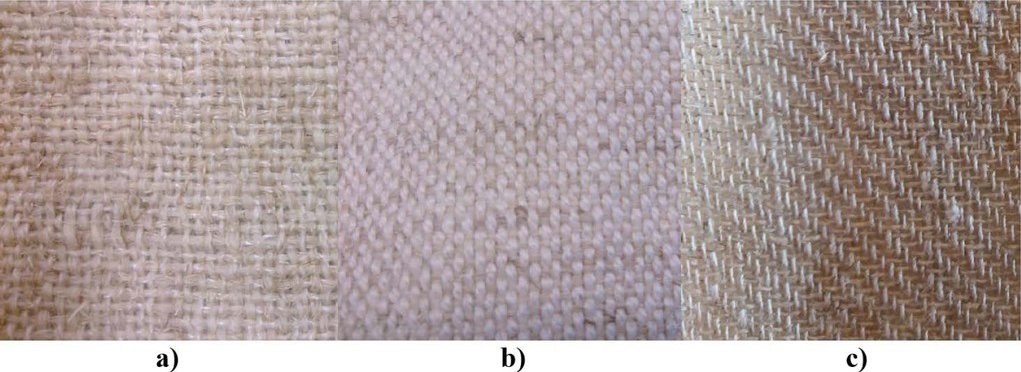
Natural fibre fabric: (a) Banana (b) Banana with cotton (c) Linen.
2.2 Samples preparation
In order to make a good mixture between the polypropylene and the flame retardant, the plastic must be grinded. The equipment used is the Ultra Centrifugal Mill ZM200 of Retsch able to reduce particles to sizes below 500μm. This procedure is rather complicated because the material tends to melt. Therefore, it is necessary to freeze the material for 24 hours, select low rotation speeds and feed the material slowly.
Plastic parts were manufactured by compression moulding, in a Collin hot plate press model P200 P/M in an aluminium mould with male and female parts and a cavity of 190x190 mm. The weight of the plate is 80g and the additive percentages used are 45 and 60% to determine the trendy of the flame propagation speed with the retardant load. The procedure consists of mixing the PP powder and the additive manually and then introduce them inside of the mould, but during the trials, it was observed that the distribution of the flame retardant additive worsen with the increase in the additive ration. For this reason, the compression moulding process conditions vary depending on the percentage used to improve the distribution. In the case of the parts without additives, a pressure of 10 bar is applied, for 45% 35 bar and for 60% 100 bar; the processing temperature is kept to 220℃ for all the plates.
Regarding to the natural fibre fabric, the textiles showed in Figure 1 are cut at 190x190mm2and then dried in an oven at 100℃ for 24 hours. The nonwoven was obtained from banana fibres with about 40 cm length. The procedure consists of separating and adapting the fibres to the mould dimensions, then by wetting them with distilled water and finally pressed and dried in a stove to keep their shape (Figure 2).

Banana nonwoven.
To increase the degradation temperature and improve the adhesion fibre-matrix, the fibre has been treated. The treatment used has been alkaline and it consists of immersing the fibre in a 1 N sodium hydroxide solution for 1 hour. Subsequently, the fibres are washed with distilled water and dried in an oven for 24 hours.
The linen composites made with linen fabric have two layers, one of plastic and one of fibre, and the manufacturing is carried out without mould. The layers are stacked and placed on the plate of the hot plate press between Teflon sheets, as it is shown in Figure 3, and the process conditions are 190℃ and 35 bar.
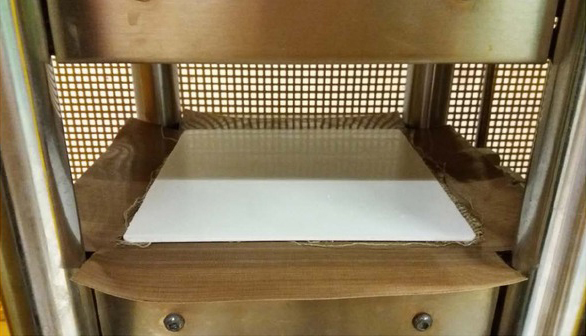
PP and linen fabric placed in the hot plate press for moulding.
On the other hand, the parts with banana nonwoven have four layers, two of plastic and two of fibres. In this case the mould is used to avoid the deformation of the nonwoven and the process conditions are 200℃ and 100bar. In addition to the specimens manufactured in this work, there have been added specimens from BANTEX project to observe the differences among fabrics and number of layers. The manufacturing and process conditions are shown in a previously published paper [35]. Table 1 summarizes the different formulations of composites that have been tested.
Formulations included in the study.
| Fabric type | % additive | % fibre | Number of fibre layers | Treatment | Sample code |
|---|---|---|---|---|---|
| Without reinforcement | 0 | 0 | 0 | No | PP |
| 45 | 0 | 0 | No | PP-45% | |
| 60 | 0 | 0 | No | PP-60% | |
| Linen fabric | 0 | 33 | 1 | No | LN200-01 |
| 0 | 36 | 2 | No | LN200-02 | |
| 0 | 41.8 | 2 | Yes | LN200-T-02 | |
| 0 | 39.7 | 3 | No | LN200-04 | |
| 45 | 15.5 | 1 | No | LN200-45% | |
| 45 | 18.2 | 1 | Yes | LN200-T-45% | |
| 60 | 8.8 | 1 | No | LN200-60% | |
| 60 | 10.3 | 1 | Yes | LN200-T-60% | |
| Banana nonwoven | 0 | 9 | 2 | No | NOTE |
| 0 | 8 | 2 | Yes | NOTE-T | |
| 45 | 8.5 | 2 | No | NOTE-45% | |
| 45 | 8.8 | 2 | Yes | NOTE-T-45% | |
| 60 | 9.2 | 2 | No | NOTE-60% | |
| 60 | 9.4 | 2 | Yes | NOTE-T-60% | |
| Banana fabric | 0 | 39.1 | 1 | No | PL-01 |
| 0 | 50.6 | 2 | No | PL-02 | |
| 0 | 50 | 3 | No | PL-03 | |
| Banana with cotton fabric | 0 | 39 | 1 | No | PL+AL-01 |
| 0 | 46.7 | 2 | No | PL+AL-02 | |
| 0 | 44.8 | 3 | No | PL+AL-03 |
2.3 Measurements
The plates were characterized under an Olympus BX51 optical microscope, to observe the additive distribution and the adhesion fibre-matrix.
Then, parts were mechanically characterised by tensile, flexural and impact tests, following ISO standards. Standardized test specimens were obtained by CNC machining. Tensile tests were conducted according to ISO 527 using a load cell PCE-FG1k Model YZC-516 500kg and a strain rate of 20 mm/min. Flexural testing was performed following ISO 178 standard, using the load cell PCE-FG1k and a test rate of 20 mm/min. Finally, Izod impact tests were conducted according to ISO 180 using an IZOD&CHARPY Impact Tester from LIYI-tech and a pendulum force of 5.5J.
The fire tests were based on ISO 9773 standard, using lab – made equipment (Figure 4). It consists of a combustion chamber equipped with a gas extraction device in the upper part. Inside there is a sample holder with a Hoffman clamp and a Bunsen burner. The lighter can be placed at 45 degrees to avoid the drops which are collected in a removable tray. In the test the residual flame time and the propagation speed were quantified. Also, a video recording device has been introduced inside the chamber and marks have been made to the specimens every 2 cm, for the calculation of the propagation speed.
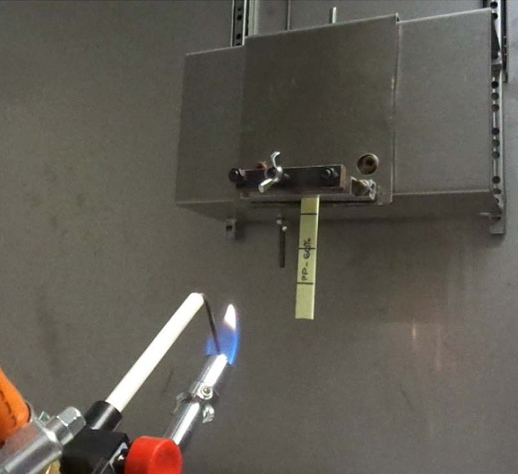
Fire test equipment.
Finally, the data obtained in the mechanical and fire tests have been subjected to a statistical study to find the effect of the flame retardant additive and the treatment of the fibres, among others. Analysis of variance, multi-rank test and Kruskal-Wallis have been carried out.
Ethical approval: The conducted research is not related to either human or animal use.
3 Results and discussion
3.1 Optical microscopy
As a consequence of the chemical treatment shrinkage in the fabric is observed, which may hinder the introduction of the plastic and the additive inside the mesh. In the images of the microscope (Figure 5), it is confirmed that there is a reduction of the space between threads. This causes for the plastic to be more difficult to flow through the tissue, which leads to a worse adhesion between fibre and matrix.
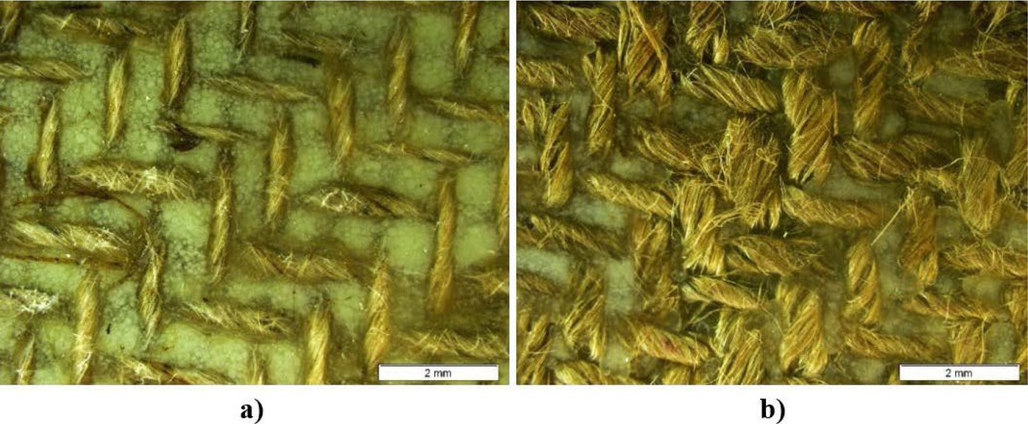
Polypropylene with linen fabric and 60% additive: (a) Without treatment (b) With alkali treatment.
In the case of the nonwoven, there are no visual differences due to the treatment, apart from a decrease in the fibre diameter (Figure 6).
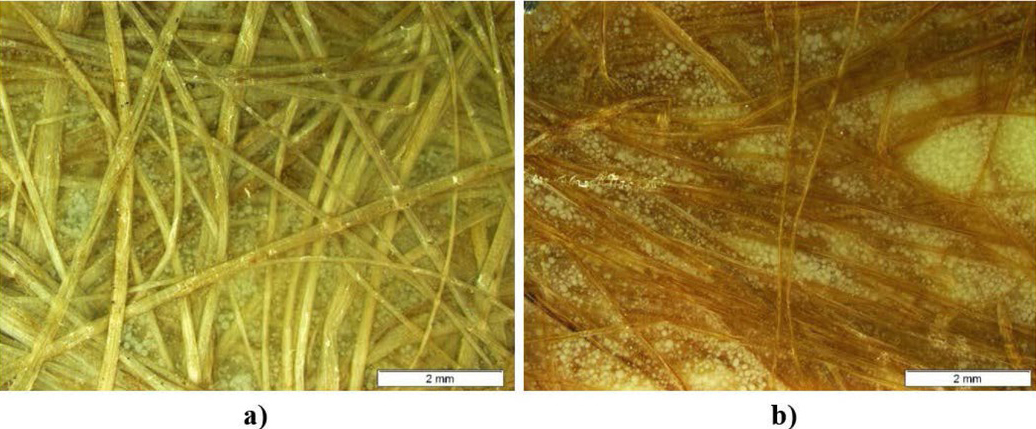
Polypropylene with banana nonwoven and 45% additive: (a) Without treatment (b) With alkali treatment.
3.2 Mechanical tests
3.2.1 Composites with flame retardant additive
The results obtained in the mechanical tests are shown below. The data have been subjected to a statistical study to observe if the flame retardant and the chemical treatment applied to the fabrics have a statistically significant effect in the mechanical properties. The analysis of each property has been carried out separately and the samples have been divided into three groups: pieces without reinforcement, linen fabric and banana nonwoven.
Figure 7 shows the tensile specific properties of the samples. Firstly, it is observed that the percentage of additive influences the elastic modulus and the maximum tensile strength. In the case of parts without reinforcement, the elastic modulus increases in relation to the percentage of additive, but the maximum tension decreases. The value of the elastic modulus increases with the filler percentage due to the greater rigidity of the additive particles. The reduction of the tensile strength with the percentage of magnesium hydroxide is mainly due to the bad adhesion between the particles and the matrix, which causes the interface to take off. The effective section is therefore reduced and the value of the maximum tension decreases [20]. In consequence, the additive provides rigidity to the material, but it is fragile. In relation to linen fabric, there is a decreasing relation in the elastic modulus and tensile strength with the amount of flame retardant. Linen fabric improves the elastic modulus of net polypropylene by 130%, but the effect of the reinforcement is lost when adding the flame retardant. This fact is due to the additive increases the viscosity of the polymer [36], so it is more difficult to flow through the threads of the fabric and the fibre-matrix adhesion is worse. Regarding the treatment, a decrease in mechanical properties is found when the fabrics used are previously alkali – treated, because of the shrinkage of the linen. In relation to banana nonwoven, the additive worsens the tensile properties as in the other samples. The nonwoven improves the elastic modulus by 54%, but the additive decreases the tensile properties as the percentage increase, except for 60% additive without treatment. Analysing the chemical treatment, it is obtained a slight improvement of the elastic modulus in the nonwoven without additive and at 45% and no effect in the maximum tension, therefore, it is not possible to conclude that the alkali treatment improves the tensile properties. As a summary, the highest value in the elastic modulus and maximum tension is obtained in the plate with linen fabric without additive, 3052.1 MPa and 66.8 MPa, respectively. The lowest value of elastics modulus is obtained with net PP (1309.7 MPa) and maximum tension in banana nonwoven with 60% of additive (8.3 MPa). In the ANOVA analysis it is observed that the additive has a statistically significant effect for all the samples because it is obtained a p-value lower than 0.05. However, the treatment has no significant effect, and only has influence on the maximum tension.

Tensile specific properties.
In the case of the flexural properties (Figure 8), it is observed an increasing relation of the modulus with respect to the percentage of additive because it provides stiffness to the material due to the greater rigidity of the magnesium hydroxide. The alkali treatment improves slightly the flexural modulus, except in the banana nonwoven without additive, but the effect is not significant. The highest value in the flexural modulus is obtained in the plate with linen fabric at 60% with alkali treatment (4305.44 MPa) and the lowest value is obtained with banana nonwoven with 60% of additive (2069.6 MPa), but the difference with respect to the value that precedes them is not notable. From the statistical analysis it is concluded that the amount of flame retardant additive has a significant effect in the flexural properties because it is obtained a p-value lower than 0.05, while the chemical treatment of the fabrics has not.
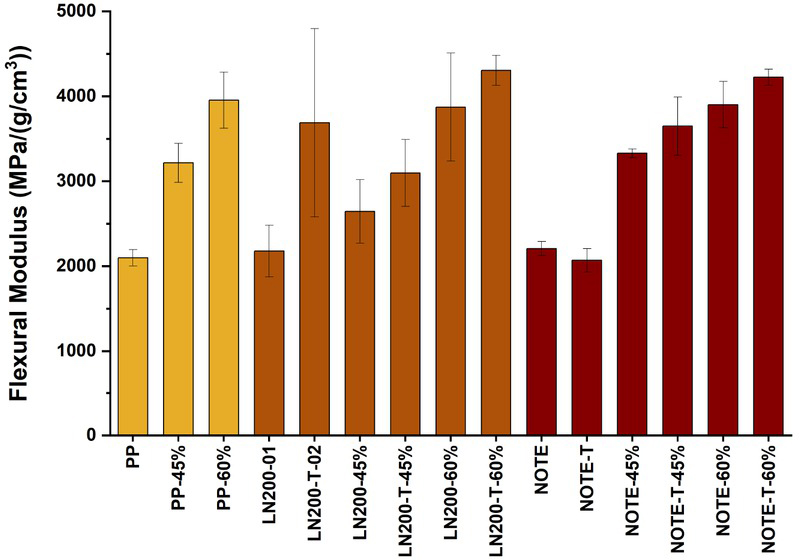
Flexural specific properties.
Figure 9shows the impact specific properties of the samples; the conclusions obtained from these tests are similar to those obtained for tensile and flexural tests. The percentage of additive decrease the impact strength of the sample due to the reduction of the effective section by the bad adhesion between particles and the matrix. The effect of the additive is more prominent in the banana nonwoven, where the difference is around 20 kJ/m2. The alkali treatment shows no effect in the resistance of the material, except in the linen fabric (LN200-T-02) where it improves the impact strength by 58%. As a summary, the higher values are obtained in the plates with banana nonwoven without additive (around 22 kJ/m2) and the lowest value is obtained for net PP with 60% of additive (0.96 kJ/m2), but the other samples have values similar to this plate. From the ANOVA analysis it is concluded again that the additive has a statistically significant effect in the impact properties, but the treatment has no influence.
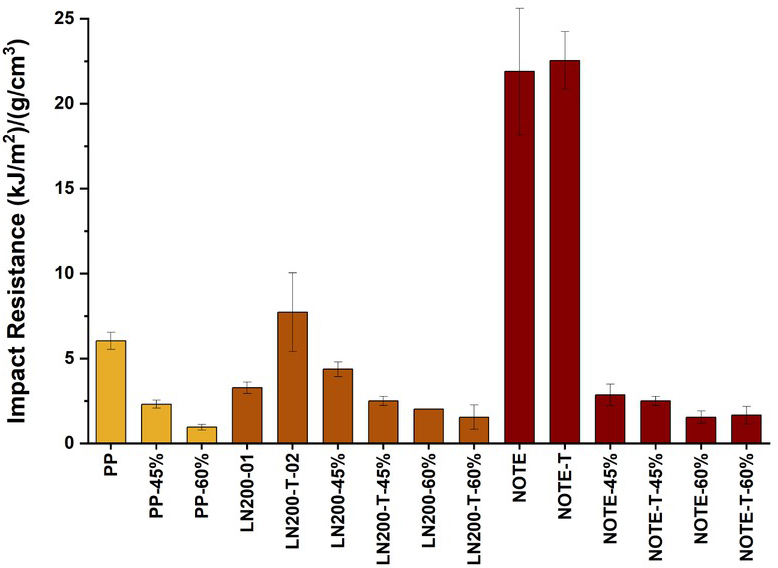
Impact specific properties.
3.2.2 Composites with natural fibre fabric
The results obtained in the mechanical tests for BANTEX composites are shown in Table 2. In this case the different configurations of banana and banana with cotton fabric are compared with net PP and commercial linen textile. Firstly, it is observed that linen is clearly better than the banana fibre textiles, principally in the tensile test. Linen fabric (LN200) improves the elastic modulus of net polypropylene up to 100% and the max stress up to 78%. Regarding to banana fabric (PL), a reduction of the tensile properties, especially the max stress, is obtained due to the fabric having a 50% of wool, which has low mechanical properties. The reason of using wool to obtain the yarn was the difficulty to obtain pure banana yarn with the available equipment, therefore it is necessary to improve the process to achieve almost 100% of pure banana fibre [35]. On the other hand, when it is added cotton in the warp of the textile (PL+AL), a slightly increase in the elastic modulus and a considerably improvement of the max stress is observed. In the case of the flexural test, the conclusions obtained are similar to those obtained for tensile test: linen composites are superior to banana and cotton, and followed by the banana and wool composites. Lastly, the impact strength is improved when the composites have 2 or 3 layers of fabric, being the best result with banana and cotton fabric. To conclude, in the ANOVA analysis it is observed that the fabric type has a statistically significant effect for the tensile and flexural test because it is obtained a p-value lower than 0.05. Otherwise, the number of layers affects the impact strength and the max stress.
Mechanical properties of BANTEX composites.
| Sample | Tensile test | Flexural test | Impact test | |||||
|---|---|---|---|---|---|---|---|---|
| Modulus (MPa) | SD | Max Stress (MPa) | SD | Modulus (MPa) | SD | kJ/m2 | SD | |
| PP | 1309.73 | 240.11 | 37.45 | 0.38 | 2098.54 | 95.81 | 6.04 | 0.5 |
| LN200-01[*] | 3052.31 | 385.18 | 66.80 | 1.35 | 2069.22 | 290.47 | 3.12 | 0.32 |
| LN200-02[*] | 2642.47 | 438.09 | 69.41 | 2.82 | 4256.92 | 346.93 | 10.29 | 0.33 |
| LN200-04[*] | 2951.48 | 314.84 | 70.81 | 2.02 | 4837.44 | 416.90 | 17.26 | 2,43 |
| PL-01[*] | 1322.64 | 222.95 | 23.82 | 1.45 | 1489.10 | 231.01 | 3.66 | 0.49 |
| PL-02[*] | 1623.68 | 181.43 | 25.85 | 0.35 | 2089.88 | 56.72 | 6.28 | 0.53 |
| PL-04[*] | 1307.23 | 405.00 | 25.27 | 4.01 | 2182.89 | 96.36 | 7.86 | 3.68 |
| PL+AL-01 | 1428.76 | 422.99 | 54.27 | 2.97 | 1844.50 | 463.90 | 4.64 | 0.77 |
| PL+AL-02 | 1479.93 | 227.19 | 60.60 | 1.78 | 2629.15 | 617.02 | 9.95 | 2.00 |
| PL+AL-04 | 1553.54 | 306.16 | 61.57 | 1.85 | 2803.66 | 608.21 | 19.10 | 3.51 |
3.3 Flame resistance test
In the case of fire tests, the samples have been divided into four groups: parts without reinforcement, linen fabric, banana nonwoven and type of fibre. Figure 10 shows the propagation speed of the samples with flame retardant additive. Firstly, it is observed a decreasing tendency of the propagation speed with respect to the percentage of additive and the difference with the plate without retardant is noticeable. The best results are obtained in the plates reinforced with banana nonwoven and 60% of magnesium hydroxide with a propagation speed nearly to 0 mm/min. However, the greater reduction of the flame propagation speed is observed in the untreated linen samples, obtaining an improvement of 90%.
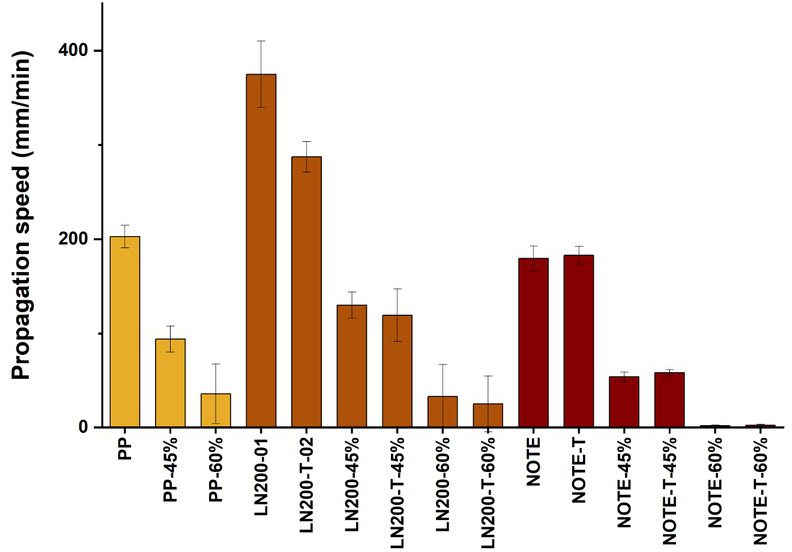
Propagation speed of composites with additive.
In the case of specimens with different types of fabrics and number of layers (Figure 11), the lowest propagation speed is obtained for the linen and the highest for the banana fibre. The lowest propagation speed of linen can be justified because linen is a bast fibre and the lower lignin content as Kozlowski reported [27]. Comparing the banana and banana with cotton fabric, a slight improvement with the fabric with cotton is obtained due to its composition. The composition of cotton fibre is mainly cellulose (8590%), followed by hemicellulose (1-3%), ash (0.8-2%) and lignin (0.7-1.6%) [37]. The higher content of cellulose improves the flammability due to the degradation begins at a higher temperature [27]. Finally, it is concluded that the propagation speed decreases as the number of layers increases because there is more material to be burned and the fibre percentage is higher (Table 1).
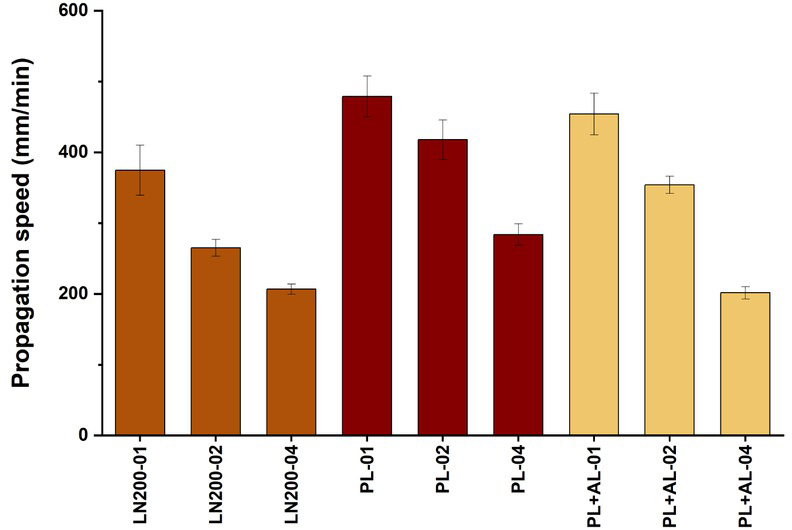
Propagation speed of composites with different fabric types.
The results of the p-value in the ANOVA analysis are shown in the Table 3. It is obtained that the additive has a statistically significant effect on the propagation speed and the residual flame time for all the samples. The effect of the chemical treatment of the fabrics does not show any clear trend. Finally, in the study of the type of tissue it is observed that both the type of tissue and the number of layers influence the result.
P-value in the ANOVA analysis of fire properties.
| Propagation speed (mm/min) | Residual flame (s) | ||
|---|---|---|---|
| Without | Additive | 0.0000 | 0.0135 |
| reinforcement | |||
| Linen fabric | Additive | 0.0000 | 0.0358 |
| Treatment | 0.0081 | 0.7667 | |
| Interaction | 0.0255 | 0.1953 | |
| Banana | Additive | 0.0000 | 0.0000 |
| nonwoven | Treatment | 0.3843 | 0.9698 |
| Interaction | 0.8621 | 0.0407 | |
| Different | Fabric type | 0.0000 | 0.0000 |
| fabrics | 0.0000 | 0.0000 | |
| Interaction | 0.0061 | 0.0904 |
As a summary, the best results in terms of fire protection were obtained for the sample of banana nonwoven with 60% additive because the combustion of any of the test samples does not occur (Figure 11). This fact is because these plates have two layers of plastic with additive, so if one of them does not have a good distribution of the additive, the next layer compensates it, but it is necessary to improve the mechanical properties. In addition, the fibre percentage is around 9% (Table 1), therefore, the combustibility of the fibre doesn’t have a high influence.
4 Conclusions
In this study the effect of the magnesium hydroxide and alkali treatment in mechanical and fire properties have been studied. Alkali treatment applied to the fabrics produces shrinkage and consequently, an increase in density of the linen fabric. In the statistical analysis, it is confirmed that the additive has a statistically significant effect on the mechanical properties. The elastic modulus, tensile strength and impact resistance have a decreasing relationship with respect to the percentage of additive, while the flexural modulus increases with the additive content. In relation to the alkali treatment, it is concluded that it has only a significant effect in the maximum tensile strength, not affecting the rest of studied mechanical properties. In conclusion, the piece with the best mechanical properties is polypropylene with linen fabric.
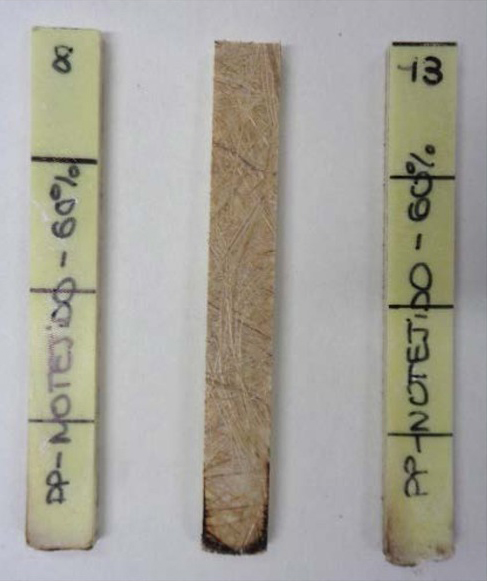
Samples of banana nonwoven with 60% magnesium hydroxide after fire test.
Regarding fire properties, magnesium hydroxide decreases the propagation speed of the flame, showing a higher effect (lower propagation speed) with the increase of the additive content. The number of layers influences the properties of fire resistance because the thickness of the sample is greater, more material to be burned and higher percentage of fibre. Regarding the type of fabric, the linen fabric has the slowest propagation speed and the banana fabric the highest, due to linen fabric is made of a bast fibre with a HRR considerably lower than that from leaf fibres like banana. Finally, a part with banana nonwoven and 60% of magnesium hydroxide with fireproof character has been produced, but due to its fragility, it would be necessary to improve the mechanical properties of the composite.
Acknowledgments
The authors acknowledge the Spanish Ministry of Economy and Competitiveness, as well as Fondo Europeo de Desarrollo Regional (FEDER) funds, as research was conducted under the BANTEX project (code: MAT2013-47393-C2-1-R).
Thesis/work co-financed by Agencia Canaria de Investigación, Innovación y Sociedad de la Información de la Consejería de Economía, Industria, Comercio y Conocimiento and by the European Social Fund (ESF) Integrated Operational Program of Canary Islands 20142020, Axis 3 Priority Theme 74 (85%).
Conflict of interest: Authors declare no conflict of interest.
References
[1] Gebrekidan AG, Desta MB. The Environmental Impacts of the Disposal of Plastic Bags and Water Bottles. Sacha J. Environ. Stud. 2014;2:1–5.Search in Google Scholar
[2] Kaczmar JW, Pach J, Kozlowski R. Use of Natural Fibres as Fillers for Polymer Composites. Int. Polym. Sci. Technol. 2007;34:45– 50.10.1177/0307174X0703400610Search in Google Scholar
[3] Faruk O, Bledzki AK, Fink HP, Sain M. Biocomposites reinforced with natural fibers: 2000-2010. Prog. Polym. Sci. 2012;37:1552–96.10.1016/j.progpolymsci.2012.04.003Search in Google Scholar
[4] Kim NK, Dutta S, Bhattacharyya D. A review of flammability of natural fibre reinforced polymeric composites. Compos. Sci. Technol. 2018;162:64–78.10.1016/j.compscitech.2018.04.016Search in Google Scholar
[5] Chapple S, Anandjiwala R. Flammability of natural fiber-reinforced composites and strategies for fire retardancy: A review. J. Thermoplast. Compos. Mater. 2010;23:871–93.10.1177/0892705709356338Search in Google Scholar
[6] Zhang S, Horrocks AR. A review of flame retardant polypropylene fibres. Prog. Polym. Sci. 2003;28:1517–38.10.1016/j.progpolymsci.2003.09.001Search in Google Scholar
[7] Costes L, Laoutid F, Brohez S, Dubois P. Bio-based flame retardants: When nature meets fire protection. Mater. Sci. Eng. R Reports. 2017;117:1–25.10.1016/j.mser.2017.04.001Search in Google Scholar
[8] Wang X, Kalali EN, Wan JT, Wang DY. Carbon-family materials for flame retardant polymeric materials. Prog. Polym. Sci. 2017;69:22–46.10.1016/j.progpolymsci.2017.02.001Search in Google Scholar
[9] Lenza J, Merkel K, Rydarowski H. Comparison of the effect of montmorillonite, magnesium hydroxide and a mixture of both on the flammability properties and mechanism of char formation of HDPE composites. Polym. Degrad. Stab. 2012;97:2581–93.10.1016/j.polymdegradstab.2012.07.010Search in Google Scholar
[10] Hanna AA, Nour MA, Souaya ER, Sherief MA, Abdelmoaty AS. Studies on the flammability of polypropylene/ammonium polyphosphate and montmorillonite by using the cone calorimeter test. Open Chem. 2018;16:108–15.10.1515/chem-2018-0013Search in Google Scholar
[11] Hirschler MM. Flame retardants and heat release: Review of traditional studies on products and on groups of polymers. Fire Mater. 2015;39:207–31.10.1002/fam.2243Search in Google Scholar
[12] Buezas Sierra N. GUÍA: PLÁSTICOS Y FUEGO. Informe de Novedades Tecnológicas. 2010.Search in Google Scholar
[13] Kausar A, Rafique I, Anwar Z, Muhammad B. Recent Developments in Different Types of Flame Retardants and Effect on Fire Retardancy of Epoxy Composite. Polym. - Plast. Technol. Eng. 2016;55:1512–35.10.1080/03602559.2016.1163607Search in Google Scholar
[14] Liang S, Neisius NM, Gaan S. Recent developments in flame retardant polymeric coatings. Prog. Org. Coatings 2013;76:1642–65.10.1016/j.porgcoat.2013.07.014Search in Google Scholar
[15] Fábelová L, Loffredo CA, Klánová J, Hilscherová K, Horvat M, Tihányi J, et al. Environmental ototoxicants, a potential new class of chemical stressors. Environ. Res. 2019;171:378–94.10.1016/j.envres.2019.01.042Search in Google Scholar PubMed
[16] Routti H, Atwood TC, Bechshoft T, Boltunov A, Ciesielski TM, Desforges J-P, et al. State of knowledge on current exposure, fate and potential health effects of contaminants in polar bears from the circumpolar Arctic. Sci. Total Environ. 2019;664:1063–83.10.1016/j.scitotenv.2019.02.030Search in Google Scholar PubMed
[17] Pantelaki I, Voutsa D. Organophosphate flame retardants (OPFRs): A review on analytical methods and occurrence in wastewater and aquatic environment. Sci. Total Environ. 2019;649:247–63.10.1016/j.scitotenv.2018.08.286Search in Google Scholar PubMed
[18] Saba N, Alothman OY, Almutairi Z, Jawaid M. Magnesium hydroxide reinforced kenaf fibers/epoxy hybrid composites: Mechanical and thermomechanical properties. Constr. Build. Mater. 2019;201:138–48.10.1016/j.conbuildmat.2018.12.182Search in Google Scholar
[19] Hollingbery LA, Hull TR. The fire retardant behaviour of huntite and hydromagnesite - A review. Polym. Degrad. Stab. 2010;95:2213–25.10.1016/j.polymdegradstab.2010.08.019Search in Google Scholar
[20] Morhain C, Velasco Perero JI. Microestructura y Propiedades Mecánicas de Compuestos de Polipropileno con Hidróxido de Magnesio y de Aluminio Moldeados por Inyección. 2001.Search in Google Scholar
[21] Troitzsch J, Bönold HJ, Rieber M, Schiffer HW. International plastics flammability handbook: principles, regulations, testing and approval. Hanser; 1983.Search in Google Scholar
[22] Pilarska AA, Klapiszewski Ł, Jesionowski T. Recent development in the synthesis, modification and application of Mg(OH)2 and MgO: A review. Powder Technol. 2017;319:373–407.10.1016/j.powtec.2017.07.009Search in Google Scholar
[23] El-Sabbagh A, Attia T, Ramzy A, Steuernagel L, Ziegmann G. Towards selection chart of flame retardants for natural fibre reinforced polypropylene composites. Compos. Part B Eng. 2018;141:1–8.10.1016/j.compositesb.2017.12.020Search in Google Scholar
[24] El-Sabbagh A, Steuernagel L, Meiners D, Ziegmann G, Toepfer O. Optimization of Flame Retardant Content With Respect to Mechanical Properties of Natural Fiber Polymer Composites: Case Study of Polypropylene/Flax/Aluminum Trihydroxide. Polym. Compos. 2016;37:3310–25.10.1002/pc.23530Search in Google Scholar
[25] Horrocks AR. An Introduction to the Burning Behaviour of Cellulosic Fibres. J. Soc. Dye. Colour. 2008;99:191–7.10.1111/j.1478-4408.1983.tb03686.xSearch in Google Scholar
[26] Ferdous D, Dalai AK, Bej SK, Thring RW. Pyrolysis of lignins: Experimental and kinetics studies. Energy and Fuels 2002;16:1405–12.10.1021/ef0200323Search in Google Scholar
[27] Kozłowski R, Władyka-Przybylak M. Flammability and fire resistance of composites reinforced by natural fibers. Polym. Adv. Technol. 2008;19:446–53.10.1002/pat.1135Search in Google Scholar
[28] Kandola BK. Flame retardant characteristics of natural fibre composites. RSC Green Chem. 2012;1:86–117.10.1039/9781849735193-00086Search in Google Scholar
[29] Barreto ACH, Rosa DS, Fechine PBA, Mazzetto SE. Properties of sisal fibers treated by alkali solution and their application into cardanol-based biocomposites. Compos. Part A Appl. Sci. Manuf. 2011;42:492–500.10.1016/j.compositesa.2011.01.008Search in Google Scholar
[30] Basak S, Samanta KK. Thermal behaviour and the cone calorimetric analysis of the jute fabric treated in different pH condition. J. Therm. Anal. Calorim. 2018;2:1–11.10.1007/s10973-018-7522-2Search in Google Scholar
[31] Krishnaiah P, Ratnam CT, Manickam S. Enhancements in crystallinity, thermal stability, tensile modulus and strength of sisal fibres and their PP composites induced by the synergistic effects of alkali and high intensity ultrasound (HIU) treatments. Ultrason. Sonochem. 2017;34:729–42.10.1016/j.ultsonch.2016.07.008Search in Google Scholar PubMed
[32] Monzón Verona MD, Suárez García LA, Pestana Guillén JD, Ortega García F, Benítez Vega AN, Ortega Medina Z, et al, inventor; Celulosa de Levante SA, assignee. Procedimiento y máquina para la obtención de fibra a partir de hojas. Spanish patent ES2514215B1. 2013 Apr 26.Search in Google Scholar
[33] Ortega Z, Morón M, Monzón M, Badalló P, Paz R. Production of Banana Fiber Yarns for Technical Textile Reinforced Composites. Materials (Basel). 2016;9:370.10.3390/ma9050370Search in Google Scholar PubMed PubMed Central
[34] Ortega Z, Monzón M, Paz R, Suárez L, Morón M, McCourt M. Banana Fiber Processing for the Production of Technical Textiles to Reinforce Polymeric Matrices. In: Campana G, Howlett RJ, Setchi R, Cimatti B, editors. Sustainable Design and Manufacturing 2017. Cham: Springer International Publishing; 2017. page 452–9.10.1007/978-3-319-57078-5_43Search in Google Scholar
[35] Monzón MD, Paz R, Verdaguer M, Suárez L, Badalló P, Ortega Z, et al. Experimental analysis and simulation of novel technical textile reinforced composite of banana fibre. Materials (Basel). 2019;12.10.3390/ma12071134Search in Google Scholar PubMed PubMed Central
[36] Chen X, Yu J, Guo S, Luo Z, He M. Effects of magnesium hydroxide and its surface modification on crystallization and rheological behaviors of polypropylene. Polym. Compos. 30:941–7.10.1002/pc.20638Search in Google Scholar
[37] Kozlowski R, Wladyka-Przybylak M. Uses of Natural Fiber Reinforced Plastics. Nat. Fibers, Plast. Compos. 2004;249–74.10.1007/978-1-4419-9050-1_14Search in Google Scholar
© 2020 Raquel Ortega et al., published by De Gruyter
This work is licensed under the Creative Commons Attribution 4.0 International License.
Articles in the same Issue
- Regular Articles
- Electrochemical antioxidant screening and evaluation based on guanine and chitosan immobilized MoS2 nanosheet modified glassy carbon electrode (guanine/CS/MoS2/GCE)
- Kinetic models of the extraction of vanillic acid from pumpkin seeds
- On the maximum ABC index of bipartite graphs without pendent vertices
- Estimation of the total antioxidant potential in the meat samples using thin-layer chromatography
- Molecular dynamics simulation of sI methane hydrate under compression and tension
- Spatial distribution and potential ecological risk assessment of some trace elements in sediments and grey mangrove (Avicennia marina) along the Arabian Gulf coast, Saudi Arabia
- Amino-functionalized graphene oxide for Cr(VI), Cu(II), Pb(II) and Cd(II) removal from industrial wastewater
- Chemical composition and in vitro activity of Origanum vulgare L., Satureja hortensis L., Thymus serpyllum L. and Thymus vulgaris L. essential oils towards oral isolates of Candida albicans and Candida glabrata
- Effect of excess Fluoride consumption on Urine-Serum Fluorides, Dental state and Thyroid Hormones among children in “Talab Sarai” Punjab Pakistan
- Design, Synthesis and Characterization of Novel Isoxazole Tagged Indole Hybrid Compounds
- Comparison of kinetic and enzymatic properties of intracellular phosphoserine aminotransferases from alkaliphilic and neutralophilic bacteria
- Green Organic Solvent-Free Oxidation of Alkylarenes with tert-Butyl Hydroperoxide Catalyzed by Water-Soluble Copper Complex
- Ducrosia ismaelis Asch. essential oil: chemical composition profile and anticancer, antimicrobial and antioxidant potential assessment
- DFT calculations as an efficient tool for prediction of Raman and infra-red spectra and activities of newly synthesized cathinones
- Influence of Chemical Osmosis on Solute Transport and Fluid Velocity in Clay Soils
- A New fatty acid and some triterpenoids from propolis of Nkambe (North-West Region, Cameroon) and evaluation of the antiradical scavenging activity of their extracts
- Antiplasmodial Activity of Stigmastane Steroids from Dryobalanops oblongifolia Stem Bark
- Rapid identification of direct-acting pancreatic protectants from Cyclocarya paliurus leaves tea by the method of serum pharmacochemistry combined with target cell extraction
- Immobilization of Pseudomonas aeruginosa static biomass on eggshell powder for on-line preconcentration and determination of Cr (VI)
- Assessment of methyl 2-({[(4,6-dimethoxypyrimidin-2-yl)carbamoyl] sulfamoyl}methyl)benzoate through biotic and abiotic degradation modes
- Stability of natural polyphenol fisetin in eye drops Stability of fisetin in eye drops
- Production of a bioflocculant by using activated sludge and its application in Pb(II) removal from aqueous solution
- Molecular Properties of Carbon Crystal Cubic Structures
- Synthesis and characterization of calcium carbonate whisker from yellow phosphorus slag
- Study on the interaction between catechin and cholesterol by the density functional theory
- Analysis of some pharmaceuticals in the presence of their synthetic impurities by applying hybrid micelle liquid chromatography
- Two mixed-ligand coordination polymers based on 2,5-thiophenedicarboxylic acid and flexible N-donor ligands: the protective effect on periodontitis via reducing the release of IL-1β and TNF-α
- Incorporation of silver stearate nanoparticles in methacrylate polymeric monoliths for hemeprotein isolation
- Development of ultrasound-assisted dispersive solid-phase microextraction based on mesoporous carbon coated with silica@iron oxide nanocomposite for preconcentration of Te and Tl in natural water systems
- N,N′-Bis[2-hydroxynaphthylidene]/[2-methoxybenzylidene]amino]oxamides and their divalent manganese complexes: Isolation, spectral characterization, morphology, antibacterial and cytotoxicity against leukemia cells
- Determination of the content of selected trace elements in Polish commercial fruit juices and health risk assessment
- Diorganotin(iv) benzyldithiocarbamate complexes: synthesis, characterization, and thermal and cytotoxicity study
- Keratin 17 is induced in prurigo nodularis lesions
- Anticancer, antioxidant, and acute toxicity studies of a Saudi polyherbal formulation, PHF5
- LaCoO3 perovskite-type catalysts in syngas conversion
- Comparative studies of two vegetal extracts from Stokesia laevis and Geranium pratense: polyphenol profile, cytotoxic effect and antiproliferative activity
- Fragmentation pattern of certain isatin–indole antiproliferative conjugates with application to identify their in vitro metabolic profiles in rat liver microsomes by liquid chromatography tandem mass spectrometry
- Investigation of polyphenol profile, antioxidant activity and hepatoprotective potential of Aconogonon alpinum (All.) Schur roots
- Lead discovery of a guanidinyl tryptophan derivative on amyloid cascade inhibition
- Physicochemical evaluation of the fruit pulp of Opuntia spp growing in the Mediterranean area under hard climate conditions
- Electronic structural properties of amino/hydroxyl functionalized imidazolium-based bromide ionic liquids
- New Schiff bases of 2-(quinolin-8-yloxy)acetohydrazide and their Cu(ii), and Zn(ii) metal complexes: their in vitro antimicrobial potentials and in silico physicochemical and pharmacokinetics properties
- Treatment of adhesions after Achilles tendon injury using focused ultrasound with targeted bFGF plasmid-loaded cationic microbubbles
- Synthesis of orotic acid derivatives and their effects on stem cell proliferation
- Chirality of β2-agonists. An overview of pharmacological activity, stereoselective analysis, and synthesis
- Fe3O4@urea/HITh-SO3H as an efficient and reusable catalyst for the solvent-free synthesis of 7-aryl-8H-benzo[h]indeno[1,2-b]quinoline-8-one and indeno[2′,1′:5,6]pyrido[2,3-d]pyrimidine derivatives
- Adsorption kinetic characteristics of molybdenum in yellow-brown soil in response to pH and phosphate
- Enhancement of thermal properties of bio-based microcapsules intended for textile applications
- Exploring the effect of khat (Catha edulis) chewing on the pharmacokinetics of the antiplatelet drug clopidogrel in rats using the newly developed LC-MS/MS technique
- A green strategy for obtaining anthraquinones from Rheum tanguticum by subcritical water
- Cadmium (Cd) chloride affects the nutrient uptake and Cd-resistant bacterium reduces the adsorption of Cd in muskmelon plants
- Removal of H2S by vermicompost biofilter and analysis on bacterial community
- Structural cytotoxicity relationship of 2-phenoxy(thiomethyl)pyridotriazolopyrimidines: Quantum chemical calculations and statistical analysis
- A self-breaking supramolecular plugging system as lost circulation material in oilfield
- Synthesis, characterization, and pharmacological evaluation of thiourea derivatives
- Application of drug–metal ion interaction principle in conductometric determination of imatinib, sorafenib, gefitinib and bosutinib
- Synthesis and characterization of a novel chitosan-grafted-polyorthoethylaniline biocomposite and utilization for dye removal from water
- Optimisation of urine sample preparation for shotgun proteomics
- DFT investigations on arylsulphonyl pyrazole derivatives as potential ligands of selected kinases
- Treatment of Parkinson’s disease using focused ultrasound with GDNF retrovirus-loaded microbubbles to open the blood–brain barrier
- New derivatives of a natural nordentatin
- Fluorescence biomarkers of malignant melanoma detectable in urine
- Study of the remediation effects of passivation materials on Pb-contaminated soil
- Saliva proteomic analysis reveals possible biomarkers of renal cell carcinoma
- Withania frutescens: Chemical characterization, analgesic, anti-inflammatory, and healing activities
- Design, synthesis and pharmacological profile of (−)-verbenone hydrazones
- Synthesis of magnesium carbonate hydrate from natural talc
- Stability-indicating HPLC-DAD assay for simultaneous quantification of hydrocortisone 21 acetate, dexamethasone, and fluocinolone acetonide in cosmetics
- A novel lactose biosensor based on electrochemically synthesized 3,4-ethylenedioxythiophene/thiophene (EDOT/Th) copolymer
- Citrullus colocynthis (L.) Schrad: Chemical characterization, scavenging and cytotoxic activities
- Development and validation of a high performance liquid chromatography/diode array detection method for estrogen determination: Application to residual analysis in meat products
- PCSK9 concentrations in different stages of subclinical atherosclerosis and their relationship with inflammation
- Development of trace analysis for alkyl methanesulfonates in the delgocitinib drug substance using GC-FID and liquid–liquid extraction with ionic liquid
- Electrochemical evaluation of the antioxidant capacity of natural compounds on glassy carbon electrode modified with guanine-, polythionine-, and nitrogen-doped graphene
- A Dy(iii)–organic framework as a fluorescent probe for highly selective detection of picric acid and treatment activity on human lung cancer cells
- A Zn(ii)–organic cage with semirigid ligand for solvent-free cyanosilylation and inhibitory effect on ovarian cancer cell migration and invasion ability via regulating mi-RNA16 expression
- Polyphenol content and antioxidant activities of Prunus padus L. and Prunus serotina L. leaves: Electrochemical and spectrophotometric approach and their antimicrobial properties
- The combined use of GC, PDSC and FT-IR techniques to characterize fat extracted from commercial complete dry pet food for adult cats
- MALDI-TOF MS profiling in the discovery and identification of salivary proteomic patterns of temporomandibular joint disorders
- Concentrations of dioxins, furans and dioxin-like PCBs in natural animal feed additives
- Structure and some physicochemical and functional properties of water treated under ammonia with low-temperature low-pressure glow plasma of low frequency
- Mesoscale nanoparticles encapsulated with emodin for targeting antifibrosis in animal models
- Amine-functionalized magnetic activated carbon as an adsorbent for preconcentration and determination of acidic drugs in environmental water samples using HPLC-DAD
- Antioxidant activity as a response to cadmium pollution in three durum wheat genotypes differing in salt-tolerance
- A promising naphthoquinone [8-hydroxy-2-(2-thienylcarbonyl)naphtho[2,3-b]thiophene-4,9-dione] exerts anti-colorectal cancer activity through ferroptosis and inhibition of MAPK signaling pathway based on RNA sequencing
- Synthesis and efficacy of herbicidal ionic liquids with chlorsulfuron as the anion
- Effect of isovalent substitution on the crystal structure and properties of two-slab indates BaLa2−xSmxIn2O7
- Synthesis, spectral and thermo-kinetics explorations of Schiff-base derived metal complexes
- An improved reduction method for phase stability testing in the single-phase region
- Comparative analysis of chemical composition of some commercially important fishes with an emphasis on various Malaysian diets
- Development of a solventless stir bar sorptive extraction/thermal desorption large volume injection capillary gas chromatographic-mass spectrometric method for ultra-trace determination of pyrethroids pesticides in river and tap water samples
- A turbidity sensor development based on NL-PI observers: Experimental application to the control of a Sinaloa’s River Spirulina maxima cultivation
- Deep desulfurization of sintering flue gas in iron and steel works based on low-temperature oxidation
- Investigations of metallic elements and phenolics in Chinese medicinal plants
- Influence of site-classification approach on geochemical background values
- Effects of ageing on the surface characteristics and Cu(ii) adsorption behaviour of rice husk biochar in soil
- Adsorption and sugarcane-bagasse-derived activated carbon-based mitigation of 1-[2-(2-chloroethoxy)phenyl]sulfonyl-3-(4-methoxy-6-methyl-1,3,5-triazin-2-yl) urea-contaminated soils
- Antimicrobial and antifungal activities of bifunctional cooper(ii) complexes with non-steroidal anti-inflammatory drugs, flufenamic, mefenamic and tolfenamic acids and 1,10-phenanthroline
- Application of selenium and silicon to alleviate short-term drought stress in French marigold (Tagetes patula L.) as a model plant species
- Screening and analysis of xanthine oxidase inhibitors in jute leaves and their protective effects against hydrogen peroxide-induced oxidative stress in cells
- Synthesis and physicochemical studies of a series of mixed-ligand transition metal complexes and their molecular docking investigations against Coronavirus main protease
- A study of in vitro metabolism and cytotoxicity of mephedrone and methoxetamine in human and pig liver models using GC/MS and LC/MS analyses
- A new phenyl alkyl ester and a new combretin triterpene derivative from Combretum fragrans F. Hoffm (Combretaceae) and antiproliferative activity
- Erratum
- Erratum to: A one-step incubation ELISA kit for rapid determination of dibutyl phthalate in water, beverage and liquor
- Review Articles
- Sinoporphyrin sodium, a novel sensitizer for photodynamic and sonodynamic therapy
- Natural products isolated from Casimiroa
- Plant description, phytochemical constituents and bioactivities of Syzygium genus: A review
- Evaluation of elastomeric heat shielding materials as insulators for solid propellant rocket motors: A short review
- Special Issue on Applied Biochemistry and Biotechnology 2019
- An overview of Monascus fermentation processes for monacolin K production
- Study on online soft sensor method of total sugar content in chlorotetracycline fermentation tank
- Studies on the Anti-Gouty Arthritis and Anti-hyperuricemia Properties of Astilbin in Animal Models
- Effects of organic fertilizer on water use, photosynthetic characteristics, and fruit quality of pear jujube in northern Shaanxi
- Characteristics of the root exudate release system of typical plants in plateau lakeside wetland under phosphorus stress conditions
- Characterization of soil water by the means of hydrogen and oxygen isotope ratio at dry-wet season under different soil layers in the dry-hot valley of Jinsha River
- Composition and diurnal variation of floral scent emission in Rosa rugosa Thunb. and Tulipa gesneriana L.
- Preparation of a novel ginkgolide B niosomal composite drug
- The degradation, biodegradability and toxicity evaluation of sulfamethazine antibiotics by gamma radiation
- Special issue on Monitoring, Risk Assessment and Sustainable Management for the Exposure to Environmental Toxins
- Insight into the cadmium and zinc binding potential of humic acids derived from composts by EEM spectra combined with PARAFAC analysis
- Source apportionment of soil contamination based on multivariate receptor and robust geostatistics in a typical rural–urban area, Wuhan city, middle China
- Special Issue on 13th JCC 2018
- The Role of H2C2O4 and Na2CO3 as Precipitating Agents on The Physichochemical Properties and Photocatalytic Activity of Bismuth Oxide
- Preparation of magnetite-silica–cetyltrimethylammonium for phenol removal based on adsolubilization
- Topical Issue on Agriculture
- Size-dependent growth kinetics of struvite crystals in wastewater with calcium ions
- The effect of silica-calcite sedimentary rock contained in the chicken broiler diet on the overall quality of chicken muscles
- Physicochemical properties of selected herbicidal products containing nicosulfuron as an active ingredient
- Lycopene in tomatoes and tomato products
- Fluorescence in the assessment of the share of a key component in the mixing of feed
- Sulfur application alleviates chromium stress in maize and wheat
- Effectiveness of removal of sulphur compounds from the air after 3 years of biofiltration with a mixture of compost soil, peat, coconut fibre and oak bark
- Special Issue on the 4th Green Chemistry 2018
- Study and fire test of banana fibre reinforced composites with flame retardance properties
- Special Issue on the International conference CosCI 2018
- Disintegration, In vitro Dissolution, and Drug Release Kinetics Profiles of k-Carrageenan-based Nutraceutical Hard-shell Capsules Containing Salicylamide
- Synthesis of amorphous aluminosilicate from impure Indonesian kaolin
- Special Issue on the International Conf on Science, Applied Science, Teaching and Education 2019
- Functionalization of Congo red dye as a light harvester on solar cell
- The effect of nitrite food preservatives added to se’i meat on the expression of wild-type p53 protein
- Biocompatibility and osteoconductivity of scaffold porous composite collagen–hydroxyapatite based coral for bone regeneration
- Special Issue on the Joint Science Congress of Materials and Polymers (ISCMP 2019)
- Effect of natural boron mineral use on the essential oil ratio and components of Musk Sage (Salvia sclarea L.)
- A theoretical and experimental study of the adsorptive removal of hexavalent chromium ions using graphene oxide as an adsorbent
- A study on the bacterial adhesion of Streptococcus mutans in various dental ceramics: In vitro study
- Corrosion study of copper in aqueous sulfuric acid solution in the presence of (2E,5E)-2,5-dibenzylidenecyclopentanone and (2E,5E)-bis[(4-dimethylamino)benzylidene]cyclopentanone: Experimental and theoretical study
- Special Issue on Chemistry Today for Tomorrow 2019
- Diabetes mellitus type 2: Exploratory data analysis based on clinical reading
- Multivariate analysis for the classification of copper–lead and copper–zinc glasses
- Special Issue on Advances in Chemistry and Polymers
- The spatial and temporal distribution of cationic and anionic radicals in early embryo implantation
- Special Issue on 3rd IC3PE 2020
- Magnetic iron oxide/clay nanocomposites for adsorption and catalytic oxidation in water treatment applications
- Special Issue on IC3PE 2018/2019 Conference
- Exergy analysis of conventional and hydrothermal liquefaction–esterification processes of microalgae for biodiesel production
- Advancing biodiesel production from microalgae Spirulina sp. by a simultaneous extraction–transesterification process using palm oil as a co-solvent of methanol
- Topical Issue on Applications of Mathematics in Chemistry
- Omega and the related counting polynomials of some chemical structures
- M-polynomial and topological indices of zigzag edge coronoid fused by starphene
Articles in the same Issue
- Regular Articles
- Electrochemical antioxidant screening and evaluation based on guanine and chitosan immobilized MoS2 nanosheet modified glassy carbon electrode (guanine/CS/MoS2/GCE)
- Kinetic models of the extraction of vanillic acid from pumpkin seeds
- On the maximum ABC index of bipartite graphs without pendent vertices
- Estimation of the total antioxidant potential in the meat samples using thin-layer chromatography
- Molecular dynamics simulation of sI methane hydrate under compression and tension
- Spatial distribution and potential ecological risk assessment of some trace elements in sediments and grey mangrove (Avicennia marina) along the Arabian Gulf coast, Saudi Arabia
- Amino-functionalized graphene oxide for Cr(VI), Cu(II), Pb(II) and Cd(II) removal from industrial wastewater
- Chemical composition and in vitro activity of Origanum vulgare L., Satureja hortensis L., Thymus serpyllum L. and Thymus vulgaris L. essential oils towards oral isolates of Candida albicans and Candida glabrata
- Effect of excess Fluoride consumption on Urine-Serum Fluorides, Dental state and Thyroid Hormones among children in “Talab Sarai” Punjab Pakistan
- Design, Synthesis and Characterization of Novel Isoxazole Tagged Indole Hybrid Compounds
- Comparison of kinetic and enzymatic properties of intracellular phosphoserine aminotransferases from alkaliphilic and neutralophilic bacteria
- Green Organic Solvent-Free Oxidation of Alkylarenes with tert-Butyl Hydroperoxide Catalyzed by Water-Soluble Copper Complex
- Ducrosia ismaelis Asch. essential oil: chemical composition profile and anticancer, antimicrobial and antioxidant potential assessment
- DFT calculations as an efficient tool for prediction of Raman and infra-red spectra and activities of newly synthesized cathinones
- Influence of Chemical Osmosis on Solute Transport and Fluid Velocity in Clay Soils
- A New fatty acid and some triterpenoids from propolis of Nkambe (North-West Region, Cameroon) and evaluation of the antiradical scavenging activity of their extracts
- Antiplasmodial Activity of Stigmastane Steroids from Dryobalanops oblongifolia Stem Bark
- Rapid identification of direct-acting pancreatic protectants from Cyclocarya paliurus leaves tea by the method of serum pharmacochemistry combined with target cell extraction
- Immobilization of Pseudomonas aeruginosa static biomass on eggshell powder for on-line preconcentration and determination of Cr (VI)
- Assessment of methyl 2-({[(4,6-dimethoxypyrimidin-2-yl)carbamoyl] sulfamoyl}methyl)benzoate through biotic and abiotic degradation modes
- Stability of natural polyphenol fisetin in eye drops Stability of fisetin in eye drops
- Production of a bioflocculant by using activated sludge and its application in Pb(II) removal from aqueous solution
- Molecular Properties of Carbon Crystal Cubic Structures
- Synthesis and characterization of calcium carbonate whisker from yellow phosphorus slag
- Study on the interaction between catechin and cholesterol by the density functional theory
- Analysis of some pharmaceuticals in the presence of their synthetic impurities by applying hybrid micelle liquid chromatography
- Two mixed-ligand coordination polymers based on 2,5-thiophenedicarboxylic acid and flexible N-donor ligands: the protective effect on periodontitis via reducing the release of IL-1β and TNF-α
- Incorporation of silver stearate nanoparticles in methacrylate polymeric monoliths for hemeprotein isolation
- Development of ultrasound-assisted dispersive solid-phase microextraction based on mesoporous carbon coated with silica@iron oxide nanocomposite for preconcentration of Te and Tl in natural water systems
- N,N′-Bis[2-hydroxynaphthylidene]/[2-methoxybenzylidene]amino]oxamides and their divalent manganese complexes: Isolation, spectral characterization, morphology, antibacterial and cytotoxicity against leukemia cells
- Determination of the content of selected trace elements in Polish commercial fruit juices and health risk assessment
- Diorganotin(iv) benzyldithiocarbamate complexes: synthesis, characterization, and thermal and cytotoxicity study
- Keratin 17 is induced in prurigo nodularis lesions
- Anticancer, antioxidant, and acute toxicity studies of a Saudi polyherbal formulation, PHF5
- LaCoO3 perovskite-type catalysts in syngas conversion
- Comparative studies of two vegetal extracts from Stokesia laevis and Geranium pratense: polyphenol profile, cytotoxic effect and antiproliferative activity
- Fragmentation pattern of certain isatin–indole antiproliferative conjugates with application to identify their in vitro metabolic profiles in rat liver microsomes by liquid chromatography tandem mass spectrometry
- Investigation of polyphenol profile, antioxidant activity and hepatoprotective potential of Aconogonon alpinum (All.) Schur roots
- Lead discovery of a guanidinyl tryptophan derivative on amyloid cascade inhibition
- Physicochemical evaluation of the fruit pulp of Opuntia spp growing in the Mediterranean area under hard climate conditions
- Electronic structural properties of amino/hydroxyl functionalized imidazolium-based bromide ionic liquids
- New Schiff bases of 2-(quinolin-8-yloxy)acetohydrazide and their Cu(ii), and Zn(ii) metal complexes: their in vitro antimicrobial potentials and in silico physicochemical and pharmacokinetics properties
- Treatment of adhesions after Achilles tendon injury using focused ultrasound with targeted bFGF plasmid-loaded cationic microbubbles
- Synthesis of orotic acid derivatives and their effects on stem cell proliferation
- Chirality of β2-agonists. An overview of pharmacological activity, stereoselective analysis, and synthesis
- Fe3O4@urea/HITh-SO3H as an efficient and reusable catalyst for the solvent-free synthesis of 7-aryl-8H-benzo[h]indeno[1,2-b]quinoline-8-one and indeno[2′,1′:5,6]pyrido[2,3-d]pyrimidine derivatives
- Adsorption kinetic characteristics of molybdenum in yellow-brown soil in response to pH and phosphate
- Enhancement of thermal properties of bio-based microcapsules intended for textile applications
- Exploring the effect of khat (Catha edulis) chewing on the pharmacokinetics of the antiplatelet drug clopidogrel in rats using the newly developed LC-MS/MS technique
- A green strategy for obtaining anthraquinones from Rheum tanguticum by subcritical water
- Cadmium (Cd) chloride affects the nutrient uptake and Cd-resistant bacterium reduces the adsorption of Cd in muskmelon plants
- Removal of H2S by vermicompost biofilter and analysis on bacterial community
- Structural cytotoxicity relationship of 2-phenoxy(thiomethyl)pyridotriazolopyrimidines: Quantum chemical calculations and statistical analysis
- A self-breaking supramolecular plugging system as lost circulation material in oilfield
- Synthesis, characterization, and pharmacological evaluation of thiourea derivatives
- Application of drug–metal ion interaction principle in conductometric determination of imatinib, sorafenib, gefitinib and bosutinib
- Synthesis and characterization of a novel chitosan-grafted-polyorthoethylaniline biocomposite and utilization for dye removal from water
- Optimisation of urine sample preparation for shotgun proteomics
- DFT investigations on arylsulphonyl pyrazole derivatives as potential ligands of selected kinases
- Treatment of Parkinson’s disease using focused ultrasound with GDNF retrovirus-loaded microbubbles to open the blood–brain barrier
- New derivatives of a natural nordentatin
- Fluorescence biomarkers of malignant melanoma detectable in urine
- Study of the remediation effects of passivation materials on Pb-contaminated soil
- Saliva proteomic analysis reveals possible biomarkers of renal cell carcinoma
- Withania frutescens: Chemical characterization, analgesic, anti-inflammatory, and healing activities
- Design, synthesis and pharmacological profile of (−)-verbenone hydrazones
- Synthesis of magnesium carbonate hydrate from natural talc
- Stability-indicating HPLC-DAD assay for simultaneous quantification of hydrocortisone 21 acetate, dexamethasone, and fluocinolone acetonide in cosmetics
- A novel lactose biosensor based on electrochemically synthesized 3,4-ethylenedioxythiophene/thiophene (EDOT/Th) copolymer
- Citrullus colocynthis (L.) Schrad: Chemical characterization, scavenging and cytotoxic activities
- Development and validation of a high performance liquid chromatography/diode array detection method for estrogen determination: Application to residual analysis in meat products
- PCSK9 concentrations in different stages of subclinical atherosclerosis and their relationship with inflammation
- Development of trace analysis for alkyl methanesulfonates in the delgocitinib drug substance using GC-FID and liquid–liquid extraction with ionic liquid
- Electrochemical evaluation of the antioxidant capacity of natural compounds on glassy carbon electrode modified with guanine-, polythionine-, and nitrogen-doped graphene
- A Dy(iii)–organic framework as a fluorescent probe for highly selective detection of picric acid and treatment activity on human lung cancer cells
- A Zn(ii)–organic cage with semirigid ligand for solvent-free cyanosilylation and inhibitory effect on ovarian cancer cell migration and invasion ability via regulating mi-RNA16 expression
- Polyphenol content and antioxidant activities of Prunus padus L. and Prunus serotina L. leaves: Electrochemical and spectrophotometric approach and their antimicrobial properties
- The combined use of GC, PDSC and FT-IR techniques to characterize fat extracted from commercial complete dry pet food for adult cats
- MALDI-TOF MS profiling in the discovery and identification of salivary proteomic patterns of temporomandibular joint disorders
- Concentrations of dioxins, furans and dioxin-like PCBs in natural animal feed additives
- Structure and some physicochemical and functional properties of water treated under ammonia with low-temperature low-pressure glow plasma of low frequency
- Mesoscale nanoparticles encapsulated with emodin for targeting antifibrosis in animal models
- Amine-functionalized magnetic activated carbon as an adsorbent for preconcentration and determination of acidic drugs in environmental water samples using HPLC-DAD
- Antioxidant activity as a response to cadmium pollution in three durum wheat genotypes differing in salt-tolerance
- A promising naphthoquinone [8-hydroxy-2-(2-thienylcarbonyl)naphtho[2,3-b]thiophene-4,9-dione] exerts anti-colorectal cancer activity through ferroptosis and inhibition of MAPK signaling pathway based on RNA sequencing
- Synthesis and efficacy of herbicidal ionic liquids with chlorsulfuron as the anion
- Effect of isovalent substitution on the crystal structure and properties of two-slab indates BaLa2−xSmxIn2O7
- Synthesis, spectral and thermo-kinetics explorations of Schiff-base derived metal complexes
- An improved reduction method for phase stability testing in the single-phase region
- Comparative analysis of chemical composition of some commercially important fishes with an emphasis on various Malaysian diets
- Development of a solventless stir bar sorptive extraction/thermal desorption large volume injection capillary gas chromatographic-mass spectrometric method for ultra-trace determination of pyrethroids pesticides in river and tap water samples
- A turbidity sensor development based on NL-PI observers: Experimental application to the control of a Sinaloa’s River Spirulina maxima cultivation
- Deep desulfurization of sintering flue gas in iron and steel works based on low-temperature oxidation
- Investigations of metallic elements and phenolics in Chinese medicinal plants
- Influence of site-classification approach on geochemical background values
- Effects of ageing on the surface characteristics and Cu(ii) adsorption behaviour of rice husk biochar in soil
- Adsorption and sugarcane-bagasse-derived activated carbon-based mitigation of 1-[2-(2-chloroethoxy)phenyl]sulfonyl-3-(4-methoxy-6-methyl-1,3,5-triazin-2-yl) urea-contaminated soils
- Antimicrobial and antifungal activities of bifunctional cooper(ii) complexes with non-steroidal anti-inflammatory drugs, flufenamic, mefenamic and tolfenamic acids and 1,10-phenanthroline
- Application of selenium and silicon to alleviate short-term drought stress in French marigold (Tagetes patula L.) as a model plant species
- Screening and analysis of xanthine oxidase inhibitors in jute leaves and their protective effects against hydrogen peroxide-induced oxidative stress in cells
- Synthesis and physicochemical studies of a series of mixed-ligand transition metal complexes and their molecular docking investigations against Coronavirus main protease
- A study of in vitro metabolism and cytotoxicity of mephedrone and methoxetamine in human and pig liver models using GC/MS and LC/MS analyses
- A new phenyl alkyl ester and a new combretin triterpene derivative from Combretum fragrans F. Hoffm (Combretaceae) and antiproliferative activity
- Erratum
- Erratum to: A one-step incubation ELISA kit for rapid determination of dibutyl phthalate in water, beverage and liquor
- Review Articles
- Sinoporphyrin sodium, a novel sensitizer for photodynamic and sonodynamic therapy
- Natural products isolated from Casimiroa
- Plant description, phytochemical constituents and bioactivities of Syzygium genus: A review
- Evaluation of elastomeric heat shielding materials as insulators for solid propellant rocket motors: A short review
- Special Issue on Applied Biochemistry and Biotechnology 2019
- An overview of Monascus fermentation processes for monacolin K production
- Study on online soft sensor method of total sugar content in chlorotetracycline fermentation tank
- Studies on the Anti-Gouty Arthritis and Anti-hyperuricemia Properties of Astilbin in Animal Models
- Effects of organic fertilizer on water use, photosynthetic characteristics, and fruit quality of pear jujube in northern Shaanxi
- Characteristics of the root exudate release system of typical plants in plateau lakeside wetland under phosphorus stress conditions
- Characterization of soil water by the means of hydrogen and oxygen isotope ratio at dry-wet season under different soil layers in the dry-hot valley of Jinsha River
- Composition and diurnal variation of floral scent emission in Rosa rugosa Thunb. and Tulipa gesneriana L.
- Preparation of a novel ginkgolide B niosomal composite drug
- The degradation, biodegradability and toxicity evaluation of sulfamethazine antibiotics by gamma radiation
- Special issue on Monitoring, Risk Assessment and Sustainable Management for the Exposure to Environmental Toxins
- Insight into the cadmium and zinc binding potential of humic acids derived from composts by EEM spectra combined with PARAFAC analysis
- Source apportionment of soil contamination based on multivariate receptor and robust geostatistics in a typical rural–urban area, Wuhan city, middle China
- Special Issue on 13th JCC 2018
- The Role of H2C2O4 and Na2CO3 as Precipitating Agents on The Physichochemical Properties and Photocatalytic Activity of Bismuth Oxide
- Preparation of magnetite-silica–cetyltrimethylammonium for phenol removal based on adsolubilization
- Topical Issue on Agriculture
- Size-dependent growth kinetics of struvite crystals in wastewater with calcium ions
- The effect of silica-calcite sedimentary rock contained in the chicken broiler diet on the overall quality of chicken muscles
- Physicochemical properties of selected herbicidal products containing nicosulfuron as an active ingredient
- Lycopene in tomatoes and tomato products
- Fluorescence in the assessment of the share of a key component in the mixing of feed
- Sulfur application alleviates chromium stress in maize and wheat
- Effectiveness of removal of sulphur compounds from the air after 3 years of biofiltration with a mixture of compost soil, peat, coconut fibre and oak bark
- Special Issue on the 4th Green Chemistry 2018
- Study and fire test of banana fibre reinforced composites with flame retardance properties
- Special Issue on the International conference CosCI 2018
- Disintegration, In vitro Dissolution, and Drug Release Kinetics Profiles of k-Carrageenan-based Nutraceutical Hard-shell Capsules Containing Salicylamide
- Synthesis of amorphous aluminosilicate from impure Indonesian kaolin
- Special Issue on the International Conf on Science, Applied Science, Teaching and Education 2019
- Functionalization of Congo red dye as a light harvester on solar cell
- The effect of nitrite food preservatives added to se’i meat on the expression of wild-type p53 protein
- Biocompatibility and osteoconductivity of scaffold porous composite collagen–hydroxyapatite based coral for bone regeneration
- Special Issue on the Joint Science Congress of Materials and Polymers (ISCMP 2019)
- Effect of natural boron mineral use on the essential oil ratio and components of Musk Sage (Salvia sclarea L.)
- A theoretical and experimental study of the adsorptive removal of hexavalent chromium ions using graphene oxide as an adsorbent
- A study on the bacterial adhesion of Streptococcus mutans in various dental ceramics: In vitro study
- Corrosion study of copper in aqueous sulfuric acid solution in the presence of (2E,5E)-2,5-dibenzylidenecyclopentanone and (2E,5E)-bis[(4-dimethylamino)benzylidene]cyclopentanone: Experimental and theoretical study
- Special Issue on Chemistry Today for Tomorrow 2019
- Diabetes mellitus type 2: Exploratory data analysis based on clinical reading
- Multivariate analysis for the classification of copper–lead and copper–zinc glasses
- Special Issue on Advances in Chemistry and Polymers
- The spatial and temporal distribution of cationic and anionic radicals in early embryo implantation
- Special Issue on 3rd IC3PE 2020
- Magnetic iron oxide/clay nanocomposites for adsorption and catalytic oxidation in water treatment applications
- Special Issue on IC3PE 2018/2019 Conference
- Exergy analysis of conventional and hydrothermal liquefaction–esterification processes of microalgae for biodiesel production
- Advancing biodiesel production from microalgae Spirulina sp. by a simultaneous extraction–transesterification process using palm oil as a co-solvent of methanol
- Topical Issue on Applications of Mathematics in Chemistry
- Omega and the related counting polynomials of some chemical structures
- M-polynomial and topological indices of zigzag edge coronoid fused by starphene
