
Suggestions for promoting SOC storage within the carbon farming framework: Analyzing the INFOSOLO database
-
Carlos Cunha
 ,
Nádia Luísa Castanheira
,
Nádia Luísa Castanheira

Abstract
The new world challenges under climate change call for eco-friendly practices that make agriculture’s economic and social dimensions compatible with environmental preservation and ecosystem resilience. Carbon farming has emerged as an interesting alternative for dealing with these new frameworks, as it promotes conservation agriculture with practices that increase carbon sequestration in soils and plants. Considering these motivations, this research intends to bring more insights into the levels of soil organic carbon (SOC) in the Portuguese context, and this variable is interrelated with land use, land attributes, and soil characteristics. Statistical information from the INFOSOLO legacy database was analyzed through statistical methodologies and machine-learning approaches. The findings provide interesting support for the stakeholders about the influence of land use and soil types on the levels of SOC.
1 Introduction
Agriculture is among the sectors with the most significant contributions to greenhouse gas (GHG) emissions [1] due to the nitrous oxide (N2O) and methane (CH4) released from the soils, livestock production, and energy use in several parts of the farming activities [2].
There is a set of farming activities that promote carbon sequestration and the consequent reduction of GHG emissions, called carbon farming practices [3], with several positive impacts on sustainability [4], namely, in terms of climate stability, soil fertility [5], and eco-friendly food production [6]. These agricultural activities are related to nontillage, biodiverse pastures rich in legumes, agroforestry, and organic amendments [7]. In practice, carbon farming integrates agricultural production, forestry, and other land use activities [8], and these are fundamental to achieving the European objectives defined for the coming years and decades under the European Green Deal [9]. Sustainable agriculture practices’ benefits include preserving biodiversity and improving soil and water quality, productivity, and economic and cultural externalities [10].
The vocational training of farmers, the adjusted policy instruments, and research are of greatest importance to optimize the positive impacts of carbon farming on sustainable development [11]. Policy measures are crucial in implementing any strategy to promote greater sustainability [12], specifically through more customized incentives [13]. The approaches considered to assess carbon sequestration and related GHG emissions sometimes need adjustments for a more accurate inventory of the carbon stored and released [14] and better quantification of carbon losses and interactions [15]. Soil organic carbon (SOC) estimation through accurate methodologies is fundamental to maximizing the benefits of carbon farming [16].
In any case, the potential contributions of some carbon farming practices are unclear in some specific contexts. More research is needed to better understand the added value and dimensions of these practices [17] for effective and sustainable development in scenarios of particular specificities [18]. More contributions to biological processes are also needed [19]. The discussions about the carbon farming framework highlight the strengths of associated practices, some weaknesses, and suggestions for the future, such as considering co-benefits of carbon farming rather than viewing these practices primarily as a way of removing carbon [20]. In some cases, carbon farming approaches, if not well structured, may bring negative impacts on ecosystems [21].
The circular bioeconomy is another example where the interconnection of agricultural practices with other activities may help mitigate GHG emissions, such as aquaponics, where plants may use water from fish production and then return to the fish tanks, a framework sometimes referred to as aquatic carbon farming [22]. Blue carbon farming is another alternative with enormous potential to remove carbon from the atmosphere [23]. Carbon farming is usually associated with carbon trading because the related practices may generate tradable carbon credits, providing returns for farmers, landowners, and investors [24].
This study investigates the intricate relationships between SOC levels, land use, soil characteristics, and environmental factors. It leverages INFOSOLO [25], one of the most comprehensive soil databases containing Portuguese data. The following questions guide the research:
How do different land use types and their management practices influence SOC levels across various ecosystems?
Which soil types exhibit the highest potential for SOC sequestration, and what factors contribute to this capacity?
What is the impact of elevation and its interaction with land use and soil type on SOC dynamics?
Which features (e.g., chemical, physical, and spatial variables) are most influential in predicting SOC levels, as identified by machine learning techniques?
How can these findings inform sustainable land management practices and policy interventions to enhance SOC storage and mitigate GHG emissions?
2 Literature review
SOC assessment is fundamental for climate change adaptation and mitigation and has gained widespread attention in recent decades. One of the main objectives of this research is to identify the main explanatory variables of SOC, as well as the most accurate models. The main variables influencing SOC variation are elevation, slope, compound topographic index, average temperature, average and total precipitation, texture, and soil type. Wetland areas have the highest levels of SOC, while forest and natural areas have higher contents than agricultural lands. Portugal is among the European countries with the lowest levels of average SOC [26]. In southern Europe, SOC is related to nitrogen, density, cation exchange capacity, available water, microbial biomass, and carbon fractions [27]. In another framework, such as that of the northeast of Portugal, SOC was interrelated with elevation, land use and land cover, several indices (such as normalized difference vegetation index), and erosion risk. In this case, elevation and land cover, for example, impact SOC levels. Agricultural areas have lower soil carbon than herbaceous vegetation, pasture, and shrub species [28].
In any case, soil fertility may present different characteristics for the same land cover [29]. Soil use may partly explain the levels of SOC, but effectively is not the only dimension that must be considered in the processes of carbon dynamics in soils worldwide. Storm events, for example, may significantly impact the SOC temporal evolution [30]. Irrigated or postflood lands tend to have lower levels of SOC [31].
Agricultural practices and soil fertility adjustments (e.g., with composted organic resources) also impact SOC levels [32]. Human-induced land changes have decreased ecosystems’ biotic production capacity [33]. No-tillage is an example of an agricultural practice with a positive impact on SOC, including in Western European vineyards [34,35], as it reduces erosion and nutrient losses [36]. Nonetheless, some issues of overestimation may arise in quantifying the benefits of no-tillage [37]. The most significant changes in soil carbon due to agricultural practices of no-tillage versus conventional tillage seem to be on the labile soil organic fractions (organic carbon [OC], active carbon, and hot-water extractable carbon) [38]. Grasslands may also contribute to SOC accumulation [39] and the provision of other ecosystem services [40]. In addition, modern agroforestry systems bring enormous potential for carbon sequestration [41].
Another dimension interrelated with SOC is soil microbial biomass, which has positive correlations. In some circumstances, bacterial diversity is negatively correlated with SOC [42]. Nematode trophic groups are also positively related to SOC levels in forests of northern Portugal [43].
In specific contexts, such as the montado systems in southern Portugal, SOC levels are positively correlated with precipitation [44]. Wildfires in Mediterranean ecosystems are other factors that may negatively influence SOC levels [45], depending on subsequent land management, with the potential for recovery in the short to medium term [46]. Portuguese northern regions with eucalypts have greater SOC than other parts of the country and inland regions. On the other hand, soil sequestration is greater in granitic soils, Cambisols, Leptosols, and Fluvisols [47].
The most common soil groups in the Iberian Peninsula are Cambisols, Regosols, Leptosols, Luvisols, Fluvisols, and Calcisols. In these contexts, SOC may mitigate crust formation and erodibility [48]. SOC levels are important indicators of soil quality [49], highlight the potential for soil degradation [50], and play a crucial role in carbon balance [51] and climate regulation [52]. Shrub communities in Mediterranean ecosystems fundamentally promote carbon sequestration and contribute to global warming mitigation [53].
SOC assessment in the topsoil is crucial for adjusted soil quality monitoring, and the availability of statistical information and accurate models can bring significant added value in frameworks that require tailored approaches for each scenario’s particularities [54]. SOC transport investigation sometimes requires specific approaches to managing particular conditions [55]. Tailored methodologies are essential to assess land use dynamics [56] in different global contexts. Accurate models are vital to support assessments that can be a basis for better land management and the design and implementation of policies [25].
3 Methodology
This section systematically addresses the research questions through a structured analysis of the INFOSOLO dataset [25], according to the following logic:
To answer the research question RQ1, we perform an examination of land use categories and their interactions with SOC across various ecosystems.
With respect to RQ2, we analyze SOC levels across different soil types and identify key contributing factors.
The impact of elevation on SOC dynamics, described by RQ3, is investigated by examining the correlation between elevation, land use, and soil type, providing insights into how these variables interact to affect SOC levels.
To answer RQ4, which aims to determine the most influential features in predicting SOC levels, we employed the random forest algorithm to rank variables based on their impact.
The findings are used to answer RQ5 by exposing sustainable land management practices and policy interventions, offering actionable insights to enhance SOC storage and mitigate GHG emissions.
The remainder of this section outlines the exploratory analysis conducted, the details of the feature selection process, and the characterization of the dataset utilized in this study.
3.1 Exploratory analysis
The exploratory analysis focuses on the following aspects:
Land use categories and their specific subdivisions;
Soil types;
Interactions between land use, soil types, and SOC;
Elevation;
Interactions between elevation, soil types, and SOC;
Interactions between elevation, land use, and SOC.
The previous analysis offers valuable insights to guide potential interventions to enhance SOC levels.
3.2 Feature selection
The SOC prediction framework could act as a powerful tool to evaluate, in advance, the likely impacts of specific interventions on various soil types and agricultural practices. To support this, we conduct a feature relevance analysis using the random forest algorithm [57], a robust machine learning method recognized for its effectiveness in feature selection and prediction tasks. This algorithm allows for the identification of key variables that significantly influence SOC levels. We apply the algorithm to all dataset variables and rank them based on their impact on SOC prediction. Variables with negligible impact are then excluded from the analysis.
3.3 Dataset characterization
The INFOSOLO soil information dataset [58] represents the most comprehensive effort to date in consolidating soil information within Portugal. Currently, the database includes the physical and chemical characteristics of 11,342 horizons/layers studied in 4,545 soil profiles, previously dispersed across paper reports, theses, and online sources, obtained from 2000 to 2022.
The database incorporates measured soil properties such as particle size distribution, coarse elements, soil bulk density, pH, SOC, cation exchange capacity, and exchangeable cations. In addition, soil water retention at field capacity and the wilting point, estimated through pedotransfer functions, are included. Over the years, several procedures were implemented for data harmonization as described by Ramos et al. [25]. Relative to SOC, values obtained using either wet or dry combustion methodologies were harmonized, converting dry combustion values to align with wet combustion measurements [59].
Table 1 summarizes soil reference groups, showing the number of soil profiles and their respective frequency percentages within the dataset. The large discrepancies in the number of soil profiles among the soil reference groups in the table are justified by the natural distribution of soil types, which varies significantly across different regions, with some soils being inherently more prevalent due to climatic, geological, and ecological conditions.
Distribution of soil reference groups
| Soil reference groups | Number of soil profiles | Frequency (%) |
|---|---|---|
| Acrisols | 48 | 1.6 |
| Alisols | 24 | 0.8 |
| Anthrosols | 441 | 15.0 |
| Arenosols | 57 | 1.9 |
| Calcisols | 131 | 4.4 |
| Cambisols | 637 | 21.6 |
| Ferralsols | 25 | 0.8 |
| Fluvisols | 231 | 7.8 |
| Gleysols | 19 | 0.6 |
| Histosols | 3 | 0.1 |
| Leptosols | 185 | 6.3 |
| Lixisols | 6 | 0.2 |
| Luvisols | 310 | 10.5 |
| Planosols | 20 | 0.7 |
| Plinthosols | 3 | 0.1 |
| Podzols | 17 | 0.6 |
| Regosols | 604 | 20.5 |
| Solonchaks | 5 | 0.2 |
| Solonetz | 7 | 0.2 |
| Stagnosols | 2 | 0.1 |
| Umbrisols | 59 | 2.0 |
| Vertisols | 117 | 4.0 |
| Total | 2,951 |
Source: Own elaboration based on data from INFOSOLO.
Because of their restricted representativeness, all soil reference groups with fewer than ten soil profiles were excluded from the analysis.
The analysis and interpretation of the results were supported by previous research and documents [26,60–62].
The information presented in Figure 1 is obtained through QGIS software [63], and considering the information available on the open data portal of the Portuguese Public Administration [64]. The Norte is the region where the most observations were obtained, and here, among the data collected, Cambisols, Anthrosols, and Regosols prevail as soil types, and irrigated crops, fallow, rainfed arable crops, pasture, horticulture, and vineyard as land use. In this region, SOC levels vary between 24% (Fluvisols and fallow) and 0% (arenosols and horticulture). The majority of observations present values of less than 10% for SOC and a reasonable number show no values for SOC. Another important region with a large number of observations is the Alentejo where SOC levels vary between 16% (Histosols) and 0% (Cambisols and forest land use). The same context for the low levels of SOC verified in the Norte can be seen here. These results highlight that some soil types and land uses are more likely to store SOC, but the effective capacity of soils to sequester carbon depends on several factors.
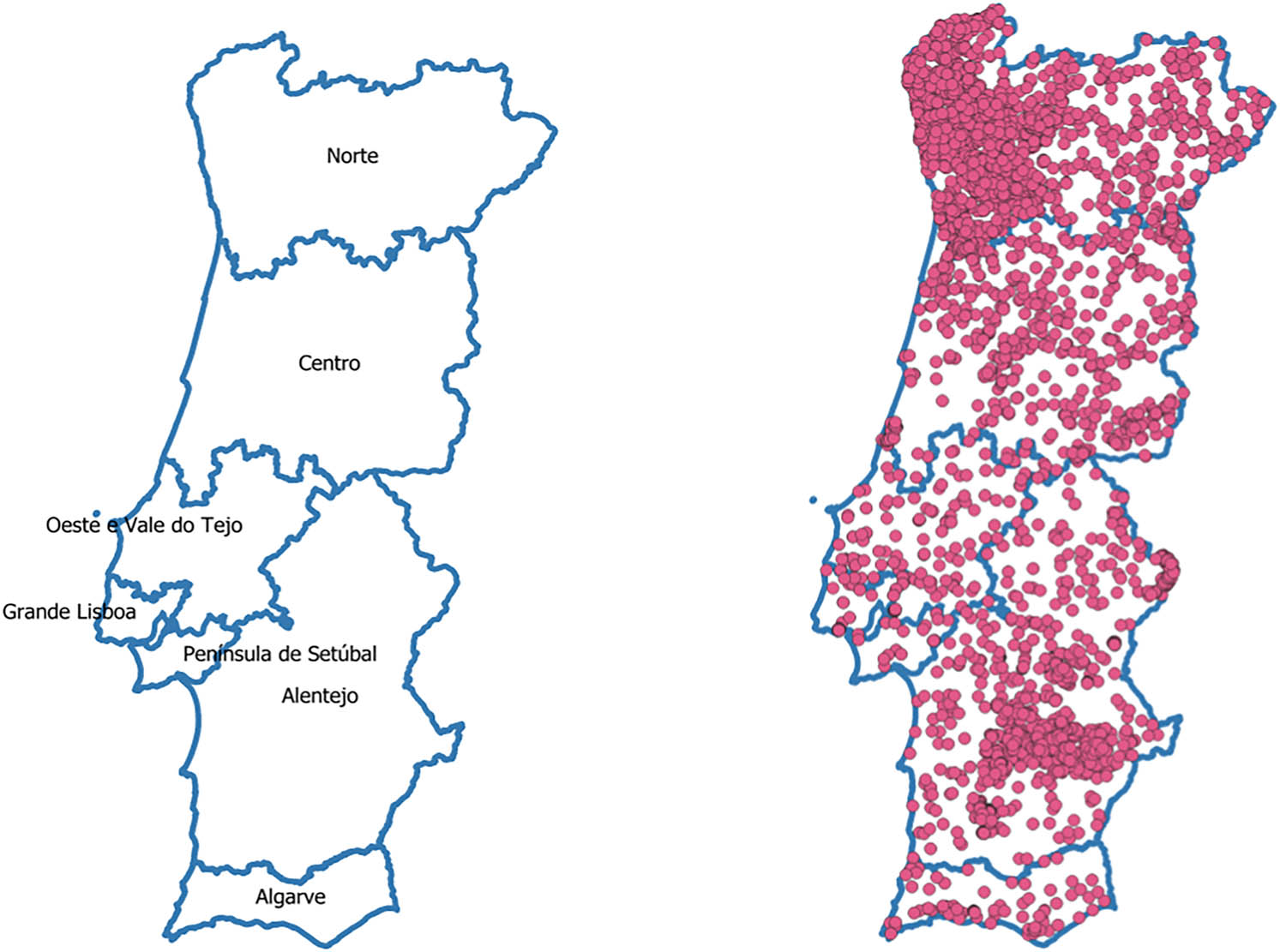
Distribution of observations by NUTS 2 in mainland Portugal. Source: The map in Figure was generated using QGIS from the Infosolo database.
4 Results
This section presents the results of our analysis, highlighting key findings related to the factors influencing SOC levels, the predictive features selected by the Random Forest model, and the potential implications for soil management and agricultural practices.
4.1 Land use
Table 2 presents groups of land uses designed to normalize classifications across multiple sources and reduce the complexity of interpretation. By categorizing land uses into well-defined groups, it ensures consistency in analysis, making it easier to compare and integrate data from various origins. This approach simplifies interpretation, facilitates decision-making, and promotes a clearer understanding of land use patterns and their implications.
Groups of land uses
| Category | Includes | Reason |
|---|---|---|
| Rainfed arable crops | Oats, rye, barley, durum wheat, triticale, common wheat, sunflower | These crops are typically grown in areas relying on rainfall without irrigation |
| Irrigated arable crops | Maize, rice, cotton, sugar beet, potatoes | These crops often require irrigation due to their higher water needs |
| Mixed crops | Other cereals, other root crops, other leguminous and mixtures for fodder, mixed cereals for fodder | These groups involve multiple crops grown together or for specific purposes like fodder |
| Horticulture | Tomatoes, melon, other fresh vegetables, floriculture and ornamental plants | These are high-value crops typically grown in controlled environments or as specialty crops |
| Permanent crops | Vineyards, olive groves, fruit trees (e.g., apple fruit, pear fruit, cherry fruit, nuts trees, almond) | These crops are perennial and cultivated over many years |
| Pastures and grasslands | Temporary grasslands, grassland without tree/shrub cover, grassland with sparse tree/shrub cover | These are open land types primarily used for grazing or hay production |
| Forest and woodland | Pine-dominated coniferous woodland, pine forest, forest, eucalypt forest, quercus forest, chestnut forest, mediterranean woodlanda, Mixed woodlandb | All fall under forest or woodland ecosystems with minor distinctions |
| Other land types | Rocks and stones, Bare land, Non built-up area features, Shrubland without tree cover | These represent nonagricultural or sparsely vegetated areas |
Source: Own elaboration based on data from INFOSOLO.
aEcosystems found in regions with a Mediterranean climate, characterized by hot, dry summers and mild, wet winters. These woodlands typically feature a mix of broadleaf evergreen trees and shrubs adapted to withstand drought and periodic wildfires.
bForests where neither coniferous (cone-bearing) nor broadleaved (deciduous) species dominate the canopy; instead, both types are present in significant proportions.
The graph in Figure 2 underscores the relationship between land use categories and soil health by illustrating how land management practices influence SOC levels. Vertical lines indicate the quartiles, while the width and the shape of the violins illustrate variations in soil carbon storage potential among these land use categories.

Relationship between land use and OC. Vertical lines present the lower quartile, median, and upper quartiles. Source: Own elaboration based on data from INFOSOLO.
Pastures and grasslands show higher median OC values than agricultural land categories. However, OC values within these categories may vary significantly, as depicted by the violins’ width and shape, reflecting the diversity of OC retention. Agricultural categories display lower OC values than others, indicating OC depletion. The exception is Irrigated Arable Crop and Horticulture, which, despite their variability, expose moderate OC values.
The variability in OC values indicates soil carbon storage potential among these land use categories. One example is the Forest and Woodland, which displays a wide range of OC values despite its lowest median OC levels of all the categories, suggesting a complex interplay of ecological factors influencing carbon storage. These findings emphasize the role of land management in shaping soil health and carbon sequestration potential across ecosystems.
Figure 3 illustrates the distribution of OC values across different forest and woodland subcategories. Mixed woodland and Mediterranean woodland exhibit the highest OC median values and high variability, indicating diverse soil conditions and carbon retention capacities. Quercus forest and chestnut forest display lower but stable OC distributions, reflecting consistent organic matter contributions from broadleaf trees. These values contrast with the Eucalypt forest’s high median OC levels.

Breakdown of OC into forest types. Vertical lines present the lower quartile, median, and upper quartiles. Source: Own elaboration based on data from INFOSOLO.
4.2 Soil type
Figure 4 illustrates the distribution of OC across various soil types. Anthrosols, Leptosols, Umbrisols, Regosols, and Ferralsols have higher OC medians than other soil types. Fluvisols exhibit more OC variability. These soils are young and develop in alluvial deposits near rivers, leading to significant spatial heterogeneity in their organic matter content. By contrast, Ferralsols, Vertisols, Calcisols, Gleysols, and Planosols contained variability. This can be attributed to their intrinsic soil properties, such as stable mineral compositions, uniform organic matter stabilization mechanisms, and consistent land use practices, limiting OC level fluctuations.

Relationship between soil type and OC. Source: Own elaboration based on data from INFOSOLO.
4.3 Soil types and agricultural practices
The interaction between land use practices and inherent soil characteristics drives the observed variability in OC content. These insights are valuable for land management strategies, as they underscore the importance of tailoring practices to maintain or enhance soil carbon stocks in agricultural and natural ecosystems.
The heatmap in Figure 5 presents the distribution of OC across different combinations of soil types and land uses. Patterns in the heatmap reveal that specific land use categories, such as forested areas or pastures, tend to be associated with higher mean OC levels in certain soil types. This aligns with the expectation that these land uses often involve less soil disturbance, promoting organic matter accumulation.

Heatmap showing the mean OC content for different combinations of soil types and land uses. Source: Own elaboration based on data from INFOSOLO.
Permanent crops expose low median OC values, except for the Umbrisols. Umbrisols are typically rich in organic matter due to their formation under forested or vegetated conditions, which leads to the accumulation of organic-rich topsoil. In addition, permanent crops, such as fruit orchards and vineyards, are cultivated over many years without frequent soil disturbance. This minimizes soil erosion and organic matter loss, promoting carbon sequestration. In addition, organic residues from permanent crops, like leaf litter and pruned material, contribute consistently to the soil organic pool, enhancing OC levels in soils like Umbrisols that already support organic matter retention.
Irrigated arable crops show high OC levels for Acrisols, Leptosols, and Umbrisols. The consistent addition of organic residues and improved soil moisture conditions under irrigation collectively contribute to the elevated OC levels in these soils.
4.4 Elevation
A variability in the relationship between elevation and OC is expected, shaped by soil type-specific characteristics and environmental factors such as climate, vegetation, and land use.
Figure 6 shows the correlation between elevation (Z) and OC for selected soil types. The data reveal that most soil types exhibit weak correlations, with positive and negative trends reflecting the complex interactions between altitude and soil properties. The strongest positive correlation is observed for Podzols, known for forming in cool, wet climates, suggesting that their OC tends to increase at higher elevations. In contrast, Alisols show a strong negative correlation between elevation and OC, suggesting that OC may decline at higher altitudes due to reduced vegetation productivity or harsher environmental conditions.

Correlation between elevation (Z) and OC content for various soil types. Source: Own elaboration based on data from INFOSOLO.
The analysis of Leptosols, Planosols, and Umbrisols reveals a moderate correlation between OC and elevation (Z), indicating that altitude changes affect the OC content in these soil types. Due to cooler temperatures and slower decomposition rates, Leptosols, typically shallow and found in mountainous or rocky terrains, likely accumulate more OC at higher elevations. Planosols, often associated with waterlogged conditions and clayey subsoils, may show a moderate correlation as higher elevations improve drainage, enhancing organic matter preservation. Similarly, Umbrisols, known for their rich organic horizons, benefit from accumulating organic matter in elevated, forested regions where vegetation density and climatic conditions favor OC buildup. These moderate correlations underscore the interplay between topography, climate, and soil characteristics in shaping OC dynamics.
Figure 7 shows the correlation between elevation (Z) and OC content for various land use categories.

Correlation between elevation and OC for Land Use Categories. Source: Own elaboration based on data from INFOSOLO.
Horticulture exhibits the strongest Z-OC correlation, while forest and woodland, pastures and grasslands, exhibit moderate positive correlations. These land uses are typically associated with perennial vegetation or dense tree cover, which enhances OC storage at higher elevations due to cooler temperatures and slower decomposition rates. Forested areas, in particular, benefit from greater organic matter inputs from leaf litter and reduced erosion in elevated terrains.
Irrigated arable crops and mixed crops display weak negative Z-OC correlations. This indicates that as elevation increases, OC levels slightly decrease, potentially due to reduced water availability and less-intensive agricultural activity at higher altitudes, which can limit organic matter inputs and soil carbon accumulation.
4.5 OC predictors
Figure 8 presents the feature importance when used to predict OC content. The random forest algorithm was used to select relevant dataset features.

Feature importance. Source: Own elaboration based on data from INFOSOLO.
The top-ranked predictors are N (nitrogen content), latitude, CEC (cation exchange capacity), pH, and Si (silt content). These results emphasize the critical role of soil chemical properties (e.g., nitrogen, pH, and CEC), spatial factors (e.g., latitude), and soil texture characteristics (e.g., silt content) in influencing OC levels. Such insights validate the relevance of these features and provide a foundation for developing targeted interventions and improving predictive models for effective SOC management.
5 Discussion
This research aims to contribute to the relationships between SOC levels, land use, land cover and soil characteristics. The information in the INFOSOLO database was considered and analyzed using statistical methodologies and machine learning approaches.
Data analysis shows that the following agricultural land use categories present the highest levels of SOC: pastures and grasslands irrigated arable crops, and horticulture. Between the forest and woodland subcategories, mixed woodland, Mediterranean woodland, and eucalypt forest are the forest land uses with higher values for the SOC. These results highlight the interrelationships of the SOC with the land use and land cover for the Portuguese contexts and the relevance of the pastures and grasslands for the respective levels of OC [28,39]. Considering these land uses may contribute to preserving or increasing the mitigation of GHG emissions, carbon farming may be a solution to promote SOC storage in land uses with lower percentages of carbon sequestration.
Regarding soil characteristics, Anthrosols, Leptosols, Umbrisols, Regosols, and Ferralsols appear as the soil groups with the highest percentages of SOC. The importance of some of these soil groups for carbon sequestration was also highlighted in previous research, namely, the relevance of the Leptosols [47]. When the land use was combined with the soil characteristics, the findings revealed that irrigated arable crops show high OC percentages for Acrisols, Leptosols, and Umbrisols. Combining some soil characteristics with sustainable practices may optimize SOC storage.
The scientific literature considers elevation an important variable impacting soil carbon sequestration [26]. The results show that the correlation between the elevation and the carbon sequestration is higher for the following soil types: Podzols, Leptosols, Planosols, and Umbrisols. This correlation is also greater for the horticulture, forest and woodland, pastures, and grassland land use groups.
5.1 Disclaimer and limitation
Although our work gives insight into SOC levels in relationships between land use and soil characteristics, as well as environmental factors, several limitations must be stated.
5.1.1 Internal validity
The analysis performed in this study is based on the INFOSOLO database. Although comprehensive, it may have inherent biases due to the uneven distribution of soil profile data across Portugal. Some regions and soil types are underrepresented, which may affect the generalizability of the findings.
While machine learning techniques, such as Random Forest, have been used to identify key predictors of SOC, they rely on available data and may not fully capture complex soil–environment interactions. Also, the land use classification in the study is simplified for analysis and may mask fine-scale variations in SOC dynamics. Future studies should refine the relationships by adopting a more grain classification of agricultural and natural land use types.
5.1.2 External validity
Finally, our work may not account for external factors, such as land management practices, historical changes in land use, and climate variability. These factors can significantly influence SOC levels and should be integrated into future research efforts.
Despite these limitations, the findings provide a solid foundation for policymakers and researchers to support targeted strategies to improve SOC storage and promote sustainable land use practices.
6 Conclusions
Our analysis provides valuable insights for stakeholders, including policymakers and farmers, to promote sustainable land management practices that enhance soil carbon sequestration, mitigate GHG emissions, and strengthen environmental resilience. By aligning agricultural and land use strategies with the findings, stakeholders can support more effective climate action and foster healthier ecosystems.
Promoting land use types with higher potential for soil carbon sequestration, such as pastures, grasslands, and specific forest subcategories, is essential. Encouraging sustainable agricultural practices – e.g., agroforestry, no-till farming, and organic amendments – can significantly improve soil health and carbon storage. Knowledge of the influence of key variables, such as soil type, elevation, and land use, can guide the design of targeted interventions that optimize SOC sequestration while ensuring economic viability.
The findings underscore the importance of policies that incentivize eco-friendly land management practices. Policymakers are encouraged to integrate these results into strategies that combine environmental benefits with economic value, such as subsidies for sustainable farming techniques, reforestation programs, or carbon credits for land management practices that maximize SOC storage.
Future research should build on these findings by incorporating the most influential predictors, such as soil type, nitrogen content, and land use, into comprehensive explanatory models tailored to the Portuguese context. These models could provide deeper insights into the dynamics of SOC storage, enabling more precise predictions and the development of localized land management strategies.
Acknowledgments
We would like to thank the CERNAS Research Centre and the Polytechnic Institute of Viseu for their support.
-
Funding information: This work was developed under the Science4Policy 2023 (S4P-23): annual science for policy project call, an initiative by PlanAPP – Competence Centre for Planning, Policy and Foresight in Public Administration in partnership with the Foundation for Science and Technology, financed by Portugal’s Recovery and Resilience Plan. This work is funded by National Funds through the FCT – Foundation for Science and Technology, I.P., within the scope of the project Refa UIDB/00681 (https://doi.org/10.54499/UIDP/00681/2020).
-
Author contributions: All authors have accepted responsibility for the entire content of this manuscript and consented to its submission to the journal, reviewed all the results and approved the final version of the manuscript. Data curation, C.C.; investigation, V.J.P.D.M. and C.C. and T.B.R. and A.J.D.F and J.L.D.S.P. and M.D.C.S.C.; writing – original draft, C.C. and T.B.R. and N.L.C. and A.J.D.F and J.L.D.S.P. and M.D.C.S.C.; resources, T.B.R.; validation, V.J.P.D.M. and T.B.R. and N.L.C. and A.J.D.F and J.L.D.S.P. and M.D.C.S.C.; methodology, V.J.P.D.M. and N.L.C. and A.J.D.F and M.D.C.S.C.; conceptualization, V.J.P.D.M.; funding acquisition, V.J.P.D.M.; project administration, V.J.P.D.M.
-
Conflict of interest: Vítor João Pereira Domingues Martinho, who is the co-author of this article, is a current Editorial Board member of Open Agriculture. This fact did not affect the peer-review process. Authors state no conflict of interest.
-
Data availability statement: The data presented in this study are available on request from the corresponding author.
References
[1] Panchasara H, Samrat NH, Islam N. Greenhouse gas emissions trends and mitigation measures in Australian agriculture sector – a review. Agriculture. 2021;11:1–16. 10.3390/agriculture11020085Search in Google Scholar
[2] Kwiatkowski CA, Pawlllowska M, Harasim E, Pawlllowski L. Strategies of climate change mitigation in agriculture plant production – critical review. Energies. 2023;16:1–27. 10.3390/en16104225Search in Google Scholar
[3] Nogués I, Mazzurco Miritana V, Passatore L, Zacchini M, Peruzzi E, Carloni S, et al. Biochar soil amendment as carbon farming practice in a mediterranean environment. Geoderma Regional. 2023;33:e00634. 10.1016/j.geodrs.2023.e00634Search in Google Scholar
[4] Harman GE, Uphoff N. Symbiotic root-endophytic soil microbes improve crop productivity and provide environmental benefits. Scientifica. 2019;2019. 10.1155/2019/9106395Search in Google Scholar PubMed PubMed Central
[5] Martani E, Ferrarini A, Amaducci S. Reversion of perennial biomass crops to conserve C and N: A meta-analysis. Agronomy. 2022;12;232. 10.3390/agronomy12020232Search in Google Scholar
[6] Sharma M, Kaushal R, Kaushik P, Ramakrishna S. Carbon farming: Prospects and challenges. Sustainability. 2021;13:11122. 10.3390/su131911122Search in Google Scholar
[7] Almaraz M, Wong MY, Geoghegan EK, Houlton BZ. A review of carbon farming impacts on nitrogen cycling, retention, and loss. An NY Acad Sci. 2021;1505:102–17. 10.1111/nyas.14690Search in Google Scholar PubMed
[8] Arellano Vazquez DA, Gagliano E, Del Borghi A, Tacchino V, Spotorno S, Gallo M. Carbon farming of main staple crops: A systematic review of carbon sequestration potential. Sustainability. 2024;16:7907. 10.3390/su16187907Search in Google Scholar
[9] Bogojević S. Carbon removals, ecosystems and the European green deal. Europ Law Open. 2024;3:199–208. 10.1017/elo.2024.11Search in Google Scholar
[10] Baumber A, Metternicht G, Cross R, Ruoso LE, Cowie AL, Waters C. Promoting co-benefits of carbon farming in oceania: Applying and adapting approaches and metrics from existing market-based schemes. Ecosyst Services. 2019;39;100982. 10.1016/j.ecoser.2019.100982Search in Google Scholar
[11] Avasiloaiei DI, Calara M, Brezeanu PM, Gruda NS, Brezeanu C. The evaluation of carbon farming strategies in organic vegetable cultivation. Agronomy. 2023;13:2406. 10.3390/agronomy13092406Search in Google Scholar
[12] Evans MC. Effective incentives for reforestation: lessons from Australia’s carbon farming policies. Current Opinion Environ Sustainability. 2018;32:38–45. 10.1016/j.cosust.2018.04.002Search in Google Scholar
[13] Raina N, Zavalloni M, Viaggi D. Incentive mechanisms of carbon farming contracts: a systematic mapping study. J Environ Manag. 2024;352:120126. 10.1016/j.jenvman.2024.120126Search in Google Scholar PubMed
[14] Bellassen V, Angers D, Kowalczewski T, Olesen A. Soil carbon is the blind spot of european national GHG inventories. Nature Climate Change. 2022;12:324–31. 10.1038/s41558-022-01321-9Search in Google Scholar
[15] Nachimuthu G, Hulugalle N. On-farm gains and losses of soil organic carbon in terrestrial hydrological pathways: A review of empirical research. Int Soil Water Conserv Res. 2016;4:245–59. 10.1016/j.iswcr.2016.10.001Search in Google Scholar
[16] Loria N, Lal R, Chandra R. Handheld in situ methods for soil organic carbon assessment. Sustainability. 2024;16;5592. 10.3390/su16135592Search in Google Scholar
[17] Tang K, Kragt ME, Hailu A, Ma C. Carbon farming economics: what have we learned? J Environ Manag. 2016;172:49–57. 10.1016/j.jenvman.2016.02.008Search in Google Scholar PubMed
[18] Budai AE, Rasse DP, Cottis T, Joner EJ, Martinsen V, O’Toole A, et al. Qualitative evaluation of nine agricultural methods for increasing soil carbon storage in Norway. Europ J Soil Sci. 2024;75:e13493. 10.1111/ejss.13493Search in Google Scholar
[19] Renwick A, Ball AS, Pretty JN. Economic, biological and policy constraints on the adoption of carbon farming in temperate regions. Philos Trans R Soc A Math Phys Eng Sci. 2002;360:1721–40. 10.1098/rsta.2002.1028Search in Google Scholar PubMed
[20] Geier CR, Bahrs E, Sponagel C. Derivation and evaluation of a business model to promote carbon farming that generates valid carbon removal. Sustainability. 2023;15:15809. 10.3390/su152215809Search in Google Scholar
[21] Lin BB, Macfadyen S, Renwick AR, Cunningham SA, Schellhorn NA. Maximizing the environmental benefits of carbon farming through ecosystem service delivery. BioScience. 2013;63:793–803. 10.1525/bio.2013.63.10.6Search in Google Scholar
[22] Estim A, Shapawi R, Shaleh SRM, Saufie S, Mustafa S. Decarbonizing aquatic food production through circular bioeconomy of aquaponic systems. Aquacult Stud. 2023;23:AQUAST963. 10.4194/AQUAST963Search in Google Scholar
[23] Petros P, Heilweck M, Moore D. Saving the planet with appropriate biotechnology: 5. An action plan. Mexican J Biotech. 2021;6:1–60. 10.29267/mxjb.2021.6.2.1Search in Google Scholar
[24] Nath AJ, Lal R, Das AK, Managing woody bamboos for carbon farming and carbon trading. Global Eco Conservation. 2015;3:654–63. 10.1016/j.gecco.2015.03.002Search in Google Scholar
[25] Ramos TB, Horta A, Gonçalves MC, Pires FP, Duffy D, Martins JC. The INFOSOLO database as a first step towards the development of a soil information system in Portugal. Catena. 2017;158:390–412. 10.1016/j.catena.2017.07.020Search in Google Scholar
[26] Aksoy E, Yigini Y, Montanarella L. Combining soil databases for topsoil organic carbon mapping in Europe. PLoS ONE. 2016;11:e0152098. 10.1371/journal.pone.0152098Search in Google Scholar PubMed PubMed Central
[27] Grilli E, Carvalho SCP, Chiti T, Coppola E, D’Ascoli R, La Mantia T, et al. Critical range of soil organic carbon in Southern Europe lands under desertification risk. J Environ Manag. 2021;287:112285. 10.1016/j.jenvman.2021.112285Search in Google Scholar PubMed
[28] Patrício MB, Lado M, de Figueiredo T, Azevedo JC, Bueno PAA, Fonseca F. Carbon storage patterns and landscape sustainability in Northeast Portugal: a digital mapping approach. Sustainability. 2023;15:16853. 10.3390/su152416853Search in Google Scholar
[29] Castro M, Fernandez-Nunnnez E. Soil properties and understory herbaceous biomass in forests of three species of quercus Northeast Portugal. Forest Syst. 2014;23:425–37. 10.5424/fs/2014233-05086Search in Google Scholar
[30] Ramos TB, Rodrigues S, Branco MA, Prazeres A, Brito D, Gonçalves MC, et al. Temporal variability of soil organic carbon transport in the Enxoé agricultural watershed. Environ Earth Sci. 2015;73:6663–76. 10.1007/s12665-014-3888-zSearch in Google Scholar
[31] Shen L, Zhang W, Zhai D, Han S, Tian S. Estimation of soil organic carbon content and dynamics in mediterranean climate regions considering long-term monthly climatic conditions. Ecol Indicators. 2024;168:112746. 10.1016/j.ecolind.2024.112746Search in Google Scholar
[32] Alexandre CA, Bajouco R, Leal JDS, Peça JO, Dias AB. Effects on soil chemical properties and carbon stock two years after compost application in a Hedgerow olive grove. Agronomy. 2023;13:1933. 10.3390/agronomy13071933Search in Google Scholar
[33] Morais TG, Silva C, Jebari A, Álvaro Fuentes J, Domingos T, Teixeira RFM. A proposal for using process-based soil models for land use life cycle impact assessment: application to Alentejo, Portugal. J Cleaner Production. 2018;192:864–76. 10.1016/j.jclepro.2018.05.061Search in Google Scholar
[34] Payen FT, Sykes A, Aitkenhead M, Alexander P, Moran D, MacLeod M. Predicting the abatement rates of soil organic carbon sequestration management in Western European Vineyards using random forest regression. Clean Environ Syst. 2021;2:100024. 10.1016/j.cesys.2021.100024Search in Google Scholar
[35] Vilček J, Koco SS, Torma S, Lošák T, Antonkiewicz J. Identifying soils for reduced tillage and no-till farming using GIS. Polish J Environ Stud. 2019;28(4):2407–13. 10.15244/pjoes/90787Search in Google Scholar
[36] Sobreiro J, Patanita MI, Patanita M, Tomaz A. Sustainability of high-density Olive Orchards: Hints for irrigation management and agroecological approaches. Water. 2023;15:2486. 10.3390/w15132486Search in Google Scholar
[37] Baiamonte G, Gristina L, Orlando S, Palermo SS, Minacapilli M. No-till soil organic carbon sequestration patterns as affected by climate and soil erosion in the arable land of mediterranean Europe. Remote Sensing. 2022;14:4064. 10.3390/rs14164064Search in Google Scholar
[38] Borges O, Raimundo F, Coutinho J, Gonçalves B, Oliveira I, Martins A, et al. Carbon fractions as indicators of organic matter dynamics in Chestnut orchards under different soil management practices. Agroforestry Syst. 2018;92:301–10. 10.1007/s10457-017-0088-3Search in Google Scholar
[39] Morais TG, Teixeira RF, Rodrigues NR, Domingos T. Characterizing livestock production in portuguese sown rainfed grasslands: applying the inverse approach to a process-based model. Sustainability. 2018;10:4437. 10.3390/su10124437Search in Google Scholar
[40] Ravaioli G, Domingos T, Teixeira RFM. Data-driven agent-based modelling of incentives for carbon sequestration: the case of Sown biodiverse Pastures in Portugal. J Environ Manag. 2023;338:117834. 10.1016/j.jenvman.2023.117834Search in Google Scholar PubMed
[41] Palma JHN, Crous-Duran J, Graves AR, de Jalon SG, Upson M, Oliveira TS, et al. Integrating belowground carbon dynamics into yield-SAFE, a parameter sparse agroforestry model. Agroforestry Syst. 2018;92:1047–57. 10.1007/s10457-017-0123-4Search in Google Scholar
[42] Catania V, Bueno RS, Alduina R, Grilli E, La Mantia T, Castaldi S, et al. Soil microbial biomass and bacterial diversity in Southern European regions vulnerable to desertification. Ecol Indicators. 2022;145:109725. 10.1016/j.ecolind.2022.109725Search in Google Scholar
[43] Duarte AC, Guerra CA, Cano-Díaz C, Zeiss R, Carvalho-Santos C, Carvalho RP, et al. Effects of protected areas on soil nematode communities in forests of the North of Portugal. Biodiv Conservation. 2024;33:73–89. 10.1007/s10531-023-02732-6Search in Google Scholar
[44] Deosaran R, Carvalho F, Nunes A, Köbel M, Serafim J, Hooda PS, et al. Response of soil carbon and plant diversity to grazing and precipitation in high nature value farmlands. Forest Ecology and Management. 2024;555;121734. 10.1016/j.foreco.2024.121734Search in Google Scholar
[45] Santana VM, González-Pelayo O, Maia PAA, Varela TME, Valdecantos A, Ramnnnn Vallejo V, et al. Effects of fire recurrence and different Salvage logging techniques on carbon storage in Pinus Pinaster forests from Northern Portugal. Europ J Forest Res. 2016;135:1107–17. 10.1007/s10342-016-0997-0Search in Google Scholar
[46] Faria SR, De la Rosa JM, Knicker H, González-Pérez JA, Keizer JJ. Molecular characterization of wildfire impacts on organic matter in eroded sediments and topsoil in mediterranean eucalypt stands. Catena. 2015;135:29–37. 10.1016/j.catena.2015.07.007Search in Google Scholar
[47] Quintela A, Ferreira D, Fabres S, Coutinho J. A survey of organic carbon stocks in mineral soils of Eucalyptus Globulus Labill. Plantations under mediterranean climate conditions. Forests. 2024;15:1335. 10.3390/f15081335Search in Google Scholar
[48] Fernández-Getino AP, Duarte AC. Soil management guidelines in Spain and Portugal related to EU soil protection strategy based on analysis of soil databases. Catena. 2015;126:146–54. 10.1016/j.catena.2014.11.003Search in Google Scholar
[49] Ferreira J, Esteves B, Cruz-Lopes LP, Domingos I. Maritime pine land use environmental impact evolution in the context of life cycle assessment. Open Agriculture. 2022;7:1–7. 10.1515/opag-2021-0058Search in Google Scholar
[50] Serrano JM, Shahidian S, da Silva JM, Carvalho M. Monitoring of soil organic carbon over 10 years in a mediterranean Silvo-Pastoral system: Potential evaluation for differential management. Precision Agriculture. 2016;17:274–95. 10.1007/s11119-015-9419-4Search in Google Scholar
[51] Patrício MS, Nunes LF, Pereira EL. Evaluation of Soil organic carbon storage in a sustainable Forest Chestnut management context. Acta Horticulturae. 2014;1043:161–5. 10.17660/ActaHortic.2014.1043.21Search in Google Scholar
[52] Sil, Fonseca F, Gonçalves J, Honrado J, Marta-Pedroso C, Alonso J, et al. Analysing carbon sequestration and storage dynamics in a changing mountain landscape in Portugal: insights for management and planning. Int J Biodiv Sci Ecosyst Services Manag. 2017;13:82–104. 10.1080/21513732.2017.1297331Search in Google Scholar
[53] Fonseca F, de Figueiredo T, Bompastor Ramos MA. Carbon storage in the mediterranean upland shrub communities of montesinho natural park, Northeast of Portugal. Agroforestry Syst. 2012;86:463–75. 10.1007/s10457-012-9509-5Search in Google Scholar
[54] Horta A, Soares A. Data integration model to assess soil organic carbon availability. Geoderma. 2010;160:225–35. 10.1016/j.geoderma.2010.09.026Search in Google Scholar
[55] Zell C, Kim JH, Dorhout D, Baas M, Sinninghe Damsté JS. Sources and distributions of branched tetraether lipids and crenarchaeol along the Portuguese continental margin: implications for the BIT index. Continental Shelf Res. 2015;96:34–44. 10.1016/j.csr.2015.01.006Search in Google Scholar
[56] Pazmiño Y, de Felipe JJ, Vallbé M, Cargua F, Quevedo L. Identification of a set of variables for the classification of Páramo soils using a nonparametric model, remote sensing and organic carbon. Sustainability. 2021;13:9462. 10.3390/su13169462Search in Google Scholar
[57] Breiman L. Random forests. Machine Learn. 2001;45(1):5–32. 10.1023/A:1010933404324Search in Google Scholar
[58] National Institute of Agricultural and Veterinary Research (INIAV). INFOSOLO Database; Retrieved February 13, 2025 from https://projects.iniav.pt/infosolo/. Online database.Search in Google Scholar
[59] Couchinho F, Paz AM, Mano R, Moura MJ, Antunes J, Castanheira N, et al. Comparação de métodos de determinação do carbono orgânico em solos de Portugal. In: Encontro Anual da Sociedade Portuguesa das Ciências do Solo. Porto; 2024. Search in Google Scholar
[60] Food and Agriculture Organization of the United Nations. FAO World Reference Base; 2025. https://www.fao.org/soils-portal/data-hub/soil-classification/world-reference-base/en/. FAO SOILS PORTAL. Search in Google Scholar
[61] IUSS Working Group WRB. World Reference Base for Soil Resources 2014, Update 2015: International Soil Classification System for Naming Soils and Creating Legends for Soil Maps. No. 106 in World Soil Resources Reports. Rome: FAO; 2015. Search in Google Scholar
[62] IUSS Working Group WRB. World Reference Base for Soil Resources: International Soil Classification System for Naming Soils and Creating Legends for Soil Maps. 4th ed. Vienna, Austria: International Union of Soil Sciences (IUSS); 2022. Search in Google Scholar
[63] QGIS org. QGIS Geographic Information System. Accessed: 2025-02-13. https://qgis.org/. Search in Google Scholar
[64] Direção-Geral do Território. dados.gov.pt – Portal de dados abertos da Administração Publica; Accessed: 2025-02-13. https://dados.gov.pt/pt/. Search in Google Scholar
© 2025 the author(s), published by De Gruyter
This work is licensed under the Creative Commons Attribution 4.0 International License.
Articles in the same Issue
- Research Articles
- Optimization of sustainable corn–cattle integration in Gorontalo Province using goal programming
- Competitiveness of Indonesia’s nutmeg in global market
- Toward sustainable bioproducts from lignocellulosic biomass: Influence of chemical pretreatments on liquefied walnut shells
- Efficacy of Betaproteobacteria-based insecticides for managing whitefly, Bemisia tabaci (Hemiptera: Aleyrodidae), on cucumber plants
- Assessment of nutrition status of pineapple plants during ratoon season using diagnosis and recommendation integrated system
- Nutritional value and consumer assessment of 12 avocado crosses between cvs. Hass × Pionero
- The lacked access to beef in the low-income region: An evidence from the eastern part of Indonesia
- Comparison of milk consumption habits across two European countries: Pilot study in Portugal and France
- Antioxidant responses of black glutinous rice to drought and salinity stresses at different growth stages
- Differential efficacy of salicylic acid-induced resistance against bacterial blight caused by Xanthomonas oryzae pv. oryzae in rice genotypes
- Yield and vegetation index of different maize varieties and nitrogen doses under normal irrigation
- Urbanization and forecast possibilities of land use changes by 2050: New evidence in Ho Chi Minh city, Vietnam
- Organizational-economic efficiency of raspberry farming – case study of Kosovo
- Application of nitrogen-fixing purple non-sulfur bacteria in improving nitrogen uptake, growth, and yield of rice grown on extremely saline soil under greenhouse conditions
- Digital motivation, knowledge, and skills: Pathways to adaptive millennial farmers
- Investigation of biological characteristics of fruit development and physiological disorders of Musang King durian (Durio zibethinus Murr.)
- Enhancing rice yield and farmer welfare: Overcoming barriers to IPB 3S rice adoption in Indonesia
- Simulation model to realize soybean self-sufficiency and food security in Indonesia: A system dynamic approach
- Gender, empowerment, and rural sustainable development: A case study of crab business integration
- Metagenomic and metabolomic analyses of bacterial communities in short mackerel (Rastrelliger brachysoma) under storage conditions and inoculation of the histamine-producing bacterium
- Fostering women’s engagement in good agricultural practices within oil palm smallholdings: Evaluating the role of partnerships
- Increasing nitrogen use efficiency by reducing ammonia and nitrate losses from tomato production in Kabul, Afghanistan
- Physiological activities and yield of yacon potato are affected by soil water availability
- Vulnerability context due to COVID-19 and El Nino: Case study of poultry farming in South Sulawesi, Indonesia
- Wheat freshness recognition leveraging Gramian angular field and attention-augmented resnet
- Suggestions for promoting SOC storage within the carbon farming framework: Analyzing the INFOSOLO database
- Optimization of hot foam applications for thermal weed control in perennial crops and open-field vegetables
- Toxicity evaluation of metsulfuron-methyl, nicosulfuron, and methoxyfenozide as pesticides in Indonesia
- Fermentation parameters and nutritional value of silages from fodder mallow (Malva verticillata L.), white sweet clover (Melilotus albus Medik.), and their mixtures
- Five models and ten predictors for energy costs on farms in the European Union
- Effect of silvopastoral systems with integrated forest species from the Peruvian tropics on the soil chemical properties
- Transforming food systems in Semarang City, Indonesia: A short food supply chain model
- Understanding farmers’ behavior toward risk management practices and financial access: Evidence from chili farms in West Java, Indonesia
- Optimization of mixed botanical insecticides from Azadirachta indica and Calophyllum soulattri against Spodoptera frugiperda using response surface methodology
- Mapping socio-economic vulnerability and conflict in oil palm cultivation: A case study from West Papua, Indonesia
- Exploring rice consumption patterns and carbohydrate source diversification among the Indonesian community in Hungary
- Determinants of rice consumer lexicographic preferences in South Sulawesi Province, Indonesia
- Effect on growth and meat quality of weaned piglets and finishing pigs when hops (Humulus lupulus) are added to their rations
- Healthy motivations for food consumption in 16 countries
- The agriculture specialization through the lens of PESTLE analysis
- Combined application of chitosan-boron and chitosan-silicon nano-fertilizers with soybean protein hydrolysate to enhance rice growth and yield
- Stability and adaptability analyses to identify suitable high-yielding maize hybrids using PBSTAT-GE
- Phosphate-solubilizing bacteria-mediated rock phosphate utilization with poultry manure enhances soil nutrient dynamics and maize growth in semi-arid soil
- Factors impacting on purchasing decision of organic food in developing countries: A systematic review
- Influence of flowering plants in maize crop on the interaction network of Tetragonula laeviceps colonies
- Bacillus subtilis 34 and water-retaining polymer reduce Meloidogyne javanica damage in tomato plants under water stress
- Vachellia tortilis leaf meal improves antioxidant activity and colour stability of broiler meat
- Evaluating the competitiveness of leading coffee-producing nations: A comparative advantage analysis across coffee product categories
- Application of Lactiplantibacillus plantarum LP5 in vacuum-packaged cooked ham as a bioprotective culture
- Evaluation of tomato hybrid lines adapted to lowland
- South African commercial livestock farmers’ adaptation and coping strategies for agricultural drought
- Spatial analysis of desertification-sensitive areas in arid conditions based on modified MEDALUS approach and geospatial techniques
- Meta-analysis of the effect garlic (Allium sativum) on productive performance, egg quality, and lipid profiles in laying quails
- Optimizing carrageenan–citric acid synergy in mango gummies using response surface methodology
- The strategic role of agricultural vocational training in sustainable local food systems
- Agricultural planning grounded in regional rainfall patterns in the Colombian Orinoquia: An essential step for advancing climate-adapted and sustainable agriculture
- Perspectives of master’s graduates on organic agriculture: A Portuguese case study
- Developing a behavioral model to predict eco-friendly packaging use among millennials
- Government support during COVID-19 for vulnerable households in Central Vietnam
- Citric acid–modified coconut shell biochar mitigates saline–alkaline stress in Solanum lycopersicum L. by modulating enzyme activity in the plant and soil
- Herbal extracts: For green control of citrus Huanglongbing
- Research on the impact of insurance policies on the welfare effects of pork producers and consumers: Evidence from China
- Investigating the susceptibility and resistance barley (Hordeum vulgare L.) cultivars against the Russian wheat aphid (Diuraphis noxia)
- Characterization of promising enterobacterial strains for silver nanoparticle synthesis and enhancement of product yields under optimal conditions
- Testing thawed rumen fluid to assess in vitro degradability and its link to phytochemical and fibre contents in selected herbs and spices
- Protein and iron enrichment on functional chicken sausage using plant-based natural resources
- Fruit and vegetable intake among Nigerian University students: patterns, preferences, and influencing factors
- Bioprospecting a plant growth-promoting and biocontrol bacterium isolated from wheat (Triticum turgidum subsp. durum) in the Yaqui Valley, Mexico: Paenibacillus sp. strain TSM33
- Quantifying urban expansion and agricultural land conversion using spatial indices: evidence from the Red River Delta, Vietnam
- Review Articles
- Reference dietary patterns in Portugal: Mediterranean diet vs Atlantic diet
- Evaluating the nutritional, therapeutic, and economic potential of Tetragonia decumbens Mill.: A promising wild leafy vegetable for bio-saline agriculture in South Africa
- A review on apple cultivation in Morocco: Current situation and future prospects
- Quercus acorns as a component of human dietary patterns
- CRISPR/Cas-based detection systems – emerging tools for plant pathology
- Short Communications
- An analysis of consumer behavior regarding green product purchases in Semarang, Indonesia: The use of SEM-PLS and the AIDA model
- Effect of NaOH concentration on production of Na-CMC derived from pineapple waste collected from local society
Articles in the same Issue
- Research Articles
- Optimization of sustainable corn–cattle integration in Gorontalo Province using goal programming
- Competitiveness of Indonesia’s nutmeg in global market
- Toward sustainable bioproducts from lignocellulosic biomass: Influence of chemical pretreatments on liquefied walnut shells
- Efficacy of Betaproteobacteria-based insecticides for managing whitefly, Bemisia tabaci (Hemiptera: Aleyrodidae), on cucumber plants
- Assessment of nutrition status of pineapple plants during ratoon season using diagnosis and recommendation integrated system
- Nutritional value and consumer assessment of 12 avocado crosses between cvs. Hass × Pionero
- The lacked access to beef in the low-income region: An evidence from the eastern part of Indonesia
- Comparison of milk consumption habits across two European countries: Pilot study in Portugal and France
- Antioxidant responses of black glutinous rice to drought and salinity stresses at different growth stages
- Differential efficacy of salicylic acid-induced resistance against bacterial blight caused by Xanthomonas oryzae pv. oryzae in rice genotypes
- Yield and vegetation index of different maize varieties and nitrogen doses under normal irrigation
- Urbanization and forecast possibilities of land use changes by 2050: New evidence in Ho Chi Minh city, Vietnam
- Organizational-economic efficiency of raspberry farming – case study of Kosovo
- Application of nitrogen-fixing purple non-sulfur bacteria in improving nitrogen uptake, growth, and yield of rice grown on extremely saline soil under greenhouse conditions
- Digital motivation, knowledge, and skills: Pathways to adaptive millennial farmers
- Investigation of biological characteristics of fruit development and physiological disorders of Musang King durian (Durio zibethinus Murr.)
- Enhancing rice yield and farmer welfare: Overcoming barriers to IPB 3S rice adoption in Indonesia
- Simulation model to realize soybean self-sufficiency and food security in Indonesia: A system dynamic approach
- Gender, empowerment, and rural sustainable development: A case study of crab business integration
- Metagenomic and metabolomic analyses of bacterial communities in short mackerel (Rastrelliger brachysoma) under storage conditions and inoculation of the histamine-producing bacterium
- Fostering women’s engagement in good agricultural practices within oil palm smallholdings: Evaluating the role of partnerships
- Increasing nitrogen use efficiency by reducing ammonia and nitrate losses from tomato production in Kabul, Afghanistan
- Physiological activities and yield of yacon potato are affected by soil water availability
- Vulnerability context due to COVID-19 and El Nino: Case study of poultry farming in South Sulawesi, Indonesia
- Wheat freshness recognition leveraging Gramian angular field and attention-augmented resnet
- Suggestions for promoting SOC storage within the carbon farming framework: Analyzing the INFOSOLO database
- Optimization of hot foam applications for thermal weed control in perennial crops and open-field vegetables
- Toxicity evaluation of metsulfuron-methyl, nicosulfuron, and methoxyfenozide as pesticides in Indonesia
- Fermentation parameters and nutritional value of silages from fodder mallow (Malva verticillata L.), white sweet clover (Melilotus albus Medik.), and their mixtures
- Five models and ten predictors for energy costs on farms in the European Union
- Effect of silvopastoral systems with integrated forest species from the Peruvian tropics on the soil chemical properties
- Transforming food systems in Semarang City, Indonesia: A short food supply chain model
- Understanding farmers’ behavior toward risk management practices and financial access: Evidence from chili farms in West Java, Indonesia
- Optimization of mixed botanical insecticides from Azadirachta indica and Calophyllum soulattri against Spodoptera frugiperda using response surface methodology
- Mapping socio-economic vulnerability and conflict in oil palm cultivation: A case study from West Papua, Indonesia
- Exploring rice consumption patterns and carbohydrate source diversification among the Indonesian community in Hungary
- Determinants of rice consumer lexicographic preferences in South Sulawesi Province, Indonesia
- Effect on growth and meat quality of weaned piglets and finishing pigs when hops (Humulus lupulus) are added to their rations
- Healthy motivations for food consumption in 16 countries
- The agriculture specialization through the lens of PESTLE analysis
- Combined application of chitosan-boron and chitosan-silicon nano-fertilizers with soybean protein hydrolysate to enhance rice growth and yield
- Stability and adaptability analyses to identify suitable high-yielding maize hybrids using PBSTAT-GE
- Phosphate-solubilizing bacteria-mediated rock phosphate utilization with poultry manure enhances soil nutrient dynamics and maize growth in semi-arid soil
- Factors impacting on purchasing decision of organic food in developing countries: A systematic review
- Influence of flowering plants in maize crop on the interaction network of Tetragonula laeviceps colonies
- Bacillus subtilis 34 and water-retaining polymer reduce Meloidogyne javanica damage in tomato plants under water stress
- Vachellia tortilis leaf meal improves antioxidant activity and colour stability of broiler meat
- Evaluating the competitiveness of leading coffee-producing nations: A comparative advantage analysis across coffee product categories
- Application of Lactiplantibacillus plantarum LP5 in vacuum-packaged cooked ham as a bioprotective culture
- Evaluation of tomato hybrid lines adapted to lowland
- South African commercial livestock farmers’ adaptation and coping strategies for agricultural drought
- Spatial analysis of desertification-sensitive areas in arid conditions based on modified MEDALUS approach and geospatial techniques
- Meta-analysis of the effect garlic (Allium sativum) on productive performance, egg quality, and lipid profiles in laying quails
- Optimizing carrageenan–citric acid synergy in mango gummies using response surface methodology
- The strategic role of agricultural vocational training in sustainable local food systems
- Agricultural planning grounded in regional rainfall patterns in the Colombian Orinoquia: An essential step for advancing climate-adapted and sustainable agriculture
- Perspectives of master’s graduates on organic agriculture: A Portuguese case study
- Developing a behavioral model to predict eco-friendly packaging use among millennials
- Government support during COVID-19 for vulnerable households in Central Vietnam
- Citric acid–modified coconut shell biochar mitigates saline–alkaline stress in Solanum lycopersicum L. by modulating enzyme activity in the plant and soil
- Herbal extracts: For green control of citrus Huanglongbing
- Research on the impact of insurance policies on the welfare effects of pork producers and consumers: Evidence from China
- Investigating the susceptibility and resistance barley (Hordeum vulgare L.) cultivars against the Russian wheat aphid (Diuraphis noxia)
- Characterization of promising enterobacterial strains for silver nanoparticle synthesis and enhancement of product yields under optimal conditions
- Testing thawed rumen fluid to assess in vitro degradability and its link to phytochemical and fibre contents in selected herbs and spices
- Protein and iron enrichment on functional chicken sausage using plant-based natural resources
- Fruit and vegetable intake among Nigerian University students: patterns, preferences, and influencing factors
- Bioprospecting a plant growth-promoting and biocontrol bacterium isolated from wheat (Triticum turgidum subsp. durum) in the Yaqui Valley, Mexico: Paenibacillus sp. strain TSM33
- Quantifying urban expansion and agricultural land conversion using spatial indices: evidence from the Red River Delta, Vietnam
- Review Articles
- Reference dietary patterns in Portugal: Mediterranean diet vs Atlantic diet
- Evaluating the nutritional, therapeutic, and economic potential of Tetragonia decumbens Mill.: A promising wild leafy vegetable for bio-saline agriculture in South Africa
- A review on apple cultivation in Morocco: Current situation and future prospects
- Quercus acorns as a component of human dietary patterns
- CRISPR/Cas-based detection systems – emerging tools for plant pathology
- Short Communications
- An analysis of consumer behavior regarding green product purchases in Semarang, Indonesia: The use of SEM-PLS and the AIDA model
- Effect of NaOH concentration on production of Na-CMC derived from pineapple waste collected from local society
