
Porous silicon nanostructures: Synthesis, characterization, and their antifungal activity
-
Marwa Nabil
 ,
Abdulaziz A. Al-Askar
,
Abdulaziz A. Al-Askar

Abstract
The use of synthetic pesticides has come under scrutiny, and there has been a subsequent shift toward the investigation of alternative methods for the treatment of plant diseases. One notable advancement in this field is the utilization of porous silicon (PS) powder as a sustainable antifungal agent. The synthesis of PS nanoparticle (PS-NP) powder was carried out using the environmentally friendly ultrasonication process. X-ray powder diffraction, Fourier transform infrared spectroscopy, Raman spectroscopy, UV-VIS absorbance, and photoluminescence were some of the methods used to characterize PS-NPs. The different characterization methods revealed the formation of a nanocrystalline structure possessing a cubic Si crystalline quality. The crystal size of PS-NPs, as determined from X-ray diffractometer data, ranges from 36.67 to 52.33 nm. The obtained PS has a high band gap of 3.85 eV and presents a photoluminescence peak at 703 nm. The antifungal activity of the synthesized PS-NPs was assessed against three molecularly characterized fungi, namely Rhizoctonia solani, Fusarium oxysporum, and Botrytis cinerea, which were obtained from tomato plants. The concentration of PS-NPs at 75 µg/mL exhibited the highest enhancement in growth inhibition percentages as compared to the control group. R. solani had the highest inhibition percentage of 82.96%. In conclusion, the encouraging structural properties and antimicrobial capabilities of PS-NPs pave the way for their application across diverse technological industries. To the best of our knowledge, this is the first in vitro study of PS-NPs to evaluate their fungal control efficiency.
1 Introduction
Nanomaterials have attracted scientists' interest owing to their unique physical, chemical, and biological properties. They can be used for many purposes, like controlling plant pathogens, which makes them an unusual way to get rid of pests [1,2,3]. Silicon (Si) element is a significant element that is essential for several physiological and metabolic processes in plants [4]. Si is widely regarded as the predominant semiconductor material due to its versatile applications in various electrical devices such as transistors, solar cells, integrated circuits, and others [5]. These may be due to its significant band gap, expansive optical transmission range, extensive absorption spectrum, surface roughening, and effective anti-reflection coating.
Porous silicon (PS) is widely recognized as a fundamental component in numerous contemporary industries across various domains, including metallurgy, electronics, and photonics. This technology has the potential to be applied in various domains, including microelectronics, optoelectronics, chemical, and biological sensors, as well as biomedical devices [6]. PS can be prepared using a large number of techniques, including anodic etching [7,8], spark plasma sintering stain etching, hydrothermal erosion, and stain chemical etching (i.e., acidic and alkaline) [9,10]. PS nanoparticles (PS-NPs) exhibit considerable potential in various fields such as sensor technology, theragnostic applications, antibacterial interventions, antiviral therapy, among others. The composition of PS-NPs comprises elementary silicon and its potential compounds, including surface oxides. It exhibits the notable attribute of having low cytotoxicity. One notable characteristic of PS-NPs is their ability to undergo biodegradation, resulting in the formation of non-toxic silicic acid [11]. The antimicrobial activity was enhanced by the metal and metal oxide nanoparticles, whether used individually or in nanocomposite structures, due to their increased range of improved characteristics [12]. PS-NPs were synthesized using an ultrasonication technique and an alkali wet chemical etching process (in a single step) with commercially available silicon powder. This method holds great promise due to its safety, cost-effectiveness, and high yield percentage [9].
The utilization of Si nanoparticles (Si-NPs) was observed to mitigate the oxidative stress response through the activation of defense mechanisms in the presence of biotic and abiotic stressors [13,14]. Si-NPs are promising for making effective fertilizers for crops. This is due to their ability to minimize fertilizer loss through a gradual and regulated release mechanism, thereby facilitating timely and responsive delivery [15]. The application of Si-NPs was observed to enhance the germination of seeds in Cucurbita pepo [16] and the photosynthetic rate of tomato plants [17]. Silicon might be a part of the system by which plants and pathogens interact, trigger the host’s defense reaction, and cause plants to make a series of small-molecule metabolites that make them more resistant to disease [18,19]. Si-NPs boost the amount of phenolics in F. oxysporum-infected corn, which helps the corn resist phytopathogens [18]. It has been observed that silicon modulates the activities of plant resistance enzymes [20,21,22]. El-Shetehy et al. [23] have recently documented that Si-NPs trigger systemic acquired resistance, resulting in a reduced incidence of Pseudomonas syringae-induced diseases in Arabidopsis thaliana [23]. The utilization of PS-NPs as antibacterial and antifungal agents is a relatively recent concept, as there has been a shift in focus towards the development of non-toxic and safe nanoparticles. It has been shown in many studies that nanoparticles like silver and selenium can be used to control R. solani, F. oxysporum, and B. cinerea. The potential impact of PS-NPs against these pathogens aligns with the findings of the aforementioned studies.
Fungal-induced plant diseases currently pose a significant threat to global agriculture, potentially jeopardizing the food security of certain nations and leading to substantial economic losses estimated in the billions [24,25]. The tomato plant is a very valuable crop that possesses diverse properties, making it a commonly utilized source of sustenance for human consumption. It serves as a staple food in both affluent and economically disadvantaged nations. Increasing the cultivation of this particular crop is a prominent agricultural objective in several nations, such as Egypt, Sudan, Algeria, and other relevant countries, mostly driven by the consistent growth in demand. Hence, the primary aims of this investigation were as follows: (a) to produce PS-NPs through the process of ultrasonication; (b) to conduct a comprehensive characterization of PS-NPs using techniques such as X-ray powder diffraction, Fourier transform infrared (FTIR) spectroscopy, Raman spectroscopy, UV-VIS absorbance, and photoluminescence; (c) to identify the specific fungal pathogens responsible for the occurrence of dry rot and gray mold in tomato plants; (d) to perform both morphological and molecular characterization of the isolated fungi; and (e) to evaluate the antifungal properties of PS-NPs against the fungi R. solani, F. oxysporum, and B. cinerea. To the best of our knowledge, this study represents the initial in vitro investigation of PS-NPs in order to assess their effectiveness in controlling fungal growth.
2 Materials and methods
This section outlines the methodology for the preparation of PS powder and presents relevant assays to characterize the material, thereby demonstrating its potential application as an antifungal agent. The subsequent section also encompassed a biological investigation aimed at monitoring the impact and efficacy of utilizing PS powder.
2.1 PS-NP powder preparation and characterization
Commercially available silicon powder (Si-powder) (Silicium, Pulver, 99%) was used. The synthesis of PS-NP powder was carried out using the anisotropic alkali chemical etching process via ultrasonication (Ultra-Sonic 208H, KSU-600) [26]. The alkaline, high-oxidant mixture contained 3 wt% KOH and 30 vol% n-propanol. It was exposed to ultrasonication waves for 3 h. The powder product was filtered, washed, and then dried overnight at 40°C to obtain the PS-NP powder. X-ray diffractometer (XRD) was employed to characterize the powder structure, crystallographic phase, and crystal size of PS-NP samples. XRD analysis was conducted using Cu-Kα radiation with a wavelength of 1.5405 Å and at a scanning rate of 4° per min on a 7000 Schimadzu diffractometer located in the United States. The chemical bond formation was determined using a Fourier transform infrared (FTIR) spectrophotometer (Shimadzu FTIR-8400s, Japan). FTIR spectroscopy was also employed to investigate multiple vibration modes, with each infrared spectrum being recorded in the range of 400–4,000 cm−1. Raman spectroscopy was conducted using the Senteral-Bruker Raman micro-spectroscopy instrument. UV-Vis spectroscopy was performed using the Spectrophotometer Double Auto Cell from Labomed Inc., USA. Additionally, photoluminescence measurements were carried out using the Cary Eclipse Fluorescence Spectrophotometer Photoluminescence Instrument from America.
2.2 Fungal study
2.2.1 Isolation
In this study, a systematic procedure was followed to isolate the fungi from tomato roots and fruits exhibiting symptoms such as rot, wilting, or visible fungal growth. Initially, the tomato samples were meticulously cleaned with water to eliminate any visible dirt or debris present on the surfaces. Subsequently, tomatoes were subjected to a sterilization step by immersing in a 70% ethanol (Merck KGaA, Darmstadt, Germany) solution for 1 min. This ethanol treatment effectively sterilized the external surfaces of the tomatoes. To ensure the removal of any residual ethanol, tomatoes were thoroughly rinsed with sterile distilled water, thus completing the surface sterilization process. Small pieces (1–2 cm²) were cut from the tomato parts using a sterile scalpel. The tomato tissue samples were placed on the surface of sterile potato dextrose agar (PDA) (Merck KGaA, Darmstadt, Germany) Petri dishes. The Petri dishes were sealed with parafilm and incubated at a temperature of 25 ± 2°C in an incubator ICB-125B (Bioevopeak Co., Ltd., Jinan, Shandong, China). After 7 days of incubation, the Petri dishes were observed for fungal growth. Once distinct fungal colonies appeared they were carefully transferred to new PDA-Petri dishes using a sterile scalpel. Each isolated colony was ensured to originate from a single fungal spore or mycelium to maintain pure cultures. The Petri dishes were labeled with the isolate’s coded names, dates, and any other relevant information. The isolates were kept in the refrigerator at 4°C until further examination.
2.2.2 Identification of the tested fungi
Fungi were identified morphologically by their macroscopic and microscopic traits. Infected tissues were evaluated for the presence of brown, sunken lesions with a distinctive collar-like margin. Wilting, yellowing, and vascular discoloration were examined. Brown or reddish-brown lesions may be present on the lower stem. Grayish-brown fuzzy fungal growth on the surface of infected tissues and grayish spore masses were looked for under high humidity conditions.
For microscopic examination, a small piece of infected tissue was placed on a clean glass slide, and a drop of lactophenol cotton blue solution was added. It was then covered with a coverslip. Under a VWR 384 BL384 P microscope (Labotec company, Cape Town, South Africa) at low magnification (40×) and high magnification (100×), the hyphal growth and conidia were observed and characterized.
For molecular studies, we initially started with fungal DNA extraction, which was extracted from the pure cultures using a cetyltrimethylammonium bromide extraction method [27].
The PCR (Techne Prime Thermal Cycler, Cole Parmer, IL, USA) amplification of the internal transcribed spacer (ITS) region was performed with specific primers, ITS1 and ITS4 [28]. The success of PCR amplification was verified by running the PCR products on a 1% agarose gel electrophoresis (Thermo Fisher Scientific Inc., Waltham, MA, USA). The PCR products were purified to remove excess primers and nucleotides. The purified PCR products were submitted to a DNA sequencing service using a DNA sequencer (ABI 3730xl System, Thermo Fisher Scientific Inc., Waltham, MA, USA). The raw DNA sequencing data for each sample were obtained and deposited in the GenBank portal under accession numbers.
2.2.3 PS-NP antifungal activity
The food poisoning technique was used to assess the antifungal activity of PS-NPs against isolated fungi [29,30]. The PS-NPs were sterilized by autoclaving (VASI-50L Vertical Autoclave, KEWLAB Pty Ltd, Melbourne, Australia). A suspension of the nanoparticles was prepared by dispersing them in sterile distilled water. The PS-NP concentrations were adjusted by weight per volume (w/v) in the PDA medium to 25, 50, 75, and 100 µg/mL before being poured into Petri dishes and allowed to solidify.
A mycelial plug of each fungal isolate was transferred to the center of individual food poisoning plates using a sterile scalpel. Negative control plates were prepared by applying sterile distilled water without the nanoparticles. The positive control plates were prepared by dissolving 10 µg/mL of sterile distilled water in PDA to assess fungal growth in the absence of nanoparticles.
The Petri dishes were sealed with parafilm and incubated at 25 ± 2°C for fungal growth. After the incubation period, the plates were observed for the growth of fungal colonies. The diameter of the fungal growth inhibition was measured and compared with the control plates [31].
2.3 Data analysis
The observations were recorded, and the inhibition percentage % was measured for each fungal isolate. A statistical analysis, such as an analysis of variance, was performed to determine the significance of the antifungal activity of the PS-NPs.
3 Results and discussion
3.1 XRD analysis
Figure 1 shows the XRD pattern of the prepared PS powder. It was observed that all peaks were indexed to the cubic Si phase with a space group Fd-3m (227) and lattice parameters a = b = c = 5.4309 Å (ICDD Card No. 00-027-1402). In addition, the low-intensity broad band around 2Ɵ = 25° may be attributed to the amorphous silicon part. The full width at half-maximum (FWHM) of the peaks are observed around 28.26°, 47.16°, 55.96°, 69°, and 76.28°, which correspond to (111) [32], (220) [33], (311) [34], (400) [35], and (331) [9], respectively (Table 1). These findings are in good agreement with those of other researchers. Fakhri et al. [36] reported that GaN-NPs are crystalline with a mixture of cubic and hexagonal phases and were prepared by the laser ablation method.

XRD pattern of the prepared PS-NP powder.
Crystal sizes of the obtained PS-NPs
| Peak | 2Ɵ (°) | Plane | FWHM | Size (nm) |
|---|---|---|---|---|
| 1 | 28.26 | (111) | 0.2028 | 42.17 |
| 2 | 47.16 | (220) | 0.247 | 36.67 |
| 3 | 55.96 | (311) | 0.183 | 51.37 |
| 4 | 69 | (400) | 0.38 | 26.51 |
| 5 | 76.28 | (331) | 0.2017 | 52.33 |
The crystal sizes of the obtained nanoparticles were calculated using the Debye–Scherer equation [37]
where λ = 0.1542 nm is the Cu-Kα wavelength, K is a constant, and β is the FWHM.
3.2 FTIR analysis
FTIR spectroscopy is a significant analytical technique utilized for the qualitative determination of characteristic functional groups, which enable adsorption phenomena. The FTIR spectrum of the prepared PS-NPs is depicted in Figure 2. The FTIR peaks observed, as presented in Table 2, are situated at 461 cm−1, which correspond to the bending of Si–O in Si-(O4). The peak at 785 cm−1 can be attributed to the symmetric stretching vibrations of Si–O–Si. The band observed between 1,000 and 1,300 cm−1 corresponds to the stretching modes of the Si–O–Si bonds in PS-NPs. The broad band ranging from 3,050 to 3,750 cm−1 is associated with the stretching modes of O–H bonds, specifically in the SiOH groups and H2O molecules. Additionally, the band observed at 1616.4 cm−1 can be attributed to the scissor-bending vibration of O–H bonds in water [38].
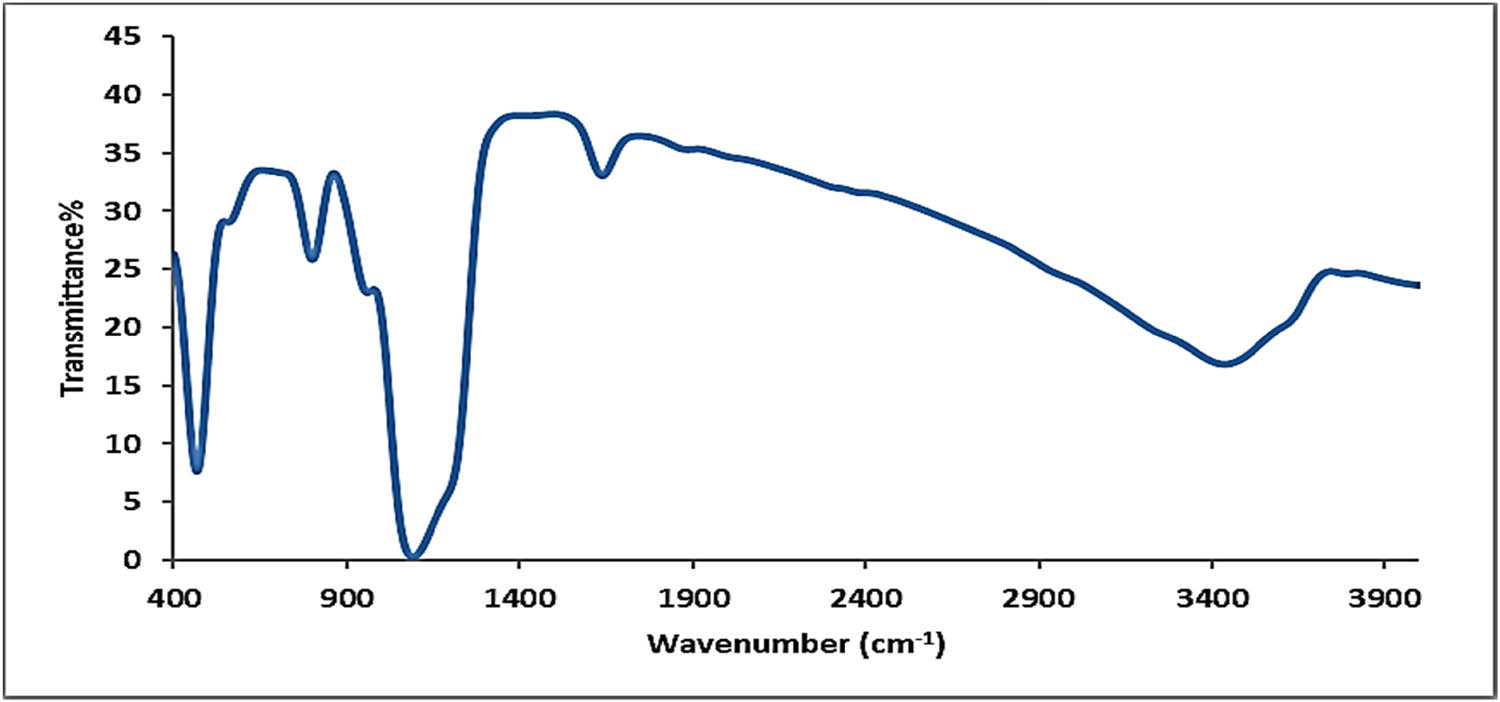
FTIR spectrum of the prepared PS-NP powder.
FTIR peaks of the prepared PS-NPs
| Peak (1/cm) | Functional group/band | Ref |
|---|---|---|
| 461 | Si–O bending | [26] |
| 785 | Si–O–Si symmetric stretching vibrations | [39] |
| 1,074 | Si–O asymmetric stretching in Si–O–Si | [26] |
| 1616.4 | O–H scissor bending vibration | [26] |
| 3,414 | O–H stretching modes, interstitial water, and the hydroxyl group | [39] |
3.3 Raman spectra analysis
Figure 3 shows the Raman peak of PS-NPs observed at 514 cm−1 with a shape that is nearly Lorentzian [40]. The phonons in small crystallites exhibit localization. In the context of crystalline PS, the optical phonon is detected at the central point of the Brillouin zone, exhibiting an energy value of 514 cm−1. This observation can potentially be attributed to the preservation of quasi-momentum within silicon crystals. The crystallinity of the PS-NP powder product agrees with the XRD results as shown in the previous studies [9,41,42]. In a study conducted by Dubey and Gautam [43], it was observed that in the case of pure single-crystalline silicon, the Raman peak occurs at a wavenumber of 520.5 cm−1 and exhibits a shape that closely resembles a Lorentzian distribution.
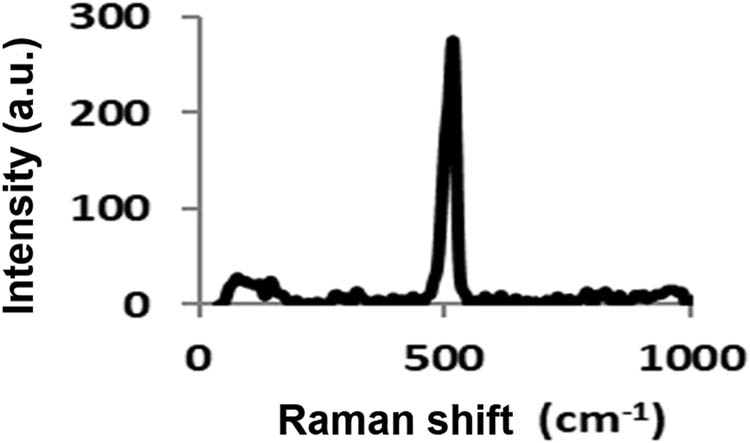
Raman spectra of the PS-NP powder.
3.4 UV-VIS absorbance spectrum analysis
The UV-VIS absorbance spectrum, shown in Figure 4, exhibits the resultant optical properties of the prepared PS-NPs.
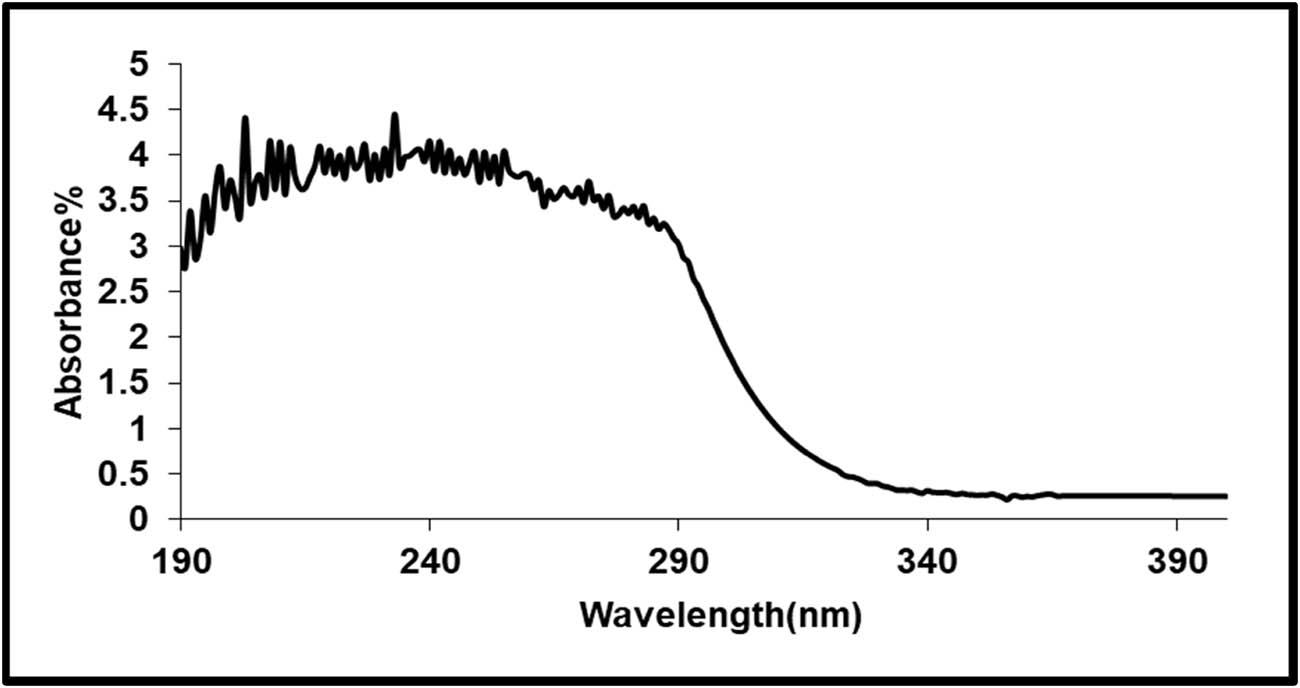
The UV-VIS absorbance spectrum of the PS-NP powder.
The band gap (E g) of the prepared PS-NPs was estimated by the Tauc plot as well as by a derivative [44]:
In the given equation, A represents a constant that varies depending on the specific transition; α denotes the absorbance; E g represents the band gap energy; (hν) represents the photon energy, with h representing Planck’s constant; and n represents an index. The variable n assumes the values of 1/2, 3/2, 2, and 3. The determination of the n value is contingent upon the specific characteristics of the electronic transition that gives rise to the phenomenon of reflection. Figure 5 illustrates the construction of the Tauc plot, where the x-axis represents the photon energy (hν) and the y-axis represents the square root of the product of photon energy and absorption coefficient ((hνα)1∕2). The band gap energy of the studied material can be determined by extrapolating the linear region to (hνα)2 = 0.
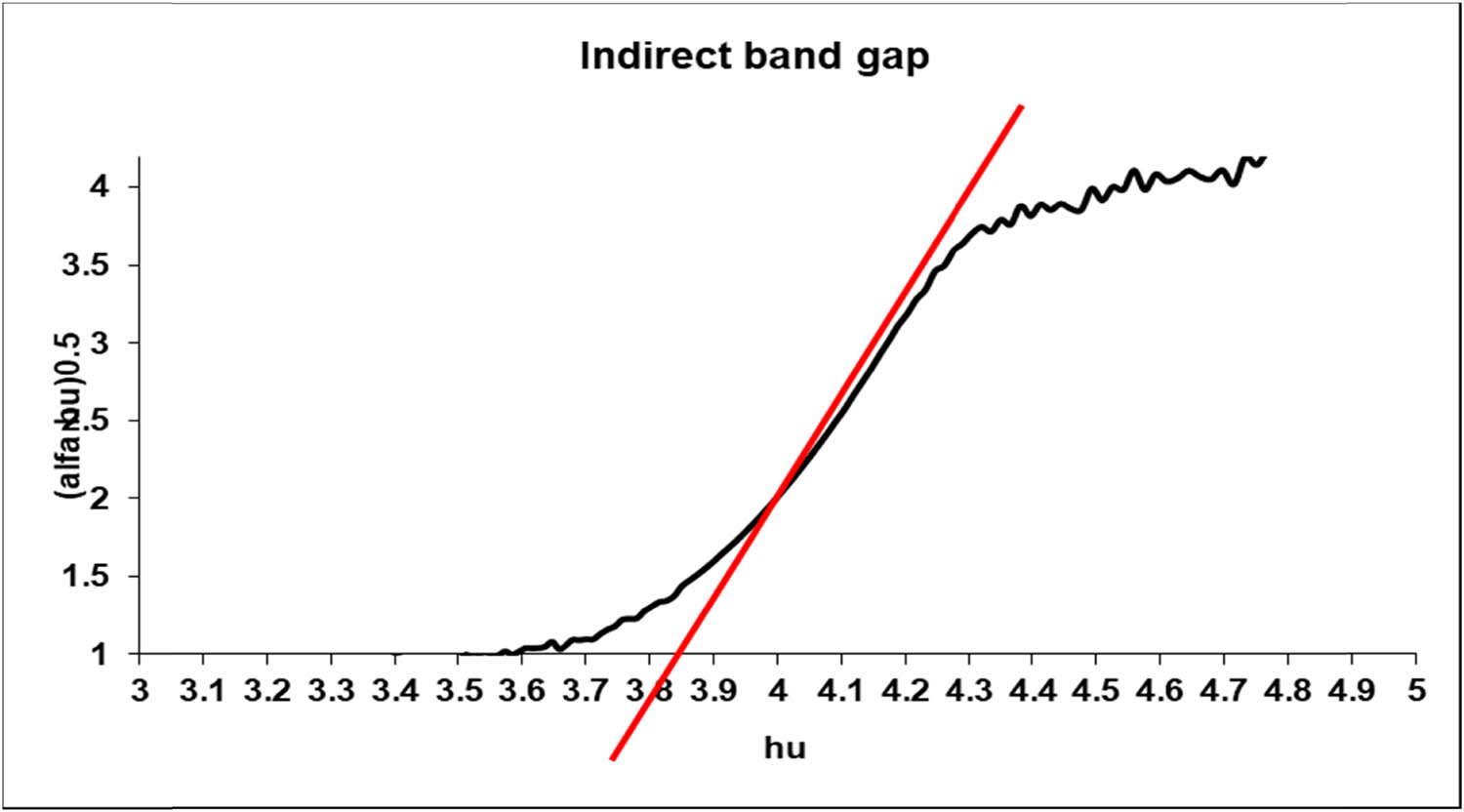
A Tauc plot of the indirect allowed transitions for the prepared PS-NP powder.
3.5 Tauc plot analysis
Figure 5 represents the band gap of the PS-NP powder. It shows the Tauc plot of the prepared PS-NP and its band gap for the indirectly allowed transitions, which equals 3.85 eV. This high band gap value is due to the disturbance of electrons caused by incoming light, and the transition between electronic states is the source of the optical property of a material. Ramadan and Martín-Palma [45] explained that PS-NP particles could be described as a mixture of silicon nanocrystals, amorphous silicon, and air. Therefore, its optical behavior depends on the porosity and thickness of the porous layer. The determined band gap value exhibits a greater magnitude compared to the value reported in a previous study [46].
The phenomenon of bright luminescence in the visible region at room temperature was observed in PS [47]. The visible light emission of PS-NPs can be attributed to various factors, including the direct radiative recombination of confined carriers in Si QDs. (ii) The presence of surface states on the crystallites, which have been contaminated with hydrogen (H) and oxygen (O) due to the chemical etching process, is observed. (iii) The emission of visible light under excitation is attributed to the presence of siloxane. The presence of oxygen-related defect centers has been documented [48]. The emission spectrum is contingent on the specific conditions of the preparation.
3.6 Photoluminescence analysis
Figure 6 shows the photoluminescence of the PS-NP powder. This sample presented a photoluminescence peak at 703 nm. Dubey and Gautam [40] and Salman et al. [49] reported that the photoluminescence peak shifts to a higher wavelength by increasing the porosity and surface area. Then, by increasing the porosity, the value of the energy band gap is increased, and so, the PL peak has a remarkable blue shift.
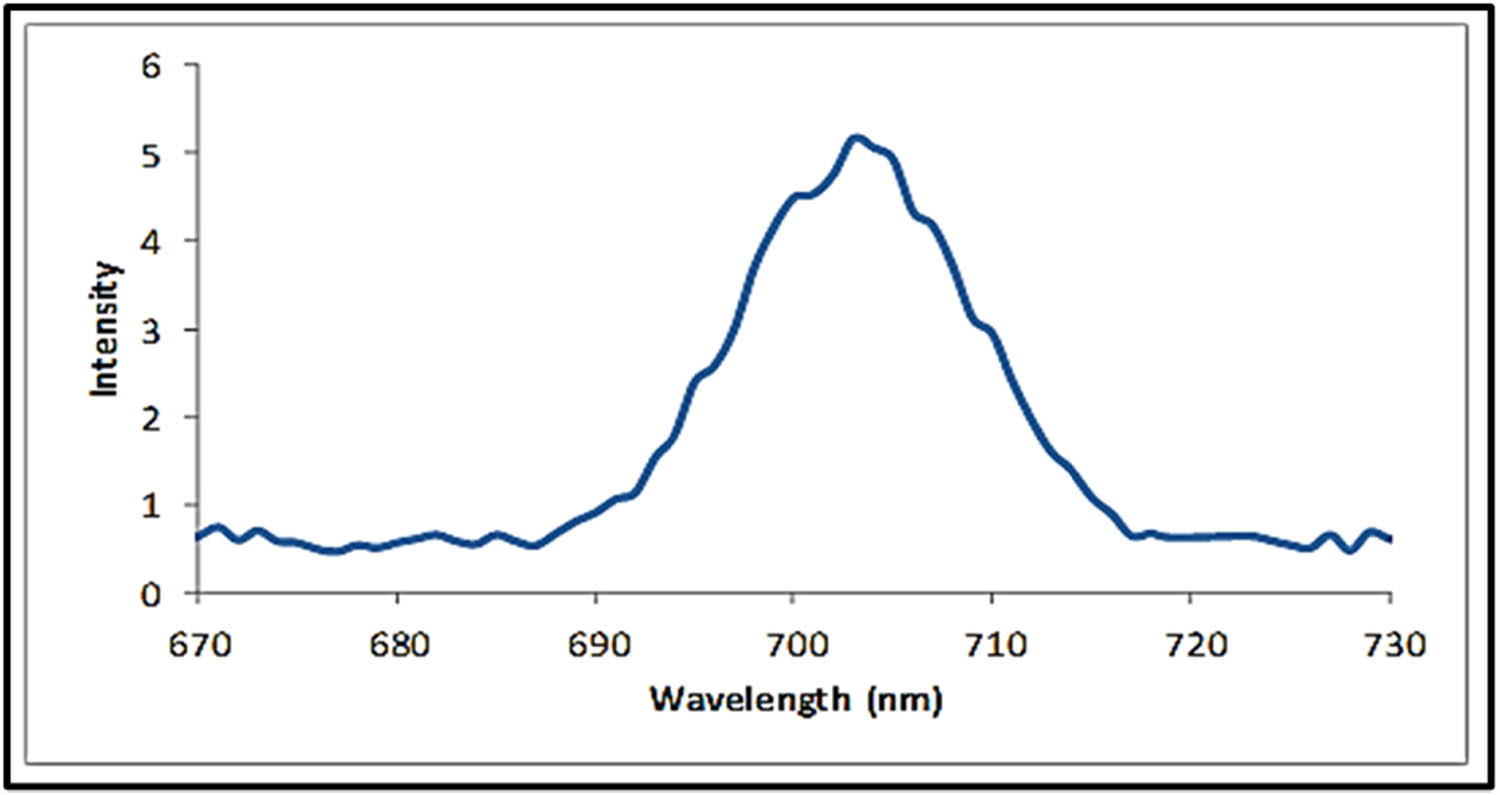
Photoluminescence of the synthesized PS-NP powder.
The average pore diameter (d) for the prepared PS-NPs can be calculated using the following equation [49]:
where E (eV) is the energy band gap of PS-NPs, calculated from Figure 6 (experimental value of the PS-NPs PL peak), E g is the energy band gap of bulk c-Si, h is Planck’s constant = 4.13 × 10⁻¹⁵ eV s, whereas the electron and hole effective masses are (at 300 K) 0.19m o, 0.16m o, and m o = 9.109 × 10⁻³¹ kg, respectively. Therefore, the calculated pore size is 3.195 nm. The calculated value of E g is 3.85 eV, which strongly agrees with the produced value in Figure 5. Table 3 provides a comparison between the values of the synthesized PS-NP powder (pore size and energy band gap) and other published values by different research groups.
3.7 Fungal isolation and morphological identification
The isolation trails from tomato plant parts revealed three fungal isolates that were subjected to morphological examination, and they appeared to be R. solani, Fusarium sp., and Botrytis sp.
R. solani typically appears as a white to brownish, fluffy mycelial growth on the surface of the culture medium. It also produced sclerotia, which were compact, irregularly shaped structures. Under the microscope, R. solani showed septate hyphae that lacked cross-walls (non-septate) in some parts. It produced branching, swollen hyphal cells called “beaked” or “barrel-shaped” cells. The presence of clamp connections was a characteristic feature [52].
The isolation of R. solani from tomato plants is consistent with previous studies, as this fungal pathogen is known to cause diseases in various crops, including tomatoes [53]. The macroscopic and microscopic features described, such as the production of sclerotia and the presence of clamp connections, align with the characteristics reported in the literature [53,54].
The features in Fusarium sp. colonies exhibited a violet color, and textures were fluffy. Meanwhile, the microscopic examination revealed hyaline (colorless) and septate hyphae. The conidiophores bore single or branched chains of conidia. The conidia were usually sickle- or banana-shaped, often with a single-celled or multi-celled macroconidium and sometimes with smaller microconidia [55].
Fusarium sp. is another common fungal pathogen capable of infecting tomato plants and causing various diseases such as Fusarium wilt and crown rot [56]. The description of the macroscopic and microscopic features, including the colony color and the presence of sickle-shaped conidia, is consistent with the morphological characteristics of Fusarium species [57].
In the Petri-dish, B. cinerea colonies initially appeared as a fluffy, whitish-gray mold, which later turned brown or grayish-brown as they produced abundant conidia. The colonies could also exhibit a fuzzy or cottony texture [58]. Under the microscope, B. cinerea showed septate hyphae, the conidiophores were typically branched and bore chains of conidia. The conidia were usually colorless or slightly pigmented, ellipsoidal to cylindrical, and had a characteristic “fuzzy” appearance due to the presence of fine hairs or spines. In a previous study, the fungus B. cinerea was identified as a necrotrophic pathogen known to infect tomato plants and cause gray mold disease [59]. Also, the description of the macroscopic and microscopic features, such as the production of conidia and the presence of fine hairs or spines on conidia, is in line with previous studies on the morphology of B. cinerea [59,60].
Overall, morphological characterization led to the identification of the fungal isolates at the genus level, and for the precise and accurate identification results we investigated at the molecular level. The decision to proceed with molecular identification methods is well-founded, as molecular techniques, such as DNA sequencing and PCR-based methods, can provide more accurate and specific identification of fungal species compared to morphological methods alone [61,62].
3.8 Molecular analysis
Molecular identification results for the fungi isolated from tomato are typically determined through molecular techniques such as PCR and DNA sequencing. These techniques allow for the specific identification and differentiation of fungal species based on their genetic material [55,63]. Also, as reported before, the use of molecular techniques, such as PCR and DNA sequencing, has become standard practice in the identification of fungal species, as these methods offer higher resolution and specificity compared to traditional morphological methods [28,64]. Since the ITS region is widely used for fungal identification due to its highly conserved nature among fungi, making it a suitable target for PCR amplification and DNA sequencing, we used this tool to ensure our isolate identification [65,66]. PCR amplification of the ITS region of the fungal DNA was performed and DNA sequencing of the amplified ITS region revealed a 100% match with R. solani, F. oxysporum, and B. cinerea reference sequences in the GenBank database. Based on these results, the isolated fungi from the tomato samples were identified as R. solani, F. oxysporum, and B. cinerea. The accession numbers were assigned to the sequences OR116524, OR116504, and OR116485, respectively.
The successful identification of R. solani, F. oxysporum, and B. cinerea from tomato plant parts through molecular techniques underscores the importance of combining both morphological and molecular methods in the accurate diagnosis and characterization of plant pathogens.
3.9 Antimicrobial properties
Table 4 displays the growth inhibition percentages of R. solani, F. oxysporum, and B. cinerea when exposed to different concentrations of PS-NPs (µg/mL). The growth inhibition percentages of the fungal pathogens were determined after treating them with various concentrations of PS-NPs. The results indicate that the effectiveness of PS-NPs in inhibiting the growth of these pathogens varied based on the concentration used. At a concentration of 25 µg/mL, PS-NPs exhibited a growth inhibition percentage of 80.00% for R. solani, 70.37% for F. oxysporum, and 41.11% for B. cinerea. Increasing the concentration to 50 µg/mL resulted in slightly lower growth inhibition percentages for all three pathogens: 78.89% for R. solani, 71.11% for F. oxysporum, and 42.22% for B. cinerea.
Growth inhibition percentage of PS-NPs (µg/mL) against R. solani, F. oxysporum, and B. cinerea fungal isolates
| Concentration of PS-NPs (µg/mL) | Growth inhibition percentage | ||
|---|---|---|---|
| R. solani | F. oxysporum | B. cinerea | |
| 25 | 80.00 ab | 70.37 c | 41.11 d |
| 50 | 78.89 ab | 71.11 bc | 42.22 d |
| 75 | 82.96 a | 72.96 ab | 44.44 c |
| 100 | 78.52 b | 73.33 a | 50 a |
| Positive control (10 µg/mL) | 81.11 ab | 71.48 abc | 47.78 b |
| Negative control | 0.0 c | 0.0 d | 0.0 e |
Letters a–e in the same column are not the same, and it can be inferred that all the values beside them exhibit statistically significant differences at a probability level of 0.005.
At a concentration of 75 µg/mL, the growth inhibition percentages showed an improvement compared to the previous concentration. R. solani exhibited the highest inhibition percentage of 82.96%, followed by F. oxysporum at 72.96% and B. cinerea at 44.44%. The highest concentration tested, 100 µg/mL, resulted in a slight decrease in growth inhibition percentages compared to 75 µg/mL. R. solani showed a percentage of 78.52%, F. oxysporum exhibited 73.33%, and B. cinerea had the highest inhibition percentage of 50%. Comparing all the concentrations, the positive control with an inhibition percentage of 81.11% for R. solani, 71.48% for F. oxysporum, and 47.78% for B. cinerea showed comparable effectiveness to the highest concentration of PS-NPs. However, the negative control had no inhibitory effect on any of the pathogens. Several results from different studies and investigators proved the ability of metal nanoparticles to exhibit antifungal or antibacterial activity, such as silver nanoparticles, which have been widely investigated for their antifungal properties [1,2,67,68,69]. The distinctive properties and structural features of PS-NPs, such as their high surface area, unique architecture, and consistent pore dimensions, contribute to their strong antifungal effectiveness against fungal pathogens.
Understanding the mode of action of control agents is essential for enhancing their efficacy, especially when addressing limitations in their performance. The precise mechanism through which PS-NPs combat the studied pathogen remains unclear but several theories have been proposed. The fungicidal activity of PS-NPs may be a result of protein molecule inactivation or direct interaction with the pathogen’s DNA, causing DNA mutations and affecting replication [70,71]. The antifungal properties of PS-NPs could be due to the easy degradation of the cell wall resulting from their small size. This degradation occurs by forming hydrogen bonds between the cell wall lipopolysaccharides and the surface hydroxyl groups present in PS-NPs [72]. PS-NP accumulation in the membrane may trigger cell lysis [73] by inhibiting the transmembrane energy cycle, forming insoluble compounds within the fungal membrane that disrupt the electron transport chain, or oxidizing the cell membrane due to the electrostatic attraction between the positively charged PS-NPs and the negatively charged cell membrane [74]. The surface features of PS-NPs support this perspective, as the positively charged PS-NPs interact with protein thiol groups (-SH) on the fungal cell surface, causing cell lysis [75].
The results suggest that the growth inhibition percentages of the fungal pathogens were influenced by the concentration of PS-NPs, with higher concentrations generally exhibiting stronger inhibitory effects. These findings indicate the potential of PS-NPs as a means to control the growth of R. solani, F. oxysporum, and B. cinerea, although further studies are needed to explore their mechanisms of action and evaluate their safety and environmental impact. The antimicrobial activities of PS-NPs were subjectively determined by their characteristics, such as size, shape, concentration, and physicochemical properties [76]. The current results confirmed that the obtained PS-NPs have remarkable antimicrobial capabilities. These studies highlight the potential of various nanoparticles as antifungal agents. However, it is important to consider the potential cytotoxicity, environmental impact, and long-term effects of using nanoparticles before employing them as antifungal agents. Further research should be conducted to optimize the use of nanoparticles and investigate potential synergistic or additive effects with other antifungal agents to enhance their efficacy.
4 Conclusions
In summary, this study has delved into the intriguing realm of utilizing PS-NPs as an environmentally friendly antifungal agent for the management of plant diseases. Our primary objective was to evaluate the efficacy of PS-NPs, synthesized via a free-cell approach, in combating fungal pathogens, aiming to reduce our dependence on synthetic pesticides. This innovative approach holds significant promise for sustainable and eco-friendly plant disease management strategies.
Our investigation has yielded several notable outcomes:
Efficacy of PS-NPs: Our experiments unveiled a compelling dose-dependent inhibition of fungal growth, spanning a concentration range of 25–100 µg/mL. Impressively, the concentration of 75 µg/mL PS-NPs exhibited the highest growth inhibition percentages compared to the control. This antifungal activity was particularly pronounced against prominent pathogens, including R. solani, F. oxysporum, and B. cinerea.
Structural characterization: Employing various characterization techniques, such as X-ray powder diffraction, FTIR spectroscopy, Raman spectroscopy, UV-VIS absorbance, and photoluminescence, we have confirmed the nanocrystalline structure and crystalline quality of PS-NPs. This deeper structural understanding enriches our grasp of their antimicrobial potential.
Environmental sustainability: The utilization of ultrasonication for PS-NP synthesis has emerged as a safe, cost-effective, and environmentally friendly methodology. This aspect underscores the potential for eco-conscious alternatives in the realm of plant disease management.
Novelty and implications: This study marks a pioneering exploration of PS-NPs as antifungal agents, representing the first in vitro evaluation of their efficacy. The amalgamation of their unique structural characteristics and potent antifungal properties suggests wide-ranging applications in various technological sectors.
Our research underscores the immense promise of PS-NPs in the context of sustainable plant disease management. It underscores their dual advantages of environmental friendliness and effectiveness in inhibiting fungal pathogens. Furthermore, our work not only contributes to the existing body of knowledge regarding alternative disease management strategies but also kindles the spark for future research and practical applications.
Our vision for future work envisions an extended exploration of PS-NPs in diverse agricultural and industrial settings. We anticipate conducting comparative studies to establish quantitative benchmarks, providing a clear metric for their performance relative to established treatments. This continued research trajectory will serve as a crucial step in advancing sustainable and efficacious approaches to plant disease control, ultimately benefitting both agriculture and the environment.
Acknowledgements
The authors express their sincere thanks to the City of Scientific Research and Technological Applications (SRTA-City) and the Faculty of Agriculture (Saba Basha), Alexandria University, Egypt, for providing the necessary research facilities. The authors would like to extend their appreciation to the Researchers Supporting Project (number RSP2024R505), King Saud University, Riyadh, Saudi Arabia.
-
Funding information: This research was financially supported by the Researchers Supporting Project (number RSP2024R505), King Saud University, Riyadh, Saudi Arabia.
-
Author contributions: Methodology and writing – original manuscript; M.N., M.E., A.A.Al., P.K., A.A., and S.I.B., project validation; A.A. and A.A.Al., investigation; M.N., M.E., A.A., and S.I.B., reviewing; M.N., M.E., P.K., A.A., and S.I.B. All the authors agreed on the final version of the manuscript.
-
Conflict of interest: The authors declare no conflict of interest.
-
Ethical approval: The conducted research is not related to either human or animal use.
-
Data availability statement: The data used to support the findings of this study are available from the corresponding author upon request.
References
[1] Kamel SM, Elgobashy SF, Omara RI, Derbalah AS, Abdelfatah M, El-Shaer A, et al. Antifungal activity of copper oxide nanoparticles against root rot disease in cucumber. J Fungi. 2022;8:911.10.3390/jof8090911Suche in Google Scholar PubMed PubMed Central
[2] Elkobrosy D, Al-Askar AA, El-Gendi H, Su Y, Nabil R, Abdelkhalek A, et al. Nematocidal and bactericidal activities of green synthesized silver nanoparticles mediated by ficus sycomorus leaf extract. Life. 2023;13:1083.10.3390/life13051083Suche in Google Scholar PubMed PubMed Central
[3] Hazarika A, Yadav M, Yadav DK, Yadav HS. An overview of the role of nanoparticles in sustainable agriculture. Biocatal Agric Biotechnol. 2022;43:102399. 10.1016/j.bcab.2022.102399.Suche in Google Scholar
[4] Bao-Shan L, shao-qi D, Chun-Hui L, Li-Jun F, Shu-Chun Q, Min Y. Effect of TMS (nanostructured silicon dioxide) on growth of Changbai larch seedlings. J For Res. 2004;15:138–40.10.1007/BF02856749Suche in Google Scholar
[5] Mogoda AS, Farag AR. The effects of a few formation parameters on porous silicon production in HF/HNO3 using ag-assisted etching and a comparison with a stain etching method. Silicon. 2022;14:11405–15.10.1007/s12633-022-01861-xSuche in Google Scholar
[6] Kashyout A-H, Nabil M. Production of high throughput nano-porous silicon (NPS) powder with different architectures. Mater Chem Phys. 2018;216:454–9.10.1016/j.matchemphys.2018.05.048Suche in Google Scholar
[7] Hadi HA, Ismail RA. Preparation and Characteristics Study of High-Quantum Efficiency Ni/PSi/c-Si and cd/PSi/c-Si Double-Junction Photodetectors. Silicon. 2022;14:11089–96.10.1007/s12633-022-01845-xSuche in Google Scholar
[8] Muduli RC, Kale P. Synergetic effect of porous silicon–Nickel composite on its solid-state hydrogen energy storage properties. Int J Hydrog Energy. 2023;48:35185–96.10.1016/j.ijhydene.2023.05.268Suche in Google Scholar
[9] Nabil MM, Mahmoud KM, Nomeir R, El-Maghraby E-M, Motaweh H. 3D porous silicon (nanorods array, nanosheets, and nanoclusters) production. Egypt J Chem. 2020;63:1269–78.10.21608/ejchem.2019.14613.1885Suche in Google Scholar
[10] Kalantari F, Amirmazlaghani M, Olyaee S. Enhanced UV-sensing properties by utilizing solution-processed GQD in GQDs/Porous Si heterojunction Near-UV photodetector. Mater Sci Semicond Process. 2023;163:107560.10.1016/j.mssp.2023.107560Suche in Google Scholar
[11] Koyuda DA, Titova SS, Tsurikova UA, Kakuliia IS, Parinova EV, Chuvenkova OA, et al. Composition and electronic structure of porous silicon nanoparticles after oxidation under air-or freeze-drying conditions. Mater Lett. 2022;312:131608.10.1016/j.matlet.2021.131608Suche in Google Scholar
[12] Elyamny S, Eltarahony M, Abu-Serie M, Nabil MM. Kashyout AE-HB. One-pot fabrication of Ag@ Ag2O core–shell nanostructures for biosafe antimicrobial and antibiofilm applications. Sci Rep. 2021;11:22543.10.1038/s41598-021-01687-4Suche in Google Scholar PubMed PubMed Central
[13] Azimi R, Borzelabad MJ, Feizi H, Azimi A. Interaction of SiO nanoparticles with seed prechilling on germination and early seedling growth of tall wheatgrass (Agropyron elongatum L.). Polish J Chem Technol. 2014;16:25–9.10.2478/pjct-2014-0045Suche in Google Scholar
[14] Wang L, Ning C, Pan T, Cai K. Role of silica nanoparticles in abiotic and biotic stress tolerance in plants: A review. Int J Mol Sci. 2022;23:1947. 10.3390/ijms23041947.Suche in Google Scholar PubMed PubMed Central
[15] Nair R, Varghese SH, Nair BG, Maekawa T, Yoshida Y, Kumar DS. Nanoparticulate material delivery to plants. Plant Sci. 2010;179:154–63.10.1016/j.plantsci.2010.04.012Suche in Google Scholar
[16] Siddiqui MH, Al‐Whaibi MH, Faisal M, Al Sahli AA. Nano‐silicon dioxide mitigates the adverse effects of salt stress on Cucurbita pepo L. Environ Toxicol Chem. 2014;33:2429–37.10.1002/etc.2697Suche in Google Scholar PubMed
[17] Haghighi M, Afifipour Z, Mozafarian M. The effect of N-Si on tomato seed germination under salinity levels. J Biol Environ Sci. 2012;6:87–90.Suche in Google Scholar
[18] Suriyaprabha R, Karunakaran G, Kavitha K, Yuvakkumar R, Rajendran V, Kannan N. Application of silica nanoparticles in maize to enhance fungal resistance. IET Nanobiotechnol. 2014;8:133–7.10.1049/iet-nbt.2013.0004Suche in Google Scholar PubMed
[19] Hasan KA, Soliman H, Baka Z, Shabana YM. Efficacy of nano-silicon in the control of chocolate spot disease of Vicia faba L. caused by Botrytis fabae. Egypt J Basic Appl Sci. 2020;7:53–66.10.1080/2314808X.2020.1727627Suche in Google Scholar
[20] Derbalah A, Shenashen M, Hamza A, Mohamed A, El Safty S. Antifungal activity of fabricated mesoporous silica nanoparticles against early blight of tomato. Egypt J Basic Appl Sci. 2018;5:145–50.10.1016/j.ejbas.2018.05.002Suche in Google Scholar
[21] Khan MR, Siddiqui ZA. Use of silicon dioxide nanoparticles for the management of Meloidogyne incognita, Pectobacterium betavasculorum and Rhizoctonia solani disease complex of beetroot (Beta vulgaris L.). Sci Hortic (Amsterdam). 2020;265:109211.10.1016/j.scienta.2020.109211Suche in Google Scholar
[22] Elamawi RM, Tahoon AM, Elsharnoby DE, El-Shafey RA. Bio-production of silica nanoparticles from rice husk and their impact on rice bakanae disease and grain yield. Arch Phytopathol Plant Prot. 2020;53:459–78.10.1080/03235408.2020.1750824Suche in Google Scholar
[23] El-Shetehy M, Moradi A, Maceroni M, Reinhardt D, Petri-Fink A, Rothen-Rutishauser B, et al. Silica nanoparticles enhance disease resistance in Arabidopsis plants. Nat Nanotechnol. 2021;16:344–53.10.1038/s41565-020-00812-0Suche in Google Scholar PubMed PubMed Central
[24] Behiry S, Soliman SA, Massoud MA, Abdelbary M, Kordy AM, Abdelkhalek A, et al. Trichoderma pubescens Elicit Induced Systemic Resistance in Tomato Challenged by Rhizoctonia solani. J Fungi. 2023;9:167. 10.3390/jof9020167.Suche in Google Scholar PubMed PubMed Central
[25] Abd El-Rahim WM, Mostafa EM, Moawad H. High cell density cultivation of six fungal strains efficient in azo dye bioremediation. Biotechnol Rep. 2016;12:1–5.10.1016/j.btre.2016.08.001Suche in Google Scholar PubMed PubMed Central
[26] Nabil M, Mahmoud KR, Nomier R, El-Maghraby E-M, Motaweh H. Nano-Porous-Silicon Powder as an Environmental Friend. Materials (Basel). 2021;14:4252.10.3390/ma14154252Suche in Google Scholar PubMed PubMed Central
[27] Soliman SA, Al-Askar AA, Sobhy S, Samy MA, Hamdy E, Sharaf OA, et al. Differences in Pathogenesis-Related Protein Expression and Polyphenolic Compound Accumulation Reveal Insights into Tomato–Pythium aphanidermatum Interaction. Sustainability. 2023;15:6551.10.3390/su15086551Suche in Google Scholar
[28] White TJ, Bruns T, Lee S, Taylor J. Amplification and direct sequencing of fungal ribosomal RNA genes for phylogenetics. PCR Protocols: a Guide to Methods and Applications. New York: Academic Press, Inc.; Vol. 18; 1990. p. 315–22.10.1016/B978-0-12-372180-8.50042-1Suche in Google Scholar
[29] Kumar A, Shukla R, Singh P, Prasad CS, Dubey NK. Assessment of Thymus vulgaris L. essential oil as a safe botanical preservative against post harvest fungal infestation of food commodities. Innov Food Sci Emerg Technol. 2008;9:575–80.10.1016/j.ifset.2007.12.005Suche in Google Scholar
[30] Khamis WM, Heflish AA, El-Messeiry S, Behiry SI, Al-Askar AA, Su Y, et al. Swietenia mahagoni Leaves Extract: Antifungal, Insecticidal, and Phytochemical Analysis. Separations. 2023;10:301.10.3390/separations10050301Suche in Google Scholar
[31] Al-Askar AA, Bashir S, Mohamed AE, Sharaf OA, Nabil R, Su Y, et al. Antimicrobial Efficacy and HPLC Analysis of Polyphenolic Compounds in a Whole-Plant Extract of Eryngium campestre. Separations. 2023;10:362.10.3390/separations10060362Suche in Google Scholar
[32] Nabil M. Photoluminescence emission control of porous silicon. Soft Nanosci Lett. 2019;9:35–44.10.4236/snl.2019.93003Suche in Google Scholar
[33] Nabil MM, Motaweh H. Synthesis, antimicrobial, antioxidant and docking study of studying the wetting agent impact in the porous silicon production. Egypt J Chem. 2020;63:1849–55.Suche in Google Scholar
[34] Nabil M, Mahmoud KR, El-Shaer A, Nayber HA. Preparation of crystalline silica (quartz, cristobalite, and tridymite) and amorphous silica powder (one step). J Phys Chem Solids. 2018;121:22–6.10.1016/j.jpcs.2018.05.001Suche in Google Scholar
[35] Nabil M, Motaweh HA. Shape control of silica powder formation. J Mater Sci Chem Eng. 2019;7:49–55.10.4236/msce.2019.73004Suche in Google Scholar
[36] Fakhri MA, Alwahib AA, Salim ET, Ismail RA, Amir HAAA, Ibrahim RK, et al. Preparation and characterization of UV-enhanced GaN/porous Si photodetector using PLA in liquid. Silicon. 2023;15:7523–40.10.1007/s12633-023-02528-xSuche in Google Scholar
[37] Ramadan M, Elnouby MS, El-Shazly O, El-Wahidy EF, Farag AAM, Roushdy N. Facile fabrication, structural and electrical investigations of cadmium sulfide nanoparticles for fuel cell performance. Mater Renew Sustain Energy. 2022;11:277–86.10.1007/s40243-022-00220-5Suche in Google Scholar
[38] Khalifa M, Hajji M, Ezzaouia H. Purification of silicon powder by the formation of thin porous layer followed byphoto-thermal annealing. Nanoscale Res Lett. 2012;7:1–4.10.1186/1556-276X-7-444Suche in Google Scholar PubMed PubMed Central
[39] Nabil M, Elnouby M, Gayeh N, Sakr AH, Motaweh HA. Enhancement of porous silicon photoluminescence using (Ni) treatment. IOP Conf Ser Mater Sci Eng. 2017;248:12001. IOP Publishing.10.1088/1757-899X/248/1/012001Suche in Google Scholar
[40] Dubey RS, Gautam DK. Fabrication and characterization of porous silicon layers for applications in optoelectronics. Opt Quantum Electron. 2009;41:189–201.10.1007/s11082-009-9341-ySuche in Google Scholar
[41] Melinon P, Keghelian P, Prével B, Dupuis V, Perez A, Champagnon B, et al. Structural, vibrational, and optical properties of silicon cluster assembled films. J Chem Phys. 1998;108:4607–13.10.1063/1.475871Suche in Google Scholar
[42] Spallino L, Vaccaro L, Sciortino L, Agnello S, Buscarino G, Cannas M, et al. Visible-ultraviolet vibronic emission of silica nanoparticles. Phys Chem Chem Phys. 2014;16:22028–34.10.1039/C4CP02995JSuche in Google Scholar PubMed
[43] Dubey RS, Gautam DK. Synthesis and characterization of nanocrystalline porous silicon layer for solar cells applications. J Optoelectron Biomed Mater. 2009;1:8–14.Suche in Google Scholar
[44] Ashery MH, Elnouby M, EL-Maghraby EM, Elsehly EM. Structural control of V2O5 nanoparticles via a thermal decomposition method for prospective photocatalytic applications. Beni-Suef Univ J Basic Appl Sci. 2023;12:1–15.10.1186/s43088-023-00350-3Suche in Google Scholar
[45] Ramadan R, Martín-Palma RJ. The Infiltration of Silver Nanoparticles into Porous Silicon for Improving the Performance of Photonic Devices. Nanomaterials. 2022;12:271.10.3390/nano12020271Suche in Google Scholar PubMed PubMed Central
[46] Khudiar SS, Nayef UM, Mutlak FA-H, Abdulridha SK. Characterization of NO2 gas sensing for ZnO nanostructure grown hydrothermally on porous silicon. Optik (Stuttg). 2022;249:168300.10.1016/j.ijleo.2021.168300Suche in Google Scholar
[47] Koshida N, Canham LT. Thermal properties of porous silicon. Handbook of Porous Silicon. 2nd edn. New York: Springer; 2017. p. 309–18.10.1007/978-3-319-71381-6_21Suche in Google Scholar
[48] Kumar S, Dixit PN, Rauthan CMS, Parashar A, Gope J. Effect of power on the growth of nanocrystalline silicon films. J Phys Condens Matter. 2008;20:335215.10.1088/0953-8984/20/33/335215Suche in Google Scholar
[49] Salman KA, Hassan Z, Omar K. Effect of silicon porosity on solar cell efficiency. Int J Electrochem Sci. 2012;7:376–86.10.1016/S1452-3981(23)13346-3Suche in Google Scholar
[50] Chan KS, Dwight TJE. Photoluminescence, morphological and electrical properties of porous silicon formulated with different HNO3 concentrations. Result Phys. 2018;10:5–9.10.1016/j.rinp.2018.04.011Suche in Google Scholar
[51] Alwan AM, Naseef IAN. Optimization of photoluminescence properties of Porous silicon by adding gold nanoparticles. Iraqi J Sci. 2017;58(1A):53–62.Suche in Google Scholar
[52] Heflish AA, Behiry SI, Al-Askar AA, Su Y, Abdelkhalek A, Gaber MK. Rhaphiolepis indica Fruit Extracts for Control Fusarium solani and Rhizoctonia solani, the Causal Agents of Bean Root Rot. Separations. 2023;10:369.10.3390/separations10070369Suche in Google Scholar
[53] Sneh B, Burpee L, Qgoshi A. Identification of Rhizocto- nia species. USA: APS Press; 1991.Suche in Google Scholar
[54] Ogoshi A. Introduction – the genus Rhizoctonia. In: Sneh B, Jabaji-Hare S, Neate S, Dijst G, editors. Rhizoctonia species: Taxonomy, molecular biology, ecology, pathology and disease control. Dordrecht: Springer; 1996. p. 1–9.10.1007/978-94-017-2901-7_1Suche in Google Scholar
[55] Sobhy S, Al-Askar AA, Bakhiet EK, Elsharkawy MM, Arishi AA, Behiry SI, et al. Phytochemical characterization and antifungal efficacy of camphor (Cinnamomum camphora L.) extract against phytopathogenic fungi. Separations. 2023;10:189.10.3390/separations10030189Suche in Google Scholar
[56] Agrios GN. Plant Pathology. 5th Edition. Amsterdam: Elsevier Academic Press; 2005. 10.1016/C2009-0-02037-6.Suche in Google Scholar
[57] Leslie JF, Summerell BA. The Fusarium Laboratory Manual. Ames, Iowa, USA: Blackwell Publishing; 2007. 10.1002/9780470278376.Suche in Google Scholar
[58] El-Bilawy EH, Al-Mansori A-NA, Soliman SA, Alotibi FO, Al-Askar AA, Arishi AA, et al. Antifungal, antiviral, and HPLC analysis of phenolic and flavonoid compounds of amphiroa anceps extract. Sustainability. 2022;14:12253.10.3390/su141912253Suche in Google Scholar
[59] Elad Y, Williamson B, Tudzynski P, Delen N. Botrytis spp. and diseases they cause in agricultural systems–an introduction. In: Elad Y, Williamson B, Tudzynski P, Delen N, editors. Botrytis: Biology, Pathology and Control. Dordrecht: Springer; 2007. p. 1–8.10.1007/978-1-4020-2626-3_1Suche in Google Scholar
[60] Williamson B, Tudzynski B, Tudzynski P, Van Kan JAL. Botrytis cinerea: the cause of grey mould disease. Mol Plant Pathol. 2007;8:561–80.10.1111/j.1364-3703.2007.00417.xSuche in Google Scholar PubMed
[61] Carbone I, Kohn LM. A method for designing primer sets for speciation studies in filamentous ascomycetes. Mycologia. 1999;91:553–6.10.1080/00275514.1999.12061051Suche in Google Scholar
[62] O’Donnell K, Cigelnik E. Two divergent intragenomic rDNA ITS2 types within a monophyletic lineage of the fungusfusariumare nonorthologous. Mol Phylogenet Evol. 1997;7:103–16.10.1006/mpev.1996.0376Suche in Google Scholar PubMed
[63] Bellemain E, Carlsen T, Brochmann C, Coissac E, Taberlet P, Kauserud H. ITS as an environmental DNA barcode for fungi: an in silico approach reveals potential PCR biases. BMC Microbiol. 2010;10:1–9.10.1186/1471-2180-10-189Suche in Google Scholar PubMed PubMed Central
[64] Abdelkhalek A, Al-Askar AA, Arishi AA, Behiry SI. Trichoderma hamatum strain Th23 promotes tomato growth and induces systemic resistance against tobacco mosaic virus. J Fungi. 2022;8:228.10.3390/jof8030228Suche in Google Scholar PubMed PubMed Central
[65] Schocha CL, Seifertb KA, Huhndorfc S, Robertd V, Spougea JL, Levesqueb CA, et al. Nuclear ribosomal internal transcribed spacer (ITS) region as a universal DNA barcode marker for Fungi. PNAS. 2012;109:6241–6.10.1073/pnas.1117018109Suche in Google Scholar PubMed PubMed Central
[66] Youssef NH, Qari SH, Behiry SI, Dessoky ES, El-Hallous EI, Elshaer MM, et al. Antimycotoxigenic activity of beetroot extracts against altenaria alternata mycotoxins on potato crop. Appl Sci. 2021;11:4239.10.3390/app11094239Suche in Google Scholar
[67] Mosa WFA, Behiry SI, Ali HM, Abdelkhalek A, Sas-Paszt L, Al-Huqail AA, et al. Pomegranate trees quality under drought conditions using potassium silicate, nanosilver, and selenium spray with valorization of peels as fungicide extracts. Sci Rep. 2022;12:6363. 10.1038/s41598-022-10354-1.Suche in Google Scholar PubMed PubMed Central
[68] Mosa WFA, Mackled MI, Abdelsalam NR, Behiry SI, Al-Askar AA, Basile A, et al. Impact of silver nanoparticles on lemon growth performance: insecticidal and antifungal activities of essential oils from peels and leaves. Front Plant Sci. 2022;13:1–15. 10.3389/fpls.2022.898846.Suche in Google Scholar PubMed PubMed Central
[69] Hamdy E, Al-Askar AA, El-Gendi H, Khamis WM, Behiry SI, Valentini F, et al. Zinc oxide nanoparticles biosynthesized by eriobotrya japonica leaf extract: characterization, insecticidal and antibacterial properties. Plants. 2023;12:2826.10.3390/plants12152826Suche in Google Scholar PubMed PubMed Central
[70] Petica A, Gavriliu S, Lungu M, Buruntea N, Panzaru C. Colloidal silver solutions with antimicrobial properties. Mater Sci Eng B. 2008;152:22–7.10.1016/j.mseb.2008.06.021Suche in Google Scholar
[71] Salem HF, Eid KAM, Sharaf MA. Formulation and evaluation of silver nanoparticles as antibacterial and antifungal agents with a minimal cytotoxic effect. Int J Drug Deliv. 2011;3:293–304.Suche in Google Scholar
[72] Capeletti LB, de Oliveira LF, Goncalves K de A, de Oliveira JFA, Saito A, Kobarg J, et al. Tailored silica–antibiotic nanoparticles: overcoming bacterial resistance with low cytotoxicity. Langmuir. 2014;30:7456–64.10.1021/la4046435Suche in Google Scholar PubMed
[73] Gill SR, Fouts DE, Archer GL, Mongodin EF, DeBoy RT, Ravel J, et al. Insights on evolution of virulence and resistance from the complete genome analysis of an early methicillin-resistant Staphylococcus aureus strain and a biofilm-producing methicillin-resistant Staphylococcus epidermidis strain. J Bacteriol. 2005;187:2426–38.10.1128/JB.187.7.2426-2438.2005Suche in Google Scholar PubMed PubMed Central
[74] Rezaei ZS, Javed A, Ghani MJ, Soufian S, Barzegari FF, Bayandori MAM, et al. Comparative study of antimicrobial activities of TiO2 and CdO nanoparticles against the pathogenic strain of Escherichia coli. Iran J Pathol. 2010;5:83–9.Suche in Google Scholar
[75] Zhang H, Chen G. Potent antibacterial activities of Ag/TiO2 nanocomposite powders synthesized by a one-pot sol− gel method. Environ Sci Technol. 2009;43:2905–10.10.1021/es803450fSuche in Google Scholar PubMed
[76] El-Moslamy SH, Elnouby MS, Rezk AH, El-Fakharany EM. Scaling-up strategies for controllable biosynthetic ZnO NPs using cell free-extract of endophytic Streptomyces albus: characterization, statistical optimization, and biomedical activities evaluation. Sci Rep. 2023;13:3200.10.1038/s41598-023-29757-9Suche in Google Scholar PubMed PubMed Central
© 2024 the author(s), published by De Gruyter
This work is licensed under the Creative Commons Attribution 4.0 International License.
Artikel in diesem Heft
- Regular Articles
- Porous silicon nanostructures: Synthesis, characterization, and their antifungal activity
- Biochar from de-oiled Chlorella vulgaris and its adsorption on antibiotics
- Phytochemicals profiling, in vitro and in vivo antidiabetic activity, and in silico studies on Ajuga iva (L.) Schreb.: A comprehensive approach
- Synthesis, characterization, in silico and in vitro studies of novel glycoconjugates as potential antibacterial, antifungal, and antileishmanial agents
- Sonochemical synthesis of gold nanoparticles mediated by potato starch: Its performance in the treatment of esophageal cancer
- Computational study of ADME-Tox prediction of selected phytochemicals from Punica granatum peels
- Phytochemical analysis, in vitro antioxidant and antifungal activities of extracts and essential oil derived from Artemisia herba-alba Asso
- Two triazole-based coordination polymers: Synthesis and crystal structure characterization
- Phytochemical and physicochemical studies of different apple varieties grown in Morocco
- Synthesis of multi-template molecularly imprinted polymers (MT-MIPs) for isolating ethyl para-methoxycinnamate and ethyl cinnamate from Kaempferia galanga L., extract with methacrylic acid as functional monomer
- Nutraceutical potential of Mesembryanthemum forsskaolii Hochst. ex Bioss.: Insights into its nutritional composition, phytochemical contents, and antioxidant activity
- Evaluation of influence of Butea monosperma floral extract on inflammatory biomarkers
- Cannabis sativa L. essential oil: Chemical composition, anti-oxidant, anti-microbial properties, and acute toxicity: In vitro, in vivo, and in silico study
- The effect of gamma radiation on 5-hydroxymethylfurfural conversion in water and dimethyl sulfoxide
- Hollow mushroom nanomaterials for potentiometric sensing of Pb2+ ions in water via the intercalation of iodide ions into the polypyrrole matrix
- Determination of essential oil and chemical composition of St. John’s Wort
- Computational design and in vitro assay of lantadene-based novel inhibitors of NS3 protease of dengue virus
- Anti-parasitic activity and computational studies on a novel labdane diterpene from the roots of Vachellia nilotica
- Microbial dynamics and dehydrogenase activity in tomato (Lycopersicon esculentum Mill.) rhizospheres: Impacts on growth and soil health across different soil types
- Correlation between in vitro anti-urease activity and in silico molecular modeling approach of novel imidazopyridine–oxadiazole hybrids derivatives
- Spatial mapping of indoor air quality in a light metro system using the geographic information system method
- Iron indices and hemogram in renal anemia and the improvement with Tribulus terrestris green-formulated silver nanoparticles applied on rat model
- Integrated track of nano-informatics coupling with the enrichment concept in developing a novel nanoparticle targeting ERK protein in Naegleria fowleri
- Cytotoxic and phytochemical screening of Solanum lycopersicum–Daucus carota hydro-ethanolic extract and in silico evaluation of its lycopene content as anticancer agent
- Protective activities of silver nanoparticles containing Panax japonicus on apoptotic, inflammatory, and oxidative alterations in isoproterenol-induced cardiotoxicity
- pH-based colorimetric detection of monofunctional aldehydes in liquid and gas phases
- Investigating the effect of resveratrol on apoptosis and regulation of gene expression of Caco-2 cells: Unravelling potential implications for colorectal cancer treatment
- Metformin inhibits knee osteoarthritis induced by type 2 diabetes mellitus in rats: S100A8/9 and S100A12 as players and therapeutic targets
- Effect of silver nanoparticles formulated by Silybum marianum on menopausal urinary incontinence in ovariectomized rats
- Synthesis of new analogs of N-substituted(benzoylamino)-1,2,3,6-tetrahydropyridines
- Response of yield and quality of Japonica rice to different gradients of moisture deficit at grain-filling stage in cold regions
- Preparation of an inclusion complex of nickel-based β-cyclodextrin: Characterization and accelerating the osteoarthritis articular cartilage repair
- Empagliflozin-loaded nanomicelles responsive to reactive oxygen species for renal ischemia/reperfusion injury protection
- Preparation and pharmacodynamic evaluation of sodium aescinate solid lipid nanoparticles
- Assessment of potentially toxic elements and health risks of agricultural soil in Southwest Riyadh, Saudi Arabia
- Theoretical investigation of hydrogen-rich fuel production through ammonia decomposition
- Biosynthesis and screening of cobalt nanoparticles using citrus species for antimicrobial activity
- Investigating the interplay of genetic variations, MCP-1 polymorphism, and docking with phytochemical inhibitors for combatting dengue virus pathogenicity through in silico analysis
- Ultrasound induced biosynthesis of silver nanoparticles embedded into chitosan polymers: Investigation of its anti-cutaneous squamous cell carcinoma effects
- Copper oxide nanoparticles-mediated Heliotropium bacciferum leaf extract: Antifungal activity and molecular docking assays against strawberry pathogens
- Sprouted wheat flour for improving physical, chemical, rheological, microbial load, and quality properties of fino bread
- Comparative toxicity assessment of fisetin-aided artificial intelligence-assisted drug design targeting epibulbar dermoid through phytochemicals
- Acute toxicity and anti-inflammatory activity of bis-thiourea derivatives
- Anti-diabetic activity-guided isolation of α-amylase and α-glucosidase inhibitory terpenes from Capsella bursa-pastoris Linn.
- GC–MS analysis of Lactobacillus plantarum YW11 metabolites and its computational analysis on familial pulmonary fibrosis hub genes
- Green formulation of copper nanoparticles by Pistacia khinjuk leaf aqueous extract: Introducing a novel chemotherapeutic drug for the treatment of prostate cancer
- Improved photocatalytic properties of WO3 nanoparticles for Malachite green dye degradation under visible light irradiation: An effect of La doping
- One-pot synthesis of a network of Mn2O3–MnO2–poly(m-methylaniline) composite nanorods on a polypyrrole film presents a promising and efficient optoelectronic and solar cell device
- Groundwater quality and health risk assessment of nitrate and fluoride in Al Qaseem area, Saudi Arabia
- A comparative study of the antifungal efficacy and phytochemical composition of date palm leaflet extracts
- Processing of alcohol pomelo beverage (Citrus grandis (L.) Osbeck) using saccharomyces yeast: Optimization, physicochemical quality, and sensory characteristics
- Specialized compounds of four Cameroonian spices: Isolation, characterization, and in silico evaluation as prospective SARS-CoV-2 inhibitors
- Identification of a novel drug target in Porphyromonas gingivalis by a computational genome analysis approach
- Physico-chemical properties and durability of a fly-ash-based geopolymer
- FMS-like tyrosine kinase 3 inhibitory potentials of some phytochemicals from anti-leukemic plants using computational chemical methodologies
- Wild Thymus zygis L. ssp. gracilis and Eucalyptus camaldulensis Dehnh.: Chemical composition, antioxidant and antibacterial activities of essential oils
- 3D-QSAR, molecular docking, ADMET, simulation dynamic, and retrosynthesis studies on new styrylquinolines derivatives against breast cancer
- Deciphering the influenza neuraminidase inhibitory potential of naturally occurring biflavonoids: An in silico approach
- Determination of heavy elements in agricultural regions, Saudi Arabia
- Synthesis and characterization of antioxidant-enriched Moringa oil-based edible oleogel
- Ameliorative effects of thistle and thyme honeys on cyclophosphamide-induced toxicity in mice
- Study of phytochemical compound and antipyretic activity of Chenopodium ambrosioides L. fractions
- Investigating the adsorption mechanism of zinc chloride-modified porous carbon for sulfadiazine removal from water
- Performance repair of building materials using alumina and silica composite nanomaterials with electrodynamic properties
- Effects of nanoparticles on the activity and resistance genes of anaerobic digestion enzymes in livestock and poultry manure containing the antibiotic tetracycline
- Effect of copper nanoparticles green-synthesized using Ocimum basilicum against Pseudomonas aeruginosa in mice lung infection model
- Cardioprotective effects of nanoparticles green formulated by Spinacia oleracea extract on isoproterenol-induced myocardial infarction in mice by the determination of PPAR-γ/NF-κB pathway
- Anti-OTC antibody-conjugated fluorescent magnetic/silica and fluorescent hybrid silica nanoparticles for oxytetracycline detection
- Curcumin conjugated zinc nanoparticles for the treatment of myocardial infarction
- Identification and in silico screening of natural phloroglucinols as potential PI3Kα inhibitors: A computational approach for drug discovery
- Exploring the phytochemical profile and antioxidant evaluation: Molecular docking and ADMET analysis of main compounds from three Solanum species in Saudi Arabia
- Unveiling the molecular composition and biological properties of essential oil derived from the leaves of wild Mentha aquatica L.: A comprehensive in vitro and in silico exploration
- Analysis of bioactive compounds present in Boerhavia elegans seeds by GC-MS
- Homology modeling and molecular docking study of corticotrophin-releasing hormone: An approach to treat stress-related diseases
- LncRNA MIR17HG alleviates heart failure via targeting MIR17HG/miR-153-3p/SIRT1 axis in in vitro model
- Development and validation of a stability indicating UPLC-DAD method coupled with MS-TQD for ramipril and thymoquinone in bioactive SNEDDS with in silico toxicity analysis of ramipril degradation products
- Biosynthesis of Ag/Cu nanocomposite mediated by Curcuma longa: Evaluation of its antibacterial properties against oral pathogens
- Development of AMBER-compliant transferable force field parameters for polytetrafluoroethylene
- Treatment of gestational diabetes by Acroptilon repens leaf aqueous extract green-formulated iron nanoparticles in rats
- Development and characterization of new ecological adsorbents based on cardoon wastes: Application to brilliant green adsorption
- A fast, sensitive, greener, and stability-indicating HPLC method for the standardization and quantitative determination of chlorhexidine acetate in commercial products
- Assessment of Se, As, Cd, Cr, Hg, and Pb content status in Ankang tea plantations of China
- Effect of transition metal chloride (ZnCl2) on low-temperature pyrolysis of high ash bituminous coal
- Evaluating polyphenol and ascorbic acid contents, tannin removal ability, and physical properties during hydrolysis and convective hot-air drying of cashew apple powder
- Development and characterization of functional low-fat frozen dairy dessert enhanced with dried lemongrass powder
- Scrutinizing the effect of additive and synergistic antibiotics against carbapenem-resistant Pseudomonas aeruginosa
- Preparation, characterization, and determination of the therapeutic effects of copper nanoparticles green-formulated by Pistacia atlantica in diabetes-induced cardiac dysfunction in rat
- Antioxidant and antidiabetic potentials of methoxy-substituted Schiff bases using in vitro, in vivo, and molecular simulation approaches
- Anti-melanoma cancer activity and chemical profile of the essential oil of Seseli yunnanense Franch
- Molecular docking analysis of subtilisin-like alkaline serine protease (SLASP) and laccase with natural biopolymers
- Overcoming methicillin resistance by methicillin-resistant Staphylococcus aureus: Computational evaluation of napthyridine and oxadiazoles compounds for potential dual inhibition of PBP-2a and FemA proteins
- Exploring novel antitubercular agents: Innovative design of 2,3-diaryl-quinoxalines targeting DprE1 for effective tuberculosis treatment
- Drimia maritima flowers as a source of biologically potent components: Optimization of bioactive compound extractions, isolation, UPLC–ESI–MS/MS, and pharmacological properties
- Estimating molecular properties, drug-likeness, cardiotoxic risk, liability profile, and molecular docking study to characterize binding process of key phyto-compounds against serotonin 5-HT2A receptor
- Fabrication of β-cyclodextrin-based microgels for enhancing solubility of Terbinafine: An in-vitro and in-vivo toxicological evaluation
- Phyto-mediated synthesis of ZnO nanoparticles and their sunlight-driven photocatalytic degradation of cationic and anionic dyes
- Monosodium glutamate induces hypothalamic–pituitary–adrenal axis hyperactivation, glucocorticoid receptors down-regulation, and systemic inflammatory response in young male rats: Impact on miR-155 and miR-218
- Quality control analyses of selected honey samples from Serbia based on their mineral and flavonoid profiles, and the invertase activity
- Eco-friendly synthesis of silver nanoparticles using Phyllanthus niruri leaf extract: Assessment of antimicrobial activity, effectiveness on tropical neglected mosquito vector control, and biocompatibility using a fibroblast cell line model
- Green synthesis of silver nanoparticles containing Cichorium intybus to treat the sepsis-induced DNA damage in the liver of Wistar albino rats
- Quality changes of durian pulp (Durio ziberhinus Murr.) in cold storage
- Study on recrystallization process of nitroguanidine by directly adding cold water to control temperature
- Determination of heavy metals and health risk assessment in drinking water in Bukayriyah City, Saudi Arabia
- Larvicidal properties of essential oils of three Artemisia species against the chemically insecticide-resistant Nile fever vector Culex pipiens (L.) (Diptera: Culicidae): In vitro and in silico studies
- Design, synthesis, characterization, and theoretical calculations, along with in silico and in vitro antimicrobial proprieties of new isoxazole-amide conjugates
- The impact of drying and extraction methods on total lipid, fatty acid profile, and cytotoxicity of Tenebrio molitor larvae
- A zinc oxide–tin oxide–nerolidol hybrid nanomaterial: Efficacy against esophageal squamous cell carcinoma
- Research on technological process for production of muskmelon juice (Cucumis melo L.)
- Physicochemical components, antioxidant activity, and predictive models for quality of soursop tea (Annona muricata L.) during heat pump drying
- Characterization and application of Fe1−xCoxFe2O4 nanoparticles in Direct Red 79 adsorption
- Torilis arvensis ethanolic extract: Phytochemical analysis, antifungal efficacy, and cytotoxicity properties
- Magnetite–poly-1H pyrrole dendritic nanocomposite seeded on poly-1H pyrrole: A promising photocathode for green hydrogen generation from sanitation water without using external sacrificing agent
- HPLC and GC–MS analyses of phytochemical compounds in Haloxylon salicornicum extract: Antibacterial and antifungal activity assessment of phytopathogens
- Efficient and stable to coking catalysts of ethanol steam reforming comprised of Ni + Ru loaded on MgAl2O4 + LnFe0.7Ni0.3O3 (Ln = La, Pr) nanocomposites prepared via cost-effective procedure with Pluronic P123 copolymer
- Nitrogen and boron co-doped carbon dots probe for selectively detecting Hg2+ in water samples and the detection mechanism
- Heavy metals in road dust from typical old industrial areas of Wuhan: Seasonal distribution and bioaccessibility-based health risk assessment
- Phytochemical profiling and bioactivity evaluation of CBD- and THC-enriched Cannabis sativa extracts: In vitro and in silico investigation of antioxidant and anti-inflammatory effects
- Investigating dye adsorption: The role of surface-modified montmorillonite nanoclay in kinetics, isotherms, and thermodynamics
- Antimicrobial activity, induction of ROS generation in HepG2 liver cancer cells, and chemical composition of Pterospermum heterophyllum
- Study on the performance of nanoparticle-modified PVDF membrane in delaying membrane aging
- Impact of cholesterol in encapsulated vitamin E acetate within cocoliposomes
- Review Articles
- Structural aspects of Pt(η3-X1N1X2)(PL) (X1,2 = O, C, or Se) and Pt(η3-N1N2X1)(PL) (X1 = C, S, or Se) derivatives
- Biosurfactants in biocorrosion and corrosion mitigation of metals: An overview
- Stimulus-responsive MOF–hydrogel composites: Classification, preparation, characterization, and their advancement in medical treatments
- Electrochemical dissolution of titanium under alternating current polarization to obtain its dioxide
- Special Issue on Recent Trends in Green Chemistry
- Phytochemical screening and antioxidant activity of Vitex agnus-castus L.
- Phytochemical study, antioxidant activity, and dermoprotective activity of Chenopodium ambrosioides (L.)
- Exploitation of mangliculous marine fungi, Amarenographium solium, for the green synthesis of silver nanoparticles and their activity against multiple drug-resistant bacteria
- Study of the phytotoxicity of margines on Pistia stratiotes L.
- Special Issue on Advanced Nanomaterials for Energy, Environmental and Biological Applications - Part III
- Impact of biogenic zinc oxide nanoparticles on growth, development, and antioxidant system of high protein content crop (Lablab purpureus L.) sweet
- Green synthesis, characterization, and application of iron and molybdenum nanoparticles and their composites for enhancing the growth of Solanum lycopersicum
- Green synthesis of silver nanoparticles from Olea europaea L. extracted polysaccharides, characterization, and its assessment as an antimicrobial agent against multiple pathogenic microbes
- Photocatalytic treatment of organic dyes using metal oxides and nanocomposites: A quantitative study
- Antifungal, antioxidant, and photocatalytic activities of greenly synthesized iron oxide nanoparticles
- Special Issue on Phytochemical and Pharmacological Scrutinization of Medicinal Plants
- Hepatoprotective effects of safranal on acetaminophen-induced hepatotoxicity in rats
- Chemical composition and biological properties of Thymus capitatus plants from Algerian high plains: A comparative and analytical study
- Chemical composition and bioactivities of the methanol root extracts of Saussurea costus
- In vivo protective effects of vitamin C against cyto-genotoxicity induced by Dysphania ambrosioides aqueous extract
- Insights about the deleterious impact of a carbamate pesticide on some metabolic immune and antioxidant functions and a focus on the protective ability of a Saharan shrub and its anti-edematous property
- A comprehensive review uncovering the anticancerous potential of genkwanin (plant-derived compound) in several human carcinomas
- A study to investigate the anticancer potential of carvacrol via targeting Notch signaling in breast cancer
- Assessment of anti-diabetic properties of Ziziphus oenopolia (L.) wild edible fruit extract: In vitro and in silico investigations through molecular docking analysis
- Optimization of polyphenol extraction, phenolic profile by LC-ESI-MS/MS, antioxidant, anti-enzymatic, and cytotoxic activities of Physalis acutifolia
- Phytochemical screening, antioxidant properties, and photo-protective activities of Salvia balansae de Noé ex Coss
- Antihyperglycemic, antiglycation, anti-hypercholesteremic, and toxicity evaluation with gas chromatography mass spectrometry profiling for Aloe armatissima leaves
- Phyto-fabrication and characterization of gold nanoparticles by using Timur (Zanthoxylum armatum DC) and their effect on wound healing
- Does Erodium trifolium (Cav.) Guitt exhibit medicinal properties? Response elements from phytochemical profiling, enzyme-inhibiting, and antioxidant and antimicrobial activities
- Integrative in silico evaluation of the antiviral potential of terpenoids and its metal complexes derived from Homalomena aromatica based on main protease of SARS-CoV-2
- 6-Methoxyflavone improves anxiety, depression, and memory by increasing monoamines in mice brain: HPLC analysis and in silico studies
- Simultaneous extraction and quantification of hydrophilic and lipophilic antioxidants in Solanum lycopersicum L. varieties marketed in Saudi Arabia
- Biological evaluation of CH3OH and C2H5OH of Berberis vulgaris for in vivo antileishmanial potential against Leishmania tropica in murine models
Artikel in diesem Heft
- Regular Articles
- Porous silicon nanostructures: Synthesis, characterization, and their antifungal activity
- Biochar from de-oiled Chlorella vulgaris and its adsorption on antibiotics
- Phytochemicals profiling, in vitro and in vivo antidiabetic activity, and in silico studies on Ajuga iva (L.) Schreb.: A comprehensive approach
- Synthesis, characterization, in silico and in vitro studies of novel glycoconjugates as potential antibacterial, antifungal, and antileishmanial agents
- Sonochemical synthesis of gold nanoparticles mediated by potato starch: Its performance in the treatment of esophageal cancer
- Computational study of ADME-Tox prediction of selected phytochemicals from Punica granatum peels
- Phytochemical analysis, in vitro antioxidant and antifungal activities of extracts and essential oil derived from Artemisia herba-alba Asso
- Two triazole-based coordination polymers: Synthesis and crystal structure characterization
- Phytochemical and physicochemical studies of different apple varieties grown in Morocco
- Synthesis of multi-template molecularly imprinted polymers (MT-MIPs) for isolating ethyl para-methoxycinnamate and ethyl cinnamate from Kaempferia galanga L., extract with methacrylic acid as functional monomer
- Nutraceutical potential of Mesembryanthemum forsskaolii Hochst. ex Bioss.: Insights into its nutritional composition, phytochemical contents, and antioxidant activity
- Evaluation of influence of Butea monosperma floral extract on inflammatory biomarkers
- Cannabis sativa L. essential oil: Chemical composition, anti-oxidant, anti-microbial properties, and acute toxicity: In vitro, in vivo, and in silico study
- The effect of gamma radiation on 5-hydroxymethylfurfural conversion in water and dimethyl sulfoxide
- Hollow mushroom nanomaterials for potentiometric sensing of Pb2+ ions in water via the intercalation of iodide ions into the polypyrrole matrix
- Determination of essential oil and chemical composition of St. John’s Wort
- Computational design and in vitro assay of lantadene-based novel inhibitors of NS3 protease of dengue virus
- Anti-parasitic activity and computational studies on a novel labdane diterpene from the roots of Vachellia nilotica
- Microbial dynamics and dehydrogenase activity in tomato (Lycopersicon esculentum Mill.) rhizospheres: Impacts on growth and soil health across different soil types
- Correlation between in vitro anti-urease activity and in silico molecular modeling approach of novel imidazopyridine–oxadiazole hybrids derivatives
- Spatial mapping of indoor air quality in a light metro system using the geographic information system method
- Iron indices and hemogram in renal anemia and the improvement with Tribulus terrestris green-formulated silver nanoparticles applied on rat model
- Integrated track of nano-informatics coupling with the enrichment concept in developing a novel nanoparticle targeting ERK protein in Naegleria fowleri
- Cytotoxic and phytochemical screening of Solanum lycopersicum–Daucus carota hydro-ethanolic extract and in silico evaluation of its lycopene content as anticancer agent
- Protective activities of silver nanoparticles containing Panax japonicus on apoptotic, inflammatory, and oxidative alterations in isoproterenol-induced cardiotoxicity
- pH-based colorimetric detection of monofunctional aldehydes in liquid and gas phases
- Investigating the effect of resveratrol on apoptosis and regulation of gene expression of Caco-2 cells: Unravelling potential implications for colorectal cancer treatment
- Metformin inhibits knee osteoarthritis induced by type 2 diabetes mellitus in rats: S100A8/9 and S100A12 as players and therapeutic targets
- Effect of silver nanoparticles formulated by Silybum marianum on menopausal urinary incontinence in ovariectomized rats
- Synthesis of new analogs of N-substituted(benzoylamino)-1,2,3,6-tetrahydropyridines
- Response of yield and quality of Japonica rice to different gradients of moisture deficit at grain-filling stage in cold regions
- Preparation of an inclusion complex of nickel-based β-cyclodextrin: Characterization and accelerating the osteoarthritis articular cartilage repair
- Empagliflozin-loaded nanomicelles responsive to reactive oxygen species for renal ischemia/reperfusion injury protection
- Preparation and pharmacodynamic evaluation of sodium aescinate solid lipid nanoparticles
- Assessment of potentially toxic elements and health risks of agricultural soil in Southwest Riyadh, Saudi Arabia
- Theoretical investigation of hydrogen-rich fuel production through ammonia decomposition
- Biosynthesis and screening of cobalt nanoparticles using citrus species for antimicrobial activity
- Investigating the interplay of genetic variations, MCP-1 polymorphism, and docking with phytochemical inhibitors for combatting dengue virus pathogenicity through in silico analysis
- Ultrasound induced biosynthesis of silver nanoparticles embedded into chitosan polymers: Investigation of its anti-cutaneous squamous cell carcinoma effects
- Copper oxide nanoparticles-mediated Heliotropium bacciferum leaf extract: Antifungal activity and molecular docking assays against strawberry pathogens
- Sprouted wheat flour for improving physical, chemical, rheological, microbial load, and quality properties of fino bread
- Comparative toxicity assessment of fisetin-aided artificial intelligence-assisted drug design targeting epibulbar dermoid through phytochemicals
- Acute toxicity and anti-inflammatory activity of bis-thiourea derivatives
- Anti-diabetic activity-guided isolation of α-amylase and α-glucosidase inhibitory terpenes from Capsella bursa-pastoris Linn.
- GC–MS analysis of Lactobacillus plantarum YW11 metabolites and its computational analysis on familial pulmonary fibrosis hub genes
- Green formulation of copper nanoparticles by Pistacia khinjuk leaf aqueous extract: Introducing a novel chemotherapeutic drug for the treatment of prostate cancer
- Improved photocatalytic properties of WO3 nanoparticles for Malachite green dye degradation under visible light irradiation: An effect of La doping
- One-pot synthesis of a network of Mn2O3–MnO2–poly(m-methylaniline) composite nanorods on a polypyrrole film presents a promising and efficient optoelectronic and solar cell device
- Groundwater quality and health risk assessment of nitrate and fluoride in Al Qaseem area, Saudi Arabia
- A comparative study of the antifungal efficacy and phytochemical composition of date palm leaflet extracts
- Processing of alcohol pomelo beverage (Citrus grandis (L.) Osbeck) using saccharomyces yeast: Optimization, physicochemical quality, and sensory characteristics
- Specialized compounds of four Cameroonian spices: Isolation, characterization, and in silico evaluation as prospective SARS-CoV-2 inhibitors
- Identification of a novel drug target in Porphyromonas gingivalis by a computational genome analysis approach
- Physico-chemical properties and durability of a fly-ash-based geopolymer
- FMS-like tyrosine kinase 3 inhibitory potentials of some phytochemicals from anti-leukemic plants using computational chemical methodologies
- Wild Thymus zygis L. ssp. gracilis and Eucalyptus camaldulensis Dehnh.: Chemical composition, antioxidant and antibacterial activities of essential oils
- 3D-QSAR, molecular docking, ADMET, simulation dynamic, and retrosynthesis studies on new styrylquinolines derivatives against breast cancer
- Deciphering the influenza neuraminidase inhibitory potential of naturally occurring biflavonoids: An in silico approach
- Determination of heavy elements in agricultural regions, Saudi Arabia
- Synthesis and characterization of antioxidant-enriched Moringa oil-based edible oleogel
- Ameliorative effects of thistle and thyme honeys on cyclophosphamide-induced toxicity in mice
- Study of phytochemical compound and antipyretic activity of Chenopodium ambrosioides L. fractions
- Investigating the adsorption mechanism of zinc chloride-modified porous carbon for sulfadiazine removal from water
- Performance repair of building materials using alumina and silica composite nanomaterials with electrodynamic properties
- Effects of nanoparticles on the activity and resistance genes of anaerobic digestion enzymes in livestock and poultry manure containing the antibiotic tetracycline
- Effect of copper nanoparticles green-synthesized using Ocimum basilicum against Pseudomonas aeruginosa in mice lung infection model
- Cardioprotective effects of nanoparticles green formulated by Spinacia oleracea extract on isoproterenol-induced myocardial infarction in mice by the determination of PPAR-γ/NF-κB pathway
- Anti-OTC antibody-conjugated fluorescent magnetic/silica and fluorescent hybrid silica nanoparticles for oxytetracycline detection
- Curcumin conjugated zinc nanoparticles for the treatment of myocardial infarction
- Identification and in silico screening of natural phloroglucinols as potential PI3Kα inhibitors: A computational approach for drug discovery
- Exploring the phytochemical profile and antioxidant evaluation: Molecular docking and ADMET analysis of main compounds from three Solanum species in Saudi Arabia
- Unveiling the molecular composition and biological properties of essential oil derived from the leaves of wild Mentha aquatica L.: A comprehensive in vitro and in silico exploration
- Analysis of bioactive compounds present in Boerhavia elegans seeds by GC-MS
- Homology modeling and molecular docking study of corticotrophin-releasing hormone: An approach to treat stress-related diseases
- LncRNA MIR17HG alleviates heart failure via targeting MIR17HG/miR-153-3p/SIRT1 axis in in vitro model
- Development and validation of a stability indicating UPLC-DAD method coupled with MS-TQD for ramipril and thymoquinone in bioactive SNEDDS with in silico toxicity analysis of ramipril degradation products
- Biosynthesis of Ag/Cu nanocomposite mediated by Curcuma longa: Evaluation of its antibacterial properties against oral pathogens
- Development of AMBER-compliant transferable force field parameters for polytetrafluoroethylene
- Treatment of gestational diabetes by Acroptilon repens leaf aqueous extract green-formulated iron nanoparticles in rats
- Development and characterization of new ecological adsorbents based on cardoon wastes: Application to brilliant green adsorption
- A fast, sensitive, greener, and stability-indicating HPLC method for the standardization and quantitative determination of chlorhexidine acetate in commercial products
- Assessment of Se, As, Cd, Cr, Hg, and Pb content status in Ankang tea plantations of China
- Effect of transition metal chloride (ZnCl2) on low-temperature pyrolysis of high ash bituminous coal
- Evaluating polyphenol and ascorbic acid contents, tannin removal ability, and physical properties during hydrolysis and convective hot-air drying of cashew apple powder
- Development and characterization of functional low-fat frozen dairy dessert enhanced with dried lemongrass powder
- Scrutinizing the effect of additive and synergistic antibiotics against carbapenem-resistant Pseudomonas aeruginosa
- Preparation, characterization, and determination of the therapeutic effects of copper nanoparticles green-formulated by Pistacia atlantica in diabetes-induced cardiac dysfunction in rat
- Antioxidant and antidiabetic potentials of methoxy-substituted Schiff bases using in vitro, in vivo, and molecular simulation approaches
- Anti-melanoma cancer activity and chemical profile of the essential oil of Seseli yunnanense Franch
- Molecular docking analysis of subtilisin-like alkaline serine protease (SLASP) and laccase with natural biopolymers
- Overcoming methicillin resistance by methicillin-resistant Staphylococcus aureus: Computational evaluation of napthyridine and oxadiazoles compounds for potential dual inhibition of PBP-2a and FemA proteins
- Exploring novel antitubercular agents: Innovative design of 2,3-diaryl-quinoxalines targeting DprE1 for effective tuberculosis treatment
- Drimia maritima flowers as a source of biologically potent components: Optimization of bioactive compound extractions, isolation, UPLC–ESI–MS/MS, and pharmacological properties
- Estimating molecular properties, drug-likeness, cardiotoxic risk, liability profile, and molecular docking study to characterize binding process of key phyto-compounds against serotonin 5-HT2A receptor
- Fabrication of β-cyclodextrin-based microgels for enhancing solubility of Terbinafine: An in-vitro and in-vivo toxicological evaluation
- Phyto-mediated synthesis of ZnO nanoparticles and their sunlight-driven photocatalytic degradation of cationic and anionic dyes
- Monosodium glutamate induces hypothalamic–pituitary–adrenal axis hyperactivation, glucocorticoid receptors down-regulation, and systemic inflammatory response in young male rats: Impact on miR-155 and miR-218
- Quality control analyses of selected honey samples from Serbia based on their mineral and flavonoid profiles, and the invertase activity
- Eco-friendly synthesis of silver nanoparticles using Phyllanthus niruri leaf extract: Assessment of antimicrobial activity, effectiveness on tropical neglected mosquito vector control, and biocompatibility using a fibroblast cell line model
- Green synthesis of silver nanoparticles containing Cichorium intybus to treat the sepsis-induced DNA damage in the liver of Wistar albino rats
- Quality changes of durian pulp (Durio ziberhinus Murr.) in cold storage
- Study on recrystallization process of nitroguanidine by directly adding cold water to control temperature
- Determination of heavy metals and health risk assessment in drinking water in Bukayriyah City, Saudi Arabia
- Larvicidal properties of essential oils of three Artemisia species against the chemically insecticide-resistant Nile fever vector Culex pipiens (L.) (Diptera: Culicidae): In vitro and in silico studies
- Design, synthesis, characterization, and theoretical calculations, along with in silico and in vitro antimicrobial proprieties of new isoxazole-amide conjugates
- The impact of drying and extraction methods on total lipid, fatty acid profile, and cytotoxicity of Tenebrio molitor larvae
- A zinc oxide–tin oxide–nerolidol hybrid nanomaterial: Efficacy against esophageal squamous cell carcinoma
- Research on technological process for production of muskmelon juice (Cucumis melo L.)
- Physicochemical components, antioxidant activity, and predictive models for quality of soursop tea (Annona muricata L.) during heat pump drying
- Characterization and application of Fe1−xCoxFe2O4 nanoparticles in Direct Red 79 adsorption
- Torilis arvensis ethanolic extract: Phytochemical analysis, antifungal efficacy, and cytotoxicity properties
- Magnetite–poly-1H pyrrole dendritic nanocomposite seeded on poly-1H pyrrole: A promising photocathode for green hydrogen generation from sanitation water without using external sacrificing agent
- HPLC and GC–MS analyses of phytochemical compounds in Haloxylon salicornicum extract: Antibacterial and antifungal activity assessment of phytopathogens
- Efficient and stable to coking catalysts of ethanol steam reforming comprised of Ni + Ru loaded on MgAl2O4 + LnFe0.7Ni0.3O3 (Ln = La, Pr) nanocomposites prepared via cost-effective procedure with Pluronic P123 copolymer
- Nitrogen and boron co-doped carbon dots probe for selectively detecting Hg2+ in water samples and the detection mechanism
- Heavy metals in road dust from typical old industrial areas of Wuhan: Seasonal distribution and bioaccessibility-based health risk assessment
- Phytochemical profiling and bioactivity evaluation of CBD- and THC-enriched Cannabis sativa extracts: In vitro and in silico investigation of antioxidant and anti-inflammatory effects
- Investigating dye adsorption: The role of surface-modified montmorillonite nanoclay in kinetics, isotherms, and thermodynamics
- Antimicrobial activity, induction of ROS generation in HepG2 liver cancer cells, and chemical composition of Pterospermum heterophyllum
- Study on the performance of nanoparticle-modified PVDF membrane in delaying membrane aging
- Impact of cholesterol in encapsulated vitamin E acetate within cocoliposomes
- Review Articles
- Structural aspects of Pt(η3-X1N1X2)(PL) (X1,2 = O, C, or Se) and Pt(η3-N1N2X1)(PL) (X1 = C, S, or Se) derivatives
- Biosurfactants in biocorrosion and corrosion mitigation of metals: An overview
- Stimulus-responsive MOF–hydrogel composites: Classification, preparation, characterization, and their advancement in medical treatments
- Electrochemical dissolution of titanium under alternating current polarization to obtain its dioxide
- Special Issue on Recent Trends in Green Chemistry
- Phytochemical screening and antioxidant activity of Vitex agnus-castus L.
- Phytochemical study, antioxidant activity, and dermoprotective activity of Chenopodium ambrosioides (L.)
- Exploitation of mangliculous marine fungi, Amarenographium solium, for the green synthesis of silver nanoparticles and their activity against multiple drug-resistant bacteria
- Study of the phytotoxicity of margines on Pistia stratiotes L.
- Special Issue on Advanced Nanomaterials for Energy, Environmental and Biological Applications - Part III
- Impact of biogenic zinc oxide nanoparticles on growth, development, and antioxidant system of high protein content crop (Lablab purpureus L.) sweet
- Green synthesis, characterization, and application of iron and molybdenum nanoparticles and their composites for enhancing the growth of Solanum lycopersicum
- Green synthesis of silver nanoparticles from Olea europaea L. extracted polysaccharides, characterization, and its assessment as an antimicrobial agent against multiple pathogenic microbes
- Photocatalytic treatment of organic dyes using metal oxides and nanocomposites: A quantitative study
- Antifungal, antioxidant, and photocatalytic activities of greenly synthesized iron oxide nanoparticles
- Special Issue on Phytochemical and Pharmacological Scrutinization of Medicinal Plants
- Hepatoprotective effects of safranal on acetaminophen-induced hepatotoxicity in rats
- Chemical composition and biological properties of Thymus capitatus plants from Algerian high plains: A comparative and analytical study
- Chemical composition and bioactivities of the methanol root extracts of Saussurea costus
- In vivo protective effects of vitamin C against cyto-genotoxicity induced by Dysphania ambrosioides aqueous extract
- Insights about the deleterious impact of a carbamate pesticide on some metabolic immune and antioxidant functions and a focus on the protective ability of a Saharan shrub and its anti-edematous property
- A comprehensive review uncovering the anticancerous potential of genkwanin (plant-derived compound) in several human carcinomas
- A study to investigate the anticancer potential of carvacrol via targeting Notch signaling in breast cancer
- Assessment of anti-diabetic properties of Ziziphus oenopolia (L.) wild edible fruit extract: In vitro and in silico investigations through molecular docking analysis
- Optimization of polyphenol extraction, phenolic profile by LC-ESI-MS/MS, antioxidant, anti-enzymatic, and cytotoxic activities of Physalis acutifolia
- Phytochemical screening, antioxidant properties, and photo-protective activities of Salvia balansae de Noé ex Coss
- Antihyperglycemic, antiglycation, anti-hypercholesteremic, and toxicity evaluation with gas chromatography mass spectrometry profiling for Aloe armatissima leaves
- Phyto-fabrication and characterization of gold nanoparticles by using Timur (Zanthoxylum armatum DC) and their effect on wound healing
- Does Erodium trifolium (Cav.) Guitt exhibit medicinal properties? Response elements from phytochemical profiling, enzyme-inhibiting, and antioxidant and antimicrobial activities
- Integrative in silico evaluation of the antiviral potential of terpenoids and its metal complexes derived from Homalomena aromatica based on main protease of SARS-CoV-2
- 6-Methoxyflavone improves anxiety, depression, and memory by increasing monoamines in mice brain: HPLC analysis and in silico studies
- Simultaneous extraction and quantification of hydrophilic and lipophilic antioxidants in Solanum lycopersicum L. varieties marketed in Saudi Arabia
- Biological evaluation of CH3OH and C2H5OH of Berberis vulgaris for in vivo antileishmanial potential against Leishmania tropica in murine models
