Empagliflozin-loaded nanomicelles responsive to reactive oxygen species for renal ischemia/reperfusion injury protection
-
Jianjun Cheng
 ,
Xin Zhang
,
Xin Zhang

Abstract
The brain, heart, liver, kidney, and other organs are susceptible to the harmful effects of ischemia-reperfusion injury (IRI), where the excessive production of reactive oxygen species (ROS) following IRI contributes to tissue damage and ensuing inflammation. In recent years, researchers have designed various nanoparticles that are responsive to ROS for the treatment of IRI. Empagliflozin (EMPA), an inhibitor of the sodium-glucose cotransporter-2 commonly used in type 2 diabetes mellitus, shows promise in mitigating IRI. However, its water-insolubility and low bioavailability present challenges in fully realizing its therapeutic efficacy. To tackle this issue, we formulated EMPA-loaded nanomicelles designed to respond to ROS, aiming to prevent renal damage caused by ischemia-reperfusion. Extensive characterization confirmed the effectiveness of the formulated nanomicelles. Through simulations and release studies, we observed structural modifications in the micelles leading to the release of EMPA upon encountering ROS (H2O2). In animal studies, rats treated with EMPA-loaded micelles showed normal renal tissue architecture, with only some remaining tubular swelling. Molecular assessments revealed that IRI triggered cell apoptosis through mechanisms involving hypoxia, metabolic stress, ROS, and TNF-α elevation. EMPA treatment reversed this process by upregulating B-cell lymphoma protein 2 and reducing levels of associated X (BAX) protein, Caspase 3, and Caspase 8. These results indicate that ROS-responsive micelles could act as a spatially targeted delivery system, effectively transporting EMPA directly to the ischemic kidney. This offers a promising therapeutic strategy for alleviating the impact of renal IRI.
1 Introduction
Renal ischemia and reperfusion injury (IRI) to the kidney are common complications of kidney transplantation, major vascular surgery, and sepsis [1,2]. It has the potential to cause acute kidney injury (AKI), which is defined as destruction to tubular epithelial cells and is linked to significant renal dysfunction, extended hospitalization, the future development of chronic kidney disease (CKD), and high morbidity and death rates in patients [3,4]. Because harm to the ischemia-reperfusion (IR) cycle of the kidney is now an untreatable consequence of surgery, it is of the utmost importance that innovative techniques be developed to protect renal function after renal ischemia [5].
In the inflammatory immunological process leading to kidney damage following IR injuries, both the innate and adaptive immune systems play significant roles [6]. Pro-inflammatory injury-associated biochemical patterns, hypoxia-inducible factors, adhesion molecules, renal vascular endothelial dysfunction, chemokines, cytokines, and Toll-like receptors collectively participate in the activation and recruitment of immune cells to the injured kidney [7]. Other components include adhesion molecules. After an IR insult, the pathophysiology of renal damage is influenced by immune cells such as neutrophils, dendritic cells, macrophages, and lymphocytes. Therefore, one of the most important things that can be done to preserve the kidneys is to bring down the sterile inflammation that occurs following IR damage [8].
IR would bring about high oxidative stress and further damage organs by the formation of redox free radicals, such as reactive oxygen species (ROS) [9]. This is in addition to the disruption of cellular homeostasis, which might harm cells through apoptotic and autophagic pathways. The excessive ROS cannot be totally scavenged by cellular antioxidants, which would moderate the severe damage on cells by destroying organelles, cell membranes, and nucleus DNA. Although proper ROS is required for intracellular signaling and immunological response against pathogens, excessive ROS cannot be completely scavenged by cellular antioxidants. The injection of antioxidant reagents with the purpose of scavenging ROS has seen widespread use in recent years as a method for protecting wounded tissues and preventing additional harm to organs after transplantation [10].
The latest antihyperglycemic drugs, known as sodium-glucose cotransporter 2 (SGLT2) inhibitors, specifically act on the renal proximal tubules to decrease glucose reabsorption in individuals with type 2 diabetes mellitus. SGLT2 inhibitors like ertugliflozin, canagliflozin, empagliflozin (EMPA), and dapagliflozin are now on the market for clinical use [11,12]. EMPA and canagliflozin have been proven to have significant renal protective effects in individuals with type 2 diabetes, in addition to having a substantial effect on decreasing blood glucose levels [13]. Moreover, findings from the latest CREDENCE research indicate that continuous treatment with canagliflozin effectively enhanced renal function in patients with type 2 diabetes and comorbid CKD [14]. Significantly, these positive renal benefits have been demonstrated to apply to individuals without diabetes as well. For example, in the DAPA-CKD trial, dapagliflozin was found to be effective in lowering the risk of progression of CKD or mortality from renal causes in patients with CKD, whether or not they had type 2 diabetes, as compared to those in the placebo cohort [15]. This was the case even though the patients in the placebo group already had CKD. The present understanding of SGLT2-inhibitor-induced renoprotection in the perioperative period is inadequate. This is especially true in terms of renal IR damage in non-diabetic persons. In a mouse model of AKI, there is some evidence that dapagliflozin reduces the severity of acute renal tubule injury and improves renal function. On the other hand, luseogliflozin inhibits renal fibrosis after sustained renal IR injury in mice. These results are consistent with one another.
In contrast to conventional pharmaceuticals, innovative nanomedicine has been endowed with a greater number of useful properties, such as high cargos loading, particular targeting, and in situ theranostics [16,17]. Precision treatment might be accomplished with the help of these functions, which are highly controlled. Extensive work has been done in both the study and use of bio-responsive polymers, and there has been a significant increase in the production of pH-sensitive, heat-sensitive, light-sensitive, and other types of responsive materials. ROS has been shown to have both a unique signaling role in the genesis of pathologies and abnormally accumulate in diseased areas [18,19]. As a result, it is thought of as a target or an indication that is distinct from the rest of the physiological environment in areas where inflammation and tumors are present. For the site-specific delivery of treatment and imaging agents, as well as for the use of implanted hydrogels that break down and release therapeutic compounds in vivo, ROS-responsive materials are being studied. To alleviate the course of inflammation, protect genes, and treat illnesses, various ROS-responsive groups can modify the amounts of ROS either within the cell or in the surrounding environment. Drug distribution may also be tailored to the cells by taking use of the features of elevated ROS in IR injuries. As a result, the overall safety of medications can be considerably enhanced.
In our research, we created nanomicelles loaded with EMPA that respond to ROS to protect against renal ischemia/reperfusion injury. Our studies, including simulations and release experiments, showed that the micelles undergo structural changes when exposed to ROS (specifically H2O2), releasing EMPA in response. Animal trials demonstrated that rats treated with EMPA-loaded micelles exhibited normal renal tissue structure, with some tubular swelling remaining. Molecular analyses revealed that IR injury induced cell apoptosis through factors like hypoxia, metabolic stress, ROS, and tumor necrosis factor (TNF)-a increase. EMPA treatment reversed this process by boosting B-cell lymphoma protein 2 (Bcl2) levels while reducing Bcl2-associated X protein (BAX), Caspase 3, and Caspase 8.
2 Materials and methods
2.1 Materials
The materials and reagents for the synthesis of the nanomicelles (l-methionine, THF, triphosgene, n-hexane, anhydrous DMF, l-Met NCA, diisopropylethylene amine, ethanol, etc., all materials were of high purity percentage and Sigma grade) were purchased from Sigma Company (Sigma-Aldrich, St. Louis, USA). The materials (phosphate-buffered saline; PBS, 3-(4,5-dimethylthiazol-2-yl)-2,5-diphenyl-2H-tetrazolium bromide; MTT, cell culture medium (DMEM), FBS, antibiotic (Pen-Strep), sodium pentobarbital, paraformaldehyde, paraffin wax, hematoxylin and Eosin (H and E), agarose, etc.) and kits (Total RNA Extraction kit and cDNA Synthesis Kit) for biological assessments were purchased from Gibco Company (Gibco BRL, Grand Island, NY, USA).
2.2 Computational method
EMPA, PEG-poly (Met), and PEG-poly (oxidized Met) were designed in Material Studio 2017 (Figure S1a–c). All structures were optimized 50 Å × 20 Å × 20 Å by task: geometry optimization, forcefield: universal, charge: use current, and electrostatic and van der Waals: group based with a highly flexible state. The simulation involved studying the interaction between EMPA molecules with the surfaces of PEG-poly (Met) or PEG-poly (oxidized Met) within a simulation box measuring 50 Å × 20 Å × 20 Å under periodic boundary conditions. The system consisted of 20 molecules of each PEG-poly type (Met and oxidized Met) as illustrated in Figure 1a and b. A vacuum region with a height of 50 Å was placed above the PEG-poly surface for the simulation. For this calculation, a single layer was selected [20]. During the simulation process, the cut-off radius was 12.5 Å. EMPA was allowed to interact with PEG-poly (Met) or PEG-poly (oxidized Met) surfaces freely [21]. The interaction of EMPA on the PEG-poly (Met) or PEG-poly (oxidized Met) surfaces is then simulated force field; Universal for simultaneous prediction at 298.0 K in molecular dynamics (MD). The MD simulation was conducted in the gas phase at 298.0 K using a canonical ensemble (NVT). Both electrostatic and van der Waals interactions were considered, employing a group-based method with a cut-off distance of 12.5 Å. The simulation was run with a time step of 1.0 fs for a duration of 50 ps [22].

20 molecules of (a) PEG-poly (Met) and (b) PEG-poly (oxidized Met) were designed in 50 Å × 20 Å × 20 Å.
2.3 Synthesis of N-carboxyanhydride (NCA), Boc-NH-PEG-P(Met), and EMPA-PEG-P(Met) micelles
The EMPA-PEG-P(Met) micelles were prepared following the methodology detailed in a previous study, with minor adjustments as outlined in Scheme 1 [23]. In short, l-methionine was introduced into 50 mL of THF along with triphosgene. The mixture was then stirred at 70°C until it turned completely uniform (∼3 h). The resulting mixture was precipitated with an excess of n-hexane, thoroughly washed with n-hexane, and evaporated under reduced pressure to yield a thick oil. Under an inert atmosphere, the resulting material was dissolved in anhydrous DMF with l-Met NCA and diisopropylethylene amine (100 μL). Polymerization of l-Met NCA was carried out at room temperature for 72 h, followed by precipitation with deionized (DI) water to obtain the product in the form of a white powder. The material obtained was then washed four times with DI water and freeze-dried to obtain Boc-NH-PEG-P (Met). The mixture was precipitated and washed with diethyl ether to obtain NH2- PEG-P (Met). The nanomicelles composed of EMPA and PEG-P (Met) were formed via the self-assembly process. EMPA and PEG-P (Met) were dissolved in ethanol and mixed together. The mixture was mixed and homogenized under sonication for 5 min until the mixture became transparent and clear. A rotary evaporator was used to evaporate the whole solvent of the solution and the unloaded drug was removed via dialysis against DI water. The resultant mixture was freeze-dried to obtain the final product, which was then stored at cold and dark place for further usage and analysis. The critical micelle concentration (CMC) was evaluated using the DLS technique, according to previous studies with slight modifications [24,25,26].

Schematic route of EMPA-PEG-P (Met) micelle synthesis.
2.4 Characterizations
An investigation using dynamic light scattering (DLS) (carried out by Nano-ZS in Malvern, Worcestershire, United Kingdom) determined the hydrodynamic diameter of nanomicelles in addition to their surface charges. The CMC was determined using this technique to be 14.1 ± 3.8 µg/mL. For the purpose of the measurement, the micelles were distributed throughout the DI water. In order to examine the micelles’ morphology, transmission electron microscopy (TEM) imaging was carried out. Using a Nicolet Avatar 360 FTIR apparatus (Thermo Scientific, Courtaboeuf, France) the FTIR spectra was obtained.
2.5 Assessment of the EMPA release
The dialysis method was applied to evaluate the drug release rates from the synthesized nanomicelles under different ROS conditions. Briefly, a proper amount of the formulation in PBS was poured into a dialysis bag (MW cutoff = 20 kDa) and incubated in the releasing medium at 37°C in a dark place. At the predetermined time points, 1 mL of the releasing medium was extracted for reading and replaced with fresh medium to maintain the sink condition. To simulate the release of drug under ROS condition, the formulation was incubated in 10, 100, and 1,000 µM of H2O2 [27,28,29].
2.6 Determination of 2,2-diphenyl-1-picrylhydrazyl (DPPH) radical scavenging assay
Using the DPPH radical scavenging Assay, the antioxidant potential of the synthesized EMPA-loaded nanomicelles was conducted, a concertation of 5–100 μg/mL against reference substance (ascorbic acid). The substances EMPA-loaded nanomicelles were suspended in proper solvent. 50 μL of samples were diluted with methanol (up to 3 mL) incubated with 150 μL of 0.13% w/v solution of DPPH in methanol for 1 h. Using a UV-visible spectrophotometer (Shimadzu UV-1800), the absorbance of the samples was recorded at 517 nm. Using the equation, the % inhibition of samples was calculated [30].
2.7 Cell viability assessments
The cell viability when exposed to the synthesized formulation was assessed using the standard MTT assay [31]. Cells were cultured in DMEM supplemented with 10% FBS and Pen-Strep antibiotic in 96-well plates at a density of 1 × 10⁴ cells per well. After seeding for 24 h, the cells were treated with varying concentrations (0, 5, 10, 50, and 100 µg/mL) of the formulation for 24 and 72 h. Following each time point, MTT solution (150 µL, 0.1 mg/mL) was added to the wells and incubated for 4 h at 37°C in a dark environment. The rest of the MTT protocol was conducted according to the previous reports [23,31].
2.8 Animal studies
The protective effect of the synthesized formulation was evaluated on animal model (male Lewis rats). The animal trials followed the Animal Research: Reporting of In Vivo Animal Experiments guidelines and adhered to the principles for the humane care and ethical use of laboratory animals (Guide, Eighth edition) [32]. The animals were housed in pairs in a specific-pathogen-free animal facility, provided unrestricted access to a standard diet and water, and maintained on a 12-h light–dark cycle. The animals were divided into three groups: sham group: without injury and received physiological saline solution, negative control: under injury (ischemia/reperfusion) with not treatment, and treated group: under injury (ischemia/reperfusion) and treated with the synthesized formulation. The surgical procedure was conducted based on the previous studies with slight modifications [33]. Briefly, the general anesthesia was initiated using the intraperitoneal (IP) injection of sodium pentobarbital (50 mg/kg) and maintained using the IP injection of sodium pentobarbital (25 mg/kg/h). A 3 cm midline abdominal incision was applied to access the kidneys and nontraumatic microvascular clamps were applied to clamp the renal artery and vein to achieve complete ischemia. The ischemia was applied for 45 min and then, reperfusion initiated by removing the clamps. The reperfusion continued for 24 h before tissue collection and the incisions were closed in two layers with 5–0 silk sutures. The animals were sacrificed based on the IACUC guideline using the primary method (CO2 inhalation) and the secondary method (cervical dislocation) [34]. The kidneys were isolated, fixed with paraformaldehyde (4%), embedded with paraffin wax, serially sectioned with 4 μm thickness, deparaffinized, rehydrated, and then stained using H and E staining [35]. The histological parameters including the overall architectural change, structure of the tubules and glomeruli, and presence of fibrosis were evaluated by two independent pathologists in a blinded manner.
2.9 Total RNA extraction and cDNA synthesis
Following the manufacturer’s instructions, total RNA was extracted using the Total RNA Extraction kit (KingFisher™). Using a spectrophotometer, the A260/A280 and A260/A230 ratios and the light absorbance at 260, 280, and 230 nm were measured to determine the concentration of RNA. Additionally, an RNA sample was electrophoresed on an agarose gel to assess the integrity of the RNA. Reverse transcription was performed on the RNA samples using the Easy cDNA Synthesis Kit (KingFisher™). The primers used for the measurement of mRNA level of target genes are listed in Table 1. Primer design and their specificity were performed using NCBI primer blast and their characteristics were assessed by oligo analyzer online software (The FastPCR software can be downloaded from http://primerdigital.com/fastpcr.html and accessed online at http://primerdigital.com/tools/pcr.html). β-actin gene was used as the housekeeping gene.
Sequence of primers used in qPCR
| Gene | Sequence | PCR product (bp) |
|---|---|---|
| NF-κB | Forward: 5′ ATGGCAGACGATGATCCCTAC 3′ | 167 |
| Reverse: 5′ CGGAATCGAAATCCCCTCTGTT 3′ | ||
| IL-6 | Forward: 5′ CTGCAAGAGACTTCCATCCAG 3′ | 131 |
| Reverse: 5′ AGTGGTATAGACAGGTCTGTTGG3′ | ||
| IL1β | Forward: 5′ TGCCACCTTTTGACAGTGATG3′ | 220 |
| Reverse: 5′ AAGGTCCACGGGAAAGACAC3′ | ||
| TNF-α | Forward: 5′ CCTGTAGCCCACGTCGTAG 3′ | 148 |
| Reverse: 5′ GGGAGTAGACAAGGTACAACCC 3′ | ||
| SIRT1 | Forward: 5′ CAGCCGTCTCTGTGTCACAAA 3′ | 222 |
| Reverse: 5′ GCACCGAGGAACTACCTGAT3′ | ||
| FOXO3 | Forward: 5′ GGGGAACCTGTCCTATGCC 3′ | 207 |
| Reverse: 5′ TCATTCTGAACGCGCATGAAG 3′ | ||
| Mn-SOD | Forward: 5′ CAGACCTGCCTTACGACTATGG 3′ | 113 |
| Reverse: 5′ CTCGGTGGCGTTGAGATTGTT 3′ | ||
| Nrf2 | Forward: 5′ CTTTAGTCAGCGACAGAAGGAC 3′ | 227 |
| Reverse: 5′ AGGCATCTTGTTTGGGAATGTG 3′ | ||
| NQO1 | Forward: 5′ AGGATGGGAGGTACTCGAATC 3′ | 127 |
| Reverse: 5′ TGCTAGAGATGACTCGGAAGG 3′ | ||
| HO1 | Forward: 5′ TGCTAGCCTGGTGCAAGATAC 3′ | 332 |
| Reverse: 5′ GGTGAGGGAACTGTGTCAGG 3′ | ||
| BAX | Forward: 5′ TGGAGCTGCAGAGGATGATTG3′ | 254 |
| Reverse: 5′ CCAGCCACCCTGGTCTTG 3′ | ||
| Bcl2 | Forward: 5′ GGATAACGGAGGCTGGGATGC 3′ | 149 |
| Reverse: 5′ ACTTGTGGCCCAGGTATGC3′ | ||
| Caspase-3 | Forward: 5′ GAGCTTGGAACGGTACGCTA 3′ | 224 |
| Reverse: 5′ GCGAGATGACATTCCAGTGC 3′ | ||
| Caspase-8 | Forward: 5′ GCTCTACCCTCCAGCTCTCT 3′ | 128 |
| Reverse: 5′ AGGTAGAAGAGCTGTAACCTTATC 3′ | ||
| β-actin | Forward: 5′ GTGACGTTGACATCCGTAAAGA 3′ | 245 |
| Reverse: 5′ GCCGGACTCATCGTACTCC 3′ |
2.10 Quantitative real-time PCR (qPCR)
To evaluate the gene expression levels of specific genes, real-time quantitative PCR (qRT-PCR) was conducted using the SYBR Green method (StepOnePlusTM, Applied Biosystem, USA). A mixture was prepared containing 10 µL RealQ Plus 2x Master Mix Green (Ampliqon, Denmark), 7.2 µL of ddH2O, 0.4 µL of each primer, and 1 µL of cDNA, with a total volume of 20 µL and used for the qPCR procedure. The thermocycling program included a 15-min initial incubation at 95°C, followed by 40 cycles of 30 s at 95°C, 20 s at 60°C, and 30 s at 72°C. Additionally, a melting curve analysis ranging from 57 to 97°C was performed post-amplification to confirm the specificity of the qPCR results. The mRNA expression levels of the target genes were normalized to the β-actin gene, serving as the housekeeping gene. Each qPCR reaction was performed in triplicate and average ct was applied in relative expression analysis.
2.11 Statistical analysis
The statistical analysis was conducted using the Prism 5 (Graph Pad Software Inc., La Jolla, CA) software via either an unpaired Student’s t-test or a one-way analysis of variance. The data are presented as the mean value ± standard deviation, and a significance level of p < 0.05 was used for interpretation.
3 Results and discussion
3.1 MD calculations
MD simulation is a popular technique used to study interactions between molecules and different surfaces [36]. The interaction between EMPA and PEG-poly (Met)/or PEG-poly (oxidized Met) surfaces is investigated by MD simulation using Material Studio software (The software can be downloaded from https://www.autodesk.com/and accessed online at https://www.3ds.com/products/biovia/materials-studio). In order to get this, first of all geometry optimization of EMPA, PEG-poly (Met)/or PEG-poly (oxidized Met) surfaces, and EMPA on PEG-poly (Met)/or PEG-poly (oxidized Met) surfaces is carried out under Universal force field until the total energy of the individual structure and EMPA on PEG-poly (Met)/or PEG-poly (oxidized Met) reaches the minimum energy. The interaction energy between EMPA and PEG-poly (Met)/or PEG-poly (oxidized Met) surfaces is calculated using equation (1) [37,38].
where E total represents the total energy of the PEG-poly (Met)/or PEG-poly (oxidized Met) and EMPA molecule, E EMPA n represents the EMPA molecule, and E surface exhibits the energy of the PEG-poly (Met)/or PEG-poly (oxidized Met) surface without EMPA. Solvent and charge effects are not considered in the simulations, and all calculations are conducted at the vacuum interface. After the system reaches an equilibrium, the values of E total, E surface, and E EMPA for PEG-poly (Met) surface were calculated as 3995.677, 438709.800, and 64.265 kcal/mol, respectively, by geometry optimization, then interaction energy (E interaction) was calculated to be about −434778.388 kcal/mol. Meanwhile, the values of E total, E surface, and E EMPA for PEG-poly (oxidized Met) surface were calculated as 43.262, 810795.729, and 64.265 kcal/mol, respectively (Figure 2a and b), and the interaction energy (E interaction) was calculated to be about −810816.732 kcal/mol. The energy value of the EMPA on PEG-poly (oxidized Met) was more negative than the EMPA on PEG-poly (Met), it leads to a more stable interaction [39]. The formation of PEG-poly (oxidized Met) and the interaction of EMPA on PEG-poly (oxidized Met) can be created strongly and spontaneously as compared with EMPA on PEG-poly (Met) [40].

Equilibrium adsorption configurations of (a) EMPA on PEG-poly (Met) (side view and closer view) and (b) EMPA on PEG-poly (oxidized Met) (side view and closer view) obtained by MD simulations.
3.2 MD simulation
MD simulation as a powerful method has provided new insights to better explore the interactions of targeted molecules with surface atoms [41,42]. Total enthalpy of the EMPA on PEG-poly (oxidized Met) surface by applying MD and NVT ensemble at constant temperature of 298.0 K with time duration of 50 ps was obtained to be −74.167 kcal/mol. It was concluded that EMPA adsorbed parallelly over the PEG-poly (oxidized Met) surface through the –OH groups and benzene ring [43] (Figure 3a and b). EMPA was positioned on the PEG-poly (oxidized Met) surface to explore the optimal and charming adsorption arrangement [44] (Figure 3c). When the temperature and energy reach a harmonious balance in a well-organized planar configuration, the system attains equilibrium, enhancing the exposure of EMPA to the surface [22]. Figures 4 and 5 display the fluctuation curves of temperature and energy during the interaction between EMPA and PEG-poly (oxidized Met) surface at equilibrium.

((a) Side view and (b) and (c) close views) EMPA on the PEG-poly (oxidized Met) surface by MD and NVT ensemble at a constant temperature of 298.0 K with time duration of 50 ps.

Temperature equilibrium curve obtained from MD simulation for the EMPA on PEG-poly (oxidized Met) surface in equilibrium.

Energy fluctuation curves obtained from MD simulation for the EMPA on PEG-poly (oxidized Met) surface in equilibrium.
3.3 Nanomicelles characteristics
Because of their adaptability and ability to degrade naturally, polypeptides have found widespread usage in the pharmaceutical industry as drug carriers [45,46]. To ensure that the renal cells get EMPA in a manner that is both safe and effective throughout the intracellular transport process, ROS-responsive Met-based polypeptides were artificially produced. When cancer cells are subjected to oxidative stress, the thioether groups on the side chains of Met readily oxidize to hydrophilic sulfoxide or sulfone. This results in a ROS-responsive phase change. Through ring opening polymerization of l-methionine NCA, we were able to successfully produce poly (methionine). As a macroinitiator for the polymerization of l-methionine NCA, we made use of Boc-NH-PEG-NH2 (with a molecular weight of less than 5 kDa). After the Boc groups were deprotected, the end product, NH2-PEG-P (Met), could be extracted from the reaction mixture. For the purpose of surface functionalization of the micelles, e.g., the attachment of cell-targeting moieties, the distal amino groups of PEG can be utilized as a resource.
The effectiveness of cellular absorption is directly proportional to the nanoparticle size, which is a crucial element to consider. Micelles composed of EMPA-PEG-P (Met) with diameters on the nanoscale, were produced by combining DI water, PEG-P (Met), and EMPA in ethanol. Due to the fact that PEG-P (Met) is an amphiphilic block copolymer (i.e., it contains both a hydrophilic PEG block and a hydrophobic P (Met) block), core-shell micelles consisting of a PEG shell and an EMPA-entrapped P (Met) core were produced. The micelles had average hydrodynamic diameters of less than 123.8 ± 7 nm for the whole (10 µg/mL) (Figure 6a). The micelles composed of EMPA-PEG-P (Met) have an opposite surface charge of 3.1 ± 1.2 mV (10 µg/mL) (Figure 6b). As a result of the distal amino groups of the PEG shell, the surface charge of the PL-PEG-P (Met) micelles displayed a minor positive charge. This was the case despite the micelles having an overall negative charge. The TEM analysis revealed that the morphology of the PL-PEG-P (Met) micelles had a spherical form with a diameter of 72 ± 23 nm (Figure 7a and b).

The hydrodynamic diameter (a) and zeta potential (b) of the synthesized nanomicelles.

TEM (a) and size distribution (b) of the synthesized nanomicelles.
FTIR spectroscopy was conducted to evaluate the functional groups of the formulation. The FTIR spectra of EMPA exhibited characteristic peaks related to the functional groups: the absorption bands at 3,423 cm−1 is related to O–H stretching, 3,250 and 3,058 cm−1 are related to aromatic C–H stretching, 2,926 and 2,866 cm−1 are related to aliphatic C–H stretching, and 1,061 cm−1 is related to C–O stretching (Figure 8) [47].

FTIR spectra of EMPA.
3.4 Release kinetics
To determine whether or not EMPA-PEG-P (Met) micelles display ROS-responsive EMPA leakage, the EMPA release rates of EMPA-PEG-P (Met) micelles were measured at biologically realistic levels of intracellular ROS (i.e., 10, 100, and 1,000 µM H2O2) (Figure 9). This was done in order to explore whether or not the micelles exhibit ROS-sensitive drug release. As can be seen in Figure 9, the drug release rate demonstrated by the EMPA-PEG-P (Met) micelles upon incubation with H2O2 was noticeably higher than that observed for the PBS micelles. It is important to note that EMPA was successfully released from the micelles in a manner that was dependent on the concentration of H2O2. When the carriers were incubated in 1,000 µM H2O2 aqueous solutions for 24 h, over 93% of the loaded EMPA was released from the carriers during that time frame. On the other hand, around 65% of the loaded EMPA was released from the carriers after 24 h of incubation in 10 M H2O2 aqueous solutions (Figure 9). It is possible that the breakdown of the micelles under ROS circumstances is what caused the ROS to trigger the release of PL from the micelles. These findings provide evidence that the ROS-responsive PEG-P (Met) micelles are capable of achieving efficient and selective EMPA transport into renal cells that overproduce high amounts of intracellular ROS. Previous research have shown that ROS-sensitive thioether-loaded polymer-based drug carriers are capable of effectively releasing pharmaceuticals into cancer cells for the intracellular transport of drugs to cancer cells, which ultimately results in effective anticancer effects [23,31]. As a result of this, it is reasonable to anticipate that ROS-sensitive micelles will be efficient for the intracellular transport of EMPA in renal cells.
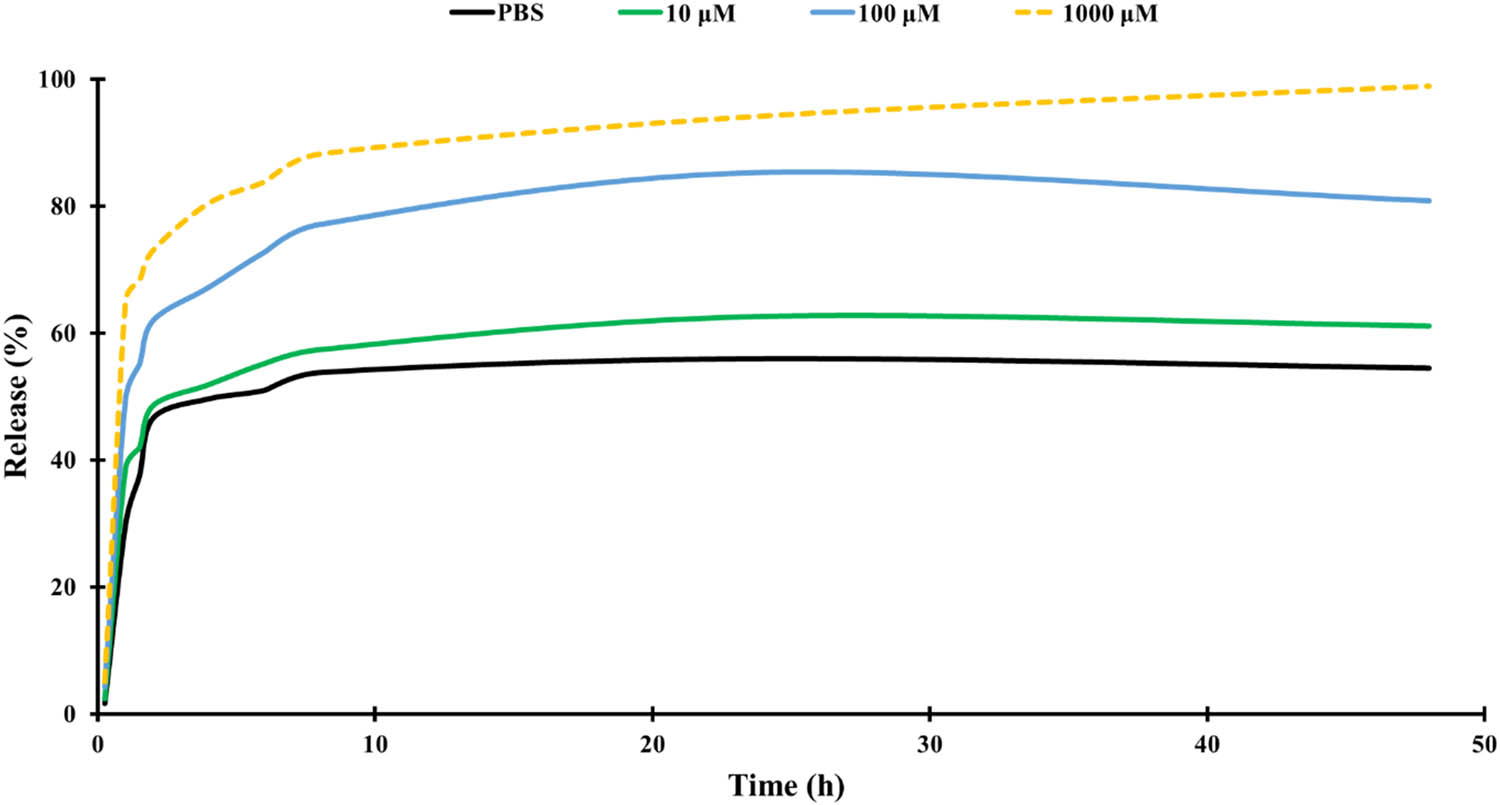
Drug release profiles of EMPA-PEG-P (Met) micelles under different H2O2 concentrations at 37°C for various periods of time.
3.5 Cell toxicity results
The possible toxicity of the synthesized nanomicelles was measured using the MTT assay kit and the results are presented in Figure 10. When compared to other endpoint viability assays, such as the radioactive 3H-thymidine incorporation assay [48], the MTT assay is preferred due to its safety, sensitivity, and reliability as an indicator of cell viability. The economic considerations necessary for the proper processing and disposal of radioactive waste are widely acknowledged, as are the health hazards associated with working with radioactive materials. Commonly used to assess cell survival, proliferation, and cytotoxicity, MTT is a yellow tetrazolium salt. Succinate dehydrogenase in the mitochondria of metabolically active living cells converts the water-soluble MTT into the insoluble purple formazan crystals. After solubilization, the amount of formazan produced may be measured spectrophotometrically, and it is proportional to the number of living cells in the culture. The results showed that the synthesized nanomicelles were biocompatible in the concentration of up to 50 µg/mL.

Cell viability results measured at days 1 and 3 using the MTT assay.
3.6 Determination of DPPH radical scavenging assay
The antioxidant activity of the synthesized EMPA-loaded nanomicelles was conducted using the DPPH assay and the results are presented in Figure 11. The results showed that the formulation exhibited a dose-dependent radical scavenging activates and the highest inhibition was obtained with 100 μg/mL. DPPH is a persistent free radical with a nitrogen atom in its center. It is commonly employed in the evaluation of antioxidant activity. Each antioxidant possesses a reducing characteristic that can induce the lowering of DPPH. Upon the addition of a single electron, the hydroxyl group undergoes conversion to hydrazine, resulting in a transformation of the deep violet color of the DPPH radical to a light-yellow hue. The absorbance of this light-yellow color is then measured at a wavelength of 517 nm. The reduction in absorbance signifies the antioxidant’s removal of DPPH free radicals. The EMPA compound is characterized by the presence of four hydroxyl groups with an abundance of electrons and at least one oxane ring. EMPAs are expected to have strong antioxidant action due to their electron availability.

The antioxidant activity of the synthesized EMPA-loaded nanomicelles was evaluated in comparison to ascorbic acid as the standard.
3.7 Animal study results
The histopathology of the kidney under treatment with EMPA-loaded micelles was evaluated by H and E staining (Figure 12a–c) [35]. The glomerulus structure and proximal and distal convoluted tubules of the nephron were normal in the renal tissue of the control rats. The renal tissue that was impacted by IR in the rats’ kidneys showed signs of dilated renal tubules, epithelial destruction of the basement membrane, and a few tubules that had necrotic tissue. As can be seen in Figure 12c, the rats that were treated with EMPA-loaded micelles had normal renal tissue architecture in their renal tissue. Normal tubular morphology was detected, but there were still a few swelling tubules present. The structure of the renal tissue, on the other hand, was essentially identical to that of sham-control rats, since there was no evidence of glomerular hypertrophy or necrotic tubules.

Representative photomicrograph of mouse kidney histology stained with Hematoxylin and Eosin. (a) Control group, (b) untreated IR injury, and (c) treated IR injury.
3.8 Molecular evaluations finding
The expression level of target genes was assessed by qPCR. Table 2 demonstrates the detailed expression status of selected genes in different group comparisons.
Detailed expression status of inflammation-related (NFkB, IL6, IL1β, and TNFa), anti-oxidant related (Nrf2, FOXO3, Mn-SOD, HO1, and NQO1), and apoptosis-related (bcl2, BAX, caspase-3, and caspase-8) genes in different comparisons
| Groups | Treated vs untreated | Treated vs control | Untreated vs control | ||||||
|---|---|---|---|---|---|---|---|---|---|
| Gene | Log FC | 95% CI | P value | Log FC | 95% CI | P value | Log FC | 95% CI | P value |
| NFkB | 0.13 | 0.025–0.995 | 0.04 | 0.669 | 0.318–1.355 | 0.233 | 13.674 | 2.615–71.723 | 0.000 |
| IL6 | 0.26 | 0.123–0.636 | 0.003 | 0.817 | 0.291–2.098 | 0.636 | 3.793 | 1.361–12.295 | 0.013 |
| IL1β | 0.115 | 0.054–0.233 | 0.002 | 0.767 | 0.263–2.042 | 0.549 | 6.688 | 3.668–16.121 | 0.001 |
| TNFa | 0.108 | 0.022–0.823 | 0.013 | 0.712 | 0.129–4.804 | 0.612 | 6.589 | 3.730–12.717 | 0.002 |
| SIRT1 | 22.68 | 6.909–60.630 | 0.000 | 2.191 | 0.601–9.276 | 0.141 | 0.097 | 0.043–0.253 | 0.001 |
| Nrf2 | 13.269 | 5.190–36.461 | 0.000 | 1.406 | 0.738–2.499 | 0.266 | 0.106 | 0.043–0.224 | 0.0000 |
| FOXO3 | 9.372 | 4.819–16.183 | 0.002 | 2.582 | 1.208–5.583 | 0.021 | 0.275 | 0.115–0.630 | 0.008 |
| M-SOD | 7.311 | 1.697–29.279 | 0.004 | 1.23 | 0.371–3.926 | 0.722 | 0.168 | 0.041–0.964 | 0.033 |
| HO1 | 3.793 | 1.181–11.125 | 0.02 | 2.099 | 0.730–6.093 | 0.117 | 0.554 | 0.265–1.063 | 0.07 |
| NQO1 | 7.029 | 2.417–21.176 | 0.006 | 4.516 | 1.938–13.169 | 0.001 | 0.642 | 0.301–1.428 | 0.177 |
| Bcl2 | 2.594 | 1.110–6.120 | 0.013 | 1.221 | 0.418–3.418 | 0.647 | 0.413 | 0.180–0.856 | 0.049 |
| BAX | 0.168 | 0.052–0.432 | 0.005 | 0.486 | 0.171–1.317 | 0.112 | 2.851 | 1.301–7.737 | 0.000 |
| Caspase-3 | 0.245 | 0.093–0.629 | 0.008 | 0.658 | 0.265–1.692 | 0.275 | 2.648 | 1.333–5.257 | 0.001 |
| Caspase-8 | 0.243 | 0.098–0.556 | 0.005 | 0.686 | 0.200–1.550 | 0.322 | 2.802 | 1.062–7.685 | 0.039 |
3.9 Inflammation-related gene expression was downregulated by EMPA
48 h after IR damage, tissue mRNA levels of inflammatory mediators were measured. Evaluations were made on the expression of NF-kB, IL6, IL1β, and TNF-α. The expression of the genes mentioned above was not significantly altered by EMPA treatment compared to that of healthy normal controls, but the expression of the genes NF-kB, IL6, IL1β, and TNF-a was significantly decreased by EMPA treatment following IR injury compared to untreated IR group (Figure 13a–d). Since neutrophils are thought to be the main agents of injury, activating them causes the production of ROS, the secretion of several proteases, and damage to the renal tissue. Proteolytic enzymes and proinflammatory cytokines like TNF-, IL-1, and IL6 are released by activated macrophages.

The effect of EMPA on inflammatory cytokines. IR injury was associated with a significant increase in the levels of (a) NF-kB (***p < 0.000), (b) IL6 (*p < 0.05), (c) ILlβ (*p < 0:05), and (d) TNF-α (**p < 0:001). EMPA significantly decreased the mRNA levels of NF-kB (*p < 0.000), IL6 (**p < 0.001), ILlβ (*p < 0:001), and TNF-α (**p < 0:05).
Additionally, NF-kB is triggered by many signaling pathways before being sent to the nucleus to activate the transcription of inflammatory cytokines. These findings imply that EMPA may reduce inflammation caused by IR injury by inhibiting NF-kB. Ischemia triggers the beginning of inflammation, and post-ischemic processes like ROS production amplify the reaction. As a result, the ischemic kidney is more than just an immune system target. P50 and p65 form the redox-sensitive transcription factor dimer called NF-κB, crucial for responding to IRI and oxidative stress promptly. The activation of NF-κB by factors like manganese superoxide dismutase, Bcl-2, TNF, intercellular adhesion molecule-1 (ICAM), and P-selectin regulates cell survival, death, and inflammation. IR-induced damage triggers NF-κB activation, translocating it to the nucleus to initiate transcription of target genes. NF-κB governs the expression of NOS, cytokines (TNF-α, IL-1), chemokines (ENA78), and ICAM-1. Studies on animals have linked NF-κB activation to IRI, with IRI being mitigated by administering NF-κB inhibitors.
3.10 Protective role of EMPA through promotion of anti-oxidant activity
SGLT-2 inhibitors have been shown to exert their renoprotective effects through modulating oxidative stress and energy metabolism. Here we chose to test whether the preventive effect of EMPA on renal IR damage involves the same mechanism or not. By using qPCR, the tissue expression of SIRT1, Nrf2, FOXO3, HO1, NQO1, and Mn-SOD were assessed. Their relative expression was calculated based on the expression of β-actin as the internal reference gene. In comparison to healthy, normal controls, IR injury had significantly reduced mRNA levels of SIRT1 (***P < 0.000), Nrf2 (***P < 0.000), FOXO3 (***P < 0.000), HO1 (*P < 0.05), NQO1 (ns P > 0.05), and Mn-SOD (**P < 0.05). When compared to mice that were not given EMPA (IR control), the expression of SIRT1 (***P < 0.001), Nrf2 (***P < 0.000), FOXO3 (***P < 0.000), HO1 (*P < 0.05), NQO1 (**P < 0.001), and Mn-SOD (**P < 0.001) increased considerably in EMPA-treated group. Furthermore, compared to the normal control group, the EMPA-treated group showed statistically significant elevated levels of FOXO3 (*p < 0.05) and NQO1 (**p 0.001). Normal control and EMPA-treated mice did not significantly differ in their expression of SIRT1, Nrf2, HO1, or Mn-SOD. These results suggest that EMPA may also act by triggering anti-oxidant mechanisms and preventing oxidative stress in renal IR injury by controlling some master transcription factors like SIRT1 and Nrf2 that target several antioxidant genes. The expression of selected genes involved in the anti-oxidant process is illustrated in Figure 14a–f.

The effect of EMPA on the expression levels of (a) SIRT1, (b) Nrf2, (c) FOXO3, (d) HO1, (e) NQO1, and (f) Mn-SOD. IR injury significantly reduced the expression of SIRT1 (***p < 0.000), Nrf2 (***p < 0.000), FOXO3 (***p < 0.000), HO1 (*p < 0.05), NQO1 (ns p > 0.05), and Mn-SOD (**p < 0.05). Treatment with EMPA significantly increased the expression of SIRT1 (***p < 0.001), Nrf2 (***p < 0.000), FOXO3 (***p < 0.000), HO1 (*p < 0.05), NQO1 (**p < 0.001), and Mn-SOD (**p < 0.001).
3.11 Prevented apoptosis under treatment with EMPA
The signaling molecules, the first apoptosis signal-ligand, and TNF, originating external to the cell, can induce apoptosis either via the extrinsic pathway (cell death receptor pathway) or through the intrinsic pathway (mitochondrial-dependent pathway). In the intrinsic pathway, the trigger emerges from within the cell, such as from damaged DNA, hypoxia, metabolic stress, or ROS. Using qPCR, we analyzed the expression levels of bcl-2, BAX, Caspase 3, and Caspase 8 to evaluate the impact of IR damage and EMPA on apoptosis (Figure 15a–d). In comparison to the healthy control group, IR damage significantly elevated the BAX (***P < 0.000), Caspase 3 (**p < 0.001), and Caspase 8 (*p < 0.05) and downregulated the Bcl2 (*p < 0.05). When compared to the untreated IR control group, treatment with EMPA considerably lowered the expression of BAX (**p < 0.001), Caspase 3 (**p < 0.001), and Caspase 8 (**p < 0.001) and dramatically increased the expression of Bcl2 (**p < 0.05), while the expression of apoptosis-related genes was not significantly different compared with the normal control group. The conclusion is that IR damage increases cell apoptosis probably through hypoxia, metabolic stress, ROS, and elevation of TNF-α. Treatment with EMPA reverses this process and inhibits it by upregulating Bcl2 and reducing BAX, Caspase 3, and Caspase 8.
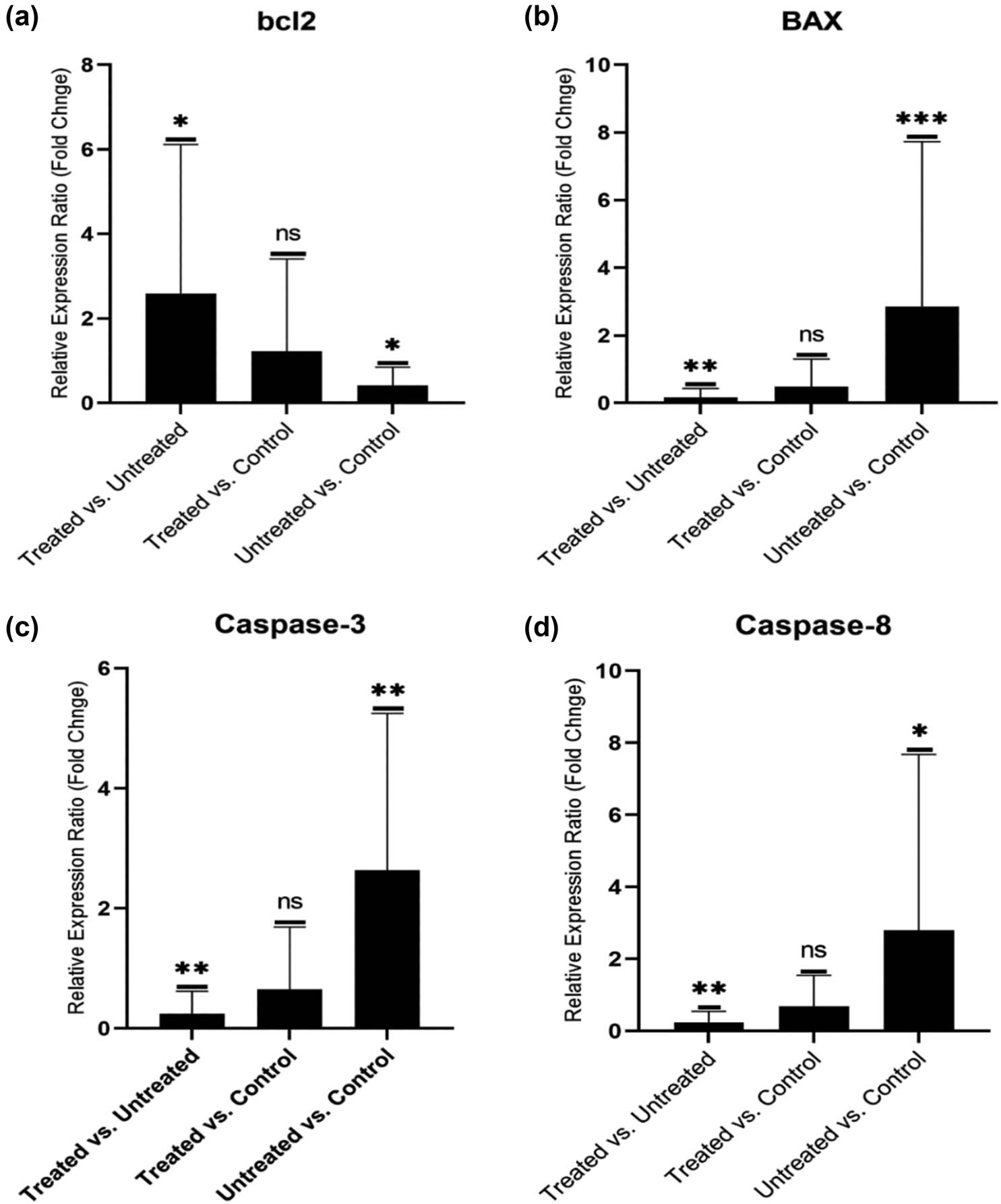
The effect of EMPA on apoptosis after IR injury. IR injury was associated with a significant rise in the mRNA levels of (b) BAX (***p < 0.000), (c) Caspase 3 (**p < 0.001), and (d) Caspase 8 (*p < 0.05), and (a) decreased level of Bcl2 (*p < 0.05). Treatment with EMPA markedly reduced the mRNA levels of the BAX (**p < 0.001), Caspase 3 (**p < 0.001), Caspase 8 (**p < 0.001) and upregulated Bcl2 (**p < 0.05).
4 Conclusion
Renal IRI is the leading cause of acute renal injury post partial nephrectomy and kidney transplantation, significantly linked to morbidity and mortality. The development of ROS-sensitive PEG-P (Met) has enabled its utilization in facilitating the intracellular delivery of EMPA to renal cells. The ROS-induced oxidation of thioether groups within P (Met) proved pivotal in the observed ROS-responsive drug release. Our research showcases EMPA’s vital role in alleviating IRI-induced kidney damage. When confronted with IRI, EMPA treatment effectively mitigates renal tubular epithelial cell necrosis by reducing inflammatory markers. It is evident that IRI damage exacerbates cell apoptosis through factors like hypoxia, metabolic stress, ROS, and heightened TNF-α levels. EMPA intervention counteracts this cascade, enhancing Bcl2 expression while diminishing levels of BAX, Caspase 3, and Caspase 8, thereby inhibiting apoptotic pathways.
Acknowledgements
Not applicable.
-
Funding information: This study was supported by Shanxi Provincial Health and Health Commission Research Project (No. 2022075).
-
Author contributions: J.C. – conceptualization, data curation, formal analysis, funding acquisition, investigation, methodology, writing – original draft, and writing – review and editing; X.Z. – conceptualization, data curation, formal analysis, writing – review and editing; Q.Z. – conceptualization, data curation, methodology, writing – review and editing; S.S. – conceptualization, data curation, formal analysis, writing – review and editing; and J.W. – investigation, methodology, and writing – review and editing.
-
Conflict of interest: The authors declare no competing interests.
-
Informed consent: Not applicable.
-
Ethical approval: The conducted research is not related to either human or animal use.
-
Data availability statement: The datasets generated during and/or analyzed during the current study are available from the corresponding author on reasonable request.
References
[1] Peng P, Zou J, Zhong B, Zhang G, Zou X, Xie T. Protective effects and mechanisms of flavonoids in renal ischemia-reperfusion injury. Pharmacology. 2023;108(1):27–36.Search in Google Scholar
[2] Tang Q, Li J, Wang Y, Sun Q. Identification and verification of hub genes associated with ferroptosis in ischemia and reperfusion injury during renal transplantation. Int Immunopharmacol. 2023;120:110393.Search in Google Scholar
[3] Turgut F, Awad AS, Abdel-Rahman EM. Acute kidney injury: Medical causes and pathogenesis. J Clin Med. 2023;12(1):375.Search in Google Scholar
[4] Rossiter A, La A, Koyner JL, Forni LG. New biomarkers in acute kidney injury. Crit Rev ClLab Sci. 2024;61(1):23–44.Search in Google Scholar
[5] Yang D, Tang M, Zhang M, Ren H, Li X, Zhang Z, et al. Downregulation of G protein–coupled receptor kinase 4 protects against kidney ischemia-reperfusion injury. Kidney Int. 2023;103(4):719–34.Search in Google Scholar
[6] Chen J, Xu C, Yang K, Gao R, Cao Y, Liang L, et al. Inhibition of ALKBH5 attenuates I/R-induced renal injury in male mice by promoting Ccl28 m6A modification and increasing treg recruitment. Nat Commun. 2023;14(1):1161.Search in Google Scholar
[7] Long H, Lichtnekert J, Andrassy J, Schraml BU, Romagnani P, Anders HJ. Macrophages and fibrosis: how resident and infiltrating mononuclear phagocytes account for organ injury, regeneration or atrophy. Front Immunol. 2023;14:1194988.Search in Google Scholar
[8] Lv J, Zhu X, Xing C, Chen Y, Bian H, Yin H, et al. Stimulator of interferon genes (STING): key therapeutic targets in ischemia/reperfusion injury. Biomed Pharmacother. 2023;167:115458.Search in Google Scholar
[9] Meng Z, Zhang Y, Yang L, Zhao S, Zhou Q, Chen J, et al. Nitrogen-doped carbon dots with oxidation stress protective effects for reactive oxygen species scavenging on hepatic ischemia–reperfusion injury. ACS Appl Nano Mater. 2023;6(14):13155–65.Search in Google Scholar
[10] Abedi N, Sajadi-Javan ZS, Kouhi M, Ansari L, Khademi A, Ramakrishna S. Antioxidant materials in oral and maxillofacial tissue regeneration: a narrative review of the literature. Antioxidants. 2023;12(3):594.Search in Google Scholar
[11] Kale A, Sharma A, Anders HJ, Gaikwad AB. Diabetes and cardiorenal complications: a clinical review of existing therapies and novel combinations, focusing on SGLT2 inhibitors. Curr Diabetes Rev. 2023;19(8):114–26.Search in Google Scholar
[12] Kani R, Watanabe A, Miyamoto Y, Ejiri K, Iwagami M, Takagi H, et al. Comparison of effectiveness among different sodium‐glucose cotransoporter‐2 inhibitors according to underlying conditions: a network meta‐analysis of randomized controlled trials. J Am Heart Assoc. 2024;13(3):e031805.Search in Google Scholar
[13] Santulli G, Varzideh F, Forzano I, Wilson S, Salemme L, de Donato A, et al. Functional and clinical importance of SGLT2-inhibitors in frailty: From the kidney to the heart. Hypertension. 2023;80(9):1800–9.Search in Google Scholar
[14] Perkovic V, Jardine MJ, Neal B, Bompoint S, Heerspink H, Charytan DM, et al. Canagliflozin and renal outcomes in type 2 diabetes and nephropathy. N Engl J Med. 2019;380(24):2295–306.Search in Google Scholar
[15] Heerspink H, Stefánsson BV, Correa-Rotter R, Chertow GM, Greene T, Hou FF, et al. Dapagliflozin in patients with chronic kidney disease. N Engl J Med. 2020;383(15):1436–46.Search in Google Scholar
[16] Rahmanian M, Ghahremani A, Kesharwani P, Oroojalian F, Sahebkar A. Nanomedicine innovations in spinal cord injury management: Bridging the gap. Environ Res. 2023;235:116563.Search in Google Scholar
[17] Canha F, Soares R. The use of innovative targeted angiogenic therapies for ischemic diabetic foot ulcer repair: From nanomedicine and microRNAs toward hyperbaric oxygen therapy. Porto Biomed J. 2023;8(1):e187.Search in Google Scholar
[18] De Nicolo B, Cataldi-Stagetti E, Diquigiovanni C, Bonora E. Calcium and reactive oxygen species signaling interplays in cardiac physiology and pathologies. Antioxidants. 2023;12(2):353.Search in Google Scholar
[19] Liu J, Jia B, Li Z, Li W. Reactive oxygen species-responsive polymer drug delivery systems. Front Bioeng Biotechnol. 2023;11:1115603.Search in Google Scholar
[20] Heidari Z, Pelalak R, Eshaghi Malekshah R, Pishnamazi M, Rezakazemi M, Aminabhavi TM, et al. A new insight into catalytic ozonation of sulfasalazine antibiotic by plasma-treated limonite nanostructures: Experimental, modeling and mechanism. Chem Eng J. 2022;428:131230.Search in Google Scholar
[21] Eshaghi Malekshah R, Fahimirad B, Khaleghian A. Synthesis, characterization, biomedical application, molecular dynamic simulation and molecular docking of Schiff base complex of Cu (II) supported on Fe3O4/SiO2/APTS. Int J Nanomed. 2020;15:2583–603.Search in Google Scholar
[22] Saha SK, Ghosh P, Hens A, Murmu NC, Banerjee P. Density functional theory and molecular dynamics simulation study on corrosion inhibition performance of mild steel by mercapto-quinoline Schiff base corrosion inhibitor. Phys E: Low-Dimens Syst Nanostruct. 2015;66:332–41.Search in Google Scholar
[23] Truong Hoang Q, Lee D, Choi DG, Kim YC, Shim MS. Efficient and selective cancer therapy using pro-oxidant drug-loaded reactive oxygen species (ROS)-responsive polypeptide micelles. J Ind Eng Chem. 2021;95:101–8.Search in Google Scholar
[24] Topel Ö, Çakır BA, Budama L, Hoda N. Determination of critical micelle concentration of polybutadiene-block-poly (ethyleneoxide) diblock copolymer by fluorescence spectroscopy and dynamic light scattering. J Mol Liq. 2013;177:40–3.Search in Google Scholar
[25] Degrand L, Garcia R, Crouvisier Urion K, Guiga W. Dynamic light scattering for the determination of linoleic acid critical micelle concentration. Effect of pH, ionic strength, and ethanol. J Mol Liq. 2023;388:122670.Search in Google Scholar
[26] Sifaoui H, Lugowska K, Domańska U, Modaressi A, Rogalski M. Ammonium ionic liquid as modulator of the critical micelle concentration of ammonium surfactant at aqueous solution: conductimetric and dynamic light scattering (DLS) studies. J Colloid Interface Sci. 2007;314(2):643–50.Search in Google Scholar
[27] Li Y, Hu J, Liu X, Liu Y, Lv S, Dang J, et al. Photodynamic therapy-triggered on-demand drug release from ROS-responsive core-cross-linked micelles toward synergistic anti-cancer treatment. Nano Res. 2019;12:999–1008.Search in Google Scholar
[28] Ge C, Zhu J, Wu G, Ye H, Lu H, Yin L. ROS-responsive selenopolypeptide micelles: preparation, characterization, and controlled drug release. Biomacromolecules. 2022;23(6):2647–54.Search in Google Scholar
[29] Tang M, Hu P, Zheng Q, Tirelli N, Yang X, Wang Z, et al. Polymeric micelles with dual thermal and reactive oxygen species (ROS)-responsiveness for inflammatory cancer cell delivery. J Nanobiotechnol. 2017;15:1–11.Search in Google Scholar
[30] Gulcin İ, Alwasel SH. DPPH radical scavenging assay. Processes. 2023;11(8):2248.Search in Google Scholar
[31] Kim Y-S, Kim S, Kang HC, Shim MS. ROS-responsive thioether-based nanocarriers for efficient pro-oxidant cancer therapy. J Ind Eng Chem. 2019;75:238–45.Search in Google Scholar
[32] Edition, E., Guide for the care and use of laboratory animals. Washington: The National Academies Press; 2011.Search in Google Scholar
[33] Wang HJ, Varner A, AbouShwareb T, Atala A, Yoo JJ. Ischemia/reperfusion-induced renal failure in rats as a model for evaluating cell therapies. Ren Fail. 2012;34(10):1324–32.Search in Google Scholar
[34] Silverman J, Suckow MA, Murthy S. The IACUC handbook. CRC Press; 2014.Search in Google Scholar
[35] Fischer AH, Jacobson KA, Rose J, Zeller R. Hematoxylin and eosin staining of tissue and cell sections. Cold Spring Harb Protoc. 2008;2008(5):pdb. prot4986.Search in Google Scholar
[36] Haghbin M, Malekshah RE, Sobhani M, Izadi Z, Haghshenas B, Ghasemi M, et al. Fabrication and characterization of Persian gum-based hydrogel loaded with gentamicin-loaded natural zeolite: An in vitro and in silico study. Int J Biol Macromol. 2023;235:123766.Search in Google Scholar
[37] Pelalak R, Soltani R, Heidari Z, Malekshah RE, Aallaei M, Marjani A, et al. Molecular dynamics simulation of novel diamino-functionalized hollow mesosilica spheres for adsorption of dyes from synthetic wastewater. J Mol Liq. 2021;322:114812.Search in Google Scholar
[38] Malekshah RE, Shakeri F, Khaleghian A, Salehi M. Developing a biopolymeric chitosan supported Schiff-base and Cu (II), Ni (II) and Zn (II) complexes and biological evaluation as pro-drug. Int J Biol Macromol. 2020;152:846–61.Search in Google Scholar
[39] Gholivand K, Barzegari A, Yousefian M, Malekshah RE, Faraghi M. Experimental and theoretical evaluation of biological properties of a phosphoramide functionalized graphene oxide. Biocatal Agric Biotechnol. 2023;47:102612.Search in Google Scholar
[40] Gholivand K, Faraghi M, Pooyan M, Babaee LS, Malekshah RE, Pirastehfar F, et al. Anti-cancer activity of new phosphoramide-functionalized graphene oxides: an experimental and theoretical evaluation. Curr Med Chem. 2023;30:3486–503.Search in Google Scholar
[41] Cao Y, Malekshah RE, Heidari Z, Pelalak R, Marjani A, Shirazian S. Molecular dynamic simulations and quantum chemical calculations of adsorption process using amino-functionalized silica. J Mol Liq. 2021;330:115544.Search in Google Scholar
[42] Feng L, Liu J, Abu-Hamdeh NH, Bezzina S, Eshaghi Malekshah R. Molecular dynamics and quantum simulation of different cationic dyes removal from contaminated water using UiO-66 (Zr)-(COOH)2 metal–organic framework. J Mol Liq. 2022;349:118085.Search in Google Scholar
[43] Haounati R, Ighnih H, Malekshah RE, Alahiane S, Alakhras F, Alabbad E, et al. Exploring ZnO/montmorillonite photocatalysts for the removal of hazardous RhB dye: a combined study using molecular dynamics simulations and experiments. Mater Today Commun. 2023;35:105915.Search in Google Scholar
[44] Gholivand K, Mohammadpour M, Alavinasab Ardebili SA, Eshaghi Malekshah R, Samadian H. Fabrication and examination of polyorganophosphazene/polycaprolactone-based scaffold with degradation, in vitro and in vivo behaviors suitable for tissue engineering applications. Sci Rep. 2022;12(1):18407.Search in Google Scholar
[45] Tesauro D, Accardo A, Diaferia C, Milano V, Guillon J, Ronga L, et al. Peptide-based drug-delivery systems in biotechnological applications: recent advances and perspectives. Molecules. 2019;24(2):351.Search in Google Scholar
[46] Song W, Tang Z, Zhang D, Zhang Y, Yu H, Li M, et al. Anti-tumor efficacy of c (RGDfK)-decorated polypeptide-based micelles co-loaded with docetaxel and cisplatin. Biomaterials. 2014;35(9):3005–14.Search in Google Scholar
[47] Rizk M, Attia AK, Mohamed HY, Elshahed MS. Thermo analytical study and purity determination of anti-diabetic drugs linagliptin and empagliflozin in drug substances. Chem Res J. 2020;5(4):6–20.Search in Google Scholar
[48] Ahmed SA, Gogal Jr RM, Walsh JE. A new rapid and simple non-radioactive assay to monitor and determine the proliferation of lymphocytes: an alternative to [3H] thymidine incorporation assay. J Immunol Methods. 1994;170(2):211–24.Search in Google Scholar
© 2024 the author(s), published by De Gruyter
This work is licensed under the Creative Commons Attribution 4.0 International License.
Articles in the same Issue
- Regular Articles
- Porous silicon nanostructures: Synthesis, characterization, and their antifungal activity
- Biochar from de-oiled Chlorella vulgaris and its adsorption on antibiotics
- Phytochemicals profiling, in vitro and in vivo antidiabetic activity, and in silico studies on Ajuga iva (L.) Schreb.: A comprehensive approach
- Synthesis, characterization, in silico and in vitro studies of novel glycoconjugates as potential antibacterial, antifungal, and antileishmanial agents
- Sonochemical synthesis of gold nanoparticles mediated by potato starch: Its performance in the treatment of esophageal cancer
- Computational study of ADME-Tox prediction of selected phytochemicals from Punica granatum peels
- Phytochemical analysis, in vitro antioxidant and antifungal activities of extracts and essential oil derived from Artemisia herba-alba Asso
- Two triazole-based coordination polymers: Synthesis and crystal structure characterization
- Phytochemical and physicochemical studies of different apple varieties grown in Morocco
- Synthesis of multi-template molecularly imprinted polymers (MT-MIPs) for isolating ethyl para-methoxycinnamate and ethyl cinnamate from Kaempferia galanga L., extract with methacrylic acid as functional monomer
- Nutraceutical potential of Mesembryanthemum forsskaolii Hochst. ex Bioss.: Insights into its nutritional composition, phytochemical contents, and antioxidant activity
- Evaluation of influence of Butea monosperma floral extract on inflammatory biomarkers
- Cannabis sativa L. essential oil: Chemical composition, anti-oxidant, anti-microbial properties, and acute toxicity: In vitro, in vivo, and in silico study
- The effect of gamma radiation on 5-hydroxymethylfurfural conversion in water and dimethyl sulfoxide
- Hollow mushroom nanomaterials for potentiometric sensing of Pb2+ ions in water via the intercalation of iodide ions into the polypyrrole matrix
- Determination of essential oil and chemical composition of St. John’s Wort
- Computational design and in vitro assay of lantadene-based novel inhibitors of NS3 protease of dengue virus
- Anti-parasitic activity and computational studies on a novel labdane diterpene from the roots of Vachellia nilotica
- Microbial dynamics and dehydrogenase activity in tomato (Lycopersicon esculentum Mill.) rhizospheres: Impacts on growth and soil health across different soil types
- Correlation between in vitro anti-urease activity and in silico molecular modeling approach of novel imidazopyridine–oxadiazole hybrids derivatives
- Spatial mapping of indoor air quality in a light metro system using the geographic information system method
- Iron indices and hemogram in renal anemia and the improvement with Tribulus terrestris green-formulated silver nanoparticles applied on rat model
- Integrated track of nano-informatics coupling with the enrichment concept in developing a novel nanoparticle targeting ERK protein in Naegleria fowleri
- Cytotoxic and phytochemical screening of Solanum lycopersicum–Daucus carota hydro-ethanolic extract and in silico evaluation of its lycopene content as anticancer agent
- Protective activities of silver nanoparticles containing Panax japonicus on apoptotic, inflammatory, and oxidative alterations in isoproterenol-induced cardiotoxicity
- pH-based colorimetric detection of monofunctional aldehydes in liquid and gas phases
- Investigating the effect of resveratrol on apoptosis and regulation of gene expression of Caco-2 cells: Unravelling potential implications for colorectal cancer treatment
- Metformin inhibits knee osteoarthritis induced by type 2 diabetes mellitus in rats: S100A8/9 and S100A12 as players and therapeutic targets
- Effect of silver nanoparticles formulated by Silybum marianum on menopausal urinary incontinence in ovariectomized rats
- Synthesis of new analogs of N-substituted(benzoylamino)-1,2,3,6-tetrahydropyridines
- Response of yield and quality of Japonica rice to different gradients of moisture deficit at grain-filling stage in cold regions
- Preparation of an inclusion complex of nickel-based β-cyclodextrin: Characterization and accelerating the osteoarthritis articular cartilage repair
- Empagliflozin-loaded nanomicelles responsive to reactive oxygen species for renal ischemia/reperfusion injury protection
- Preparation and pharmacodynamic evaluation of sodium aescinate solid lipid nanoparticles
- Assessment of potentially toxic elements and health risks of agricultural soil in Southwest Riyadh, Saudi Arabia
- Theoretical investigation of hydrogen-rich fuel production through ammonia decomposition
- Biosynthesis and screening of cobalt nanoparticles using citrus species for antimicrobial activity
- Investigating the interplay of genetic variations, MCP-1 polymorphism, and docking with phytochemical inhibitors for combatting dengue virus pathogenicity through in silico analysis
- Ultrasound induced biosynthesis of silver nanoparticles embedded into chitosan polymers: Investigation of its anti-cutaneous squamous cell carcinoma effects
- Copper oxide nanoparticles-mediated Heliotropium bacciferum leaf extract: Antifungal activity and molecular docking assays against strawberry pathogens
- Sprouted wheat flour for improving physical, chemical, rheological, microbial load, and quality properties of fino bread
- Comparative toxicity assessment of fisetin-aided artificial intelligence-assisted drug design targeting epibulbar dermoid through phytochemicals
- Acute toxicity and anti-inflammatory activity of bis-thiourea derivatives
- Anti-diabetic activity-guided isolation of α-amylase and α-glucosidase inhibitory terpenes from Capsella bursa-pastoris Linn.
- GC–MS analysis of Lactobacillus plantarum YW11 metabolites and its computational analysis on familial pulmonary fibrosis hub genes
- Green formulation of copper nanoparticles by Pistacia khinjuk leaf aqueous extract: Introducing a novel chemotherapeutic drug for the treatment of prostate cancer
- Improved photocatalytic properties of WO3 nanoparticles for Malachite green dye degradation under visible light irradiation: An effect of La doping
- One-pot synthesis of a network of Mn2O3–MnO2–poly(m-methylaniline) composite nanorods on a polypyrrole film presents a promising and efficient optoelectronic and solar cell device
- Groundwater quality and health risk assessment of nitrate and fluoride in Al Qaseem area, Saudi Arabia
- A comparative study of the antifungal efficacy and phytochemical composition of date palm leaflet extracts
- Processing of alcohol pomelo beverage (Citrus grandis (L.) Osbeck) using saccharomyces yeast: Optimization, physicochemical quality, and sensory characteristics
- Specialized compounds of four Cameroonian spices: Isolation, characterization, and in silico evaluation as prospective SARS-CoV-2 inhibitors
- Identification of a novel drug target in Porphyromonas gingivalis by a computational genome analysis approach
- Physico-chemical properties and durability of a fly-ash-based geopolymer
- FMS-like tyrosine kinase 3 inhibitory potentials of some phytochemicals from anti-leukemic plants using computational chemical methodologies
- Wild Thymus zygis L. ssp. gracilis and Eucalyptus camaldulensis Dehnh.: Chemical composition, antioxidant and antibacterial activities of essential oils
- 3D-QSAR, molecular docking, ADMET, simulation dynamic, and retrosynthesis studies on new styrylquinolines derivatives against breast cancer
- Deciphering the influenza neuraminidase inhibitory potential of naturally occurring biflavonoids: An in silico approach
- Determination of heavy elements in agricultural regions, Saudi Arabia
- Synthesis and characterization of antioxidant-enriched Moringa oil-based edible oleogel
- Ameliorative effects of thistle and thyme honeys on cyclophosphamide-induced toxicity in mice
- Study of phytochemical compound and antipyretic activity of Chenopodium ambrosioides L. fractions
- Investigating the adsorption mechanism of zinc chloride-modified porous carbon for sulfadiazine removal from water
- Performance repair of building materials using alumina and silica composite nanomaterials with electrodynamic properties
- Effects of nanoparticles on the activity and resistance genes of anaerobic digestion enzymes in livestock and poultry manure containing the antibiotic tetracycline
- Effect of copper nanoparticles green-synthesized using Ocimum basilicum against Pseudomonas aeruginosa in mice lung infection model
- Cardioprotective effects of nanoparticles green formulated by Spinacia oleracea extract on isoproterenol-induced myocardial infarction in mice by the determination of PPAR-γ/NF-κB pathway
- Anti-OTC antibody-conjugated fluorescent magnetic/silica and fluorescent hybrid silica nanoparticles for oxytetracycline detection
- Curcumin conjugated zinc nanoparticles for the treatment of myocardial infarction
- Identification and in silico screening of natural phloroglucinols as potential PI3Kα inhibitors: A computational approach for drug discovery
- Exploring the phytochemical profile and antioxidant evaluation: Molecular docking and ADMET analysis of main compounds from three Solanum species in Saudi Arabia
- Unveiling the molecular composition and biological properties of essential oil derived from the leaves of wild Mentha aquatica L.: A comprehensive in vitro and in silico exploration
- Analysis of bioactive compounds present in Boerhavia elegans seeds by GC-MS
- Homology modeling and molecular docking study of corticotrophin-releasing hormone: An approach to treat stress-related diseases
- LncRNA MIR17HG alleviates heart failure via targeting MIR17HG/miR-153-3p/SIRT1 axis in in vitro model
- Development and validation of a stability indicating UPLC-DAD method coupled with MS-TQD for ramipril and thymoquinone in bioactive SNEDDS with in silico toxicity analysis of ramipril degradation products
- Biosynthesis of Ag/Cu nanocomposite mediated by Curcuma longa: Evaluation of its antibacterial properties against oral pathogens
- Development of AMBER-compliant transferable force field parameters for polytetrafluoroethylene
- Treatment of gestational diabetes by Acroptilon repens leaf aqueous extract green-formulated iron nanoparticles in rats
- Development and characterization of new ecological adsorbents based on cardoon wastes: Application to brilliant green adsorption
- A fast, sensitive, greener, and stability-indicating HPLC method for the standardization and quantitative determination of chlorhexidine acetate in commercial products
- Assessment of Se, As, Cd, Cr, Hg, and Pb content status in Ankang tea plantations of China
- Effect of transition metal chloride (ZnCl2) on low-temperature pyrolysis of high ash bituminous coal
- Evaluating polyphenol and ascorbic acid contents, tannin removal ability, and physical properties during hydrolysis and convective hot-air drying of cashew apple powder
- Development and characterization of functional low-fat frozen dairy dessert enhanced with dried lemongrass powder
- Scrutinizing the effect of additive and synergistic antibiotics against carbapenem-resistant Pseudomonas aeruginosa
- Preparation, characterization, and determination of the therapeutic effects of copper nanoparticles green-formulated by Pistacia atlantica in diabetes-induced cardiac dysfunction in rat
- Antioxidant and antidiabetic potentials of methoxy-substituted Schiff bases using in vitro, in vivo, and molecular simulation approaches
- Anti-melanoma cancer activity and chemical profile of the essential oil of Seseli yunnanense Franch
- Molecular docking analysis of subtilisin-like alkaline serine protease (SLASP) and laccase with natural biopolymers
- Overcoming methicillin resistance by methicillin-resistant Staphylococcus aureus: Computational evaluation of napthyridine and oxadiazoles compounds for potential dual inhibition of PBP-2a and FemA proteins
- Exploring novel antitubercular agents: Innovative design of 2,3-diaryl-quinoxalines targeting DprE1 for effective tuberculosis treatment
- Drimia maritima flowers as a source of biologically potent components: Optimization of bioactive compound extractions, isolation, UPLC–ESI–MS/MS, and pharmacological properties
- Estimating molecular properties, drug-likeness, cardiotoxic risk, liability profile, and molecular docking study to characterize binding process of key phyto-compounds against serotonin 5-HT2A receptor
- Fabrication of β-cyclodextrin-based microgels for enhancing solubility of Terbinafine: An in-vitro and in-vivo toxicological evaluation
- Phyto-mediated synthesis of ZnO nanoparticles and their sunlight-driven photocatalytic degradation of cationic and anionic dyes
- Monosodium glutamate induces hypothalamic–pituitary–adrenal axis hyperactivation, glucocorticoid receptors down-regulation, and systemic inflammatory response in young male rats: Impact on miR-155 and miR-218
- Quality control analyses of selected honey samples from Serbia based on their mineral and flavonoid profiles, and the invertase activity
- Eco-friendly synthesis of silver nanoparticles using Phyllanthus niruri leaf extract: Assessment of antimicrobial activity, effectiveness on tropical neglected mosquito vector control, and biocompatibility using a fibroblast cell line model
- Green synthesis of silver nanoparticles containing Cichorium intybus to treat the sepsis-induced DNA damage in the liver of Wistar albino rats
- Quality changes of durian pulp (Durio ziberhinus Murr.) in cold storage
- Study on recrystallization process of nitroguanidine by directly adding cold water to control temperature
- Determination of heavy metals and health risk assessment in drinking water in Bukayriyah City, Saudi Arabia
- Larvicidal properties of essential oils of three Artemisia species against the chemically insecticide-resistant Nile fever vector Culex pipiens (L.) (Diptera: Culicidae): In vitro and in silico studies
- Design, synthesis, characterization, and theoretical calculations, along with in silico and in vitro antimicrobial proprieties of new isoxazole-amide conjugates
- The impact of drying and extraction methods on total lipid, fatty acid profile, and cytotoxicity of Tenebrio molitor larvae
- A zinc oxide–tin oxide–nerolidol hybrid nanomaterial: Efficacy against esophageal squamous cell carcinoma
- Research on technological process for production of muskmelon juice (Cucumis melo L.)
- Physicochemical components, antioxidant activity, and predictive models for quality of soursop tea (Annona muricata L.) during heat pump drying
- Characterization and application of Fe1−xCoxFe2O4 nanoparticles in Direct Red 79 adsorption
- Torilis arvensis ethanolic extract: Phytochemical analysis, antifungal efficacy, and cytotoxicity properties
- Magnetite–poly-1H pyrrole dendritic nanocomposite seeded on poly-1H pyrrole: A promising photocathode for green hydrogen generation from sanitation water without using external sacrificing agent
- HPLC and GC–MS analyses of phytochemical compounds in Haloxylon salicornicum extract: Antibacterial and antifungal activity assessment of phytopathogens
- Efficient and stable to coking catalysts of ethanol steam reforming comprised of Ni + Ru loaded on MgAl2O4 + LnFe0.7Ni0.3O3 (Ln = La, Pr) nanocomposites prepared via cost-effective procedure with Pluronic P123 copolymer
- Nitrogen and boron co-doped carbon dots probe for selectively detecting Hg2+ in water samples and the detection mechanism
- Heavy metals in road dust from typical old industrial areas of Wuhan: Seasonal distribution and bioaccessibility-based health risk assessment
- Phytochemical profiling and bioactivity evaluation of CBD- and THC-enriched Cannabis sativa extracts: In vitro and in silico investigation of antioxidant and anti-inflammatory effects
- Investigating dye adsorption: The role of surface-modified montmorillonite nanoclay in kinetics, isotherms, and thermodynamics
- Antimicrobial activity, induction of ROS generation in HepG2 liver cancer cells, and chemical composition of Pterospermum heterophyllum
- Study on the performance of nanoparticle-modified PVDF membrane in delaying membrane aging
- Impact of cholesterol in encapsulated vitamin E acetate within cocoliposomes
- Review Articles
- Structural aspects of Pt(η3-X1N1X2)(PL) (X1,2 = O, C, or Se) and Pt(η3-N1N2X1)(PL) (X1 = C, S, or Se) derivatives
- Biosurfactants in biocorrosion and corrosion mitigation of metals: An overview
- Stimulus-responsive MOF–hydrogel composites: Classification, preparation, characterization, and their advancement in medical treatments
- Electrochemical dissolution of titanium under alternating current polarization to obtain its dioxide
- Special Issue on Recent Trends in Green Chemistry
- Phytochemical screening and antioxidant activity of Vitex agnus-castus L.
- Phytochemical study, antioxidant activity, and dermoprotective activity of Chenopodium ambrosioides (L.)
- Exploitation of mangliculous marine fungi, Amarenographium solium, for the green synthesis of silver nanoparticles and their activity against multiple drug-resistant bacteria
- Study of the phytotoxicity of margines on Pistia stratiotes L.
- Special Issue on Advanced Nanomaterials for Energy, Environmental and Biological Applications - Part III
- Impact of biogenic zinc oxide nanoparticles on growth, development, and antioxidant system of high protein content crop (Lablab purpureus L.) sweet
- Green synthesis, characterization, and application of iron and molybdenum nanoparticles and their composites for enhancing the growth of Solanum lycopersicum
- Green synthesis of silver nanoparticles from Olea europaea L. extracted polysaccharides, characterization, and its assessment as an antimicrobial agent against multiple pathogenic microbes
- Photocatalytic treatment of organic dyes using metal oxides and nanocomposites: A quantitative study
- Antifungal, antioxidant, and photocatalytic activities of greenly synthesized iron oxide nanoparticles
- Special Issue on Phytochemical and Pharmacological Scrutinization of Medicinal Plants
- Hepatoprotective effects of safranal on acetaminophen-induced hepatotoxicity in rats
- Chemical composition and biological properties of Thymus capitatus plants from Algerian high plains: A comparative and analytical study
- Chemical composition and bioactivities of the methanol root extracts of Saussurea costus
- In vivo protective effects of vitamin C against cyto-genotoxicity induced by Dysphania ambrosioides aqueous extract
- Insights about the deleterious impact of a carbamate pesticide on some metabolic immune and antioxidant functions and a focus on the protective ability of a Saharan shrub and its anti-edematous property
- A comprehensive review uncovering the anticancerous potential of genkwanin (plant-derived compound) in several human carcinomas
- A study to investigate the anticancer potential of carvacrol via targeting Notch signaling in breast cancer
- Assessment of anti-diabetic properties of Ziziphus oenopolia (L.) wild edible fruit extract: In vitro and in silico investigations through molecular docking analysis
- Optimization of polyphenol extraction, phenolic profile by LC-ESI-MS/MS, antioxidant, anti-enzymatic, and cytotoxic activities of Physalis acutifolia
- Phytochemical screening, antioxidant properties, and photo-protective activities of Salvia balansae de Noé ex Coss
- Antihyperglycemic, antiglycation, anti-hypercholesteremic, and toxicity evaluation with gas chromatography mass spectrometry profiling for Aloe armatissima leaves
- Phyto-fabrication and characterization of gold nanoparticles by using Timur (Zanthoxylum armatum DC) and their effect on wound healing
- Does Erodium trifolium (Cav.) Guitt exhibit medicinal properties? Response elements from phytochemical profiling, enzyme-inhibiting, and antioxidant and antimicrobial activities
- Integrative in silico evaluation of the antiviral potential of terpenoids and its metal complexes derived from Homalomena aromatica based on main protease of SARS-CoV-2
- 6-Methoxyflavone improves anxiety, depression, and memory by increasing monoamines in mice brain: HPLC analysis and in silico studies
- Simultaneous extraction and quantification of hydrophilic and lipophilic antioxidants in Solanum lycopersicum L. varieties marketed in Saudi Arabia
- Biological evaluation of CH3OH and C2H5OH of Berberis vulgaris for in vivo antileishmanial potential against Leishmania tropica in murine models
Articles in the same Issue
- Regular Articles
- Porous silicon nanostructures: Synthesis, characterization, and their antifungal activity
- Biochar from de-oiled Chlorella vulgaris and its adsorption on antibiotics
- Phytochemicals profiling, in vitro and in vivo antidiabetic activity, and in silico studies on Ajuga iva (L.) Schreb.: A comprehensive approach
- Synthesis, characterization, in silico and in vitro studies of novel glycoconjugates as potential antibacterial, antifungal, and antileishmanial agents
- Sonochemical synthesis of gold nanoparticles mediated by potato starch: Its performance in the treatment of esophageal cancer
- Computational study of ADME-Tox prediction of selected phytochemicals from Punica granatum peels
- Phytochemical analysis, in vitro antioxidant and antifungal activities of extracts and essential oil derived from Artemisia herba-alba Asso
- Two triazole-based coordination polymers: Synthesis and crystal structure characterization
- Phytochemical and physicochemical studies of different apple varieties grown in Morocco
- Synthesis of multi-template molecularly imprinted polymers (MT-MIPs) for isolating ethyl para-methoxycinnamate and ethyl cinnamate from Kaempferia galanga L., extract with methacrylic acid as functional monomer
- Nutraceutical potential of Mesembryanthemum forsskaolii Hochst. ex Bioss.: Insights into its nutritional composition, phytochemical contents, and antioxidant activity
- Evaluation of influence of Butea monosperma floral extract on inflammatory biomarkers
- Cannabis sativa L. essential oil: Chemical composition, anti-oxidant, anti-microbial properties, and acute toxicity: In vitro, in vivo, and in silico study
- The effect of gamma radiation on 5-hydroxymethylfurfural conversion in water and dimethyl sulfoxide
- Hollow mushroom nanomaterials for potentiometric sensing of Pb2+ ions in water via the intercalation of iodide ions into the polypyrrole matrix
- Determination of essential oil and chemical composition of St. John’s Wort
- Computational design and in vitro assay of lantadene-based novel inhibitors of NS3 protease of dengue virus
- Anti-parasitic activity and computational studies on a novel labdane diterpene from the roots of Vachellia nilotica
- Microbial dynamics and dehydrogenase activity in tomato (Lycopersicon esculentum Mill.) rhizospheres: Impacts on growth and soil health across different soil types
- Correlation between in vitro anti-urease activity and in silico molecular modeling approach of novel imidazopyridine–oxadiazole hybrids derivatives
- Spatial mapping of indoor air quality in a light metro system using the geographic information system method
- Iron indices and hemogram in renal anemia and the improvement with Tribulus terrestris green-formulated silver nanoparticles applied on rat model
- Integrated track of nano-informatics coupling with the enrichment concept in developing a novel nanoparticle targeting ERK protein in Naegleria fowleri
- Cytotoxic and phytochemical screening of Solanum lycopersicum–Daucus carota hydro-ethanolic extract and in silico evaluation of its lycopene content as anticancer agent
- Protective activities of silver nanoparticles containing Panax japonicus on apoptotic, inflammatory, and oxidative alterations in isoproterenol-induced cardiotoxicity
- pH-based colorimetric detection of monofunctional aldehydes in liquid and gas phases
- Investigating the effect of resveratrol on apoptosis and regulation of gene expression of Caco-2 cells: Unravelling potential implications for colorectal cancer treatment
- Metformin inhibits knee osteoarthritis induced by type 2 diabetes mellitus in rats: S100A8/9 and S100A12 as players and therapeutic targets
- Effect of silver nanoparticles formulated by Silybum marianum on menopausal urinary incontinence in ovariectomized rats
- Synthesis of new analogs of N-substituted(benzoylamino)-1,2,3,6-tetrahydropyridines
- Response of yield and quality of Japonica rice to different gradients of moisture deficit at grain-filling stage in cold regions
- Preparation of an inclusion complex of nickel-based β-cyclodextrin: Characterization and accelerating the osteoarthritis articular cartilage repair
- Empagliflozin-loaded nanomicelles responsive to reactive oxygen species for renal ischemia/reperfusion injury protection
- Preparation and pharmacodynamic evaluation of sodium aescinate solid lipid nanoparticles
- Assessment of potentially toxic elements and health risks of agricultural soil in Southwest Riyadh, Saudi Arabia
- Theoretical investigation of hydrogen-rich fuel production through ammonia decomposition
- Biosynthesis and screening of cobalt nanoparticles using citrus species for antimicrobial activity
- Investigating the interplay of genetic variations, MCP-1 polymorphism, and docking with phytochemical inhibitors for combatting dengue virus pathogenicity through in silico analysis
- Ultrasound induced biosynthesis of silver nanoparticles embedded into chitosan polymers: Investigation of its anti-cutaneous squamous cell carcinoma effects
- Copper oxide nanoparticles-mediated Heliotropium bacciferum leaf extract: Antifungal activity and molecular docking assays against strawberry pathogens
- Sprouted wheat flour for improving physical, chemical, rheological, microbial load, and quality properties of fino bread
- Comparative toxicity assessment of fisetin-aided artificial intelligence-assisted drug design targeting epibulbar dermoid through phytochemicals
- Acute toxicity and anti-inflammatory activity of bis-thiourea derivatives
- Anti-diabetic activity-guided isolation of α-amylase and α-glucosidase inhibitory terpenes from Capsella bursa-pastoris Linn.
- GC–MS analysis of Lactobacillus plantarum YW11 metabolites and its computational analysis on familial pulmonary fibrosis hub genes
- Green formulation of copper nanoparticles by Pistacia khinjuk leaf aqueous extract: Introducing a novel chemotherapeutic drug for the treatment of prostate cancer
- Improved photocatalytic properties of WO3 nanoparticles for Malachite green dye degradation under visible light irradiation: An effect of La doping
- One-pot synthesis of a network of Mn2O3–MnO2–poly(m-methylaniline) composite nanorods on a polypyrrole film presents a promising and efficient optoelectronic and solar cell device
- Groundwater quality and health risk assessment of nitrate and fluoride in Al Qaseem area, Saudi Arabia
- A comparative study of the antifungal efficacy and phytochemical composition of date palm leaflet extracts
- Processing of alcohol pomelo beverage (Citrus grandis (L.) Osbeck) using saccharomyces yeast: Optimization, physicochemical quality, and sensory characteristics
- Specialized compounds of four Cameroonian spices: Isolation, characterization, and in silico evaluation as prospective SARS-CoV-2 inhibitors
- Identification of a novel drug target in Porphyromonas gingivalis by a computational genome analysis approach
- Physico-chemical properties and durability of a fly-ash-based geopolymer
- FMS-like tyrosine kinase 3 inhibitory potentials of some phytochemicals from anti-leukemic plants using computational chemical methodologies
- Wild Thymus zygis L. ssp. gracilis and Eucalyptus camaldulensis Dehnh.: Chemical composition, antioxidant and antibacterial activities of essential oils
- 3D-QSAR, molecular docking, ADMET, simulation dynamic, and retrosynthesis studies on new styrylquinolines derivatives against breast cancer
- Deciphering the influenza neuraminidase inhibitory potential of naturally occurring biflavonoids: An in silico approach
- Determination of heavy elements in agricultural regions, Saudi Arabia
- Synthesis and characterization of antioxidant-enriched Moringa oil-based edible oleogel
- Ameliorative effects of thistle and thyme honeys on cyclophosphamide-induced toxicity in mice
- Study of phytochemical compound and antipyretic activity of Chenopodium ambrosioides L. fractions
- Investigating the adsorption mechanism of zinc chloride-modified porous carbon for sulfadiazine removal from water
- Performance repair of building materials using alumina and silica composite nanomaterials with electrodynamic properties
- Effects of nanoparticles on the activity and resistance genes of anaerobic digestion enzymes in livestock and poultry manure containing the antibiotic tetracycline
- Effect of copper nanoparticles green-synthesized using Ocimum basilicum against Pseudomonas aeruginosa in mice lung infection model
- Cardioprotective effects of nanoparticles green formulated by Spinacia oleracea extract on isoproterenol-induced myocardial infarction in mice by the determination of PPAR-γ/NF-κB pathway
- Anti-OTC antibody-conjugated fluorescent magnetic/silica and fluorescent hybrid silica nanoparticles for oxytetracycline detection
- Curcumin conjugated zinc nanoparticles for the treatment of myocardial infarction
- Identification and in silico screening of natural phloroglucinols as potential PI3Kα inhibitors: A computational approach for drug discovery
- Exploring the phytochemical profile and antioxidant evaluation: Molecular docking and ADMET analysis of main compounds from three Solanum species in Saudi Arabia
- Unveiling the molecular composition and biological properties of essential oil derived from the leaves of wild Mentha aquatica L.: A comprehensive in vitro and in silico exploration
- Analysis of bioactive compounds present in Boerhavia elegans seeds by GC-MS
- Homology modeling and molecular docking study of corticotrophin-releasing hormone: An approach to treat stress-related diseases
- LncRNA MIR17HG alleviates heart failure via targeting MIR17HG/miR-153-3p/SIRT1 axis in in vitro model
- Development and validation of a stability indicating UPLC-DAD method coupled with MS-TQD for ramipril and thymoquinone in bioactive SNEDDS with in silico toxicity analysis of ramipril degradation products
- Biosynthesis of Ag/Cu nanocomposite mediated by Curcuma longa: Evaluation of its antibacterial properties against oral pathogens
- Development of AMBER-compliant transferable force field parameters for polytetrafluoroethylene
- Treatment of gestational diabetes by Acroptilon repens leaf aqueous extract green-formulated iron nanoparticles in rats
- Development and characterization of new ecological adsorbents based on cardoon wastes: Application to brilliant green adsorption
- A fast, sensitive, greener, and stability-indicating HPLC method for the standardization and quantitative determination of chlorhexidine acetate in commercial products
- Assessment of Se, As, Cd, Cr, Hg, and Pb content status in Ankang tea plantations of China
- Effect of transition metal chloride (ZnCl2) on low-temperature pyrolysis of high ash bituminous coal
- Evaluating polyphenol and ascorbic acid contents, tannin removal ability, and physical properties during hydrolysis and convective hot-air drying of cashew apple powder
- Development and characterization of functional low-fat frozen dairy dessert enhanced with dried lemongrass powder
- Scrutinizing the effect of additive and synergistic antibiotics against carbapenem-resistant Pseudomonas aeruginosa
- Preparation, characterization, and determination of the therapeutic effects of copper nanoparticles green-formulated by Pistacia atlantica in diabetes-induced cardiac dysfunction in rat
- Antioxidant and antidiabetic potentials of methoxy-substituted Schiff bases using in vitro, in vivo, and molecular simulation approaches
- Anti-melanoma cancer activity and chemical profile of the essential oil of Seseli yunnanense Franch
- Molecular docking analysis of subtilisin-like alkaline serine protease (SLASP) and laccase with natural biopolymers
- Overcoming methicillin resistance by methicillin-resistant Staphylococcus aureus: Computational evaluation of napthyridine and oxadiazoles compounds for potential dual inhibition of PBP-2a and FemA proteins
- Exploring novel antitubercular agents: Innovative design of 2,3-diaryl-quinoxalines targeting DprE1 for effective tuberculosis treatment
- Drimia maritima flowers as a source of biologically potent components: Optimization of bioactive compound extractions, isolation, UPLC–ESI–MS/MS, and pharmacological properties
- Estimating molecular properties, drug-likeness, cardiotoxic risk, liability profile, and molecular docking study to characterize binding process of key phyto-compounds against serotonin 5-HT2A receptor
- Fabrication of β-cyclodextrin-based microgels for enhancing solubility of Terbinafine: An in-vitro and in-vivo toxicological evaluation
- Phyto-mediated synthesis of ZnO nanoparticles and their sunlight-driven photocatalytic degradation of cationic and anionic dyes
- Monosodium glutamate induces hypothalamic–pituitary–adrenal axis hyperactivation, glucocorticoid receptors down-regulation, and systemic inflammatory response in young male rats: Impact on miR-155 and miR-218
- Quality control analyses of selected honey samples from Serbia based on their mineral and flavonoid profiles, and the invertase activity
- Eco-friendly synthesis of silver nanoparticles using Phyllanthus niruri leaf extract: Assessment of antimicrobial activity, effectiveness on tropical neglected mosquito vector control, and biocompatibility using a fibroblast cell line model
- Green synthesis of silver nanoparticles containing Cichorium intybus to treat the sepsis-induced DNA damage in the liver of Wistar albino rats
- Quality changes of durian pulp (Durio ziberhinus Murr.) in cold storage
- Study on recrystallization process of nitroguanidine by directly adding cold water to control temperature
- Determination of heavy metals and health risk assessment in drinking water in Bukayriyah City, Saudi Arabia
- Larvicidal properties of essential oils of three Artemisia species against the chemically insecticide-resistant Nile fever vector Culex pipiens (L.) (Diptera: Culicidae): In vitro and in silico studies
- Design, synthesis, characterization, and theoretical calculations, along with in silico and in vitro antimicrobial proprieties of new isoxazole-amide conjugates
- The impact of drying and extraction methods on total lipid, fatty acid profile, and cytotoxicity of Tenebrio molitor larvae
- A zinc oxide–tin oxide–nerolidol hybrid nanomaterial: Efficacy against esophageal squamous cell carcinoma
- Research on technological process for production of muskmelon juice (Cucumis melo L.)
- Physicochemical components, antioxidant activity, and predictive models for quality of soursop tea (Annona muricata L.) during heat pump drying
- Characterization and application of Fe1−xCoxFe2O4 nanoparticles in Direct Red 79 adsorption
- Torilis arvensis ethanolic extract: Phytochemical analysis, antifungal efficacy, and cytotoxicity properties
- Magnetite–poly-1H pyrrole dendritic nanocomposite seeded on poly-1H pyrrole: A promising photocathode for green hydrogen generation from sanitation water without using external sacrificing agent
- HPLC and GC–MS analyses of phytochemical compounds in Haloxylon salicornicum extract: Antibacterial and antifungal activity assessment of phytopathogens
- Efficient and stable to coking catalysts of ethanol steam reforming comprised of Ni + Ru loaded on MgAl2O4 + LnFe0.7Ni0.3O3 (Ln = La, Pr) nanocomposites prepared via cost-effective procedure with Pluronic P123 copolymer
- Nitrogen and boron co-doped carbon dots probe for selectively detecting Hg2+ in water samples and the detection mechanism
- Heavy metals in road dust from typical old industrial areas of Wuhan: Seasonal distribution and bioaccessibility-based health risk assessment
- Phytochemical profiling and bioactivity evaluation of CBD- and THC-enriched Cannabis sativa extracts: In vitro and in silico investigation of antioxidant and anti-inflammatory effects
- Investigating dye adsorption: The role of surface-modified montmorillonite nanoclay in kinetics, isotherms, and thermodynamics
- Antimicrobial activity, induction of ROS generation in HepG2 liver cancer cells, and chemical composition of Pterospermum heterophyllum
- Study on the performance of nanoparticle-modified PVDF membrane in delaying membrane aging
- Impact of cholesterol in encapsulated vitamin E acetate within cocoliposomes
- Review Articles
- Structural aspects of Pt(η3-X1N1X2)(PL) (X1,2 = O, C, or Se) and Pt(η3-N1N2X1)(PL) (X1 = C, S, or Se) derivatives
- Biosurfactants in biocorrosion and corrosion mitigation of metals: An overview
- Stimulus-responsive MOF–hydrogel composites: Classification, preparation, characterization, and their advancement in medical treatments
- Electrochemical dissolution of titanium under alternating current polarization to obtain its dioxide
- Special Issue on Recent Trends in Green Chemistry
- Phytochemical screening and antioxidant activity of Vitex agnus-castus L.
- Phytochemical study, antioxidant activity, and dermoprotective activity of Chenopodium ambrosioides (L.)
- Exploitation of mangliculous marine fungi, Amarenographium solium, for the green synthesis of silver nanoparticles and their activity against multiple drug-resistant bacteria
- Study of the phytotoxicity of margines on Pistia stratiotes L.
- Special Issue on Advanced Nanomaterials for Energy, Environmental and Biological Applications - Part III
- Impact of biogenic zinc oxide nanoparticles on growth, development, and antioxidant system of high protein content crop (Lablab purpureus L.) sweet
- Green synthesis, characterization, and application of iron and molybdenum nanoparticles and their composites for enhancing the growth of Solanum lycopersicum
- Green synthesis of silver nanoparticles from Olea europaea L. extracted polysaccharides, characterization, and its assessment as an antimicrobial agent against multiple pathogenic microbes
- Photocatalytic treatment of organic dyes using metal oxides and nanocomposites: A quantitative study
- Antifungal, antioxidant, and photocatalytic activities of greenly synthesized iron oxide nanoparticles
- Special Issue on Phytochemical and Pharmacological Scrutinization of Medicinal Plants
- Hepatoprotective effects of safranal on acetaminophen-induced hepatotoxicity in rats
- Chemical composition and biological properties of Thymus capitatus plants from Algerian high plains: A comparative and analytical study
- Chemical composition and bioactivities of the methanol root extracts of Saussurea costus
- In vivo protective effects of vitamin C against cyto-genotoxicity induced by Dysphania ambrosioides aqueous extract
- Insights about the deleterious impact of a carbamate pesticide on some metabolic immune and antioxidant functions and a focus on the protective ability of a Saharan shrub and its anti-edematous property
- A comprehensive review uncovering the anticancerous potential of genkwanin (plant-derived compound) in several human carcinomas
- A study to investigate the anticancer potential of carvacrol via targeting Notch signaling in breast cancer
- Assessment of anti-diabetic properties of Ziziphus oenopolia (L.) wild edible fruit extract: In vitro and in silico investigations through molecular docking analysis
- Optimization of polyphenol extraction, phenolic profile by LC-ESI-MS/MS, antioxidant, anti-enzymatic, and cytotoxic activities of Physalis acutifolia
- Phytochemical screening, antioxidant properties, and photo-protective activities of Salvia balansae de Noé ex Coss
- Antihyperglycemic, antiglycation, anti-hypercholesteremic, and toxicity evaluation with gas chromatography mass spectrometry profiling for Aloe armatissima leaves
- Phyto-fabrication and characterization of gold nanoparticles by using Timur (Zanthoxylum armatum DC) and their effect on wound healing
- Does Erodium trifolium (Cav.) Guitt exhibit medicinal properties? Response elements from phytochemical profiling, enzyme-inhibiting, and antioxidant and antimicrobial activities
- Integrative in silico evaluation of the antiviral potential of terpenoids and its metal complexes derived from Homalomena aromatica based on main protease of SARS-CoV-2
- 6-Methoxyflavone improves anxiety, depression, and memory by increasing monoamines in mice brain: HPLC analysis and in silico studies
- Simultaneous extraction and quantification of hydrophilic and lipophilic antioxidants in Solanum lycopersicum L. varieties marketed in Saudi Arabia
- Biological evaluation of CH3OH and C2H5OH of Berberis vulgaris for in vivo antileishmanial potential against Leishmania tropica in murine models
