Treatment of gestational diabetes by Acroptilon repens leaf aqueous extract green-formulated iron nanoparticles in rats
-
Caixia Yang


Abstract
In recent years, researchers have been utilizing nanotechnology more and more to study diabetic complications, with a particular emphasis on prevention and treatment. In this investigation, we analyzed the effects of Acroptilon repens extract on iron nanoparticles (FeNPs), which demonstrated significant anti-diabetic characteristics both in living organisms and in laboratory settings. To assess the effectiveness of the FeNPs produced through the interaction of iron salt solutions stabilized by A. repens extract, we utilized a range of methodologies. The FeNPs were manufactured in a spherical shape, ranging in size from 10 to 60 nm. During the in vivo experiment, gestational diabetes was induced through streptozotocin (STZ) intraperitoneal injection. The animals were then categorized into four groups: FeNPs-60 μg/kg group, FeNPs-120 μg/kg group, normal pregnancy group, and gestational diabetes mellitus group (n = 10). FeNPs were administered intragastrically for 25 days. On the final day, the levels of ALP, AST, ALT, and blood glucose in the serum samples were assessed. Following tissue processing, 5 μm liver sections were prepared and the overall volume of the hepatic arteries, bile ducts, central vein, portal vein, sinusoids, hepatocytes, and liver, were approximated. FeNPs have the potential to reduce the elevated levels of ALP and AST enzymes. In gestational diabetes rats, the administration of FeNPs lead to a decrease in blood glucose levels. The administration of STZ significantly increased the volume of sinusoids and hepatocytes. However, after the treatment with a high dose of FeNPs, there was a notable decrease in their volume. In contrast, the volume of the bile ducts and portal vein remained unchanged in the experimental groups. Nevertheless, the volume of the hepatic arteries and central vein exhibited changes due to the presence of FeNPs. The current study showcases the hepatoprotective and anti-diabetic characteristics of FeNPs, providing a potential option as a supplement to prevent gestational diabetes mellitus while also offering hepatoprotective benefits.
1 Introduction
Glycogenic hepatopathy is an uncommon occurrence in individuals with uncontrolled diabetes mellitus, presenting as a temporary impairment of liver function accompanied by heightened liver enzyme levels and hepatomegaly [1–3]. This condition arises due to the surplus glycogen reversible buildup in the hepatocytes. It is primarily observed in individuals who have had type 1 diabetes mellitus for a long time and is reported rarely in connection with type 2 diabetes mellitus. While it was initially noticed in children, it has since been revealed in adults and teenagers, both without and with ketoacidosis [4,5]. The correlation between glycogenic hepatopathy and hyperglycemia in diabetes remains poorly established. A crucial factor in the glycogenic hepatopathy development pathophysiology is the significant variation in insulin and glucose levels [5,6]. Clinically, it is challenging to differentiate between glycogenic hepatopathy and non-alcoholic fatty liver disease, with the latter being more common in diabetic patients and having the potential to advance to severe cirrhosis and liver disease [5–7]. Achieving proper glycemic regulate can cause the perfect resolution of histological, laboratory, and clinical disorders. Recently, there have been reports indicating the presence of liver fibrosis in varying degrees among patients with glycogenic hepatopathy [1,8,9]. Additional research is necessary to comprehend the biochemical abnormalities that contribute to glycogenic hepatopathy, develop noninvasive and efficient diagnostic examinations for this condition, and evaluate the implications of severe fibrosis, which can potentially advance to cirrhosis. The level of awareness regarding this condition among medical professionals, including specialists, is currently inadequate [1,9].
Nowadays, nanomaterials are being widely utilized in various fields, making their presence felt in every aspect of life. Additionally, the application of nanoparticles (NPs) in medical procedures has witnessed a significant rise [10–12]. NPs possess several applications in medicine, encompassing disease treatment and prevention, diagnostic nano-robots, diverse medical sensors, drug delivery systems, and imaging techniques. Nanocomposites have gained significant attention in the field of nanotechnology for their practical applications, particularly as anti-diabetic compounds and drug delivery systems for diabetes treatment [13–16]. The utilization of NPs for encapsulating drugs applied in diabetes treatment enhances the efficacy of drug delivery to pancreatic cells while minimizing toxicity and adverse effects on normal cells. In light of the diabetes rising prevalence and the limitations of conventional chemotherapy approaches, there is an urgent demand for innovative techniques development to address this disease [17–19]. It is imperative to focus on anti-diabetic medications that specifically target pancreatic cells, while also minimizing the drugs concentration to mitigate their toxic effects on normal cells. Hence, in order to precisely target the medication to the pancreas and minimize its adverse efficacies, we can utilize novel delivery techniques and employ NPs as carriers [10–15]. NPs ranging from 10 to 100 nm in size are commonly utilized to target medicinal and diagnostic agents. Over the past few years, there has been a notable increase in NPs utilization for preventing pancreatic cells loss, thereby minimizing the overall cytotoxicity of anti-diabetic medications [16–19].
Acroptilon repens is an Asteracea family member. It is herbaceous, characterized by its extensively branched stem and abundant foliage, adorned with vibrant purple and pink flowers. Geographically, A. repens thrives in semi-arid to semi-humid regions of Iran, particularly in areas with irrigated or rain-fed crops, or an annual rainfall ranging from 250 to 600 mm [20]. It is widely distributed across various regions, making it a common sight almost everywhere. A. repens, a perennial weed, thrives in corn and wheat fields, imparting a bitter flavor to their flour. It spreads through both rhizomes and seeds. Studies have revealed that A. repens generates phytotoxic substances, leading to competition with other plants. Additionally, research has documented that the root aqueous extract of A. repens hinders the growth of neighboring plants [20].
A research was performed to follow the impact of a plant extract on heart contraction and blood pressure. The findings revealed that the extract’s ability to raise blood pressure is partially attributed to the norepinephrine release from cytoplasmic and intragranular stores before synapses. Additionally, the plant extract was found to cause premature ventricular contractions, which can be attributed to its blood pressure-raising effect [21]. Another research project involved the extraction of methanol extract and essential oil from the young branches and leaves of A. repens gathered in Shahrood, followed by analysis using GC-MS. The results revealed the presence of anthracene in the A. repens essential oil, while the methanolic extract contained morphinan as main compounds. Additionally, the study demonstrated the potent antibacterial properties of the A. repens methanolic extract [22–24]. A. repens has been found to contain various sesquiterpene lactones and flavones, known for their considerable toxicity [25,26]. The root of this plant has been identified to contain a toxic compound called 7,8-benzoflavone. Furthermore, the extraction from this plant has yielded the sesquiterpene lactone acropetline [27]. Additionally, A. repens also contains repin, which exhibits neurotoxic and cytotoxic effects [28]. A. repens not only exhibits harmful effects, but also possesses anti-fever properties [29]. Additionally, a report indicates that the extract of A. repens can inhibit the alpha glucosidase enzyme [30], thereby preventing glucose absorption from the intestine. This makes it beneficial in the hyperglycemia and diabetes treatment resulting from it. Furthermore, A. repens demonstrated antioxidant efficacies in in vitro experiments [31]. The experiment involved administering doses of 100 and 300 mg/kg of the extract to normal rats, 30 min before the glucose tolerance test. The results revealed that 300 mg/kg caused a remarkable decrease in serum glucose levels in rats [31]. Additionally, the study examined the effects of A. repens hydroalcoholic extract (300 mg/kg) on glucose levels, lipid levels, and indicators of liver and kidney function (creatinine, AST, and ALT) in both normal and diabetic rats [31].
Our research was conducted to address the scarcity of information on the utilization of iron nanoparticles (FeNPs) as a dietary supplement for preventing liver disorders associated with gestational diabetes, in comparison to iron salt. The study’s primary objective was to examine the extent of liver damage caused by diabetes mellitus and explore the potential protective properties of orally administered FeNPs synthesized with A. repens extract.
2 Experimental
2.1 Preparation of A. repens extract
Fresh leaves of A. repens were harvested, thoroughly cleaned, and sun-dried. Subsequently, 100 g of the flowers was immersed in 2 L of deionized water and gently heated to 80°C for half an hour. The light-colored liquid obtained was cleaned up using Whatman-1 paper [32].
2.2 Synthesis of FeNPs
An established method (with slight adjustments) was employed for the eco-friendly FeNPs synthesis [32]. Initially, 10 mL of the A. repens extract (50 g/L) was combined with 30 mL of 0.02 M FeCl3·6H2O. Subsequently, the mixture was agitated for 120 min at 55°C. Upon completion of the reaction time, FeNPs were produced. The transition in color from yellow to black signified the successful formation of FeNPs. The FeNPs that were acquired underwent three rounds of water washing and were then centrifuged at 10,000 rpm for 15 min. The black-colored purified NPs were obtained by air-drying the resultant pellet at 90°C for 2 h. Subsequently, the black powder underwent purification by washing with acetone.
2.3 Chemical characterization of FeNPs
The NPs absorbance value was measured by the UV-Vis test (200–800 nm). The morphology and structural characteristics of the NPs were checked by the field emission scanning electron microscopes (FE-SEM) test. ImageJ software was applied for determining the FeNPs size distribution. The specific functional group characteristics in stabilizing and reducing of the synthesized FeNPs were achieved via fourier transform-infrared spectroscopy (FT-IR) test. KBr method was employed for the FT-IR analysis, involving the preparation of a sample (0.3 g) of synthesized FeNPs mixed with KBr. The elemental composition of FeNPs was examined using energy dispersive X-ray (EDX) spectroscopy (LEO 1430 VP).
2.4 In vivo design
The study involved 50 pregnant rats weighing approximately 210 ± 5 g. To induce diabetes, a single dose of streptozotocin (STZ) at 60 mg/kg was administered to 40 animals at the start of the experiment. An individual was classified as diabetic if their blood glucose level enhanced 400 mg/dL. Subsequently, the subjects were divided into six subgroups through random selection. The subgroups included:
Healthy control group: The animals received distilled water for 20 days.
Negative control group: The diabetic animals received distilled water for 20 days.
Positive control group: The diabetic animals received glibenclamide (20 mg/kg) for 20 days.
FeNPs group (I): The diabetic animals received FeNPs (60 µg/kg) for 20 days.
FeNPs group (II): The diabetic animals received FeNPs (120 µg/kg) for 20 days.
Following a 20-day treatment period, blood samples were collected from the heart for analysis of biochemical and stereological parameters. A 2 mL blood sample was obtained from the heart of the animals after administering anesthesia and performing an abdominal incision using a heparin syringe. The collected blood was then subjected to centrifugation (AG22331 Eppendorf, Germany) at 3,000 rpm for 15 min to isolate the plasma. In order to assess the extent of liver damage, the plasma samples were analyzed for blood glucose, GGT, ALT, AST, ALP, and urea levels [33].
In order to measure the level of tissue injury resulting from the blood collection, the liver was isolated and then partitioned into different segments according to stereological research. To ensure preservation, the liver was placed in a 10% formalin solution and transferred to the pathology lab. After being fixed, the separated liver went through distinct tissue processing steps, such as dehydration and embedding in paraffin, leading to the formation of a paraffin mold. Microtome was used to obtain 5 µm sections from the cast, which were then stained with hematoxylin and eosin. The tissue damage degree was evaluated by a pathologist. Stereological indicators were employed to compare the changes in tissue volume and the extent of damage in both the tissue and vessel regions among the various groups [33].
2.5 In vitro study
2,2-diphenyl-1-picrylhydrazyl (DPPH) is commonly employed to assess the antioxidant activity of different compounds because of its high sensitivity and simplicity. This method relies on the hydrogen absorption by the DPPH, resulting in a color change to yellow. Consequently, there is a reduction in absorption at 517 nm. The DPPH absorption is highest at 517 nm. About 2 mg of DPPH powder was dissolved in ethanol (30 mL) to prepare the working solution. In order to assess the extent of free radical inhibition by NPs, varying concentrations of NPs (1–1,000 µg/mL) were prepared using the serial dilution method in microtubes. Subsequently, 1 mL of DPPH solution was introduced into each microtube. The IC50 index was employed to assess the free radicals inhibition, representing the substance concentration that hinders 50% of DPPH. The calculation is determined through the relationship provided [34–41]:
2.6 Statistical analysis
The synthesized NPs’ biological parameters were calculated and significant differences were checked using SPSS-22 software and one-way ANOVA.
3 Results and discussion
3.1 Characterization of FeNPs
The mixture of A. repens and FeCl3·6H2O was provided and incubated for 3 h. During the reaction, the color of the solution changed to black, thus verifying the photosynthesis taking place in the creation of FeNPs. The change in color was observed as a result of the surface plasmon resonance activity indicated by the nanoparticles [42,43]. The previous study mirrored our data regarding the solution’s color visual alteration [44]. An absorption peak at 291 nm was observed in the FeNPs, which was associated with the metal free electrons excitation during the NPs formation, known as surface plasmon resonance (Figure 1). The recent spectra reveal valuable insights into the colloidal FeNPs characteristics and development. An absorption peak in 280–300 nm serves as an AgNPs distinctive attribute [42–44].

UV-Vis analysis of FeNPs.
Figure 2 displays the FeNPs FT-IR spectrum. The existence of peaks at wavenumbers 454 and 687 cm−1 confirms the formation of FeNPs. These peaks correspond to the bending vibration of Fe–O. Other research groups have also reported similar peaks with slight variations in the wavenumber for green-mediated FeNPs [42–44]. The various peaks observed in the spectrum can be associated with the distinct organic compounds’ functional groups found in the plant extract. These compounds are known to be connected to the FeNPs surface. Previous studies have reported the presence of secondary metabolites like triterpenes, flavonoid, and phenolic in the plant extracts [42–44]. The C–H and O–H bonds are responsible for the peaks observed at 2,921 and 3,429 cm−1, respectively. The peaks ranging from 1,401 to 1,624 cm−1 indicate the stretching of C═C and C═O bonds. Moreover, the peaks reported at 1,072 and 1,163 cm−1 are indicative of the stretching of C–O–C and –C–O bonds.

FT-IR analysis of FeNPs.
The FeNPs morphology was evaluated using the FE-SEM method. Figure 3 illustrates the FeNPs FE-SEM images, revealing their spherical structure and an average particle size of 48.23 nm. Moreover, the NPs exhibit aggregation. In our comprehensive analysis, the size range of 11.0–98.79 nm was documented for the biosynthesis of FeNPs, employing extract as the capping agent [45–48].

FE-SEM image of FeNPs.
The FeNPs elemental analysis was assessed through the implementation of EDX, which yielded qualitative results. Figure 4 displays the EDX diagram of FeNPs, showcasing the outcomes of the analysis. The obtained findings confirmed the presence of iron, as indicated by the peaks observed at 7.13 keV for FeLβ, 6.44 keV for FeKα, and 0.71 keV for FeLα. Additionally, the analysis revealed the existence of oxygen (OLα: 0.52 keV) and carbon (CLα: 0.28 keV) within the FeNPs. Other research groups have confirmed the detection of iron based on the signal [49]. The connection between plant extract organic compounds and FeNPs has been validated by the carbon and oxygen presence.

EDX analysis of FeNPs.
3.2 Anti-diabetic effects of FeNPs
Gestational diabetes is a condition characterized by impaired glucose tolerance that arises or is identified for the first time during pregnancy. Despite improvements in medical and obstetric care, the presence of gestational diabetes typically increases the complications likelihood for both the fetus and mother after and before pregnancy [50–53]. Maternal complications associated with diabetes encompass high blood pressure, excessive amniotic fluid, preterm delivery, and infectious complications [51–53]. Children born to mothers with gestational diabetes have been found to have obesity, overweight, kidney disease, insulin resistance, type 2 diabetes, and high blood pressure, according to research studies. In terms of epidemiology, gestational diabetes is frequently linked to type 2 diabetes [51,52]. The application of nanotechnology in diabetes research has paved the way for the creation of innovative methods for measuring glucose levels and administering insulin. These advancements have the potential to greatly enhance the quality of life for individuals living with diabetes [54,55]. NPs have been offered as potential carriers for insulin, enabling peptide delivery through more user-friendly methods such as oral or nasal routes, eliminating the requirement for injections [54]. The inclusion of nanoscale elements often enhances the sensitivity and temporal response of glucose sensors, resulting in the development of sensors that enable continuous glucose monitoring in living organisms [55]. Recent studies have explored the use of different types of NPs, such as drug nanosuspensions, nanoemulsions, niosomes, liposomes, dendrimers, micelles, and polymeric and lipid NPs, as a means to enhance the delivery of oral hypoglycemic medications in comparison to traditional treatments [54,55].
Figure 5 demonstrates the impact of FeNPs on fasting blood sugar (FBS) in diabetic animals. Administering FeNPs to STZ-diabetic rats at both doses lead to a significant reduction (p ≤ 0.05) in FBS levels, similar to the effects observed with glibenclamide treatment.

Blood glucose levels on 0, 10, and 20 days in treated animals.
There was a notable distinction (p ≤ 0.05) seen between the two doses of FeNPs after 10 and 20 days. Furthermore, the impact of the FeNPs was most pronounced on Day 20. However, there were no considerable differences (p ≤ 0.05) found between FeNPs-120 and glibenclamide in terms of FBS levels.
The toxicity induced by STZ lead to a considerable increase (p ≤ 0.05) in GGT, ALT, AST, and ALP levels. However, both doses of FeNPs were able to significantly (p ≤ 0.05) decrease the elevated levels of above parameters. There were no significant variances (p ≤ 0.05) detected in the aforementioned parameters between glibenclamide and FeNPs-120 (Figure 6).
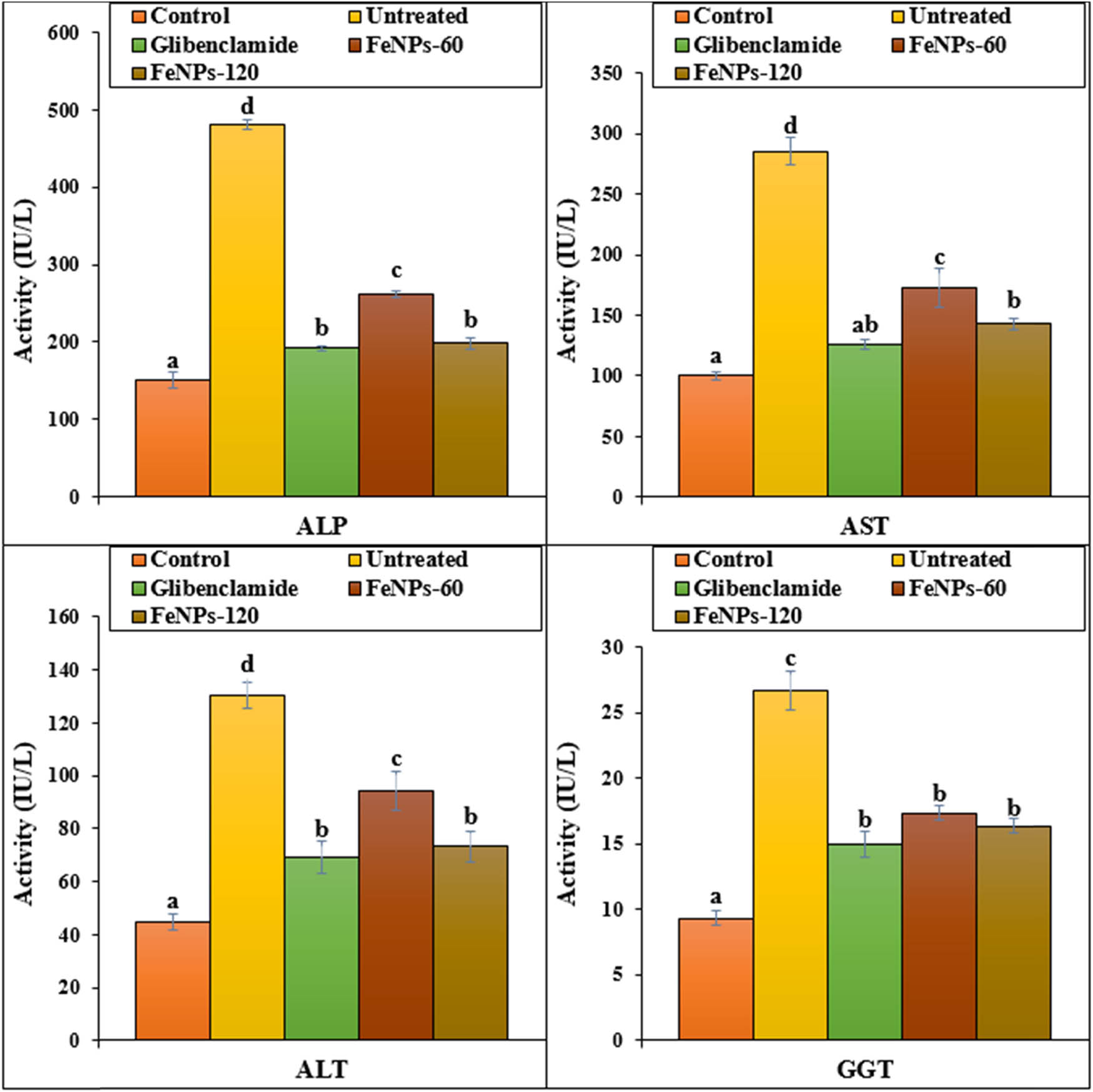
ALP, AST, ALT, and GGT levels in treated animals.
Figure 7 illustrates the data regarding the mean absolute volume of the liver. The liver volume was significantly improved (p ≤ 0.05) with the administration of FeNPs at both doses, compared to the untreated animals. But, there were no significant differences (p ≤ 0.05) seen in the liver volume between the FeNPs-120 and glibenclamide treatments.

Volume of liver in treated animals.
The untreated diabetic rats showed a notable increase (p ≤ 0.05) in the volumes of liver sub-compartments when compared to the control rats (Figures 8–10). However, the administration of FeNPs at both doses was able to significantly (p ≤ 0.05) decrease the liver structures volume. There were no considerable variances (p ≤ 0.05) detected in the aforementioned parameters between glibenclamide and FeNPs-120.

Volume of hepatocytes in treated animals.

Volume of portal veins, sinusoids, and central veins in treated animals.

Volume of hepatic arteries and bile ducts in treated animals.
The inhibitory effects of FeNPs at various concentrations are illustrated as inhibition (%) in Figure 11. The IC50 value for FeNPs in combating DPPH free radicals was found to be 84 µg/mL, respectively, as shown in Figure 11.

Antioxidant properties of FeNPs against DPPH.
It is theorized that nanomaterials may pose a higher toxicity risk as compared to micro-compounds, attributed to their elevated surface potential and activity for cellular penetration and accumulation [10–13]. Experimental results have shown that oxidative stress can significantly contribute to the cytotoxic effects of NPs on human carcinoma cells [12–14]. Consuming a significant amount of compounds and NPs that contain them through oral ingestion typically results in harm to the digestive system. Prolonged consumption of NPs (high concentration) can result in conditions such as pancreatic failure, anemia, and a reduction in dense lipids within the body [14–16]. Based on the findings from the pancreas and liver histopathological analyses, it is apparent that the NPs concentration produced through biological means, although possessing anti-diabetic efficacies, did not exhibit any notable toxic effects on either pancreas or liver tissues. Nevertheless, non-biological NPs synthesized within the liver tissue exhibit harmful properties, in contrast to biological NPs. However, no adverse tissue reactions were detected in the pancreas following NP treatment. Hence, the results of this investigation demonstrated that the artificially produced NPs exhibited favorable outcomes in safeguarding the liver and pancreas tissues in diabetic rats. Given the expanding scope of clinical research on the utilization of medicinal plant extracts, numerous plants with distinctive anti-diabetic properties have been employed. Recent advancements have shown that medicinal plants containing antioxidant and anti-inflammatory efficacies have the potential to alleviate complications arising from liver and pancreas diseases [10–13]. A novel approach that has gained traction involves enhancing the efficacy of these compounds in biological tissues through metal nanomaterials synthesis using plant-derived active ingredients [15–19]. Various research studies have demonstrated the protective properties of medicinal plants containing diverse flavonoid, anthocyanin, and phenolic compounds on various organs including the kidney, pancreas, and liver [46–49]. Furthermore, investigations into the effects of different NPs on the human body have revealed that their small size and ability to easily penetrate cells have led to significant harm in the examined studies [44–46]. In contrast to the findings suggesting harmful impacts of NPs on living tissues, this study did not observe any notable tissue effects. The outcome of this research suggests that even at low concentrations, NPs do not disrupt the body tissues functioning [13–17] through drug delivery. Regulating the frequency and dosage of NPs can lead to notable therapeutic outcomes and minimize the potential side effects. Since glibenclamide has some side effects such as arthralgia, intense hunger, heart disease, anorexia, dark urine, confusion, psychomotor agitation, yellow eyes and skin, hematemesis, skin redness or mild rash, hypoglycemia, dizziness, difficulty with swallowing, difficulty with moving, fatigue or weakness, headache, blurred vision, abdominal pain, heartburn, fast heartbeat, diarrhea, nausea, chills, and anxiety, the recent NPs may be used as a novel therapeutic drug with low side effects for the treatment of gestational diabetes after conducting clinical trial studies in humans [56].
4 Conclusion
The present investigation entails an environmentally friendly technique for the in situ FeNPs immobilization facilitated by plant extract, devoid of the utilization of any hazardous capping and reducing agents. The characterization of the physicochemical, morphology, and structure properties was conducted. The DPPH free radical scavenging assay confirms the antioxidant properties of FeNPs. The IC50 value of FeNPs for inhibiting the DPPH free radicals was 84 µg/mL. The findings from the in vivo study suggest that both doses of FeNPs demonstrated notable antihyperglycemic effects comparable to those seen in diabetic mice treated with glibenclamide. The data of this research suggest that the biological nanoparticles produced using plant extract demonstrated a notable impact on regulating blood glucose levels in diabetic rats, while showing no adverse effects on the pancreas and liver tissues. Additionally, improvements were observed in stereological, histopathological, and biochemical parameters, indicating potential value in the treatment of diabetes. Through further research and identifying the most effective concentration of biological nanoparticles, significant progress has been made in managing and treating a range of illnesses.
-
Funding information: Authors state no funding involved.
-
Author contributions: C.Y.: writing the manuscript, resources, methodology, supervision, formal analysis, and conceptualization; Z.S.: writing the manuscript, validation, project administration, data curation, acquisition, and investigation.
-
Conflict of interest: Authors state no conflict of interest.
-
Ethical approval: The conducted research is not related to either human or animals use.
-
Data availability statement: The datasets generated during and/or analyzed during the current study are available from the corresponding author on reasonable request.
References
[1] Sherigar JM, Castro J, Yin YM, Guss D, Mohanty SR. Glycogenic hepatopathy: a narrative review. World J Hepatol. 2018 Feb;10(2):172–85.10.4254/wjh.v10.i2.172Search in Google Scholar PubMed PubMed Central
[2] Umpaichitra V. Unusual glycogenic hepatopathy causing abnormal liver enzymes in a morbidly obese adolescent with well-controlled type 2 diabetes: resolved after A1c was normalized by metformin. Clin Obes. 2016 Aug;6(4):281–4.10.1111/cob.12154Search in Google Scholar PubMed
[3] Atmaca M, Ucler R, Kartal M, Seven I, Alay M, Bayram I, et al. Glycogenic hepatopathy in type 1 diabetes mellitus. Case Rep Hepatol. 2015;2015:236143.10.1155/2015/236143Search in Google Scholar PubMed PubMed Central
[4] Fitzpatrick E, Cotoi C, Quaglia A, Sakellariou S, Ford-Adams ME, Hadzic N. Hepatopathy of Mauriac syndrome: a retrospective review from a tertiary liver centre. Arch Dis Child. 2014 Apr;99(4):354–7.10.1136/archdischild-2013-304426Search in Google Scholar PubMed
[5] Kransdorf LN, Millstine D, Smith ML, Aqel BA. Hepatic glycogen deposition in a patient with anorexia nervosa and persistently abnormal transaminase levels. Clin Res Hepatol Gastroenterol. 2016 Apr;40(2):e15–8.10.1016/j.clinre.2015.05.001Search in Google Scholar PubMed
[6] Resnick JM, Zador I, Fish DL. Dumping syndrome, a cause of acquired glycogenic hepatopathy. Pediatr Dev Pathol. 2011 Jul-Aug;14(4):318–21.10.2350/10-07-0876-CR.1Search in Google Scholar PubMed
[7] Burda P, Hochuli M. Hepatic glycogen storage disorders: what have we learned in recent years? Curr Opin Clin Nutr Metab Care. 2015 Jul;18(4):415–21.10.1097/MCO.0000000000000181Search in Google Scholar PubMed
[8] Mukewar S, Sharma A, Lackore KA, Enders FT, Torbenson MS, Kamath PS, et al. Clinical, biochemical, and histopathology features of patients with glycogenic hepatopathy. Clin Gastroenterol Hepatol. 2017 Jun;15(6):927–33.10.1016/j.cgh.2016.11.038Search in Google Scholar PubMed
[9] Shah ND, Sasatomi E, Baron TH. Acute and relapsing hepatitis caused by glycogenic hepatopathy. Clin Gastroenterol Hepatol. 2017 Jun;15(6):A23–4.10.1016/j.cgh.2017.02.004Search in Google Scholar PubMed
[10] Tiwari P. Recent trends in therapeutic approaches for diabetes management: a comprehensive update. J Diabetes Res. 2015;2015:340838.10.1155/2015/340838Search in Google Scholar PubMed PubMed Central
[11] Simos YV, Spyrou K, Patila M, Karouta N, Stamatis H, Gournis D, et al. Trends of nanotechnology in type 2 diabetes mellitus treatment. Asian J Pharm Sci. 2021;16:62–76.10.1016/j.ajps.2020.05.001Search in Google Scholar PubMed PubMed Central
[12] Arya AK, Kumar L, Pokharia D, Tripathi K. Applications of nanotechnology in diabetes. Dig J Nanomater Biostruct. 2008;3:221–5.Search in Google Scholar
[13] Shoaib A, Darraj A, Khan ME, Azmi L, Alalwan A, Alamri O, et al. A Nanotechnology-based approach to biosensor application in current diabetes management practices. Nanomaterials. 2023;13:867.10.3390/nano13050867Search in Google Scholar PubMed PubMed Central
[14] Huang C, Hao Z, Qi T, Pan Y, Zhao X. An integrated flexible and reusable graphene field effect transistor nanosensor for monitoring glucose. J Mater. 2020;6:308–14.10.1016/j.jmat.2020.02.002Search in Google Scholar
[15] Chen S, Hai X, Chen XW, Wang JH. In situ growth of silver nanoparticles on graphene quantum dots for ultrasensitive colorimetric detection of H2O2 and glucose. Anal Chem. 2014;86:6689–94.10.1021/ac501497dSearch in Google Scholar PubMed
[16] Brasiunas B, Popov A, Ramanavicius A, Ramanaviciene A. Gold nanoparticle based colorimetric sensing strategy for the determination of reducing sugars. Food Chem. 2021;351:129238.10.1016/j.foodchem.2021.129238Search in Google Scholar PubMed
[17] Zhu Z, Garcia-Gancedo L, Flewitt AJ, Xie H, Moussy F, Milne WI. A critical review of glucose biosensors based on carbon nanomaterials: carbon nanotubes and graphene. Sensors. 2012;12:5996–6022.10.3390/s120505996Search in Google Scholar PubMed PubMed Central
[18] Dixit PV, Mishra DK, Sharma S, Gautam RK. Nanocarriers and diabetes: new vistas and the way ahead. Curr Pharm Biotechnol. 2023;24:1420–9.10.2174/1389201024666221227140728Search in Google Scholar PubMed
[19] El-Dakroury WA, Zewail MB, Amin MM. Design, optimization, and in-vivo performance of glipizide-loaded O-carboxymethyl chitosan nanoparticles in insulin resistant/type 2 diabetic rat model. J Drug Deliv Sci Technol. 2023;79:104040.10.1016/j.jddst.2022.104040Search in Google Scholar
[20] Musiyaka VK, Gvozdyak IN, Kalinin FL, Mel’nichuk YP, Kamenchuk OP, Petasyuk NV, et al. Plant growth inhibitors in extracts from roots and callus tissues of Acroptilon picris. Fiziologiya I Biokhimiya Kul’turnykhRastenij. 1993;25(4):368–75.Search in Google Scholar
[21] Sayah F. Cardiovascular effects of Acroptilon repens (Compositae) on dog and rat. MD thesis. Shiraz University of Medical Sciences; 1954 [Farsi].Search in Google Scholar
[22] Yousefi A. Preparation of essence and plant extract from Datura stramonium and Acroptilon repens and their active phytochemical constituents. MSc thesis. Payam Noor University of Tehran; 2010.Search in Google Scholar
[23] Zhan ZJ, Hou XR. Sesquiterpenoid alkaloid from Acroptilon repens. Taylor Francis Online. 2008;22(3):222–6.10.1080/14786410701389159Search in Google Scholar PubMed
[24] Nadaf M, Nasrabadi M, Halimi M, Yazdani Z, Javanshir A, Ramazani S, et al. Identification of non-polar chemical compounds Acroptilon repens growing in Iran by GC-MS. Middle-East J Sci Res. 2013;17(5):590–2.Search in Google Scholar
[25] Stevens KL. Sesquiterpene lactones from Centaurea repens. Phytochemistry. 1982;21(5):1093–8.10.1016/S0031-9422(00)82423-1Search in Google Scholar
[26] Mallabaev A, Saitbaeva IM, Sidyakin GP. Components of Acroptilon repens. Khim Prir Soedin. 1982;18(1):117.10.1007/BF00581614Search in Google Scholar
[27] Evstratova RI, Kiseleva EY, Sheichenko VI, Rybalko KS. The structure of acroptilin, a sesquiterpene lactone from Acroptilon repens. Chem Nat Compd. 1971;7(3):262–4.10.1007/BF00568994Search in Google Scholar
[28] Tunalier Z, Candan NT, Demirci B, Baser KHC. The essential oil composition of Acroptilon repens (L.) DC of Turkish origin. Flavour Frag J. 2006;21(3):462–4.10.1002/ffj.1670Search in Google Scholar
[29] (a) Dashti A, Shokrzadeh M, Karami M, Habibi E. Phytochemical identification, acute and subchronic oral toxicity assessments of hydroalcoholic extract of Acroptilon repens in BALB/c mice: a toxicological and mechanistic study. Heliyon. 2022 Feb;8(2):e08940; (b) Afsharnezhad M, Shahangian SS, Rasti B, Faezi Ghasemi M. Inhibitory potential of acroptilon repens against key enzymes involved in Alzheimer and diabetes, phytochemical profile, radical scavenging, and antibacterial activity. Iran Biomed J. 2021 Jan;25(1):21–32.Search in Google Scholar
[30] Gholamhoseinian A, Fallah H, Sharifi-far F, Mirtajaddini M. The inhibitory effect of some Iranian plants extracts on the alpha glucosidase. Iran J Basic Med Sci. 2008;11(1):1–9.Search in Google Scholar
[31] Elham K. Evaluate antioxidant, antidiabetic, and antiapoptotic activities of the methanolic extract of Sophora alopecuroides, MSc thesis. Shahid Bahonar University of Kerman; 2012. p. 46–67Search in Google Scholar
[32] Wei Y, Fang Z, Zheng L, Tan L, Tsang EP. Green synthesis of Fe nanoparticles using Citrus maxima peels aqueous extracts. Mater Lett. 2016;185:384–6.10.1016/j.matlet.2016.09.029Search in Google Scholar
[33] Ahmeda A, Mahdavi B, Zaker F, Kaviani S, Hosseini S, Zangeneh MM, et al. Chemical characterization and anti‐hemolytic anemia potentials of tin nanoparticles synthesized by a green approach for bioremediation applications. Appl Organometal Chem. 2020;34(3):e5433.10.1002/aoc.5433Search in Google Scholar
[34] Mohammadi G, Zangeneh MM, Zangeneh A, Haghighi ZM. Chemical characterization and anti‐breast cancer effects of silver nanoparticles using Phoenix dactylifera seed ethanolic extract on 7, 12‐Dimethylbenz [a] anthracene‐induced mammary gland carcinogenesis in Sprague Dawley male rats. Appl Organomet Chem. 2020 Jan;34(1):e5136.10.1002/aoc.5136Search in Google Scholar
[35] Ahmeda A, Zangeneh A, Zangeneh MM. Preparation, formulation, and chemical characterization of silver nanoparticles using Melissa officinalis leaf aqueous extract for the treatment of acute myeloid leukemia in vitro and in vivo conditions. Appl Organomet Chem. 2020 Feb;34(2):e5378.10.1002/aoc.5378Search in Google Scholar
[36] Zangeneh MM. Green synthesis and formulation a modern chemotherapeutic drug of Spinacia oleracea L. leaf aqueous extract conjugated silver nanoparticles; Chemical characterization and analysis of their cytotoxicity, antioxidant, and anti‐acute myeloid leukemia properties in comparison to doxorubicin in a leukemic mouse model. Appl Organomet Chem. 2020 Jan;34(1):e5295.10.1002/aoc.5295Search in Google Scholar
[37] Jalalvand AR, Zhaleh M, Goorani S, Zangeneh MM, Seydi N, Zangeneh A, et al. Chemical characterization and antioxidant, cytotoxic, antibacterial, and antifungal properties of ethanolic extract of Allium Saralicum R.M. Fritsch leaves rich in linolenic acid, methyl ester. J Photochem Photobiol B. 2019 Mar;192:103–12.10.1016/j.jphotobiol.2019.01.017Search in Google Scholar PubMed
[38] Zangeneh MM, Zangeneh A, Pirabbasi E, Moradi R, Almasi M. Falcaria vulgaris leaf aqueous extract mediated synthesis of iron nanoparticles and their therapeutic potentials under in vitro and in vivo condition. Appl Organomet Chem. 2019 Nov;33(12):e5246.Search in Google Scholar
[39] Zangeneh MM, Joshani Z, Zangeneh A, Miri E. Green synthesis of silver nanoparticles using aqueous extract of Stachys lavandulifolia flower, and their cytotoxicity, antioxidant, antibacterial and cutaneous wound‐healing properties. Appl Organomet Chem. 2019 Sep;33(9):e5016.10.1002/aoc.5016Search in Google Scholar
[40] Zangeneh A, Zangeneh MM, Moradi R. Ethnomedicinal plant‐extract‐assisted green synthesis of iron nanoparticles using Allium saralicum extract, and their antioxidant, cytotoxicity, antibacterial, antifungal and cutaneous wound‐healing activities. Appl Organomet Chem. 2020 Jan;34(1):e5247.10.1002/aoc.5247Search in Google Scholar
[41] Zangeneh MM, Zangeneh A, Pirabbasi E, Moradi R, Almasi M. Falcaria vulgaris leaf aqueous extract mediated synthesis of iron nanoparticles and their therapeutic potentials under in vitro and in vivo condition. Appl Organomet Chem. 2019 Nov;33(12):e5246.10.1002/aoc.5246Search in Google Scholar
[42] Sangami S, Manu B. Synthesis of green iron nanoparticles using laterite and their application as a fenton-like catalyst for the degradation of herbicide Ametryn in water. Environ Technol Innov. 2017;8:150–63.10.1016/j.eti.2017.06.003Search in Google Scholar
[43] Beheshtkhoo N, Kouhbanani MAJ, Savardashtaki A, Amani AM, Taghizadeh S. Green synthesis of iron oxide nanoparticles by aqueous leaf extract of Daphne mezereum as a novel dye removing material. Appl Phys A. 2018;124:363–9.10.1007/s00339-018-1782-3Search in Google Scholar
[44] Radini IA, Hasan N, Malik MA, Khan Z. Biosynthesis of iron nanoparticles using Trigonella foenum-graecum seed extract for photocatalytic methyl orange dye degradation and antibacterial applications. J Photochem Photobiol B: Biol. 2018;183:154–63.10.1016/j.jphotobiol.2018.04.014Search in Google Scholar PubMed
[45] Nurbas M, Ghorbanpoor H, Avci H. An eco-friendly approach to synthesis and charactrization of magnetite (Fe3O4) nanoparticles using Platanus orientalis L. leaf extract. Dig J Nanomater Biostruct (DJNB). 2017;12:993–1000.Search in Google Scholar
[46] Gautam A, Rawat S, Verma L, Singh J, Sikarwar S, Yadav B, et al. Green synthesis of iron nanoparticle from extract of waste tea: an application for phenol red removal from aqueous solution. Environ Nanotechnol Monit Manag. 2018;10:377–87.10.1016/j.enmm.2018.08.003Search in Google Scholar
[47] Zhang S, Wu D, Li H, Zhu J, Hu W, Lu M, et al. Rapid identification of α-glucosidase inhibitors from Dioscorea opposita Thunb peel extract by enzyme functionalized Fe3O4 magnetic nanoparticles coupled with HPLC-MS/MS. Food Funct. 2017;8:3219–27.10.1039/C7FO00928CSearch in Google Scholar
[48] Devatha C, Jagadeesh K, Patil M. Effect of green synthesized iron nanoparticles by Azardirachta indica in different proportions on antibacterial activity. Environ Nanotechnol Monit Manag. 2018;9:85–94.10.1016/j.enmm.2017.11.007Search in Google Scholar
[49] Kuang Y, Wang Q, Chen Z, Megharaj M, Naidu R. Heterogeneous fenton-like oxidation of monochlorobenzene using green synthesis of iron nanoparticles. J Colloid Interface Sci. 2013;410:67–73.10.1016/j.jcis.2013.08.020Search in Google Scholar PubMed
[50] Lappsa M. Flatfoot diagnosis by a unique bimodal distribution of footprint index in children. PLoS One. 2014;9(12):e115854.10.1371/journal.pone.0115808Search in Google Scholar PubMed PubMed Central
[51] Ferrara A. Increasing prevalence of gestational diabetes mellitus: a public health perspective. Diabetes Care. 2007;30(2):S141–6.10.2337/dc07-s206Search in Google Scholar PubMed
[52] Catalano PM, Nizielski SE, Shao J, Preston L, Qiao L, Friedman JE. Downregulated IRS-1 and PPARgamma in obese women with gestational diabetes: relationship to FFA during pregnancy. Am J Physiol Endocrinol Metab. 2002;282(3):E522–33.10.1152/ajpendo.00124.2001Search in Google Scholar PubMed
[53] Colomiere M, Permezel M, Lappas M. Diabetes and obesity during pregnancy alter insulin signalling and glucose transporter expression in maternal skeletal muscle and subcutaneous adipose tissue. J Mol Endocrinol. 2010;44(4):213–23.10.1677/JME-09-0091Search in Google Scholar PubMed
[54] DiSanto RM, Subramanian V, Gu Z. Recent advances in nanotechnology for diabetes treatment. Wiley Interdiscip Rev Nanomed Nanobiotechnol. 2015 Jul-Aug;7(4):548–64.10.1002/wnan.1329Search in Google Scholar PubMed PubMed Central
[55] Souto EB, Souto SB, Campos JR, Severino P, Pashirova TN, Zakharova LY, et al. Nanoparticle delivery systems in the treatment of diabetes complications. Molecules. 2019 Nov;24(23):4209.10.3390/molecules24234209Search in Google Scholar PubMed PubMed Central
[56] Juurlink DN, Gomes T, Shah BR, Mamdani MM. Adverse cardiovascular events during treatment with glyburide (glibenclamide) or gliclazide in a high-risk population. Diabet Med. 2012 Dec;29(12):1524–8.10.1111/j.1464-5491.2012.03772.xSearch in Google Scholar PubMed
© 2024 the author(s), published by De Gruyter
This work is licensed under the Creative Commons Attribution 4.0 International License.
Articles in the same Issue
- Regular Articles
- Porous silicon nanostructures: Synthesis, characterization, and their antifungal activity
- Biochar from de-oiled Chlorella vulgaris and its adsorption on antibiotics
- Phytochemicals profiling, in vitro and in vivo antidiabetic activity, and in silico studies on Ajuga iva (L.) Schreb.: A comprehensive approach
- Synthesis, characterization, in silico and in vitro studies of novel glycoconjugates as potential antibacterial, antifungal, and antileishmanial agents
- Sonochemical synthesis of gold nanoparticles mediated by potato starch: Its performance in the treatment of esophageal cancer
- Computational study of ADME-Tox prediction of selected phytochemicals from Punica granatum peels
- Phytochemical analysis, in vitro antioxidant and antifungal activities of extracts and essential oil derived from Artemisia herba-alba Asso
- Two triazole-based coordination polymers: Synthesis and crystal structure characterization
- Phytochemical and physicochemical studies of different apple varieties grown in Morocco
- Synthesis of multi-template molecularly imprinted polymers (MT-MIPs) for isolating ethyl para-methoxycinnamate and ethyl cinnamate from Kaempferia galanga L., extract with methacrylic acid as functional monomer
- Nutraceutical potential of Mesembryanthemum forsskaolii Hochst. ex Bioss.: Insights into its nutritional composition, phytochemical contents, and antioxidant activity
- Evaluation of influence of Butea monosperma floral extract on inflammatory biomarkers
- Cannabis sativa L. essential oil: Chemical composition, anti-oxidant, anti-microbial properties, and acute toxicity: In vitro, in vivo, and in silico study
- The effect of gamma radiation on 5-hydroxymethylfurfural conversion in water and dimethyl sulfoxide
- Hollow mushroom nanomaterials for potentiometric sensing of Pb2+ ions in water via the intercalation of iodide ions into the polypyrrole matrix
- Determination of essential oil and chemical composition of St. John’s Wort
- Computational design and in vitro assay of lantadene-based novel inhibitors of NS3 protease of dengue virus
- Anti-parasitic activity and computational studies on a novel labdane diterpene from the roots of Vachellia nilotica
- Microbial dynamics and dehydrogenase activity in tomato (Lycopersicon esculentum Mill.) rhizospheres: Impacts on growth and soil health across different soil types
- Correlation between in vitro anti-urease activity and in silico molecular modeling approach of novel imidazopyridine–oxadiazole hybrids derivatives
- Spatial mapping of indoor air quality in a light metro system using the geographic information system method
- Iron indices and hemogram in renal anemia and the improvement with Tribulus terrestris green-formulated silver nanoparticles applied on rat model
- Integrated track of nano-informatics coupling with the enrichment concept in developing a novel nanoparticle targeting ERK protein in Naegleria fowleri
- Cytotoxic and phytochemical screening of Solanum lycopersicum–Daucus carota hydro-ethanolic extract and in silico evaluation of its lycopene content as anticancer agent
- Protective activities of silver nanoparticles containing Panax japonicus on apoptotic, inflammatory, and oxidative alterations in isoproterenol-induced cardiotoxicity
- pH-based colorimetric detection of monofunctional aldehydes in liquid and gas phases
- Investigating the effect of resveratrol on apoptosis and regulation of gene expression of Caco-2 cells: Unravelling potential implications for colorectal cancer treatment
- Metformin inhibits knee osteoarthritis induced by type 2 diabetes mellitus in rats: S100A8/9 and S100A12 as players and therapeutic targets
- Effect of silver nanoparticles formulated by Silybum marianum on menopausal urinary incontinence in ovariectomized rats
- Synthesis of new analogs of N-substituted(benzoylamino)-1,2,3,6-tetrahydropyridines
- Response of yield and quality of Japonica rice to different gradients of moisture deficit at grain-filling stage in cold regions
- Preparation of an inclusion complex of nickel-based β-cyclodextrin: Characterization and accelerating the osteoarthritis articular cartilage repair
- Empagliflozin-loaded nanomicelles responsive to reactive oxygen species for renal ischemia/reperfusion injury protection
- Preparation and pharmacodynamic evaluation of sodium aescinate solid lipid nanoparticles
- Assessment of potentially toxic elements and health risks of agricultural soil in Southwest Riyadh, Saudi Arabia
- Theoretical investigation of hydrogen-rich fuel production through ammonia decomposition
- Biosynthesis and screening of cobalt nanoparticles using citrus species for antimicrobial activity
- Investigating the interplay of genetic variations, MCP-1 polymorphism, and docking with phytochemical inhibitors for combatting dengue virus pathogenicity through in silico analysis
- Ultrasound induced biosynthesis of silver nanoparticles embedded into chitosan polymers: Investigation of its anti-cutaneous squamous cell carcinoma effects
- Copper oxide nanoparticles-mediated Heliotropium bacciferum leaf extract: Antifungal activity and molecular docking assays against strawberry pathogens
- Sprouted wheat flour for improving physical, chemical, rheological, microbial load, and quality properties of fino bread
- Comparative toxicity assessment of fisetin-aided artificial intelligence-assisted drug design targeting epibulbar dermoid through phytochemicals
- Acute toxicity and anti-inflammatory activity of bis-thiourea derivatives
- Anti-diabetic activity-guided isolation of α-amylase and α-glucosidase inhibitory terpenes from Capsella bursa-pastoris Linn.
- GC–MS analysis of Lactobacillus plantarum YW11 metabolites and its computational analysis on familial pulmonary fibrosis hub genes
- Green formulation of copper nanoparticles by Pistacia khinjuk leaf aqueous extract: Introducing a novel chemotherapeutic drug for the treatment of prostate cancer
- Improved photocatalytic properties of WO3 nanoparticles for Malachite green dye degradation under visible light irradiation: An effect of La doping
- One-pot synthesis of a network of Mn2O3–MnO2–poly(m-methylaniline) composite nanorods on a polypyrrole film presents a promising and efficient optoelectronic and solar cell device
- Groundwater quality and health risk assessment of nitrate and fluoride in Al Qaseem area, Saudi Arabia
- A comparative study of the antifungal efficacy and phytochemical composition of date palm leaflet extracts
- Processing of alcohol pomelo beverage (Citrus grandis (L.) Osbeck) using saccharomyces yeast: Optimization, physicochemical quality, and sensory characteristics
- Specialized compounds of four Cameroonian spices: Isolation, characterization, and in silico evaluation as prospective SARS-CoV-2 inhibitors
- Identification of a novel drug target in Porphyromonas gingivalis by a computational genome analysis approach
- Physico-chemical properties and durability of a fly-ash-based geopolymer
- FMS-like tyrosine kinase 3 inhibitory potentials of some phytochemicals from anti-leukemic plants using computational chemical methodologies
- Wild Thymus zygis L. ssp. gracilis and Eucalyptus camaldulensis Dehnh.: Chemical composition, antioxidant and antibacterial activities of essential oils
- 3D-QSAR, molecular docking, ADMET, simulation dynamic, and retrosynthesis studies on new styrylquinolines derivatives against breast cancer
- Deciphering the influenza neuraminidase inhibitory potential of naturally occurring biflavonoids: An in silico approach
- Determination of heavy elements in agricultural regions, Saudi Arabia
- Synthesis and characterization of antioxidant-enriched Moringa oil-based edible oleogel
- Ameliorative effects of thistle and thyme honeys on cyclophosphamide-induced toxicity in mice
- Study of phytochemical compound and antipyretic activity of Chenopodium ambrosioides L. fractions
- Investigating the adsorption mechanism of zinc chloride-modified porous carbon for sulfadiazine removal from water
- Performance repair of building materials using alumina and silica composite nanomaterials with electrodynamic properties
- Effects of nanoparticles on the activity and resistance genes of anaerobic digestion enzymes in livestock and poultry manure containing the antibiotic tetracycline
- Effect of copper nanoparticles green-synthesized using Ocimum basilicum against Pseudomonas aeruginosa in mice lung infection model
- Cardioprotective effects of nanoparticles green formulated by Spinacia oleracea extract on isoproterenol-induced myocardial infarction in mice by the determination of PPAR-γ/NF-κB pathway
- Anti-OTC antibody-conjugated fluorescent magnetic/silica and fluorescent hybrid silica nanoparticles for oxytetracycline detection
- Curcumin conjugated zinc nanoparticles for the treatment of myocardial infarction
- Identification and in silico screening of natural phloroglucinols as potential PI3Kα inhibitors: A computational approach for drug discovery
- Exploring the phytochemical profile and antioxidant evaluation: Molecular docking and ADMET analysis of main compounds from three Solanum species in Saudi Arabia
- Unveiling the molecular composition and biological properties of essential oil derived from the leaves of wild Mentha aquatica L.: A comprehensive in vitro and in silico exploration
- Analysis of bioactive compounds present in Boerhavia elegans seeds by GC-MS
- Homology modeling and molecular docking study of corticotrophin-releasing hormone: An approach to treat stress-related diseases
- LncRNA MIR17HG alleviates heart failure via targeting MIR17HG/miR-153-3p/SIRT1 axis in in vitro model
- Development and validation of a stability indicating UPLC-DAD method coupled with MS-TQD for ramipril and thymoquinone in bioactive SNEDDS with in silico toxicity analysis of ramipril degradation products
- Biosynthesis of Ag/Cu nanocomposite mediated by Curcuma longa: Evaluation of its antibacterial properties against oral pathogens
- Development of AMBER-compliant transferable force field parameters for polytetrafluoroethylene
- Treatment of gestational diabetes by Acroptilon repens leaf aqueous extract green-formulated iron nanoparticles in rats
- Development and characterization of new ecological adsorbents based on cardoon wastes: Application to brilliant green adsorption
- A fast, sensitive, greener, and stability-indicating HPLC method for the standardization and quantitative determination of chlorhexidine acetate in commercial products
- Assessment of Se, As, Cd, Cr, Hg, and Pb content status in Ankang tea plantations of China
- Effect of transition metal chloride (ZnCl2) on low-temperature pyrolysis of high ash bituminous coal
- Evaluating polyphenol and ascorbic acid contents, tannin removal ability, and physical properties during hydrolysis and convective hot-air drying of cashew apple powder
- Development and characterization of functional low-fat frozen dairy dessert enhanced with dried lemongrass powder
- Scrutinizing the effect of additive and synergistic antibiotics against carbapenem-resistant Pseudomonas aeruginosa
- Preparation, characterization, and determination of the therapeutic effects of copper nanoparticles green-formulated by Pistacia atlantica in diabetes-induced cardiac dysfunction in rat
- Antioxidant and antidiabetic potentials of methoxy-substituted Schiff bases using in vitro, in vivo, and molecular simulation approaches
- Anti-melanoma cancer activity and chemical profile of the essential oil of Seseli yunnanense Franch
- Molecular docking analysis of subtilisin-like alkaline serine protease (SLASP) and laccase with natural biopolymers
- Overcoming methicillin resistance by methicillin-resistant Staphylococcus aureus: Computational evaluation of napthyridine and oxadiazoles compounds for potential dual inhibition of PBP-2a and FemA proteins
- Exploring novel antitubercular agents: Innovative design of 2,3-diaryl-quinoxalines targeting DprE1 for effective tuberculosis treatment
- Drimia maritima flowers as a source of biologically potent components: Optimization of bioactive compound extractions, isolation, UPLC–ESI–MS/MS, and pharmacological properties
- Estimating molecular properties, drug-likeness, cardiotoxic risk, liability profile, and molecular docking study to characterize binding process of key phyto-compounds against serotonin 5-HT2A receptor
- Fabrication of β-cyclodextrin-based microgels for enhancing solubility of Terbinafine: An in-vitro and in-vivo toxicological evaluation
- Phyto-mediated synthesis of ZnO nanoparticles and their sunlight-driven photocatalytic degradation of cationic and anionic dyes
- Monosodium glutamate induces hypothalamic–pituitary–adrenal axis hyperactivation, glucocorticoid receptors down-regulation, and systemic inflammatory response in young male rats: Impact on miR-155 and miR-218
- Quality control analyses of selected honey samples from Serbia based on their mineral and flavonoid profiles, and the invertase activity
- Eco-friendly synthesis of silver nanoparticles using Phyllanthus niruri leaf extract: Assessment of antimicrobial activity, effectiveness on tropical neglected mosquito vector control, and biocompatibility using a fibroblast cell line model
- Green synthesis of silver nanoparticles containing Cichorium intybus to treat the sepsis-induced DNA damage in the liver of Wistar albino rats
- Quality changes of durian pulp (Durio ziberhinus Murr.) in cold storage
- Study on recrystallization process of nitroguanidine by directly adding cold water to control temperature
- Determination of heavy metals and health risk assessment in drinking water in Bukayriyah City, Saudi Arabia
- Larvicidal properties of essential oils of three Artemisia species against the chemically insecticide-resistant Nile fever vector Culex pipiens (L.) (Diptera: Culicidae): In vitro and in silico studies
- Design, synthesis, characterization, and theoretical calculations, along with in silico and in vitro antimicrobial proprieties of new isoxazole-amide conjugates
- The impact of drying and extraction methods on total lipid, fatty acid profile, and cytotoxicity of Tenebrio molitor larvae
- A zinc oxide–tin oxide–nerolidol hybrid nanomaterial: Efficacy against esophageal squamous cell carcinoma
- Research on technological process for production of muskmelon juice (Cucumis melo L.)
- Physicochemical components, antioxidant activity, and predictive models for quality of soursop tea (Annona muricata L.) during heat pump drying
- Characterization and application of Fe1−xCoxFe2O4 nanoparticles in Direct Red 79 adsorption
- Torilis arvensis ethanolic extract: Phytochemical analysis, antifungal efficacy, and cytotoxicity properties
- Magnetite–poly-1H pyrrole dendritic nanocomposite seeded on poly-1H pyrrole: A promising photocathode for green hydrogen generation from sanitation water without using external sacrificing agent
- HPLC and GC–MS analyses of phytochemical compounds in Haloxylon salicornicum extract: Antibacterial and antifungal activity assessment of phytopathogens
- Efficient and stable to coking catalysts of ethanol steam reforming comprised of Ni + Ru loaded on MgAl2O4 + LnFe0.7Ni0.3O3 (Ln = La, Pr) nanocomposites prepared via cost-effective procedure with Pluronic P123 copolymer
- Nitrogen and boron co-doped carbon dots probe for selectively detecting Hg2+ in water samples and the detection mechanism
- Heavy metals in road dust from typical old industrial areas of Wuhan: Seasonal distribution and bioaccessibility-based health risk assessment
- Phytochemical profiling and bioactivity evaluation of CBD- and THC-enriched Cannabis sativa extracts: In vitro and in silico investigation of antioxidant and anti-inflammatory effects
- Investigating dye adsorption: The role of surface-modified montmorillonite nanoclay in kinetics, isotherms, and thermodynamics
- Antimicrobial activity, induction of ROS generation in HepG2 liver cancer cells, and chemical composition of Pterospermum heterophyllum
- Study on the performance of nanoparticle-modified PVDF membrane in delaying membrane aging
- Impact of cholesterol in encapsulated vitamin E acetate within cocoliposomes
- Review Articles
- Structural aspects of Pt(η3-X1N1X2)(PL) (X1,2 = O, C, or Se) and Pt(η3-N1N2X1)(PL) (X1 = C, S, or Se) derivatives
- Biosurfactants in biocorrosion and corrosion mitigation of metals: An overview
- Stimulus-responsive MOF–hydrogel composites: Classification, preparation, characterization, and their advancement in medical treatments
- Electrochemical dissolution of titanium under alternating current polarization to obtain its dioxide
- Special Issue on Recent Trends in Green Chemistry
- Phytochemical screening and antioxidant activity of Vitex agnus-castus L.
- Phytochemical study, antioxidant activity, and dermoprotective activity of Chenopodium ambrosioides (L.)
- Exploitation of mangliculous marine fungi, Amarenographium solium, for the green synthesis of silver nanoparticles and their activity against multiple drug-resistant bacteria
- Study of the phytotoxicity of margines on Pistia stratiotes L.
- Special Issue on Advanced Nanomaterials for Energy, Environmental and Biological Applications - Part III
- Impact of biogenic zinc oxide nanoparticles on growth, development, and antioxidant system of high protein content crop (Lablab purpureus L.) sweet
- Green synthesis, characterization, and application of iron and molybdenum nanoparticles and their composites for enhancing the growth of Solanum lycopersicum
- Green synthesis of silver nanoparticles from Olea europaea L. extracted polysaccharides, characterization, and its assessment as an antimicrobial agent against multiple pathogenic microbes
- Photocatalytic treatment of organic dyes using metal oxides and nanocomposites: A quantitative study
- Antifungal, antioxidant, and photocatalytic activities of greenly synthesized iron oxide nanoparticles
- Special Issue on Phytochemical and Pharmacological Scrutinization of Medicinal Plants
- Hepatoprotective effects of safranal on acetaminophen-induced hepatotoxicity in rats
- Chemical composition and biological properties of Thymus capitatus plants from Algerian high plains: A comparative and analytical study
- Chemical composition and bioactivities of the methanol root extracts of Saussurea costus
- In vivo protective effects of vitamin C against cyto-genotoxicity induced by Dysphania ambrosioides aqueous extract
- Insights about the deleterious impact of a carbamate pesticide on some metabolic immune and antioxidant functions and a focus on the protective ability of a Saharan shrub and its anti-edematous property
- A comprehensive review uncovering the anticancerous potential of genkwanin (plant-derived compound) in several human carcinomas
- A study to investigate the anticancer potential of carvacrol via targeting Notch signaling in breast cancer
- Assessment of anti-diabetic properties of Ziziphus oenopolia (L.) wild edible fruit extract: In vitro and in silico investigations through molecular docking analysis
- Optimization of polyphenol extraction, phenolic profile by LC-ESI-MS/MS, antioxidant, anti-enzymatic, and cytotoxic activities of Physalis acutifolia
- Phytochemical screening, antioxidant properties, and photo-protective activities of Salvia balansae de Noé ex Coss
- Antihyperglycemic, antiglycation, anti-hypercholesteremic, and toxicity evaluation with gas chromatography mass spectrometry profiling for Aloe armatissima leaves
- Phyto-fabrication and characterization of gold nanoparticles by using Timur (Zanthoxylum armatum DC) and their effect on wound healing
- Does Erodium trifolium (Cav.) Guitt exhibit medicinal properties? Response elements from phytochemical profiling, enzyme-inhibiting, and antioxidant and antimicrobial activities
- Integrative in silico evaluation of the antiviral potential of terpenoids and its metal complexes derived from Homalomena aromatica based on main protease of SARS-CoV-2
- 6-Methoxyflavone improves anxiety, depression, and memory by increasing monoamines in mice brain: HPLC analysis and in silico studies
- Simultaneous extraction and quantification of hydrophilic and lipophilic antioxidants in Solanum lycopersicum L. varieties marketed in Saudi Arabia
- Biological evaluation of CH3OH and C2H5OH of Berberis vulgaris for in vivo antileishmanial potential against Leishmania tropica in murine models
Articles in the same Issue
- Regular Articles
- Porous silicon nanostructures: Synthesis, characterization, and their antifungal activity
- Biochar from de-oiled Chlorella vulgaris and its adsorption on antibiotics
- Phytochemicals profiling, in vitro and in vivo antidiabetic activity, and in silico studies on Ajuga iva (L.) Schreb.: A comprehensive approach
- Synthesis, characterization, in silico and in vitro studies of novel glycoconjugates as potential antibacterial, antifungal, and antileishmanial agents
- Sonochemical synthesis of gold nanoparticles mediated by potato starch: Its performance in the treatment of esophageal cancer
- Computational study of ADME-Tox prediction of selected phytochemicals from Punica granatum peels
- Phytochemical analysis, in vitro antioxidant and antifungal activities of extracts and essential oil derived from Artemisia herba-alba Asso
- Two triazole-based coordination polymers: Synthesis and crystal structure characterization
- Phytochemical and physicochemical studies of different apple varieties grown in Morocco
- Synthesis of multi-template molecularly imprinted polymers (MT-MIPs) for isolating ethyl para-methoxycinnamate and ethyl cinnamate from Kaempferia galanga L., extract with methacrylic acid as functional monomer
- Nutraceutical potential of Mesembryanthemum forsskaolii Hochst. ex Bioss.: Insights into its nutritional composition, phytochemical contents, and antioxidant activity
- Evaluation of influence of Butea monosperma floral extract on inflammatory biomarkers
- Cannabis sativa L. essential oil: Chemical composition, anti-oxidant, anti-microbial properties, and acute toxicity: In vitro, in vivo, and in silico study
- The effect of gamma radiation on 5-hydroxymethylfurfural conversion in water and dimethyl sulfoxide
- Hollow mushroom nanomaterials for potentiometric sensing of Pb2+ ions in water via the intercalation of iodide ions into the polypyrrole matrix
- Determination of essential oil and chemical composition of St. John’s Wort
- Computational design and in vitro assay of lantadene-based novel inhibitors of NS3 protease of dengue virus
- Anti-parasitic activity and computational studies on a novel labdane diterpene from the roots of Vachellia nilotica
- Microbial dynamics and dehydrogenase activity in tomato (Lycopersicon esculentum Mill.) rhizospheres: Impacts on growth and soil health across different soil types
- Correlation between in vitro anti-urease activity and in silico molecular modeling approach of novel imidazopyridine–oxadiazole hybrids derivatives
- Spatial mapping of indoor air quality in a light metro system using the geographic information system method
- Iron indices and hemogram in renal anemia and the improvement with Tribulus terrestris green-formulated silver nanoparticles applied on rat model
- Integrated track of nano-informatics coupling with the enrichment concept in developing a novel nanoparticle targeting ERK protein in Naegleria fowleri
- Cytotoxic and phytochemical screening of Solanum lycopersicum–Daucus carota hydro-ethanolic extract and in silico evaluation of its lycopene content as anticancer agent
- Protective activities of silver nanoparticles containing Panax japonicus on apoptotic, inflammatory, and oxidative alterations in isoproterenol-induced cardiotoxicity
- pH-based colorimetric detection of monofunctional aldehydes in liquid and gas phases
- Investigating the effect of resveratrol on apoptosis and regulation of gene expression of Caco-2 cells: Unravelling potential implications for colorectal cancer treatment
- Metformin inhibits knee osteoarthritis induced by type 2 diabetes mellitus in rats: S100A8/9 and S100A12 as players and therapeutic targets
- Effect of silver nanoparticles formulated by Silybum marianum on menopausal urinary incontinence in ovariectomized rats
- Synthesis of new analogs of N-substituted(benzoylamino)-1,2,3,6-tetrahydropyridines
- Response of yield and quality of Japonica rice to different gradients of moisture deficit at grain-filling stage in cold regions
- Preparation of an inclusion complex of nickel-based β-cyclodextrin: Characterization and accelerating the osteoarthritis articular cartilage repair
- Empagliflozin-loaded nanomicelles responsive to reactive oxygen species for renal ischemia/reperfusion injury protection
- Preparation and pharmacodynamic evaluation of sodium aescinate solid lipid nanoparticles
- Assessment of potentially toxic elements and health risks of agricultural soil in Southwest Riyadh, Saudi Arabia
- Theoretical investigation of hydrogen-rich fuel production through ammonia decomposition
- Biosynthesis and screening of cobalt nanoparticles using citrus species for antimicrobial activity
- Investigating the interplay of genetic variations, MCP-1 polymorphism, and docking with phytochemical inhibitors for combatting dengue virus pathogenicity through in silico analysis
- Ultrasound induced biosynthesis of silver nanoparticles embedded into chitosan polymers: Investigation of its anti-cutaneous squamous cell carcinoma effects
- Copper oxide nanoparticles-mediated Heliotropium bacciferum leaf extract: Antifungal activity and molecular docking assays against strawberry pathogens
- Sprouted wheat flour for improving physical, chemical, rheological, microbial load, and quality properties of fino bread
- Comparative toxicity assessment of fisetin-aided artificial intelligence-assisted drug design targeting epibulbar dermoid through phytochemicals
- Acute toxicity and anti-inflammatory activity of bis-thiourea derivatives
- Anti-diabetic activity-guided isolation of α-amylase and α-glucosidase inhibitory terpenes from Capsella bursa-pastoris Linn.
- GC–MS analysis of Lactobacillus plantarum YW11 metabolites and its computational analysis on familial pulmonary fibrosis hub genes
- Green formulation of copper nanoparticles by Pistacia khinjuk leaf aqueous extract: Introducing a novel chemotherapeutic drug for the treatment of prostate cancer
- Improved photocatalytic properties of WO3 nanoparticles for Malachite green dye degradation under visible light irradiation: An effect of La doping
- One-pot synthesis of a network of Mn2O3–MnO2–poly(m-methylaniline) composite nanorods on a polypyrrole film presents a promising and efficient optoelectronic and solar cell device
- Groundwater quality and health risk assessment of nitrate and fluoride in Al Qaseem area, Saudi Arabia
- A comparative study of the antifungal efficacy and phytochemical composition of date palm leaflet extracts
- Processing of alcohol pomelo beverage (Citrus grandis (L.) Osbeck) using saccharomyces yeast: Optimization, physicochemical quality, and sensory characteristics
- Specialized compounds of four Cameroonian spices: Isolation, characterization, and in silico evaluation as prospective SARS-CoV-2 inhibitors
- Identification of a novel drug target in Porphyromonas gingivalis by a computational genome analysis approach
- Physico-chemical properties and durability of a fly-ash-based geopolymer
- FMS-like tyrosine kinase 3 inhibitory potentials of some phytochemicals from anti-leukemic plants using computational chemical methodologies
- Wild Thymus zygis L. ssp. gracilis and Eucalyptus camaldulensis Dehnh.: Chemical composition, antioxidant and antibacterial activities of essential oils
- 3D-QSAR, molecular docking, ADMET, simulation dynamic, and retrosynthesis studies on new styrylquinolines derivatives against breast cancer
- Deciphering the influenza neuraminidase inhibitory potential of naturally occurring biflavonoids: An in silico approach
- Determination of heavy elements in agricultural regions, Saudi Arabia
- Synthesis and characterization of antioxidant-enriched Moringa oil-based edible oleogel
- Ameliorative effects of thistle and thyme honeys on cyclophosphamide-induced toxicity in mice
- Study of phytochemical compound and antipyretic activity of Chenopodium ambrosioides L. fractions
- Investigating the adsorption mechanism of zinc chloride-modified porous carbon for sulfadiazine removal from water
- Performance repair of building materials using alumina and silica composite nanomaterials with electrodynamic properties
- Effects of nanoparticles on the activity and resistance genes of anaerobic digestion enzymes in livestock and poultry manure containing the antibiotic tetracycline
- Effect of copper nanoparticles green-synthesized using Ocimum basilicum against Pseudomonas aeruginosa in mice lung infection model
- Cardioprotective effects of nanoparticles green formulated by Spinacia oleracea extract on isoproterenol-induced myocardial infarction in mice by the determination of PPAR-γ/NF-κB pathway
- Anti-OTC antibody-conjugated fluorescent magnetic/silica and fluorescent hybrid silica nanoparticles for oxytetracycline detection
- Curcumin conjugated zinc nanoparticles for the treatment of myocardial infarction
- Identification and in silico screening of natural phloroglucinols as potential PI3Kα inhibitors: A computational approach for drug discovery
- Exploring the phytochemical profile and antioxidant evaluation: Molecular docking and ADMET analysis of main compounds from three Solanum species in Saudi Arabia
- Unveiling the molecular composition and biological properties of essential oil derived from the leaves of wild Mentha aquatica L.: A comprehensive in vitro and in silico exploration
- Analysis of bioactive compounds present in Boerhavia elegans seeds by GC-MS
- Homology modeling and molecular docking study of corticotrophin-releasing hormone: An approach to treat stress-related diseases
- LncRNA MIR17HG alleviates heart failure via targeting MIR17HG/miR-153-3p/SIRT1 axis in in vitro model
- Development and validation of a stability indicating UPLC-DAD method coupled with MS-TQD for ramipril and thymoquinone in bioactive SNEDDS with in silico toxicity analysis of ramipril degradation products
- Biosynthesis of Ag/Cu nanocomposite mediated by Curcuma longa: Evaluation of its antibacterial properties against oral pathogens
- Development of AMBER-compliant transferable force field parameters for polytetrafluoroethylene
- Treatment of gestational diabetes by Acroptilon repens leaf aqueous extract green-formulated iron nanoparticles in rats
- Development and characterization of new ecological adsorbents based on cardoon wastes: Application to brilliant green adsorption
- A fast, sensitive, greener, and stability-indicating HPLC method for the standardization and quantitative determination of chlorhexidine acetate in commercial products
- Assessment of Se, As, Cd, Cr, Hg, and Pb content status in Ankang tea plantations of China
- Effect of transition metal chloride (ZnCl2) on low-temperature pyrolysis of high ash bituminous coal
- Evaluating polyphenol and ascorbic acid contents, tannin removal ability, and physical properties during hydrolysis and convective hot-air drying of cashew apple powder
- Development and characterization of functional low-fat frozen dairy dessert enhanced with dried lemongrass powder
- Scrutinizing the effect of additive and synergistic antibiotics against carbapenem-resistant Pseudomonas aeruginosa
- Preparation, characterization, and determination of the therapeutic effects of copper nanoparticles green-formulated by Pistacia atlantica in diabetes-induced cardiac dysfunction in rat
- Antioxidant and antidiabetic potentials of methoxy-substituted Schiff bases using in vitro, in vivo, and molecular simulation approaches
- Anti-melanoma cancer activity and chemical profile of the essential oil of Seseli yunnanense Franch
- Molecular docking analysis of subtilisin-like alkaline serine protease (SLASP) and laccase with natural biopolymers
- Overcoming methicillin resistance by methicillin-resistant Staphylococcus aureus: Computational evaluation of napthyridine and oxadiazoles compounds for potential dual inhibition of PBP-2a and FemA proteins
- Exploring novel antitubercular agents: Innovative design of 2,3-diaryl-quinoxalines targeting DprE1 for effective tuberculosis treatment
- Drimia maritima flowers as a source of biologically potent components: Optimization of bioactive compound extractions, isolation, UPLC–ESI–MS/MS, and pharmacological properties
- Estimating molecular properties, drug-likeness, cardiotoxic risk, liability profile, and molecular docking study to characterize binding process of key phyto-compounds against serotonin 5-HT2A receptor
- Fabrication of β-cyclodextrin-based microgels for enhancing solubility of Terbinafine: An in-vitro and in-vivo toxicological evaluation
- Phyto-mediated synthesis of ZnO nanoparticles and their sunlight-driven photocatalytic degradation of cationic and anionic dyes
- Monosodium glutamate induces hypothalamic–pituitary–adrenal axis hyperactivation, glucocorticoid receptors down-regulation, and systemic inflammatory response in young male rats: Impact on miR-155 and miR-218
- Quality control analyses of selected honey samples from Serbia based on their mineral and flavonoid profiles, and the invertase activity
- Eco-friendly synthesis of silver nanoparticles using Phyllanthus niruri leaf extract: Assessment of antimicrobial activity, effectiveness on tropical neglected mosquito vector control, and biocompatibility using a fibroblast cell line model
- Green synthesis of silver nanoparticles containing Cichorium intybus to treat the sepsis-induced DNA damage in the liver of Wistar albino rats
- Quality changes of durian pulp (Durio ziberhinus Murr.) in cold storage
- Study on recrystallization process of nitroguanidine by directly adding cold water to control temperature
- Determination of heavy metals and health risk assessment in drinking water in Bukayriyah City, Saudi Arabia
- Larvicidal properties of essential oils of three Artemisia species against the chemically insecticide-resistant Nile fever vector Culex pipiens (L.) (Diptera: Culicidae): In vitro and in silico studies
- Design, synthesis, characterization, and theoretical calculations, along with in silico and in vitro antimicrobial proprieties of new isoxazole-amide conjugates
- The impact of drying and extraction methods on total lipid, fatty acid profile, and cytotoxicity of Tenebrio molitor larvae
- A zinc oxide–tin oxide–nerolidol hybrid nanomaterial: Efficacy against esophageal squamous cell carcinoma
- Research on technological process for production of muskmelon juice (Cucumis melo L.)
- Physicochemical components, antioxidant activity, and predictive models for quality of soursop tea (Annona muricata L.) during heat pump drying
- Characterization and application of Fe1−xCoxFe2O4 nanoparticles in Direct Red 79 adsorption
- Torilis arvensis ethanolic extract: Phytochemical analysis, antifungal efficacy, and cytotoxicity properties
- Magnetite–poly-1H pyrrole dendritic nanocomposite seeded on poly-1H pyrrole: A promising photocathode for green hydrogen generation from sanitation water without using external sacrificing agent
- HPLC and GC–MS analyses of phytochemical compounds in Haloxylon salicornicum extract: Antibacterial and antifungal activity assessment of phytopathogens
- Efficient and stable to coking catalysts of ethanol steam reforming comprised of Ni + Ru loaded on MgAl2O4 + LnFe0.7Ni0.3O3 (Ln = La, Pr) nanocomposites prepared via cost-effective procedure with Pluronic P123 copolymer
- Nitrogen and boron co-doped carbon dots probe for selectively detecting Hg2+ in water samples and the detection mechanism
- Heavy metals in road dust from typical old industrial areas of Wuhan: Seasonal distribution and bioaccessibility-based health risk assessment
- Phytochemical profiling and bioactivity evaluation of CBD- and THC-enriched Cannabis sativa extracts: In vitro and in silico investigation of antioxidant and anti-inflammatory effects
- Investigating dye adsorption: The role of surface-modified montmorillonite nanoclay in kinetics, isotherms, and thermodynamics
- Antimicrobial activity, induction of ROS generation in HepG2 liver cancer cells, and chemical composition of Pterospermum heterophyllum
- Study on the performance of nanoparticle-modified PVDF membrane in delaying membrane aging
- Impact of cholesterol in encapsulated vitamin E acetate within cocoliposomes
- Review Articles
- Structural aspects of Pt(η3-X1N1X2)(PL) (X1,2 = O, C, or Se) and Pt(η3-N1N2X1)(PL) (X1 = C, S, or Se) derivatives
- Biosurfactants in biocorrosion and corrosion mitigation of metals: An overview
- Stimulus-responsive MOF–hydrogel composites: Classification, preparation, characterization, and their advancement in medical treatments
- Electrochemical dissolution of titanium under alternating current polarization to obtain its dioxide
- Special Issue on Recent Trends in Green Chemistry
- Phytochemical screening and antioxidant activity of Vitex agnus-castus L.
- Phytochemical study, antioxidant activity, and dermoprotective activity of Chenopodium ambrosioides (L.)
- Exploitation of mangliculous marine fungi, Amarenographium solium, for the green synthesis of silver nanoparticles and their activity against multiple drug-resistant bacteria
- Study of the phytotoxicity of margines on Pistia stratiotes L.
- Special Issue on Advanced Nanomaterials for Energy, Environmental and Biological Applications - Part III
- Impact of biogenic zinc oxide nanoparticles on growth, development, and antioxidant system of high protein content crop (Lablab purpureus L.) sweet
- Green synthesis, characterization, and application of iron and molybdenum nanoparticles and their composites for enhancing the growth of Solanum lycopersicum
- Green synthesis of silver nanoparticles from Olea europaea L. extracted polysaccharides, characterization, and its assessment as an antimicrobial agent against multiple pathogenic microbes
- Photocatalytic treatment of organic dyes using metal oxides and nanocomposites: A quantitative study
- Antifungal, antioxidant, and photocatalytic activities of greenly synthesized iron oxide nanoparticles
- Special Issue on Phytochemical and Pharmacological Scrutinization of Medicinal Plants
- Hepatoprotective effects of safranal on acetaminophen-induced hepatotoxicity in rats
- Chemical composition and biological properties of Thymus capitatus plants from Algerian high plains: A comparative and analytical study
- Chemical composition and bioactivities of the methanol root extracts of Saussurea costus
- In vivo protective effects of vitamin C against cyto-genotoxicity induced by Dysphania ambrosioides aqueous extract
- Insights about the deleterious impact of a carbamate pesticide on some metabolic immune and antioxidant functions and a focus on the protective ability of a Saharan shrub and its anti-edematous property
- A comprehensive review uncovering the anticancerous potential of genkwanin (plant-derived compound) in several human carcinomas
- A study to investigate the anticancer potential of carvacrol via targeting Notch signaling in breast cancer
- Assessment of anti-diabetic properties of Ziziphus oenopolia (L.) wild edible fruit extract: In vitro and in silico investigations through molecular docking analysis
- Optimization of polyphenol extraction, phenolic profile by LC-ESI-MS/MS, antioxidant, anti-enzymatic, and cytotoxic activities of Physalis acutifolia
- Phytochemical screening, antioxidant properties, and photo-protective activities of Salvia balansae de Noé ex Coss
- Antihyperglycemic, antiglycation, anti-hypercholesteremic, and toxicity evaluation with gas chromatography mass spectrometry profiling for Aloe armatissima leaves
- Phyto-fabrication and characterization of gold nanoparticles by using Timur (Zanthoxylum armatum DC) and their effect on wound healing
- Does Erodium trifolium (Cav.) Guitt exhibit medicinal properties? Response elements from phytochemical profiling, enzyme-inhibiting, and antioxidant and antimicrobial activities
- Integrative in silico evaluation of the antiviral potential of terpenoids and its metal complexes derived from Homalomena aromatica based on main protease of SARS-CoV-2
- 6-Methoxyflavone improves anxiety, depression, and memory by increasing monoamines in mice brain: HPLC analysis and in silico studies
- Simultaneous extraction and quantification of hydrophilic and lipophilic antioxidants in Solanum lycopersicum L. varieties marketed in Saudi Arabia
- Biological evaluation of CH3OH and C2H5OH of Berberis vulgaris for in vivo antileishmanial potential against Leishmania tropica in murine models
