Crystal structure of catena-poly[tri(4-chlorophenyl)-(μ2-hydroxido)tin(IV)] – 2-propanol (1/1), C21H21Cl3O2Sn
-
Kong Mun Lo


Abstract
C21H21Cl3O2Sn, monoclinic, P21/n (no. 14), a = 13.3360(1) Å, b = 8.2332(1) Å, c = 20.2443(2) Å, β = 104.070(1)°, V = 2156.10(4) Å3, Z = 4, Rgt(F) = 0.0199, wRref(F2) = 0.0544, T = 100(2) K.
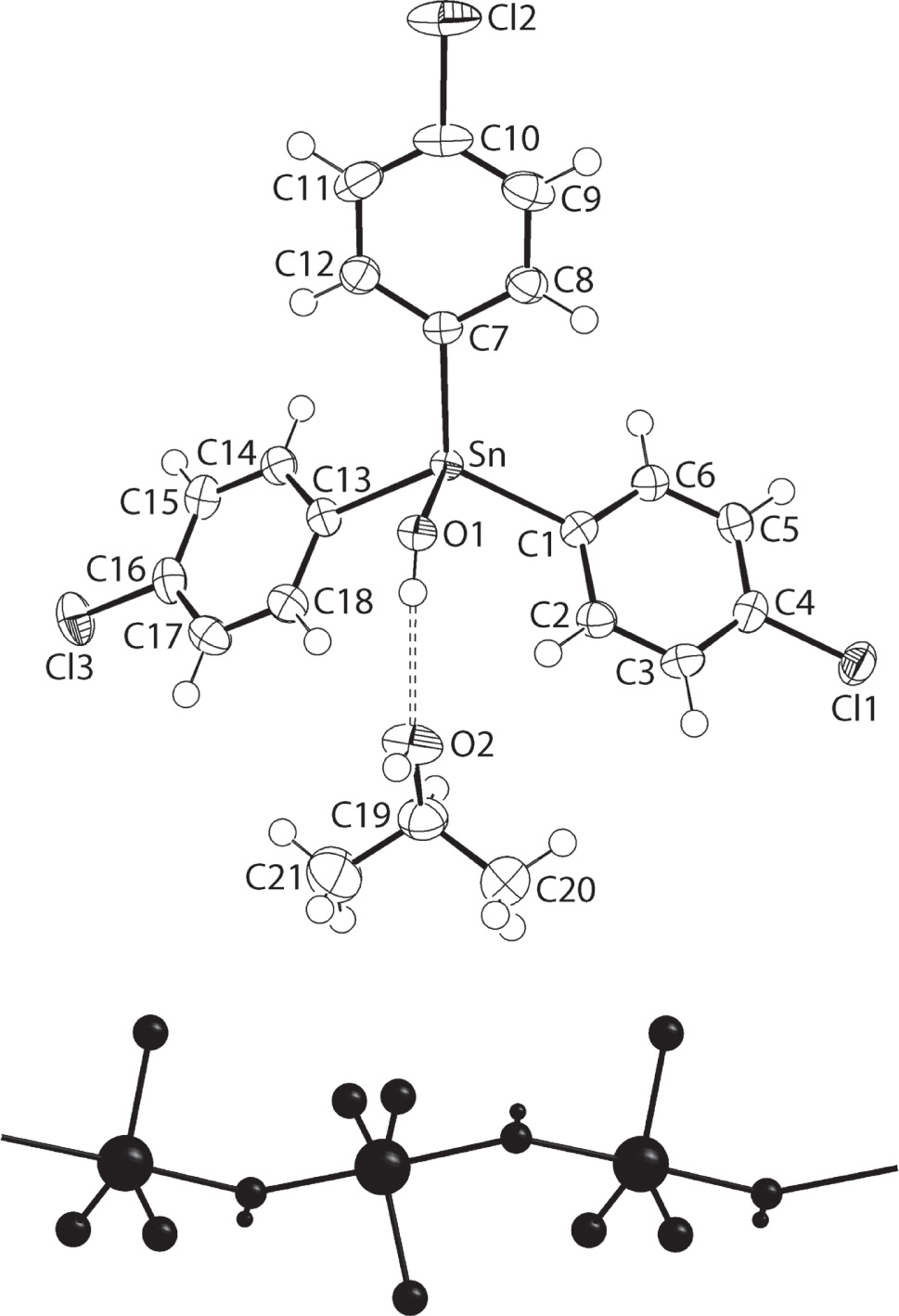
Table 1 contains crystallographic data and Table 2 contains the list of the atoms including atomic coordinates and displacement parameters.
Data collection and handling.
| Crystal: | Colourless prism |
| Size: | 0.16 × 0.07 × 0.03 mm |
| Wavelength: | Cu Kα radiation (1.54178 Å) |
| μ: | 13.0 mm−1 |
| Diffractometer, scan mode: | XtaLAB Synergy, ω |
| θmax, completeness: | 67.1°, >99% |
| N(hkl)measured, N(hkl)unique, Rint: | 49159, 3845, 0.036 |
| Criterion for Iobs, N(hkl)gt: | Iobs > 2 σ(Iobs), 3647 |
| N(param)refined: | 252 |
| Programs: | CrysAlisPRO [1], SHELX [2], [3], WinGX/ORTEP [4] |
Fractional atomic coordinates and isotropic or equivalent isotropic displacement parameters (Å2).
| Atom | x | y | z | Uiso*/Ueq |
|---|---|---|---|---|
| Sn | 0.74641(2) | 0.62820(2) | 0.25099(2) | 0.01366(6) |
| Cl1 | 0.85701(4) | 0.45614(6) | 0.58296(2) | 0.02580(11) |
| Cl2 | 1.14436(5) | 0.86190(7) | 0.12846(4) | 0.04162(15) |
| Cl3 | 0.29619(4) | 0.47006(6) | 0.03131(2) | 0.03108(12) |
| O1 | 0.70141(10) | 0.87677(13) | 0.26734(7) | 0.0165(3) |
| H1O | 0.6489(13) | 0.881(3) | 0.2829(12) | 0.025* |
| C1 | 0.78181(13) | 0.5769(2) | 0.35770(9) | 0.0165(3) |
| C2 | 0.72610(15) | 0.6470(2) | 0.40081(10) | 0.0202(4) |
| H2 | 0.6720 | 0.7214 | 0.3826 | 0.024* |
| C3 | 0.74872(16) | 0.6094(2) | 0.46977(10) | 0.0222(4) |
| H3 | 0.7101 | 0.6568 | 0.4985 | 0.027* |
| C4 | 0.82802(14) | 0.5023(2) | 0.49600(9) | 0.0201(4) |
| C5 | 0.88599(14) | 0.4329(2) | 0.45525(9) | 0.0201(4) |
| H5 | 0.9410 | 0.3606 | 0.4741 | 0.024* |
| C6 | 0.86223(13) | 0.4710(2) | 0.38622(9) | 0.0181(4) |
| H6 | 0.9017 | 0.4237 | 0.3579 | 0.022* |
| C7 | 0.87130(13) | 0.7107(2) | 0.21065(9) | 0.0158(3) |
| C8 | 0.96992(14) | 0.7304(2) | 0.25384(9) | 0.0217(4) |
| H8 | 0.9797 | 0.7115 | 0.3013 | 0.026* |
| C9 | 1.05356(15) | 0.7768(2) | 0.22895(10) | 0.0270(4) |
| H9 | 1.1200 | 0.7897 | 0.2588 | 0.032* |
| C10 | 1.03870(16) | 0.8041(2) | 0.15984(11) | 0.0268(4) |
| C11 | 0.94273(16) | 0.7860(2) | 0.11552(10) | 0.0279(4) |
| H11 | 0.9337 | 0.8056 | 0.0682 | 0.033* |
| C12 | 0.85949(14) | 0.7388(2) | 0.14113(9) | 0.0217(4) |
| H12 | 0.7934 | 0.7255 | 0.1108 | 0.026* |
| C13 | 0.60105(13) | 0.5794(2) | 0.18139(9) | 0.0171(3) |
| C14 | 0.50882(15) | 0.6493(2) | 0.18890(10) | 0.0206(4) |
| H14 | 0.5103 | 0.7214 | 0.2258 | 0.025* |
| C15 | 0.41476(16) | 0.6150(2) | 0.14327(11) | 0.0232(4) |
| H15 | 0.3524 | 0.6619 | 0.1491 | 0.028* |
| C16 | 0.41373(14) | 0.5117(2) | 0.08945(9) | 0.0222(4) |
| C17 | 0.50345(15) | 0.4420(2) | 0.08004(9) | 0.0222(4) |
| H17 | 0.5015 | 0.3714 | 0.0426 | 0.027* |
| C18 | 0.59676(14) | 0.4767(2) | 0.12617(9) | 0.0196(4) |
| H18 | 0.6587 | 0.4294 | 0.1198 | 0.024* |
| O2 | 0.52056(12) | 0.88333(16) | 0.32963(9) | 0.0302(3) |
| H2O | 0.507(2) | 0.9835(14) | 0.3316(14) | 0.045* |
| C19 | 0.44785(16) | 0.7908(3) | 0.35541(11) | 0.0300(4) |
| H19 | 0.4620 | 0.6733 | 0.3490 | 0.036* |
| C20 | 0.4606(2) | 0.8188(5) | 0.43005(13) | 0.0641(9) |
| H20A | 0.5318 | 0.7936 | 0.4544 | 0.096* |
| H20B | 0.4129 | 0.7484 | 0.4467 | 0.096* |
| H20C | 0.4455 | 0.9326 | 0.4379 | 0.096* |
| C21 | 0.33907(19) | 0.8250(4) | 0.31621(14) | 0.0518(7) |
| H21A | 0.3217 | 0.9383 | 0.3234 | 0.078* |
| H21B | 0.2914 | 0.7527 | 0.3320 | 0.078* |
| H21C | 0.3331 | 0.8065 | 0.2676 | 0.078* |
Source of material
All chemicals and solvents were used as purchased without purification. The melting point was determined using a Mel-temp II digital melting point apparatus and was uncorrected. The IR spectrum was obtained on a Perkin-Elmer RX1 spectrophotometer in a Nujol mull between KBr plates from 4000 to 400 cm−1.
Tetra(4-chlorophenyl)tin was prepared from the reaction of stannic chloride (Fluka) and 4-chlorophenylmagnesium bromide (Fluka) in a 1:4 molar ratio. Tetra(4-chlorophenyl)tin (3.40 g, 6 mmol) was dissolved in dimethylformamide (30 mL) and cooled to 273 K in an ice-salt bath. A chilled dimethylformamide solution (5 mL) of bromine (0.97 g, 6 mmol) was added drop-wise into the solution. When the addition was complete, the mixture was stirred at room temperature for 3 h and a 10% sodium hydroxide solution was added drop-wise until a white precipitate was formed. The solid was filtered and recrystallised from 2-propanol to afford the title compound as colourless crystals. Yield: 0.30 g (10%). M.pt: 431–433 K. IR (cm−1) 1568 (m) ν(C—C), 1090 (s) ν(C—O), 1010 (s) ν(C—O), 481 (w) ν(Sn—O).
Experimental details
The C-bound H atoms were geometrically placed (C—H = 0.95–1.00 Å) and refined as riding with Uiso(H) = 1.2–1.5Ueq(C). The O-bound H-atoms were located in a difference Fourier map but were refined with a distance restraint of O—H = 0.84 ± 0.01 Å, and with Uiso(H) set to 1.5Ueq(O).
Comment
Molecules of the general formula R3SnOH can be mononuclear as exemplified by R = 2,4,6-Me3C6H2 (mesityl) [5], binuclear, as in the case when R = CF2CF3 [6], or polymeric such as when R = Et [7]. While to a first approximation, the adoption of one structural motif over another for R3SnOH may be attributed to steric effects, well established in organotin chemistry to moderate secondary bonding interactions [8], [9], [10], [11], the subtle nature of the adoption of one motif over another is nicely illustrated in the case when R = Ph. Thus, the structure of Ph3SnOH was established long ago as being polymeric [12] but, when this is co-crystallised with 2,6-bis(1H-benzimidazol-2-yl)pyridine and water [13], it is mononuclear. Herein, the crystal and molecular structures of the R = 4-ClPh derivative, isolated as a 1:1 isopropanol solvate, that is (4-ClPh)3Sn(OH)⋅iPrOH, (I), are described.
The crystallographic asymmetric unit of (I) is shown in the upper part of the figure (70% probability displacement ellipsoids). From symmetry, and as indicated in the lower view of the figure (only ipso-C atoms of the 4-ClPh substituents are shown and the solvent molecules are omitted), the solid-state structure of (I) is a one-dimensional coordination polymer with helical symmetry, being propagated along the b-axis by 21-screw symmetry. The tin atom is therefore coordinated by two hydroxy-O atoms and three ipso-C atoms of the organic substiuents. While, the Sn—C bond lengths are experimentally equivalent, that is, [2.1363(17) Å, for Sn—C7, to 2.1393(17) Å, for Sn—C13], there is a disparity in the Sn—O1 bond lengths with the formally covalent Sn—O1 bond length of 2.1805(11) Å being significantly shorter than the formally intermolecular Sn—O1i bond length of 2.2434(11) Å; symmetry operation (i): 3/2 − x, −1/2 + y, 1/2 − z. As the O1 atoms are approximately trans to each other, the O1—Sn—O1i bond angle is 177.51(2)°, the resultant C3O2 coordination geometry is close to trigonal-bipyramidal.
As indicated in the upper view of the figure, the connection between the constituents of the asymmetric unit is a tin-hydroxy-O—H⋯O(2-propanol) hydrogen bond [O1—H1o⋯O2: H1o⋯O2 = 2.148(19) Å, O1⋯O2 = 2.981(2) Å with angle at H1o = 176(2)°]. The acidic proton of the solvent iPrOH molecule is engaged in an intra-chain 2-propanol-O—H⋯π(phenyl) interaction [O2—H2o⋯π(C7—C12)ii: H2o⋯Cg(C7—C12)ii = 2.353(13) Å, O2⋯Cg(C7—C12)ii = 3.1203(15) Å with angle at H2o = 151(2)° for symmetry operation (ii): 3/2 − x, 1/2 + y, 1/2 − z]. Chains pack in the crystal with no directional interactions between them.
To analyse the molecular packing further, using Crystal Explorer 17 [14] and established protocols [15], Hirshfeld surface calculations were performed along with the full and delineated two-dimensional fingerprint plots. This analysis reveals the importance of Cl⋯H/H⋯Cl (32.2%), H⋯H (30.2%) and C⋯H/H⋯C (25.6%) contacts to the calculated Hirshfeld surface but, these occur at distances generally greater than the sum of the respective van der Waals radii. The next most important contacts are of the type C⋯C, contributing 3.8%.
As indicated above, there are several polymeric precedents for the one-dimensional coordination polymer found in (I). Zig-zag chains are found in the R = Et derivative [7] and in the mixed species, Ph2(Cy)SnOH [16], each of which sees the chain having mirror symmetry. Helical chains propagated by 21 scew axes are found when R = Ph [12], R = CH2Ph [17] and in the mixed species Me2(PhCH2)SnOH [18]. The discussion of these structures would be incomplete without mentioning the structural analyses of the R = Me derivative, which has attracted considerable attention [19]. Since the original room temperature analysis where a helical chain was shown [20], in a subsequent study, {Me3Sn(OH)}n was modelled as a 32-fold superstructure with 83-helical chains [21]. At 220 K, the structure has been described as an eight-fold superstructure, with distorted zig-zag chains [22].
Funding source: Sunway University Sdn Bhd is thanked for financial support
Award Identifier / Grant number: STR-RCTR-RCCM-001-2019
Funding statement: Sunway University Sdn Bhd is thanked for financial support of this work through Grant no. STR-RCTR-RCCM-001-2019.
References
1. Agilent Technologies: CrysAlisPRO. Agilent Technologies, Santa Clara, CA, USA (2017).Suche in Google Scholar
2. Sheldrick, G. M.: A short history of SHELX. Acta Crystallogr. A64 (2008) 112–122.10.1107/S0108767307043930Suche in Google Scholar
3. Sheldrick, G. M.: Crystal structure refinement with SHELXL. Acta Crystallogr. C71 (2015) 3–8.10.1107/S2053229614024218Suche in Google Scholar
4. Farrugia, L. J.: WinGX and ORTEP for Windows: an update. J. Appl. Crystallogr. 45 (2012) 849–854.10.1107/S0021889812029111Suche in Google Scholar
5. Reuter, H.; Puff, H.: Trimesitylzinn-hydroxid und -fluorid als modellsubstanzen zur Bestimmung der normal-Kovalenzabstände Zinn-Sauerstoff und Zinn-Fluor. J. Organomet. Chem. 379 (1989) 223–234.10.1016/0022-328X(89)85162-9Suche in Google Scholar
6. Wiesemann, M.; Hoge, B.: Pentafluoroethylated compounds of silicon, germanium and tin. Chem. Eur. J. 24 (2018) 16457–16471.10.1002/chem.201801292Suche in Google Scholar PubMed
7. Deacon, G. B.; Lawrenz, E.; Nelson, K. T.; Tiekink, E. R. T.: Crystal structure of polymeric triethyltin hydroxide. Main Group Met. Chem. 16 (1993) 265–269.Suche in Google Scholar
8. Tiekink, E. R. T.: Structural chemistry of organotin carboxylates: a review of the crystallographic literature. Appl. Organomet. Chem. 5 (1991) 1–23.10.1002/aoc.590050102Suche in Google Scholar
9. Buntine, M. A.; Kosovel, F. J.; Tiekink, E. R. T.: Supramolecular Sn⋯Cl associations in diorganotin dichlorides and their influence on molecular geometry as studied by ab initio molecular orbital calculations. CrystEngComm 5 (2003) 331–336.10.1039/B308922CSuche in Google Scholar
10. Tiekink, E. R. T.: Tin dithiocarbamates: applications and structures. Appl. Organomet. Chem. 22 (2008) 533–550.10.1002/aoc.1441Suche in Google Scholar
11. Tiekink, E. R. T.: Supramolecular assembly based on “emerging” intermolecular interactions of particular interest to coordination chemists. Coord. Chem. Rev. 345 (2017) 209–228.10.1016/j.ccr.2017.01.009Suche in Google Scholar
12. Glidewell, C.; Liles, D. C.: The crystal and molecular structures of hydroxotriphenyltin(IV) and hydroxotriphenyllead(IV). Acta Crystallogr. B34 (1978) 129–134.10.1107/S0567740878002447Suche in Google Scholar
13. Lo, K. M.; Das, V. G. K.; Ng, S. W.: Hydroxotriphenyltin 2,6-bis(1H-benzimidazol-2-yl)pyridine hydrate. Acta Crystallogr. C55 (1999) 1234–1236.10.1107/S0108270199004072Suche in Google Scholar
14. Turner, M. J.; Mckinnon, J. J.; Wolff, S. K.; Grimwood, D. J.; Spackman, P. R.; Jayatilaka, D.; Spackman, M. A.: Crystal Explorer v17. The University of Western Australia, Australia (2017).Suche in Google Scholar
15. Tan, S. L.; Jotani, M. M.; Tiekink, E. R. T.: Utilizing Hirshfeld surface calculations, non-covalent interaction (NCI) plots and the calculation of interaction energies in the analysis of molecular packing. Acta Crystallogr. E75 (2019) 308–318.10.1107/S2056989019001129Suche in Google Scholar
16. Lo, K. M.; Ng, S. W.: catena-Poly[[cyclohexyldiphenyltin(IV)]-μ-hydroxido-κ2O:O]. Acta Crystallogr. E64 (2008) m724–m725.10.1107/S1600536808011100Suche in Google Scholar
17. Reuter, H.: Crystal structure of tribenzyltin(IV) hydroxide, (C7H7)3SnOH. Z. Kristallogr. NCS 219 (2004) 487–488.10.1524/ncrs.2004.219.14.519Suche in Google Scholar
18. Wannagat, U.; Damrath, V.; Huch, V.; Veith, M.; Harder, U.: Sila-Riechstoffe und Riechstoffisostere XII. Geruchsvergleiche homologer organoelementverbindungen der vierten Hauptgruppe (C, Si, Ge, Sn). J. Organomet. Chem. 443 (1993) 153–165.10.1016/0022-328X(93)80293-KSuche in Google Scholar
19. Dey, S.; Schonleber, A.; Mondal, S.; van Smaalen, S.: Superspace description of trimethyltin hydroxide at T = 100 K. Z. Kristallogr. – Cryst. Mater. 231 (2016) 427–434.10.1515/zkri-2016-1952Suche in Google Scholar
20. Kasai, N.; Yasuda, K.; Okawara, R.: The crystal structure of trimethyltin hydroxide. J. Organomet. Chem. 3 (1965) 172–173.10.1016/S0022-328X(00)84752-XSuche in Google Scholar
21. Anderson, K. M.; Tallentire, S. E.; Probert, M. R.; Goeta, A. E.; Mendis, B. G.; Steed, J. W.: Trimethyltin hydroxide: a crystallographic and high Z′ curiosity. Cryst. Growth Des. 11 (2011) 820–826.10.1021/cg101464jSuche in Google Scholar
22. Dey, S.; Schonleber, A.; Mondal, S.; Ali, S. I.; van Smaalen, S.: Role of steric hindrance in the crystal packing of Z′ = 4 superstructure of trimethyltin hydroxide. Cryst. Growth Des. 18 (2018) 1394–1400.10.1021/acs.cgd.7b01295Suche in Google Scholar
©2019 Kong Mun Lo et al., published by De Gruyter, Berlin/Boston
This work is licensed under the Creative Commons Attribution 4.0 Public License.
Artikel in diesem Heft
- 10.1515/ncrs-2020-frontmatter1
- The crystal structure of 3,5-dicarboxybenzenaminium perchlorate monohydrate, C8H8ClNO9
- The crystal structure of poly[(m4-4-bromoisophthalato-κ4O: O′:O′′:O′′′)zinc(II)], C8H3BrO4Zn
- Crystal structure of (E)-2-(2-chloro-6-hydroxybenzylidene)hydrazine-1-carbothioamide, C8H8ClN3O4S
- Crystal structure of 1,1′-methylenebis(3-ethyl-1H-imidazol-3-ium) bis(hexafluorophosphate(V)), C11H18F12N4P2
- The crystal structure of hexakis(1-isopropyl-1H-imidazole-κ1N)copper(II) dichloride, C36H58Cl2CuN12
- Crystal structure of catena-poly[μ2-4,4′-bipyridine-κ2N:N′)-tetrakis(μ2-2-((3,5,6-trichloropyridin-2-yl)oxy)acetato-κ2O:O′)dicobalt(II)], C19H10Cl6CoN3O6
- Crystal structure of (E)-1-(4-(((E)-2-bromo-6-hydroxybenzylidene)amino)phenyl)ethan-1-one O-methyl oxime, C16H15BrN2O2
- Crystal structure of ethyl 2-methyl-4-(5-methylthiophen-2-yl)-5-oxo-1,4,5,6,7,8-hexahydroquinoline-3-carboxylate, C18H21NO3S
- The crystal structure of 5-bromo-2-(1-methyl-1H-tetrazol-5-yl)pyridine, C7H6BrN5
- Crystal structure of Bis(acetato-κ2O,O′)-bis[4-(dimethylamino)pyridine-κN]nickel(II), C18H26N4NiO4
- Crystal structure of (E)-3-chloro-2-(((4-chlorophenyl)imino)methyl)phenol, C13H9Cl2NO
- The co-crystal structure of (17b)-estra-1,3,5(10)-triene-3,17diol – acetamide (1/1), a Z′ = 4 structure, C20H29NO3
- Crystal structure of 3-(3-(pyridin-3-yl)ureido)benzoic acid, C13H11N3O3
- The crystal structure of 1,1′-(9-ethyl-9H-carbazole-3,6-diyl)bis(3-ethyl-1H-imidazol-3-ium) bis(hexafluorophosphate(IV)), C24H27N5F12P2
- The crystal structure of 2-bromoisophthalic acid, C8H5BrO4
- The crystal structure of 13-ethoxycarbonyl-9-methyl-4-chlor-11-thioxo-8-oxa-10,12-diazatricyclo[7.3.1.02,7]trideca-2,4,6-triene, C14H15ClN2O3S
- The crystal structure of (E)-4-((4-(diethylamino)benzylidene)amino)-N,N-diphenylaniline, C29H29N3
- Crystal structure of 2-(3-(2-(4-phenylpiperazin-1-yl)ethyl)benzyl)isoindoline-1,3-dione, C27H27N3O2
- Crystal structure of 2-ethoxy-6-((E)-((3-(((E)-3-ethoxy-2-hydroxybenzylidene)amino)-2-hydroxypropyl)iminio)methyl)phenolate, C21H26N2O5
- The crystal structure of catena-poly(μ2-4,4′-bipyridine-κ2N:N′)-tetrakis(μ2-2-((3,5,6-trichloropyridin-2-yl)oxy)acetato-κ2O:O′)dinickel(II)], C19H10Cl6N3NiO6
- Crystal structure of hexakis(μ2-azido-κ2N:N)-diazido-κ1N-tetrakis(phenanthroline-κ2N,N′)tetrazinc(II), C48H32N32Zn4
- Synthesis and crystal structure of bis{2-bromo-6-(((4-(1-(methoxyimino)ethyl)phenyl)imino)methyl)phenolato-κ2N,O}cobalt(II)–dichloromethane(1/1), C34H32Br2Cl4CoN4O4
- Crystal structure of (E)-3-chloro-2-(((4-nitrophenyl)imino)methyl)phenol, C13H9ClN2O3
- Crystal structure of aqua-bis(5-bromo-6-methyl-picolinato-κ2N,O)zinc(II) dihydrate, C14H16Br2N2O7Zn
- Crystal structure of biaqua(2,2′-bipyridine-4,4′-dicarboxylato-κ2N,N′)(pyridine-2,6-dicarboxylato-κ3O,N,O′)nickel(II) hydrate, C19H15N3NiO10
- Synthesis and crystal structure of bis(2-(((4-(1-(ethoxyimino)ethyl)phenyl)imino)methyl)-5-fluorophenolato-κ2N,O)zinc(II) - methanol (1/1), C33H32F2N4O4Zn
- Crystal structure of tetraaqua-bis(μ2-5-aminoisophthalato-κ3N:O,O′)-bis(4,4′-dipyridylsulfide-κ1N)dizinc(II), C36H34N6O12S2Ni2
- Crystal structure of (1,4,8,11-tetraazacyclotetradecane-κ4N,N′,N′′,N′′′)palladium(II) tetracyanonickelate(II), C14H24N8NiPd
- The crystal structure of 3-benzyl-1-((8-(benzyloxy)quinolin-2-yl)methyl)-1H-imidazol-3-ium hexafluorophosphate, C27H24N3OF6P
- Crystal structure of 1-(4-chloro-2-hydroxy-5-iodophenyl)ethan-1-one, C8H6ClIO2
- Crystal structure of hexaaquamagnesium(II) bis((E)-4-((4-(dimethylamino)phenyl)diazenyl)benzenesulfonate), C28H40MgN6O12S2
- Crystal structure of the coordination polymer catena-poly[(1,2-di(pyridin-4-yl)ethane-κN)-(μ2-2-nitroisophthalato-κ2O:O′)zinc(II)], C20H17N3O7Zn
- Crystal structure of catena-{[tri-aqua-di-sodium bis(2-{[n-butyl(methyl)carbamothioyl]sulfanyl}acetate)]}n, [C16H34N2Na2O7S4]n
- The crystal structure of diaqua-bis(μ2-3-((3-acetyl-5-carboxyphenyl)oxidophosphoryl)-5-carboxybenzoato-κ2O:O′)bis(5,5′-dimethyl-2,2′-bipyridine-k2N,N′)zinc(II), C56H46N4O22P2Zn2
- Crystal structure of N′,2-bis((E)-2-chloro-6-hydroxybenzylidene)hydrazine-1-carbothiohydrazide, C15H12Cl2N4O2S
- Crystal structure of 2-[(1E)-{[1,3-dihydroxy-2-(hydroxymethyl)propan-2-yl]iminiumyl}methyl]-5-(dodecyloxy)benzen-1-olate, C23H39NO5
- Crystal structure of 12-(2-hydroxybenzoyl)benzo[f]pyrido[1,2-a]indole-6,11-dione, C23H13NO4
- Crystal structure of chlorido-(4-chloro-6-(p-tolyl)pyrimidine-κ2C,N)-(triphenylphosphane-κP)palladium(II), C29H23Cl2N2PPd
- Crystal structure of catena-poly[diaqua-bis(3,4,5,6-tetrabromo-carboxybenzoato-κ1O)-(μ2-4,4′-bipyridine-κ2N:N′)cobalt(II)], C26H14Br8CoN2O10
- Crystal structure of catena-poly[dibenzyl-dichlorido-(μ2-[4,4′-bipyridine]1,1′-dioxide-κ2O:O′)tin(IV)], C24H22Cl2N2O2Sn
- Crystal structure of benzyl-chlorido-(4-chloro-N-[(2-oxidophenyl)methylidene]benzenecarbohydrazonato)-methanol-tin(IV), C22H20Cl2N2O3Sn
- Crystal structure of catena-poly[triaqua-(1,3-di(1H-imidazol-1-yl)benzene-κ2N:N′)-(3-nitrophthalato-κ1O)cobalt(II)] — water (2/3), C20H22N5O10.5Co
- Crystal structure of (3R,5R,8R,9R,10R,12R,13R,14R)-4,4,8,10,14-pentamethyl-17-((R)-2,6,6-trimethyltetrahydro-2H-pyran-2-yl)hexadecahydro-1H-cyclopenta[a]phenanthrene-3,12-diol, C30H52O3
- Crystal structure of 3-(3-(4-carboxyphenyl)ureido)pyridin-1-ium perchlorate, C26H24Cl2N6O14
- Crystal structure of 8-hydroxy-2-methylquinolin-1-ium chloride dihydrate, C10H14ClNO3
- Crystal structure of (dibenzyl sulphoxide-κO)dibromido-bis(4-bromobenzyl-κC)tin(IV), C28H26Br4OSSn
- Crystal structure of bromido-tri(4-chlorophenyl-κ1C)-(ethanol-κ1O)tin(IV) — 4,4′-dimethyl-2,2′-bipyridine (2/1), C52H48Br2Cl6N2O2Sn2
- Crystal structure of 2-butyl-6-(ethylamino)-1H-benzo[de]isoquinoline-1,3(2H)-dione, C18H20N2O2
- Crystal structure of (4-chloro-N-[(2-oxido-5-chlorophenyl)methylidene] benzene-carbohydrazonato-κ3N,O,O′)bis(2-fluorobenzyl)tin(IV), C28H20Cl2F2N2O2Sn
- Crystal structure of aqua-chlorido-(4-fluorobenzyl-κC)-(N′-(4-methoxy-2-oxidobenzylidene)-3-hydroxy-2-naphthohydrazidato-κ3N,O,O′)tin(IV), C26H22ClFN2O5Sn
- Crystal structure of catena-poly[tri(4-chlorophenyl)-(μ2-hydroxido)tin(IV)] – 2-propanol (1/1), C21H21Cl3O2Sn
- Crystal structure of bromido-dimethyl-4-tolyl-(triphenylphosphine oxide)tin(IV), C27H28BrOPSn
- Crystal structure of 2-(bis(2-hydroxyethyl)ammonio)ethane-1-sulfonate, C6H15NO5S
- Crystal structure of bis[triaqua-(μ2-1,2-di(4-pyridyl)ethylene-κ2N:N′)-(4-sulfonatobenzoato-κ2O,O′)zinc(II)], C13H15NO8SZn
- Crystal structure of 2-((2-(3-hydroxy-7-methylene-2,3-dihydro-7H-furo[3,2-g]chromen-2-yl)propan-2-yl)oxy)-6-(hydroxymethyl)tetrahydro-2H-pyran-3,4,5-triol – a marmesin derivative, C20H24O10
- Crystal structure of octa(4-chlorobenzyl)-dichlorido-bis(μ2-methanolato)-bis(μ3-oxo)-tetratin(IV), C58H54Cl10O4Sn4
- Crystal structure of iodido-triphenyl-(triphenylphosphine oxide)tin(IV), C36H30IOPSn
- Crystal structure of dichlorido-bis(4-methylphenyl-κC)-bis(triphenylarsine oxide-κO)tin(IV), C50H44As2Cl2O2Sn
- Crystal structure of 4-benzyl-1-oxo-N-phenethyl-1H-[1,4]oxazino [4,3-b]indazole-3-carboxamide, C26H21N3O3
- Crystal structure of bis{(N-[(5-chloro-2-oxidophenyl)methylidene]-2-hydroxybenzenecarbohydrazonato)-dioxo-molybdenum(VI)}(μ2-4,4′-bipyridine), C38H26Cl2Mo2N6O10
- Crystal structure of dichlorido-octamethyl-bis(μ3-oxido)-bis(μ2-2-(phenylamino)ethanolato-κ2O:O)tetratin(IV), C24H44Cl2N2O4Sn4
- The crystal structure of 1-(2-(2-(imidazo[1,5-a]pyridine-4-ium)ethoxy)ethyl)-imidazo[1,5-a]pyridine-4-ium bis(hexafluorophosphate) — acetonitrile (1/1), C18H20ON4F12P2
- Crystal structure of cyclo[tetra(μ2-cyanido)-tetracyanido-bis(1,4,7,10-tetraazacyclododecane-κ4N,N′,N′′,N′′′)dinickel(II)dipalladium(II)] hexahydrate, C24H52N16Ni2O6Pd2
- Crystal structure of (dimethyl sulfoxide)-dioxido-[2-hydroxy-N′-(4-oxo-4-phenylbutan-2-ylidene)benzohydrazidato κ3N,O,O′]molybdenum(VI), C19H20MoN2O6S
- Crystal structure of bis(acetylacetonato-κ2O,O′)-(ethanolamine-κ2N,O)copper(II), C14H25CuNO5
- Crystal structure of chlorido-diphenyl-(isopropyl(propyl)carbamodithioato-κ2S,S′)tin(IV), C19H24ClNS2Sn
- The crystal structure of bis(imidazole-1-yl)methane monohydrate, C7H10N4O
- The crystal structure of bis(4-nitroimidazole-1-1yl)methane, C7H6N6O4
- Crystal structure of di(naphthalen-2-yl)sulfane, C20H14S
- Crystal structure of 3-acetyl-6-bromo-4-hydroxy-2H-chromen-2-one, C11H7BrO4
- Crystal structure of N′2,N′6-bis((E)-1-(pyrazin-2-yl)ethylidene)pyridine-2,6-dicarbohydrazide — methanol (1/2), C21H25N9O4
- The crystal structure of 3-nitro-4-(p-tolylamino)-2H-chromen-2-one, C16H12N2O4
- The crystal structure of 1,2-bis((4-methoxyphenyl)ethynyl)benzene, C24H18O2
- Crystal structure of a low-temperature (100 K) polymorph of catena-poly[(μ2-4,4′-bipyridine-κ2N,N′)-bis(O,O′-diethyldithiophosphato-κ1S)zinc(II)], C18H28N2O4P2S4Zn
- The pseudosymmetric low temperature polymorph of catena-poly[(μ2-4,4′-bipyridyl-κN,N′)-bis(O,O′-diethyldithiophosphato-κS)-cadmium(II)], {C18H28CdN2O4P2S4}n
- Crystal structure of 3-iodophthalic acid, C8H5IO4
- The crystal structure of tert-butyl (tert-butoxy(oxo)methyl)(5-bromo-2-fluorophenyl)carbamate, C16H21BrFNO4
- The crystal structure of bis(μ2-5,7-dichloroquinolin-8-olato-κ3N,O:O)-tetrakis(5,7-dichloroquinolin-8-olato-κ2N,O)bis(methanol-κ1O)dieuropium(III) — toluene (1/1), C63H39Cl12Eu2N6O8
- Crystal structure of dichlorido-(N′-(1-(3-ethylpyrazin-2-yl)ethylidene)-4-methoxybenzohydrazide-κ3N,N′,O)cadmium(II), C16H18N4O2Cl2Cd
- A redetermination of the crystal structure of catena-poly[(bis(O,O′-isopropyl dithiophosphato-κ2S,S′)-(μ2-1,2-bis(3-pyridylmethylene)hydrazine-κ2N,N′)cadmium(II)], {C24H38CdN4O4P2S4}n
Artikel in diesem Heft
- 10.1515/ncrs-2020-frontmatter1
- The crystal structure of 3,5-dicarboxybenzenaminium perchlorate monohydrate, C8H8ClNO9
- The crystal structure of poly[(m4-4-bromoisophthalato-κ4O: O′:O′′:O′′′)zinc(II)], C8H3BrO4Zn
- Crystal structure of (E)-2-(2-chloro-6-hydroxybenzylidene)hydrazine-1-carbothioamide, C8H8ClN3O4S
- Crystal structure of 1,1′-methylenebis(3-ethyl-1H-imidazol-3-ium) bis(hexafluorophosphate(V)), C11H18F12N4P2
- The crystal structure of hexakis(1-isopropyl-1H-imidazole-κ1N)copper(II) dichloride, C36H58Cl2CuN12
- Crystal structure of catena-poly[μ2-4,4′-bipyridine-κ2N:N′)-tetrakis(μ2-2-((3,5,6-trichloropyridin-2-yl)oxy)acetato-κ2O:O′)dicobalt(II)], C19H10Cl6CoN3O6
- Crystal structure of (E)-1-(4-(((E)-2-bromo-6-hydroxybenzylidene)amino)phenyl)ethan-1-one O-methyl oxime, C16H15BrN2O2
- Crystal structure of ethyl 2-methyl-4-(5-methylthiophen-2-yl)-5-oxo-1,4,5,6,7,8-hexahydroquinoline-3-carboxylate, C18H21NO3S
- The crystal structure of 5-bromo-2-(1-methyl-1H-tetrazol-5-yl)pyridine, C7H6BrN5
- Crystal structure of Bis(acetato-κ2O,O′)-bis[4-(dimethylamino)pyridine-κN]nickel(II), C18H26N4NiO4
- Crystal structure of (E)-3-chloro-2-(((4-chlorophenyl)imino)methyl)phenol, C13H9Cl2NO
- The co-crystal structure of (17b)-estra-1,3,5(10)-triene-3,17diol – acetamide (1/1), a Z′ = 4 structure, C20H29NO3
- Crystal structure of 3-(3-(pyridin-3-yl)ureido)benzoic acid, C13H11N3O3
- The crystal structure of 1,1′-(9-ethyl-9H-carbazole-3,6-diyl)bis(3-ethyl-1H-imidazol-3-ium) bis(hexafluorophosphate(IV)), C24H27N5F12P2
- The crystal structure of 2-bromoisophthalic acid, C8H5BrO4
- The crystal structure of 13-ethoxycarbonyl-9-methyl-4-chlor-11-thioxo-8-oxa-10,12-diazatricyclo[7.3.1.02,7]trideca-2,4,6-triene, C14H15ClN2O3S
- The crystal structure of (E)-4-((4-(diethylamino)benzylidene)amino)-N,N-diphenylaniline, C29H29N3
- Crystal structure of 2-(3-(2-(4-phenylpiperazin-1-yl)ethyl)benzyl)isoindoline-1,3-dione, C27H27N3O2
- Crystal structure of 2-ethoxy-6-((E)-((3-(((E)-3-ethoxy-2-hydroxybenzylidene)amino)-2-hydroxypropyl)iminio)methyl)phenolate, C21H26N2O5
- The crystal structure of catena-poly(μ2-4,4′-bipyridine-κ2N:N′)-tetrakis(μ2-2-((3,5,6-trichloropyridin-2-yl)oxy)acetato-κ2O:O′)dinickel(II)], C19H10Cl6N3NiO6
- Crystal structure of hexakis(μ2-azido-κ2N:N)-diazido-κ1N-tetrakis(phenanthroline-κ2N,N′)tetrazinc(II), C48H32N32Zn4
- Synthesis and crystal structure of bis{2-bromo-6-(((4-(1-(methoxyimino)ethyl)phenyl)imino)methyl)phenolato-κ2N,O}cobalt(II)–dichloromethane(1/1), C34H32Br2Cl4CoN4O4
- Crystal structure of (E)-3-chloro-2-(((4-nitrophenyl)imino)methyl)phenol, C13H9ClN2O3
- Crystal structure of aqua-bis(5-bromo-6-methyl-picolinato-κ2N,O)zinc(II) dihydrate, C14H16Br2N2O7Zn
- Crystal structure of biaqua(2,2′-bipyridine-4,4′-dicarboxylato-κ2N,N′)(pyridine-2,6-dicarboxylato-κ3O,N,O′)nickel(II) hydrate, C19H15N3NiO10
- Synthesis and crystal structure of bis(2-(((4-(1-(ethoxyimino)ethyl)phenyl)imino)methyl)-5-fluorophenolato-κ2N,O)zinc(II) - methanol (1/1), C33H32F2N4O4Zn
- Crystal structure of tetraaqua-bis(μ2-5-aminoisophthalato-κ3N:O,O′)-bis(4,4′-dipyridylsulfide-κ1N)dizinc(II), C36H34N6O12S2Ni2
- Crystal structure of (1,4,8,11-tetraazacyclotetradecane-κ4N,N′,N′′,N′′′)palladium(II) tetracyanonickelate(II), C14H24N8NiPd
- The crystal structure of 3-benzyl-1-((8-(benzyloxy)quinolin-2-yl)methyl)-1H-imidazol-3-ium hexafluorophosphate, C27H24N3OF6P
- Crystal structure of 1-(4-chloro-2-hydroxy-5-iodophenyl)ethan-1-one, C8H6ClIO2
- Crystal structure of hexaaquamagnesium(II) bis((E)-4-((4-(dimethylamino)phenyl)diazenyl)benzenesulfonate), C28H40MgN6O12S2
- Crystal structure of the coordination polymer catena-poly[(1,2-di(pyridin-4-yl)ethane-κN)-(μ2-2-nitroisophthalato-κ2O:O′)zinc(II)], C20H17N3O7Zn
- Crystal structure of catena-{[tri-aqua-di-sodium bis(2-{[n-butyl(methyl)carbamothioyl]sulfanyl}acetate)]}n, [C16H34N2Na2O7S4]n
- The crystal structure of diaqua-bis(μ2-3-((3-acetyl-5-carboxyphenyl)oxidophosphoryl)-5-carboxybenzoato-κ2O:O′)bis(5,5′-dimethyl-2,2′-bipyridine-k2N,N′)zinc(II), C56H46N4O22P2Zn2
- Crystal structure of N′,2-bis((E)-2-chloro-6-hydroxybenzylidene)hydrazine-1-carbothiohydrazide, C15H12Cl2N4O2S
- Crystal structure of 2-[(1E)-{[1,3-dihydroxy-2-(hydroxymethyl)propan-2-yl]iminiumyl}methyl]-5-(dodecyloxy)benzen-1-olate, C23H39NO5
- Crystal structure of 12-(2-hydroxybenzoyl)benzo[f]pyrido[1,2-a]indole-6,11-dione, C23H13NO4
- Crystal structure of chlorido-(4-chloro-6-(p-tolyl)pyrimidine-κ2C,N)-(triphenylphosphane-κP)palladium(II), C29H23Cl2N2PPd
- Crystal structure of catena-poly[diaqua-bis(3,4,5,6-tetrabromo-carboxybenzoato-κ1O)-(μ2-4,4′-bipyridine-κ2N:N′)cobalt(II)], C26H14Br8CoN2O10
- Crystal structure of catena-poly[dibenzyl-dichlorido-(μ2-[4,4′-bipyridine]1,1′-dioxide-κ2O:O′)tin(IV)], C24H22Cl2N2O2Sn
- Crystal structure of benzyl-chlorido-(4-chloro-N-[(2-oxidophenyl)methylidene]benzenecarbohydrazonato)-methanol-tin(IV), C22H20Cl2N2O3Sn
- Crystal structure of catena-poly[triaqua-(1,3-di(1H-imidazol-1-yl)benzene-κ2N:N′)-(3-nitrophthalato-κ1O)cobalt(II)] — water (2/3), C20H22N5O10.5Co
- Crystal structure of (3R,5R,8R,9R,10R,12R,13R,14R)-4,4,8,10,14-pentamethyl-17-((R)-2,6,6-trimethyltetrahydro-2H-pyran-2-yl)hexadecahydro-1H-cyclopenta[a]phenanthrene-3,12-diol, C30H52O3
- Crystal structure of 3-(3-(4-carboxyphenyl)ureido)pyridin-1-ium perchlorate, C26H24Cl2N6O14
- Crystal structure of 8-hydroxy-2-methylquinolin-1-ium chloride dihydrate, C10H14ClNO3
- Crystal structure of (dibenzyl sulphoxide-κO)dibromido-bis(4-bromobenzyl-κC)tin(IV), C28H26Br4OSSn
- Crystal structure of bromido-tri(4-chlorophenyl-κ1C)-(ethanol-κ1O)tin(IV) — 4,4′-dimethyl-2,2′-bipyridine (2/1), C52H48Br2Cl6N2O2Sn2
- Crystal structure of 2-butyl-6-(ethylamino)-1H-benzo[de]isoquinoline-1,3(2H)-dione, C18H20N2O2
- Crystal structure of (4-chloro-N-[(2-oxido-5-chlorophenyl)methylidene] benzene-carbohydrazonato-κ3N,O,O′)bis(2-fluorobenzyl)tin(IV), C28H20Cl2F2N2O2Sn
- Crystal structure of aqua-chlorido-(4-fluorobenzyl-κC)-(N′-(4-methoxy-2-oxidobenzylidene)-3-hydroxy-2-naphthohydrazidato-κ3N,O,O′)tin(IV), C26H22ClFN2O5Sn
- Crystal structure of catena-poly[tri(4-chlorophenyl)-(μ2-hydroxido)tin(IV)] – 2-propanol (1/1), C21H21Cl3O2Sn
- Crystal structure of bromido-dimethyl-4-tolyl-(triphenylphosphine oxide)tin(IV), C27H28BrOPSn
- Crystal structure of 2-(bis(2-hydroxyethyl)ammonio)ethane-1-sulfonate, C6H15NO5S
- Crystal structure of bis[triaqua-(μ2-1,2-di(4-pyridyl)ethylene-κ2N:N′)-(4-sulfonatobenzoato-κ2O,O′)zinc(II)], C13H15NO8SZn
- Crystal structure of 2-((2-(3-hydroxy-7-methylene-2,3-dihydro-7H-furo[3,2-g]chromen-2-yl)propan-2-yl)oxy)-6-(hydroxymethyl)tetrahydro-2H-pyran-3,4,5-triol – a marmesin derivative, C20H24O10
- Crystal structure of octa(4-chlorobenzyl)-dichlorido-bis(μ2-methanolato)-bis(μ3-oxo)-tetratin(IV), C58H54Cl10O4Sn4
- Crystal structure of iodido-triphenyl-(triphenylphosphine oxide)tin(IV), C36H30IOPSn
- Crystal structure of dichlorido-bis(4-methylphenyl-κC)-bis(triphenylarsine oxide-κO)tin(IV), C50H44As2Cl2O2Sn
- Crystal structure of 4-benzyl-1-oxo-N-phenethyl-1H-[1,4]oxazino [4,3-b]indazole-3-carboxamide, C26H21N3O3
- Crystal structure of bis{(N-[(5-chloro-2-oxidophenyl)methylidene]-2-hydroxybenzenecarbohydrazonato)-dioxo-molybdenum(VI)}(μ2-4,4′-bipyridine), C38H26Cl2Mo2N6O10
- Crystal structure of dichlorido-octamethyl-bis(μ3-oxido)-bis(μ2-2-(phenylamino)ethanolato-κ2O:O)tetratin(IV), C24H44Cl2N2O4Sn4
- The crystal structure of 1-(2-(2-(imidazo[1,5-a]pyridine-4-ium)ethoxy)ethyl)-imidazo[1,5-a]pyridine-4-ium bis(hexafluorophosphate) — acetonitrile (1/1), C18H20ON4F12P2
- Crystal structure of cyclo[tetra(μ2-cyanido)-tetracyanido-bis(1,4,7,10-tetraazacyclododecane-κ4N,N′,N′′,N′′′)dinickel(II)dipalladium(II)] hexahydrate, C24H52N16Ni2O6Pd2
- Crystal structure of (dimethyl sulfoxide)-dioxido-[2-hydroxy-N′-(4-oxo-4-phenylbutan-2-ylidene)benzohydrazidato κ3N,O,O′]molybdenum(VI), C19H20MoN2O6S
- Crystal structure of bis(acetylacetonato-κ2O,O′)-(ethanolamine-κ2N,O)copper(II), C14H25CuNO5
- Crystal structure of chlorido-diphenyl-(isopropyl(propyl)carbamodithioato-κ2S,S′)tin(IV), C19H24ClNS2Sn
- The crystal structure of bis(imidazole-1-yl)methane monohydrate, C7H10N4O
- The crystal structure of bis(4-nitroimidazole-1-1yl)methane, C7H6N6O4
- Crystal structure of di(naphthalen-2-yl)sulfane, C20H14S
- Crystal structure of 3-acetyl-6-bromo-4-hydroxy-2H-chromen-2-one, C11H7BrO4
- Crystal structure of N′2,N′6-bis((E)-1-(pyrazin-2-yl)ethylidene)pyridine-2,6-dicarbohydrazide — methanol (1/2), C21H25N9O4
- The crystal structure of 3-nitro-4-(p-tolylamino)-2H-chromen-2-one, C16H12N2O4
- The crystal structure of 1,2-bis((4-methoxyphenyl)ethynyl)benzene, C24H18O2
- Crystal structure of a low-temperature (100 K) polymorph of catena-poly[(μ2-4,4′-bipyridine-κ2N,N′)-bis(O,O′-diethyldithiophosphato-κ1S)zinc(II)], C18H28N2O4P2S4Zn
- The pseudosymmetric low temperature polymorph of catena-poly[(μ2-4,4′-bipyridyl-κN,N′)-bis(O,O′-diethyldithiophosphato-κS)-cadmium(II)], {C18H28CdN2O4P2S4}n
- Crystal structure of 3-iodophthalic acid, C8H5IO4
- The crystal structure of tert-butyl (tert-butoxy(oxo)methyl)(5-bromo-2-fluorophenyl)carbamate, C16H21BrFNO4
- The crystal structure of bis(μ2-5,7-dichloroquinolin-8-olato-κ3N,O:O)-tetrakis(5,7-dichloroquinolin-8-olato-κ2N,O)bis(methanol-κ1O)dieuropium(III) — toluene (1/1), C63H39Cl12Eu2N6O8
- Crystal structure of dichlorido-(N′-(1-(3-ethylpyrazin-2-yl)ethylidene)-4-methoxybenzohydrazide-κ3N,N′,O)cadmium(II), C16H18N4O2Cl2Cd
- A redetermination of the crystal structure of catena-poly[(bis(O,O′-isopropyl dithiophosphato-κ2S,S′)-(μ2-1,2-bis(3-pyridylmethylene)hydrazine-κ2N,N′)cadmium(II)], {C24H38CdN4O4P2S4}n
